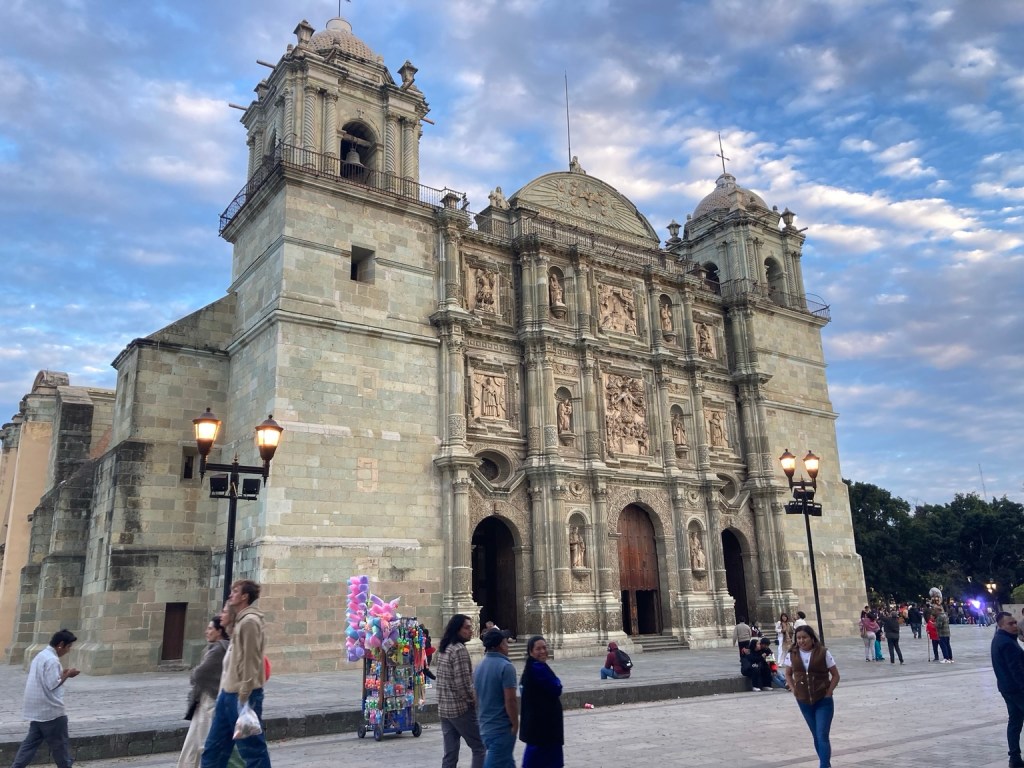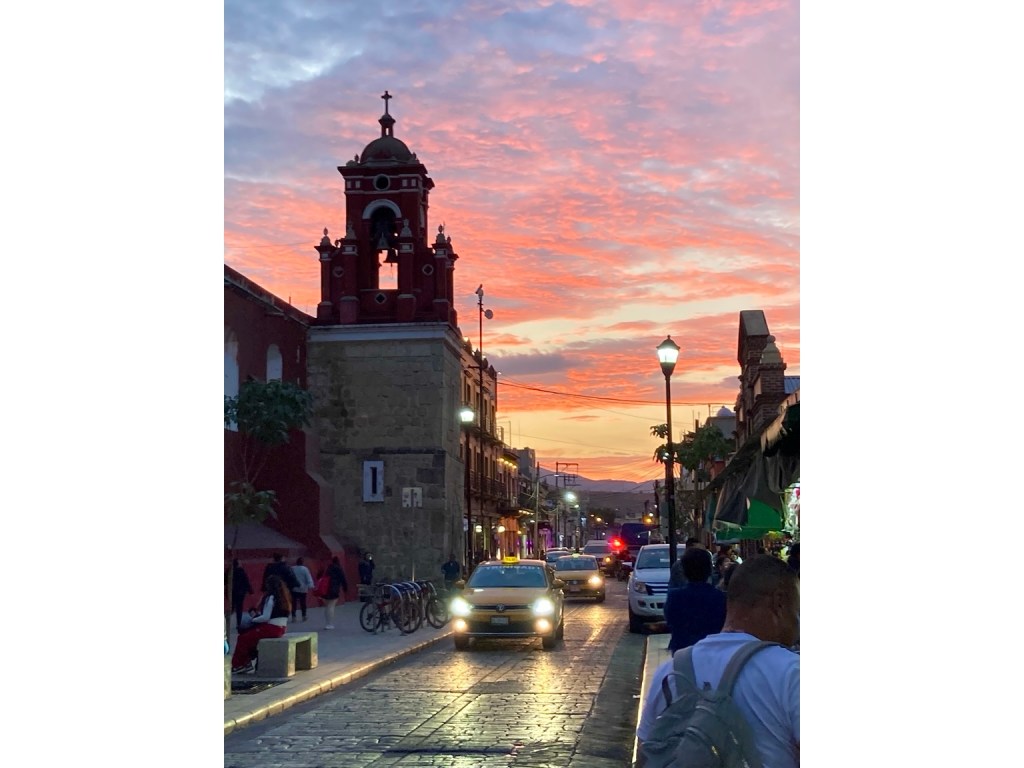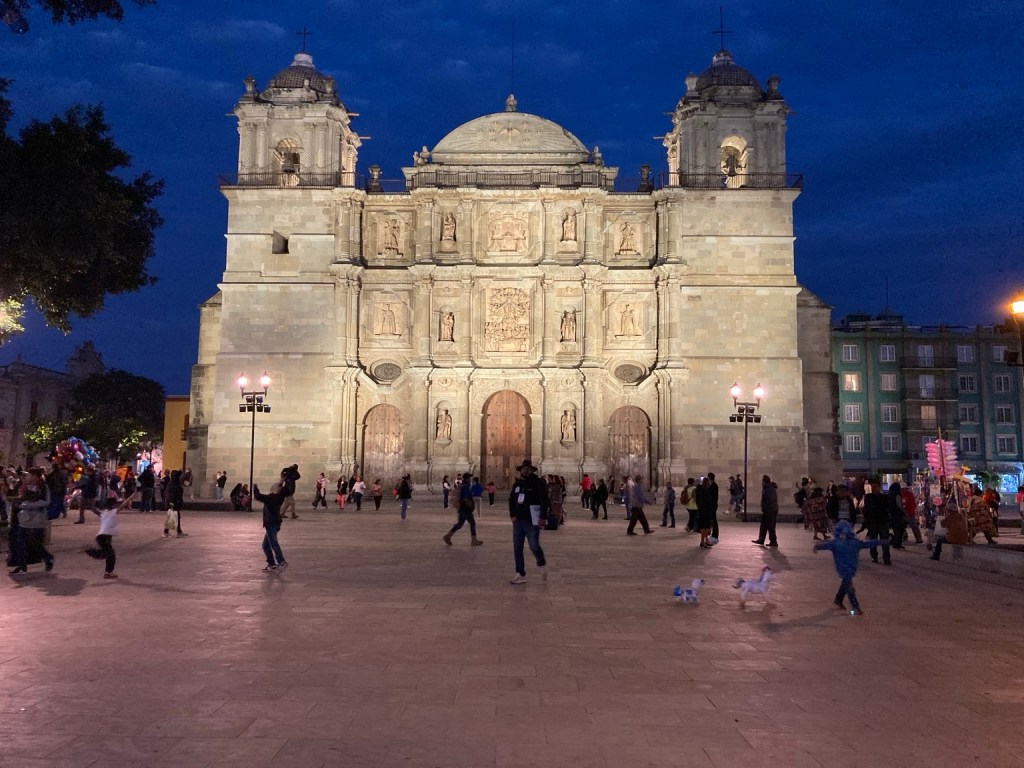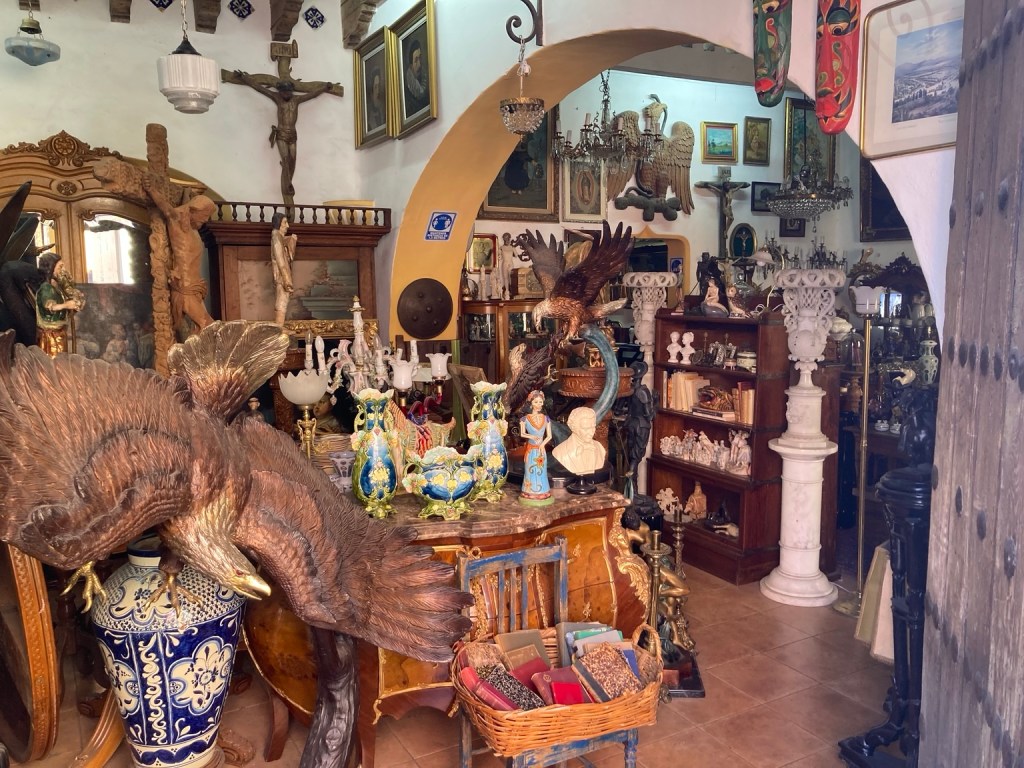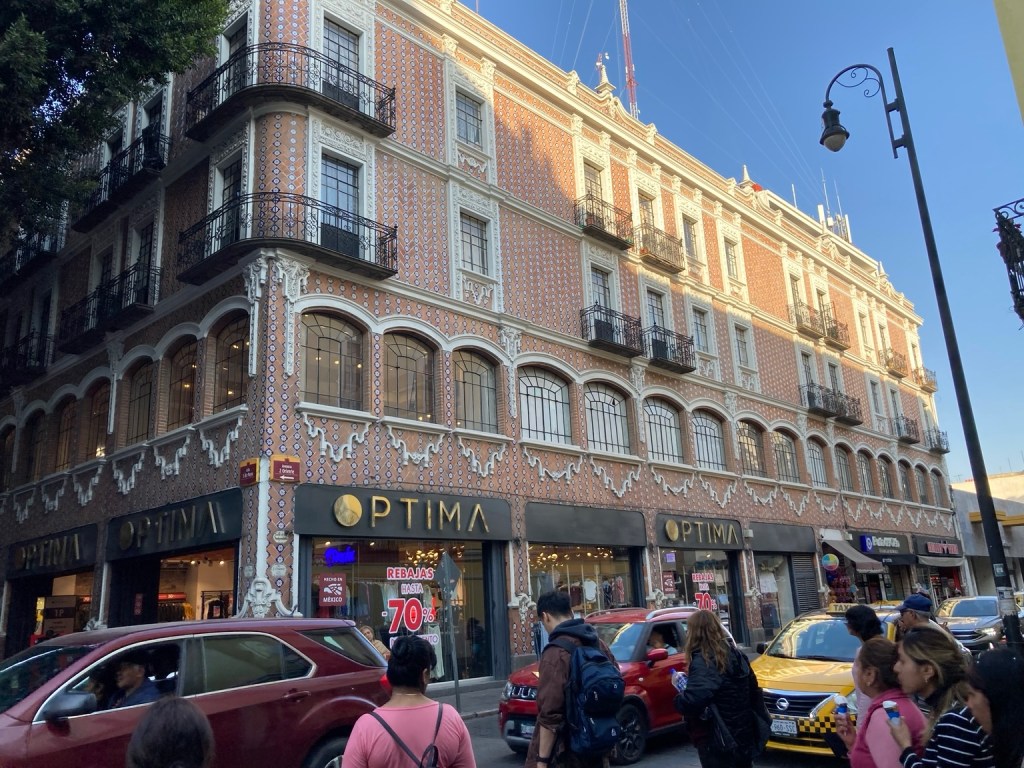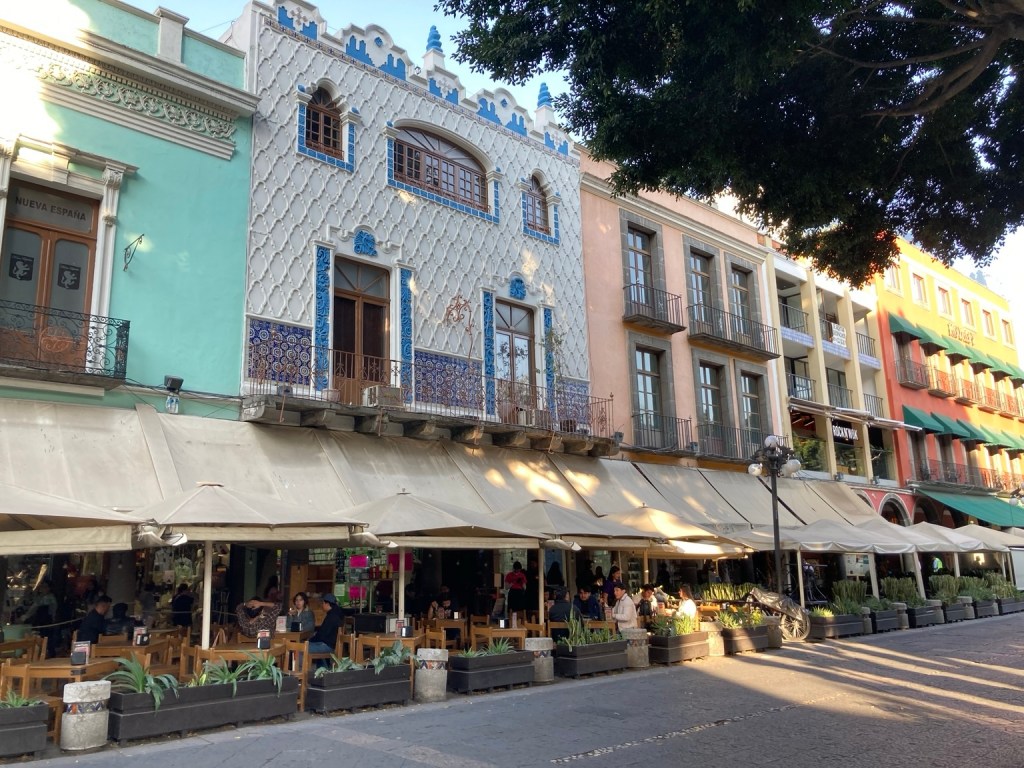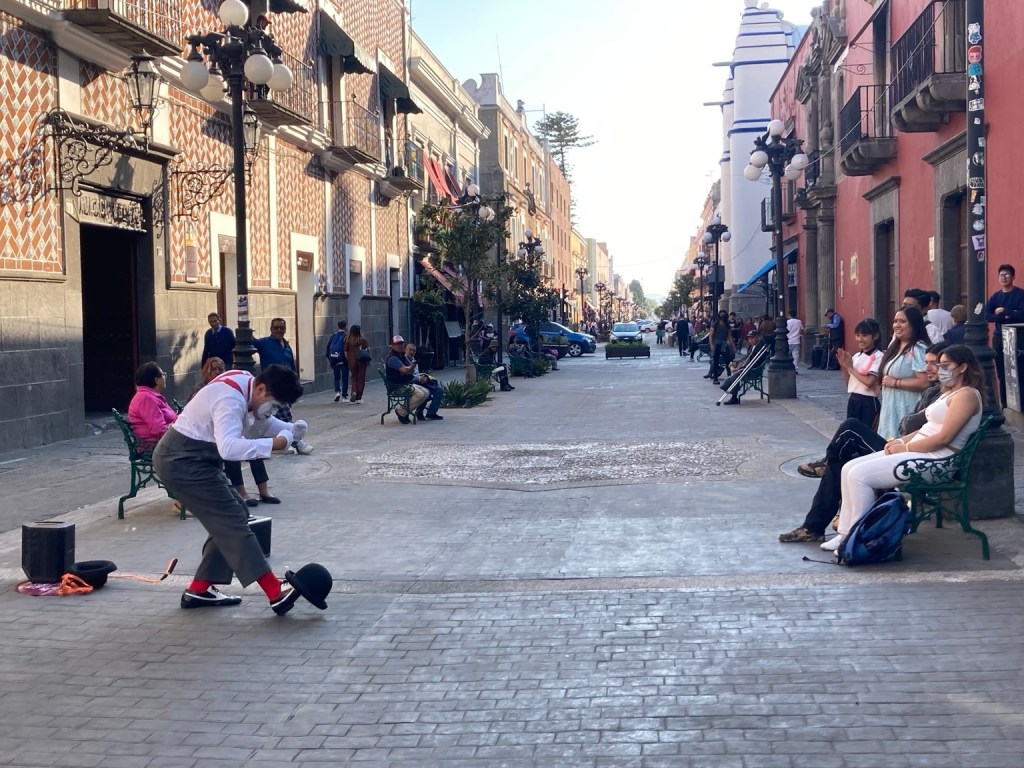
Oaxaca … Markets, Museums & Marriage

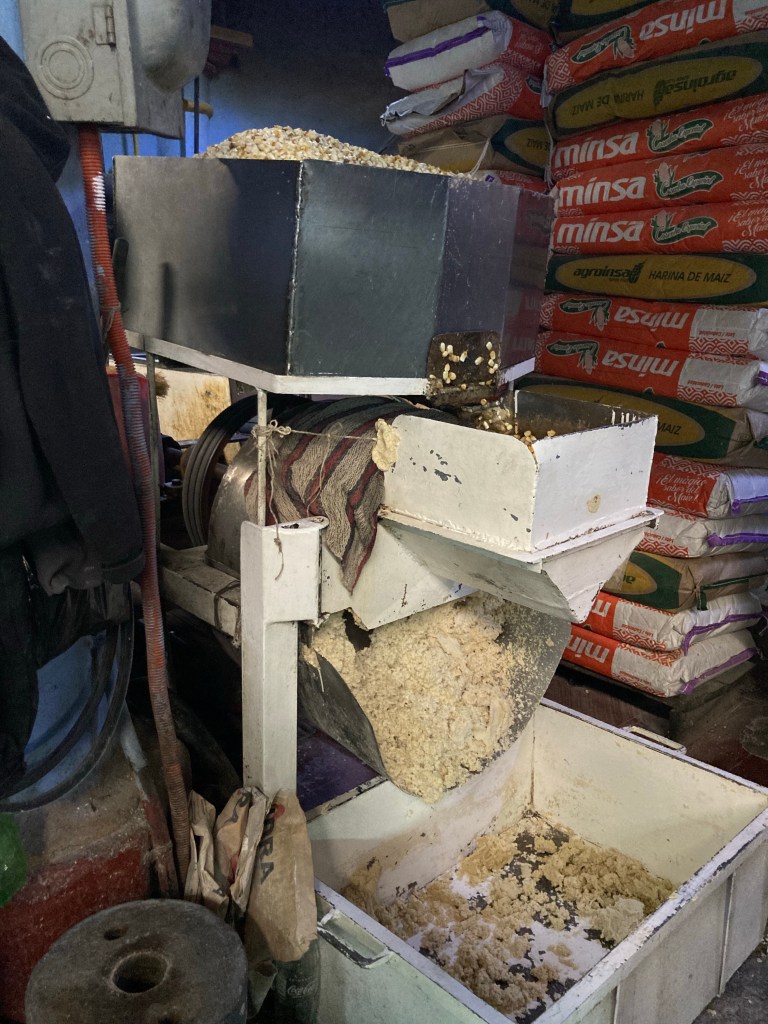
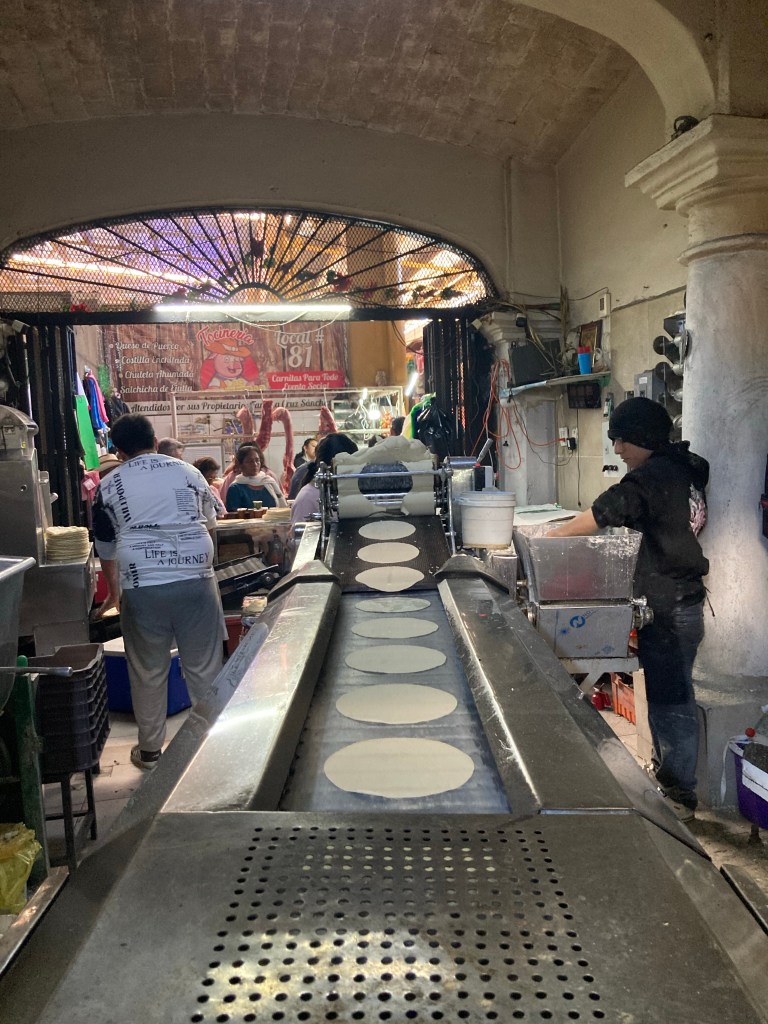
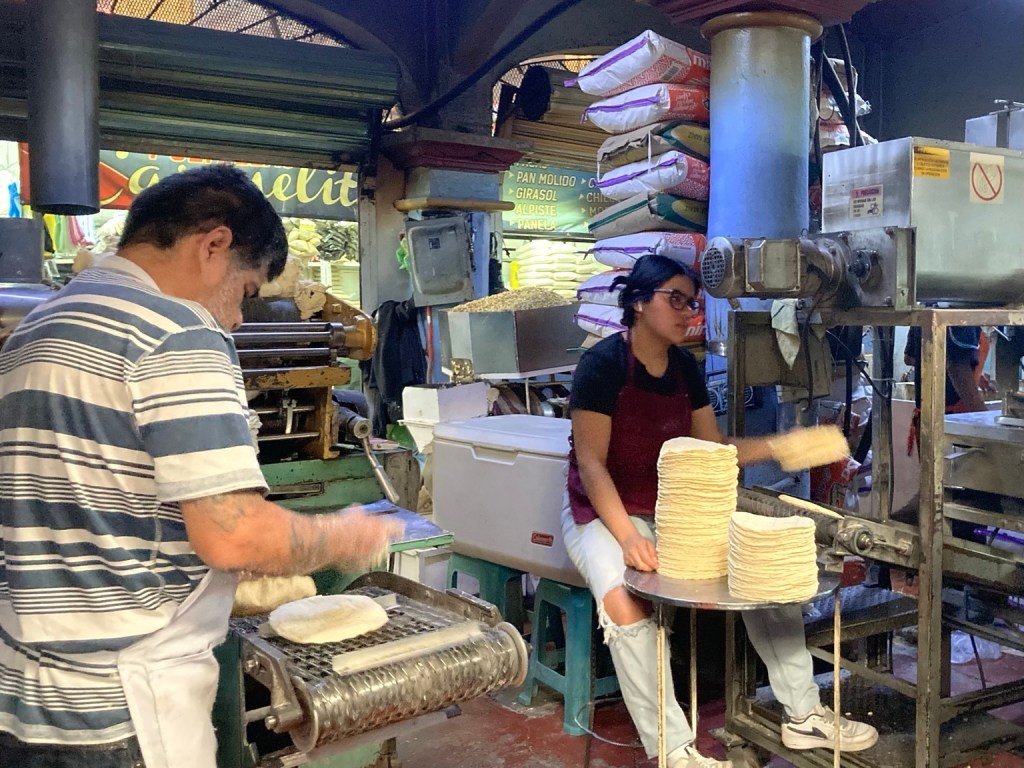
Next day we were off to Ocotlán. There was a little confusion over the taxi going as although it was a collectivo or shared taxi, it just took us, and while the price was cheap compared with UK prices, we felt we may have paid over the odds. Nonetheless it was a good trip and 40 minutes later we were dropped off at the entrance to the weekly market, which attracts people from all the neighbouring villages.  It was huge and bustling and sold  everything and anything and we can only have walked a fraction of it. These were the highlights – the tortilla making machines, one that makes the masa and others that roll the tortillas …

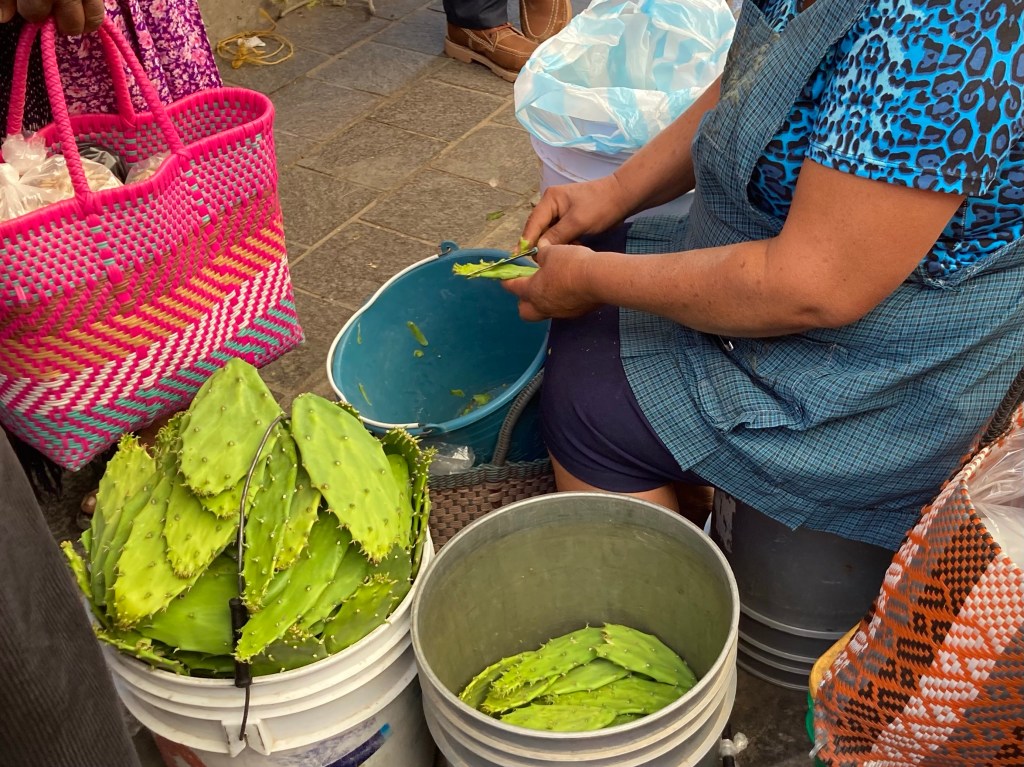
… a lady preparing cactus …

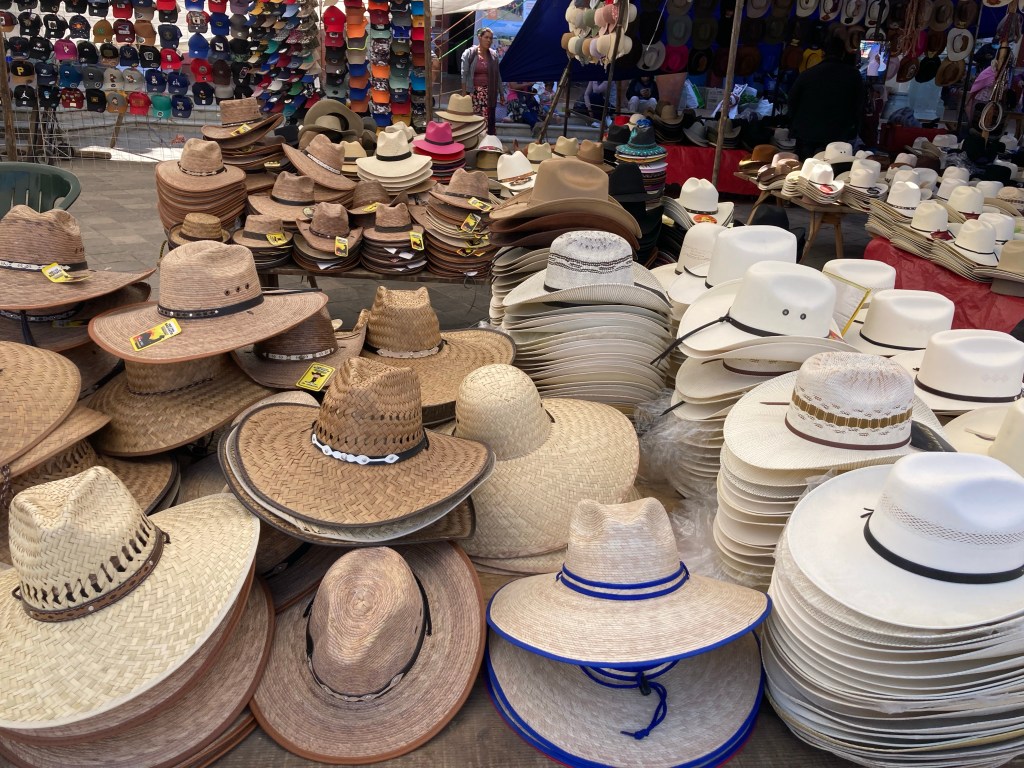
… hats …

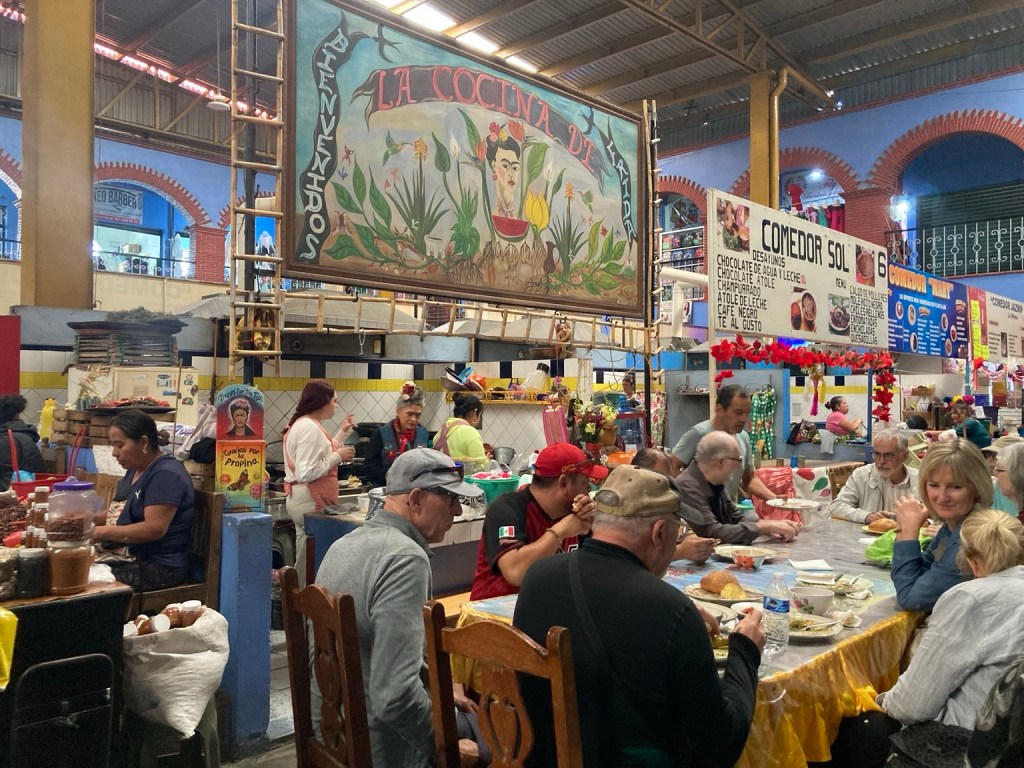
… the Cocina de Frida a popular food stall in the same family for 70 years with its very own Frida …

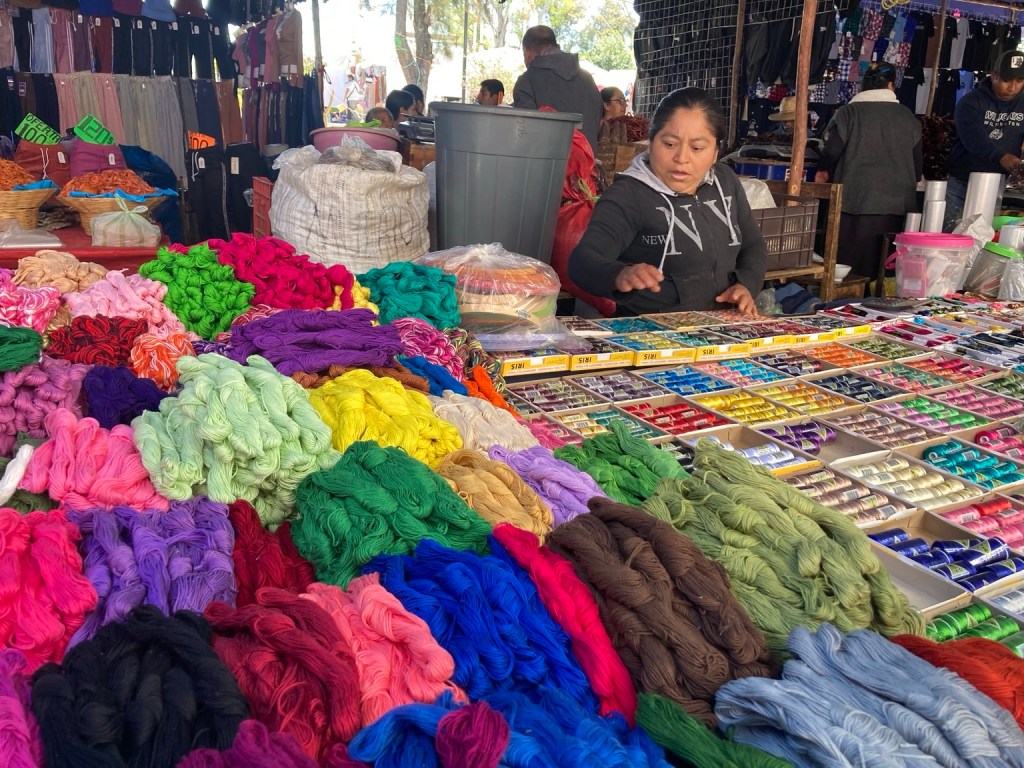
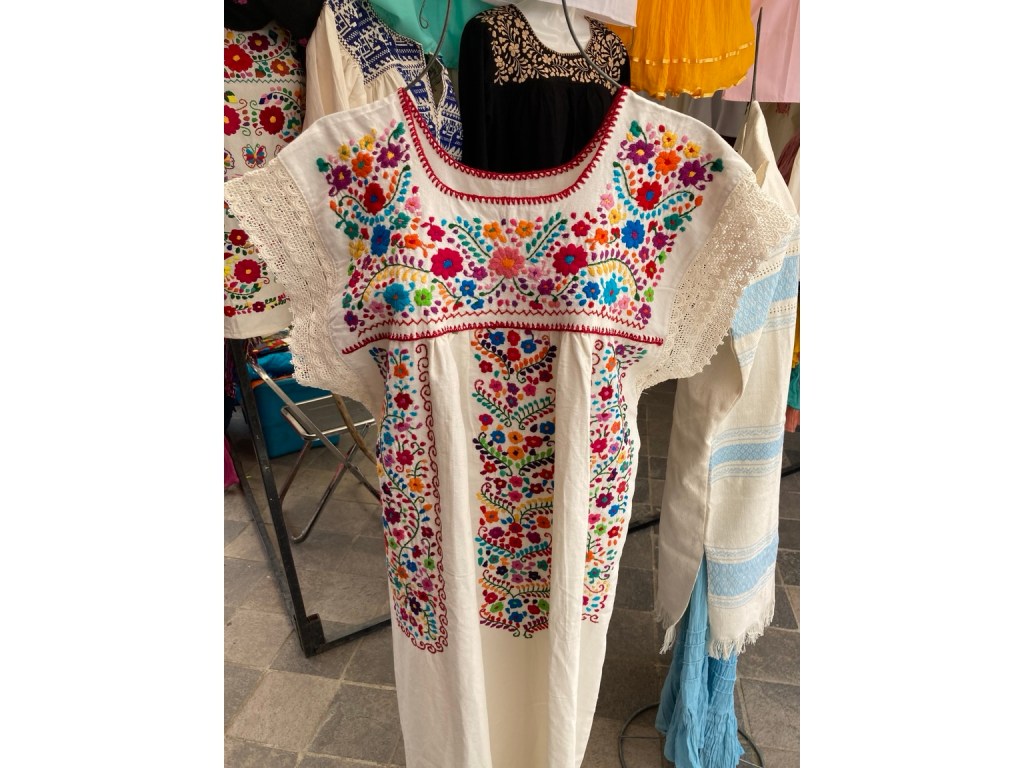
… huge piles of embroidery thread and beautifully hand embroidered dresses …

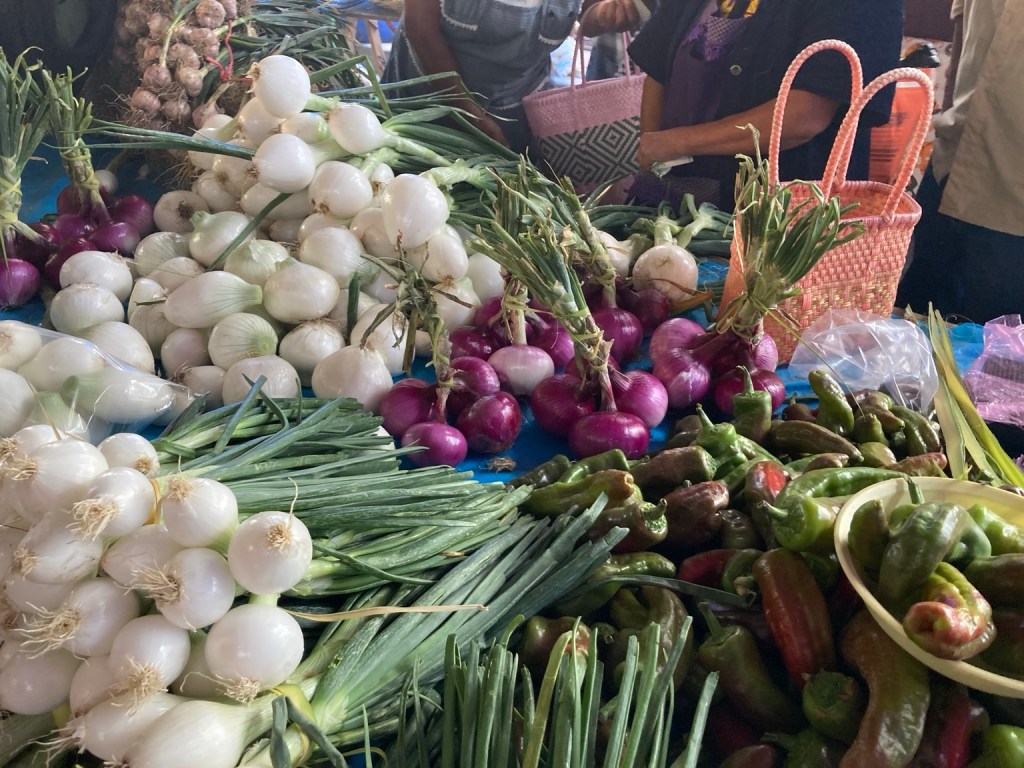
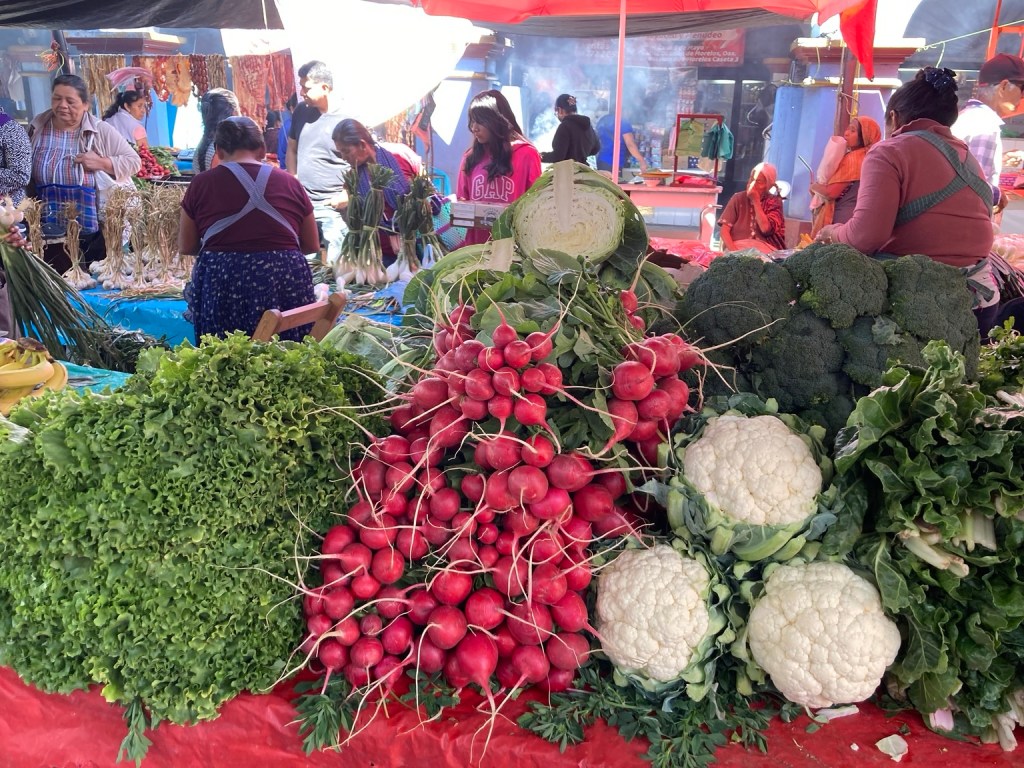
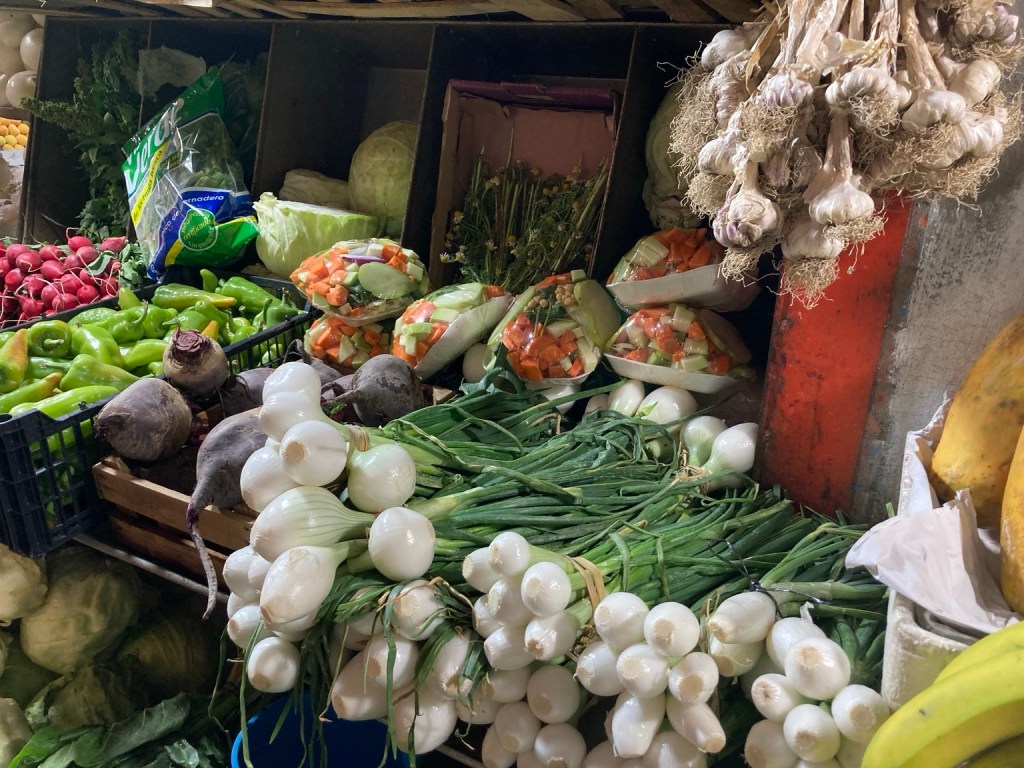
… and lots of lovely veg.

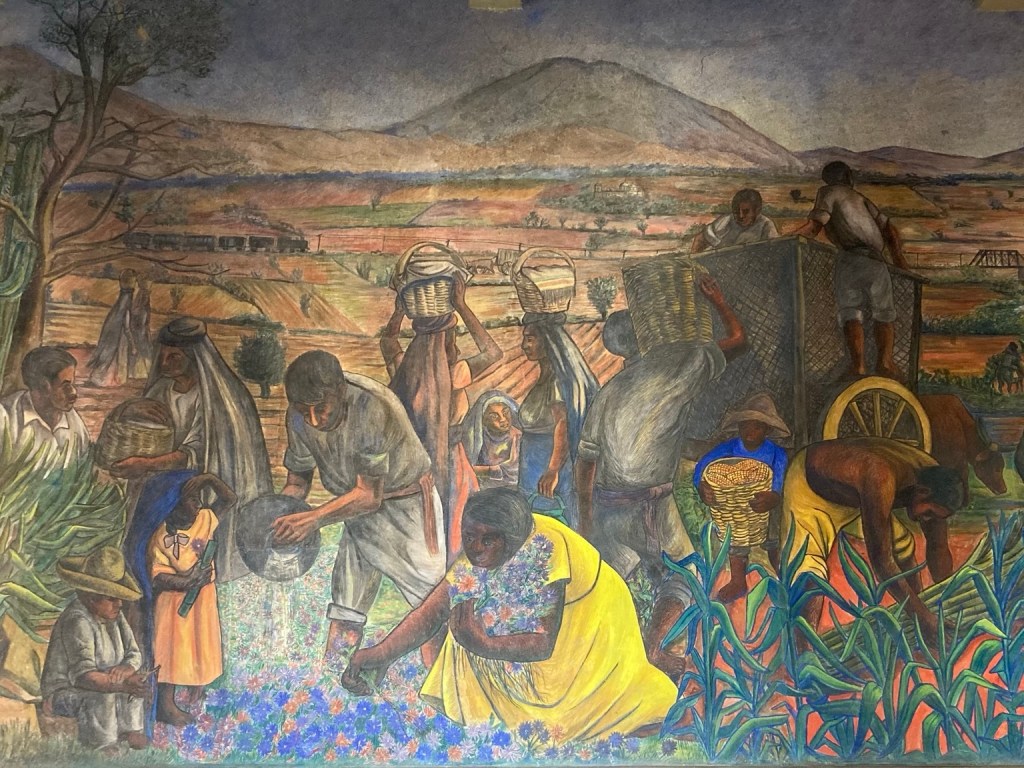
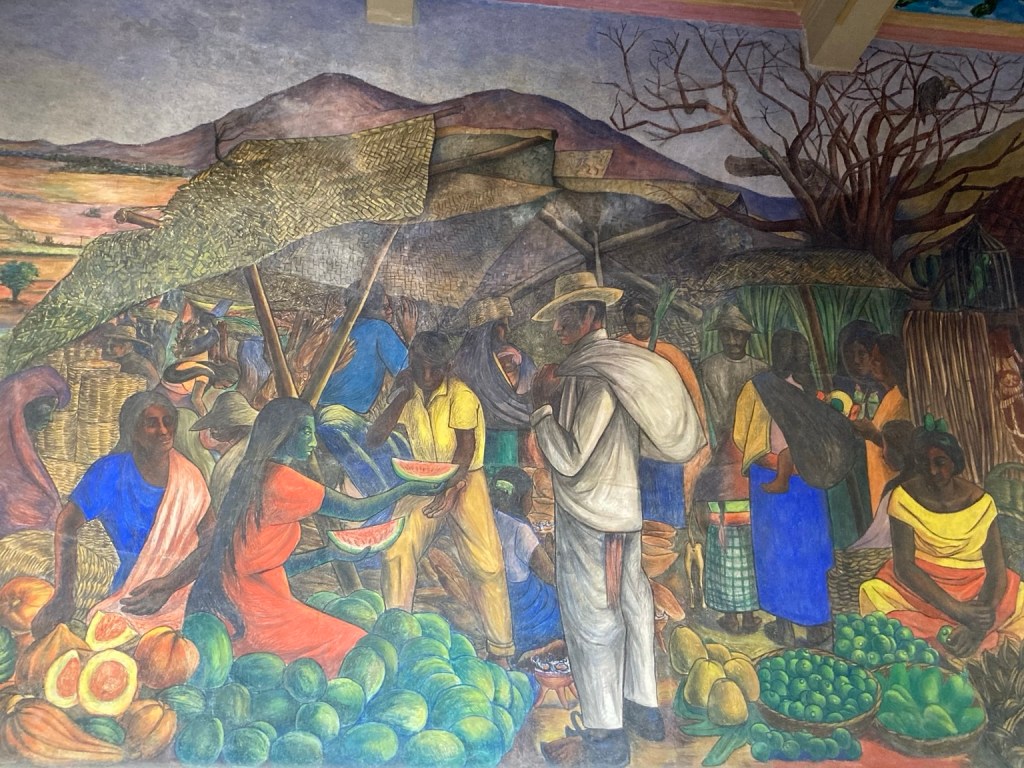
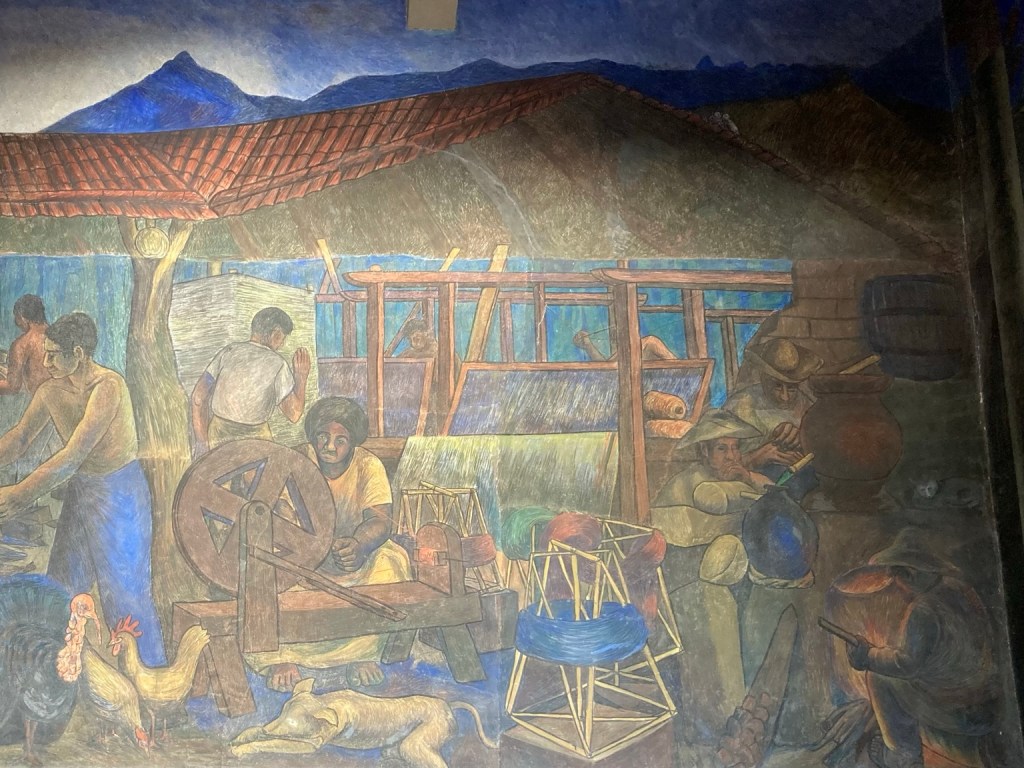
Apart from the market, we were also on the trail of Rodolfo Morales, an artist born here in Ocotlán who became one of Mexico’s greatest artists, then used his earnings to restore buildings and create cultural centers throughout the valley. Morales made sure that much of the restoration work was done by local women who developed skills for later work and established a computer training center for young people.  First we saw the murals in the Municipal Palace celebrating 400 years of the town. 

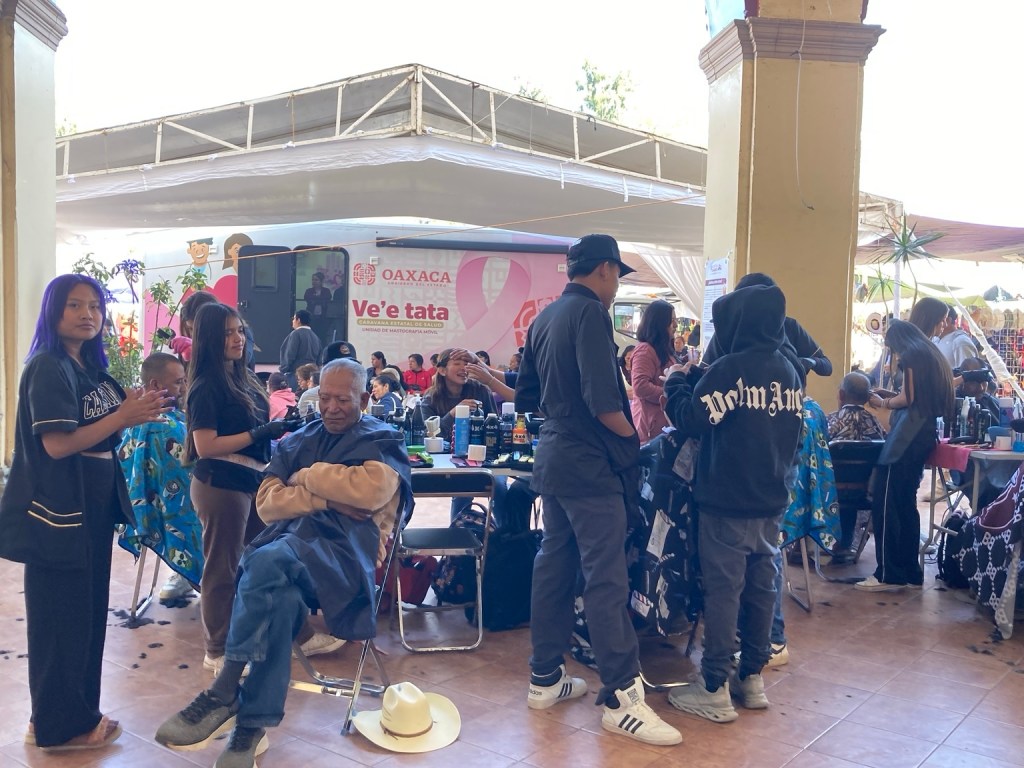
Just outside we also spotted a temporary health and wellness area, with a mobile mammogram van, optician doing eye tests and a hairdressing school providing a trim!

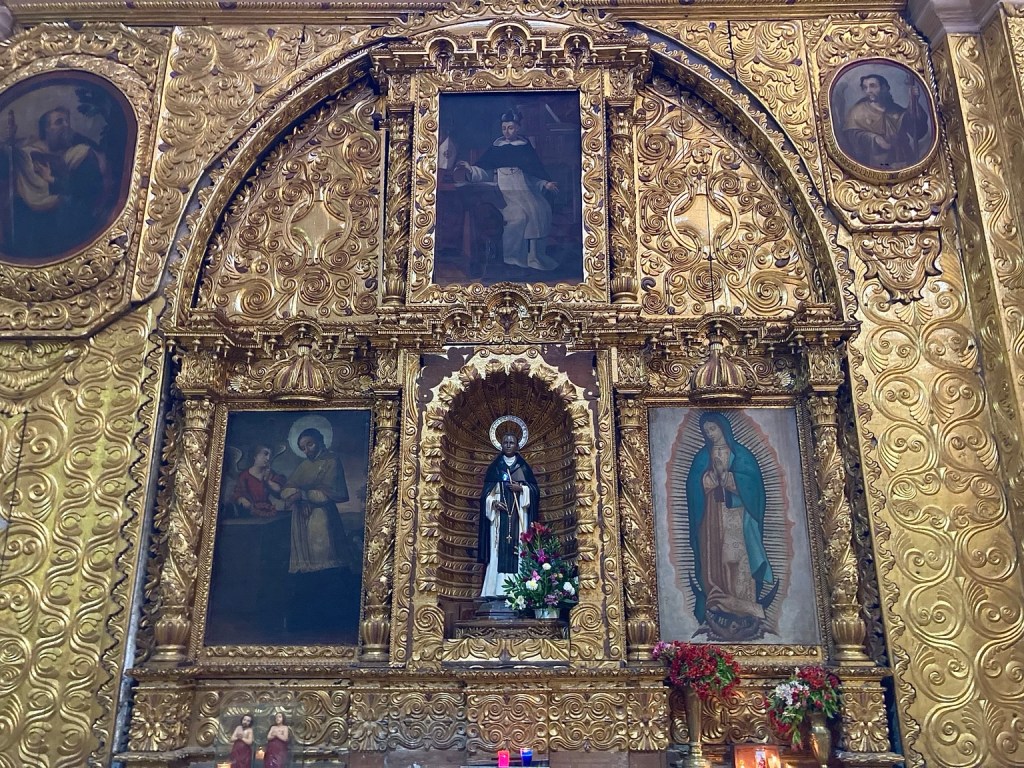
The C16th Dominican monastery next door, contains a Morales museum which shows more clearly that he was a surrealist who incorporated elements of magical realism into his work, which used a variety of media.

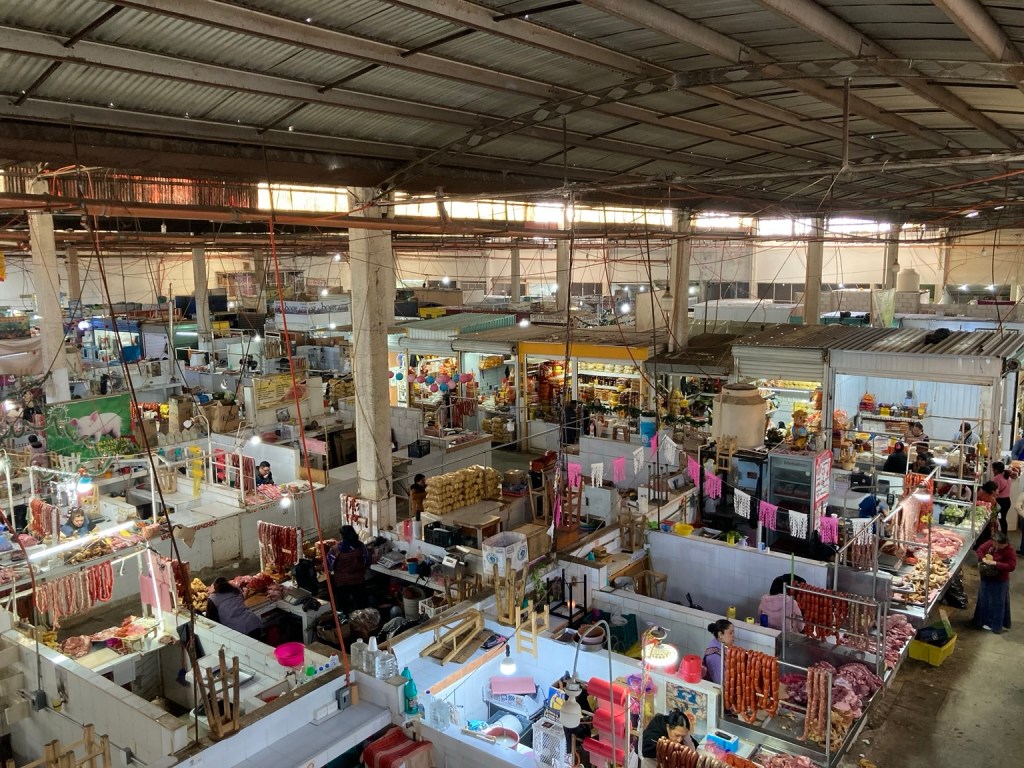
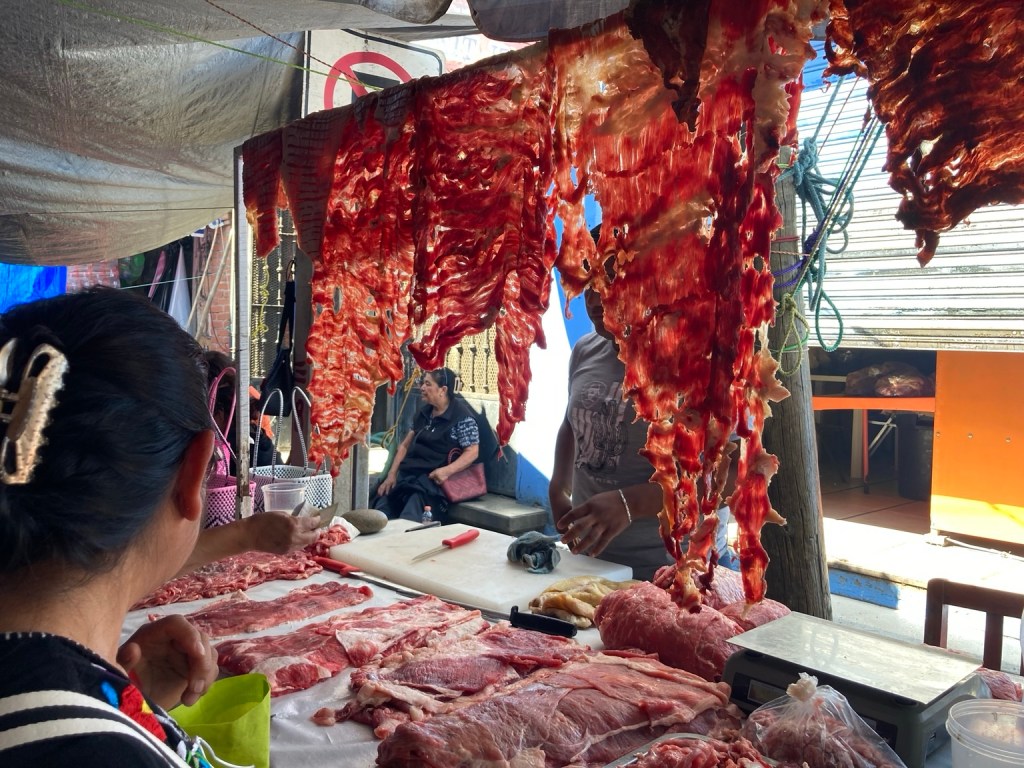
Time for lunch, and we started down the meat section, spotting the favoured thinly cut and lightly salted tasajo beef on the menu everywhere served grilled.

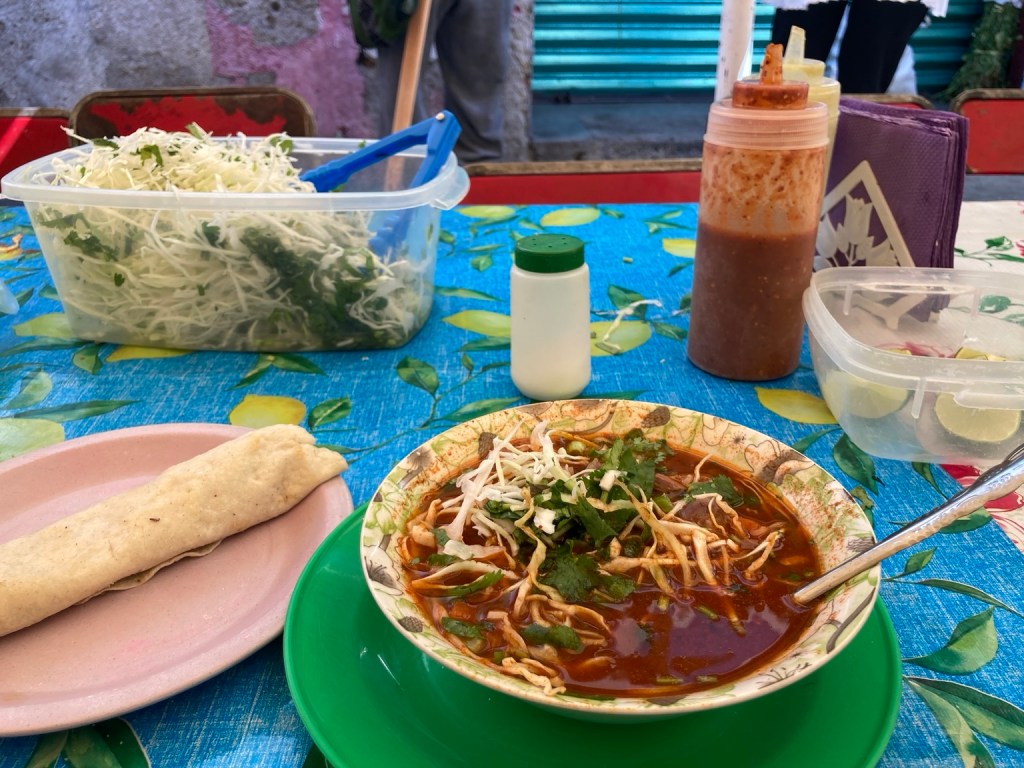
I was in search of lamb, always my favourite meat, and I hoped to find lamb barbacoa, which is slow-cooked, traditionally in a fire pit.  Success, I had a bowl of lamb and vegetable broth, with chunks of cooked lamb added on top as well as a tortilla, filled with lamb.  I was shown that toppings were needed, both in the soup and the tortilla – salsa, coriander, onion, shredded cabbage and lime.  Both were delicious, and Chris manfully waited until his turn and had a veggie quesadilla in the food hall. 

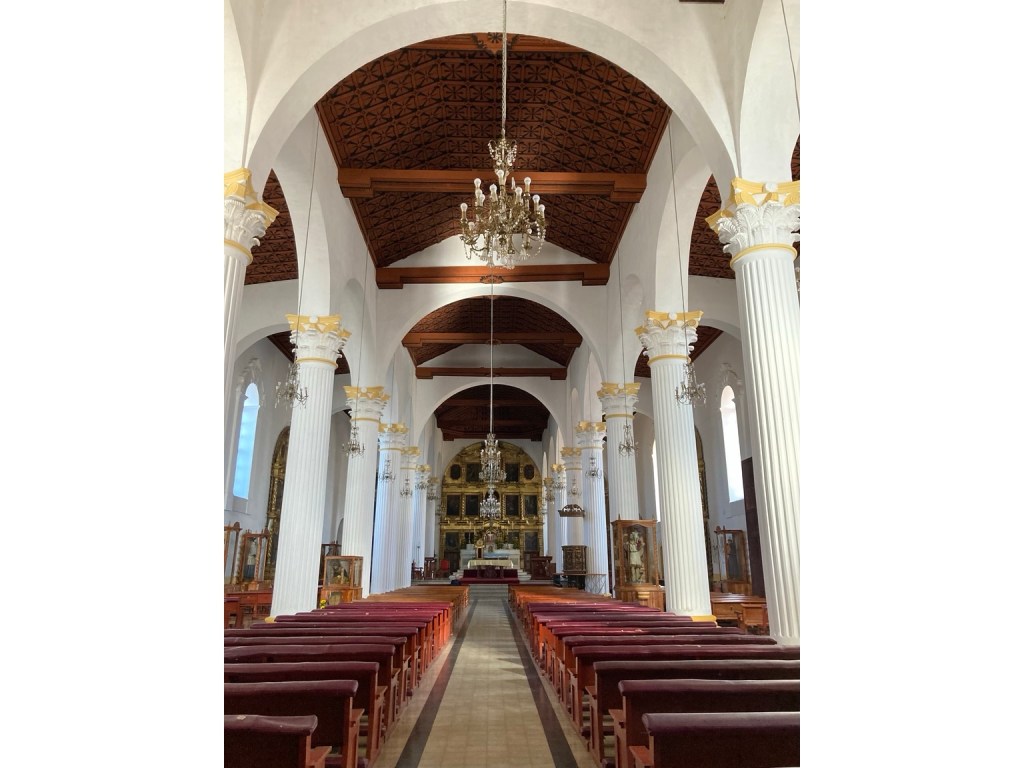
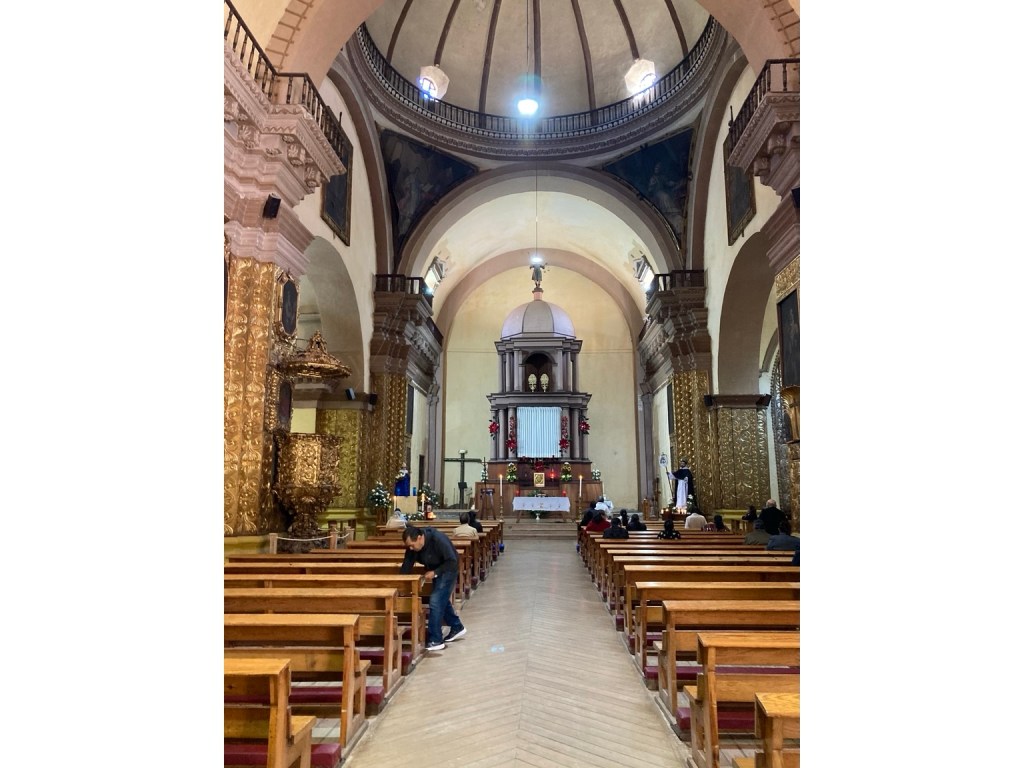
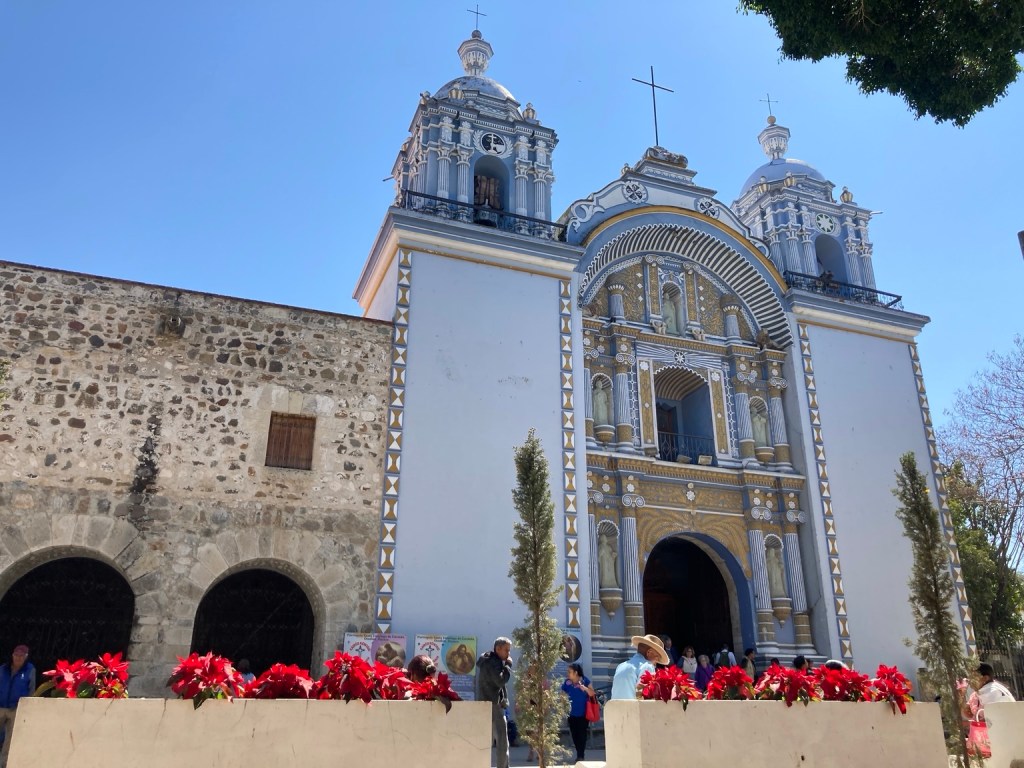
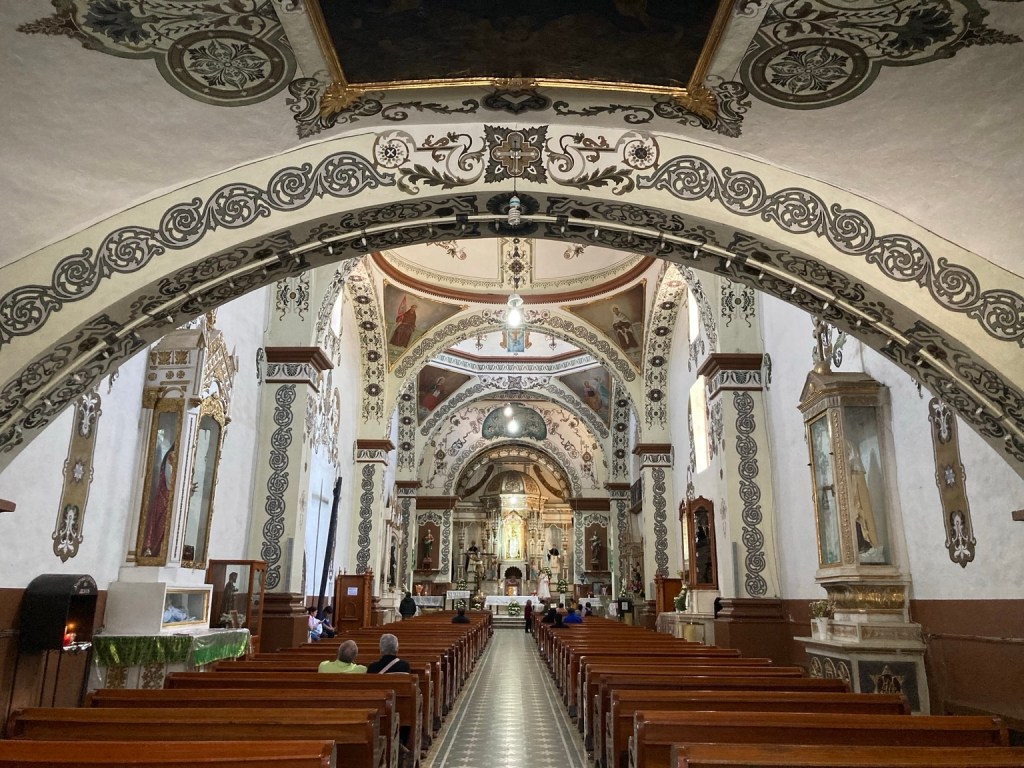
After lunch, we found the church, and spot the native grown ponsettias growing outside …

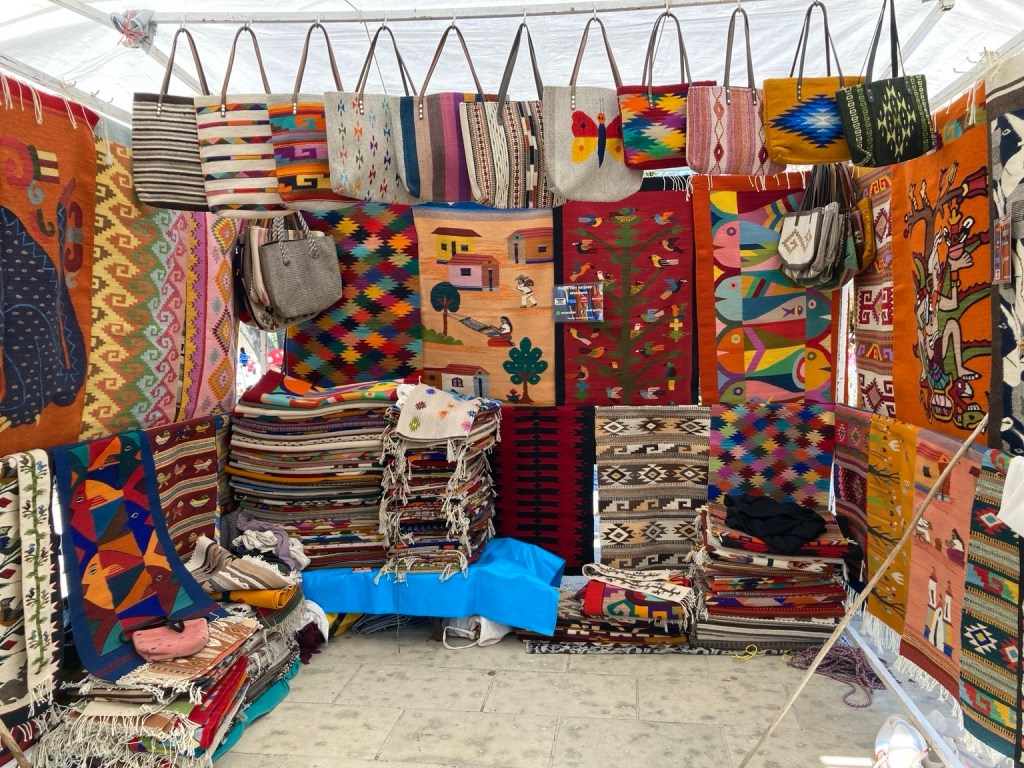
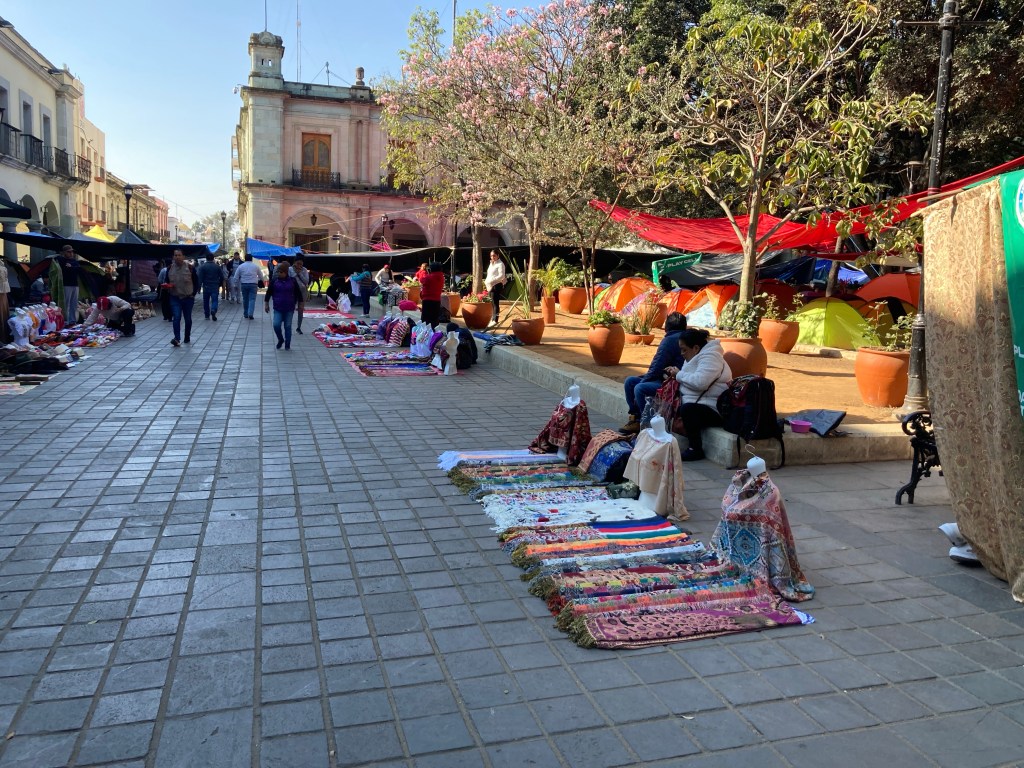
… and a craft market with rugs …

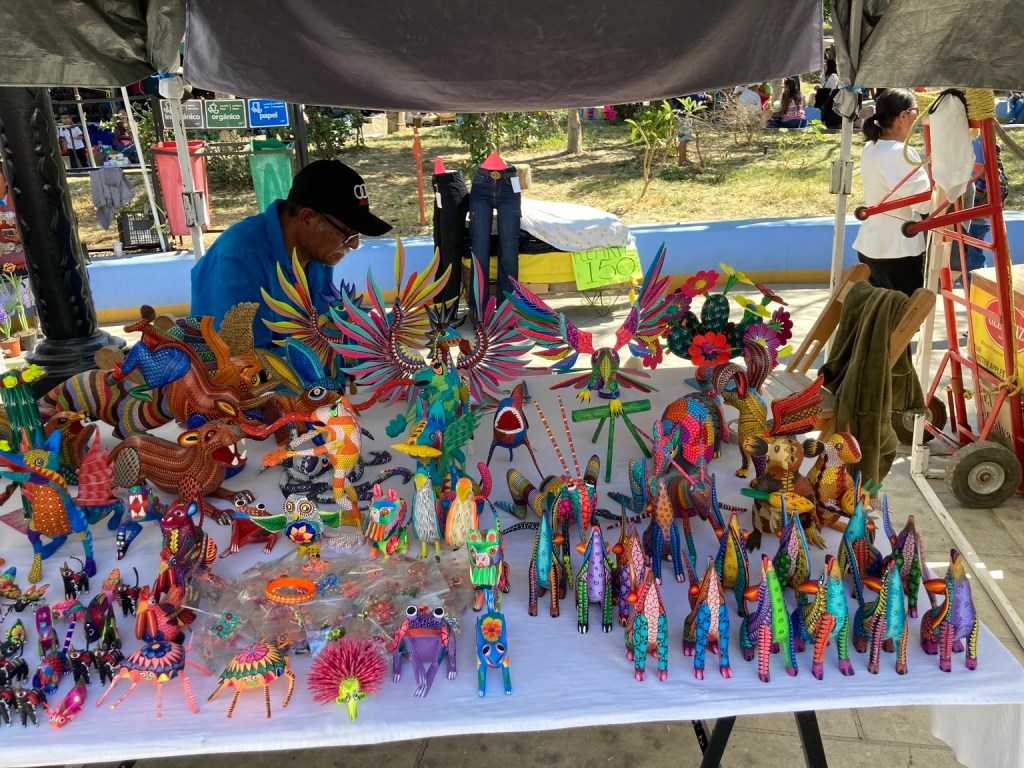
… and the whimsical painted wooden creatures called alebrijes which come from the nearby town of San Martín Tilcajete.

Our returned journey was more successful and we ended up in the back of a collectivo with a lady, while two chaps shared the front with the driver … and the fare 40 peso each, just £3.50 between us!

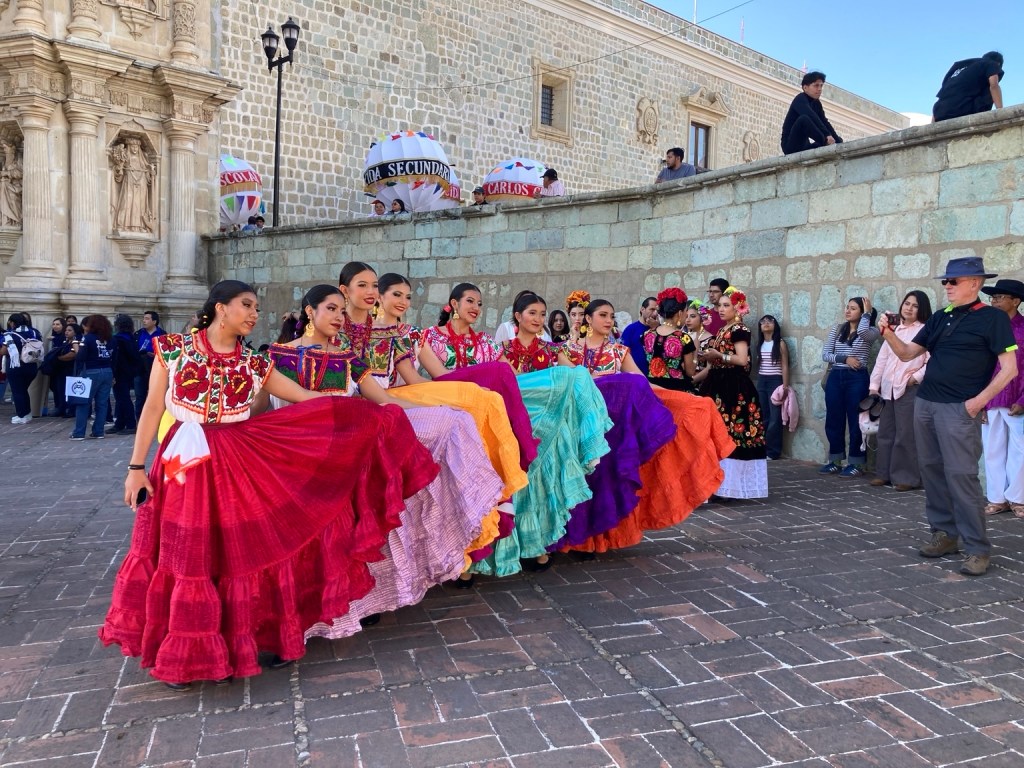
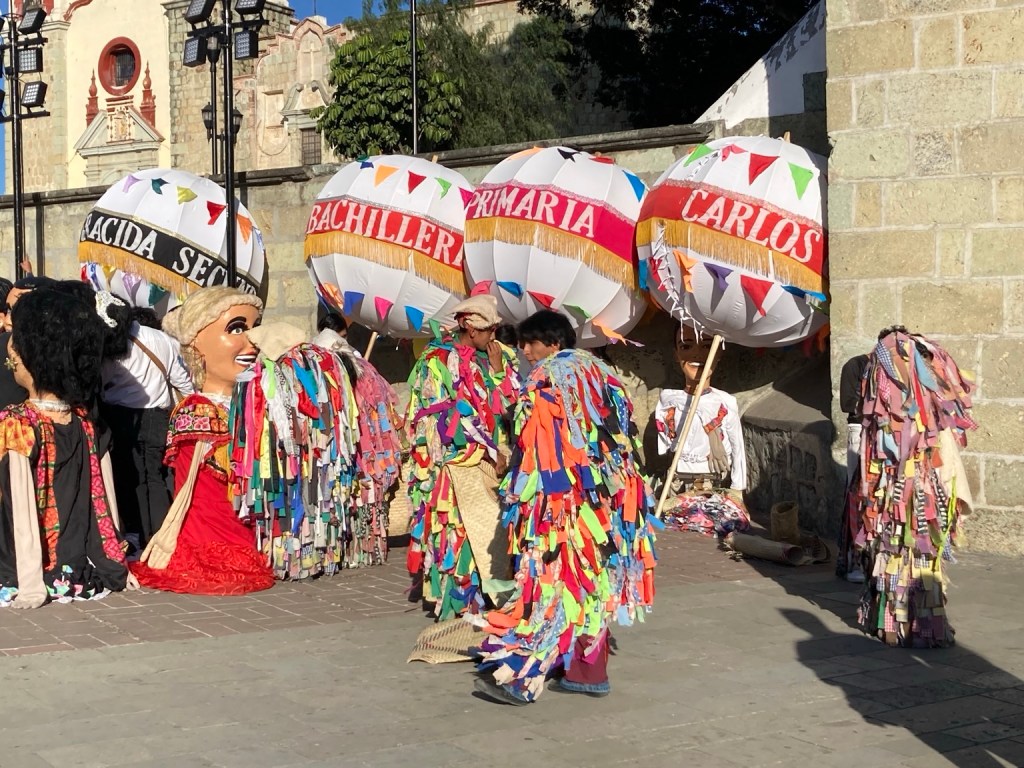
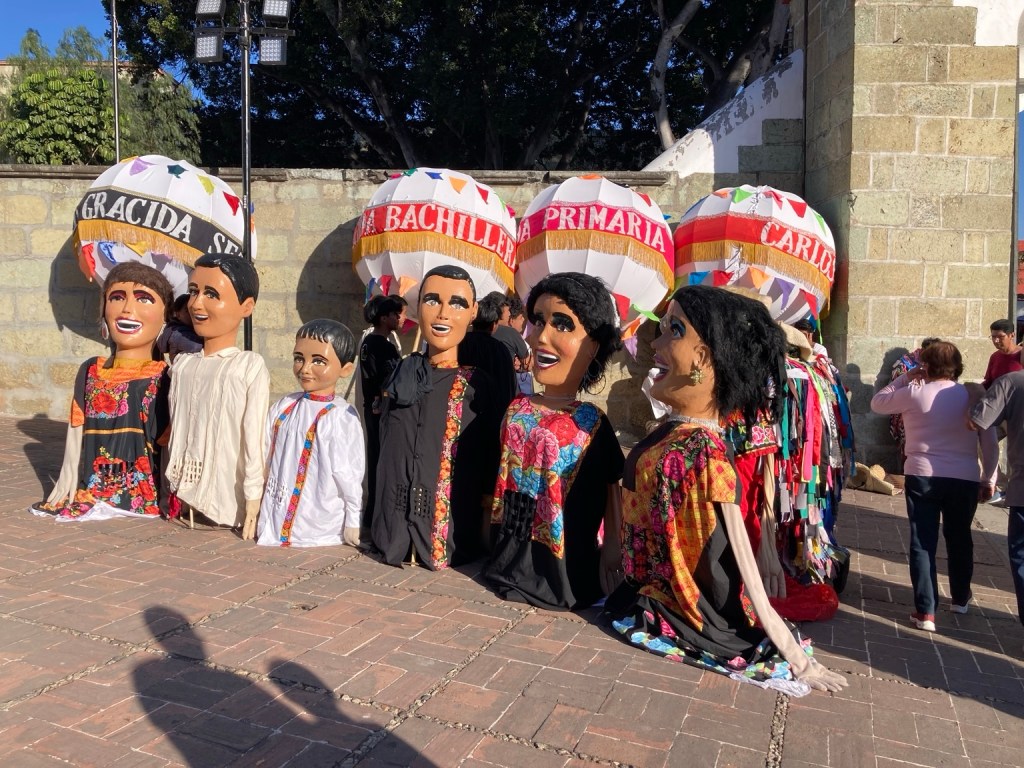
Walking back to the hotel we spotted activity at La Soledad, a huge group preparing for a parade to celebrate 65 years of a local school, with many of the students in local dress and large balloons and paper mache figures to be carried.

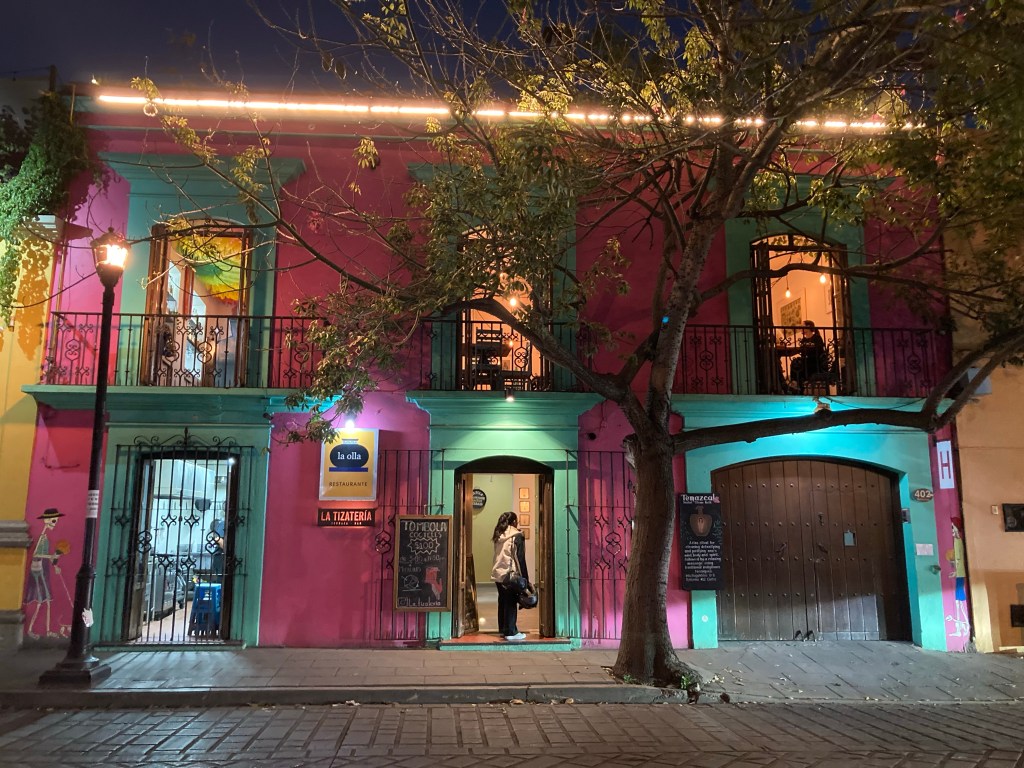
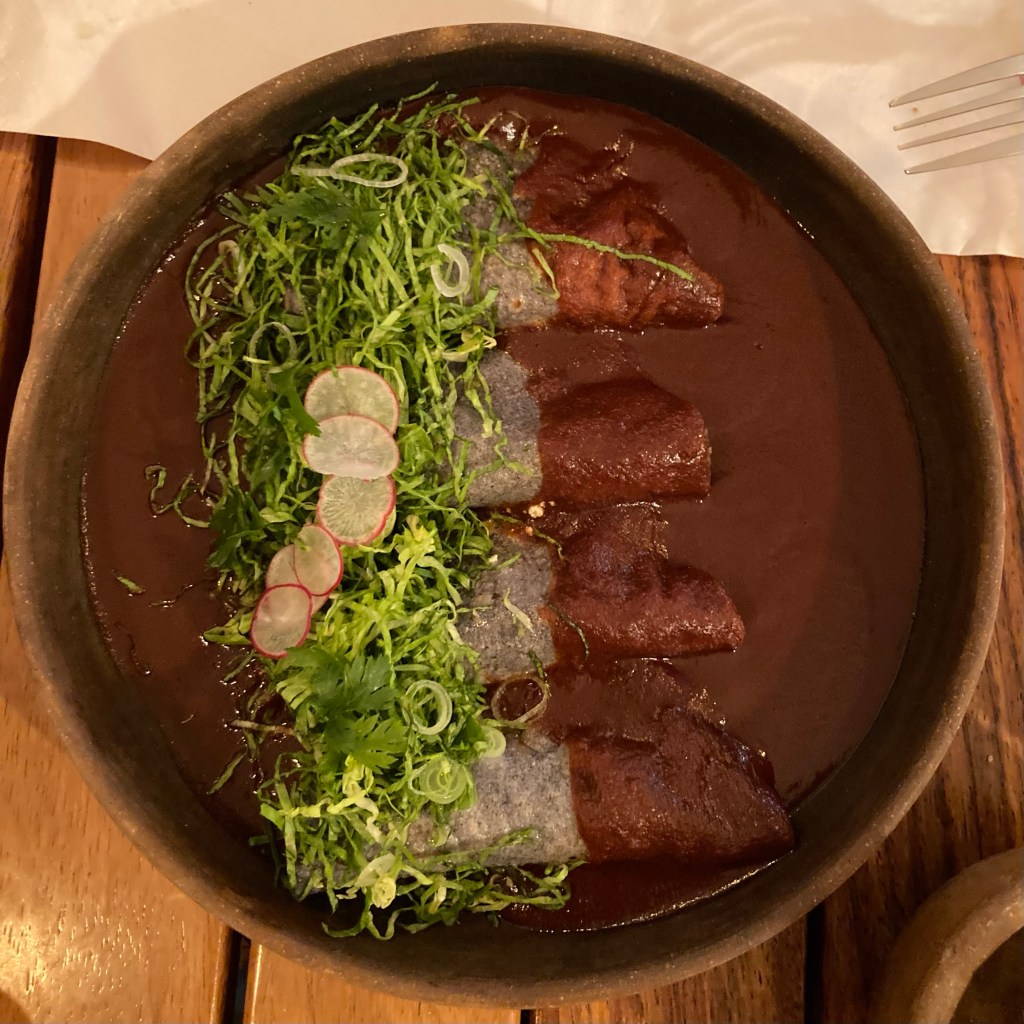
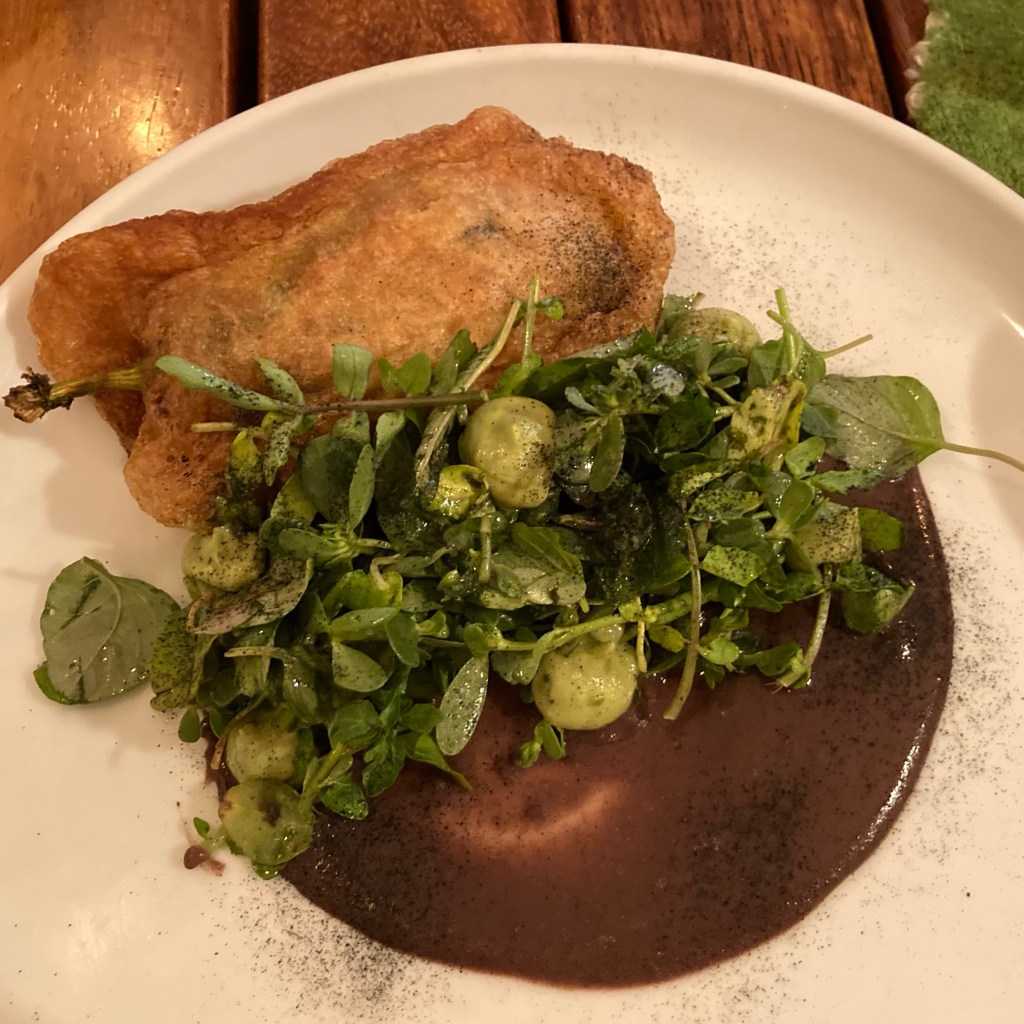
Dinner was at La Olla, a long standing local restaurant with veggie choices and in fact we both had a yellow mole flavoured with yellow chilhuacle chili and thickened with corn.

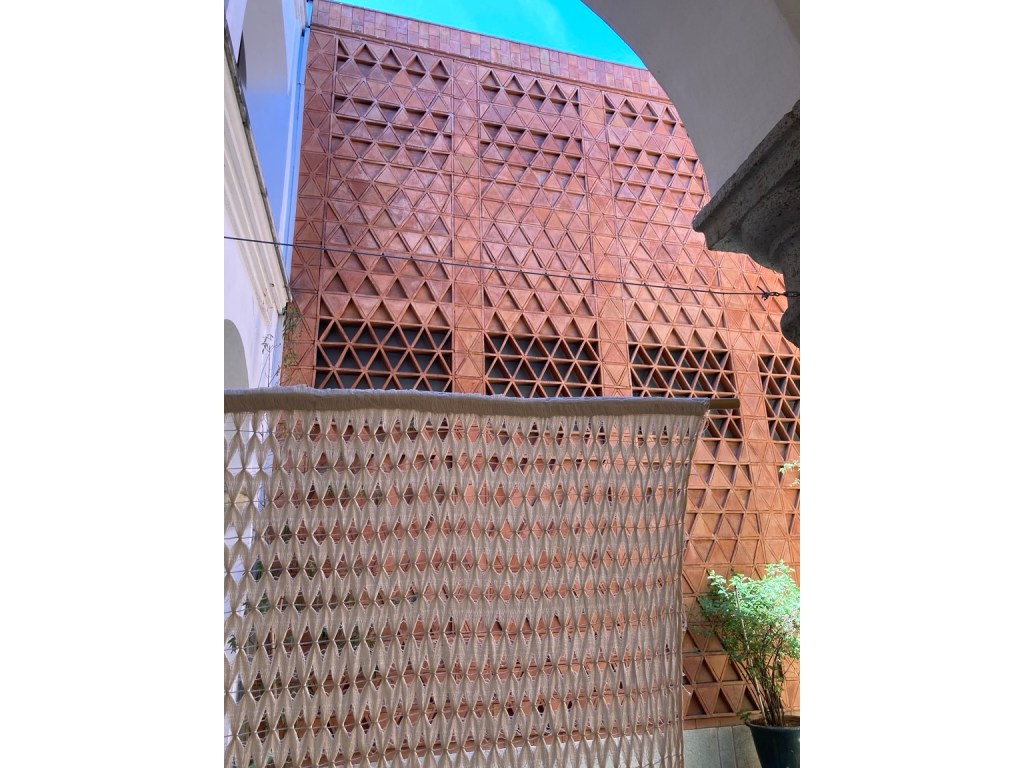
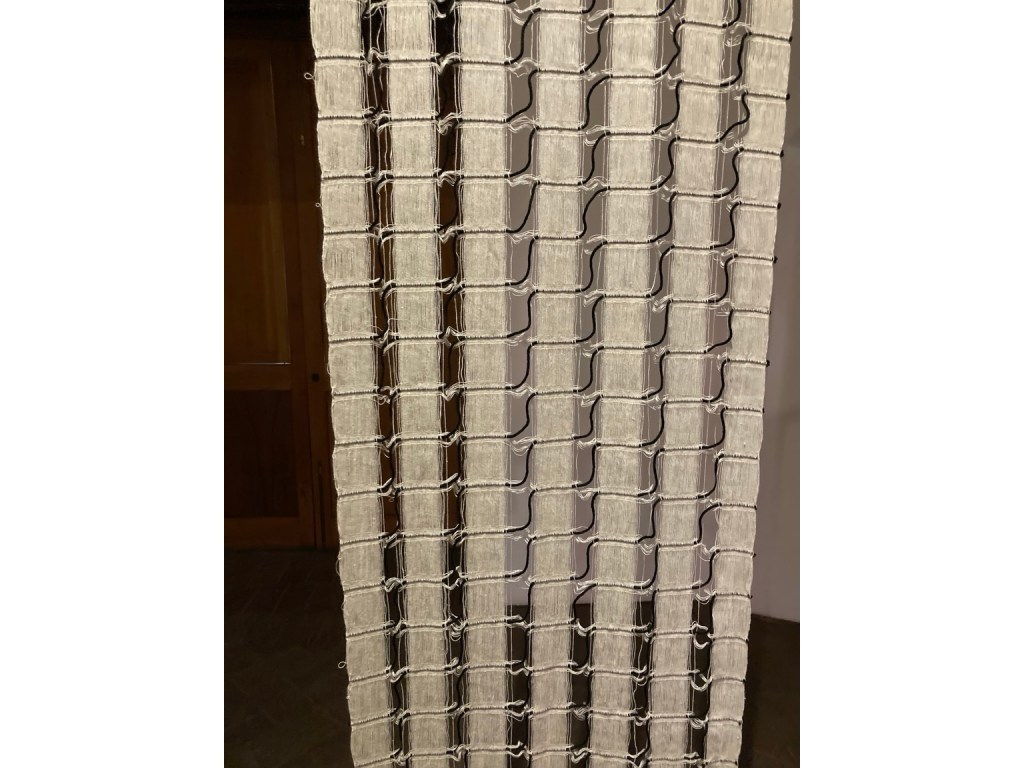
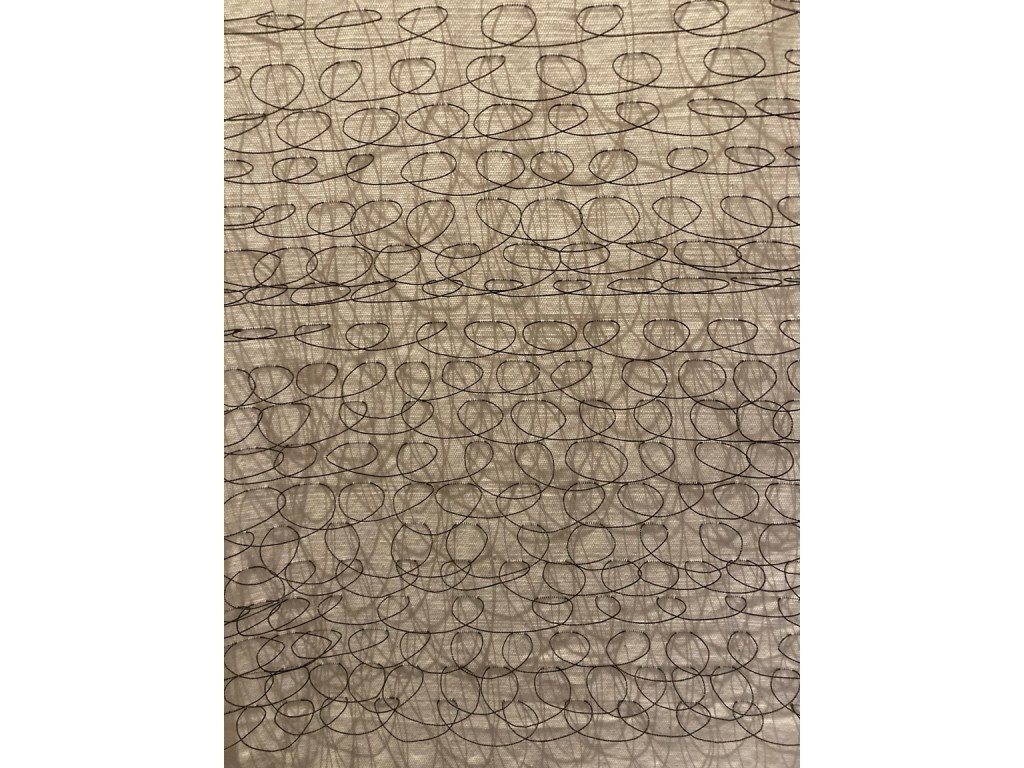
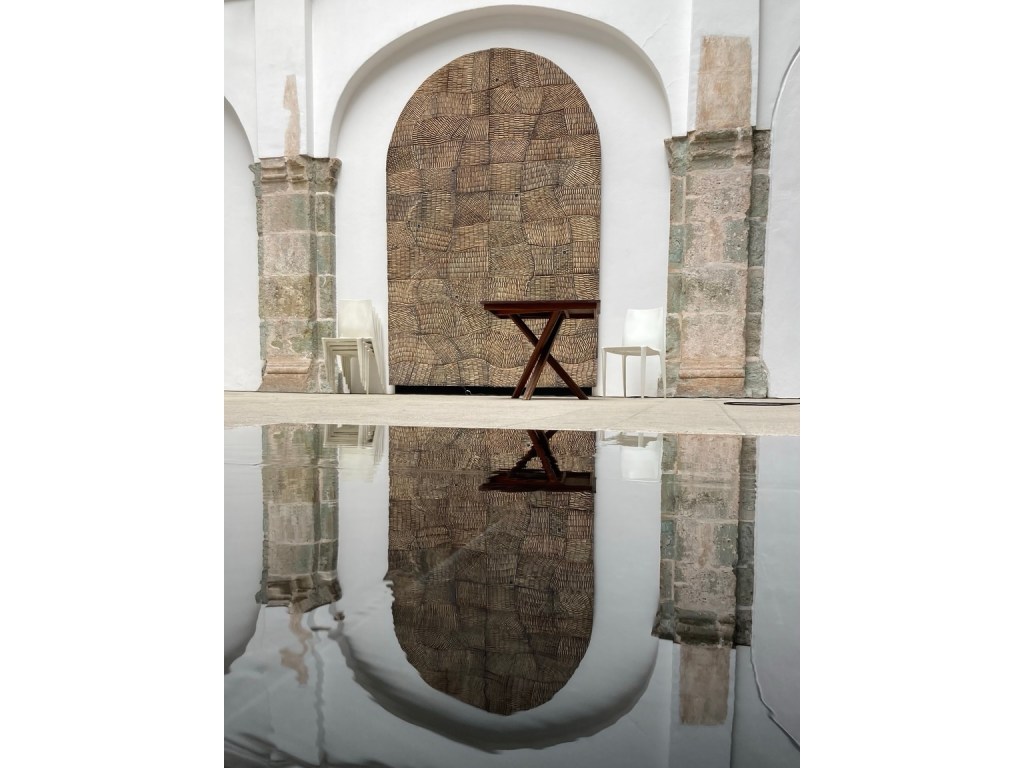
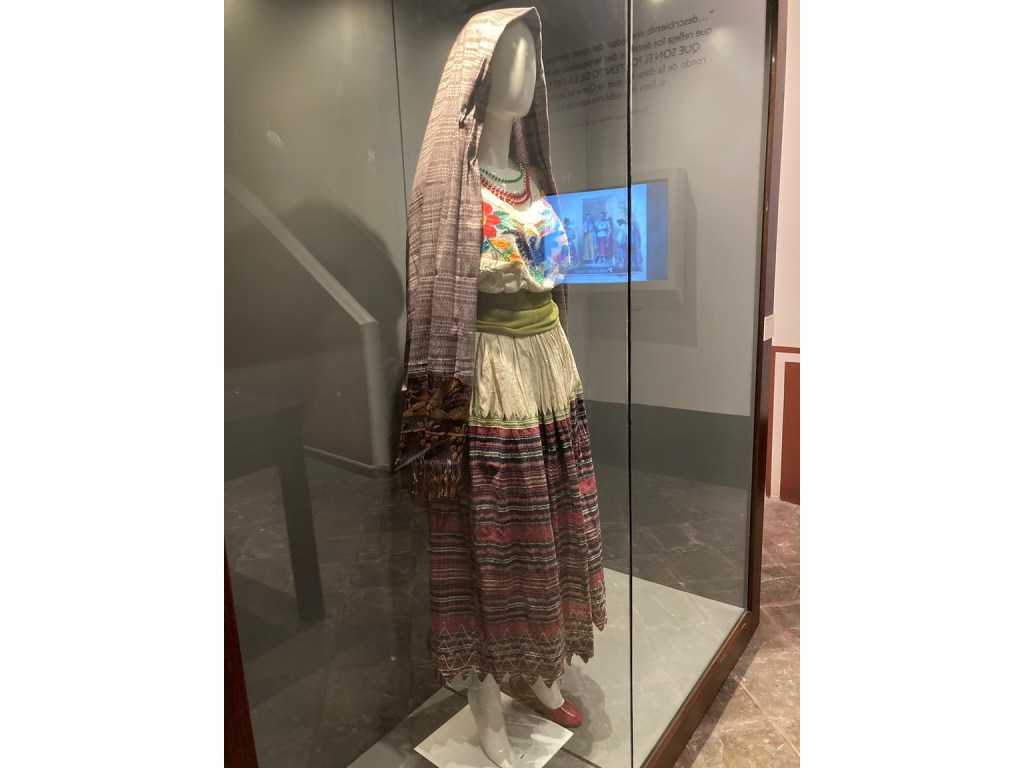
On our last day in Oaxaca, we had a slow start, packed our bags and went to visit a couple of museums – The Textile Museum with contemporary exhibits …

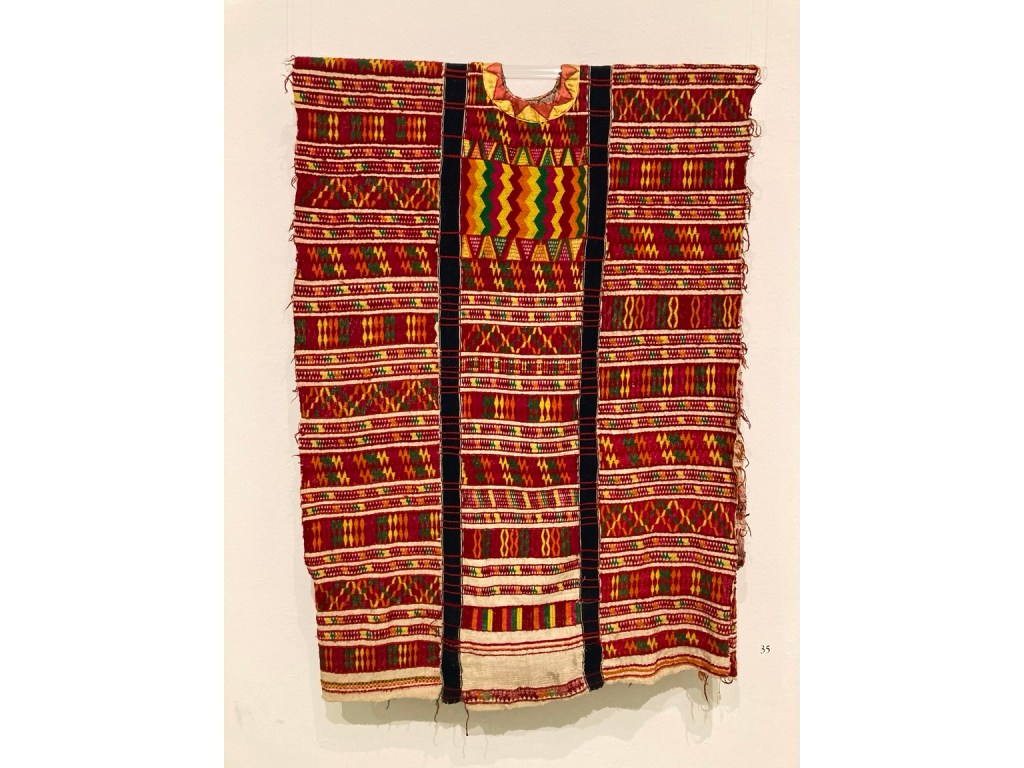
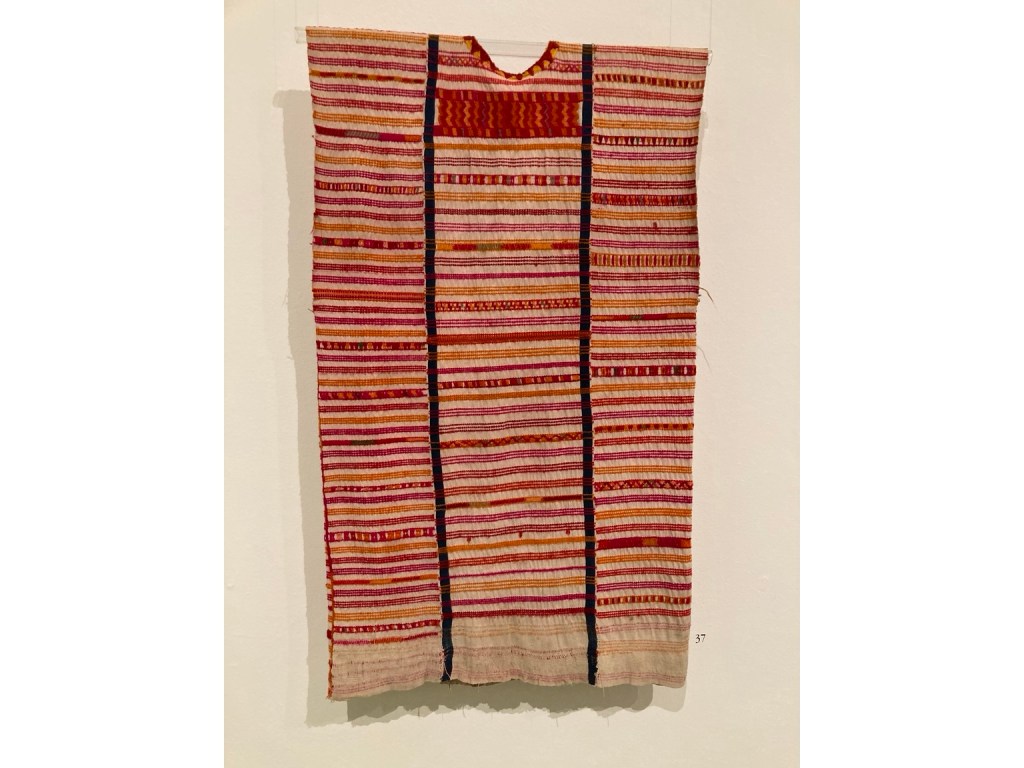
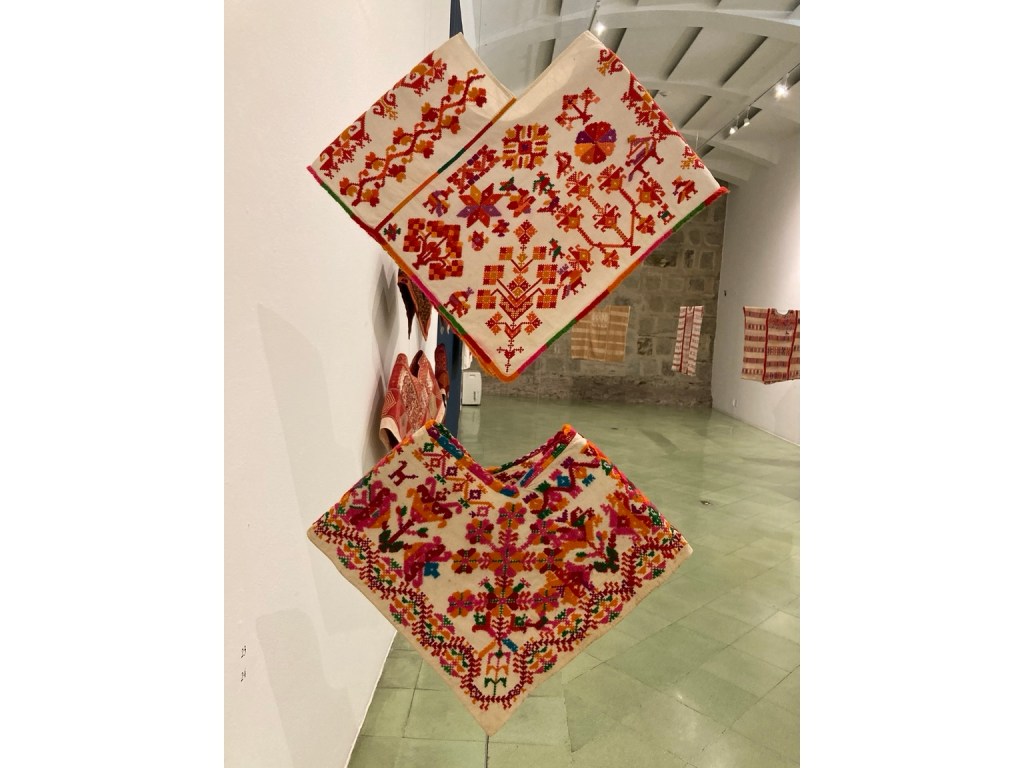
… and their collection of local huipils …

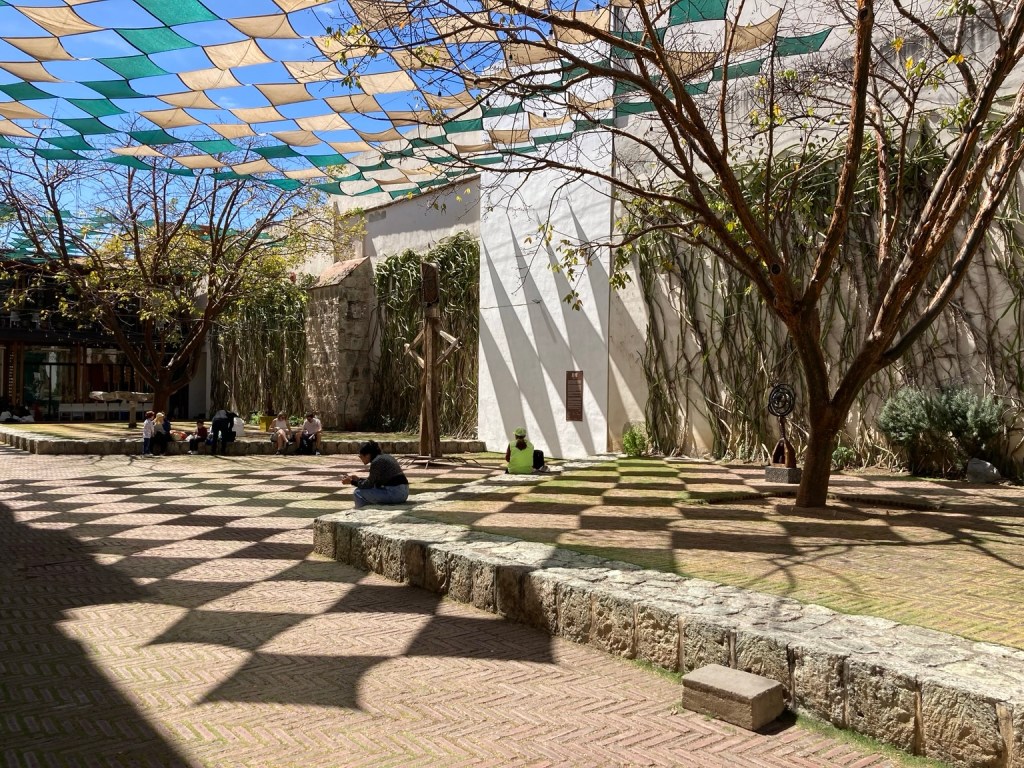
… through the San Pablo Cultural Centre …

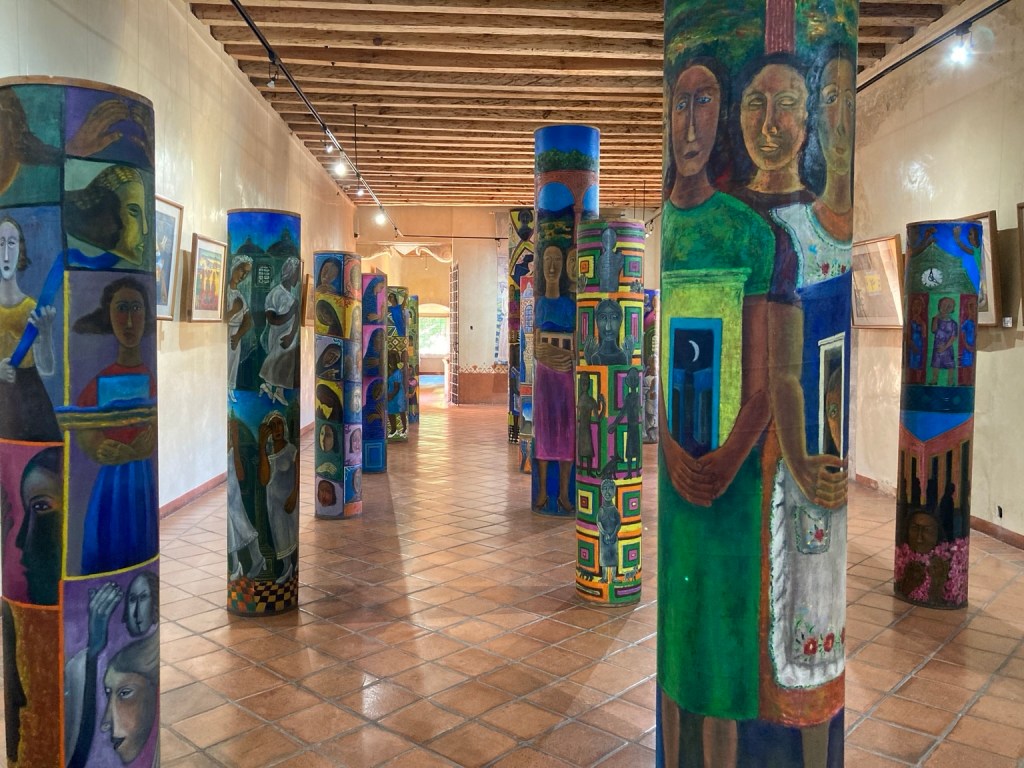
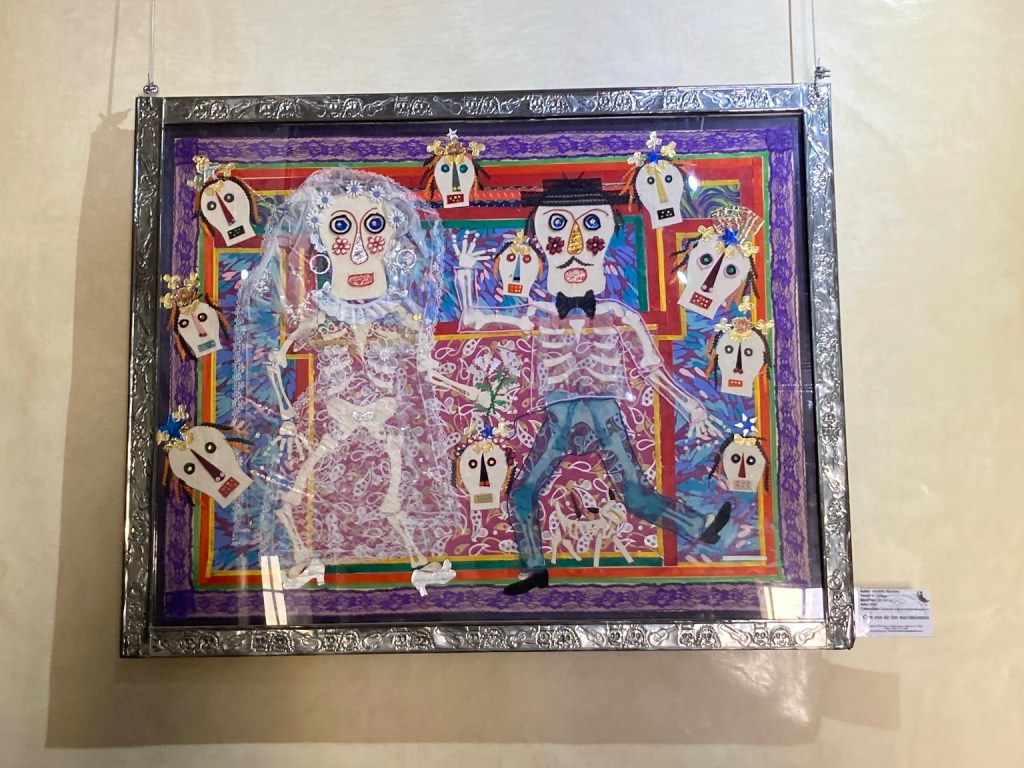
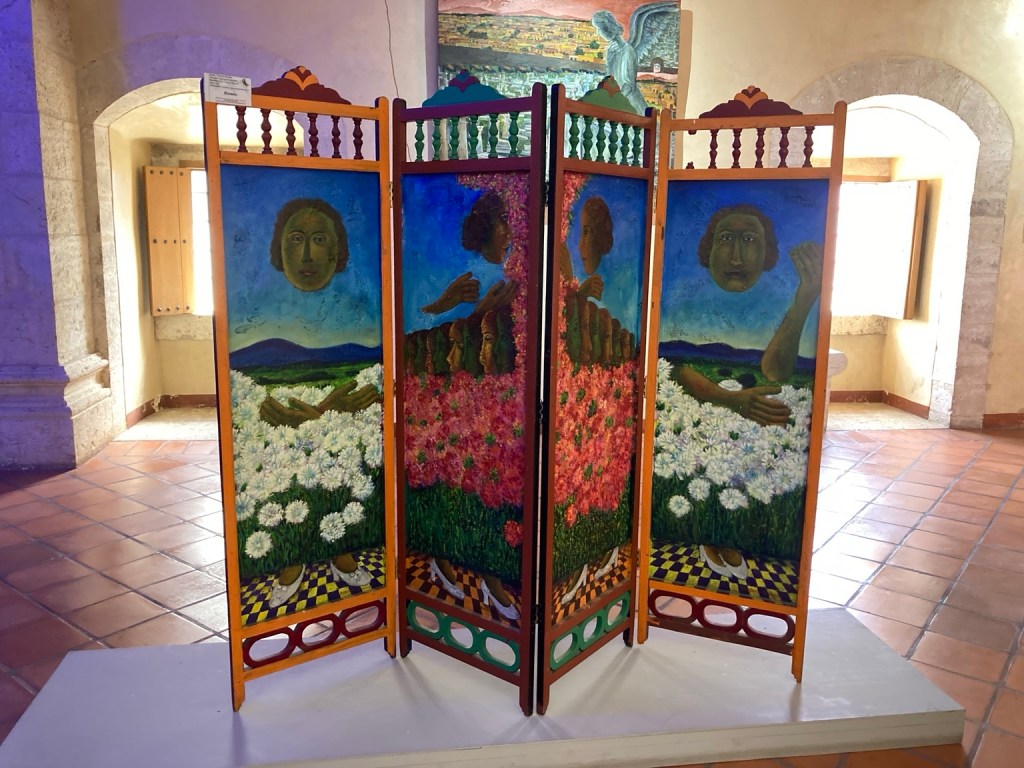
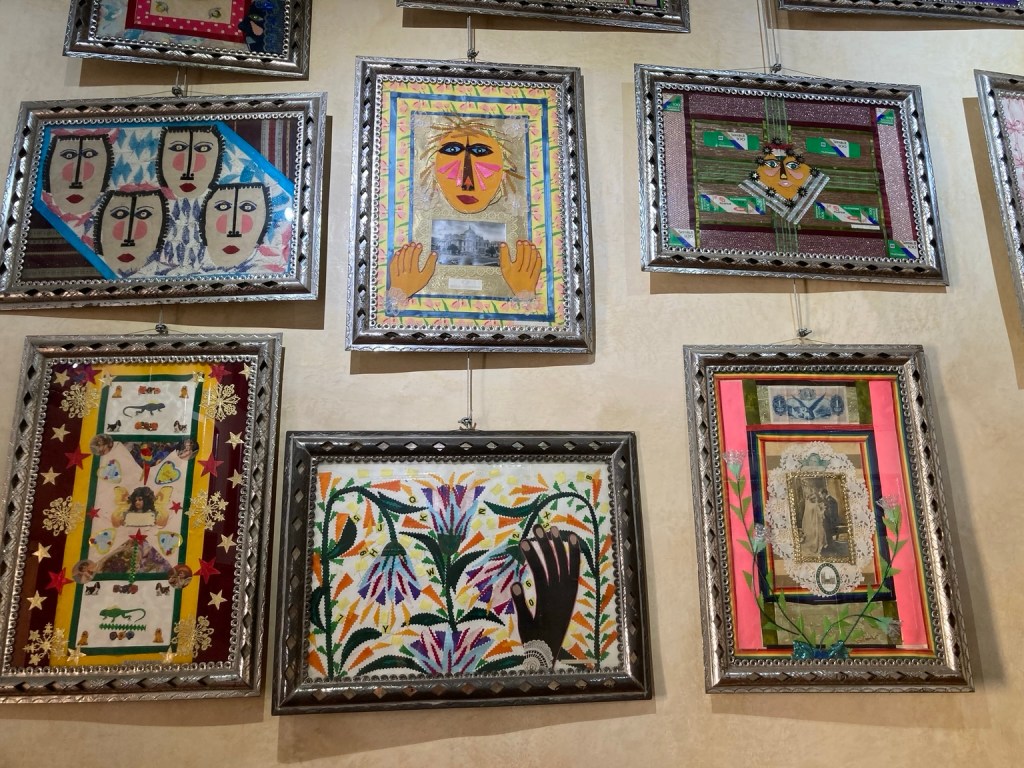
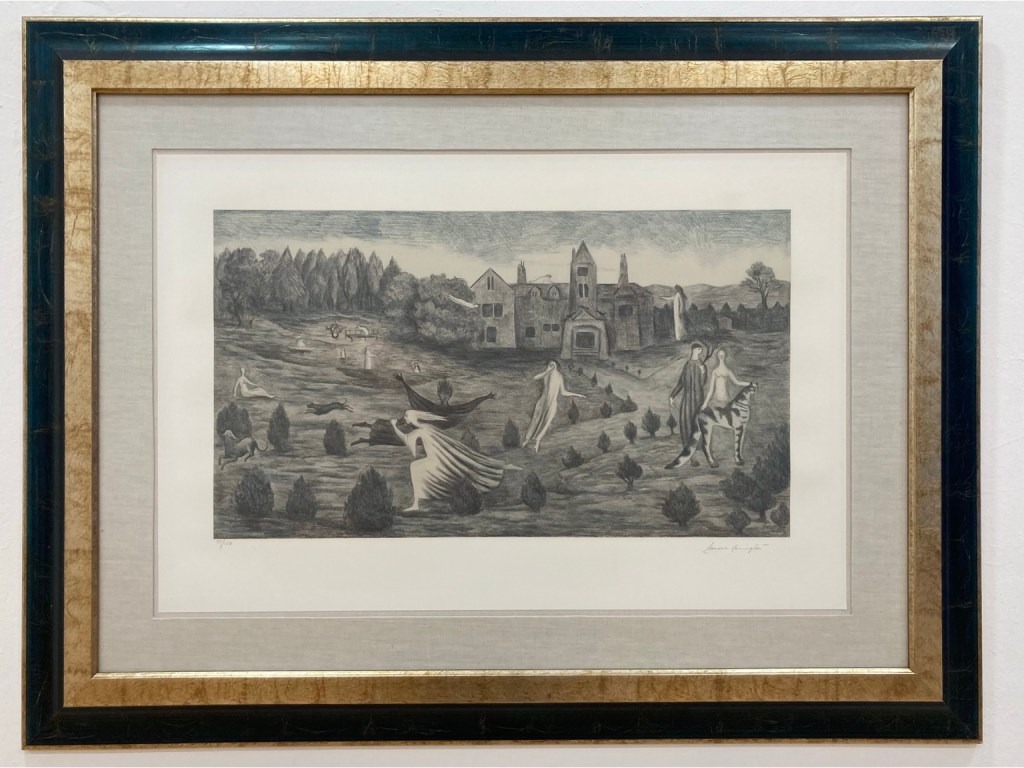
… to the Museo de los Pintores with its eclectic mix of exhibits. Leonora Carrington was a famous British-Mexican surrealist and some of her drawings were on display including this one of Carrington Hall …

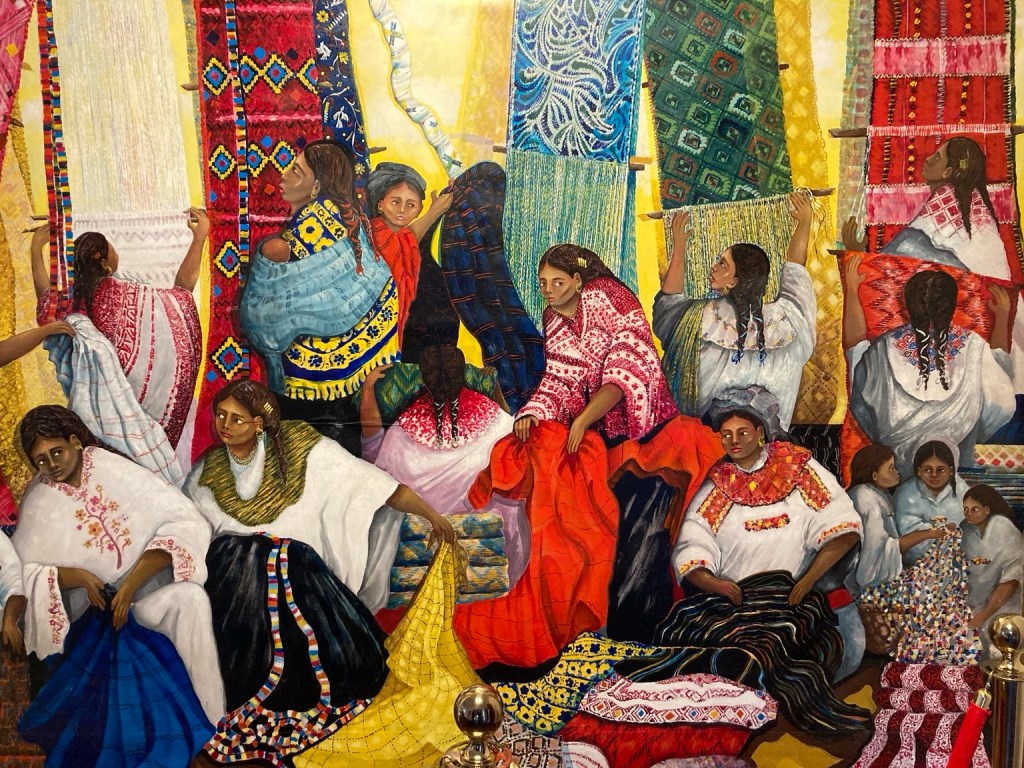
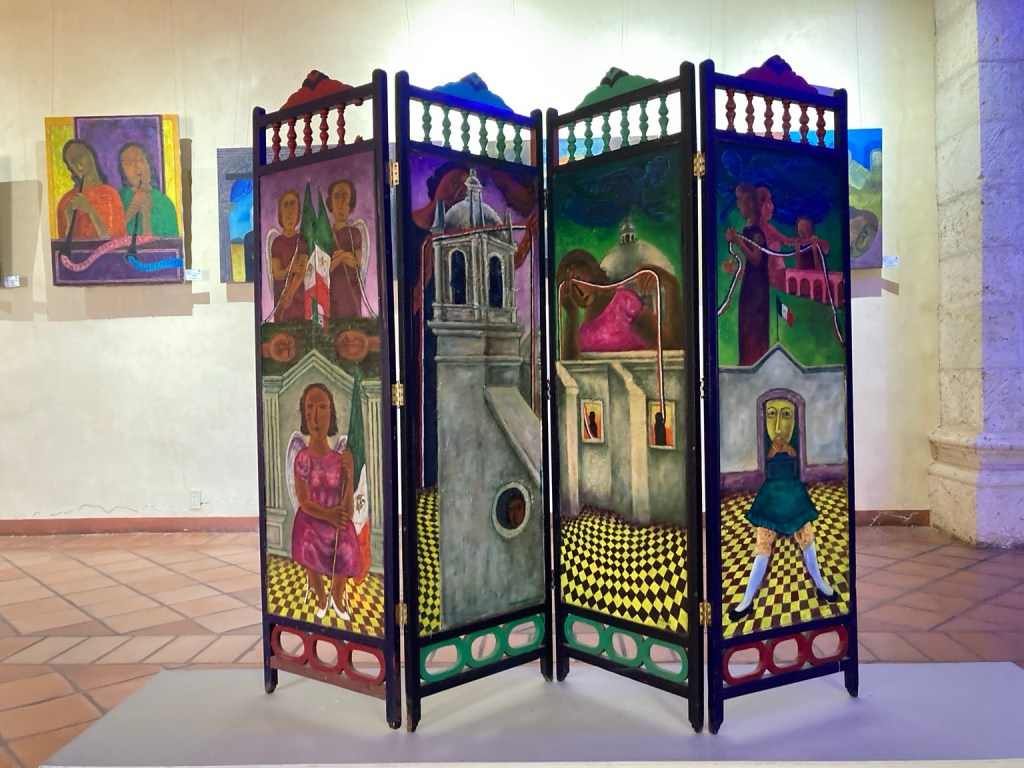
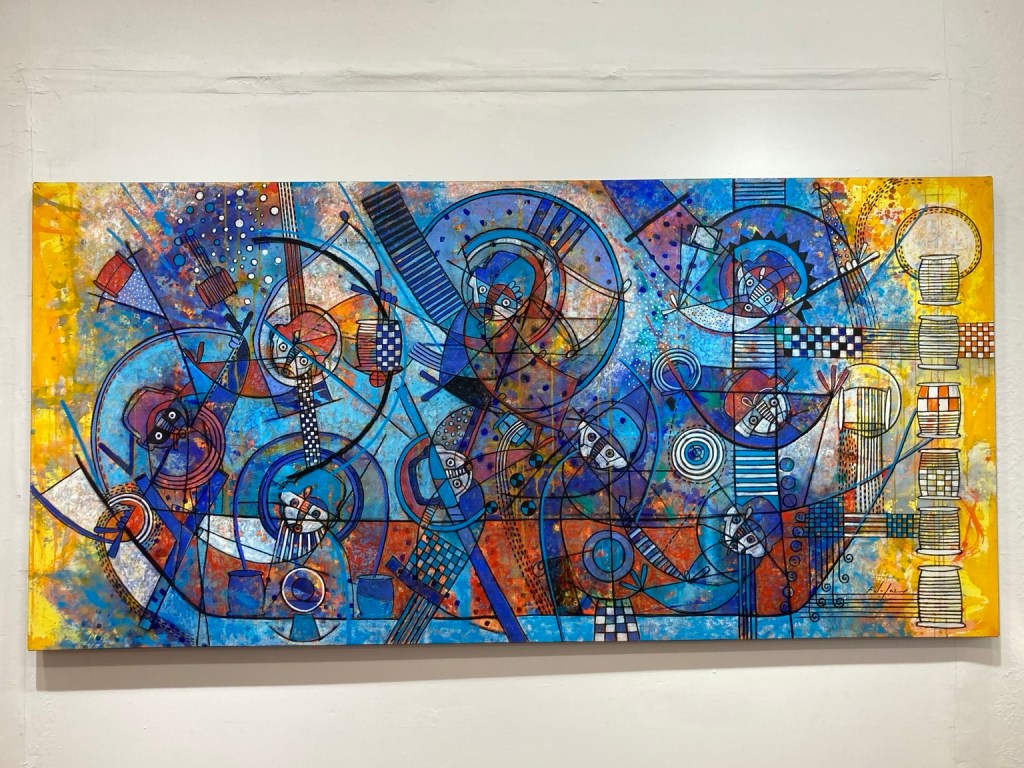
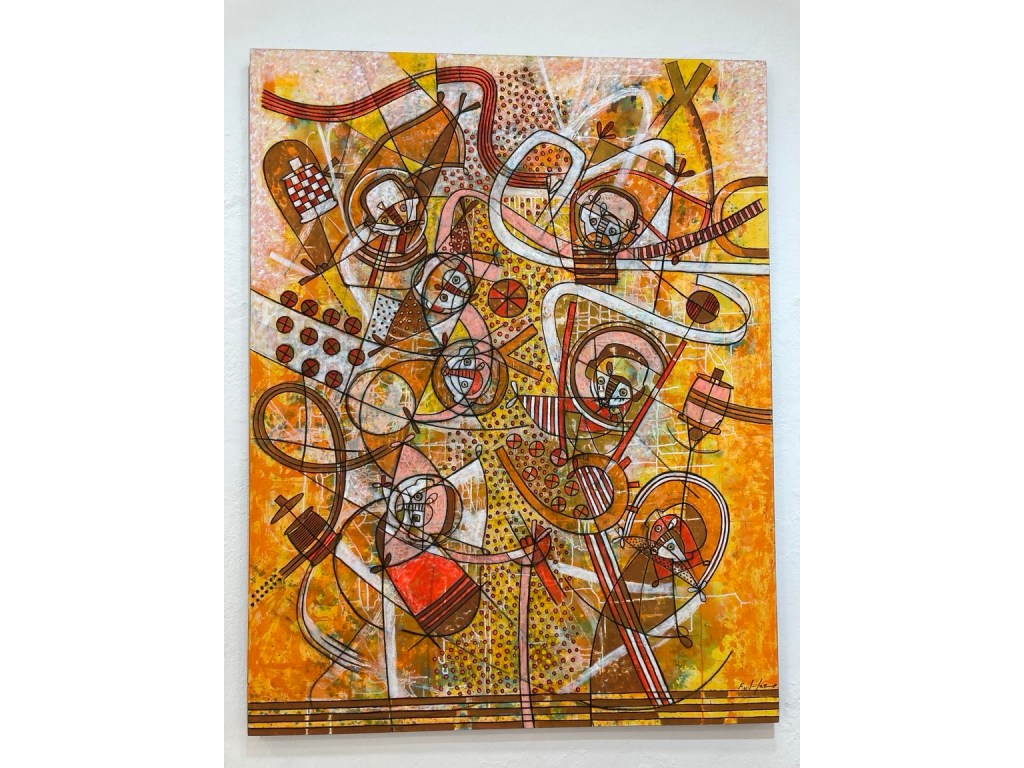
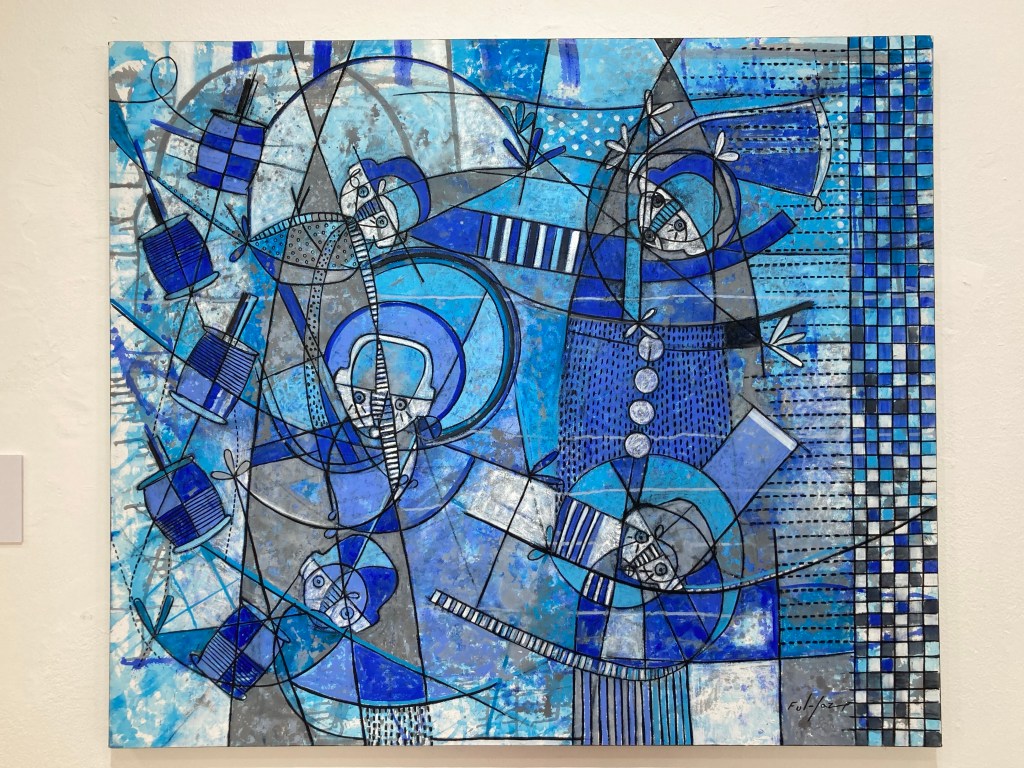
… but I was drawn to these colourful images by a local artist called Fulgencio Lazo filled with images of weaving and cotton reels!

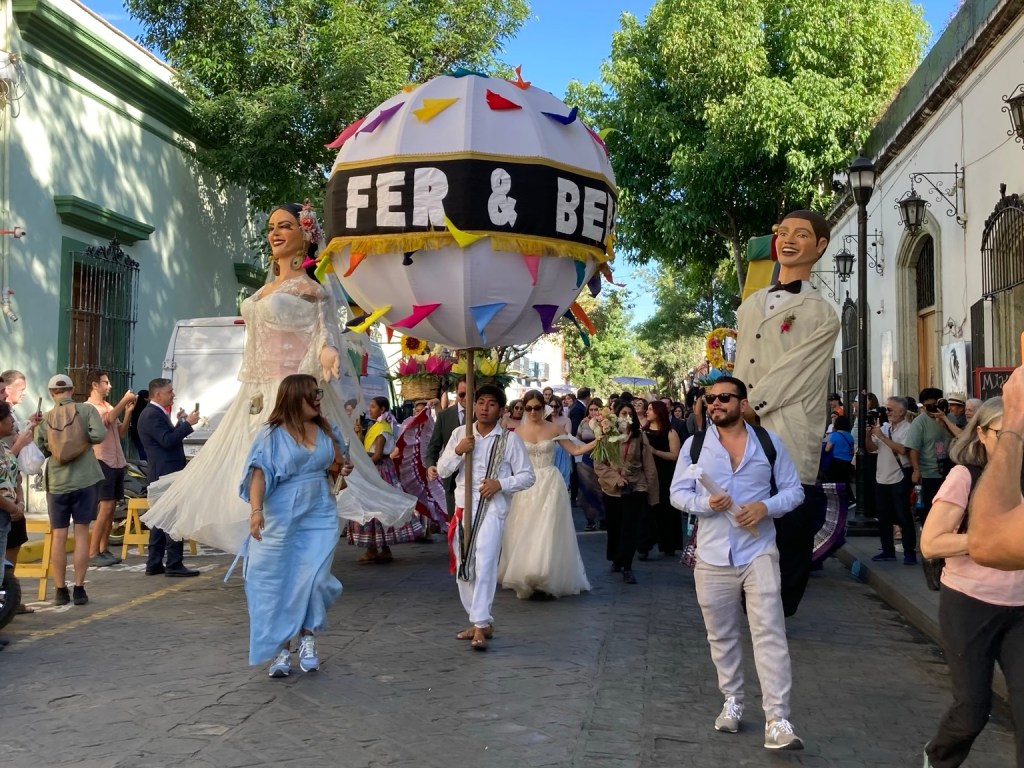
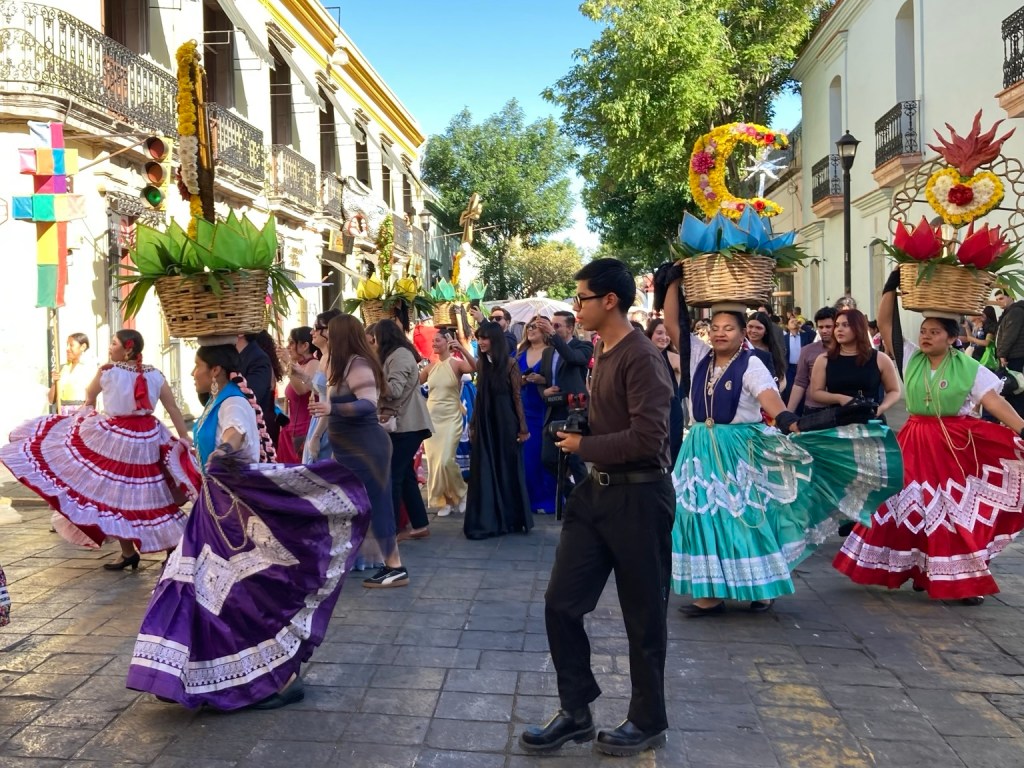
Later, we spotted a wedding procession in the street, with the banner round the ball at the front with their names, two huge paper mache bridal figures, a band and colourfully dressed dancers who would all have been hired, mingling with the weddding guests behind. No doubt they also have to pay to have the police stop traffic on their route! 

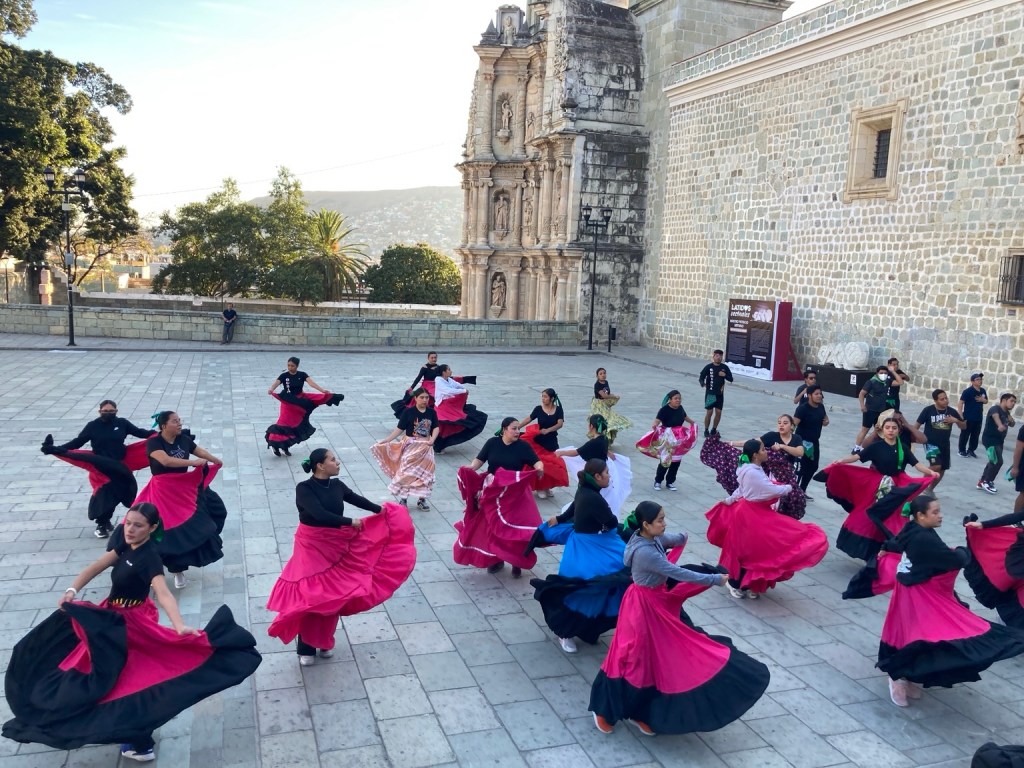
There was also dancing at La Solenid, maybe a class or practice for a show!  

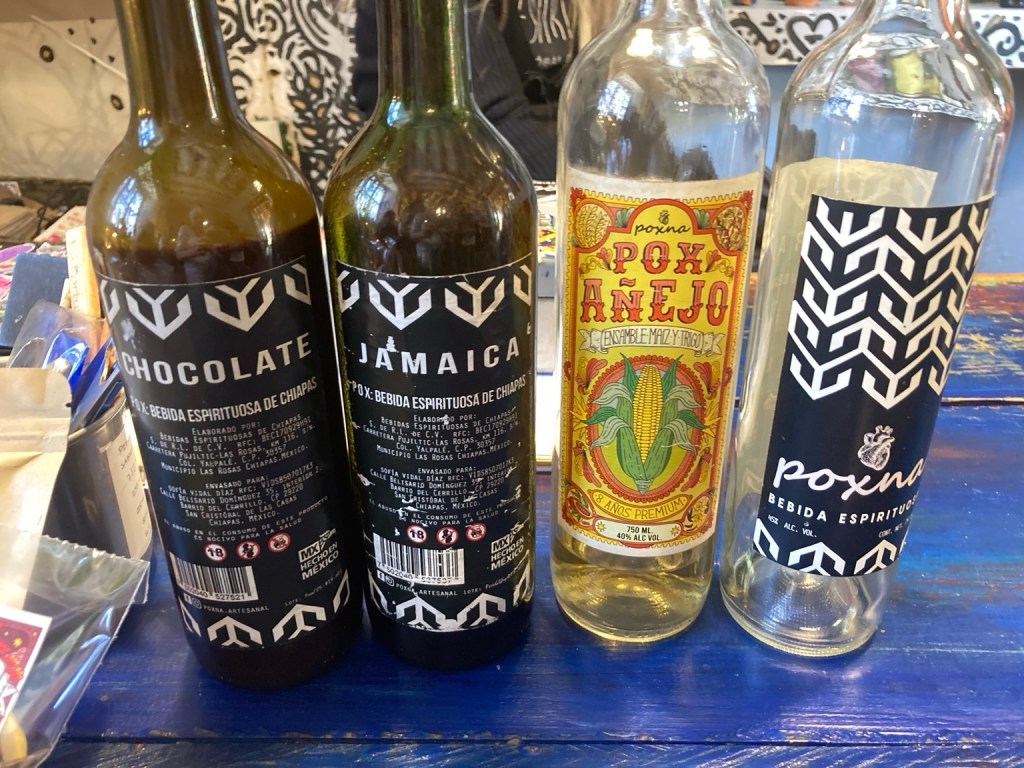
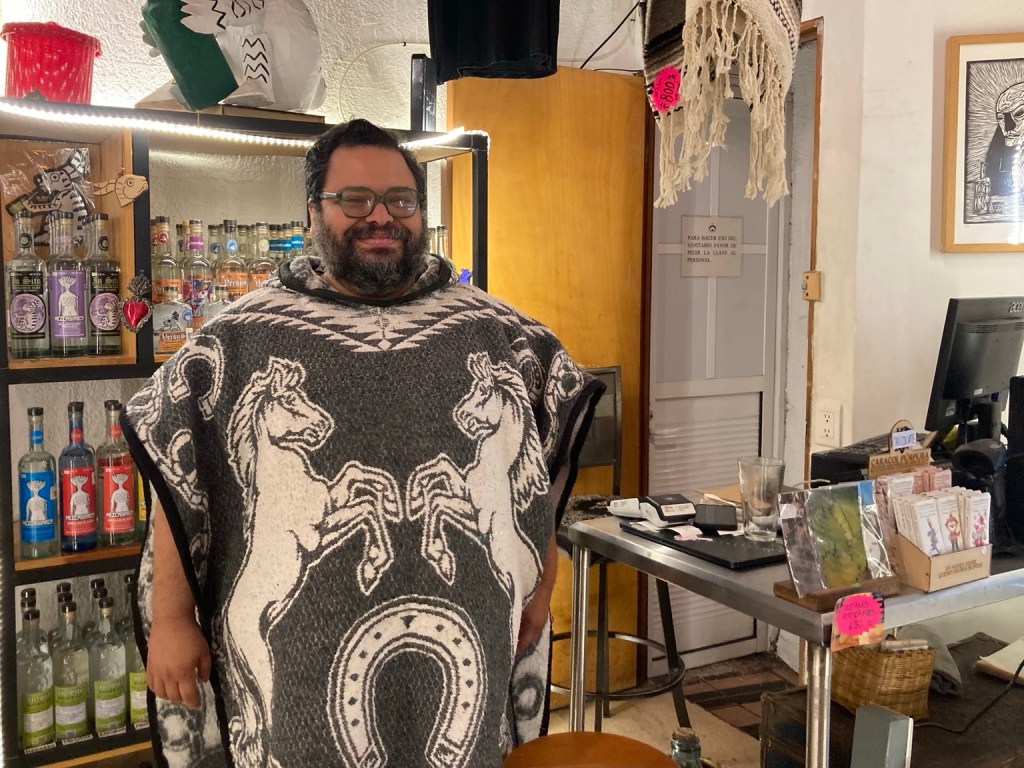
We picked up some bits for later … three small bottles of mexcal so we could have a little tasting session on the bus to help us sleep …

… and snacks just in case …

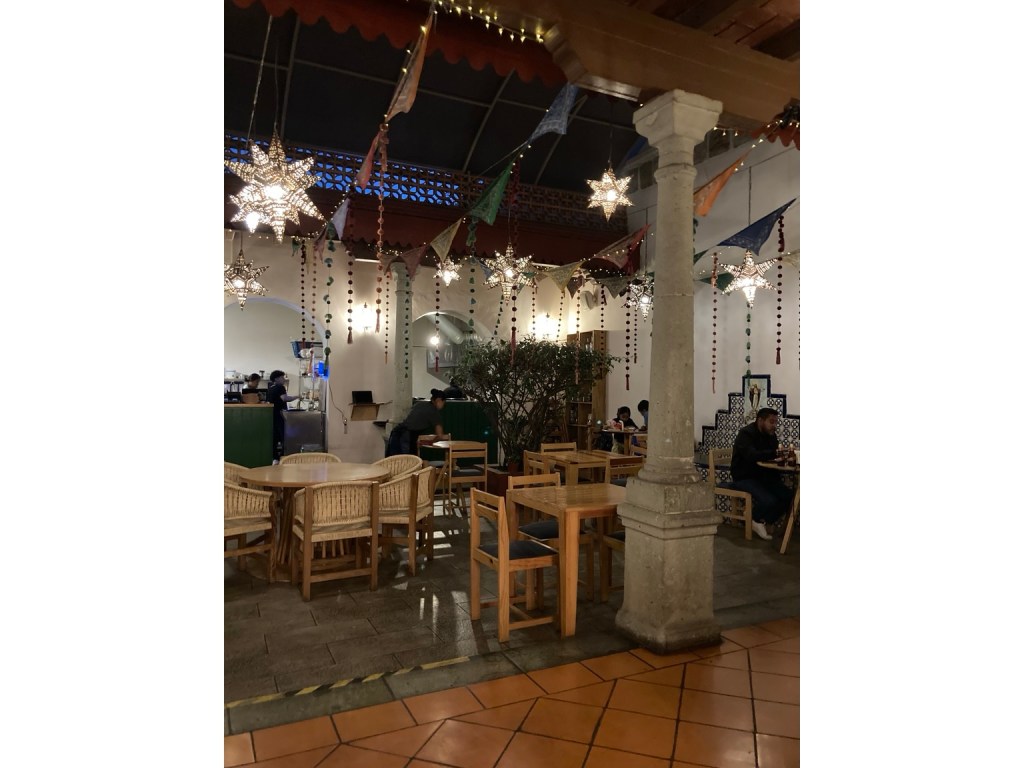
… and had an early dinner at Taniperla before heading to the bus station. 

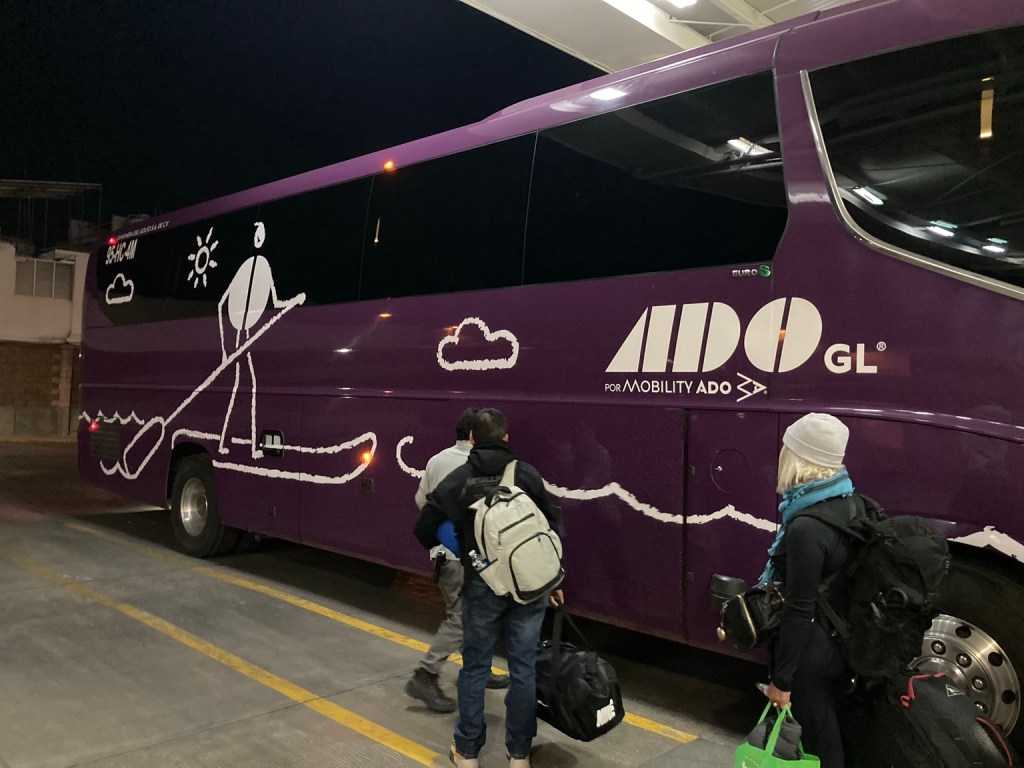
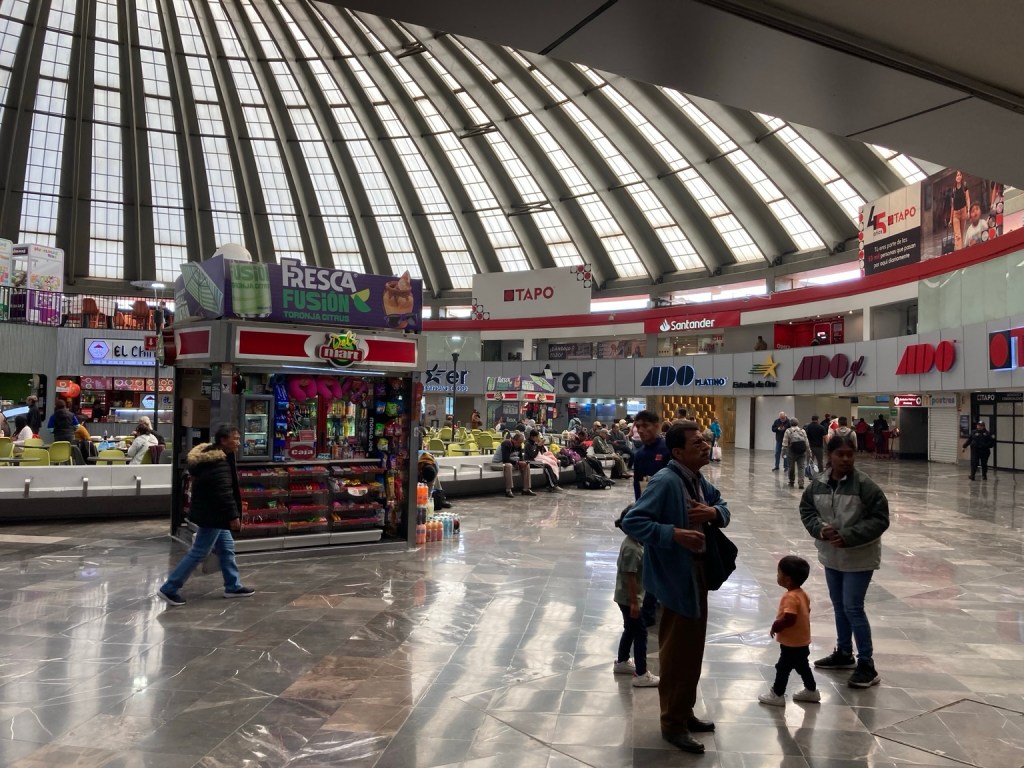
With a 12 hour trip ahead of us, we had booked the front seats in the posher purple ADO bus …

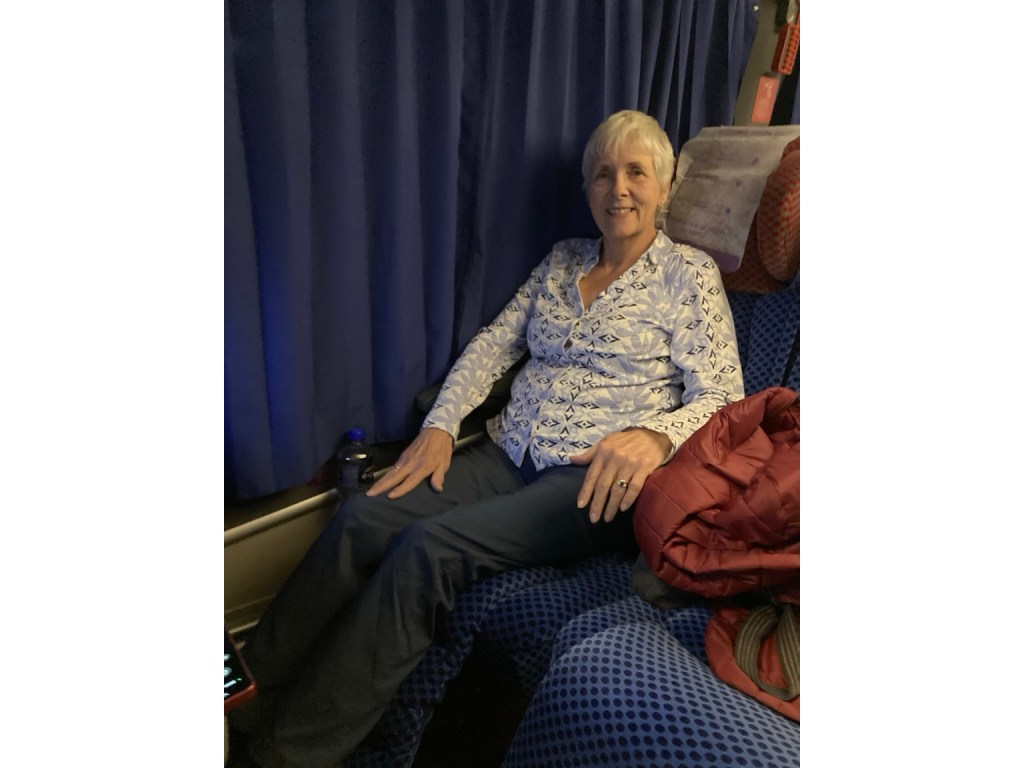
… with complimentary water, in seat entertainment … only in Spanish, and reclining seats with footrests. 

Mind you, our planned mexcal tasting didn’t quite happen as the bus was in darkness once we left.  We took turns necking one miniature, I listened to a couple of podcasts and was eased into sleep by Bill Nighy’s dulcet tones.

See you in the morning!

Map

Oaxaca … Weaving Together

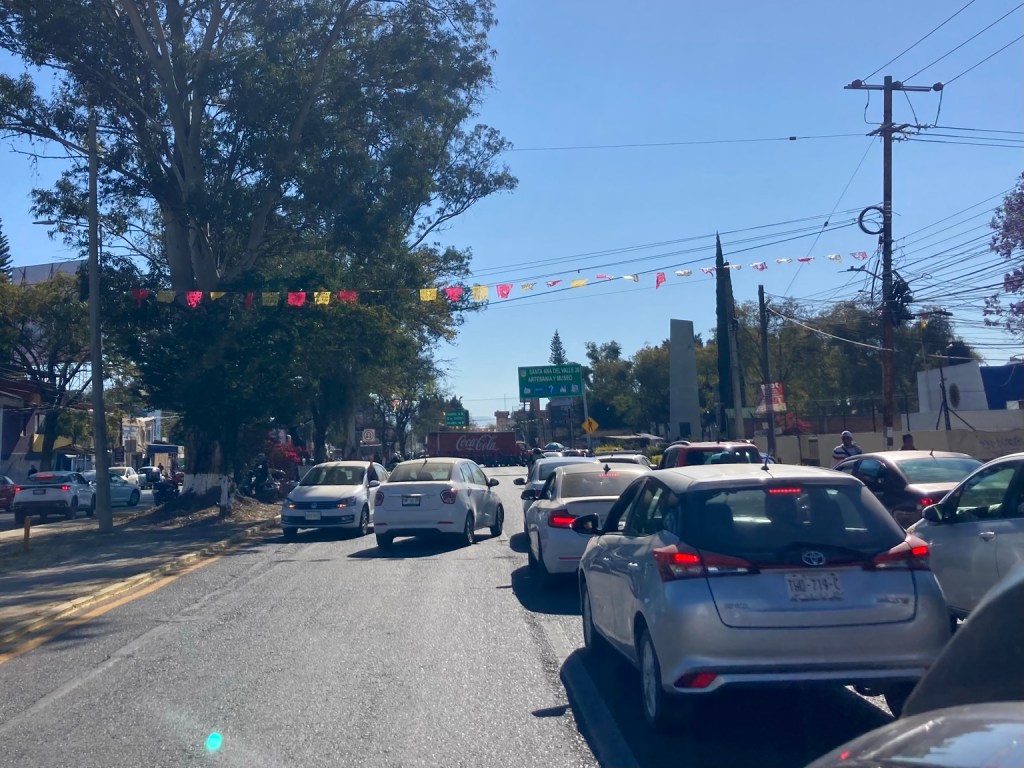
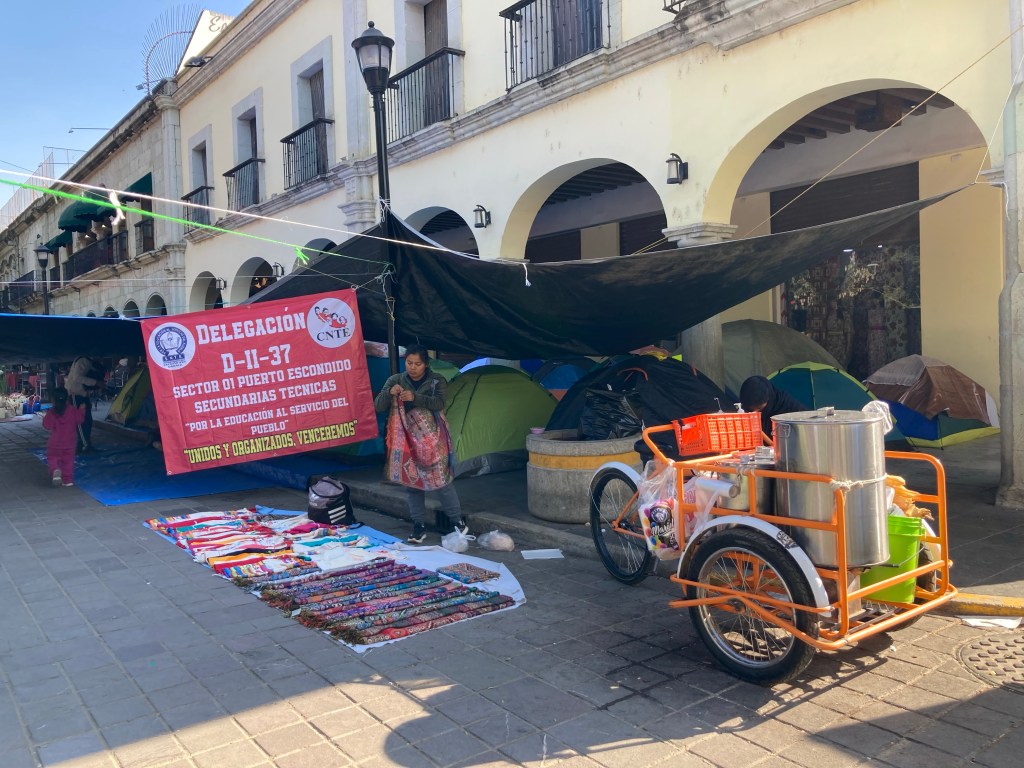
I have been so looking forward to today! We are booked on a textile tour to Teotitlán del Valle where the Zapotec indigenous community have specialised in making textiles for generations.  We were collected by Laura and Carlos of Where Sidewalks End who work with local families to make these experiences possible for interested travellers.  Our journey was certainly eventful as the main road out of Oaxaca was roadblocked by a huge red Coca Coca lorry by teachers protesting for a pay increase. With some kerb jumping, we  turned round and a few back doubles later we were off.  

Josefina welcomed us into her home …

… but was in a rush as she was off to Mexico City to exhibit a piece of her textile designed to show her Zapotec heritage and culture. It incorporates copper, and agave fibres as well as wool and cotton, all dyed naturally using traditional methods then woven … and was beautiful!

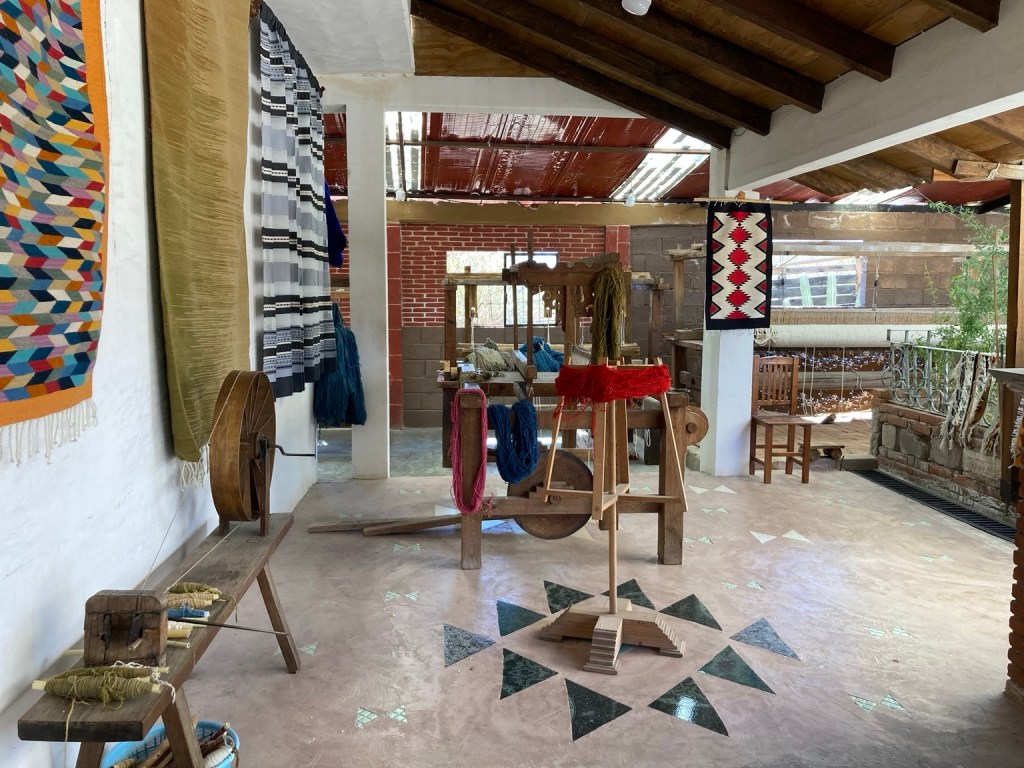
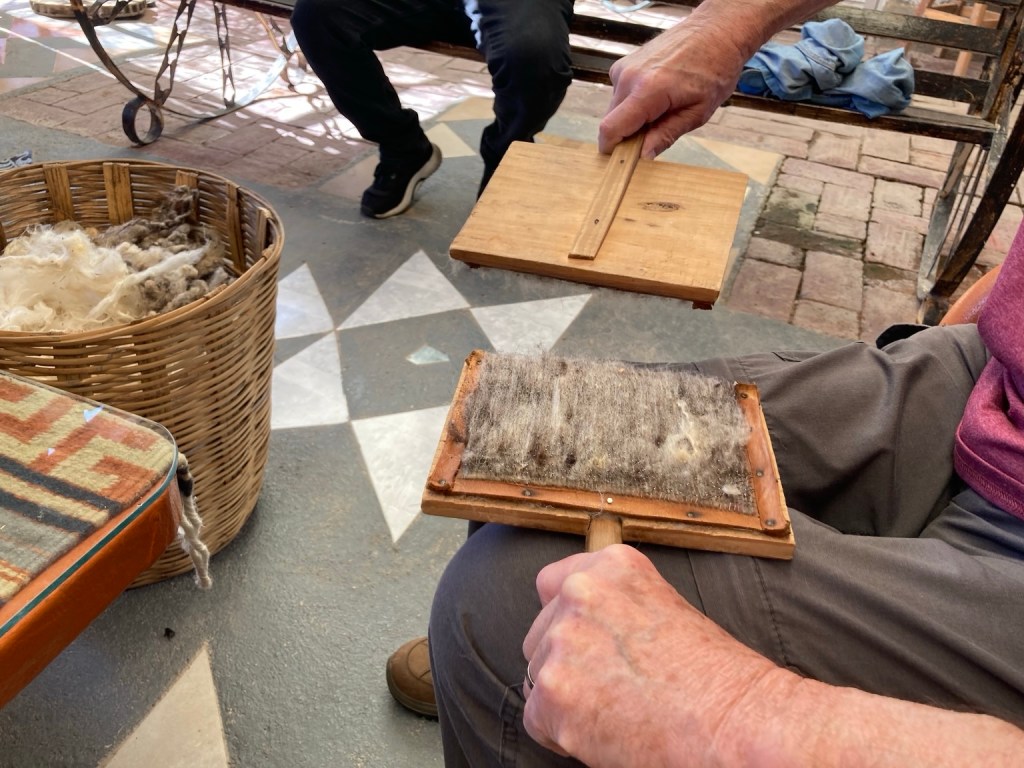
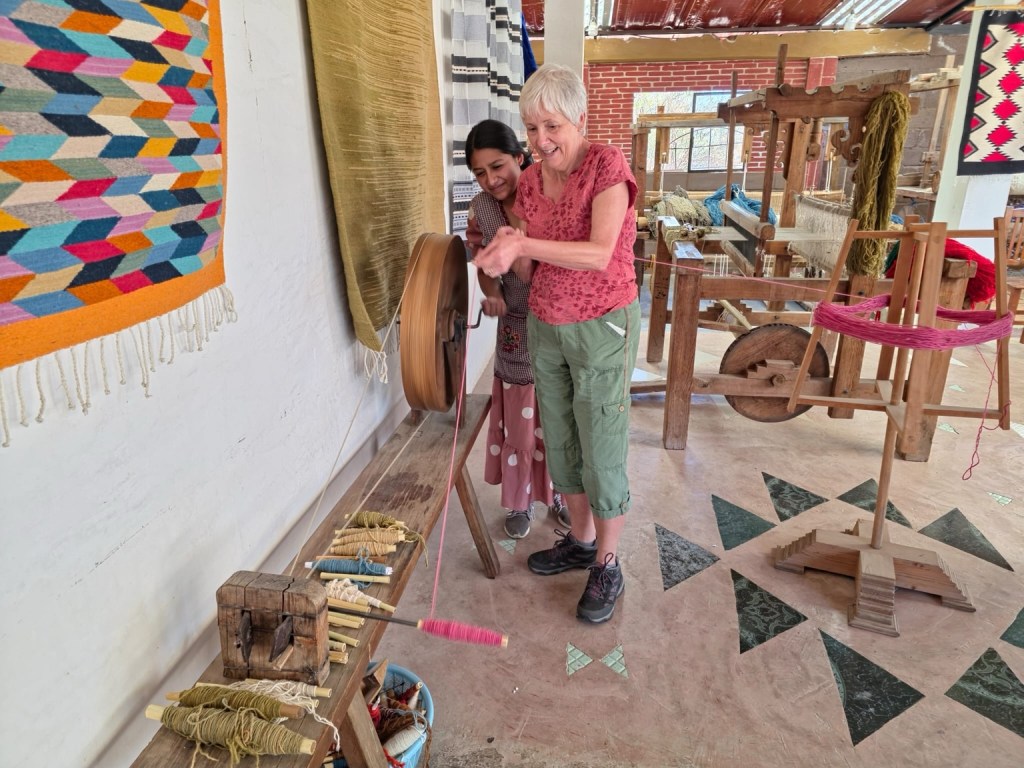
She left us in the capable hands of her daughter Danny who explained how they sort and card the wool, then spin it into yarn, and wash using a locally sourced plant rather than soap, all translated for us by Laura.

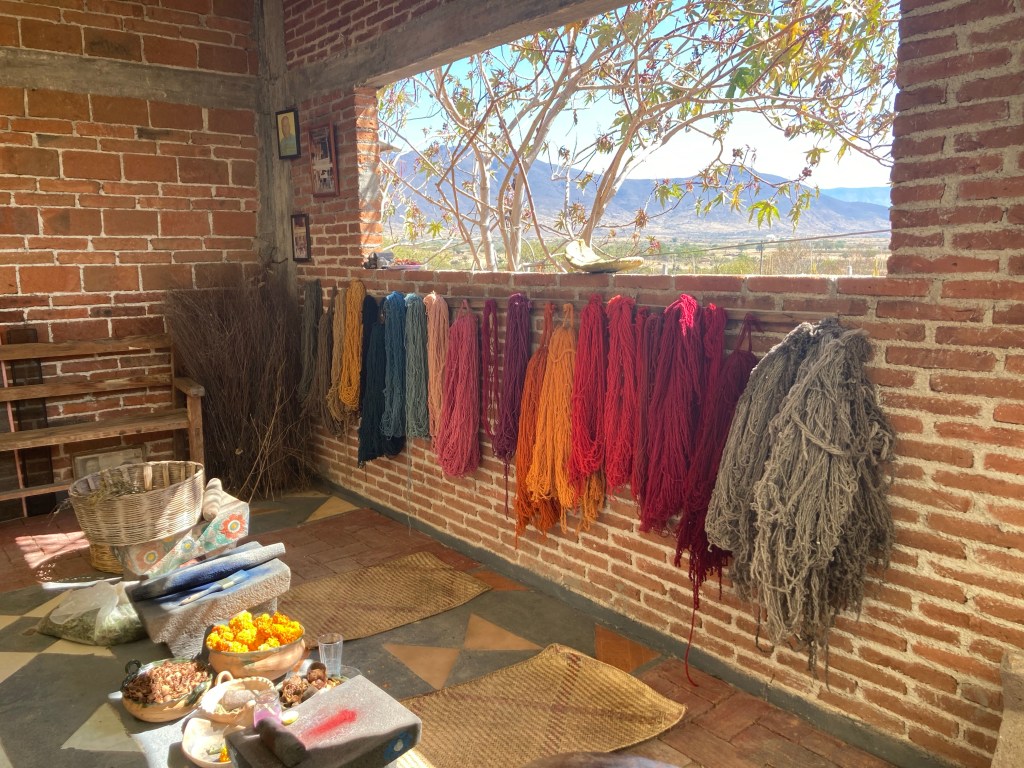
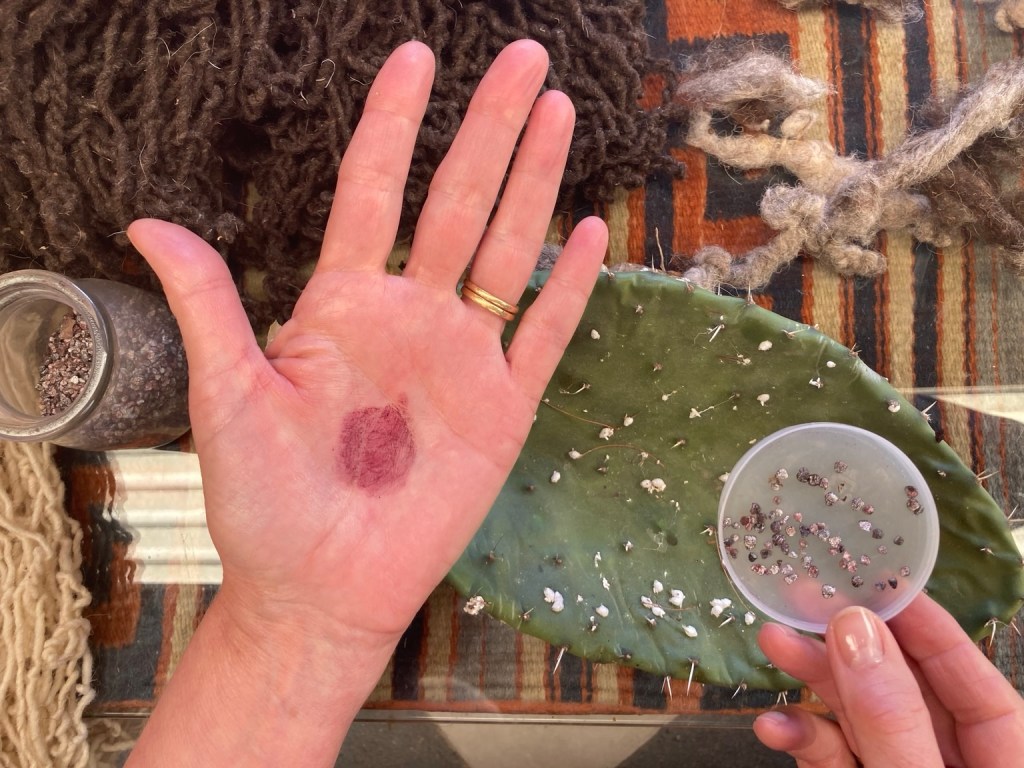
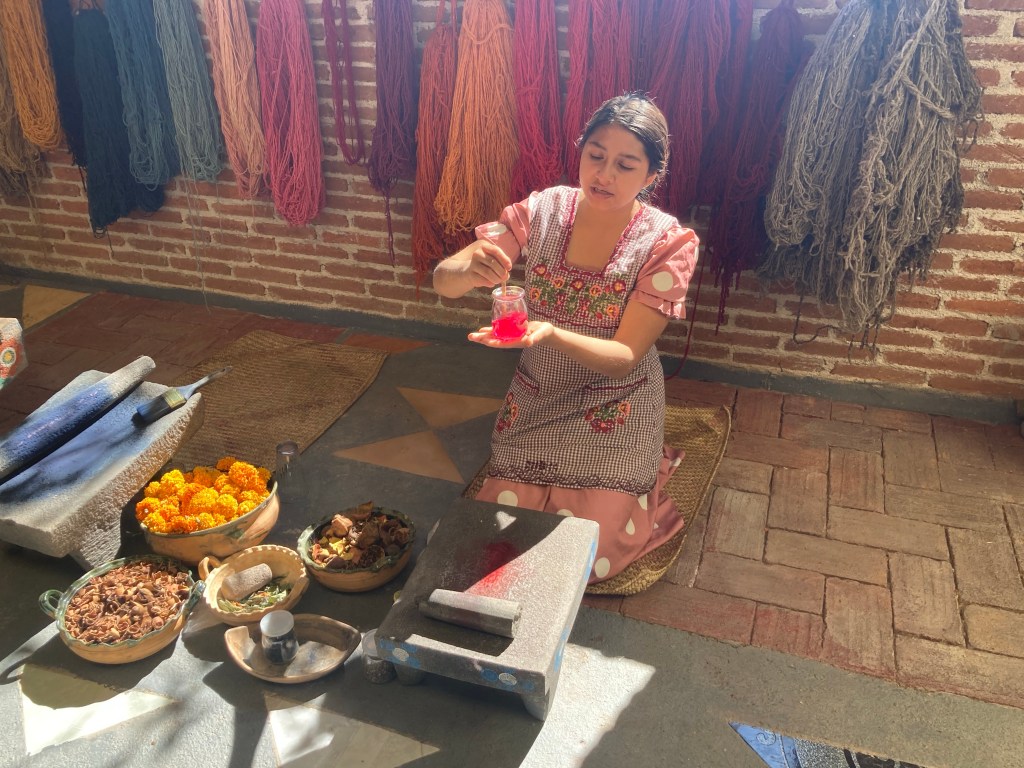
Dyeing come next and first we saw the preparation of dye from cochineal, a tiny insect found on nopal cactus, which is dried then ground. Mixed with water, it produces red …

… but this can be modified with an acid like lemon juice to make orange or an alkali like lime to make purple.

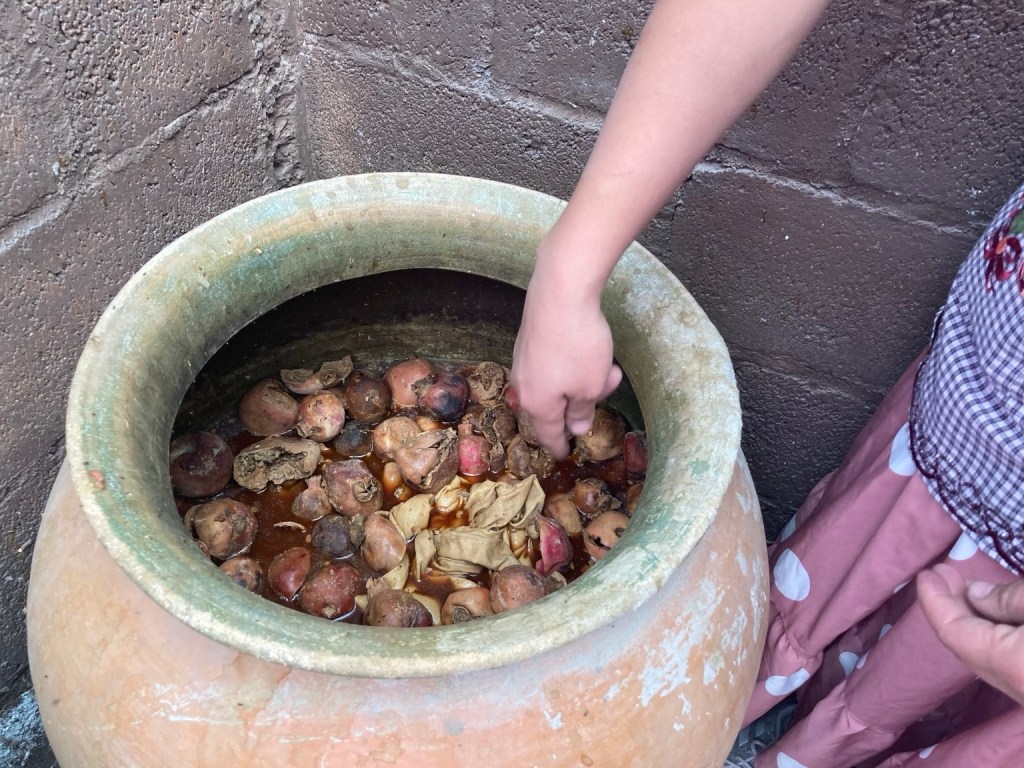
They also use indigo, which they buy dried and grind to make dye.  When they dye, they always use the fermentation method in clay pots.

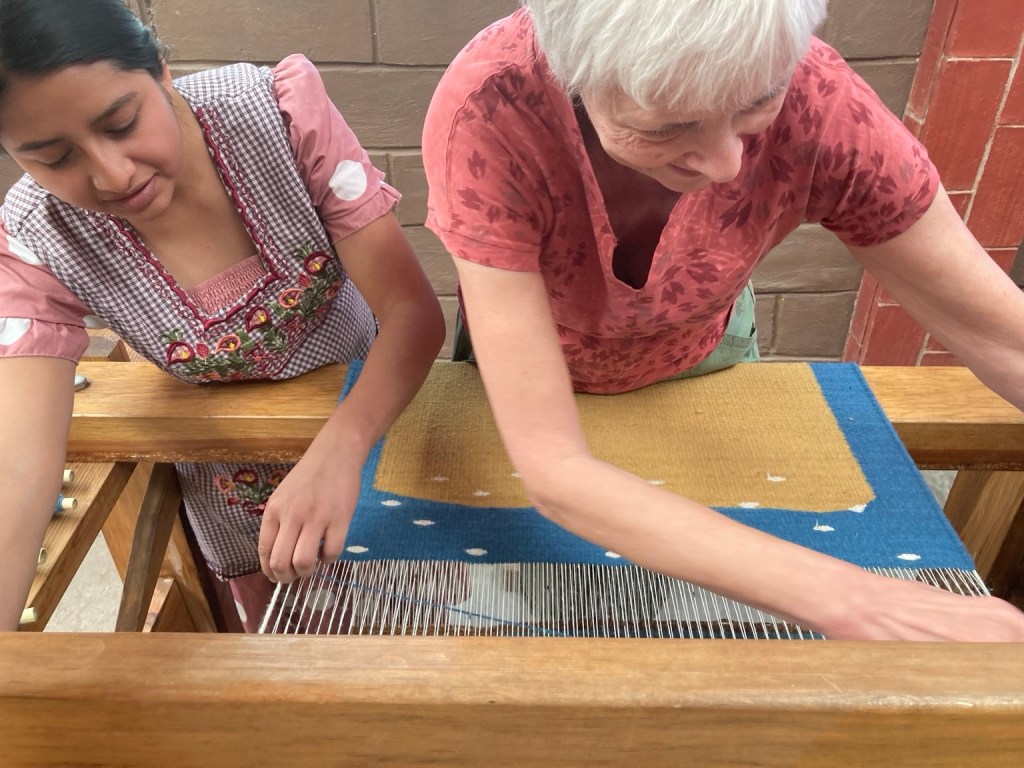
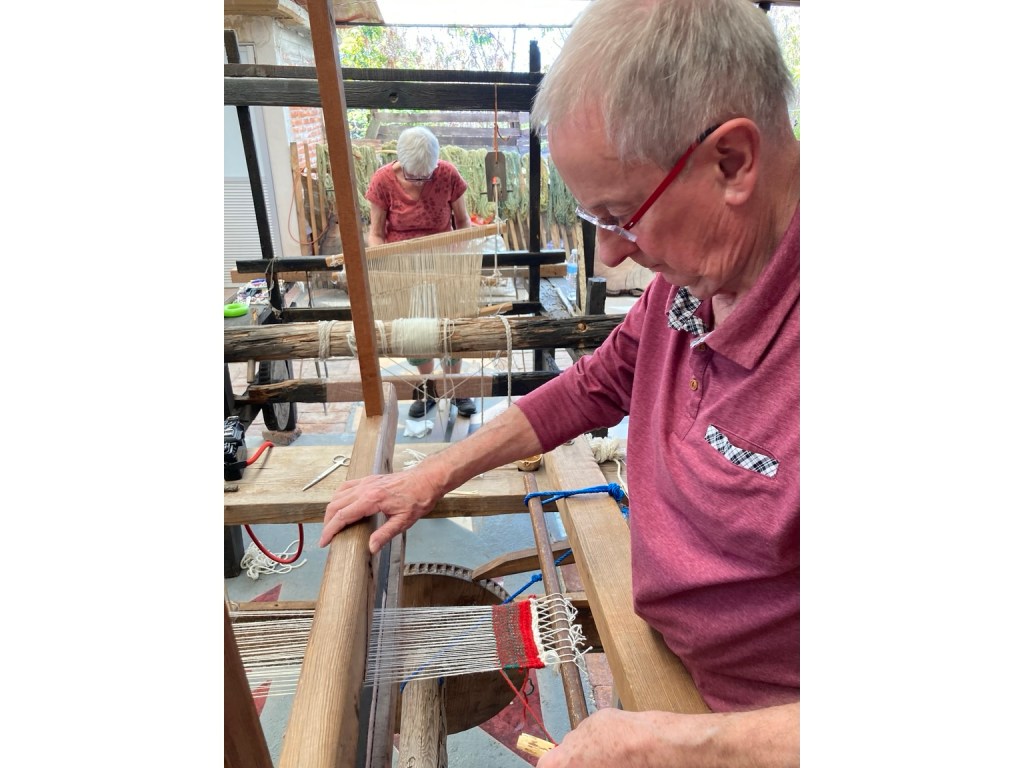
Next we watched Danny, then had a go weaving on a large piece, remembering to lower the correct paddle to pass the bobbin through and not to tighten the wool too much.

Then it was our turn, to choose two colours and wind them from the skein onto a bobbin.

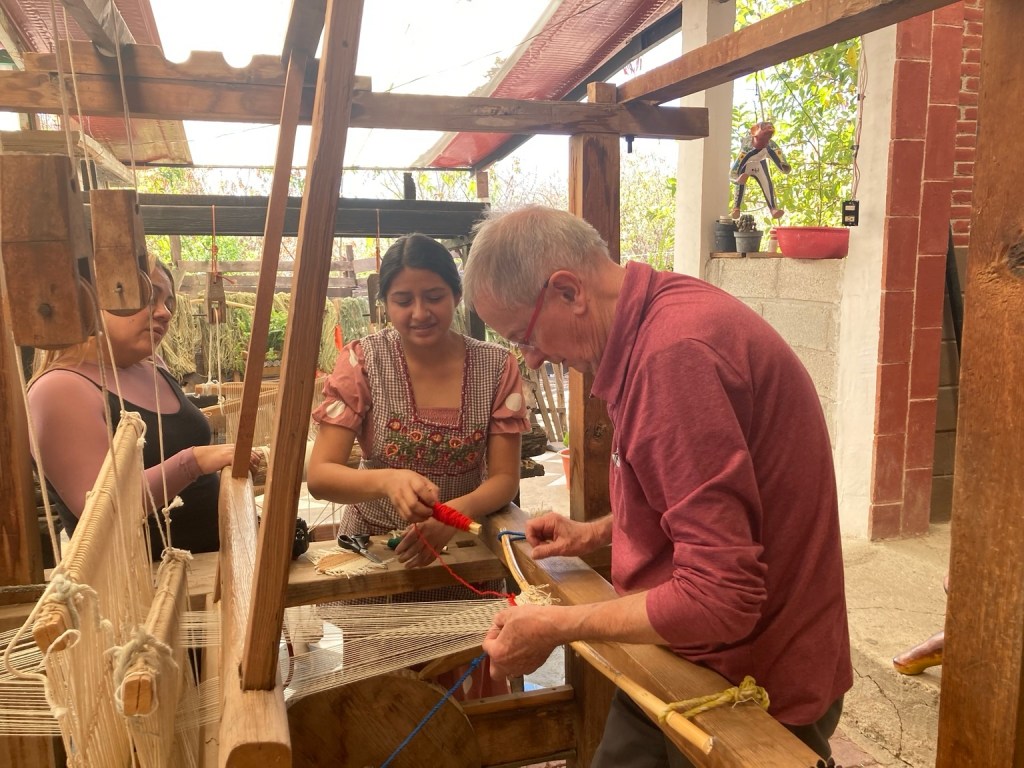
Fortunately, Danny had already prepared the looms as it takes time and would certainly have been beyond our pay grade!

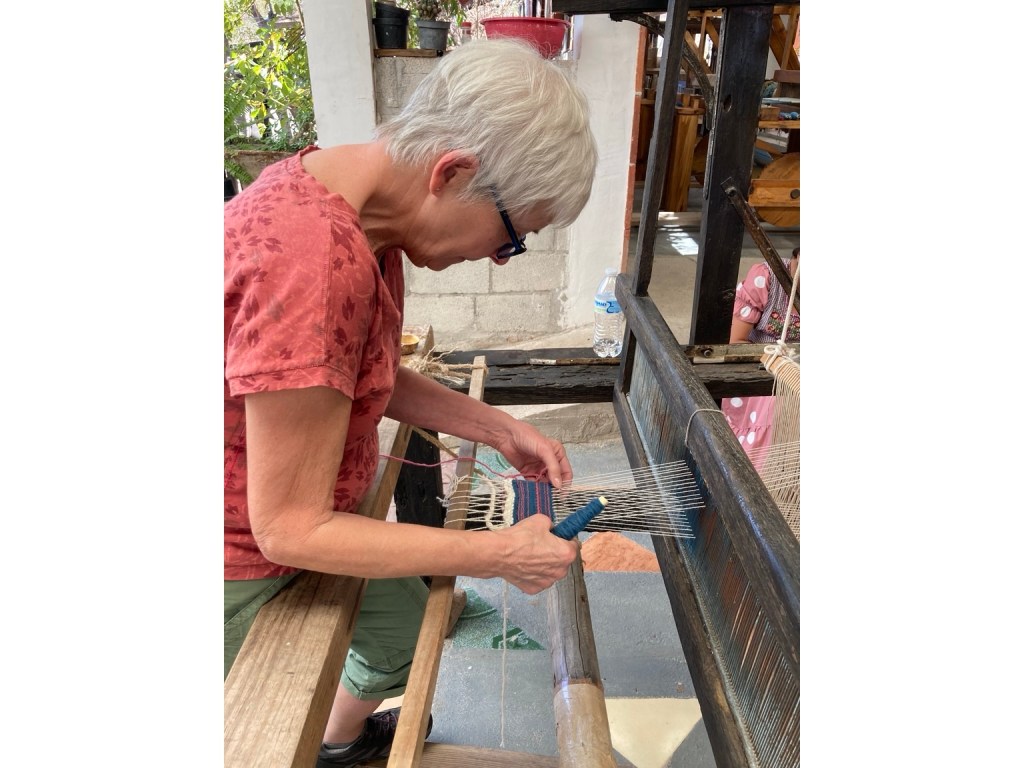
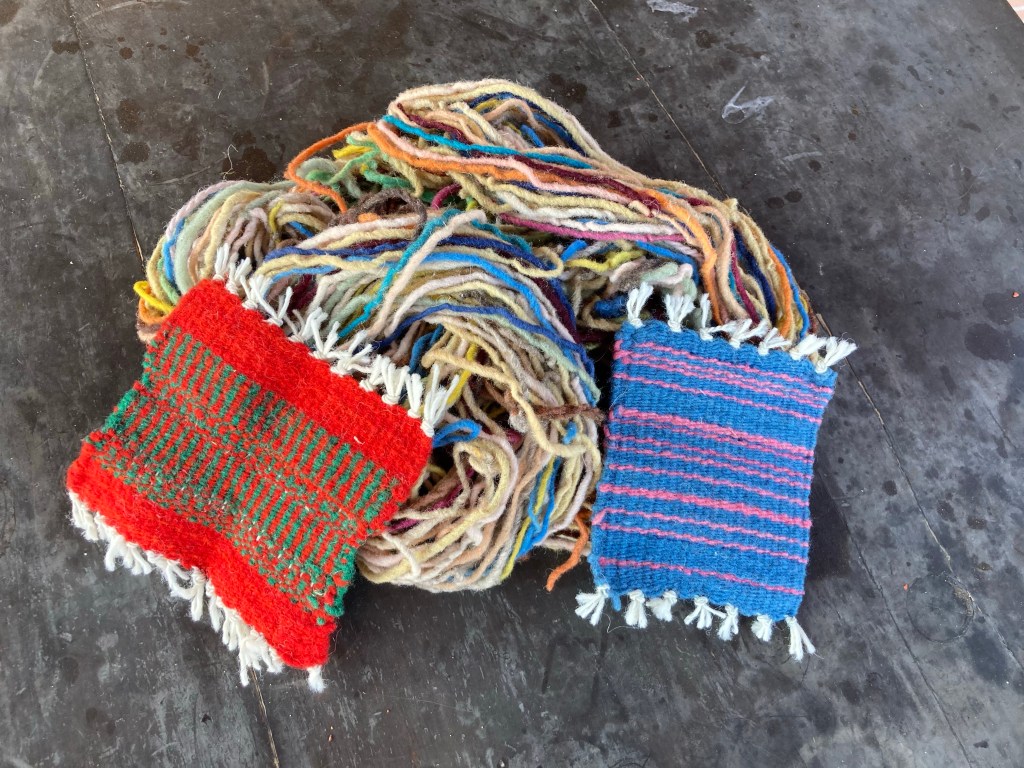
We then spent the rest of the morning weaving a coaster each, with whichever pattern we chose. 

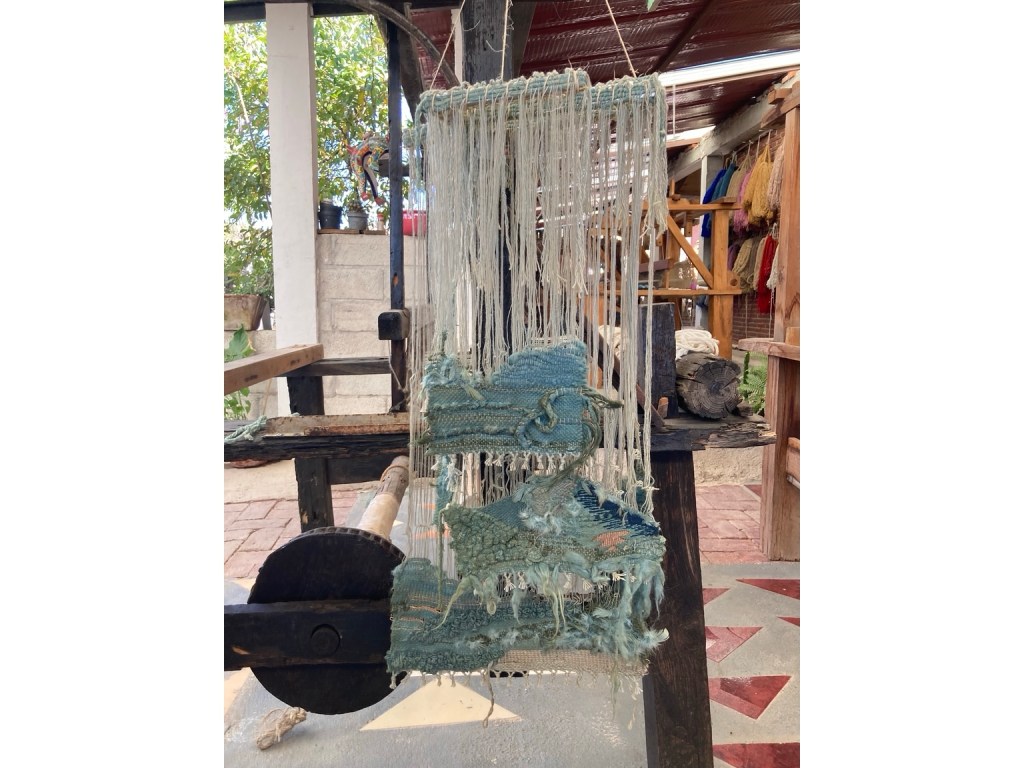
I decided to do an irregular stripe and Chris’s pattern went a bit rogue in the middle, but we are delighted with our finished mats.

It felt very special to be welcomed in, told about their family heritage and the traditional methods they use, and then to be able to make our own piece to bring home.  The weaving was surprisingly therapeutic and relaxing once we got the hang of it, and Chris enjoyed it much more than he expected, initially only coming along for me and to take some photos!

Once Danny removed our pieces from the looms, she served us a delicious lunch of sopa de guías, made from the tender vines, shoots, leaves, and flowers of the squash plant and a crispy tortilla with cheese.   By the time we had eaten, our mats were finished off and ready to bring home, a lovely souvenir, as was the short video Carlos had made of the day.

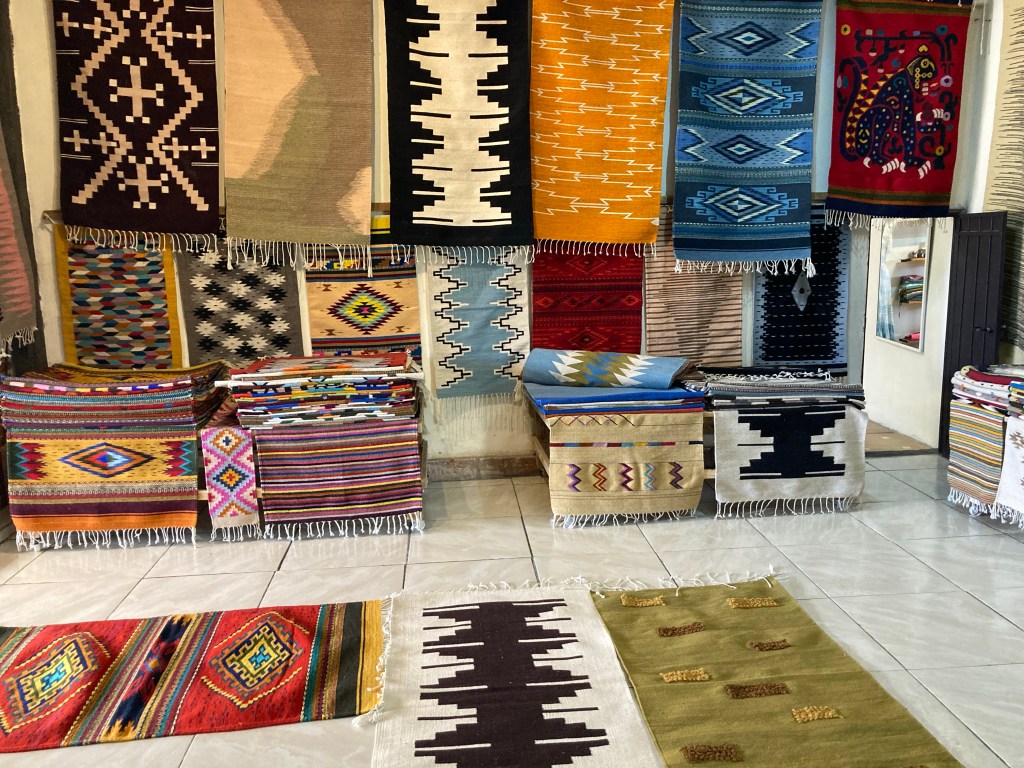
We took a look round the showroom, interested in the variety of designs of the rugs …

.. and I was able to buy a mixed handful of wool dyed different colours to use in stitching when I get home.

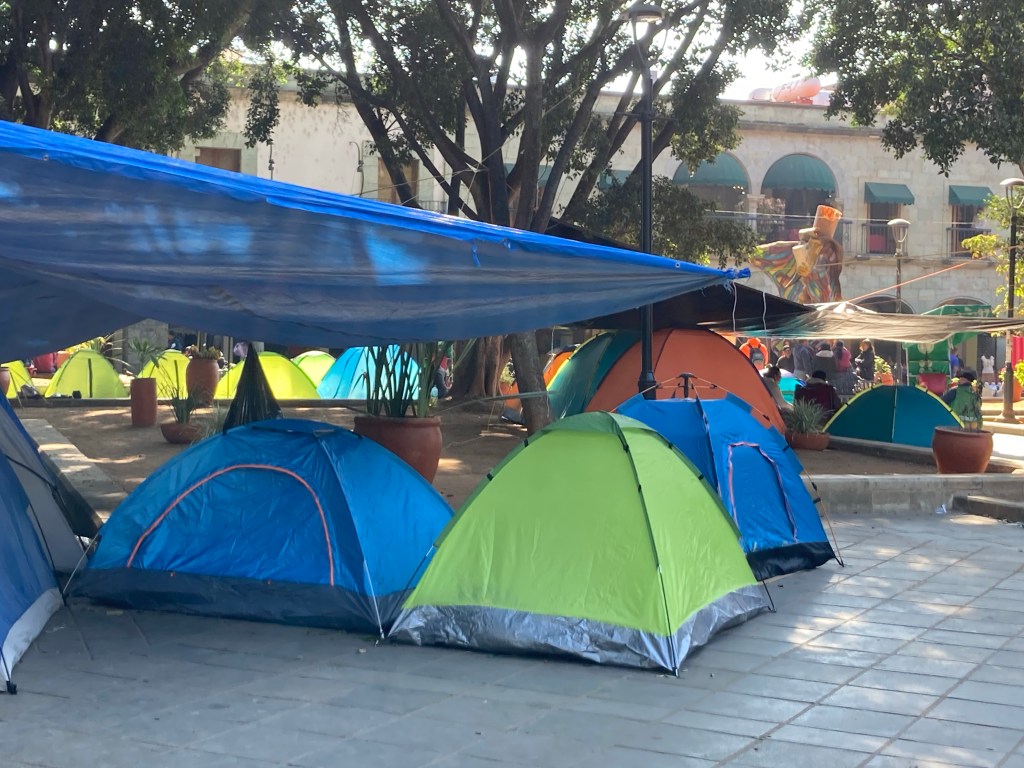
Walking through the Zocalo later, there was a tent city of those camping out protesting with the teachers.

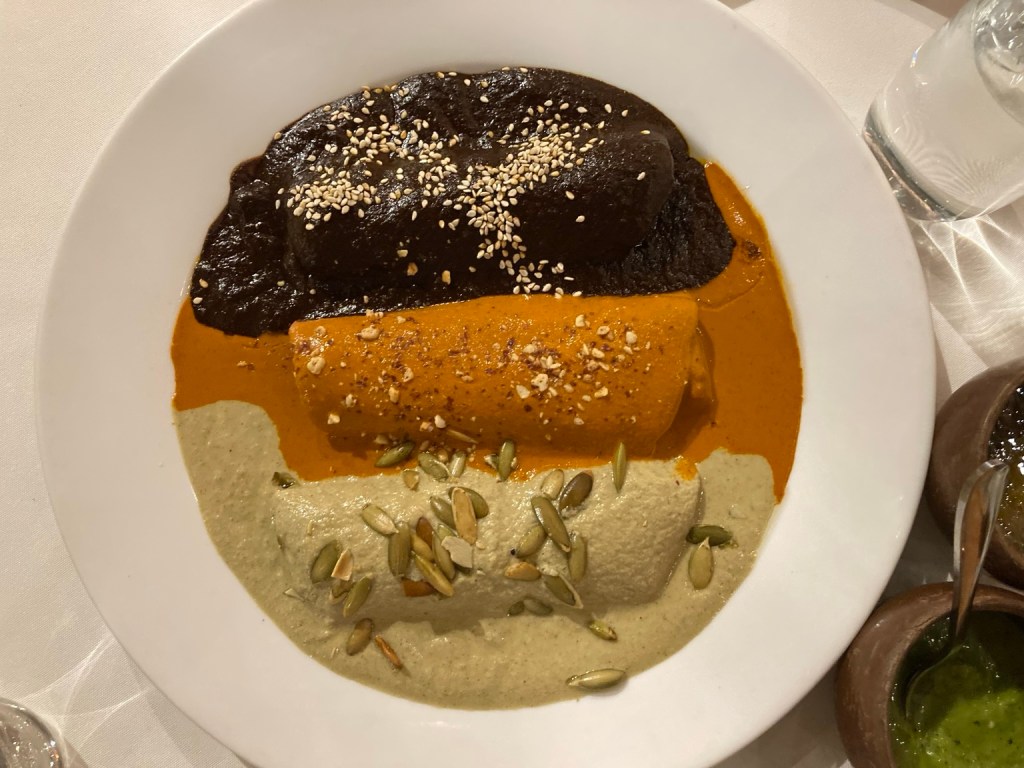
Once back, we took some time to relax before going out for dinner at La Olla, another restaurant with vegetarian choices which proved another hit with excellent enchiladas with black mole for Chris, and a different type of chile rellenos for me.

Map

Oaxaca … Monumental Monte Alban

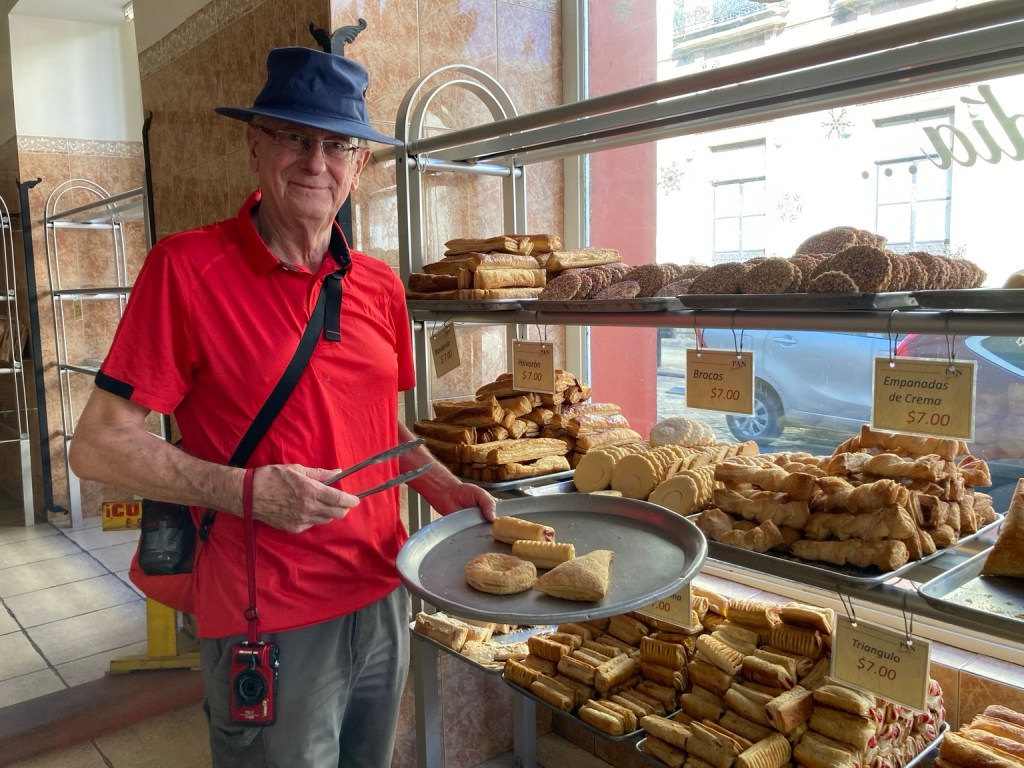
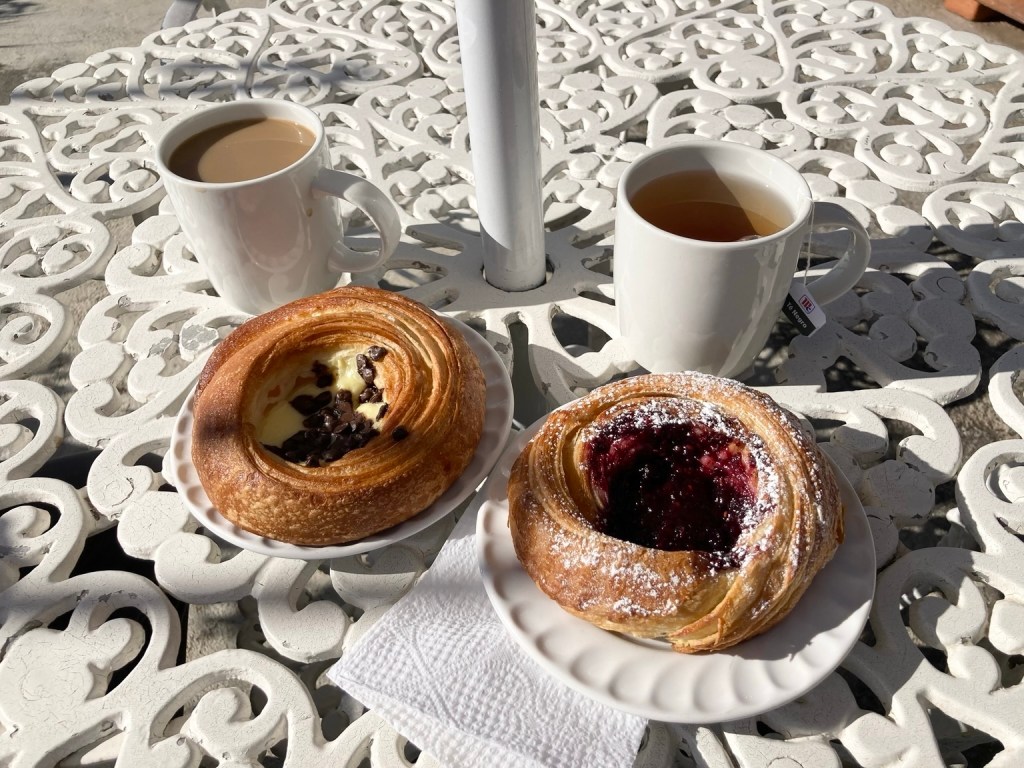
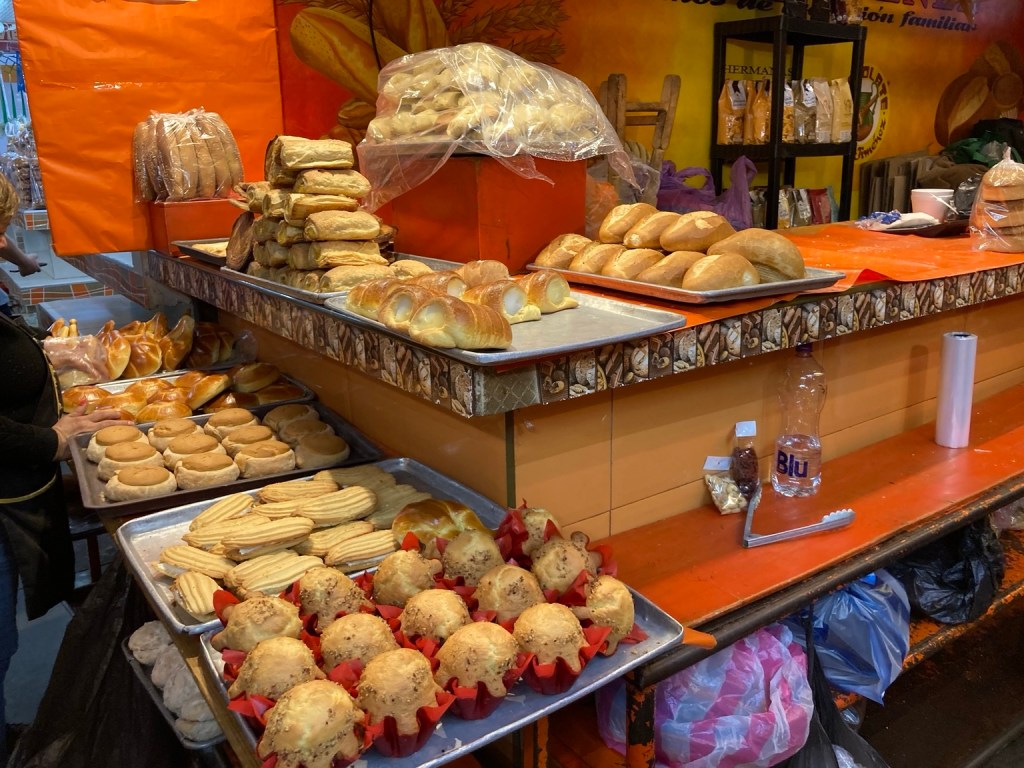
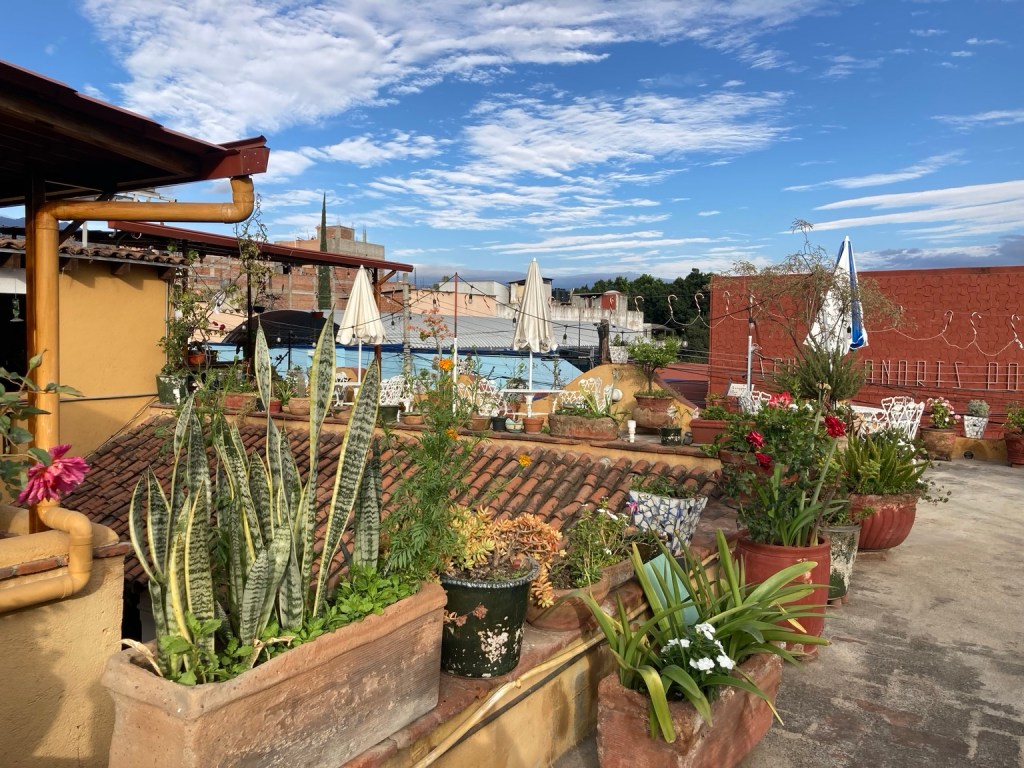
Sitting on the roof in the sun with a couple of fabulous buns for breakfast is a perfect start to the day!

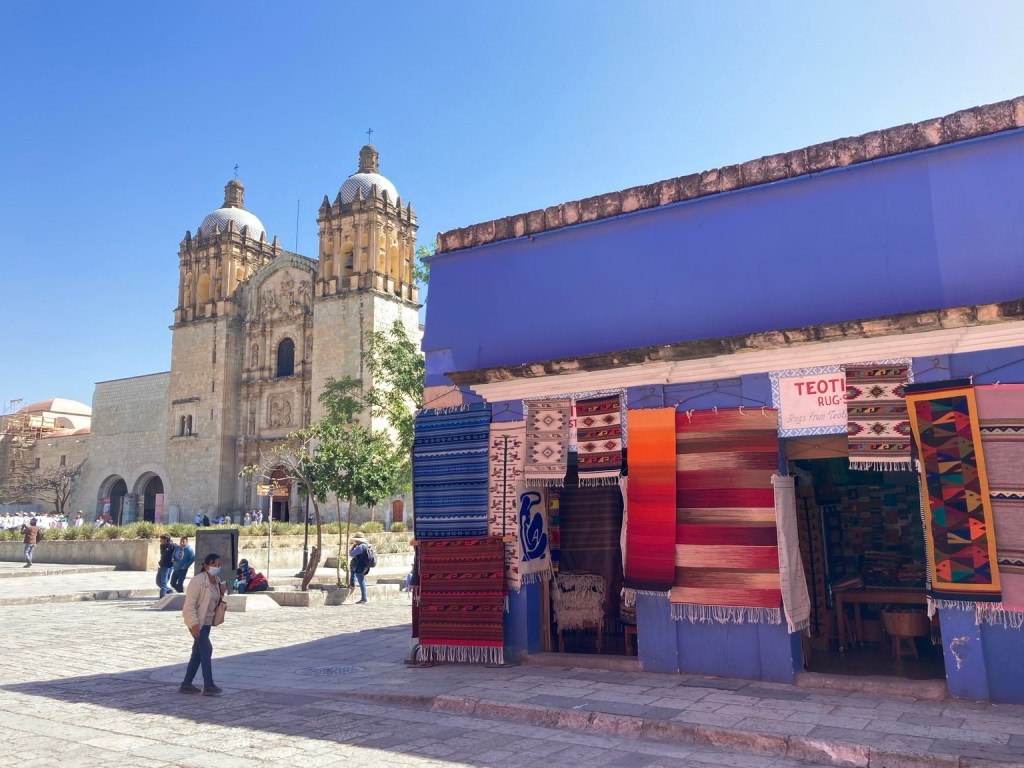
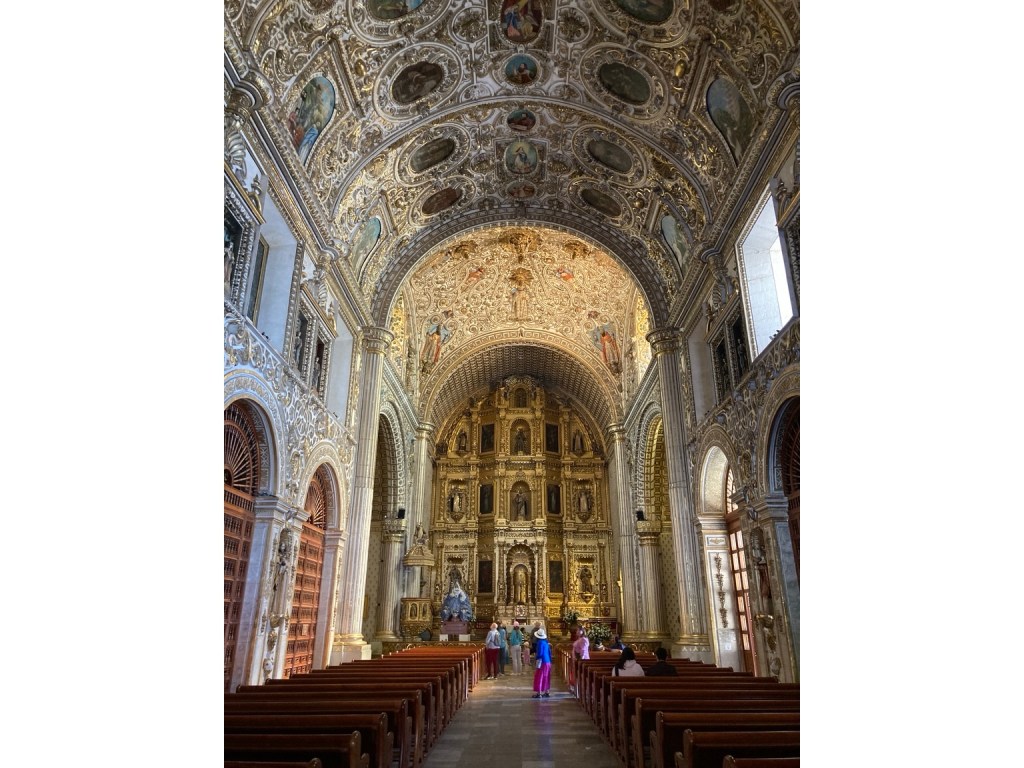
We then headed into the town to the church of San Domingo …

… containing an another very elaborate gold altarpiece.

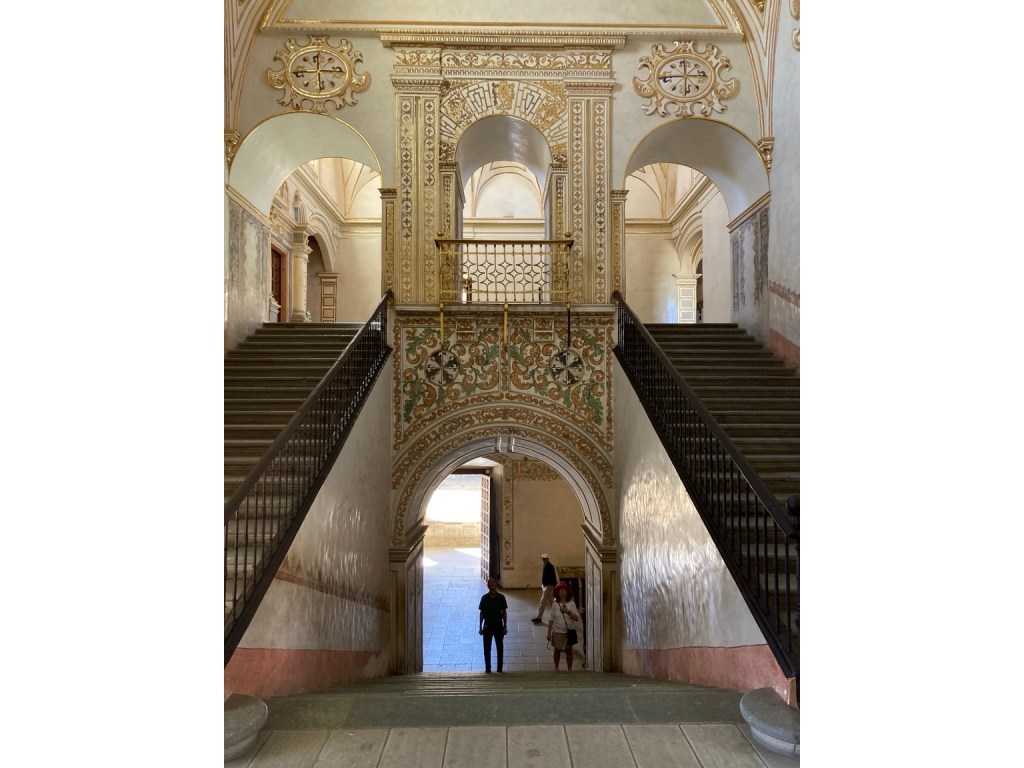
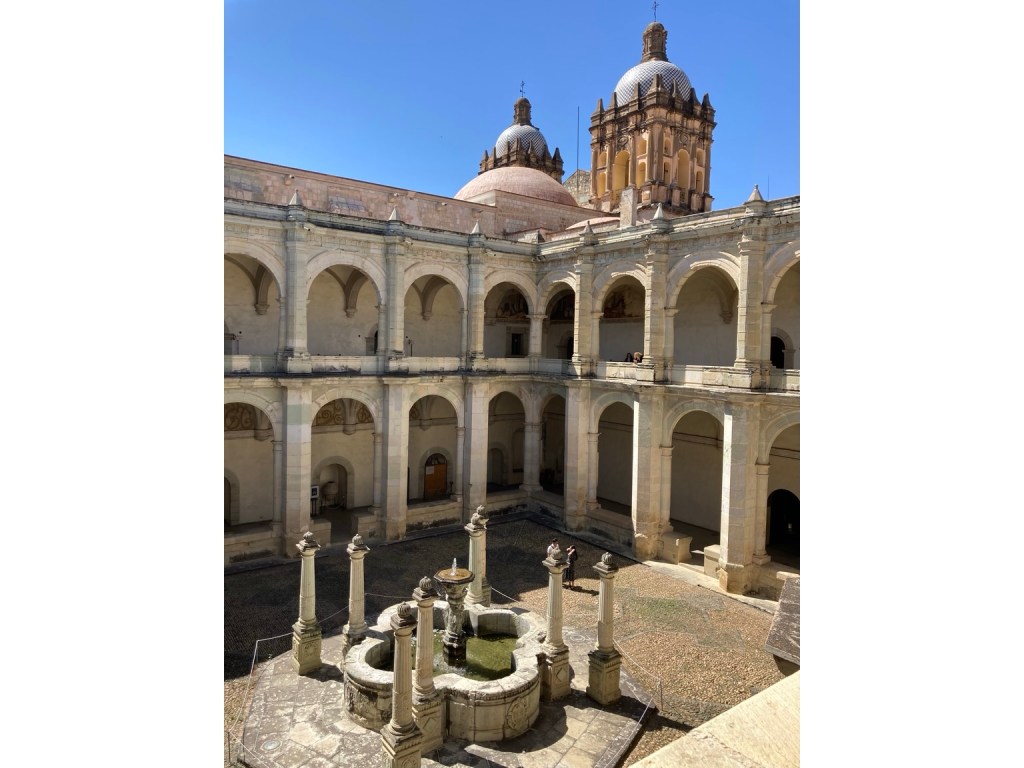
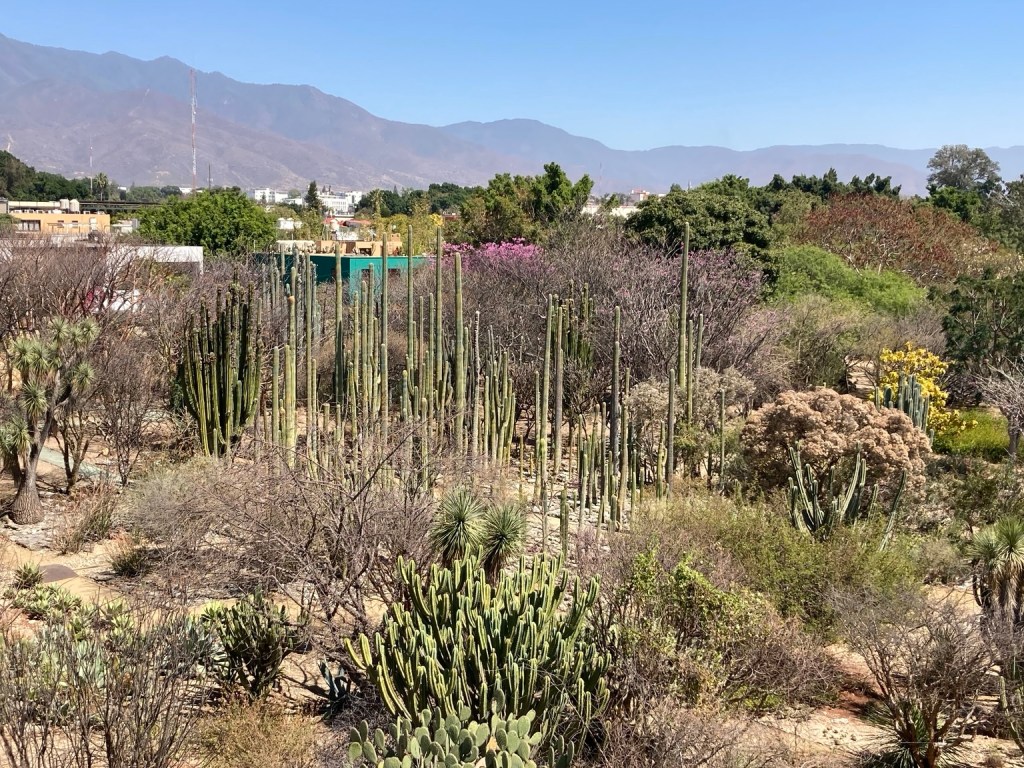
Next door is the old convent, an impressive building, with a courtyard and views of the cactus collection in the botanical garden beyond. 

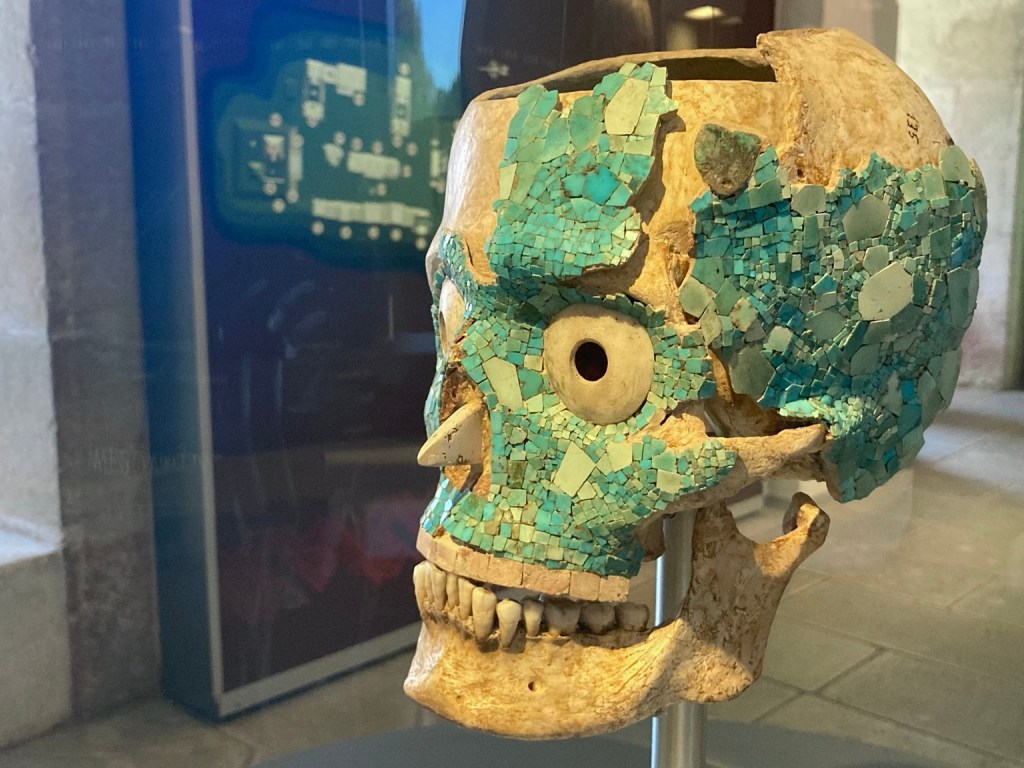
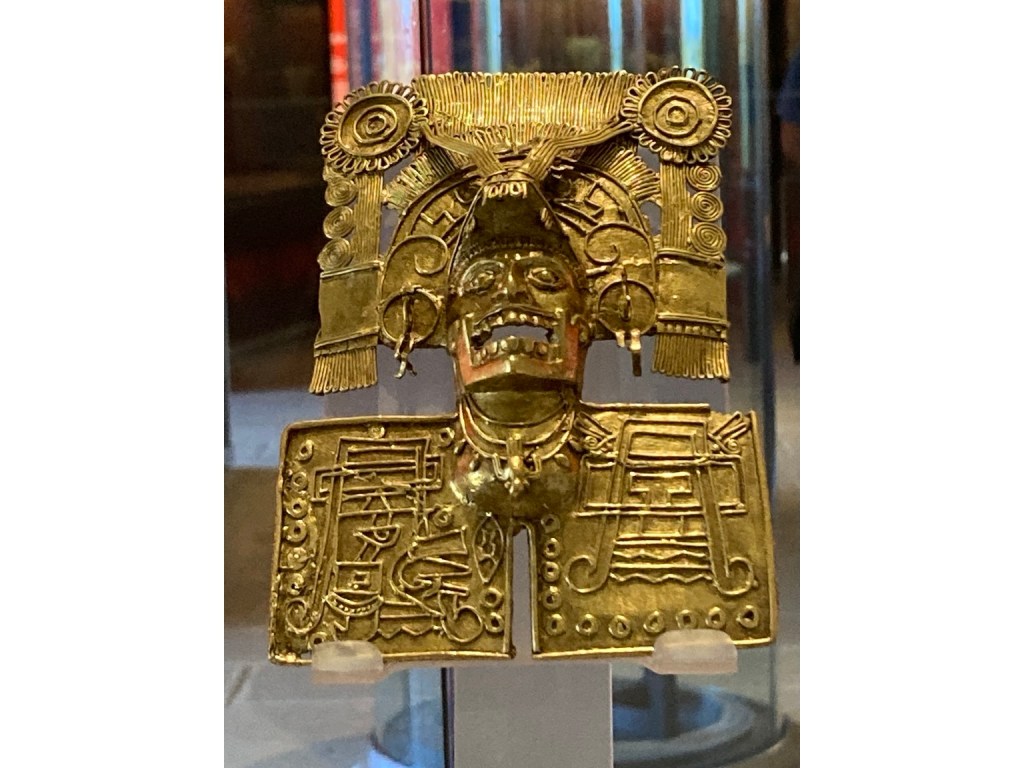
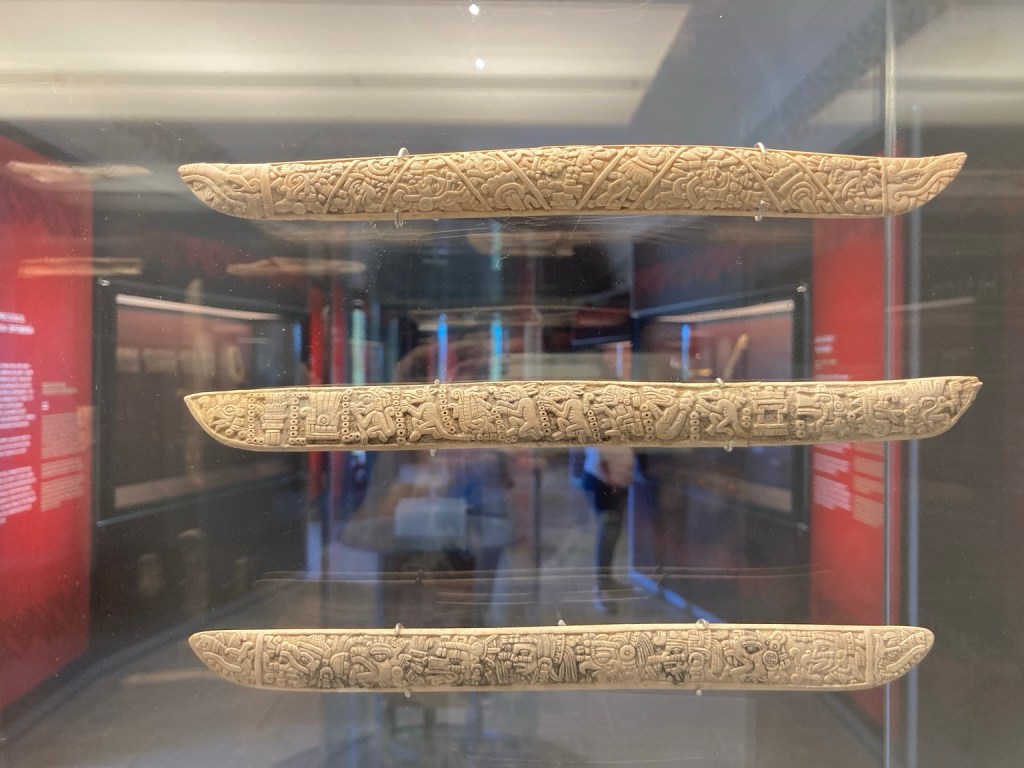
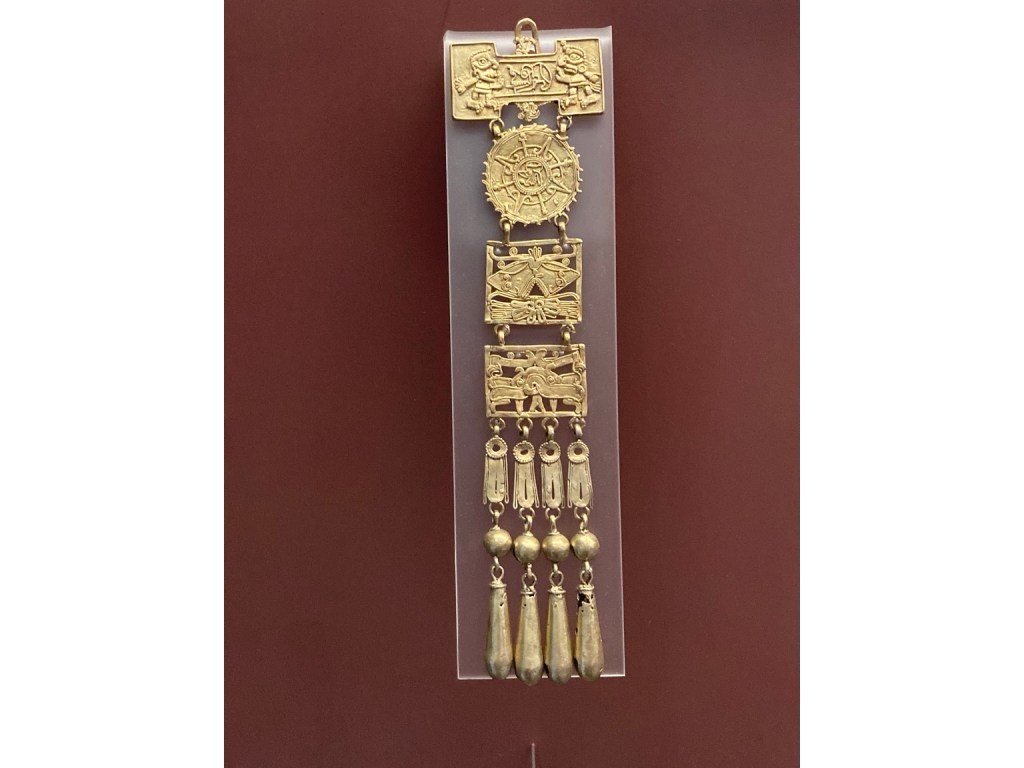
It is now home to the Museum of Culture and we were particularly interested to see the finds from Monte Albán before visiting the next day. Monte Albán was begun around 500BC and served as the Zapotec capital and a major socio-political center for over 1,000 years.  After its decline, the Mixtecs used the site as a sacred burial site and Tomb 7, discovered in 1932 was a big deal, containing some 200 ritual objects.  It must have been like finding buried treasure, lots of gold and precious items worked with skilled craftsmanship and here are a few – a representation of Mictlantecuhti, the lord of the place of the dead, made with a human skull decorated with turquoise and green mosaic …

… a golden pectoral, designed to be worn around the neck of a Mixtec dignitary …

… a breastplate of turquoise beads …

… and several of 30 intricately carved animal bones telling of events in Mixtec history. 

This golden pectoral tells the order of the universe – the ball court is the sky, the sun disc is day and the flint knife the moon and the monster with gaping jaws is the earth.

There were many rooms telling of the history of Oaxaca since the Spanish conquest, but unfortunately no English translation, so we passed through quite quickly.

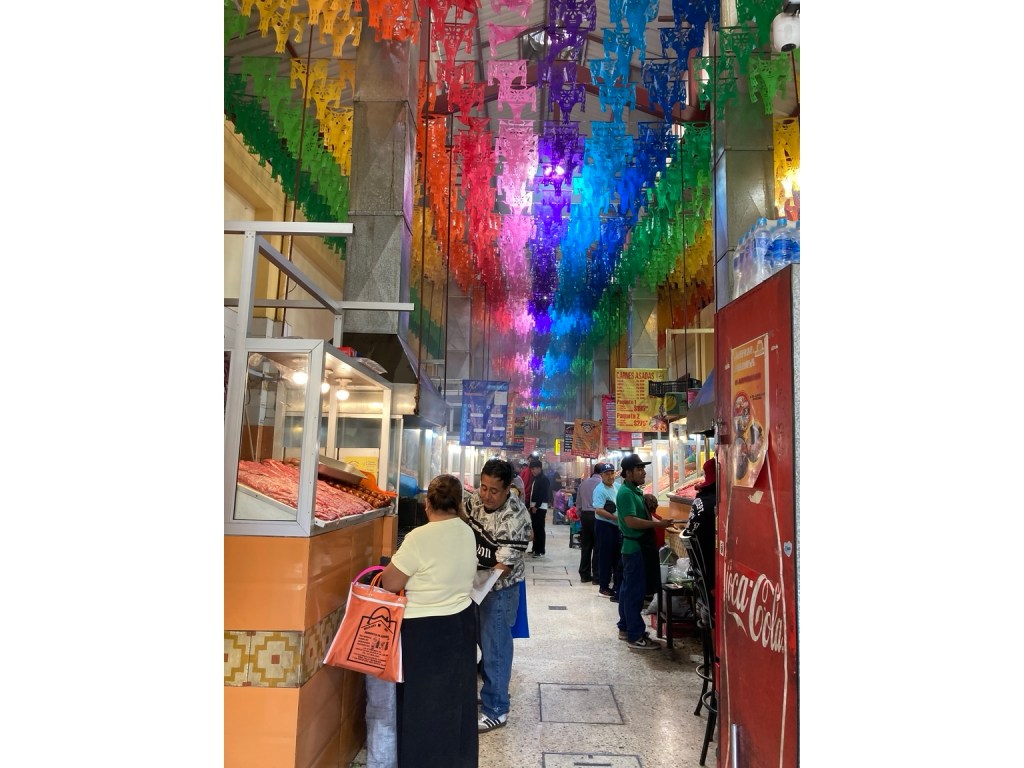
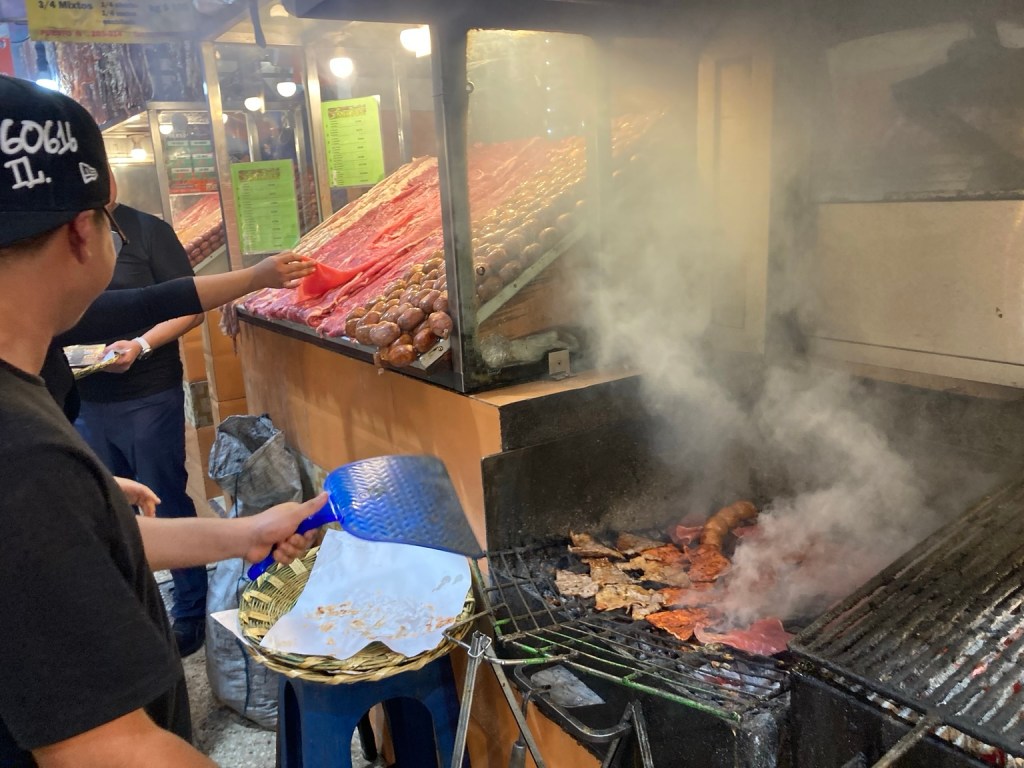
We had deliberately had a light breakfast so we could go the the market for lunch.  Mercado 20 de Noviembre is the fresh food market and we walked through the meat hall, filled with the aroma of grilling meat, which looked delicious, but we moved on! 

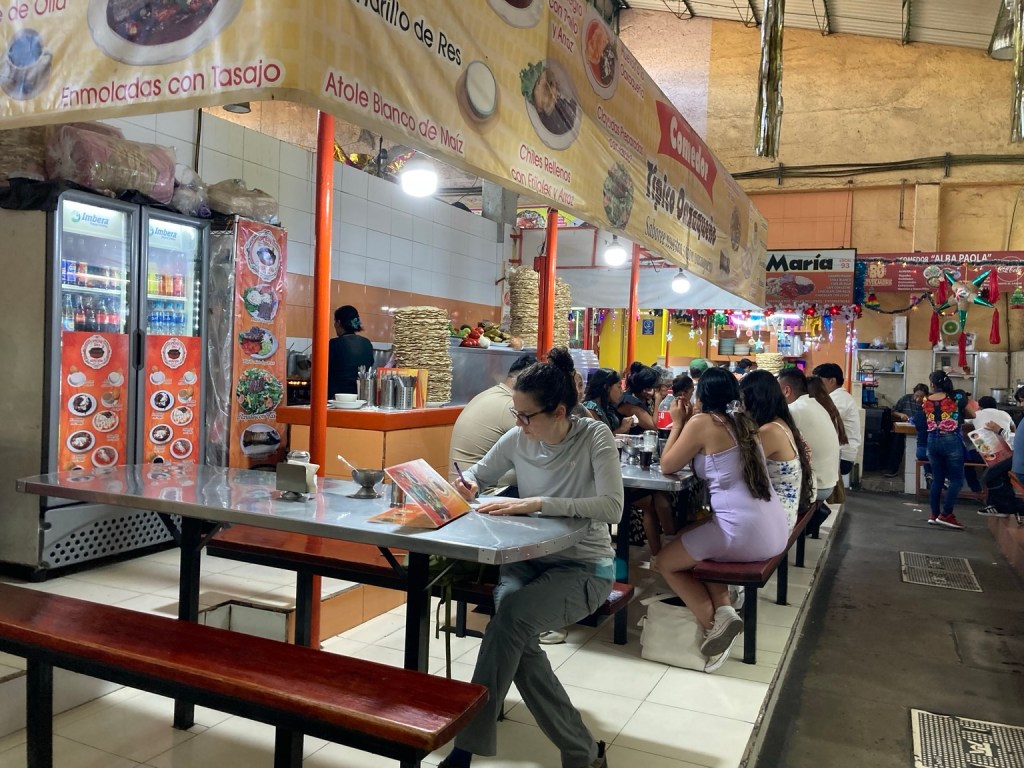
In the centre were more stalls …

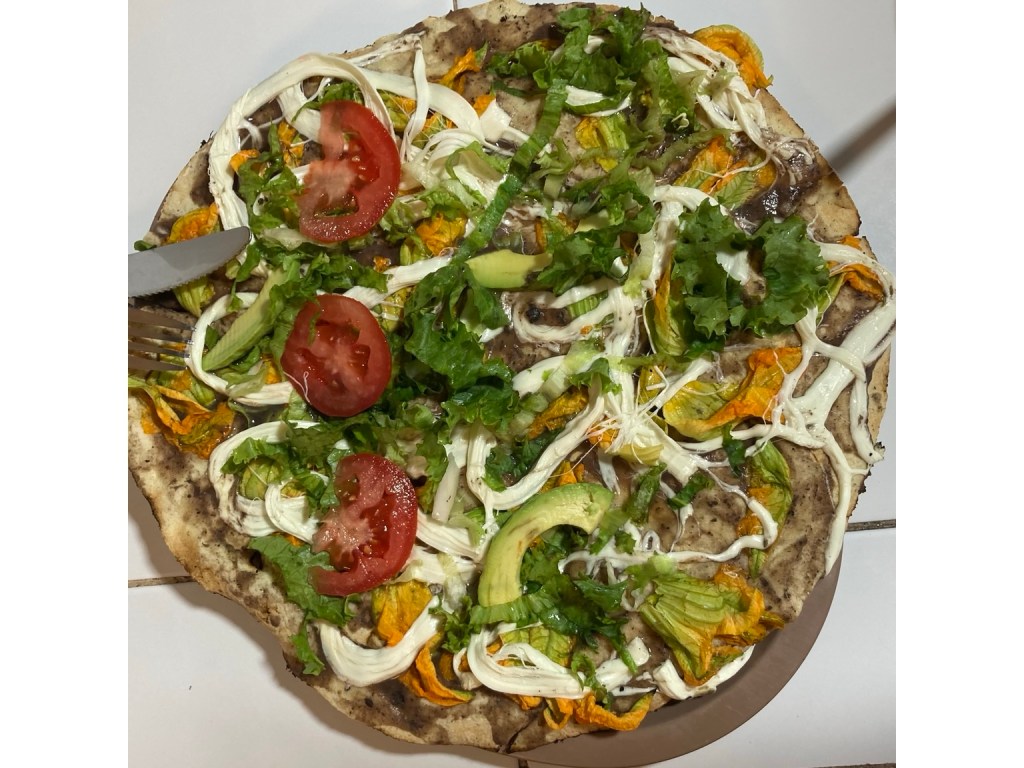
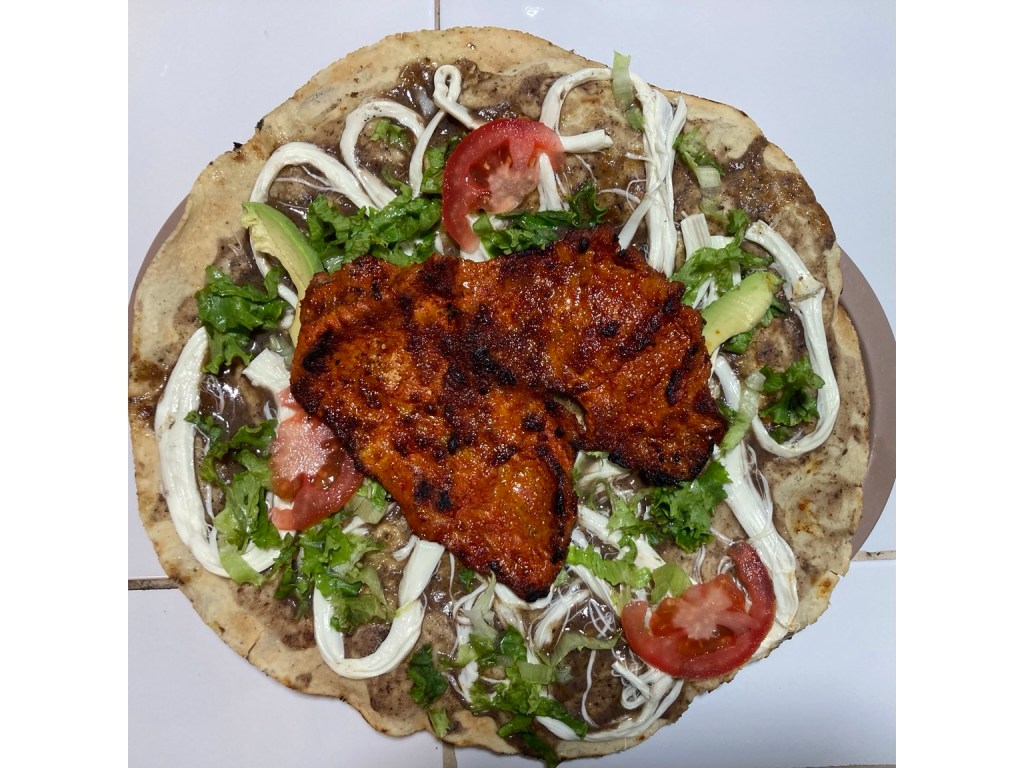
… with many serving tlayudas which are large thin & crunchy tortillas spread with refried beans, lettuce, avocado, cheese and salsa.  Chris chose veggie with squash blossoms …

… and I got some meat after all, a piece of Oaxacan cecina, pork marinated in chilli & spice then grilled. It was one of our best meals and also one of the least expensive!

After a turn round the rest of the market …

… we decided on a bit of R&R, but in my case a chance to catch up with my posts!  Dinner was a real treat at Las Quinces Letras, where they offered veggie mole so Chris had the mushrooms with white mole while I had Chilli Rellenos in a fruity Mixtec inspired sauce, together with Mezcal cocktails and guava mousse to share. 

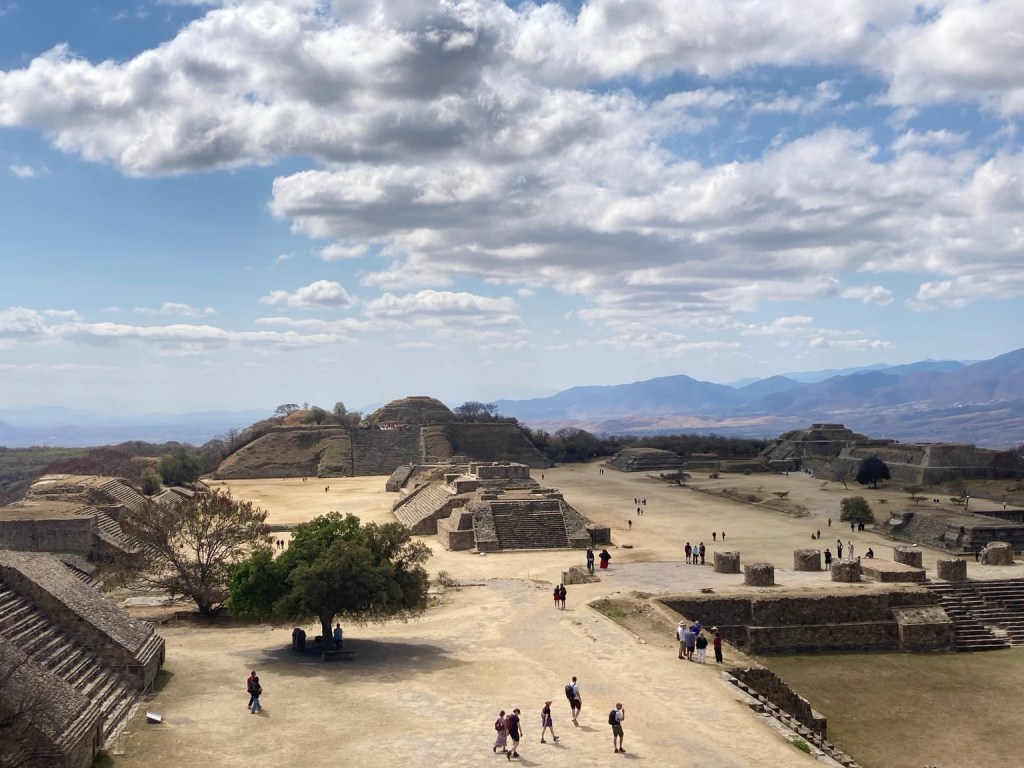
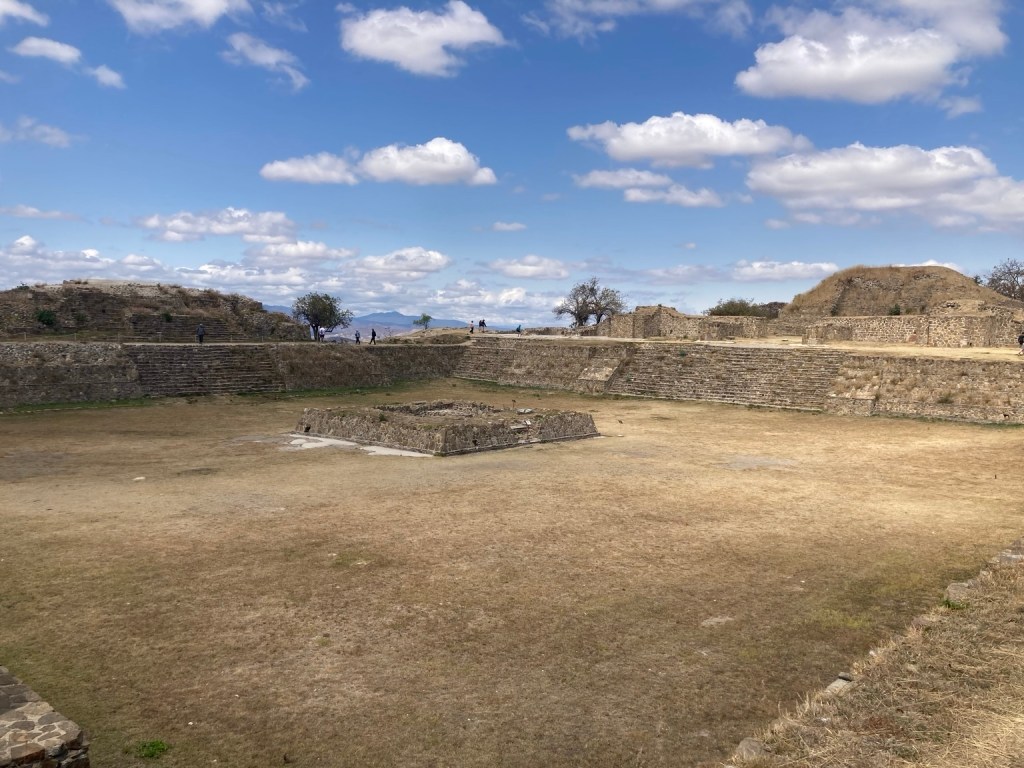
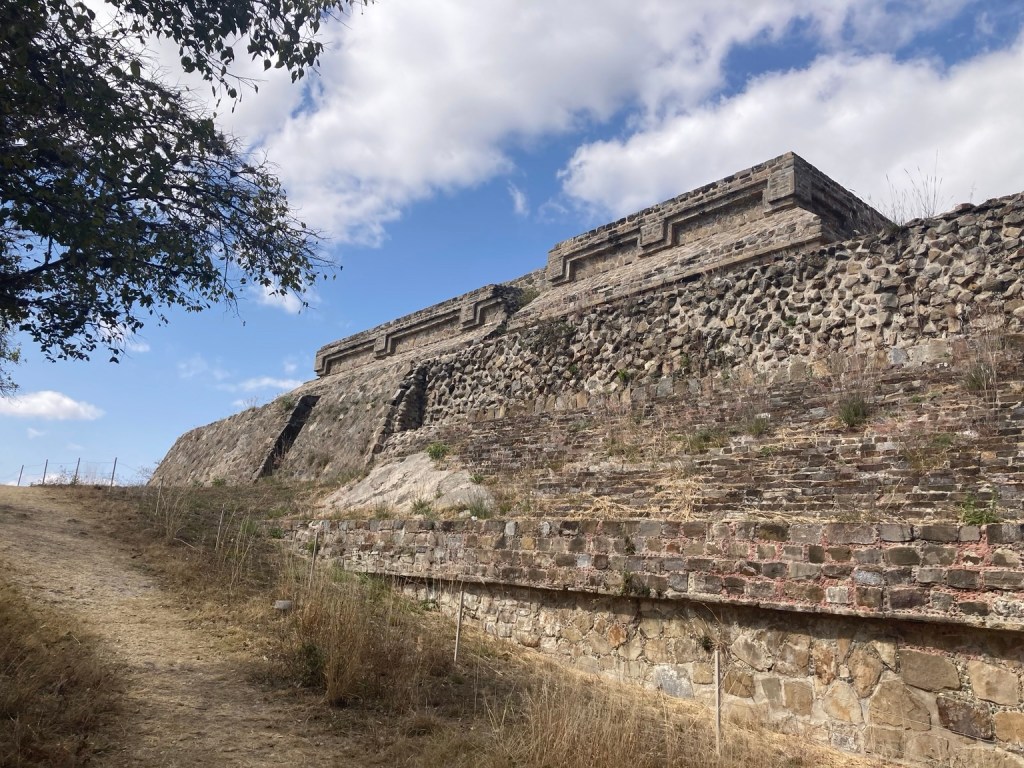
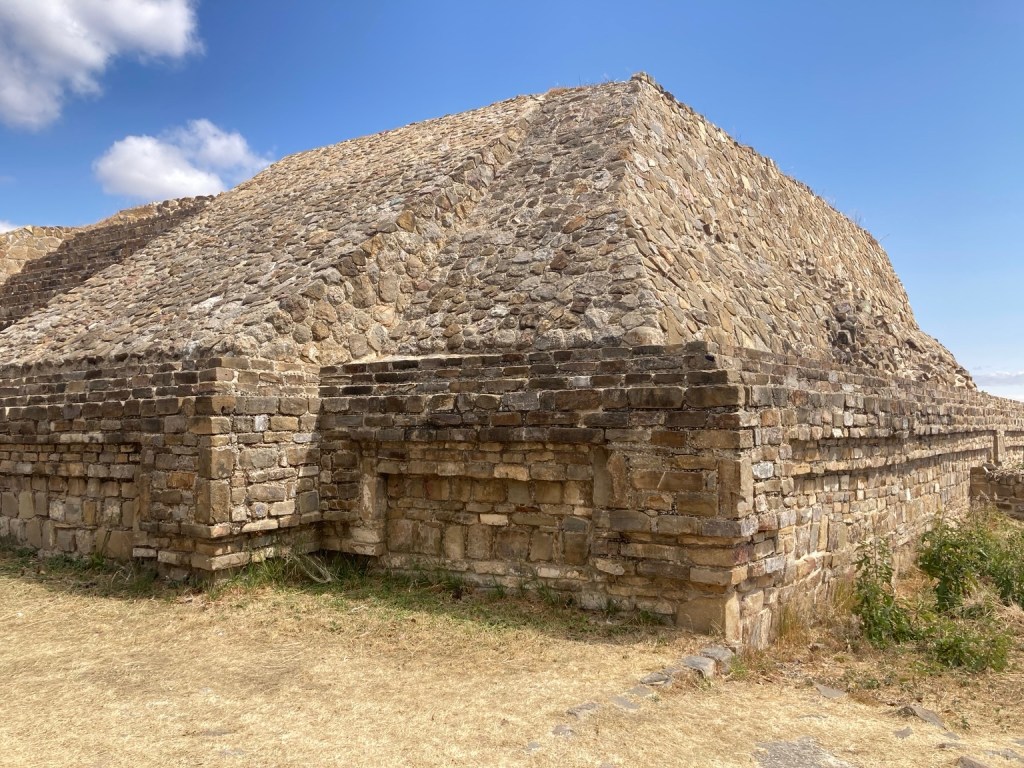
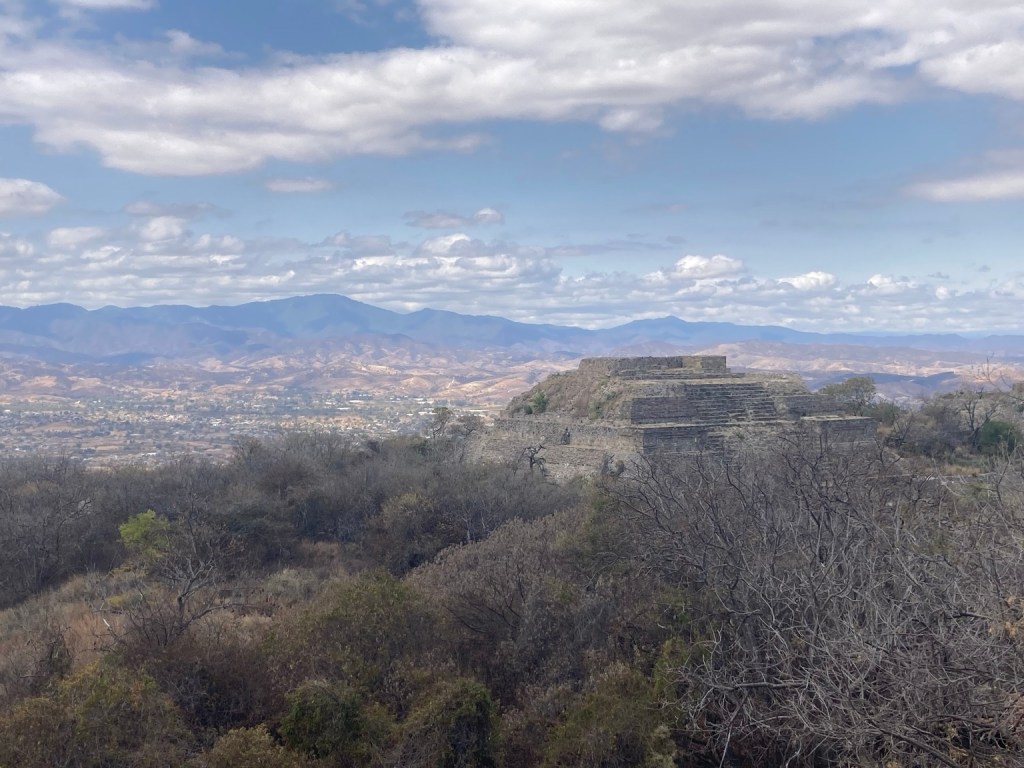
Next morning, a cooler day was forecast, which was great as we were off to Monte Albán, the Zapotec capital which sits on the top of a flattened hill some 400m above Oaxaca and includes ancient pyramids, a main plaza, ball courts, residential terraces and underground tombs. 

We took the bus which wound up the hill past brightly coloured houses.

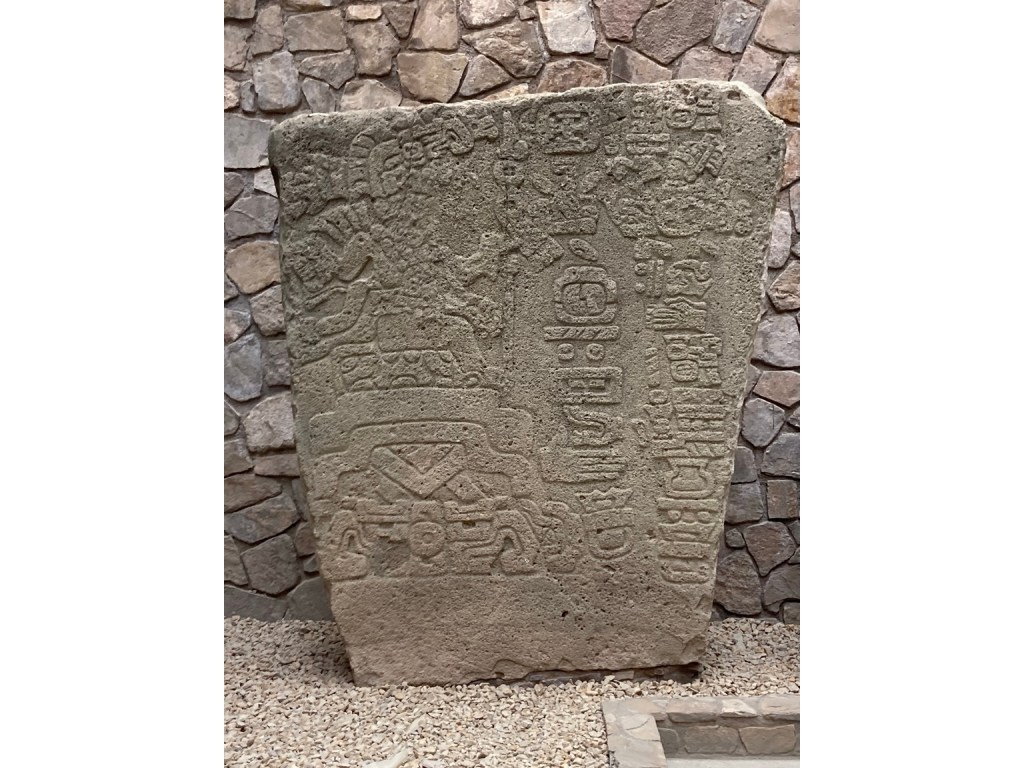
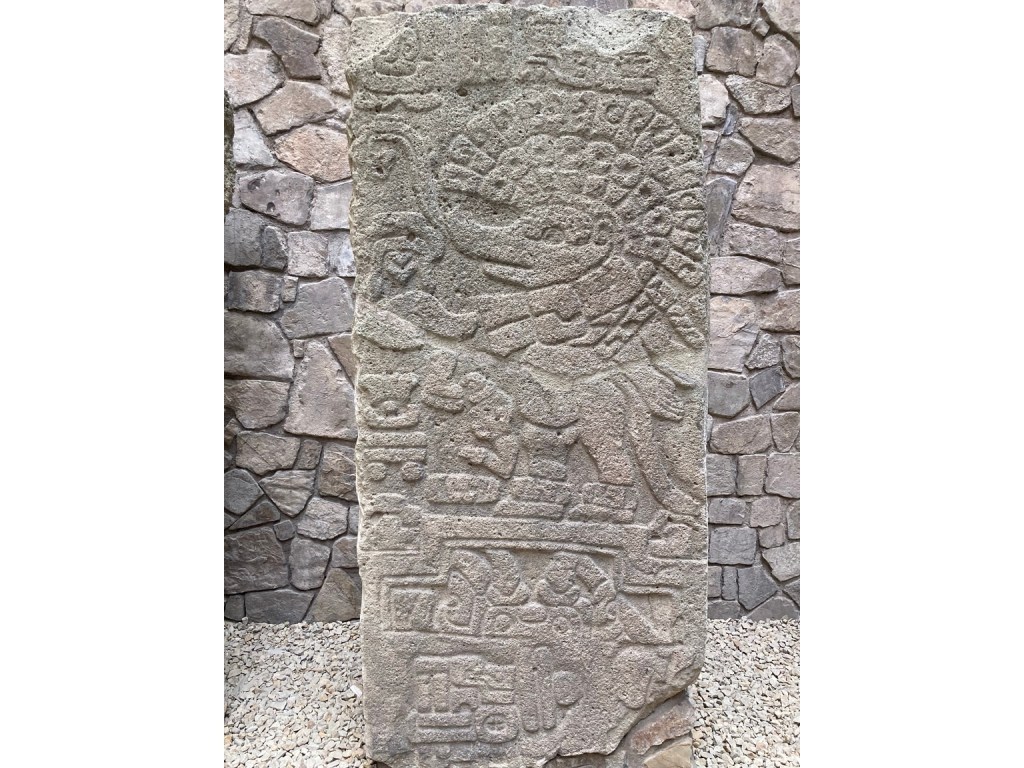
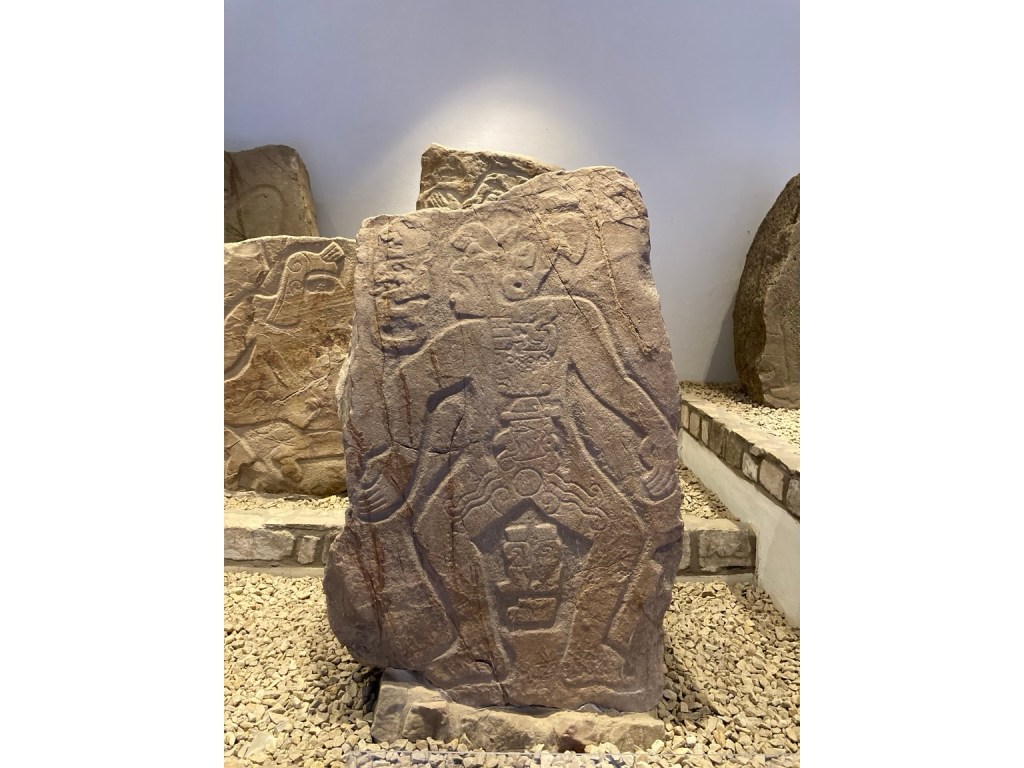
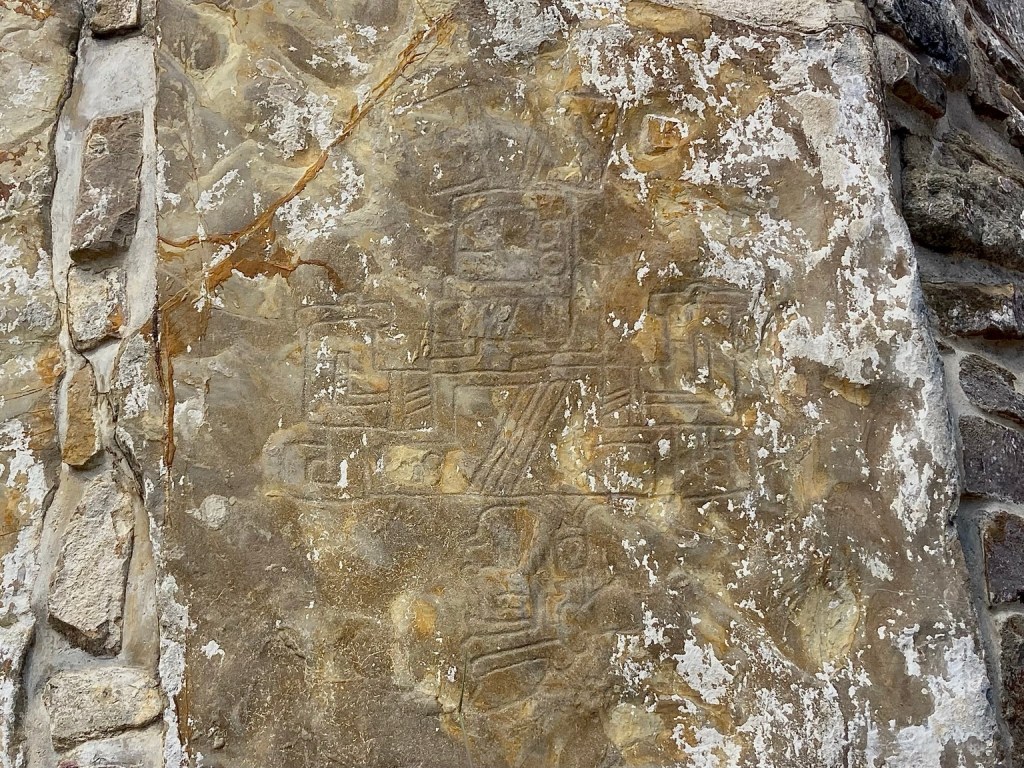
The visitor centre had a small museum where original carved stones can be seen, removed from the site to prevent further erosion and replaced with copies.  They are carved with various images …

… and some like this one are called The Dancers but actually show tortured, naked war captives rather than dancers.

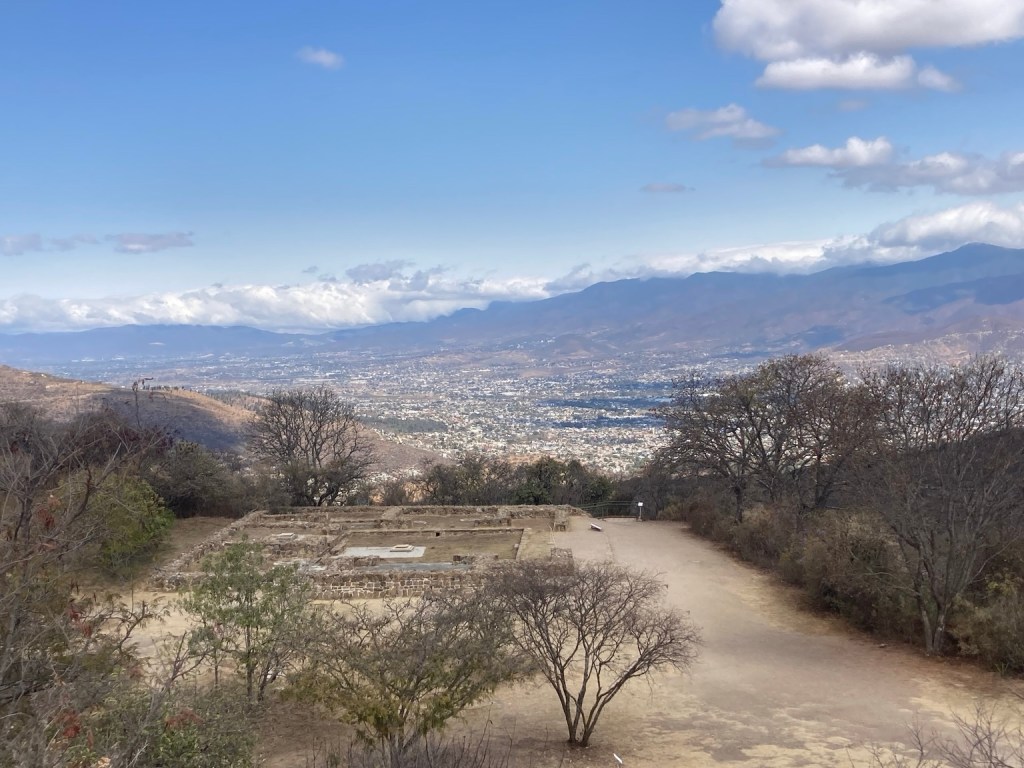
As we entered at the north end, we could soon see what a commanding position the site held with giving huge vistas across the valley below.  

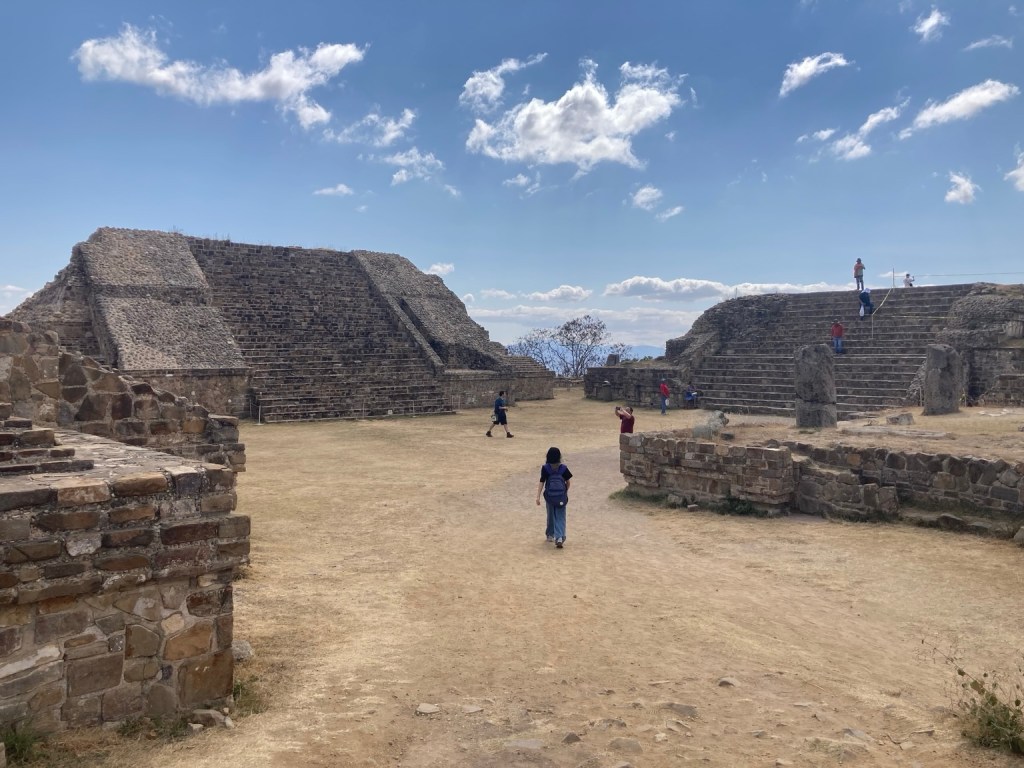
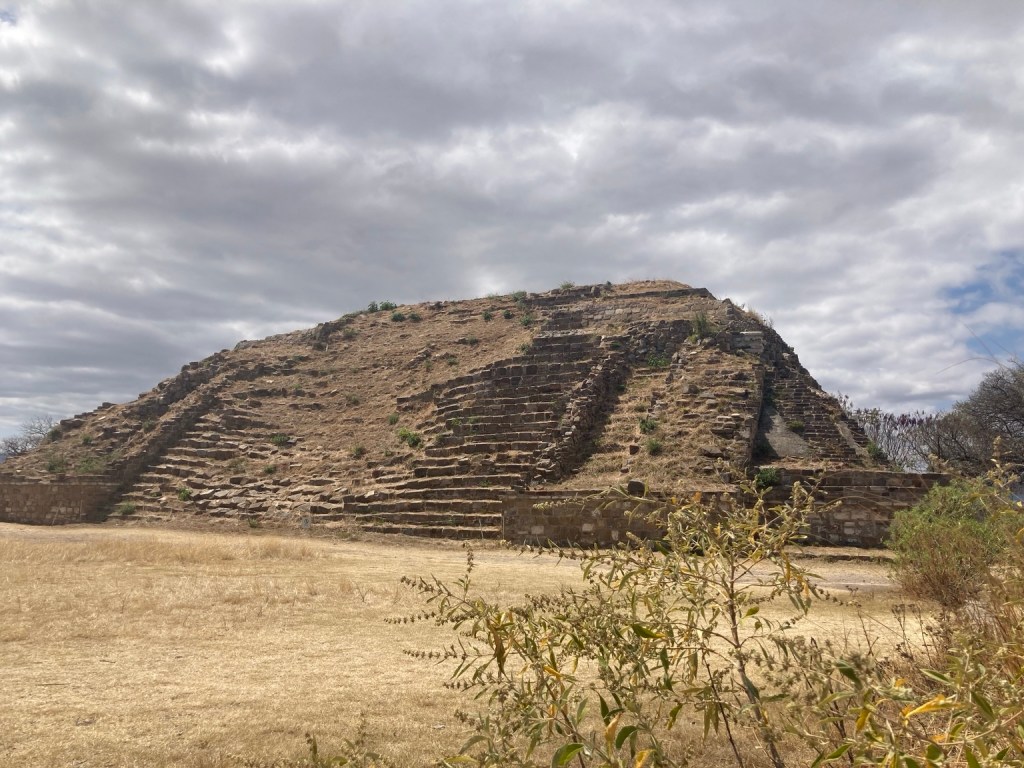
We explored this group of buildings, with stepped platforms.

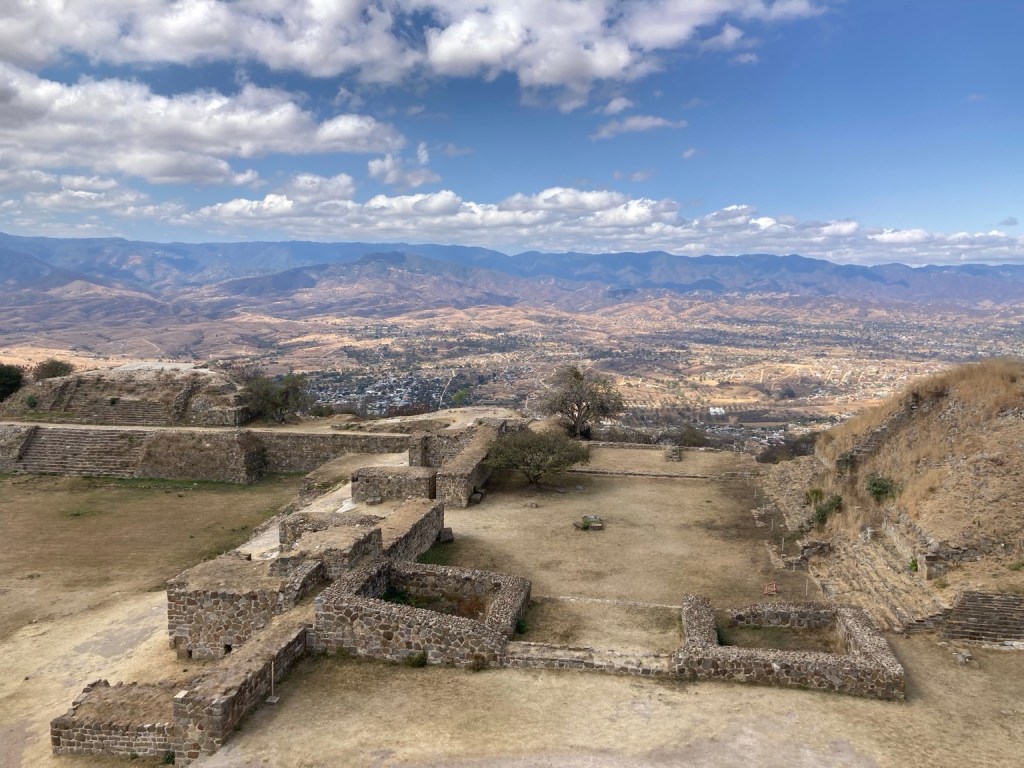
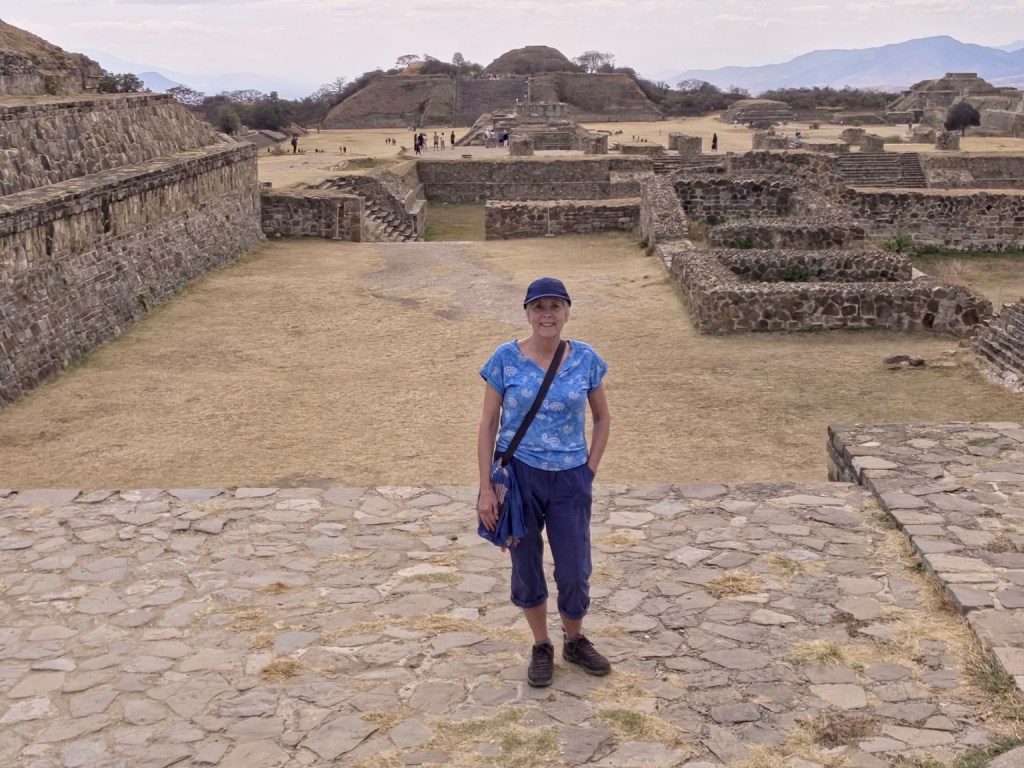
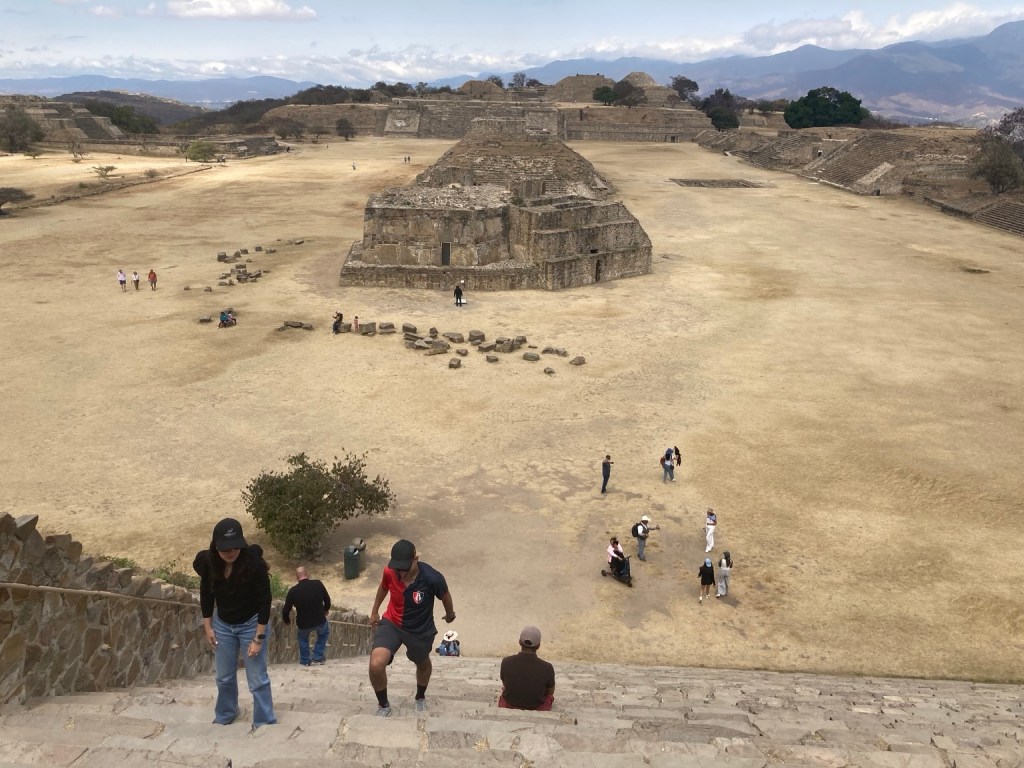
Our first proper view of the site from the north end was certainly impressive, showing how the artificially levelled hilltop gives a central plaza for gatherings with ceremonial centres at either end and residential and temple platforms along the sides and continuing down the slopes. 

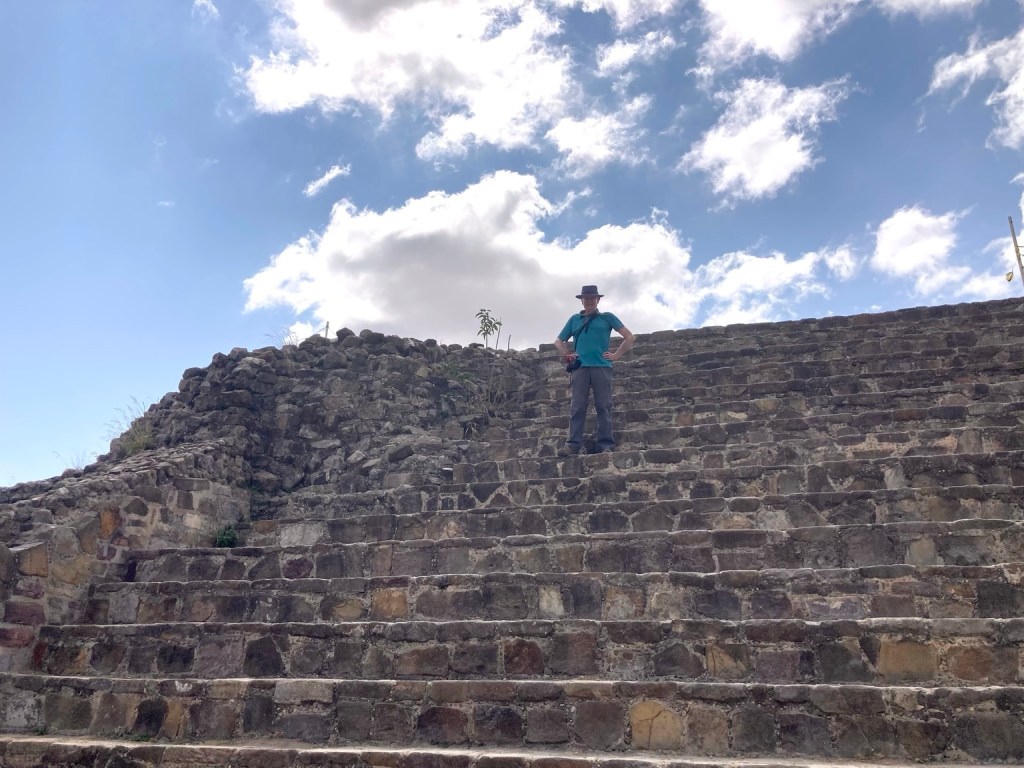
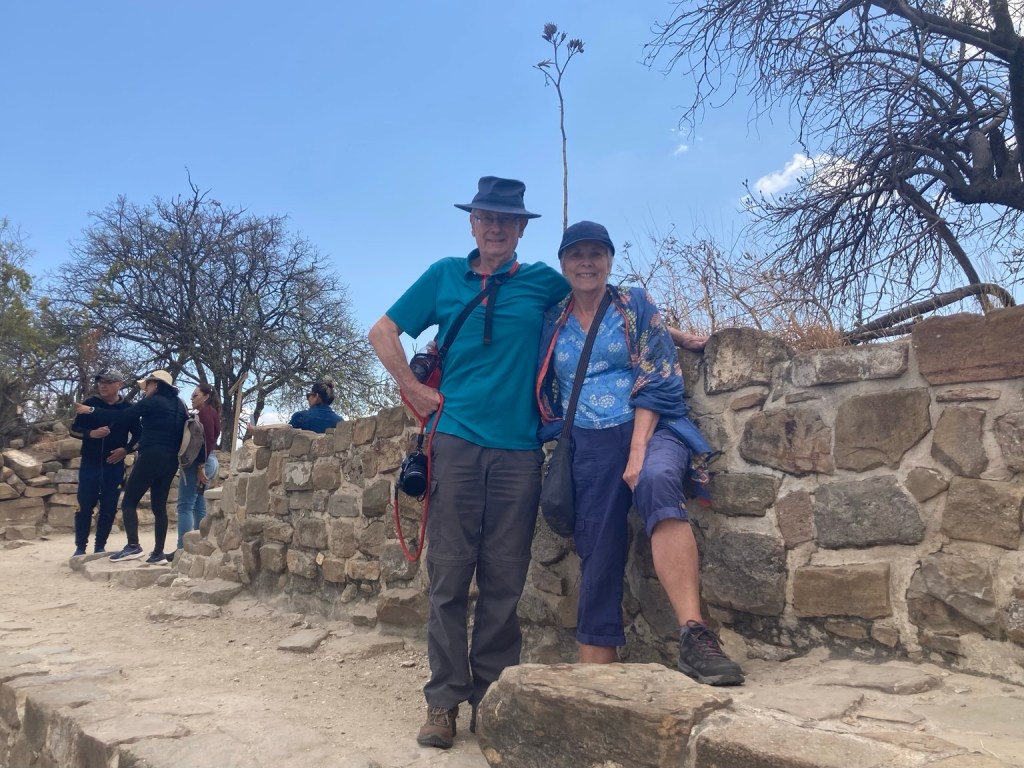
And yes I was there!

We made our way down, past the a patio area with a central altar …

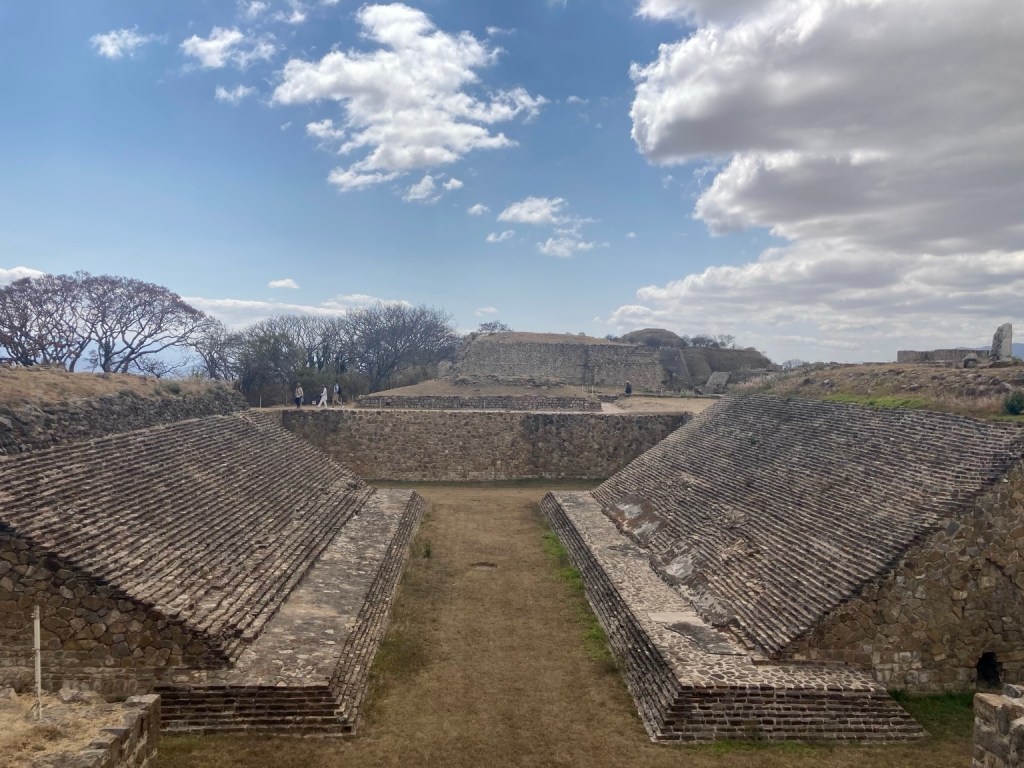
… to the the ball court. 

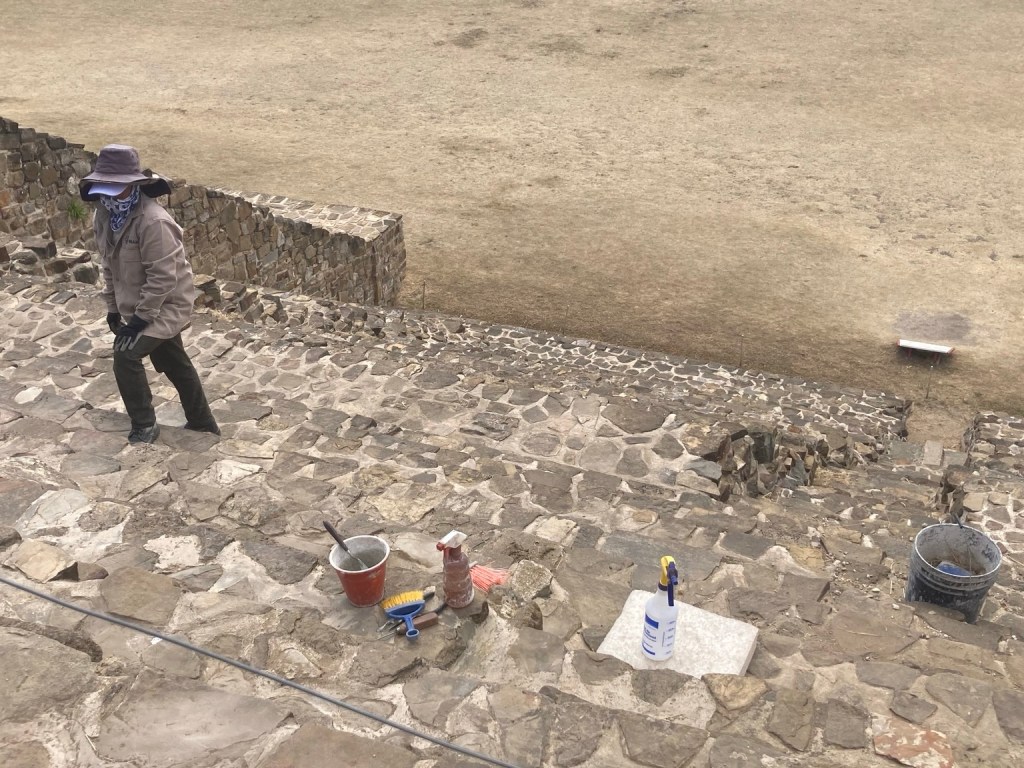
It was hard to understand how much restorative work had been done, or was still being done to keep the site intact with so many visitors. 

Just like the other sites we visited in Mexico City, the focus is on monumentality rather than the detailed decoration we had admired in the Mayan sites of the Yucatan, although there was some simple details.

We climbed up the South end and looked back across the site.

At the back were some other buildings, still not completely excavated.

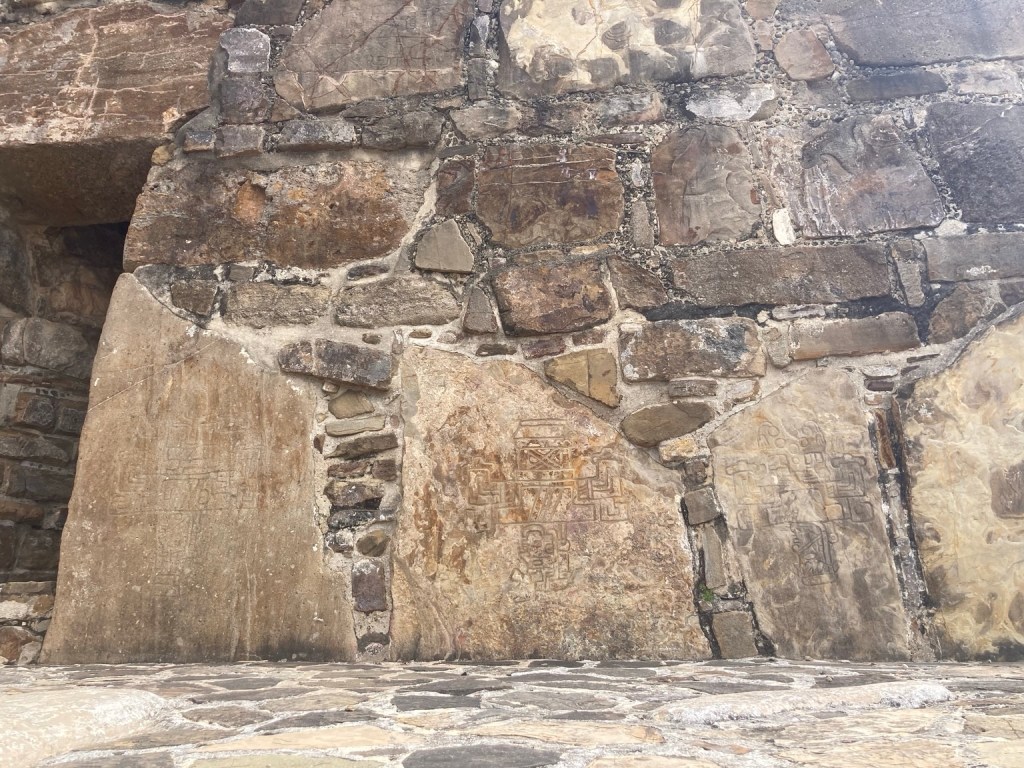
We explored the central section of buildings last, which were covered in engraved stones, which detail conquests by Monte Alban over other towns, probably to advertise their power.  Each stone has the glyph of Monte Alban at the top with an upside down head to represent the conquered people.

We really enjoyed looking round the site at our own pace and may have missed a bit of the detail by not having a guide, but we were still able to be amazed by the human endeavour needed to achieve this without wheels or beasts of burden to help.

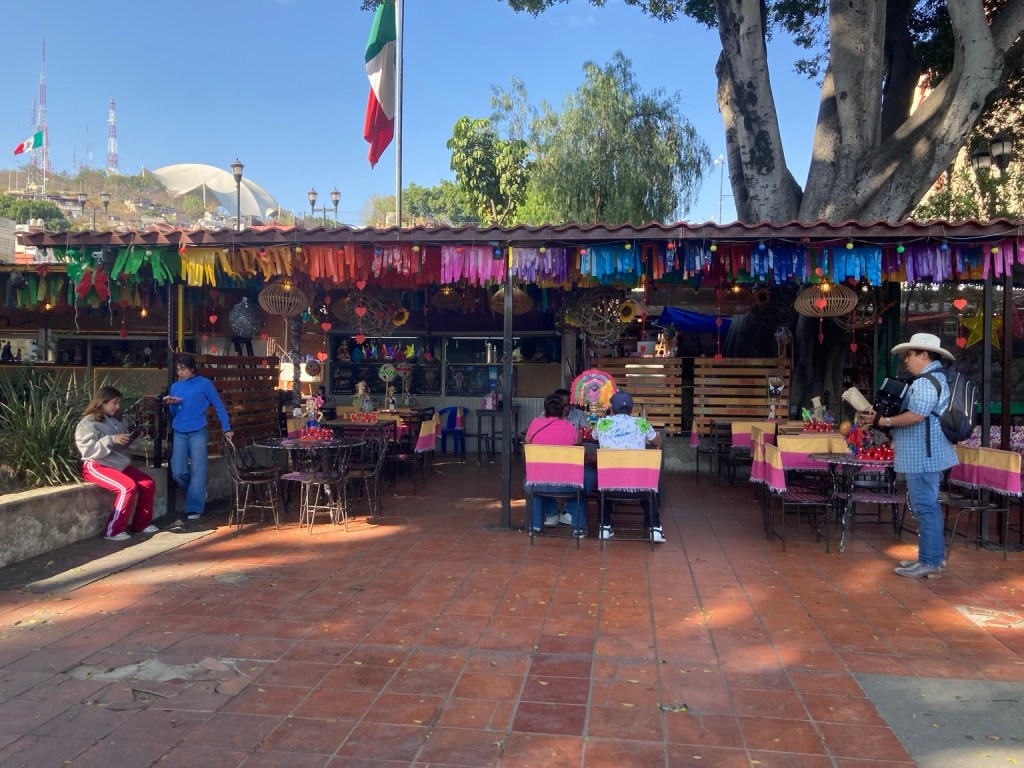
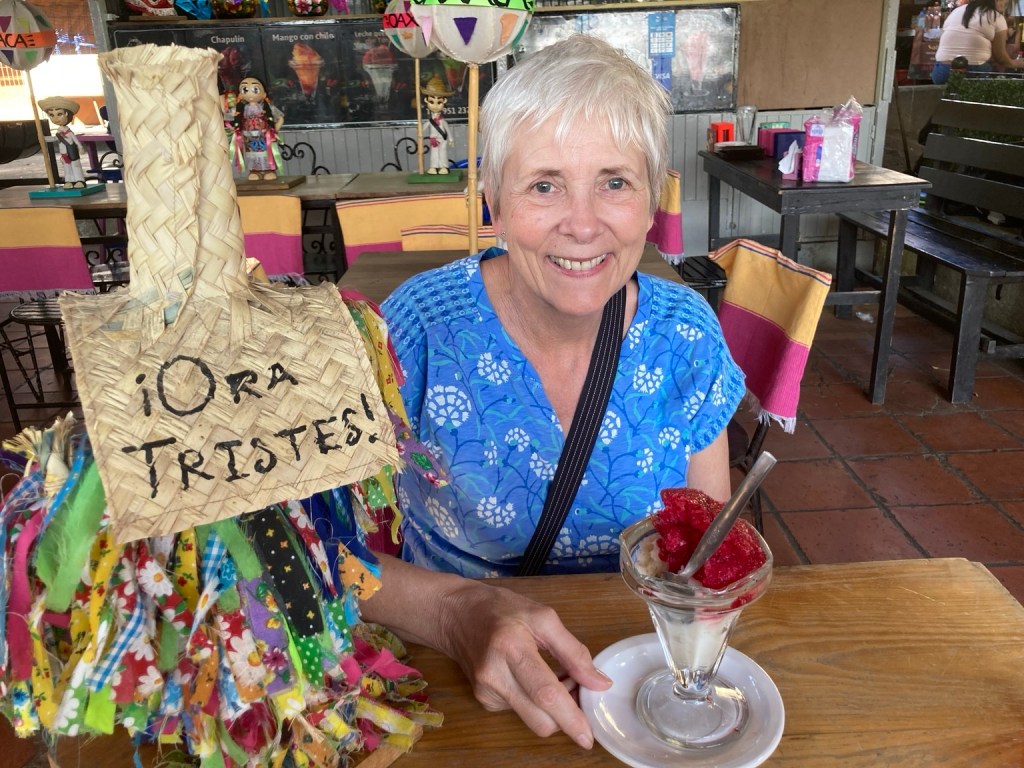
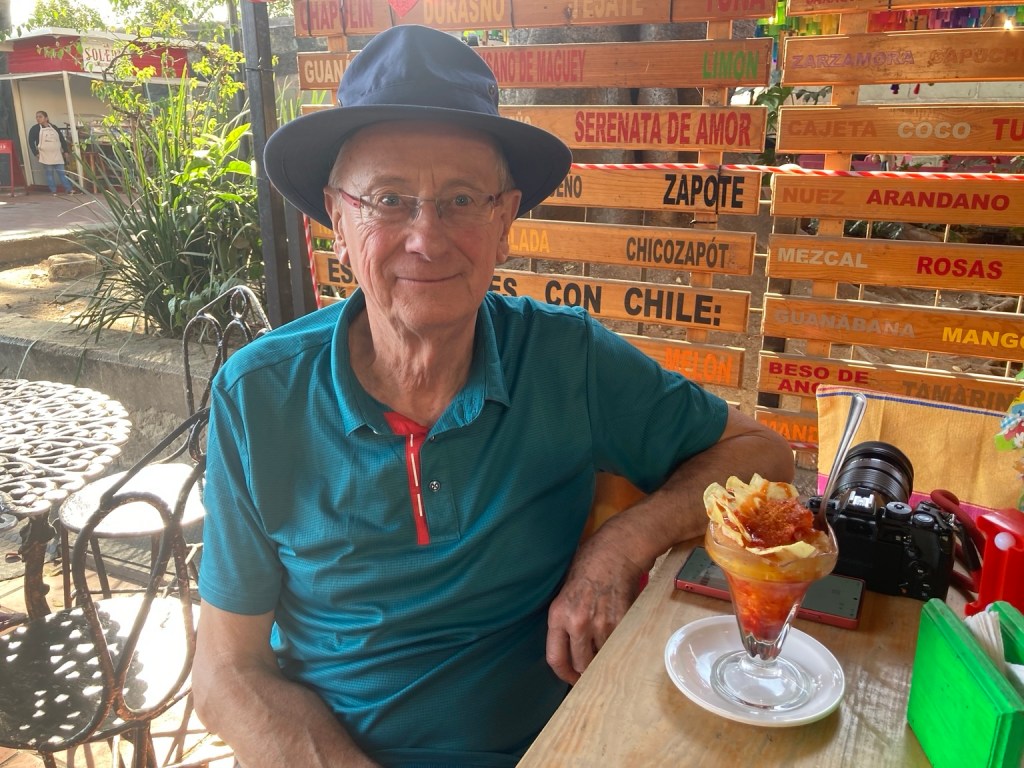
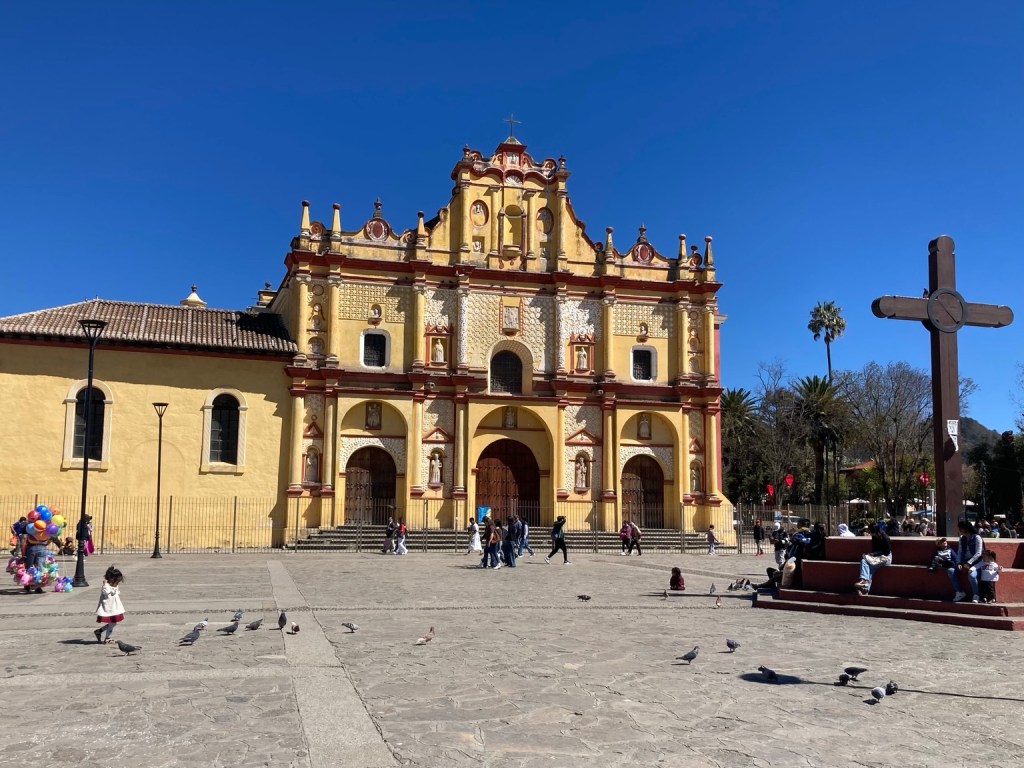
On the way back from the bus, we passed through our most local square with the  Señora de la Soledad church where there are a collection of cafes selling local ice cream.

They use condensed milk but it’s quite icy like a sorbet – mine was burnt cream and prickly pear …

… and Chris bravely tried mango with chilli!

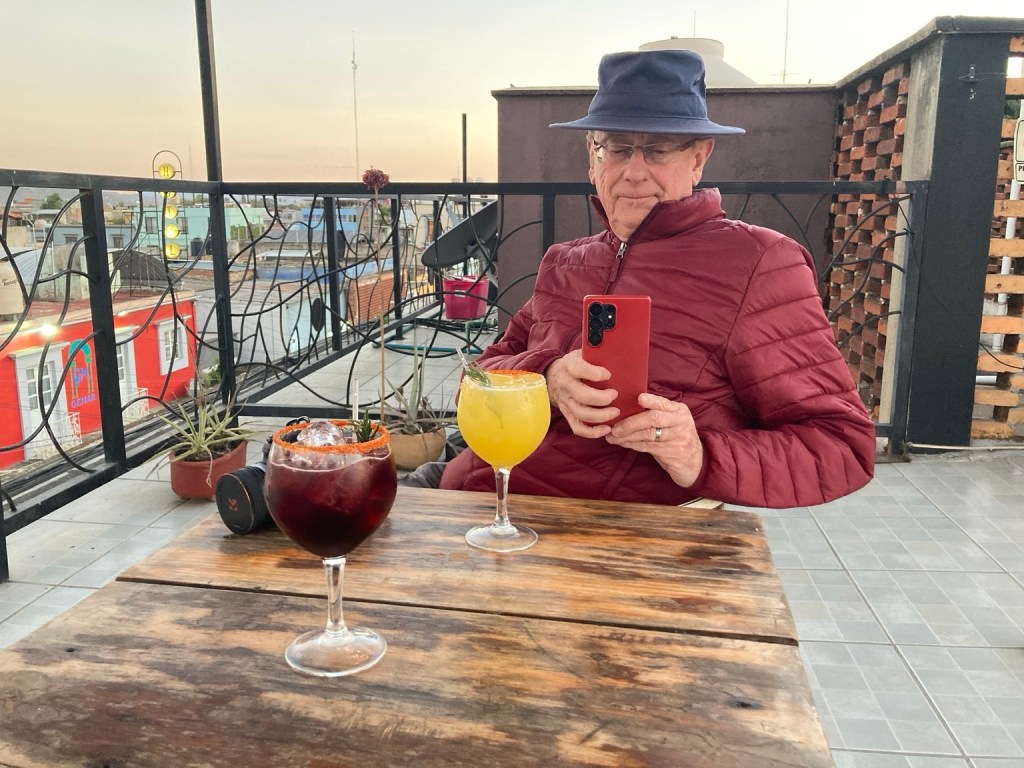
Later we went for mezcal cocktails at the Magnolia Roofbar, overlooking the back of the church, so we could watch the sunset, but the sky didn’t light up like the first night and there was a chilly breeze so we didn’t stay too long before going for dinner.

Map

Oaxaca … Cooking up a Zapotec Feast 

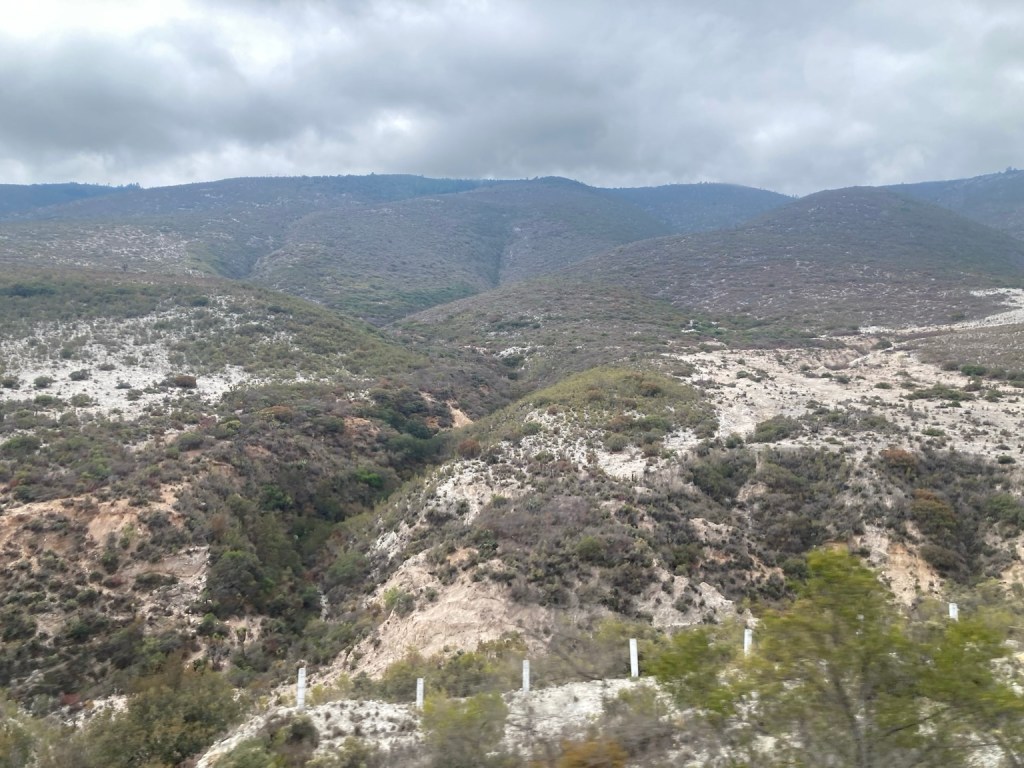
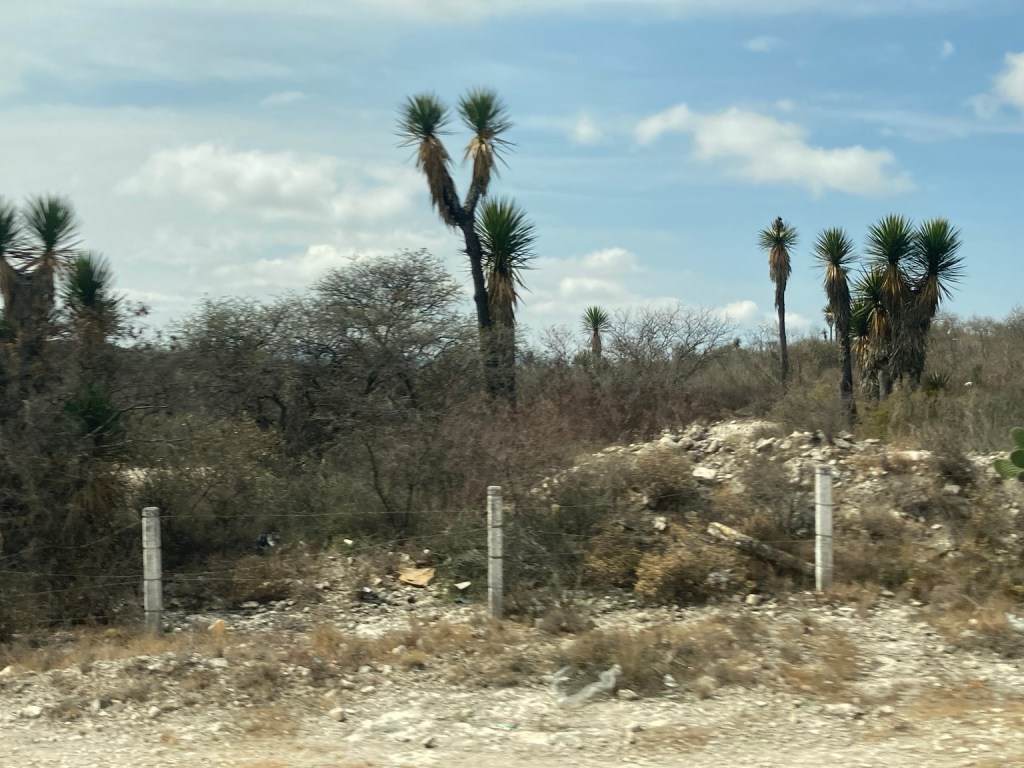
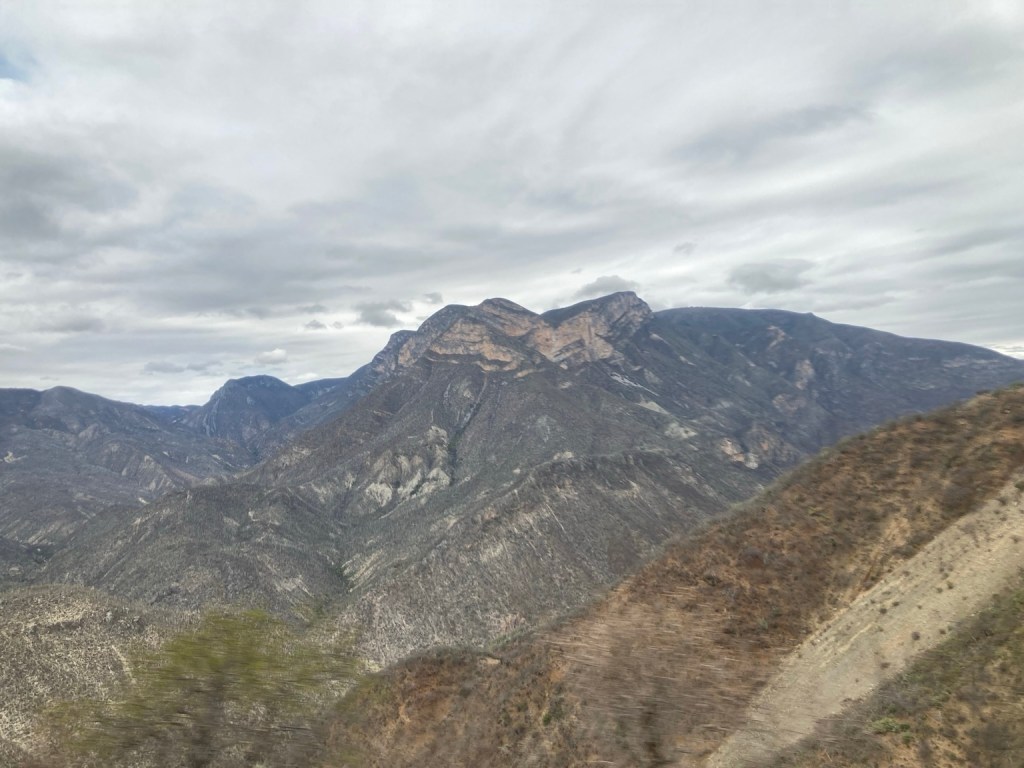
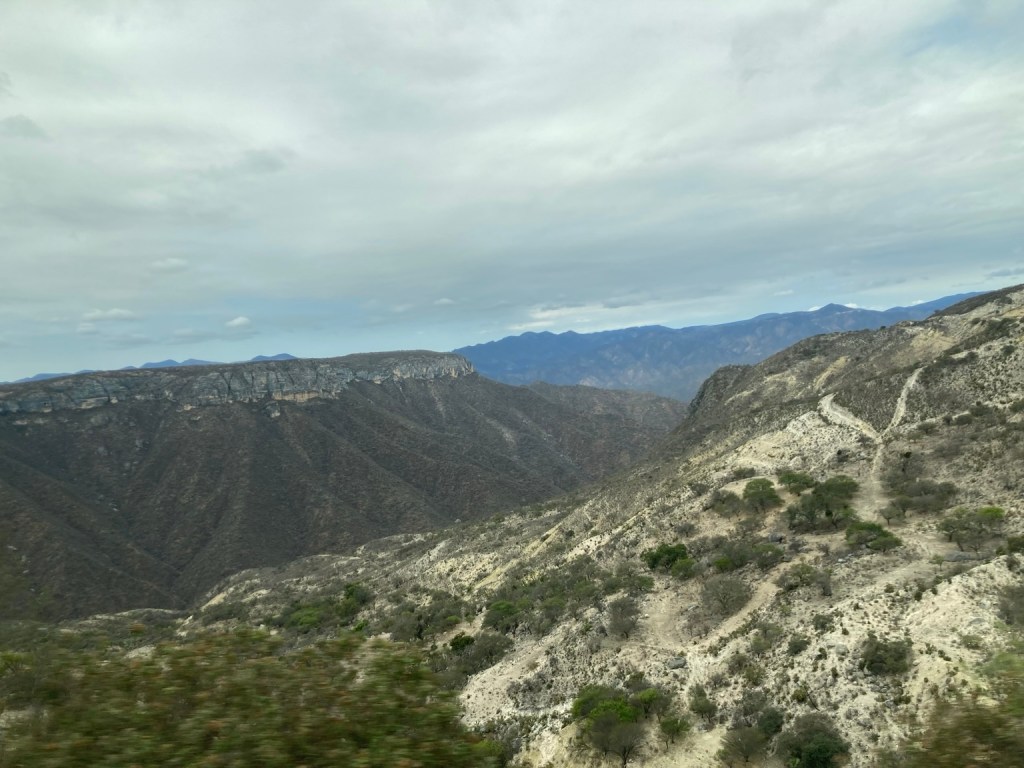
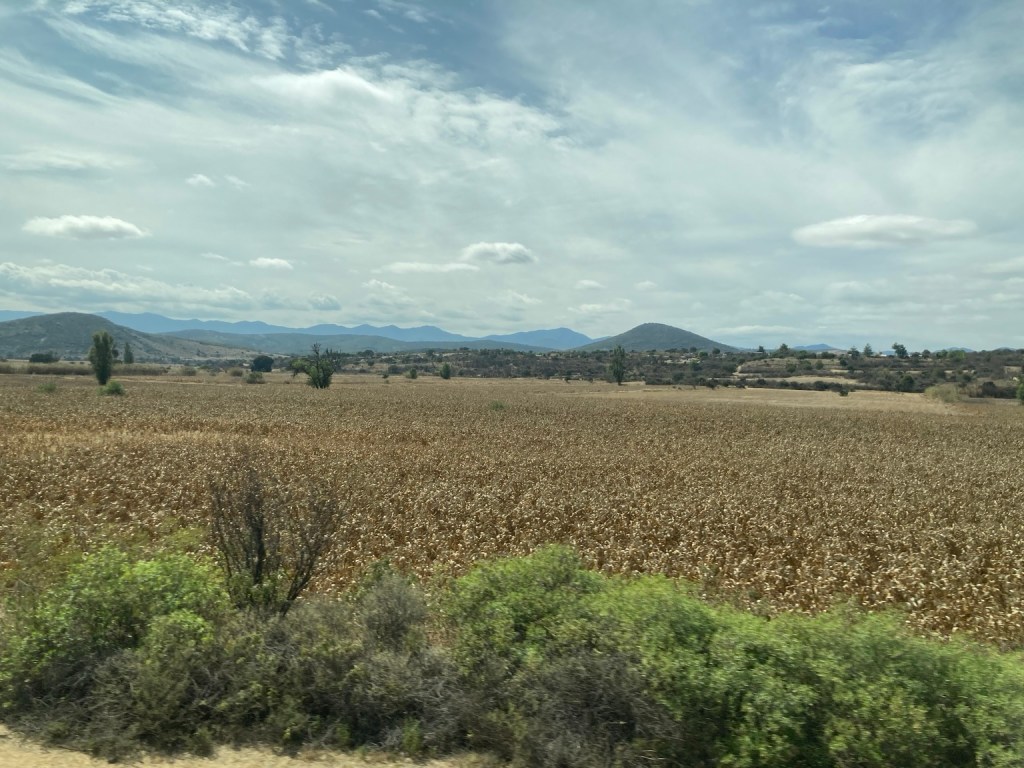
We spent the day on a bus to Oaxaca, enjoying the changing scenery which included hilly areas covered with cactus. 

I can’t read on a bus, but I came away with a new project, to knit my very first pair of socks, and knitting on the bus was fine and I finished the rib on the first sock!

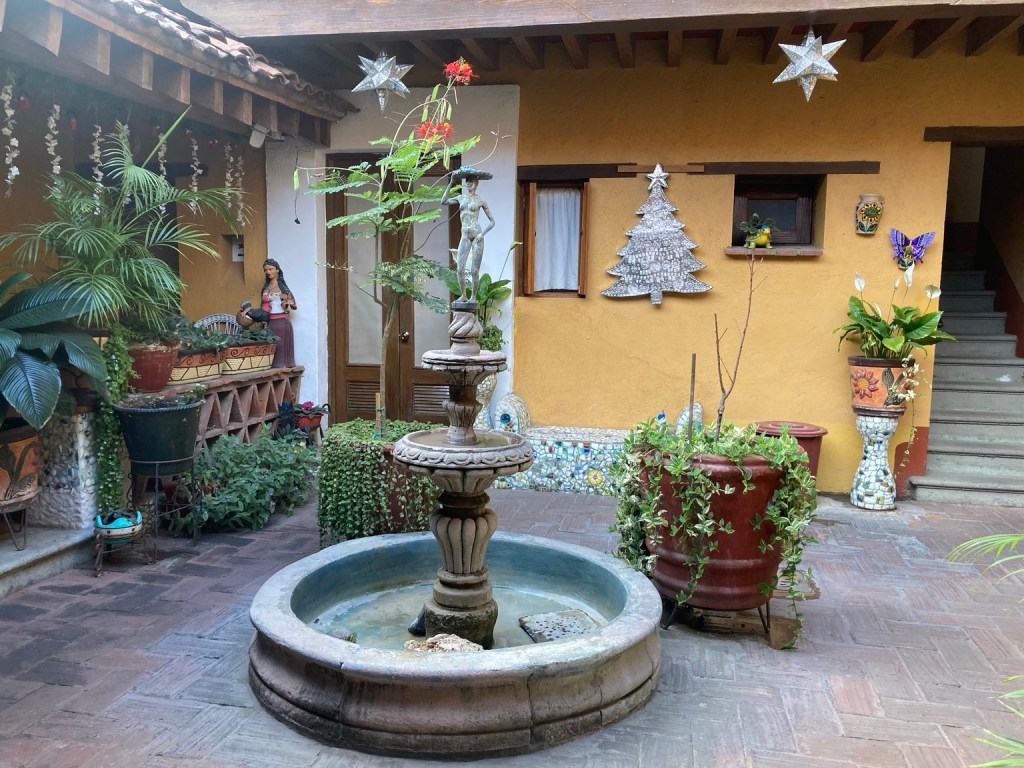
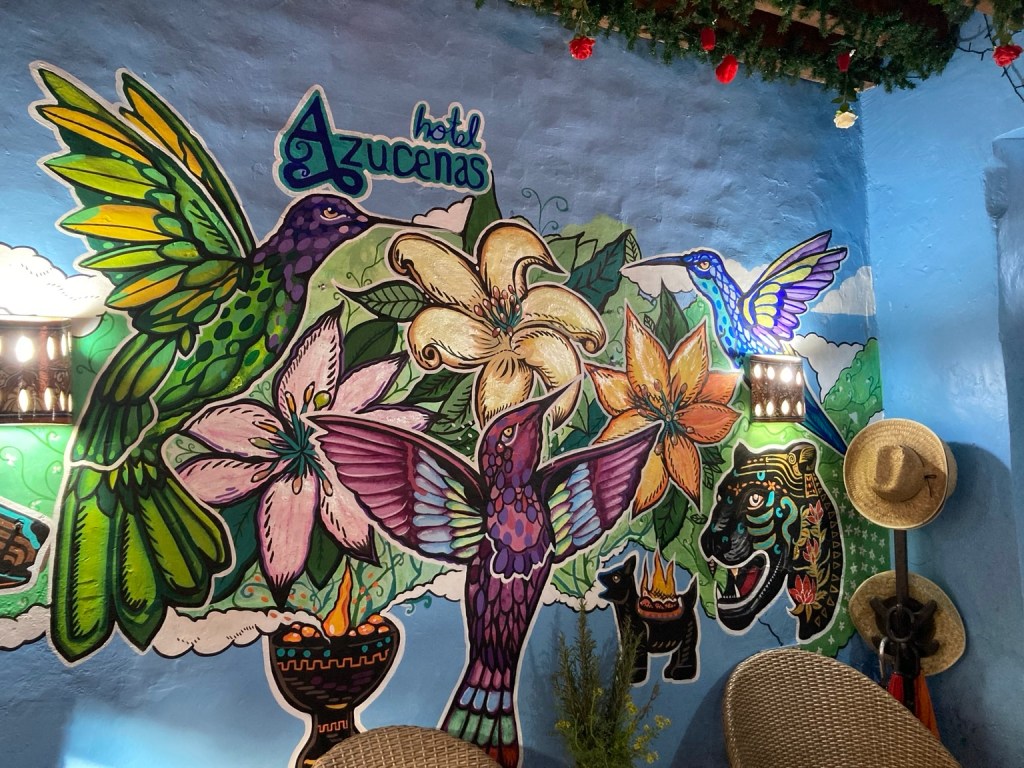
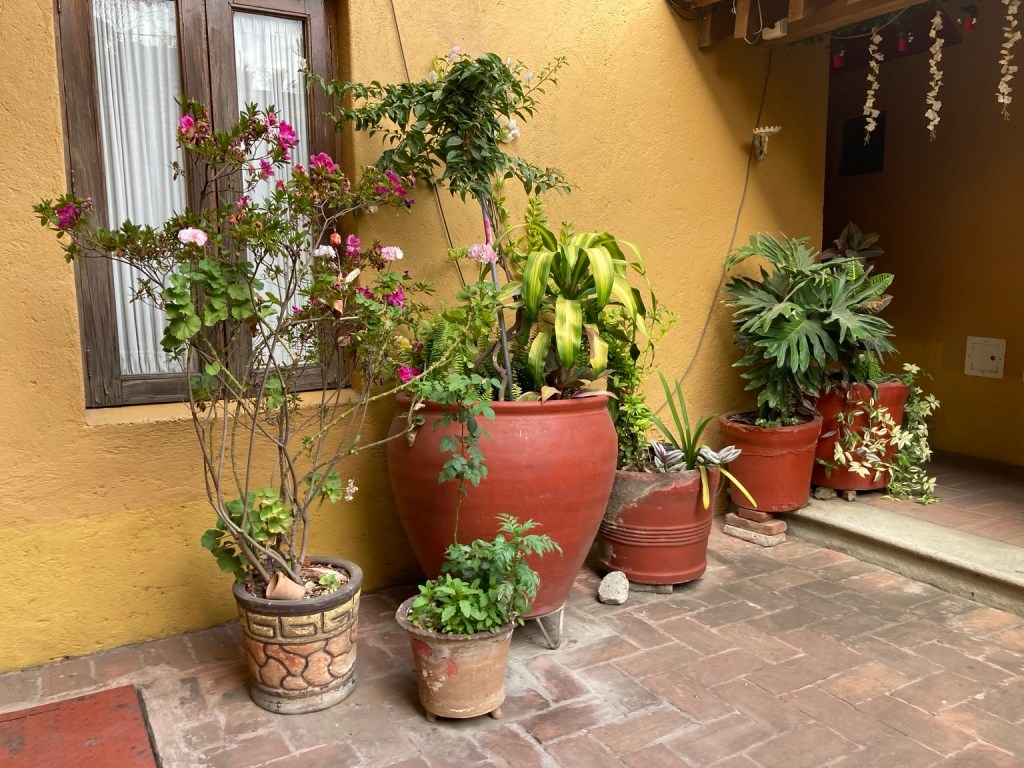
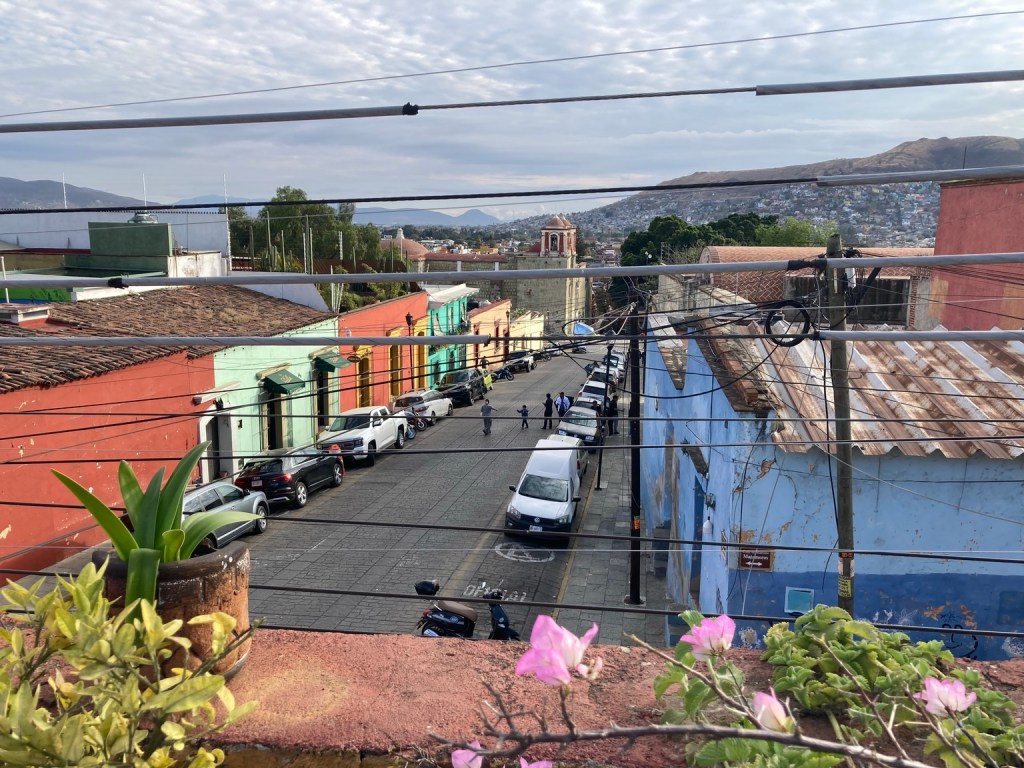
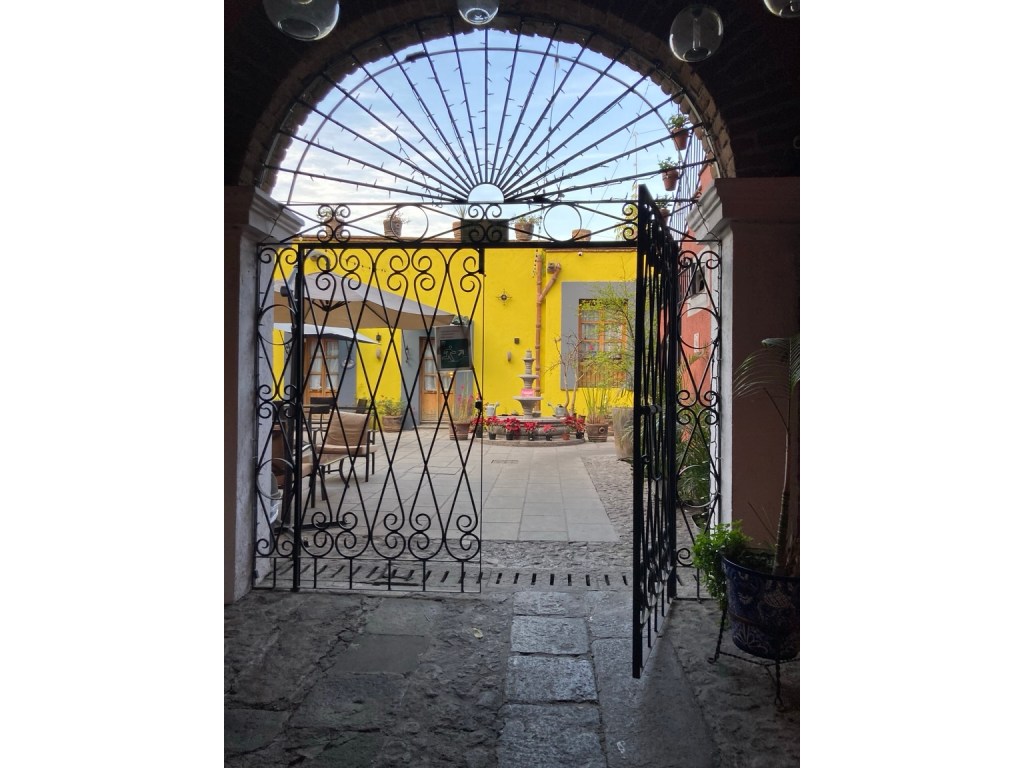
Arriving in Oaxaca, we got a taxi to Hotel Azucenas, a small restored colonial house with a pretty courtyard and rooftop terrace. 

We walked into town later …

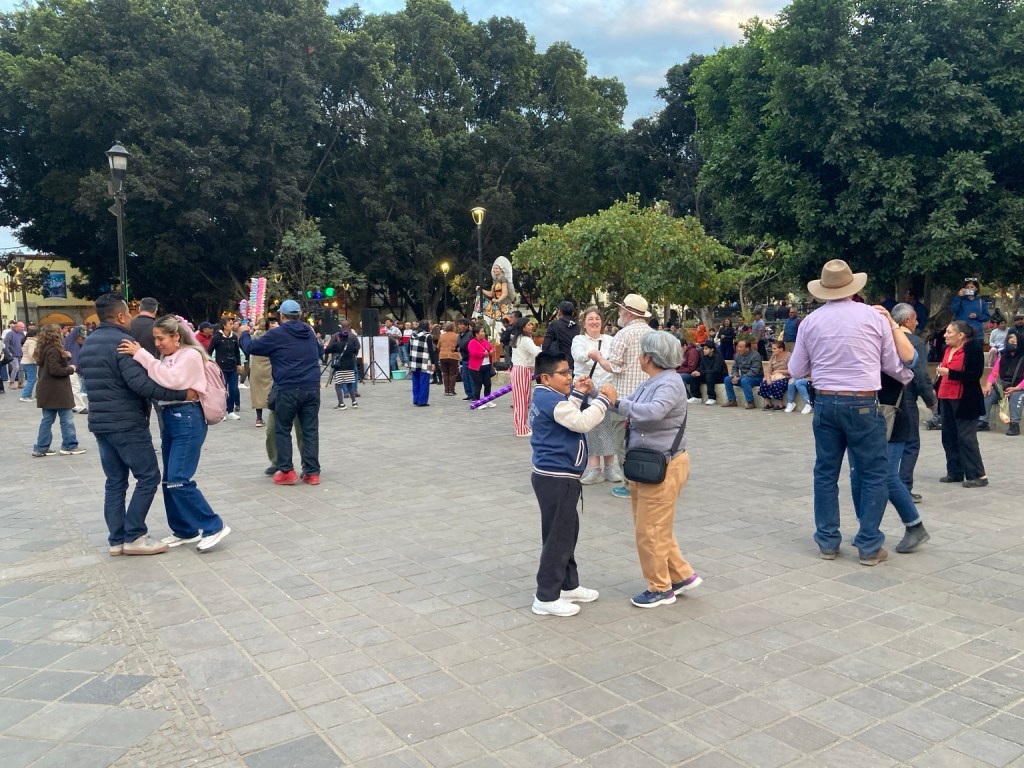
… watched couples dancing in the square …

… and even had a go!  Immediately we were stuck by how readily traffic stops for pedestrians at cross streets which is a big change from Mexico City and Puebla. 

The sun set in a blaze of glory then we went for dinner at Taniperla where I tried empanadas made with plantain tortillas filled with ground beef and Chris had a veggie burger made with amaranth & chickpea – all very tasty with local beers.

The state of Oaxaca is the most ethnically diverse state in Mexico, with 18 different indigenous people and languages and Etnofood is actively engaged in teaching about the local indigenous customs and traditions through a number of local tourist experiences.  We chose a cooking class led by Victor, who learnt about Zapotec cooking from his grandmother. Having trained as a chef, he now enjoys teaching a vegetarian class, because as he points out, the Zapotec only ate meat on feast days, and that would have been limited to what was locally available like armadillo and monkey!

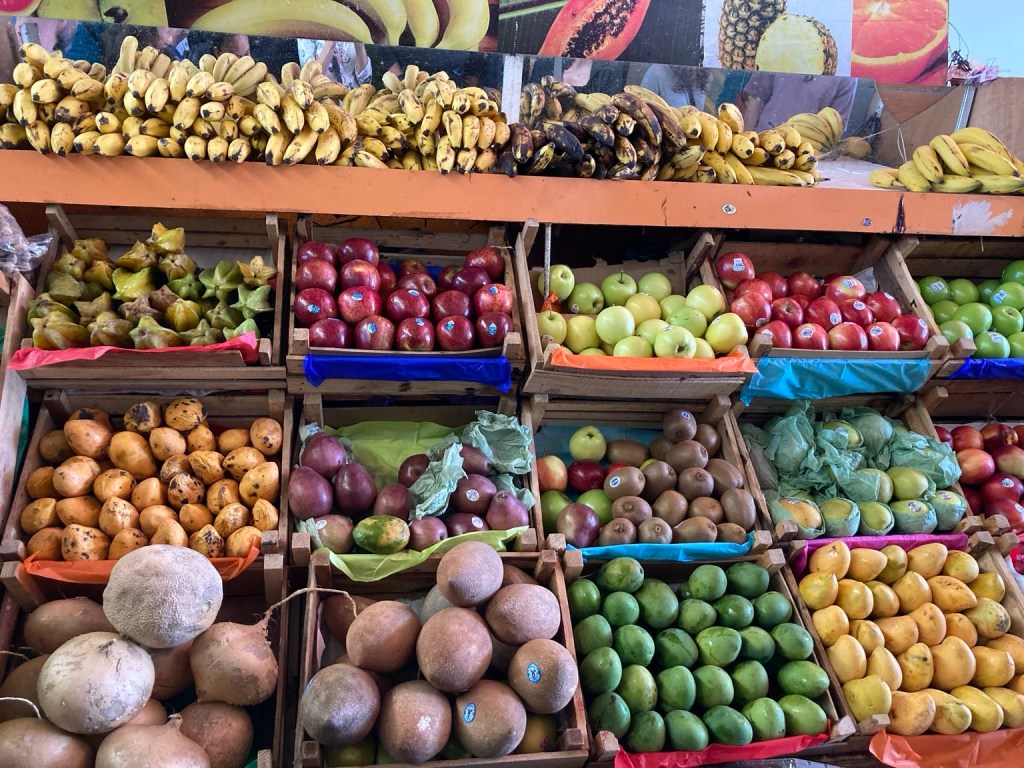
We began with a trip to the market where he showed us the variety of fruit available …

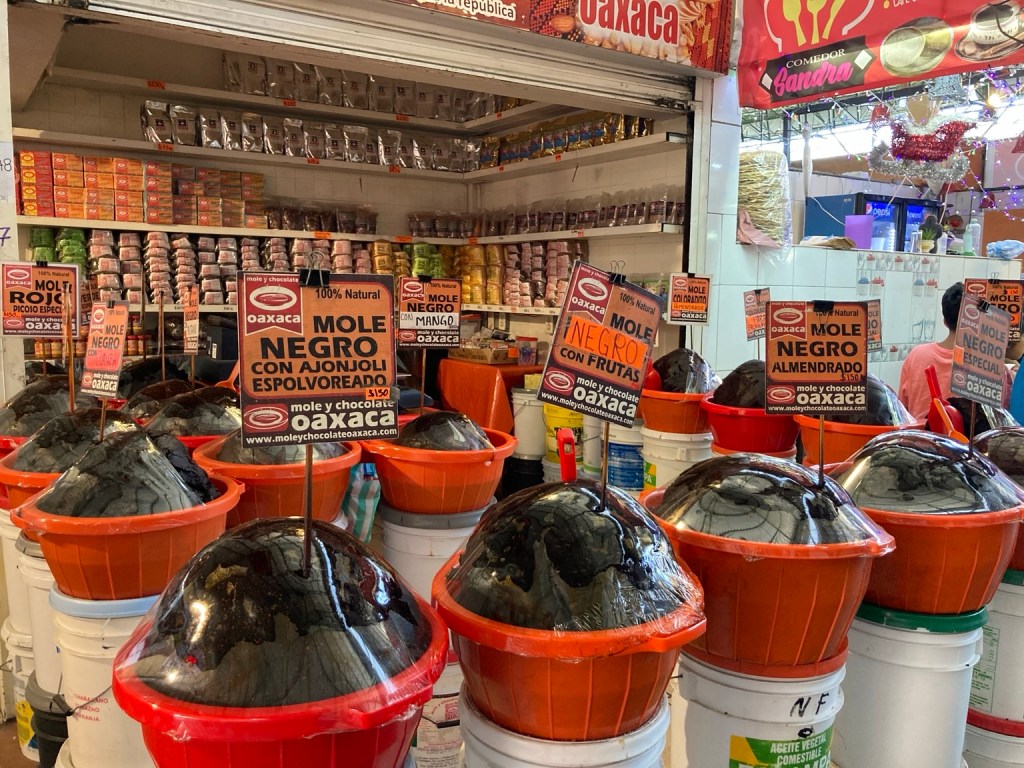
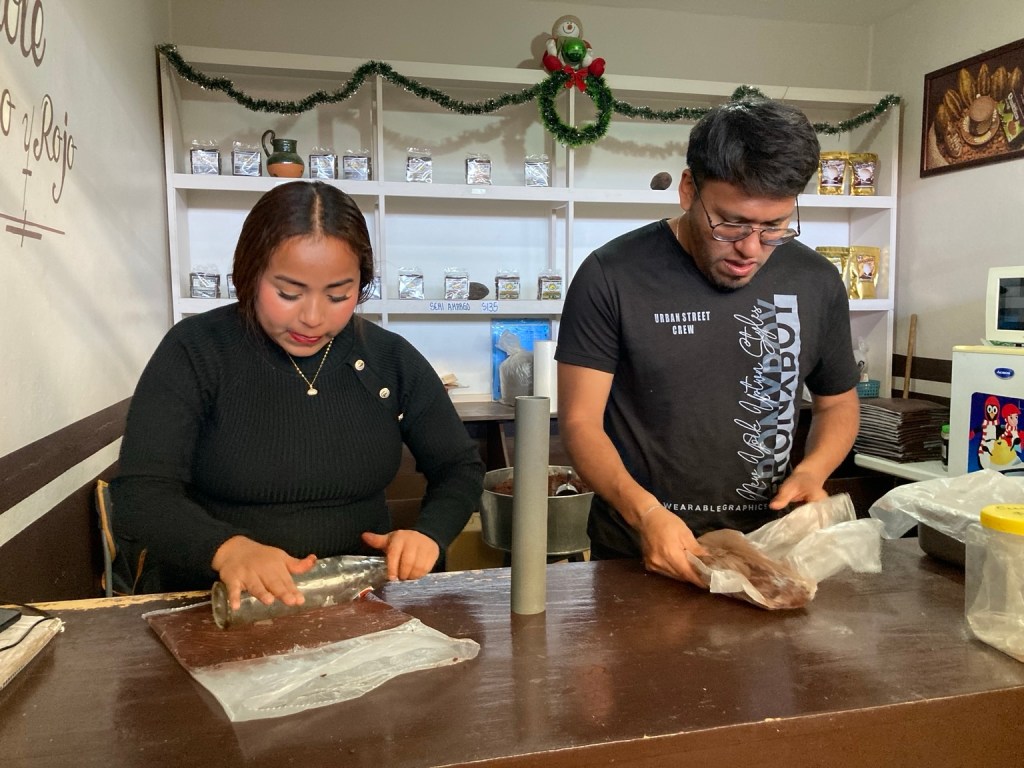
… and a chocolate stall where they make their own chocolate by hand. We saw them working the mixture which contains just ground cocoa, almonds and sugar.  We tried some while it was still warm and couldn’t resist bringing a packet home! 

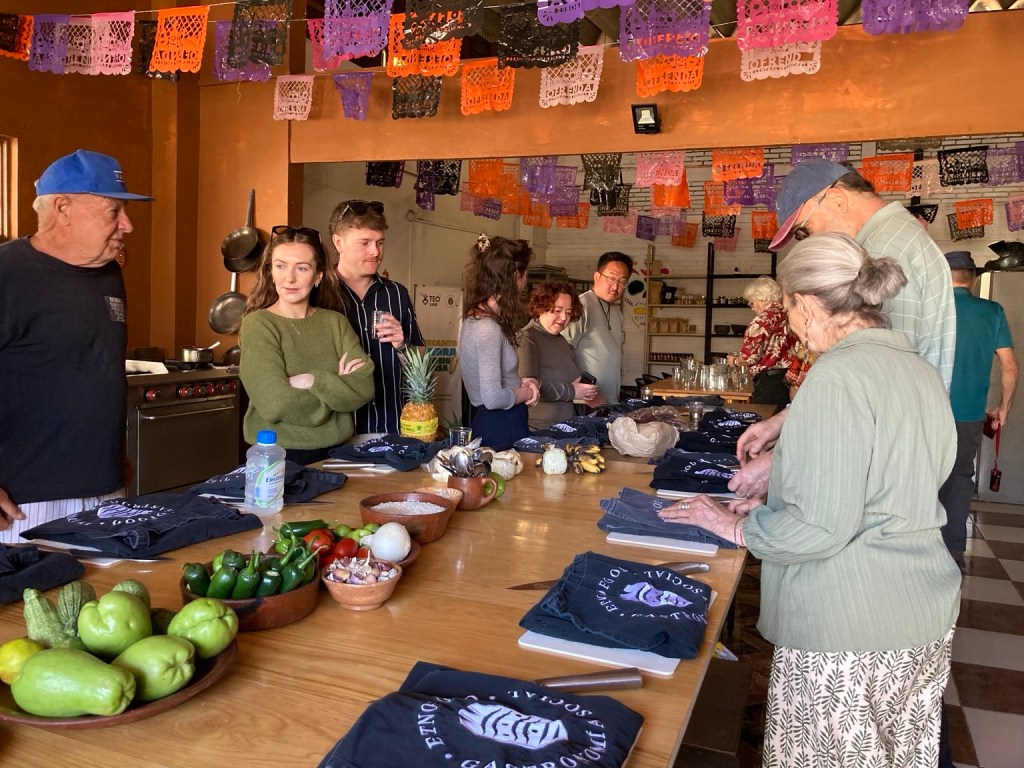
From there we went back to the kitchen and donned our aprons. 

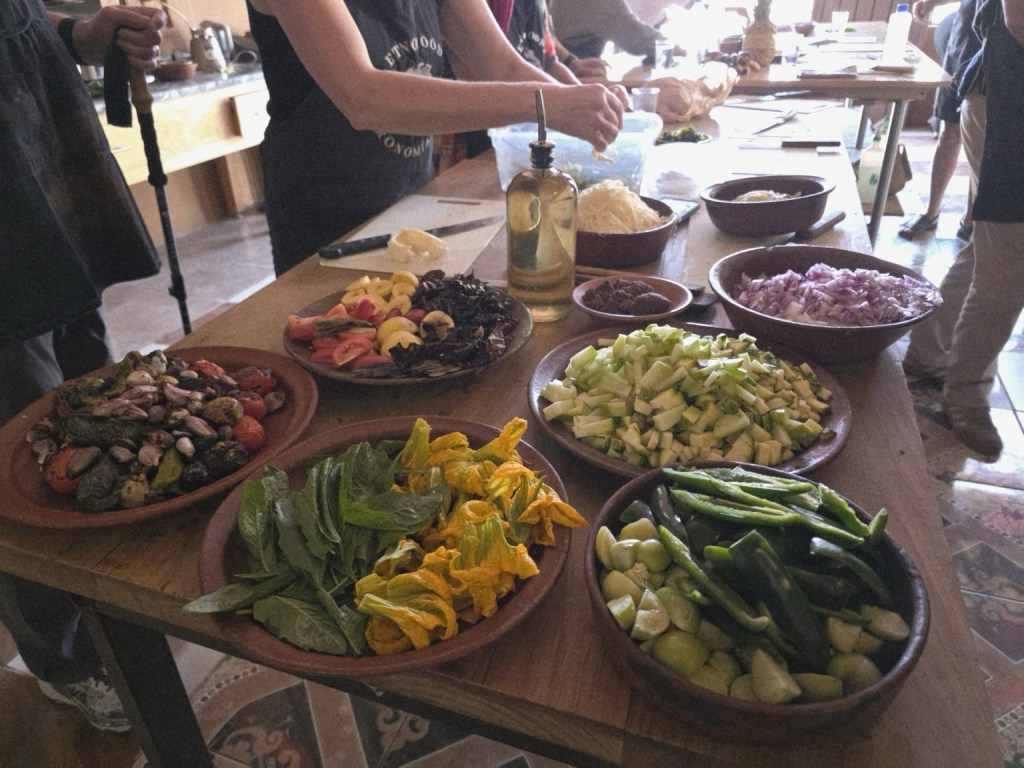
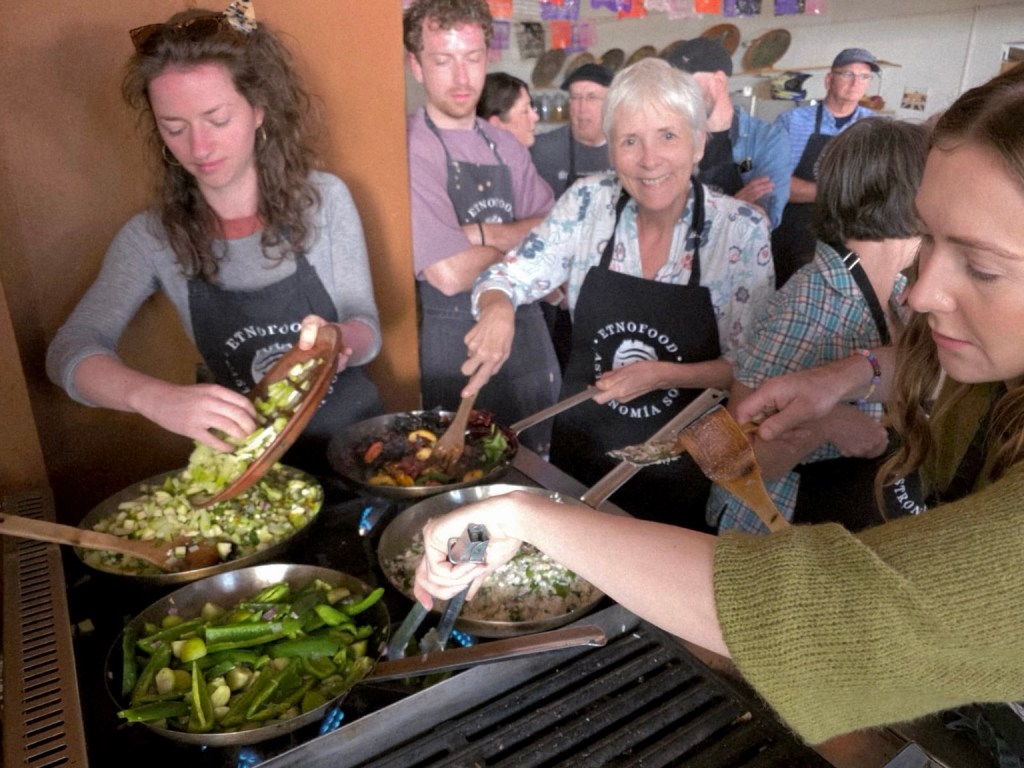
Despite being a fairly large group, Vicotor ran the show perfectly, allocating jobs to prepare the vegetables and fruit. 

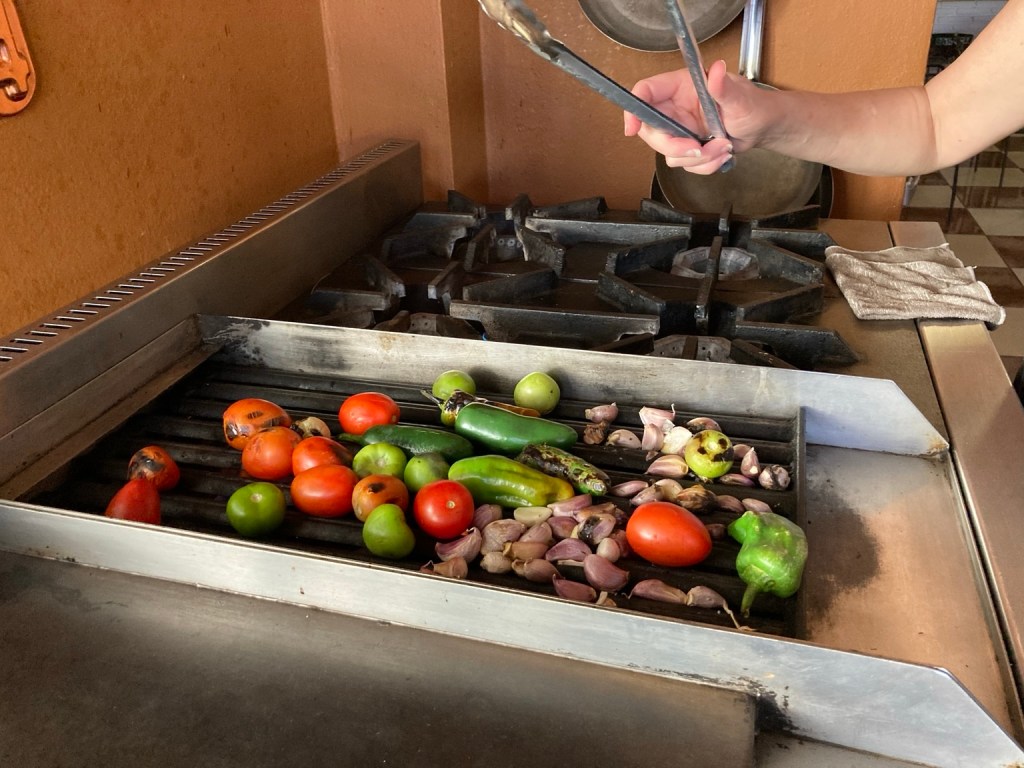
There were also charred vegetables for a red salsa and chillis …

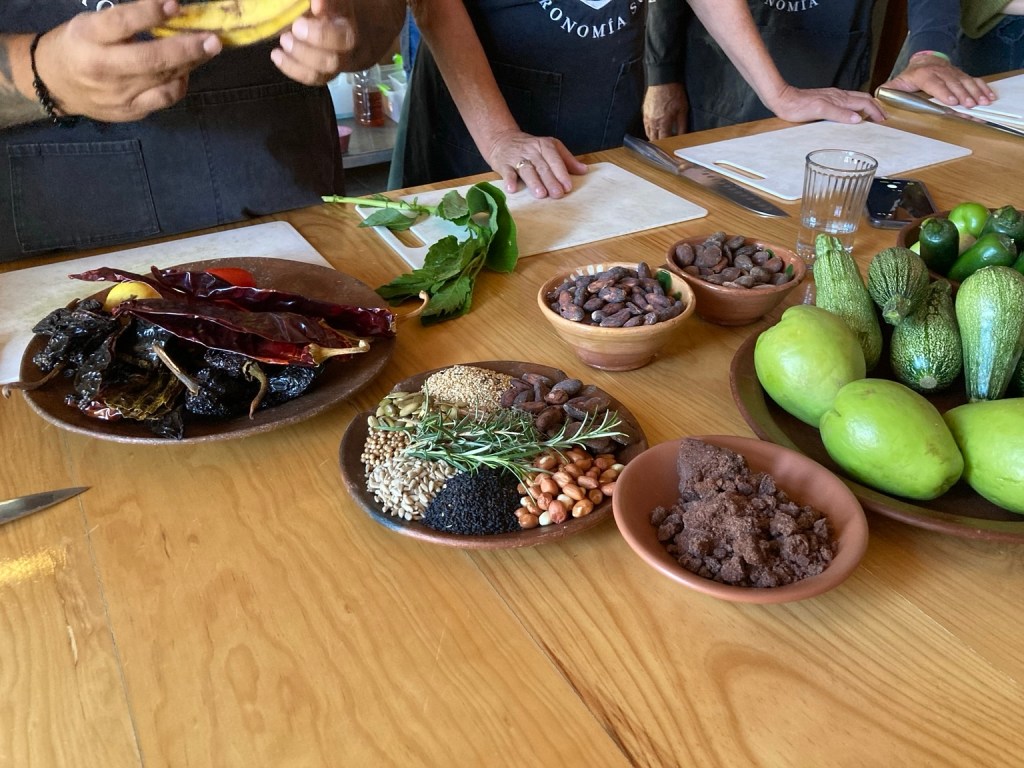
… and toasted spices and chocolate for the mole. 

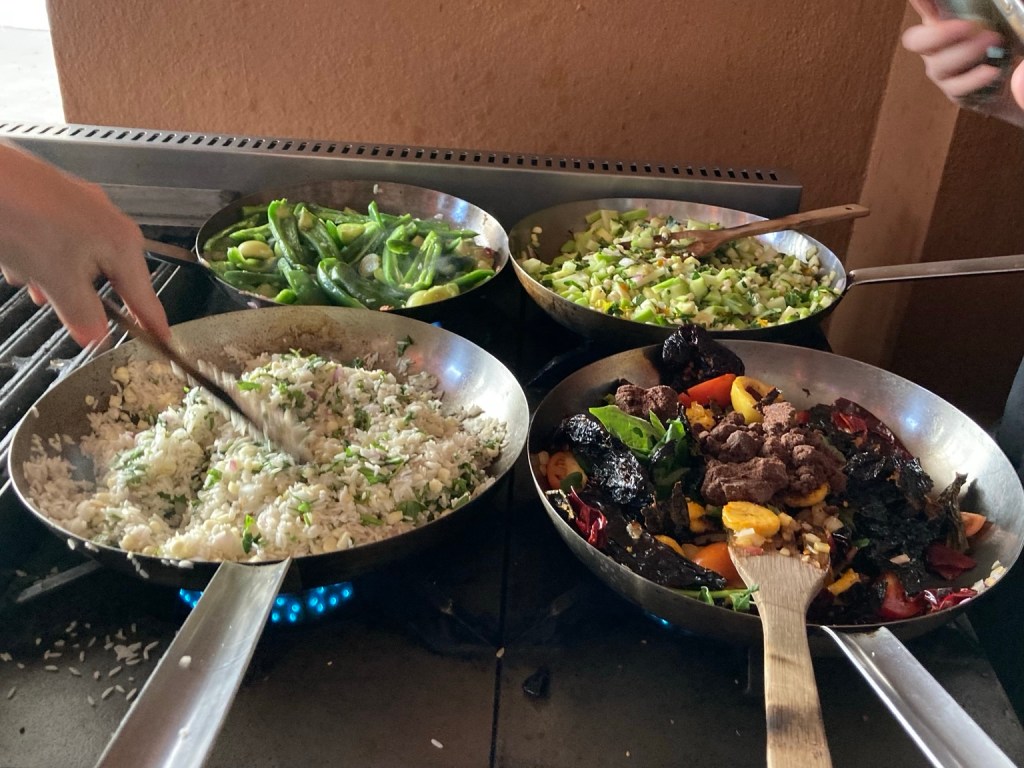
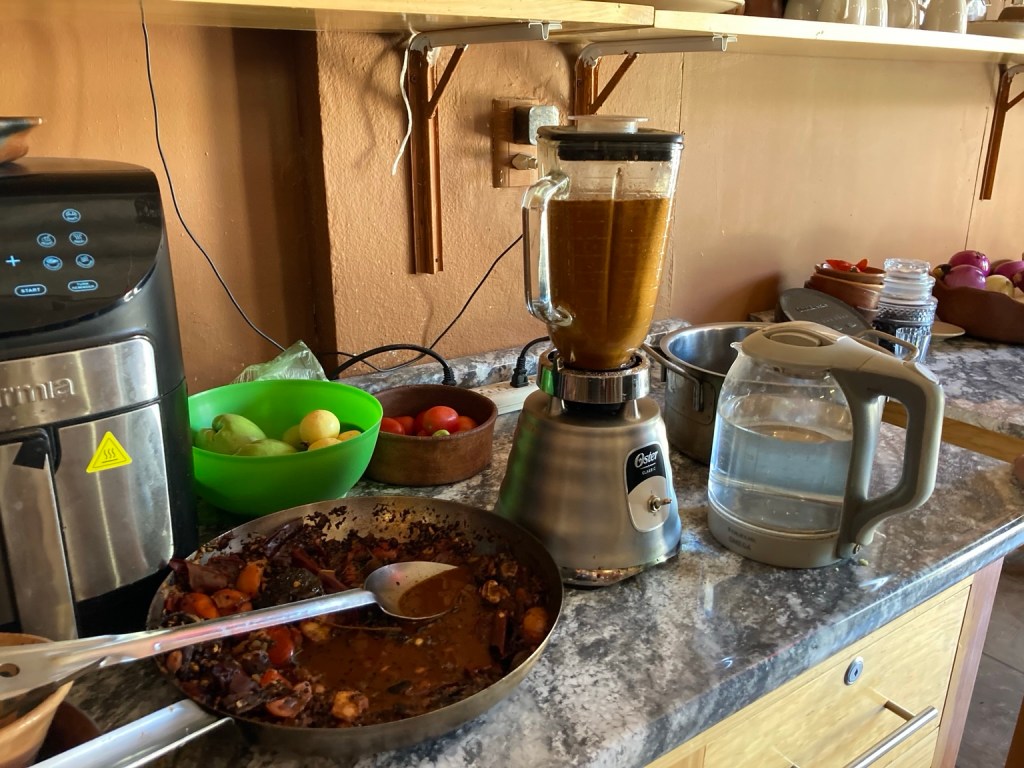
Each of the four pans were stirred – one with jalepenos peppers, onions and garlic for a salsa, a pan of diced mixed squash, rice cooked rather like a pilaf and the vegetarian mole. 

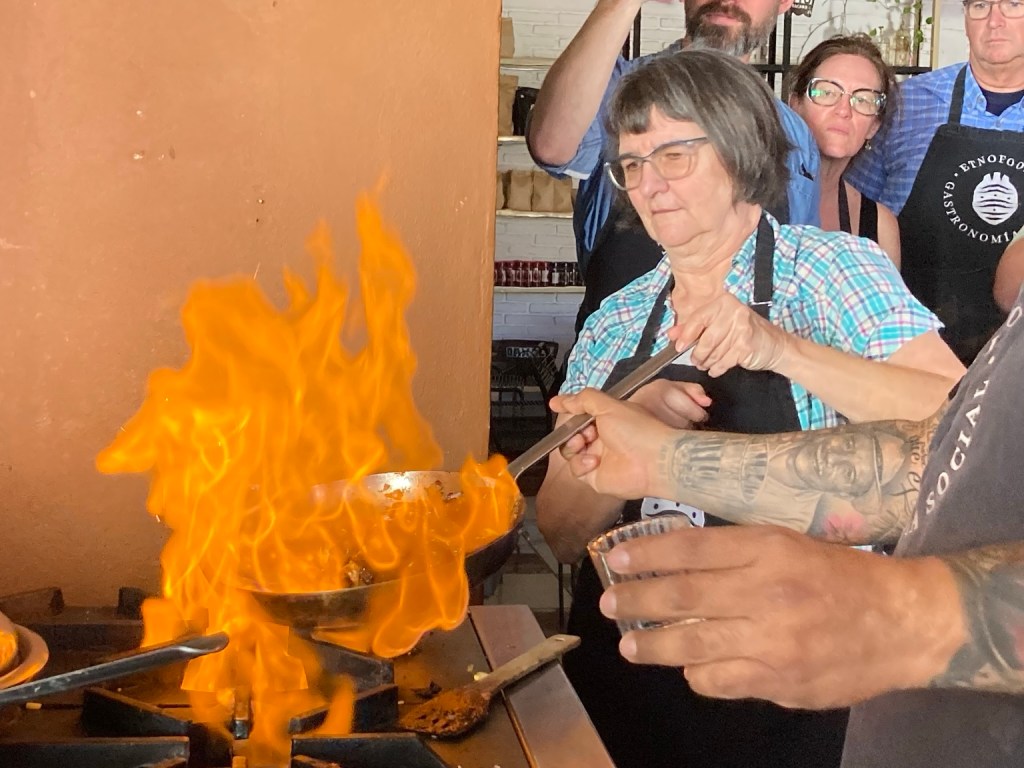
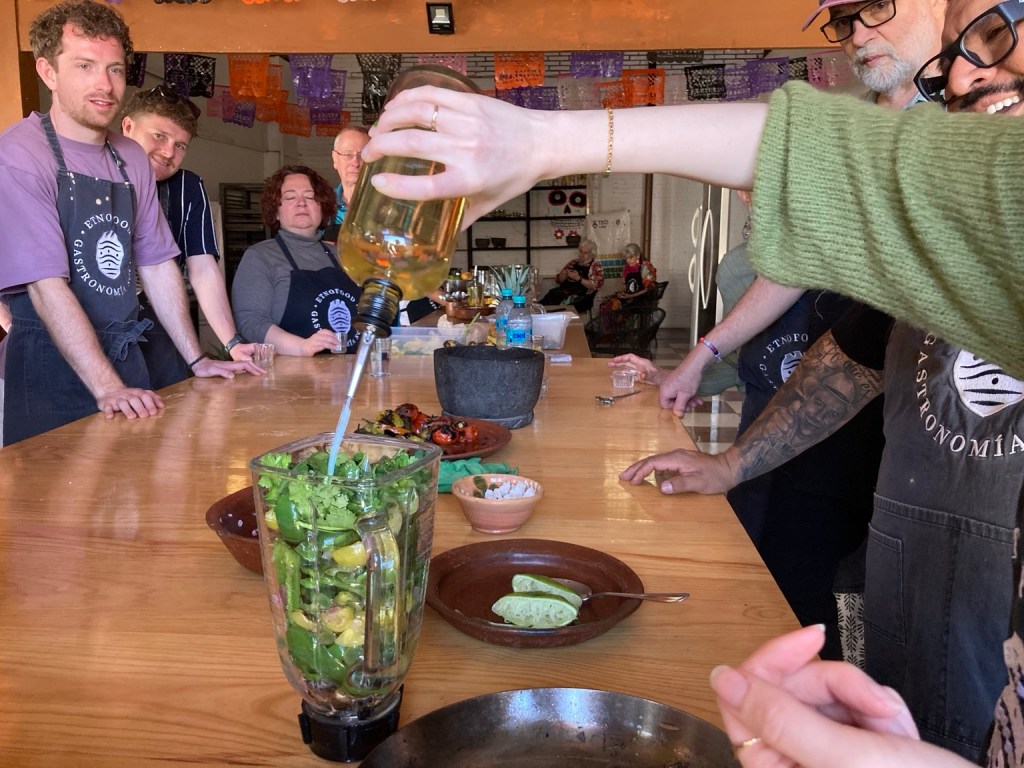
The mole was flambéed with a little mexcal to add smokiness …

… then simmered to combine the flavours before it was blended smooth. 

The green salsa was blended with oil and avocado, the red salsa pounded with a pestle and mortar. 

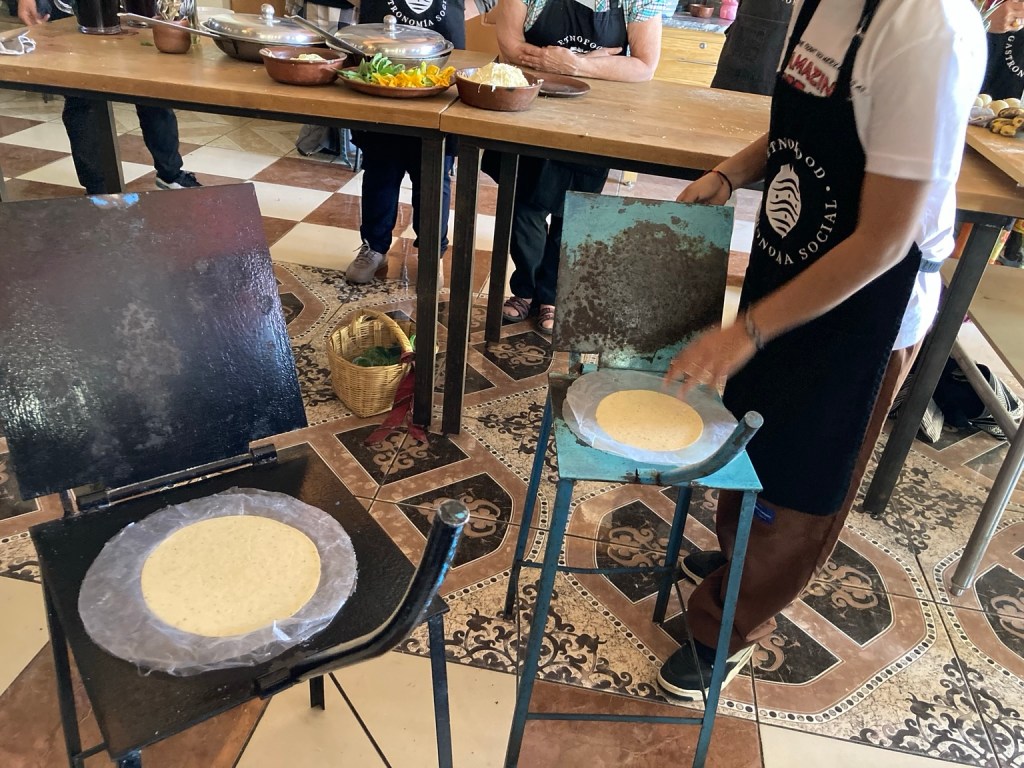
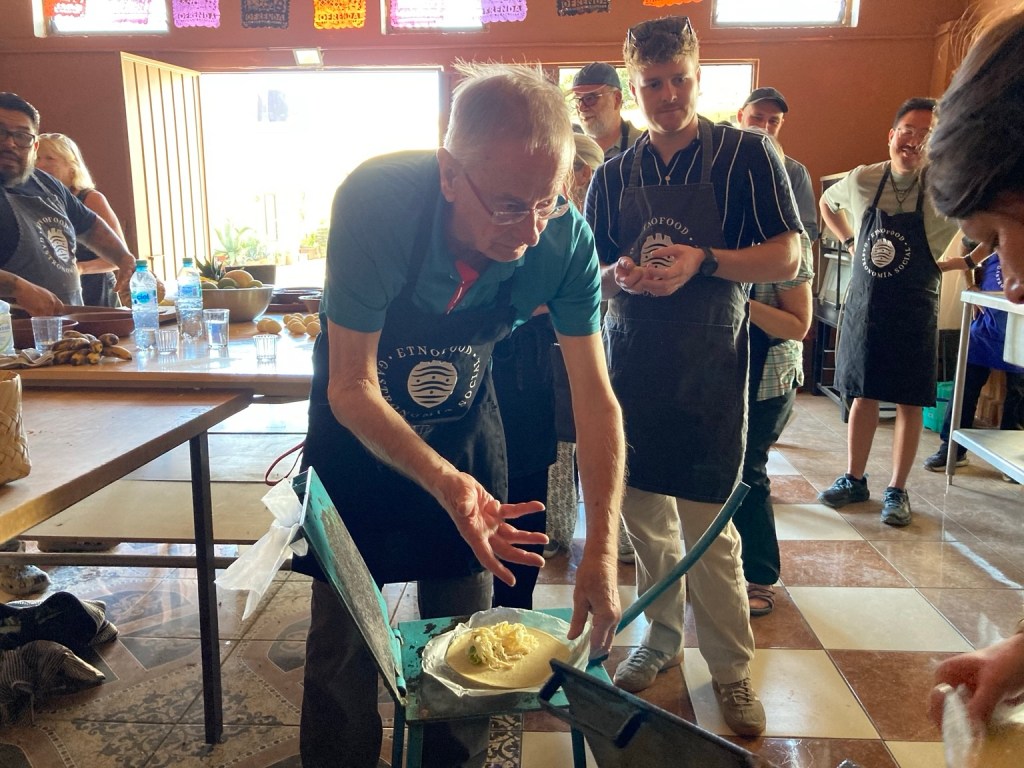
We had bought tortilla dough from a stall and used a clever little press to make tortillas …

… and empanadas filled with cheese …

… and then it was time to eat … but no photo … too busy having a nice time! We learnt a lot and met some really interesting people and the whole experience was great.

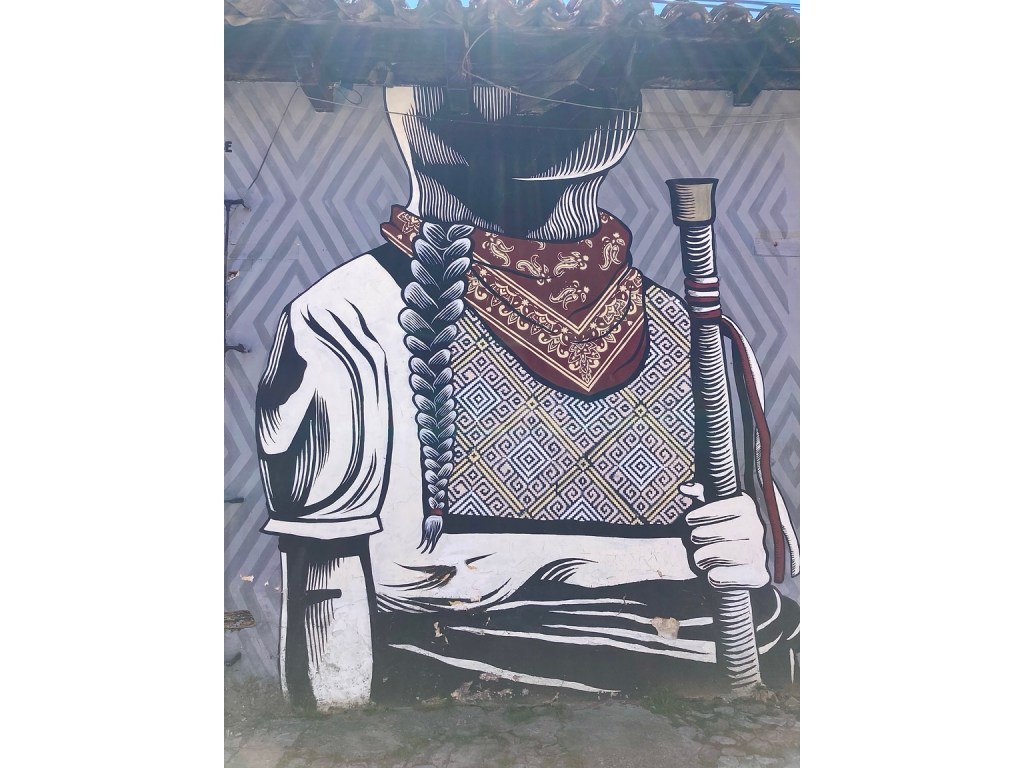
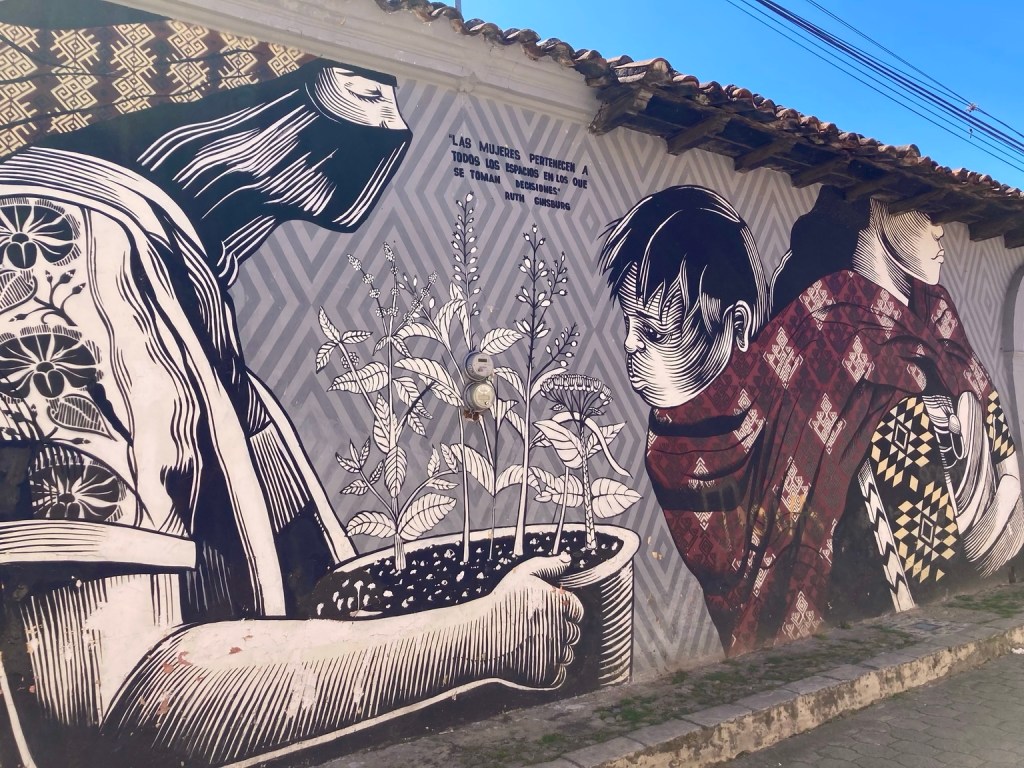
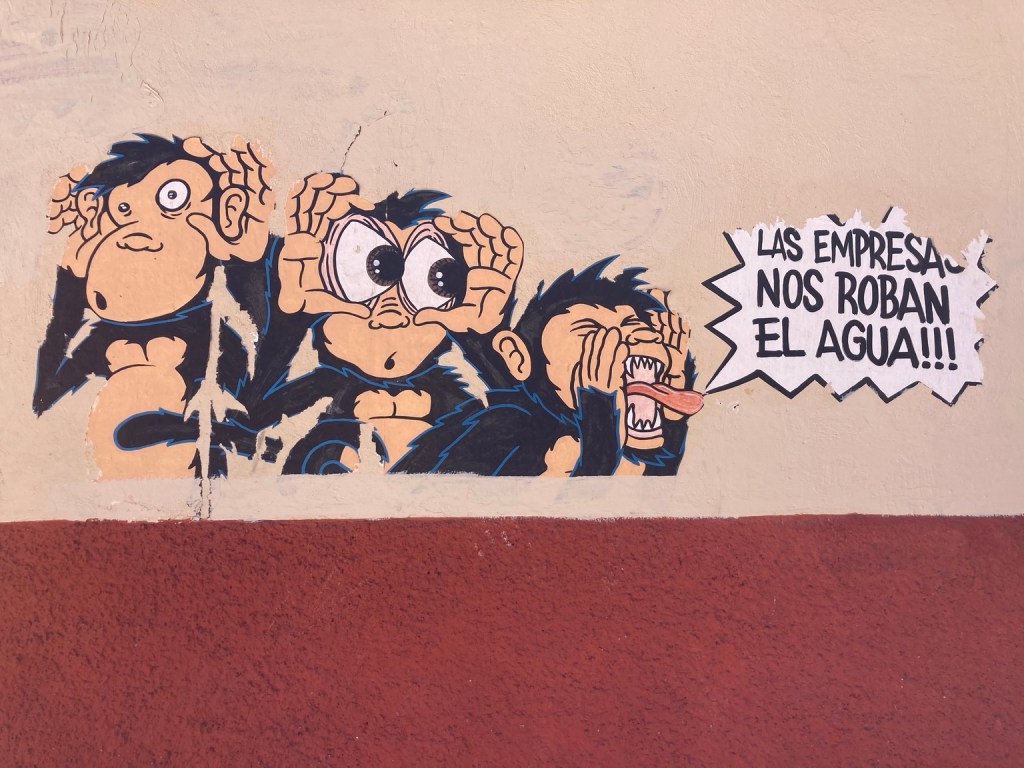
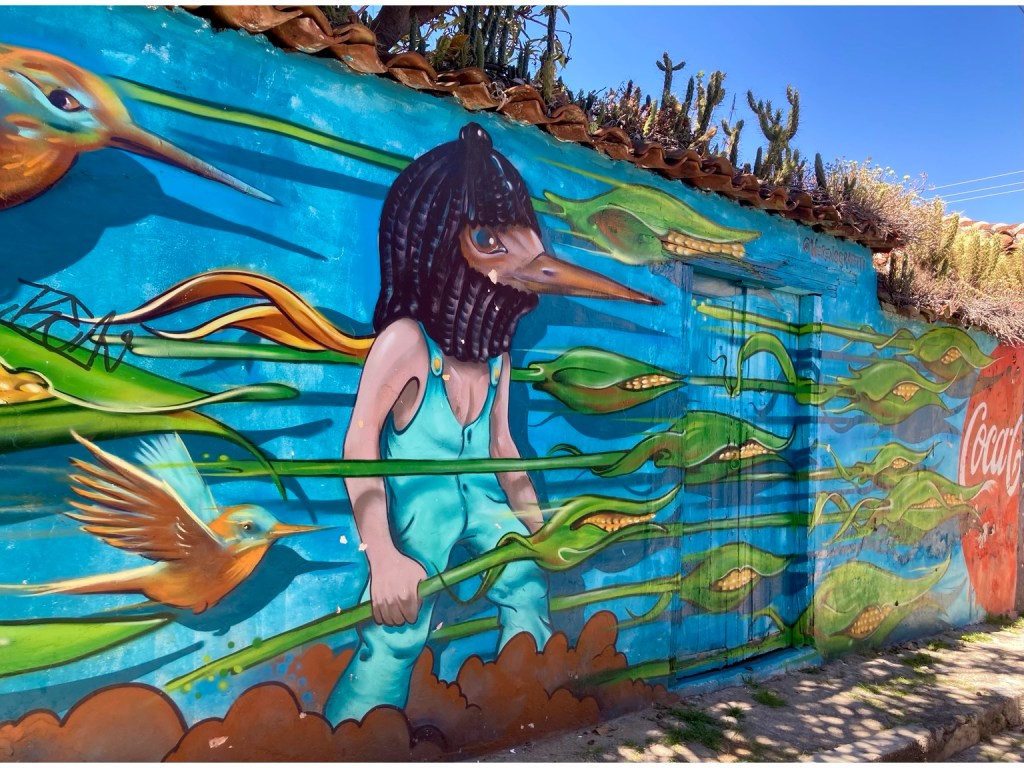
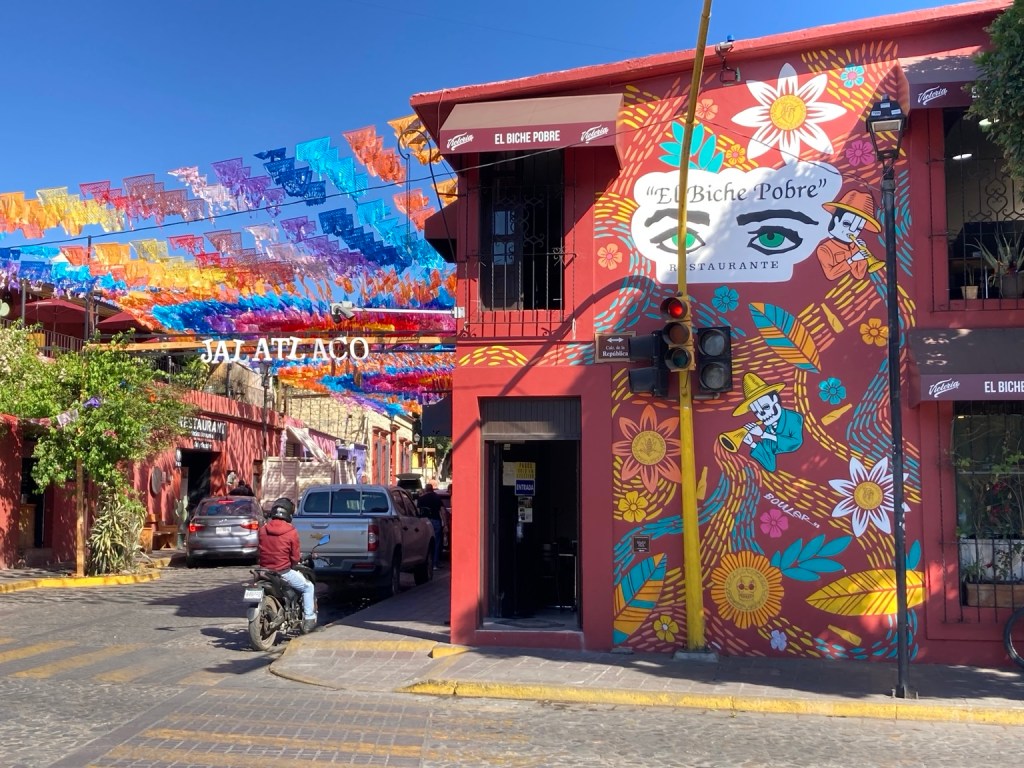
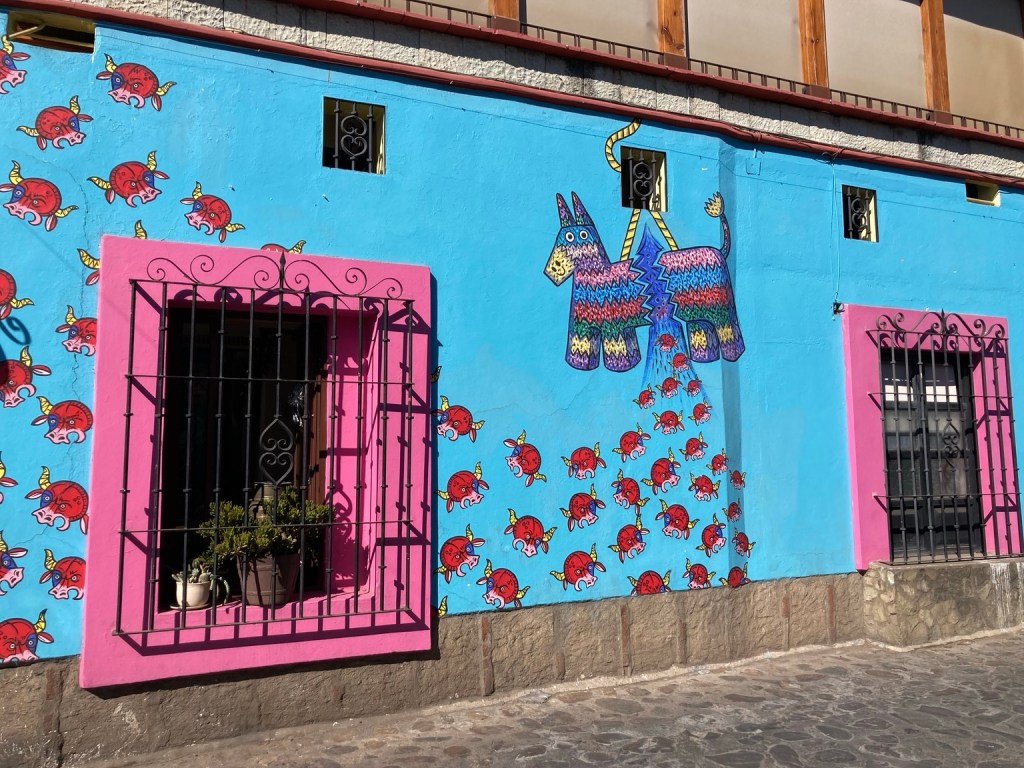
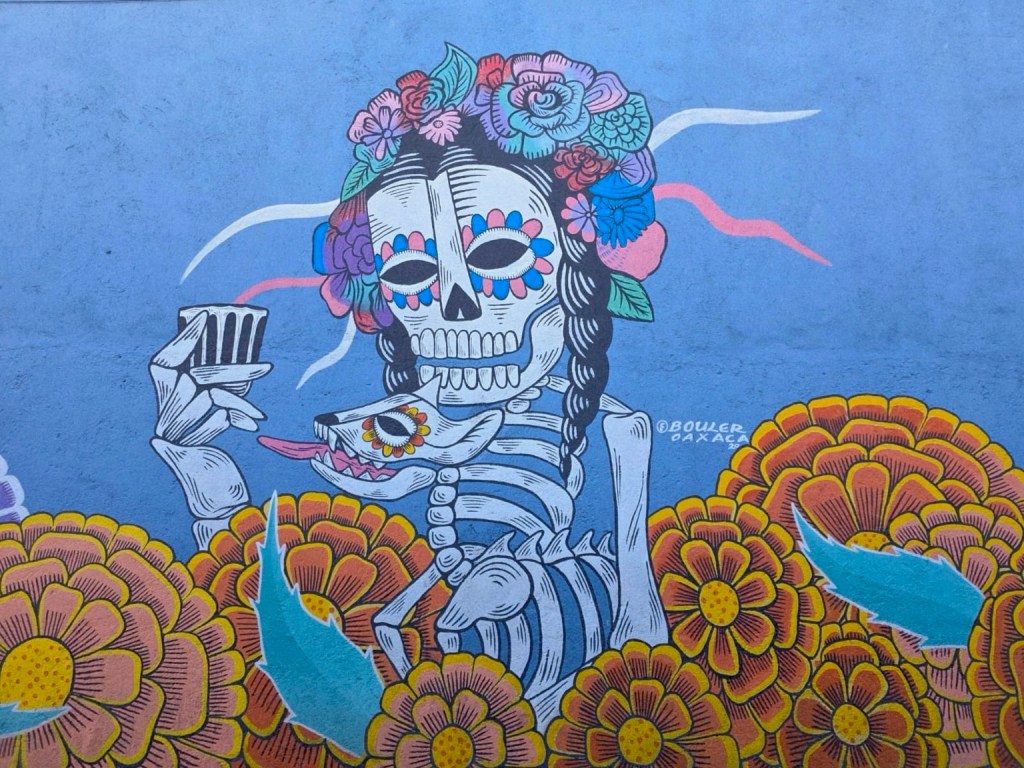
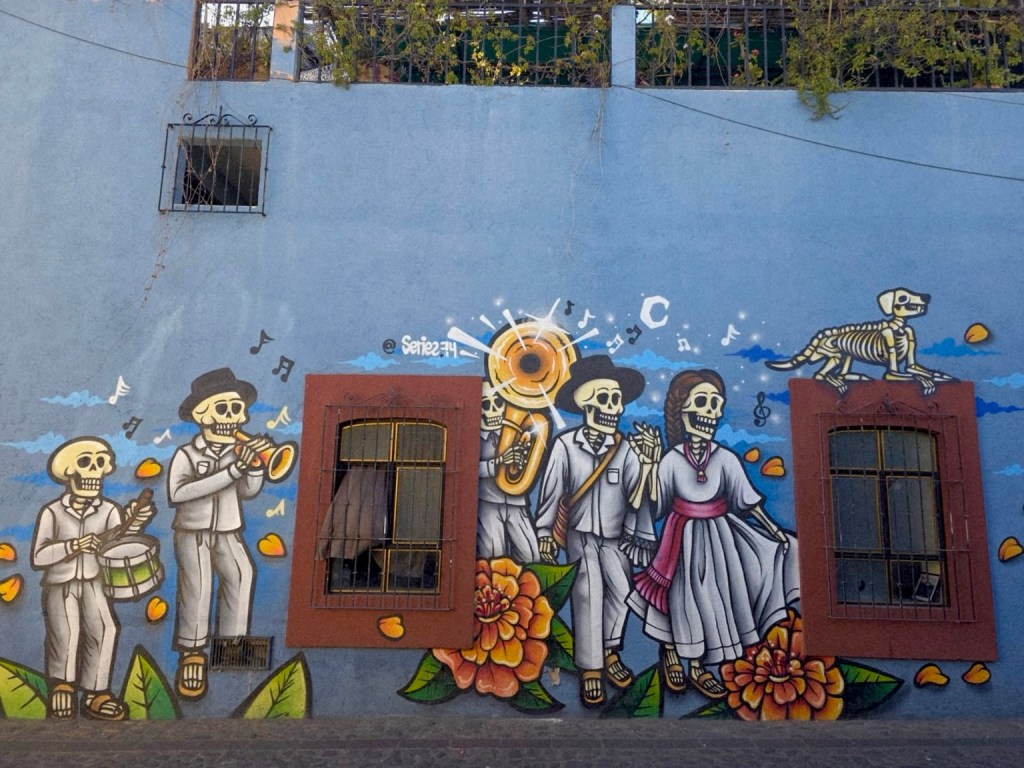
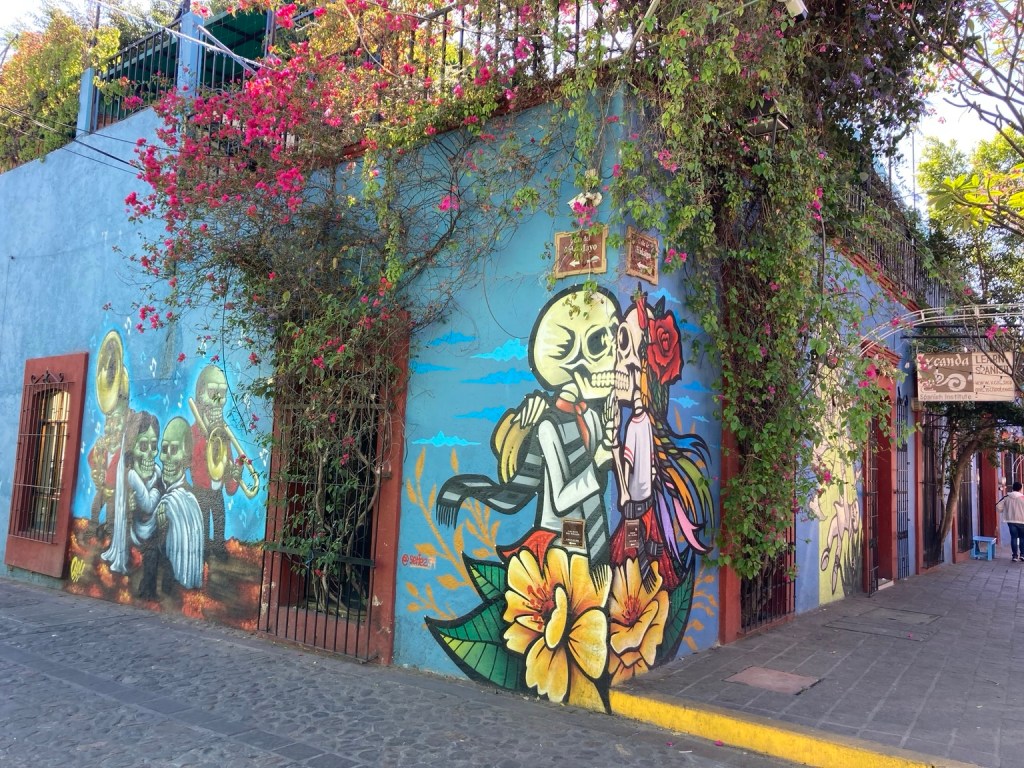
Being a Sunday, much was closed, so in the afternoon we walked off our lunch round the Jalatlaco Barrio, a very old neighbourhood now known for its street art which we enjoyed photographing.

There were several images of the Day of the Dead, the joyful celebration that honors the lives of deceased loved ones and welcomes their spirits back to the world of the living for a brief reunion.

Afterwards, I read up a bit and found the cempasúchil flowers, also known as the Mexican marigold are used to decorate altars and cemeteries as their colour and fragrance help guide the souls back to their families so these also feature in the murals 

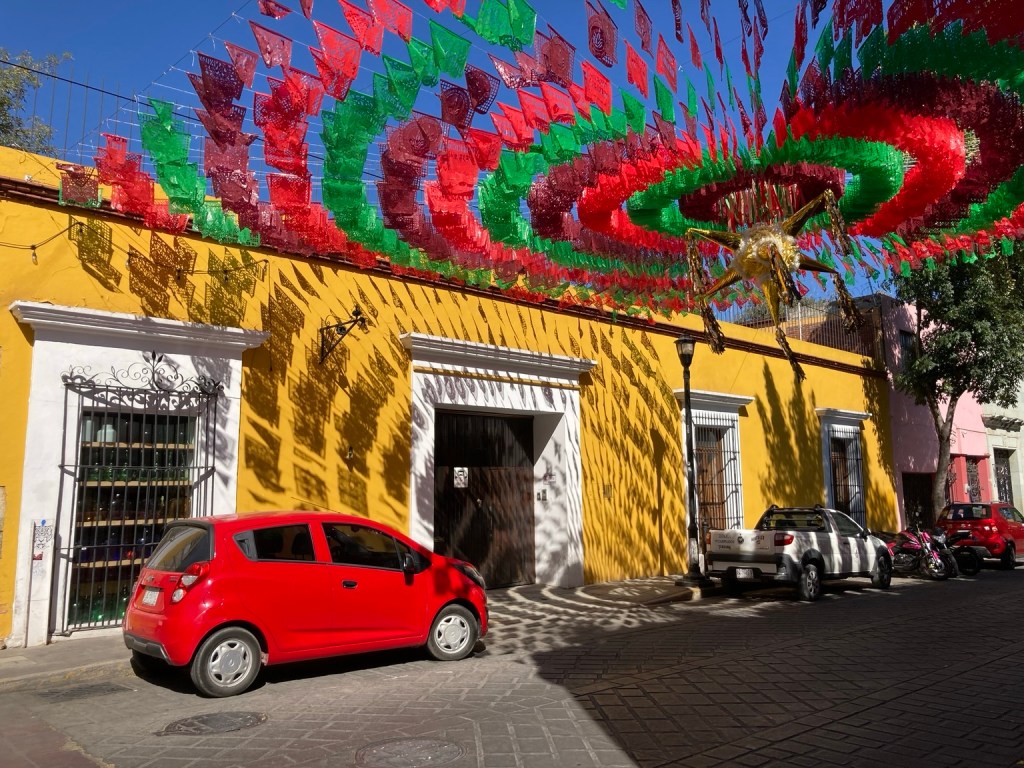
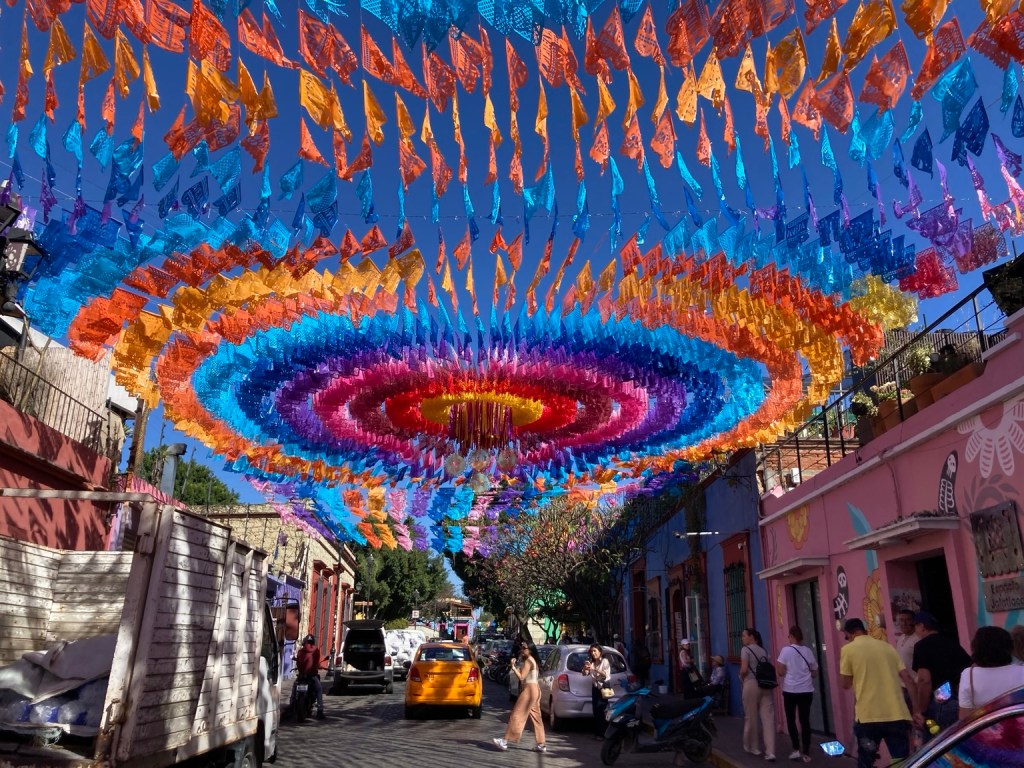
One of the most striking elements of Oaxacan celebrations, is papel picado, a delicate art form of perforated paper with images that reflect the themes of life, death, and nature.  The holes symbolize the thin veil between the living and the dead and the colours of the can carry symbolic meanings. Bright colors like pink, purple, yellow, and green traditionally celebrate life and happiness, while darker colors like black and purple are reserved for mourning and reflection. 

We have seen lots of these decorations in the streets and courtyards and are pleased to now know what they mean.

Also, although we didn’t see a hummingbird there, we have seen several and an old Aztec legend says the hummingbird and the cempasúchil represent a pair of lovers separated by death and reunited in those forms. Many still believe that when marigolds are present, hummingbirds are nearby and they carry messages of love and hope between the living and the dead. 

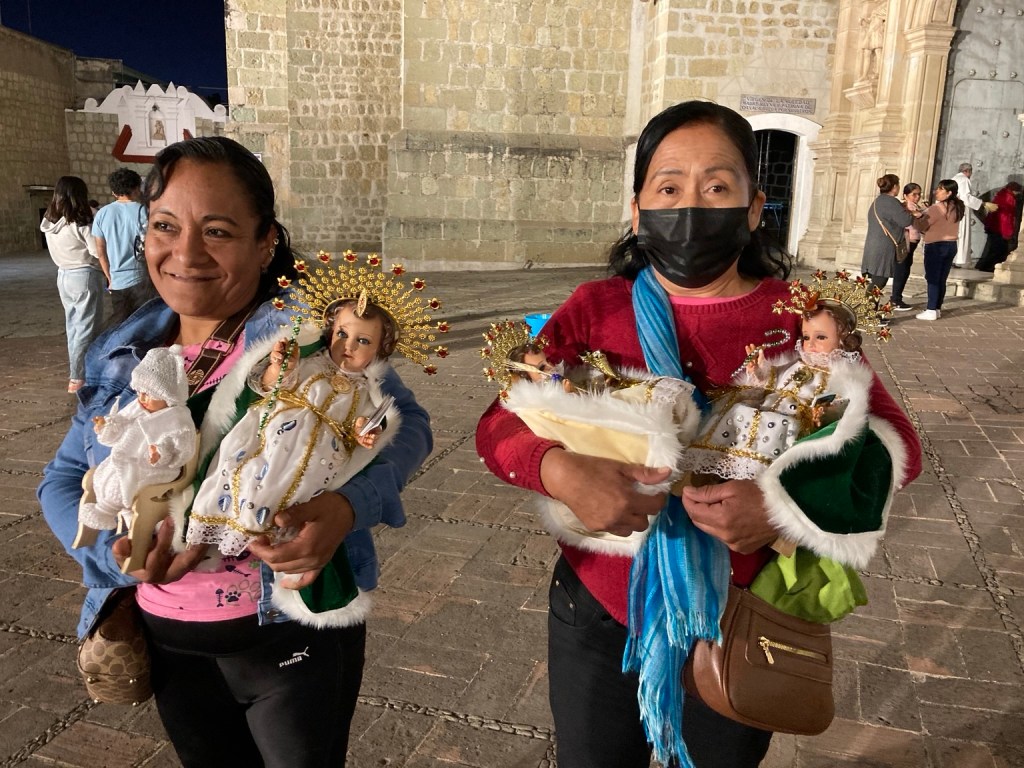
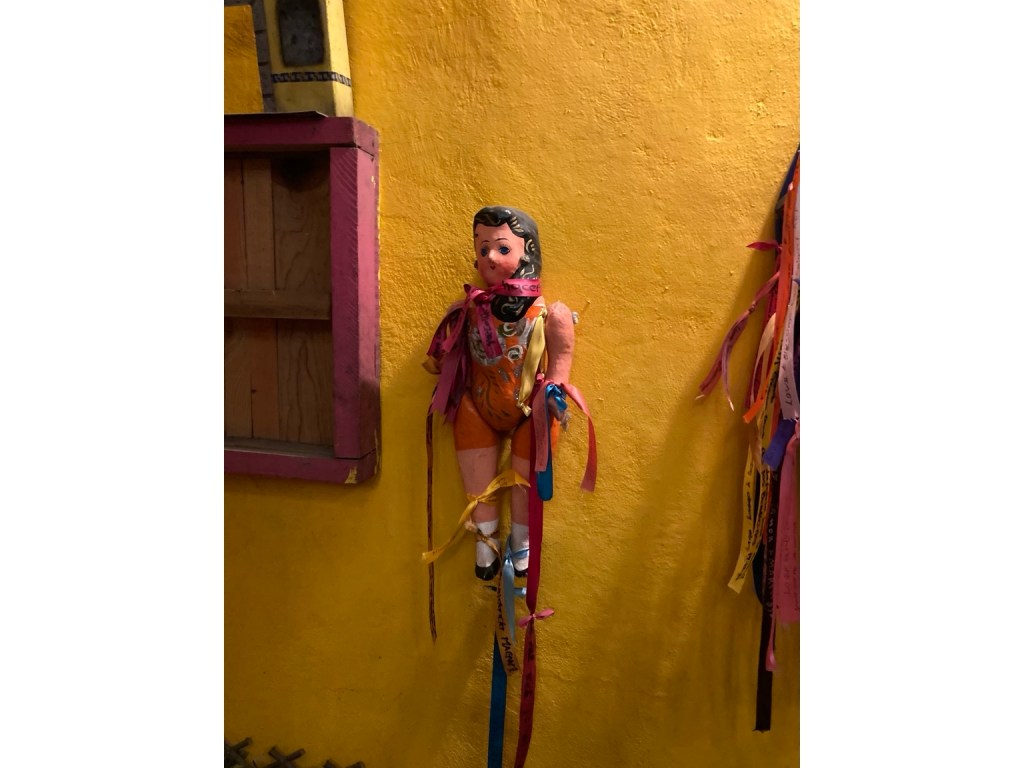
We have also seen women walking around with dressed baby dolls today, and saw more at the church on the way back.  We found out it is Candlemas and families dress figurine dolls in specially made outfits, and carry them to church to be blessed, symbolizing the presentation of Jesus at the temple. It is also a way of blessing the home and the doll is then used in the family nativity scene that Christmas.  These ladies kindly let us take a photo once they left church.

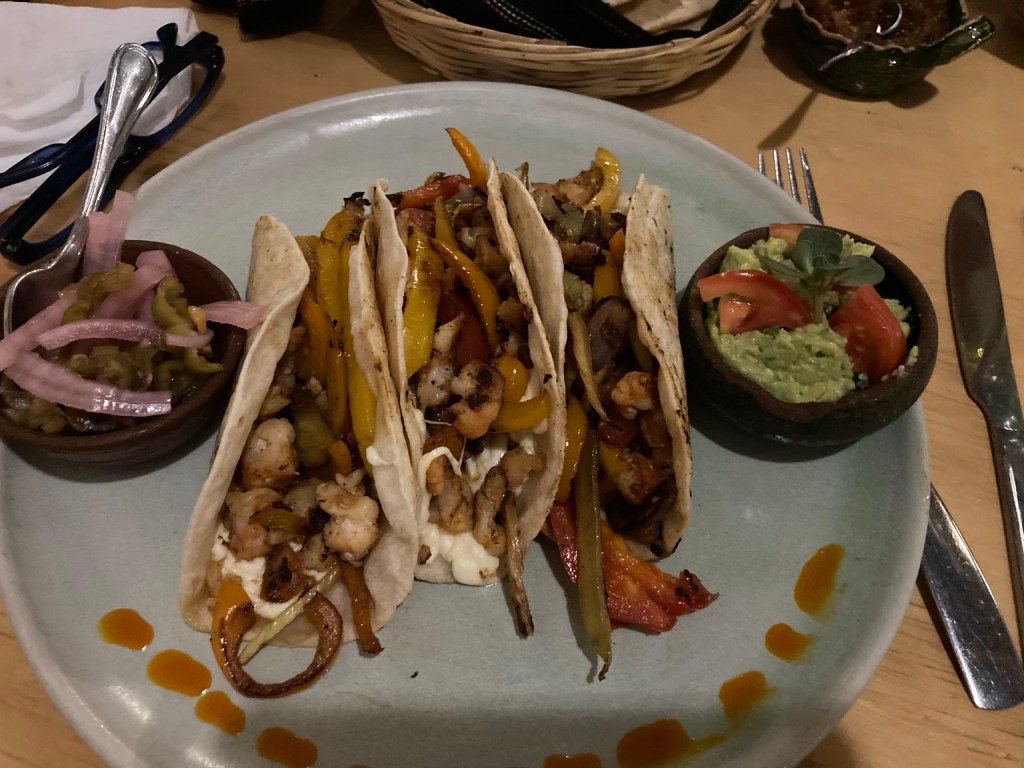
Went to Taniperla again for dinner and had governor tacos with shrimp cooked with tomatoes, chilli & cheese/mushrooms in green mole. 

Walked off our feet, we called it a day!

Map

Puebla … Home of Mole Poblana

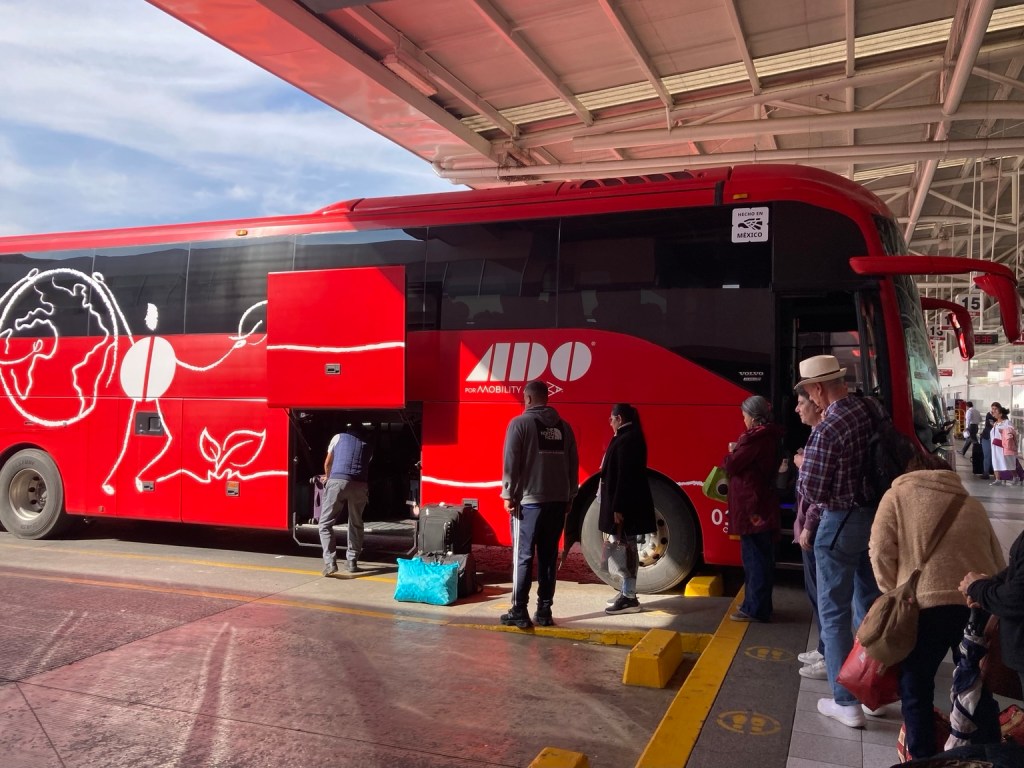
We went for breakfast at Cafe Pagoda for the last time then took an Uber to the bus station, which seemed more like an airport terminal!

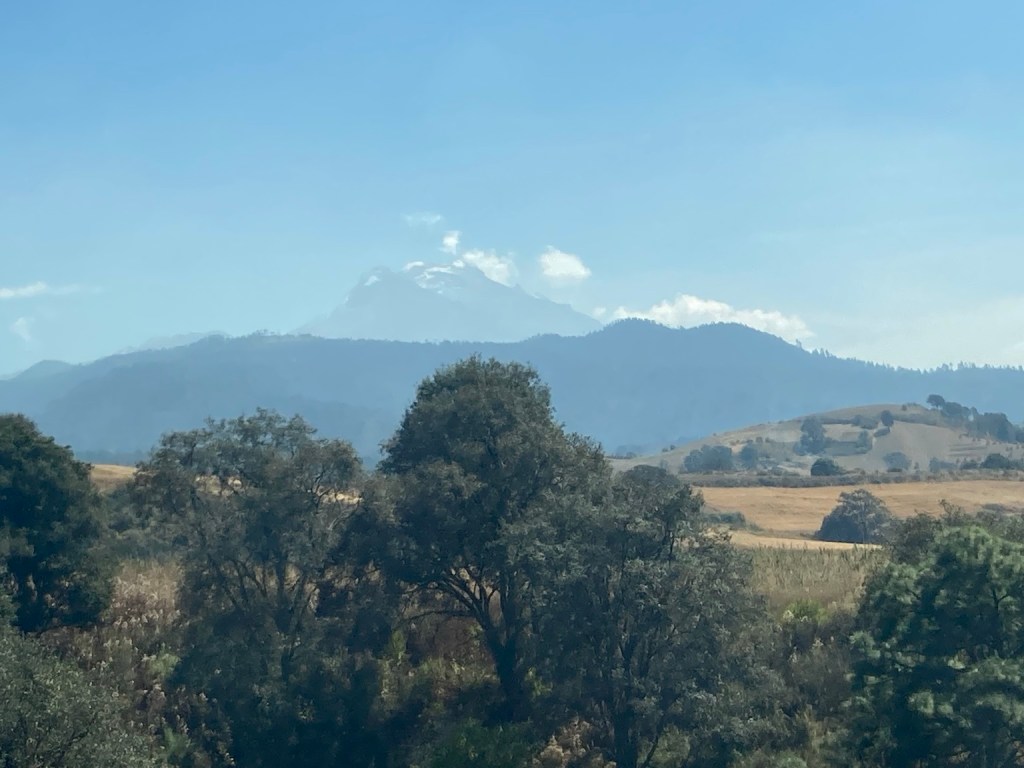
The bus was great with huge comfy reclinable seats with plenty of legroom. It took well over an hour to leave the outskirts of Mexico City, hardly surprising having seen its size from the Torre Latino.  There was even a movie, and even though it was in Spanish we got the gist – boy is in a band, boy meets girl, they fall in love, she has incurable illness, they get married, she dies, he puts everything in his songs and becomes a star!  It was lovely to get into the countryside with lots of grass and trees and we were eager to catch glimpse of Popo and Ixta, as the twin snow-clad volcanic peaks of Popocatépetl (5452m) and Ixtaccíhuatl (5285m) are affectionately known.  I remember learning about Popocatépetl from school and managed to catch a misty glimpse.

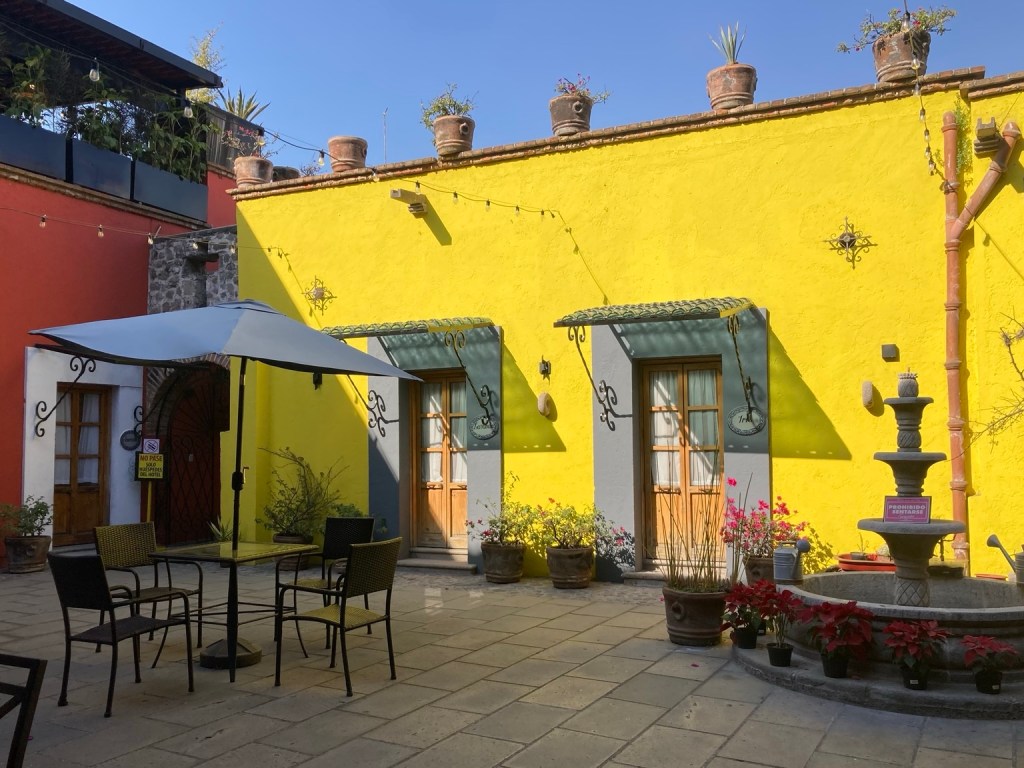
The elegant colonial city of Puebla is Mexico’s fifth largest which was obvious as we took quite a long cab ride through busy streets, but not noticeable once in the historic heart. We are staying at Collection O Al otro lado del rio, which means on the other side of the river which is a renovated hacienda style hotel with pretty courtyards and friendly staff.  

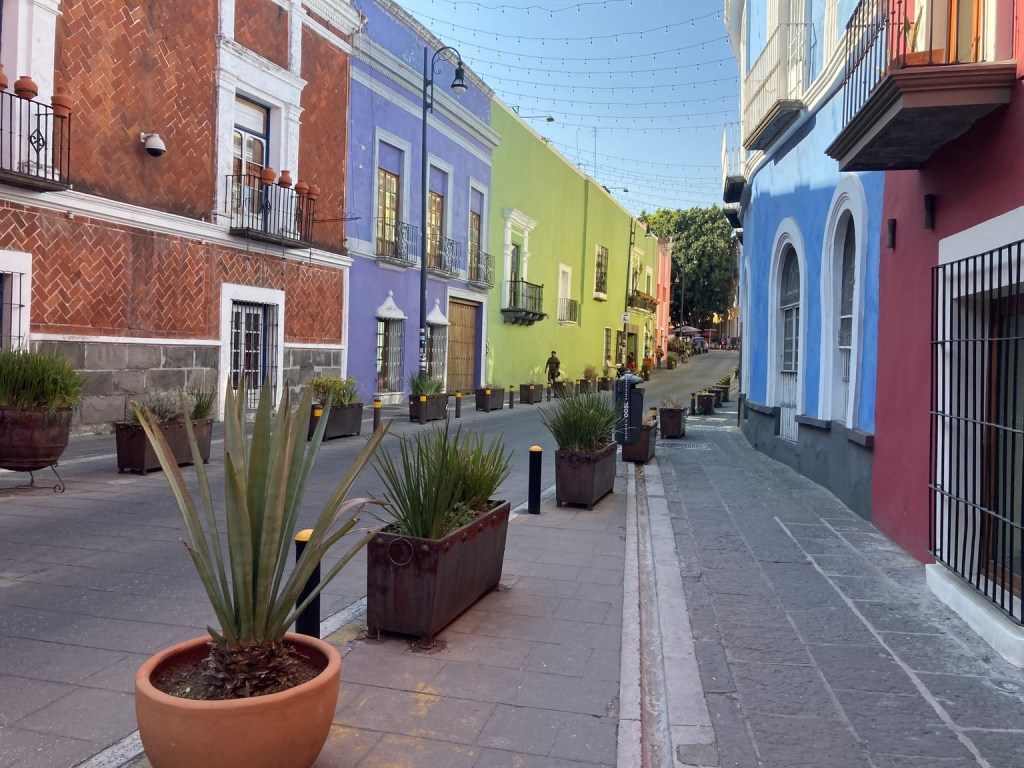
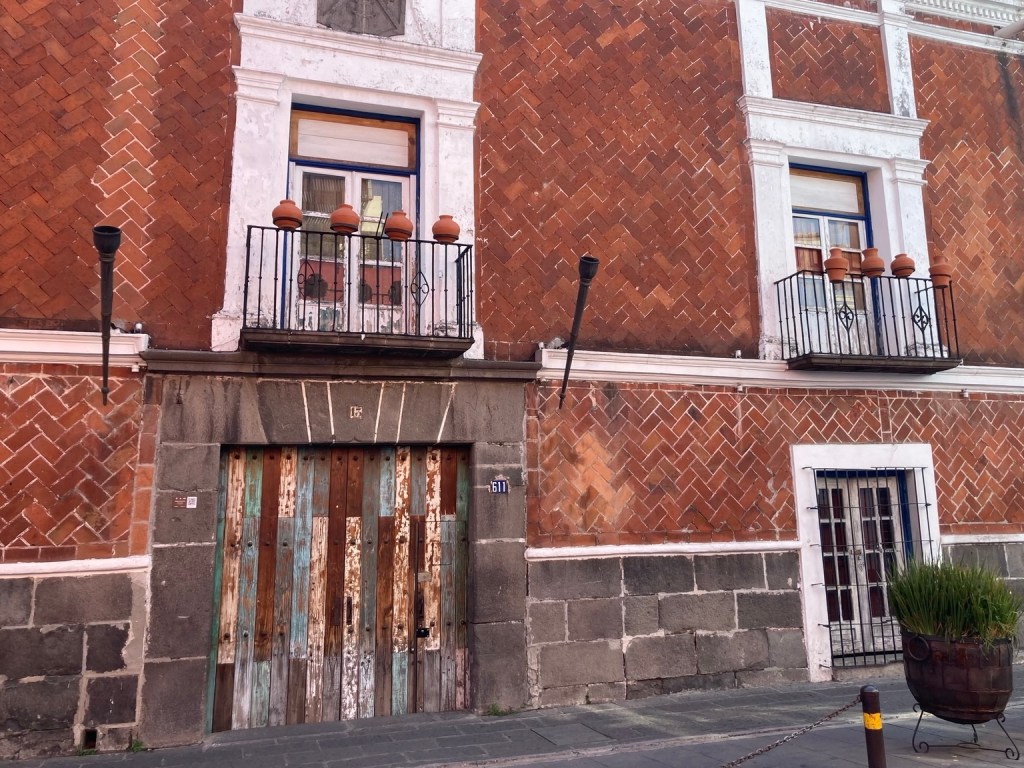
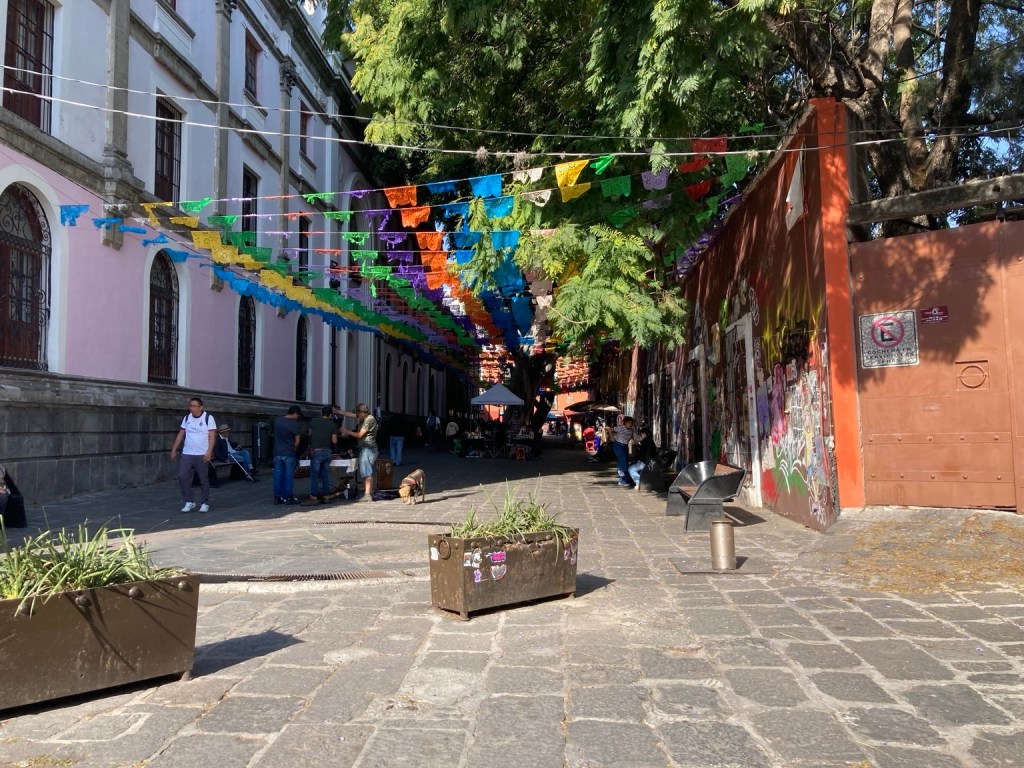
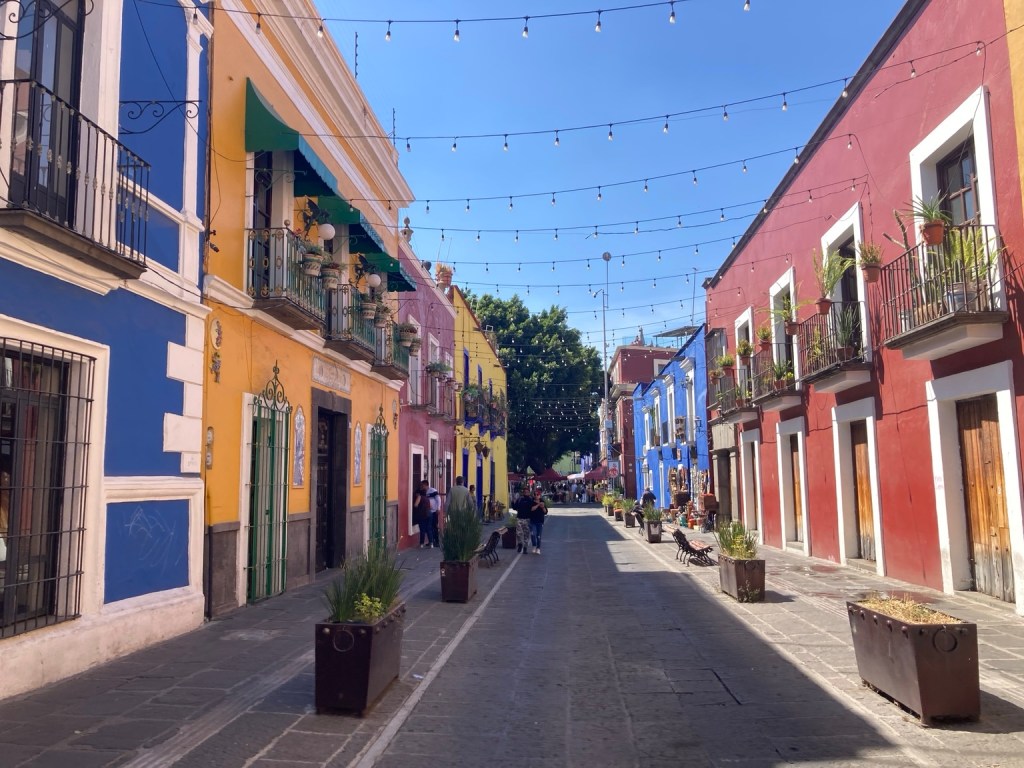
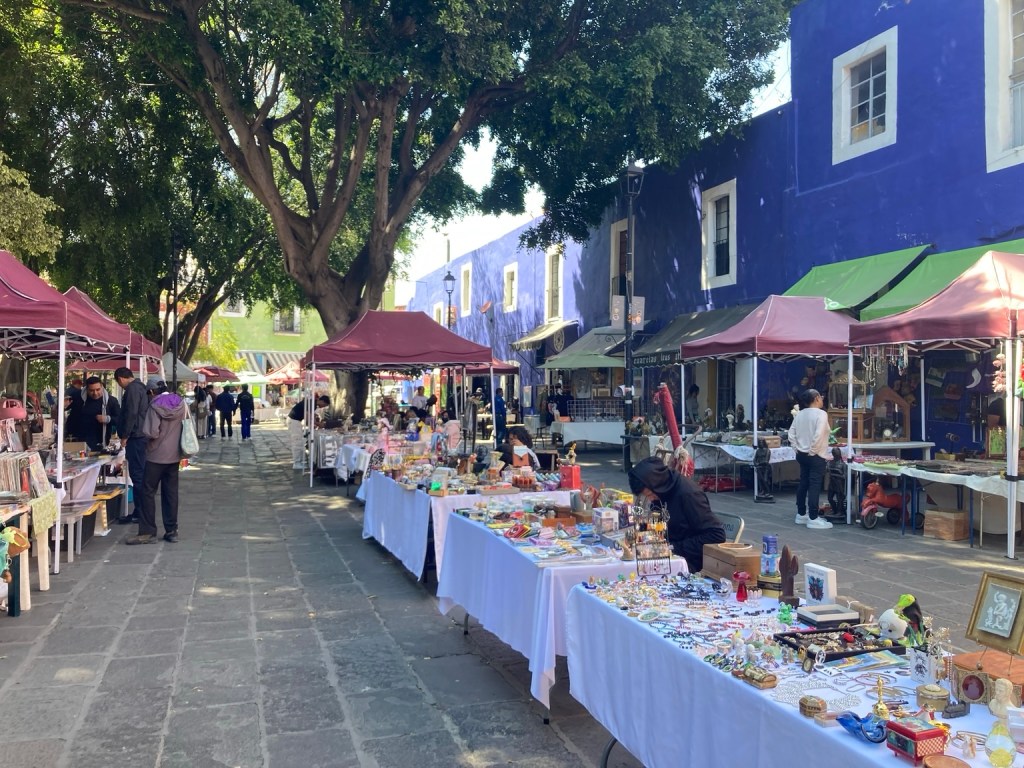
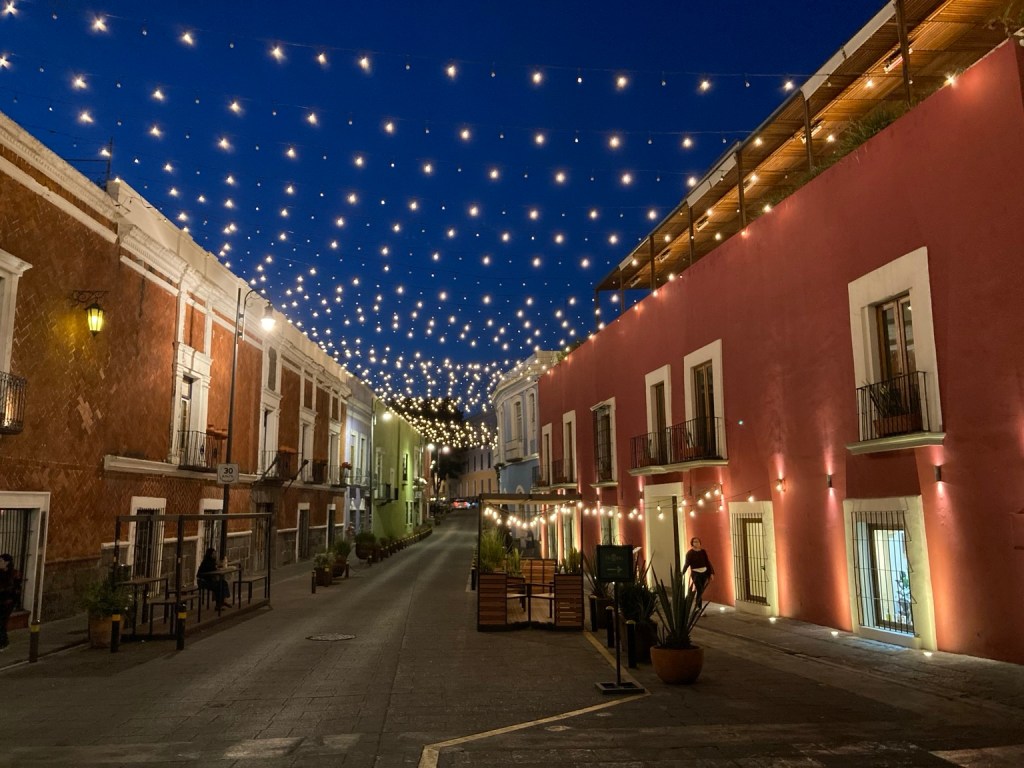
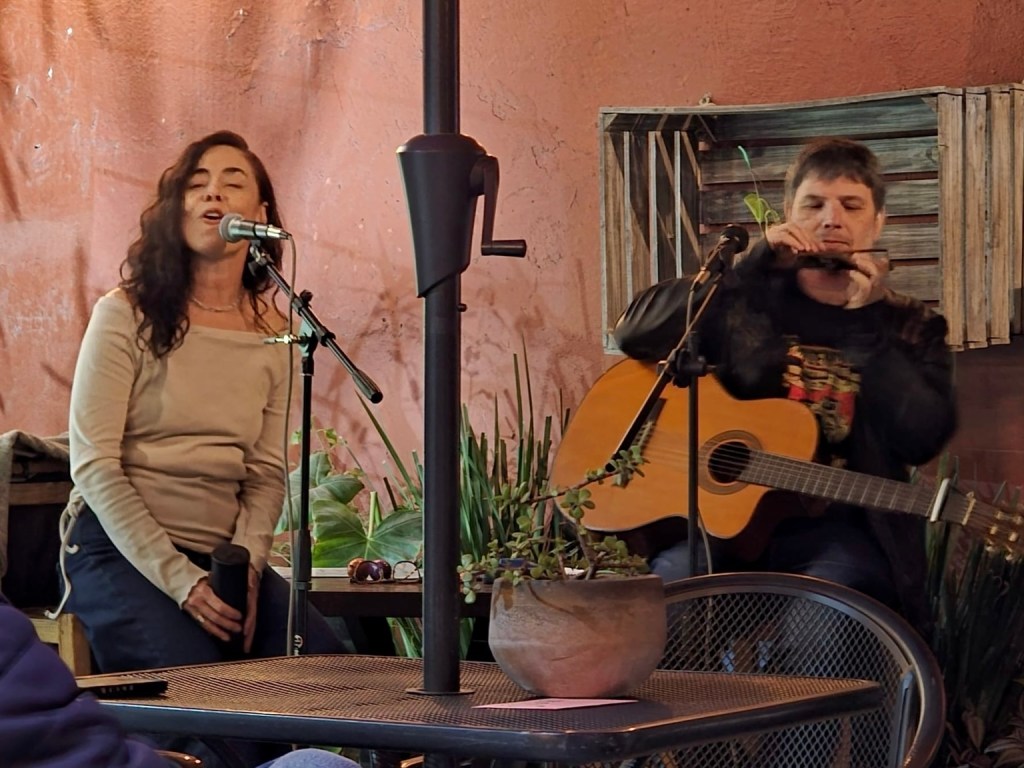
We were soon off to explore and Puebla is lovely, with shady cobbled streets, craft stalls, lots to photograph and music round every corner from a selection of buskers. 

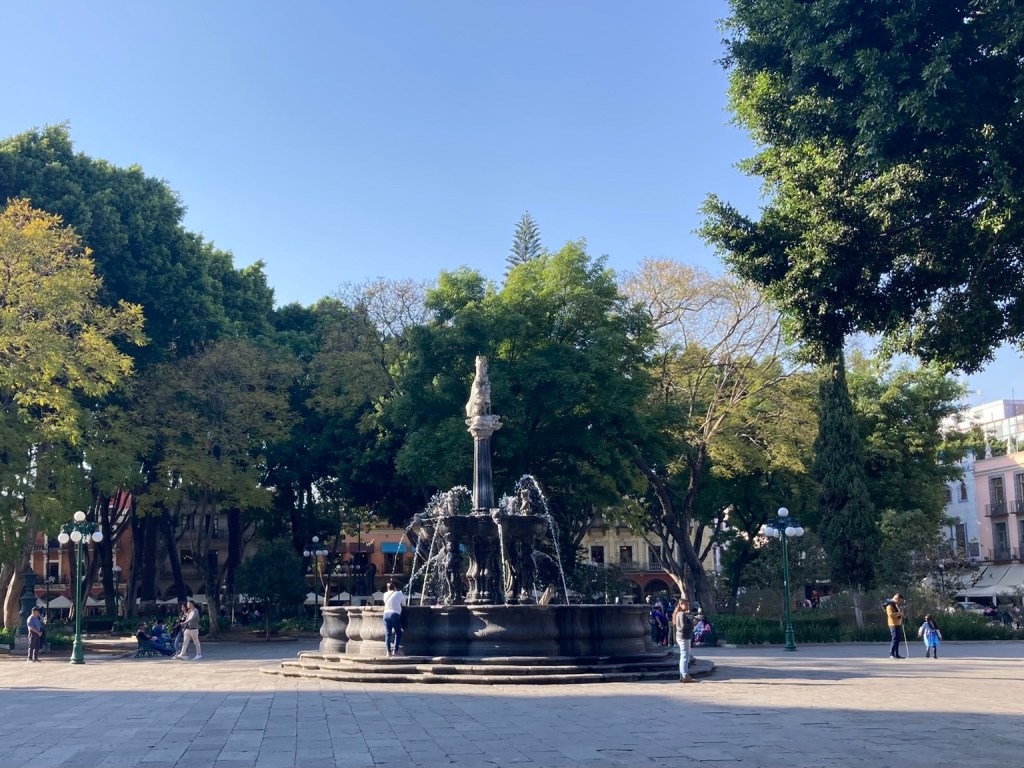
Happy ambling, we found the zocalo …

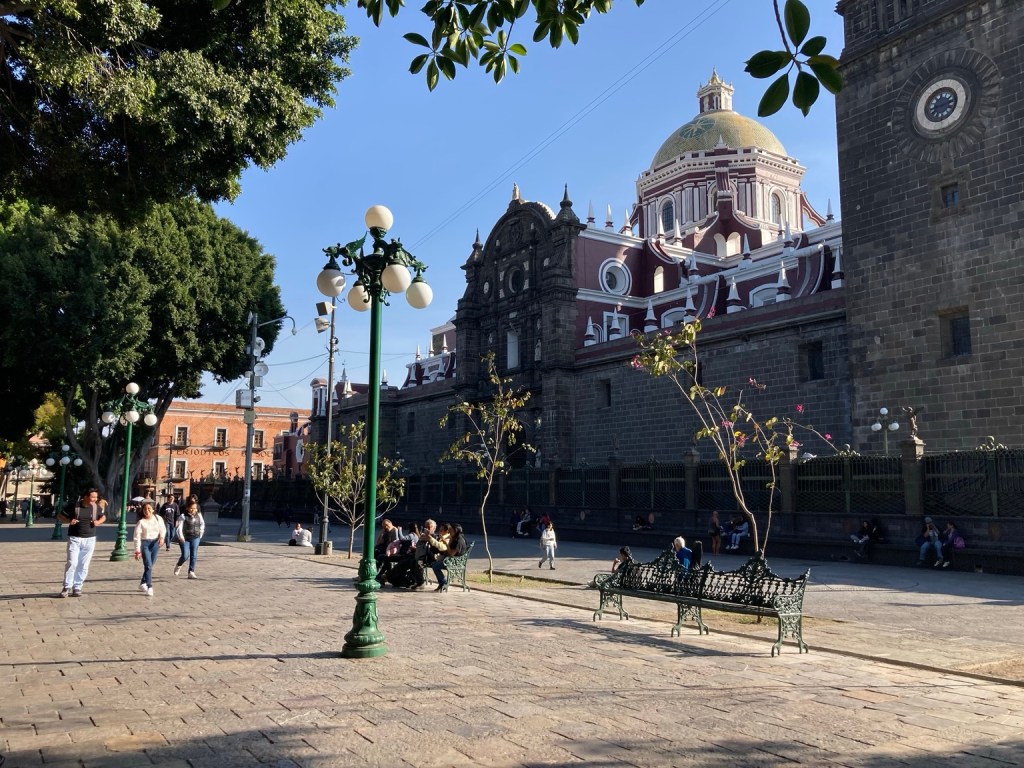
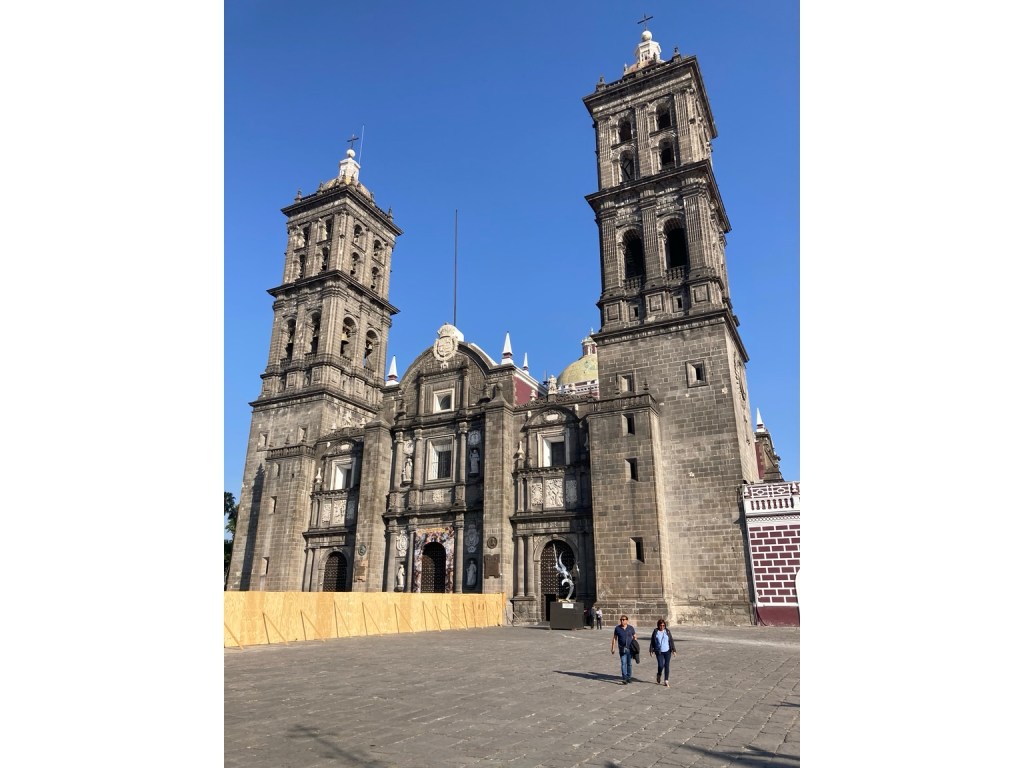
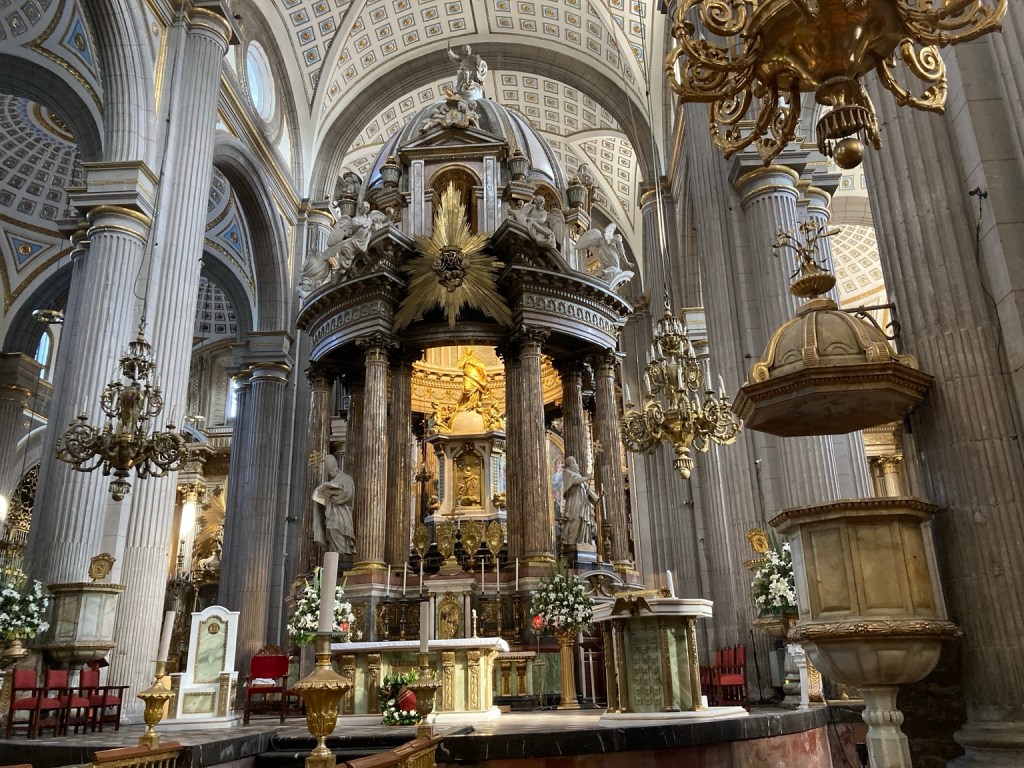
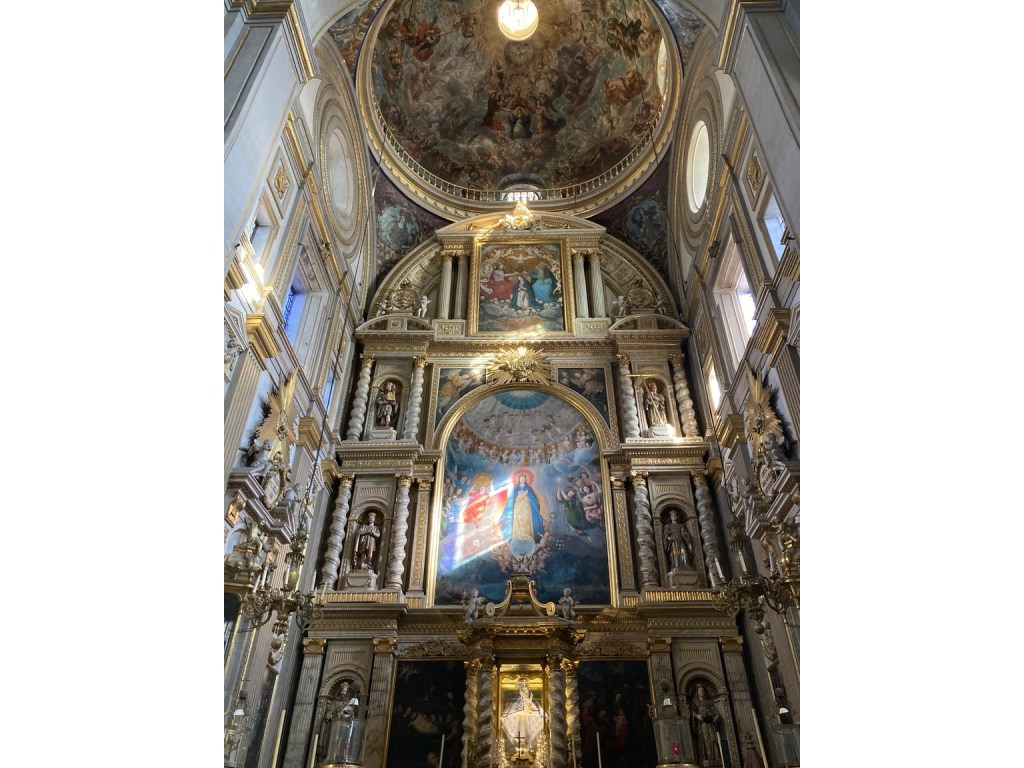
… cathedral …

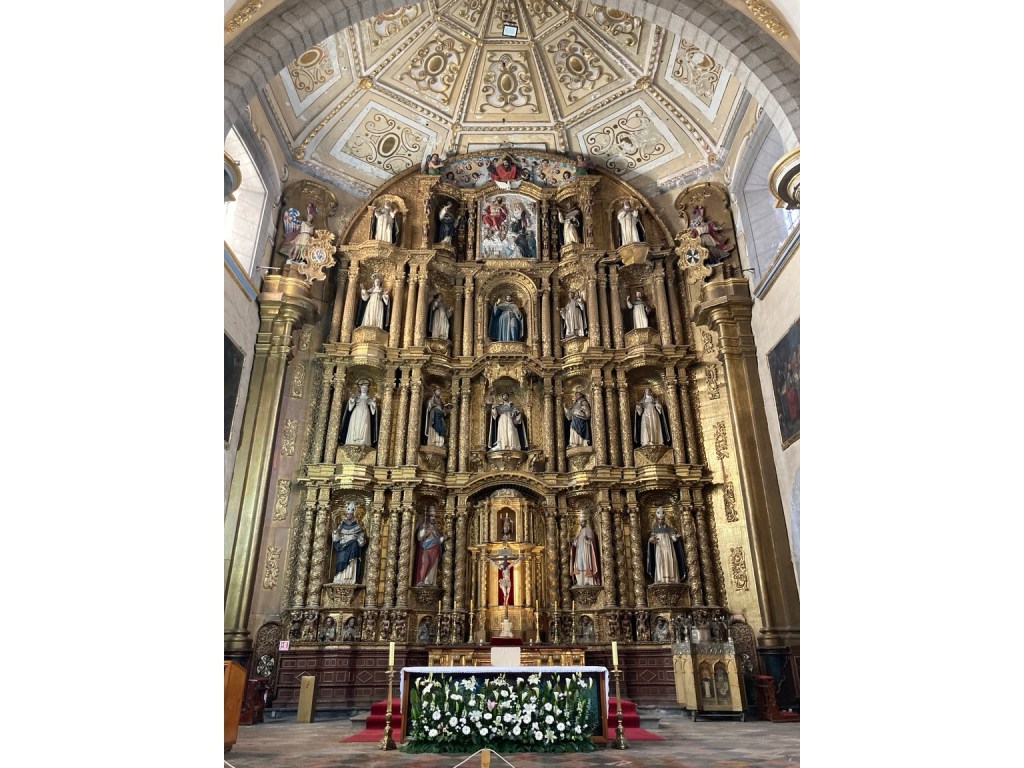
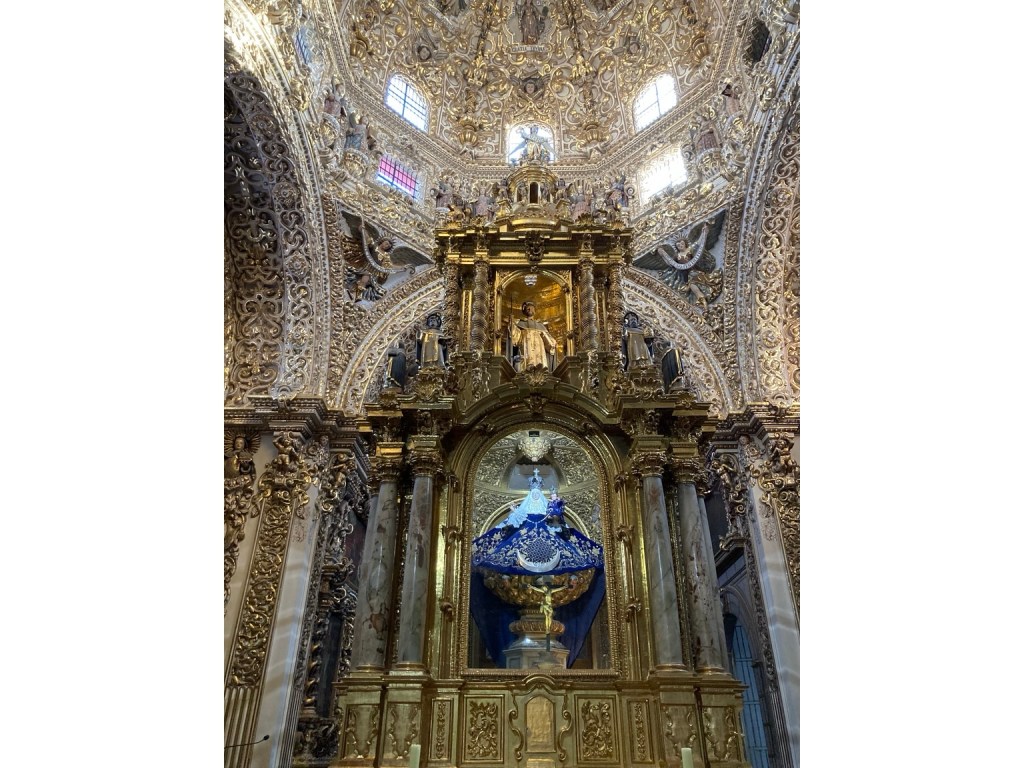
… Templo del Santo Domingo …

… with its Capilla del Rosario chapel …

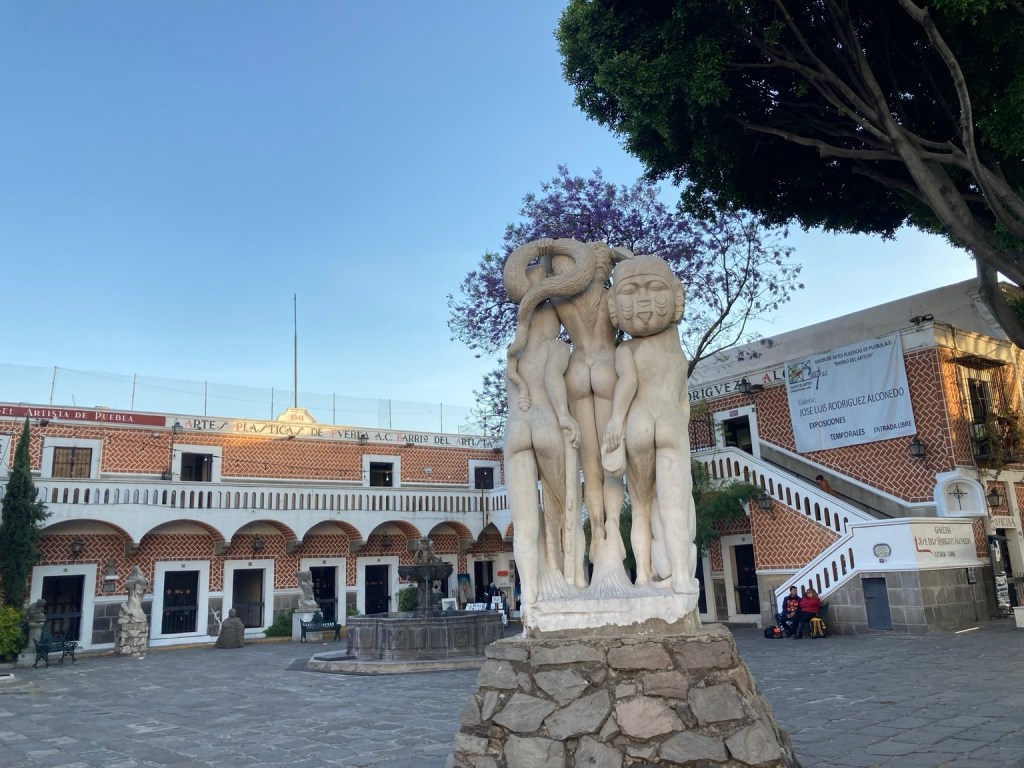
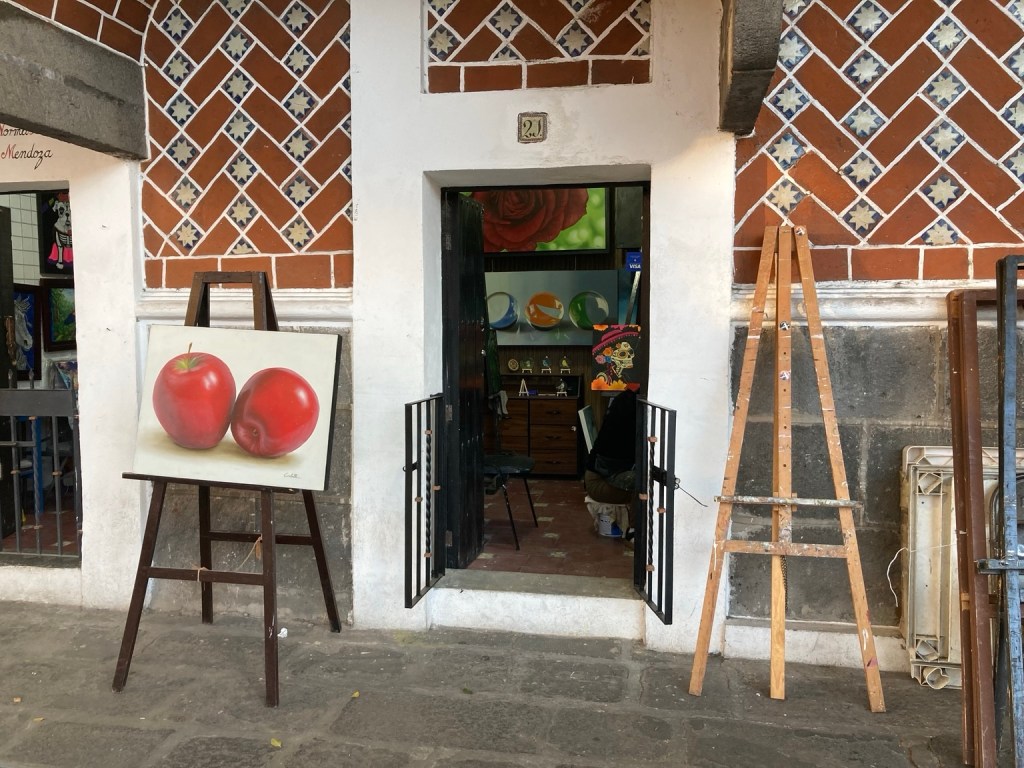
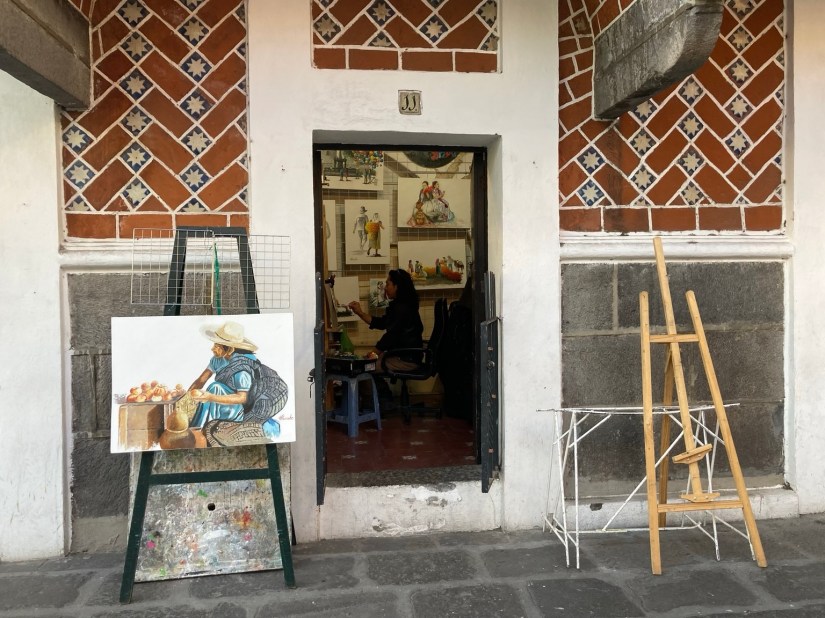
… Artists Quarter …

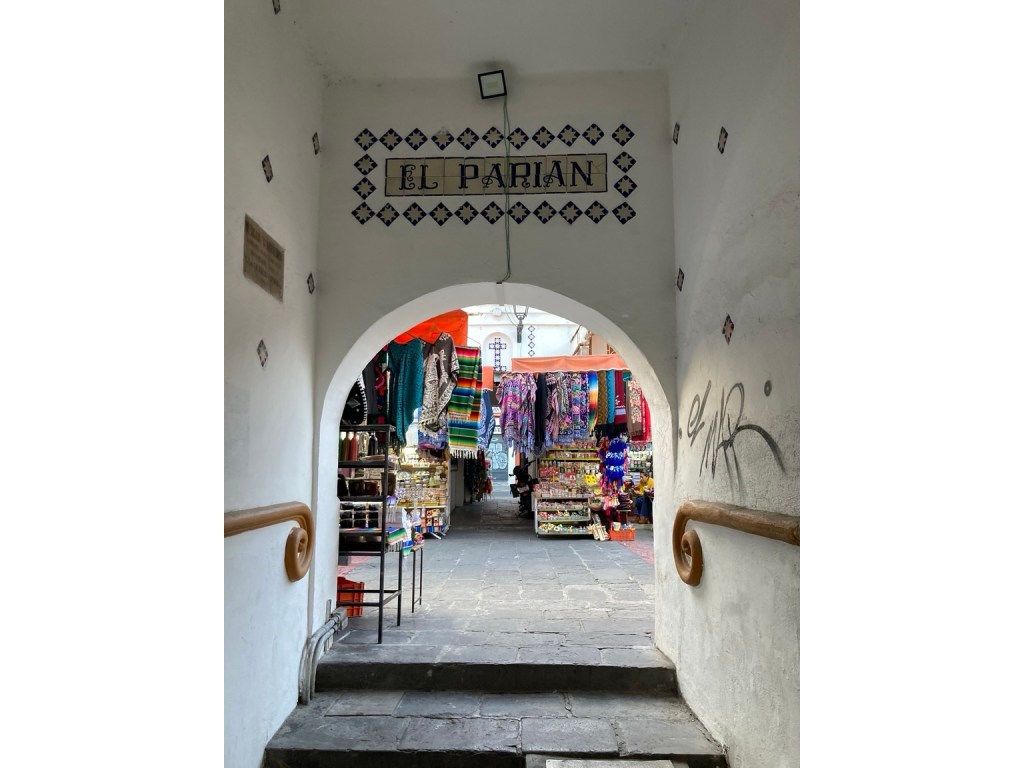
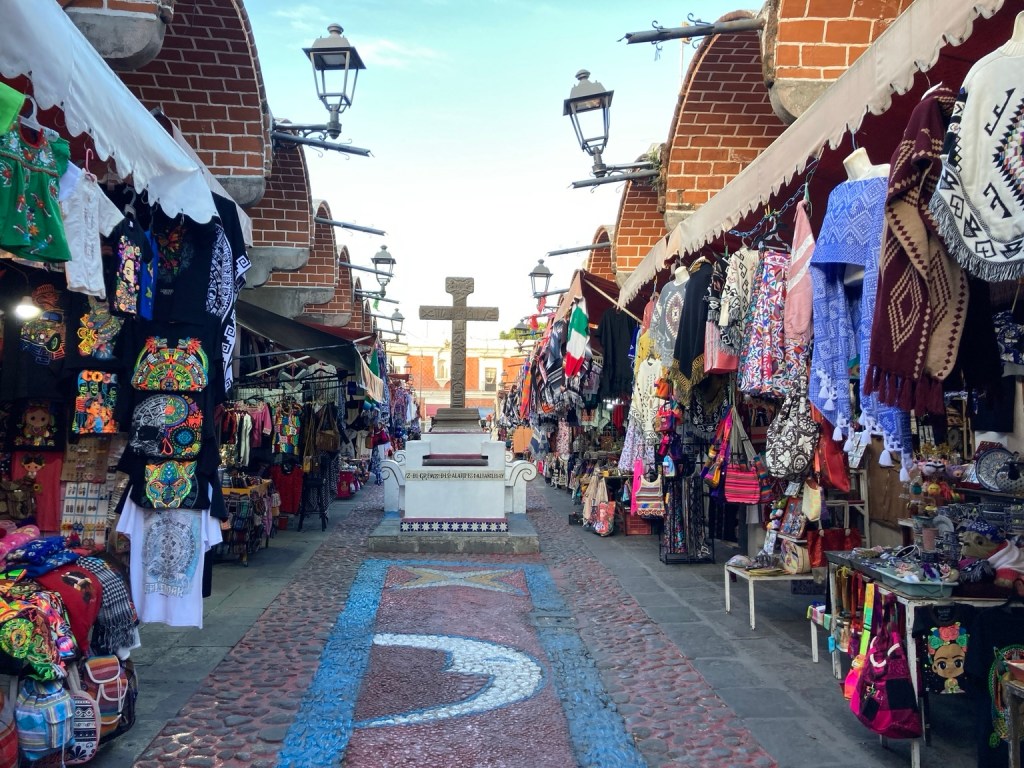
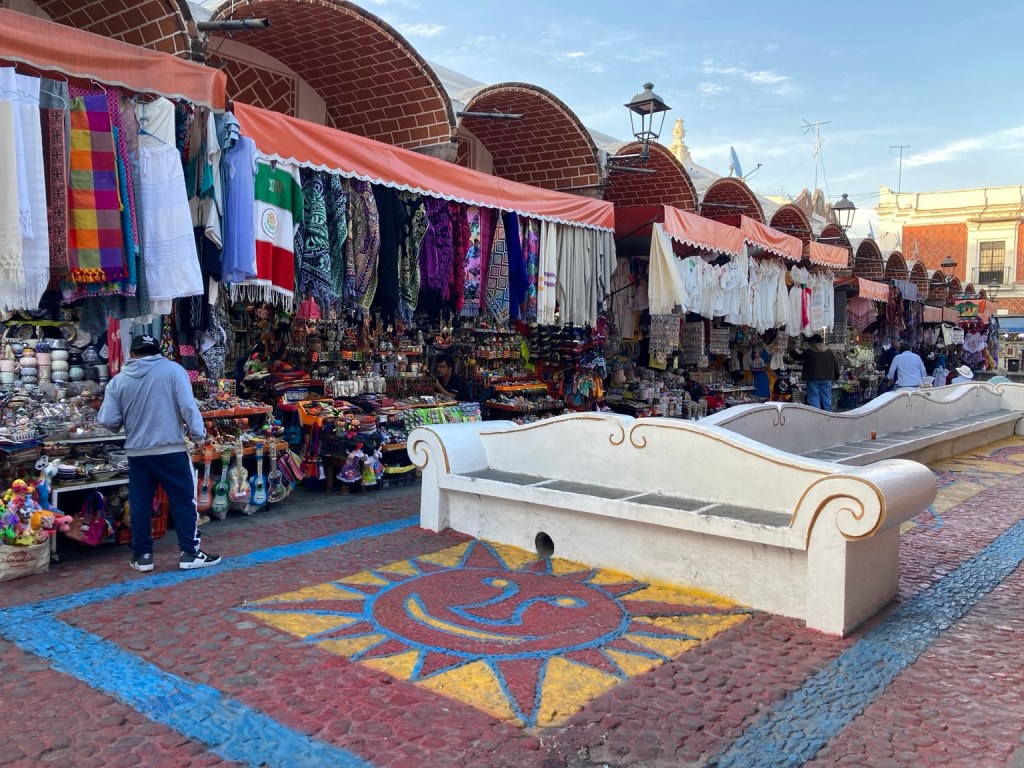
… and Parian Market.

We also saw displays of the handmade Talavera pottery made here since the C16th …

… and examples on the decorating the buildings.

We bought a bag of apples as fruit had been hard to spot in the city, had ice cream, made a reservation for dinner and watched a clown!

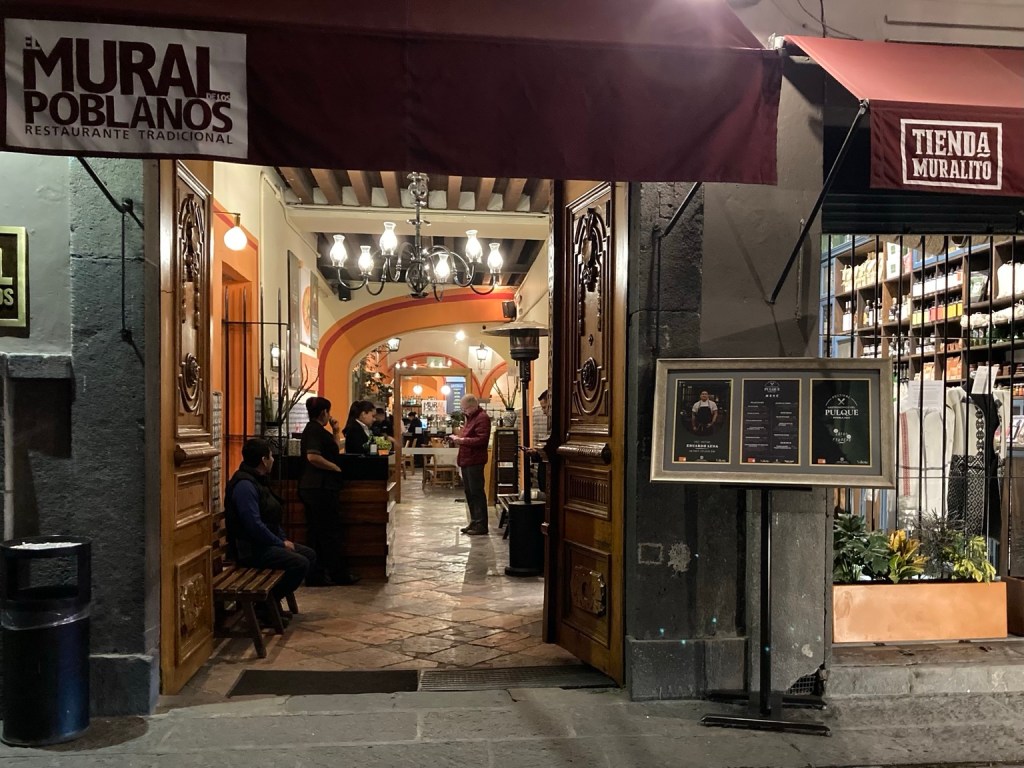
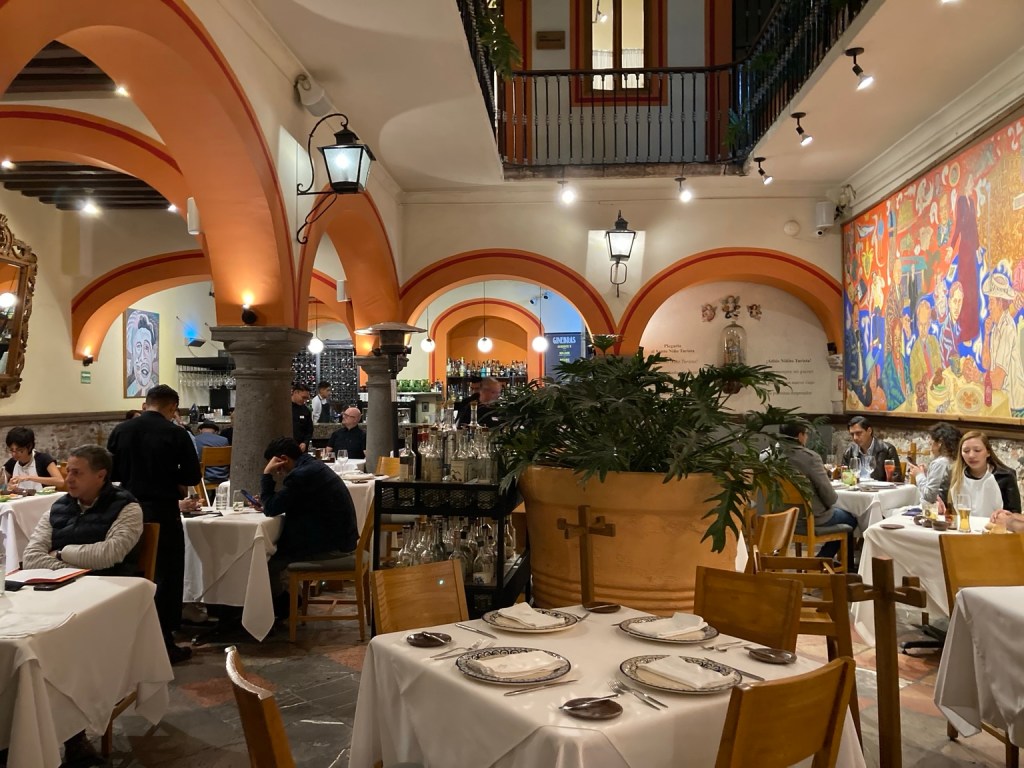
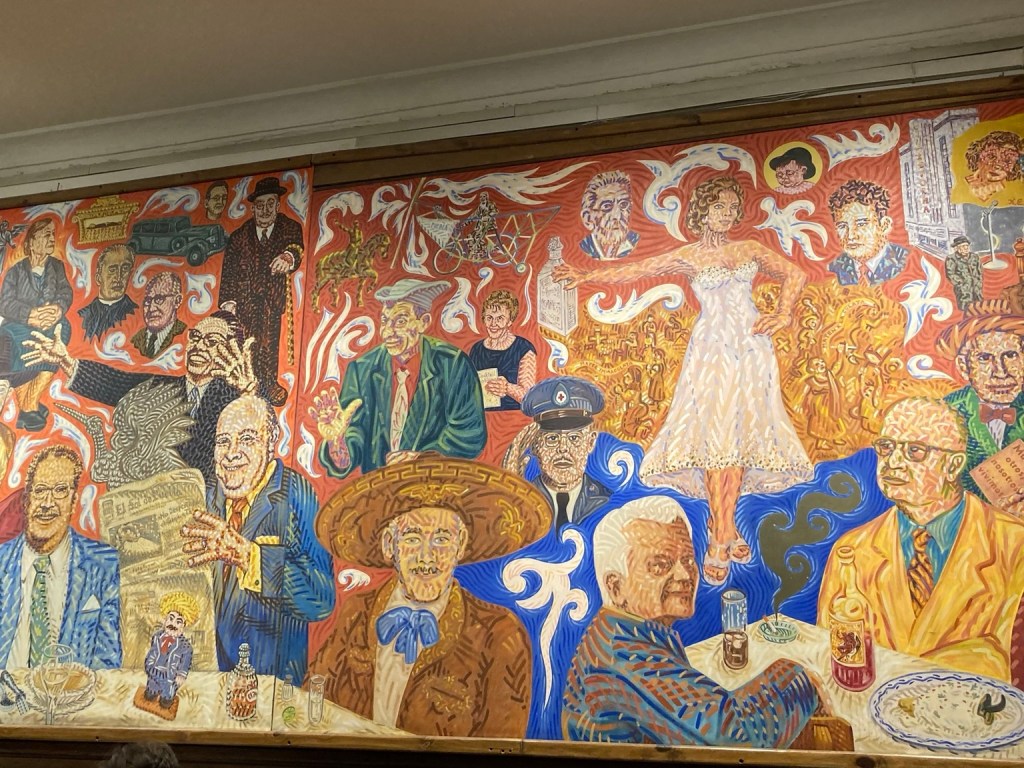
Having both been a little under the weather, we were pleased to be looking forward to a lovely meal.  We chose Mural de los Poblanos, set in a C17th mansion and decorated with a huge mural featuring historic characters from the town. 

It was high time for our first Mexican margaritas, made with mezcal as recommended by the waiter  and truly delicious.  Puebla is the home of the mole Poblano and they offered a vegetarian menu, so after guacamole with traditional blue corn tostados, we were able to share a trio of moles with cheese filled enchiladas. My favourite was the green pipián made with tomatillos and green chile, Chris the red pipián with guajillo chiles and peanuts and we both found the mole poblano with chocolate very rich and a slightly acquired taste.

Despite minor reservations about our room being a little snug and the bathroom a tad smelly, it wasn’t until we tried to get to sleep, we realised how noisy it was, from traffic which continued all night. In the morning I asked if we could move to a quieter room and was expecting it to be difficult but they moved us straight away, and after that everything was fine.

We had a rather slow start, but found a delicious breakfast spot over the road then continue to wander the pretty streets and browse the market stalls down a street called the Alley of Frogs.

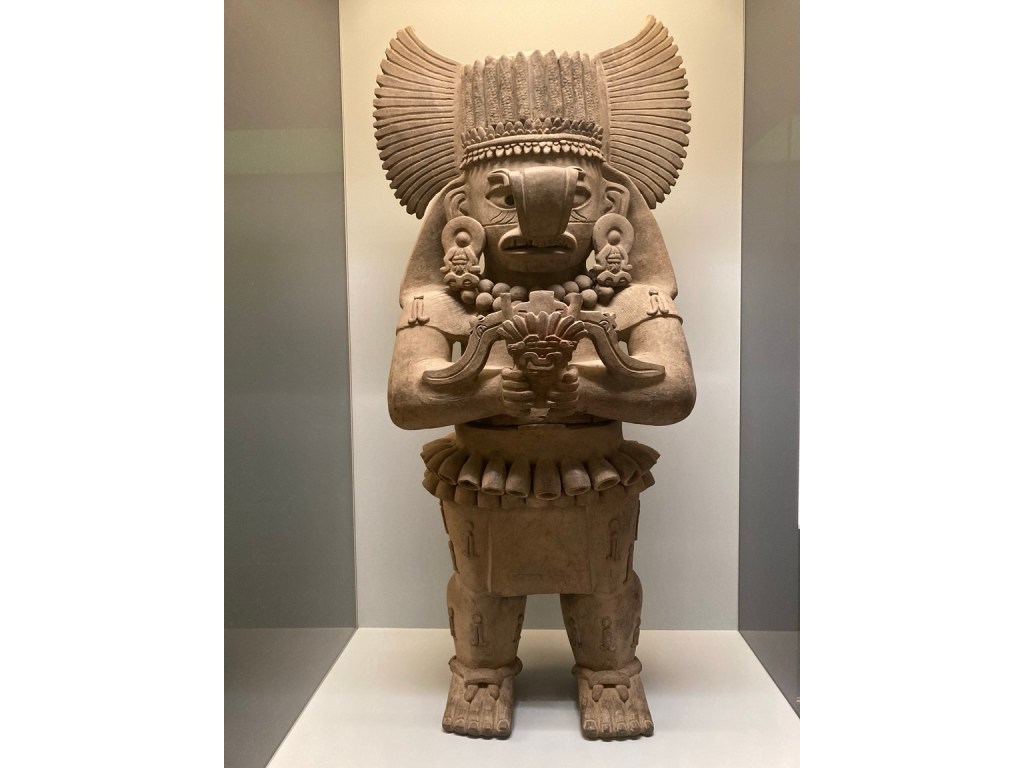
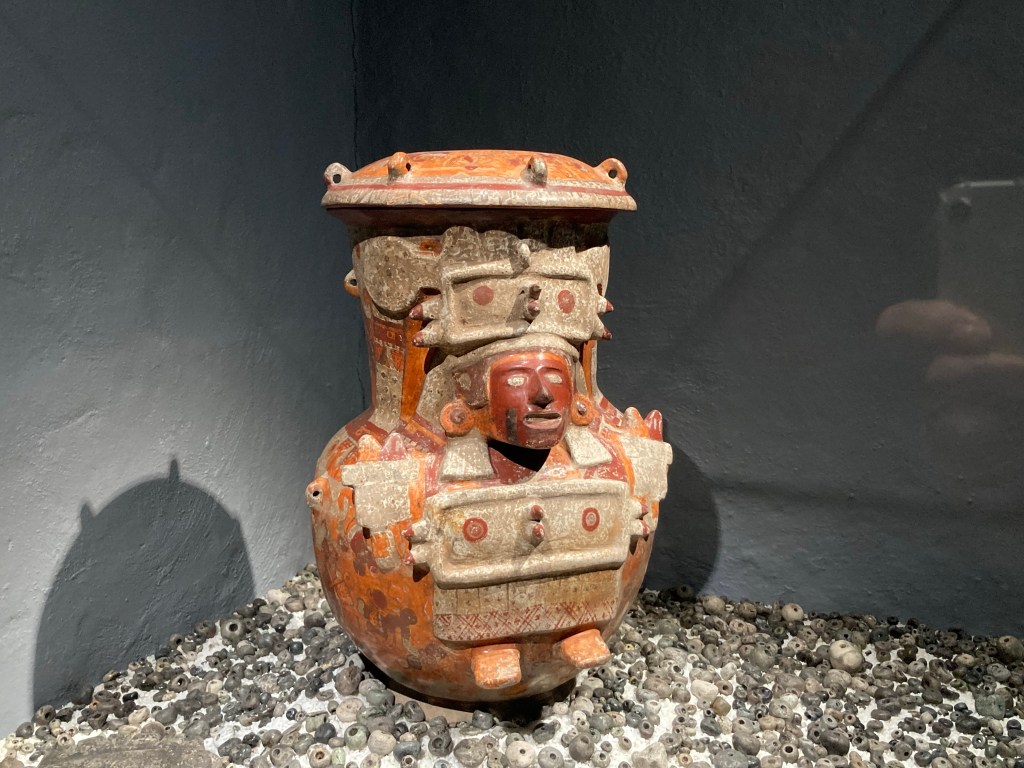
We looked round the free Museo Amparo, filled with pre-Columbian artefacts but only in Spanish so just stopped at those that caught our eye like this Zapotec ceramic image which could be of Cocijo, the god of rain and thunder as it has stylised raindrops on its shoulders and legs …

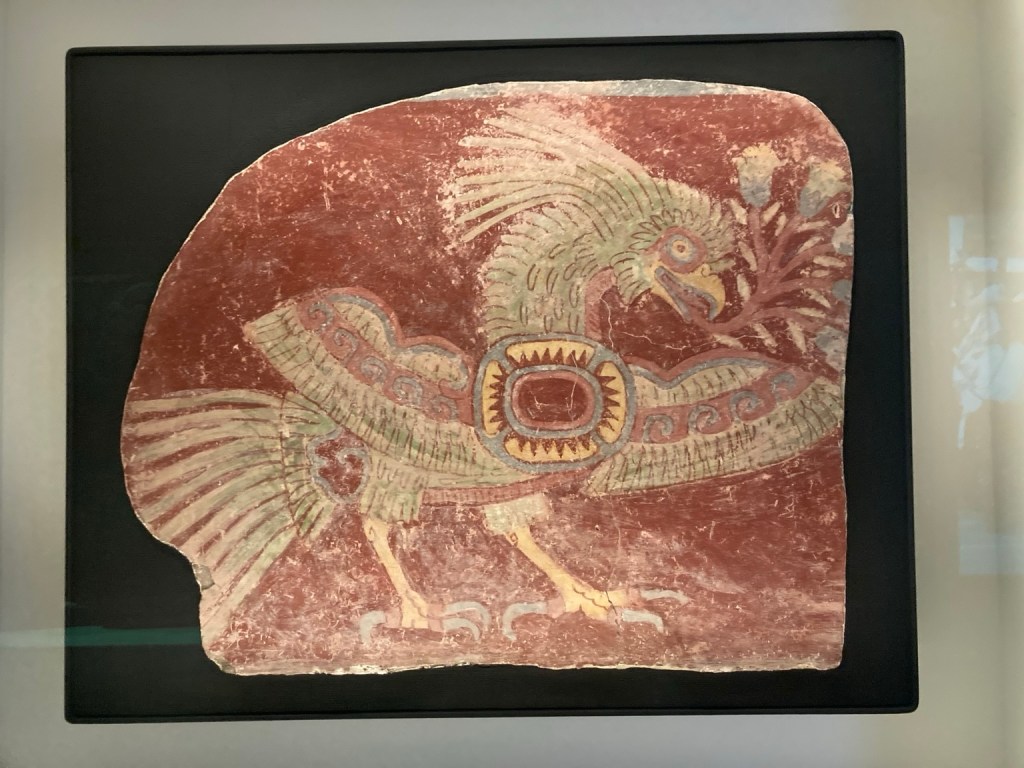
… and this mural fragment showing a Quetzal.

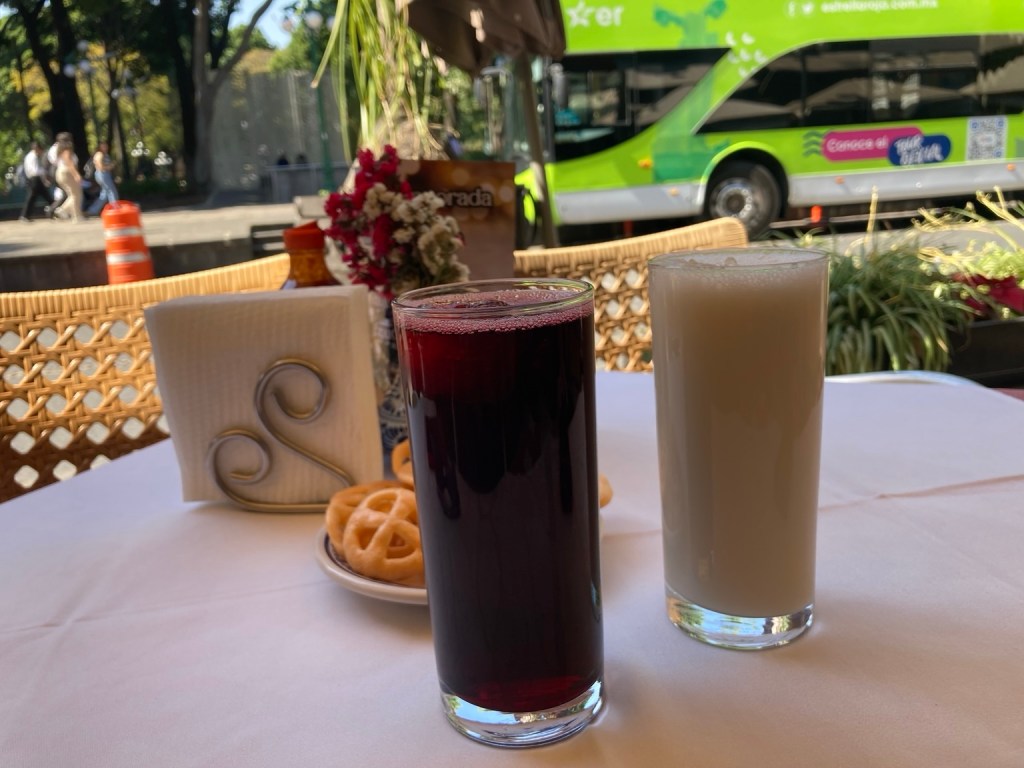
A reviving cold drink next, and we ordered local – Jamaica made from hibiscus and horchata a creamy drink made from soaking and blending rice with cinnamon and water, but a bit sweet.

We stopped at the Casa de Alfeñique, originally built as a wedding gift to please a bride who wanted a house like alfeñique candy which were intricately decorated sweets from Spain.  Now a museum, it told the story of certain things Puebla is famed for, such as the China Poblana, the iconic Mexican dress which became popular in the 1920’s and became a symbol of Mexican nationalism and being the first Mexican city to begin a mechanised textile manufacture with a cotton weaving factory.

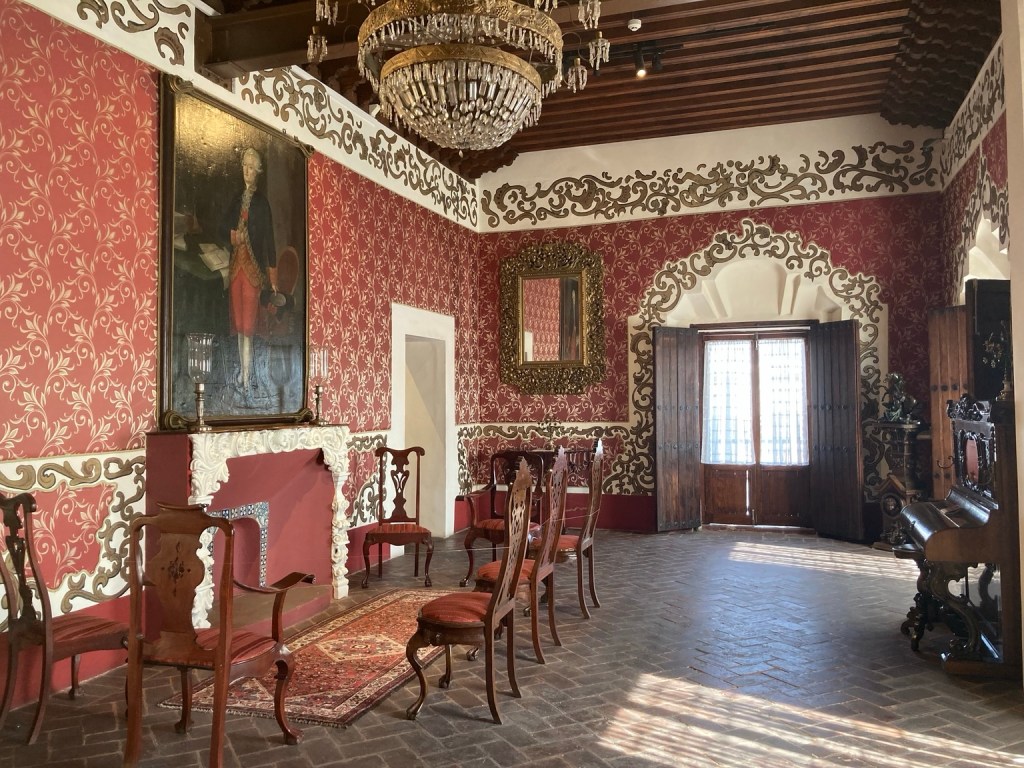
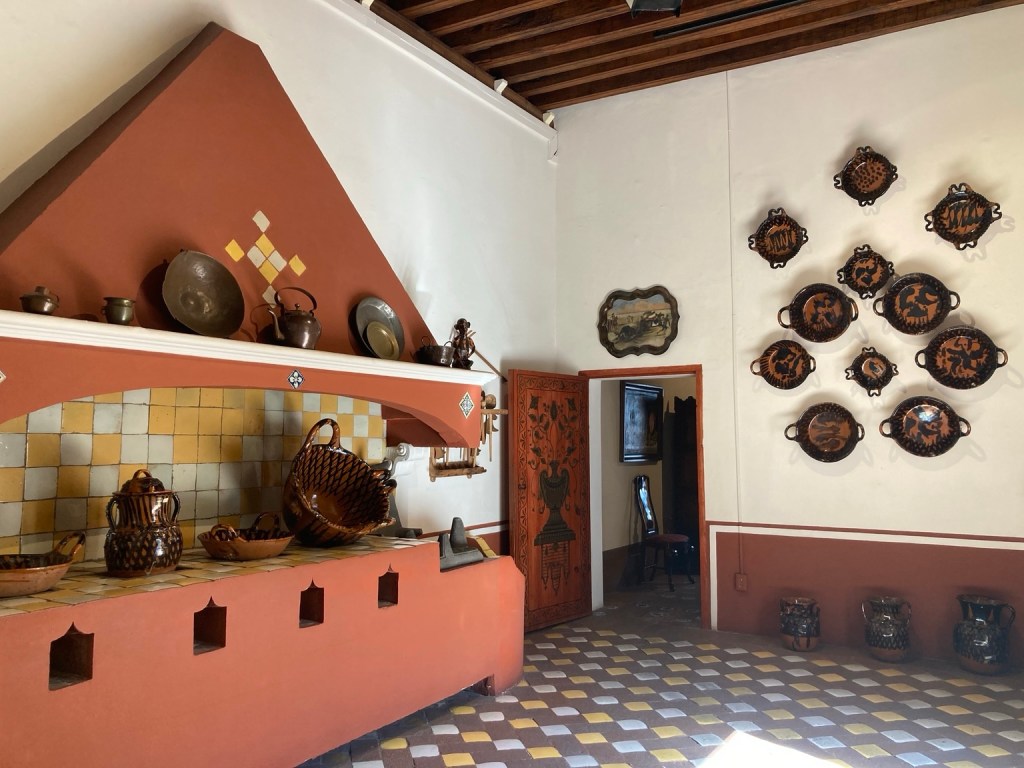
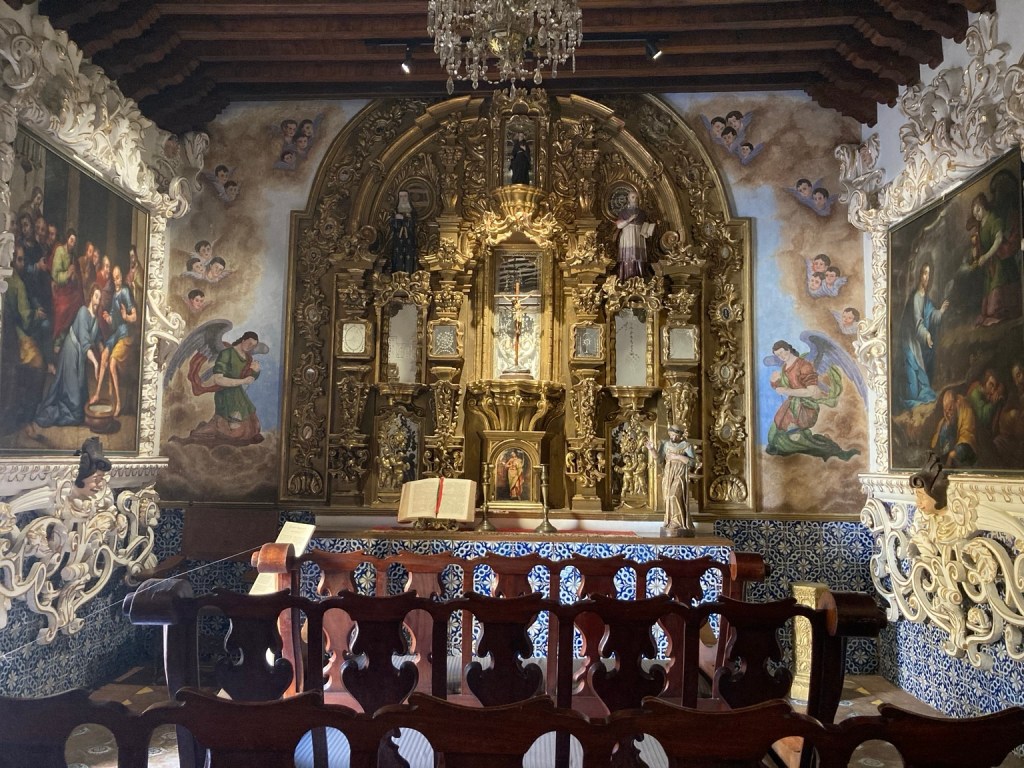
Upstairs were some elaborate rooms, a kitchen and also the family chapel.

Having had lunch late, neither of us wanted dinner, so just went out for a drink and to listen to live music in a bar.

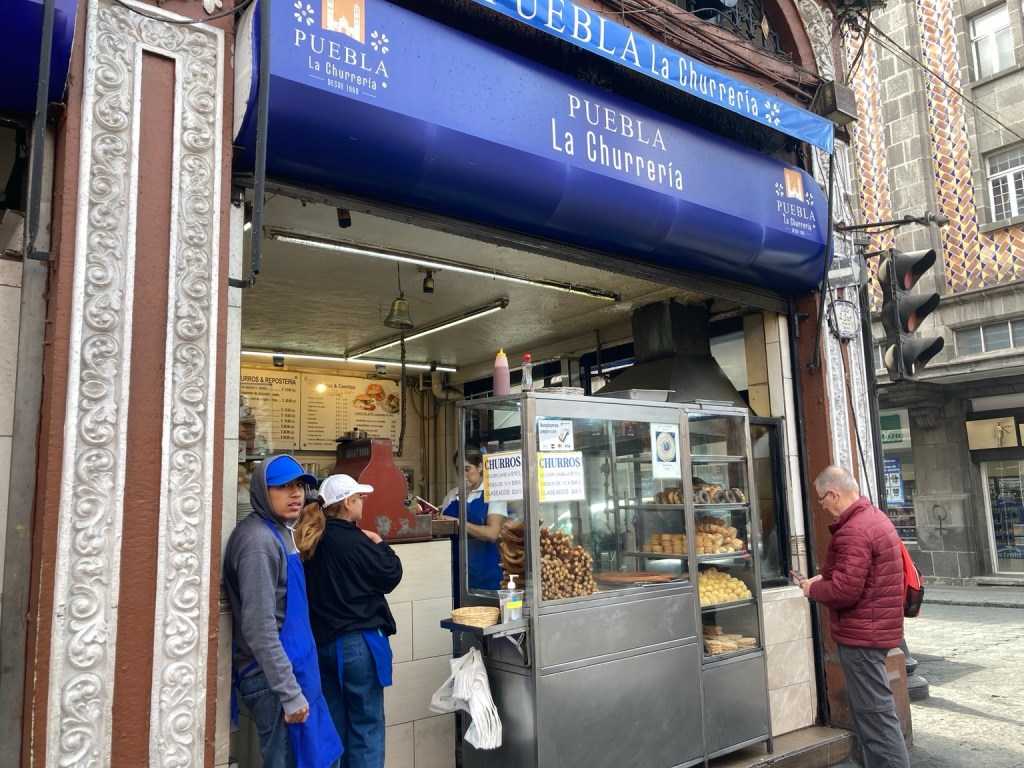
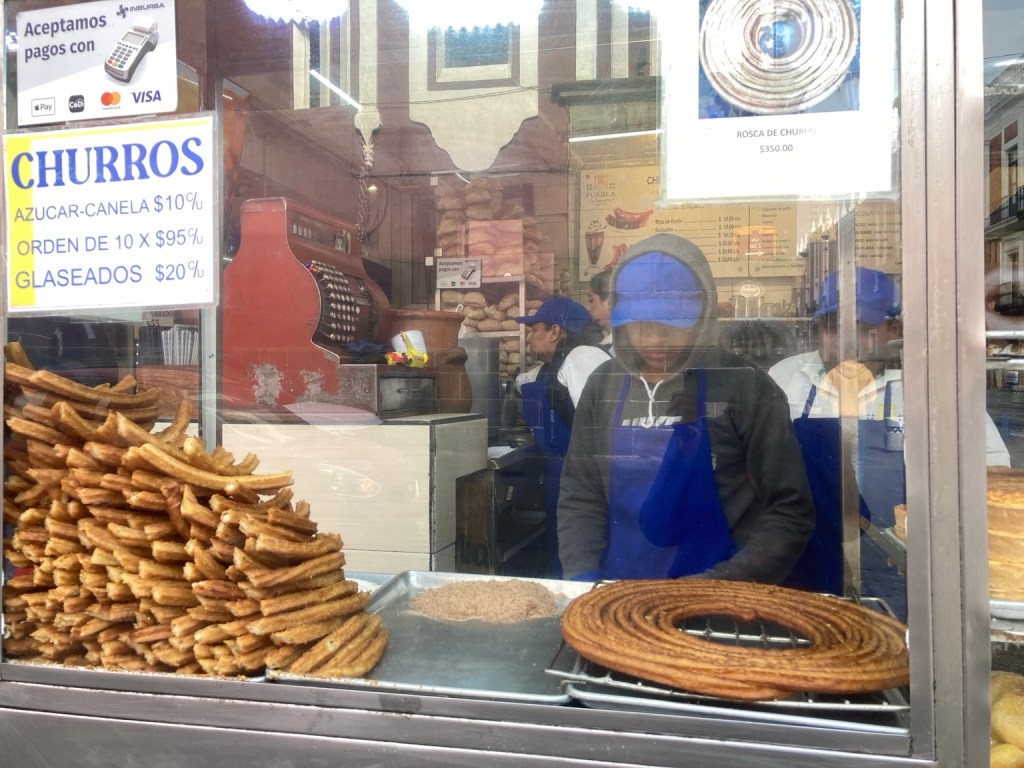
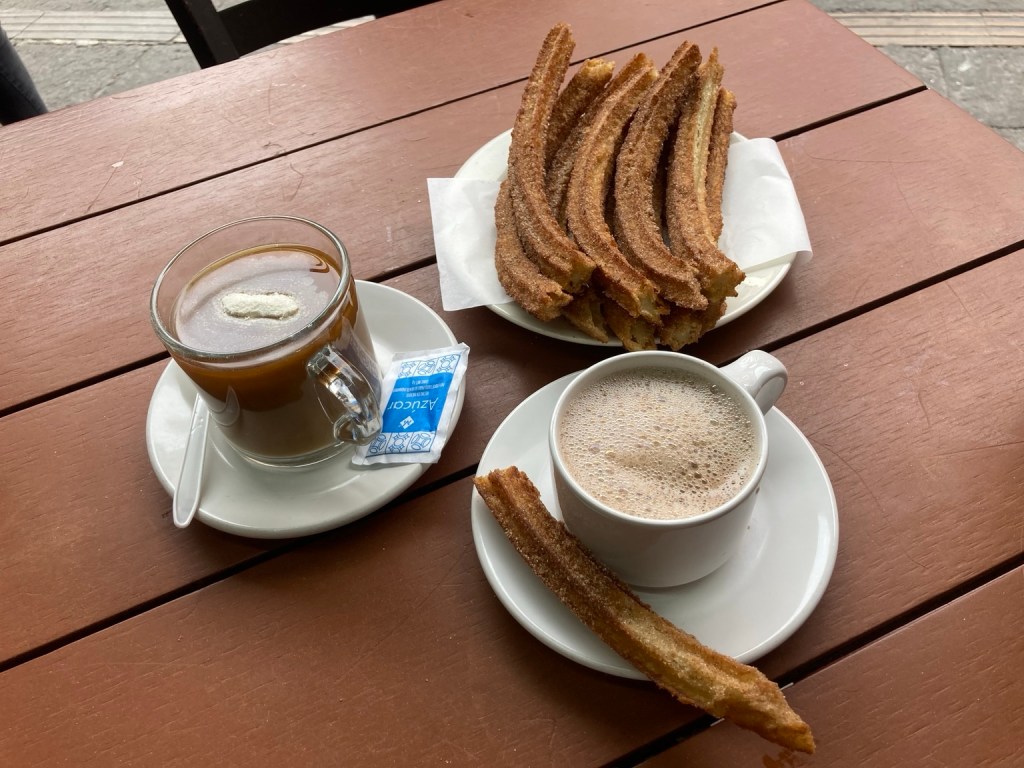
We’d spotted a churreria in town so headed there next day for a breakfast of churros – really crispy on the outside dusted with sugar and cinnamon and very delicious.

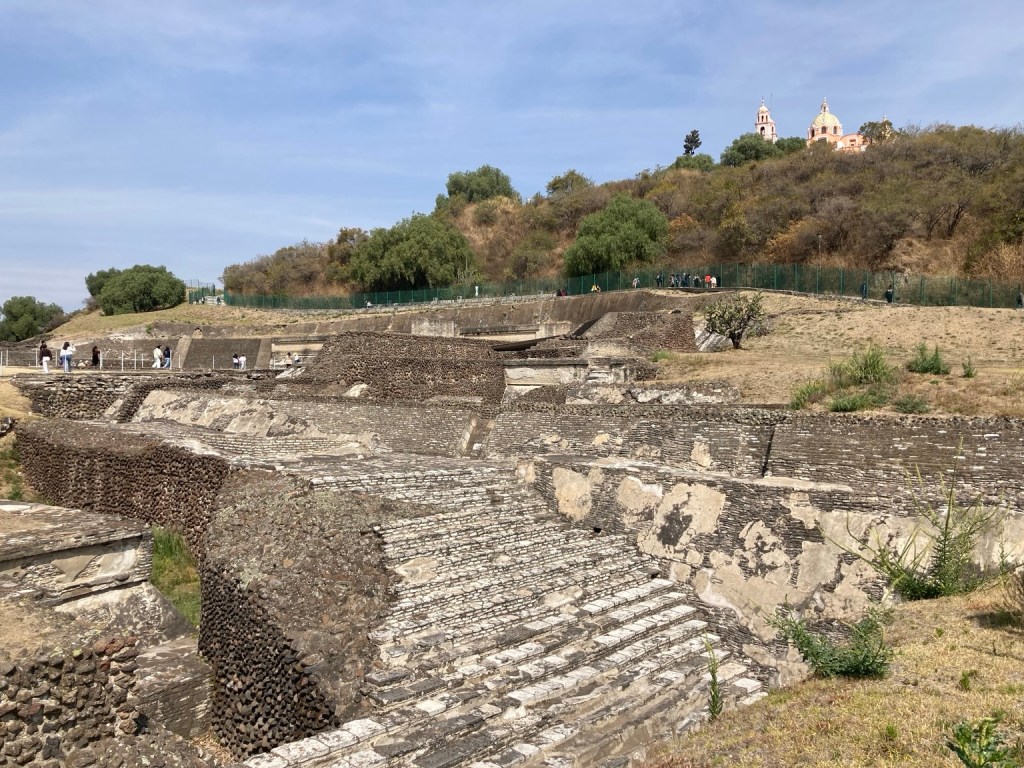
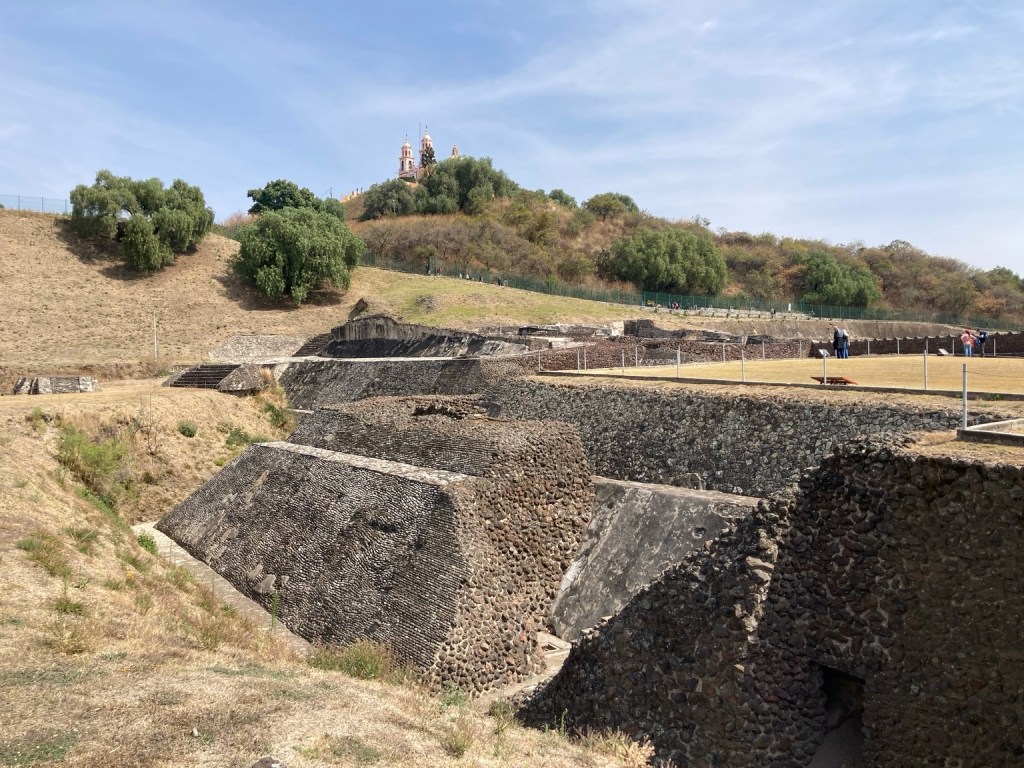
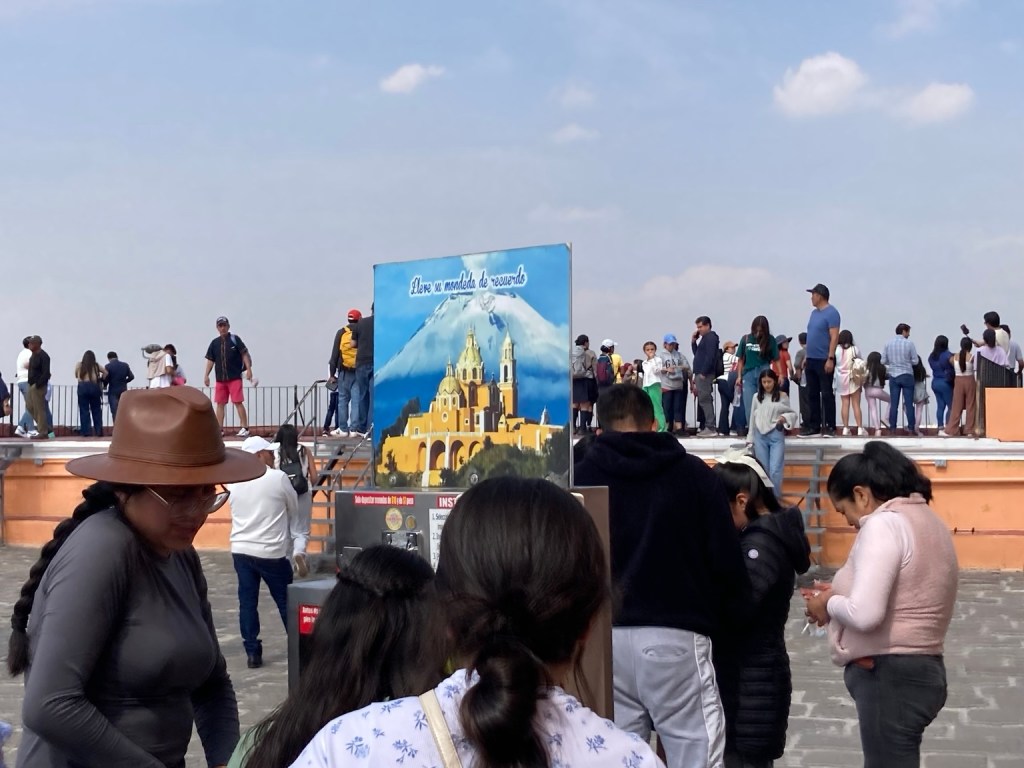
Then we booked an Uber and set off for Cholula, a popular Pueblo Mágico with the world’s largest pyramid by volume … not that at first glance you would even realise it is a pyramid as it is completely covered in vegetation and topped with a church!  We were dropped by the entrance to the excavated courtyard at the base, which would have had a collection of smaller platforms with temples and altars.

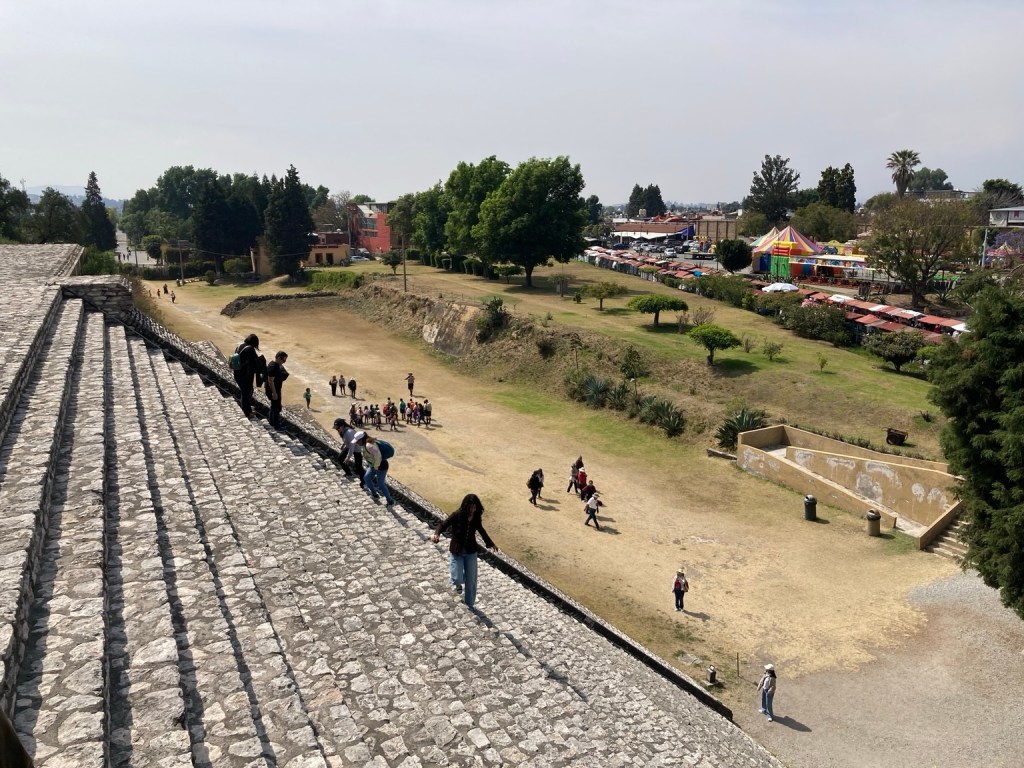
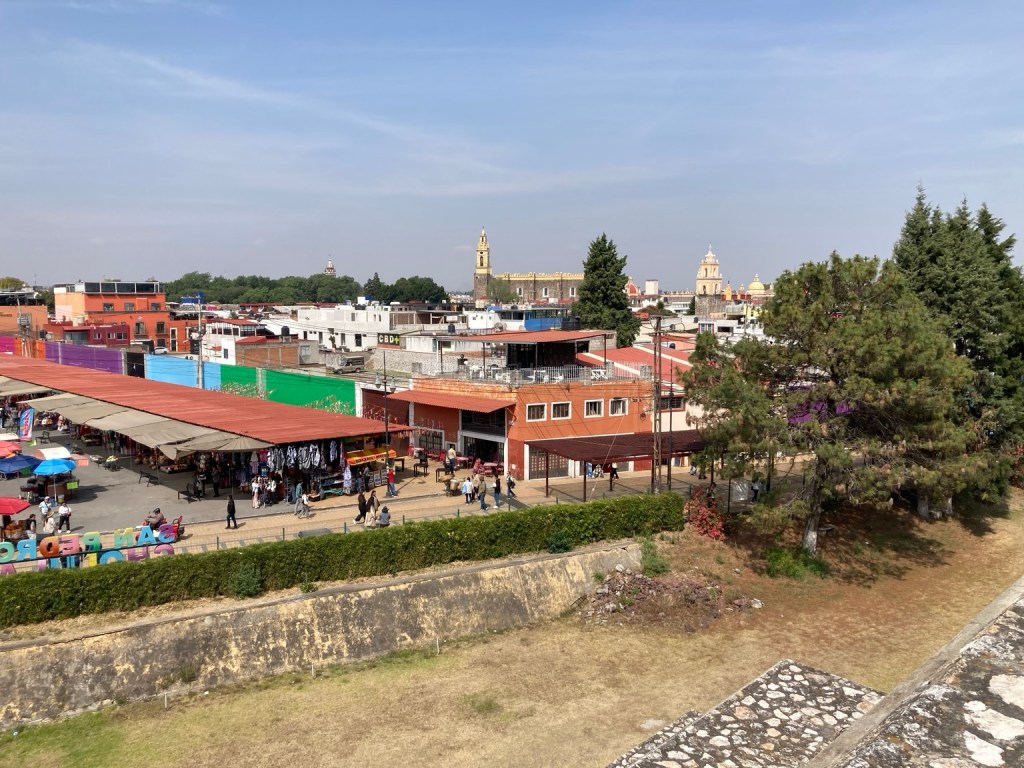
At the end was a section of restored wall to climb for a view of the bustling market below.

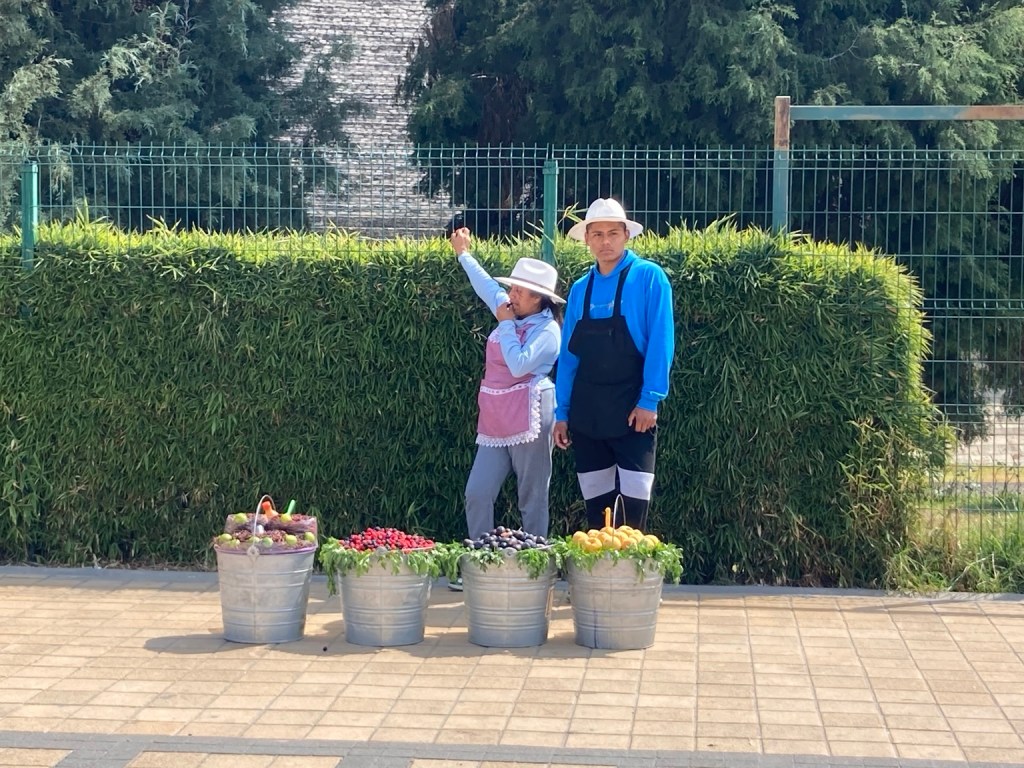
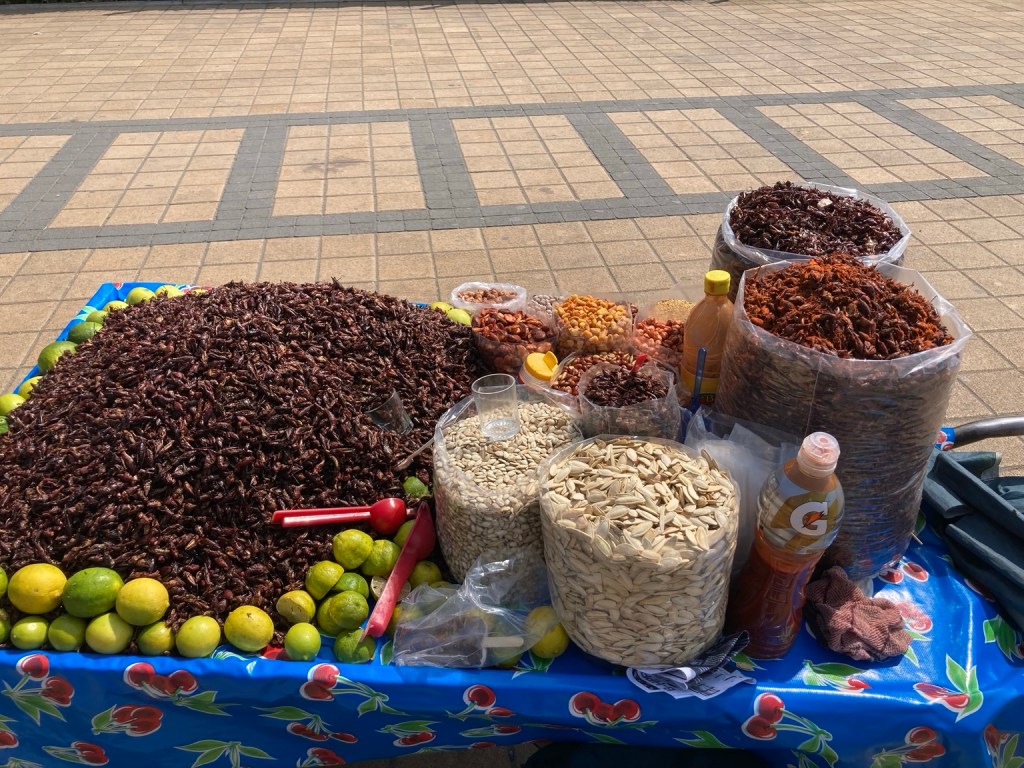
We saw various vendors, including these selling chapulines, or grasshoppers, something I haven’t quite brought myself to try!

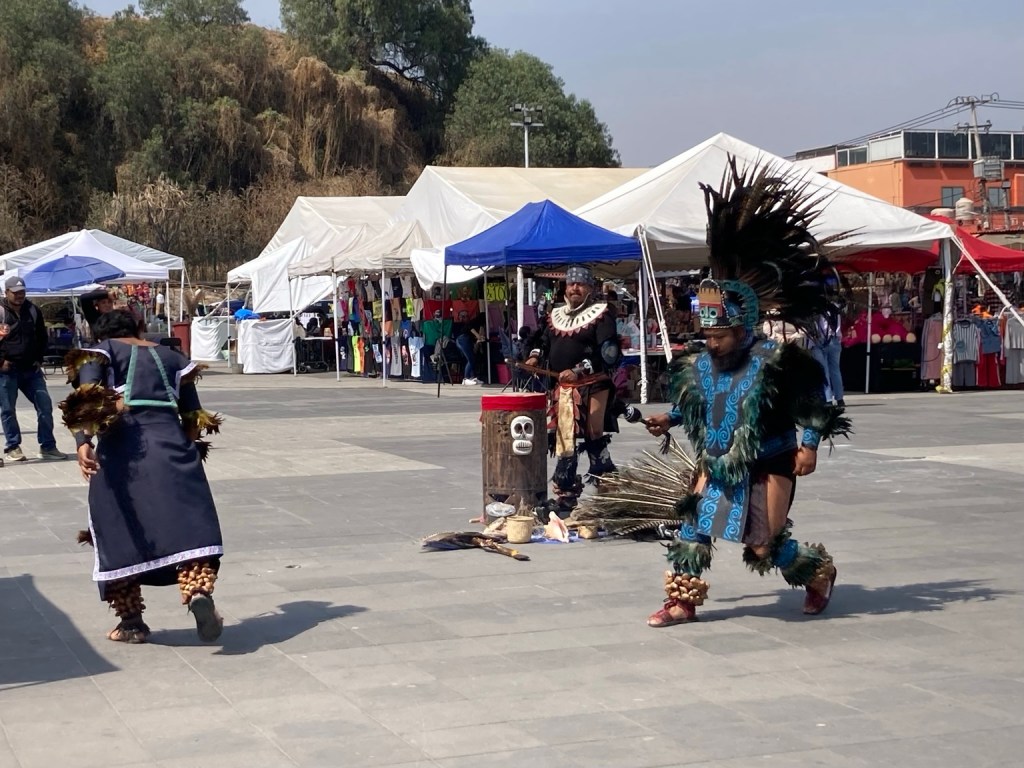
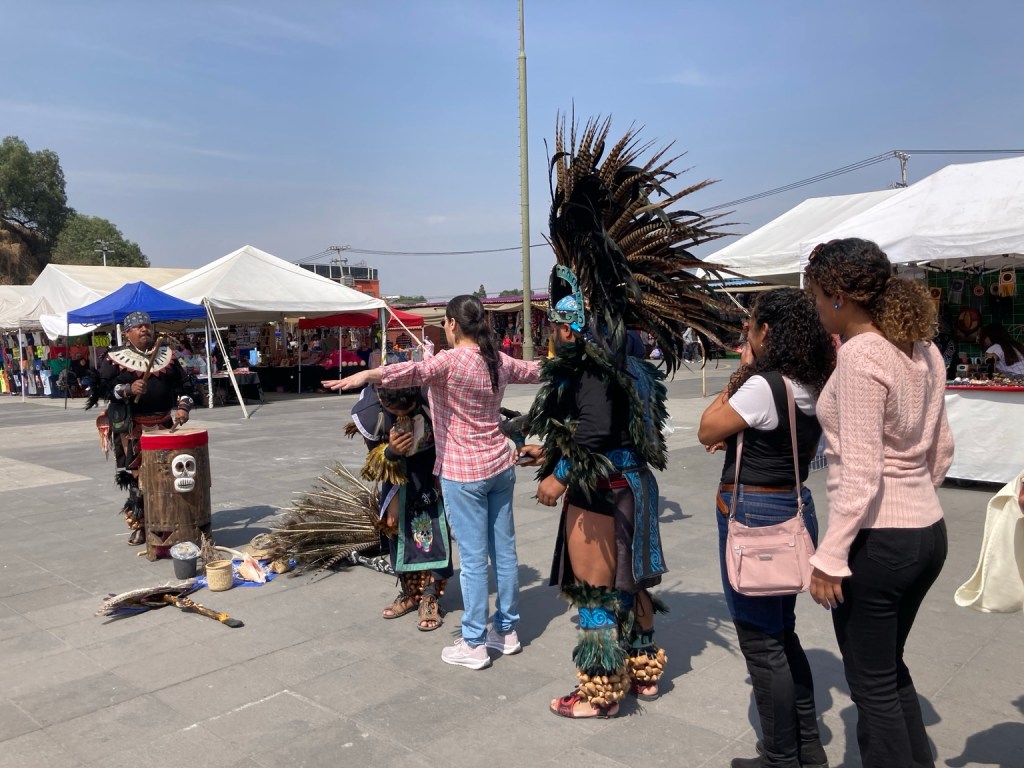
There were also shamans dancing and conducting cleansing rituals with smoke from incense and herbs.

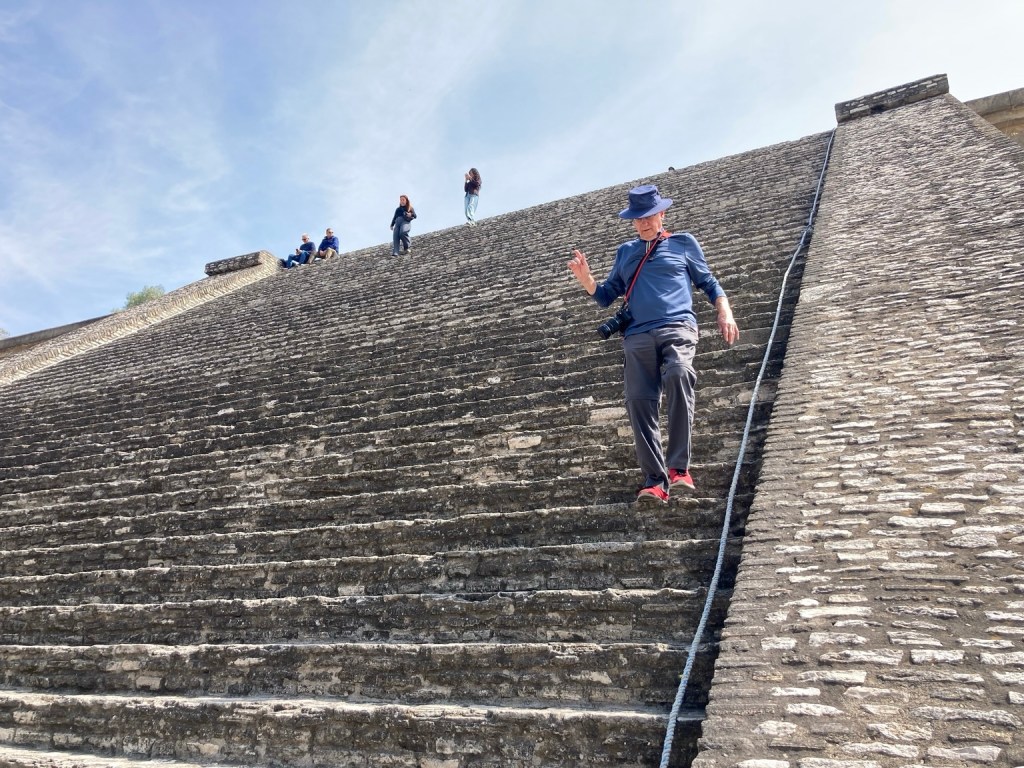
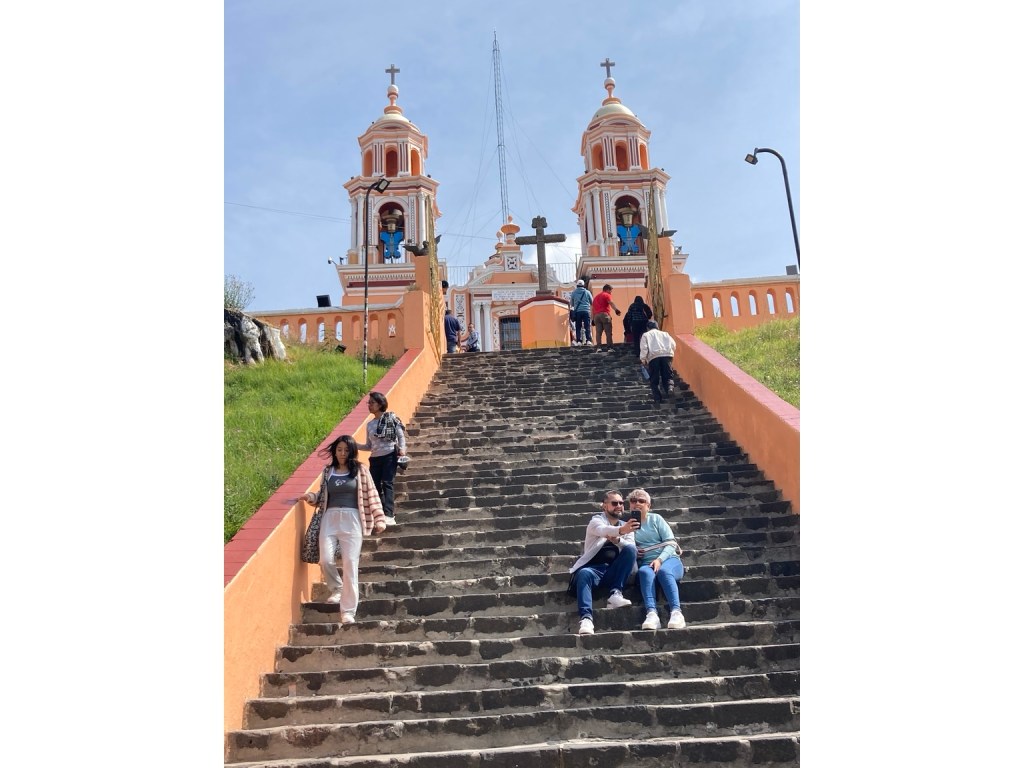
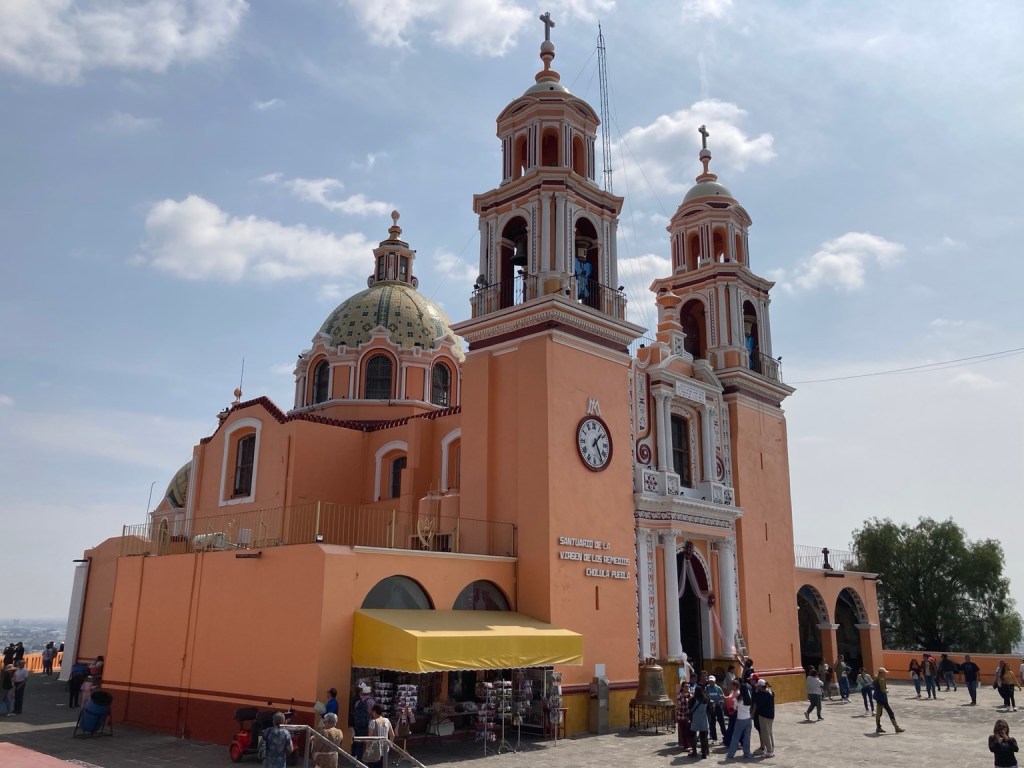
We came to the path which zig zags up to the Señora de los Remedios church with steps for the final ascent.

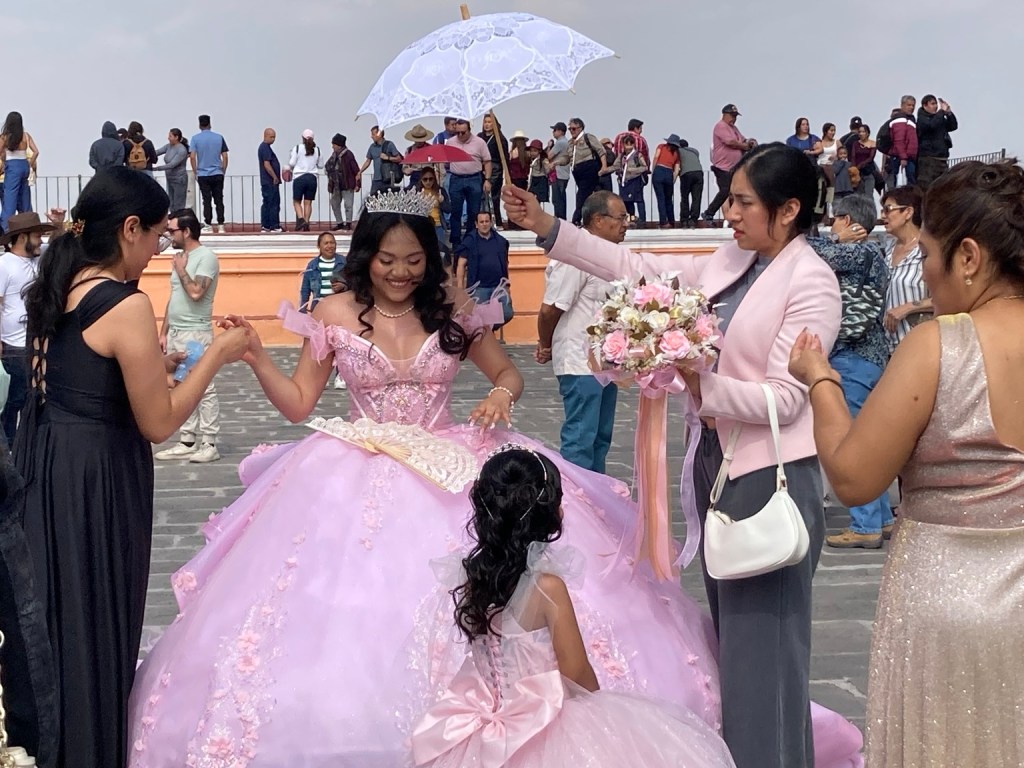
It is a popular place of pilgrimage as the Virgin of Remedies particularly helps the poor and also a popular spot for a wedding, although the entire bridal party had to climb the same path we did in all their finery! 

The other big draw is that on a good day, Popocatépetl can be seen, but not today, it was far to misty to even know it was there, so Chris didn’t get the magic shot.

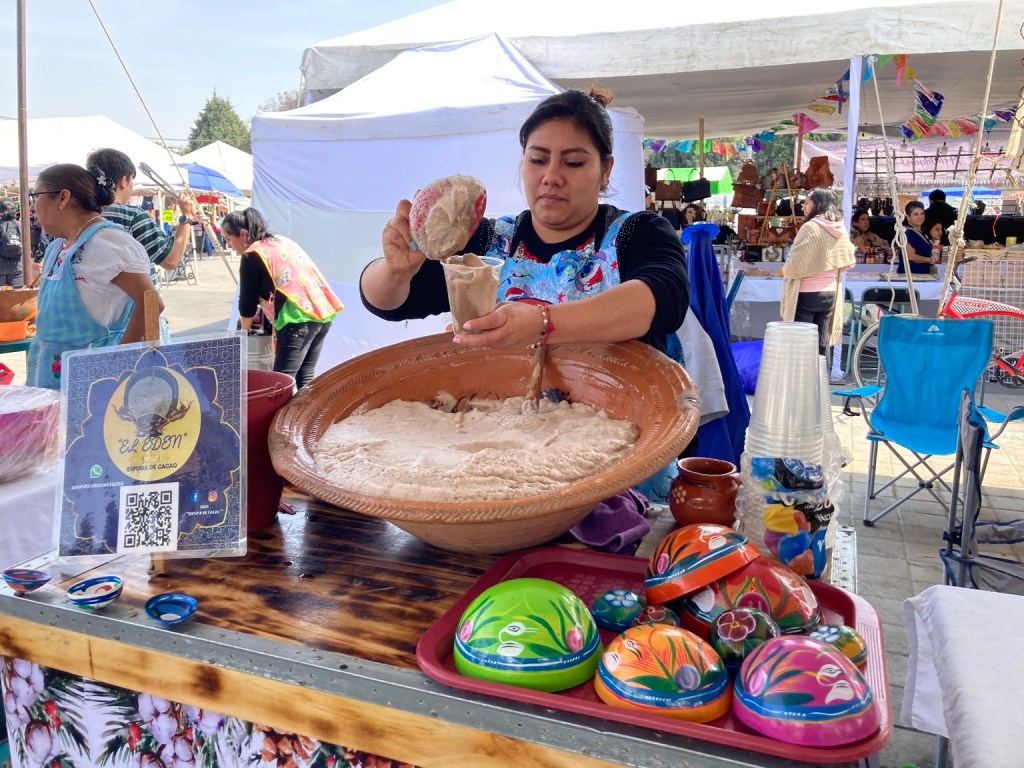
It seemed a good opportunity to try a couple of new things, firstly this frothy chocolate mixture called Espuma de cacao or cocoa foam. This traditional, frothy, pre-Hispanic Mexican drink is made from ground cacao beans mixed with water, sugar, and cinnamon and typically served in Puebla. The lady froths it up by rubbing the twizzle stick between her hands. I was so pleased to try something so local, it wasn’t too sweet and was actually quite chocolatey. 

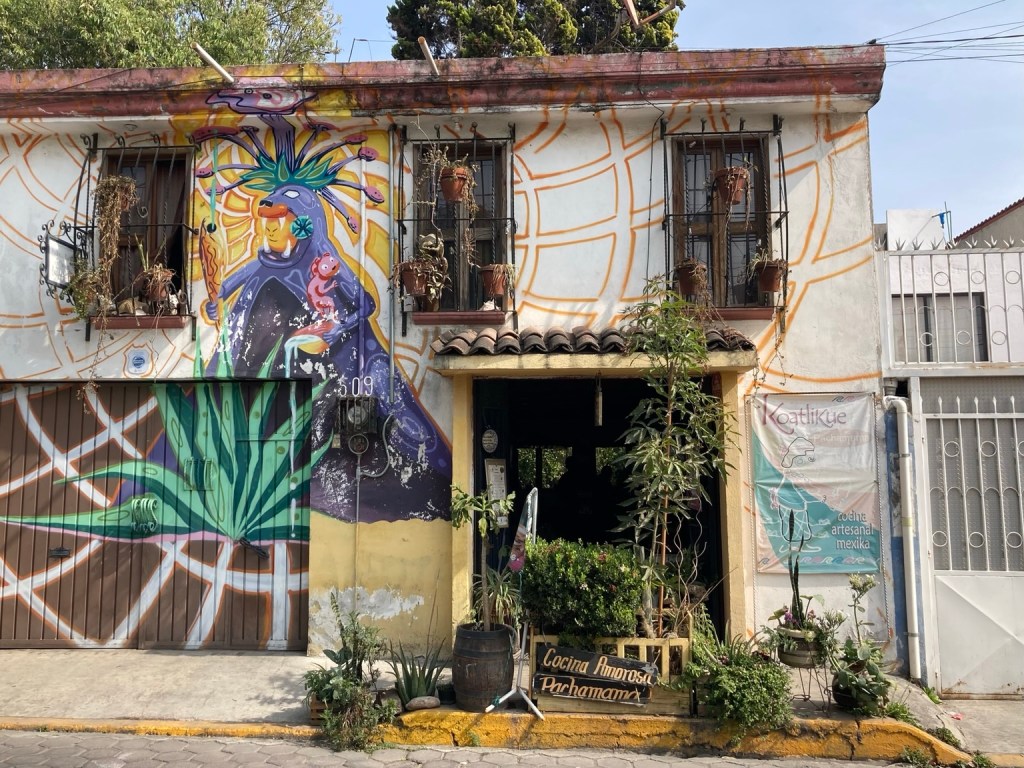
Next we sought out this pulqueria called Pachamama where we were given two tasters, one natural and one fruity.  Pulque is a traditional, fermented, lightly alcoholic beverage made from the sap of the agave plant. It’s milky, frothy, slightly sour and I thought most like kombucha.  Chris thought it was ok but neither of us will be rushing to order more!

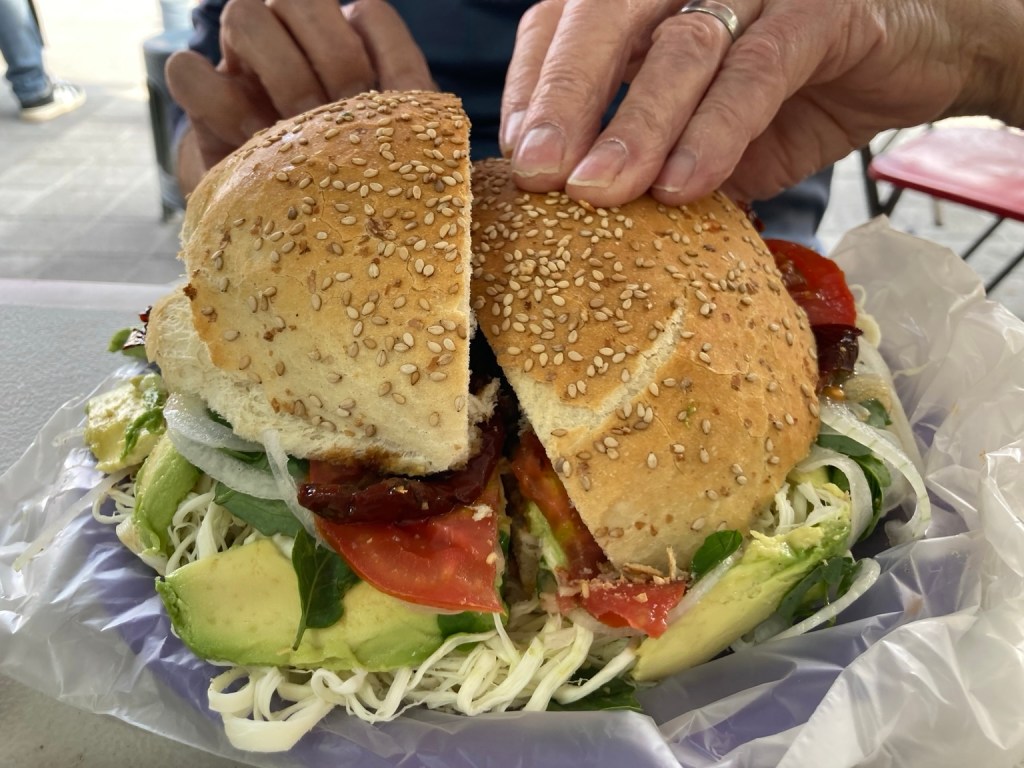
Finally, at lunchtime we checked out the food stalls. Chris went for a Pueblan speciality, the cemita, a sesame seed covered roll filled with avocado, cheese and chipotle …

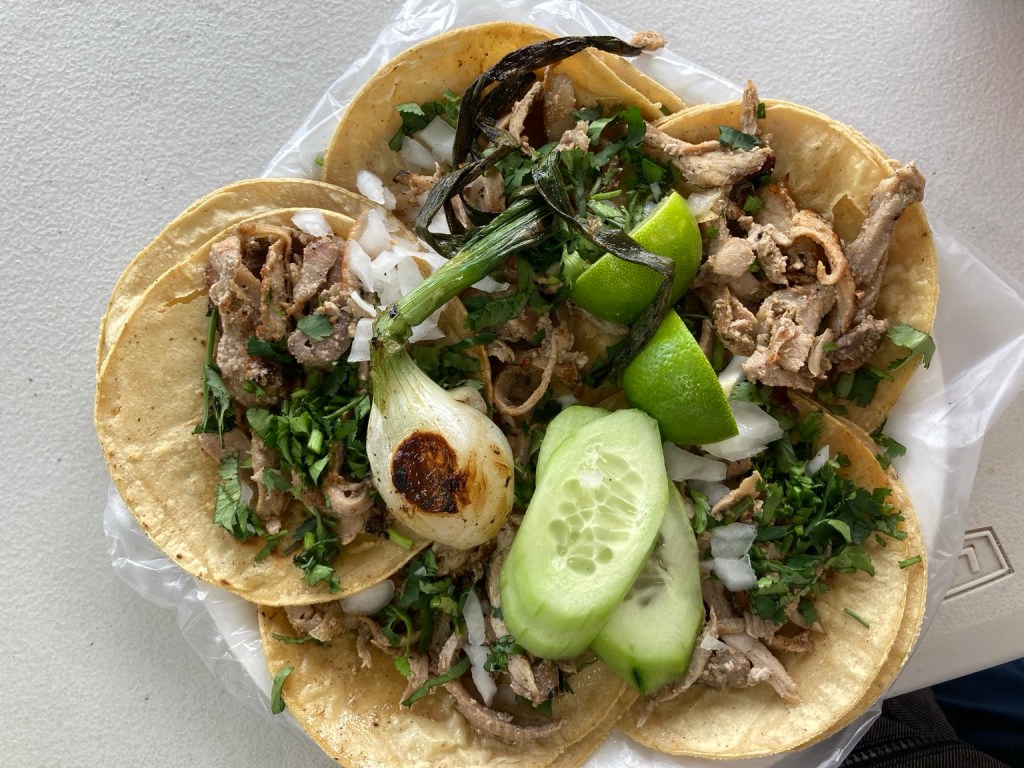
… while I had tacos árabes made with vertically spit-roasted pork like a gyro originally with Lebanese influence and another dish specifically from Puebla.

Both platefuls were huge so in the evening we just went out for wine and snacks in a cute cafe!

Our stay in Puebla is already at an end, so we’ll be back on the road tomorrow …

Map

Mexico City … and Pyramids

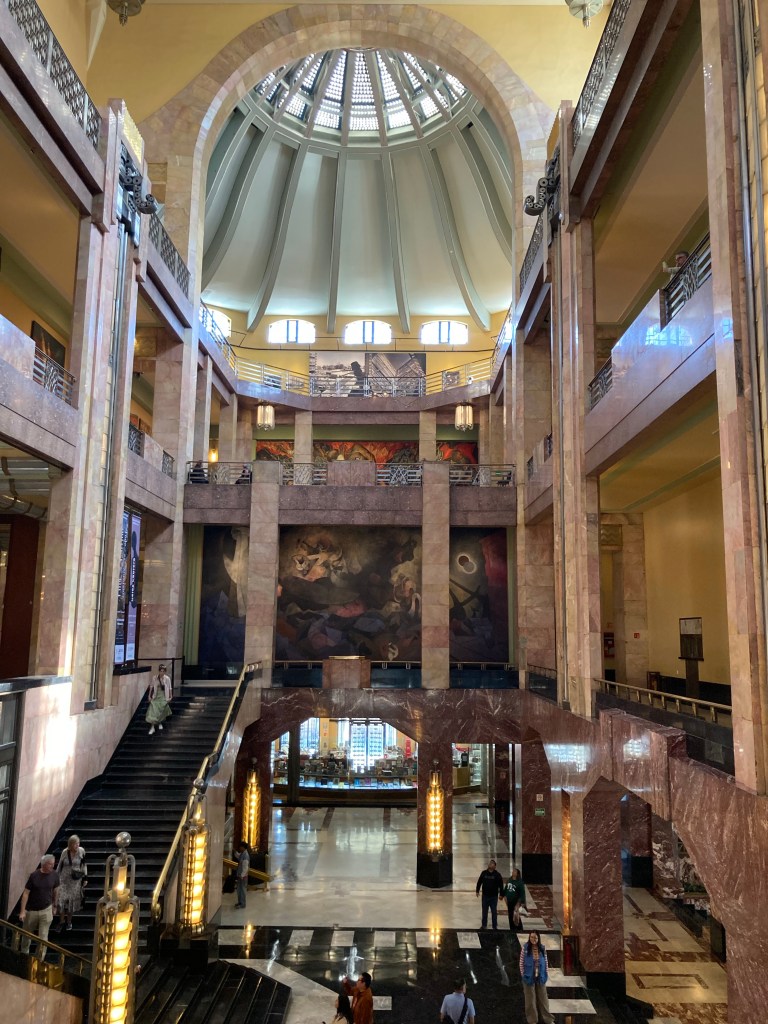
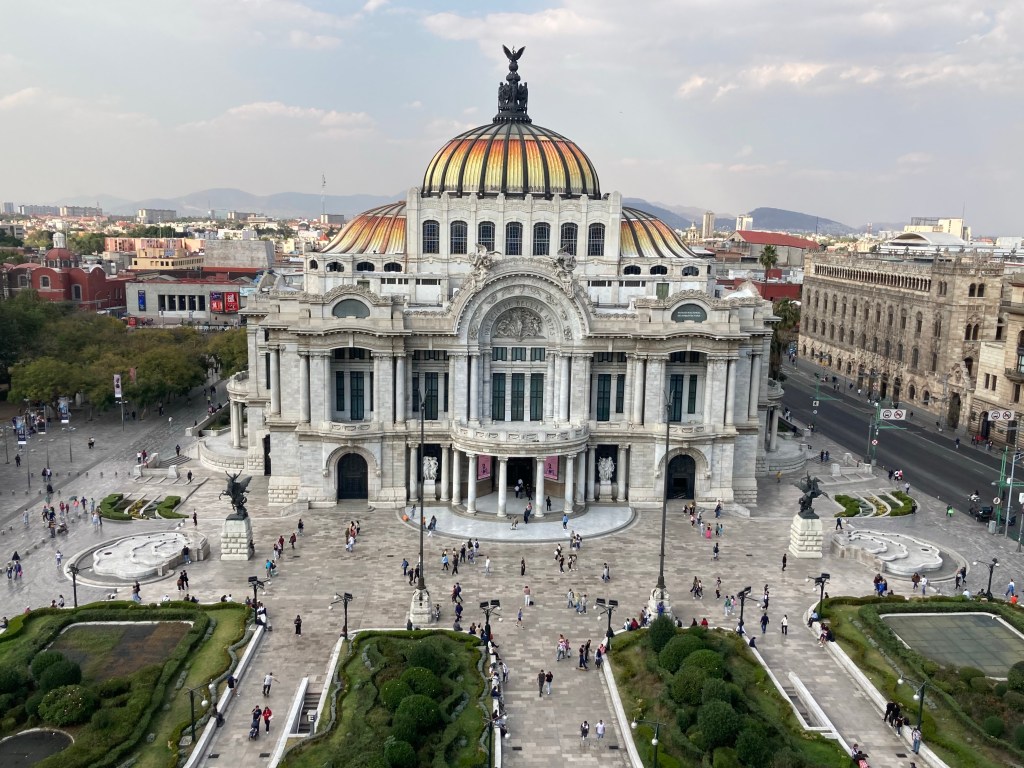
Chris suffered overnight with an upset tummy so we had a slow start, but fortunately later he felt ready to go out.  We had booked onto a tour to Teotihuacán in the afternoon, but first we took a turn round the Palacio de Bellas Artes, the lovely concert hall we admired yesterday, which is Art Nouveau on the outside and Art Deco on the inside! 

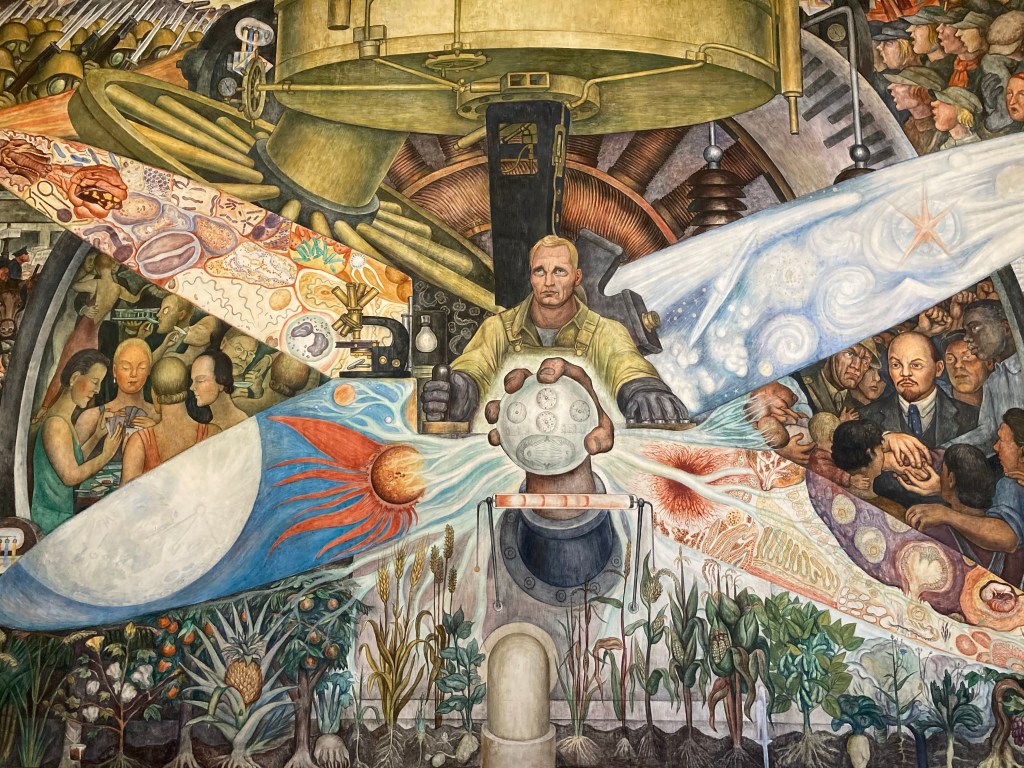
Upstairs is a gallery of murals painted by famous names of Mexican muralism.  Diego Rivera had been living in the US where his mural for the Rockefeller Centre in New York had been destroyed due to his inclusion of an image of Lenin which didn’t go down well with his sponsor!  He reproduced it here called Man Controller of the Universe, showing man harnessing scientific progress and industrial technology and at a crossroads, choosing between capitalism on the left with an image of decadence, including Rockefeller and communism on the right with Lenin and multiracial workers.  It is huge, and this is just the centre section. 

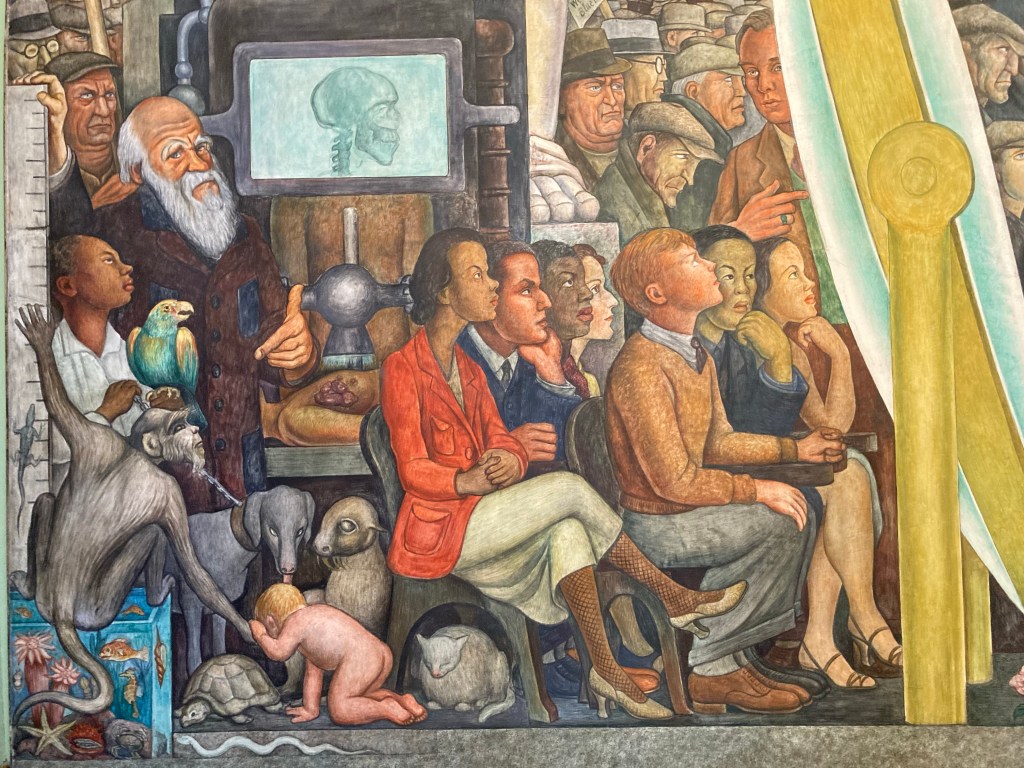
This excerpt shows Darwin and learning …

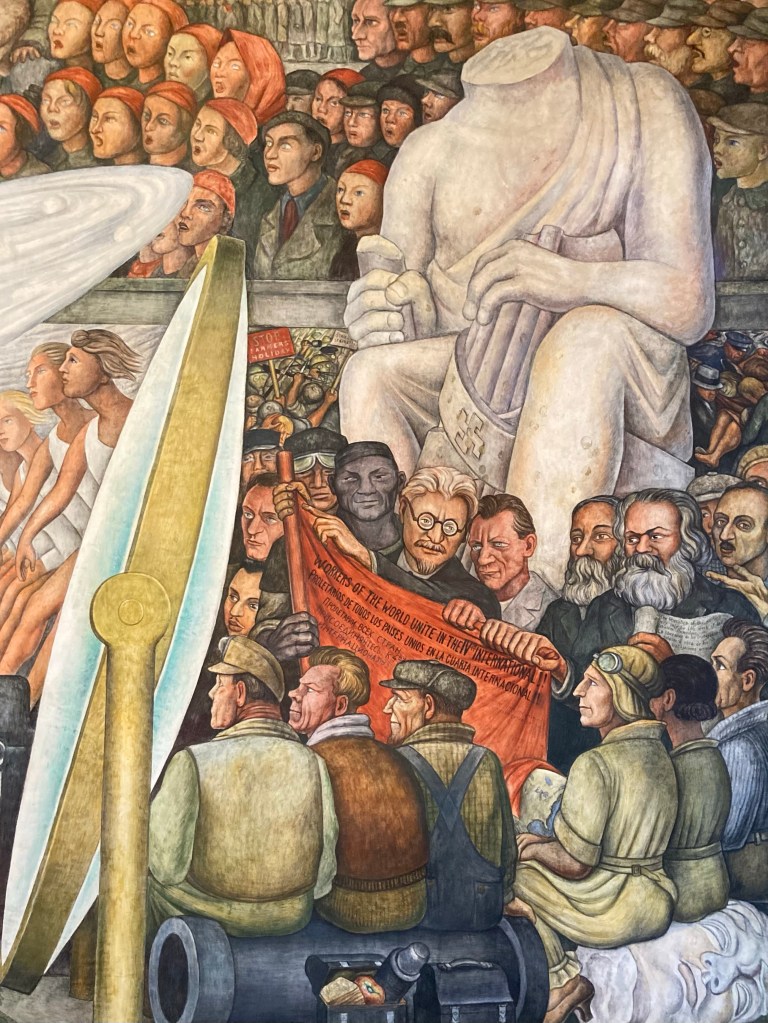
… and here are the images of communism.

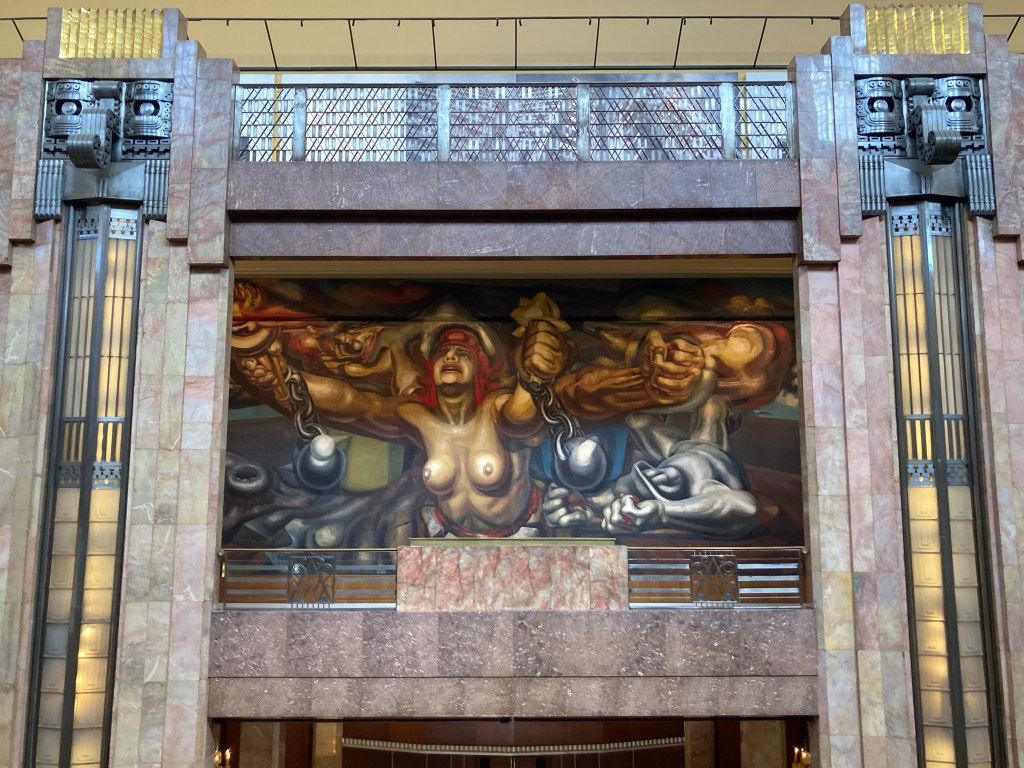
It was interesting to see how varied the mural style was amongst Rivera’s contemporaries, like The New Democracy by David Alfaro Siqueiros, set between two Art Deco light fittings showing Chac the rain god …

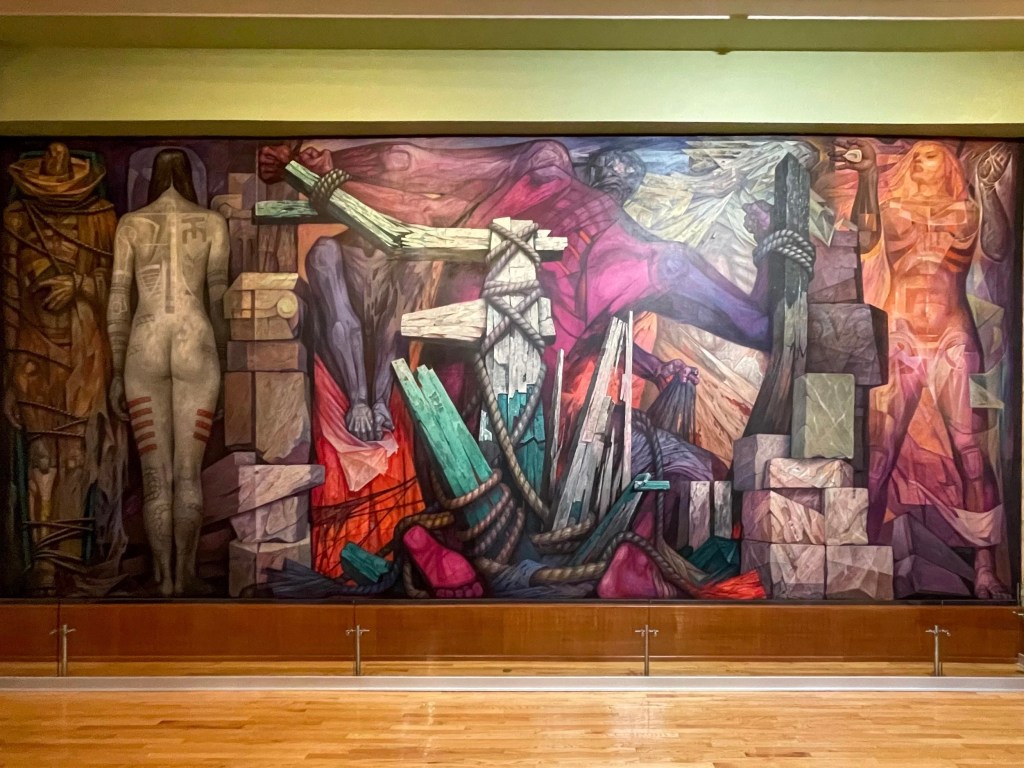
… and Humanity Freed from Misery by Jorge Gonzalez Camarena.

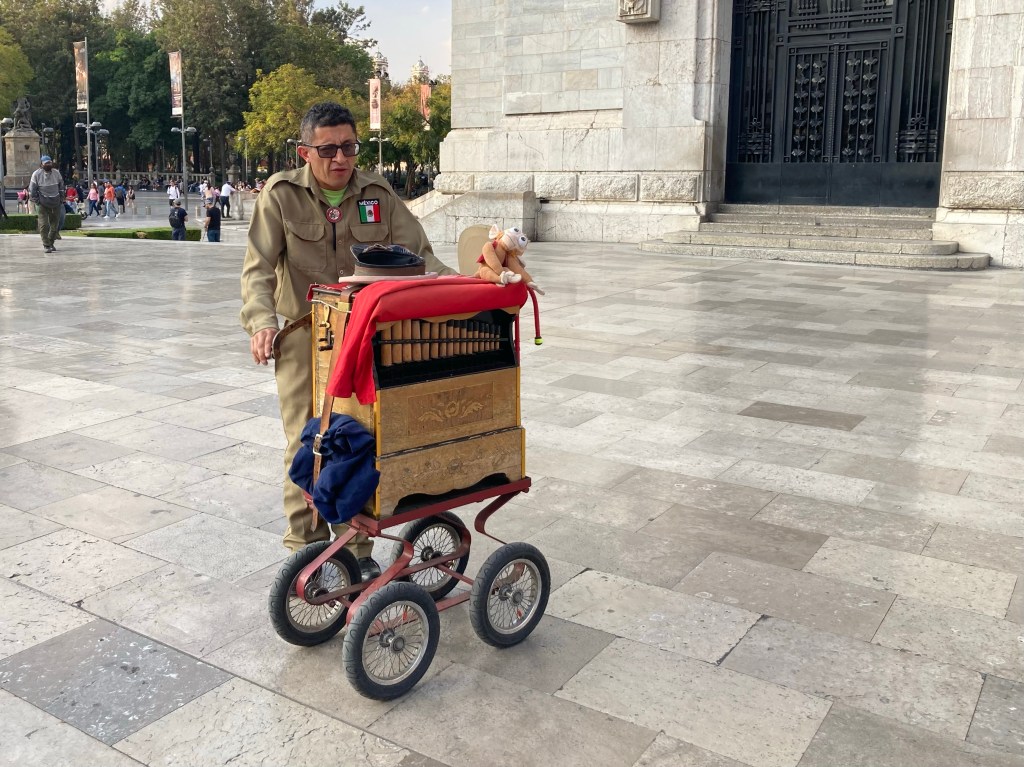
Outside, there was an organillero in his smart beige uniform, playing a tune on his barrel organ, a sound that probably characterises our time in Mexico City. Popular since the C19th, they play nostalgic tunes and can be found on every corner, with a monkey sitting on top, although it is probably hard to make a living just on tips, having paid the US$10 daily rental.

Time to meet the minibus for our guided trip to Teotihuacán, booked through Viator as a cultural visit with no add ons!  We were the last couple to join the tour and took the last pair of seats, only to find they were over the rear axle and my seat was freezing from the AC.  Fortunately the journey was just an hour and our guide kept us engaged with various information about the city.  I was pleased to arrive and get out into the sunshine to warm up as we headed through the gates. 

Teotihuacan was both the largest city in the Americas as well as the most advanced civilization on the continent at its zenith, from 100BC-500AD.  The city covered some 19 square kms and had an estimated population of about 250,000.  It collapsed as a city in the C7th-8th for reasons unknown and was then discovered by the Aztecs who discovered the site in the 1300’s, by which point it was covered by earth and vegetation. They  excavated some of the site and named it Teotihuacán which means ‘the place where gods were created’.

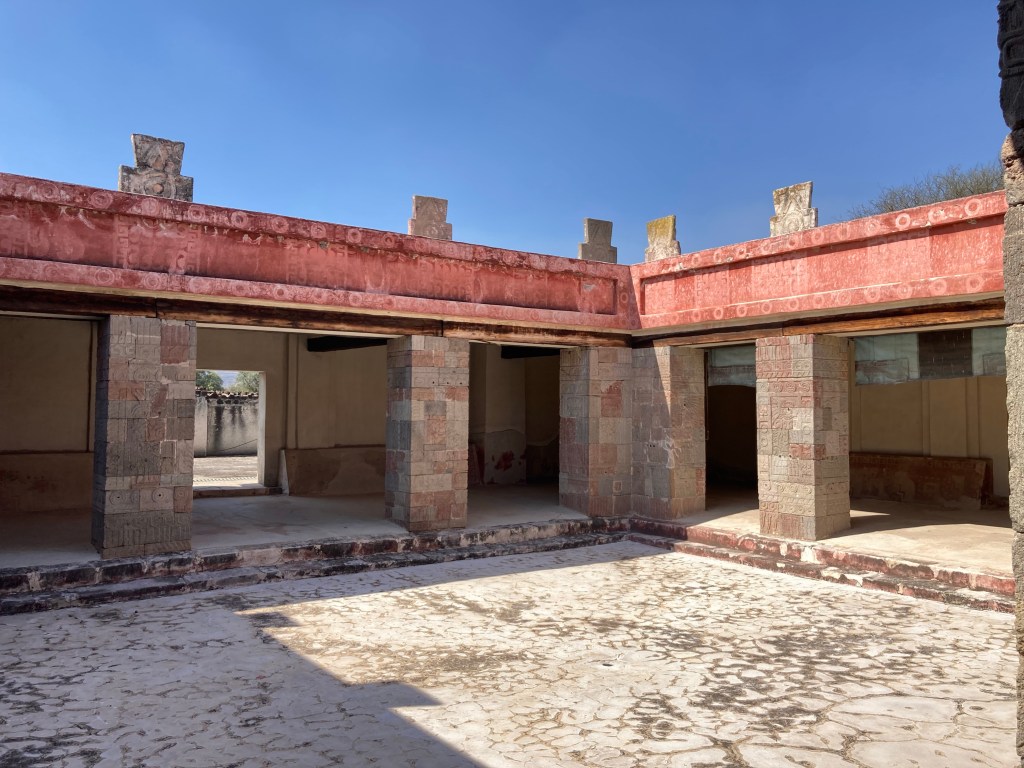
We began in the restored Palace of Quetzalcóatl with the Patio of Pillars, with their rich decoration and remains of colour …

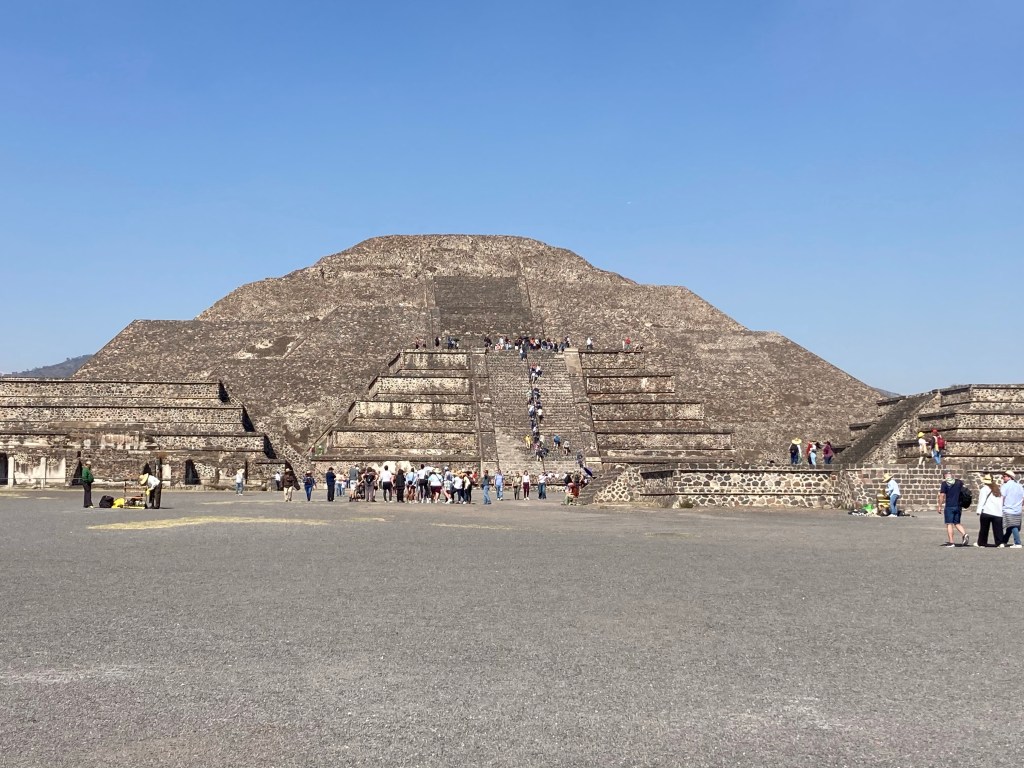
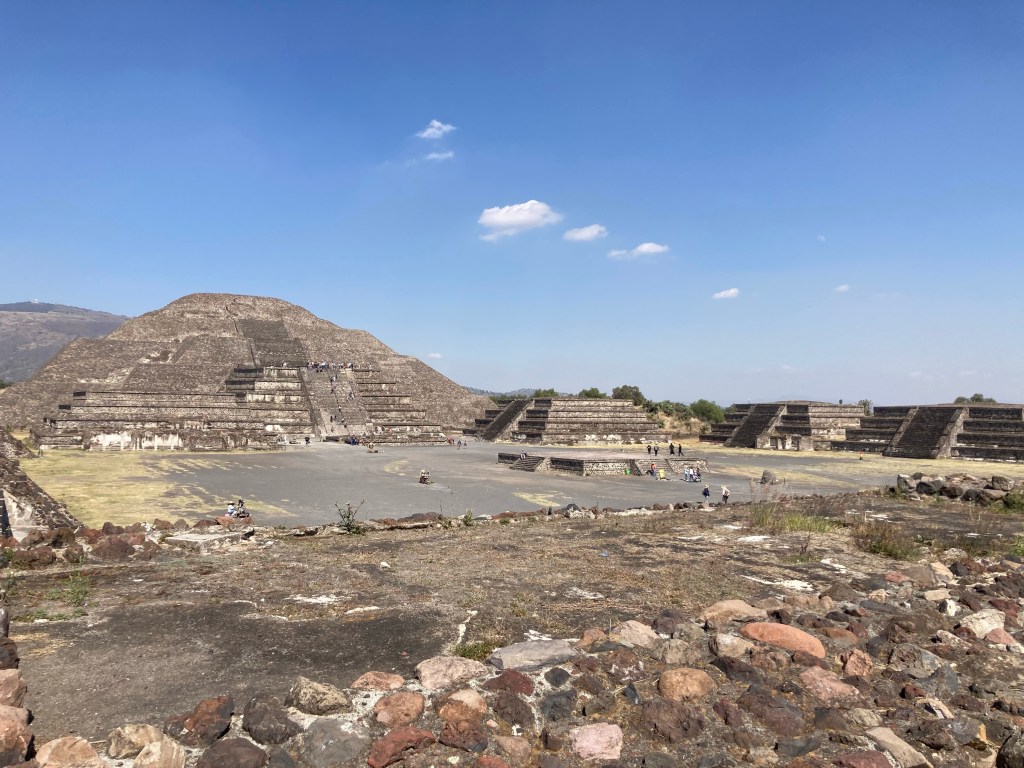
… then walked out to this view of the Pyramid of the Moon.  

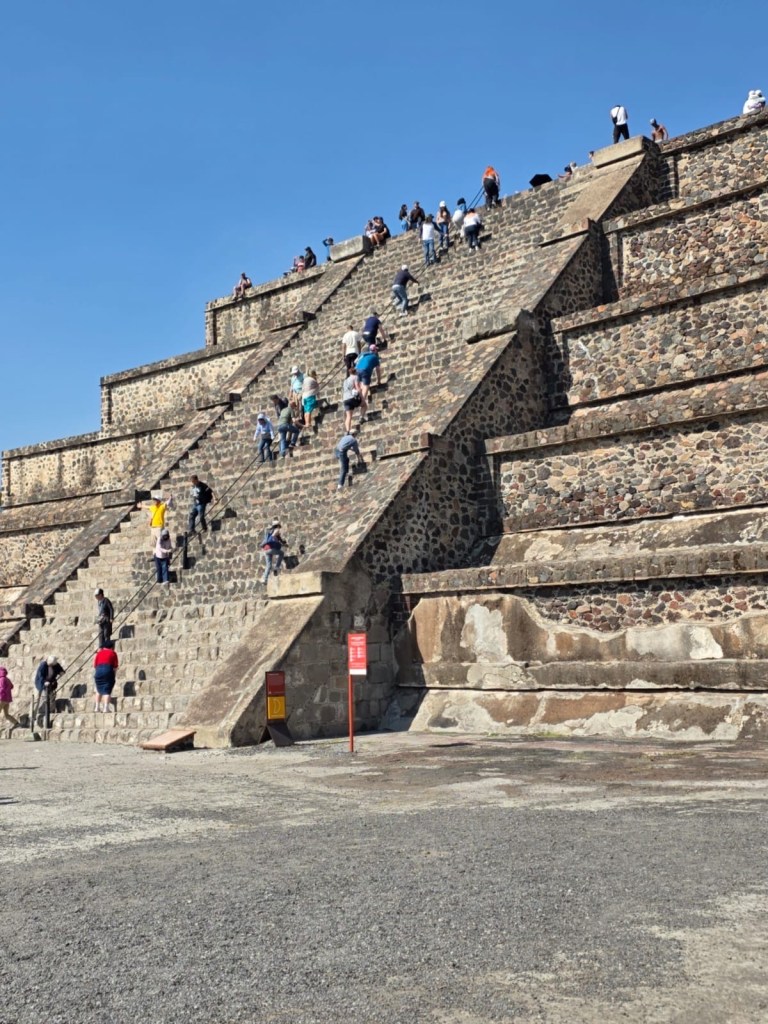
As the guide explained the history, I started to feel dizzy and had to sit down. It didn’t prove to be anything serious, maybe just the contrast from the cold bus, but I watched from the shade while Chris went closer and some people climbed the pyramid.

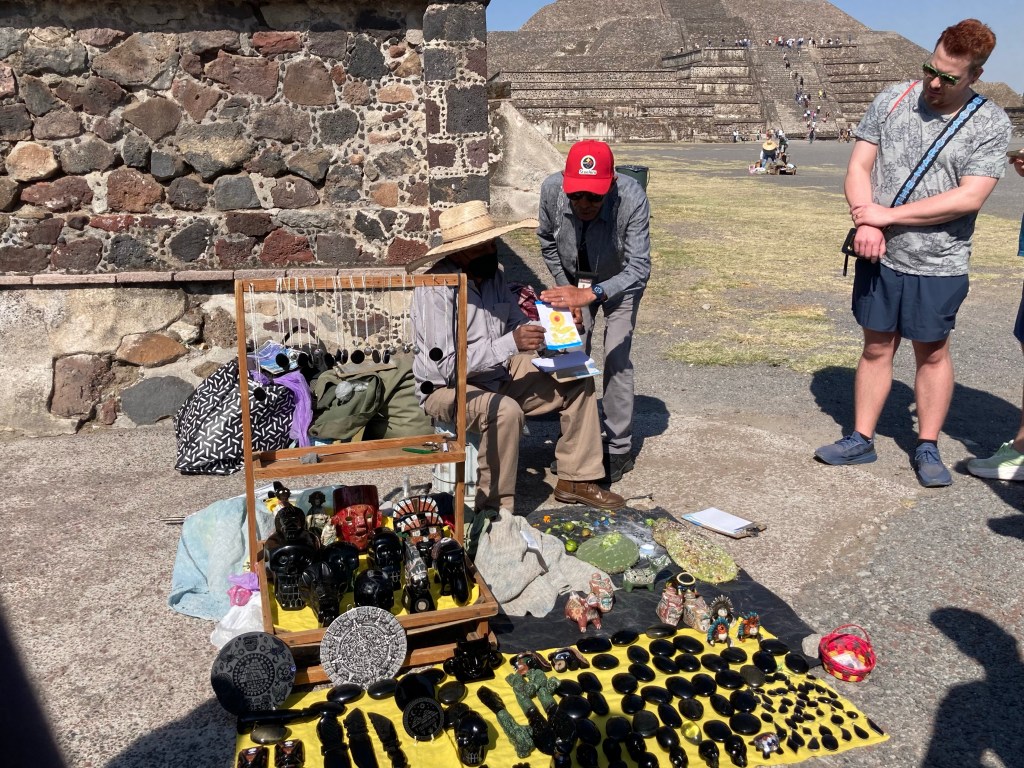
We were shown how pigments were made with lapis lazuli and iron oxide and in fact there is evidence that the exterior of all the structures would once have been blood red or even polychromic.  

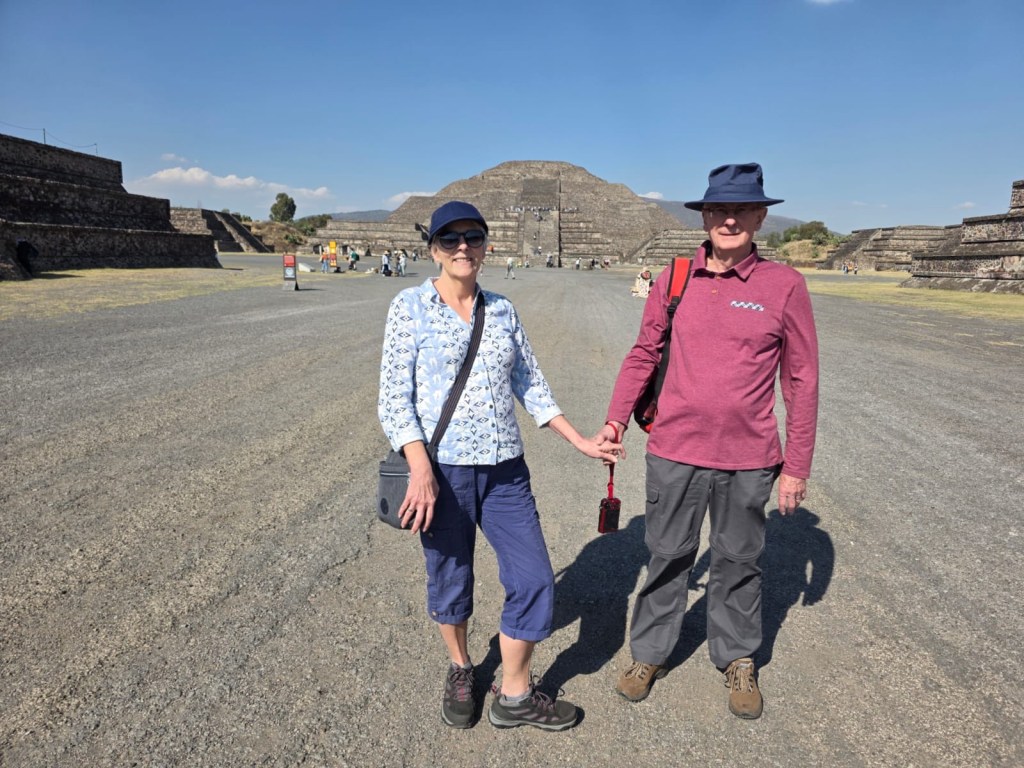
Then we set off along the Avenue of the Dead, named by the Aztecs who found sacrificed bodies buried there.  Along the way were areas which would have held linked ponds to collect and conserve water.

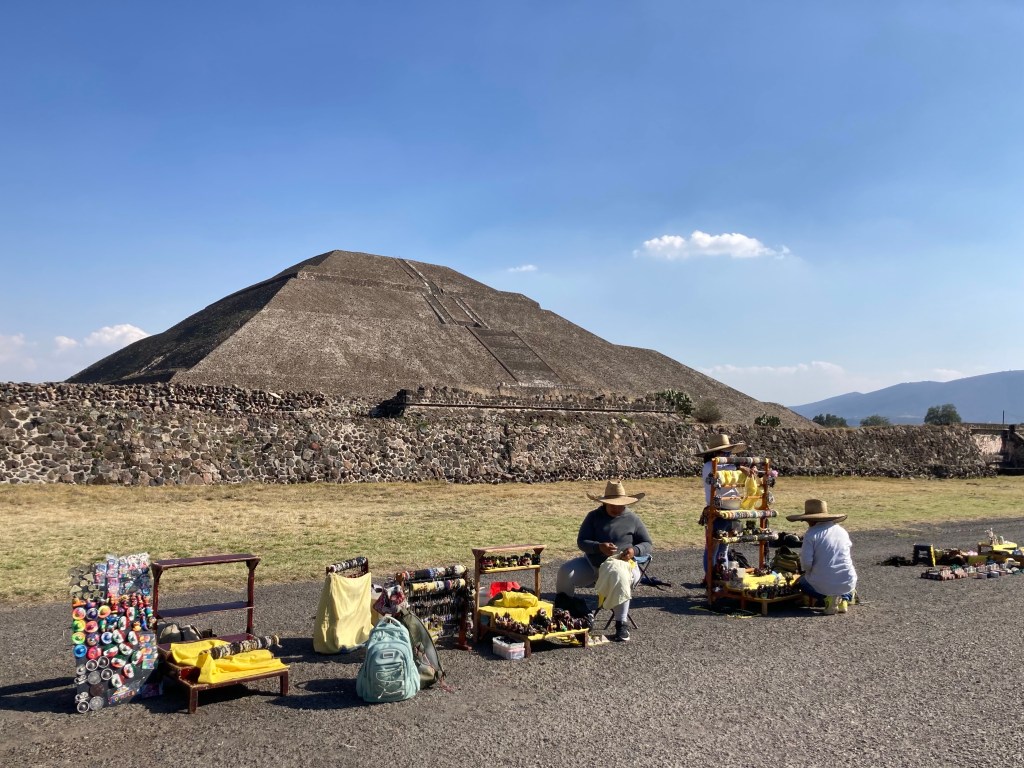
The Pyramid of the Sun is the tallest pyramid at 70m, although what we see today was heavily reconstructed in 1908 after it was blasted with dynamite in search of a more complete building under the present one – but at least it gives an idea of its former grandeur.

A little out of practice on big trips, we took the easy route with a tour – the biggest advantage is they drop you at one entrance and collect you from another which reduces walking, but it was only when I started writing about the day that I realised how much we missed – the oldest pyramid known as the The Temple of the Feathered Serpent completely, and these impressive decorations

It was a big day and neither of us felt hungry or fancied going for dinner so snacked on nuts and a sweet bun and mugs of Earl Grey.

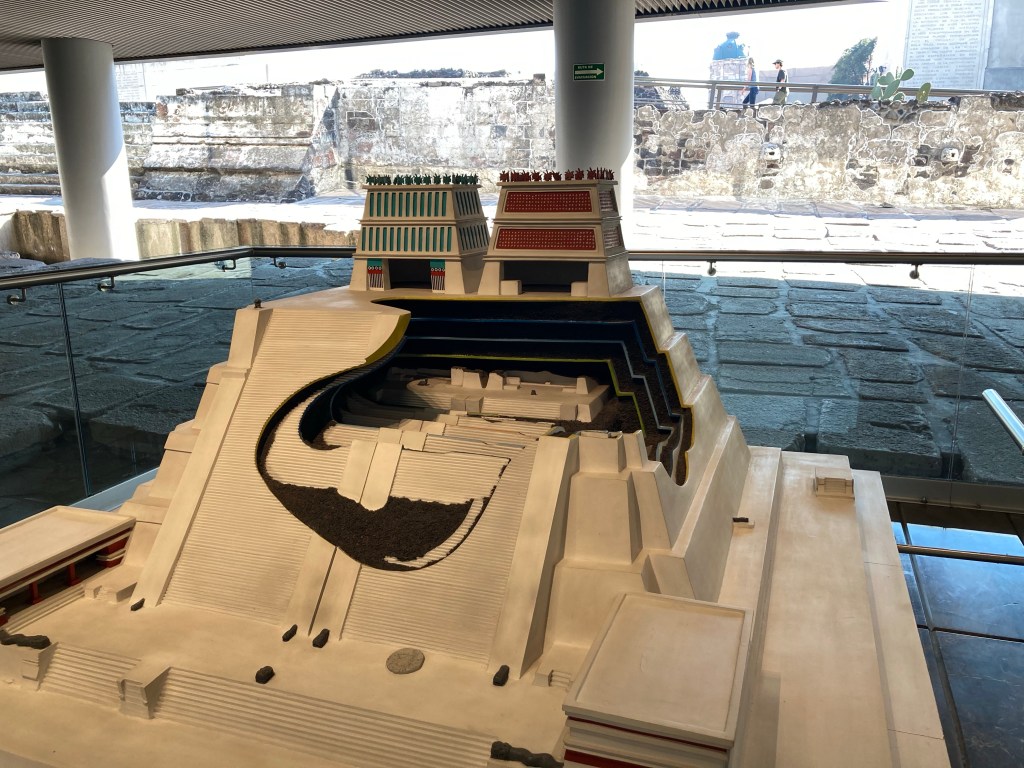
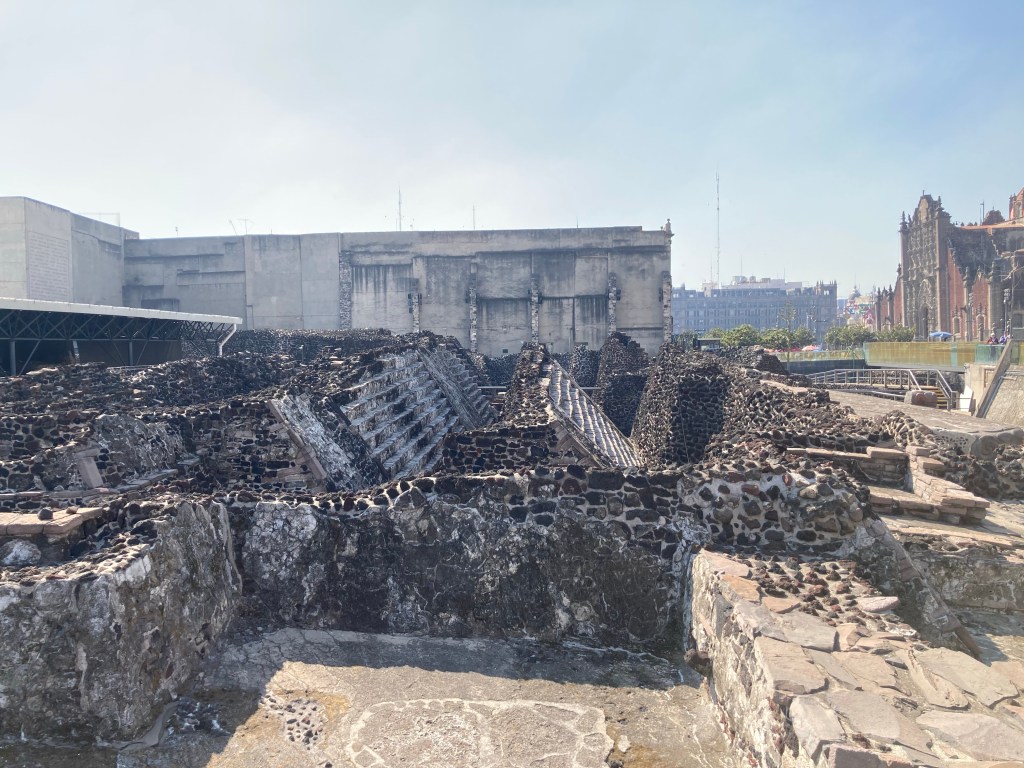
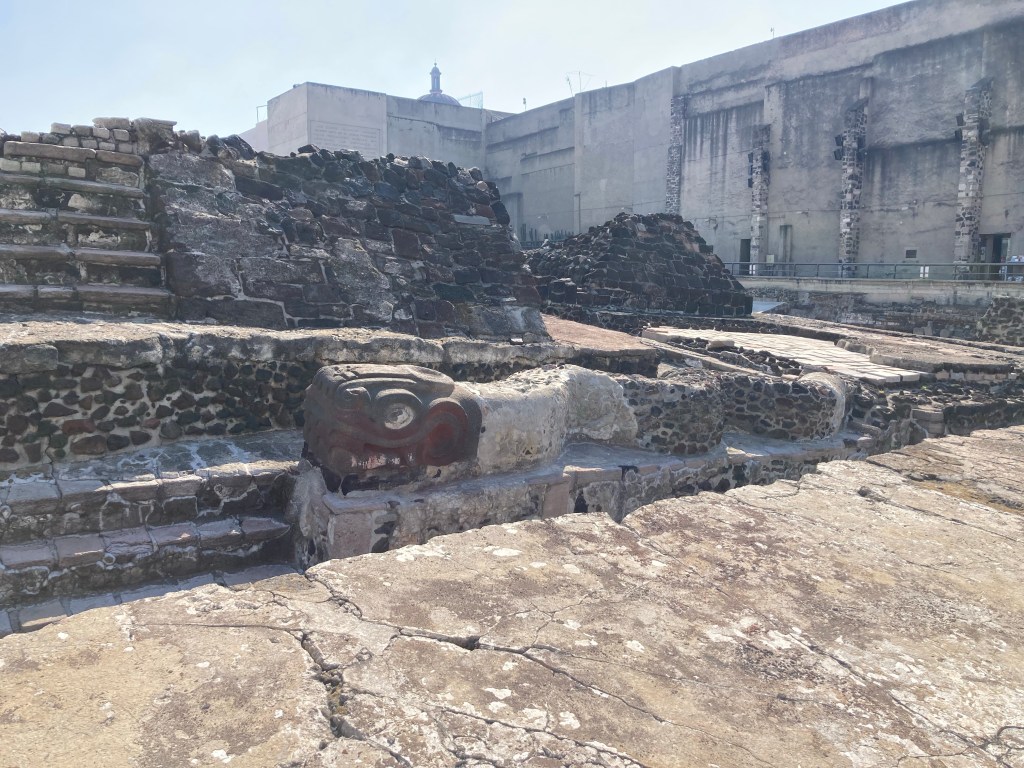
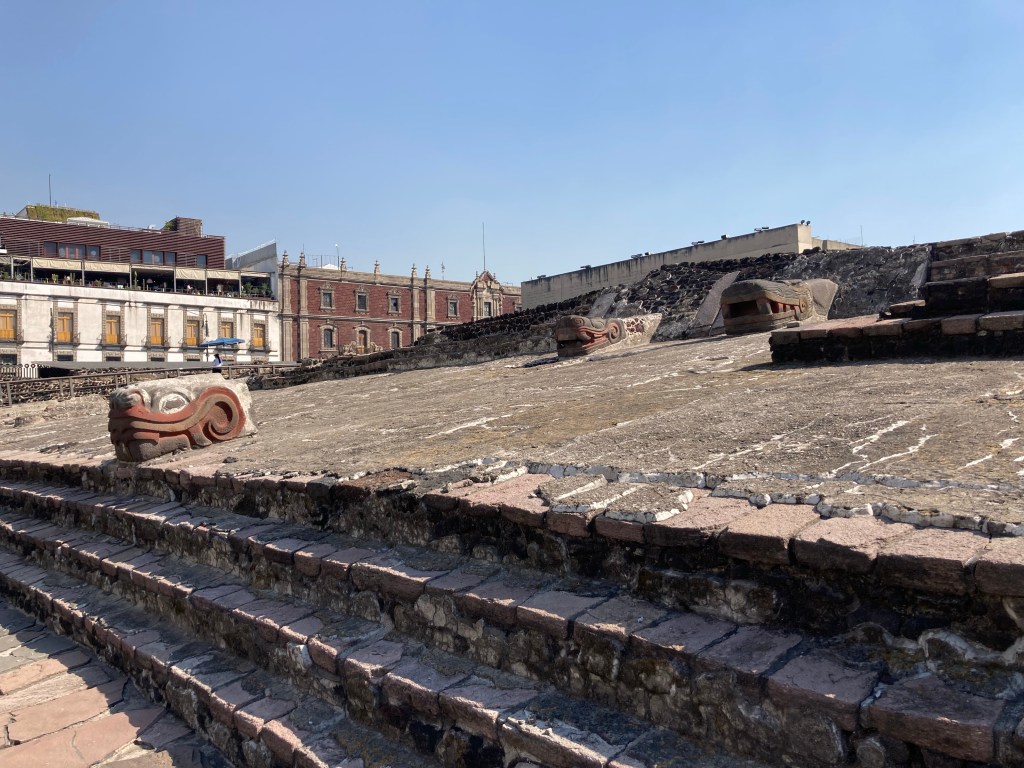
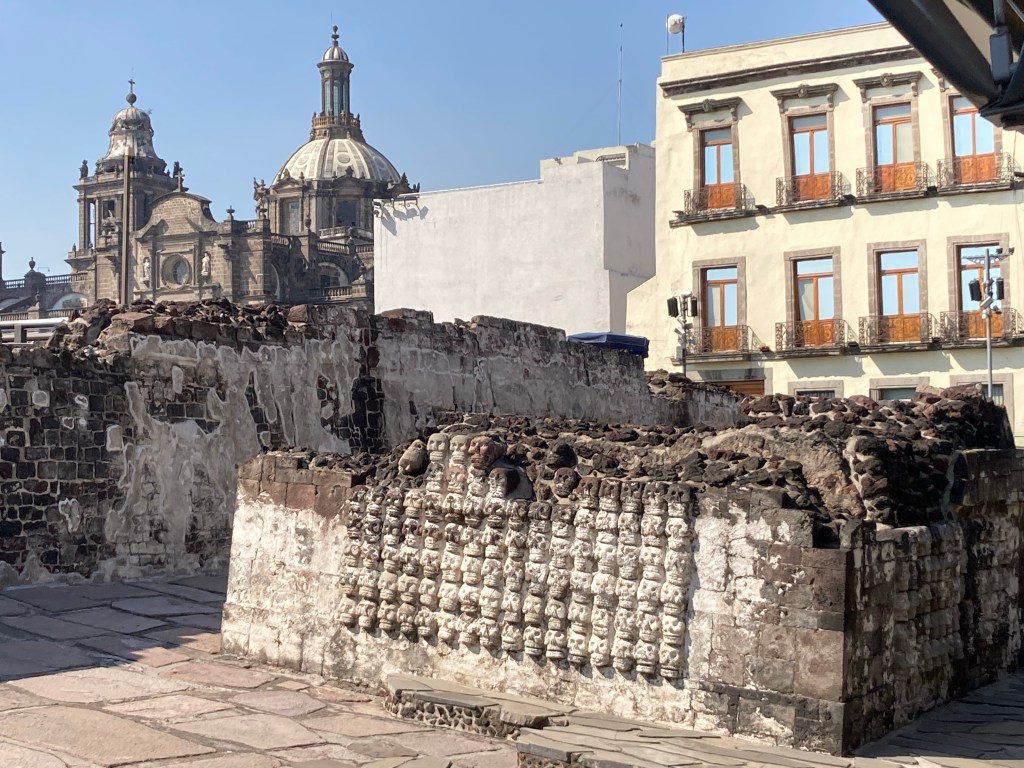
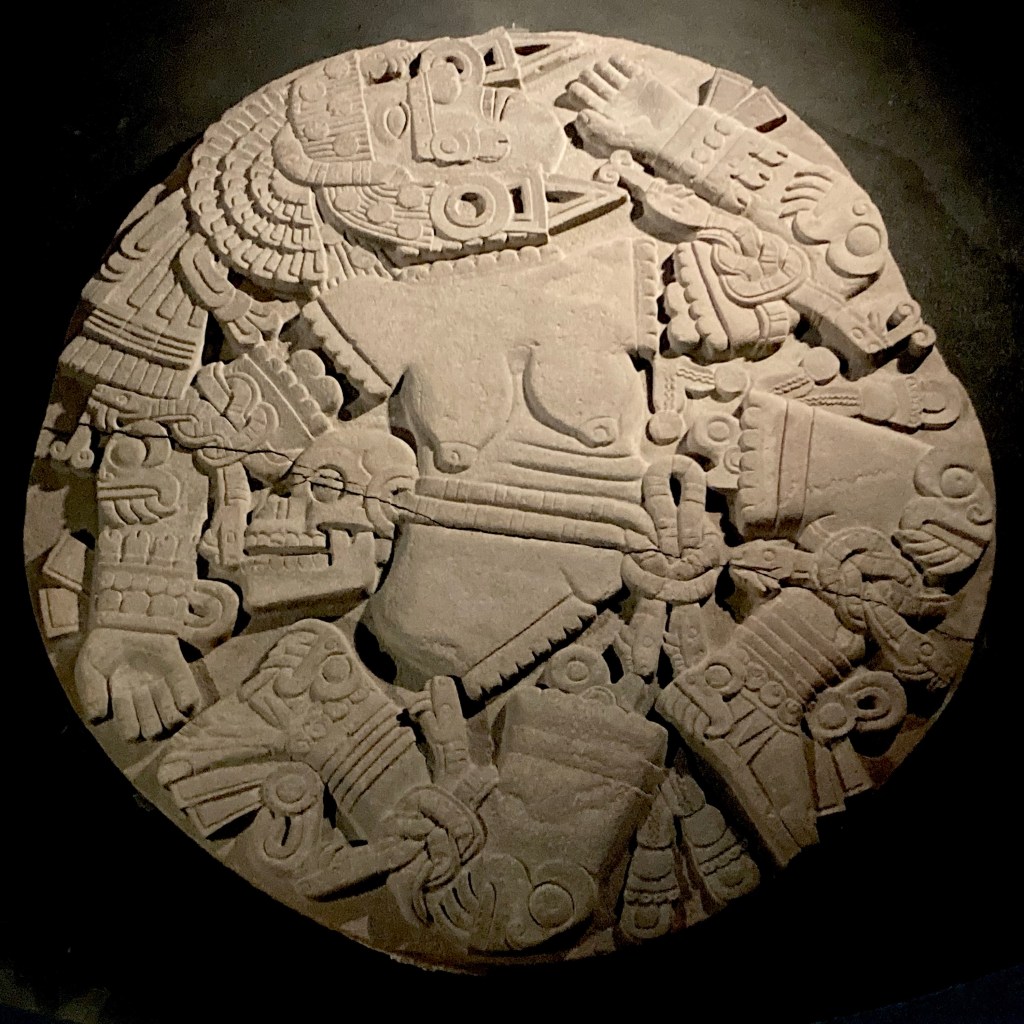
Next day, we were in the queue at 9.30 for the National Palace and got tickets for 3pm, and with only around 30 places on an English speaking tour each day, that was a result!  Until then, we’re going back in time to the Aztecs so here’s a quick history interlude. When the Spanish explorer Hernán Cortés and his men arrived, they found the Aztec capital of Tenochtitlán built on an island in the middle of a lake traversed by great causeways, a beautiful stone-built city of 300,000 residents, but following the conquest, all was destroyed.  At least, that was what was thought until excavations began in 1978 as part of the building of the new metro system.  A huge stone disc, weighing over eight tonnes, which depicted the fall of Coyolxauhqui, goddess of the moon was unearthed, which led the to remains on display at the museum today.  It is a little difficult to understand the ruins until the realisation that it’s like a Russian doll.  Successive rulers totally encased the existing pyramid in another layer to make theirs bigger and more impressive, then new temples were built on top as shown in this model …

… and here are some pictures of the excavations as we walked round.  

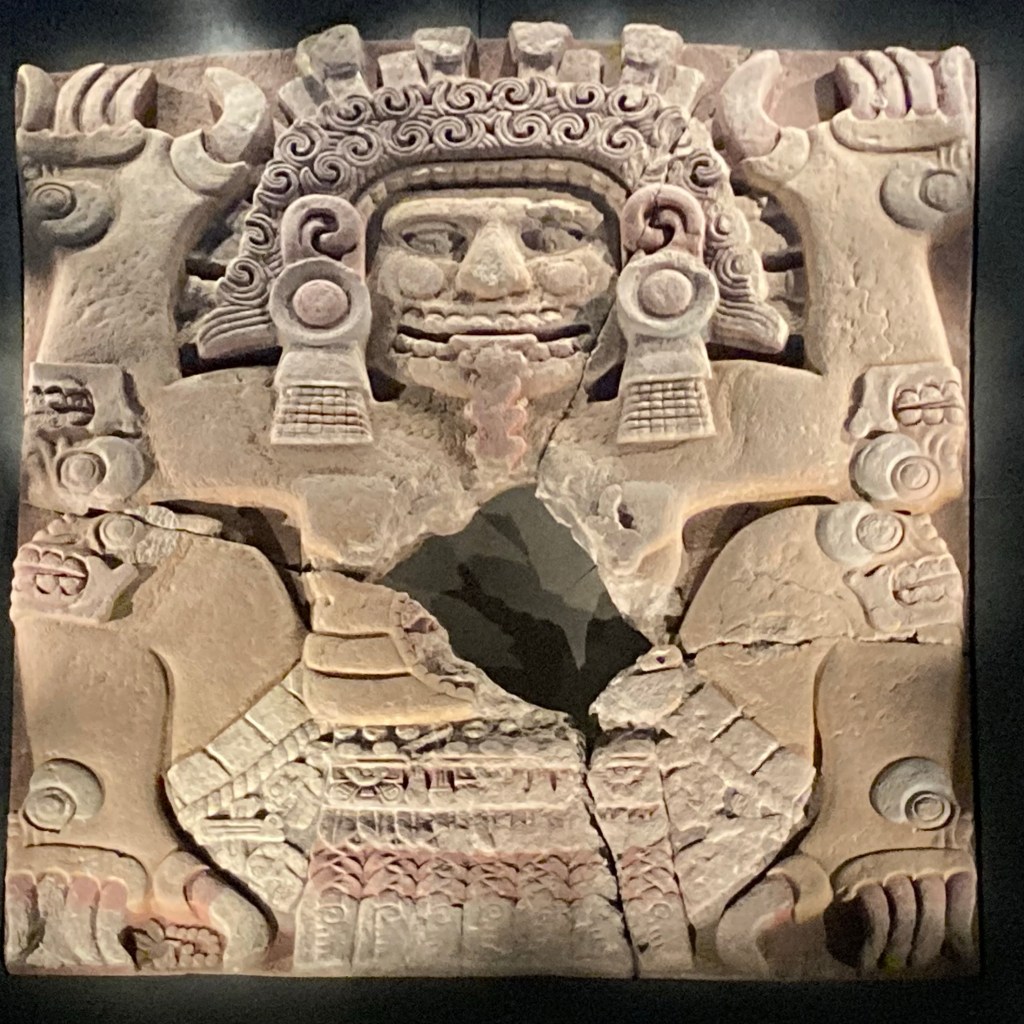
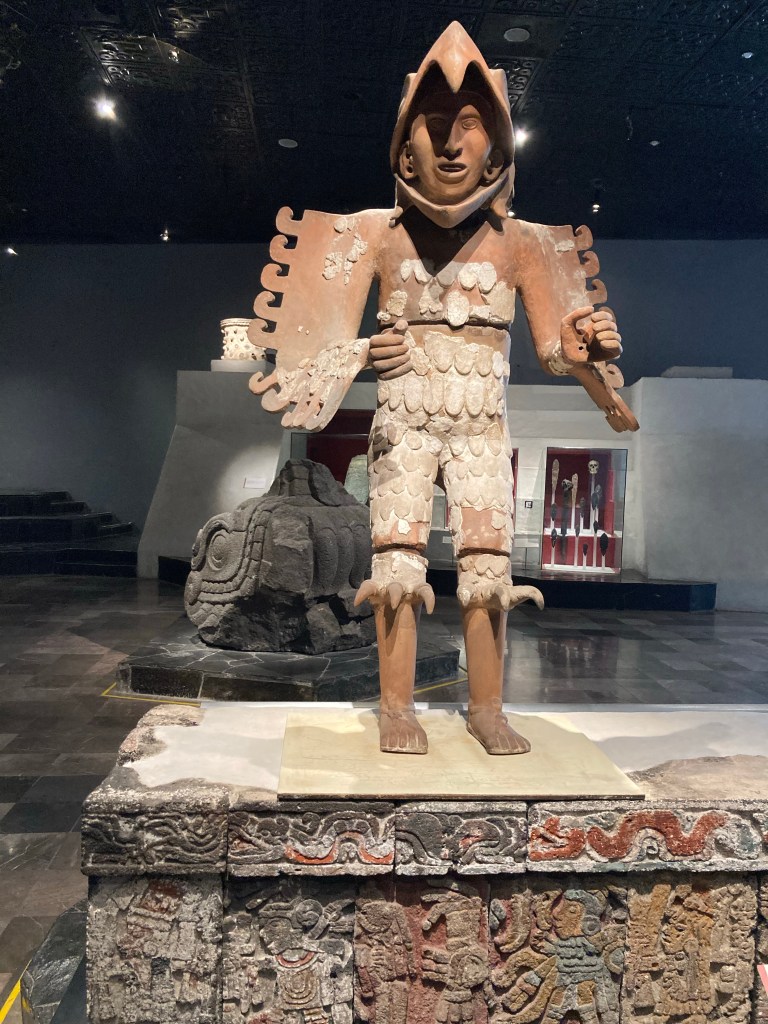
The museum was extensive and here are a few of the more impressive exhibits – Tlaltecuhtli, the earth god …

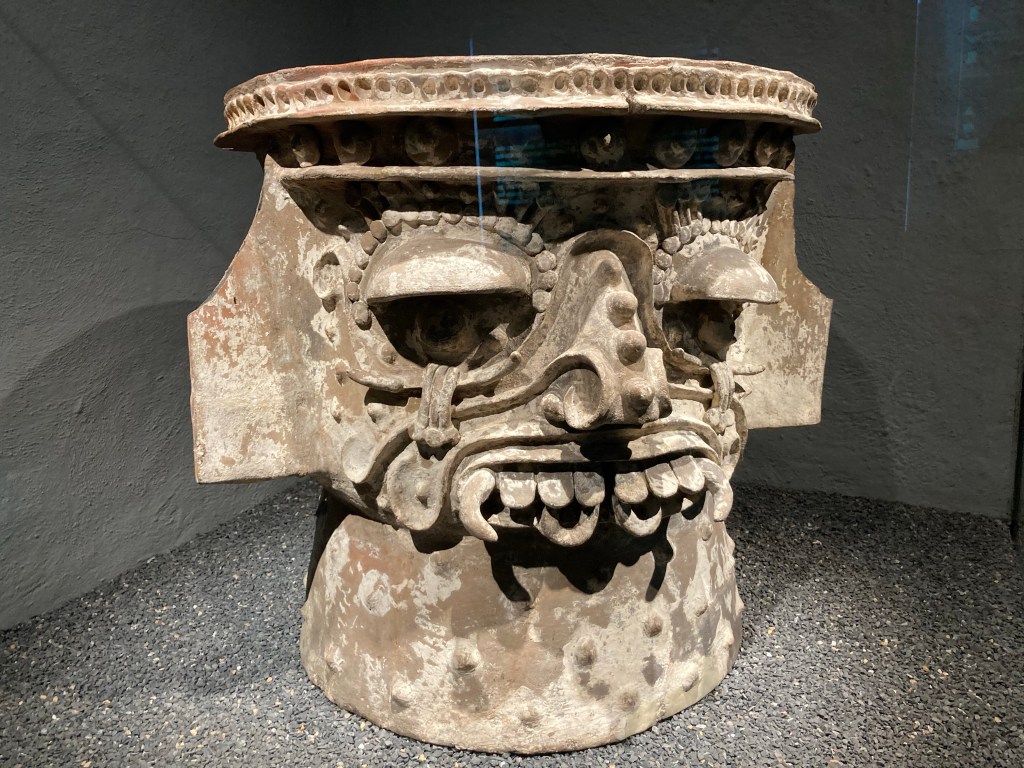
… a brazier with the face of Tlaloc the rain god …

… Chicomicoatl the corn goddess …

… an eagle warrior …

… and finally the disc of Coyolxauhqui, goddess of the moon. 

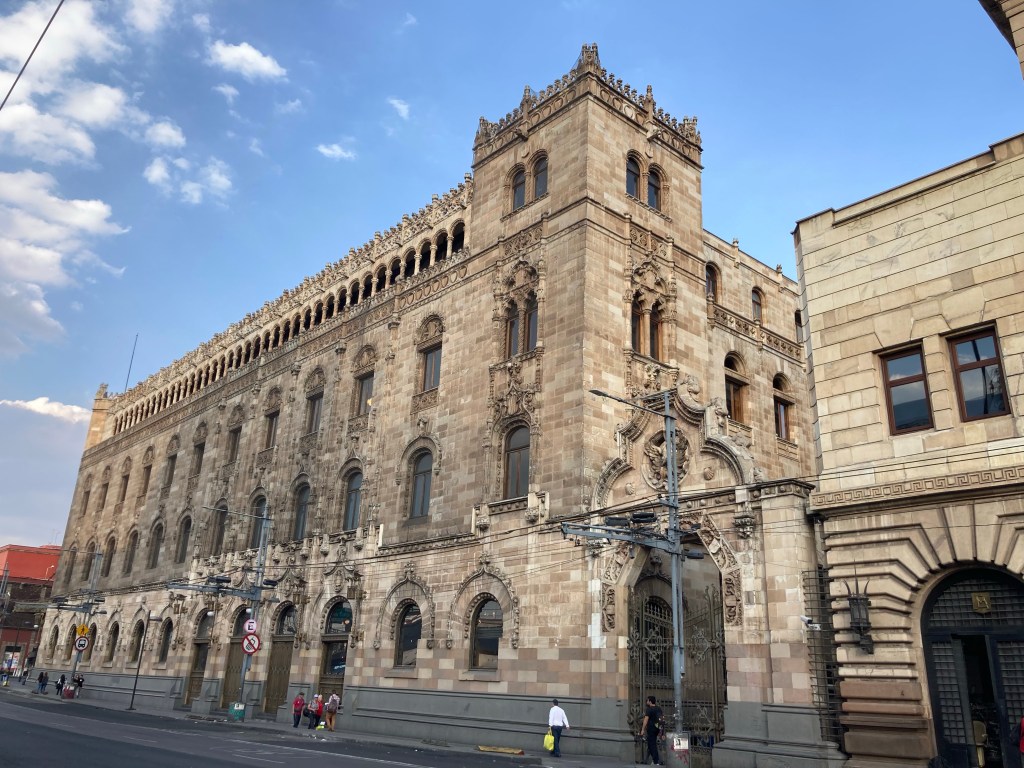
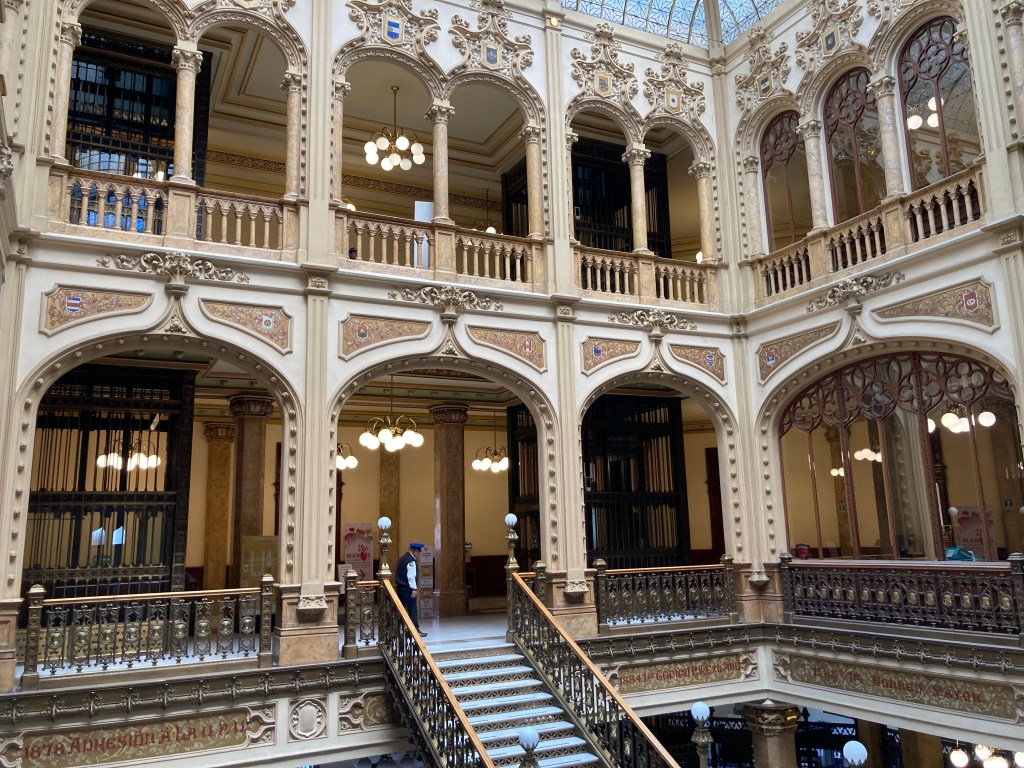
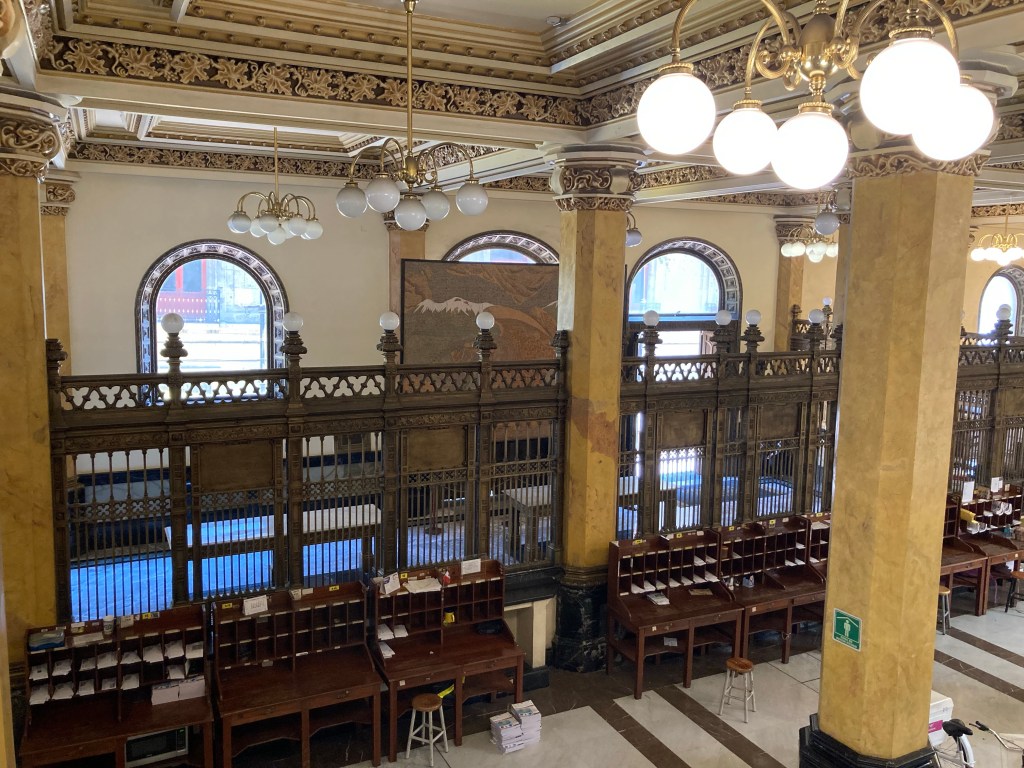
Something a little more modern now, the Palacio de Correos de México or Postal Palace of Mexico City was built in 1907 and its highly eclectic design incorporates almost every exuberant architectural style in the book, but it was certainly worth a quick look. While most is now a museum, there are still functional postal counters on one side. 

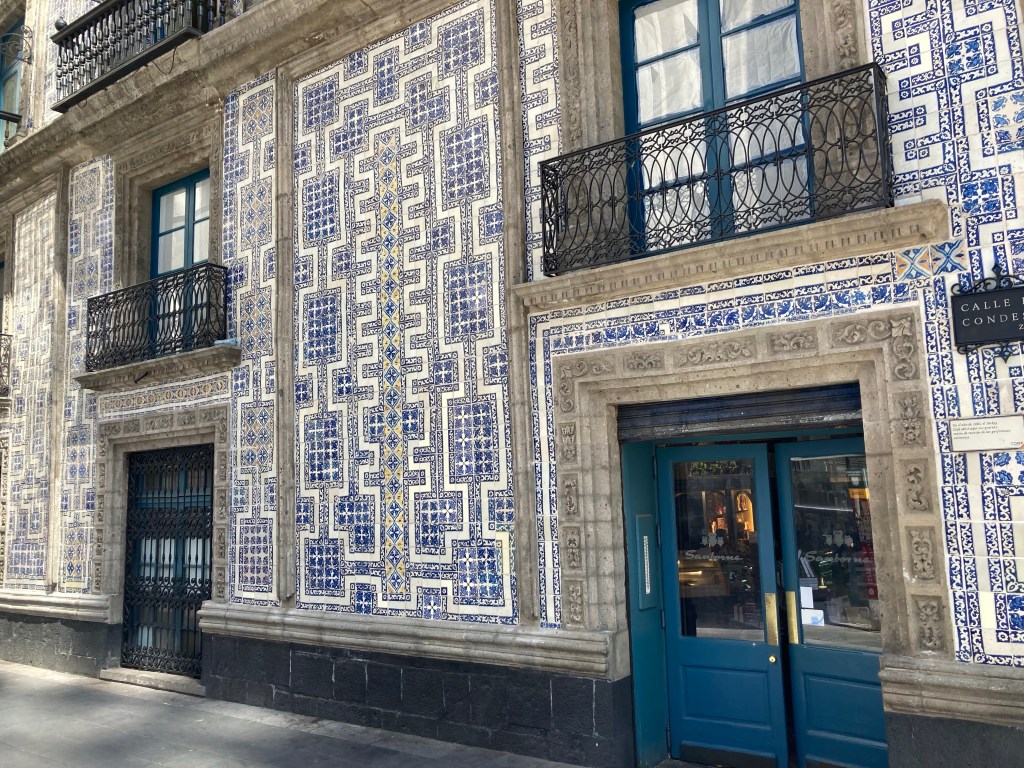
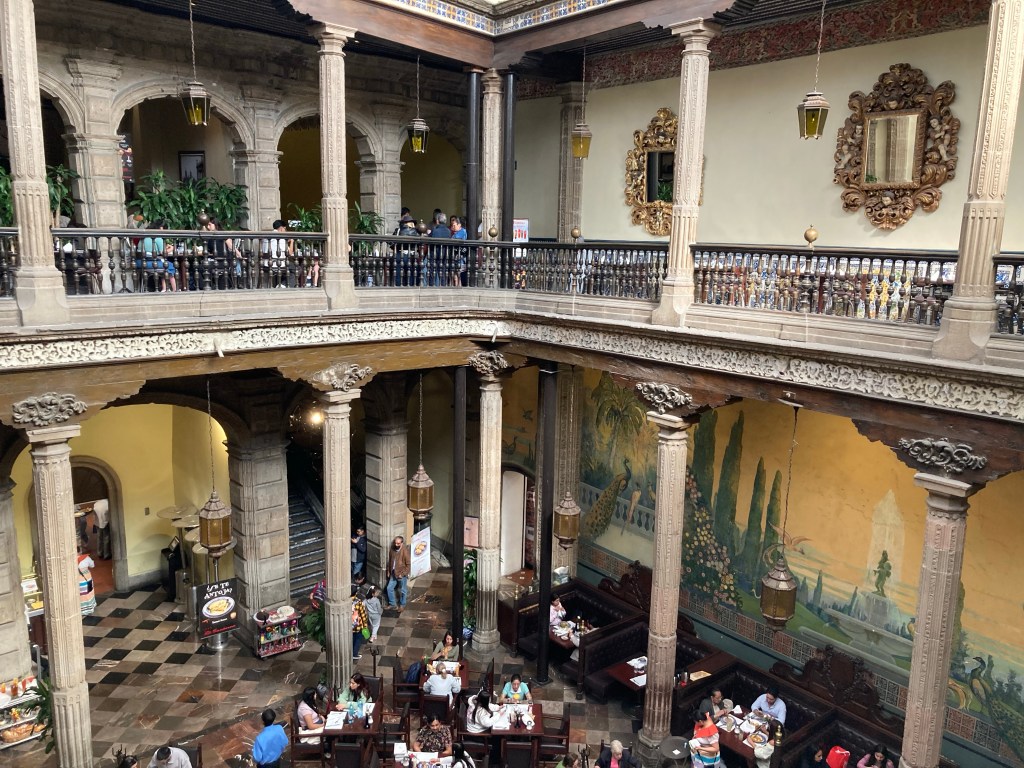
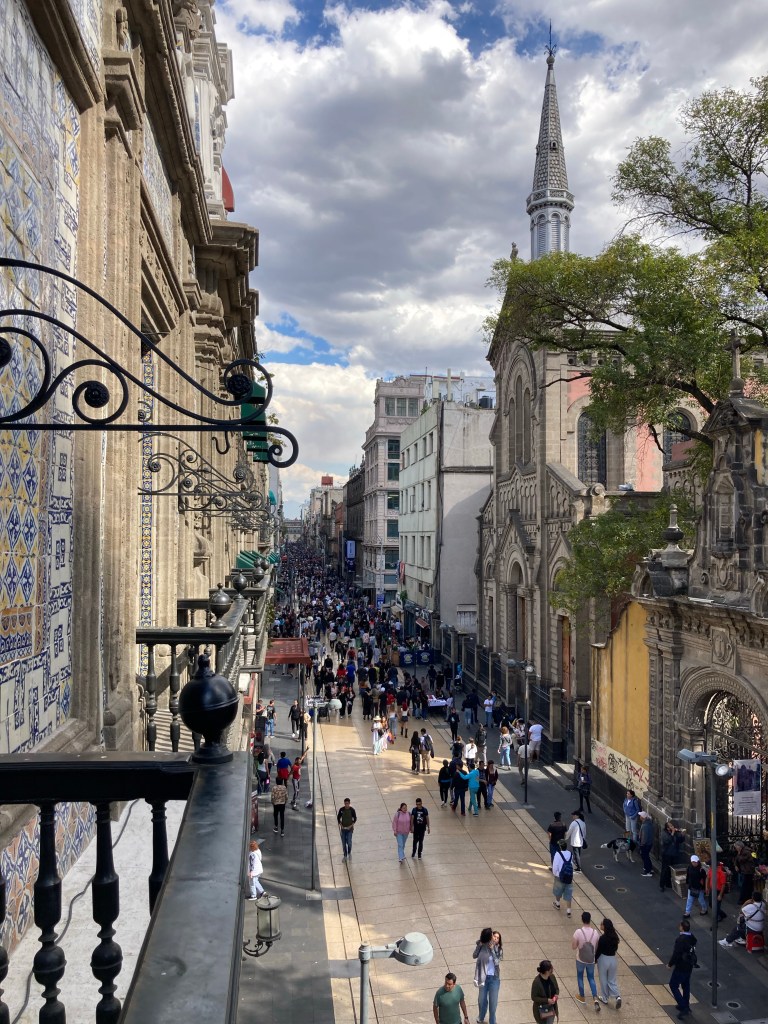
Close by is the Casa de los Azulejos or House of Tiles, an C18th palace with blue-&-white tile facade, now home to a popular restaurant and we went in for a quick look round …

… and a view down the street.

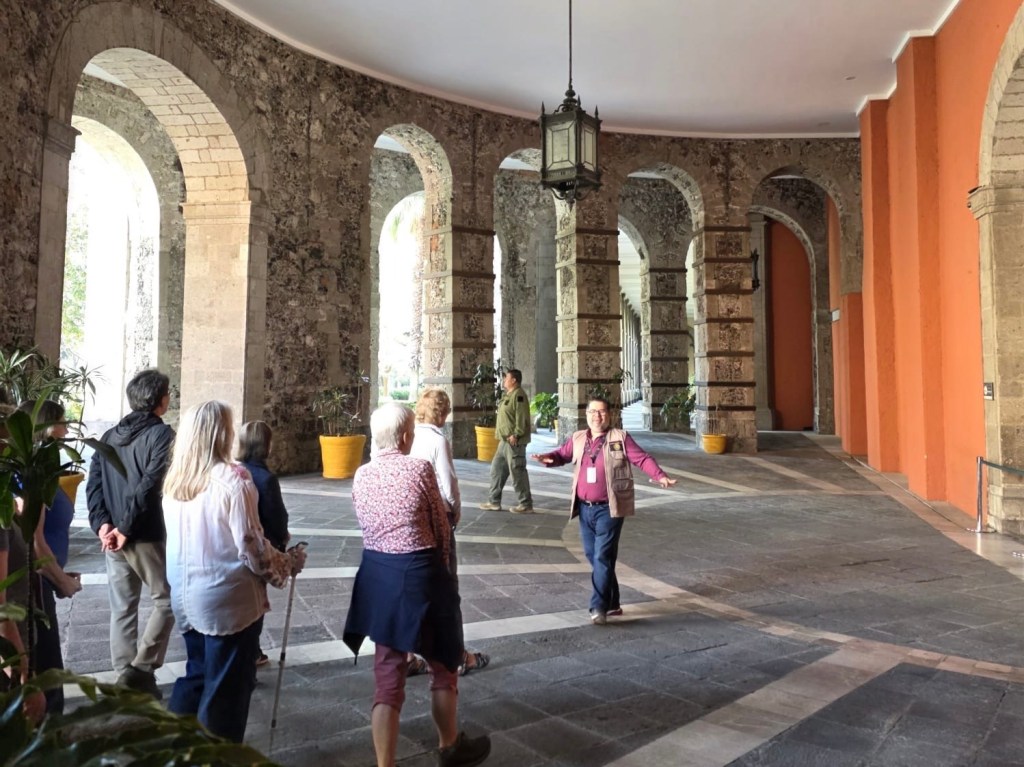
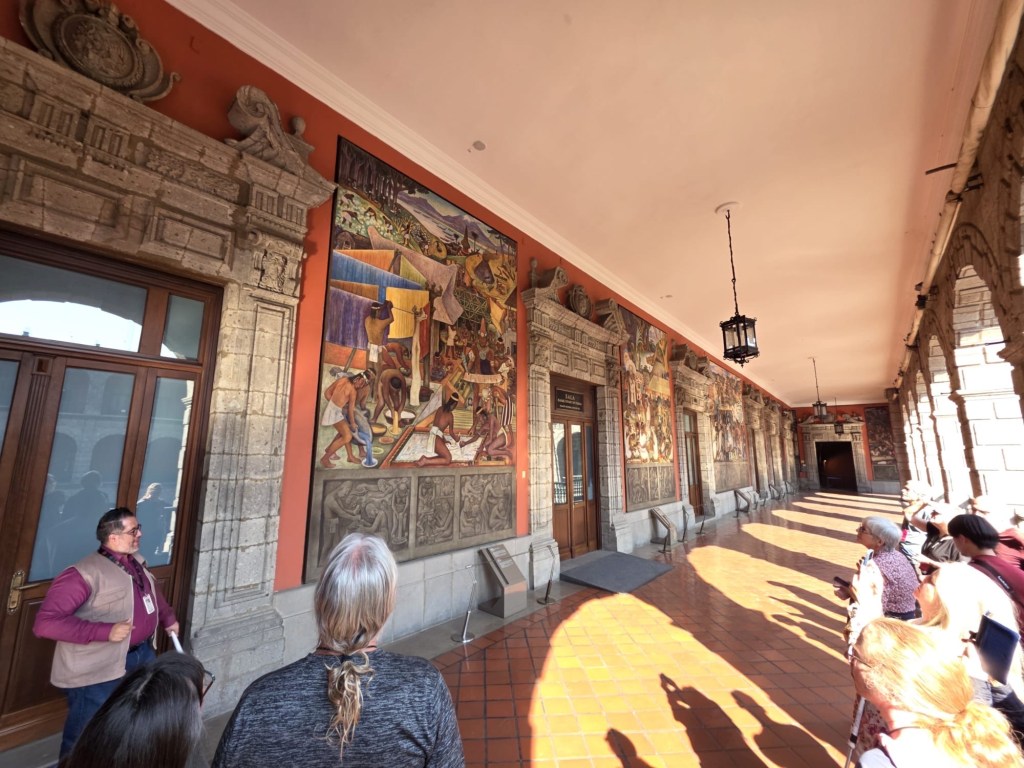
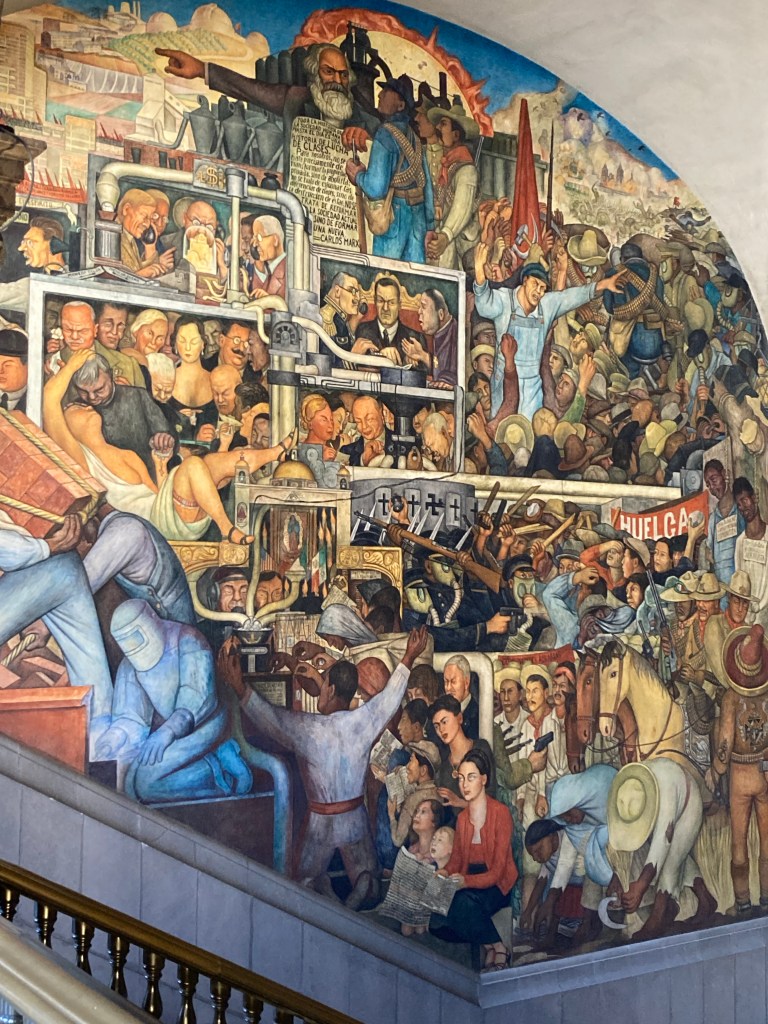
We returned to the National Palace for our tour and as it is a functioning government building where the president lives, security was tight on entry.  The main attraction were the Diego Rivera frescos on the stairwell and corridors …

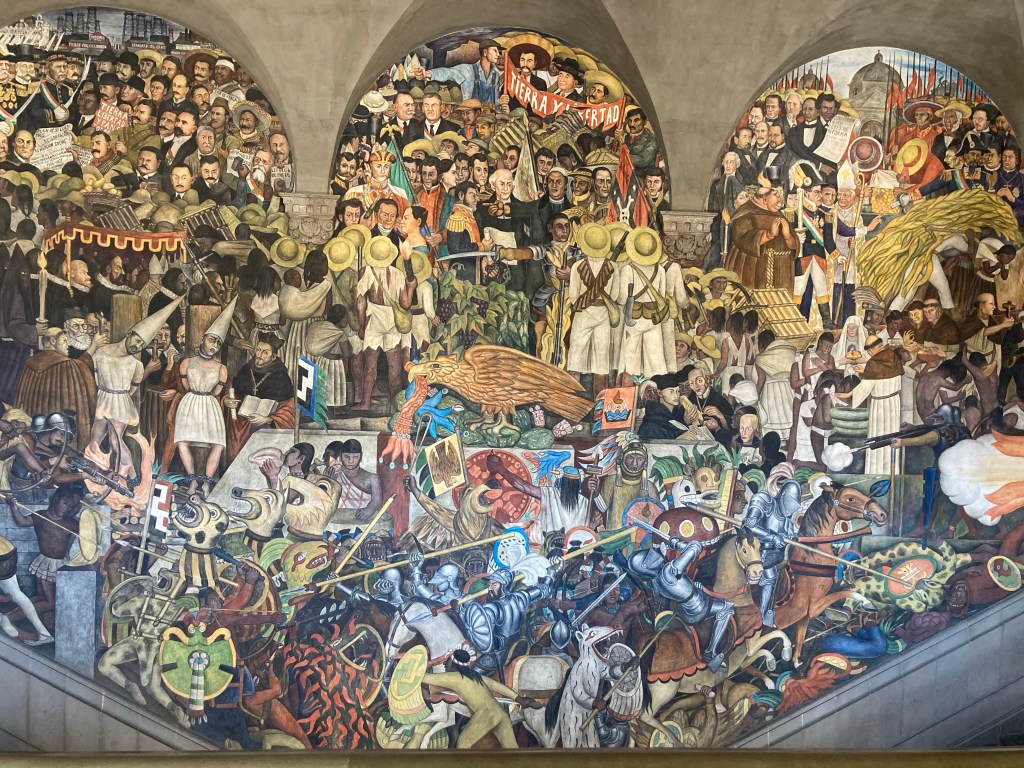
… and we were starting to get the hang of his compositions so it was no surprise that The History of Mexico was billed as an epic depicting the entire history of Mexico, from pre-Hispanic civilizations and the Spanish conquest to the Revolution and a vision of the nation’s future!  The main wall has a large eagle with a serpent in its mouth in the centre representing both Aztec culture and modern Mexico and a similar cast of thousands with key historical figures just like the other murals we’ve seen.

The other wall shows a possible future of Mexico, with factories, the Soviet flag, workers, Karl Marx and Frida Kahlo teaching children. 

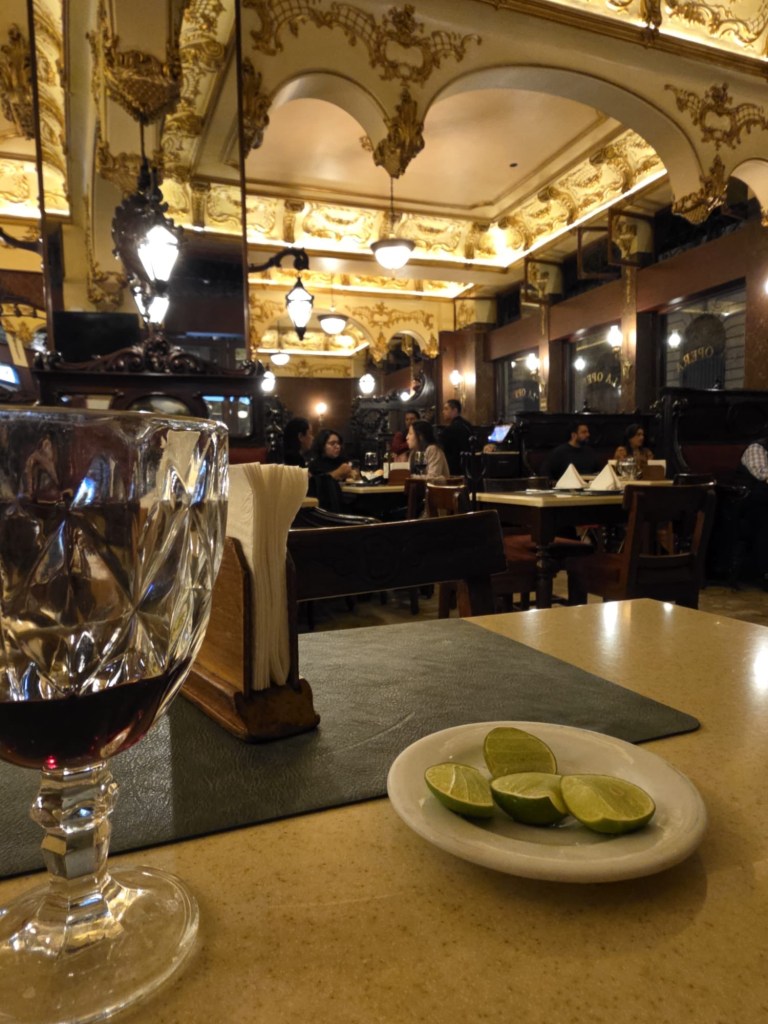
We have been walking passed the very swanky Opera Bar every day and tonight, in need of a little home comfort, we went in for dinner. Decorated in exuberant baroque style, they had Fettucine Bolognese and French fries on the menu! Past patrons have included the dictator Don Porfirio Díaz before the revolution, Zapata’s men afterwards and even Pancho Villa who fired his pistol and lodged a bullet in the ceiling!

We will be back in Mexico City at the end of our trip, but for now we are done and catching a bus tomorrow … not a bad start for the Taco Trail!

Map

Mexico City … and Murals

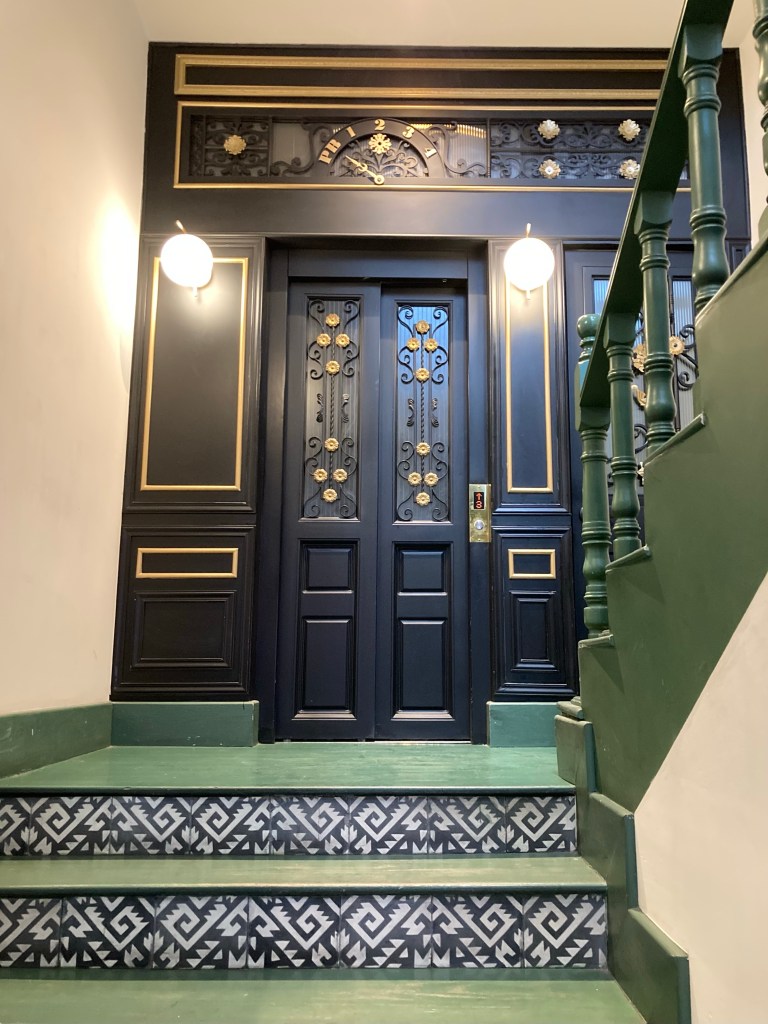
Arrival in a new city after dark, tired from a 12 hour flight, not speaking the language and with a SIM that is yet to work is often the most challenging part of a trip!  Fortunately we got it sorted, took a cab, checked in to our apartment which was behind this very impressive door …

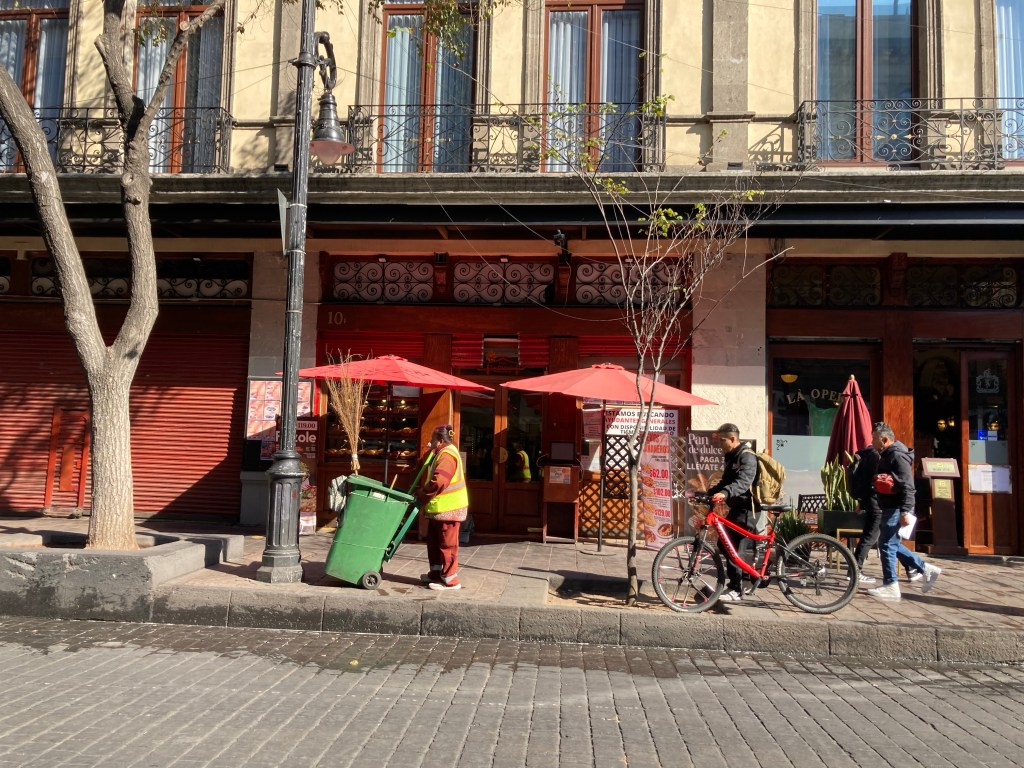
… then went over the road for a hot drink and snack before bed.  Cafe Pagoda became our local and the coffee with milk came in glasses and was poured at the table, firstly an inch or so of thick dark coffee, then topped from a height with frothy warm milk! It turned out a little sweet but we were too tired to worry too much, and it was worth it for the showmanship!

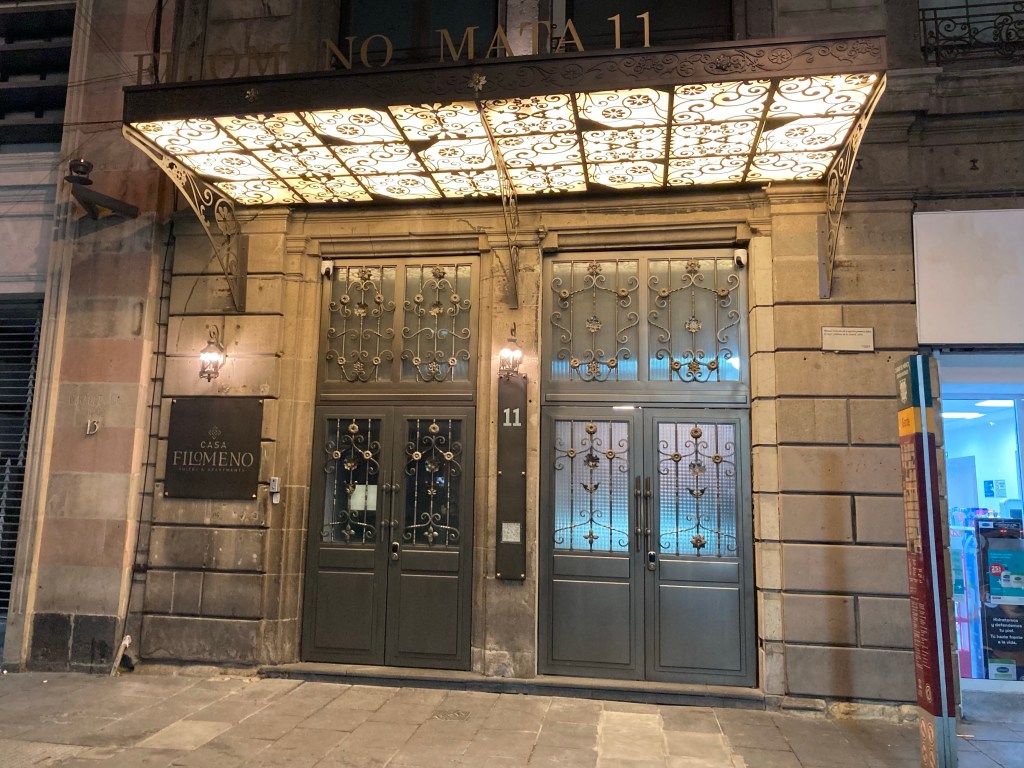
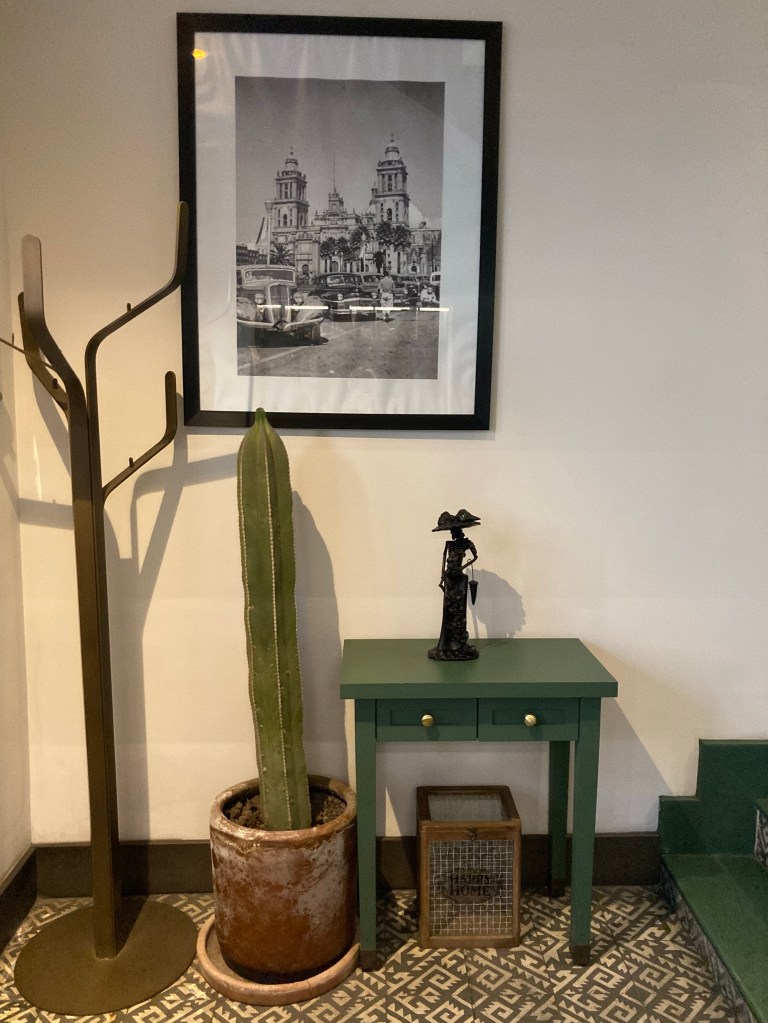
Next morning we pulled the curtains at Casa Filomena, a modern conversion of an old building right in the historic centre …

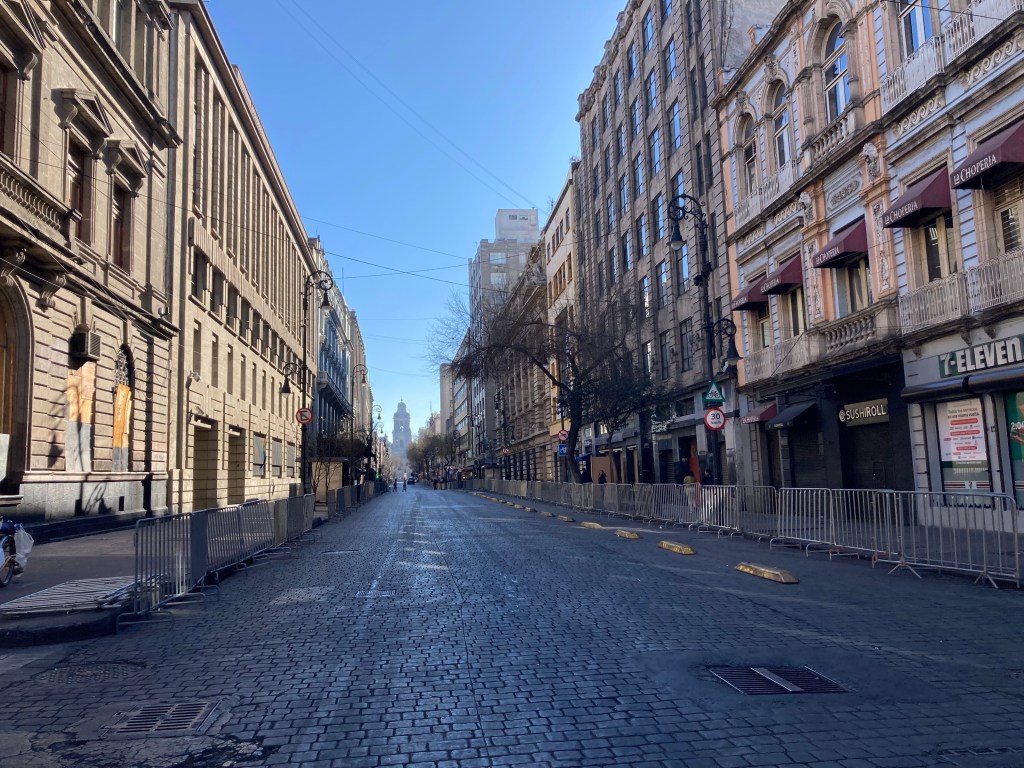
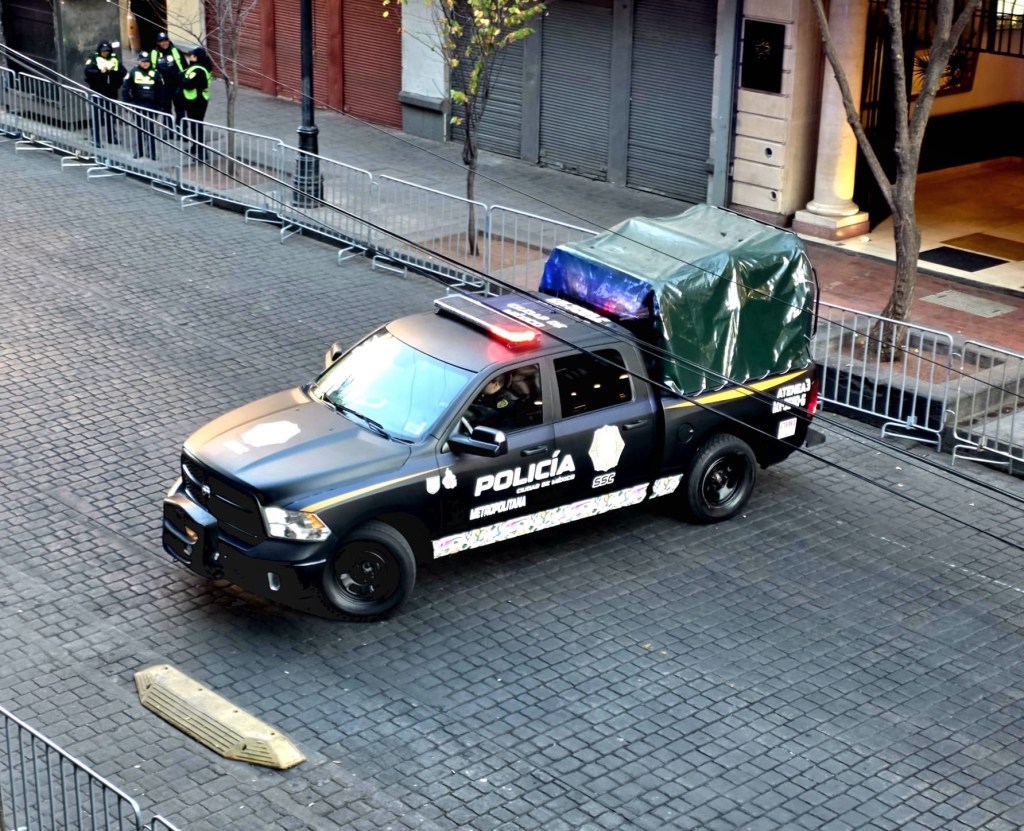
… to find the street lined with barriers and no traffic except for police. 

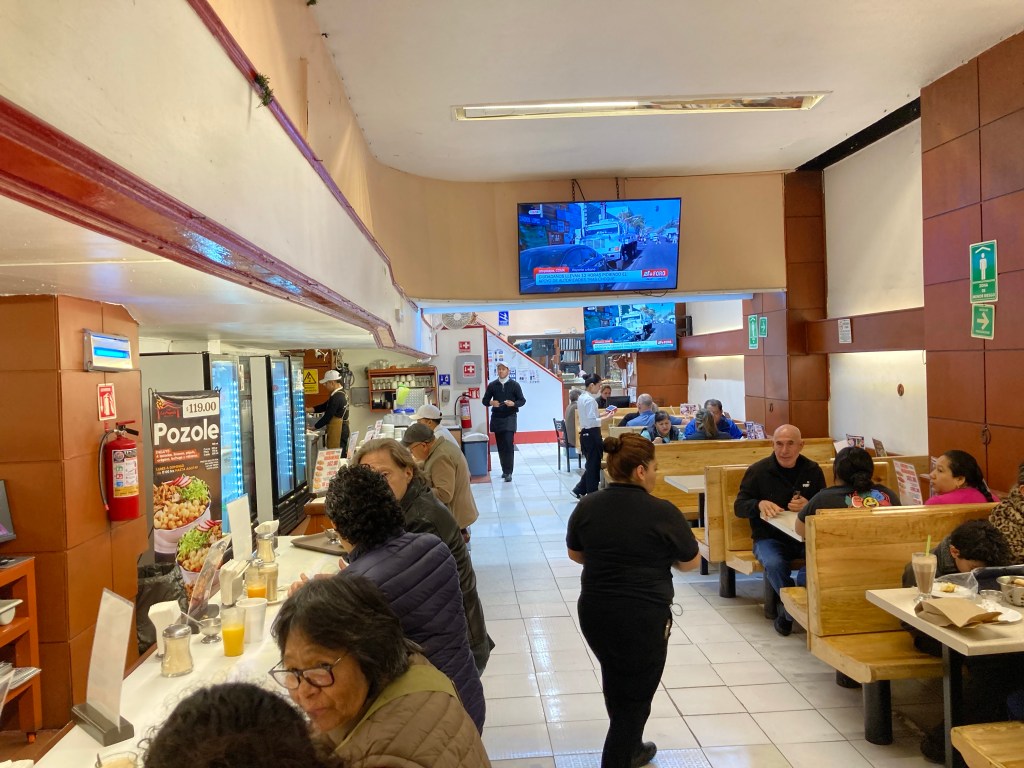
We googled to try to find the cause, but couldn’t see a reason, so went for a breakfast of chorizo eggs/chilaquiles with eggs at Cafe Pagoda.  

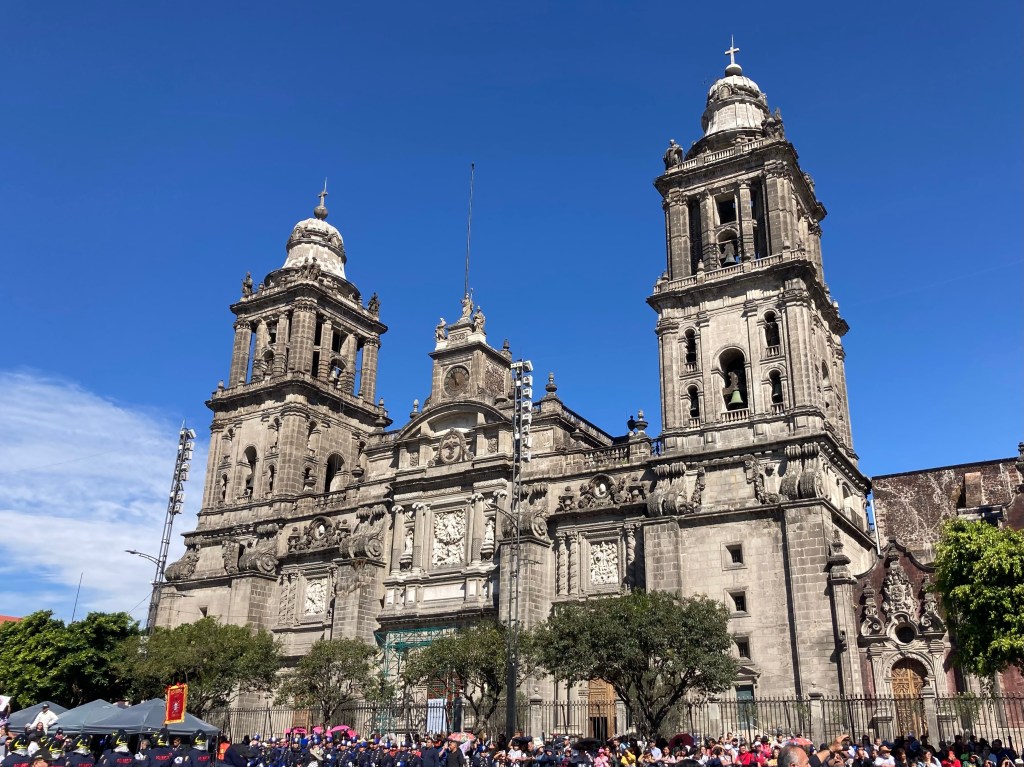
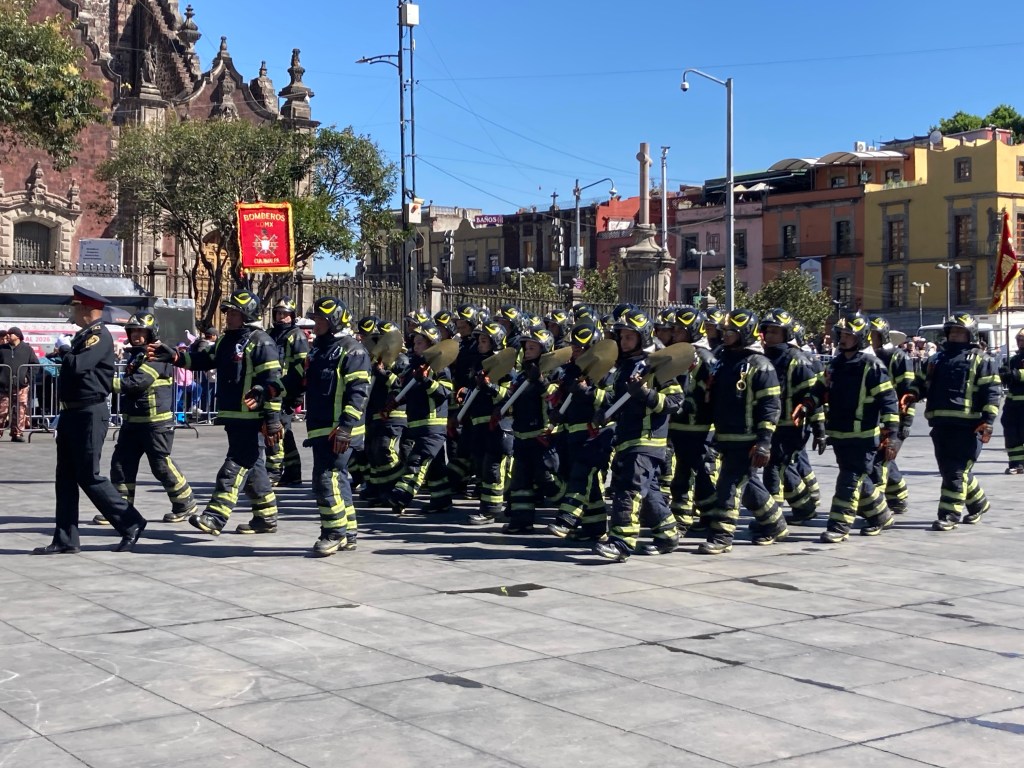
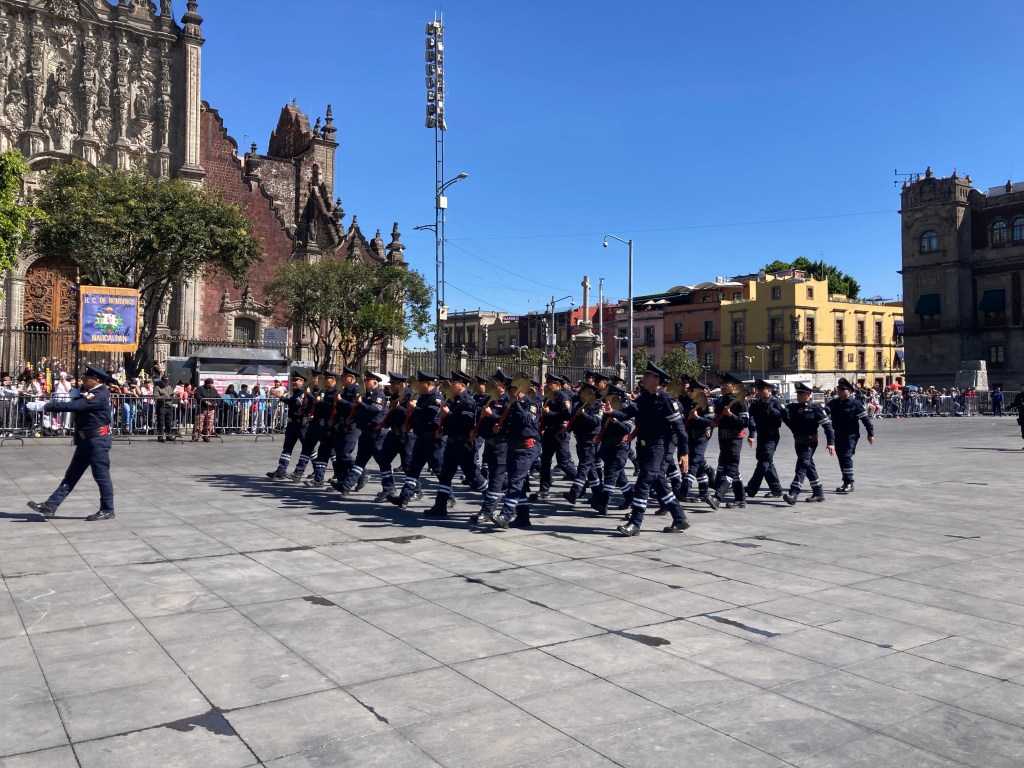
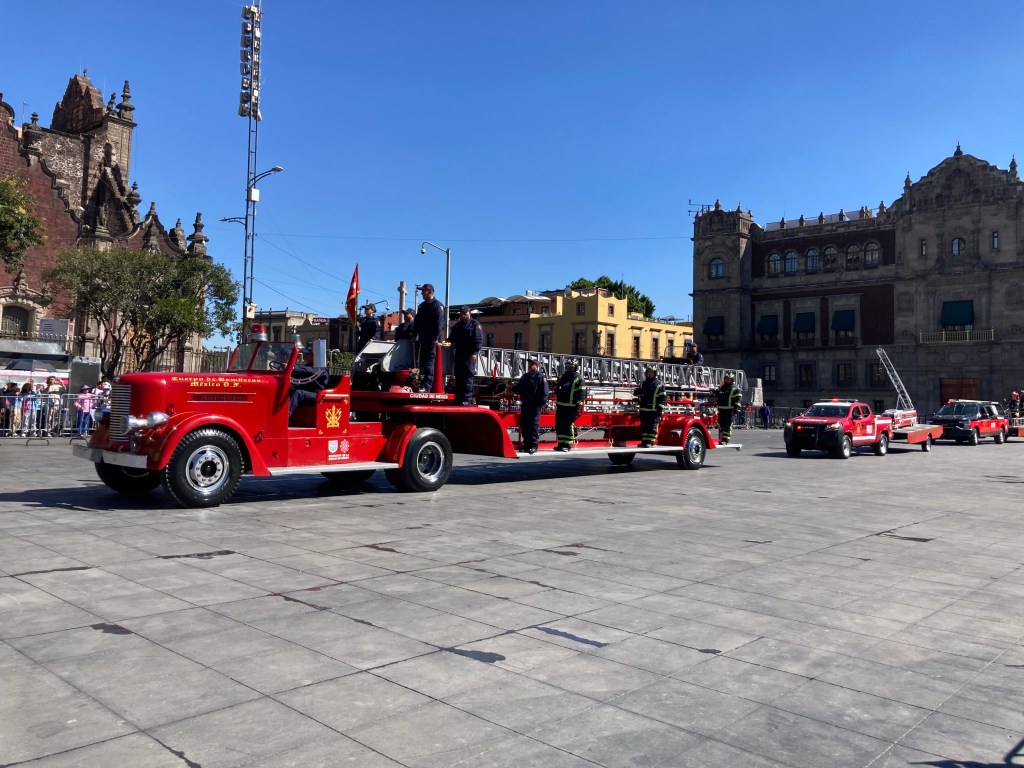
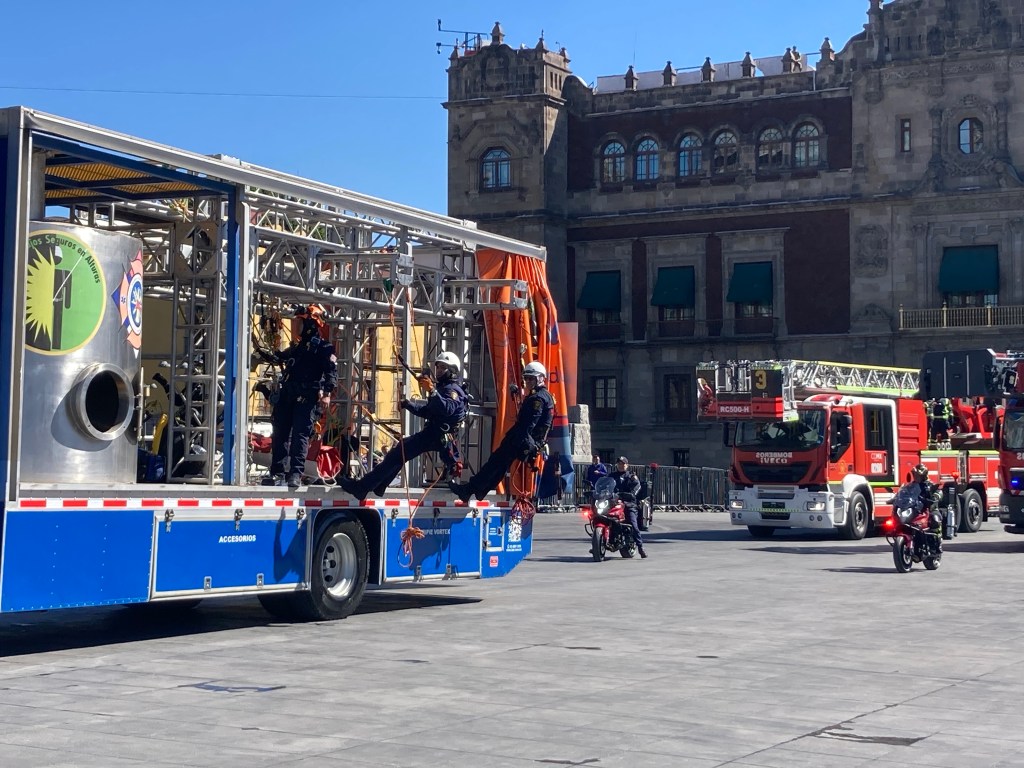
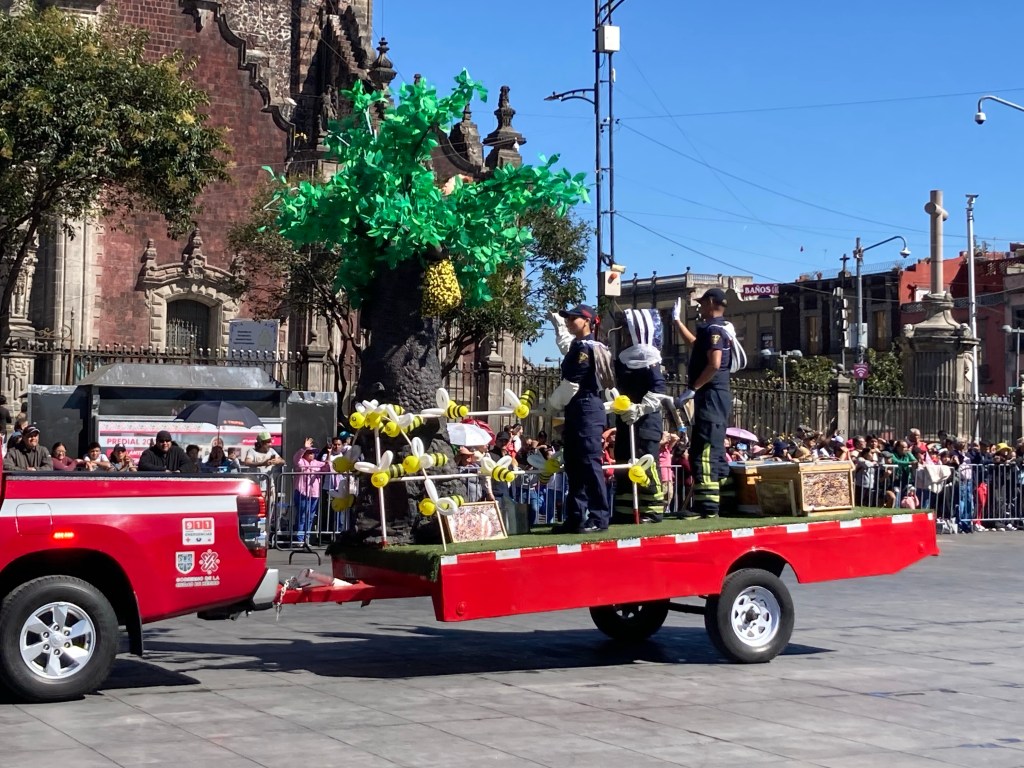
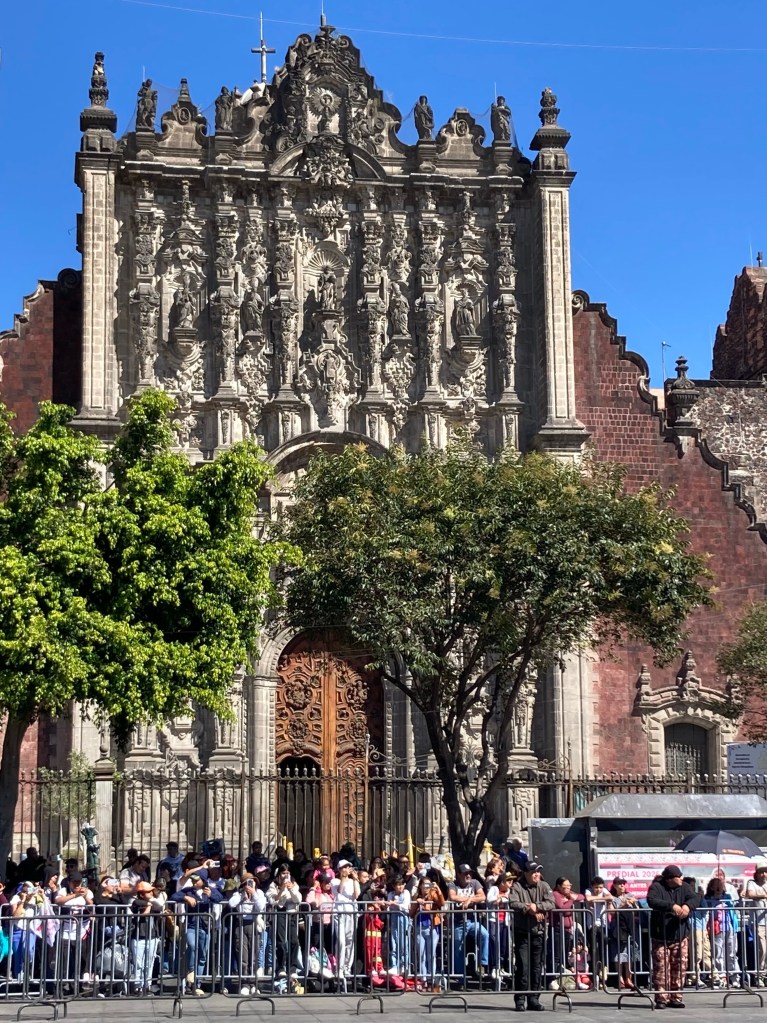
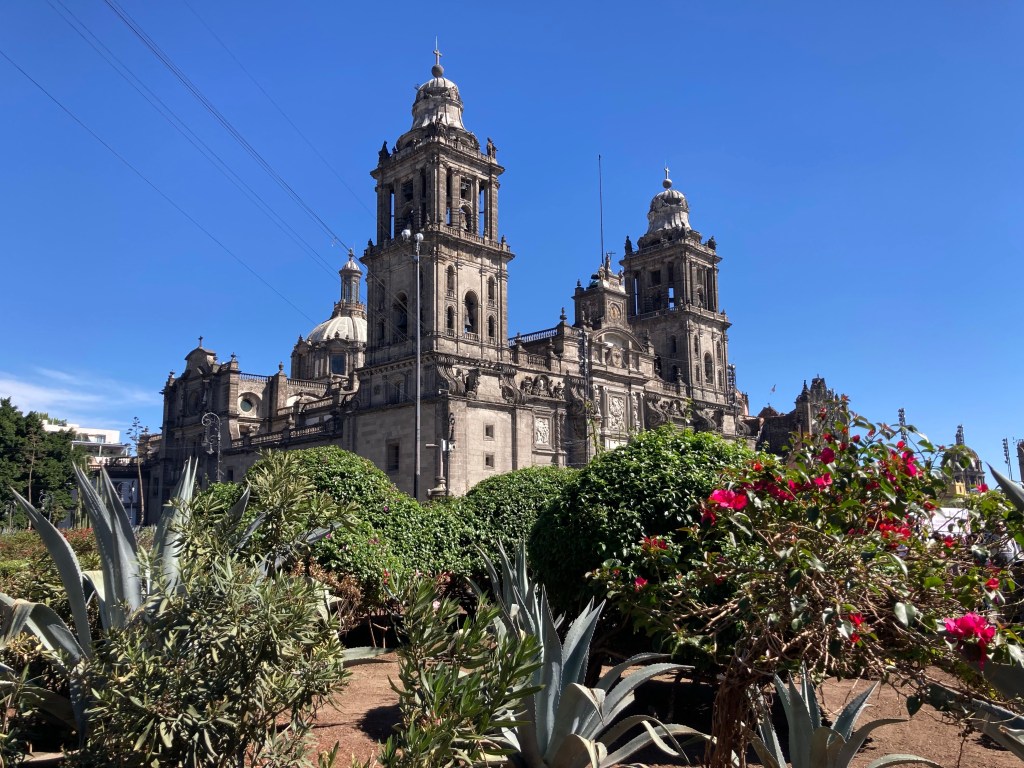
At an elevation of just over 2000m, Mexico City is one of the highest capital cities which keeps temperatures cooler than might be expected, but it’s bright and sunny and much warmer than England in January.  We thought joining a walking tour would help us find our feet on our first morning so headed to the huge Plaza de la Constitución, known as the Zócalo to meet the guide, only to find the square was surrounded by barriers and a procession was just beginning.  We gave up on being able to get to the tour in time and just stood facing the cathedral and watched the annual procession of the city’s emergency services – marching firemen, emergency vehicles with sirens blaring and horns honking and even a float for bee catchers!

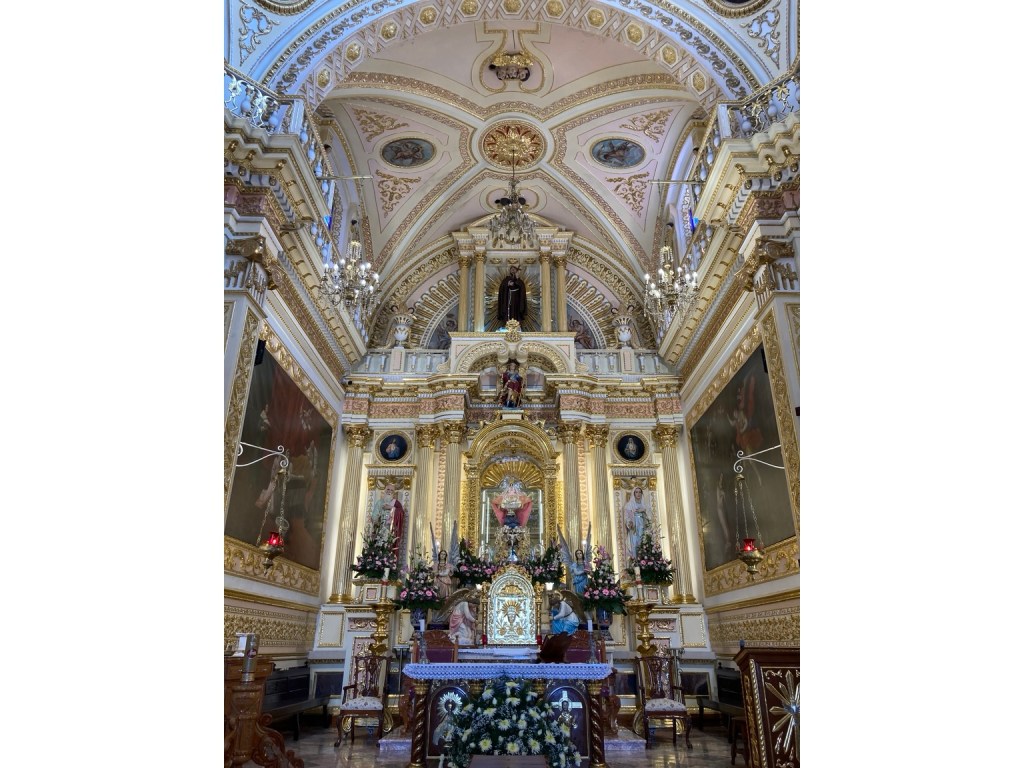
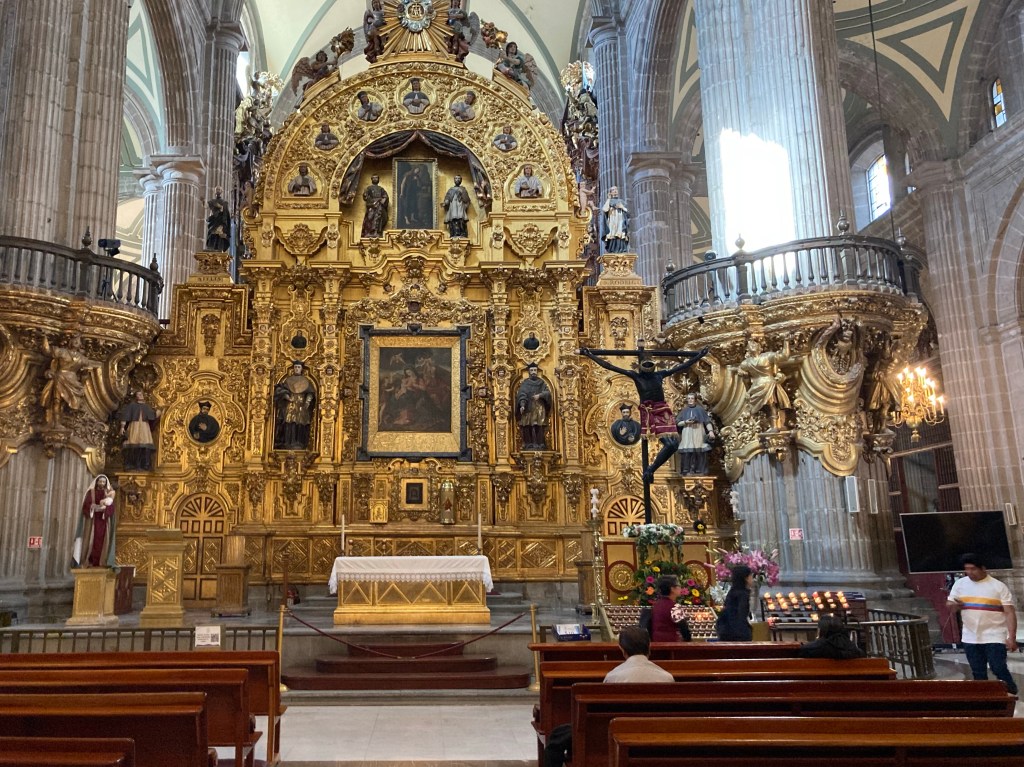
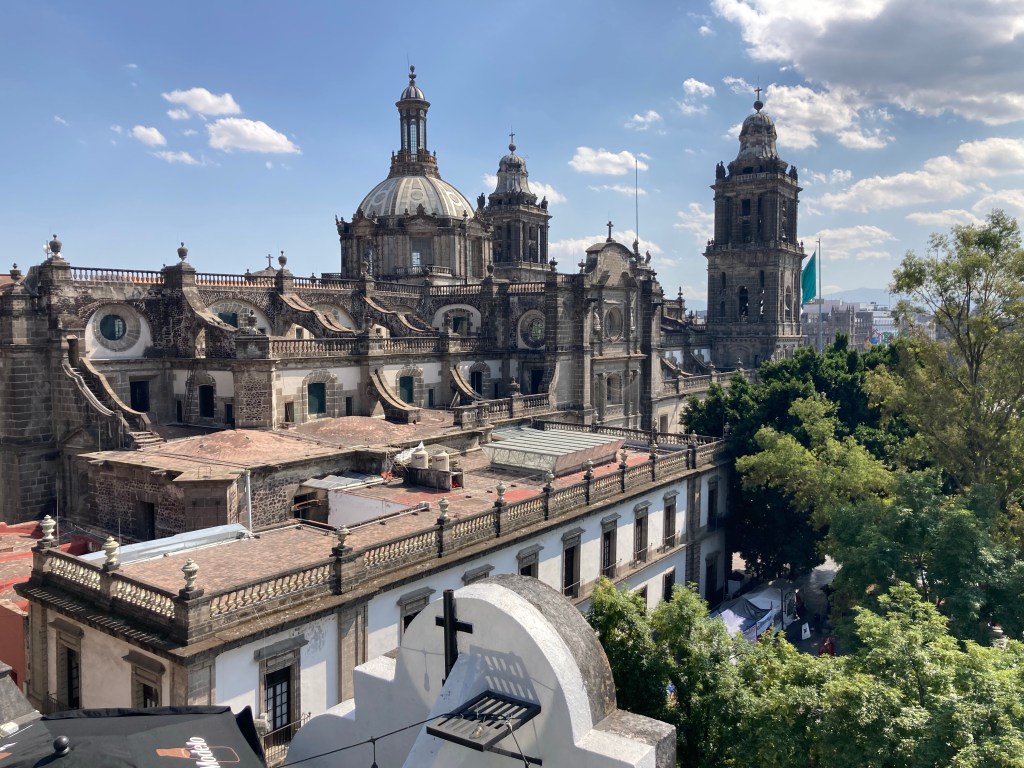
The cathedral is the largest in Latin America, but a bit gloomy, although the gilded altar at the end is pretty impressive.

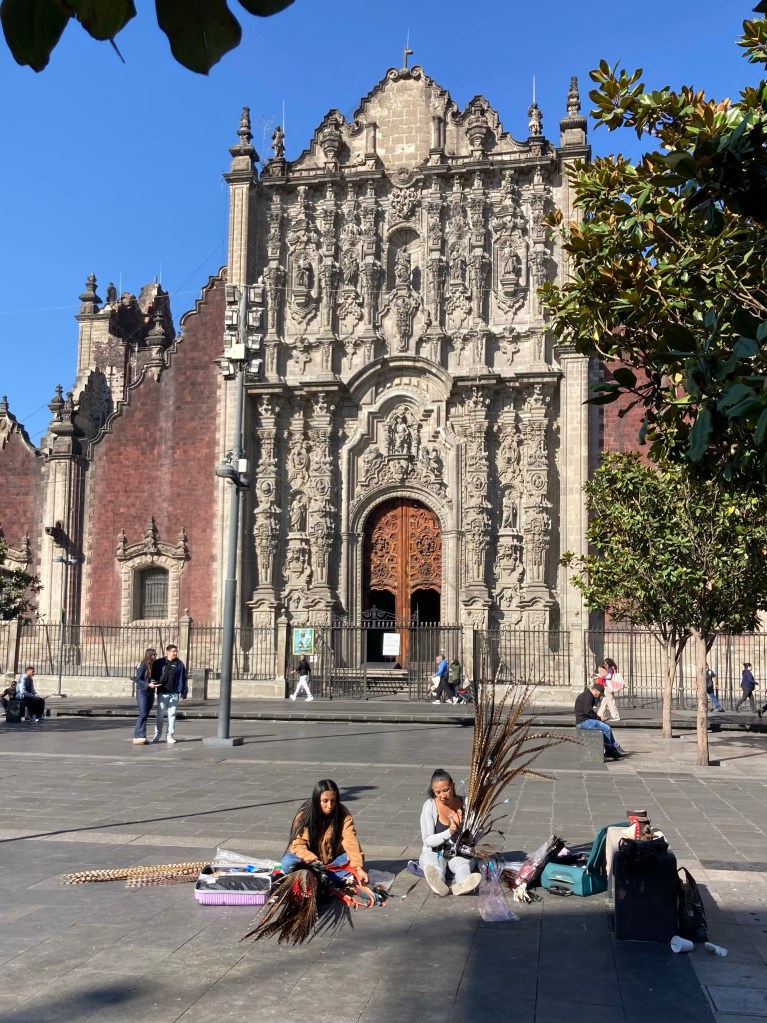
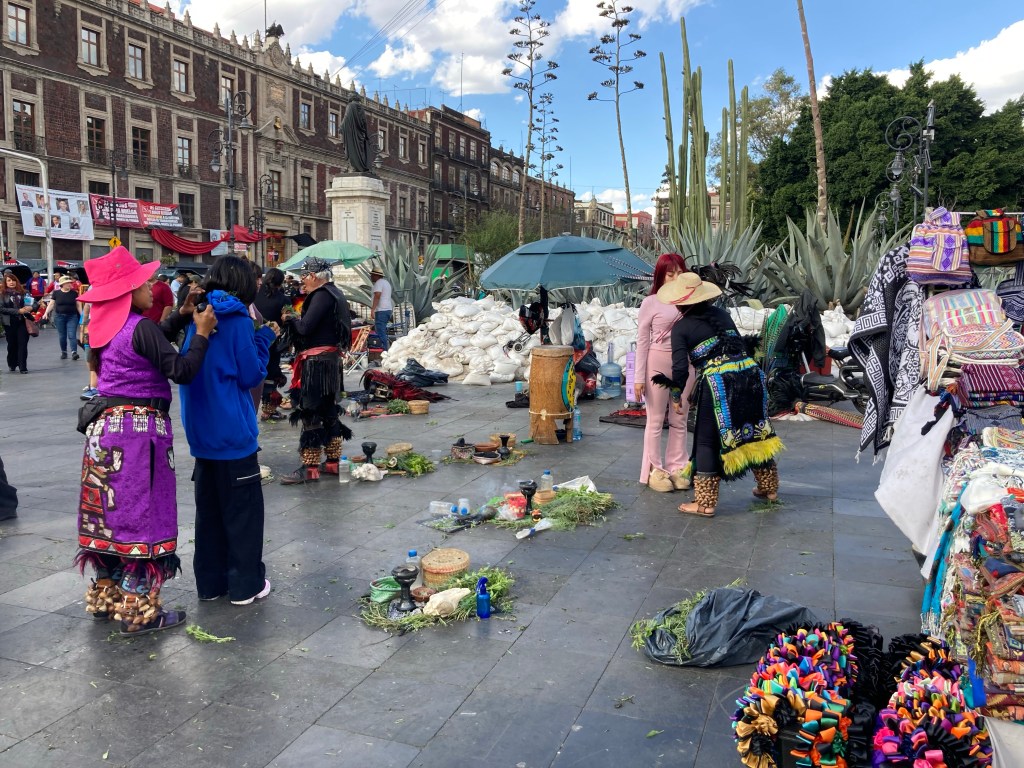
Nonetheless, spiritual cleansing ceremonies remain an important part of Mexican cultural heritage, and shamans wait outside the cathedral, ready to assist for a few pesos.

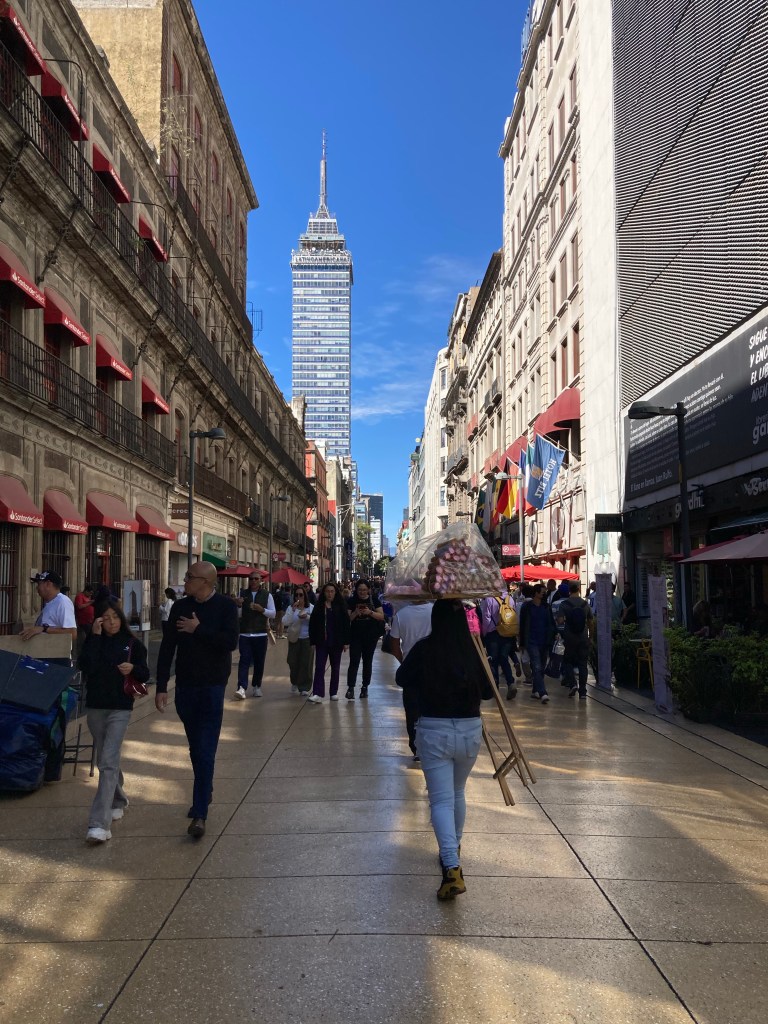
It had just turned midday, and we wandered back along a pedestrian street …

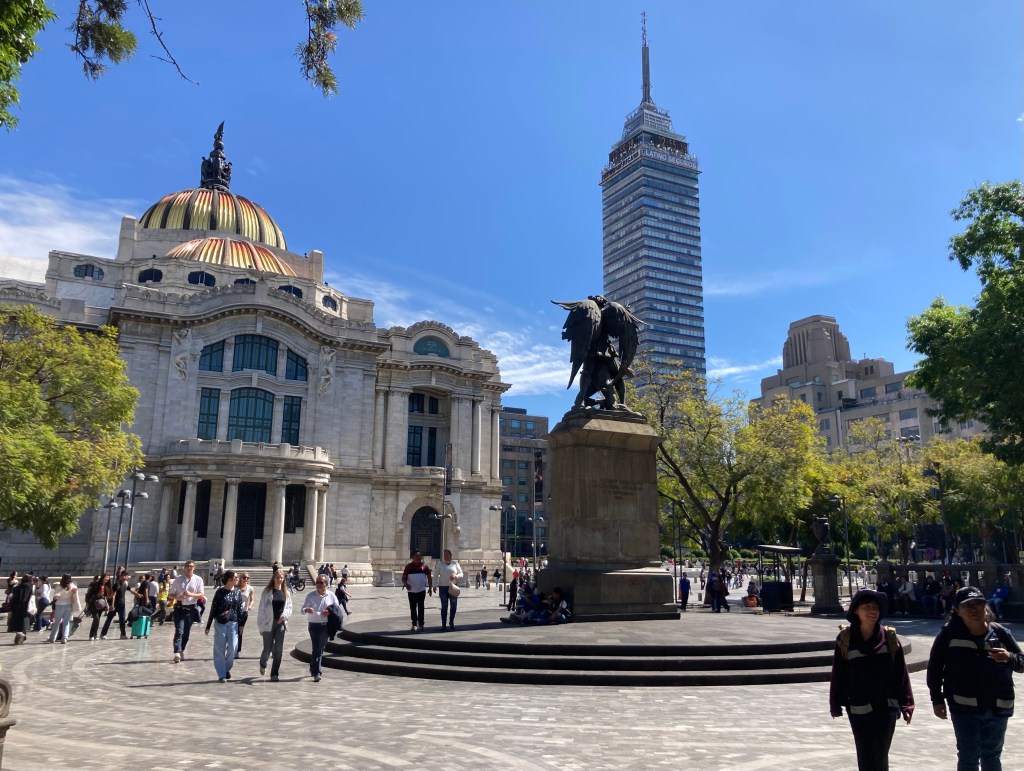
… to the magnificent Palacio de Bellas Artes …

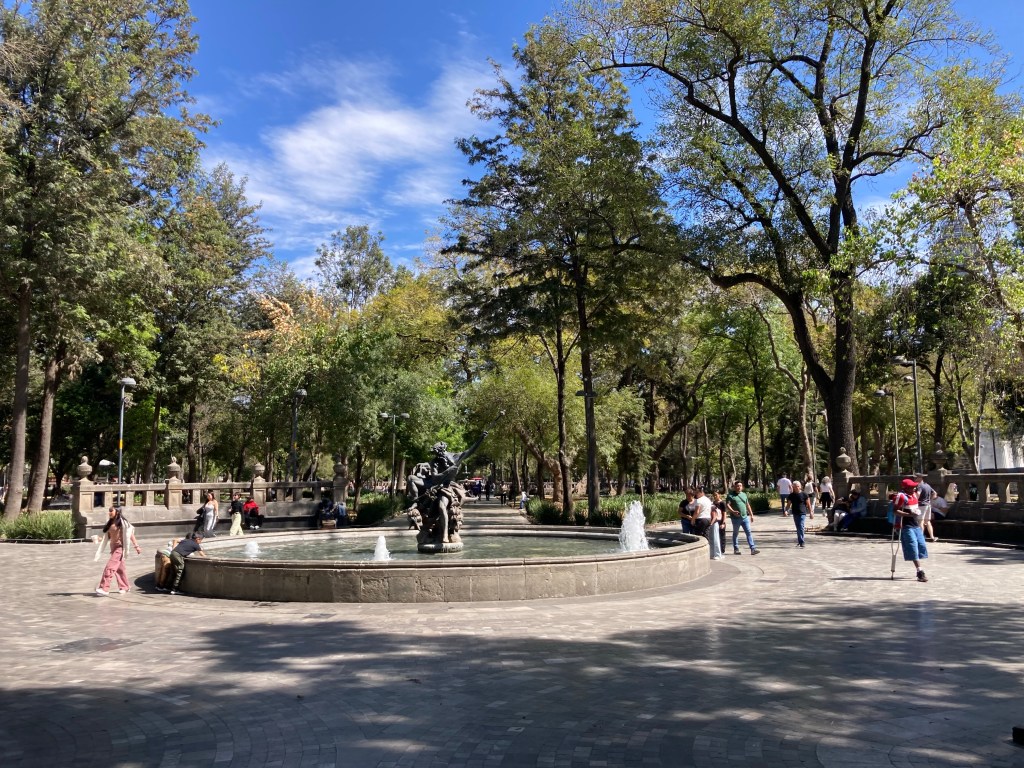
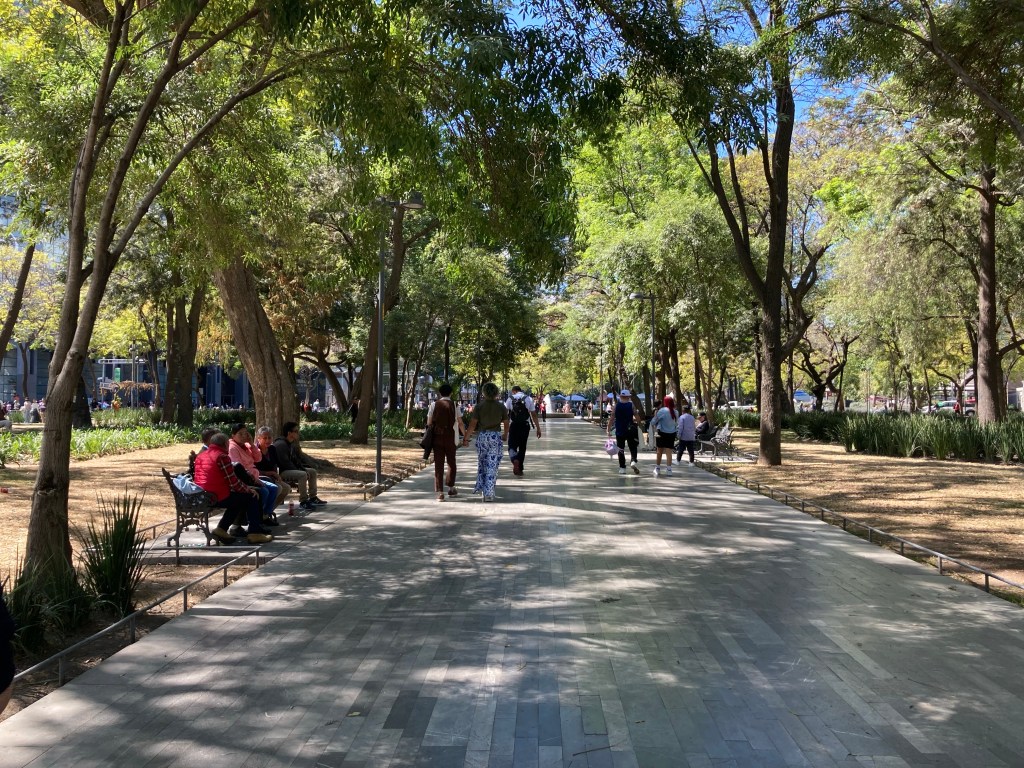
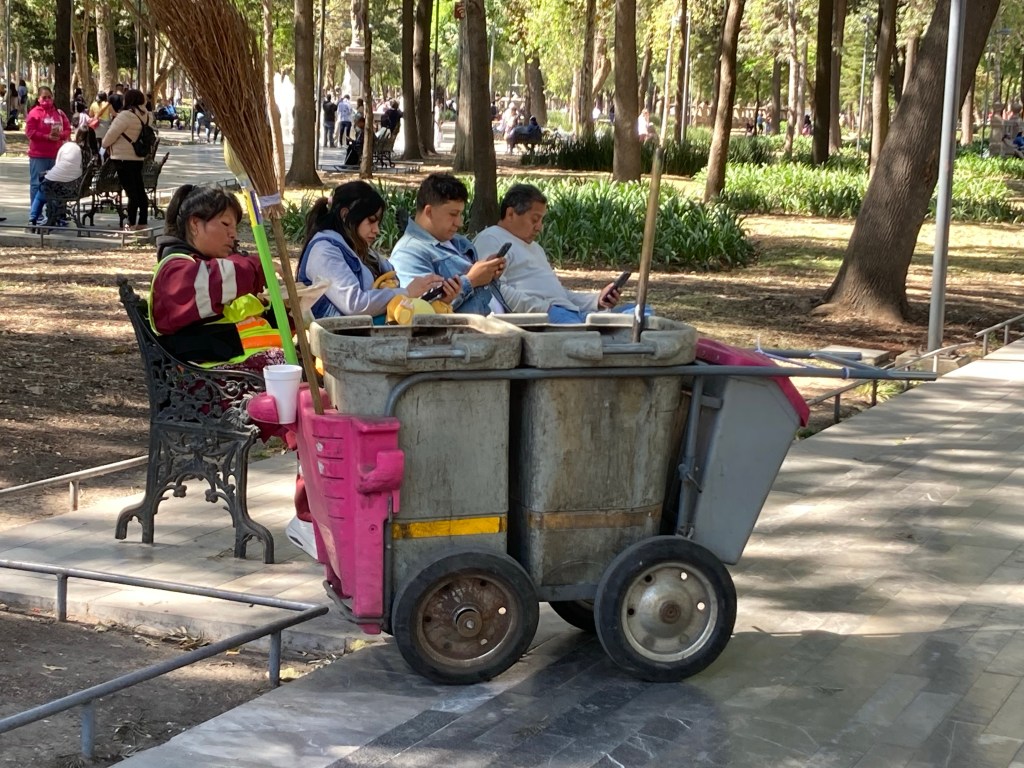
… and through Alameda Park, where families were enjoying being out on a lovely Sunday afternoon …

… and others were taking time to relax!

At the far end, the Diego Rivera Mural Museum has been the home of his largest mural which was rescued from the lobby of the Hotel del Prado after the 1985 earthquake which devastated the city, and destroyed over a thousand buildings … and of course Sunday afternoon was the perfect time to visit.

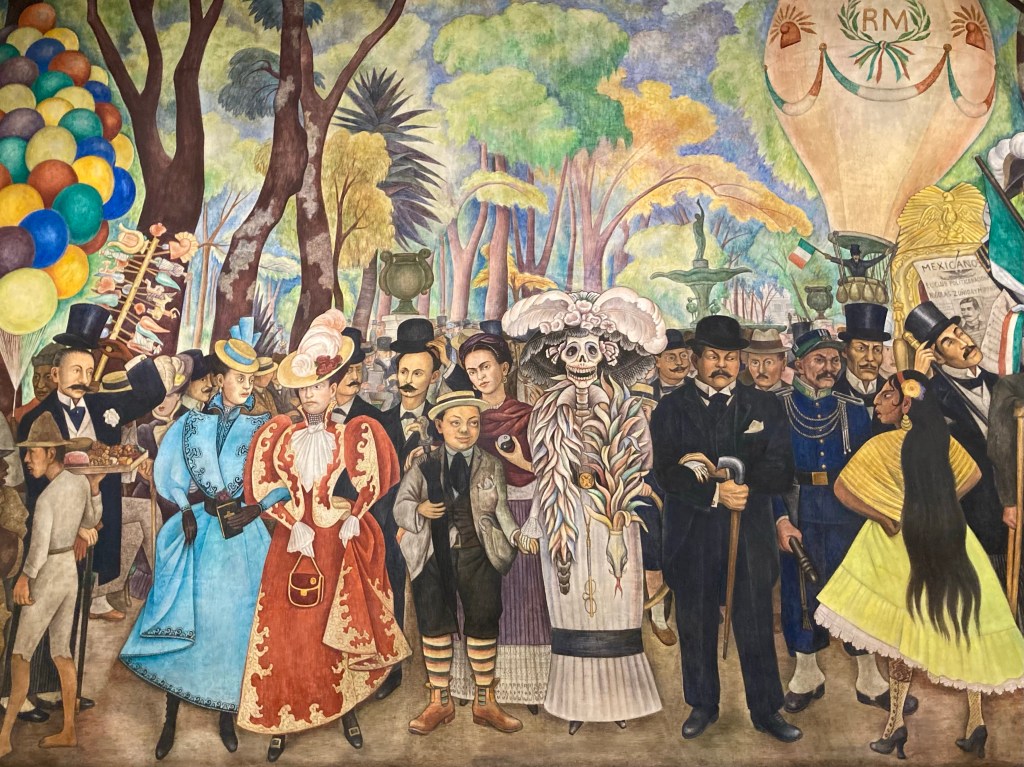
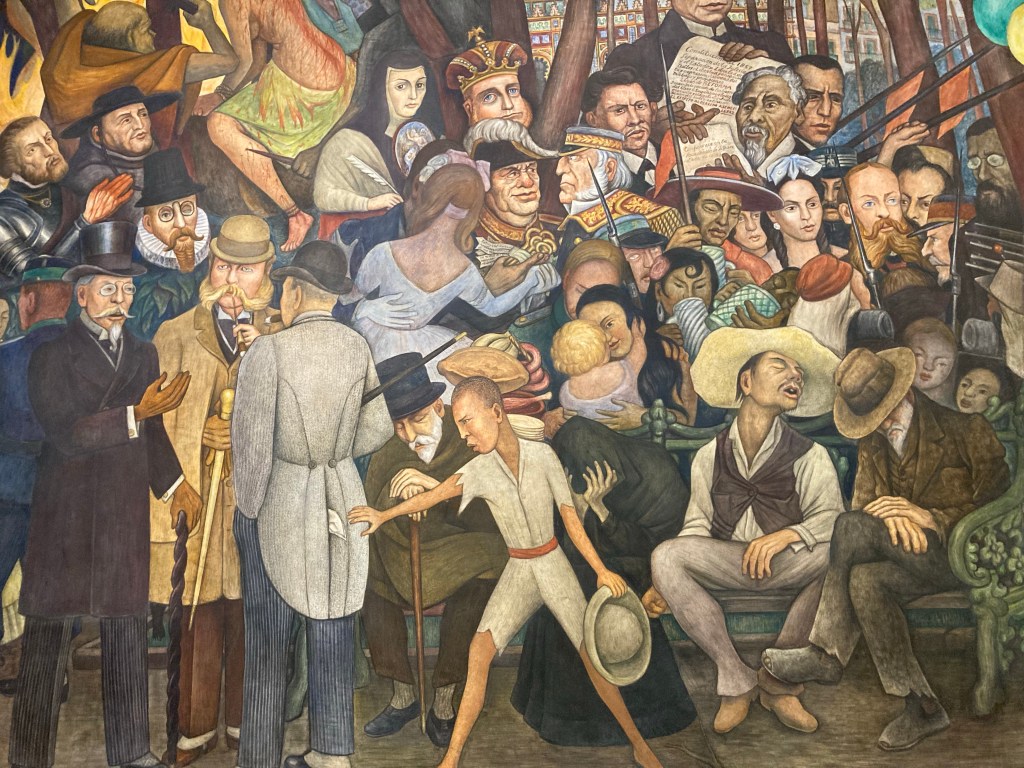
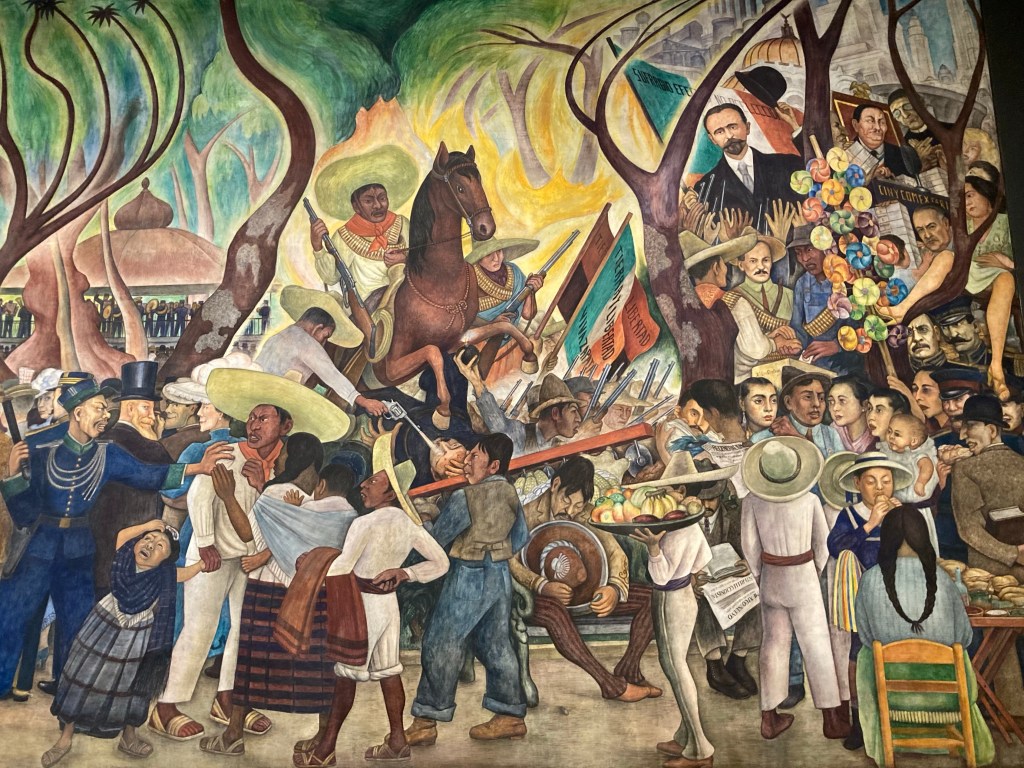
Dream of a Sunday Afternoon in Alameda Central Park is just over 15m long and was painted in 1947. It reads from left to right with three linked sections, showing the history of Mexico as dreamt by Diego Rivera shown as a boy in the centre. 

He is holding hands with the Catrina created by his friend José Guadeloupe Posada and his wife Frida Kahlo stands behind.  Entry is free to all on a Sunday as well as the excellent guide who pointed out the characters, explaining their place in history and how images from their dreams are included in the mural too. 

The left part begins with the Spanish Conquest and shows Hernán Cortés in armour …

Ò… and the right section shows the Revolution of 1910 with Zapata on his horse.

The colours are bright and fresh, you can stand right up close … and it is far too big to photograph in one go!

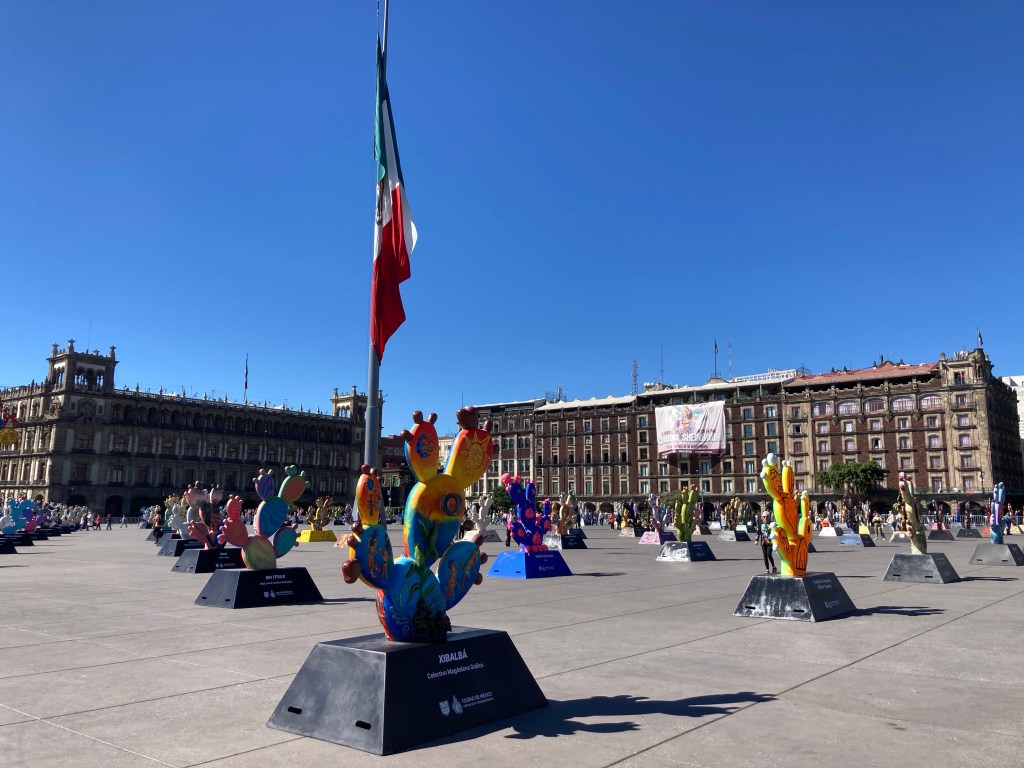
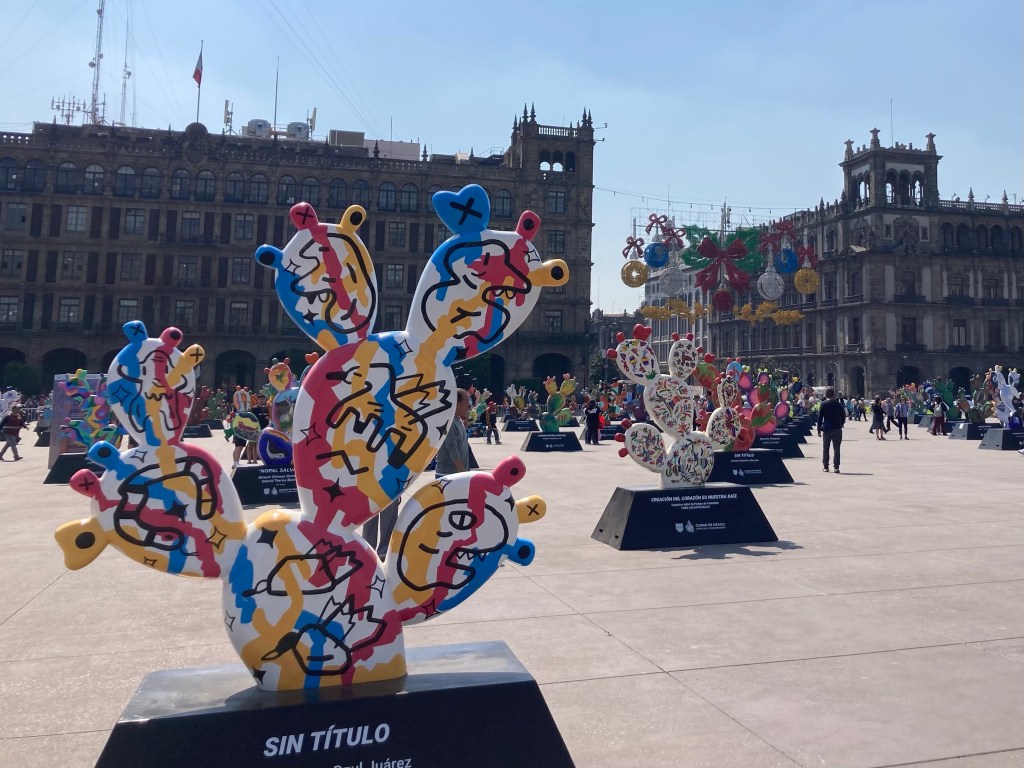
It might have been sensible to call it a day here, but no, we returned to the Zócalo and joined the 4.00 walking tour!  The guide was excellent, touching on all the main points of Mexico’s history as he showed us round the historical centre, throwing in plenty of stories and customs such as this one. In Mexican towns, the market is held in the square opposite the cathedral, but post revolution in Mexico City, commerce took a while to recover and the area was a mess.  The president decided to clear the square and erect a monument to the revolution in the centre, and a plinth or zocalo was built … but the monument was never finished.  The people began referring to the main square as the zocalo … and so it is that every Mexican main square is known as the Zócalo!  There is an interesting display of cacti on display there at present.

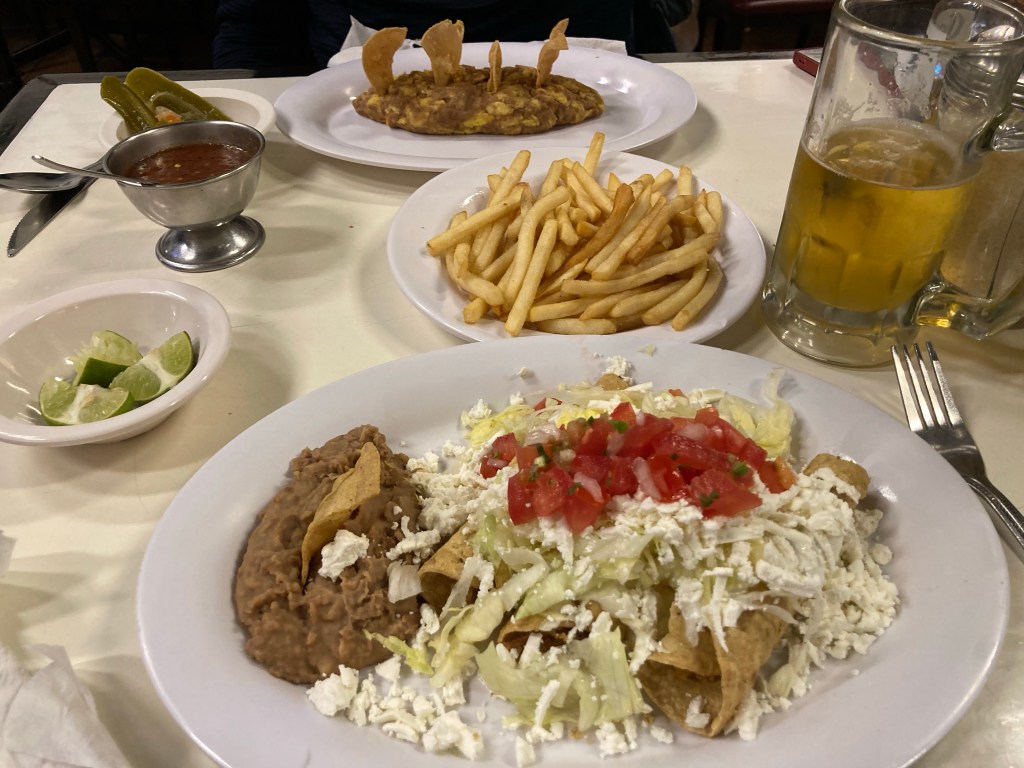
We ended just close the the apartment which was handy as we definitely deserved a sit down after stepping out 7 miles on our first day!  Realising a quick dinner and bed would be best, we returned to Cafe Pagoda for a supper of crispy taco rolls with chicken and salad/eggs scrambled with beans and local beers and lights were out before 10.

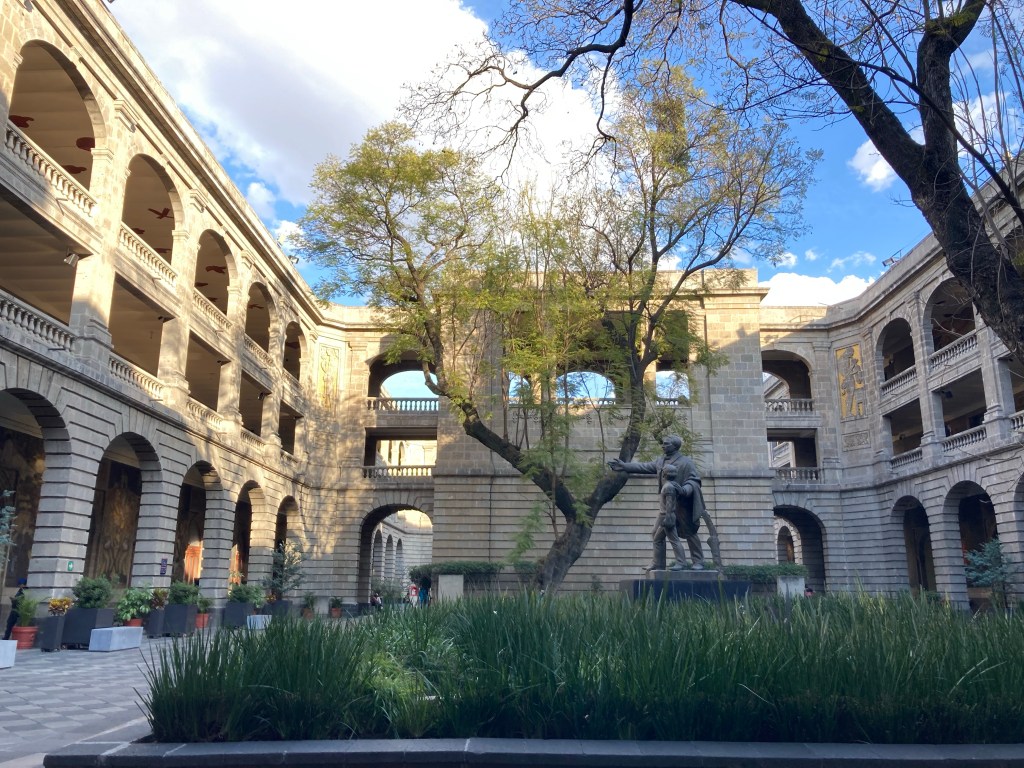
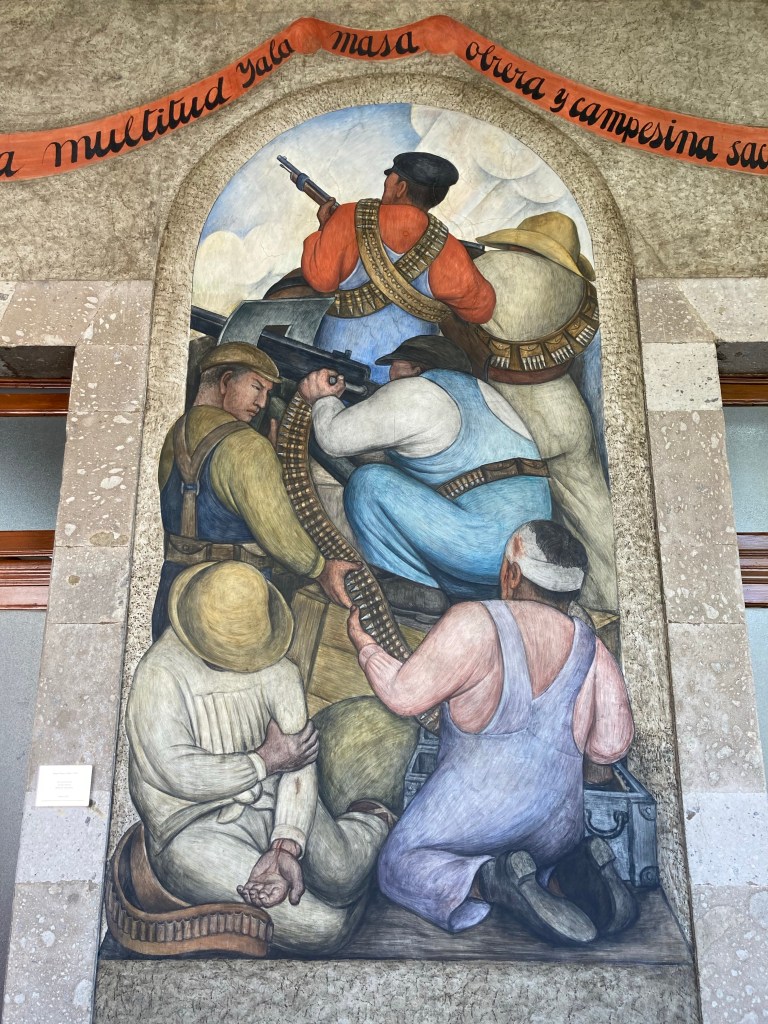
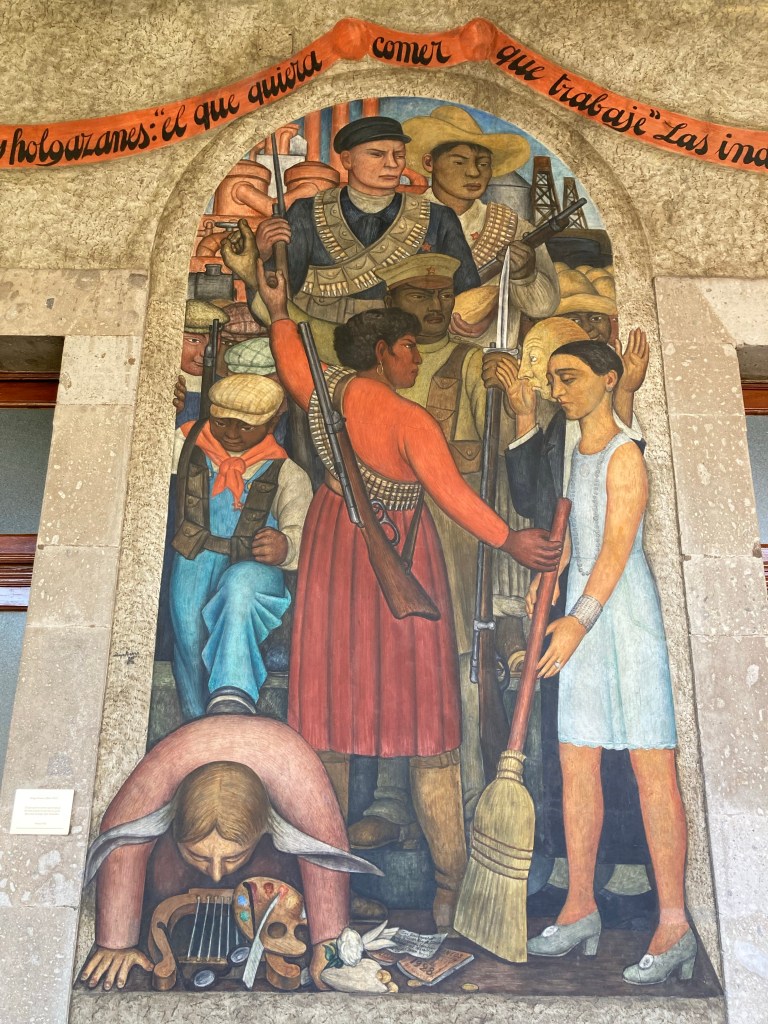
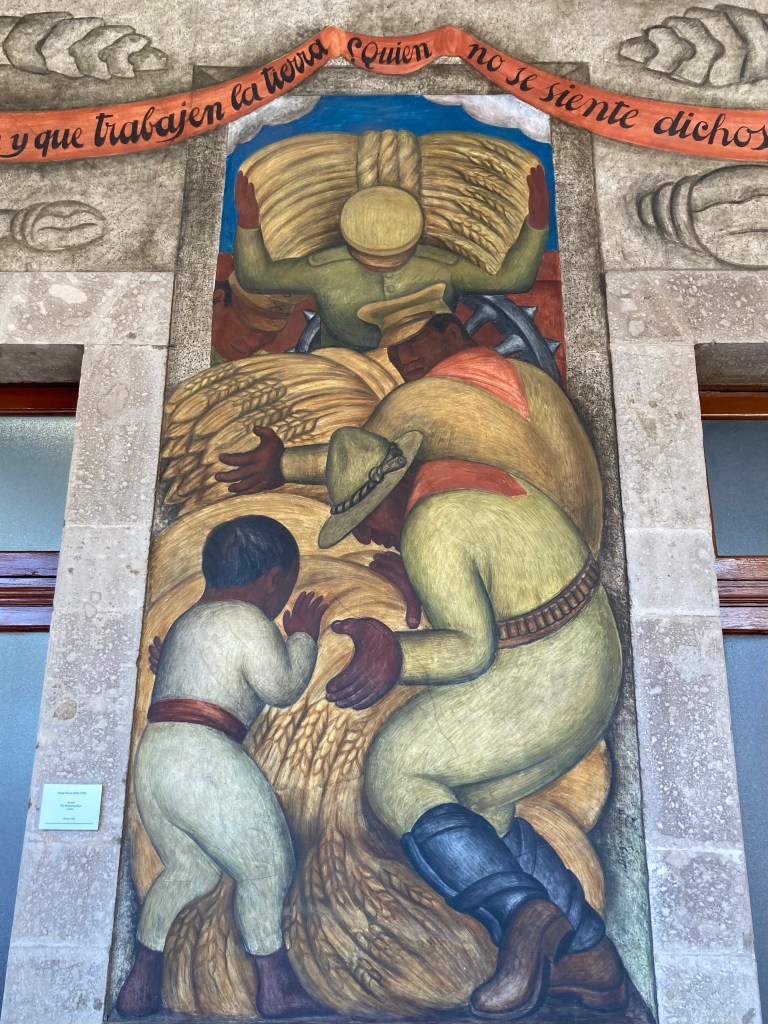
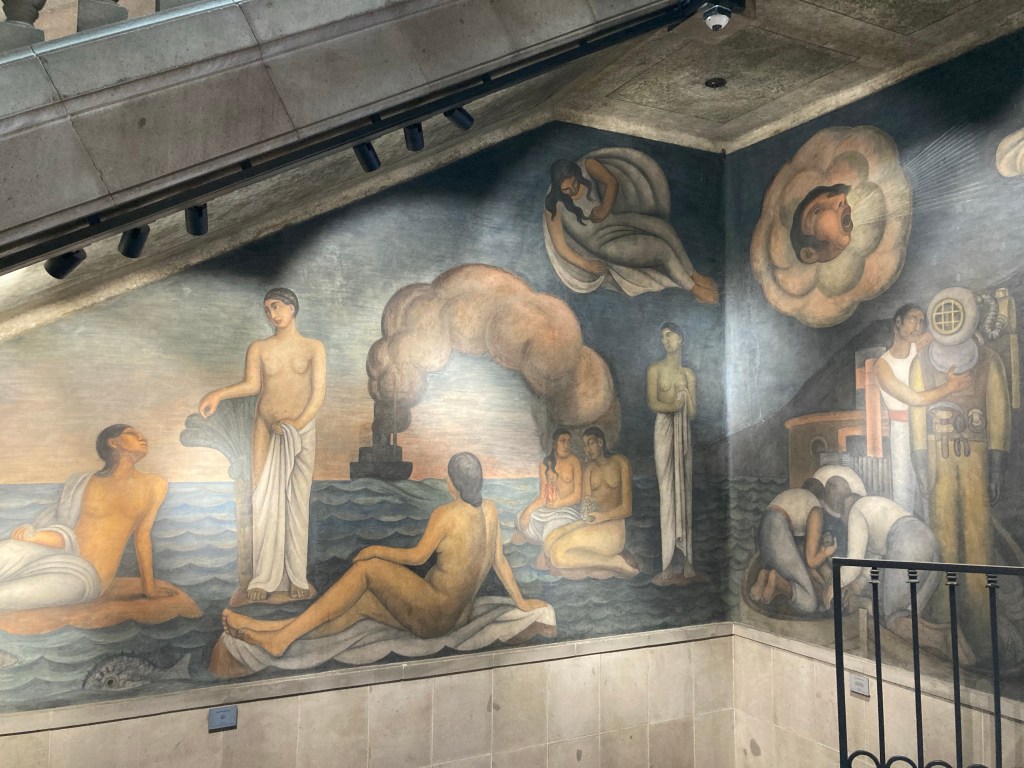
Next day we decided to pace ourselves better so began visiting the one museum that appeared to be open on a Monday.  We had already seen one Diego Rivera mural and now we were about to see a whole lot more!  Following the revolution, the government wanted to unify the country by promoting a new, nationalistic identity and one initiative was the Mexican Muralism Movement.  José Vasconcelos, the 1st Secretary of Public Education commissioned Diego Rivera and others to paint a series of murals within the headquarters, which would educate the people and also champion indigenous culture and socialist ideals.  This building is now the Museo Vivo del Muralismo and we were lucky to catch a free tour. 

These murals are actually frescoes, so painted in sections on wet plaster, a technique Rivera learnt in Italy … and there are over 200 of them! 

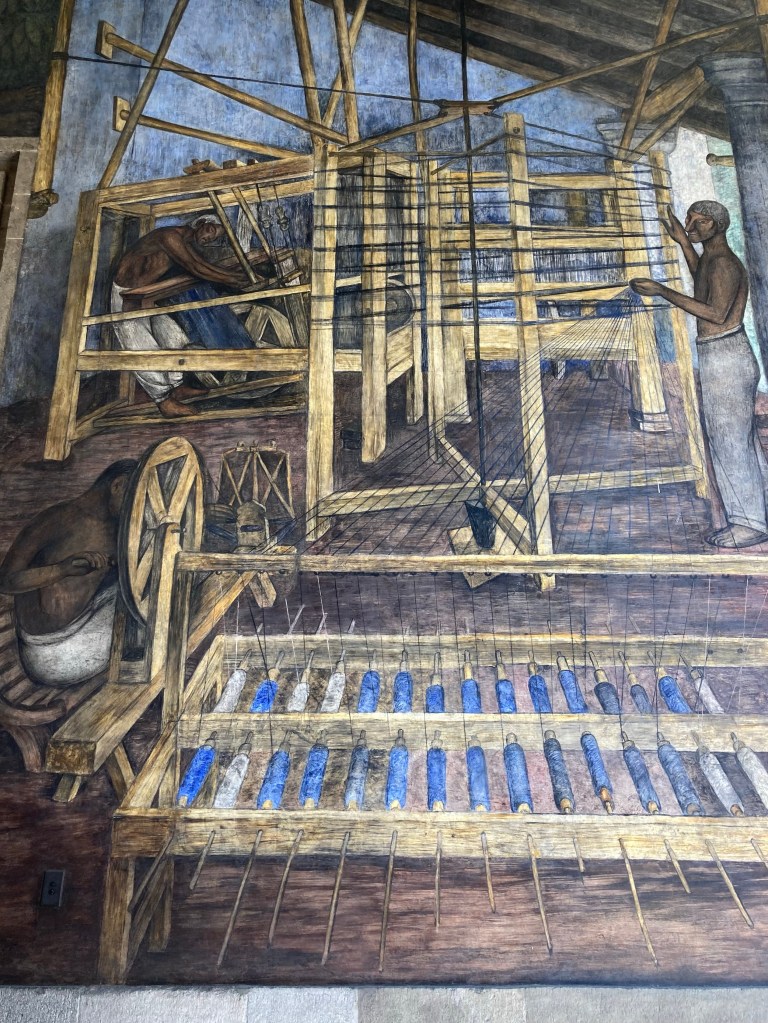
The ground floor illustrates Mexican daily life and traditional festivals and I particularly liked this one showing weaving …

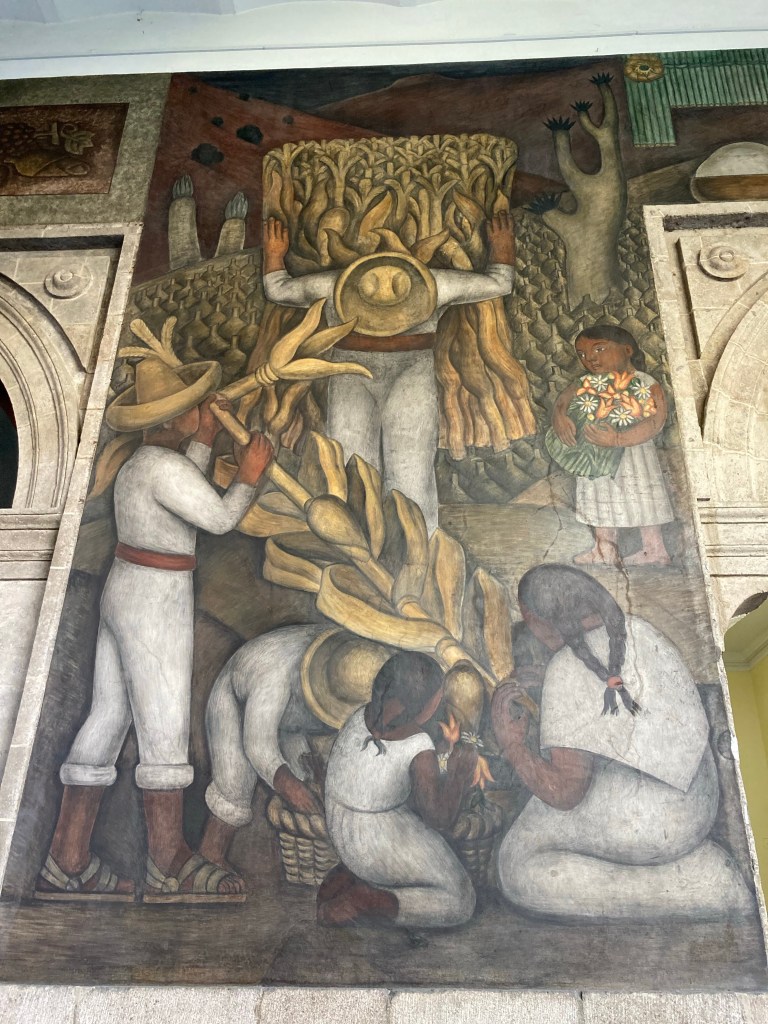
… and the harvest 

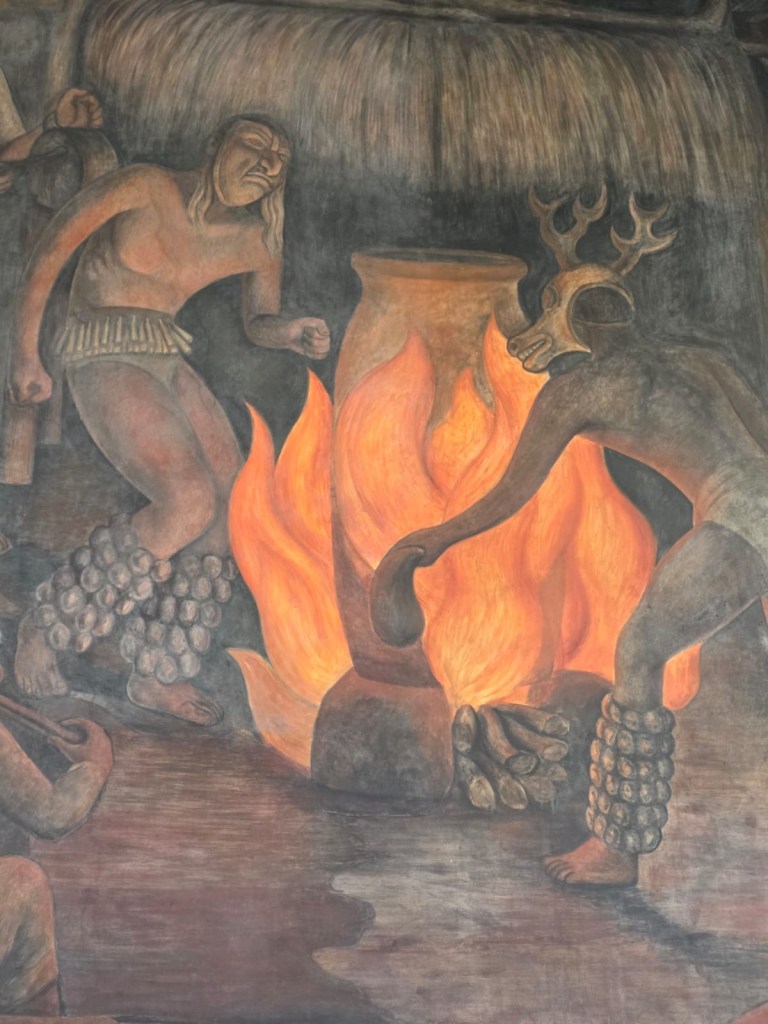
… and here is the Deer Dance …

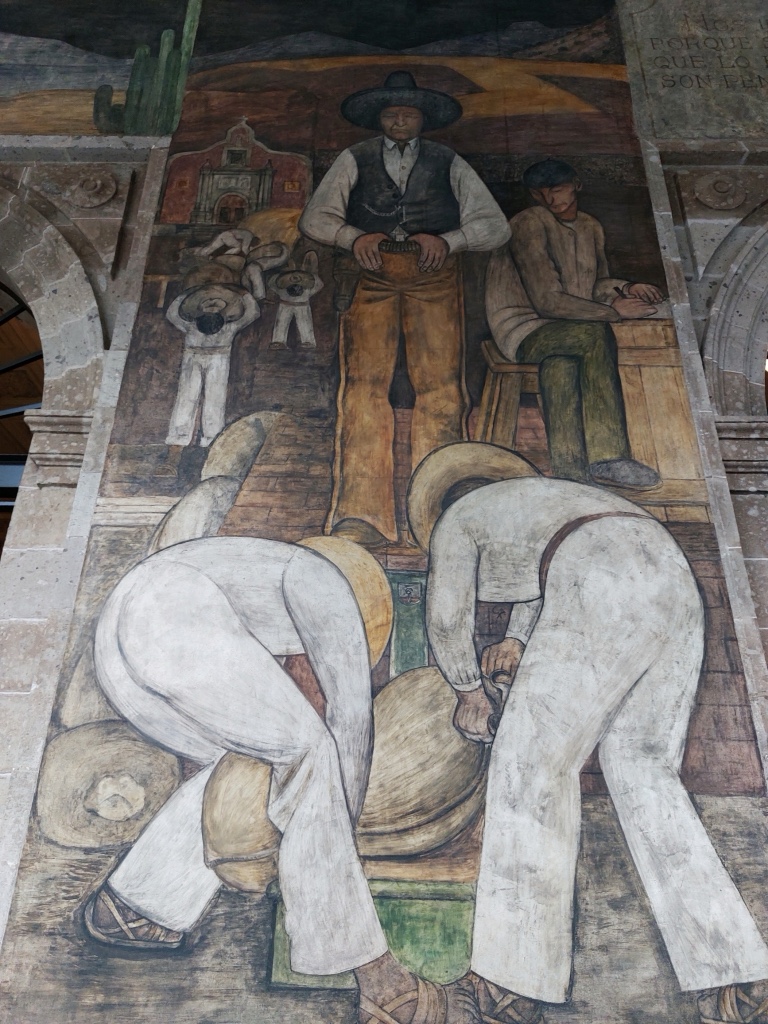
… and this shows labour called The Overseer.

The upper floor had images of the revolution including these … 

… and I love the movement in the composition and the way they spill out of the frame.

And in the stairwell we saw this, Birth of Venus meets Captain Nemo! 

Stopped for a lunch of veggie wraps then went up to the roof to get a bird’s eye  view of the cathedral. 

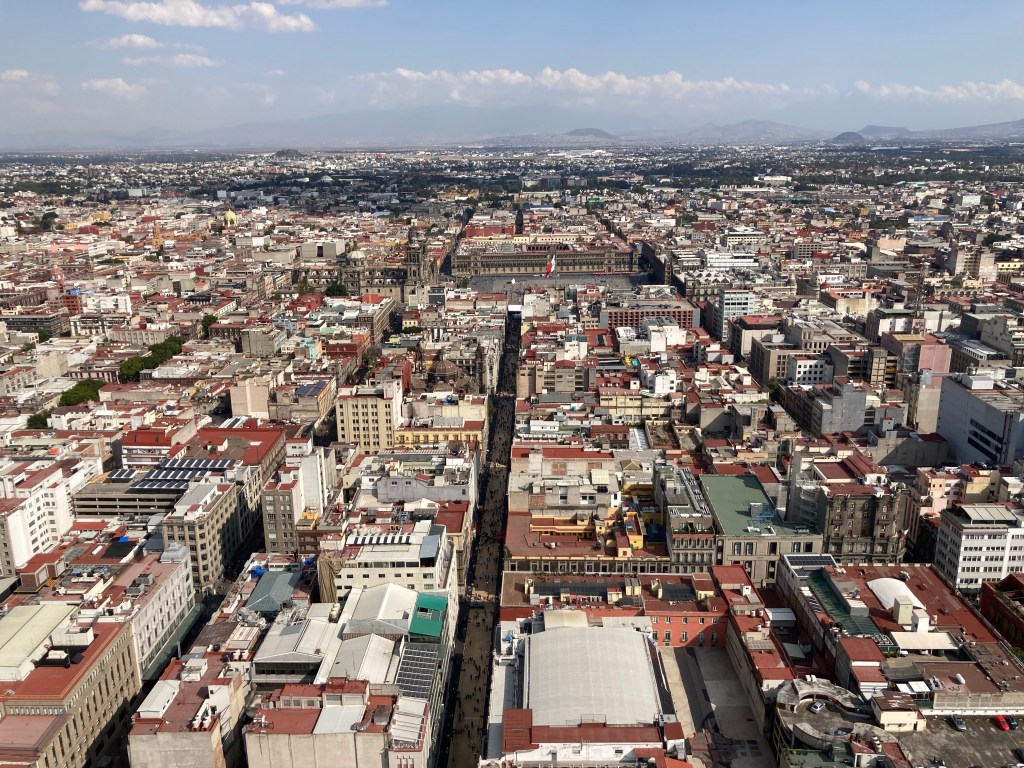
Up was a theme for the afternoon as our next visit was the Torre Latinoamericana, a 44-story skyscraper standing 182 meters which was the tallest building in Latin America when it was built in 1956.  When you look out from the top and see the expanse of Mexico City and its suburbs you can understand its population of 23 million. 

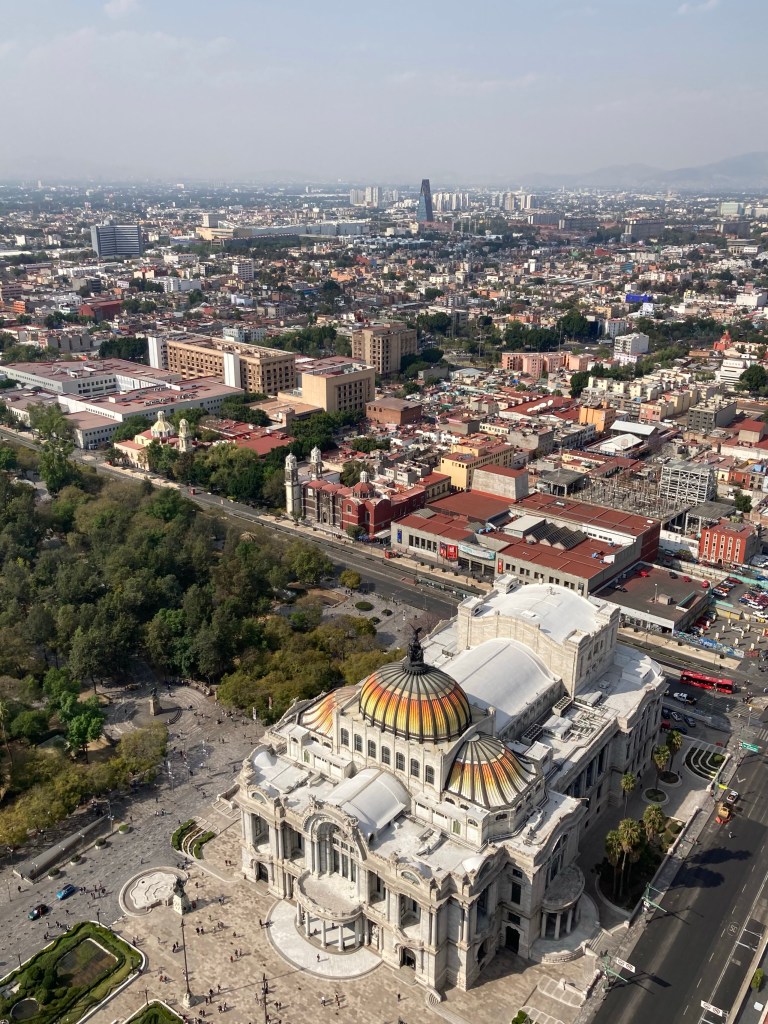
Down below is the Palacio de Bellas Artes …

… which we could admire even more closely from the Sears coffee shop while enjoying a sit down!  

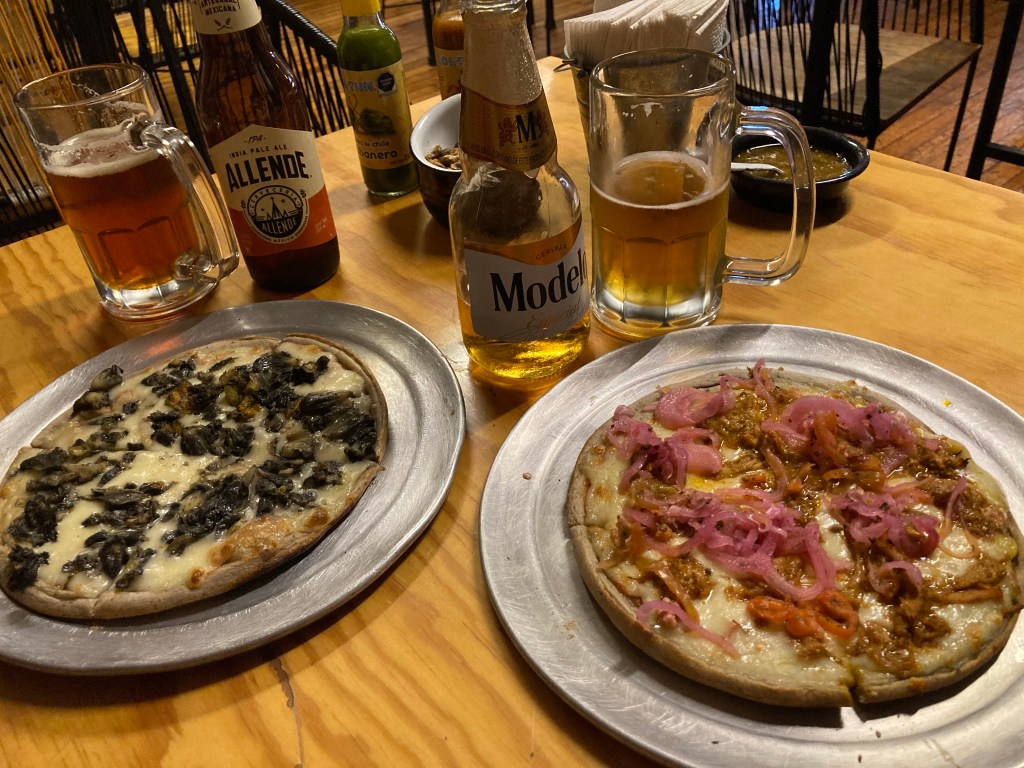
We used downtime back in our room to plan the next couple of days and booked on a tour to Teotihuacan the next day.  Dinner was Mexican style pizzas at Pixza, made with a blue corn base and with Mexican toppings – mine with Pibil Pork and red Onion and Chris’s with pumpkin flowers – crispy and delicious. 

We then took a turn round Plaza Garibaldi, famed for its mariachi bands and although we saw several musicians in their tight black charro outfits decorated with silver embroidery, it was really a little early for much to be happening, but we were too tired to wait!

Map

Chris & Elaine’s Taco Trail 2026

Finally we are ready to take our first big trip since 2020 and we are off to Mexico to escape the cold British winter.

We’ve been planning a return since our roadtrip round the Yucatan peninsular 12 years ago, but this time we are starting in Mexico City.  From here, we are travelling through four states by bus, stopping at Puebla, Oaxaca, San Cristobal de Casas and Palenque before ending at Villahermosa where we will catch a plane back to Mexico City.

We want to explore it all!  More of the ancient ruins left by mighty civilisations, more towns with colourful streets of colonial architecture, more vibrant arts and crafts made by local artisans and definitely more of Mexico’s rich culinary heritage.

But we will be taking it slowly … with time to wander … be inquisitive … get lost … take photos … and most importantly, sip margaritas!

Itinerary

Mexico City … and Murals

Mexico City … and Pyramids

Puebla … Home of Mole Poblana

Oaxaca … Cooking up a Zapotec Feast 

Oaxaca … Monumental Monte Alban

Oaxaca … Weaving Together

Oaxaca … Markets, Museums & Marriage

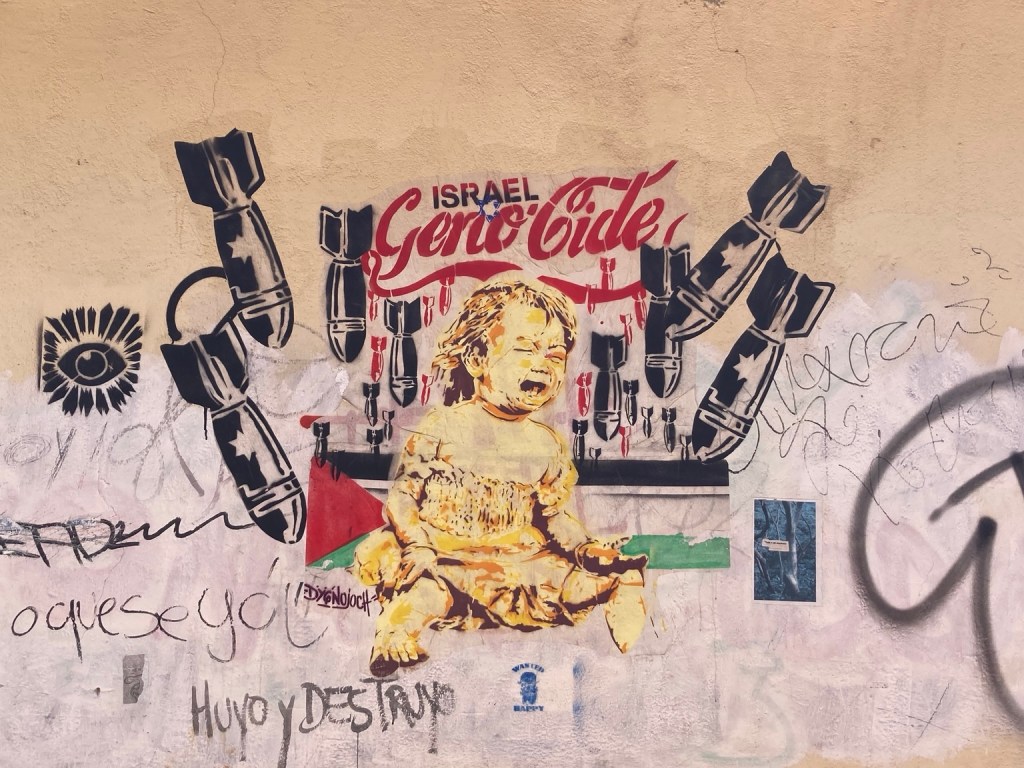
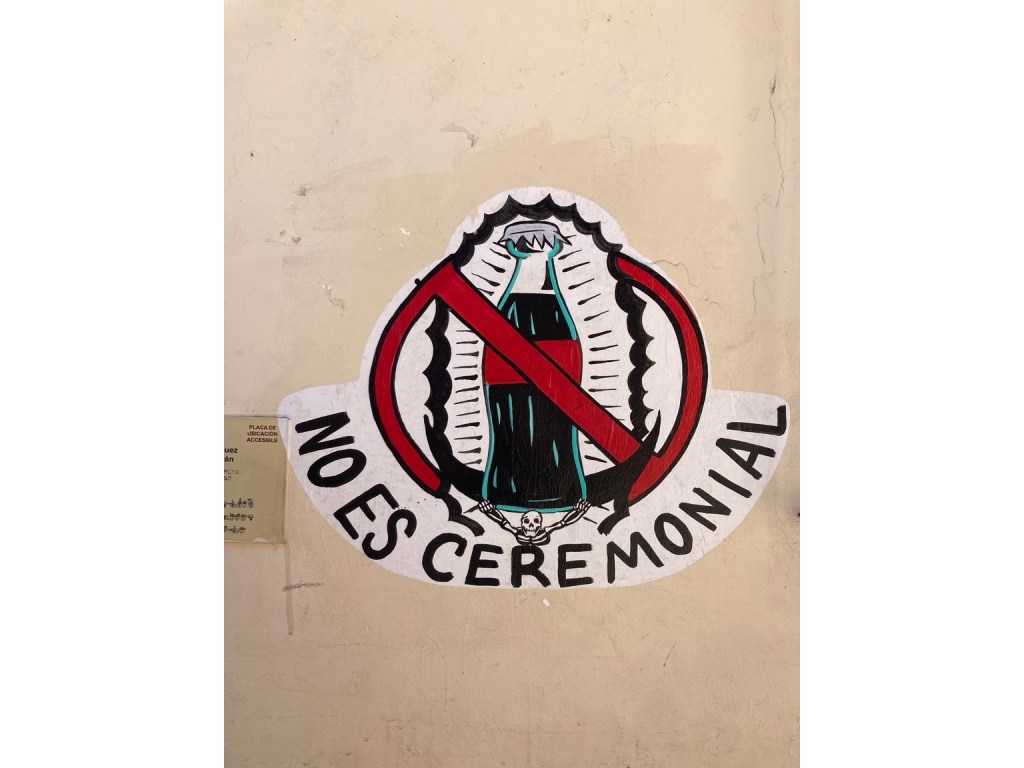
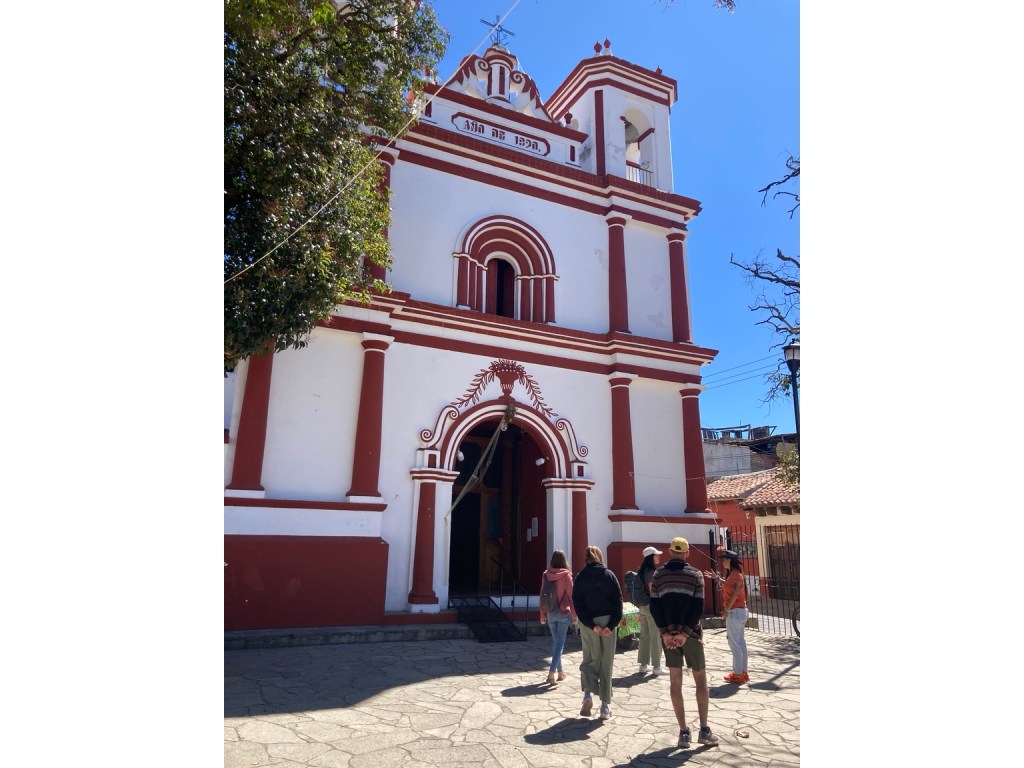
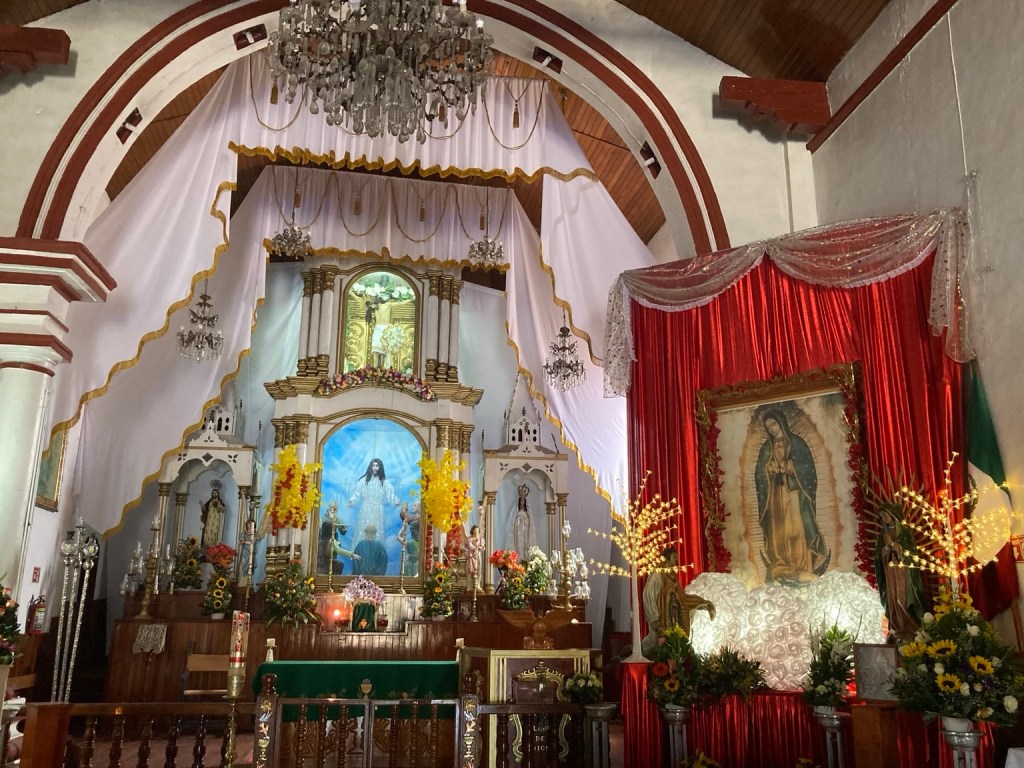
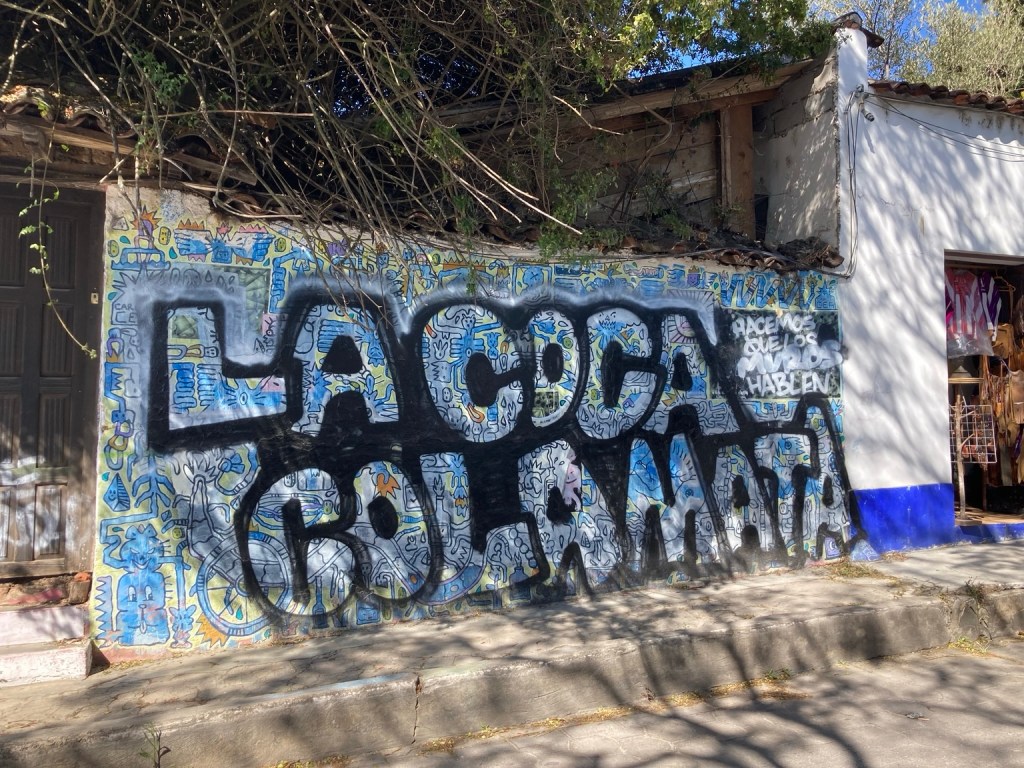
Chiapas … Coca Cola and Activism

Chiapas … and the Canyon

Chiapas … and Cultural Inheritance

Chiapas … and a Tamale Masterclass

Palenque … Tombs and Temples

Yaxchilan and Bonampak … a Jungle Adventure

Villahermosa … Heading back to the Olmecs 

Coyoacan … Frida & Diego

Coyoacan … Frida & Diego Again

Coyoacan … the Finale

Map

Dubrovnik … an Extended Stay

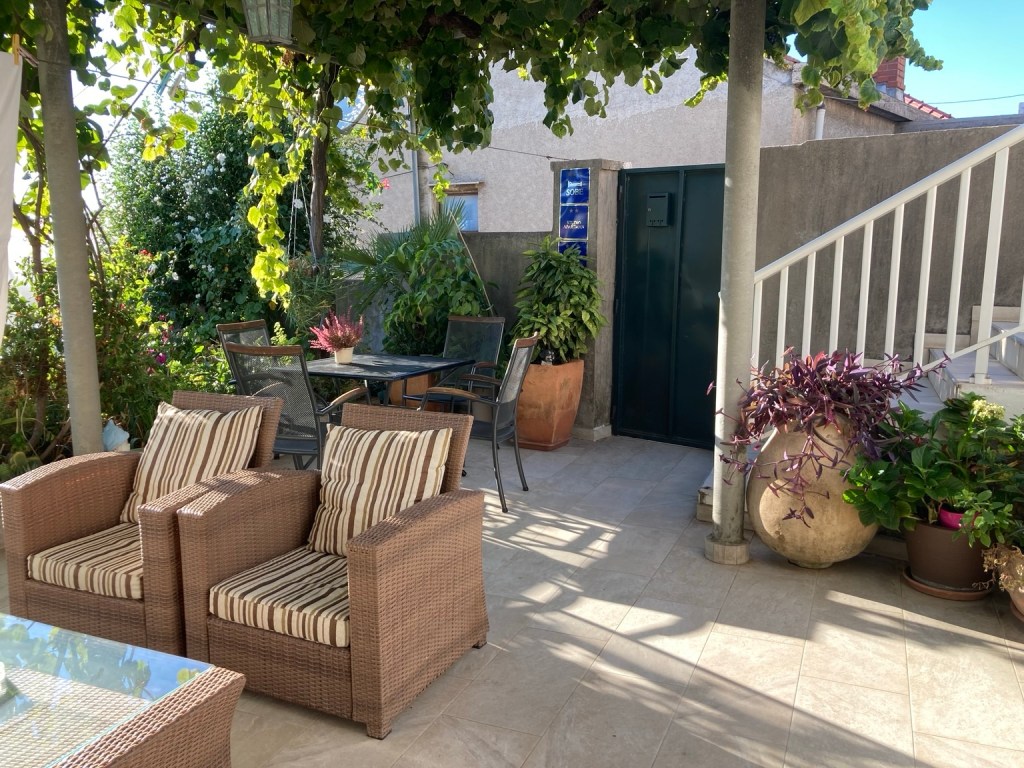
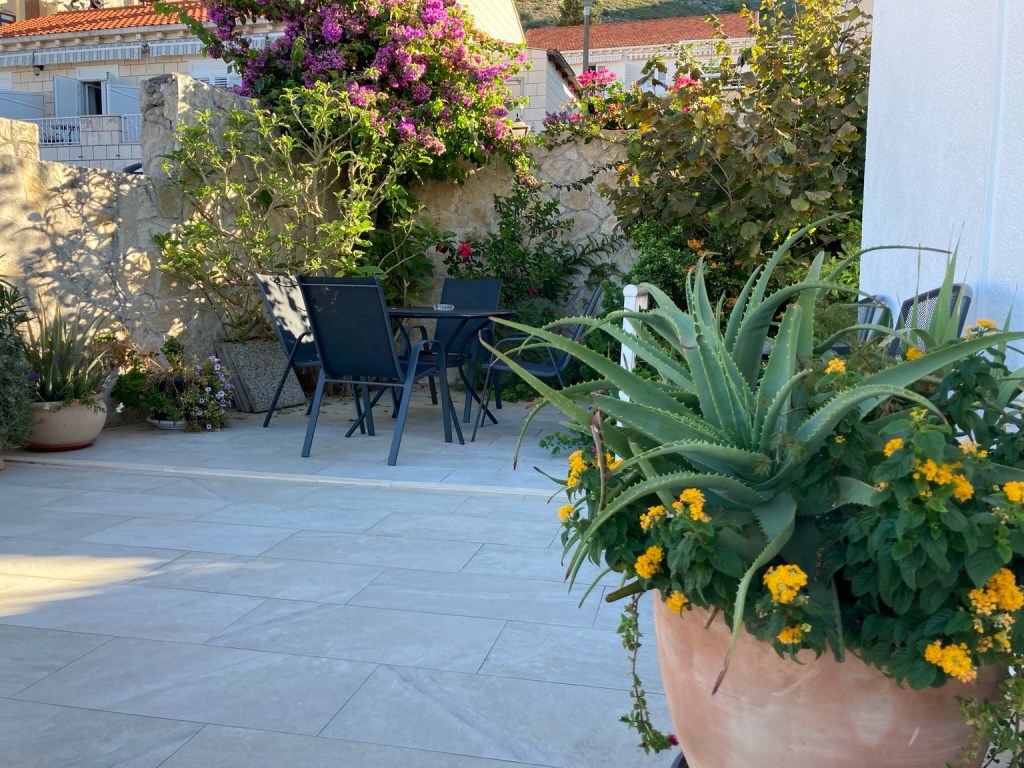
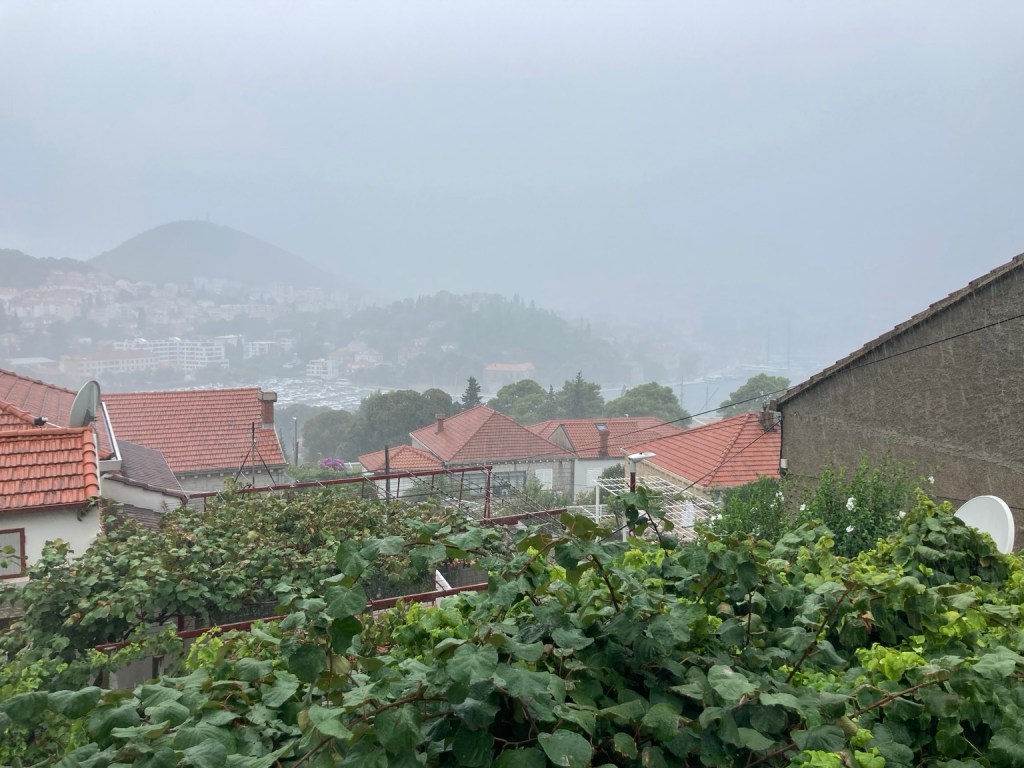
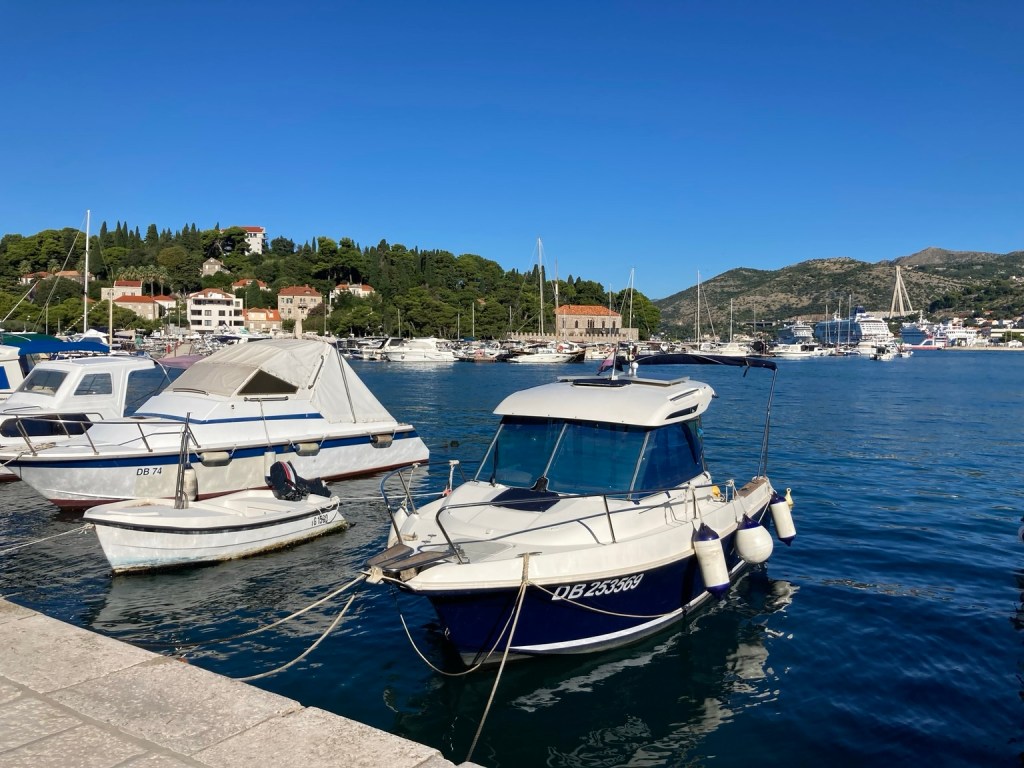
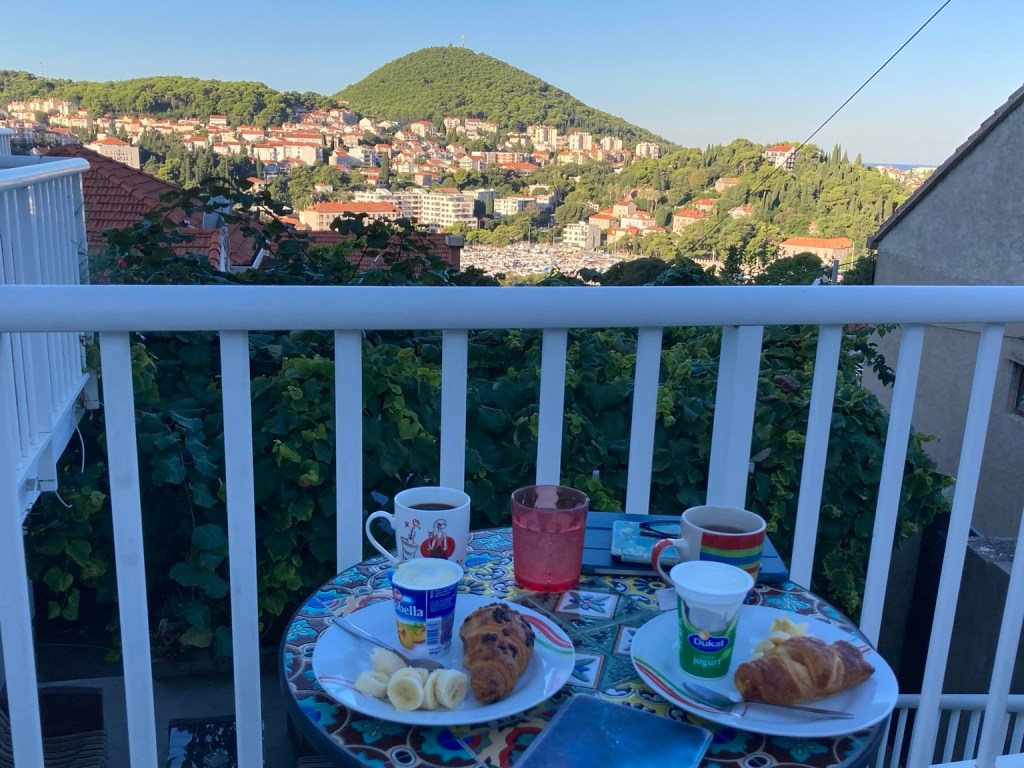
Ante from S&L Guesthouse kindly picked me up at the bus station and I have a bright and airy room with a shared kitchen and courtyard in Gruz, overlooking the port.

A veggie struggles a little in Croatia, so I cooked up some beans to take to Chris who was walking much more steadily.  I just made it back before a huge thunderstorm which then raged on and off all the next day. 

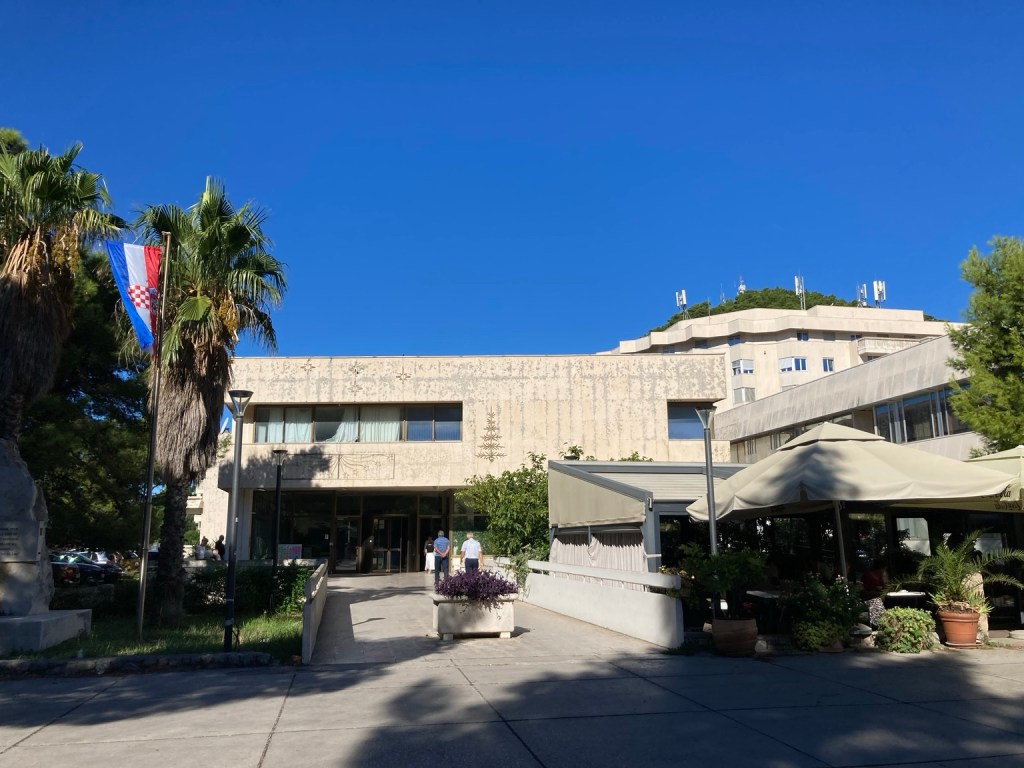
It stopped just in time for me to go visiting, so I walked to the hospital, this time with frittata! 

Having caught up during downtime yesterday, on Friday I set off to the beach early, and walked down to the port …

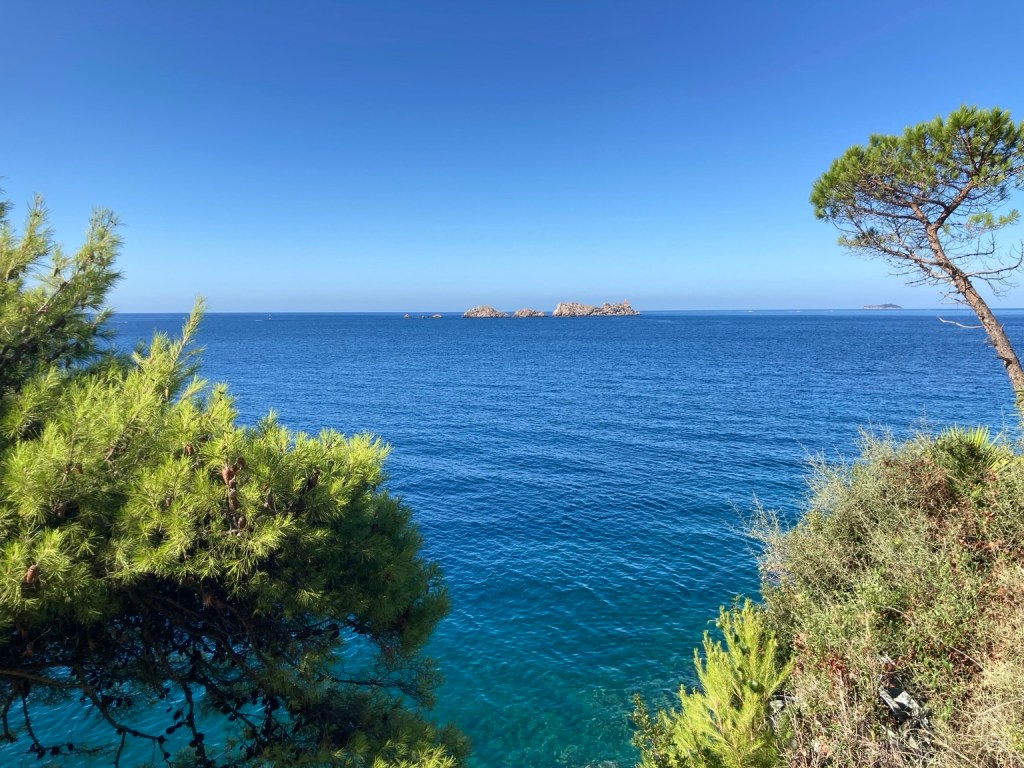
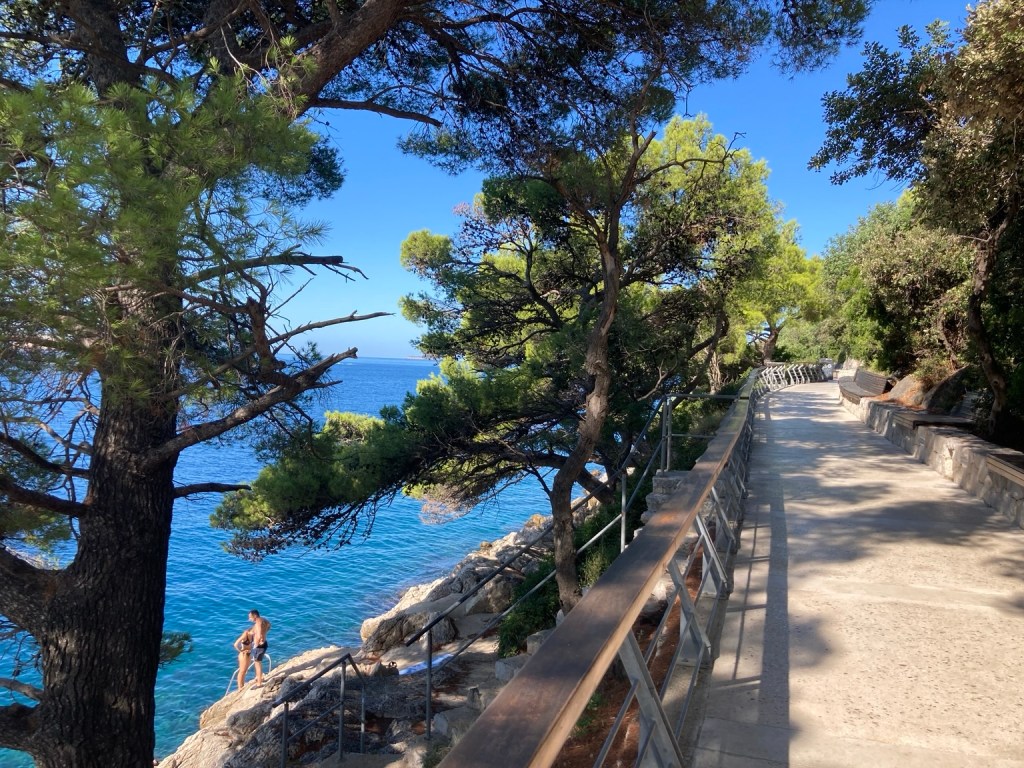
… and across to Lapad, just 30 minutes away. I explored the walking trail from the bay …

… and took a pic of my beach where I settled down on a comfy sunbed. 

Later I saw Chris then got brave and went out for dinner on my own near the port. 

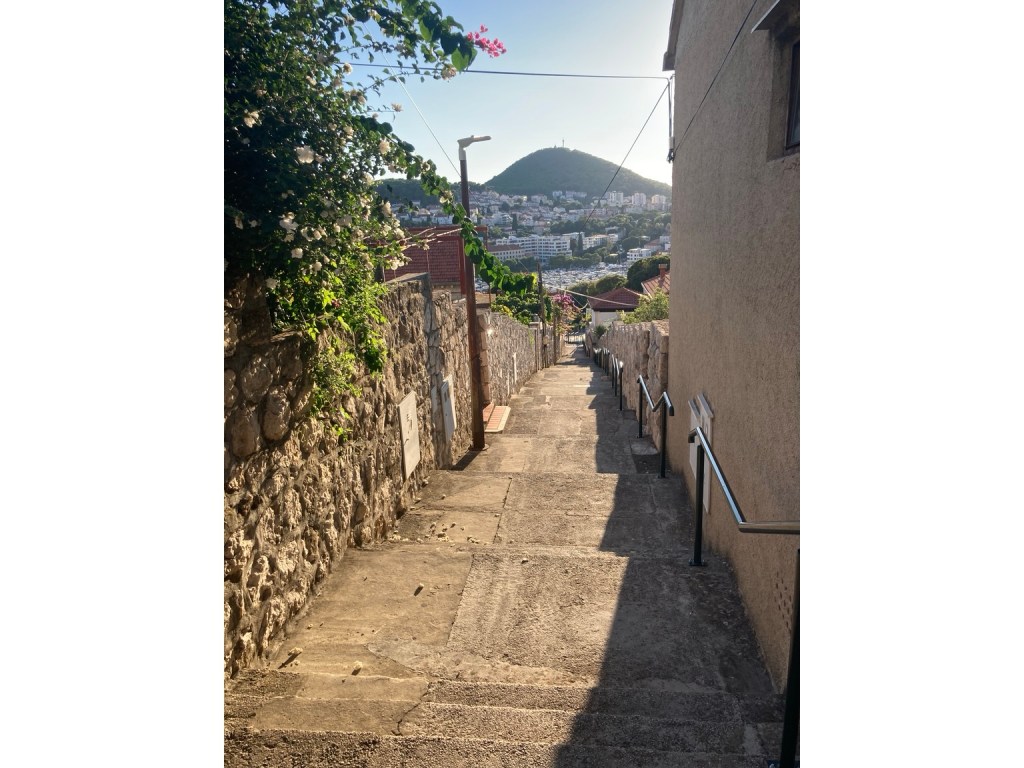
All the time, I was liaising with the hospital and GP to ensure the insurance company have the info they need, but as we went into the weekend, we still hadn’t had confirmation that they would accept the claim, and we knew nothing would happen until Monday.  To pass the time, I enjoyed more beach time and chatting with new visitors to the apartments and even went out in the evening to eat with one lady who was here alone for three days.  It must be said, that every time I went out, there were 250 steps to descend to the port … and more importantly, 250 to climb on the way back and my stamina was improving as the week progressed. 

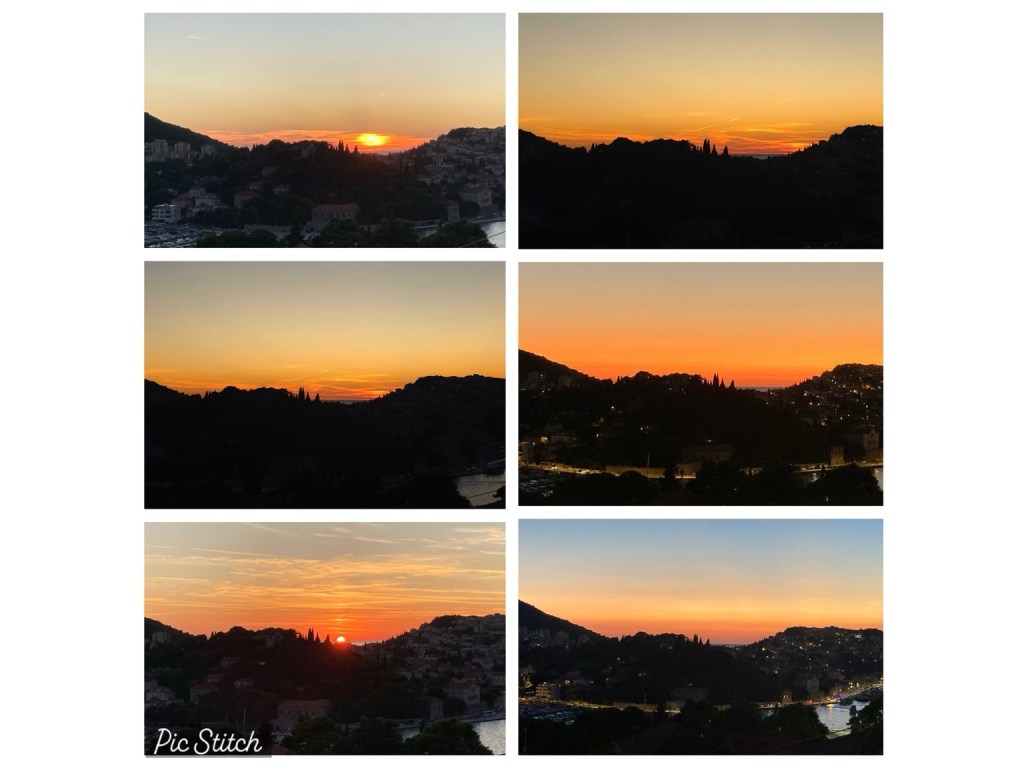
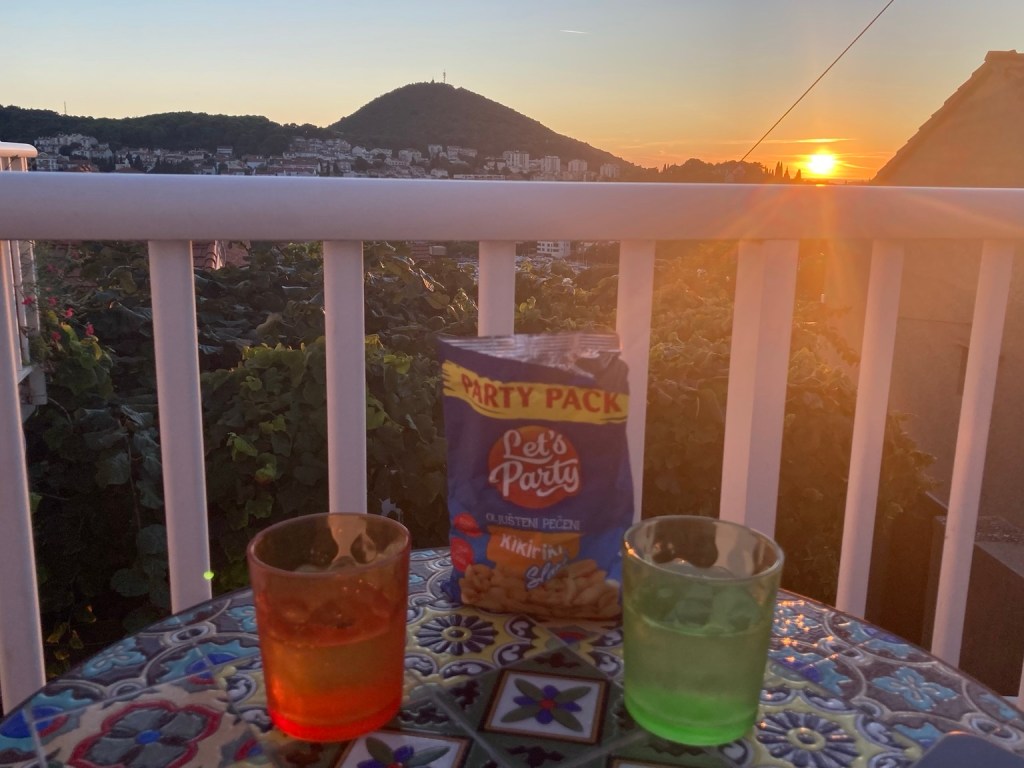
Sunset was also a highlight since there was such a good view from the courtyard and it looked different every day …

… as was the view from Chris’s hospital window!

Chris continued to rest, have physio to strengthen his walking, receive food packages and coffee when I saw him, and on Sunday there was the treat of extended visiting hours!

By Monday we were eagerly awaiting updates from all concerned and finally it was confirmed that we had a valid insurance claim and the doctor said Chris would be released soon. 

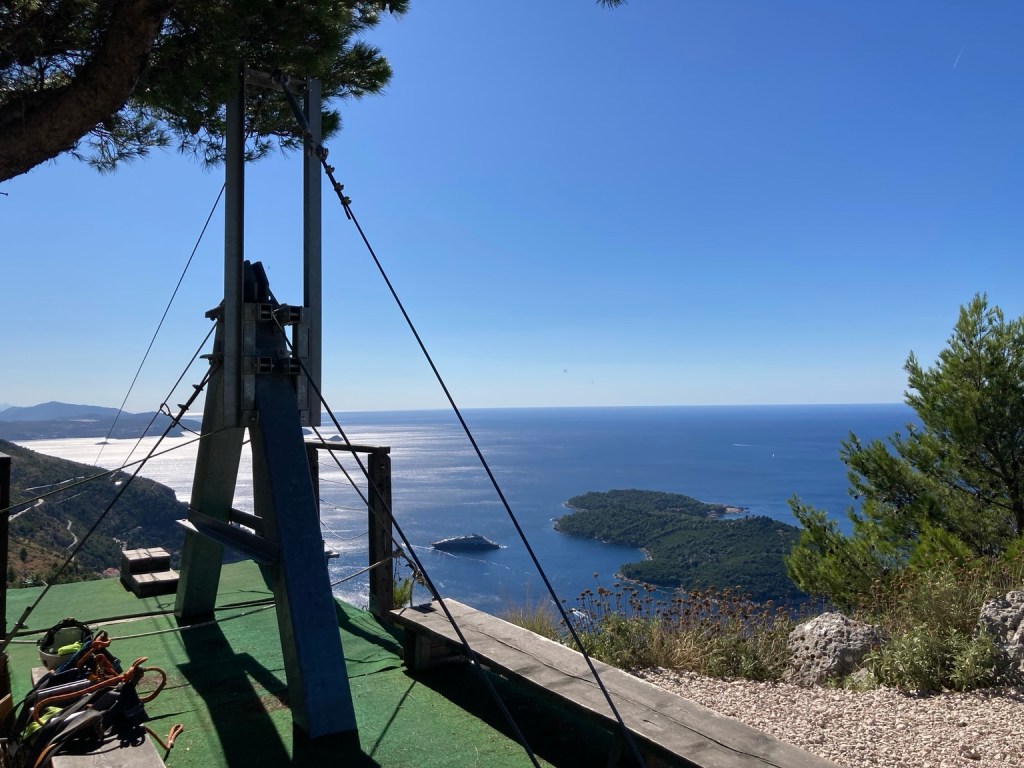
One guest came back excited by her zip wire experience, and I was sorely tempted, but I wasn’t sure having fun with Chris laid up was fair. He persuaded me to go in the spirit of research for a future trip … and it was great … similar to the experience we’d had in Krk a couple of years ago with a nice bunch of people and a wonderful panoramic view of Dubrovnik. 

I even managed to get a photo with Chris … the hospital is the white building by my left shoulder!

It still took the rest of the week for a travel plan to be put in place and finally Chris was discharged on Friday morning.

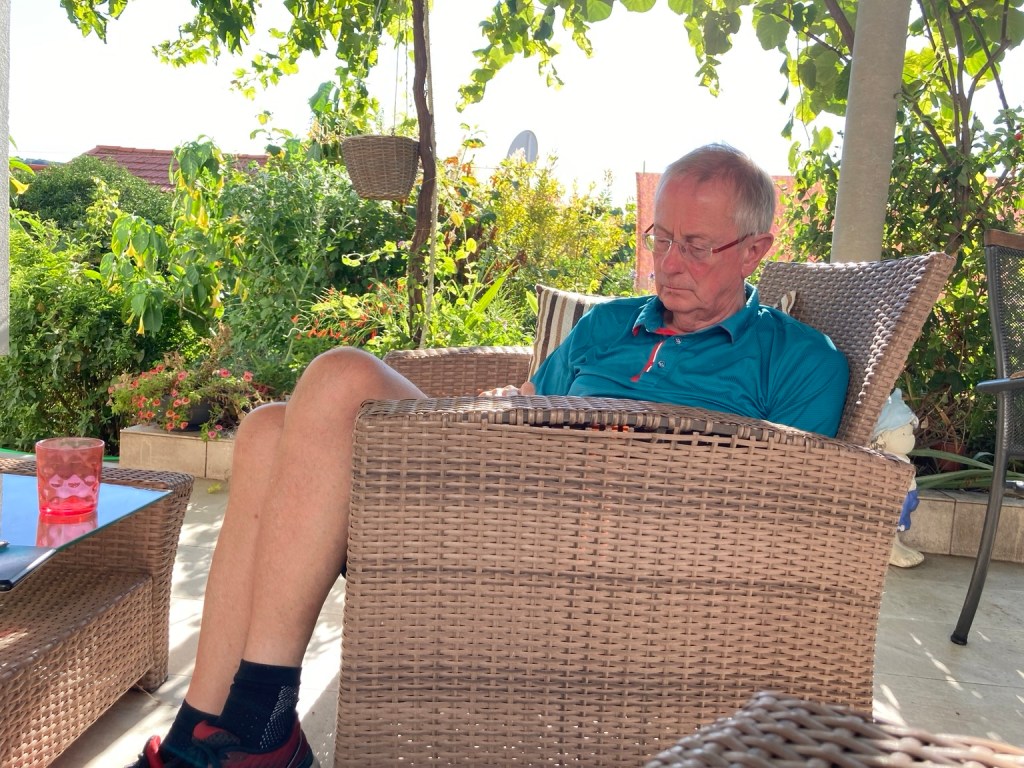
It was lovely to have him back and he came to the apartment for the weekend, with the luxury of a comfy bed, being able to sit outside and to eat well so we made the most of our last couple of days.

So our extended stay in Dubrovnik was for 12 days – much longer than our initial 8 day holiday!  As for Chris, while sitting out in the courtyard, he says his time in hospital feels a bit like a dream.  Overall we are just pleased he got off so lightly – it could have been so different.

A final breakfast …

… and then we flew back on the Monday morning flight to LGW, accompanied door to door by a flight nurse and wheelchair assistance which certainly gave us peace of mind and reminds us why travel insurance is so important.

Map

Dubrovnik … Pearl of the Adriatic

Having checked in at Miranda’s guesthouse in Lapad, we decided to take Chris to A&E as we were worried he would be getting dehydrated.  After several hours, I was taken to see the doctor and he told us Chris’s symptoms had been caused by a mini stroke and that he would be staying in hospital for several days.  Having ensured he had all he needed, Joanna and I returned to Miranda’s to scrambled eggs for supper and made a plan.

With hospital visiting limited to just 3-4pm each day, Joanna and I decided to make the most of the last few days of our trip together.  Next day, we bought our Dubrovnik Pass and set off first thing to the old town by bus.  We entered through the Pile Gate …
… which gave us our first glimpse of the Stradun or long limestone pavement that runs between the two gates of the city.  

Here is the Great Onofrio Fountain, built in the C15. I wondered about the dog sitting on top and apparently the original toppled off a couple of centuries ago and this replica was added during a recent restoration, a faithful guardian once more.

We walked all the way round the walls taking loads of pictures as every angle looked better than the last! 

Here is Minceta Tower which is the tallest …

… a view of Lovrjenac Fort …

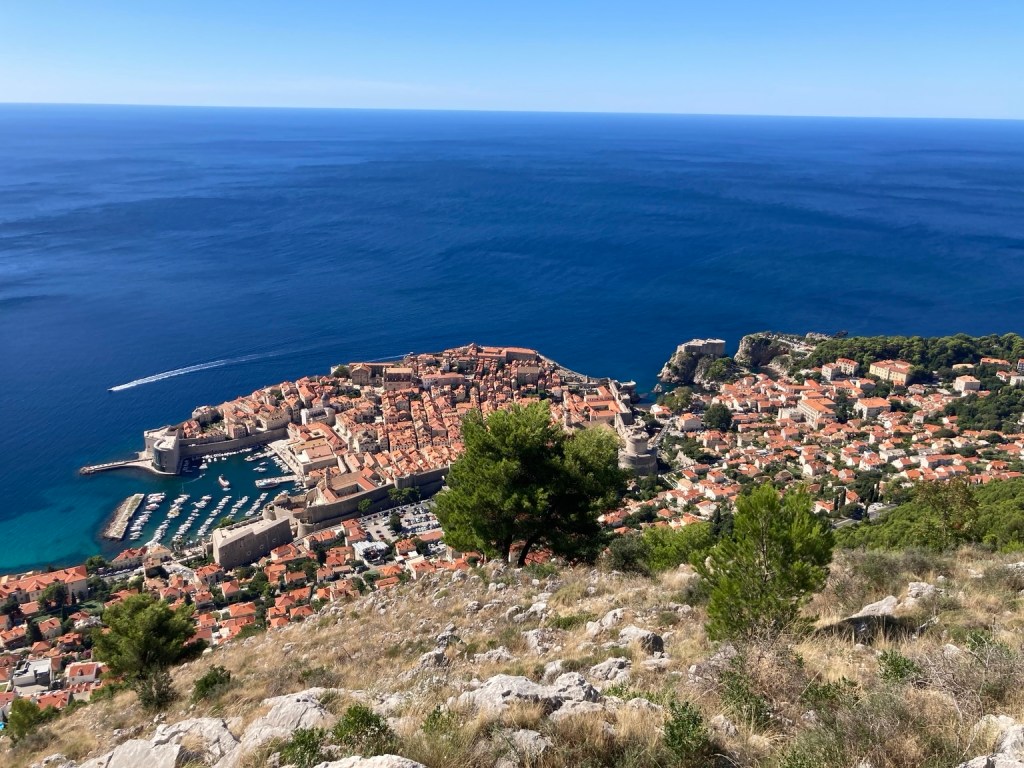
… and the small island of Lokrum beyond the sea of tile roofs.
Next we ducked into the side streets in search of a cold drink then sat on the Jesuit Steps to drink it, one of the few GofT locations I remember, with Cercei doing her walk of shame …

… and the church above.
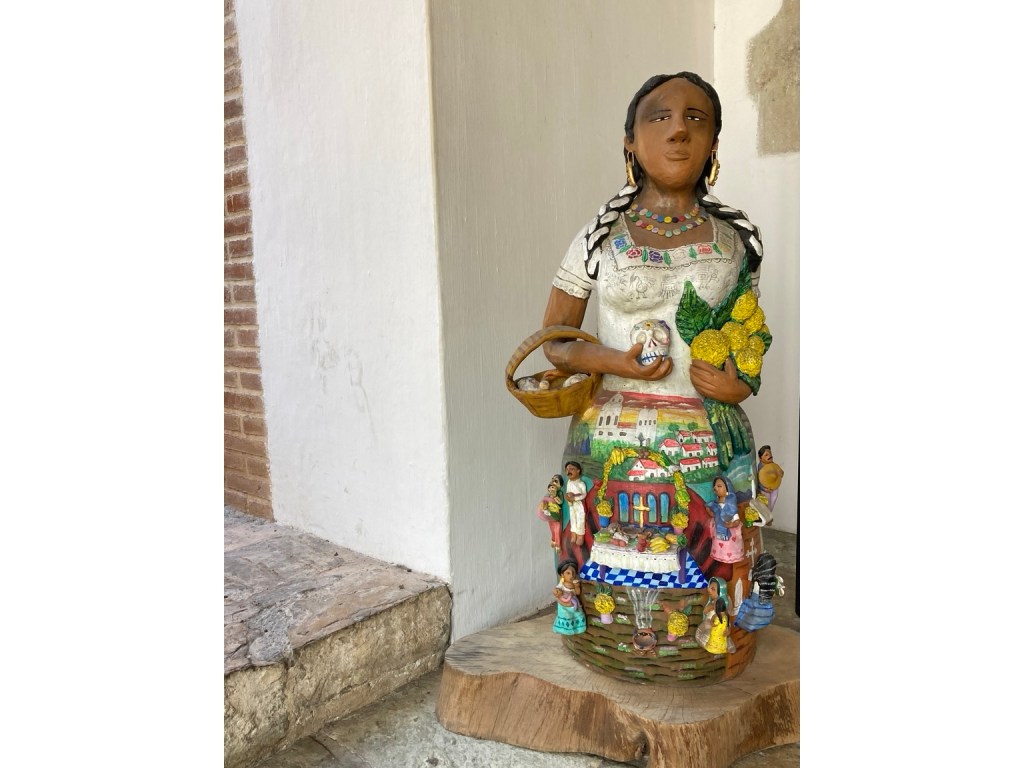
Our ticket gave us free entry to the Rectors Palace, with another lovely staircase …

… then we walked past the Sponza Palace …

… to Luca Square with the clock tower and St Blaise’s Church.

Returning to Pile Gate we went out and were astonished by the number of people getting on and off tour buses.
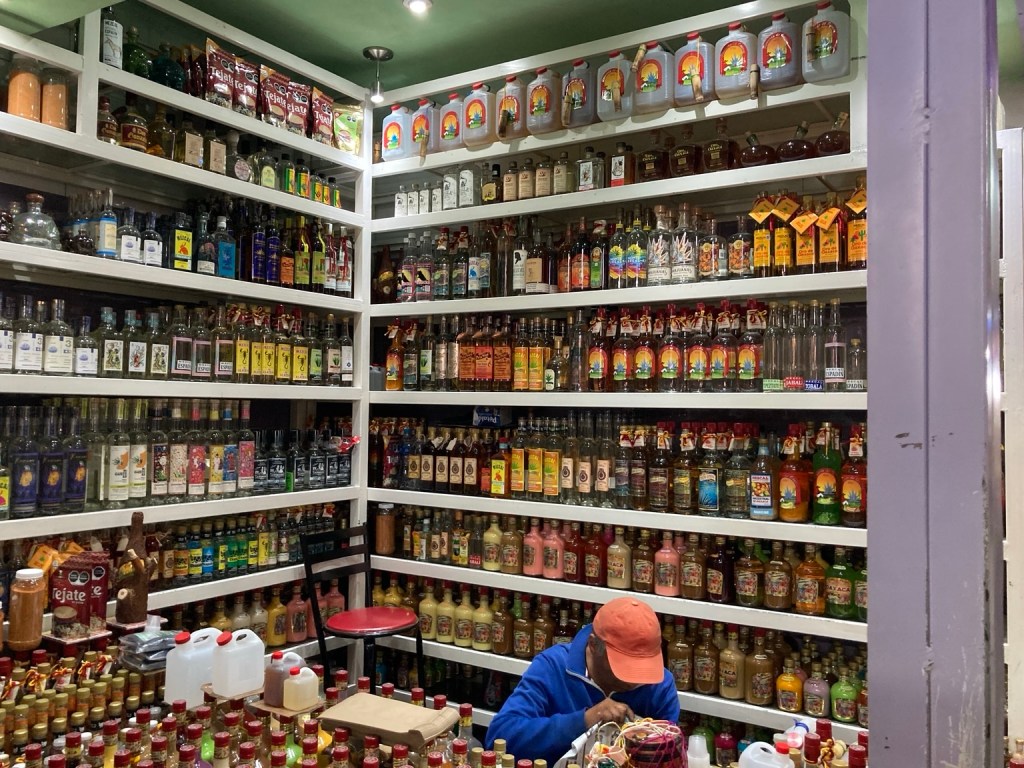
From one panorama to another, here is the view from Lovrjenac Fort …

… and on that note it is time for lunch! We shared an amazing fish platter in the heart of the old town …

… before heading back on the bus for visiting time. Being the weekend, the hospital was really quiet and Chris was still very tired, not quite himself but no doubt in the best place.
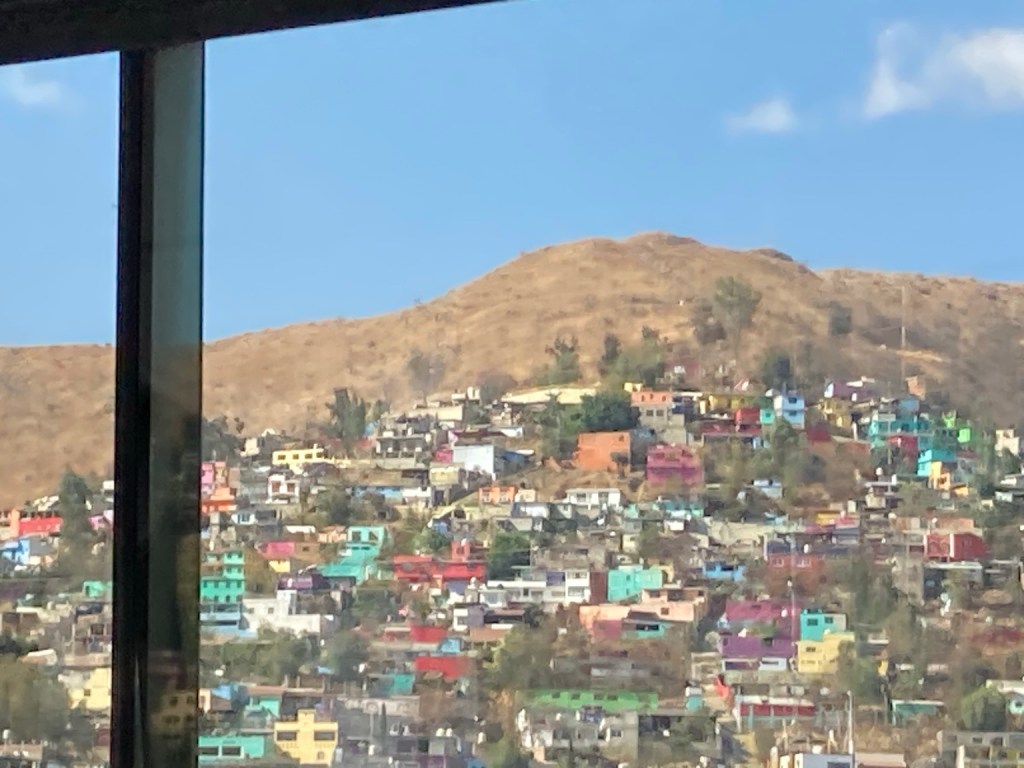
Later, we squeezed in a little beach time Croatian style, sitting on a concrete platform and having a paddle …

… then took the bus back in the evening to see the old town at night …

… and had Caesar salads and Prosecco and icecream.

It was the night of a lunar eclipse which should have shown a red moon, but all we saw was the moon increase in size as the eclipse passed. 

As much as we loved looking round and walking the walls, it was just so busy, with tour groups everywhere.  We had a great view from the fort so didn’t fancy the cable car and Lokrum island is full of Australian plants so we chose not to return the next day. Instead, we took the car north out of the city early and visited Trsteno Villa and arboretum which Joanna had found, wandered the gardens …

… and snapped the fountain with Neptune …

… then spent several hours at Veliki žal beach …

… but were still back in time to visit Chris who was looking much rested and with an appetite once more. The doctor had gone home, but it was confirmed he would be staying several more days.  Joanna and I ate over the road at Bellevue restaurant, where the menu came as a message in a bottle, watching the twinkly lights of the port and eating fish. 

Our stay at Miranda’s was over and we had one night in Cavtat before our flights home. We decided to continue our trip as planned, return the car and Joanna to the airport so she could fly home and luckily found a nice guesthouse close to the hospital at short notice for me.  We went early to see the doctor who confirmed Chris was making a good recovery, but needed to stay and rest.

Having checked out beaches, we spent the day relaxing in Plat.  Amazing that I think this was the place we stayed for a family holiday in 1975, but I didn’t recognise anything!  

In Cavtat, we walked round the harbour, then sat for cocktails and watched the sun go down before our final meal together. Later we sat watching the harbour drinking a very nice local wine called Posip, putting the world to rights.

Somehow, despite everything, Joanna and I have really made the most of our last few days together and we have great memories of all of us in Krka.  Everything went smoothly in the morning and having waved her off, I got the airport shuttle back to Dubrovnik.

Map