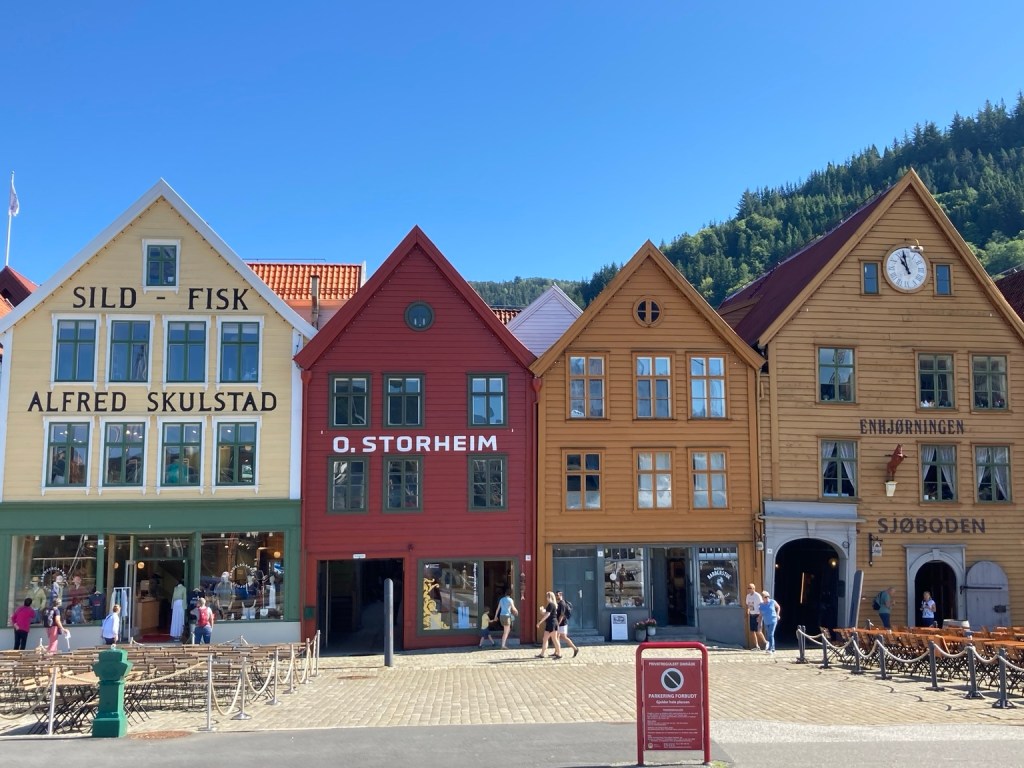
Bergen and the Hanseatic League

After a 3 hour drive we arrived in Bergen, but with so much packed into the day, it was almost 10pm before we arrived and checked into our sea view room! 
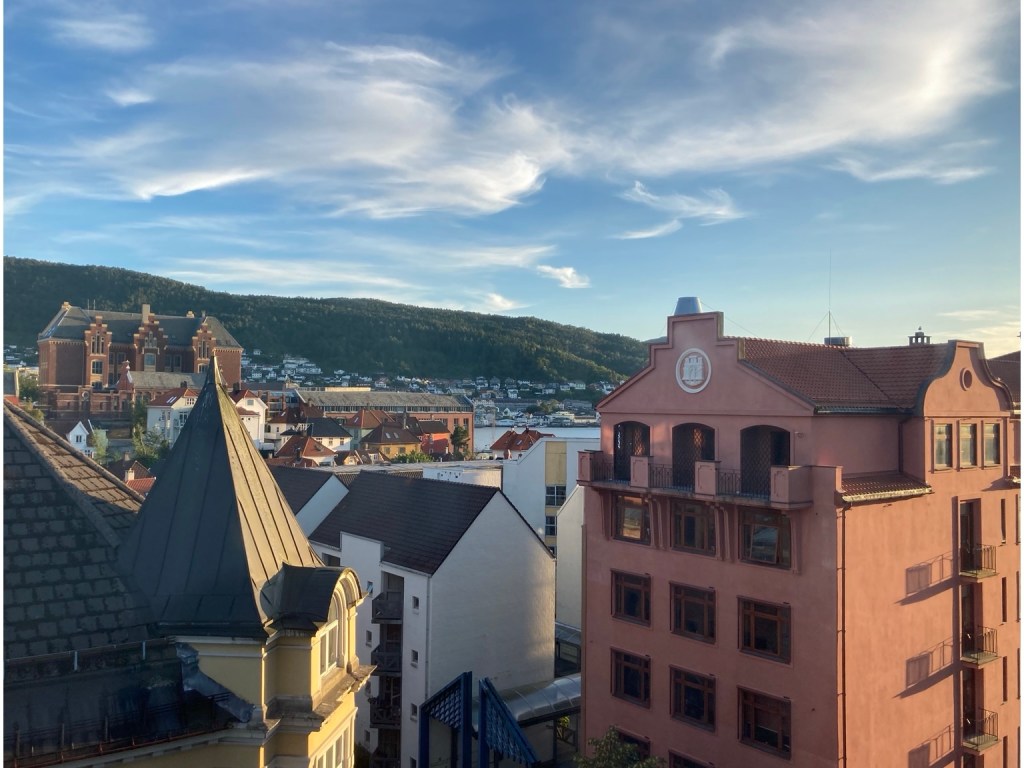
Despite the bright sunshine, it felt too late for dinner, so we just got take away pizza slices from the 7-eleven and sat in the park to eat them before heading to bed.

We had a guided tour round the town in the morning starting on the far side of the bay …

… and then had a couple of hours free time to explore further, which was a lot to pack into a morning.  Luckily it was a beautiful day, which is rare in Bergen where it rains on average 260 days a year.  

From the C11th, Bergen was the largest and most important town in medieval Norway and is known for its maritime history. It became a hub for the Hanseatic League which enabled dried stockfish from the north of Norway to be traded, mainly for grain.  In time, the League which was controlled by German merchants, came to dominate the economy, becoming increasingly wealthy and disliked by local Norwegians.

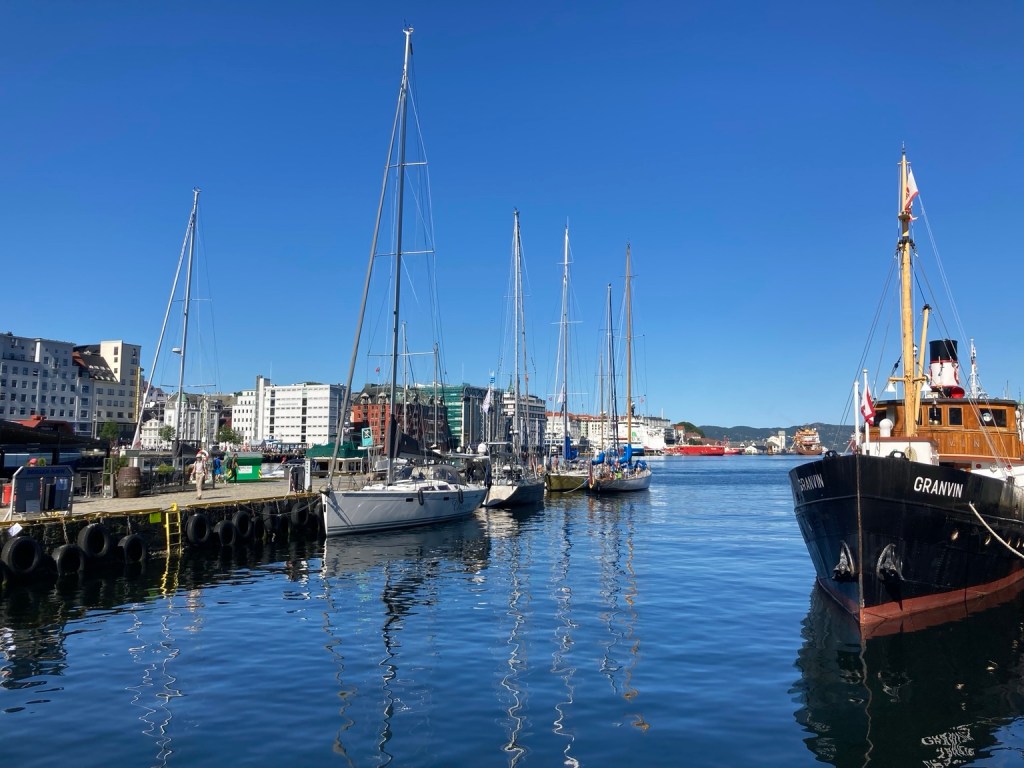
The heart of the town is the harbour …

… and Torget, the open air fish market …
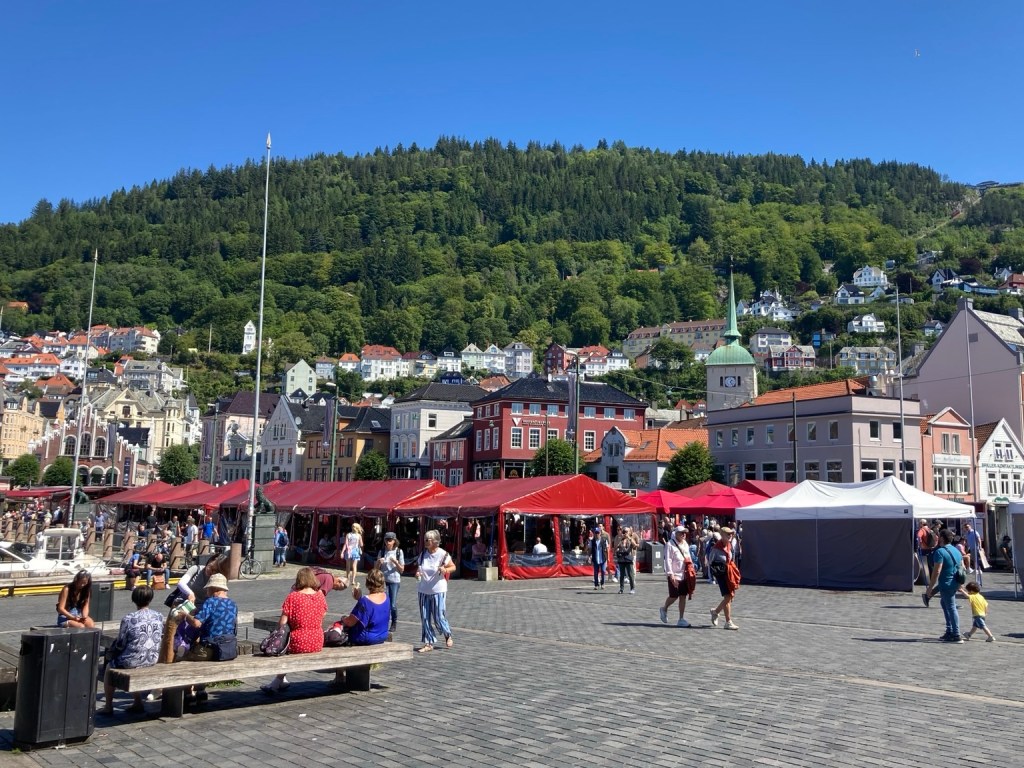
… where they still sell stockfish …

… amongst other fishy things …

… but I just had tasters of reindeer and whale sausage. There were also jams, and while cloudberry is the most famous, it is very sweet so we chose a small jar of lingonberry jam to bring home.

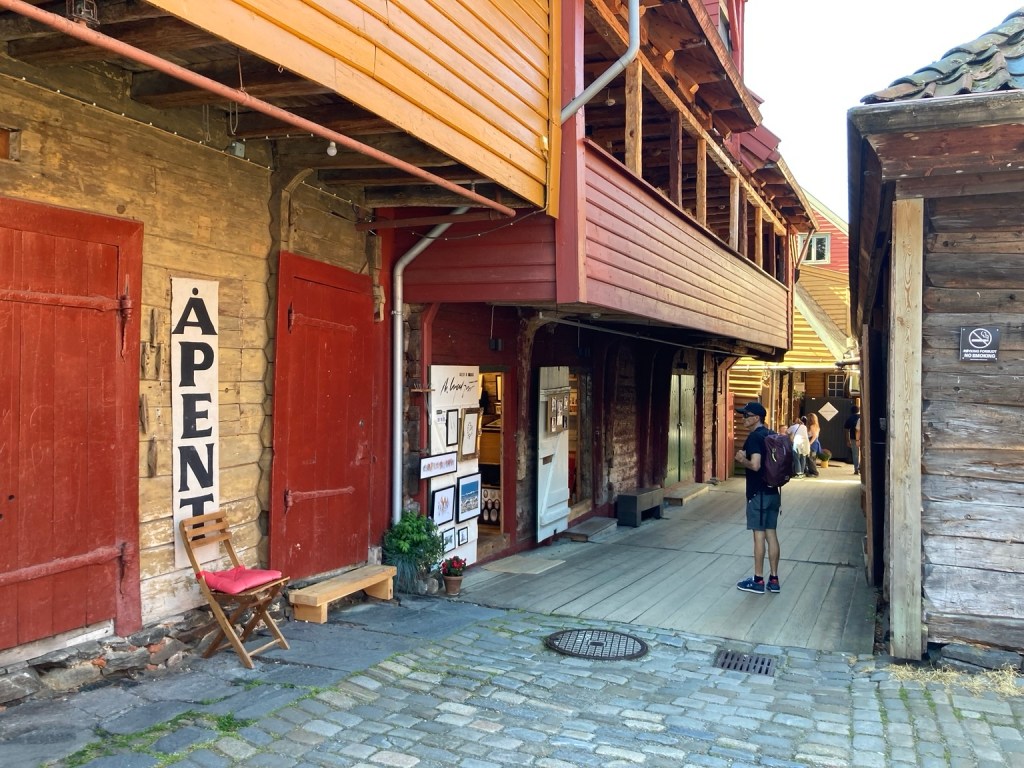
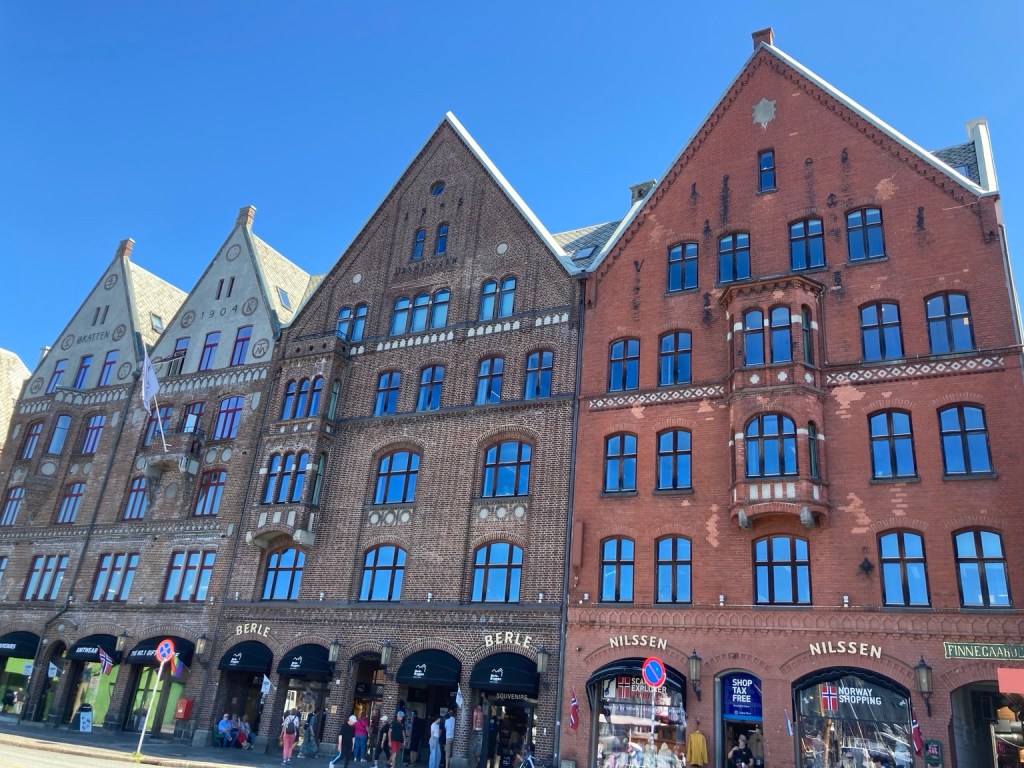
The harbour side area called Bryggen is lined with merchants’ trading houses, built after the great city fire of 1702. The very oldest are wooden and now protected …
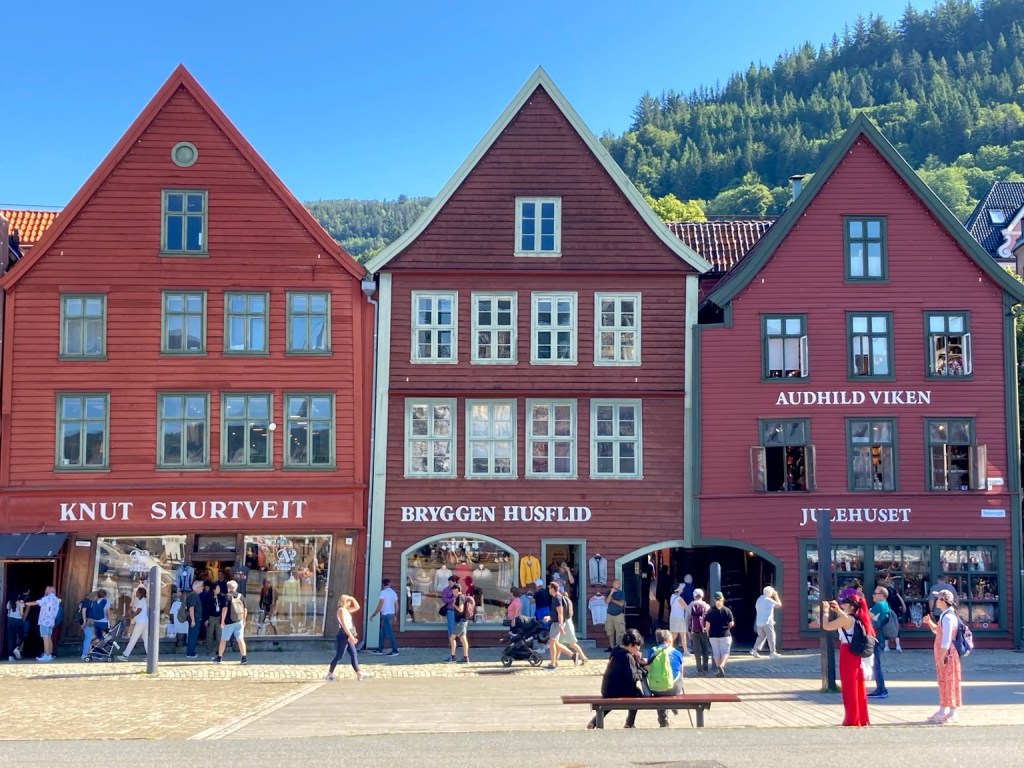
… but others were demolished in favour of brick buildings, although their style is sympathetic.
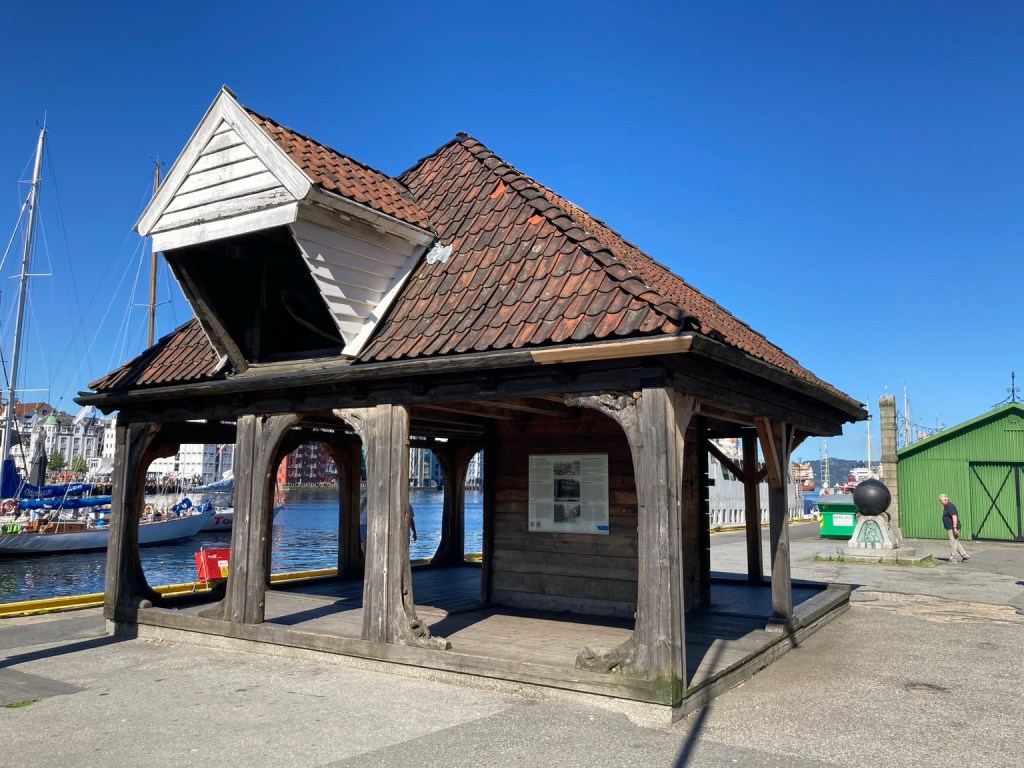
Everything about the League was regulated from the design and size of the buildings to the behaviour of the employees, but sleeping above all that smelly fish can’t have been pleasant.  This model shows how the area would have looked.

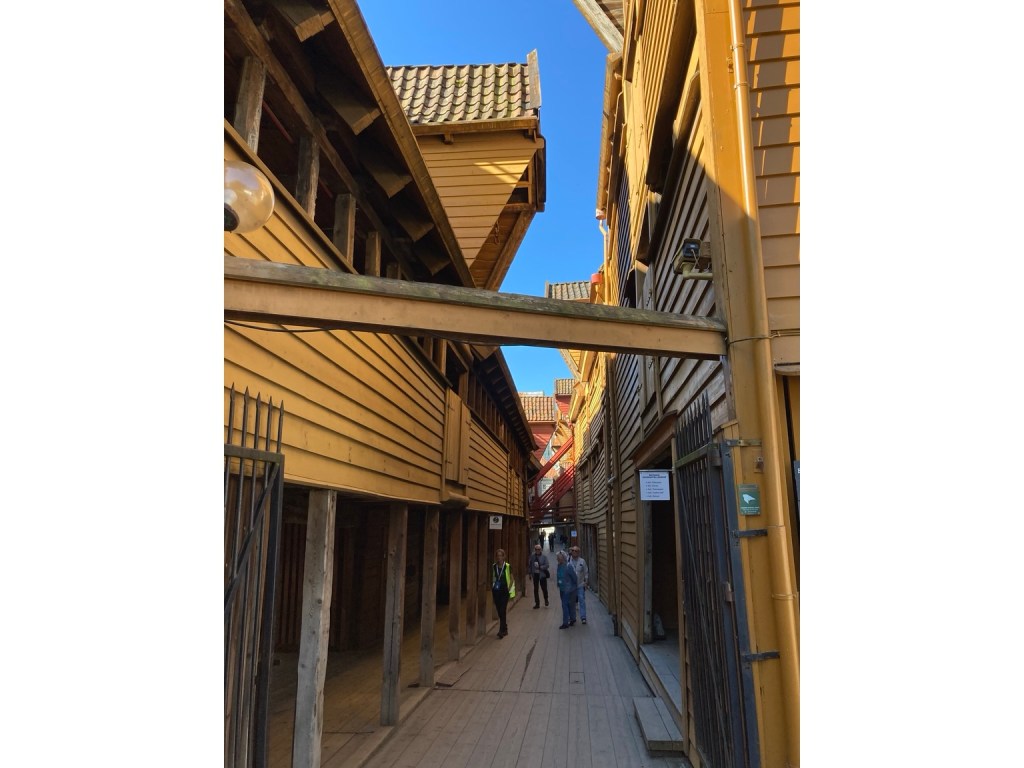
We wandered down the alleys and between the buildings, most now giftshops selling jumpers and trolls.
The Hanseatic Museum was closed for renovation, but we did visit the Schotstuene or assembly rooms, where merchants gathered to eat, hold council and relax. 

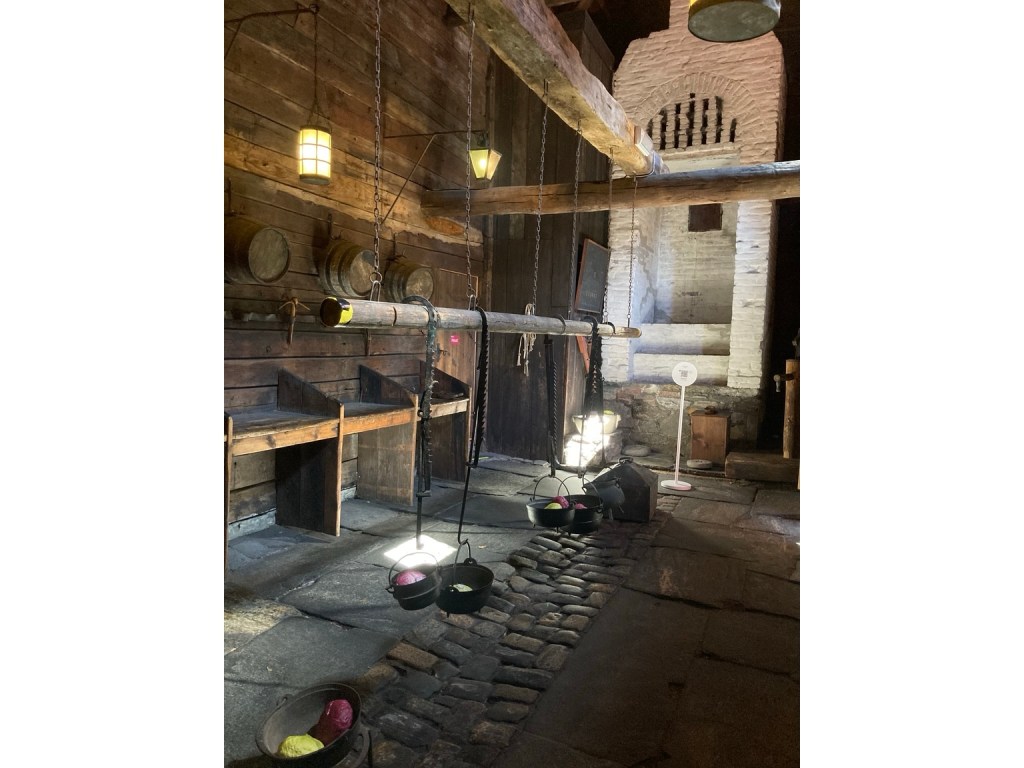
To safeguard against fire, this building had a stone built kitchen and was the only place in the trading post which allowed cooking and heating.  The kitchen was laid out with each trading company having its own workstation and cooking pot …

… and the stone hearth at the end would heat the assembly room on the other side.

Later intricate metal stoves were installed.

We passed the old meat market …
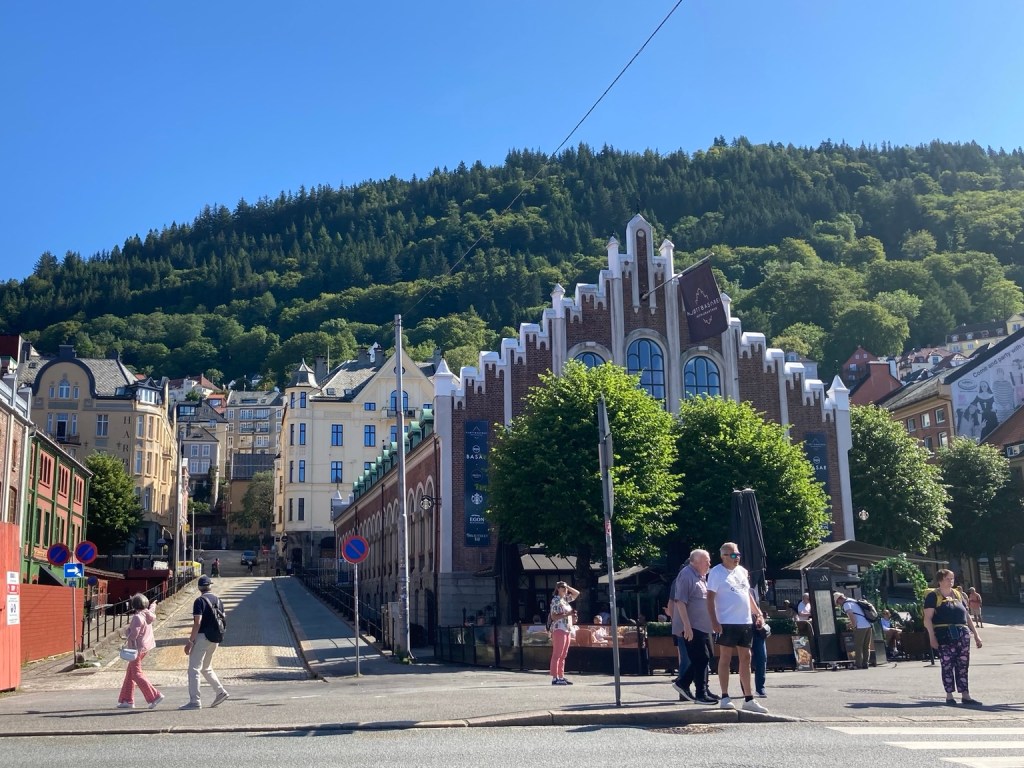
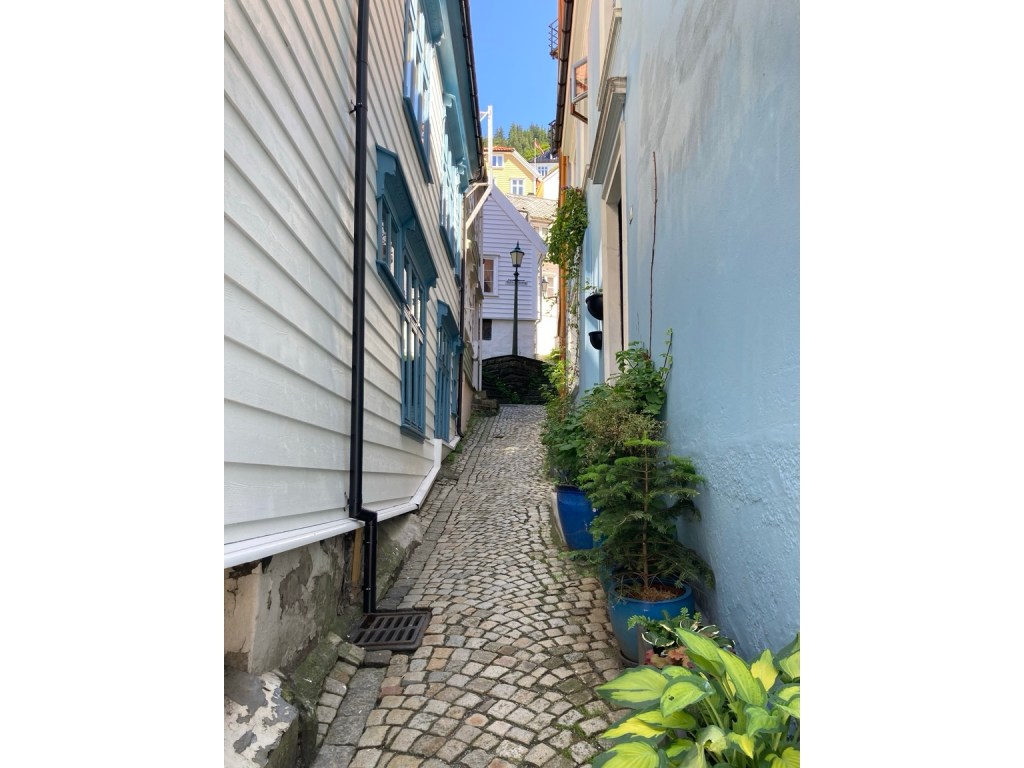
… and took a wander through the back streets …

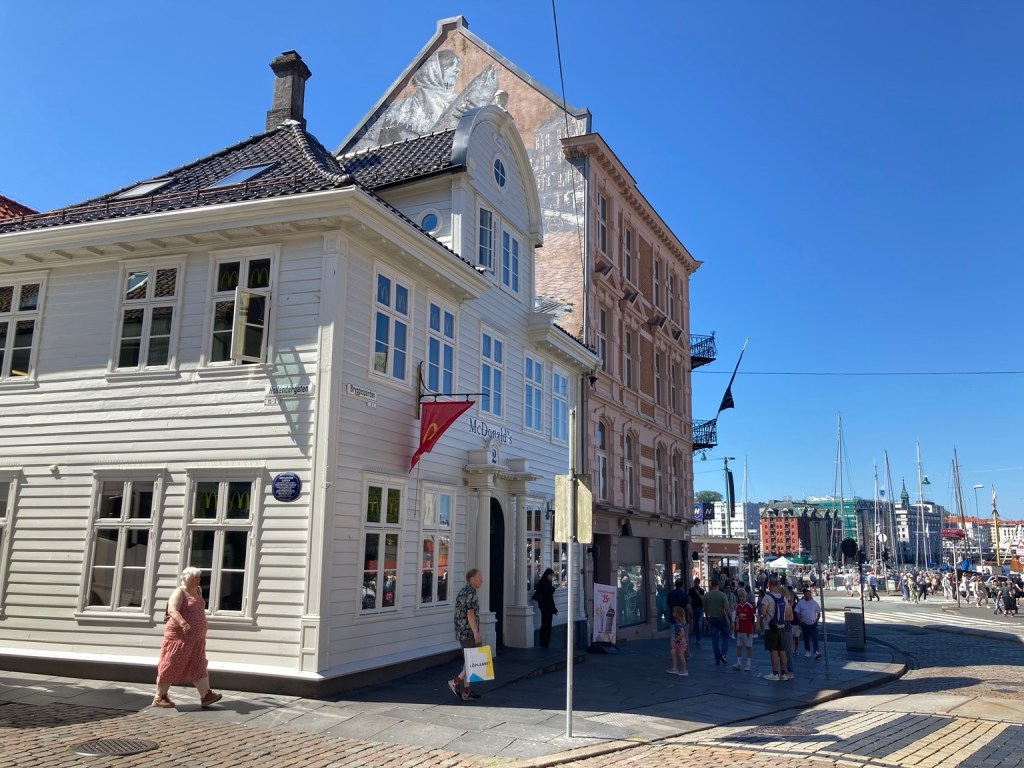
… where even the Macdonalds was cute.
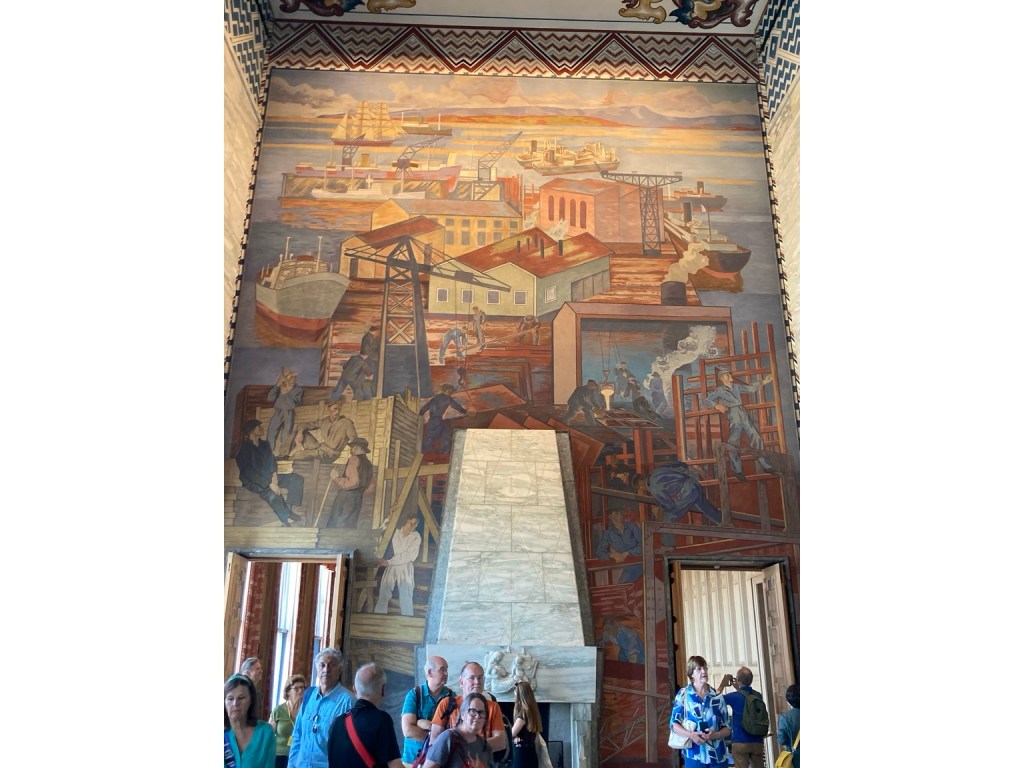
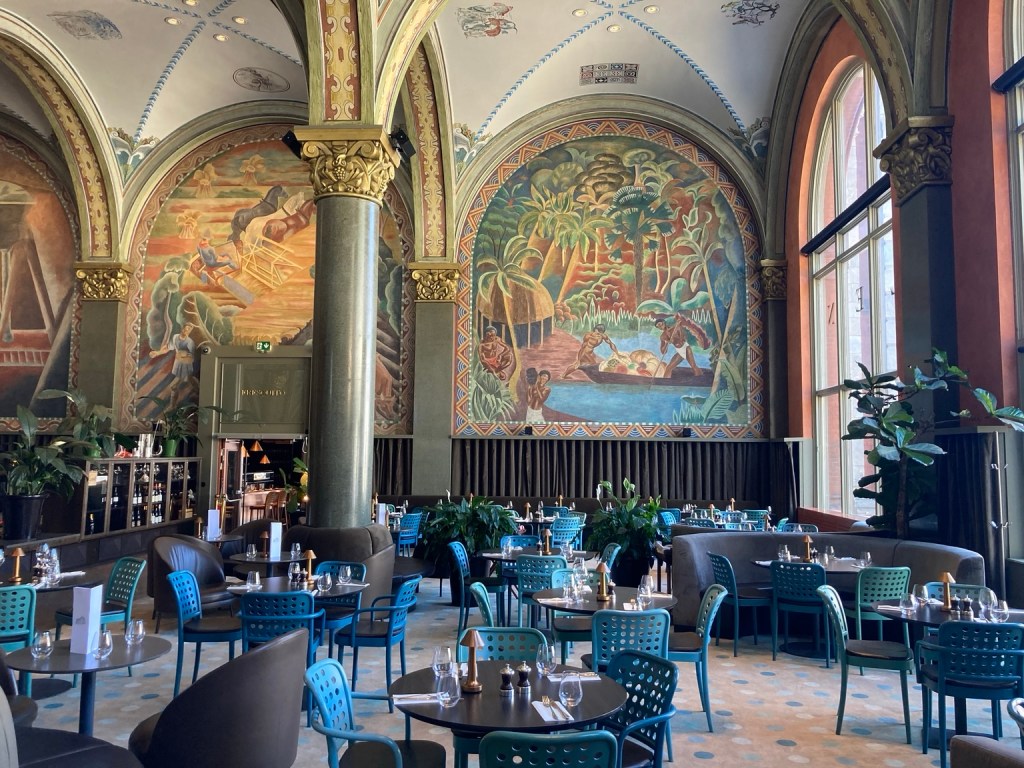
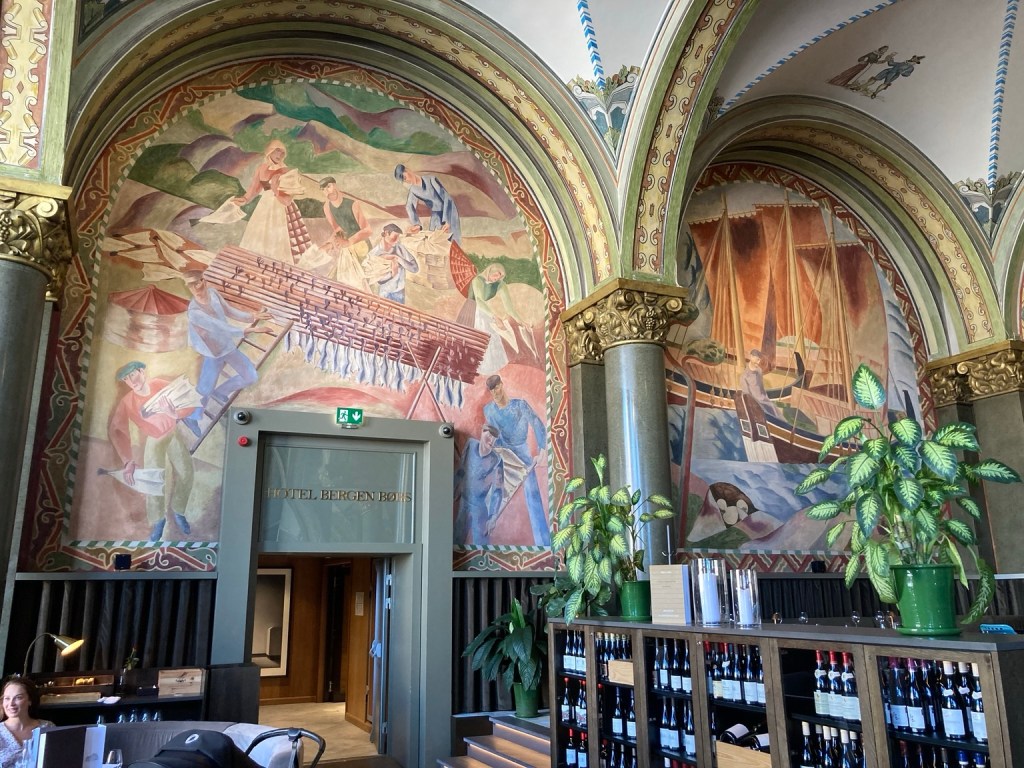
We also popped in to the Fresco Hall, part of the old stock exchange building, which was decorated with frescoes linked to Bergen’s business life in the 1920s, but now a restaurant.
Finally, Bergen has installed a pneumatic waste collection system to do away with bins and trucks.  Instead, rubbish is deposited into special chutes and it gets sucked away through pipes to a terminal. We were eager to try it and saved our lunch wrappers specially …

… only to find you need to have a residents code to use it! As Chris spotted, check out the shirt, at least one slot machine worked this season!

Time is up … got to go … we’ve got a ferry to catch!

Map

Sognefjord … Mountains & Fjords

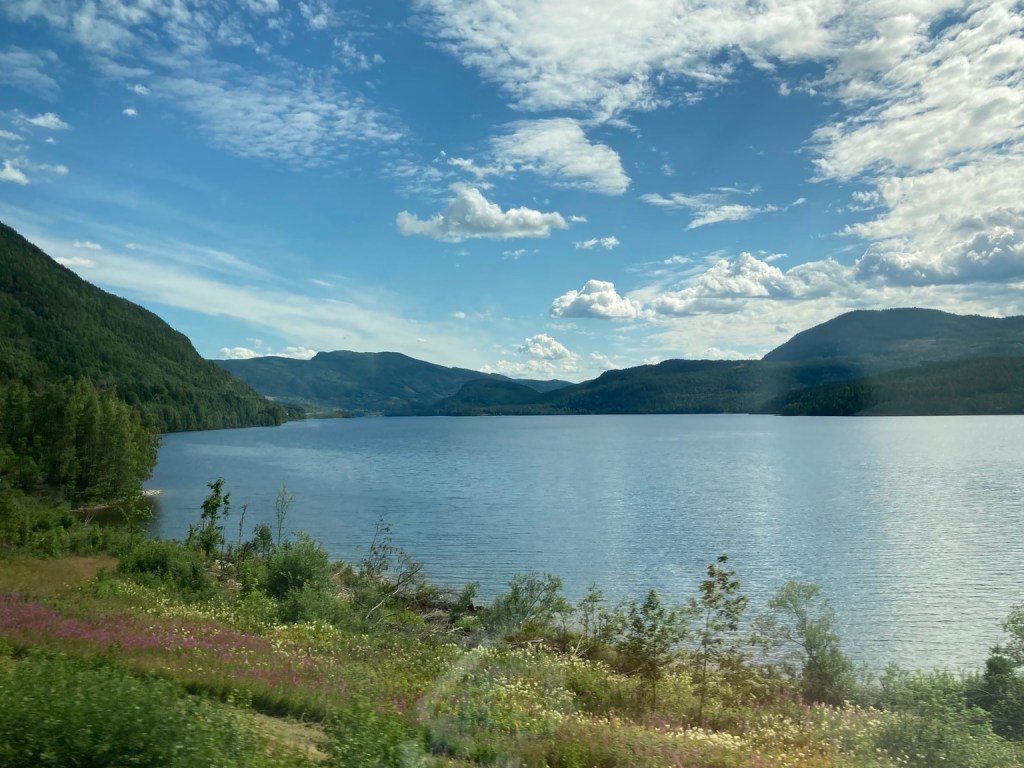
A long afternoon drive took us westwards, alongside stretches of water and through lush valleys …

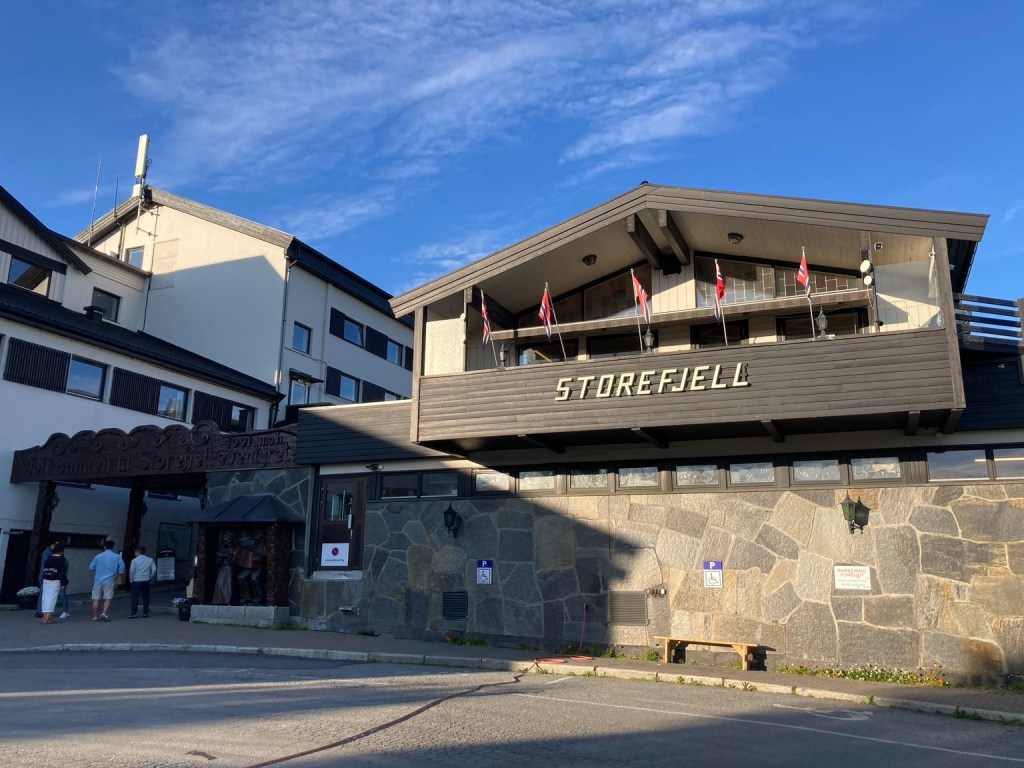
… until we started climbing to the Storefjell Resort Hotel, which has views across the mountains.

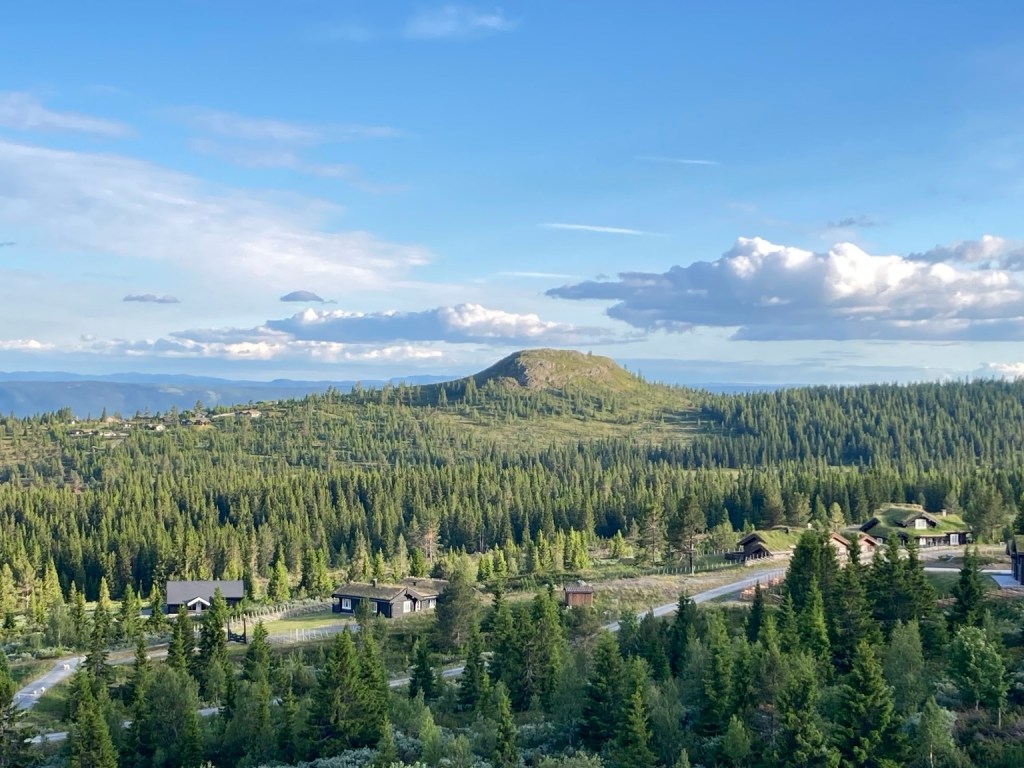
We stood on the deck in the sunshine after dinner and counted the number of small farm buildings with grass growing on the roof!

These grass or sod roofs were commonplace in the countryside and despite more modern materials, are making a bit of a comeback.  The turf is laid over layers of birch bark and provides excellent insulation, helps to absorb rainwater and reduce runoff, with the weight of the sod compressing the logs to make the house more airtight. 

Everyone in the hotel had an early start so breakfast was like an Olympic event, collecting food and cutlery in relays, then speedy consumption so we were on the coach by 8am!

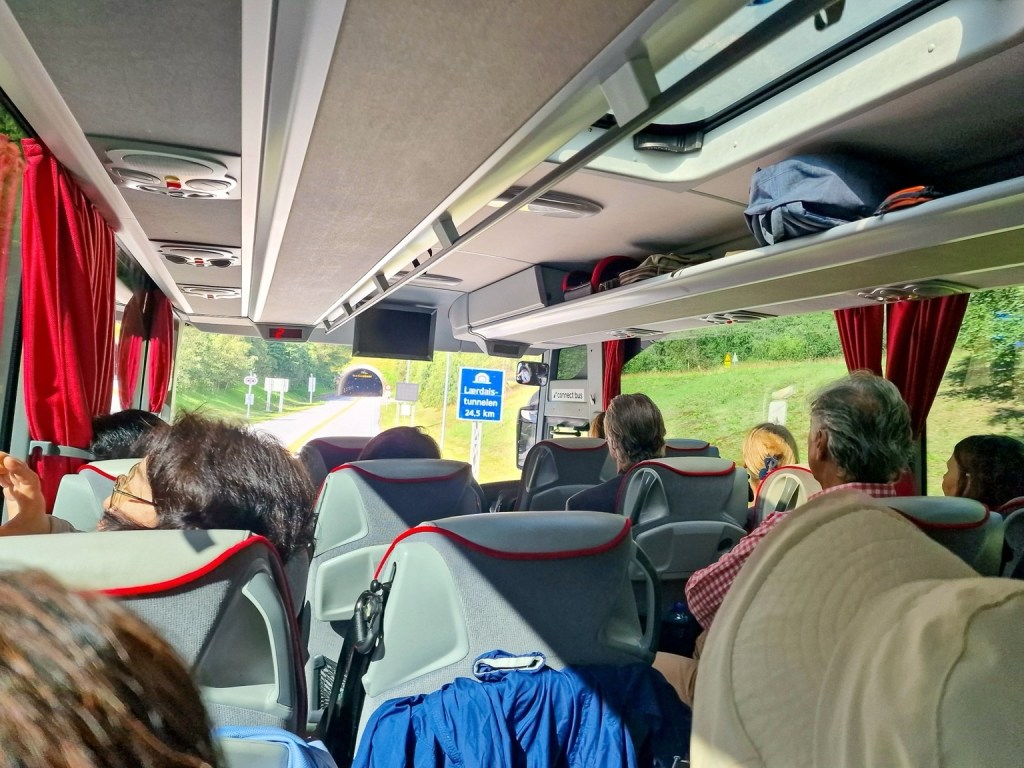
Our day was action packed, beginning with a drive through the Lærdal tunnel which at 24.5kms is the world’s longest road tunnel – plunging us in the dark for 20 minutes!

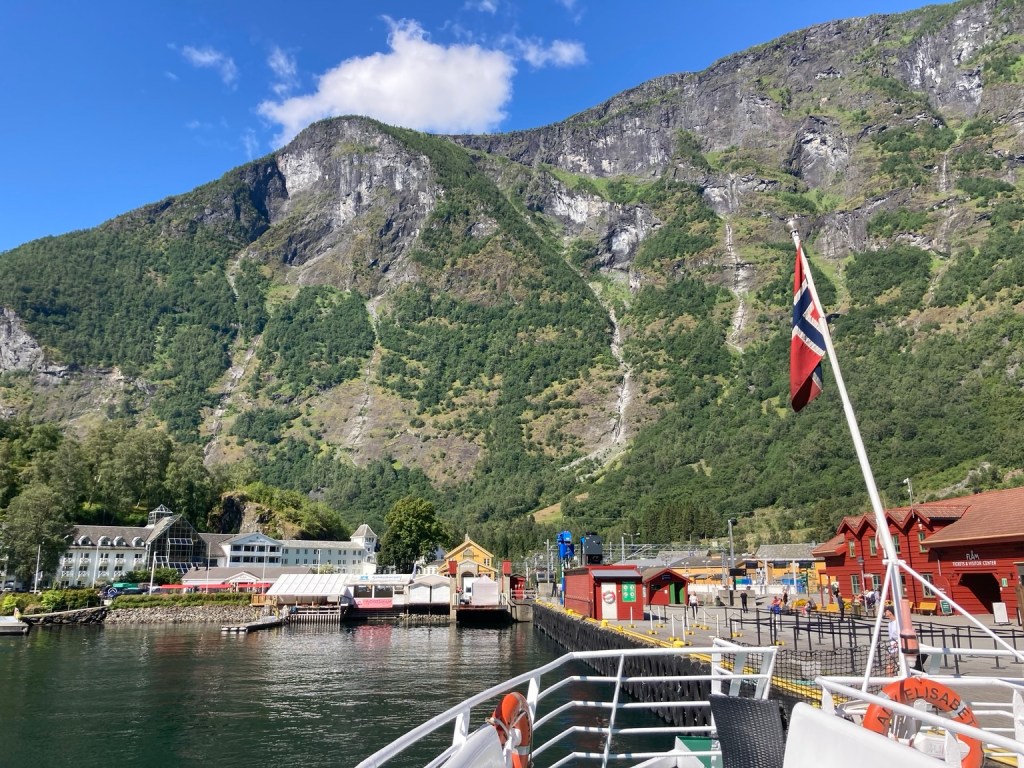
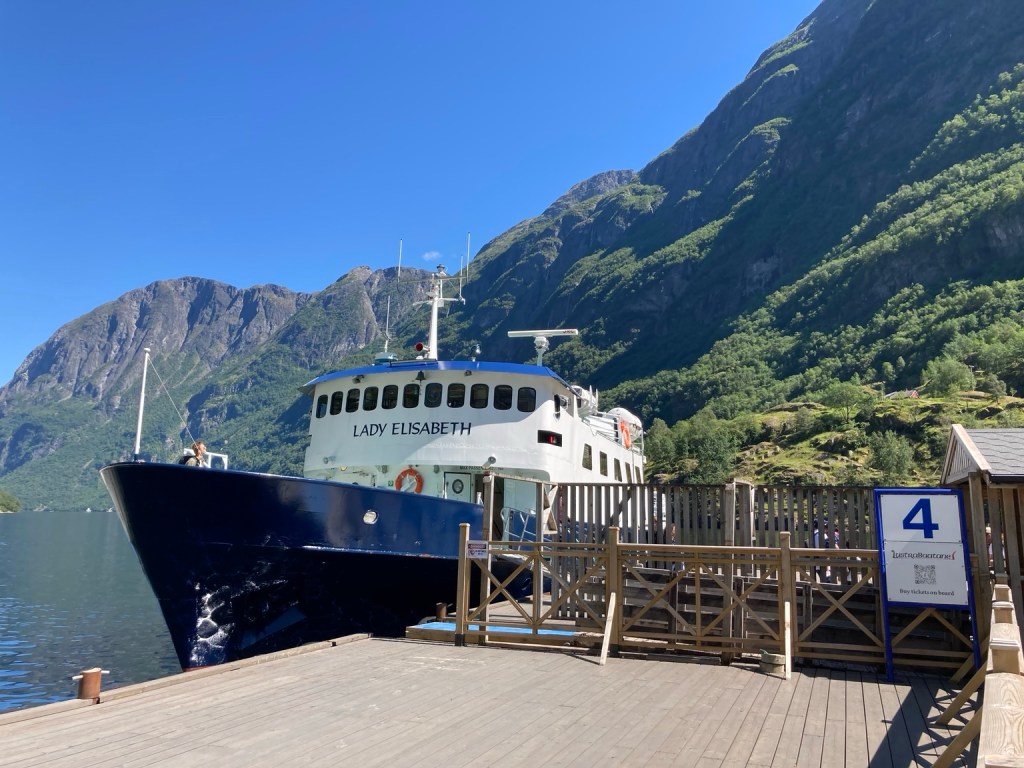
We continued to Flåm, situated on a branch of the vast Sognefjord, Norways longest and deepest fjord. Here we boarded the Lady Elizabeth …

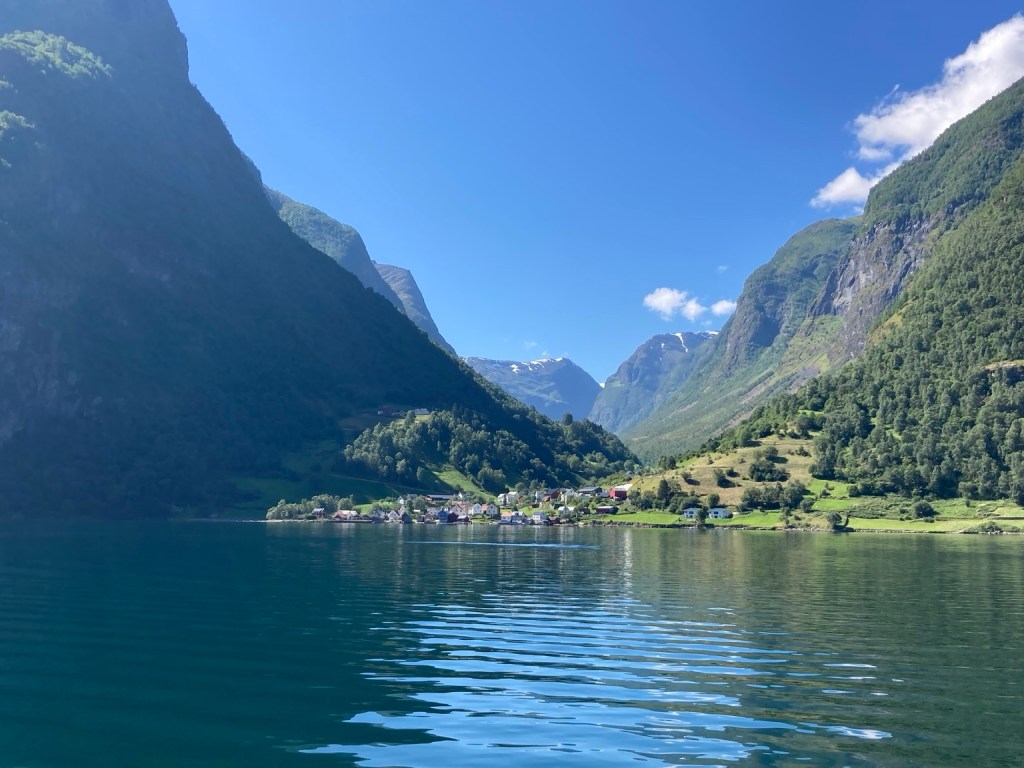
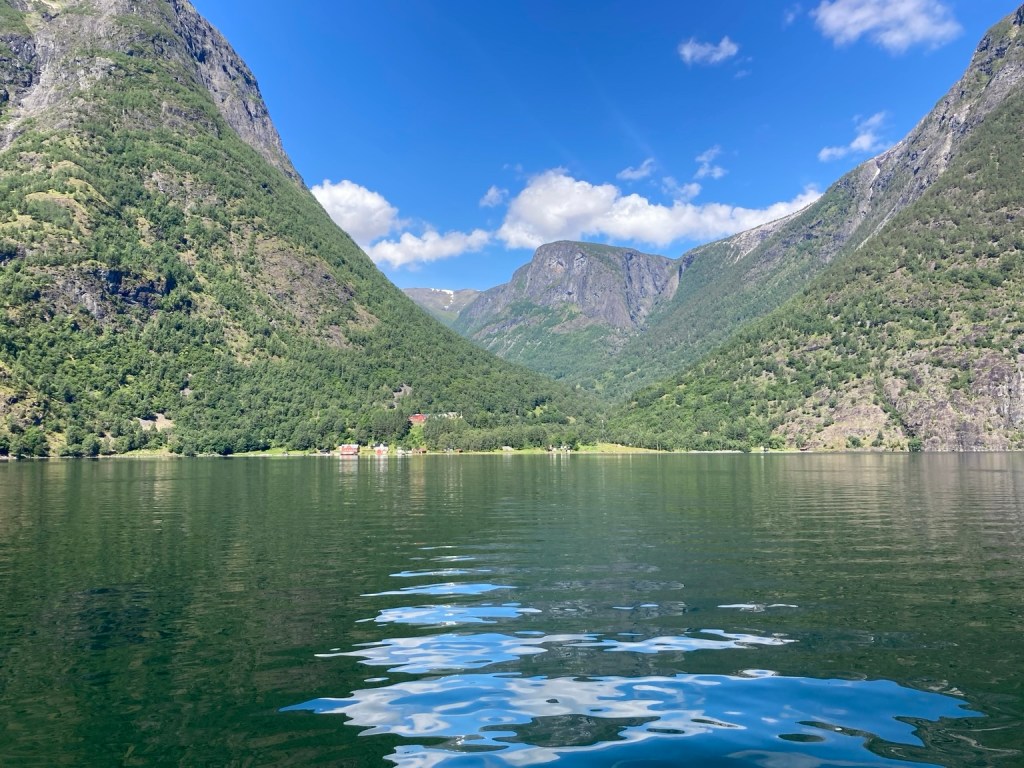
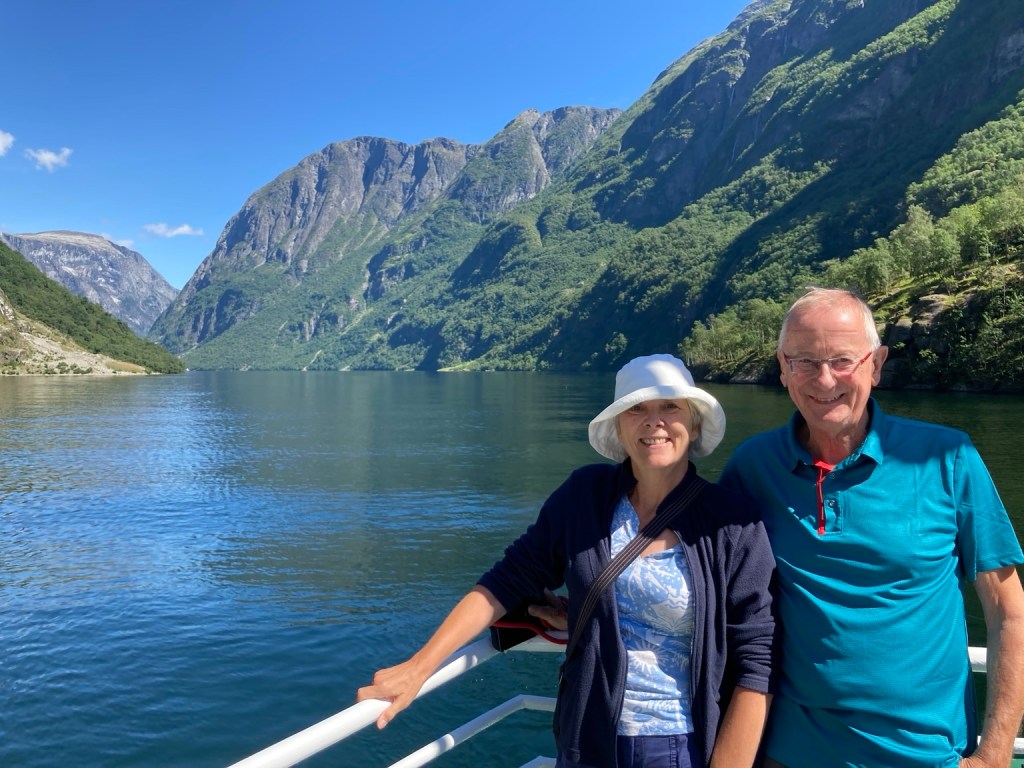
… for a 2hr cruise down the Aurlandsfjord and then into the Nӕrøyfjord to Gudvangen.

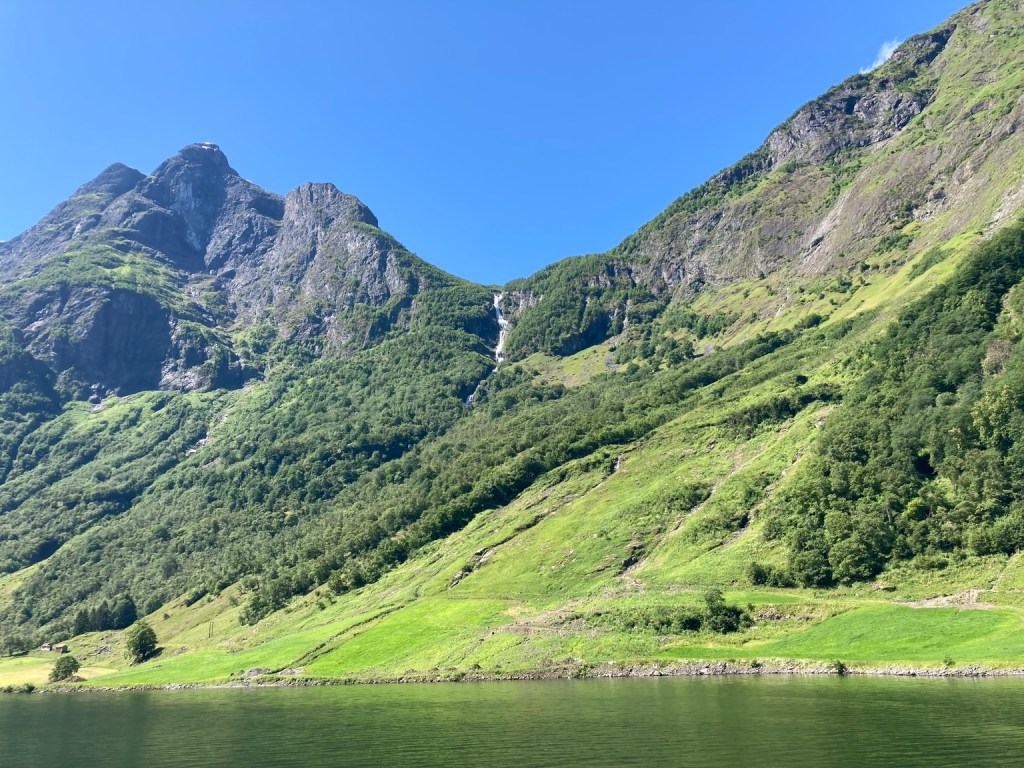
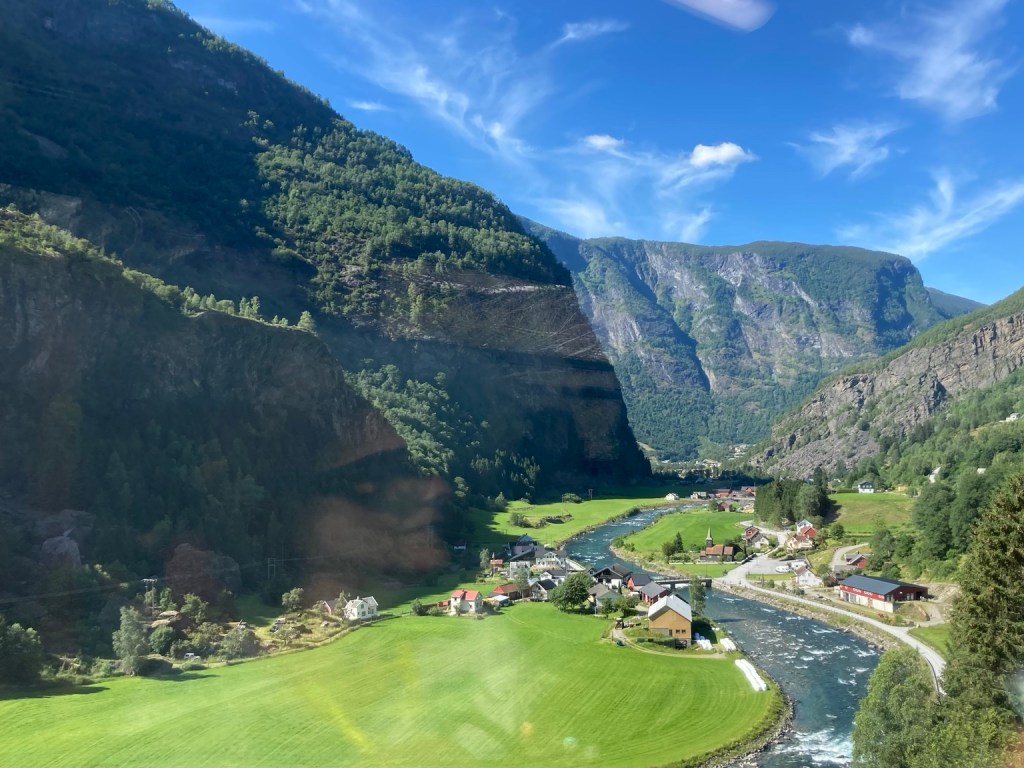
It was breathtaking … the snow capped mountains were high, the waterfalls gushing, the fjord clear and blue and the sun shining.

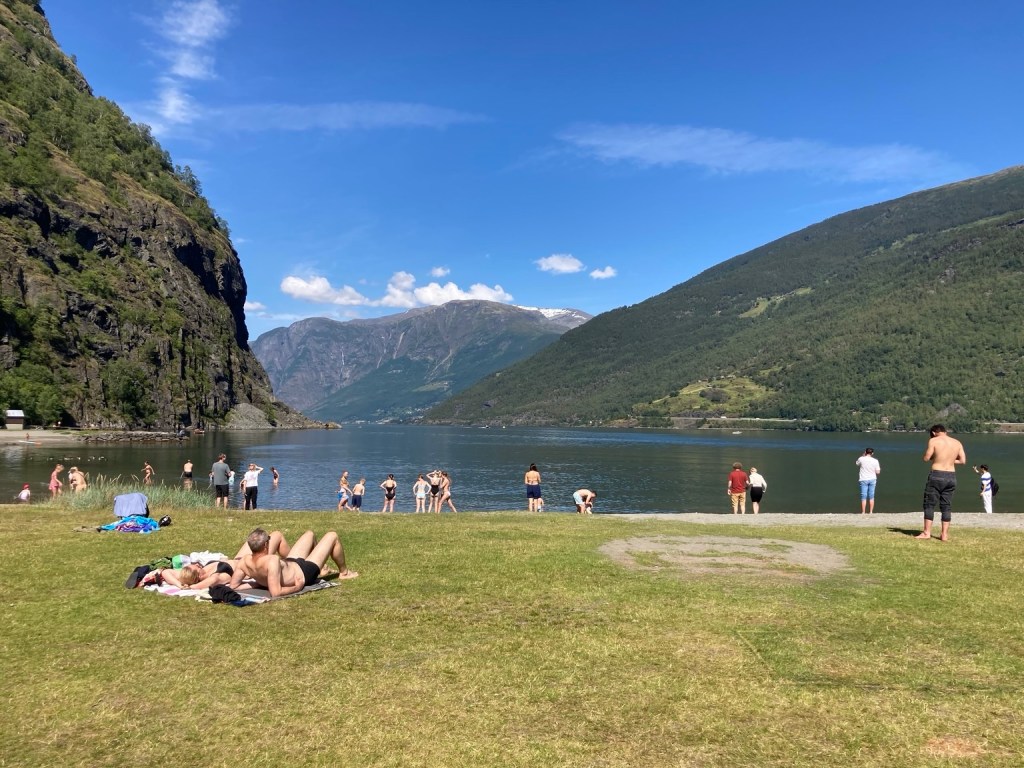
The coach returned us to Flåm, were we had free time to get some lunch.  We also had time to paddle …

… and to look round the museum which told the story of the building of the Flåmsbana, a 20km stretch of railway linking Flåm with the Oslo-Bergen line.  Built in the 1920s with 20 mainly hand-dug tunnels, it took 4 years to complete.  It is also the steepest standard-gauge railway in Europe so fortunately the trains have several sets of brakes … just in case!

Once we boarded …

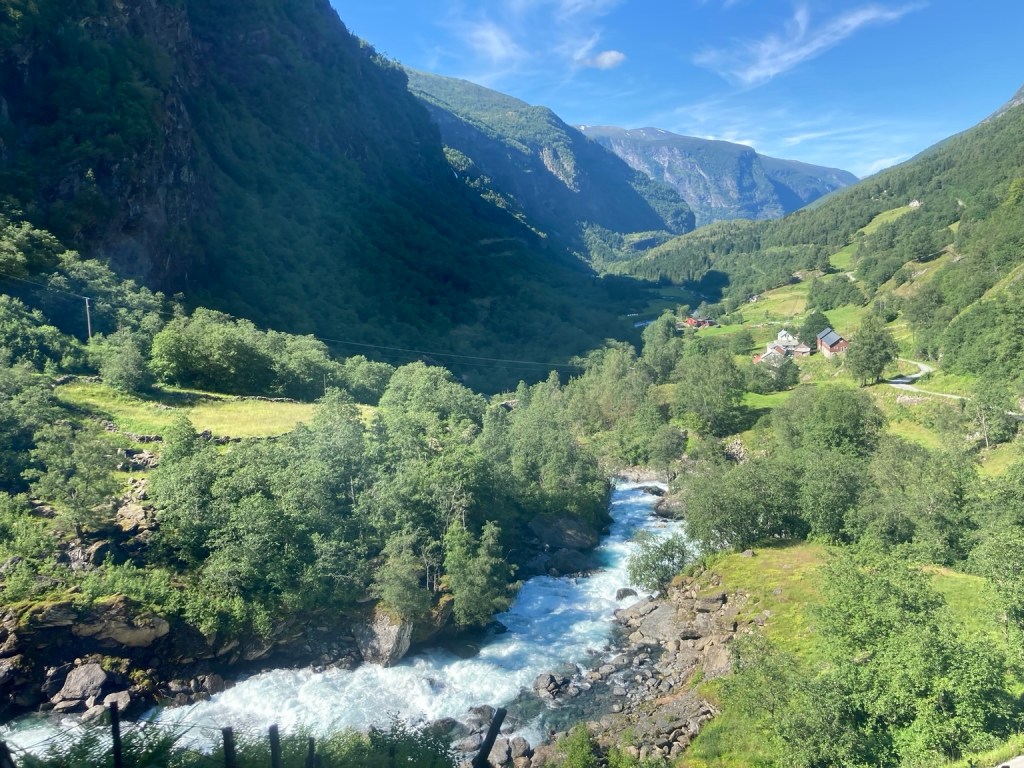
… photos were a little tricky but we were treated to more incredible Norwegian landscapes …

The highlight was the stunning Kjosfossen waterfall, which has its own station just to allow tourists to get off the train and take photos.  We were also entertained by a woman in red, resembling the mythical Huldra, dancing to strains of mystical music!

Back on the coach, we had a final waterfall stop …

… then headed westwards to Bergen.

Map

Oslo … Building a National Identity

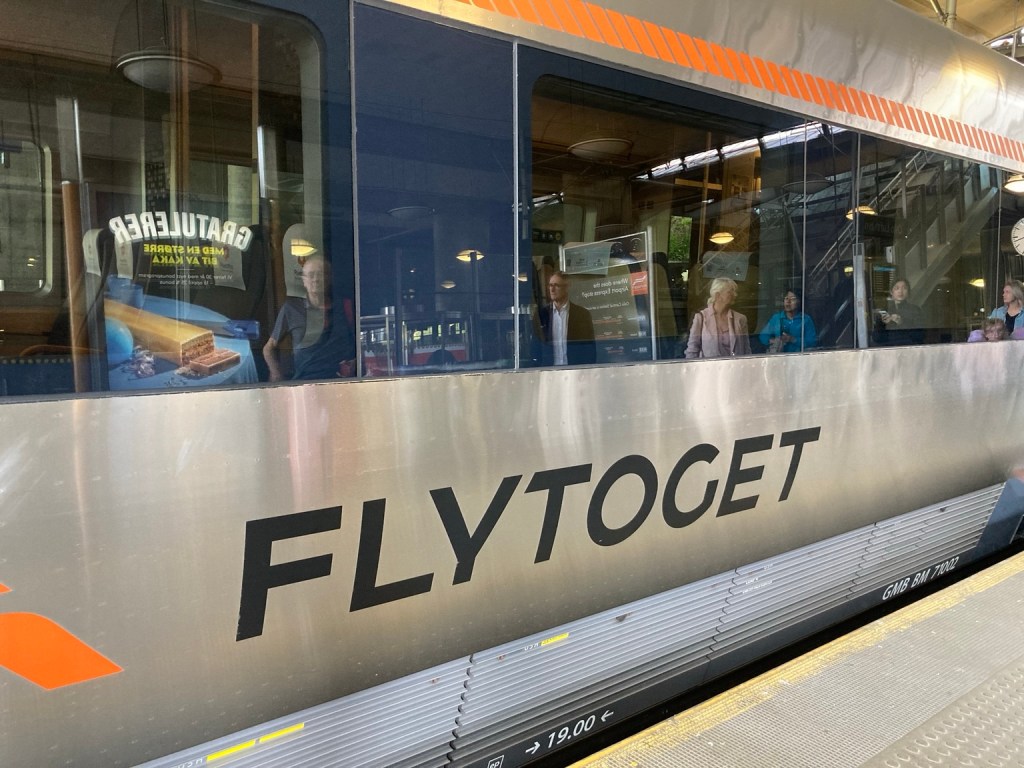
The Flytoget train whisked us into the city centre from the airport effortlessly …

… and we were soon checked in to our central hotel and off to explore.

We were enticed into a bakery by the array of sweet treats and chose twisted cinnamon buns called Kanelsnurrer which were delicious …

… before walking to the harbour. Knowing we would have a city tour next day, we went to the Norwegian National Museum for the afternoon. We started with the applied art and design floor and an extensive collection of furniture and interiors from medieval times to the present day. We then went up to the roof to get a view across the harbour to the Akerhaus fort, built in the C14th by King Hakon V …

… before wandering through the collection of Norwegian art.  

Just a brief history lesson to put things into perspective.  During the Viking Age, Norwegians expanded their influence through exploration, trade, and raids across Europe with Norway becoming a single kingdom in 900. Christianity slowly became the dominant religion, replacing Norse paganism, but a decline began when the bubonic plague wiped out half the population in 1397.

Subsequently, Norway became a dependency of Denmark, which lasted for 400 years during which the Reformation led to the establishment of Lutheranism.  After the Napoleonic Wars, Norway was forced into a union with Sweden but it wasn’t until 1905 that this union was dissolved. Norway became a fully independent country with a referendum choosing Prince Carl of Denmark as their king, Haakon VII and the capital was returned to its Norse name Oslo.

It was at this point that a growing sense of nationhood inspired artists to depict the sublime Norwegian landscapes and gave us a taste of our trip to come!  Here are a few, Stalheim by Johan Christian Dahl …

… the Grindelwald Glacier by his pupil Thomas Fearnley …

… this romantic view of The Bridal Voyage on the Hardanger Fjord by Hans Frederik Gude …

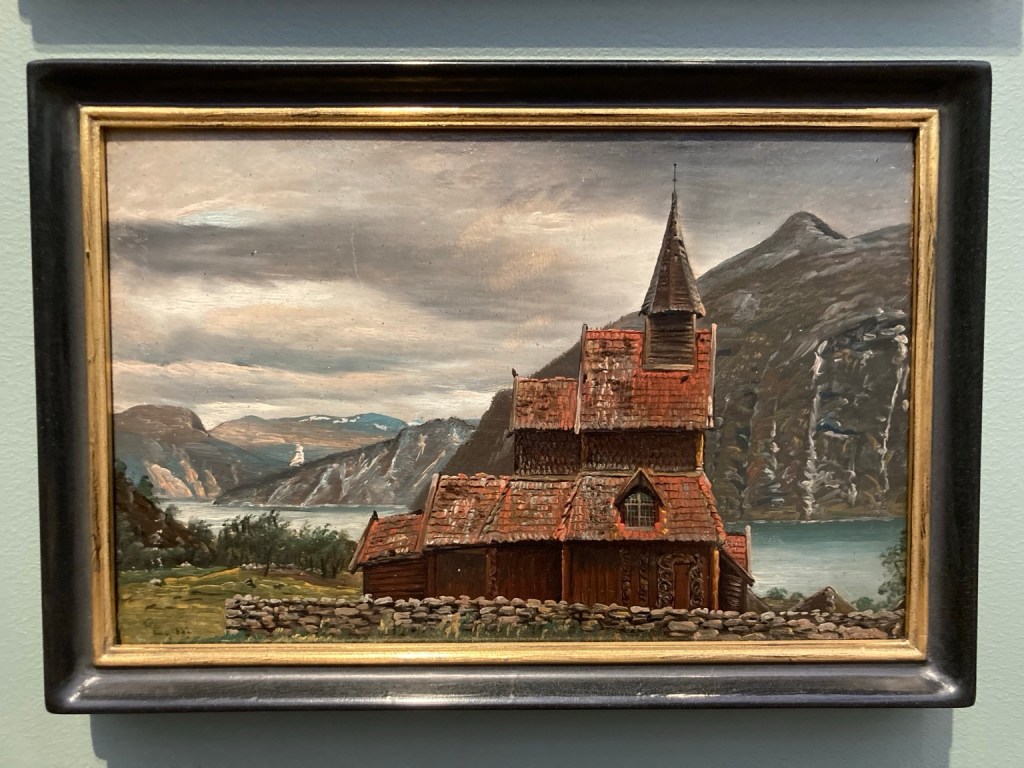
… and finally this view of a stave church, but more about them later.

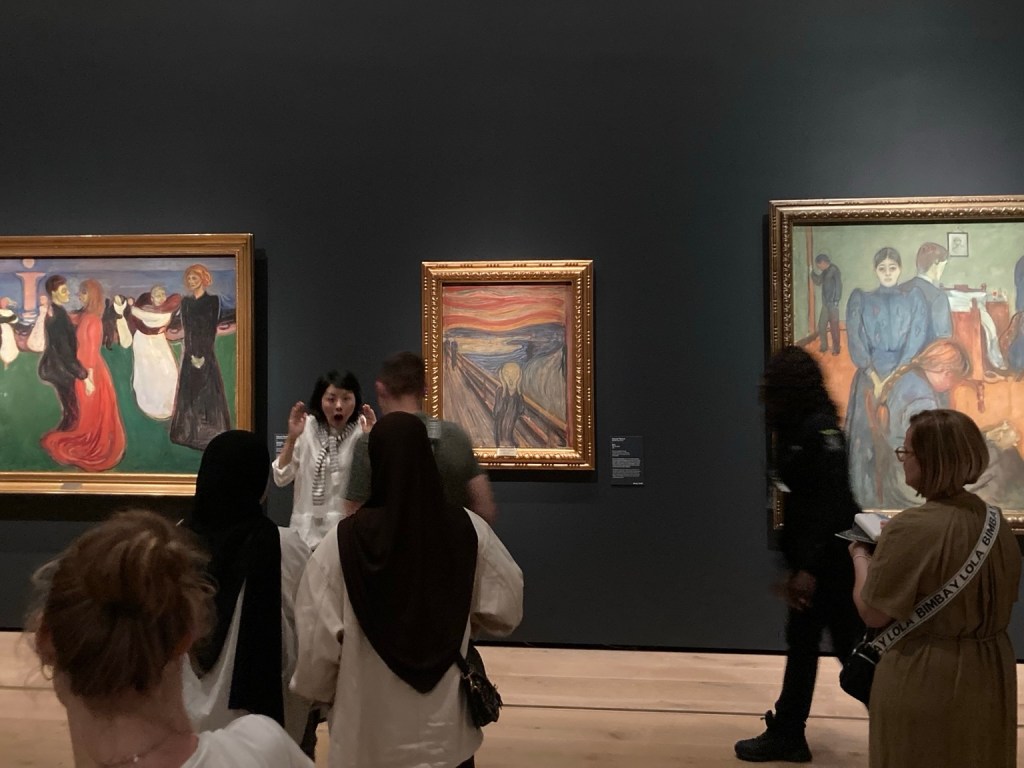
Of course the most famous painting in the gallery has to get a mention, The Scream by Edvard Munch, which had a constant stream of visitors taking selfies!

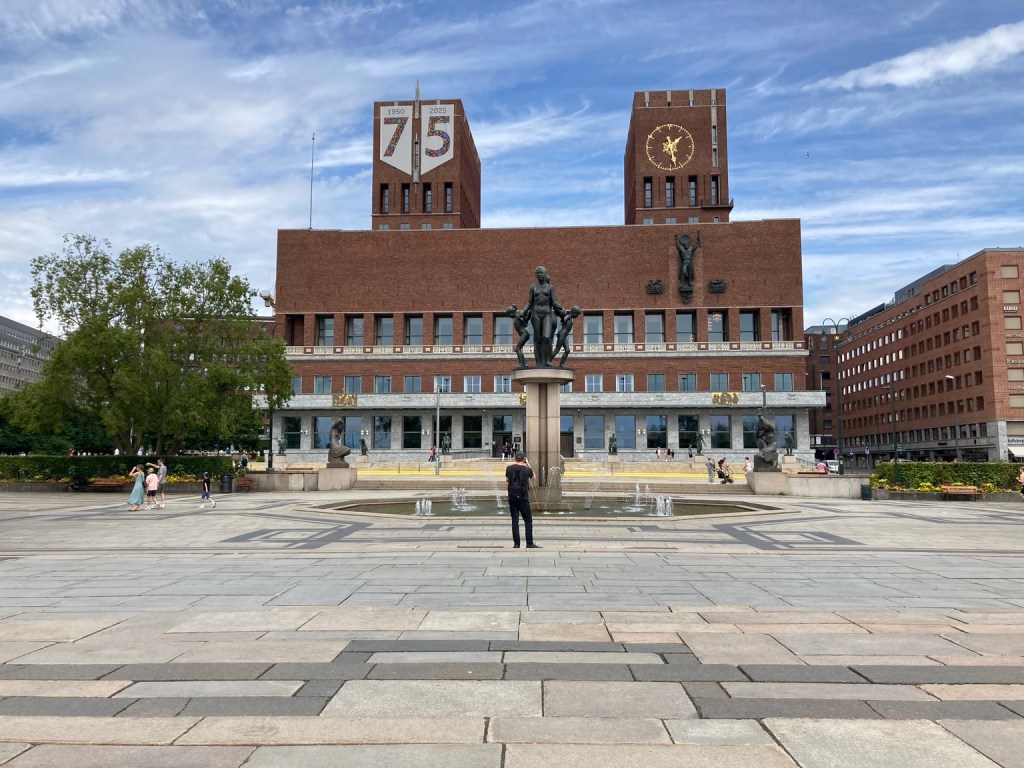
Our walk back took us past City Hall which we will visit tomorrow …

… The Nobel Peace Centre which celebrates Alfred Nobel and the Nobel Peace Prize which is awarded in each year in Oslo …

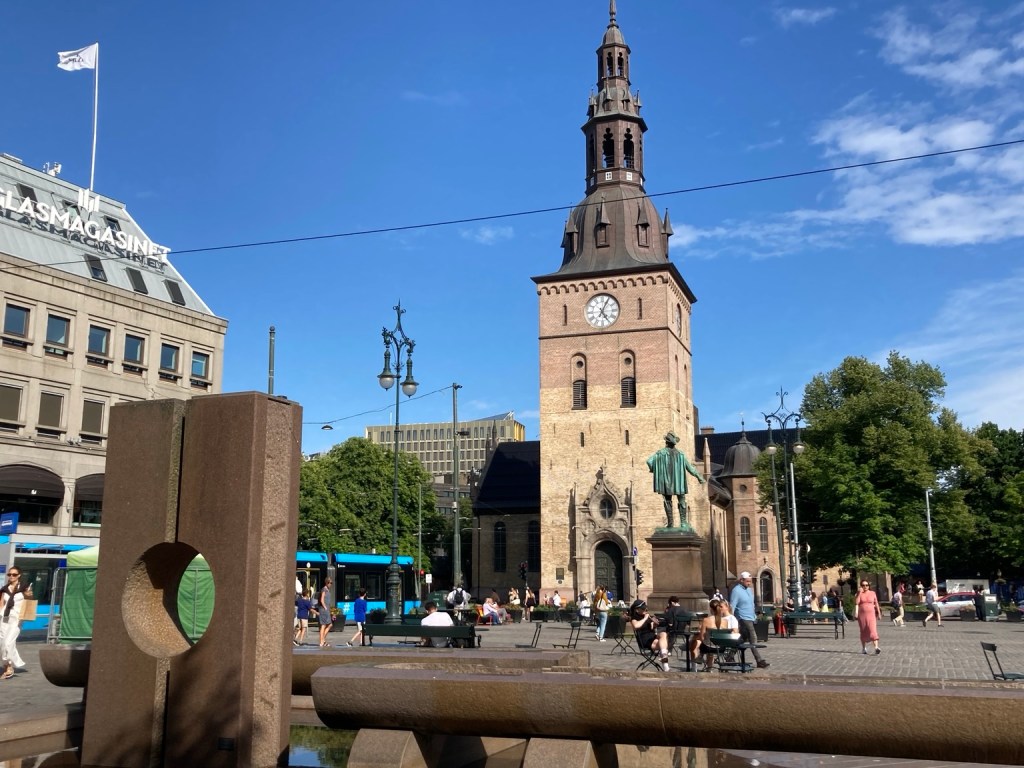
… and the Domkirke or cathedral.

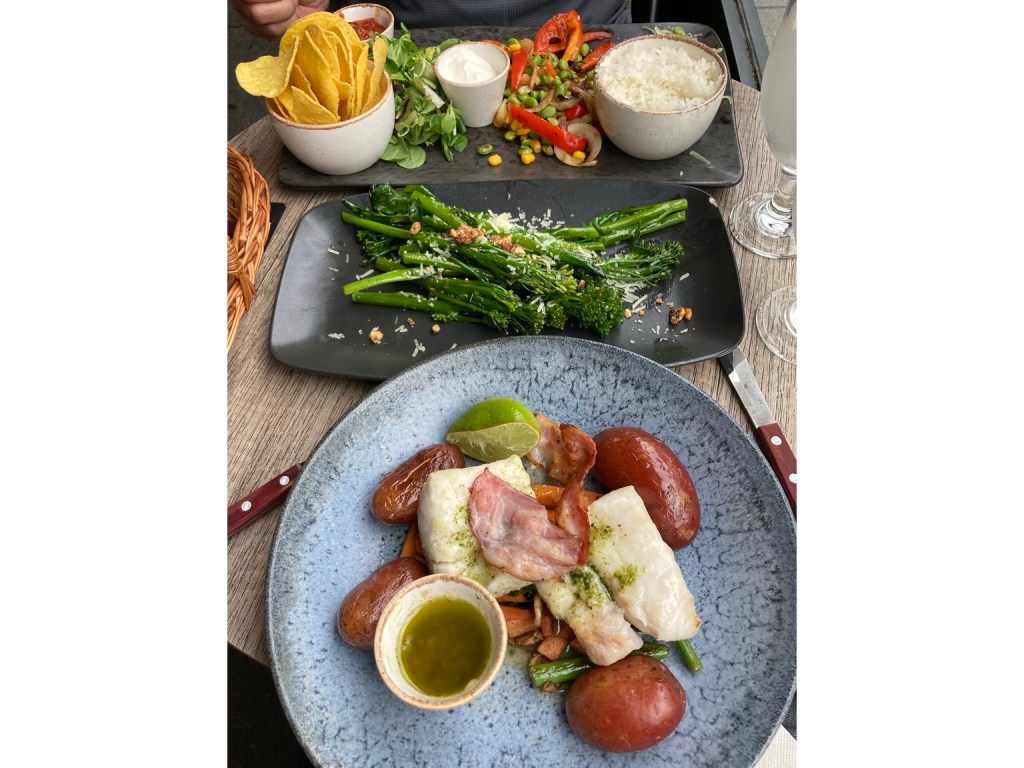
SInce the weather was so lovely, later we found a restaurant with seats outside that served both traditional and veggie dishes and I had Norwegian cod, served with the national staples of potatoes, carrots and mushrooms!  Vegetarian choices all seem to be foreign and Chris chose the fajitas!

We returned to the hotel for a brief meet and greet with Paula our tour guide and a number of the group who had already arrived, then went for wander …

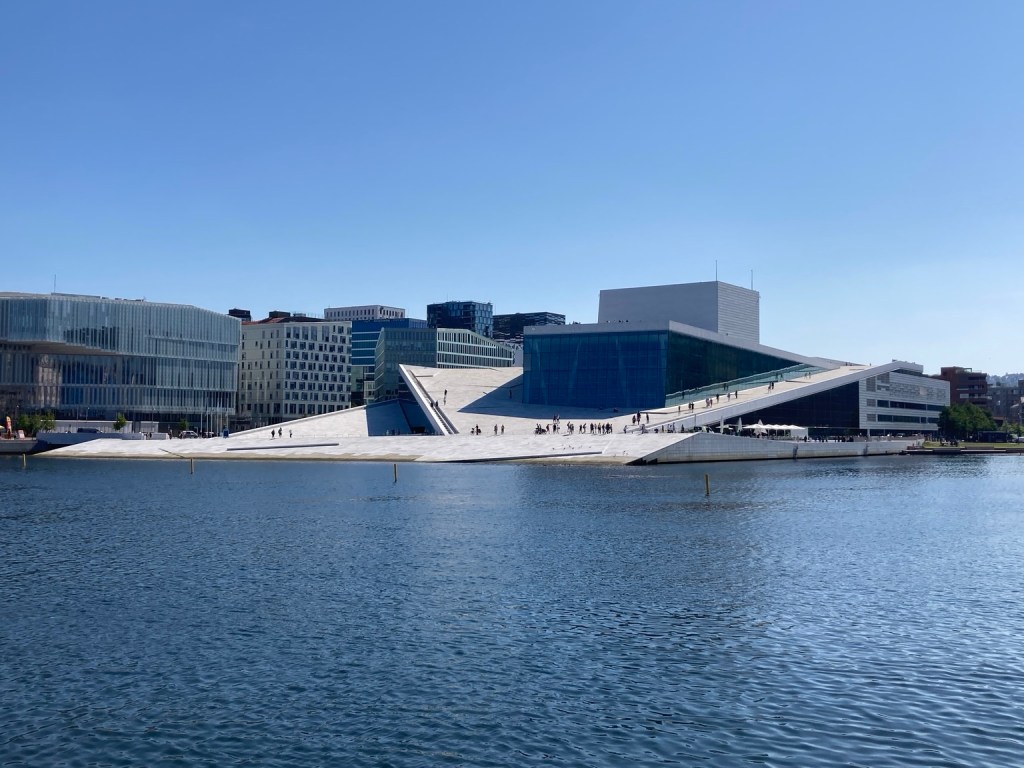
… which eventually took us to the Opera House where people were enjoying the warm evening sunshine. 

Oslo isn’t far enough north to be in the land of the midnight sun, but sunset wasn’t till 22.30 and it doesn’t get darker than nautical twilight, so good job we packed eye masks so we got a good sleep!

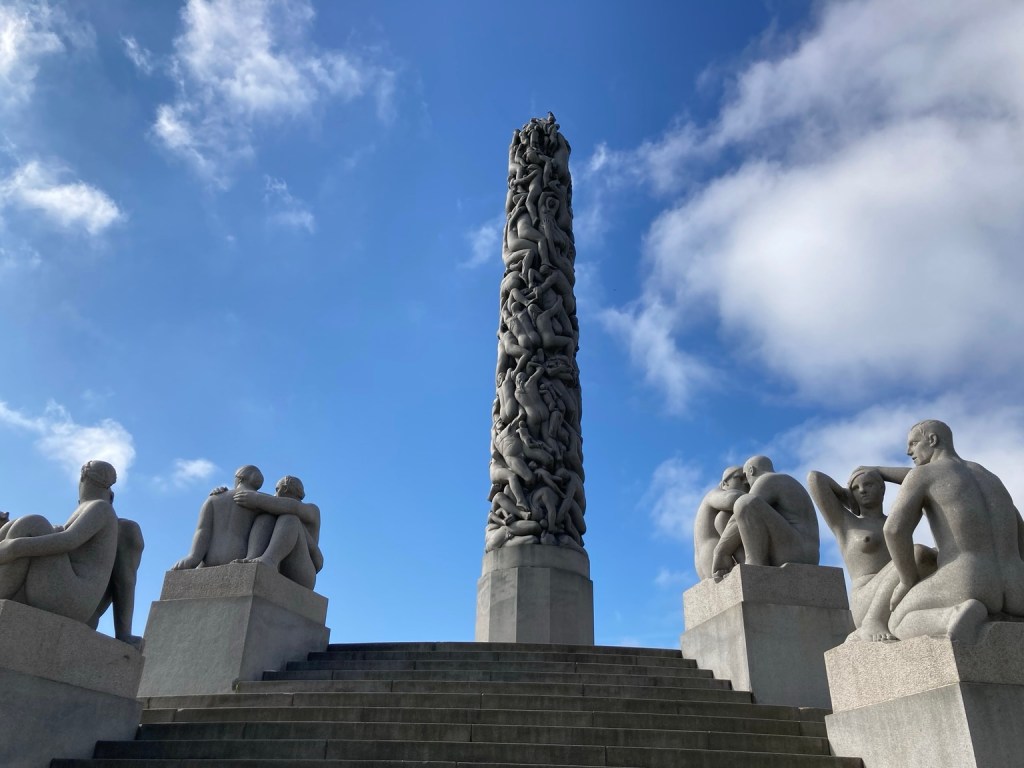
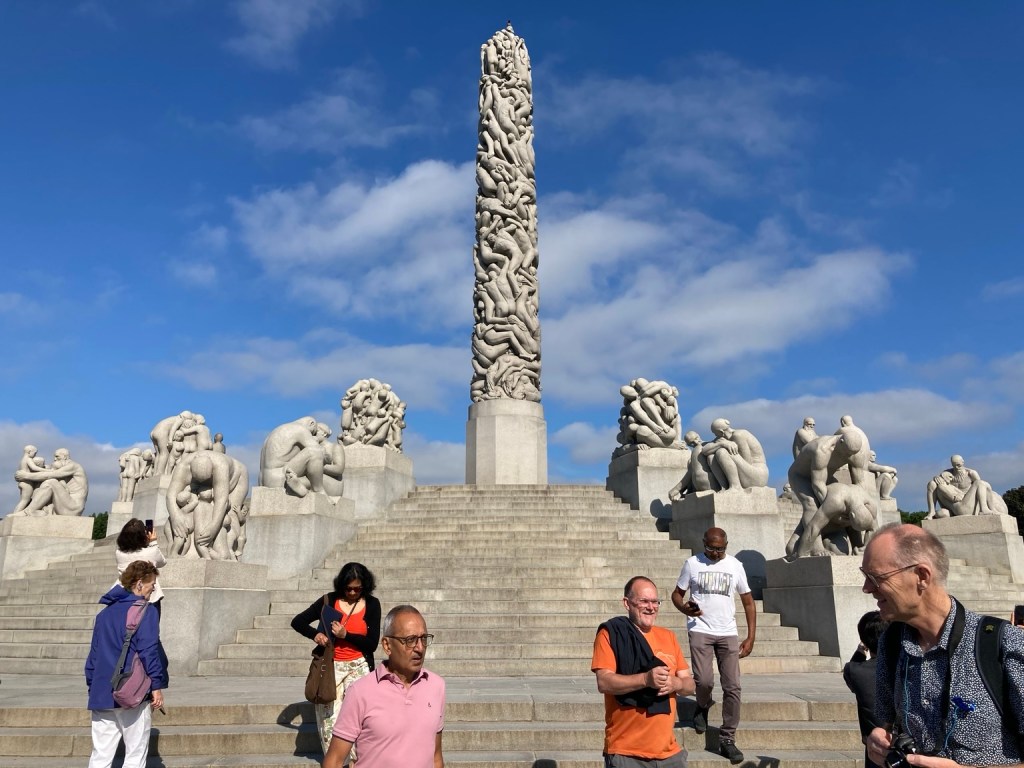
Next day we had a bit of a drive round the city in the coach, then a tour on foot beginning with the Vigelandsparken, a sculpture garden which was the life’s work of one man, beginning in 1924.  Gustav Vigeland started as a woodcarver, but was influenced by Rodin in Paris and switched to stone and bronze. 

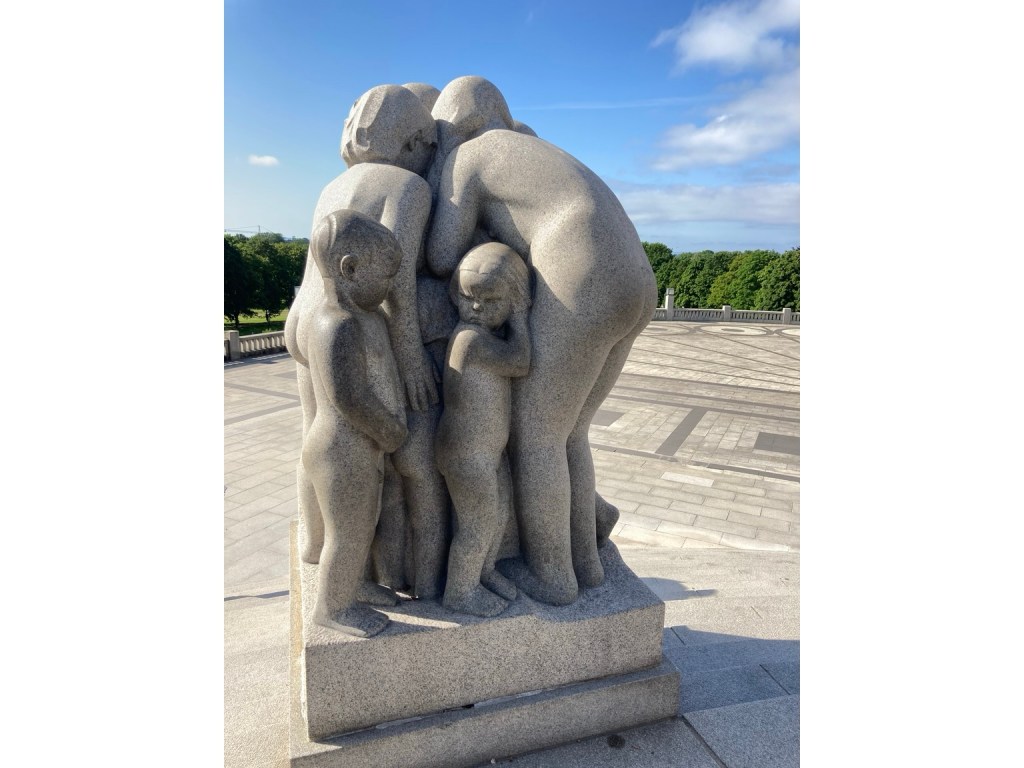
The sculptures all portray the cycle of life, with the 20m Obelisk surrounded by groups of figures …

… with all ages represented.

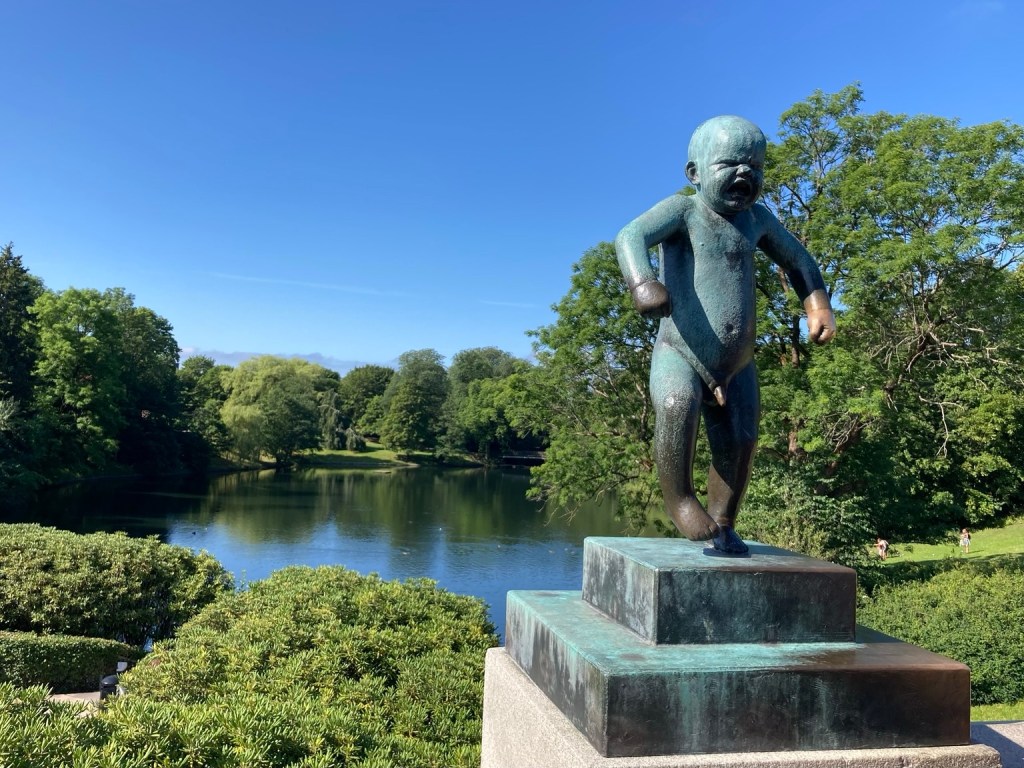
The fountain and bridge are adorned with bronzes …

… including this cheeky chap …

… and a joker …

… and the park ends with an impressive gate.

During a quick photo stop for the Opera House …

… we also noticed these floating saunas, where you can cool off afterwards by swimming in the Oslofjord.

The Radhus or City Hall was next.  Opened in 1950, this modernist building was meant to be a mark of civic pride, but locals were slow to love what they saw as pretty ugly.  Now 75 years on, it has become one of the city’s most popular buildings.  

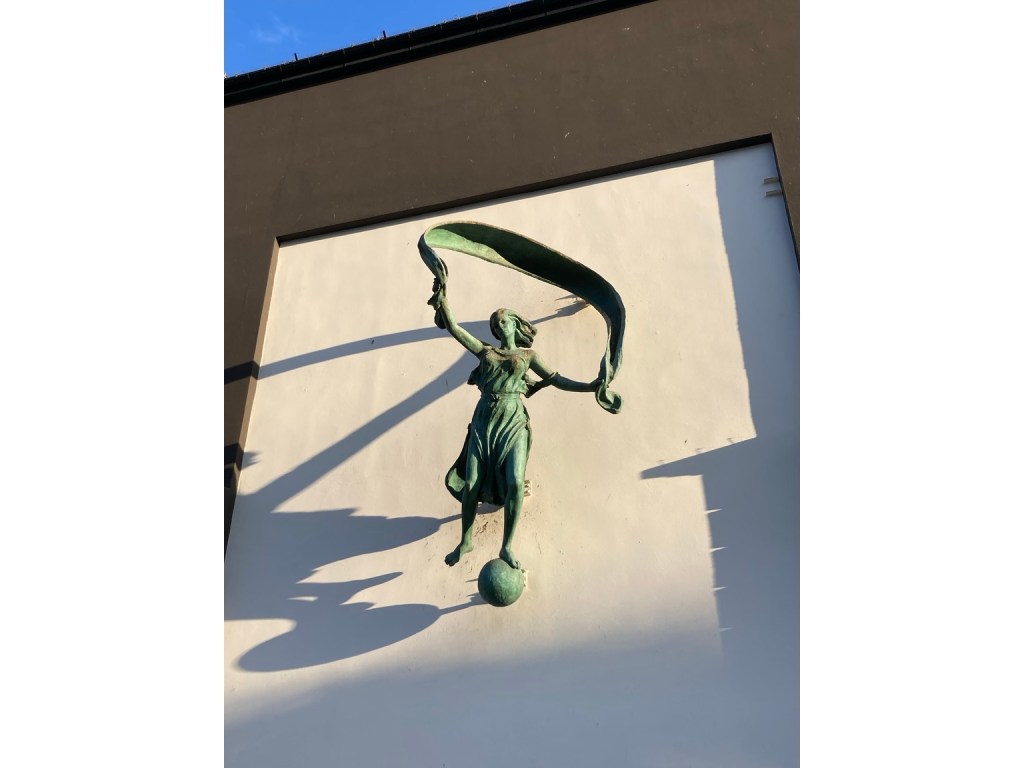
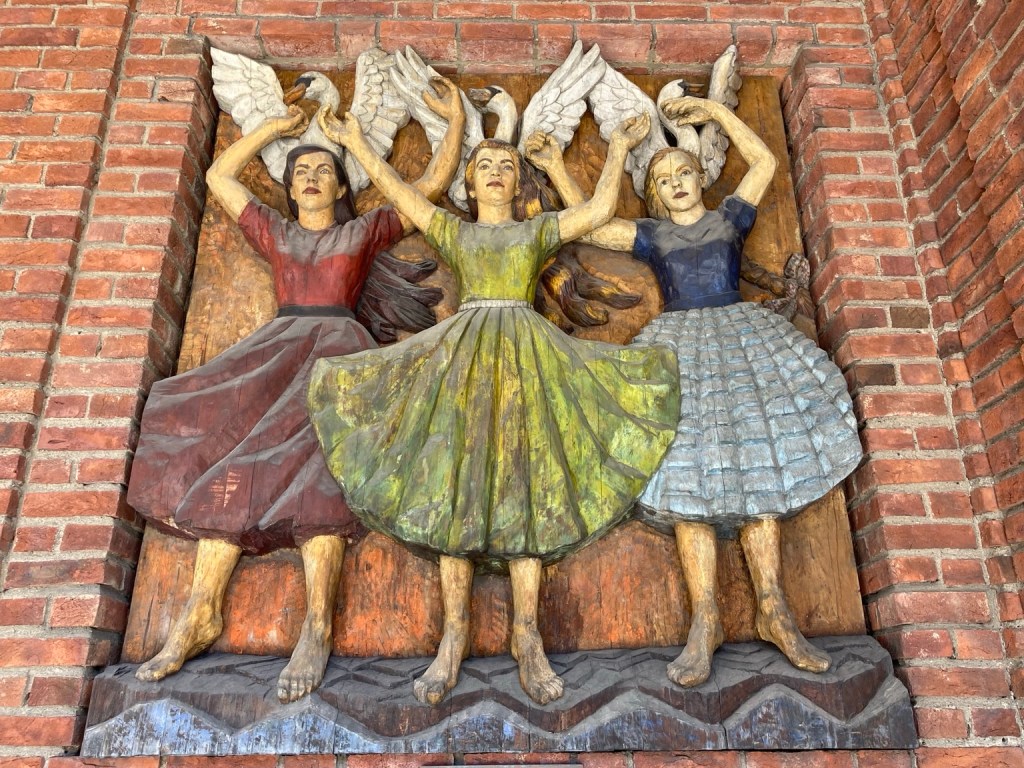
The entrance is decorated with wooden carvings from Norse myths including this one of Swan Maidens.

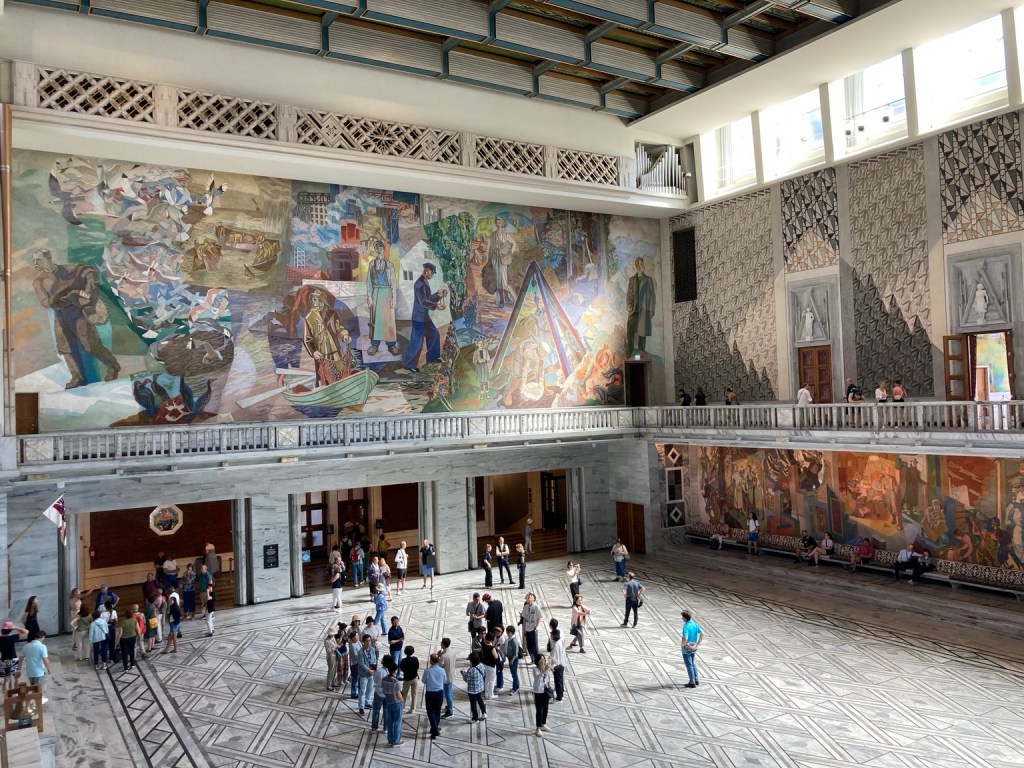
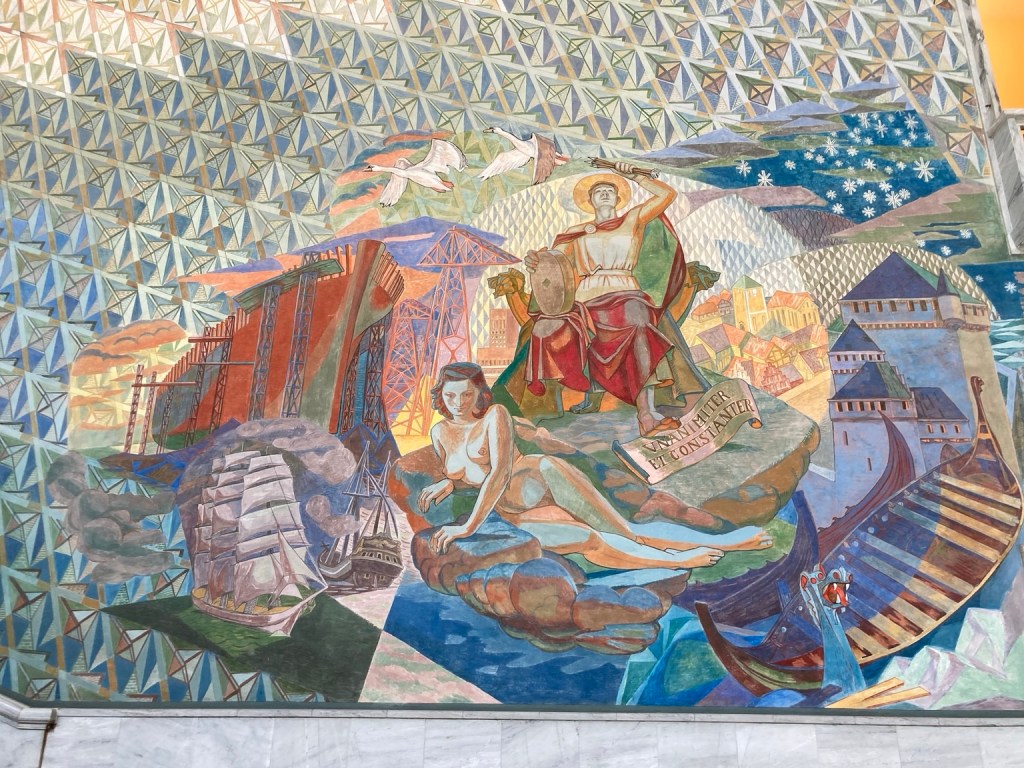
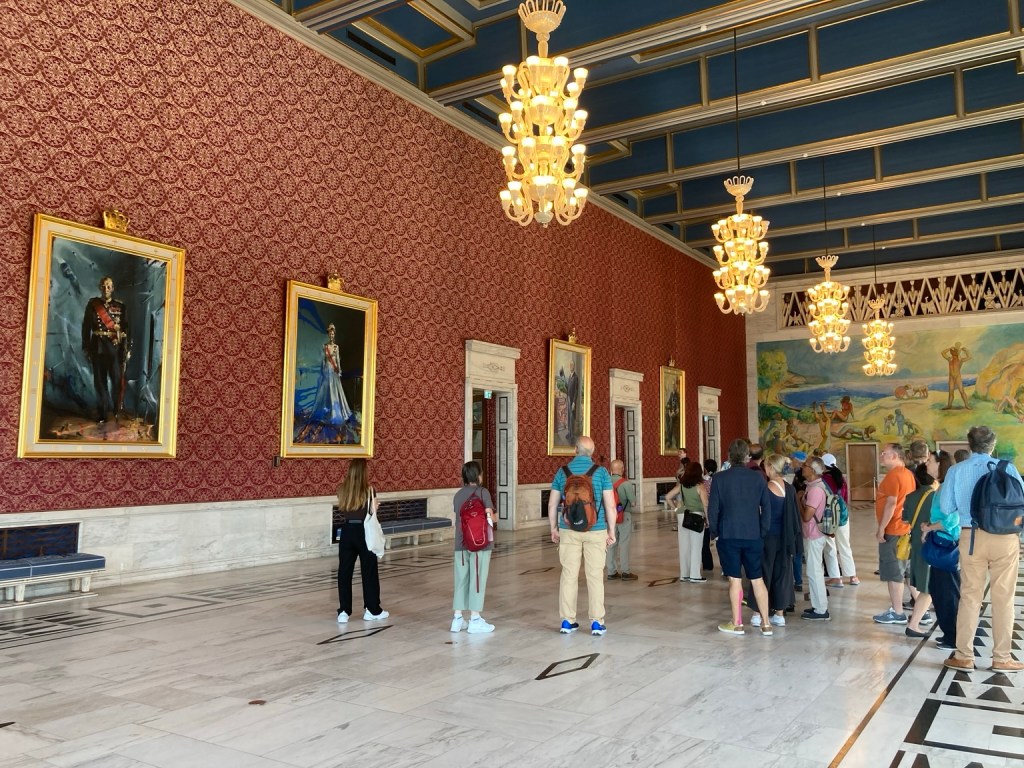
Inside, the main hall is huge and painted on all sides with stylised and secular murals.

This is From the Fishing Nets in the West to the Forests of the East with a polar explorer on the left and a dramatist on the right symbolising the spirit of adventure and intellectual development of the nation. 

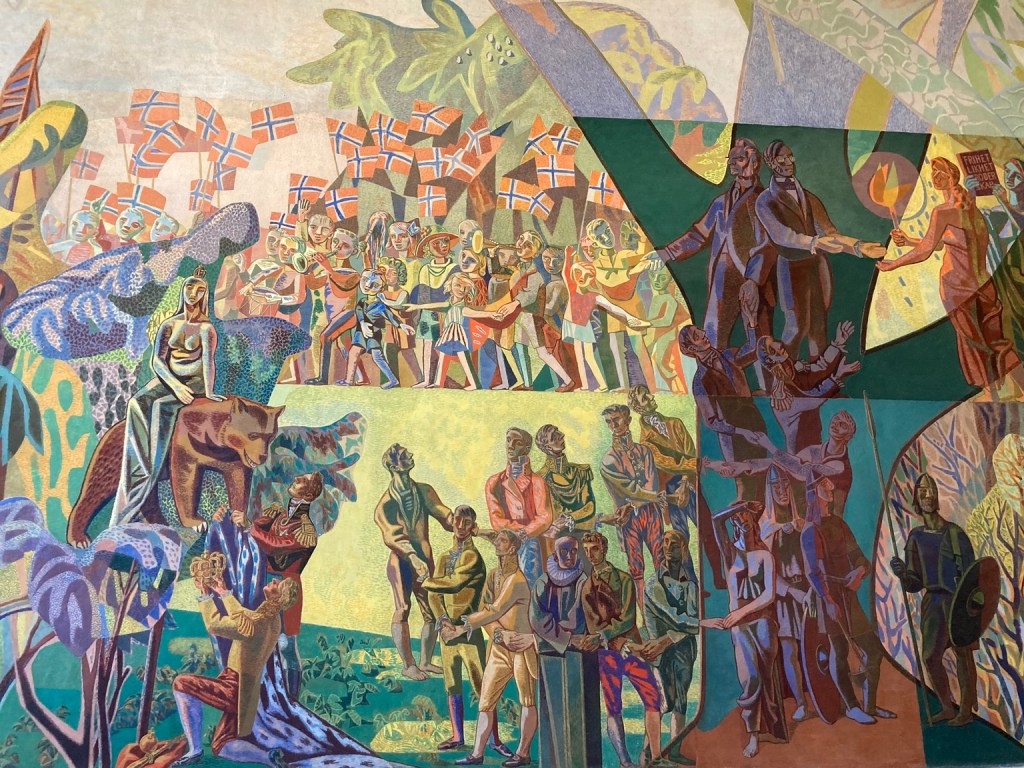
On the opposite wall is Work, Administration and Celebration which illustrates social reforms, education, social struggles, the war years and Norwegian Royal history featuring many prominent Norwegians, but also regular people carrying out their everyday life.

Saint Hallvard, the patron saint of Oslo appears several times …

… and upstairs there are more patriotic images of town and country …

… and even the beach!

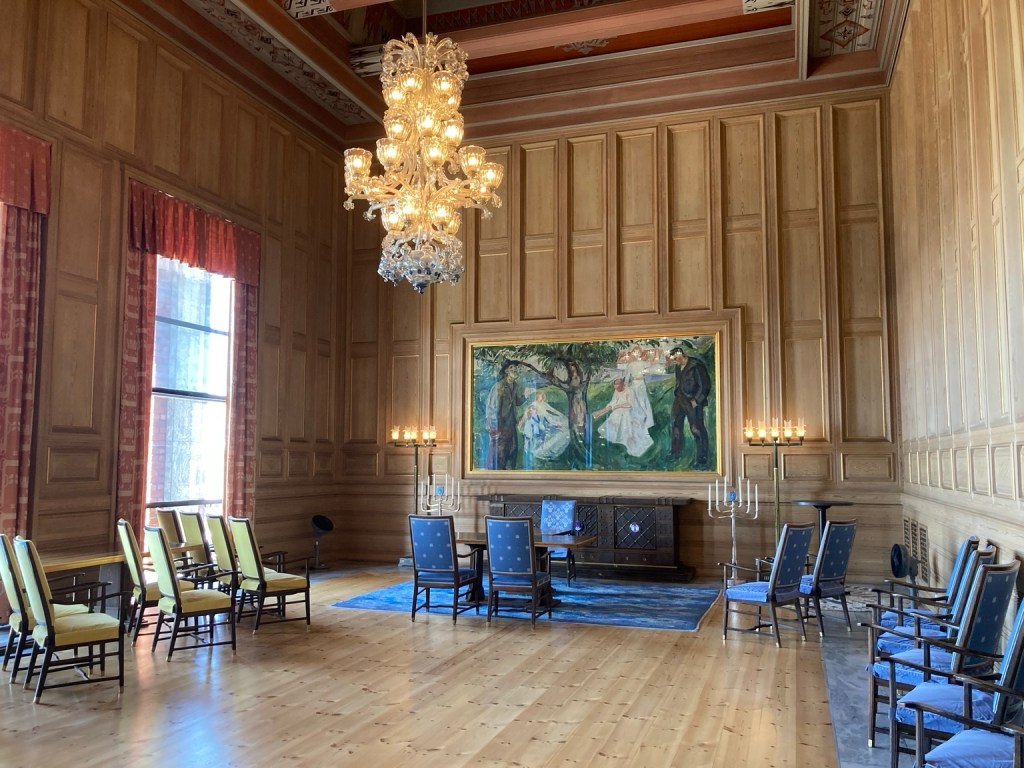
The Munch Room with his painting ‘Life’ adorning the back wall is used for weddings …

… but no snacking here today!

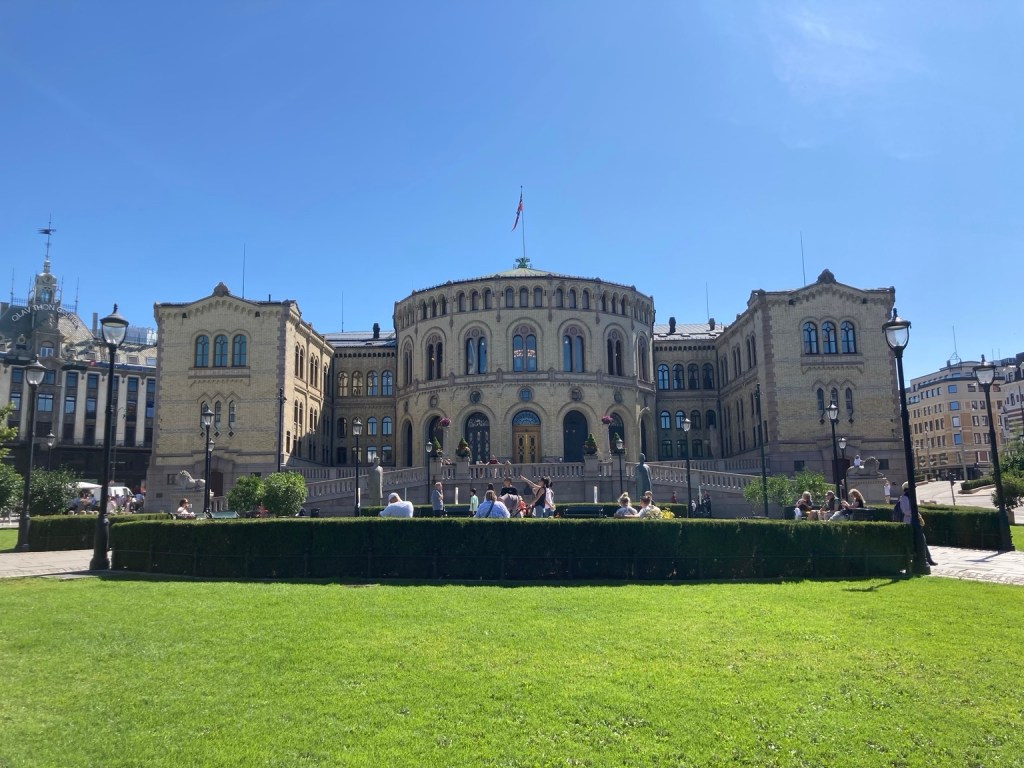
With a couple of hours free to wander, we snapped the Stortinget or parliament building.  Since Viking times, local social justice was resolved at a ‘thing’, a sacred place where all freemen from the surrounding areas would assemble, so unsurprisingly their parliament translates as the ‘big thing’!

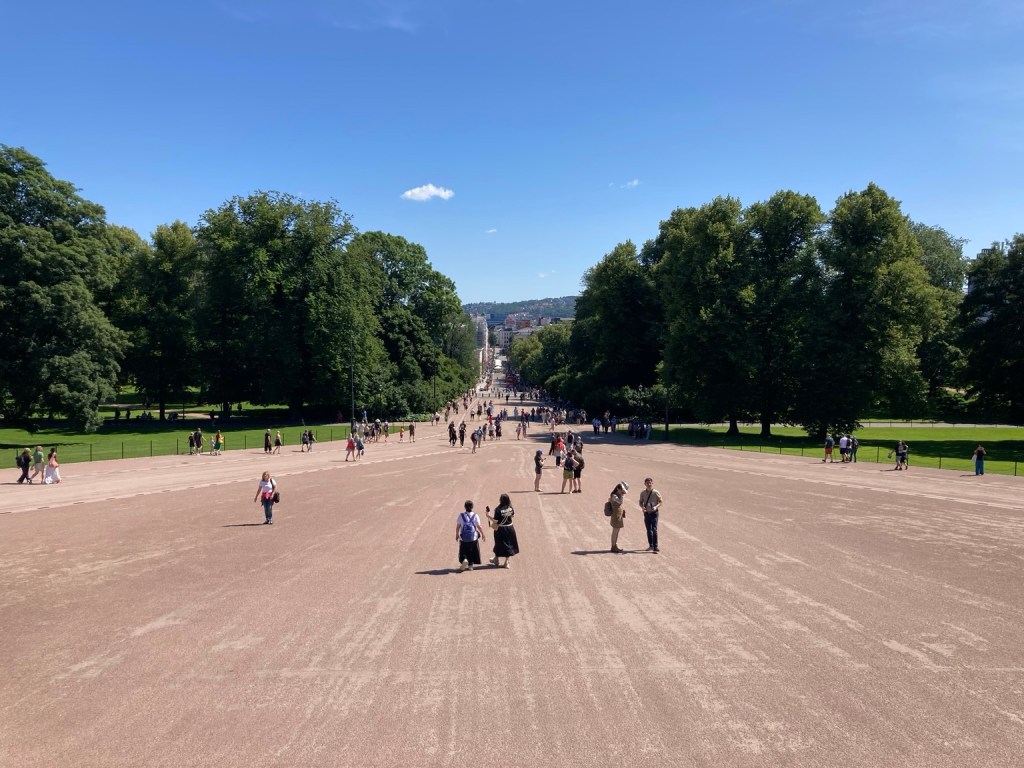
The Royal Palace is set in a park completely open the the public …

… and we were in time to see the changing of the guard, unfortunately rather uninspiring, especially with the digger centre stage!

Our brief time in Oslo at an end, we headed for the coach and a drive westwards …

Map

Chris & Elaine Go in Search of the Norwegian Blue 2025

Continuing the avian metaphor, I realise this is a wild goose chase, but just couldn’t resist the title!

Seriously, this is our first taste of Scandinavia, a whistle stop tour with Exoticca of almost 1000 miles in a week, taking in Oslo, Bergen and Stavanger as well as fiords, the Flam Railway and the Telemark Canal.  

We are hoping for blue sky and blue water but if we spot a parrot, we’ll be delighted!

Itinerary

Oslo … Building a National Identity

Sognefjord … Mountains & Fjords

Bergen and the Hanseatic League

Stavanger and the Oil Rig

Norway’s Stave Churches

Map

Bucharest … under Ceaușescu

The 150km drive on the motorway to Bucharest was easy, but the AC was running as it reached 37.5° outside!

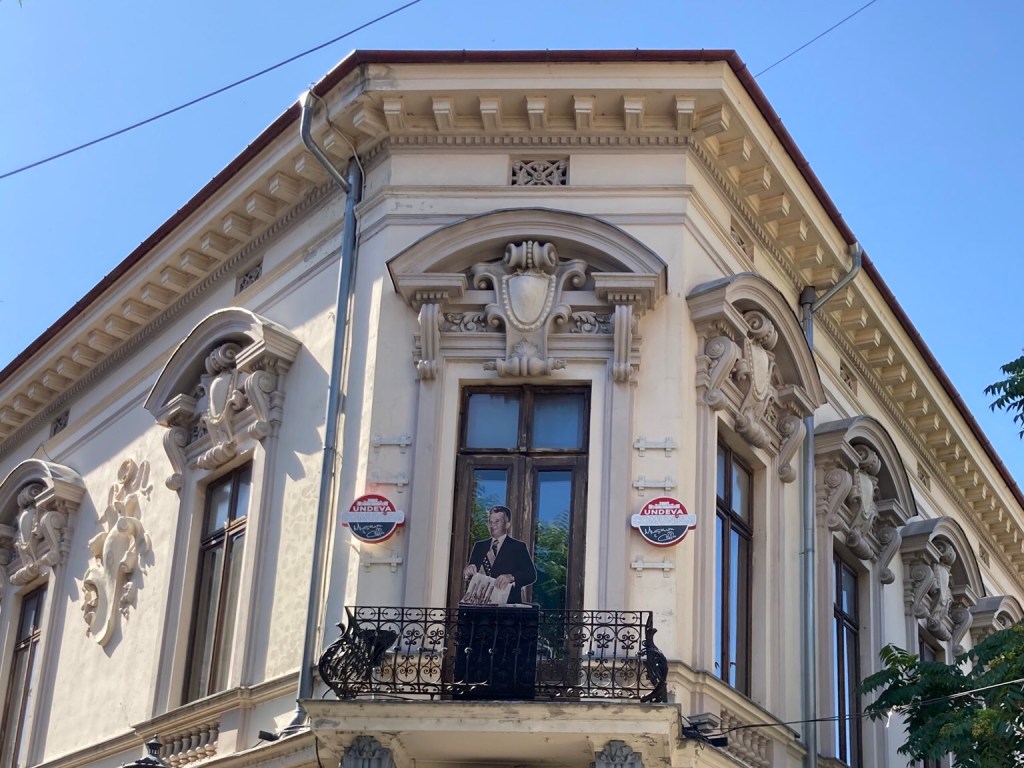
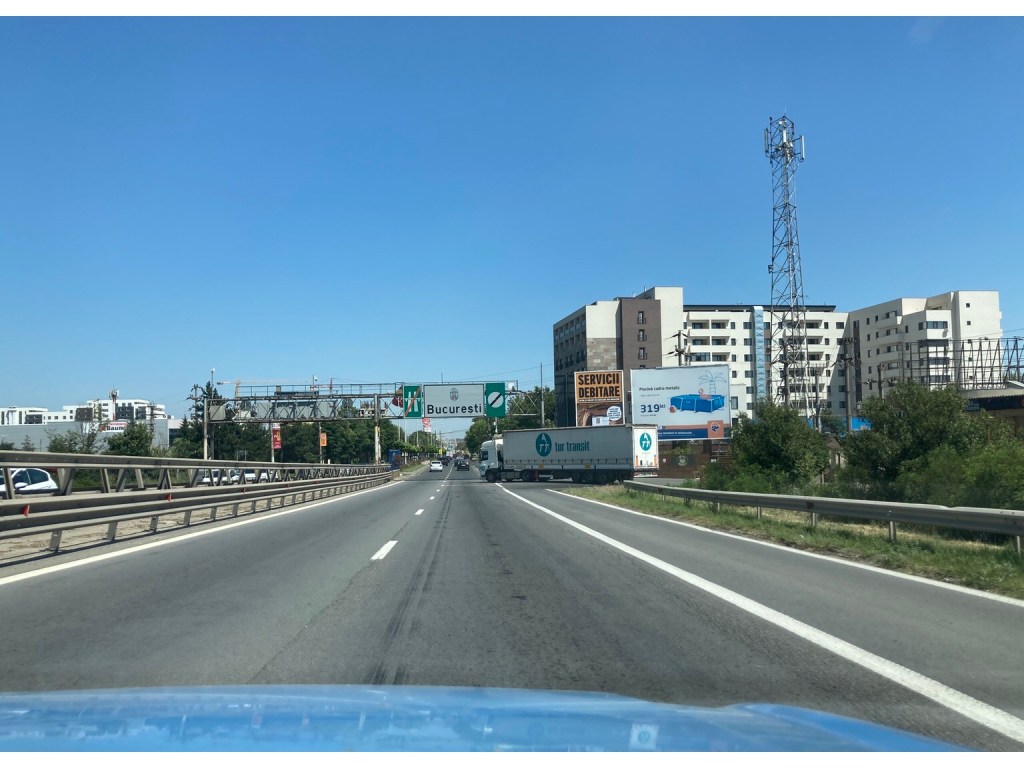
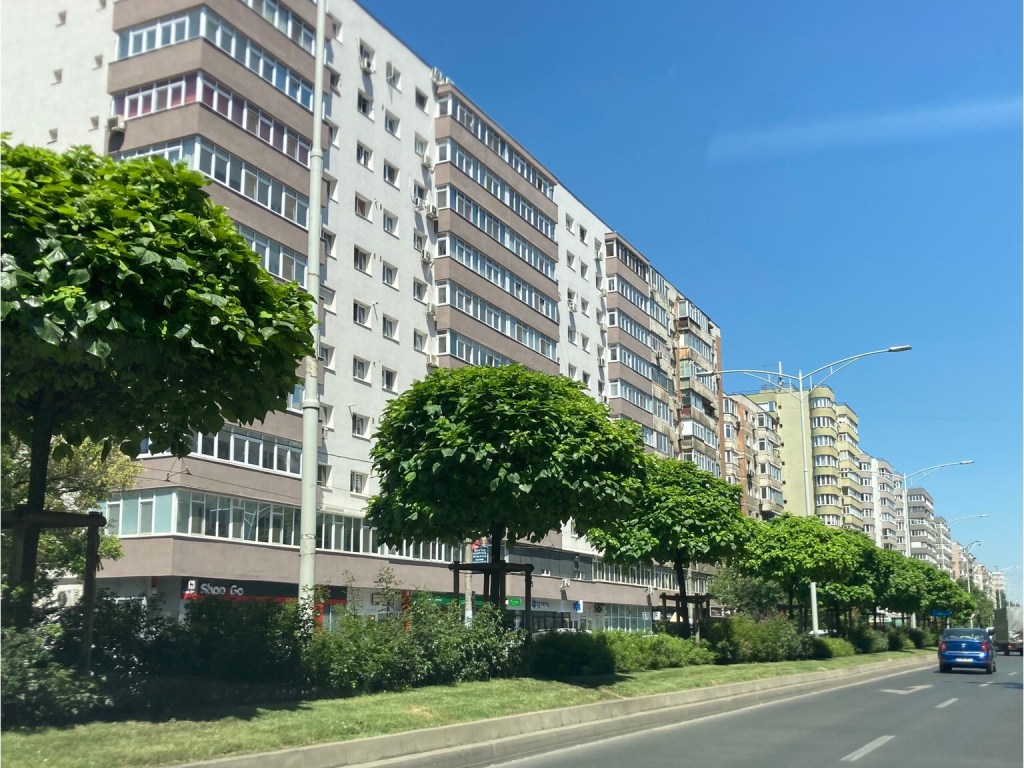
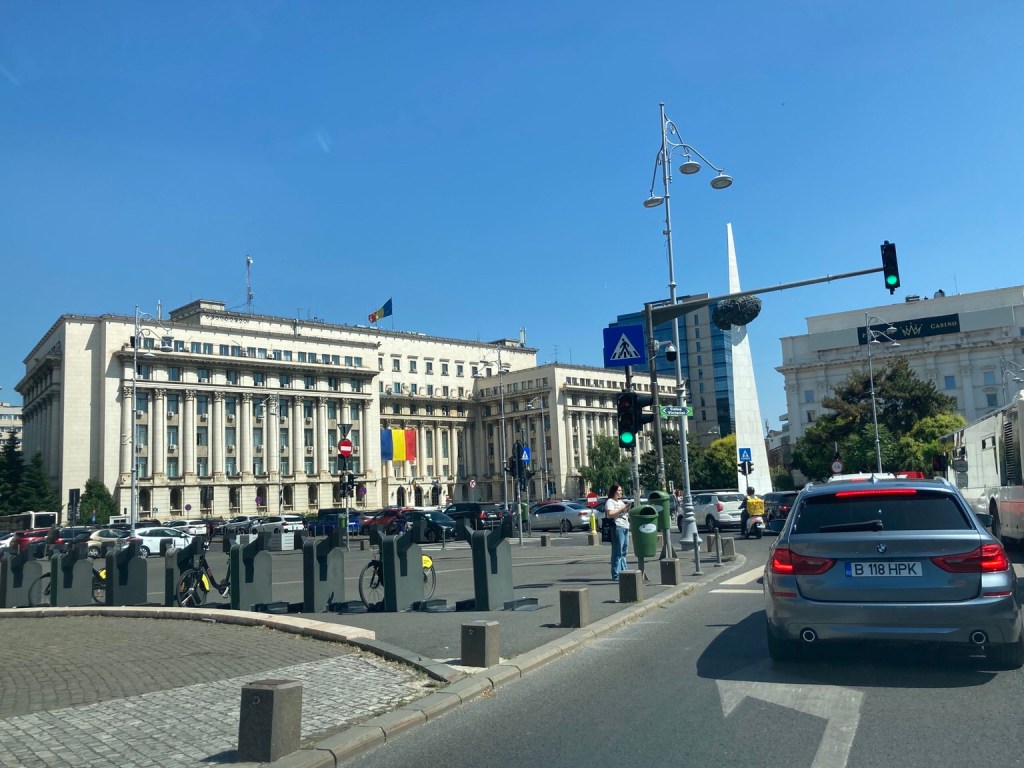
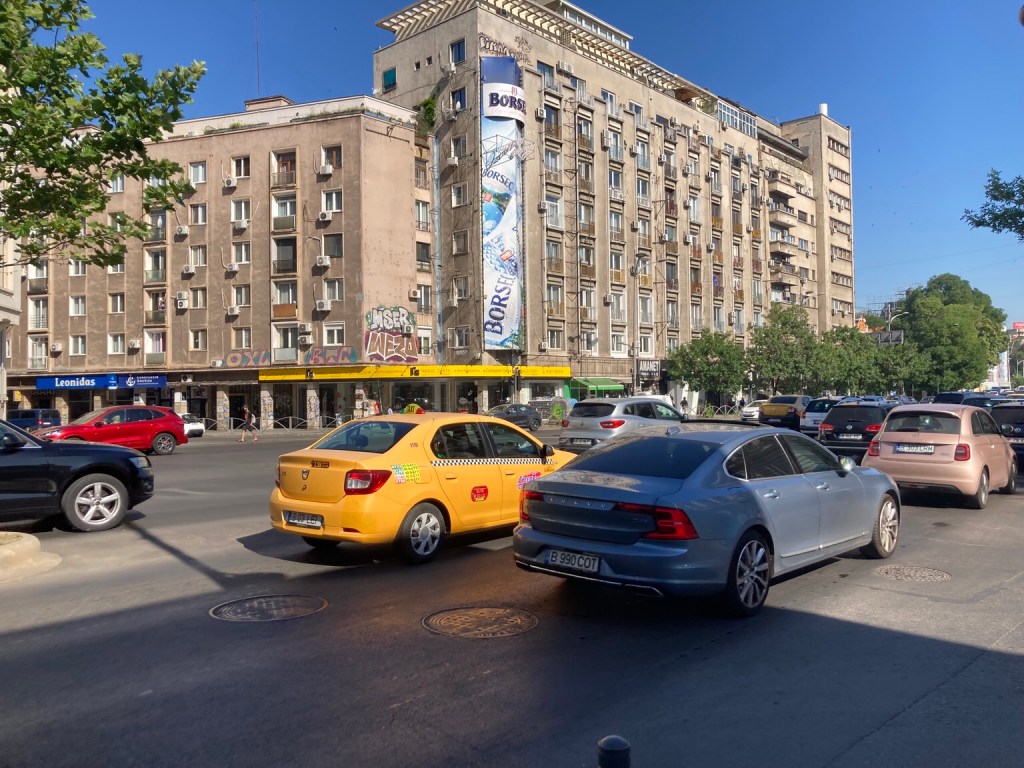
Surprisingly driving through the centre of the city wasn’t as bad as we thought and I took a couple of snaps.

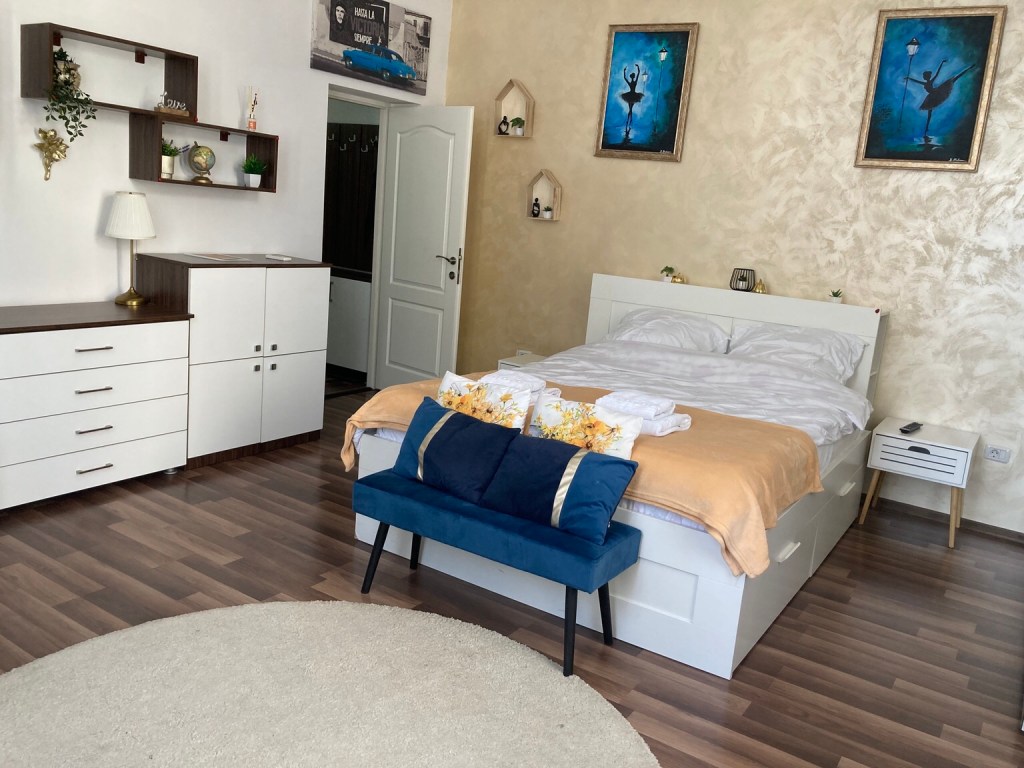
We even managed to find a parking space right outside our apartment for free.  The apartments here really have it sorted, with self-check in using a passcode and key box, complete with photos to recognise the outside and step by step instructions.

All have been light and airy and this one even had AC which was certainly welcome, as was the bottle of white wine in the fridge!

Later we ventured out for dinner, taking a recommendation from the apartment for a trattoria just a few minutes walk away and a salad fitted the bill perfectly. 

We spotted a breakfast cafe just next door, so we were back in the morning to start the day.

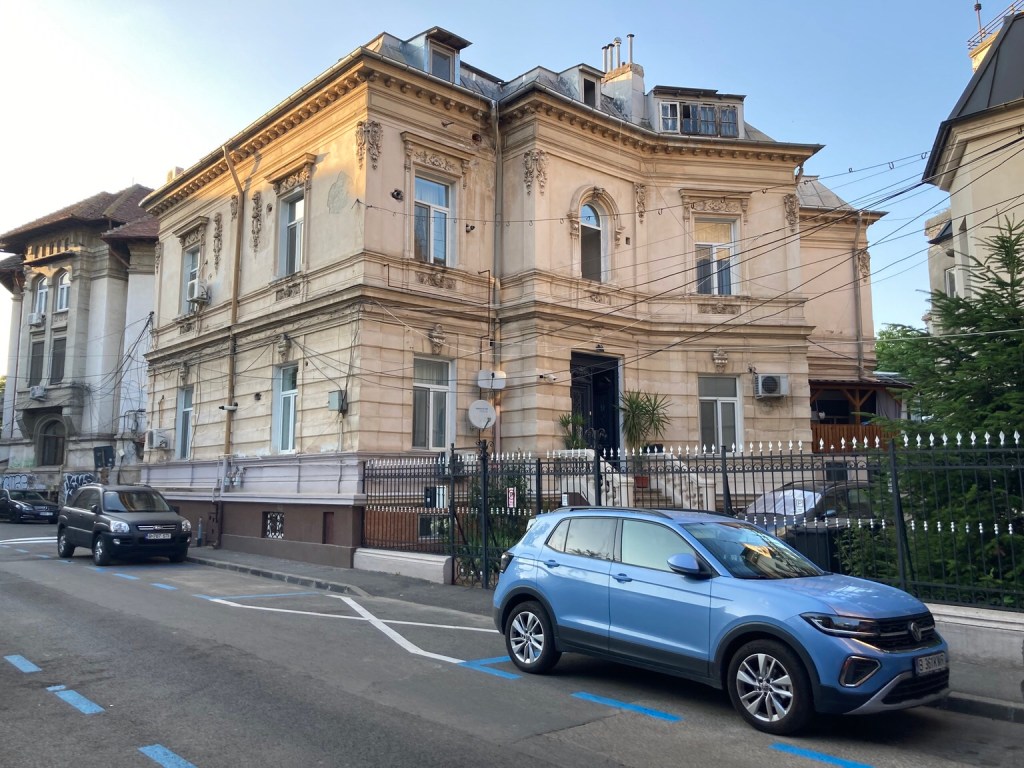
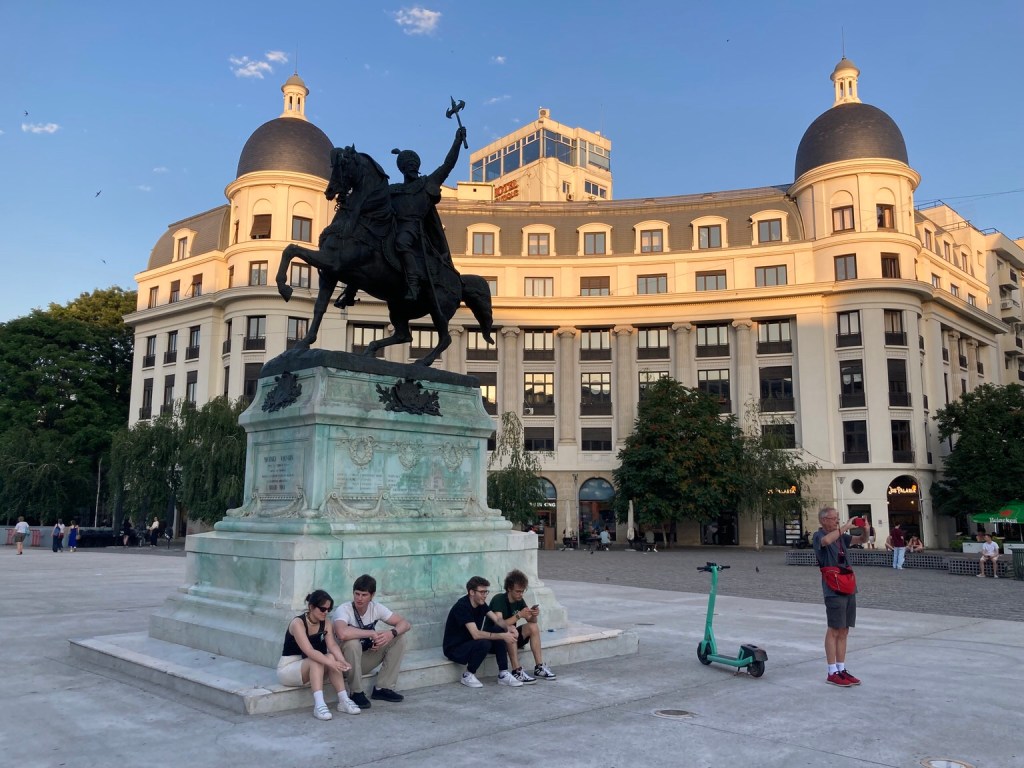
Bucharest became the capital of the new nation of Romania in 1862, and inspired by Paris, the city was built with a mix of gothic, neoclassical and Art Deco architecture.  There is still grandeur, albeit a little faded, but an earthquake in 1977 and subsequent redevelopment in the 1980’s seriously changed the city.

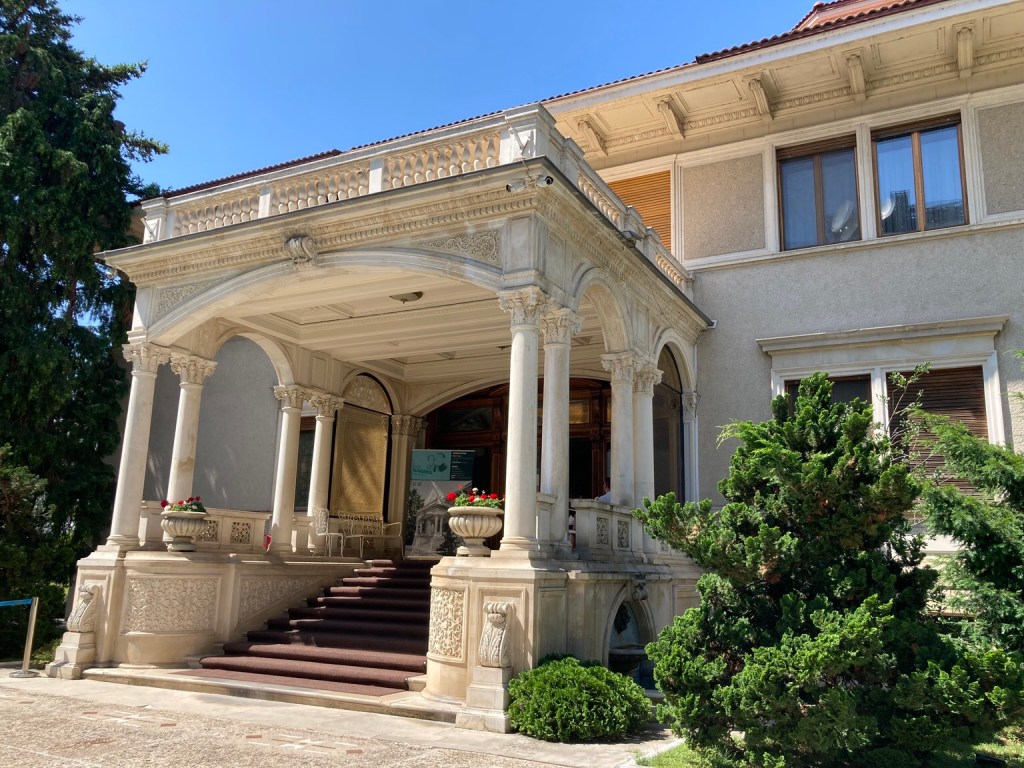
With just one full day here, we’ve decided to be very selective, especially since it’s going to be jolly hot again. Our first visit was to the Spring Palace, the former private residence of Nicolae Ceaușescu and his family. 

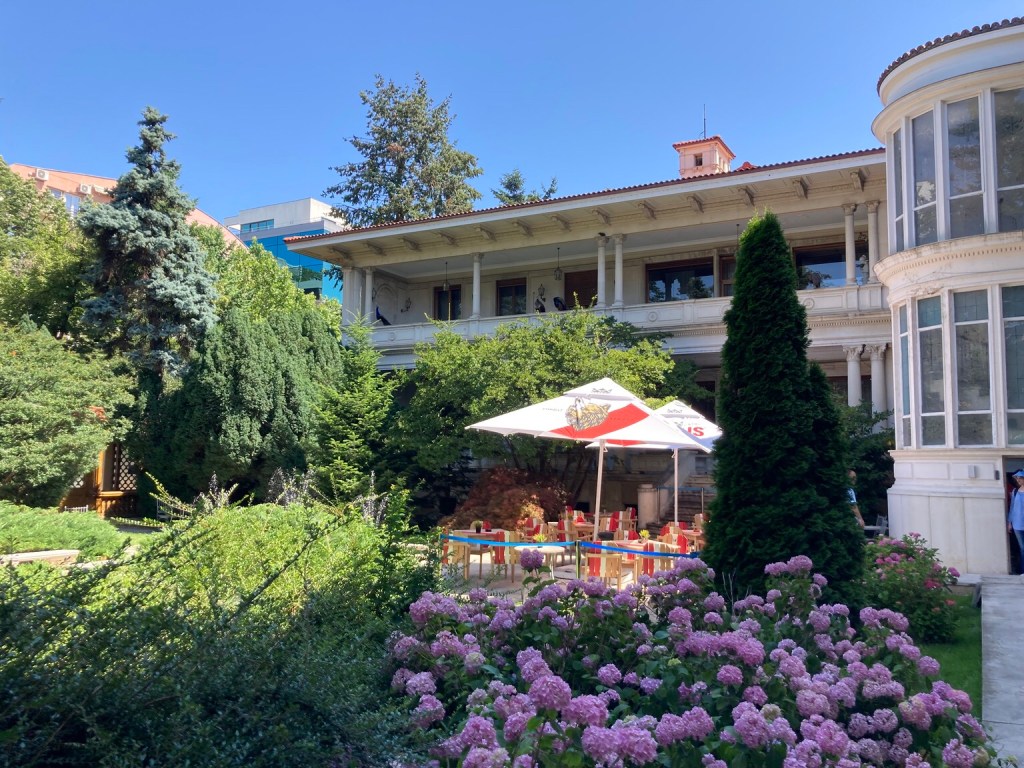
Built in the 1960’s set in a small garden …

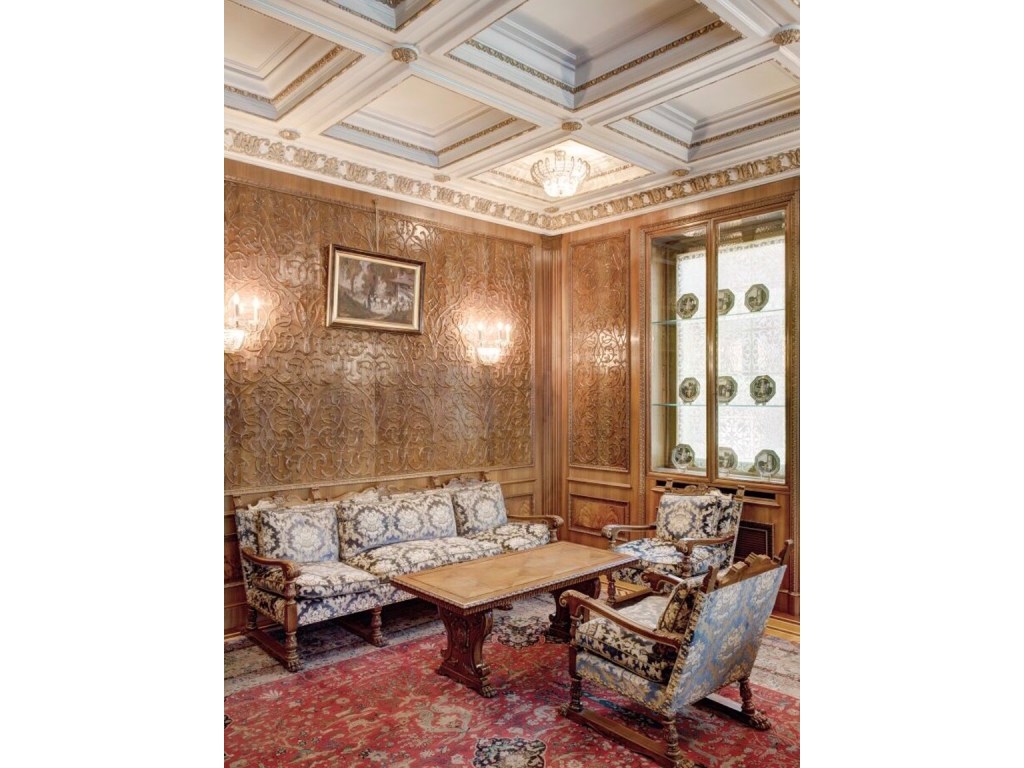
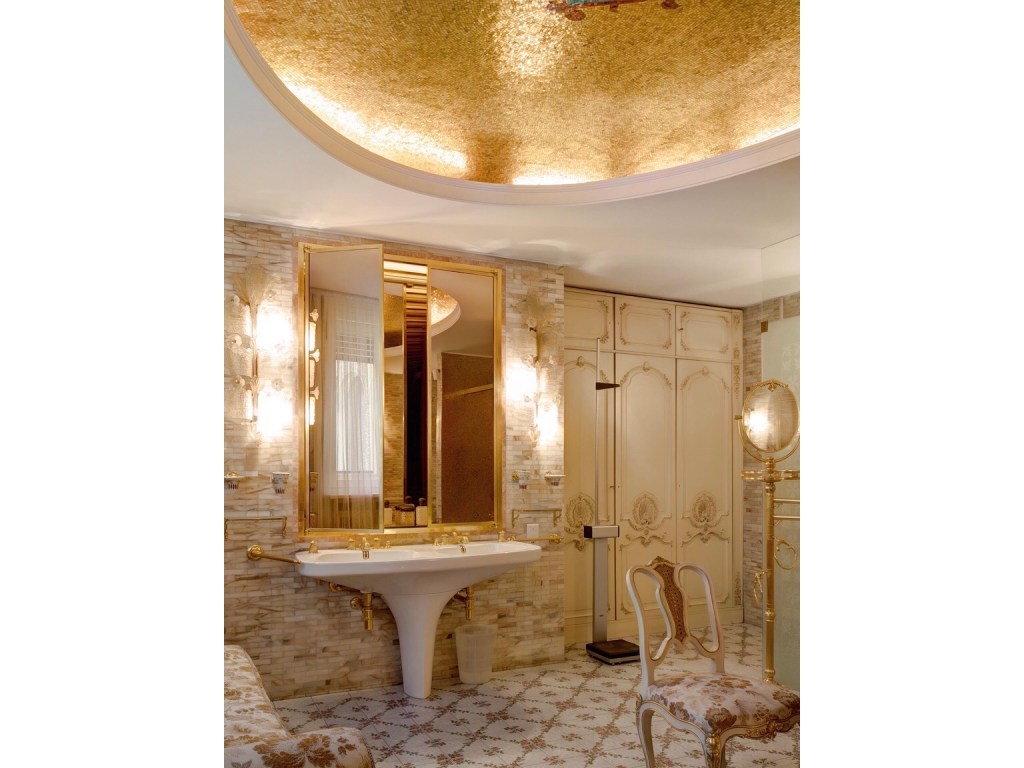
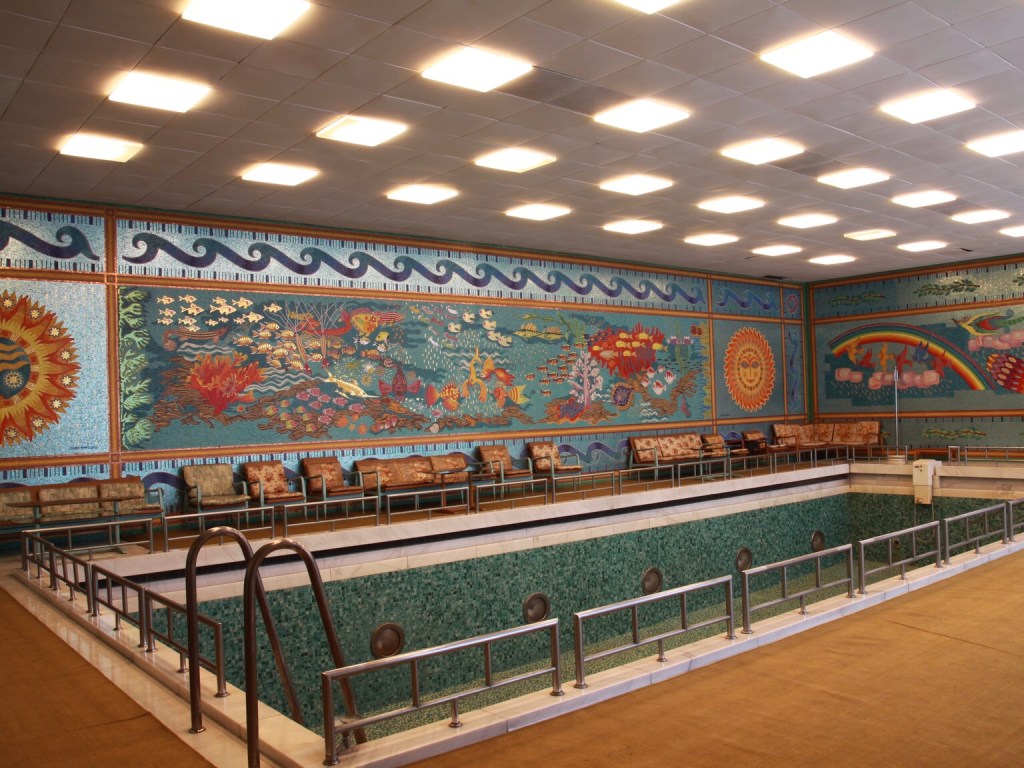
… the unassuming exterior contains 80 rooms and we saw almost half on the tour.

The guide was very droll as he pointed out that no expense had been spared, the most skilled craftsmen had used the finest materials, and all this was for just 5 people.  This is shocking when at the same time his regime which only came to an end with the revolution in 1989, had caused such pain and suffering and many people in Romania were starving. 

We were surprised that it was in equal parts drab and bling … did this reflect his personality … dull and petty? 

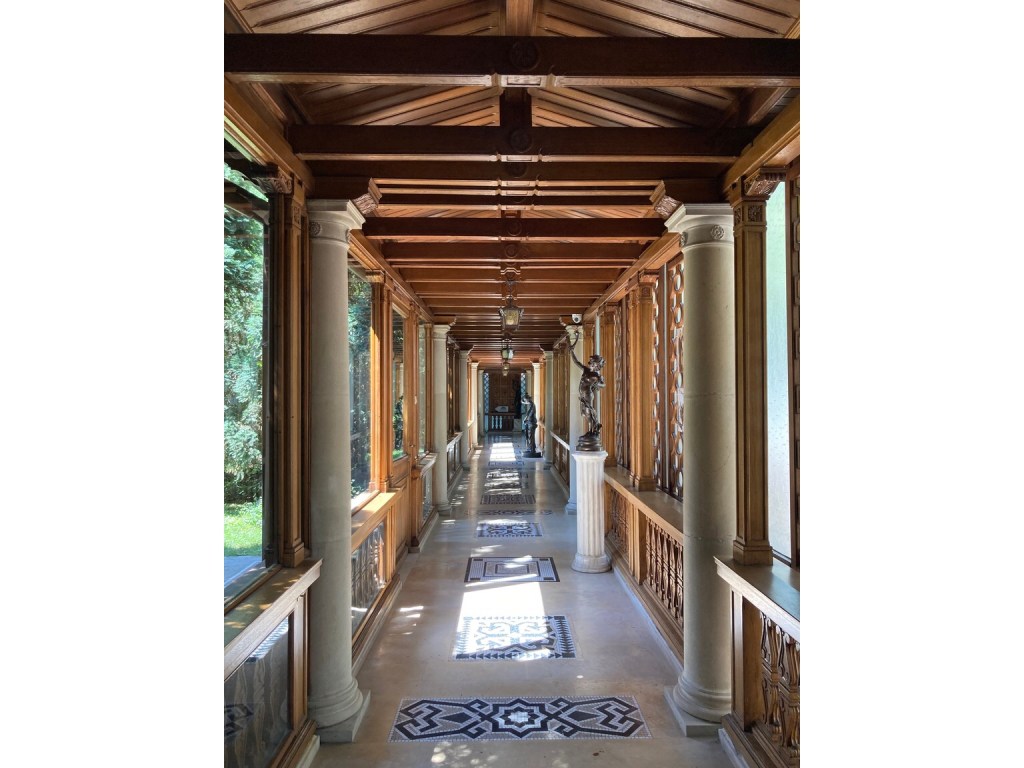
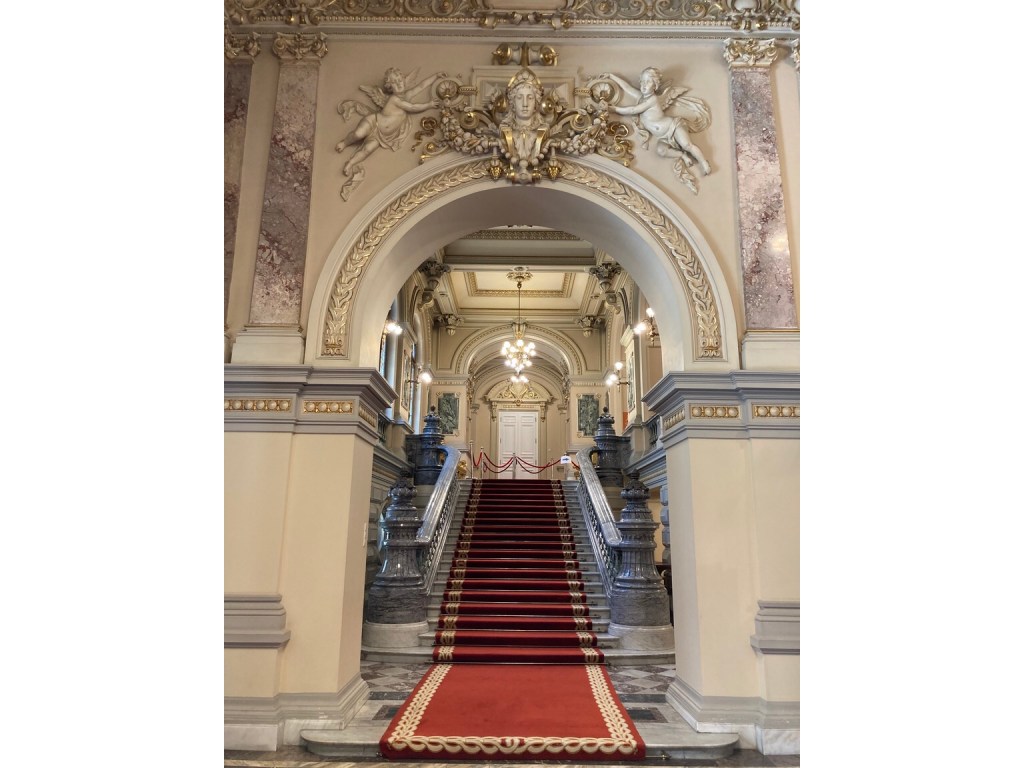
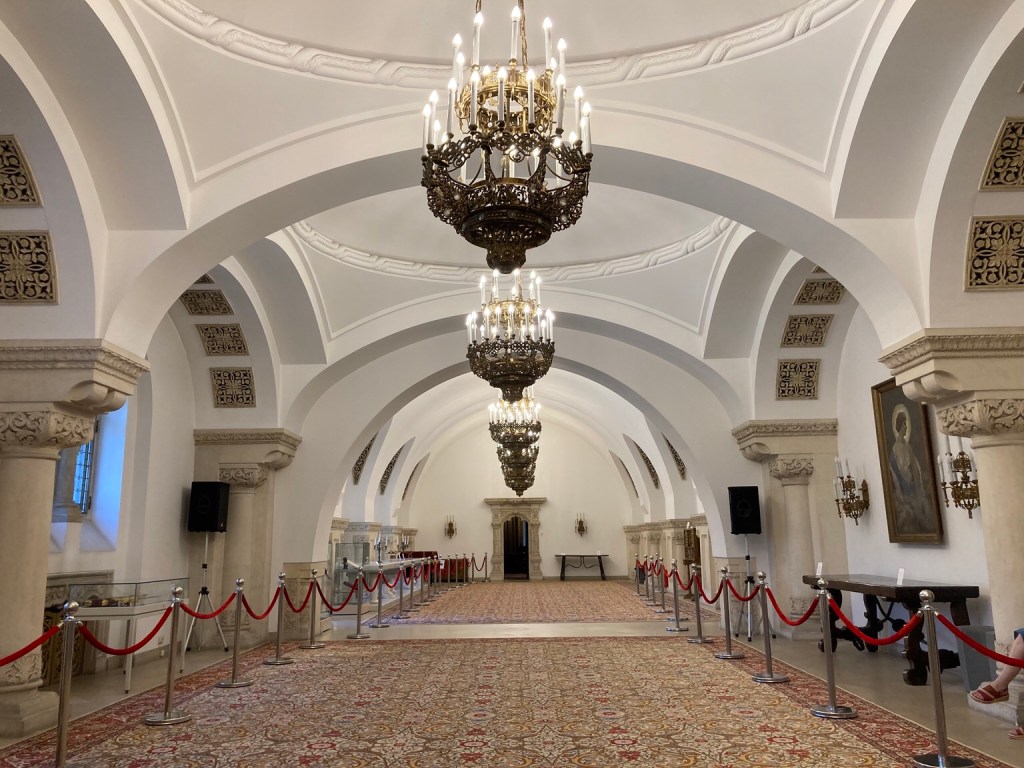
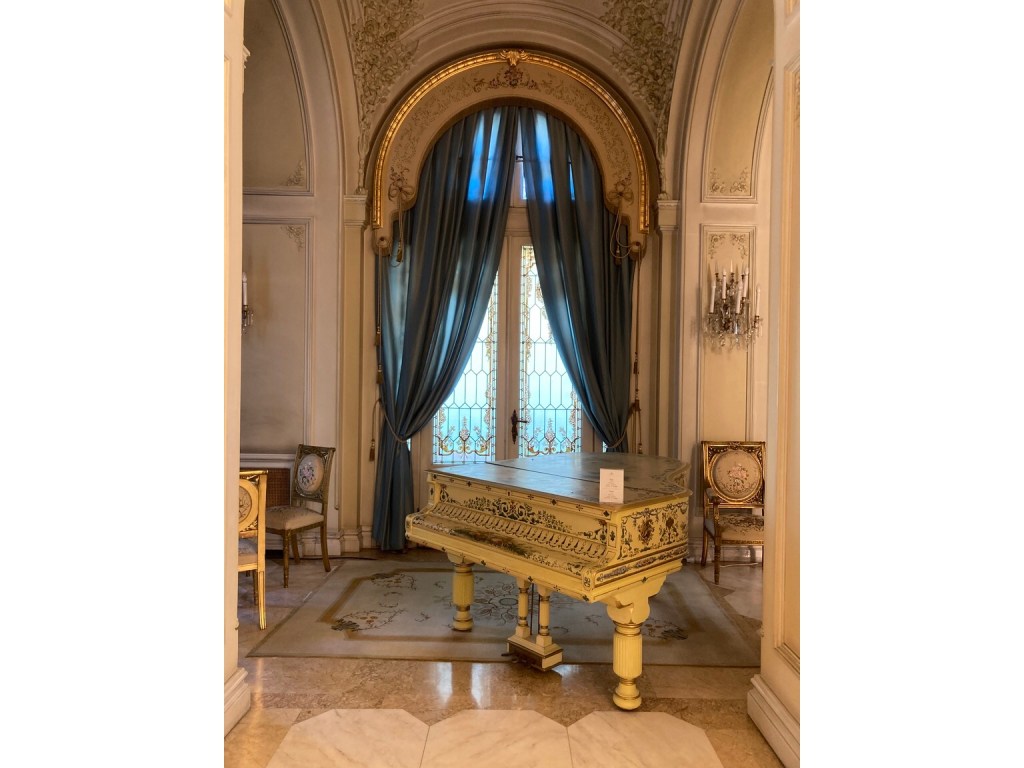
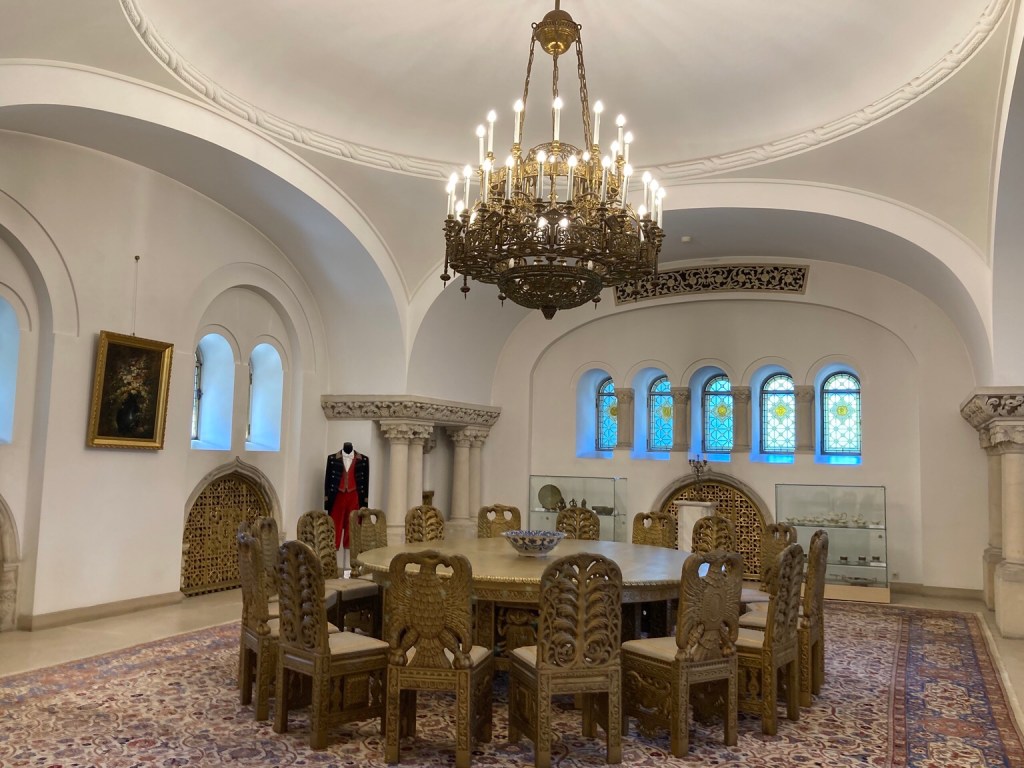
We couldn’t take pics inside so these are from their website.

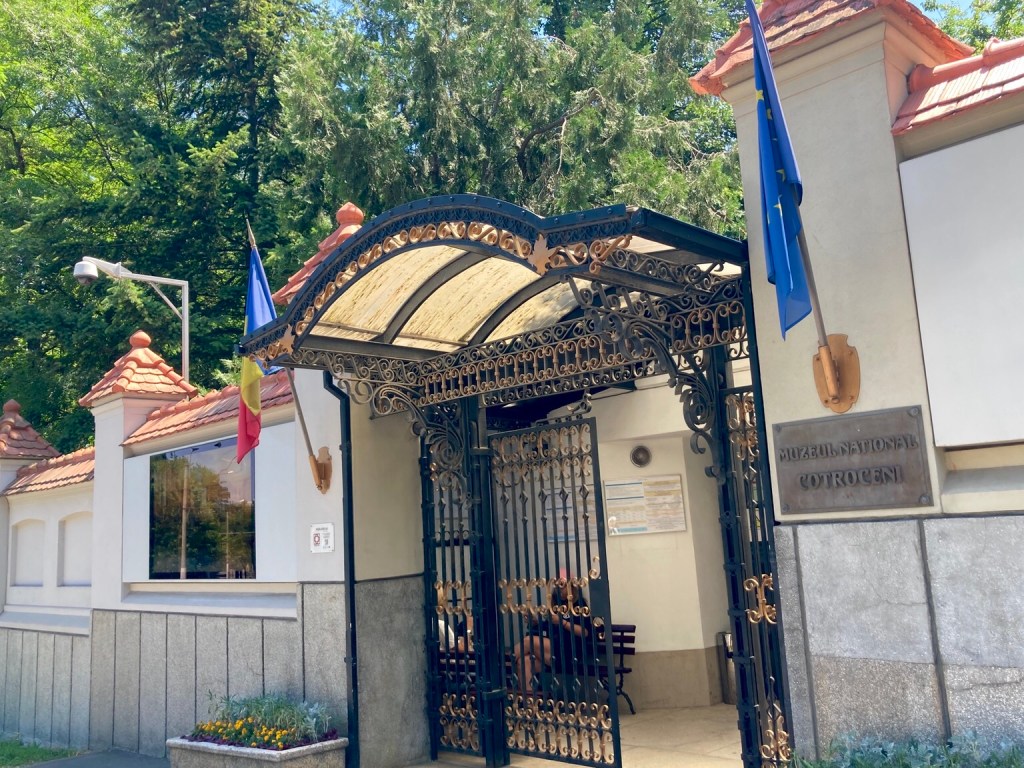
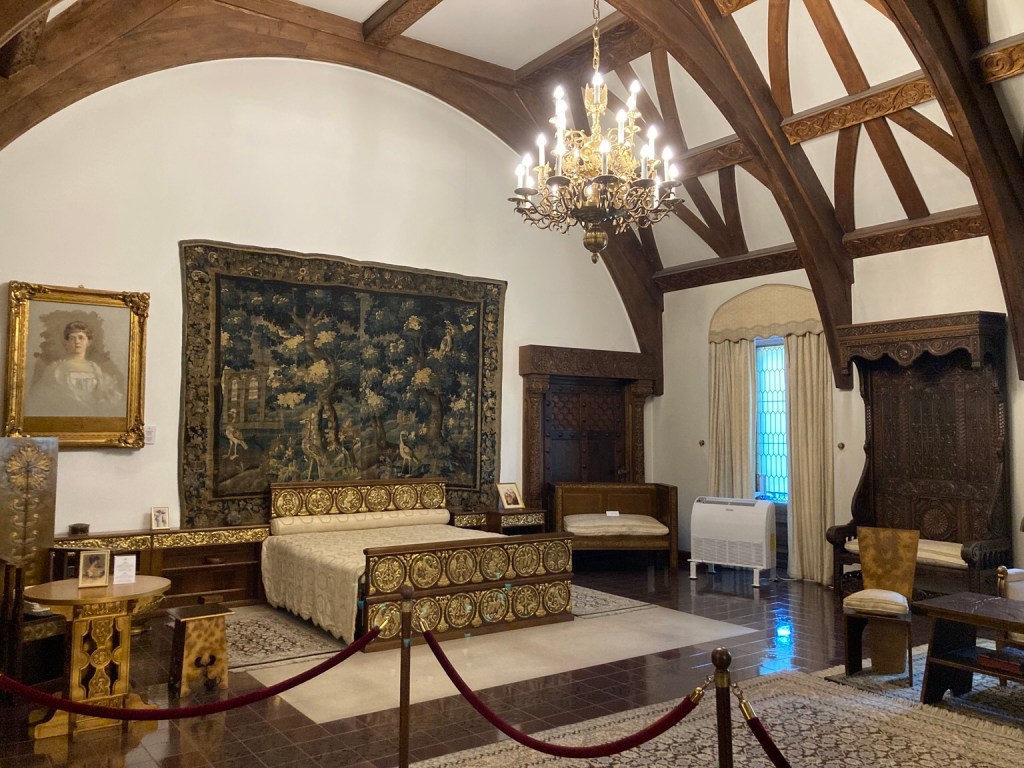
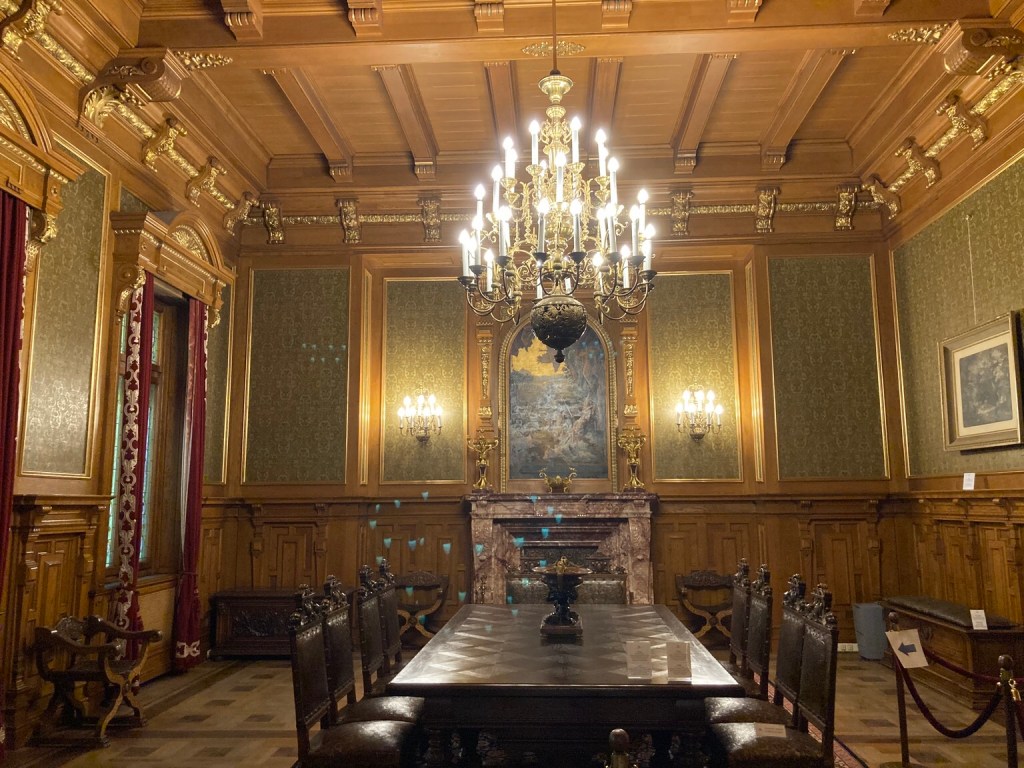
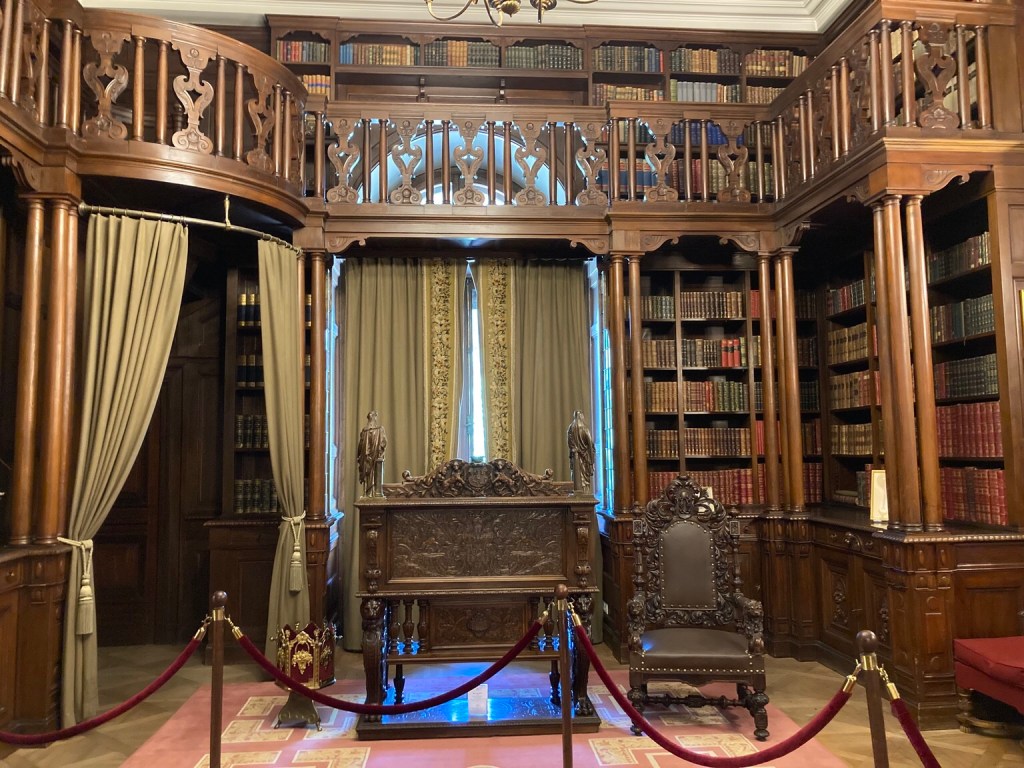
In contrast, our next visit was to the Cotroceni Palace, built in 1895 for the newly wed Prince Ferdinand and Princess Marie and remained the royal residence until 1939. 

Having seen inside Bran Castle, with rooms also decorated by Marie when she was queen, the aesthetic wasn’t surprising, favouring light and airy …

… and Art Noveau 

… to balance Ferdinand’s choice of heavy wood.

Under communism, it was used by the Romanian equivalent of the youth army and is now one wing is used for Presidential functions and the rest is a museum.

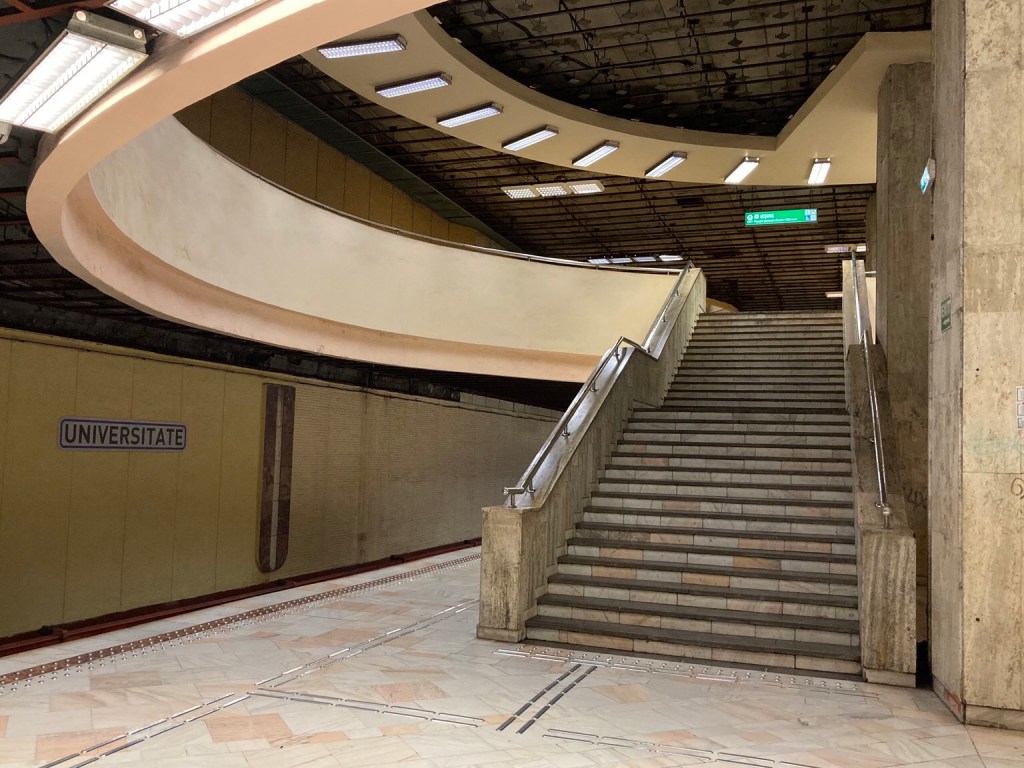
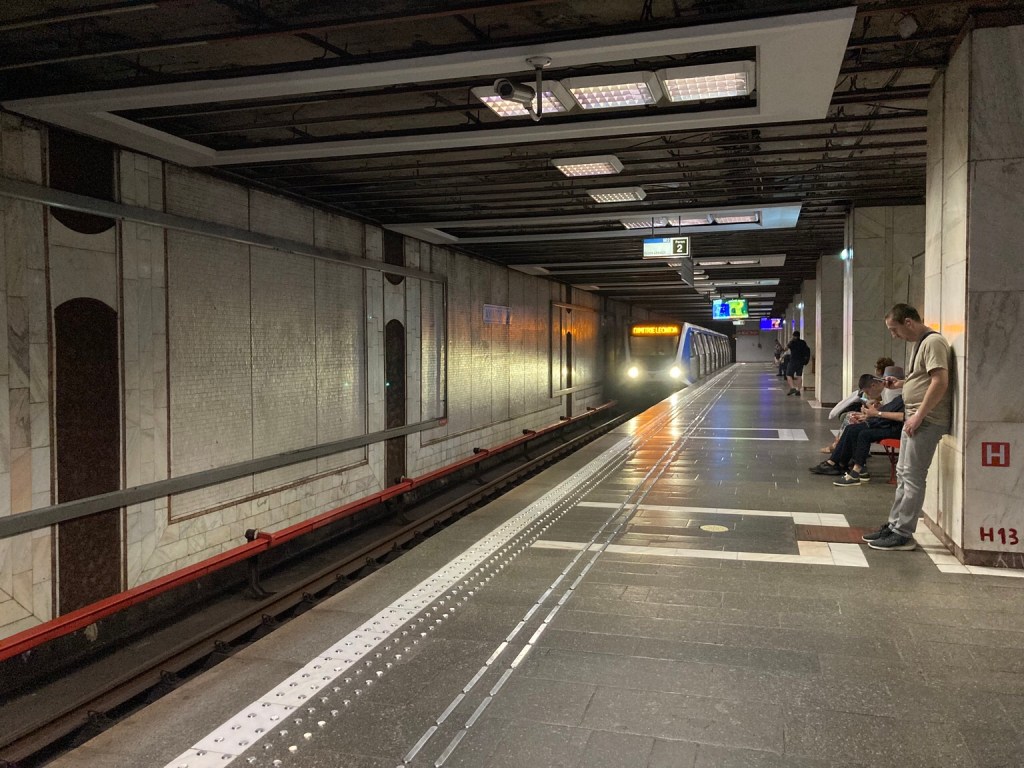
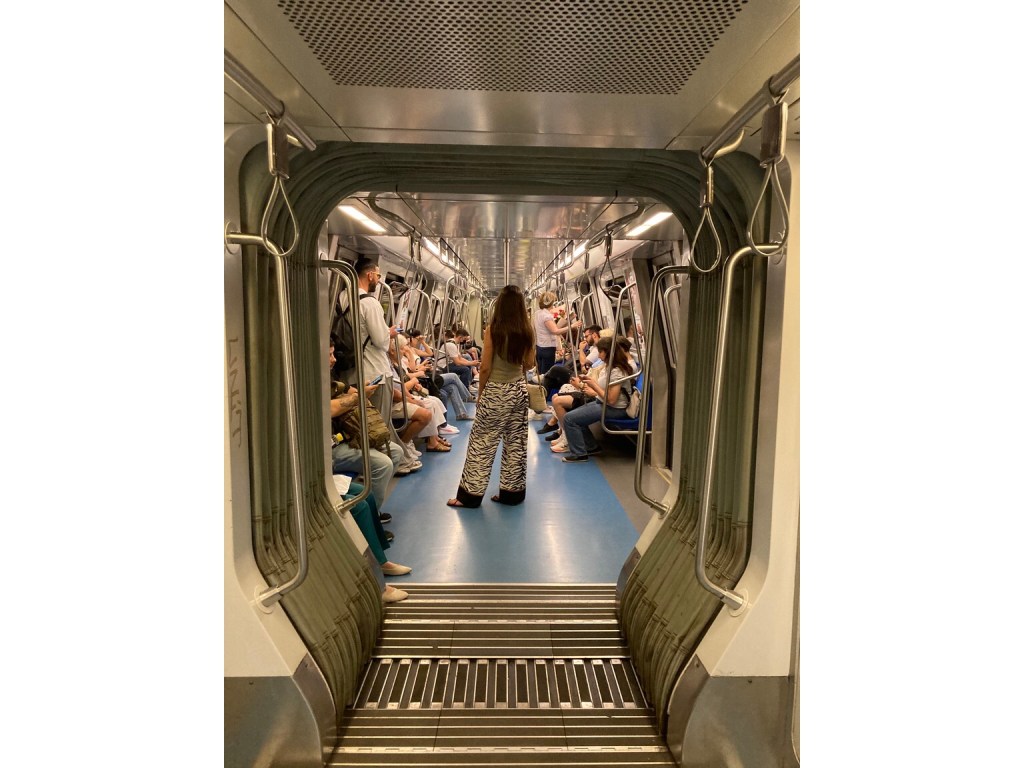
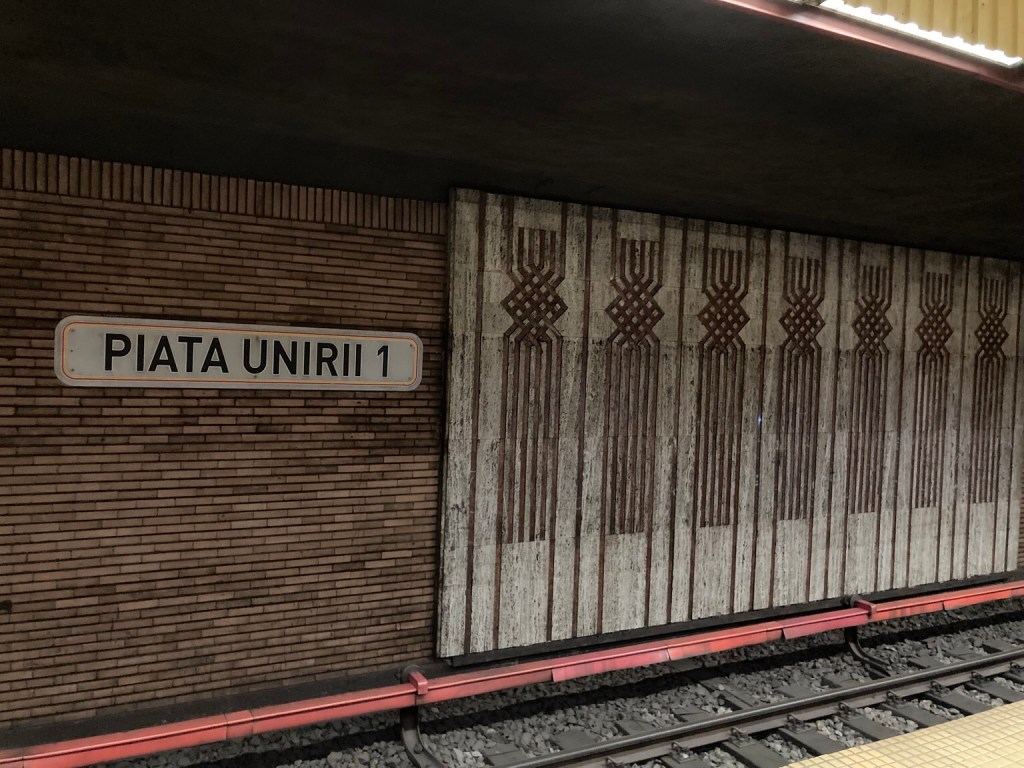
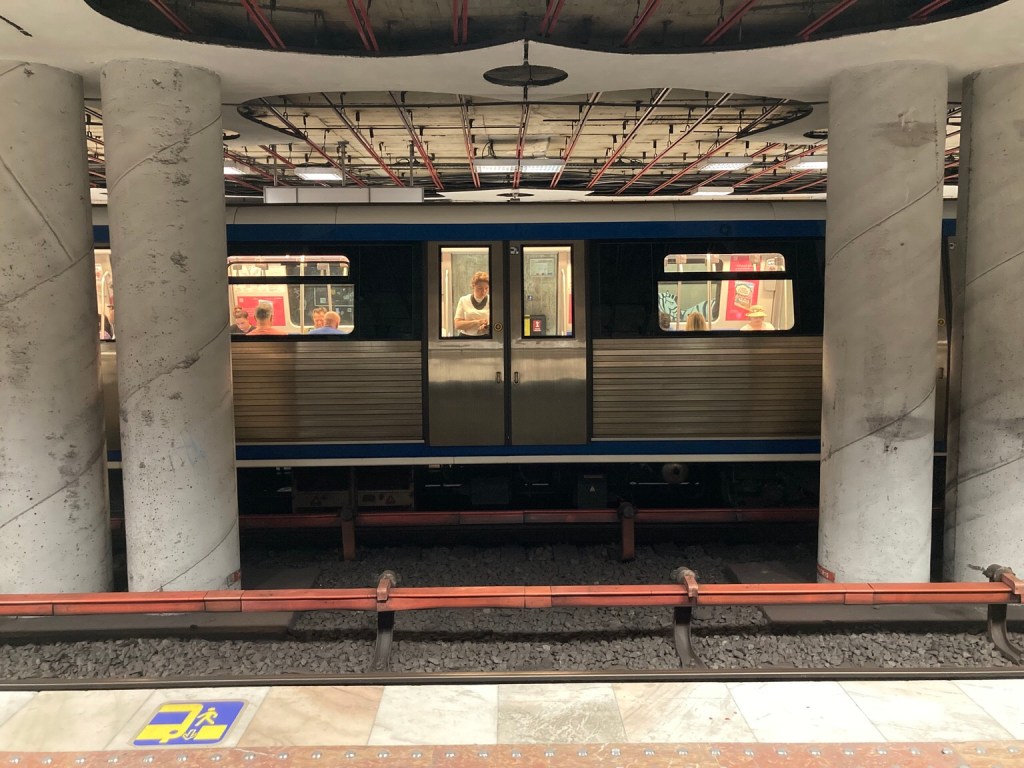
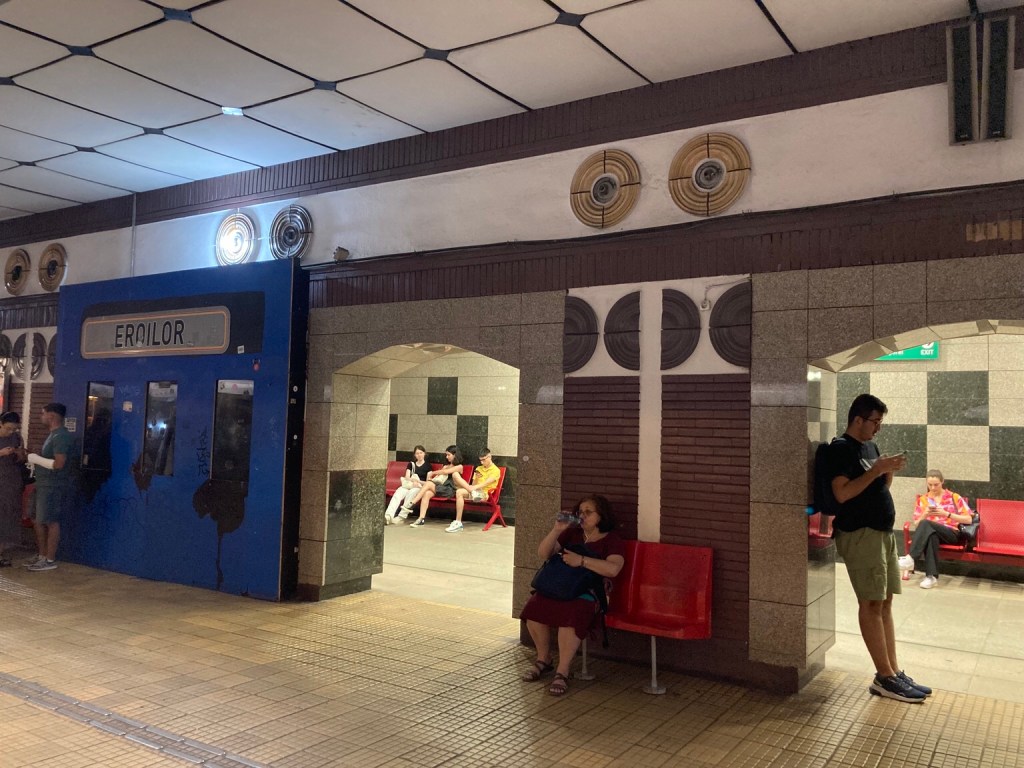
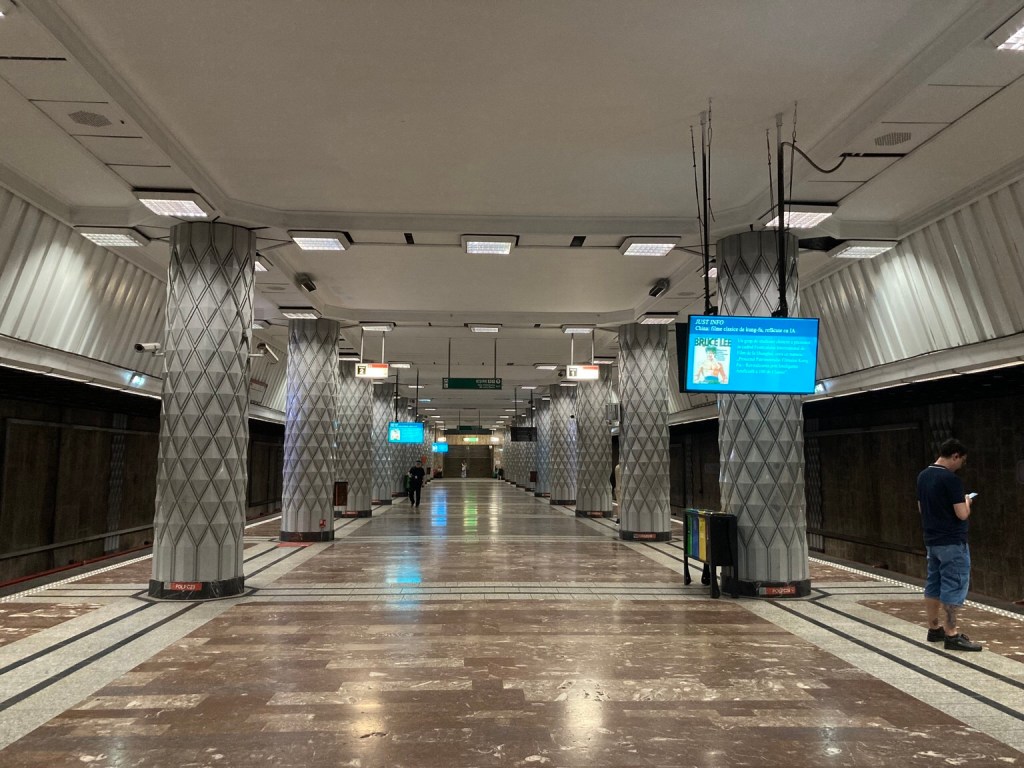
 Thus far, we had been using the metro, interested to see how it looked, although it is quite utilitarian with little ornamentation.  Having said that, here are a couple of snaps …

… and the platform at Politehnica actually has fossils in the floor!

By now we were getting weary, and even the 15 minute walk back to the metro seemed a little daunting, so we took a cab instead, easily done since Chris had downloaded the app just in case!

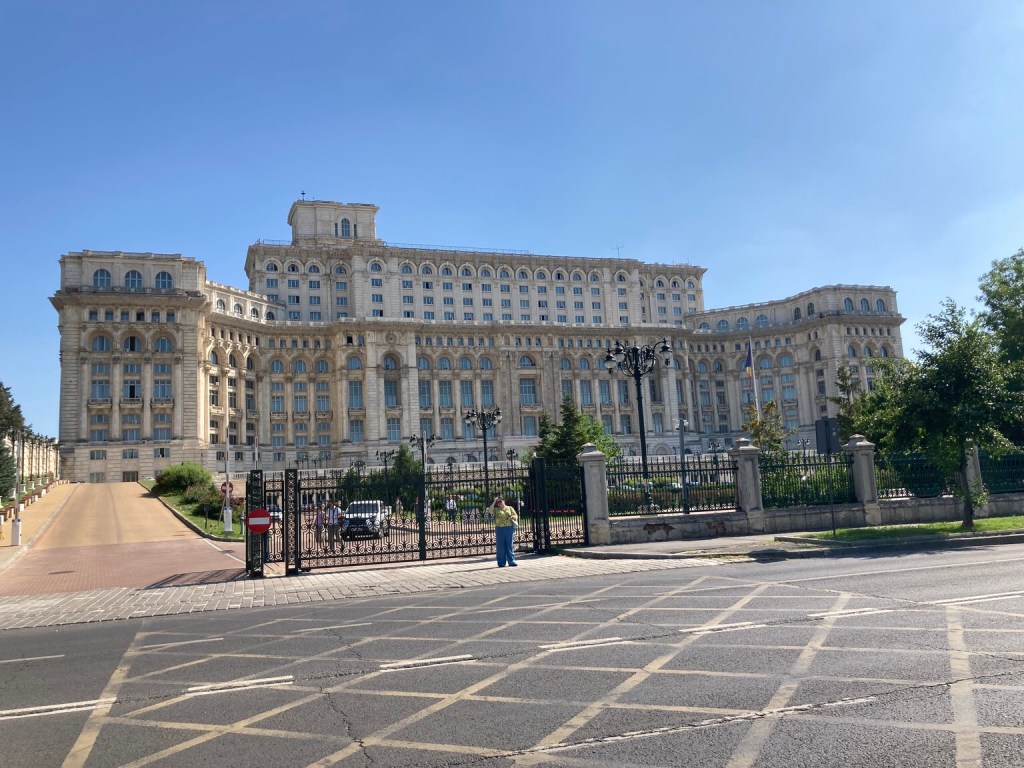
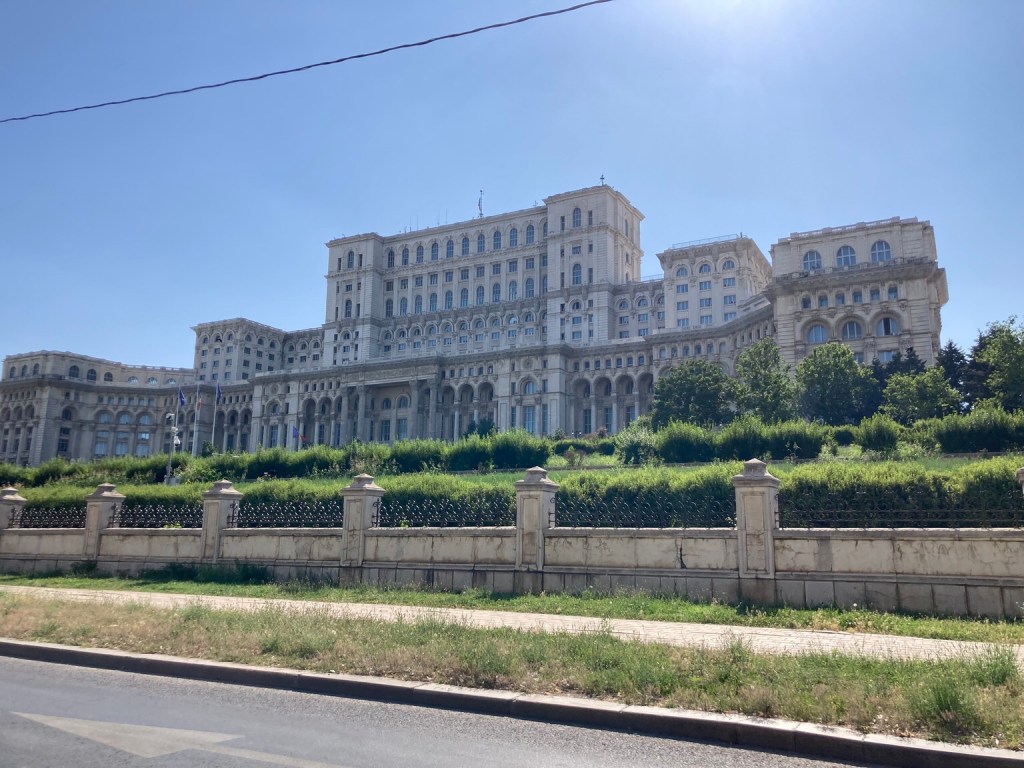
Our last stop is The Palace of the Parliament, claimed to be the largest administrative building in the world after the Pentagon and epitomises the megalomania that overtook Ceaușescu in the 1980’s.  We didn’t go in, just snapped from a distance, quite a distance to get it all in! Today it houses the Senate and Parliament as well as museums, but much is unused.

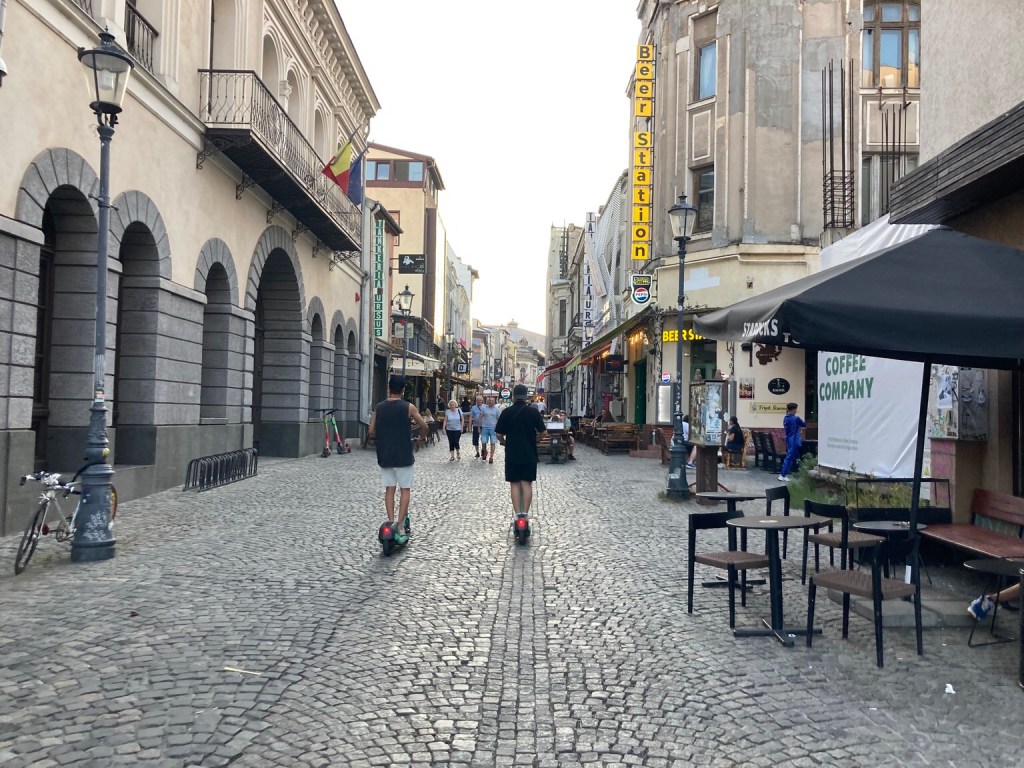
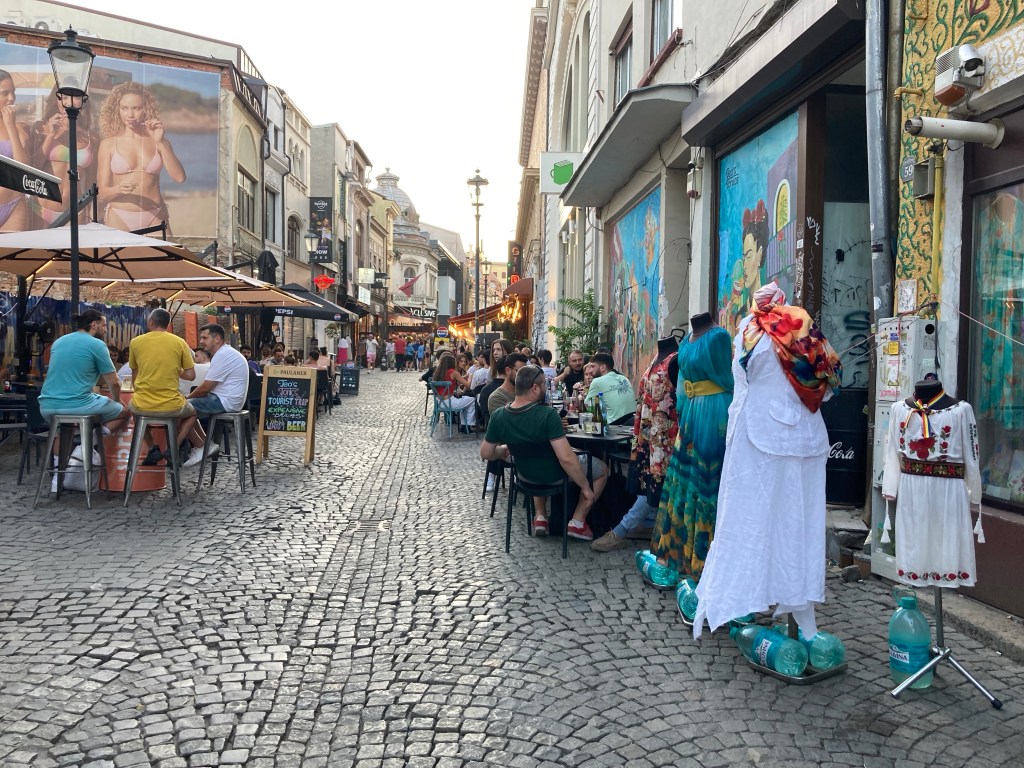
Another cab back to the apartment for a rest and to cool down.  Later, we ventured into the old town, billed as vibrant, we found beer central complete with booming music and pushy staff trying to entice you inside.

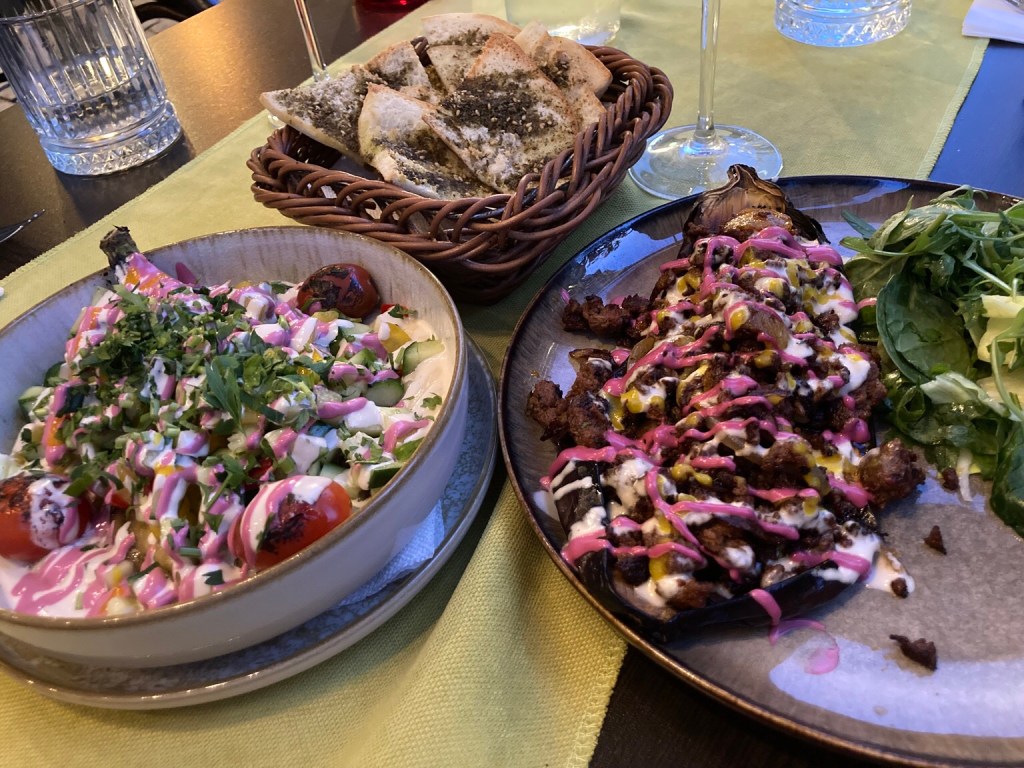
We were looking for Aubergine, which proved fairly quiet and a great choice for our last night – one Eggplant Pot and one Eggplant with Beef with crispy pita with za’atar and wine …

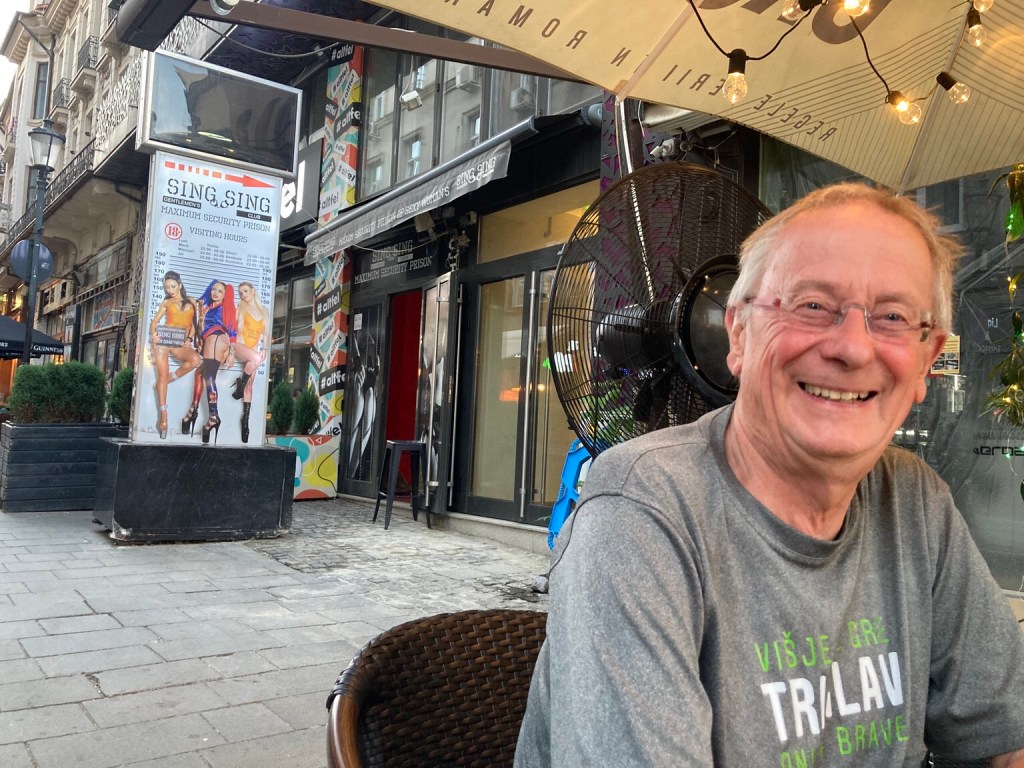
… although the establishment behind Chris became increasingly distracting when it started showing previews on the screen above!

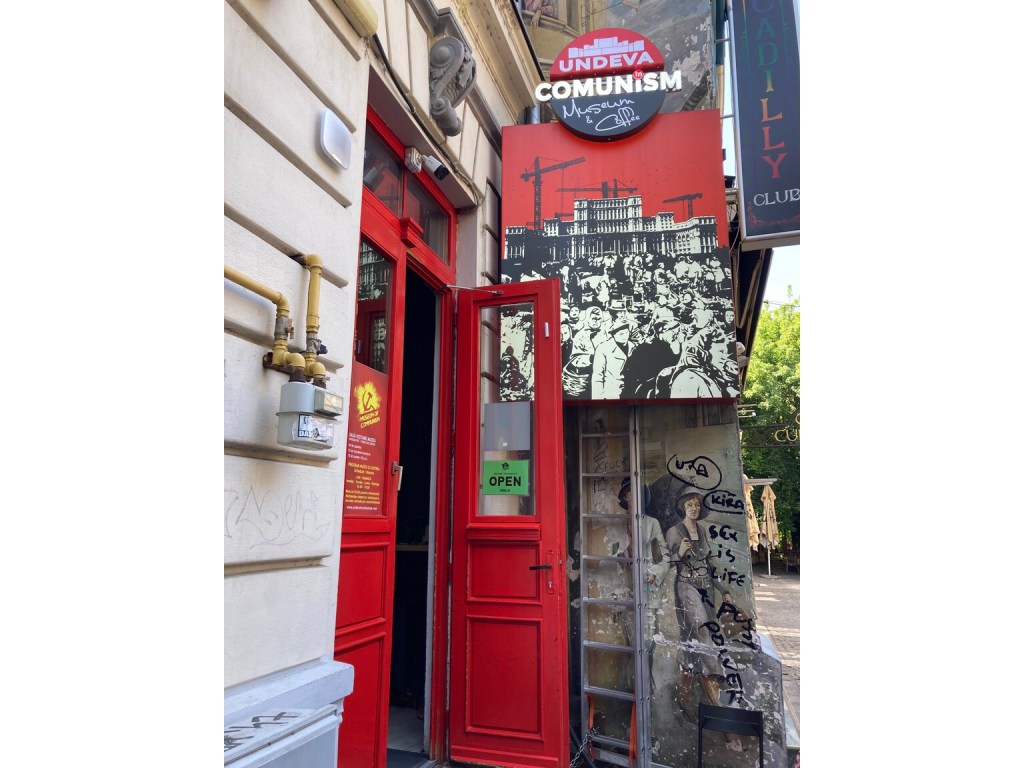
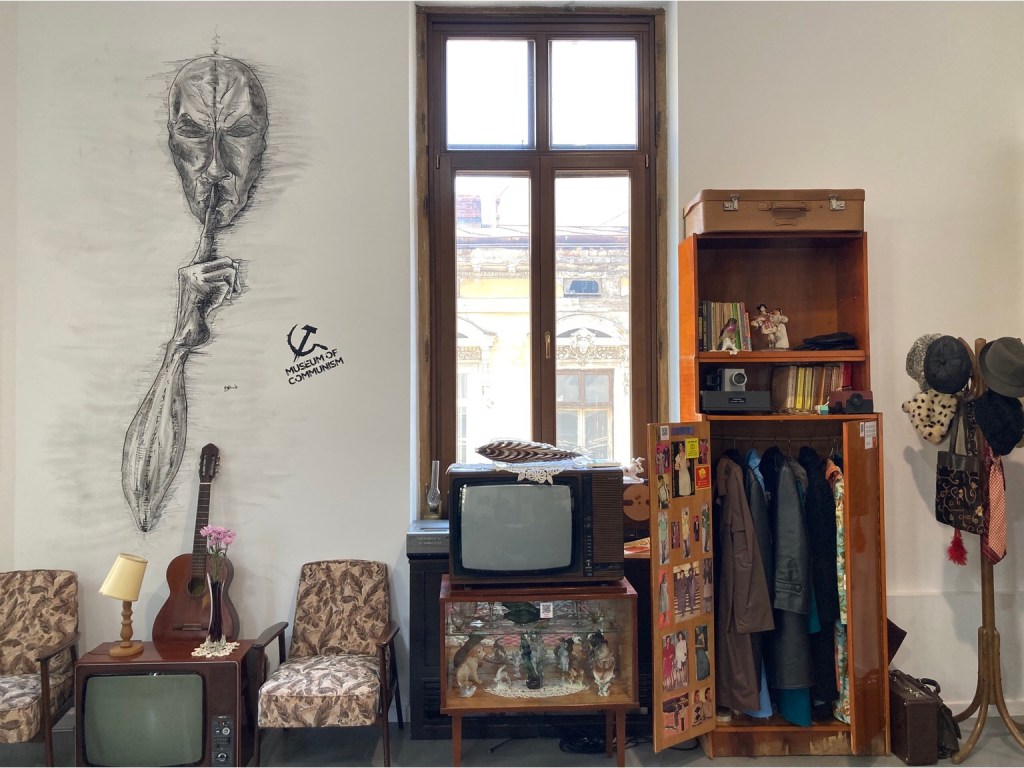
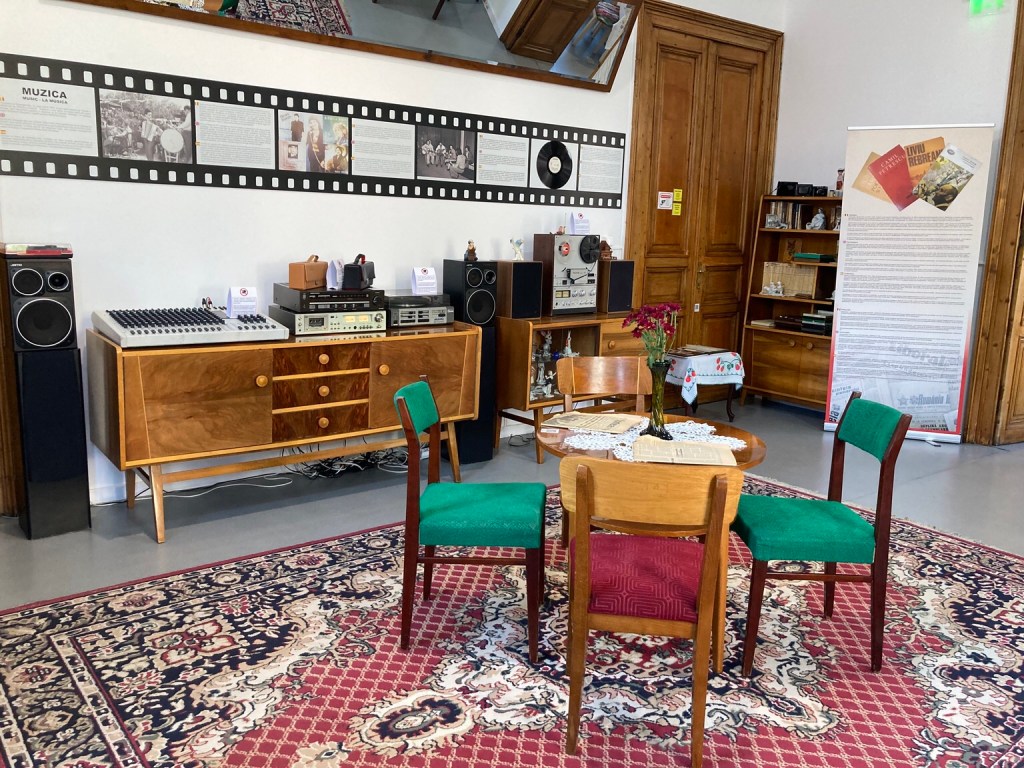
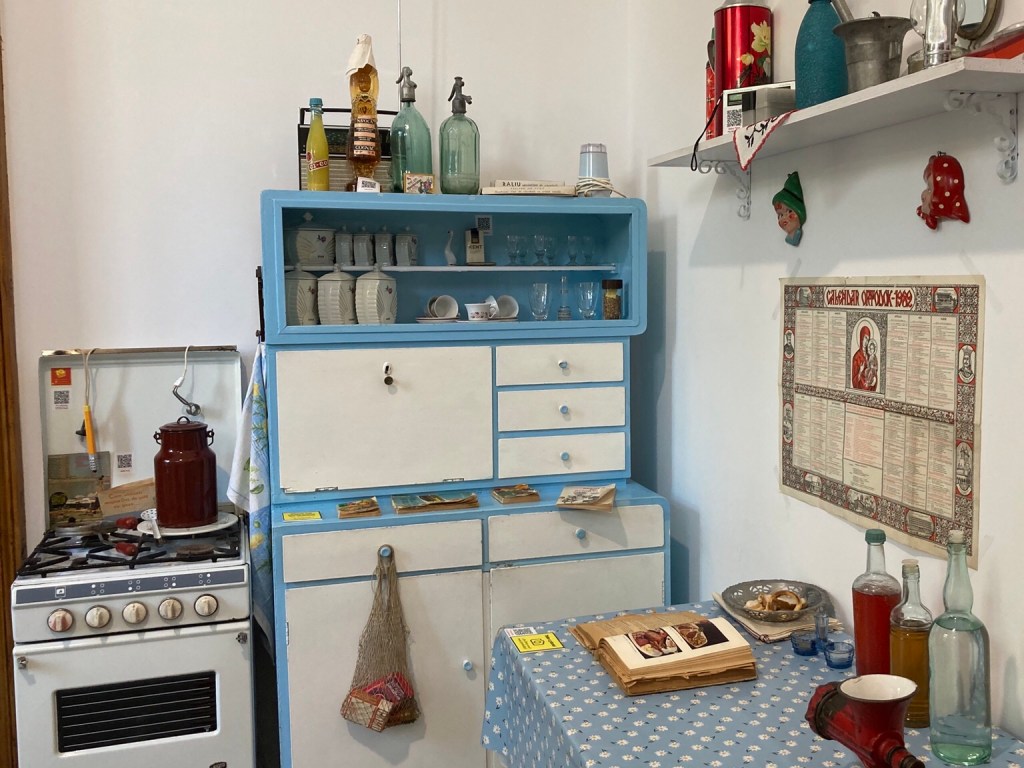
We squeezed in one final stop in the morning, The Museum of Communism which gave us more insight into this period of Romanian history which lasted almost 40 years, and remains in living memory for many. 

The regime certainly moved the country forward in industrial and technological achievement initially, but the the debts undertaken to achieve this eventually had to be paid back at huge cost to the people who suffered hardship and starvation through austerity measures and political repression.  There were various displays and room settings to illustrate the era …

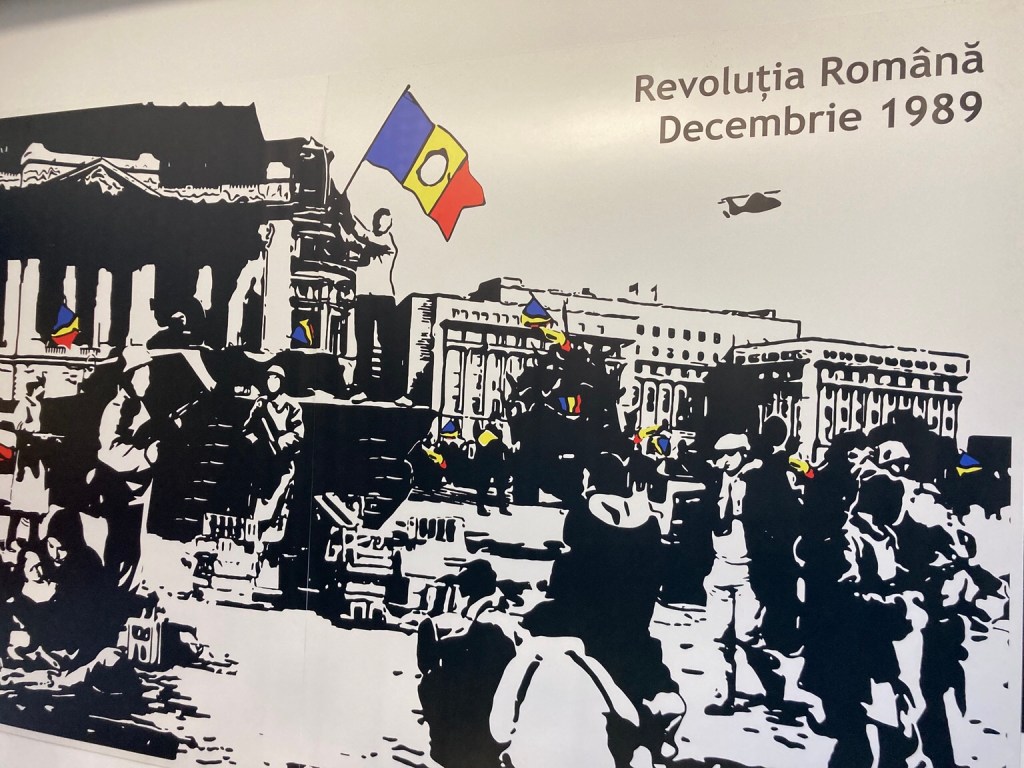
… which came to an end with the revolution in 1989, when Ceaușescu was overthrown and shot.

After that, just time for a cold drink and a bit of a review of our trip. 

Of course it will all be fine we said as we set forth, and it certainly was! The driving was smooth, the people friendly and communication easy.  We saw everything we hoped for and munched our way round Romania trying all the local specialities.  It was also incredibly good value and the Transfagarasan Highway was definitely one of the highlights.

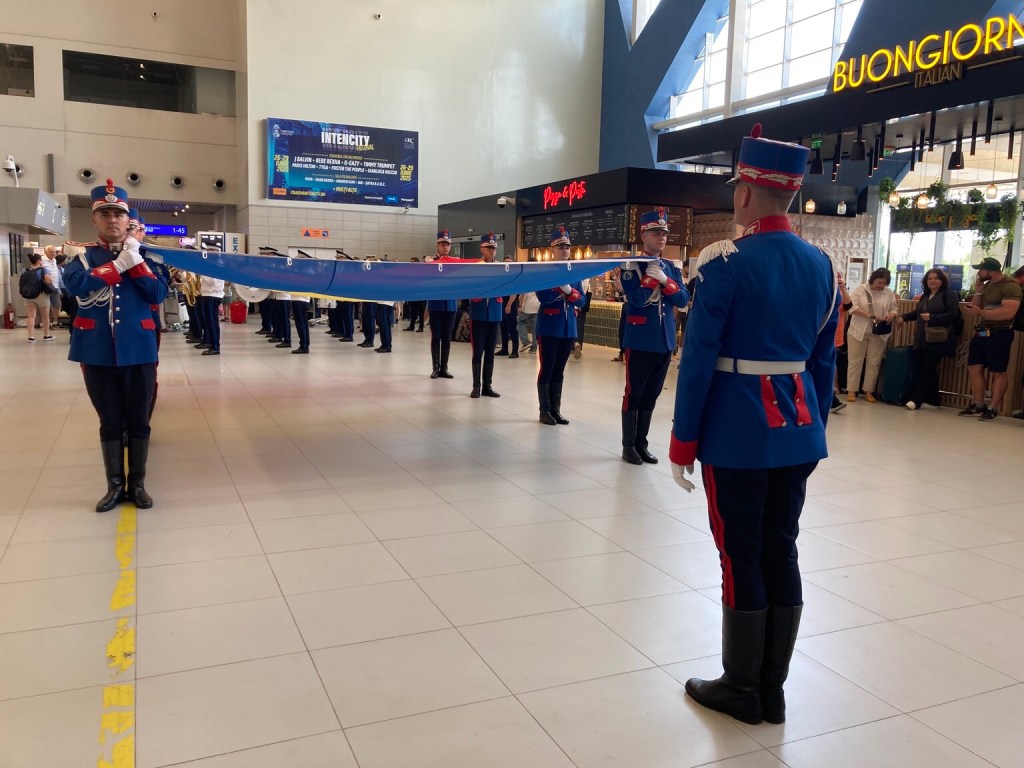
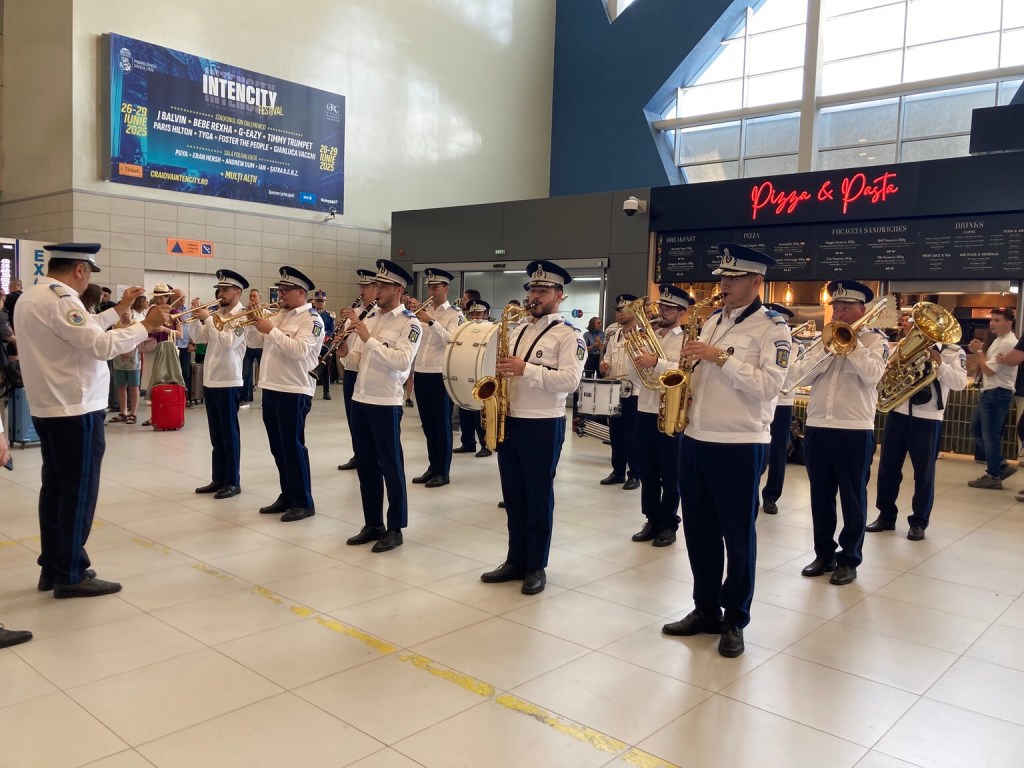
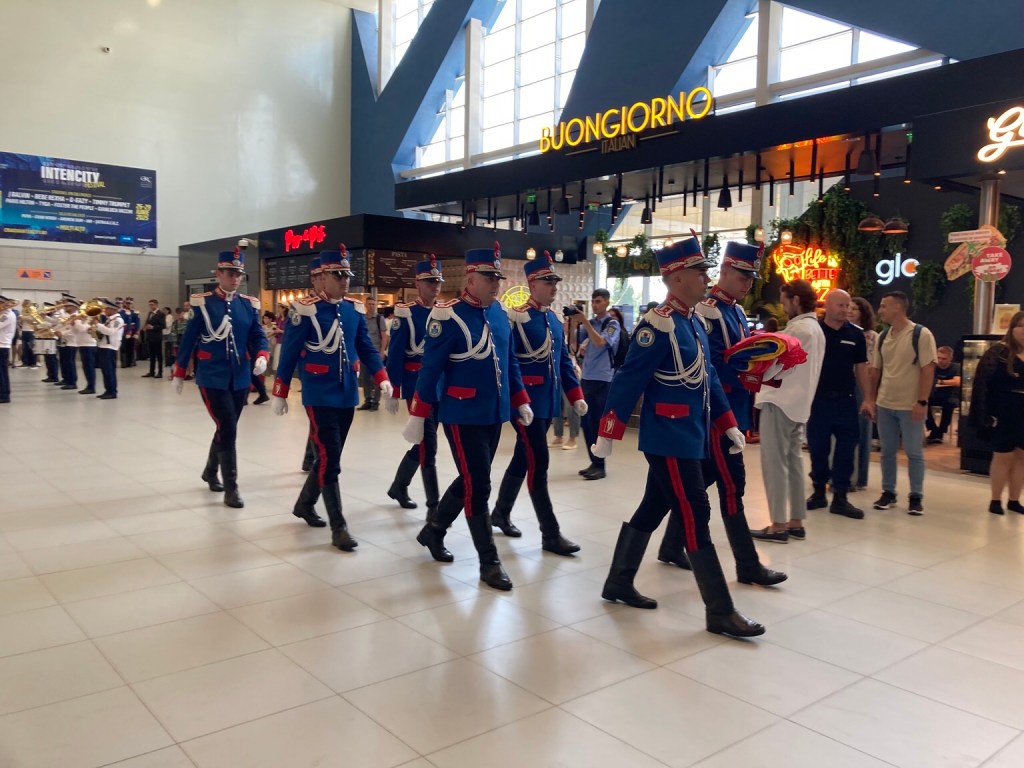
At the airport we were met by a brass band commemorating 26 June which is National Flag Day, and we were just in time to see the flag folded and marched out of the airport!

All that remains is to share our favourite Romanian phrase which means safe travels … Drum Bun!

Map

The Transfagarasan Highway  … Wow!

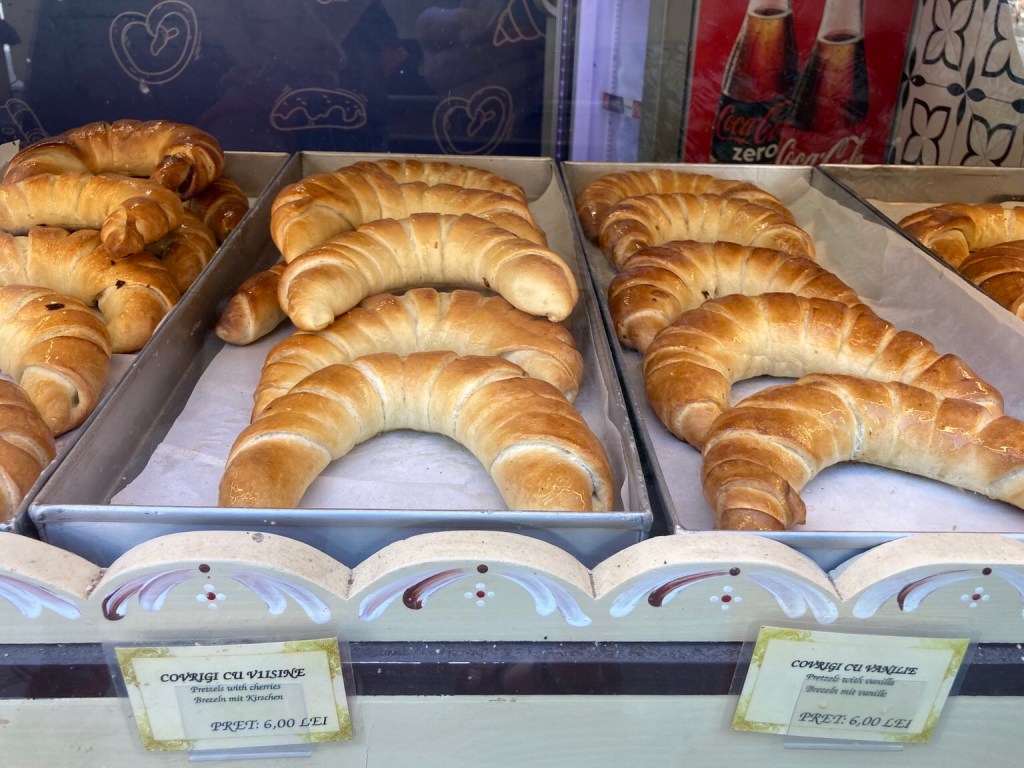
An early start was required, so having admired the choice of covrigi, gogosi and poale’n brau in the bakeries, we bought a selection for breakfast before we left.

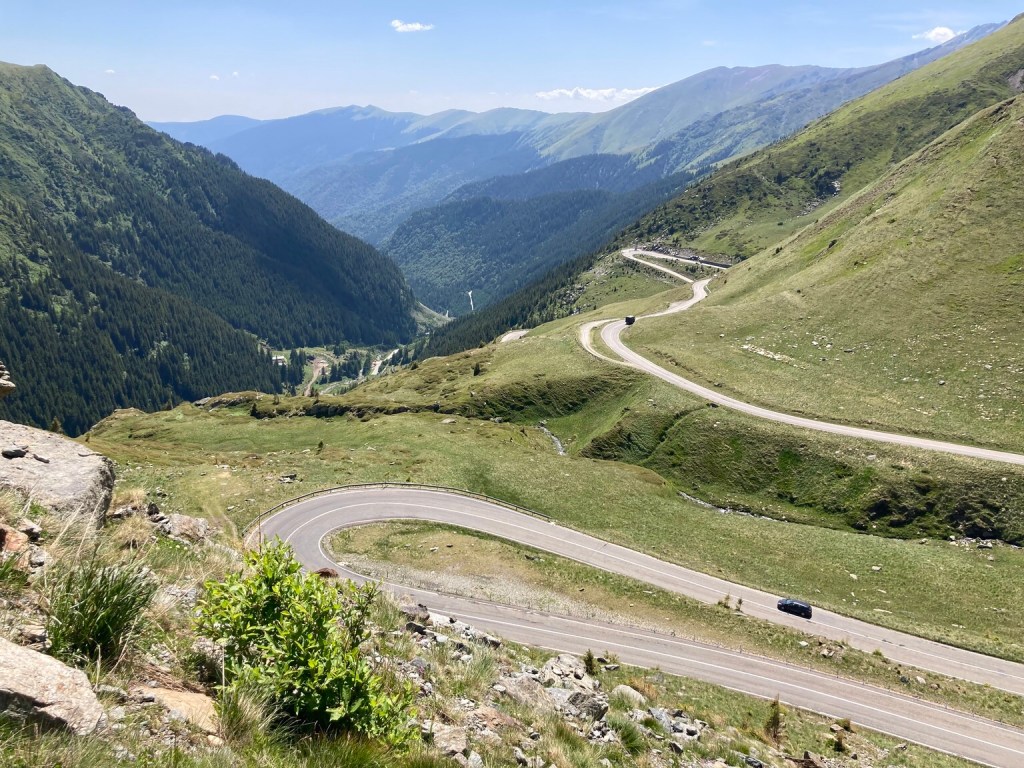
The Transfagarasan Highway was apparently built as a strategic military route, ordered by Romanian dictator Nicolae Ceaușescu. Construction took place between 1970 and 1974 in response to the 1968 Soviet invasion of Czechoslovakia. The road was intended to provide quick access across the Carpathian Mountains for Romanian troops in case of a potential Soviet invasion. 

Official government figures state that 38 workers died throughout the construction, but it is likely to have been far higher.  The road was never needed for its intended purpose and is now considered one of the most beautiful routes to drive, especially on a bike or in a high performance car.

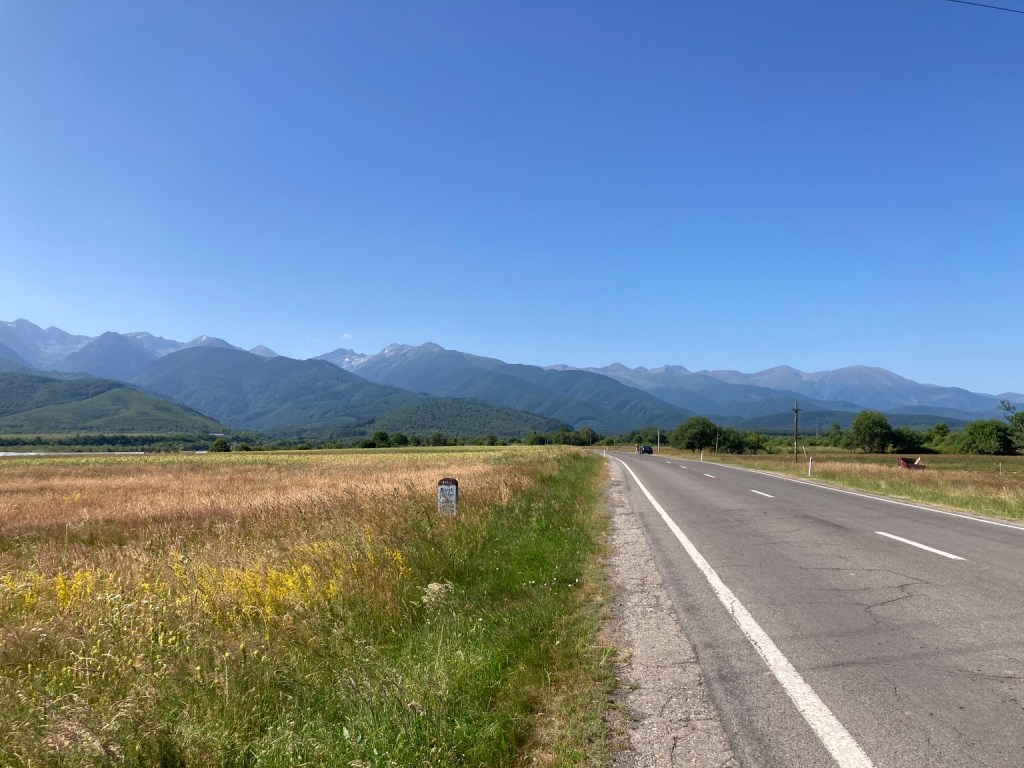
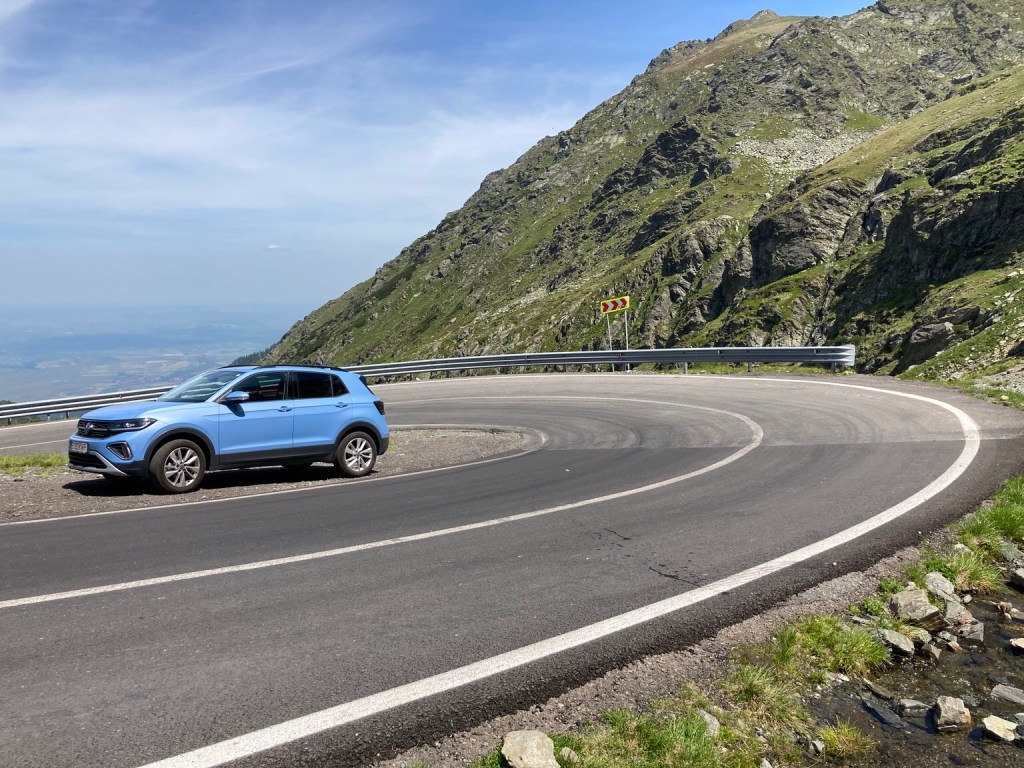
We had our trusty bright blue VW TCross and it wasn’t long before the road started to approach the mountains …

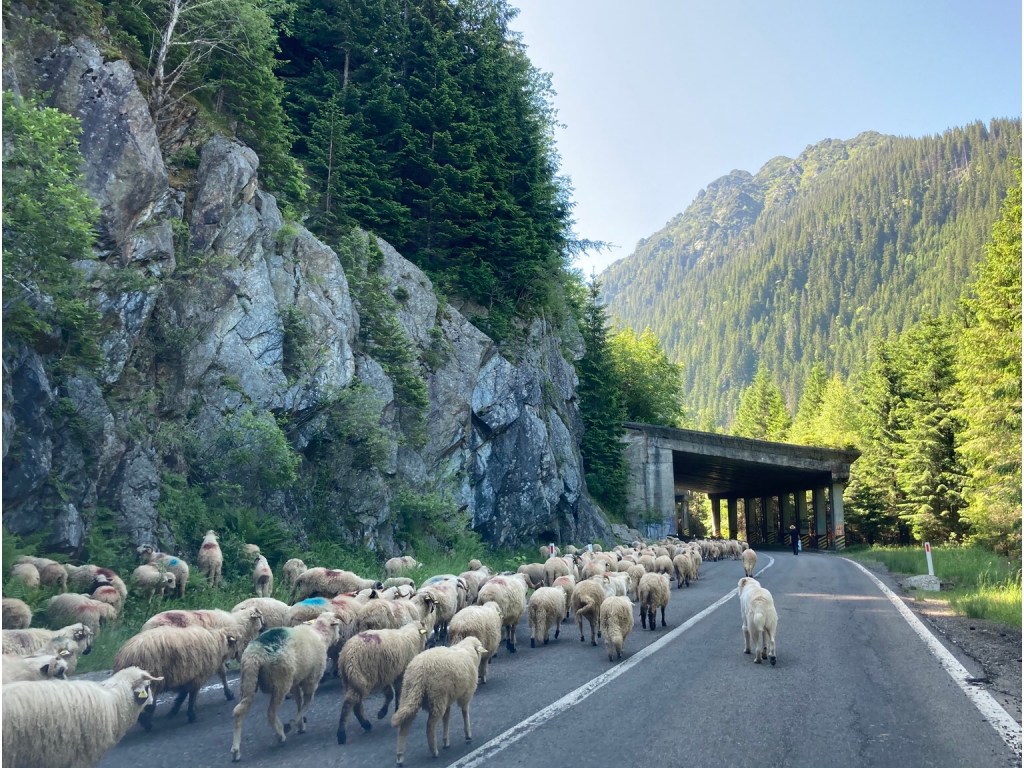
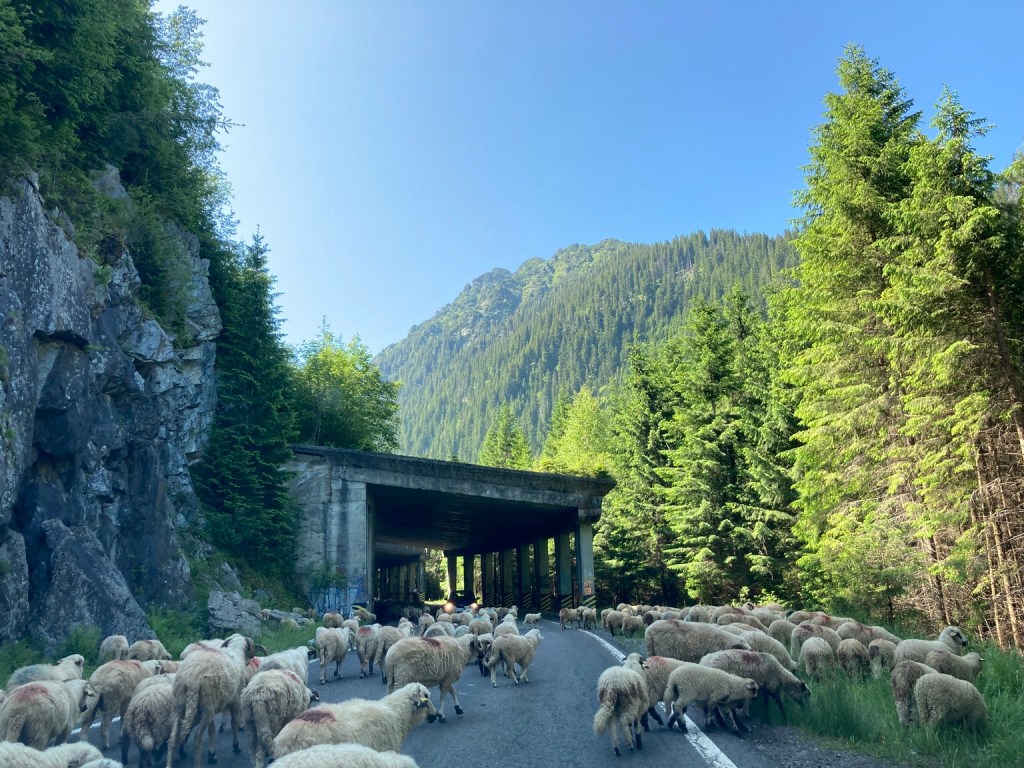
… then climb slowly.  We came across a shepherd herding his sheep along the road …

… but they were tempted back and forth by every patch of grass!

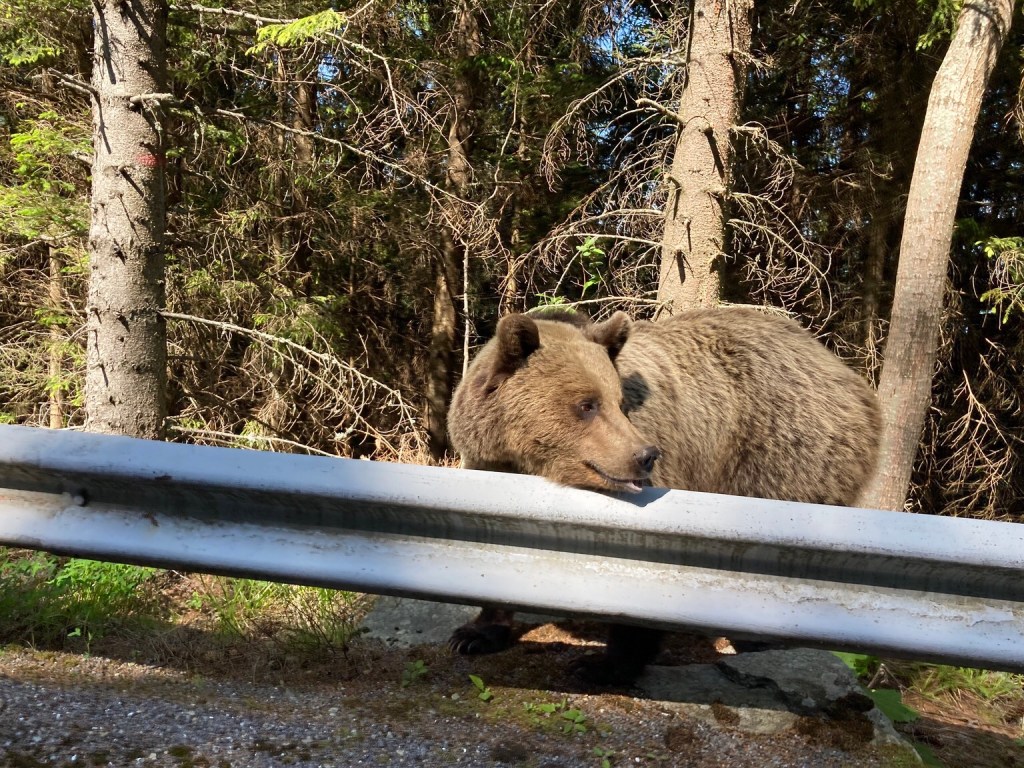
Eventually we squeezed by then spotted a bear walking along the road, but he was safely behind the barrier by the time we reached him. The road was quite enough to pause and take a photo.

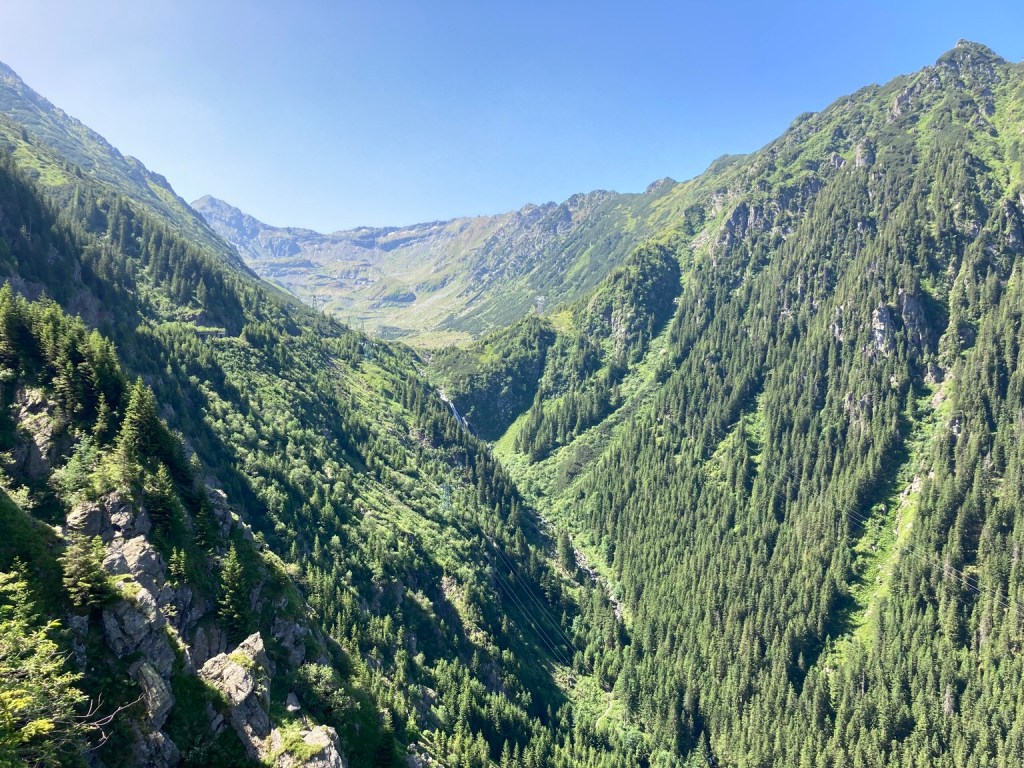
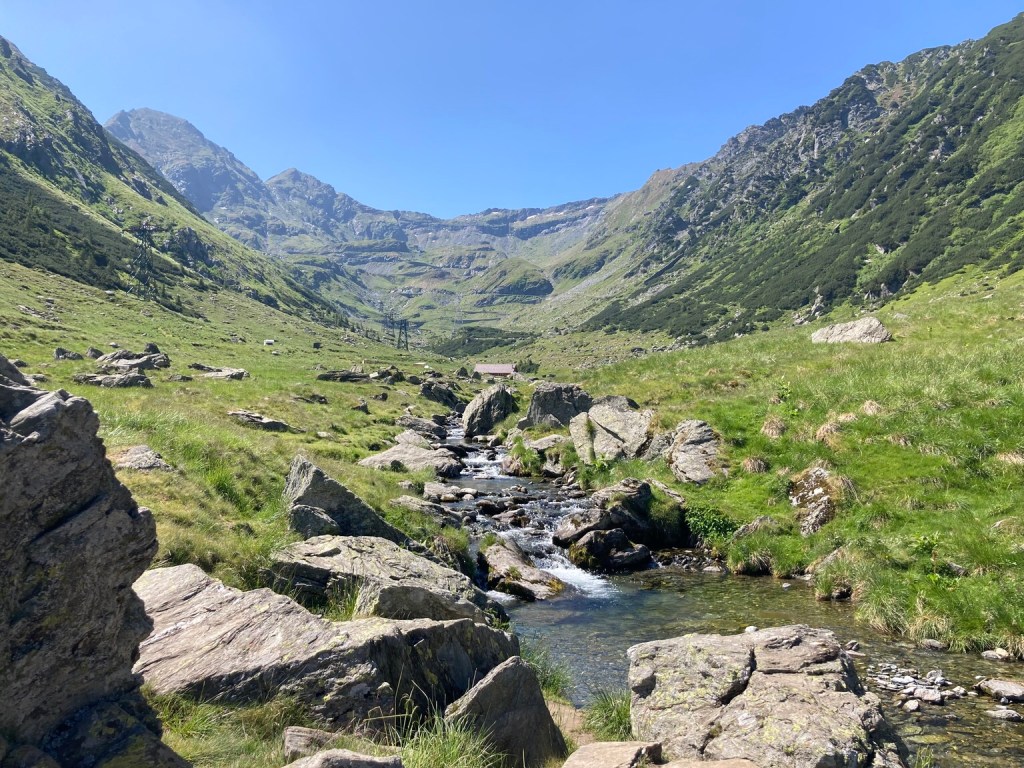
Higher we climbed until we could see the Balea waterfall in the distance …

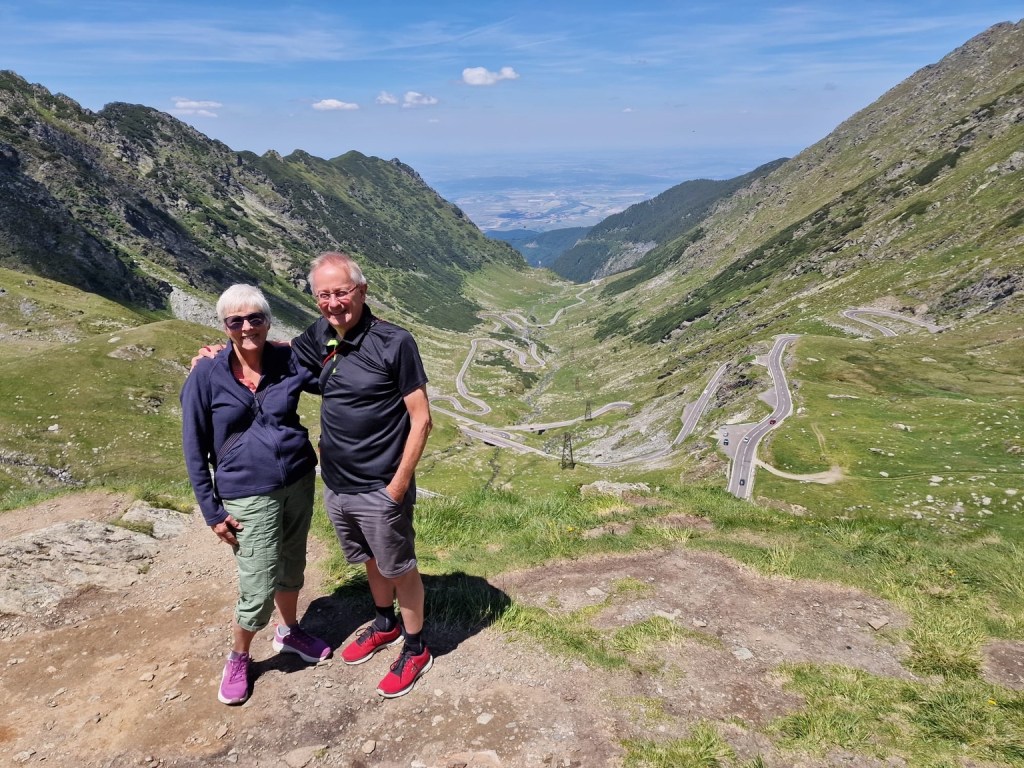
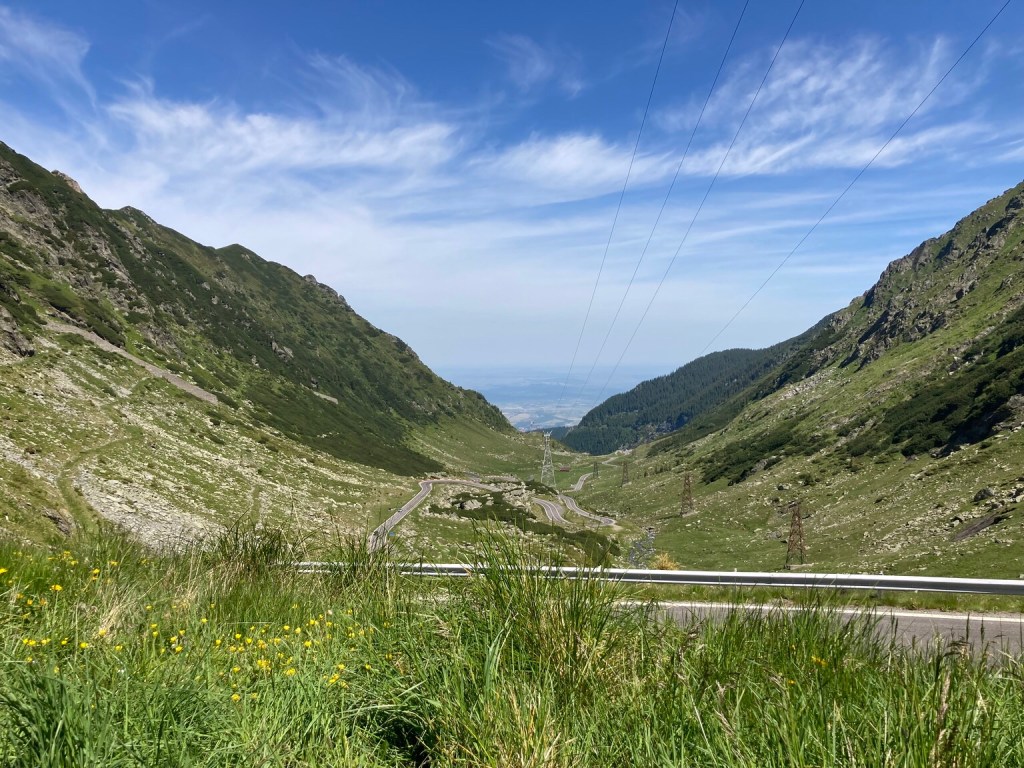
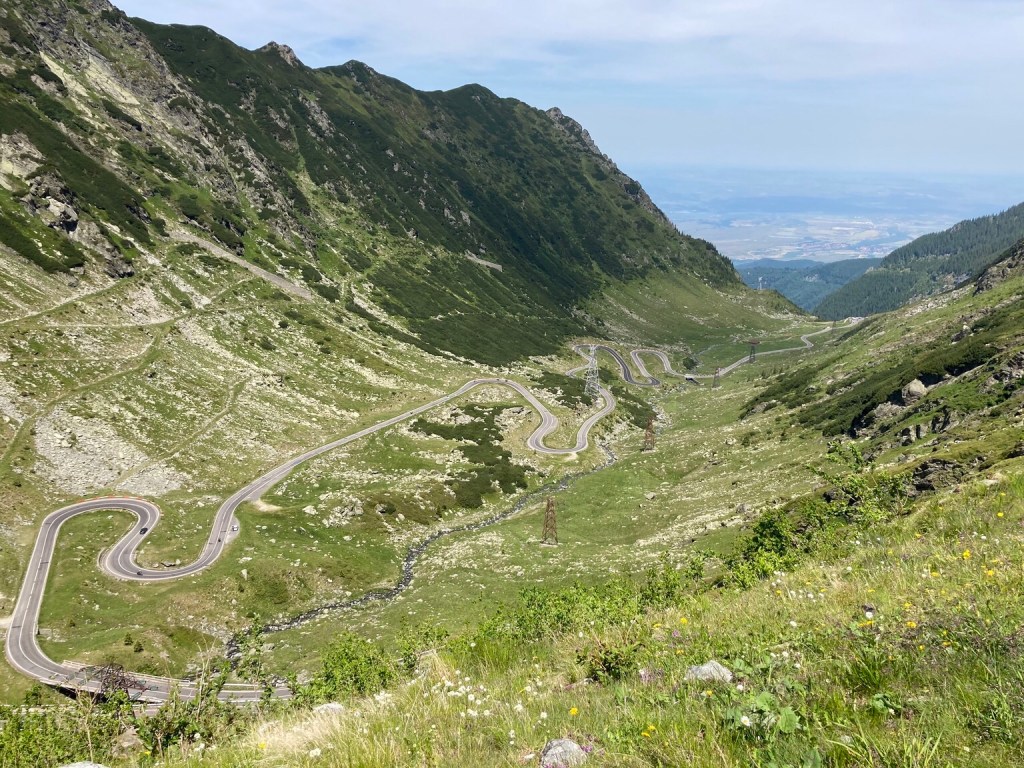
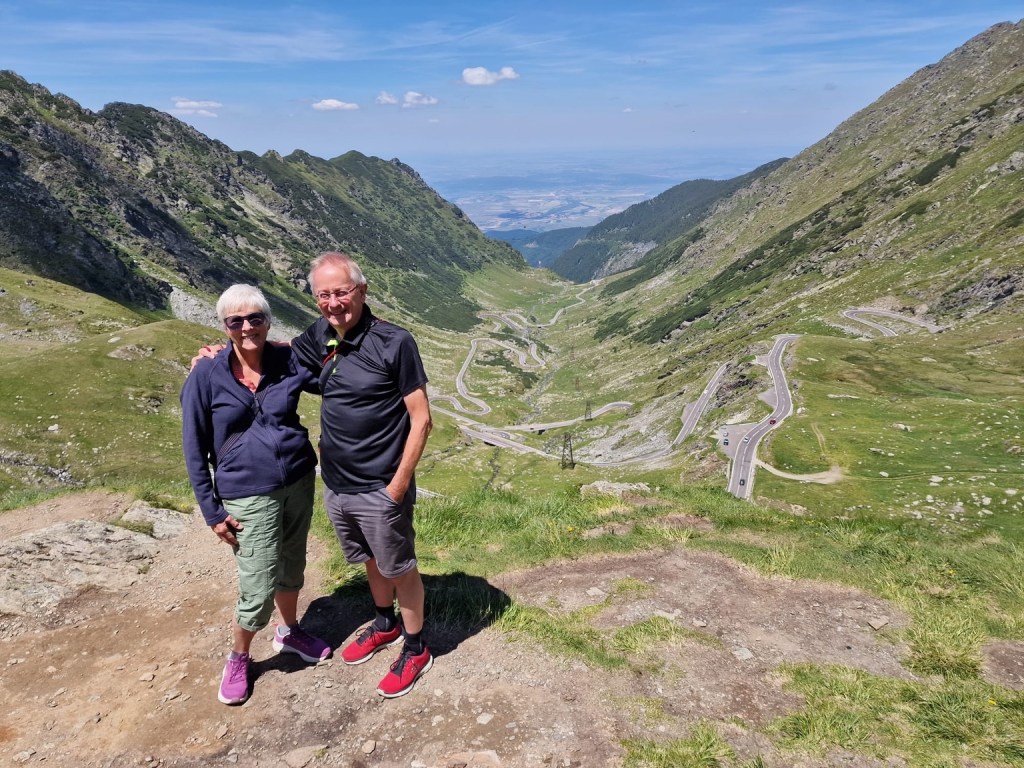
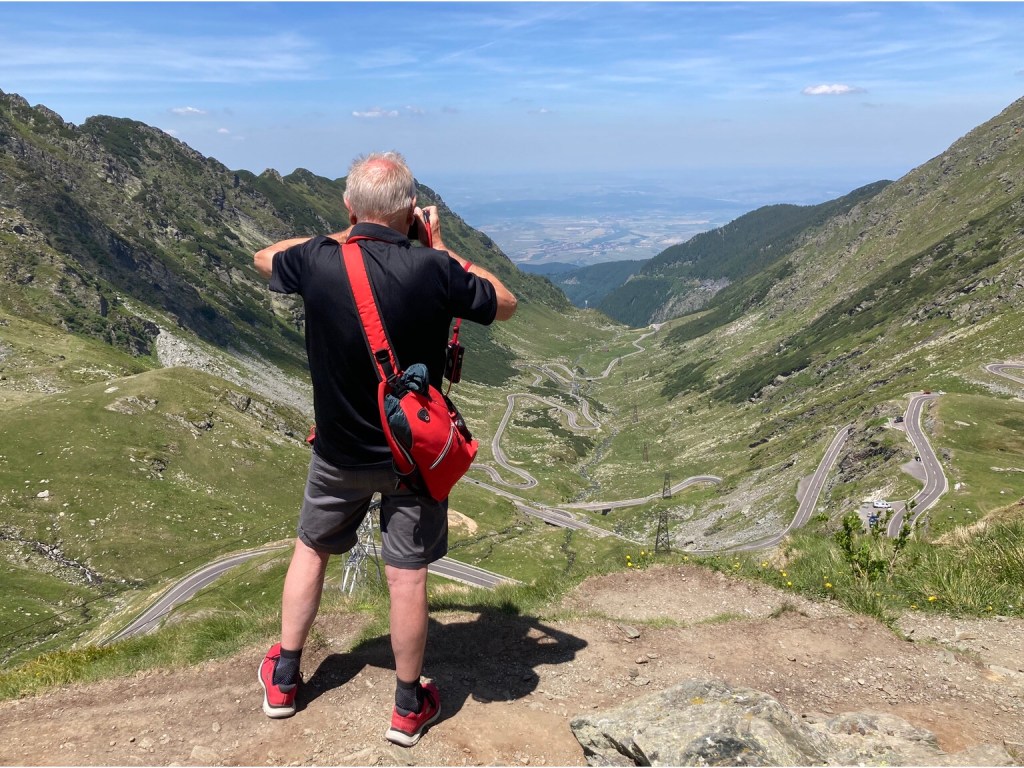
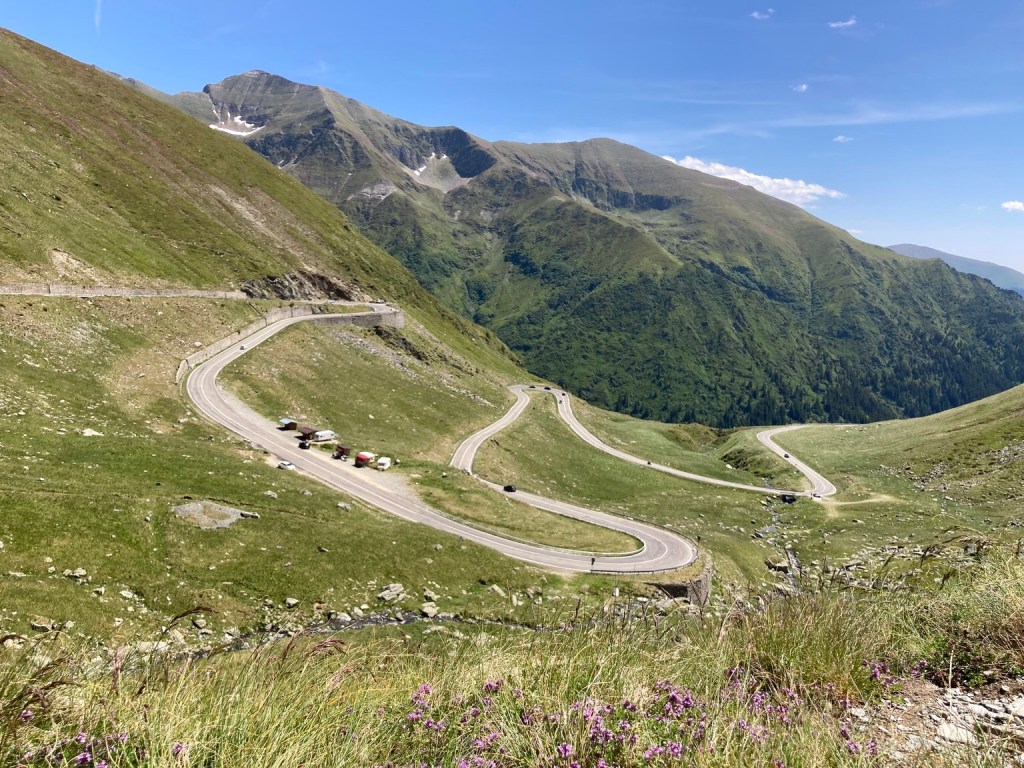
… and a short distance further, a chance to stop and walk a little, and see the view of the road ahead!

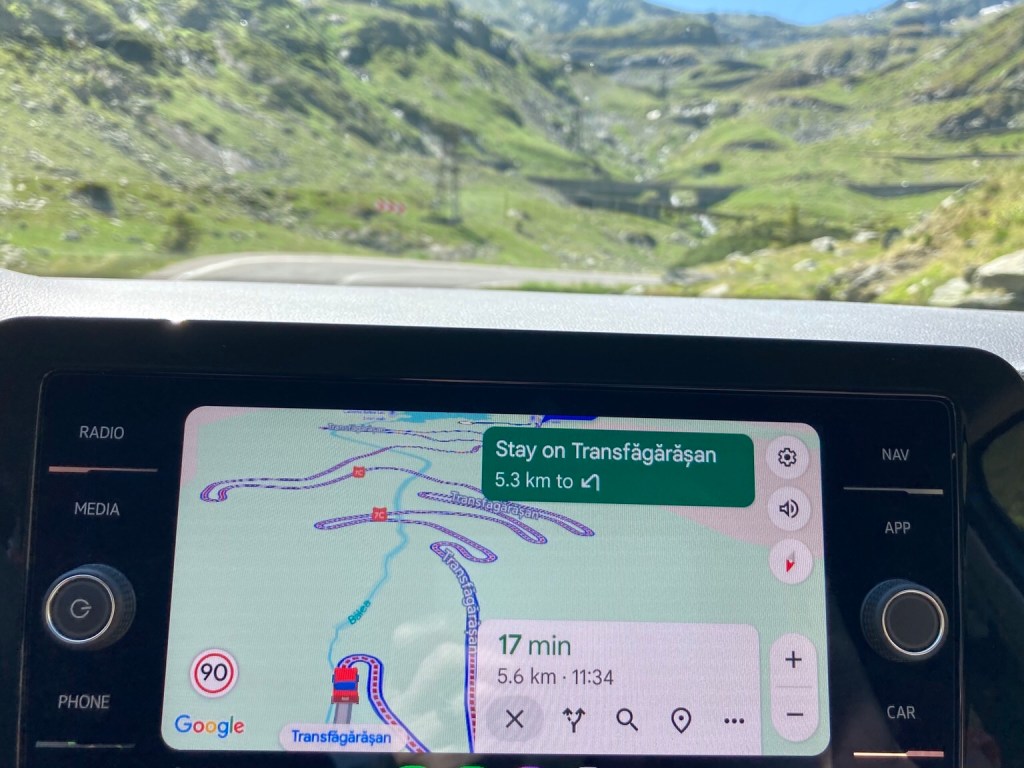
The satnav looked interesting as we set off again.

The road wasn’t too busy, so we were able to pull off the road several times to take pictures.

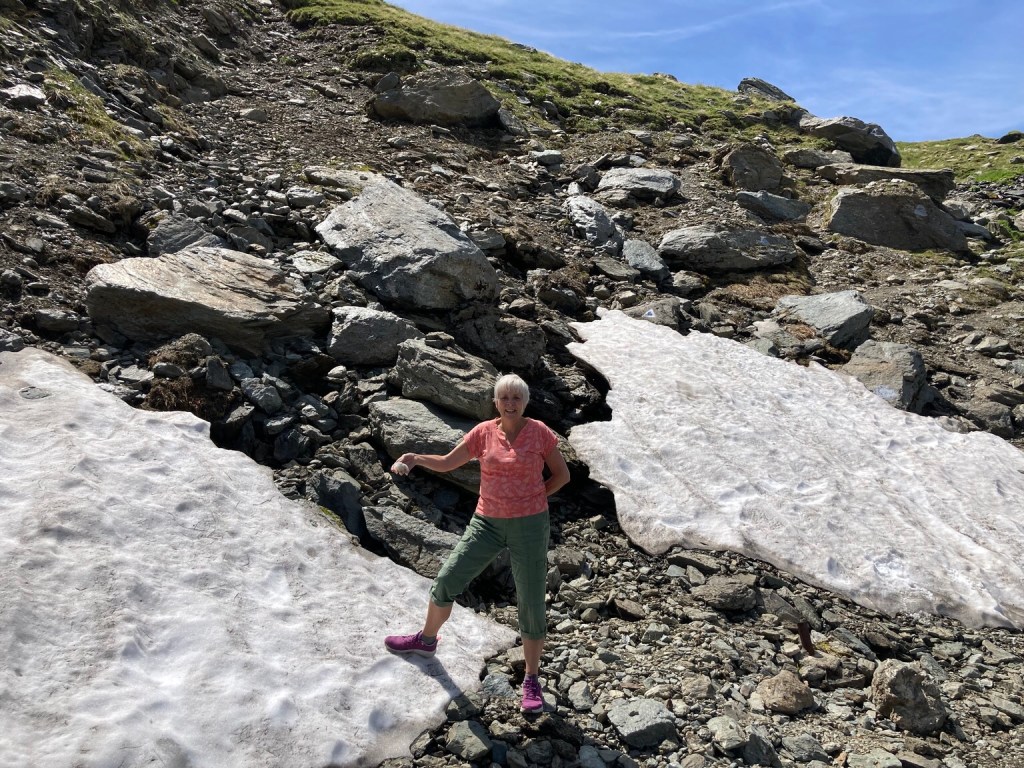
We even found snow!

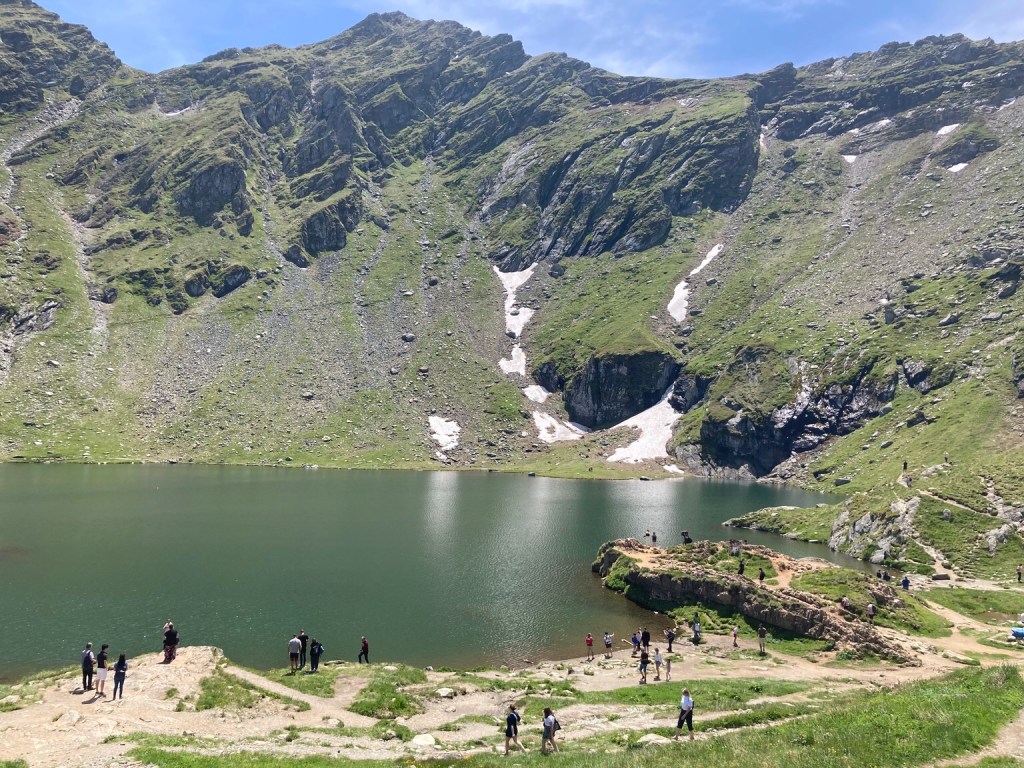
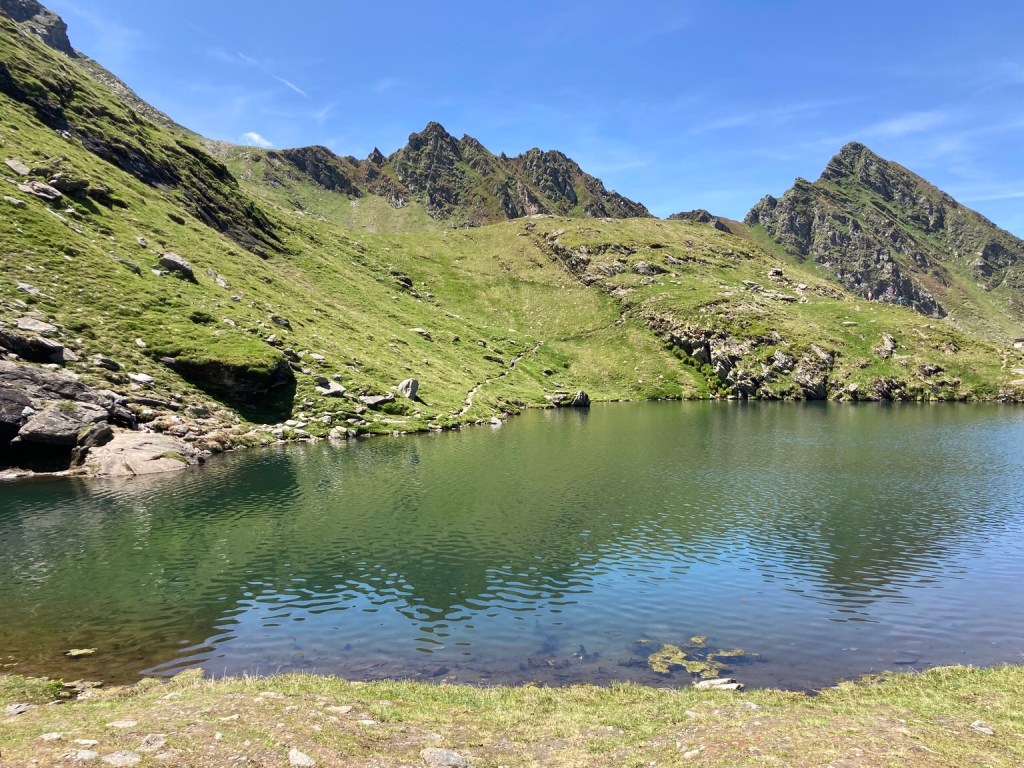
At the top is Balea Lake, a glacial lake just below the main ridge of the Fagaras Mountains, at 2042m.

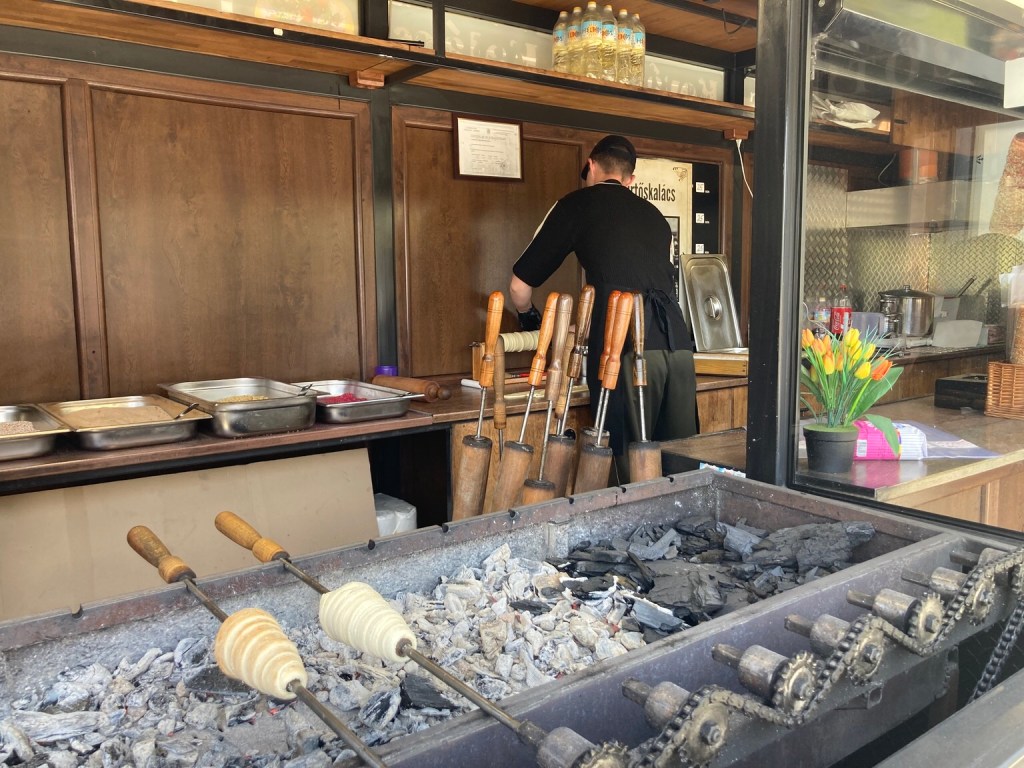
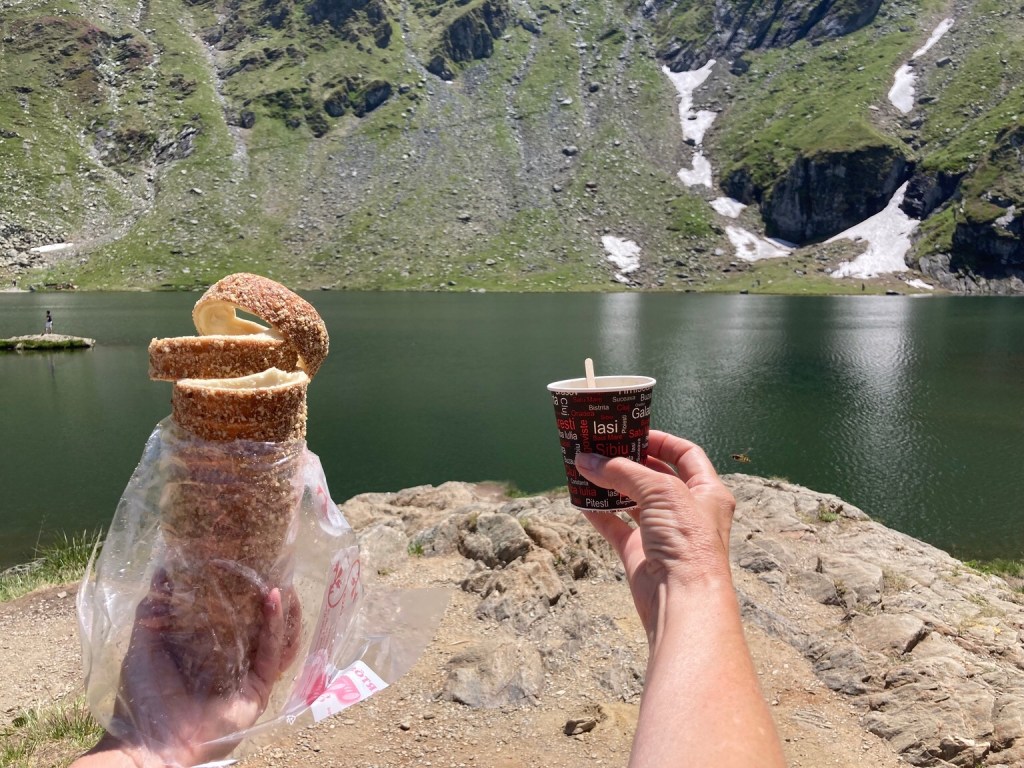
There were lots of opportunities to snack! We saw Kürtőskalács being made …

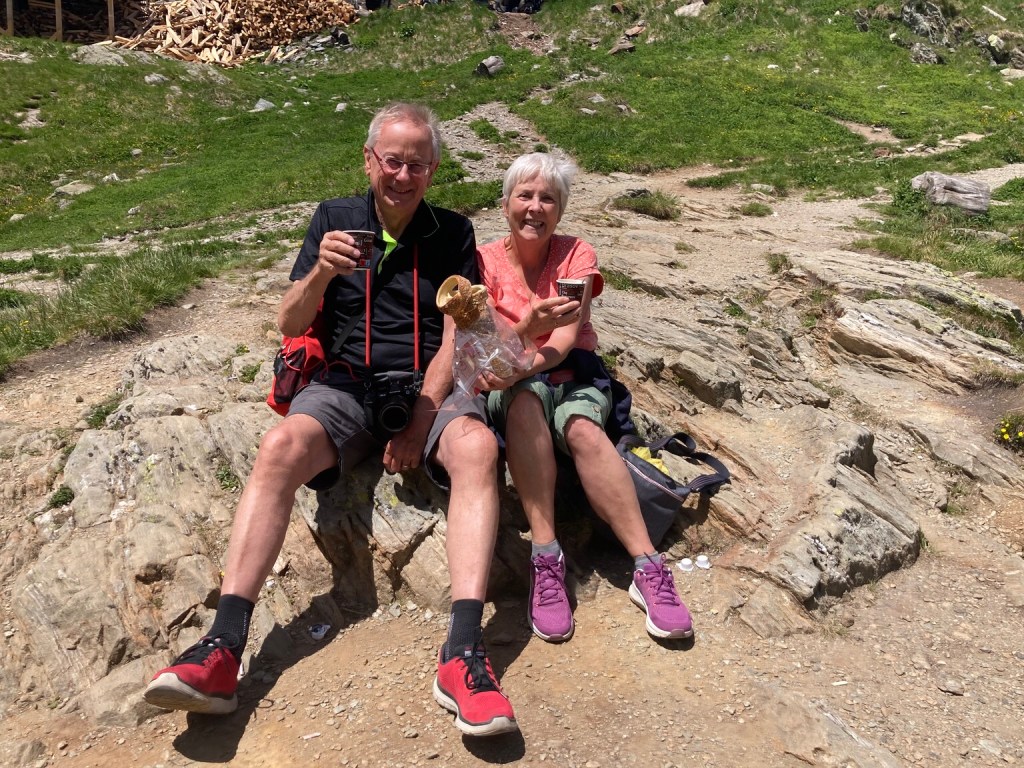
… and took ours with a coffee to a rock with a view!

We walked round the lake …

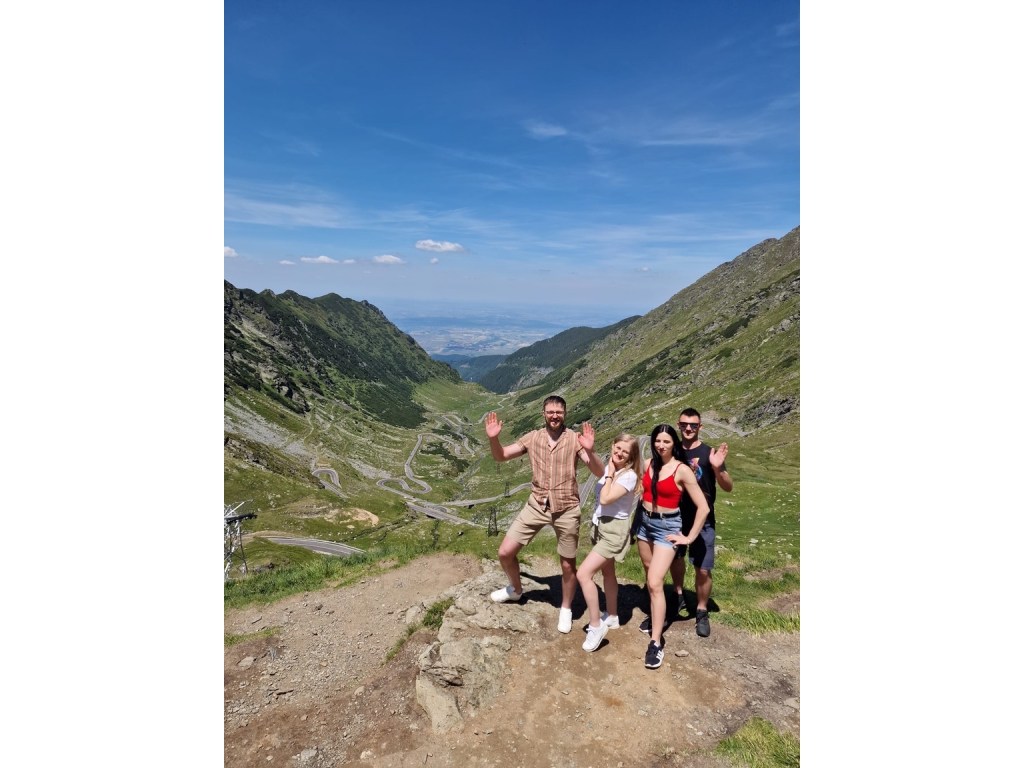
… then climbed to the viewpoint to take photos of the view and having struggled with a selfie, Michael kindly took this fab picture for us …

… so we returned the favour for him and his friends!

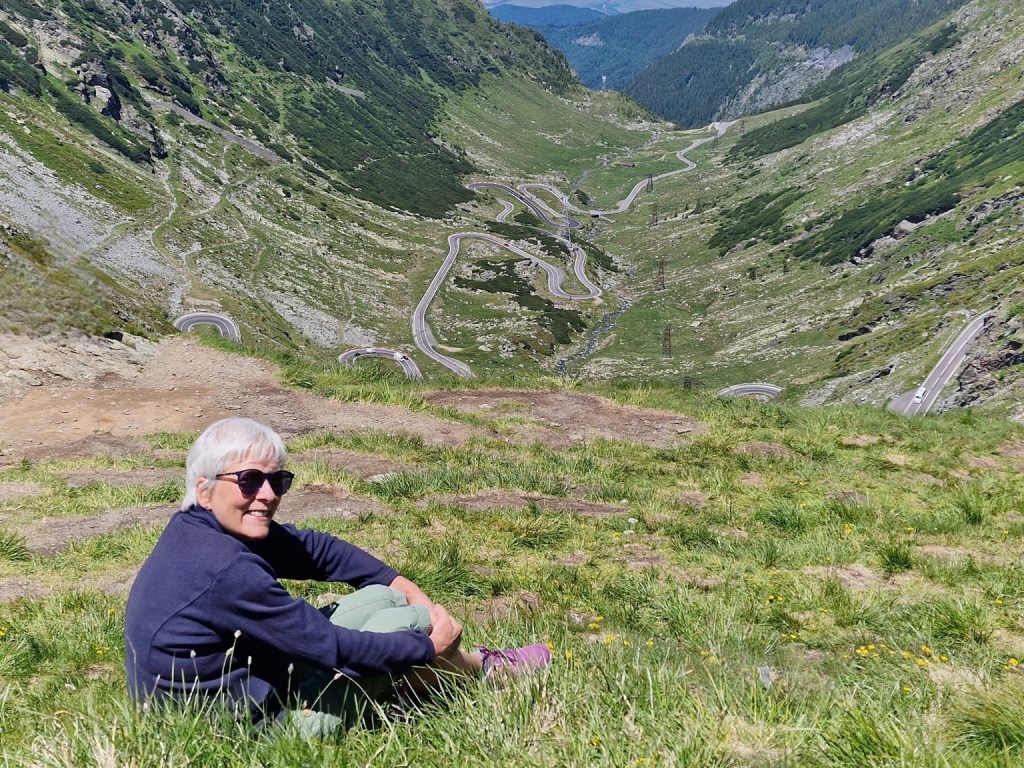
Readers, we were there for sometime …

… so I sat down to wait!

The road down was less dramatic, but still provided views …

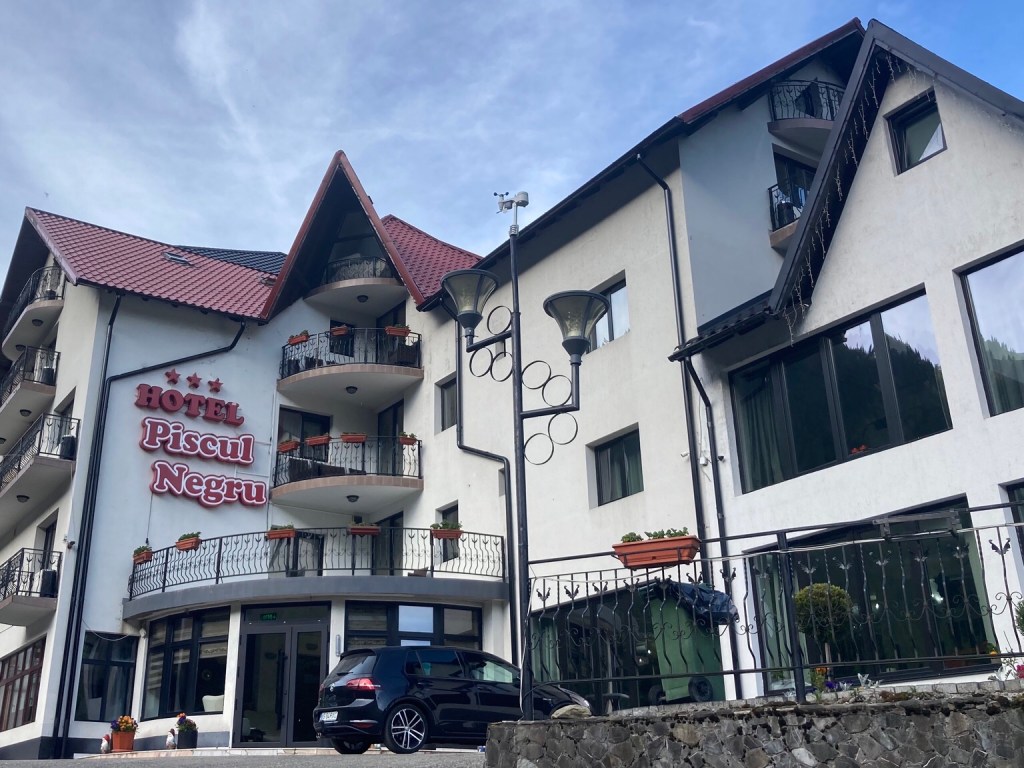
… and before long we were at the Piscul Negru Hotel to spend the night.

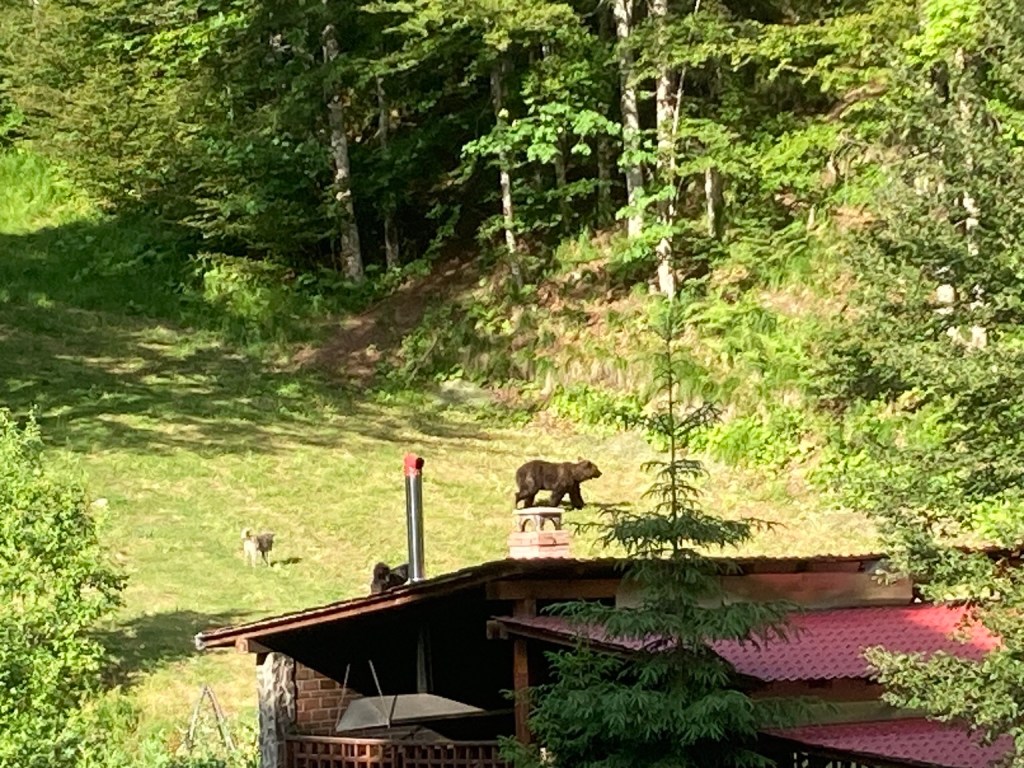
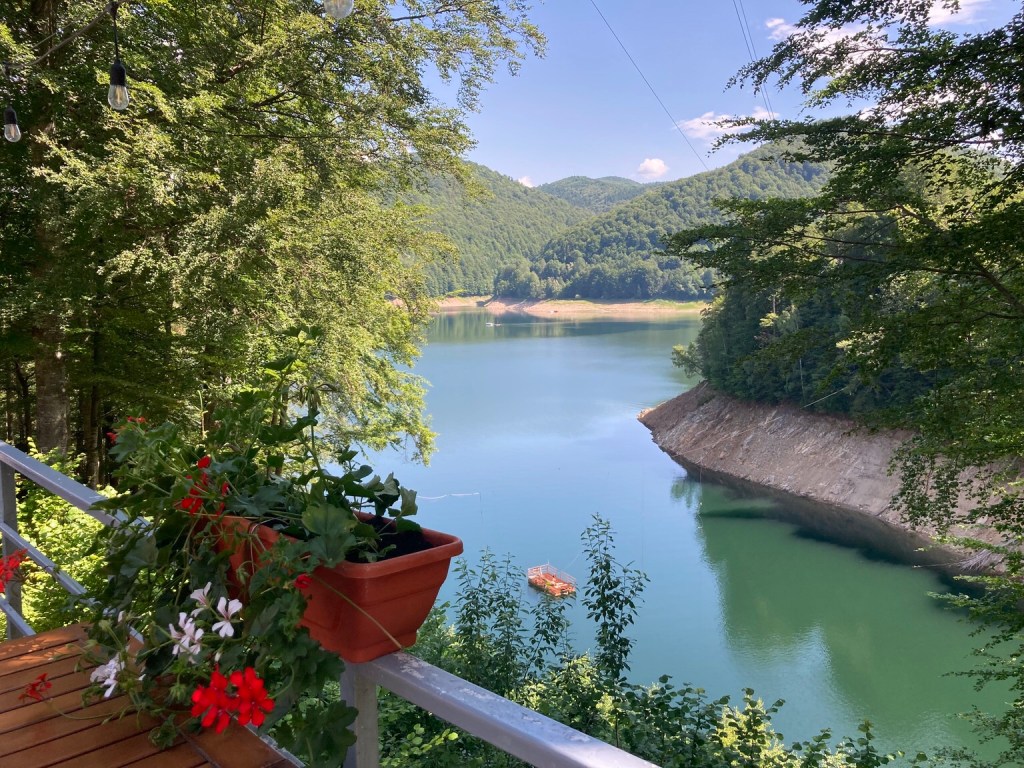
We were sitting on the balcony before dinner and the resident dogs started barking.  When we looked, a bear had come out of the forest and was eating something.

We found out later that the hotel recycles its food waste this way, using what they consider to be an environmentally friendly method.  I felt a little conflicted, wondering whether it doesn’t just tempt the bears towards humans, when really they should stay away, and maybe it was done as much as a tourist attraction.

Dinner was delicious as we both tried new things – Chris the oven baked Bulz, with polenta and the really tasty branza de burduf cheese and for me Saramura de crap … which sounds dodgy but is grilled carp, briefly simmered in a broth with vegetables!

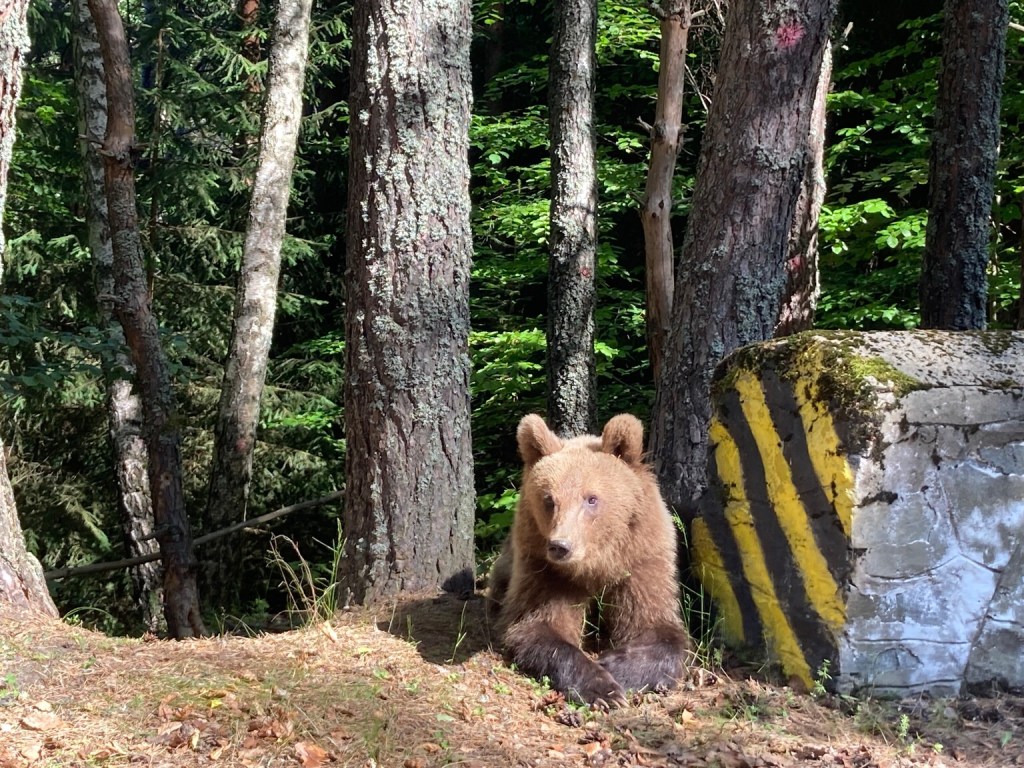
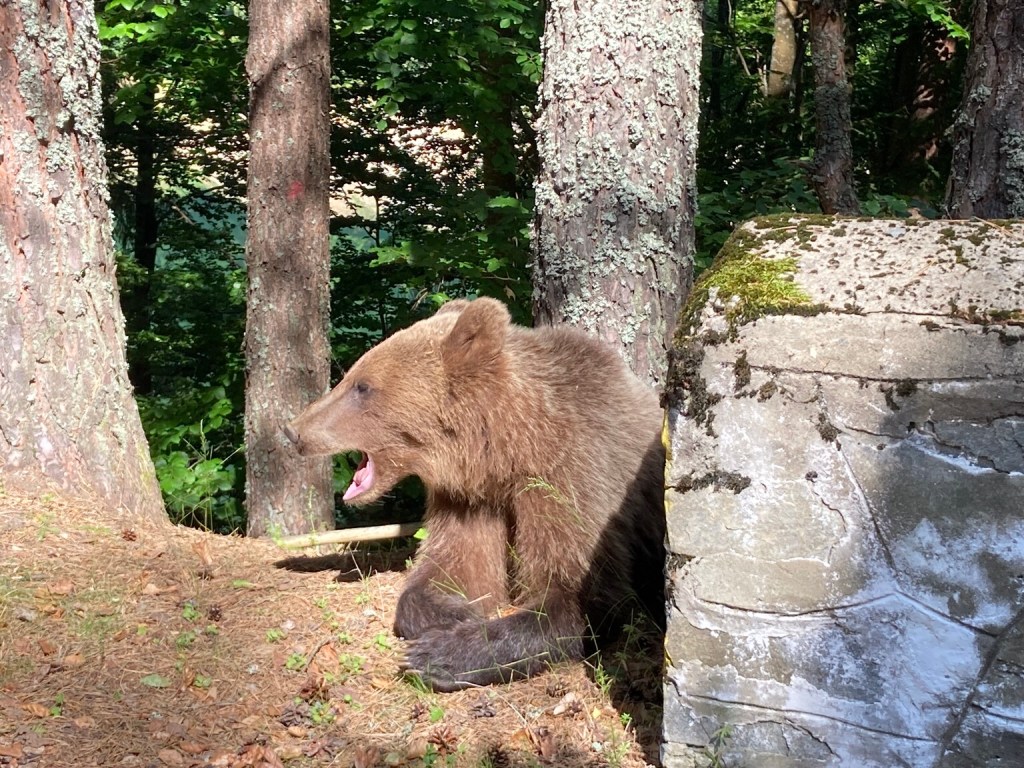
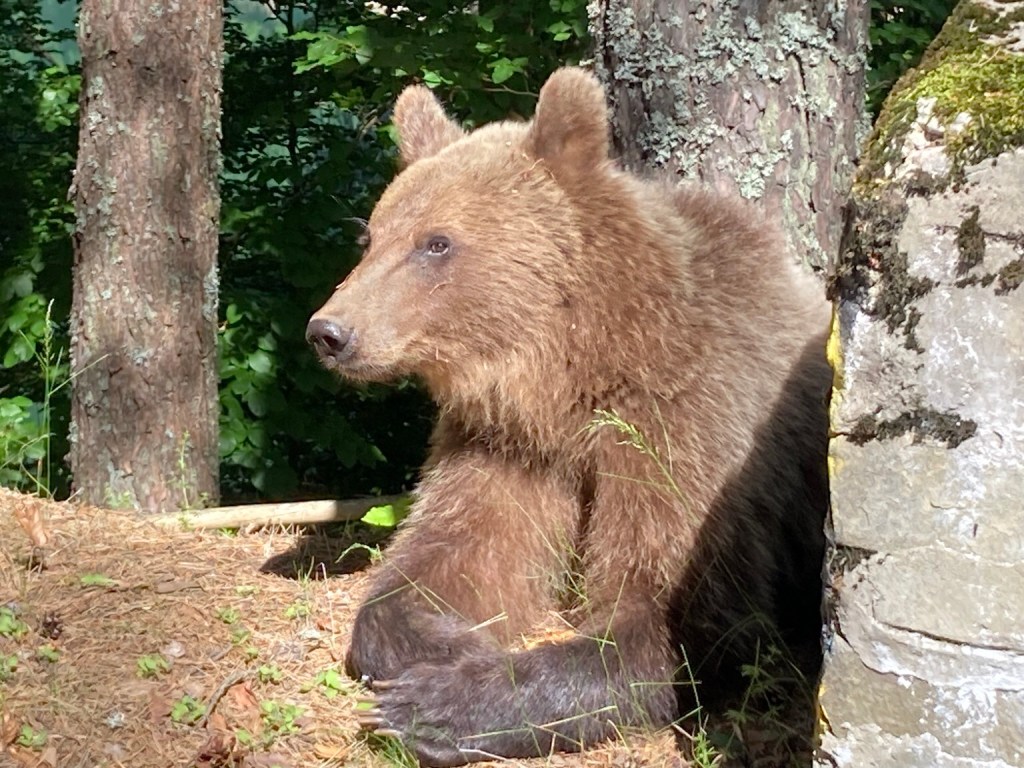
In the morning the road meandered alongside a stream and through the forest for some time and we kept an eye out for bears.  The first we saw was sitting behind a wall by the road soaking up the sun and paying us little attention as we took several photos and with no traffic behind us, we were able to watch him for a few minutes.  He did look quite chilled and unbothered by us and was a joy to watch.

We saw 9 bears in total, but a couple  looked pitiful, and one looked like if we lingered he might approach. I wasn’t concerned for our safety, just worried he might put himself in danger on the road.

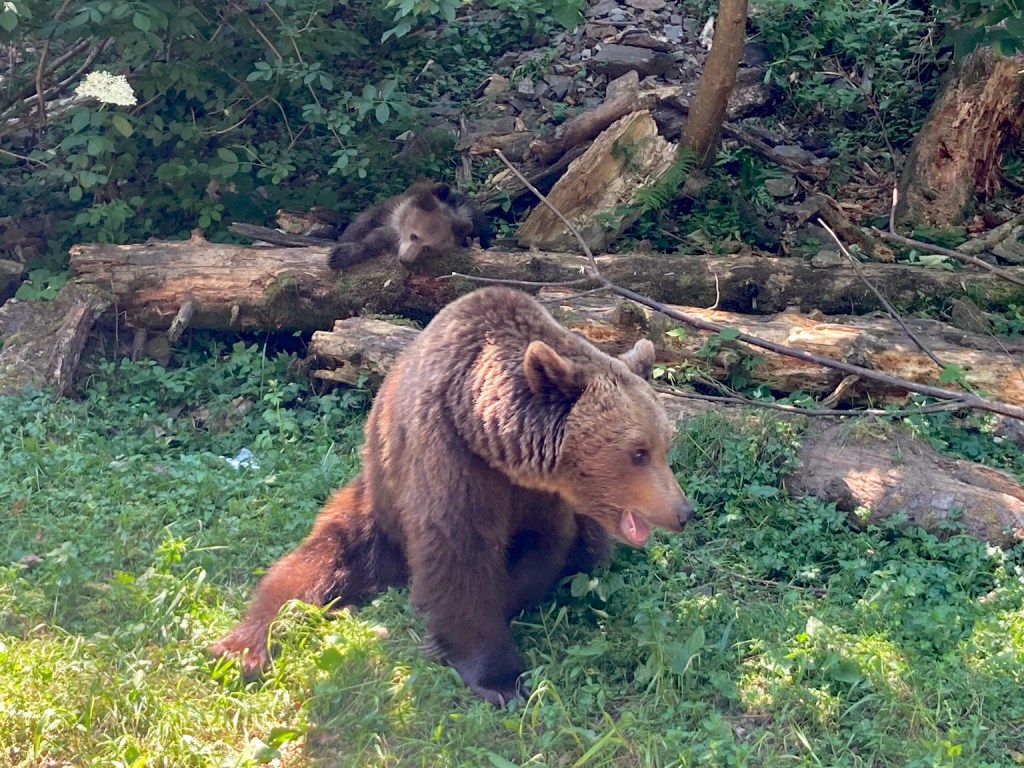
Finally, there was a mother with her two cubs behind.

We continued with mixed feeling, remembering what was said at the sanctuary that the bears are wild and should not have contact with people, meanwhile our desire to see them is selfish and not in their best interests.

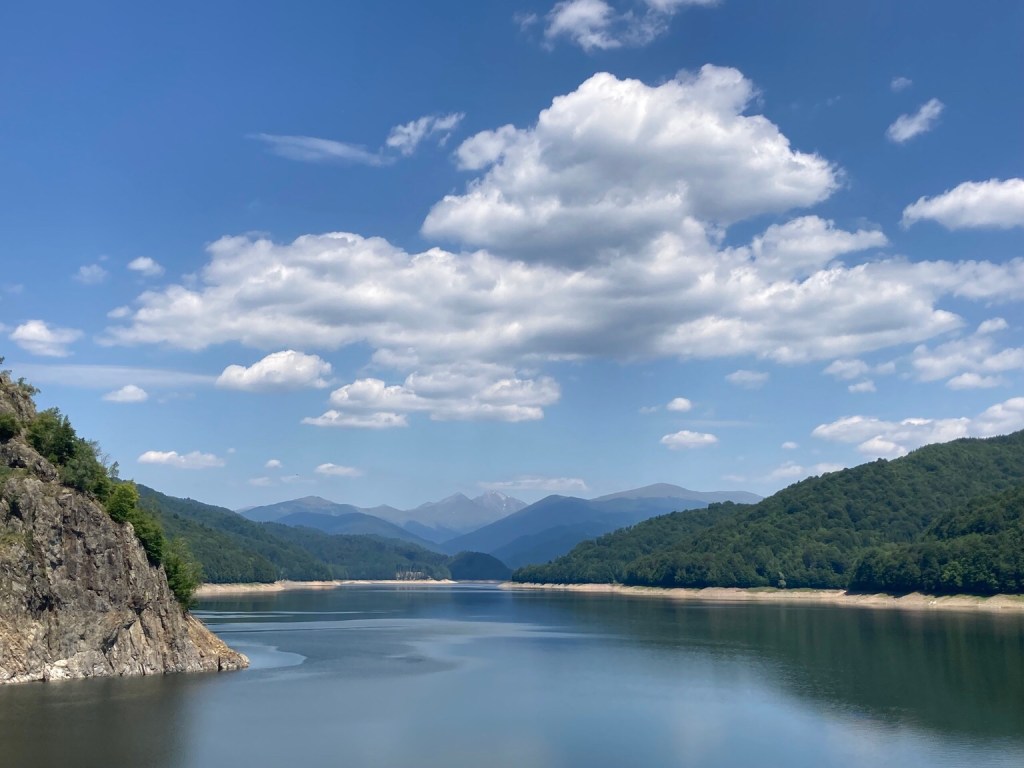
Later the road followed Vidara lake, glimpsed through the trees …

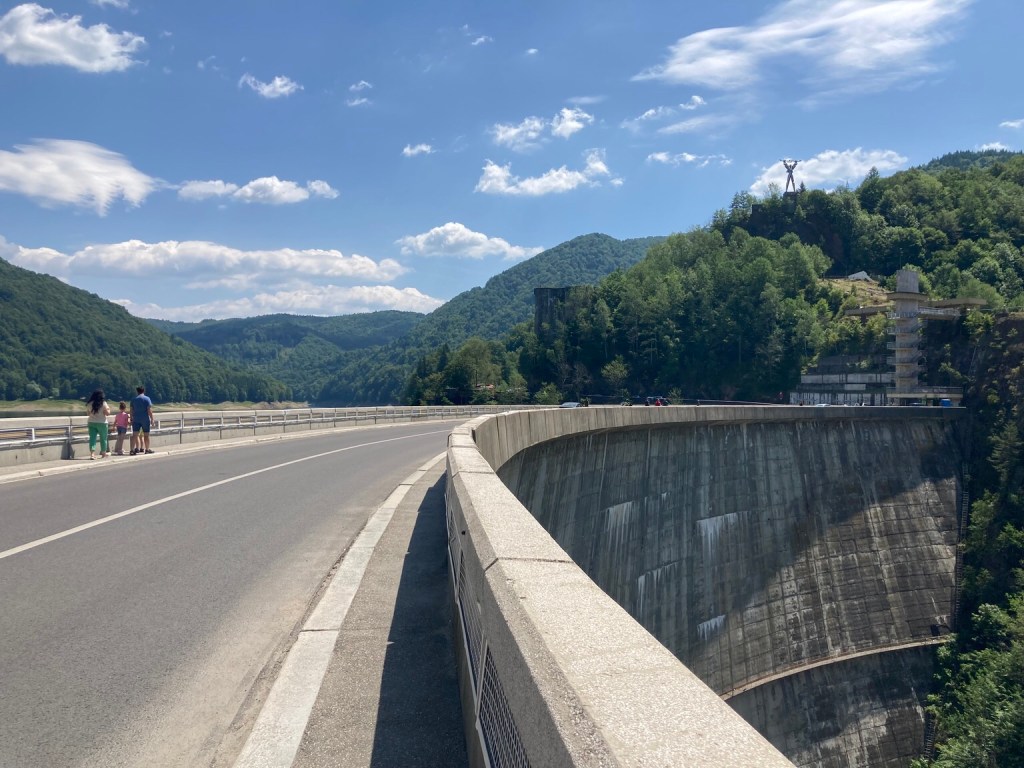
… then we came to the dam where we stopped for snaps and to stretch our legs.

We found it a memorable experience and the views certainly have the wow factor, but the road wasn’t as challenging as we’d been led to believe. Drivers were all taking it easy and enjoying the shared experience but I can imagine it becoming a little fraught if really busy.

The Transfagarasan Highway ends at Curtea de Arges, and we turned towards Bucharest …

Postscript: A few days later, a motorcyclist was killed by a bear along the Transfagarasan, tragic, but he had been posting selfies with bears before the fatal attack. Authorities had to shoot the bear.

Map

Sibiu … and her Watchful Eyes

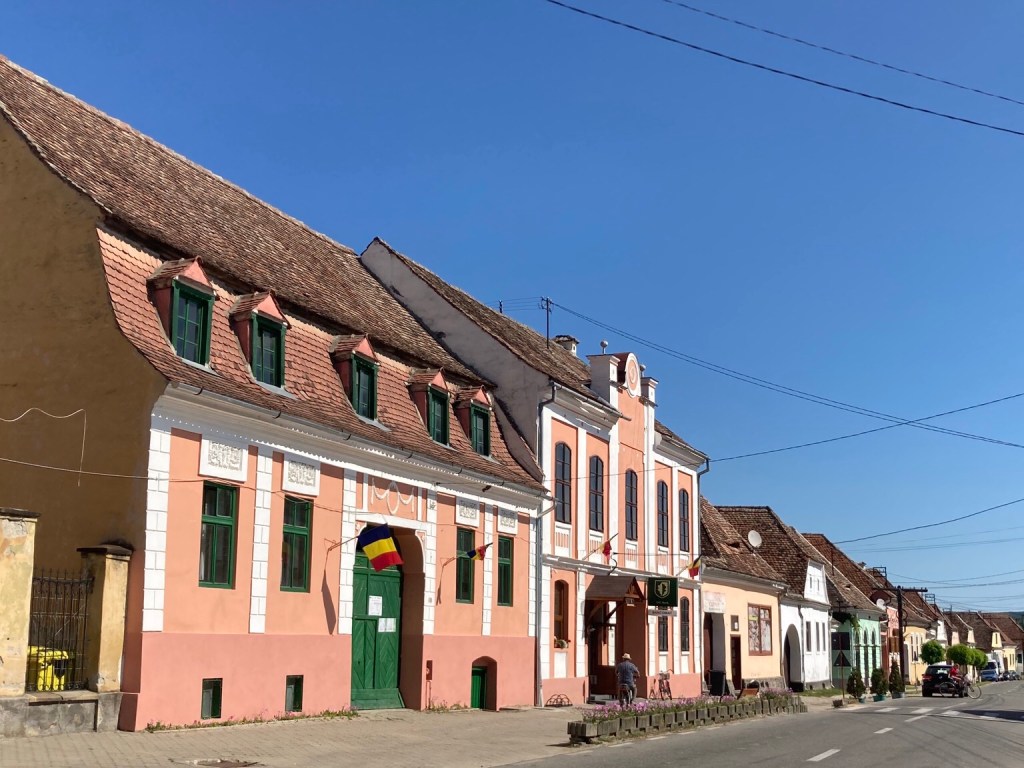
Biertan Fortified Church is perched high on a hill in the middle of the village, surrounded by three tiers of 35-foot-high defensive walls, connected by towers and gates, making the church impossible to conquer during medieval times.

We climbed up to the church.

The multi-paneled wooden altar is huge …

… as is the oak door, complete with a unique 19-points deadbolt lock, which protected the treasures in the sacristy.

We admired the array of imposing defending towers …

… the fortifications …

… and the replica of the Marital Prison where couples wishing to divorce were shut up together for three weeks with just one bed, pillow, table, chair, plate, knife and spoon to share.  Church records show only one divorce here in three centuries!

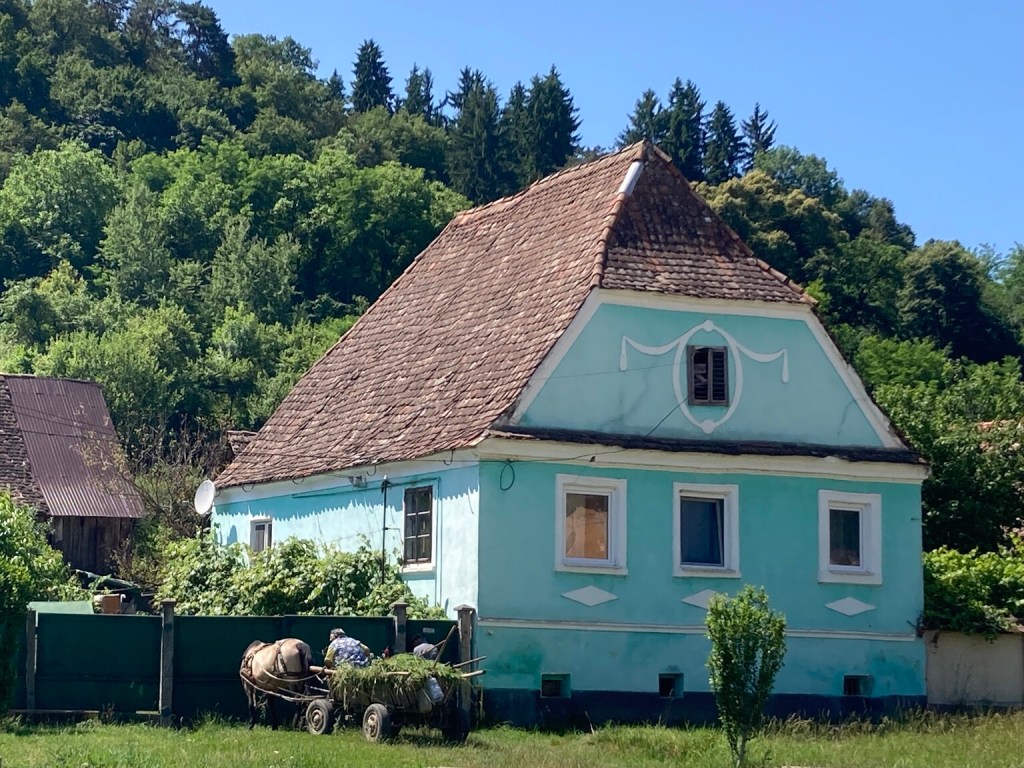
We even got a chance to see into the back yards of a few of the houses that present such a closed front to the world from the main road!

Once the seven Saxon citadels were established, they were supported by further colonisation which established hundreds of villages in the area with a distinct culture and vernacular style.  However the tide of history turns and their influence eroded through the C18th, putting them in a difficult position in WWII.  Many joined the German army and after the war, as punishment most of the adult Saxon population were deported to the Soviet Union for slave labour. Those that returned found their land confiscated and today their numbers have dwindled significantly due to emigration, particularly after the fall of communism. An exhibition in the church highlighted this and showed attempts to preserve their culture.

A quick walk round the village …

… and we continued our drive to Sibiu, the most powerful of the seven Saxon towns, and also called Hermannstadt in German.

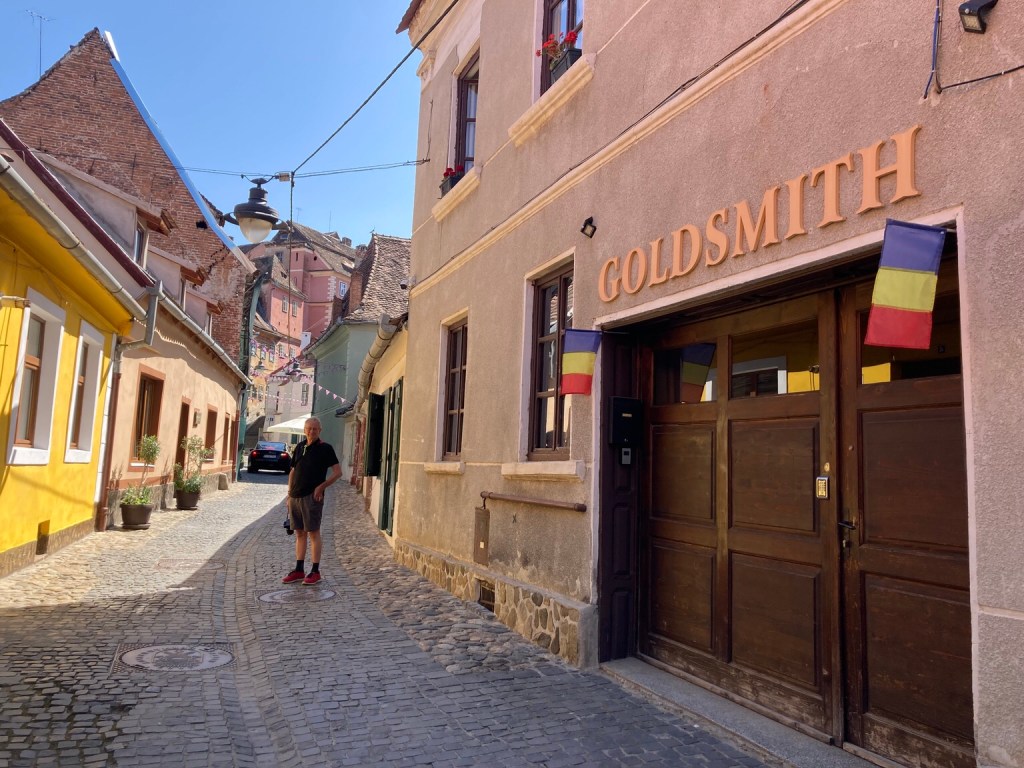
We checked in to Goldsmith,  more rooms looking a little plain on the outside, but with a large and airy room within.

It is a few steps to Goldsmiths Square …

… and we see a sign of the duality of the town …

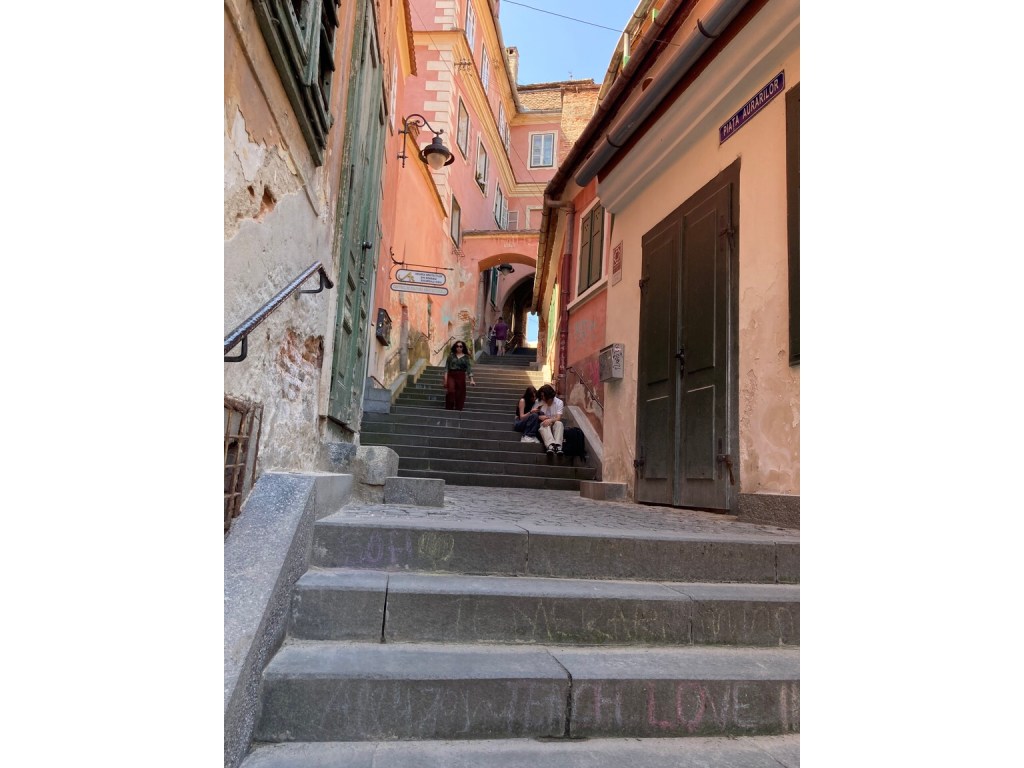
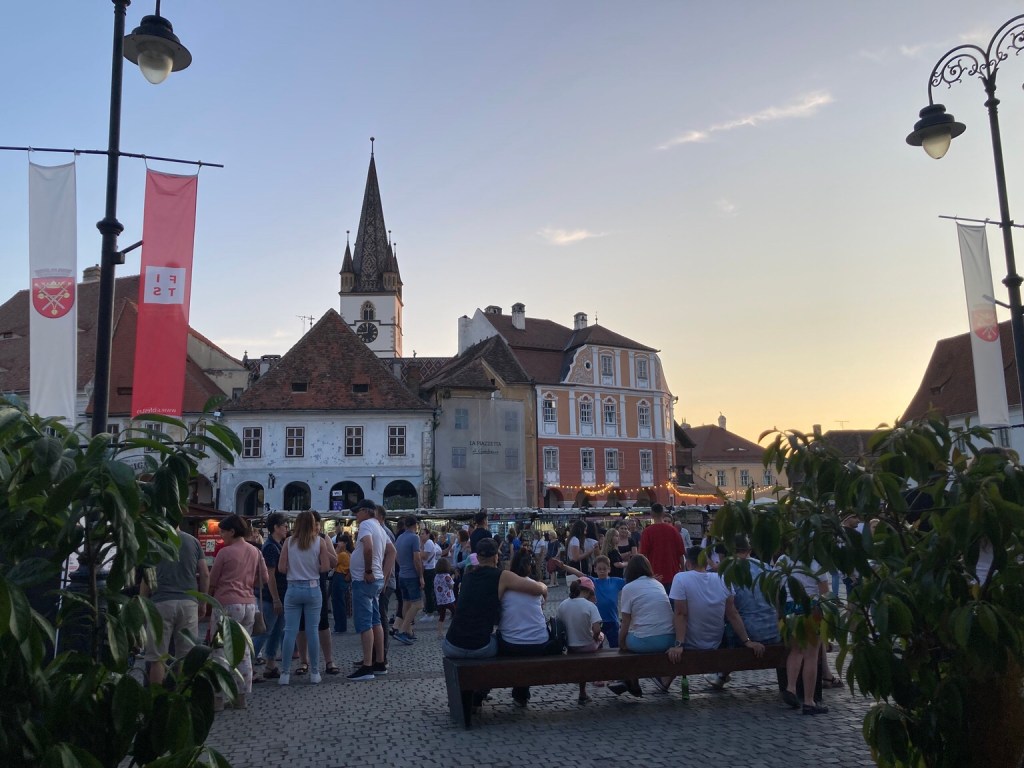
… before a flight of steps to Piata Mica, one of the three interlocking squares in the centre.

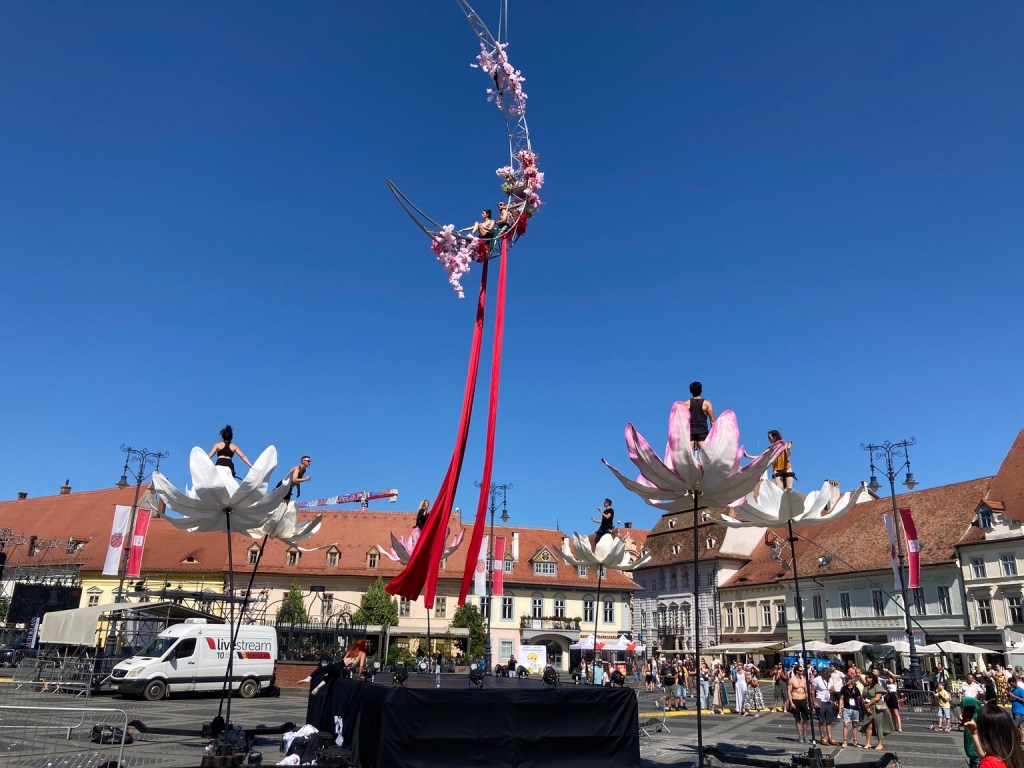
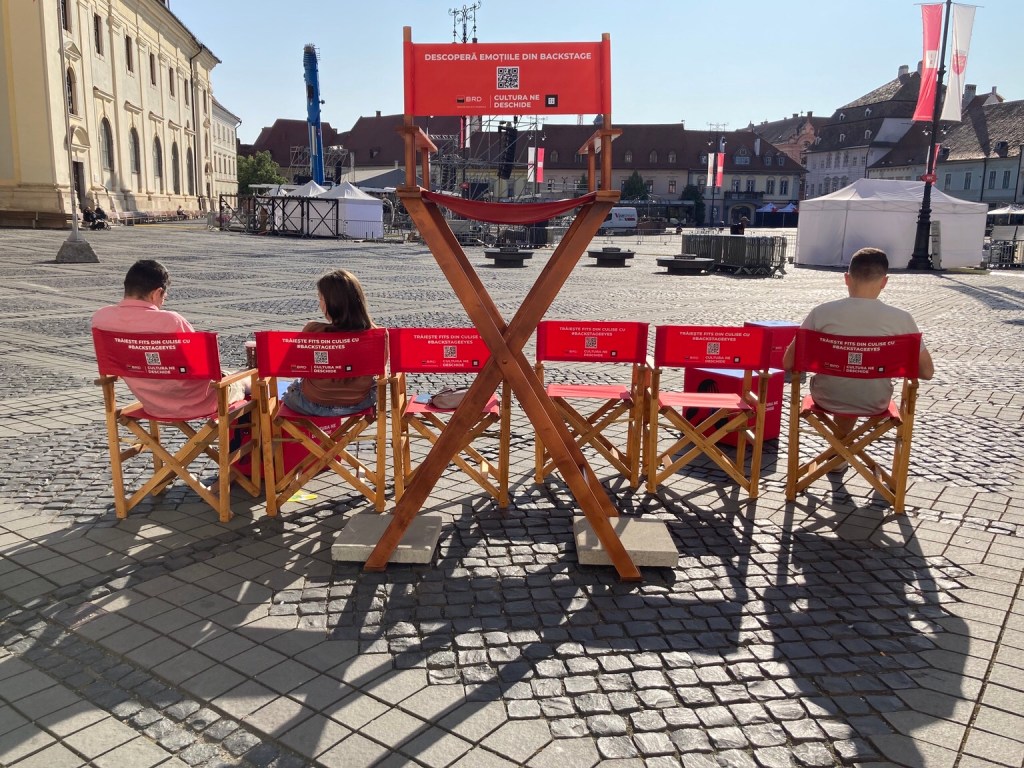
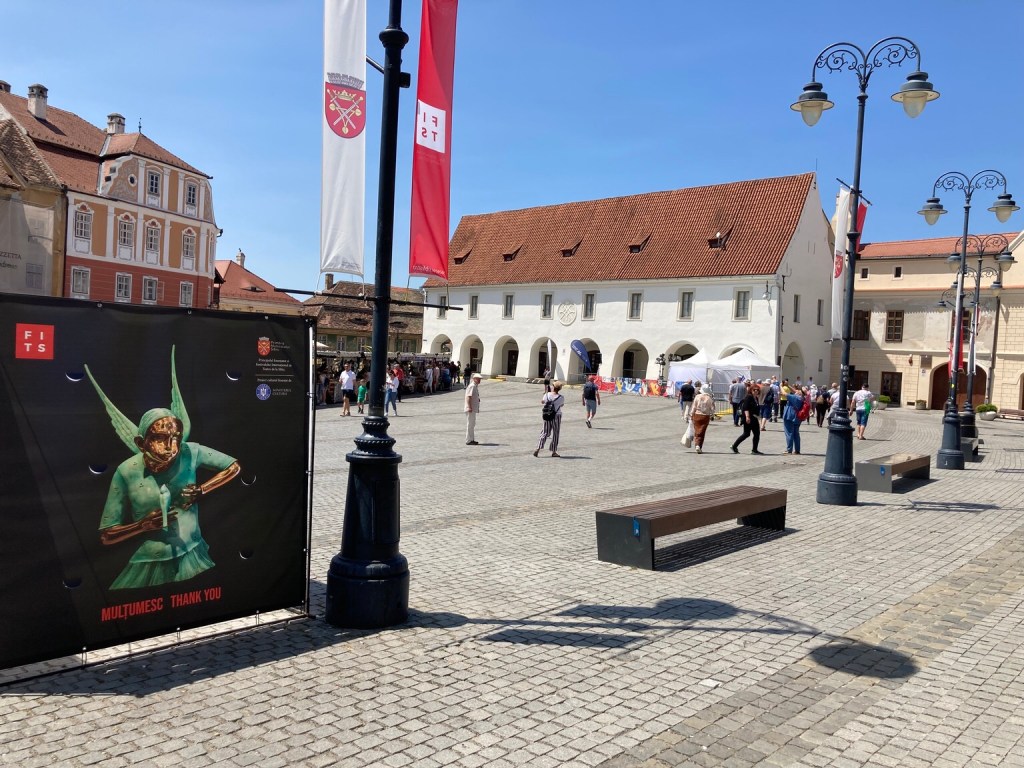
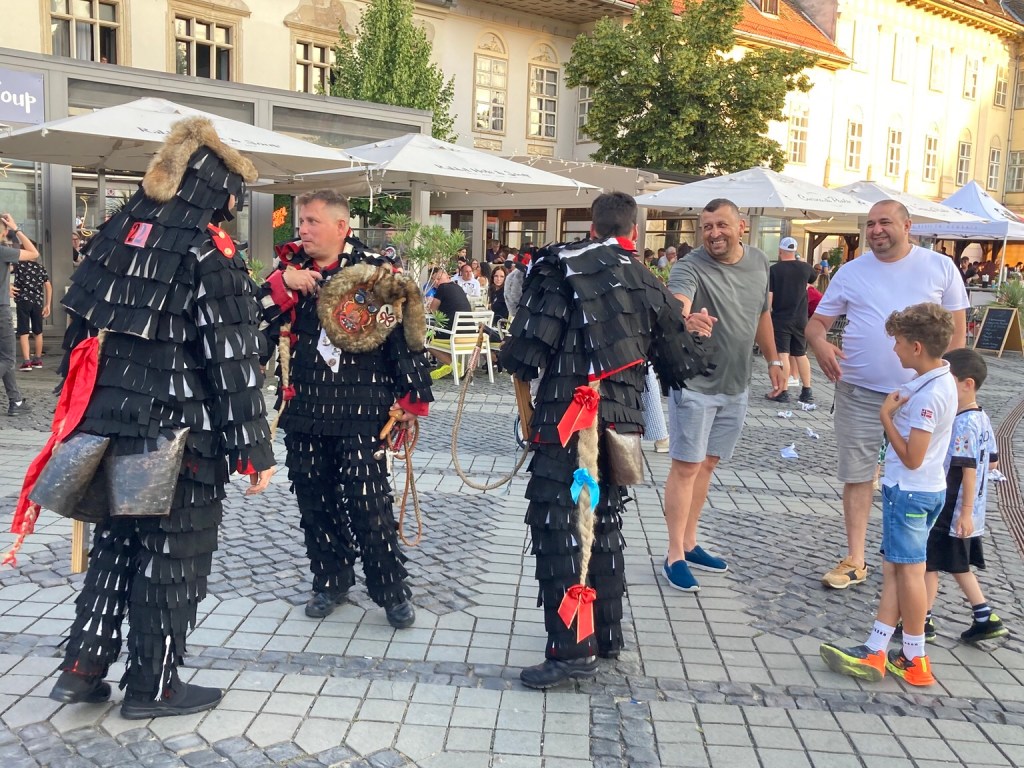
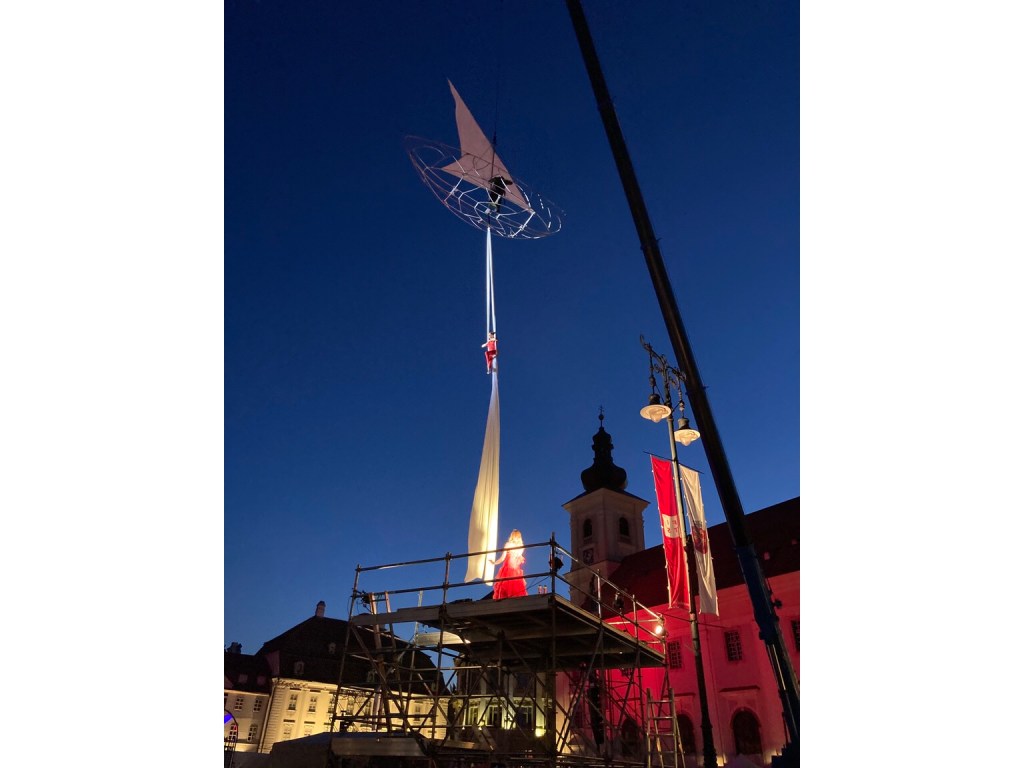
It appears we have arrived at festival time again, this time the Sibiu International Theatre Festival, and the town is full of crowds enjoying the various entertainment, much of it free.  We stumbled on a cirque de soleil type show practising …

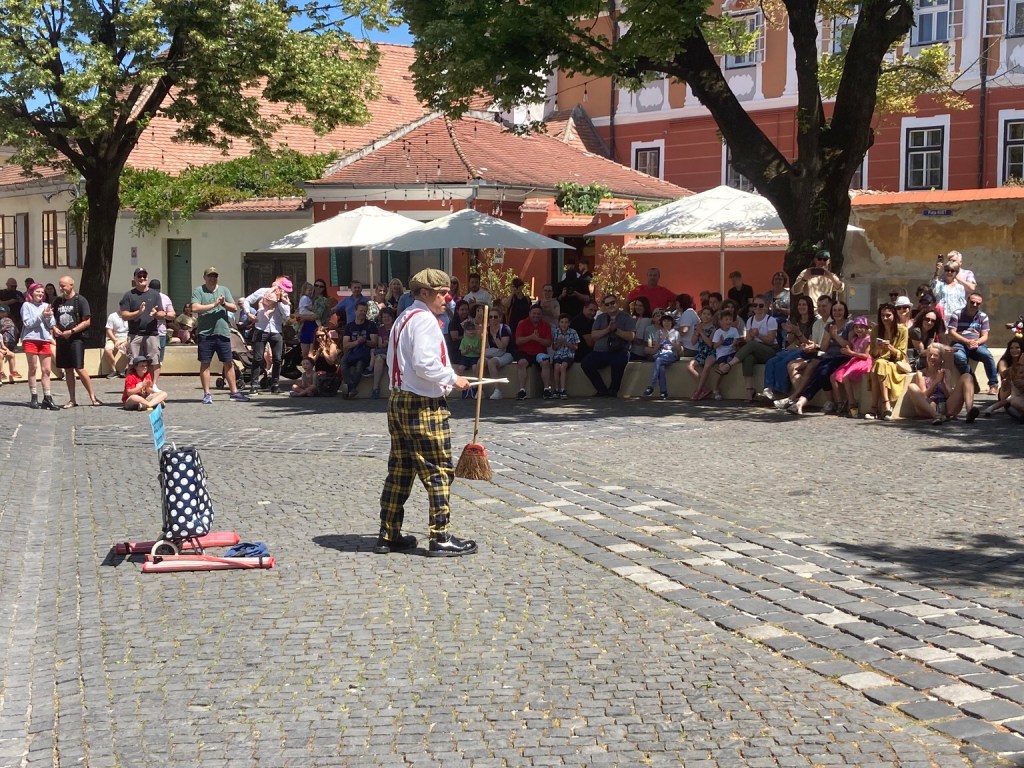
We are just about museumed out, so we’ve spent out time watching the world go by with a beer, snapping shots of the buildings, people and the odd clown!

We have visited a trio of churches – the Orthodox one had a great interior …

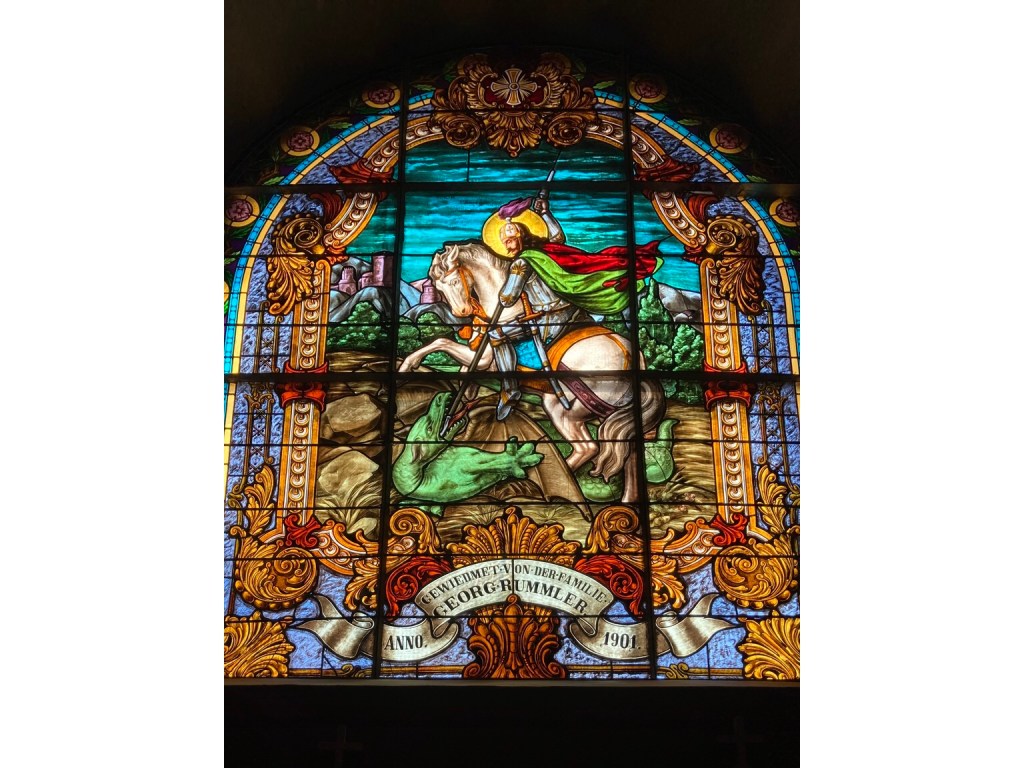
… and the Catholic one a lovely image of St George.

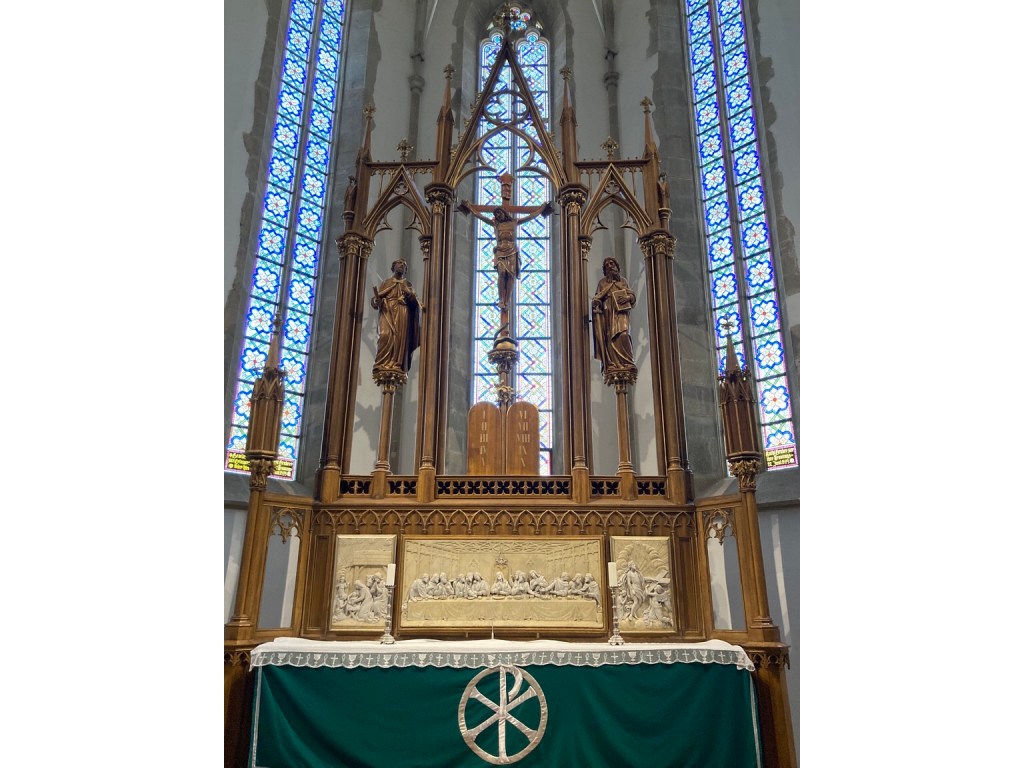
The Evangelical Cathedral was our favourite. 

Rewind a couple of days and we were buying ice cream in Sighisoura and ended up chatting to four people on visit to Romania with the Dorking Choral Society, giving a concert at Sibiu cathedral which was sold out.  Fast forward to yesterday, we were following two ladies who sounded very Surrey and asked if they were from Dorking.  Astonished they said yes, we chatted and they mentioned there was a rehearsal the following afternoon.  We timed our visit to the cathedral perfectly, entering as they started singing Jerusalem which filled the church!  They continued rehearsing Mozart’s Requiem which really added to our visit.
I asked about the altarpiece on display in the entrance and a young guide came over to explain it had been the original.  He also showed us how it had been changed over time, with images of saints painted over with text when the cathedral changed from Catholic to Lutheran, then additional paintings added over the text during the Counter Reformation.

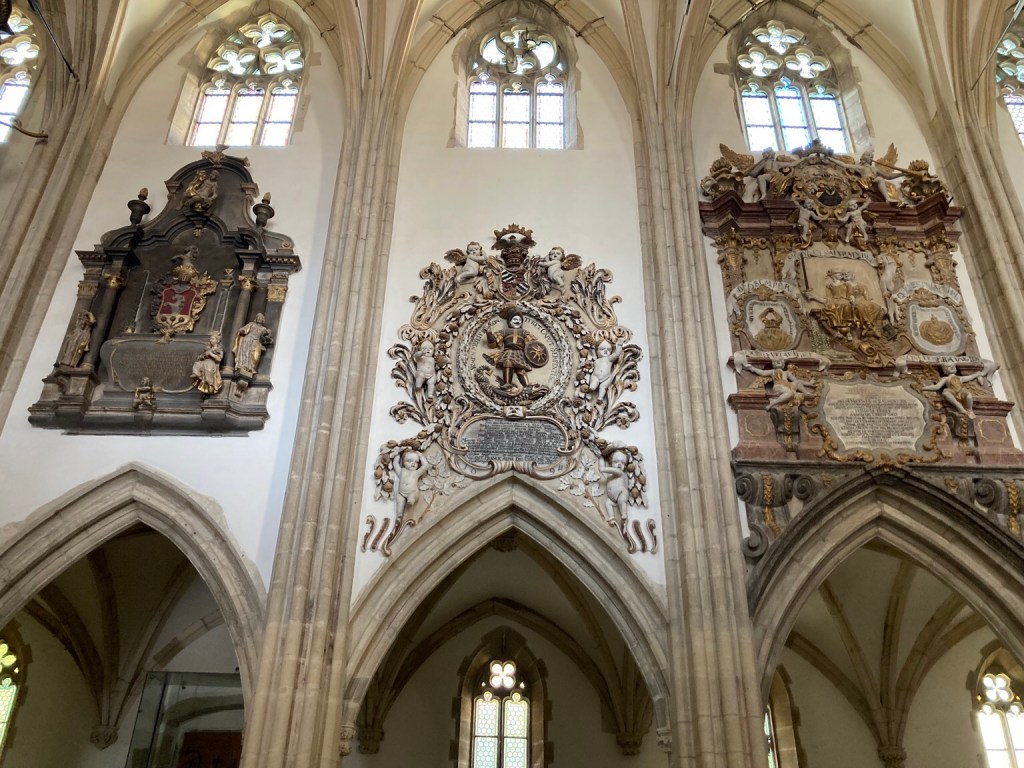
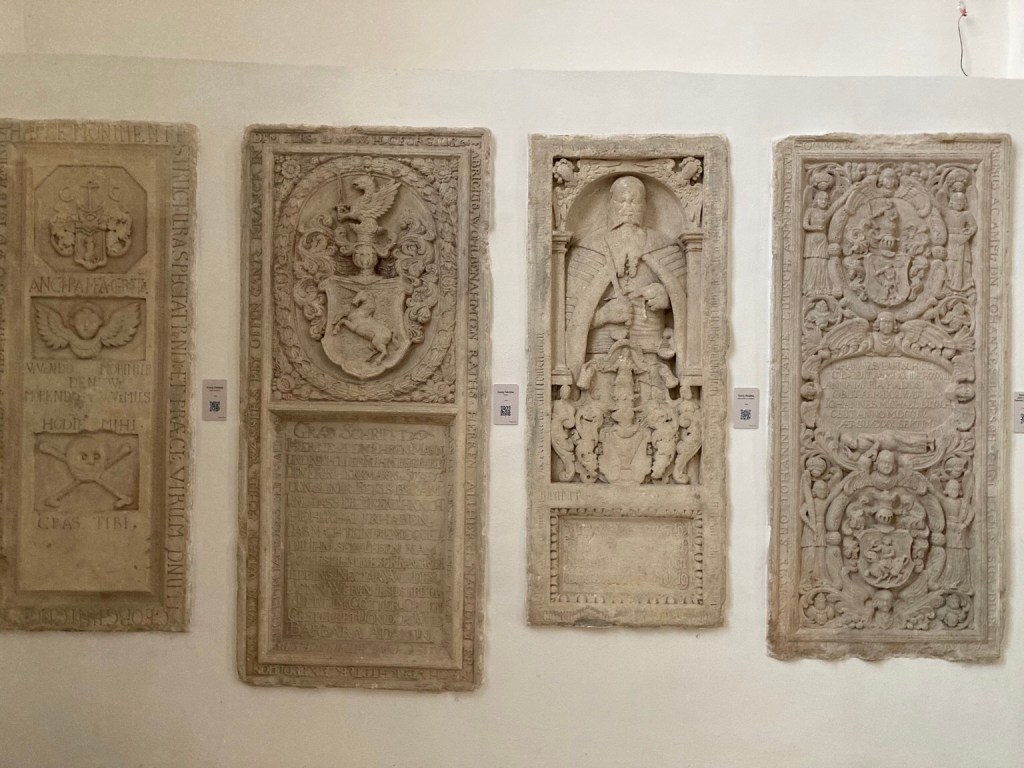
Gabriel was a student, doing this as a holiday job, and was eager to show us more, and we almost went round again!  We now know that when bodies were no longer allowed to be buried in the church, they were taken to a cemetery and the gravestones displayed on the walls instead …
… and this chap shouldn’t be sported red shoes as only the Pope was allowed to wear red …

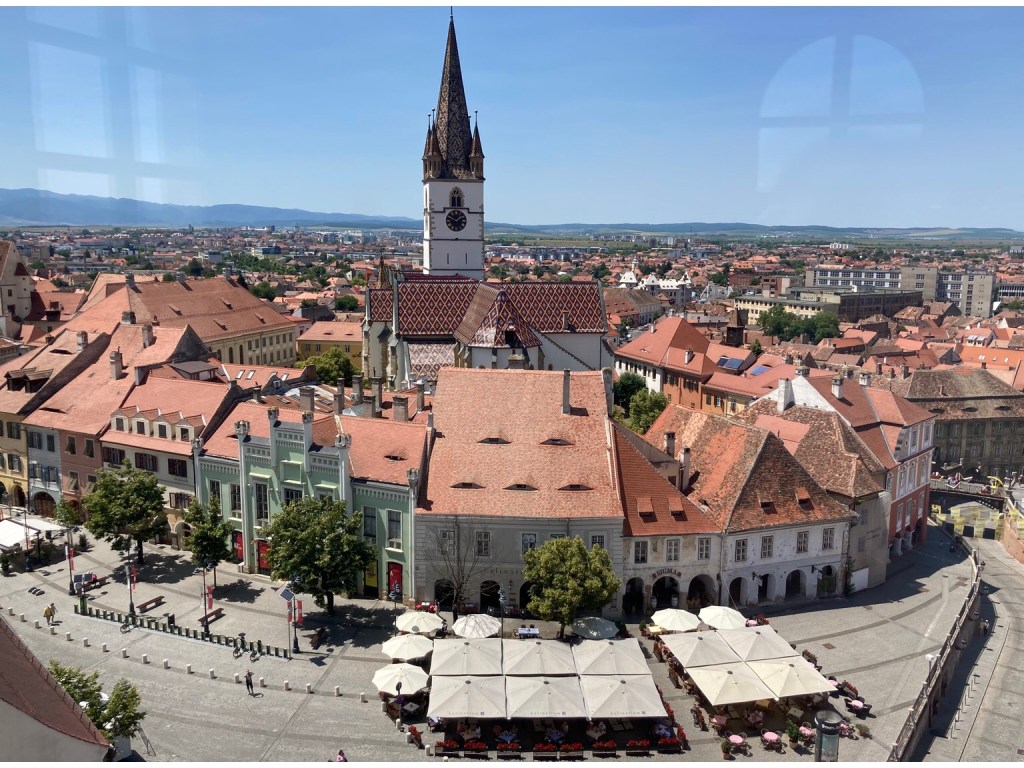
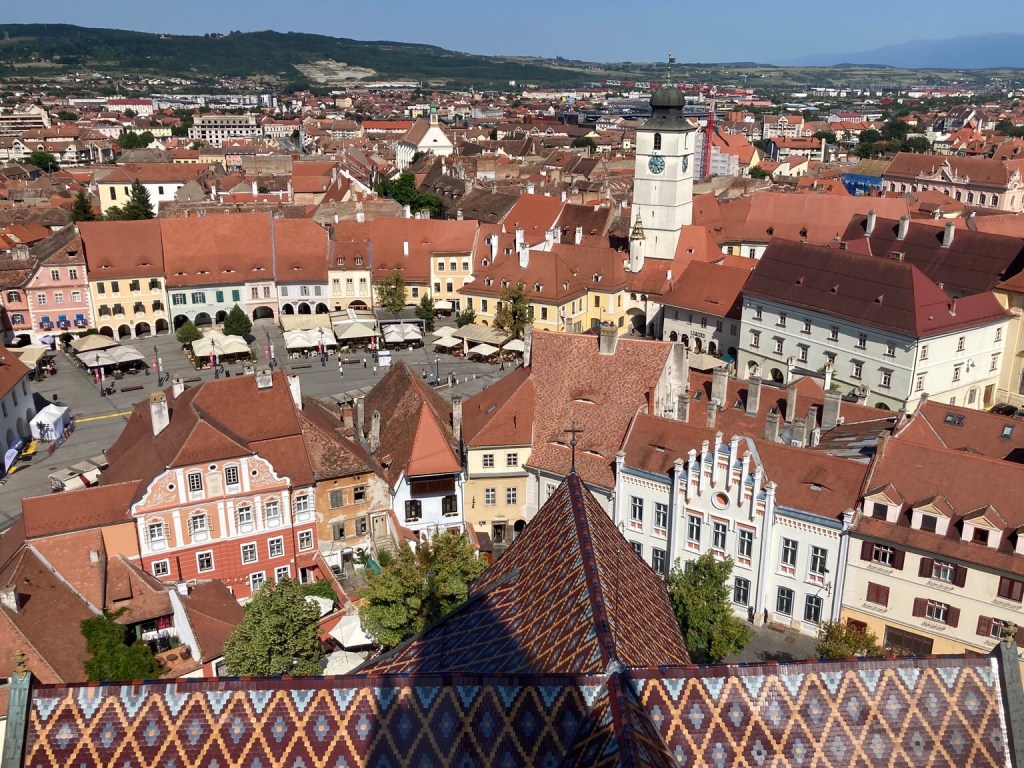
Before we left, we climbed to the top of the clock tower for a fab view of the city with the Council Tower taking centre stage …

… then crossed the square, climbed up that tower and got the view the other way!
All the time, we were under the watchful eyes of Sibiu, which peer out from under the eyebrow dormers on the roofs … actually used to ventilate the attic grain stores.

The first night we ate in the Piata Mica at Inspirat, drawn by hummus and roasted cauliflower and also cutlets of pike perch for me and we watched the crowds in the square …

… and the show.

The following night, we found it hard to find a table, but took the only one we’d seen in Atrium, a fusion pizzeria!  Chris enjoyed his pizza and I had Tonkatsu, a fusion schnitzel with teriyaki cabbage  which was delicious. 

Another couple sat on the next table, and we got chatting and pulled our tables closer. Both doctors from Sibiu, they have travelled quite and we had a lovely evening with them.

There was one last performance on our way back and then it was curtains for Sibiu … the Transfagarasan awaits!

Map

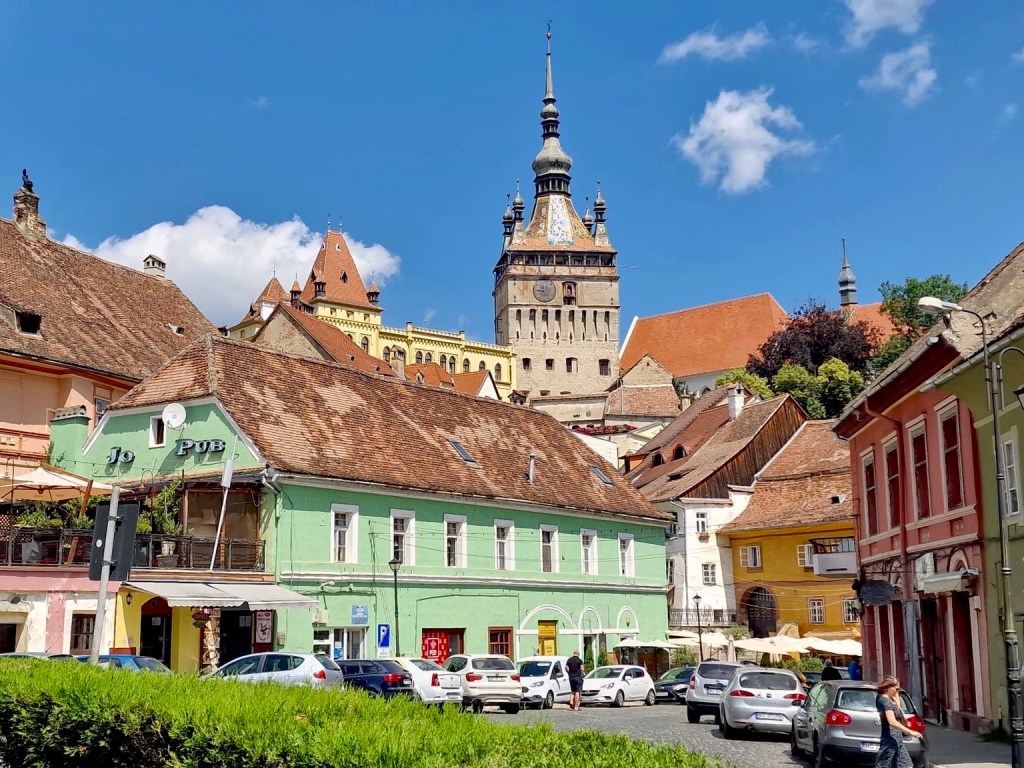
Sighisoura … a Medieval Citadel 

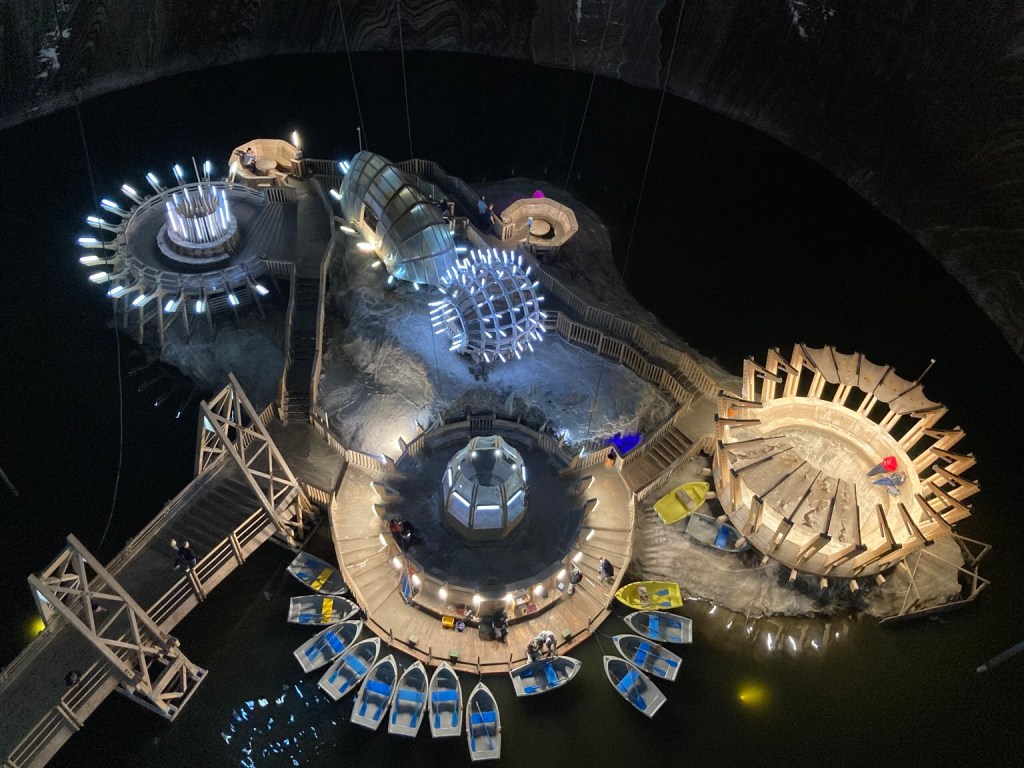
Our first stop today was Salina Turda, possibly the only place where you can enjoy a boating lake, ferris wheel, table tennis and mini golf … 112 metres below ground!

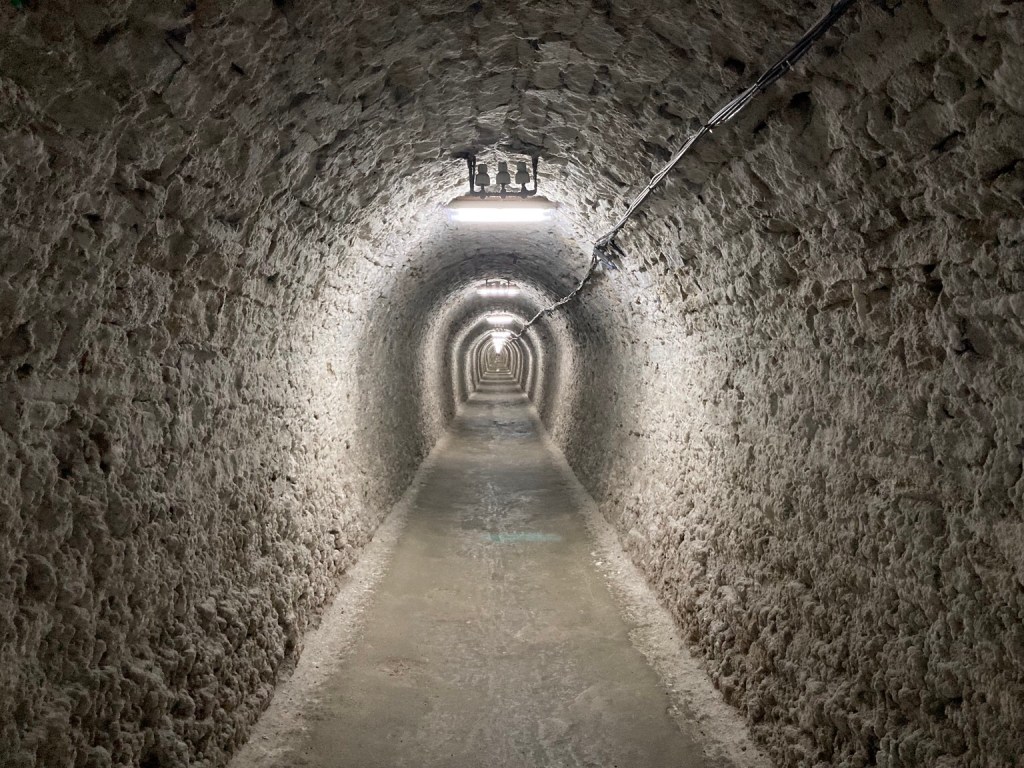
Salinas Turda is a salt mine, slowly excavated over 240 years and made up of several huge chambers connected by a horizontal transportation tunnel 917 metres long.  

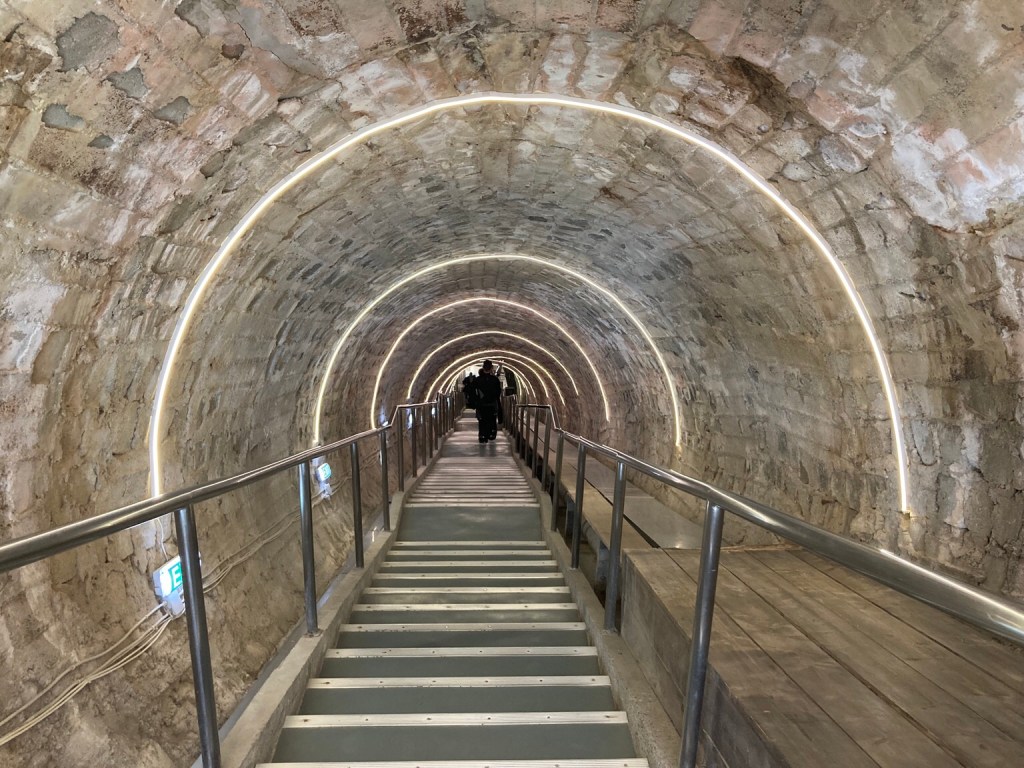
We made the initial descent …

… and walked the length of the tunnel …

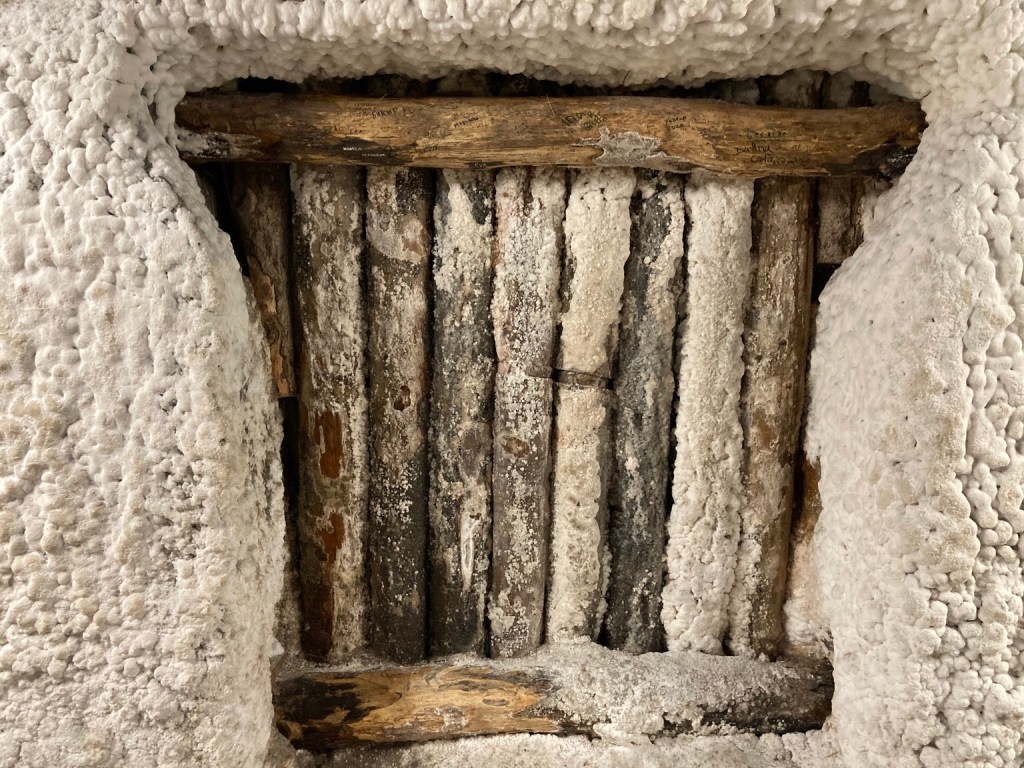
… spotting salt deposits on the walls.

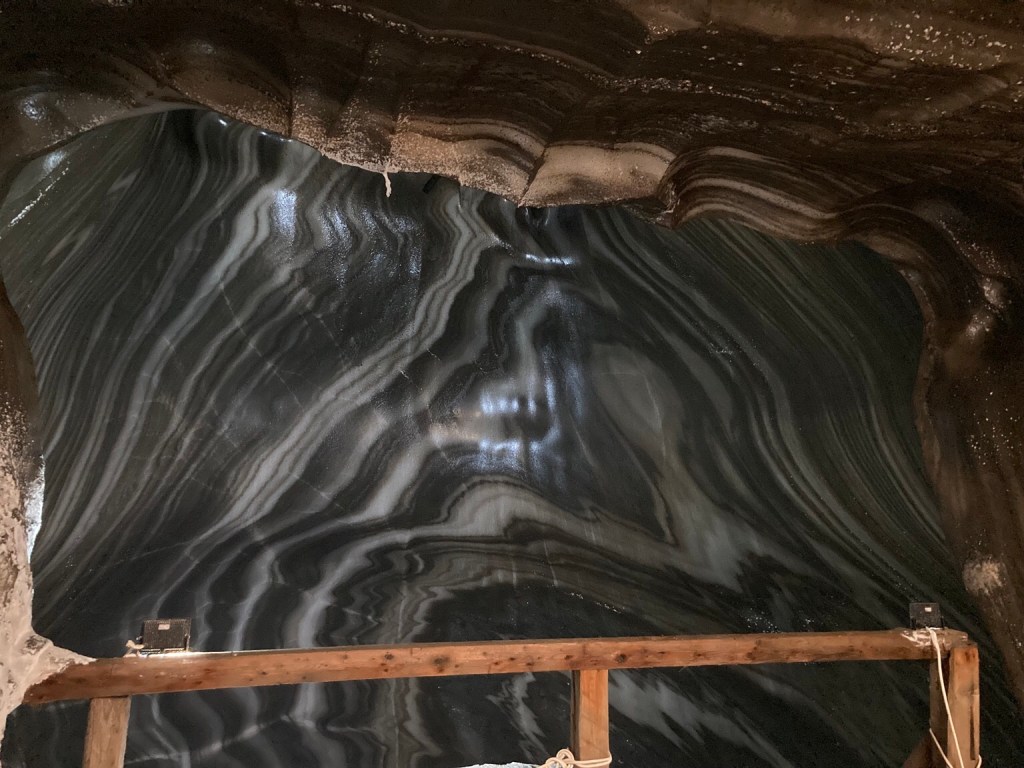
The gallery overlooked the top of the Joseph mine and the damp walls made them glisten.

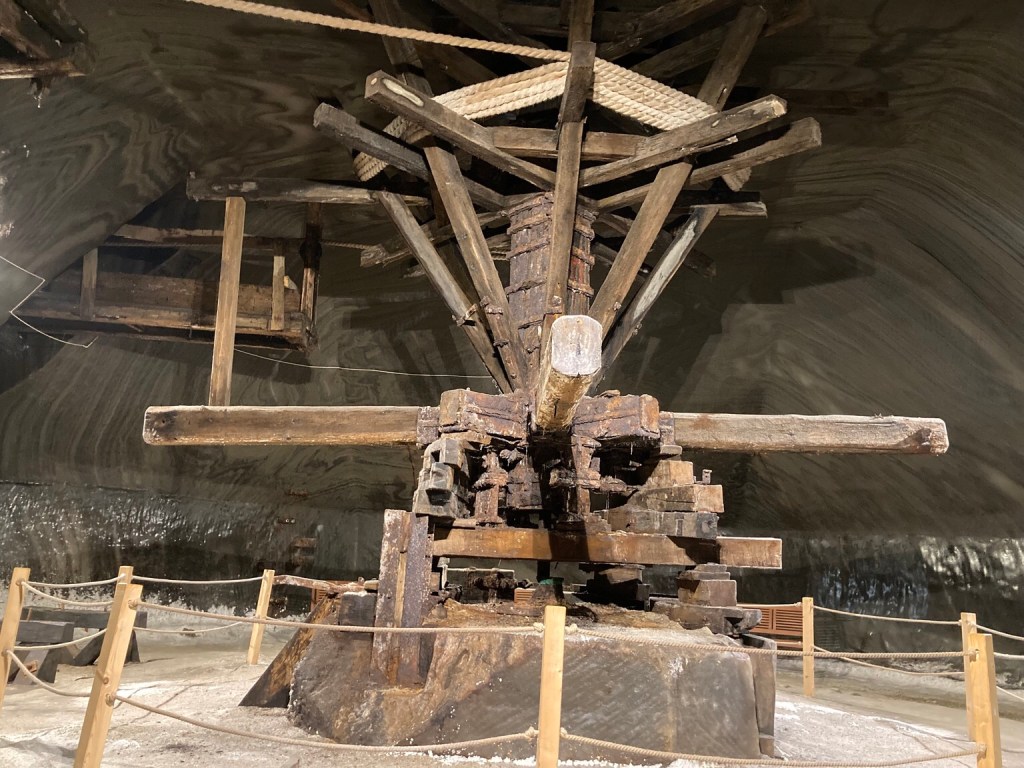
There were several pieces of equipment, but this is the crivac, a vertical extraction winch which lifted the salt out of the mine, powered by a pair of horses.

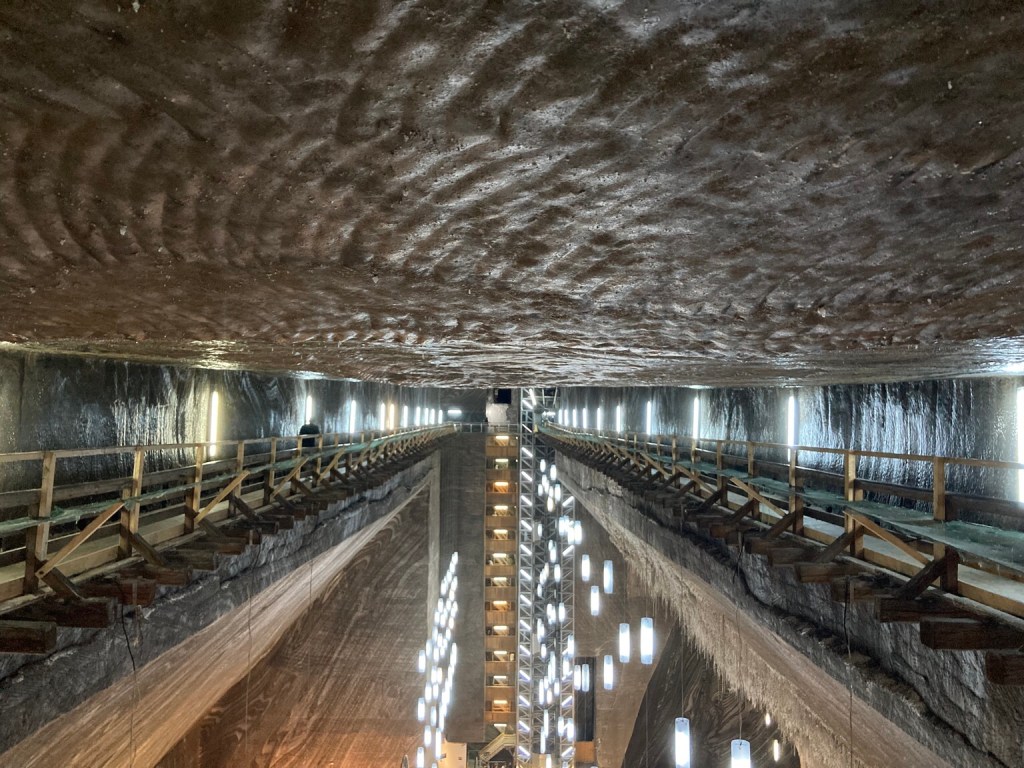
We reached the top of the Rudolf Mine and saw the rough surface of the salt ceiling glistening and the lit zig zag of the flights of stairs opposite heading downwards.

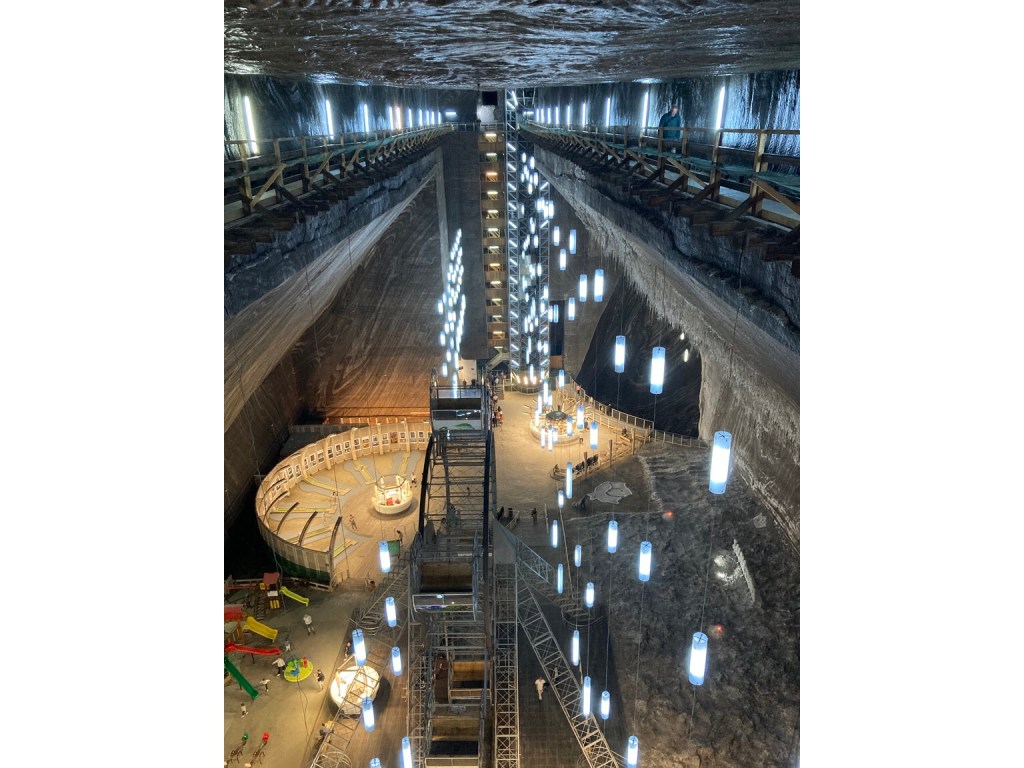
Looking down, the ferris wheel and mini golf were in view.

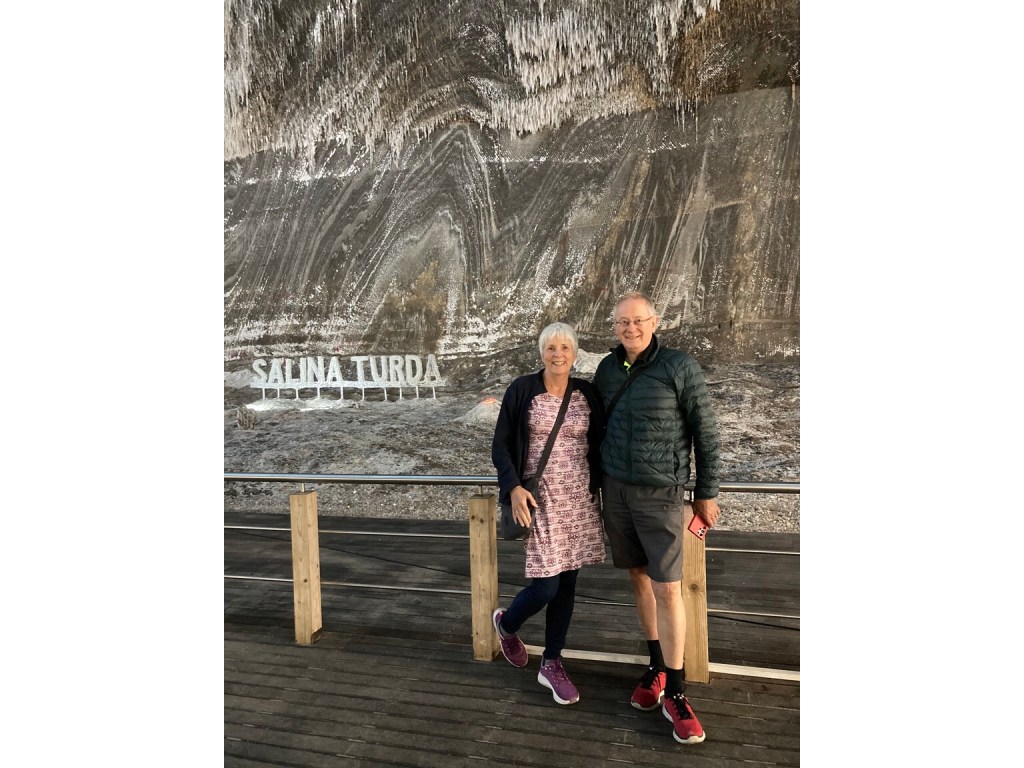
Reader, we took the stairs! After a photo op looking especially stylish with my jeans on under my dress … it was only 12° …

… I snapped the eerie boating lake below before returning to the surface, by lift!

We cracked on to Sighisoara, a couple of hours drive.  I’d been having a little medical issue which I had tried to resolve with time and natural remedies but the time had come to go in search of antibiotics. It probably helped that we chose the emergency department of a small town because it was very quiet. Within 45 minutes, I had been triaged, seen by an English speaking doctor and filled my prescription which cost just £8. Excellent service we couldn’t fault.  

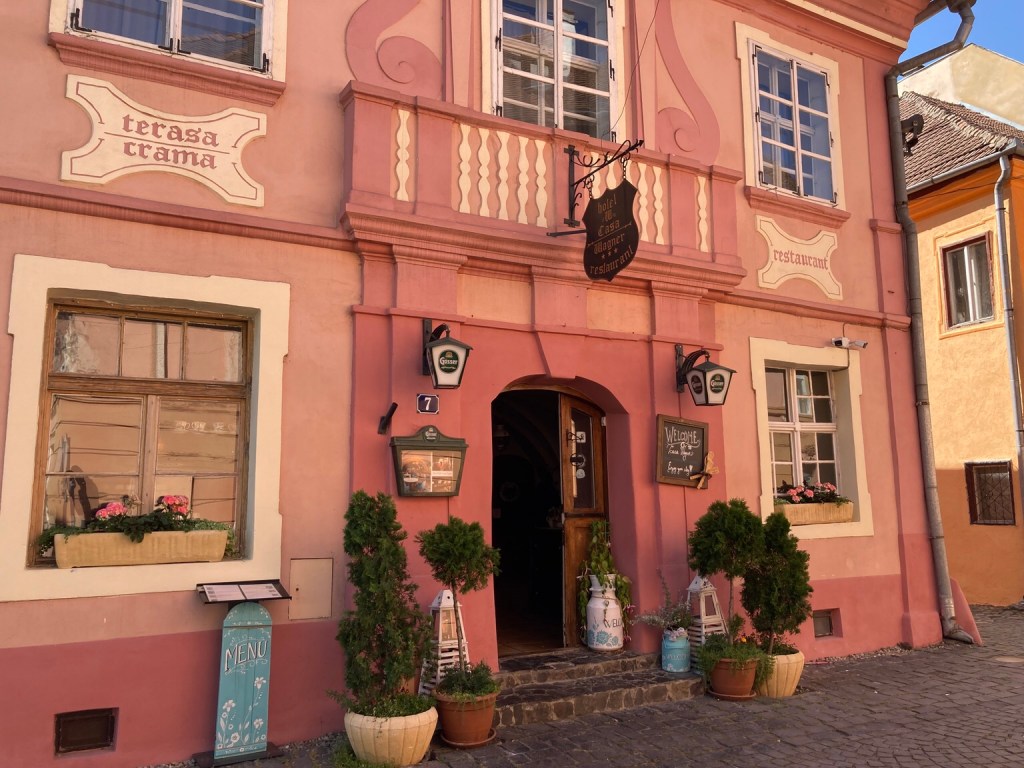
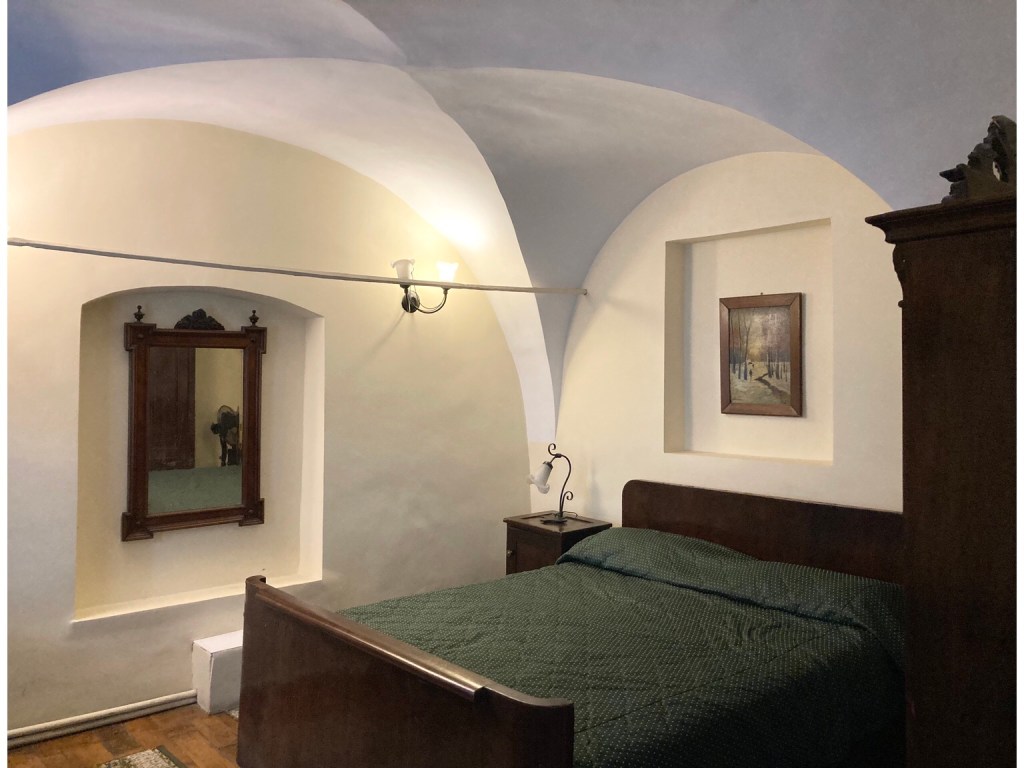
We are staying at Casa Wagner for the next two nights, a small hotel facing the Citadel Square and retaining lots of period features. 

We didn’t venture far that first evening, but I felt so much better in the morning.

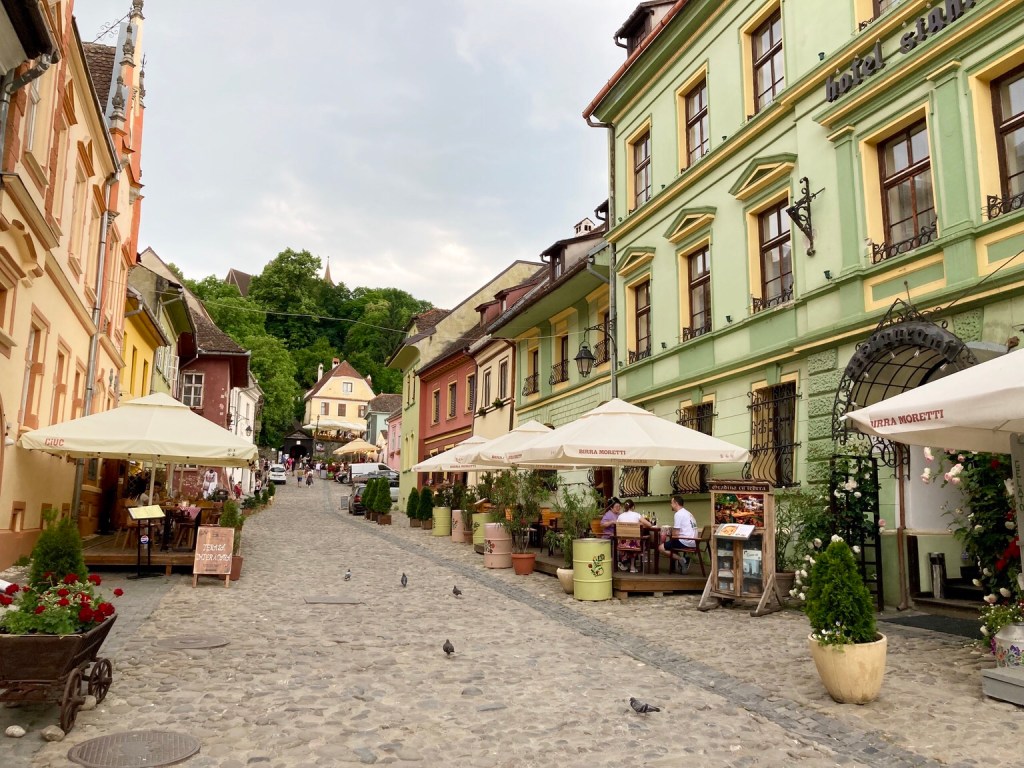
After breakfast, we ventured down to the lower town …

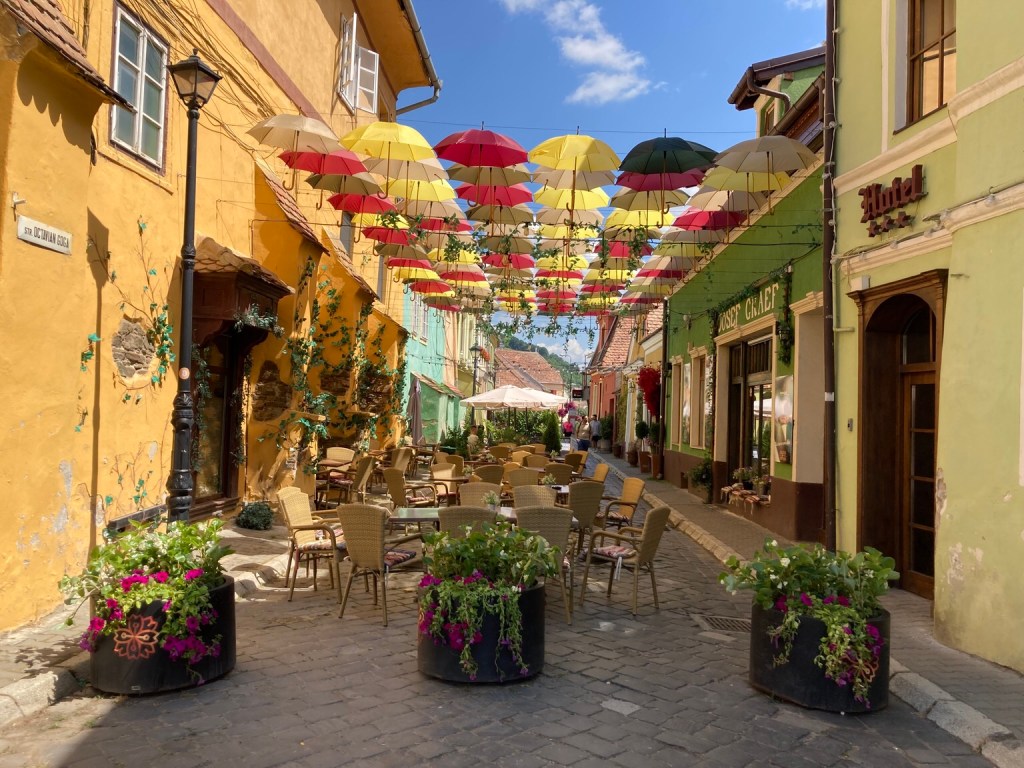
… in search of a mini market to buy a couple of large bottles of water and had coffee in Umbrella Street. 

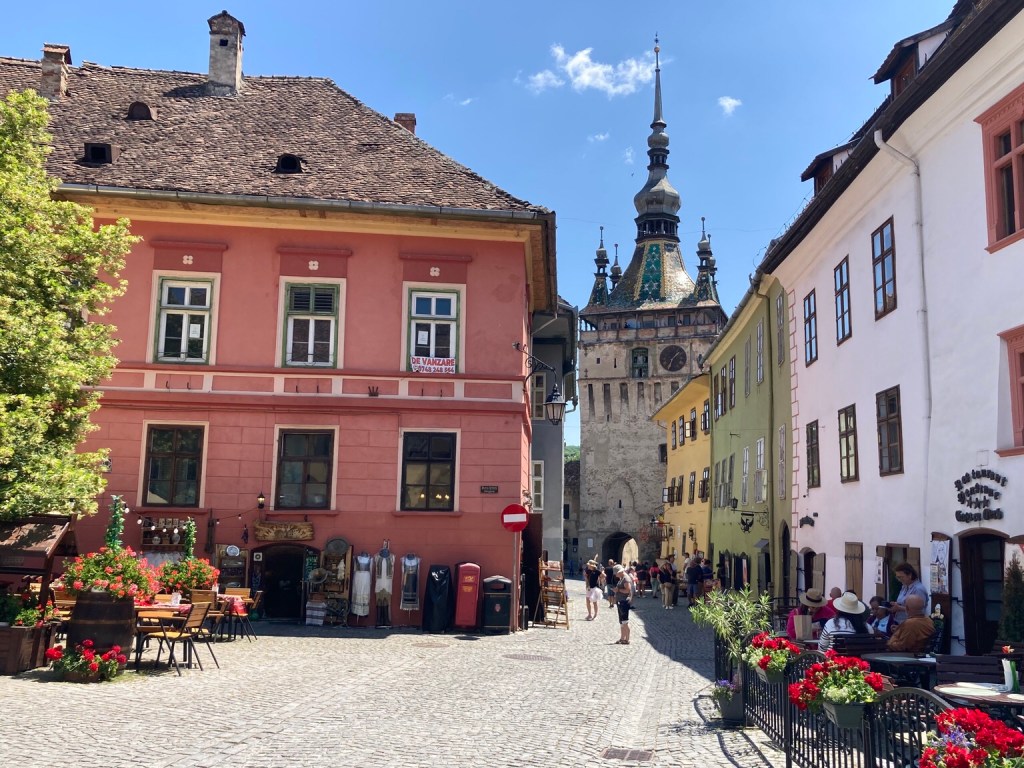
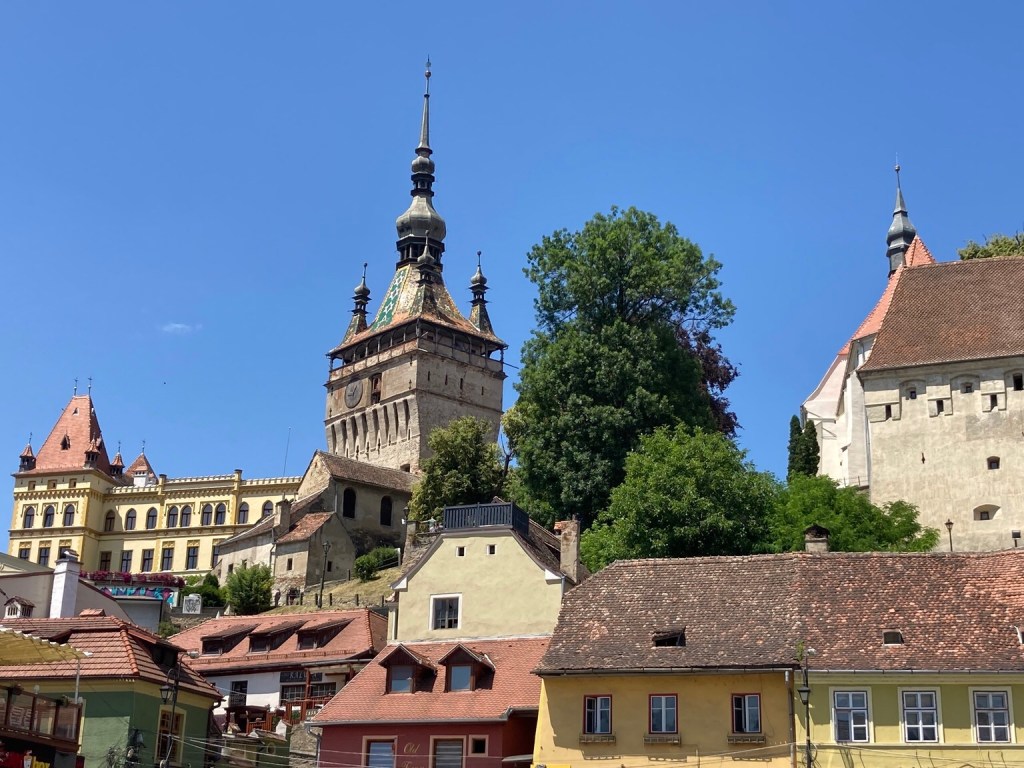
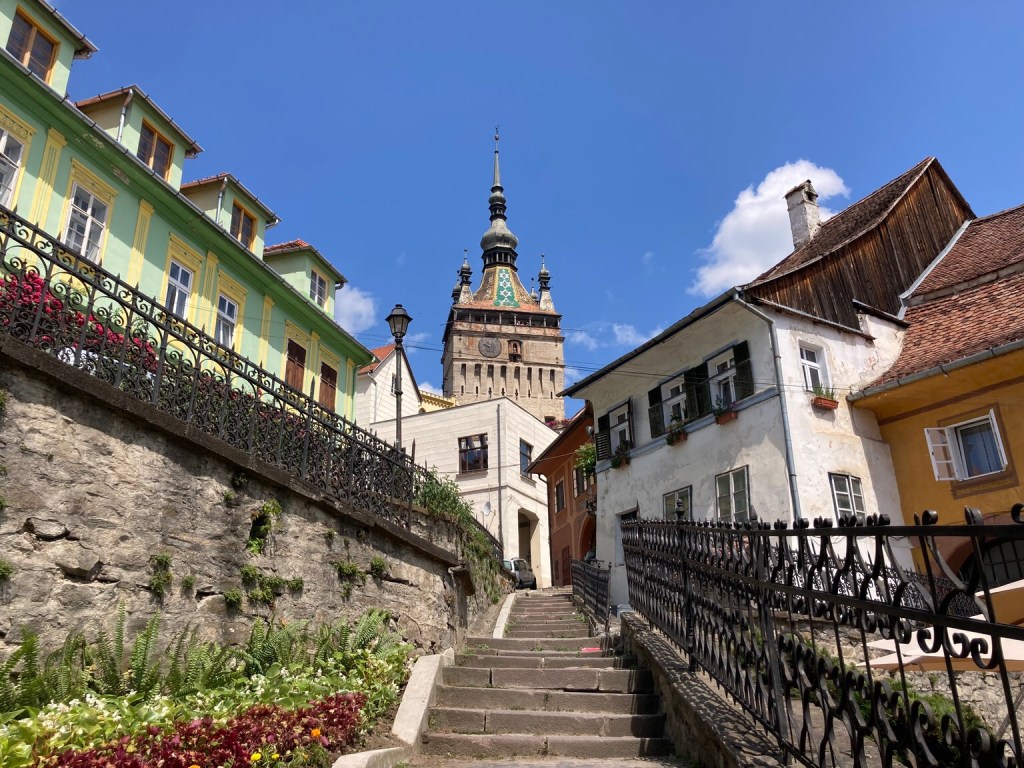
As we returned, we kept catching sight of the Clock Tower.

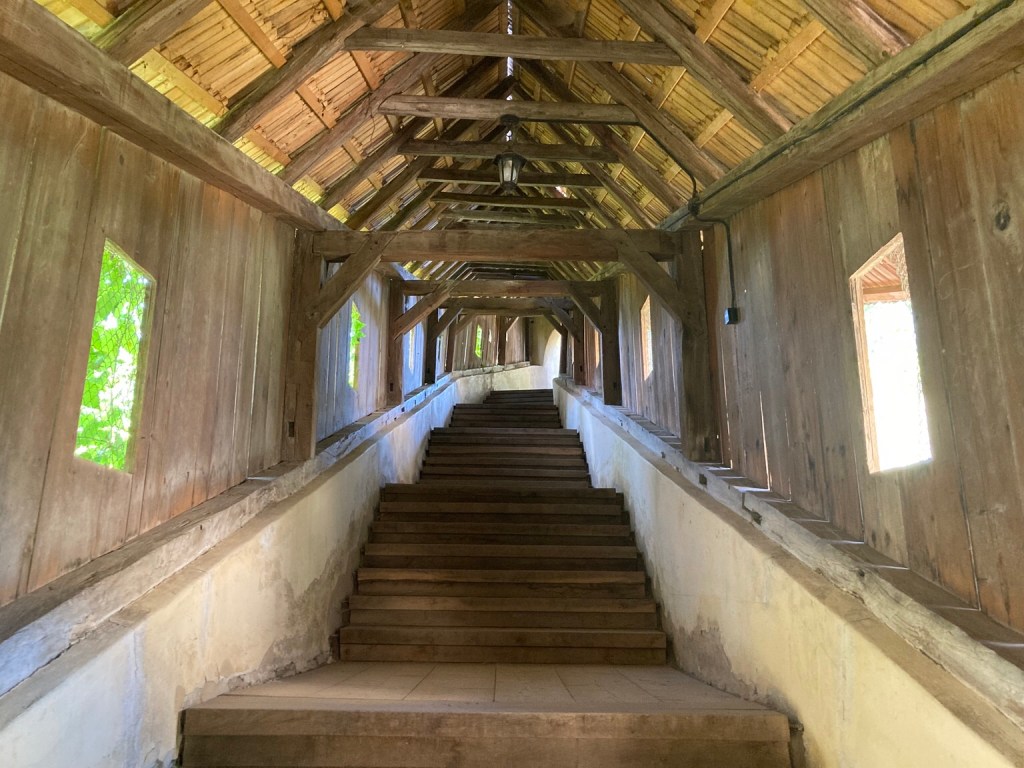
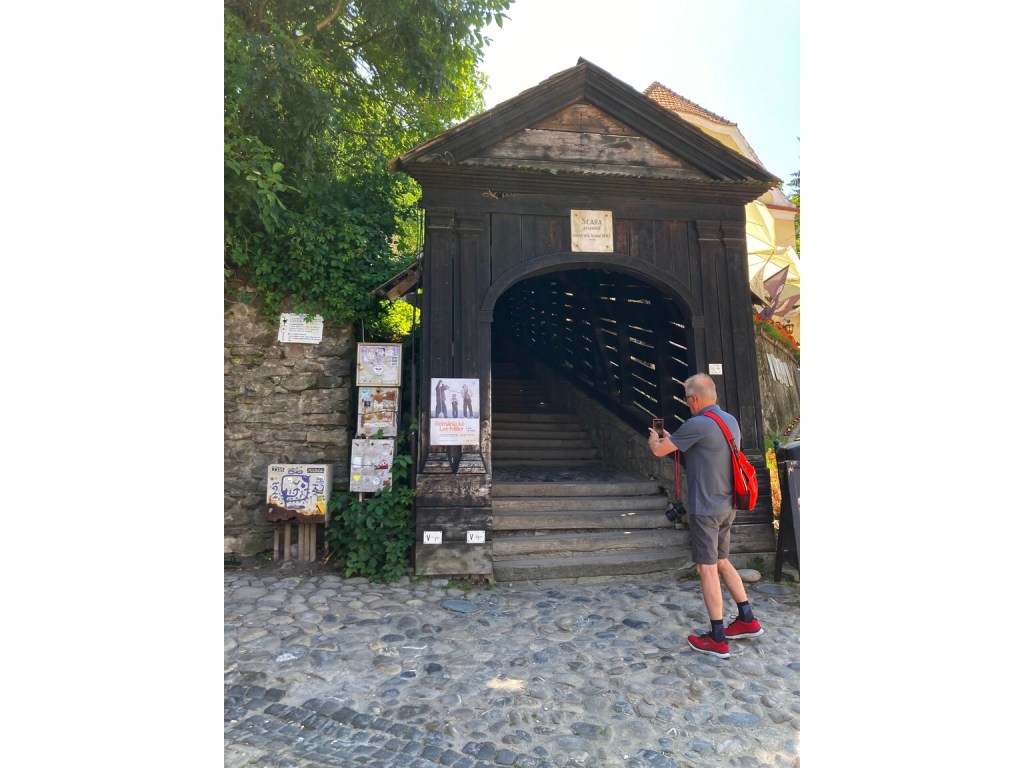
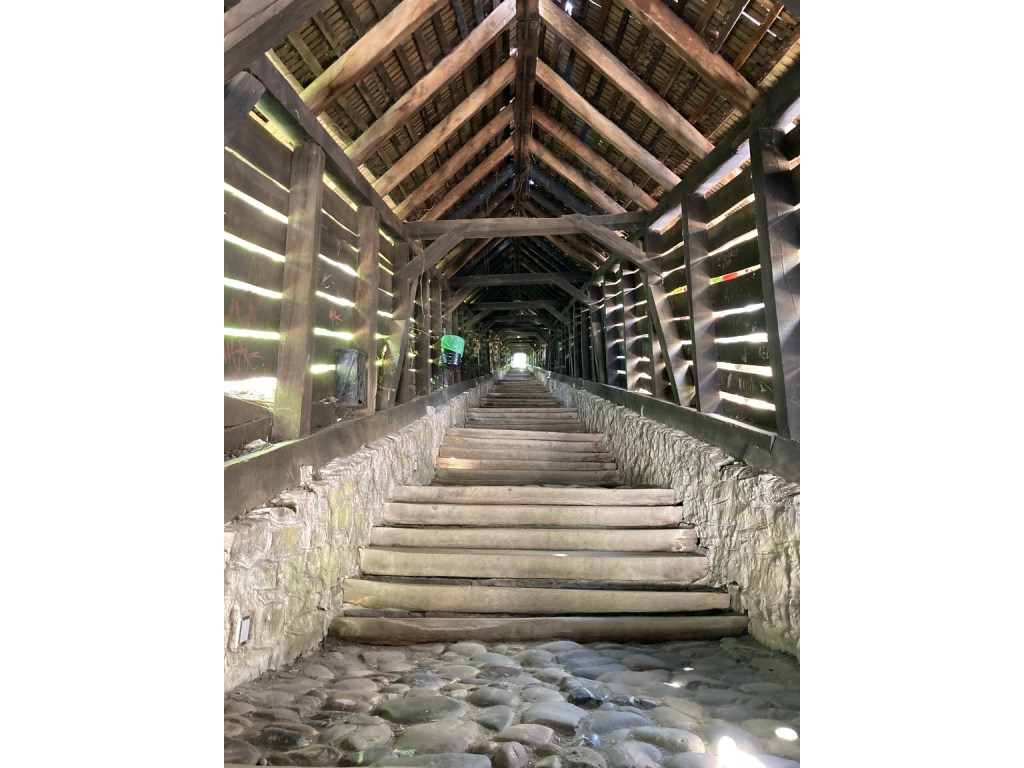
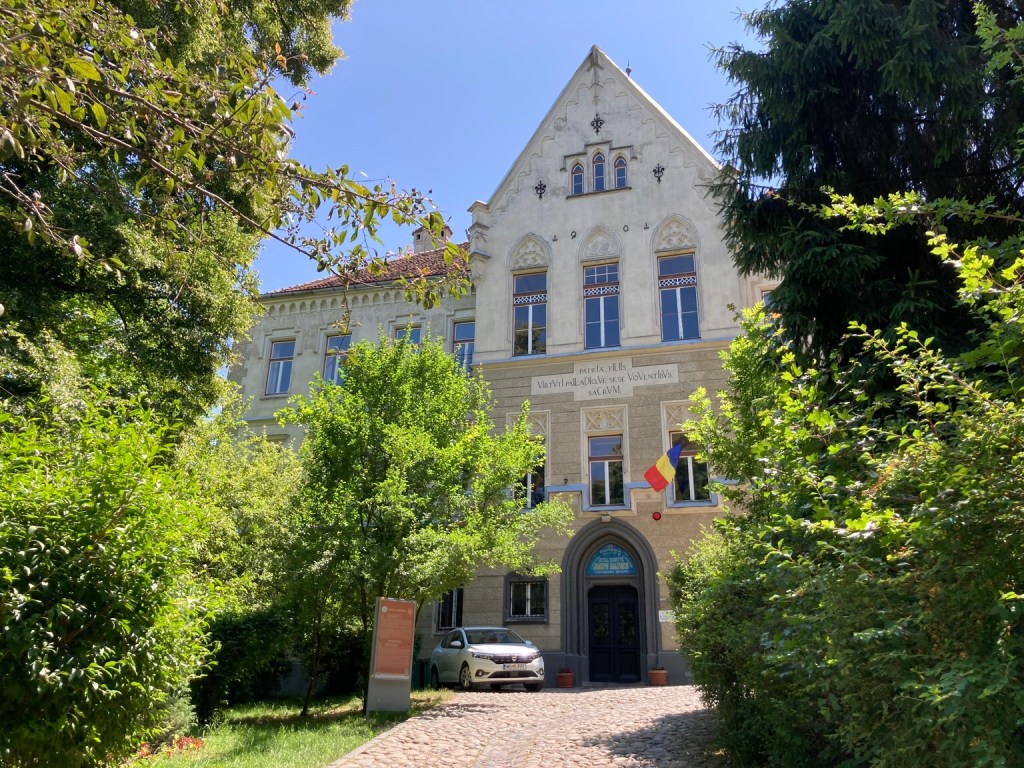
Having been down, now it was time to climb up, taking the Students’ Stair, a covered wooden staircase, to the School on the Hill.

We actually got chatting to a lady this morning who has lived in Canada for 30 years, is back for her first trip and remembers attending the school as a child.

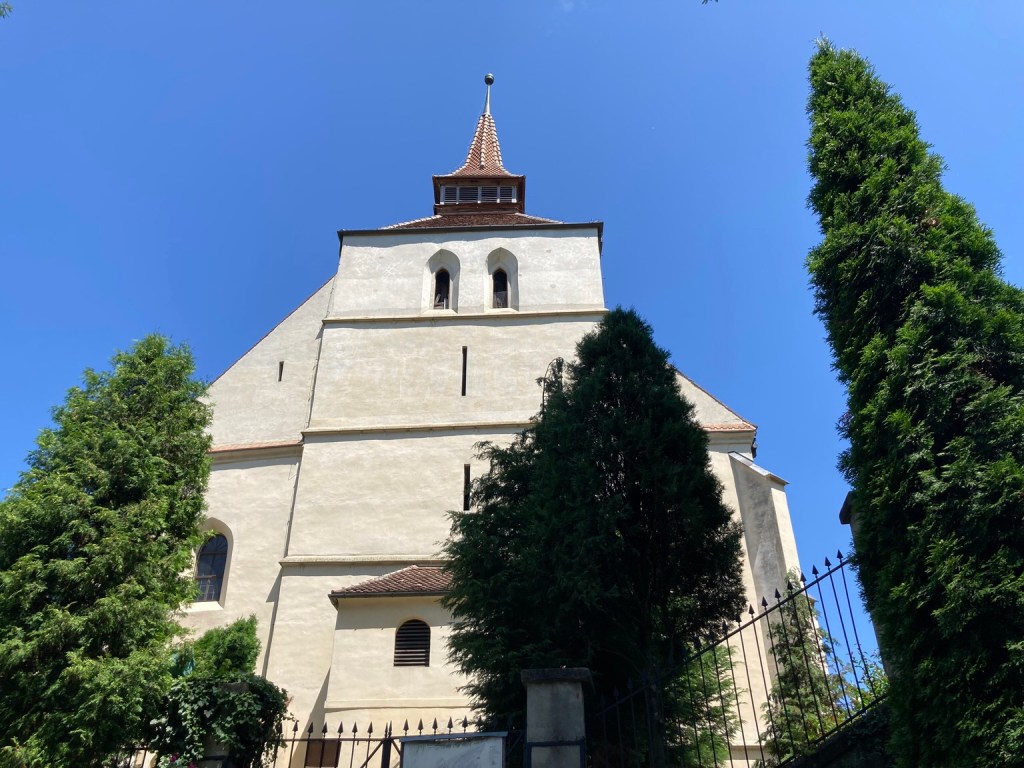
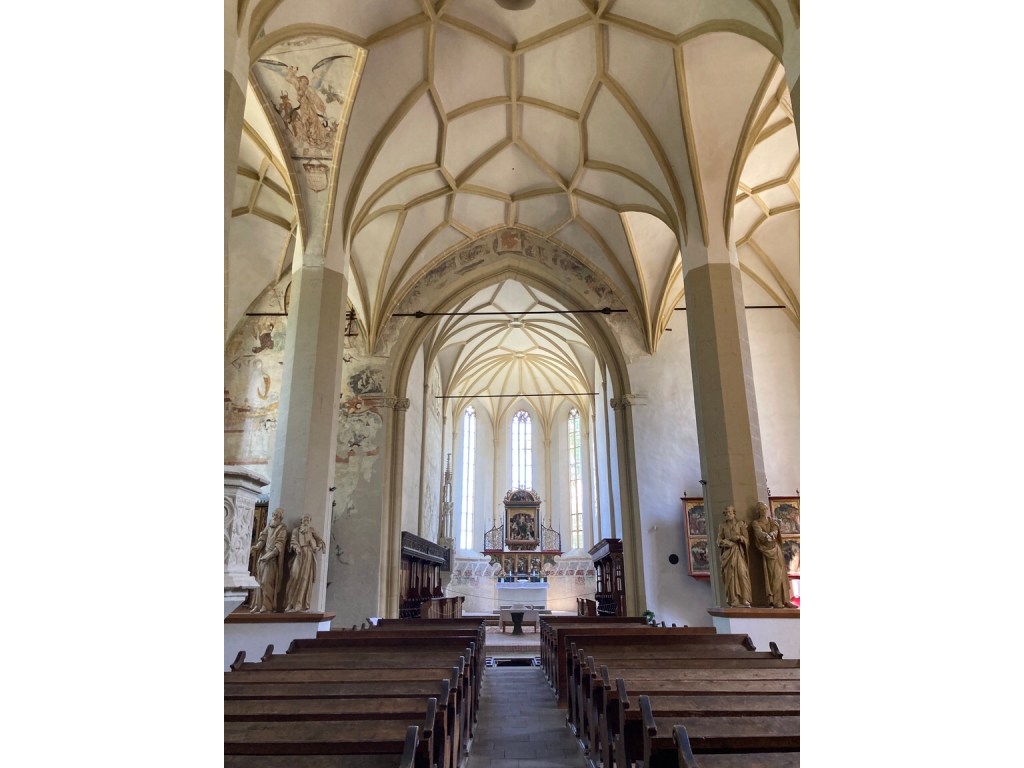
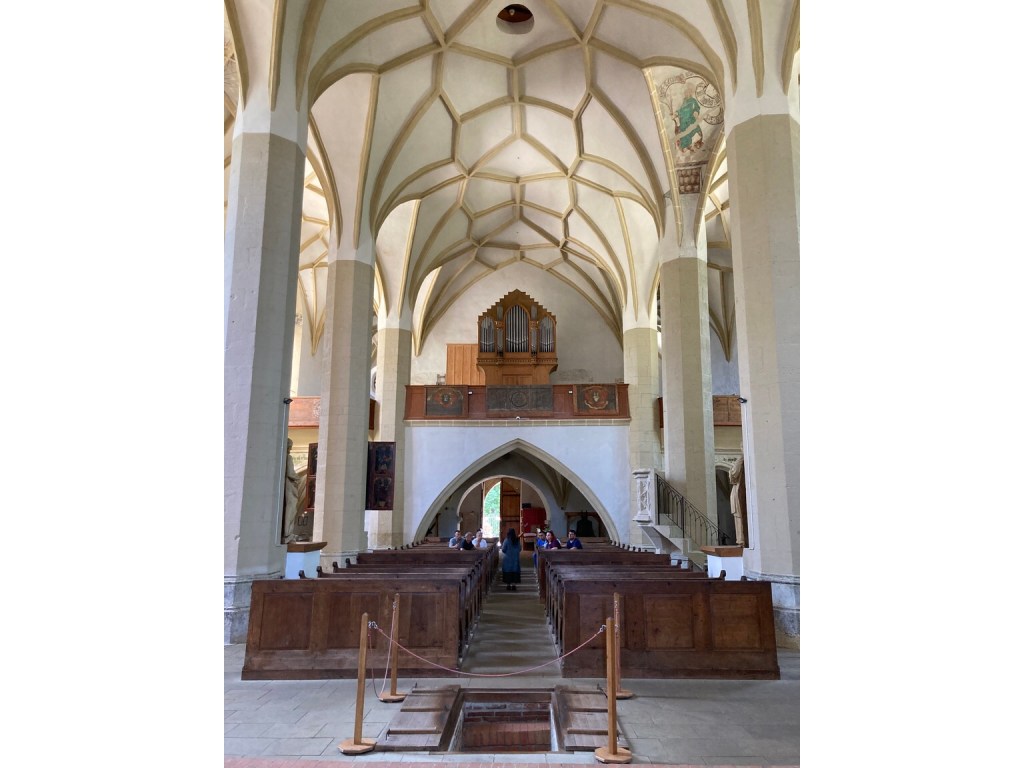
Here is the Church on the Hill, built in gothic style in the C13th, originally Catholic, but Lutheran after the 1547 Reform.

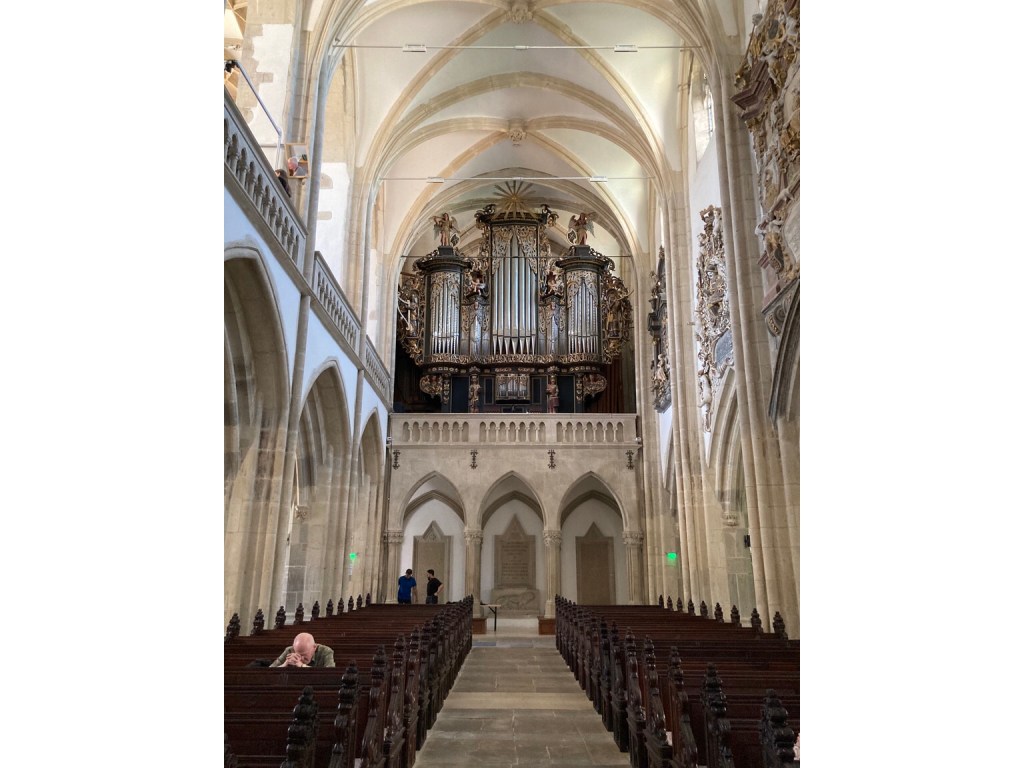
In all these churches we’ve seen the view to the altar … 

… only just surpasses the view back to the organ.

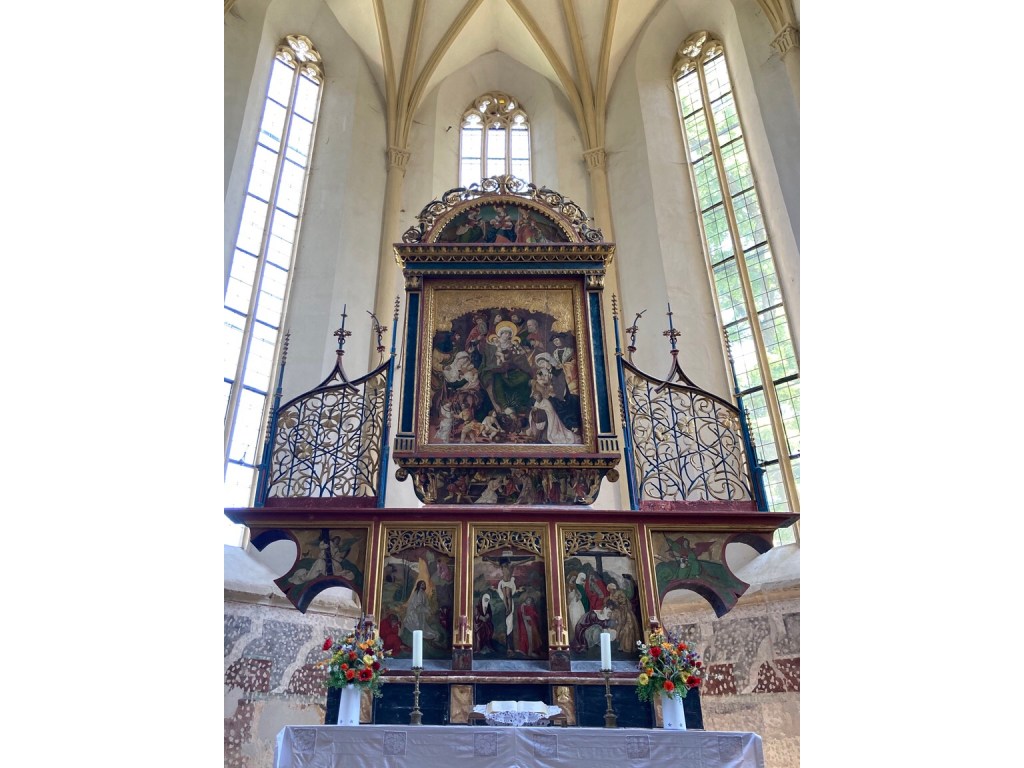
Here is the gothic altarpiece …

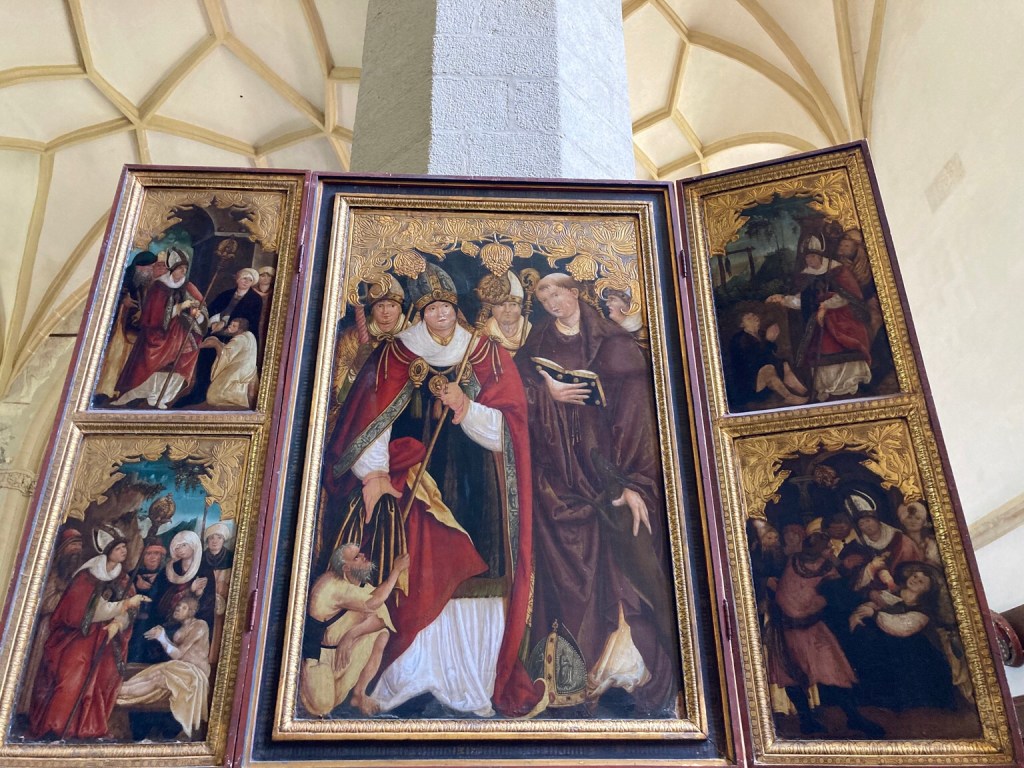
… and another on display.

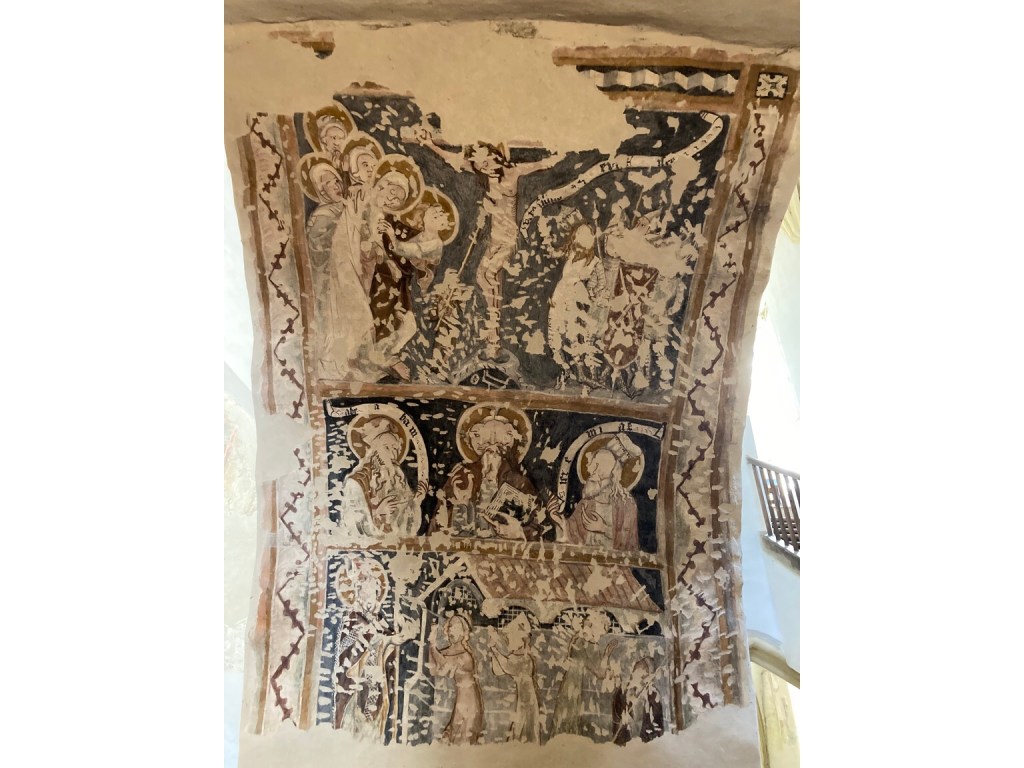
Restored fragments of murals from the late C15th include this rare image feintly showing God with three heads depicting father, son and Holy Spirit in the centre … 

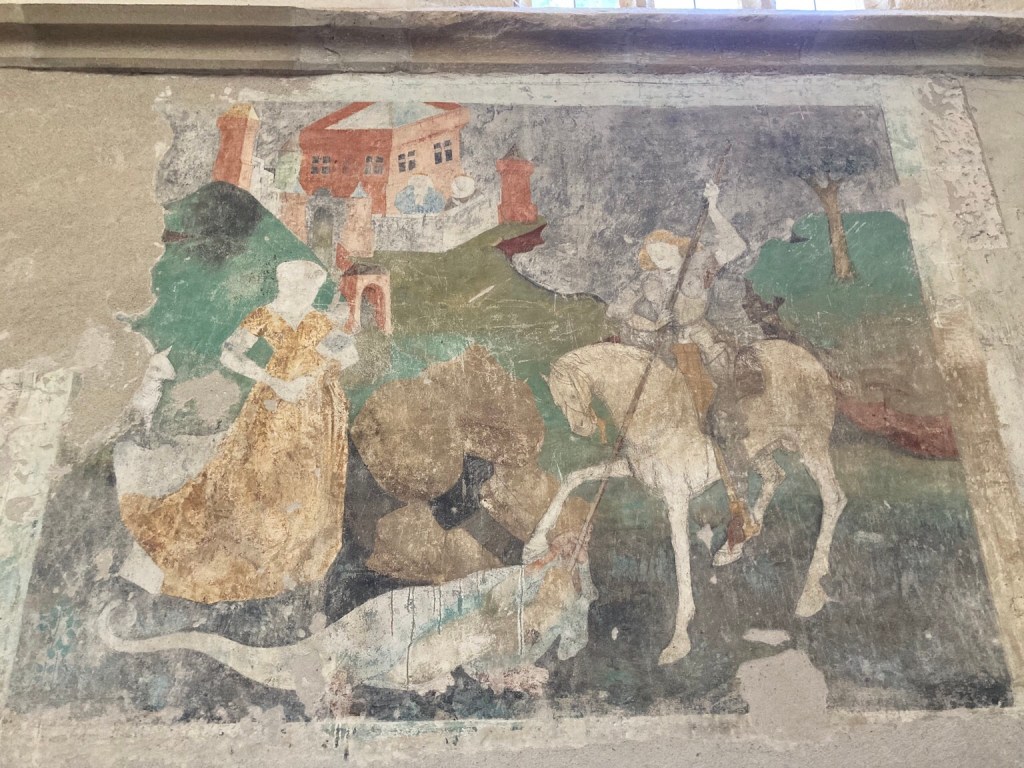
… and George and the dragon.

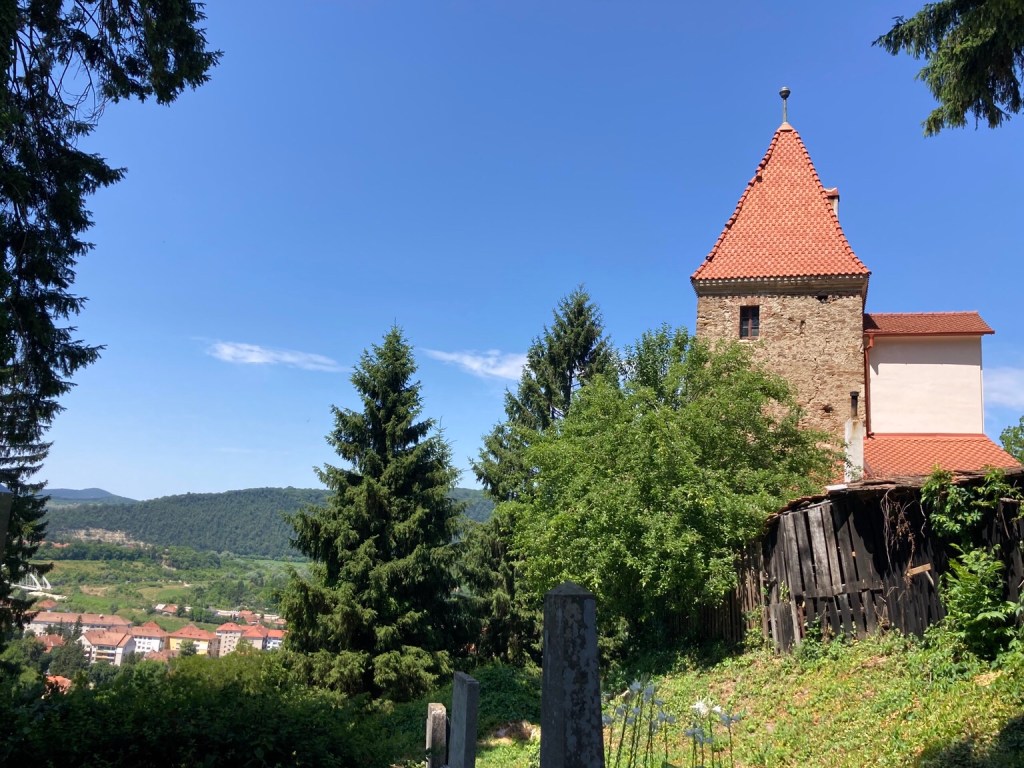
The Ropemakers’ Tower is home to the guardian of the cemetery, and we walked back through the graves to the town.

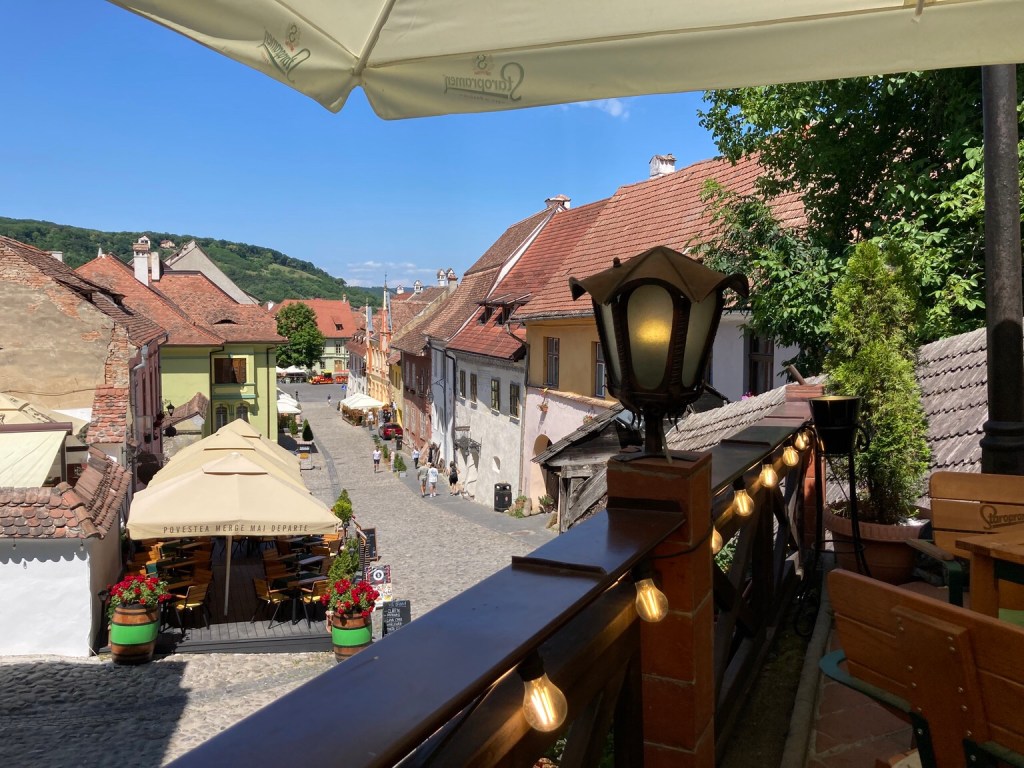
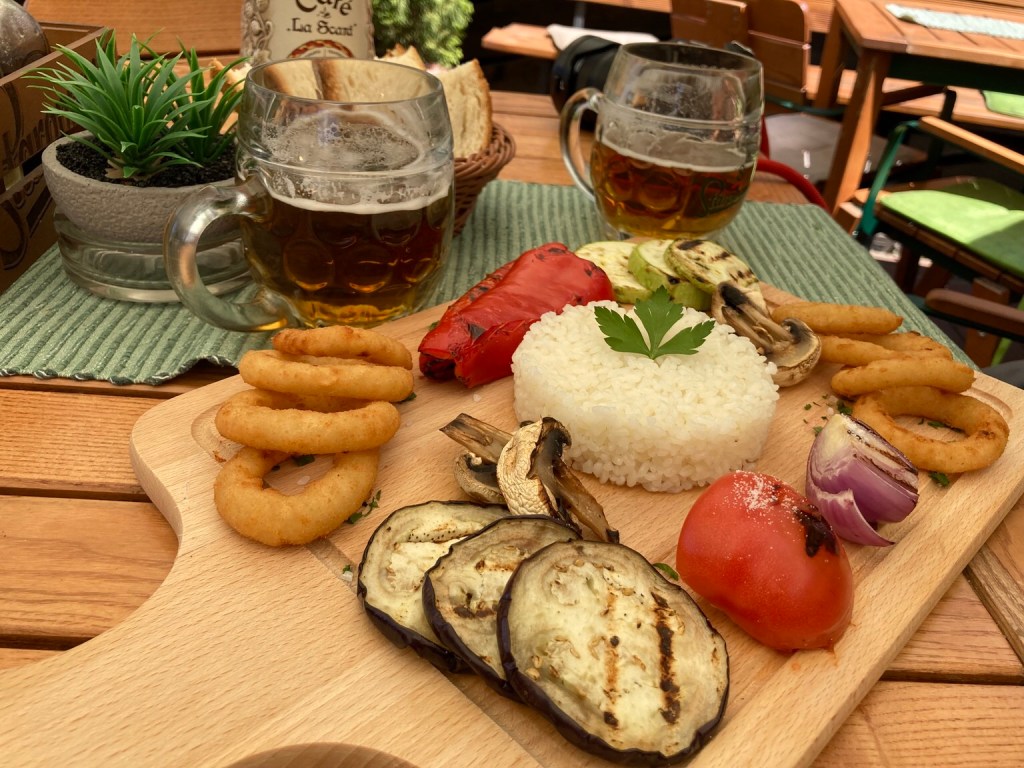
Definitely time for lunch, and we found a perfect people watching spot with a platter of grilled veg and a couple of beers waiting!

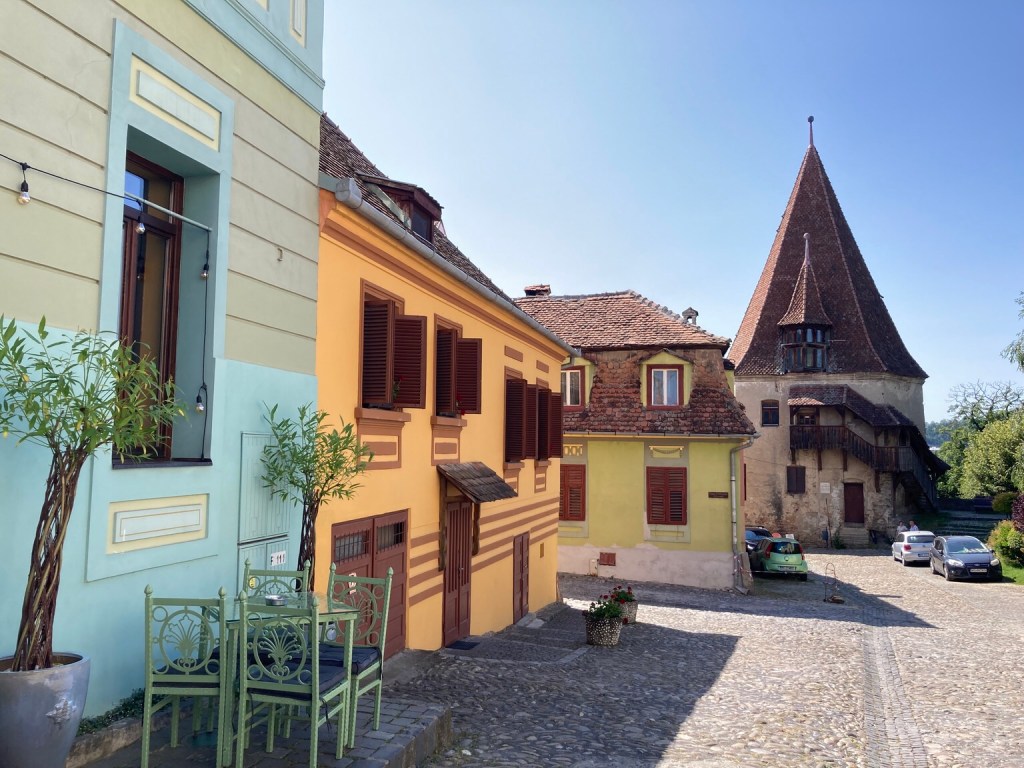
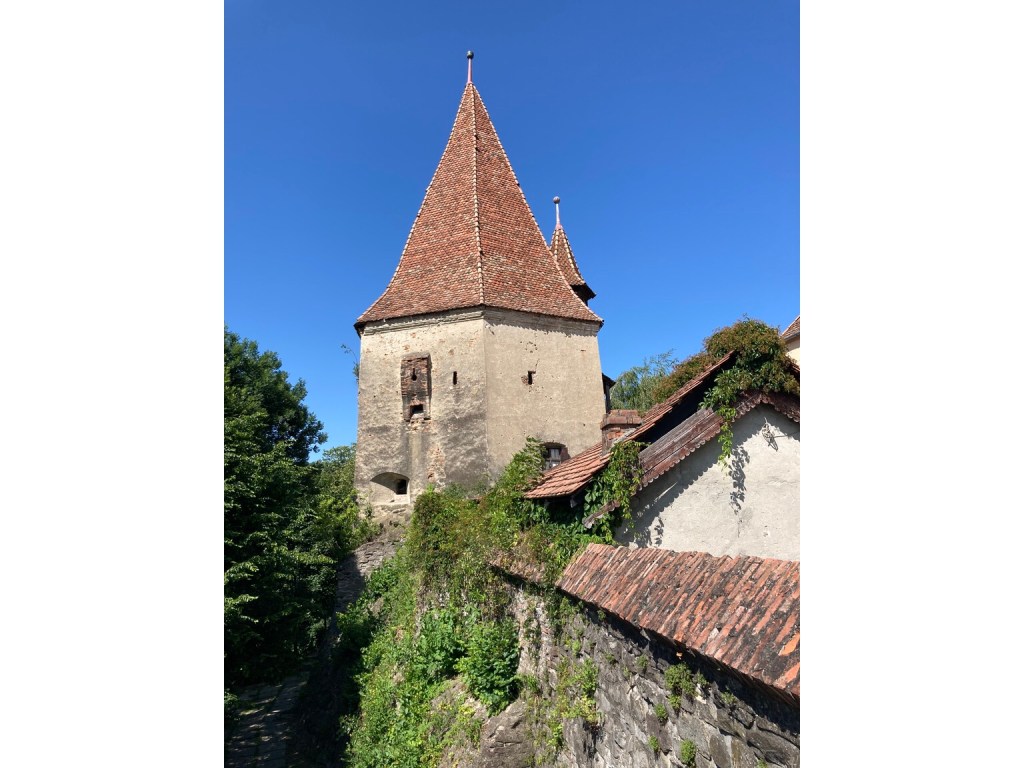
The afternoon was spent on a circuit of the towers, the Bootmakers’ Tower …

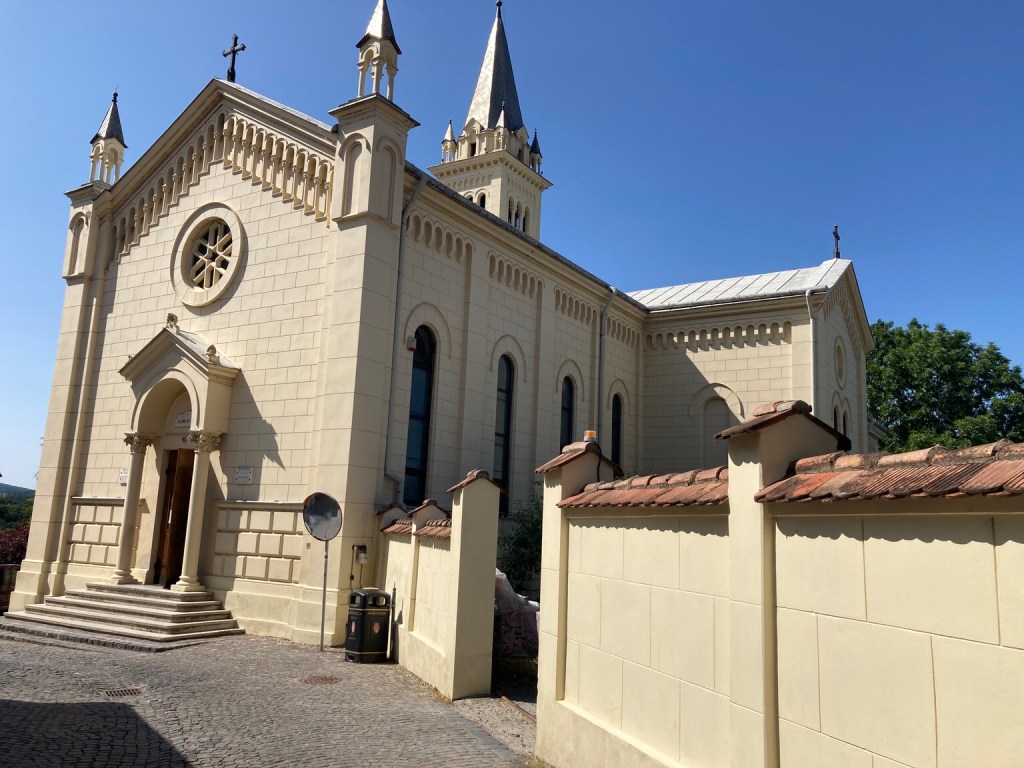
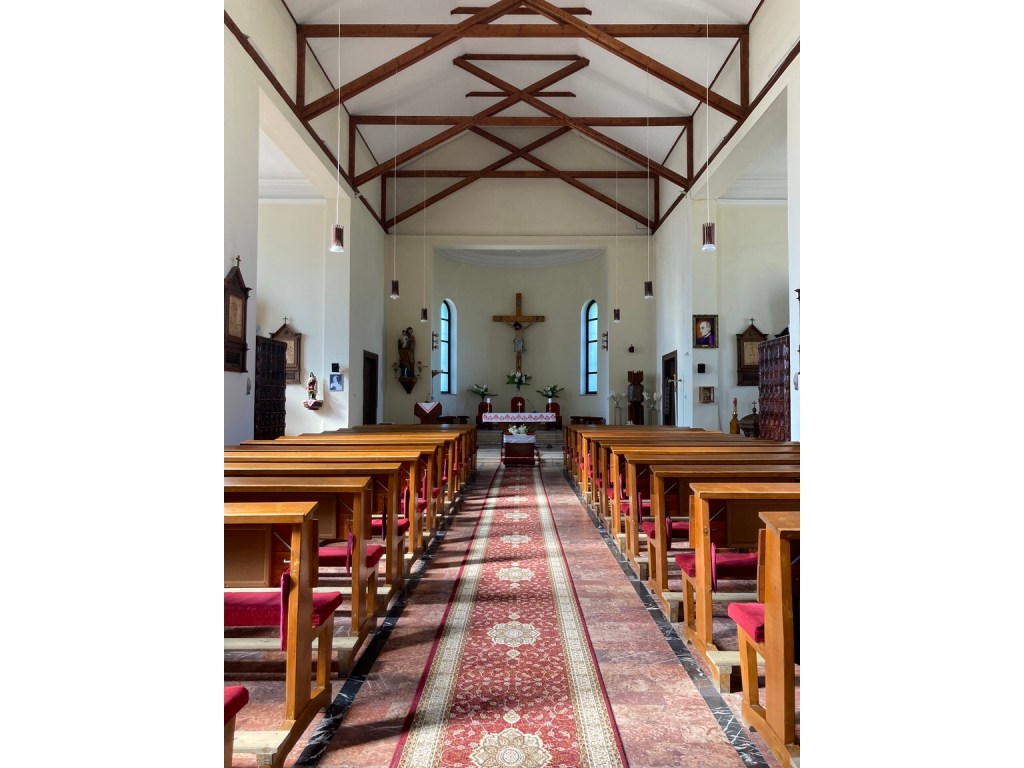
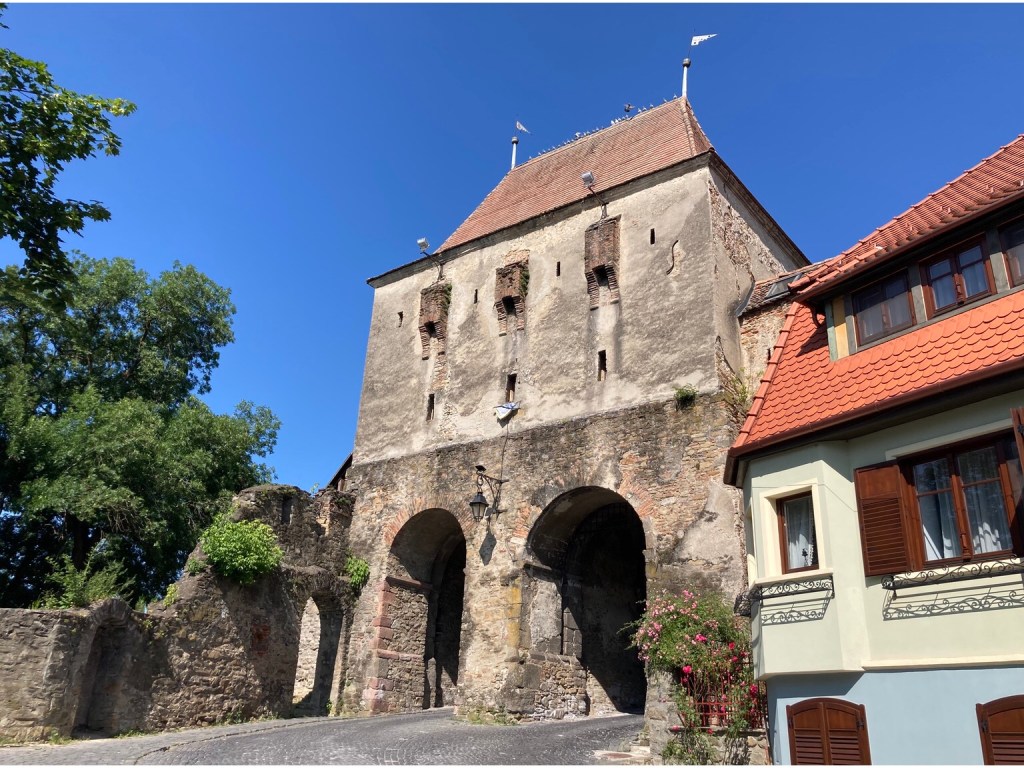
Which was beside the Catholic Church …

… the Furriers’ Tower …

… and the Tailors’ Tower which guards the back of the citadel.

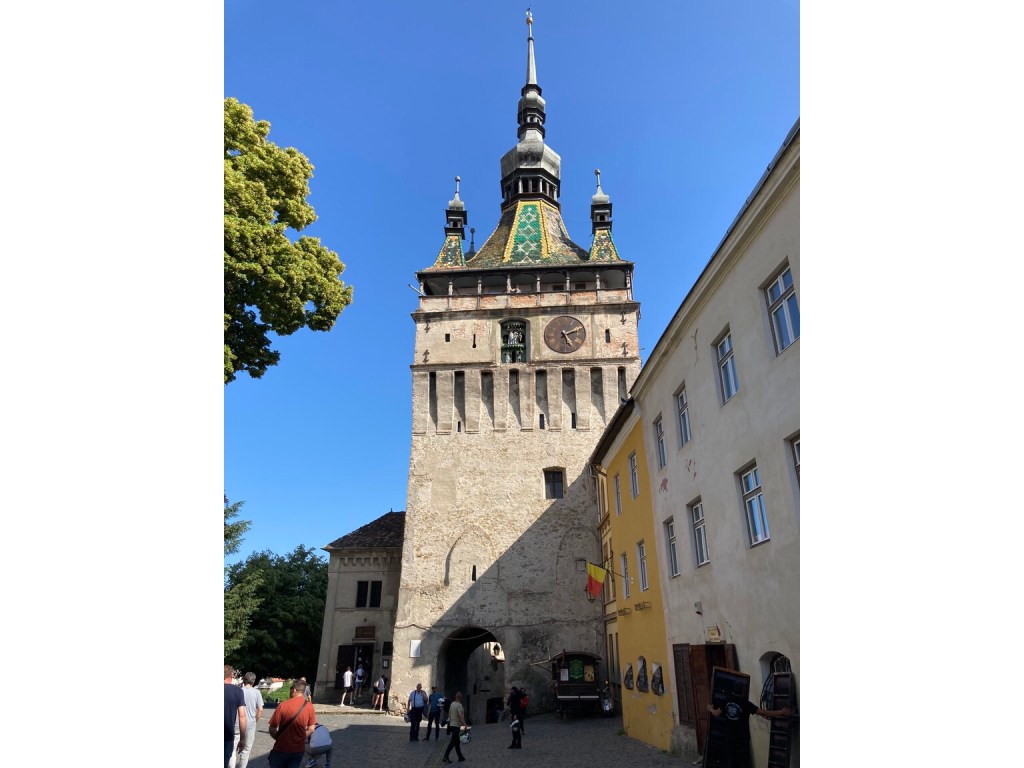
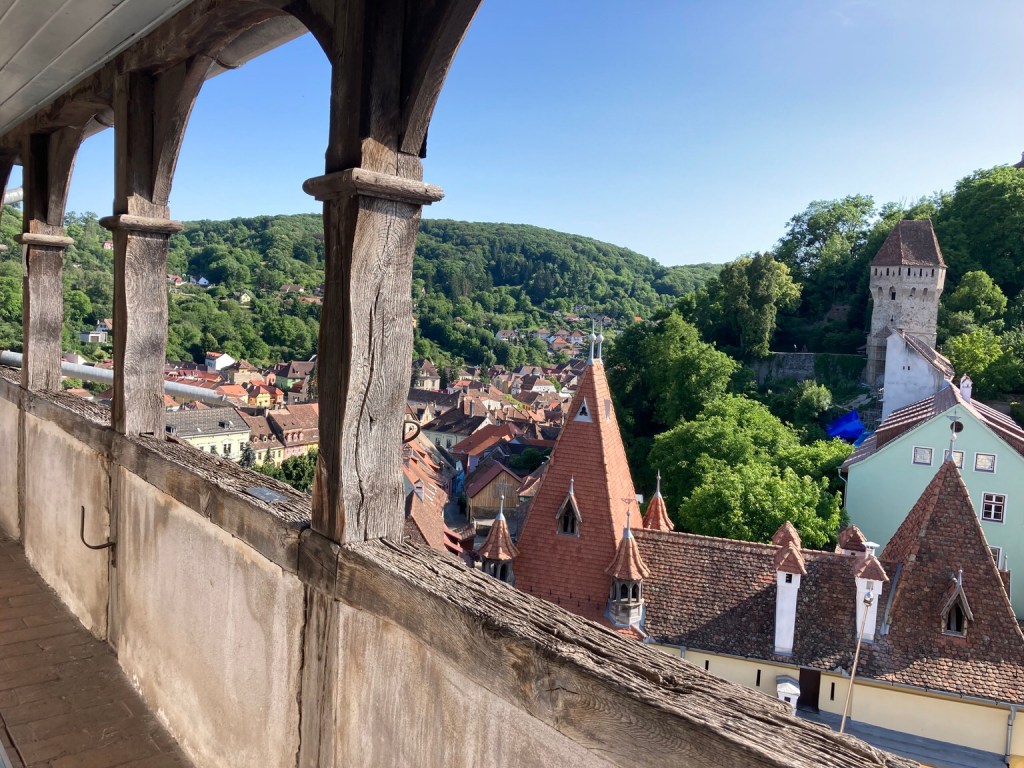
Full circle, back to the main square and the Clock Tower, which we climbed to get a view over the town …

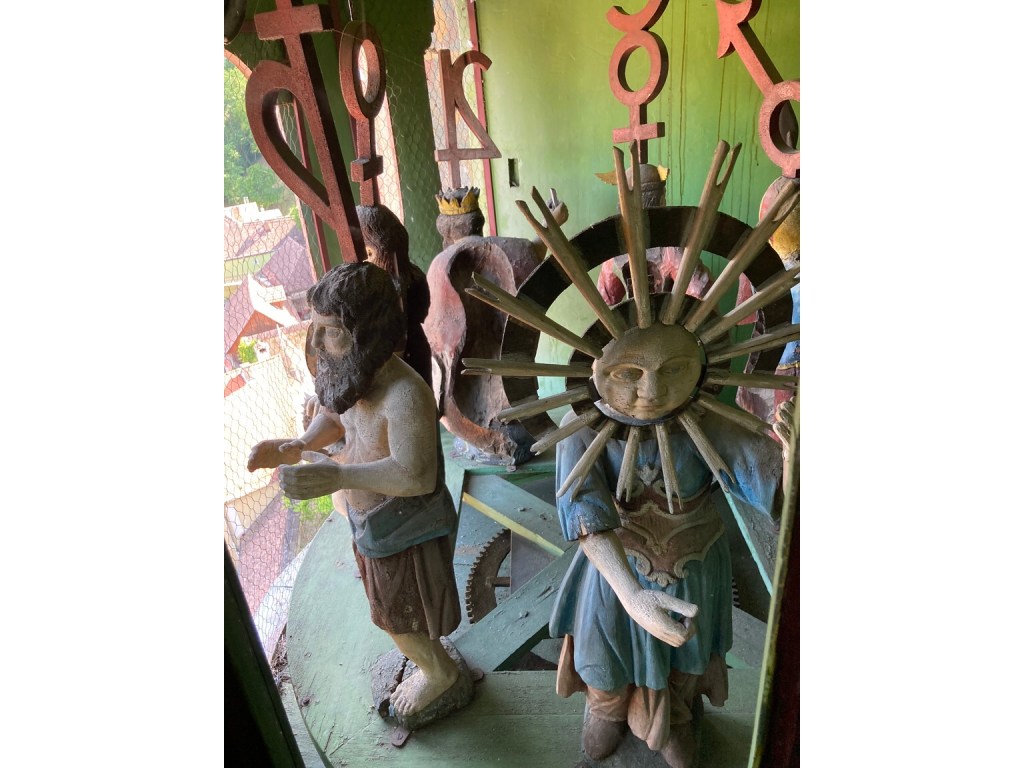
… and also of the seven figures representing the days of the week, with Sunday sporting the rays of the sun.

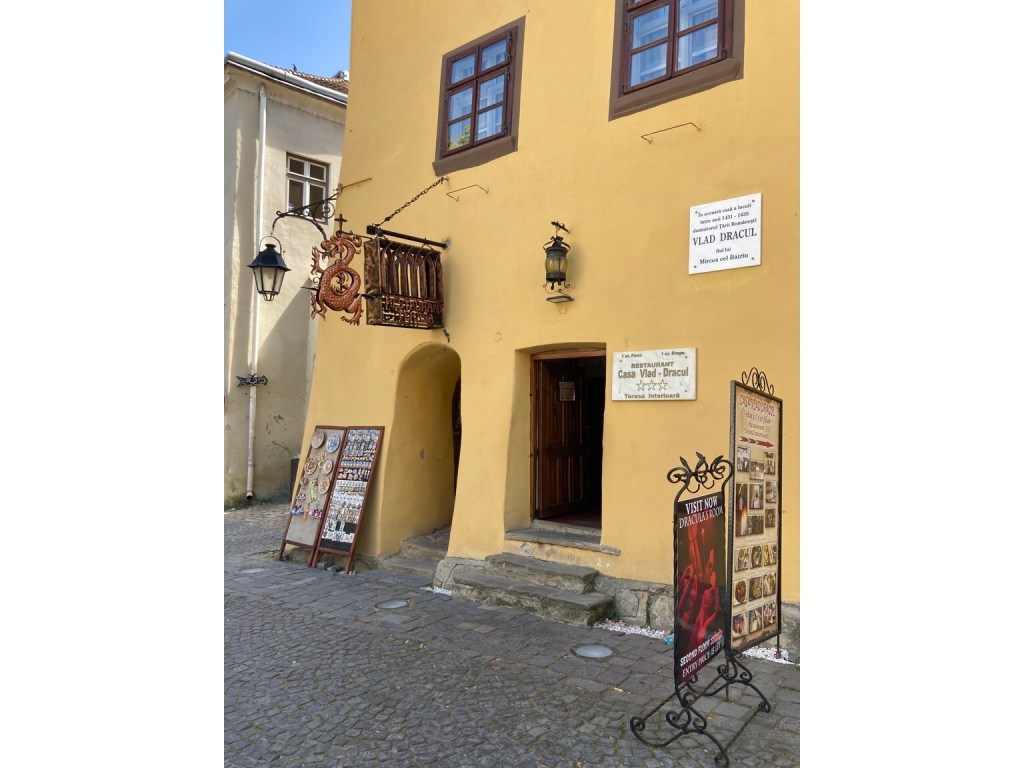
This is also the birthplace of Vlad Draculea, also known as Vlad Tepes or Vlad the Impaler, who ruled the province of Walachia in the C15th. Needless to say there is lots of Dracula memorabilia available!

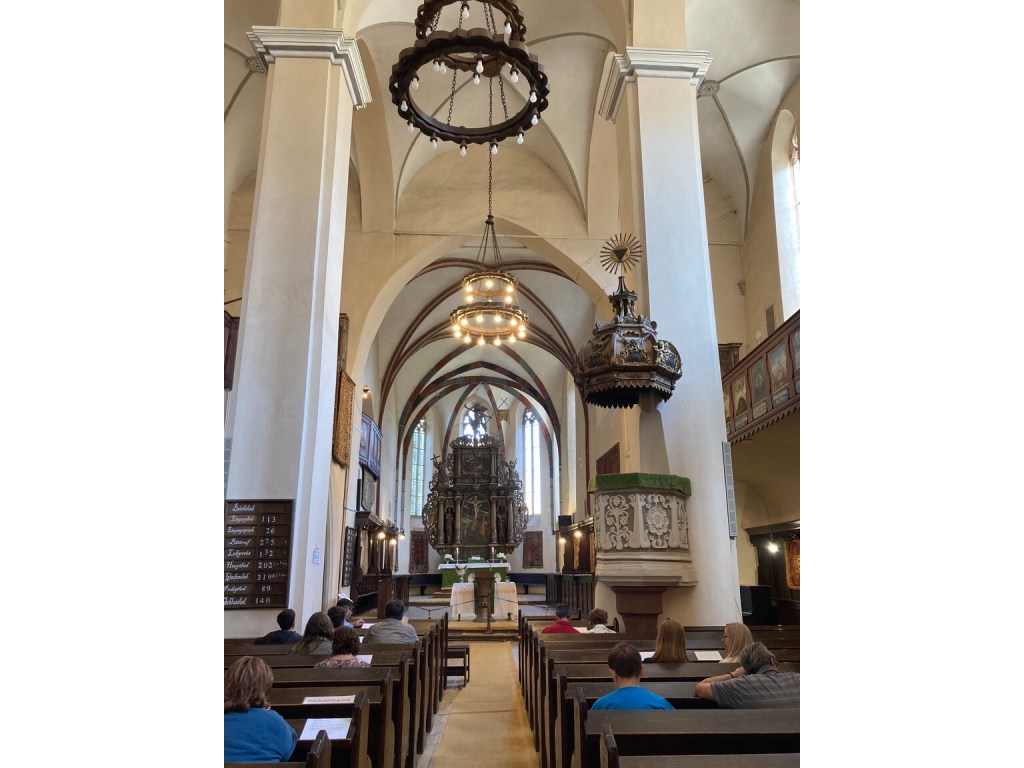
Early evening, there was a short recital with organ and violin in the Monastery Church and we went in to listen, lovely actually with Erik Satie 1st Gnossienne which I recognised and also a piece by Joseph Rheinberger.

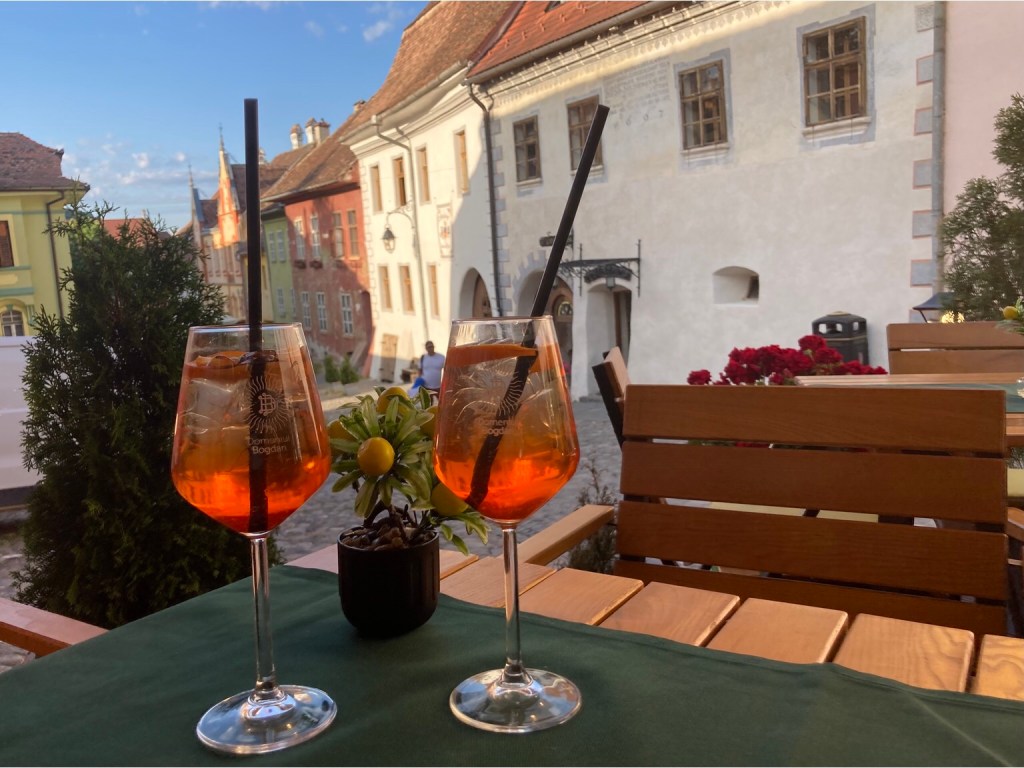
Time for one of those Aperol moments …

… and dinner, Chris finally succumbing to his first haloumi burger, while I had amazing goulash.

Back on the road tomorrow to explore more of Transylvania …

Map

Cluj … Baroque and Buzzing!

Our drive to Cluj was interesting!  All started well, but we lost phone signal for a bit … and also the connection to the sat nav … and having taken a turn in completely the wrong direction, it was a little while before we realised our mistake.  

It has been hard to judge what speed we should be driving as sticking to the limit has every car on the road overtaking us, but on the other hand we are visitors and should be cautious.  Then we were pulled over by the police … was it because we were speeding a little … no, it seemed they were just doing spot checks on vehicle papers so we were soon on our way.

Finally the traffic was heavy in Cluj, unsurprising in rush hour, but our journey had taken twice as long as expected.  Fortunately, we kept our accommodation informed on the way, because when we arrived, our host was saving us a car parking space by waiting in the road.

Citadel Rooms is just ten minutes walk to the main square but in a quiet street and our room was great.  

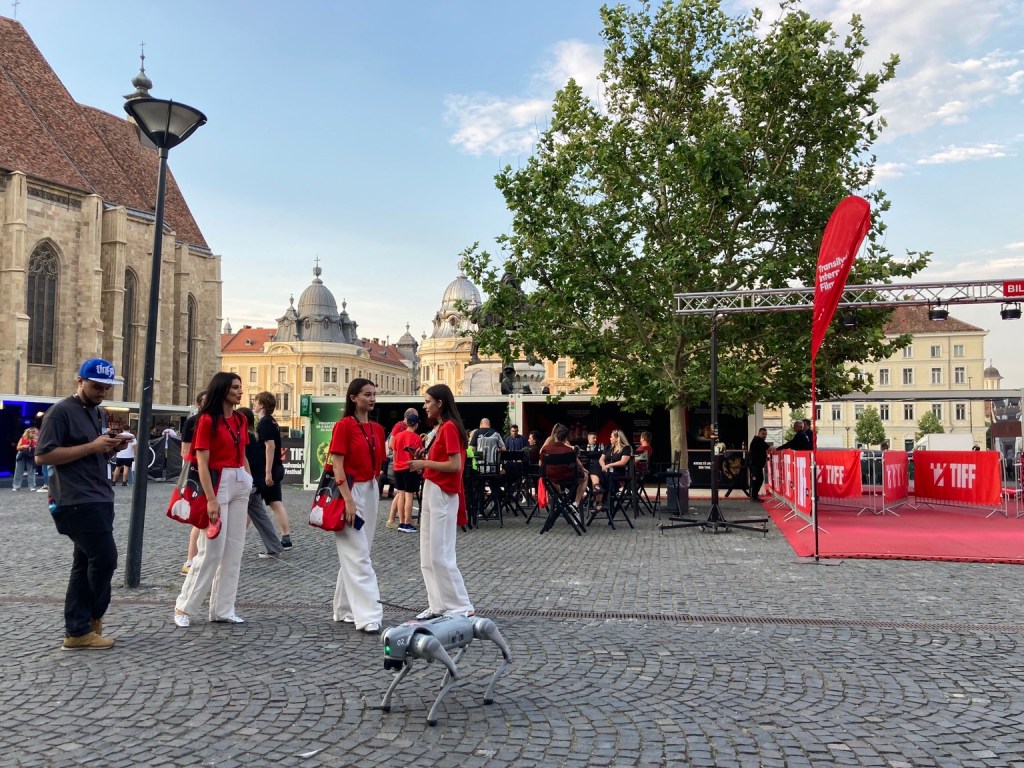
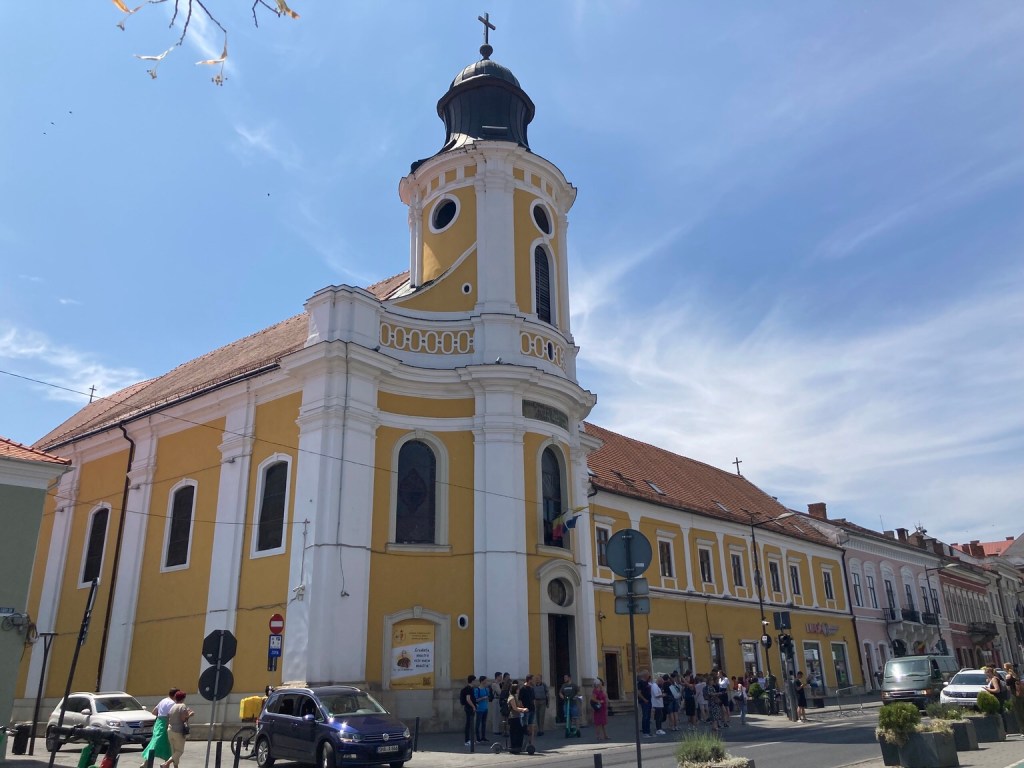
In the evening, we walked to Piata Unirii, the main square, dominated by the cathedral …

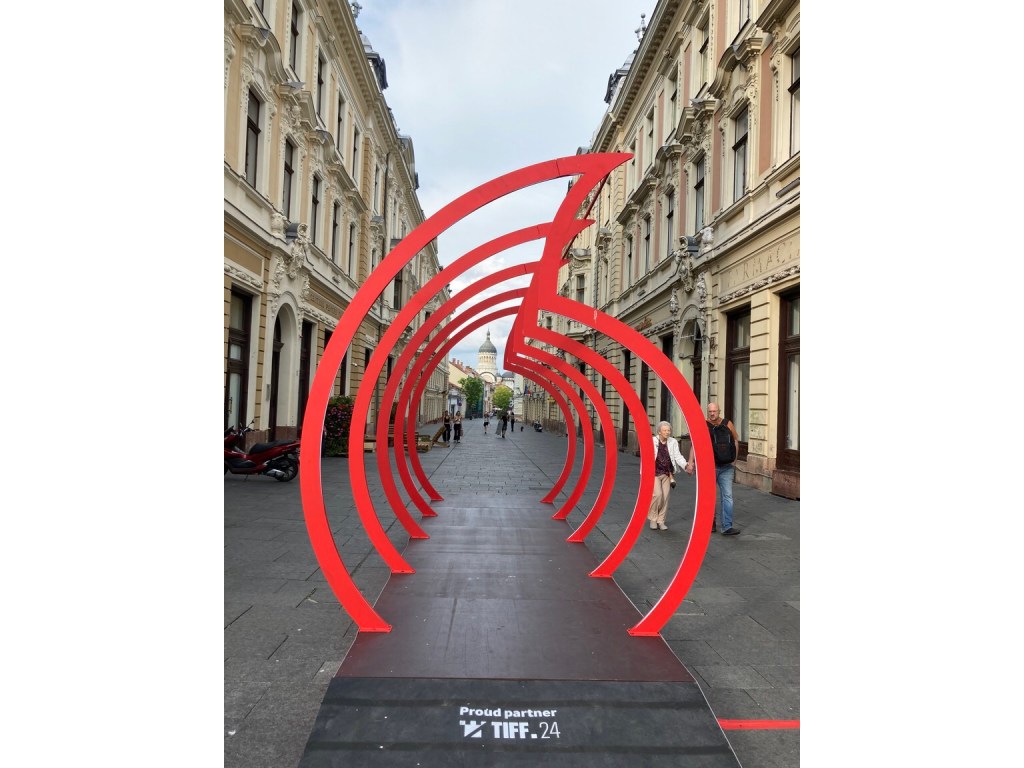
… but also by TIFF, the Transylvanian International Film Festival which has taken over lots of venues over the city for a couple of weeks to show international films.

Ate in the square watching the world go by …

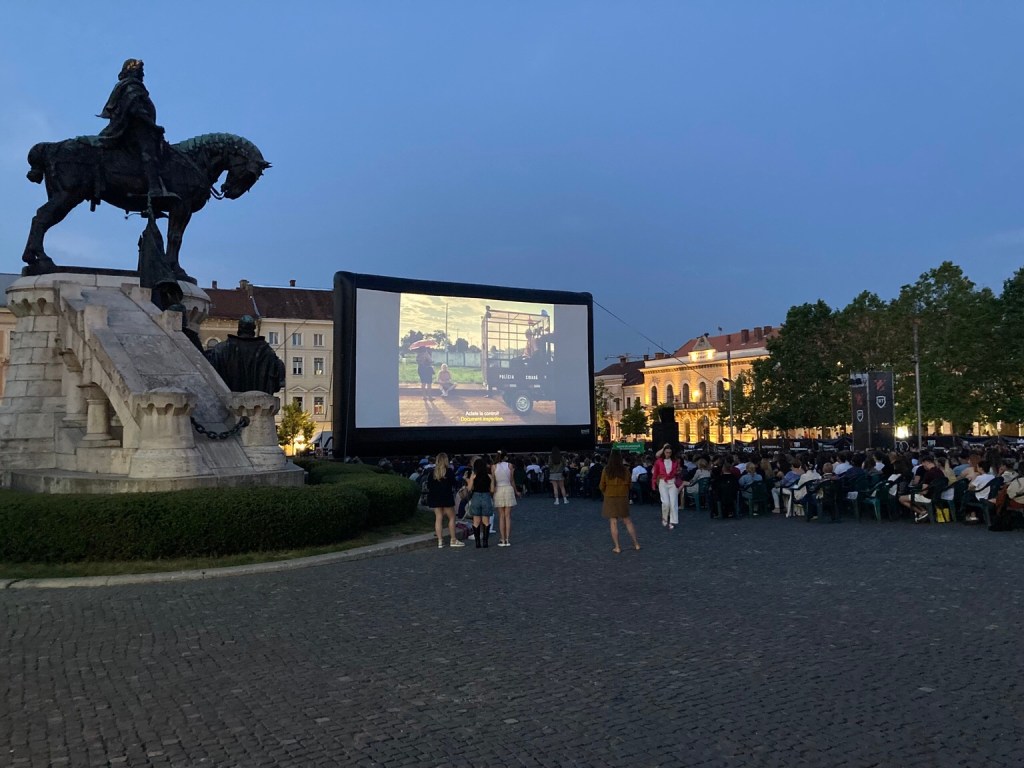
… and glanced at the film on the way to bed.

In the morning we were brought coffee and a pastry which we ate outside on the balcony then set out to explore.

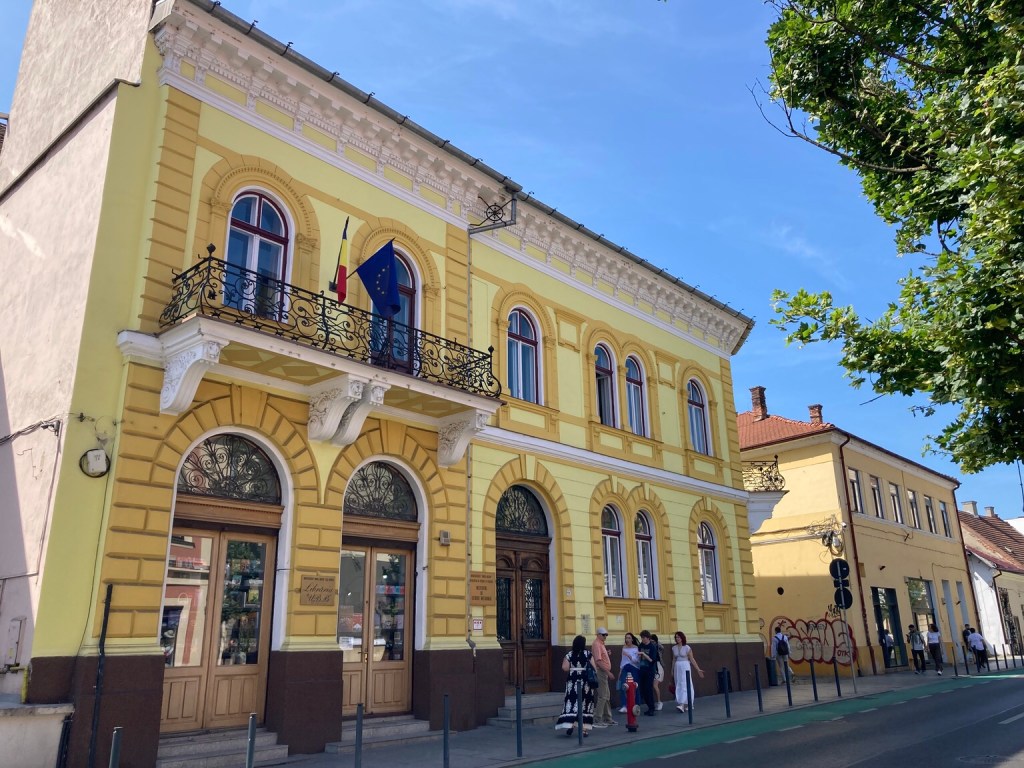
Cluj is the unofficial capital of Transylvania and another of the seven fortified Saxon towns, not that you’d realise as little remains of any fortifications. Today the continued Austrian-Hungarian heritage is far more apparent with fine Baroque and Secessionist buildings and wide streets, having much in common with Vienna or Budapest.

In front of this baroque backdrop, casually dressed students rub shoulders with the stylish city set and TIFF adds an extra artistic energy.

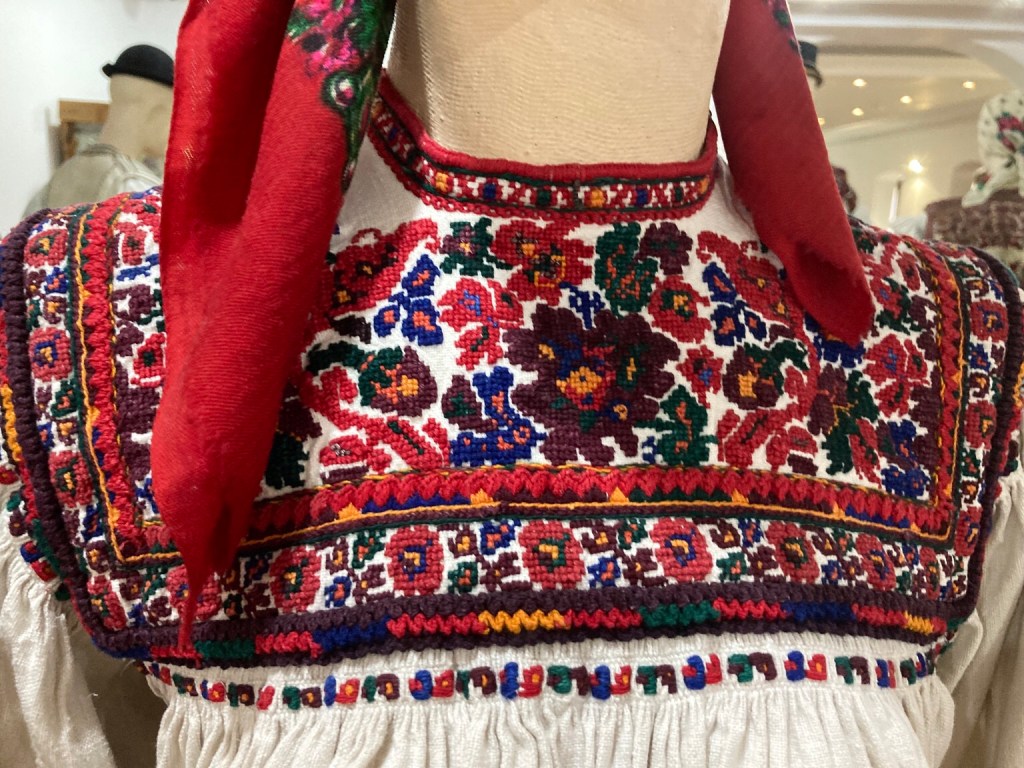
We began with the Ethnology museum which contains a huge range of utensil for every use but it was the costumes that were most interesting …

… and being able to get up close to some of the embroidery.

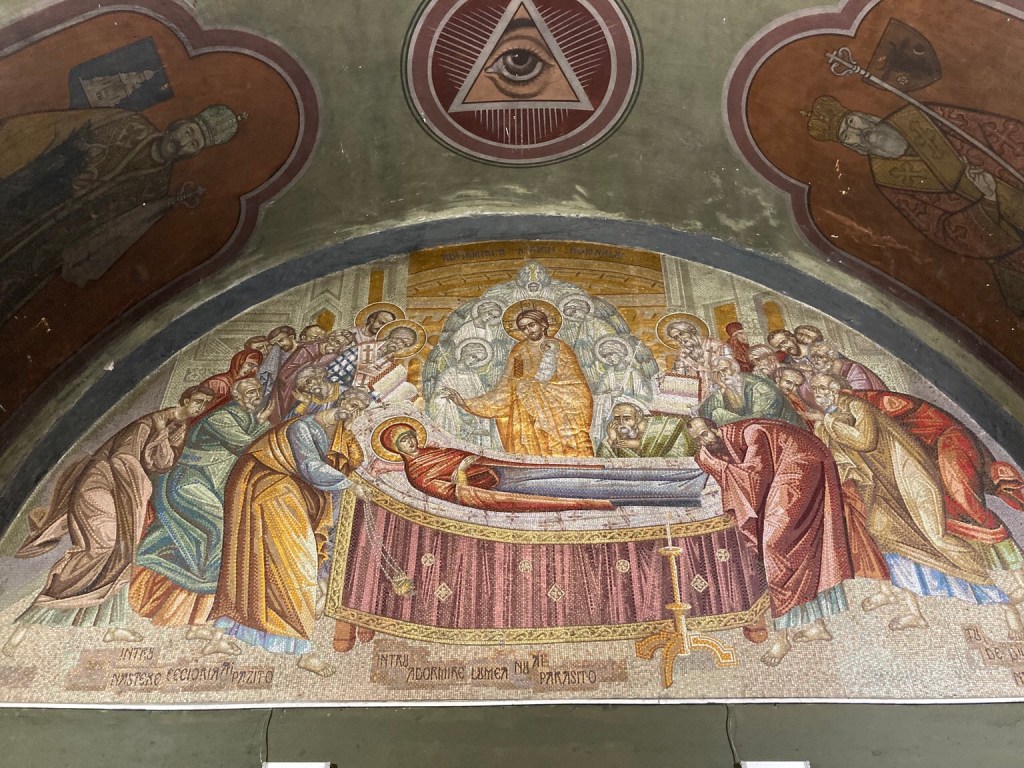
The Orthodox cathedral was nearby, a 1920’s Byzantine revival building …

… while the Murano mosaics from Venice were only added in 2001.

A maze of cobbled lanes lead from the main square, full of bars and restaurants and busy in the evening.  During the day it is quieter but we spotted a shady brasserie for lunch.

Opposite, was the Matthias Corvinus House is one of the oldest buildings in Cluj, built in the C15th in the gothic style.  Now an arts institute, it was the birthplace of Corvinus who became King of Hungary in 1458. 

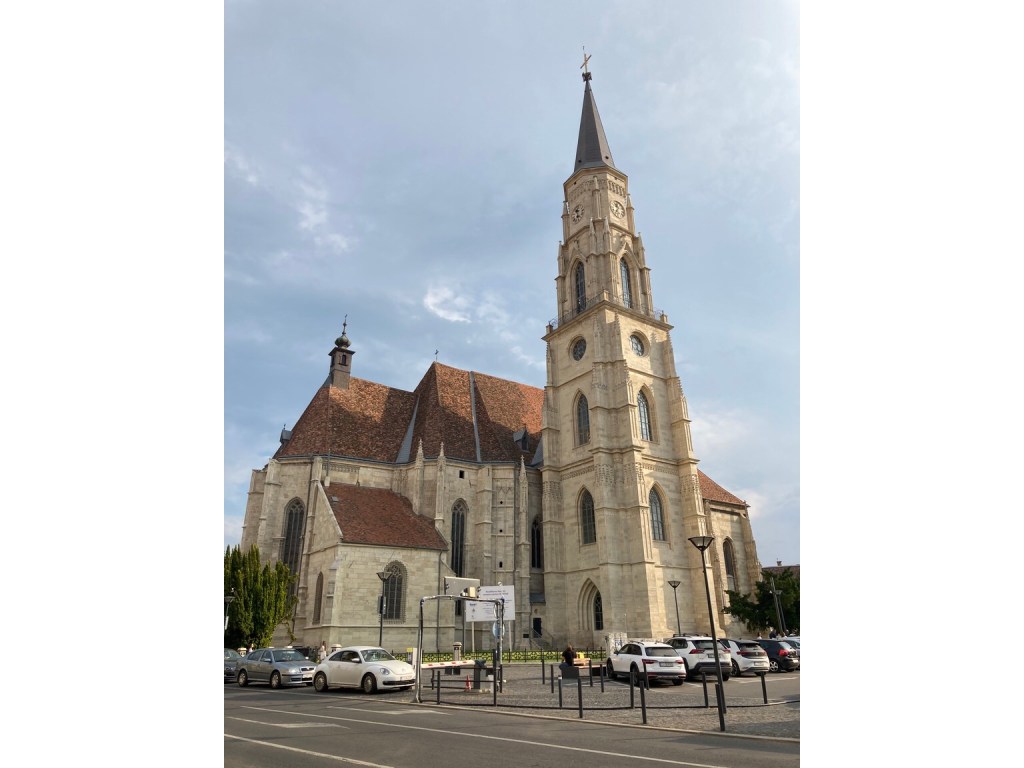
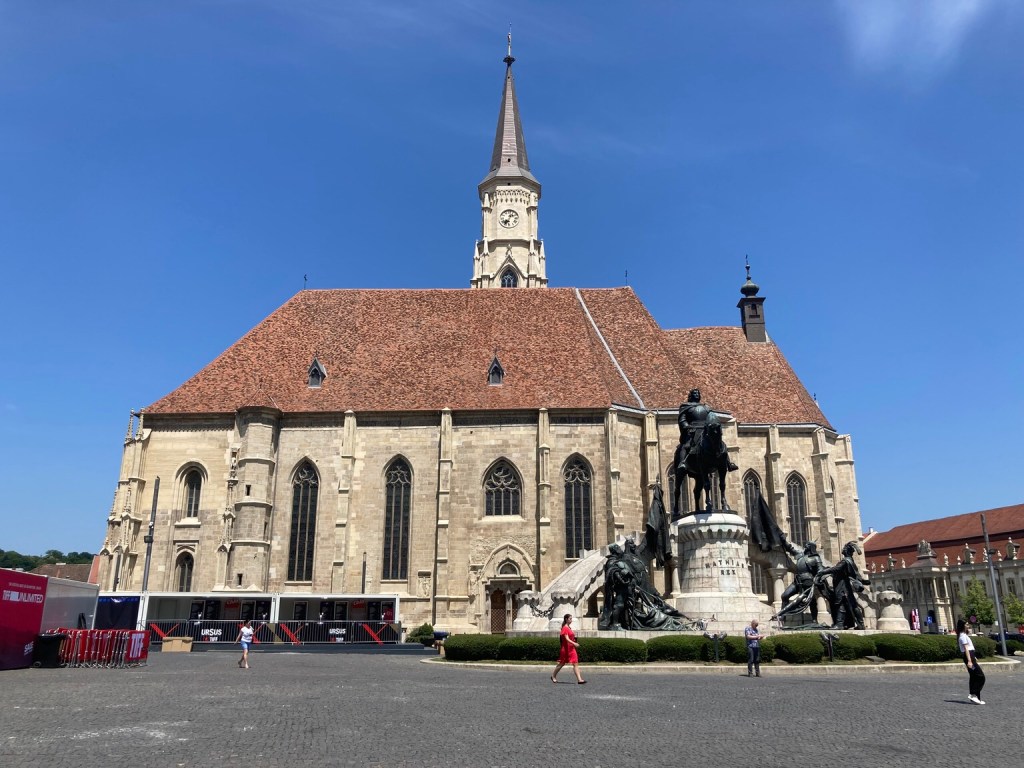
There is also a statue of him in the main square beside the Cathedral of St Michael, built in the C14-15th in the German Gothic style like the Black Church in Brasov.

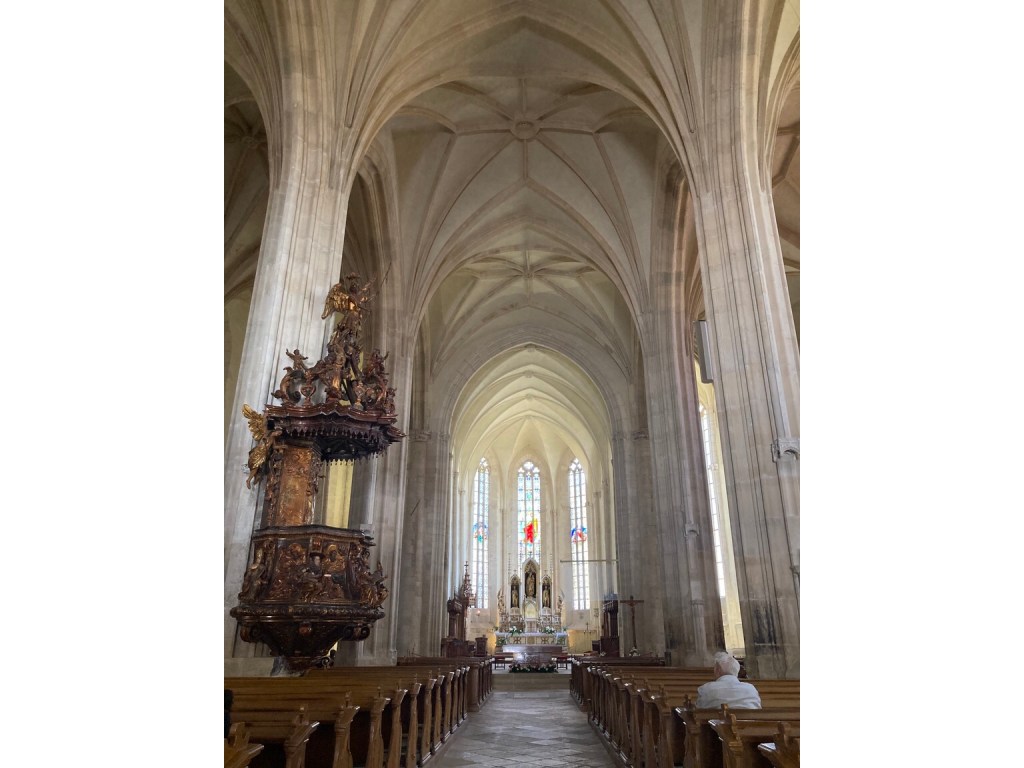
Inside, the hall church soars impressively sporting a later Baroque pulpit …

… and some C15th frescoes.

Also in the square are the Shot Pillars, seven bronze cylinders erected in 2003 to commemorate those gunned down in the 1989 revolution, around 26.

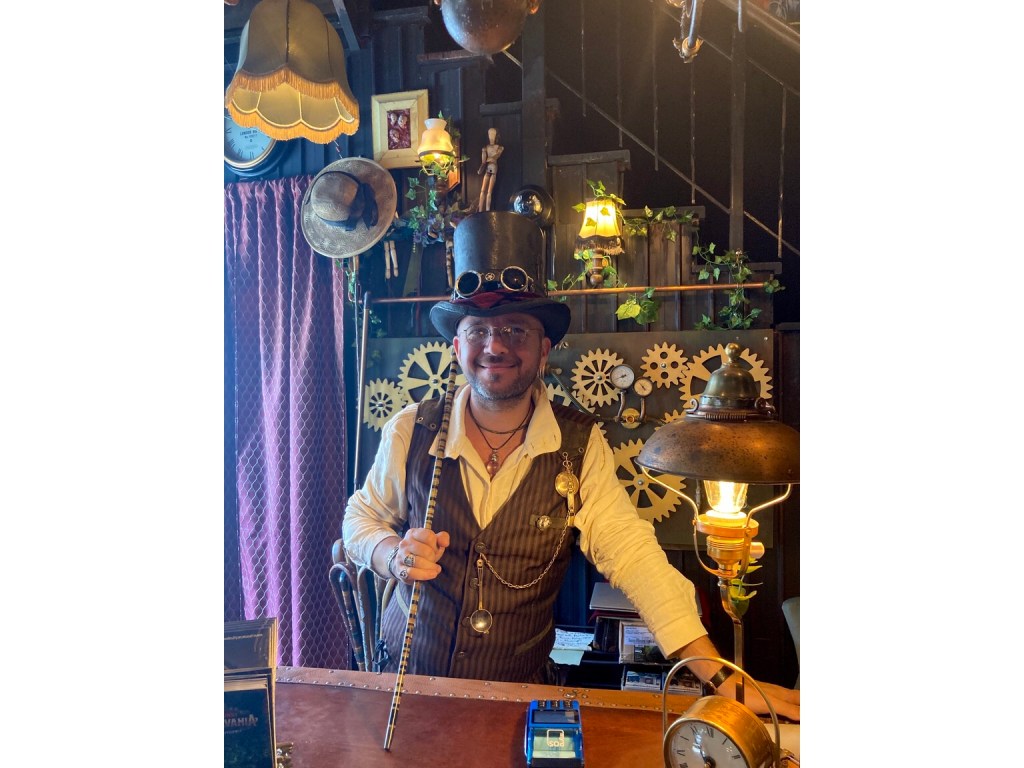
For a complete change of direction, the Steampunk Transylvania Museum is the only one in Europe, and since we’d visited the only other in the world, in Oamaru in New Zealand, we had to go!

It’s been open for three years and is filled with genuine technical collectibles, and inventive bits and pieces combined with artistic flair and inspired by Jules Verne. 

Quite a bit is interactive so it was fun to visit and could even make your hair stand on end!

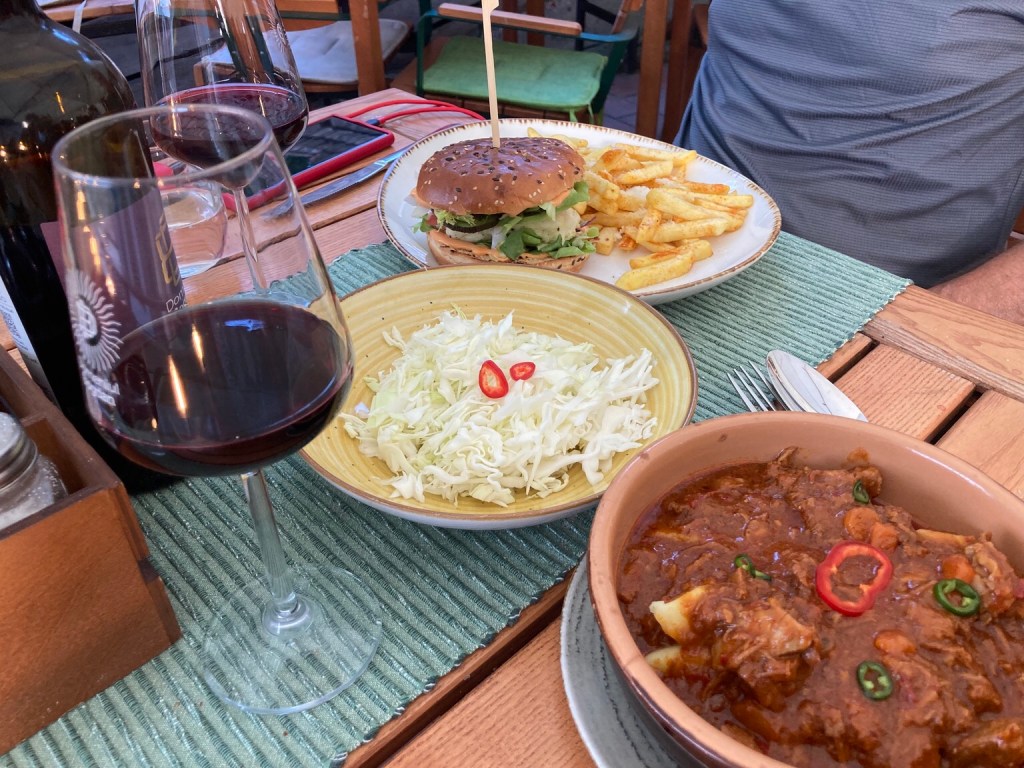
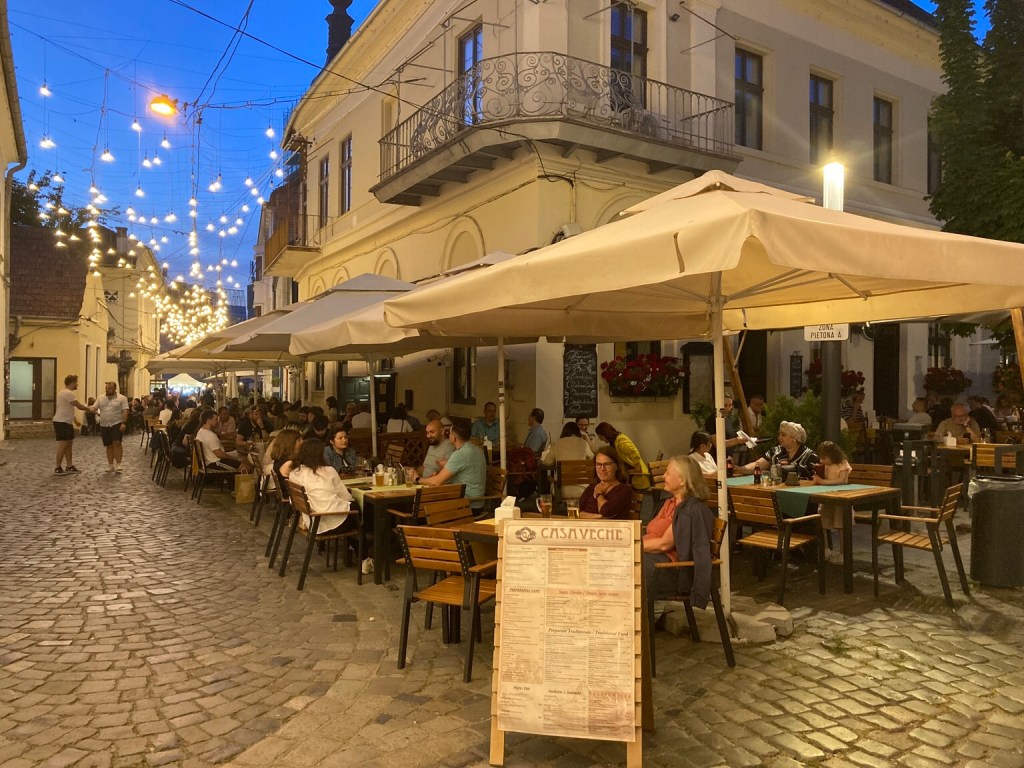
While walking round earlier, we’d spotted Casa Veche, a restaurant offering a veggie version of samale filled with mushrooms and rice which Chris was eager to try so I kept him company and had the regular dish with smoked pork – another winning dinner!

Tomorrow we move on again 

Map

Maramures … and Wooden Churches

This is Romania at its most rural and least changed since the Middle Ages with families still following the traditional way of life. We have come to see wooden churches but have found so much else along the way.

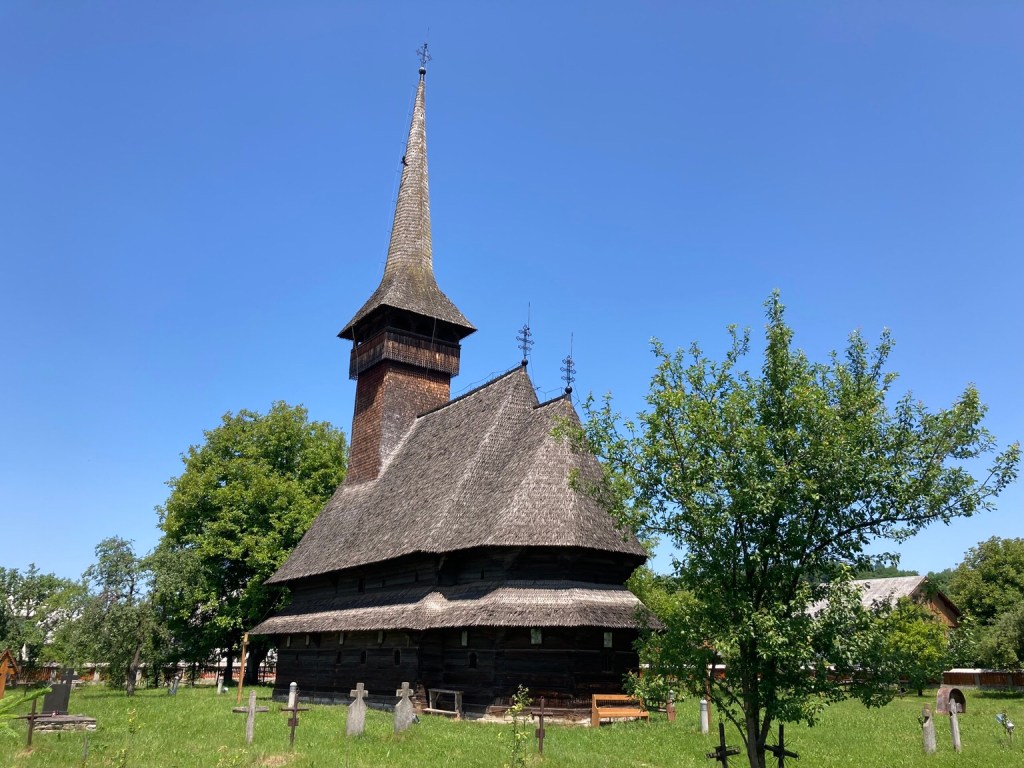
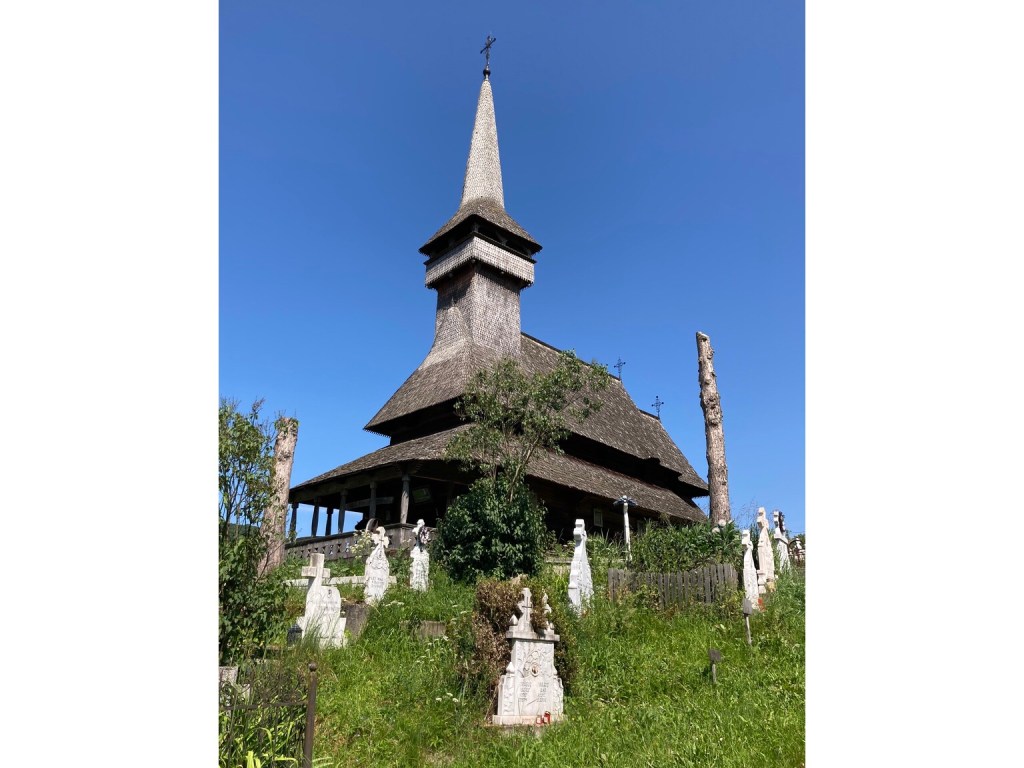
In 1278, Orthodox Romanians were forbidden by their catholic Hungarian overlords to build their churches in stone, so they just built in wood instead.  Today is Sunday and first town we stopped in was Bogdan Voda, renamed in in the 1960’s in honour of the local ruler who founded the principality of Moldavia in the C14th.

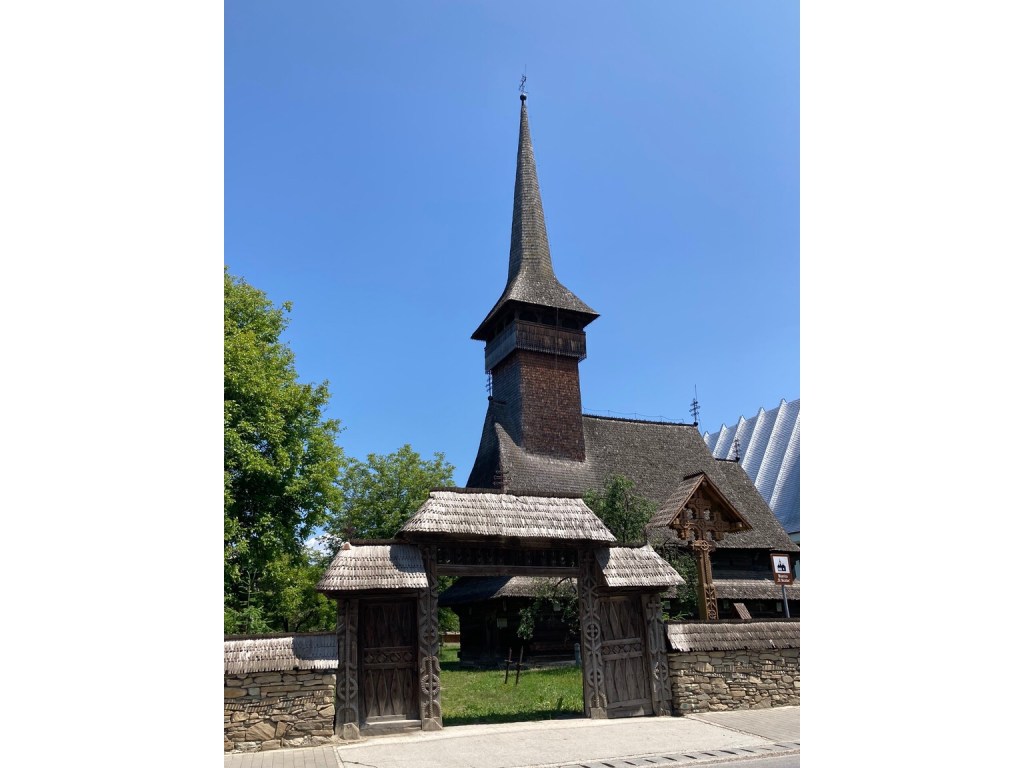
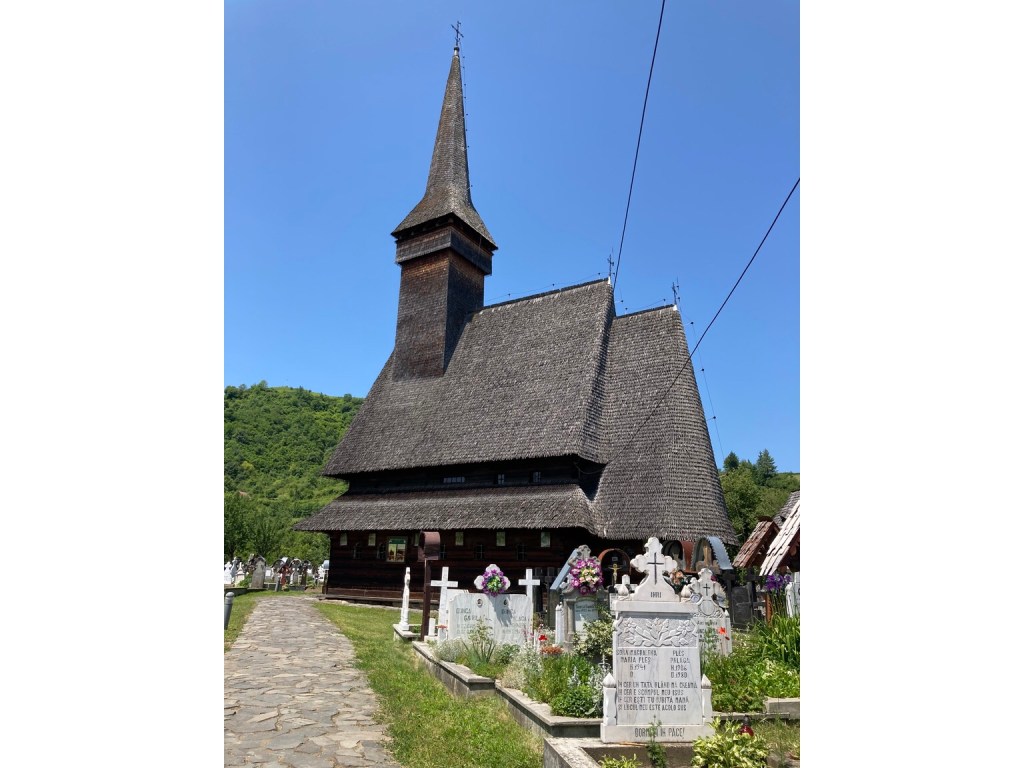
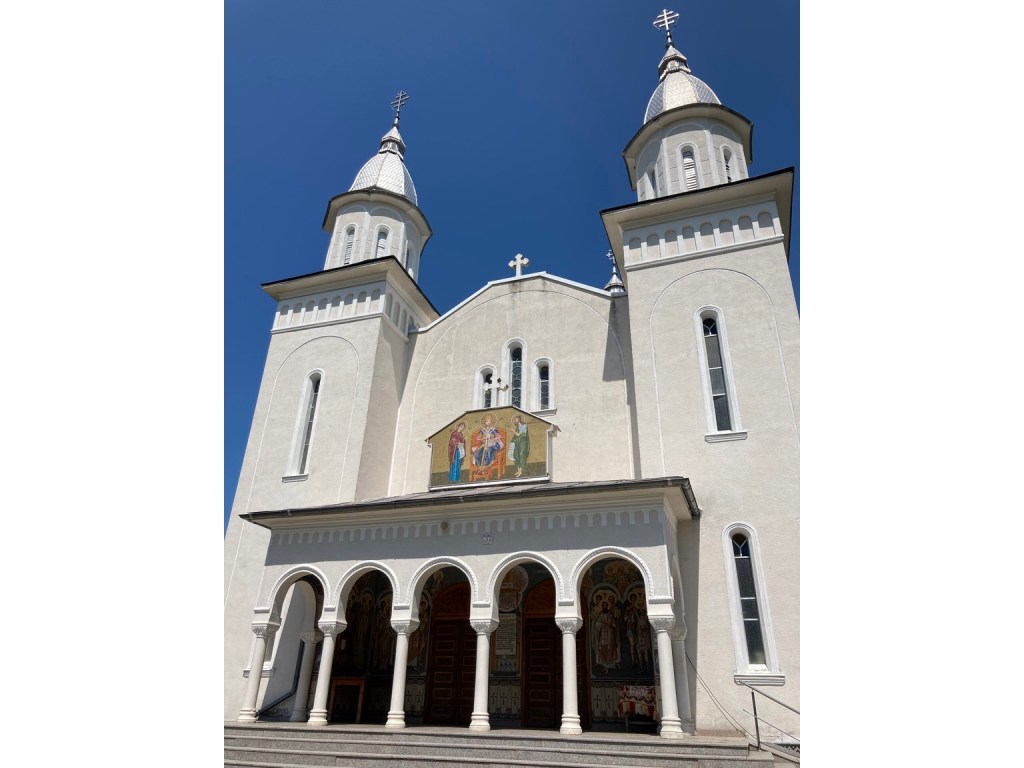
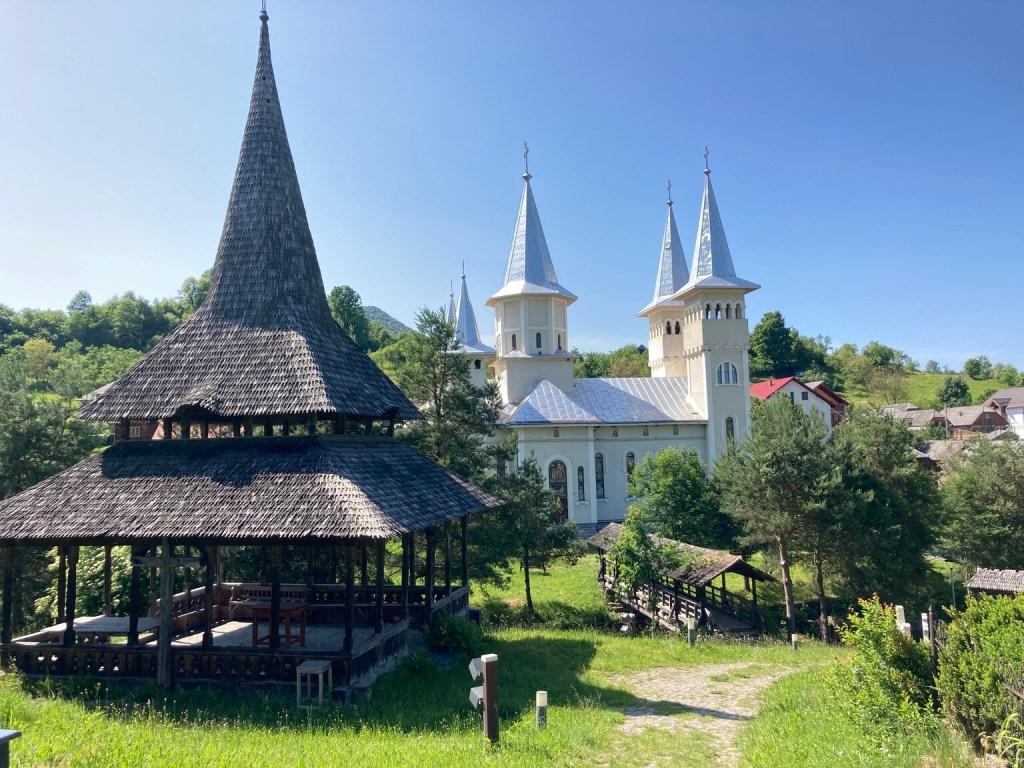
The old wooden church of St Nicholas built in 1718 sits right beside its modern successor …

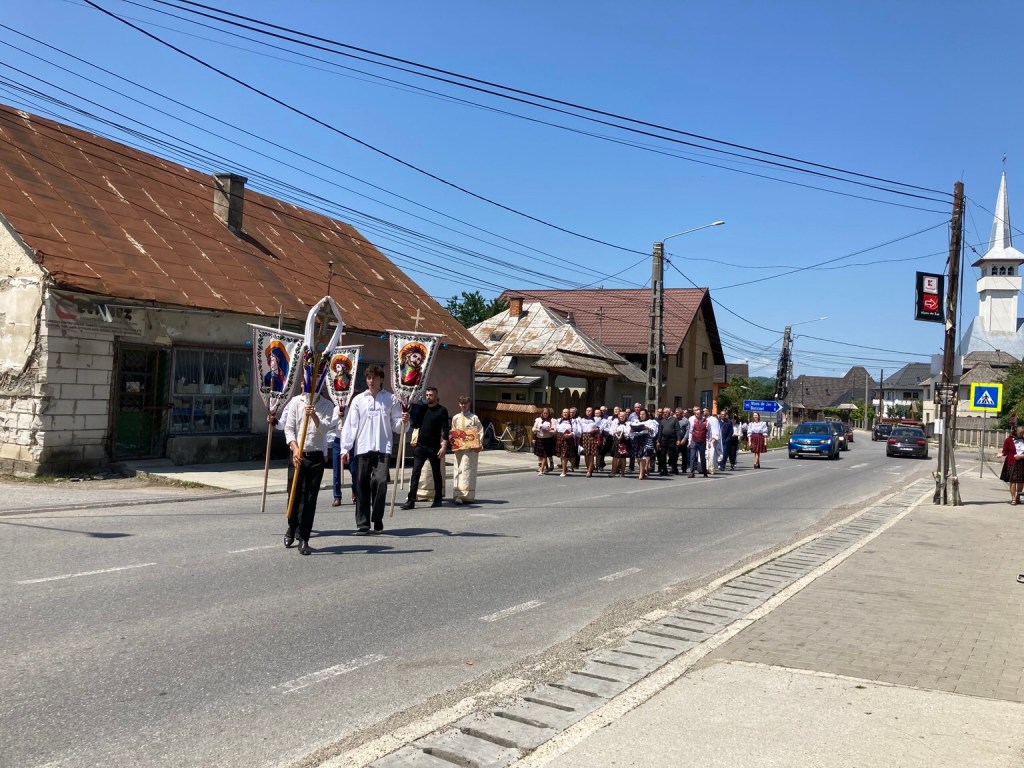
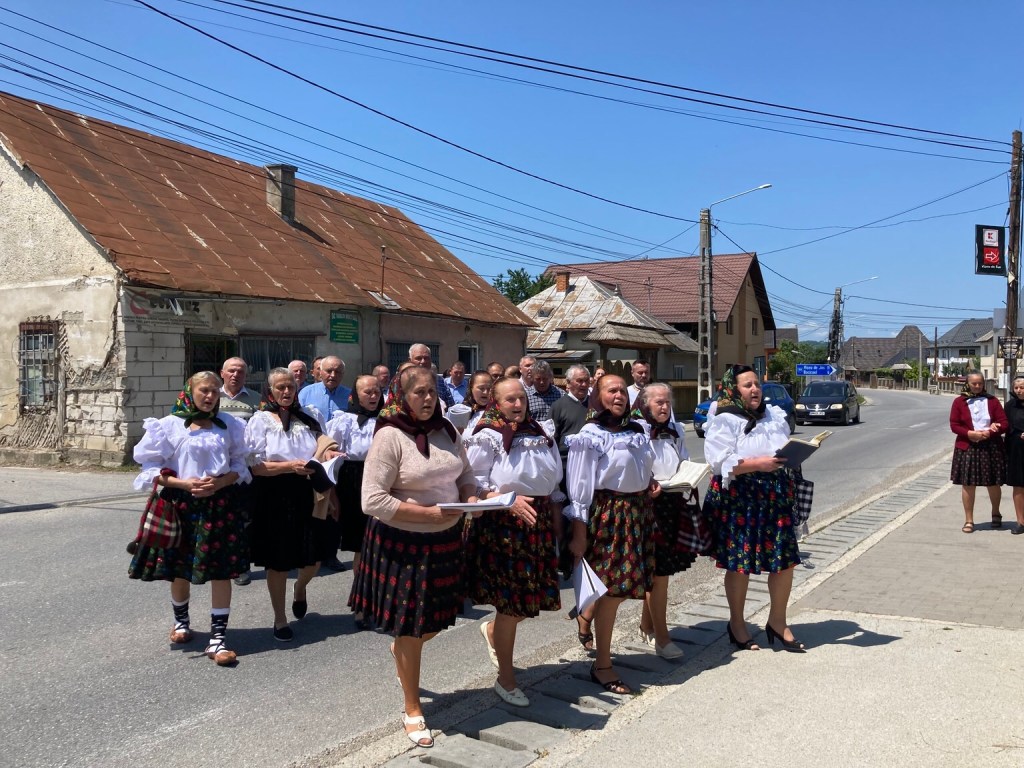
… and it shortly became apparent why a couple of people were waiting around as a procession approached from down the street, singing, all in their Sunday best. 

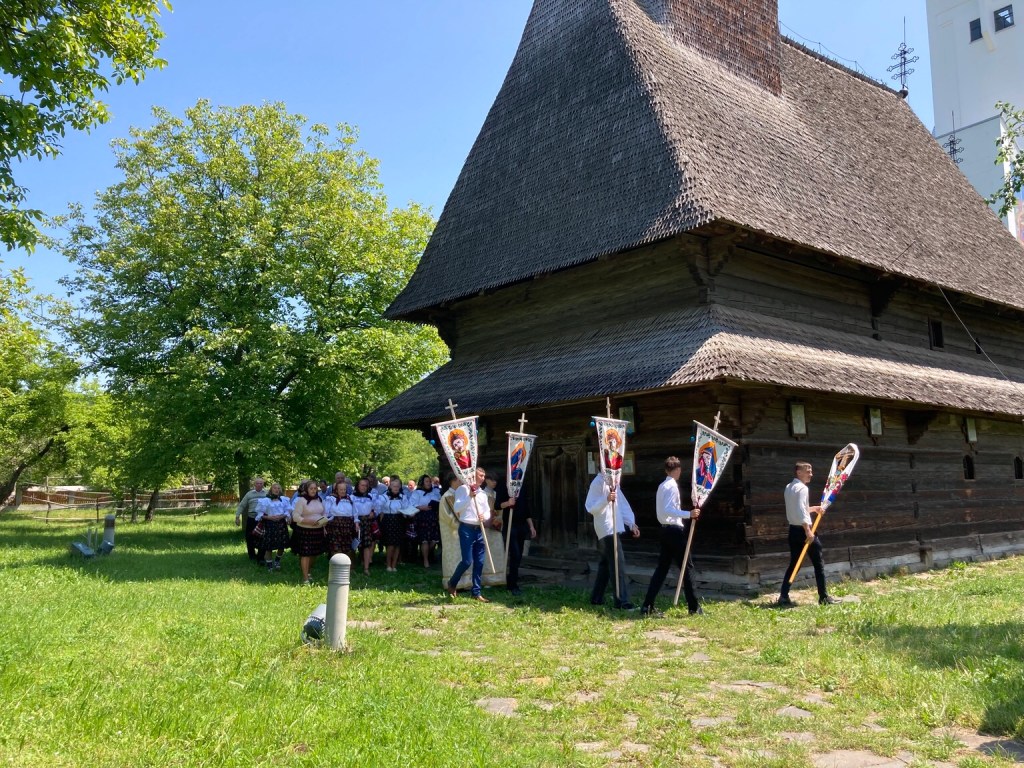
They came through the gate and processed three times round the church then the priest said a few words and they dispersed towards the new church. 

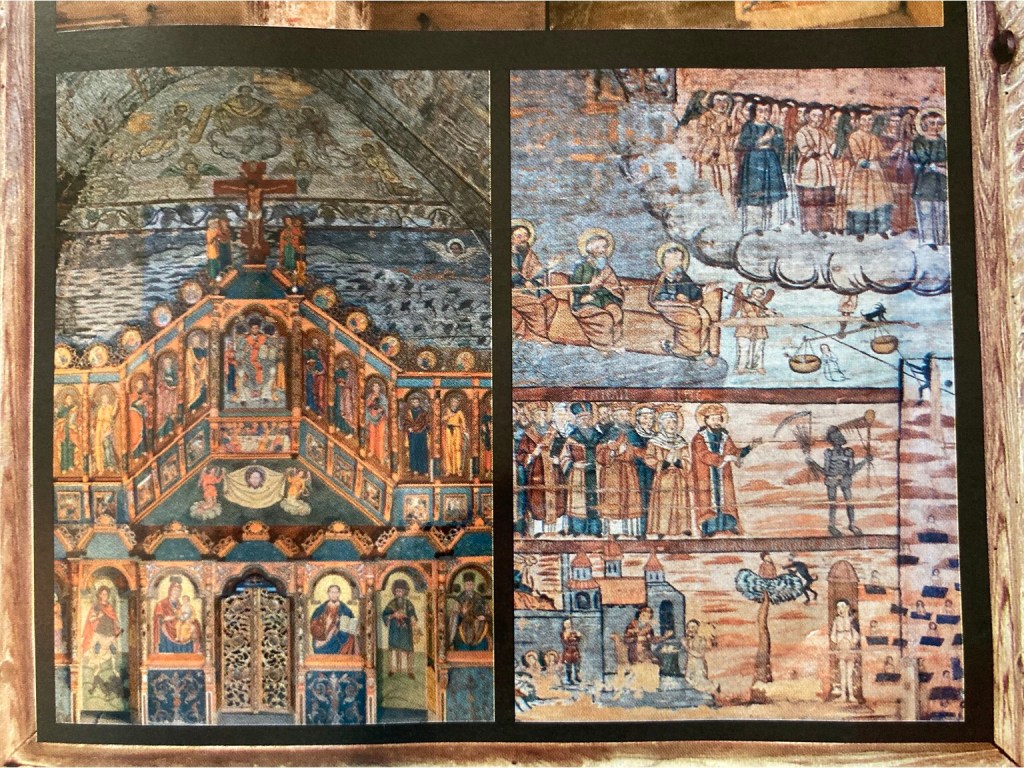
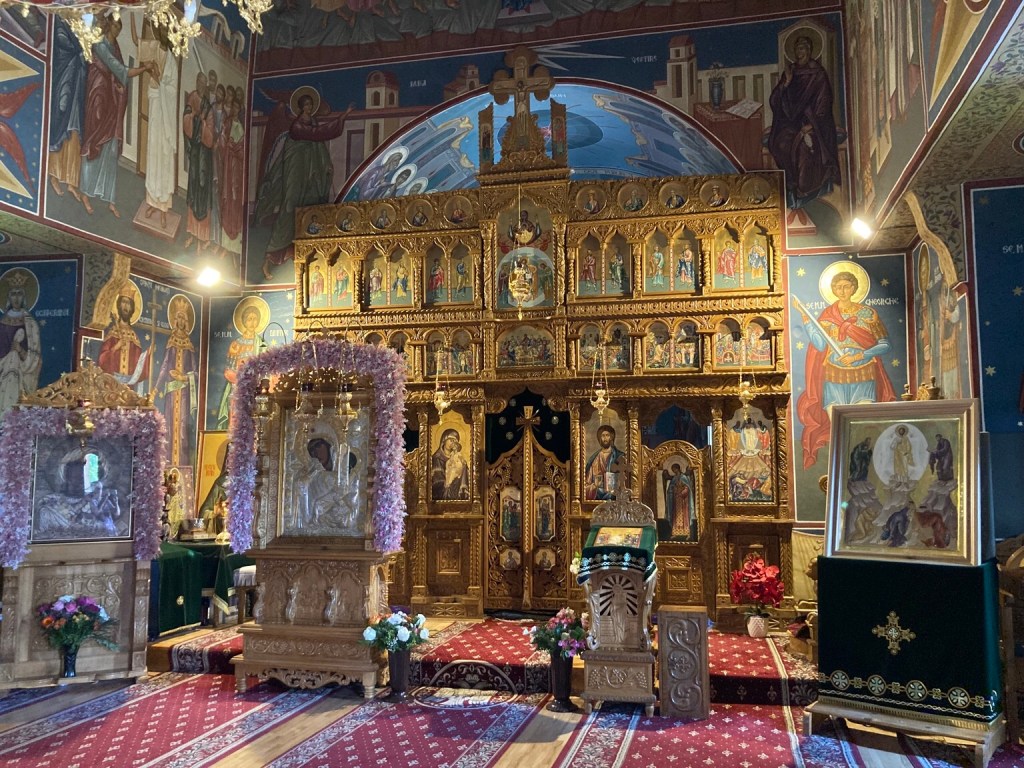
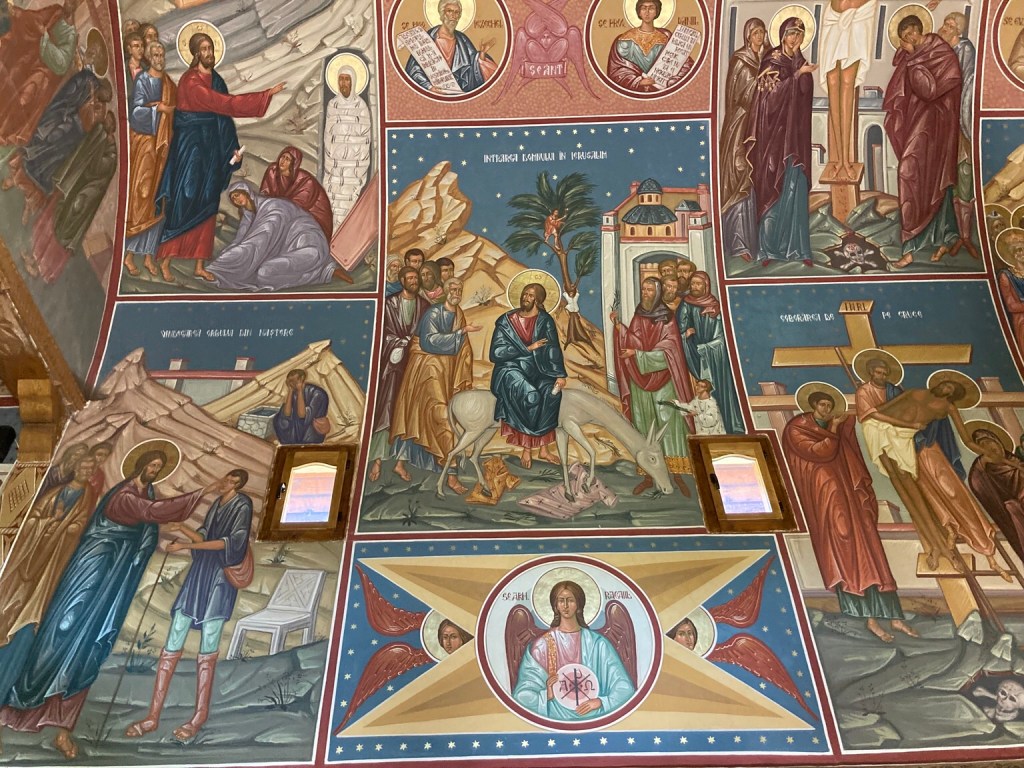
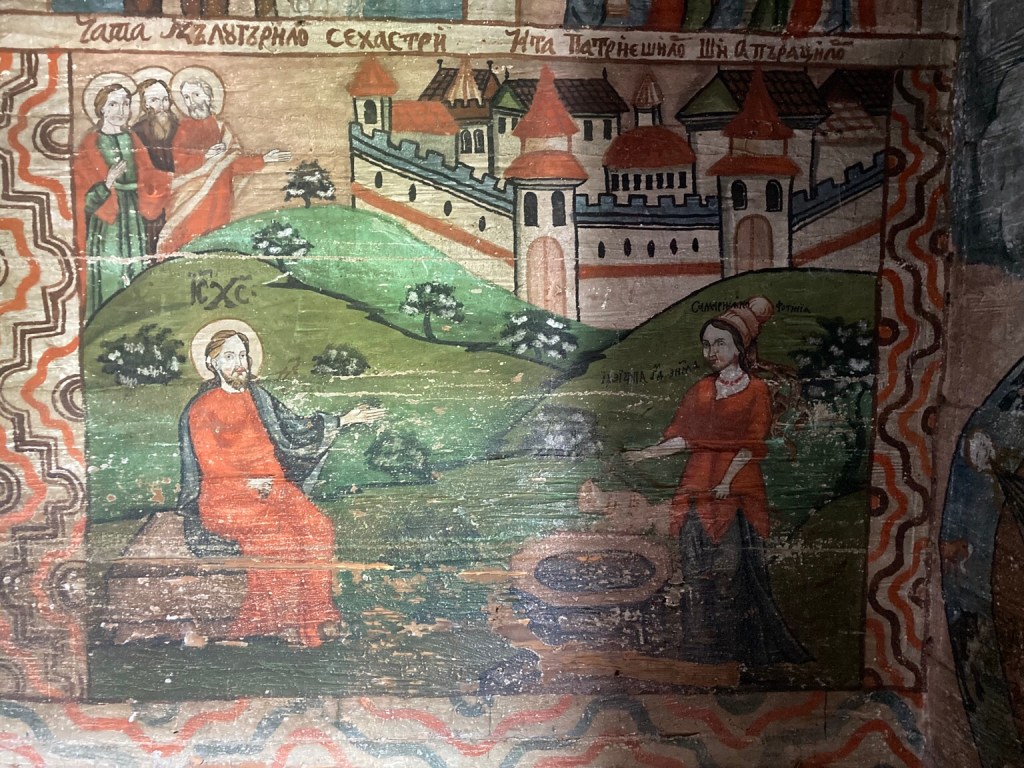
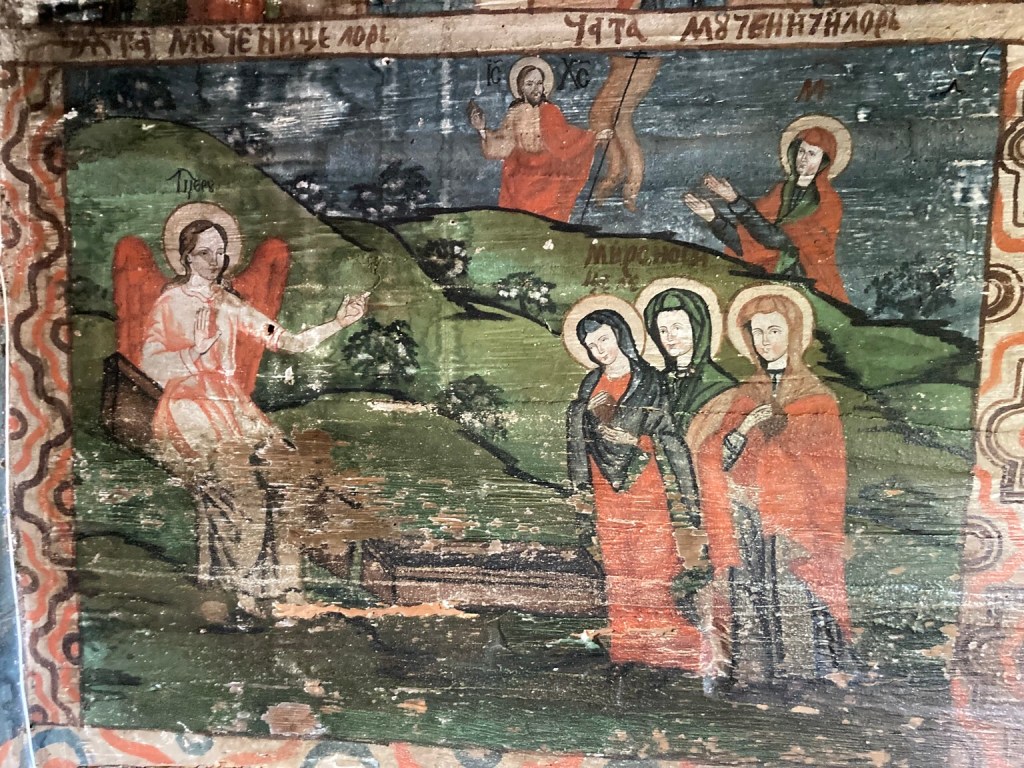
The priest then let us into the church which was empty of furnishings and seemed unused, but had painted murals on every wall, most showing bible stories and images from the life of Christ.  While we couldn’t take photos, we bought a leaflet and here are some pictures, of the Iconostasis and Doomsday & Death …

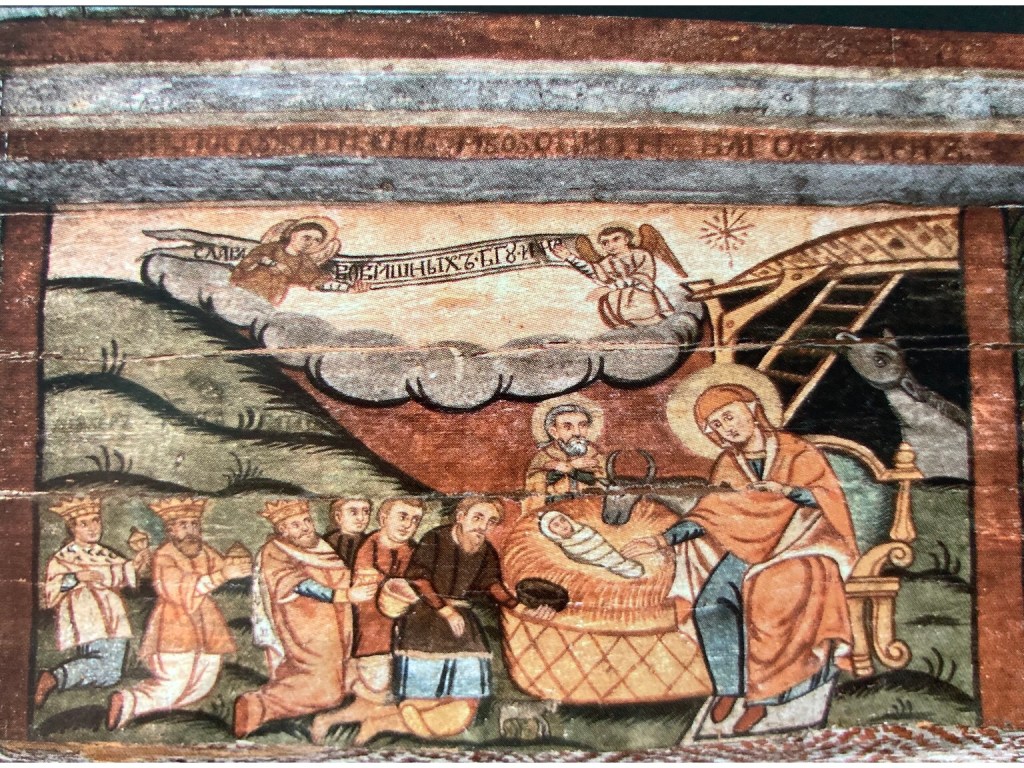
… The Nativity …

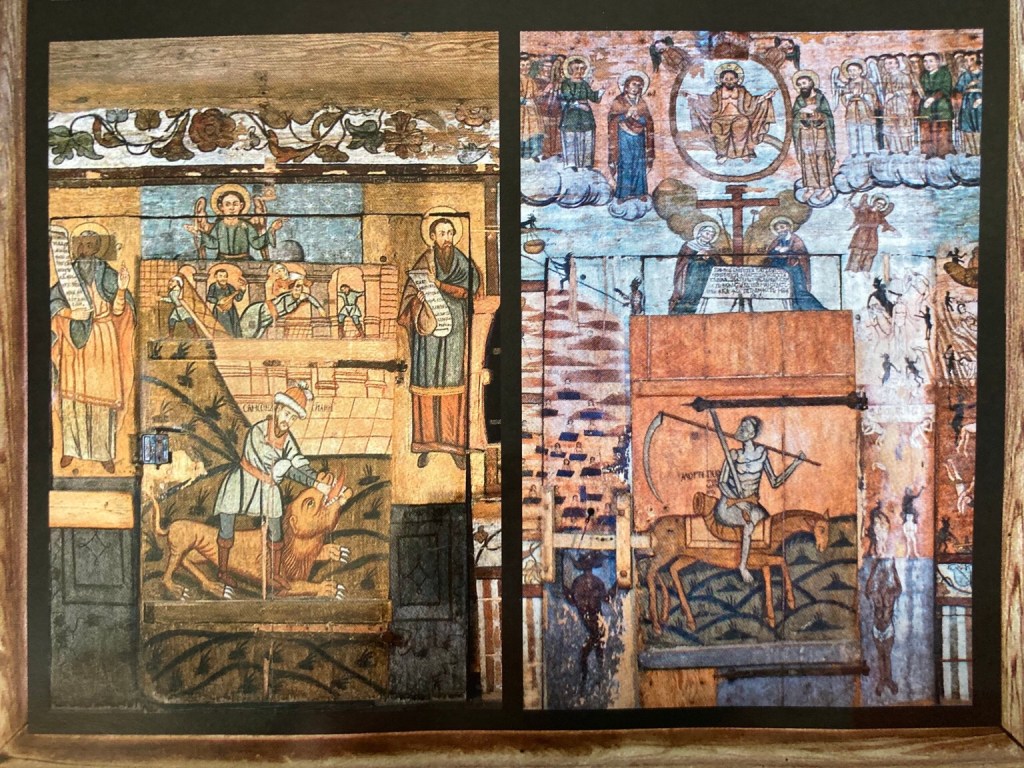
… and Samson with Delilah & the lion and Death on a Horse with a Scythe

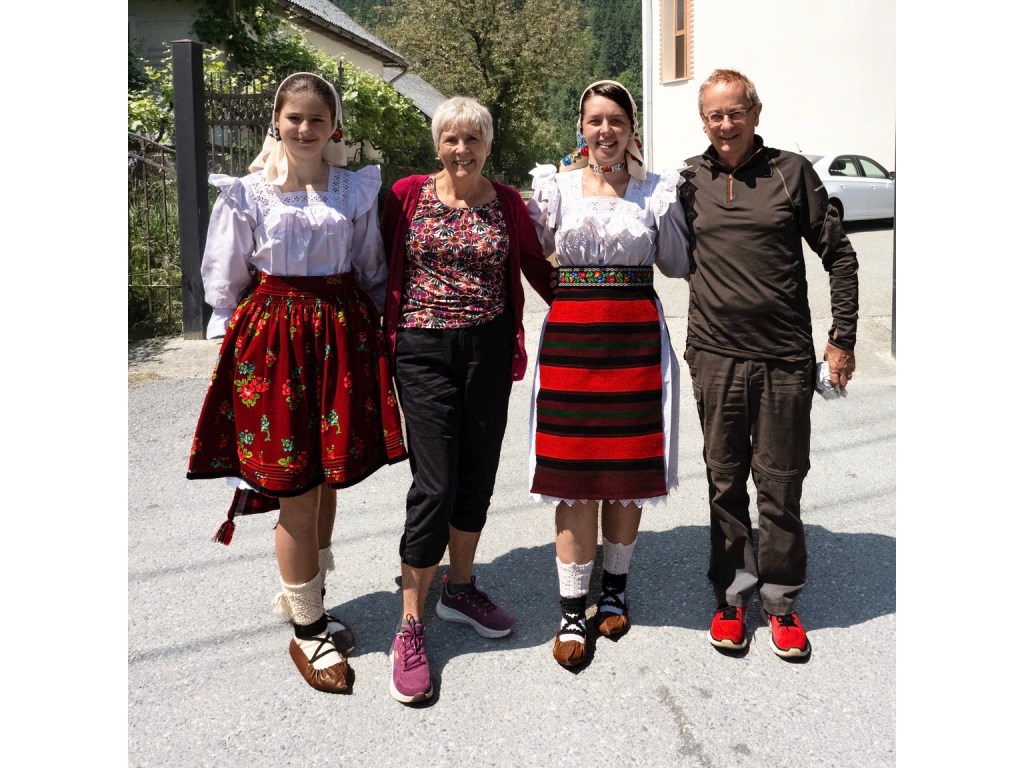
As we drove on we saw more people in traditional dress and when we slowed the car beside one group, the lady in the striped skirt spoke good English and explained she was a bride to be married in a month, so she was in a special wedding outfit.  Her grandmother had embroidered her belt, and everything is handmade, including the stockings and leather shoes called opinci.  She asked if we would like a photo and here it is!

Next up was the Uniate church in Ieud, also built in 1718.  As we approached, a lady went to get the key to let us in. 

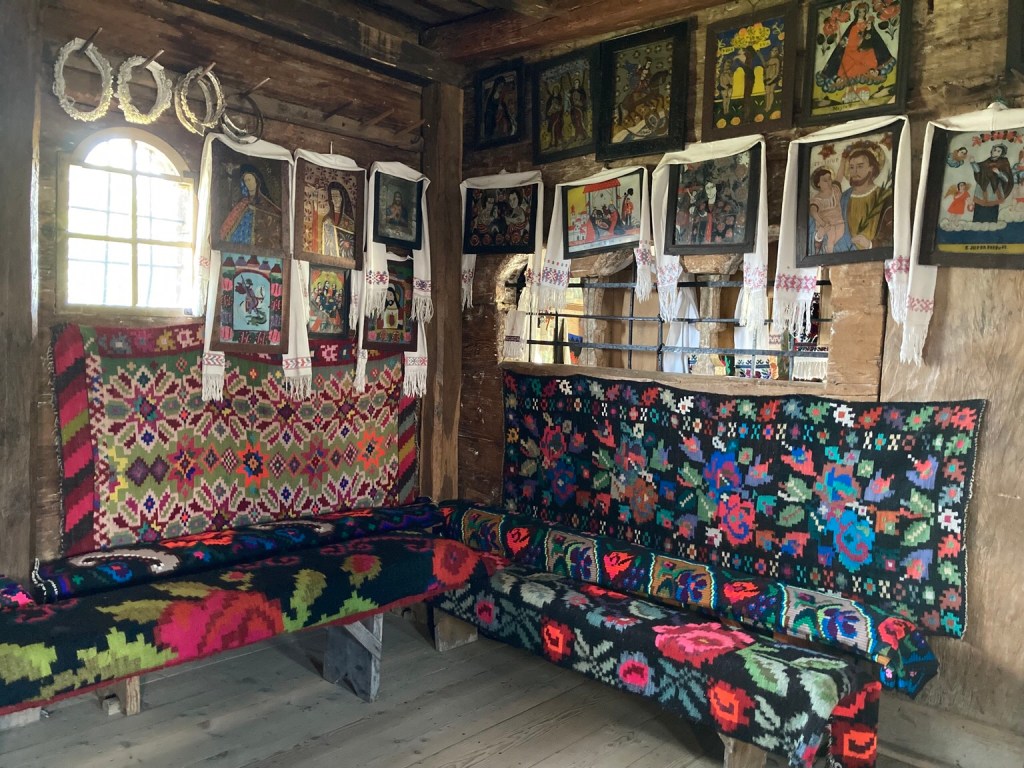
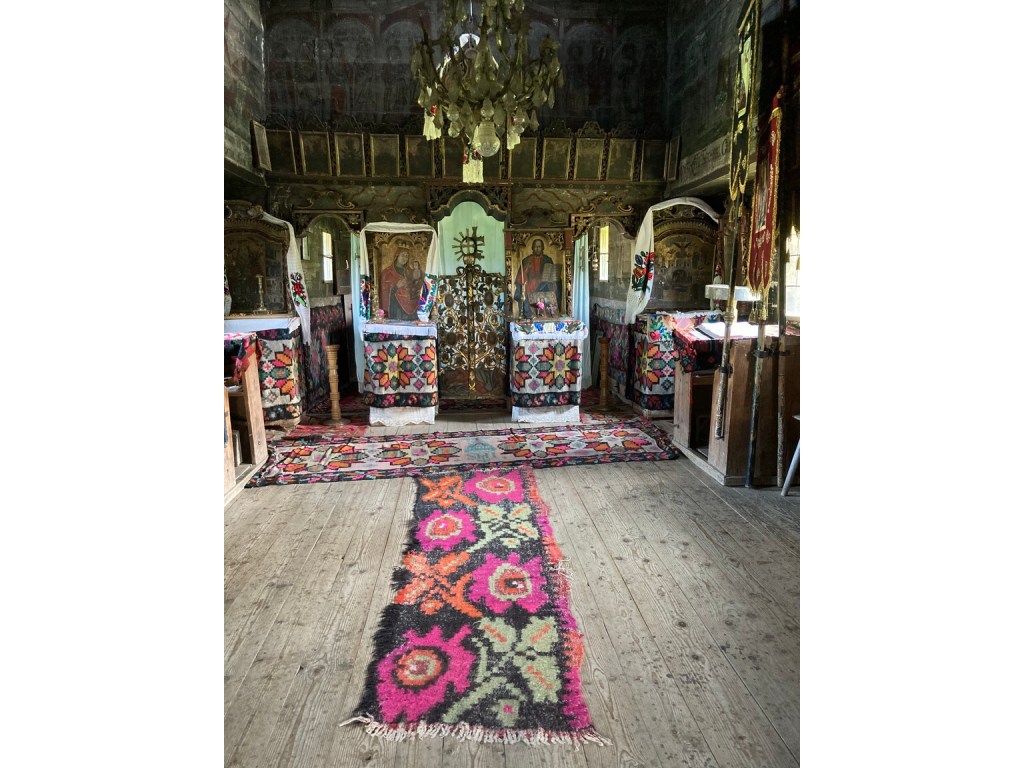
This church was charming and seemed to still be used. We were allowed to take photos, so here is the outer room lined with rug covered benches and decorated with adorned icons …

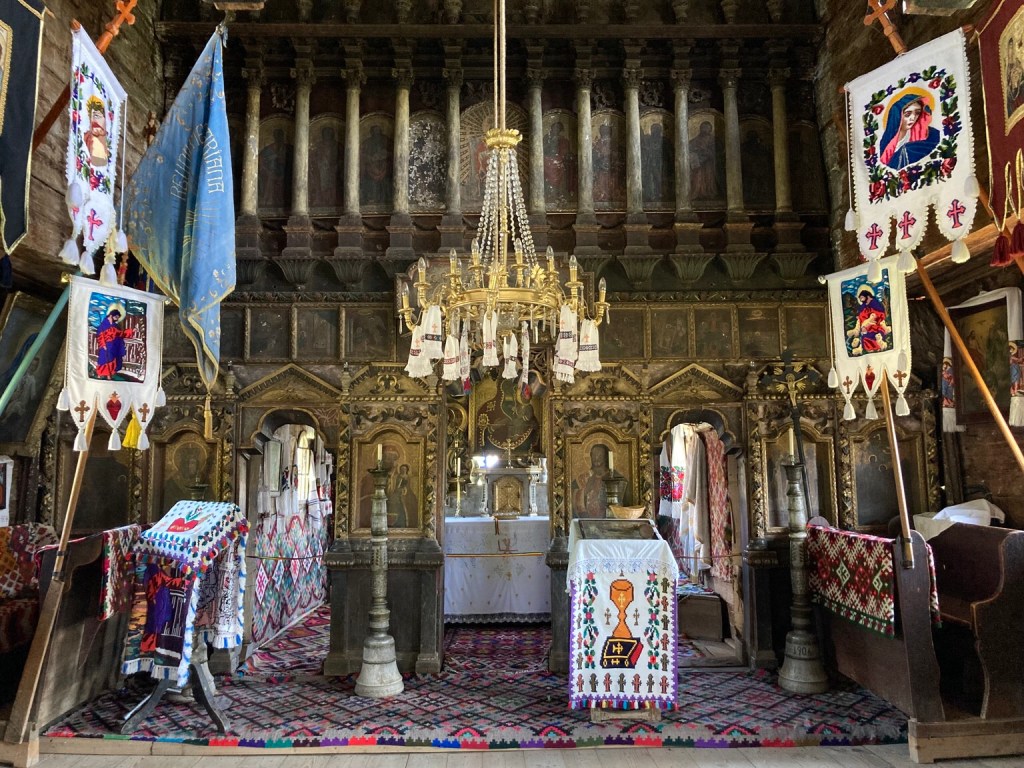
… and the inner room with the altar and brightly embroidered banners.

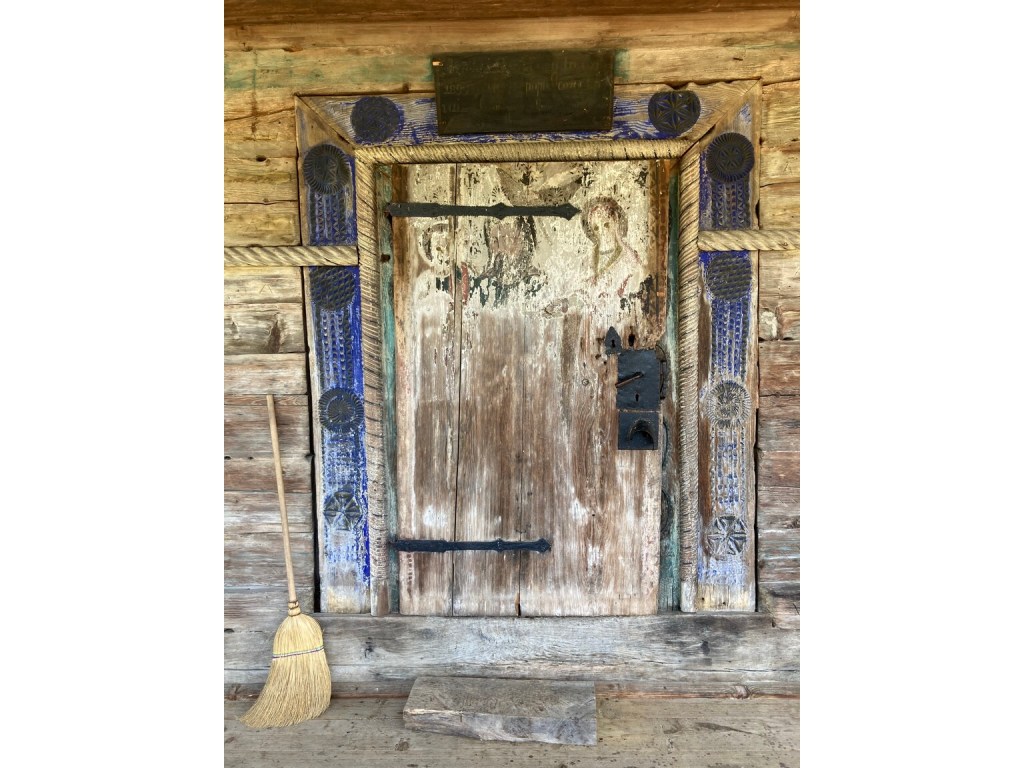
Botiza church was closed …

… again with a modern successor next door …

… but we walked around and the door looked interesting!

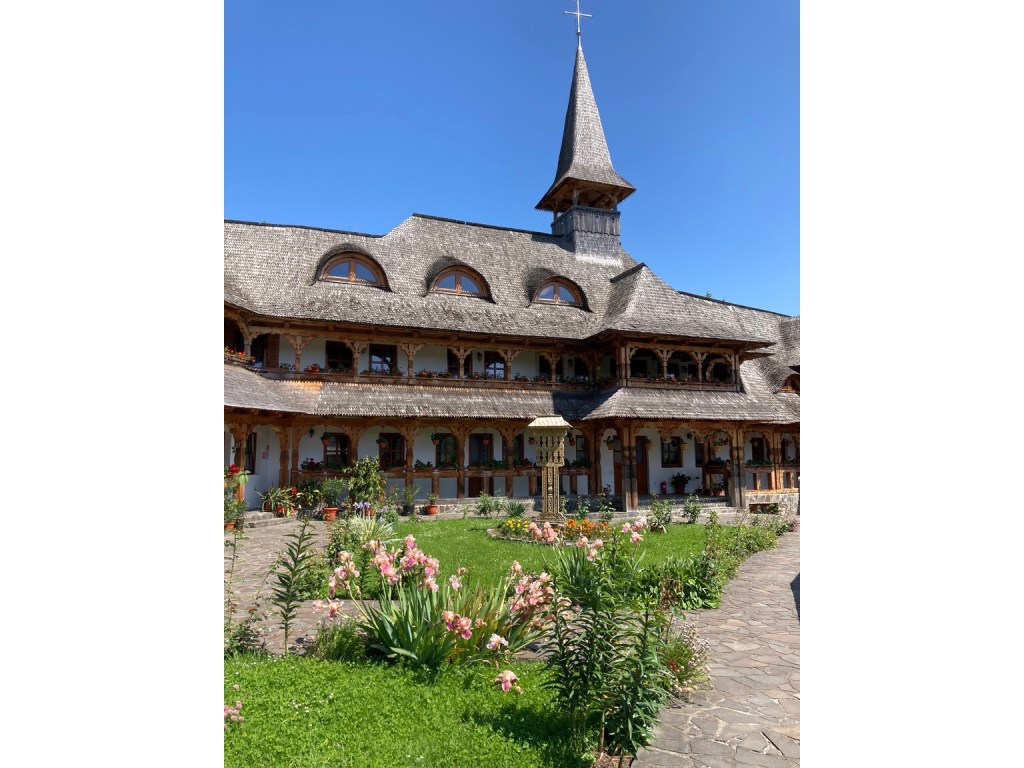
We saw a sign for Botiza Transfiguration Monastery which was built in 1991 in the traditional style.  It had a pretty garden …

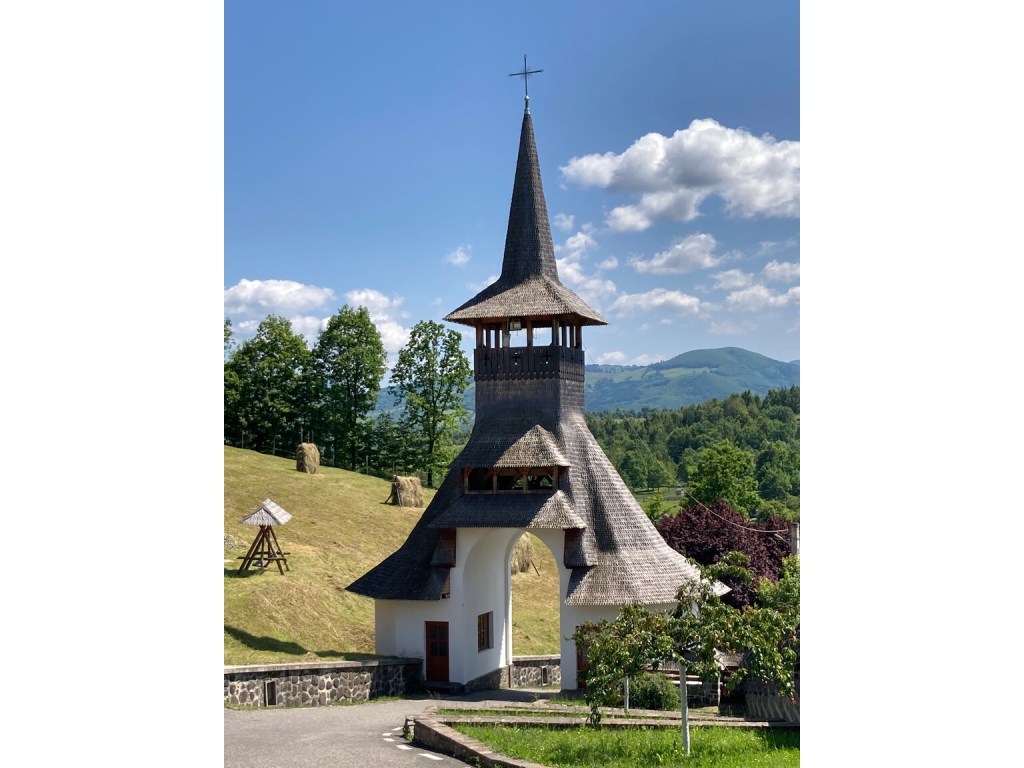
… church and entrance gate. 

The nun inside was happy to turn a blind eye to a couple of photos!

At Poienile Izei, the church was open and having bought tickets from the lady there we could take pictures.

Although many of the murals were soot damaged and very dark …

… the textiles were bright and lovingly made.

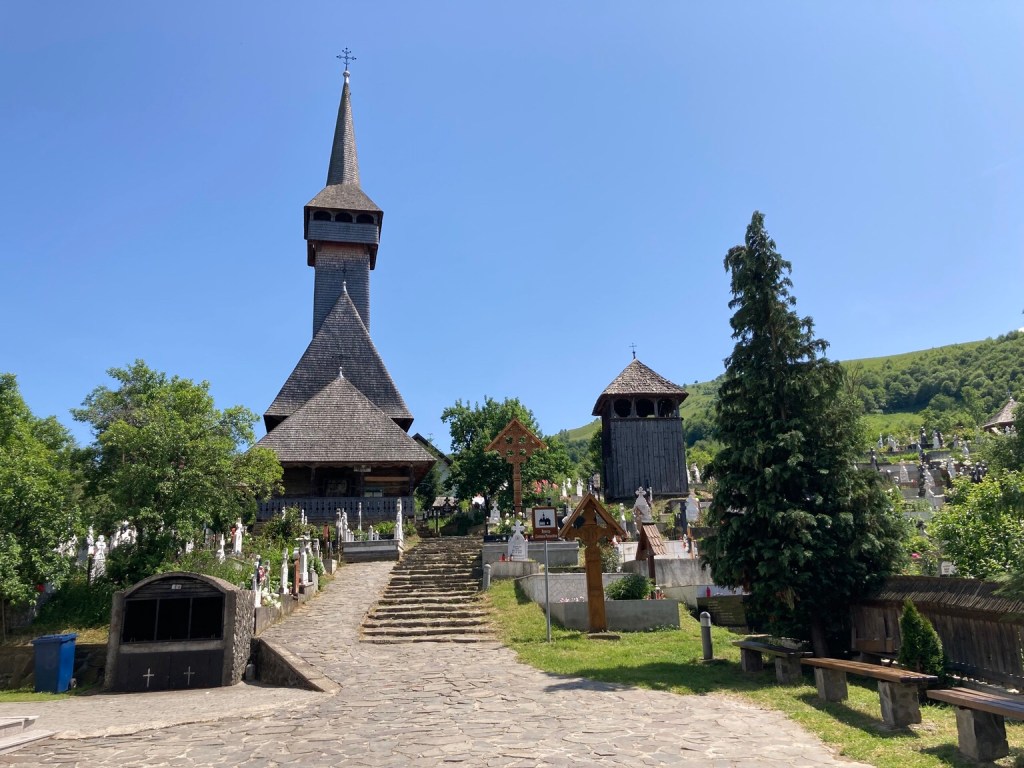
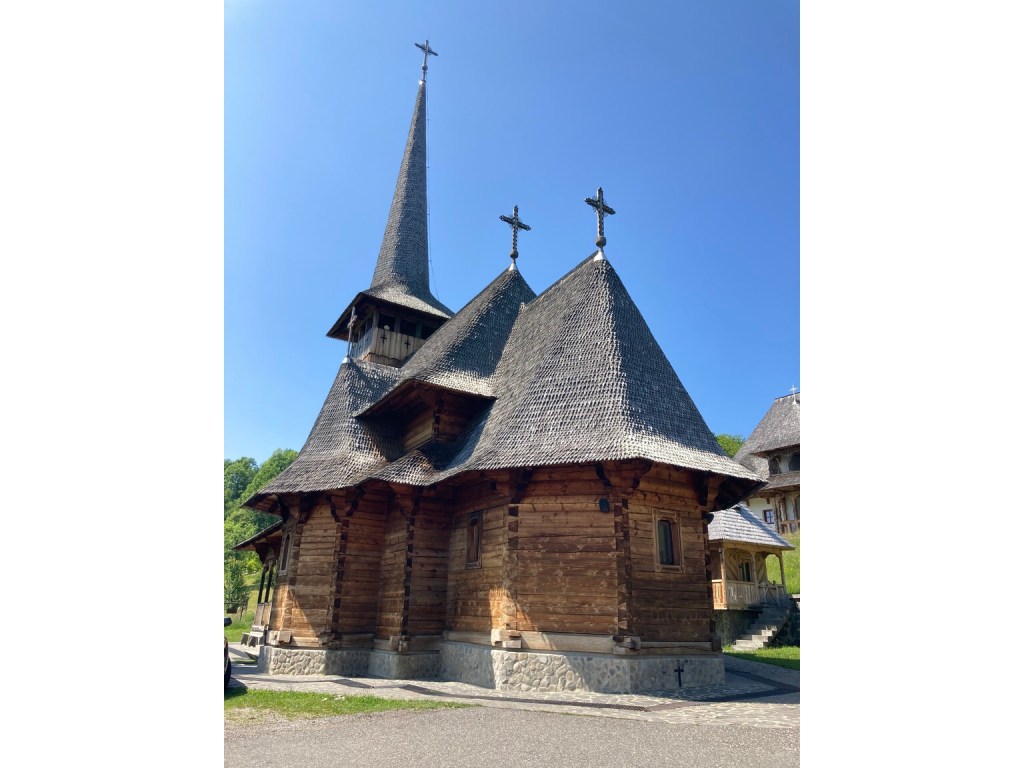
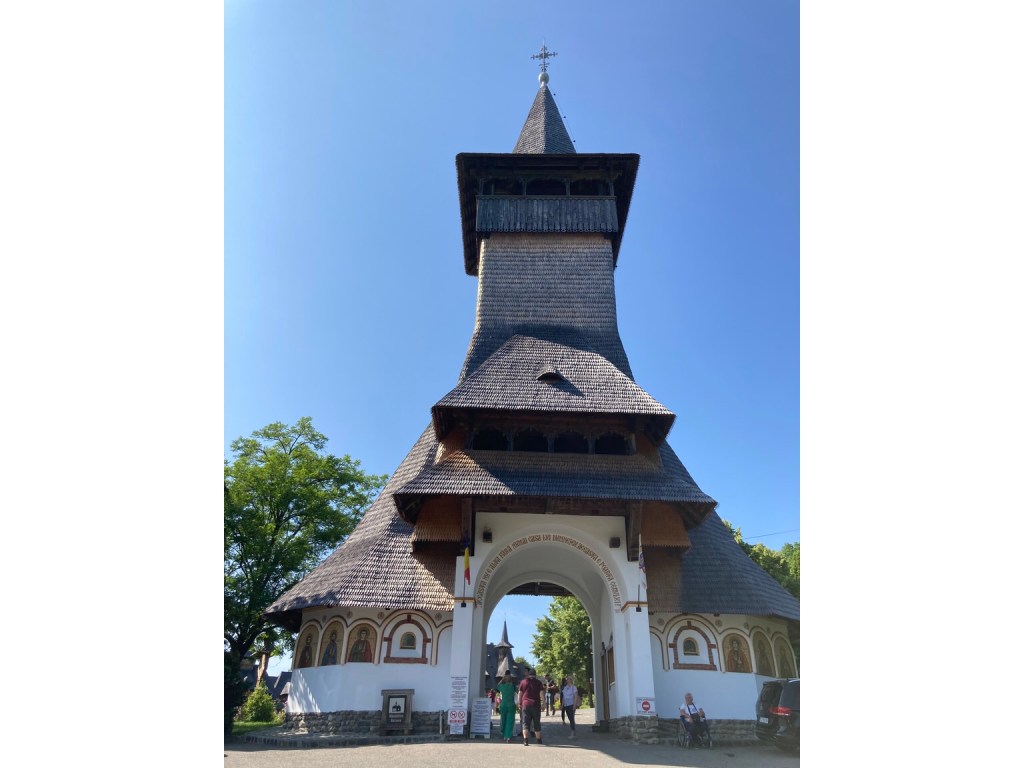
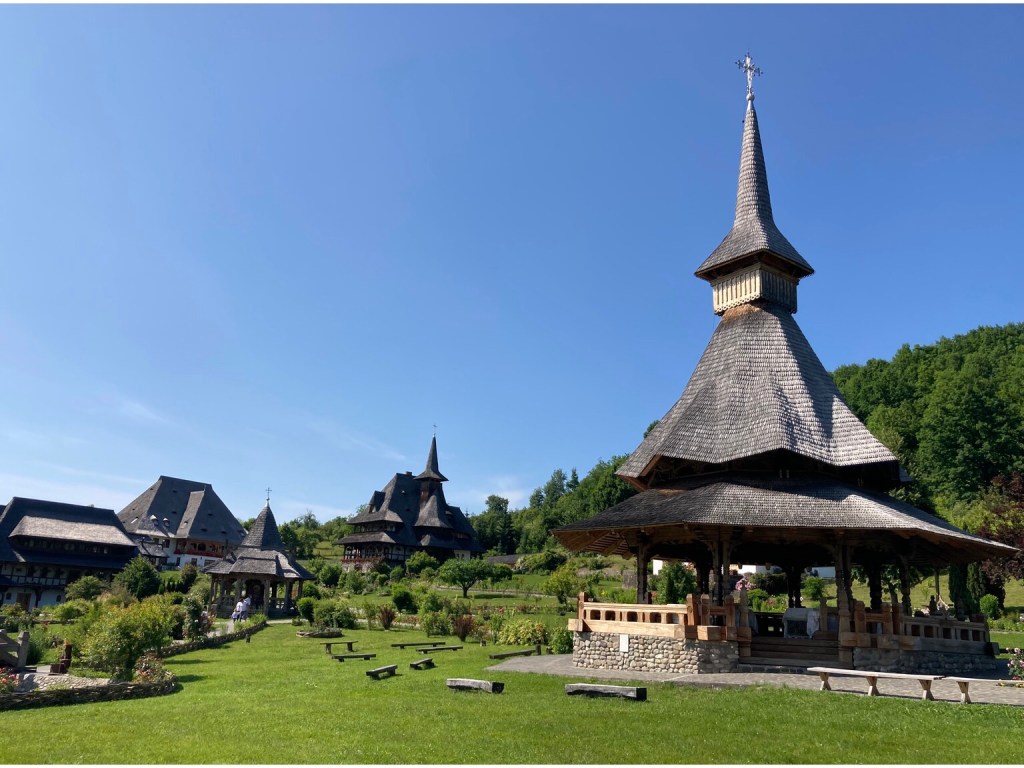
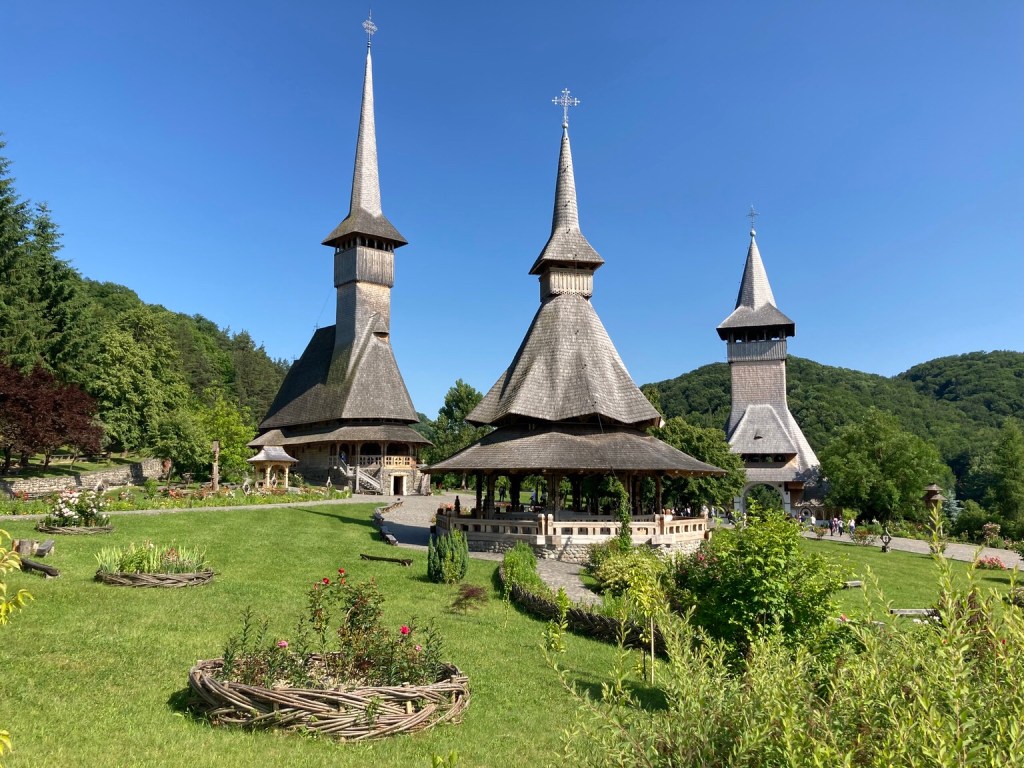
Finally there was Barsana, where the original monastery had been closed in 1791 and this complex was begun in 1993. It includes the traditional Maramures gate, bell tower, church, summer altar, nuns’ cells and chapel all set in gardens …

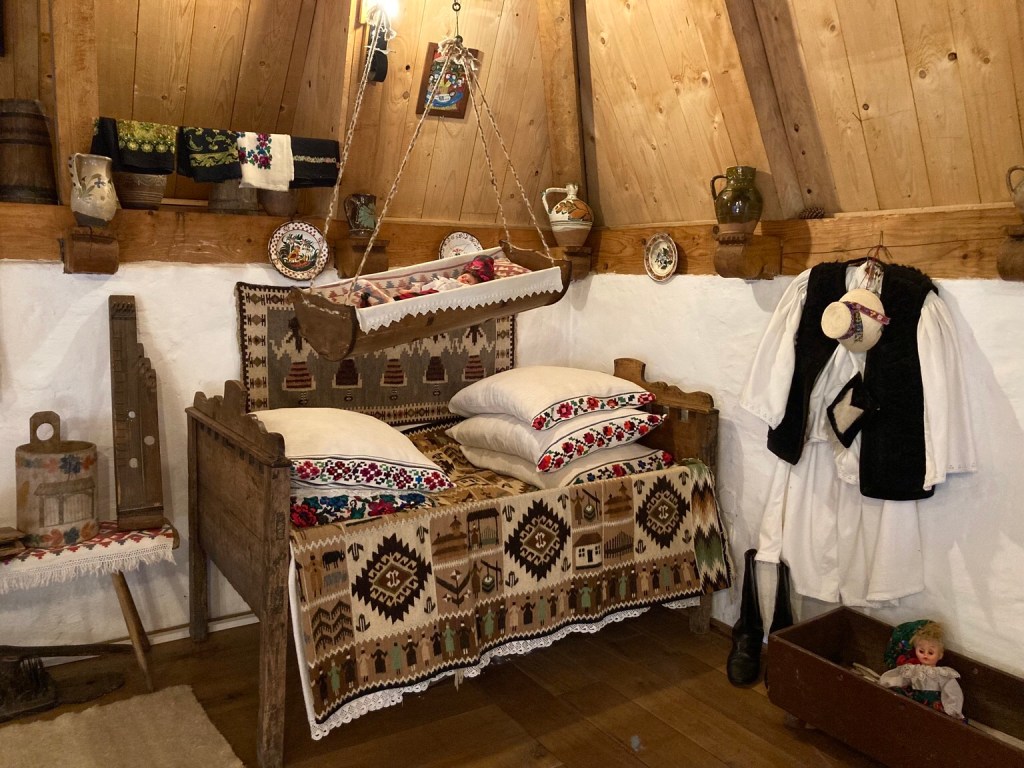
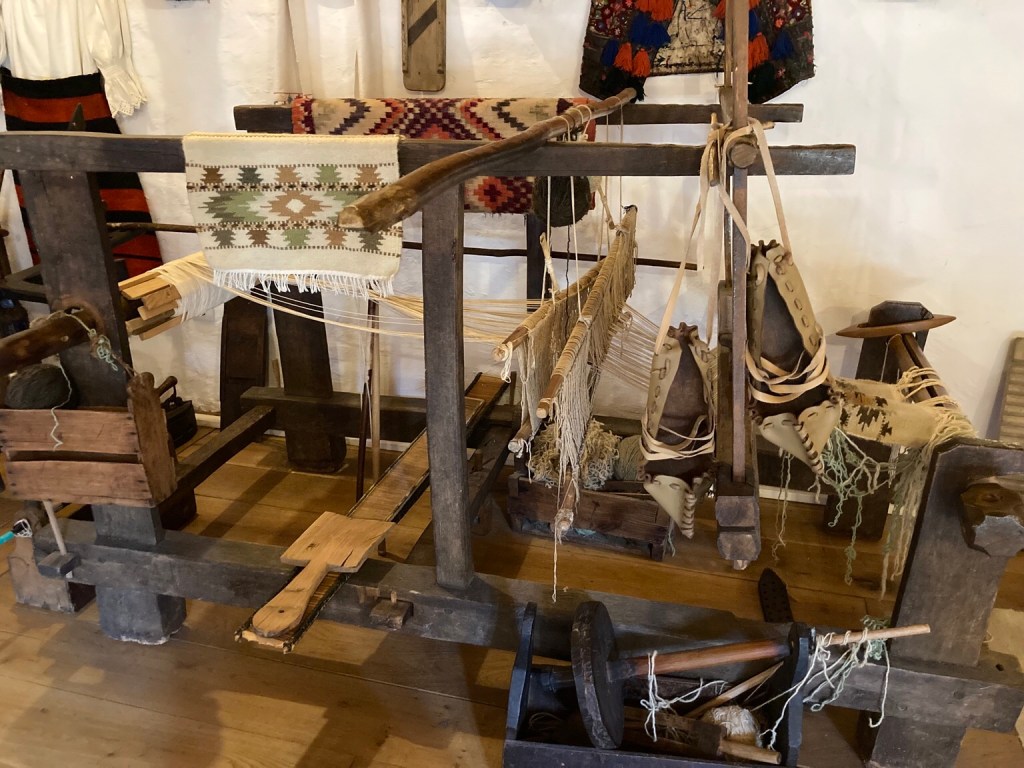
… and a museum.

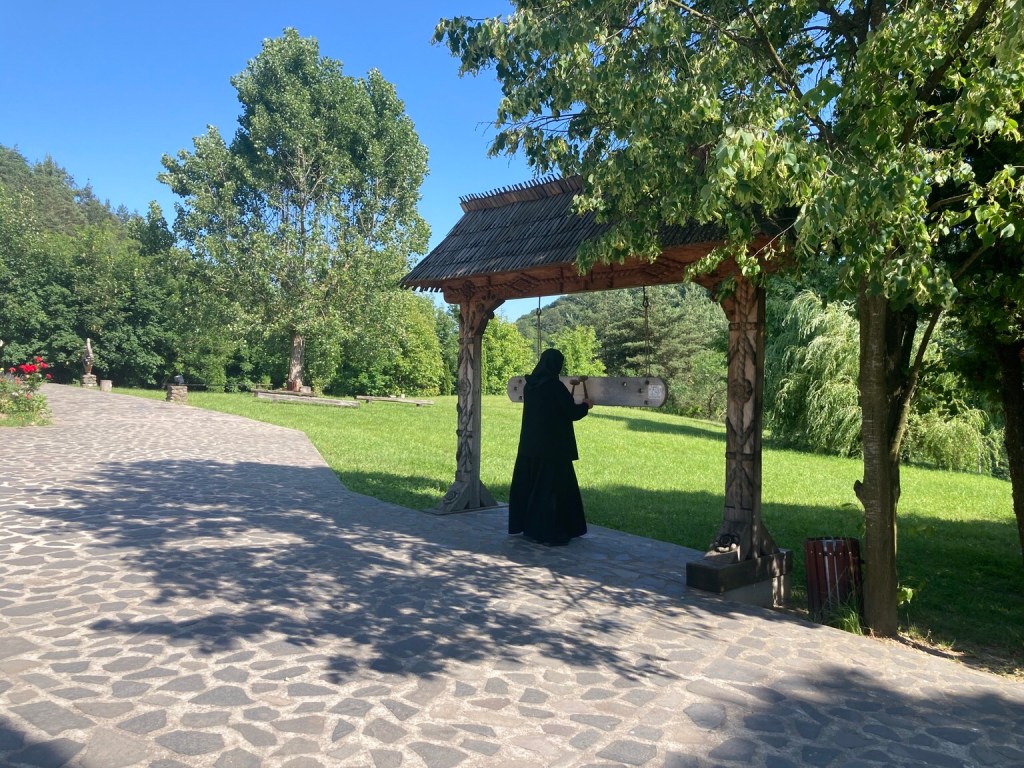
It might be intended to be calm and reflective, but it’s a popular family day out on a Sunday and the piped music made it a little surreal … a little like a theme park! Just before we left, we saw a nun striking a traditional paddle called a semantron to call the nuns to prayer.

We had booked a couple of nights in the village of Breb …

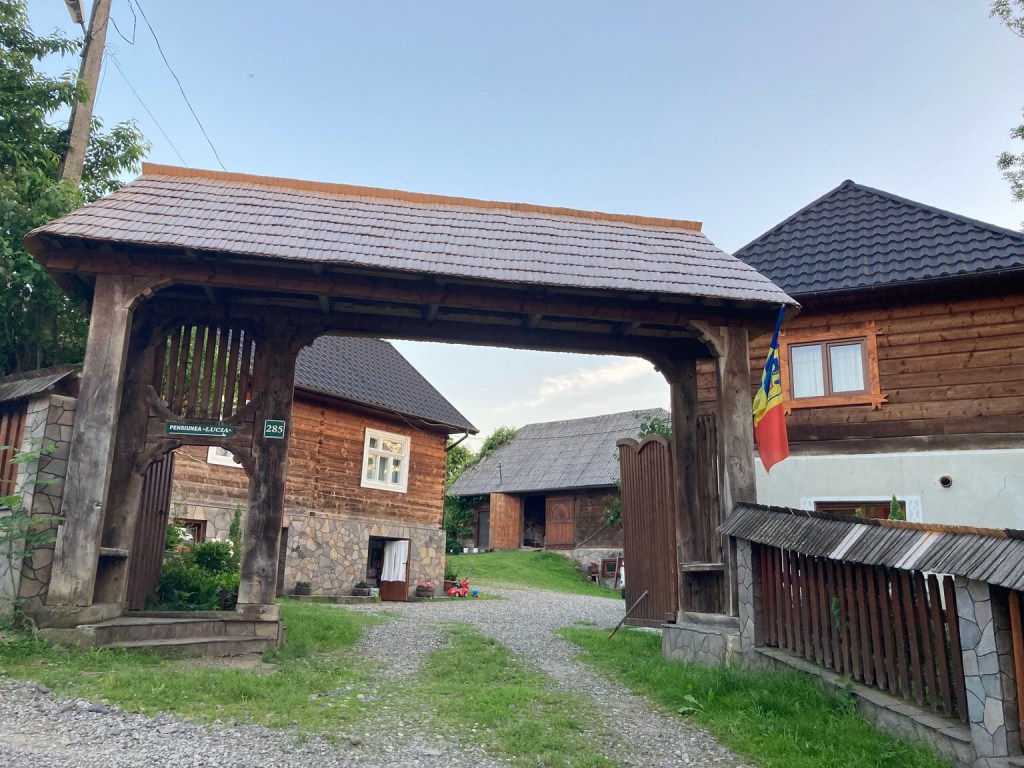
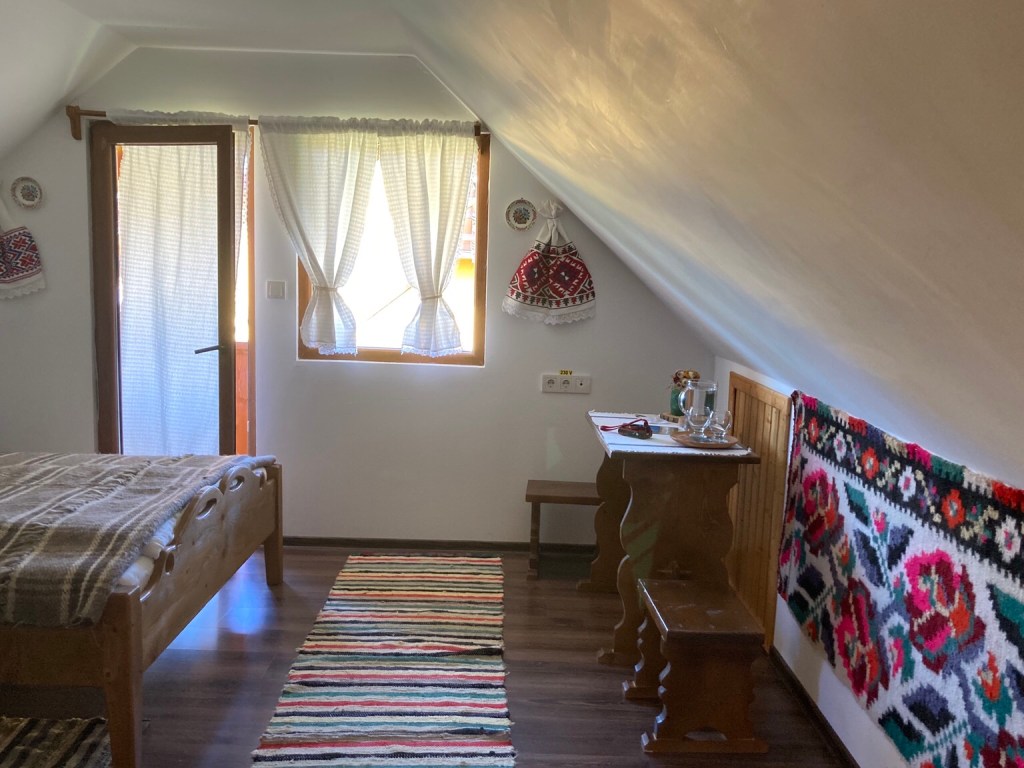
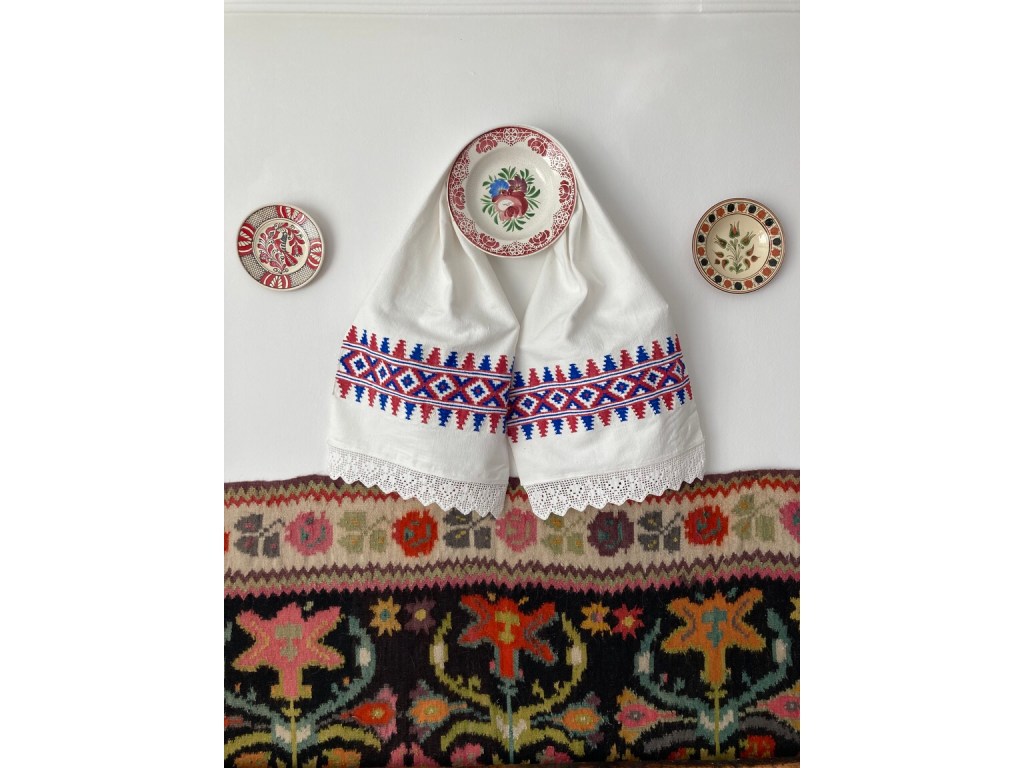
… staying at Pensiunea Lucia in the vila small farm with two houses, a courtyard, barn, orchard and vegetable garden.  

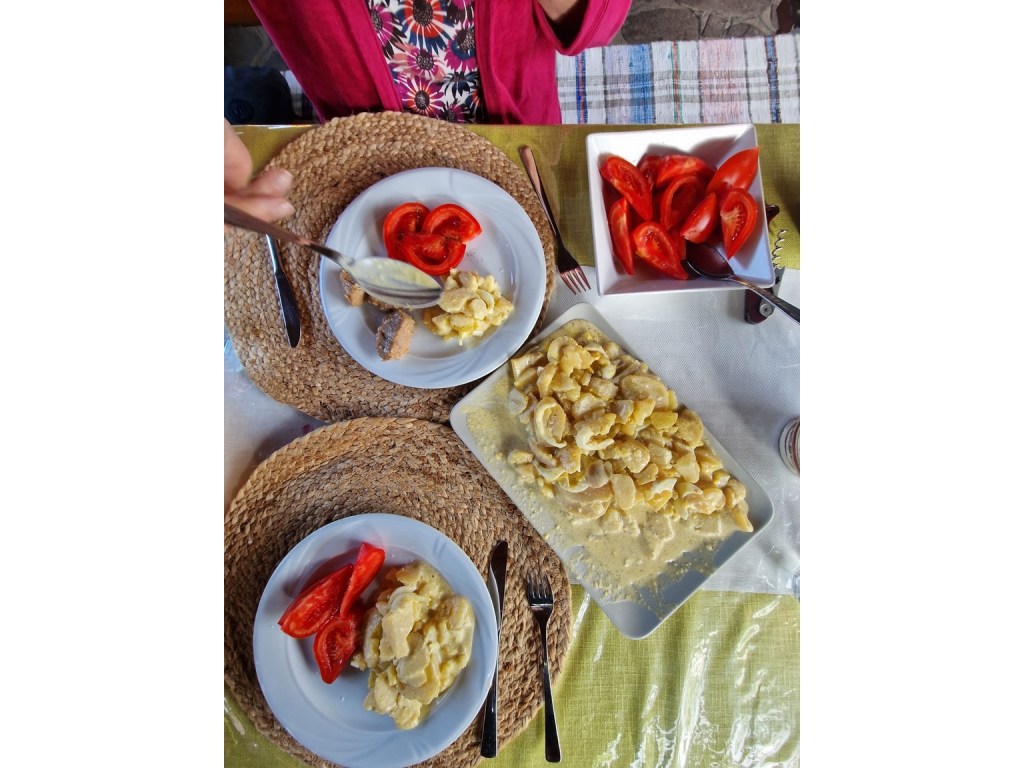
Iona and Lucia gave us the opportunity to enjoy traditional Maramureș hospitality and delicious home cooked food prepared from their own produce. We had dinner both nights starting with vegetable soups, then had new potatoes cooked with boiled eggs and sour cream with a tomato salad one night and polenta with mushroom stew the other. Homemade cake completed the meals, and certainly a drop of pakinka! 

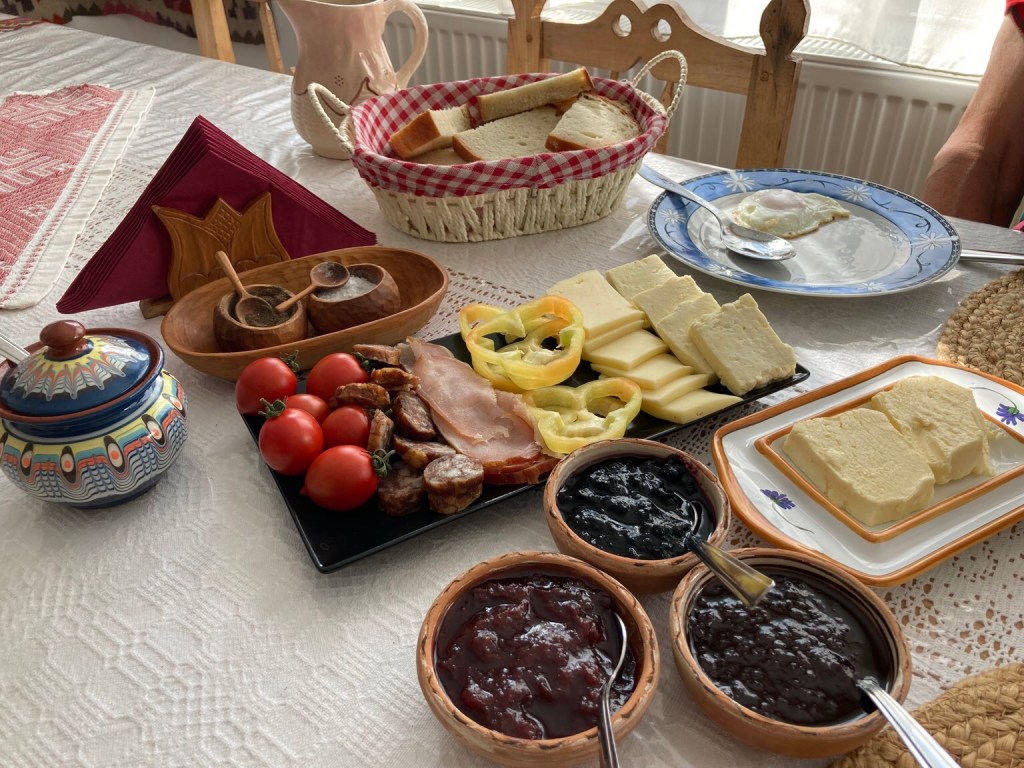
Next day, after a typical farmhouse breakfast …

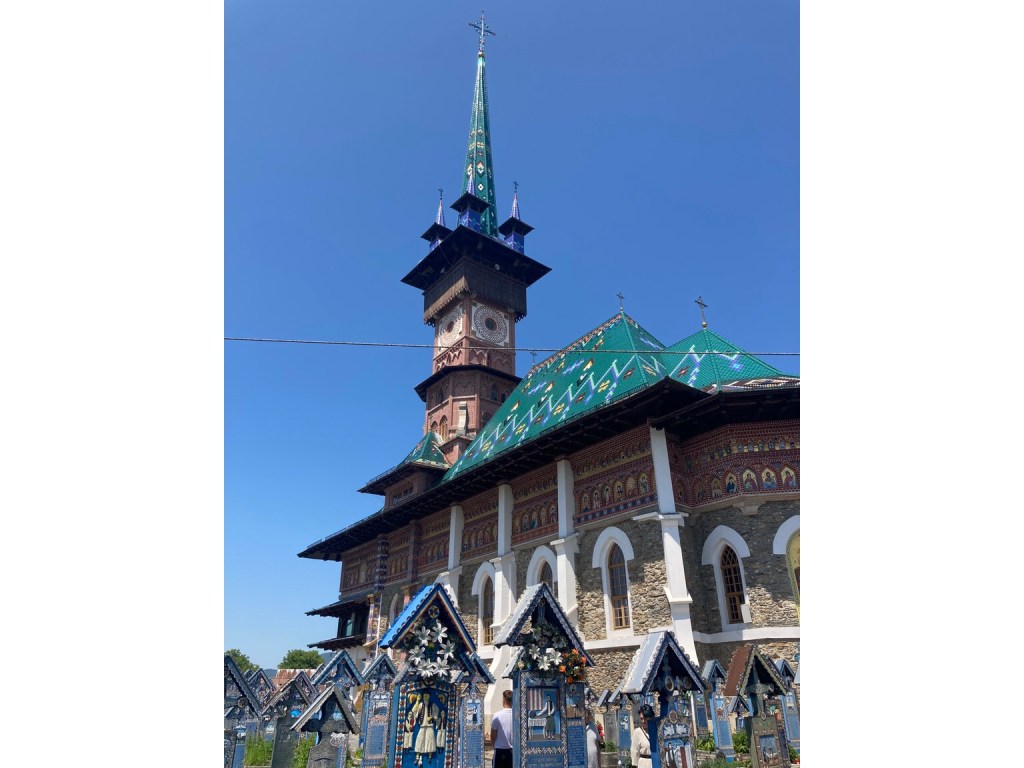
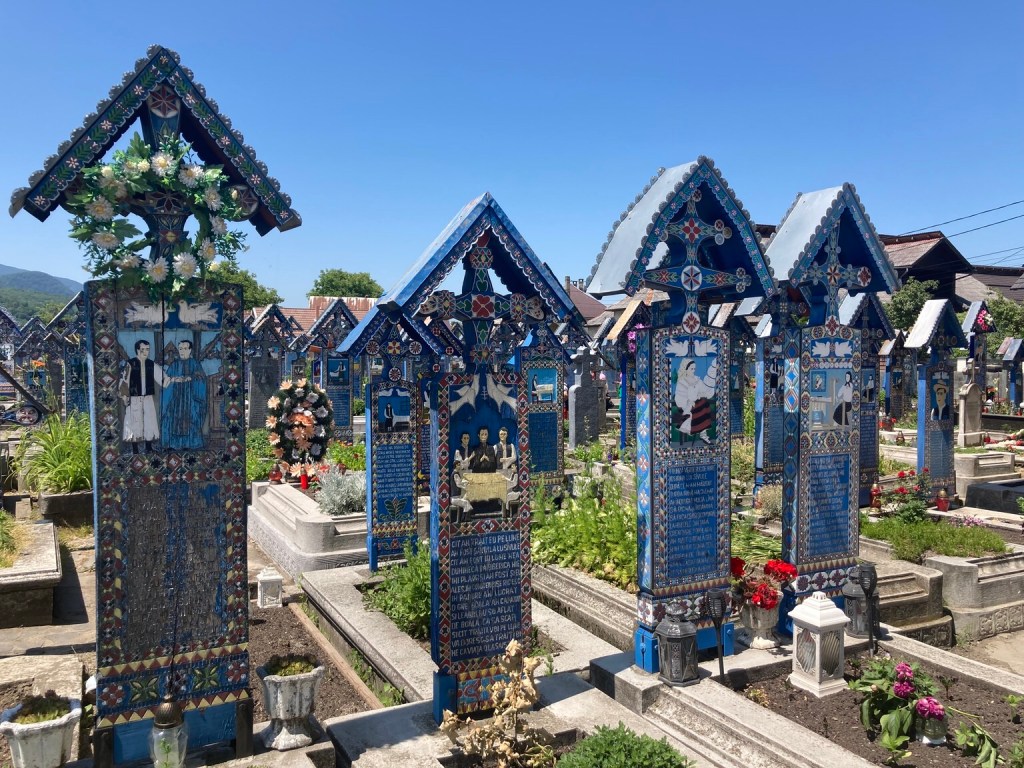
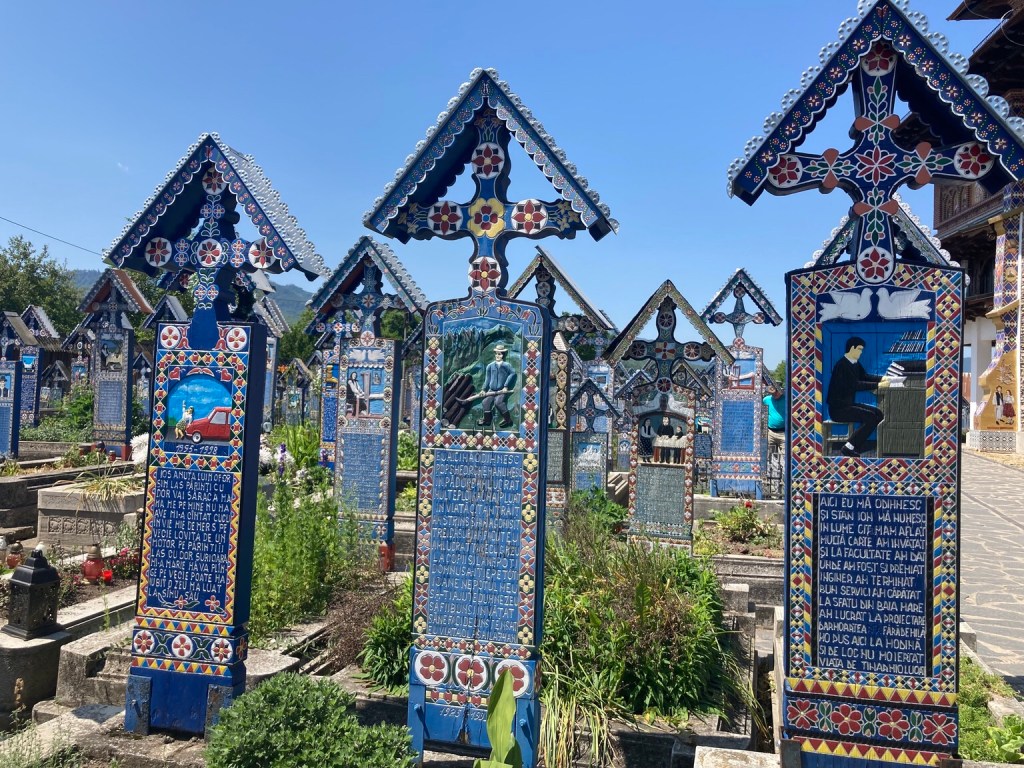
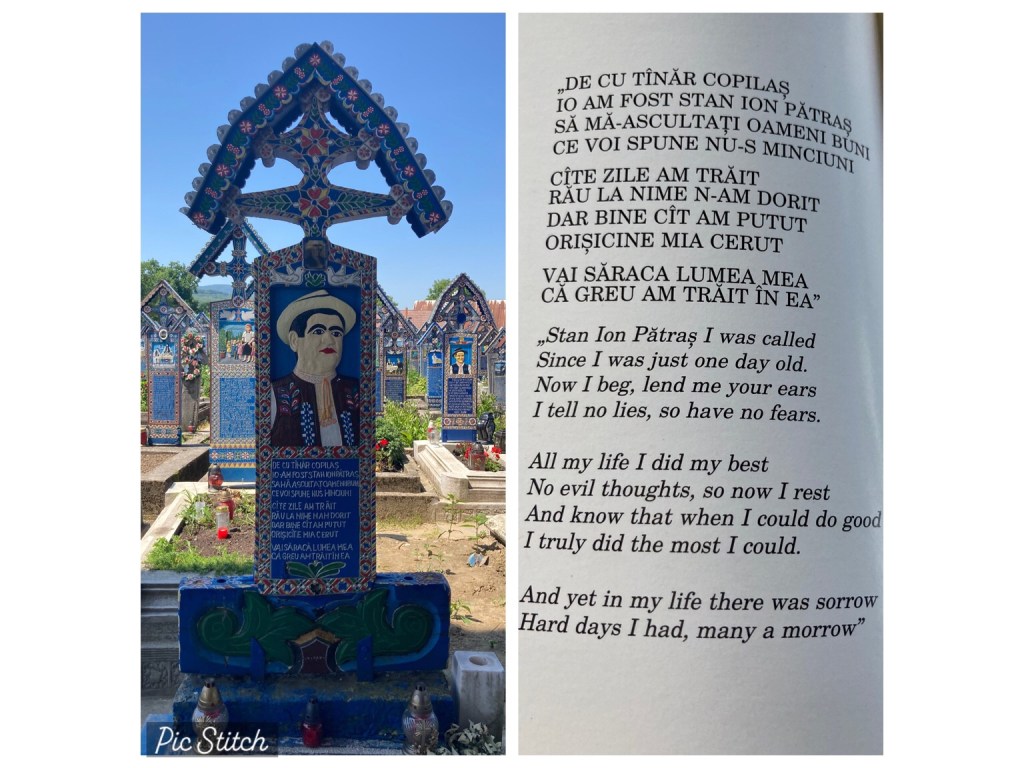
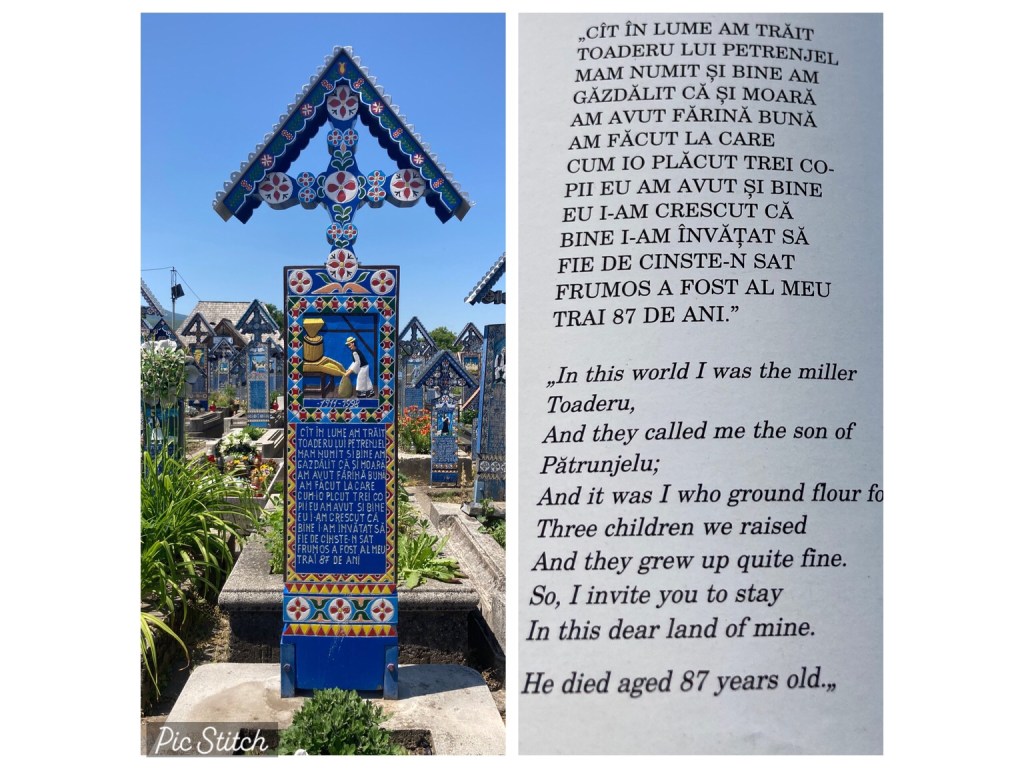
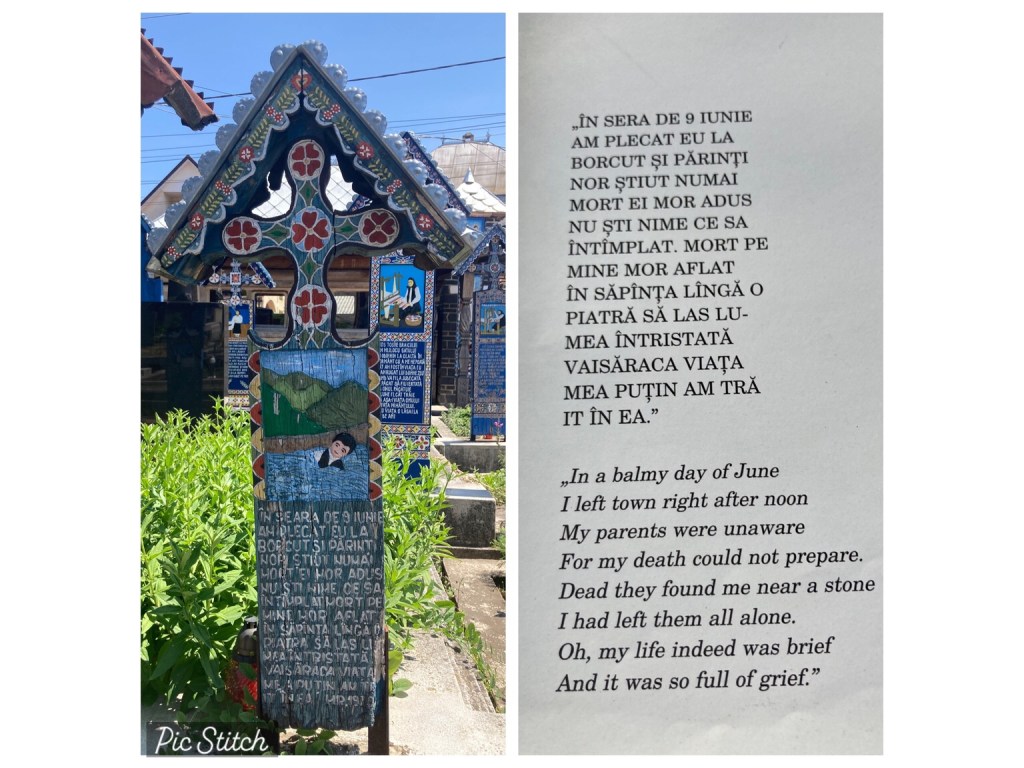
… we set off to Sapanta to visit the Merry Cemetery, famed for the work of the woodcarver Stan Ion Patras who spent his life making painted wooden grave markers, with pictures of the deceased or a scene from their life and a short rhyme. 

We had seen a book the evening before which sympathetically translated some of the verses into English, but google translate wasn’t up to the task, a shame as understanding the rhymes would have made it more relevant.

Here are a couple of photos with their translations from the book …

While we did stop at a couple more wooden churches, none were open, so we realised it was lucky we had seen so many the day before.

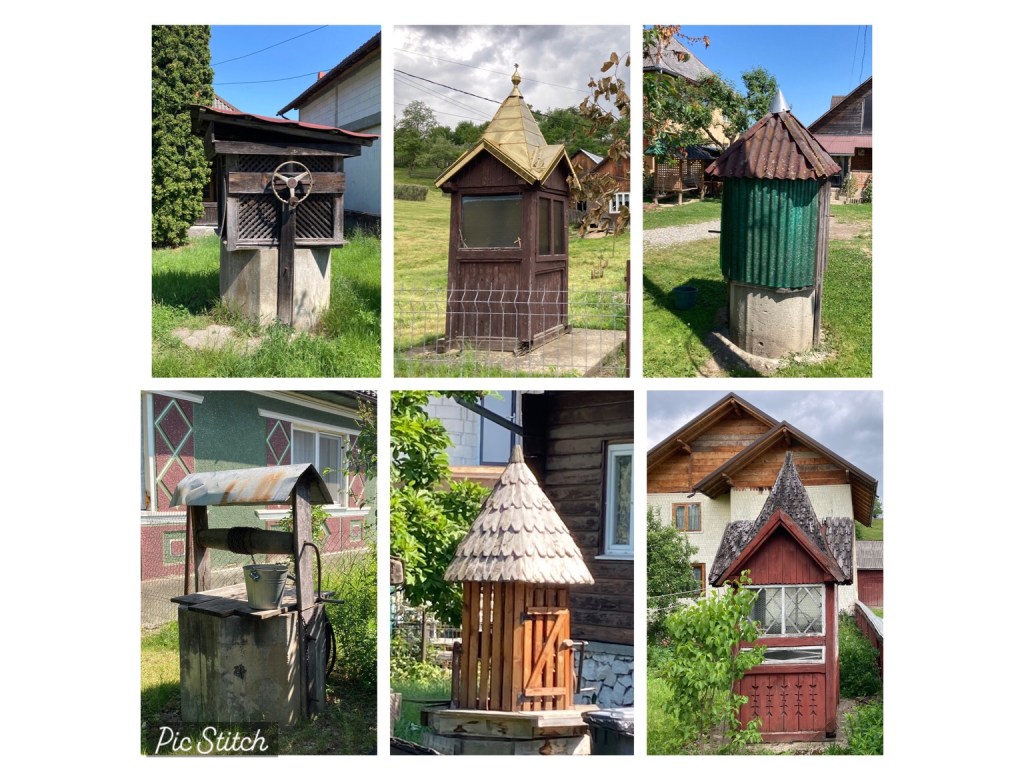
There are several things we have particularly noticed in the last few days, and the first is wells. It seems that most households have a well, and the water is still preferred for drinking and watering the garden and animals.  They come in all shapes and sizes, often with a roof and side panels, so here are a few!

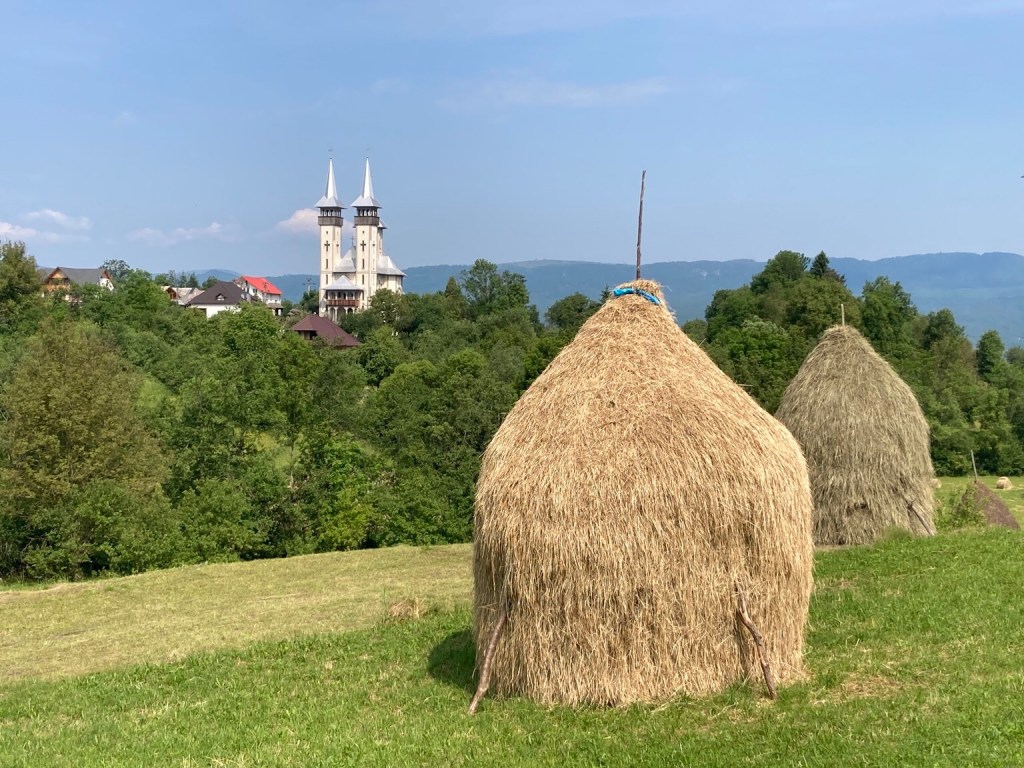
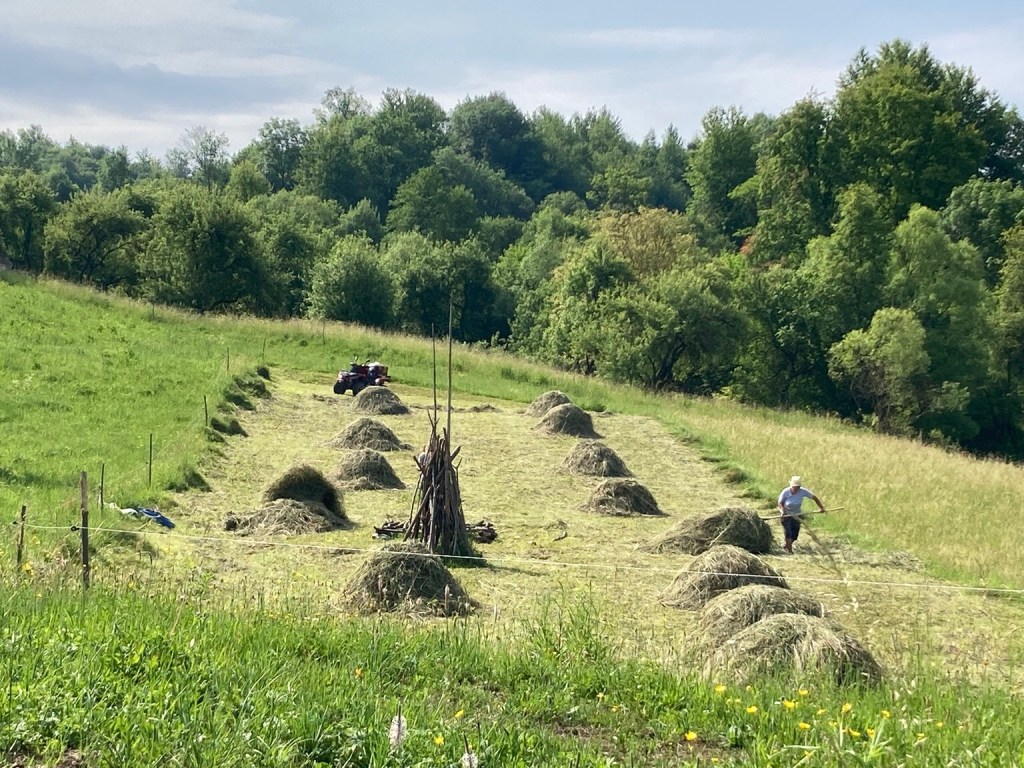
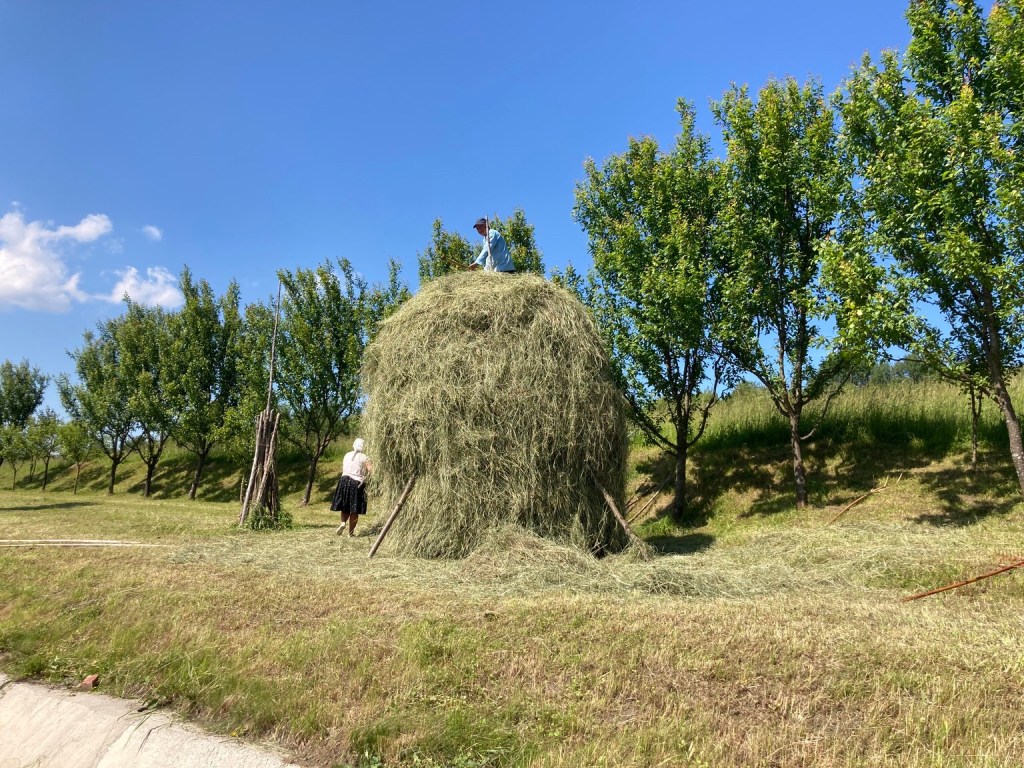
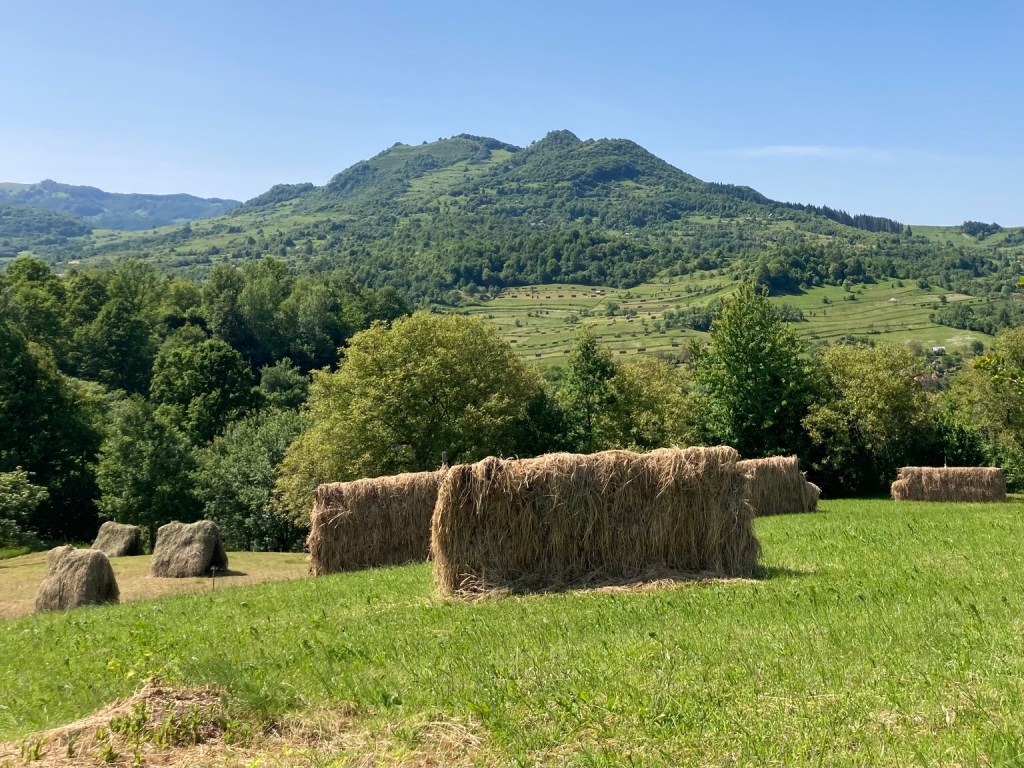
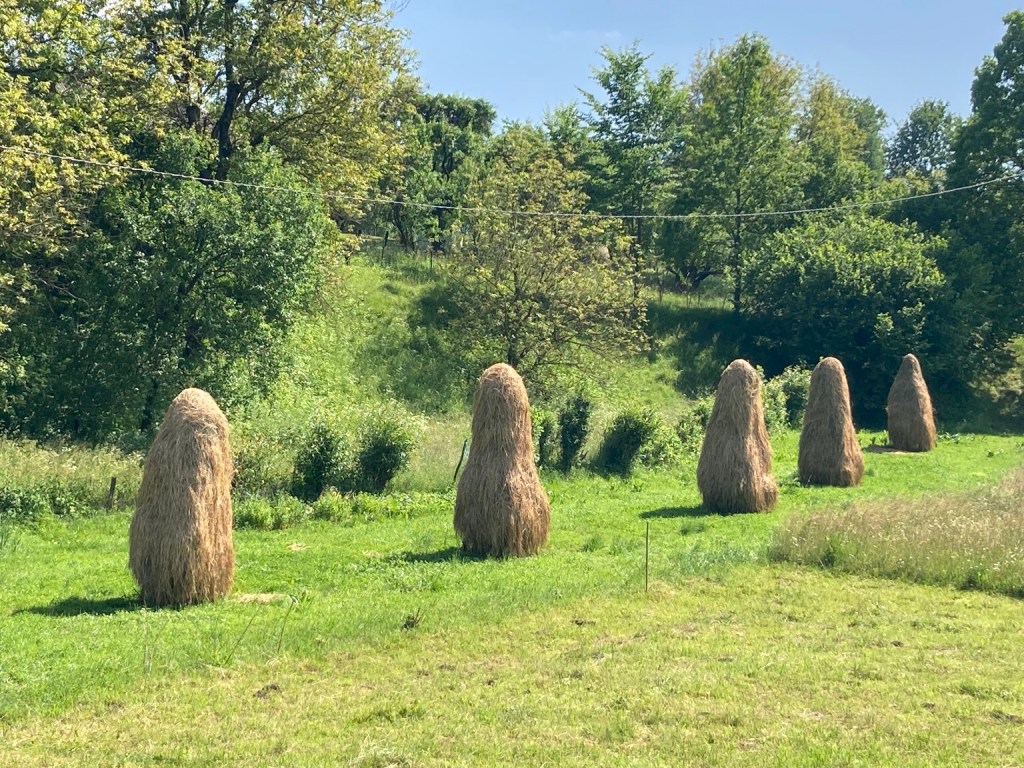
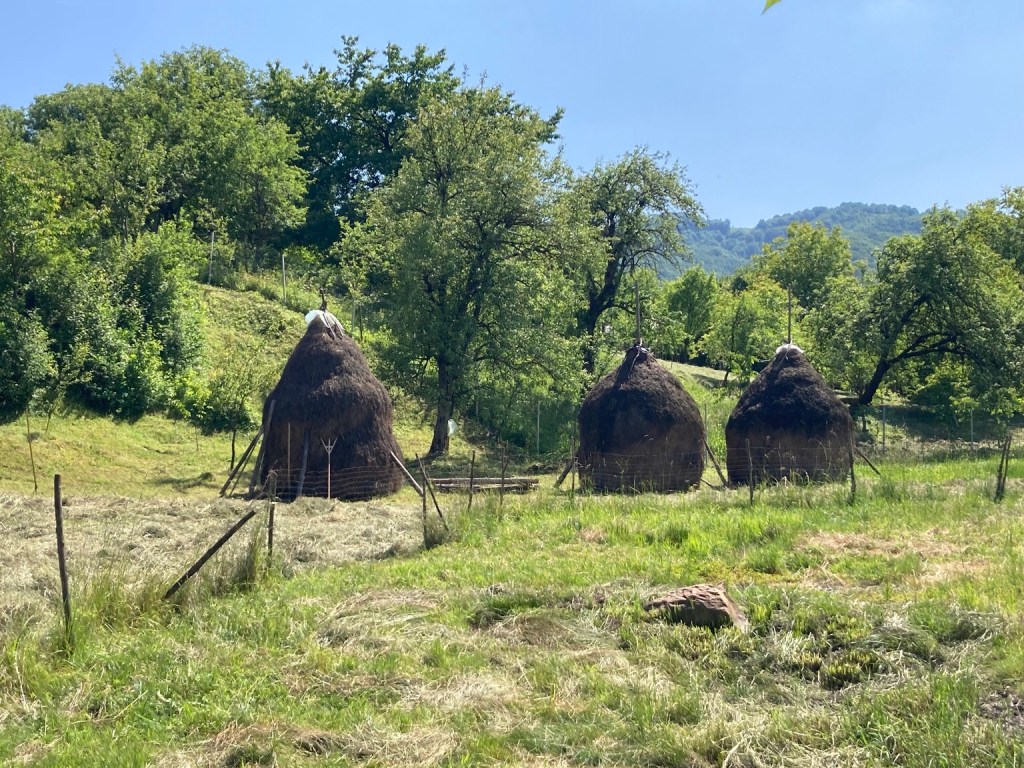
Secondly, it is hay making season here in Maramureș, with much of the work still be done by hand. 

Most people have a small area of meadow and the hay is needed for winter feed for animals, or to be sold to those who do. Once the grass has been cut, it dries, is turned and then collected onto racks or piled in stacks.

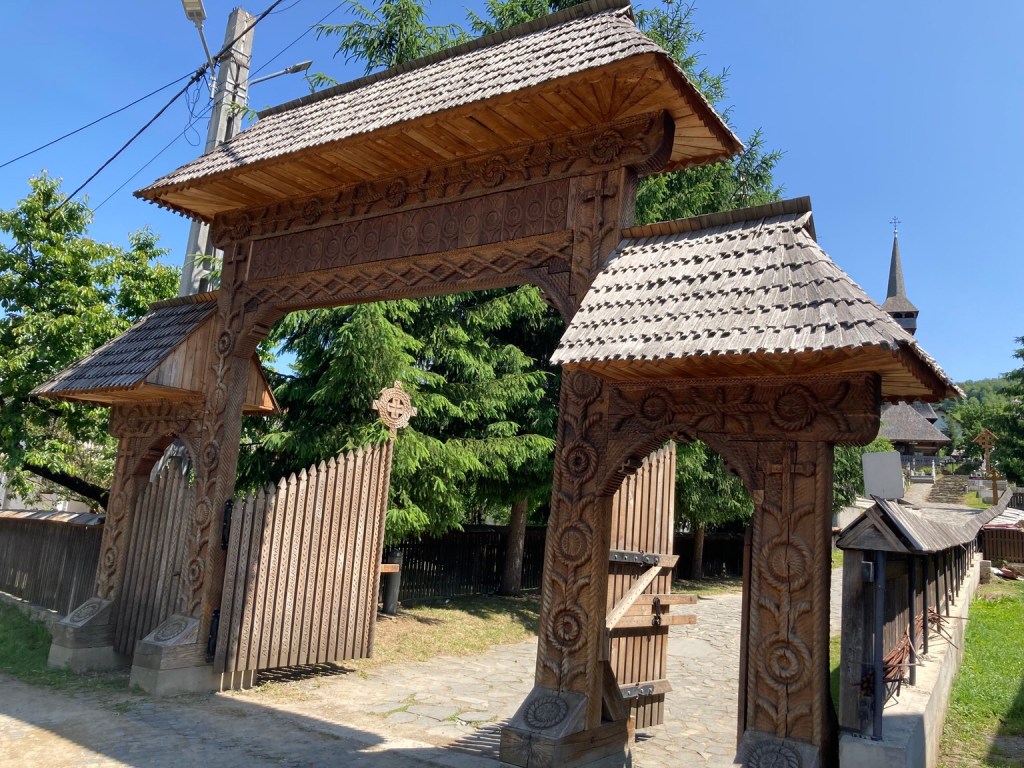
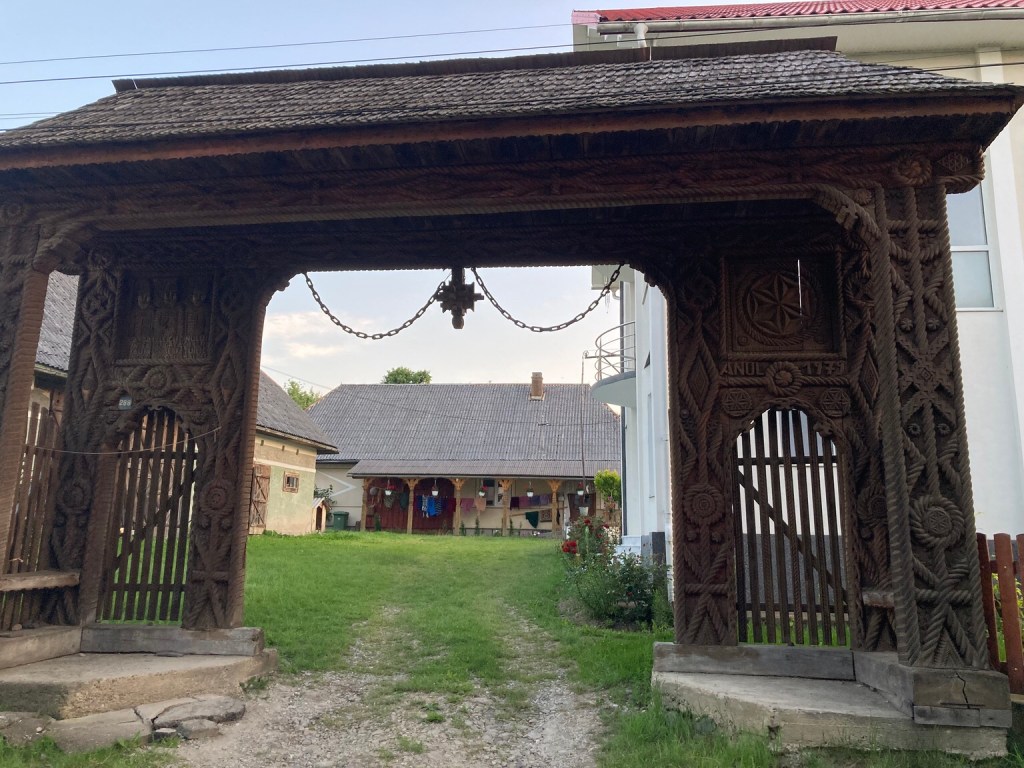
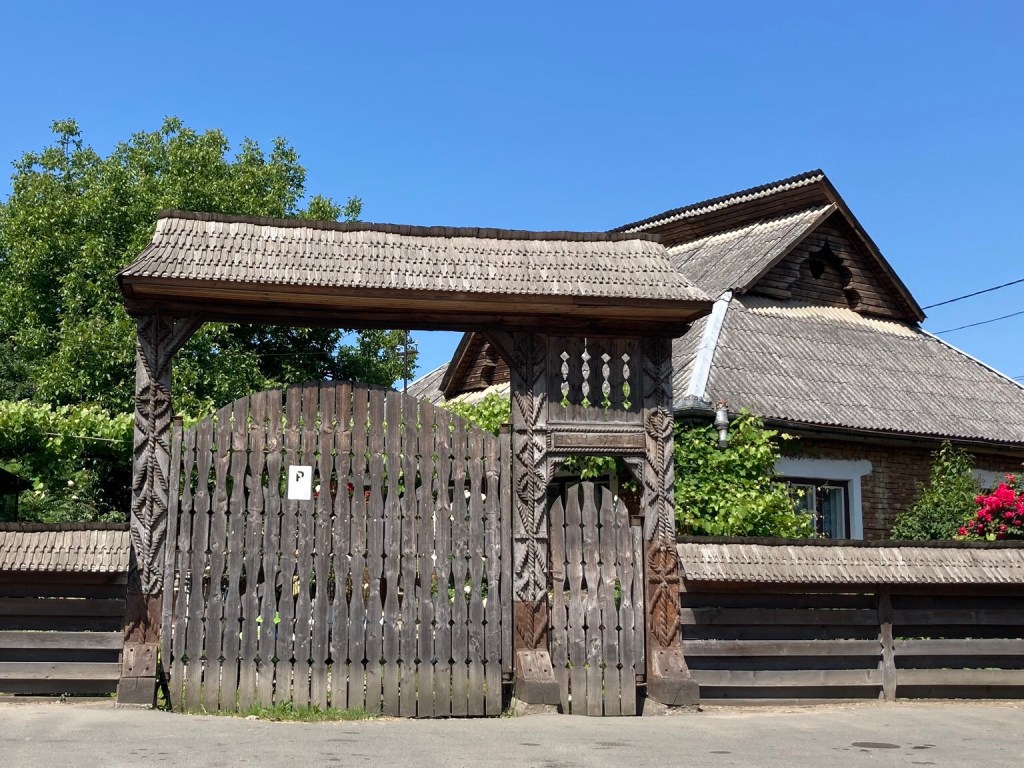
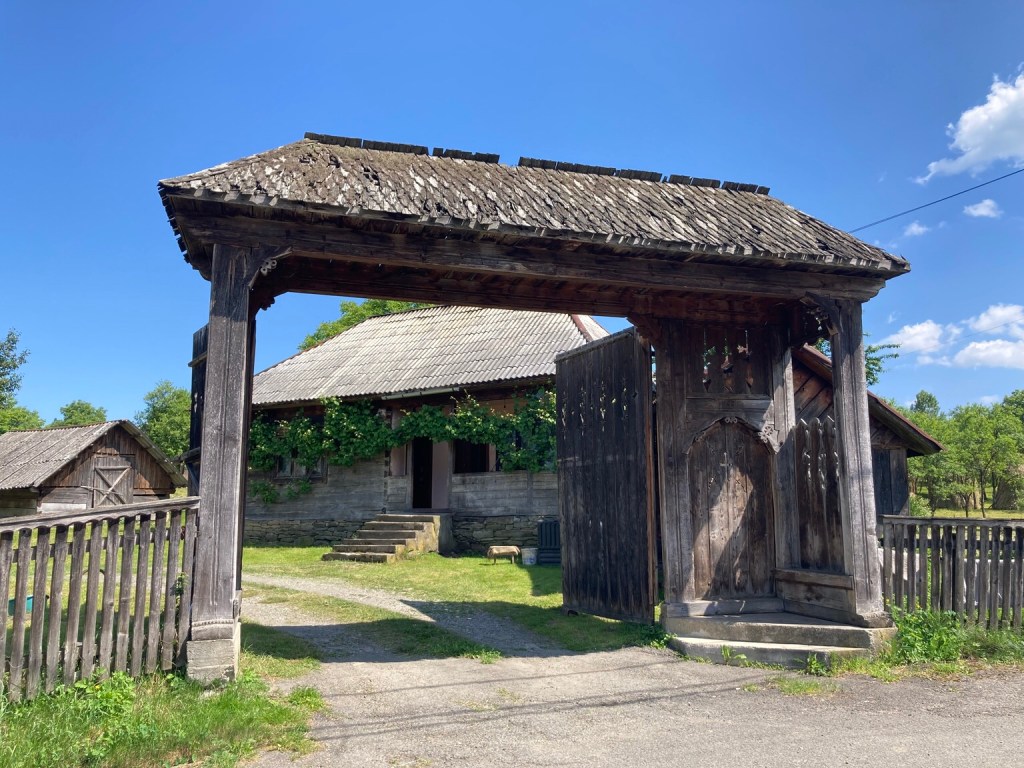
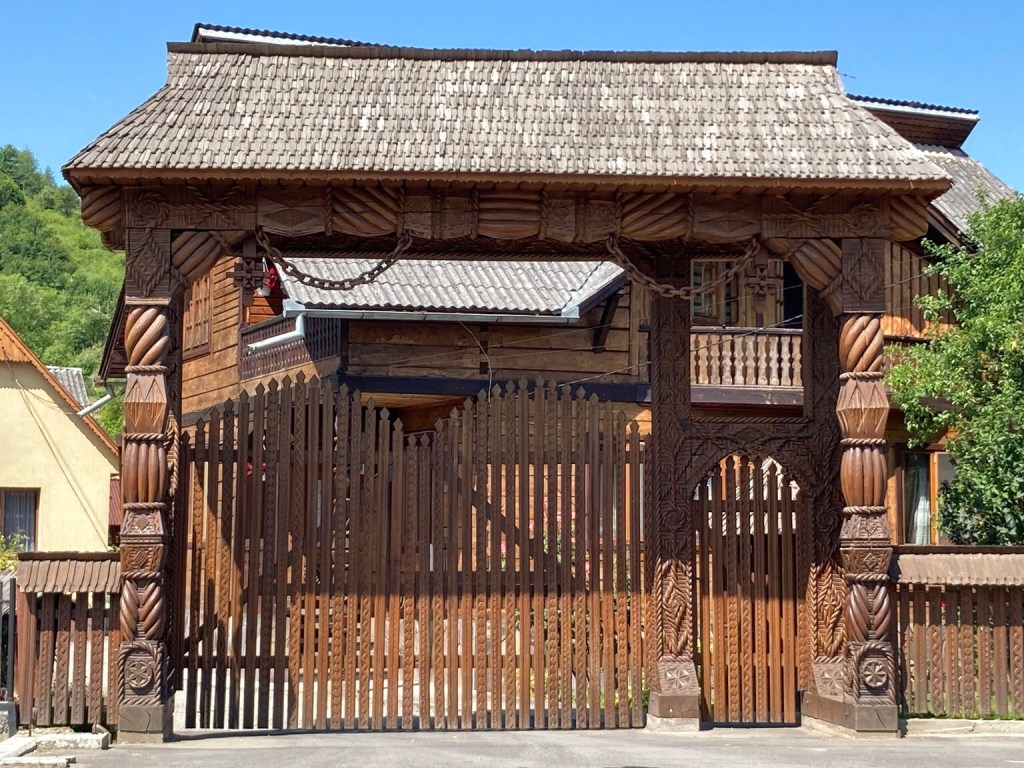
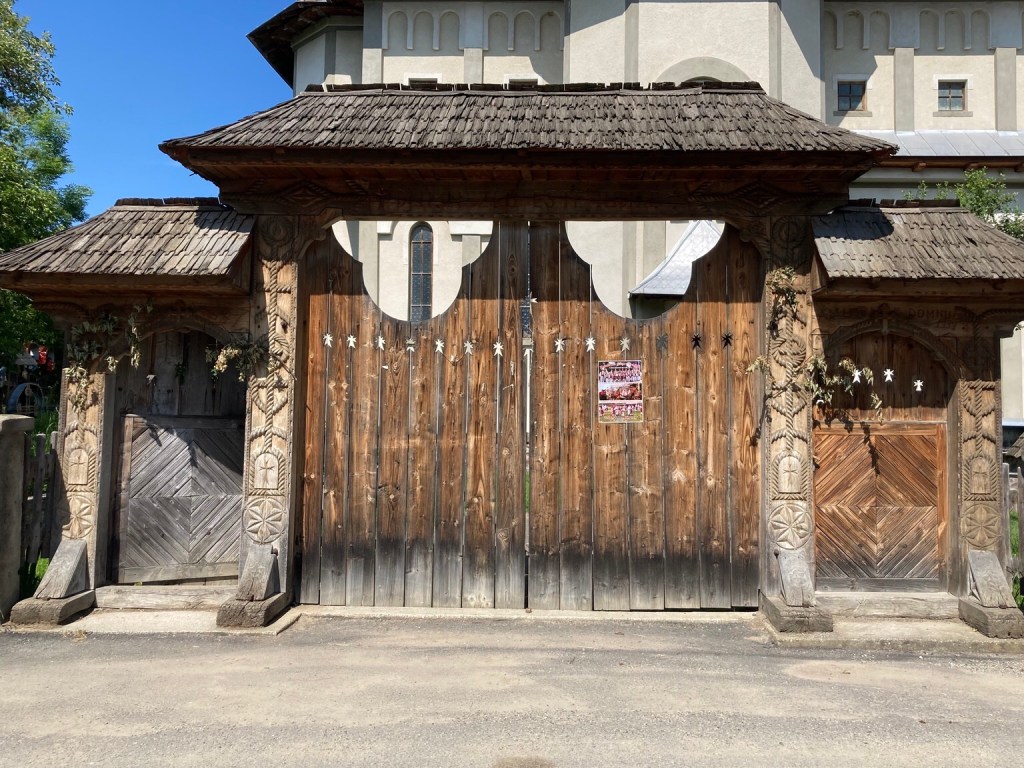
We’ve also noticed how intricate the carving is on many of the traditional gates at the entrance to both churches and family homes.  There seems to be a deep cultural significance to the design which includes symbols like the tree of life, sun, rope and snake which protect the household from the world outside. 

They are not confined to old properties either – many newer homes have gates too …

… and some have dried twigs of foliage attached, which would have been put there at Pentecost to ward off the charmed spirits of the dead.

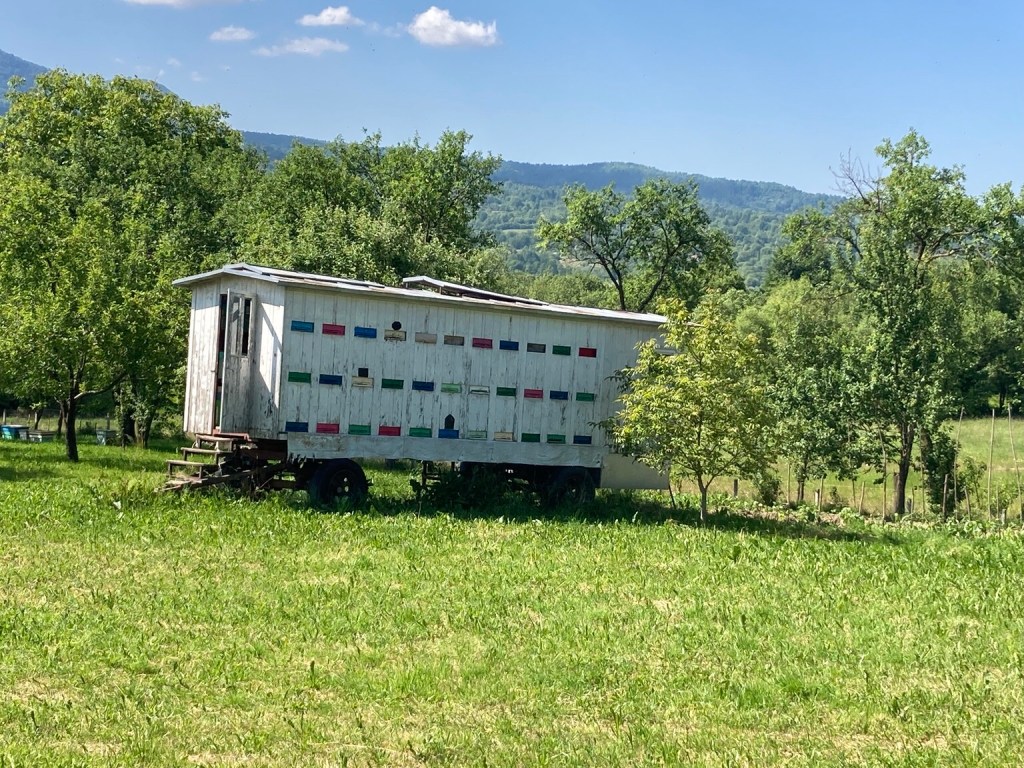
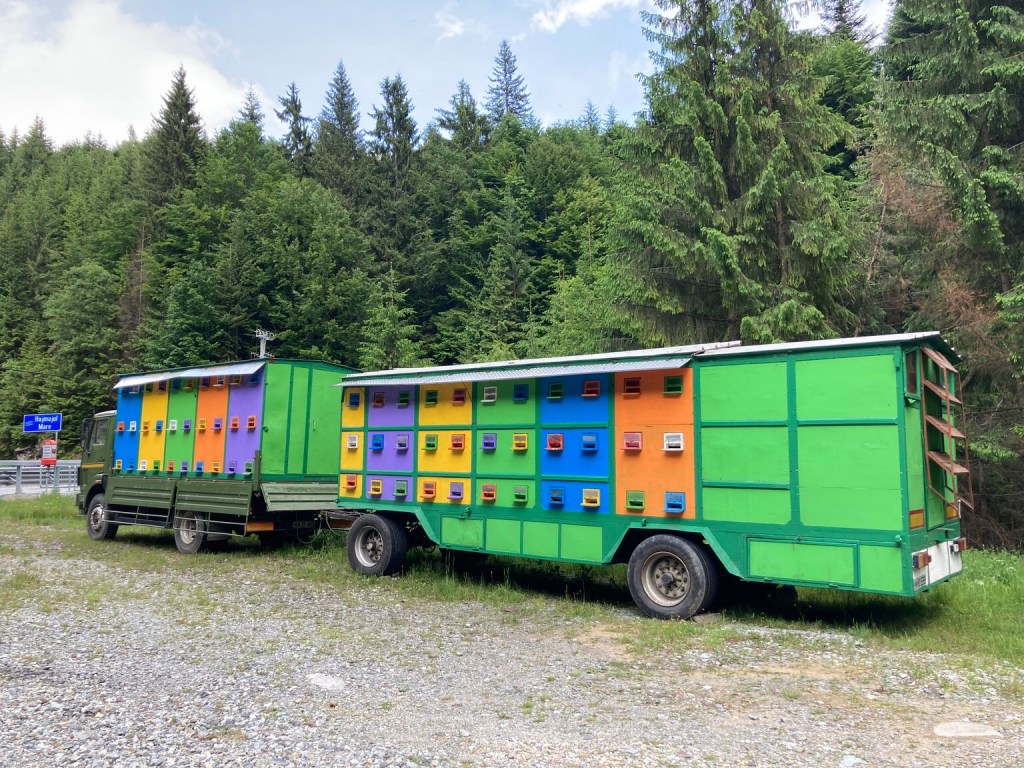
Finally beehives, not just individual ones sitting in a field, but caravans and lorries containing rows of beehives, easily portable to go where the flowers are!

We are now halfway through our trip, and it’s time to drive south …

Map