Chris & Elaine Go Downunder for Christmas 2019

Once again we leave the possibility of a white Christmas behind in favour of a warm festive holiday with family.

We are looking forward to meeting Joanna in Brisbane airport on Sunday morning and we will all be spending Christmas in Brisbane with Jan, John, Jack and Jade. We then have a few days planned in Noosa to meet up with our cousins before returning to Brisbane for New Year.

We’ll post some pics in due course but the focus is definitely on family time rather than sightseeing.

There will be a stop on the way home though, so look out for Chris & Elaine’s Ferry Round the Philippines 2020 in January!

Meanwhile, a very Merry Christmas and a Happy New Year to you all.

Map

BBC Bristol …

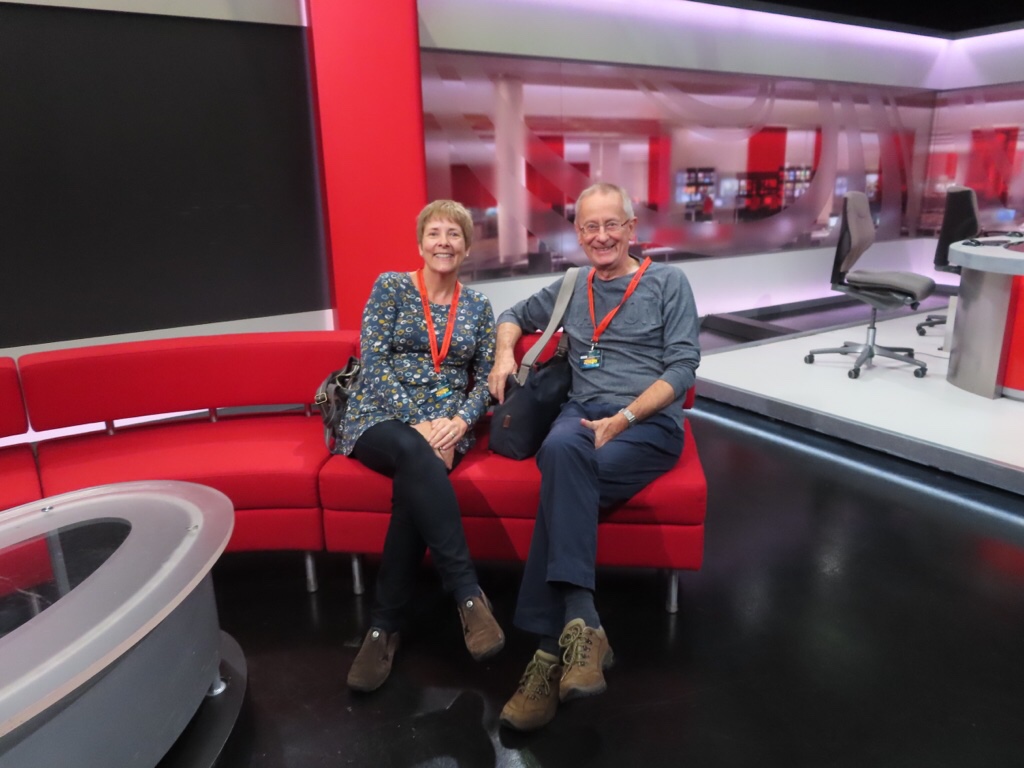
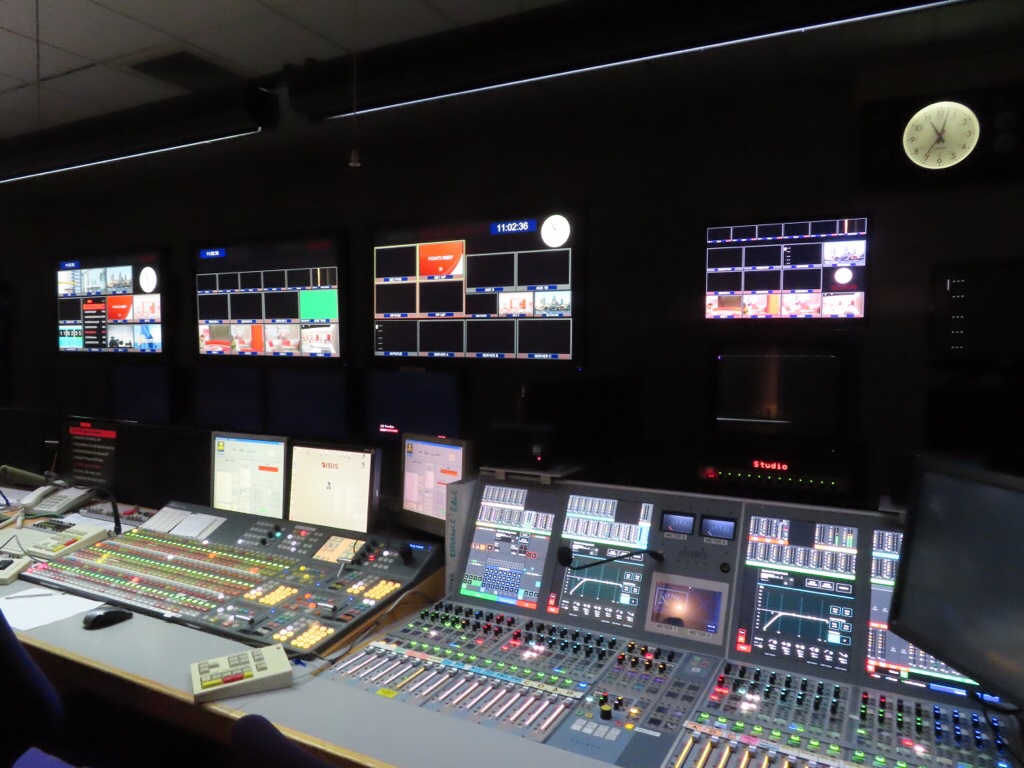
On our last morning we checked out, leaving our bag to collect later, stopped for breakfast at Wapping Wharf then walked up through the city to BBC Bristol for a tour.

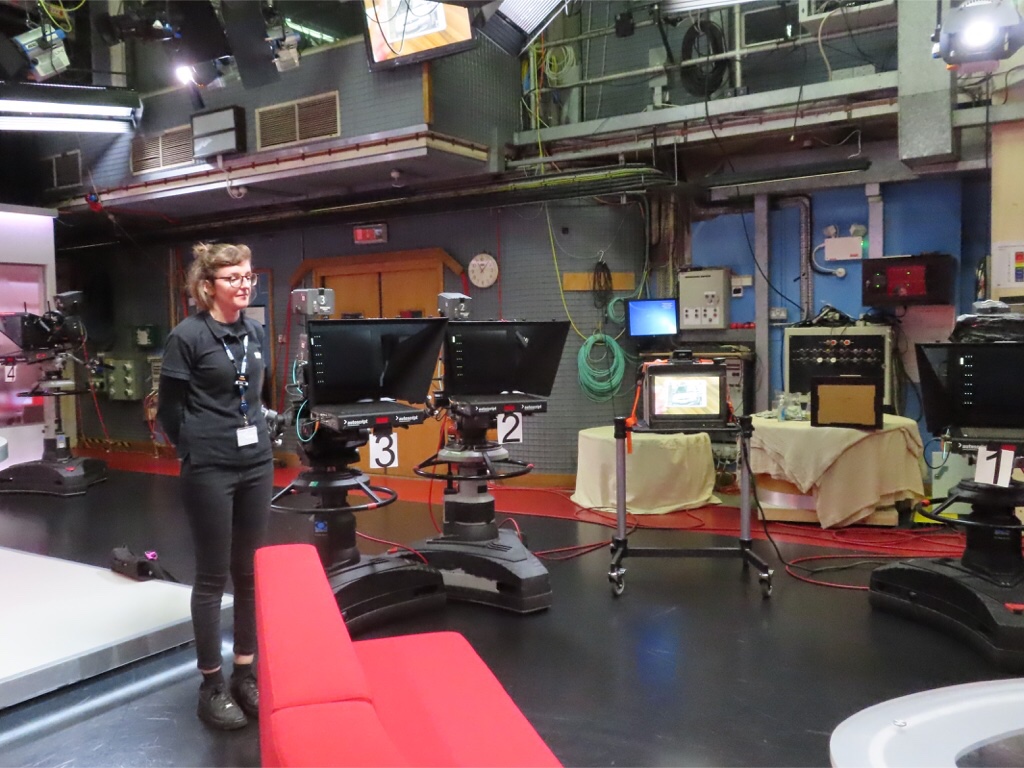
We looked round reception and could see the kind of programmes made here like Antiques Roadshow, Gardeners World and Countryfile. Their pride and joy is the Natural History Unit which have made all the best known wildlife programmes from Life on Earth to Seven Worlds, One Planet that will be shown this autumn. The technical developments during this time have been immense, enabling the camera to get closer and closer to the action, nowadays often using drones to disturb the animals as little as possible. BBC Bristol also make the local news programme Points West and our tour showed us the BBC Wildlife Garden where the weather is filmed and the main news studio – both behind the scenes, and in front of the camera!

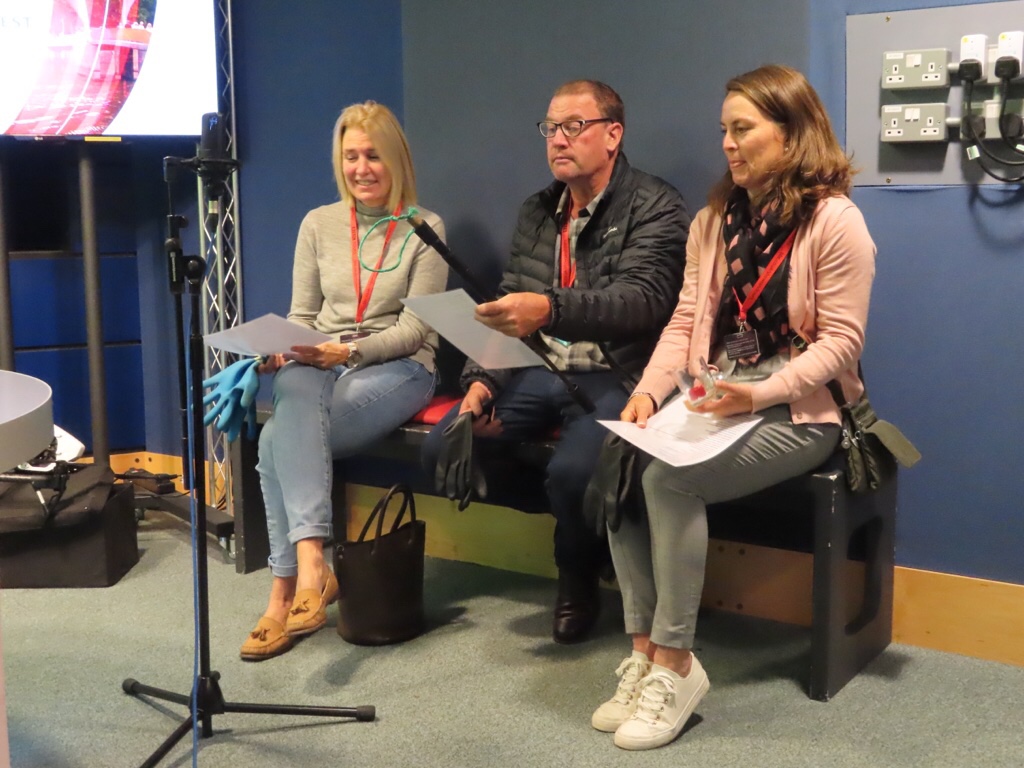
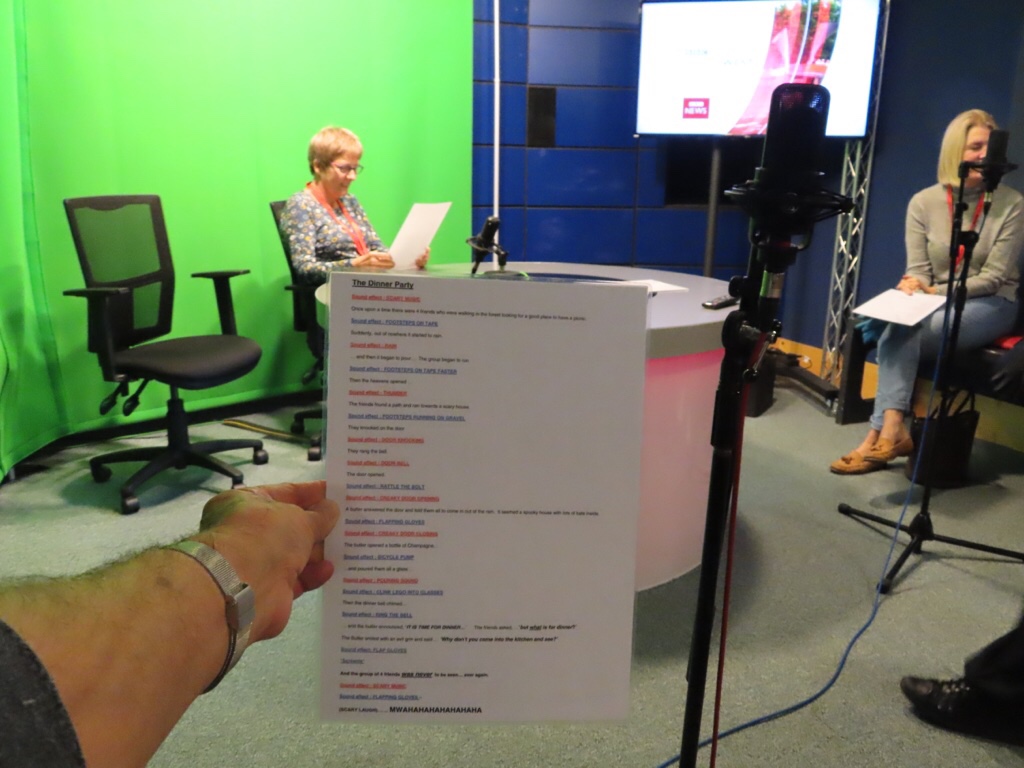
Afterwards, we had a go recording our own radio play with special sound effects including rubber gloves for bats, a bicycle pump for a champagne cork …

… and then filming a news and sport bulletin with a weather slot which certainly helped us see there is a lot more to this tv lark than meets the eye!

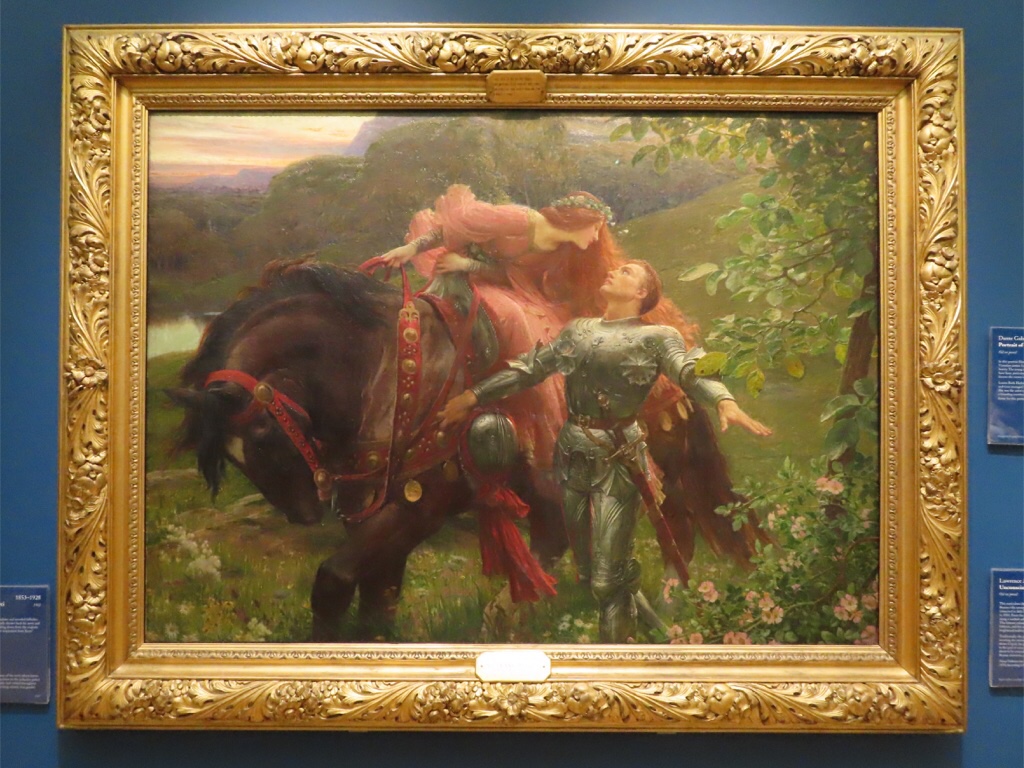
Walking back, we popped into the Bristol Museum and Art Gallery, really just to see Banksy’s Paint-Pot Angel, but it was out on loan … so we’ll have to see that next time. Once inside though, we took a turn round their Pre-Raphaelites and really liked this one …

… saw this view of the bridge …

… and this replica of the first plane built in Bristol – the Bristol Boxkite.

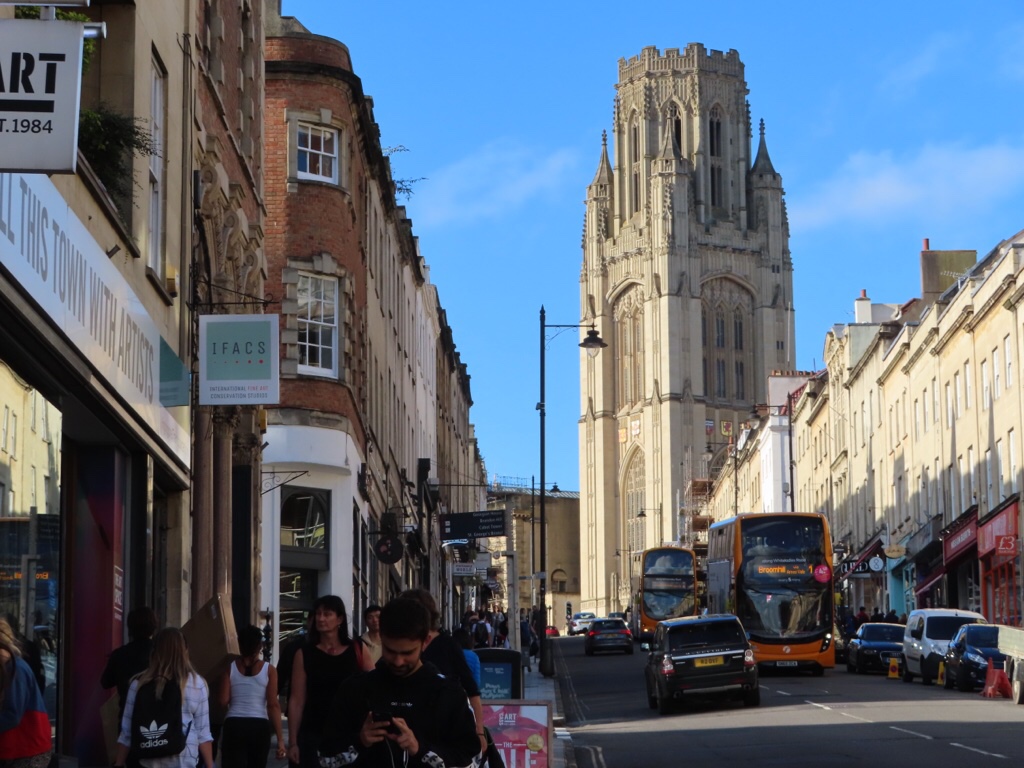
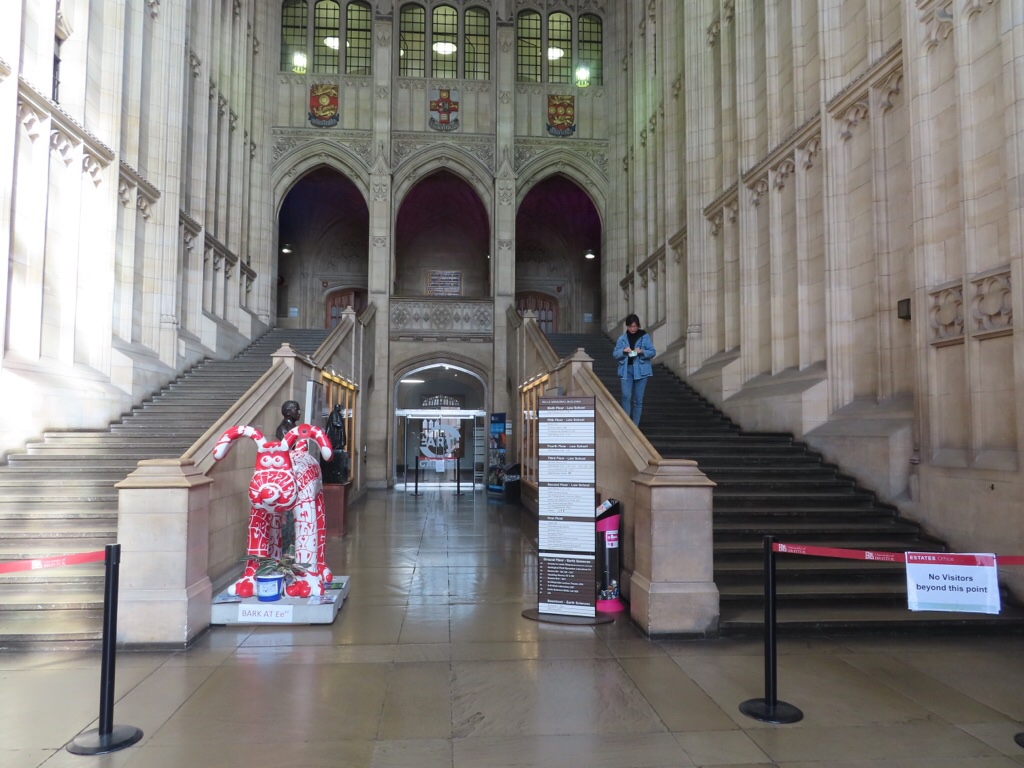
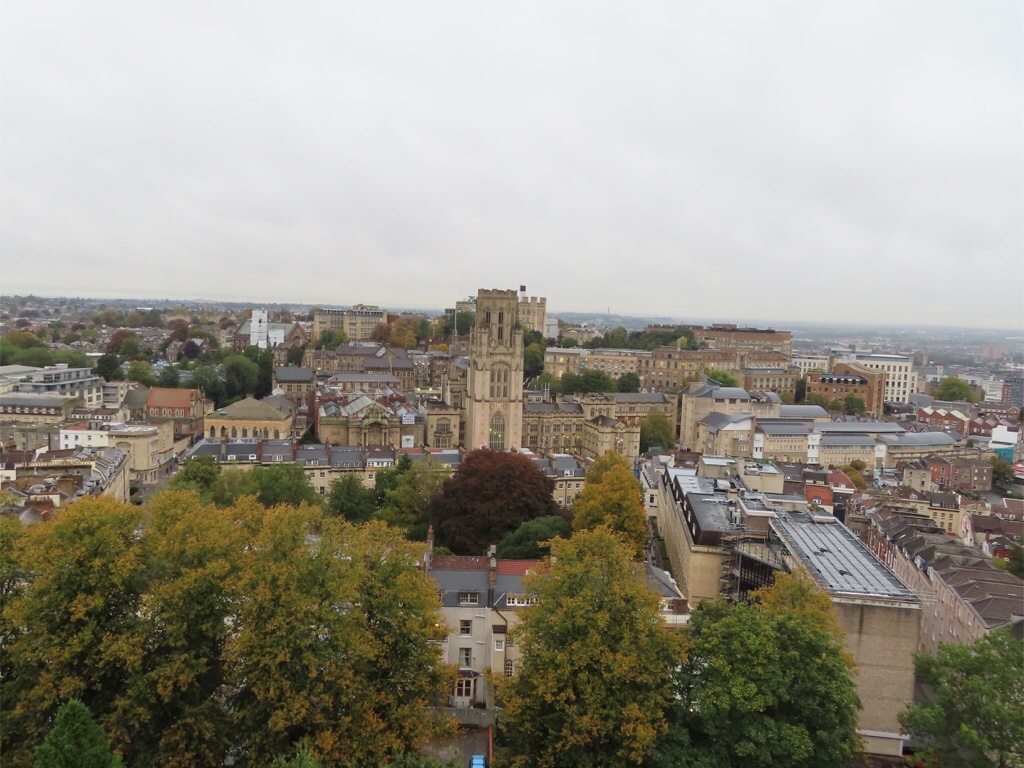
The tower of the Wills Memorial Building dominates the city and is considered one of the last great Gothic buildings to be built in England. It is part of the University of Bristol and we just looked inside the entrance hall …

… then headed passed the Cathedral and we were done.

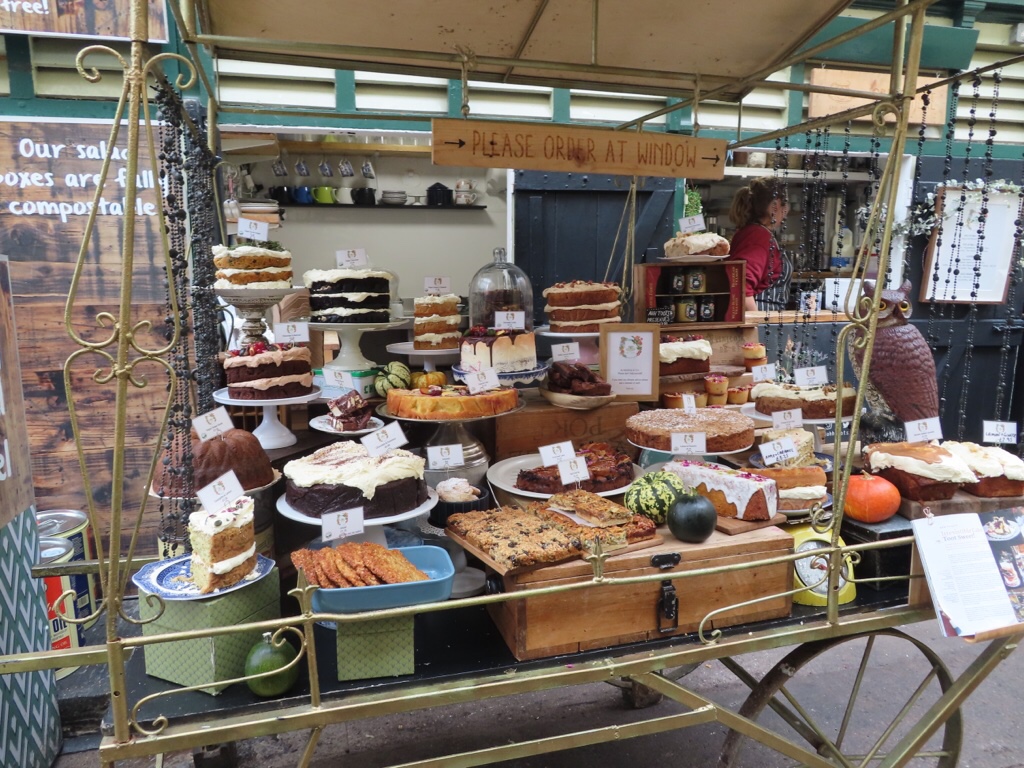
We had watched the quiches and salads being prepared while we ate our breakfast this morning and returned to Mokoko to try them out!

Chatting over lunch, we thought we would probably be back sometime, after all there’s definitely more to see, it would be nice to see the city with a little more sunshine and there are lots more restaurants to try!

On that happy note, the ferry took us back to Temple Meads and our train home.

Map

Lots of Banksy …

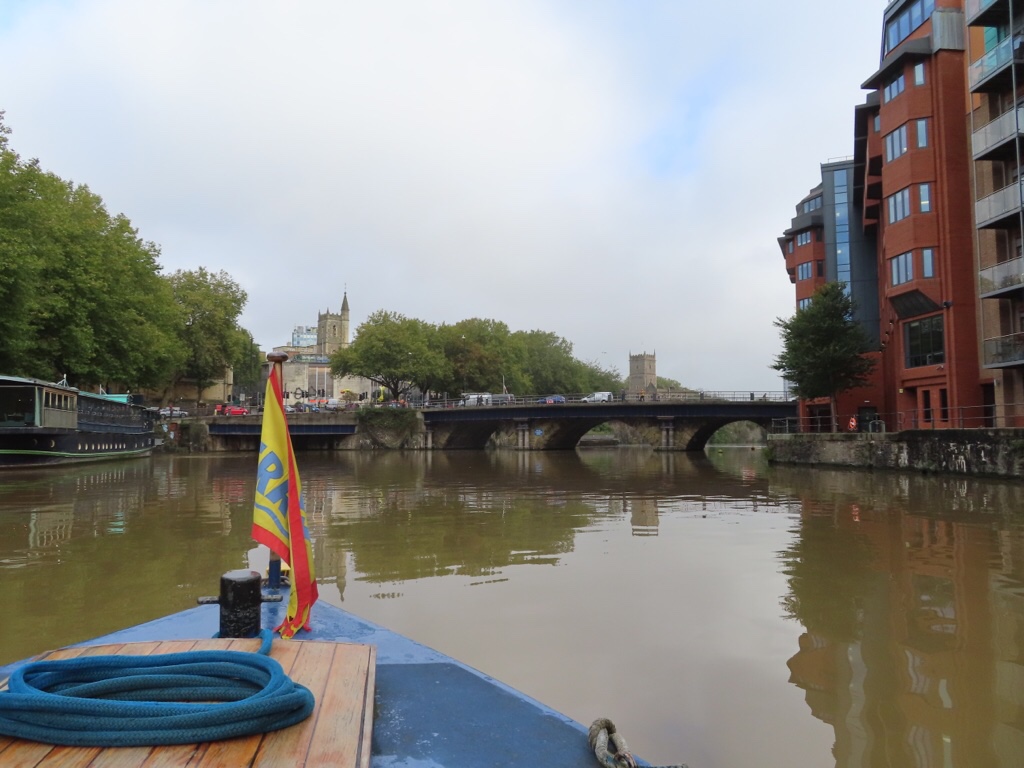
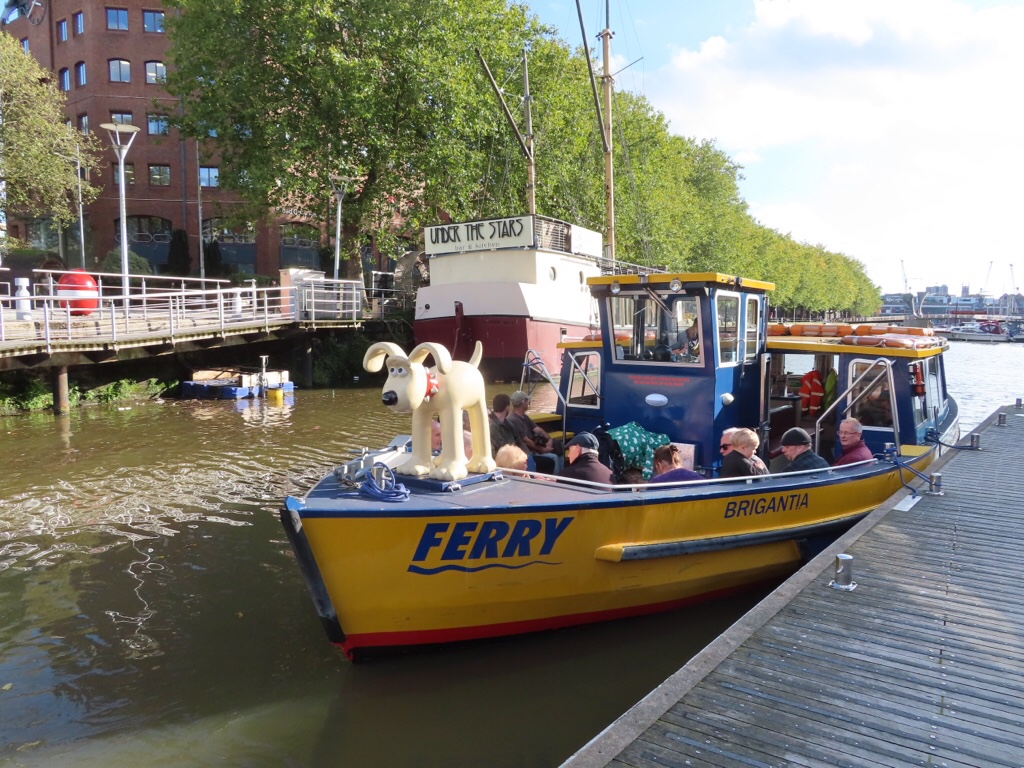
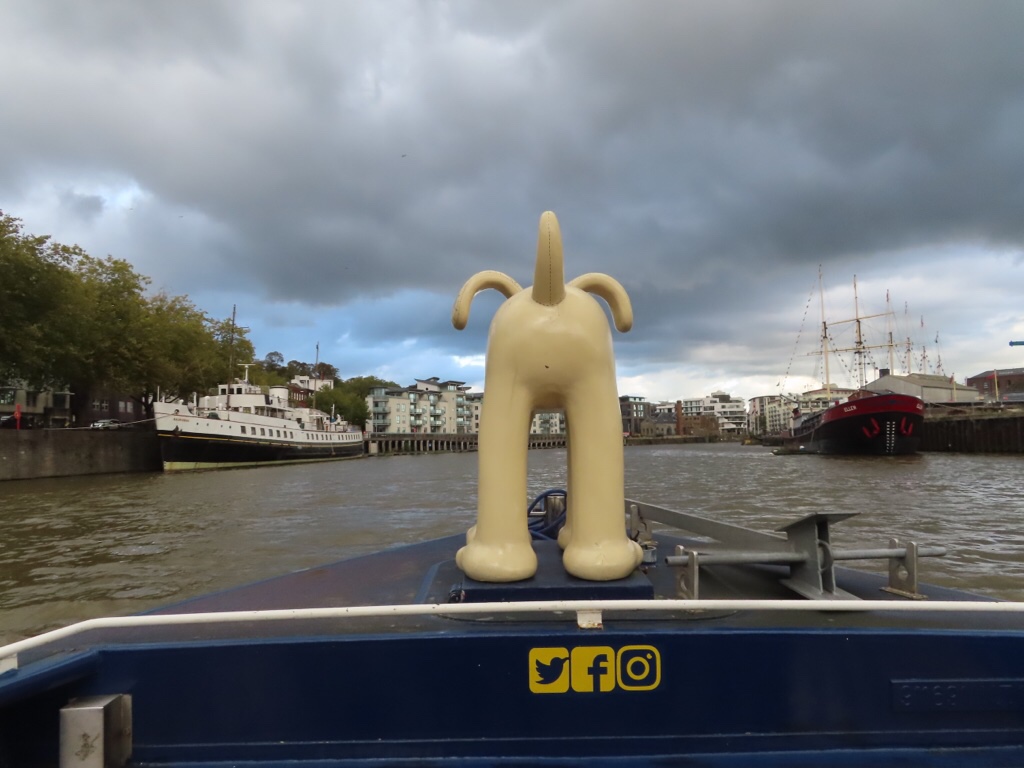
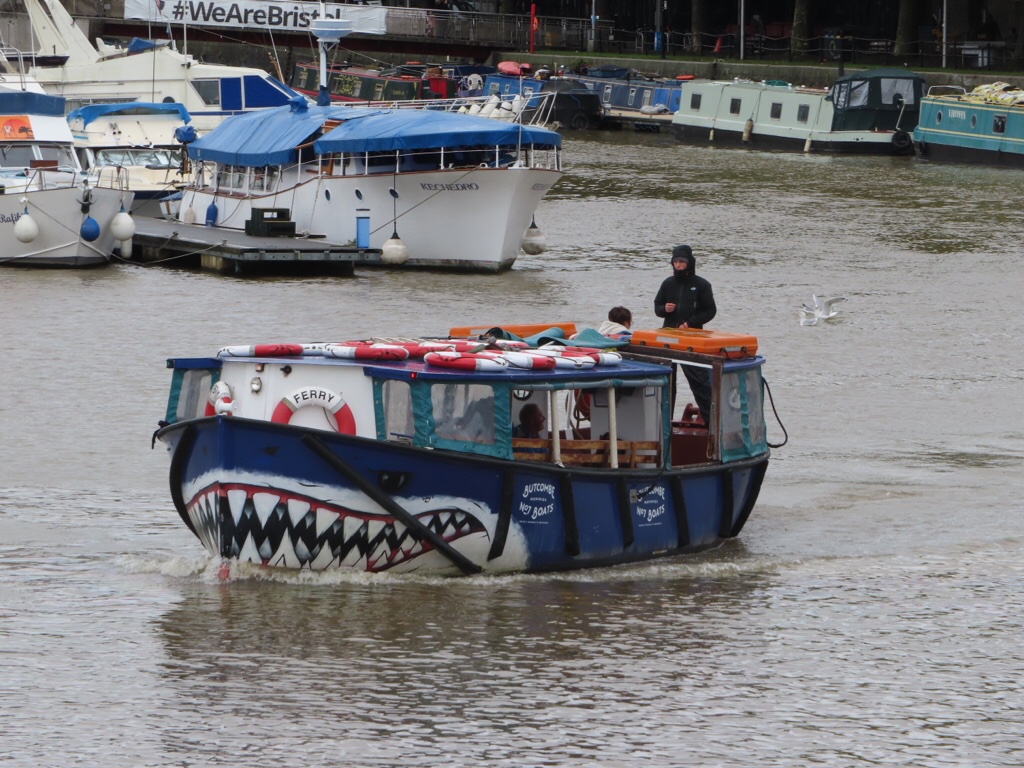
Today is our wedding anniversary, and we picked Bristol so we could celebrate with a boat trip. There are a pair of ferries who have a figure of eight route round the harbour and we really fancied having Grommit at the helm but he was going the wrong way … maybe later!

We passed wharf buildings converted into apartments …

… under Bristol Bridge …

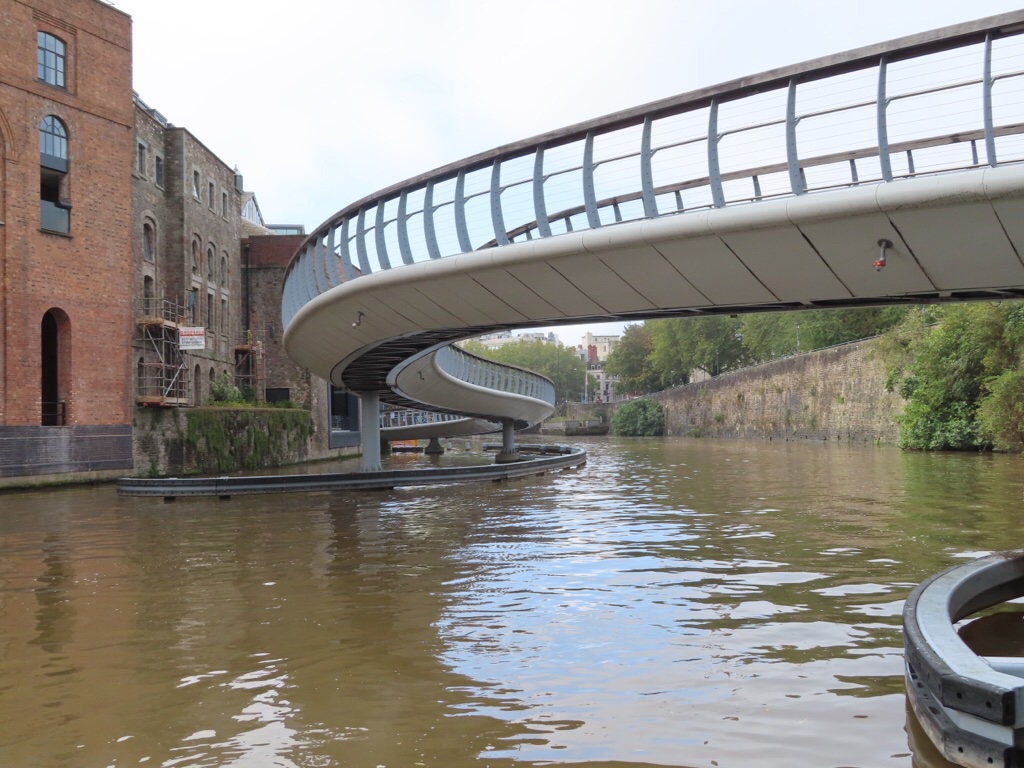
… and an interesting new pedestrian bridge …

… until we could see Cheese Lane Shot Tower. William Watts invented the tower process for making lead shot whereby molten lead was dropped into cold water below. The original tower was built in 1782 and used until demolished for road widening in 1968. It was rebuilt the following year in this modern design and continued to be used to make lead shot till 1980. It can now be hired as a penthouse boardroom!

We got off at Castle Park which contains St Peter’s church, bombed in the Blitz and left as a monument …

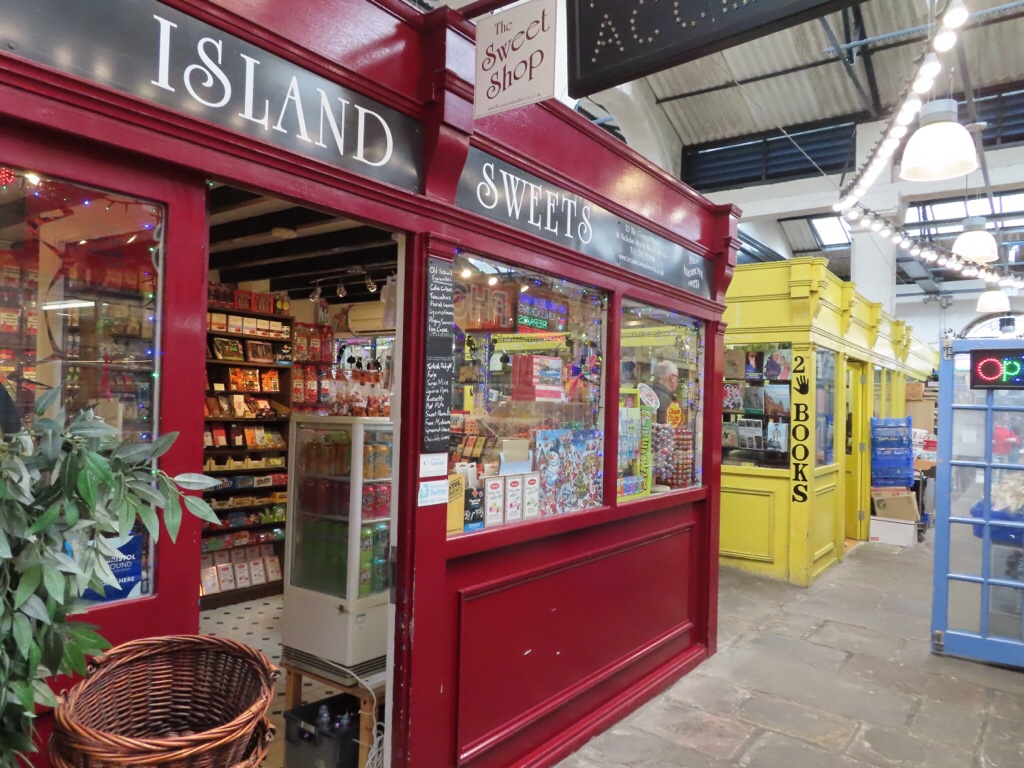
… then followed a route through the city, picking off the main attractions starting with St Nicolas Market …

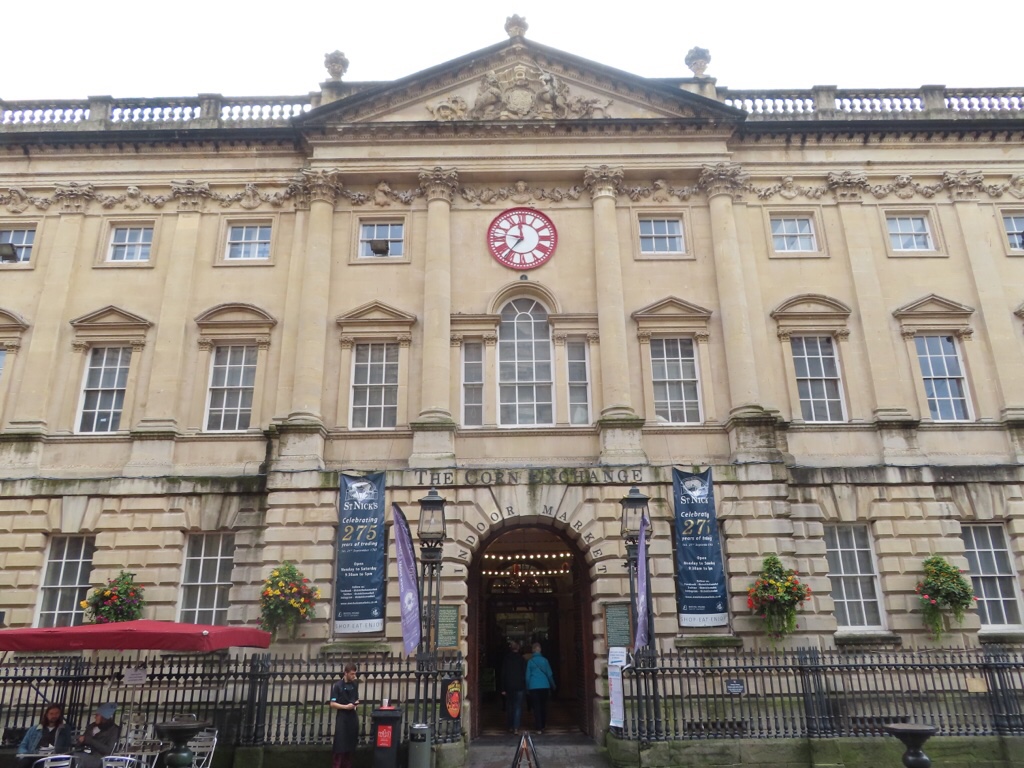
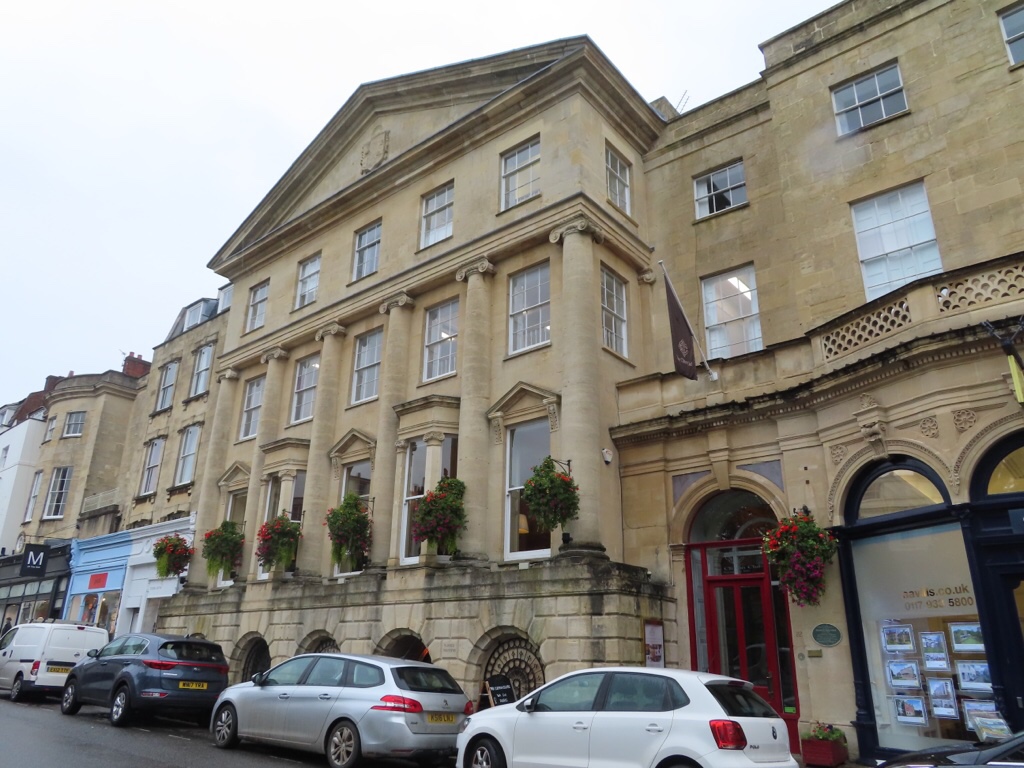
We exited the market in Corn Street where the C18th Corn Exchange was built to house the merchants who were blocking the streets. They settled their debts on the four flat-topped brass pillars called Nails – hence the expression to ‘pay on the nail’.

The clock above the entrance has two minute hands, the red hand shows Bristol Time and just over ten minutes ahead is the black hand showing Railway Time (or GMT) used before time was standardised across the UK to accomodate railway schedules in 1852.

Everards Printing Works has a colourful Art Noveau facade with Carrara-ware tiles and murals of Johannesburg Gutenberg and William Morris, the fathers of modern printing, separated by the Spirit of Literature and presided over by a woman holding a lamp and mirror representing light and truth … it just needs a little tlc so I hope somebody restores it.

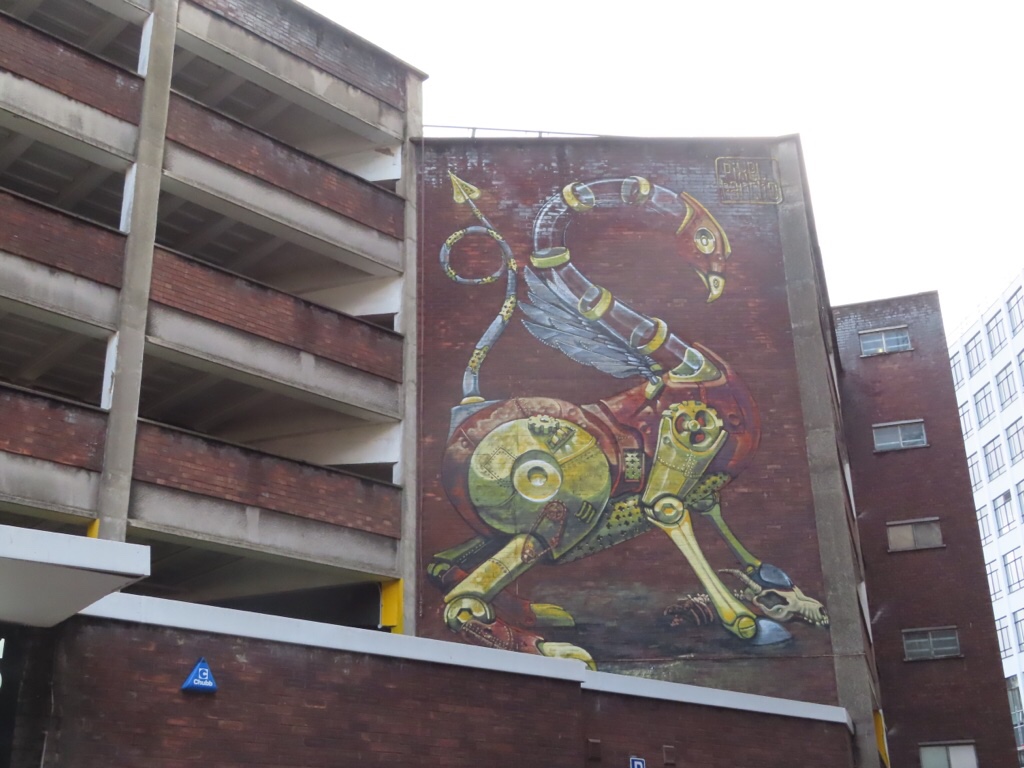
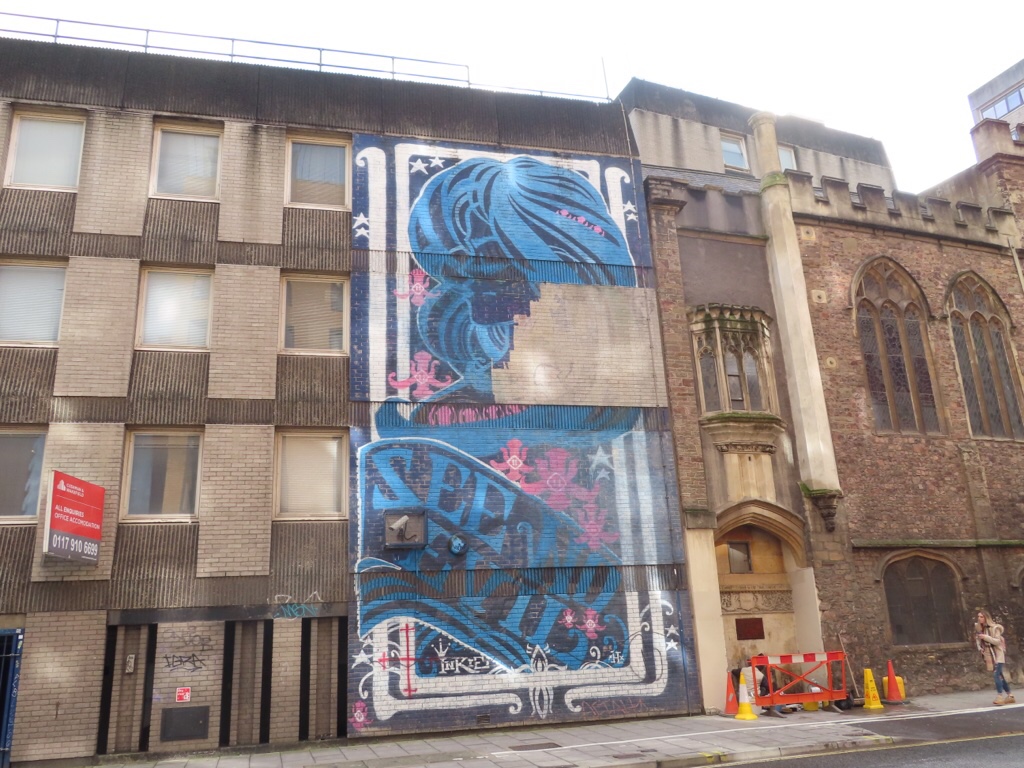
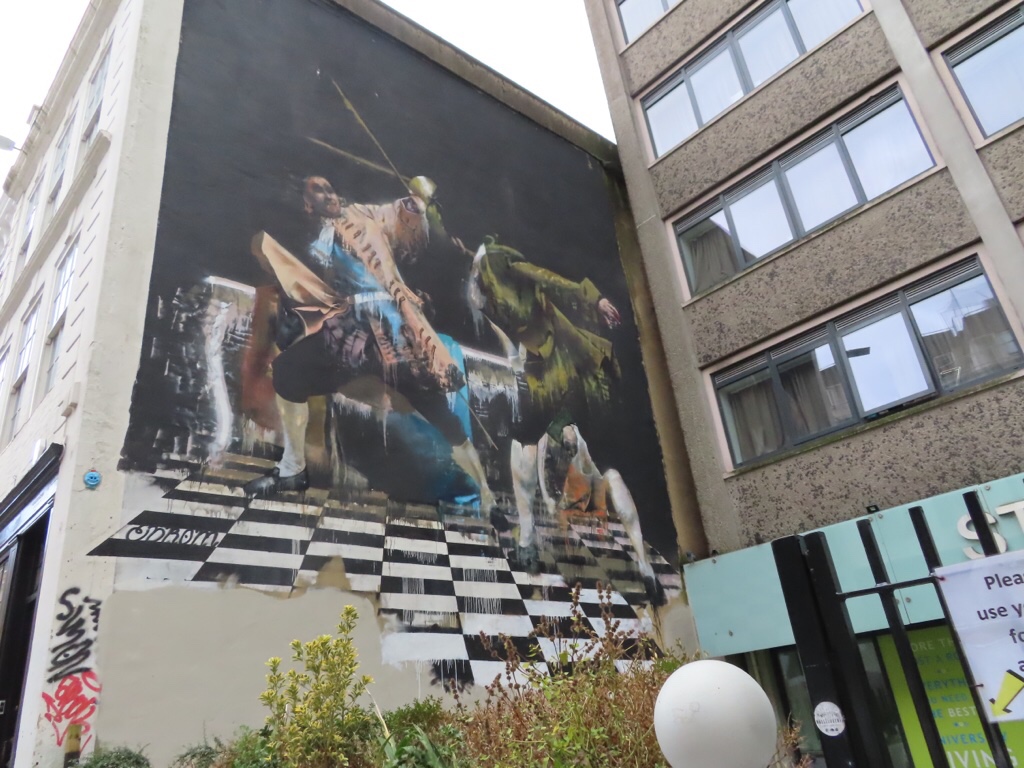
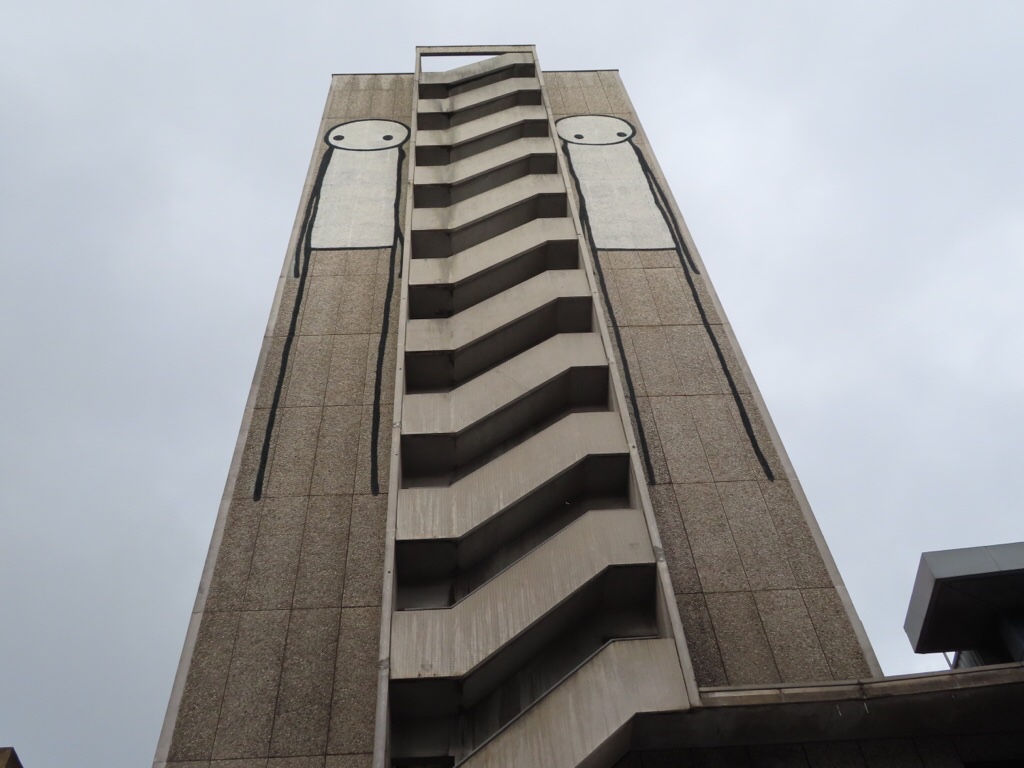
We then headed down Nelson Street to see remaining street art from the See No Evil festival in 2011-12. There is a huge amount of information online about who painted what, but here are just some images.

New Room was built by John Wesley in 1743, initially as meeting room but also used as a soup kitchen, a school, a dispensary and the first Methodist chapel.

Next stop is the neighbourhood of Stokes Croft, where the People’s Republic of Stokes Croft promote art in the community.

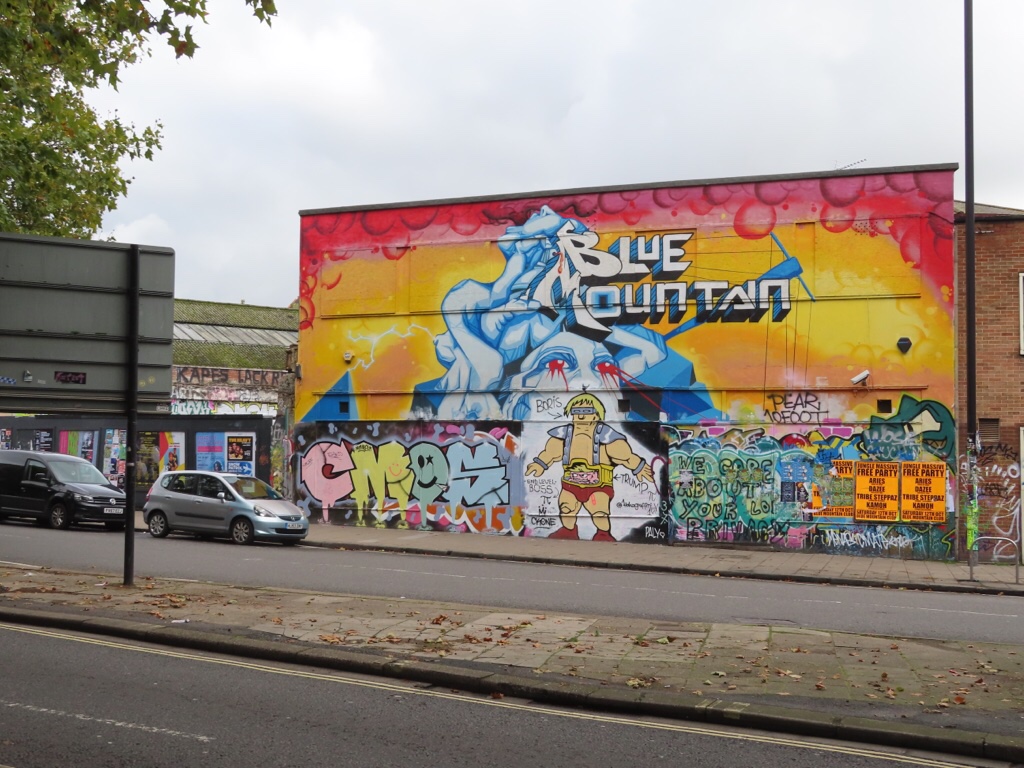
It seems quite a rundown area and the aroma of pot and drying spray paint was definitely in the air as we checked out some of the of street art …

… including a couple of Banksy’s – The Mild Mild West and The Rose Trap …

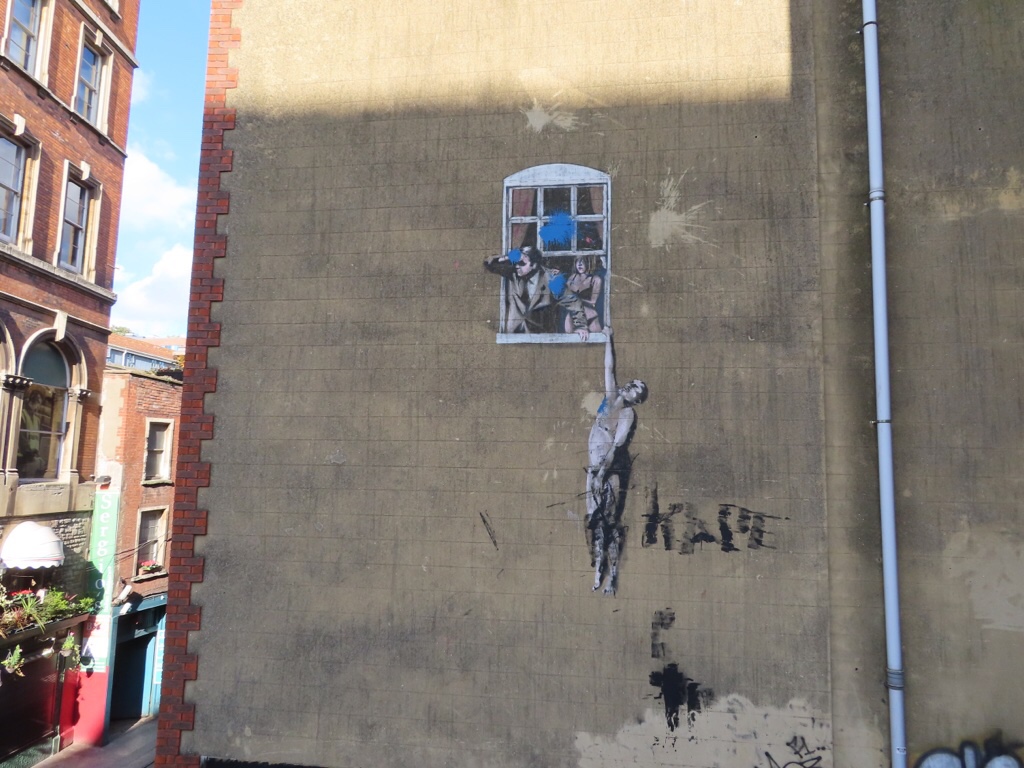
… and Well Hung Lover nearer the city centre.

The city have several free museums including Red Lodge which was once a C16th merchants house and later England’s first girls reform school with a splendid Tudor Oak Room …

… and The Georgian House, former home of local sugar merchant John Pitney with faithfully restored rooms and the story of the family’s dealings in the West Indies. Their slave Pero was commemorated by the Pero bridge in 1999.

Back at the harbour, Grommit was ready to take us round the other side of the harbour.

We passed the reconstruction of the Matthew, the ship in which the Italian navigator Giovanni Caboto or John Cabot, sailed west from Bristol in 1497 in search of Asia. Instead he found North America, landing on the banks of what he named Newfoundland, which he claimed for England.

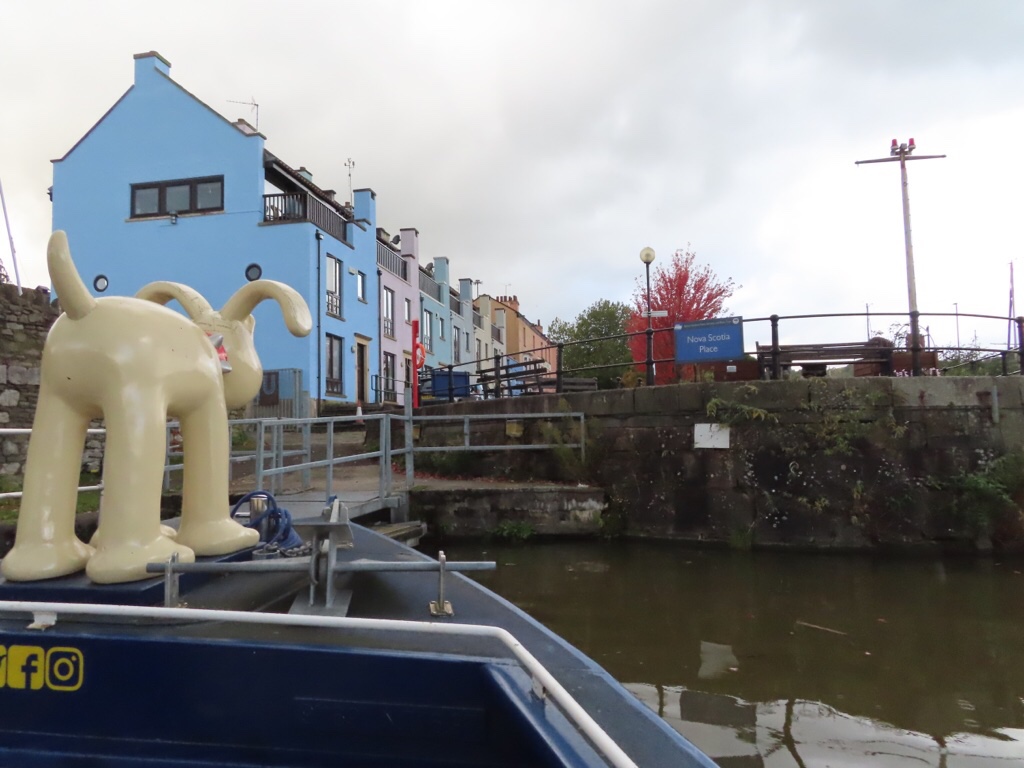
We continued to Nova Scotia Point …

… before returning to the SS Great Britain and got off.

We went in search of Banksy’s take on Vermeer. It’s a good job Google Maps has a note of these or we would never have found it tucked between a couple of dock buildings … Girl with the Pierced Eardrum …

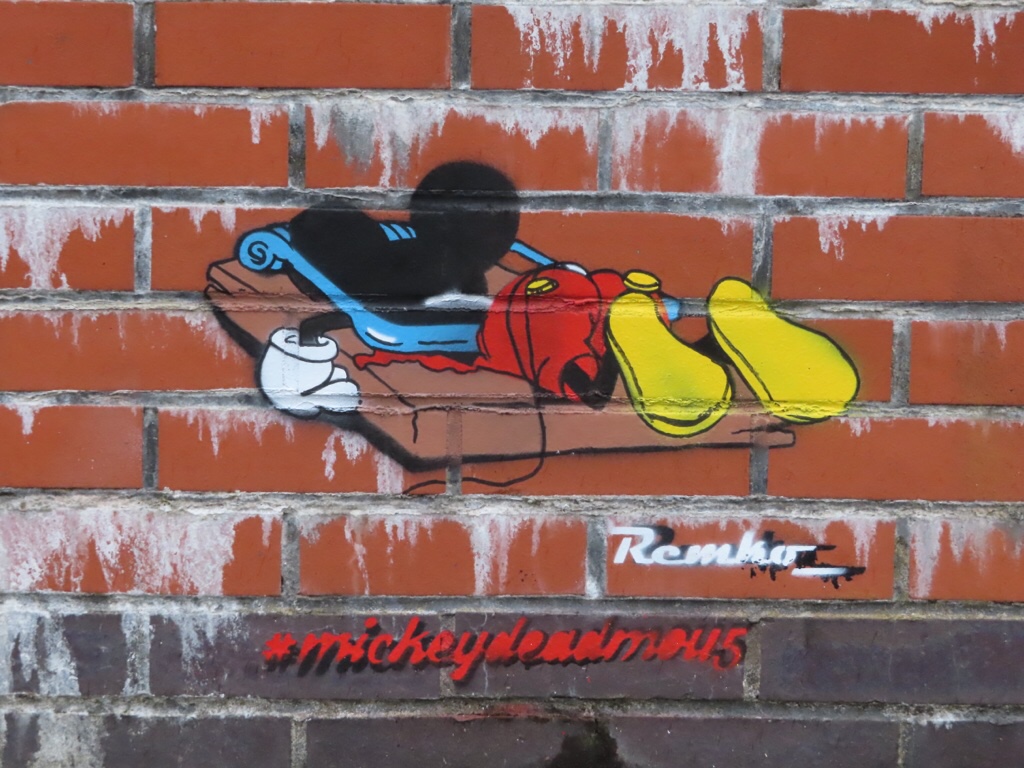
… and finally, a rather squashed Mickey reminding us of Rose Trap earlier

With such a multi-cultural heritage in Bristol, we’ve managed to revisit all our favourite cuisines in one short break, and tonight was no different with Souk Kitchen decorated with bold colours and flickering candles and offering a fusion of Middle Eastern flavours. Yum!

Map

Mainly Brunel …

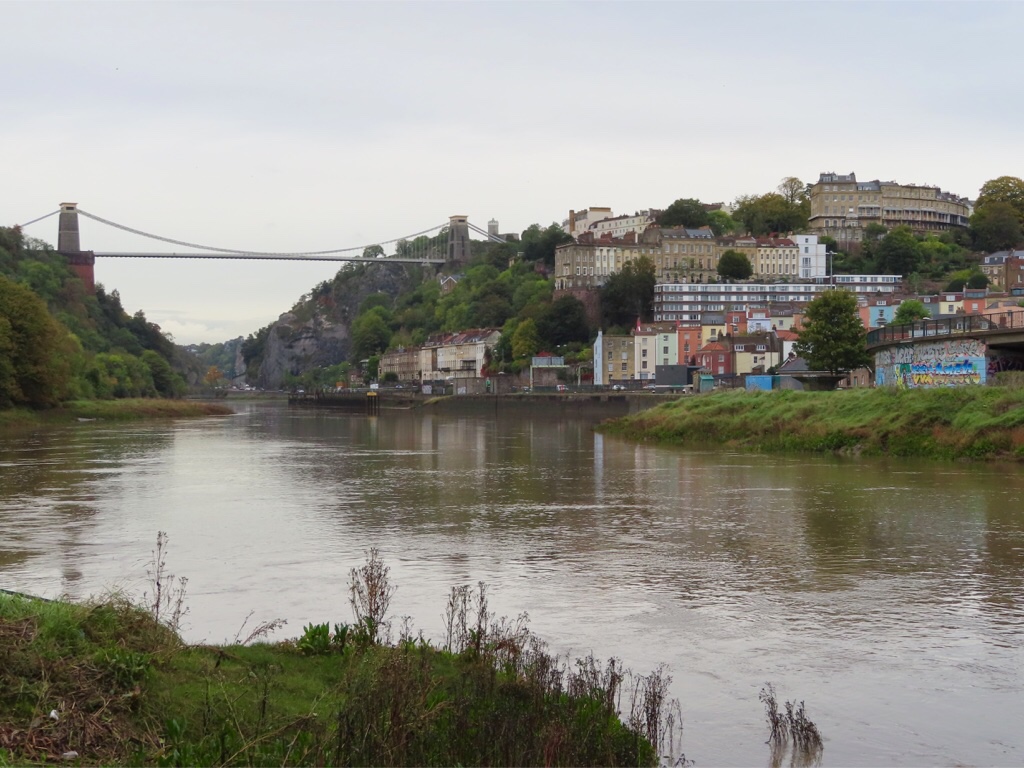
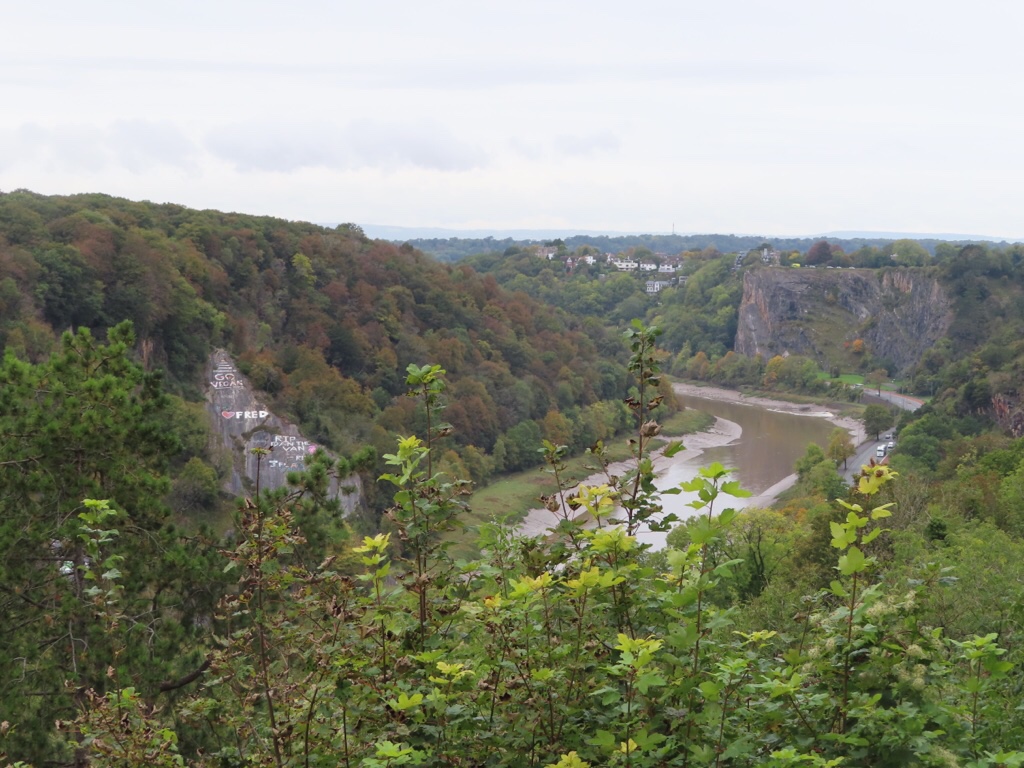
With rain forecast later, we made an early start so we could walk to Clifton along the bank of the River Avon. We would have started along the Chocolate Path, named for the appearance of its paving slabs laid in 1906, but it is slowly crumbling into the canal and has been closed awaiting repairs.

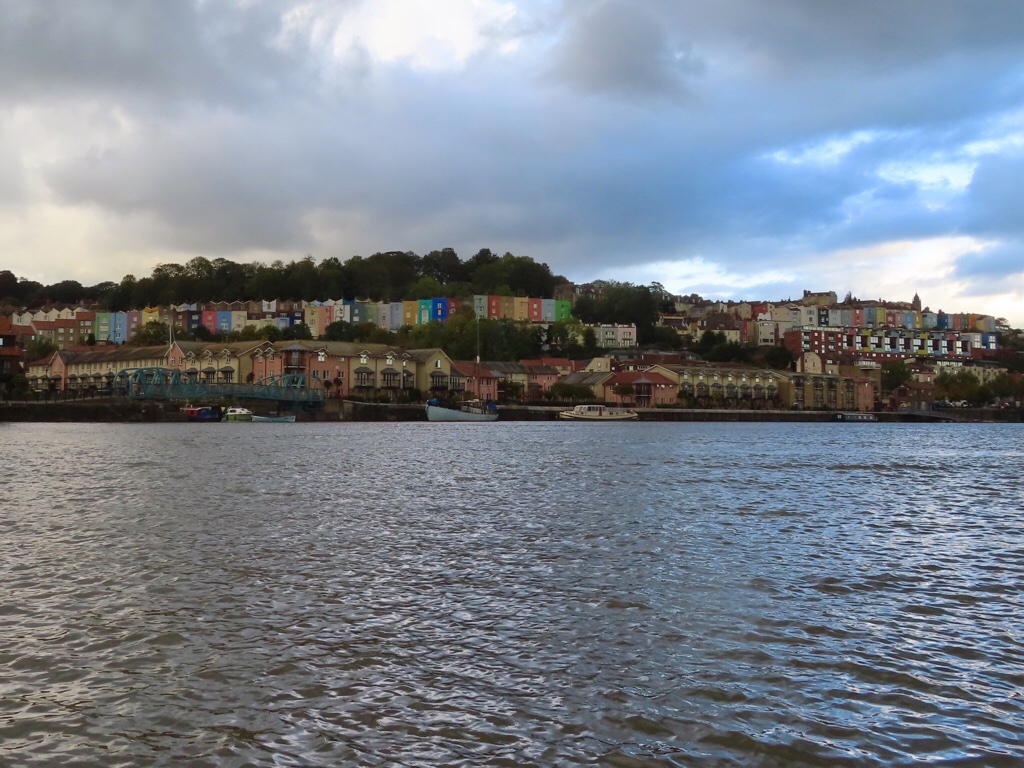
On such a grey morning even the graffiti and brightly painted houses did little to lift the mood …

… but The Clifton Suspension Bridge came into view and still looked impressive.

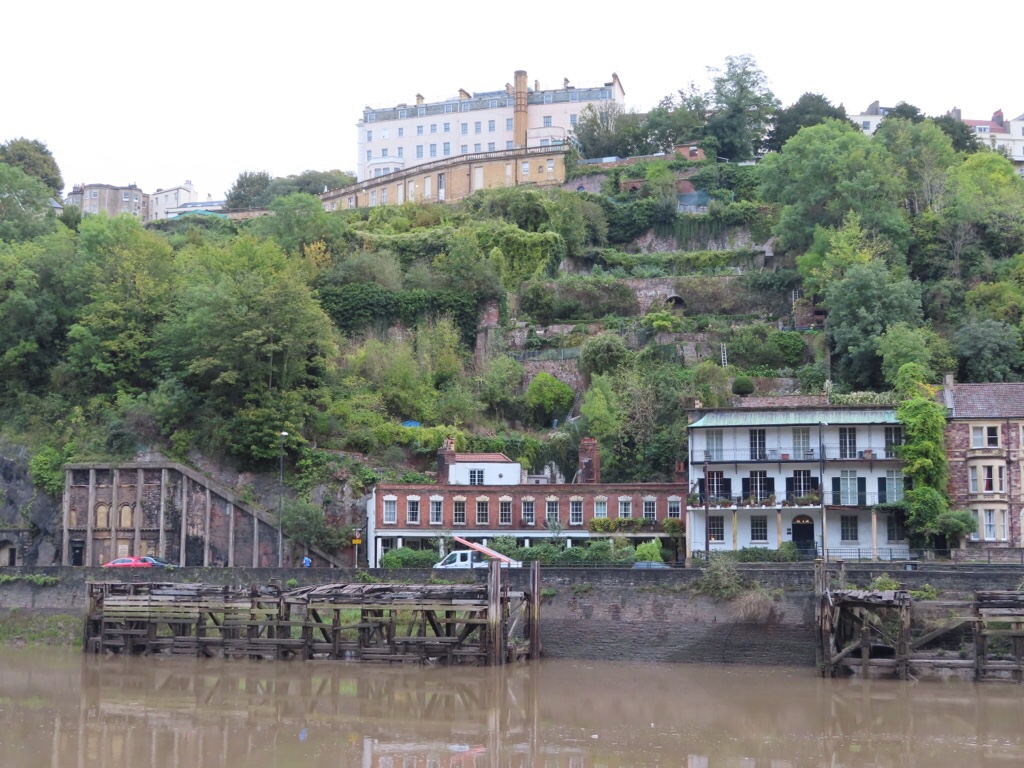
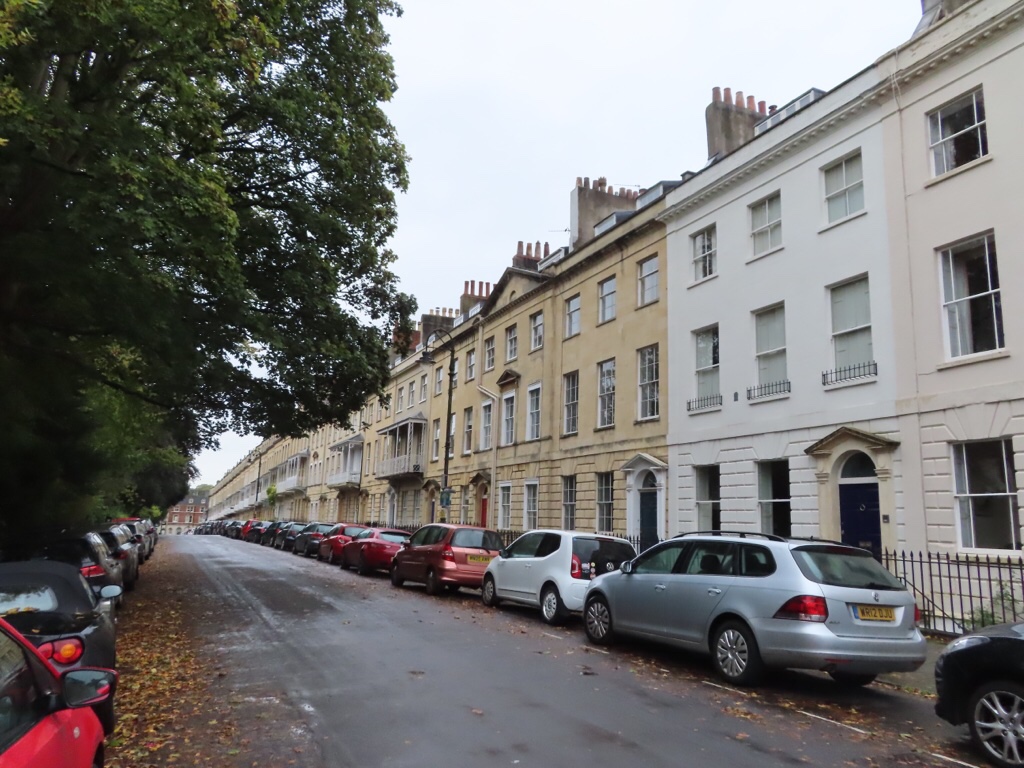
Looking across the river, we could see the area called Hotwells, named for the hot springs which bubble up through the rocks of the Avon Gorge. In the C18th, the spring was enclosed and its water pumped up into a new Hotwell House, which combined a pump room with lodgings in an attempt to compete with Bath. Elegant Georgian terraces were built as well as assembly rooms, hotels and lodging houses and Hotwells became crowded with nobility and gentry. Development up the green slopes of Clifton continued with much speculative property development, which was hit hard by the uncertainty of the war with France in 1793. By the time peace came, spas were giving way to seaside resorts as fashionable retreats, but Clifton developed into a perfect suburb for the rich merchants of the city and could even be reached by the Clifton Rocks Railway, a funicular railway built in a tunnel through the cliffs.

It started drizzling as we took the footpath up through Leigh Woods to the visitor centre by the bridge.

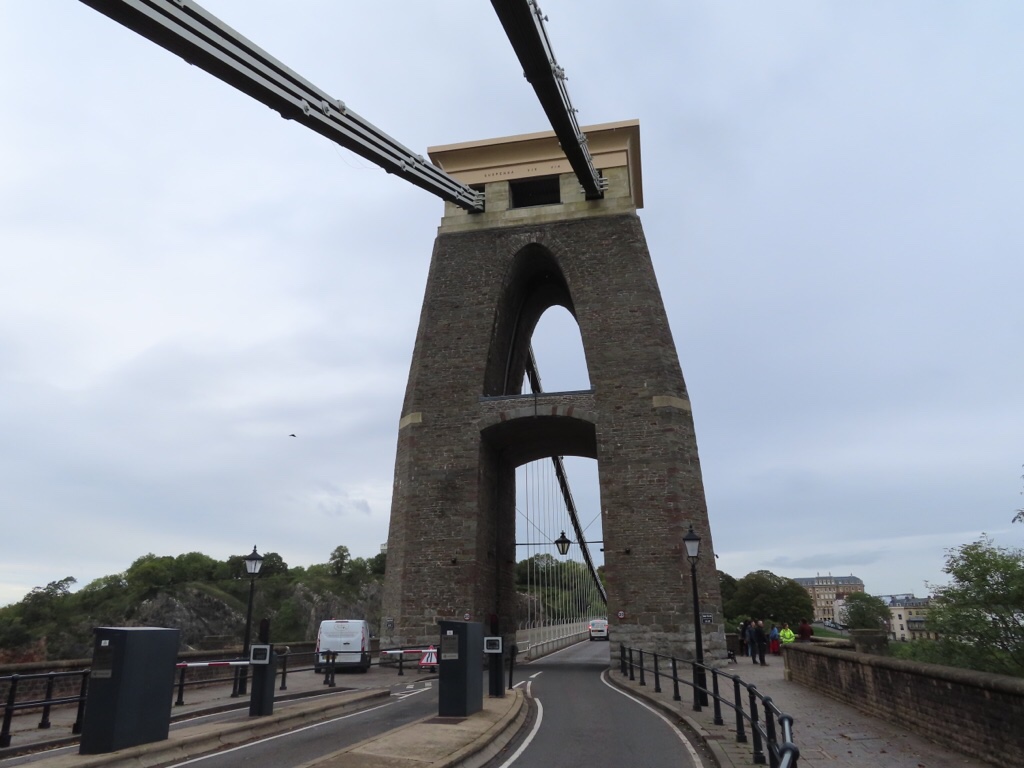
Having read about its construction, it’s surprising that this symbol of Bristol got completed at all. The idea of building a bridge across the Avon Gorge originated in 1753 but it was difficult to find a design which would fit the budget and even once Brunel’s design was chosen, there were delays, cost cuts and changes which meant the planned Egyptian style towers and sphinxes were omitted. It wasn’t completed till after Brunel’s death and was finally opened in 1864. It has always been a toll bridge, with a charge of £1 per car and was also the location of the first ever bungee jump by members of the Oxford University Dangerous Sports Club 1979.

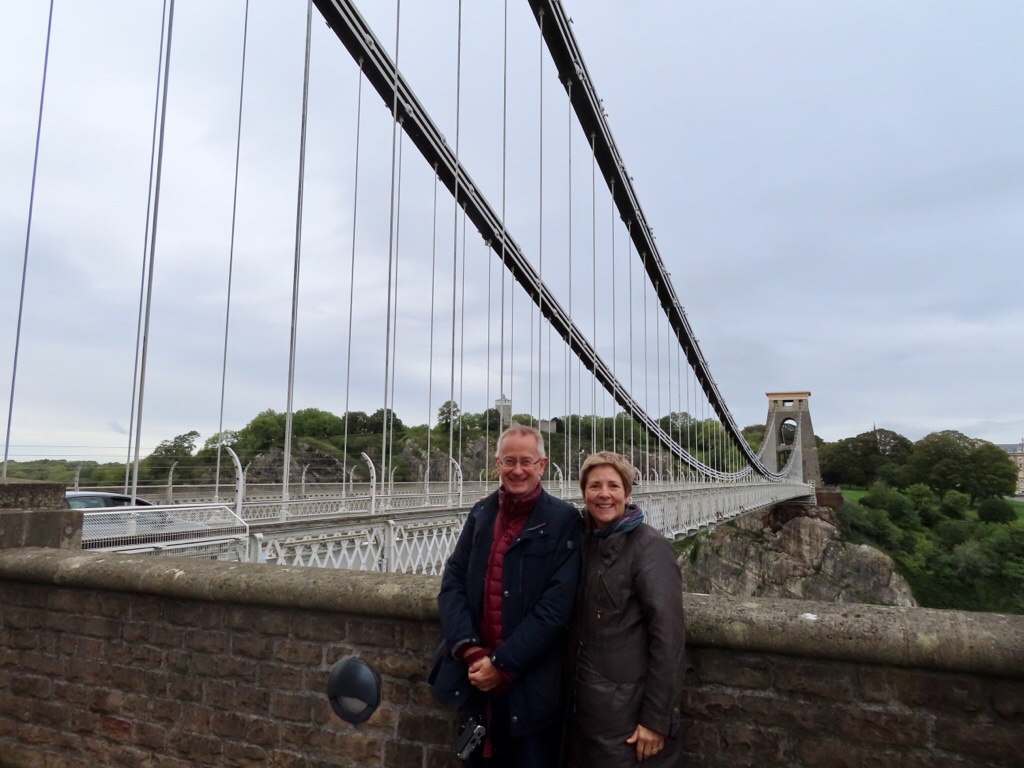
We walked across, looked back to the city and continued to the observatory which we had seen from the other side but the camera obscura was not working on such a grey day and we had no great ambition to climb down through the cliff to the Giants cave below. After a couple of snaps, a coffee and a chance encounter, we continued into Clifton.

I’m sure it would have been far more appealing on a dry day, and while we did take a look at a couple of the elegant streets and terraces …

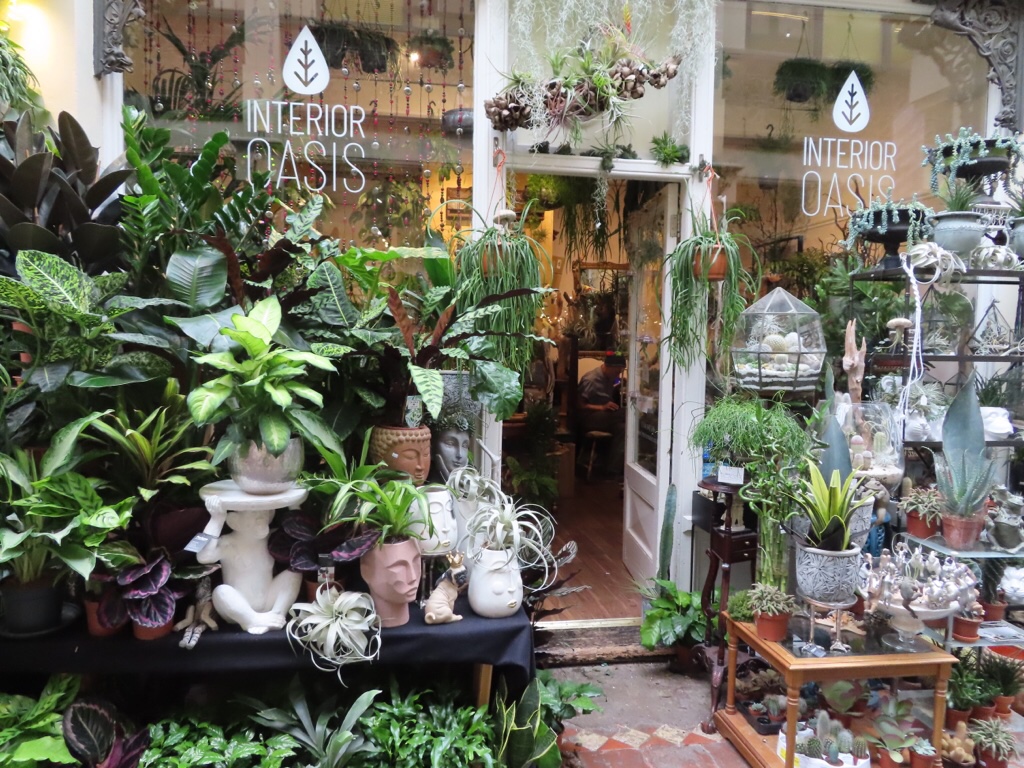
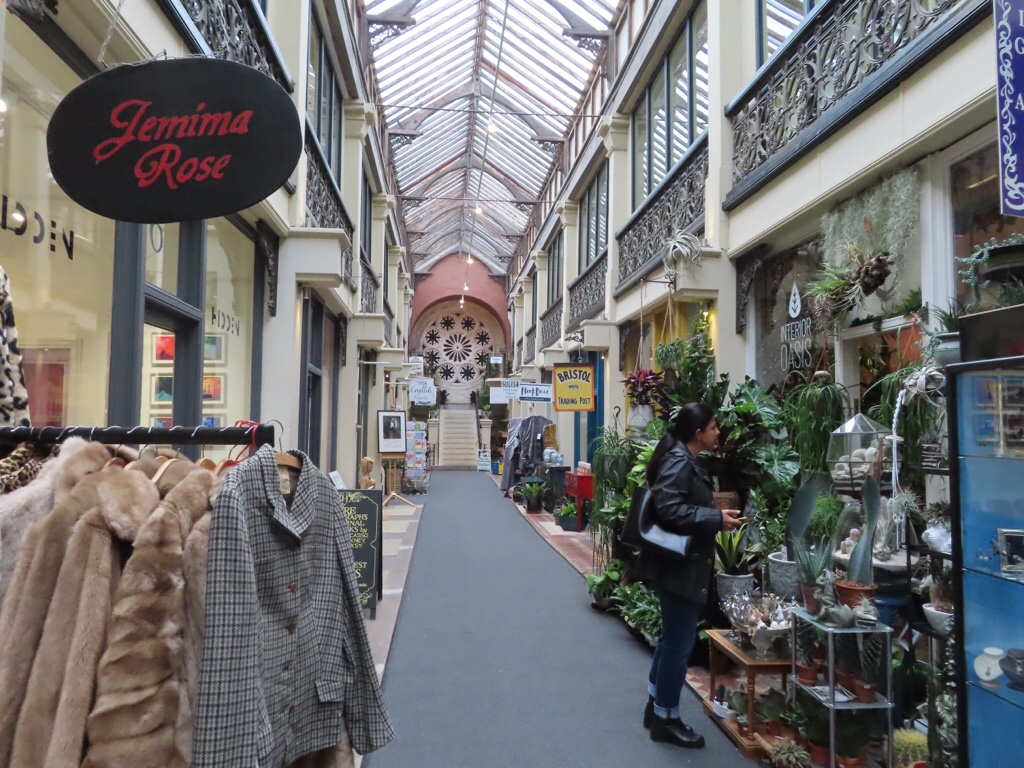
… and also the Clifton Arcade, it was all a bit damp.

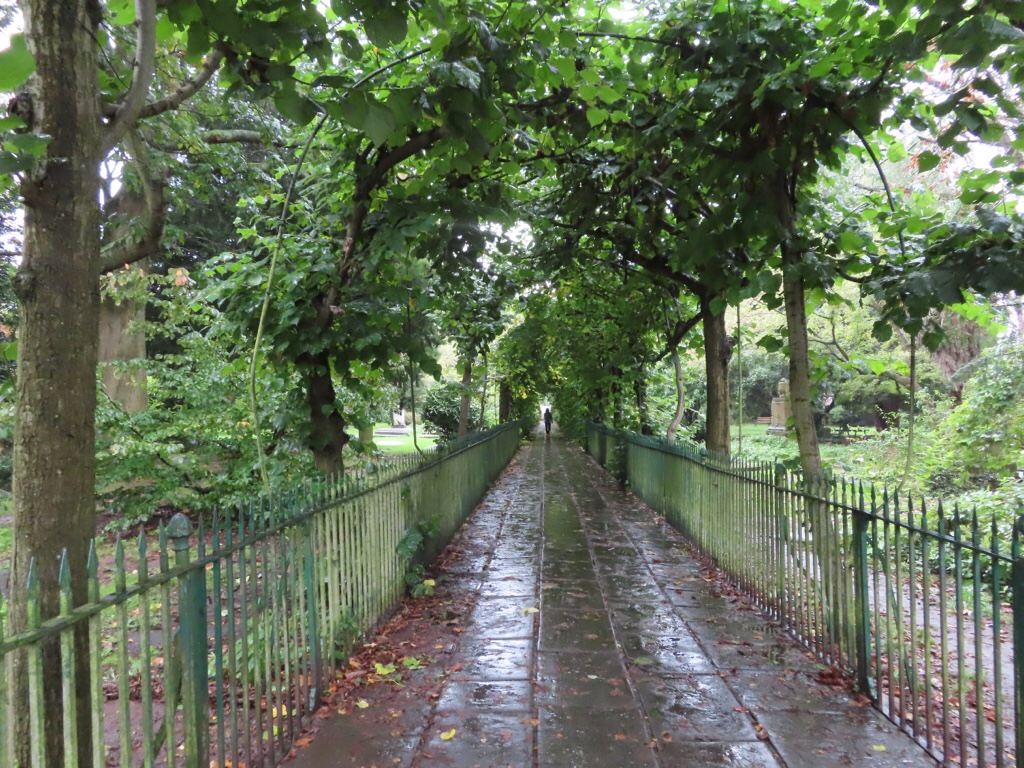
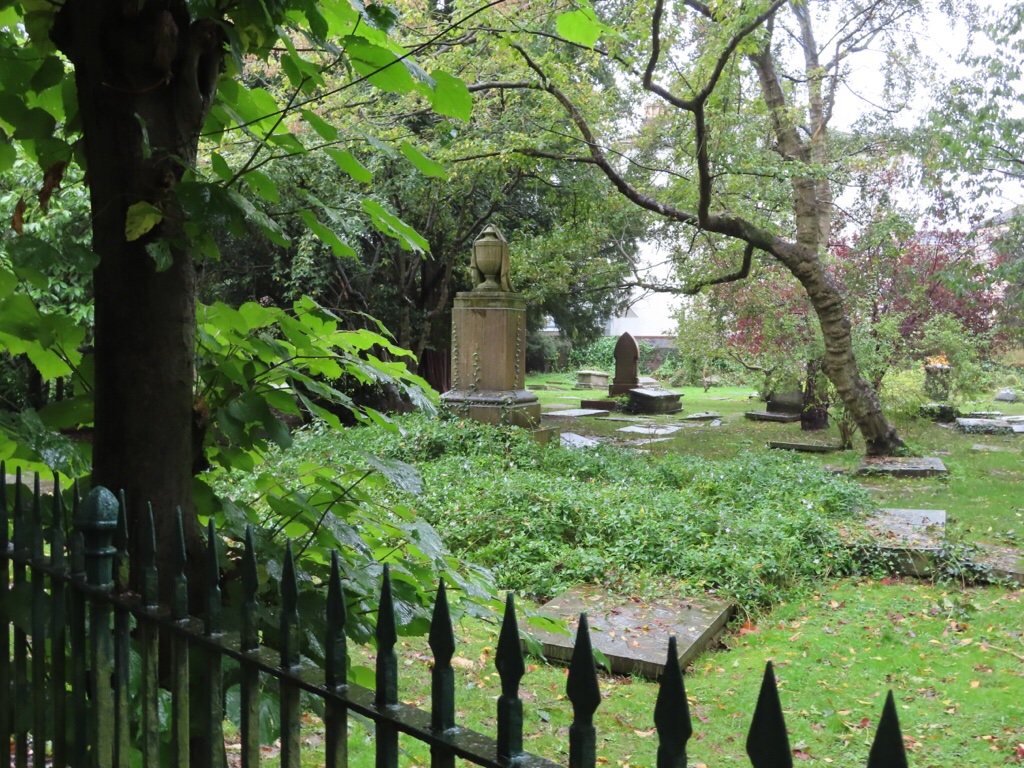
I had been reading Birdcage Walk by Helen Dunmore to immerse myself in Bristol, named for a footpath through a graveyard where one of the gravestones leads the reader into a story of the very speculative property development I mentioned earlier woven together with radical activists … so of course we had to check it out and it was certainly very atmospheric, especially in the rain!

At this point enough was enough, and rather than taking our time admiring more architecture and checking out the coloured houses of Hotwells, we took the most direct route back to the city, followed by a small ferry that takes passengers across the river for £1 and took refuge in the SS Great Britain.

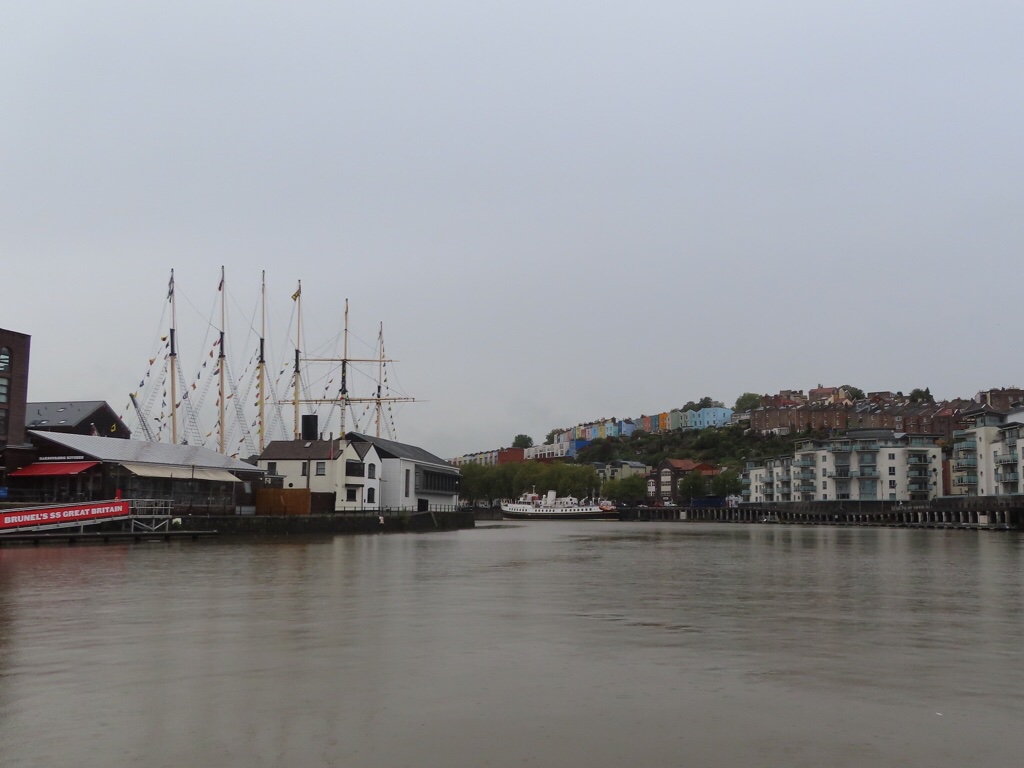
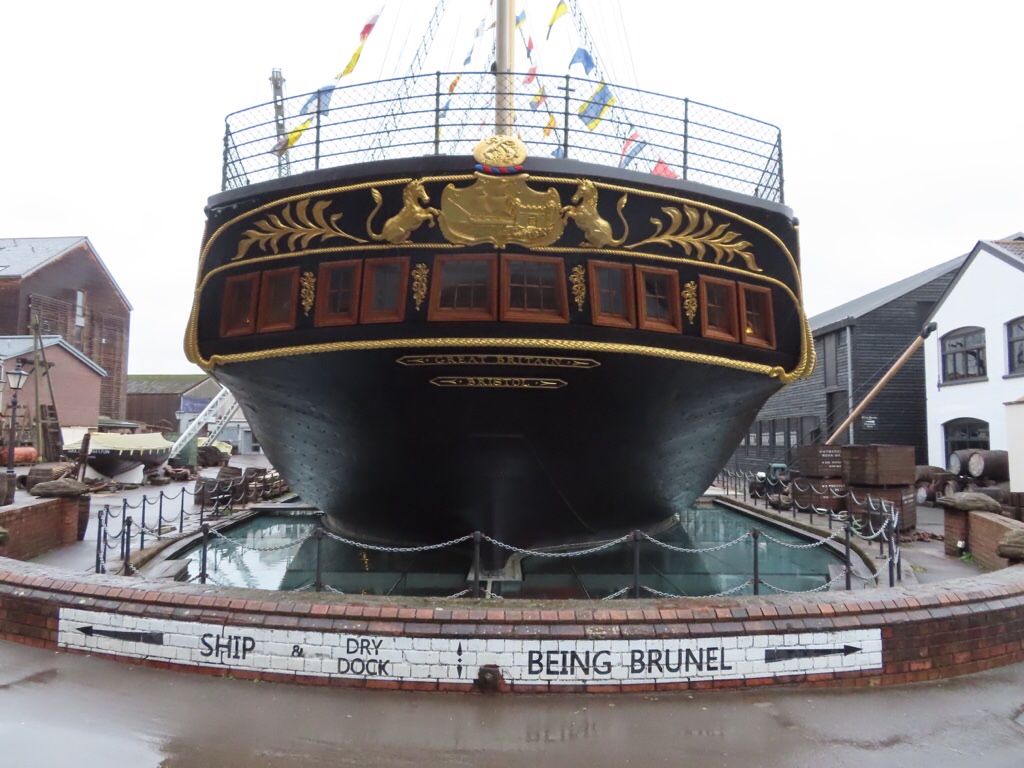
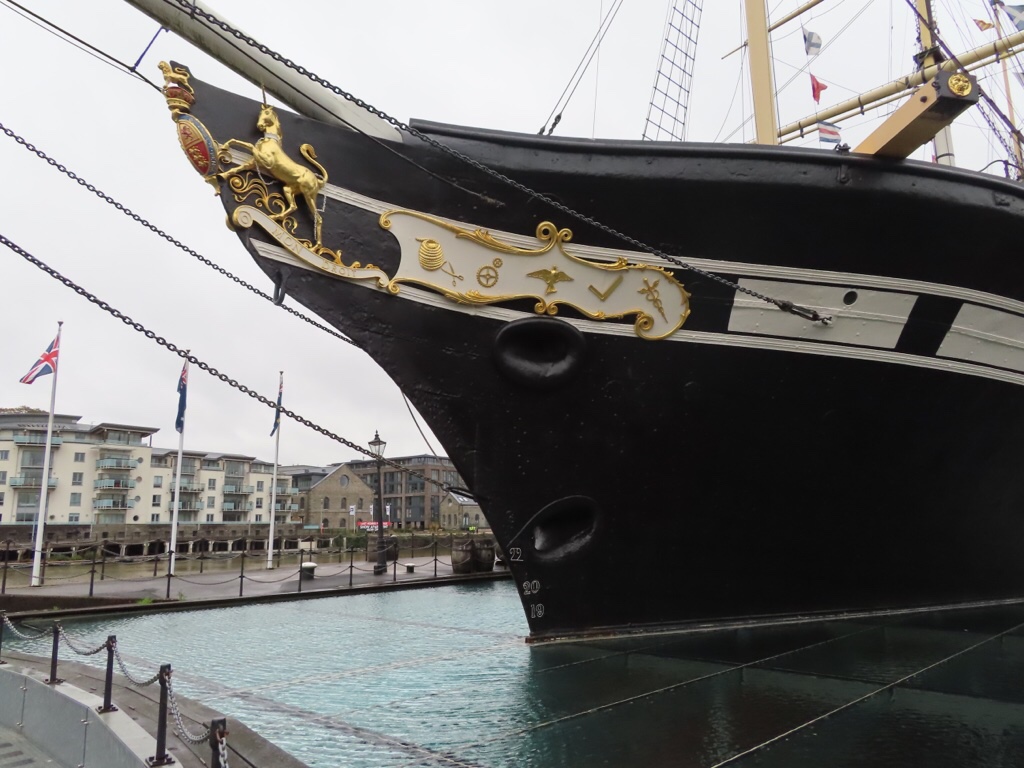
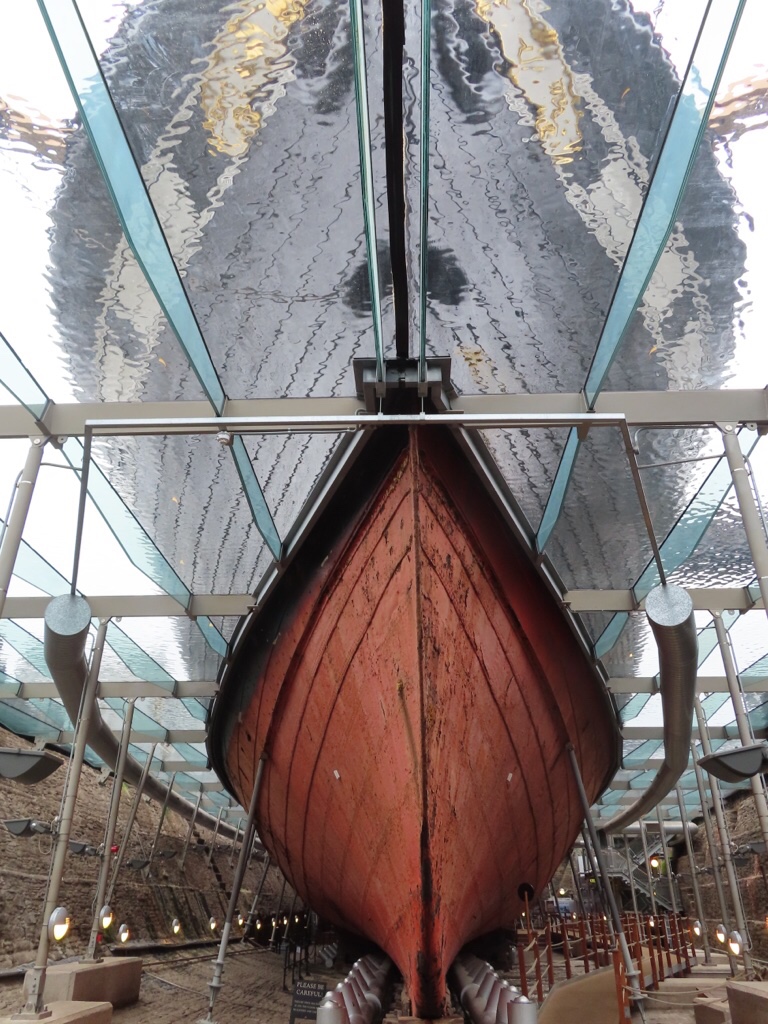
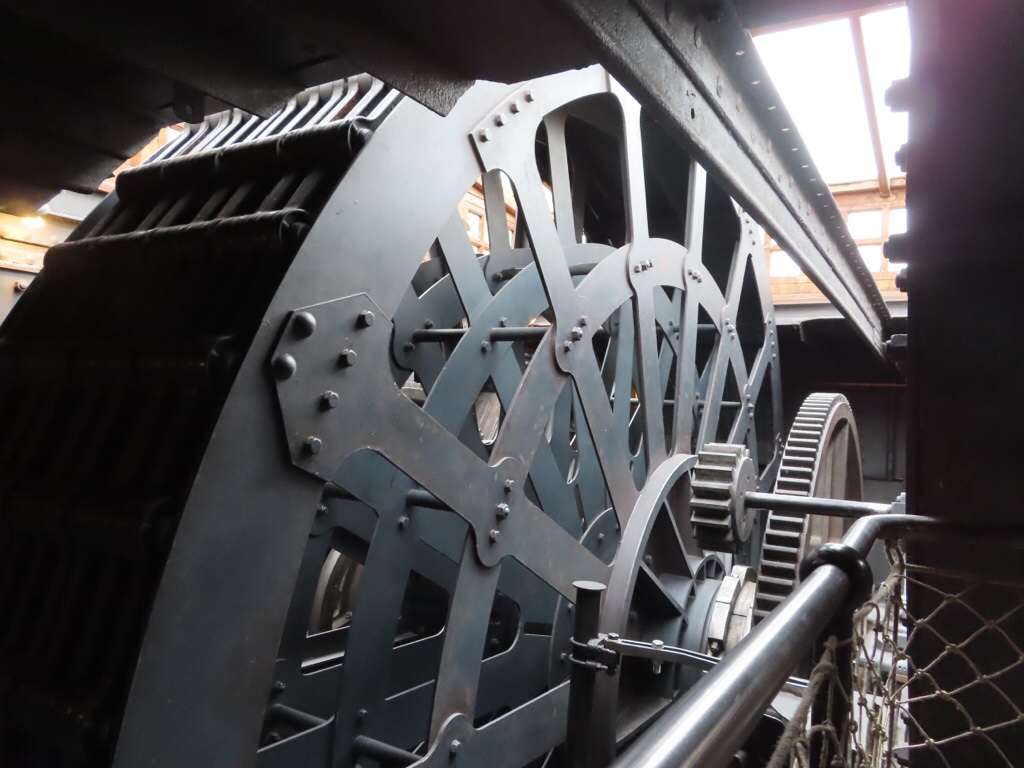
She was designed by Brunel and built in 1843, the first iron-hulled, propeller-driven ship to cross the Atlantic to New York. Subsequently she was fitted with an extra deck and made voyages to Australia, then was used for freight and did a stint carrying troops during the Crimean war. At the end of her life she was sunk as offshore storage in the Falklands before being rescued in 1970 and returned to the same dry dock she was built in and preserved. She stands giving the impression she is in water …

… but the truth can be seen below in the dry dock which contains warm air to prevent the hull from rusting further.

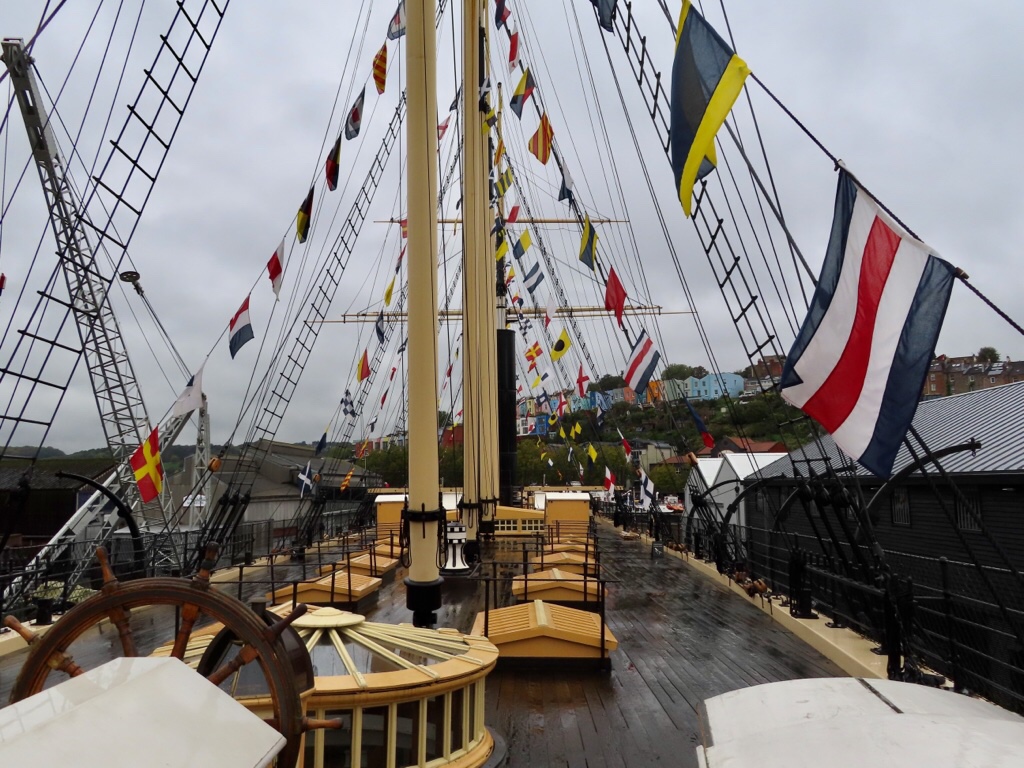
From the main deck she looks very smart …

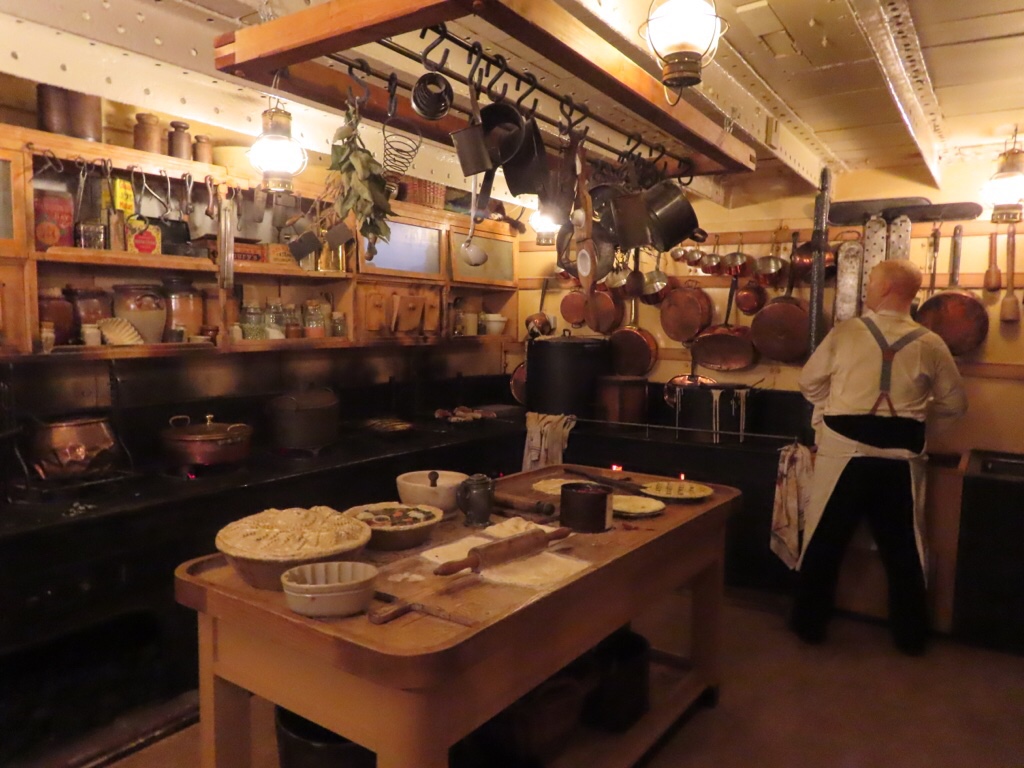
… and inside she has been partially refitted to show how she would have looked when first built complete with rats in the galley and rattling lids on the boiling stew!

This was a great way to spend a wet afternoon and there was so much more including letters and diaries from passengers, details of the engineering design and how they have preserved her … good job our ticket enables to return for another visit!

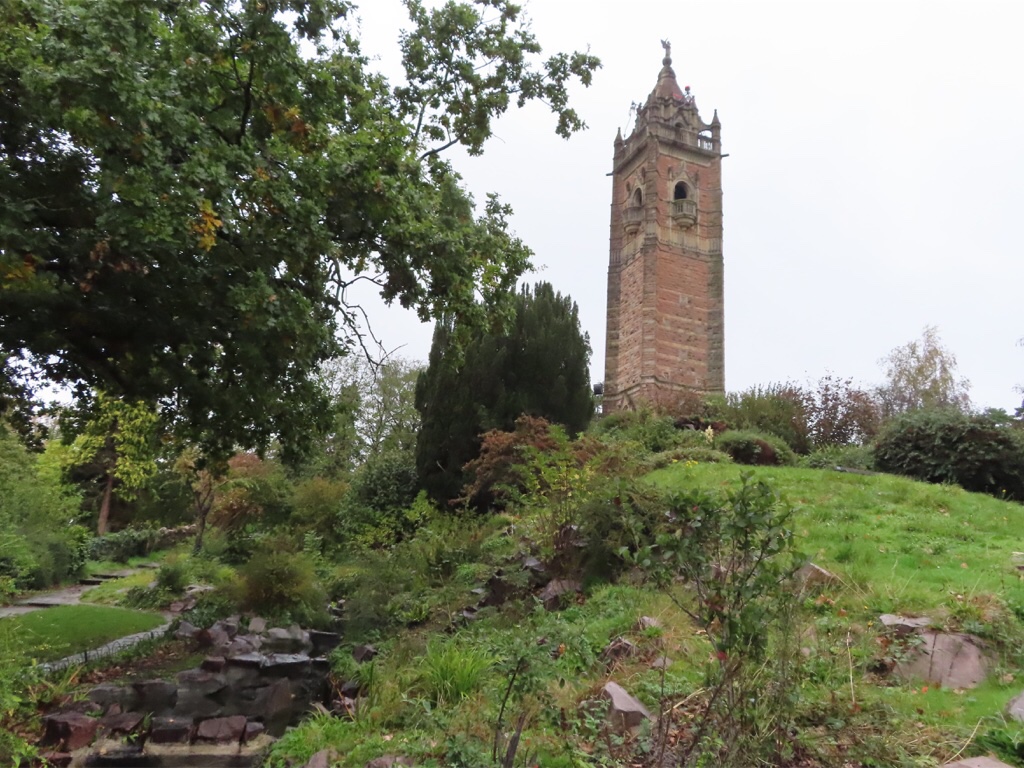
Just when we felt quite ready to call it a day, we set off back into the city to meet our niece Abi. Walking through Brandon Park, I climbed Cabot Tower but only got murky views.

A Sri Lankan restaurant called the Coconut Tree was a great choice for dinner and we caught up on news, chatting about all we had seen and what she was up to over white wine, hoppers and curry.

Map

Hello Bristol …

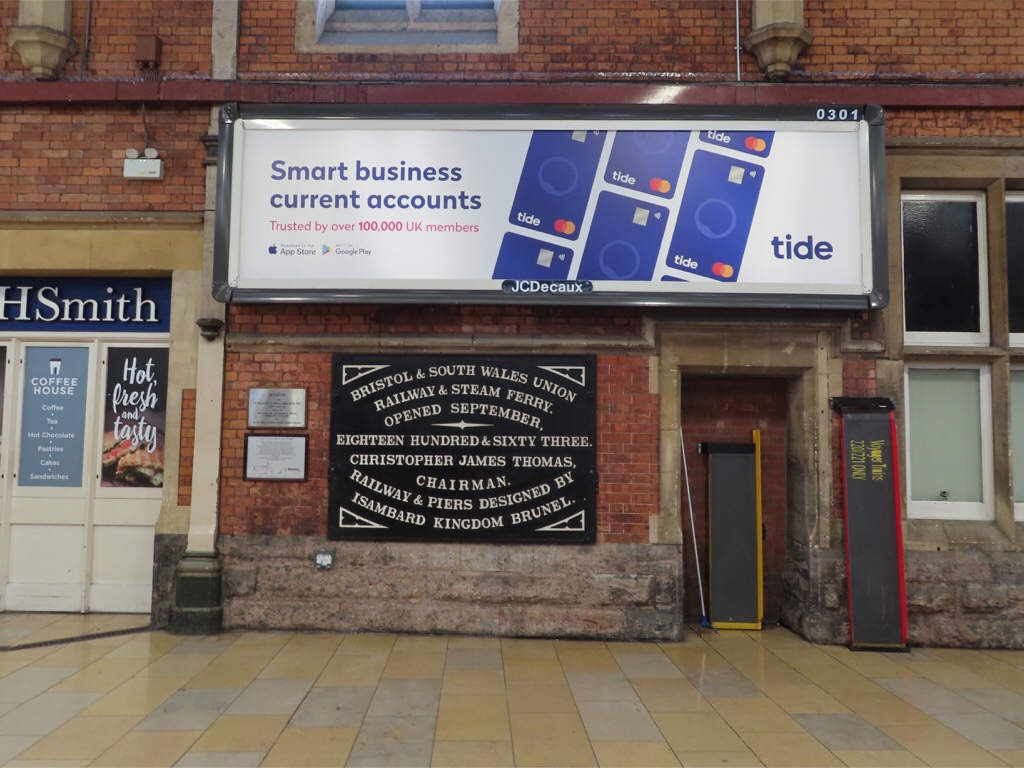
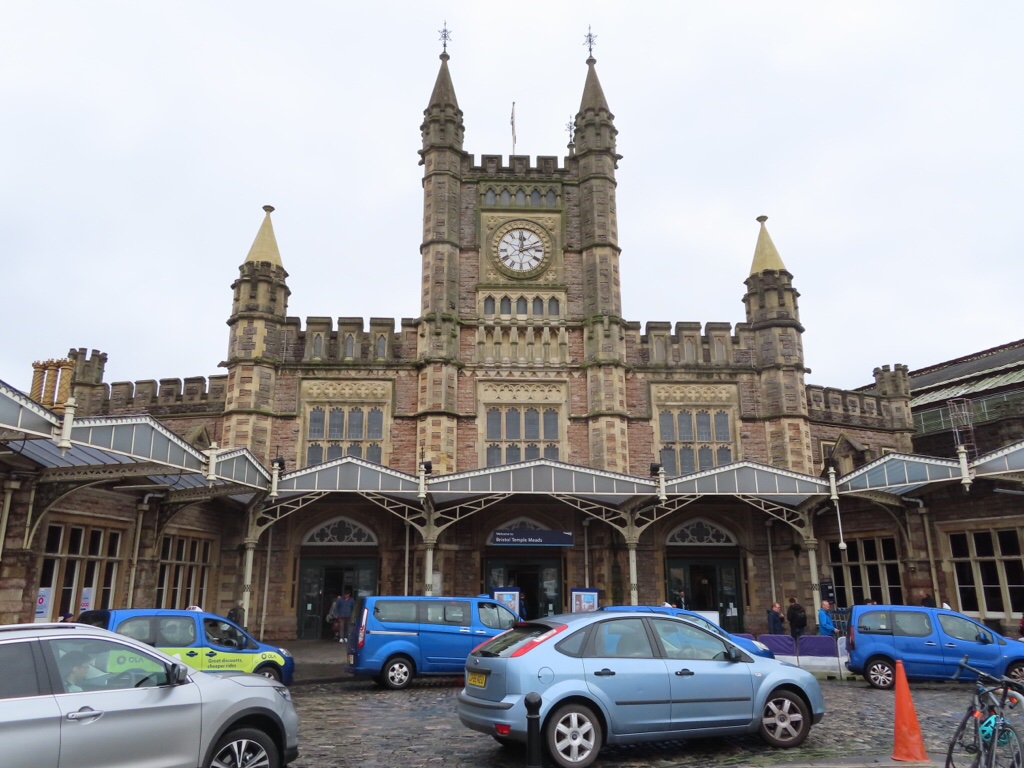
We arrived, like many visitors since 1840, on a Great Western Train at Temple Meads Station designed by Isambard Kingdom Brunel.

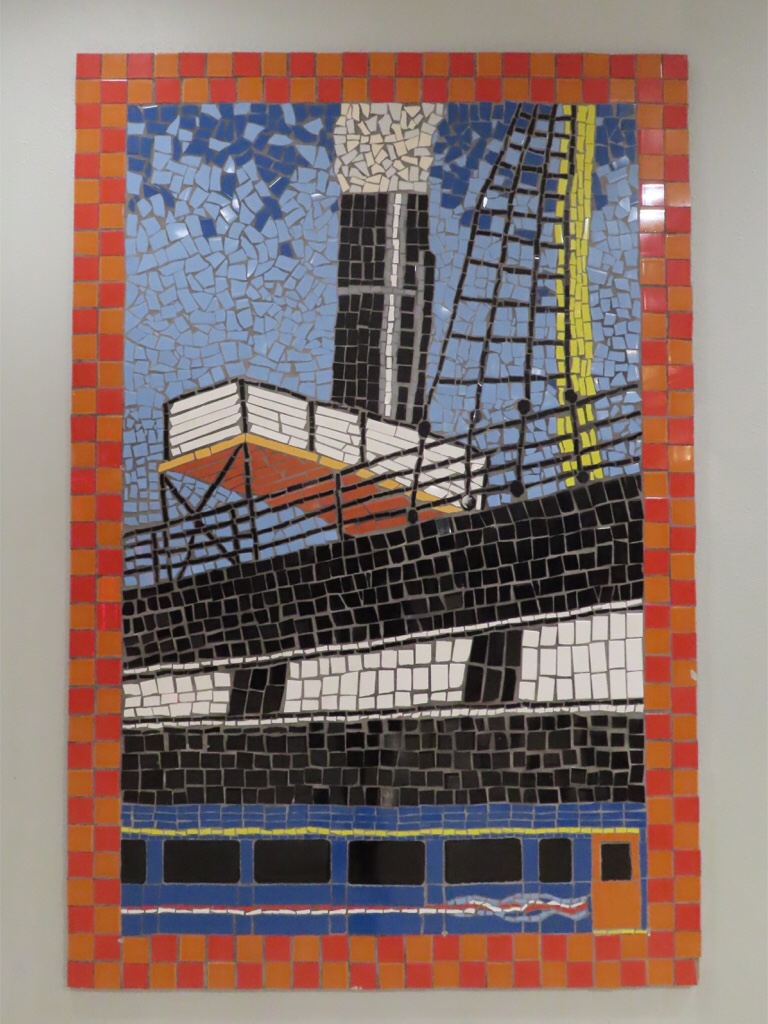
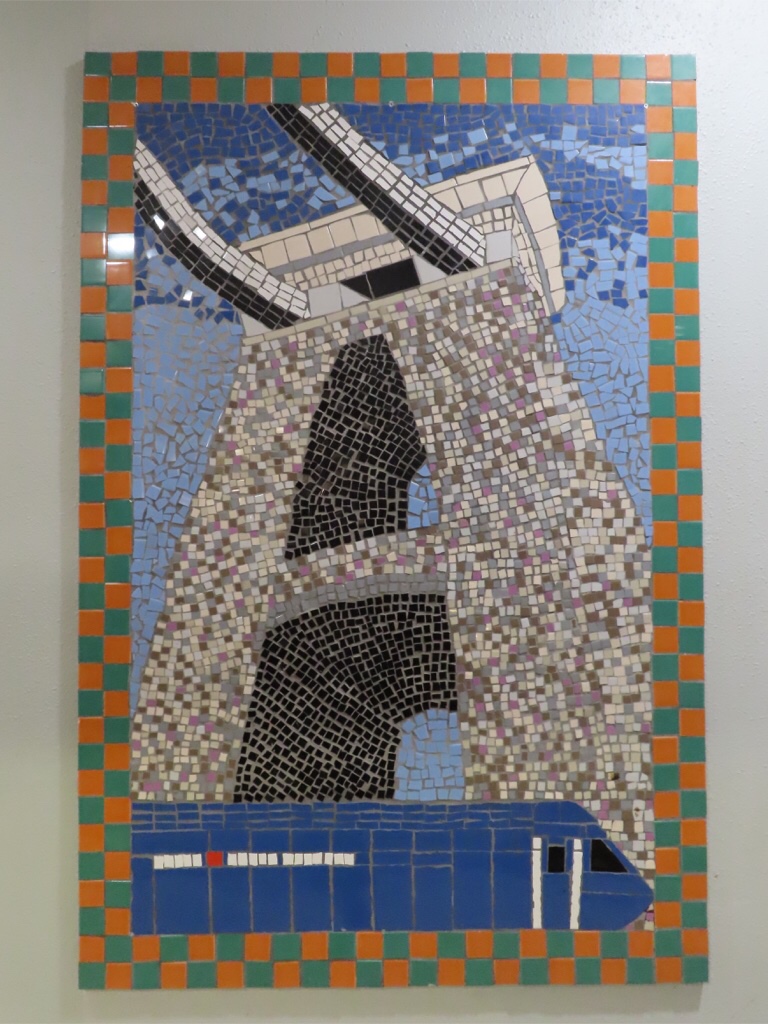
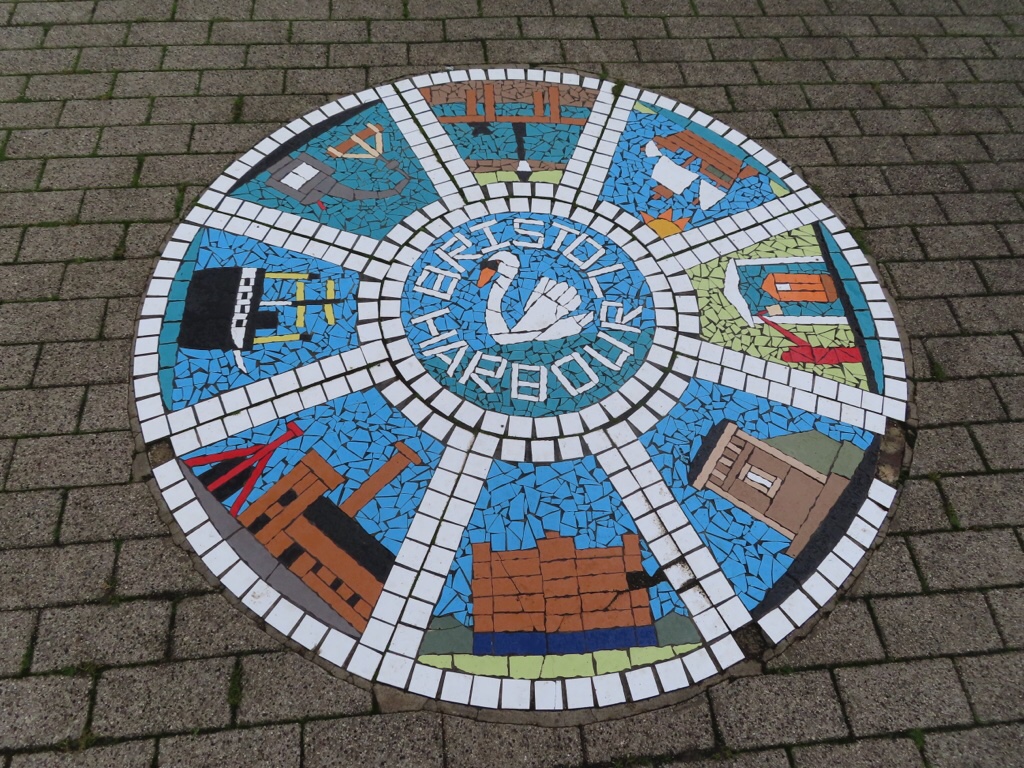
There were a couple of cheery mosaics, even though the day was rather grey.

The terminus soon needed expanding so here is the new Gothic station from 1870 …

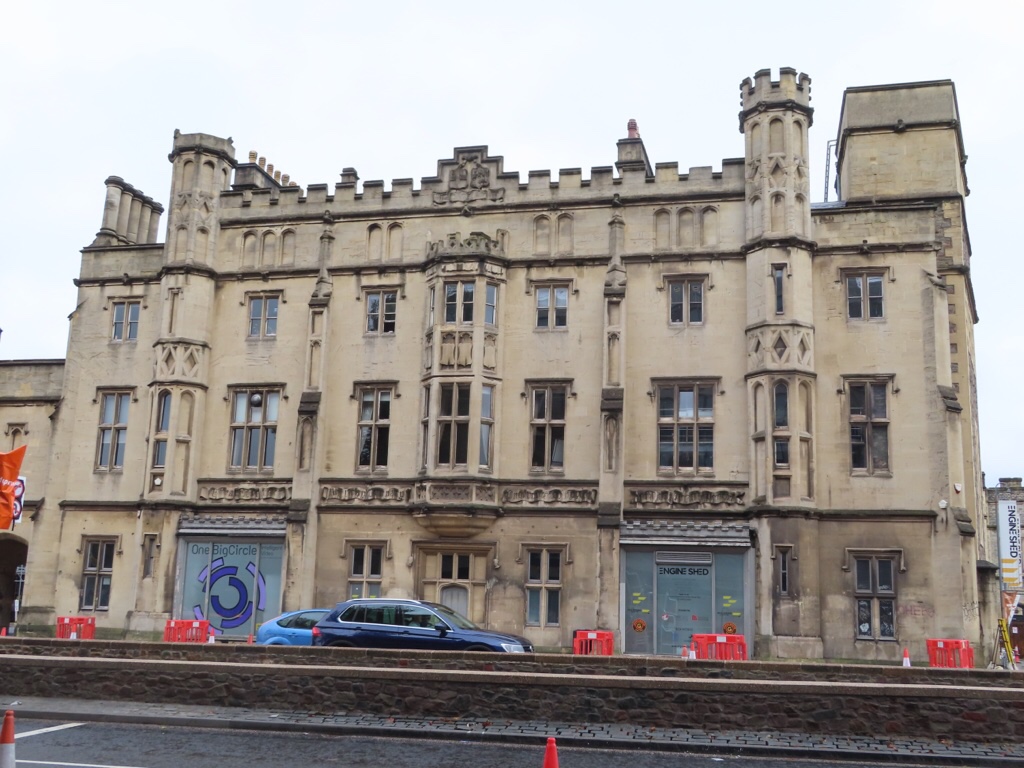
… and here is Brunel’s Old Station building across the forecourt.

We are staying a short walk away in Southville, at the cute and cosy Ibrox Hotel where we left our luggage before heading out for lunch.

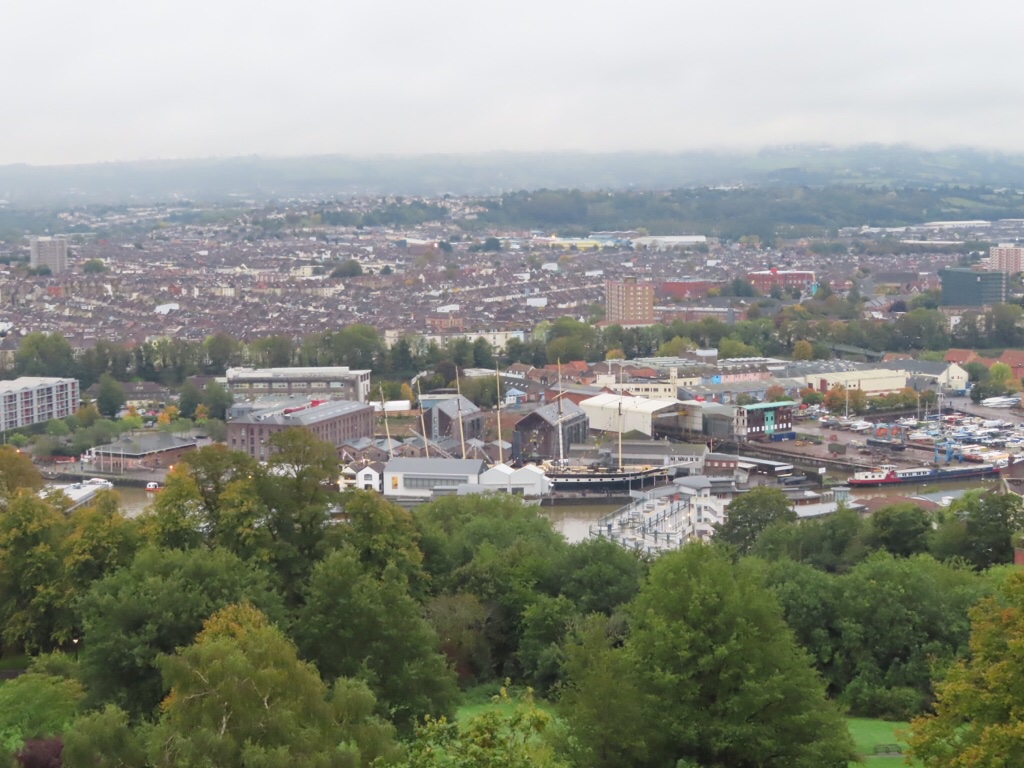
Bristol has a long maritime history so we thought we would start with the harbour. A short walk brought us to Spike Island which was created in 1809 when the Floating Harbour was constructed. Previously, the high tidal range meant that ships moored in the harbour would be aground at low tide and tip to one side so if everything was not stowed away ‘Ship Shape and Bristol Fashion’ cargo could be spoiled. The Floating Harbour was a lock system which trapped water in the city’s central harbour and allowed ships and boats to stay afloat without being affected by the changing tides.

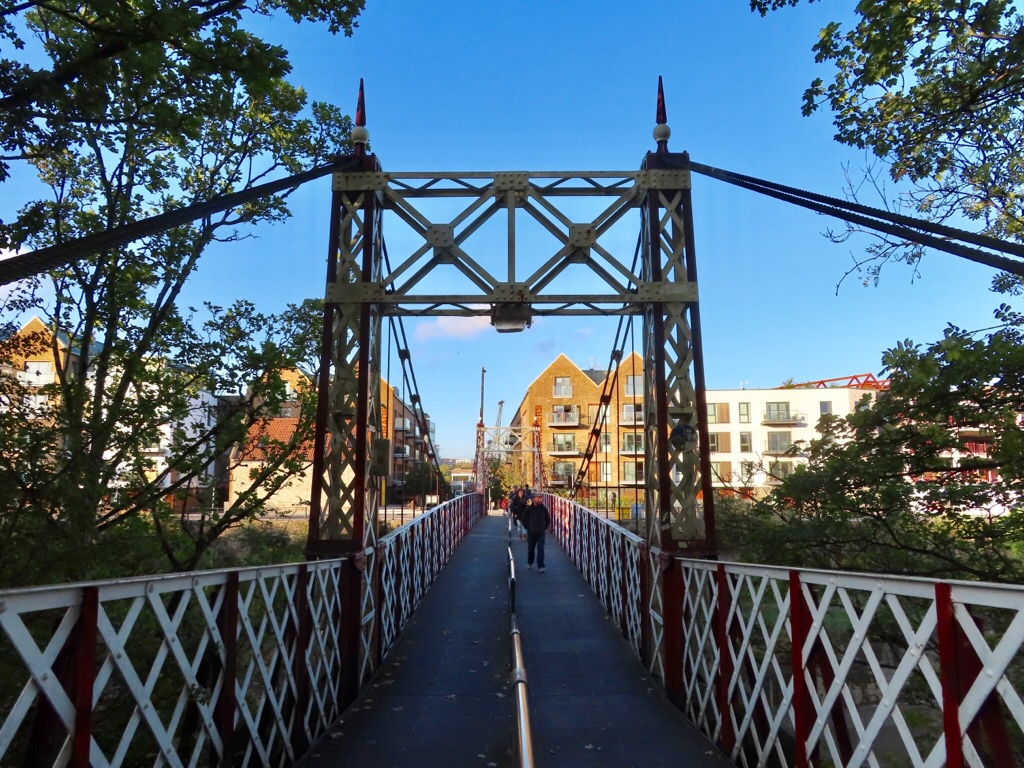
Gaol Ferry Bridge crosses New Cut to Wapping Wharf which was once home to the Victorian prison, but is now a regenerated area of cafes and shops.

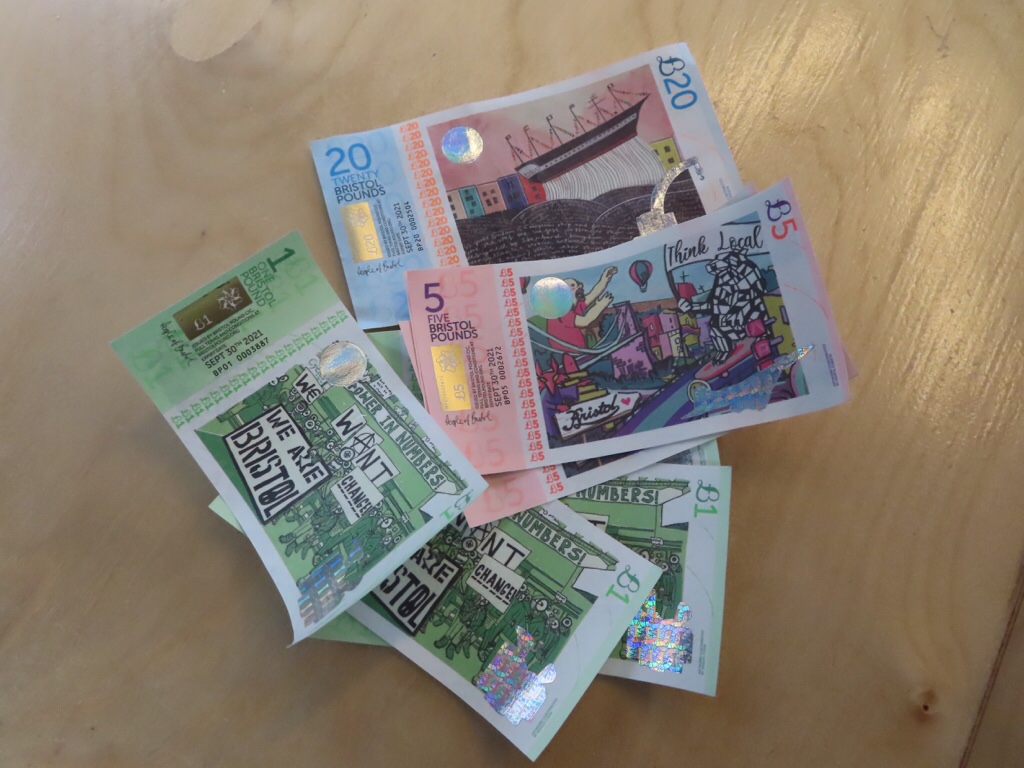
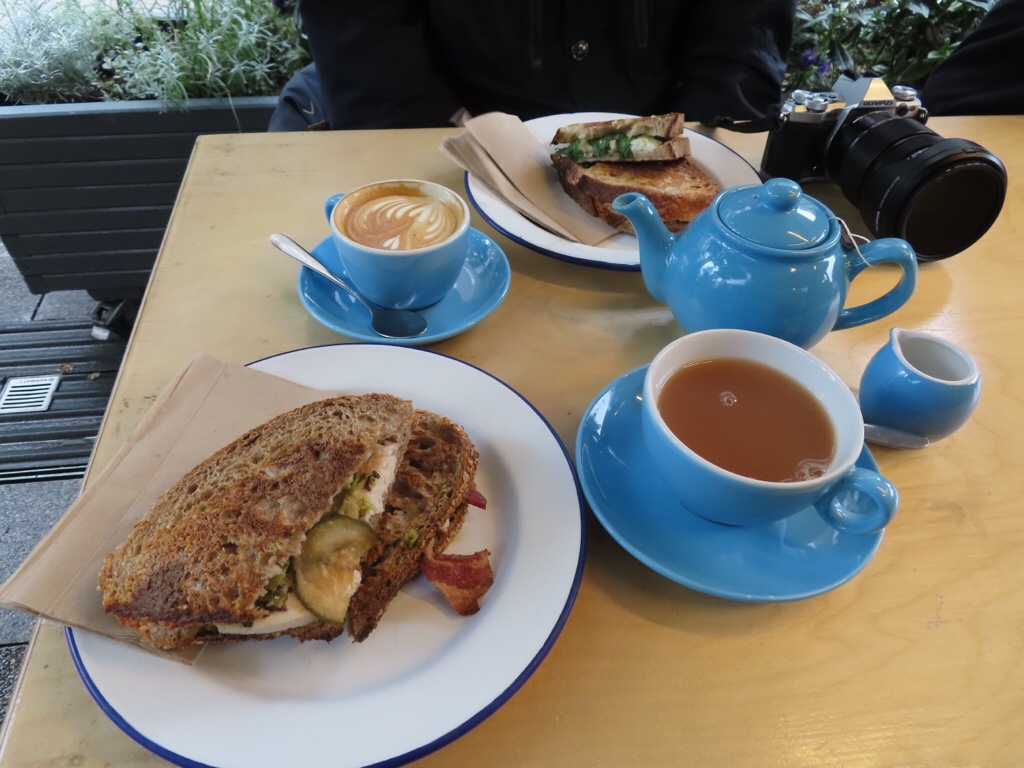
In Little Victories, to Chris’s amazement, we were able to change some money into Bristol Pounds, a community currency that began in 2012 and is used in various shops and cafes in the city. Having spent a few minutes admiring the notes, with their striking designs of Bristol including the suspension bridge, coloured houses, hot air balloons, ships and Concorde we spent a few on a couple of toasties for lunch.

Yesterday in the newspaper, we saw a photo of a sound and light installation in Bristol so went to have a look. It was in the Redcliff Caves, man-made caves, originally dug to provide sand for glass and pottery making extending for over an acre under the city. ‘We are Warriors’ marks 100 years since the first women were allowed to vote and on the way in, we each made a tiny light with a battery and bulb stuck together with tape, then added them to the array of lights inside the caves. It was very atmospheric, especially with the slightly eerie soundtrack. Unfortunately it was too dark to get a photo we could share … you had to be there!

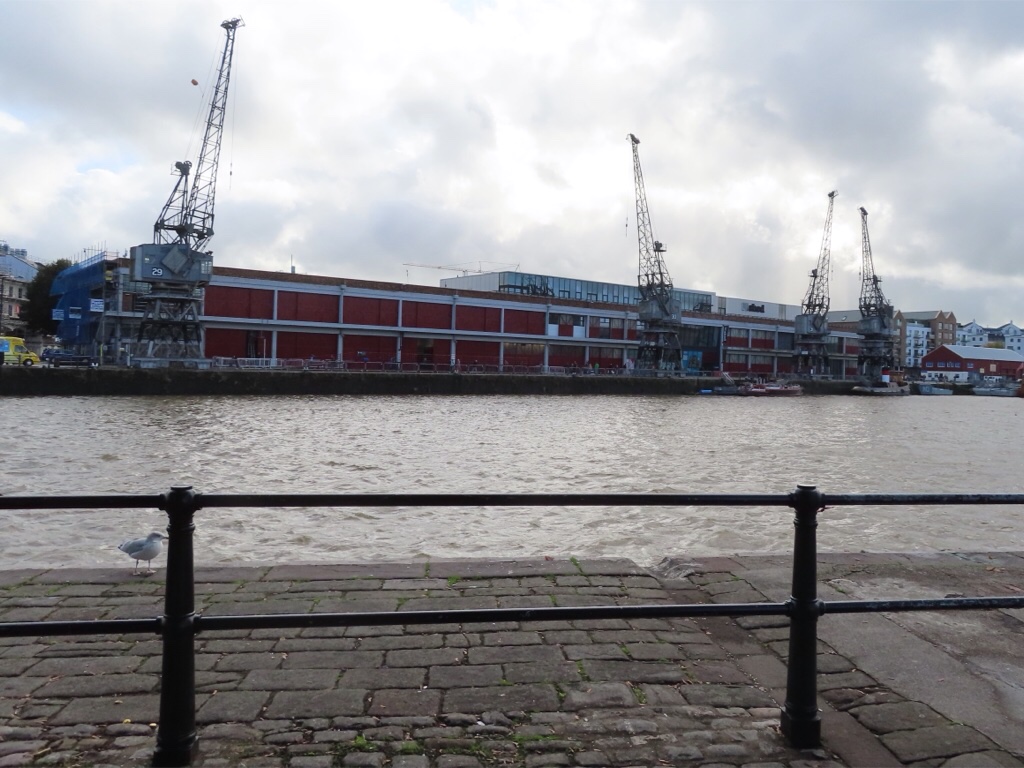
We got several views of the harbour on the way back …

…including four huge electric cranes dating from the 1950’s when there were over 40 in the docks …

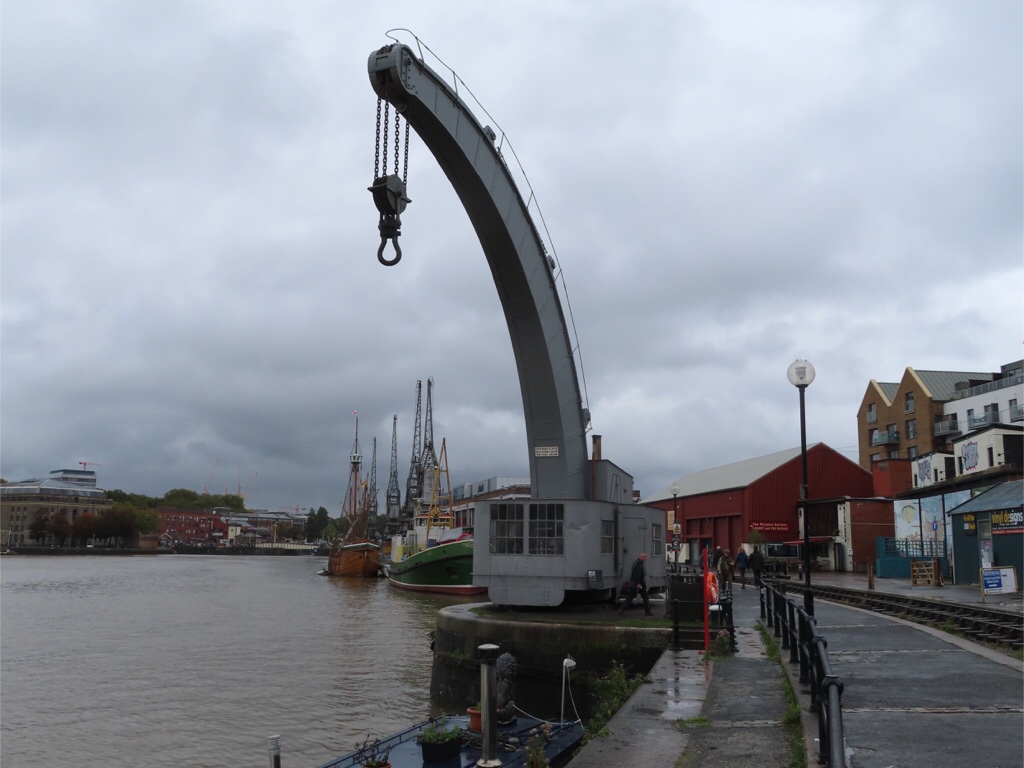
… and the striking banana-shaped crane is the Fairbairn Steam crane which could lift loads of 35 tons.

Next stop was M Shed, a really interesting museum all about the life and times of Bristol. It seemed to cover everything from voyages of discovery and trade to the development of technology and the arts. It was the wealth from the trade of tobacco, sugar and slaves which made Bristol prosper and funded the elegant buildings of Bristol such as Temple Meads Station, the Georgian houses in Clifton, the Suspension bridge, as well as many buildings in centre of the city which were lost to bombing in WWII.

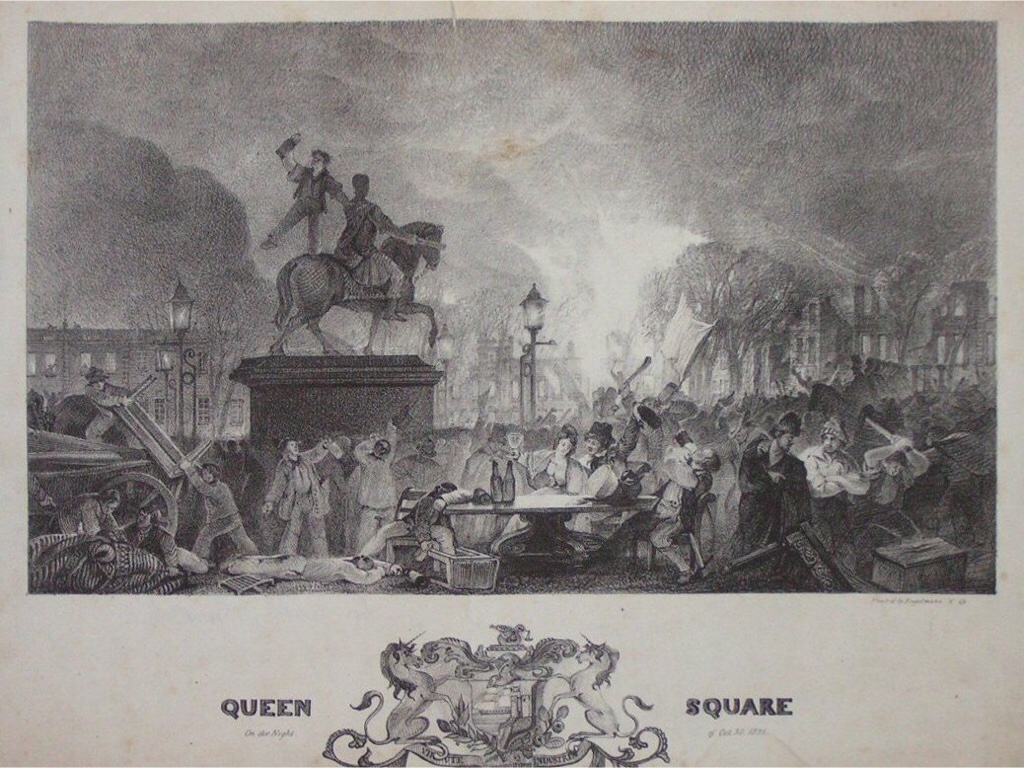
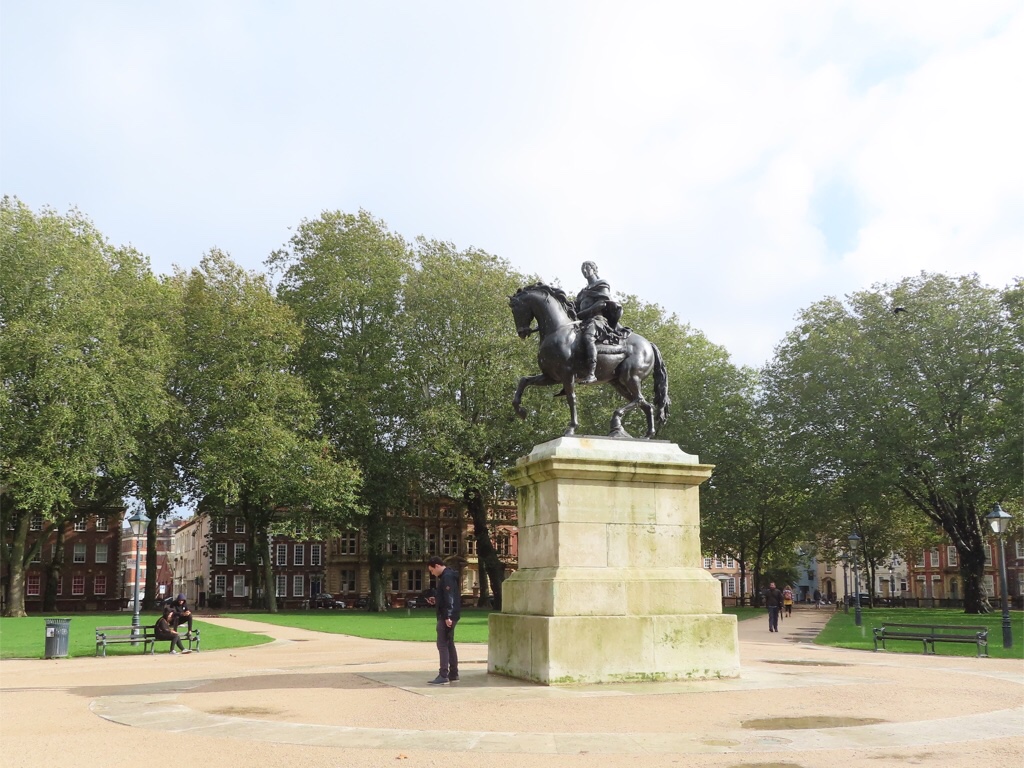
Bristol has also long boasted a proud history of civil insurrection. During the C18th there were riots over bread, wage cuts for weavers and, most frequently, toll-booths. In 1831, Queen Square was once the scene of some of the worst rioting in Britain. The Bristol Riots broke out after the House of Lords the rejected the second Reform Bill which would have given greater representation in the House of Commons, shown here in a lithograph from the time as well as how it looks today.

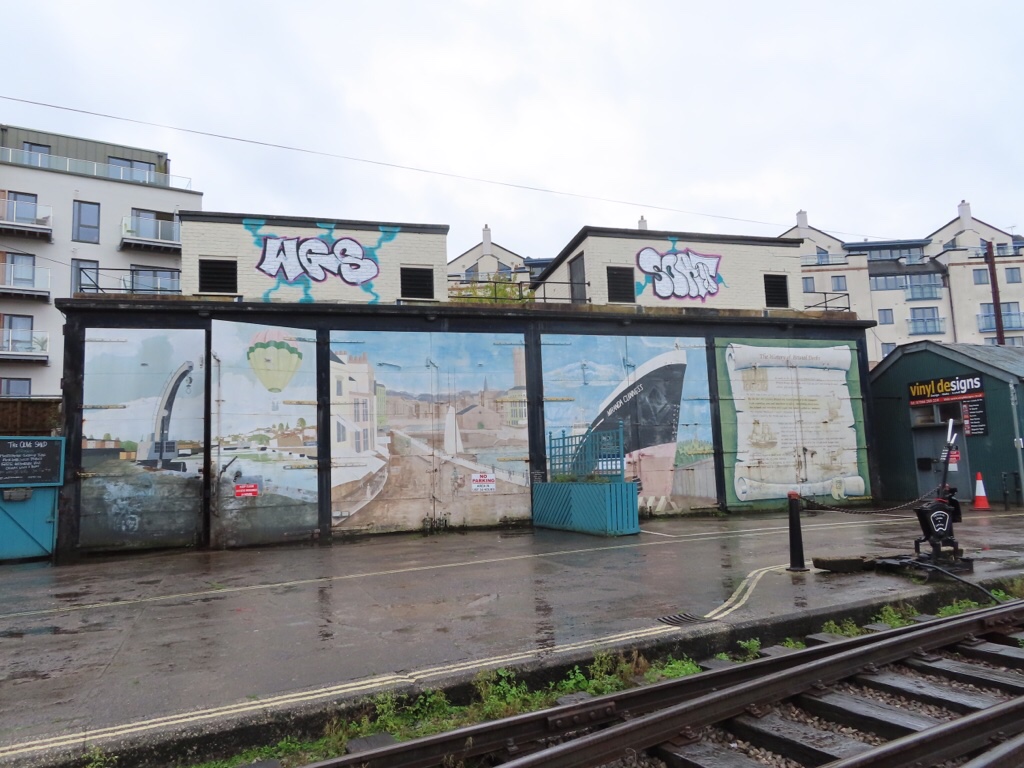
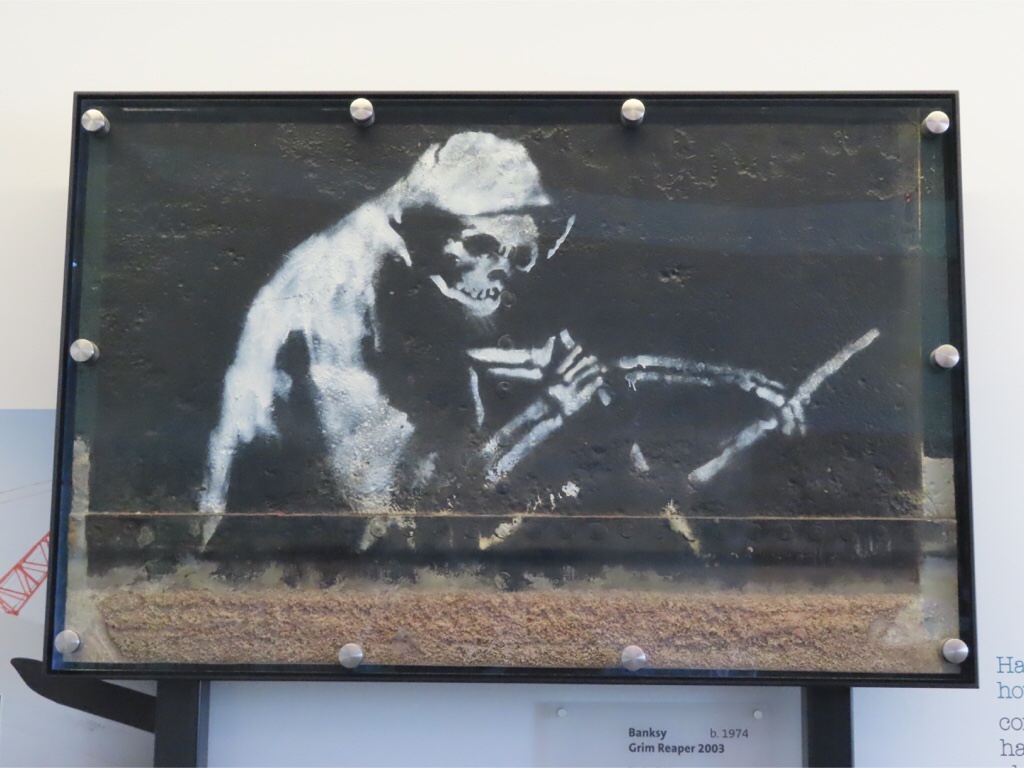
One area where dissent and art come together is the street art for which Bristol has become famous, especially being the home town of Banksy – the anonymous graffiti artist well known for his satirical and anti-establishment street art. There are quite a few pics around the city and the first is here – the Grim Reaper, which was originally painted on the side of the Thekla Social boat moored in Bristol harbour but later removed to protect it from damage. Bristol City Council has a formal street-art policy which seeks to define and support the display of public art and give the public a vote as to whether it should be preserved or scrubbed clean following a hugely popular Banksy’s exhibition in the Bristol Museum in 2009. There is also the Upfest festival which has been running for 10 years and draws artists and visitors from far and wide. We will be seeing a lot more examples as we wander round the city.

Bristol is the home of Aardman Animations, makers of Wallace & Gromit and Chicken Run and an exhibition showed the process of film making using using stop-motion clay animation techniques with their last film Early Man as an example. It was fascinating to see what a labour of love it must be and how time consuming just to achieve a short sequence of film. We will certainly be looking out for the Shaun the Sheep Movie: Farmageddon which will be in a cinema near us at the end of October.

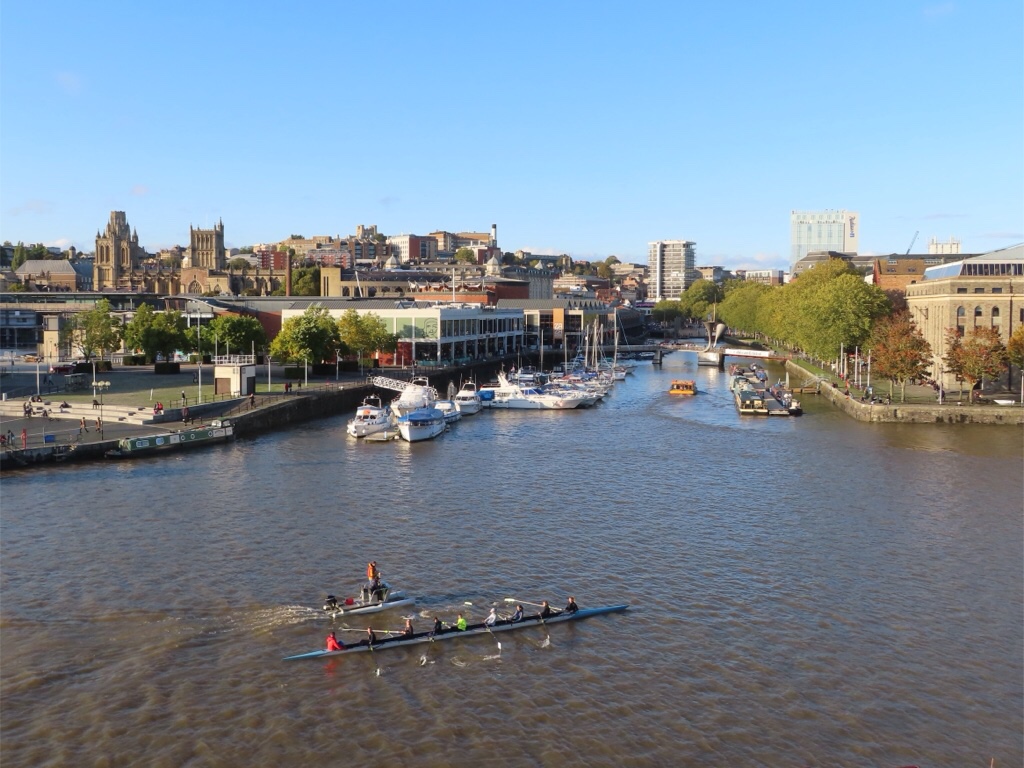
While we were inside, the sky had cleared and we were able to take a couple of great pics of the harbour in late afternoon sunshine, before heading back for a rest and dinner at Ganesha down the road in Bedminster where we munched dosas and veggie curry.

Map

Chris & Elaine in Bristol 2019 – Brunel, Banksy & The BBC …

We met our niece for lunch in Bristol last year and thought it a city worth a better look, so when it came to planning a couple of days away to celebrate our wedding anniversary, Bristol won.

The only real prerequisite was a boat for our annual anniversary boat trip, and with a ferry serving the harbour daily, that should be easily done.

The more we read about Bristol, the more we found to do so it will be an action packed trip … so here we go Brunel, Banksy & The BBC in 72 hours!

Journal Entries

Hello Bristol …

Mainly Brunel …

Lots of Banksy …

BBC Bristol …

Map

Tashkent Finale

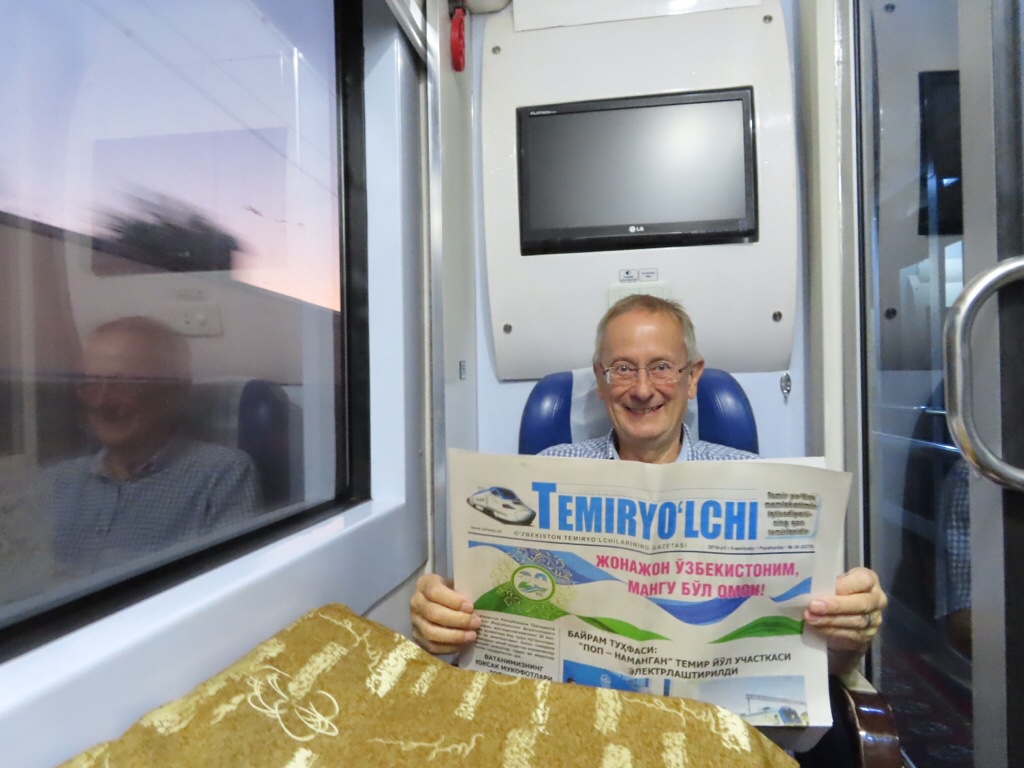
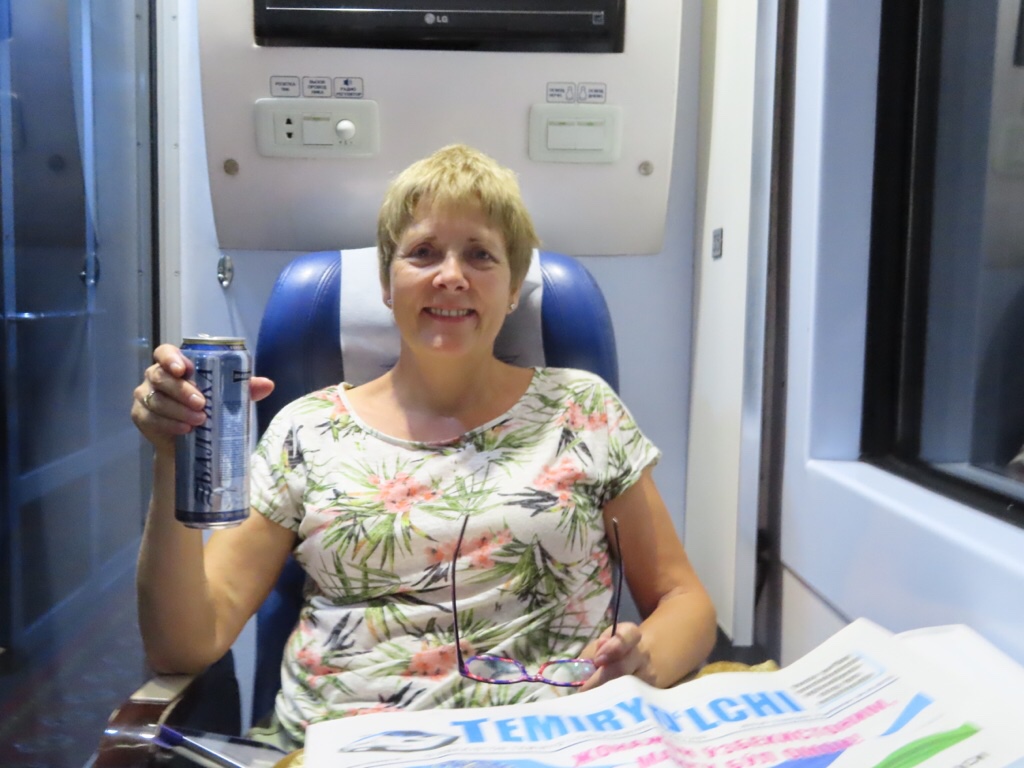
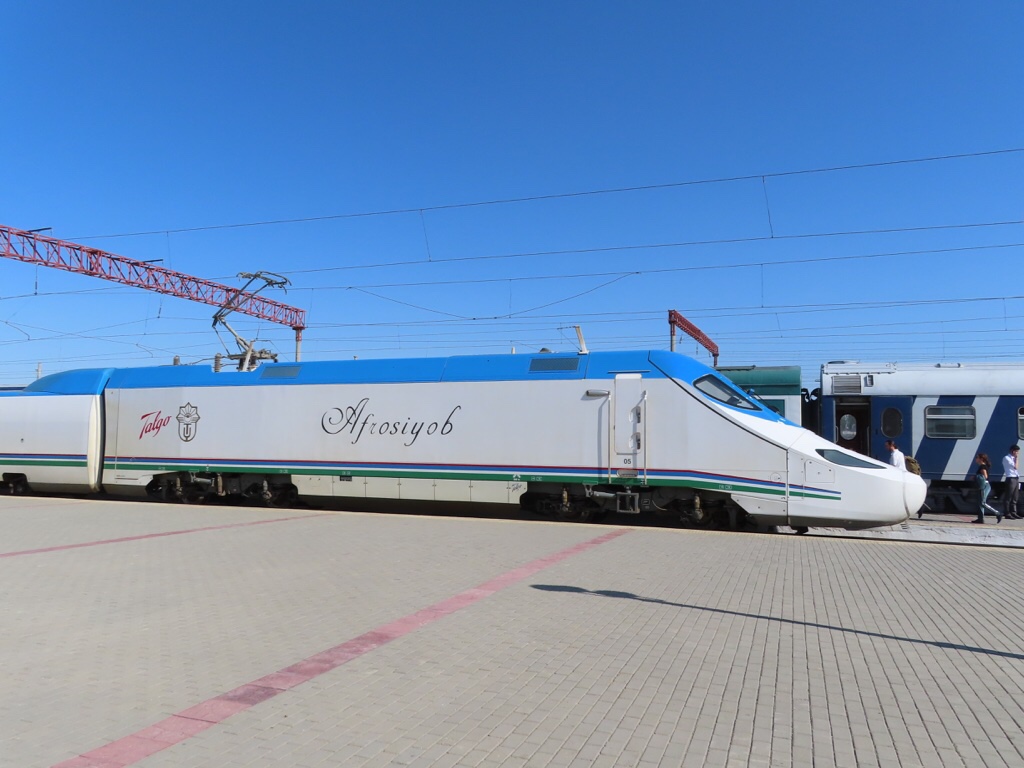
Despite being at the station in plenty of time, boarding the train was hectic. Originally we had hoped to take the fast Afrosiyob train but couldn’t get tickets so instead we were taking the Sharq which covers 300km in 3.5hrs.

We were sent to platform 3, down under the subway … only to be sent back to platform 1 … and then had to return to 3, but were ‘officially allowed’ to cross the lines instead of using the subway! We were told to go to the front of the platform, only to find when the train came, carriage 2 was second from the back of a 12 carriage train! Our carriage had a central corridor with cubicles of 2 or 4 seats so we were quite snug, especially as it took as a while to realise there was luggage storage after all! When the chap came down the train with an offer of beer, we gave a sigh of relief!

We also found that Mike and Sarah who we’d shared a table at dinner a couple of days before were also on our train and they invited us to share a game of Dobble and a chat to pass the time. Dobble may well have to go on my Xmas list!

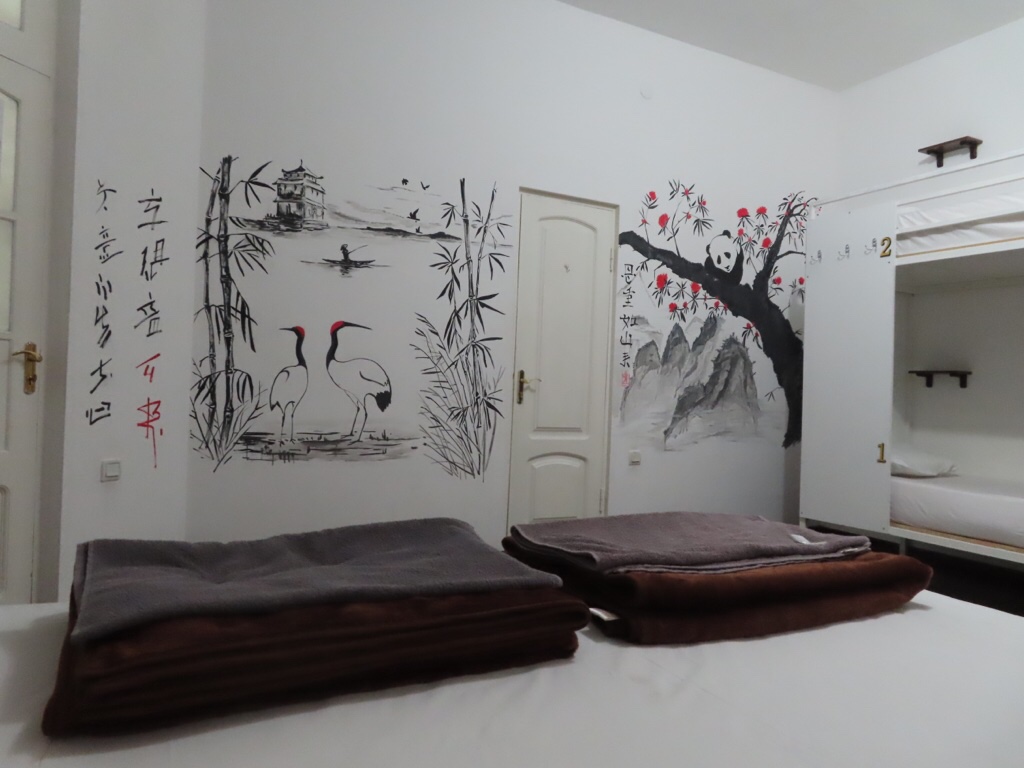
We arrived just after 10pm and got a cab back to Trip.le where we stayed at the beginning of our trip. I have to be honest and say that I think this was the worst accommodation choice we have ever made, and we only returned because we couldn’t find anything better at short notice and we thought we must have exaggerated in our mind how uncomfortable the beds were … but we hadn’t! There is no doubt that beds in Uzbekistan are hard and they all have a standard sprung mattress with tough springs. Having said that, everywhere else we have had some sort of padded mattress topper which has mitigated the worst of the effects … but not here! There has been a good choice of places to stay elsewhere in Uzbekistan, but less so in Tashkent and we picked this place for location but despite having family rooms, it is definitely a hostel … even if it does have cute art work!

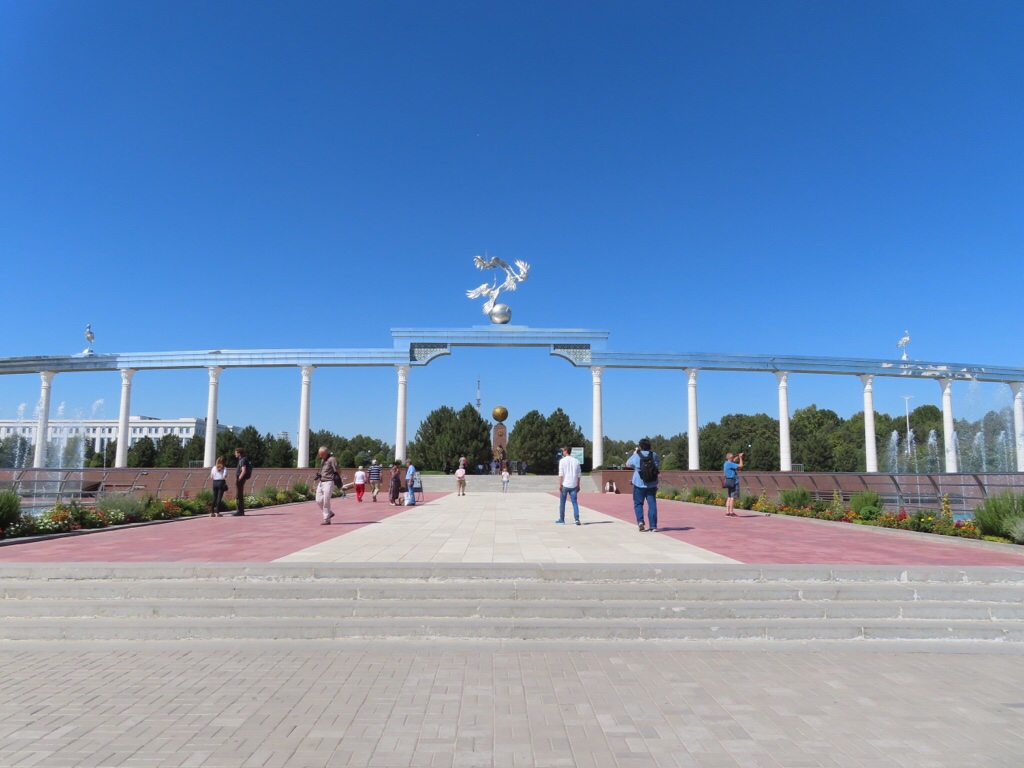
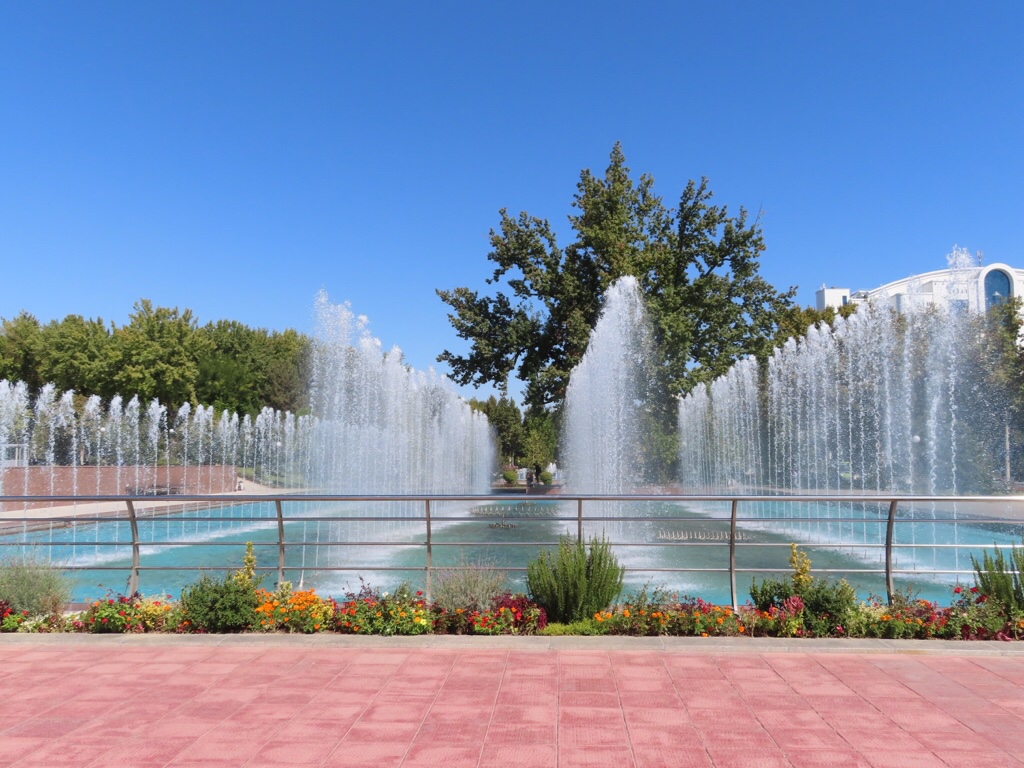
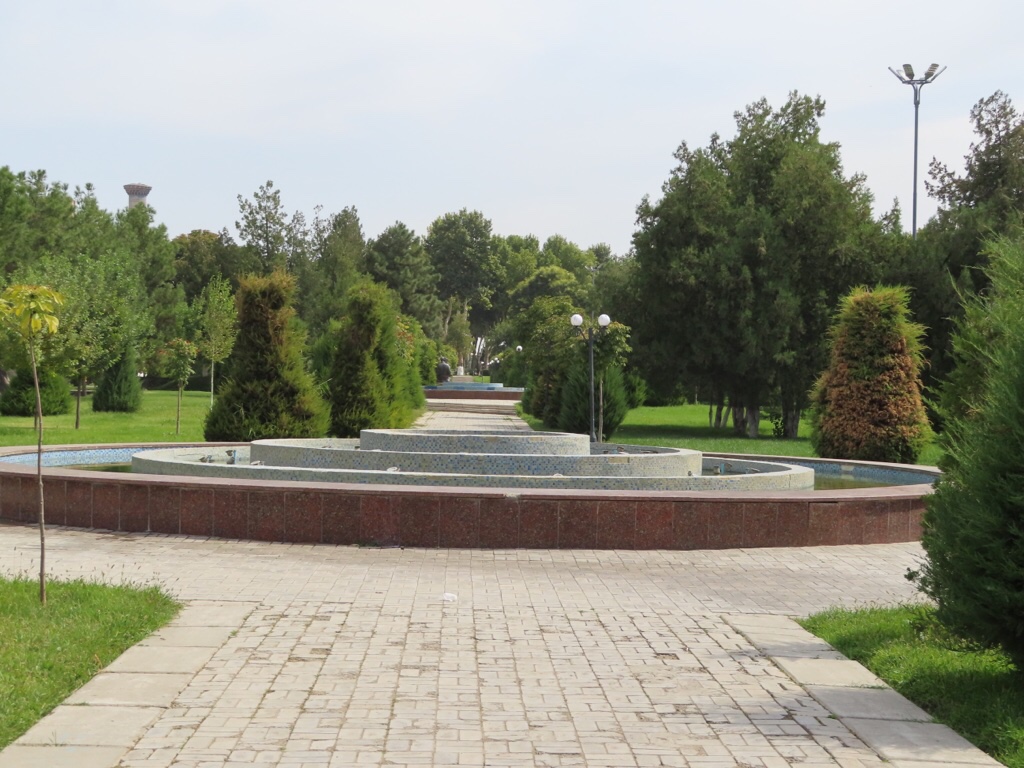
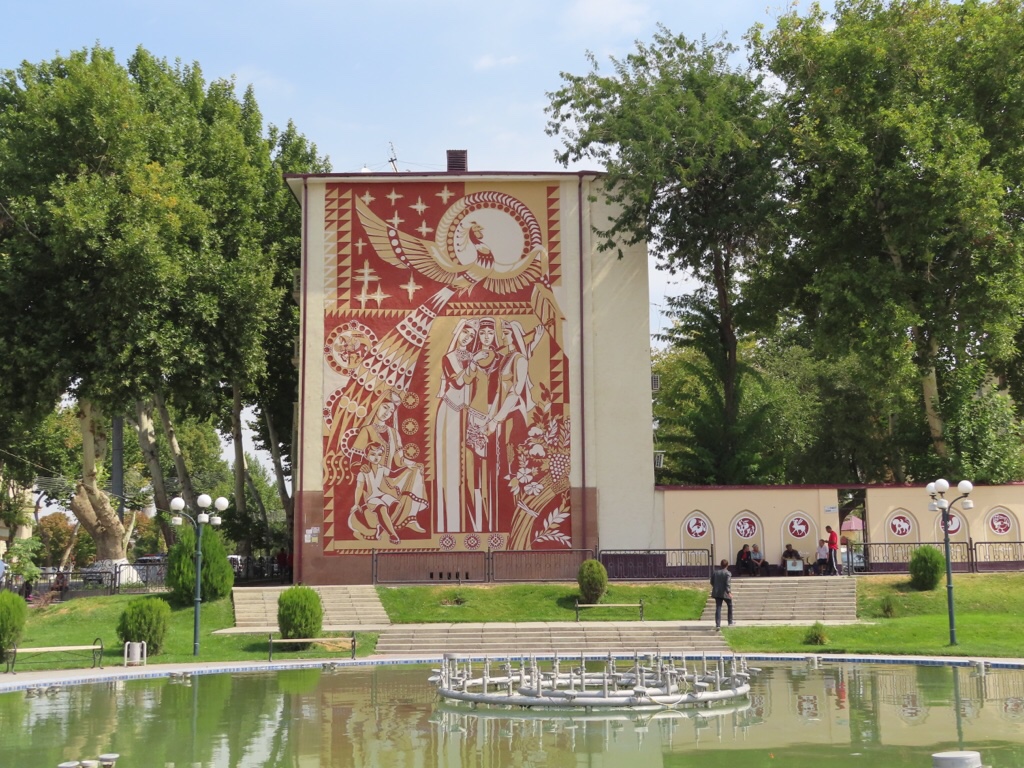
We had hoped to start with a couple of art galleries only to find both closed for renovation! Moving on, not only was Independence Square open, but the fountains were working too!

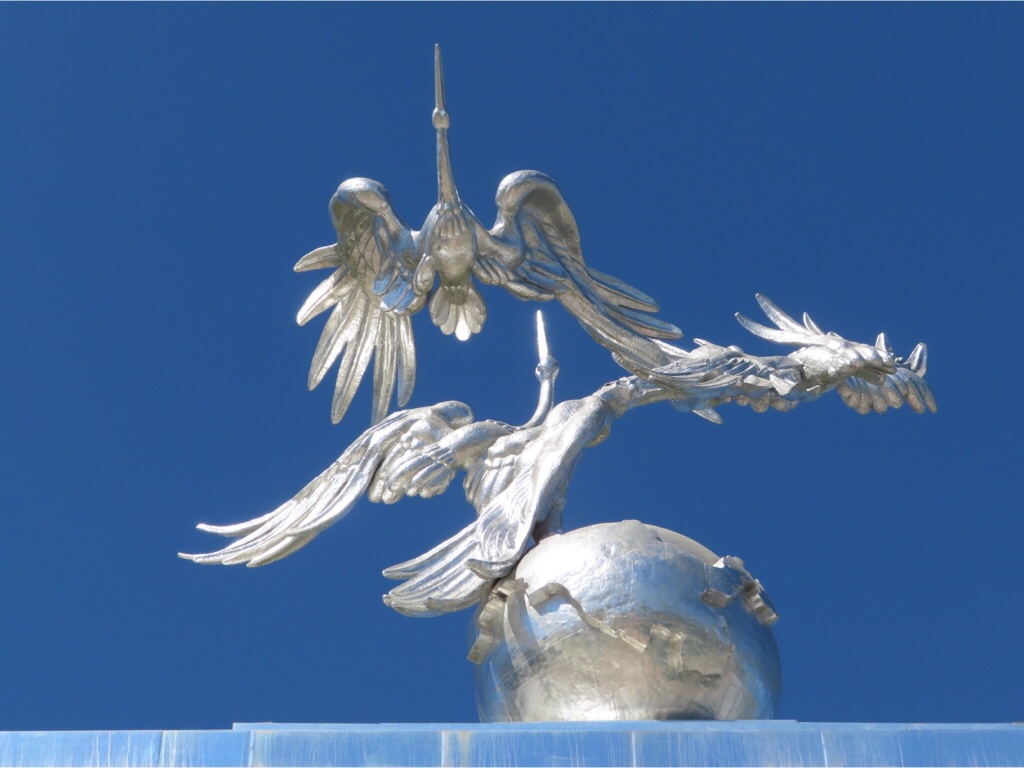
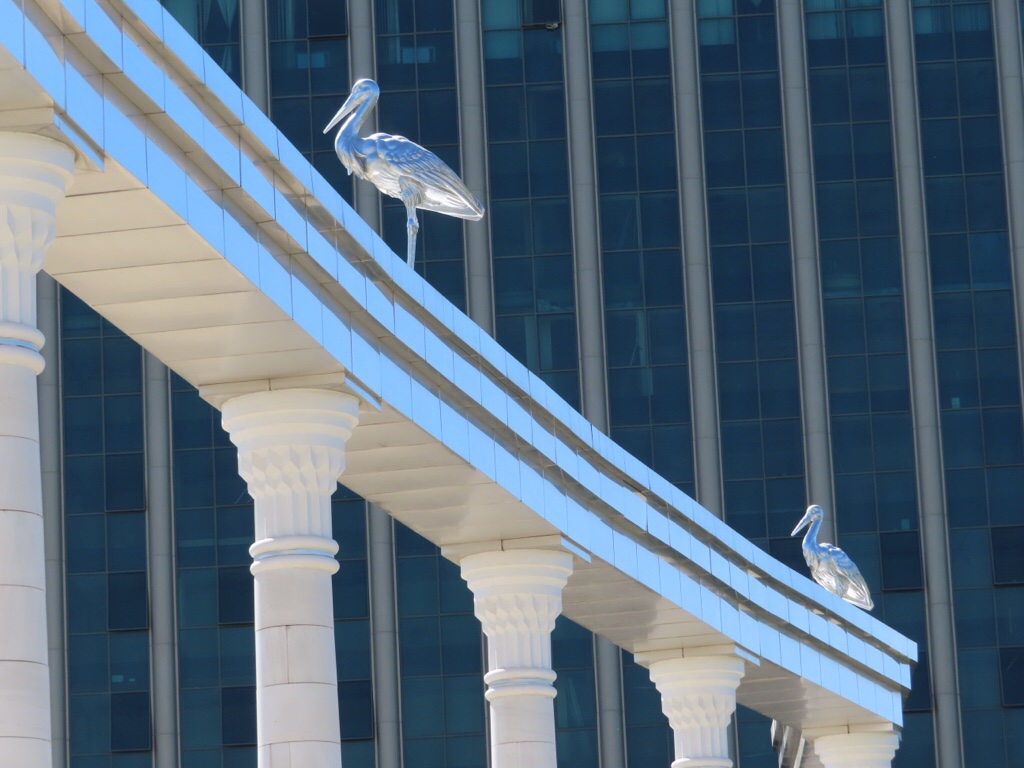
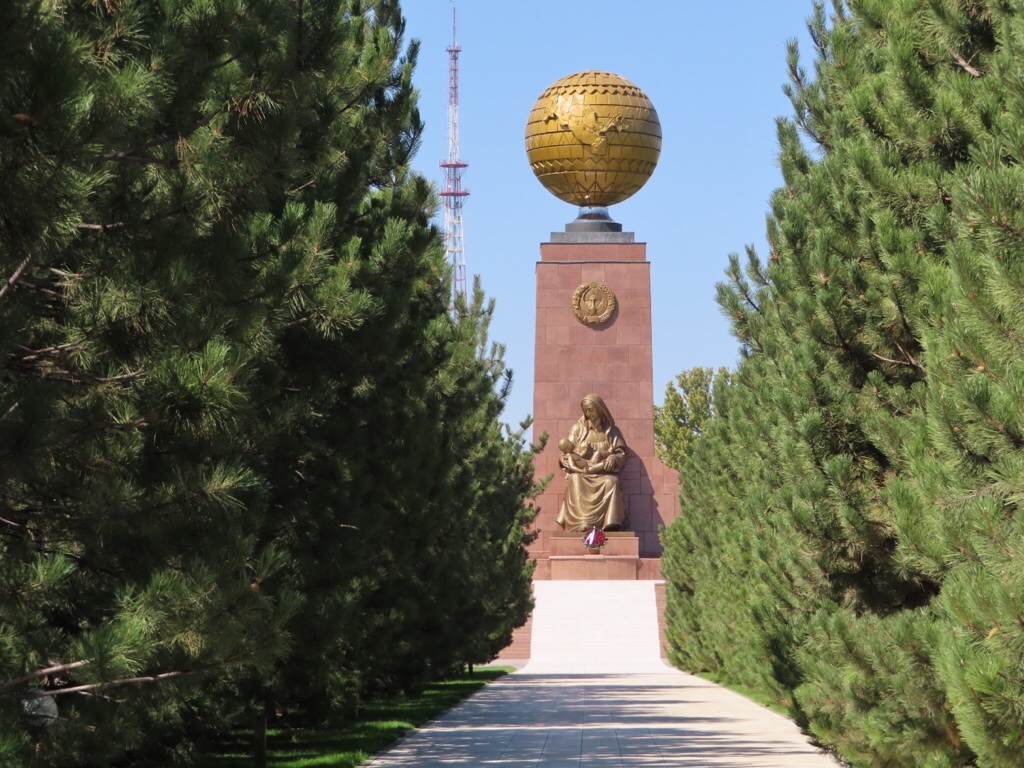
The sculptures of storks are to symbolize peace and quietness, and behind is a globe showing the Uzbekistan border and a figure of a woman holding a baby in her arms representing Mother-Motherland.

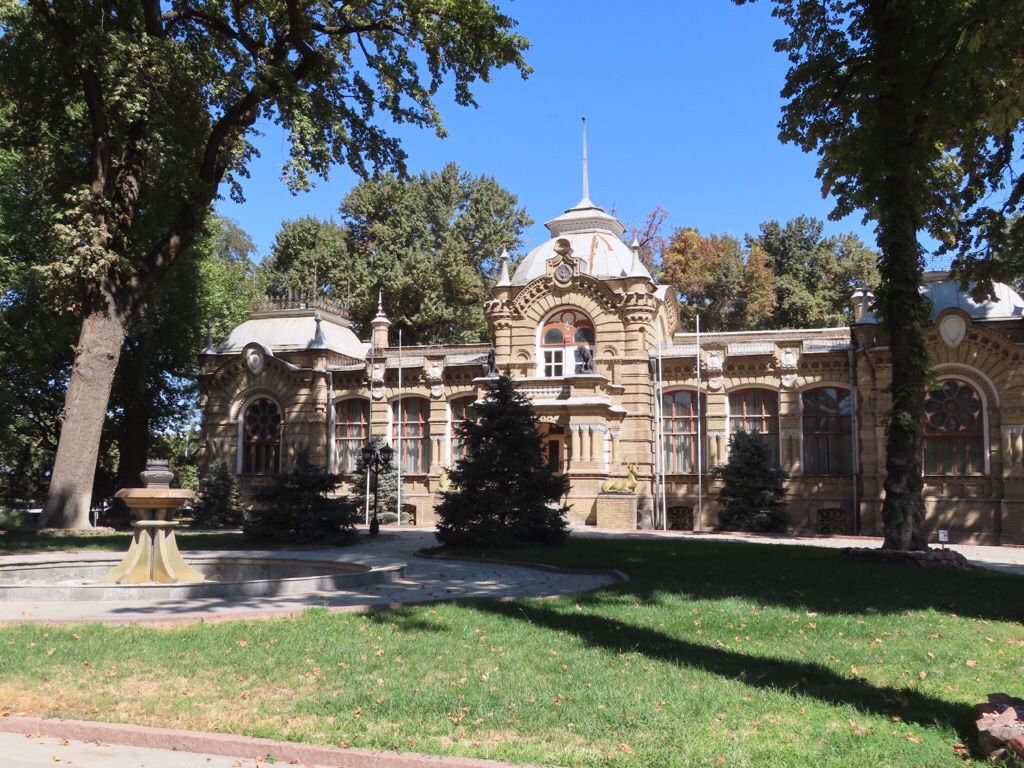
Just nearby is the former home of the Grand Duke N.K. Romanov – an eccentric reminder of tsarist Tashkent. A first cousin of tsar Nicholas II, he was exiled to Tashkent for shenanigans involving the crown jewels.

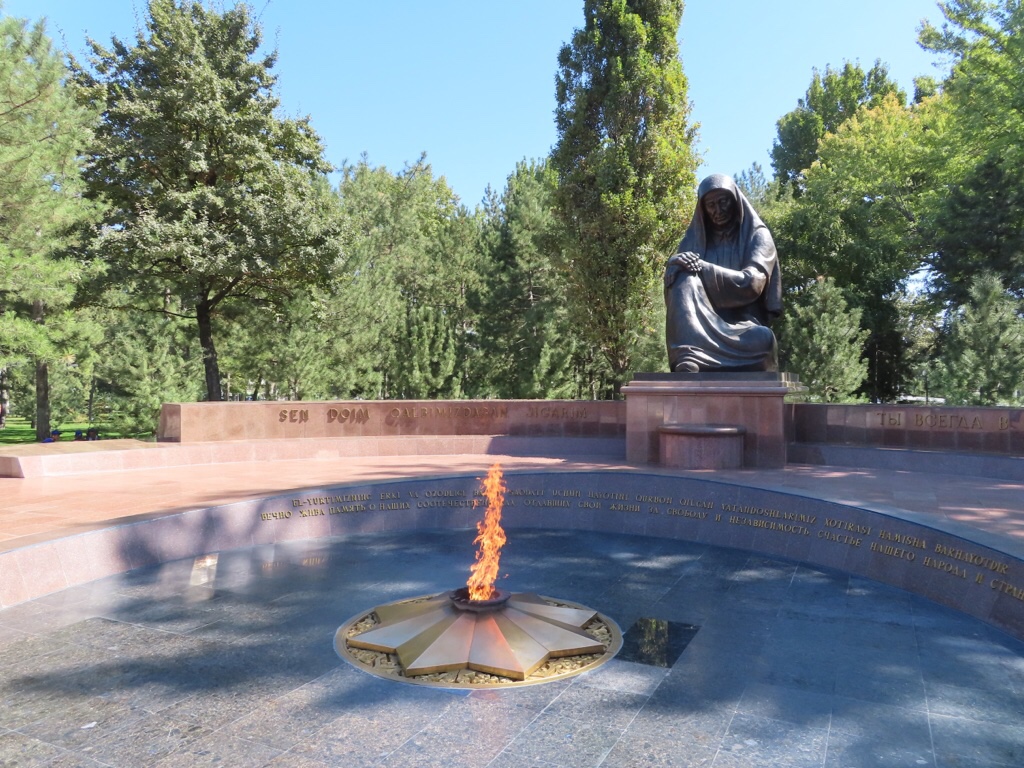
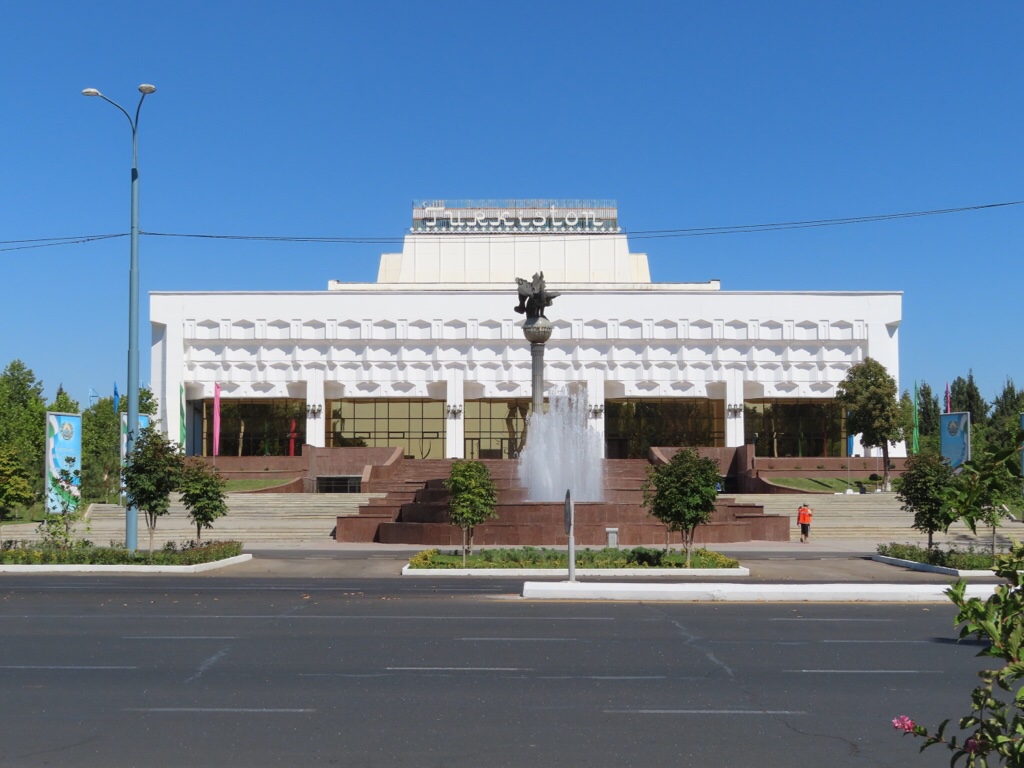
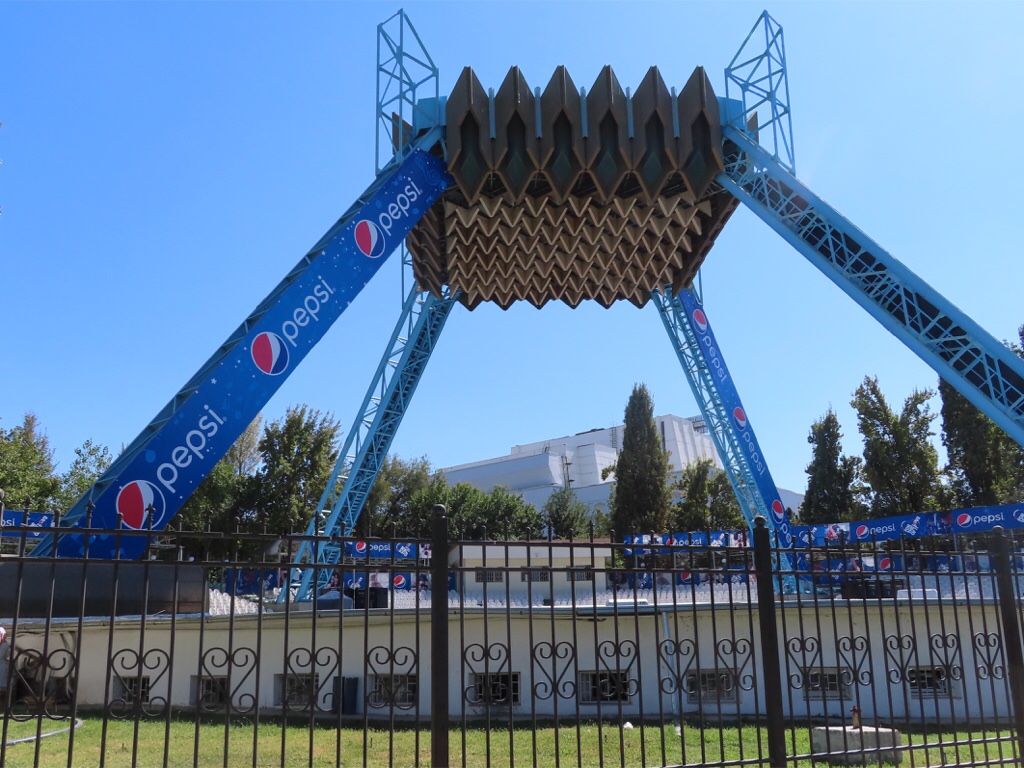
Along the way we saw the Glory and Memory Alley in honor of the soldiers who died in World War II, the statue of a Mourner Mother with a Quenchless Flame circle in front, the Turkiston Palace concert hall and the extraordinary outdoor summer concert hall – a marvel of Soviet architecture.

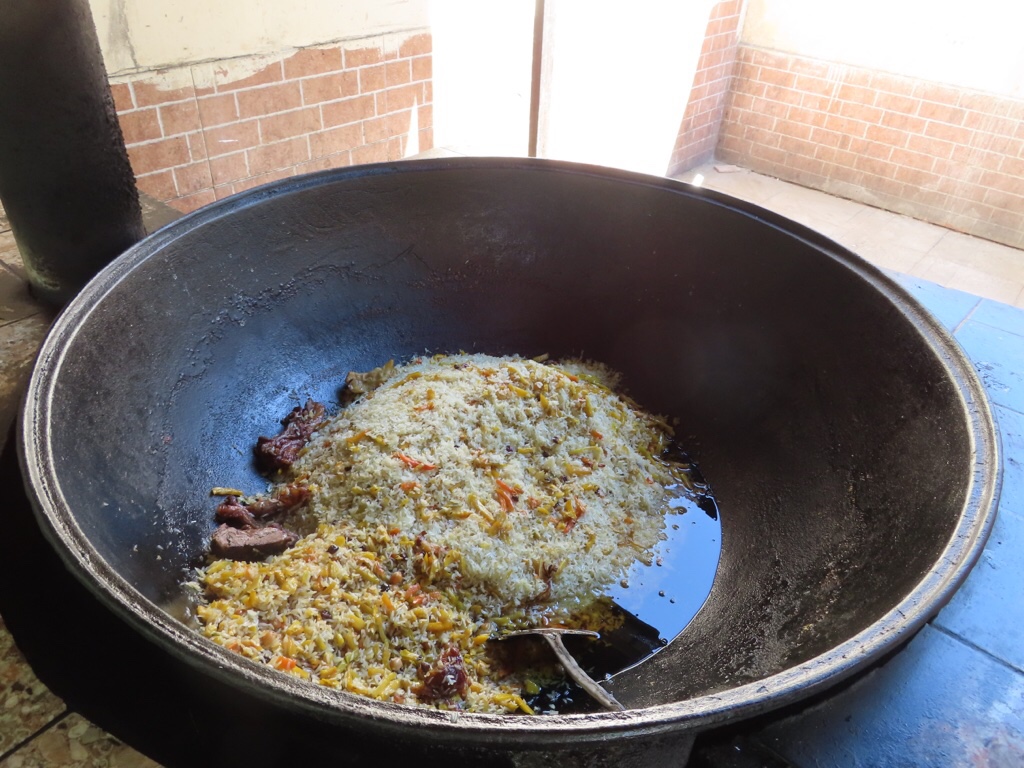
Our tea break became early lunch when I saw the plov cooking in a local cafe and it was definitely third time lucky, although Chris had to make do with bread and salad.

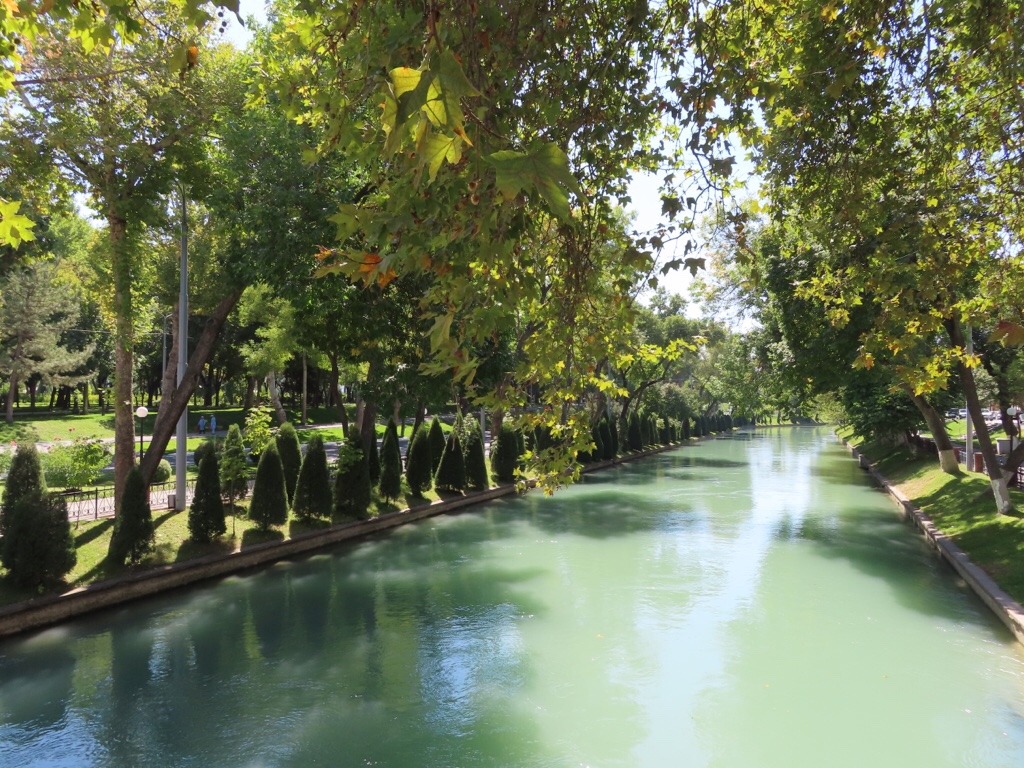
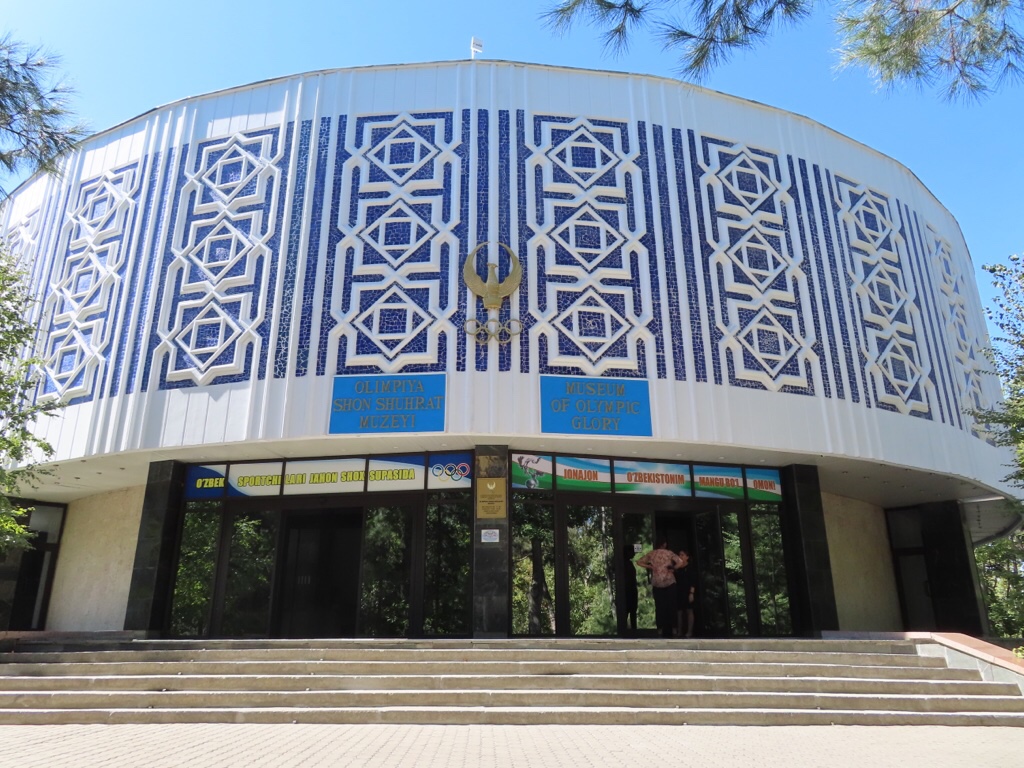
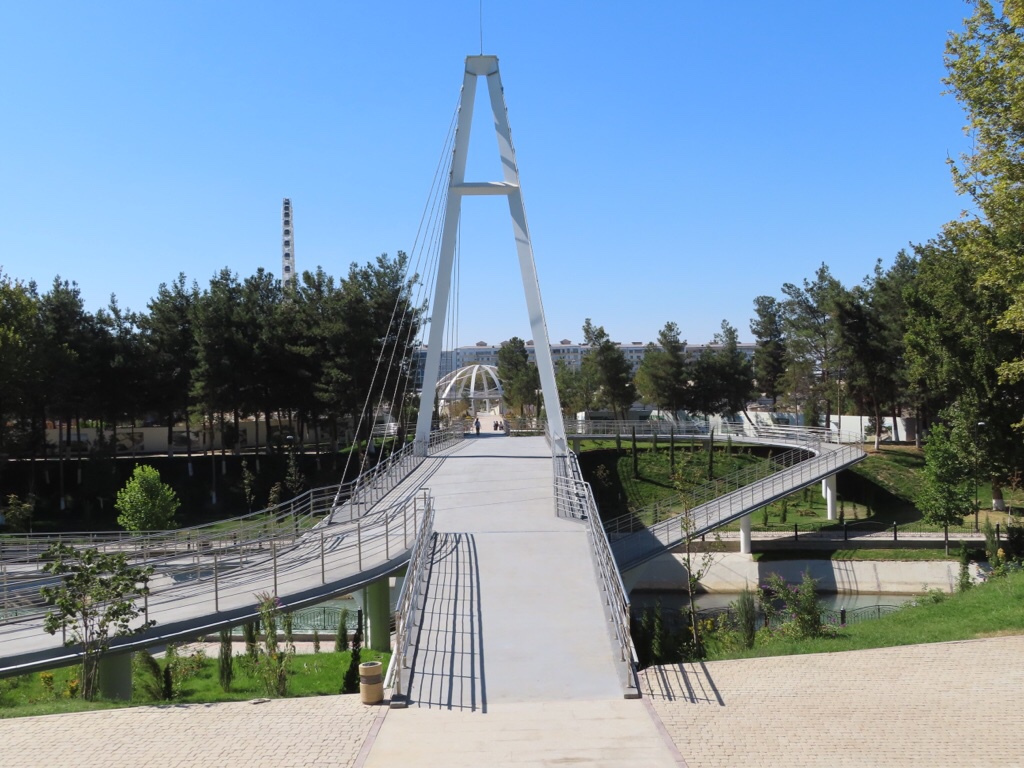
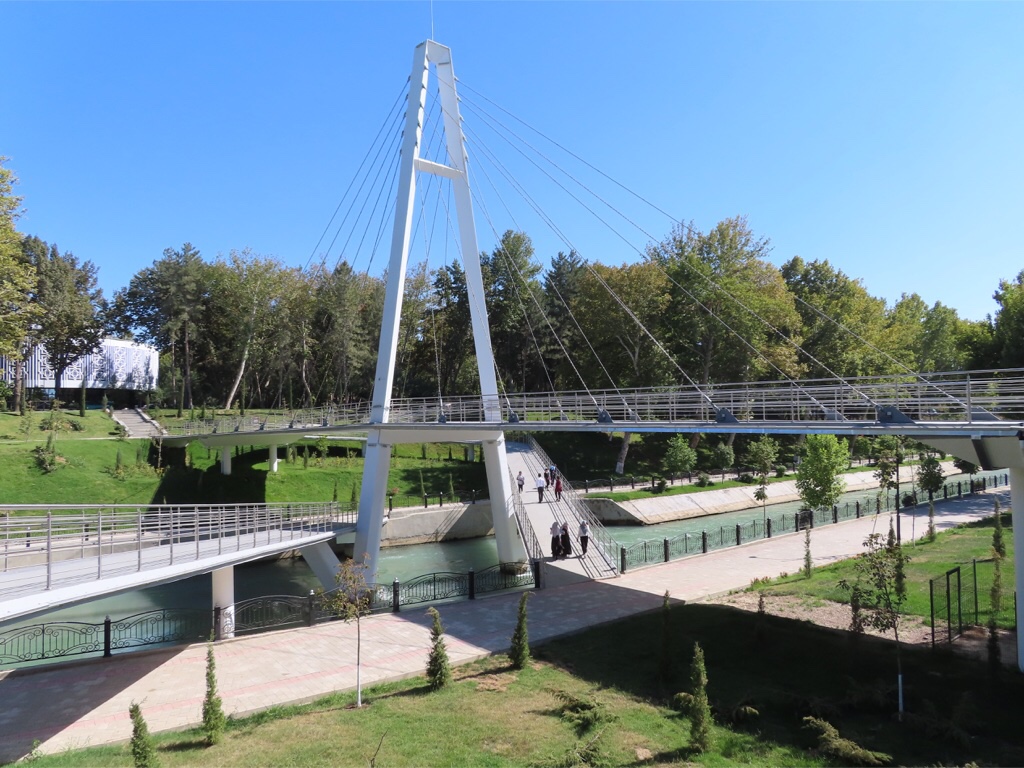
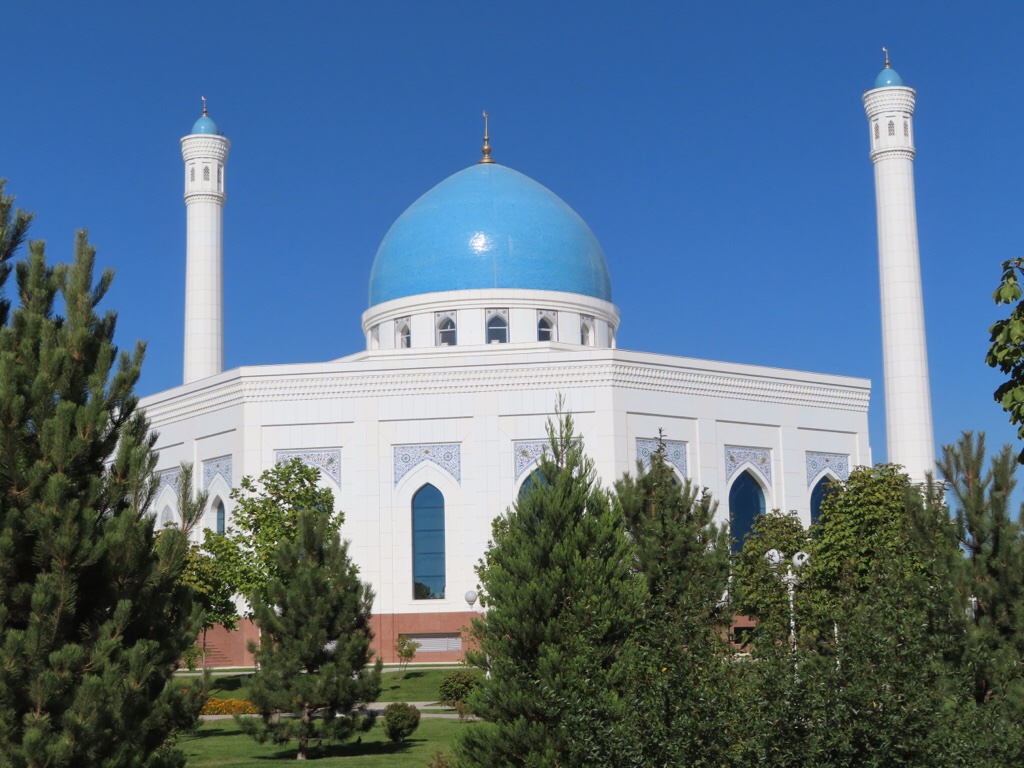
The afternoon included the Museum of Olympic Glory, and a walk along the Ankhor Canal together with a pretty elaborate bridge, the 2014 Minor Mosque …

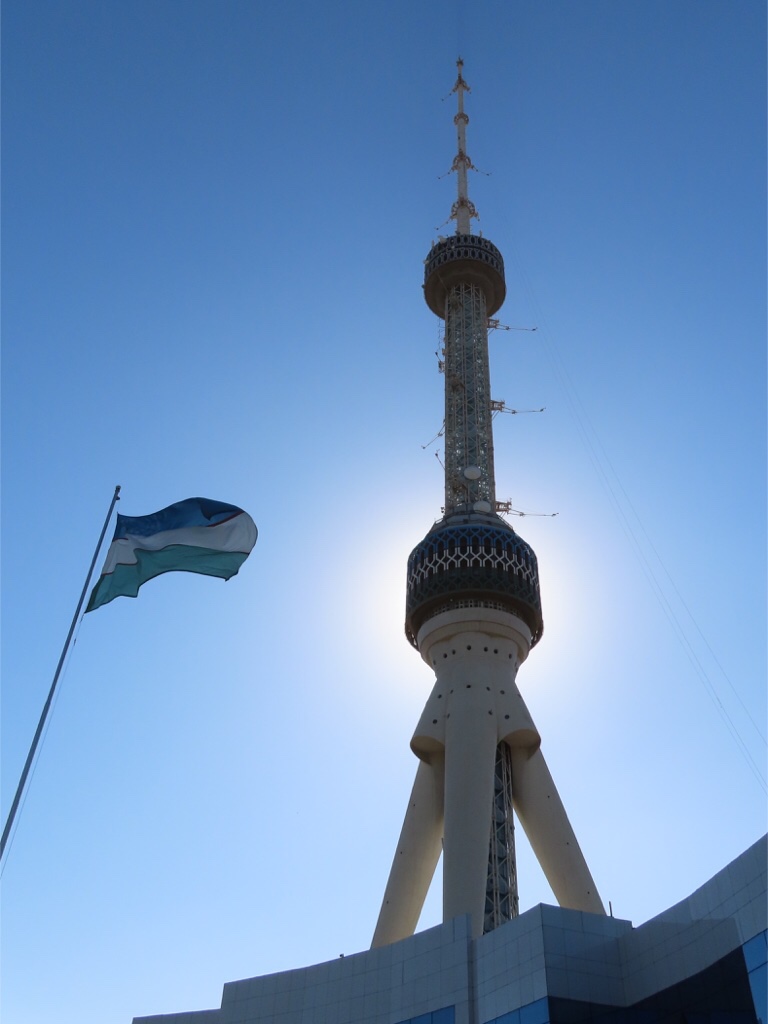
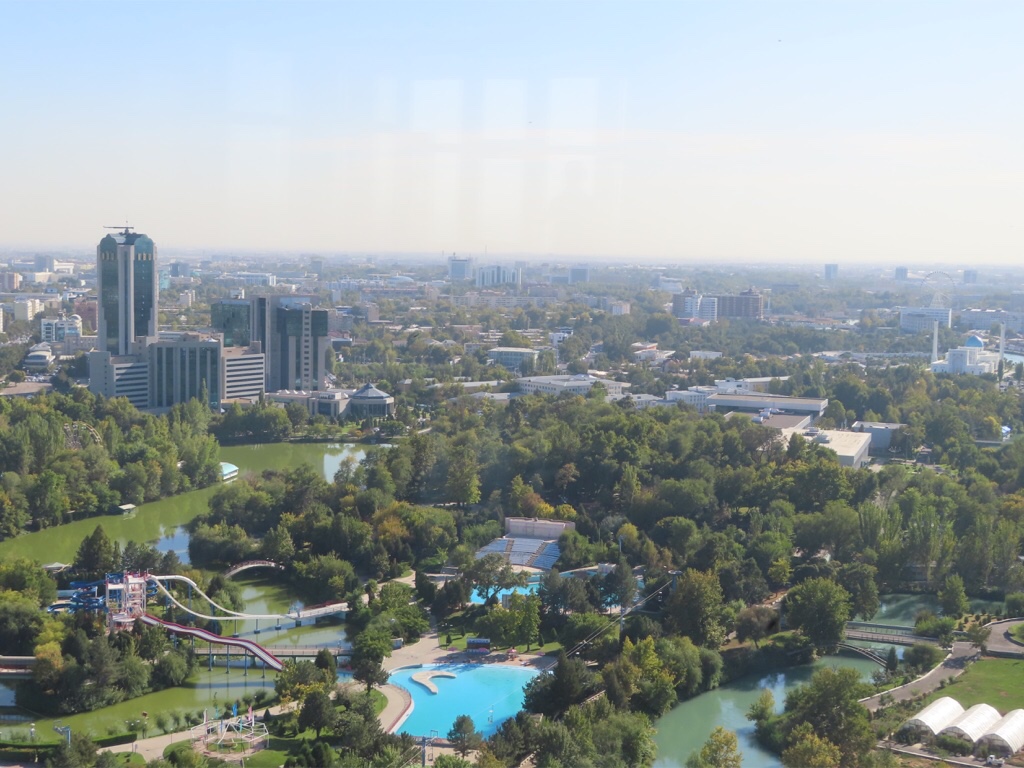
and finally the Tashkent Tower.

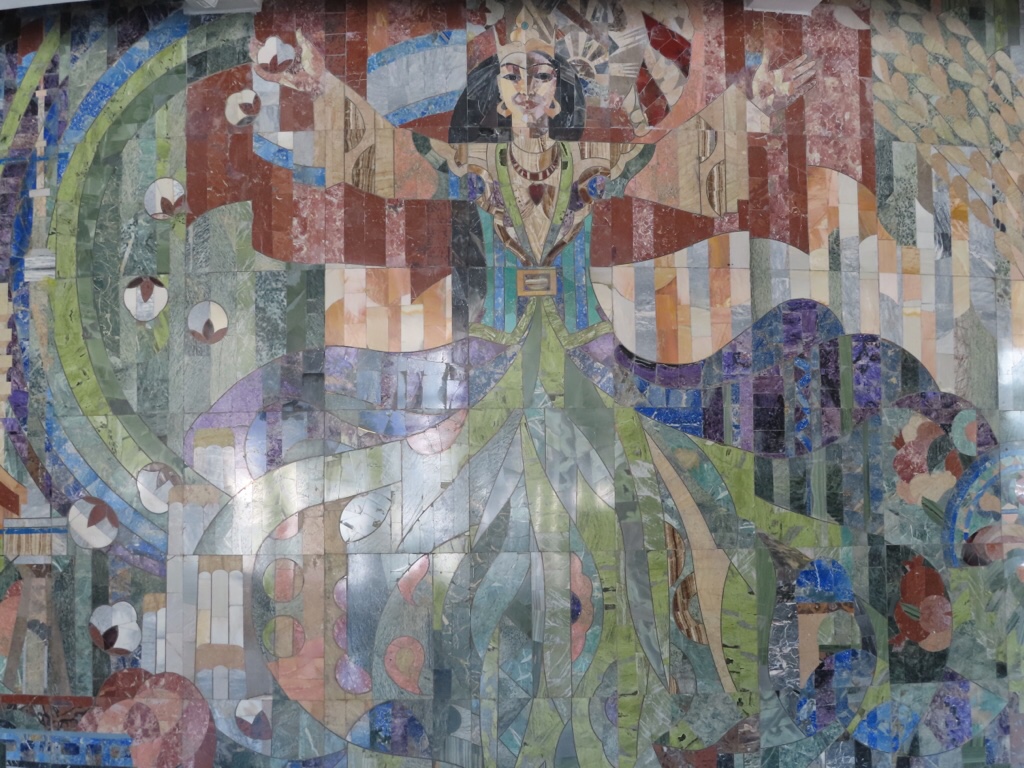
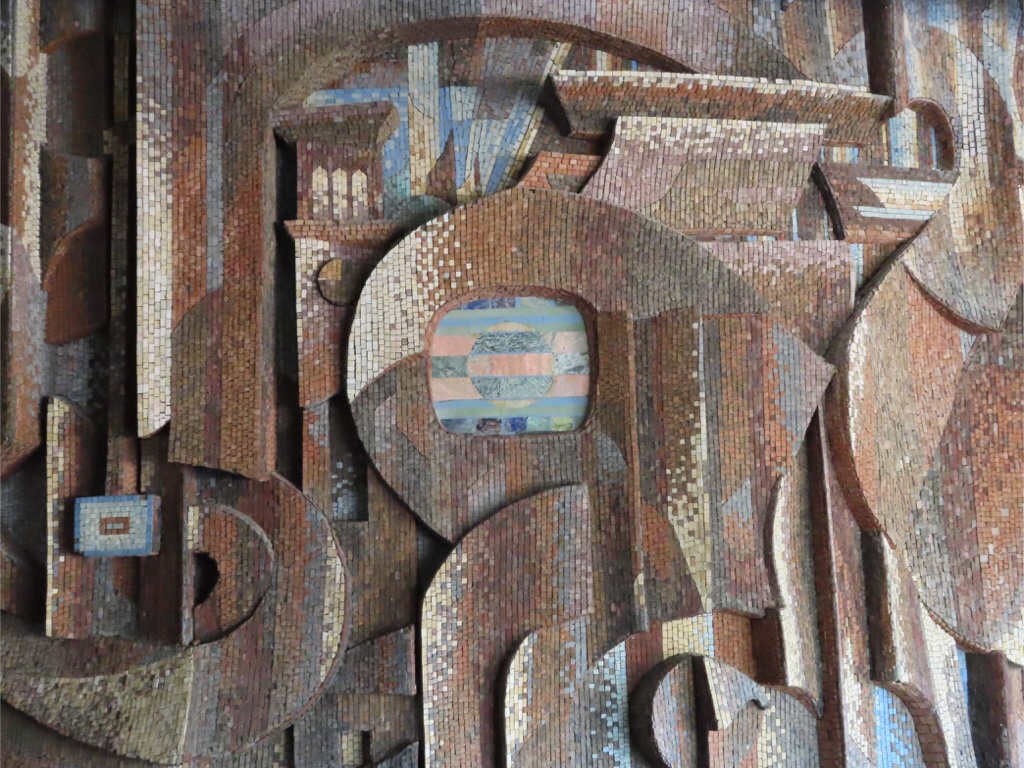
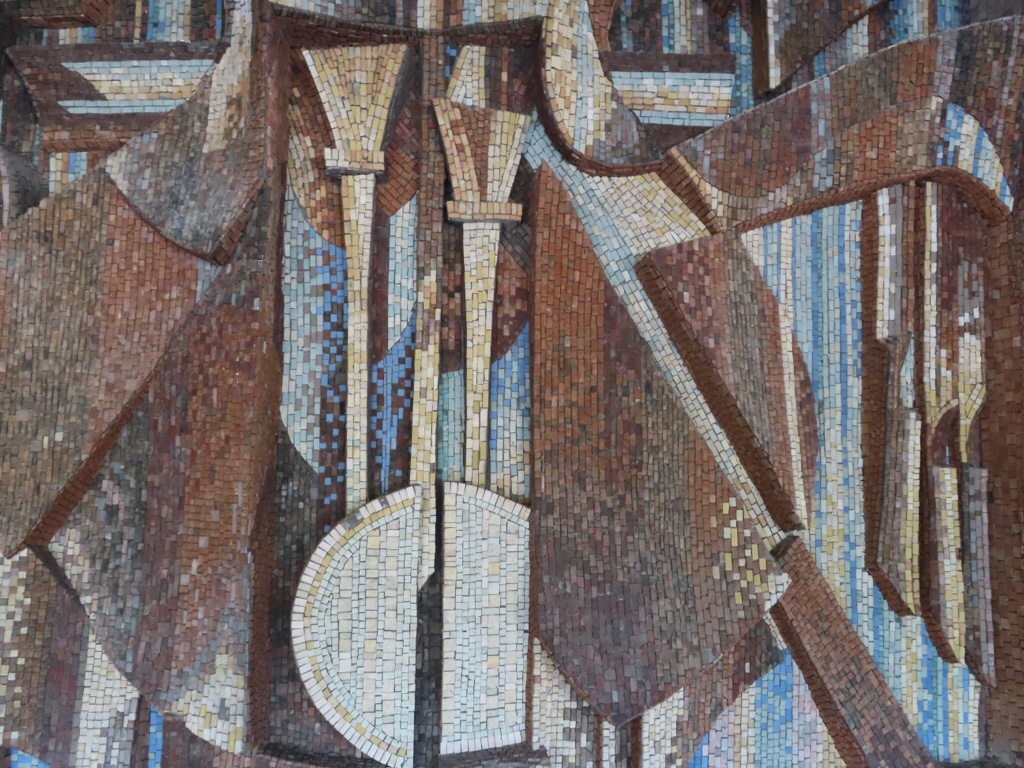
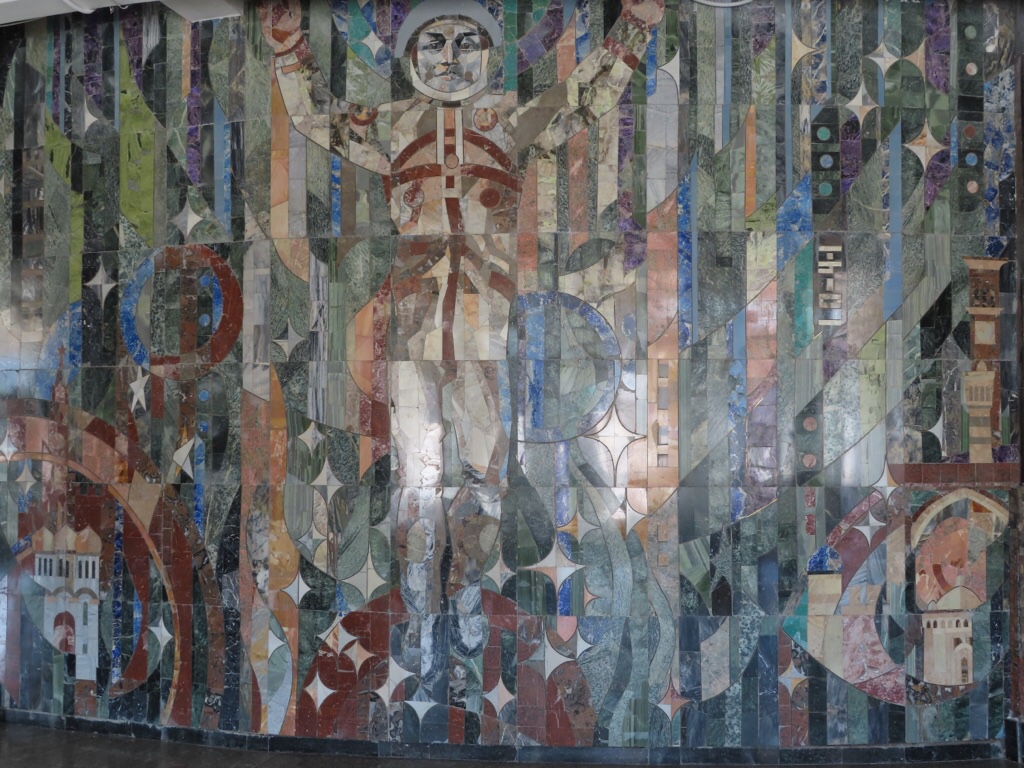
Built in 1981 to withstand earthquakes, this 375m tower is the tallest in Central Asia – a weather station and tv transmitter. The tower’s foyer is decorated with mosaic panels of semi-precious stones, marble and metal …

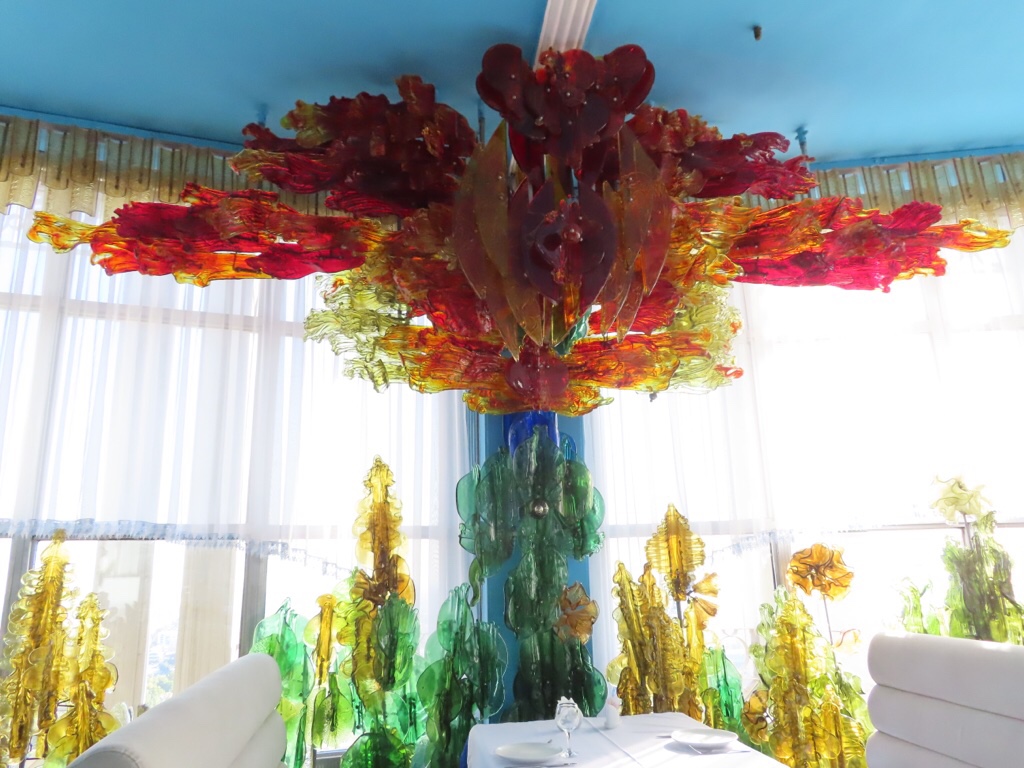
… and we went up to the observation gallery and restaurant with these very Dale Chihuly inspired decorations!

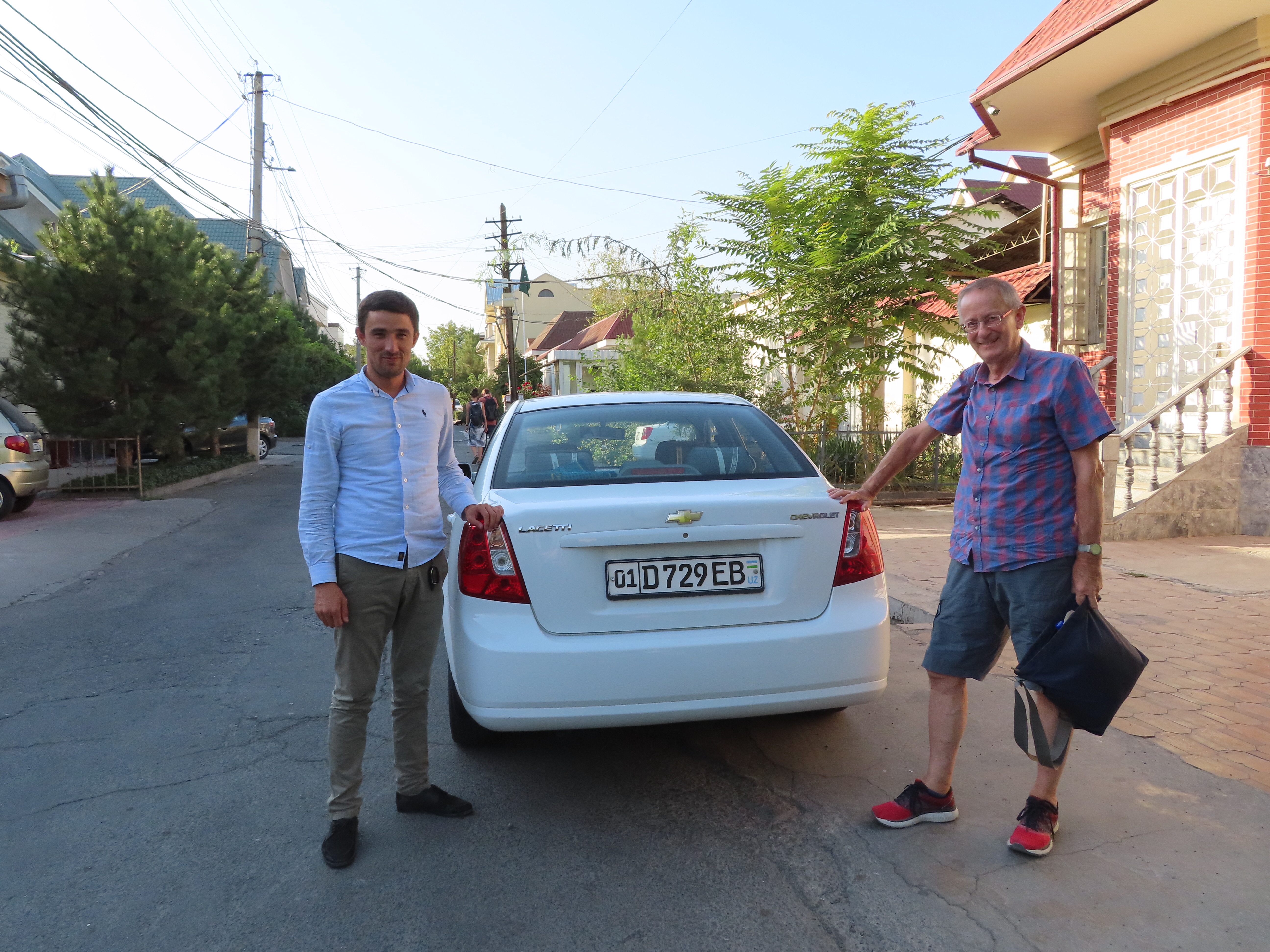
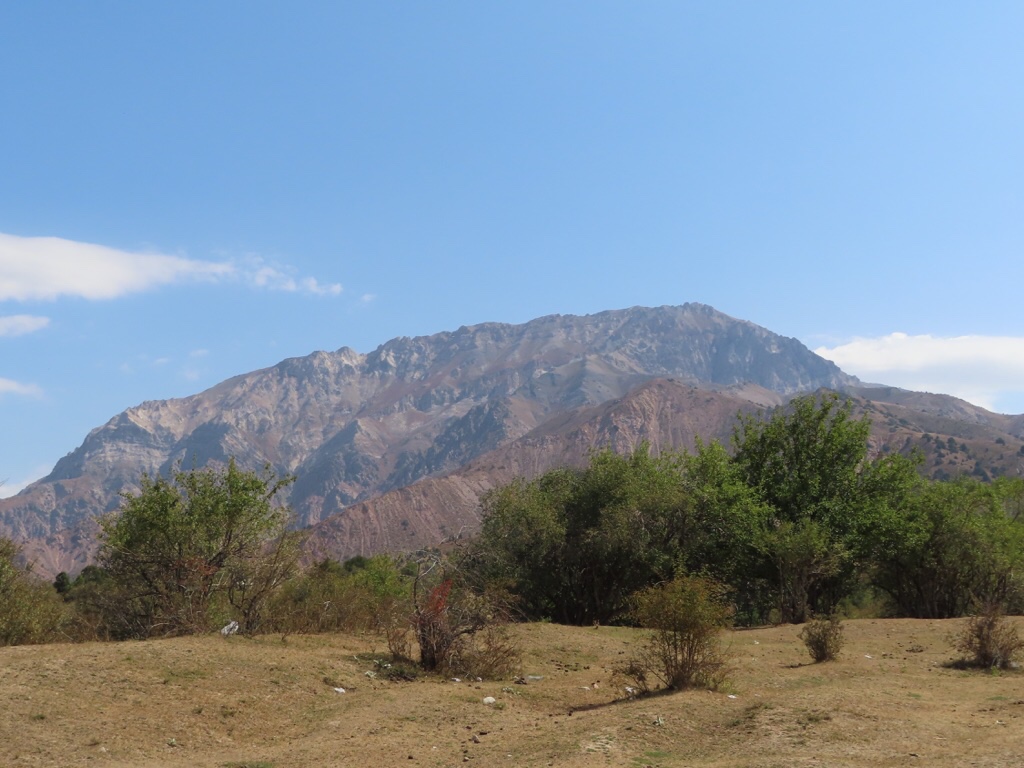
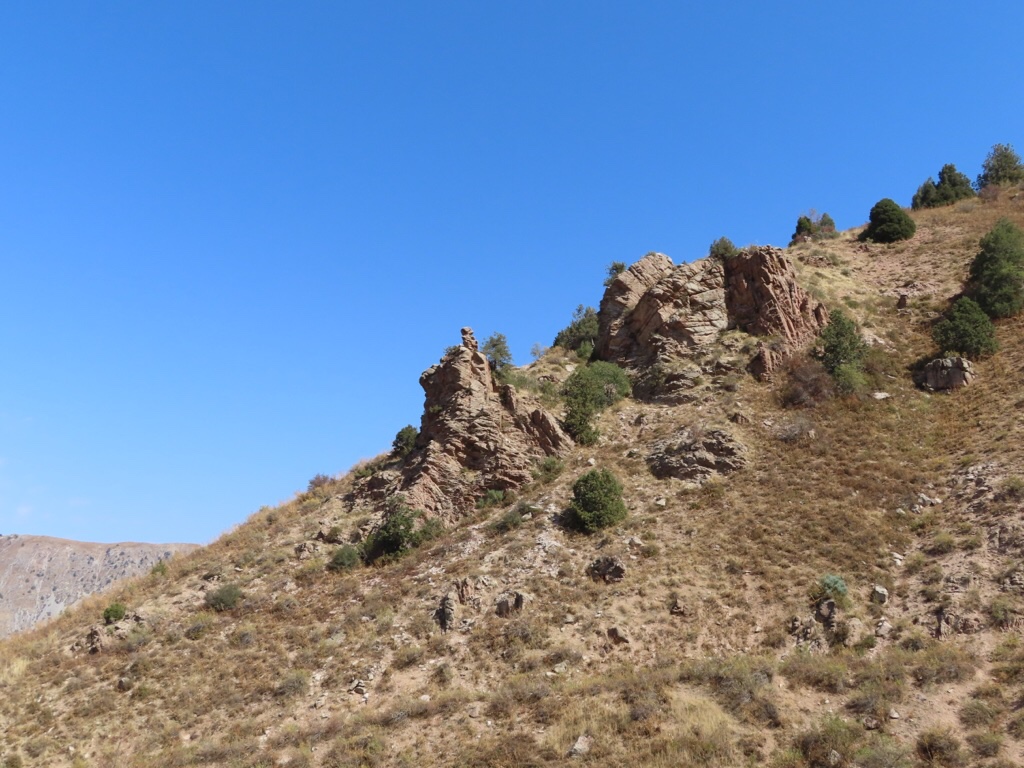
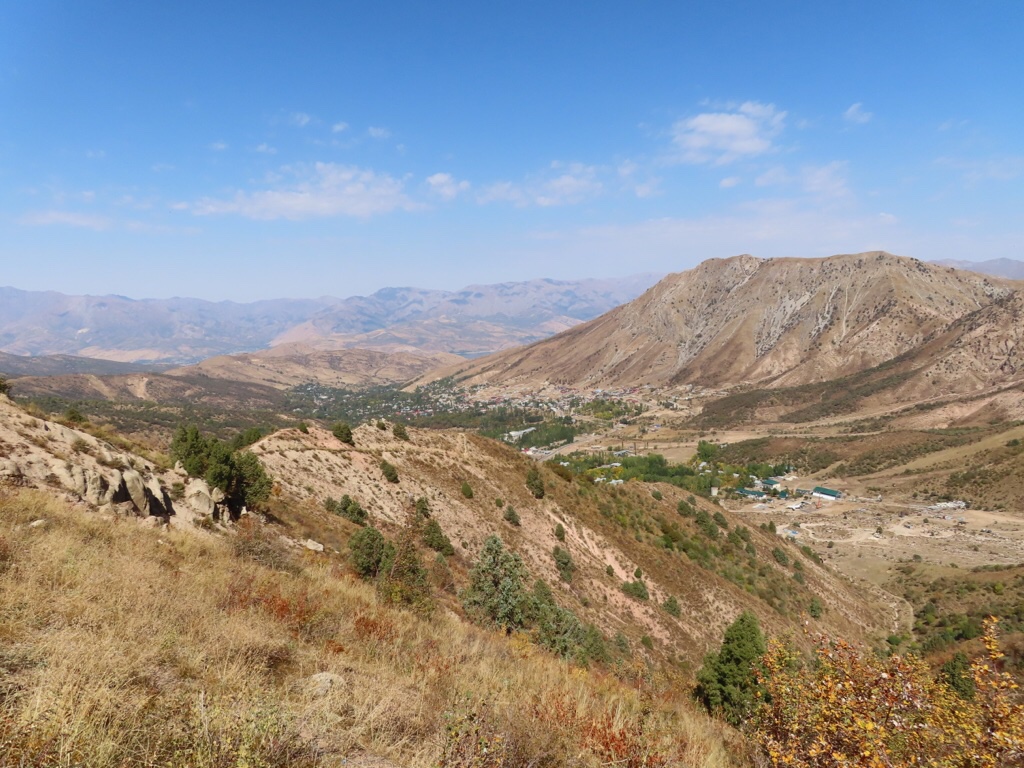
Next day, having seen enough of the city, we took a day out in the countryside with Mauad who drove us to the Valley of Chimgan is around 1500m above sea level, surrounded with mountains and just a couple of hours from Tashkent.

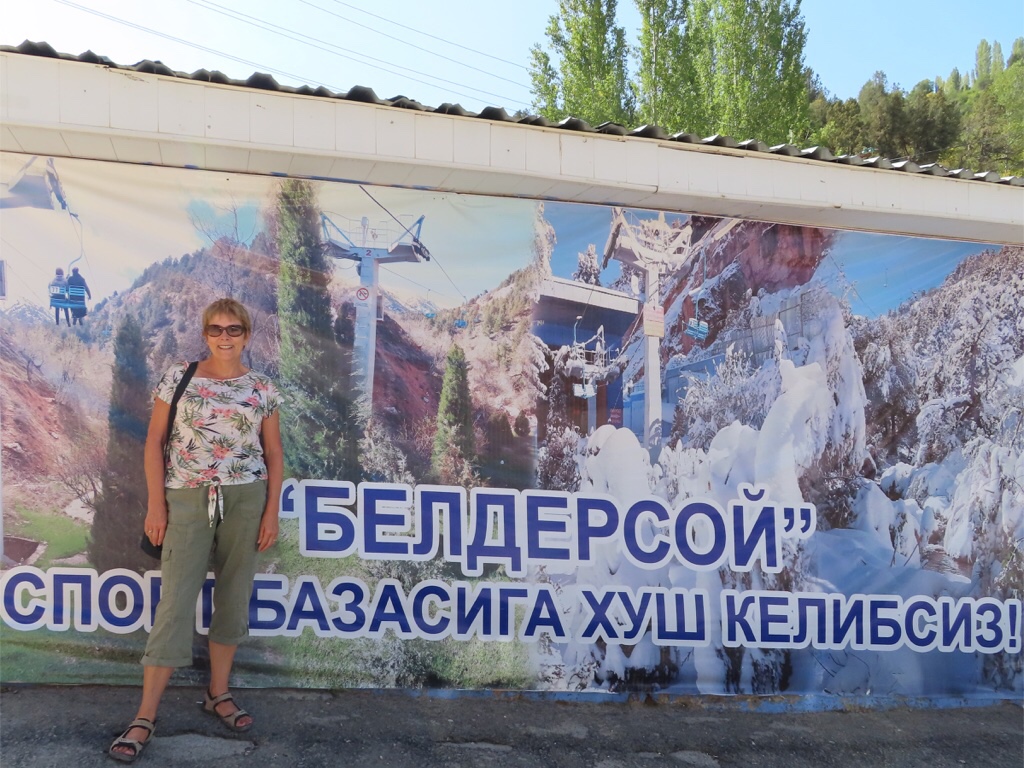
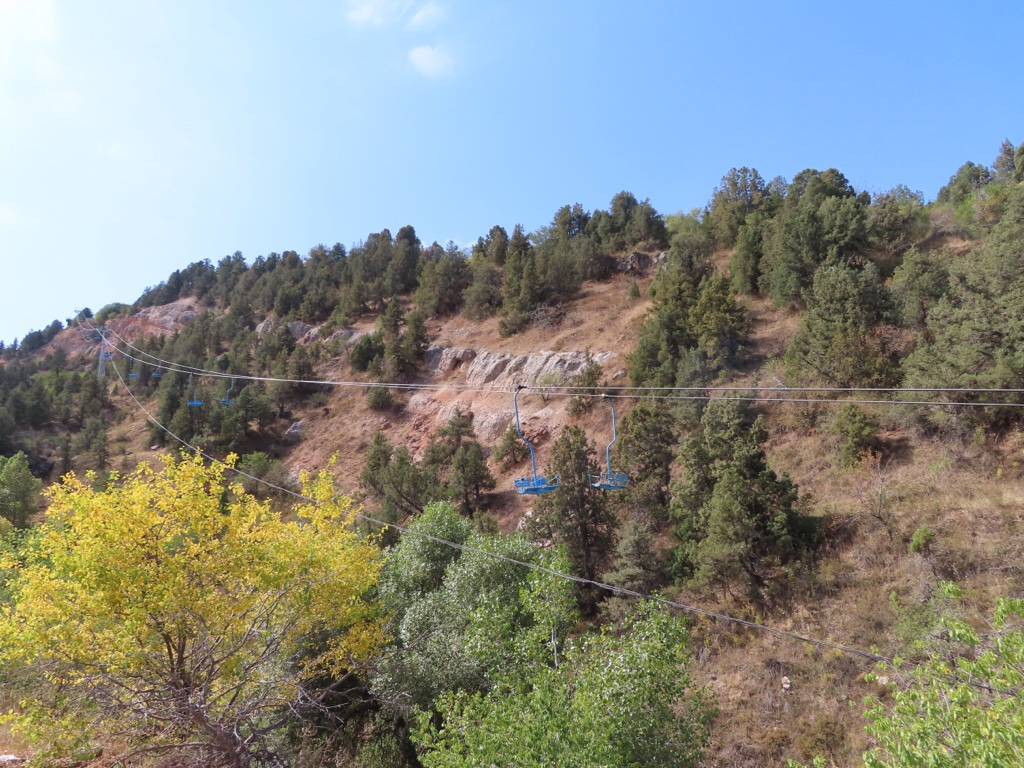
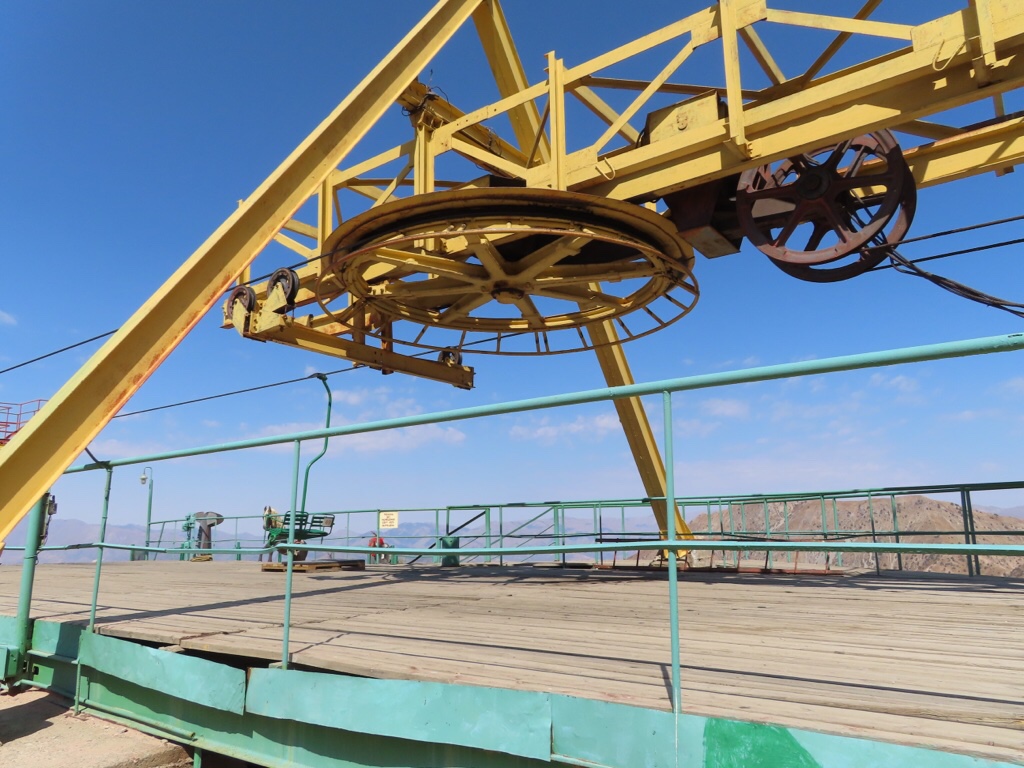
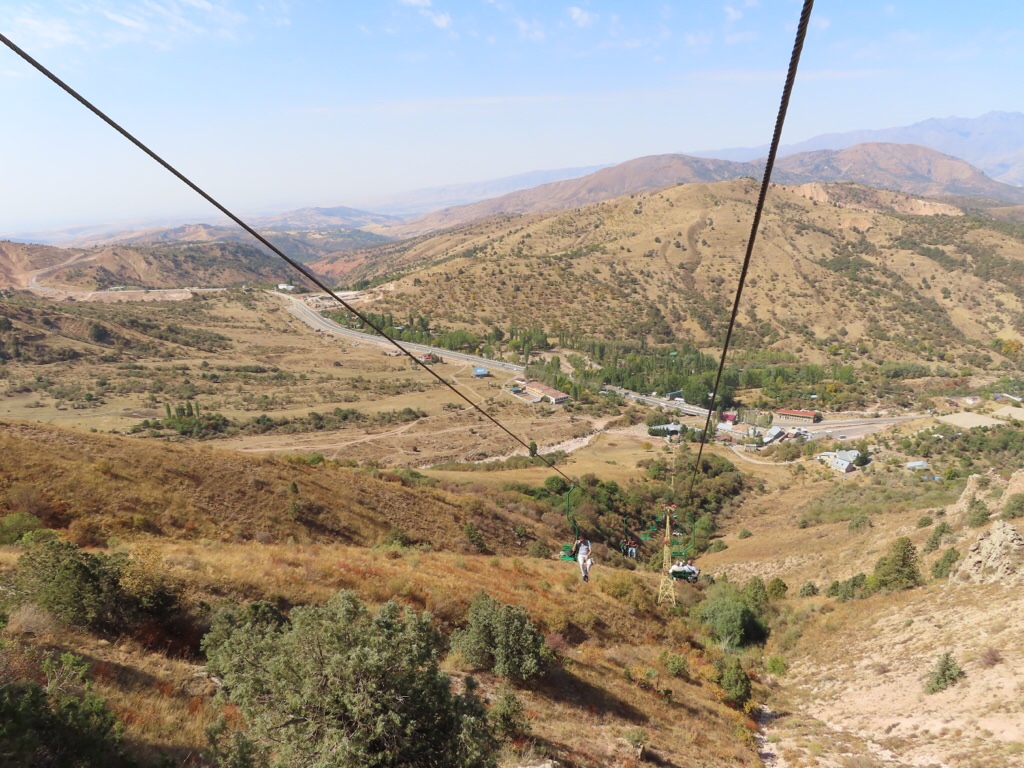
The mountains are popular for skiing in the winter and have chairlifts which also operate in summer, but unfortunately not the one in Beldersay today …

… so we continued to Chimgan Mountain which at 3309m is the main peak and towers above the entire valley.

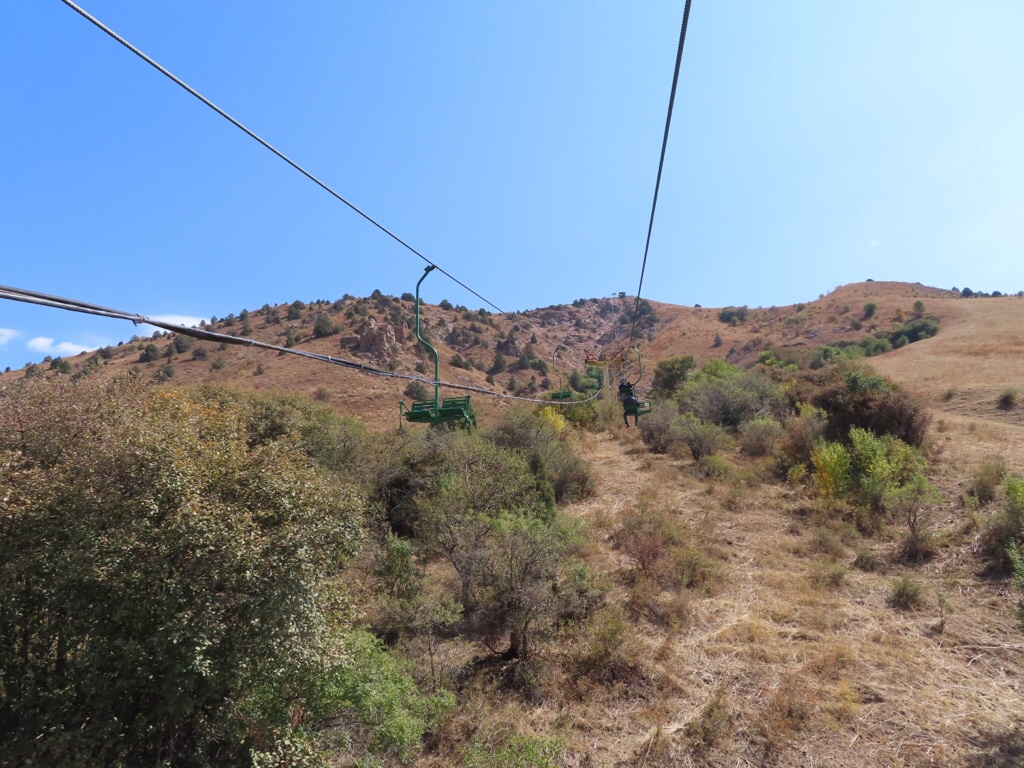
Here the chairlift was working and we took a ten minute ride up and down for the view.

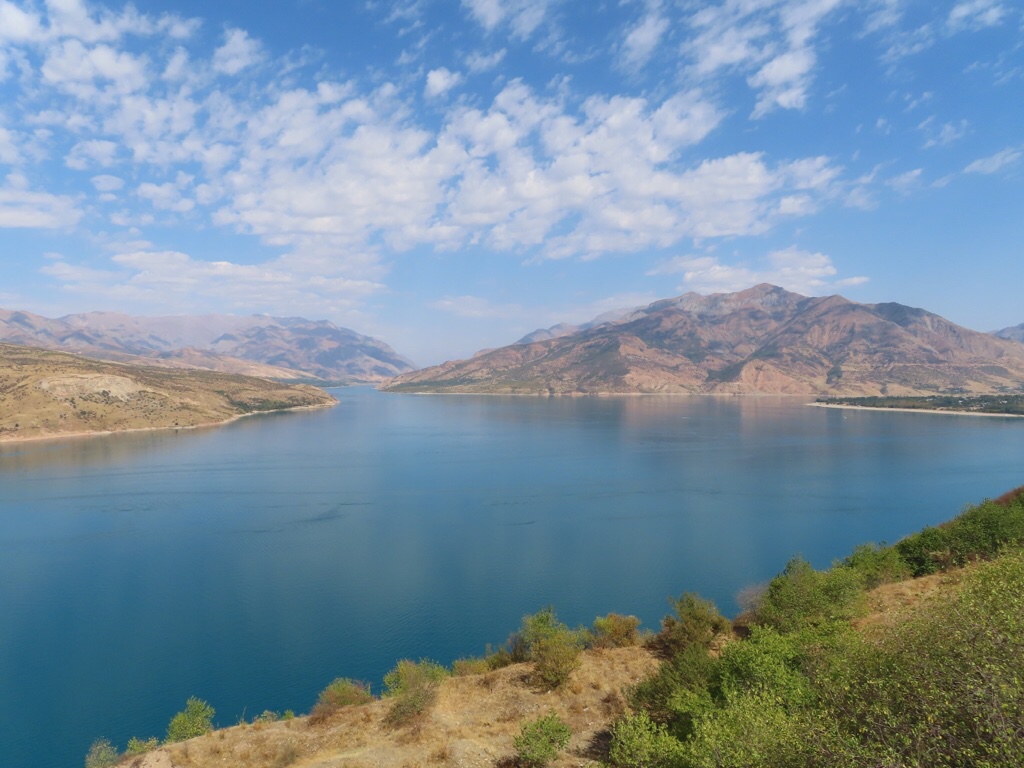
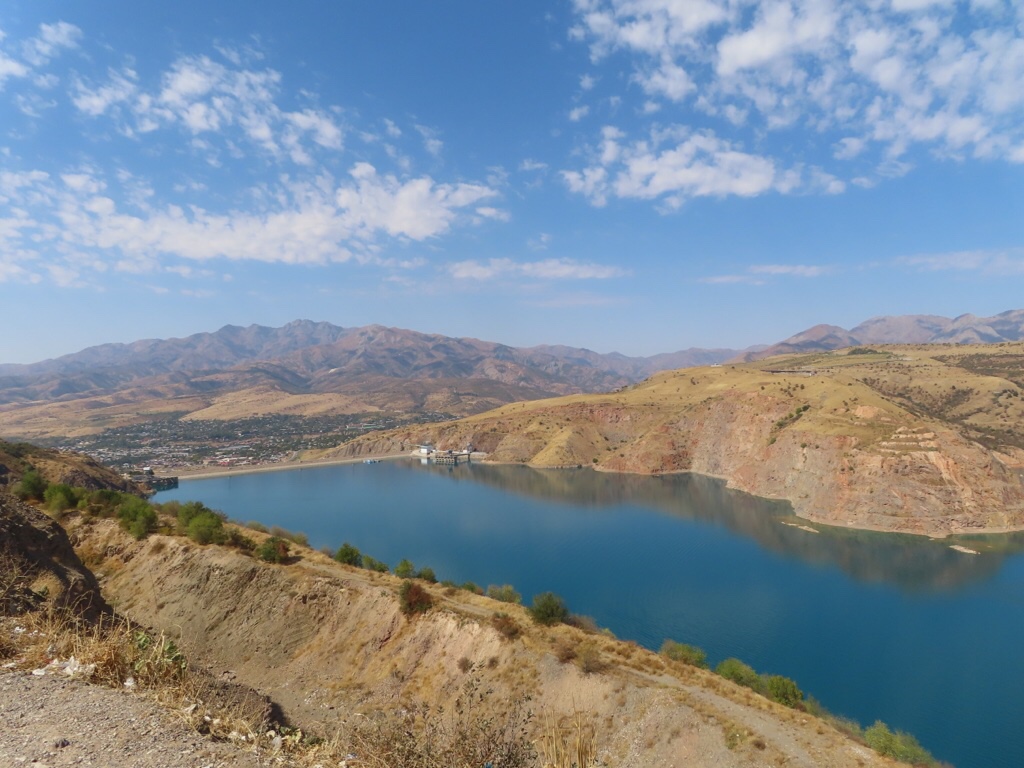
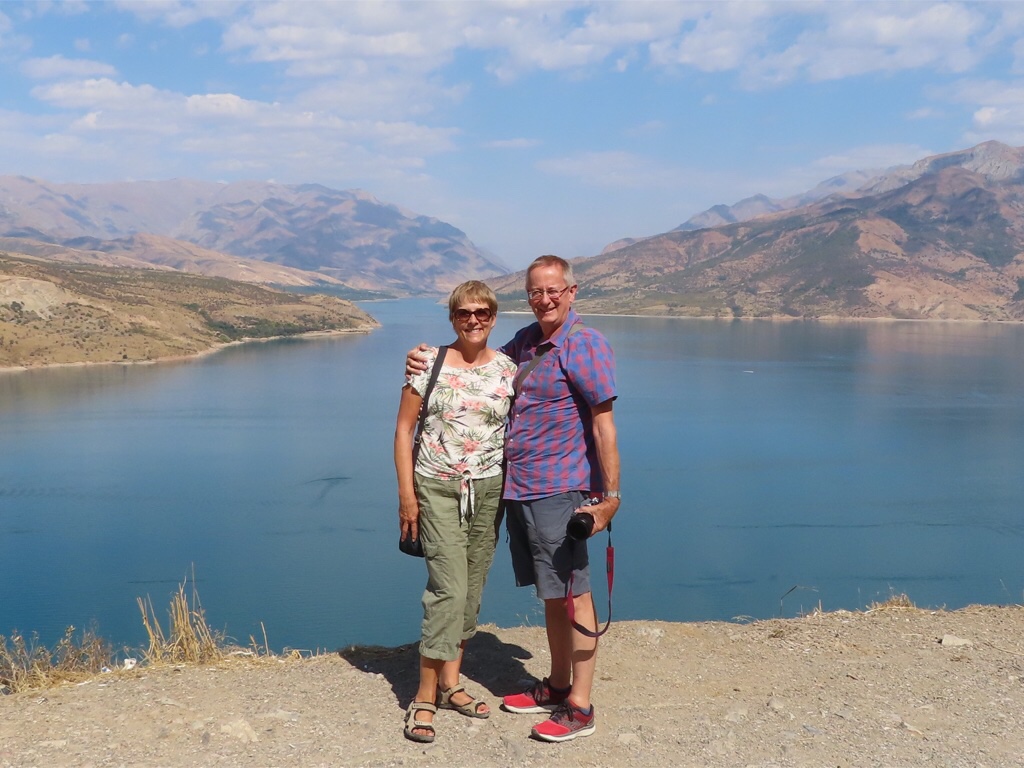
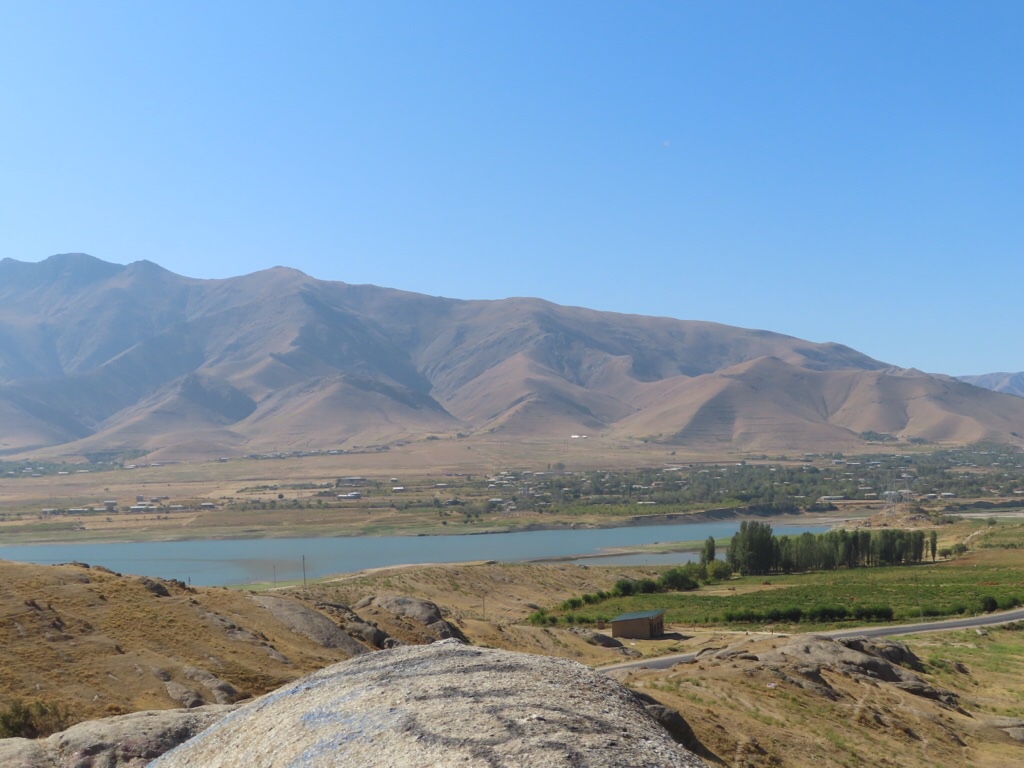
Next stop was Lake Charvak, a reservoir, created in 1970 when the 168m dam was built and is huge and very blue. It is fed by three rivers and supplies Tashkent. In a country where visiting the sea is a major expedition, Lake Charvak is a popular resort for holiday makers.

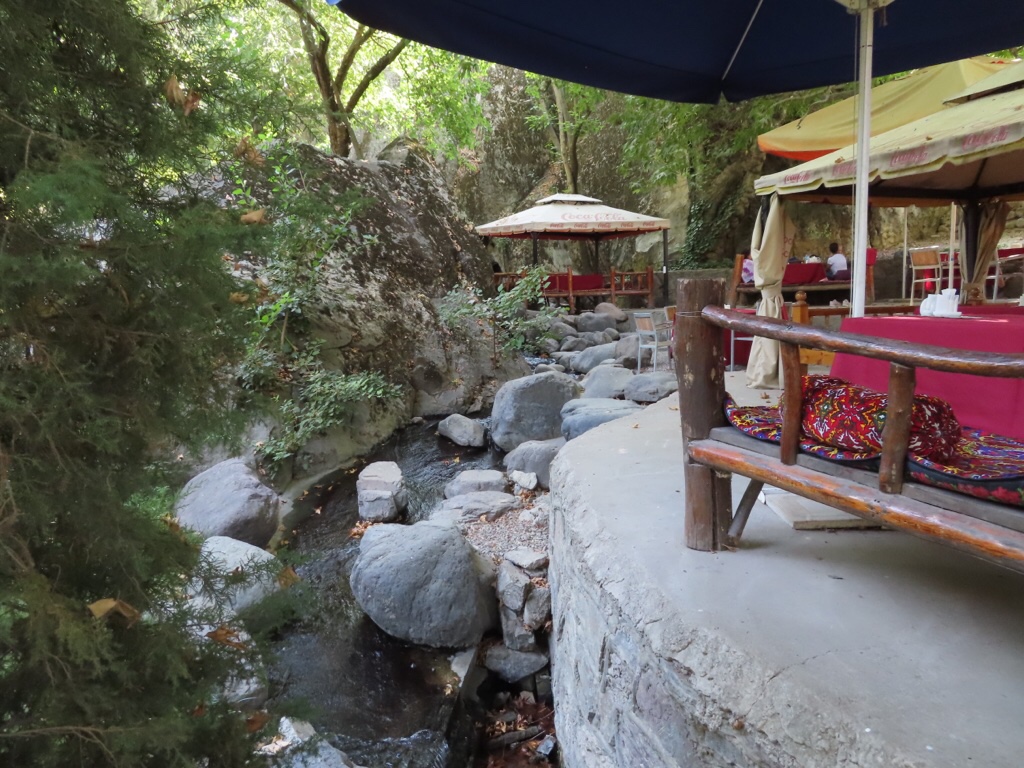
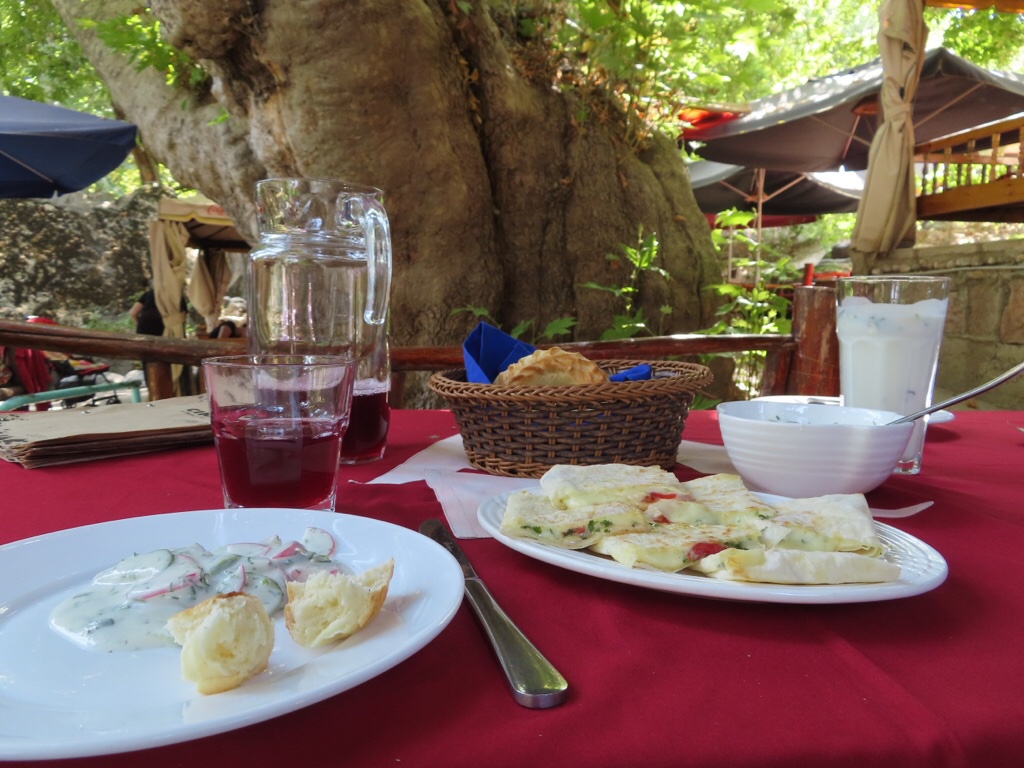
A short way further and we stopped for lunch at the Cinara chaykhana or teagarden, with plenty of shade and a stream running through. We sat under a 800 year old sycamore tree believed to be the great grand daughter of the very tree sat under by Alexander the Great in 328 BC when he first tasted Plov! We munched our way though cheese filled lavash and salad before returning to Tashkent.

Cinaras is part of the Caravan group of restaurants (as is Gruzinski Dvorik) which we have revisited since we’ve been back as we enjoyed them so much. They are aimed more at tourists and affluent locals as they are expensive by local standards with a meal and a bottle of wine costing around Som 250,000 … £25, but it was worth it for varied vegetarian choices and reasonable wine.

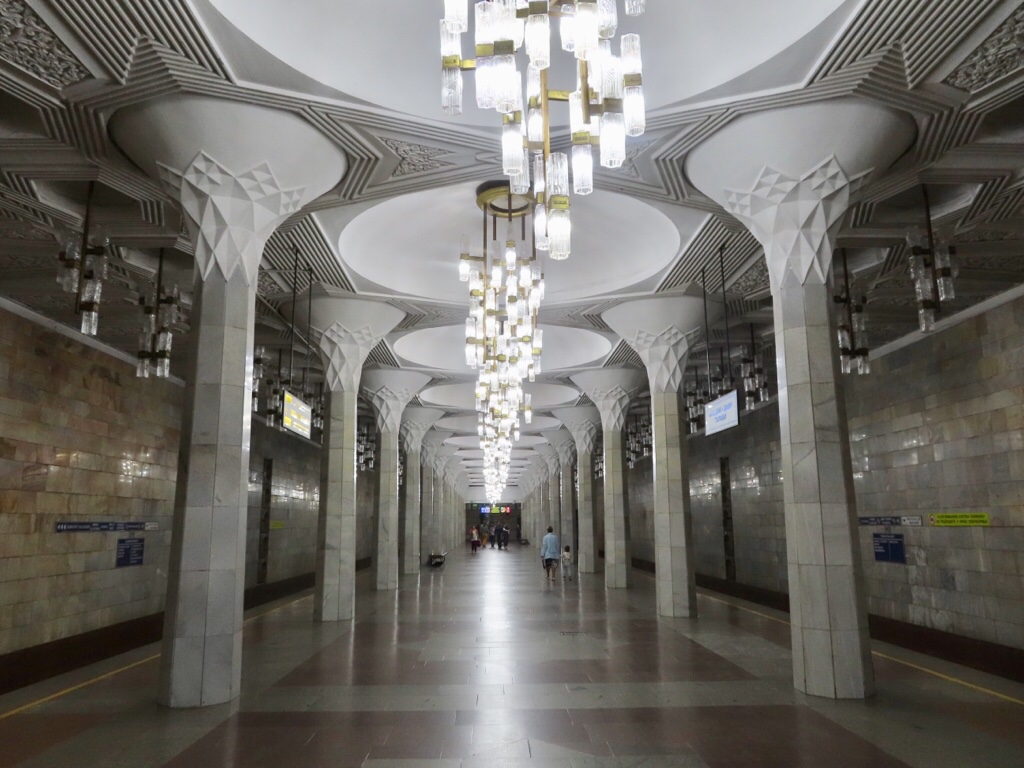
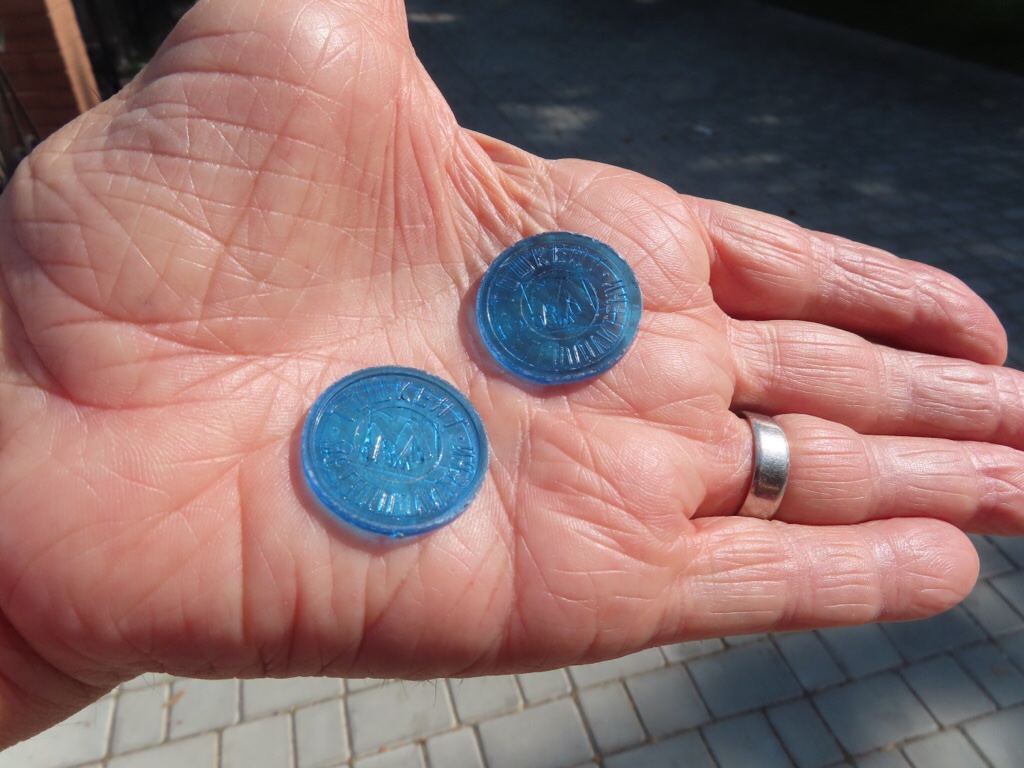
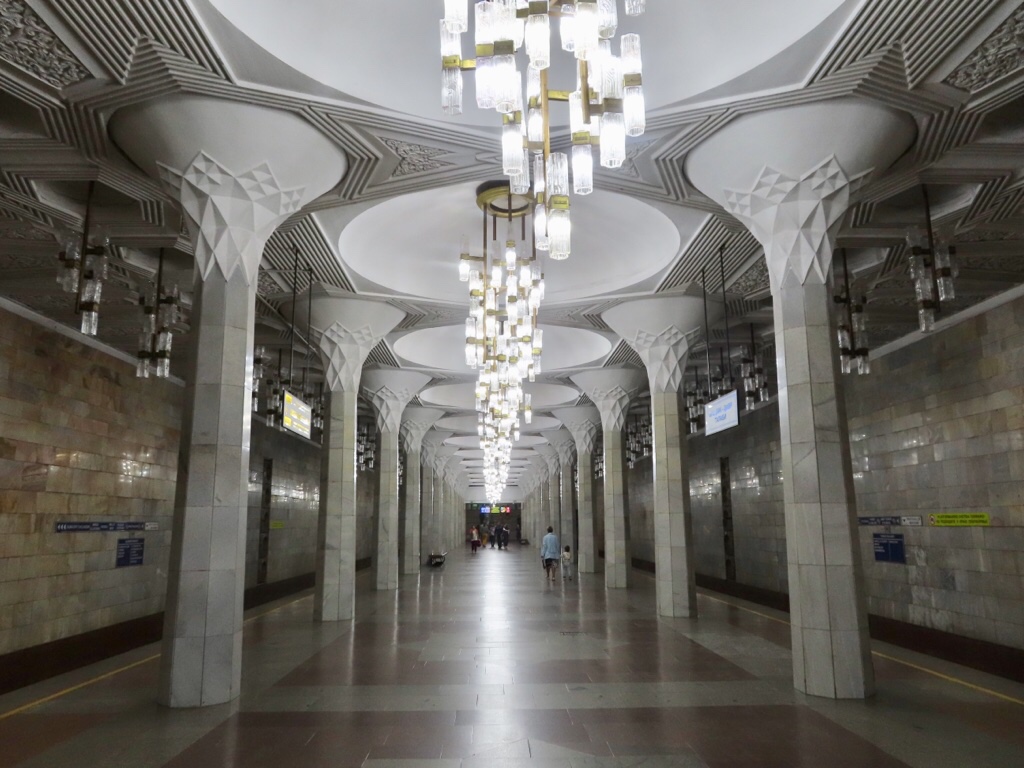
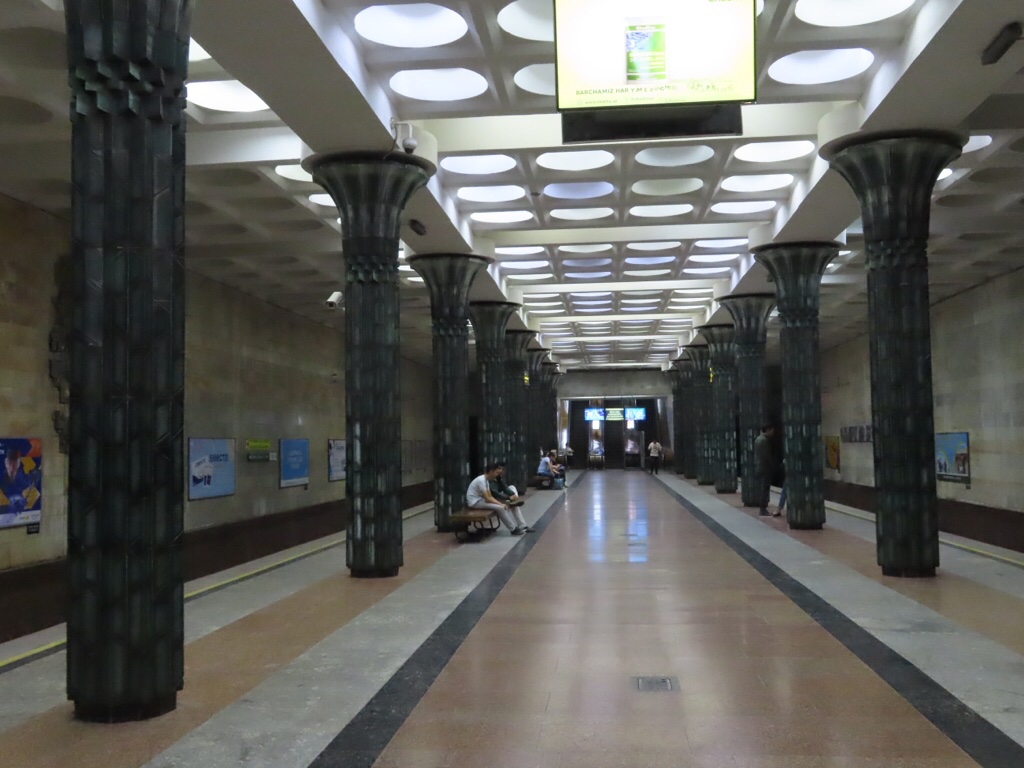
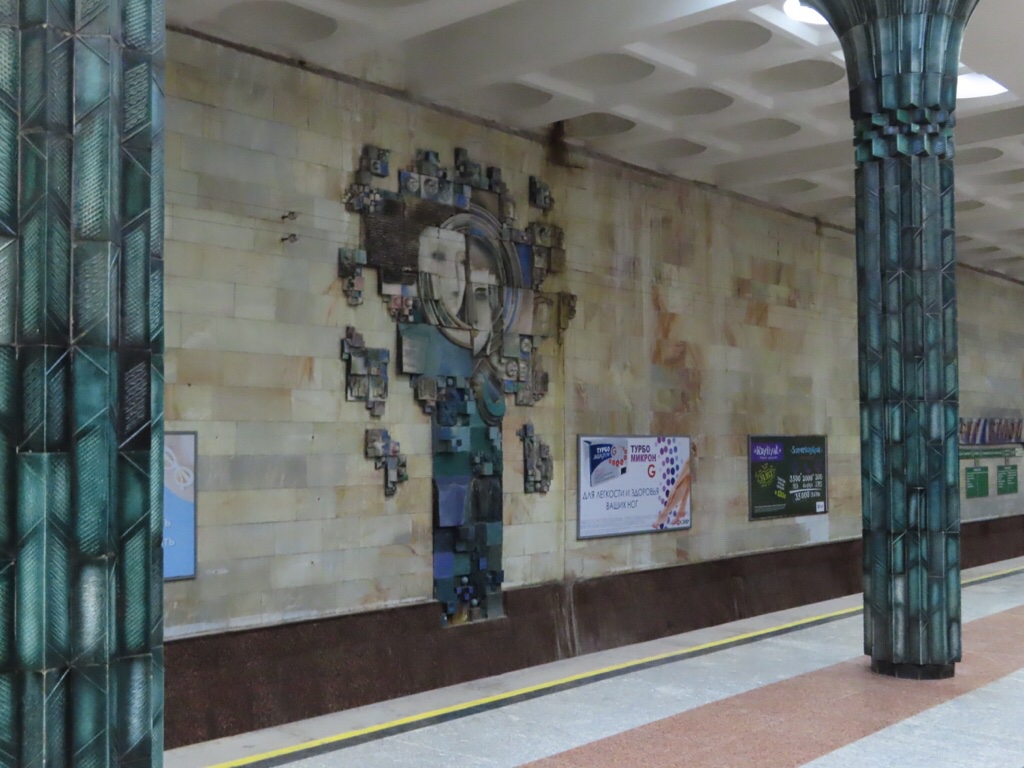
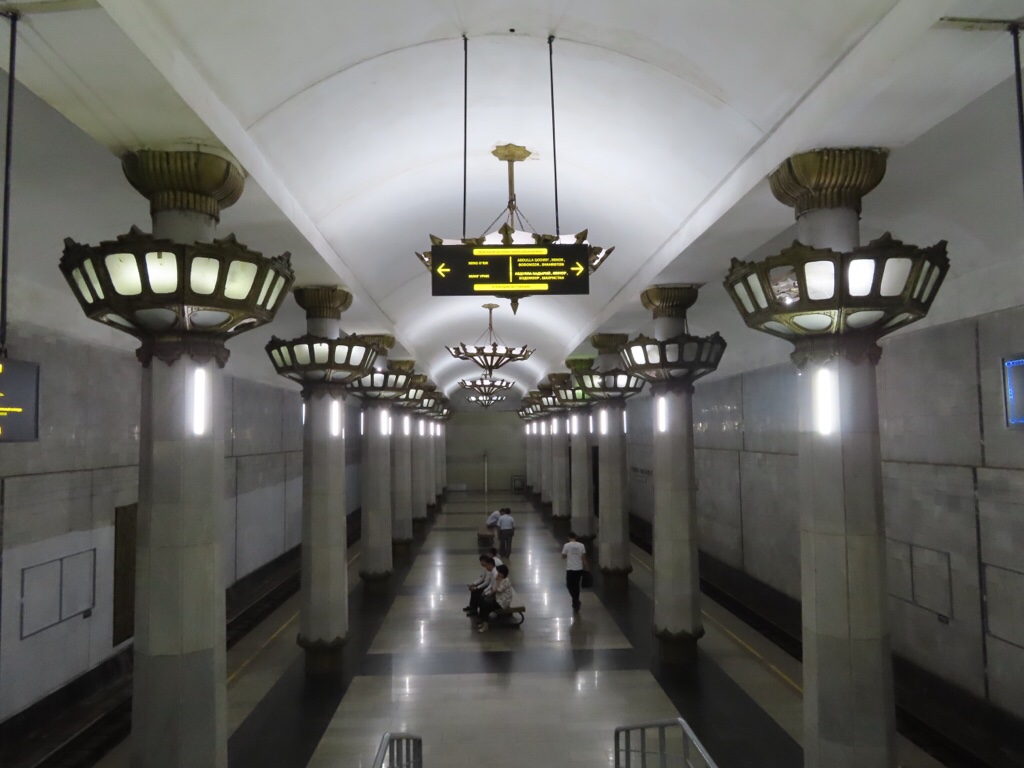
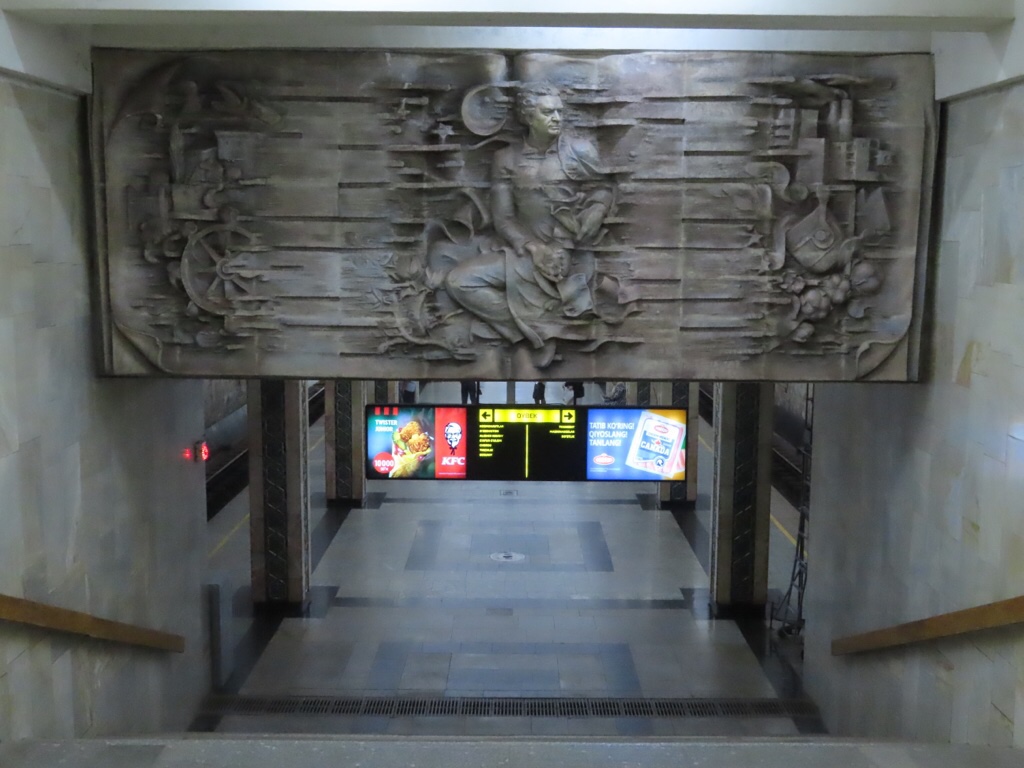
This time round we have learnt our lesson and have been using cabs to get around, but we have taken some pics on the Tashkent metro which opened in 1977. The stations also house bunkers and are considered military installations, so no photos were allowed but the ban has now been lifted. At just 1400 Som or 12p a ride it must be the cheapest public transport we’ve been on!

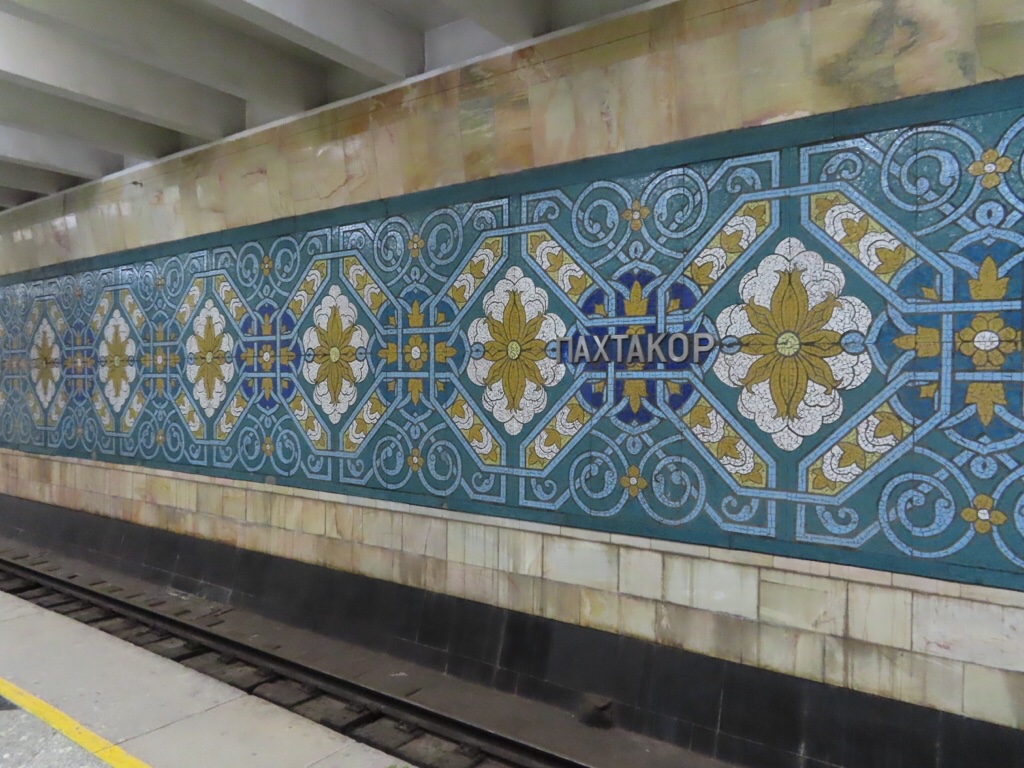
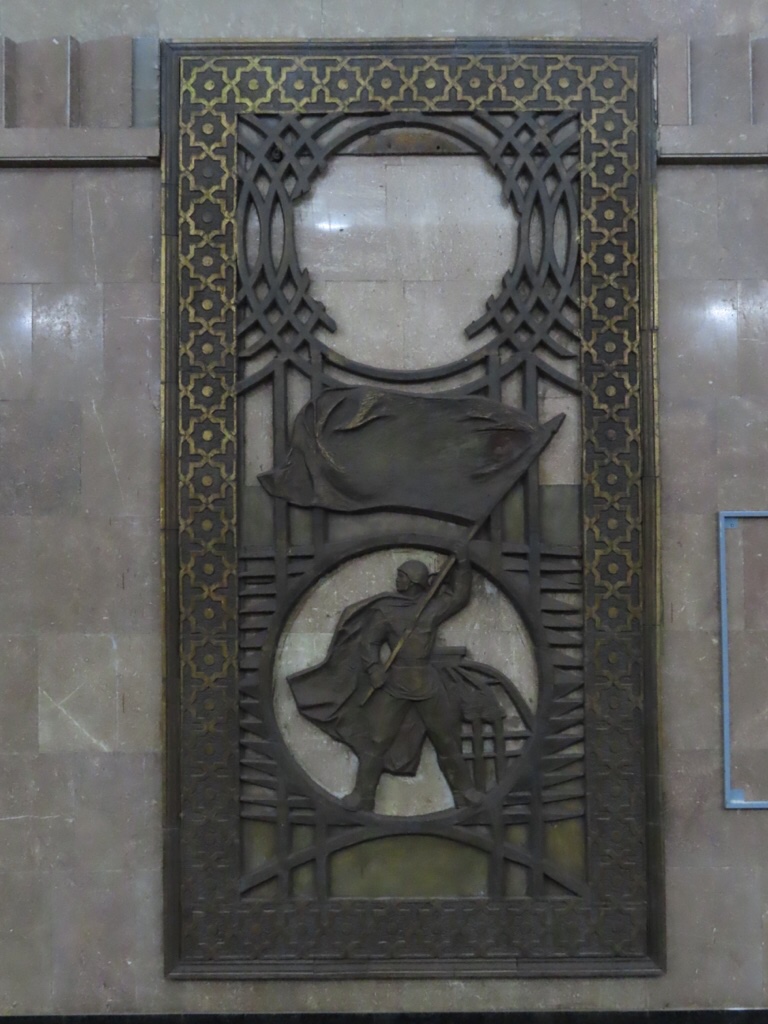
On our last morning we went station hopping and here are a few stations visited and snapped –

Mustakillik Maydoni which means Independence Square and is suitably grandiose …

Pakhtakor which means Cotton Grower with a mosaic of flowering cotton plants …

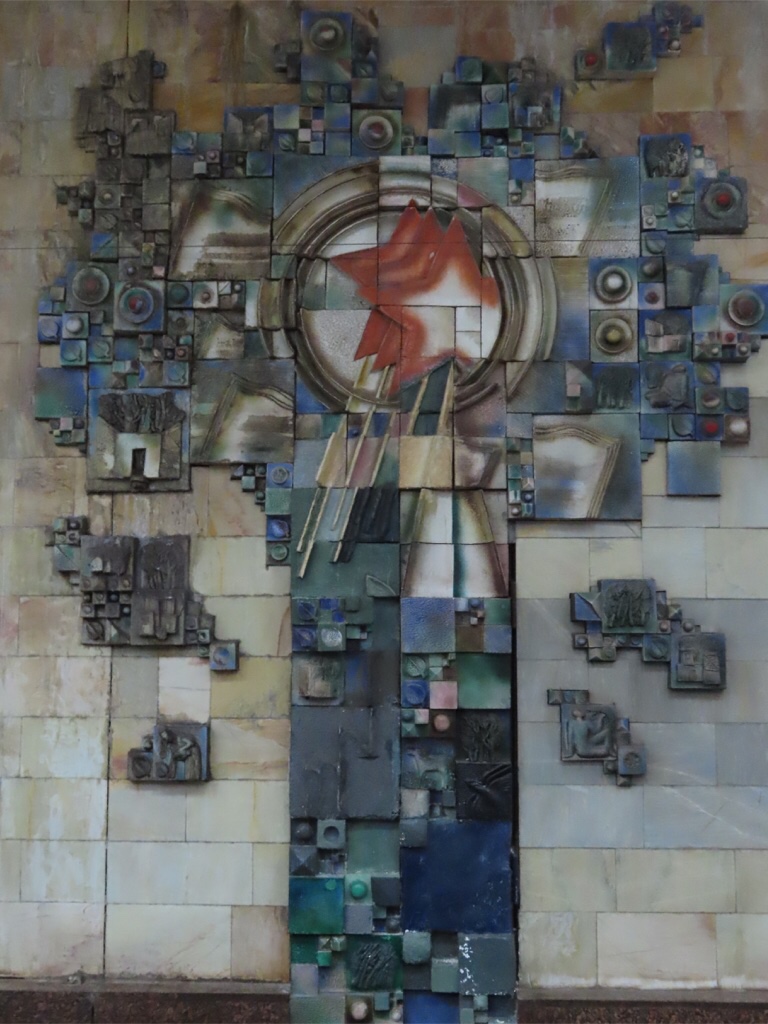
Amir Temur Khiyoboni station is the former October Revolution station and here is a Red Army soldier waving a blank flag that apparently had its hammer and sickle removed …

Gafur Gulom named for a famous Uzbek writer and poet …

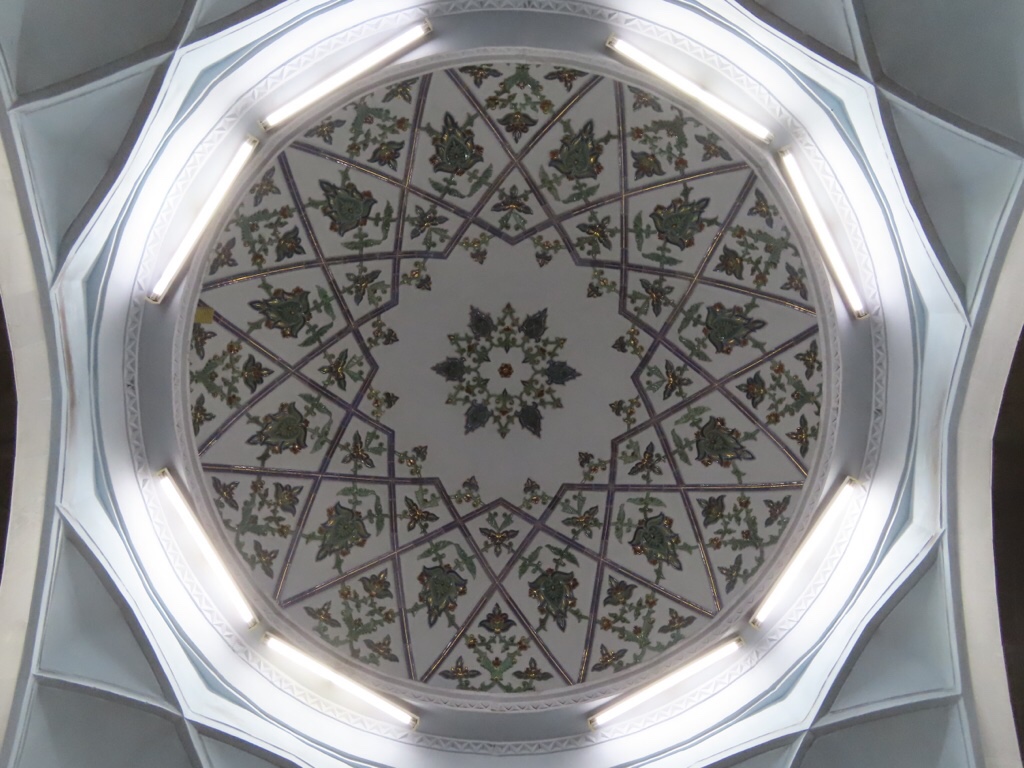
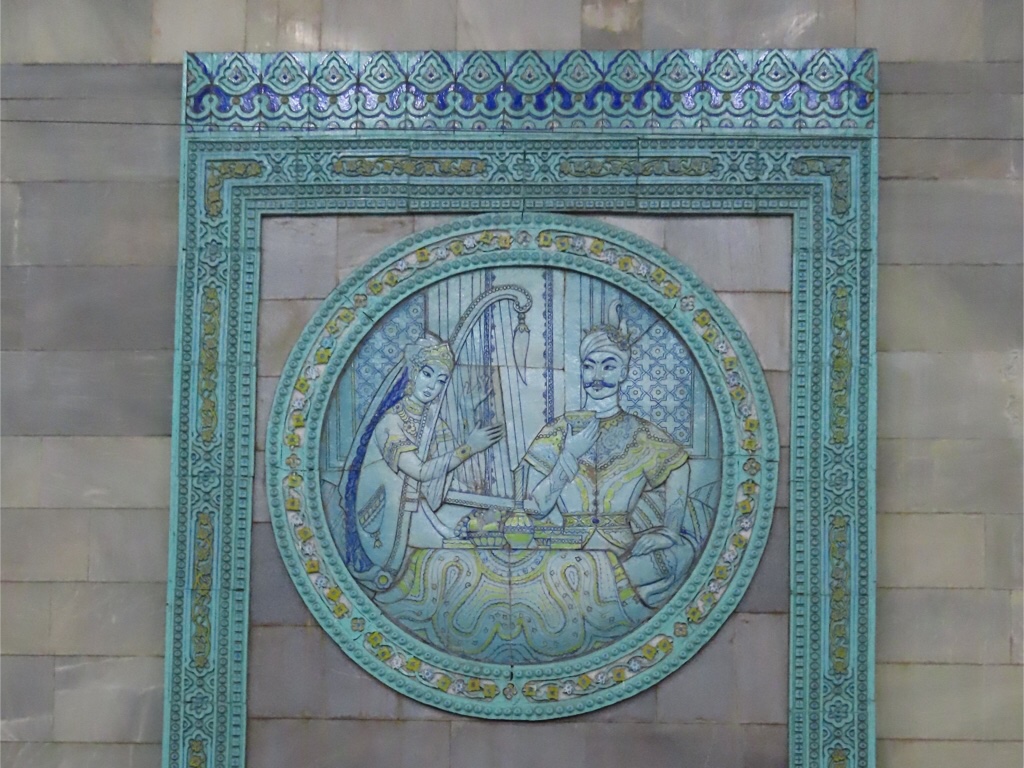
Alisher Navoi named for a Muslim poet with ceilings resembling a mosque and turquoise panels showing scenes from his poems …

Yunus Rajabiy named for a Uzbek musician …

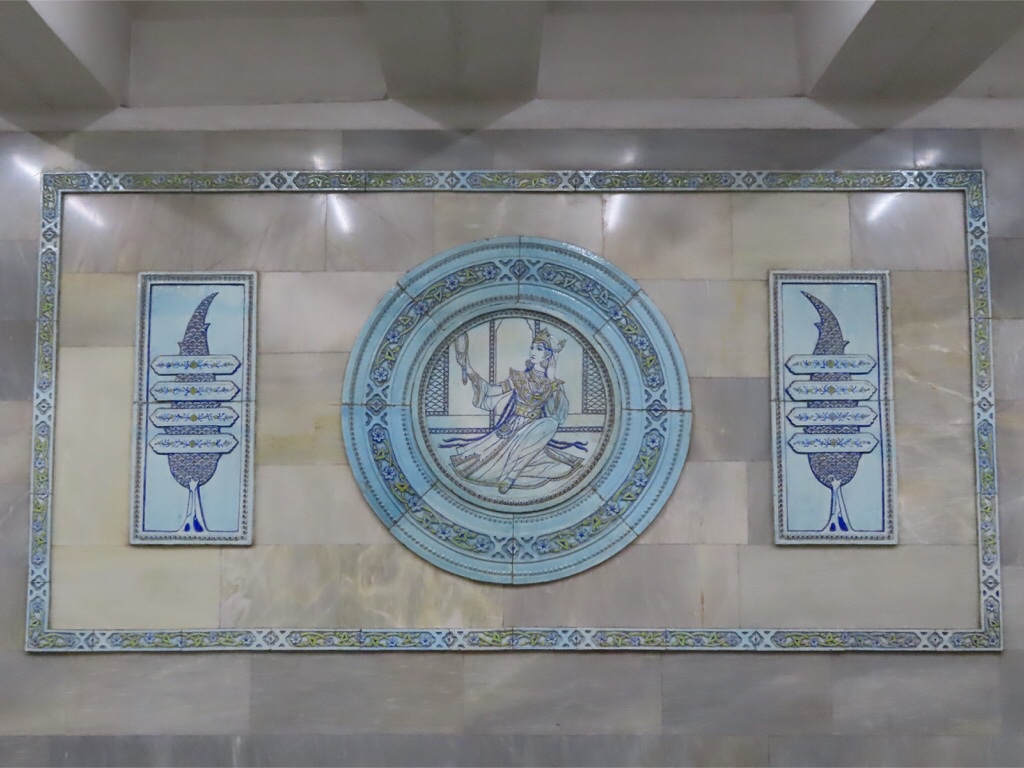
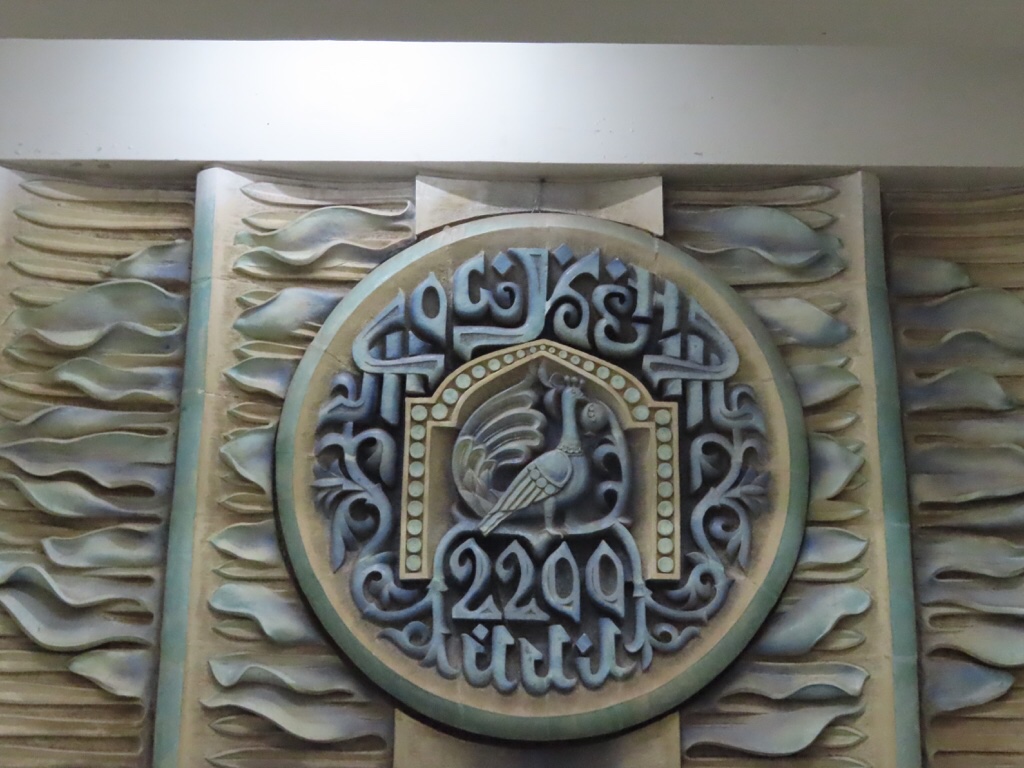
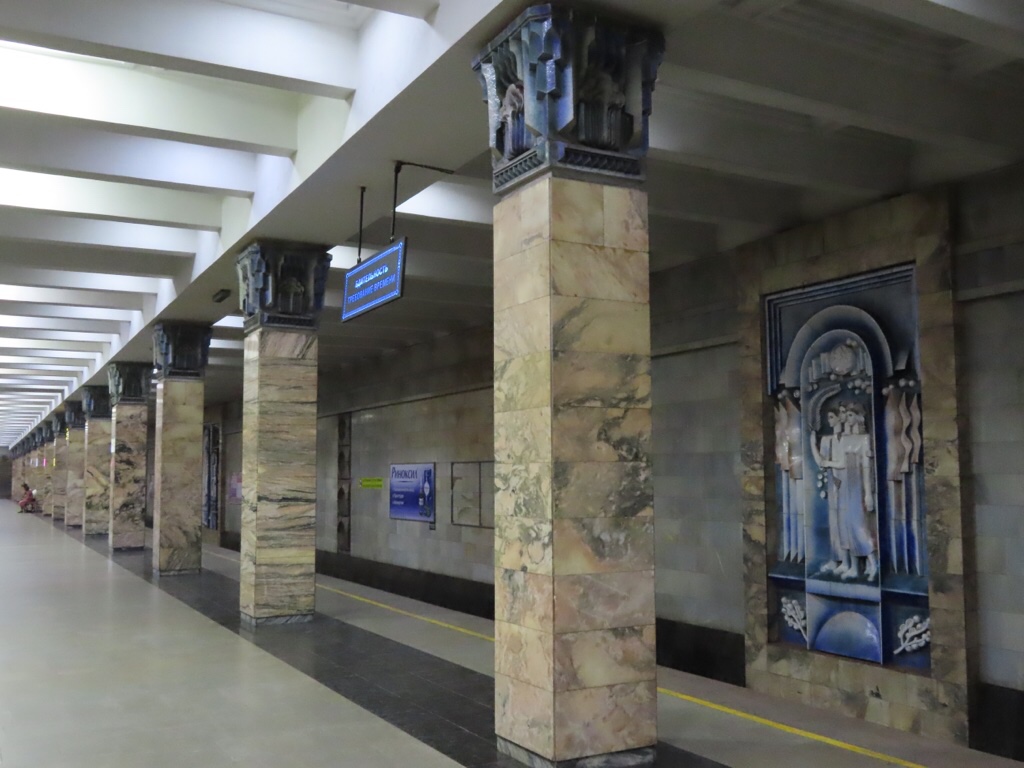
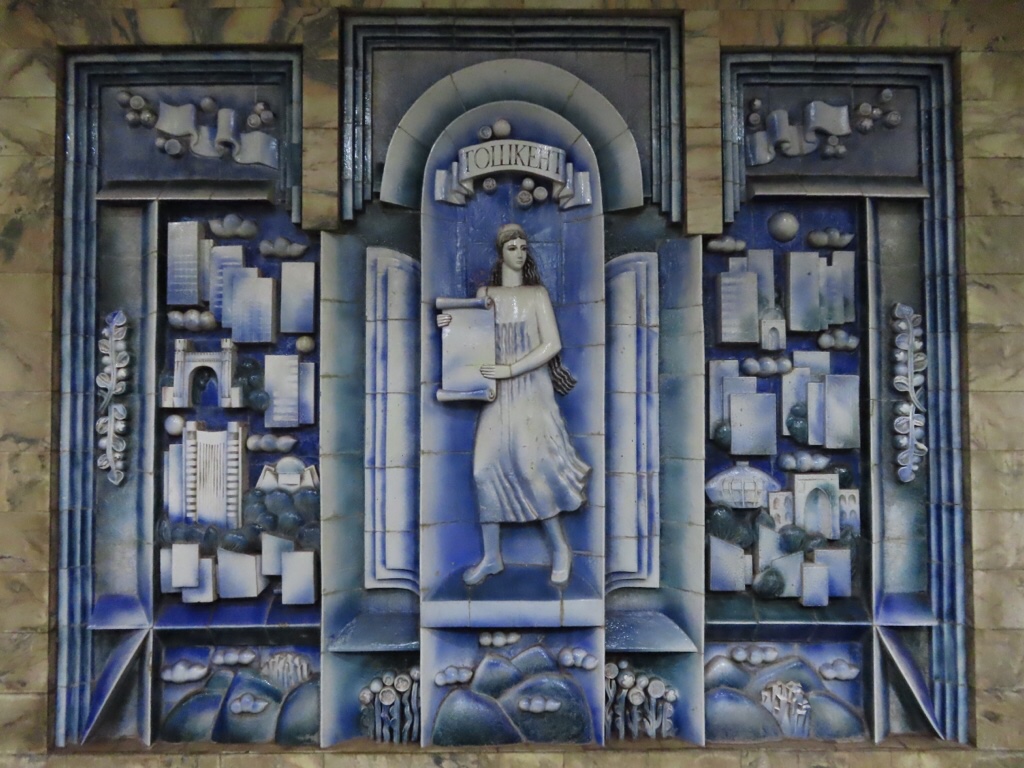
Tashkent celebrating them founding of the city over 2000 years ago with ceramic pictures of national spirit in blues and whites and the crest of Tashkent ‘a city of peace and friendship’.

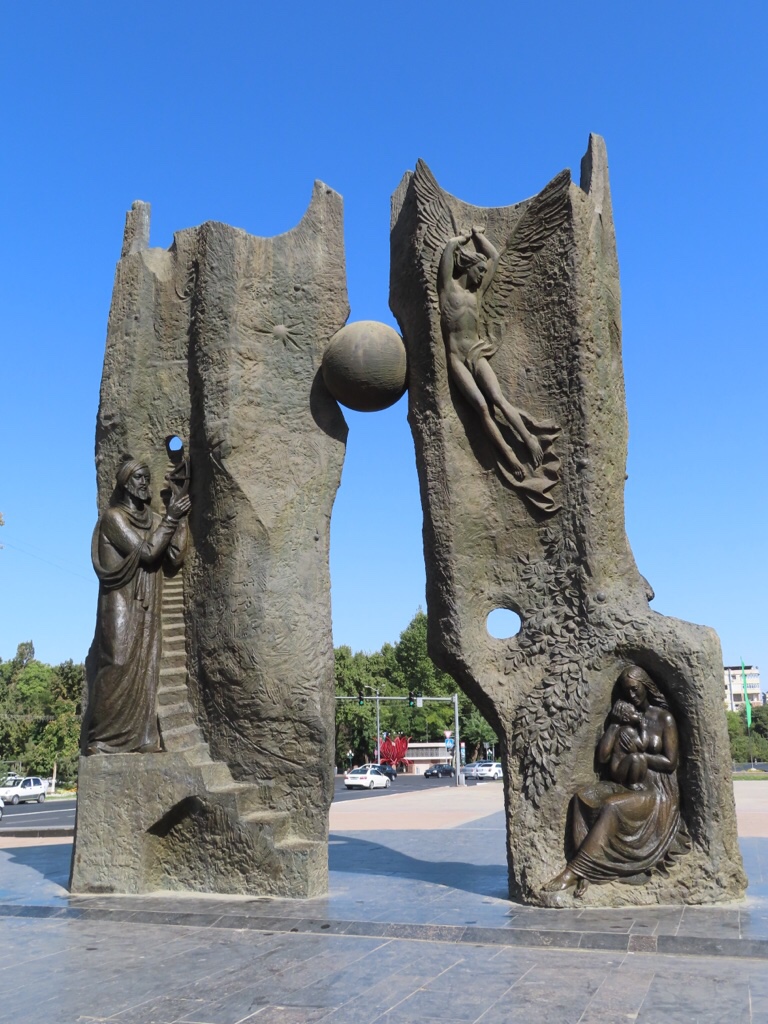
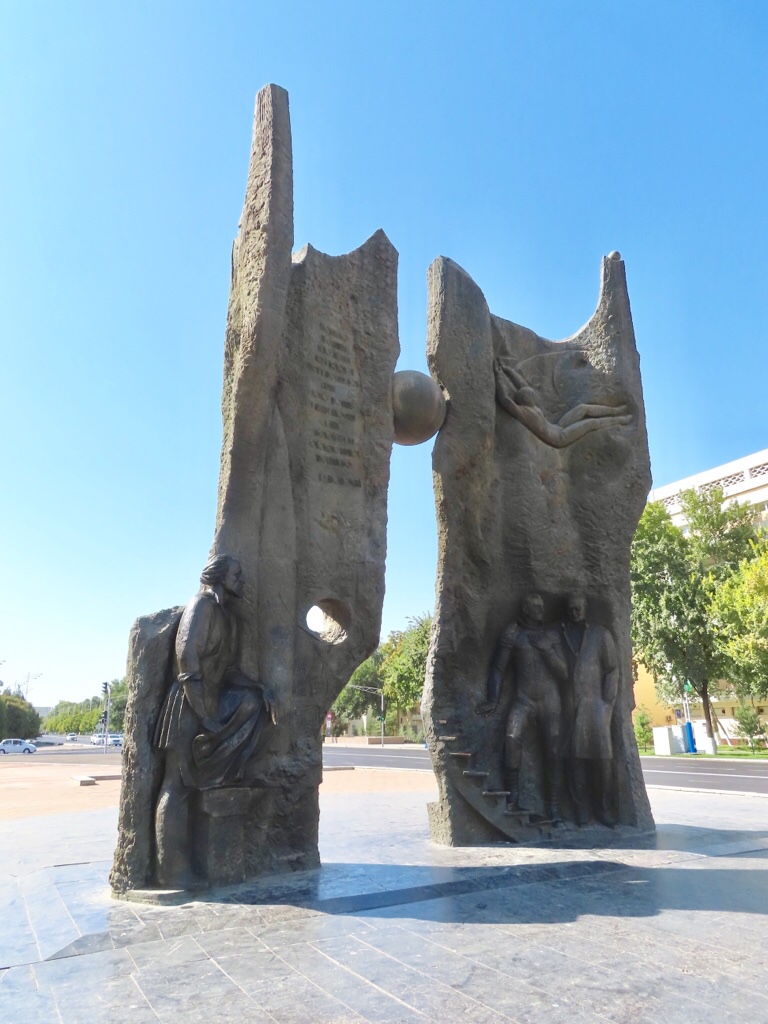
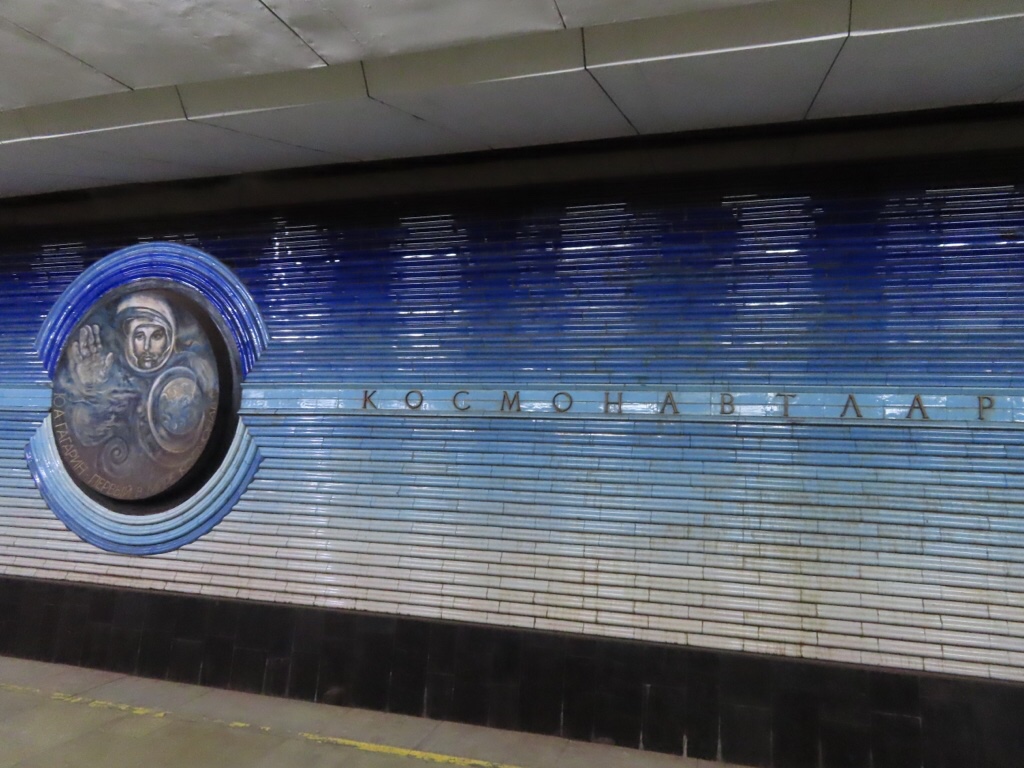
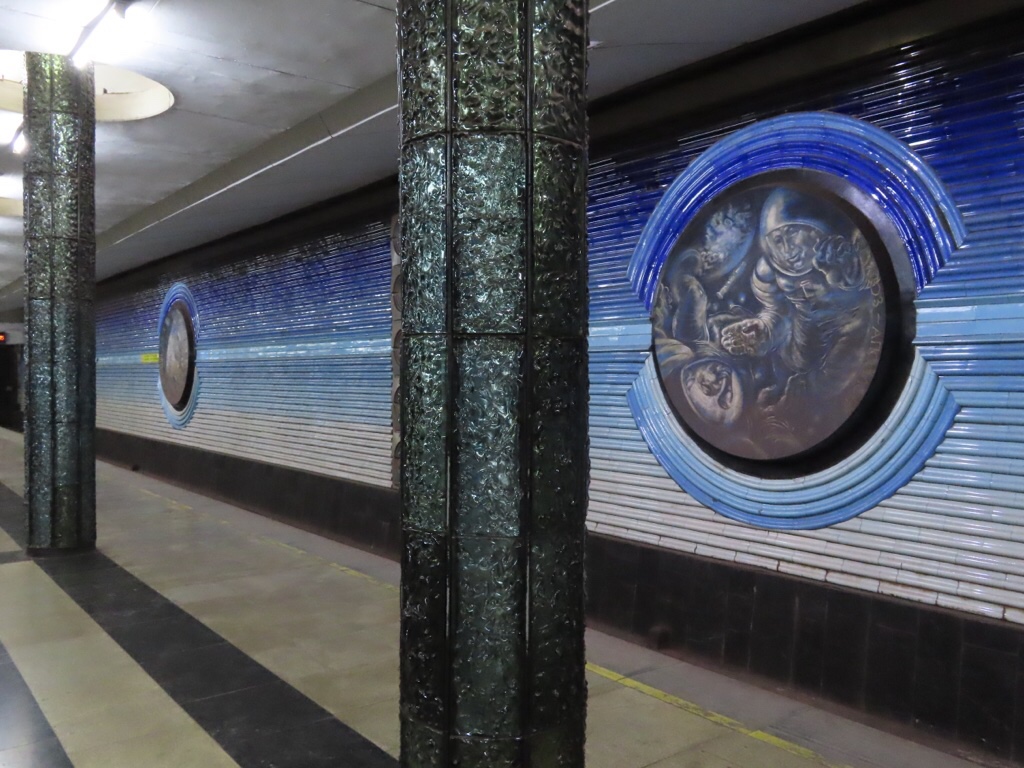
Kosmonavtlar has a Cosmonaut theme with this huge sculpture outside uniting visions of a space dream – Vladimir Dzhanibekov, Uzbekistan’s only cosmonaut and Ulugh Beg, the astronomer-king …

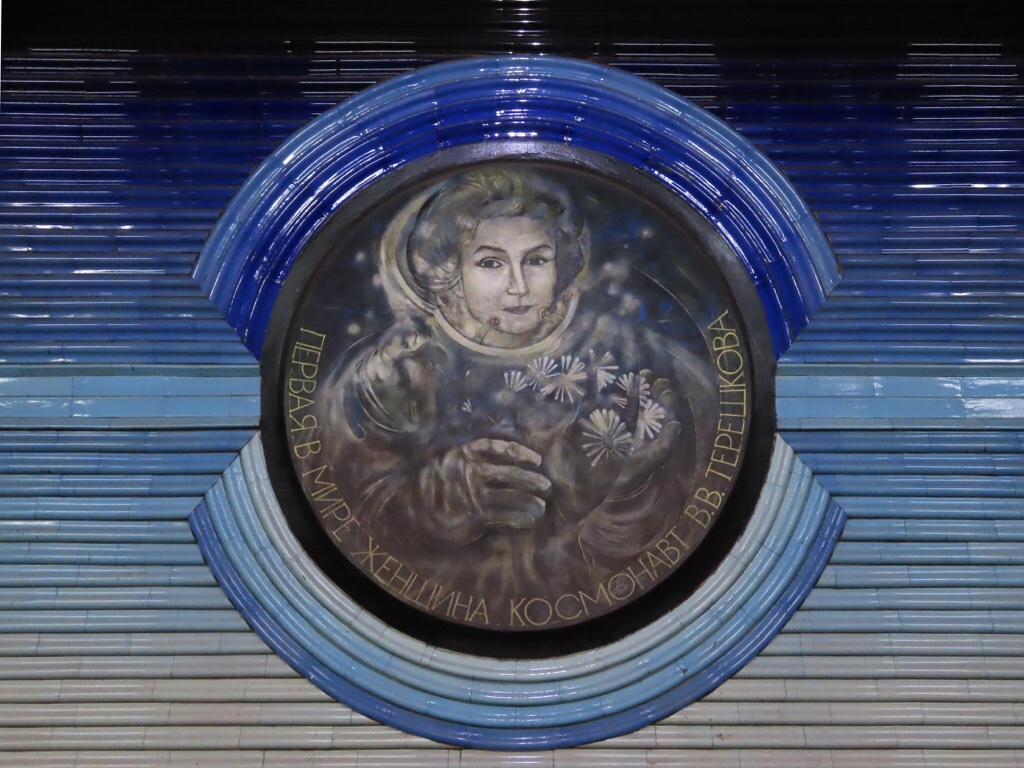
… and inside the ceramic wall panels fade from blue to black in imitation of Earth’s atmosphere with cosmonauts including Valentina Tereshkova, the first woman in space.

Oybek is another station named for a Uzbek poet …

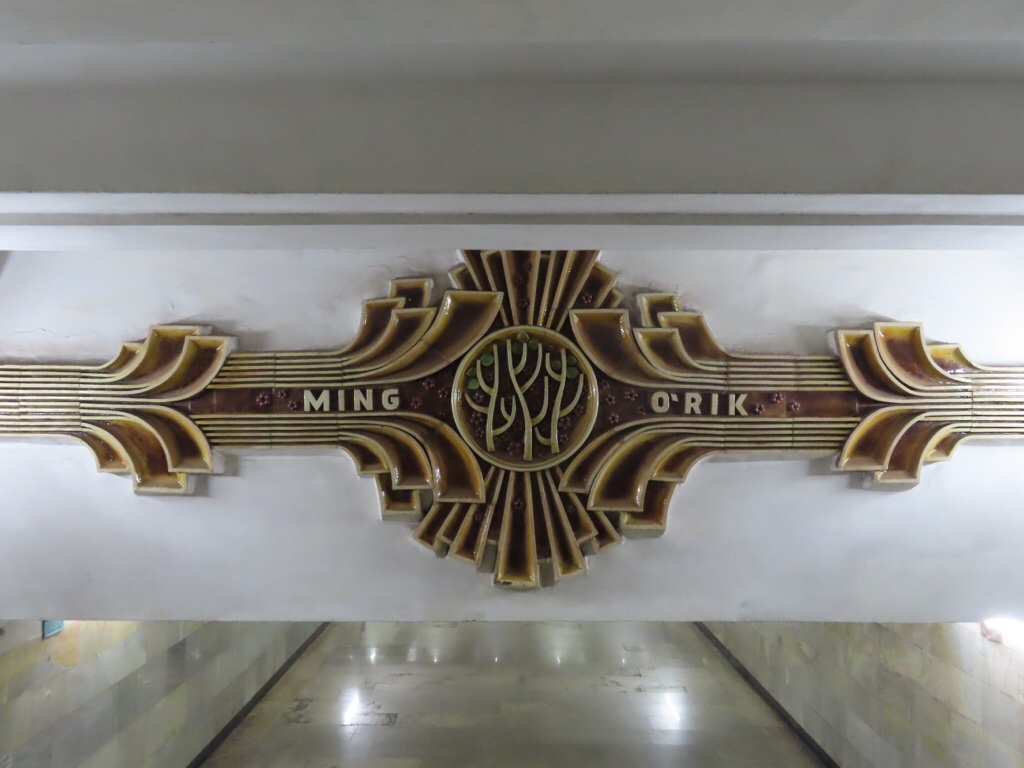
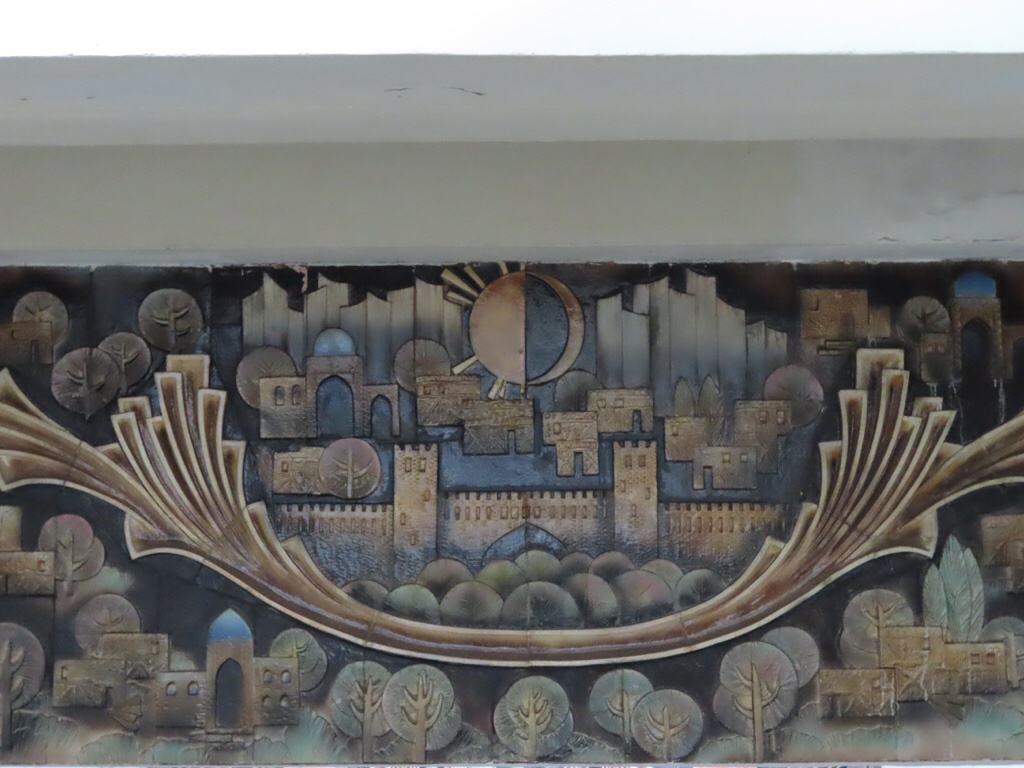
Ming O’rik (Thousand Apricots) station.

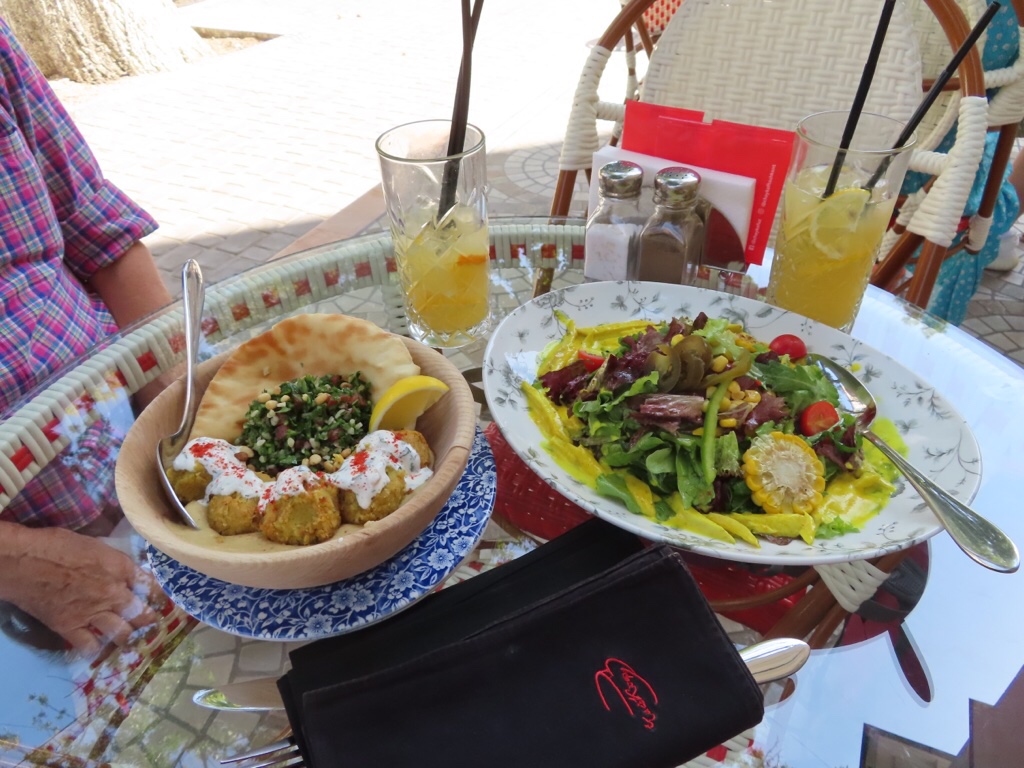
After an early lunch in the cafe at the end of the road of distinctly fusion food – Mexican salad and falafel and hummus …

… we ordered our last Yandex taxi to the airport.

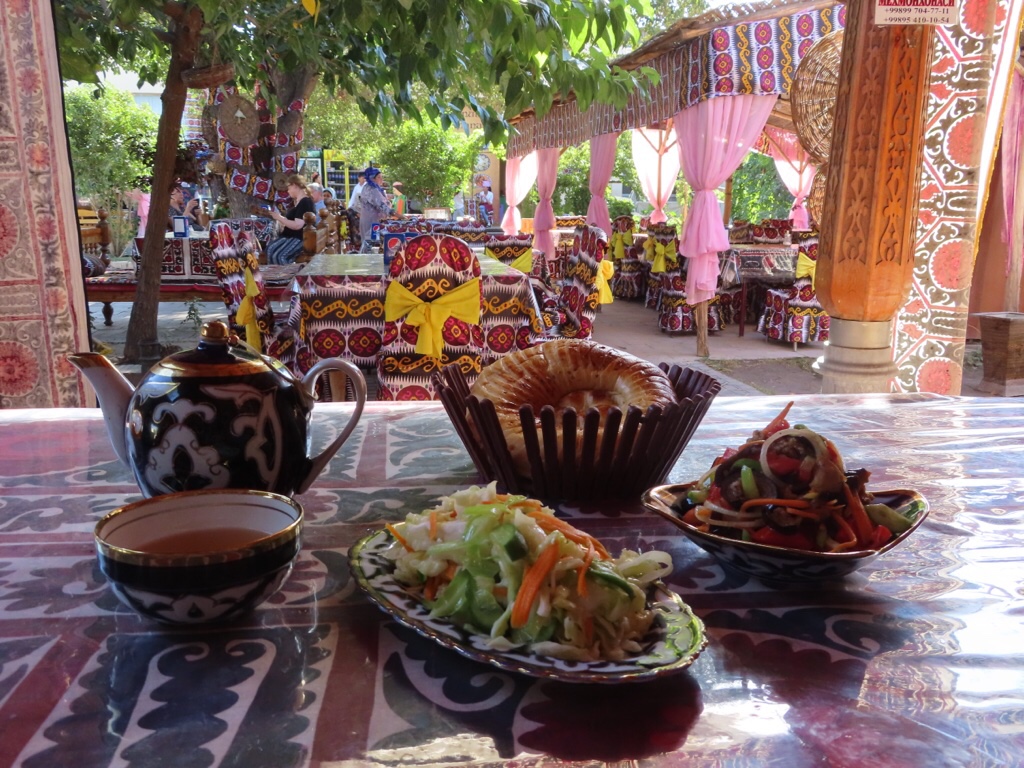
With over two hours to wait, there is plenty of time for a little reflection, firstly on two of the most important things in Uzbekistan (after plov) … tea and bread.

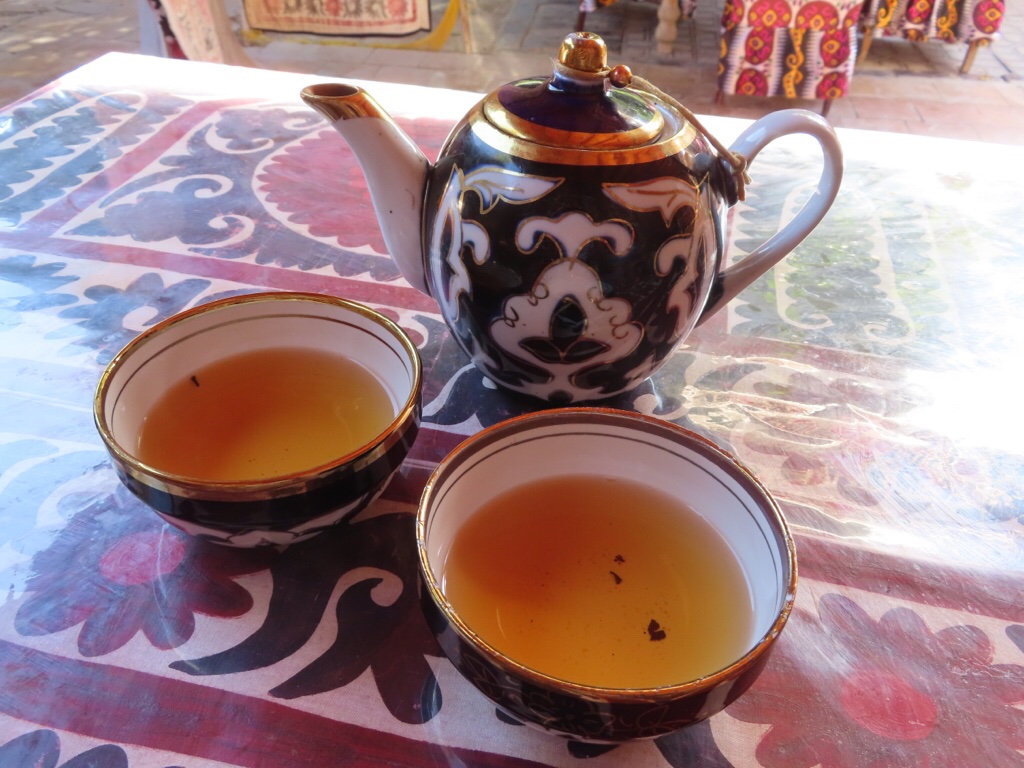
Tea is very important to the culture here. Green tea is the local drink of choice but black tea was popularised by the Russians. Either way, the pot is brought, often with one cup more than needed. Tradition says that you pour half a cup three times and return it to the pot, then leave it two minutes before pouring. Only half a cup should be poured … and when it is cool enough to drink, it should be drunk in one go.

We have drunk so much tea, not surprising at anything from 17p to 85p for a pot for two – and what’s more it’s so eco friendly, far better than drinking water from plastic bottles! We tried the green but it tastes a bit smokey and a bit like veg water so we prefer the black. In Hotel Khurjin in Bukhara they served particularly delicious tea made in Russia called Tess Pleasure which is black tea with pieces of wild rose, dried apples and delicate cornflower petals and we have bought some to bring home.

That just left a teapot … since we don’t own one, and as the same china is used in every hotel and restaurant here, we checked out the kitchenware stores by the bazaar in Samarkand. We now have a teapot and tea dishes called piala, saying made in Uzbekistan on the bottom, to pack into our luggage … just like this one!

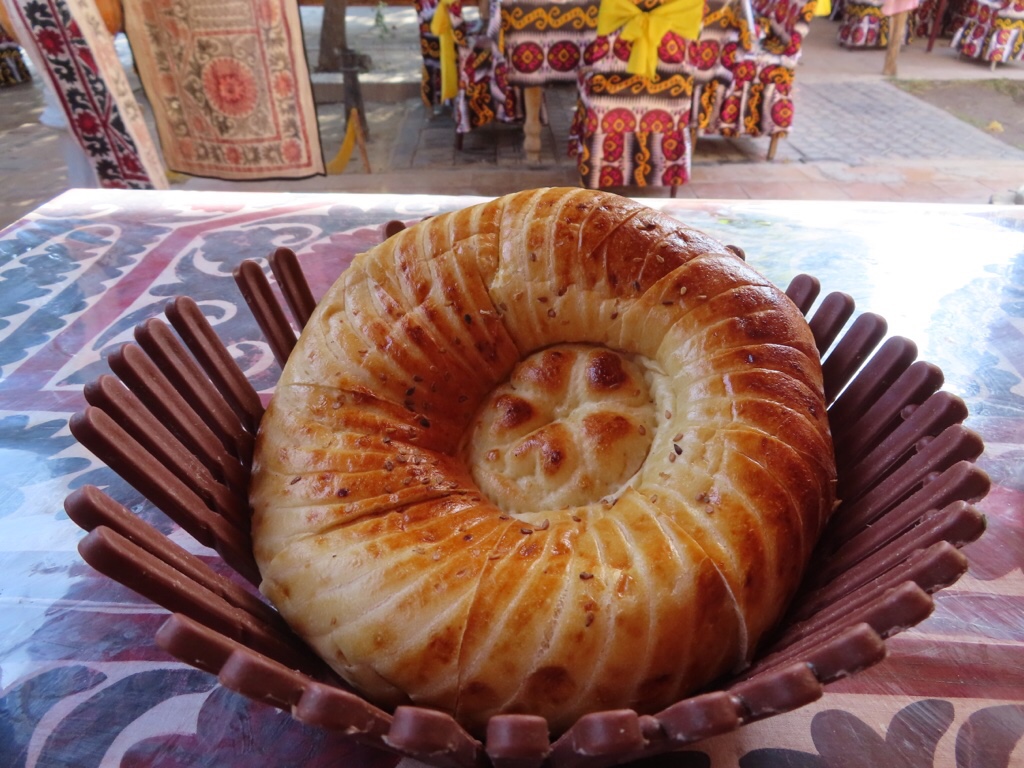
Bread is also a big thing, ranging from the very pretty discs in Khiva where they prick the dough with a variety of patterns – possibly the most attractive, but also very solid as it doesn’t rise …

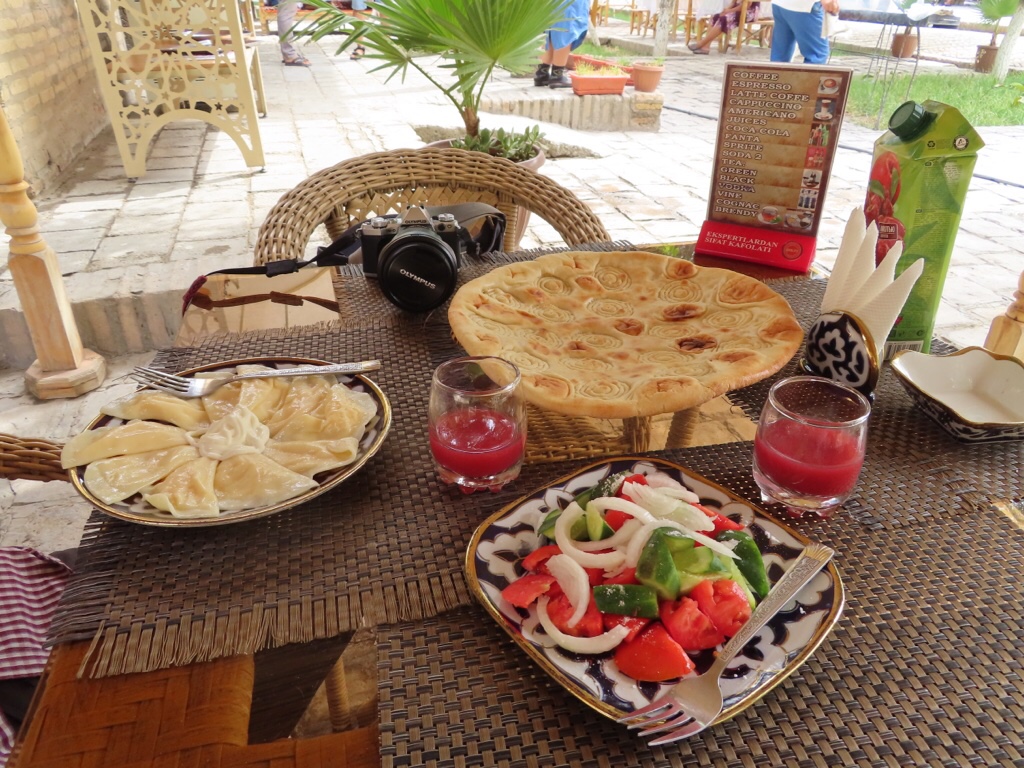
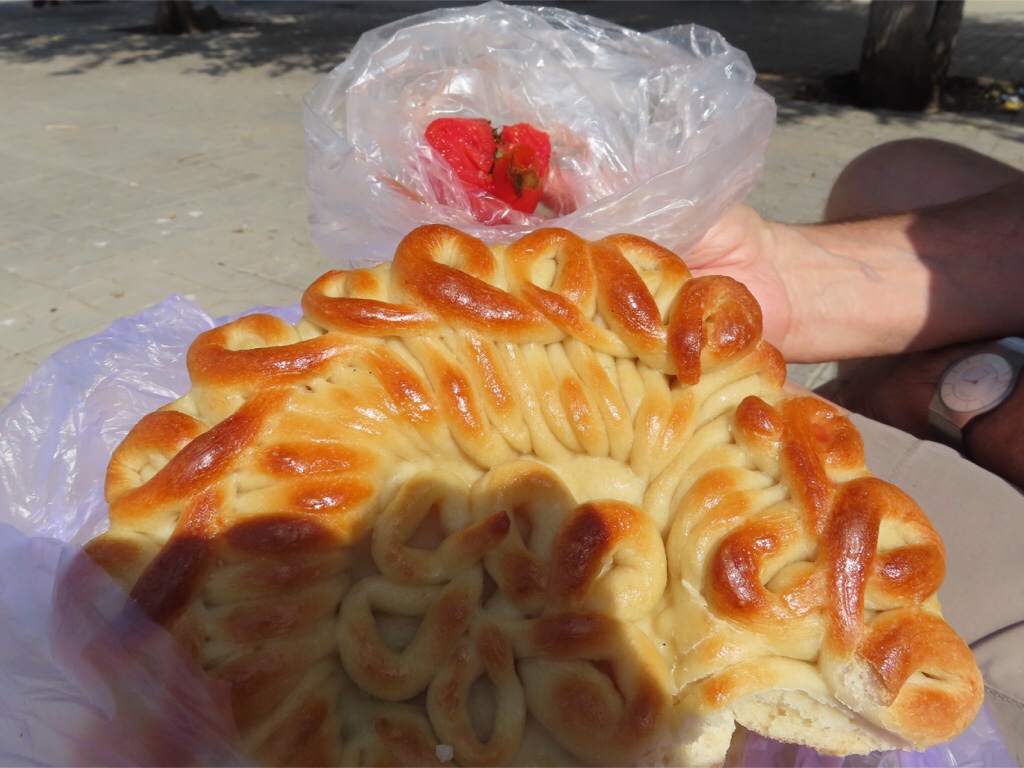
… to the fancy decorated breads in Samarkand market which we tried with some picked tomatoes for lunch one day – also very solid …

… to our favourite, Tashkent bread which is light and airy with an amazing and very moorish texture enabling us to polish one off in a sitting!

There are even traditions such as it must never be cut with a knife or placed upside down and when someone leaves the house he should bite off a small piece of bread and the rest of the loaf will be kept until he comes back to eat it.

Well our trip has gone pretty smoothly and we have came across quite a few independent travellers while we’ve been here. We only needed help from an agent to buy our train tickets, and paying a premium was worth it for the peace of mind rather than leaving it to chance when we arrived. Most hotels and guesthouses use Booking.com so that was easy. Admittedly Uzbekistan Airways doesn’t yet have online check-in but we can live with that for a direct flight!

Each of our destinations had something different to offer and the weather has been sunny and warm. English is not widely spoken, but we’ve managed in hotels and restaurants and people are friendly and want to help so that goes a long way. As for prices, we can’t believe how cheap everything is, averaging £30/day for all food, drink and sightseeing for us both.

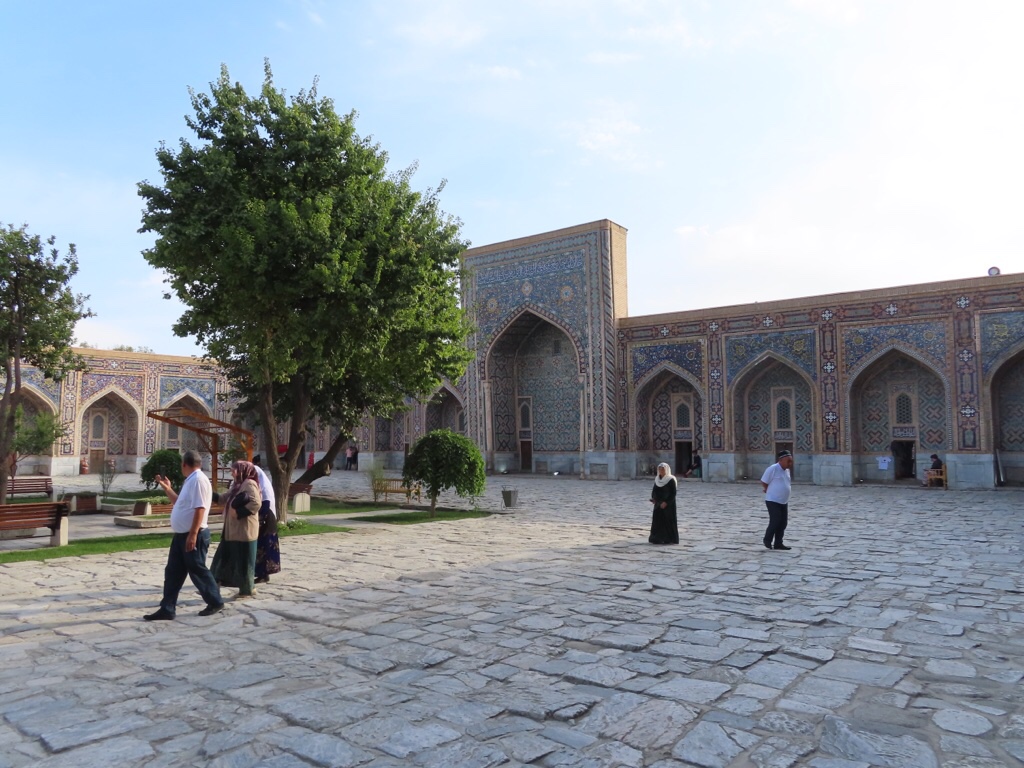
And as for what we’ve seen … well I realise there are just far too many photos … but we have seen so much! After so many madrasas and mosques, I had hoped to take better photos of them but the confined courtyards, often with trees and always with tricky light made it really hard to give true impression. Also, we couldn’t quite understand why the backs of the gateways weren’t tiled, just to finish the job!

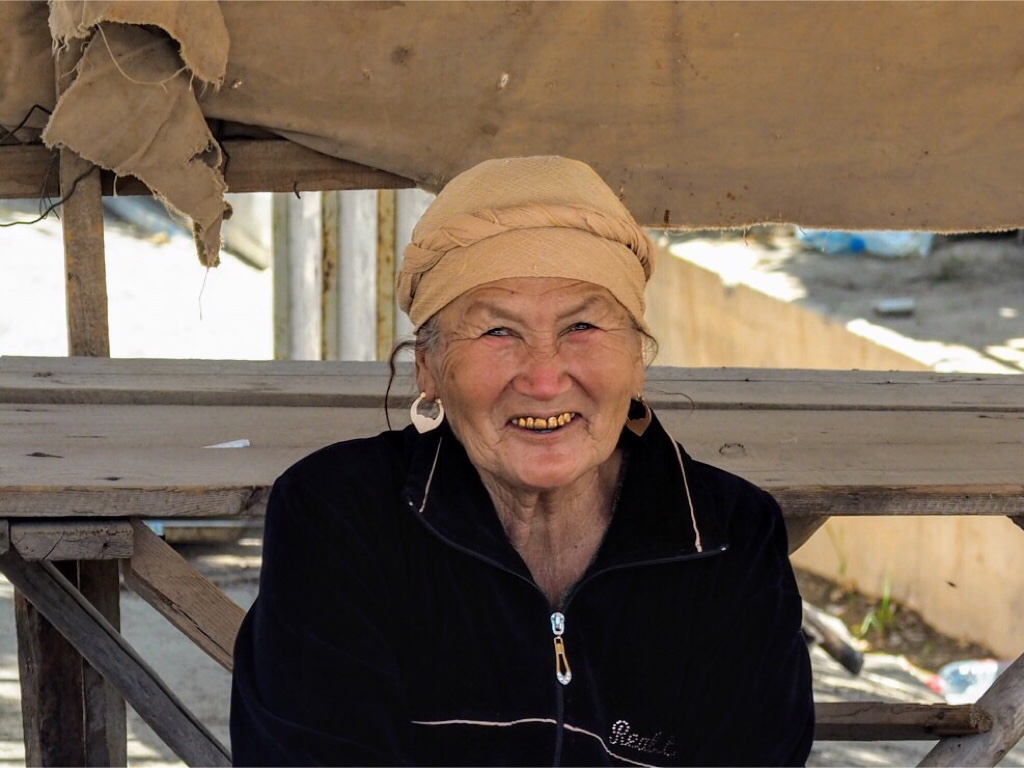
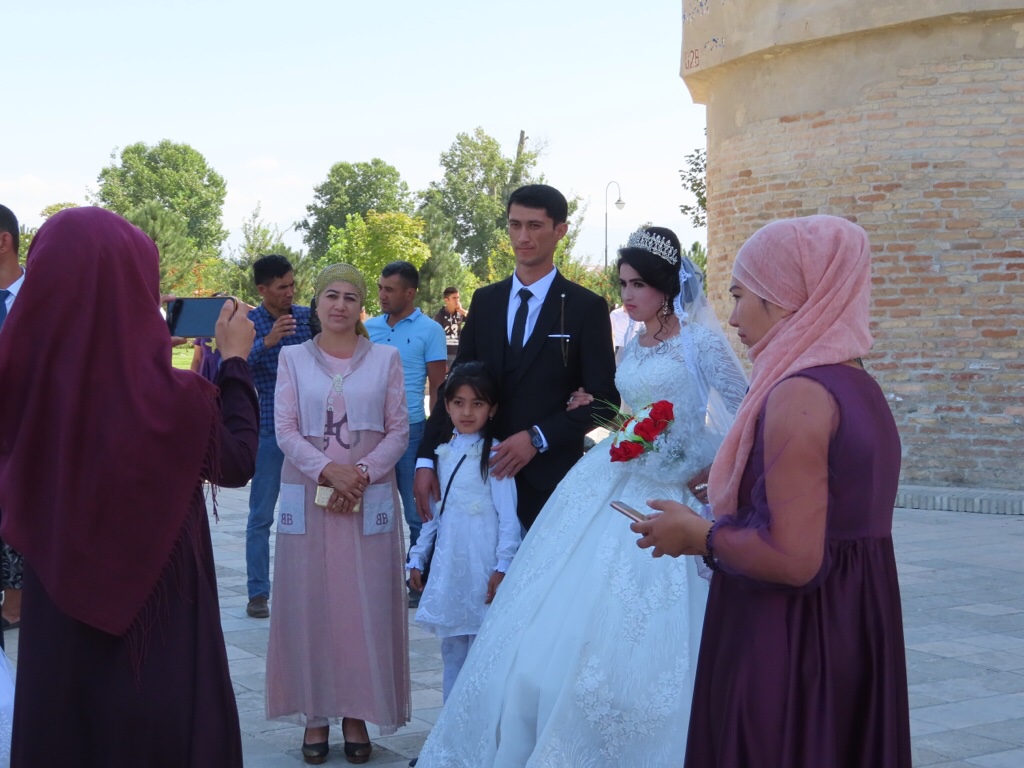
Nonetheless we both think we’ve taken some good snaps with Chris taking more of people than buildings. He’s been especially fascinated not only by brides, but also by gold teeth which are a status symbol throughout Central Asia, but I was horrified to read they are sometimes installed in the place of healthy teeth. It has been a challenge as it’s polite to ask to take a photo and once they pose they rarely smile … but he had success here!

Tourism and development are definitely on the increase and Uzbekistan is another country which is moving swiftly onwards and upwards so we are very pleased we came now … Uzbekistan, thank you very much … kata rahmat!

Map

Over the Mountains to Shakhrisabz

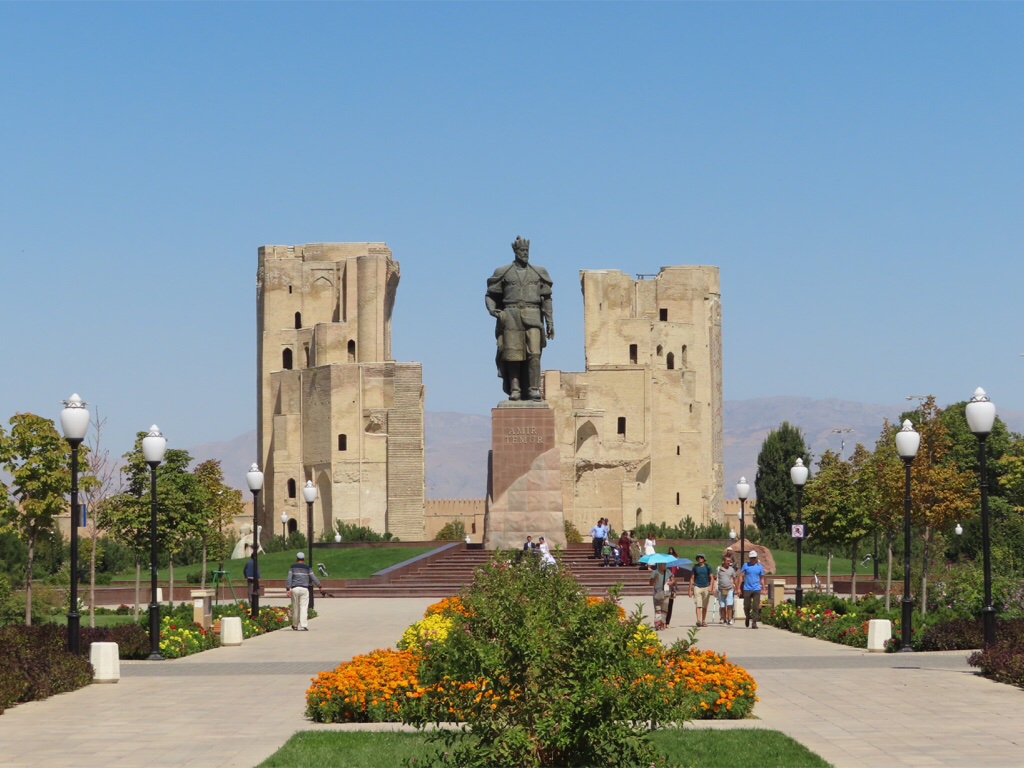
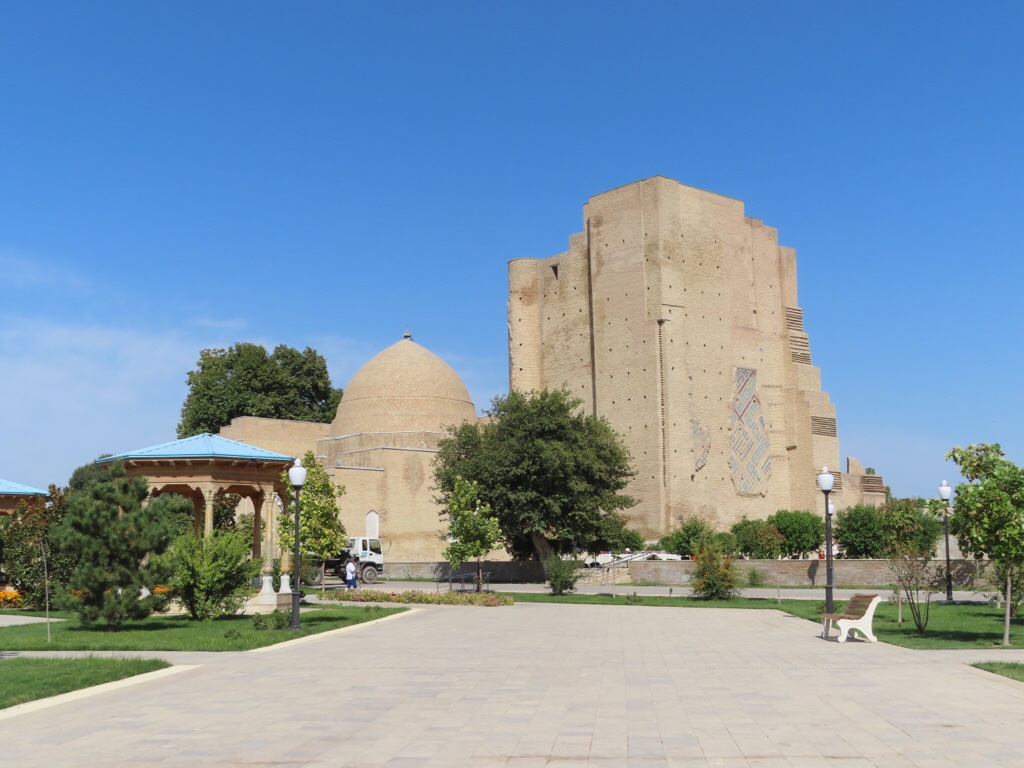
Shakhrisabsz was the birthplace of Timor, the last of the great nomadic conquerors whose Timurid dynasty included most of Mongolia, Central Asia and the Caucasus. Originally called Kesh, once he was ruler Timor renamed the city Shakhrisabz, which means ‘Green city’ in Persian and had Ak-Saray or the White Palace built. This was huge and elaborate and took 25 years to complete and a contemporary source says they were astounded and charmed by the architectural miracle. On the other hand, it is estimated that his military campaigns caused the deaths of 17 million people (that’s 5% of the population at that time) and the destruction of the culture, libraries and historic sites in his wake was incalculable!

The road from Samarkand to Shakhrisabz was once an important branch of the Silk Road called ‘The Emir’s Road’ which leads south towards the Indian Ocean.

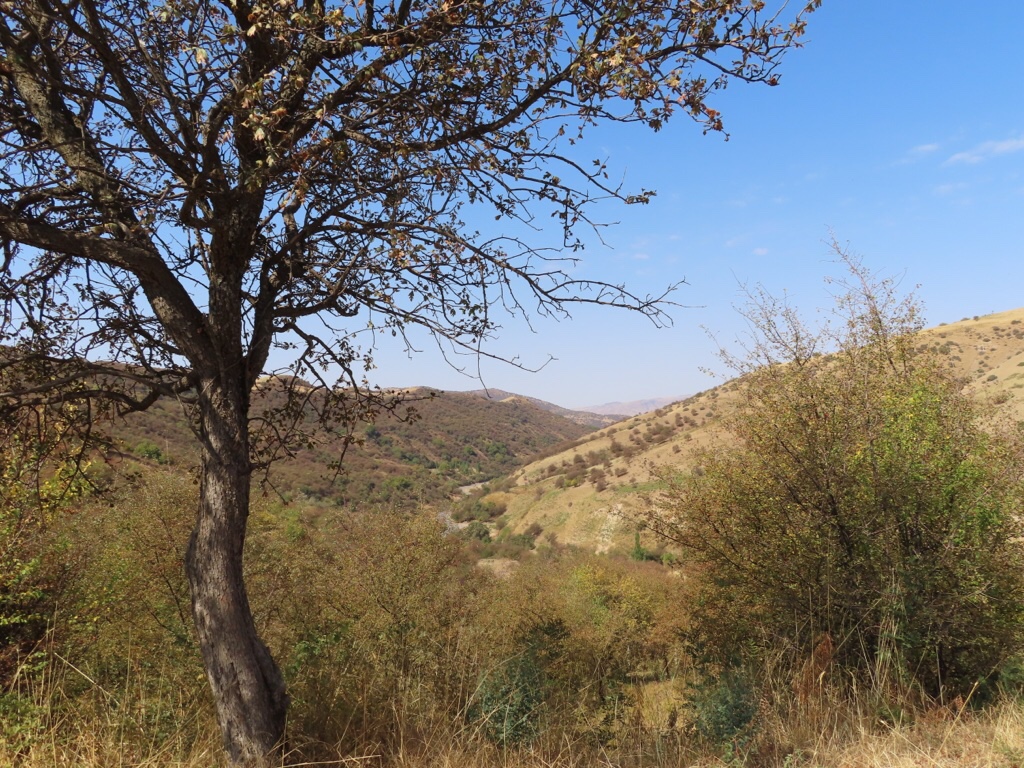
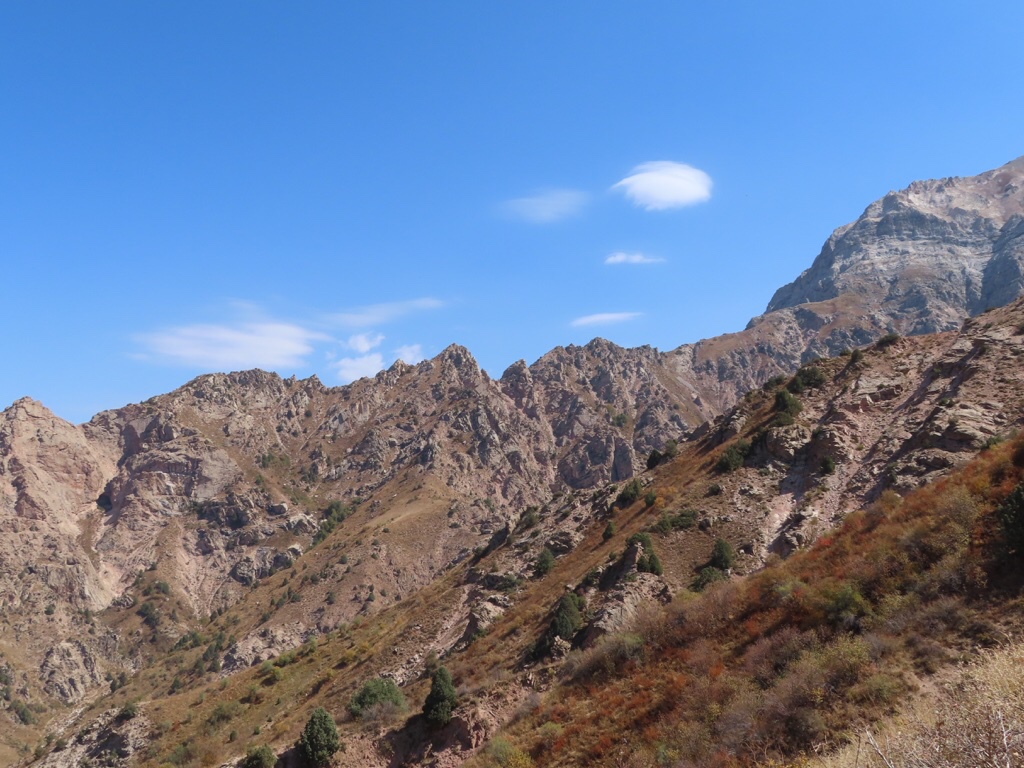
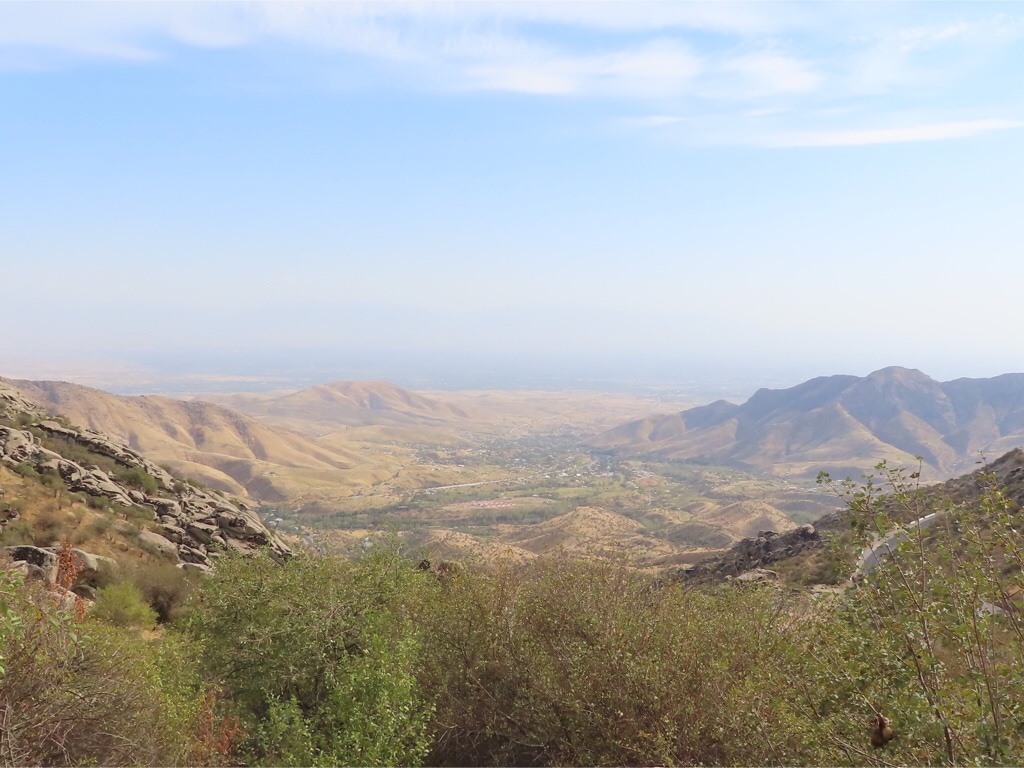
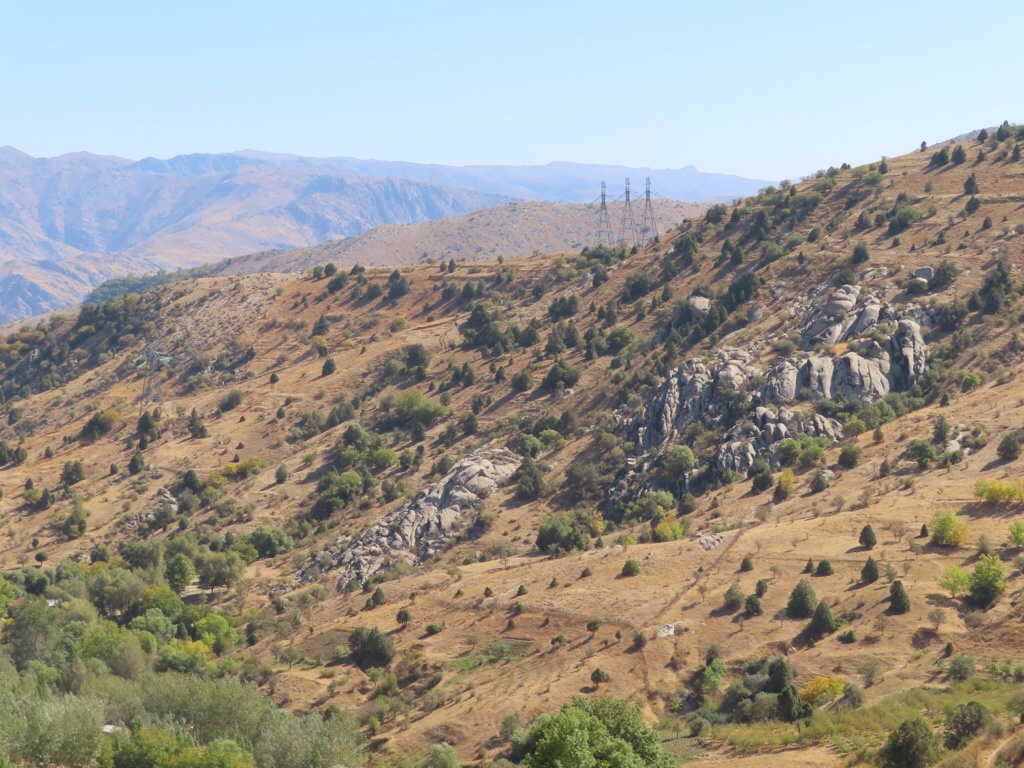
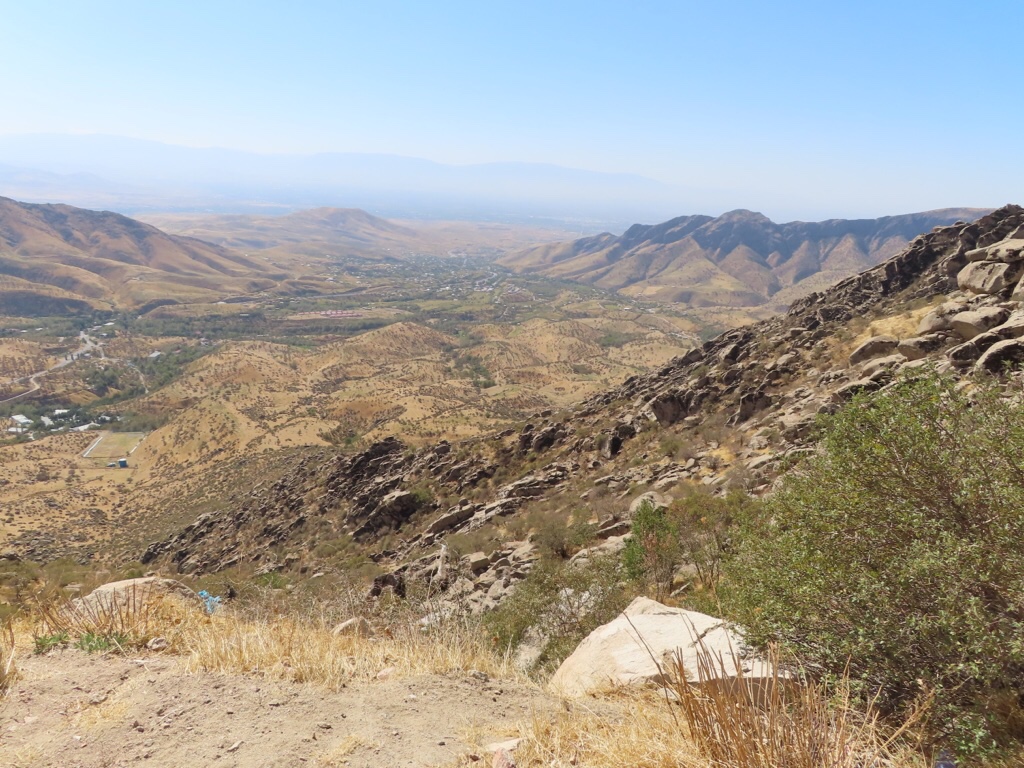
It cuts through the western edge of the Zerafshan mountains via the Takhtakaracha pass at 1676m and gives great views of the valley below.

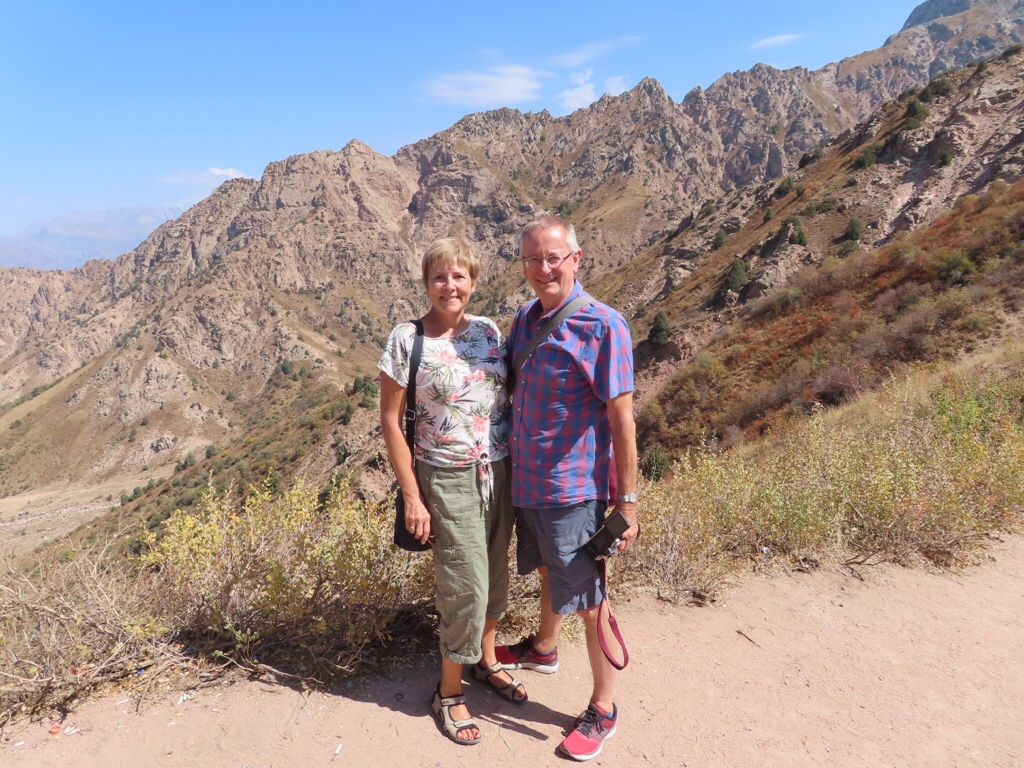
Having only glimpsed mountains in the distance so far and with such an exotic sounding destination in store, we were enticed us to go for a day out, although the day didn’t turn out quite as expected.

It started well, with some great scenery as we crossed the mountains and we stopped at a couple of viewpoints.

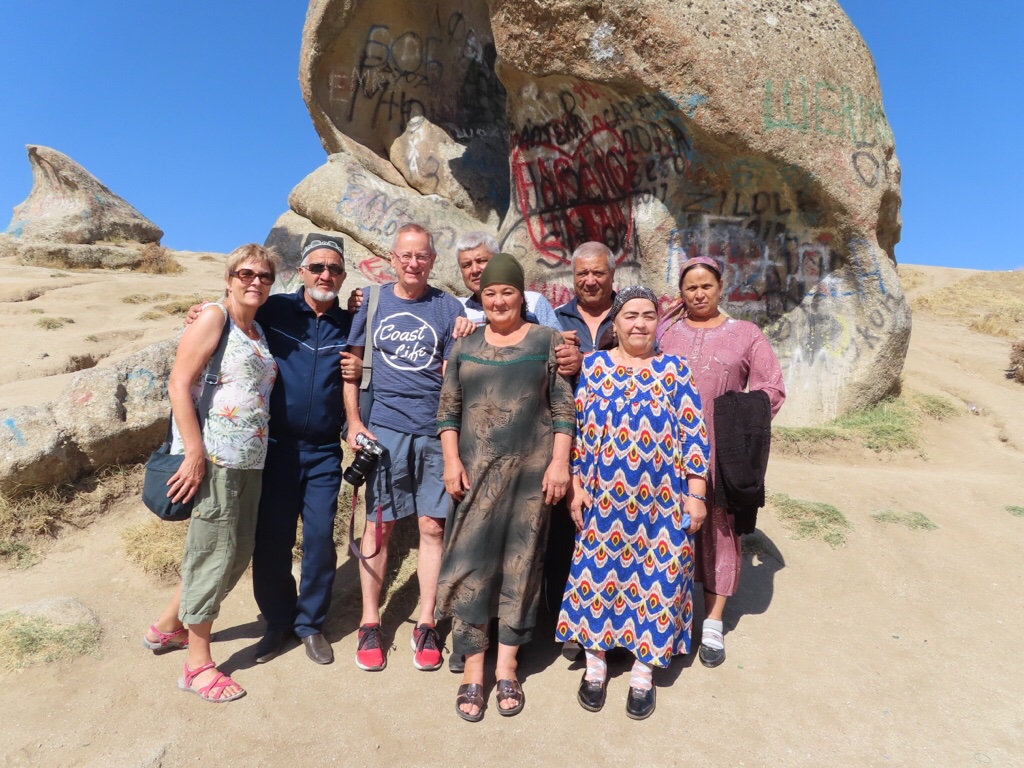
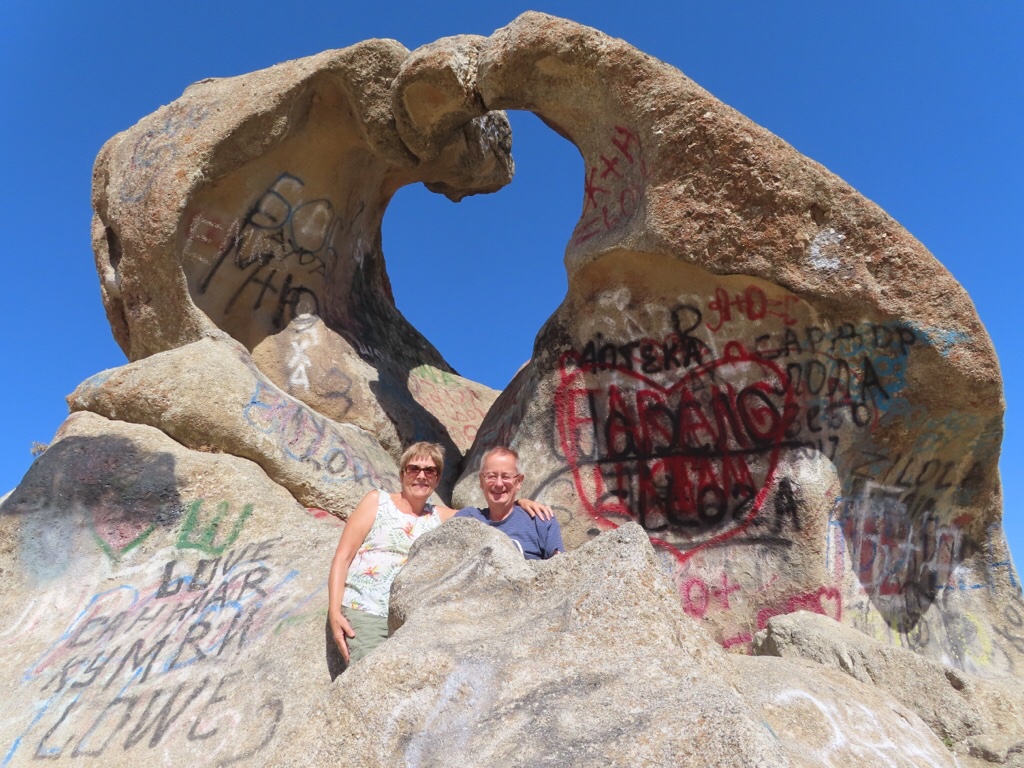
The liberal decoration with spray paint was unfortunate … but Chris made friends with some local visitors …

… and they took a snap of us!

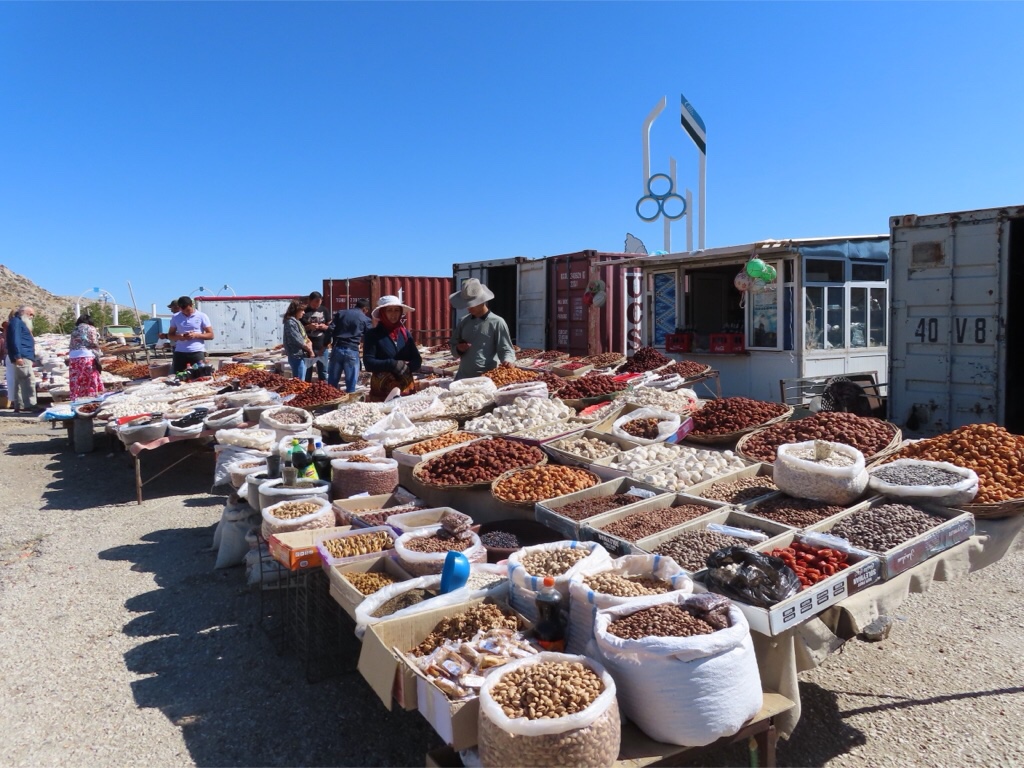
There was a bazaar at the pass selling various dried fruits and nuts and I bought some dried melon which was chewy but surprisingly tasty.

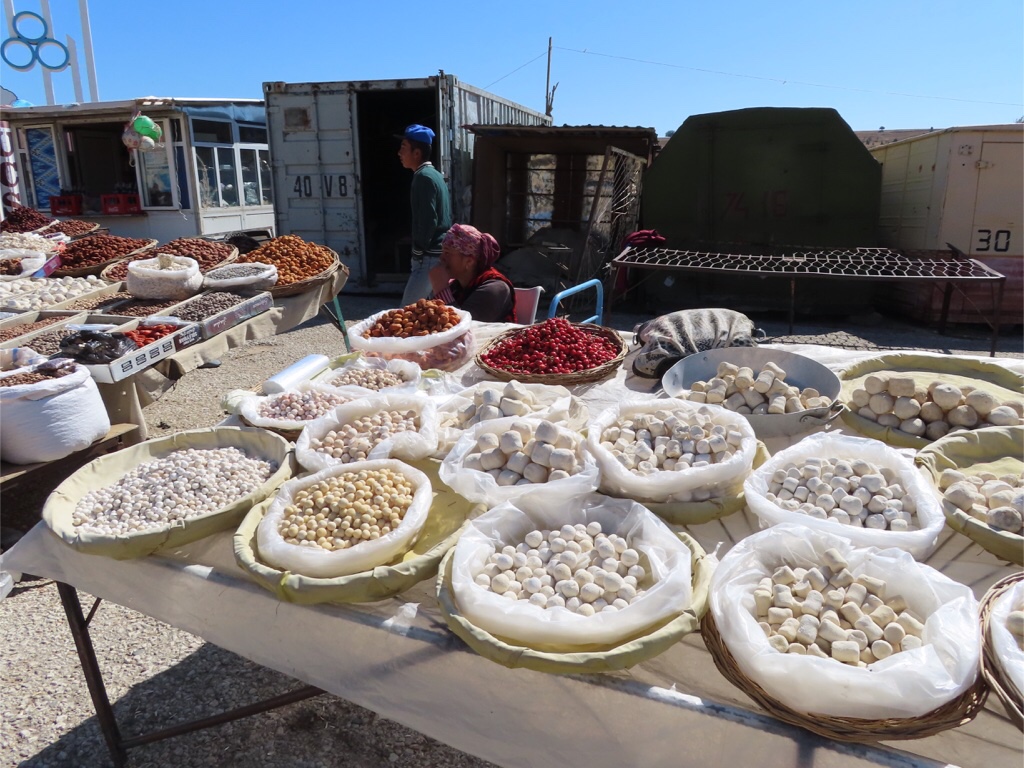
They were also selling a large amount of hard white stuff that we were told was yogurt. I tasted a bit, expecting another sweet treat so was surprised when it was very salty and smelt like cheesy feet … yuk! Apparently it is kurt, which is salted curd cheese, formed into pieces and dried in the sun. They can be found all over Central Asia, can last for years and are apparently as versatile as they are portable, eaten as a snack, dissolved in water or added to soup or stew to add protein and energy. We won’t be bringing any of those home!

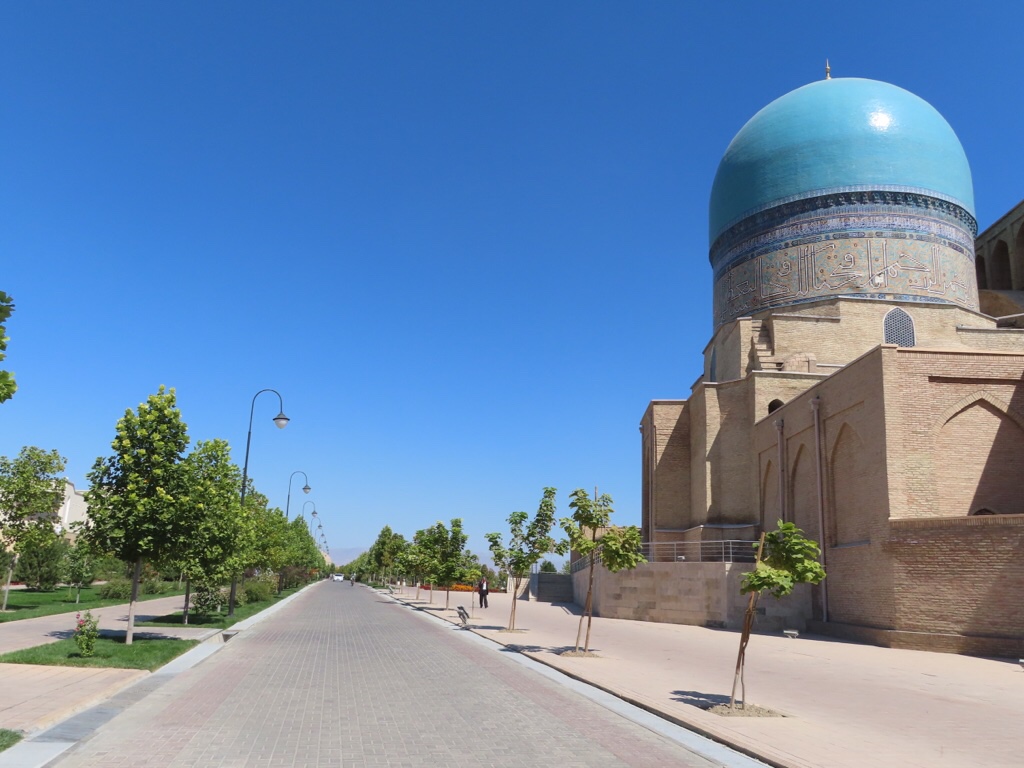
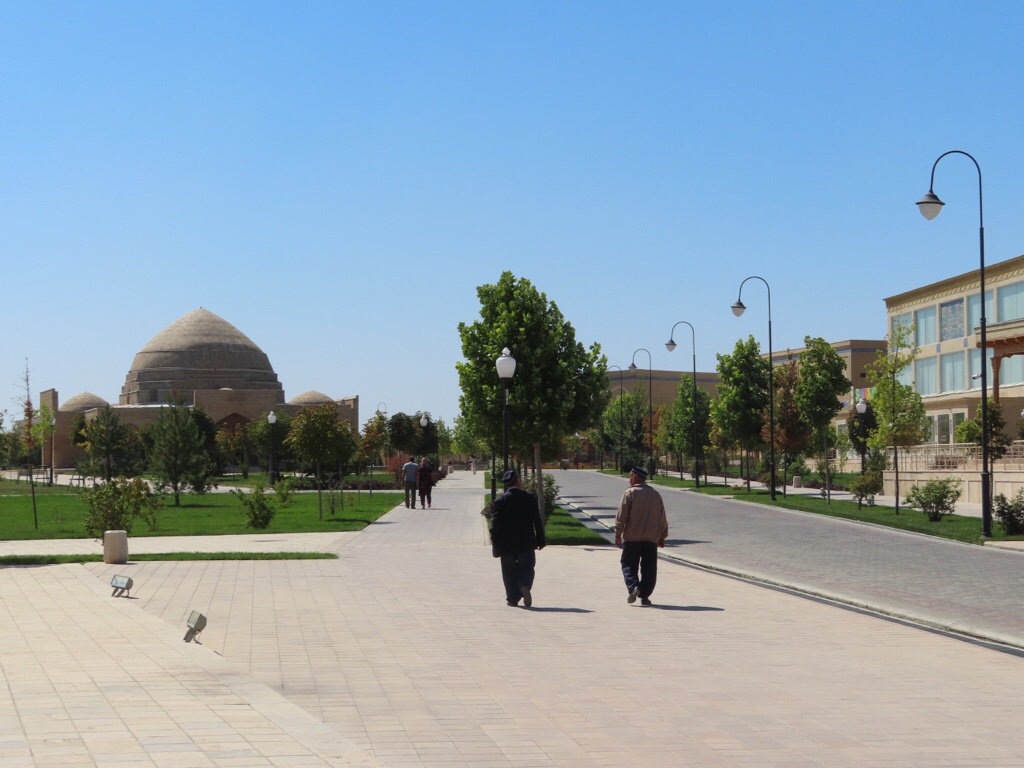
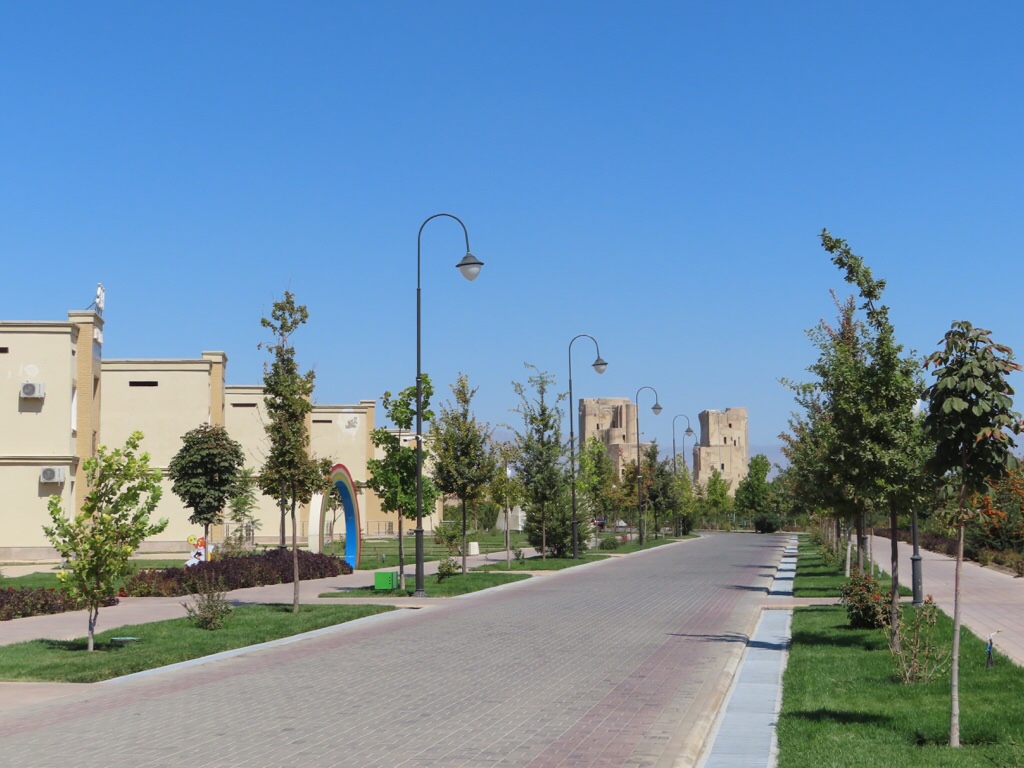
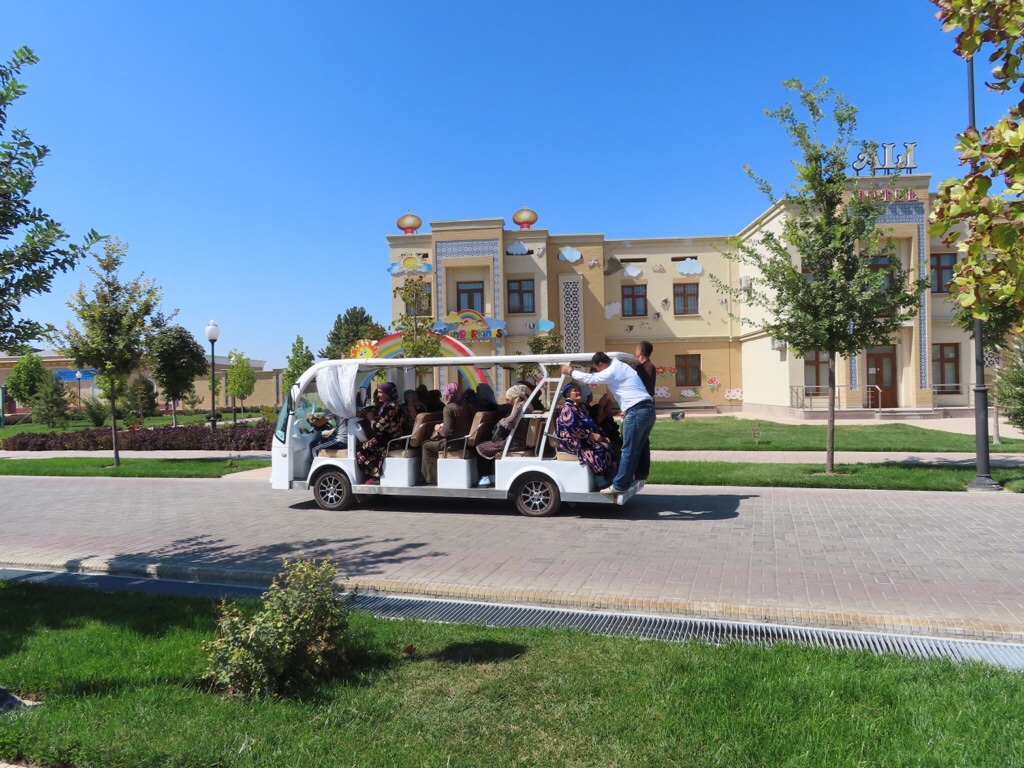
After a couple of hours we arrived in Shakhrisabz and drove down a main street into a large car park. This lead to a huge plaza of pedestrian walkways, and gardens, connecting a small collection of historic remains. On either side were long parades of smart but largely empty shops and an electric golf cart ran visitors up and down.

We walked all the way to the end, which was actually quite warm as the trees need to grow a bit before there is any shade …

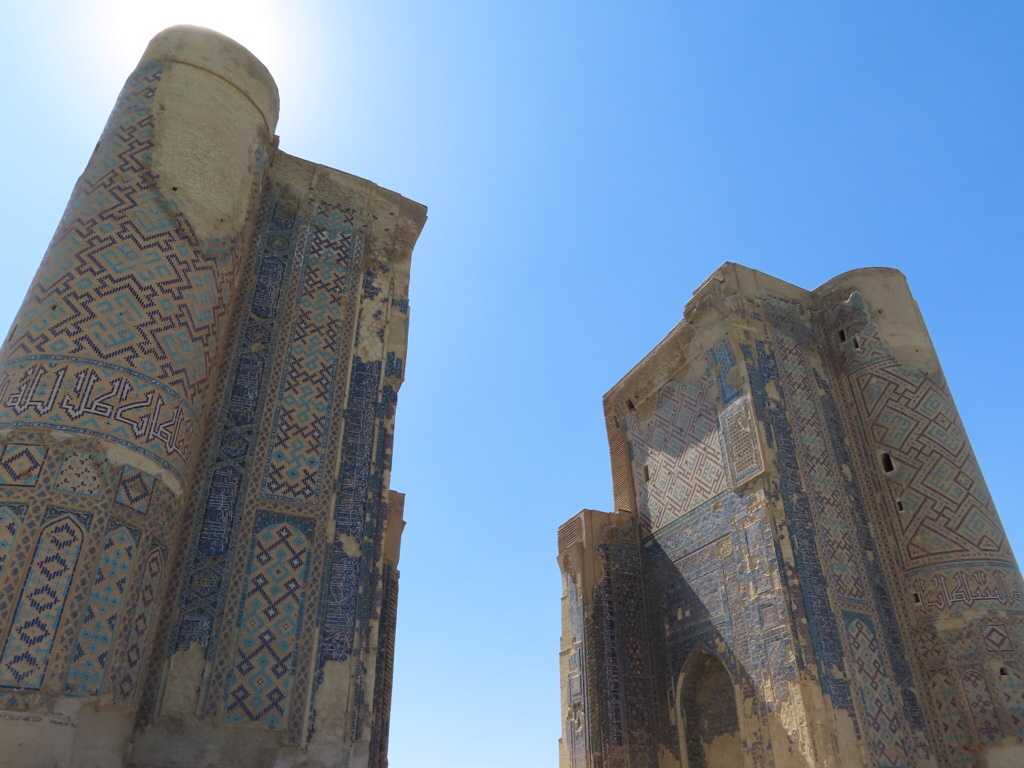
… to the two rather large gateposts which are all that remain of Ak-Saray …

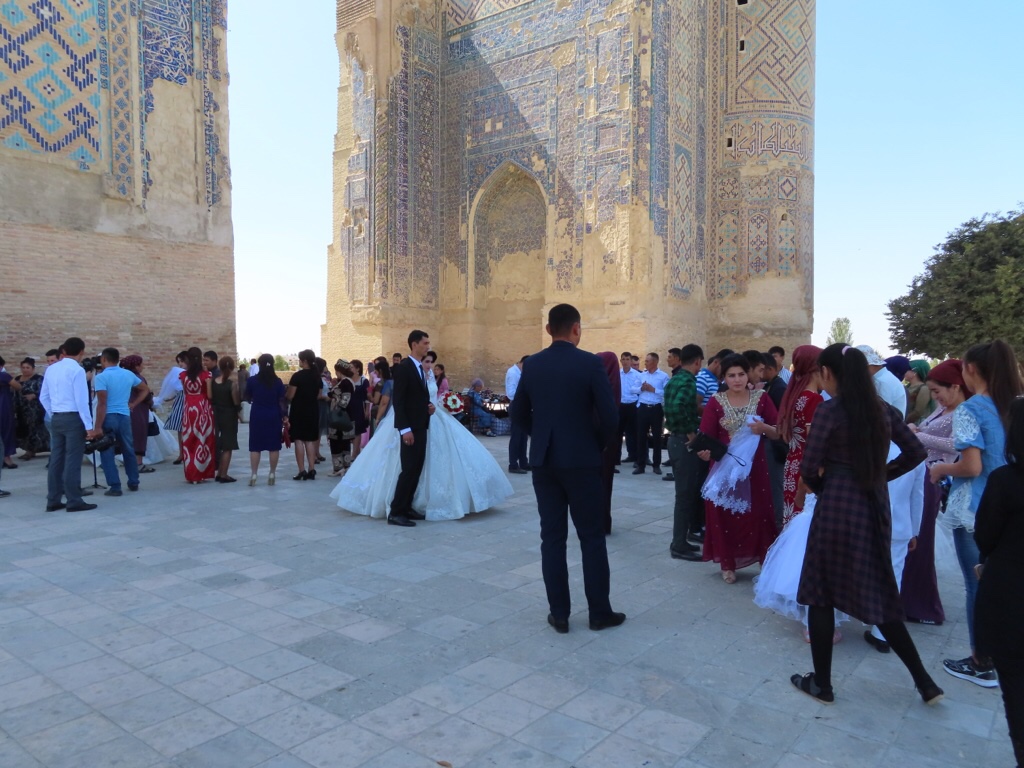
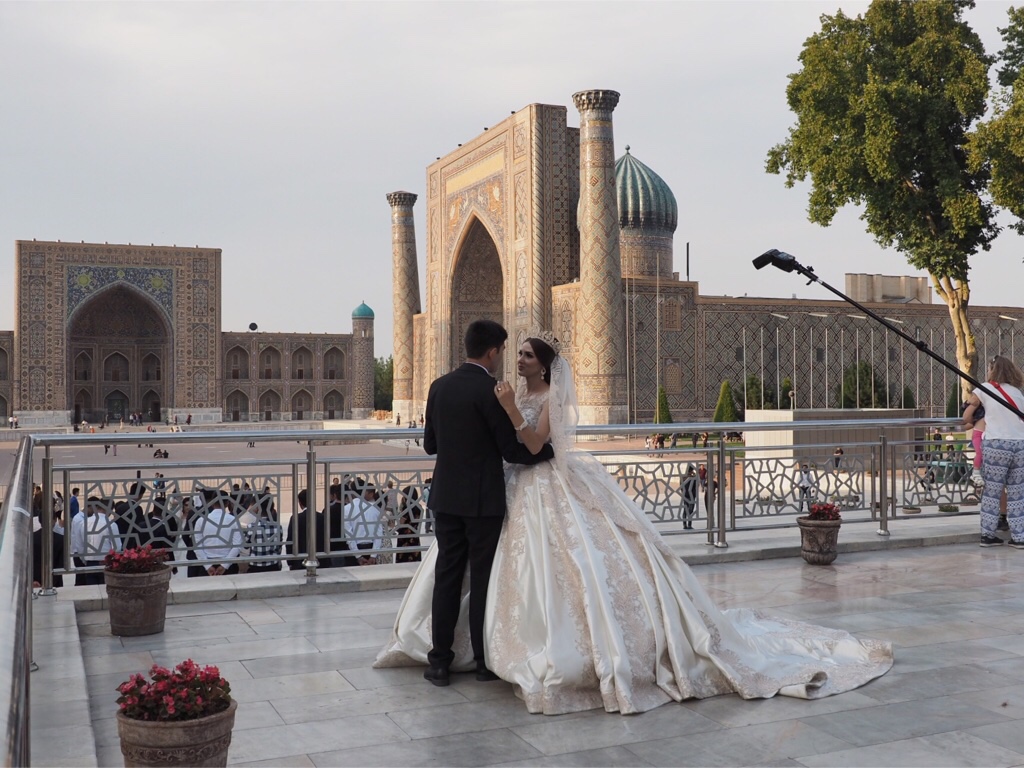
… and a popular place for posing wedding parties.

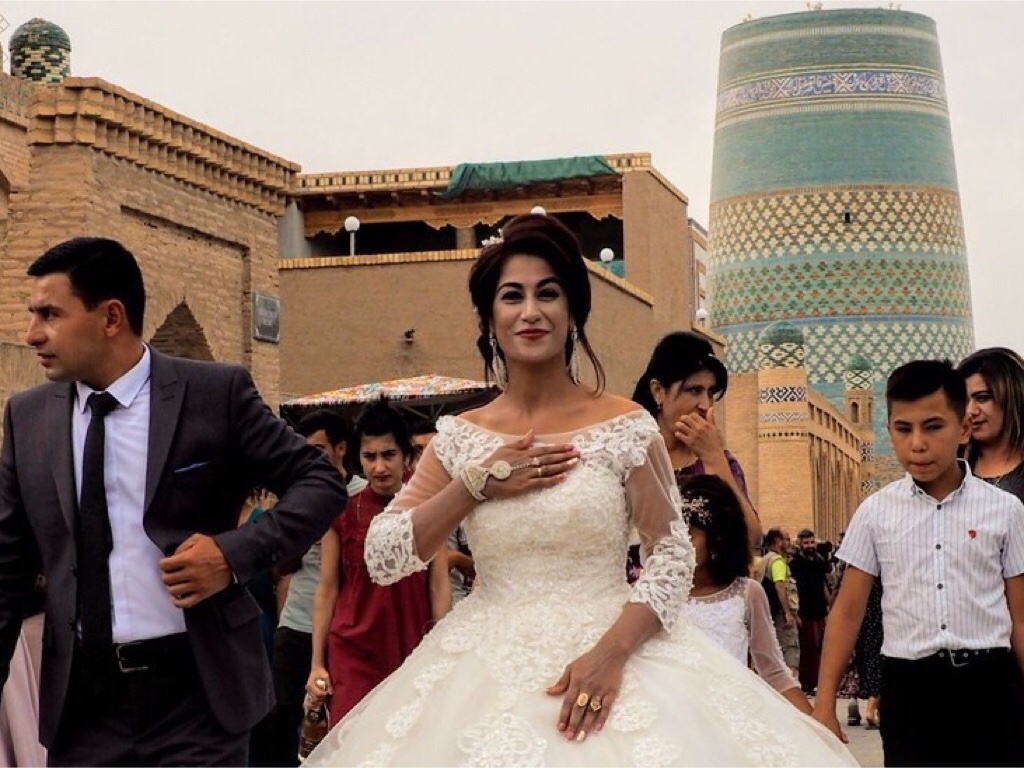
It is definitely wedding season in Uzbekistan, the weather is great and there are savings to be spent having worked the summer. Everywhere we have been we have seen bridal parties progressing through town, in the most attractive spots so the photos look great, greeting friends, neighbours or perfect strangers en route! Here are a couple more of Chris’s bridal collection!

There were a couple of buildings so restored they look brand new …

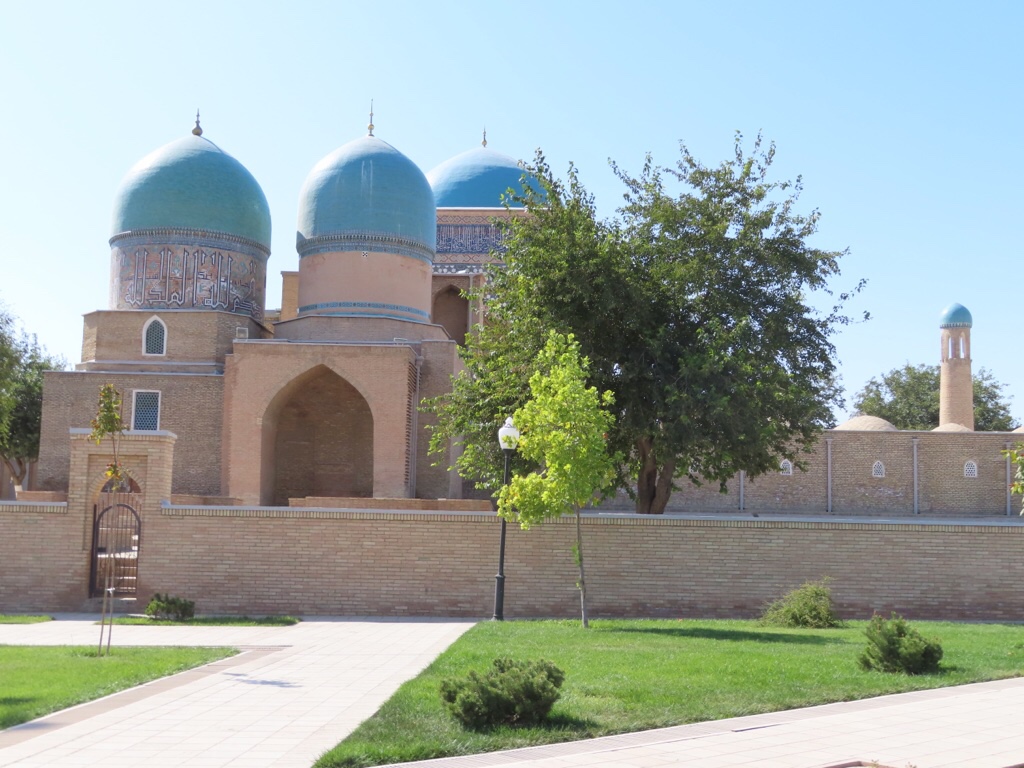
… and a couple of mausoleums.

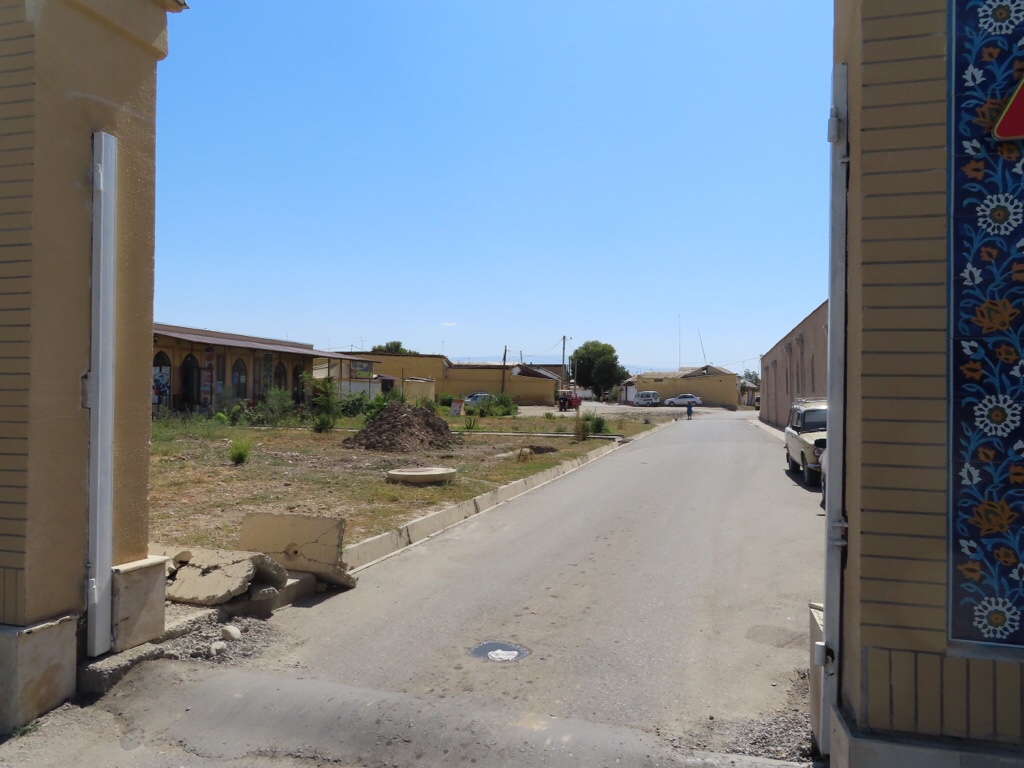
Stopping for some tea, we read the guidebook properly and it said that a few years ago the historic centre, bazaar and some residential areas were bulldozed and replaced with this antiseptic plaza. It looks like Uzbekistan is continuing with the Russian Heritage Status ideal, where tourism is encouraged by concentrating historic buildings in a small area so that the tourist would have the opportunity to experience an ancient city without actually having to visit the real areas in these cities where most people lived. In fact we could see part of the town though an open gate, almost as if it was leading offstage to where the real town was!

At least in Bukhara and Samarkand, while visitors are enticed to follow the convenient pedestrian walkway, it doesn’t feel completely isolated, but this was like a film set or theme park that hasn’t opened yet, because there were hardly any visitors. We did wonder where the huge cleared area that we had seen outside the east gate in Khiva might be converted into just such a plaza.

Over dinner later, we decided it was certainly an interesting day and after all the splendid, but generally restored tiling we have seen, it was quite an eye-opener to see the gateway which had been left as it was. In ten years, as long as they keep it watered, it will be a very nice park indeed!

Map

Samarkand … Timur’s Capital

We had a short journey on the smart and fast Afrosiyob train to Samarkand and arrived late afternoon.

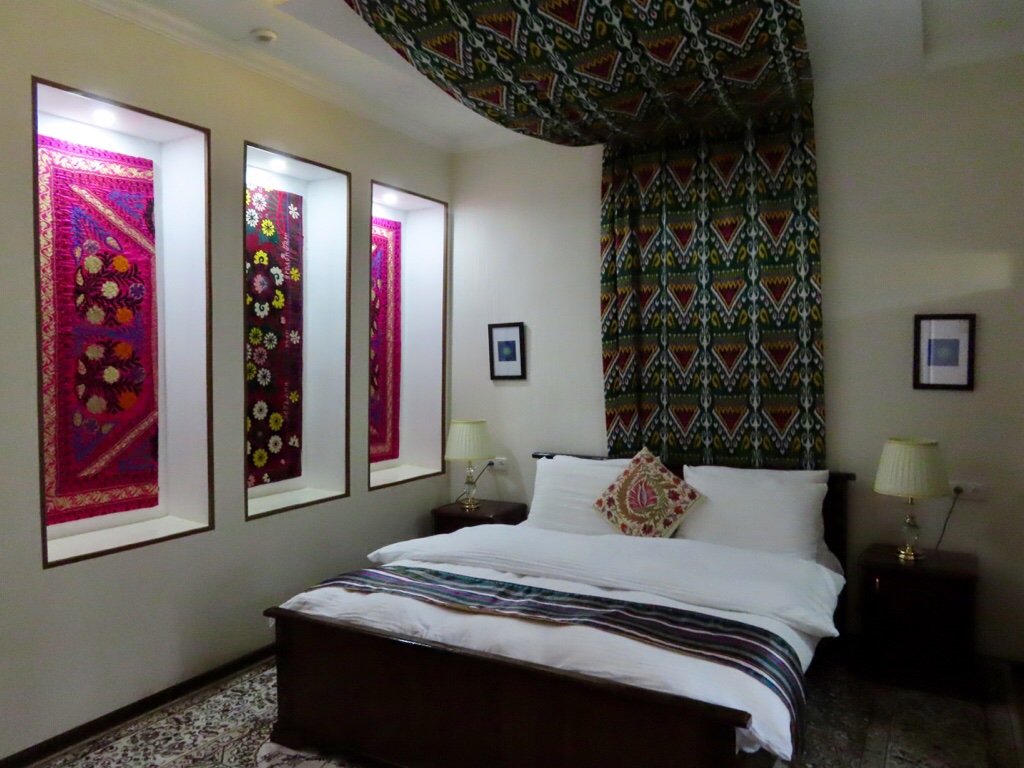
We are staying in the family run Jahongir Hotel, with comfortable rooms decorated with suzanis and arranged round a central shady garden.

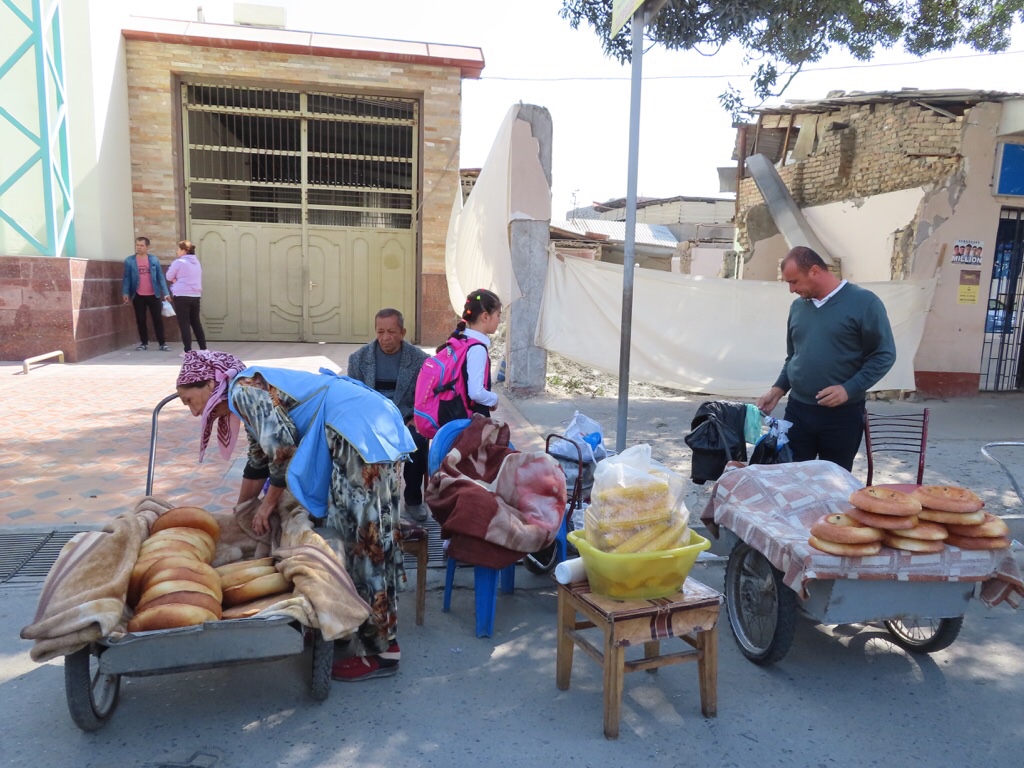
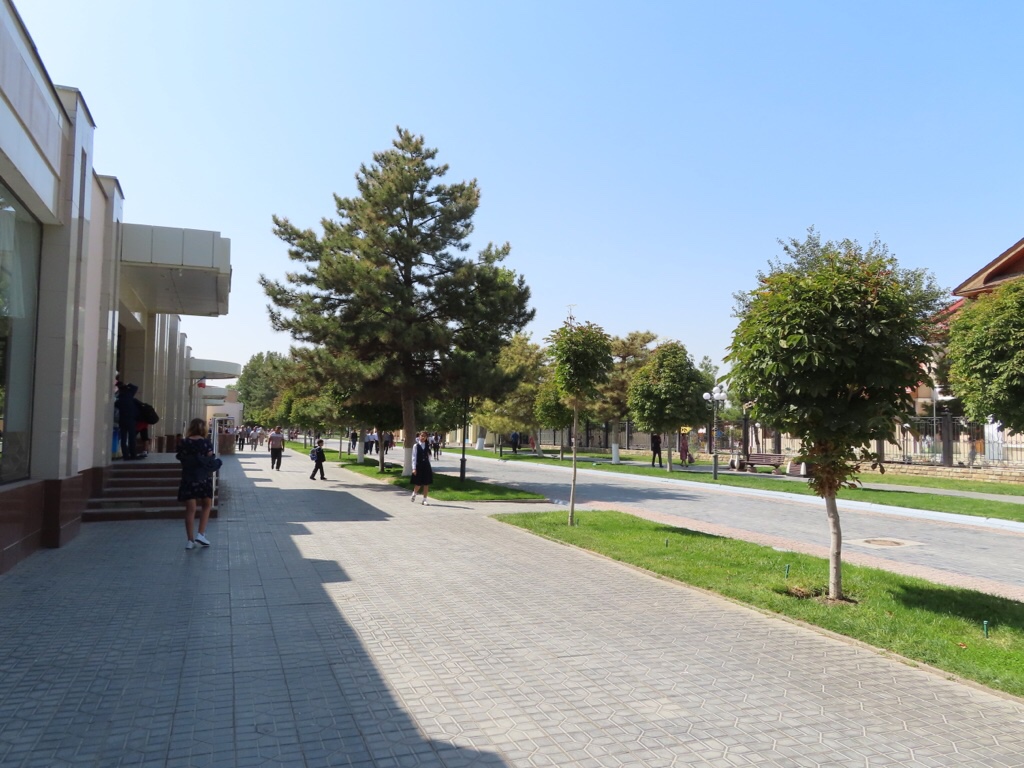
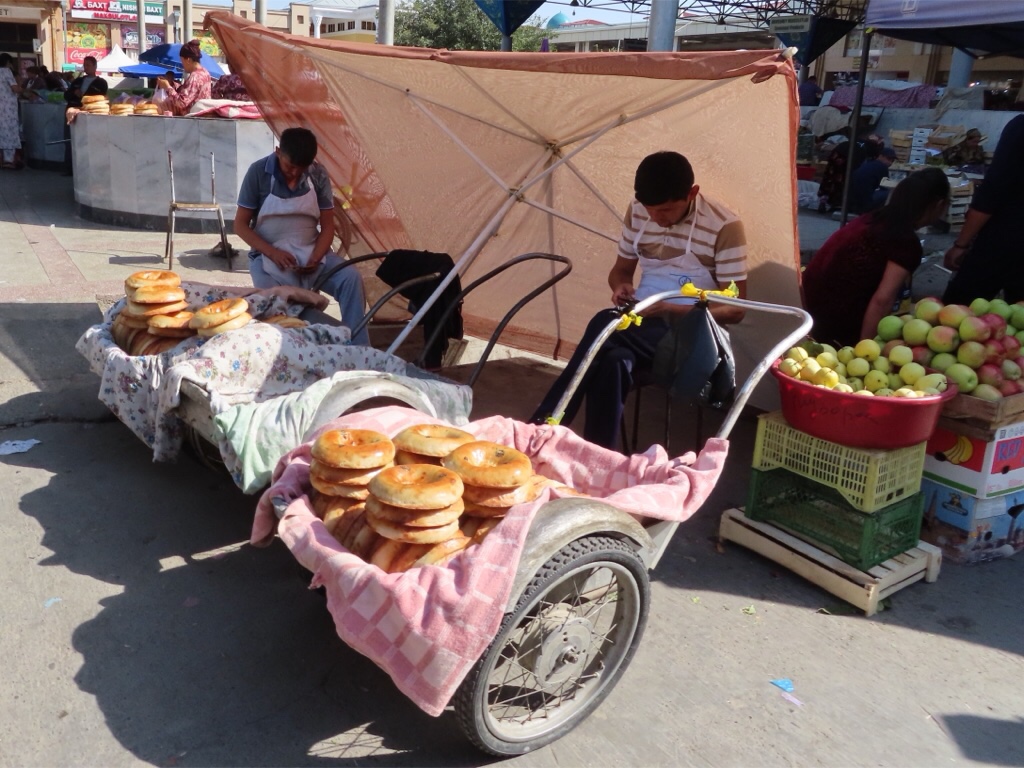
It’s great to be in a local neighbourhood … complete with a collection of ladies selling bread from trolleys at the end of the road!

Samarkand is one of Central Asia’s oldest settlements founded in the C8th BC and was the capital of the Sogdian empire when it was taken by Alexander the Great in 329 BC. A key Silk Road city, it grew from the C6th to C13th and was ruled by a succession of Iranian and Turkic rulers until being obliterated by the Mongols under Genghis Khan in 1220.

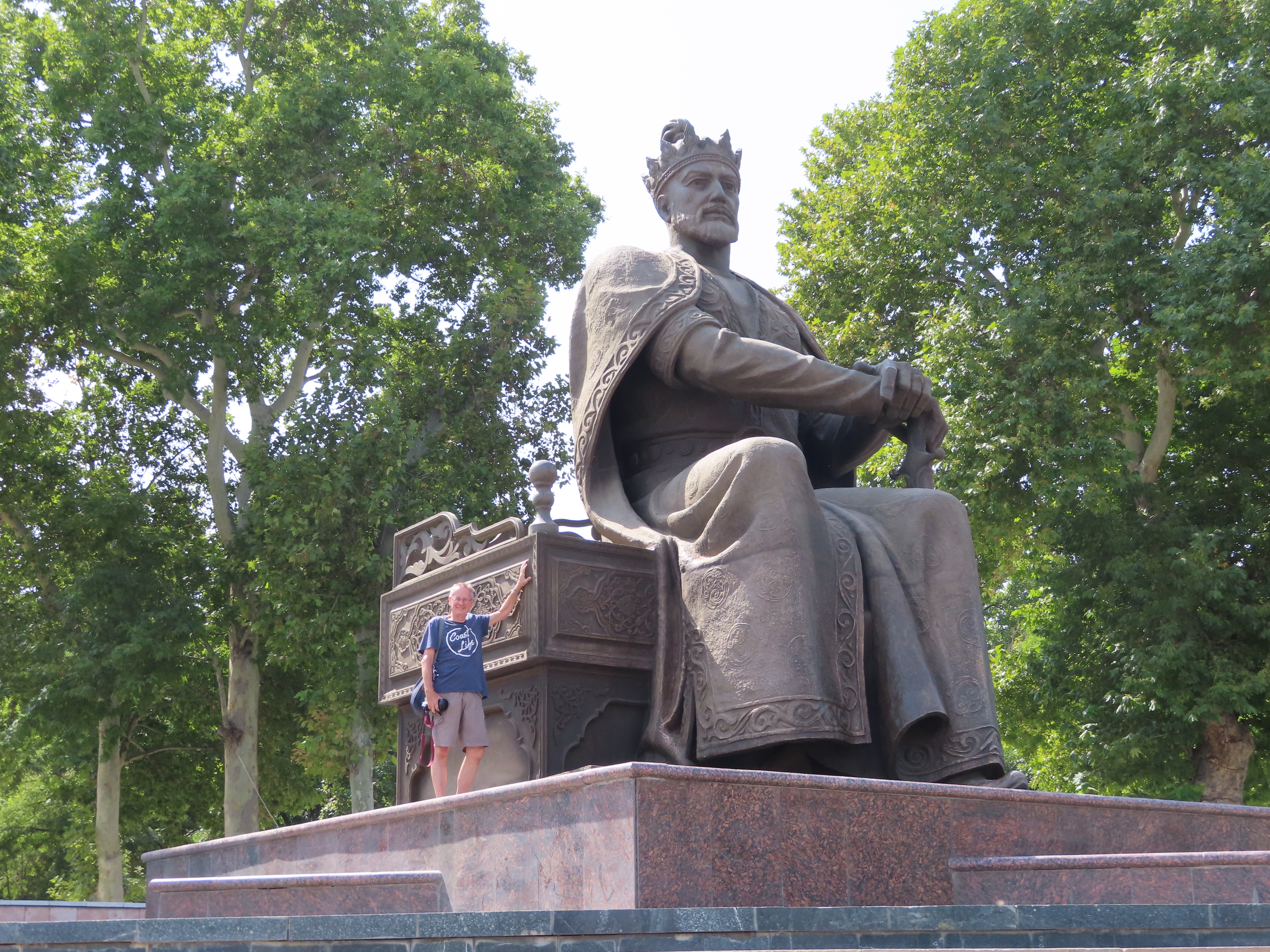
But it was Timor, also called Tamerlane, who made Samarkand the capital of the Timurid Empire in 1370. For the the next 35 years, he rebuilt most of the city and populated it with the great artisans and craftsmen from across the empire. His grandson Ulugbek ruled until 1449 and made it an intellectual centre too.

When the Uzbek Shaybanids came in the C16th, they moved their capital to Bukhara and Samarkand went into decline. It had a short revival under the emirs of Bukhara in the C19th, before Russian rule in 1868 when the modern Russian section of the city was built. After the revolution, it was briefly the capital of the Uzbek SSR, and is today second largest city in Uzbekistan with 530,000 people.

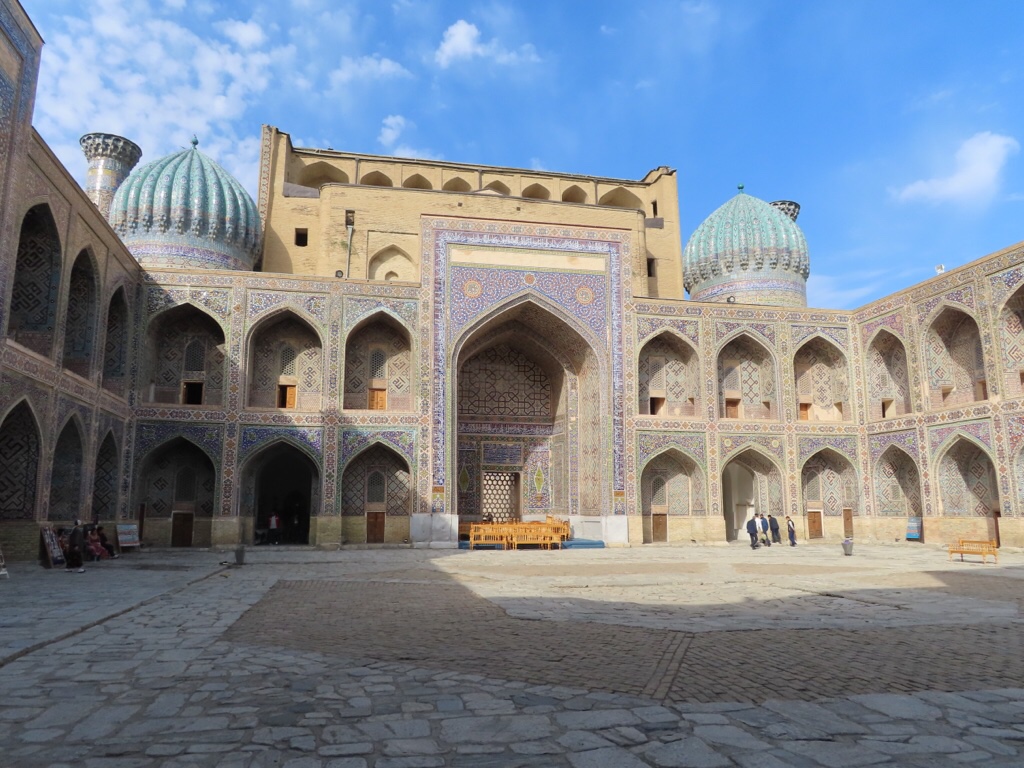
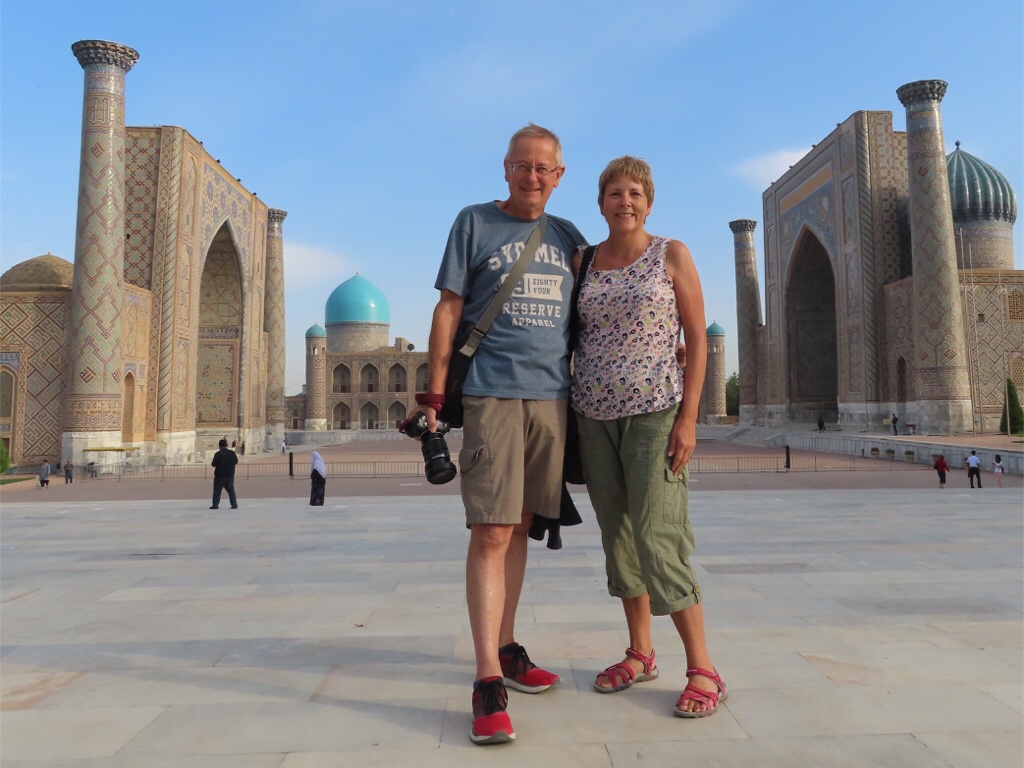
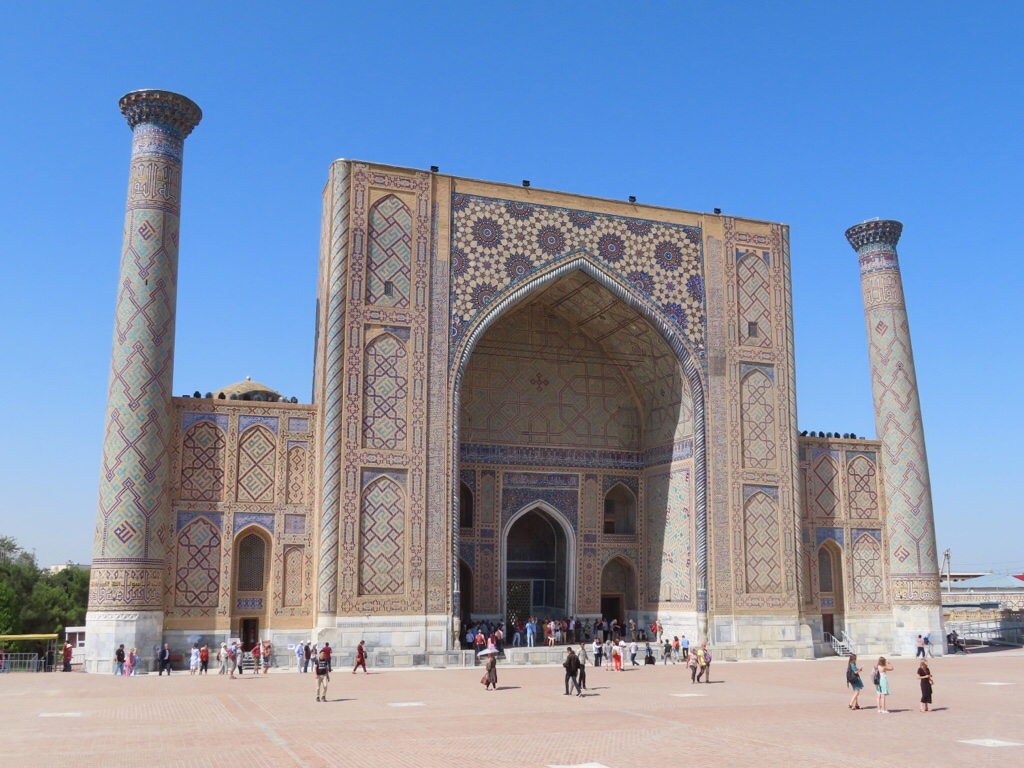
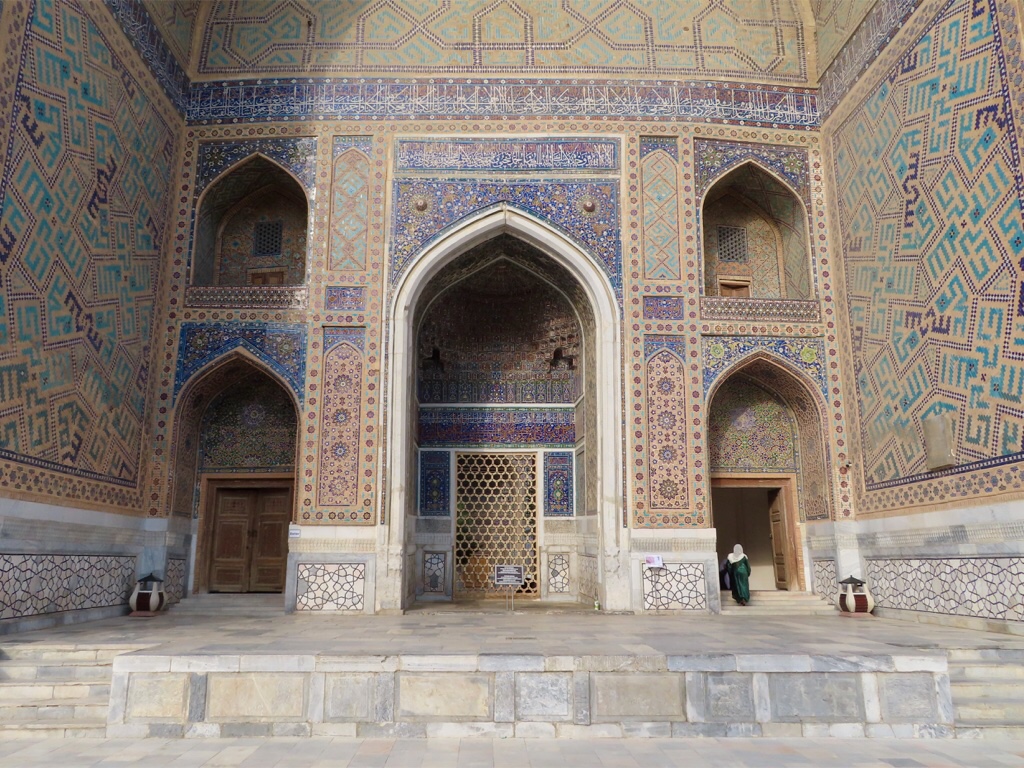
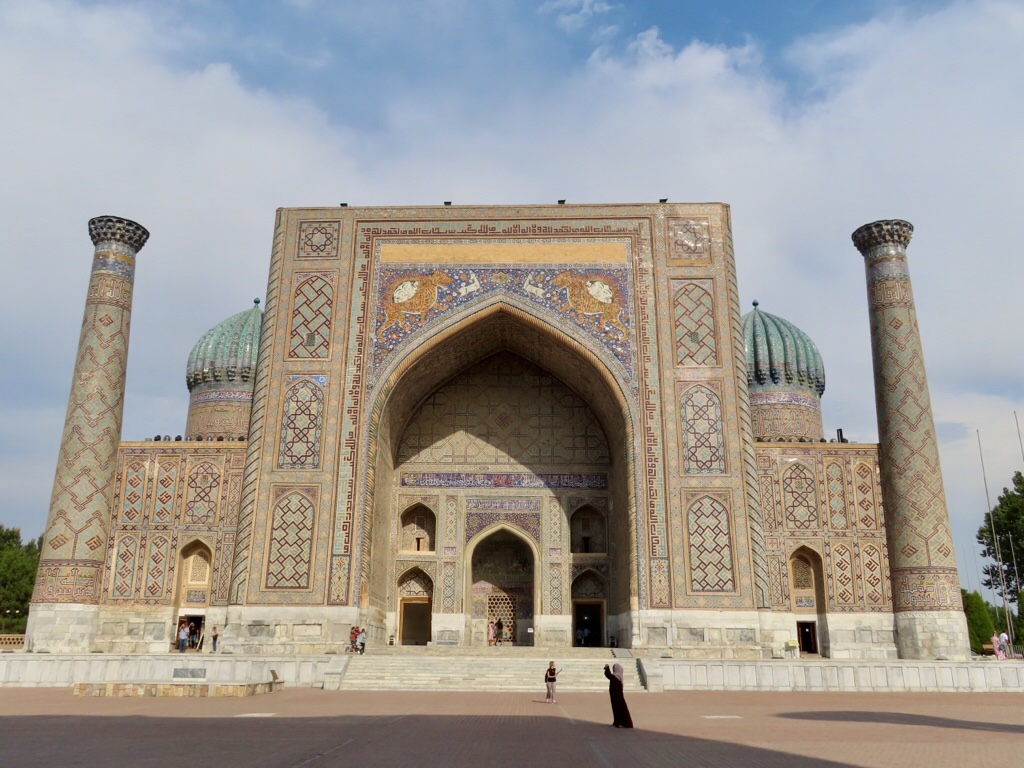
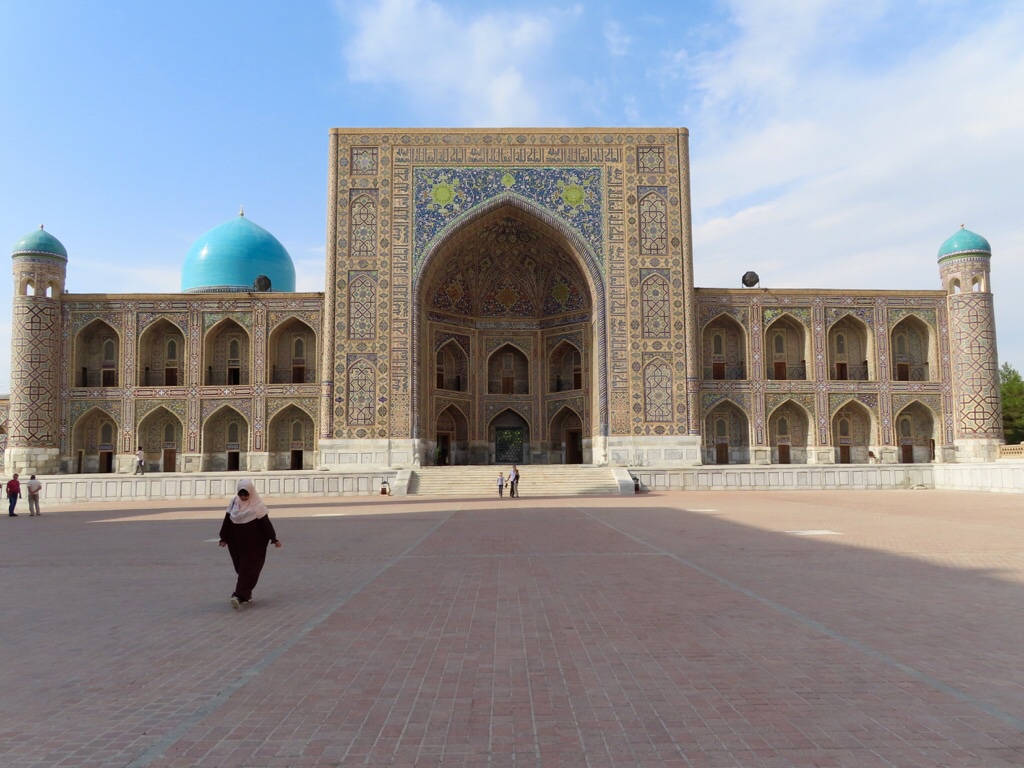
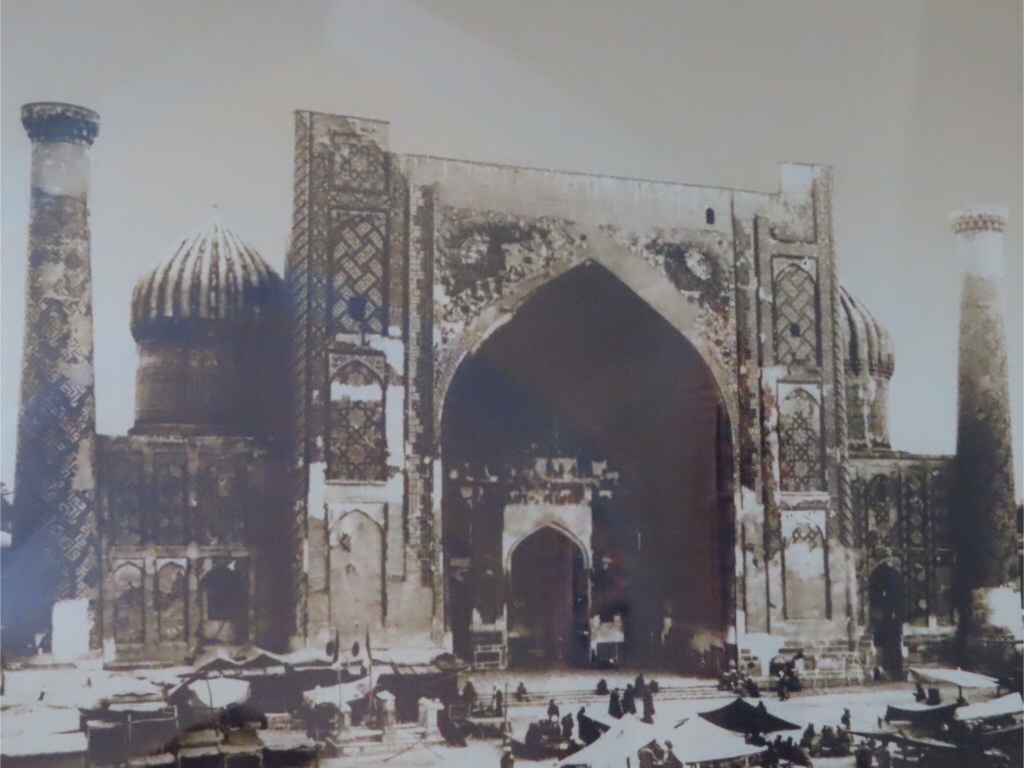
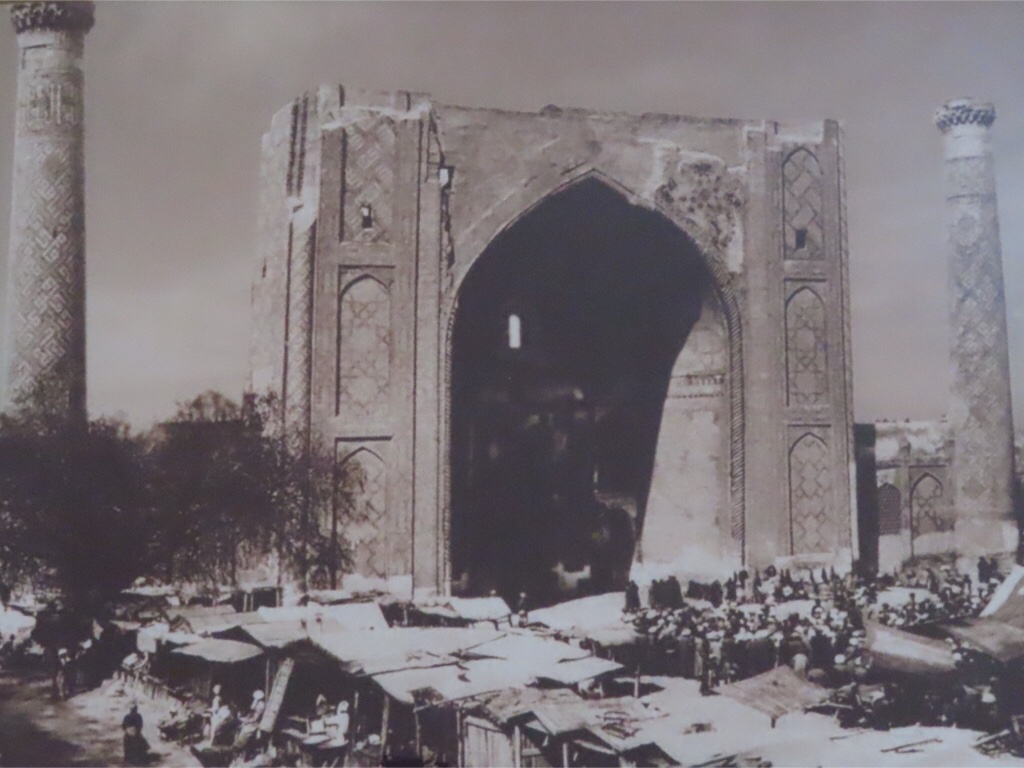
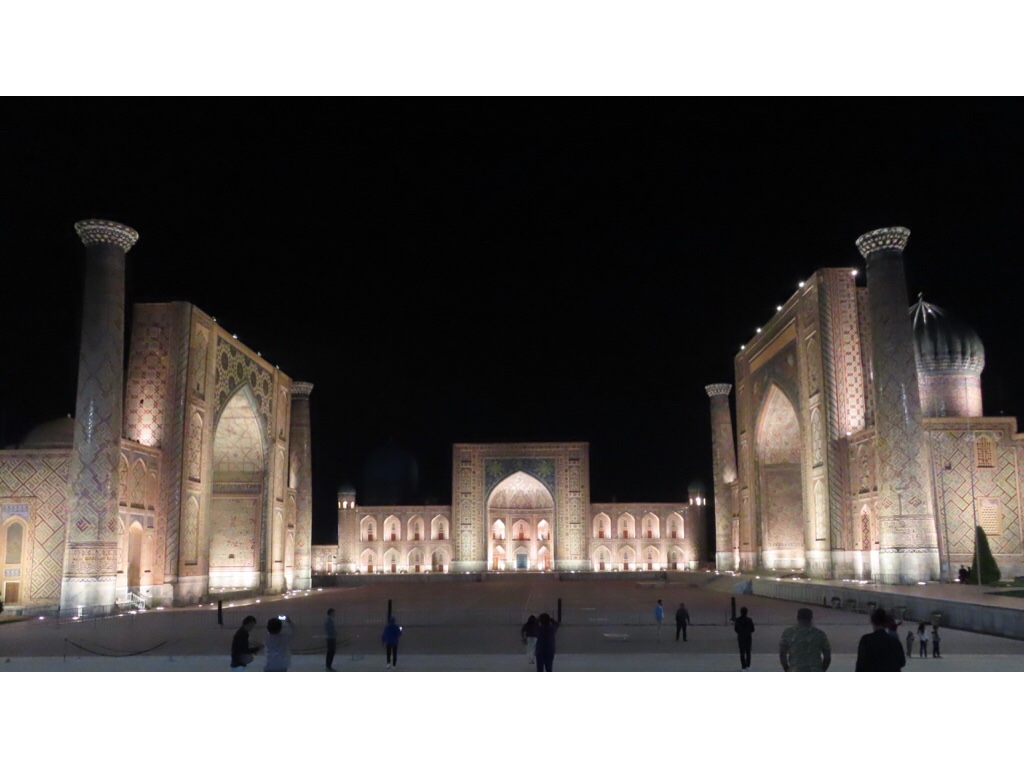
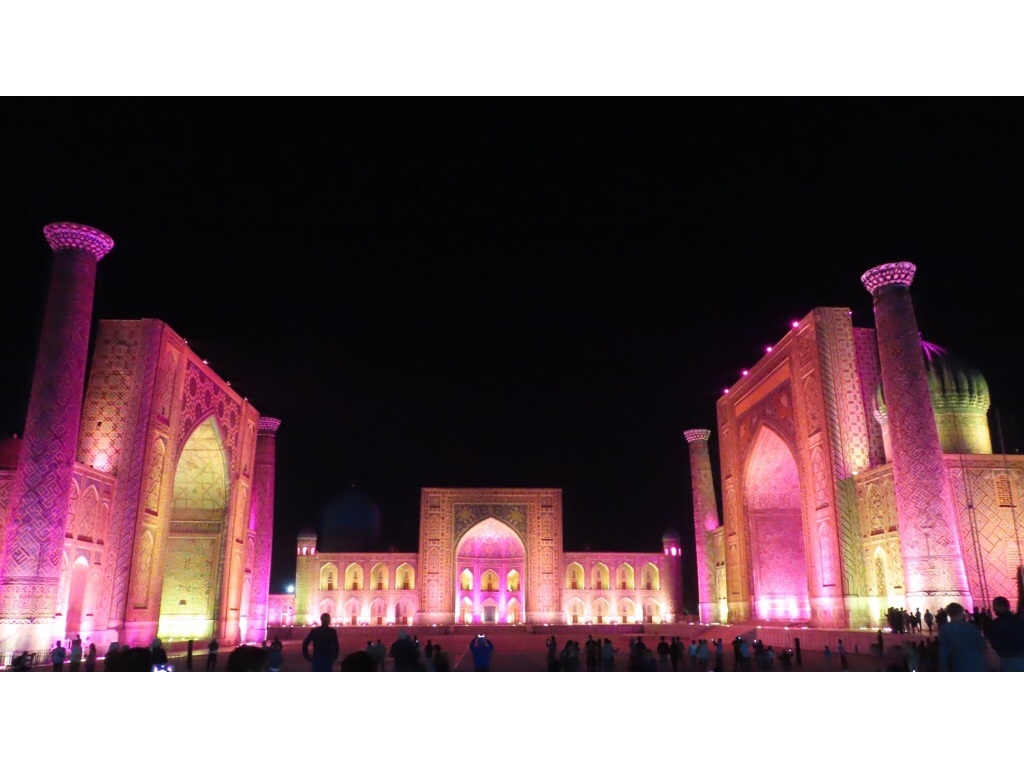
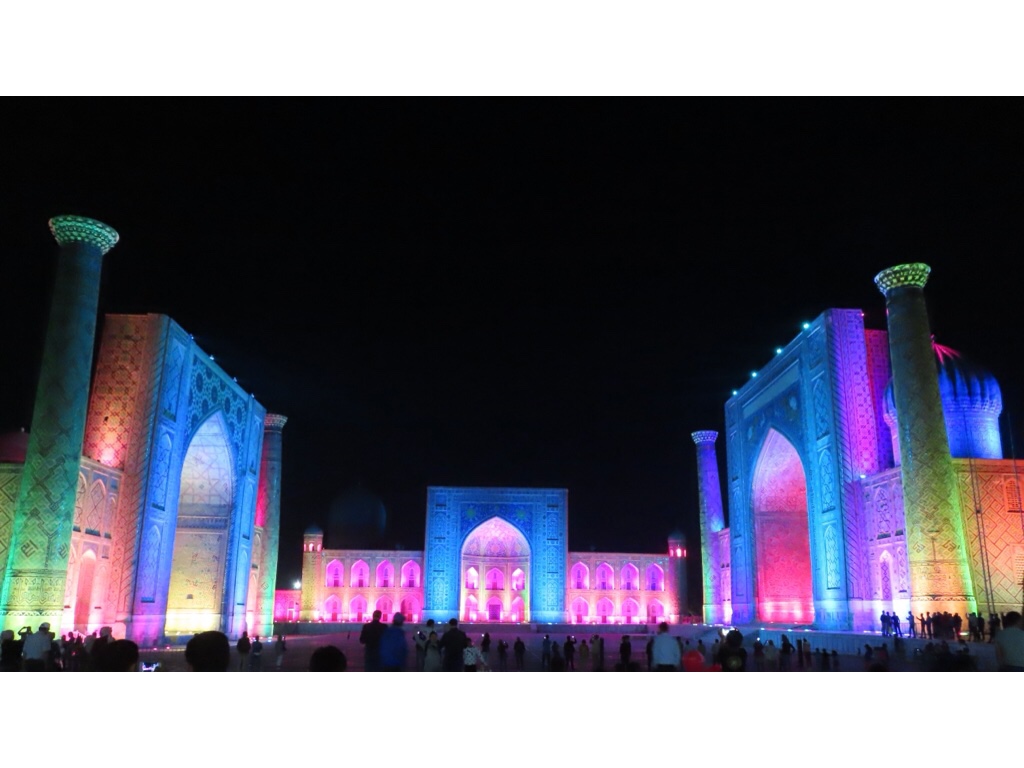
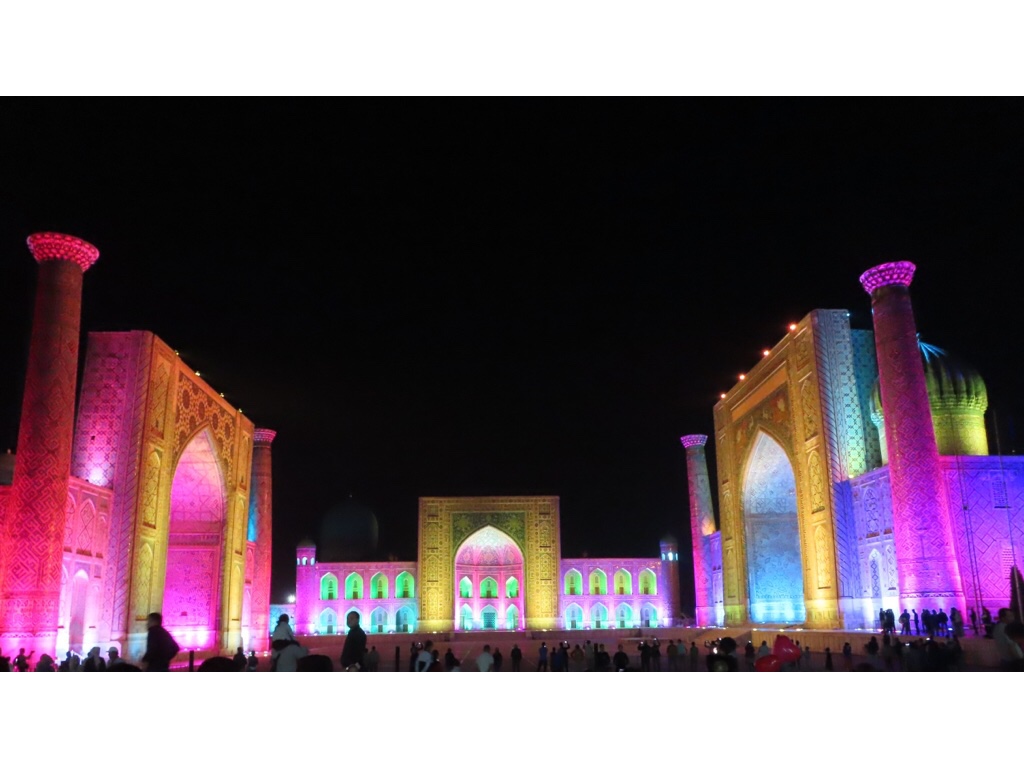
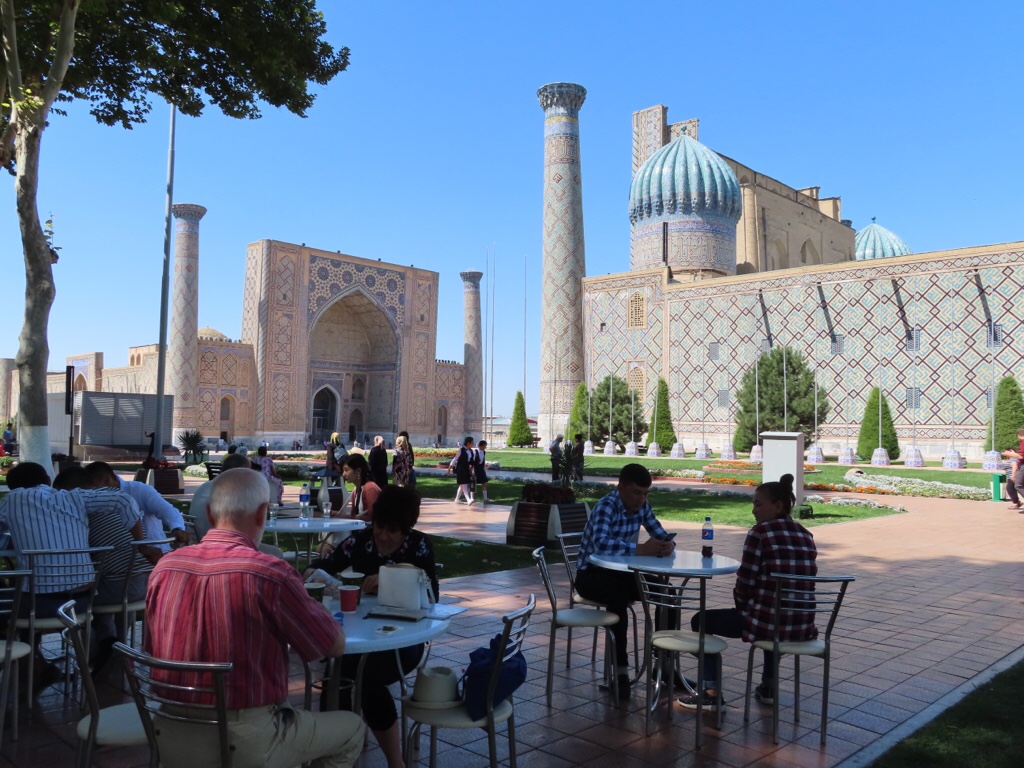
The Registan has always been the centre of life in the city, once a place to hear proclamations and later a huge bazaar on the crossroads of the city, but it wasn’t until 1420 that is started its journey to the majestic spectacle it is today. Just a five minute walk from our hotel, we stopped by several times to take photos, but were there when it opened at 8.00 one morning to have a chance to visit while it was quiet.

The first madrasa was built by Ulughbek, Timor’s grandson, and also a mathematician and astronomer who had the portal adorned with patterns of ten-pointed stars symbolizing the sky, and astronomy.

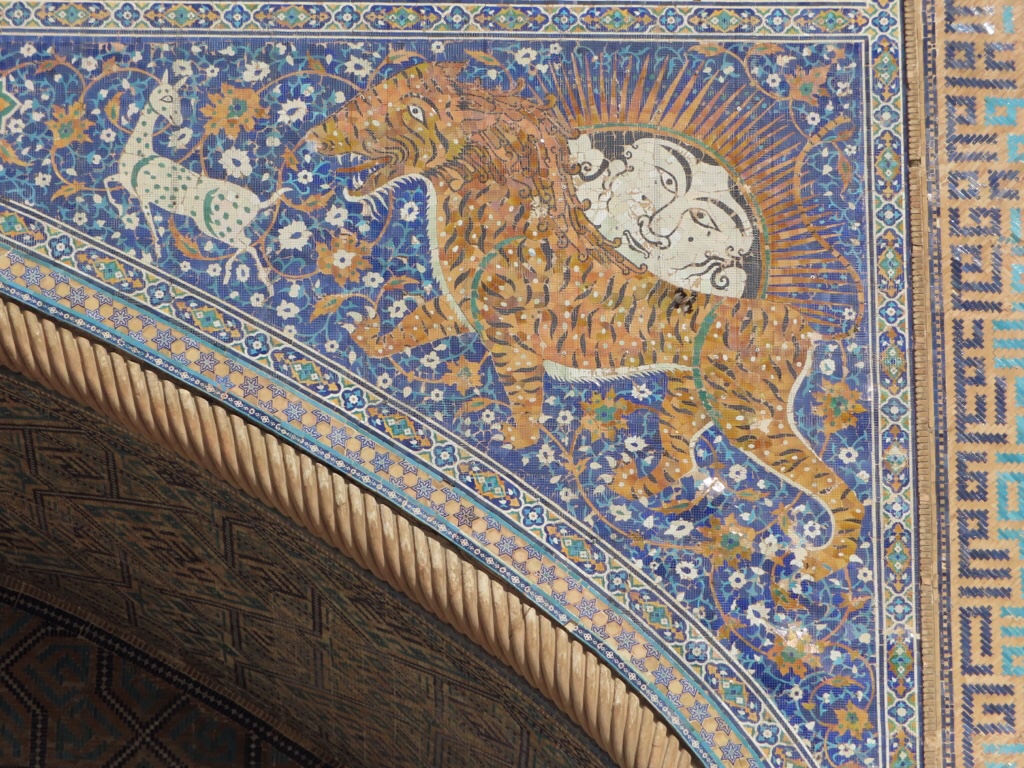
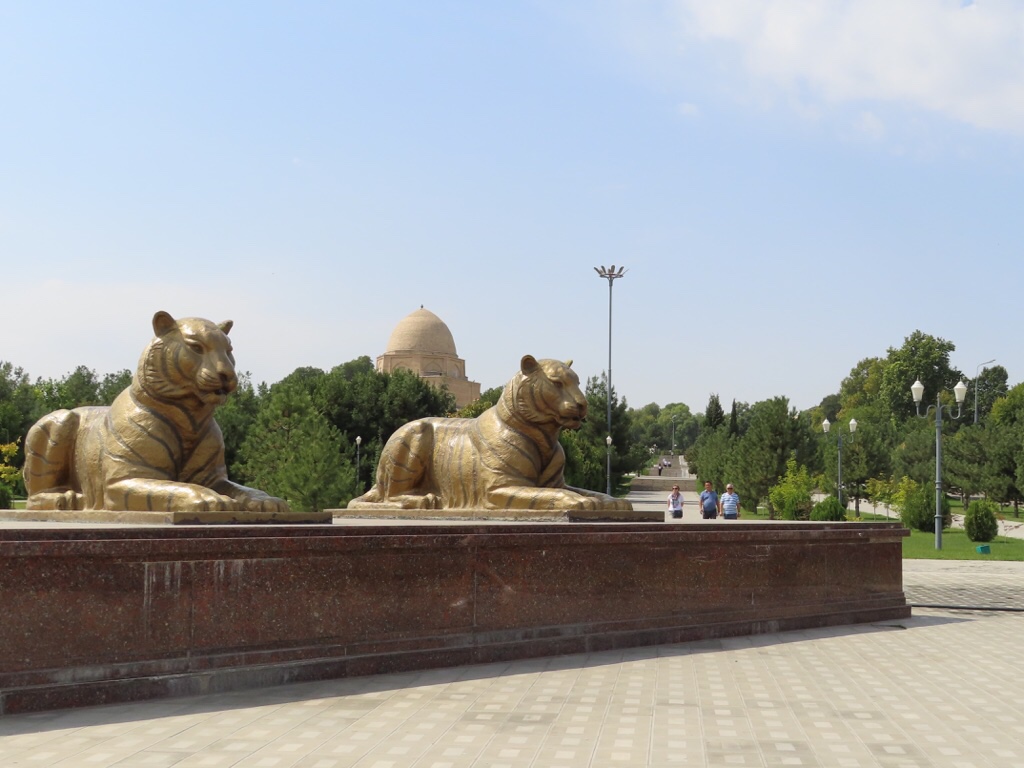
Two centuries later Yalangtush Bahadur was appointed the emir of Samarkand and decided to construct a second madrasa to mirror the first which was named Sher- Dor meaning ‘Adorned with Lions’ … although the roaring felines carrying a sun on their backs chasing deer look rather more like tigers!

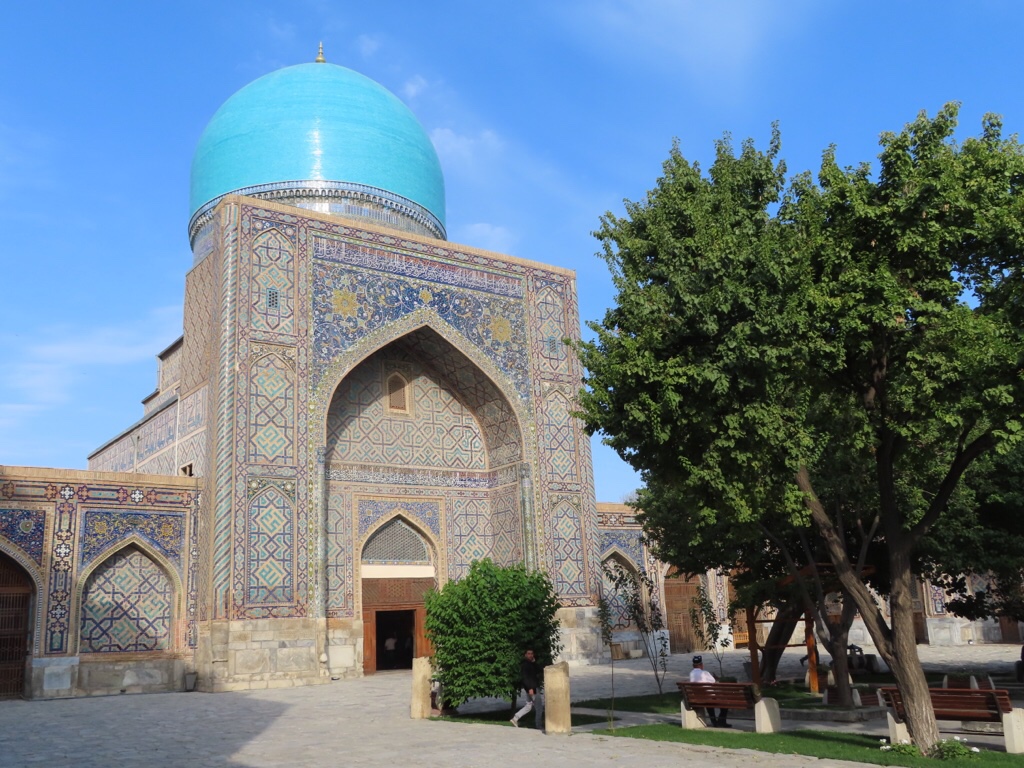
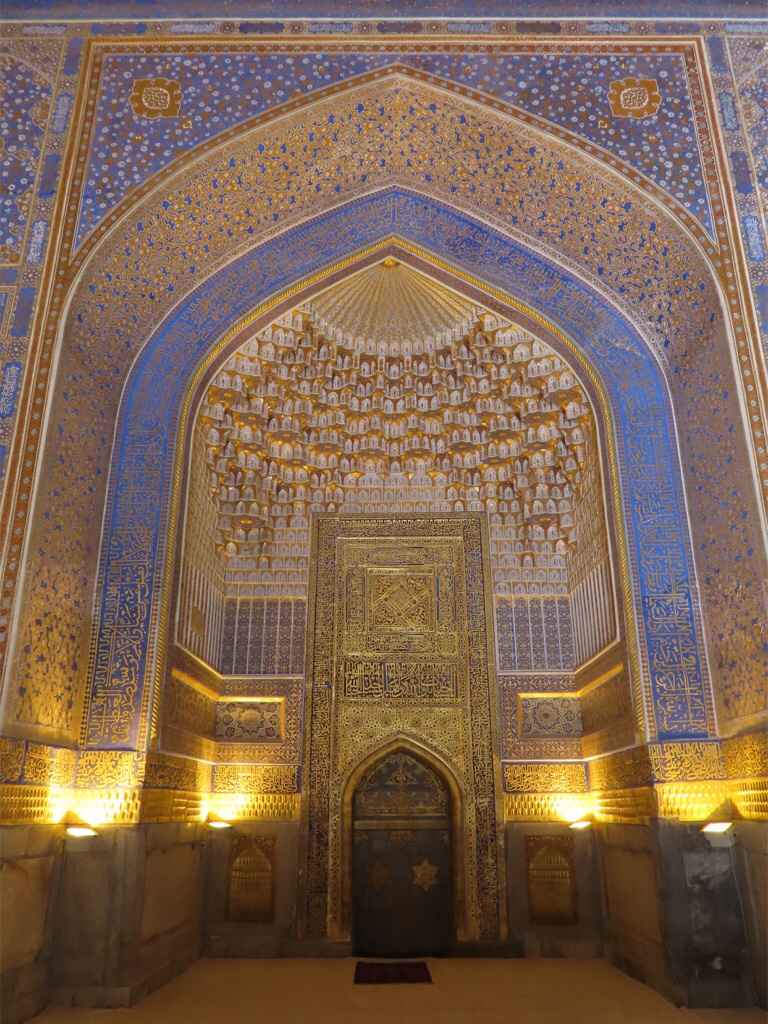
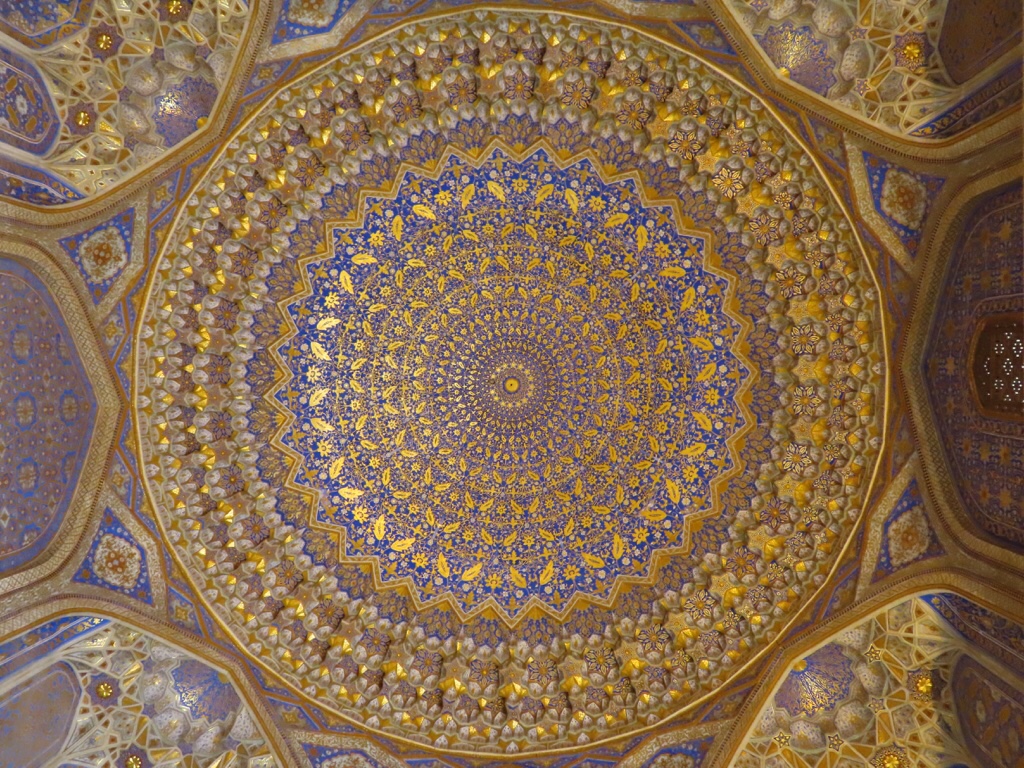
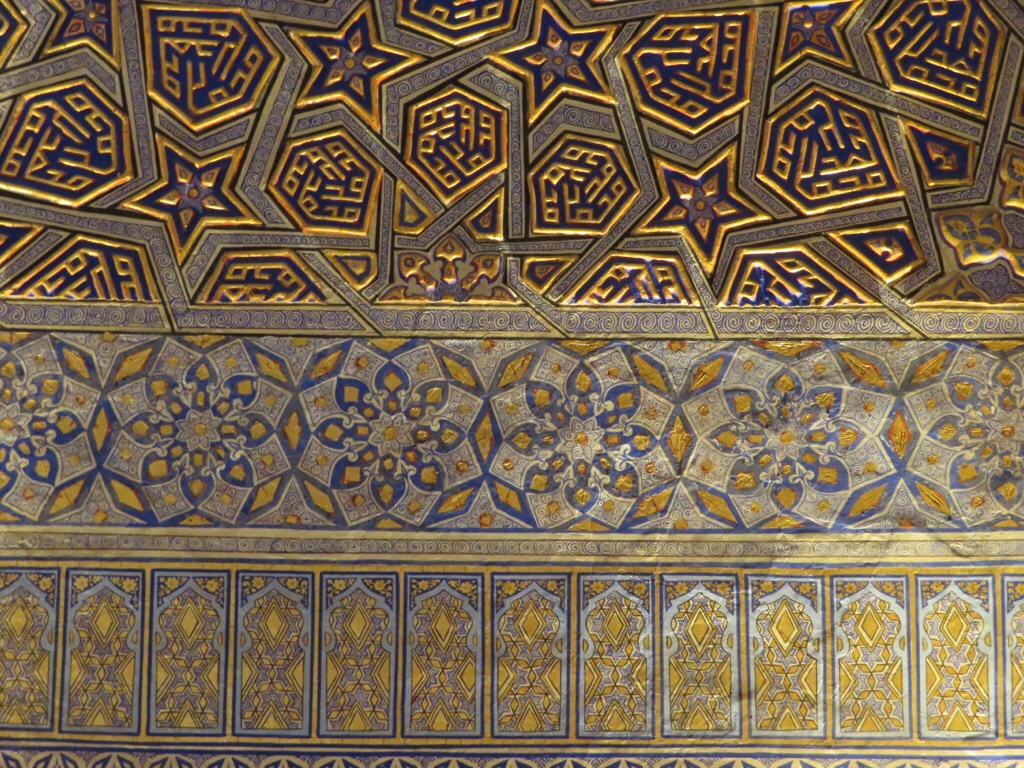
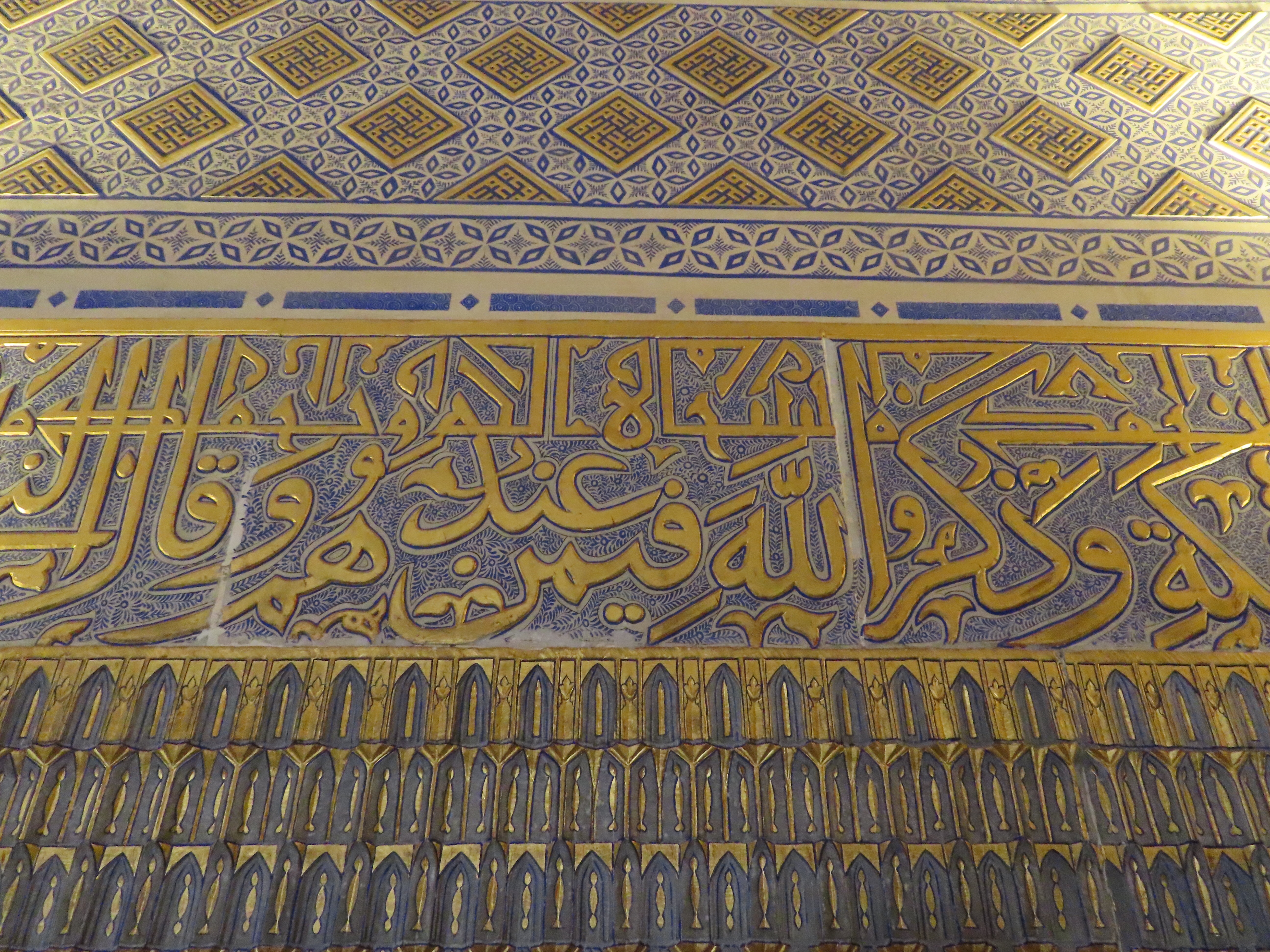
Ten years later, Yalangtush Bahadur decided build a third madrassa which was called Tilla Kori which means gilded, named for the kundal style painting in the Mosque which is decorated throughout with gilded relief.

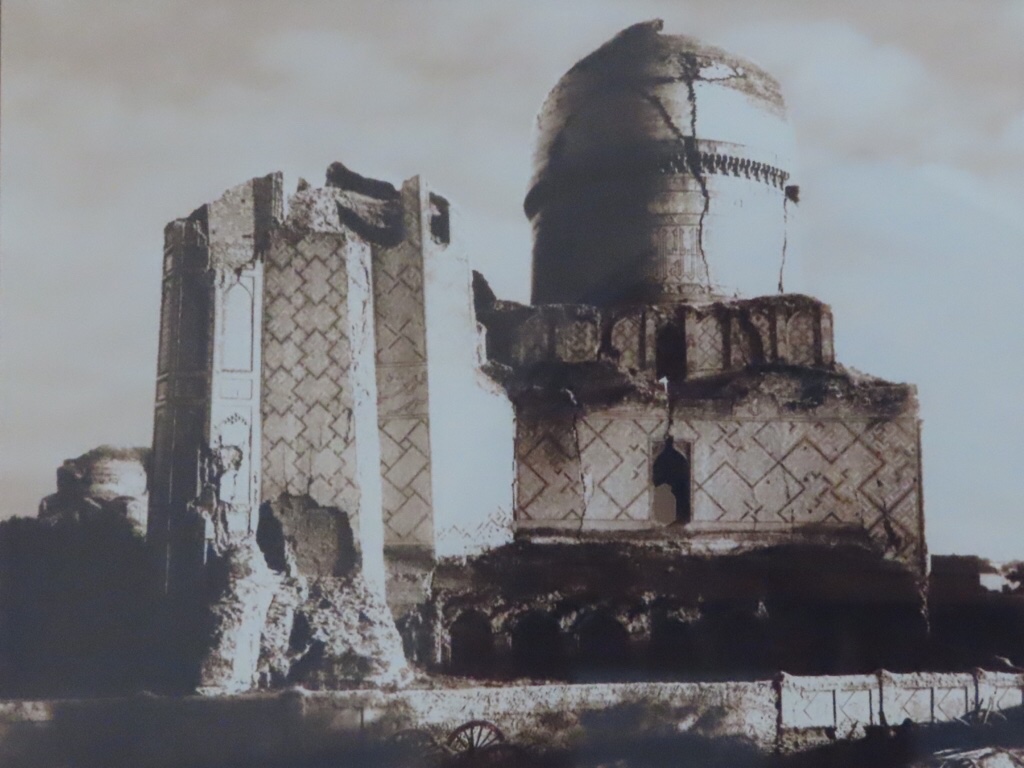
By the C20th, all these buildings were in a sorry state with much of the cladding and painting being lost through earthquakes, weather and general decline and here are some old photos …

Many historic buildings of Central Asia were saved by a new ideological concept in Moscow in the 1960s called Heritage Status, whereby entire old towns throughout the USSR were now deemed worthy of preservation with a view to improving tourism in these cities. The hope was that by concentrating the historic buildings in a small area, even a single street, the tourist would have the opportunity to experience ancient Bukhara or Samarkand without actually having to visit the real areas in these cities where most people lived.

Soviet funded restoration began in 1967 and lasted twenty years. This was based on extensive studies and excavations, with much rebuilding using salvaged brickwork and tiles gathered from mounds of rubble inside the madrassahs and there is no doubt that if the Soviets had decided not to restore the buildings of the Registan, this magnificent sight would have been lost.

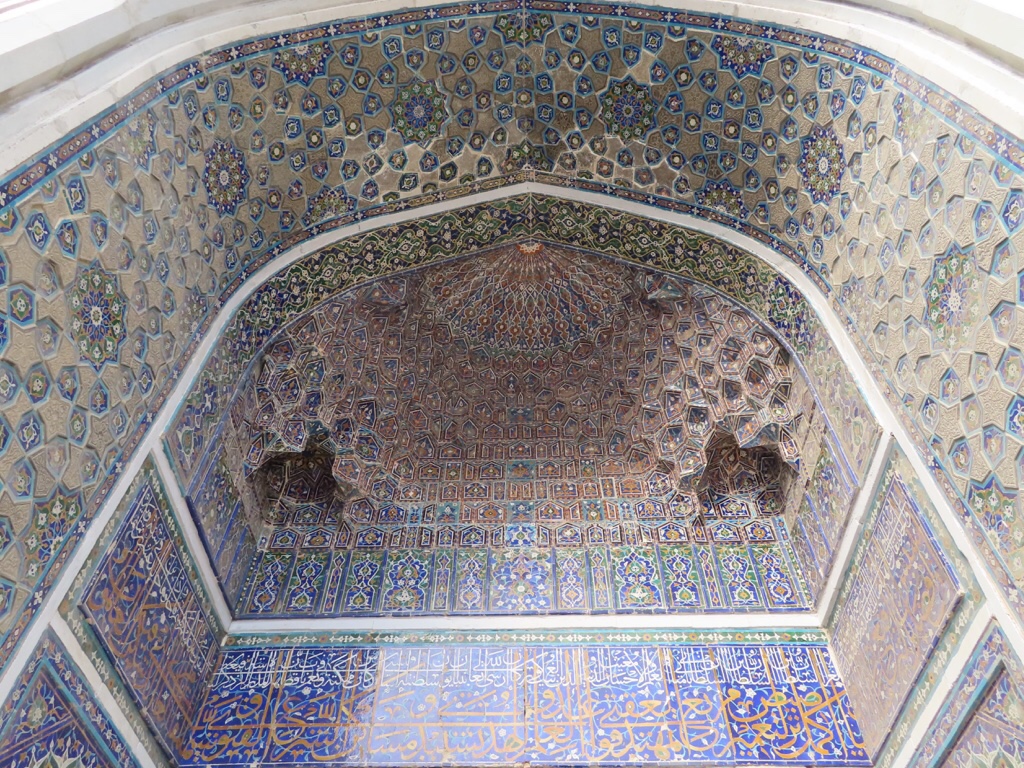
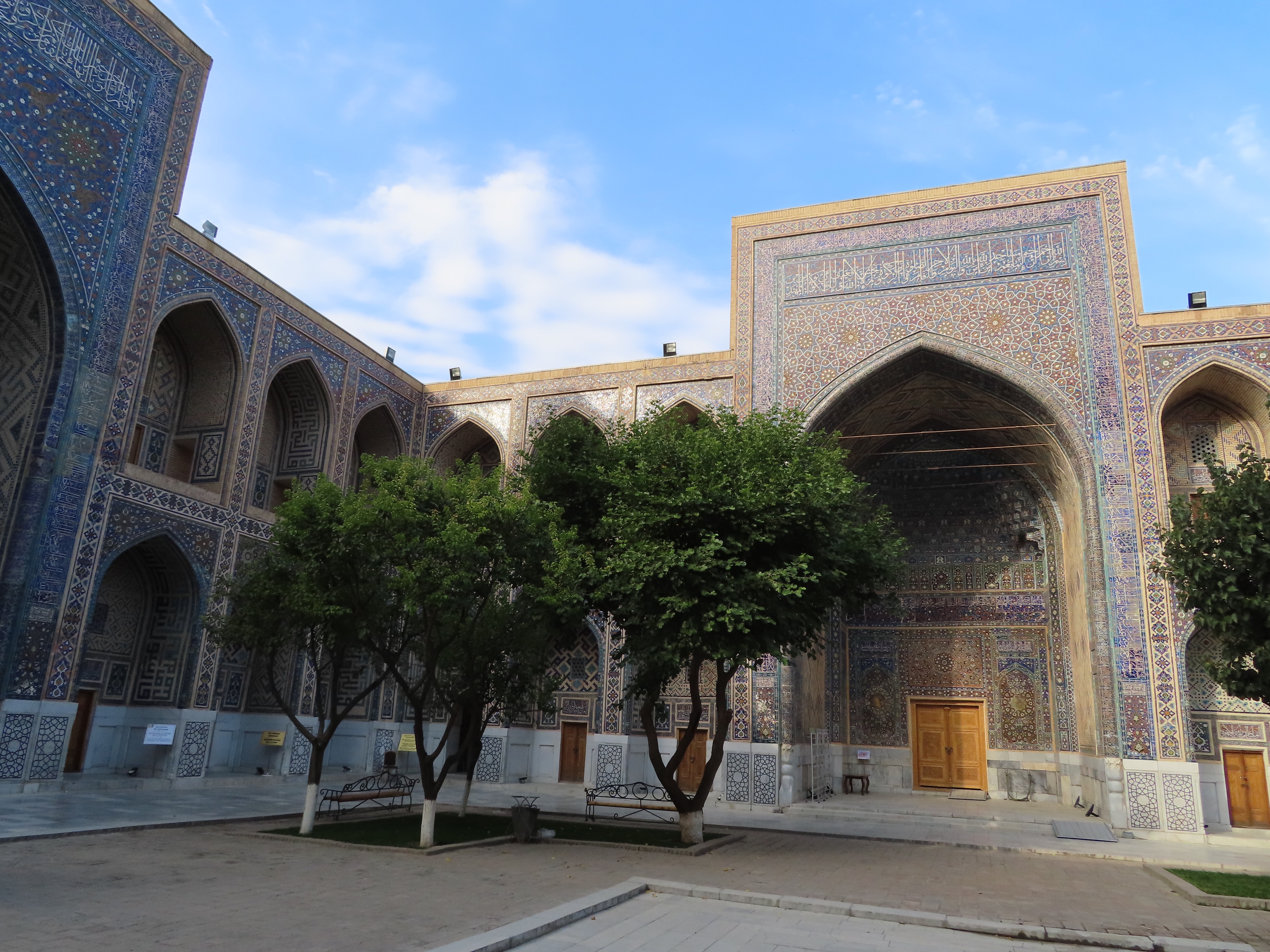
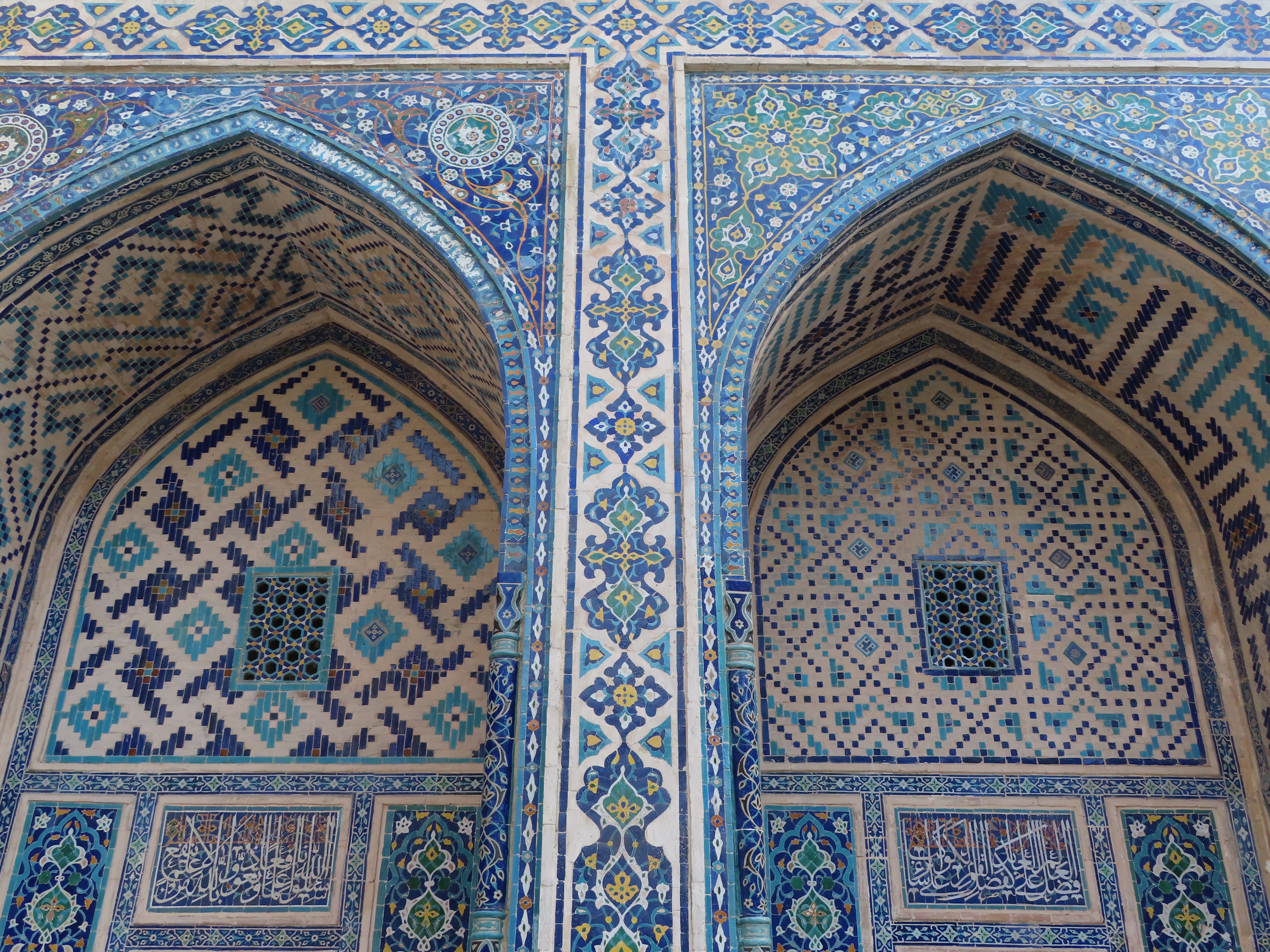
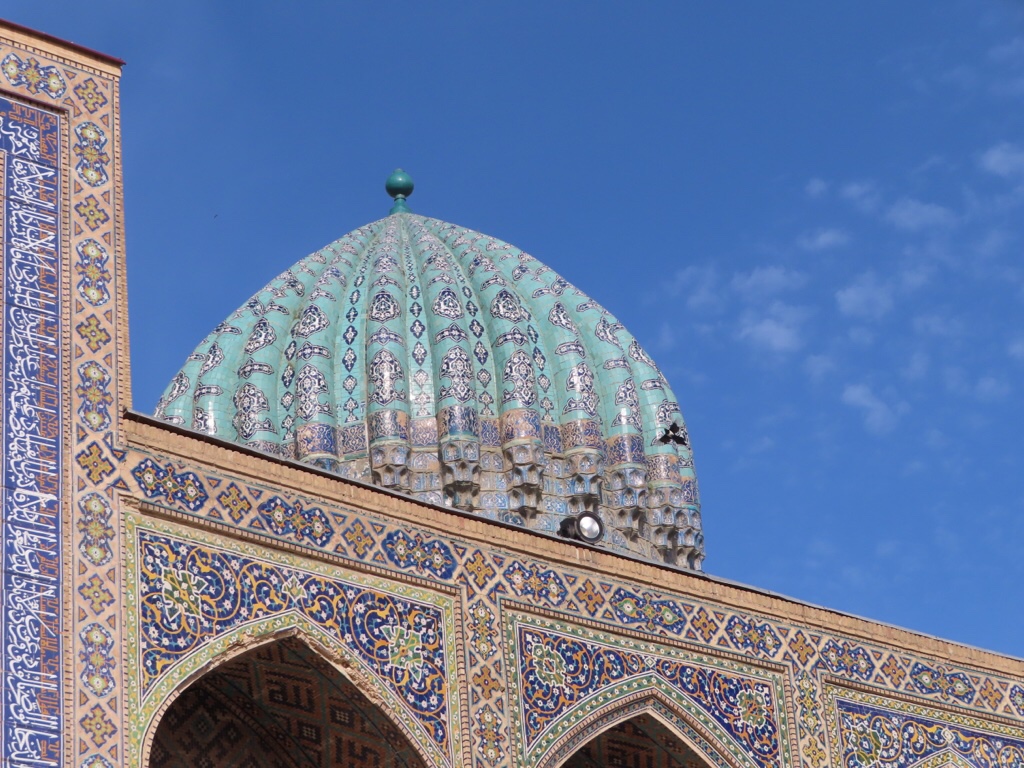
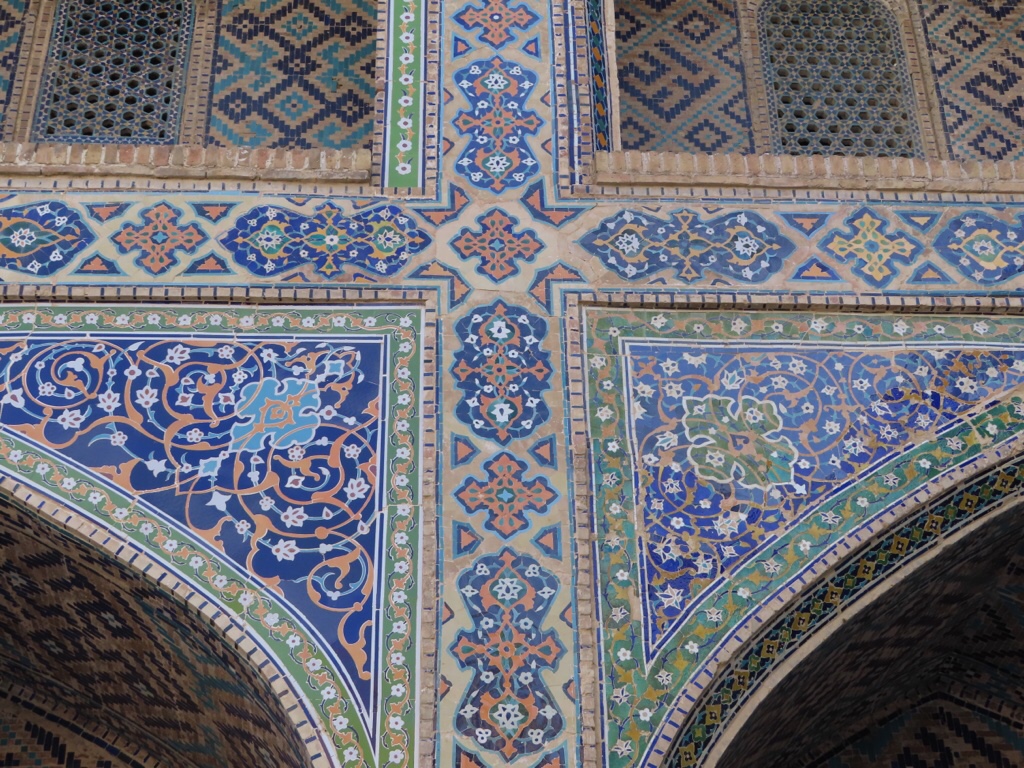
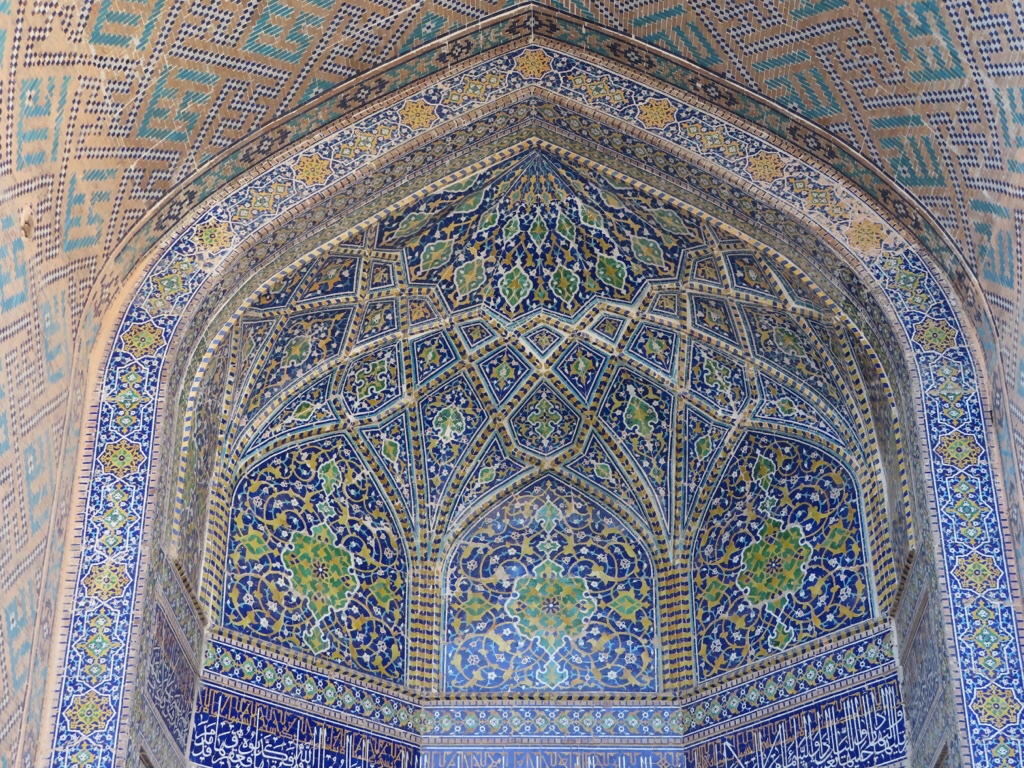
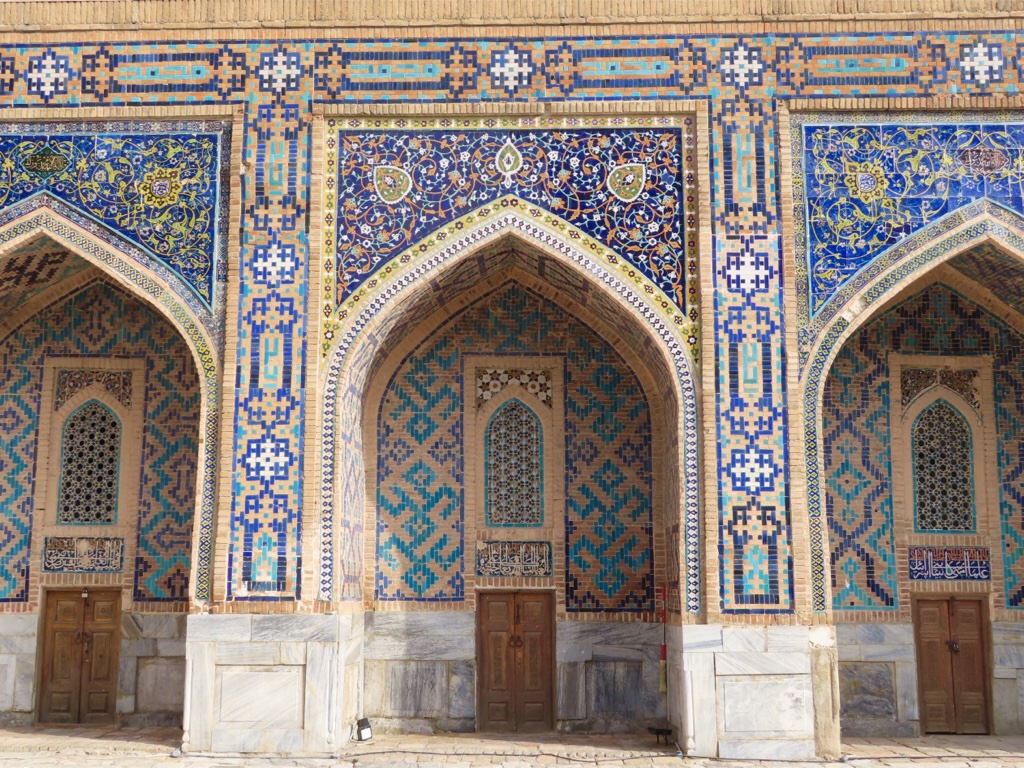
The tiling is amazing, especially as these three madrasas seem to be covered on every surface and have been restored to far greater completeness than other buildings, Each have their own character inside with Ulughbek being the grandest and Tilla Kori having not only the amazing mosque, but also a more intimate feel. Taken as a whole, the impression is very impressive and even made us feel reflective in the calm of the morning. Closer examination of the decoration shows that some areas have been restored better than others and the colour matching is a little varied, but with such a huge job, I guess this is understandable.

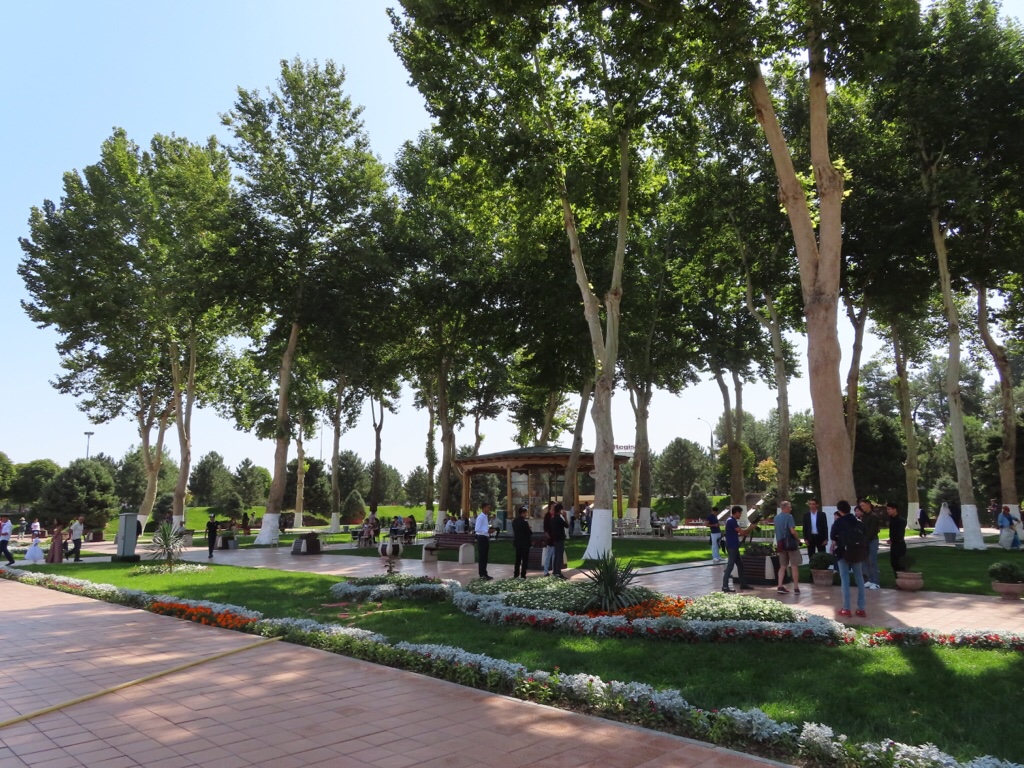
The Registan is fronted by tree shaded gardens …

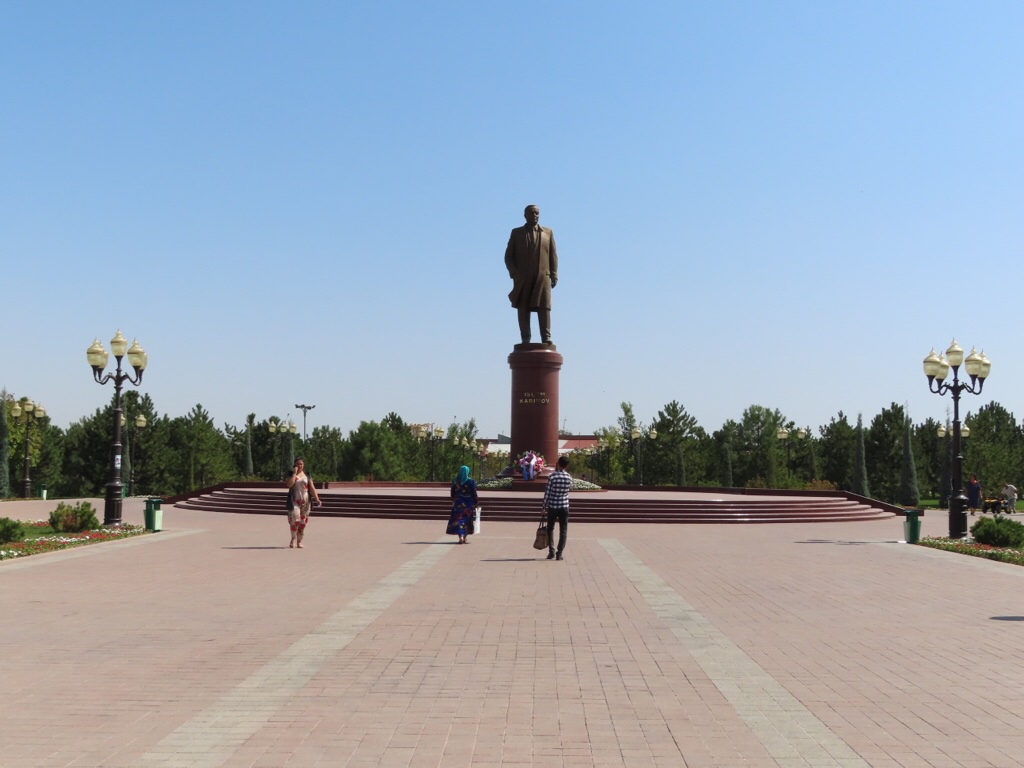
… and a pedestrian walkway leads past a huge statue of Karimov …

…then up Toshkent Street which is fronted by large shiny souvenir emporia …

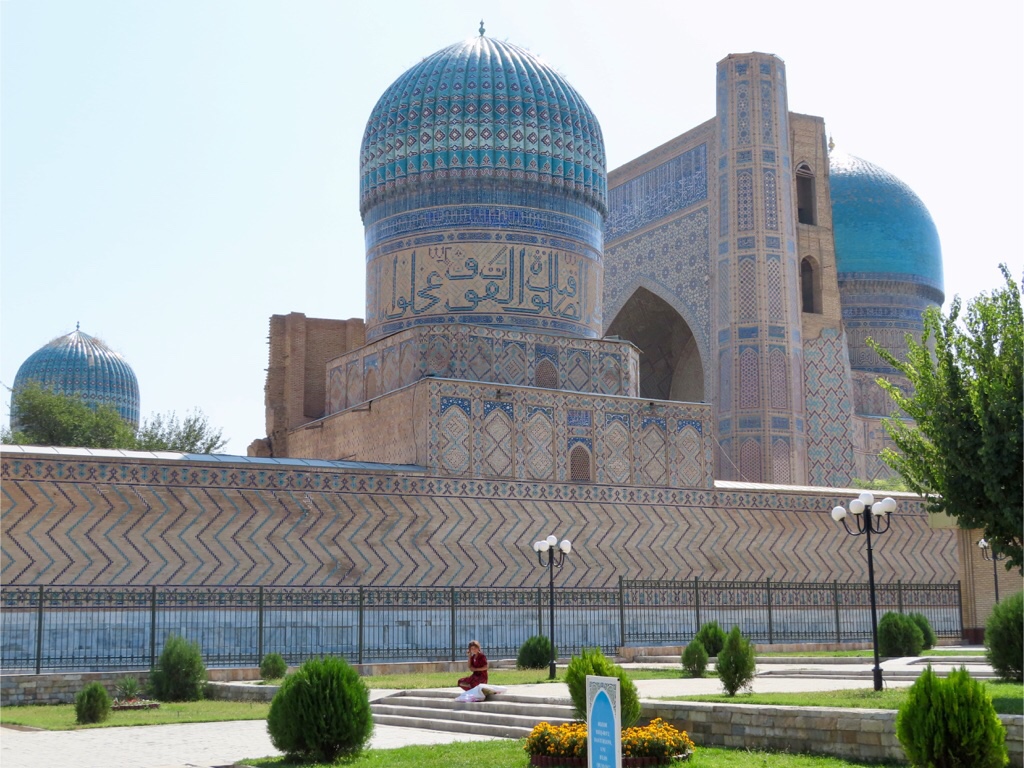
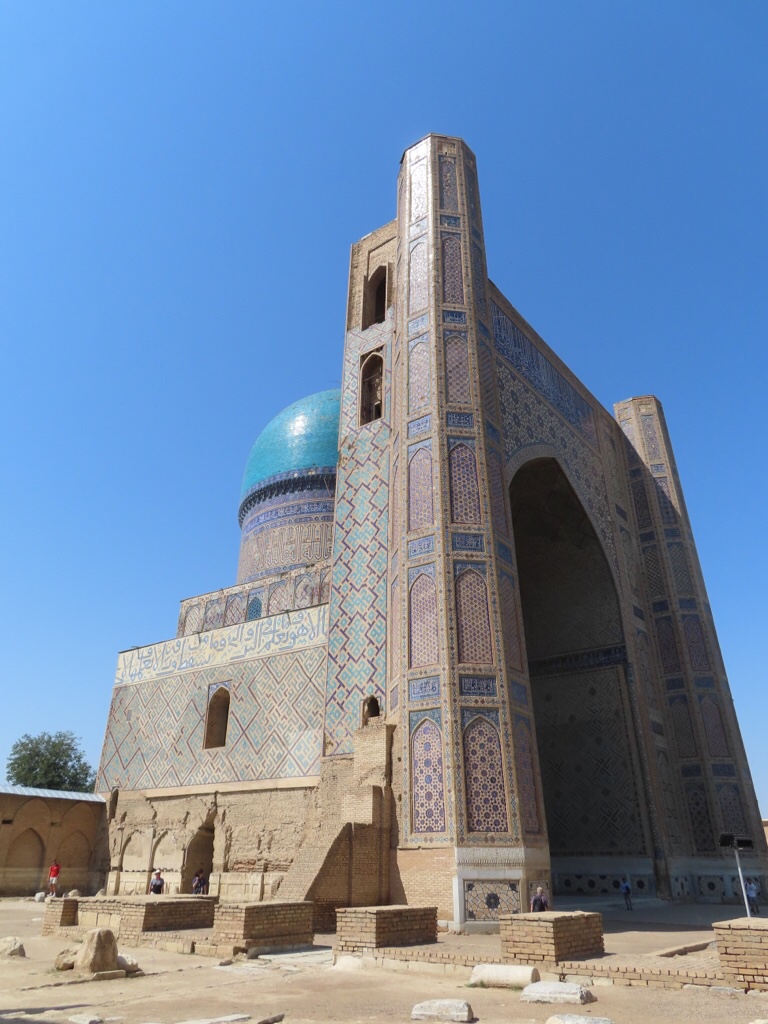
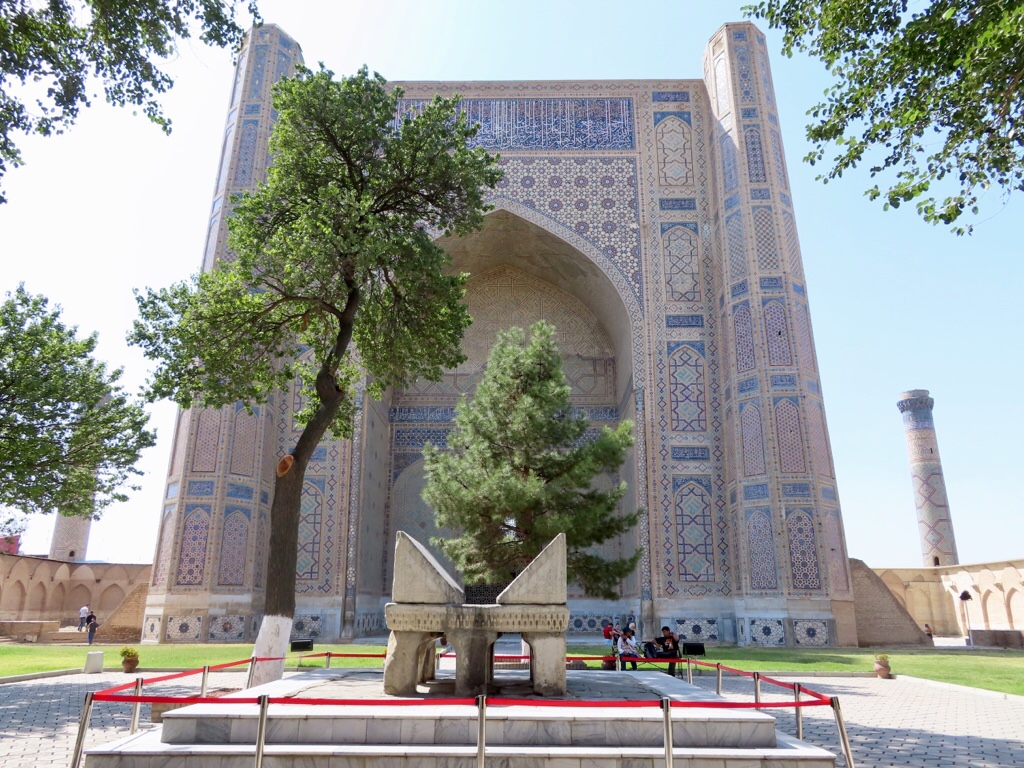
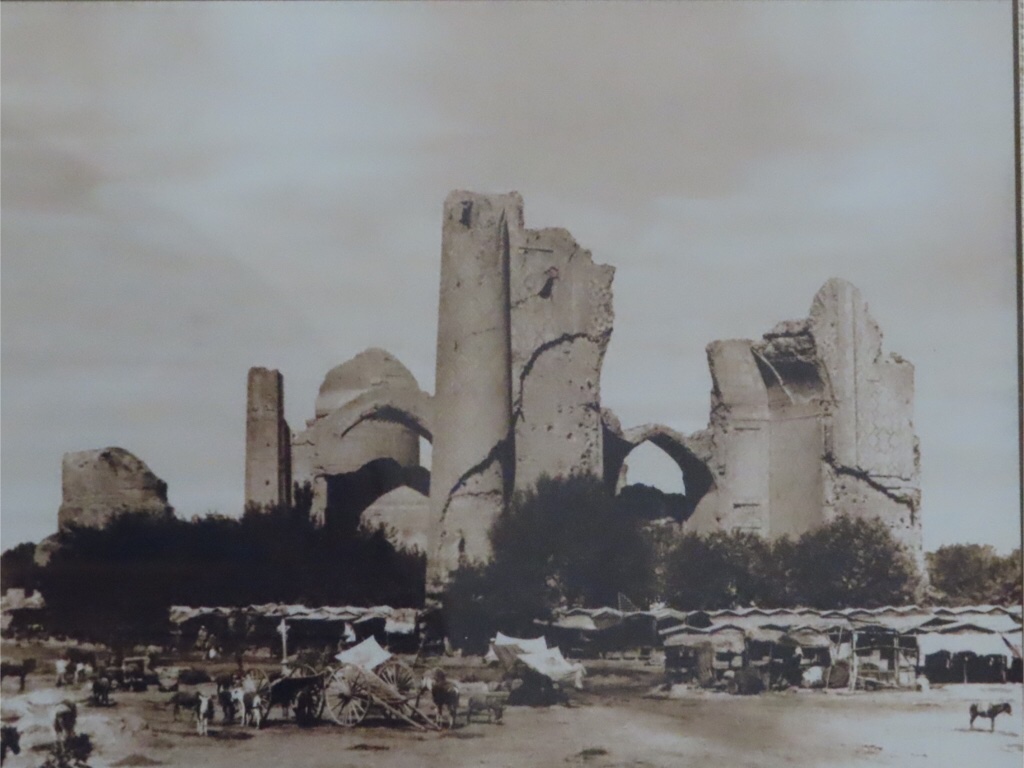
… and leads to Bibi-Khanum Mosque, which was funded by the spoils of Timur’s invasion of India and was so large it pushed contemporary construction techniques to the limit, so much so that the dome started crumbling before it was finished.

Today it is a shell, standing in a pretty courtyard with a large Quran stand in the centre …

… but before restoration, looked worse.

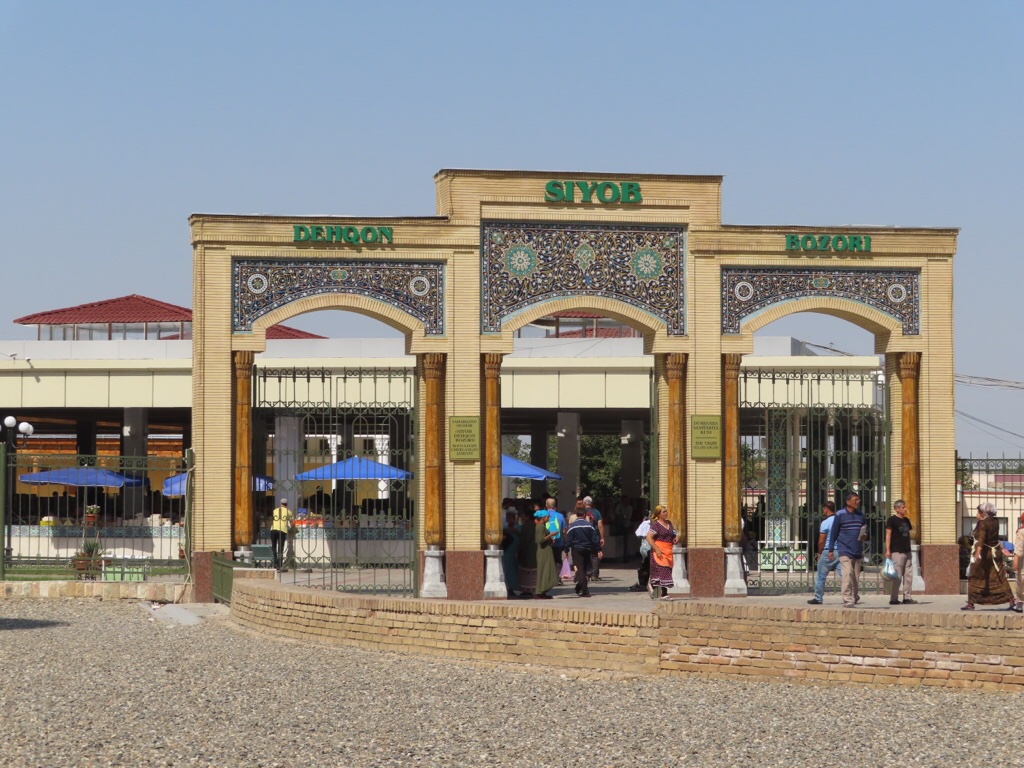
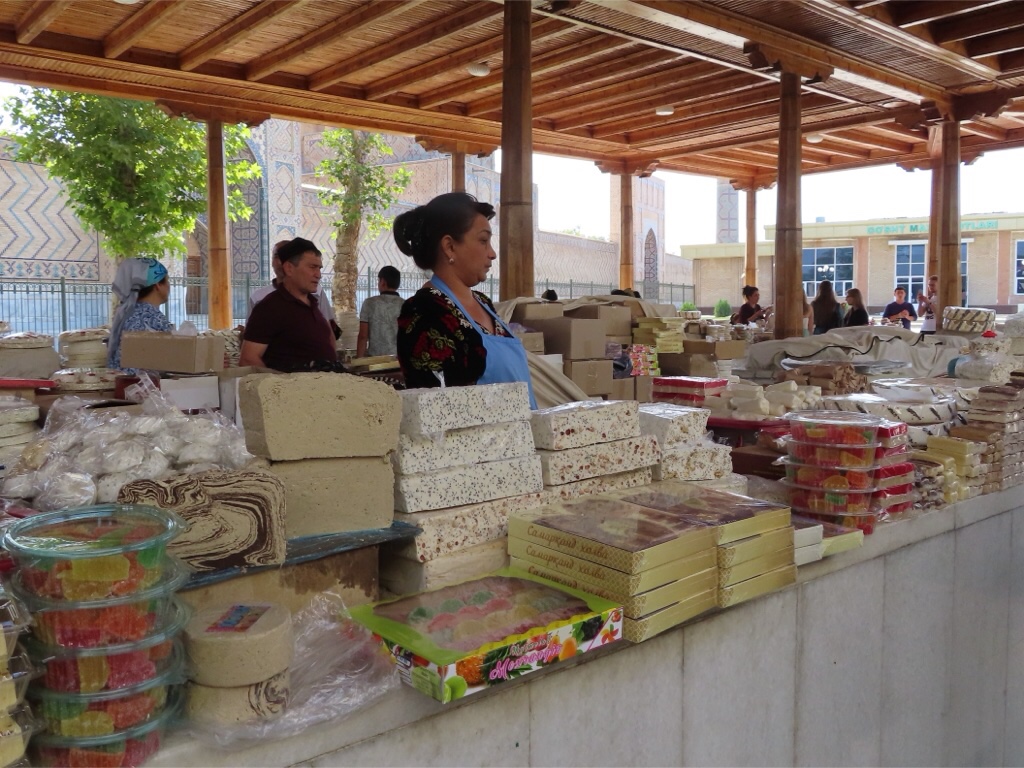
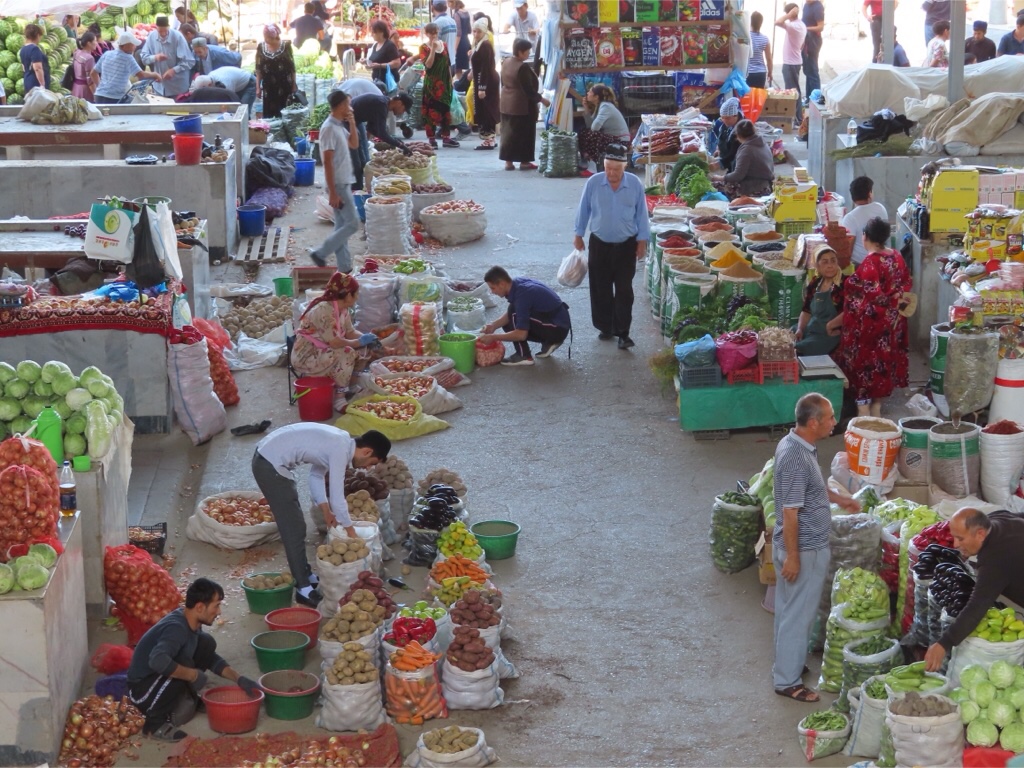
Siyob Bazaar was well worth a visit with row upon row of sweet treats, the inevitable bread trollies …

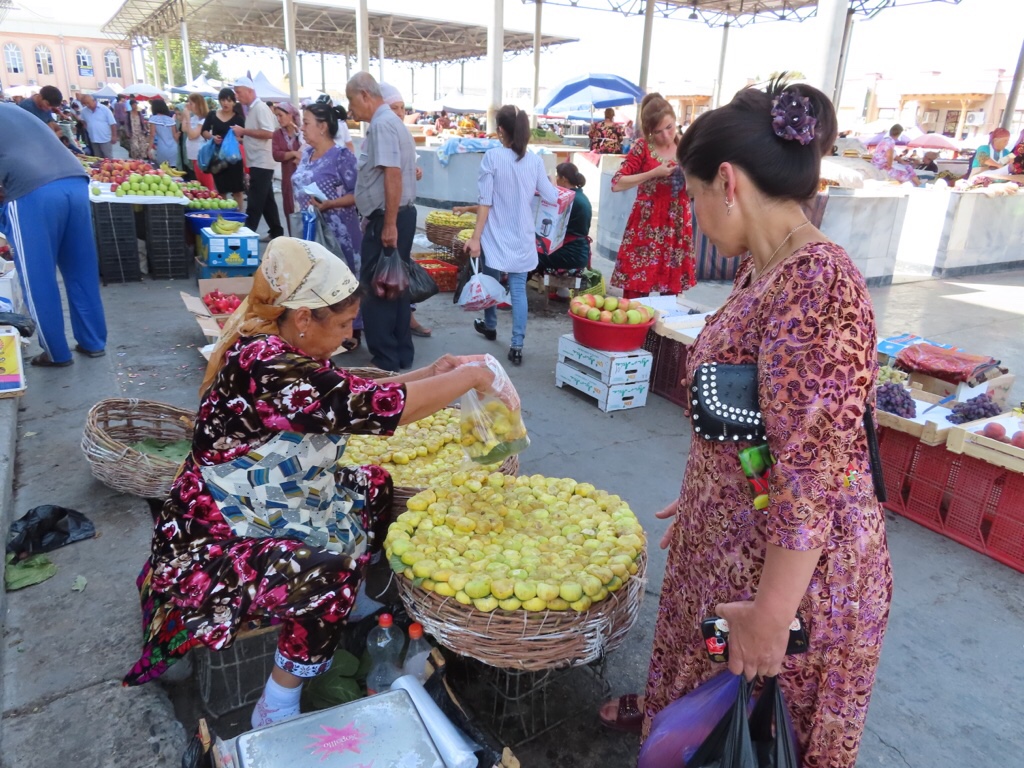
… as well as fresh produce and these rather delicious prepared figs.

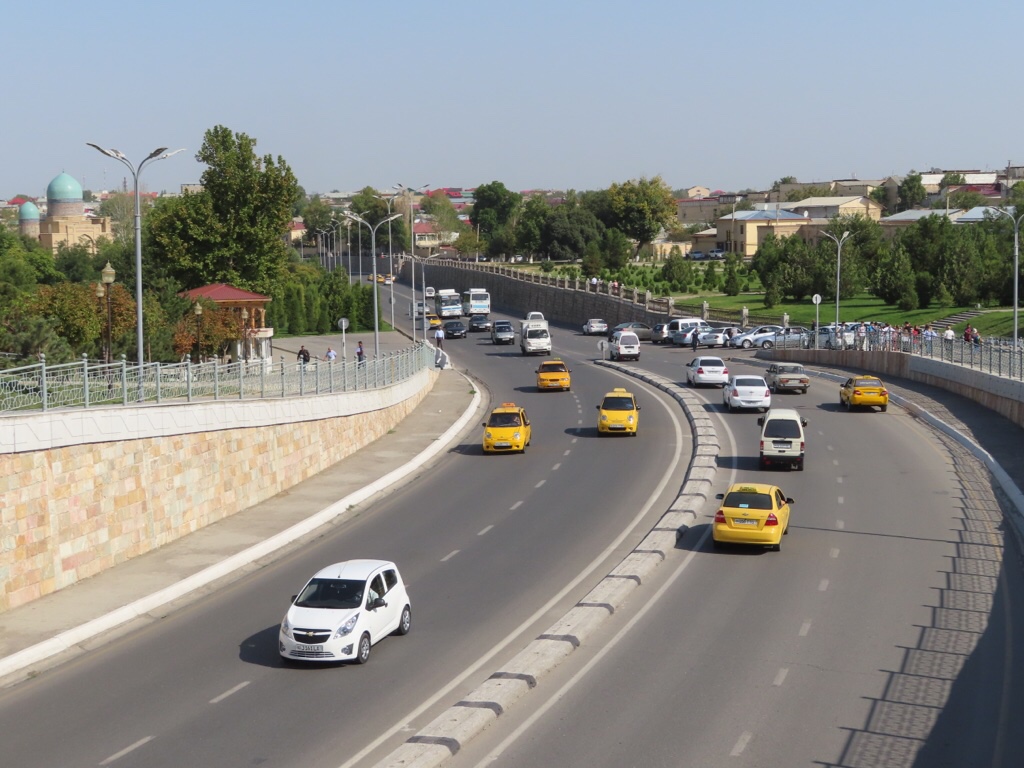
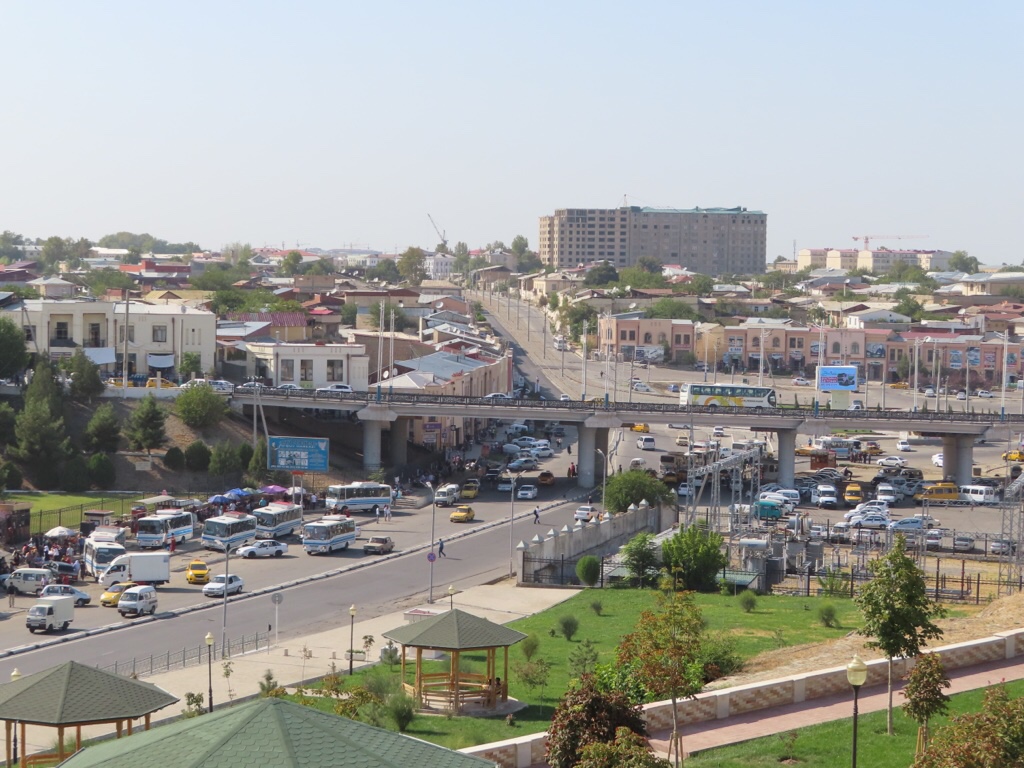
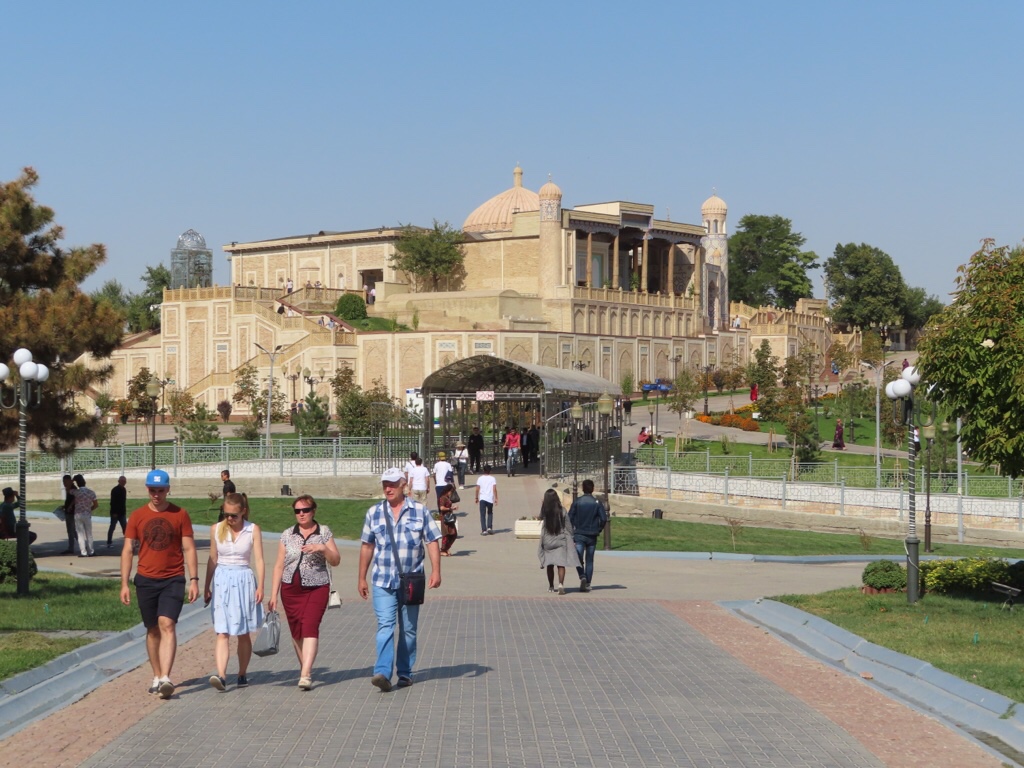
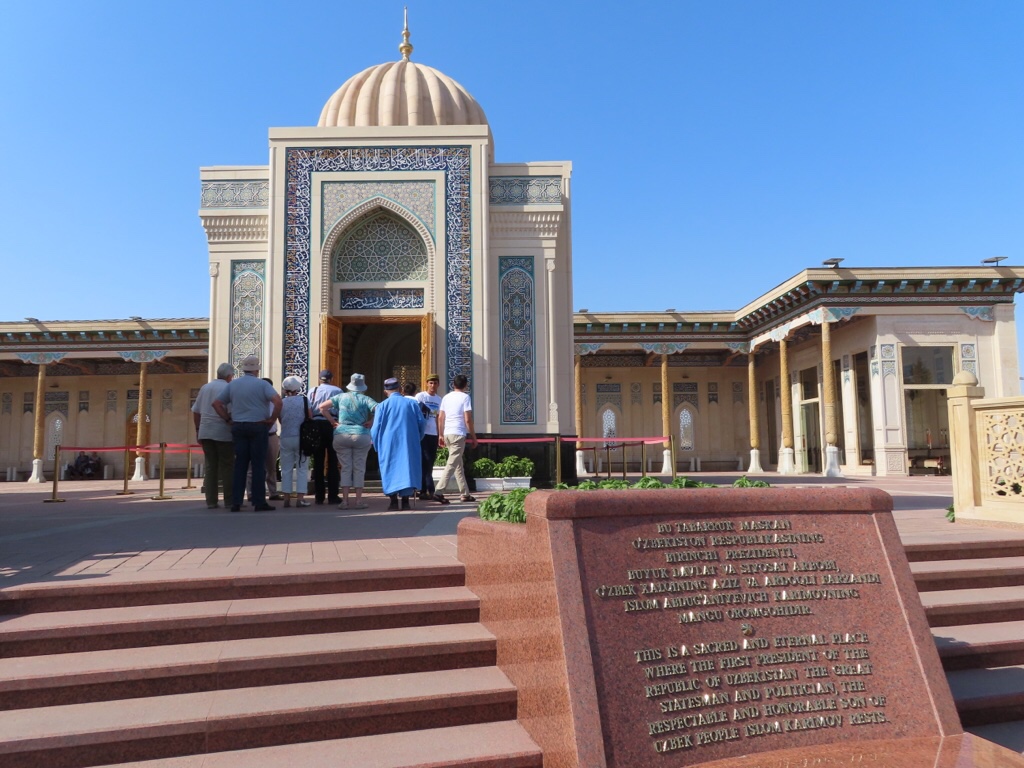
The walkway continues over a main road, busy with taxis, towards Hazrat-Hizr Mosque, rebuilt in the C19th and recently restored to within an inch of its life and also the resting place of Islam Karimov.

Following independence in 1991, Islam Karimov was elected President and his grip on power ensured he was regularly re-elected with no opposition until his death in 2016. While officially a democratic republic, Uzbekistan was classified as a hard authoritarian state with limited civil rights. Insurgency by Islamist militants in 1999 led to a crackdown on all forms of religious expression not expressly sanctioned by the state as well as tightened controls over political and economic life.

After 9/11 Uzbekistan became a close strategic partner of the US, providing military facilities and transit routes to support US and Nato operations in Afghanistan and this made it difficult for the US and EU to speak out about human rights abuses in Uzbekistan. In 2005 troops opened fire on anti-government protests in the eastern city of Andijan, killing hundreds of demonstrators and ties were cut with the west, but sanctions were later lifted.

The second and present president, Shavkat Mirziyoyev is considered by most to be pursuing a less autocratic path, with plans to repair relations with neighbouring states, to open up the economy, relax some of his predecessor’s more repressive policies and improve human rights. It is certainly easier to travel here and tourists are made very welcome.

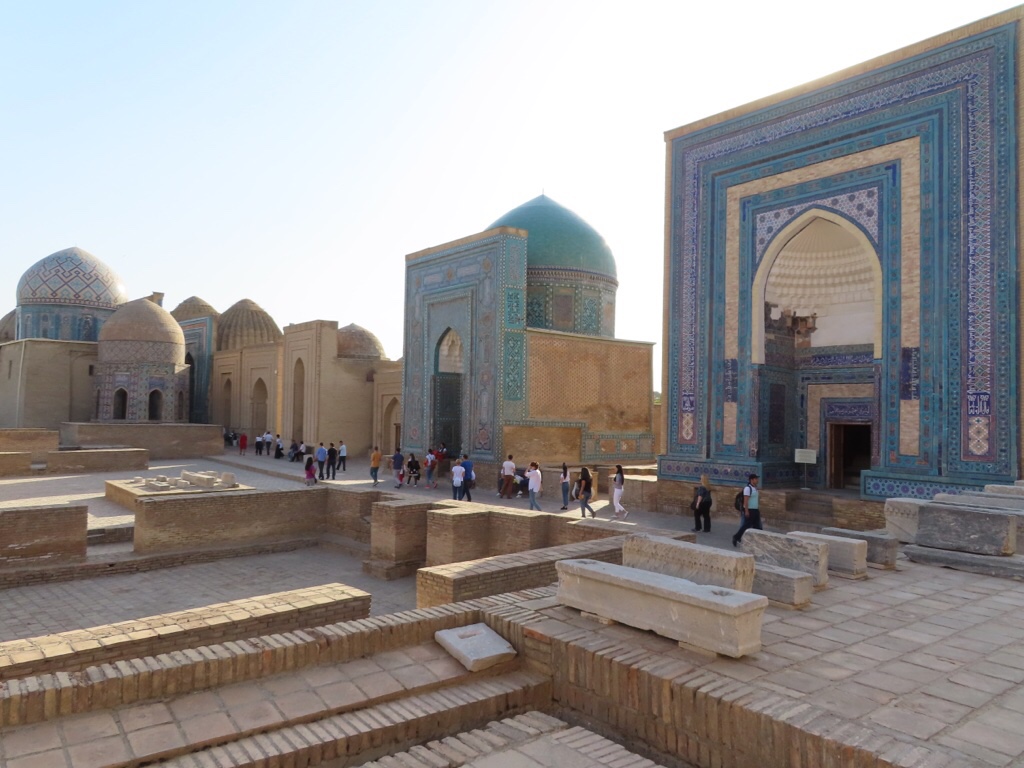
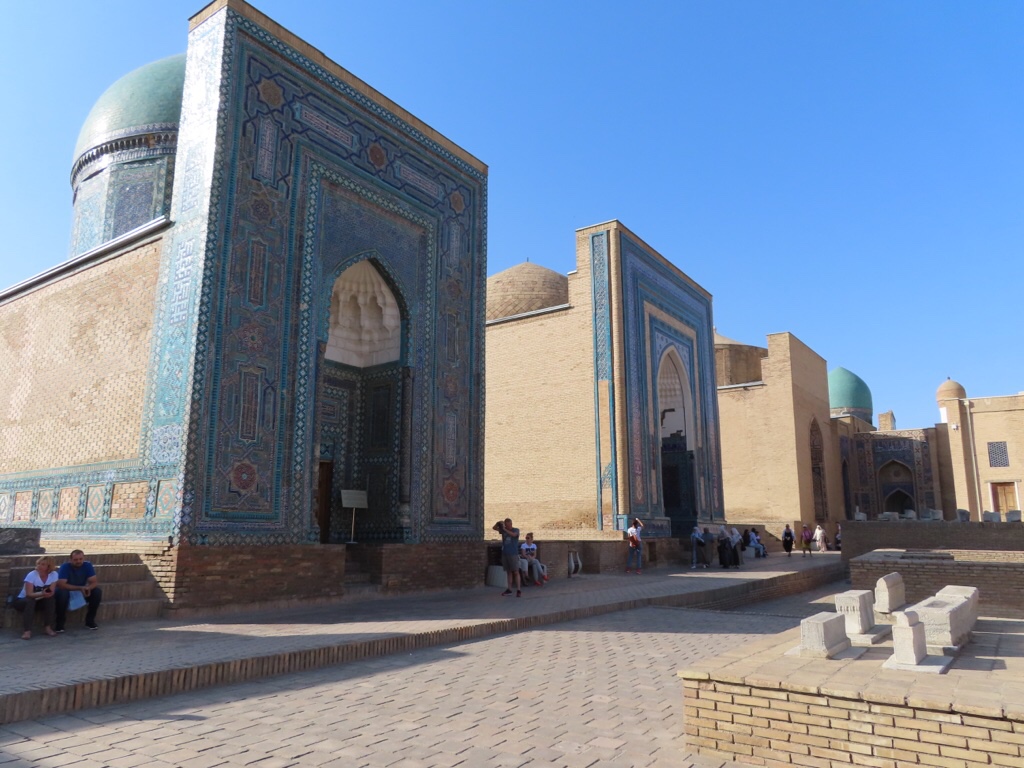
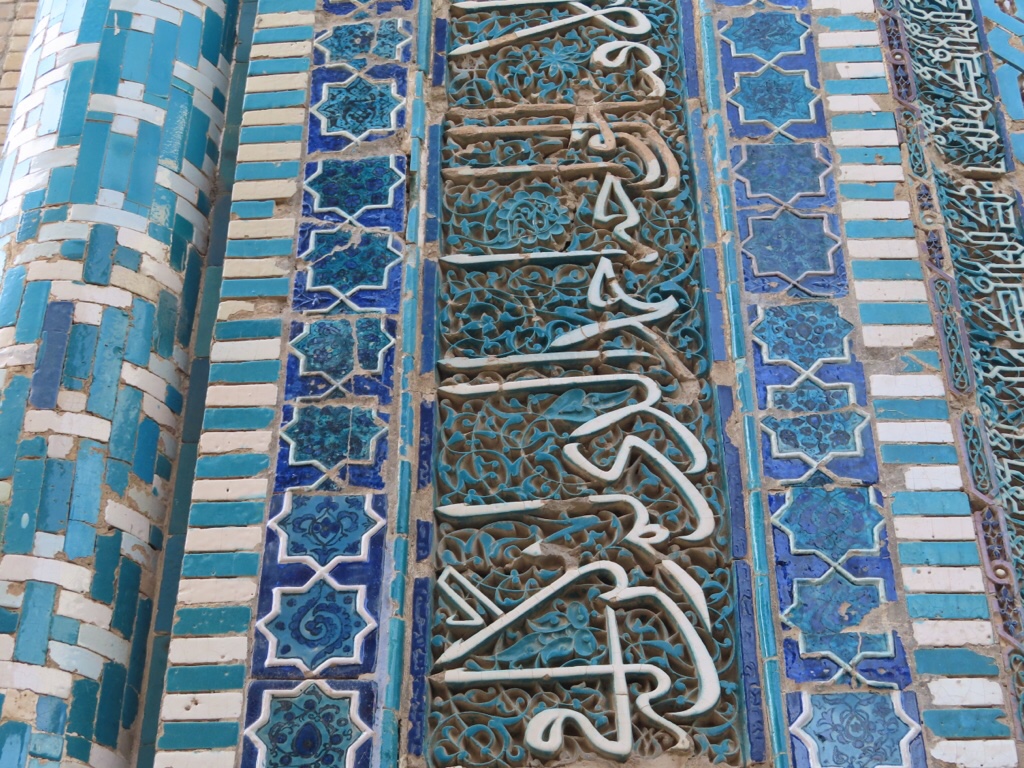
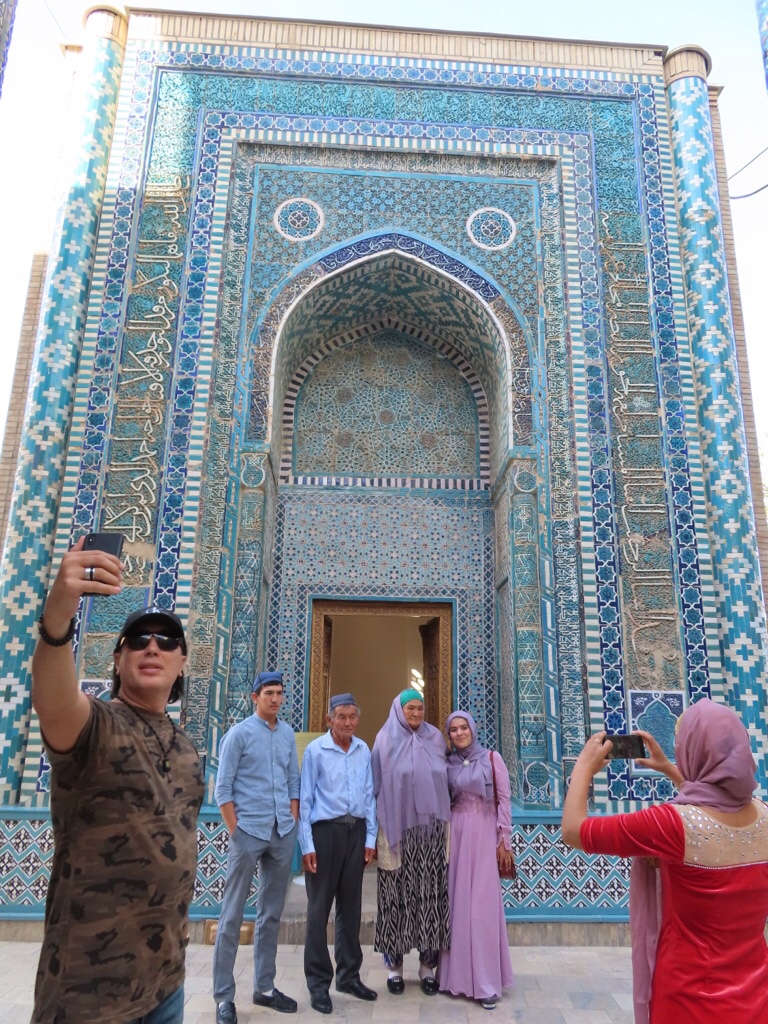
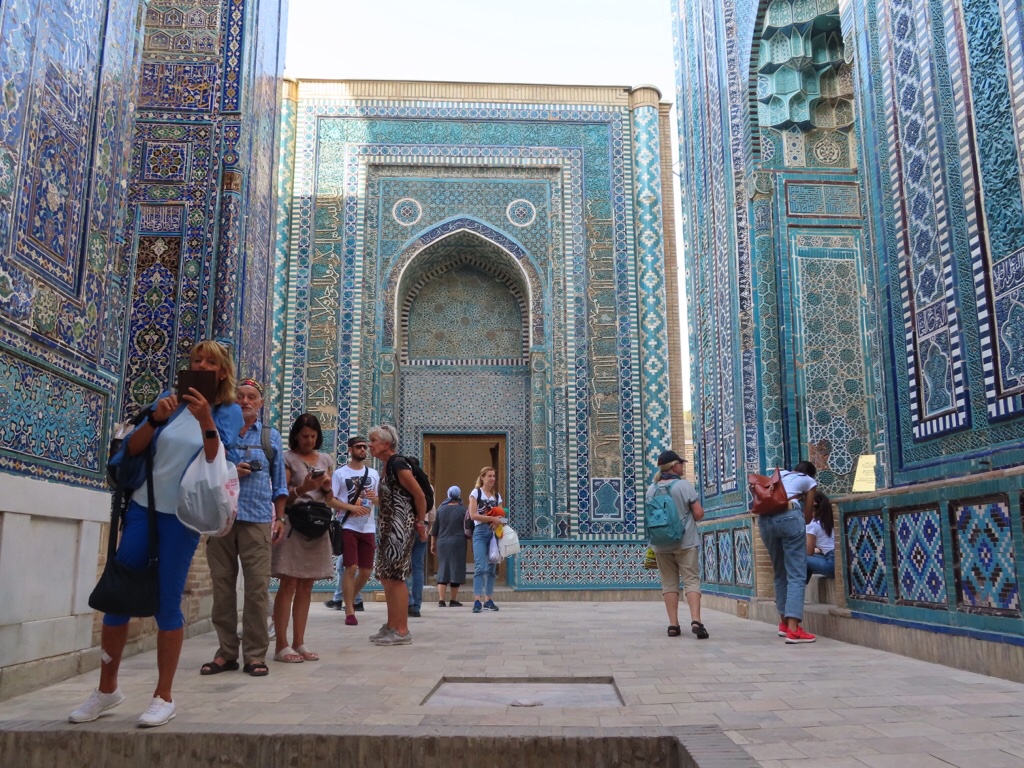
We continued on the walkway to Shah-I-Zinda, containing an avenue of mausoleums …

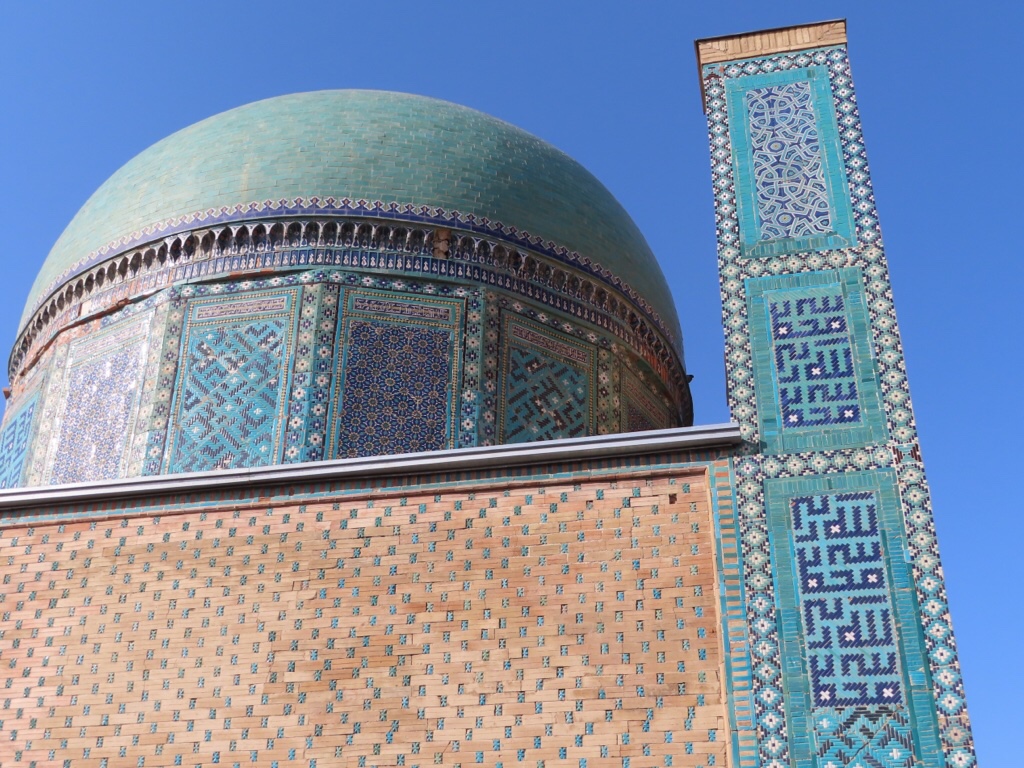
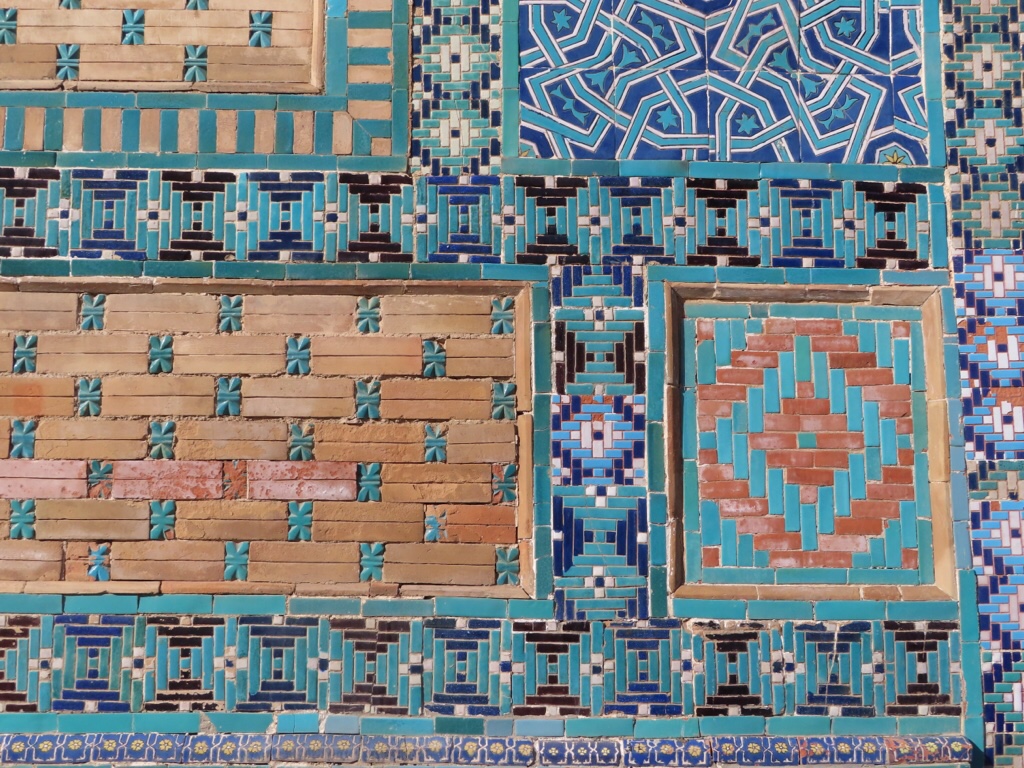
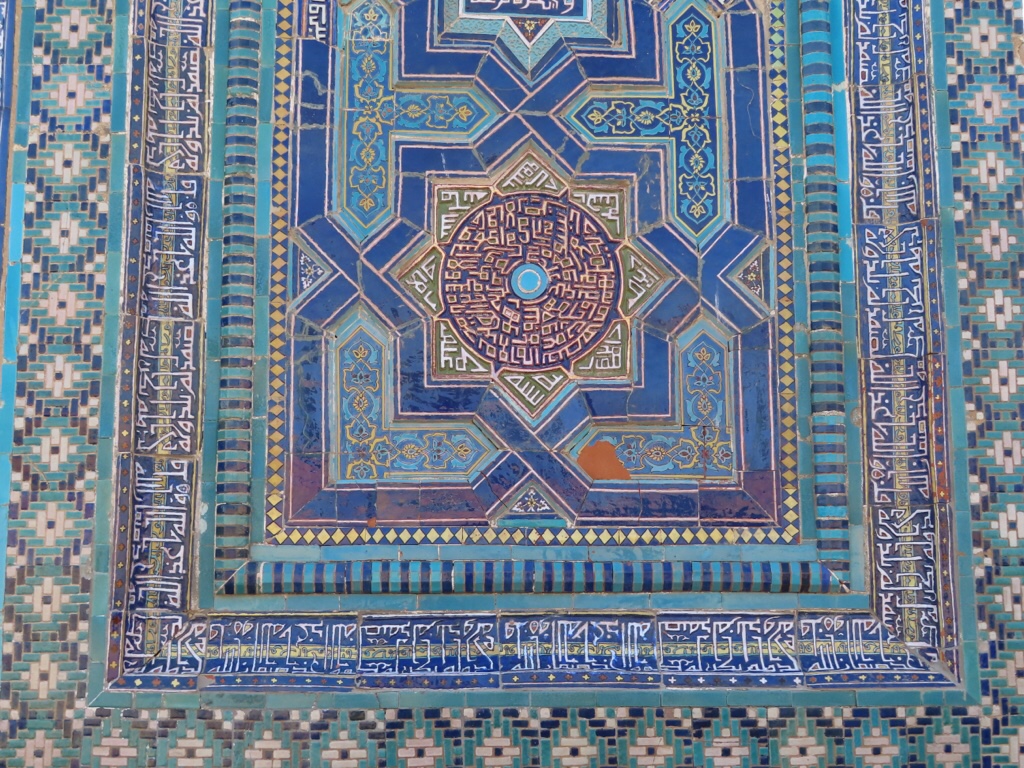
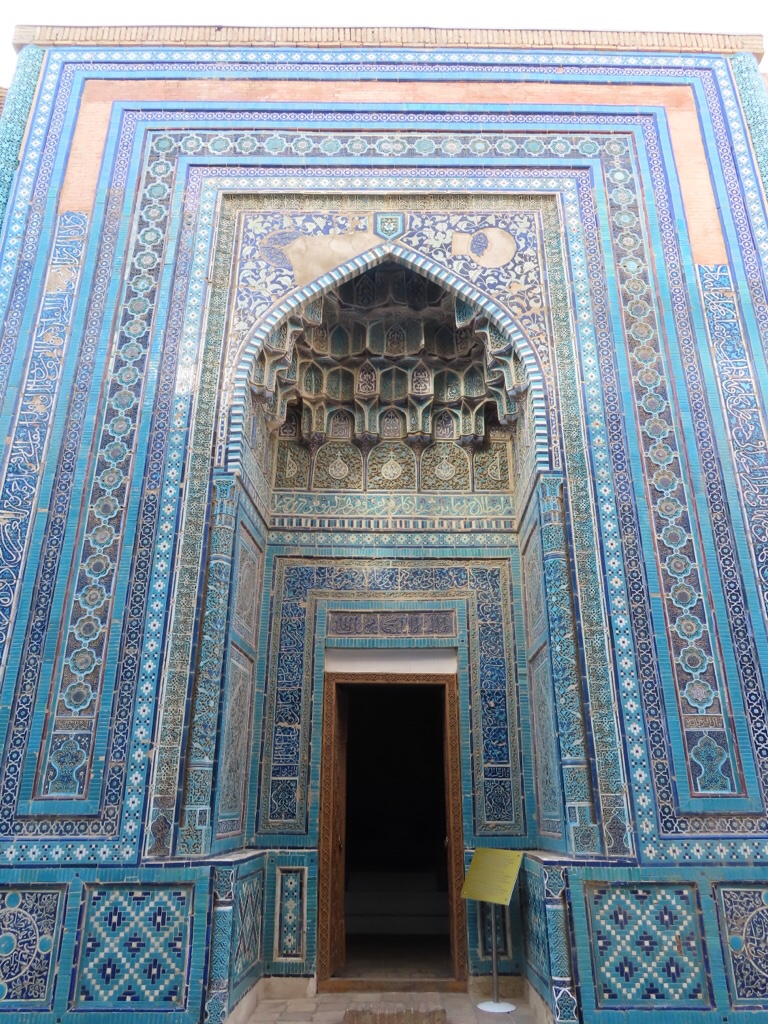
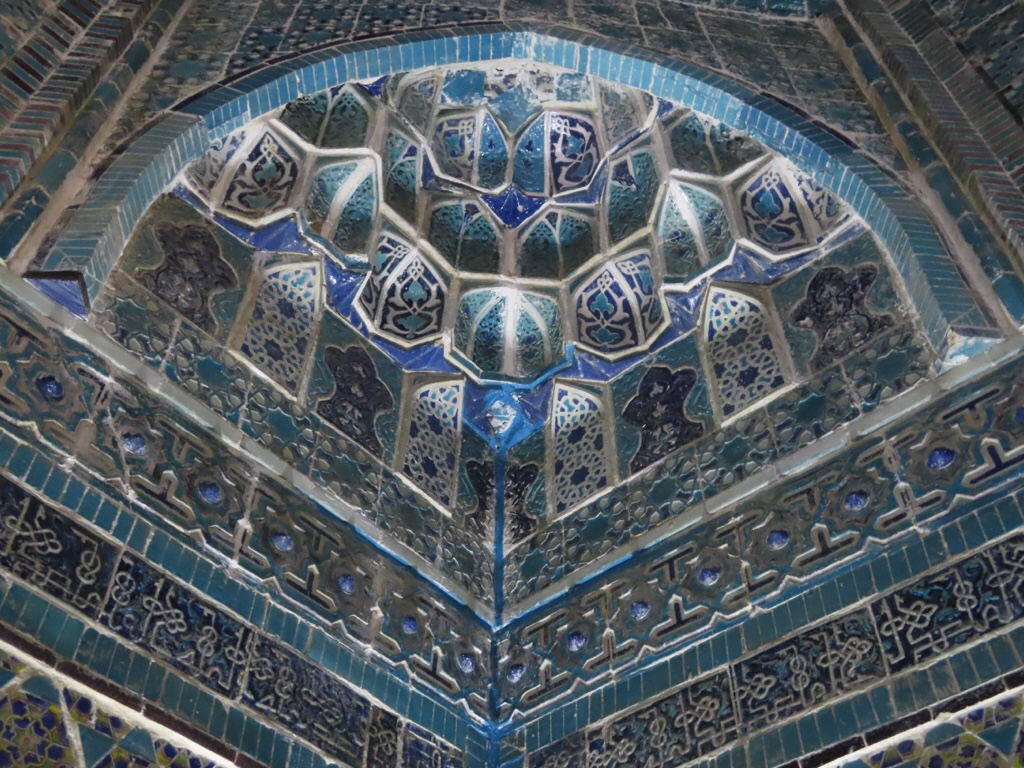
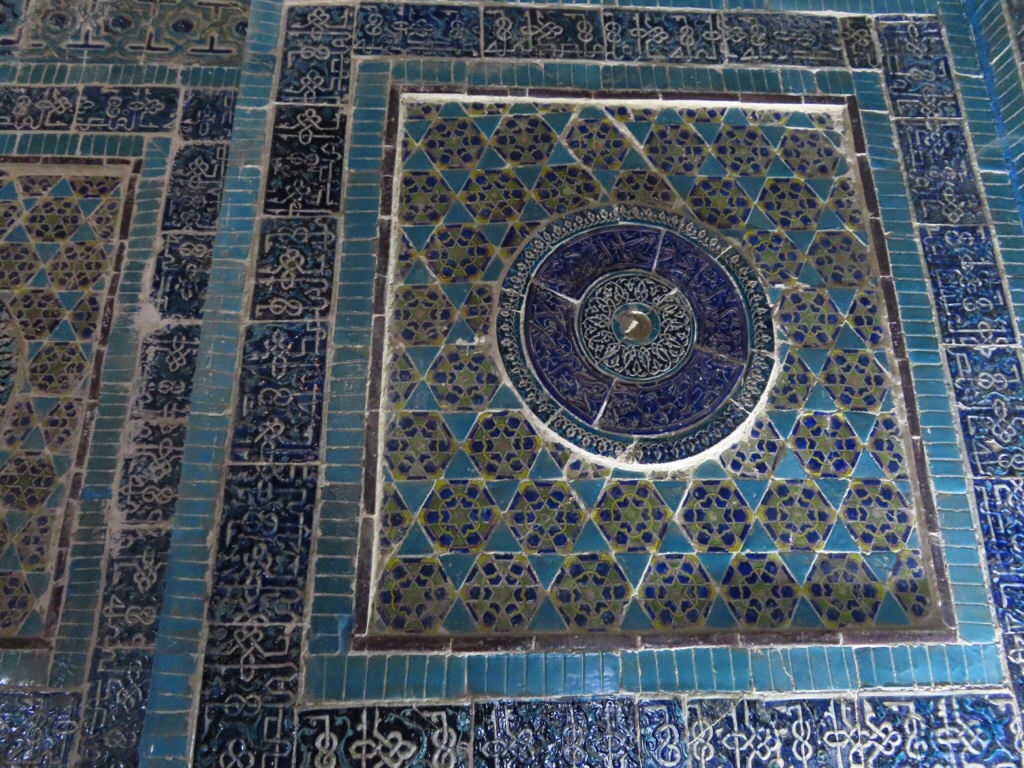
… covered in beautiful tilework.

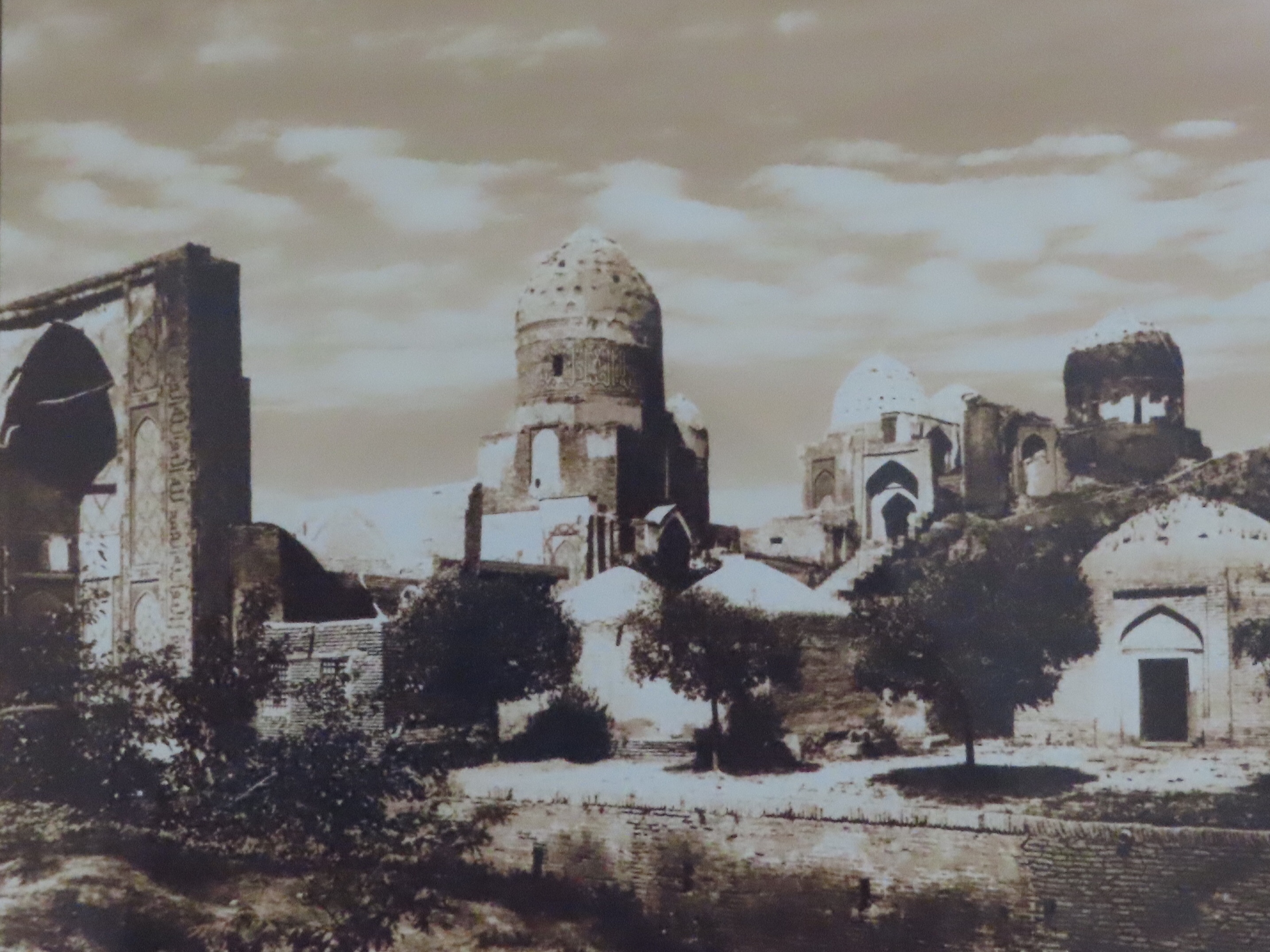
Much restoration has occurred here too as can be seen from this old photo.

One of the most beautiful tombs is the Shodi Mulk Oto Mausoleum, that of Timor’s sister and her daughter …

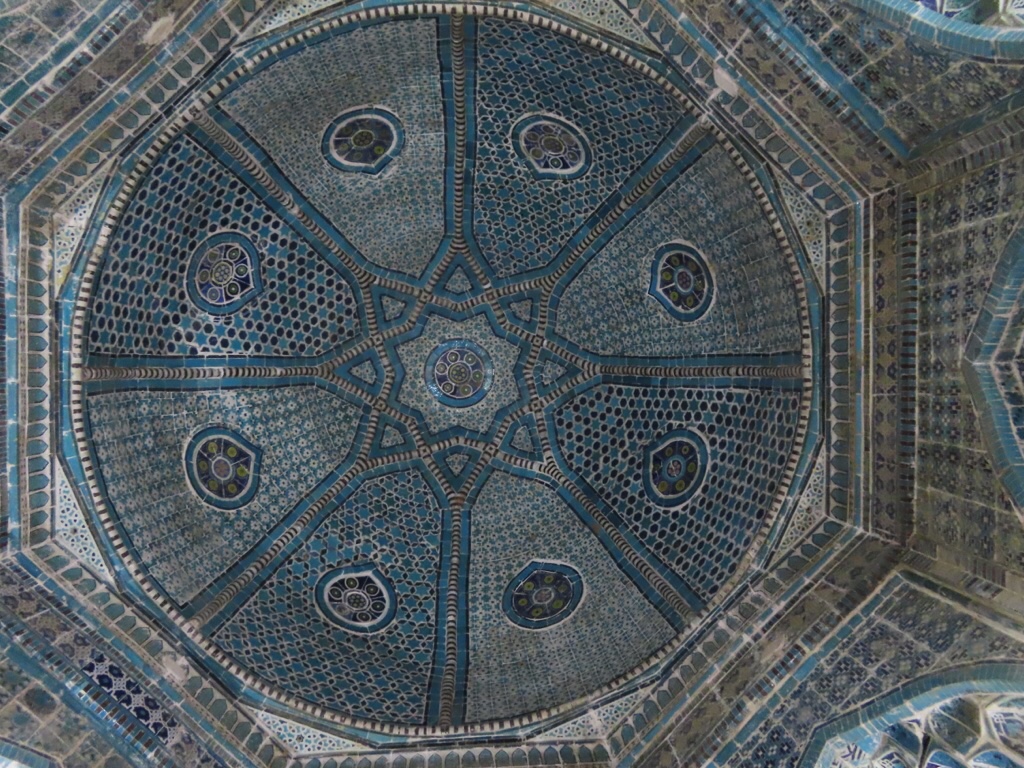
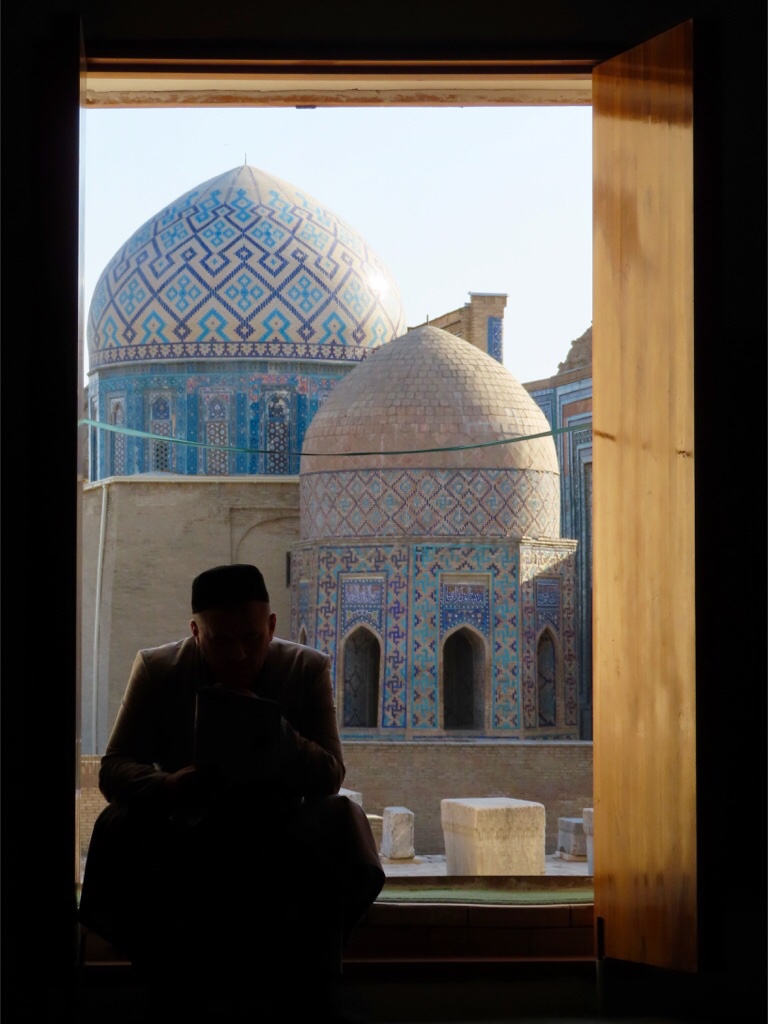
… and one with a lovely interior …

Needless to say, it is a very popular spot …

… but still with room for reflection.

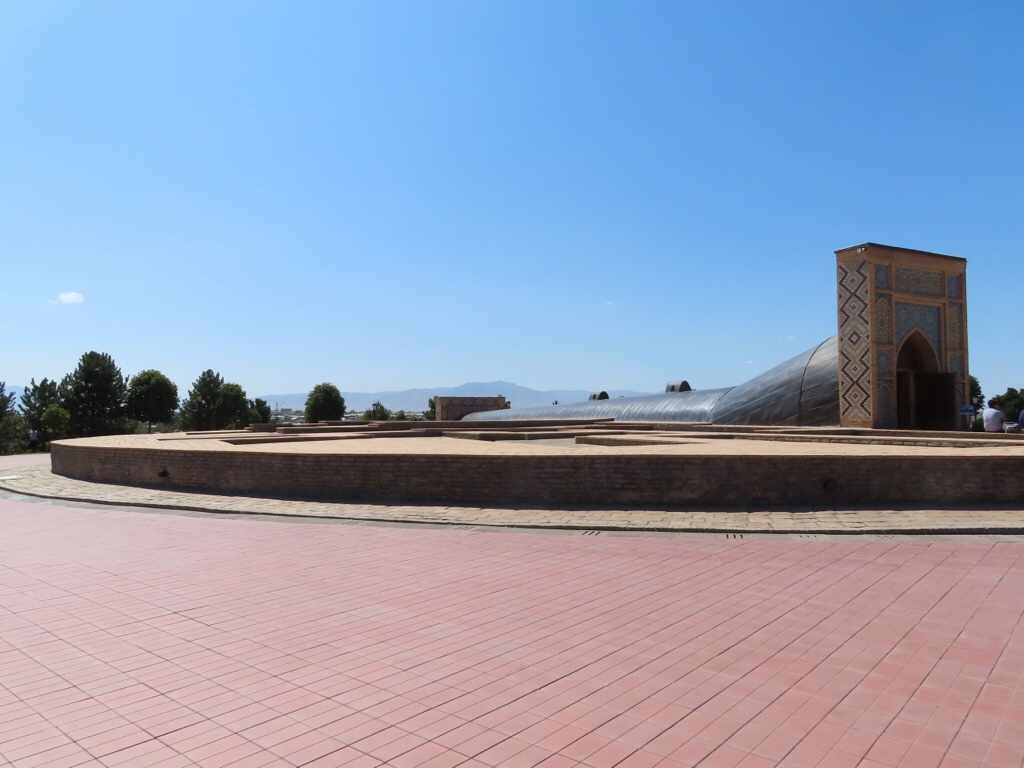
We also saw the site of Ulugbek’s C15th century observatory, excavated in 1908, although only the buried track of the 30m quadrant remains.

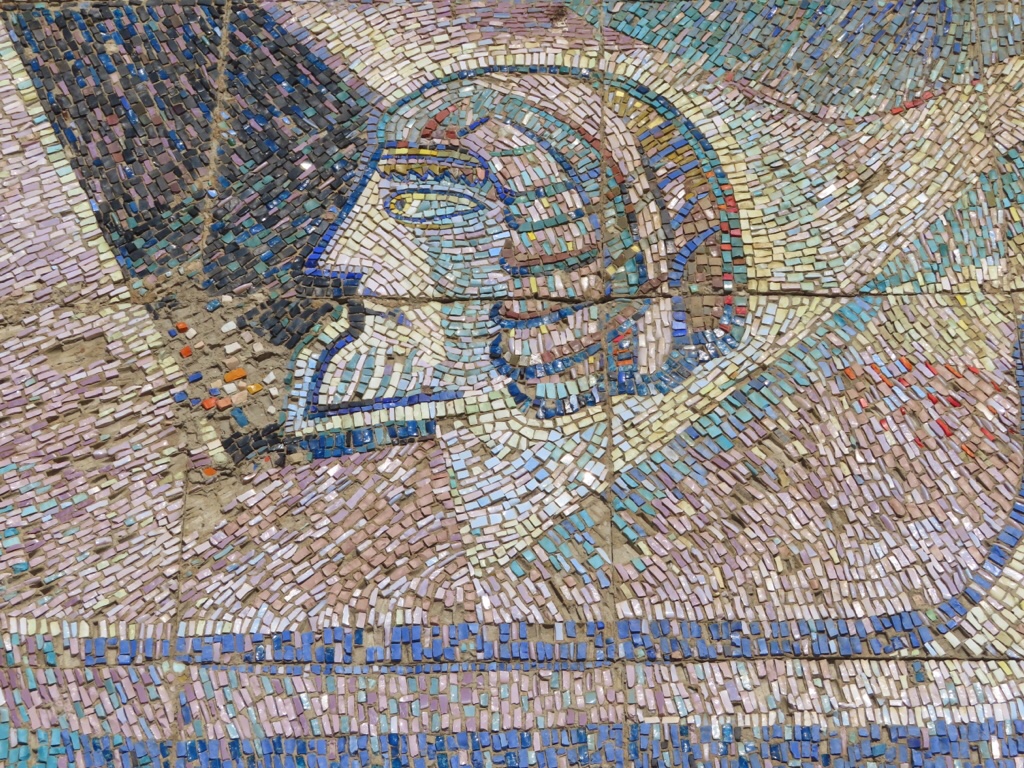
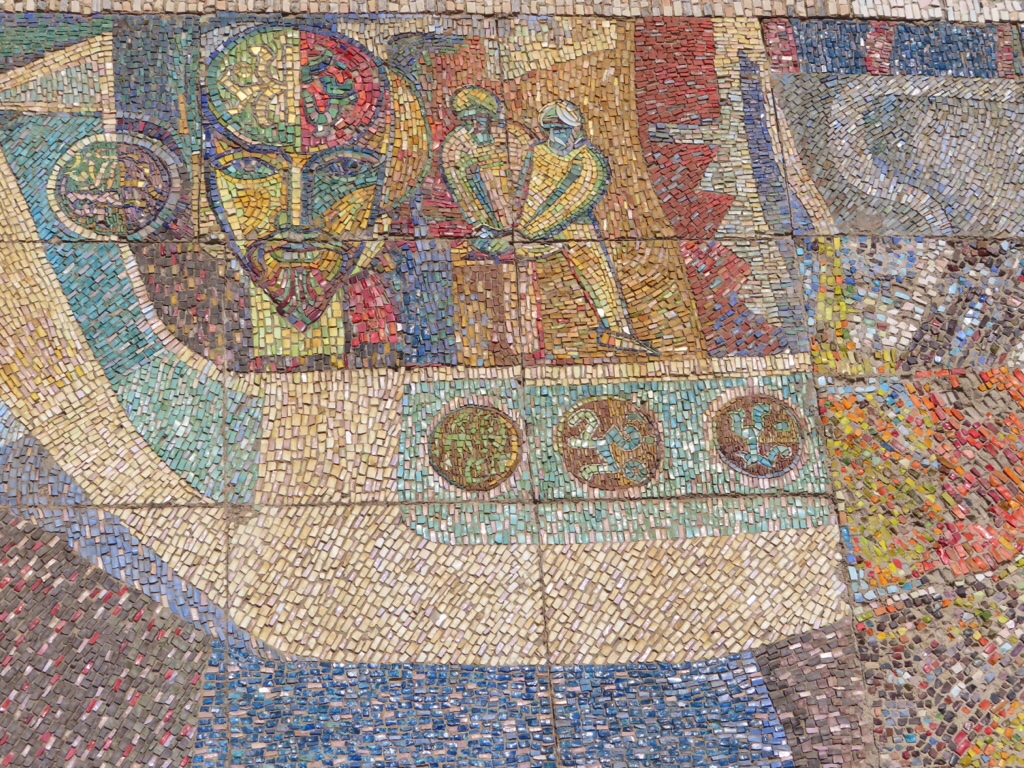
Taking the route from the Registan in the opposite direction takes you through parks and past mosaics …

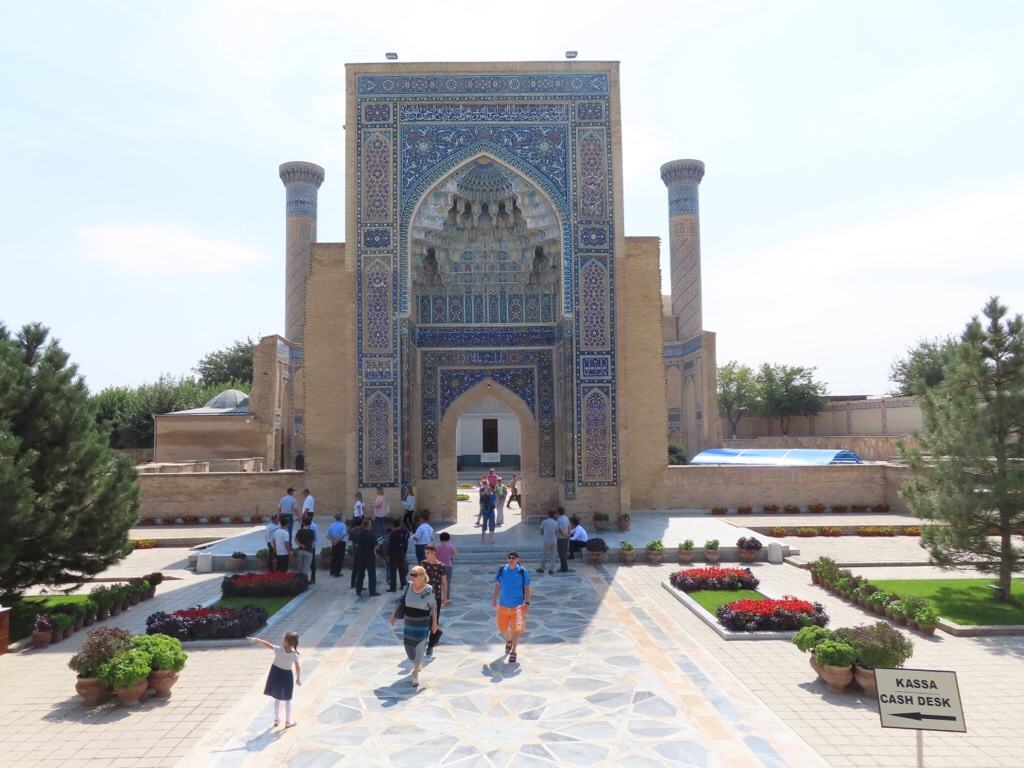
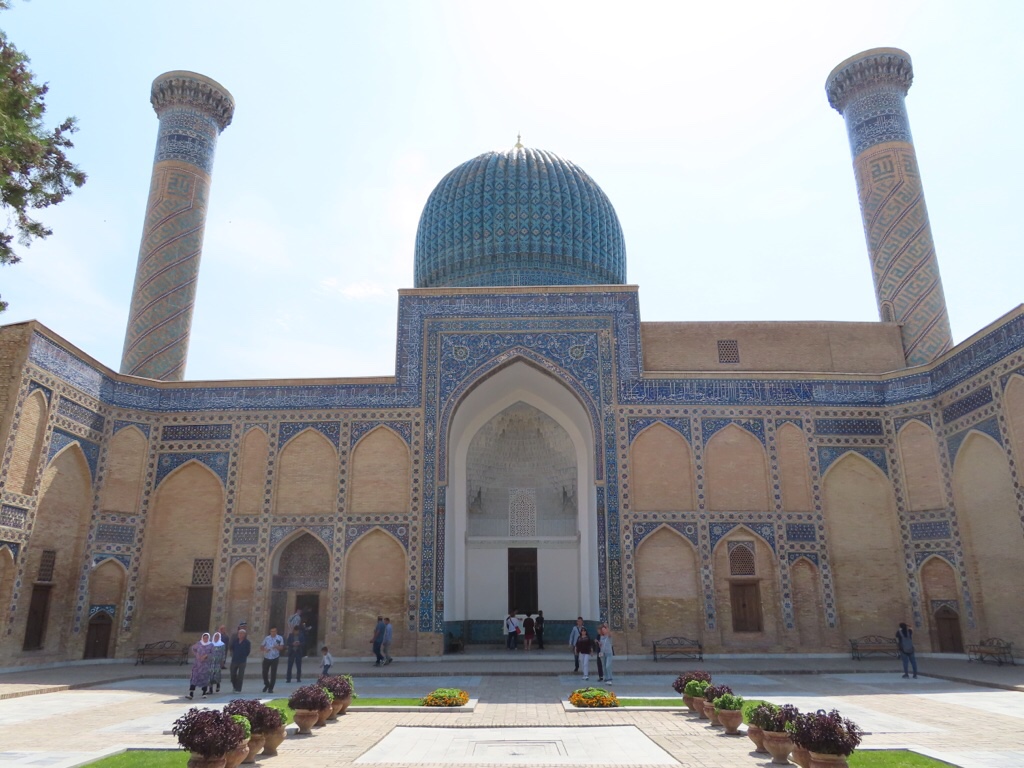
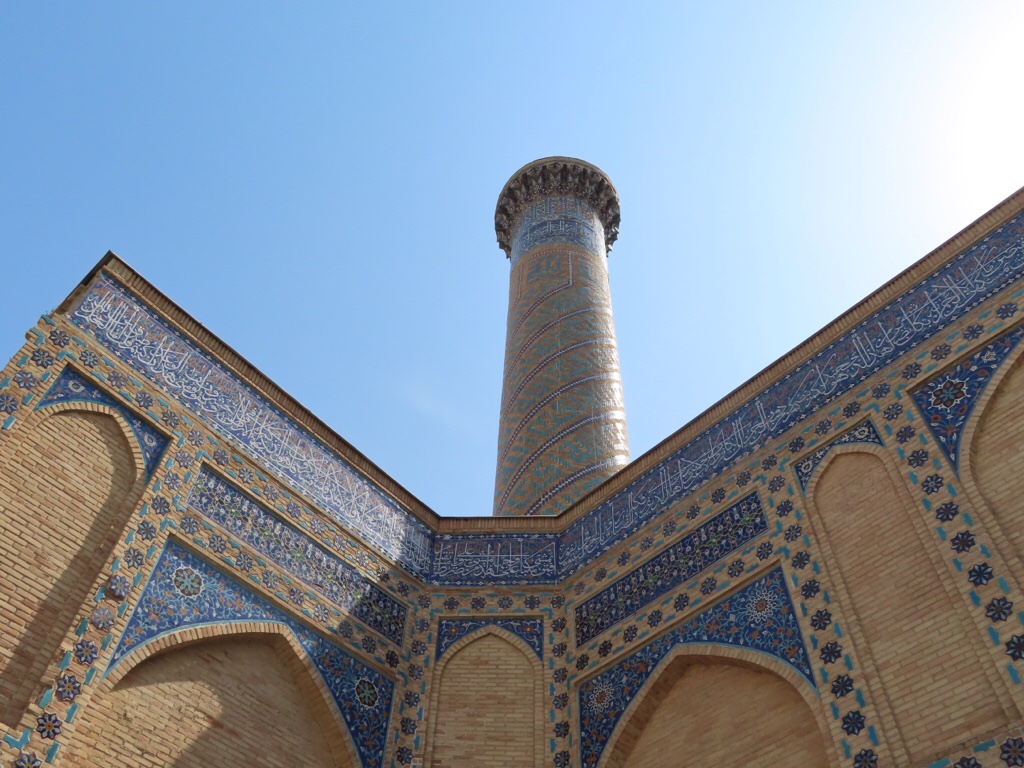
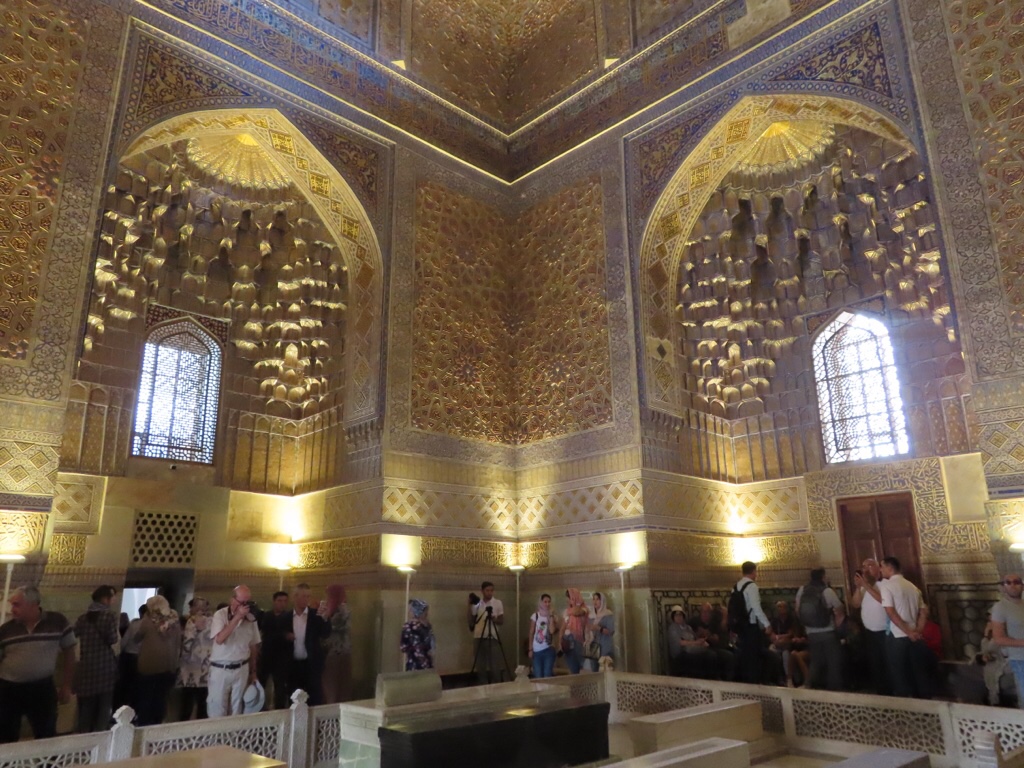
… to the Gur-e-Amir Mausoleum which was built by Timor on the death of his favoured grandson.

When Timor died unexpectedly from pneumonia, he was interred here too. Ulugbek’s scientific expertise was not matched by his skills in governance and after a short reign he was overthrown and assassinated by his son and later interred here with his grandfather.

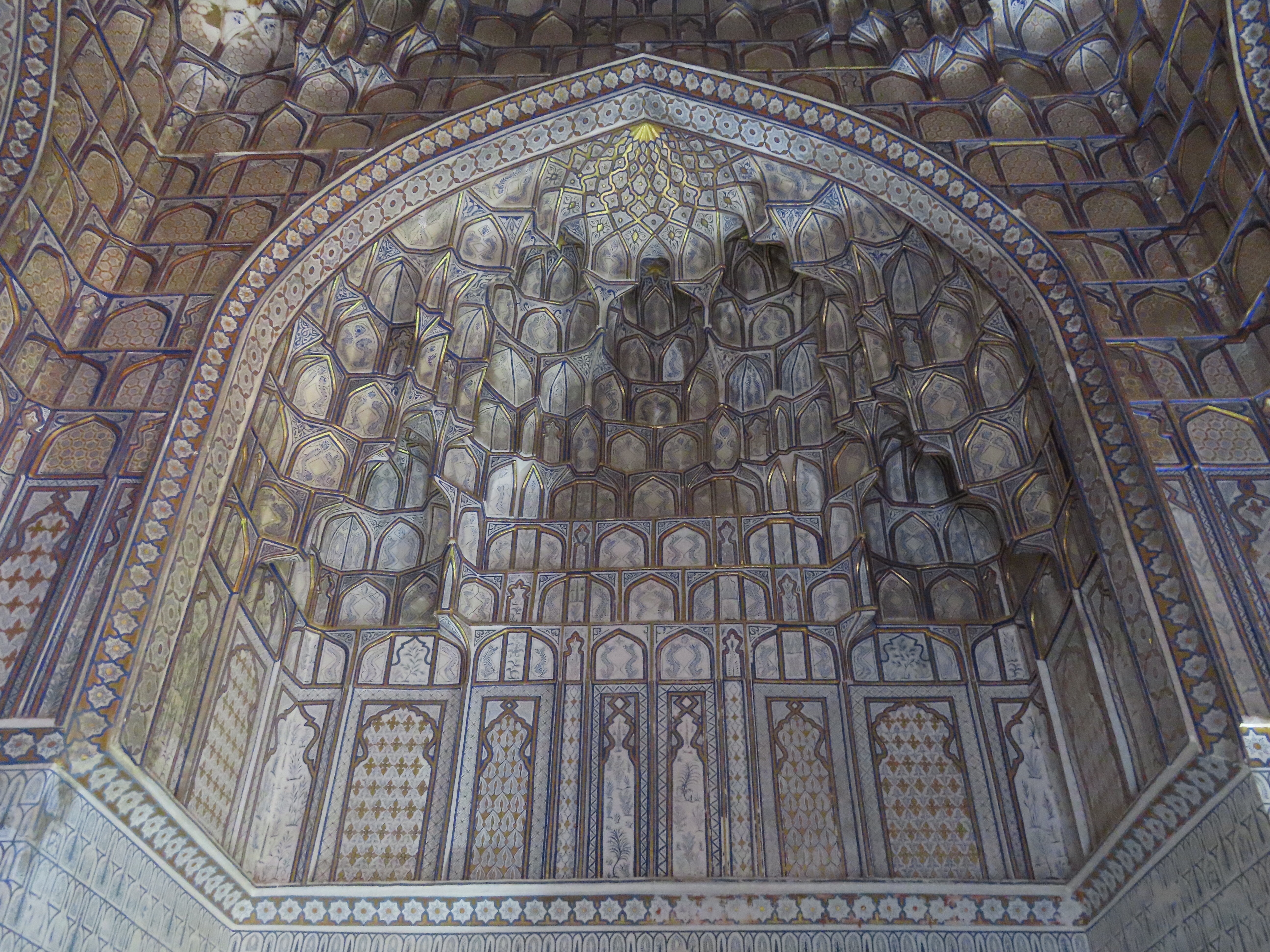
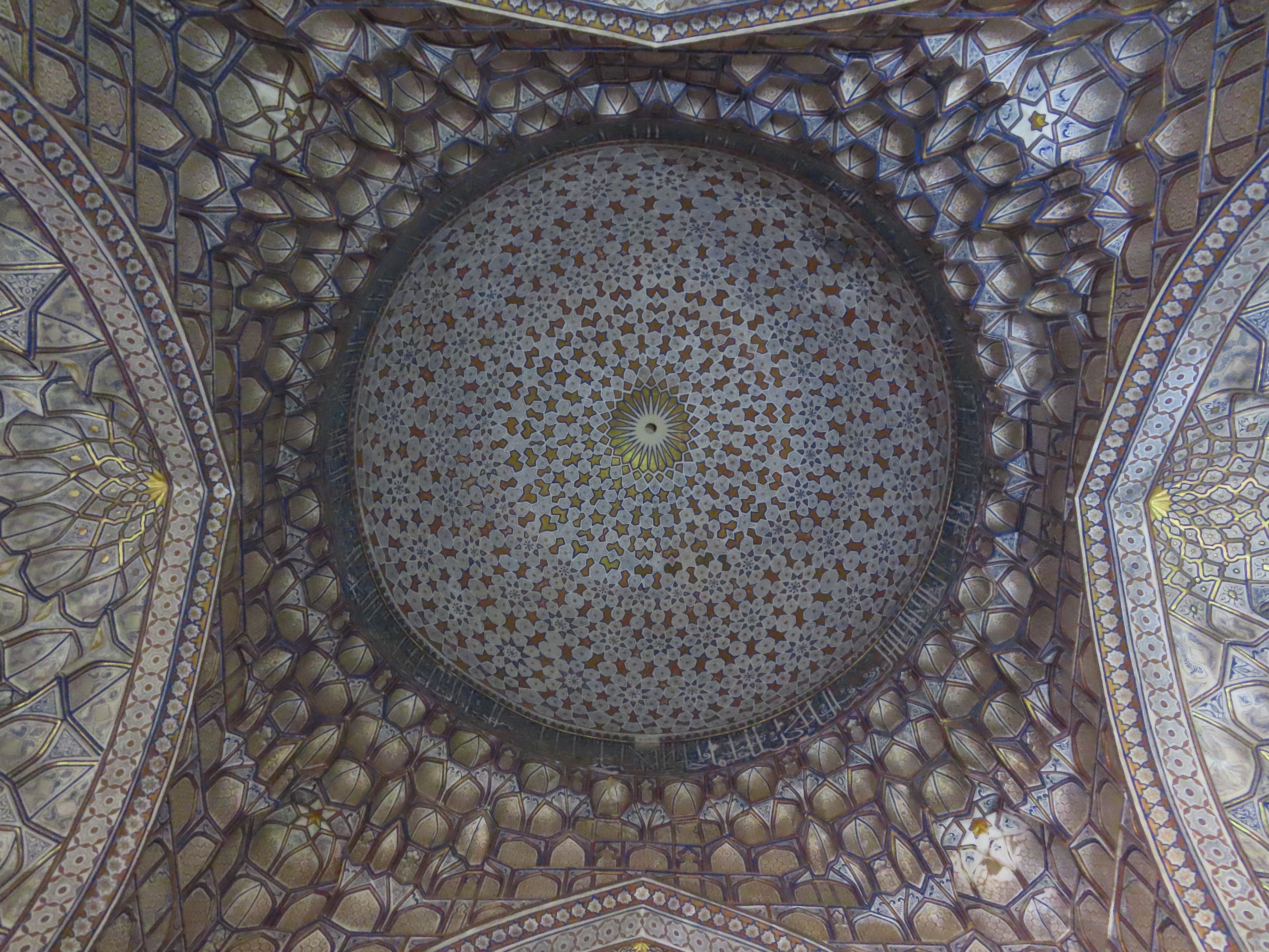
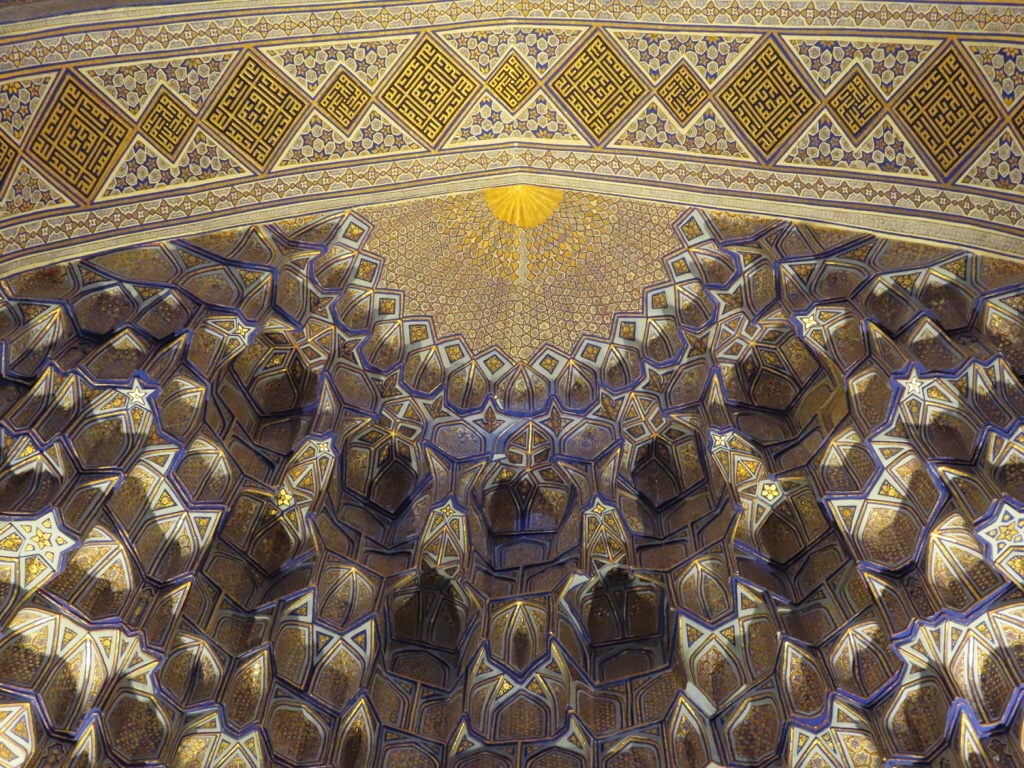
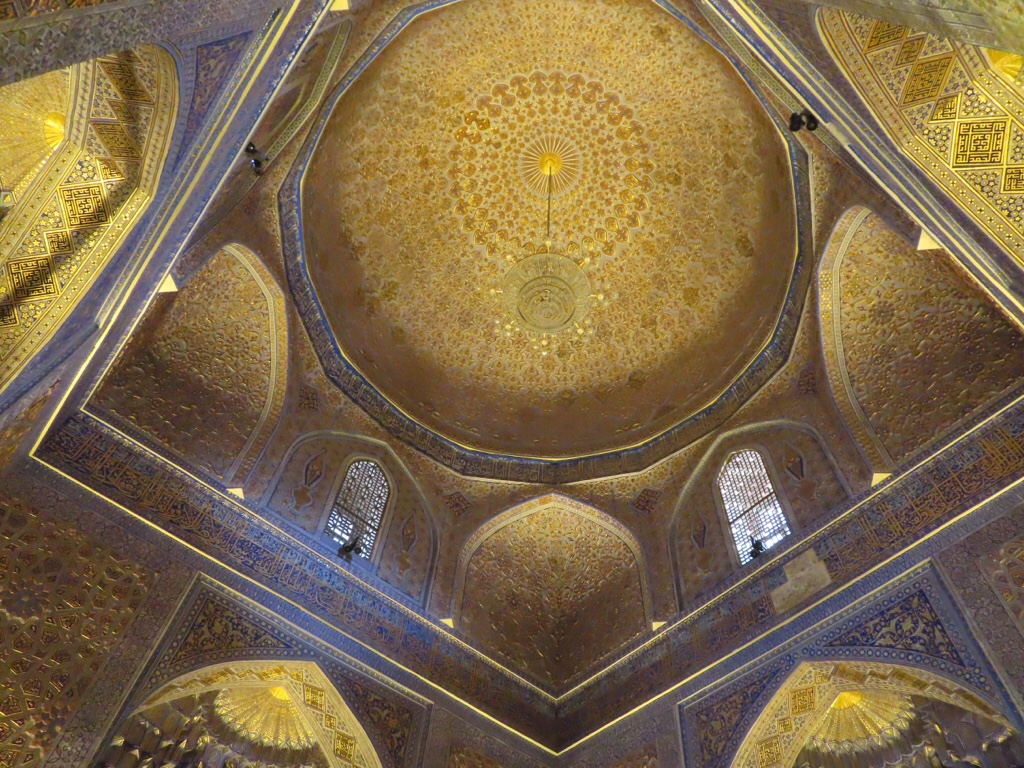
The inside is particularly beautifully, like a gold lined casket.

We walked down to see Timur on a busy interjection nearby, on the boundary between the old and new Russian town, which we didn’t explore except to go by taxi for dinner as most of the restaurants were there, our favourites being Platan and Old City.

The Registan is always lit at night …

… but there are also light shows and we caught one on our way back after dinner …

Our last day was spent chilling and shopping … a coffee by the Registan …

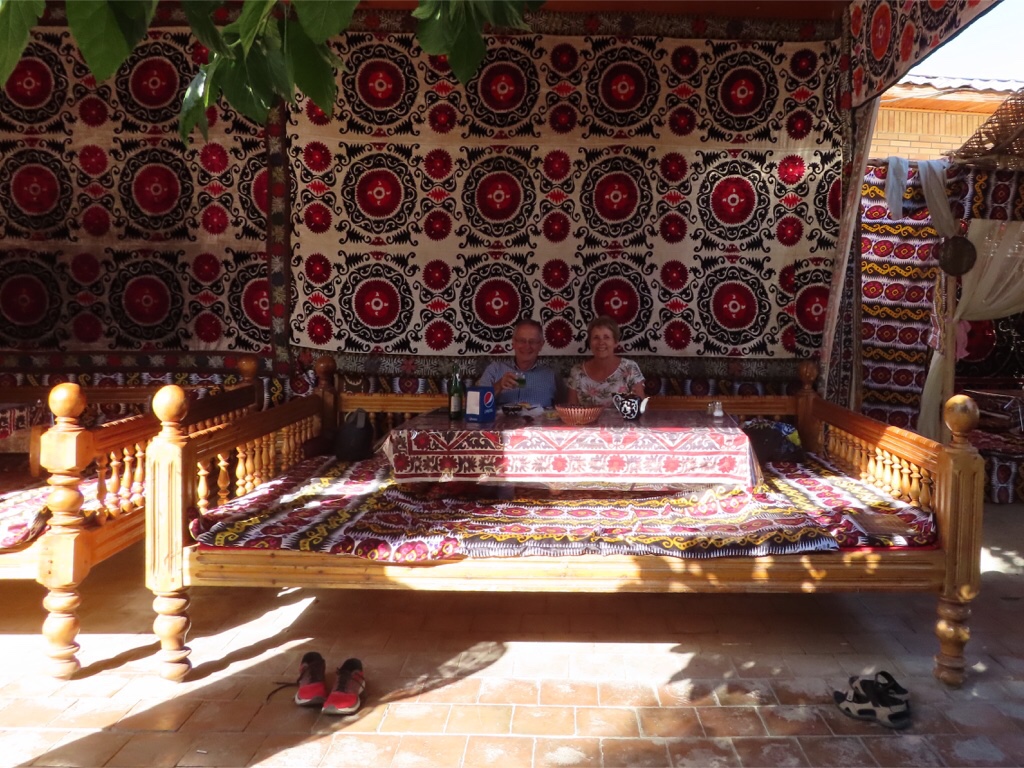
… the purchase of some cream and pink adras fabric to recover a cushion at home … another T-shirt for Chris … some local snacks at the market including dried melon and walnut stuffed apricots … and finally a teapot and cups to remind us of our trip. We then retired to a tempting tapchan in Bibikhanum Teahouse for a late lunch.

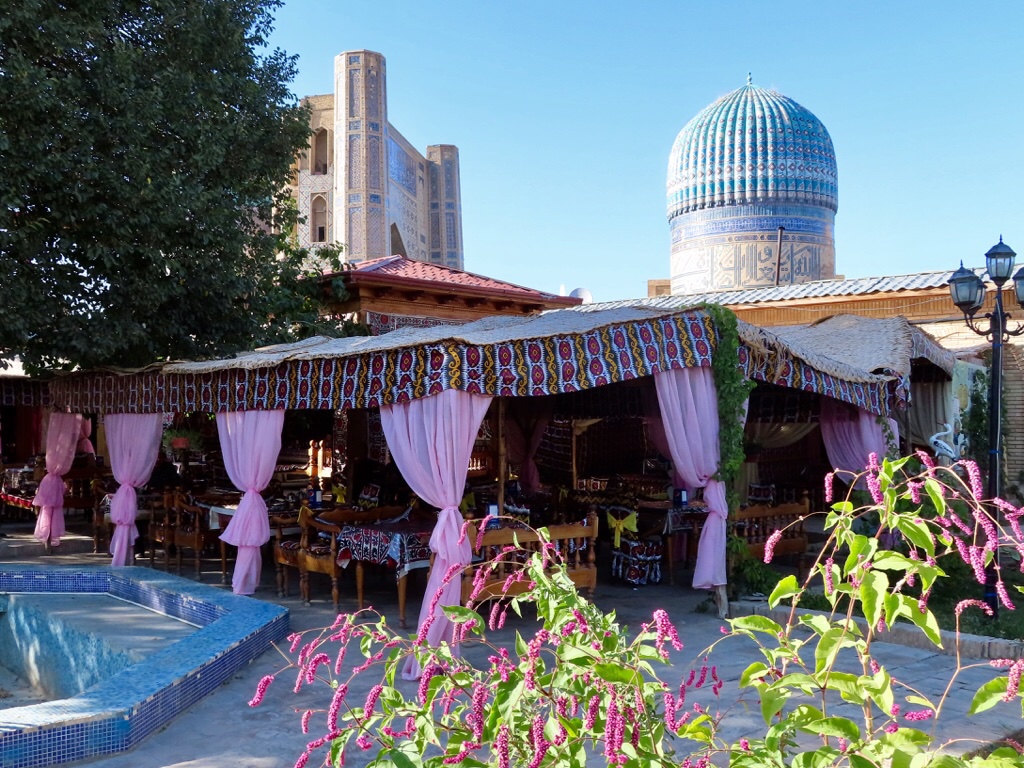
We’ve really loved relaxing on these raised platforms that we first came across in Turkey, they just seem so exotic!

We collected our luggage and took the late train back to Tashkent, arriving around 10.00pm.

Map

Bukhara … Silk Road City of the Shaybanids

The train chugged along for 6hrs and 400km, passing cotton field to begin with, then desert and finally more cotton as we approached Bukhara, so rather than spend time looking out of the window, I finally had a chance to get stuck into my book. I mentioned The Carpet Ride to Khiva in one of the last posts, but had read little more than the introduction but reading further, I began to suspect that the house at No 57 where the author stayed in Khiva is now Meros B&B … and having checked with Jaloladdin, he confirmed Aslan had lived with his family for 7 years and they still keep in touch … small world!

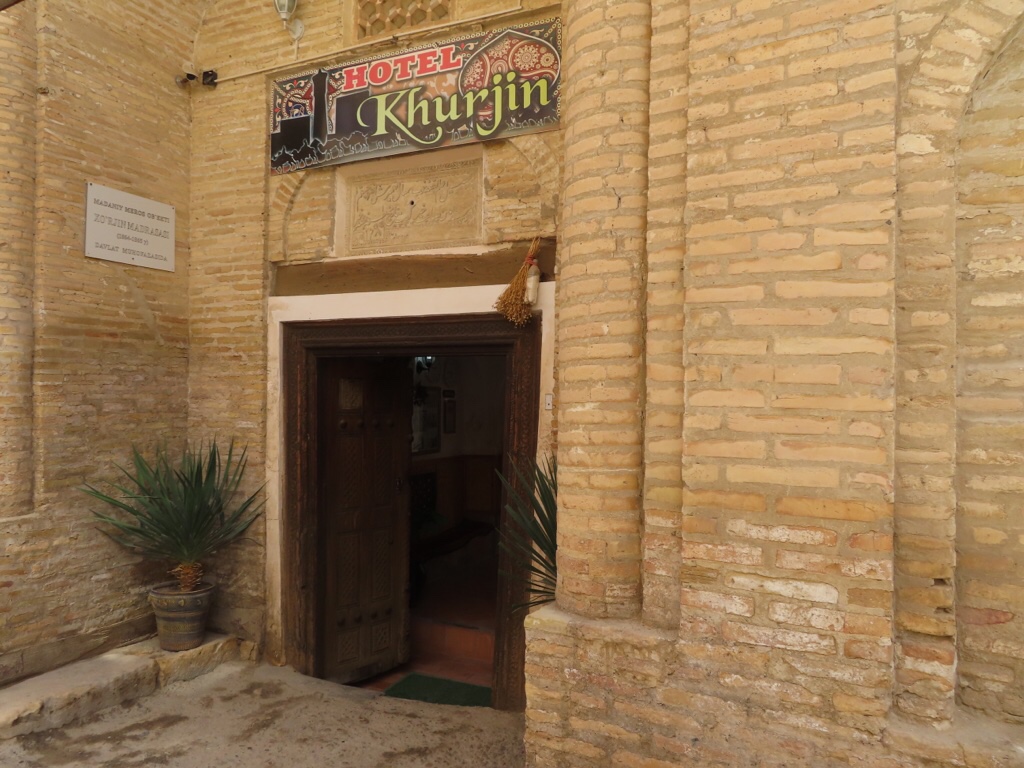
We were met at the station and welcomed at Hotel Khurjin by Avozshod who told us it was a restored C19th madrassa named for an Uzbek saddlebag, as the building splits and opens into two courtyards.
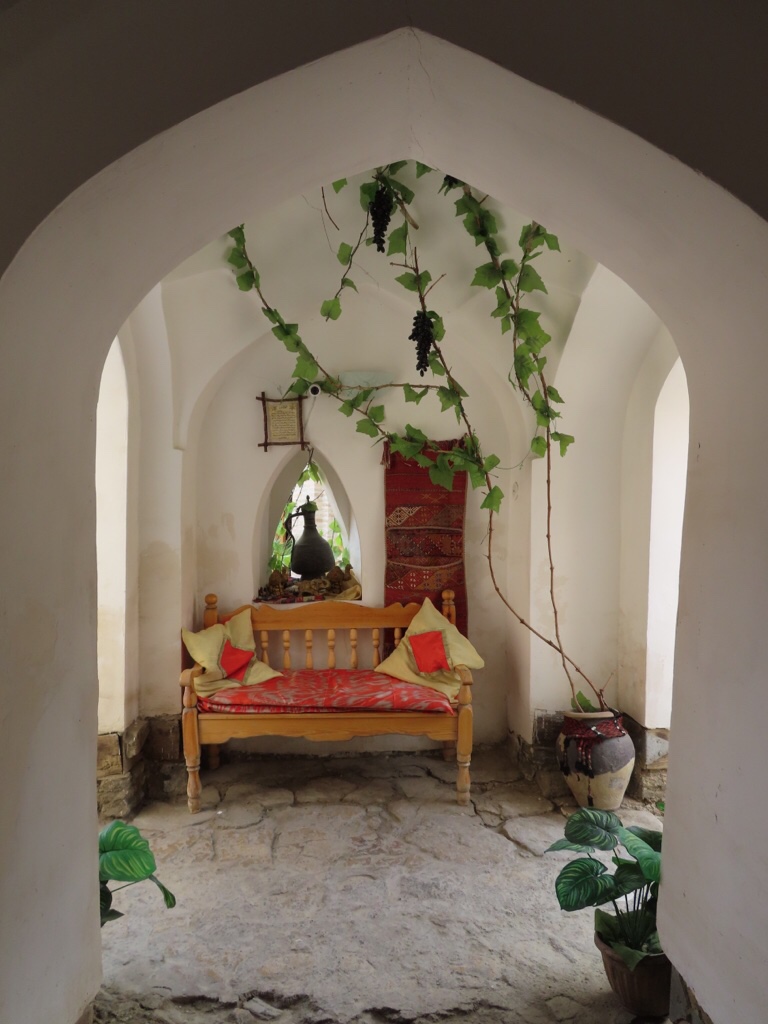
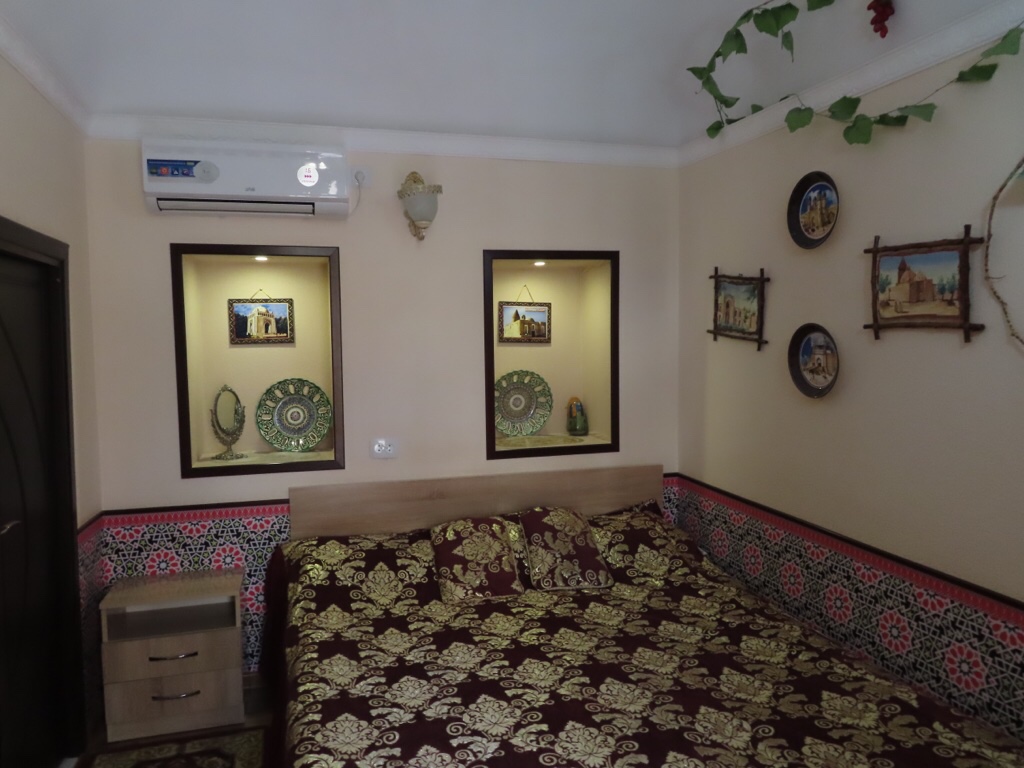
We stayed in one of the converted student rooms overlooking a pretty courtyard where we could relax and drink tea.
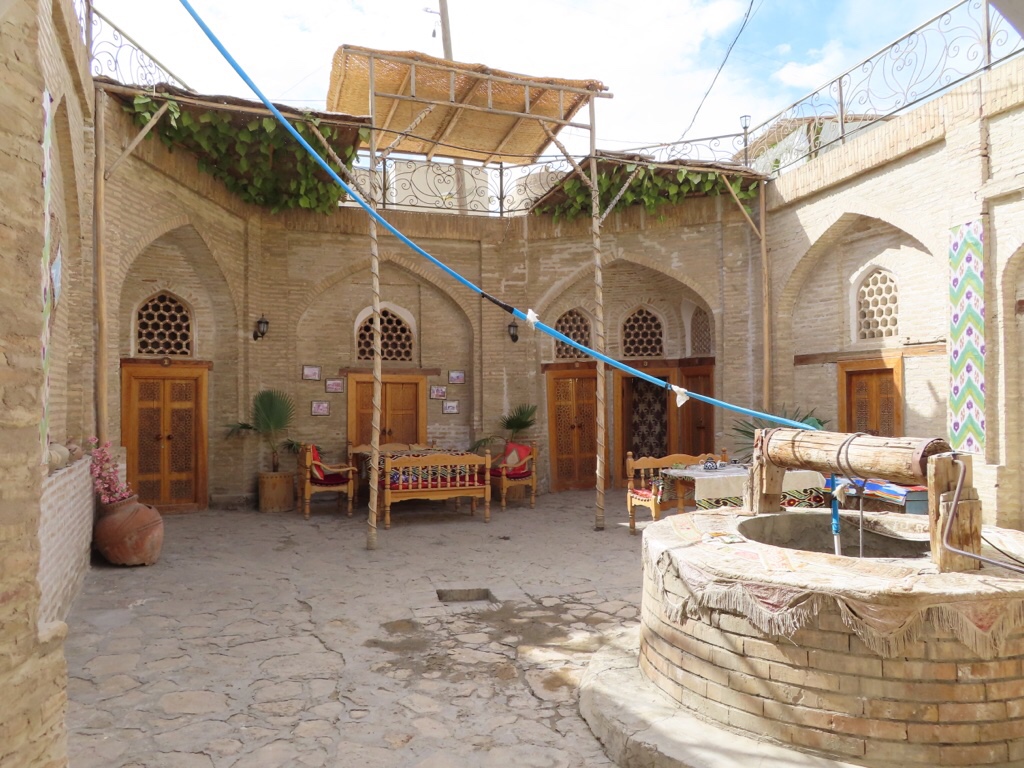
The rather attractive blue pipe is to feed water to the roof, where expansion is taking place!
So if you are sitting comfortably, I’ll tell you a story … When the Arabs arrived in the C1st, Bukhara was already a bustling Silk Road trading center. They managed to convert most of the local population to Islam but were replaced after a few decades by the Samanids, Sunni Muslims loyal to the caliph in Baghdad and admirers of Persian Shiite culture. In the C9th and C10th, Bukhara became a great city of trade and learning. It was home to 240 mosques and 113 madrasahs and produced great scholars such as Muhammad al-Bukhari who gathered the hadiths, or sayings of The Prophet Muhammed and the physician Abu Ali ibn-Sina, also known as Avicenna.

After two centuries under the Karakhan and Karakitay dynasties, Bukhara was attacked by the Mongols. When Genghis Khan arrived in Bukhara he reportedly entered the mosque and emptied cases that contained the Koran, the Muslim’s holiest book, and had them filled with grain for his horses. He then ordered the rulers of the city to bring musicians, wine and fermented mare’s milk and told the nobility to bring their riches. After gold and precious stones were laid at his feet, he set his troops loose. They took everything they could carry and burned what they couldn’t.

Bukhara was a minor city under Tamerlane but was reborn under the Uzbek Shaybanids and then the emirs of Bukhara beginning in the 16th century. During this era, Bukhara was the center of a empire that embraced much of Central Asia and was famous for its caravanserais, bazaars, carpets, fountains and 100 madrasahs with 10,000 students. Today, it is a city of around 250,000 and 150 historical monuments, so we’ll have our work cut out!

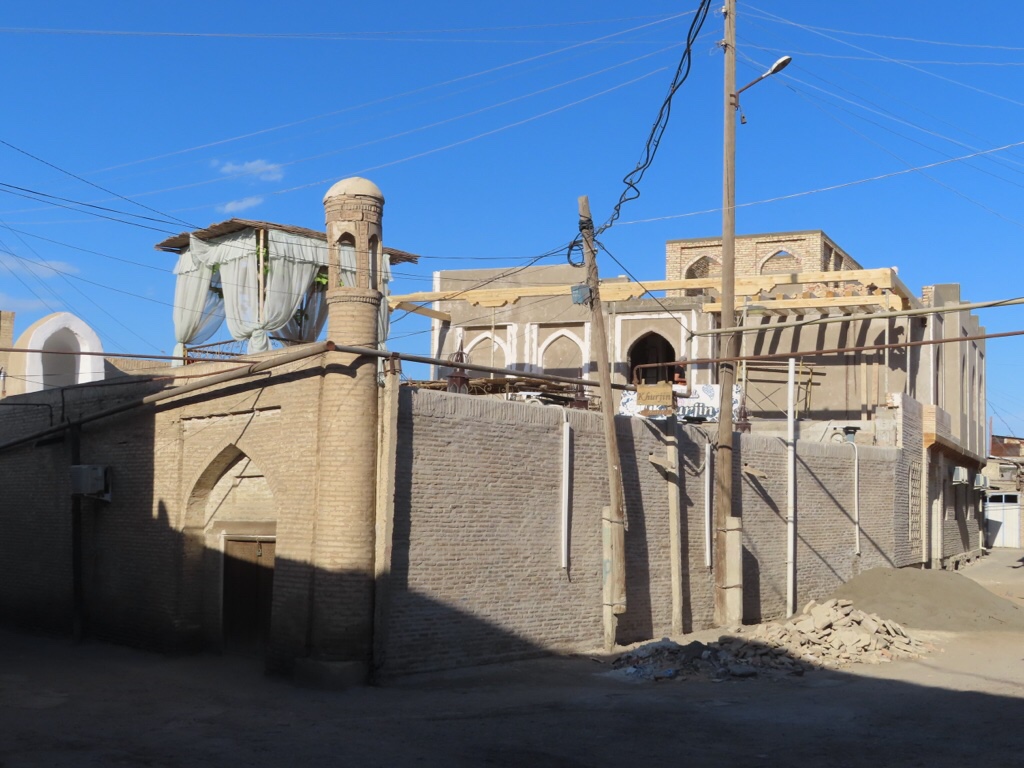
Just a few steps took us to the C16th Kukeldash Madrassah, once the largest Islamic school in Central Asia but looking a little rundown apart from some souvenir shops …
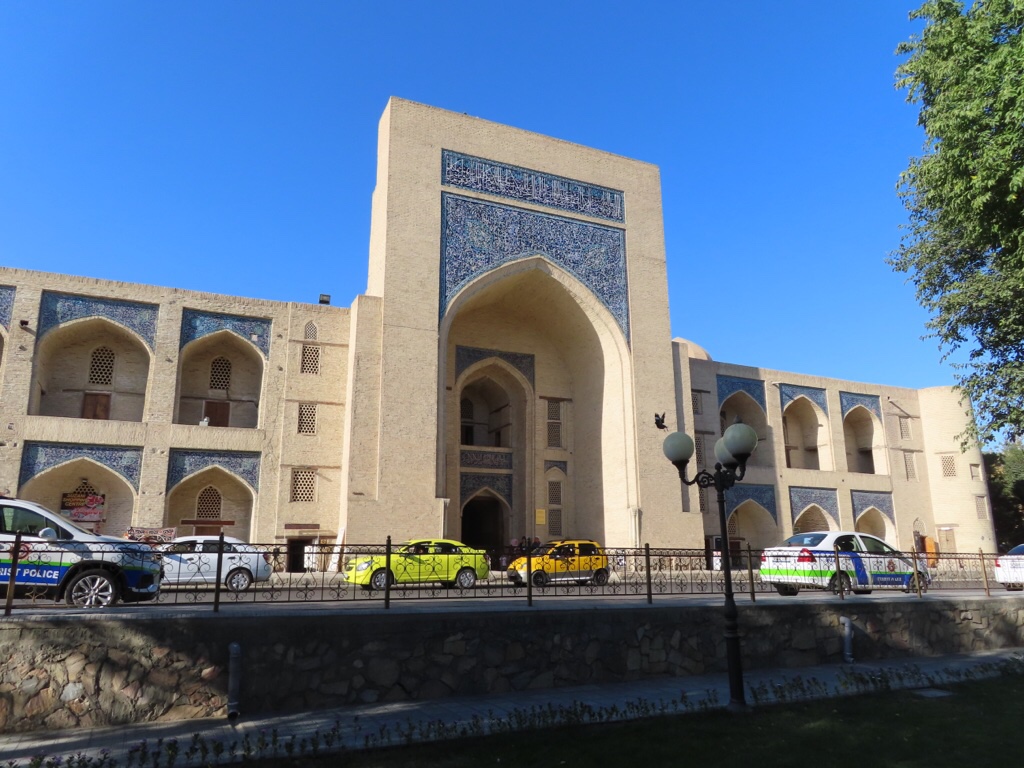
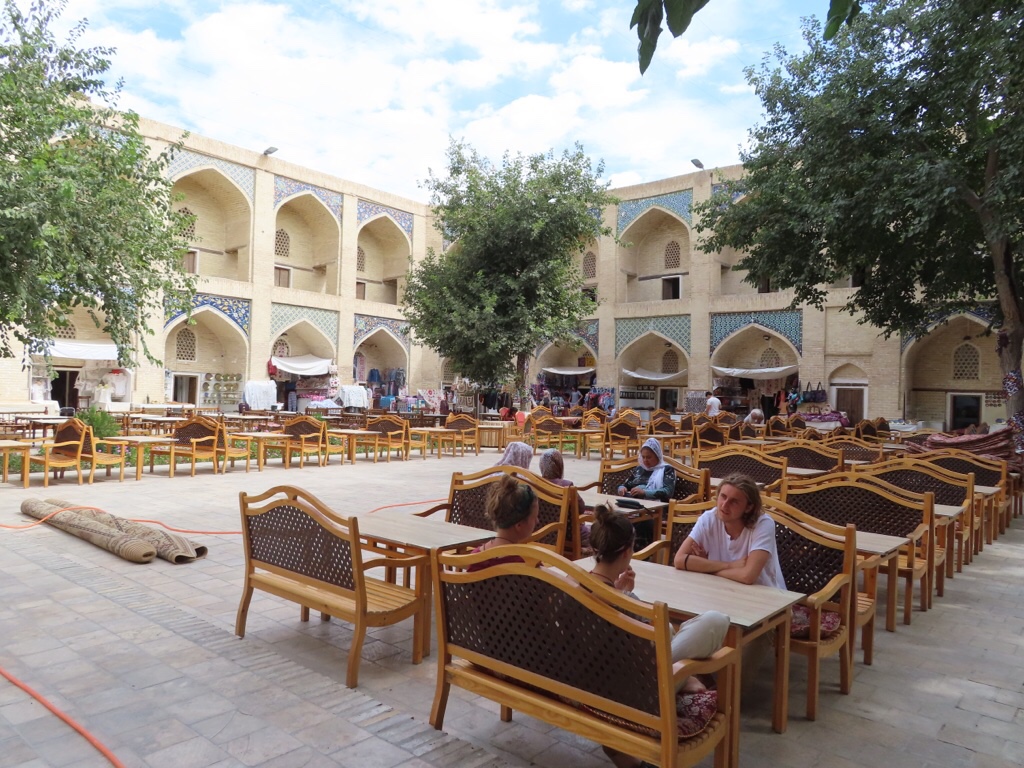
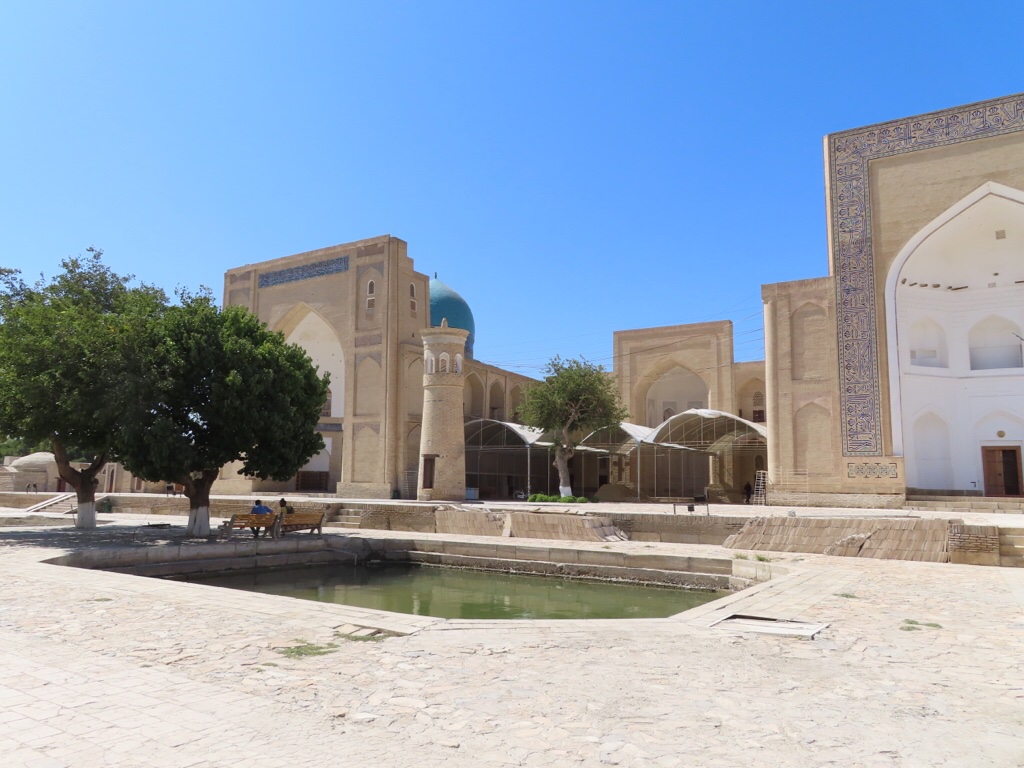
Opposite is the Lyabi-Khauz, a plaza built around a pool, which was constructed by the vizier Nadir Divan-Beghi in the C17th with the Nadir Divan-Beghi Khanaka at one end …
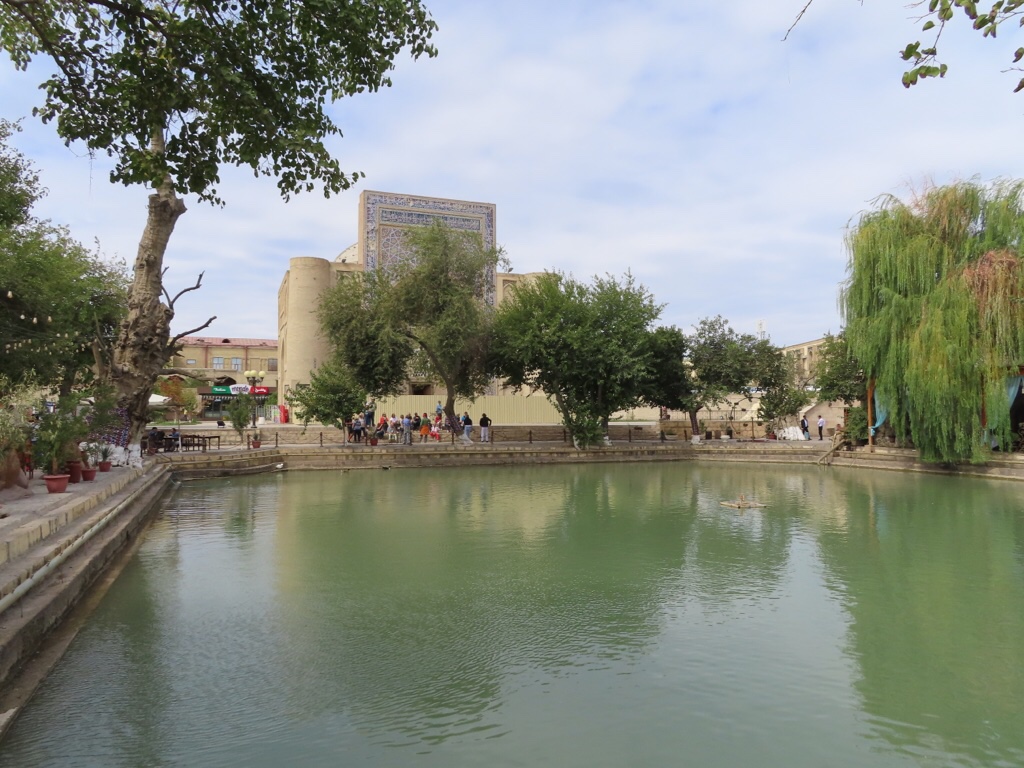
… and Nadir Divan-Beghi Madrasa opposite.
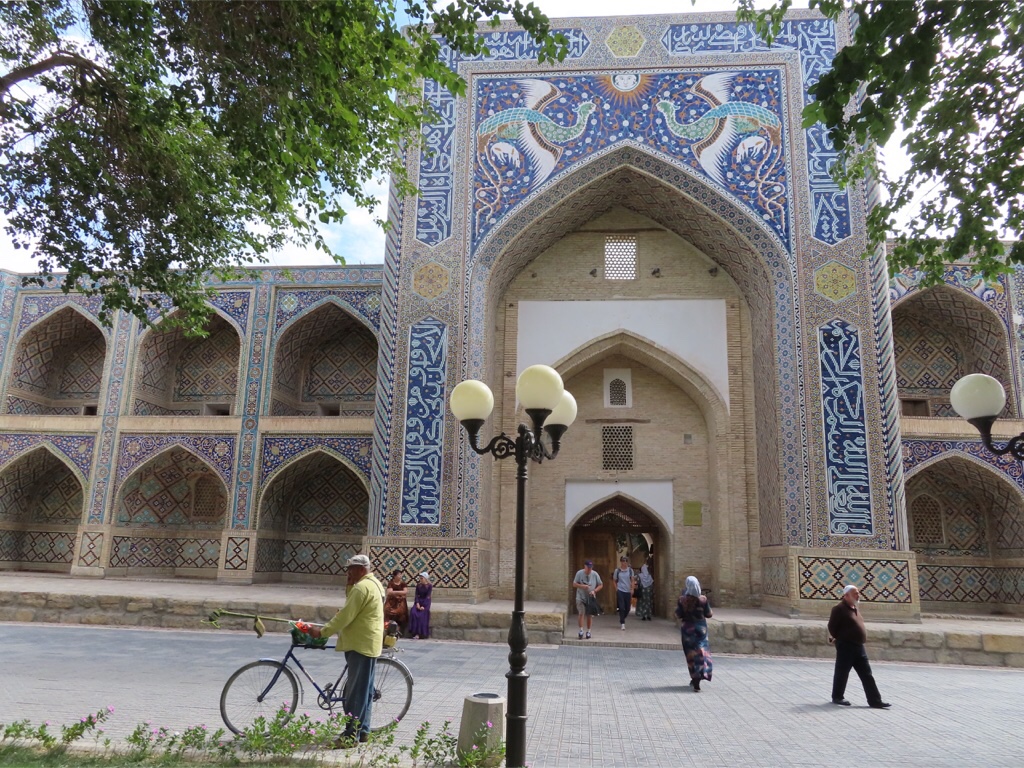
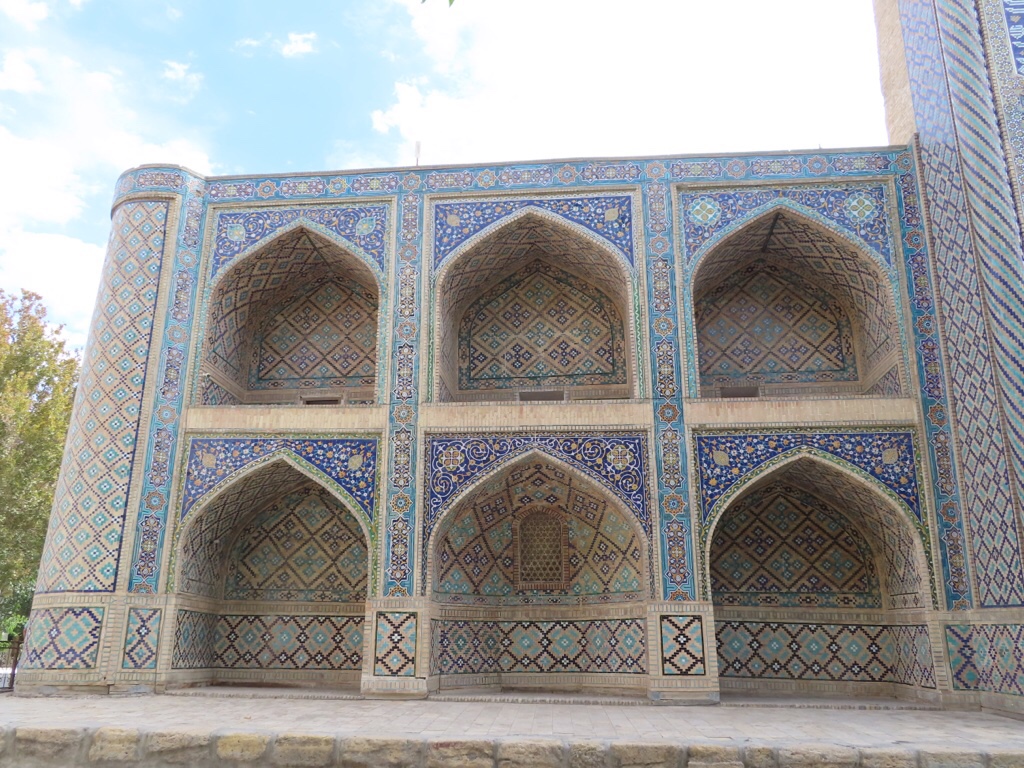
The construction of two monumental buildings facing one another was a common practice in central Asian cities and was known as kosh, and we will see it several times in Bukhara alone. Traditionally, Islam discouraged the depiction of human and animal forms in case it lead to idolatry but in the early C17th under the Shaybanids the rule was not so strictly enforced and here there are mosaics of fantastical birds and a sun with a human face.

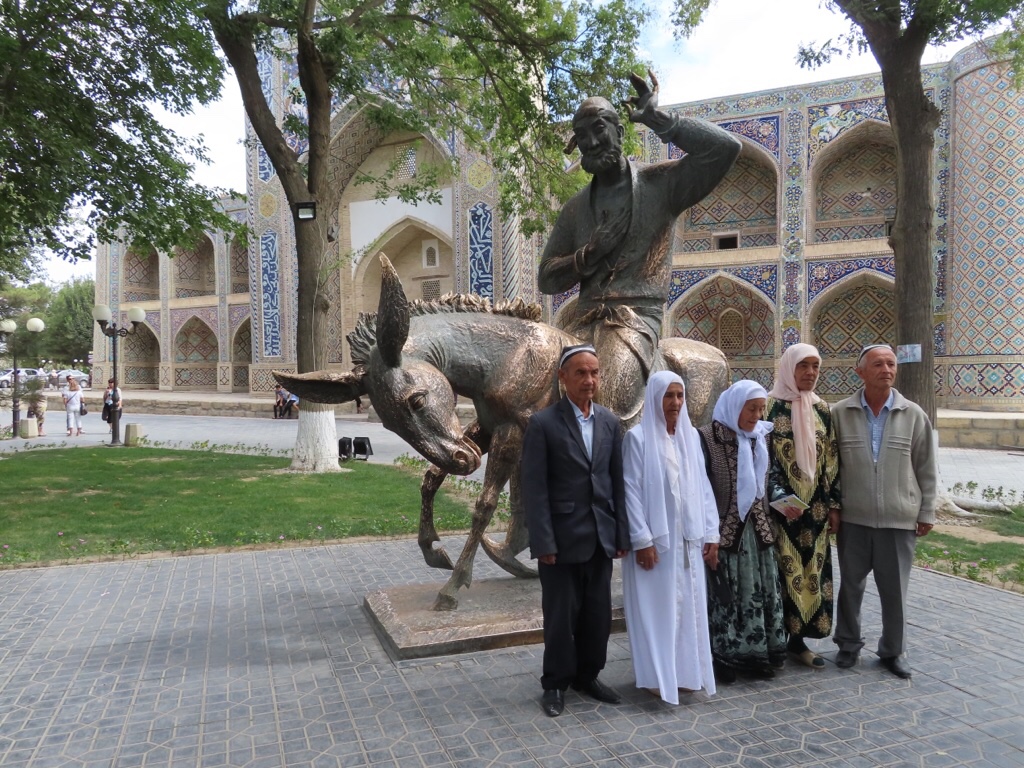
Here is a statue of Hoja Nasruddin, a wise fool from folktales, which was very popular with the locals for souvenir photos …
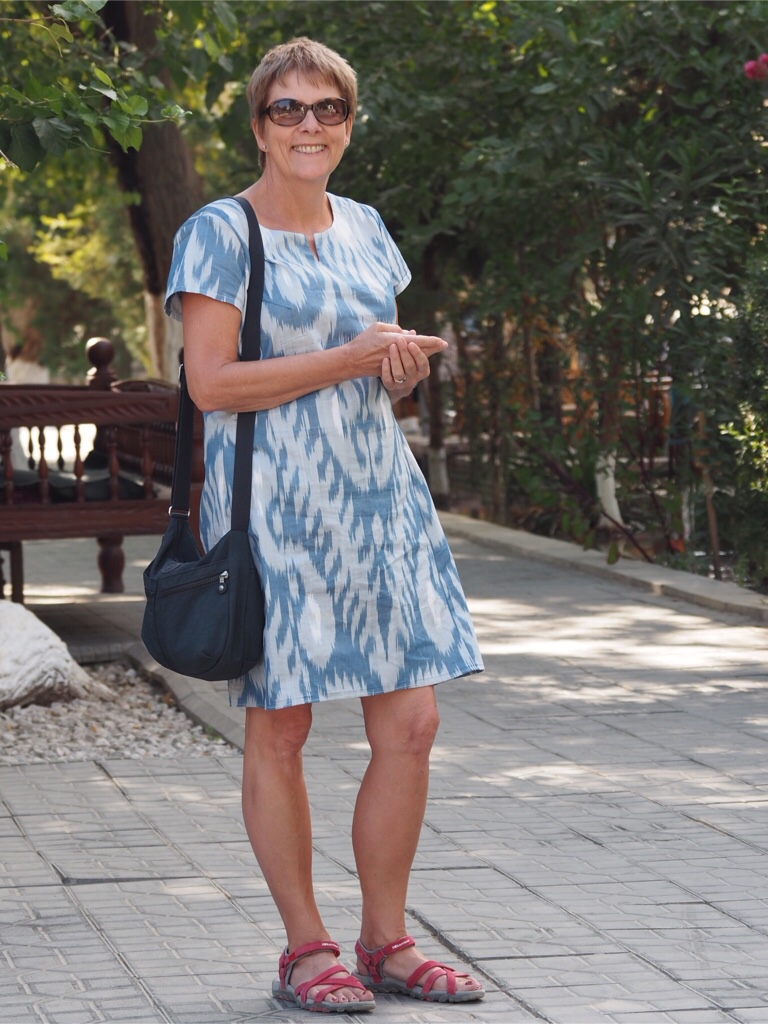
… and a here’s a souvenir pic of my Khiva dress too!
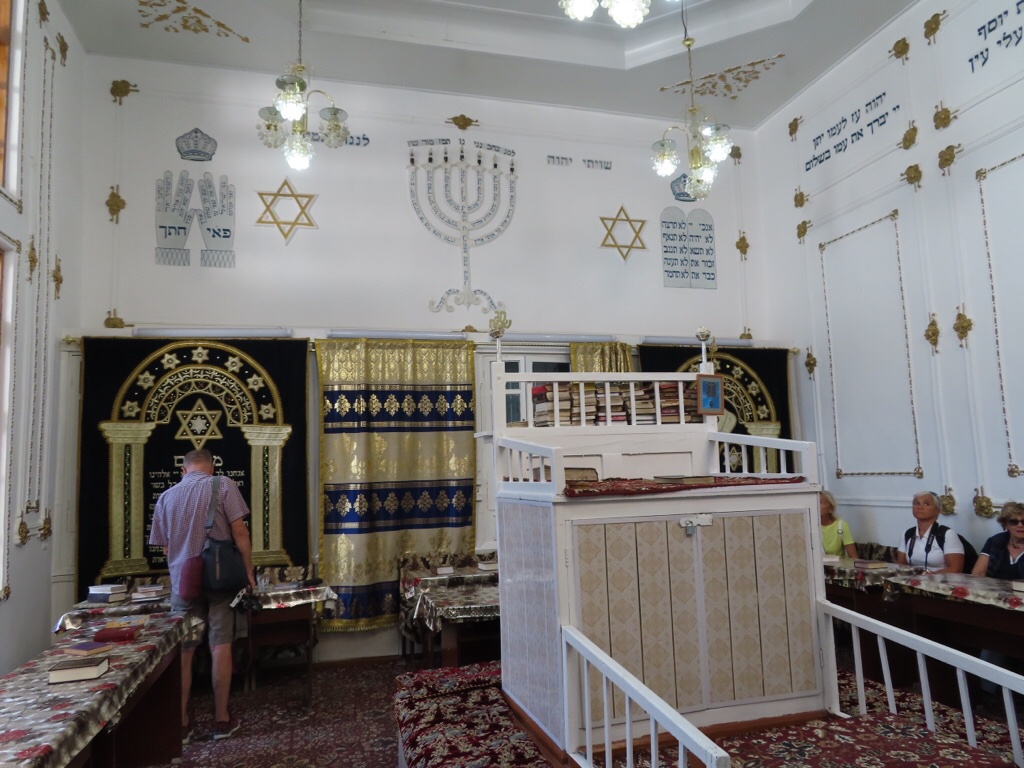
Nadir Divan-Beghi had great difficulty acquiring the site for the pond as there was a house owned by a Jewish widow. A canny bargainer, she agreed to swap her house for a piece of land and permission to build a synagogue on it, the first in the city …
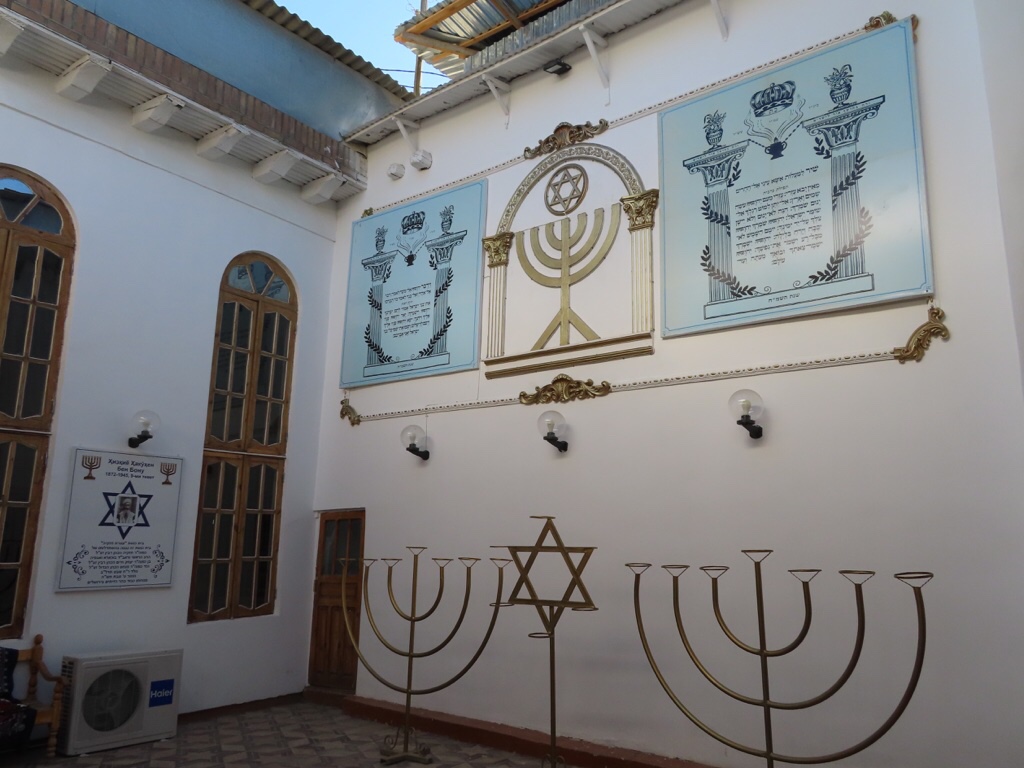
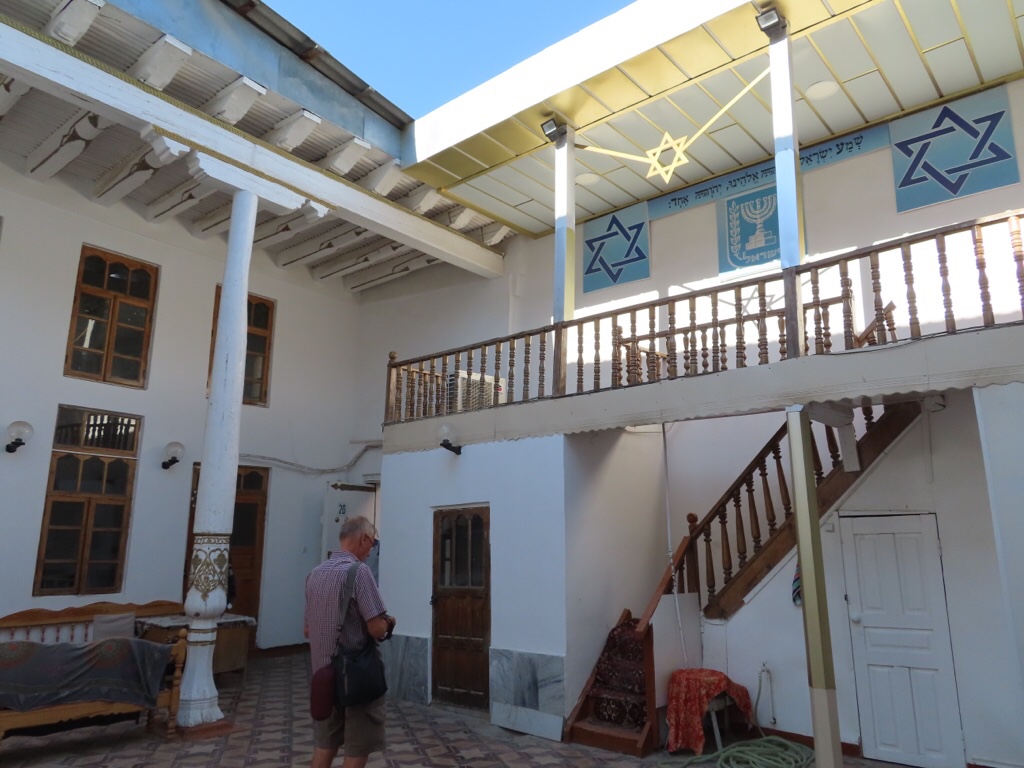
There had been Jews here since the C12th and they had their own culture and language, Bukhari, related to Persian but with the Hebrew alphabet. Many became successful despite discrimination and at one time there were seven synagogues, but most left the city between 1925 and 2000 for Israel and the US.

Also nearby are Maghoki Attar, the oldest surviving mosque with a C9th facade and C16th reconstruction …
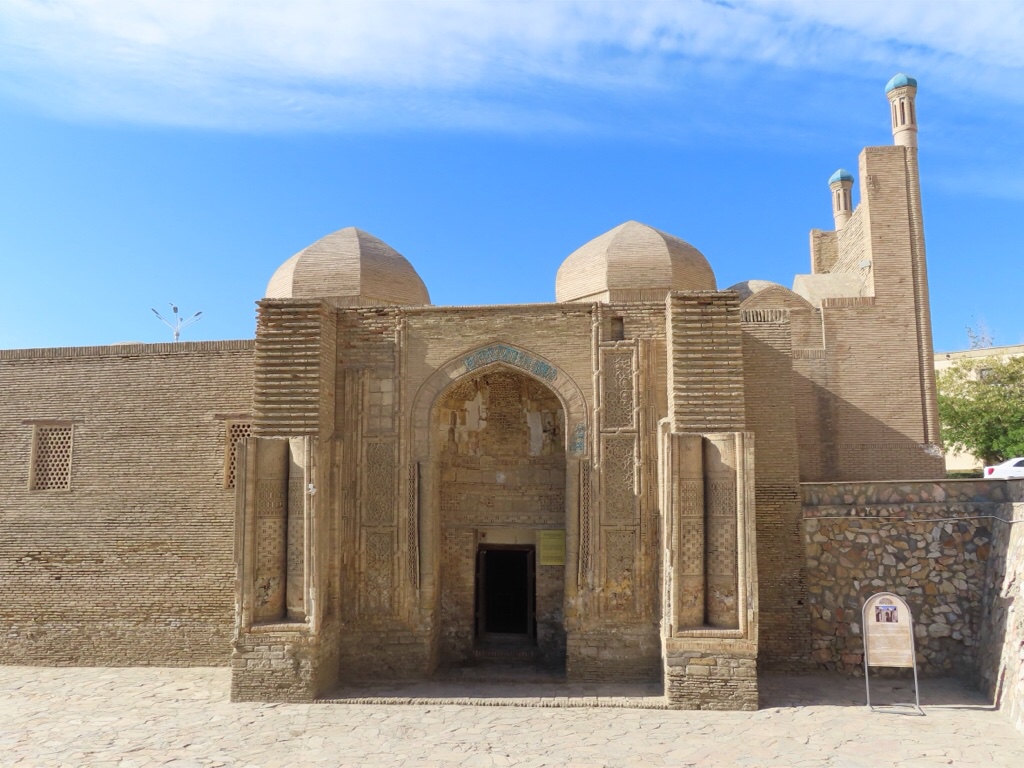
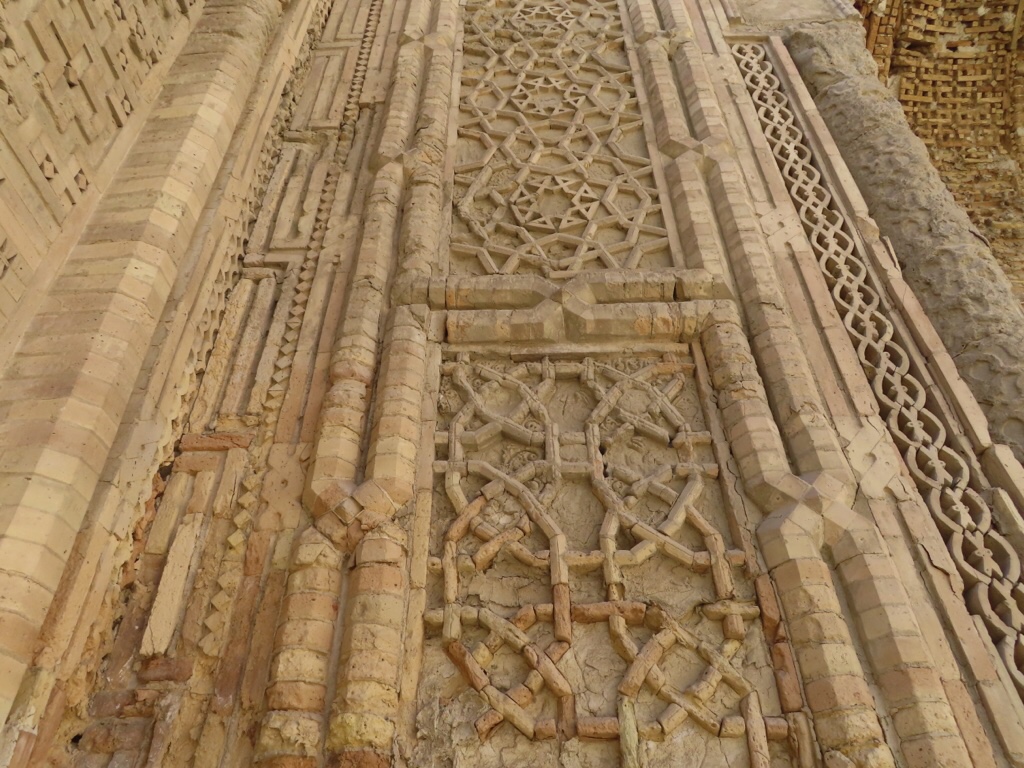
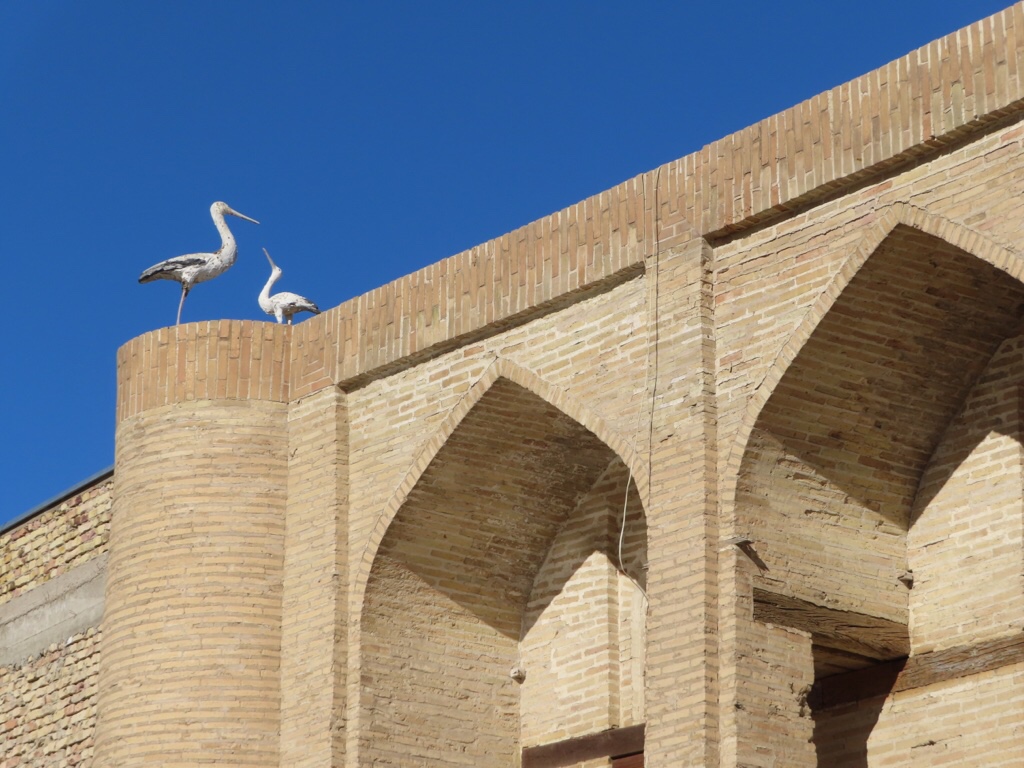
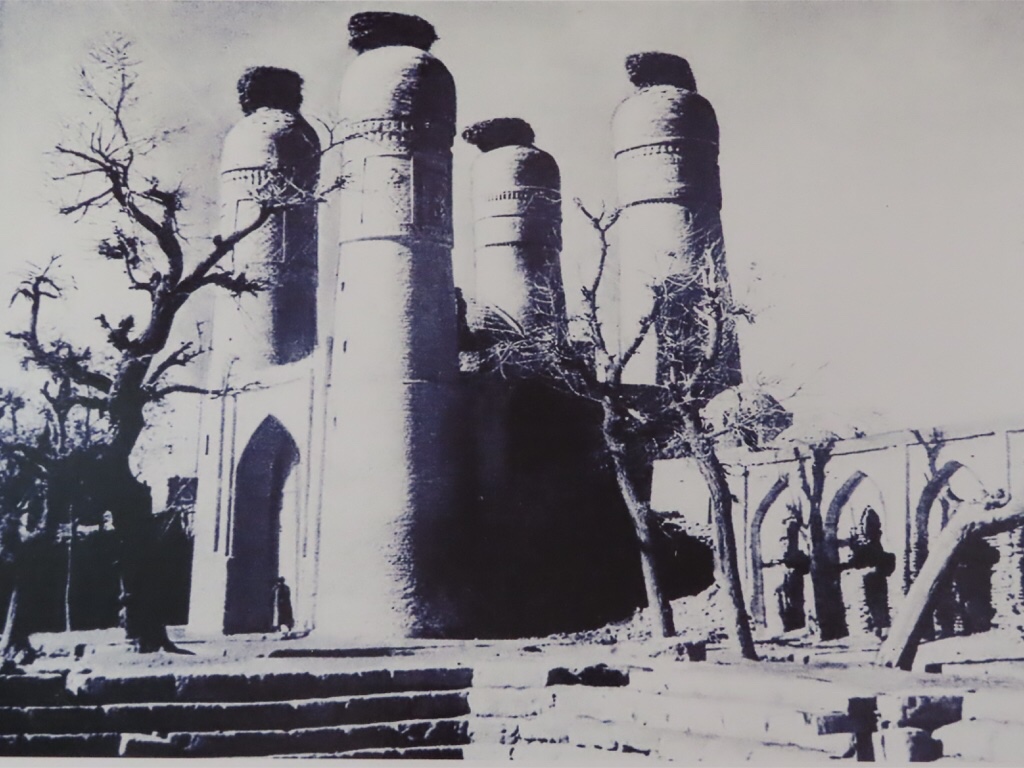
… and Char Minar, the gatehouse of a long-gone madrasa with four very pretty towers. Storks were once a familiar sight in the city, but unfortunately no longer as most fell victim to high soil salinity from a reduced water table and pesticide pollution, but there are a few fake ones about …
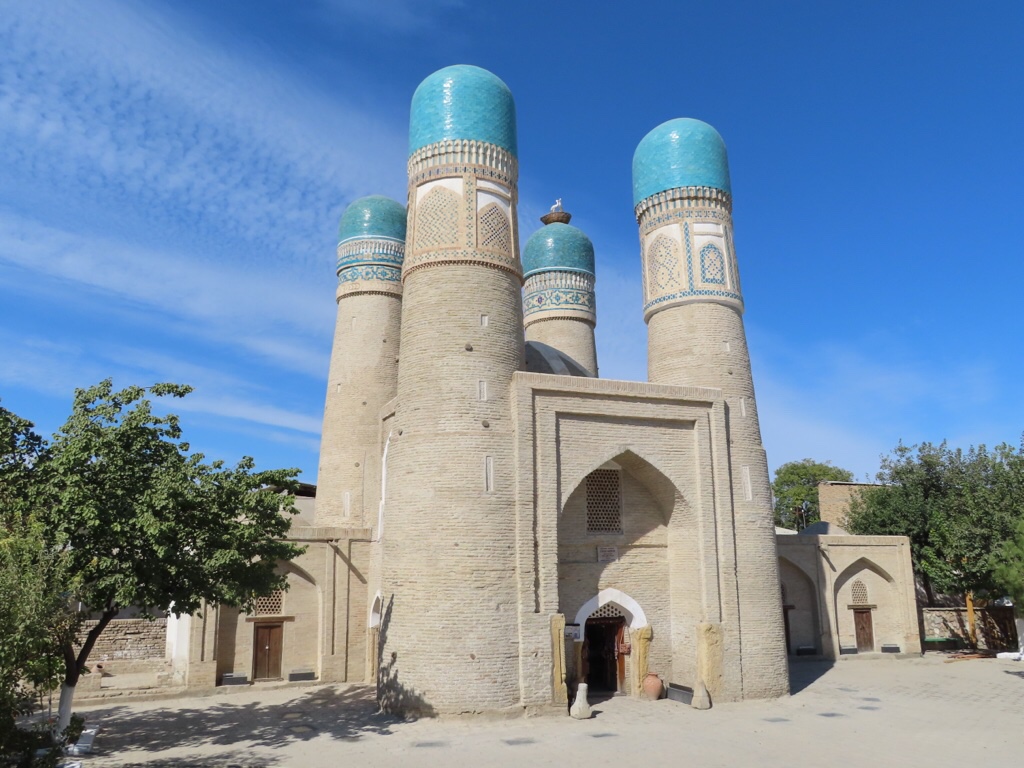
… and here are a couple more, on the roof of a madrasa!
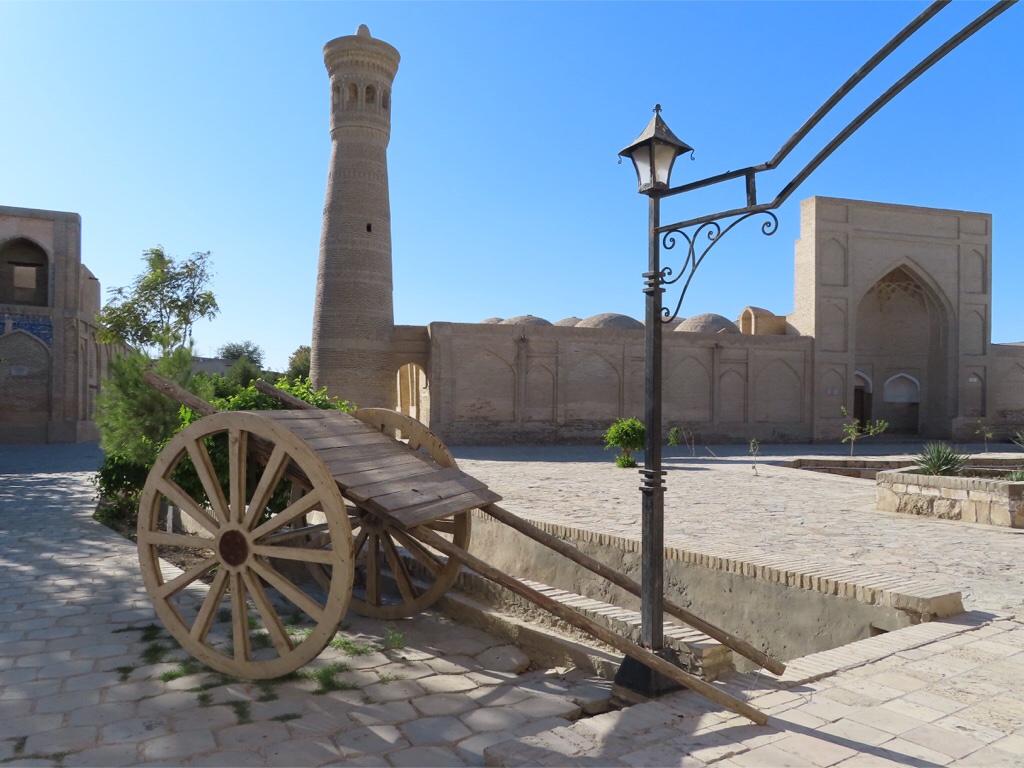
The Khoja Gaukushan Ensemble was built by the Juabari family in the C16th and is rare as it remains untouched by later redevelopment. Gaukushan refers to the slaughter of cattle so there might once have been an abattoir here. It is on the junction of two medieval streets and the Shah Rud canal, it comprises a mosque, a minaret, two madrasas and a hauz which is a pond.
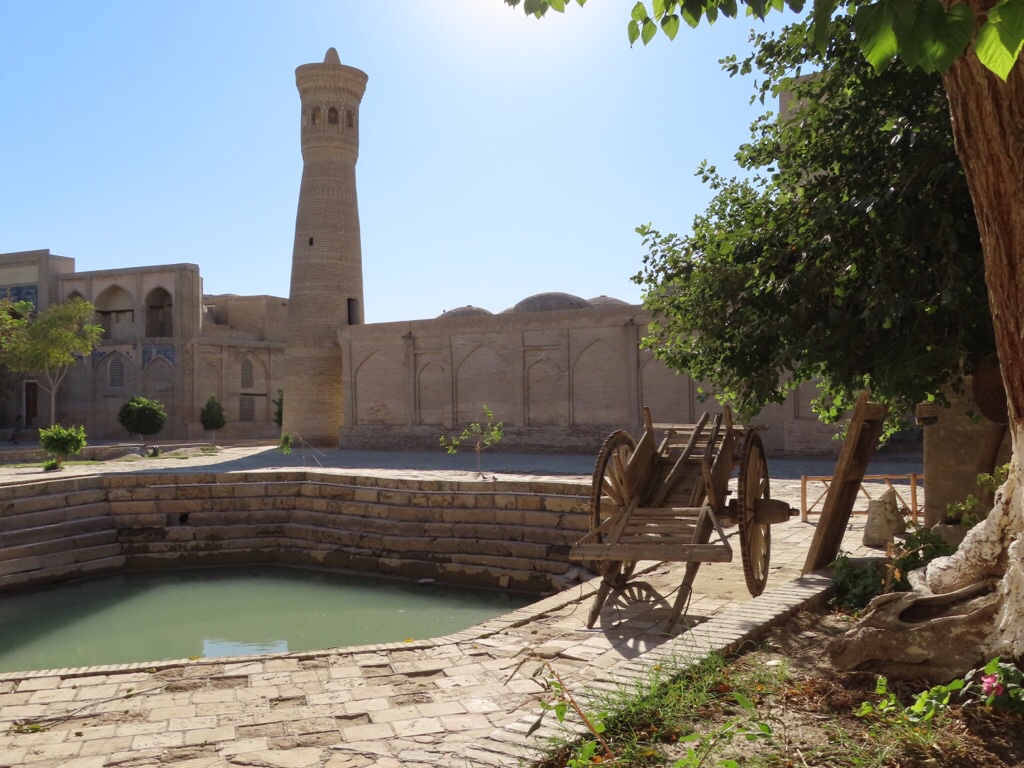
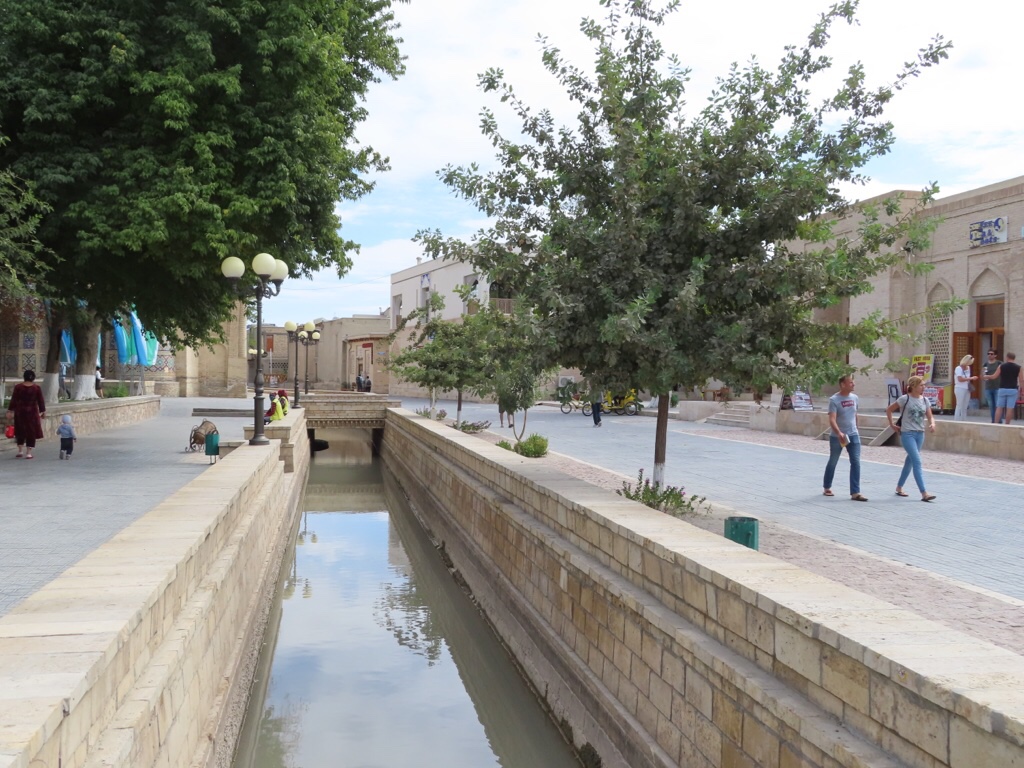
Bukhara once had a network of canals as well as 200 stone pool where people gathered, gossiped, drank and washed but water-borne diseases were rife as the water wasn’t kept clean and in Soviet times, most were drained.
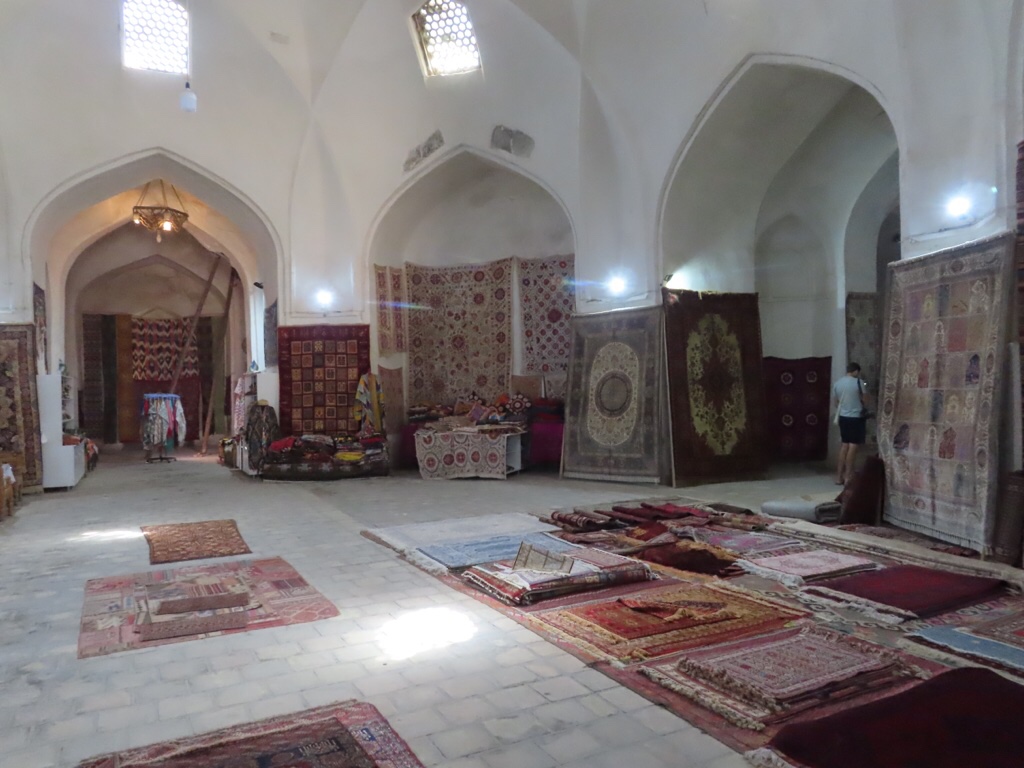
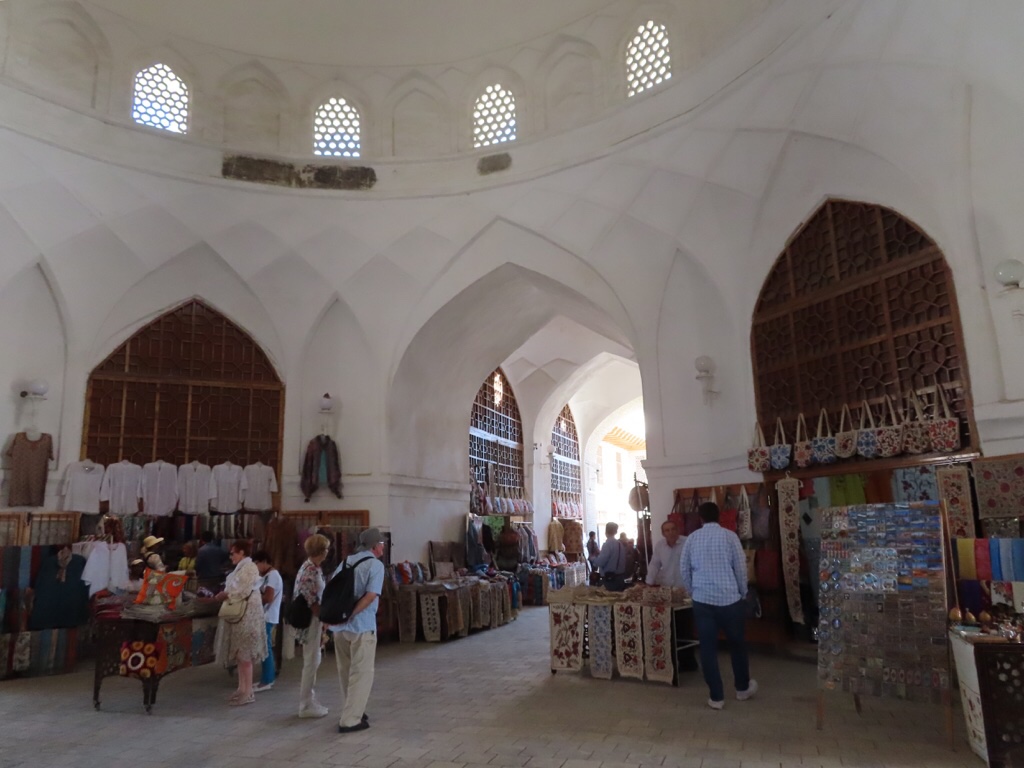
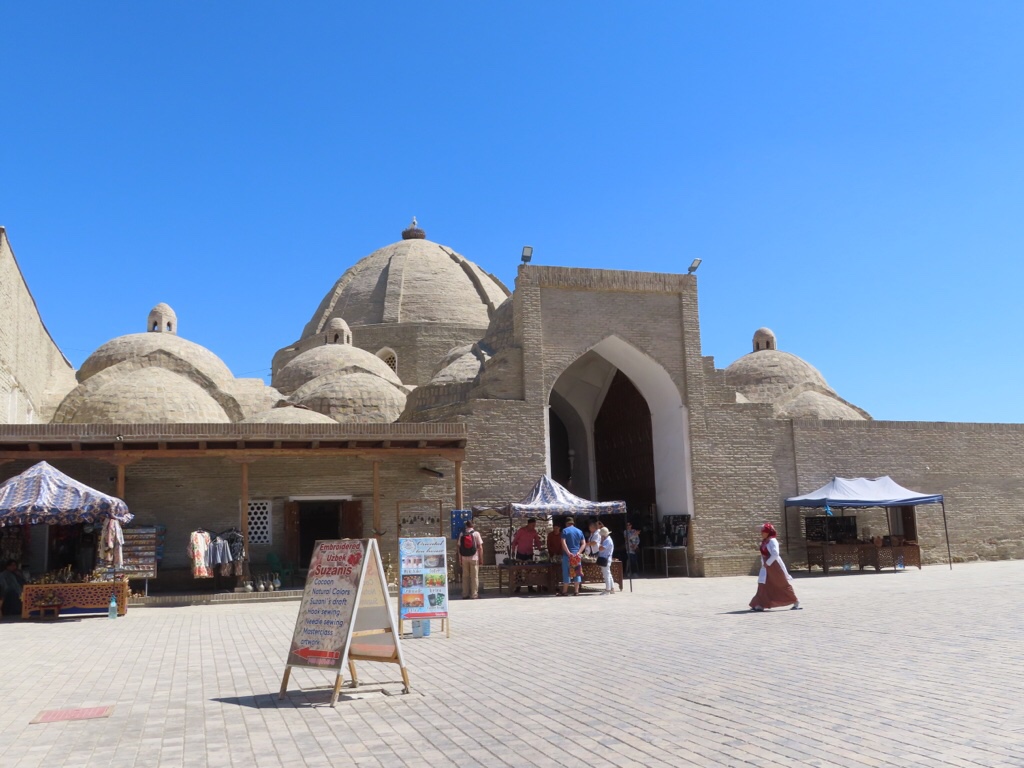
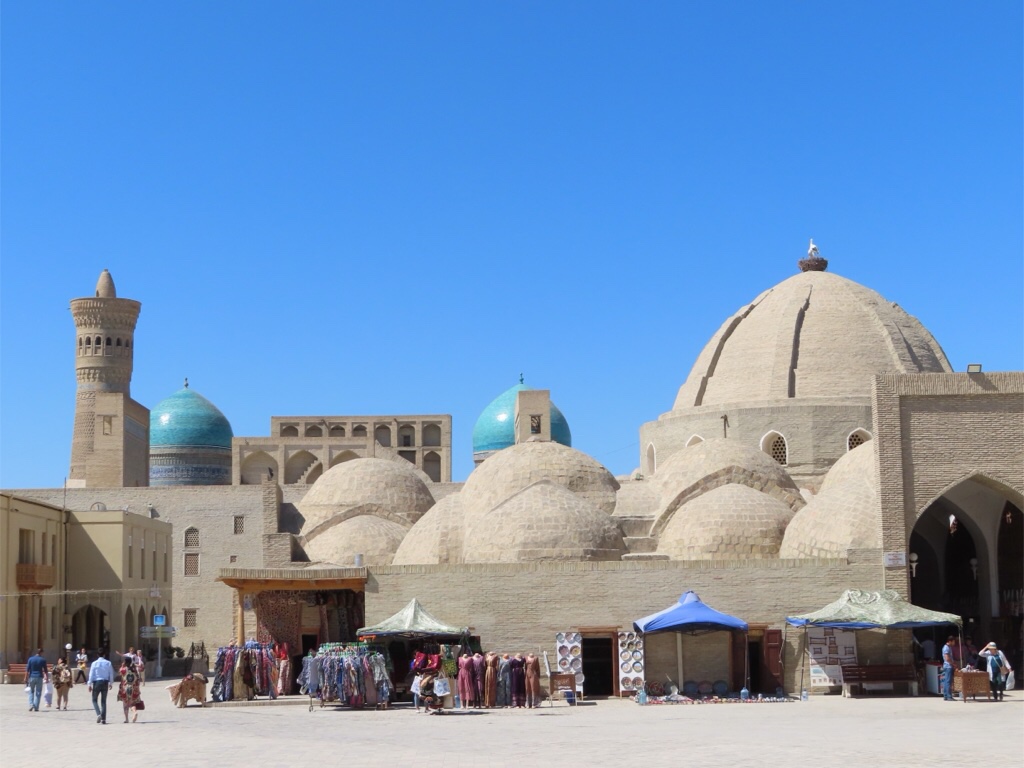
The C16th trading domes became a symbol of Bukhara’s status as a Silk Road city and were built at busy crossroads providing a means of controlled and convenient trade. The large domes remained cool and were filled with shopping stalls and handicraft shops, each named for its particular speciality. Today four remain, filled with craft and souvenir stalls.
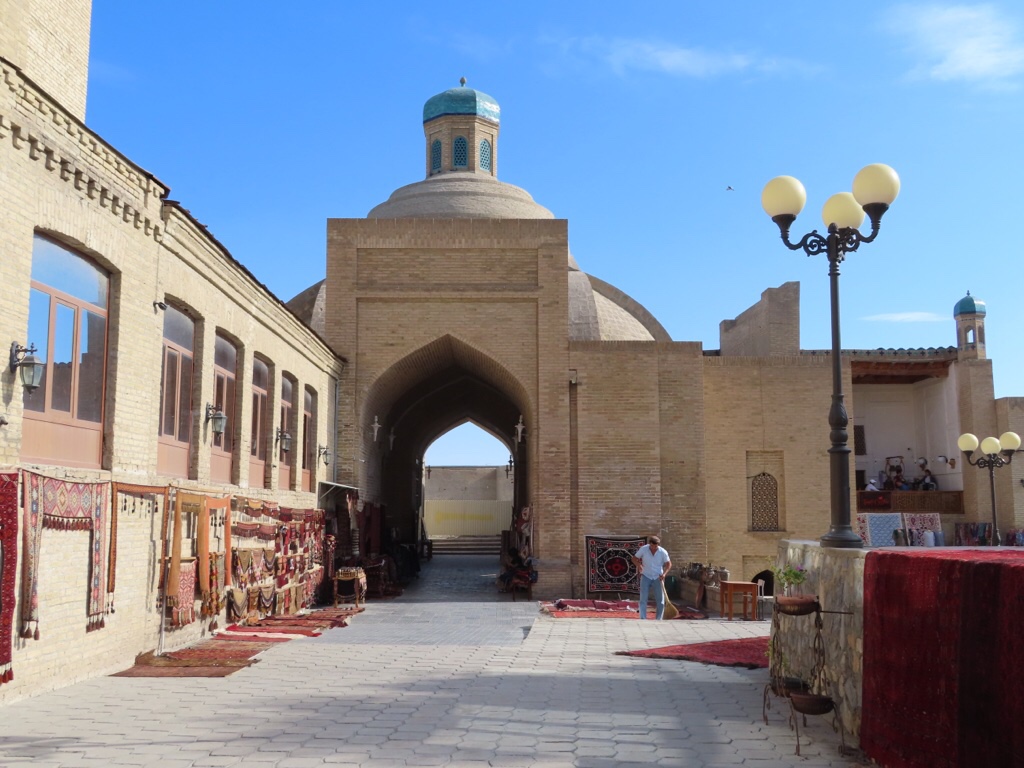
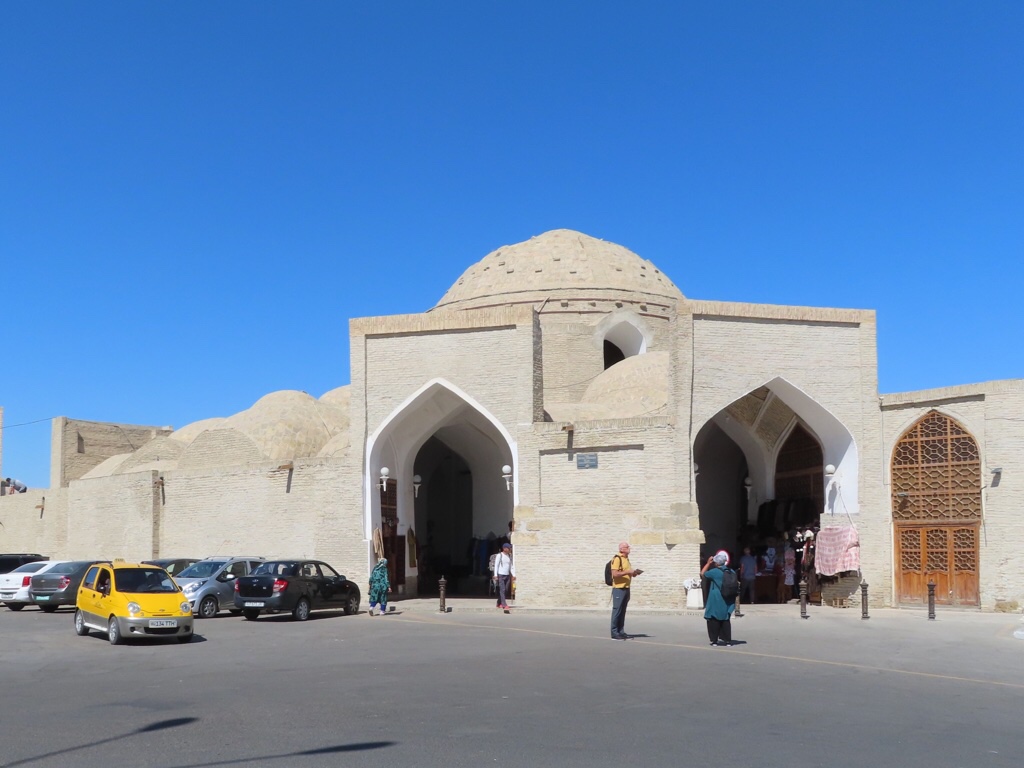
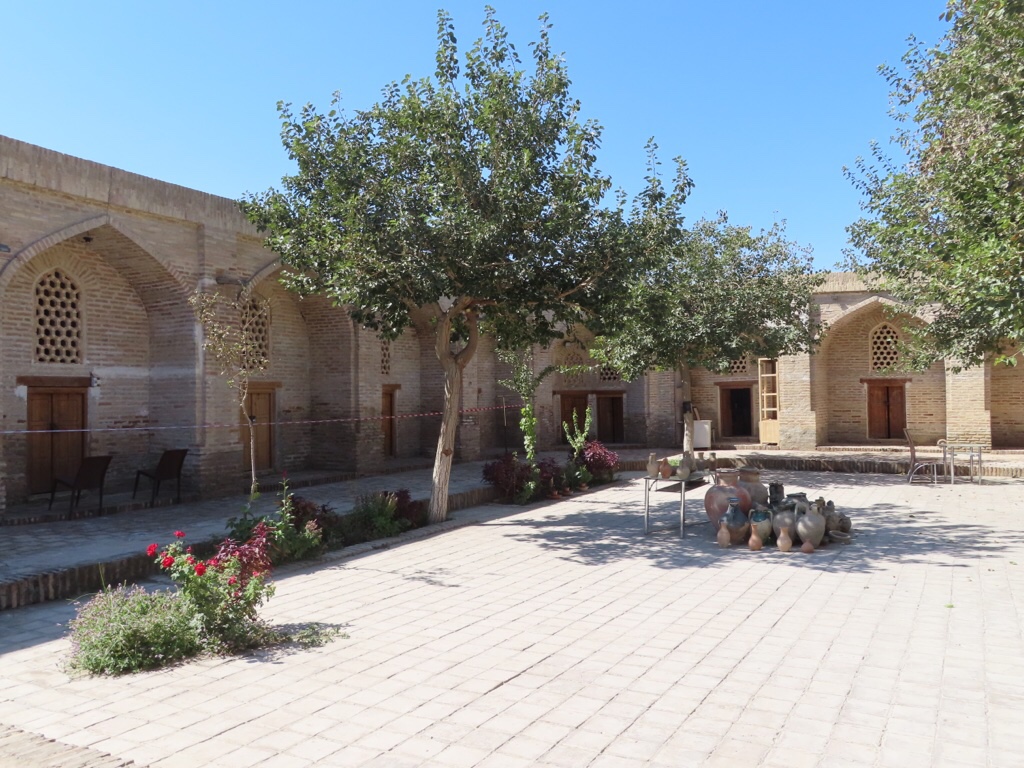
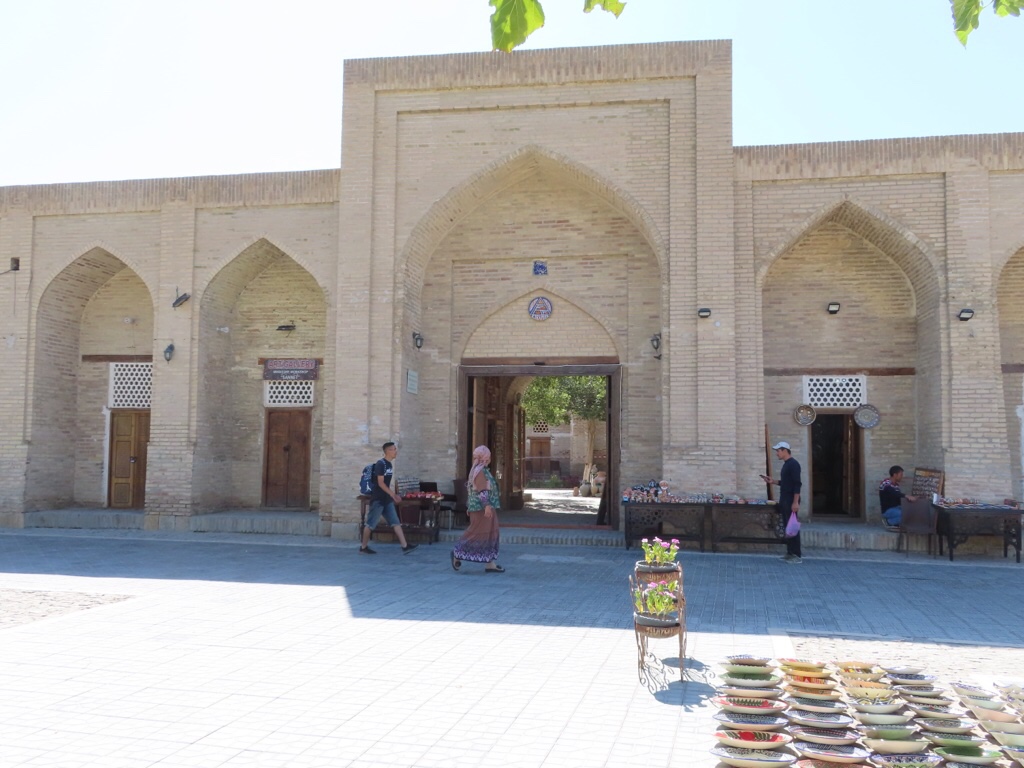
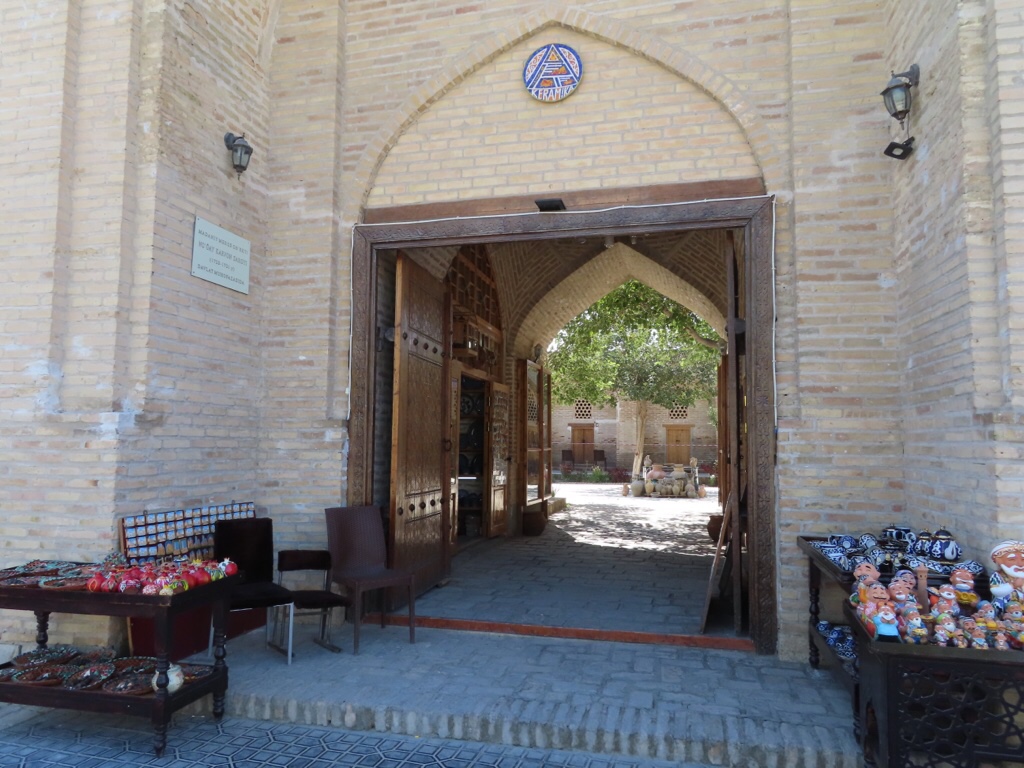
Nearby are a couple of caravanserai which would have given travellers shelter and water. They look similar to a madrasa, but the entrance is big enough to bring loaded animals inside and the door could be locked and guarded at night and provided rooms, however often travellers would have to bring food for themselves and their animals. It was also a good place to do business and exchange news. Today they sell craft and souvenirs too.
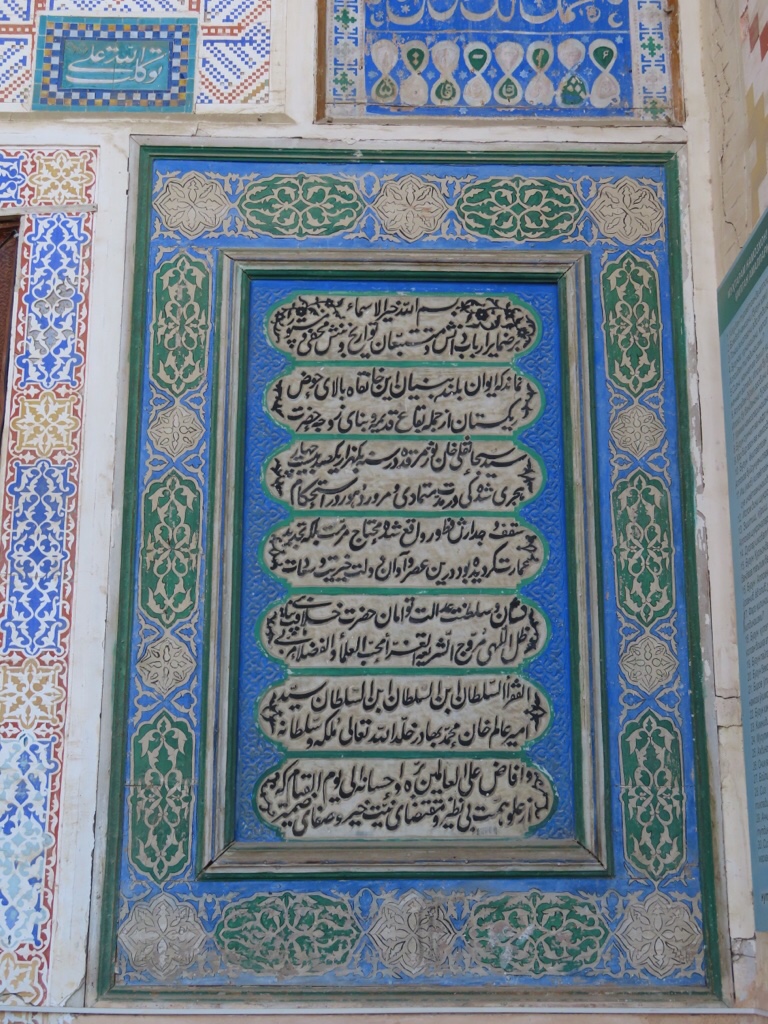
Our next stop was a pair of facing madrasas built over two centuries apart. Ulugh Beg Madrasa was constructed in 1419, the work of Ulugh Beg, the astronomer-king and grandson of Timur. It represented the first stirrings of Bukhara’s cultural rebirth, as the madrasa served as a magnet to attract scholars and scientists from across the Muslim world, eager to advance both piety and knowledge. A corded band decorates the gateway and the calligraphic inscription ‘Aspiration to knowledge is the duty of every Muslim man and woman’.
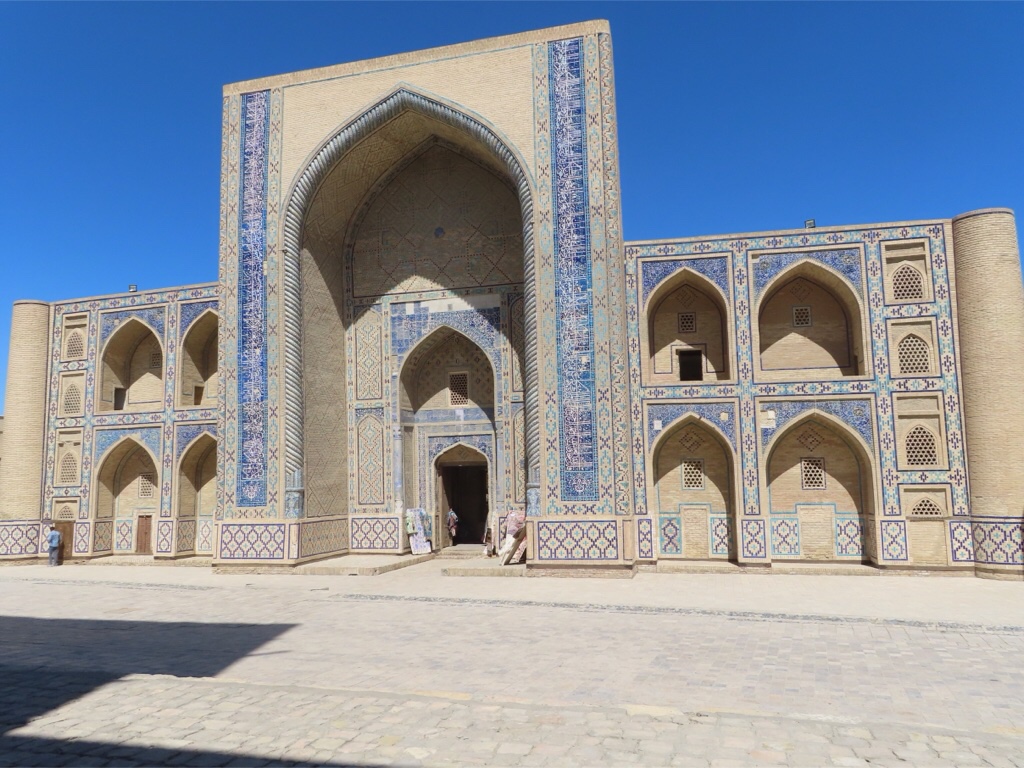
Opposite, the Abdullazizkhan Madrasa built in 1652 shows the progress of medieval Central Asian architecture. The gateway here is adorned with facets and ornamental stalactites patterned with bright floral designs and colours and even gilding.

Inside, restoration continues …

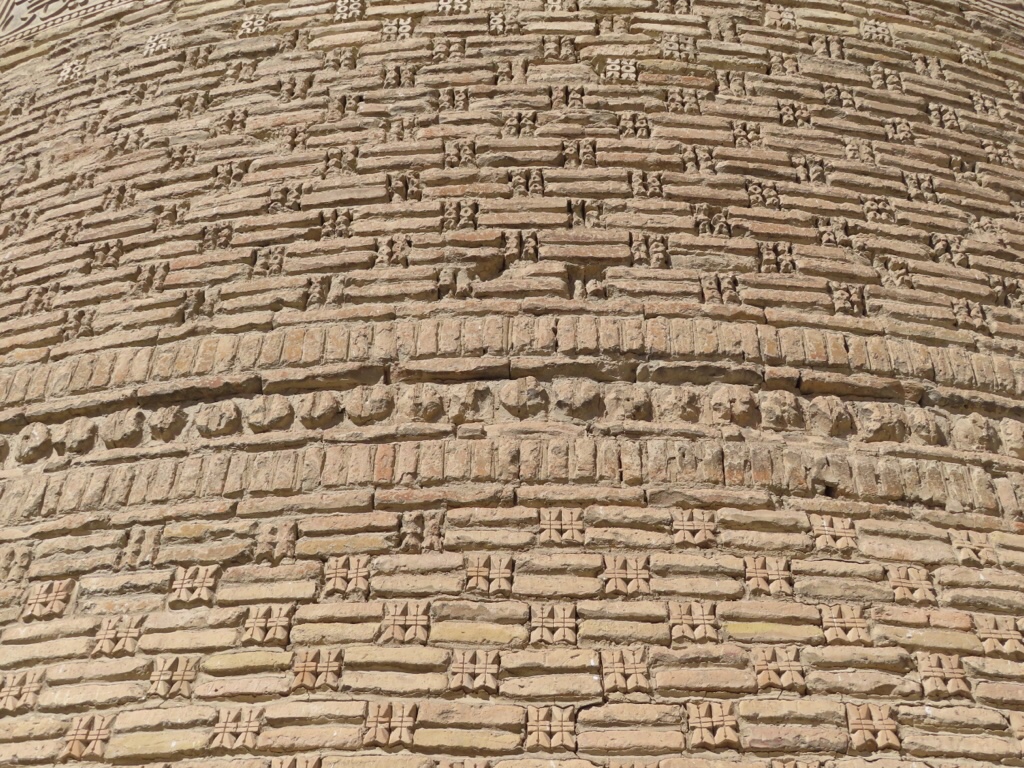
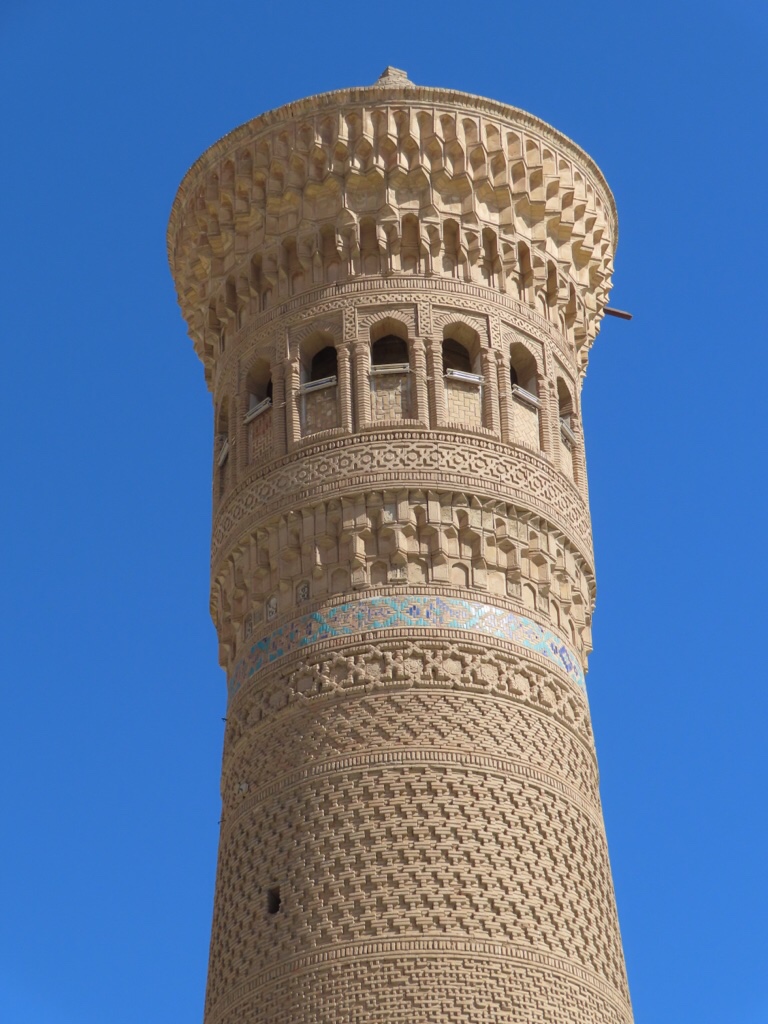
The Kalyan Minaret is the last surviving fragment of the Kara-khanid era mosque built by Mohammad Arslan Khan in 1127, predating the Mongol conquests and one of only a handful of buildings to wholly or partially survive Genghis Khan’s invasions. The ornamentation relied entirely on the brickwork, with the bands of glazed tile near the base of the lantern added since 1920.
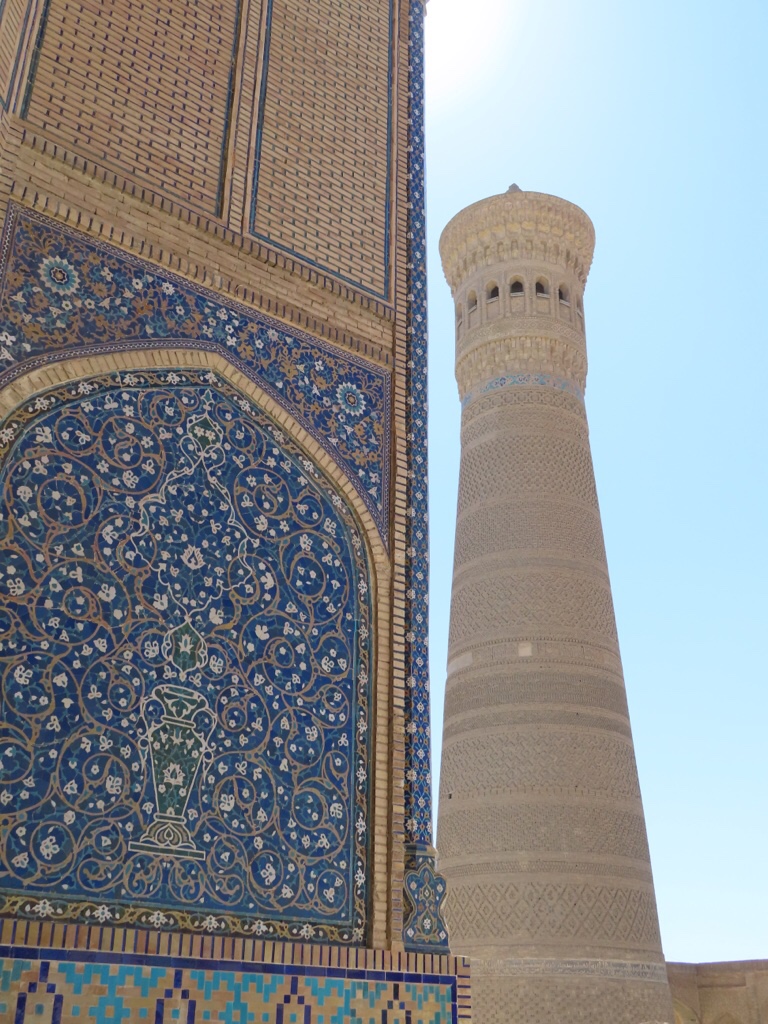
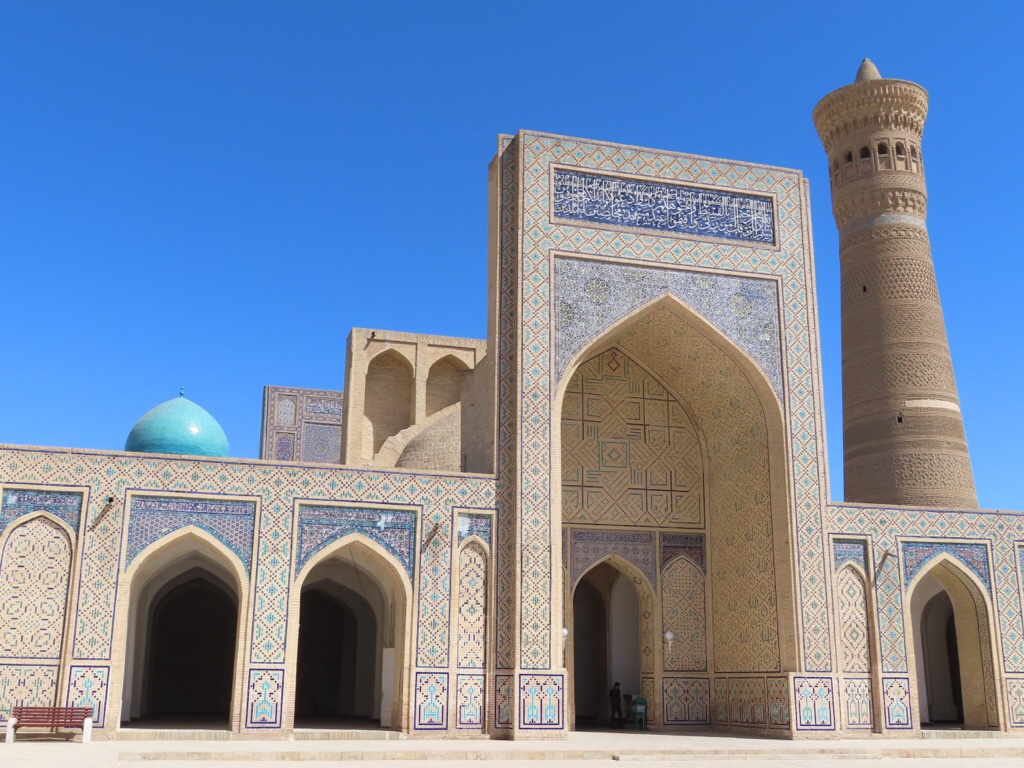
Kalyan Mosque was built by Ubaydullah-khan, the first of the Shaybanids to make Bukhara his primary capital. It was finished by 1530 and stands on the site of a destroyed Karakhanid mosque. It serves as the city’s Friday mosque and can hold 12,000 people.

It opens onto the large sparse courtyard …
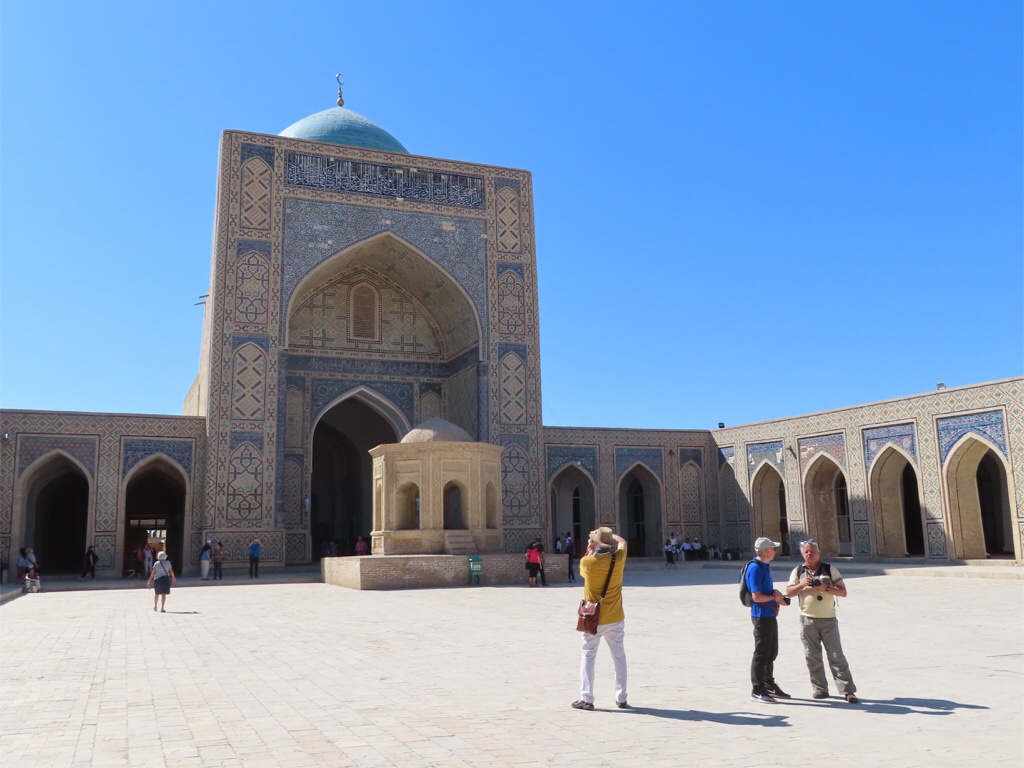
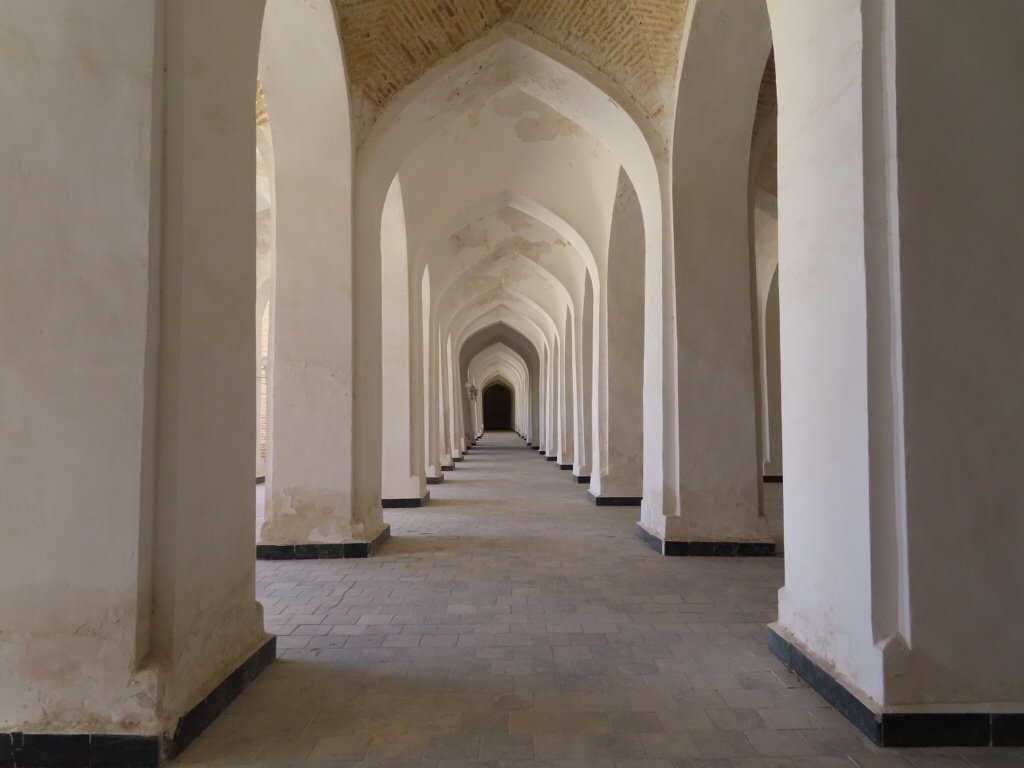
… surrounded by cool arcades.
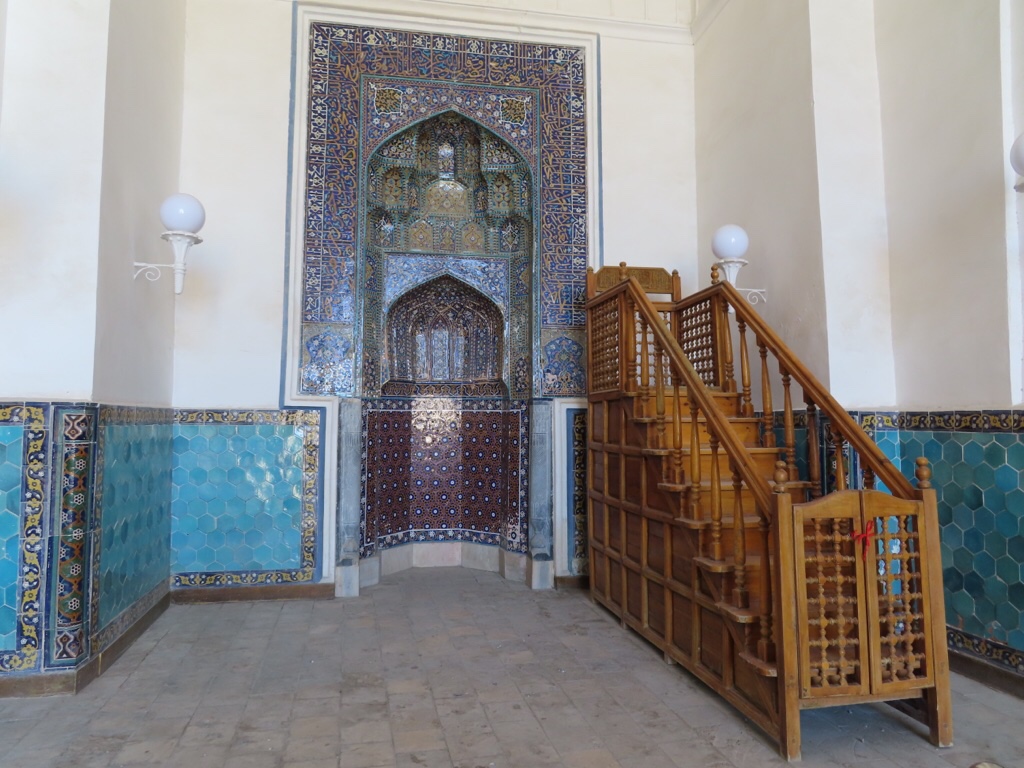
The mihrab has tilework signed by its creater, Bayazid Purani.
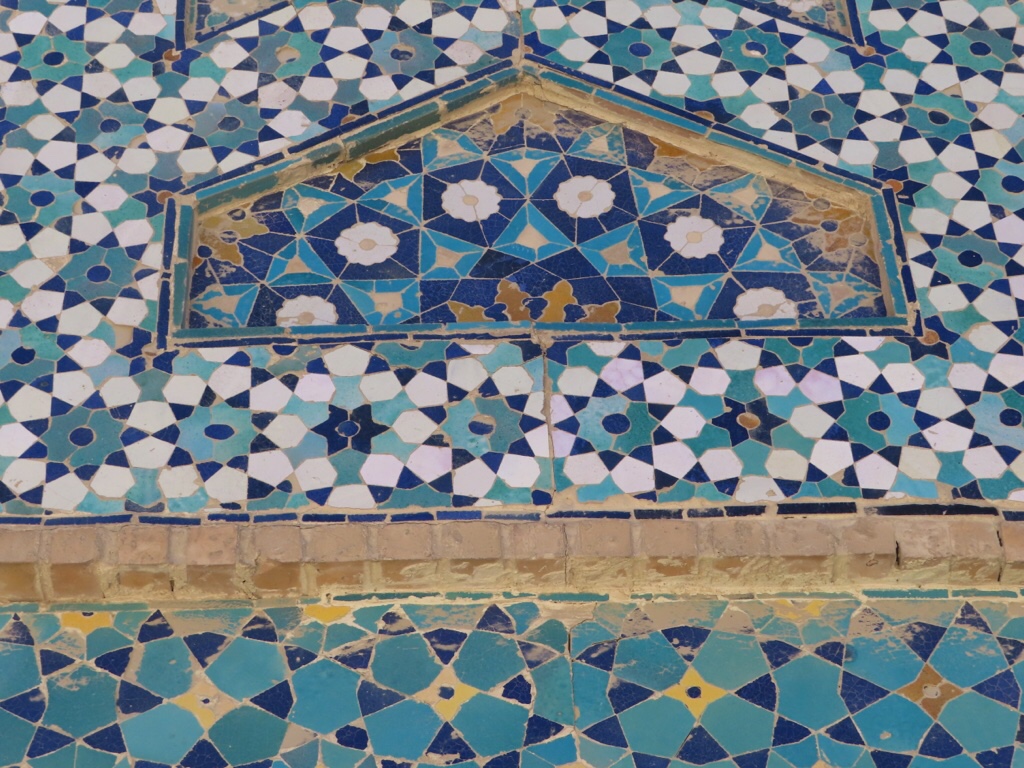
The Mir-i Arab Madrasa opposite was constructed in 1536, also by Ubaydullah-khan, funded by the sale of 3,000 slaves captured in his wars in Khorasan. The two-story facade is almost completely covered in glazed mosaic faience tiles, a time-consuming and expensive decorative treatment that was first popularized under Timur’s rule.
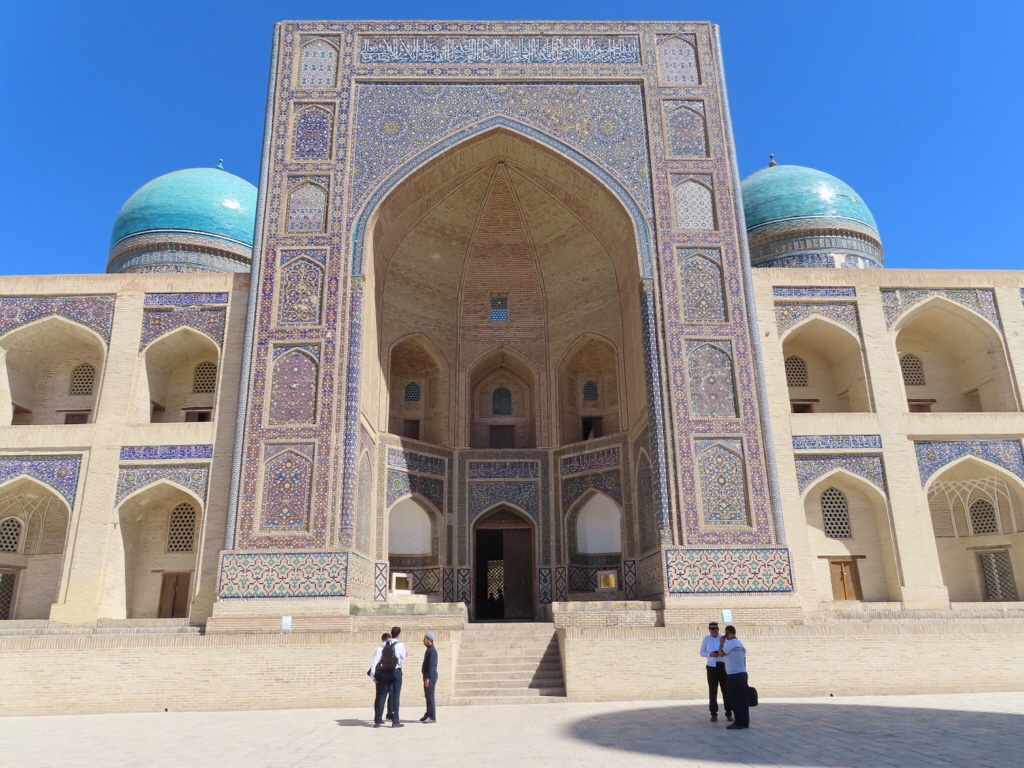
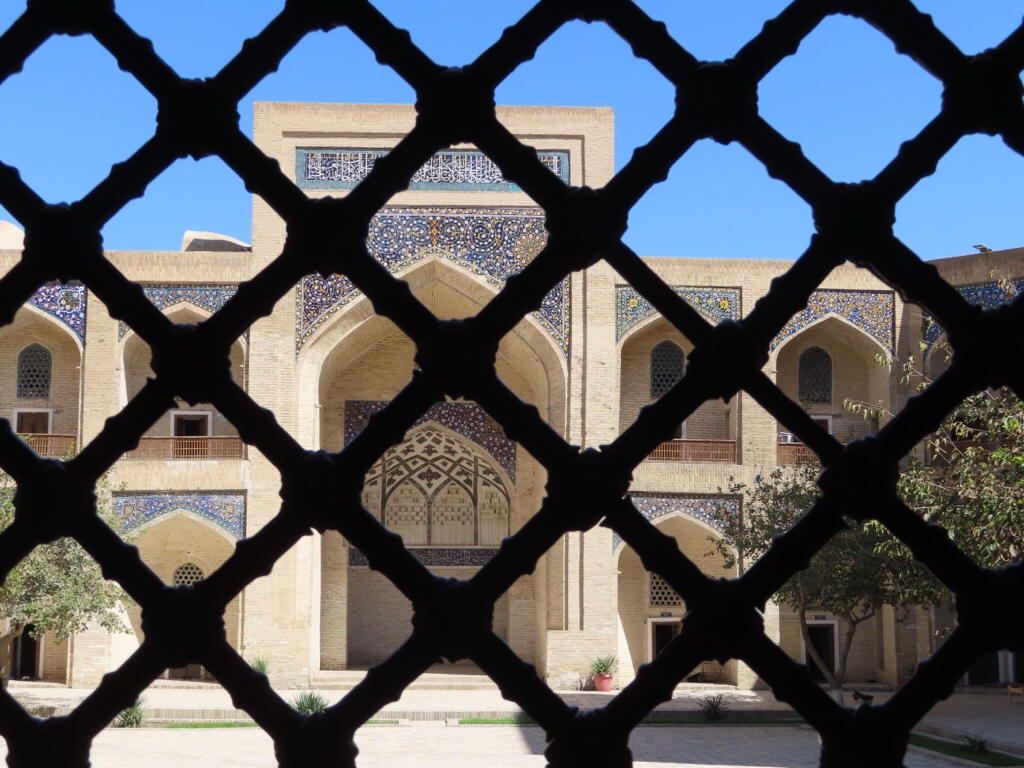
In the Soviet era the Mir-i-Arab was the only madrasa allowed to operate throughout the entire realm and remains in active use, offering a 4 year course to 120 students in religious and general subjects. It is closed to visitors but peering through the pandzhara was like peeking into the quad of an Oxford college!
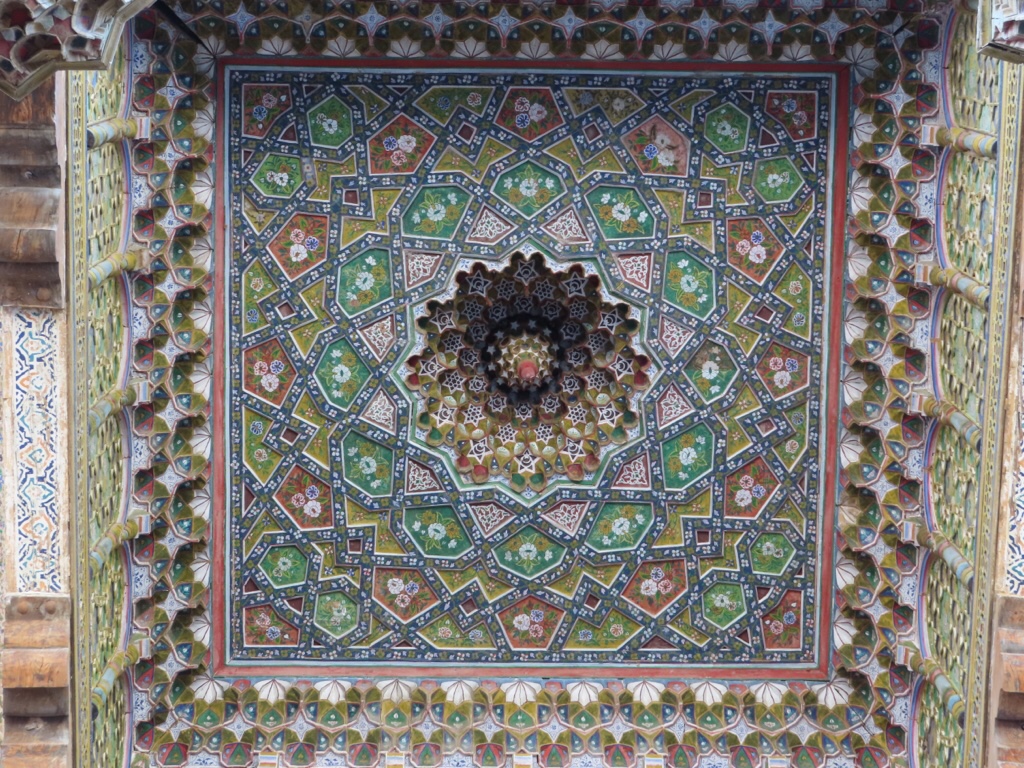
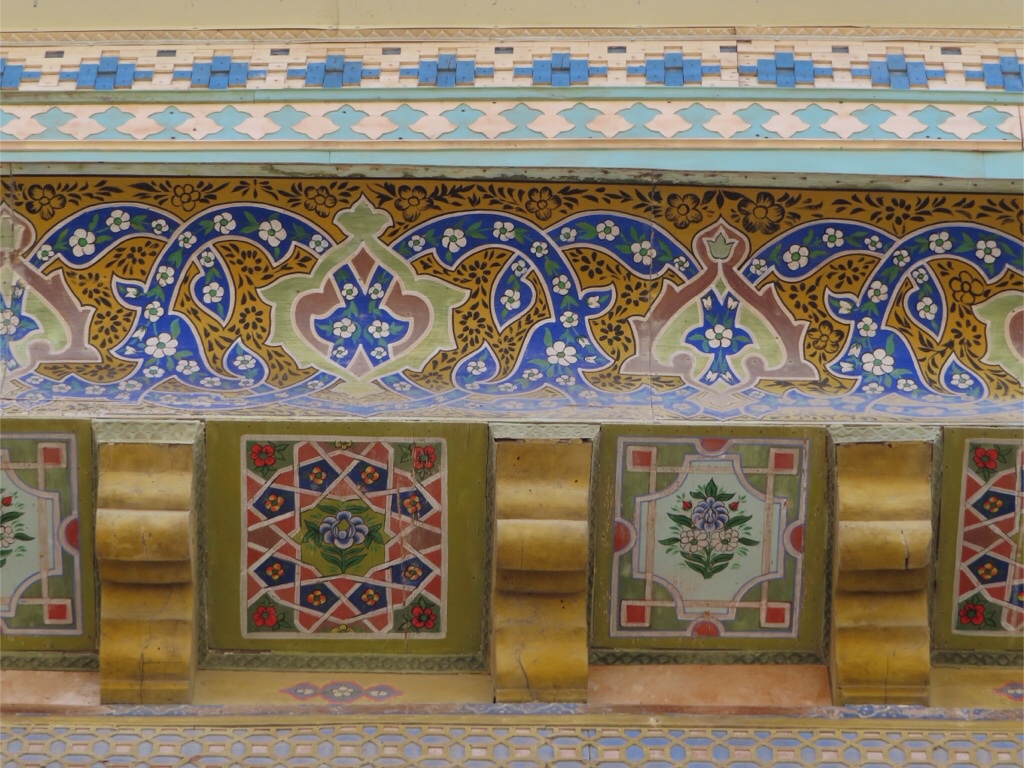
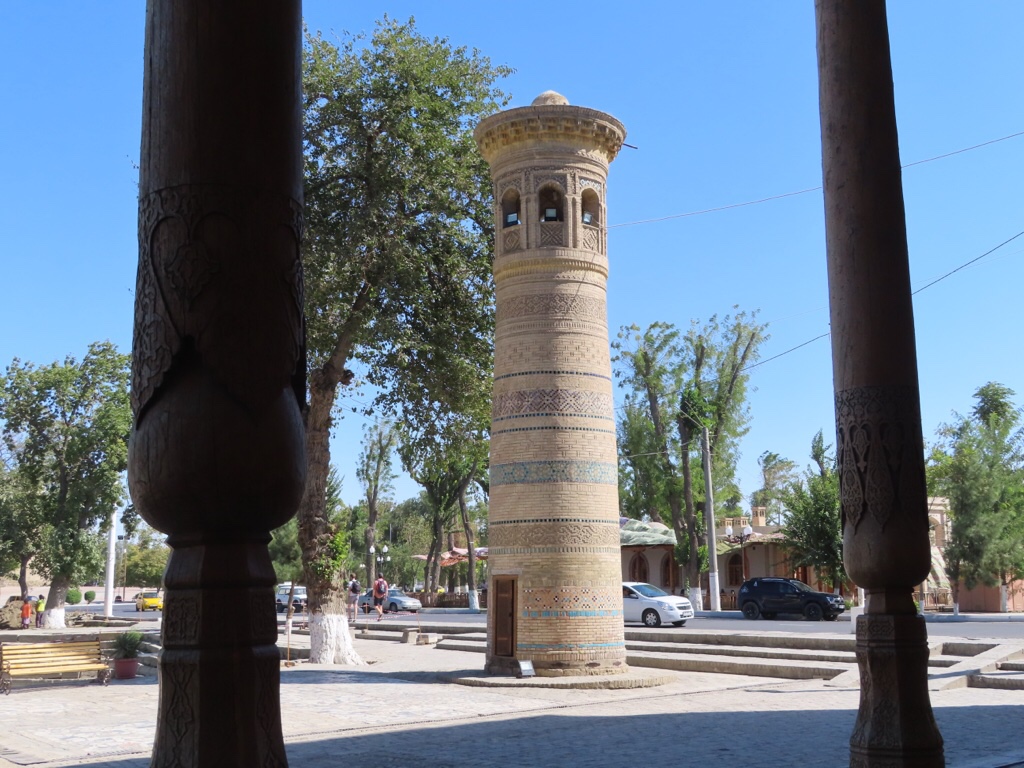
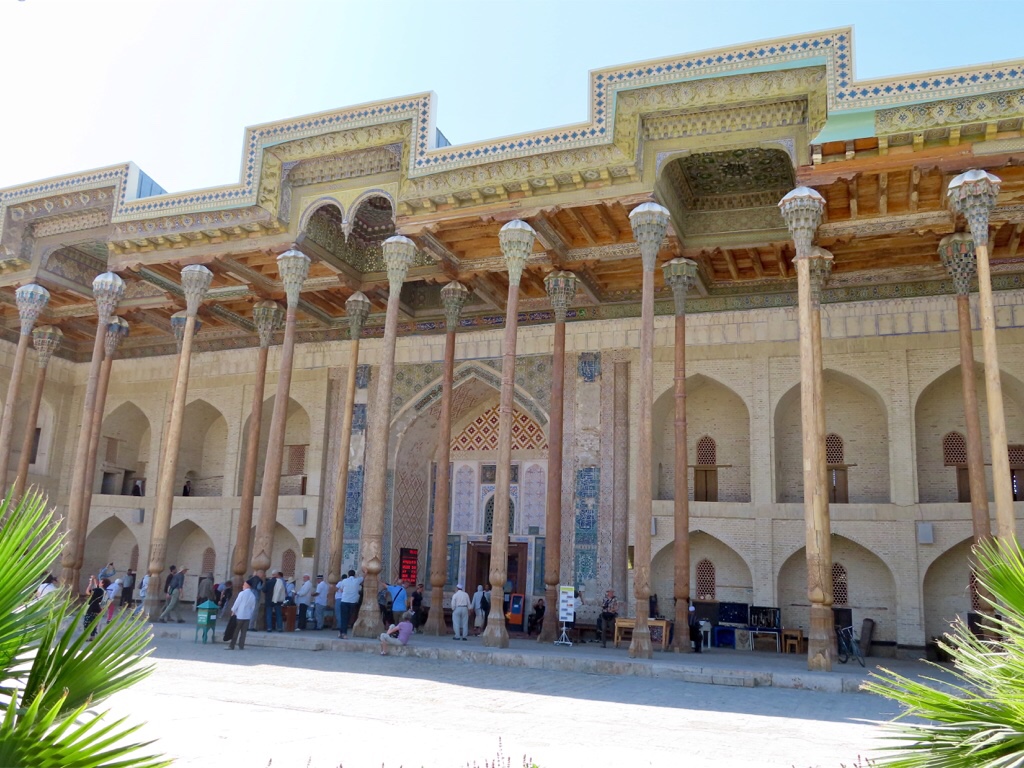
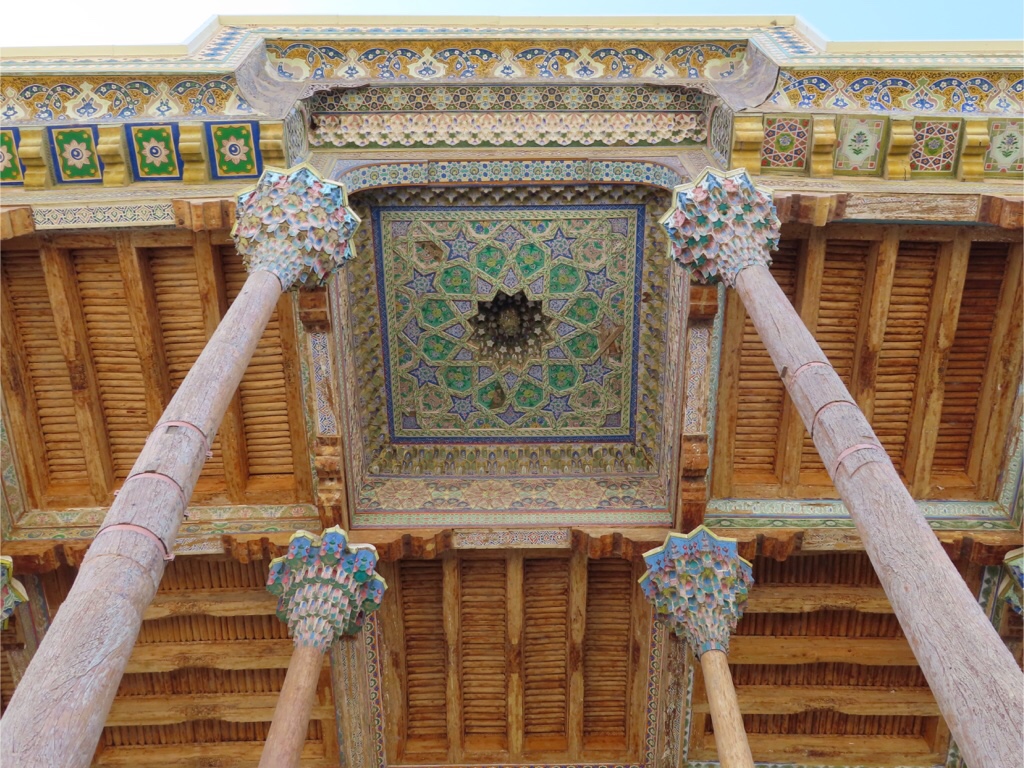
A short way west is the main central square or Registan of Bukhara. There were once a lot of public buildings here, but all that remains is the Bolo-Khauz Mosque which was built in 1712 by Emir Shahmurad who wanted to attend Friday prayers with the people. It is named for the far older hauz or pool in front. The irwan has a wooden ceiling leaning on refined columns and is decorated with fretwork and ornamented with floral and geometrical ornamental patterns. A short minaret was built in 1917.
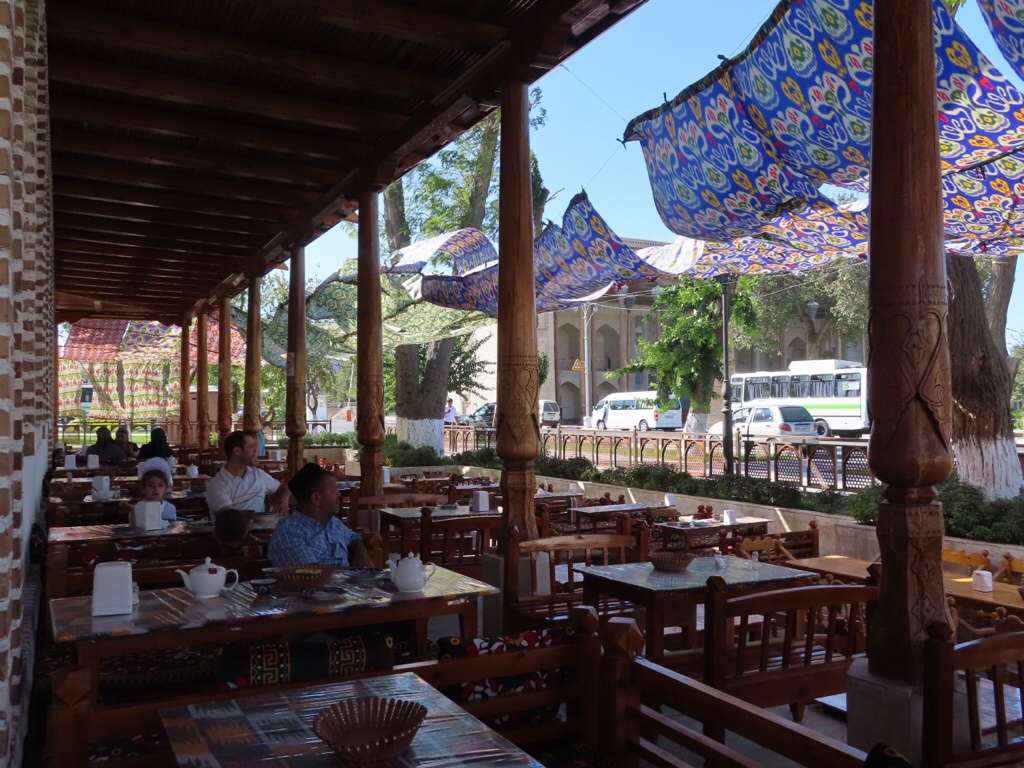
We took a tea break in a shady cafe …

… and read about two British officers in 1842 who were executed in this square in 1842. Colonel Charles Stoddart was a diplomat and British agent in Central Asia during the period of the Great Game. This was a defensive cold war for control of Central Asia which pitted imperial Russia, which was expanding to the south, against Britain, who wanted to protect India. He was sent on a mission to persuade the emir of Bukhara to free Russian slaves and sign a treaty of friendship with Britain but instead offended the emir as he did not bow or take gifts so was thrown into jail. Captain Arthur Conolly came to rescue him, but he was thrown into jail too. Receiving no reply to his letter to Queen Victoria, the emir had them marched out in front of a large crowd, made them dig their own graves, and had them beheaded. Bukhara later became a Russian protectorate although the emir reigned until 1920.

Across the road was the Ark, the fortified city within a city which was the residence of the emirs of Bukhara. Its foundations were laid in the C4th BC but has been destroyed and rebuilt several times and in 1920 it was bombed by the Red Army, destroying around 80%. The most impressive part was the entrance …
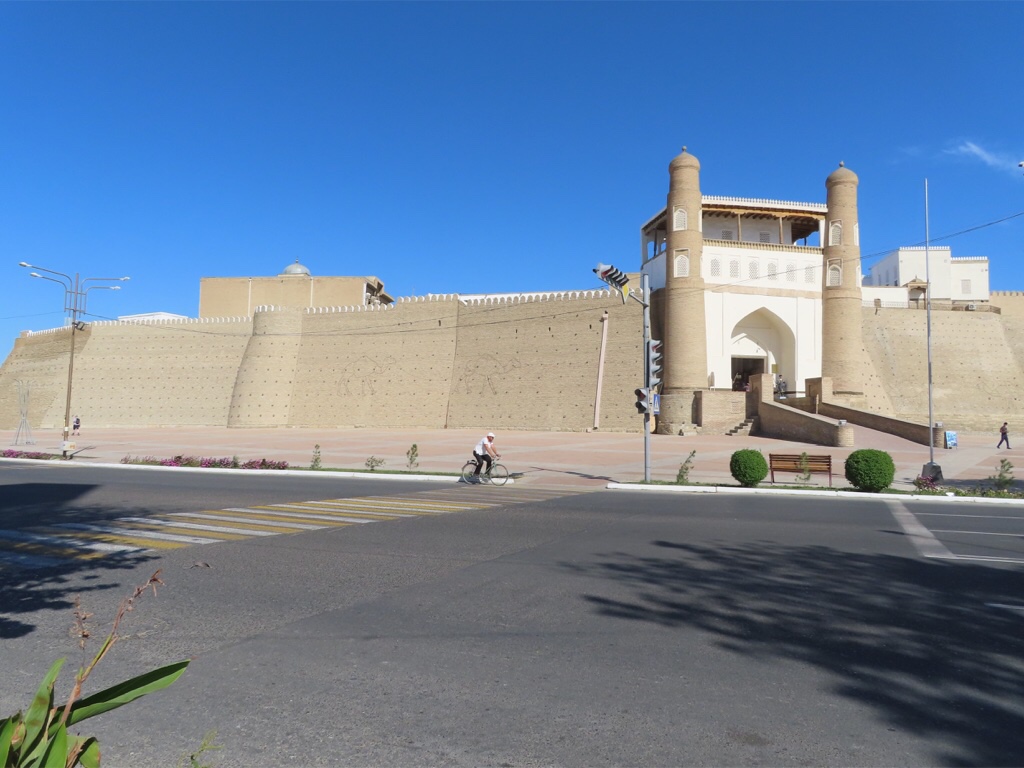
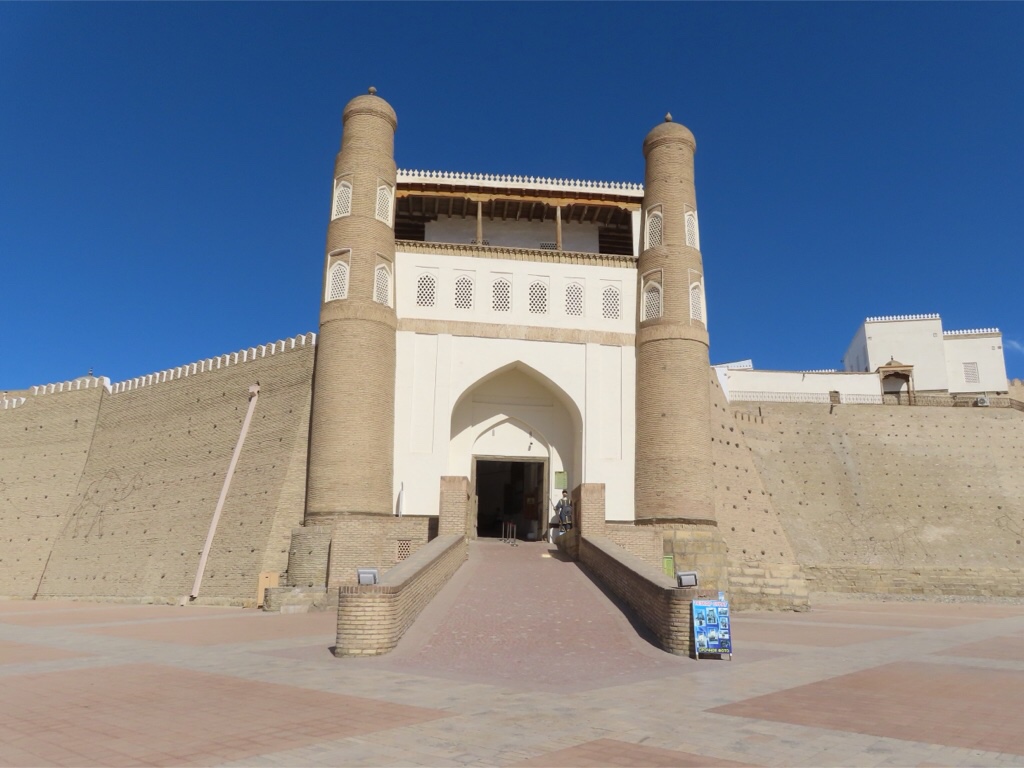
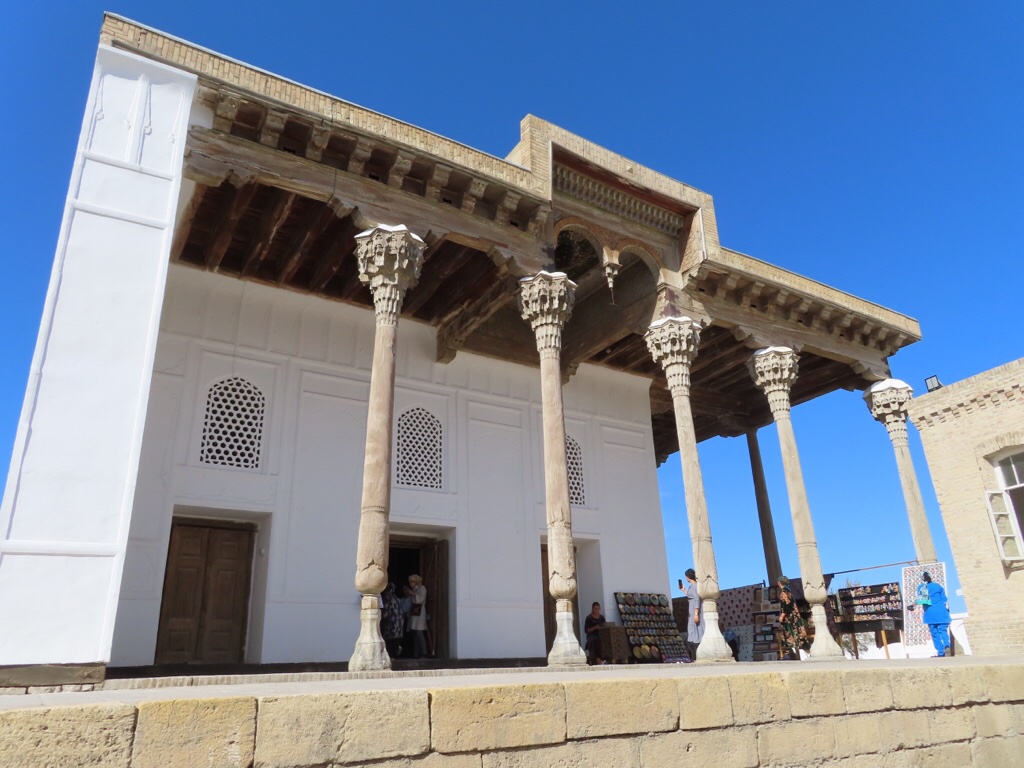
… but there was a Mosque …
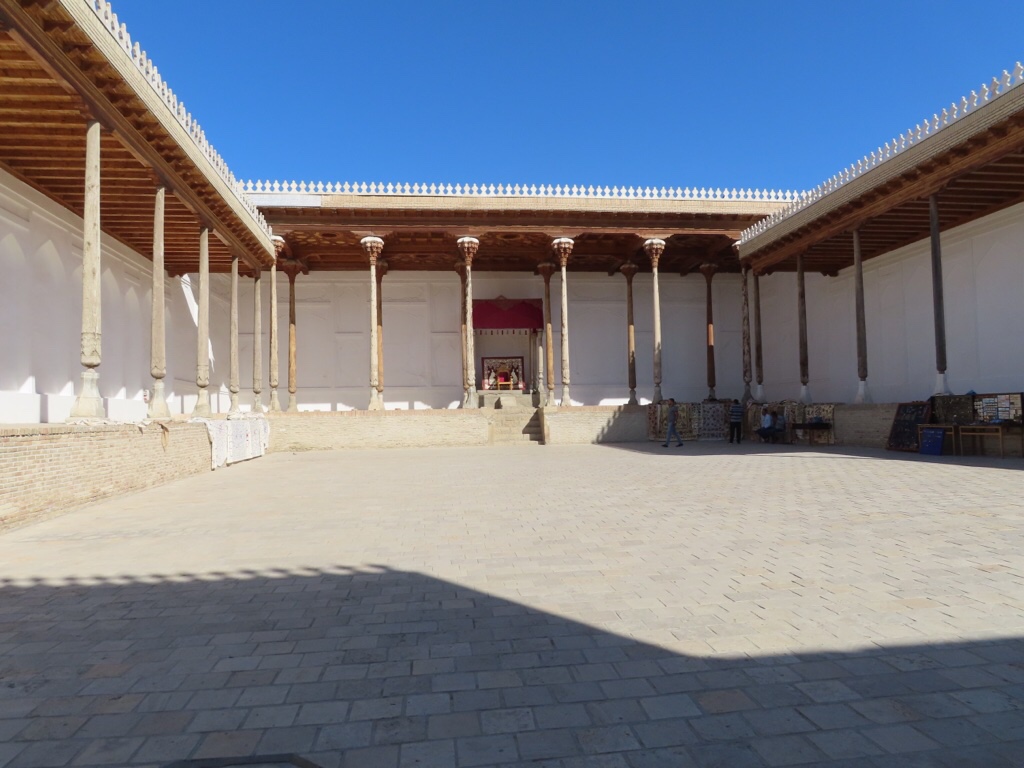
… Throne room …
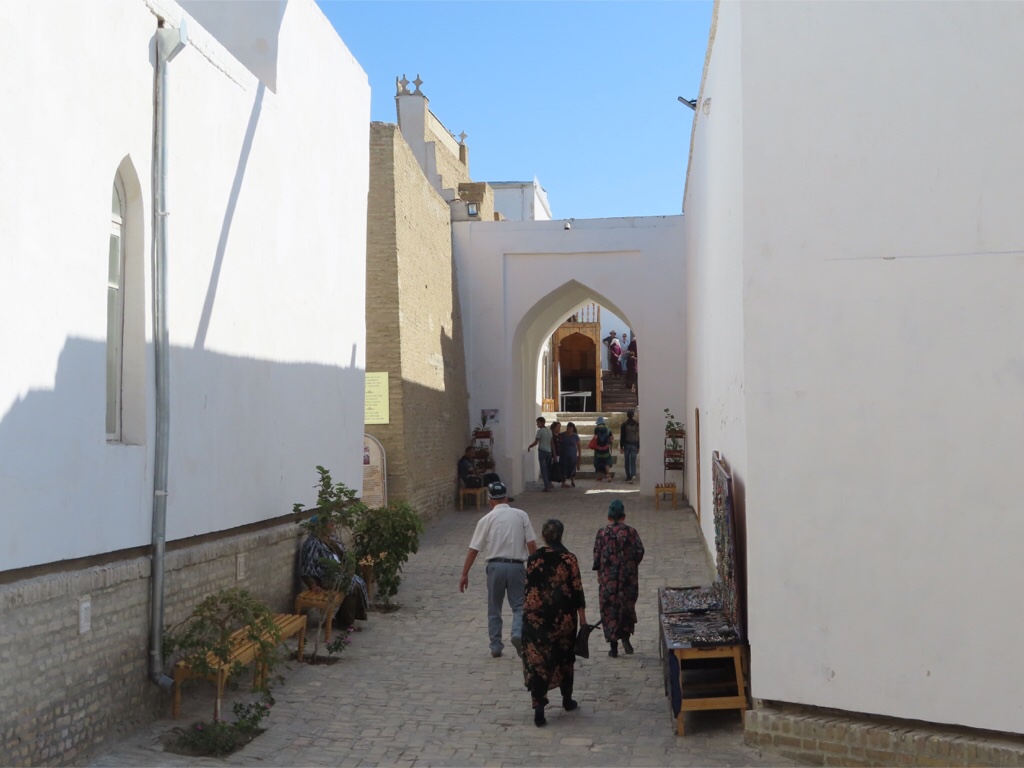
… courtyards overlooking the city …
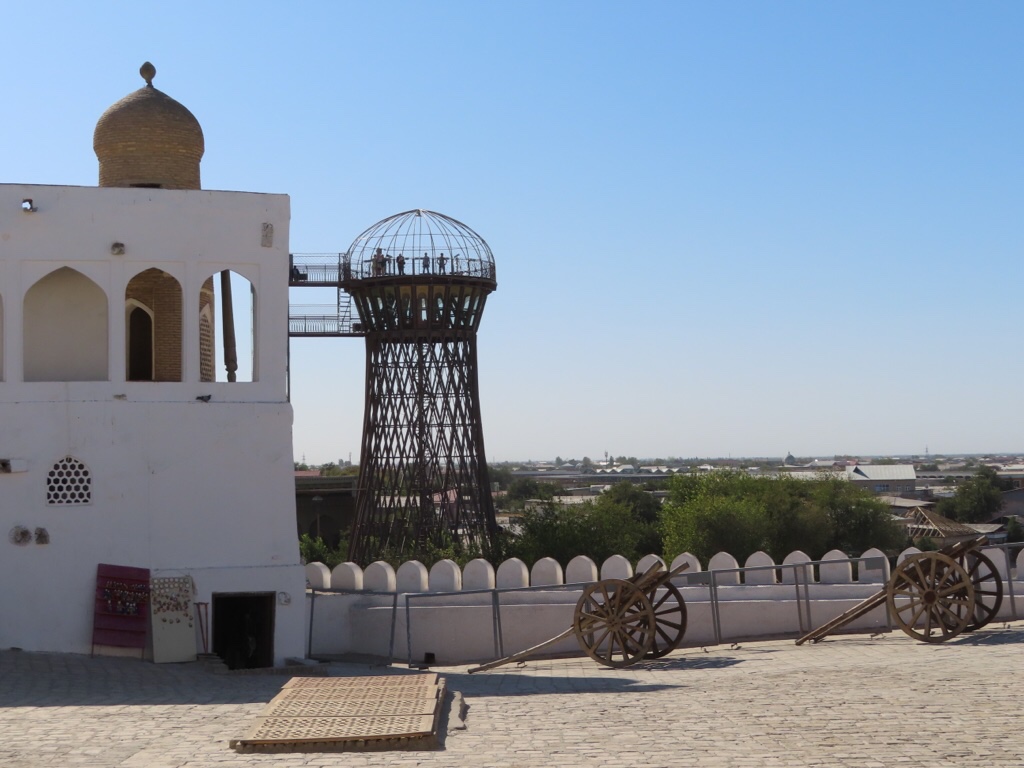
… and this rather strange viewing tower – us watching them watching us!
There was even photo evidence of real storks in the C19th!
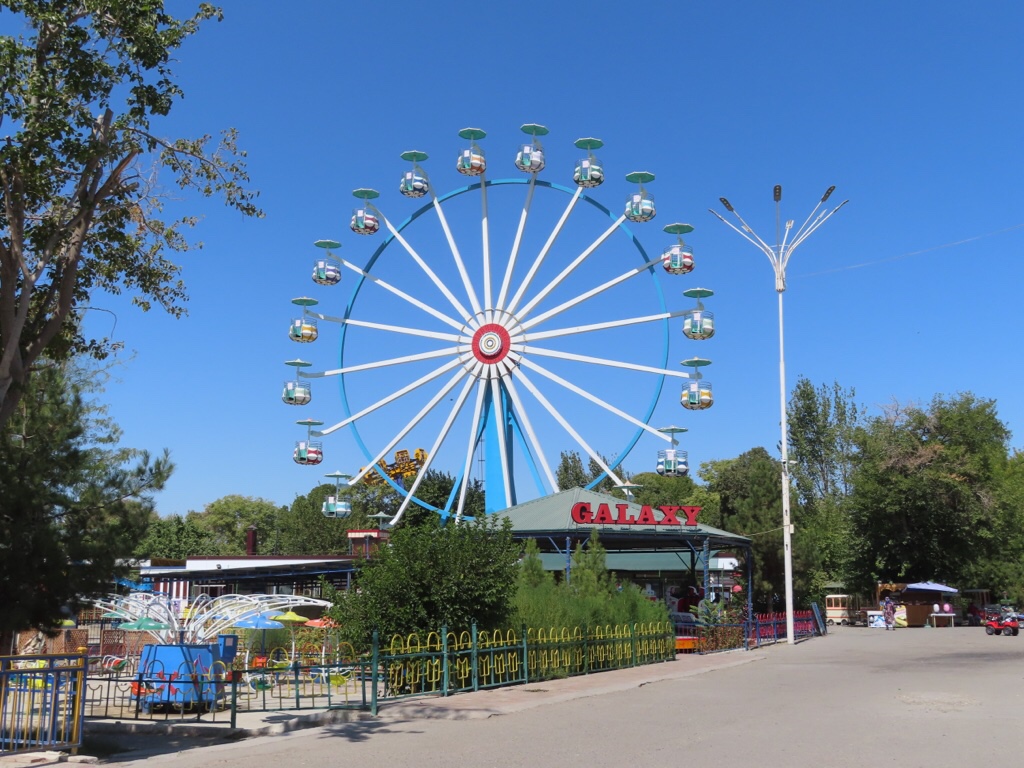
Close by is Samonid Park built in the Soviet era and containing a funfair.
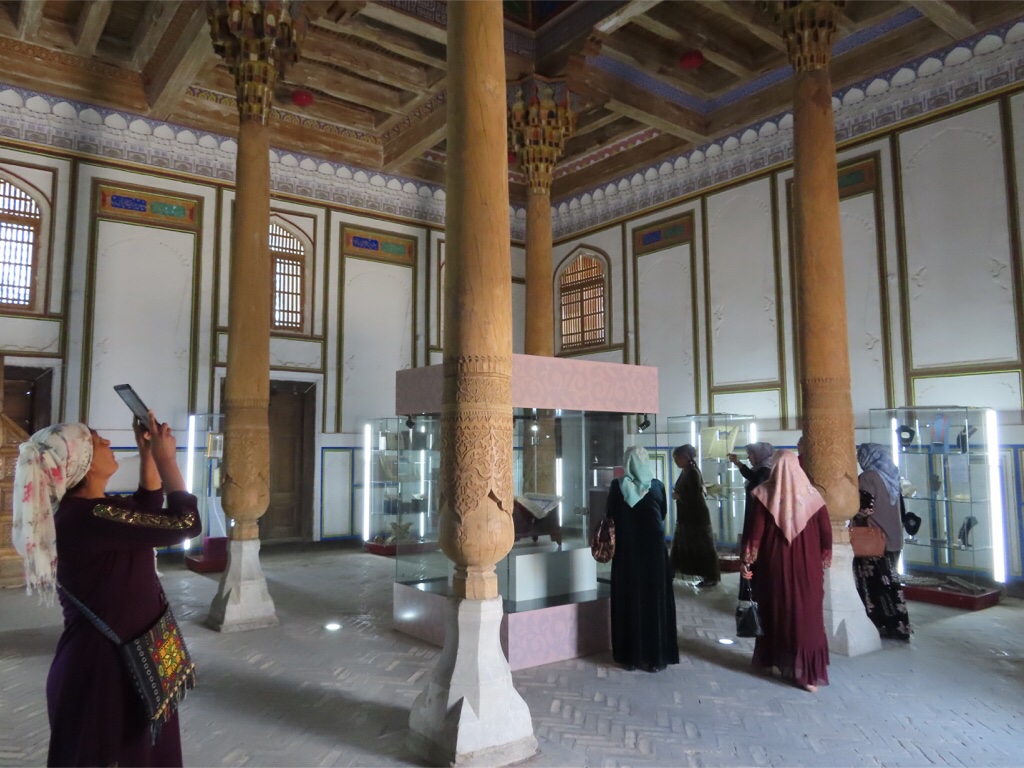
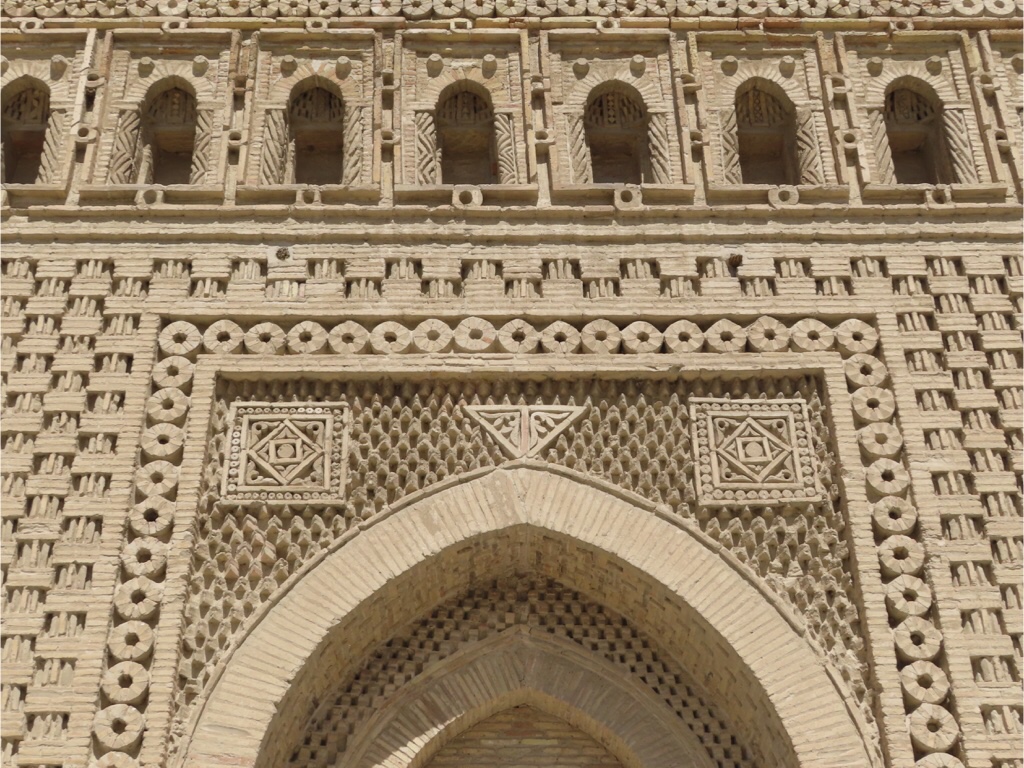
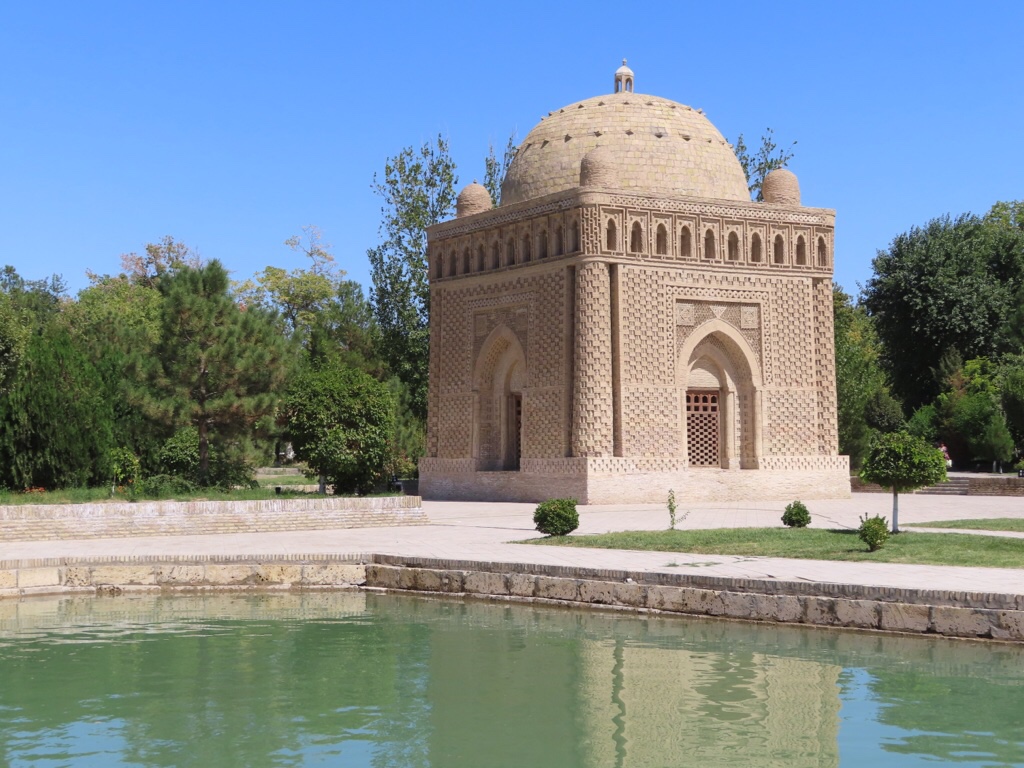
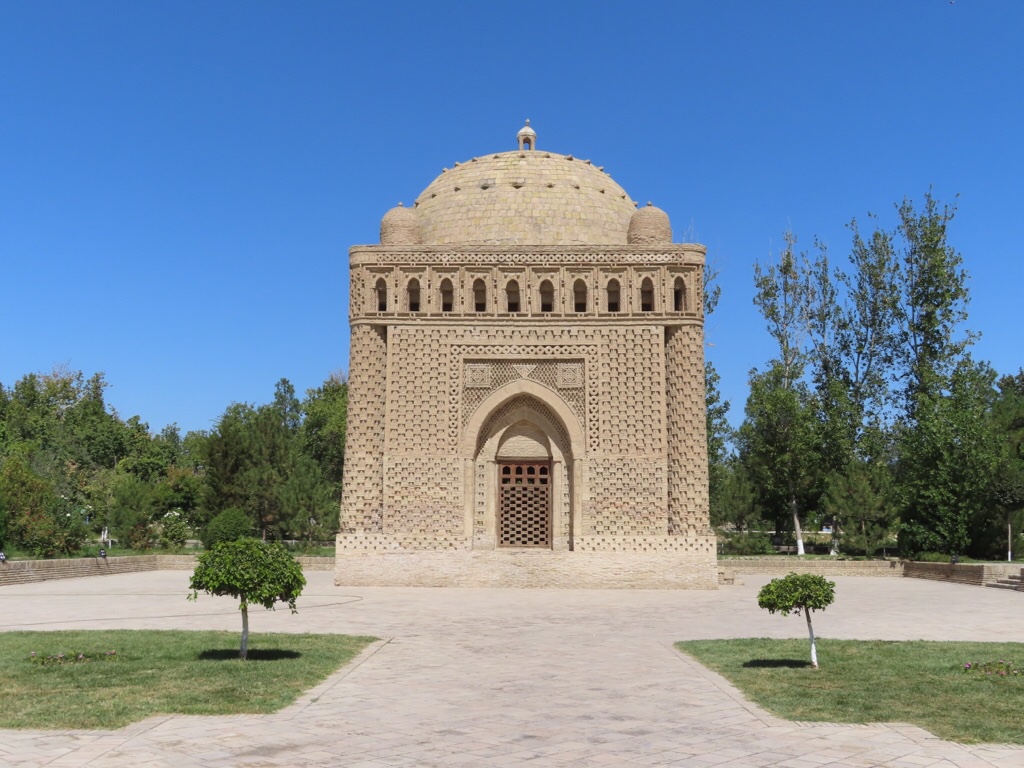
It is also home to the oldest building in the city, The Ismail Samani Mausoleum, built in the C10th and buried in sand for many years which preserved it. Despite being quite small and relying only the way the the light plays on its surface for its beauty, we found it charming.
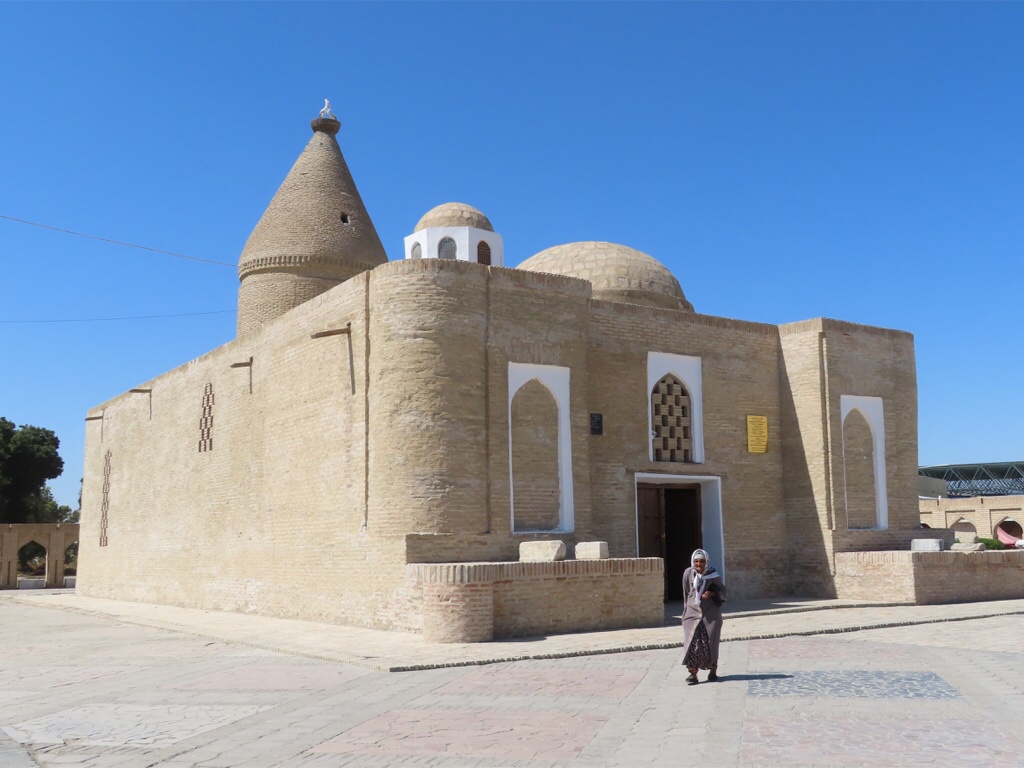
Nearby were the Chashma-Ayub Mausoleum,over the source of a spring, which sprung up from the ground when struck by the Bible prophet Job …
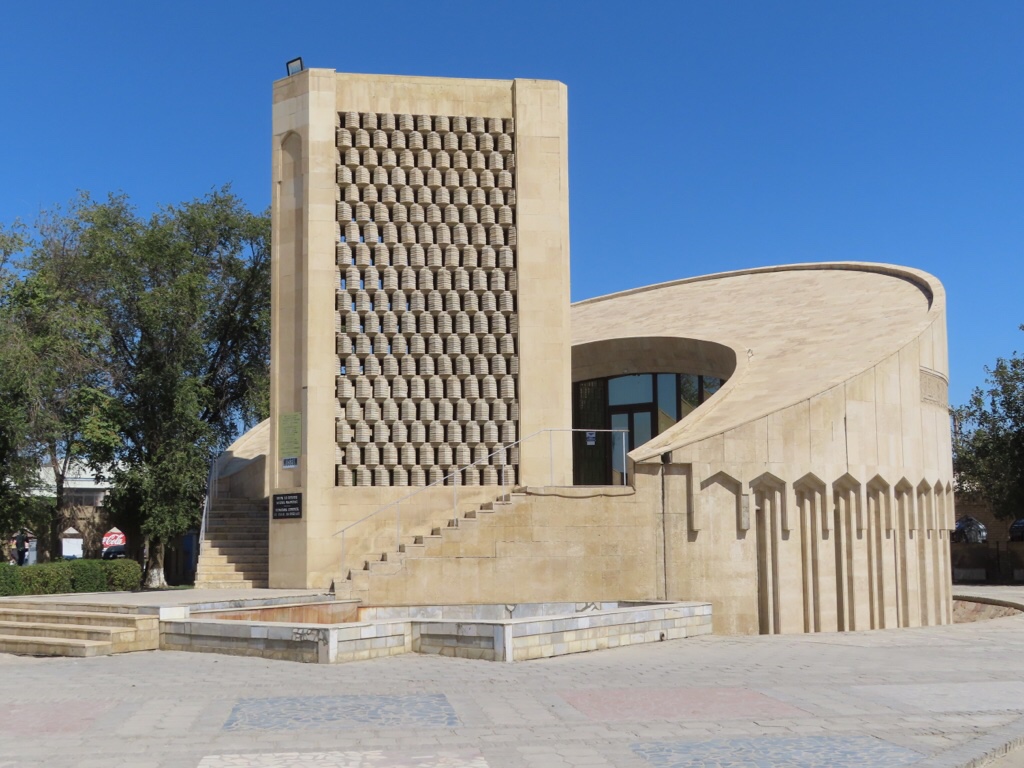
…. and the Memoriam to Muhammad al-Bukhari.
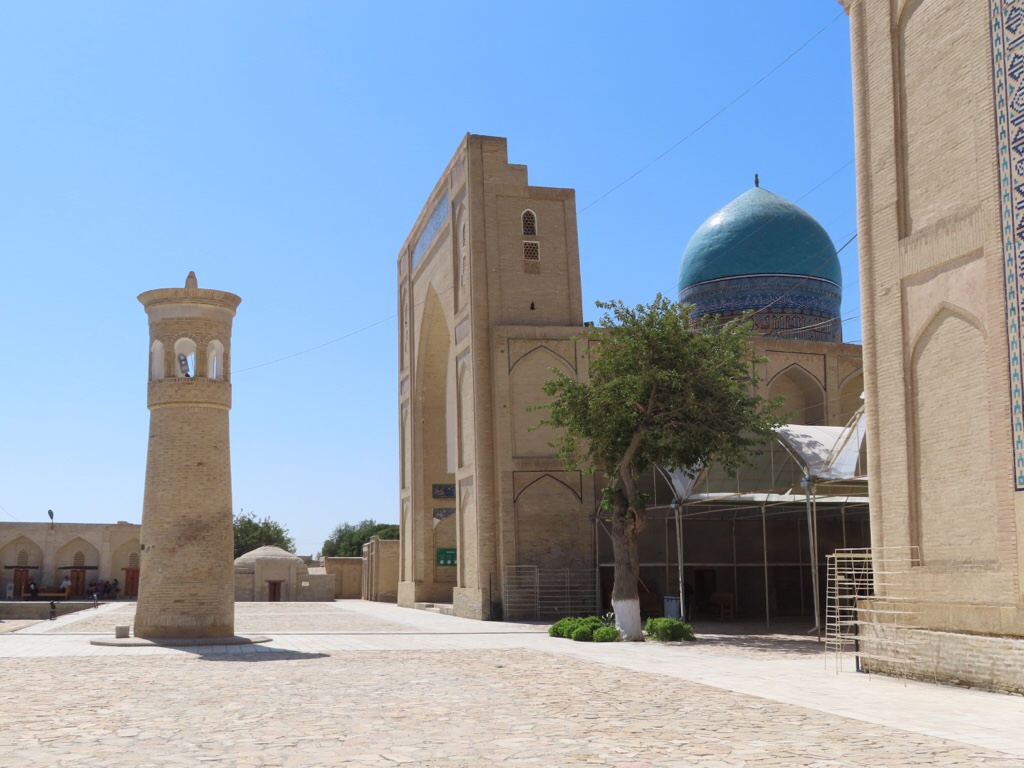
There were also a couple of places on the outskirts of town …

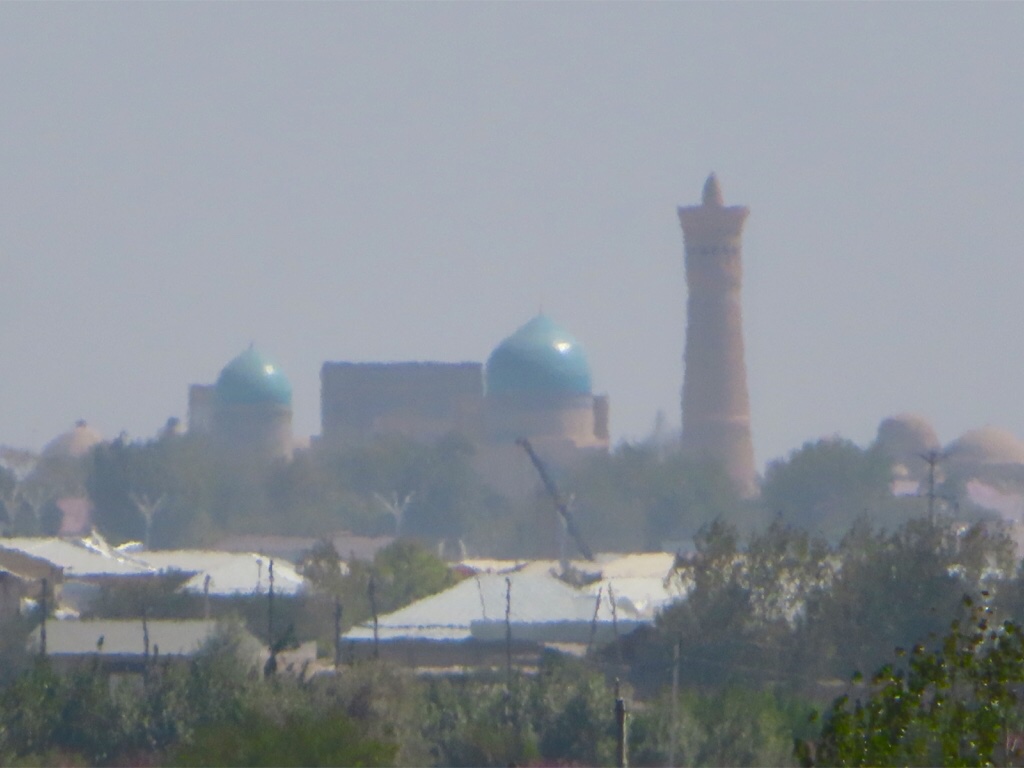
The Chor-Bakr Necropolis was built in the C16th, although it was already established as a burial ground. The main complex has two mosques, pool and later minaret. We went up on the roof for views … including this rather Impressionist snap of the Kalyan complex in the distance.
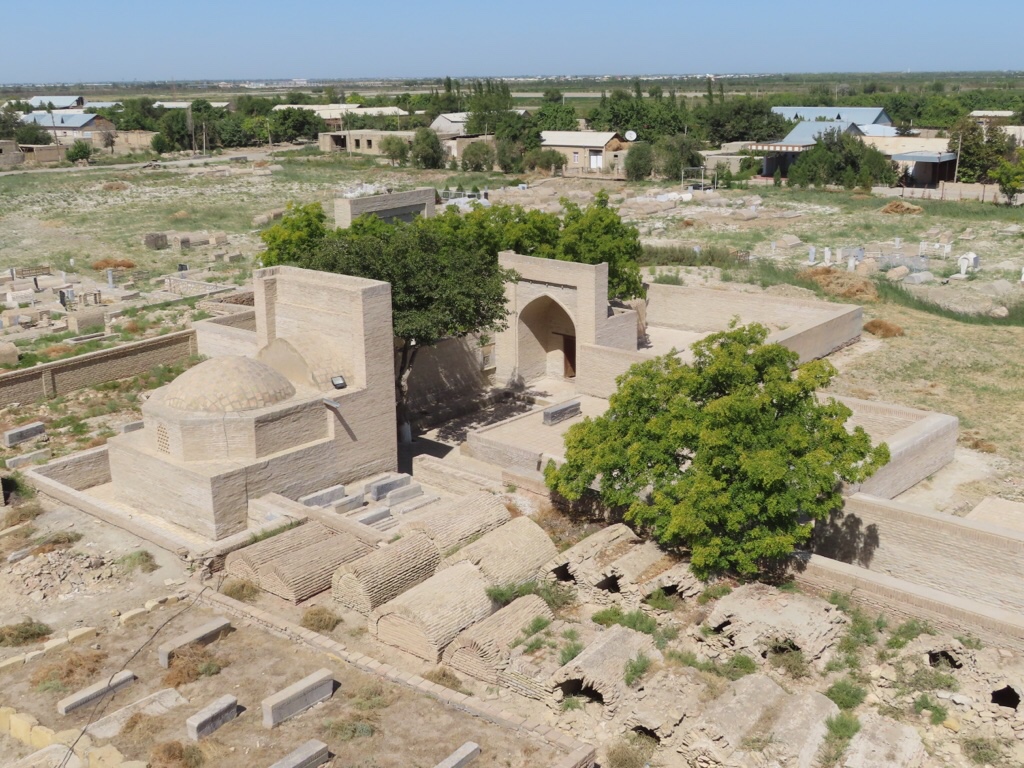
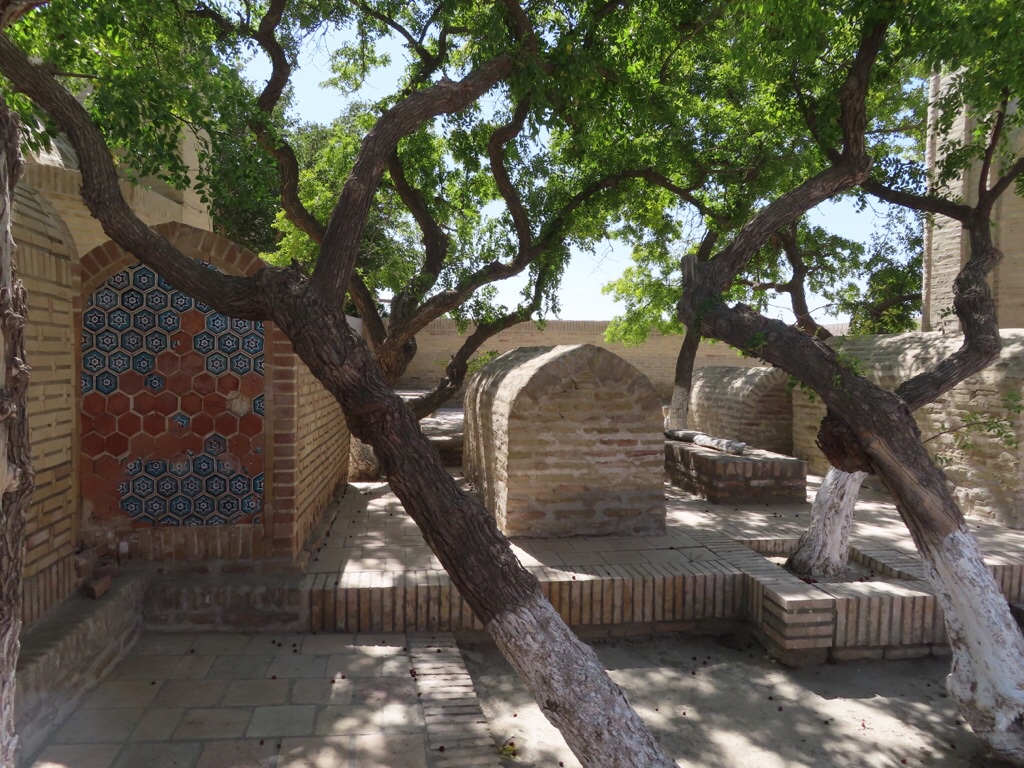
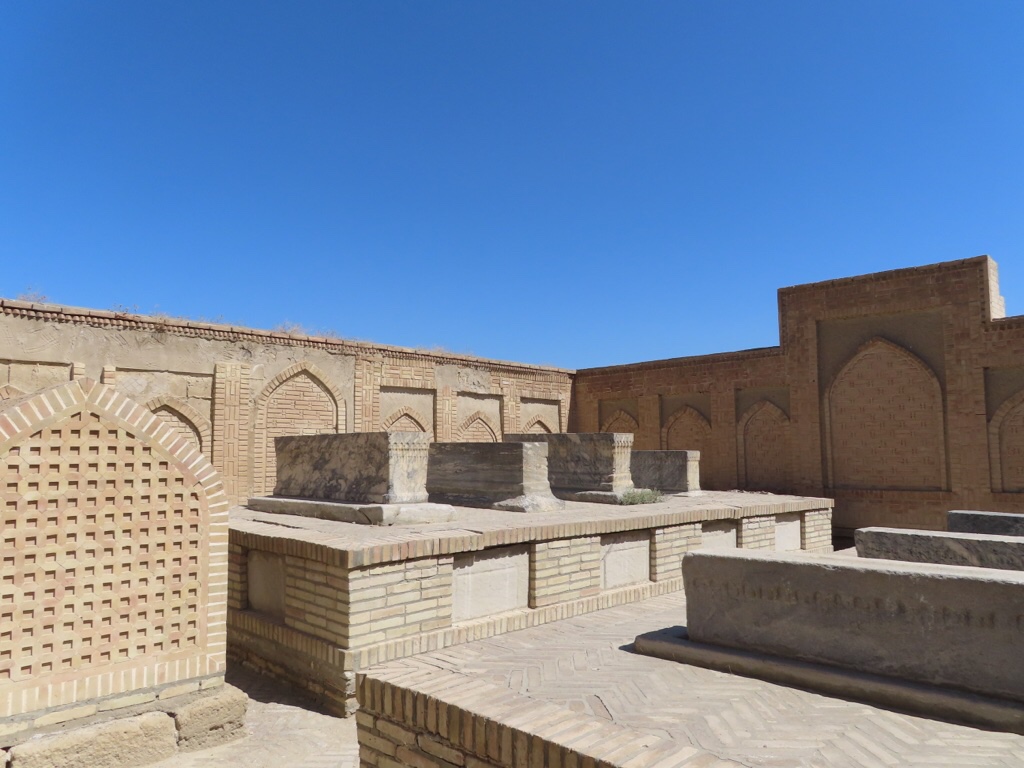
It was quite peaceful wandering round the separate walled areas called khaziras, containing groups of family tombs.
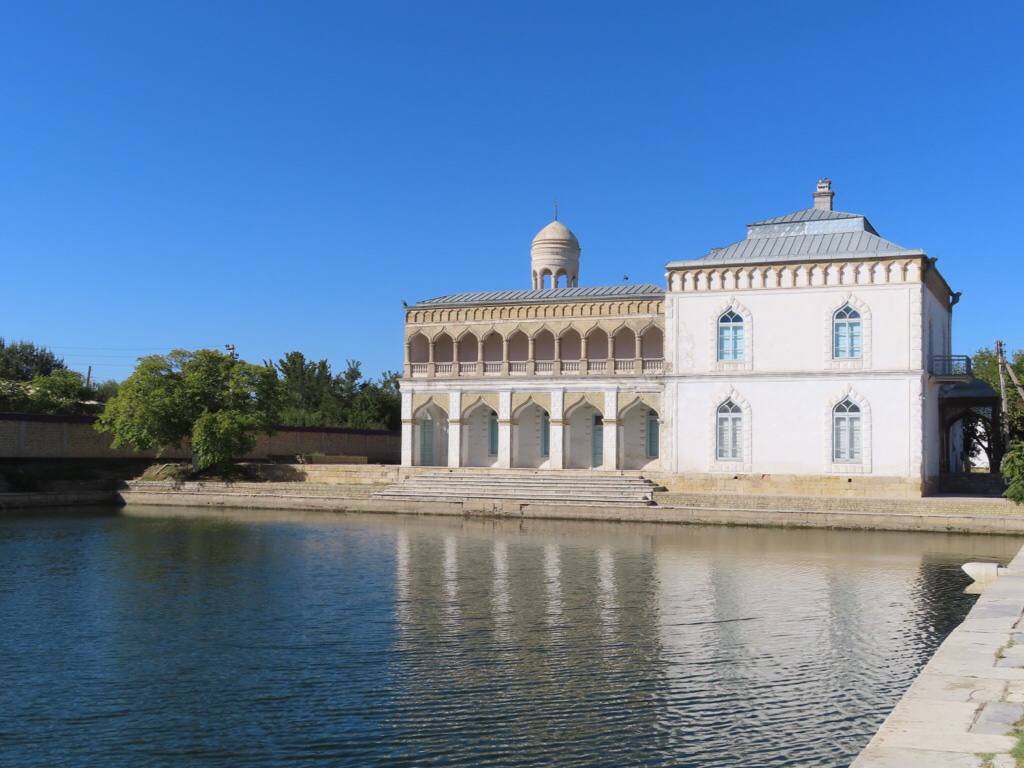
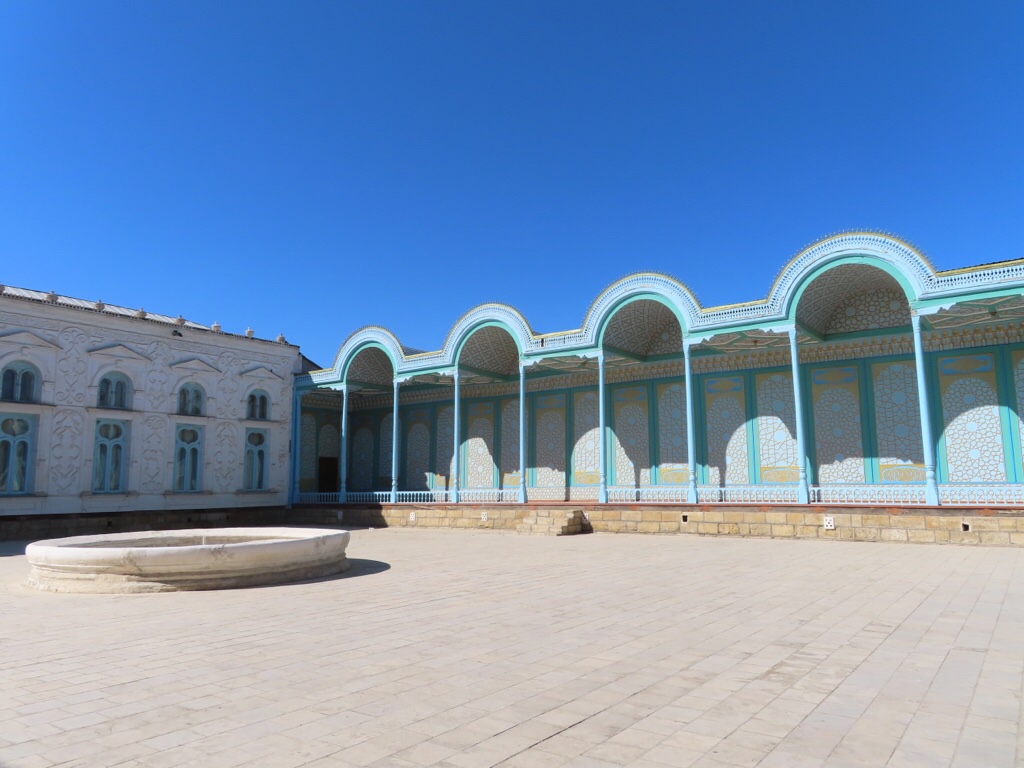
Sitorai Mokhi-Khosa Palace was the countryside residence of Bukhara emirs, now just on the outskirts of the city. The location is always cool, and was chosen by an ancient method of putting sheep carcasses at the likely construction sites and opting for the one with least decomposition. The original building from the mid C19th was replaced some years later by another emir, Muzaffar-Khan who devoted the palace to his wife Sitora. When she died, it was named Sitorai Mokhi-Khosa, translated from Tajik as ‘Star-like, Moon-like Palace’ but most existing buildings were completed in 1918 for the last emir of Bukhara, Alim Khan by the best Bukhara masters of the time.
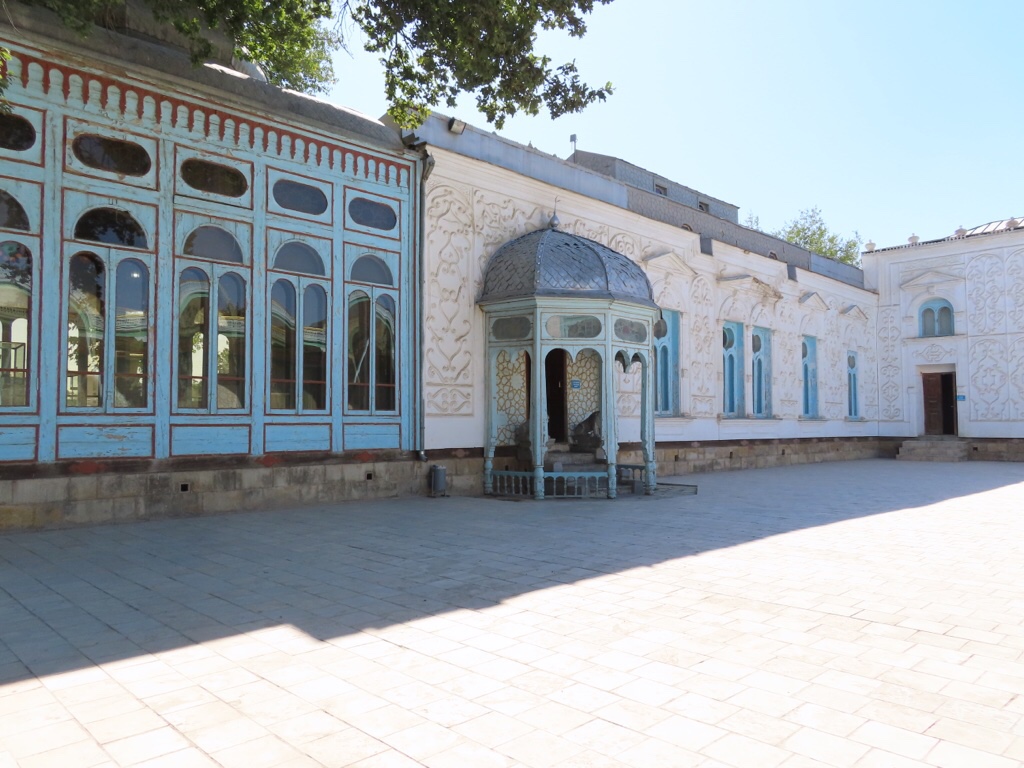
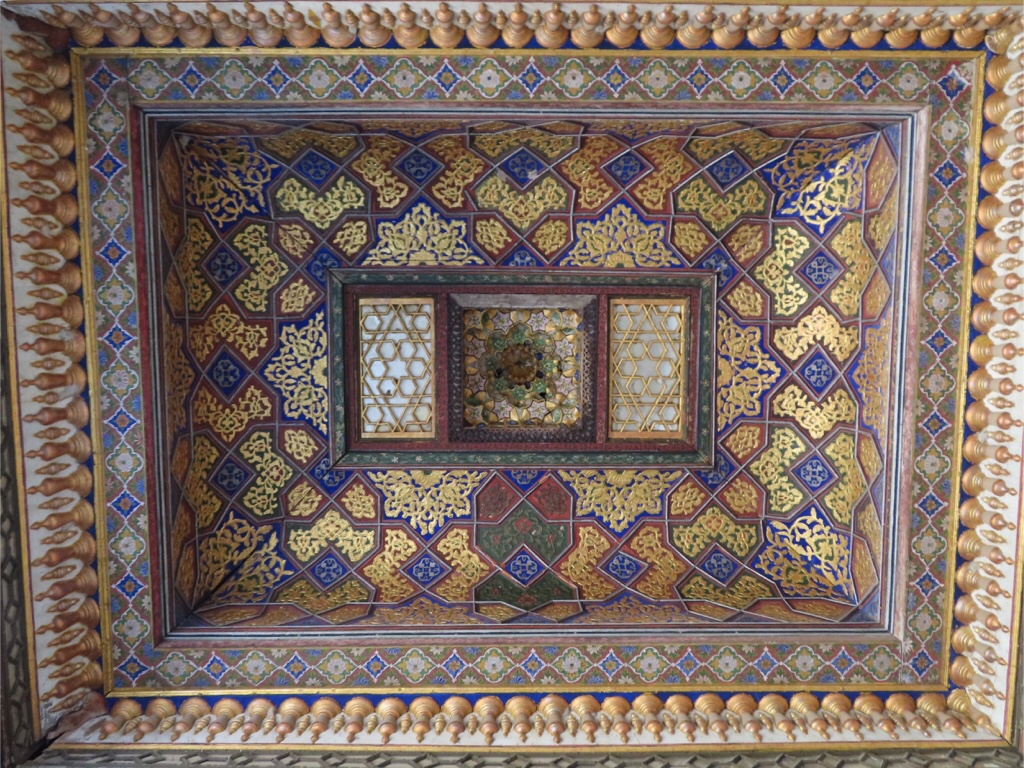
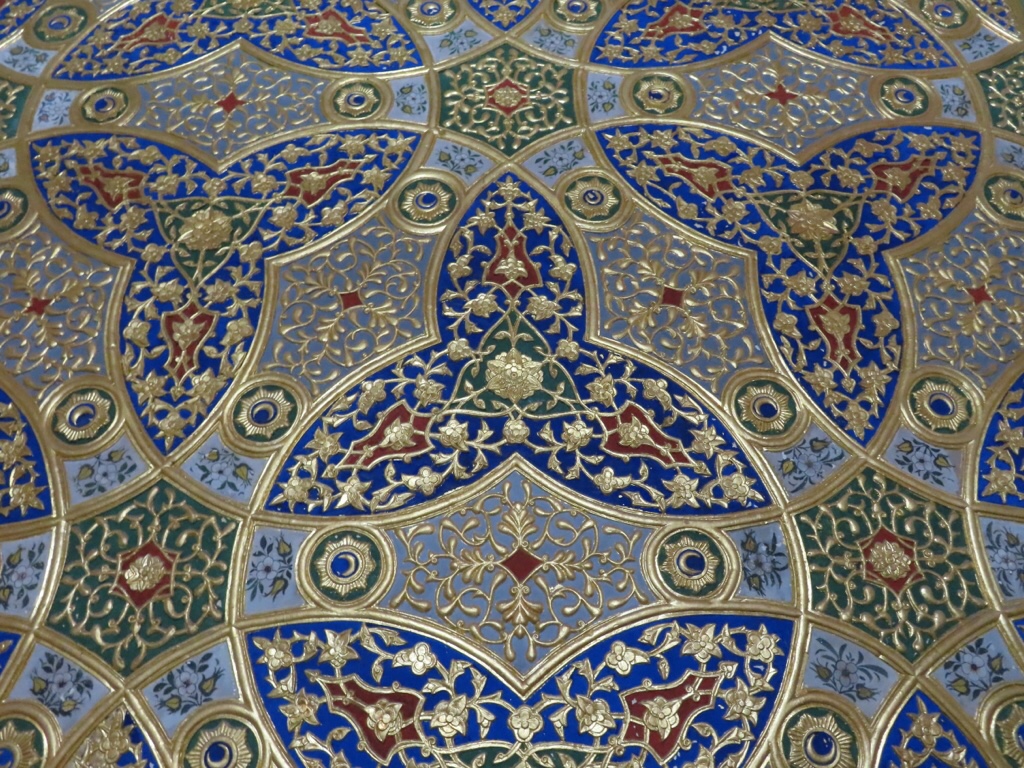
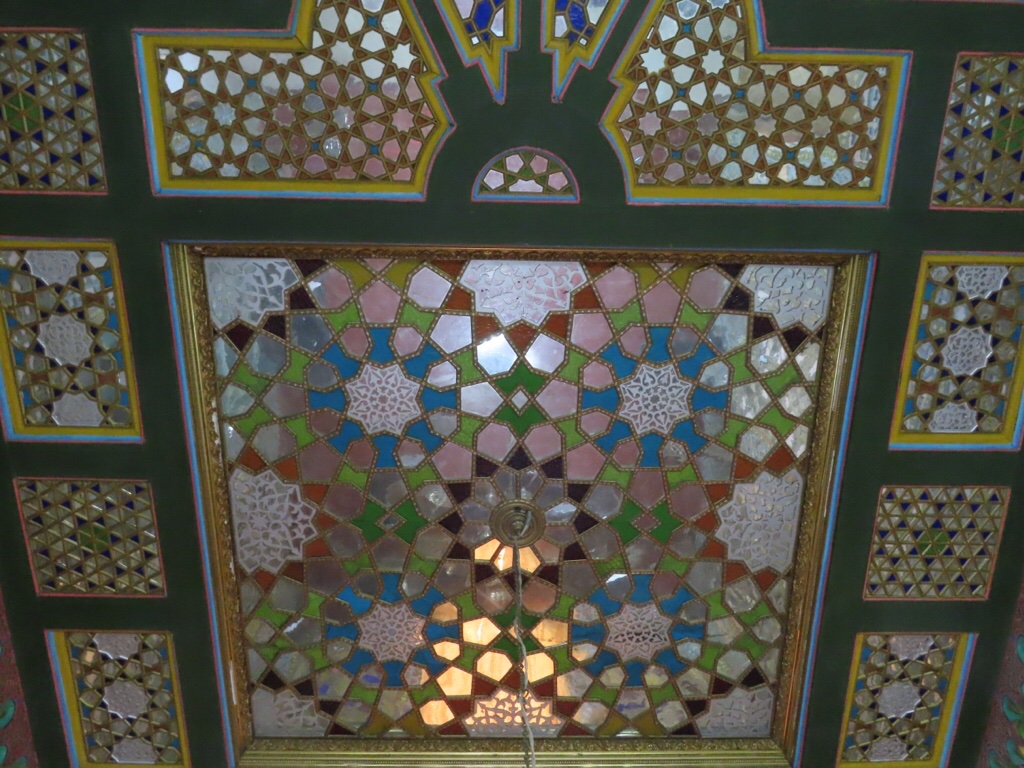
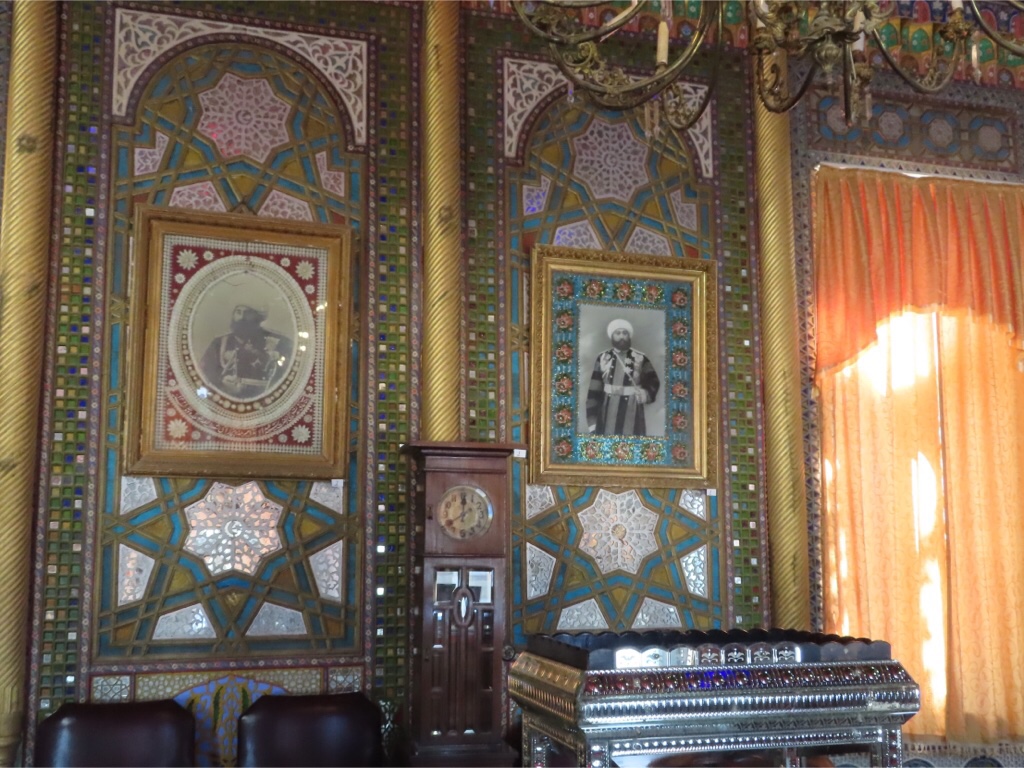
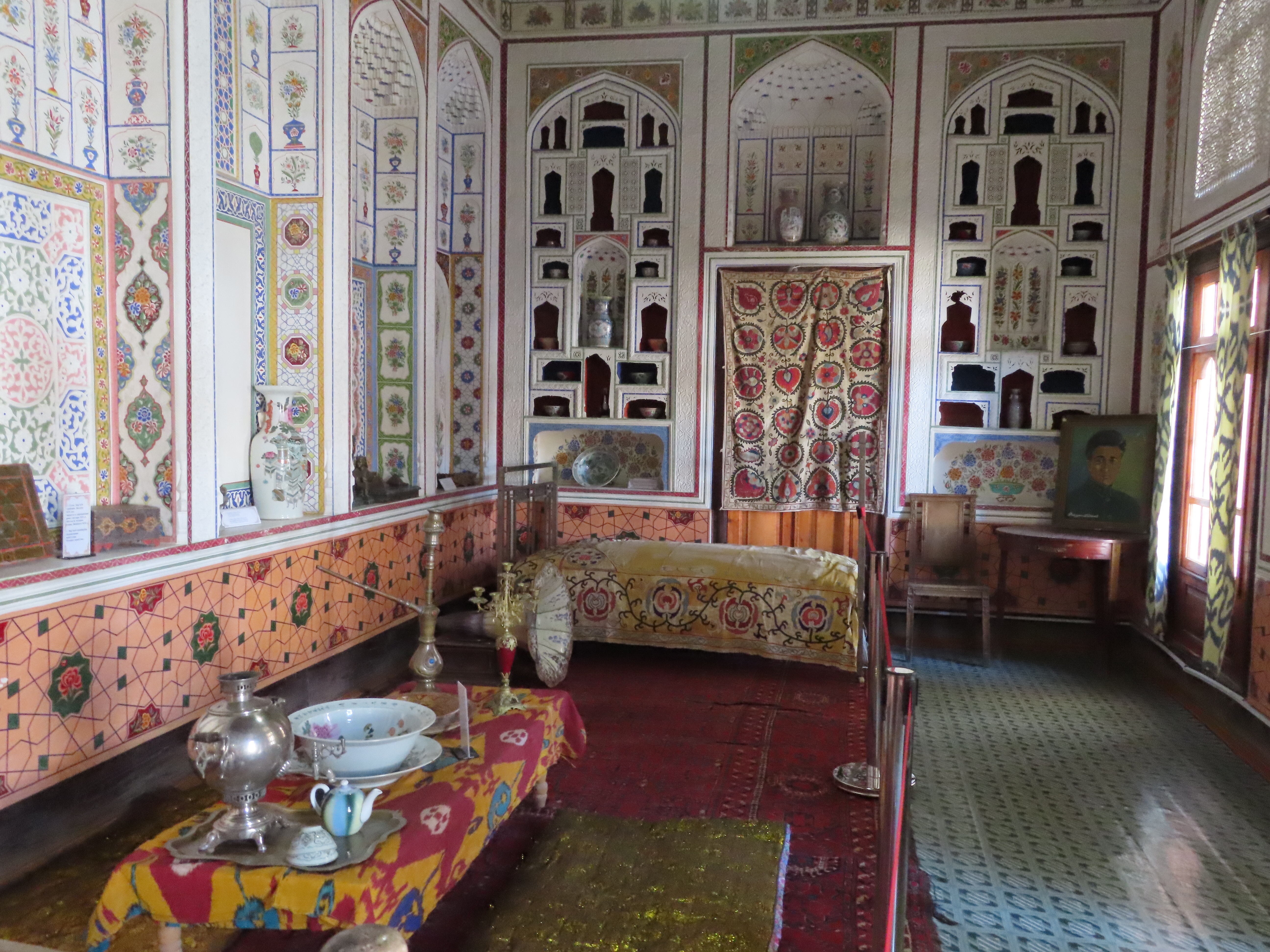
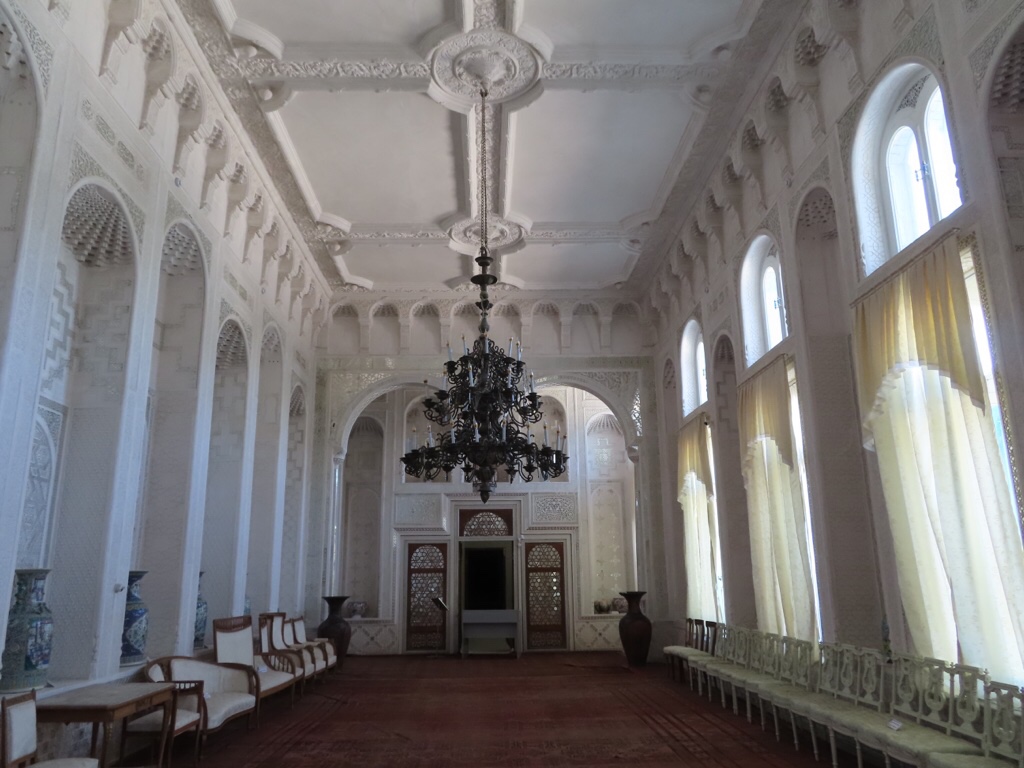
The White Hall is decorated with ganch, laid on walls covered with mirrors …
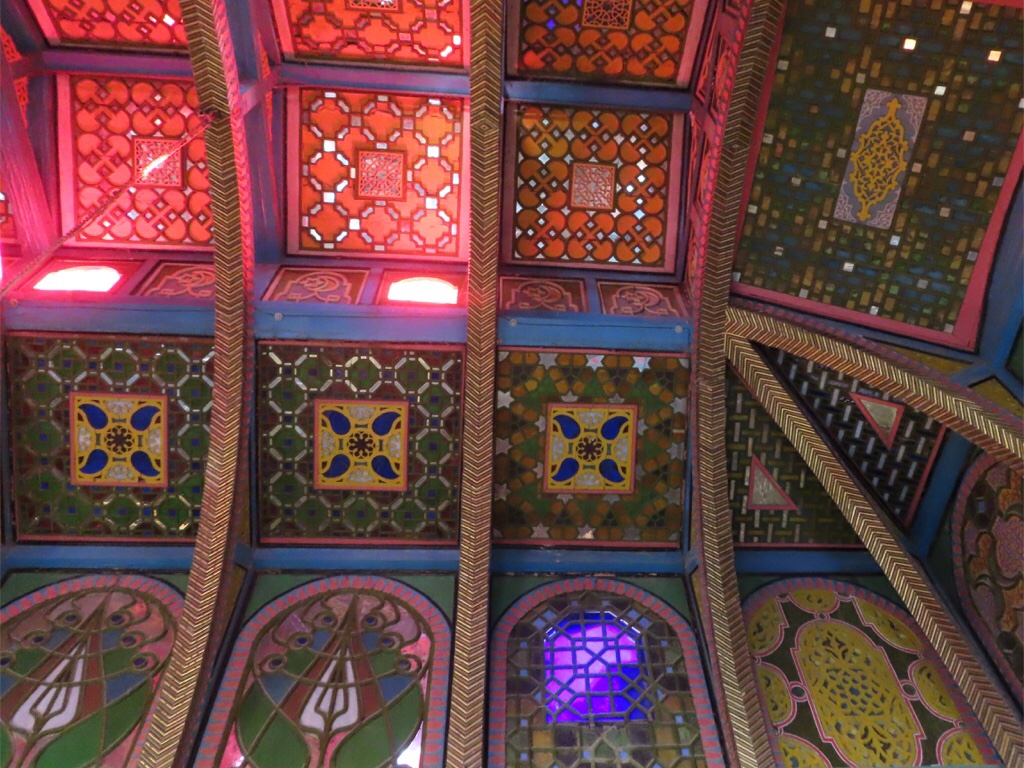
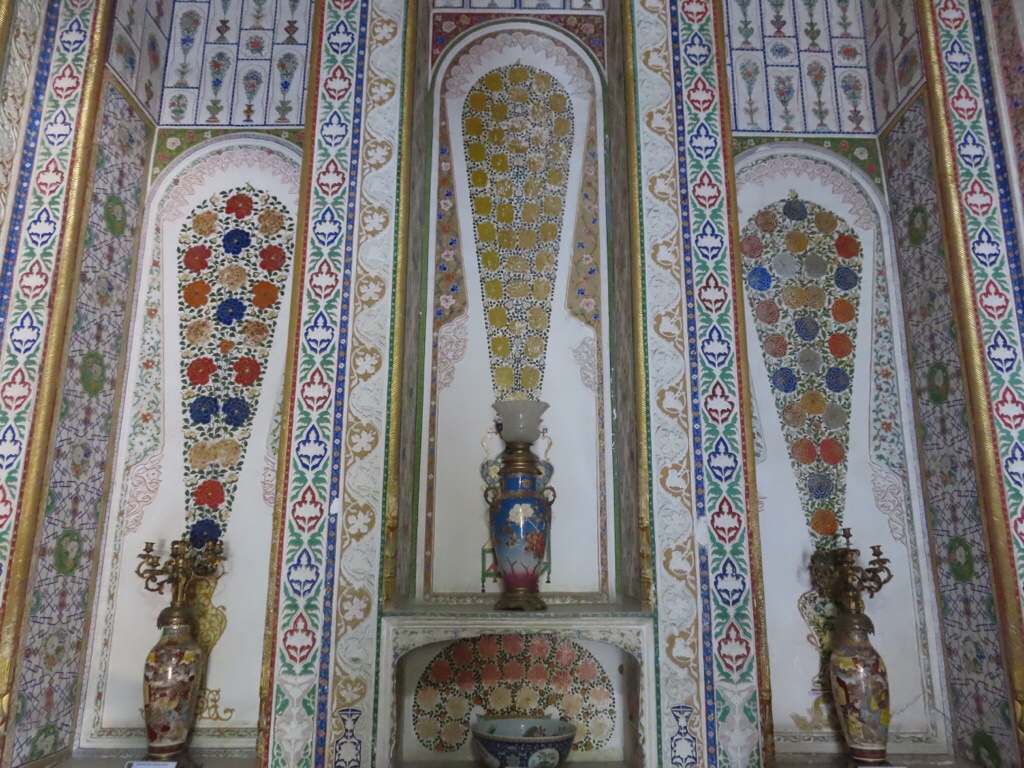
… while the rest is brightly coloured with more ganch …
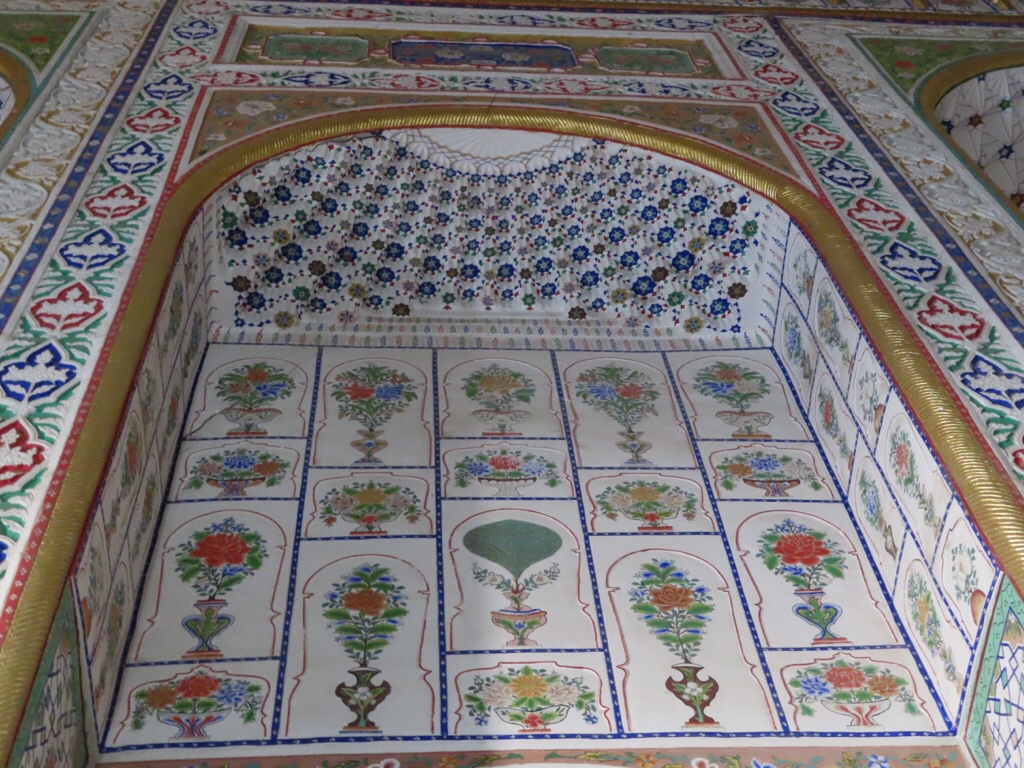
… and lots more mirrored tiles …

In the gardens there is tea room, small minaret, and guest house.
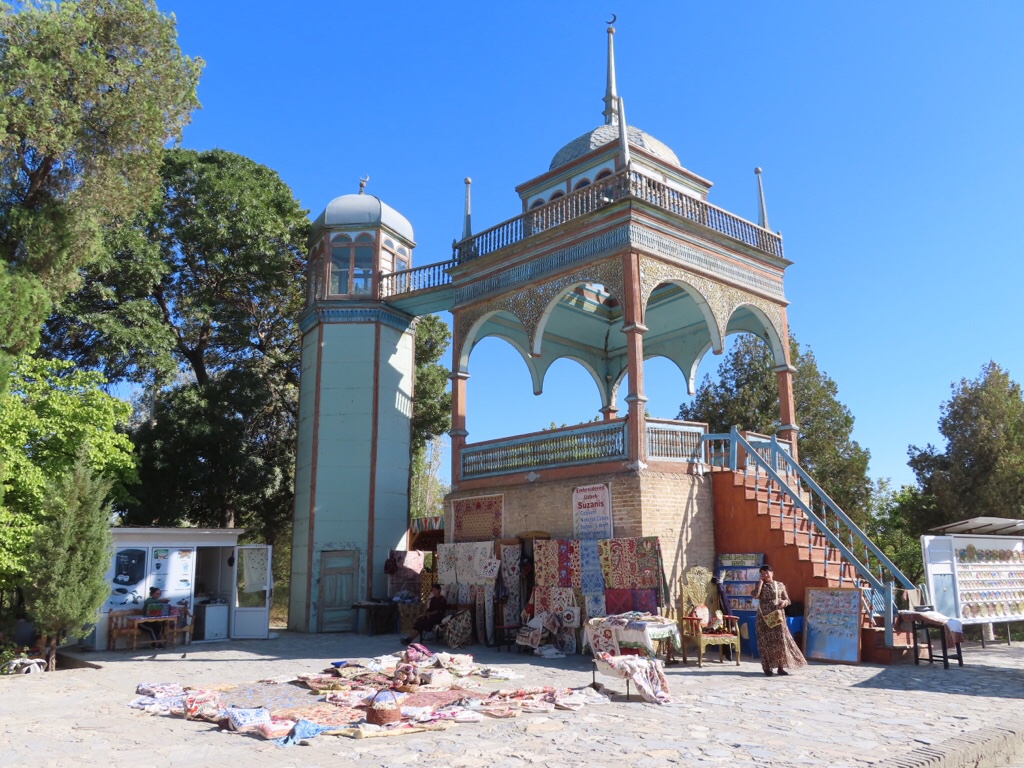
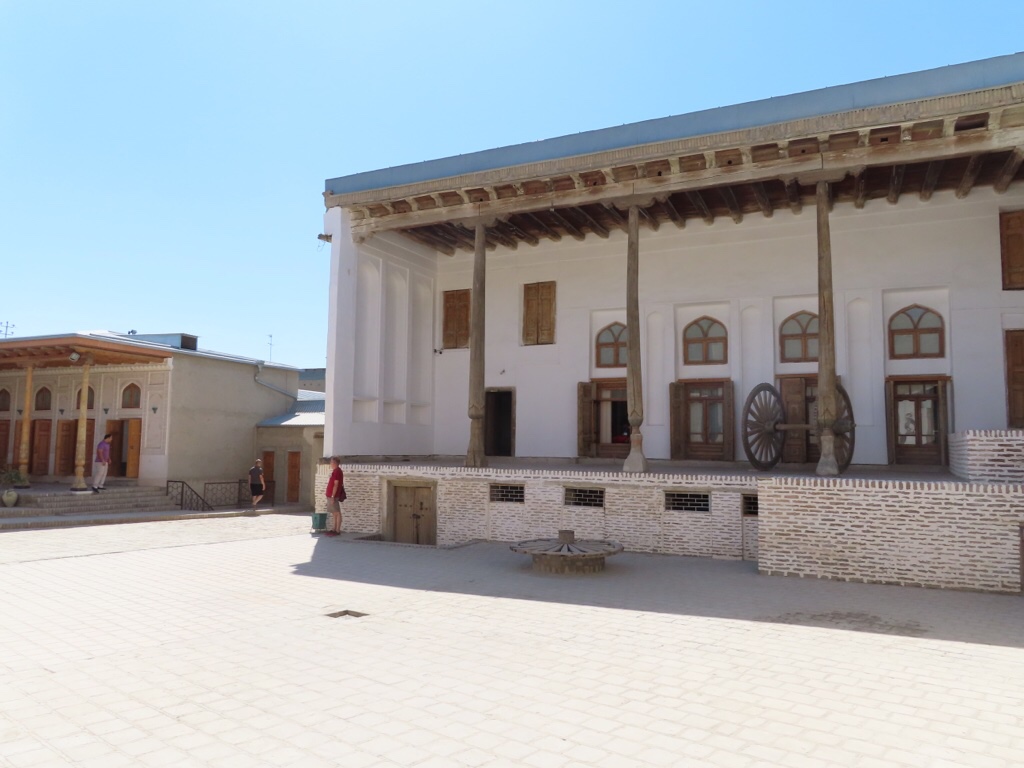
On our last day. we visited a museum which shows how the rich merchant class in Bukhara lived in the C19th. After entering through an outer courtyard which would have had stables and household area …
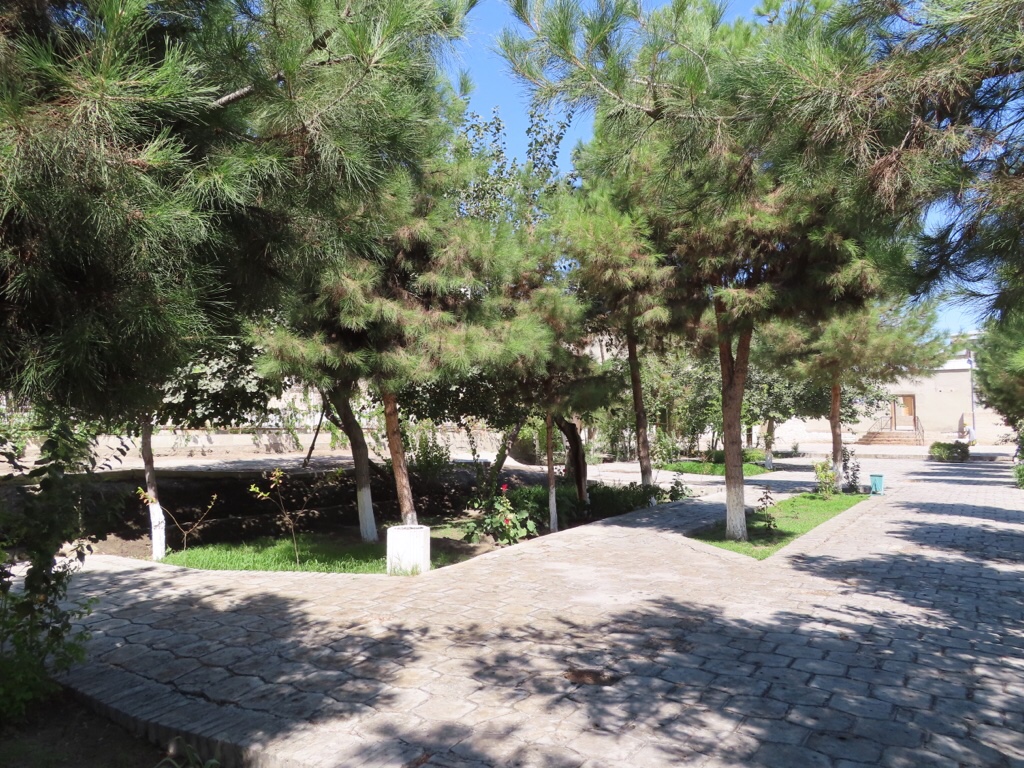
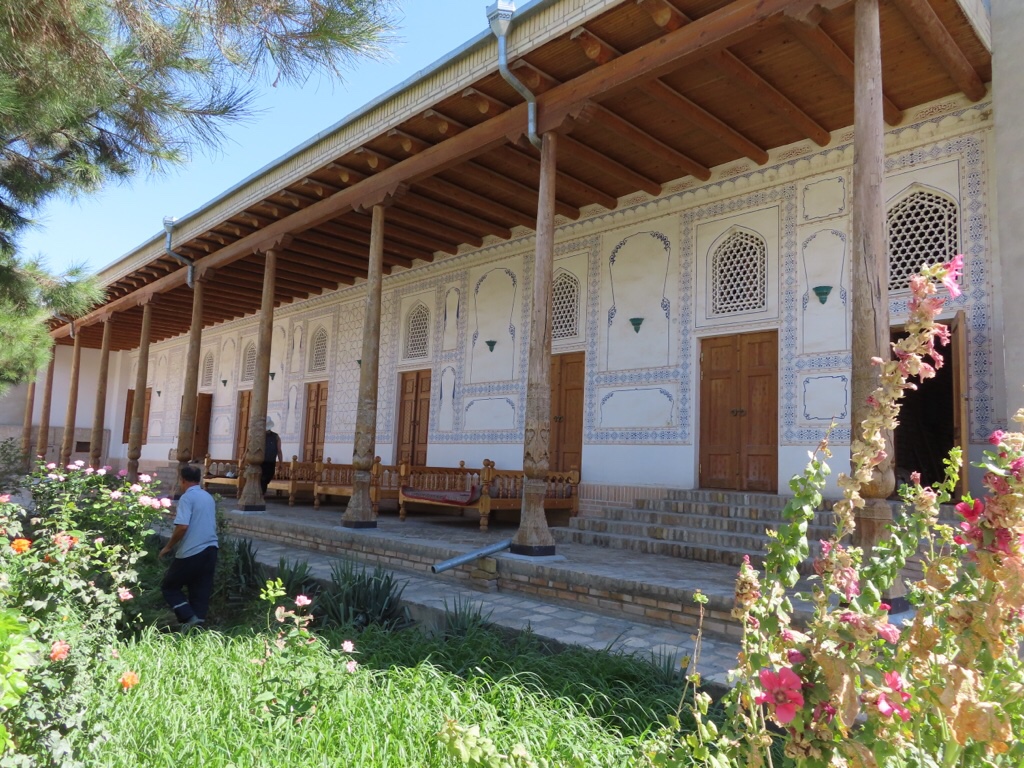
… there was then the havli berun or external male part of the house …
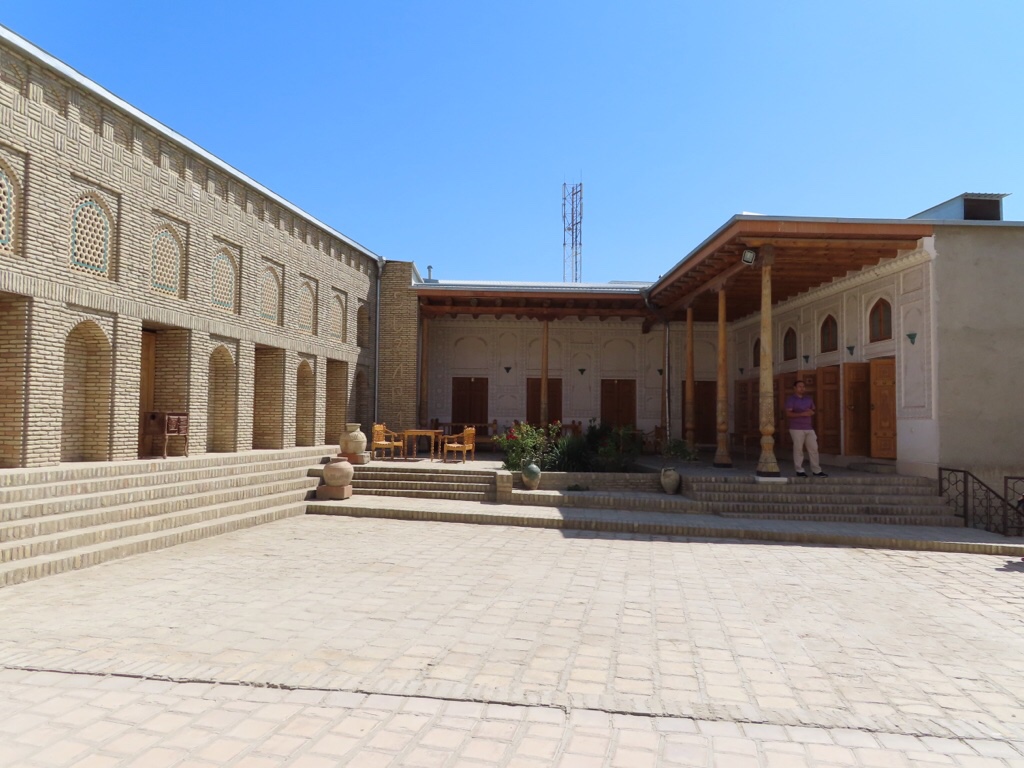
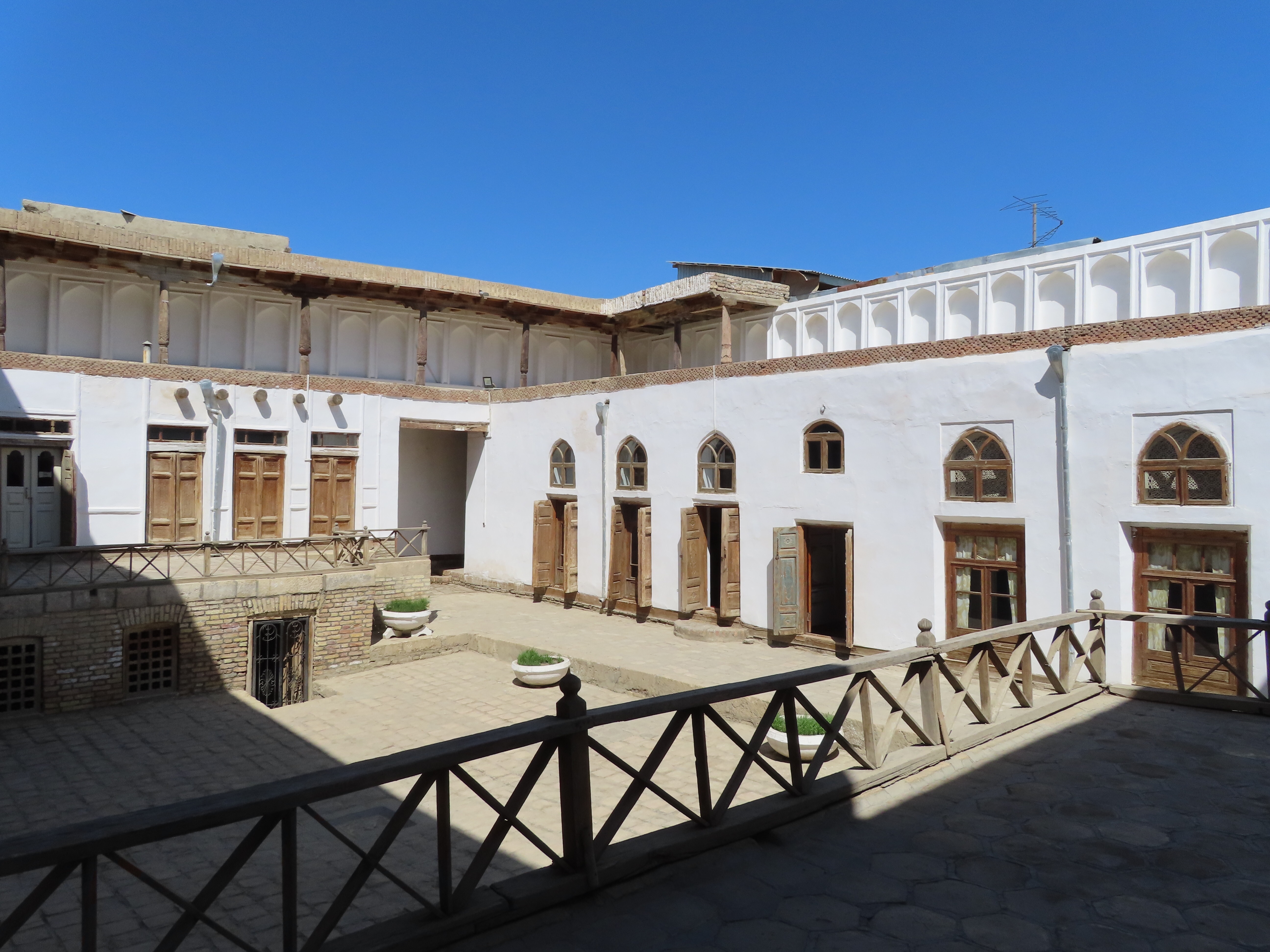
… followed by the havli darun or inner female area.
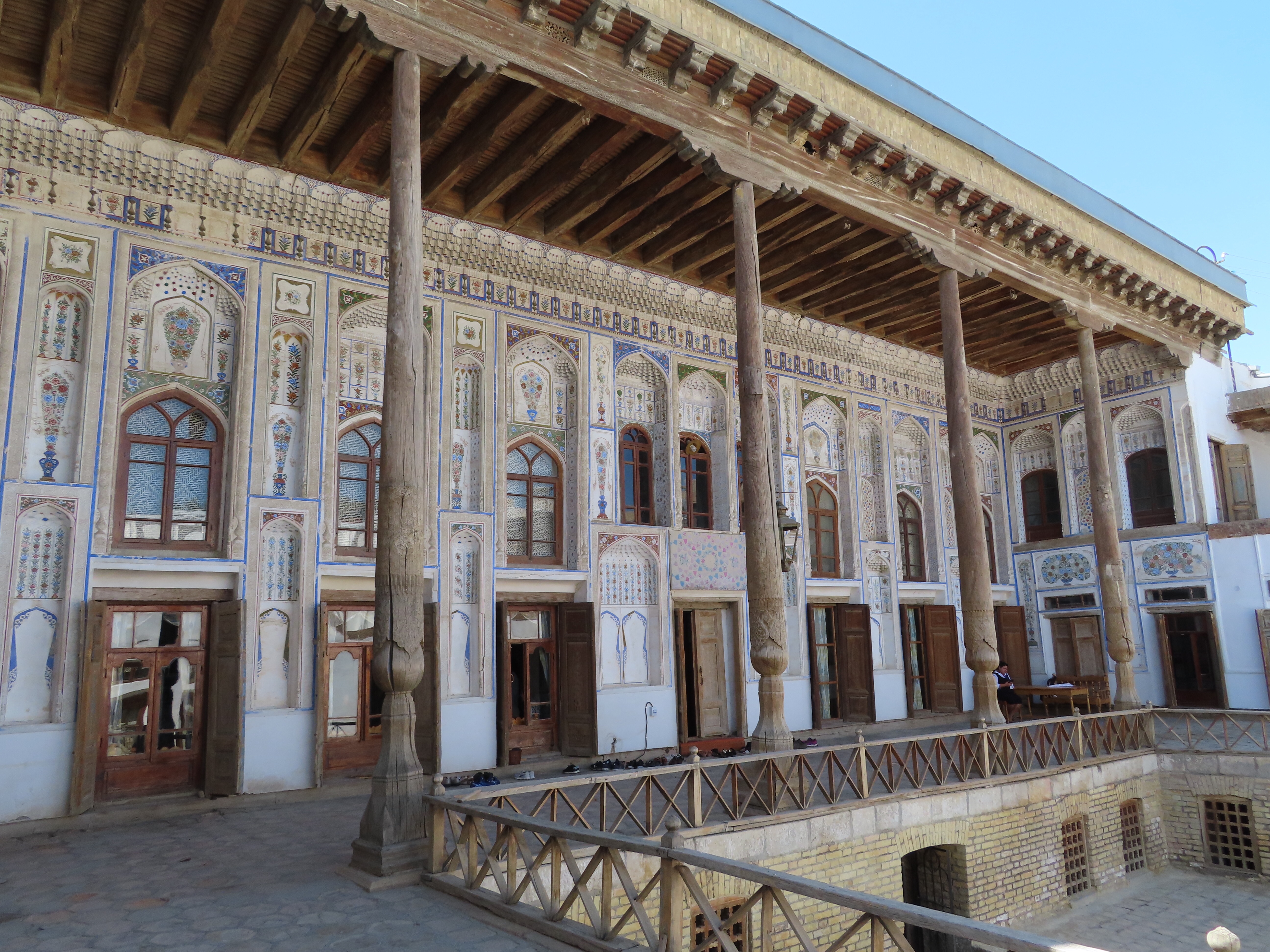
It was interesting to see how similar this is to the palace layouts in Khiva, albeit on a much smaller scale.

This was the family home of Fayzulla Khodjaev, a patron of art and fighter for equal rights and democracy.
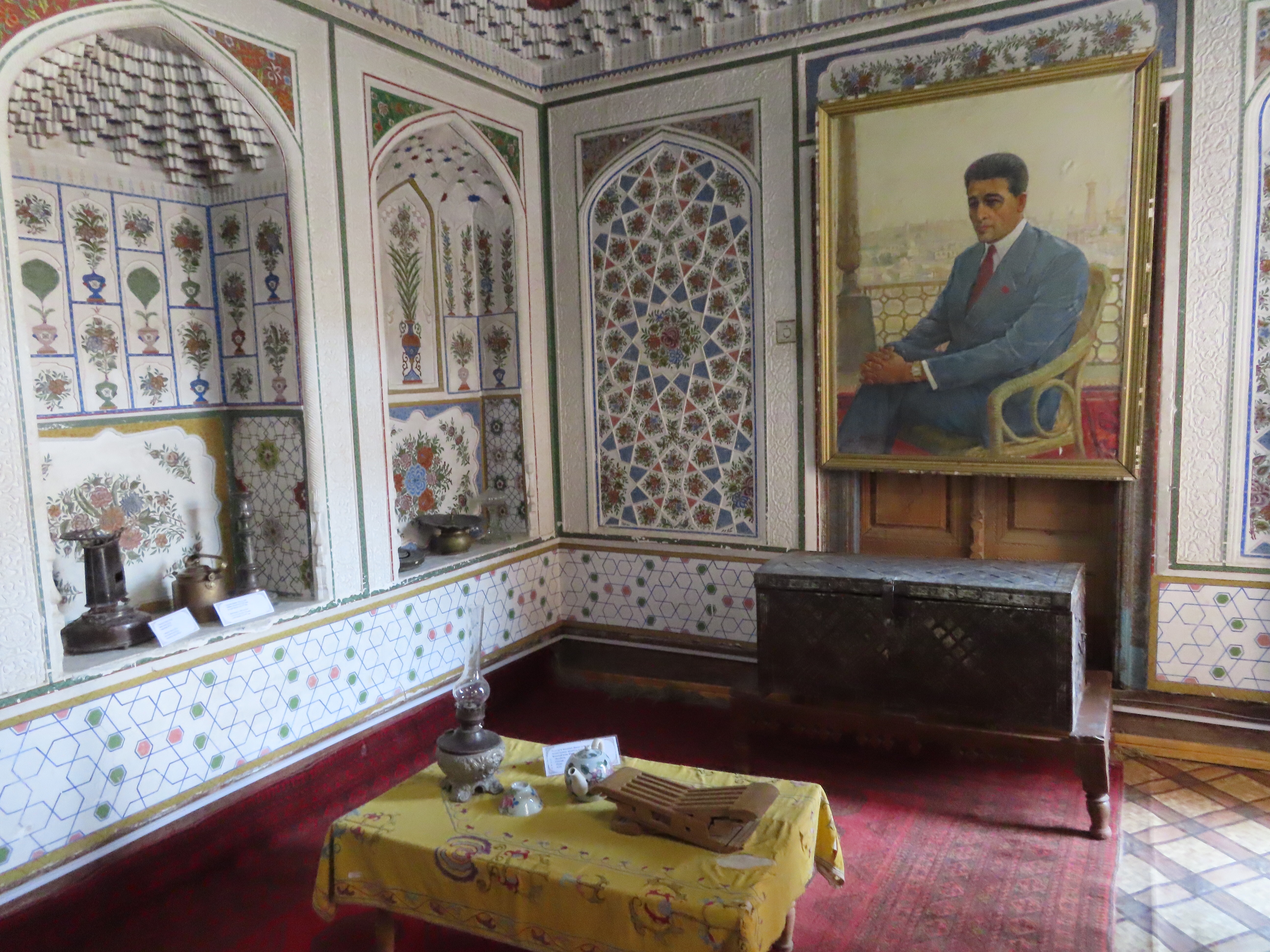
He was sent to Moscow by his father in 1907 where he realized the huge gap between contemporary European society and the traditional ways at home. He joined the Pan-Turkism Jadid movement of reformers in 1916 and following the revolution in 1920, became head of the Bukharan People’s Soviet Socialist Republic which later formed part of the Uzbek Soviet Socialist Republic. He opposed Stalin’s control, particularly in the matter of cotton cultivation and was executed in 1938.

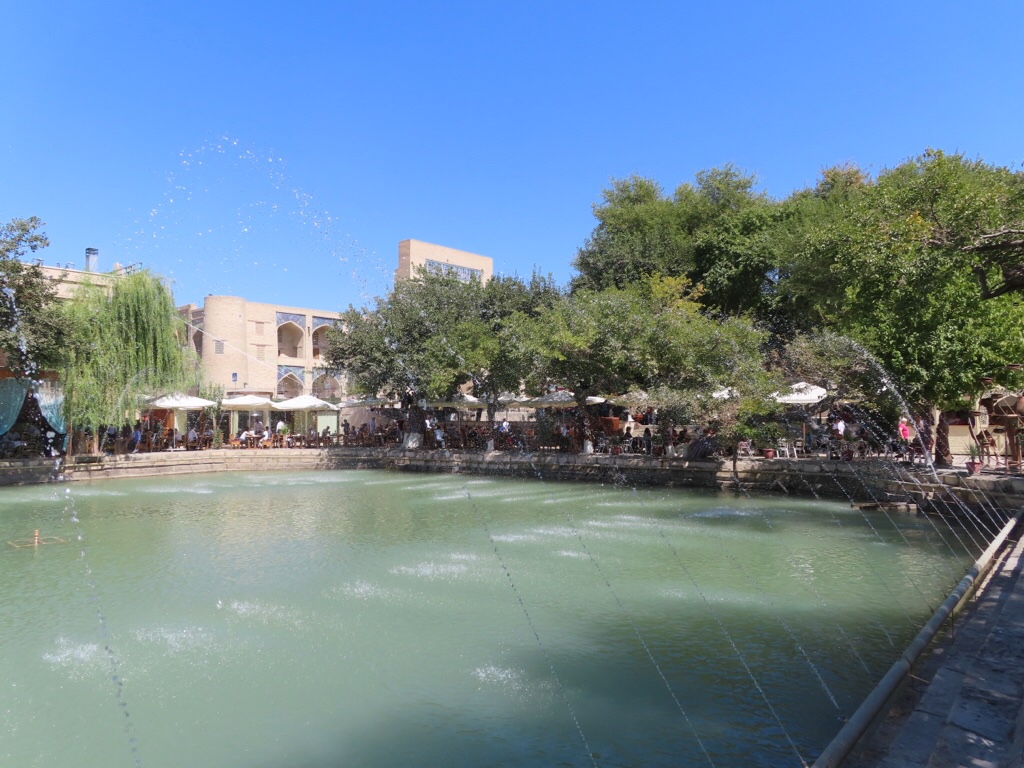
A last pot of tea by the Lyabi-Khauz …
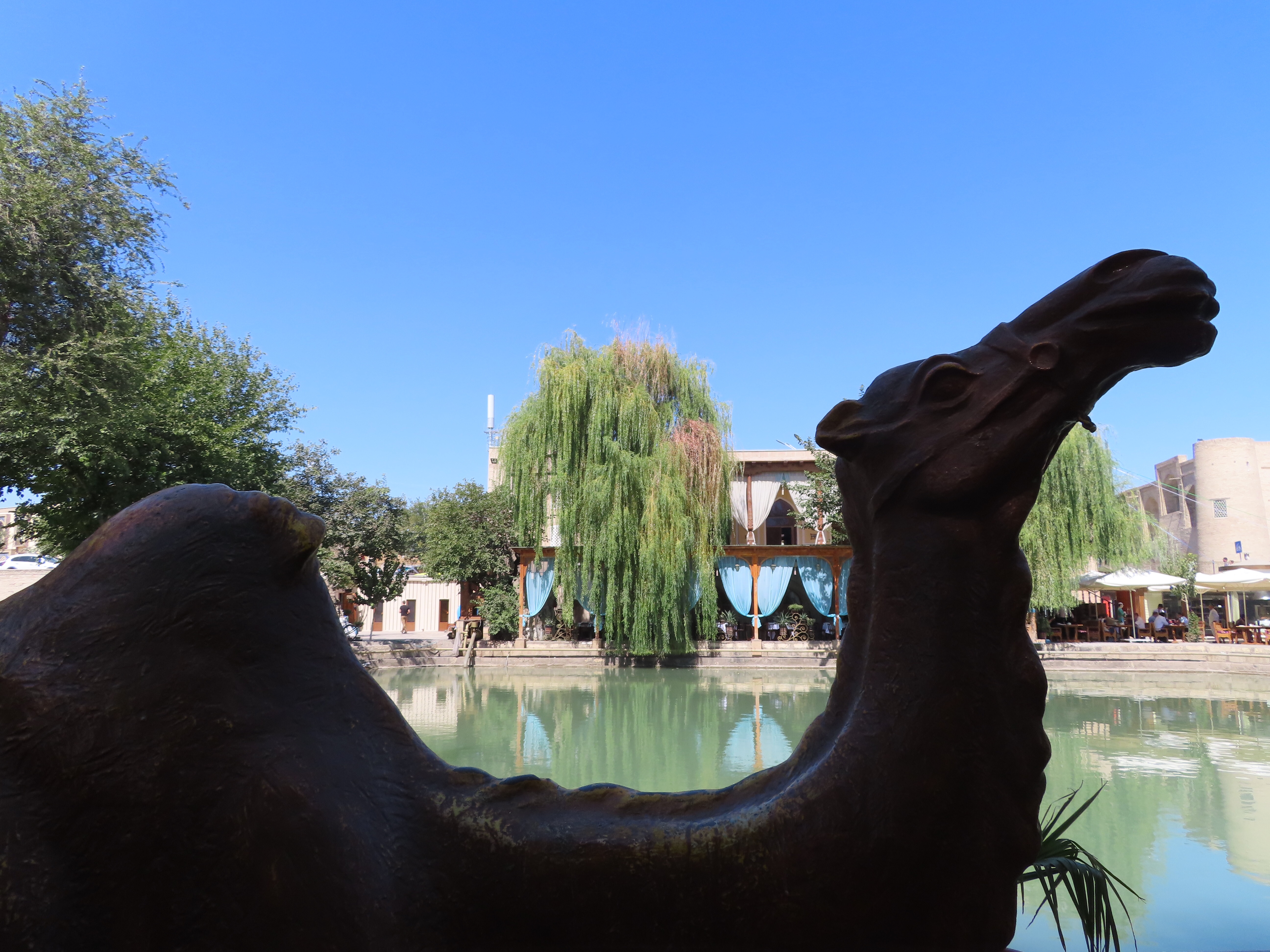
…and suddenly the fountains were turned on!
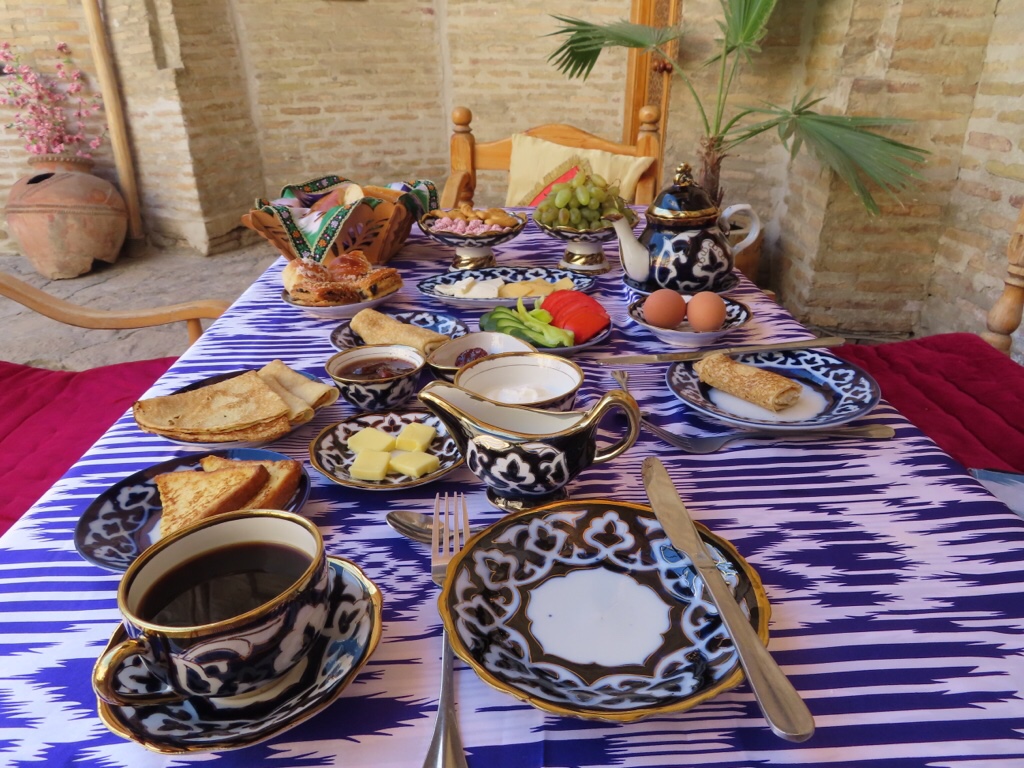
We’ve really enjoyed our time here in Bukhara. Breakfast has been a lavish spread each morning, with far too much food, but we really appreciated the care and attention to detail with which it was served, making us feel like honoured guests.
Comparisons are inevitable, and on the surface, Khiva old city looked almost medieval with its walls and houses covered in mud render, despite the fact that it had been under constant restoration and the remaining buildings are C18th from the time of the Khanates, with the new town outside.

Here in Bukhara there isn’t a wall separating the old city from the rest, but it does form a core with a main souvenir-lined tourist thoroughfare linking the sights, but you don’t have to wander far to find local houses, old buildings yet to be restored and people going about their everyday lives, Most of the historic buildings are C16th, with some even older and beyond is modernity, with a dual carriageway ring road and wide roads lined with shops which we saw on our trips out.

We’ve tried several restaurants – Magrigri and Amulet with peaceful courtyards and Minzifa where the rooftop unfortunately gets booked days before, but we still had a good meal. Having said that, we’ve both had funny tummies for a couple of days so have been trying to pick the plainest offerings rather than embracing the cuisine so nothing new to report!

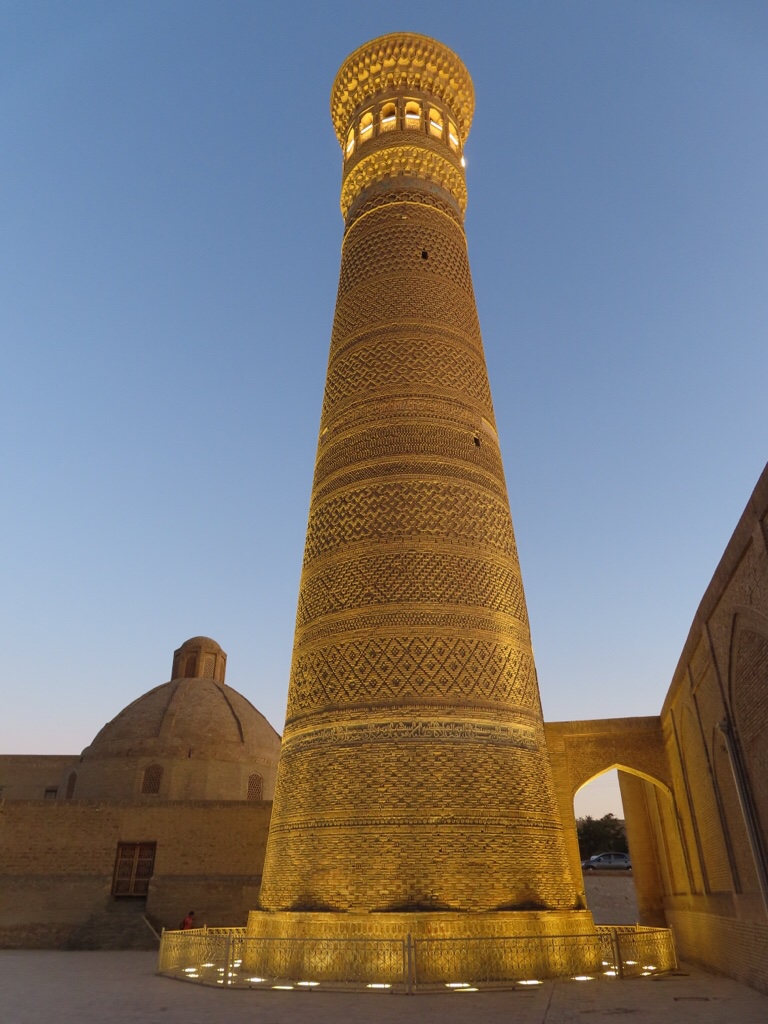
So, as we head further along the Silk Road, I’ll leave you with an evening shot of the Kalyan Minaret lit up after dark … next stop, Samarkand!
Map