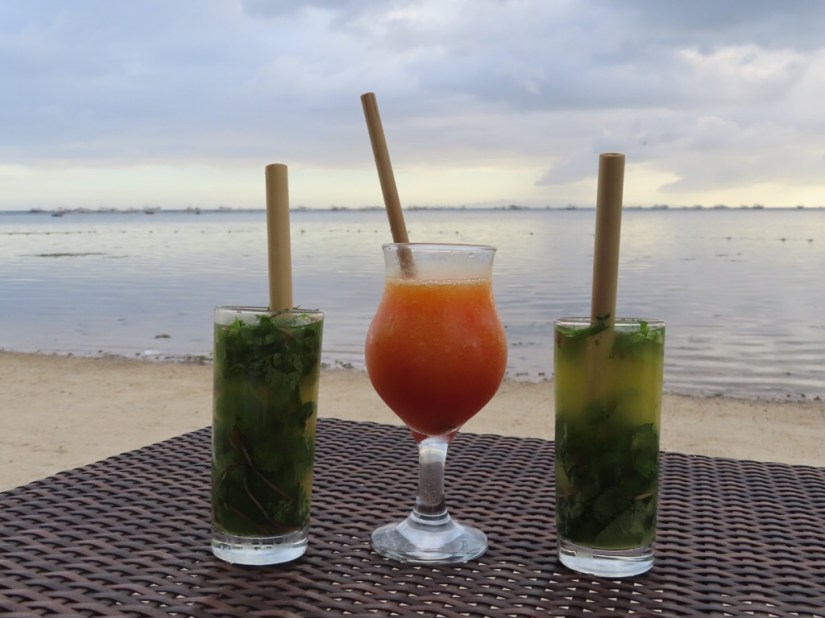
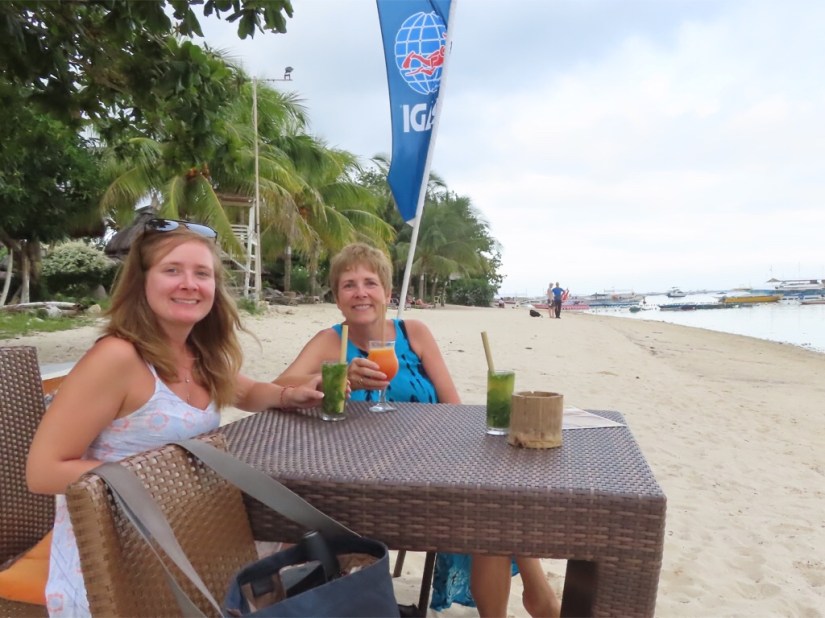
Siquijor … Stunning Sunsets!

We’ve headed to the Coral Cay Resort in San Juan on the island of Siquijor (pronounced like a poorly donkey … Sick-Eeyore!) and as the website advises ‘getting here is part of the adventure’.

A Siquijor legend tells of a great storm which once engulfed the region, followed by a strong earthquake which caused the island to be raised from the sea.

The island was first sighted by the Spaniards in 1565 and they called it Isla del Fuego or Island of Fire, because the island gave off an eerie glow, from the great swarms of fireflies that lived in the numerous Molave trees on the island. The dense, durable wood was once used extensively in furniture, boats and building but the trees are now endangered.

Siquijor also has a reputation as a place of magic and sorcery and is well known for its festivals that focus on healing rituals where incantations are sung while the old folks make potions out of herbs, roots, insects and tree barks.

We began with a tricycle for 20 mins to Liloan Port …
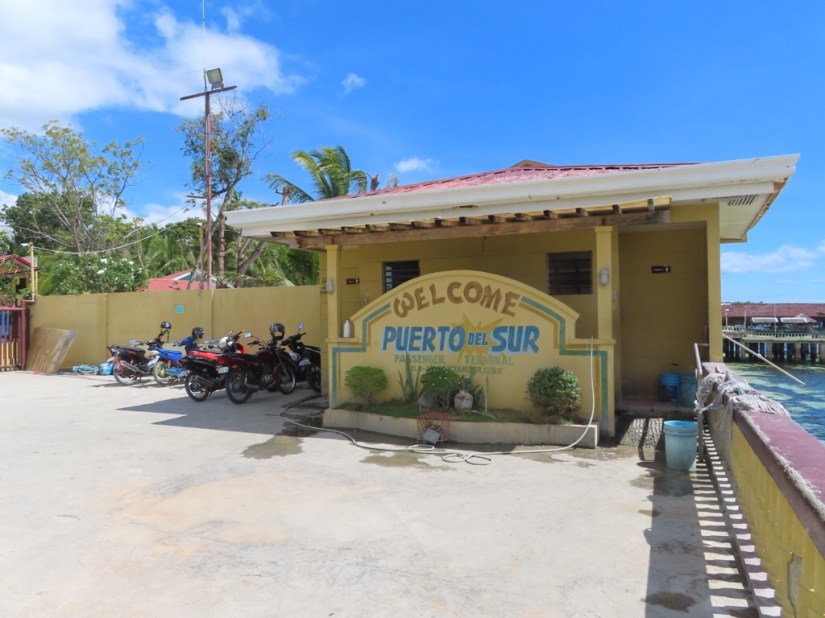
… where a small ferry took 30 mins to cross to Sibulan Port.

Another 20 min tricycle ride …
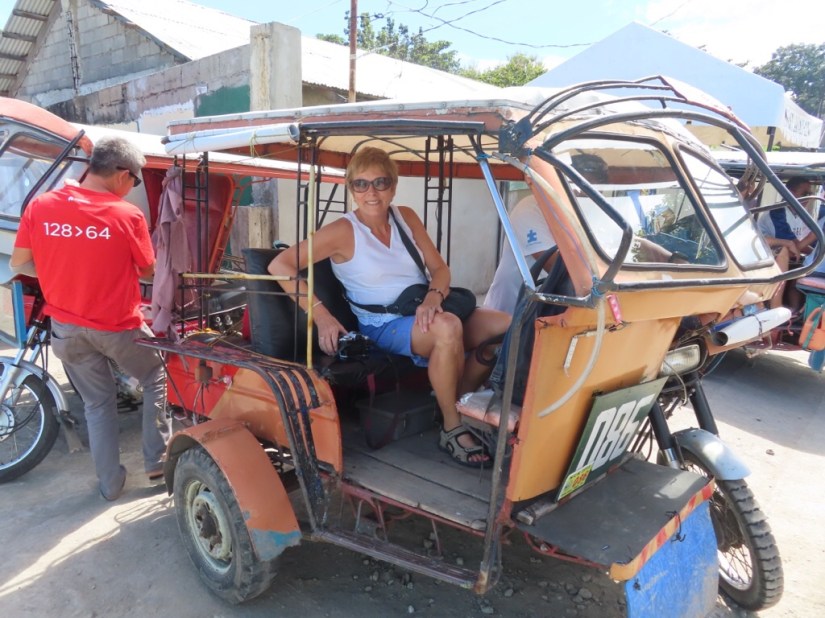
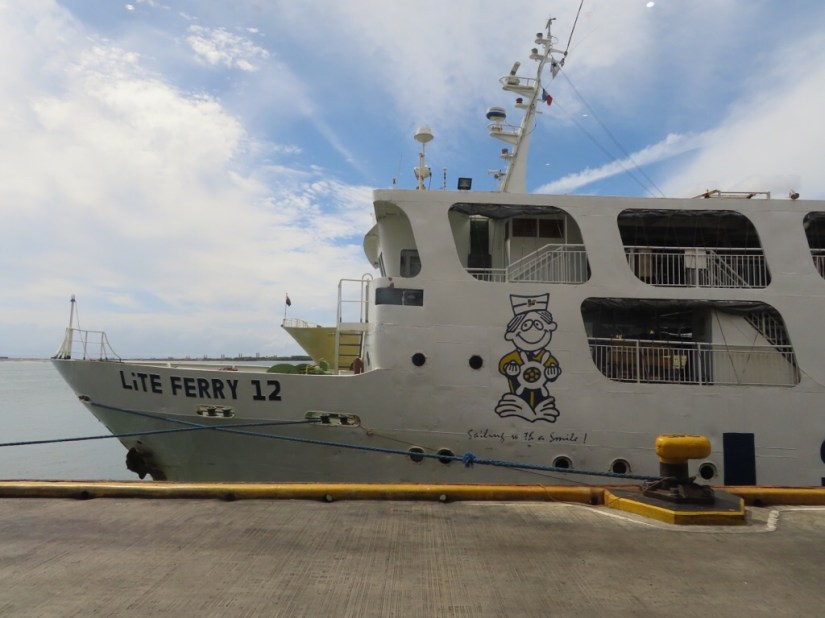
… took us to Dumaguete Port, where we found the 50 min Oceanjet fast cat ferry was broken, so we took the Montenegro Line, a big but slow boat taking 2 hours.
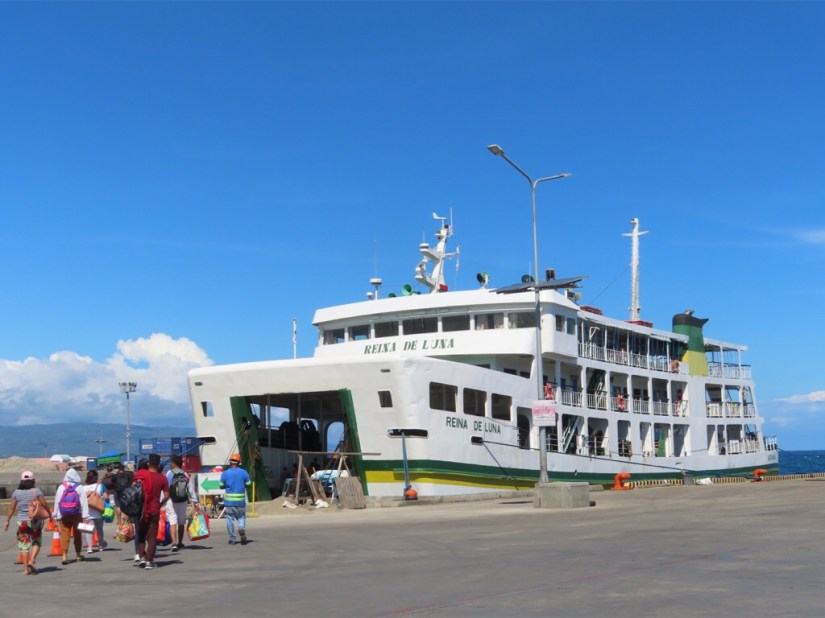
A final tricycle transfer to our resort took another 30 mins …

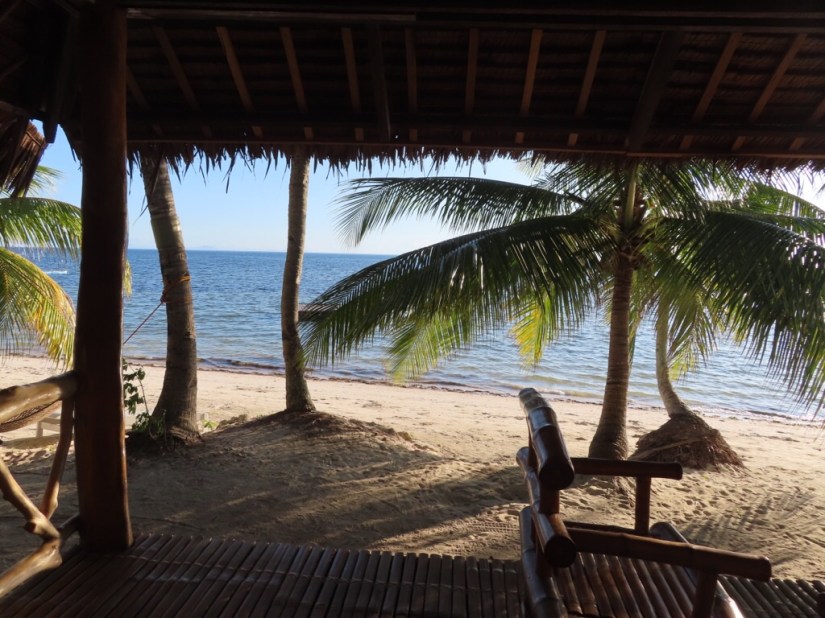
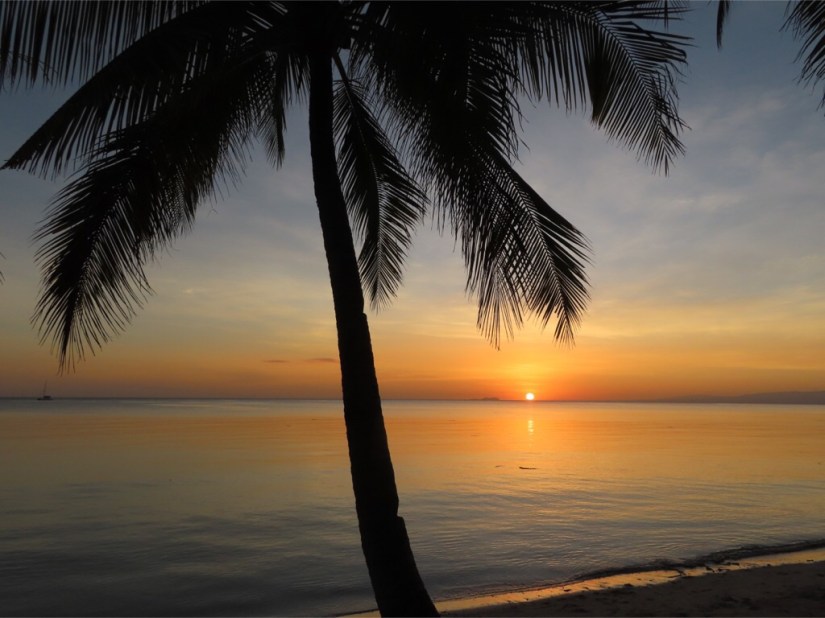
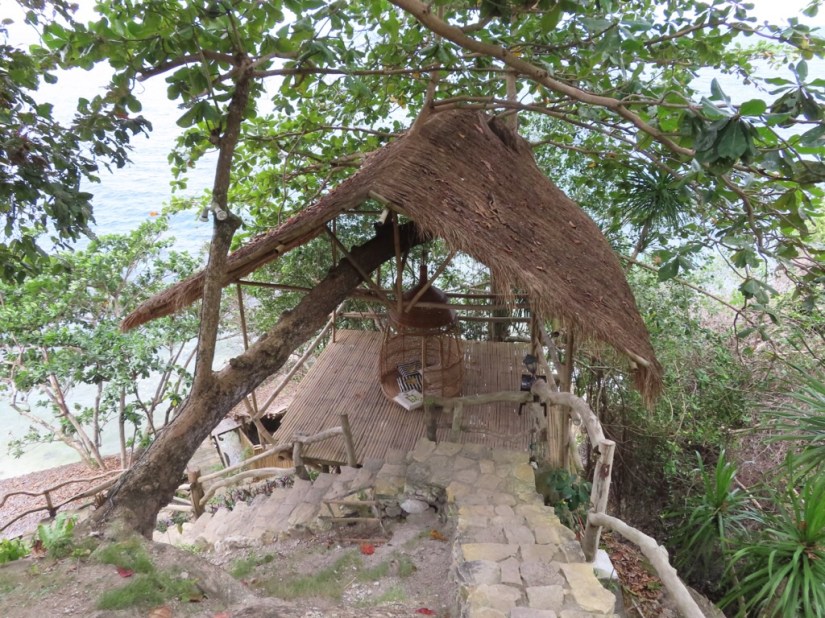
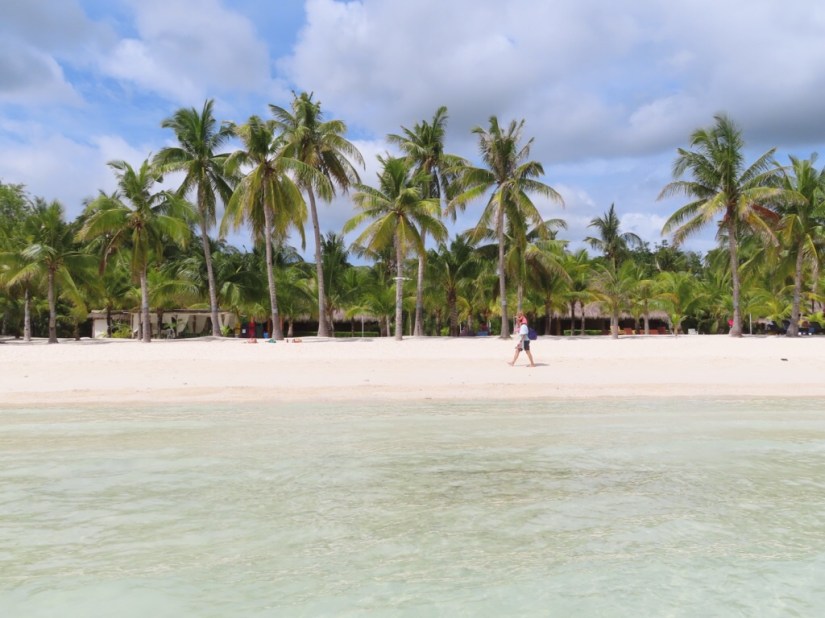
Here’s Coral Cay … and we definitely reckon it was worth it! We have a little thatched hut with a fan which sits right on the beach, within a few feet of the sea and the sun sets just there!

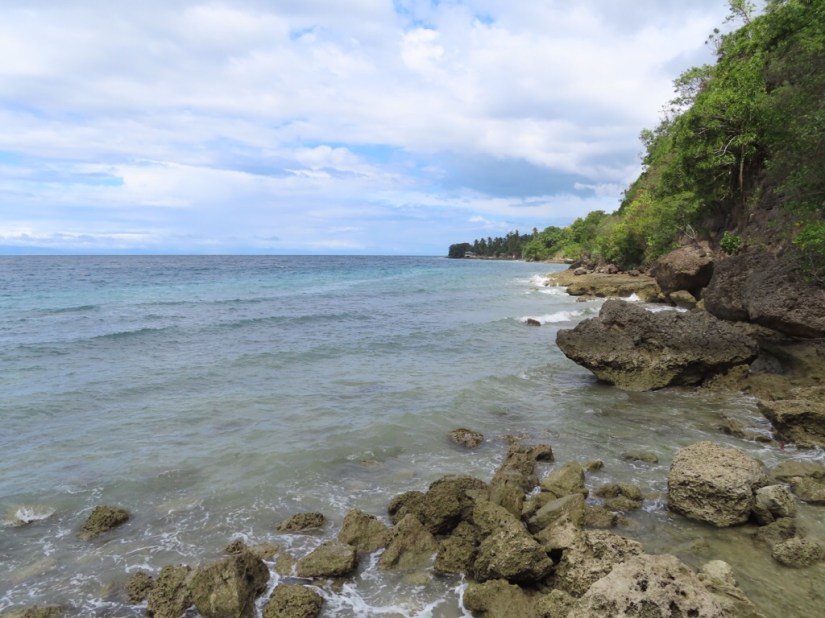
Admittedly, while the sea looks lovely, it’s quite shallow most of the day, with the reef close to the shore so not ideal for swimming …

… but there’s a pool for that!

A bar with smashing margueritas and tasty food and that’s all the bases covered.
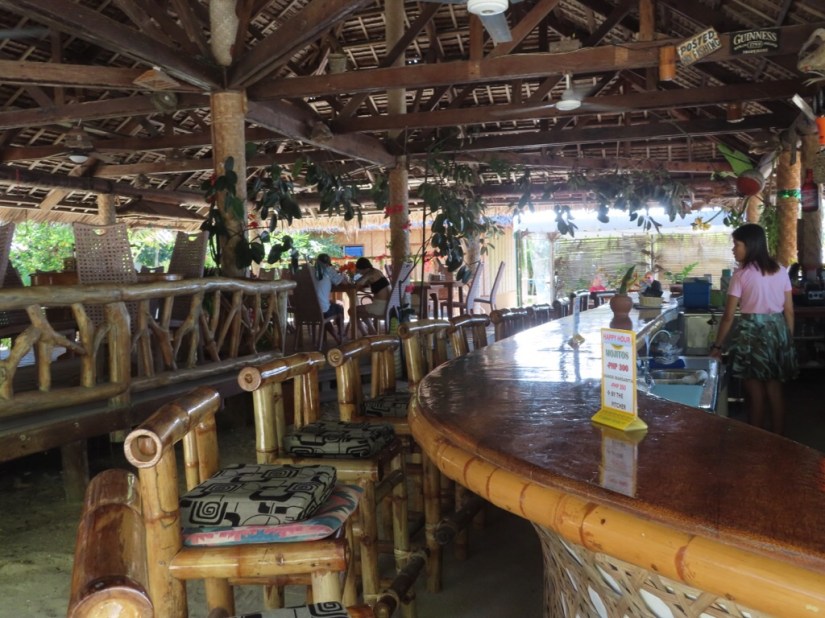
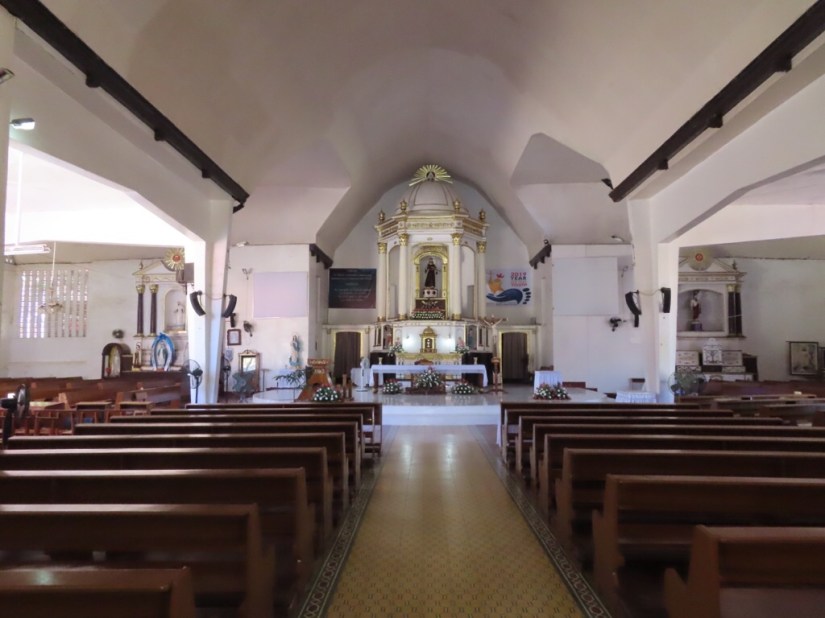
We have made a few forays out though – to Siquijor town to book our departure ferry ticket as there is only one sailing a day back to Cebu and while we can’t guarantee it’s running, we want to make sure we have seats if it is! We had to wait for the ticket office to open so wandered round the church while we waited.

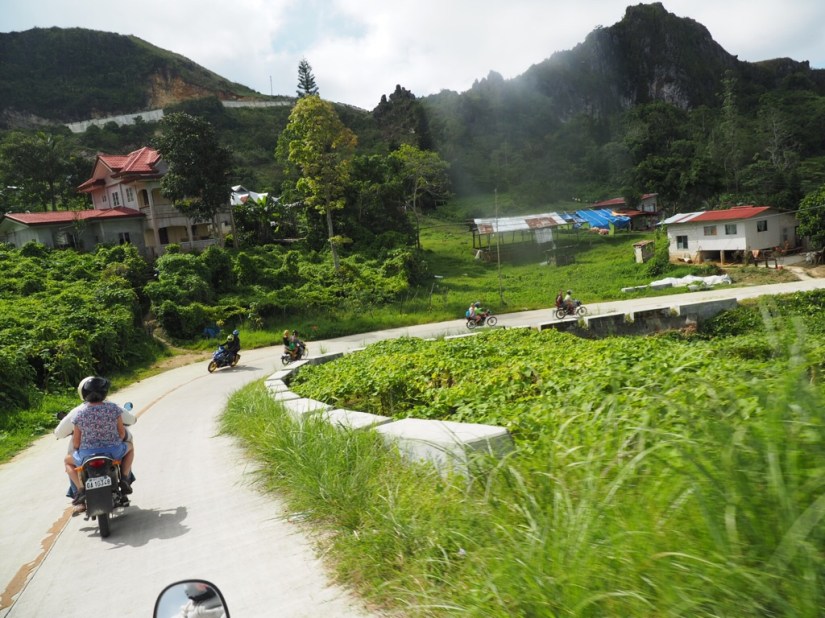
Chris was eager to have another bike riding experience so we hired a scooter for a couple of days.

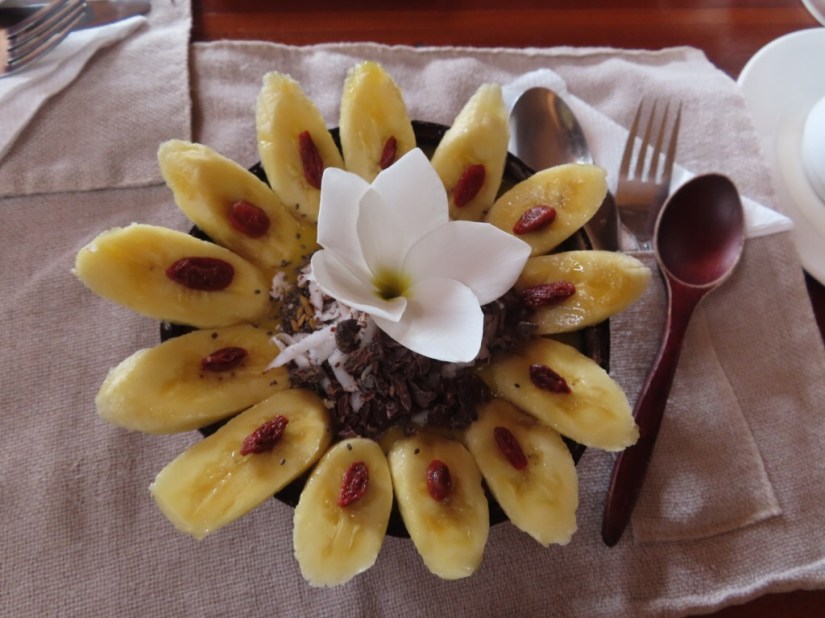
The first day was a bit overcast and we began by taking the chance to have breakfast somewhere different … a mango smoothie bowl and eggs shakshouka at Luca Loko … yum …

We passed a rice paddy with this chap doing some ploughing …

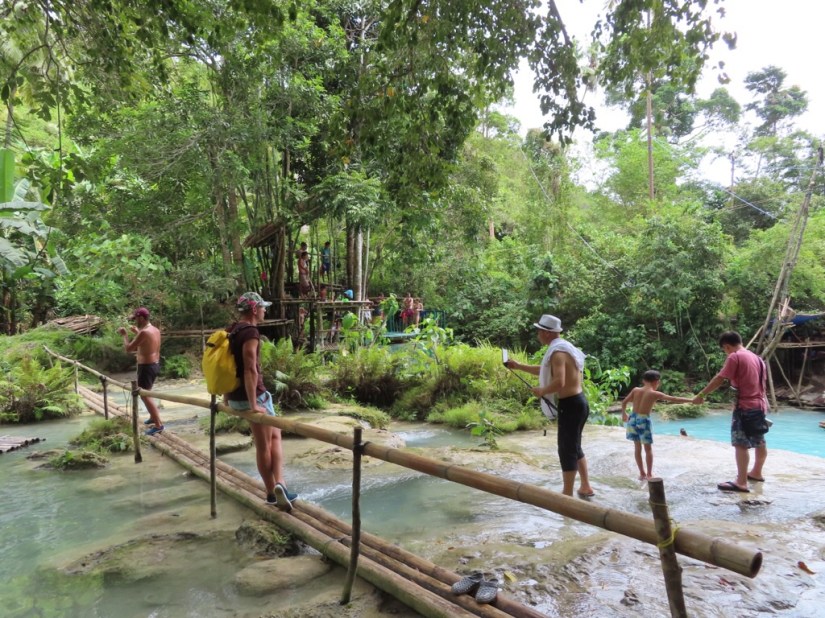
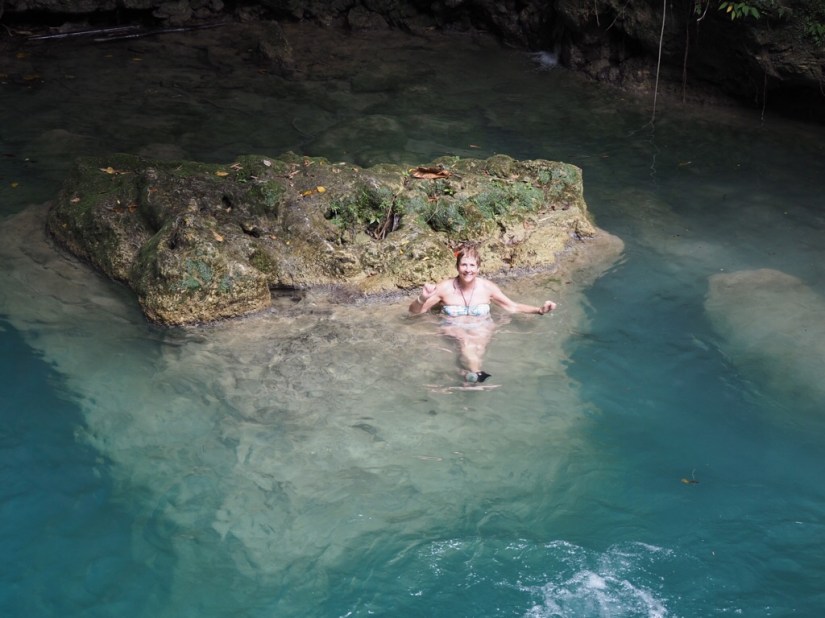
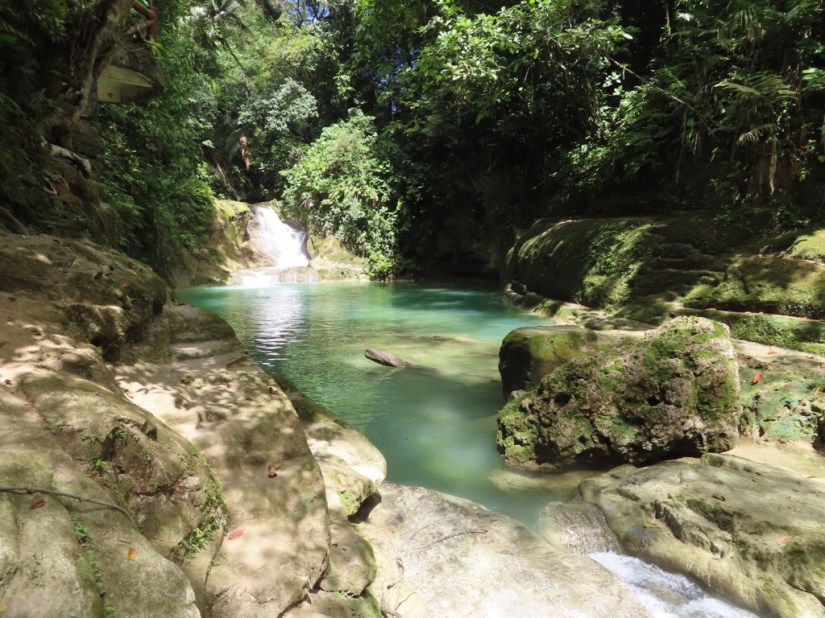
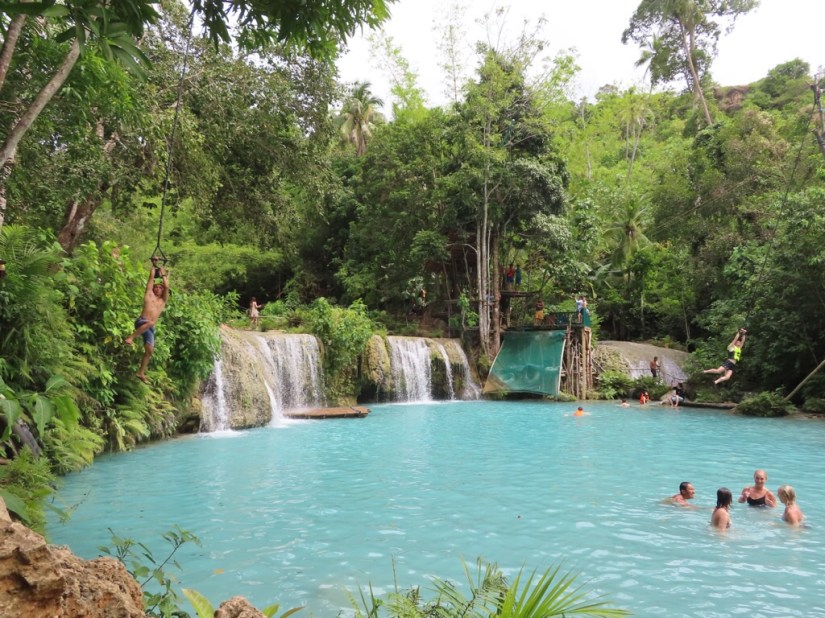
Then on to Cambugahay Falls, the most popular swimming hole on the island, popular with locals and visitors alike. This is a water park, Filipino style with two small waterfalls with large swimming holes at the base of each.

There are small several rope swings from which you can jump into the water for a small charge …
… a water slide …
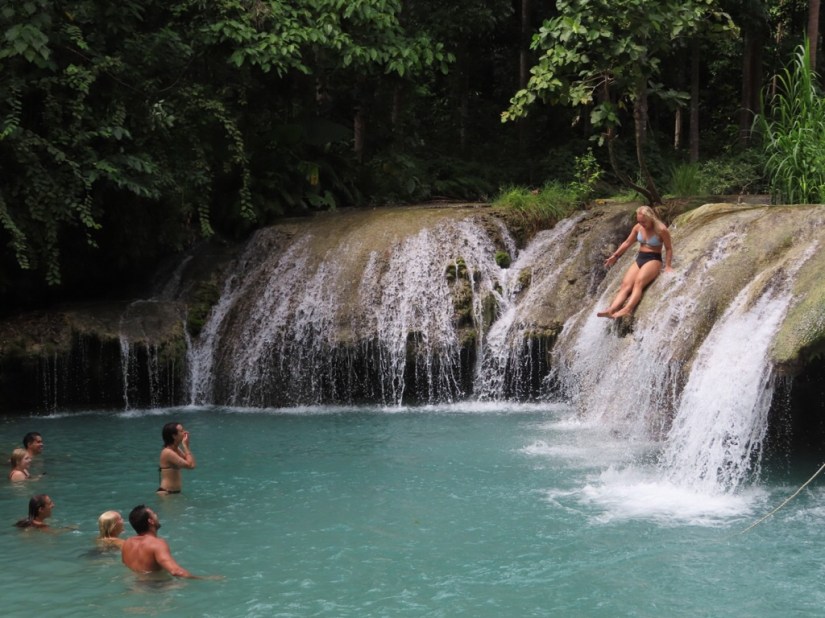
… and if you want to just pose without getting wet, you can be pulled out on a raft and have photos taken in front of the waterfall!

I can understand why this is one of the most Instagrammable places on the island and yes it’s a bit kitch, but everyone of all ages was having such a lovely time … all for 10 pesos each!

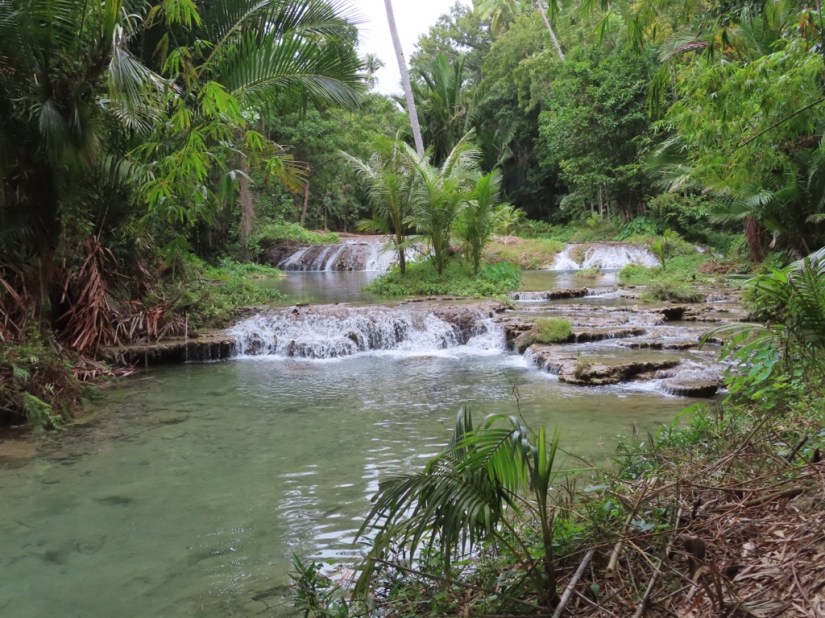
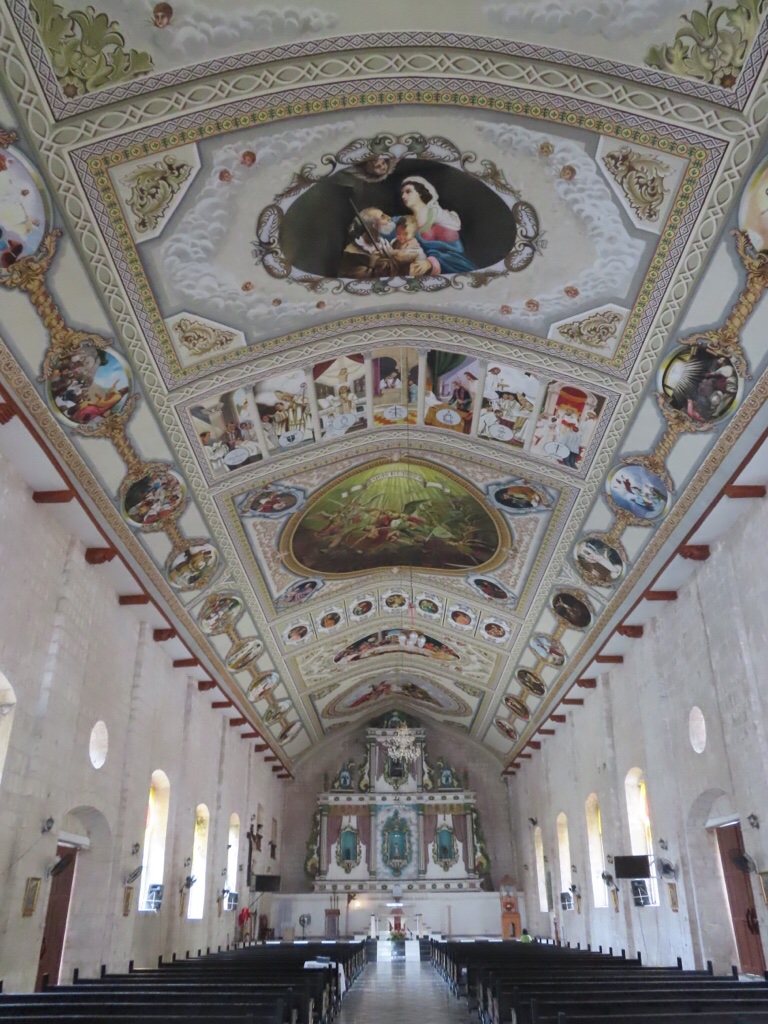
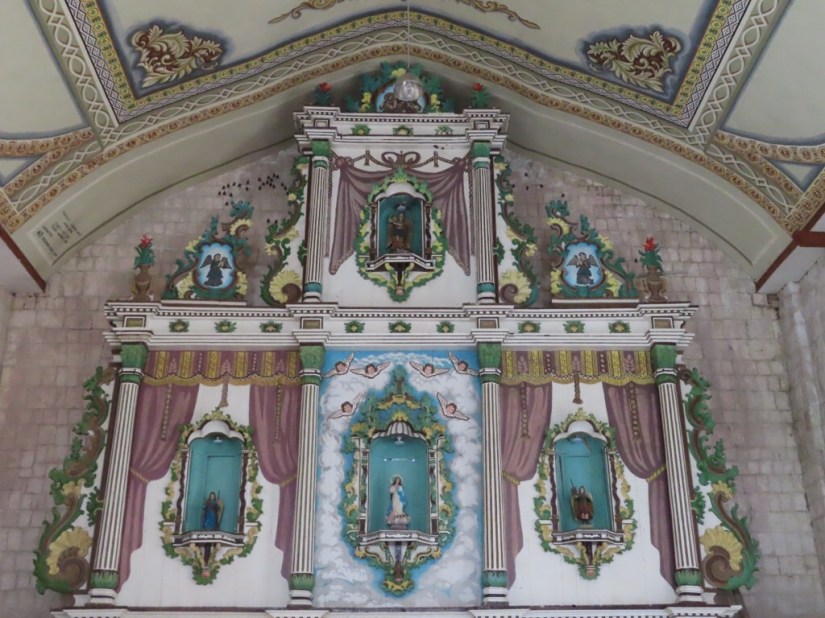
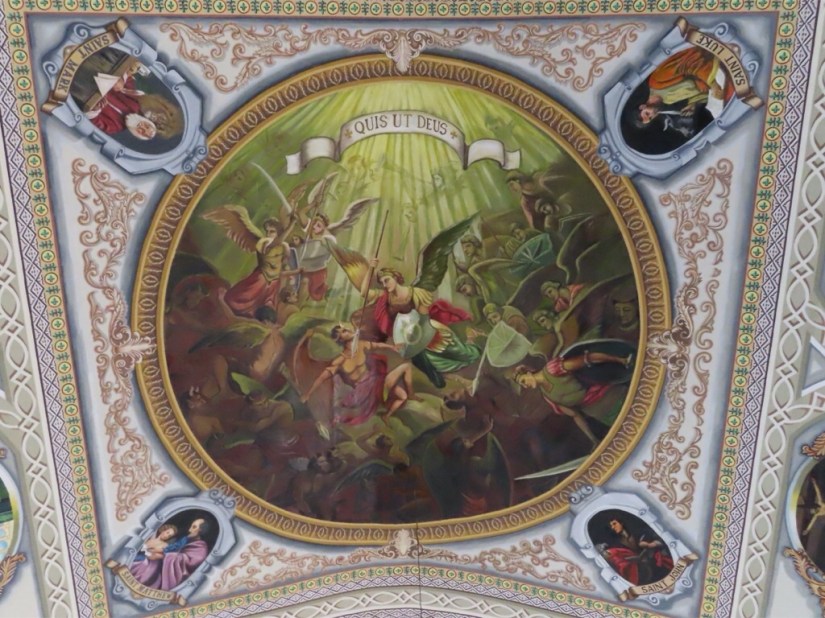
Next stop was a cafe in Lazi for lunch, then a look round the two most important historical buildings on the island, the San Isidro Labrador Parish Church and Lazi Convent, both completed in 1891 and recently renovated. The church is huge with seating for 1000, a very blue ceiling and cute pulpits.

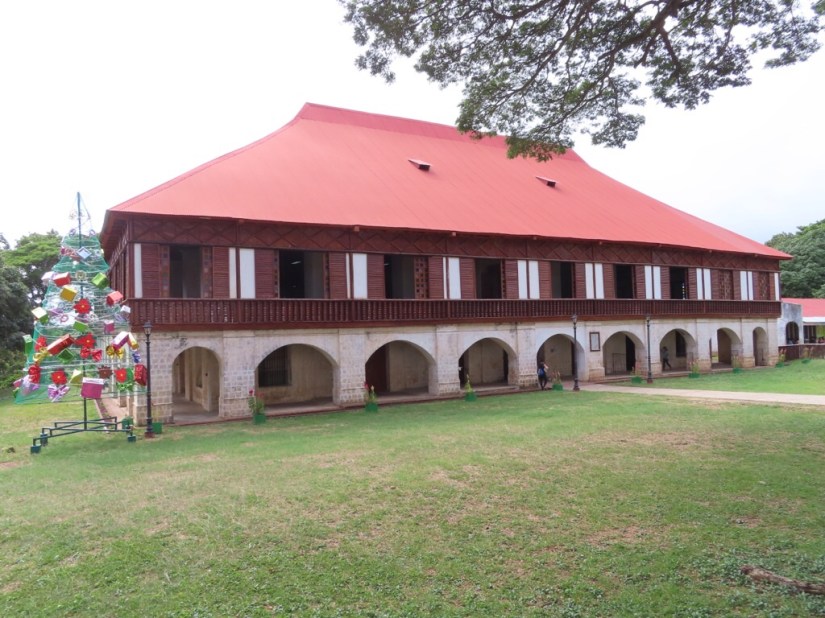
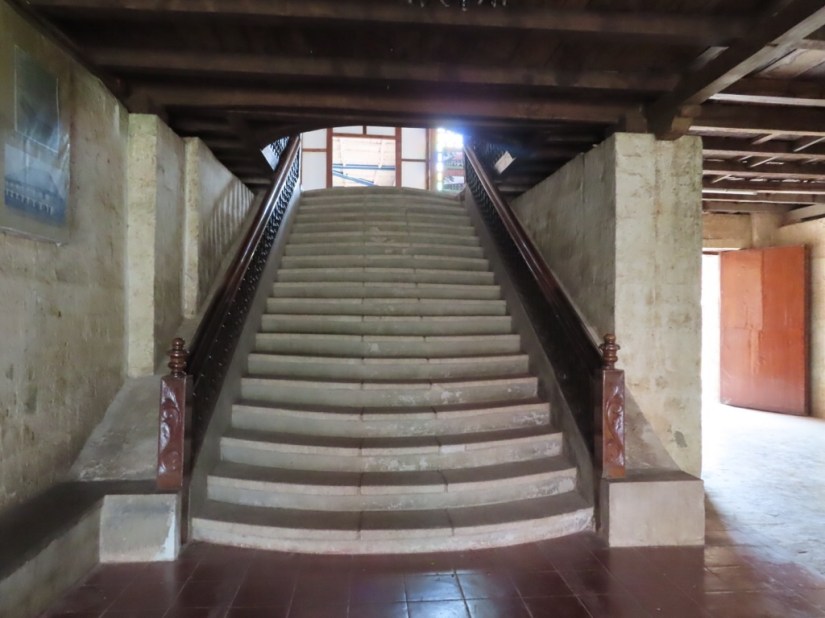
The convent is said to be the biggest and oldest convent in Asia. Nothing has been said about the nuns, but it was certainly used as a holiday home for the local priests! The restoration was pretty good, we could see how efficient the design was with the huge sliding windows making the large rooms inside very cool.
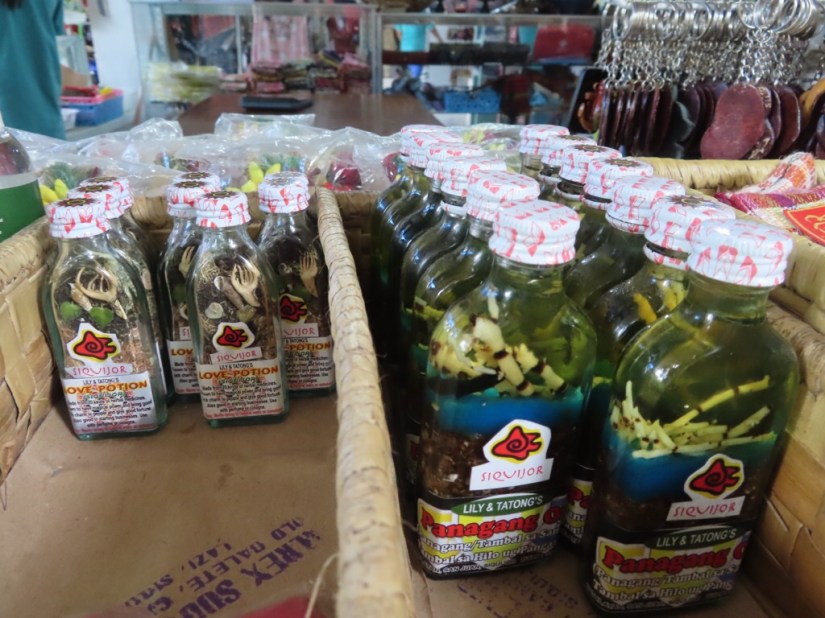
Final stop was the reputedly century old Balete Tree, cannily made into a tourist attraction by the owning family, with small entrance fee to the tree and surrounding fish foot spa (no, we didn’t have a go), cafe and shop capitalising on the love potions and other voodoo-style souvenirs being sold here as the locals believe this tree has mystical powers!

Back passed the rice paddy and we were amazed to see progress …

On the way back it got a bit drizzly so we decided to cut our losses for the day.
Next day we just had to repeat our breakfast at Luca Loko, then went in search of butterflies. Chris got chatting to a couple on the beach and they said the butterfly sanctuary was worth a visit, so despite being a little sceptical after our last butterfly experience, we thought we’d give it a go. We took a road up into the mountains in the centre of the island …

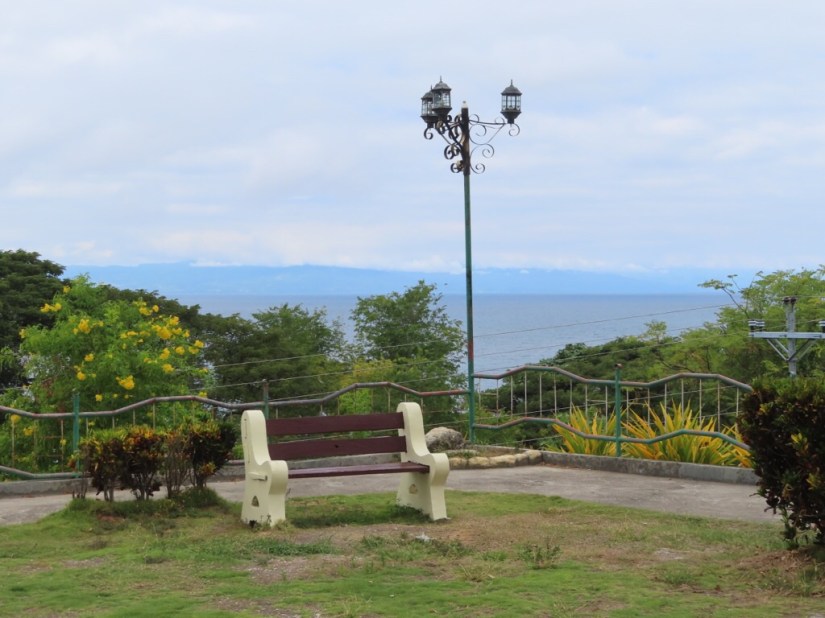
… stopped at a viewpoint and were able to go for a bit of a walk taking pictures …

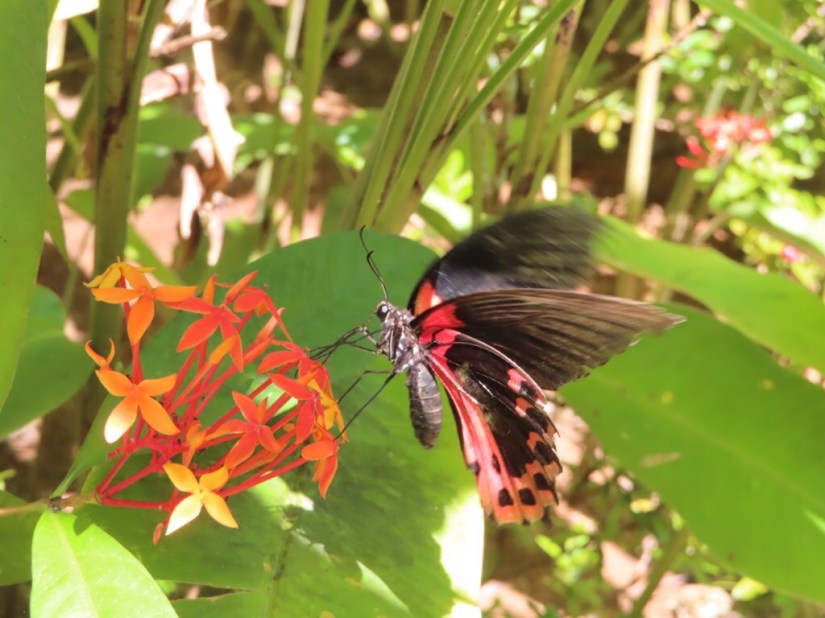
… then on to the butterfly sanctuary, started by a man who breeds butterflies in his garden then releases them into the wild. We spent quite a while watching the butterflies and photographing them.

Our last day here was also Chris’s birthday and while we had only planned a chilled day … it turned out a bit overcast with a couple of showers. There were still birthday cards, breakfast overlooking the beach, some time by the pool, pizza for lunch, cake, sunset, cocktails and Chips for dinner … perfect says 67 year old Mr Hayes!

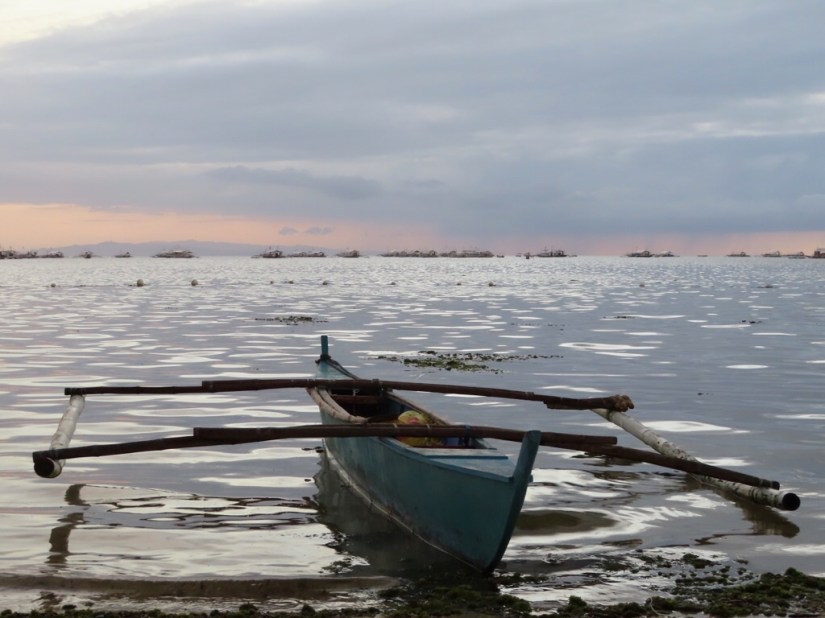
The highlight of our stay has definitely been the beach … stunning in the early morning …
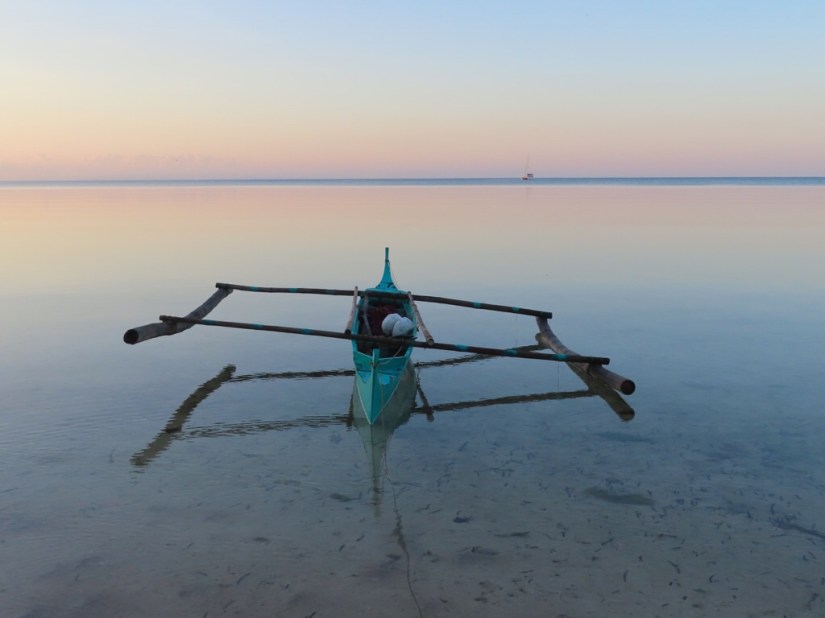
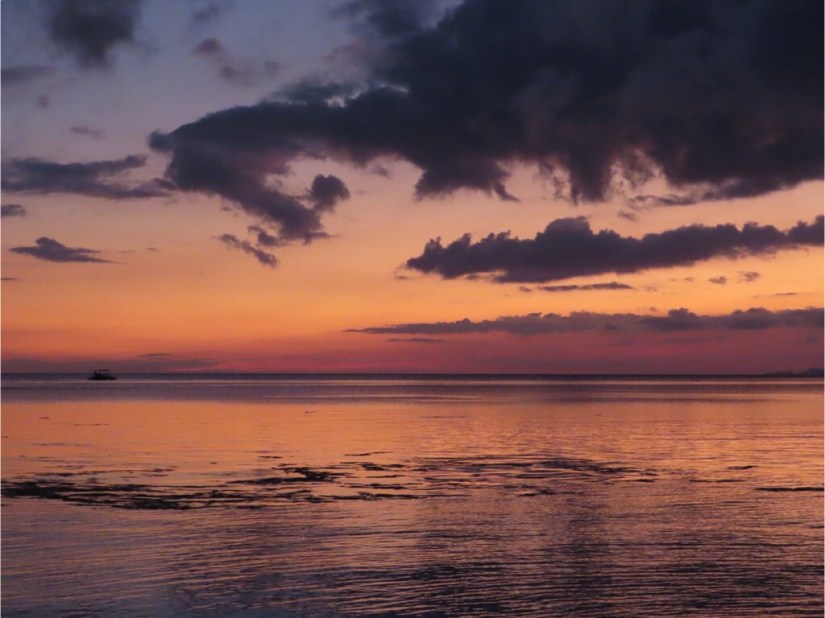
… but even better at sunset, so here’s the gallery!

Tomorrow we have a busy day, returning to Cebu city by ferry then carrying on northwards …

Map

Cebu … Samboan – Portrait of a Filipino Town

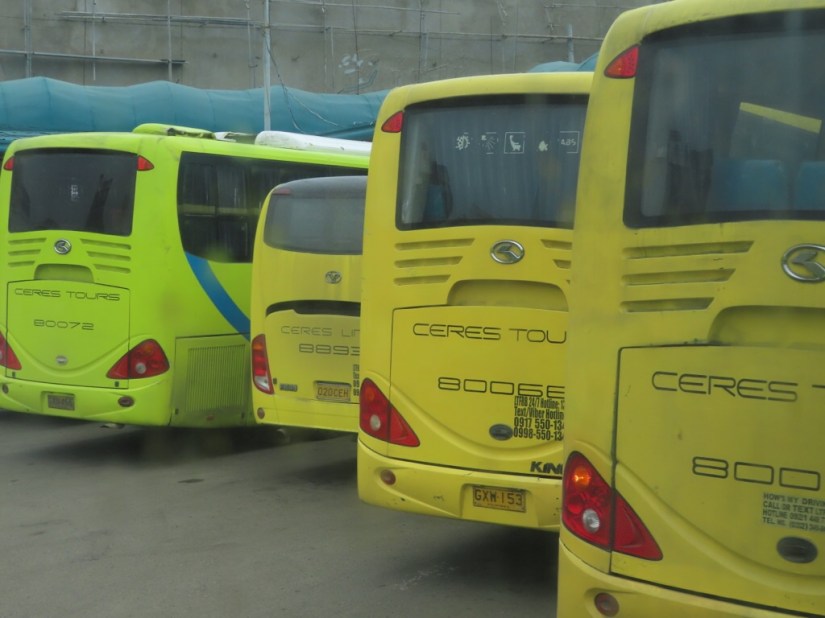
Having said our goodbyes to Tim and Ann, we walked out of their gate and the Ceres Bus was there … largely luck as the timetable is just a concept … and while there are several buses an hour, this one was going exactly where we wanted! The only downside was that it was possibly the oldest, most cranky bus still in service! Nonetheless, having followed the coast road, we arrived at Bato Port a couple of hours later.
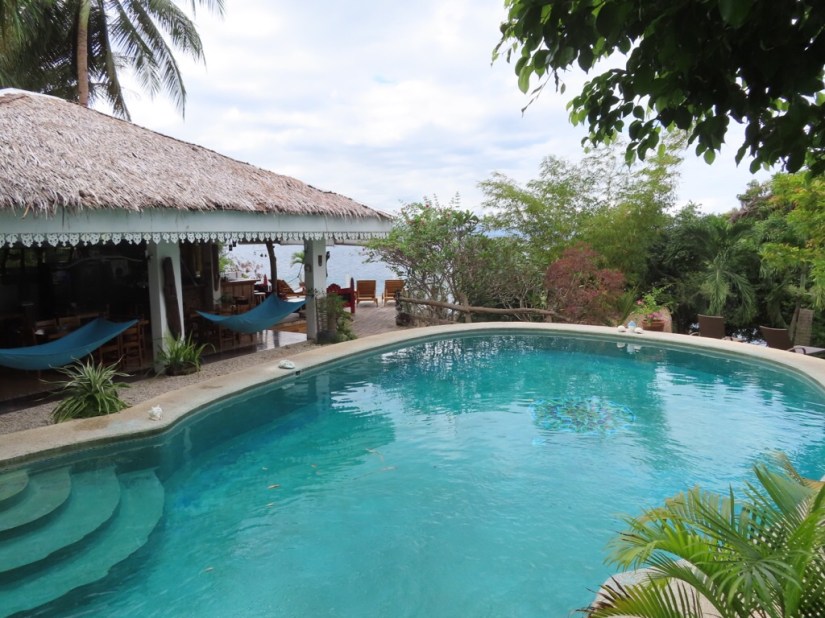
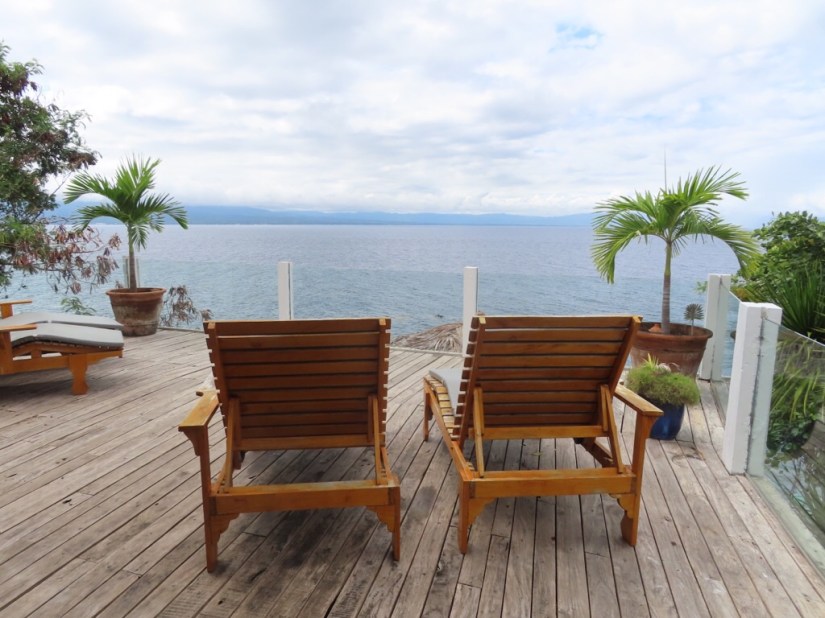
A final 4km by tricycle brought us to Fantasy Lodge, a small guesthouse which had caught my eye when I first started researching our trip, and I knew I wanted to include it if possible. We weren’t disappointed – the lodge is quite bijou, built round a small swimming pool with decking and gardens that give views across the Tanon Strait.

Steps lead down to more seating areas with a small rocky beach.

The first day we just settled in, sat, swam, had massages to the sound of the sea below, and drank cocktails before dinner. The menu has a good choice including several veggie choices for Chris, which is handy as we are a little way from anywhere else!

Next morning we decided to explore Samboan, the small town just up the road. We waited outside for a tricycle and we joined other passengers. By the time we reached the town, there were six of us and the fare was 30p each!

Philippines towns are divided into barangays which started as relatively small communities of around 50 to 100 families, although in some areas they are now larger. Samboan has 15 barangays, with Poblacion being the main town centre, although the others often have their own neighbourhood centre, church, shop and fiestas!

So far, we have travelled on the bus through lots of small towns just like Samboan and we have already noticed several characteristics they all share.

Firstly, there is often bunting of some sort decorating the approach, after all there is bound to be another festa soon …

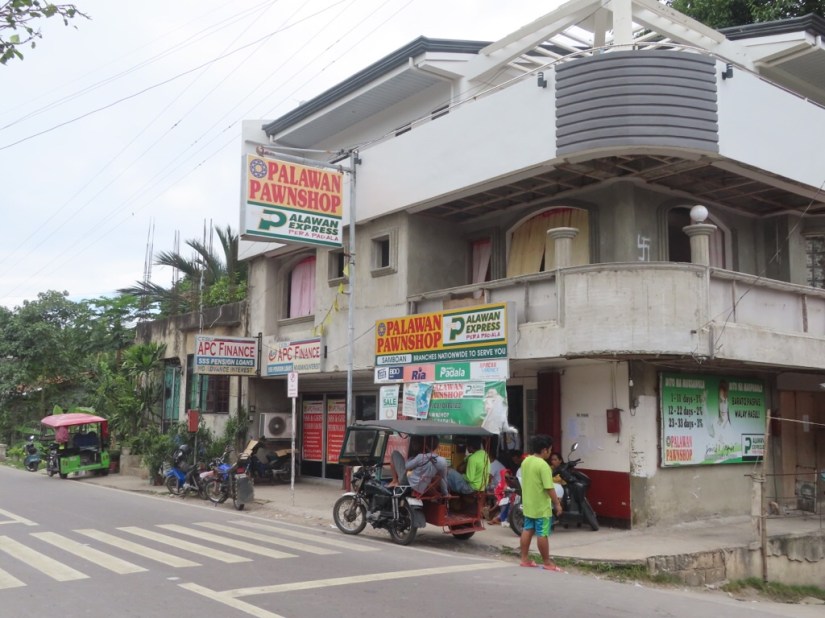
Every main street has at least a couple of pawnbrokers, which still make loans on goods like jewellery and luxury items, but have expanded into money remittance and short term loans …

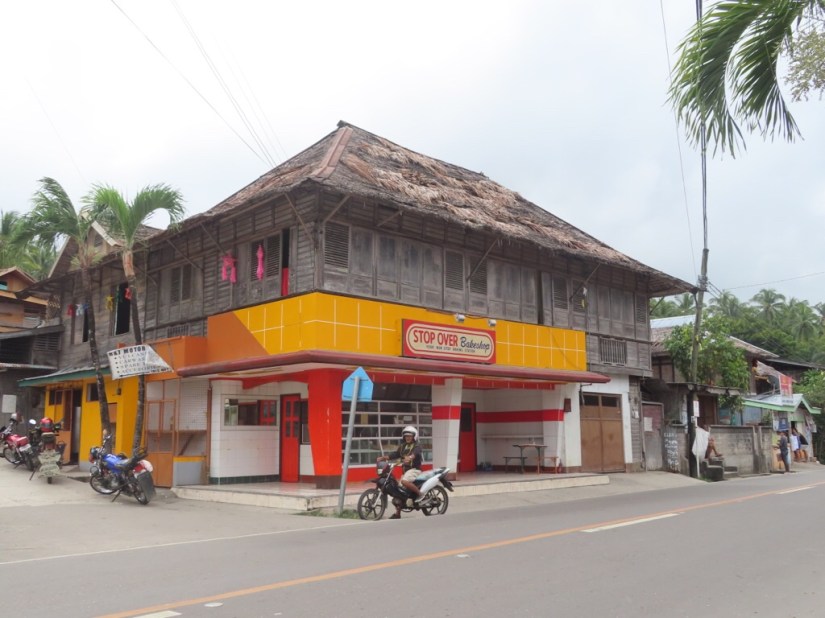
Several bake shops, each selling a huge variety of rolls, many sweet covered in sugar and only 4 pesos (6p) each, because we bought some …

…and a pool table, set up somewhere in the shade, and always busy!

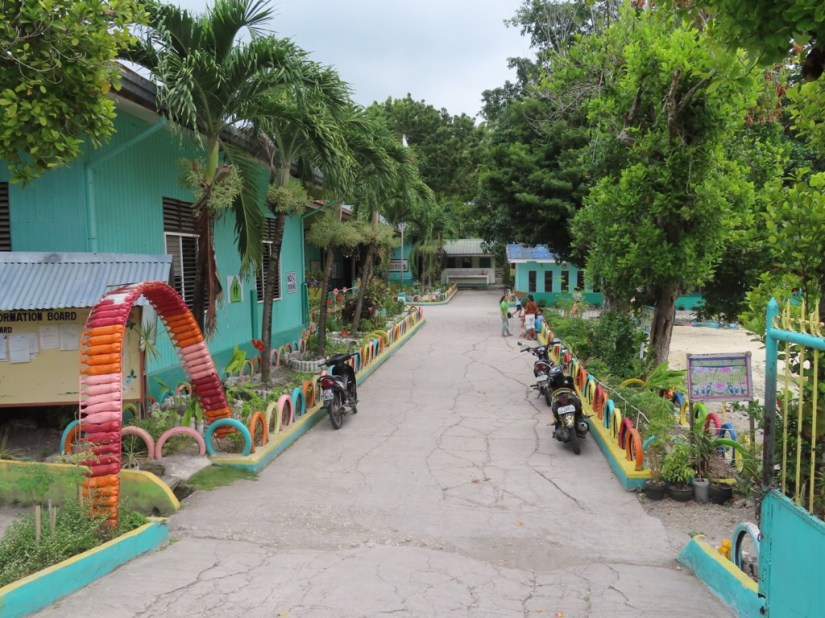
There also seems to be lots of civic pride and the most colourful building is the town school, often decorated with brightly painted recycled items.

Here there is also the Boluntaryo Monument, a central shady kiosk dedicated to the volunteer guards during World War II.

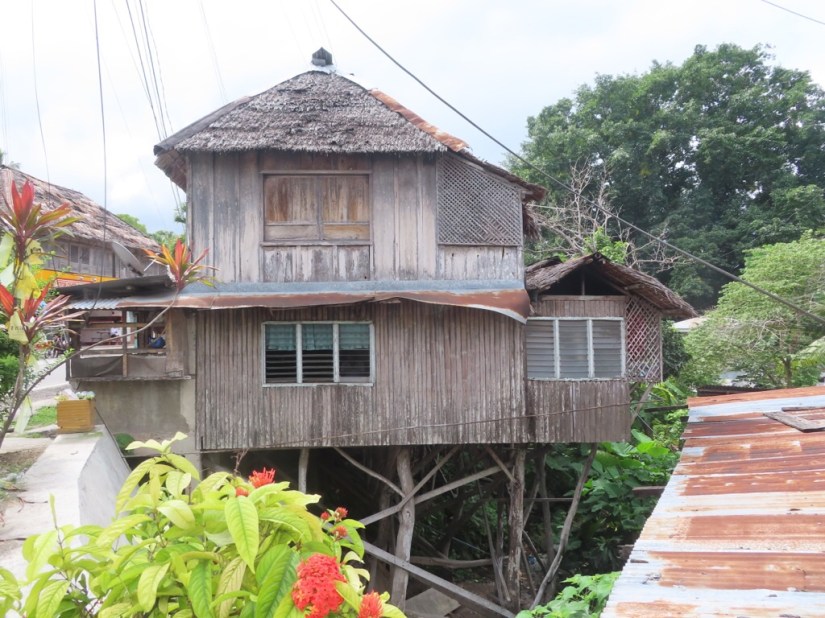
Buildings range from the original country houses, built on stilts of wood and bamboo, adapted to the climate and easy to rebuild if damaged in a storm or earthquake …

… to a design adapted by the Spanish using a stone or brick base with overhanging, wooden upper stories with balustrades, small window openings called ventanillas, sliding panels fitted with capiz shell and a nipa thatched or Chinese tiled roof. Inside there was open ventilation and elevated apartments used as living space with the ground floor used for storerooms, cellars, and other business purposes.

Today many buildings have a galvanised roof, are often completely concrete, often painted in a range of colours, but still have some of the original design features.

We head towards the church, St. Michael Archangel Church which was built by Augustinians and is one of the oldest Spanish-built churches in Cebu, made of coral stones.

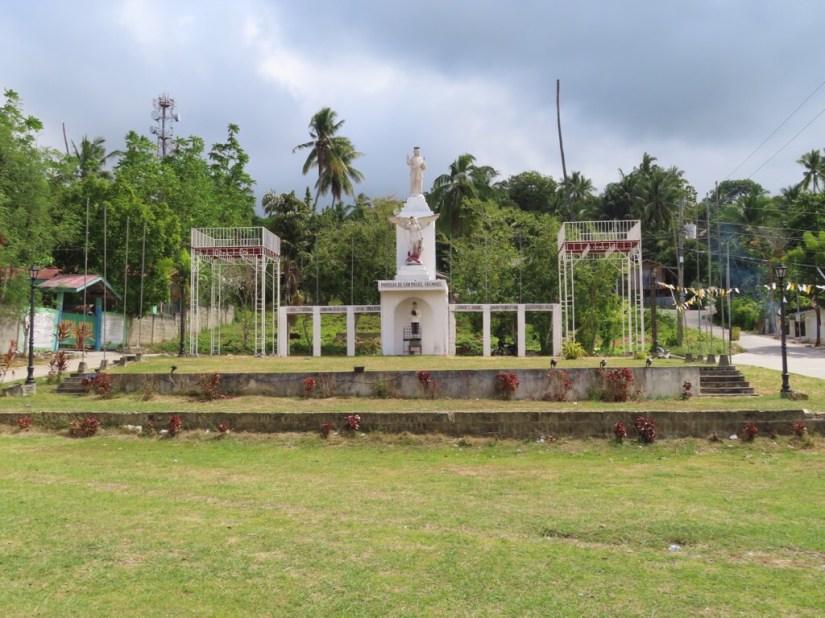
It is set in a huge plaza which would be large enough for the whole town to gather and has a raised area one end …

… and at the other the tallest and best preserved watch tower in Cebu, built of coral stone by the Spanish as a lookout for Moro pirates.

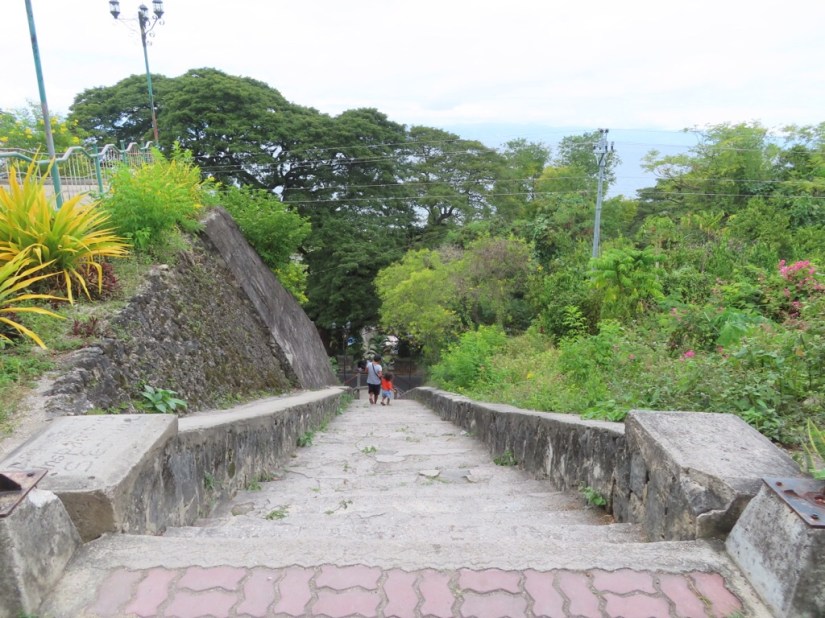
From there a flight of 147 stone steps called St Jacob’s Ladder, leads downwards, originally to the beach. It was instigated by the parish priest in 1878 to make it easier for parishioners to attend mass.

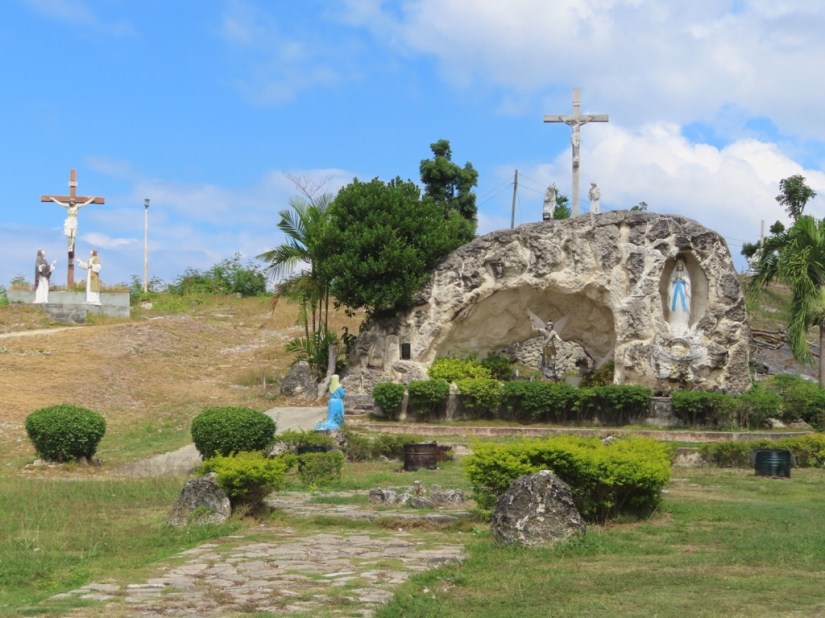
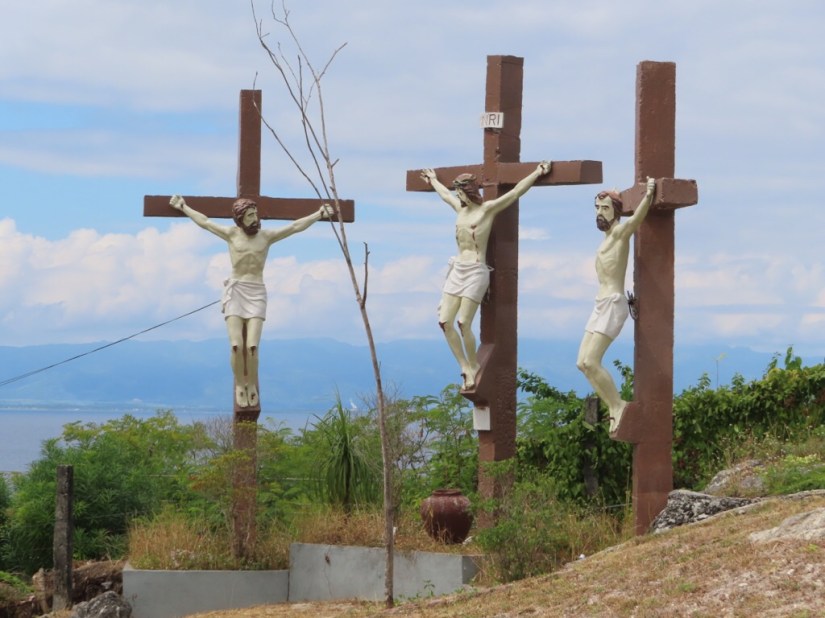
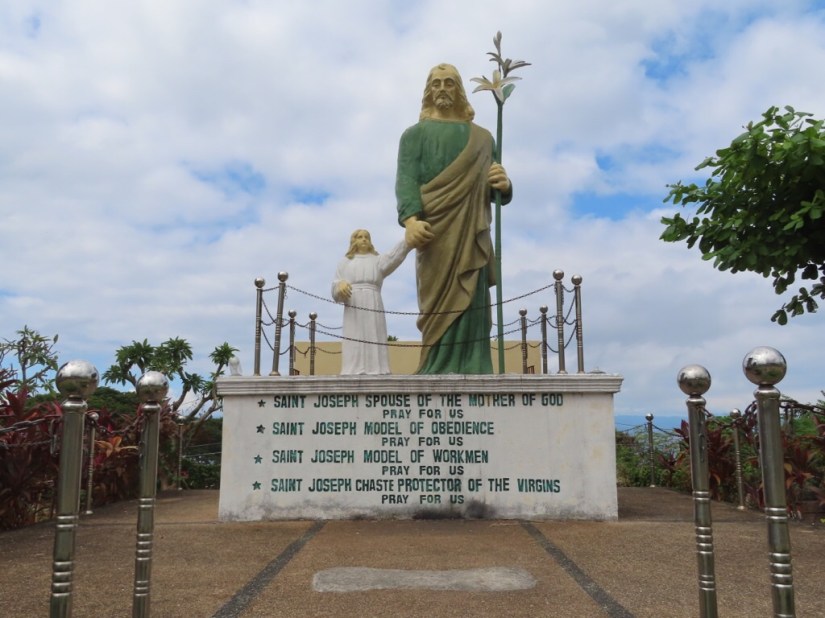
There is also a park containing a Grotto and sculptures of the Stations of the showing the Passion of Christ where churchgoers flock during Holy Week for penance.

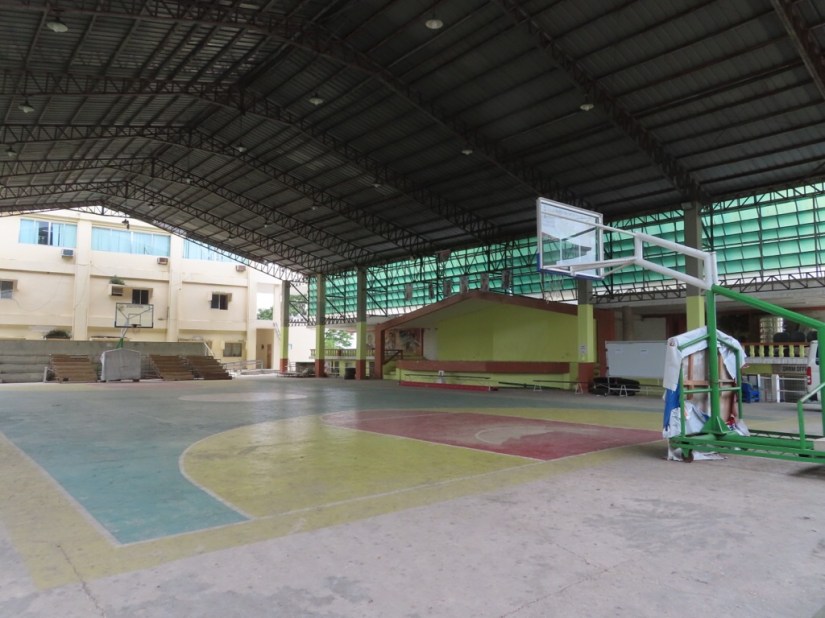
Heading back, we passed the Municipal Mueseum and also the basketball court, another essential in a country that has adopted this as their national sport, despite having few people over 5ft tall, and of course the market.

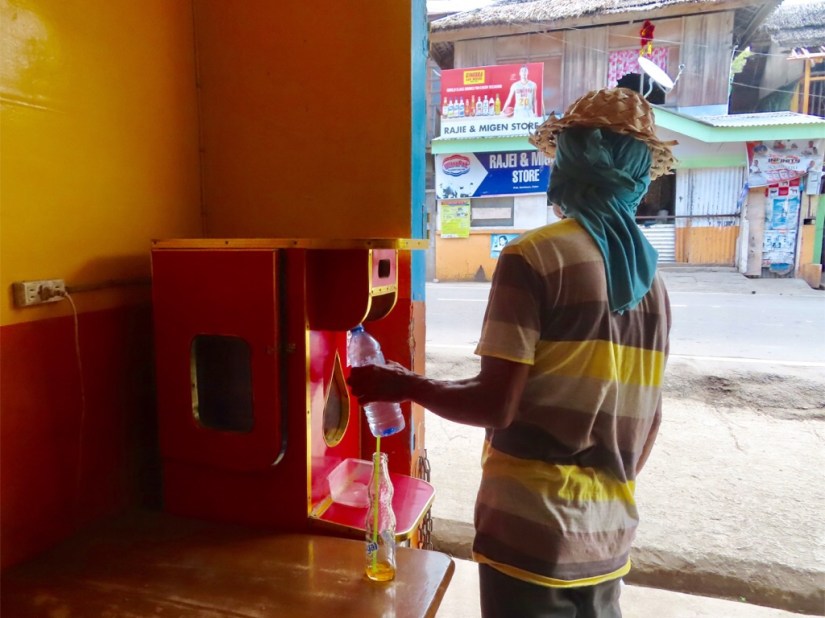
I mentioned recycling, and we are so pleased to see these huge refillable containers for water.

There is one in the hotel we can use to refill our bottles. But we have never seen a water vending machine before … costing just a few pesos to fill a litre bottle.

And another of those inventive Christmas Trees we have seen all over, using recycled items.

There are a number of waterfalls to visit, all within a few kms, but having already had such a great experience at Cambais Falls, we weren’t in a rush to try another. So instead, next day we took snorkelling stuff just down the road to the Samboan Marine Sanctuary, which was a far more casual affair than we were expecting as we couldn’t see anyone to pay the small fee to, so we just walked down the beach and into the water. We were able to wade out on sand till waist deep, then just lay on the surface to watch the coral and fish. The water wasn’t very deep and there was plenty of coral, some of it swishing backwards and forwards in the water. In between were a variety of fish including huge brightly coloured parrot fish, tiny bright blue ones and even a couple of Nemos. The experience was cut short when I felt my arm stinging, but I hadn’t been aware of touching anything and I’d not seen anything. I got out, and my arm came up in a raised red splodge … the consensus was jellyfish, and I soon recovered with an anti-histamine tablet and some white vinegar, but we didn’t feel like chancing it again.

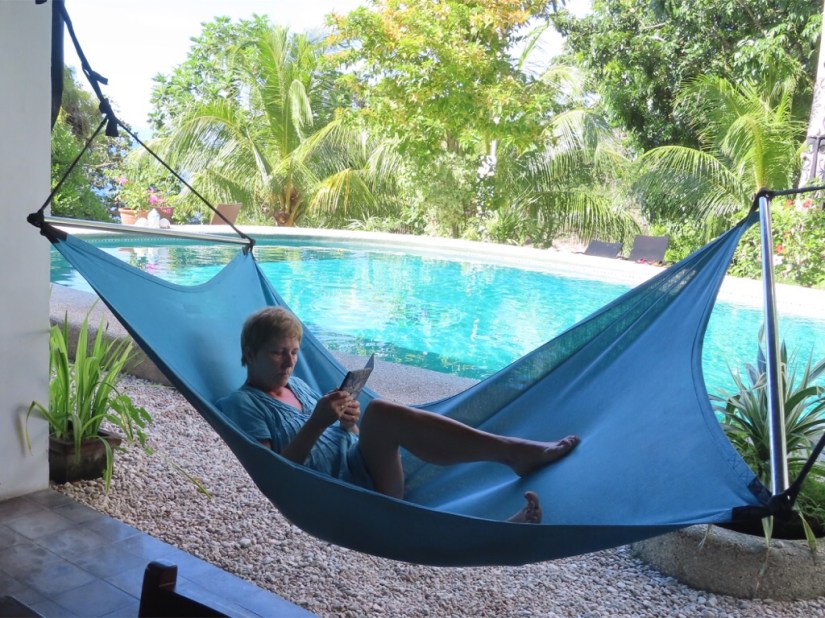
There was nothing else for it … some time in a hammock, blogging and reading, a swim, sunset … you know the drill!

Tomorrow we move on and get to clock up 2 more islands …

Map

Cebu … Our Day in the Mountains!

We took the Ceres Bus … a proper AC coach, not a jeepney … 100km south along the coast road to Dalaguete. Transport is slow in the Philippines, where the roads are narrow and very busy with scooters, tricycles, jeepneys and lorries and it took three hours. Joanna had generously shared her cold as she left, so I was feeling pretty rough all trip.

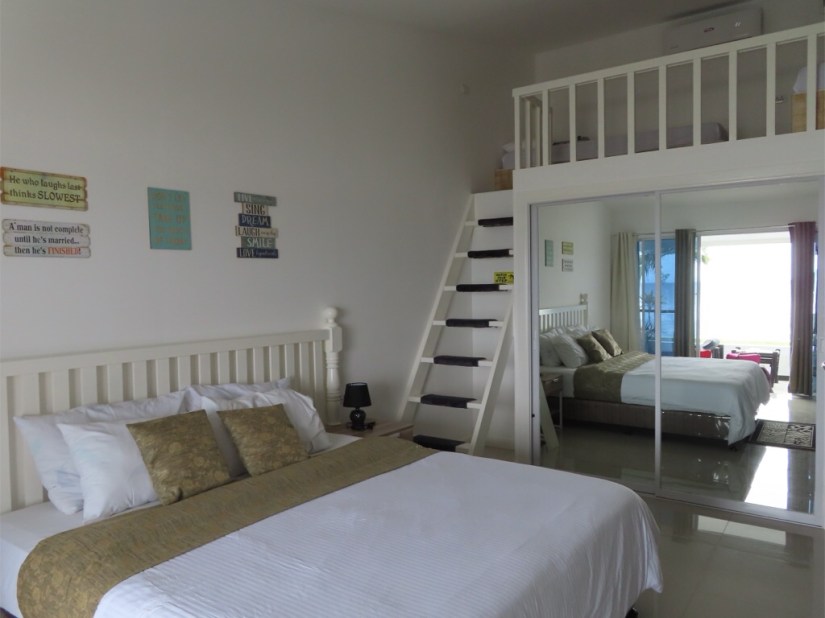
We arrived at The Beachhouse, conveniently just beside the bus stop, and checked in to a little oasis. Tim and Ann made us very welcome to their small resort with four luxury rooms overlooking a swimming pool and the sea.

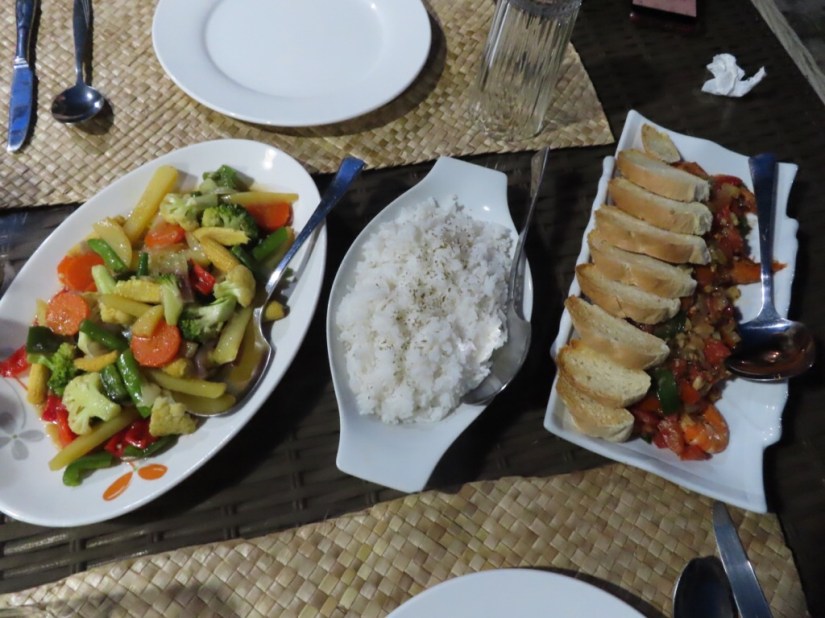
We walked down the road for some lunch and a comfort pizza made me feel ready for a nap. I couldn’t have been in a better spot to feel under the weather with a comfy bed and a cool room. I mustered for dinner, which was good as reports of the excellent food here had encouraged us to book! Sweet and sour fish for me and a veggie curry for Chris, a few hands of Uno and Dobble and early to bed.

In the morning we heard news about a volcano which had erupted just south of Manila so it was lucky Joanna had flown the day before and missed it. Apparently it is the smallest volcano in the Philippines and hasn’t erupted for 80 years.

https://www.bbc.co.uk/news/world-asia-51083515

I was feeling a bit better but still not ready to do any more than sit under an umbrella, dip in the pool, walk out for a salad lunch, return for a nap … then have another lovely dinner – this time spicy shrimp and chop suey.

But we did take a few photos …

On our last day here we thought we better do something, so Tim arranged for habal habal drivers to take us into the mountains for the day. We had first done this in Thailand a couple of years ago and a motorbike with driver for rent seems quite the norm in Asia. We reasoned it was probably safer and less trouble with an experienced local rider than hiring our own moped.

The four Russian visitors also staying at The Beachhouse joined us, so a ride out of six bikes headed inland.

Having climbed steadily upwards, passing farms, lush undergrowth and a couple of villages, we stopped to take photos …

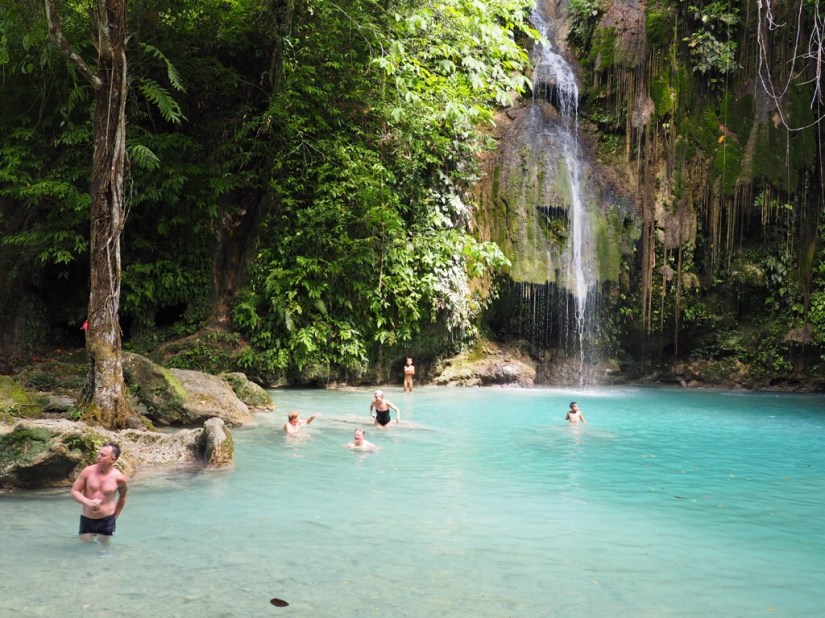
… then continued to Cambais Falls where a couple of local guides, James and Carlos offered to guide us to the best swimming spot.

We walked a while until we reached the higher waterfall ….

… some chose to jump in from the cliff! Chris stayed to take photos and I clambered down and entered the water more sedately. It was really lovely – clear, cool and just our small group there.

Our guides helped carry bags so we could concentrate on making our way safely – the Filipinos all seem related to mountain goats! We made our way to the lower pool, where there was a waterfall we could swim behind.

It was a great experience, and as another group arrived, we packed up and returned to the bikes.

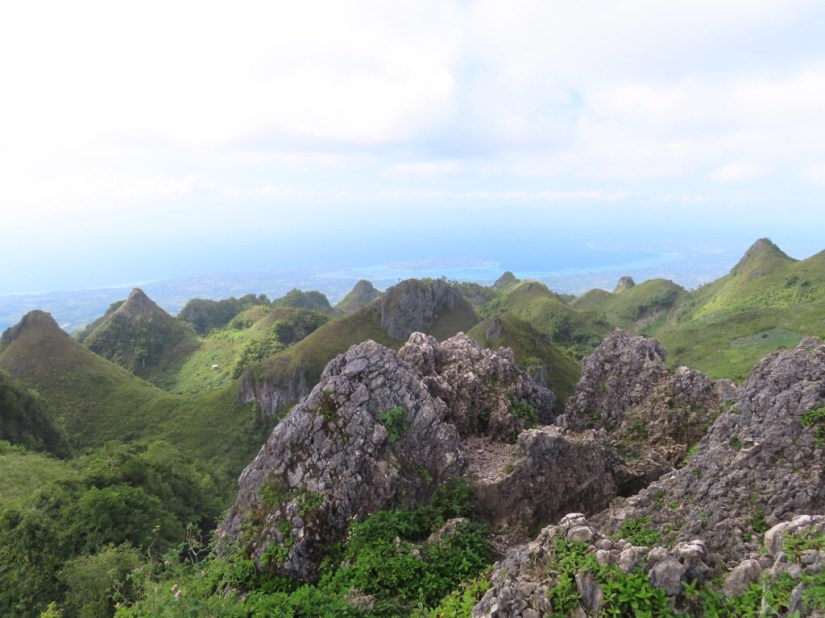
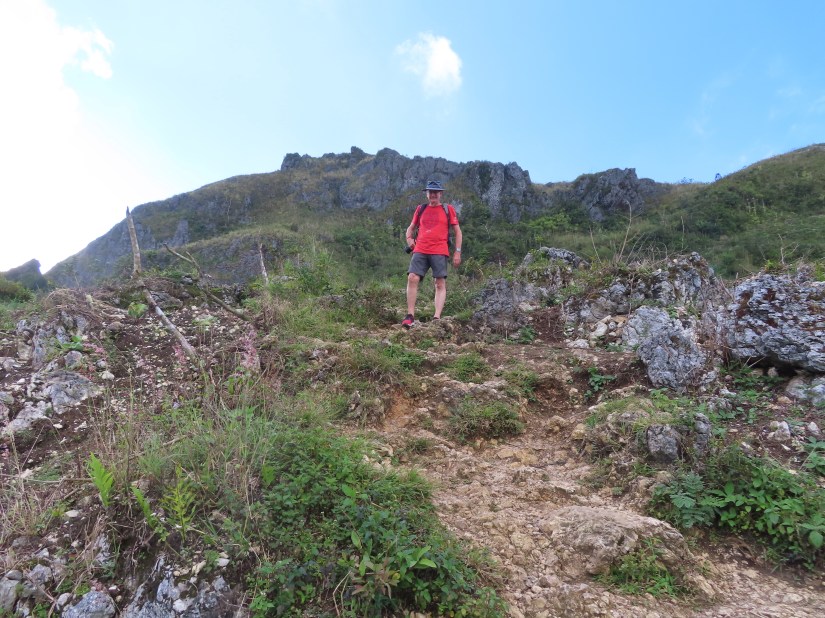
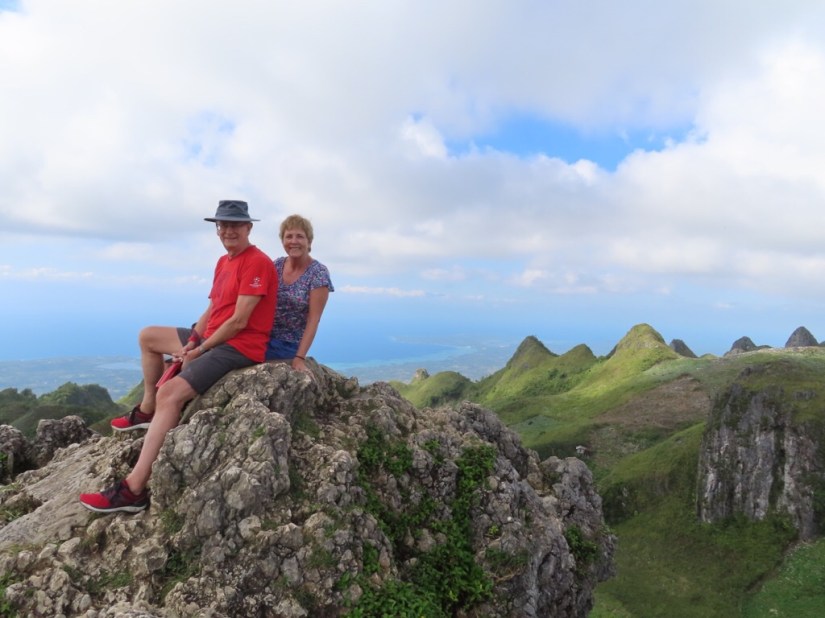
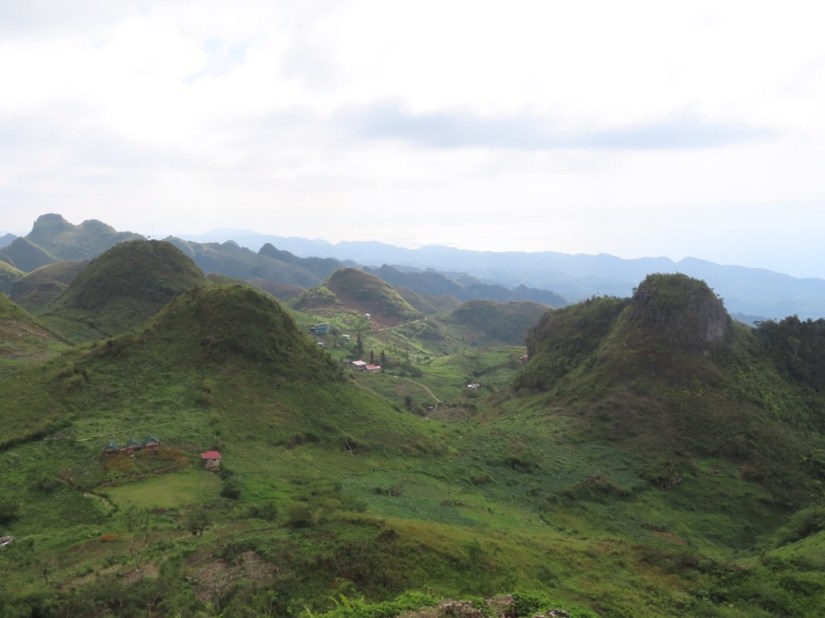
Next stop was Osmena Peak, and it became obvious that there wasn’t anything particularly special about the Chocolate Hills in Bohol – there are limestone hills and outcrops everywhere … and some a lot less crowded!

The lower slopes of the peak were being cultivated for vegetables …

… and it took around 20 mins to get to the top where we rested, enjoyed the view and ate snacks, then took photos of the view northwards towards Moalboal and Zaragosa Island …

… and the other way as well!

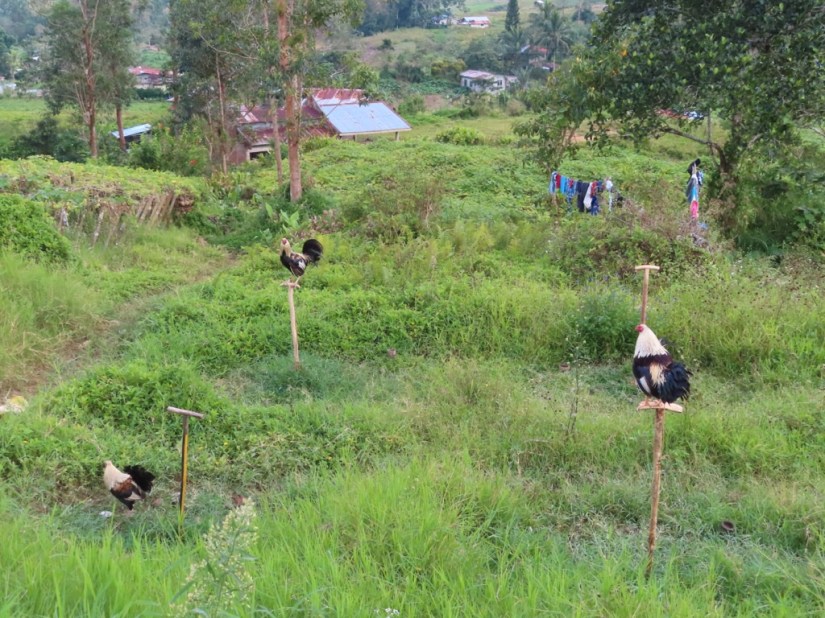
Back at the road, we passed roosters on their perches …

… and having been talking about cockfighting with Tim the previous day, we weren’t surprised to see a bit of a practise bout going on …

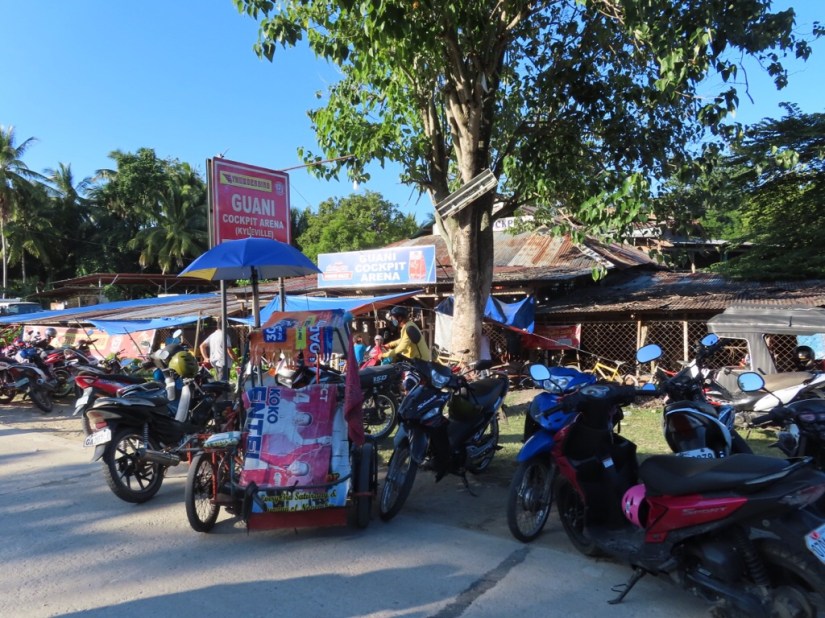
Everywhere we have stayed, even in Cebu City, we woke to the sound of roosters. Having been here a little longer, we now know why – they are bred for fighting. Cockfighting is legal and a national obsession among all levels of society with some 2500 stadiums across the country and some 30 million roosters being killed each year. It has an ancient history here and was mentioned in the report of Magellan’s voyage of discovery of the Philippines in 1521. Fighting roosters are specially bred for their aggressiveness and usually fed better food like grain or minced meat. The rich even have veterinarians and trainers to build up the muscles of the birds. Having said that, with blades attached to their legs, Filipino roosters usually only live to fight one or two matches before death or injuries retire them from the sport. For the Filipinos, cockfighting is a form of entertainment to relieve the stress of life, but the betting also draws them in, a chance for a quick peso, or if the wining bird is yours, a way of earning money when jobs are scarce. We even passed the local stadium on the way back, and no, we won’t be going!

A dip in the pool, a pretty sunset and pizza and pasta night has brought our stay at The Beachhouse to an end and tomorrow we get back on the Ceres Bus and go further south …

Map

Cebu City … Again!

We took the catamaran back to Cebu in the morning, checked back into Cebu R Hotel, had a snack and arranged a taxi to take us out of the city northwards, into the hills.

The Tops Lookout gives a great view over Cebu City and we could see Bohol and even Balicasag in the distance.

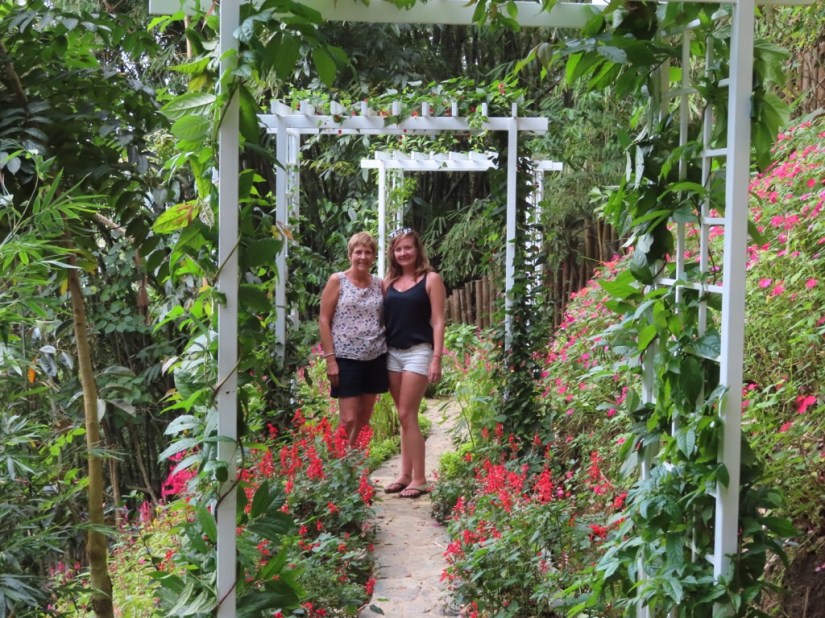
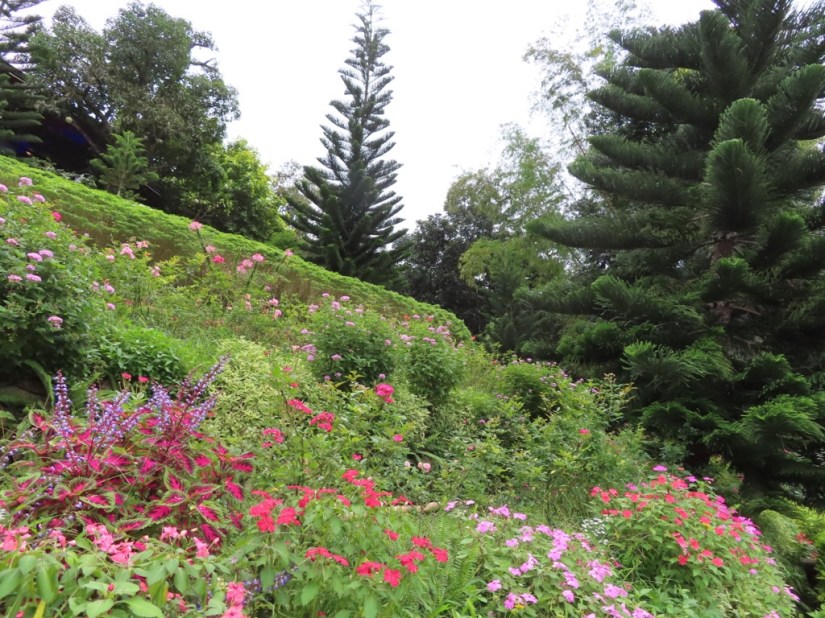
Our next stop was The Terrazas De Flores Botanical Garden where footpaths leading between terraced flower gardens gave us a chance for a bit of a photo op amongst the blooms!

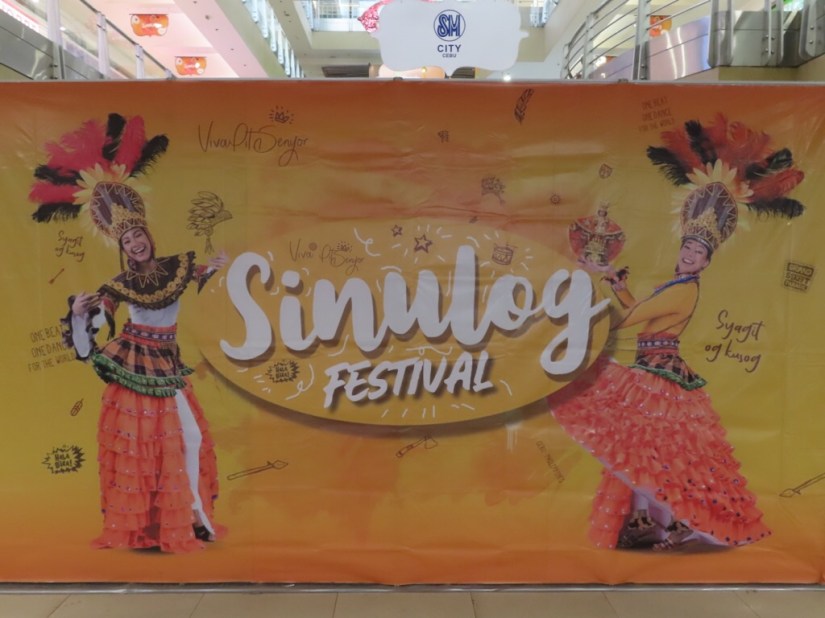
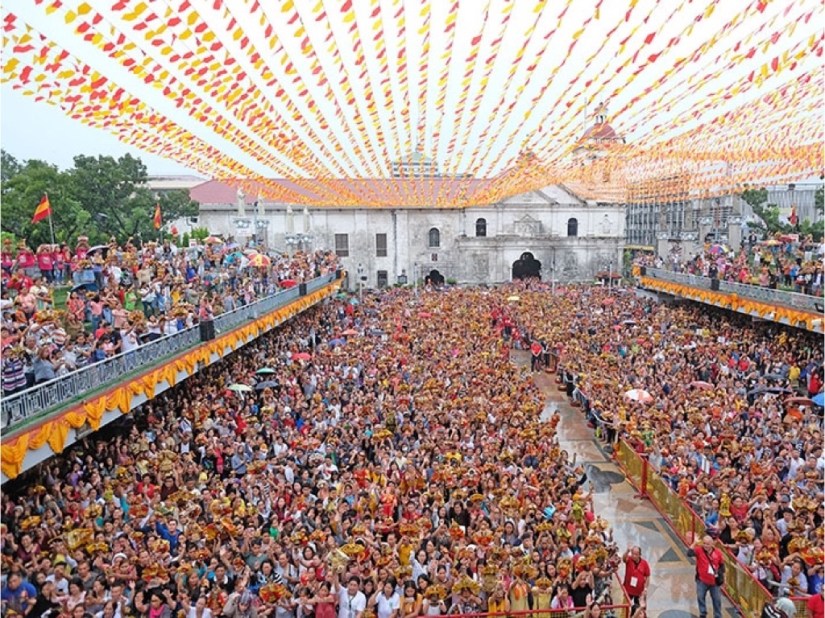
The Sinulog Festival is one of the most famous festivals in the Philippines, attracting millions of visitors each year. At the center is the Grand Parade which attracts dancers with vivid costumes and choreographed routines from all over the country and takes place on the 3rd Sunday in January.

The festival celebrates the the statue of baby Jesus called the Santo Niño de Cebú, which was handed to the Rajah of Cebu by the explorer Ferdinand Magellan in 1521. This was one of the most important events in the Catholic history of the country and the word Sinulog refers to the flowing movements of the dancers who act out the scenes of this Spanish encounter.

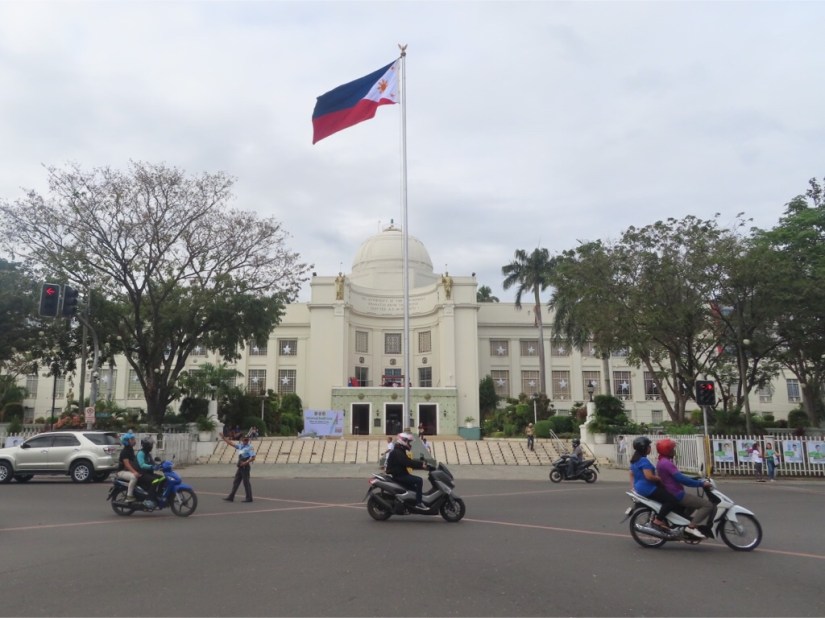
While that is still a week away, there are other events and smaller parades leading up to the main event and the roads near the hotel will be closed tomorrow so we’ve had to ditch our plan to look round the historical centre … only seeing the capitol building just beside the hotel.

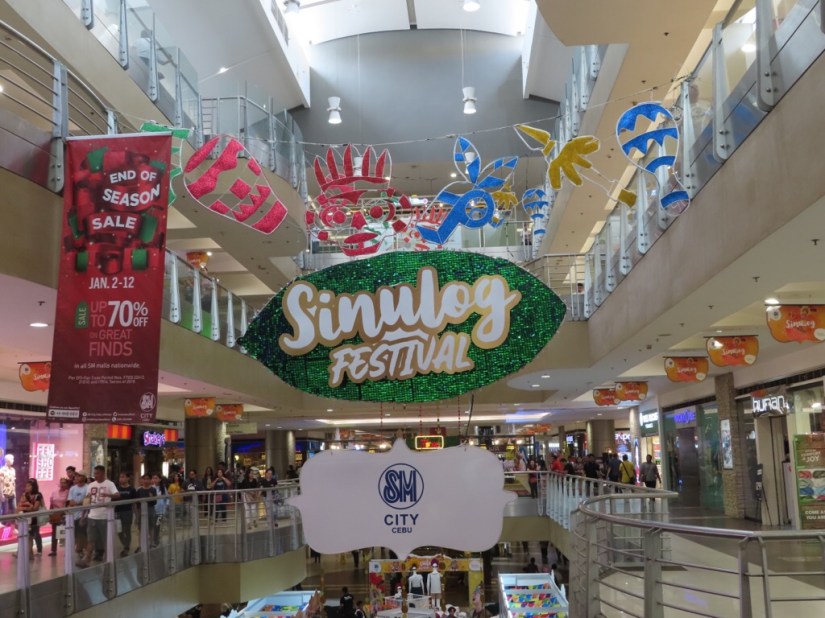
Instead, Since Joanna needs to be at the airport by 4pm, we’ve decided to hang out at the SM Mall, one of Cebu’s most popular shopping malls. Built like a maze with several sections and four floors of shops and restaurants, nothing could be further from the ramshackle shops and booths made of concrete block, unpainted wood and corrugated iron we had seen elsewhere.

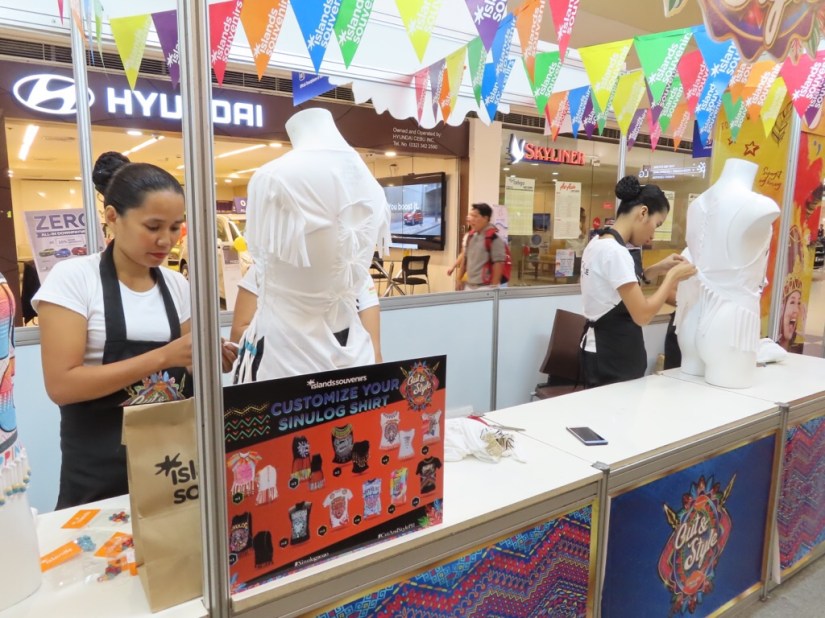
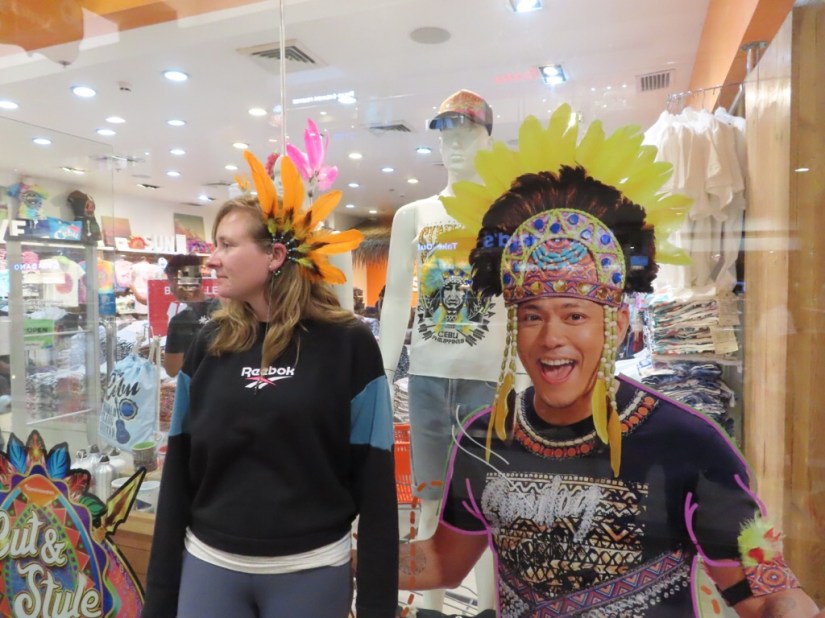
Sinulog is a big thing with lots of shops selling dress up items such as feathers and Tshirts that could be personalised with fringes and beading. Joanna’s off to a festival in Sydney next month with a couple of friends and bought feathered ear cuffs and headdresses for them to wear!

One of the popular lechon or roast pork chains called Zubuchon also offered veggie choices, so we went for lunch and I had a special with crispy lechon, rice, soup and papaya pickle called atchara.

It was time to say our farewells, and put Joanna in a taxi to the airport. We’ve all had a great time and it was good to spend so much time together … but no need to be too sad, as Joanna will be coming to England in May so that’s hardly any time at all!

Chris and I made our way back to the hotel, hoping to catch the end of the parade, but it was finished. I did find these pics online of the mass at the Basilica del Santo Nino on Friday and the first parade, but am quite pleased not to be caught up with all those crowds.

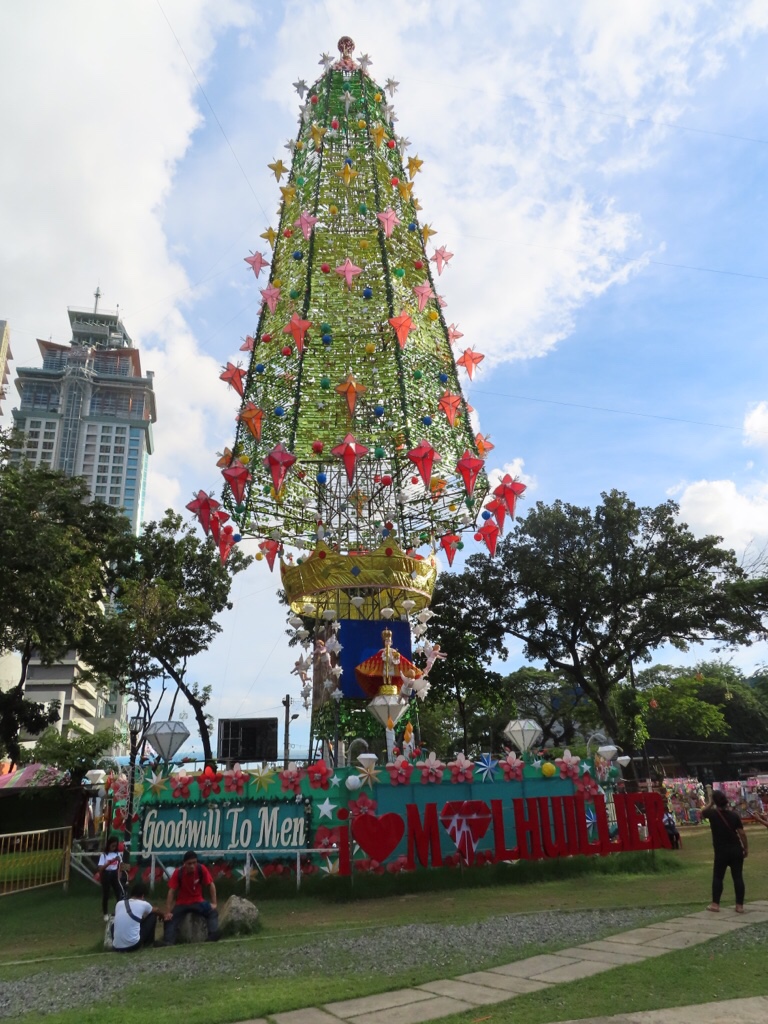
This is the Xmas tree at Fuente Osmeña Circle … obviously no concerns here about decorations after 12th night, they are still everywhere …

… a copy of the Santo Niño de Cebú amongst the traffic …

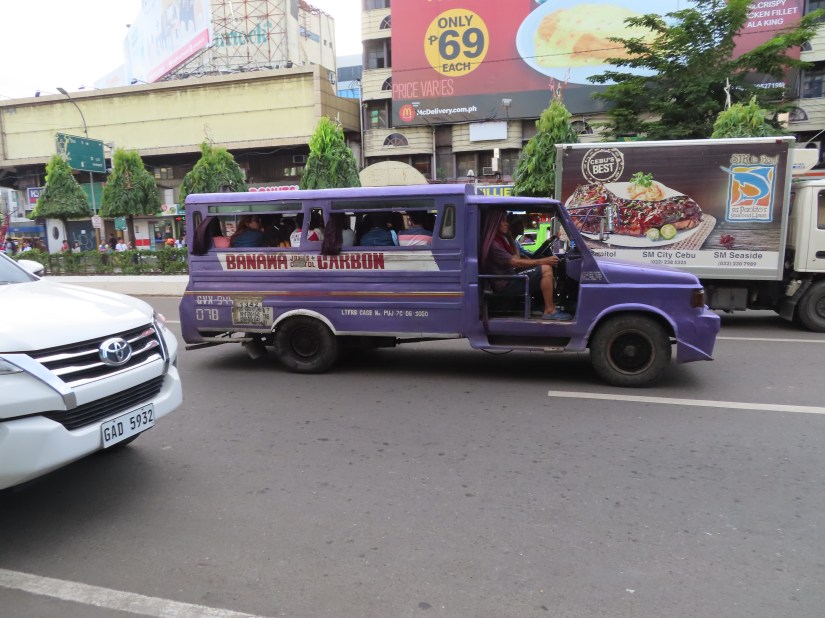
… and a few more jeepneys.

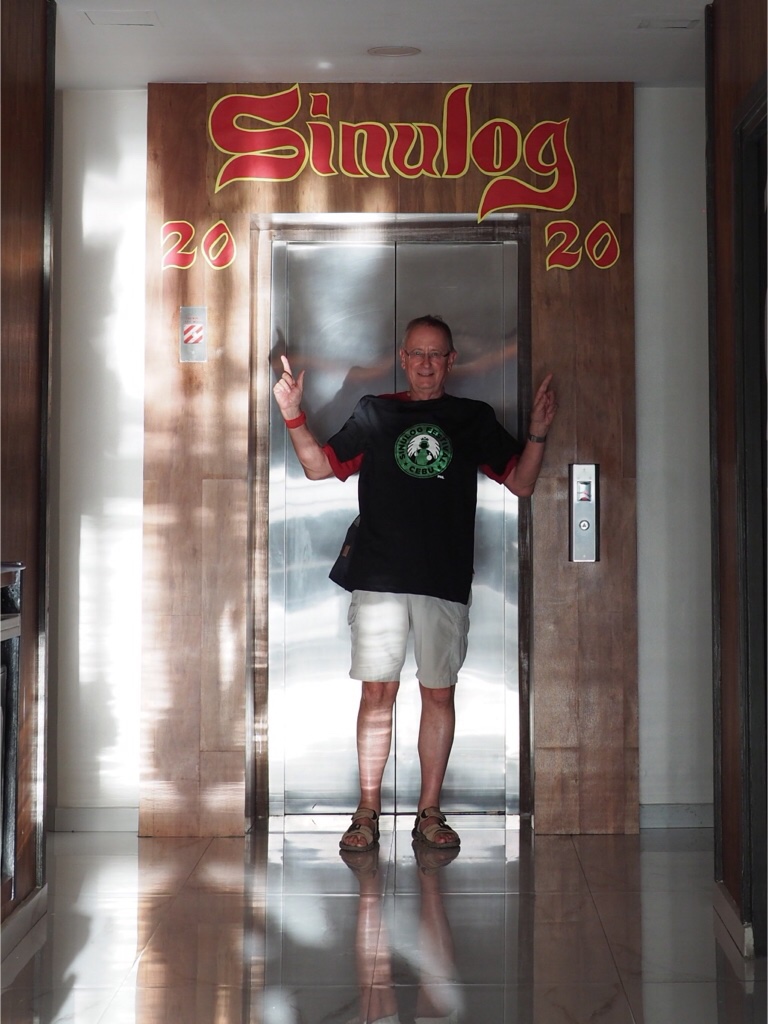
The staff at the hotel have looked after us beautifully and a craft afternoon had been in session, making decorations for the festival. They insisted Chris show off his new T-shirt in front of the lift!

Tomorrow we move on, southwards, by bus …

Map

Panglao … Simply Chilling!

An easy journey here, just across a causeway!

After a couple of days in a town it was lovely to relax round the pool at Alona Swiss, owned by a Swiss-Italian chap called Raphael who began as a dive instructor and loved Panglao too much to leave!

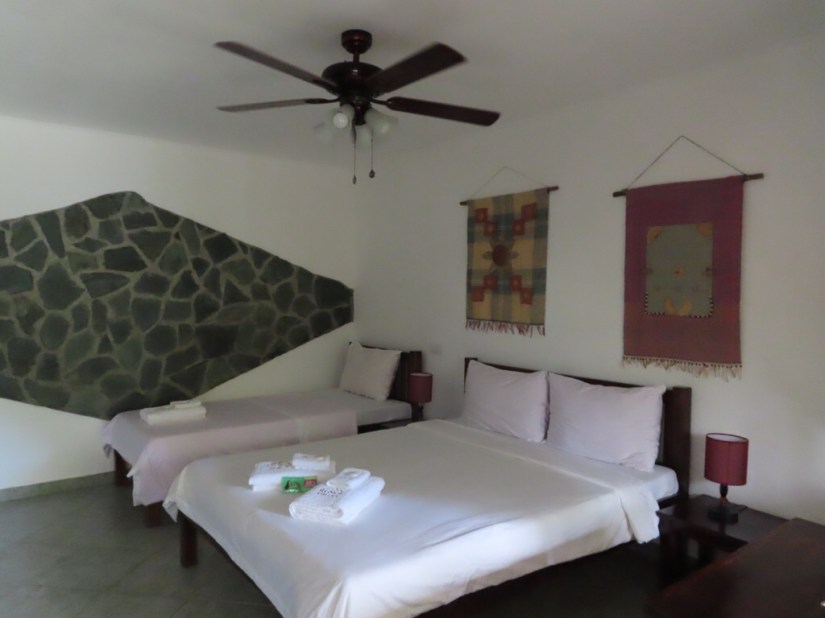
There are just around 15 rooms and we had a spacious bungalow with all mod cons and a terrace outside with a small kitchenette we didn’t use, but it was useful for the fridge and the water dispenser.

In 1970, a movie called Esteban was filmed here when the beach was just a beach. When Filipinos came to visit the famous movie location, it was named Alona Beach after the starring actress Alona Alegre who was fondly remembered by the locals. Just ten years ago it was still a sleepy place favoured by divers, but has recently become quite commercialised, although most buildings are no more than 3 storeys and the tallest structure in town is the MacDonalds sign!

We were just a 10 minute walk to the restaurants, shops and main beach … close enough for convenience … far enough away that we couldn’t hear the nightlife!

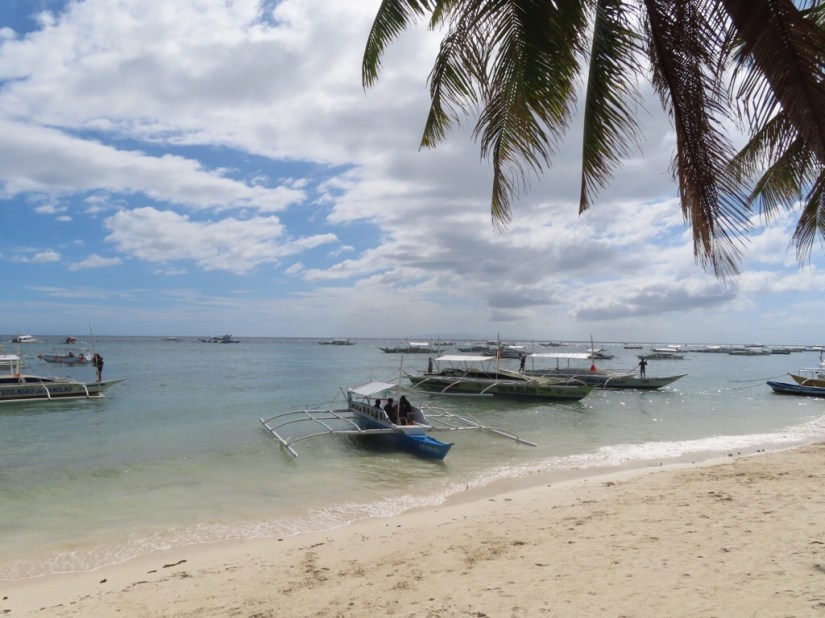
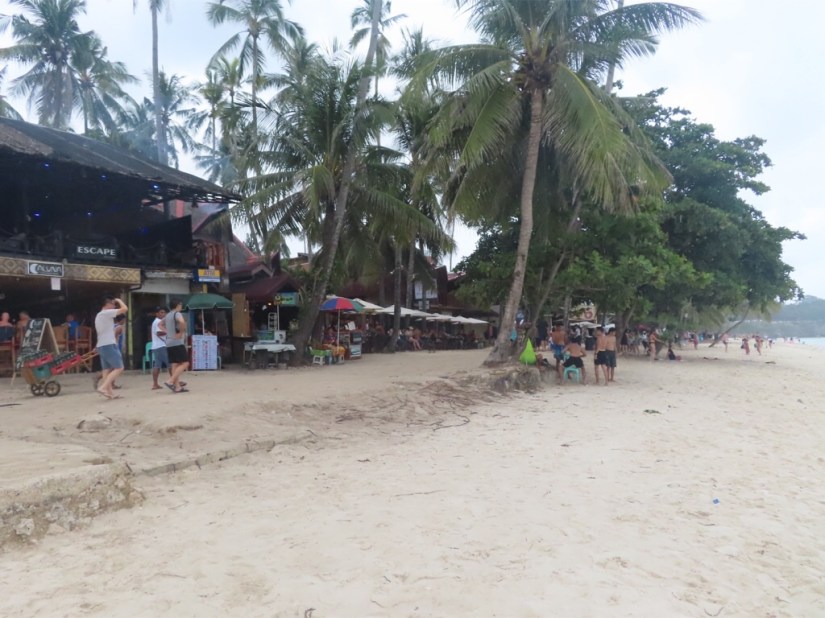
Here are some views of Alona Beach over our stay …

Unfortunately, as we arrived, Joanna came down with a cold, so we spent a really relaxing couple of days on Dumaluan Beach, a far more sleepy spot that was backed by a couple of resorts and palm trees with powdery white sand and shallow sparkling blue water.

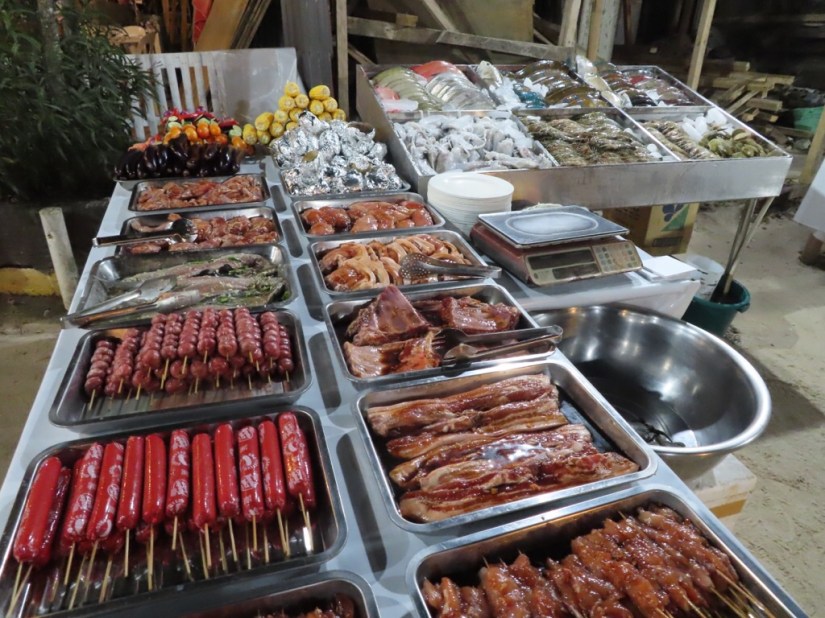
We’ve eaten in several spots including another Buzzz Cafe, run by Bohol Bee Farm, and a couple of the bbq places along the front. Chris has managed veggie stir fries and a couple of pizzas!

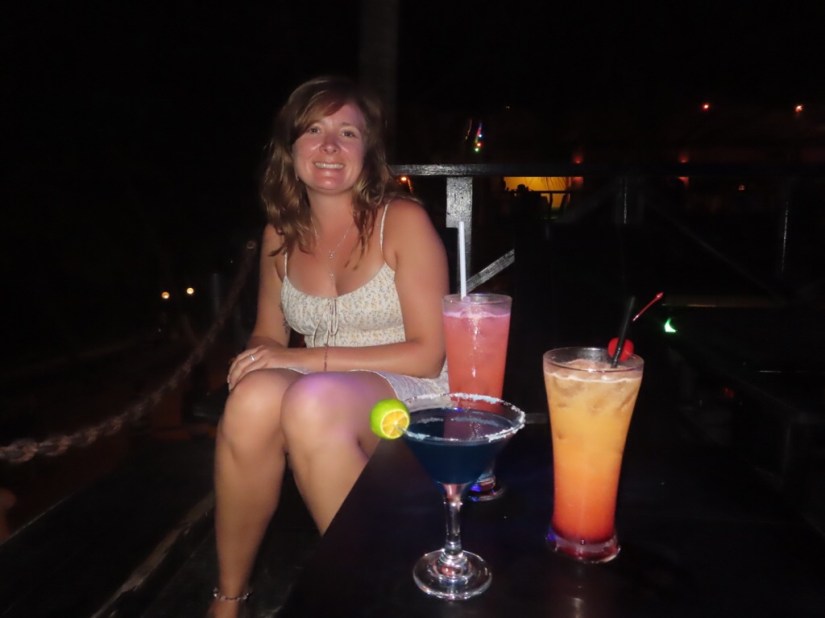
There have also been sundowners, once in town …

… and again at Equation Bar on Danao Beach …

… and while it was too cloudy to see the sun actually set, the light was fab and we got some great pics.

As you will see we’ve had mixed weather, mainly sunny but some cloud, especially later and a few drops of rain but it has always been warm, and if the sun had shone all the time, it would have been jolly hot!

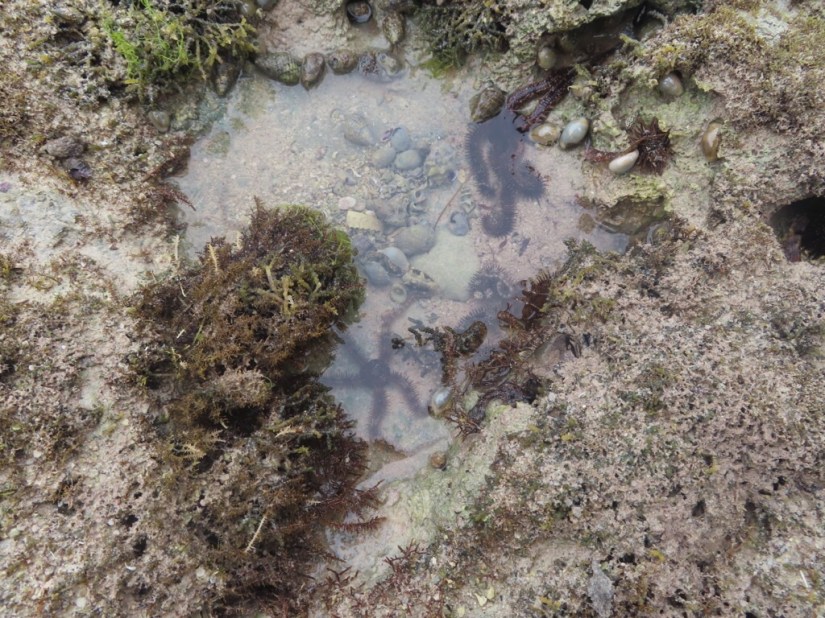
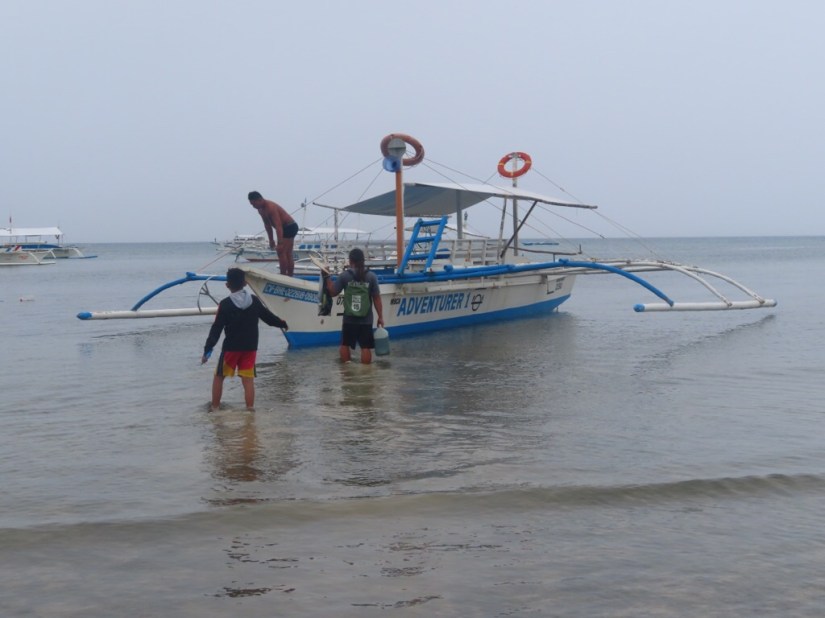
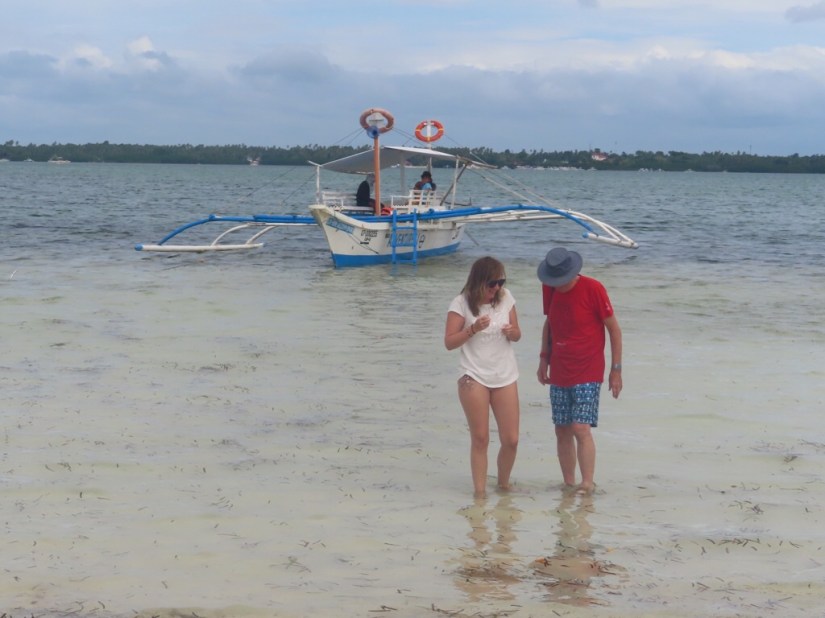
On our last day, Joanna was feeling much better so Raphael organised a boat trip to Balicasag Island which is surrounded with coral protected by a marine park. The morning dawned a bit grey but we just hoped it would brighten. It was low tide, so we crossed the rocks to reach our bangka, spotting little starfish in the shallow water.

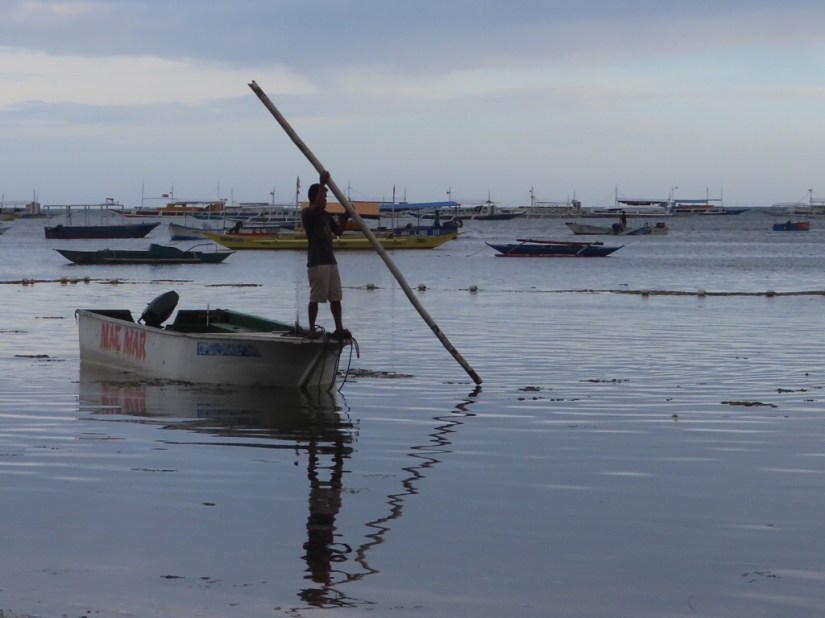
Once aboard, a pole was used to push us into deeper water before starting the deafening engine.

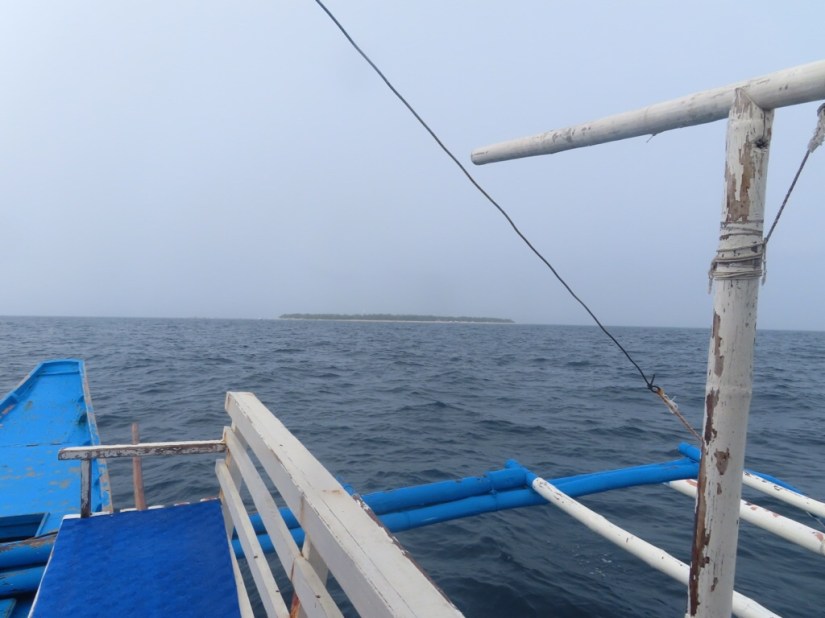
The crossing took an hour and the spray combined with drizzle … but we reasoned we would be even wetter once in the sea! By the time we arrived the rain had stopped and the sun was trying hard to come out.

From here on you will just have to imagine as we left all our gear safely in the dry and complete with masks, flippers and life vests, we boarded a much smaller bangka, the size of a canoe. Our guide paddled us out to the reef and we entered the water. The snorkelling was easy as we could just hold on to the outriggers of the boat. Our guide had fitted a large round wooden paddle to his foot, and used this to propel the boat along so we could watch a number of huge turtles eating grass on the seabed. They seemed totally oblivious to us floating above. I had been quite apprehensive as to how we would get back in the boat without steps, but the guide braced himself against the boat and we stepped up onto his thigh to get aboard! Next he paddled round to a different spot and this time there was coral with fish of all colours and sizes swimming between. We stayed in the water watching for ages, but eventually we all started feeling a bit chilly so we got out. We all agreed it was the best snorkelling experience we had ever had as we had never seen turtles like that before and the fish and coral were stunning. Chris is seriously thinking about a Go-Pro for next time!

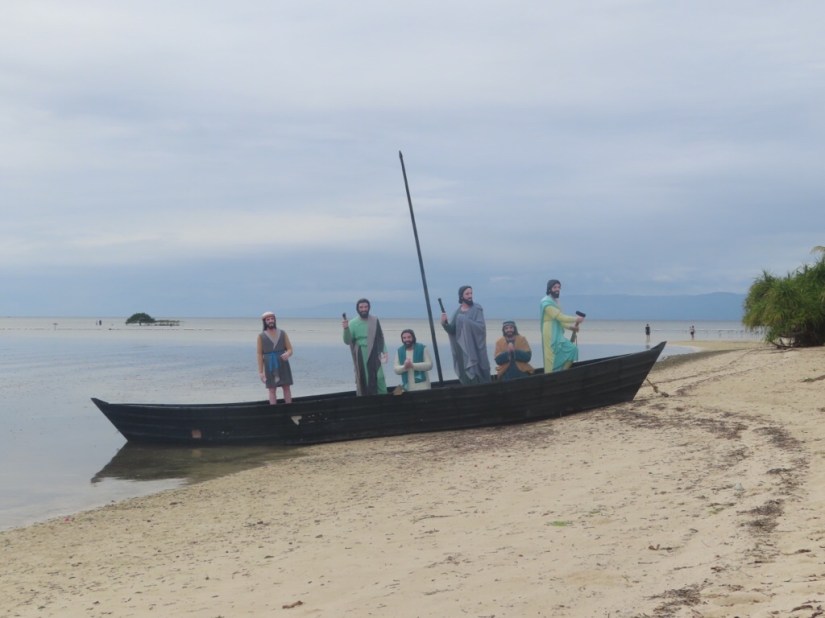
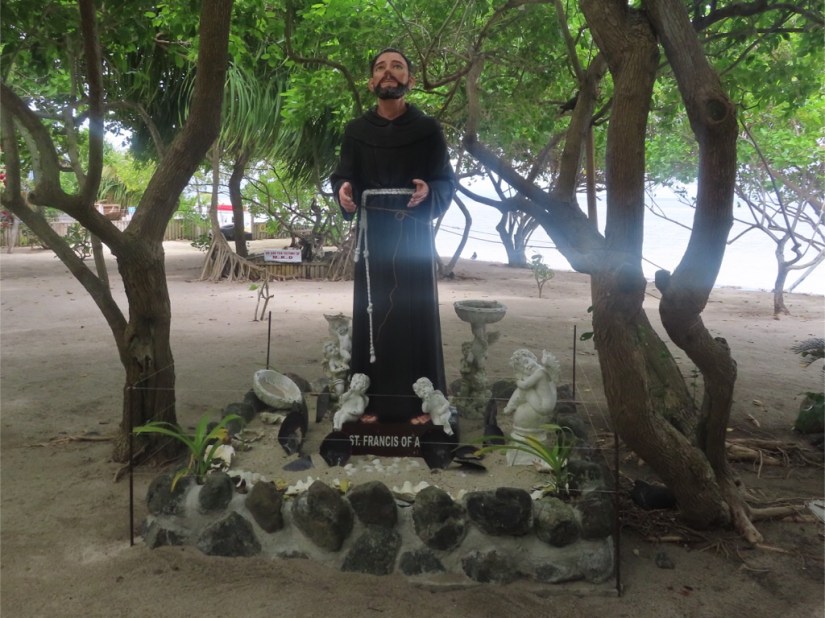
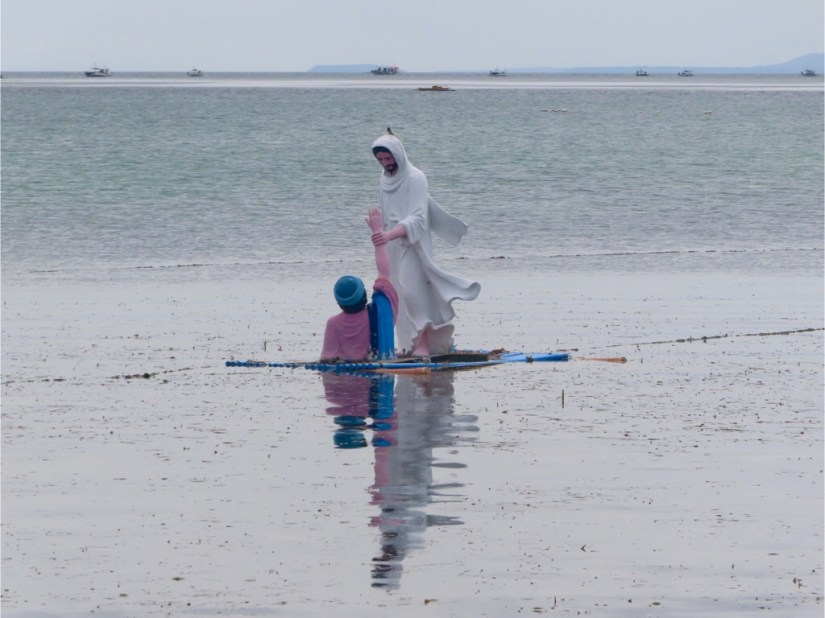
On the way back we stopped at Virgin Island, apparently now called Isola Di Francesco, which has a long exposed sand bar at one end and a religious garden at the other with a collection of rather kitch Catholic statues.

Whale watching had been another possibility, to see huge whale sharks but I read some negative comments and we pleased we had decided against it when we saw this …

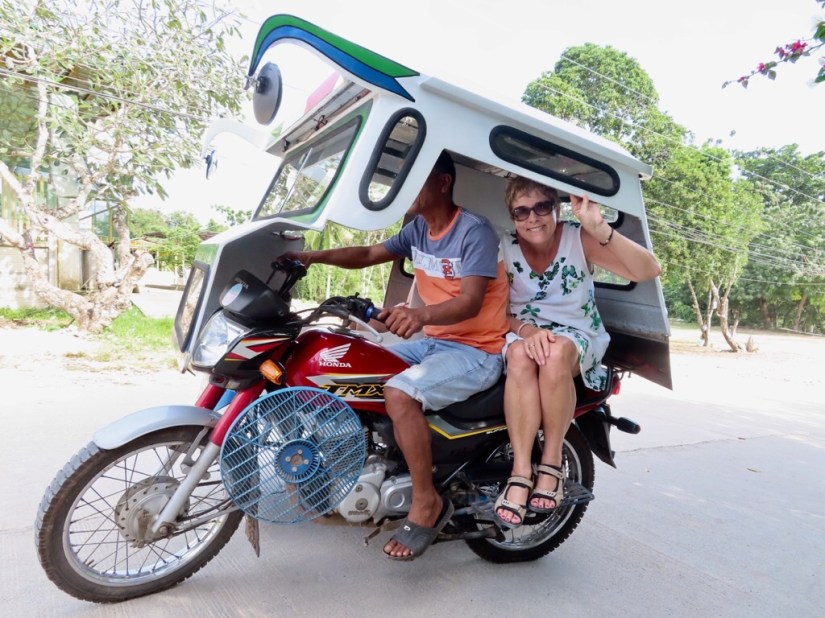
Finally, here are just a few miscellaneous snaps including Xmas decorations made from plastic bottles and my turn on the back of the tricycle …

On our last evening we had cocktails and dinner and packed the cases … tomorrow we return to Cebu.

Map

Bohol … Jeepney to Antequera!

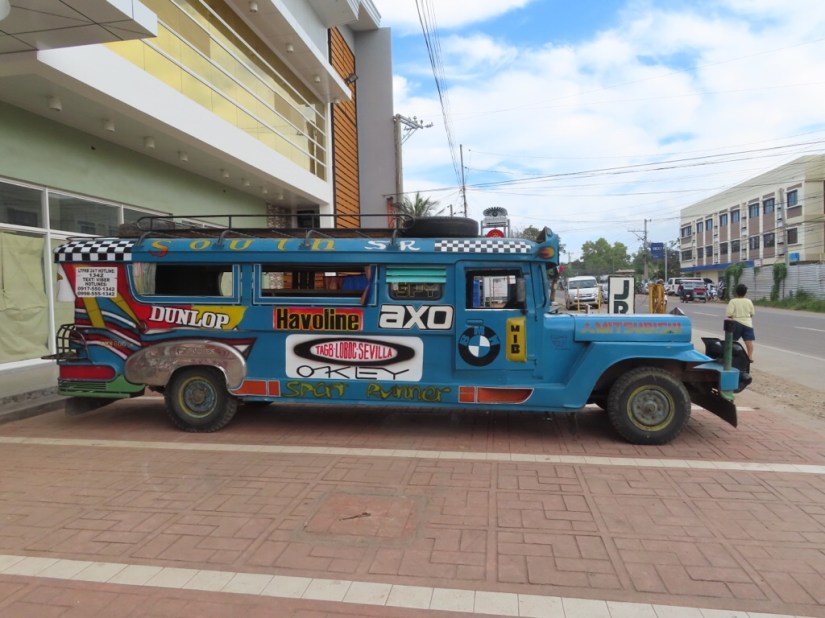
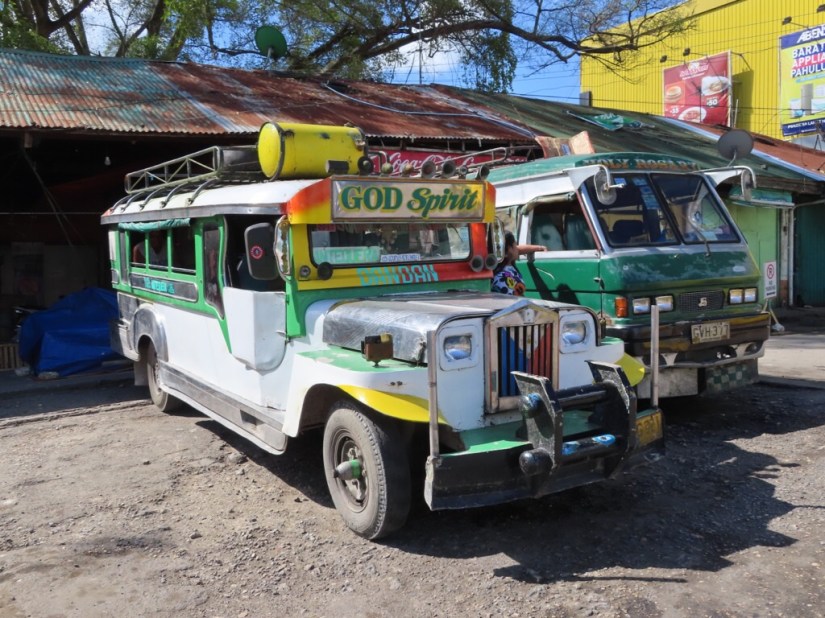
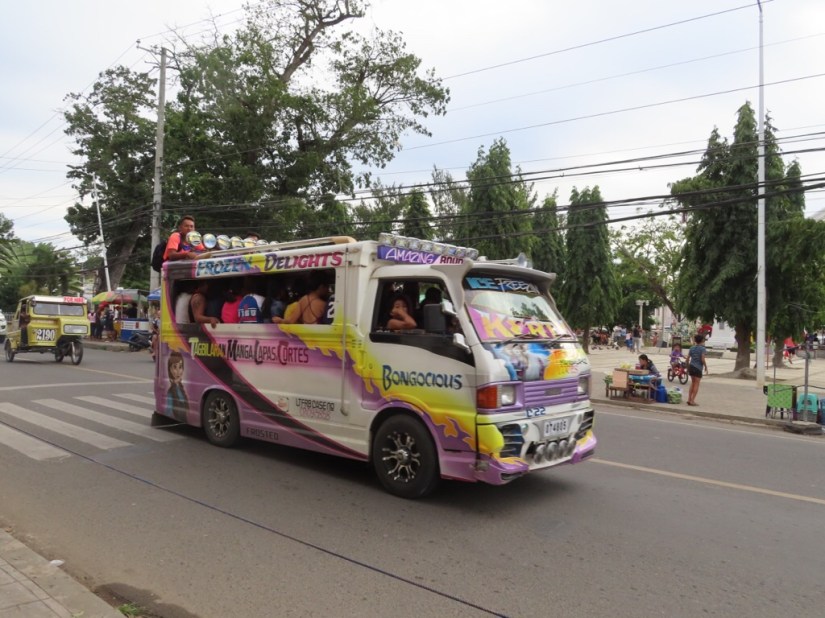
Determined to try out all transport options, next day we headed to the local market and bus station to catch a jeepney. Originally converted from US military jeeps after WWII and decorated with bright colours and chrome ornaments, these minibuses are the most popular means of public transportation in the Philippines. We knew they were crowded, mainly as the routes and fares are fixed, but the driver wants to maximise his income so waits till it is full to leave. Joanna fancied the kitch one, but the slightly more modern one was next in line …

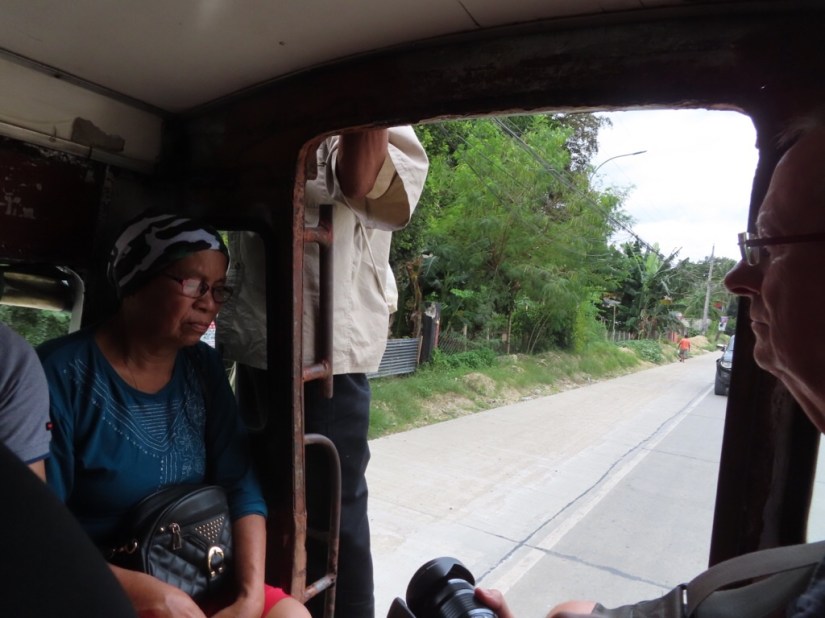
Filipino full is very full! In addition to the benches either side, additional stools are placed in the central aisle to load more people in. Ours reached 23, then two lads held on behind! During our 30 minute ride to Antequera, a couple of people got off and a couple more got on so at 25 pesos per person, the driver would have made about £10, half of which goes in costs and he keeps the other half!

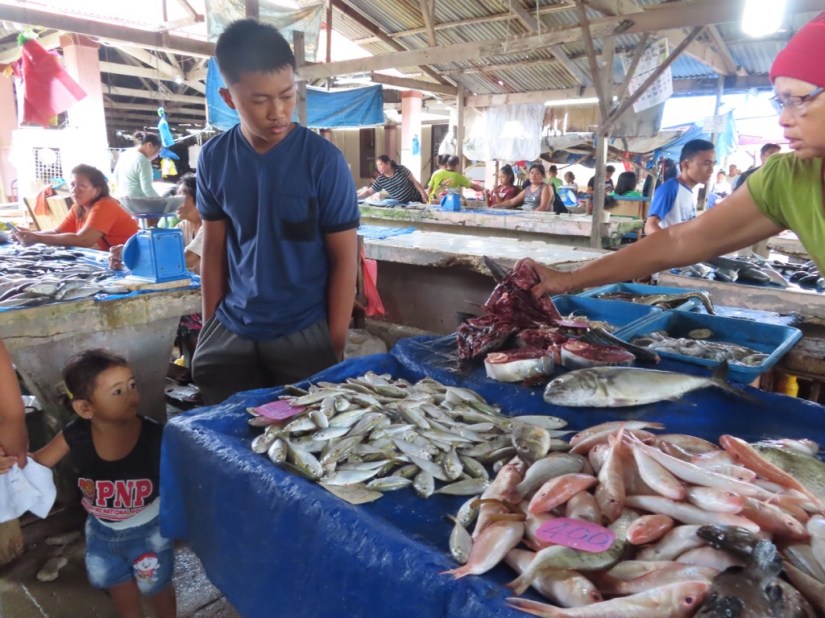
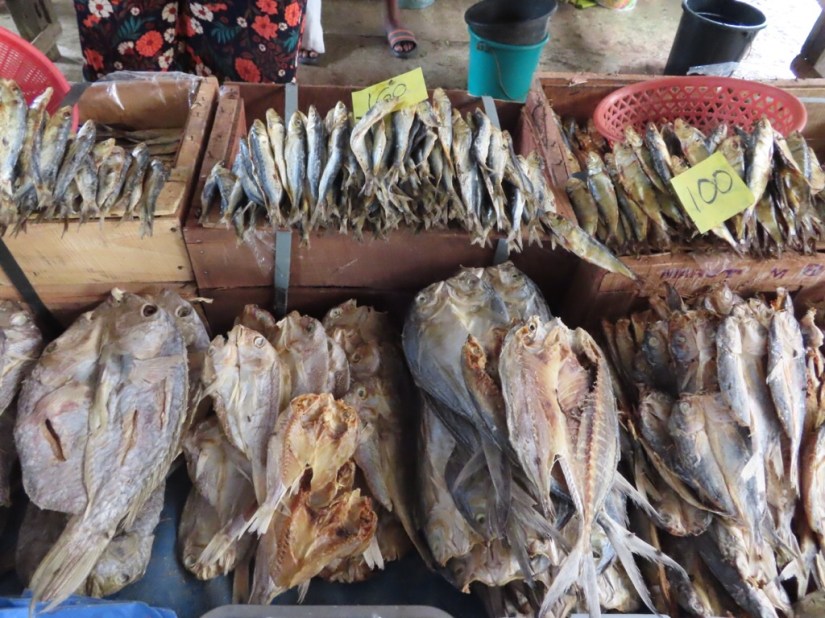
We had come to visit the Sunday market and there was the usual mixture of household goods and clothes and a lot of food.

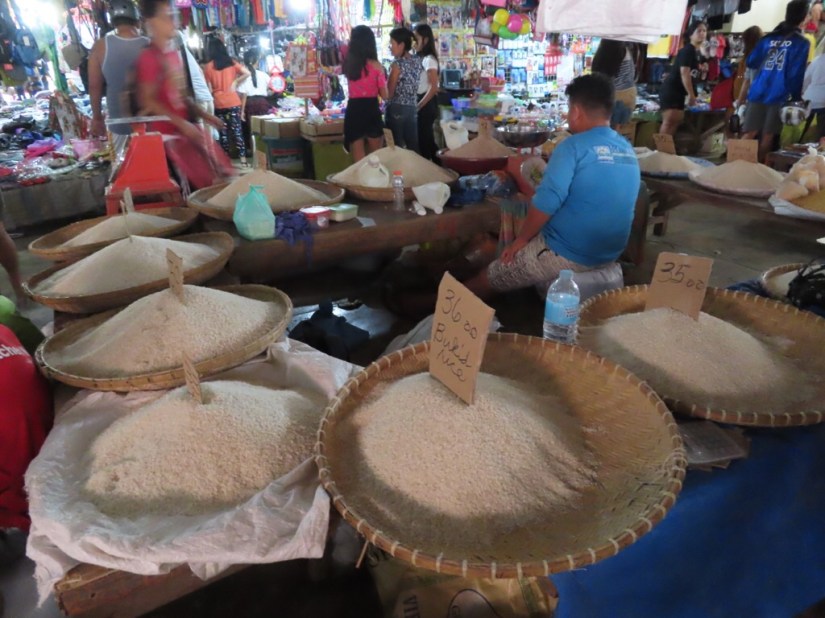
The choice of different types of rice, which we had already seen growing in paddy fields beside the roads, was mind boggling with at least 20 varieties together with meat, fish, veg and even tobacco.

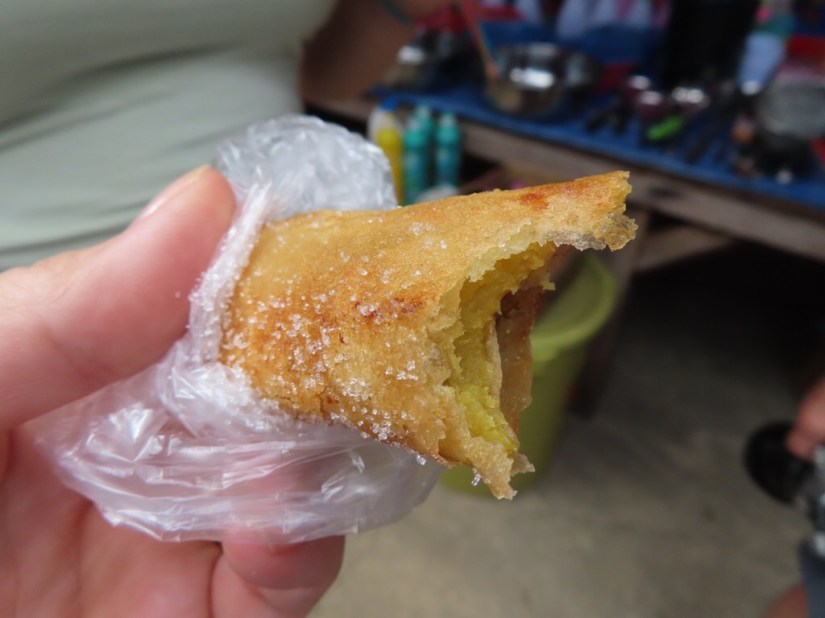
We bought some snacks, the best of which were these hot spring rolls filled with camote or sweet potato.

Next we took a very splendidly decorated family tricycle to Mag-aso Falls.

197 steps led to a waterfall and bathing pond …

… and after a few moments of indecision, I decided since I’d gone prepared to swim, I would! Joanna was a little slower to get with the programme, but another lady had arrived and she got brave and came in too. The water was chilly but lovely and it was very similar to swimming in the Cenotes in Mexico.

We walked back to town, had an ice cream, then caught the jeepney back. There was one waiting for the last few people so it could go, and rather than wait what might be an hour for another, Joanna and I took our positions on the central stool and Chris hung on at the back! A few passengers got off halfway, so Joanna and I got promoted to the bench which was handy as my bum was quite numb! Chris refused to join the crush and remembered being a squaddie on a landrover!

Returning early, there was time for pampering so Joanna and I went to a place recommended by the hotel and had an hour’s full body massage while Chris went for a wander round town with his camera.

Our last couple of evenings were spent at Geraldo’s family restaurant, popular with locals for celebrations and we must have heard Happy Birthday sung at least 6 times! We tried various stews including fish kare kare with peanut sauce, chow pat chin with and without prawns, an aubergine omelette and uni kinampay which is a special purple yam only grown on Bohol.

We passed this building on the way back … not quite the Registan in Samarkand … but still pretty!

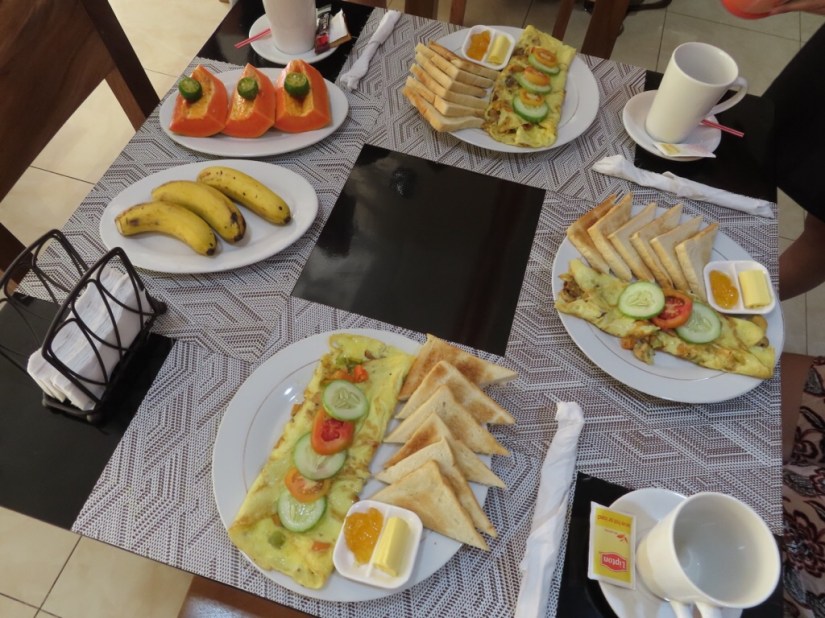
The staff here have looked after us beautifully and cooked fabulous omelettes for breakfast …

… but tomorrow we move onwards to Panglao Island …

Map

Bohol … Tarsiers and Chocolate Hills!

The catamaran took a couple of hours and the crossing was smooth. The weather was a little overcast and warm but there was nothing much to see out of the grubby windows. On arrival, there was astonishment all round as our three suitcases were strapped to the back of a tricycle for our 10 minute ride to the hotel. There was a seat for two on one side and Joanna hopped up behind the driver!

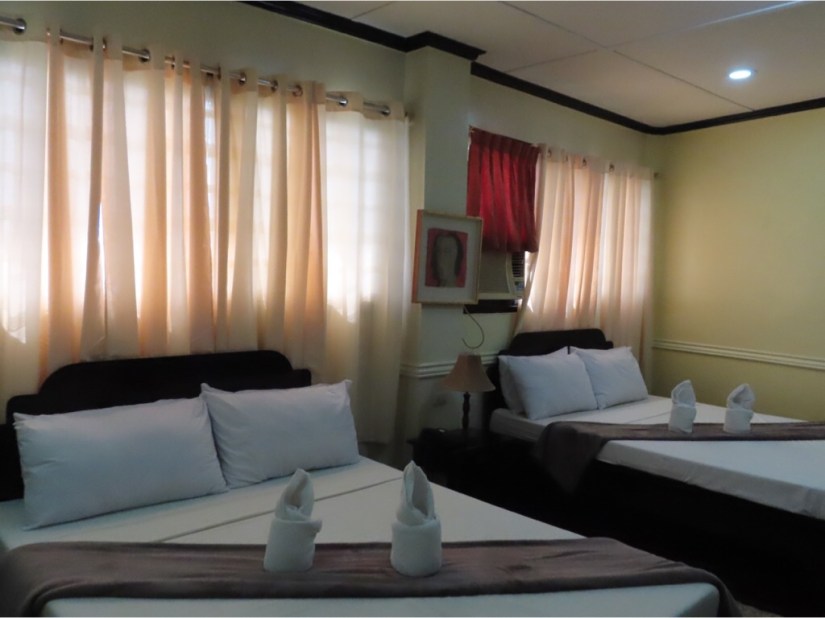
Once we had checked in to our good sized room Vest Grand Suites …

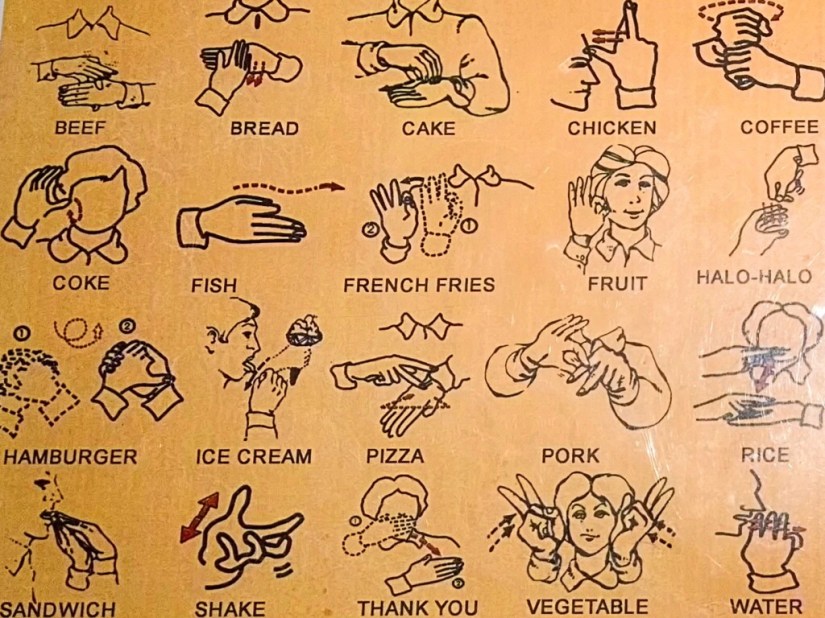
… our priority was lunch so we hailed a tricycle to the centre of town and tried out the Garden Cafe which is run by the Bohol Deaf Society with the proceeds used to educate local deaf children and the cafe itself used to train deaf students. I should mention here that our mixed dietary requirements (Chris veggie, no fish, but will eat dairy and eggs – Joanna, no meat, no dairy but will eat eggs and fish) could prove challenging in a country where the national dish is lechon or roast pork! The salads were unavailable but we had bowls of chop suey which hit the spot but we ordered far too much food as the portions were huge. The useful sign language guide in the menu meant we all managed to thank our servers.

Afterwards, we took a turn round Plaza Rizal in the centre of town and named for Jose Rizal, a national hero who inspired independence from the Spanish, but more about him later.
On one side is the Capitol Building …

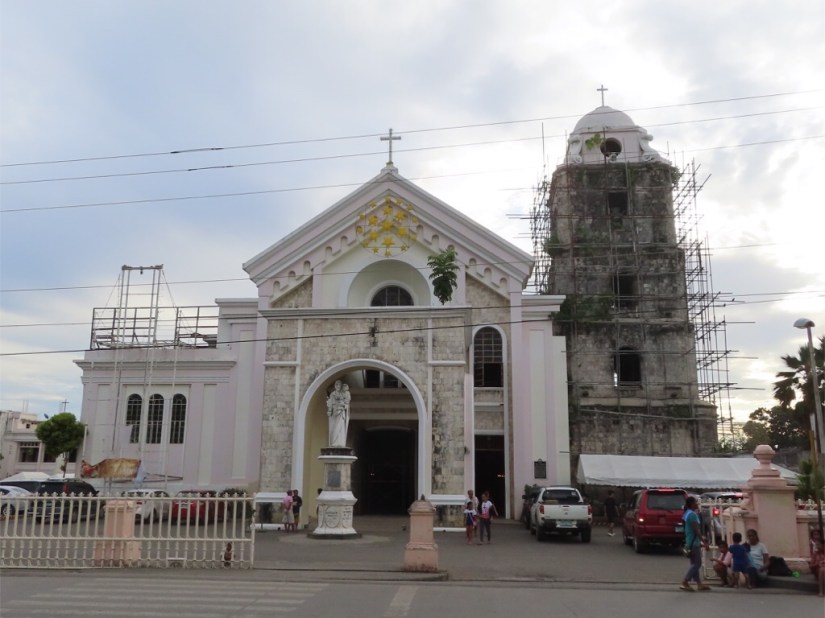
… and on the other the elegant San Jose Cathedral initially built in 1767 but destroyed by fire and rebuilt in 1855. It also suffered damage in the 2013 Bohol earthquake which caused serious damage across the Visayas and killed 222 people.

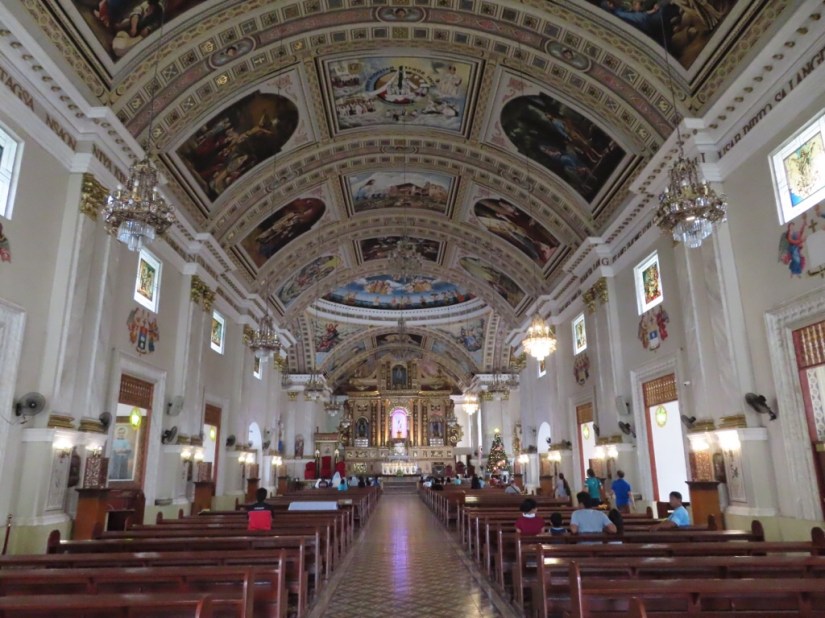
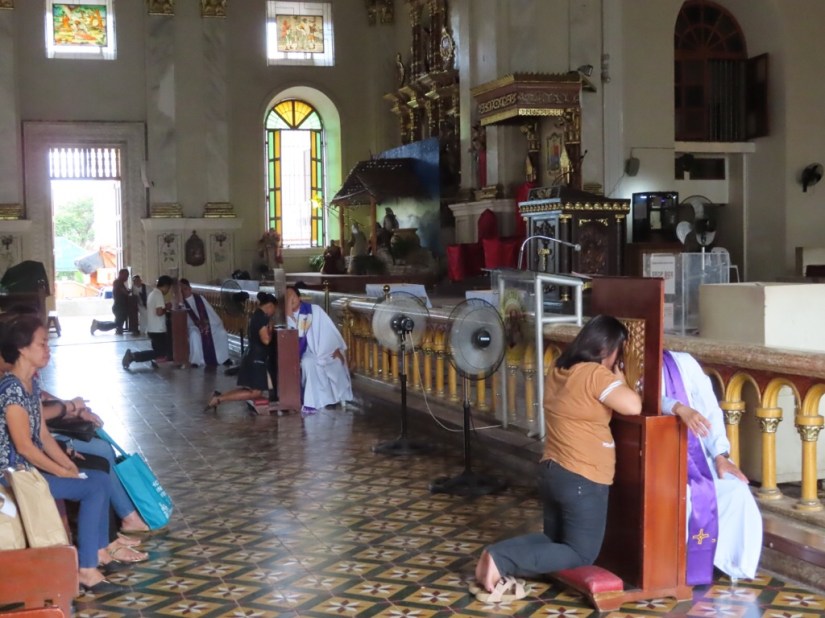
Inside, the altar is very elaborate and we had obviously visited during confession.

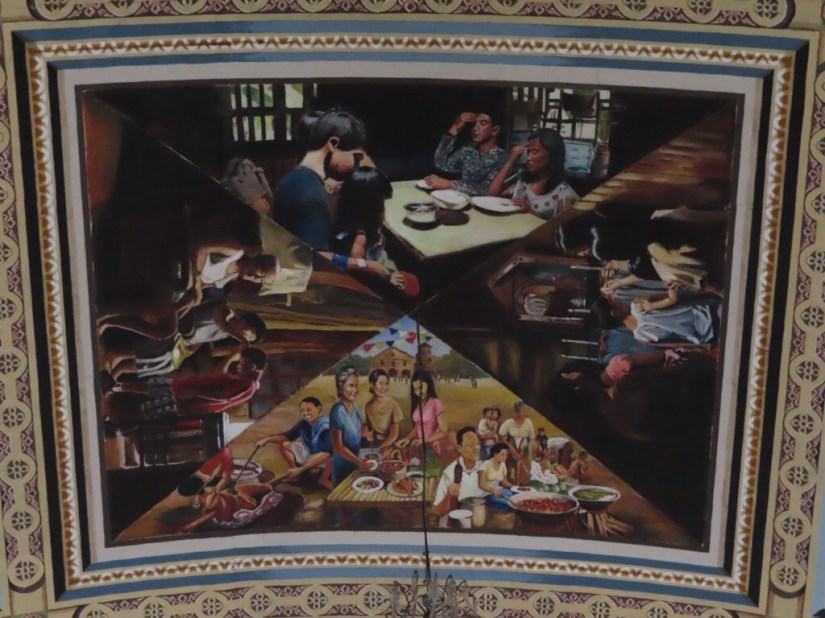
Many of the paintings are very local in style, including this one remembering the earthquake.

We walked back to our hotel, taking snaps of the busy town filled with colourful jeepneys and tricycles, most with a bible verse on the back!

We had dinner in a cafe run by Bohol Bee Farm, using homemade and organic ingredients and with choice for all.

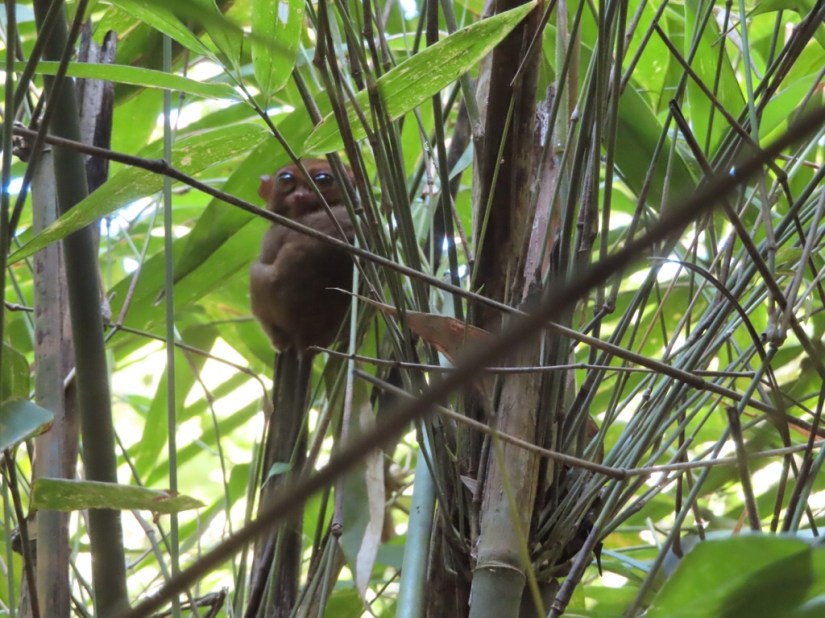
Next day, the hotel arranged a car to take us on the Countryside Tour, taking in all the attractions of Bohol. We began at the Philippine Tarsier Sanctuary where they protect what is left of the native population of this tiny saucer-eyed primate. Tarsiers have been around for 45 million years are are closest related to lemurs and bush-babies. They are just 10-15cm and live alone in small territories in this protected 134-hectare area of wilderness. Each day, the volunteers ‘spot’ their positions so that they can guide visitors quietly and in very small groups to get a glimpse. A high school student on work experience showed us round and we were very lucky to see tarsiers awake as they are nocturnal.

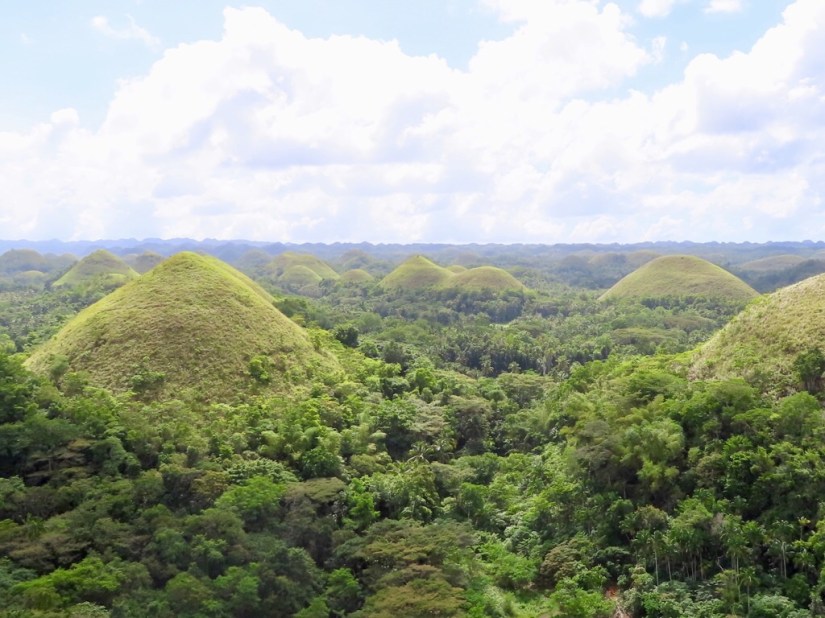
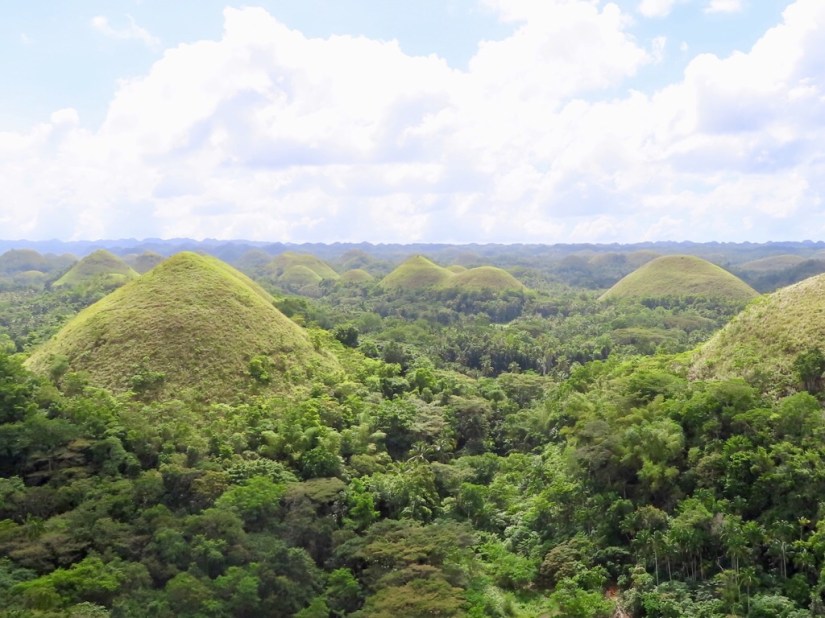
Our next stop was the other main tourist attraction on the island, The Chocolate Hills. There are as many as 1776 conical limestone hills spread over 50sqkm and covered in grass which turns brown in the dry season and gives them their name. They are similar to the karst hills we saw in the Vinales valley in Cuba called mogotes. We climbed 211 steps to the viewing platform and waited till the sun lit up the hills.

And yes readers, we were there!

The next stop, crazily, was so we could have our picture taken in the middle of the road! This 2km stretch of stretch of densely planted mahogany trees known as the Manmade Forest was planted by university students over 50 years ago to replace trees lost from widespread slash and burn farming. Luckily, traffic slows on approach, knowing there are likely to be visitors taking that essential selfie!

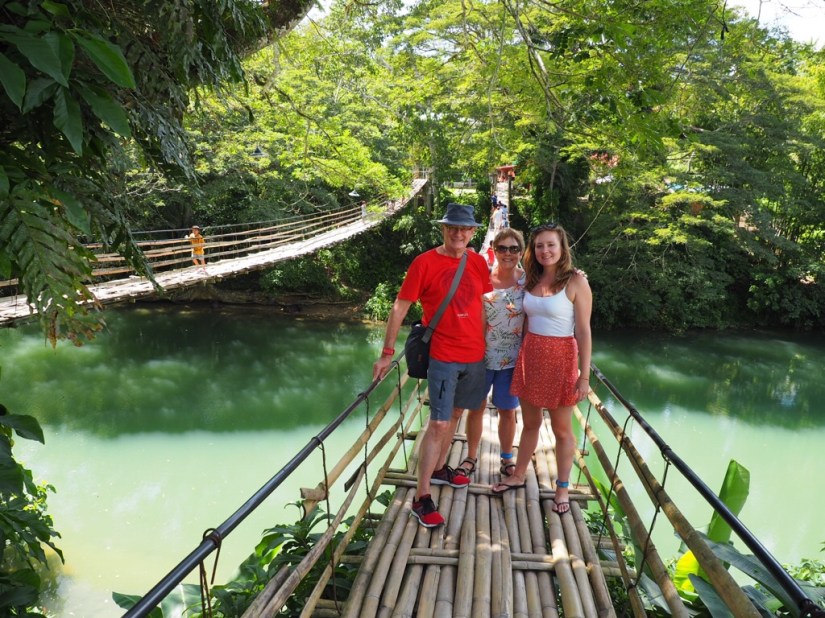
The Sevilla Twin Hanging Bridge was first erected so enable locals to transport farm and livestock across the Sevilla River, but along the way evolved into an attraction for visitors. It has a traditional deck of intricately my woven bamboo slats, although the rope suspension has been replaced with steel cables! We crossed to the other side, browsed the souvenirs and returned to the car.

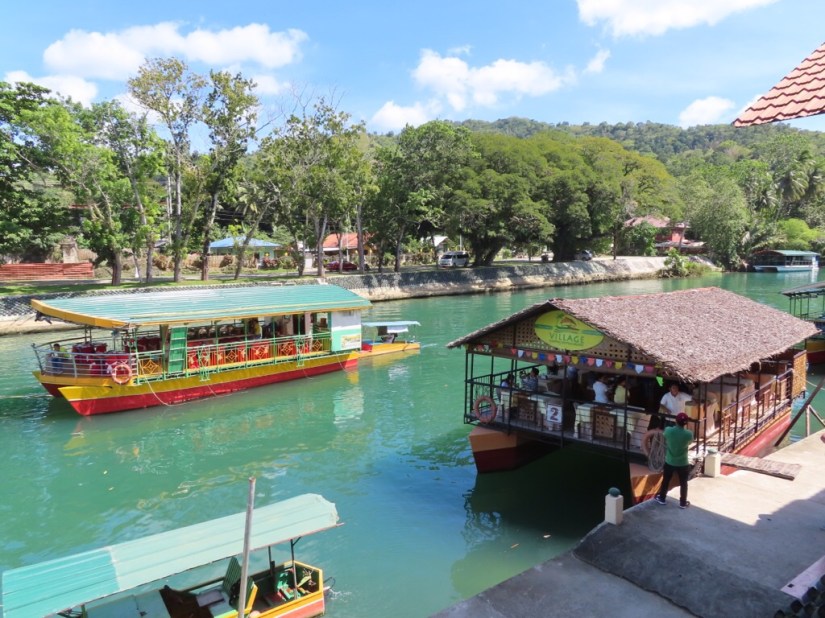
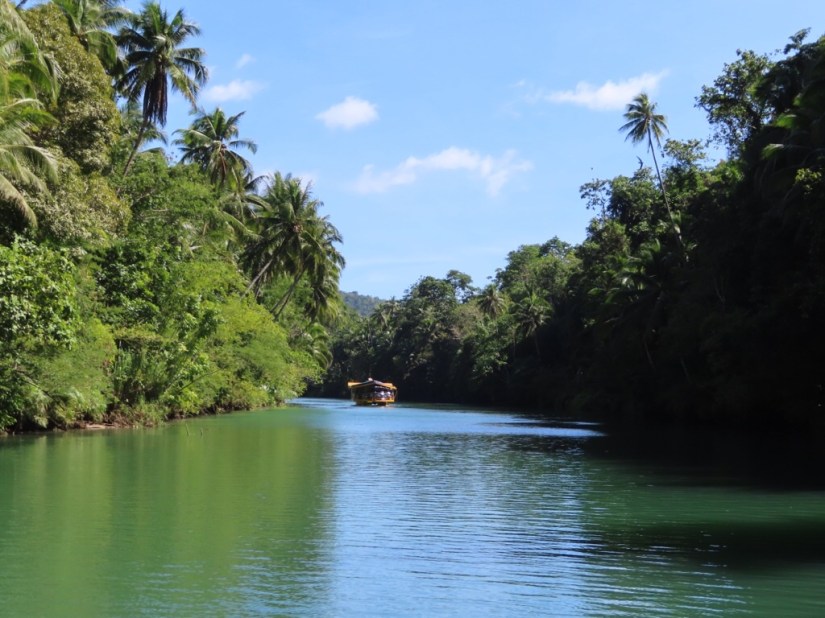
We joined other visitors on a Loboc River cruise which travelled slowly upstream as we had a tasty buffet lunch with a variety of local specialities to try, while being entertained by a small band.

Once we had finished, we reached a floating platform where a show of massed ukuleles and dancing was put on by a community group, who encouraged visitors to join in!

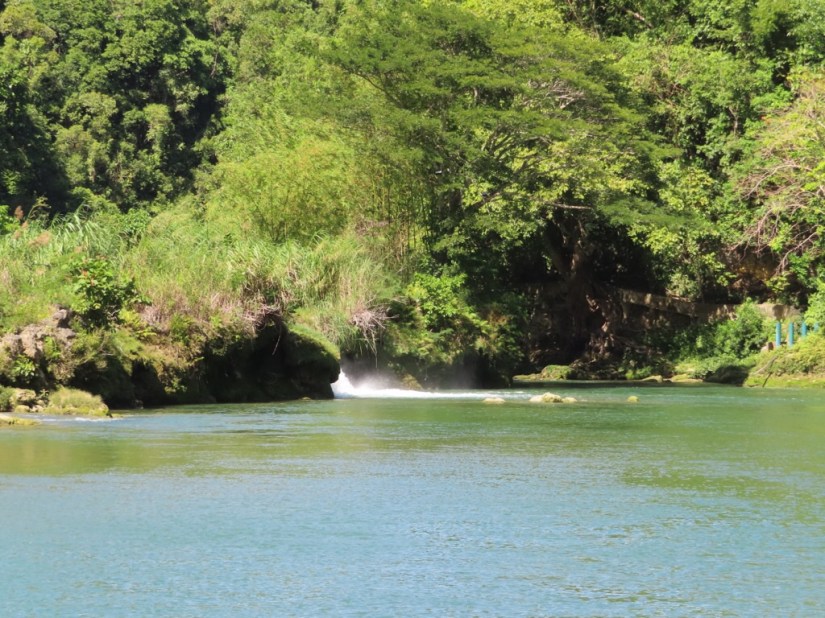
As we approached the rather uninspiring Tontonan Falls …

… we noticed people zip- wiring above us, and as boat turned and returned to the dock we decided to enquire about having a go. It was just a few kms back up the road and Joanna and I decided to go for the 2-zip special, side by side. Without go-pros it would have been silly to take a camera, so we relied on Chris to capture the moment from below. IT WAS AMAZING! The scariest part was assuming a horizontal position in the harness … and trusting that you would stop in time at the other end … I shut my eyes for that bit. In the middle it was fabulous, swooping like birds over the river and seeing far more of the waterfalls than we had seen on the boat. Our event photographer said it was all over so fast … and this is the best snap, but I was too busy looking at the view!

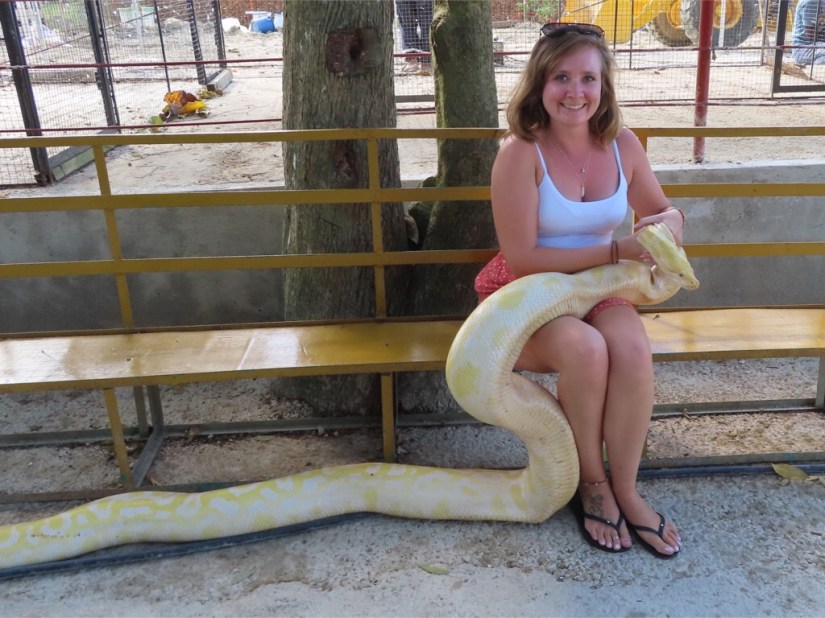
We made a brief stop at the Xzootic Animal Park where we saw butterflies and pythons, but it only gets a mention as we took a couple of nice pics of Joanna!

The road back took us along the coast road and we stopped at Baclayon Church, which was founded in 1596, and is the oldest Christian settlement in Bohol. It was all but destroyed during the 2013 earthquake, so much has been restored.

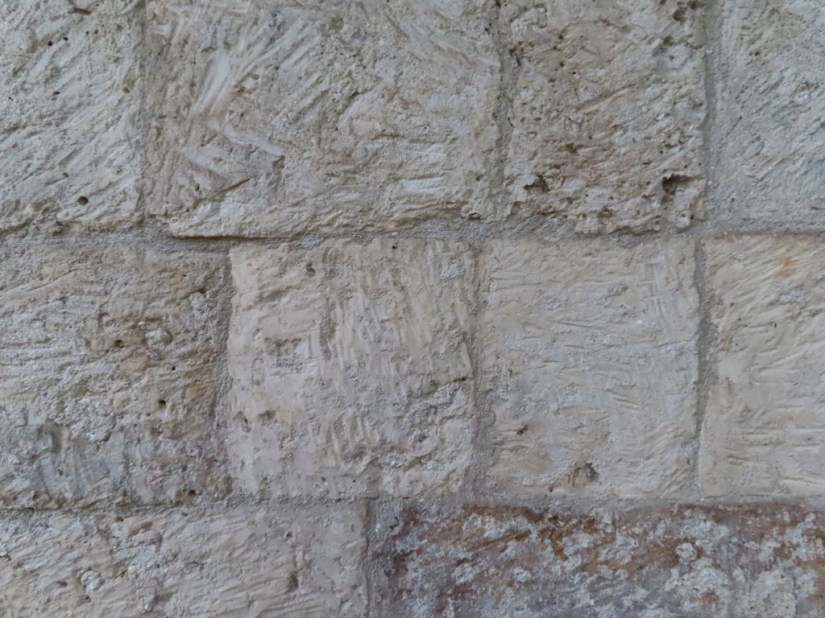
Church design in the Philippines is a fusion of native Spanish designs and a uniquely Oriental style. It also was adapted to cope with natural disasters including fires and earthquakes, creating a style sometimes referred to as Earthquake Baroque. This was characterised by sturdy proportions with thick, heavily buttressed side walls and upper structures made with lighter materials. Bell towers are also usually lower and stouter and all these characteristics can be seen here. Also, like many churches, the walls are made of coral stone.

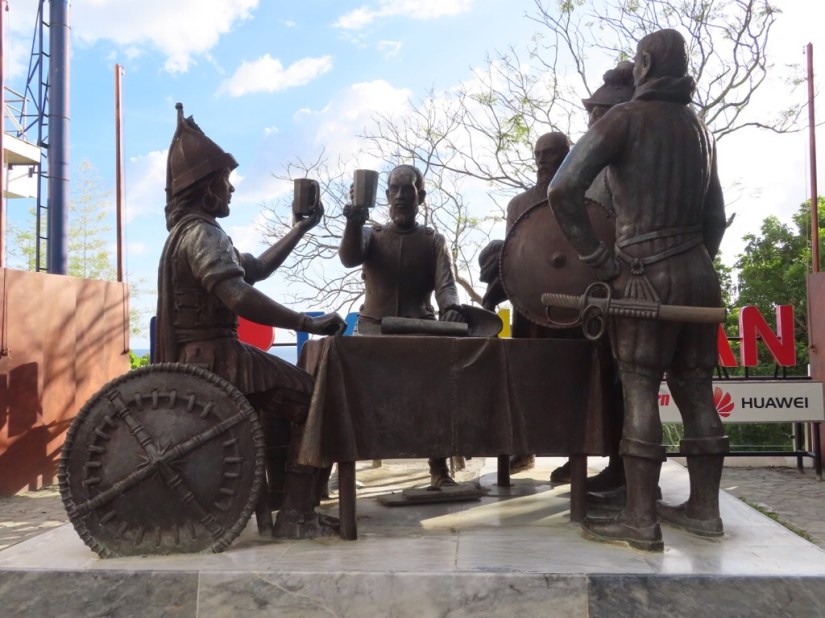
Our final stop was the site of the Sandugo or Blood Compact between Spanish explorer Miguel López de Legazpi and Datu Sikatuna, the chieftain of Bohol, who sealed their friendly agreement by cutting their arms and letting few drops of blood to mix with the wine which they drank together. It is considered the first treaty of friendship between the Spaniards and Filipinos and is celebrated every July.

Tomorrow, rather than the luxury of an air conditioned car, we are going to try out something a little more local

Map

Cebu City … Fleetingly!

Our flight left Brisbane at 11.10 and we finally checked in to our hotel in Cebu at 10.00 at night. It had been a long day but we grabbed beers and snacks at the 7-Eleven on the corner then got drenched on our way back in a downpour.

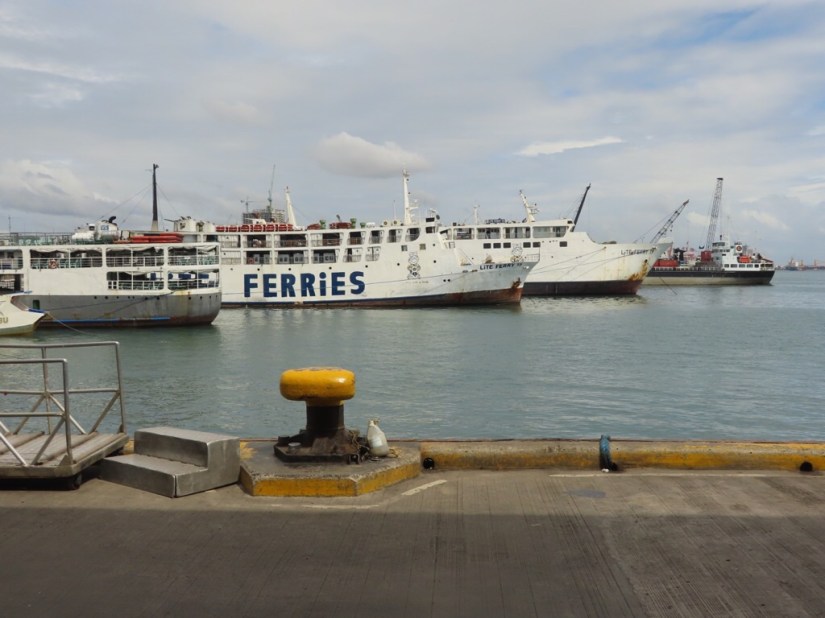
By 10.00 next morning we were off to the ferry port …

… and were saying goodbye to Cebu already as we caught the catamaran to Bohol …

Map

Chris & Elaine’s Ferry Round the Philippines 2020

Having spent a great Christmas and New Year in Brisbane with the family, it seemed a little too soon to be heading back to the chill of England, so we decided to stop off in The Philippines for the rest of January!

There are 7,641 islands which make up the archipelago of The Philippines and we will be visiting just 7, all part of the central group called the Visayas.

We are slightly apprehensive as Typhoon Phanfone swept across the Visayas region on Christmas Day causing considerable destruction and killing 47 people but fortunately Cebu missed the worst of the damage. The typhoon season generally runs from June to November and while they can occur at any time, we hoped not to experience one and we will soon see if this affects our trip.

Joanna is coming to Cebu with us and will be spending a few days on Bohol and Panglao before returning to Sydney, while we continue to Negros, Siquijor, Pacijan and Poros.

The Philippines, named after King Philip of Spain, spent over 300 years as a Spanish colony. They are still 90% Christian but also made up of a dozen ethnicities and some 19 recognised regional languages.

There will be lots of sand and sea, a number of ferries and buses … and for me at least since I am in the company of non-meat eaters, the national dish of lechon or roast pork!

Journal Posts

Cebu City … Fleetingly!

Bohol … Tarsiers and Chocolate Hills!

Bohol … Jeepney to Antequera!

Panglao … Simply Chilling!

Cebu City … Again!

Cebu … Our Day in the Mountains!

Cebu … Samboan – Portrait of a Filipino Town

Siquijor … Stunning Sunsets!

The Camotes Islands … and their Churches

Cebu City … Once More!

Map

Chrissy in Brissy

We’ve had a great time celebrating the holidays together.

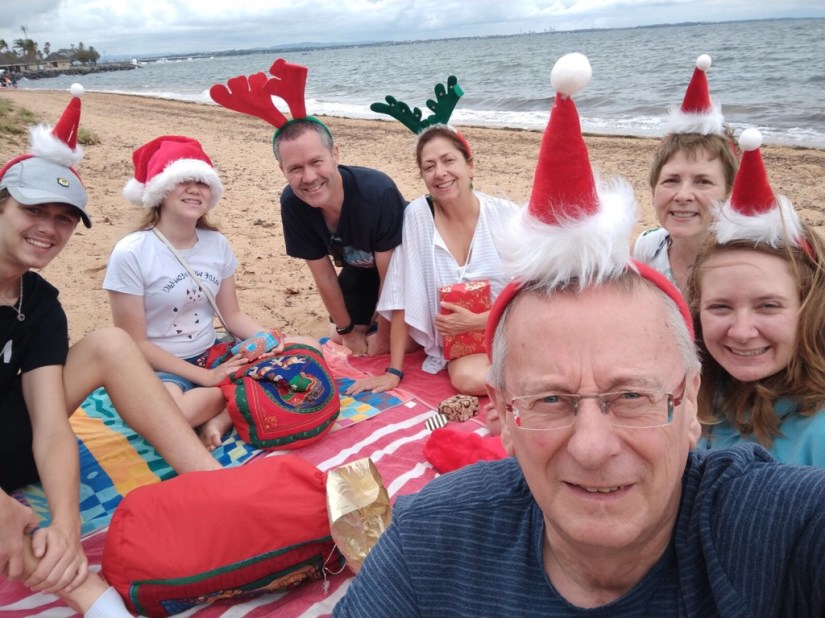
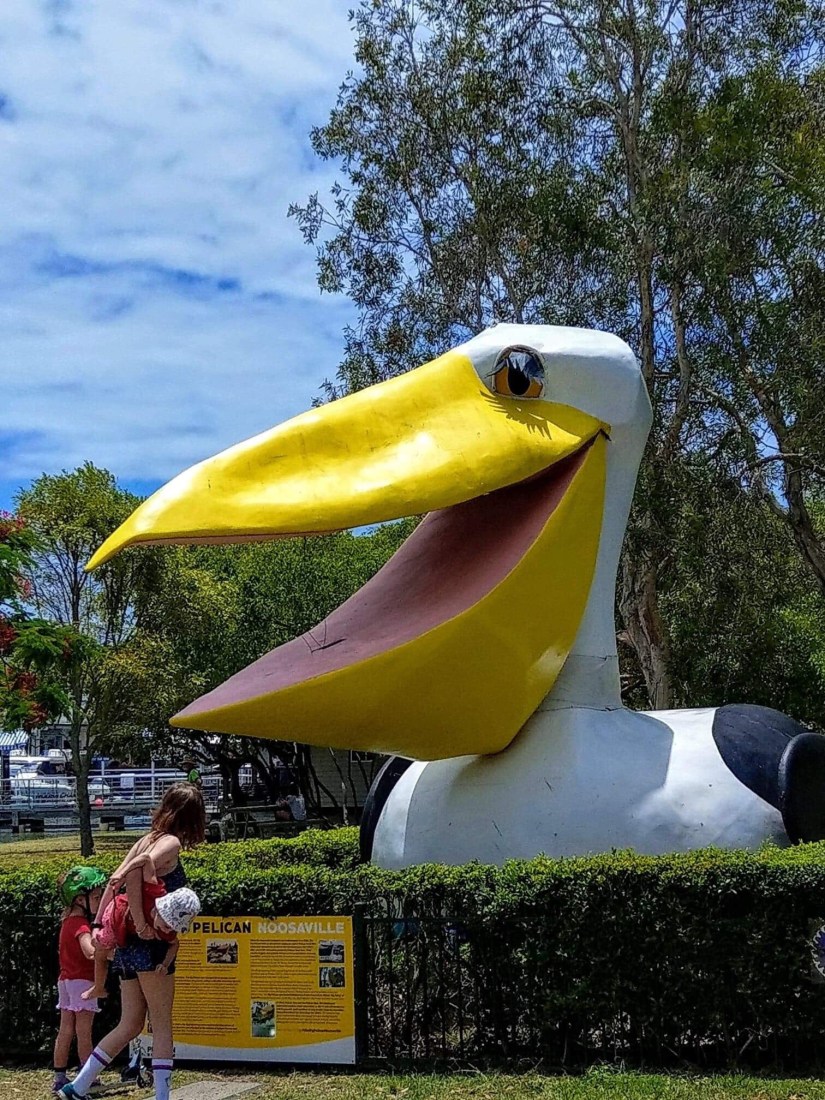
On Christmas Day, despite being overcast, we drove just north of Brisbane to Pelican Park in Clontarf and opened our stockings on the beach.

We all had some fab gifts including a Joanna getting her Australian Passport and the girls having matching Disco Bead bracelets.

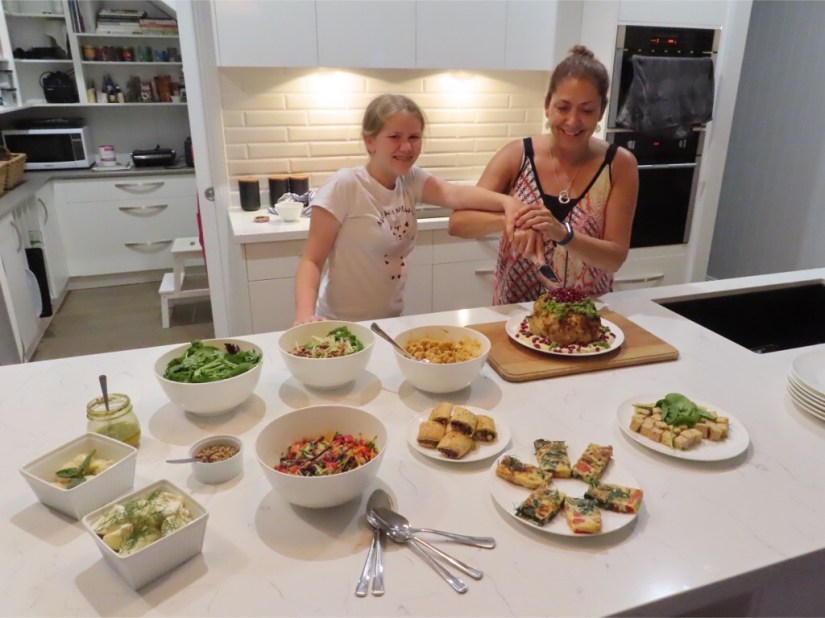
Later, we cooked up a spread of dishes to cater for all including salmon, ham and veggie tarts with a variety of salads.

The sun came out briefly after a huge downpour and later we played Dobble, Uno and Rummikub.

We drove to Noosa on Boxing Day and as we got closer, the day got sunnier! We spent the next three days here …

… spending some time on the beach ….

… and hanging out with the Hodder clan.

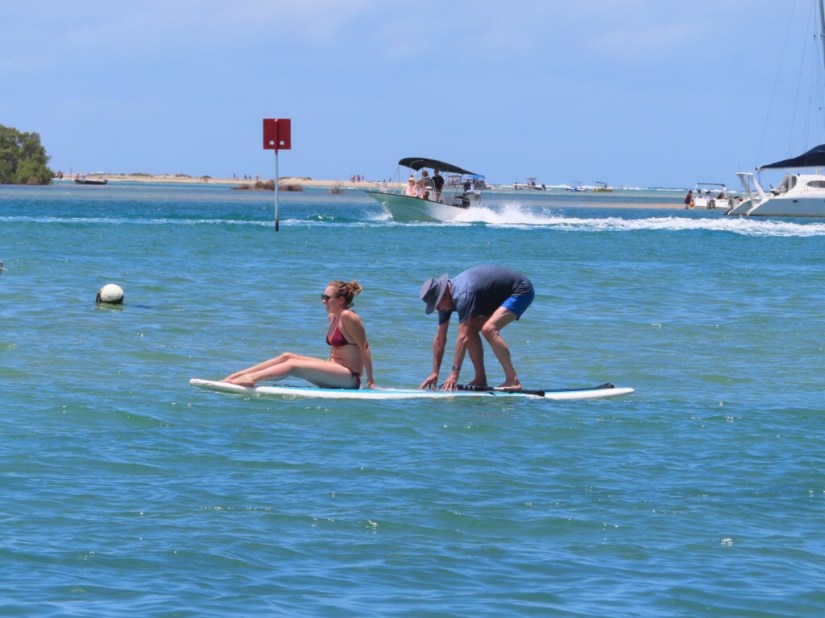
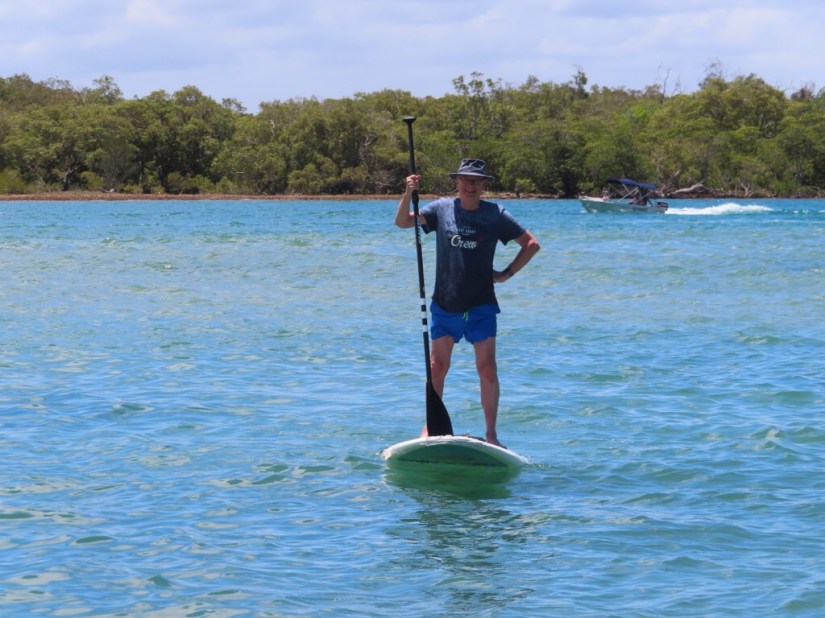
We also hired a paddle board for an hour and took turns. Joanna had her own board in Sydney but it was the first time for Chris and me. We both had a little trouble to start with and I even fell off and dropped the paddle and Joanna came to my rescue although when I realised I was not out of my depth and could stand on the bottom all was fine!

By the end we both managed to stand for quite a while – definitely something we will do again!

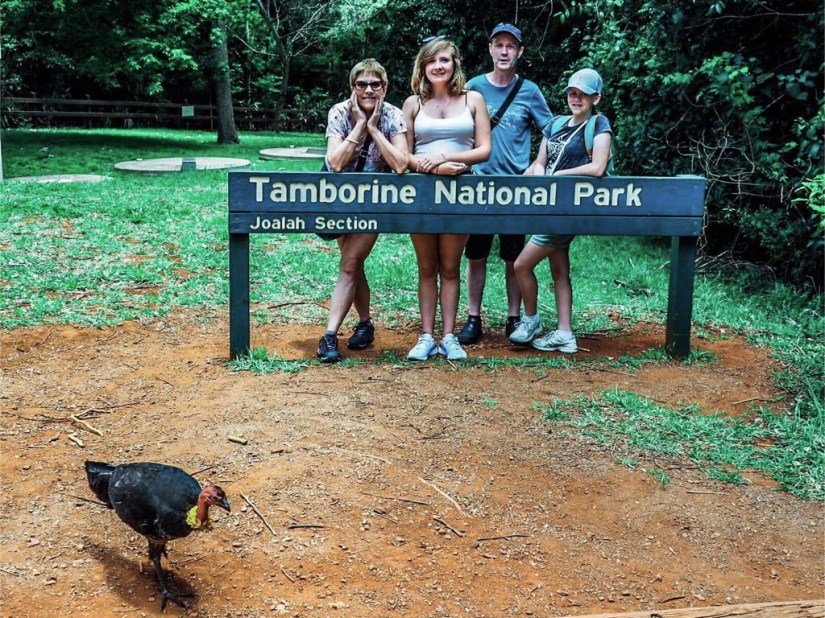
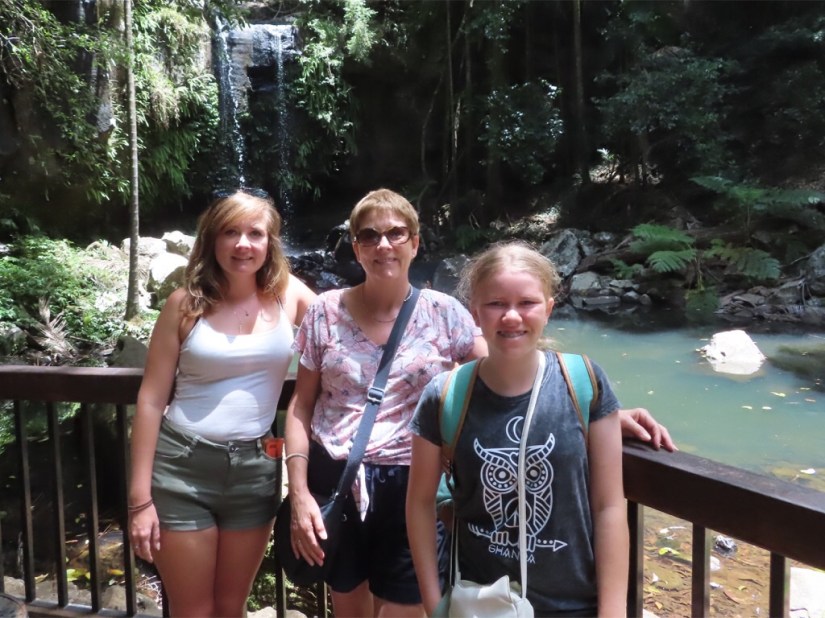
We explored Tambourine Mountain, set in the green hinterland where there are several national parks protecting rainforest and waterfalls. We took a walking track to Curtis Falls … spotting bats on the way and getting amazing ice cream in the cafe afterwards.

We’ve visited the Botanical Gardens at Mount Coot-tha before, but it’s a good place for a stroll and we even spotted wildlife, including a possum trapped in the cafe, causing chaos.
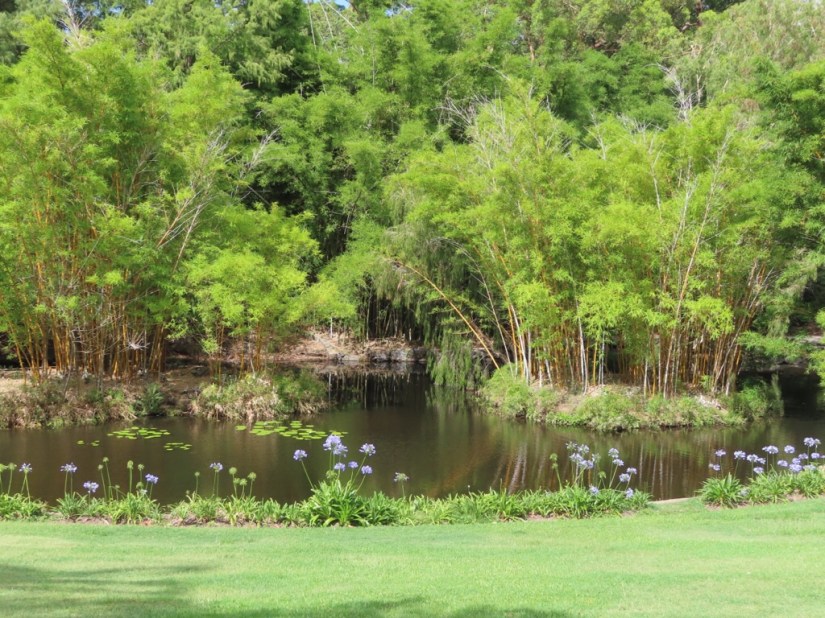
Poinciana trees are in bloom all over the city which has been a surprise as they weren’t flowering last trip and here is a huge one here making a bit of a show …

… and another along Kedron Brook where we walked on several mornings.

We cooked up another spread for New Year’s Eve including Jan’s Coronation chicken, frittata and a whole roasted cauliflower and celebrated the arrival of the new decade with party poppers and champagne.

On New Year’s Day we opted not to spend 1.5hrs in the traffic each way to the beach and instead chilled at home which was fab … sun, pool, board games and a few beers!

We’ve had a great time here but unfortunately all good things come to an end and it is now time to leave … our next destination, The Philippines.