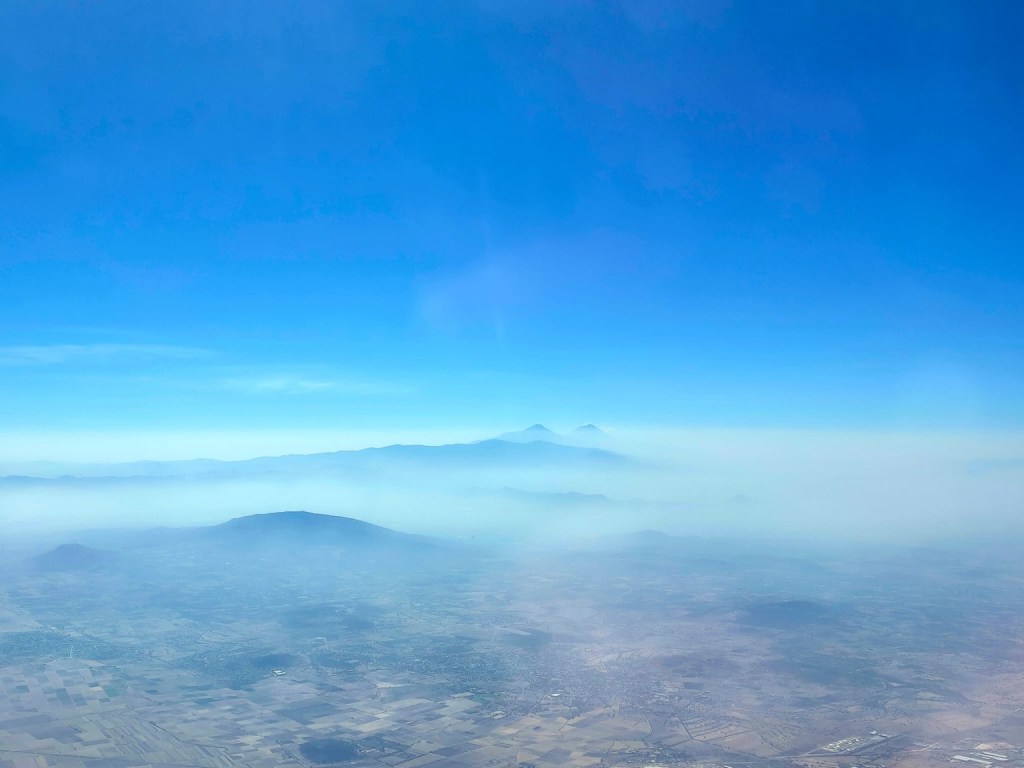
A quick flight with another peek at Popo & Ixta …
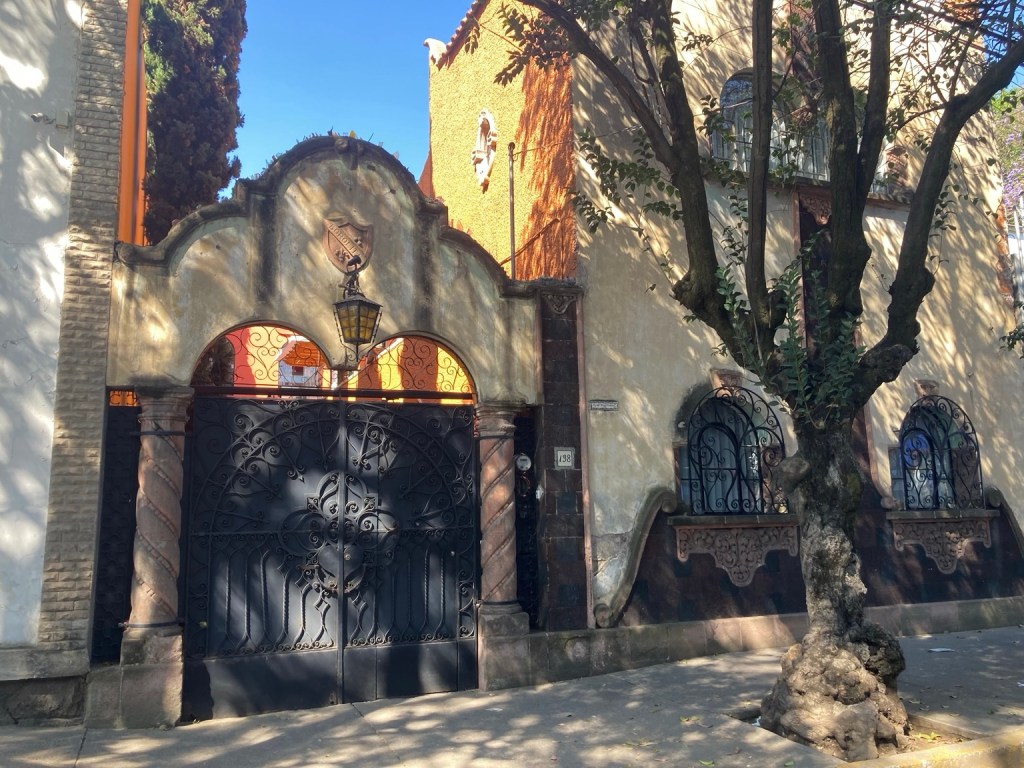
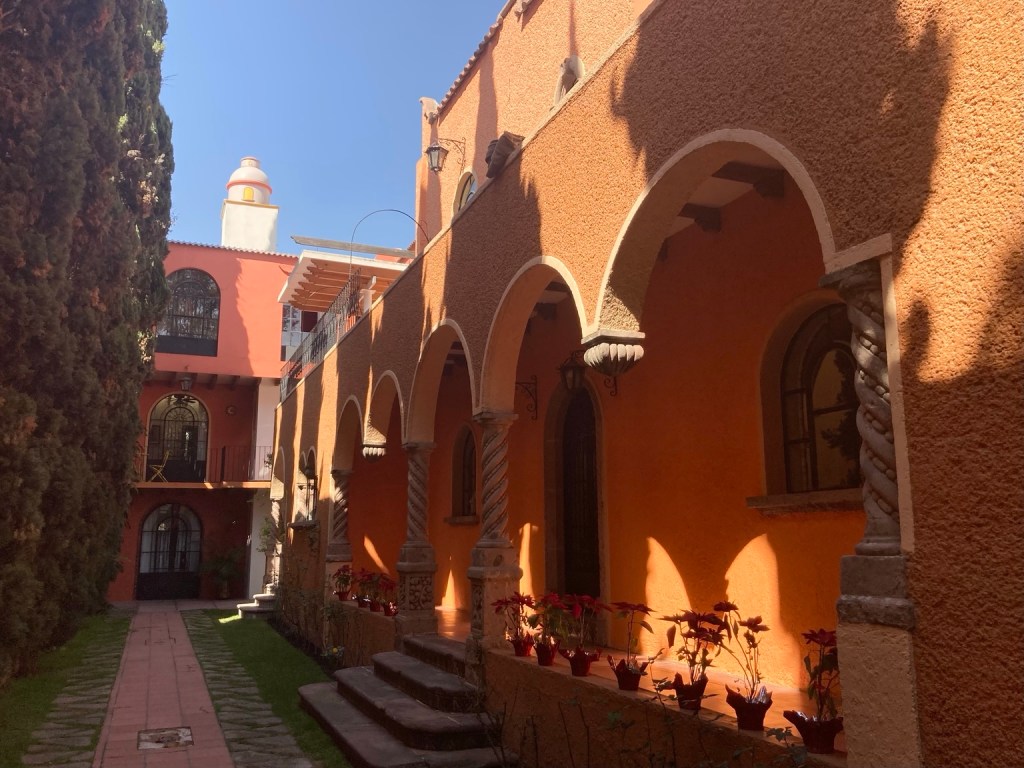
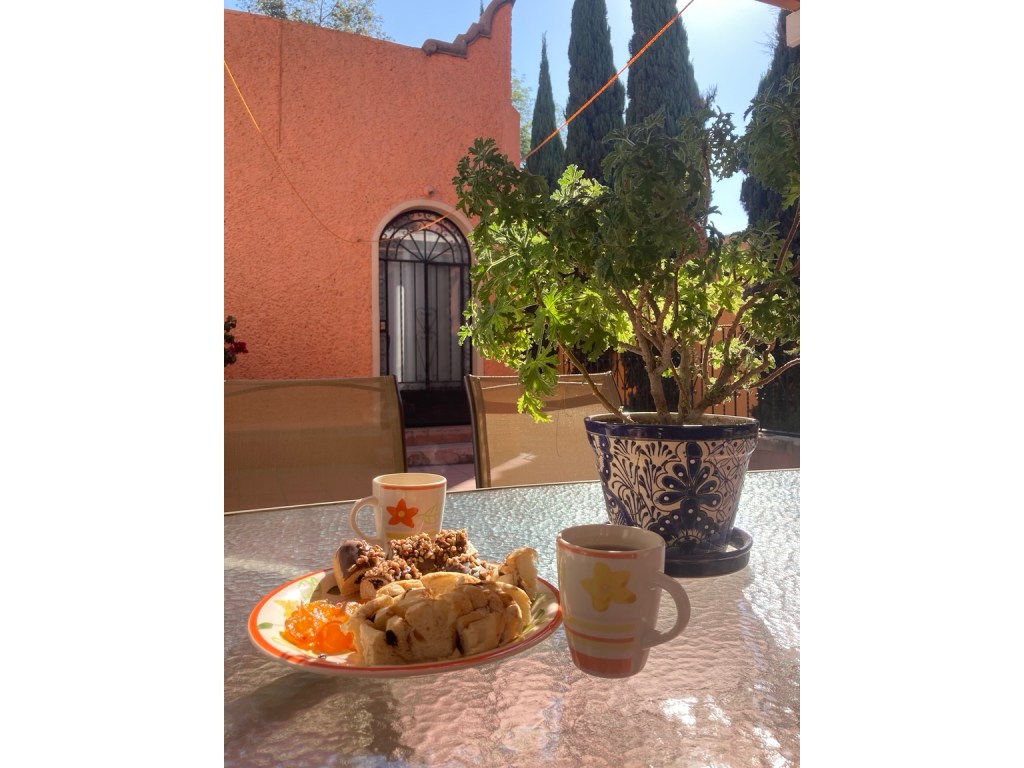
… and a taxi ride on the busy Mexico City orbital route and we arrived in the leafy suburb of Coyoacan. Villa Alfonsina is our home for our last few days, a family run colonial style house with cosy rooms, a little kitchen handy for making drinks and a terrace to enjoy breakfast.
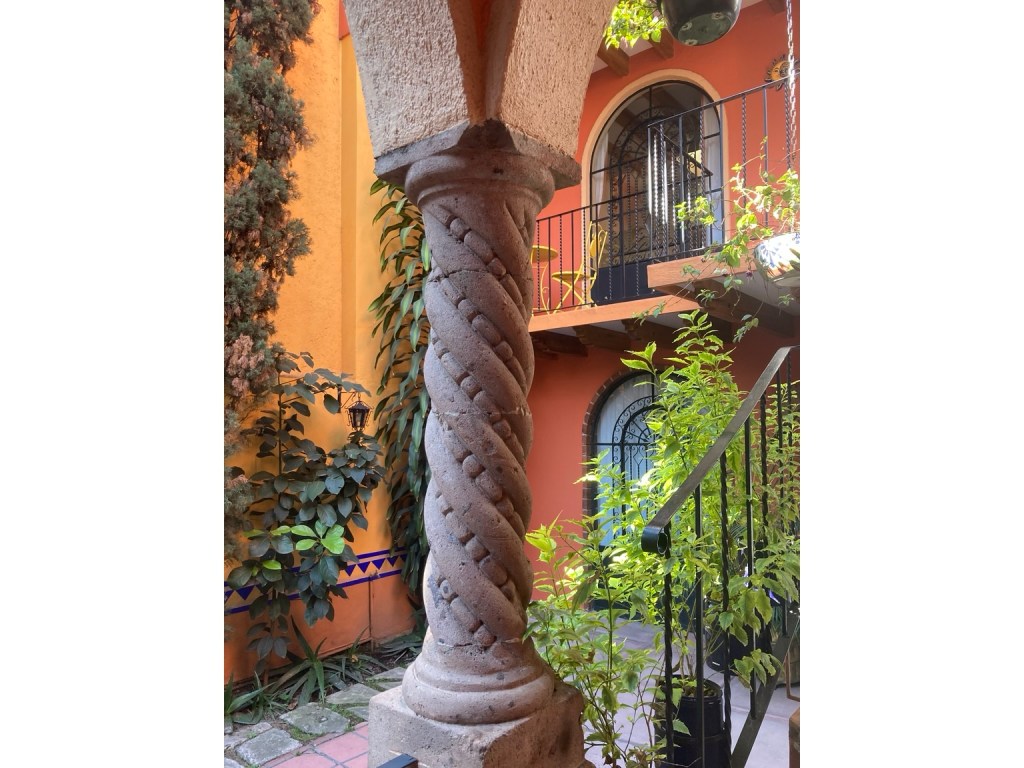
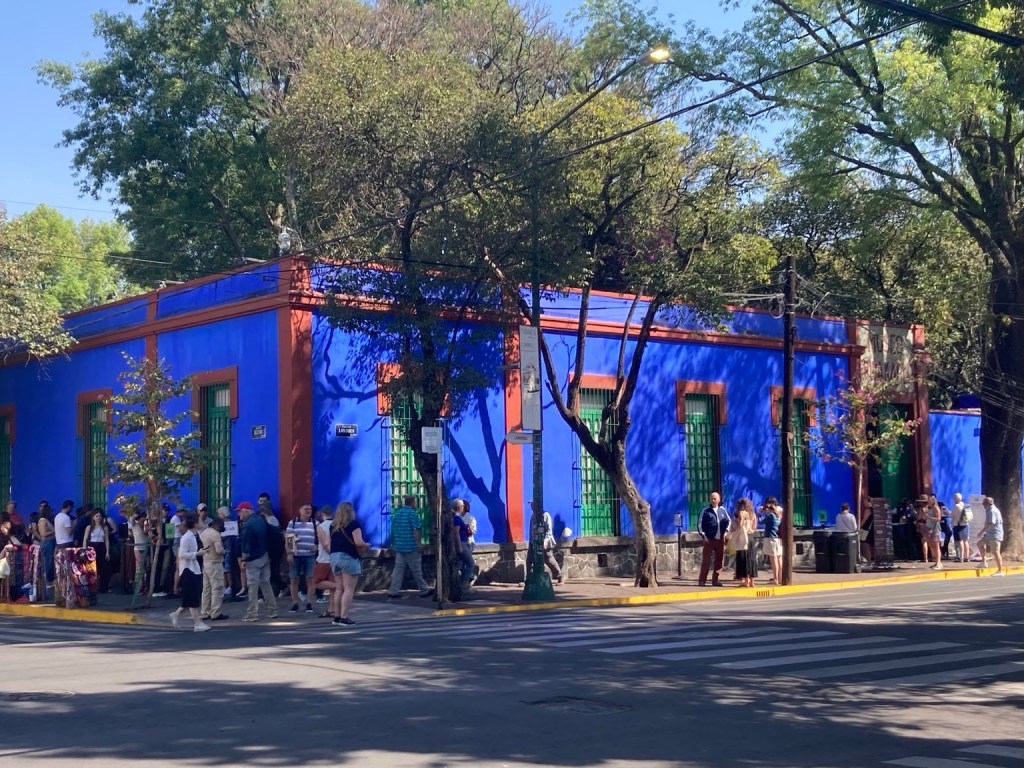
We are also just across the road from Casa Azul, birthplace of Frida Kahlo and the hottest ticket in town, so luckily we booked ours weeks ago, but more of that later.
Hungry, we headed straight to the market where there were a number of tostada stalls, all claiming to be the original and the best, each with their own special recipes for the array of possible toppings.
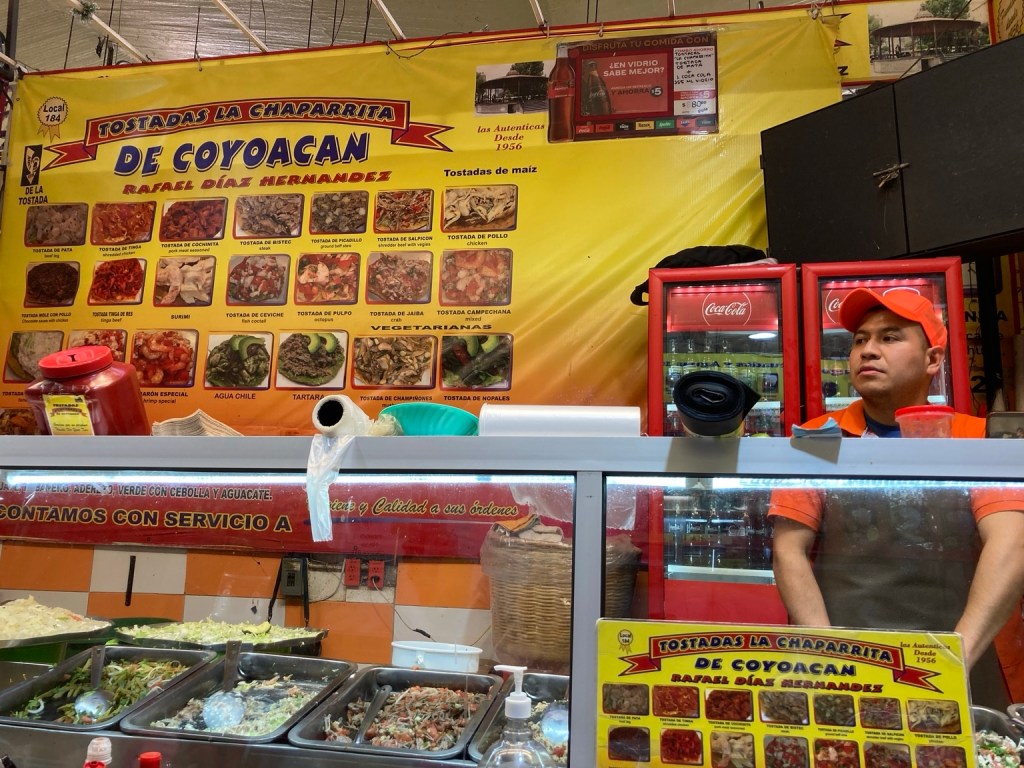
We munched through a couple each – thin and crispy on the bottom loaded with filling that is just waiting to fall off – mushroom, cactus, cochinita and chipotle chicken.
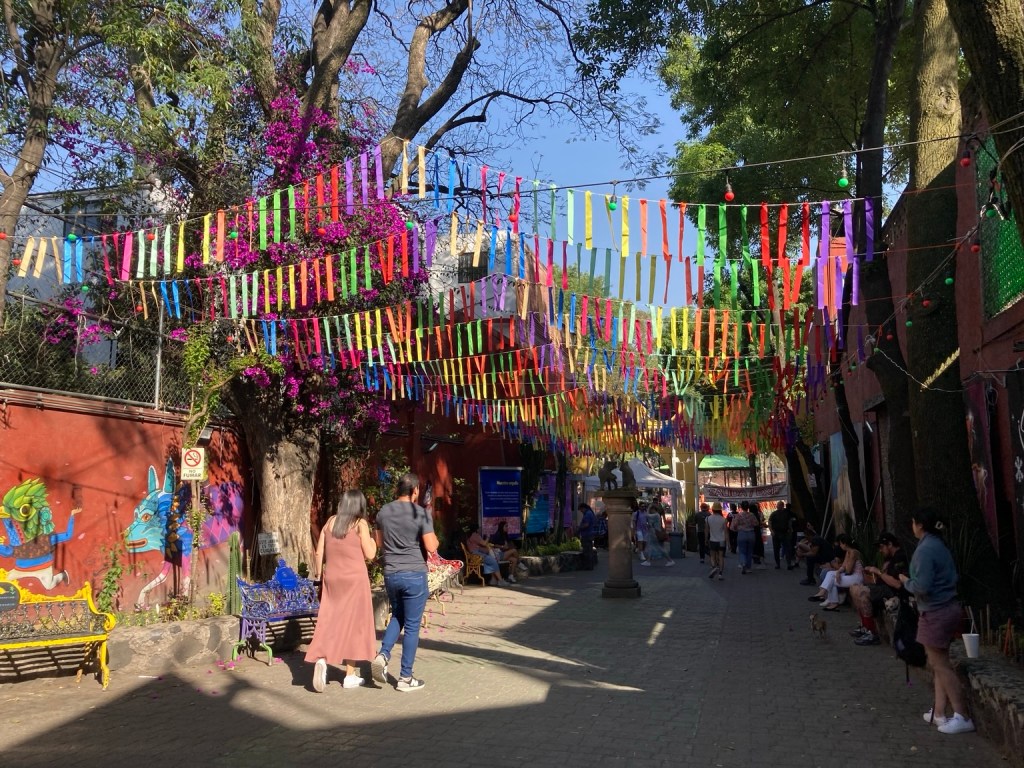
Coyoacan is known for its cobbled streets, leafy parks and old-fashioned charm, but with the Diego & Frida connection, it obviously attracts lots of visitors so restaurants and gift shops abound. Nonetheless, it still feels more like a small town rather than part of Mexico City!
We walked on to the centre where we saw the Palacio Municipal, also known as the Casa de Cortés after Hernán Cortés who led the Spanish conquest first settled here after the fall of Tenochtitlan.
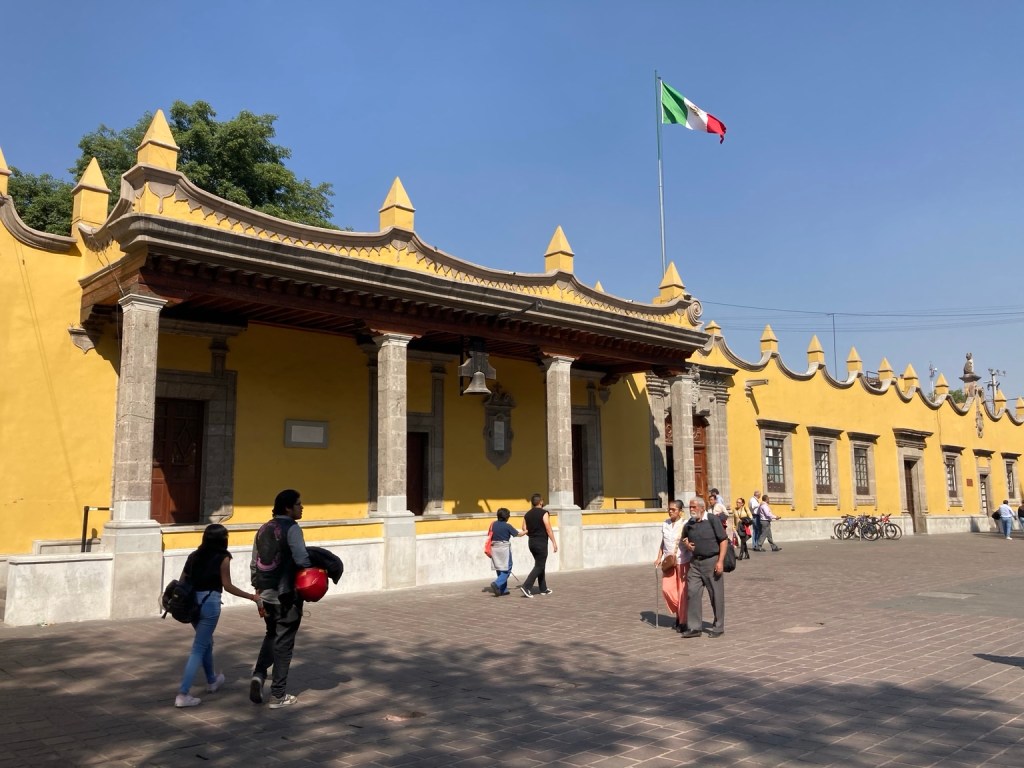
Opposite is the C16th Church of San Juan …
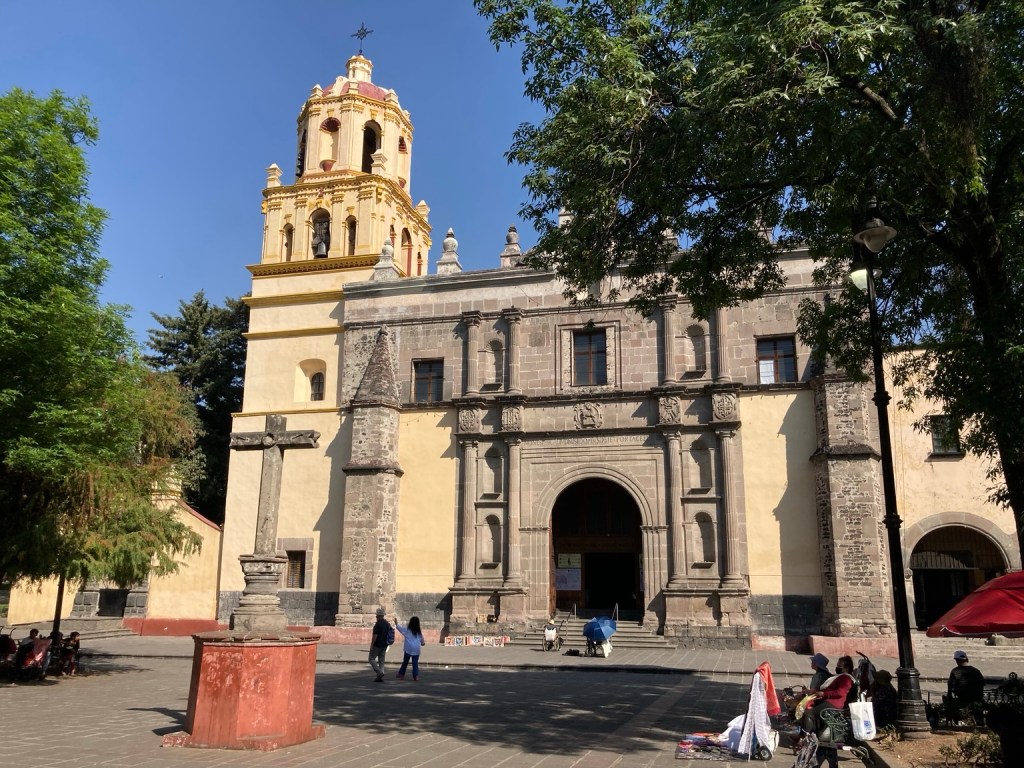
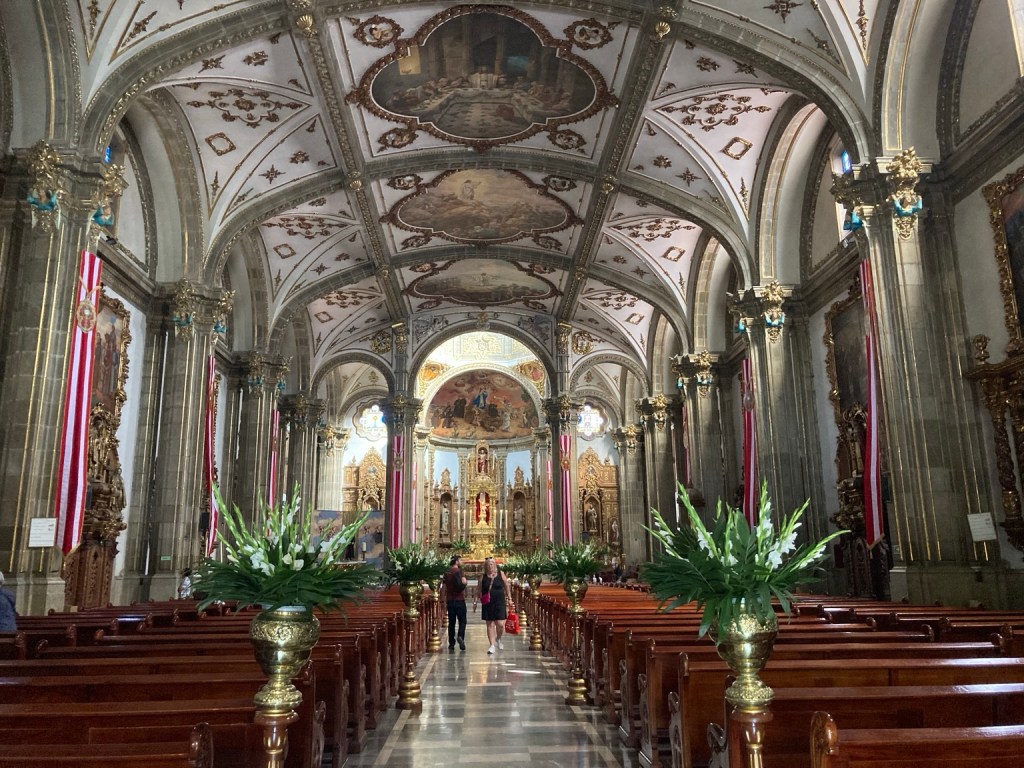
… and outside a large plaza.
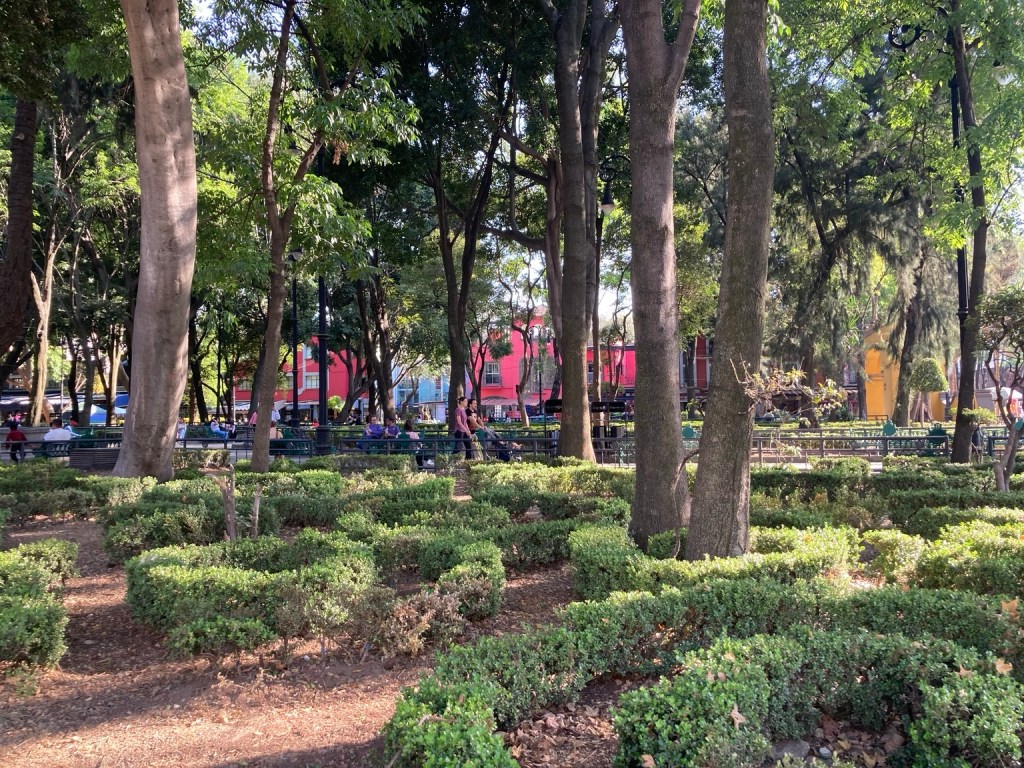
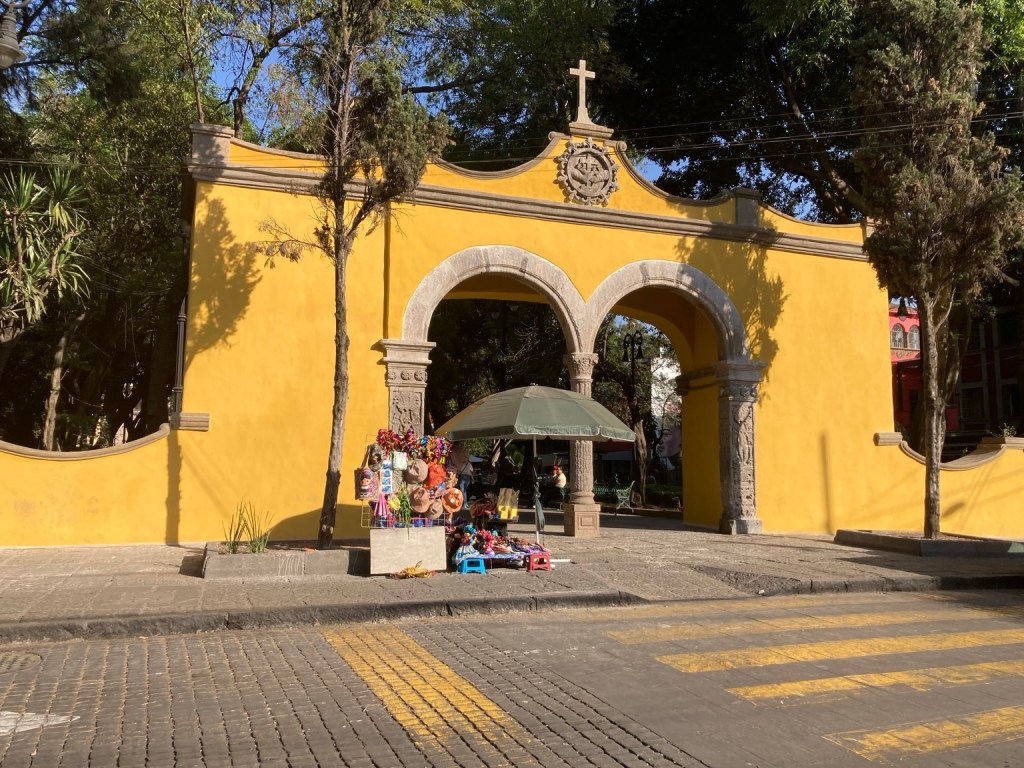
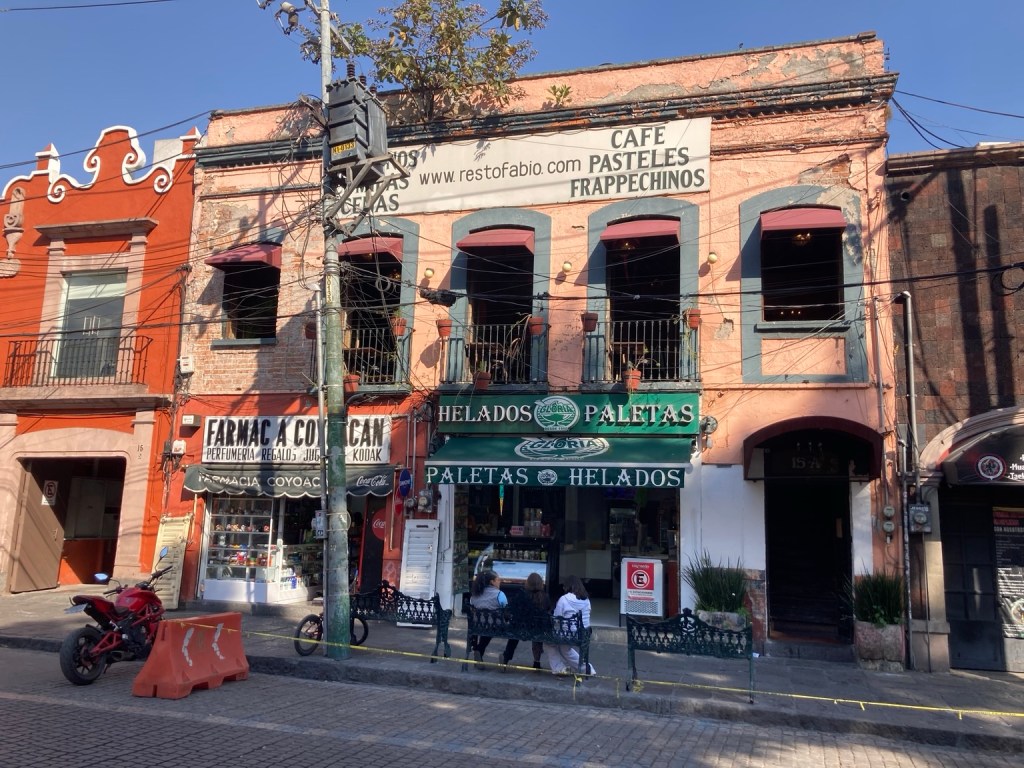
The ice cream has been great here – I love the walnut which seems very popular – and this place is quite an institution.
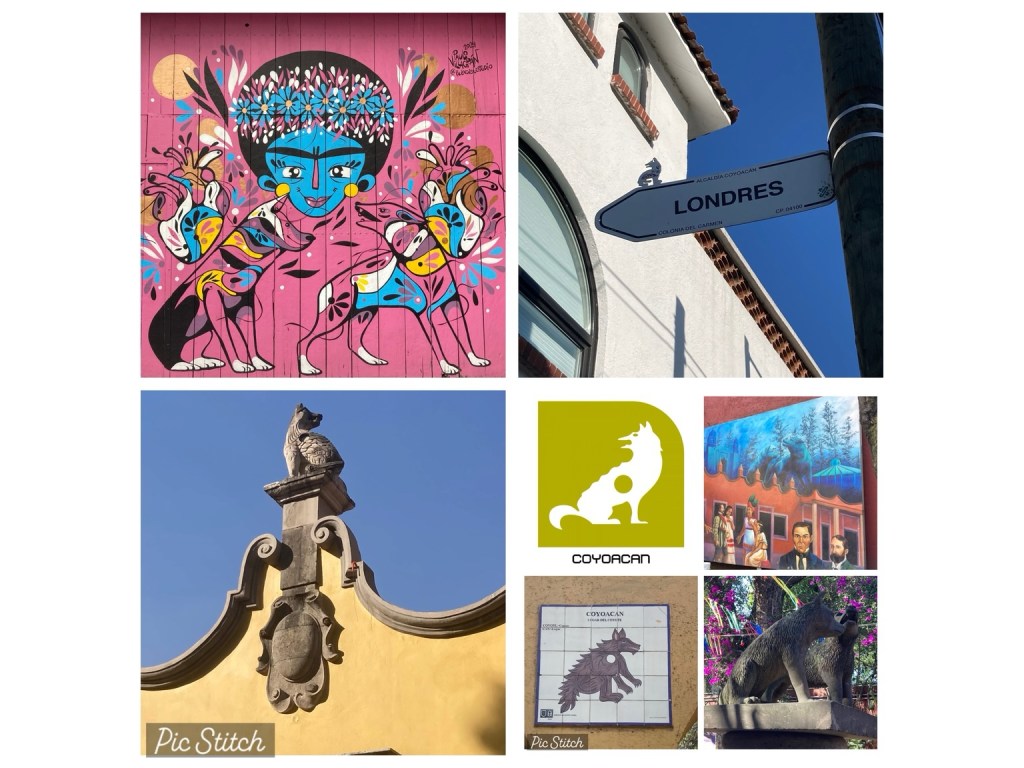
There are statues and images of coyotes everywhere, hardly surprising as Coyoacán is an Aztec word meaning ‘place of the coyotes’ and in Aztec times this area was a forest.
Next morning, after breakfast on the terrace …

… we got a taxi to Museo Anahuacalli, the final achievement of Diego Rivera, a temple displaying the art and craftsmanship of his indigenous collection within a modern monument inspired by the ancient world.
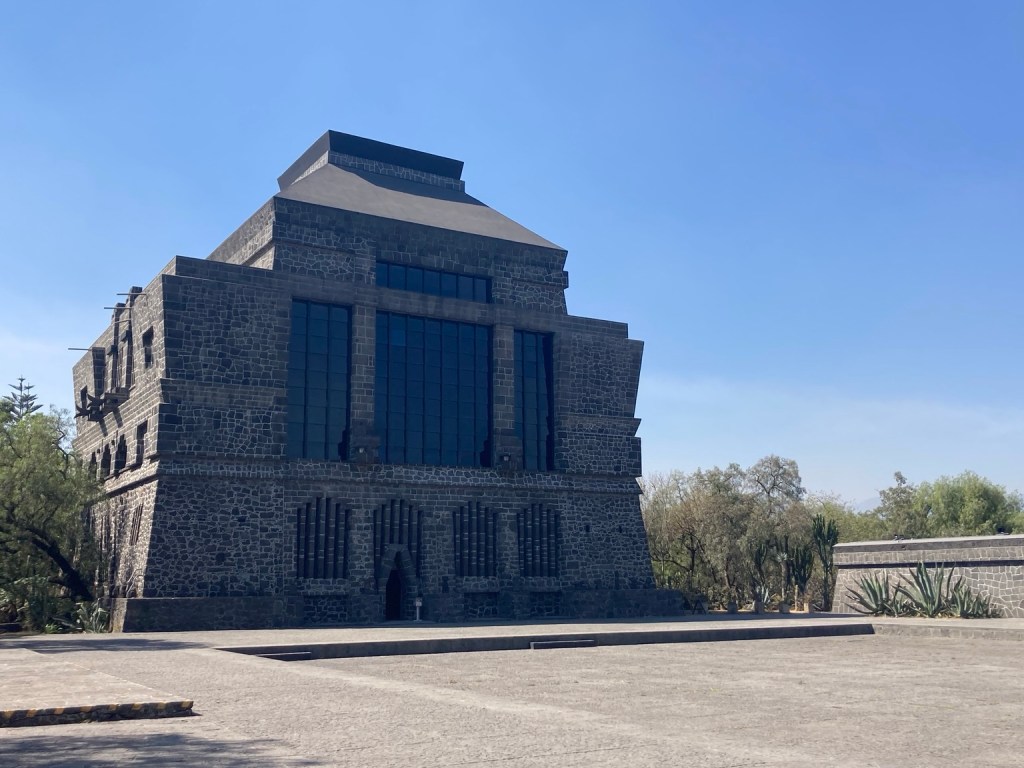
Made from local volcanic rock, it echoes the shape of a Mesoamerican pyramid with a ball court outside.
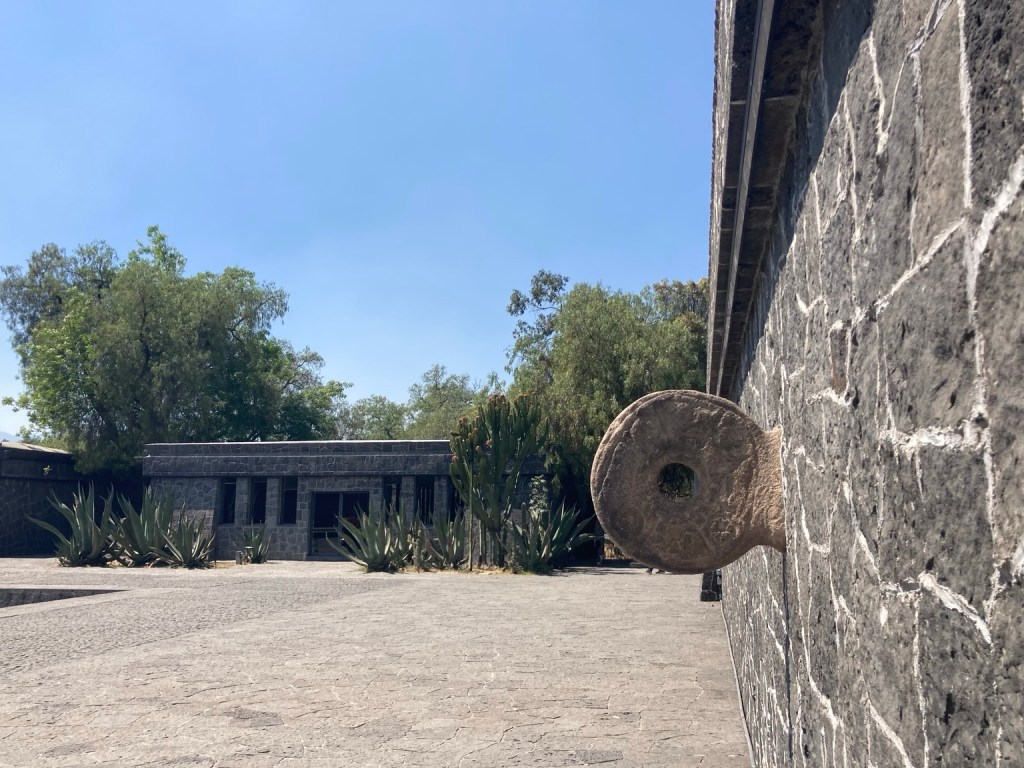
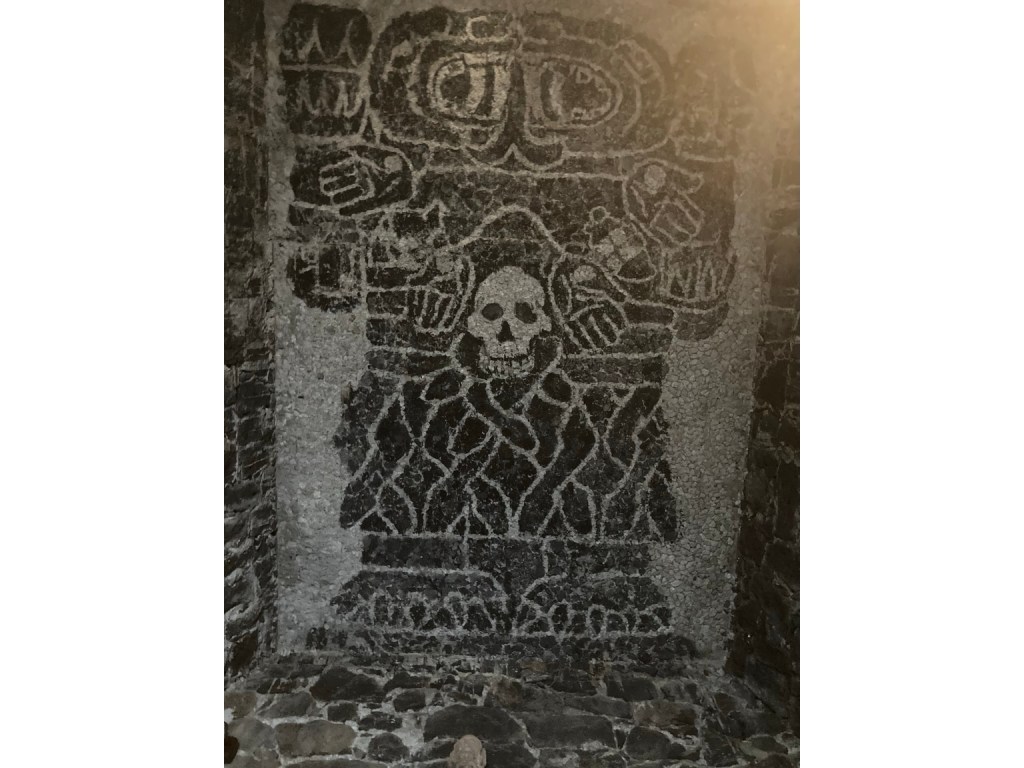
Inside, we rose through the underworld and the earth to the cosmos and each corner depicted the earthly elements and their gods. In order to make a modern building feel ancient, there are mosaics on the ceilings, like this one of the mother goddess who welcomes us …
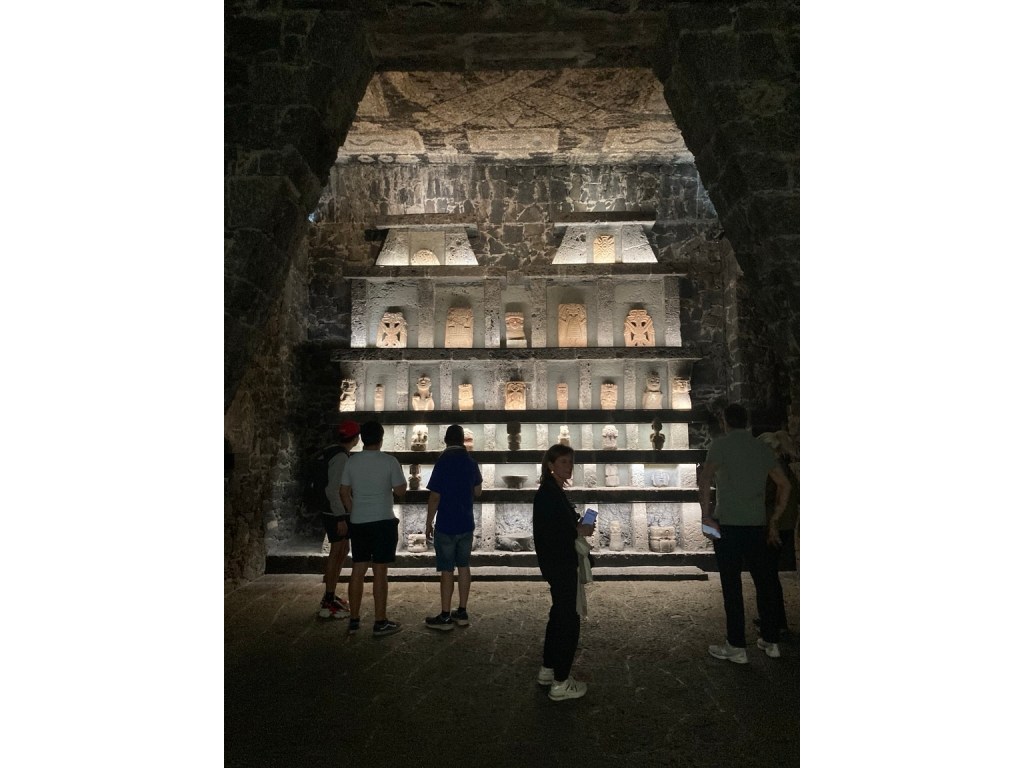
… and a beautifully lit altar in the underworld.
The most impressive space was planned as a studio for Rivera, although he died before he was able to use it. Preparatory sketches line the walls, and with some of the murals now lost, they are more precious.
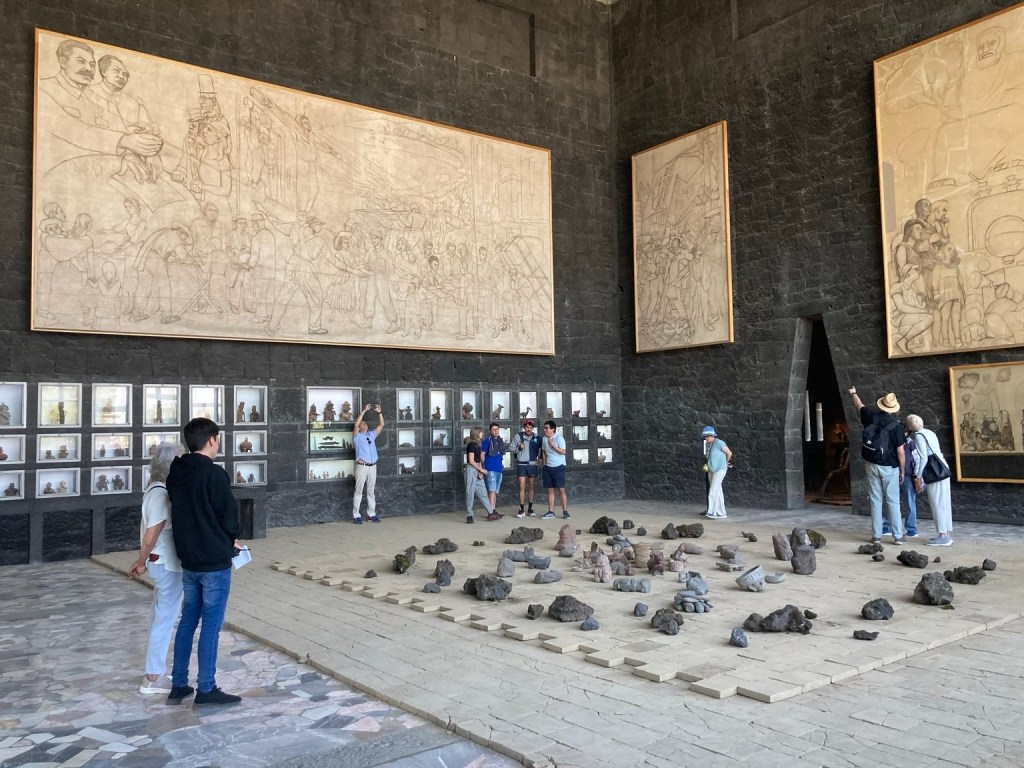
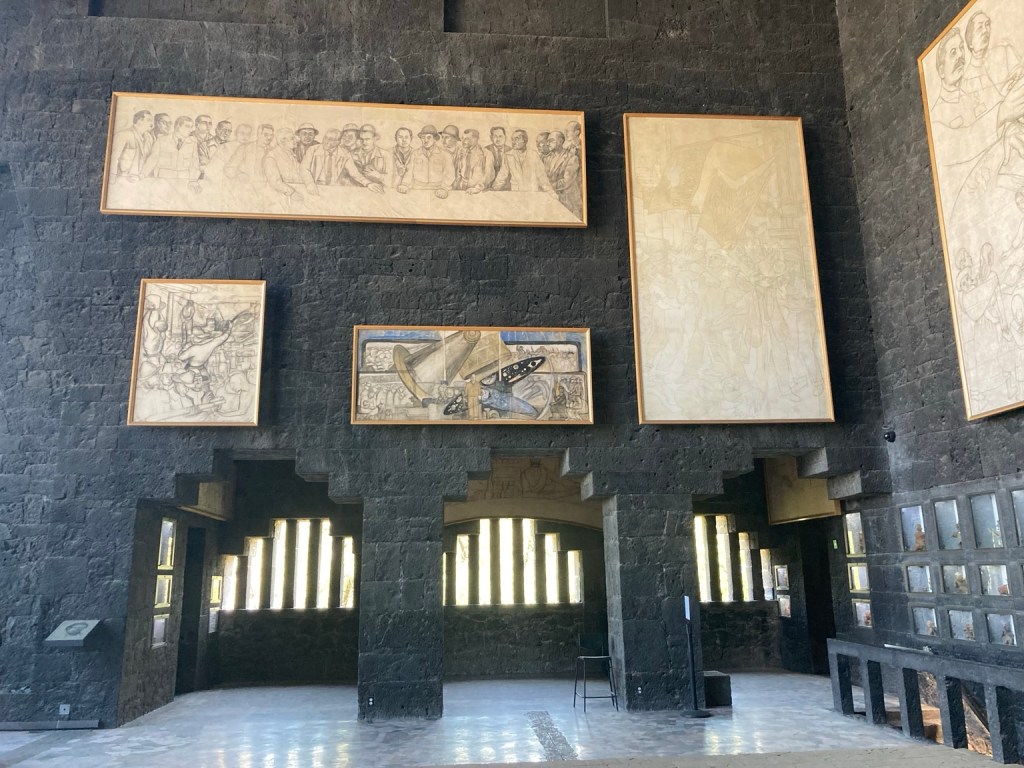
The cabinets on each floor contain much of his collection of over 50,000 pieces of Pre-Hispanic art, amassed at a time when there was little restriction in the trade of such items.
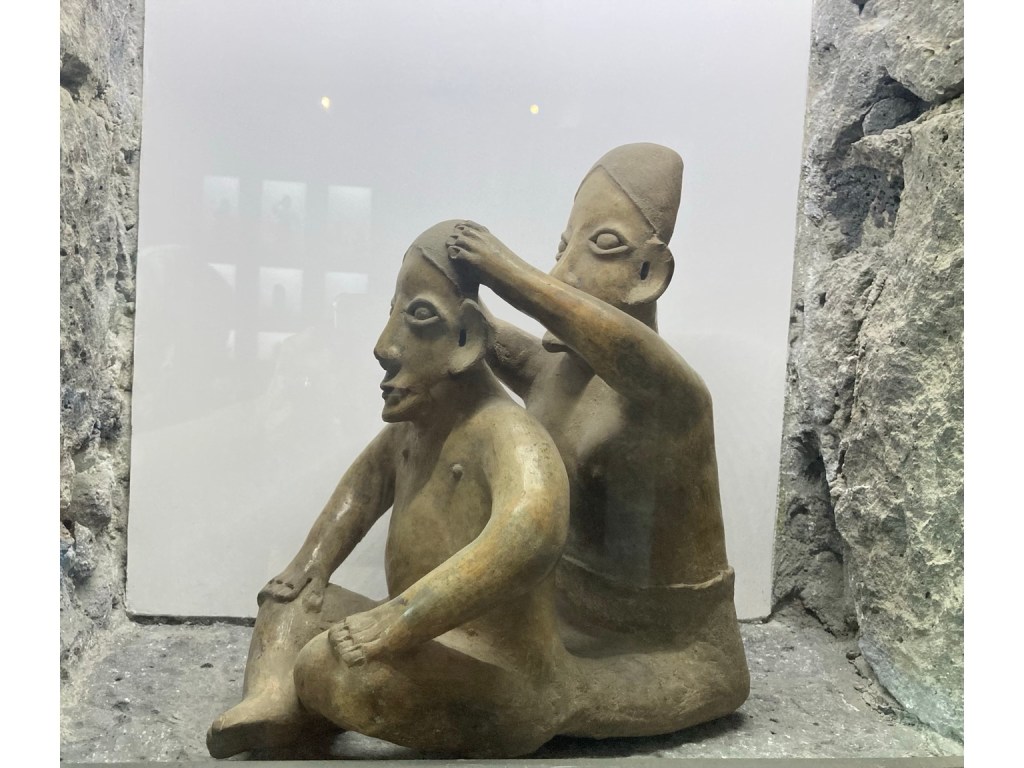
There are no labels as he wanted them to be seen as art rather than an archaeological collection. This figure is a bearer and was given a second life as a character in his murals …
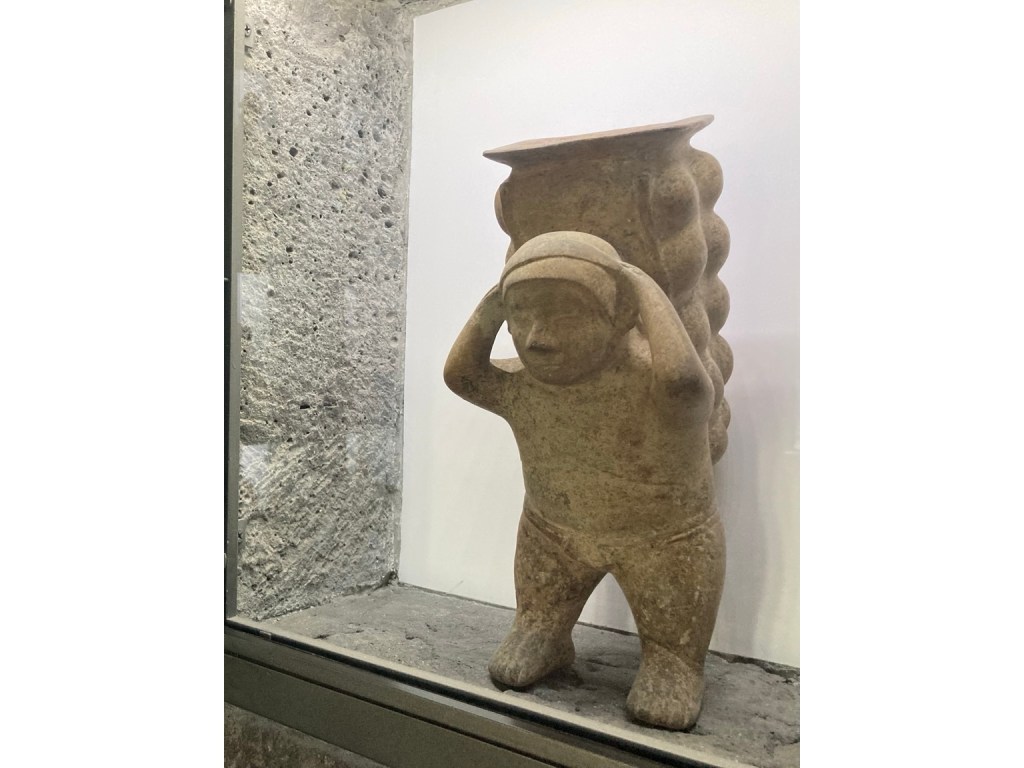
… and unlike many figures which show little emotion, this one is lost in thought …
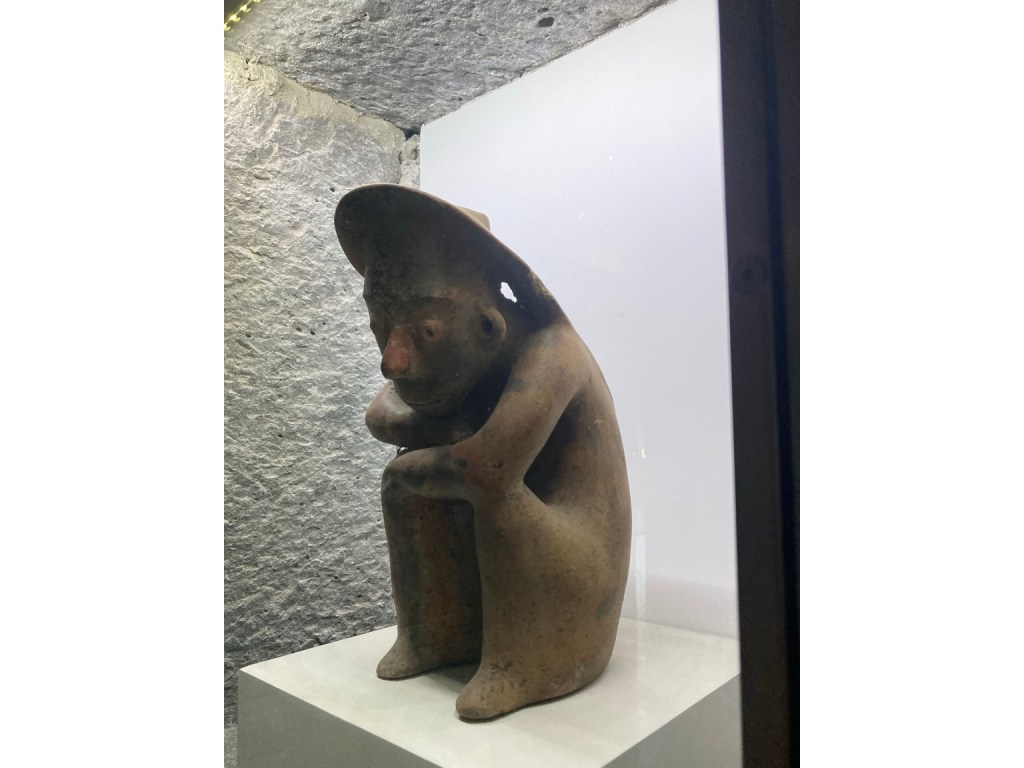
… and maybe this just shows nits are not a new thing!
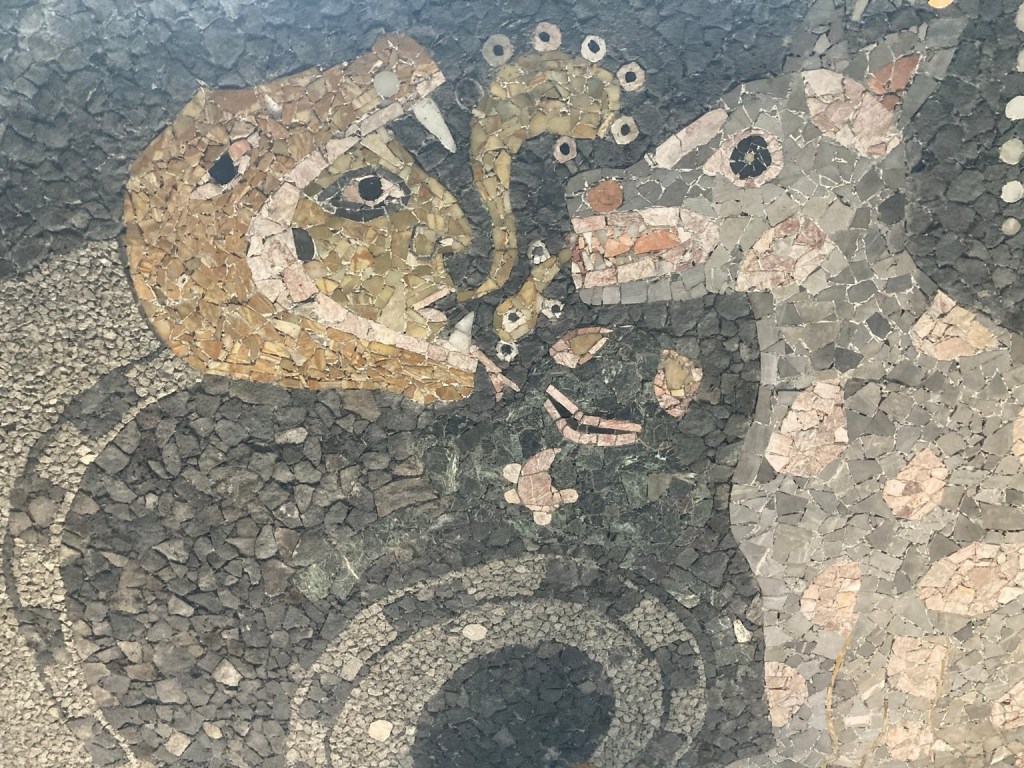
We spent several hours here, totally engrossed in the visual spectacle. This ceiling mosaic is maybe Rivera’s farewell. A dog personifies the guide of souls through the underworld while the creator of humanity is a serpent with a human face. Between are the large eyes and smile of a Frog – Diego listening to life and death talking together.
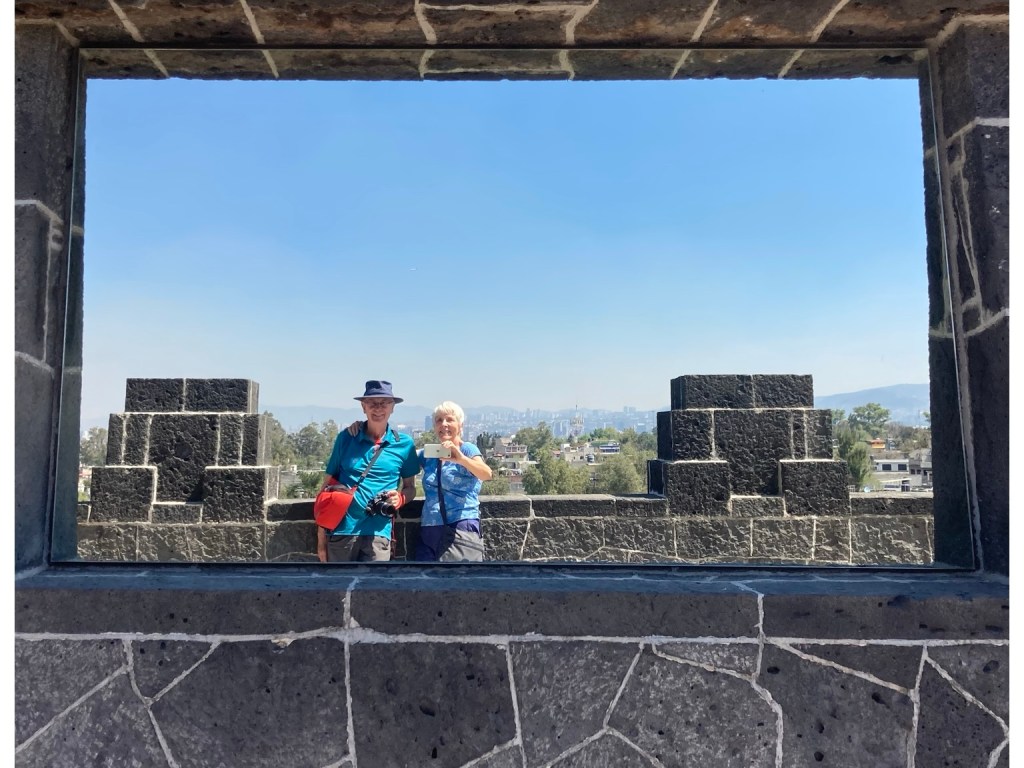
The roof gave a photo op and it was back to town
It was definitely a Diego & Frida day, as our timed ticket to visit Casa Azul was at 3.30.
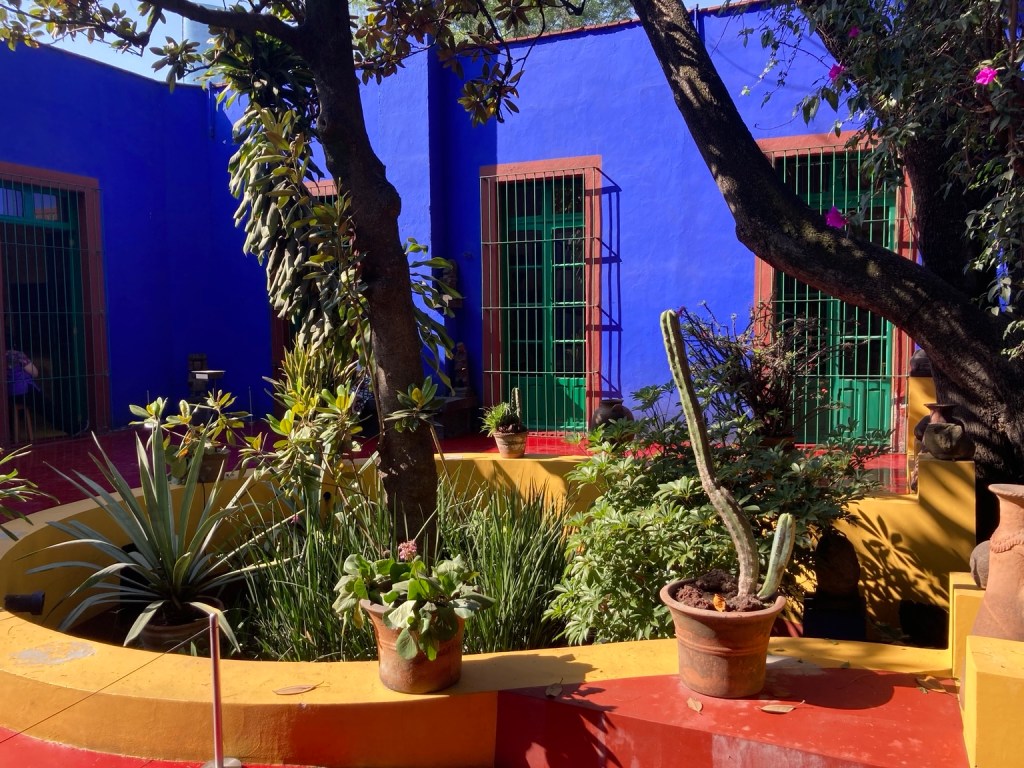
Frida lived here for much of her life and so much has been written about her. The first few rooms told of her early life, her struggles with health and how her art helped to heal her emotionally, especially when couldn’t carry a baby to term.
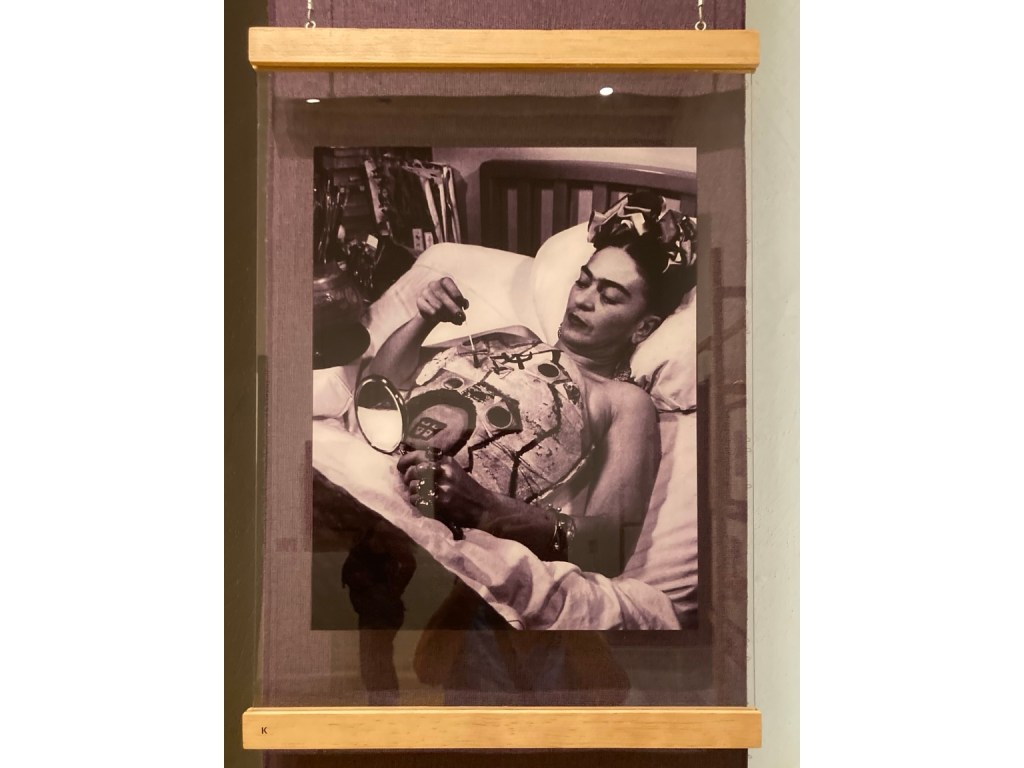
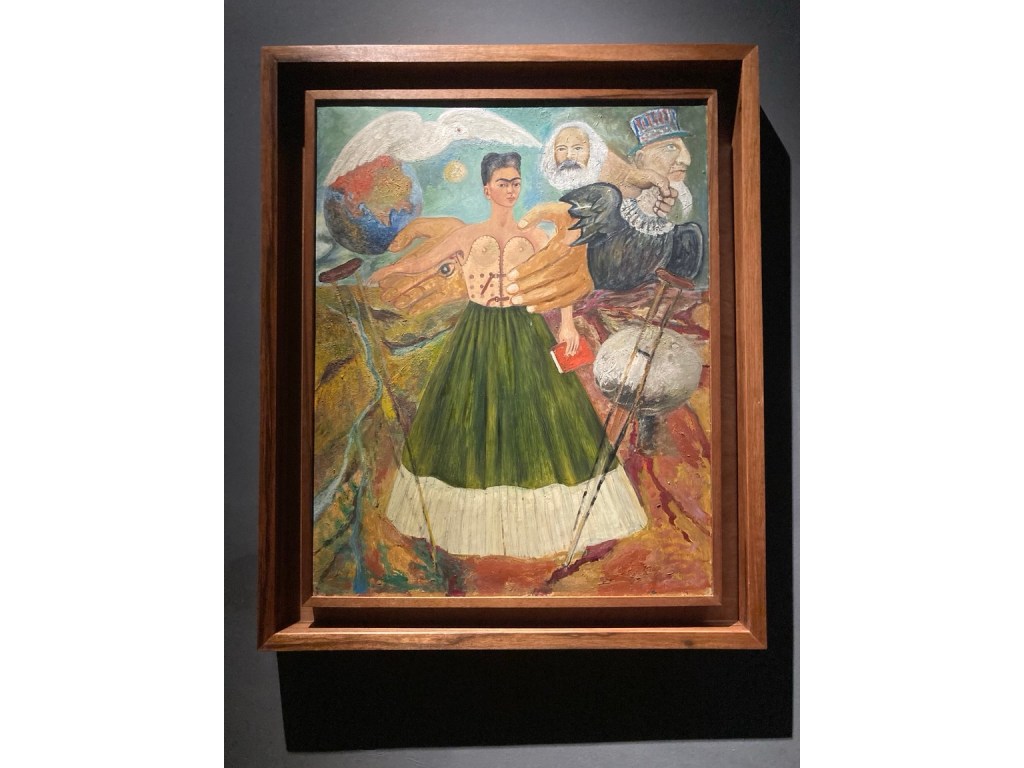
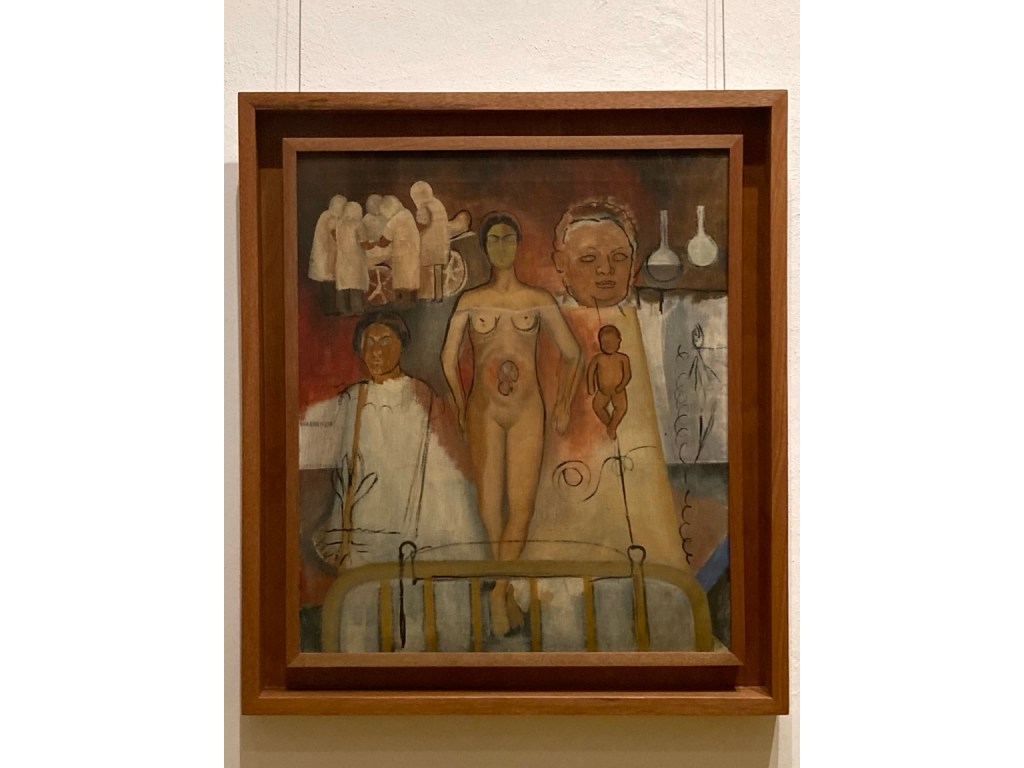
We remembered some of the items from the V&A exhibition in 2018 which was the first to show the Frida Kahlo’s clothing, jewelry, prosthetic limbs, and hand-painted corsets outside Mexico.
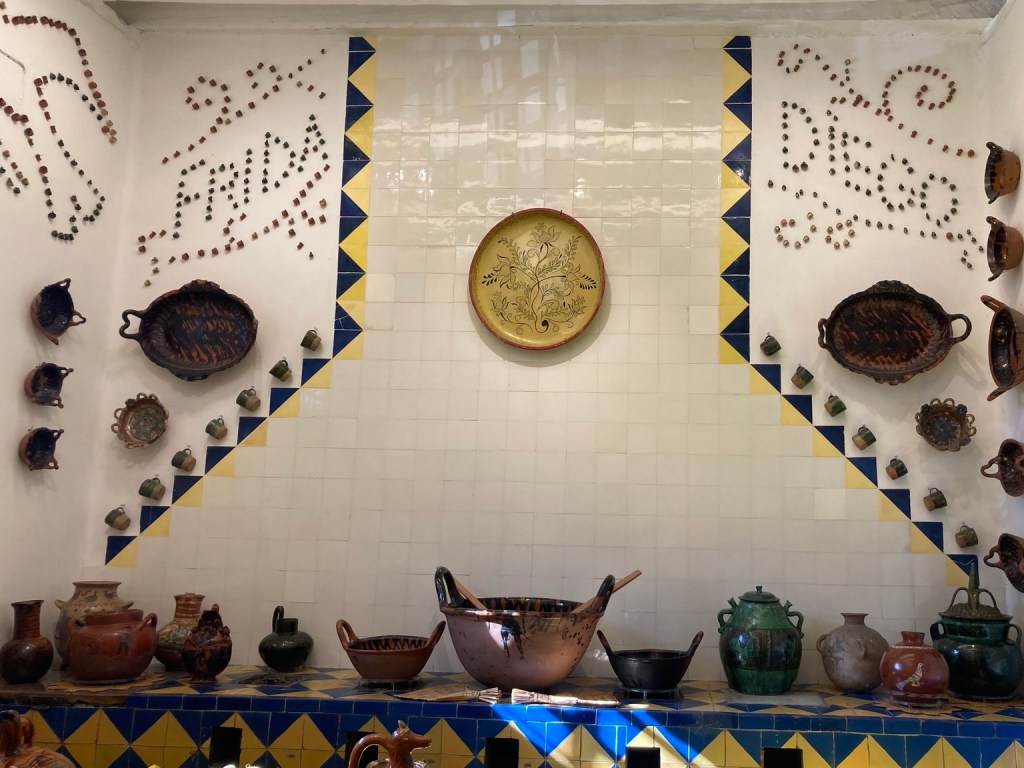
Her collection of folk art inspired her and she included them in her work …
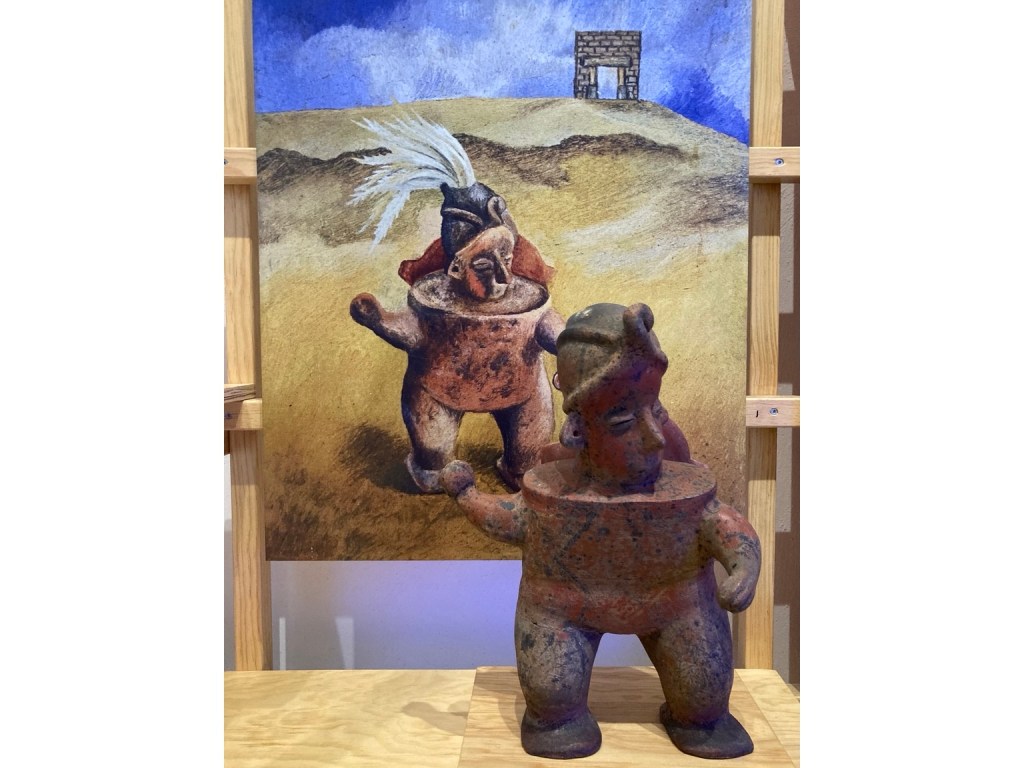
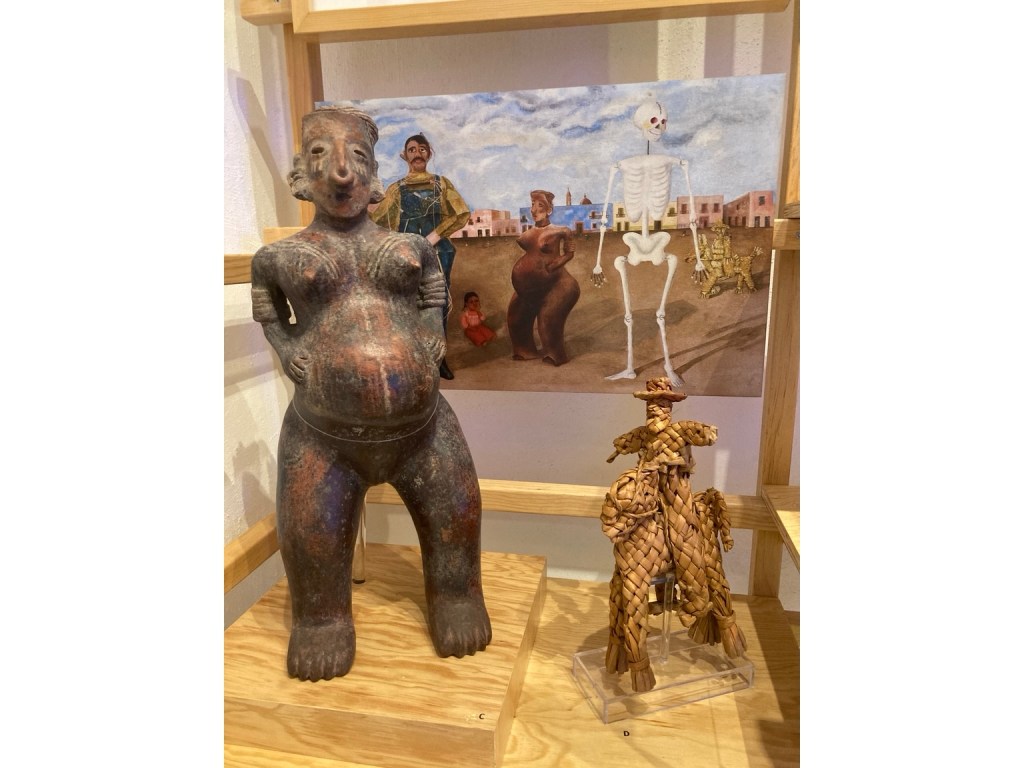
… and displayed them throughout the house …
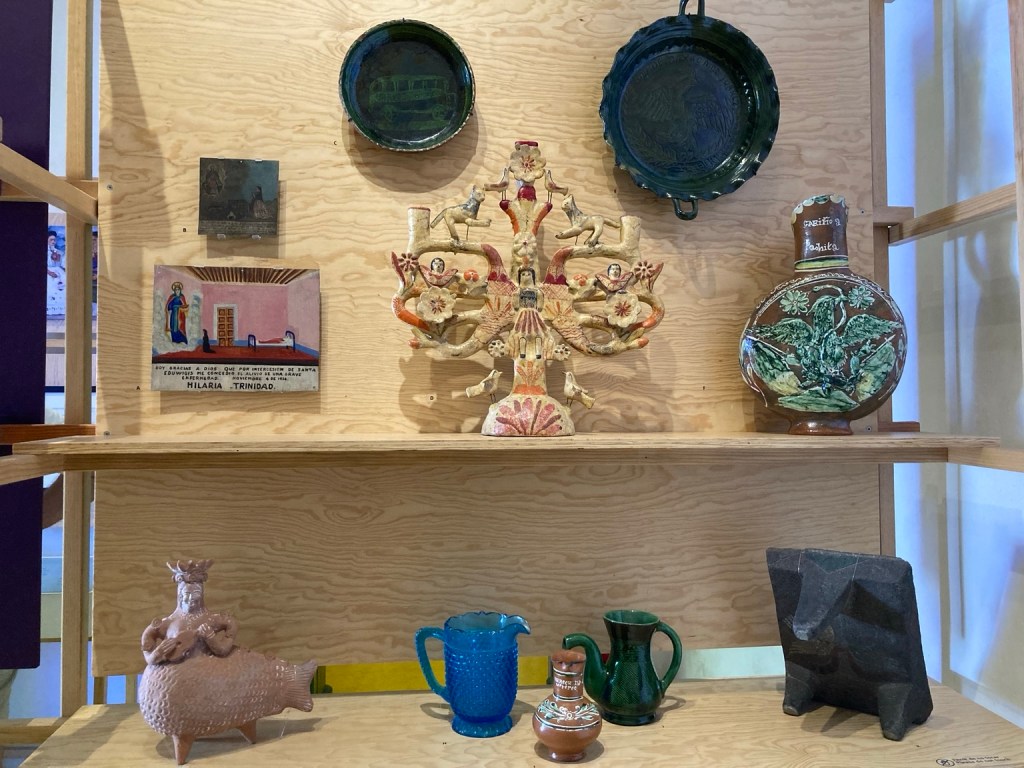
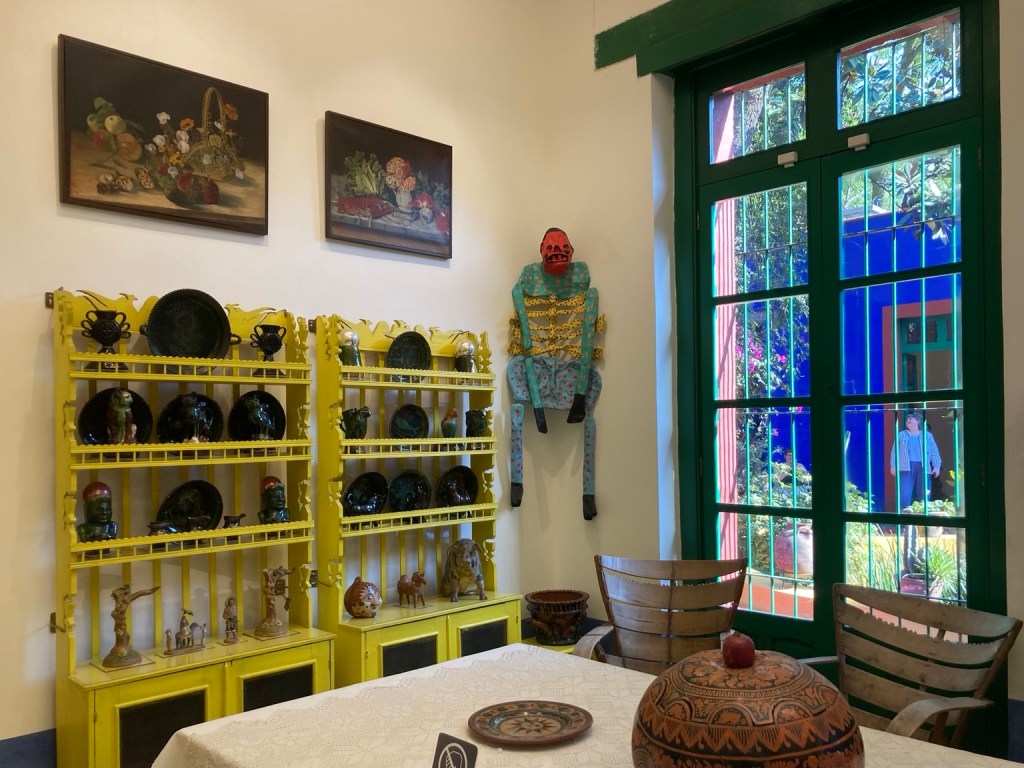
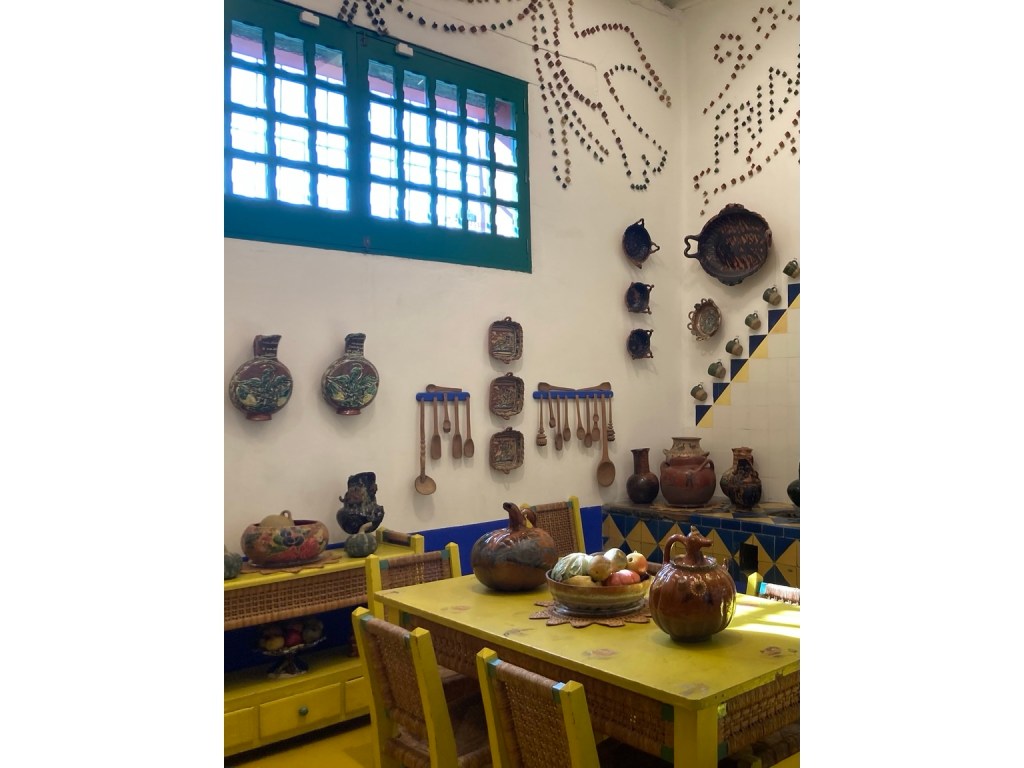
… including cute jugs on the kitchen wall!
Her bedroom was poignant, with the mirror above the bed which enabled her to paint self portraits …
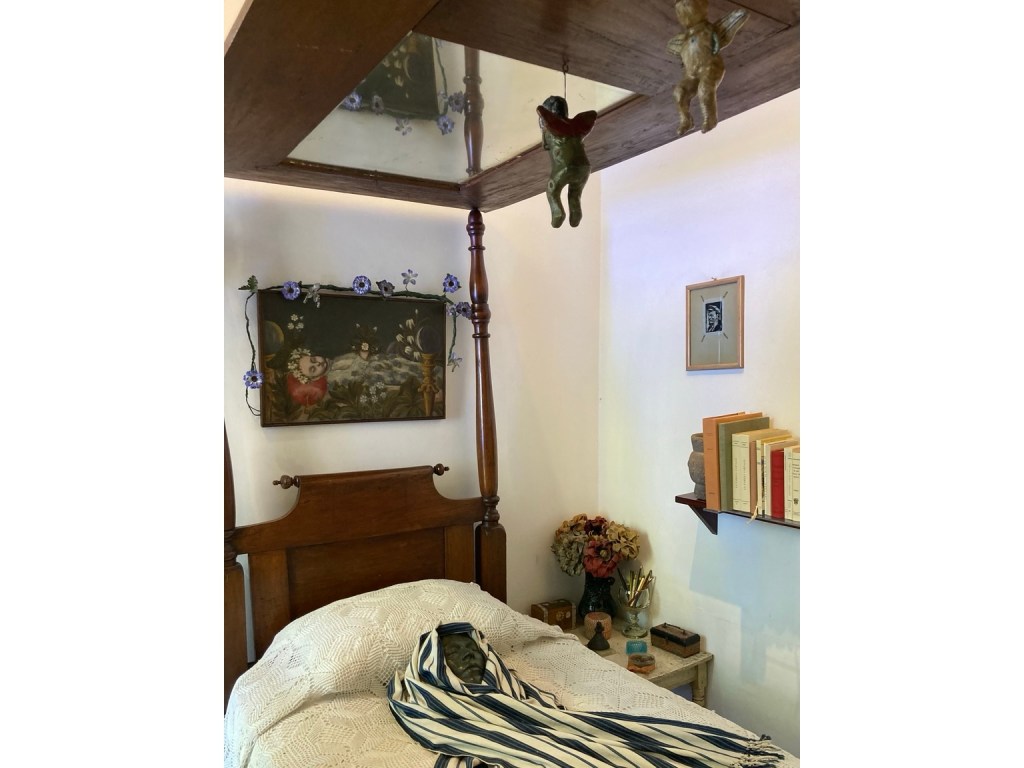
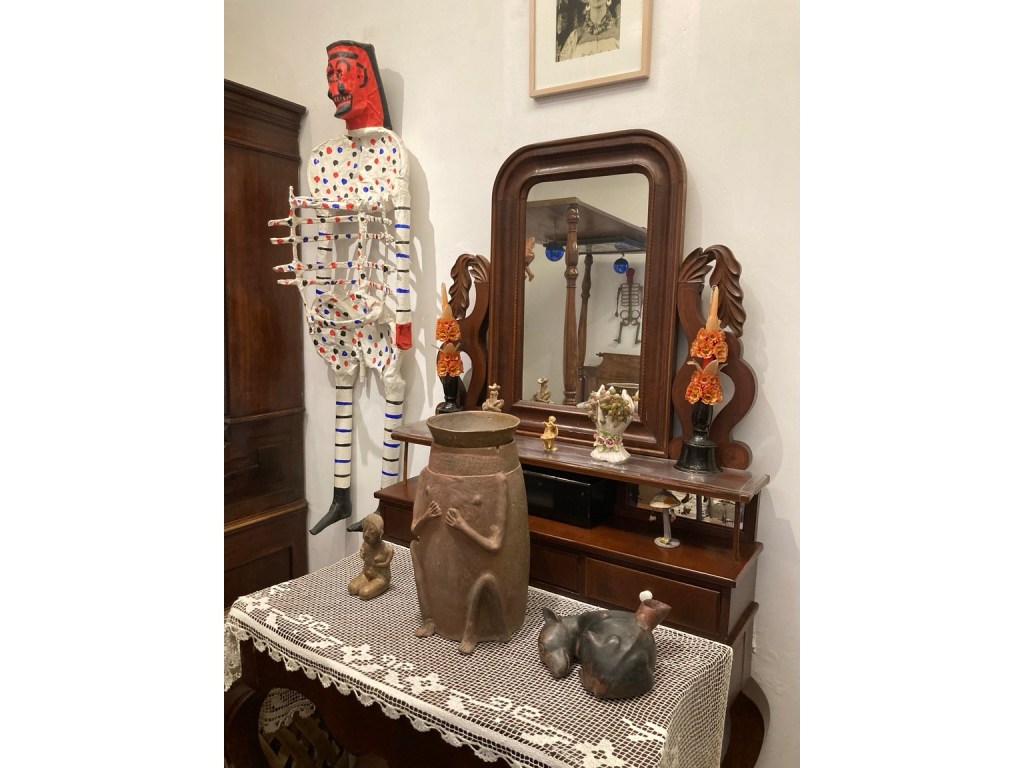
… and the frog shaped jug on the dressing table containing her ashes.
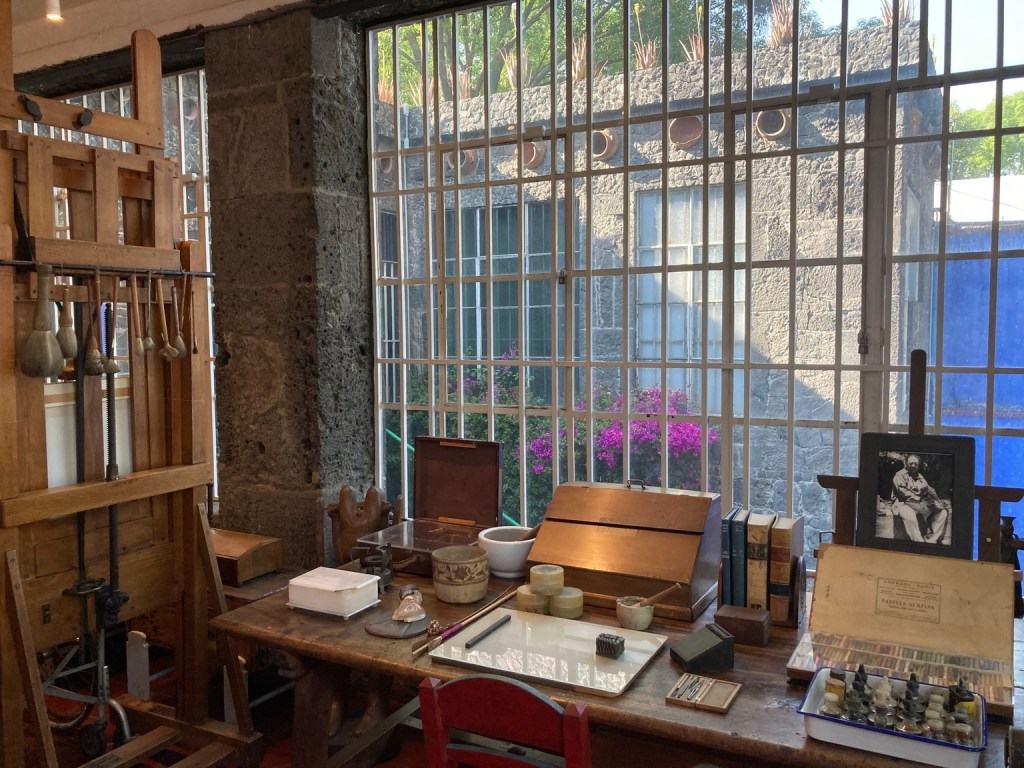
Finally her studio with paints, easel and a wheelchair …
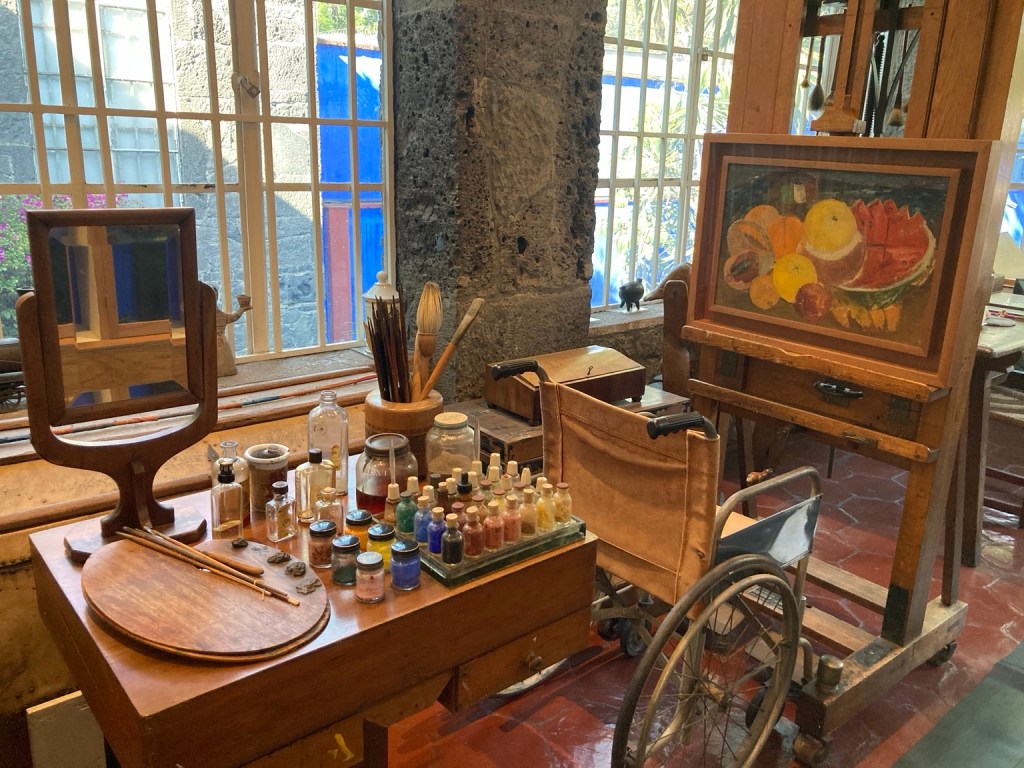
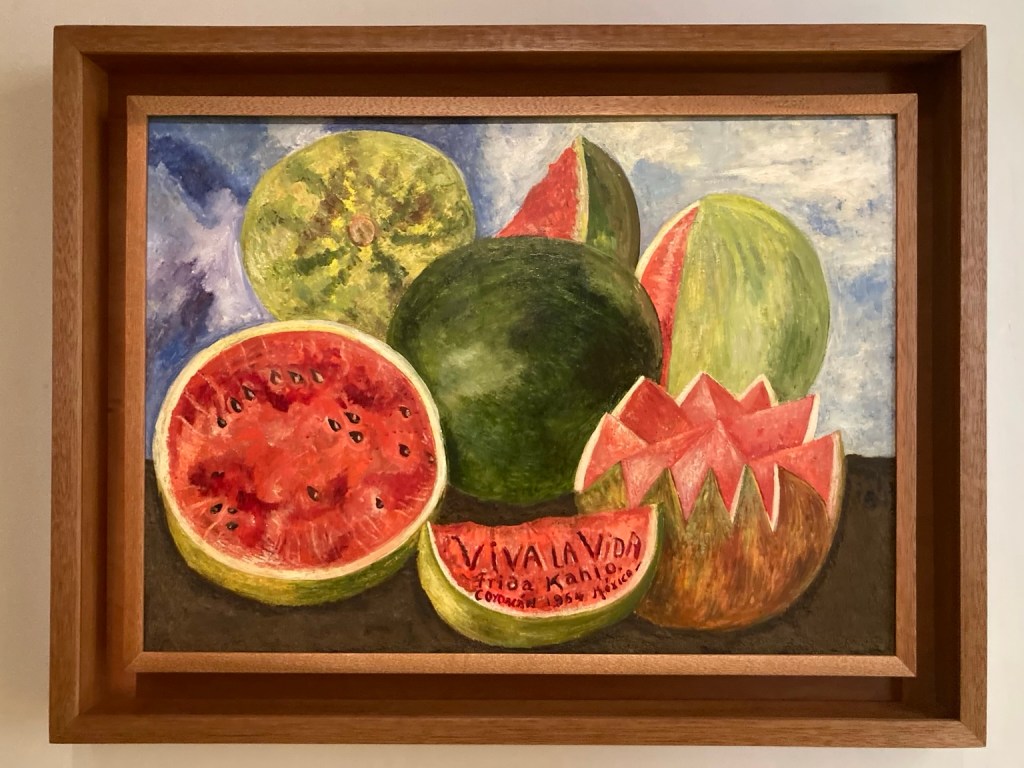
… and her last painting, a vibrant still life of watermelon.
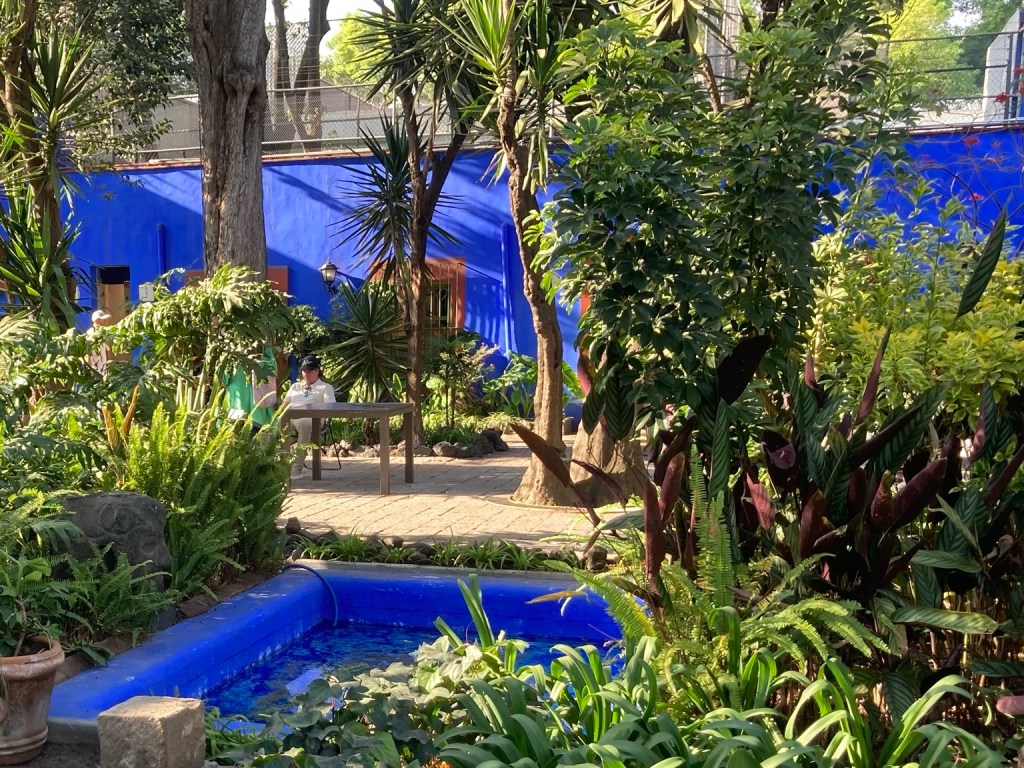
The garden was lovely in the afternoon light …

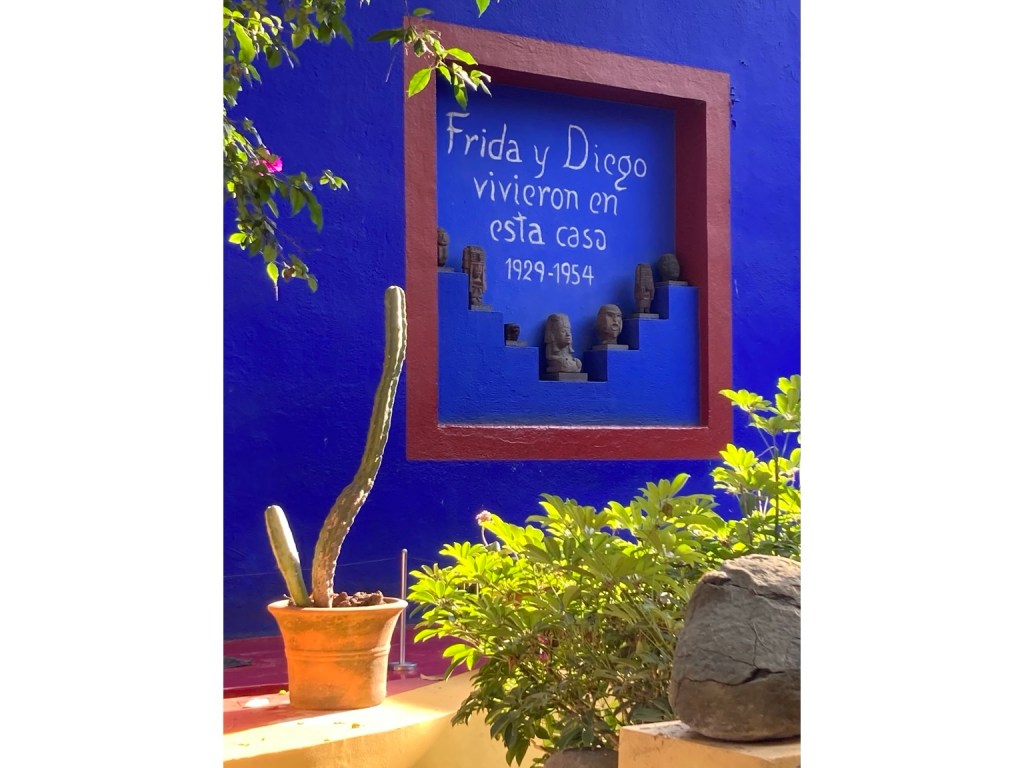
… and that just left the gift shop, where I found a blue spoon to remind us of our visit.
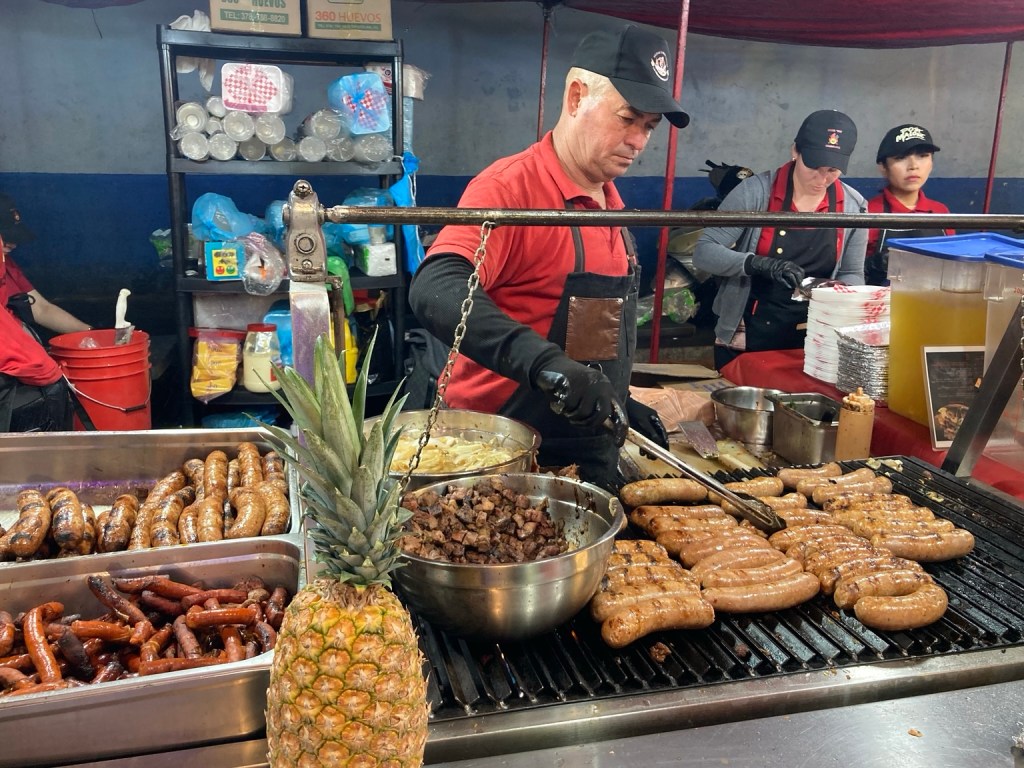
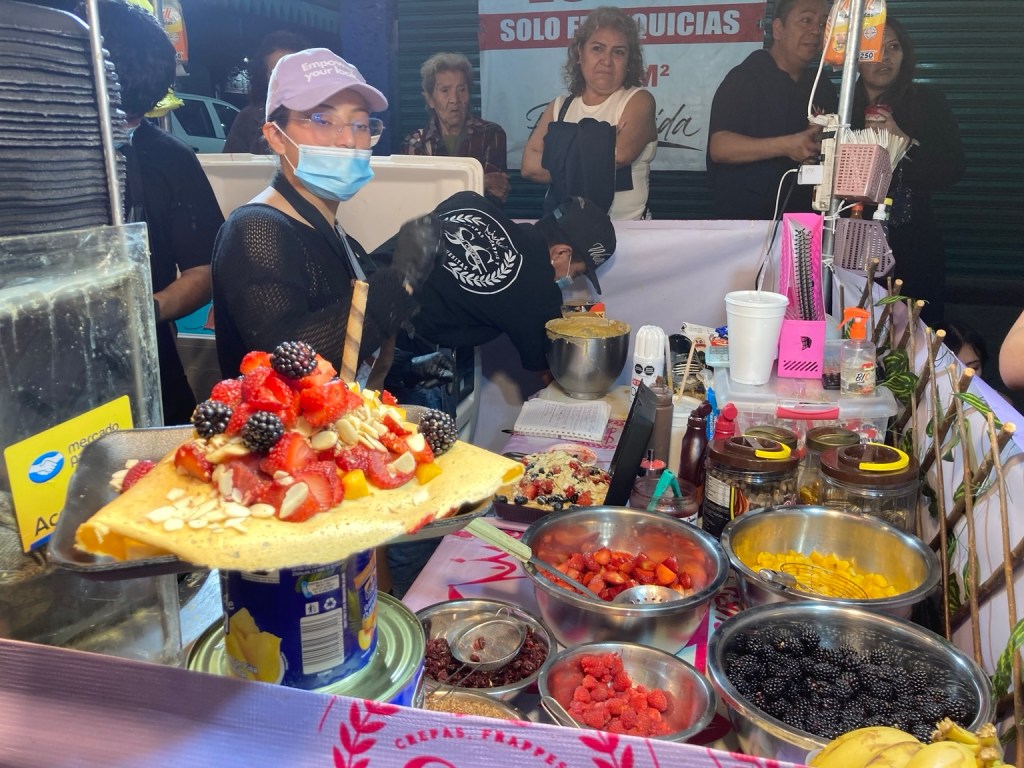
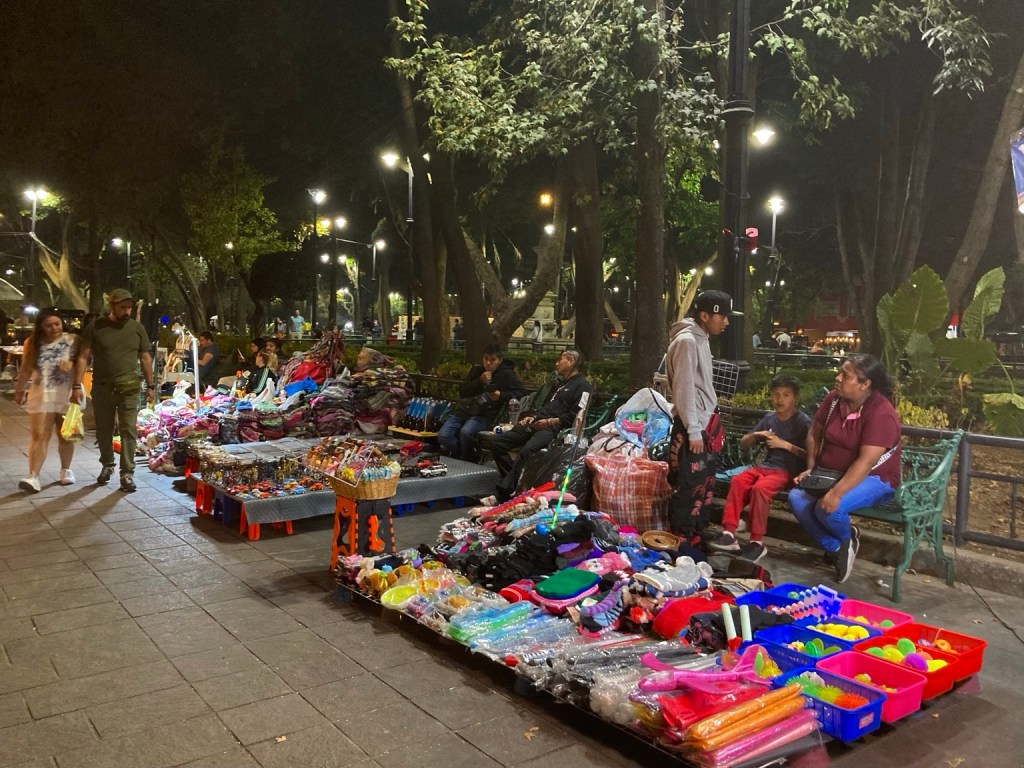
We headed into town for dinner, but almost got sidetracked by the night market with stalls offering everything from the corn that is for sale on every corner …
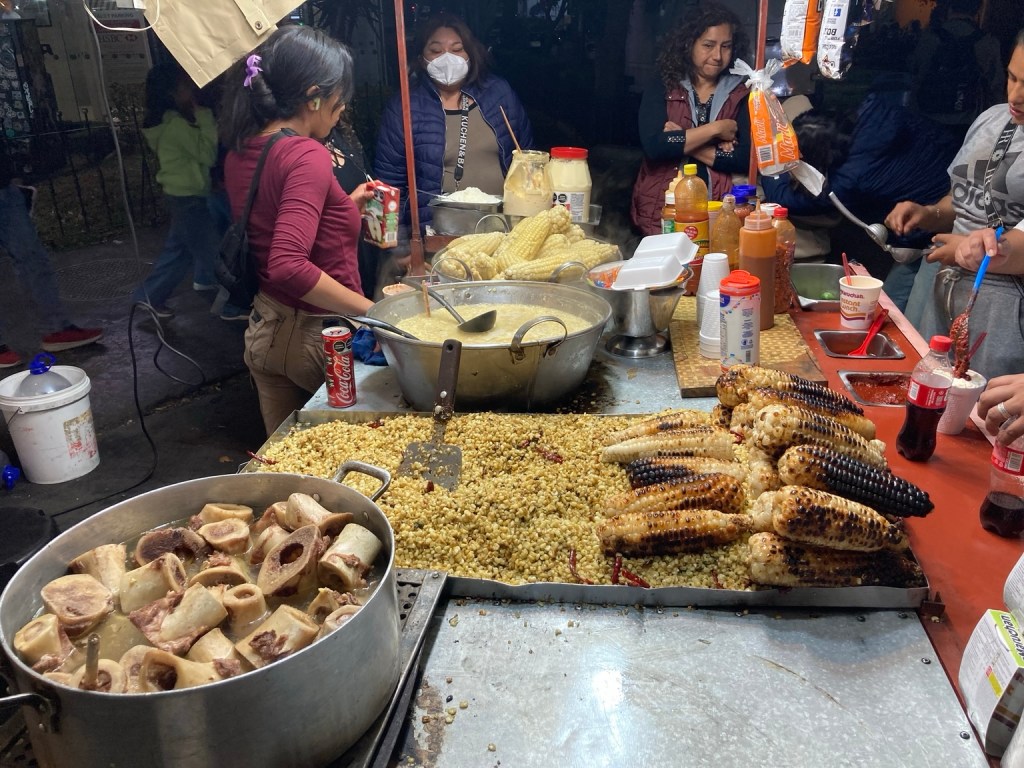
… to bbq meat …
… and crepes and ice cream …
… as well as every souvenir you could ever want … or not!
In fact there is so much food for sale everywhere I can’t believe it could all be eaten!
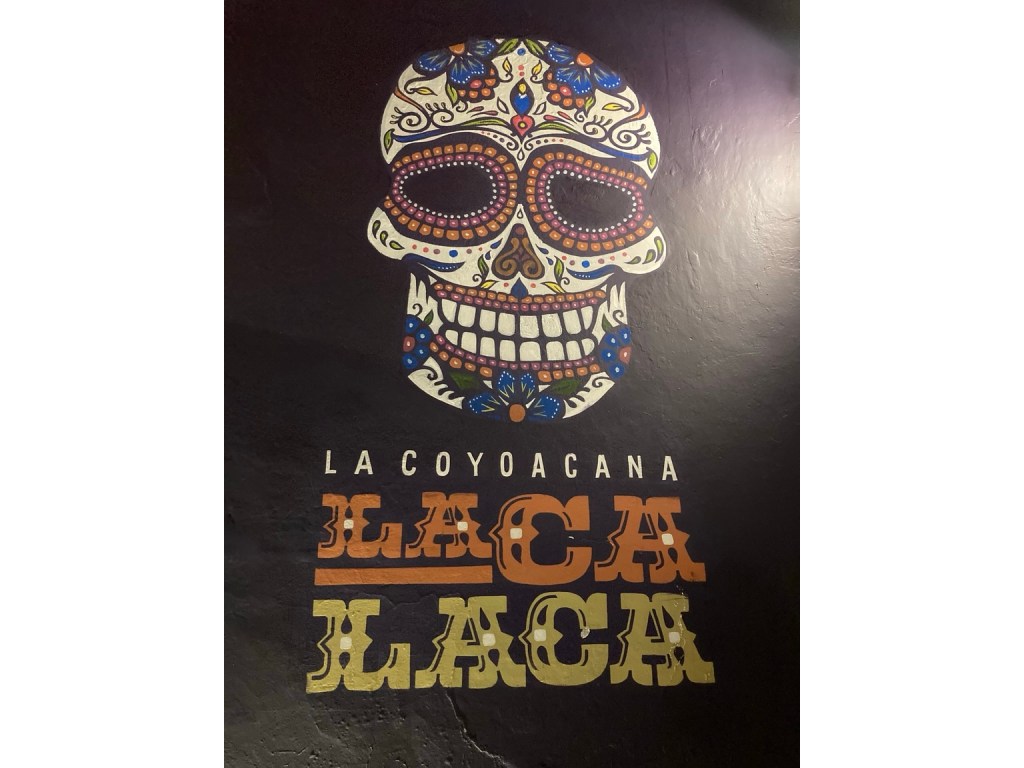
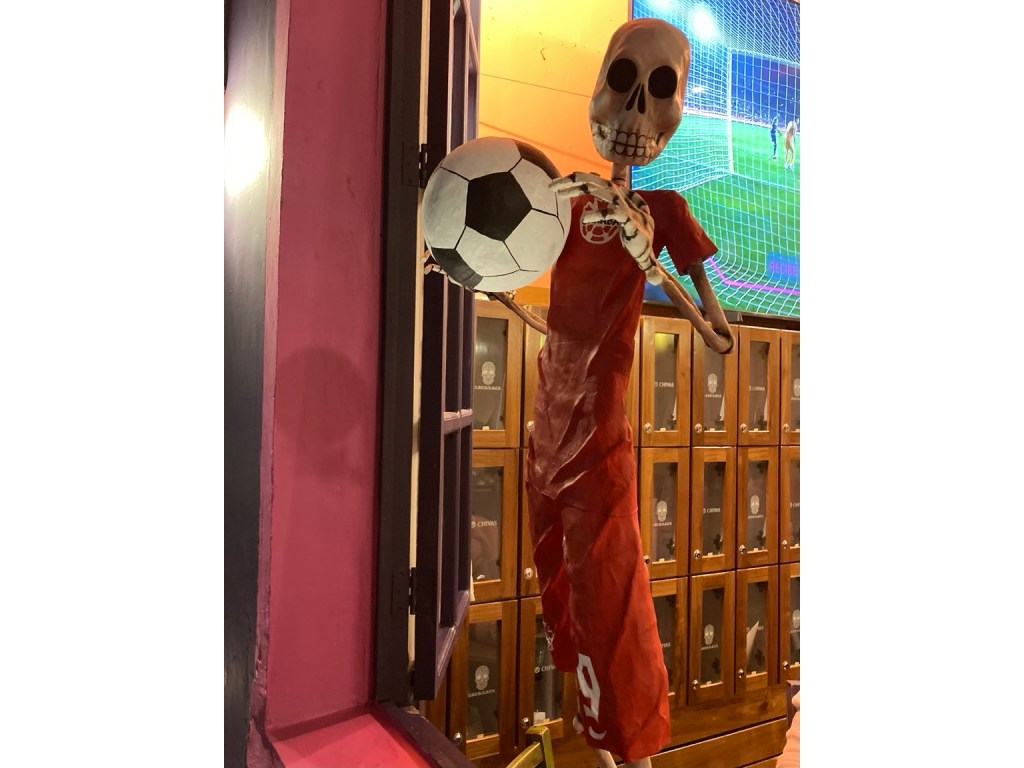
Our destination was La Calaca, meaning the skeleton …
… and as soon as we entered there was a mariachi band who continued to play tune after tune at full volume, accompanied by the family group who were celebrating.
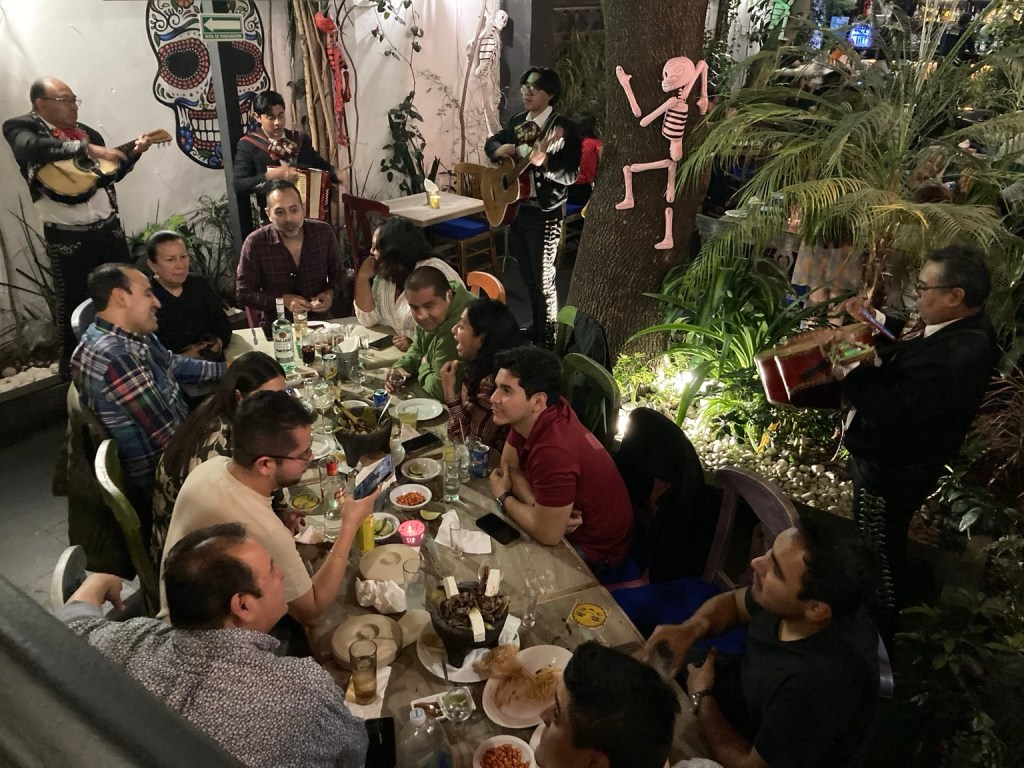
Since we had been in Oaxaca, we’d been on the look out for decent margaritas, but none had hit the spot till tonight … finally mexcal margaritas once more and fab!
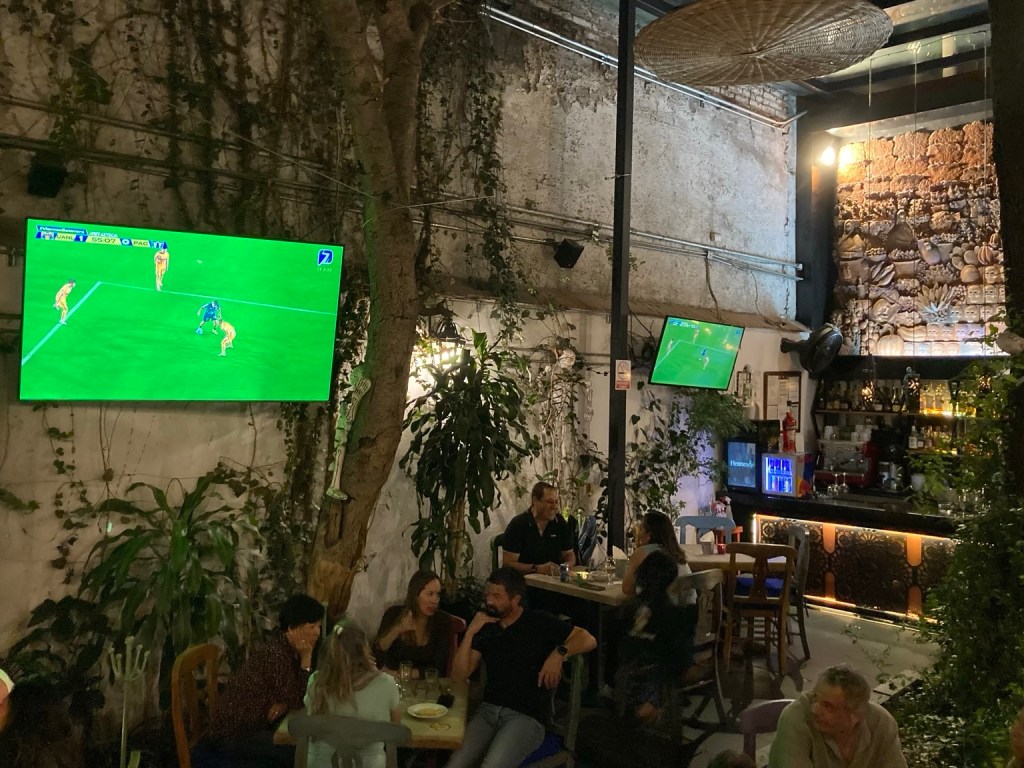
We’d also been hoping to see a football match, but it hasn’t happened, so Chris had to be content with screens showing a local match and even a redman!
 Off Travelling Together