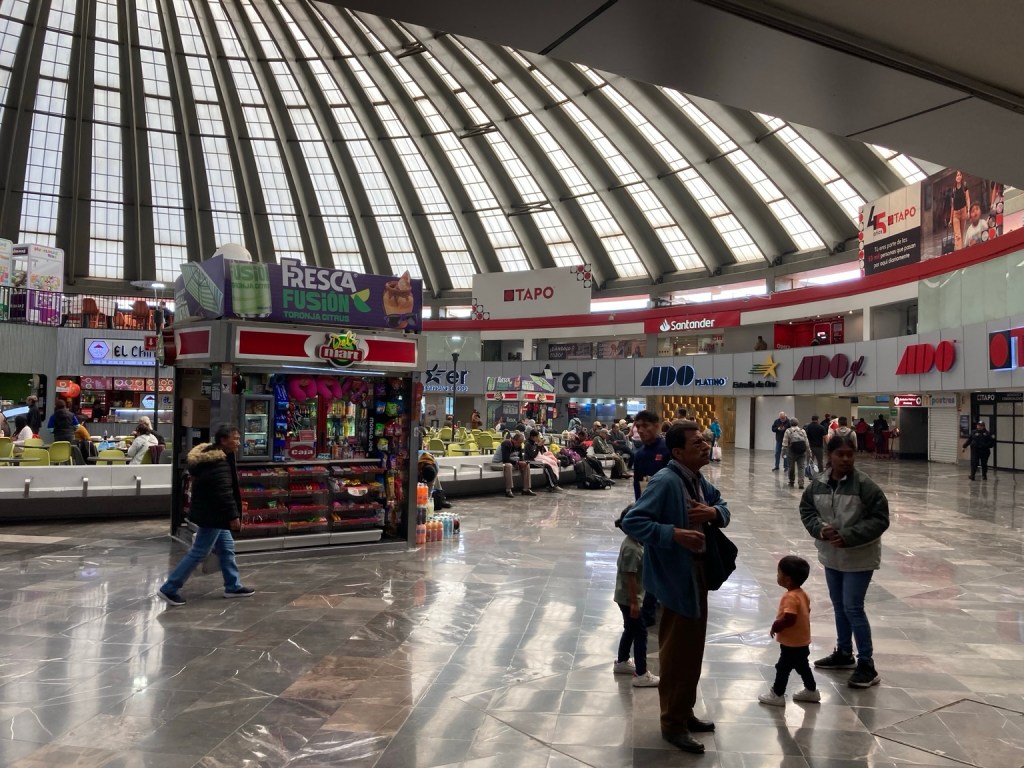
We went for breakfast at Cafe Pagoda for the last time then took an Uber to the bus station, which seemed more like an airport terminal!
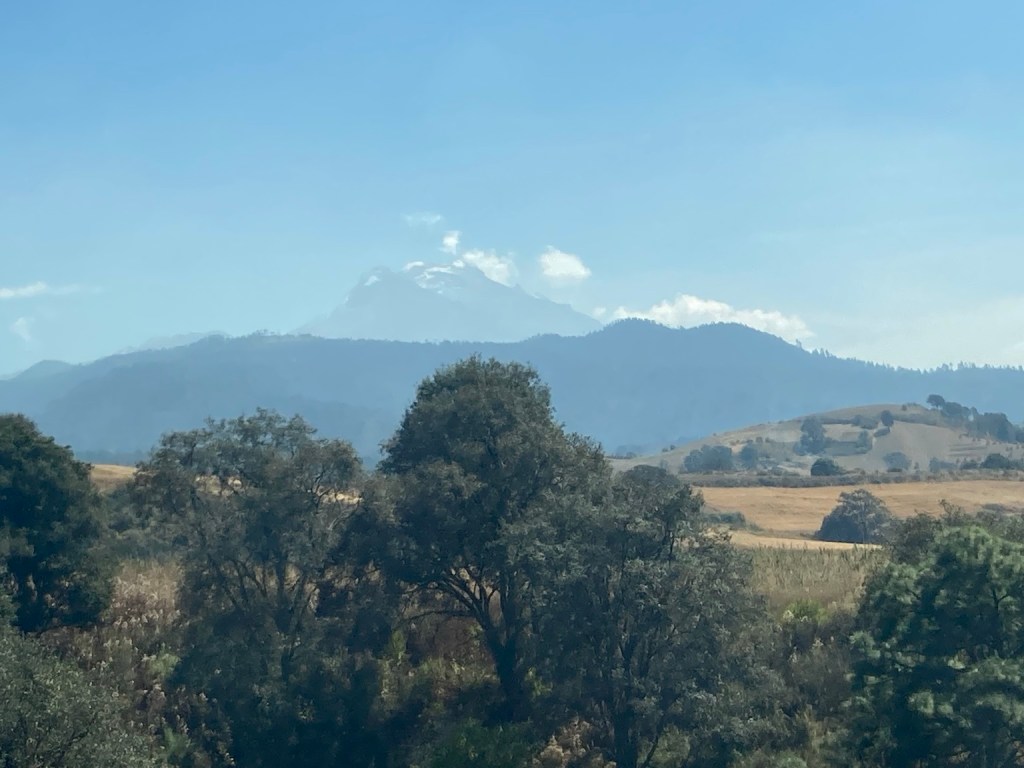
The bus was great with huge comfy reclinable seats with plenty of legroom. It took well over an hour to leave the outskirts of Mexico City, hardly surprising having seen its size from the Torre Latino. There was even a movie, and even though it was in Spanish we got the gist – boy is in a band, boy meets girl, they fall in love, she has incurable illness, they get married, she dies, he puts everything in his songs and becomes a star! It was lovely to get into the countryside with lots of grass and trees and we were eager to catch glimpse of Popo and Ixta, as the twin snow-clad volcanic peaks of Popocatépetl (5452m) and Ixtaccíhuatl (5285m) are affectionately known. I remember learning about Popocatépetl from school and managed to catch a misty glimpse.
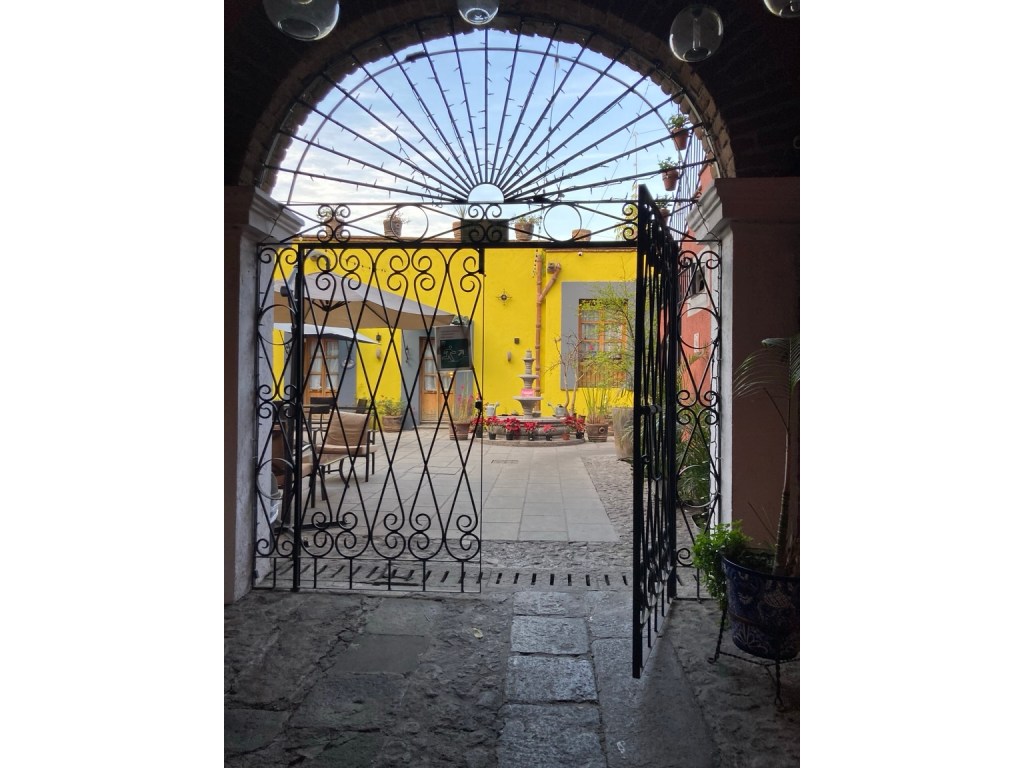
The elegant colonial city of Puebla is Mexico’s fifth largest which was obvious as we took quite a long cab ride through busy streets, but not noticeable once in the historic heart. We are staying at Collection O Al otro lado del rio, which means on the other side of the river which is a renovated hacienda style hotel with pretty courtyards and friendly staff.
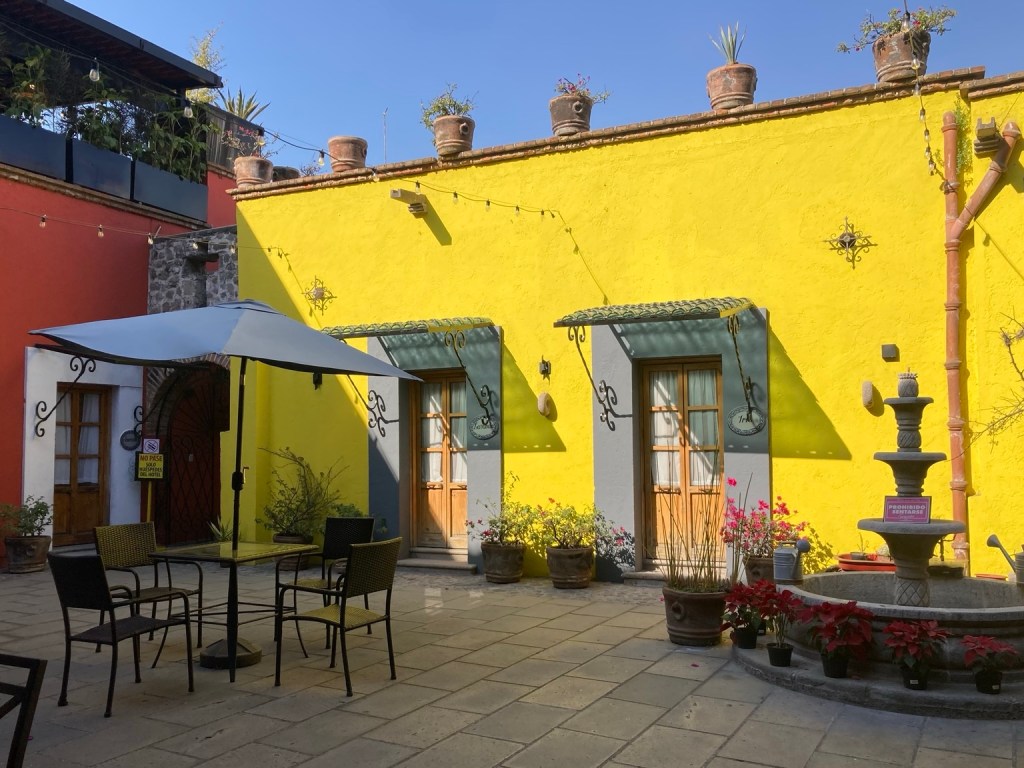
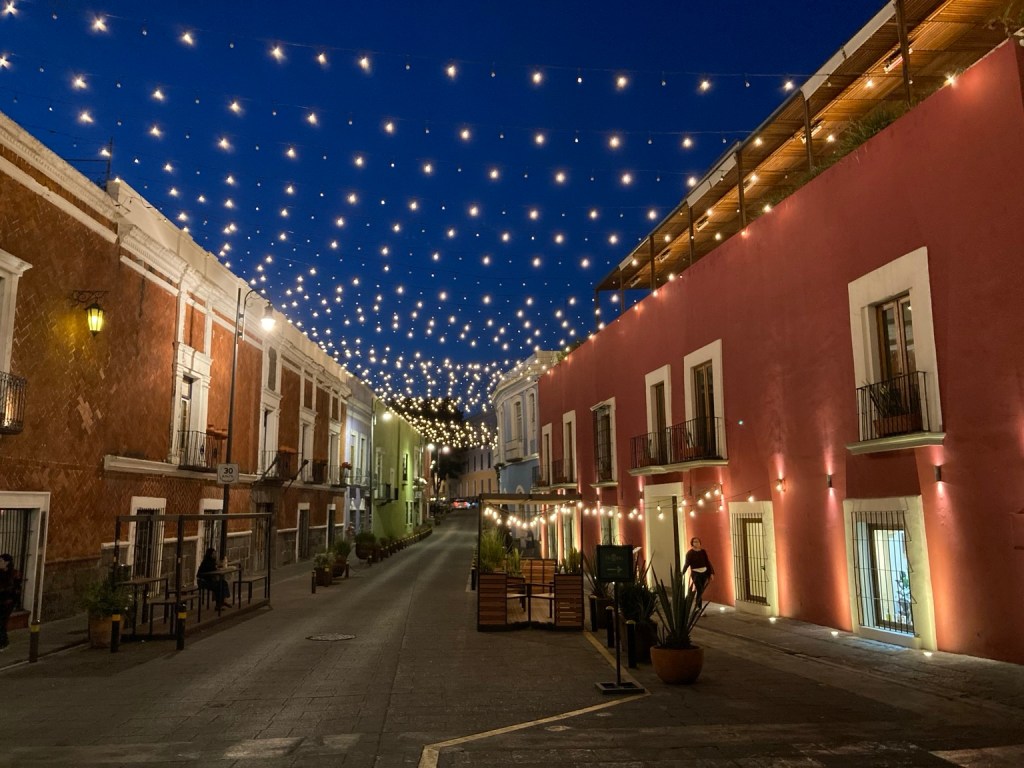
We were soon off to explore and Puebla is lovely, with shady cobbled streets, craft stalls, lots to photograph and music round every corner from a selection of buskers.
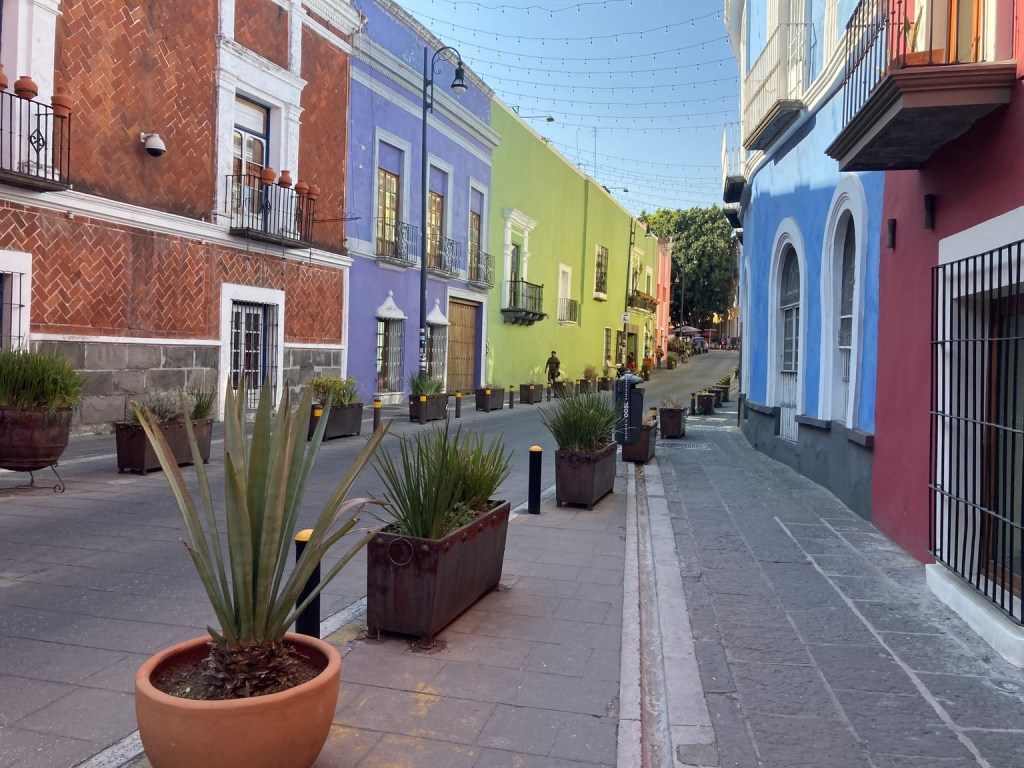
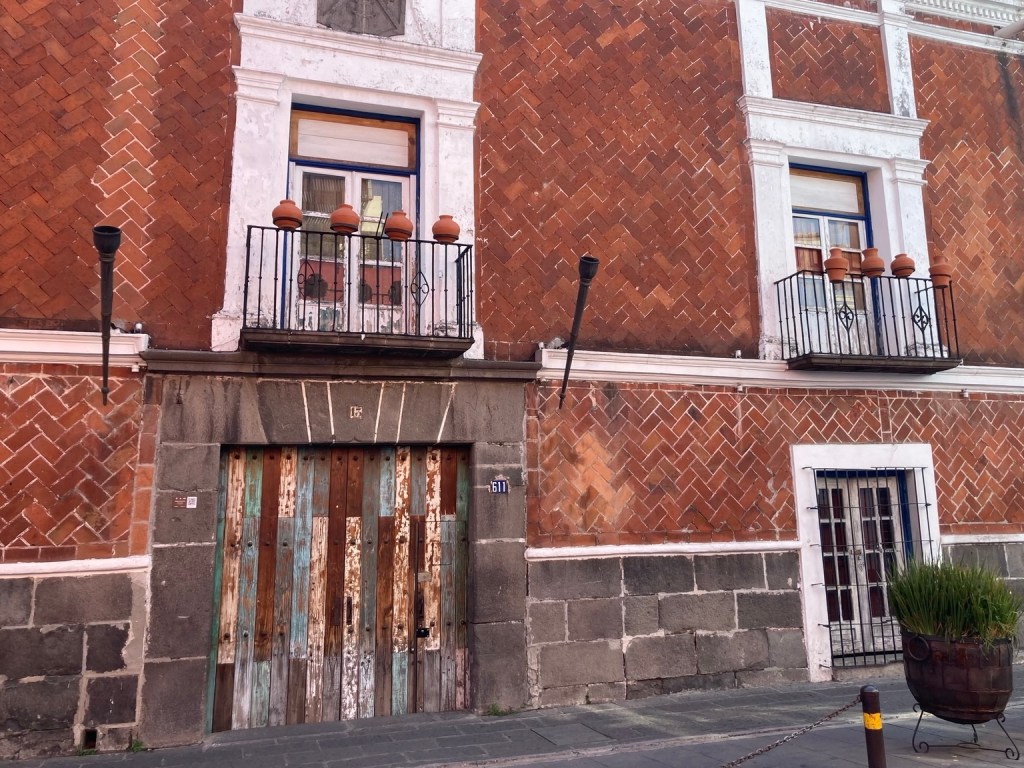
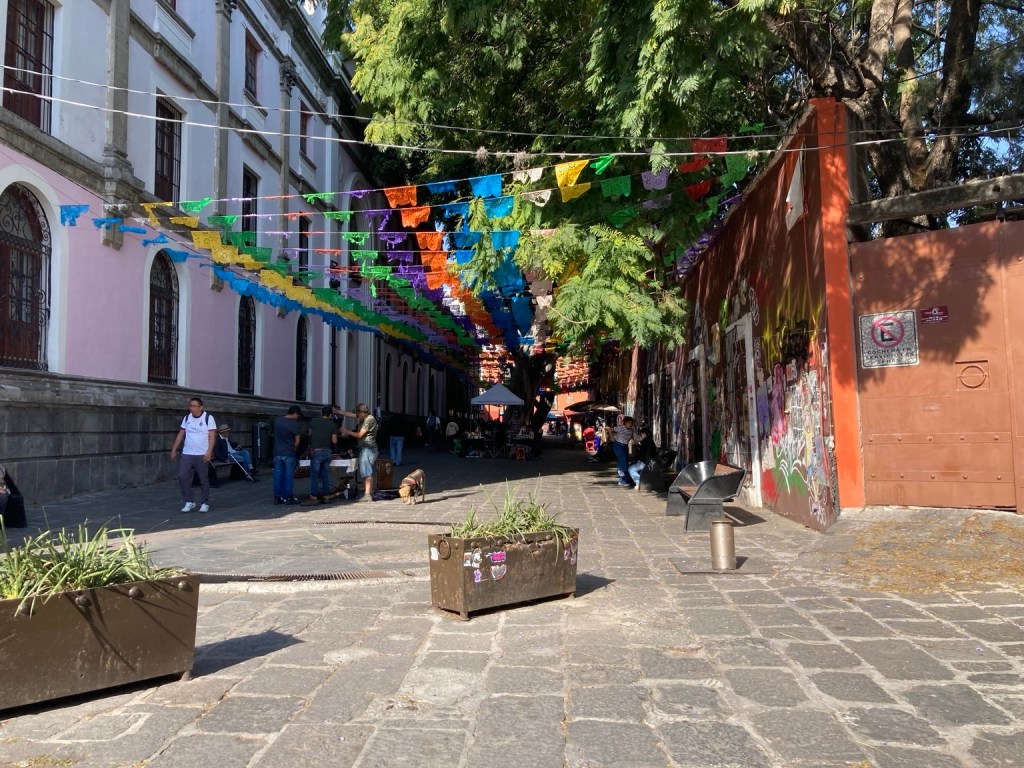
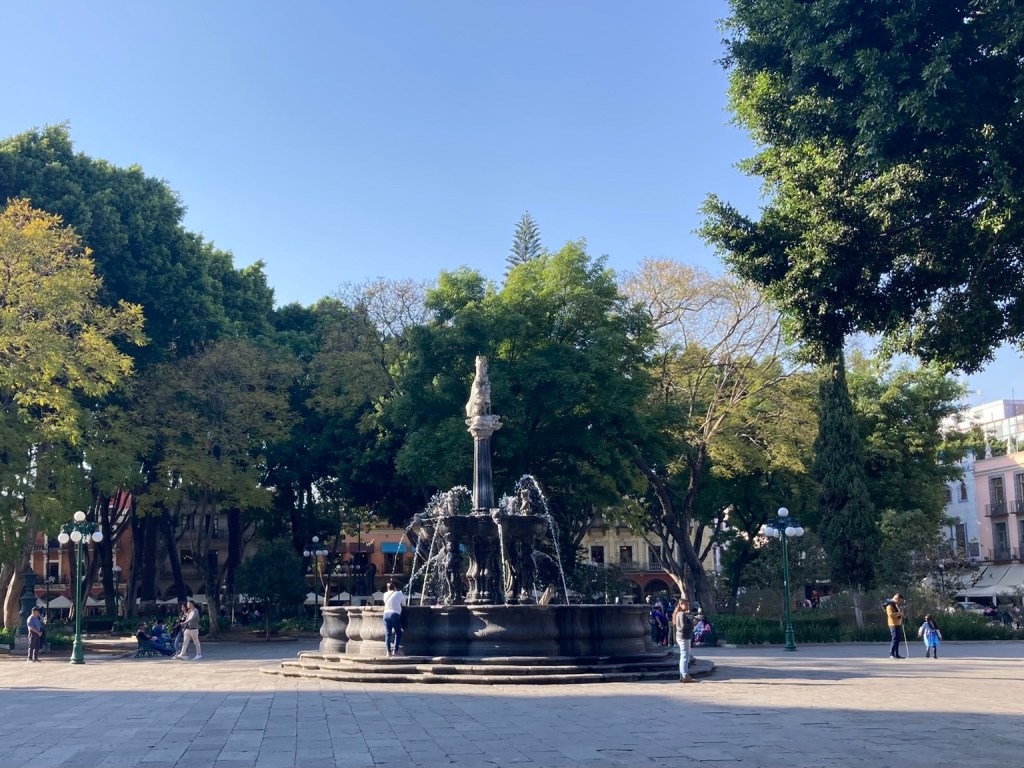
Happy ambling, we found the zocalo …
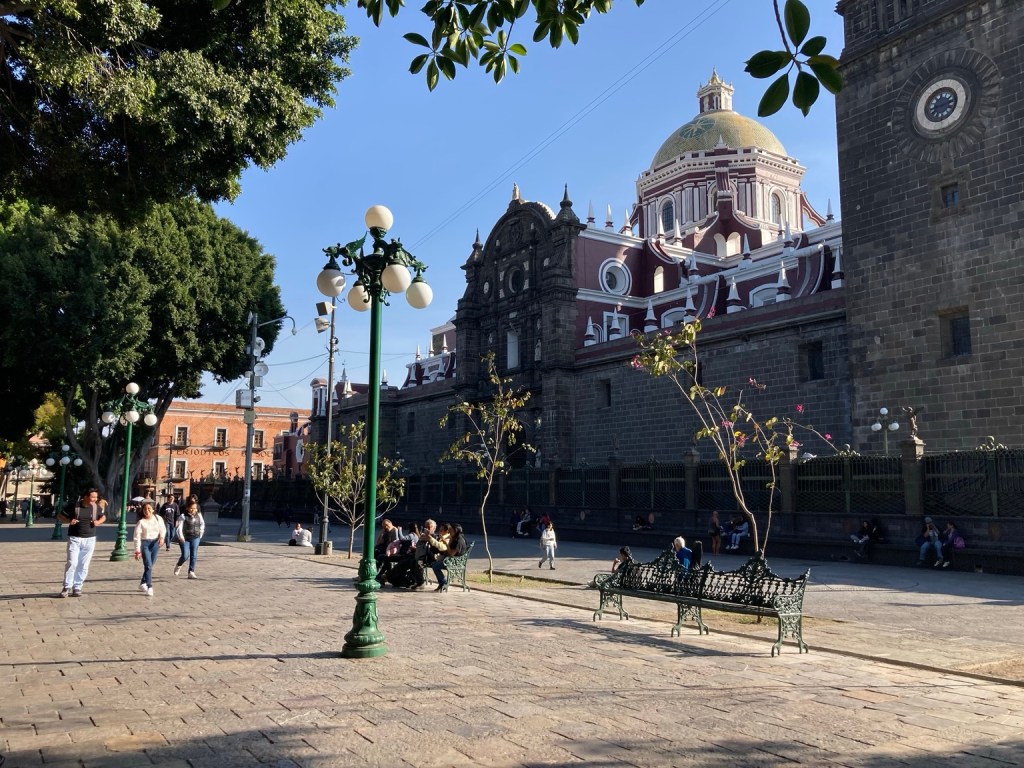
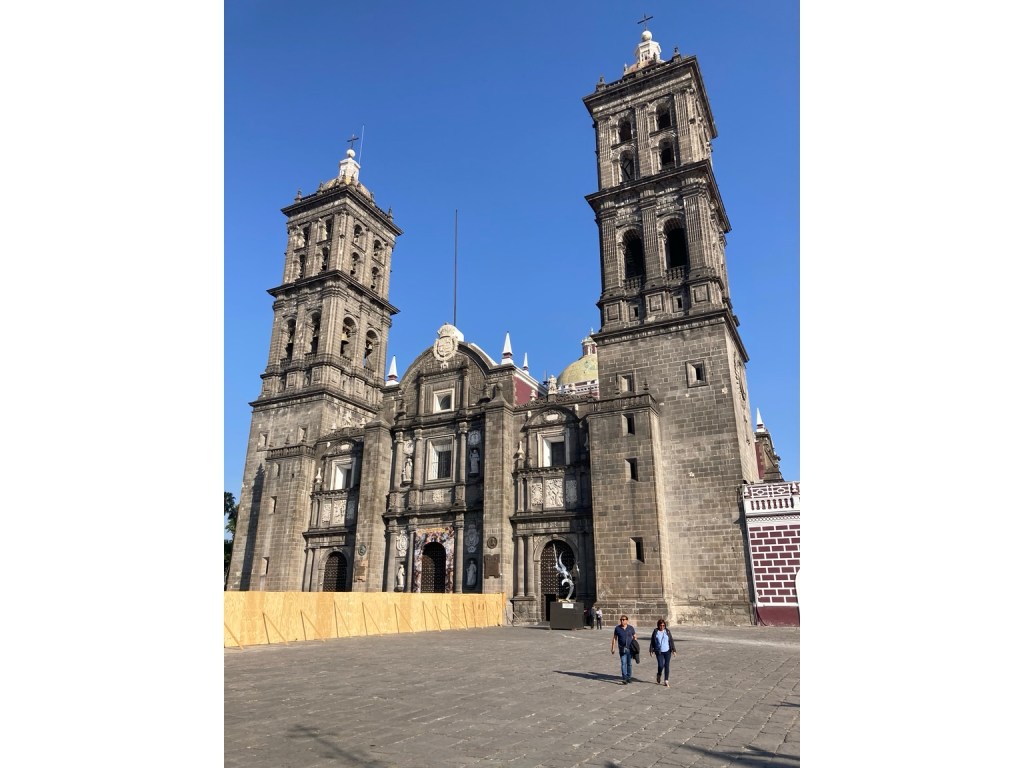
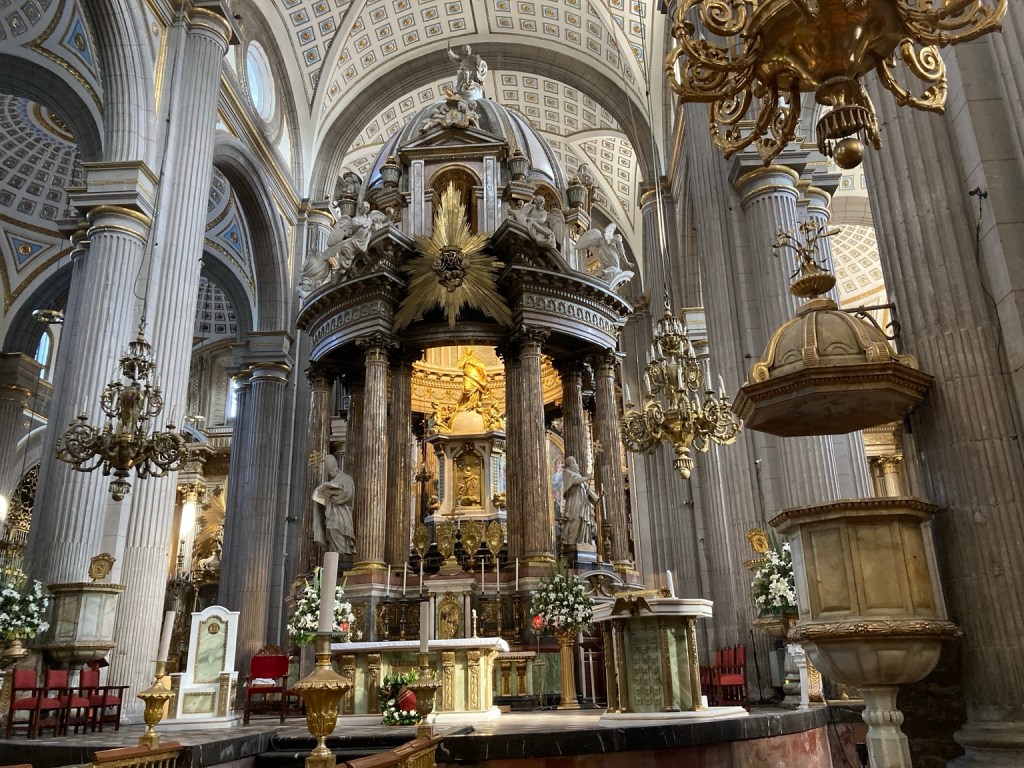
… cathedral …
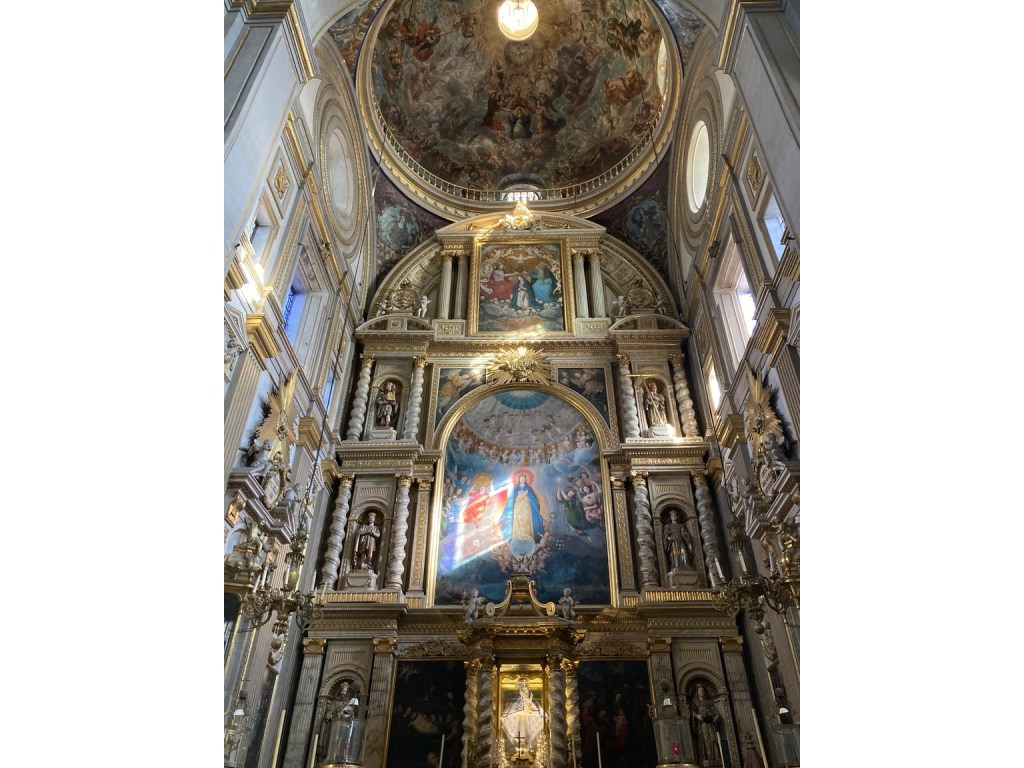
… Templo del Santo Domingo …
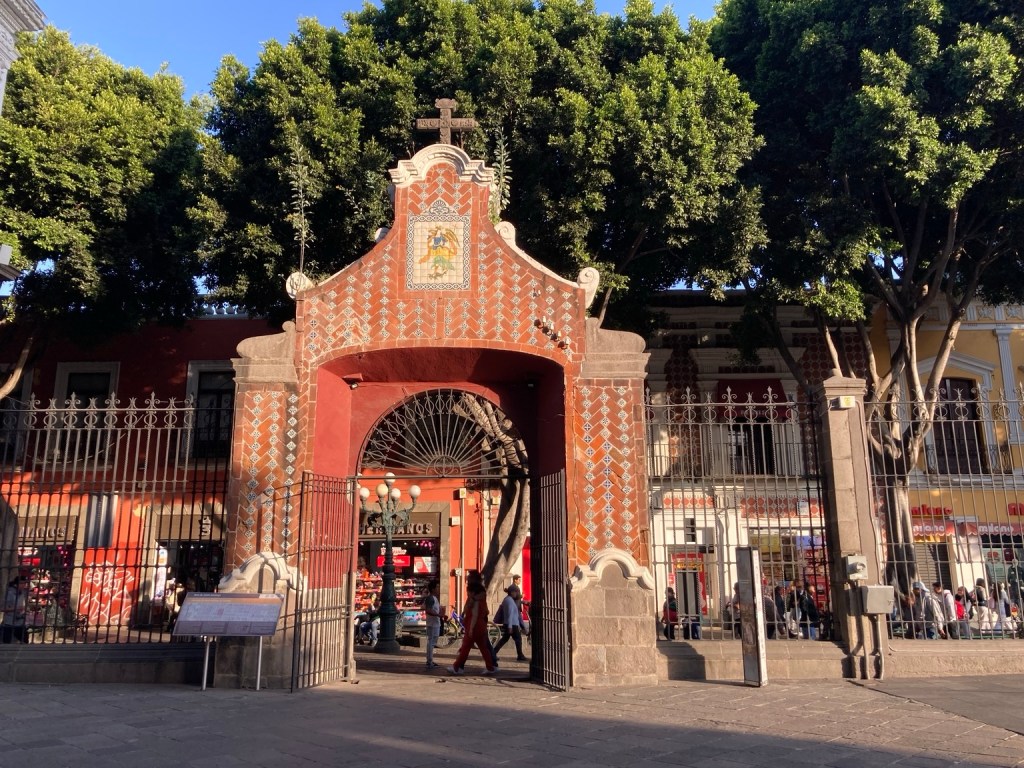
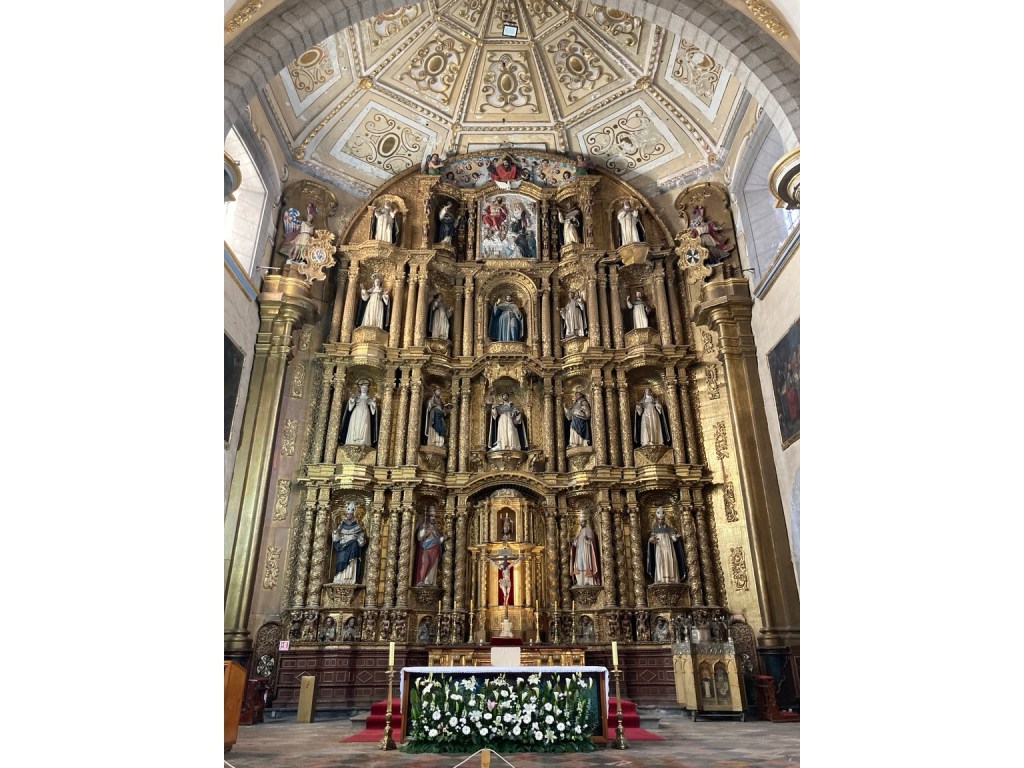
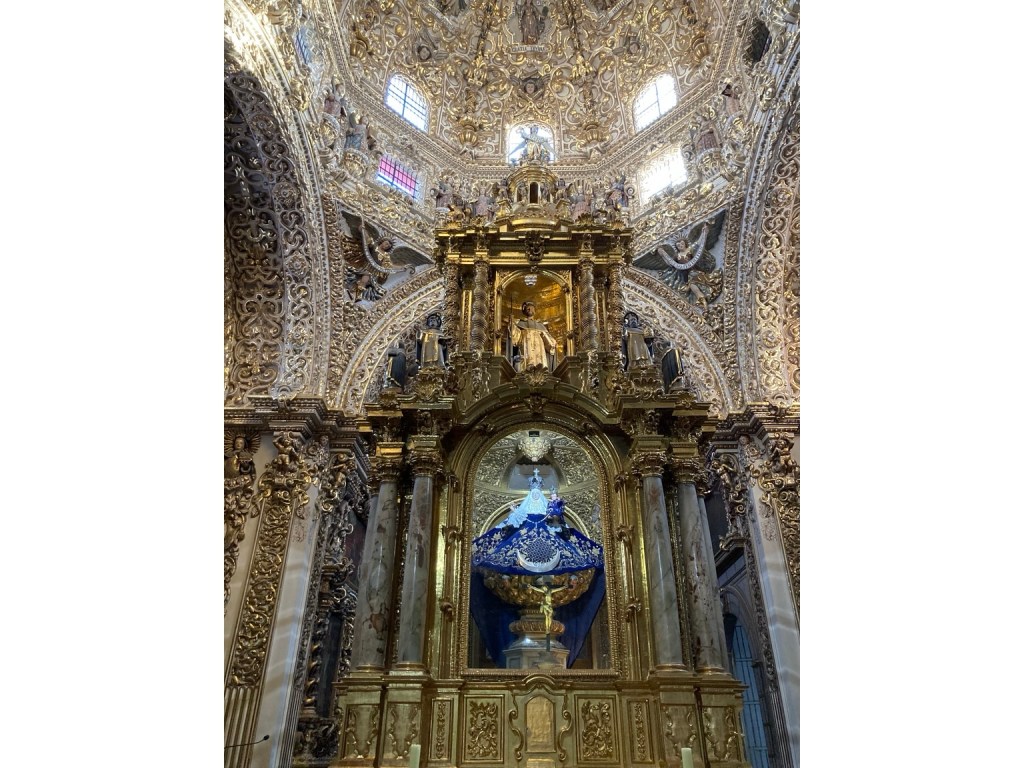
… with its Capilla del Rosario chapel …
… Artists Quarter …
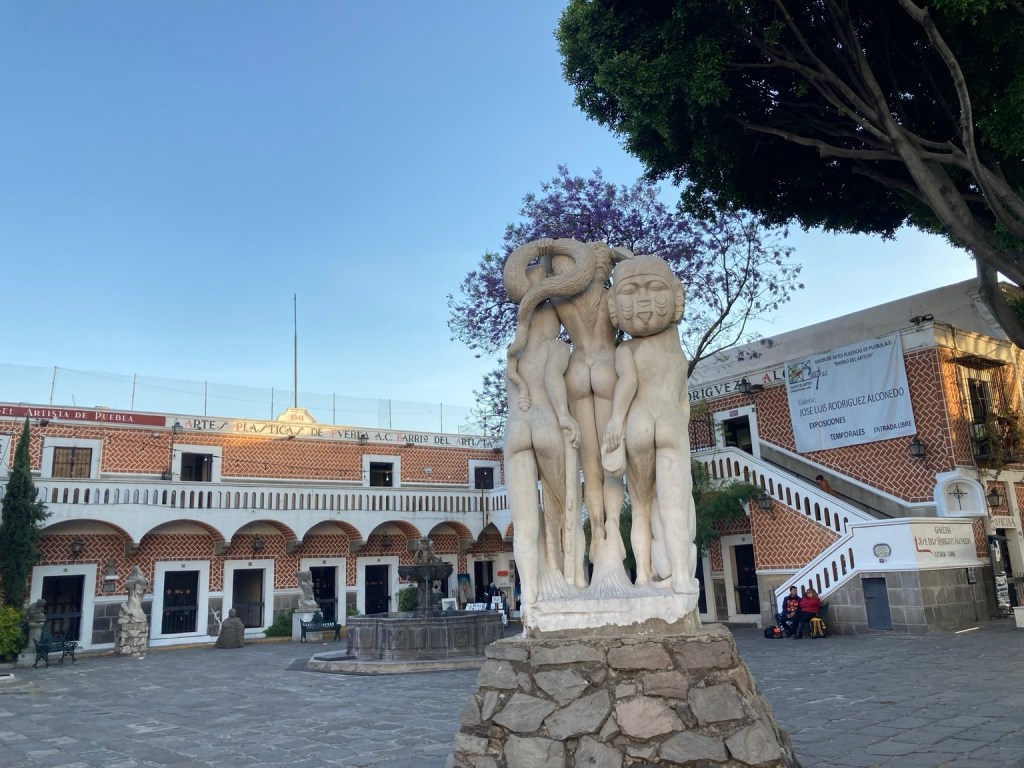
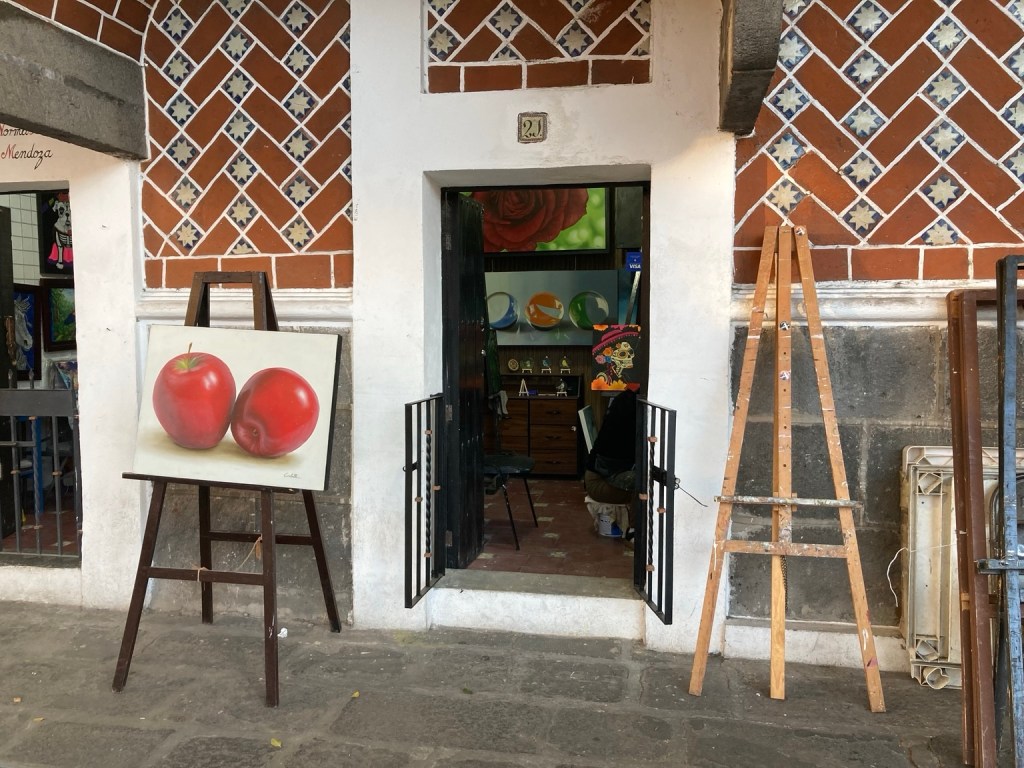
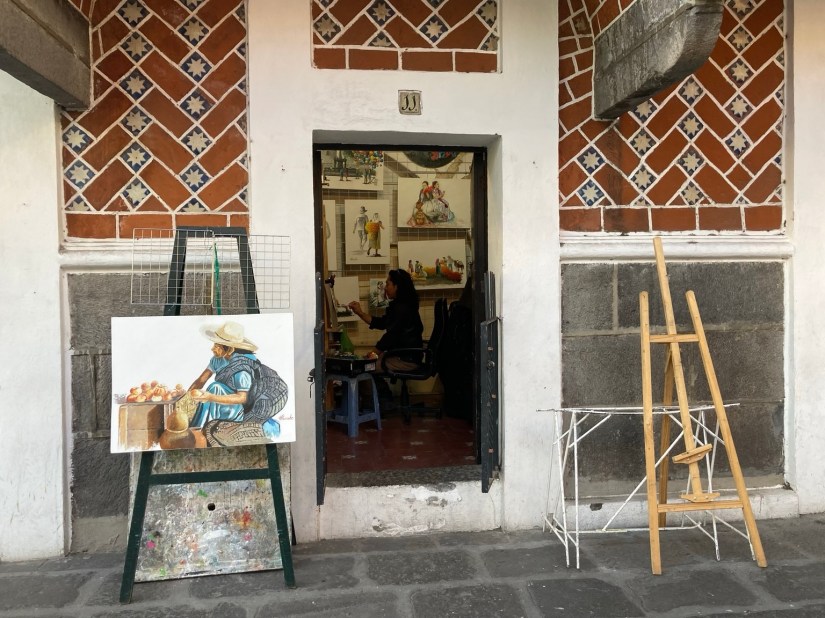
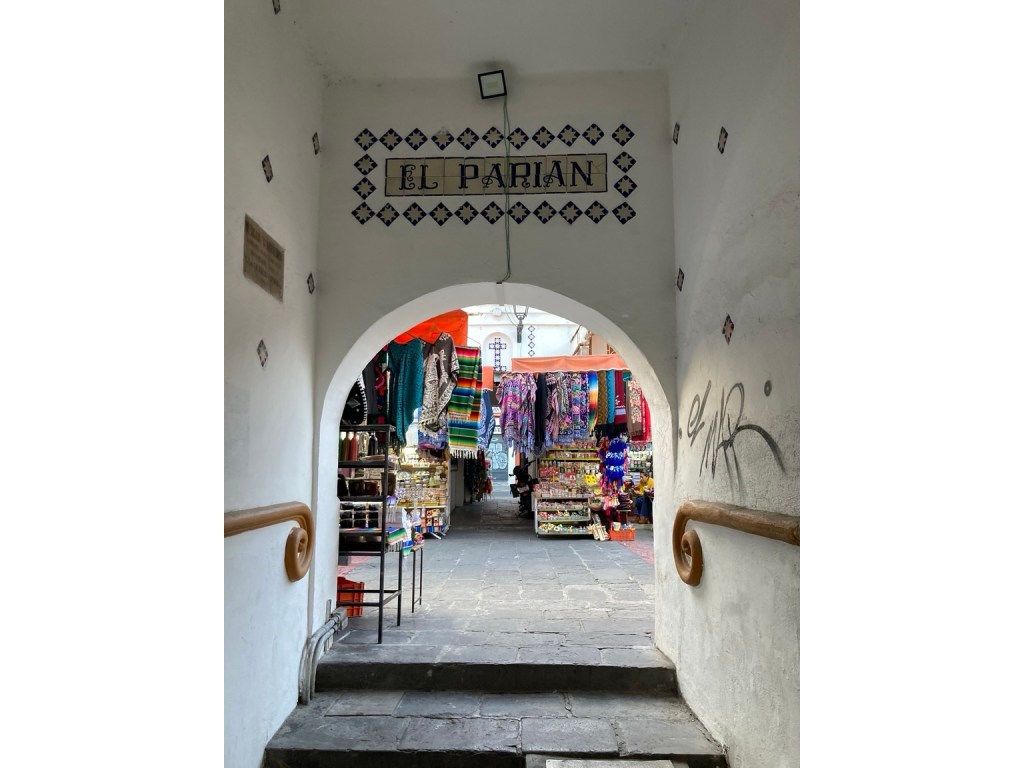
… and Parian Market.
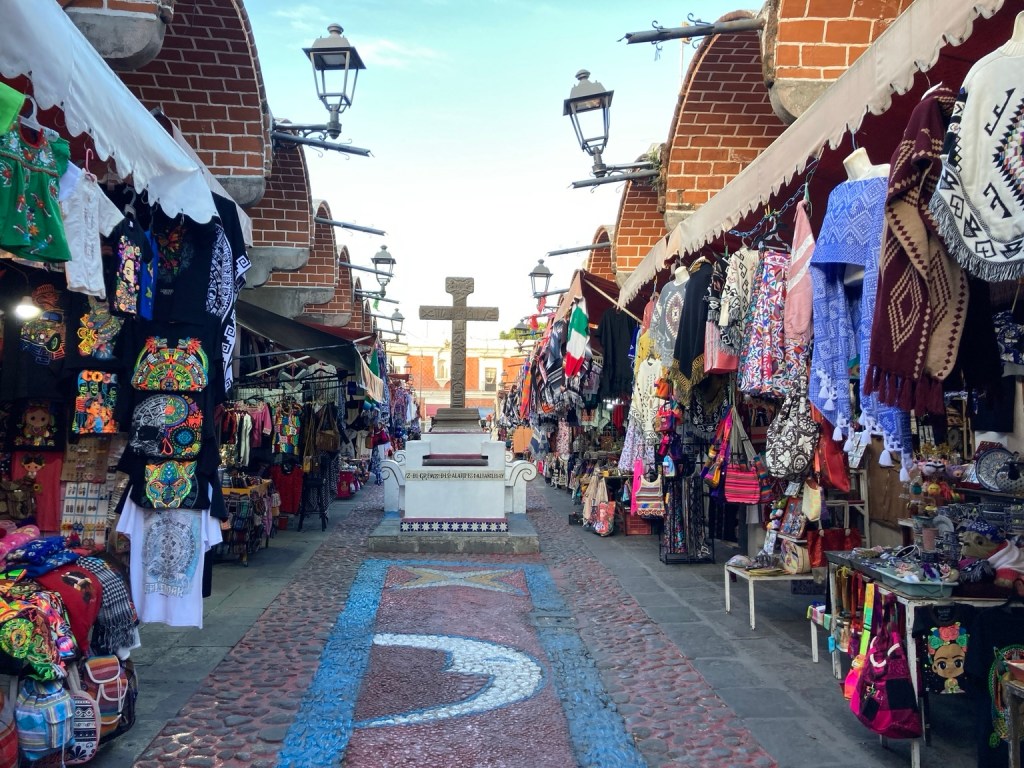
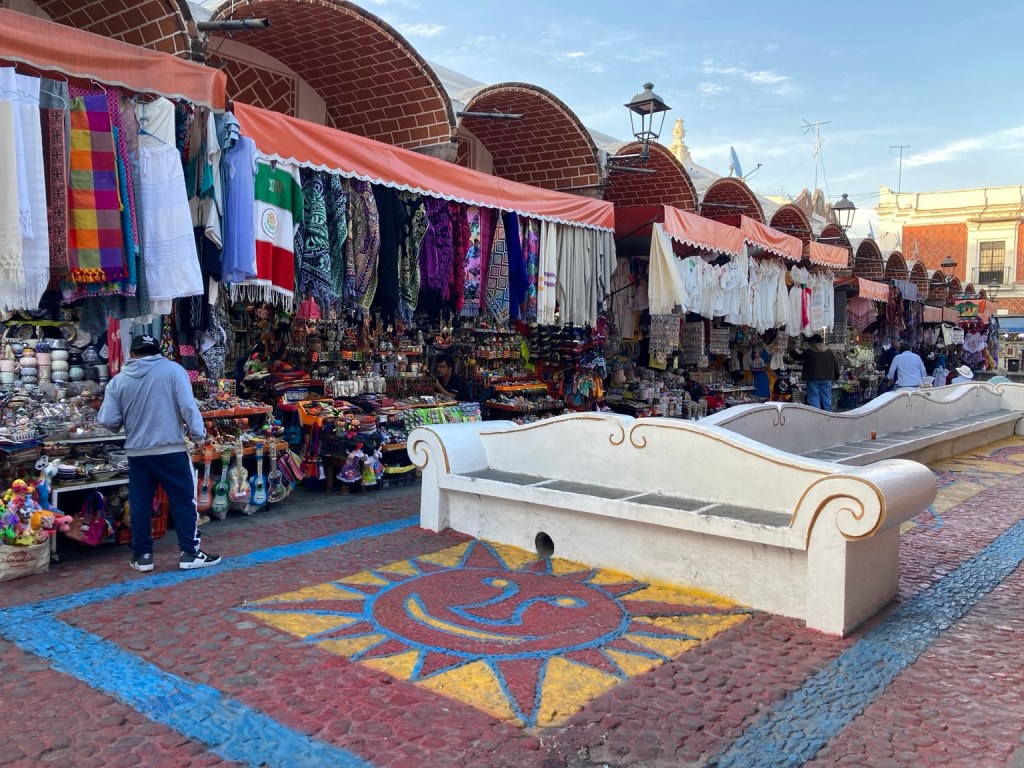
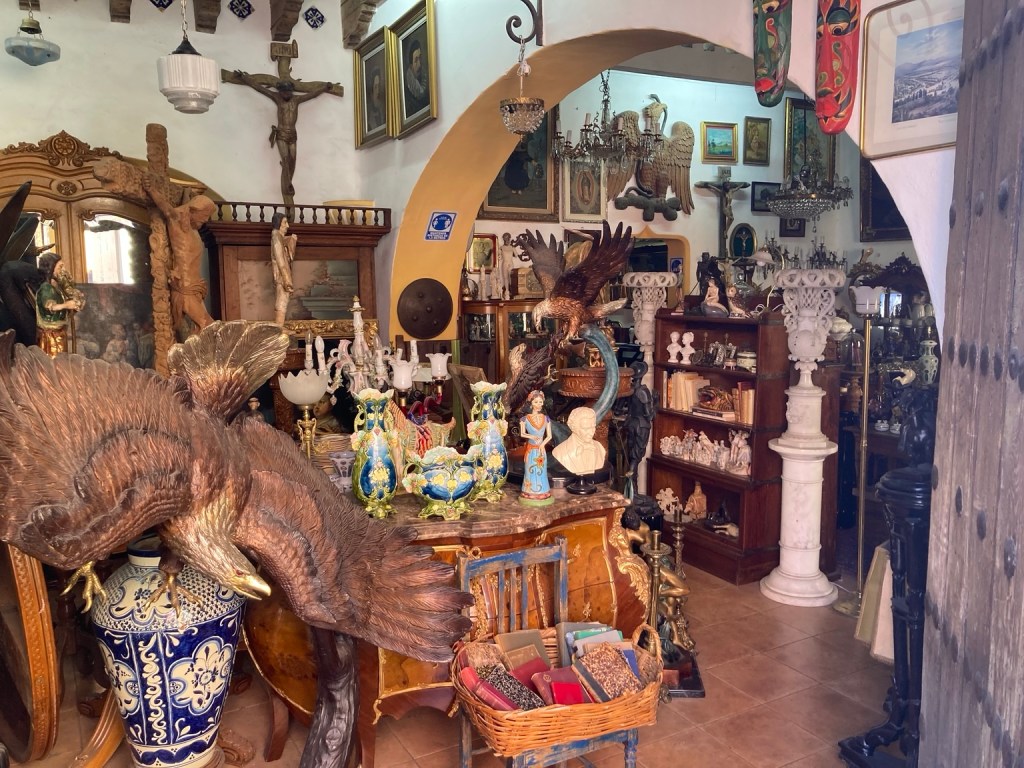
We also saw displays of the handmade Talavera pottery made here since the C16th …
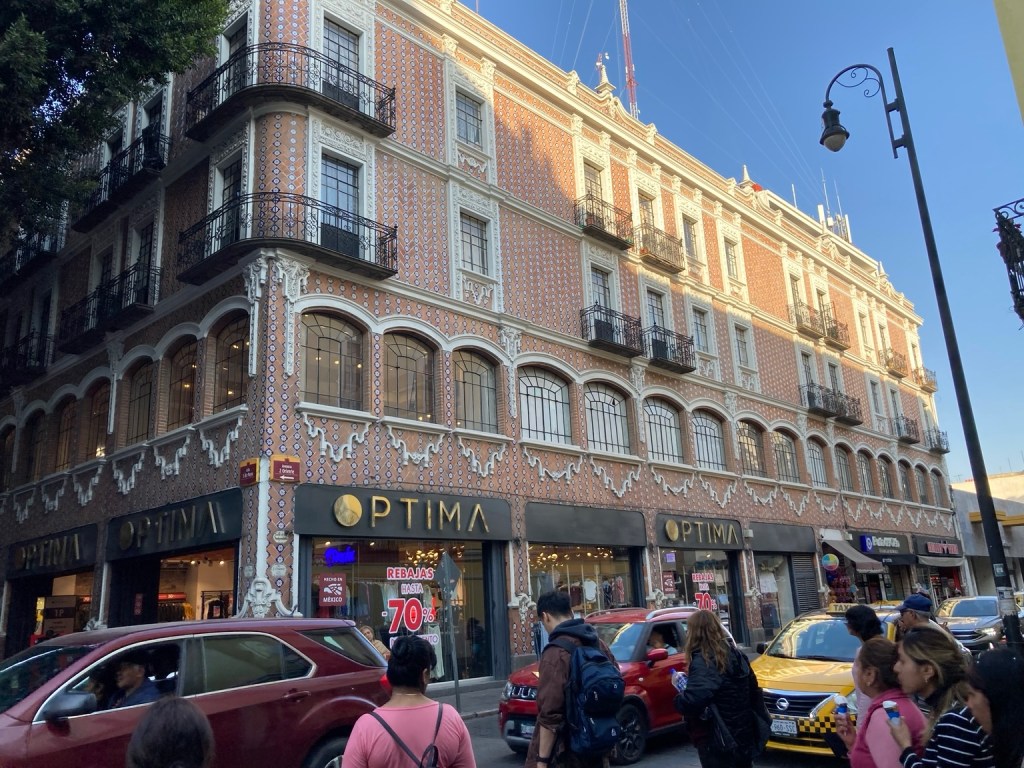
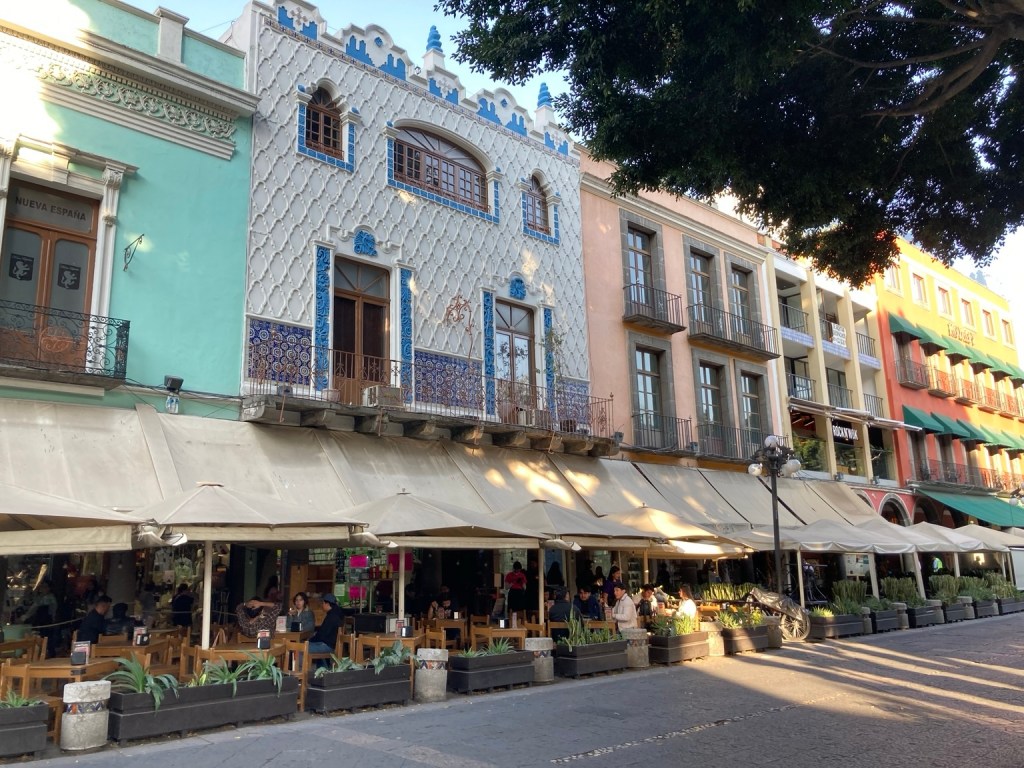
… and examples on the decorating the buildings.
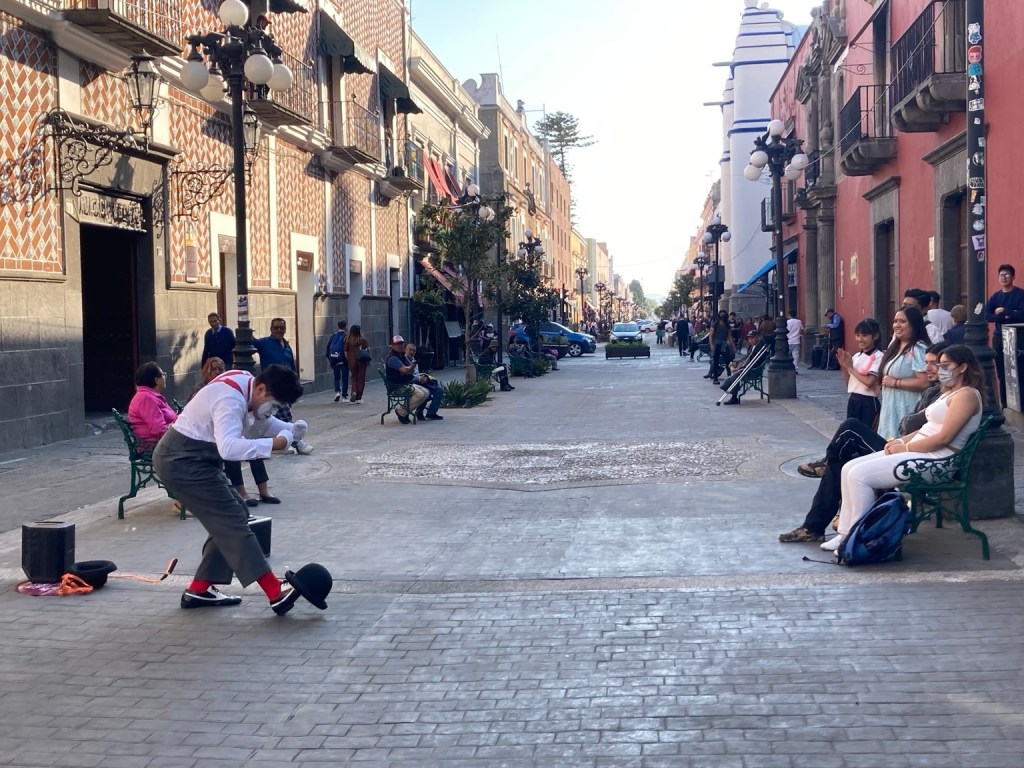
We bought a bag of apples as fruit had been hard to spot in the city, had ice cream, made a reservation for dinner and watched a clown!
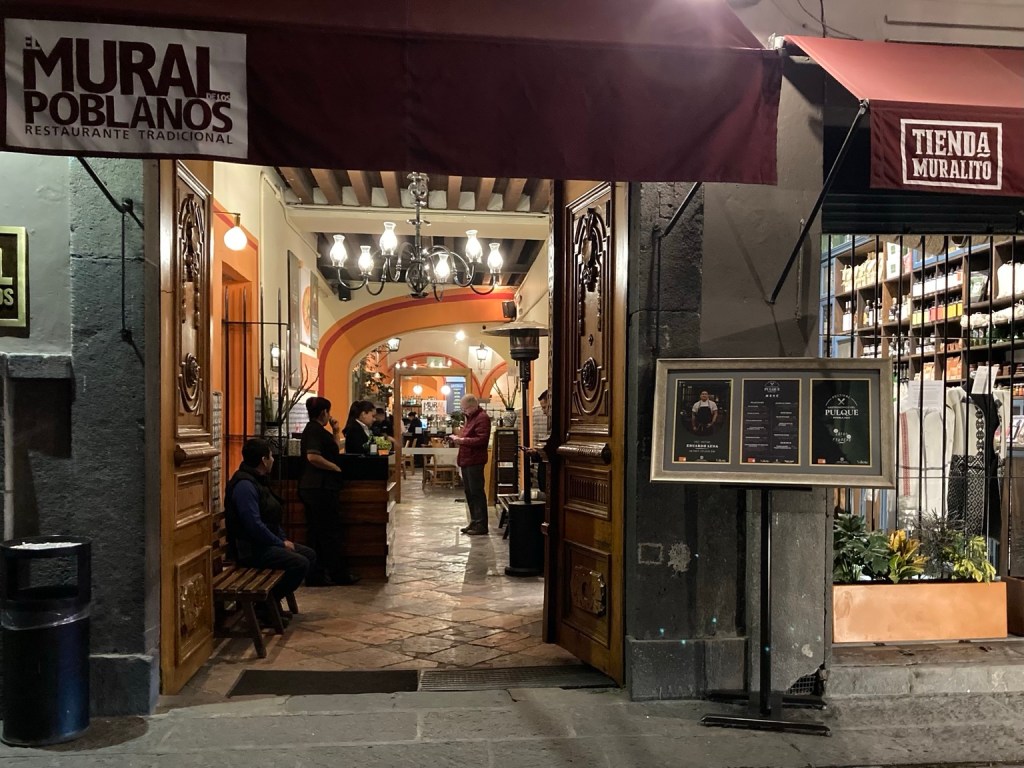
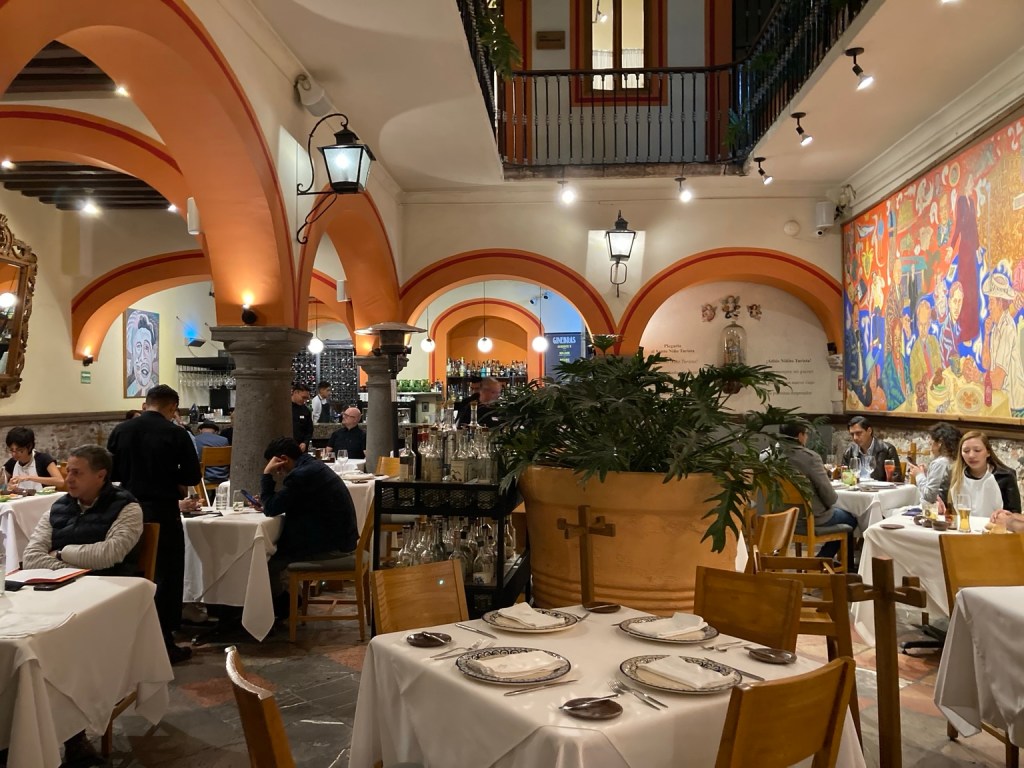
Having both been a little under the weather, we were pleased to be looking forward to a lovely meal. We chose Mural de los Poblanos, set in a C17th mansion and decorated with a huge mural featuring historic characters from the town.
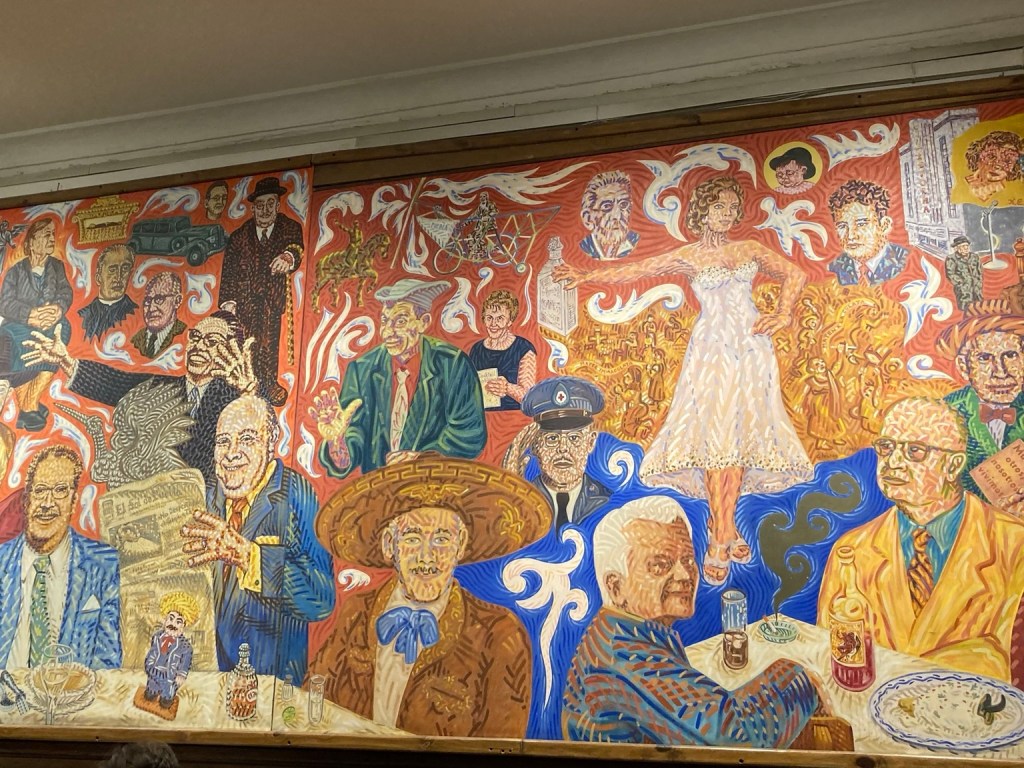
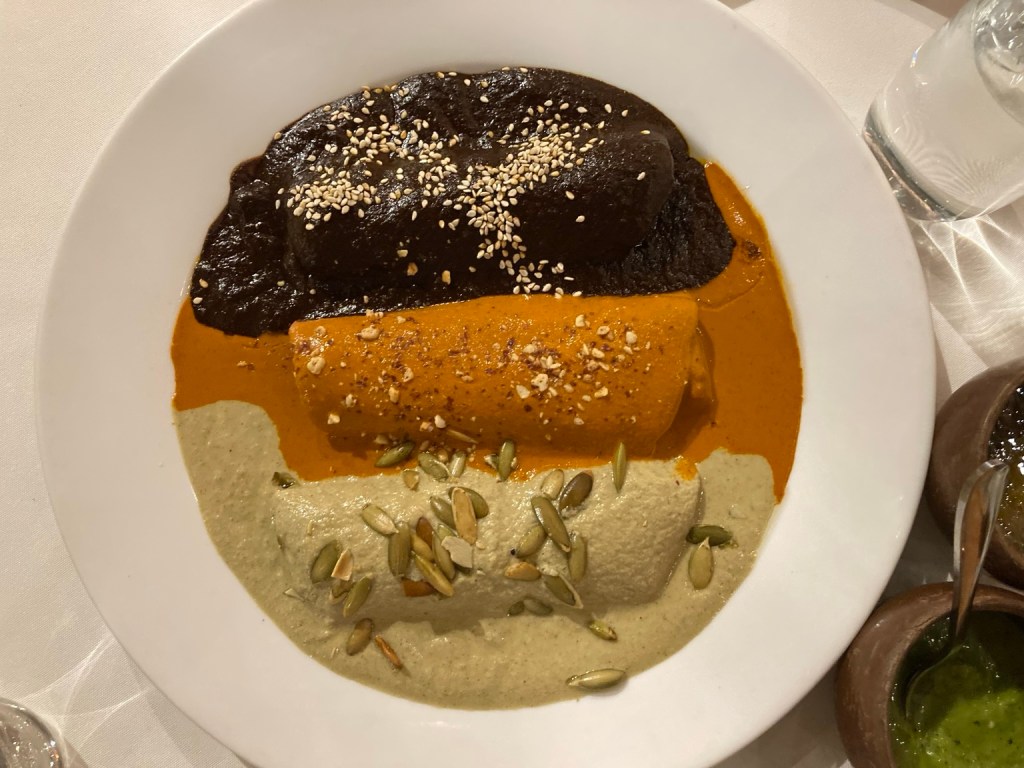
It was high time for our first Mexican margaritas, made with mezcal as recommended by the waiter and truly delicious. Puebla is the home of the mole Poblano and they offered a vegetarian menu, so after guacamole with traditional blue corn tostados, we were able to share a trio of moles with cheese filled enchiladas. My favourite was the green pipián made with tomatillos and green chile, Chris the red pipián with guajillo chiles and peanuts and we both found the mole poblano with chocolate very rich and a slightly acquired taste.
Despite minor reservations about our room being a little snug and the bathroom a tad smelly, it wasn’t until we tried to get to sleep, we realised how noisy it was, from traffic which continued all night. In the morning I asked if we could move to a quieter room and was expecting it to be difficult but they moved us straight away, and after that everything was fine.
We had a rather slow start, but found a delicious breakfast spot over the road then continue to wander the pretty streets and browse the market stalls down a street called the Alley of Frogs.
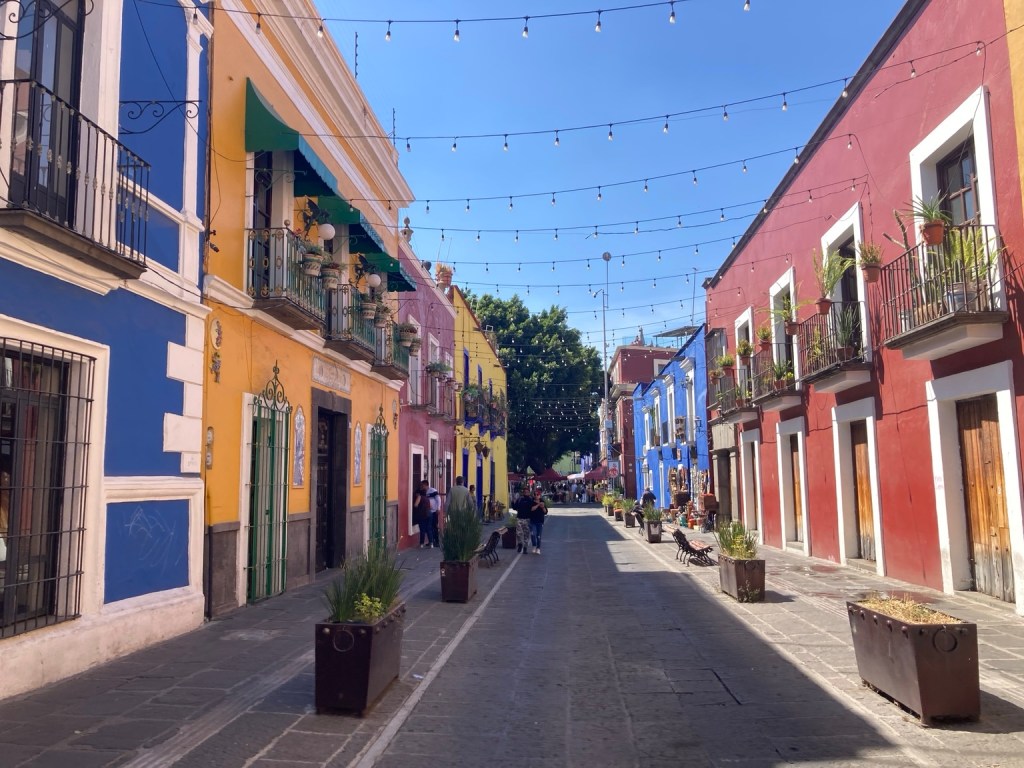
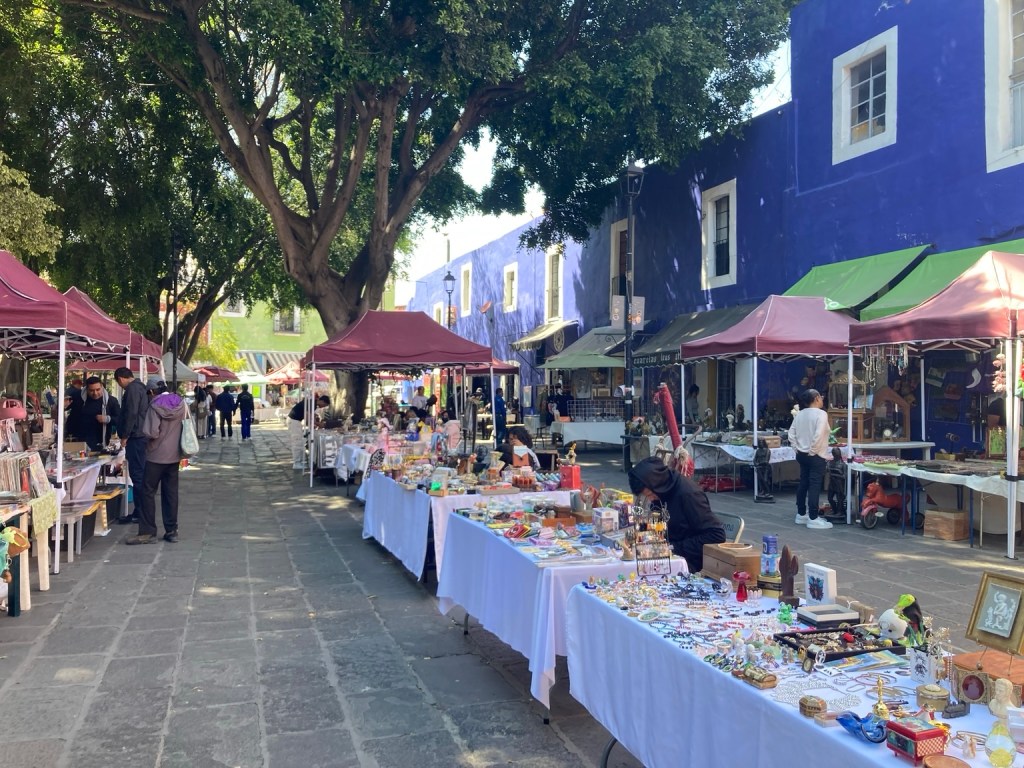
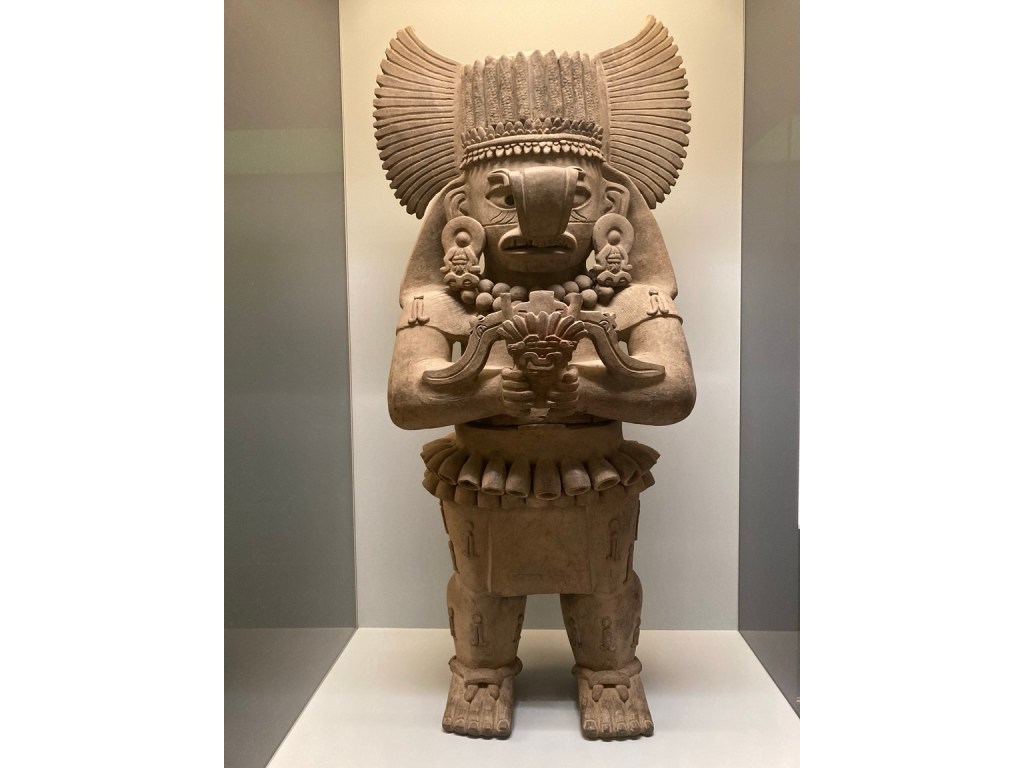
We looked round the free Museo Amparo, filled with pre-Columbian artefacts but only in Spanish so just stopped at those that caught our eye like this Zapotec ceramic image which could be of Cocijo, the god of rain and thunder as it has stylised raindrops on its shoulders and legs …
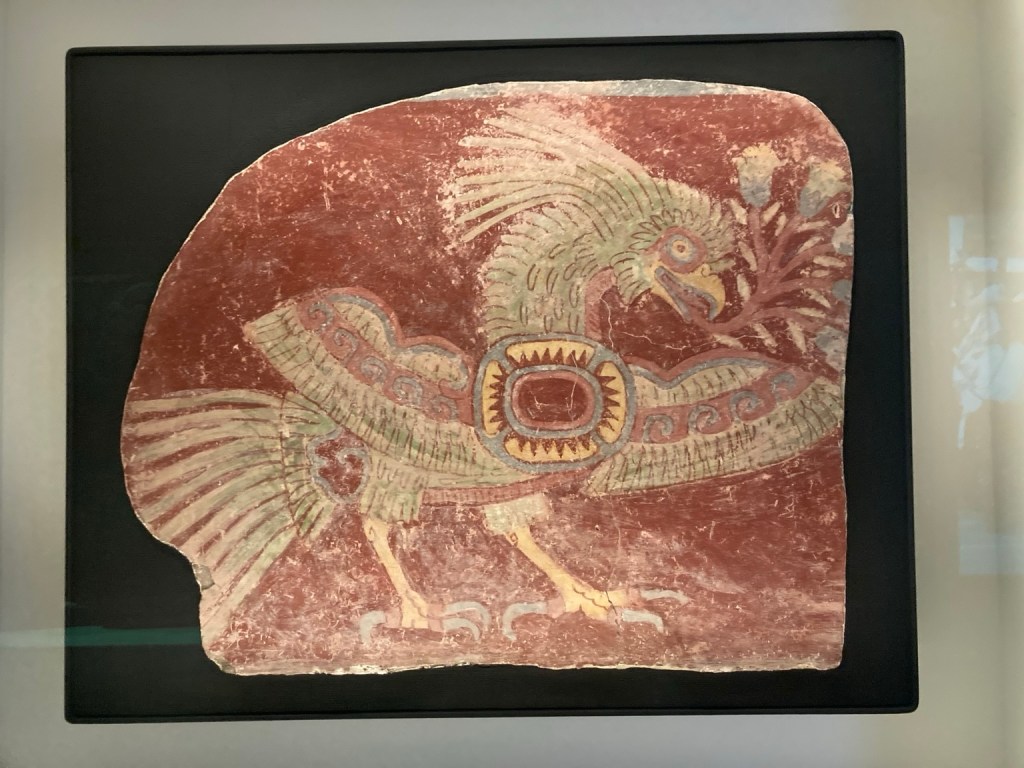
… and this mural fragment showing a Quetzal.
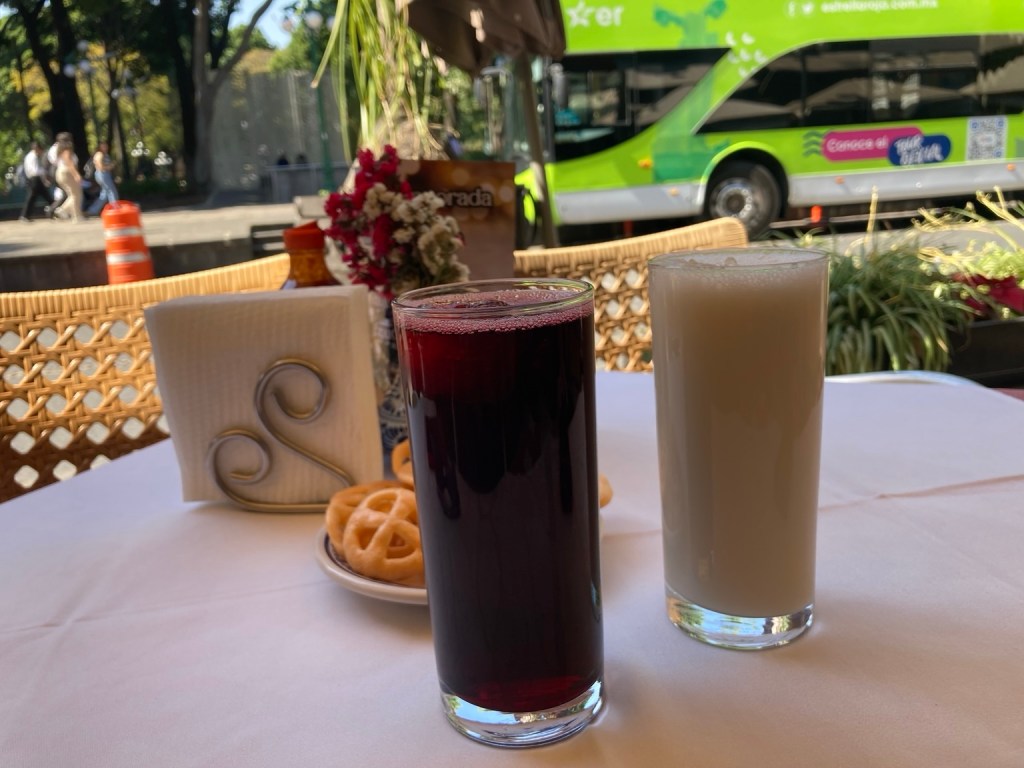
A reviving cold drink next, and we ordered local – Jamaica made from hibiscus and horchata a creamy drink made from soaking and blending rice with cinnamon and water, but a bit sweet.
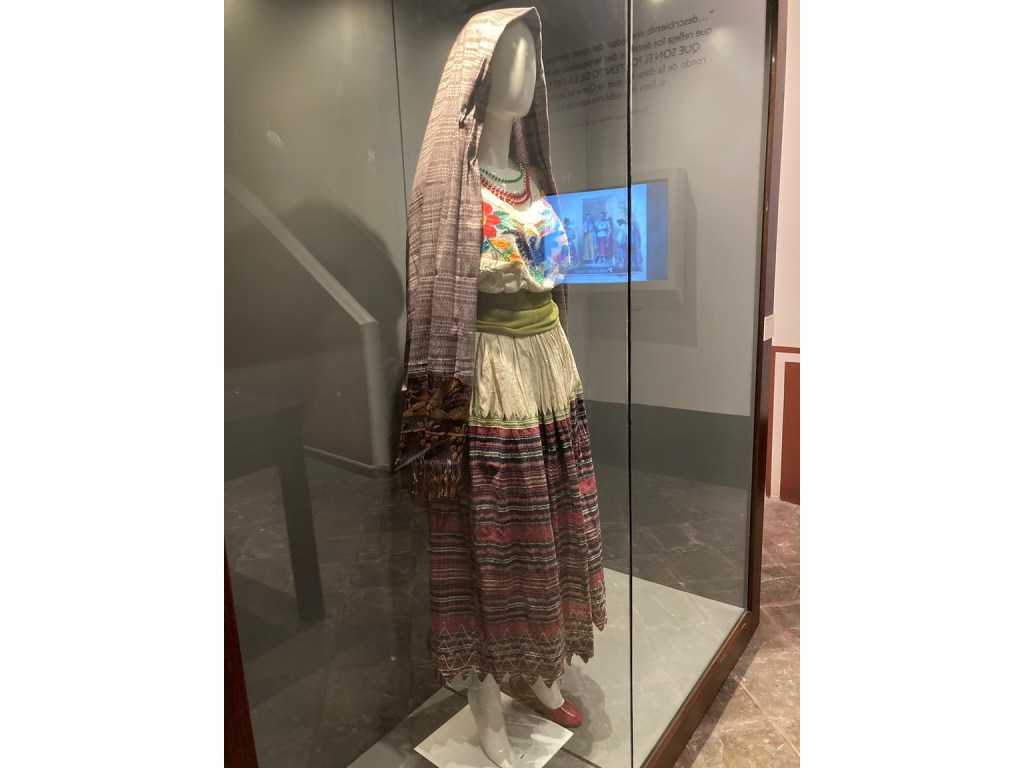
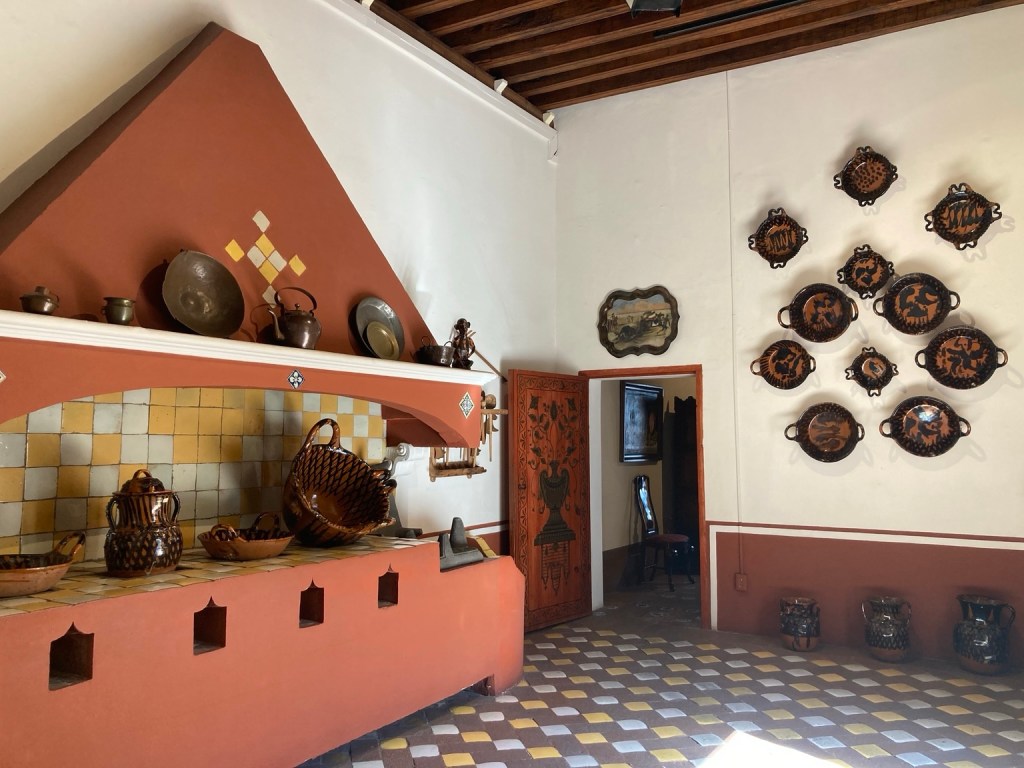
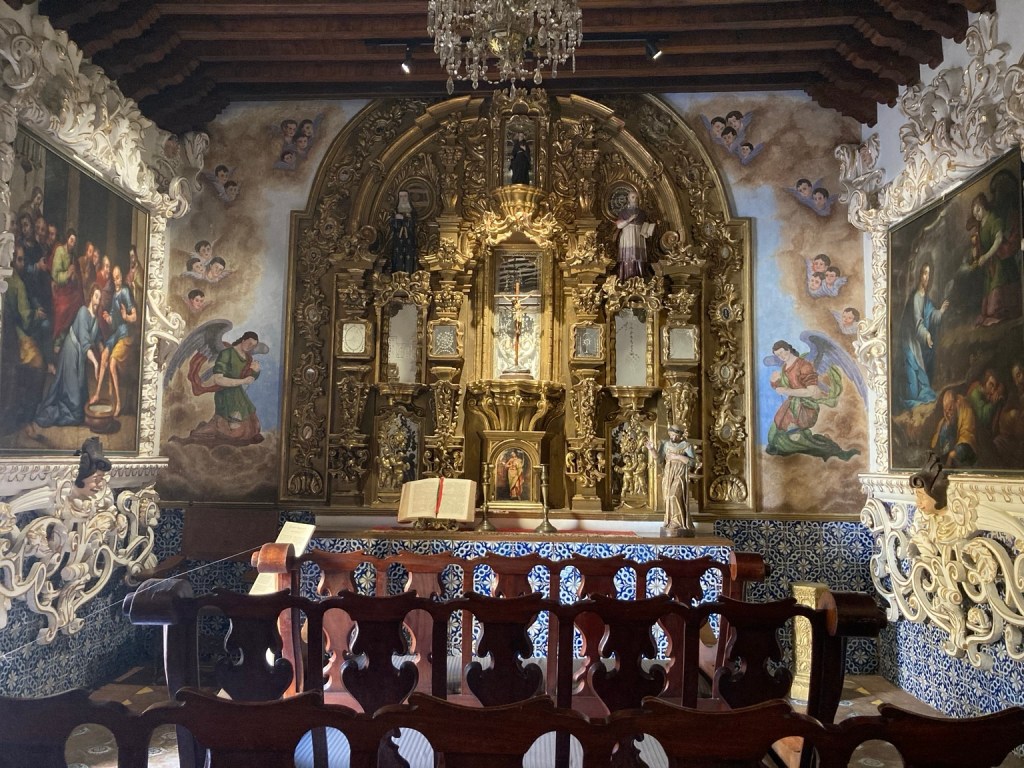
We stopped at the Casa de Alfeñique, originally built as a wedding gift to please a bride who wanted a house like alfeñique candy which were intricately decorated sweets from Spain. Now a museum, it told the story of certain things Puebla is famed for, such as the China Poblana, the iconic Mexican dress which became popular in the 1920’s and became a symbol of Mexican nationalism and being the first Mexican city to begin a mechanised textile manufacture with a cotton weaving factory.
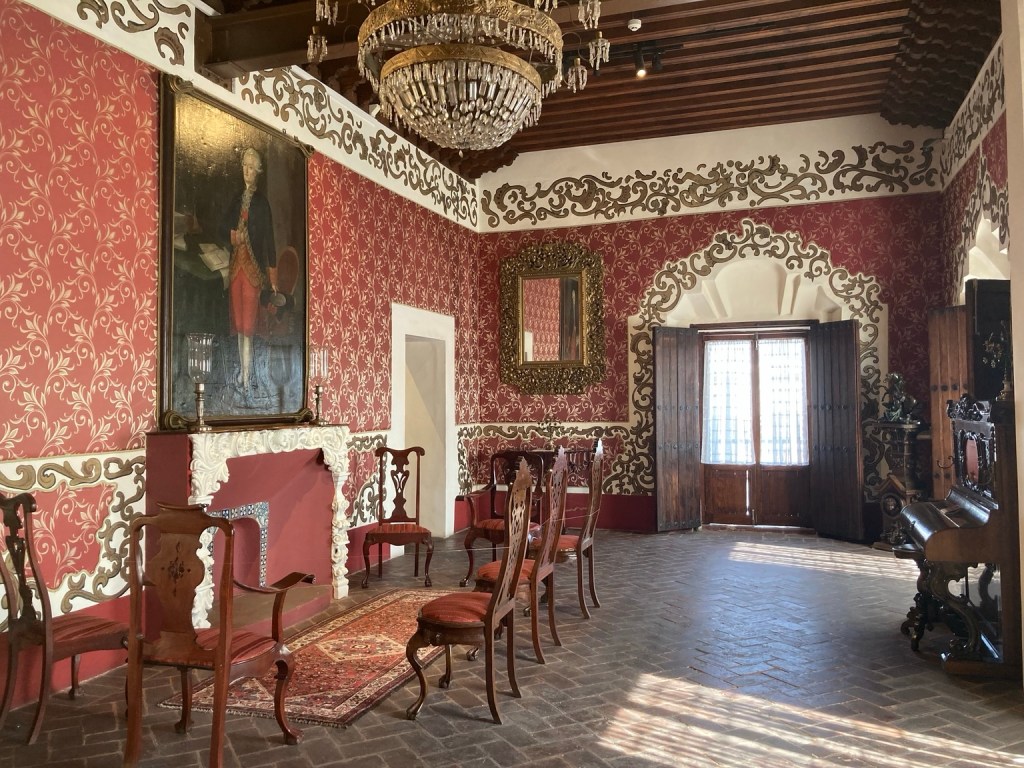
Upstairs were some elaborate rooms, a kitchen and also the family chapel.
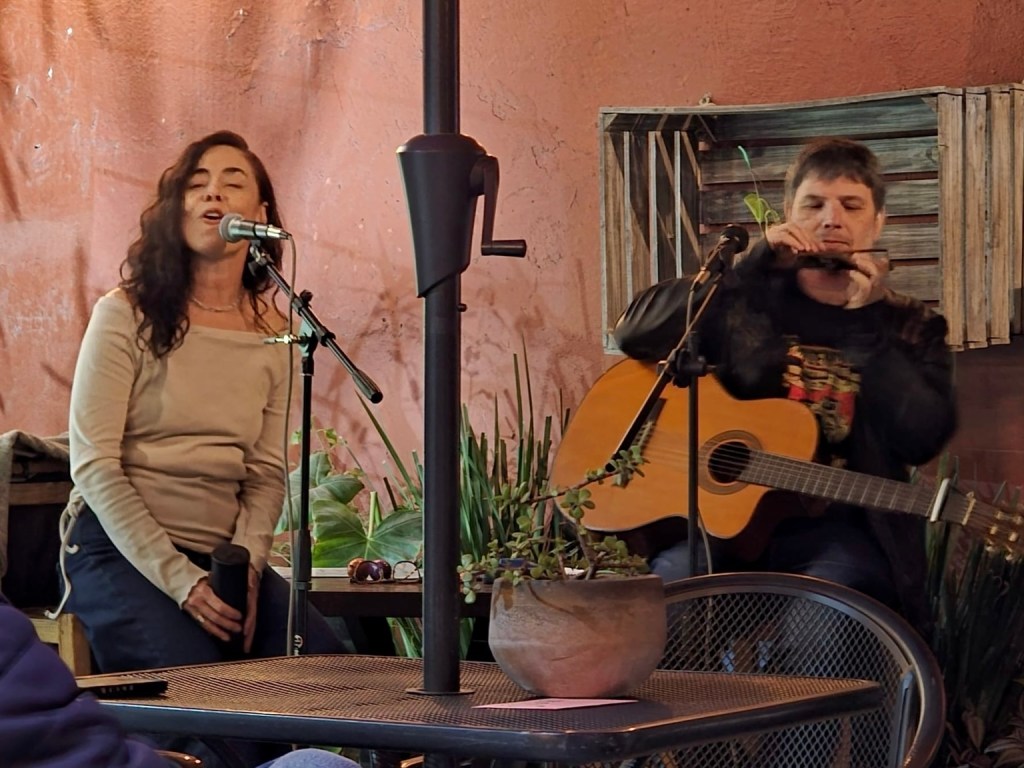
Having had lunch late, neither of us wanted dinner, so just went out for a drink and to listen to live music in a bar.
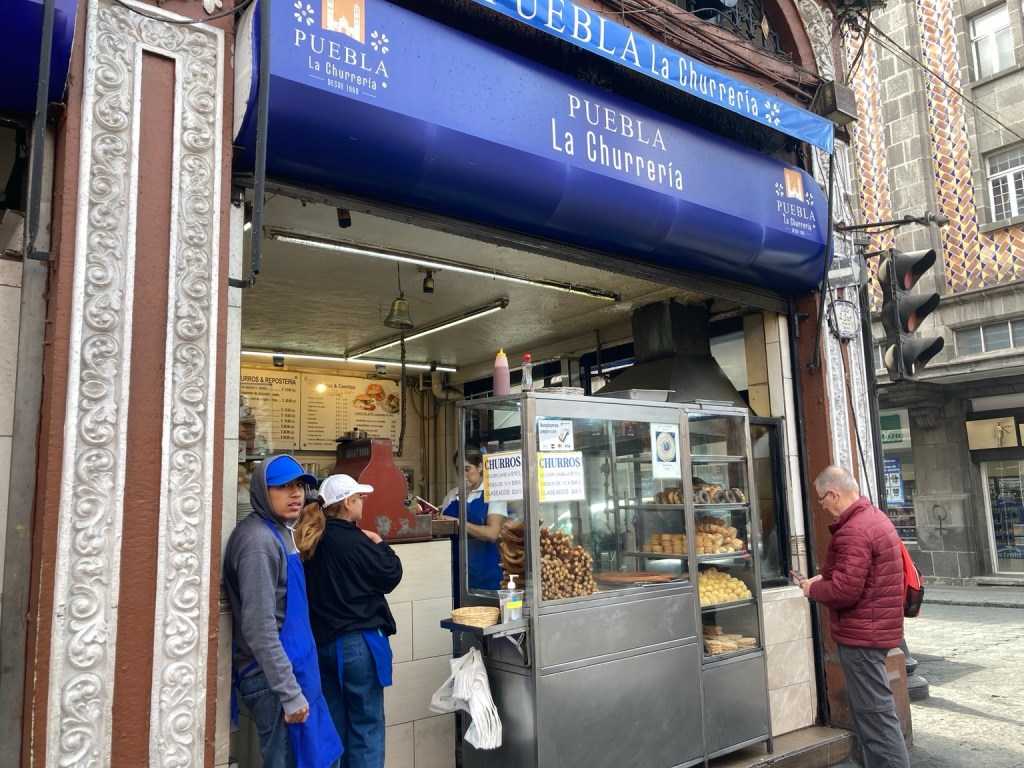
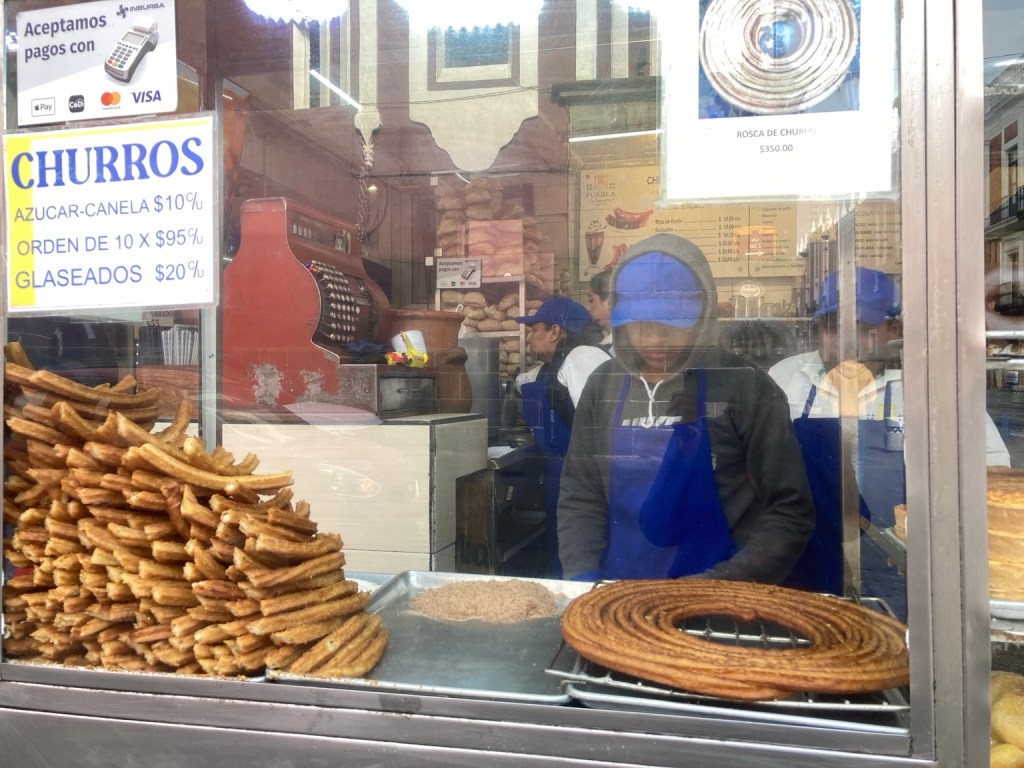
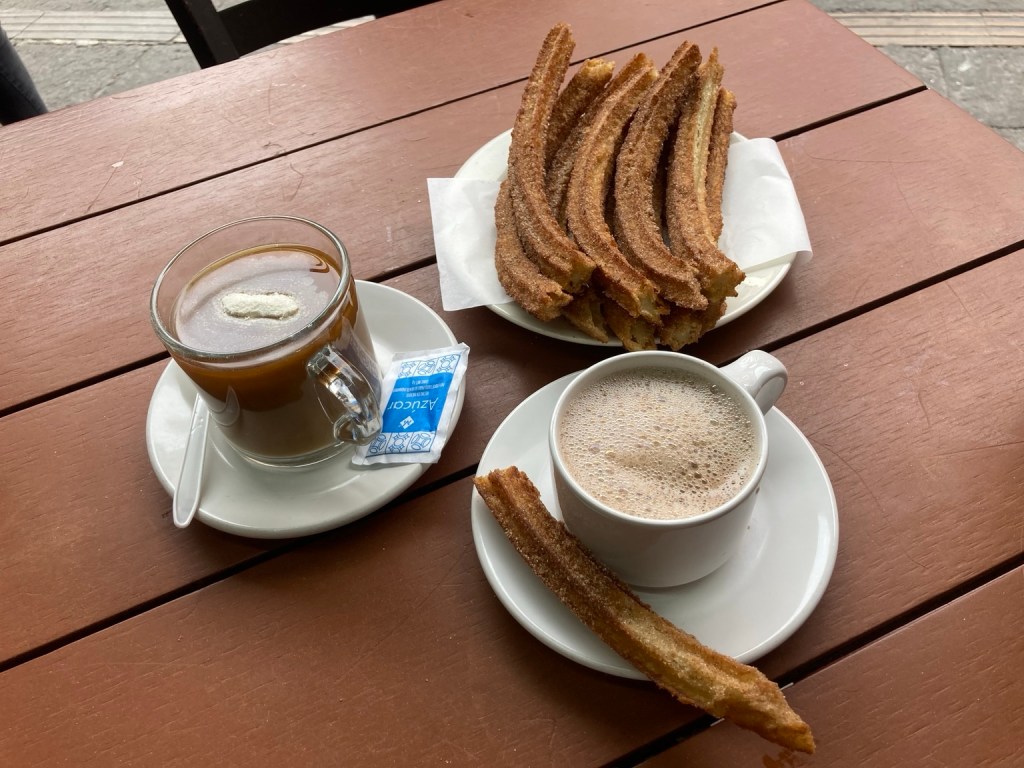
We’d spotted a churreria in town so headed there next day for a breakfast of churros – really crispy on the outside dusted with sugar and cinnamon and very delicious.
Then we booked an Uber and set off for Cholula, a popular Pueblo Mágico with the world’s largest pyramid by volume … not that at first glance you would even realise it is a pyramid as it is completely covered in vegetation and topped with a church! We were dropped by the entrance to the excavated courtyard at the base, which would have had a collection of smaller platforms with temples and altars.
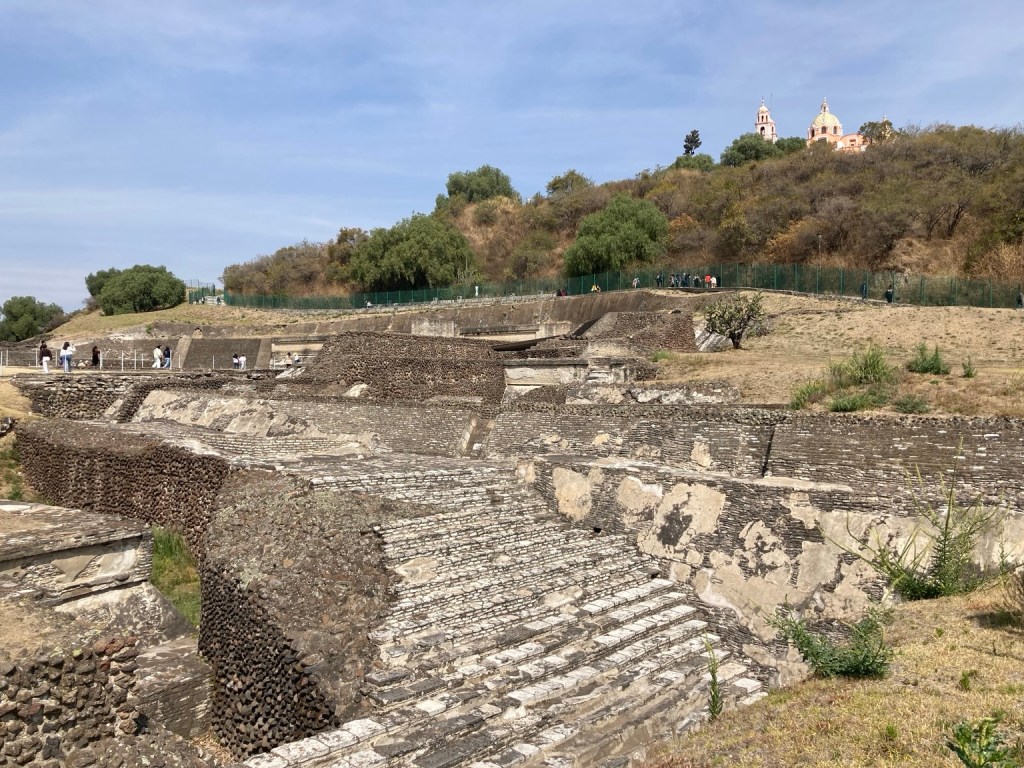
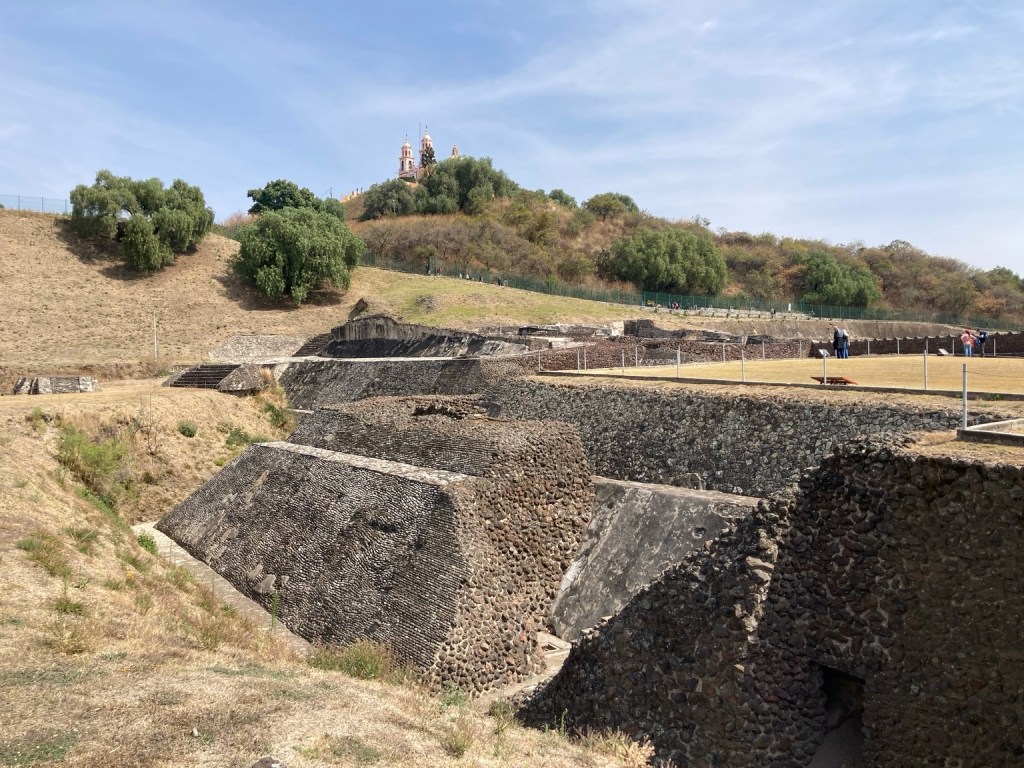
At the end was a section of restored wall to climb for a view of the bustling market below.
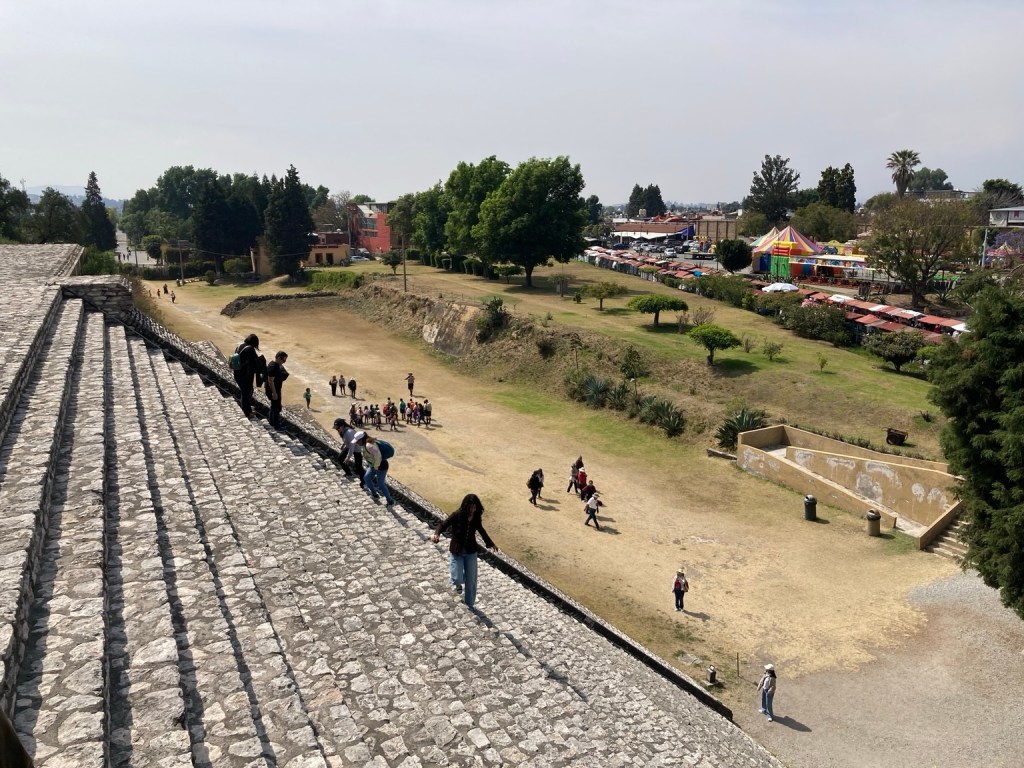
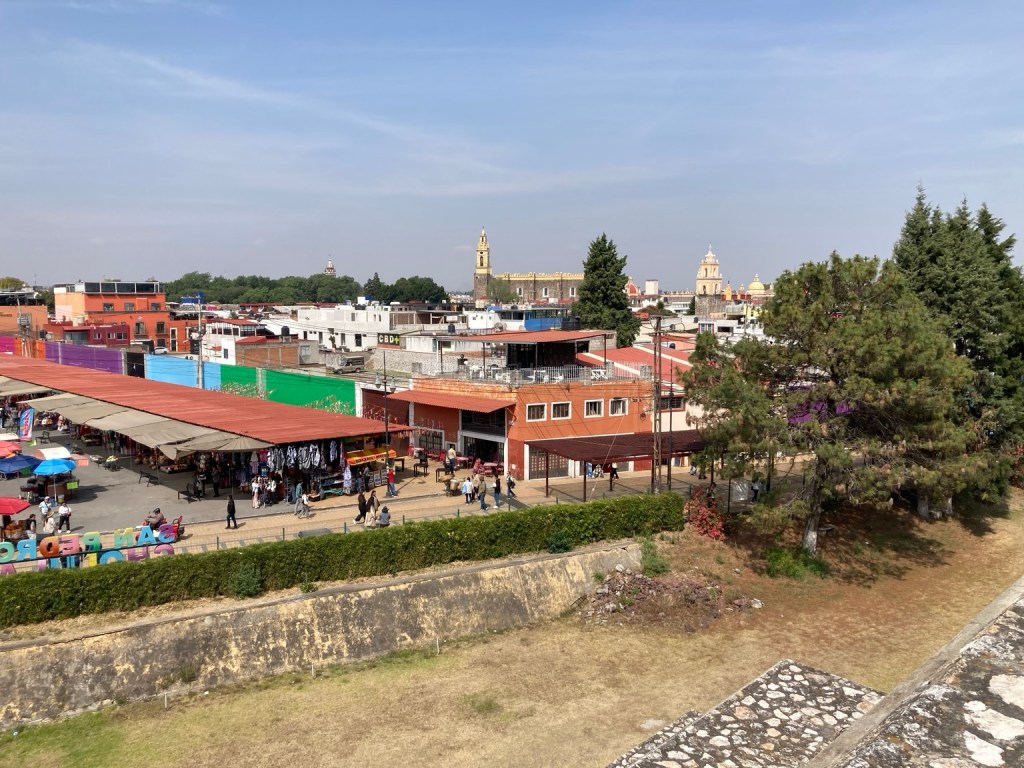
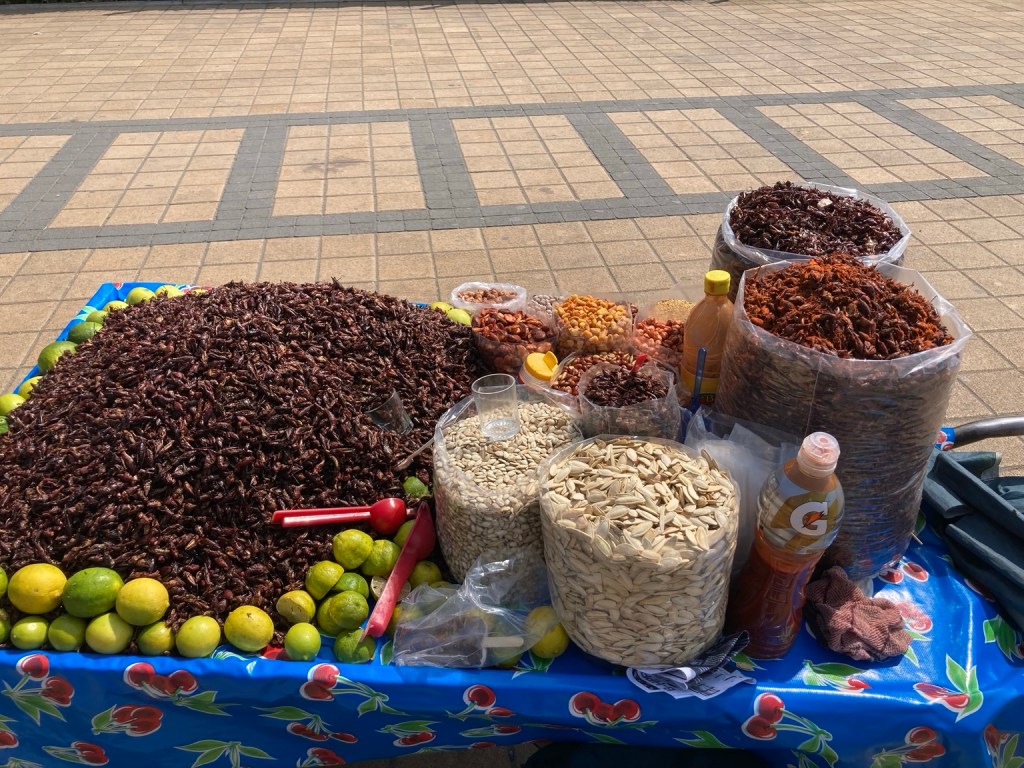
We saw various vendors, including these selling chapulines, or grasshoppers, something I haven’t quite brought myself to try!
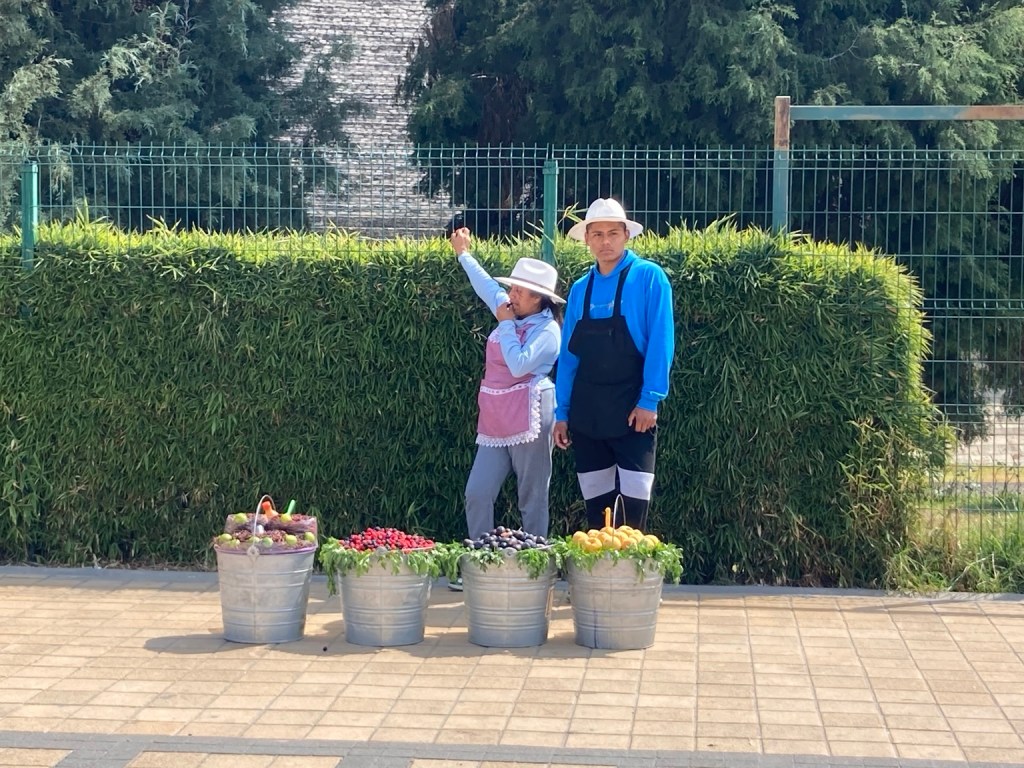
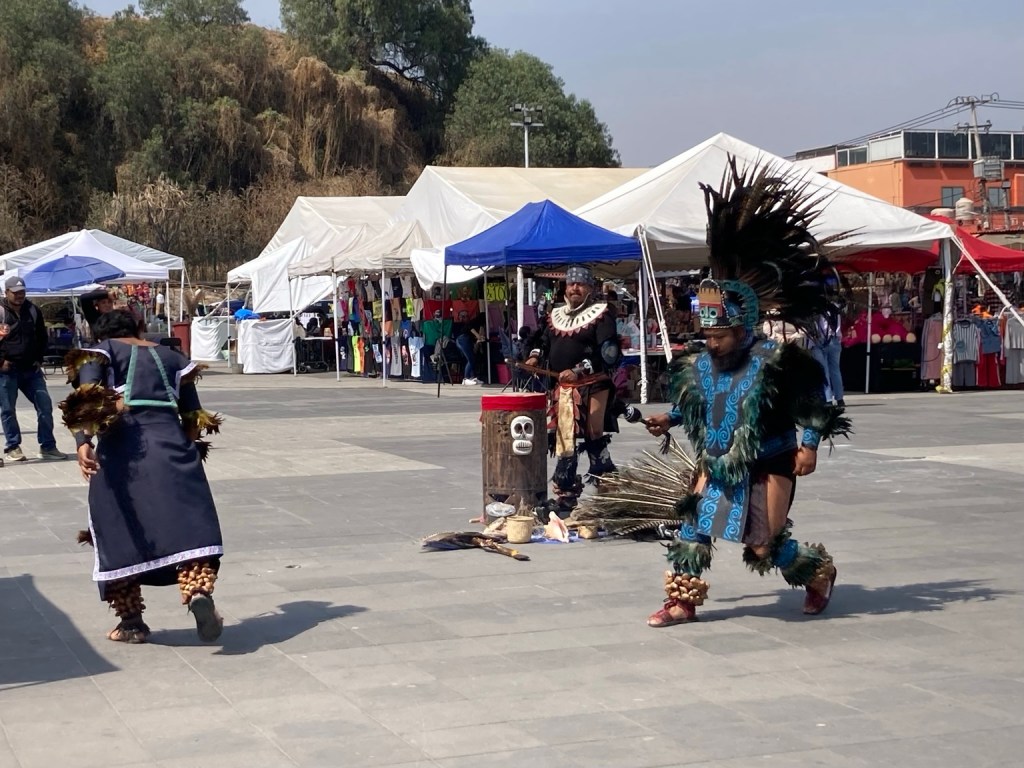
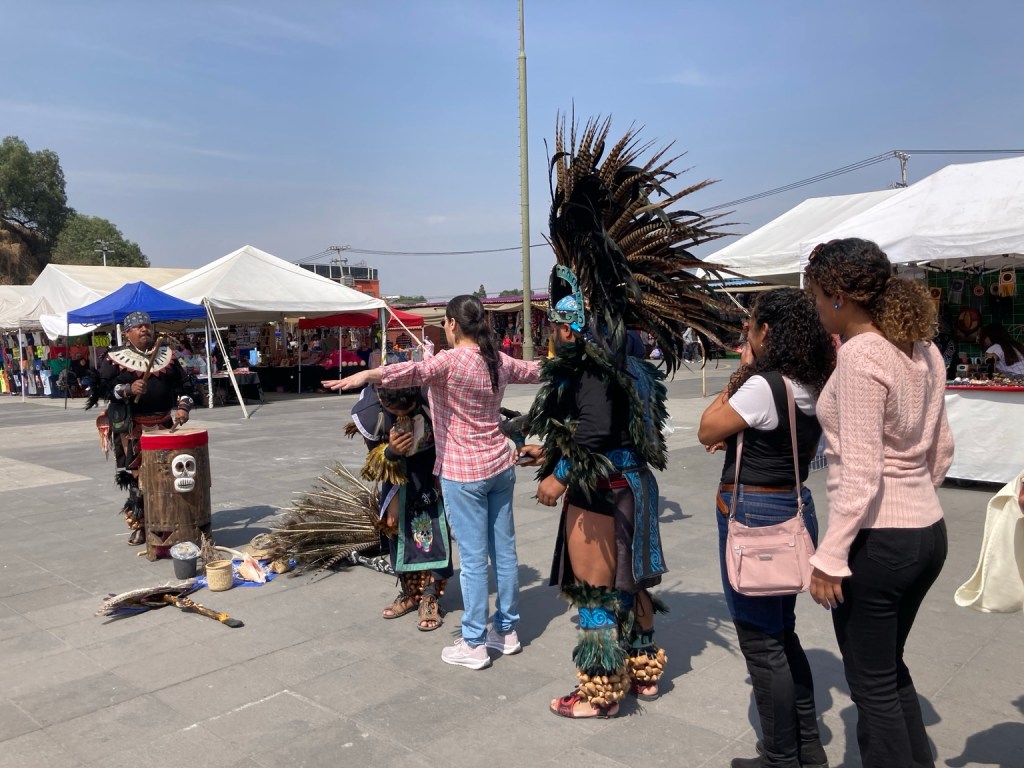
There were also shamans dancing and conducting cleansing rituals with smoke from incense and herbs.
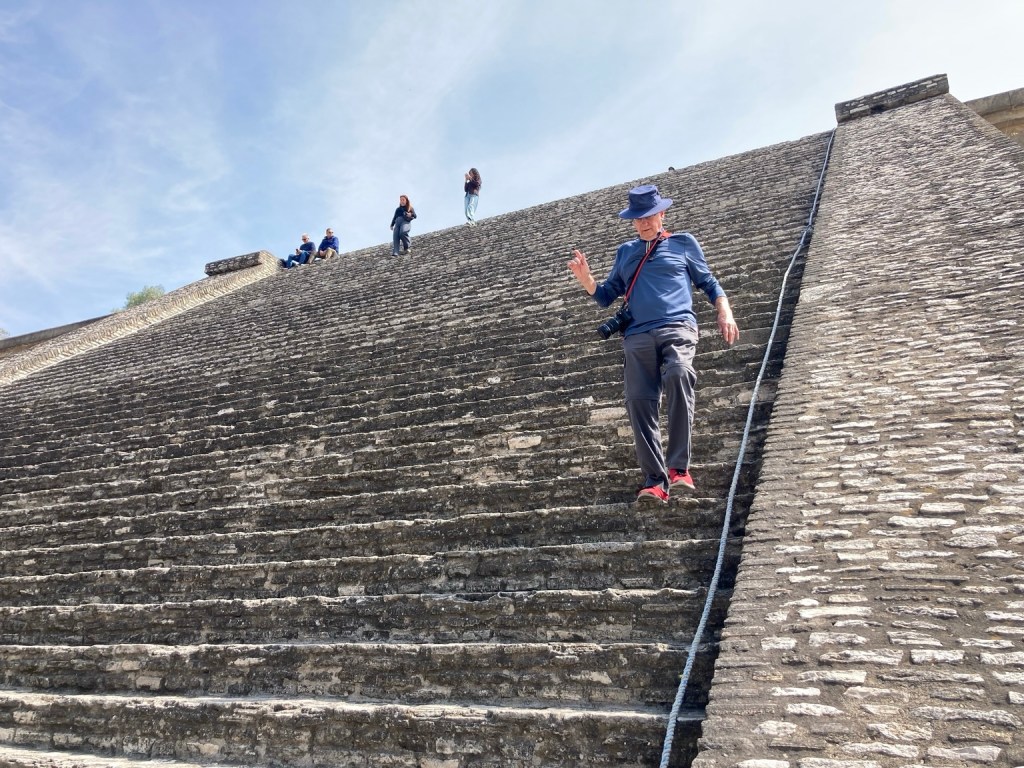
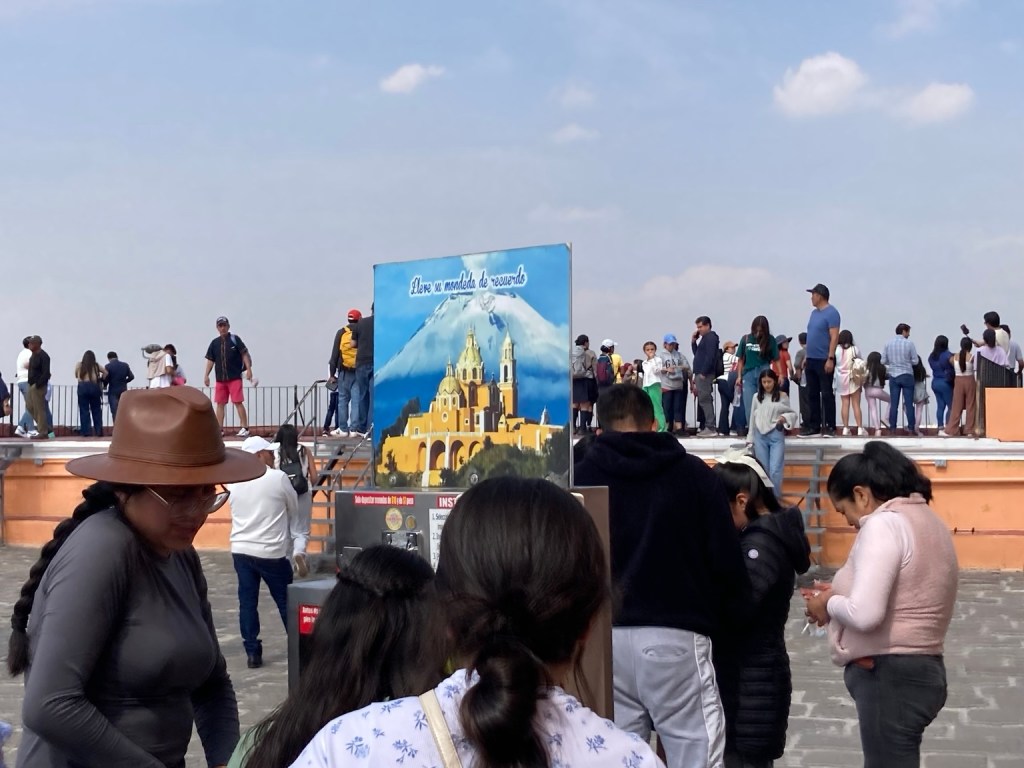
We came to the path which zig zags up to the Señora de los Remedios church with steps for the final ascent.
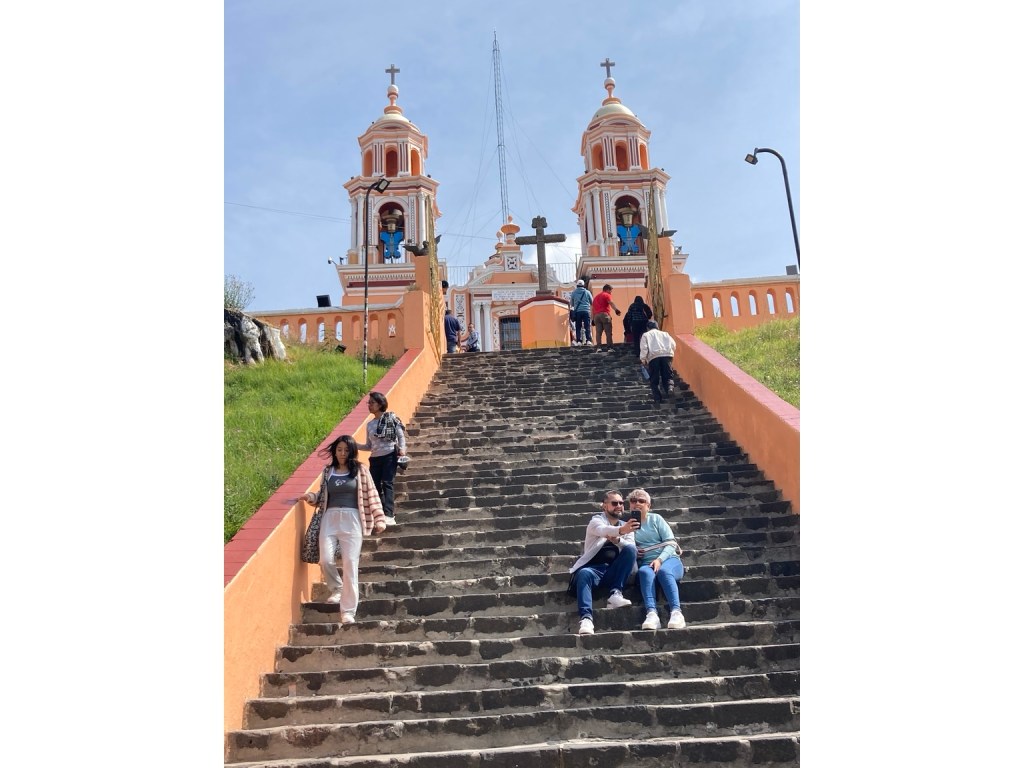
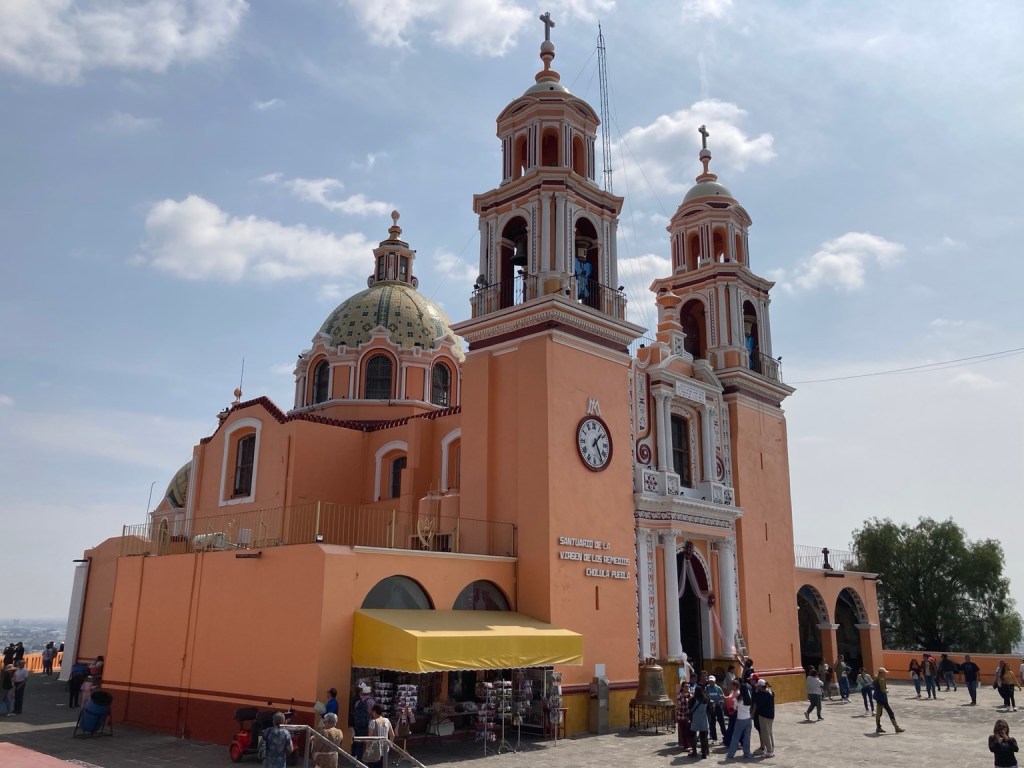
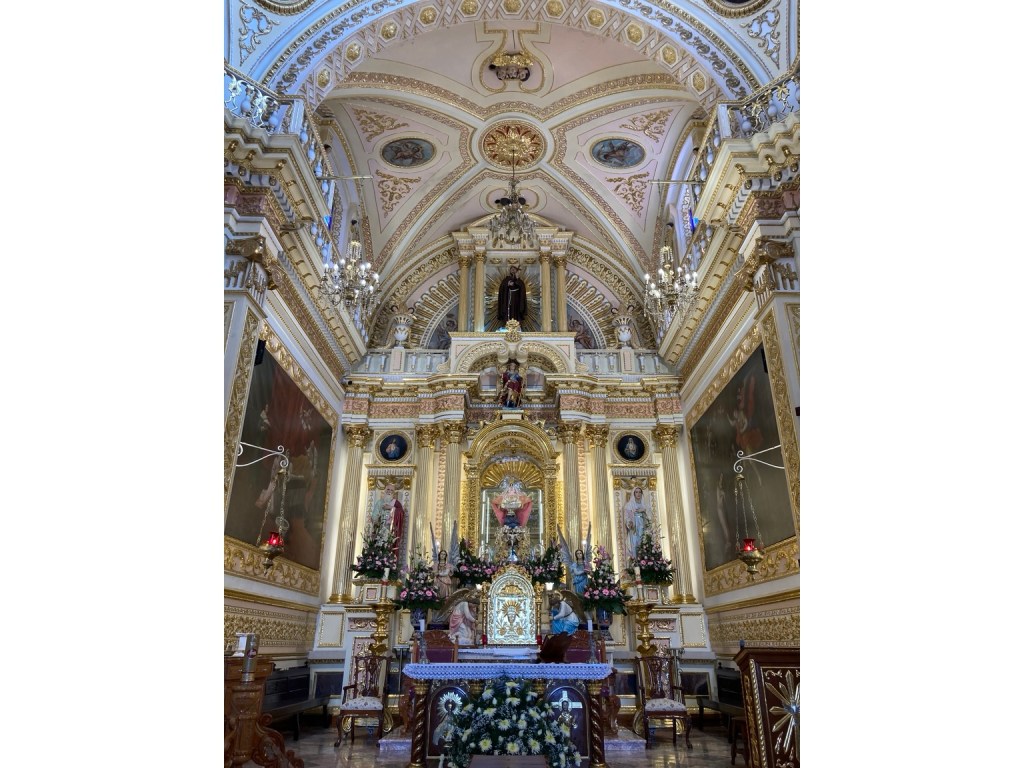
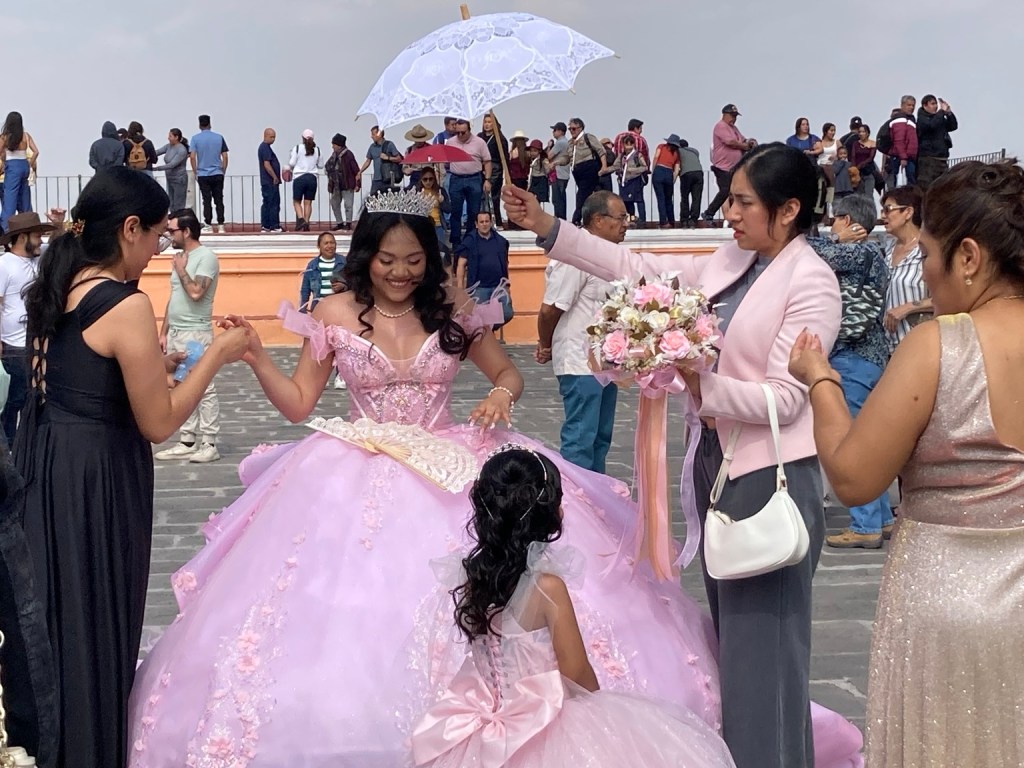
It is a popular place of pilgrimage as the Virgin of Remedies particularly helps the poor and also a popular spot for a wedding, although the entire bridal party had to climb the same path we did in all their finery!
The other big draw is that on a good day, Popocatépetl can be seen, but not today, it was far to misty to even know it was there, so Chris didn’t get the magic shot.
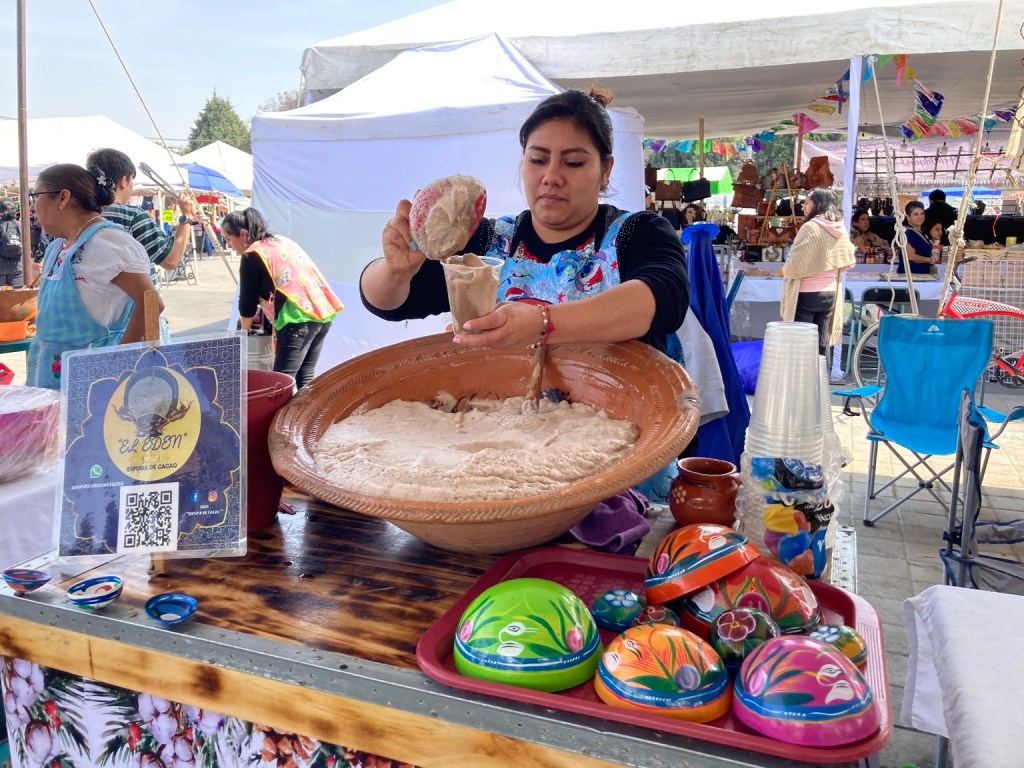
It seemed a good opportunity to try a couple of new things, firstly this frothy chocolate mixture called Espuma de cacao or cocoa foam. This traditional, frothy, pre-Hispanic Mexican drink is made from ground cacao beans mixed with water, sugar, and cinnamon and typically served in Puebla. The lady froths it up by rubbing the twizzle stick between her hands. I was so pleased to try something so local, it wasn’t too sweet and was actually quite chocolatey.
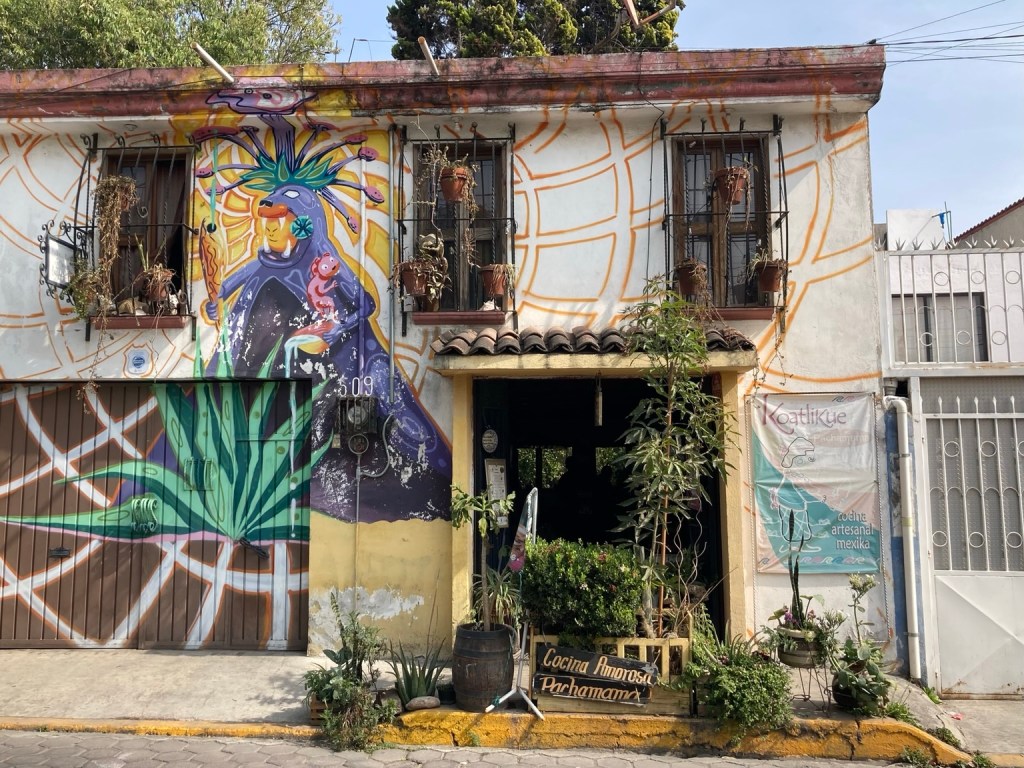
Next we sought out this pulqueria called Pachamama where we were given two tasters, one natural and one fruity. Pulque is a traditional, fermented, lightly alcoholic beverage made from the sap of the agave plant. It’s milky, frothy, slightly sour and I thought most like kombucha. Chris thought it was ok but neither of us will be rushing to order more!
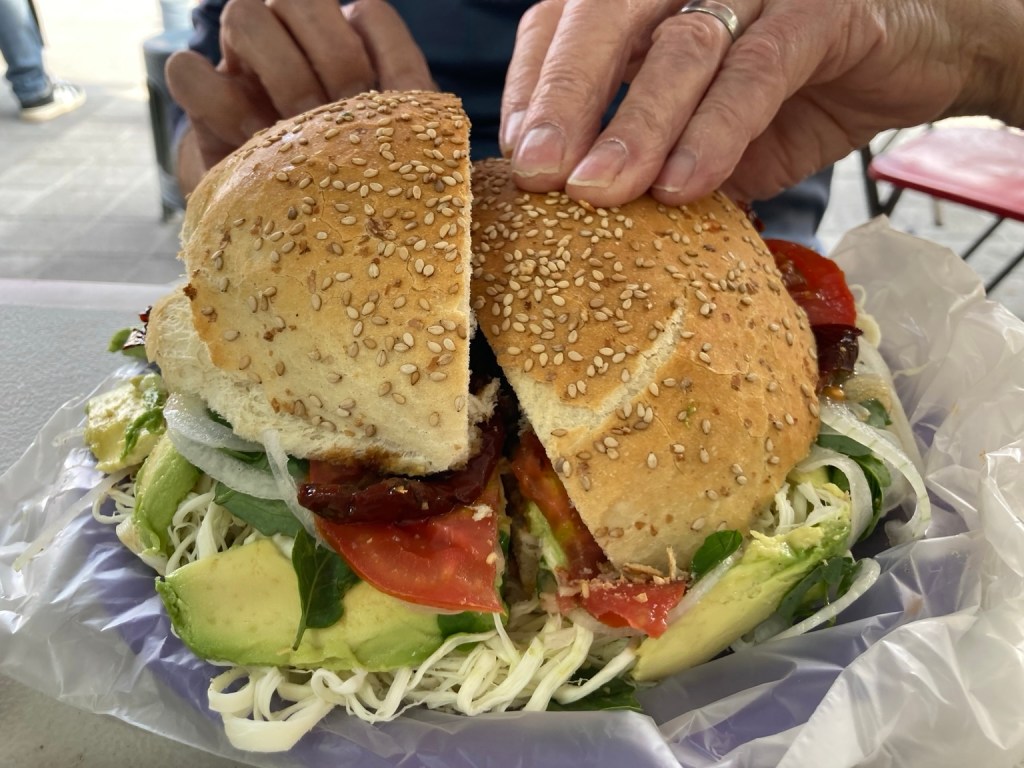
Finally, at lunchtime we checked out the food stalls. Chris went for a Pueblan speciality, the cemita, a sesame seed covered roll filled with avocado, cheese and chipotle …
… while I had tacos árabes made with vertically spit-roasted pork like a gyro originally with Lebanese influence and another dish specifically from Puebla.
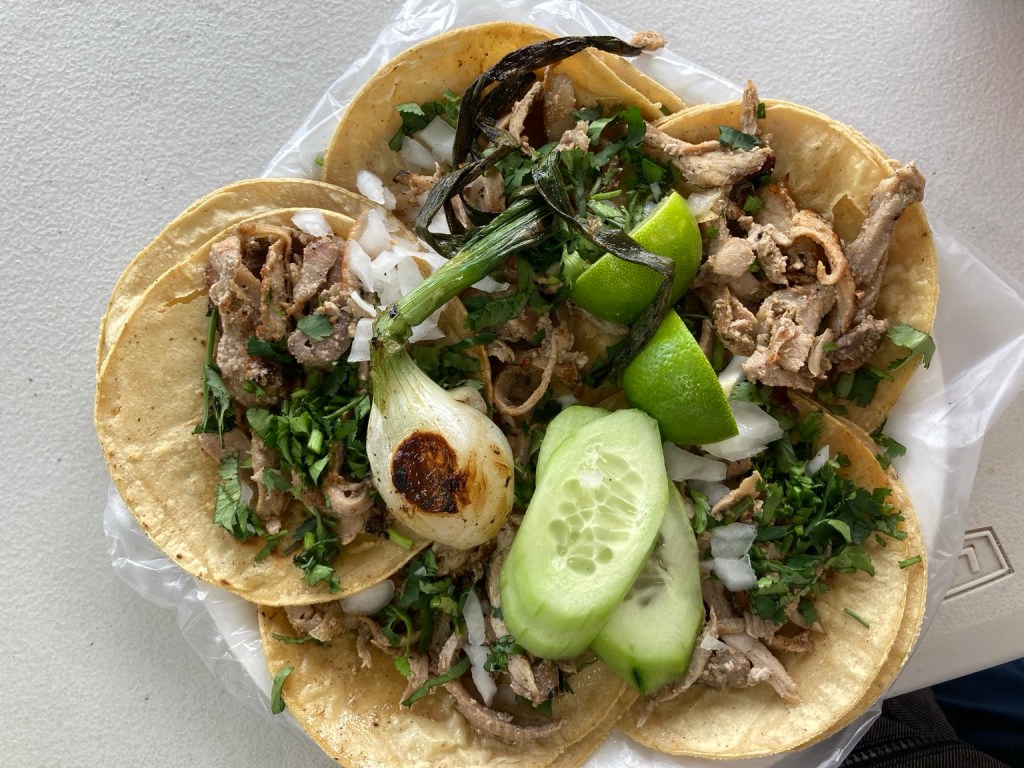
Both platefuls were huge so in the evening we just went out for wine and snacks in a cute cafe!
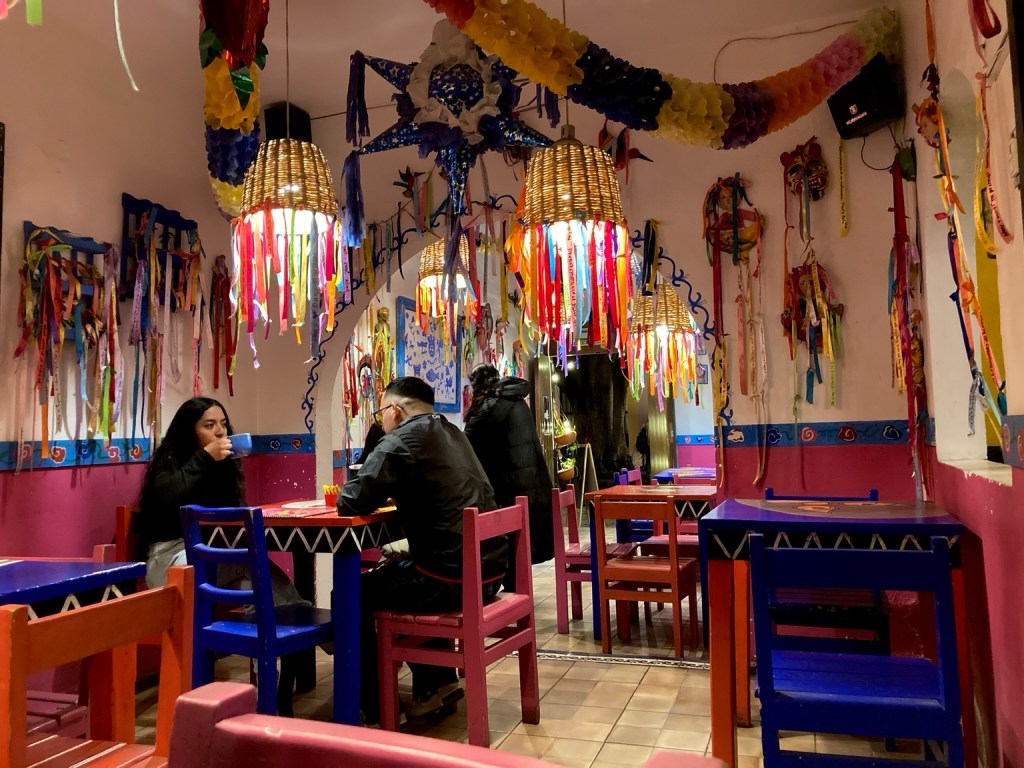
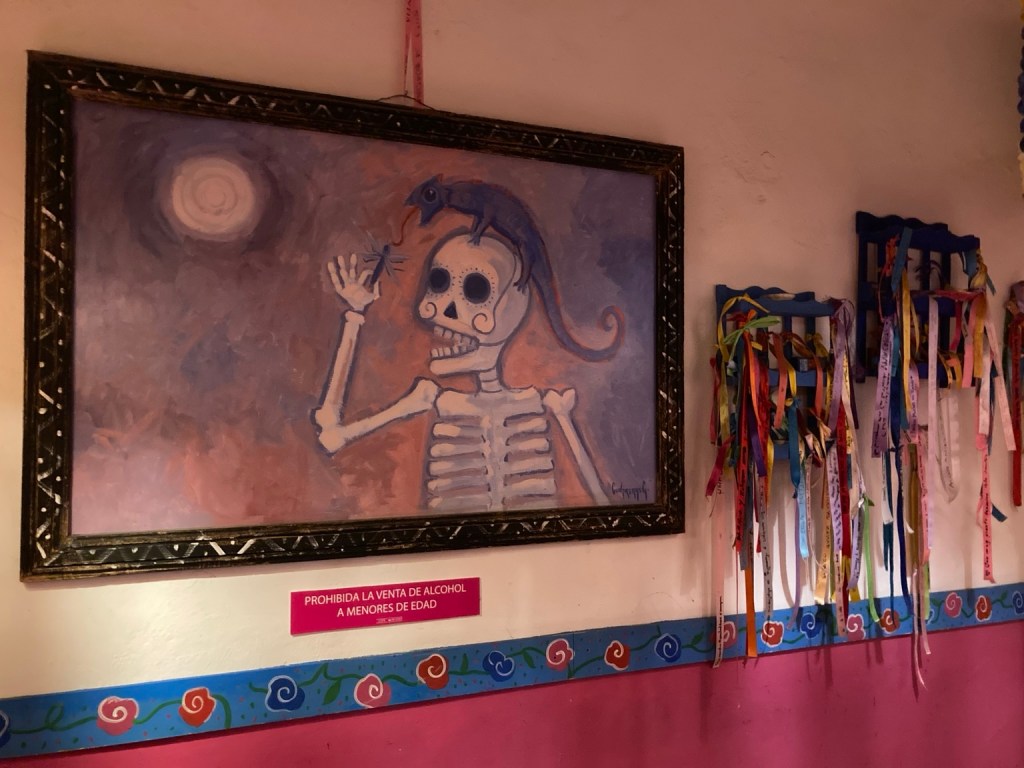
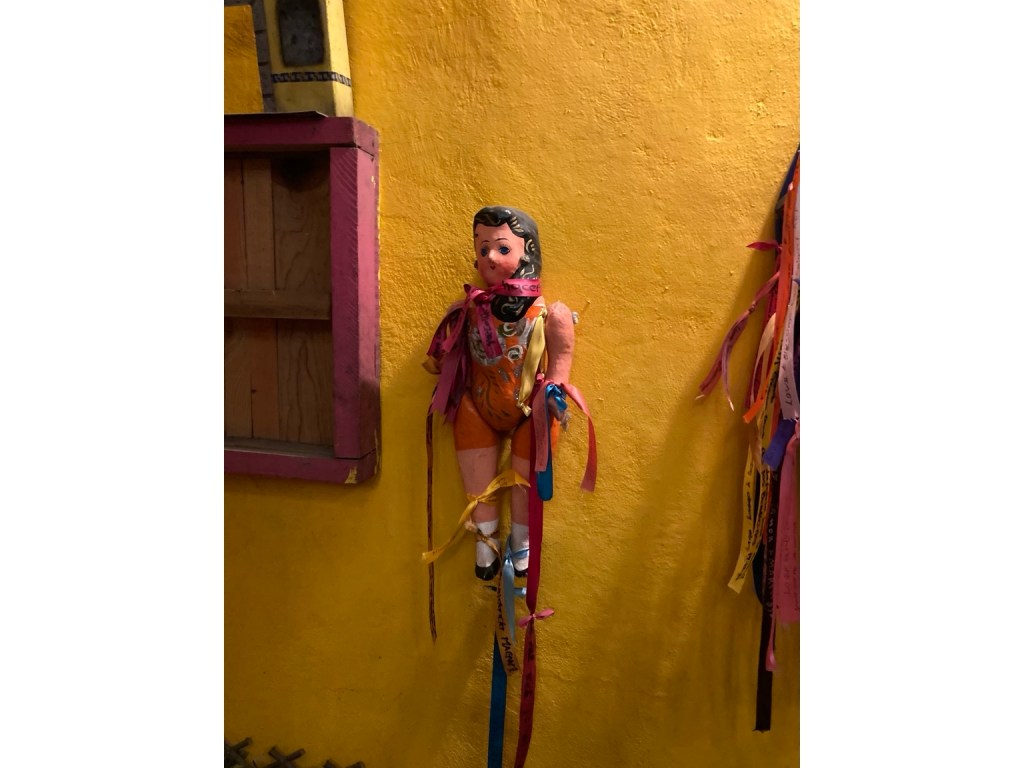
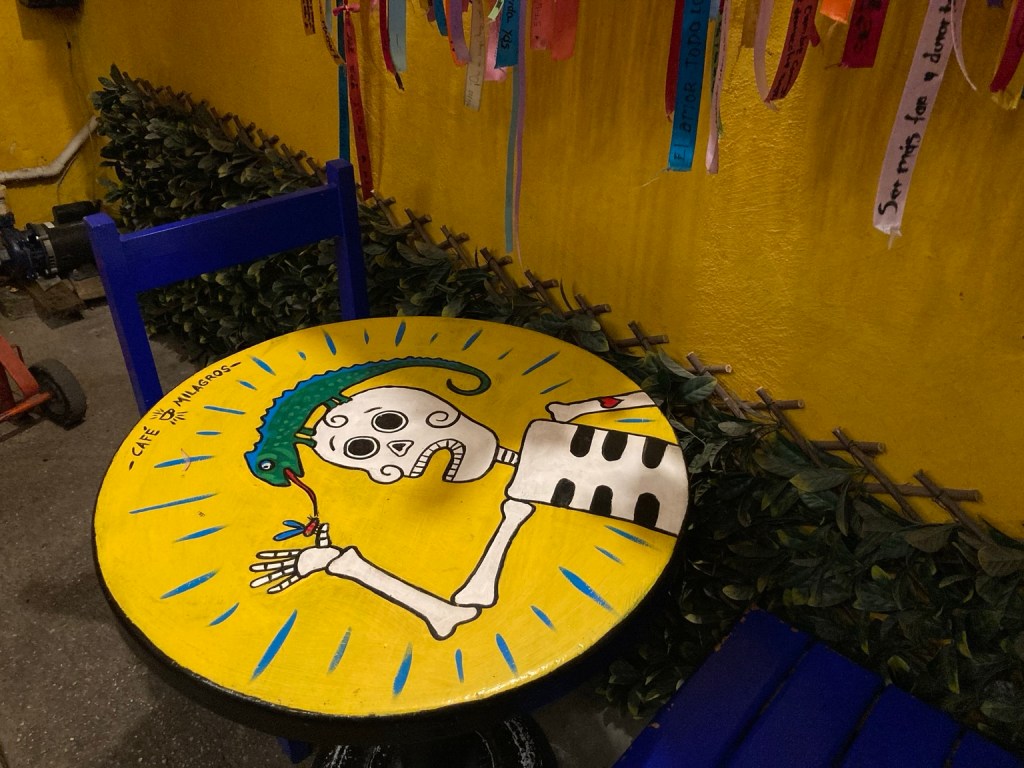
Our stay in Puebla is already at an end, so we’ll be back on the road tomorrow …
 Off Travelling Together