Chris suffered overnight with an upset tummy so we had a slow start, but fortunately later he felt ready to go out. We had booked onto a tour to Teotihuacán in the afternoon, but first we took a turn round the Palacio de Bellas Artes, the lovely concert hall we admired yesterday, which is Art Nouveau on the outside and Art Deco on the inside!
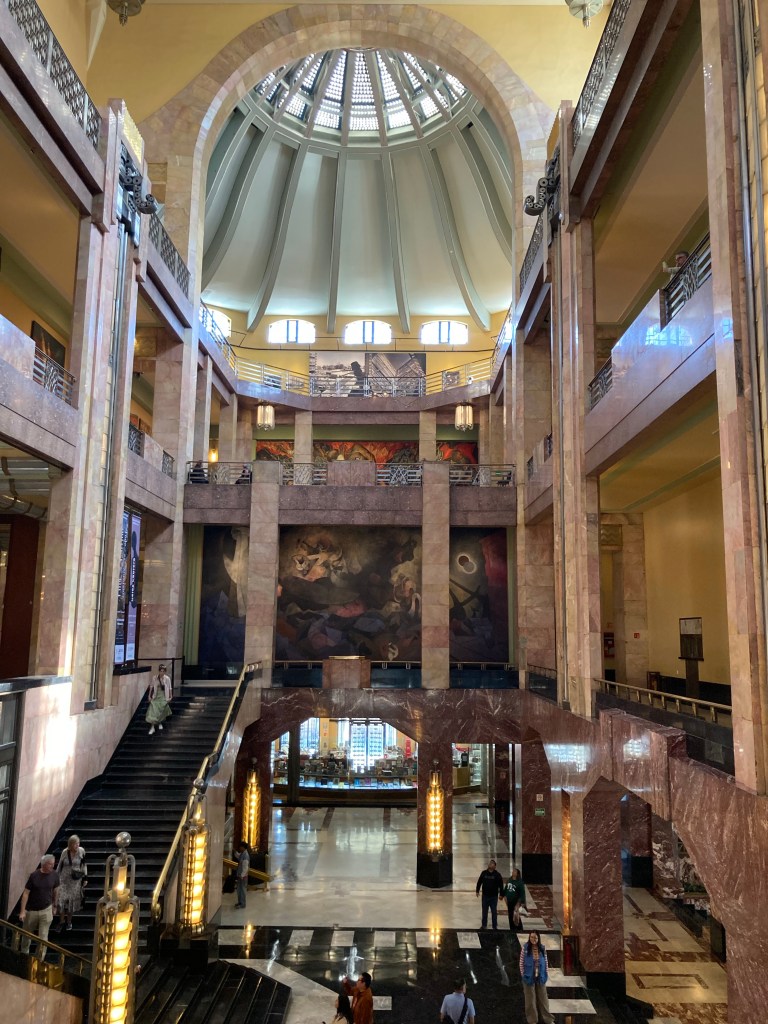
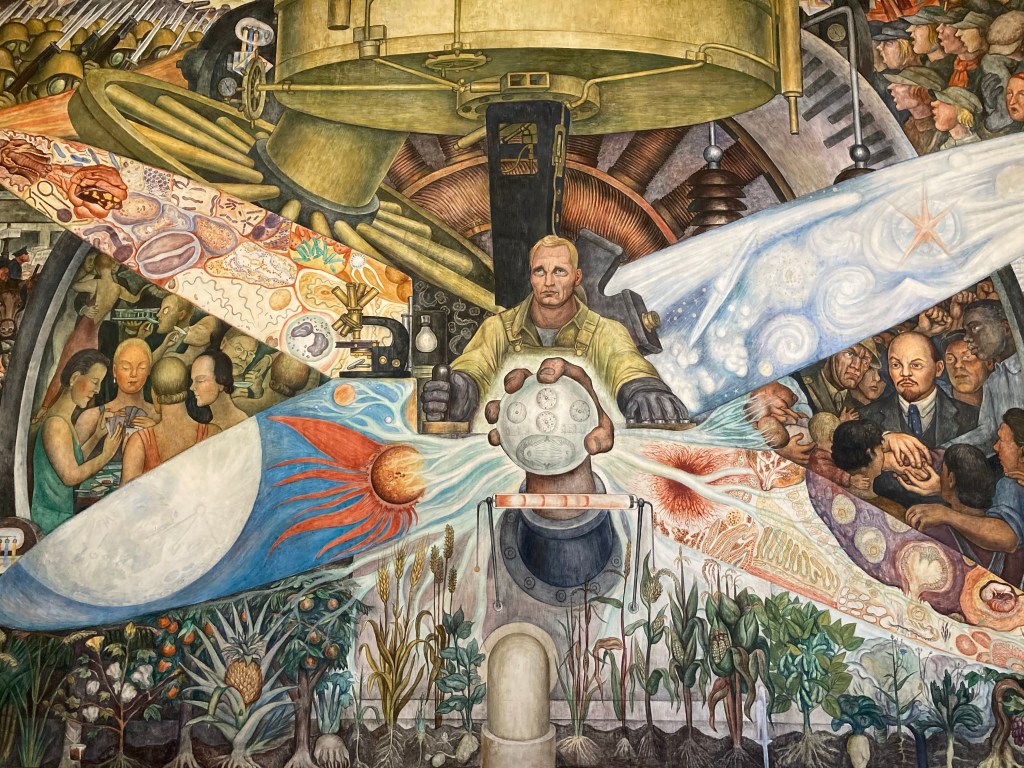
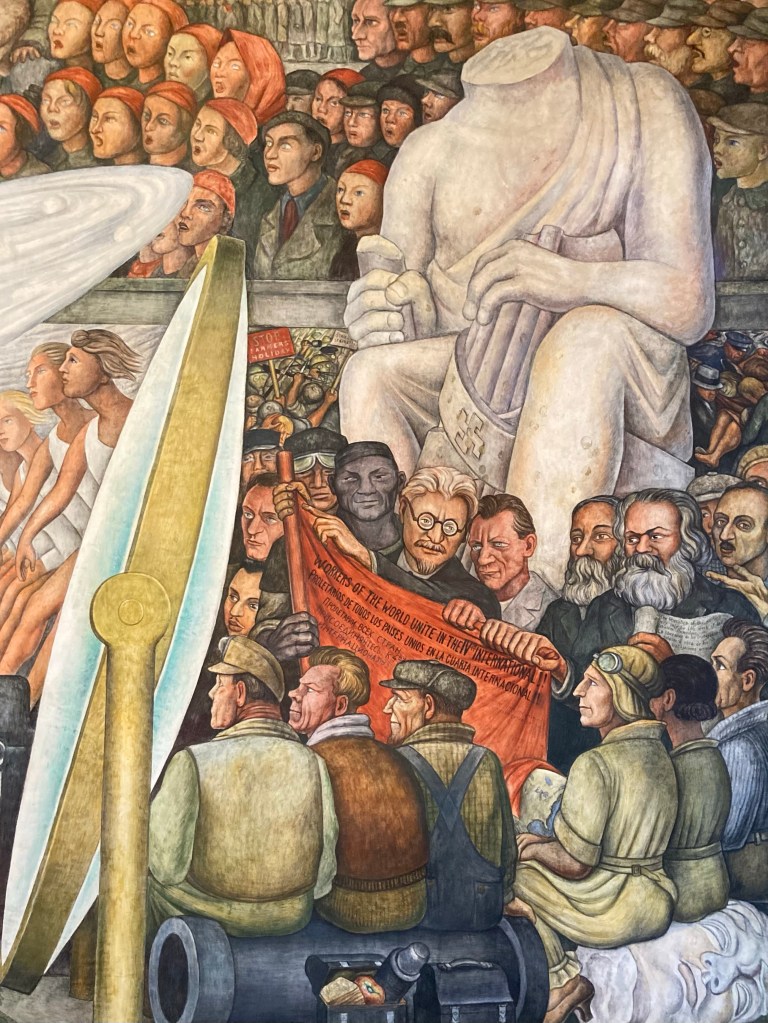
Upstairs is a gallery of murals painted by famous names of Mexican muralism. Diego Rivera had been living in the US where his mural for the Rockefeller Centre in New York had been destroyed due to his inclusion of an image of Lenin which didn’t go down well with his sponsor! He reproduced it here called Man Controller of the Universe, showing man harnessing scientific progress and industrial technology and at a crossroads, choosing between capitalism on the left with an image of decadence, including Rockefeller and communism on the right with Lenin and multiracial workers. It is huge, and this is just the centre section.
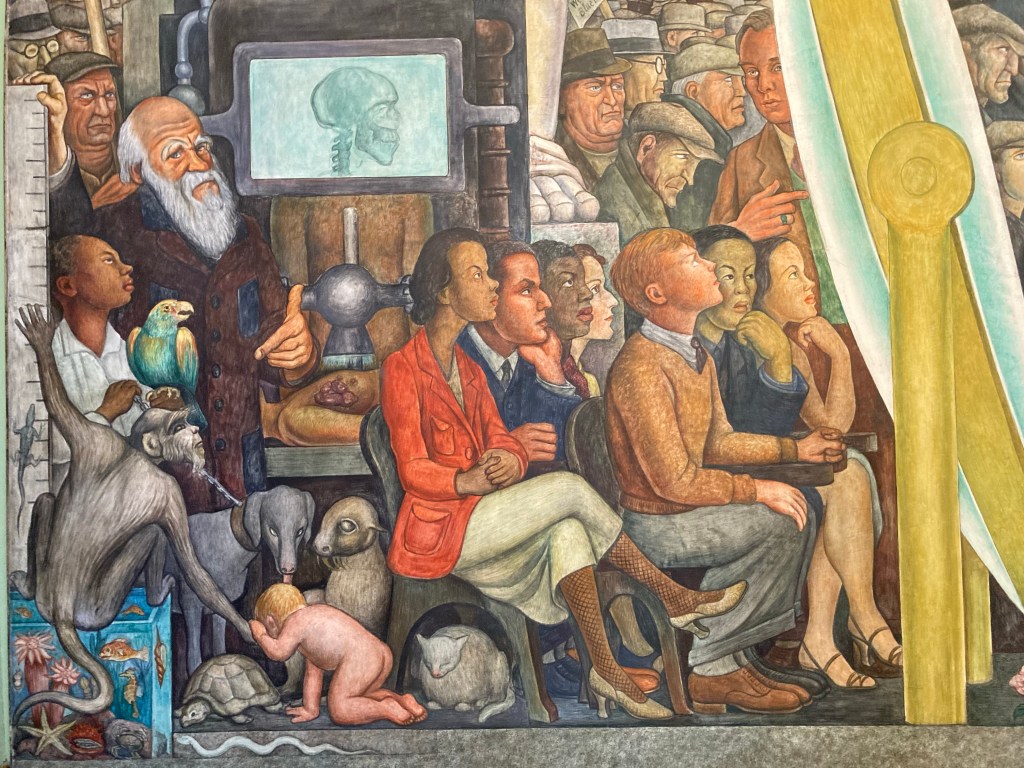
This excerpt shows Darwin and learning …
… and here are the images of communism.
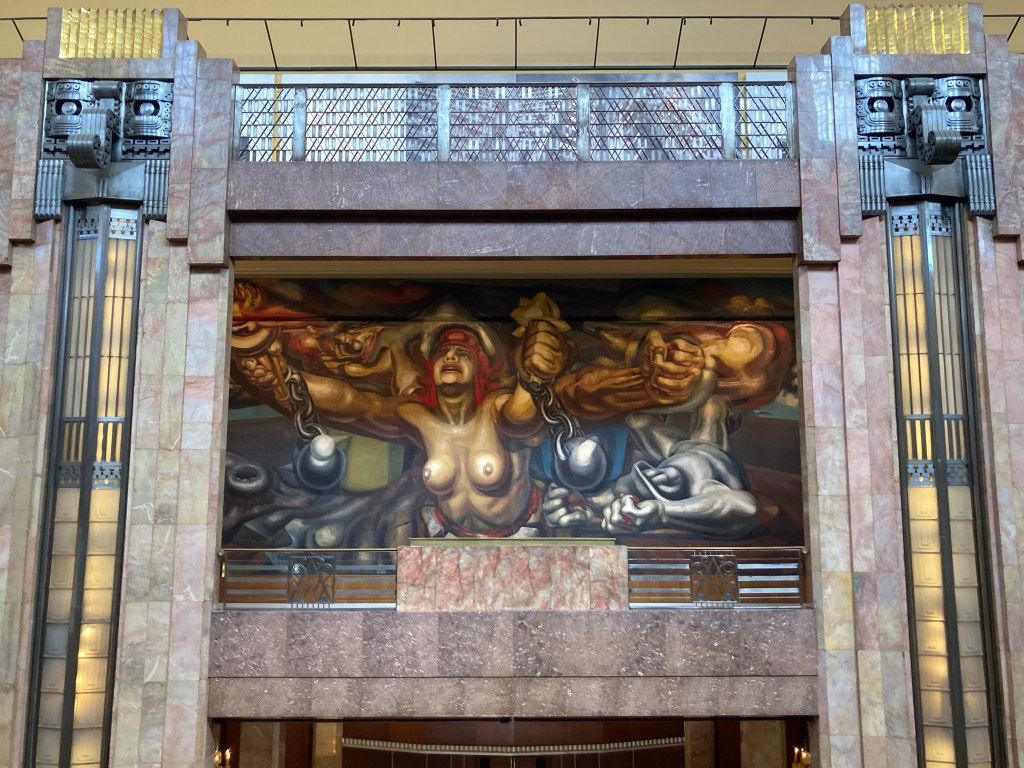
It was interesting to see how varied the mural style was amongst Rivera’s contemporaries, like The New Democracy by David Alfaro Siqueiros, set between two Art Deco light fittings showing Chac the rain god …
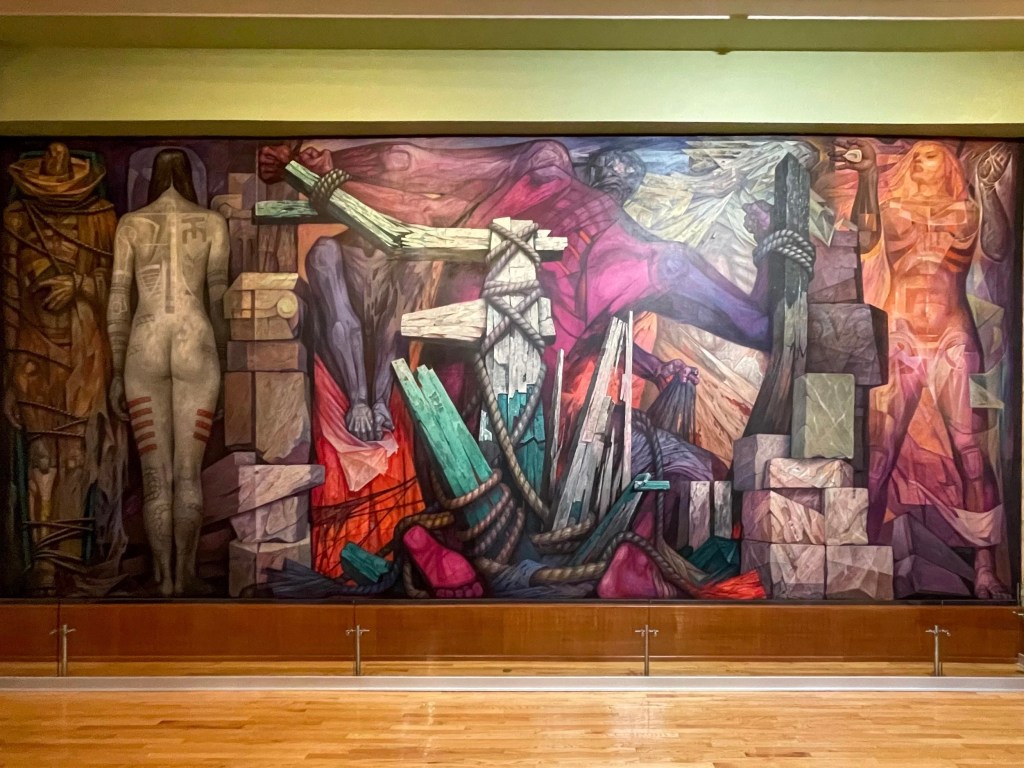
… and Humanity Freed from Misery by Jorge Gonzalez Camarena.
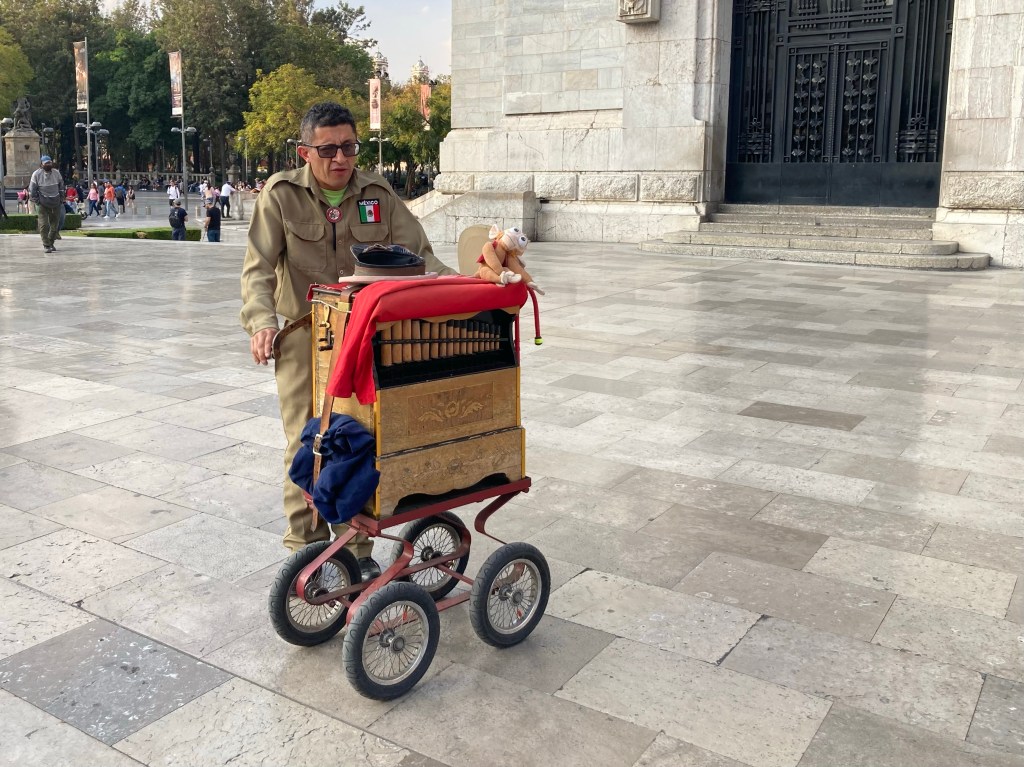
Outside, there was an organillero in his smart beige uniform, playing a tune on his barrel organ, a sound that probably characterises our time in Mexico City. Popular since the C19th, they play nostalgic tunes and can be found on every corner, with a monkey sitting on top, although it is probably hard to make a living just on tips, having paid the US$10 daily rental.
Time to meet the minibus for our guided trip to Teotihuacán, booked through Viator as a cultural visit with no add ons! We were the last couple to join the tour and took the last pair of seats, only to find they were over the rear axle and my seat was freezing from the AC. Fortunately the journey was just an hour and our guide kept us engaged with various information about the city. I was pleased to arrive and get out into the sunshine to warm up as we headed through the gates.
Teotihuacan was both the largest city in the Americas as well as the most advanced civilization on the continent at its zenith, from 100BC-500AD. The city covered some 19 square kms and had an estimated population of about 250,000. It collapsed as a city in the C7th-8th for reasons unknown and was then discovered by the Aztecs who discovered the site in the 1300’s, by which point it was covered by earth and vegetation. They excavated some of the site and named it Teotihuacán which means ‘the place where gods were created’.
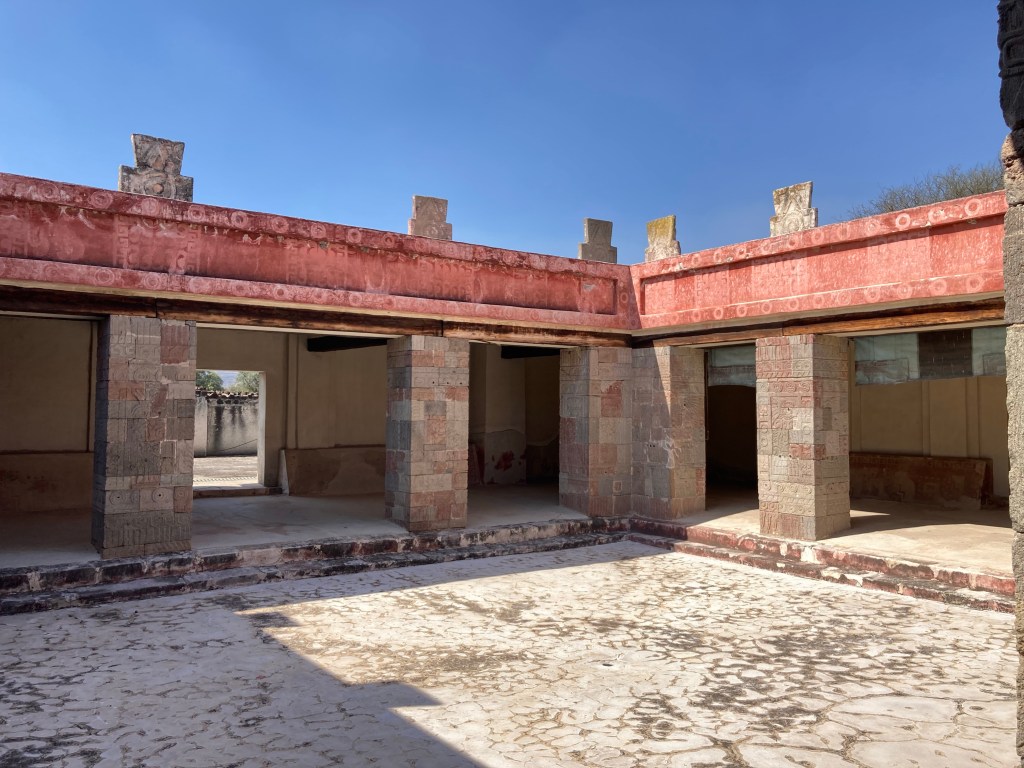
We began in the restored Palace of Quetzalcóatl with the Patio of Pillars, with their rich decoration and remains of colour …
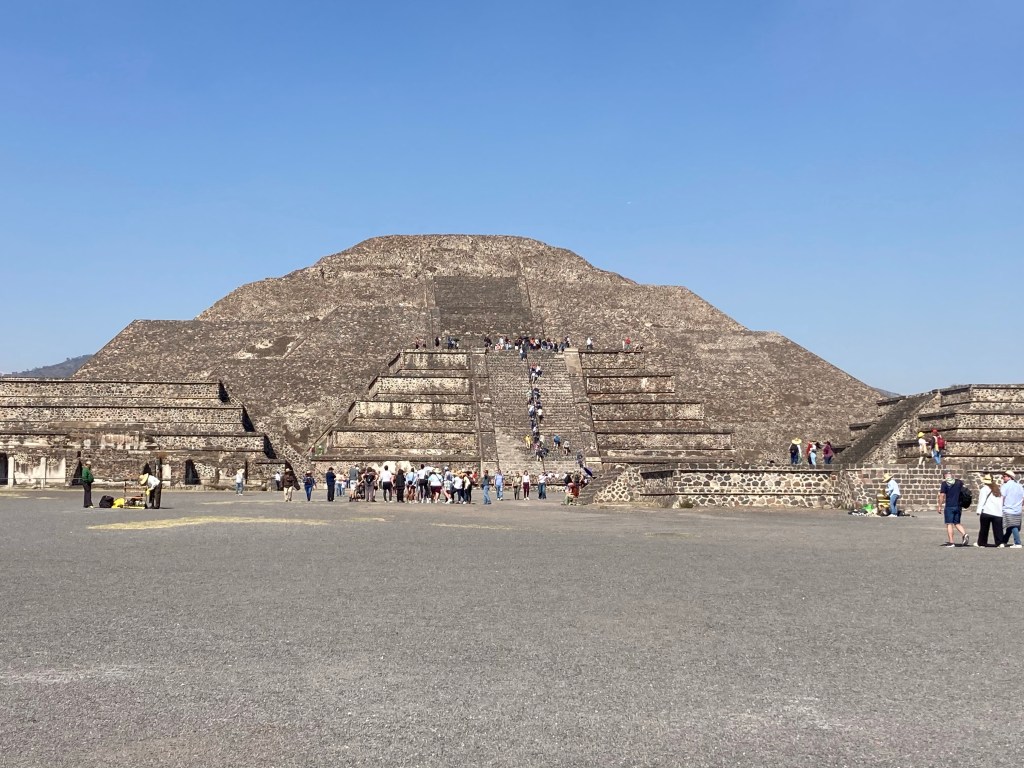
… then walked out to this view of the Pyramid of the Moon.
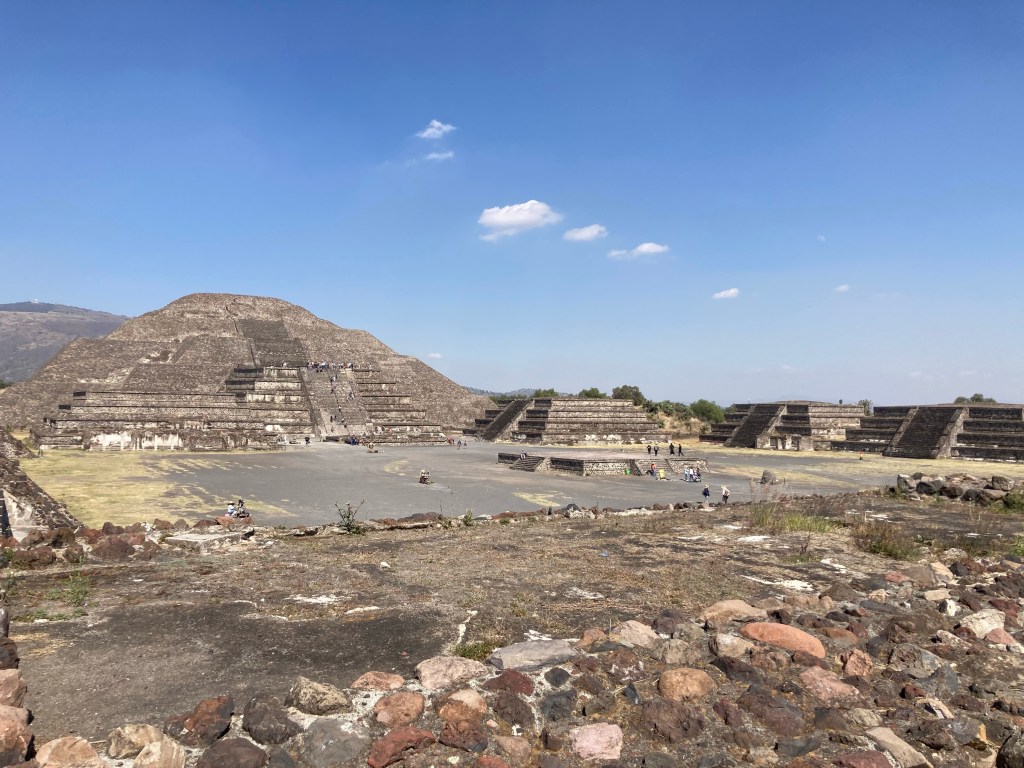
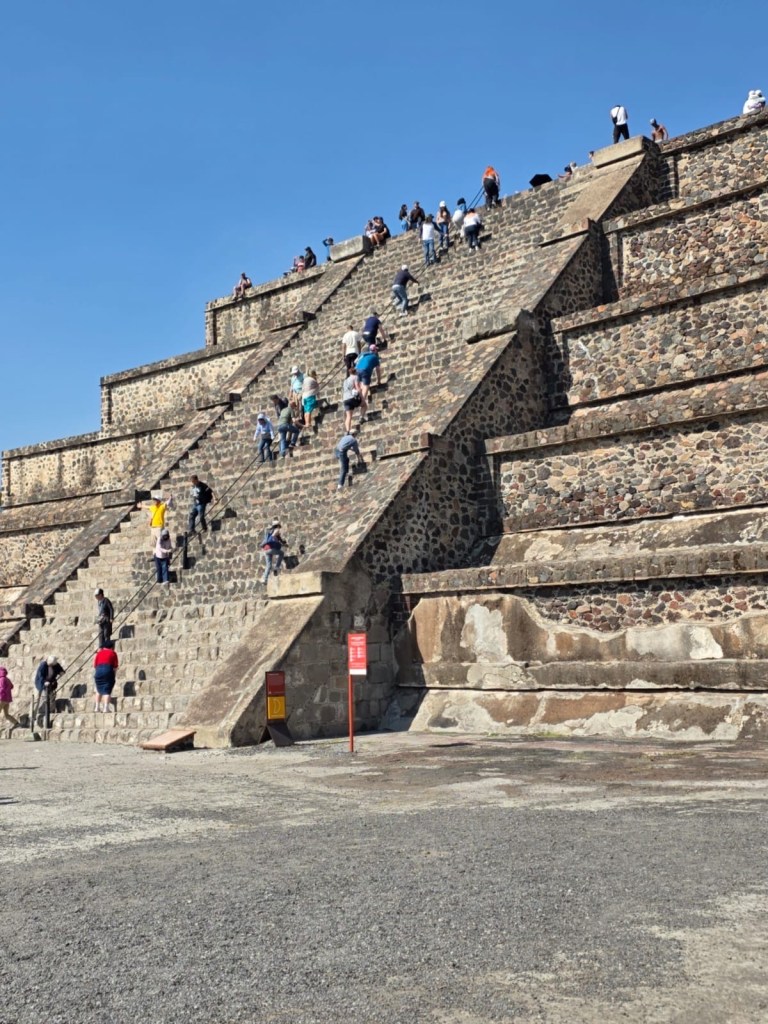
As the guide explained the history, I started to feel dizzy and had to sit down. It didn’t prove to be anything serious, maybe just the contrast from the cold bus, but I watched from the shade while Chris went closer and some people climbed the pyramid.
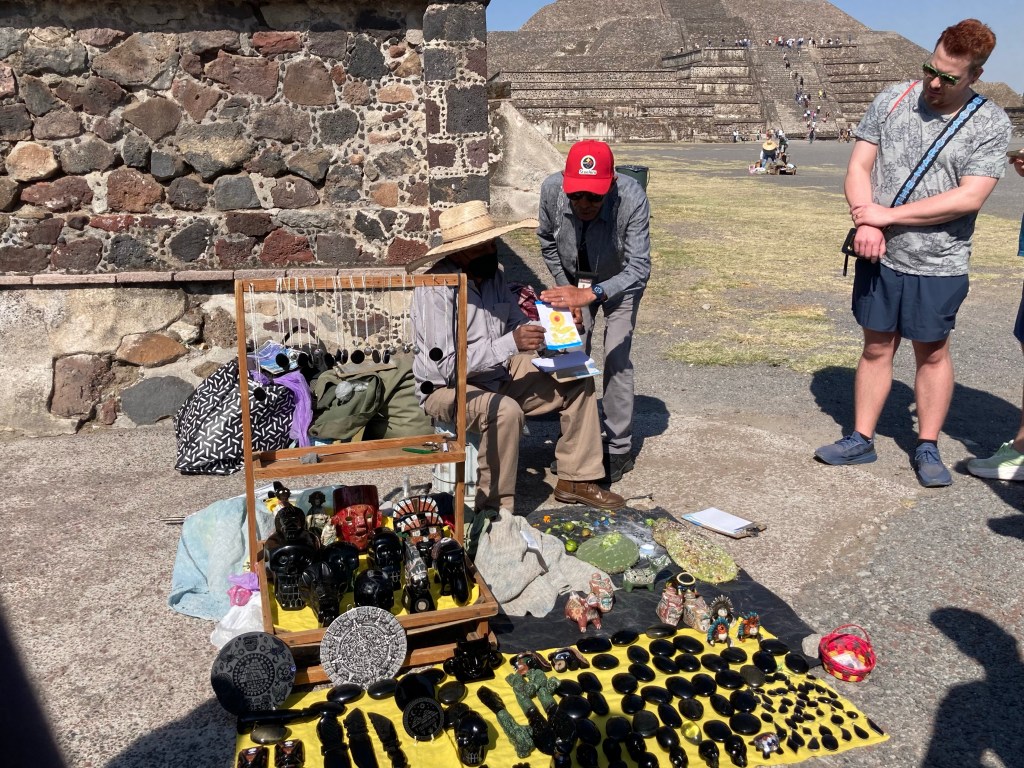
We were shown how pigments were made with lapis lazuli and iron oxide and in fact there is evidence that the exterior of all the structures would once have been blood red or even polychromic.
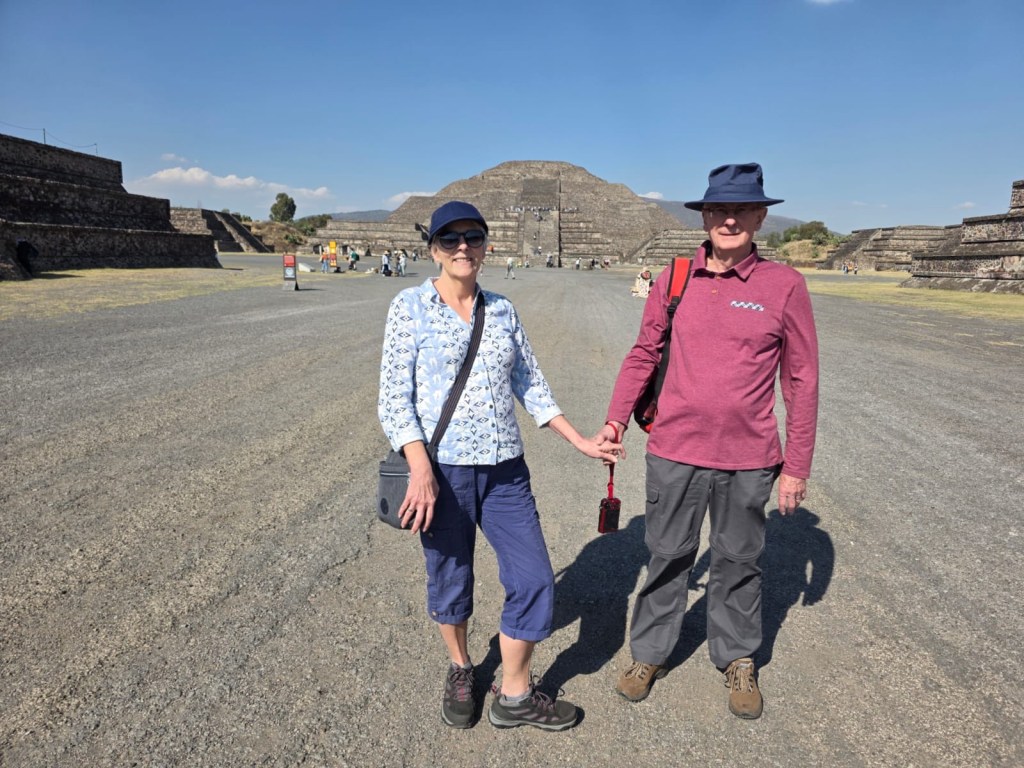
Then we set off along the Avenue of the Dead, named by the Aztecs who found sacrificed bodies buried there. Along the way were areas which would have held linked ponds to collect and conserve water.
The Pyramid of the Sun is the tallest pyramid at 70m, although what we see today was heavily reconstructed in 1908 after it was blasted with dynamite in search of a more complete building under the present one – but at least it gives an idea of its former grandeur.
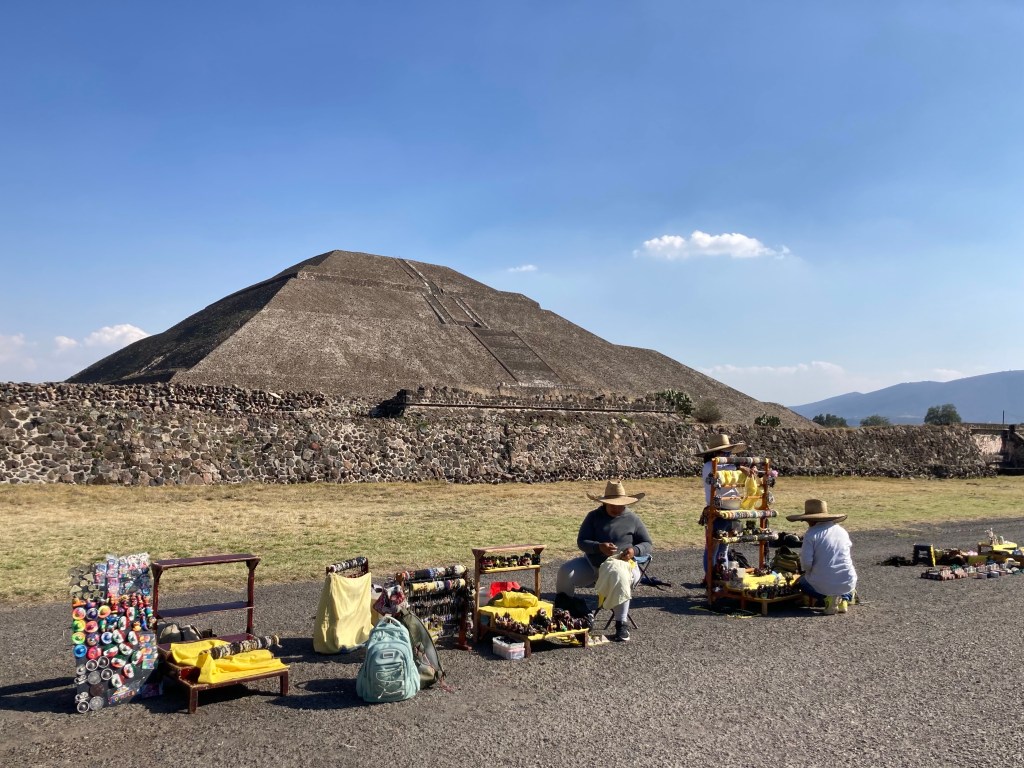
A little out of practice on big trips, we took the easy route with a tour – the biggest advantage is they drop you at one entrance and collect you from another which reduces walking, but it was only when I started writing about the day that I realised how much we missed – the oldest pyramid known as the The Temple of the Feathered Serpent completely, and these impressive decorations

It was a big day and neither of us felt hungry or fancied going for dinner so snacked on nuts and a sweet bun and mugs of Earl Grey.
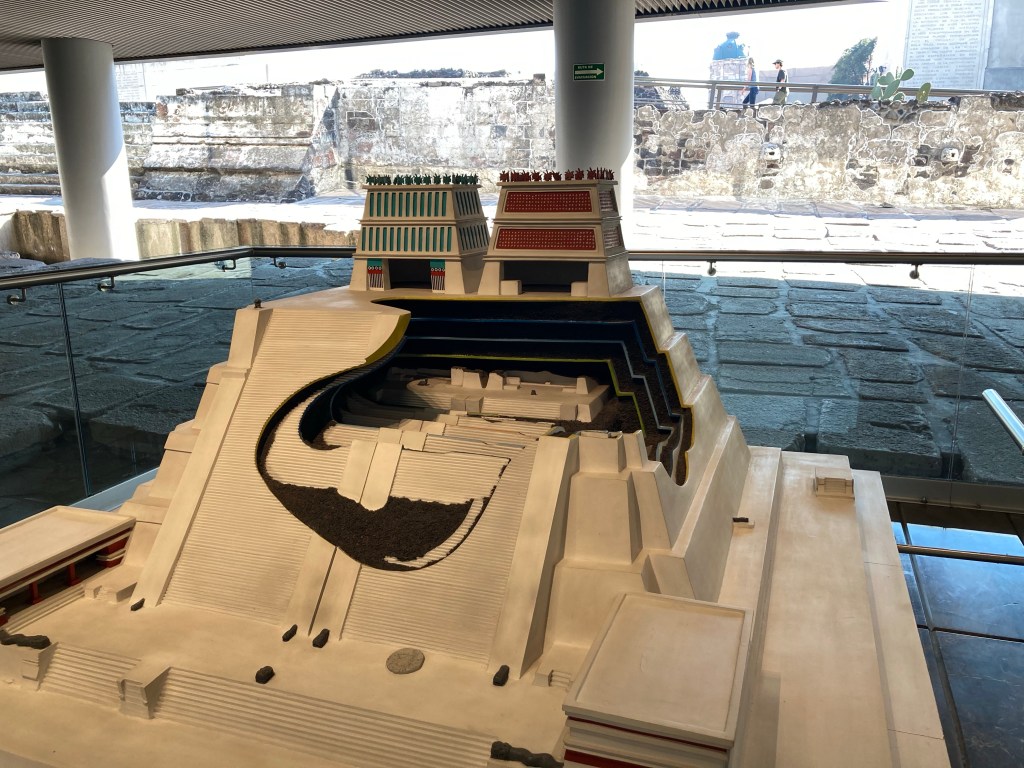
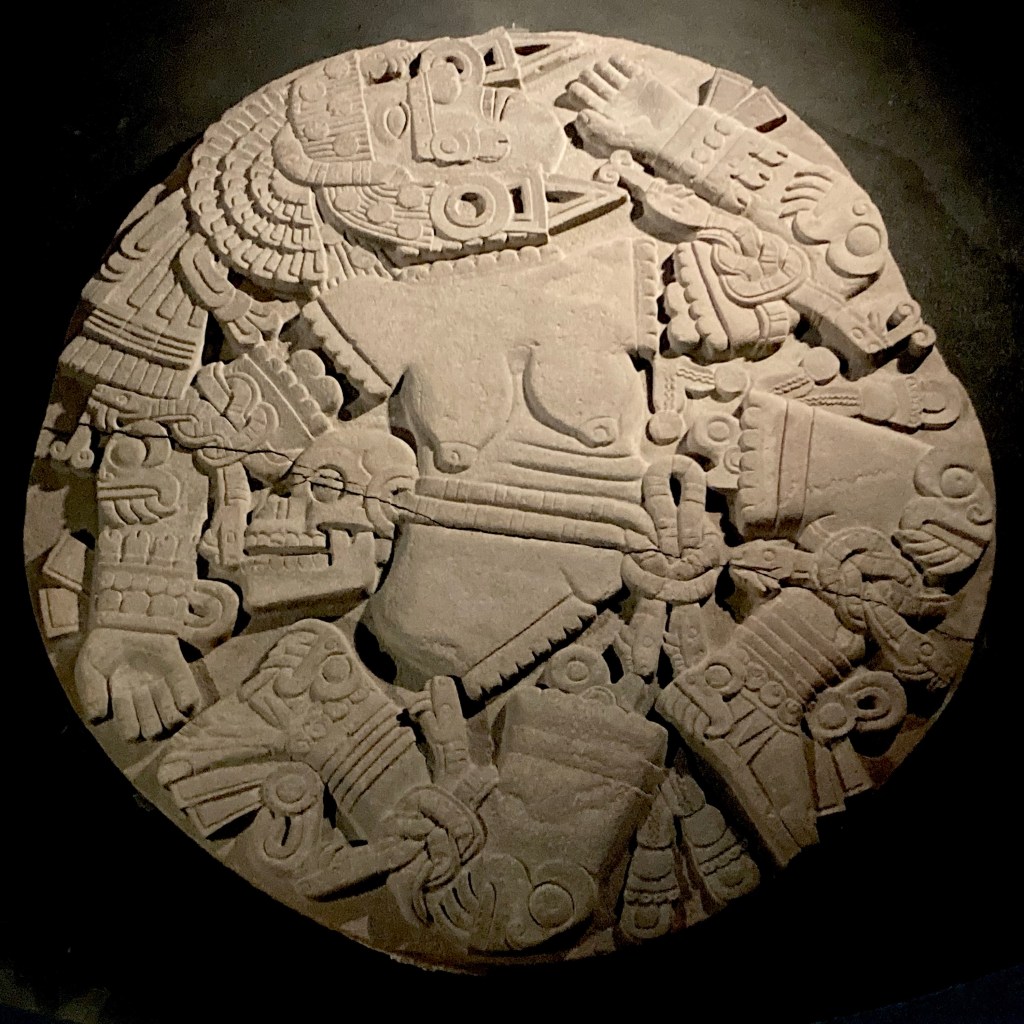
Next day, we were in the queue at 9.30 for the National Palace and got tickets for 3pm, and with only around 30 places on an English speaking tour each day, that was a result! Until then, we’re going back in time to the Aztecs so here’s a quick history interlude. When the Spanish explorer Hernán Cortés and his men arrived, they found the Aztec capital of Tenochtitlán built on an island in the middle of a lake traversed by great causeways, a beautiful stone-built city of 300,000 residents, but following the conquest, all was destroyed. At least, that was what was thought until excavations began in 1978 as part of the building of the new metro system. A huge stone disc, weighing over eight tonnes, which depicted the fall of Coyolxauhqui, goddess of the moon was unearthed, which led the to remains on display at the museum today. It is a little difficult to understand the ruins until the realisation that it’s like a Russian doll. Successive rulers totally encased the existing pyramid in another layer to make theirs bigger and more impressive, then new temples were built on top as shown in this model …
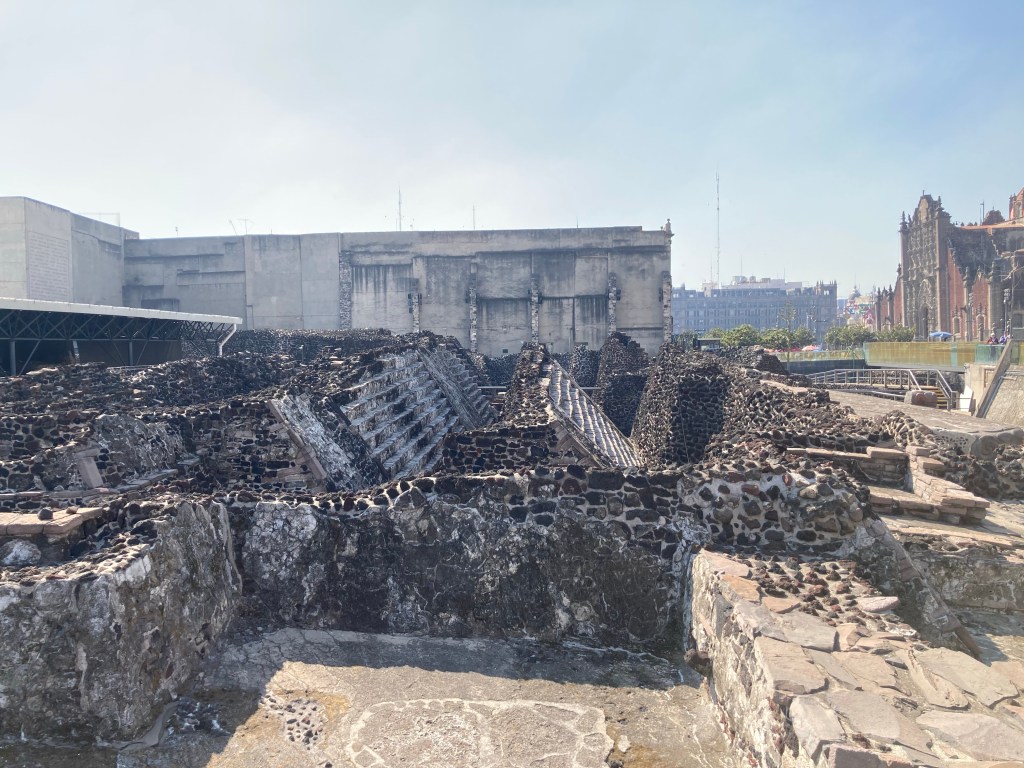
… and here are some pictures of the excavations as we walked round.
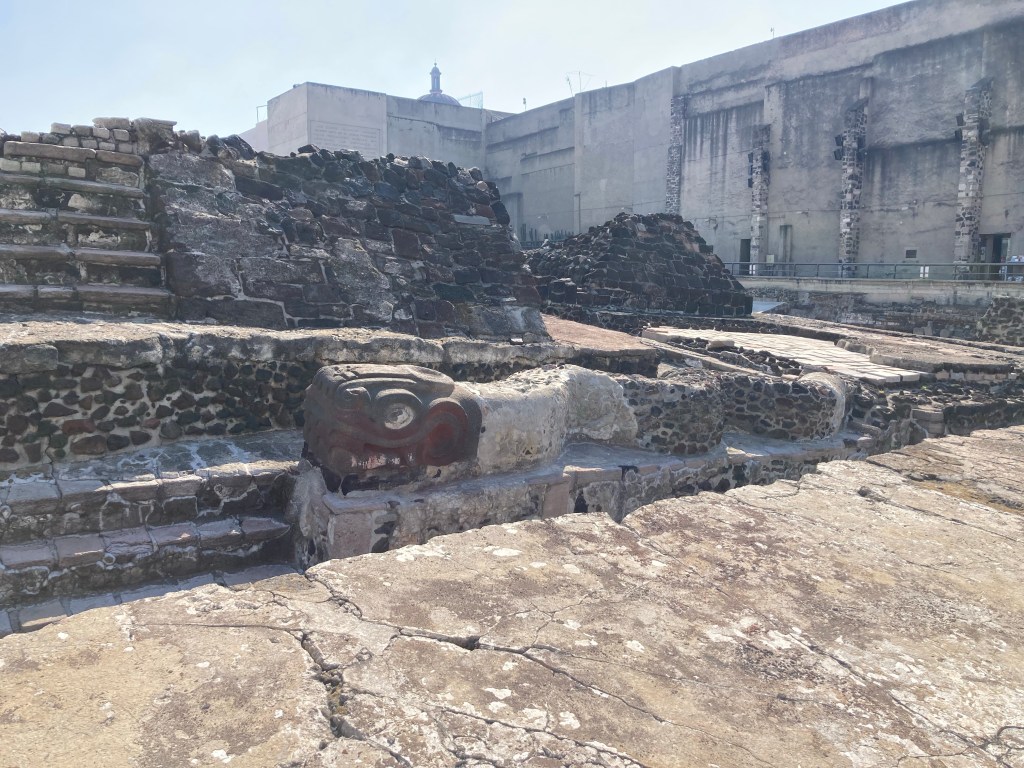
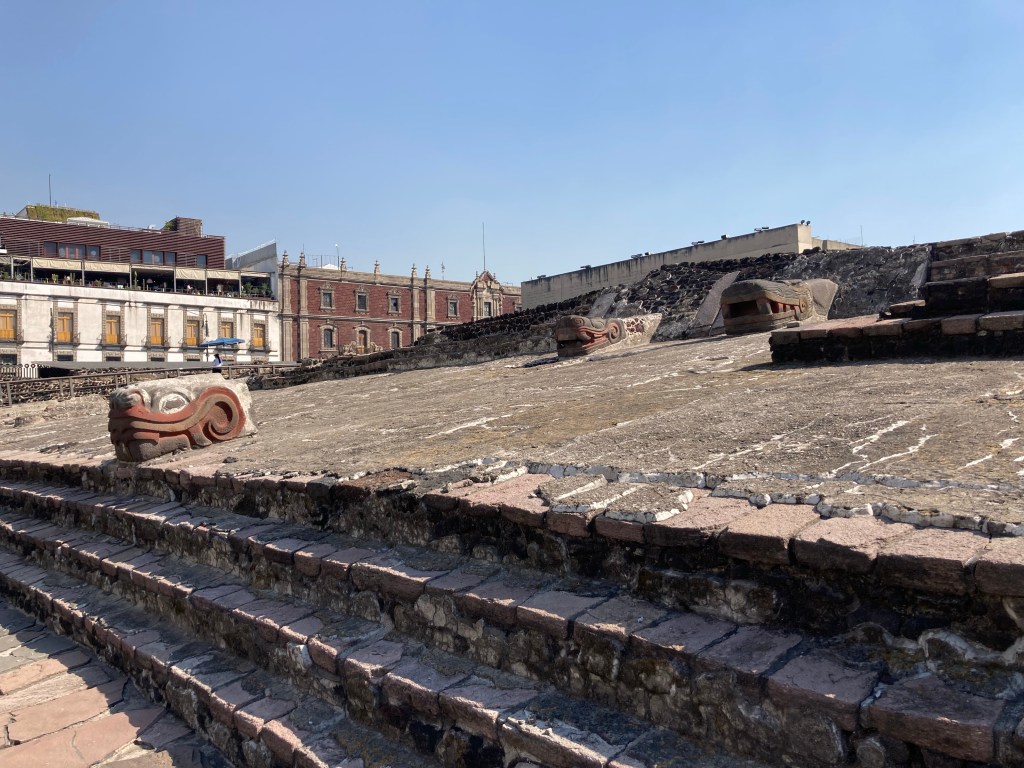
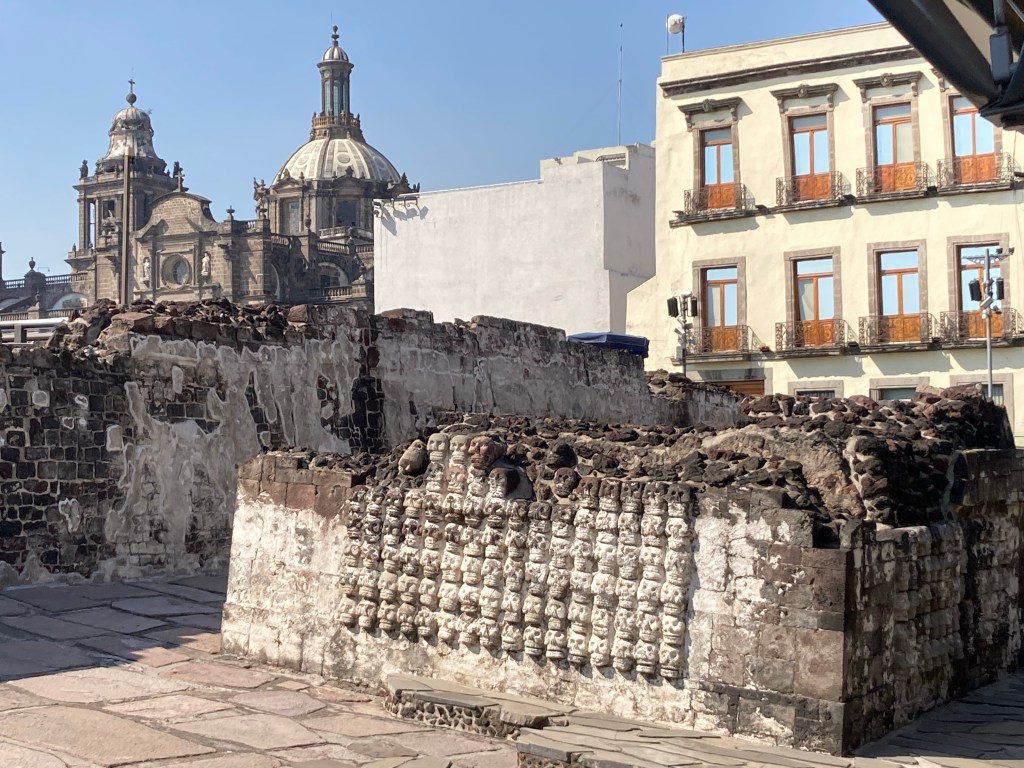
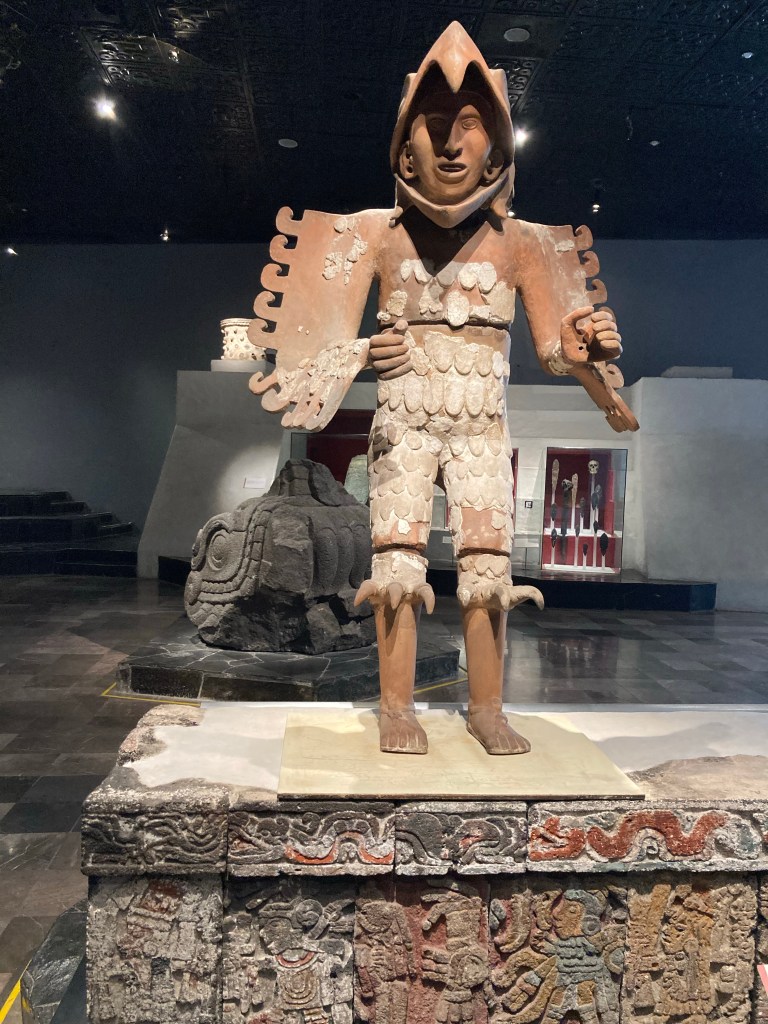
The museum was extensive and here are a few of the more impressive exhibits – Tlaltecuhtli, the earth god …
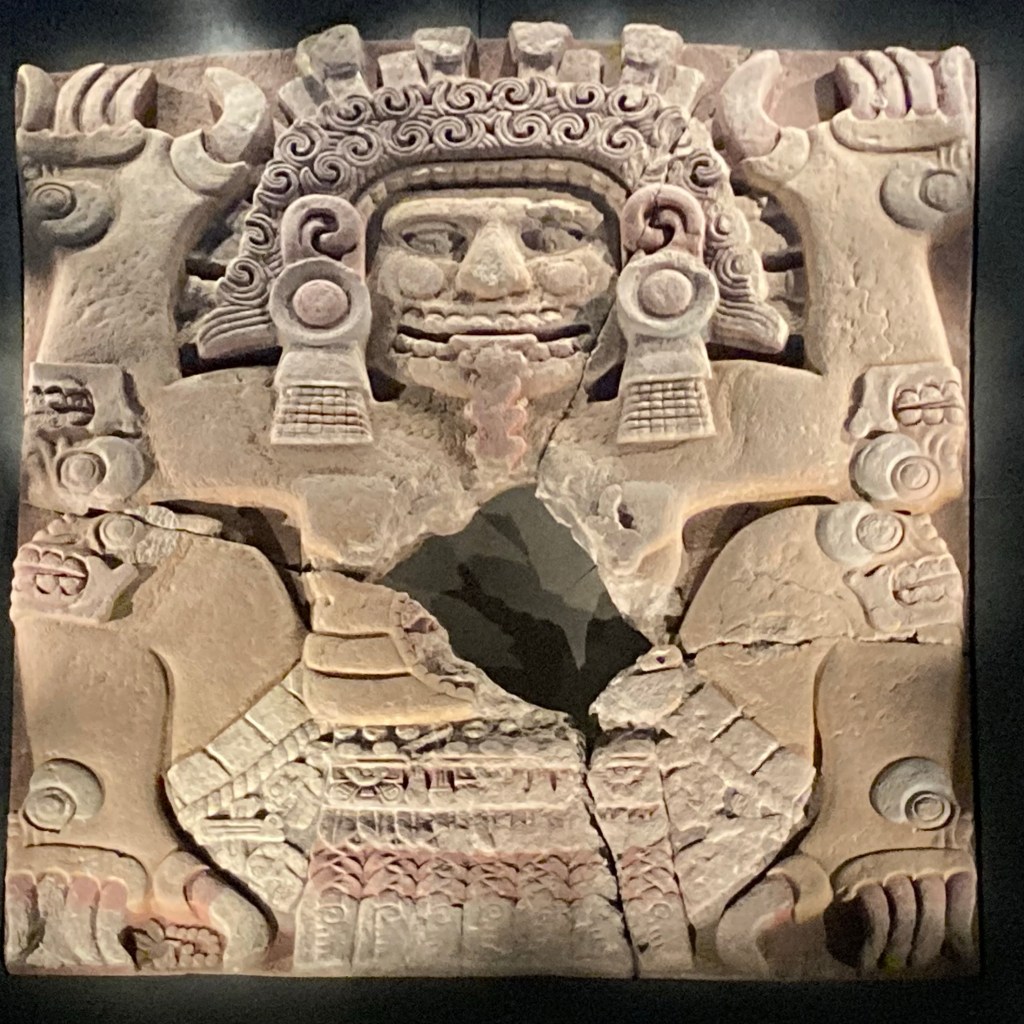
… a brazier with the face of Tlaloc the rain god …
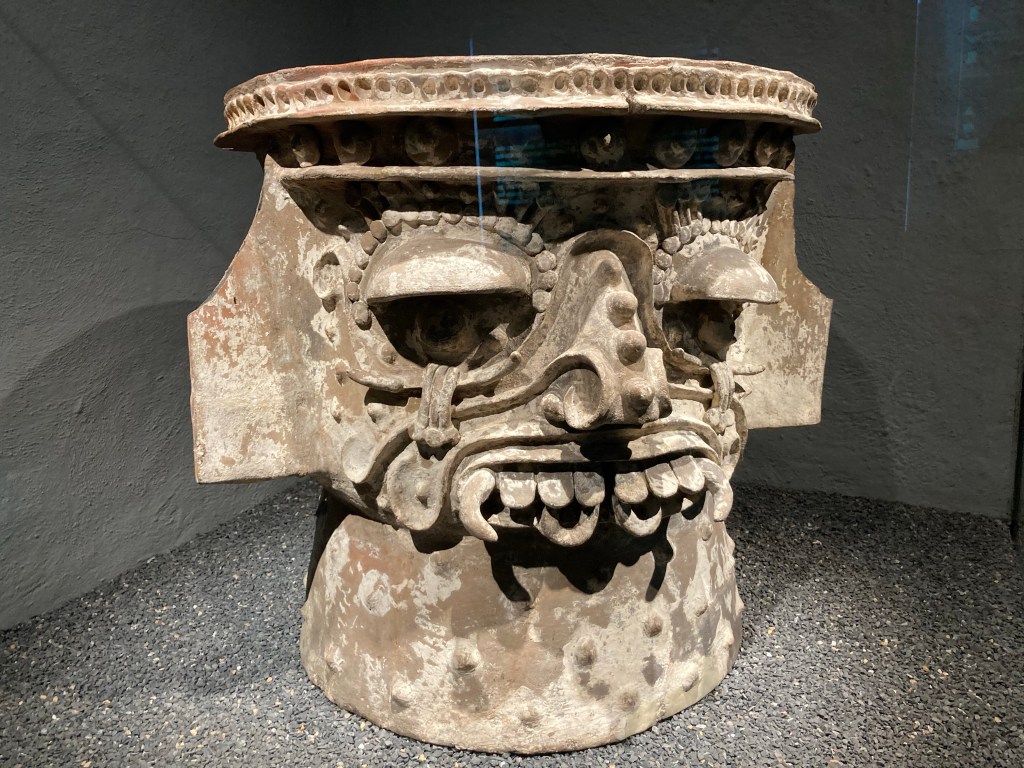
… Chicomicoatl the corn goddess …
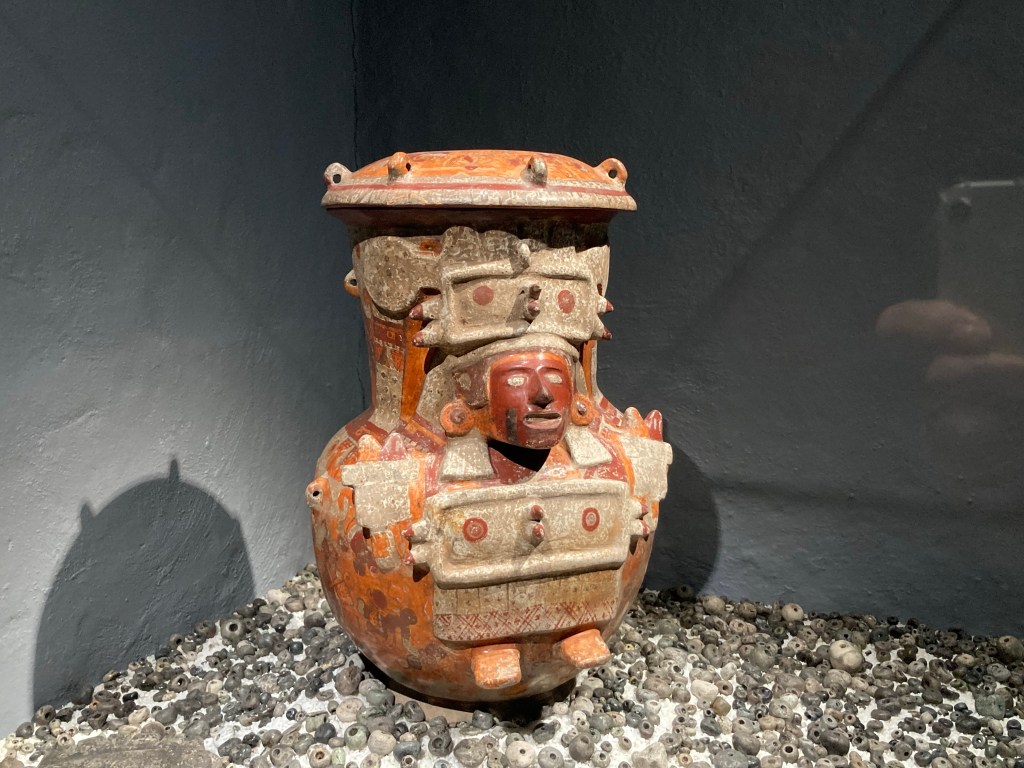
… an eagle warrior …
… and finally the disc of Coyolxauhqui, goddess of the moon.
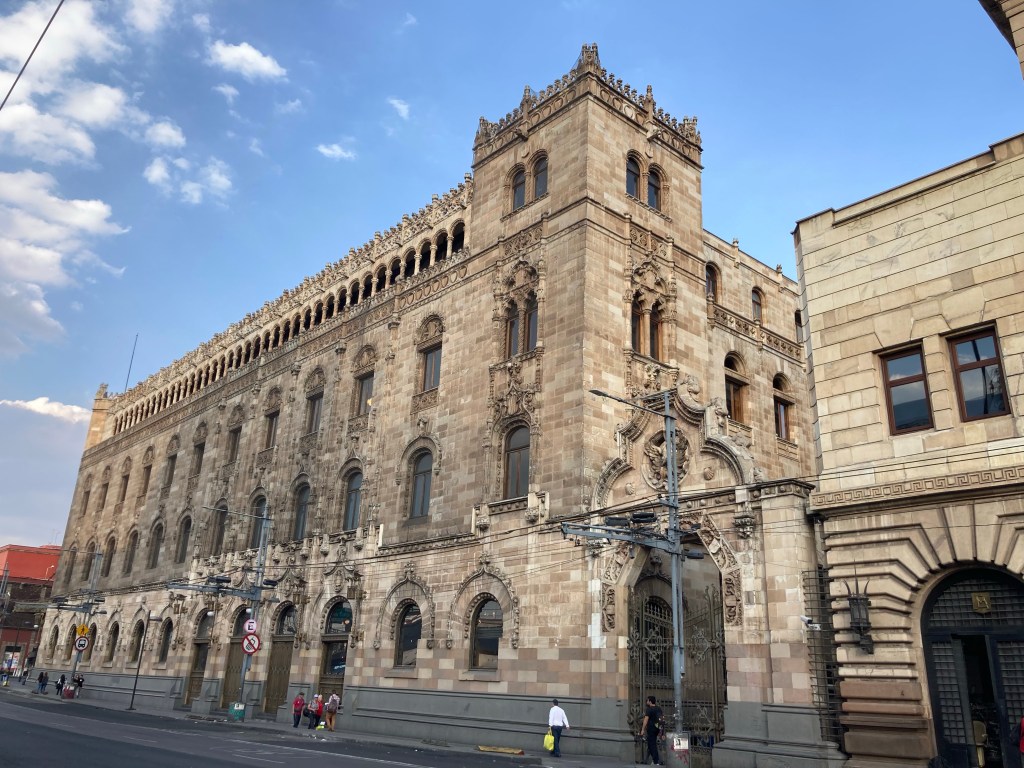
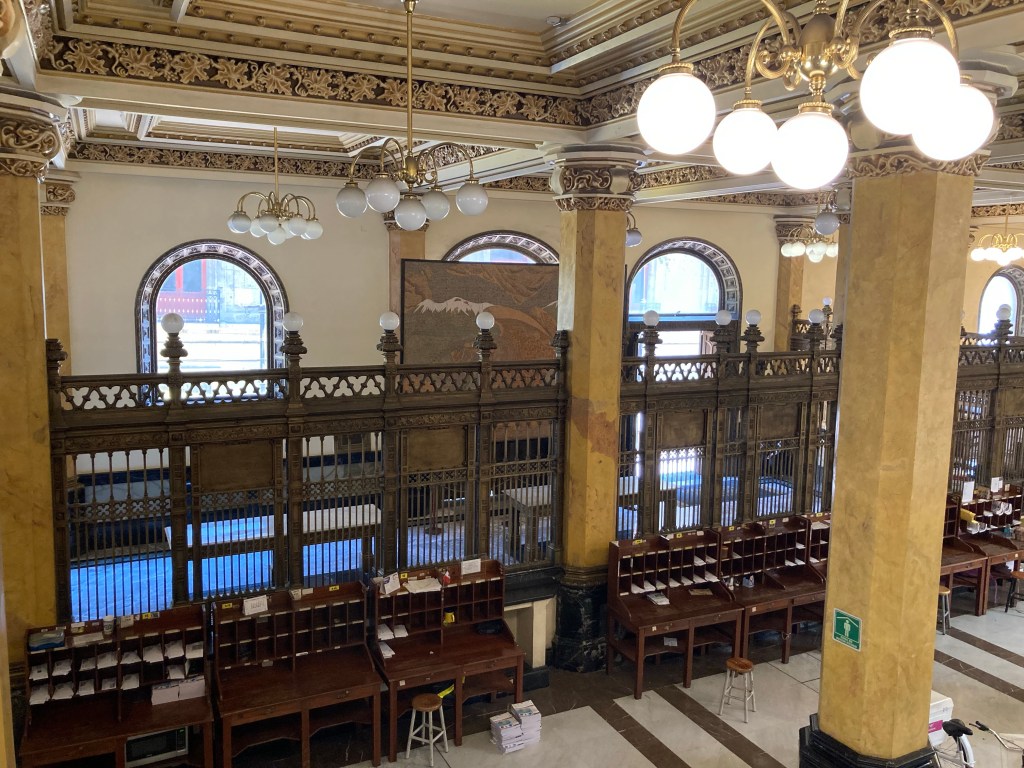
Something a little more modern now, the Palacio de Correos de México or Postal Palace of Mexico City was built in 1907 and its highly eclectic design incorporates almost every exuberant architectural style in the book, but it was certainly worth a quick look. While most is now a museum, there are still functional postal counters on one side.
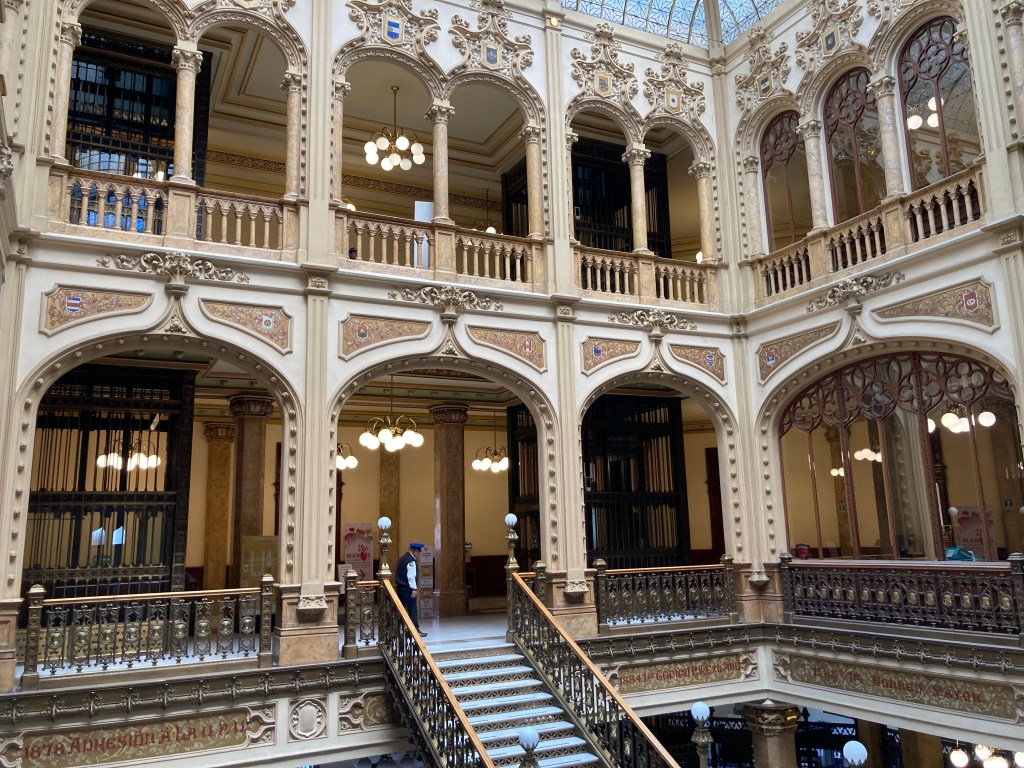
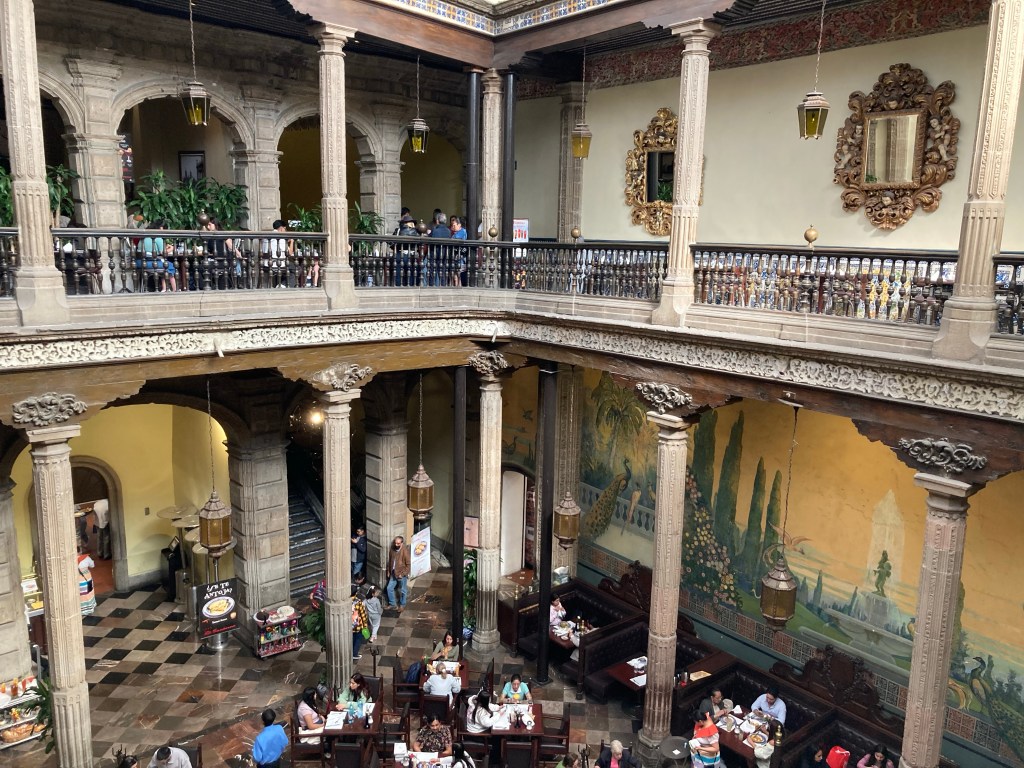
Close by is the Casa de los Azulejos or House of Tiles, an C18th palace with blue-&-white tile facade, now home to a popular restaurant and we went in for a quick look round …
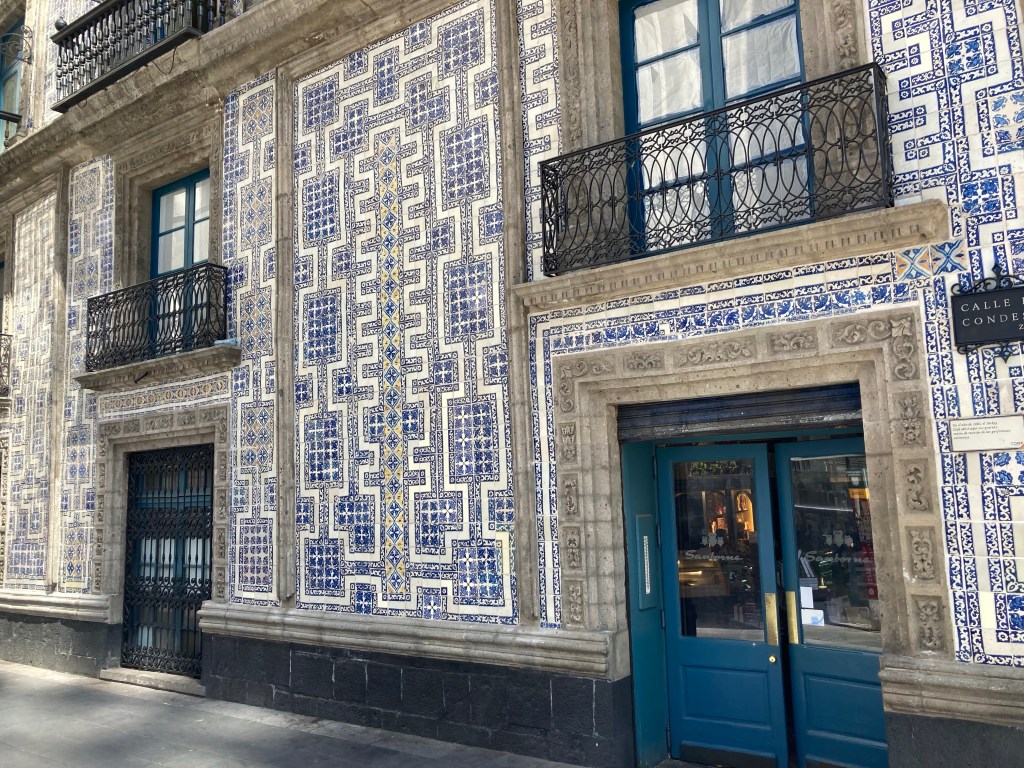
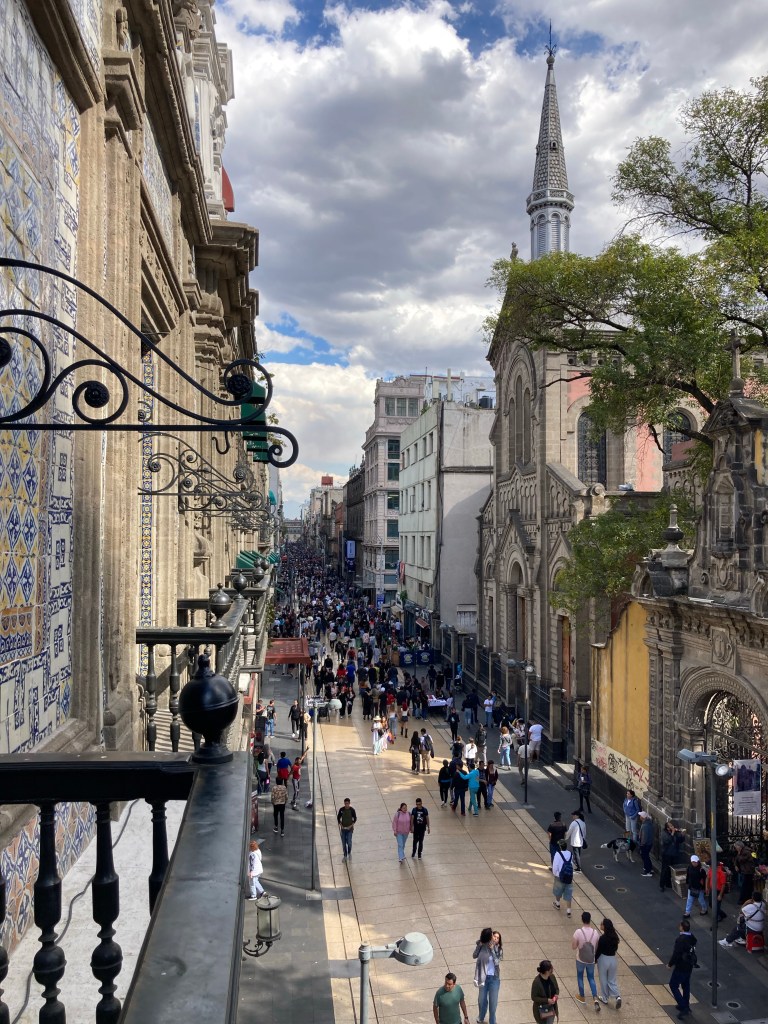
… and a view down the street.
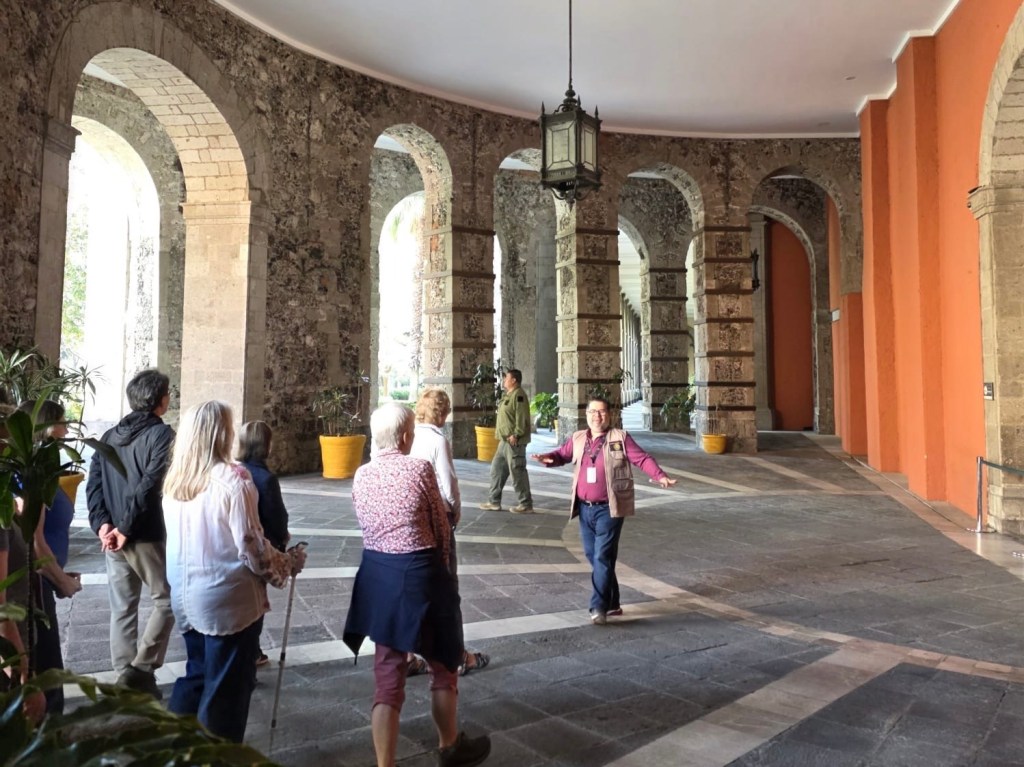
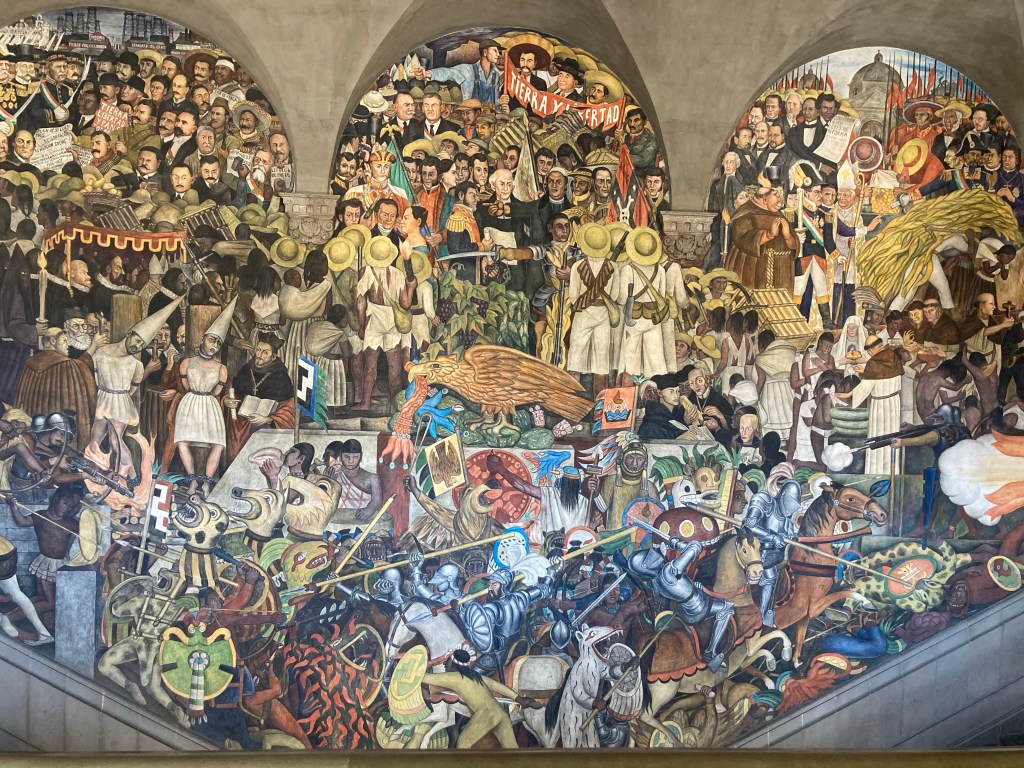
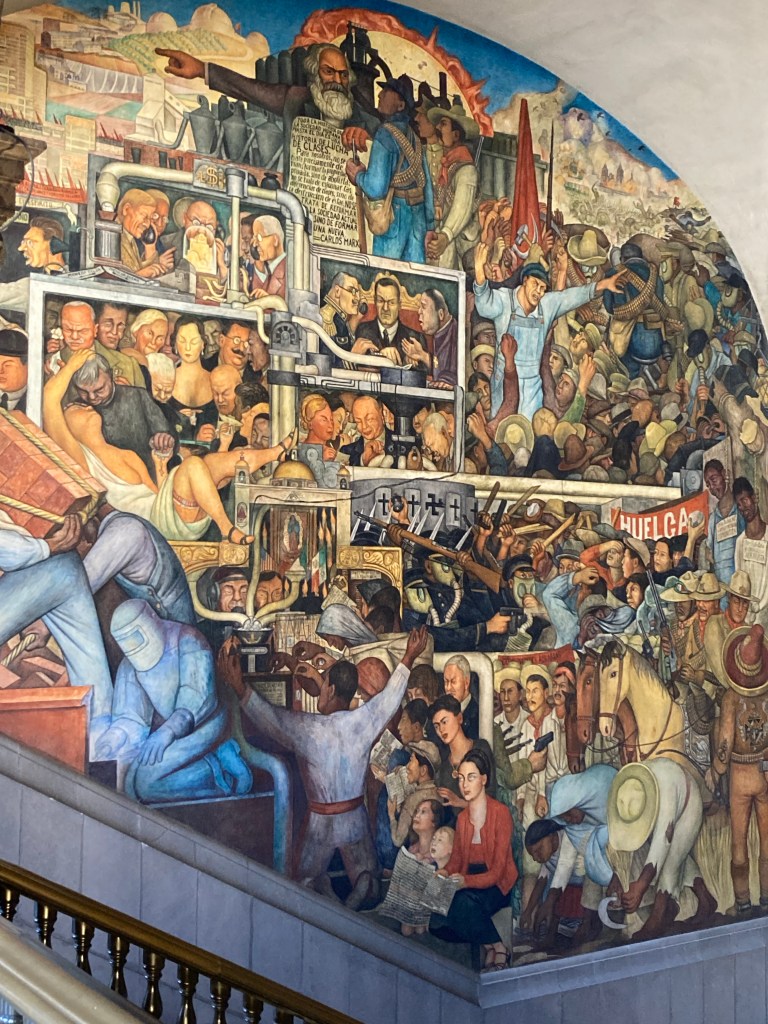
We returned to the National Palace for our tour and as it is a functioning government building where the president lives, security was tight on entry. The main attraction were the Diego Rivera frescos on the stairwell and corridors …
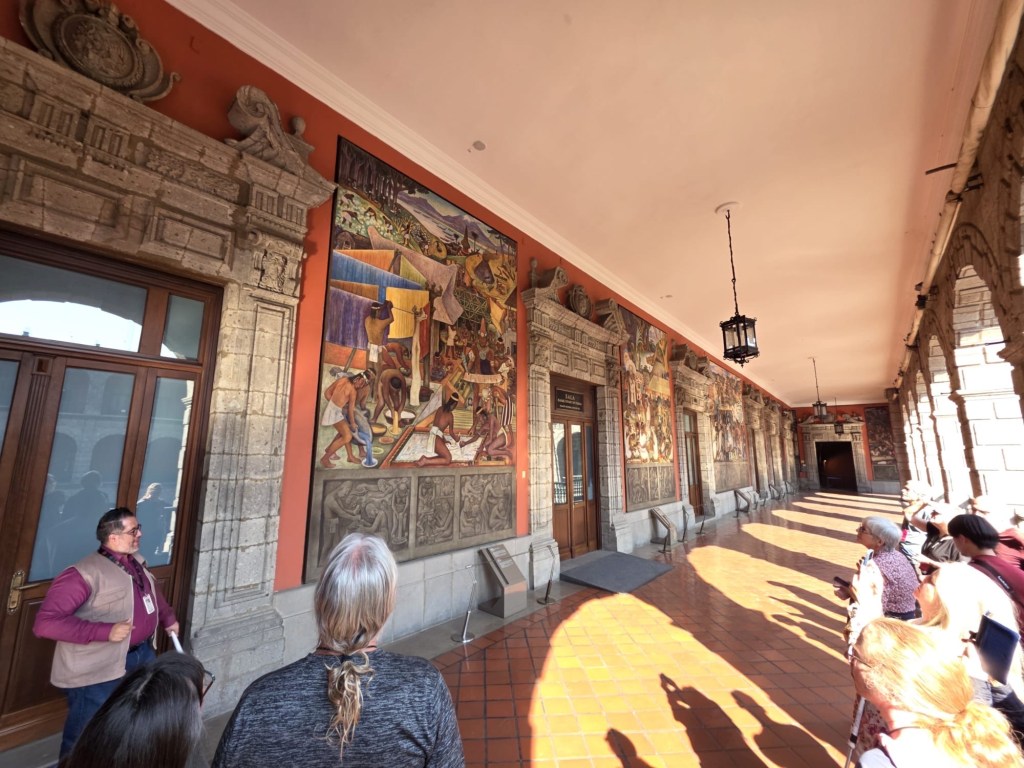
… and we were starting to get the hang of his compositions so it was no surprise that The History of Mexico was billed as an epic depicting the entire history of Mexico, from pre-Hispanic civilizations and the Spanish conquest to the Revolution and a vision of the nation’s future! The main wall has a large eagle with a serpent in its mouth in the centre representing both Aztec culture and modern Mexico and a similar cast of thousands with key historical figures just like the other murals we’ve seen.
The other wall shows a possible future of Mexico, with factories, the Soviet flag, workers, Karl Marx and Frida Kahlo teaching children.
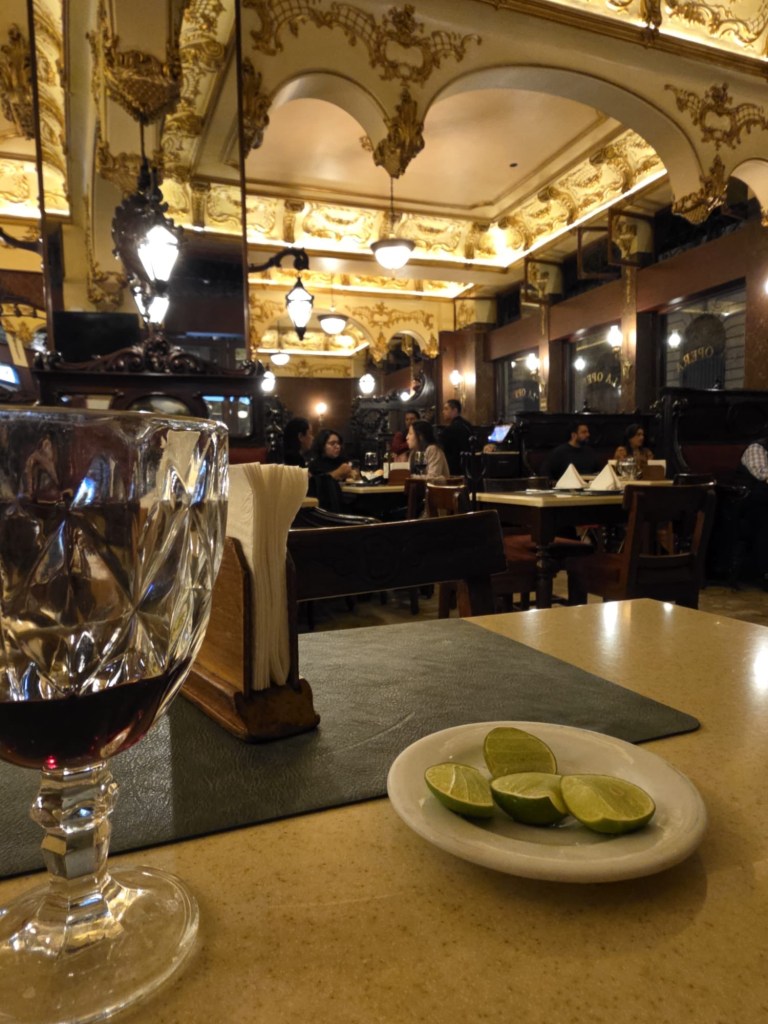
We have been walking passed the very swanky Opera Bar every day and tonight, in need of a little home comfort, we went in for dinner. Decorated in exuberant baroque style, they had Fettucine Bolognese and French fries on the menu! Past patrons have included the dictator Don Porfirio Díaz before the revolution, Zapata’s men afterwards and even Pancho Villa who fired his pistol and lodged a bullet in the ceiling!
We will be back in Mexico City at the end of our trip, but for now we are done and catching a bus tomorrow … not a bad start for the Taco Trail!
 Off Travelling Together