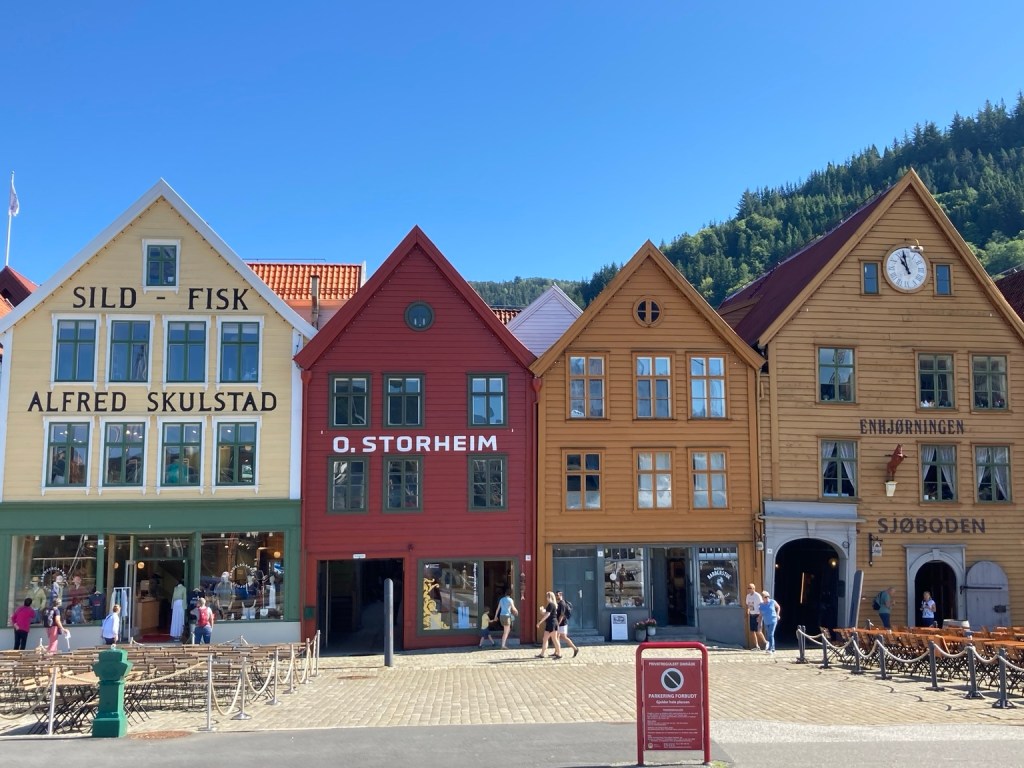
After a 3 hour drive we arrived in Bergen, but with so much packed into the day, it was almost 10pm before we arrived and checked into our sea view room!
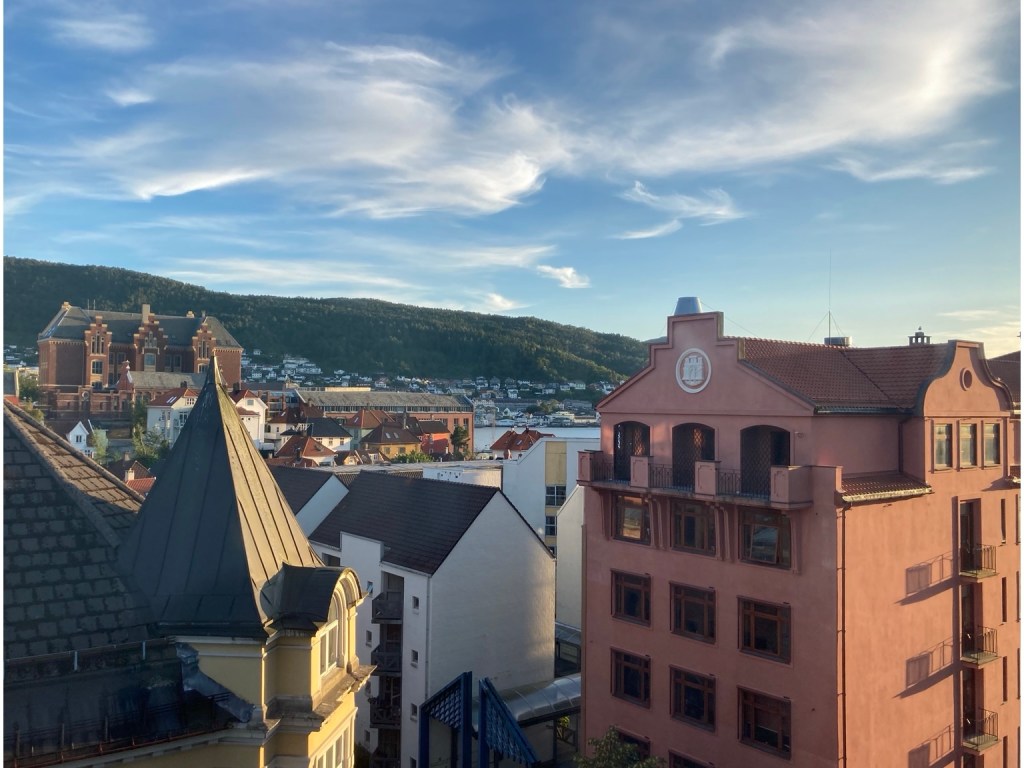
Despite the bright sunshine, it felt too late for dinner, so we just got take away pizza slices from the 7-eleven and sat in the park to eat them before heading to bed.
We had a guided tour round the town in the morning starting on the far side of the bay …

… and then had a couple of hours free time to explore further, which was a lot to pack into a morning. Luckily it was a beautiful day, which is rare in Bergen where it rains on average 260 days a year.
From the C11th, Bergen was the largest and most important town in medieval Norway and is known for its maritime history. It became a hub for the Hanseatic League which enabled dried stockfish from the north of Norway to be traded, mainly for grain. In time, the League which was controlled by German merchants, came to dominate the economy, becoming increasingly wealthy and disliked by local Norwegians.
The heart of the town is the harbour …

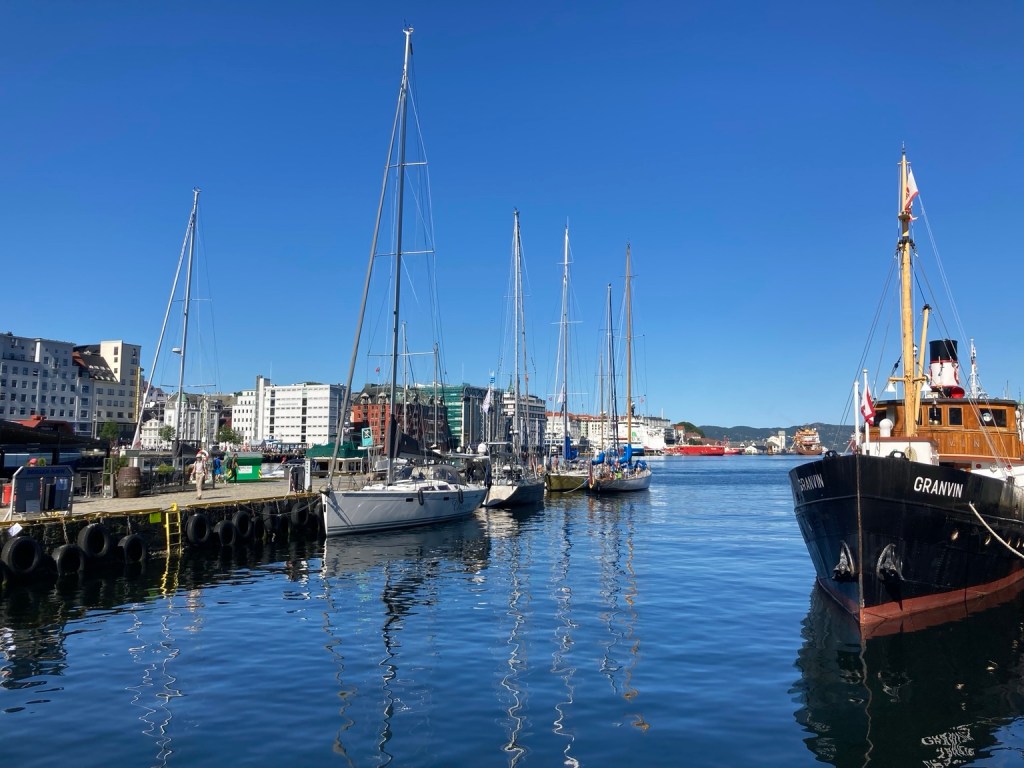
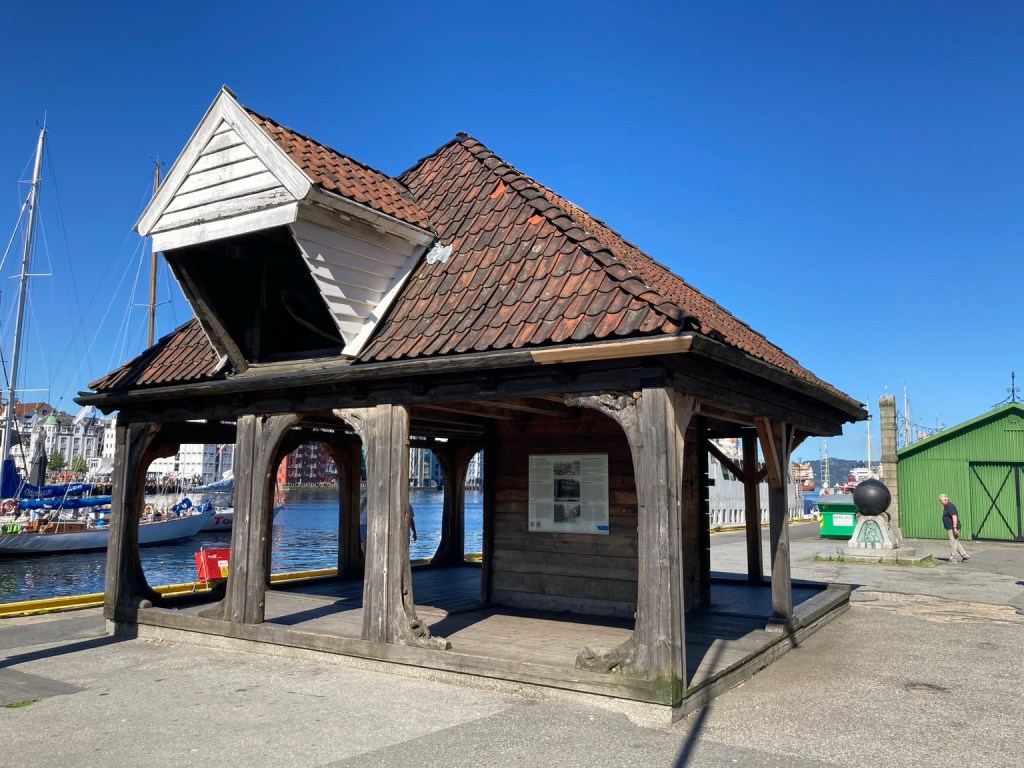
… and Torget, the open air fish market …
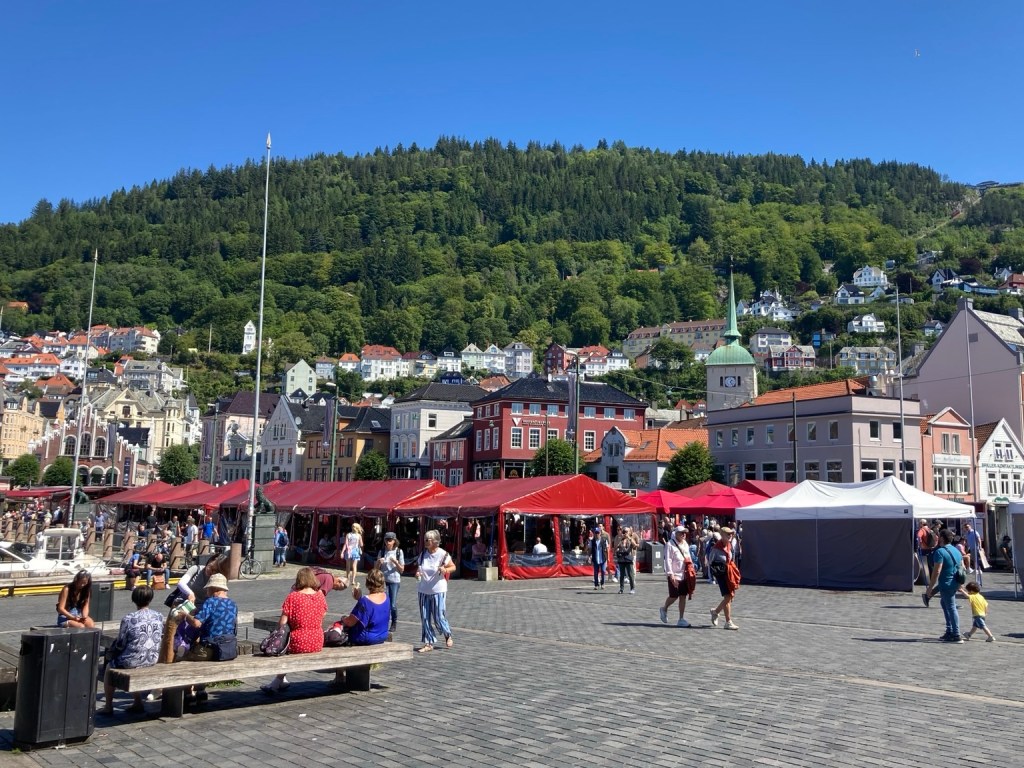
… where they still sell stockfish …

… amongst other fishy things …

… but I just had tasters of reindeer and whale sausage. There were also jams, and while cloudberry is the most famous, it is very sweet so we chose a small jar of lingonberry jam to bring home.
The harbour side area called Bryggen is lined with merchants’ trading houses, built after the great city fire of 1702. The very oldest are wooden and now protected …
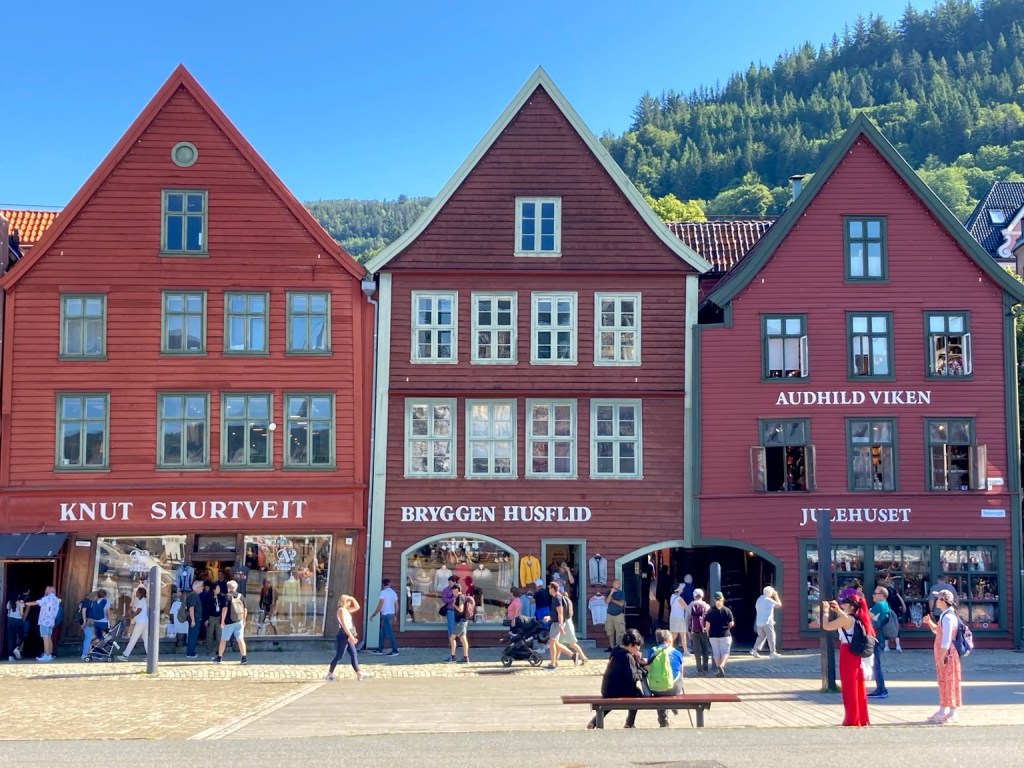

… but others were demolished in favour of brick buildings, although their style is sympathetic.
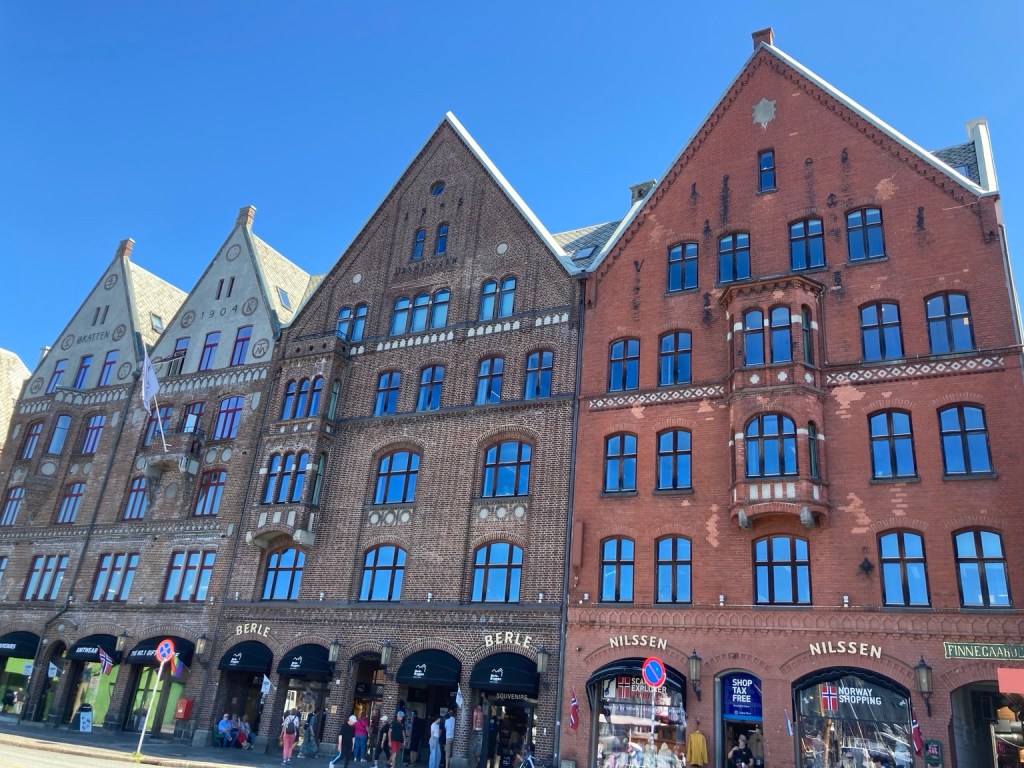

Everything about the League was regulated from the design and size of the buildings to the behaviour of the employees, but sleeping above all that smelly fish can’t have been pleasant. This model shows how the area would have looked.

We wandered down the alleys and between the buildings, most now giftshops selling jumpers and trolls.
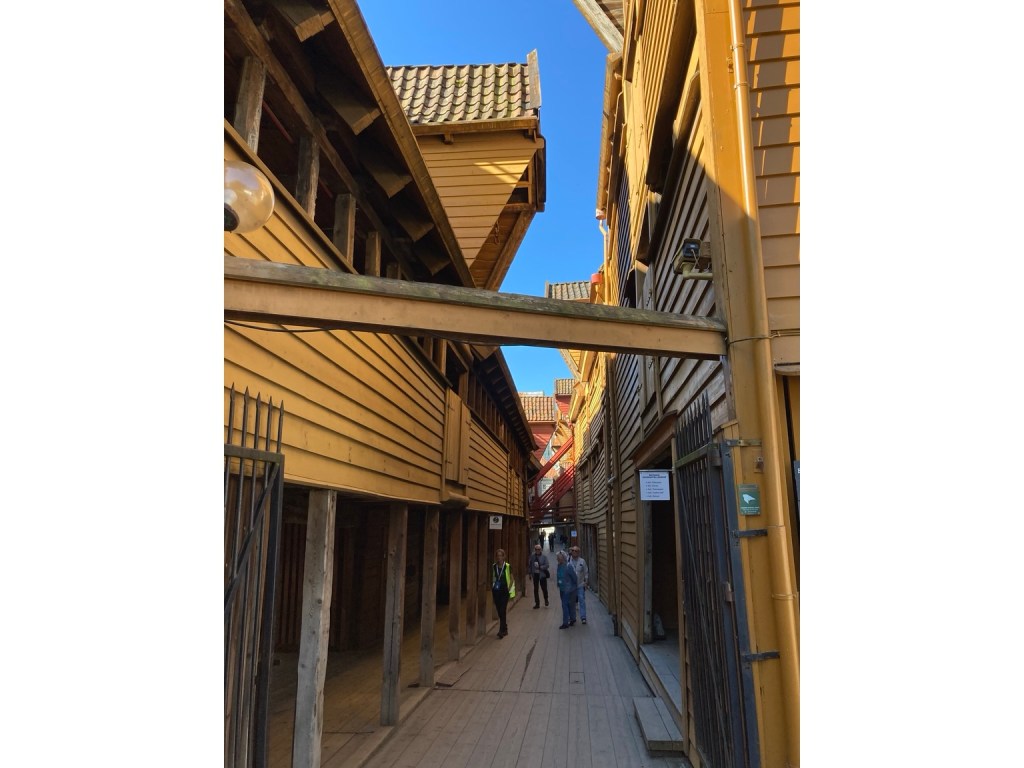


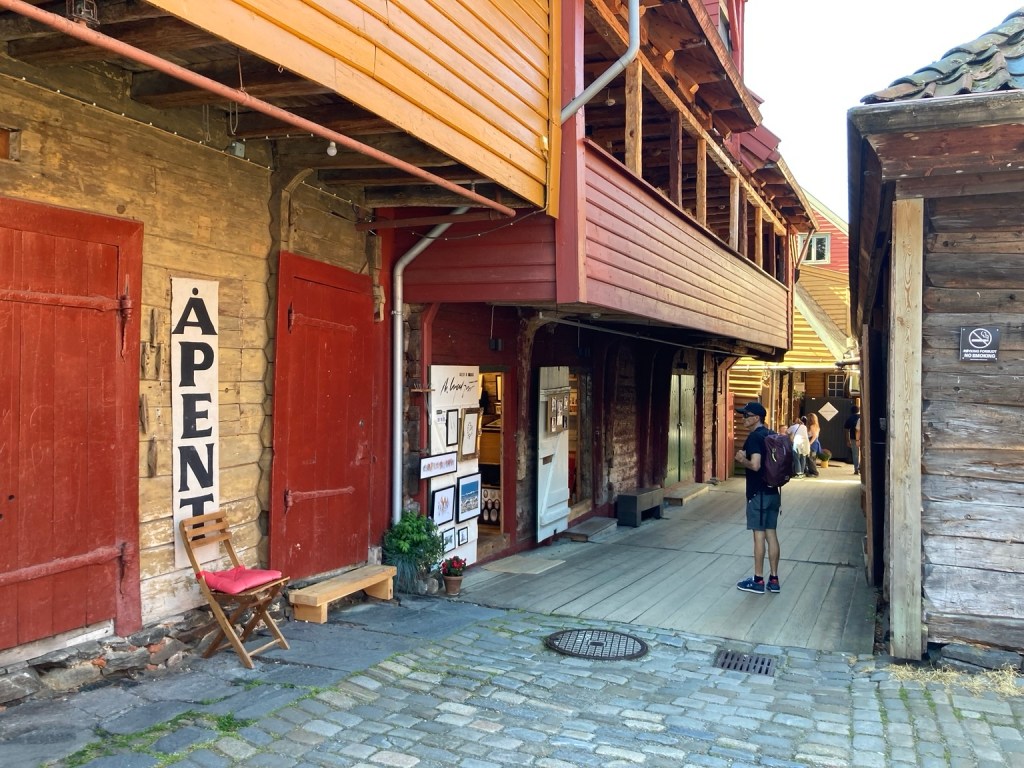
The Hanseatic Museum was closed for renovation, but we did visit the Schotstuene or assembly rooms, where merchants gathered to eat, hold council and relax.

To safeguard against fire, this building had a stone built kitchen and was the only place in the trading post which allowed cooking and heating. The kitchen was laid out with each trading company having its own workstation and cooking pot …

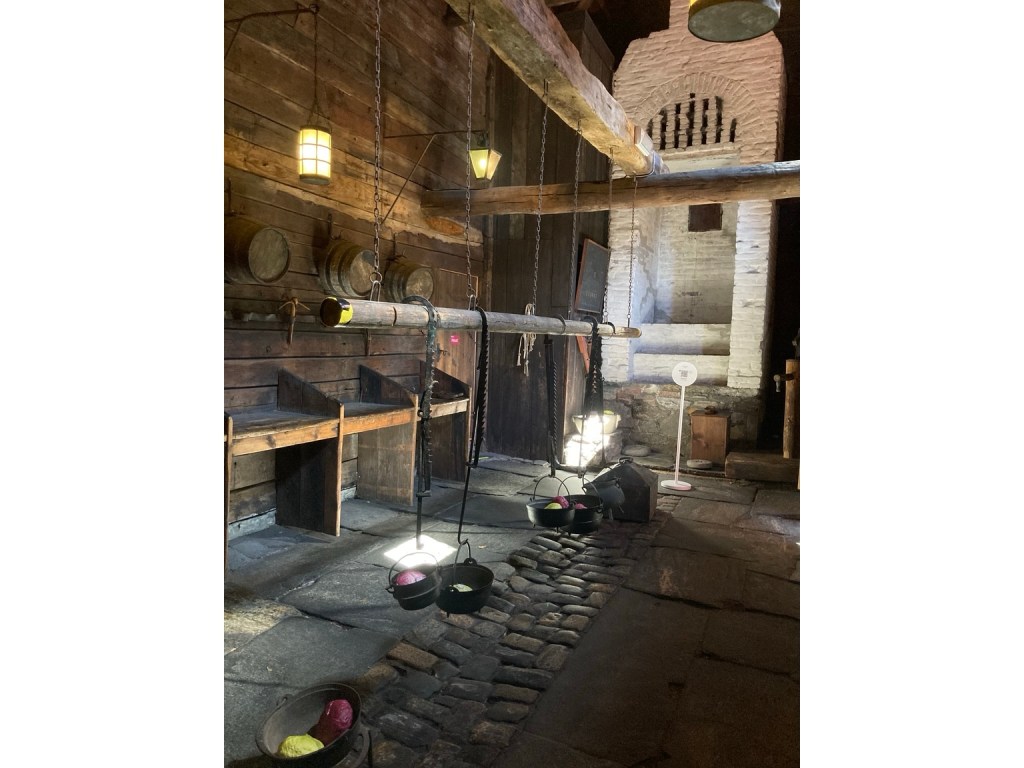
… and the stone hearth at the end would heat the assembly room on the other side.

Later intricate metal stoves were installed.

We passed the old meat market …
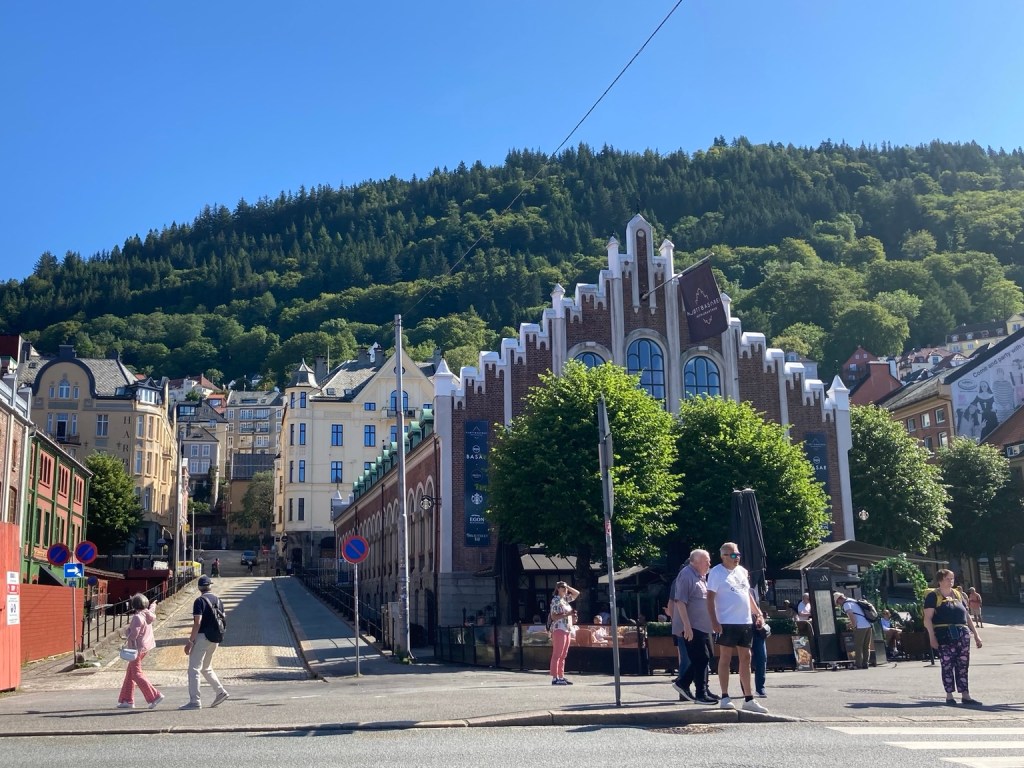
… and took a wander through the back streets …


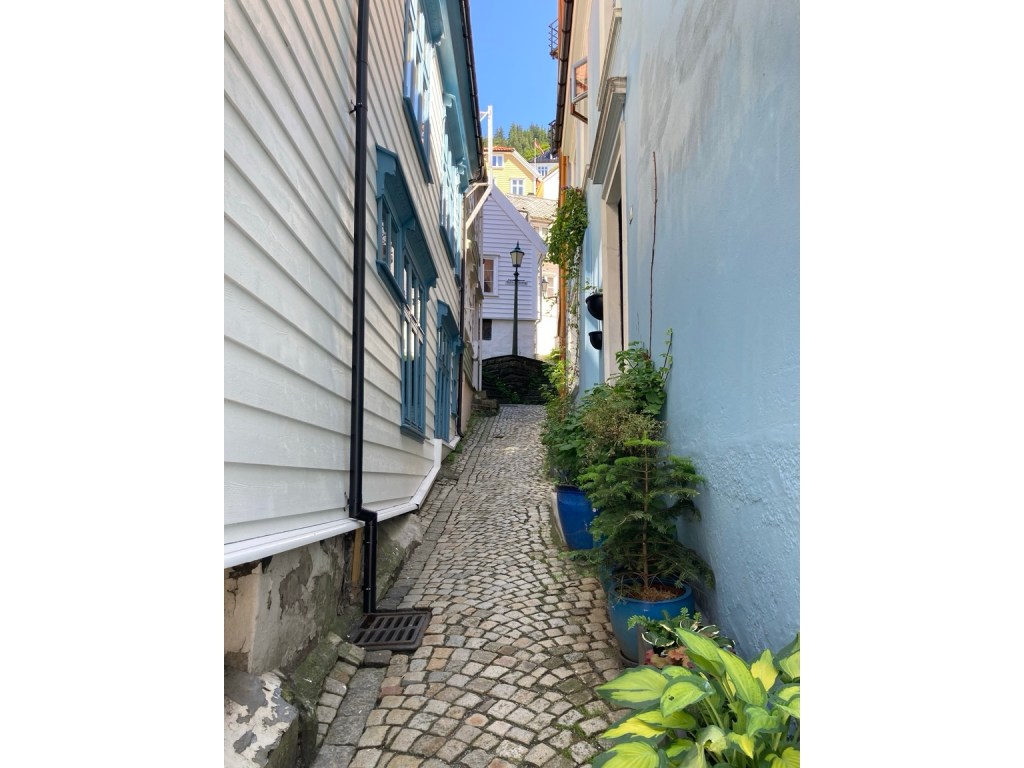
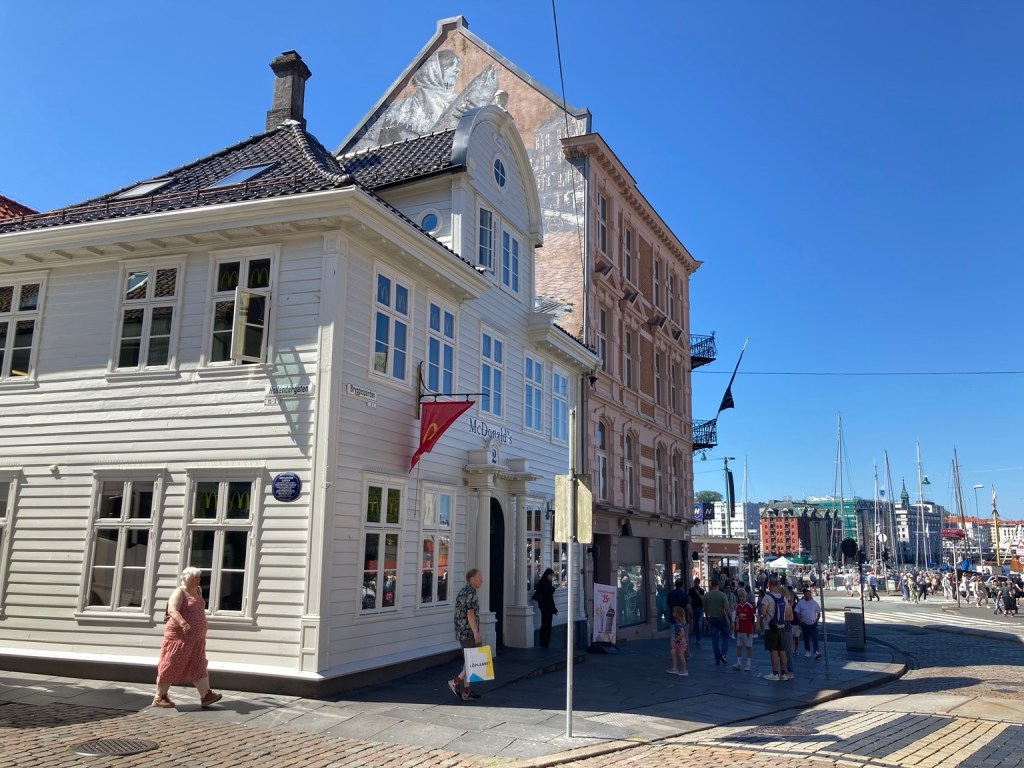
… where even the Macdonalds was cute.
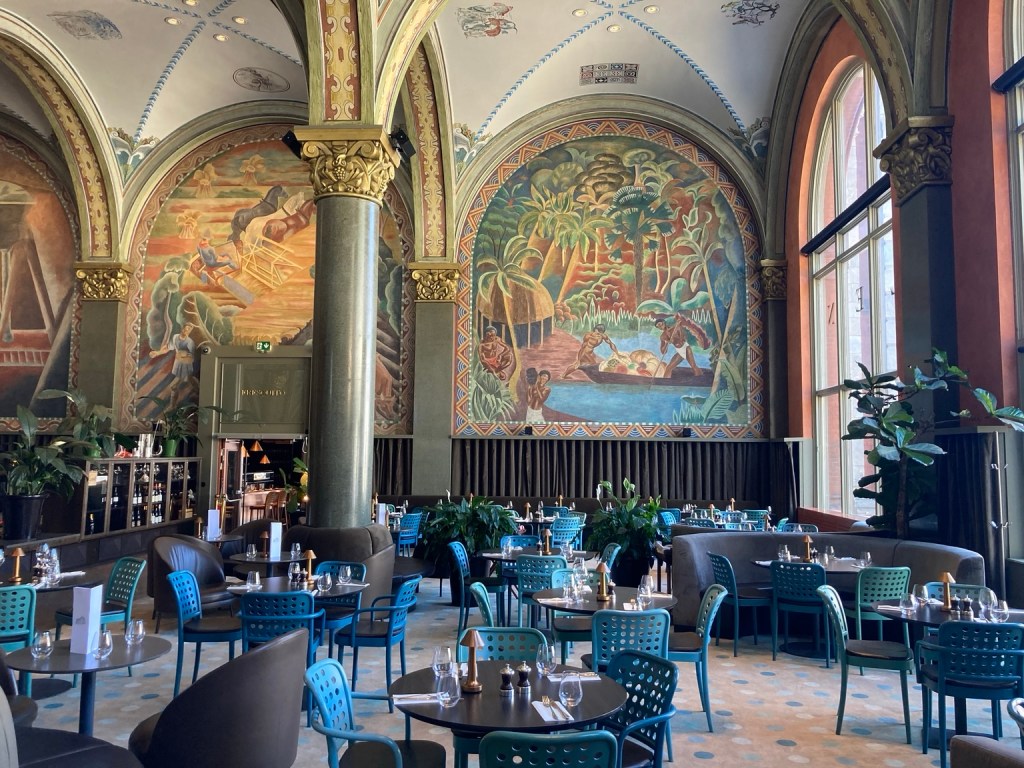
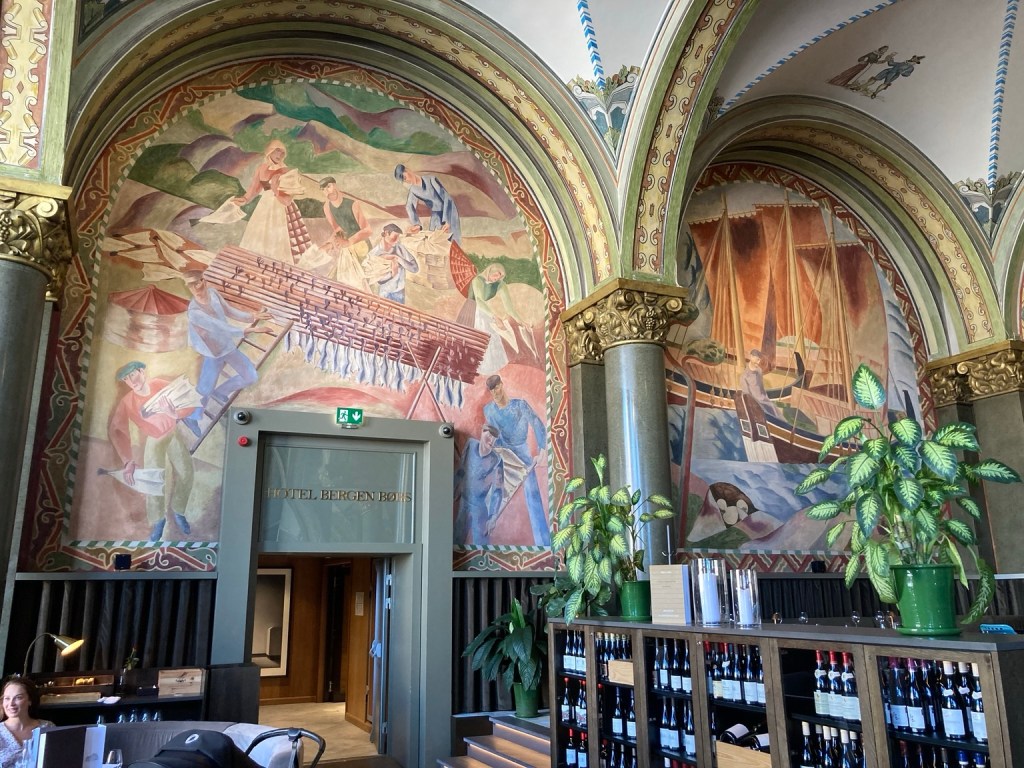
We also popped in to the Fresco Hall, part of the old stock exchange building, which was decorated with frescoes linked to Bergen’s business life in the 1920s, but now a restaurant.
Finally, Bergen has installed a pneumatic waste collection system to do away with bins and trucks. Instead, rubbish is deposited into special chutes and it gets sucked away through pipes to a terminal. We were eager to try it and saved our lunch wrappers specially …

… only to find you need to have a residents code to use it! As Chris spotted, check out the shirt, at least one slot machine worked this season!
Time is up … got to go … we’ve got a ferry to catch!
 Off Travelling Together