
The Flytoget train whisked us into the city centre from the airport effortlessly …
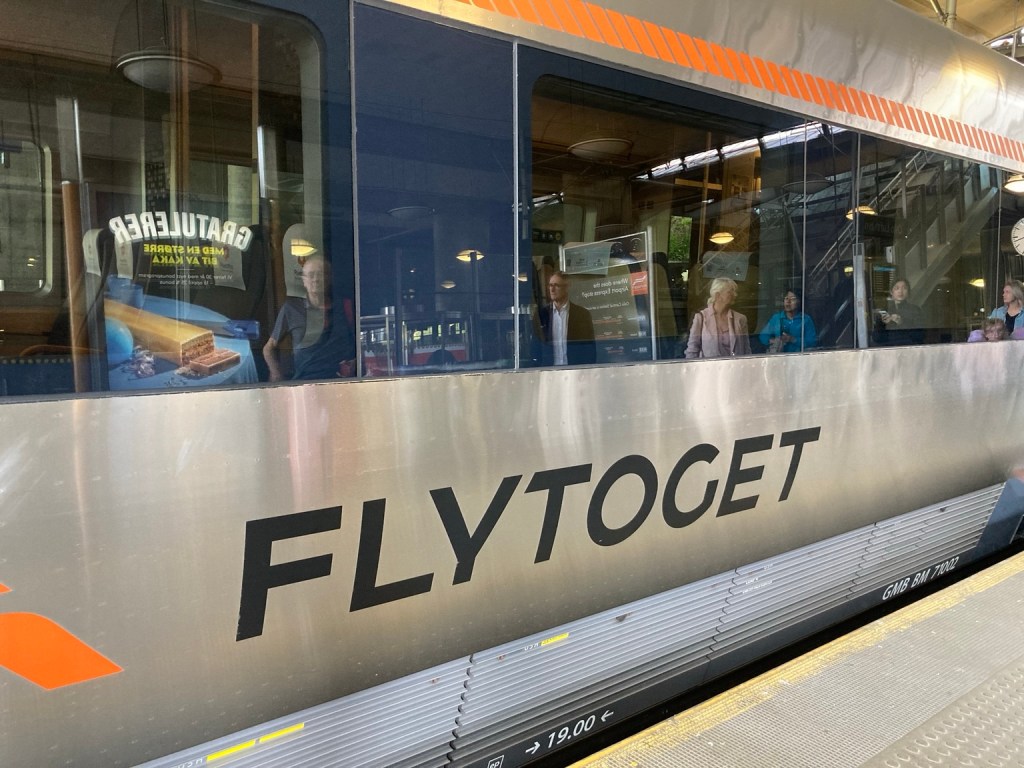
… and we were soon checked in to our central hotel and off to explore.

We were enticed into a bakery by the array of sweet treats and chose twisted cinnamon buns called Kanelsnurrer which were delicious …

… before walking to the harbour. Knowing we would have a city tour next day, we went to the Norwegian National Museum for the afternoon. We started with the applied art and design floor and an extensive collection of furniture and interiors from medieval times to the present day. We then went up to the roof to get a view across the harbour to the Akerhaus fort, built in the C14th by King Hakon V …

… before wandering through the collection of Norwegian art.
Just a brief history lesson to put things into perspective. During the Viking Age, Norwegians expanded their influence through exploration, trade, and raids across Europe with Norway becoming a single kingdom in 900. Christianity slowly became the dominant religion, replacing Norse paganism, but a decline began when the bubonic plague wiped out half the population in 1397.
Subsequently, Norway became a dependency of Denmark, which lasted for 400 years during which the Reformation led to the establishment of Lutheranism. After the Napoleonic Wars, Norway was forced into a union with Sweden but it wasn’t until 1905 that this union was dissolved. Norway became a fully independent country with a referendum choosing Prince Carl of Denmark as their king, Haakon VII and the capital was returned to its Norse name Oslo.
It was at this point that a growing sense of nationhood inspired artists to depict the sublime Norwegian landscapes and gave us a taste of our trip to come! Here are a few, Stalheim by Johan Christian Dahl …

… the Grindelwald Glacier by his pupil Thomas Fearnley …

… this romantic view of The Bridal Voyage on the Hardanger Fjord by Hans Frederik Gude …

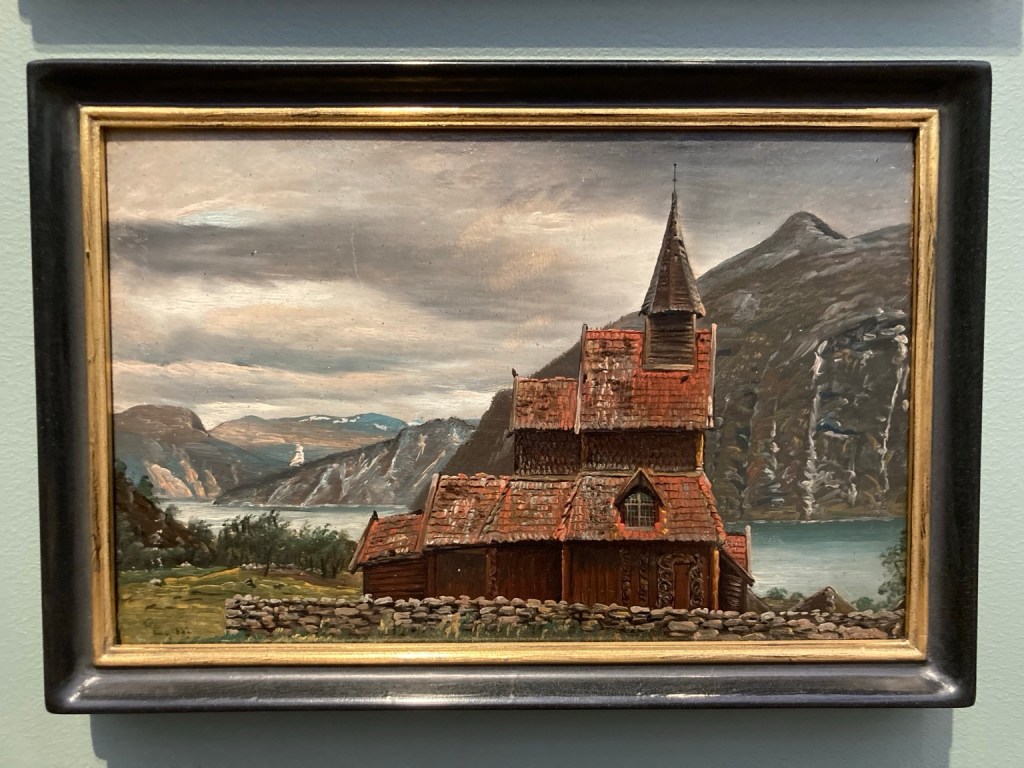
… and finally this view of a stave church, but more about them later.
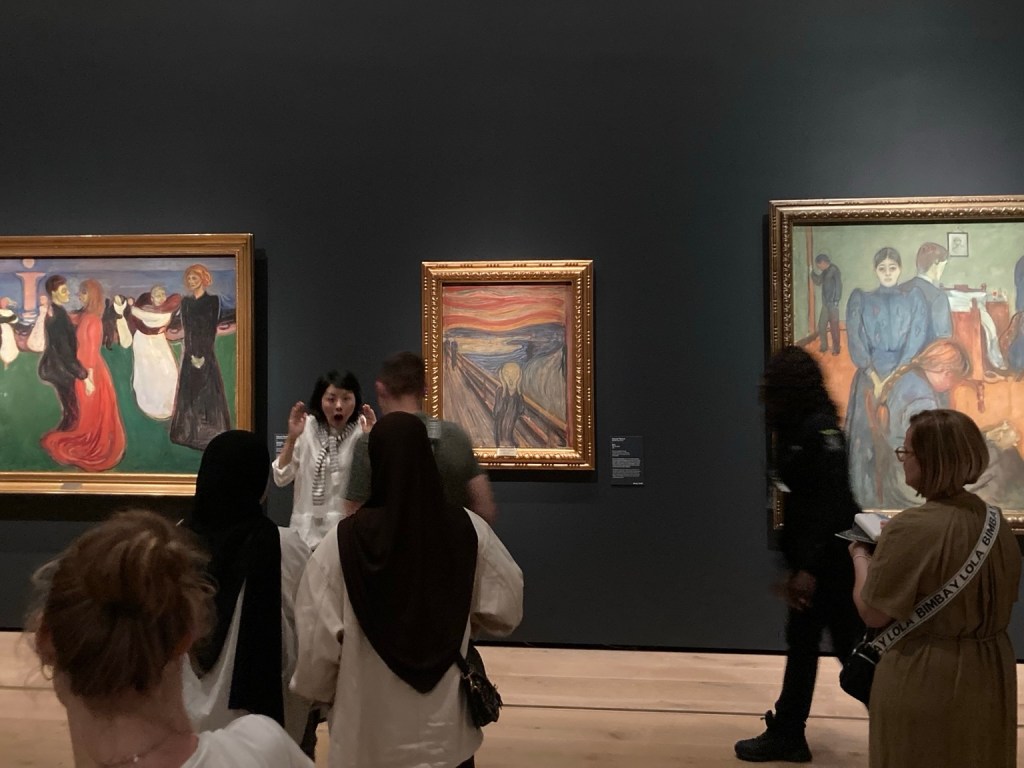
Of course the most famous painting in the gallery has to get a mention, The Scream by Edvard Munch, which had a constant stream of visitors taking selfies!
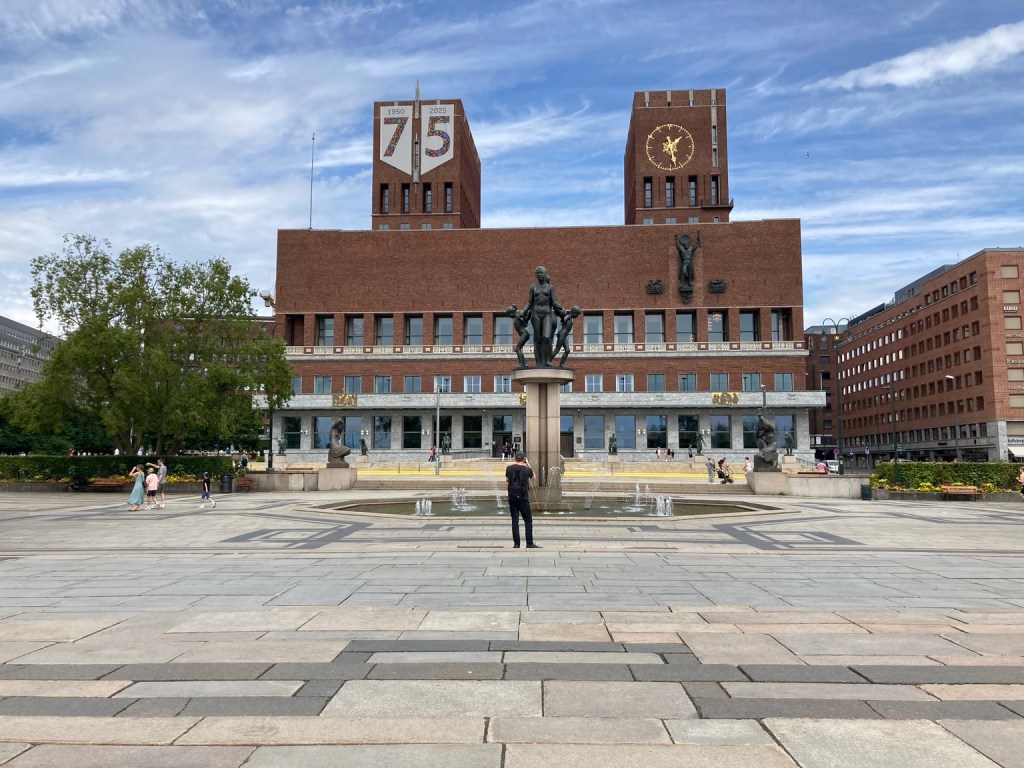
Our walk back took us past City Hall which we will visit tomorrow …
… The Nobel Peace Centre which celebrates Alfred Nobel and the Nobel Peace Prize which is awarded in each year in Oslo …

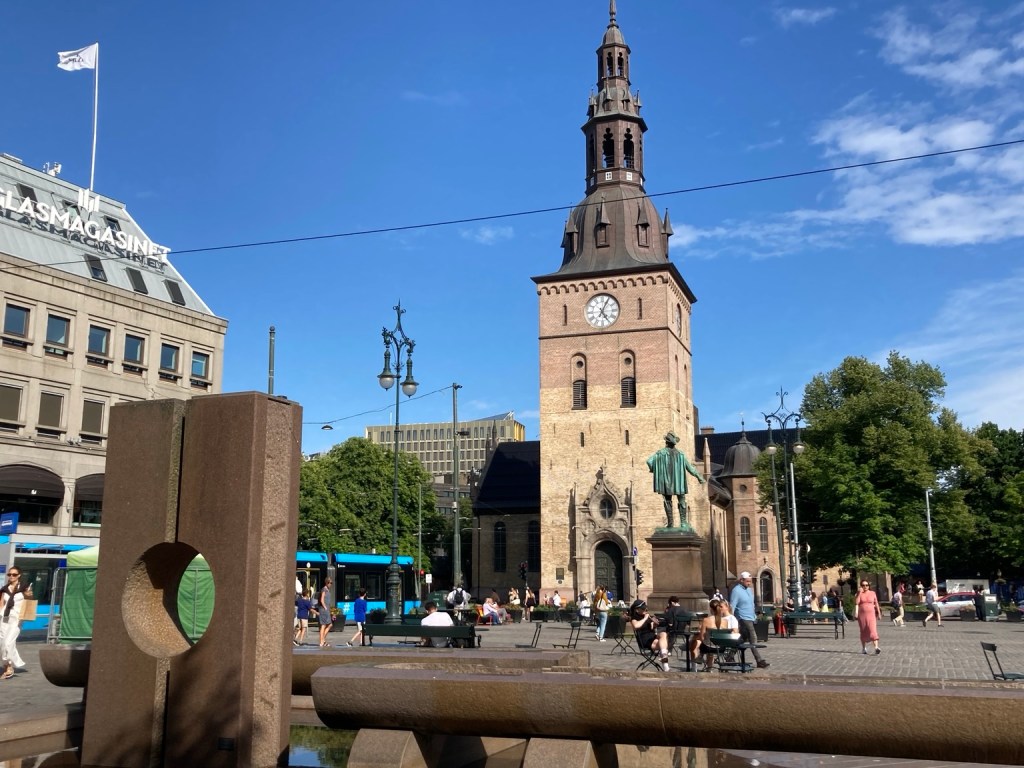
… and the Domkirke or cathedral.
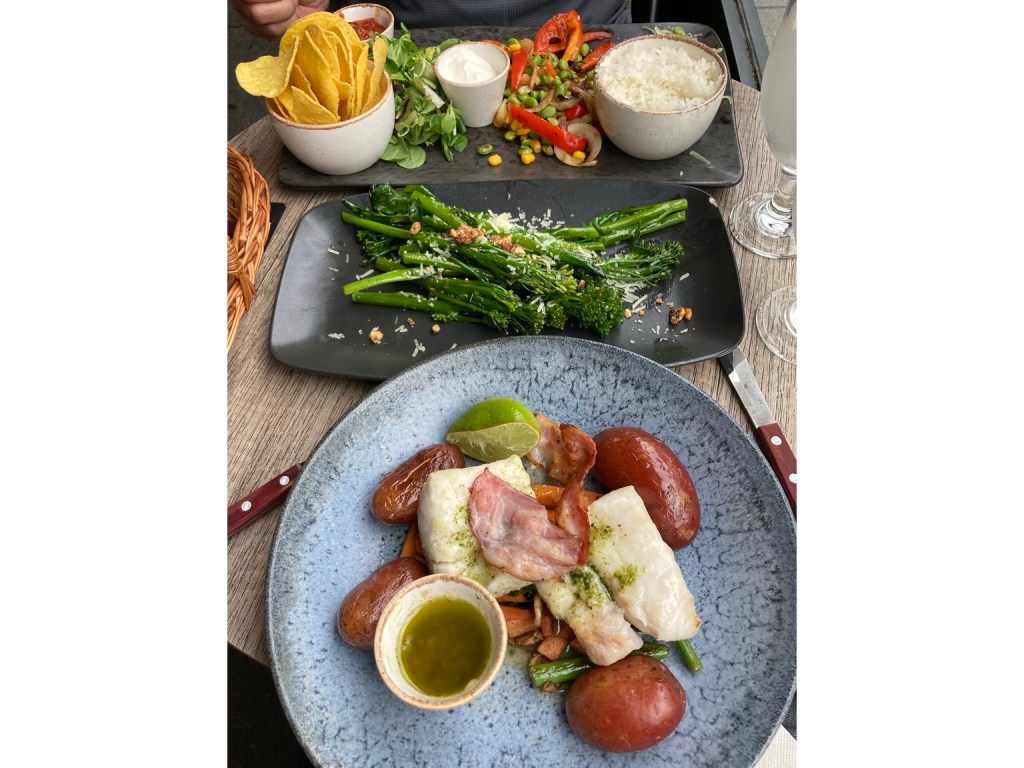
SInce the weather was so lovely, later we found a restaurant with seats outside that served both traditional and veggie dishes and I had Norwegian cod, served with the national staples of potatoes, carrots and mushrooms! Vegetarian choices all seem to be foreign and Chris chose the fajitas!
We returned to the hotel for a brief meet and greet with Paula our tour guide and a number of the group who had already arrived, then went for wander …
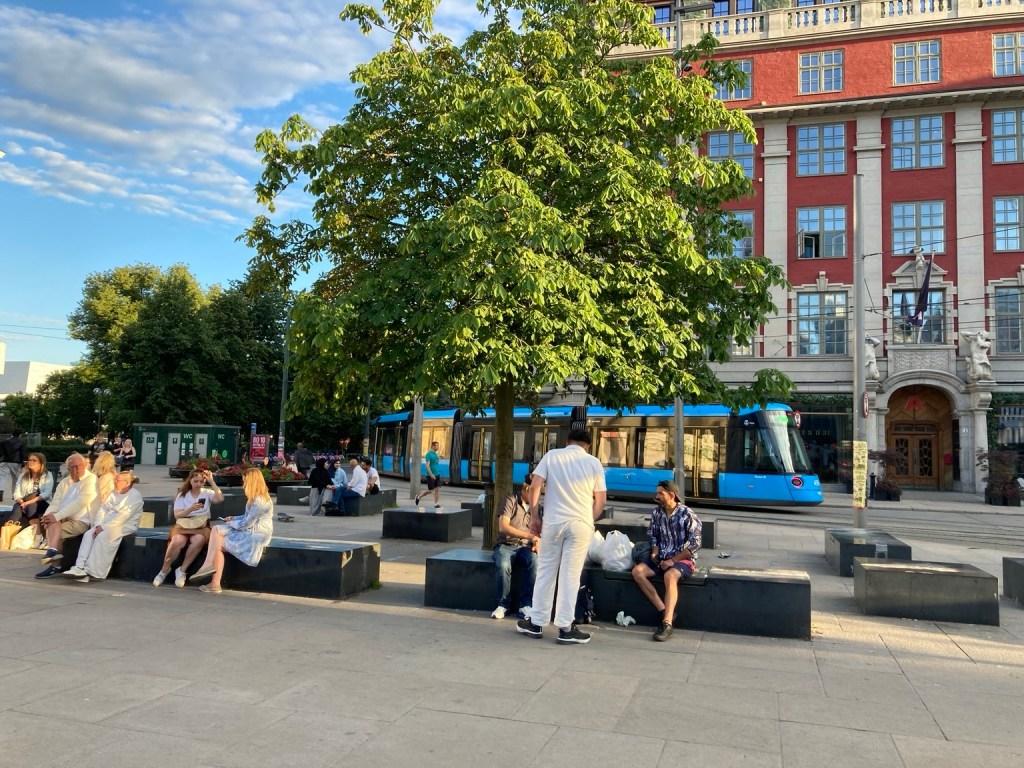
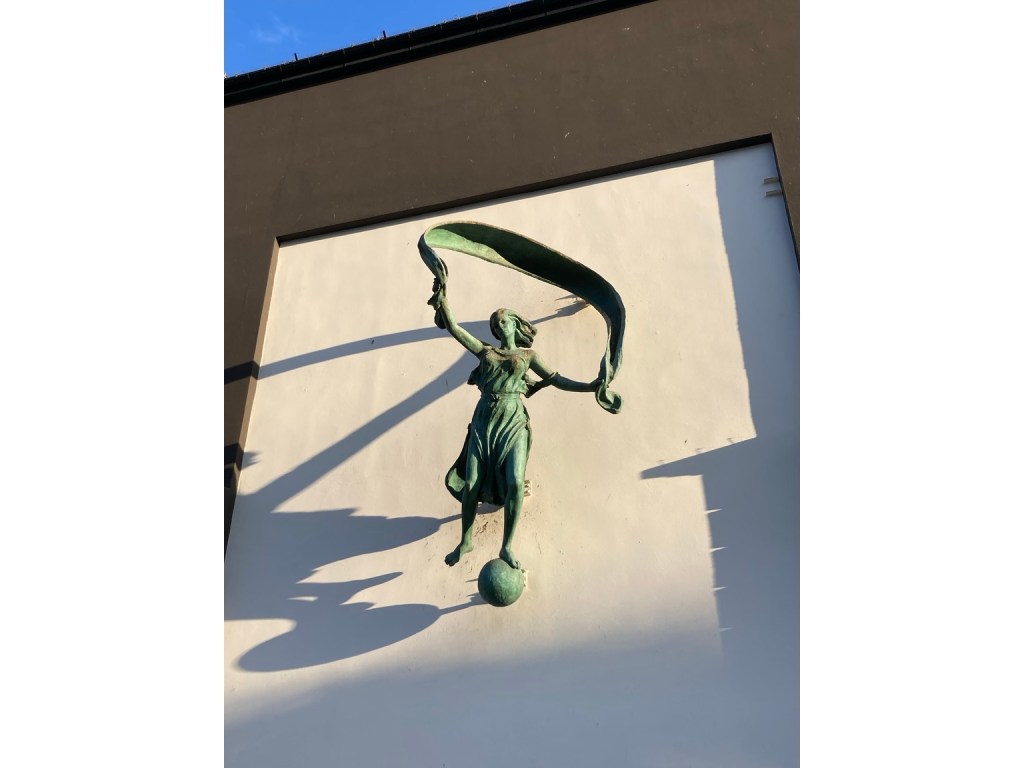

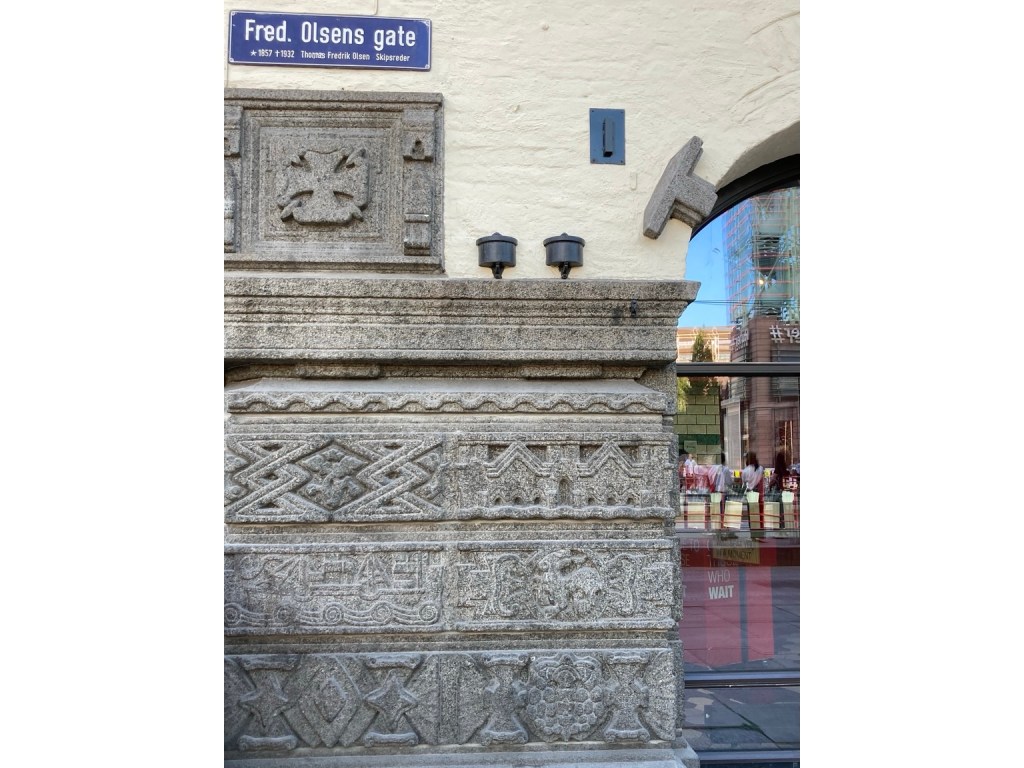
… which eventually took us to the Opera House where people were enjoying the warm evening sunshine.

Oslo isn’t far enough north to be in the land of the midnight sun, but sunset wasn’t till 22.30 and it doesn’t get darker than nautical twilight, so good job we packed eye masks so we got a good sleep!
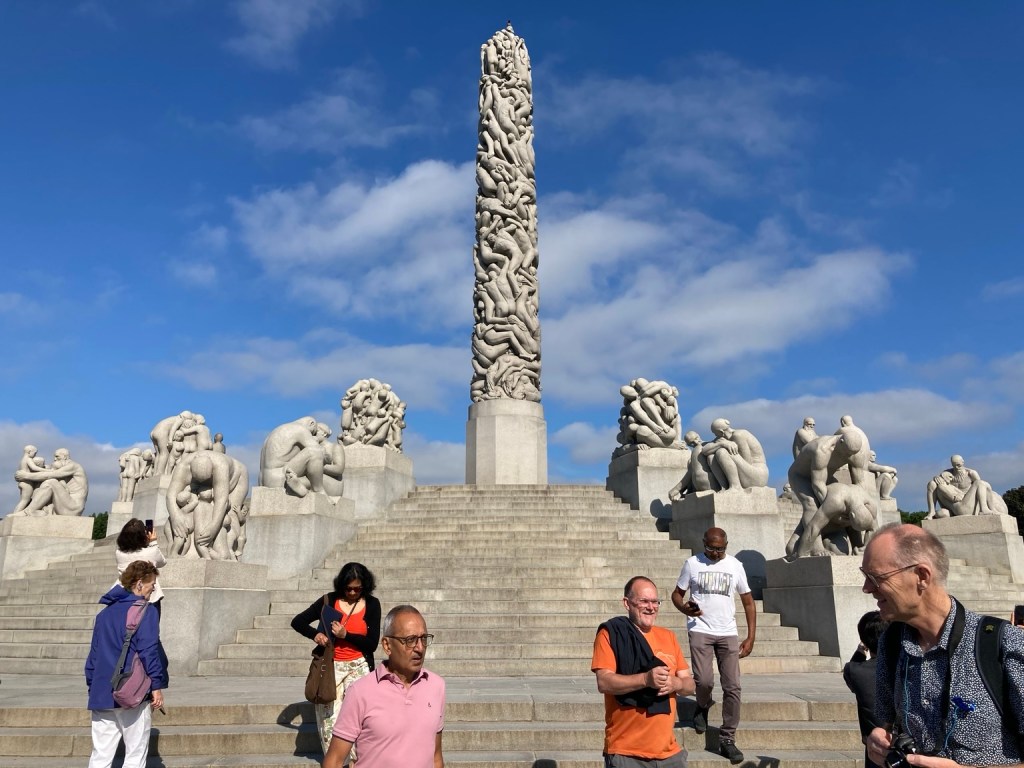
Next day we had a bit of a drive round the city in the coach, then a tour on foot beginning with the Vigelandsparken, a sculpture garden which was the life’s work of one man, beginning in 1924. Gustav Vigeland started as a woodcarver, but was influenced by Rodin in Paris and switched to stone and bronze.

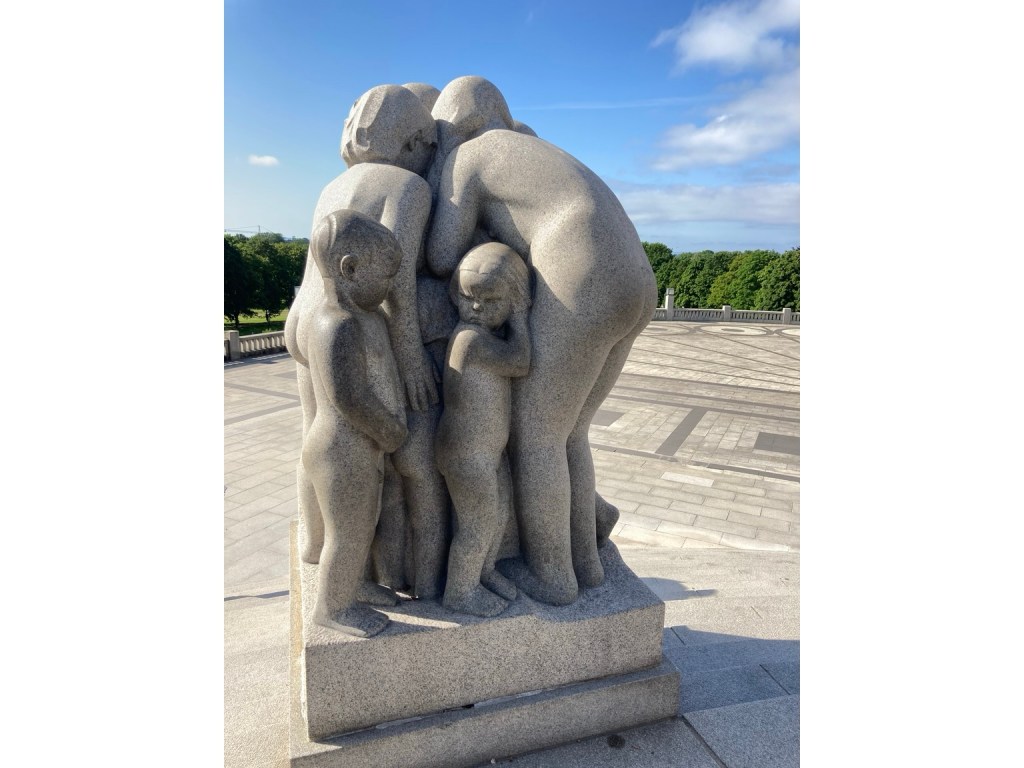
The sculptures all portray the cycle of life, with the 20m Obelisk surrounded by groups of figures …
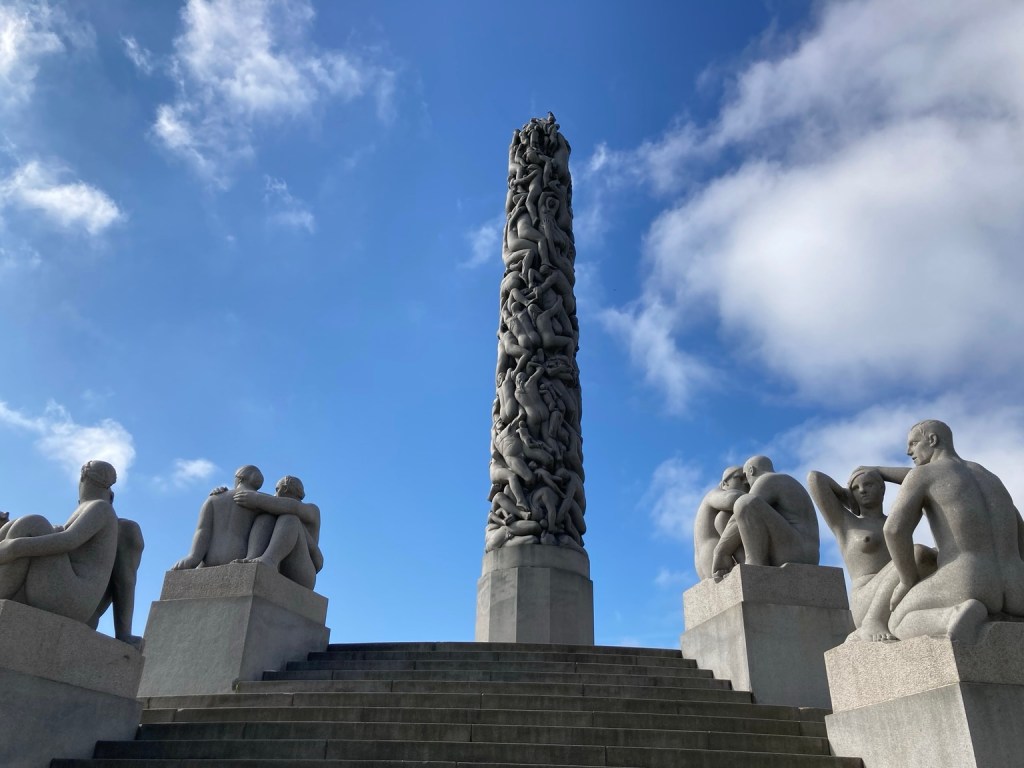
… with all ages represented.


The fountain and bridge are adorned with bronzes …

… including this cheeky chap …
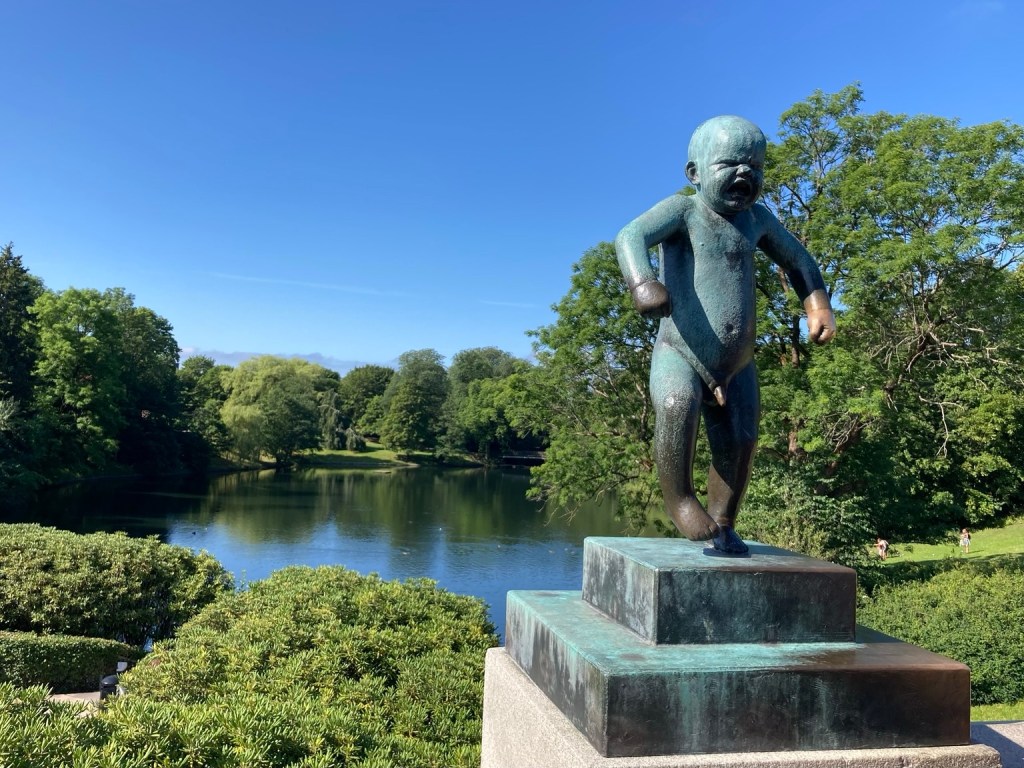
… and a joker …

… and the park ends with an impressive gate.

During a quick photo stop for the Opera House …
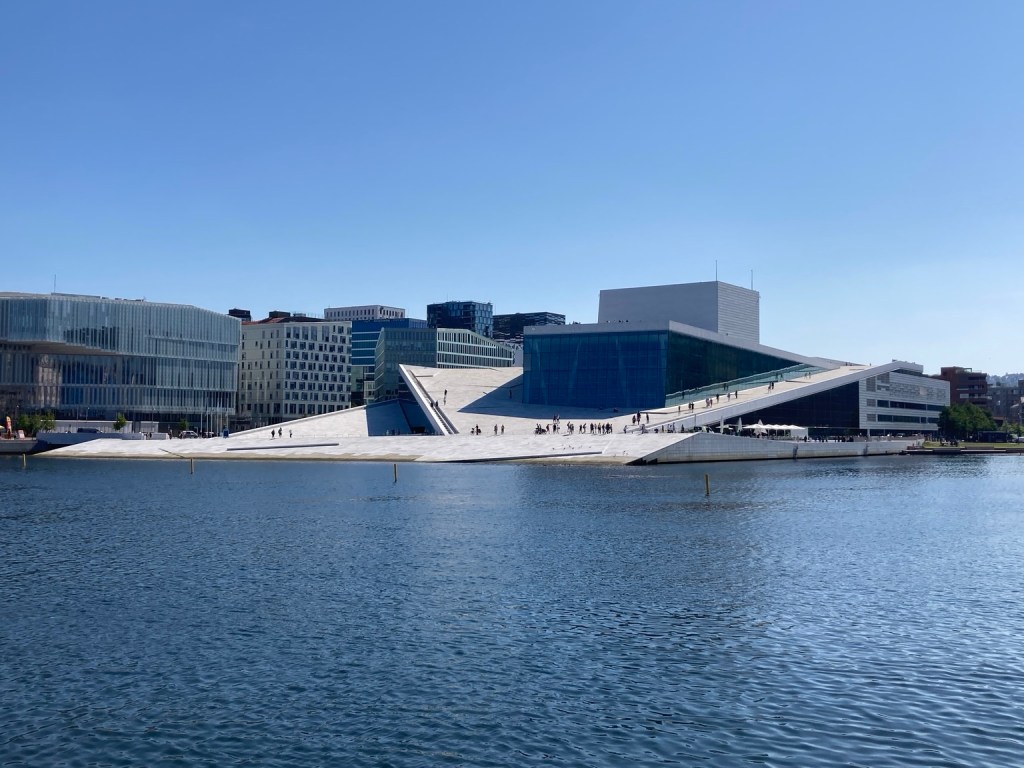
… we also noticed these floating saunas, where you can cool off afterwards by swimming in the Oslofjord.

The Radhus or City Hall was next. Opened in 1950, this modernist building was meant to be a mark of civic pride, but locals were slow to love what they saw as pretty ugly. Now 75 years on, it has become one of the city’s most popular buildings.

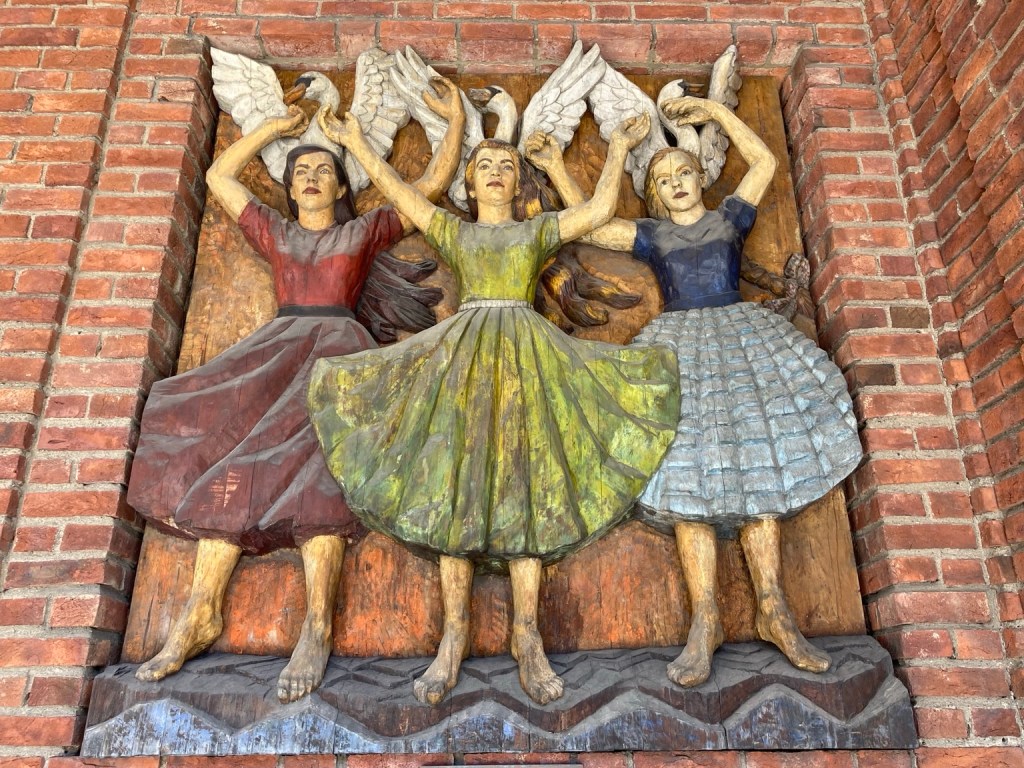
The entrance is decorated with wooden carvings from Norse myths including this one of Swan Maidens.
Inside, the main hall is huge and painted on all sides with stylised and secular murals.
This is From the Fishing Nets in the West to the Forests of the East with a polar explorer on the left and a dramatist on the right symbolising the spirit of adventure and intellectual development of the nation.
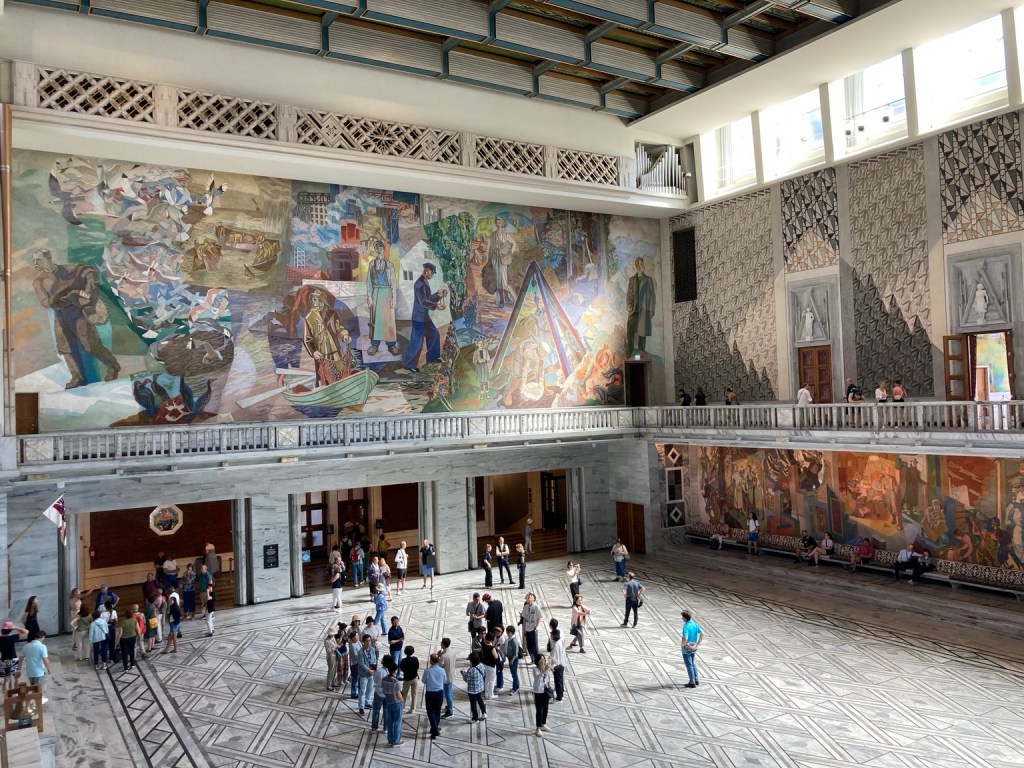
On the opposite wall is Work, Administration and Celebration which illustrates social reforms, education, social struggles, the war years and Norwegian Royal history featuring many prominent Norwegians, but also regular people carrying out their everyday life.

Saint Hallvard, the patron saint of Oslo appears several times …
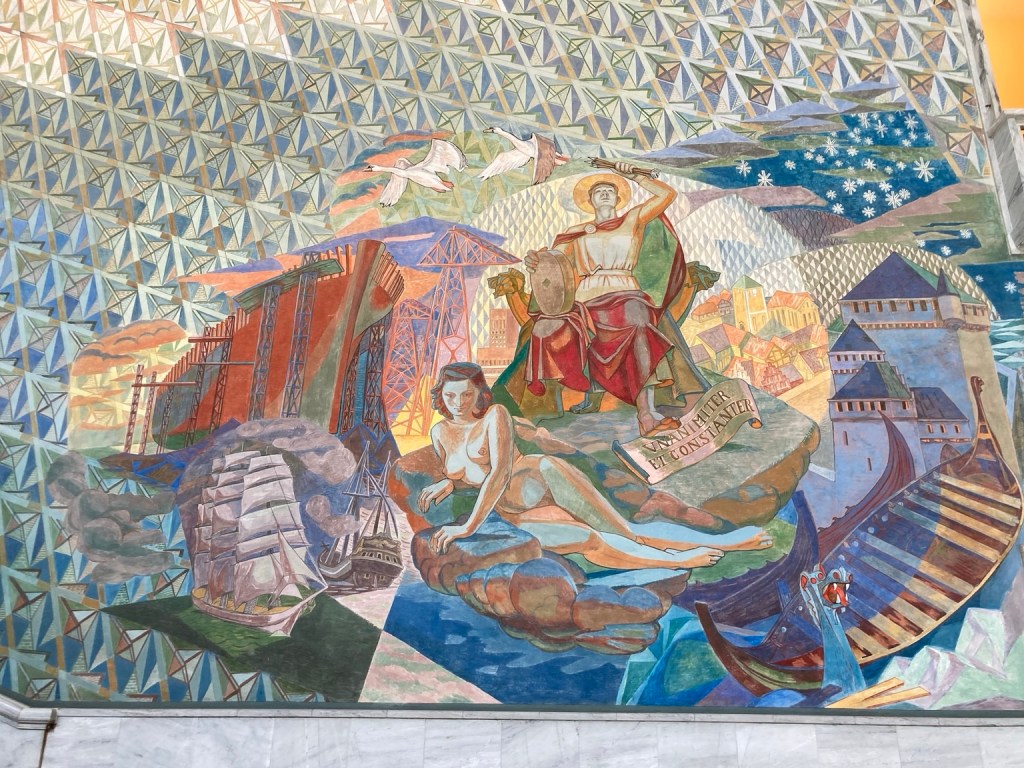
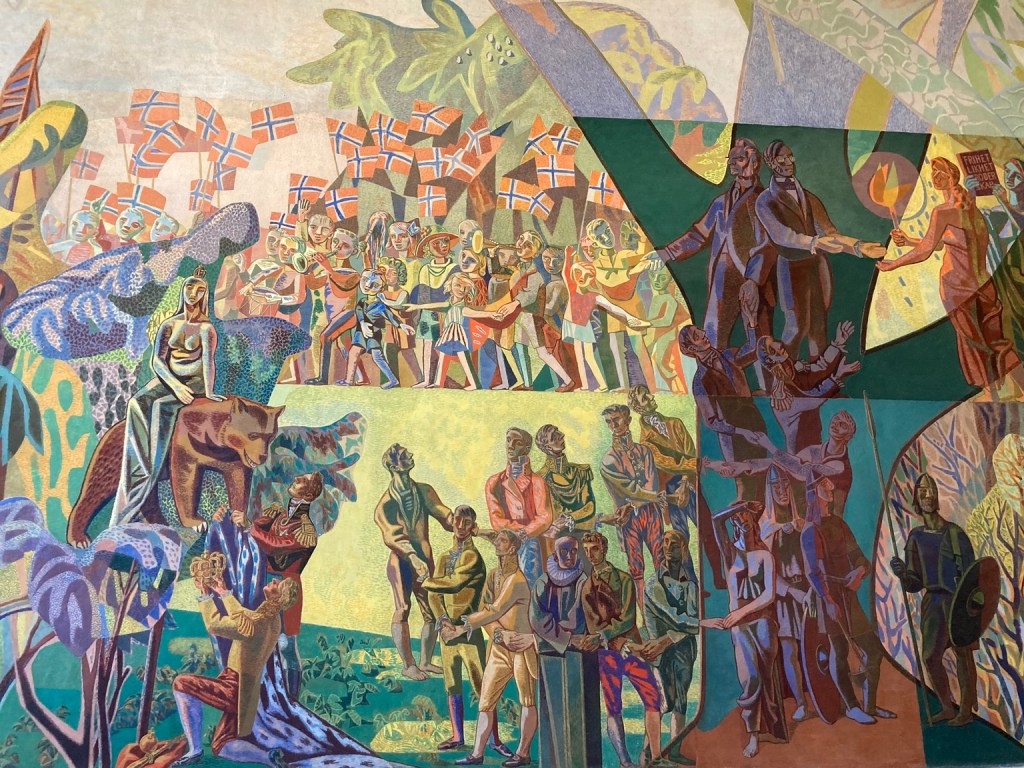
… and upstairs there are more patriotic images of town and country …
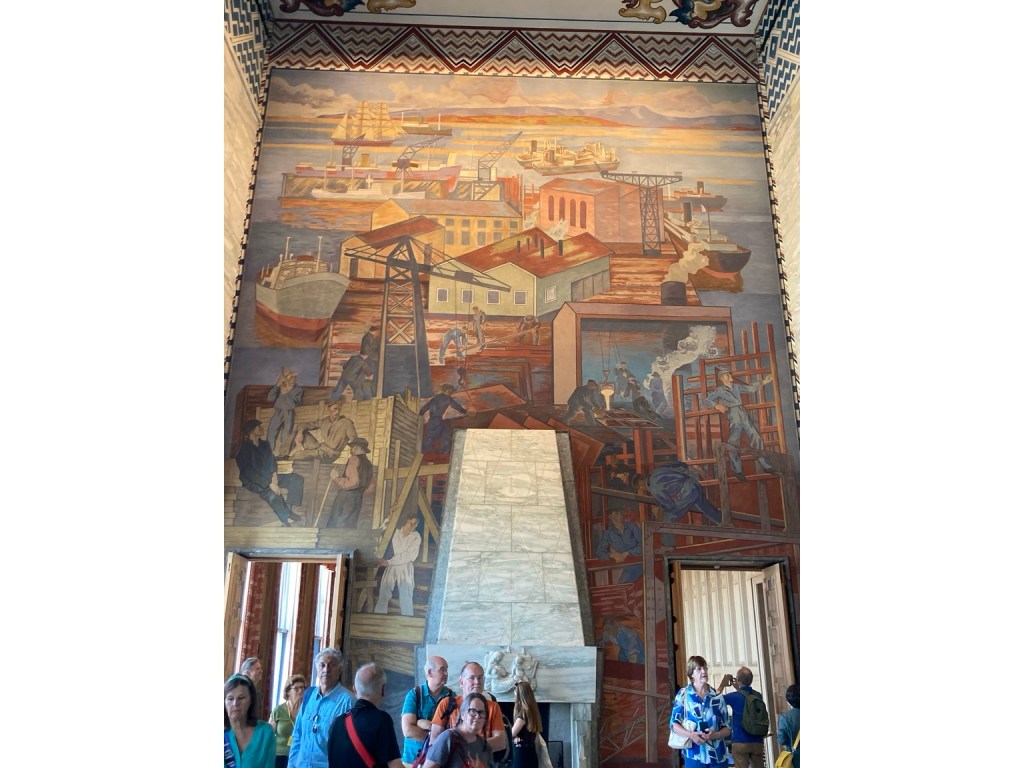


… and even the beach!
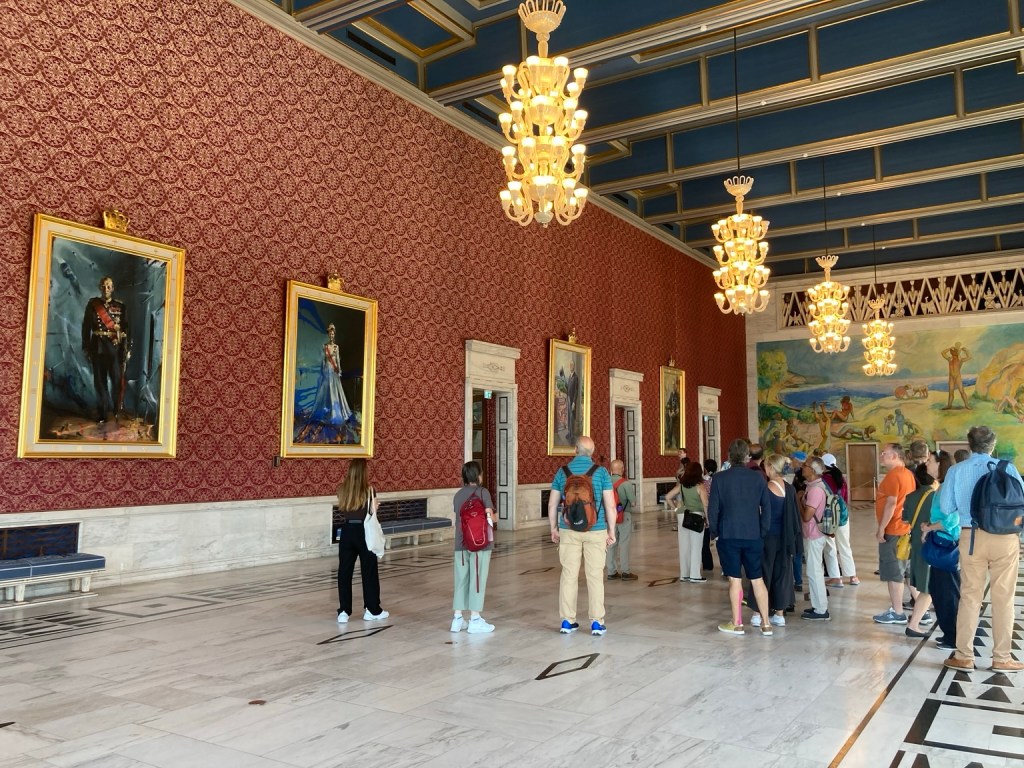
The Munch Room with his painting ‘Life’ adorning the back wall is used for weddings …
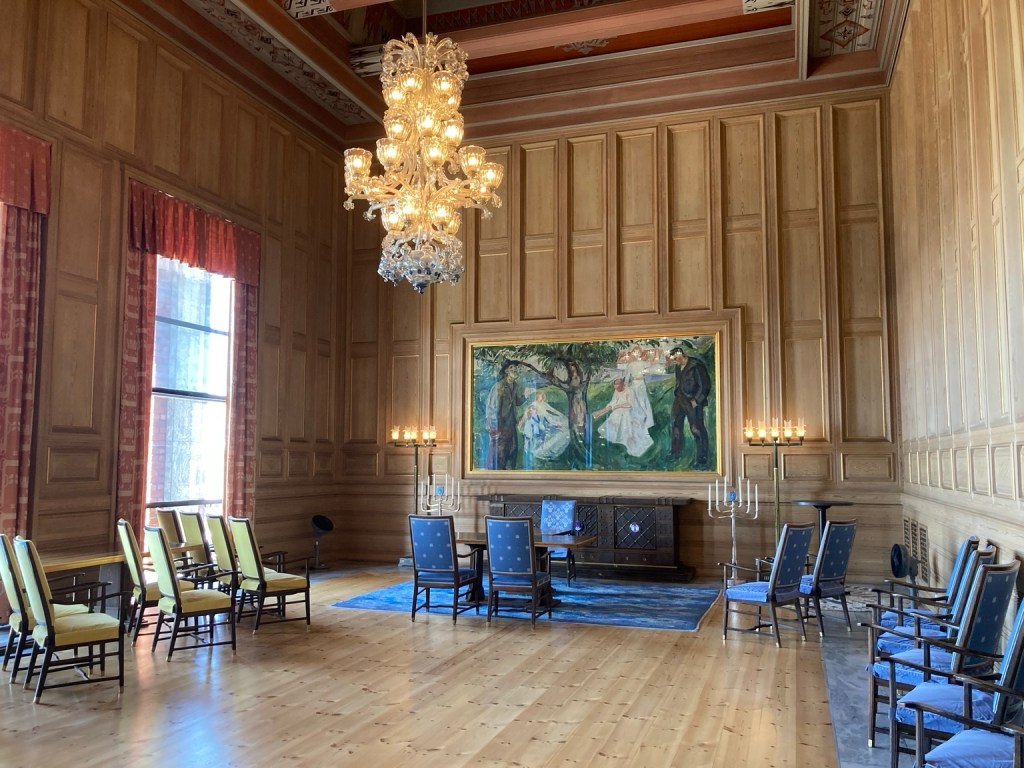
… but no snacking here today!

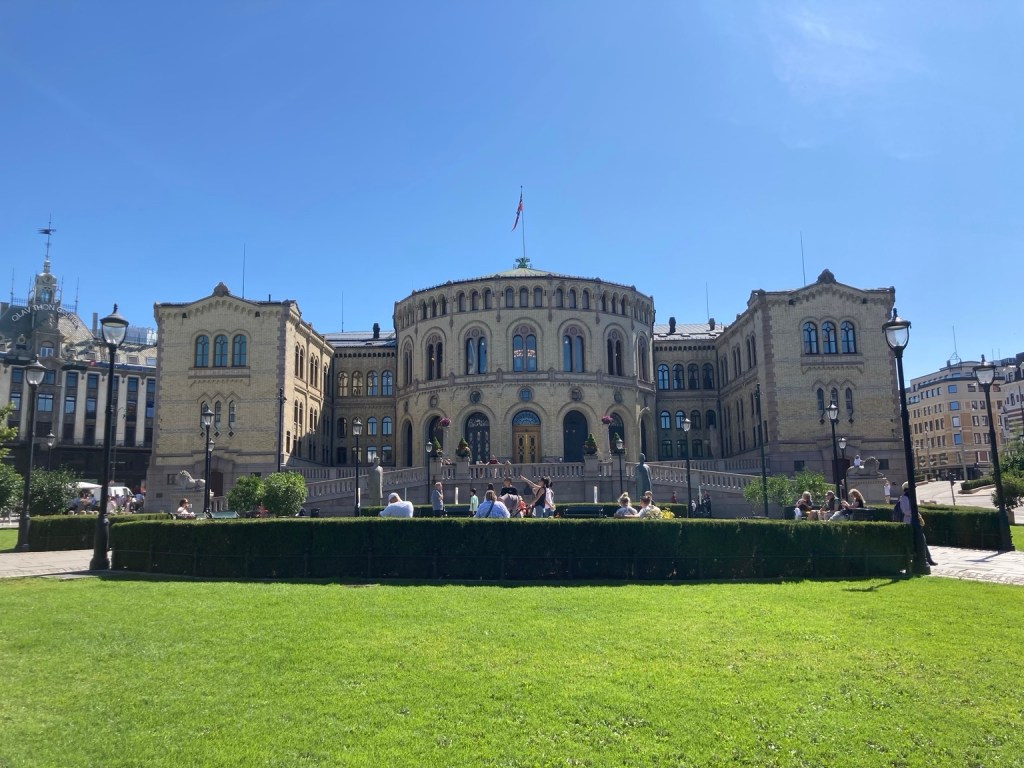
With a couple of hours free to wander, we snapped the Stortinget or parliament building. Since Viking times, local social justice was resolved at a ‘thing’, a sacred place where all freemen from the surrounding areas would assemble, so unsurprisingly their parliament translates as the ‘big thing’!
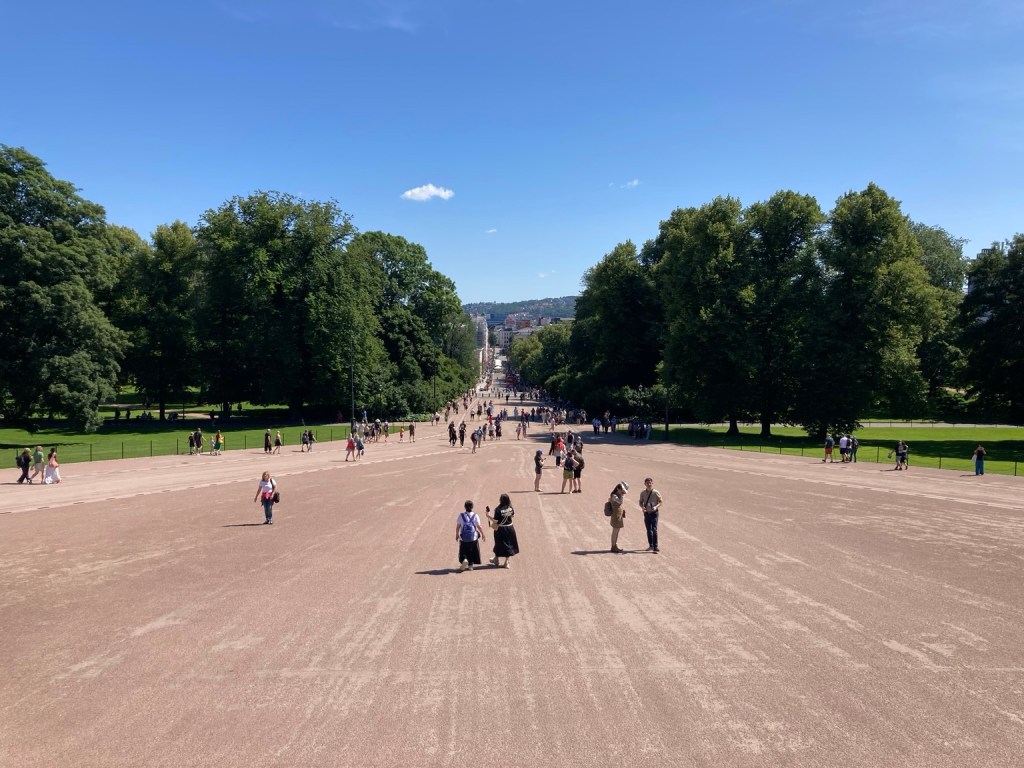
The Royal Palace is set in a park completely open the the public …

… and we were in time to see the changing of the guard, unfortunately rather uninspiring, especially with the digger centre stage!

Our brief time in Oslo at an end, we headed for the coach and a drive westwards …
 Off Travelling Together