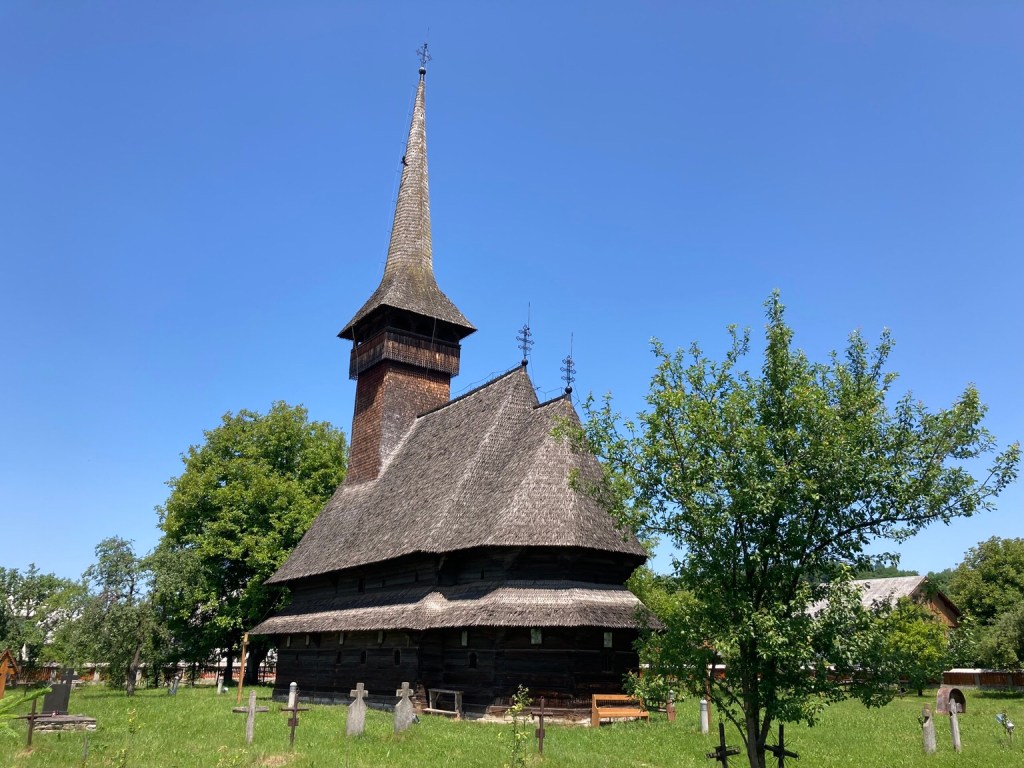
This is Romania at its most rural and least changed since the Middle Ages with families still following the traditional way of life. We have come to see wooden churches but have found so much else along the way.
In 1278, Orthodox Romanians were forbidden by their catholic Hungarian overlords to build their churches in stone, so they just built in wood instead. Today is Sunday and first town we stopped in was Bogdan Voda, renamed in in the 1960’s in honour of the local ruler who founded the principality of Moldavia in the C14th.

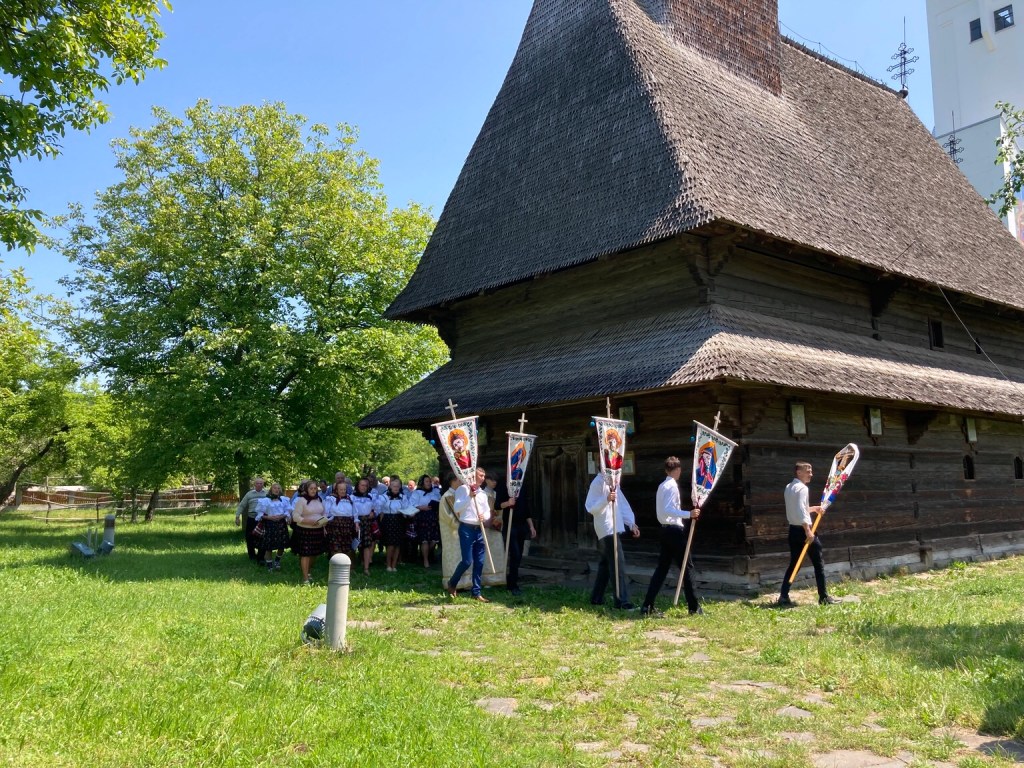
The old wooden church of St Nicholas built in 1718 sits right beside its modern successor …
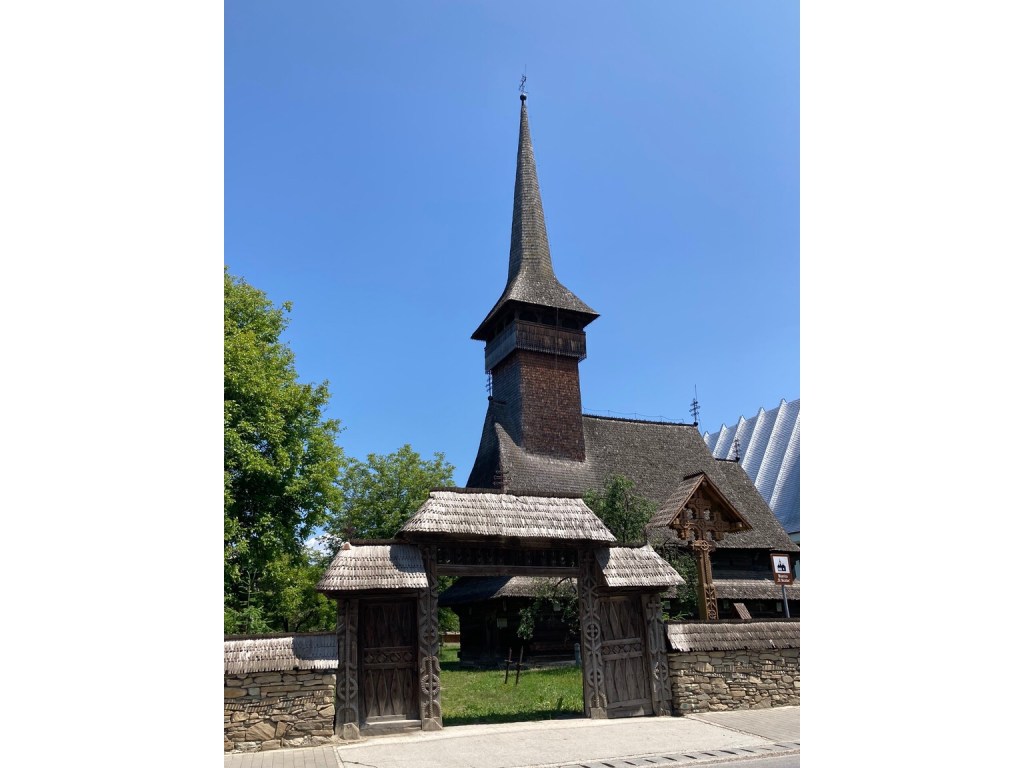

… and it shortly became apparent why a couple of people were waiting around as a procession approached from down the street, singing, all in their Sunday best.
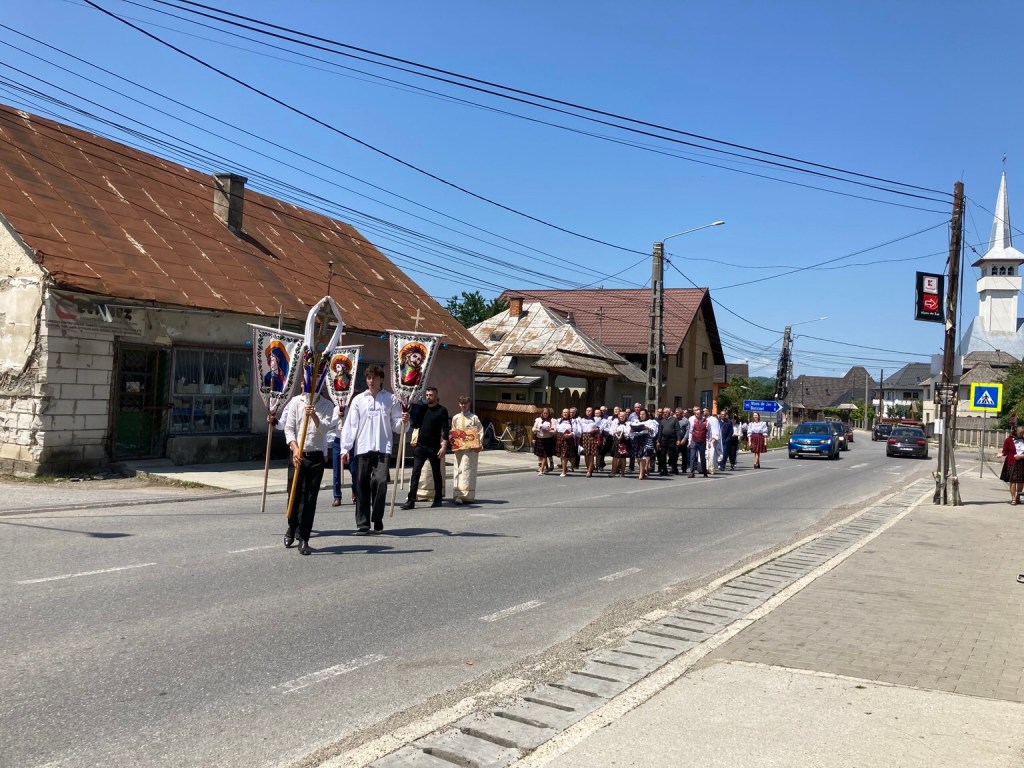
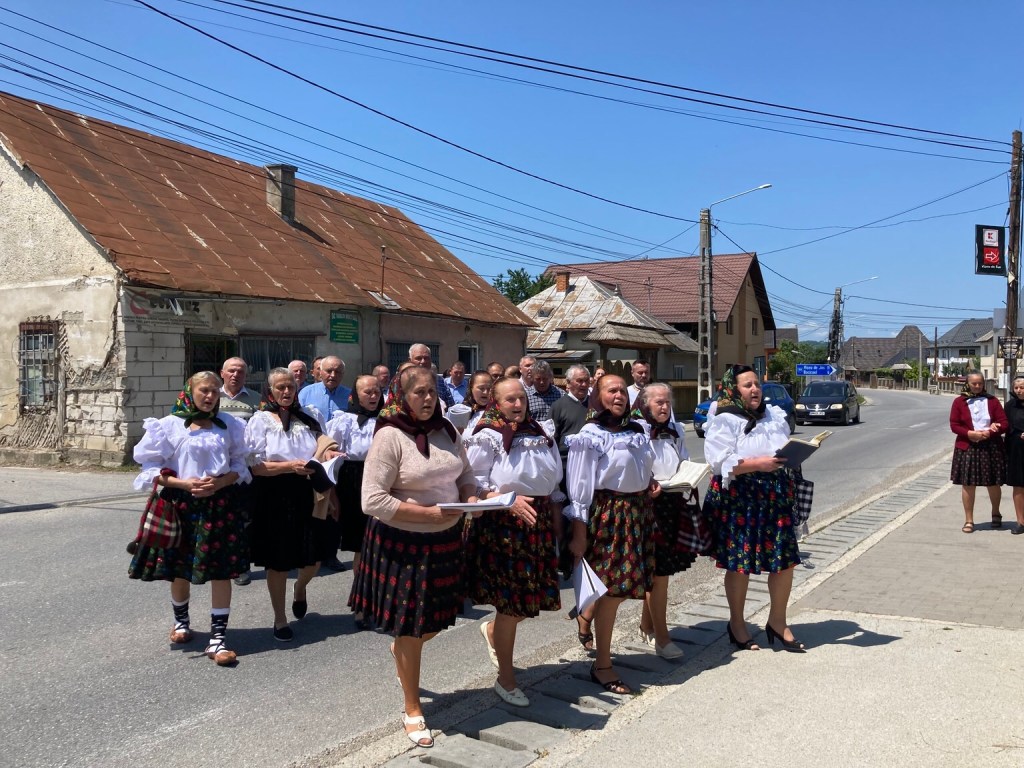
They came through the gate and processed three times round the church then the priest said a few words and they dispersed towards the new church.
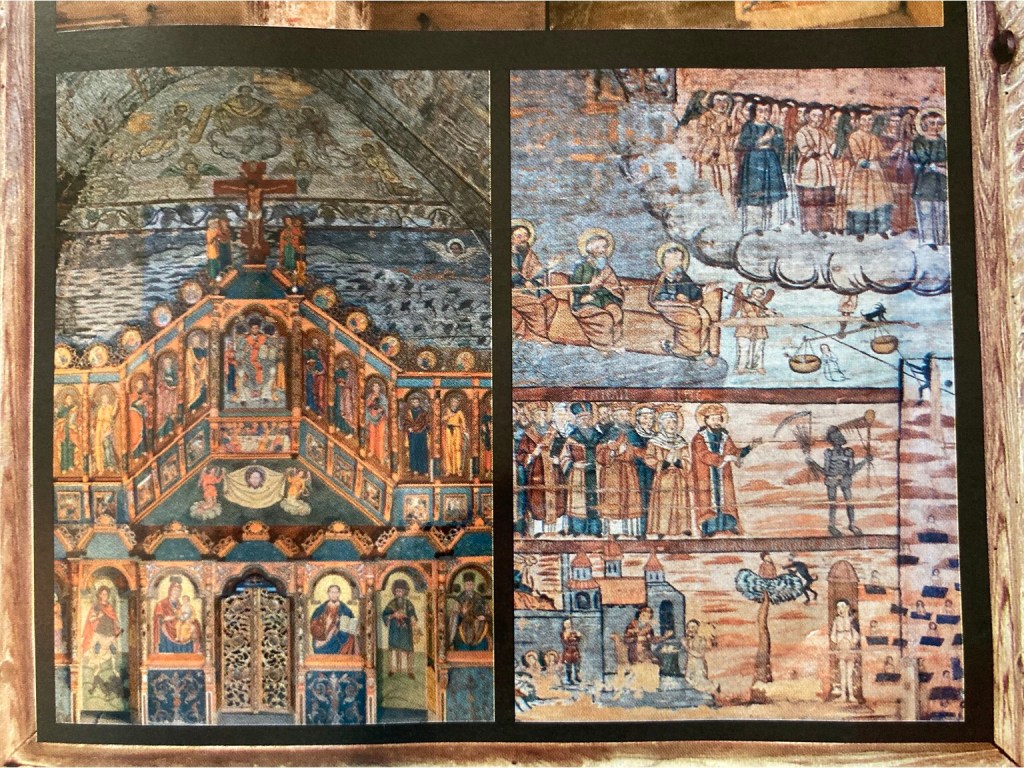
The priest then let us into the church which was empty of furnishings and seemed unused, but had painted murals on every wall, most showing bible stories and images from the life of Christ. While we couldn’t take photos, we bought a leaflet and here are some pictures, of the Iconostasis and Doomsday & Death …
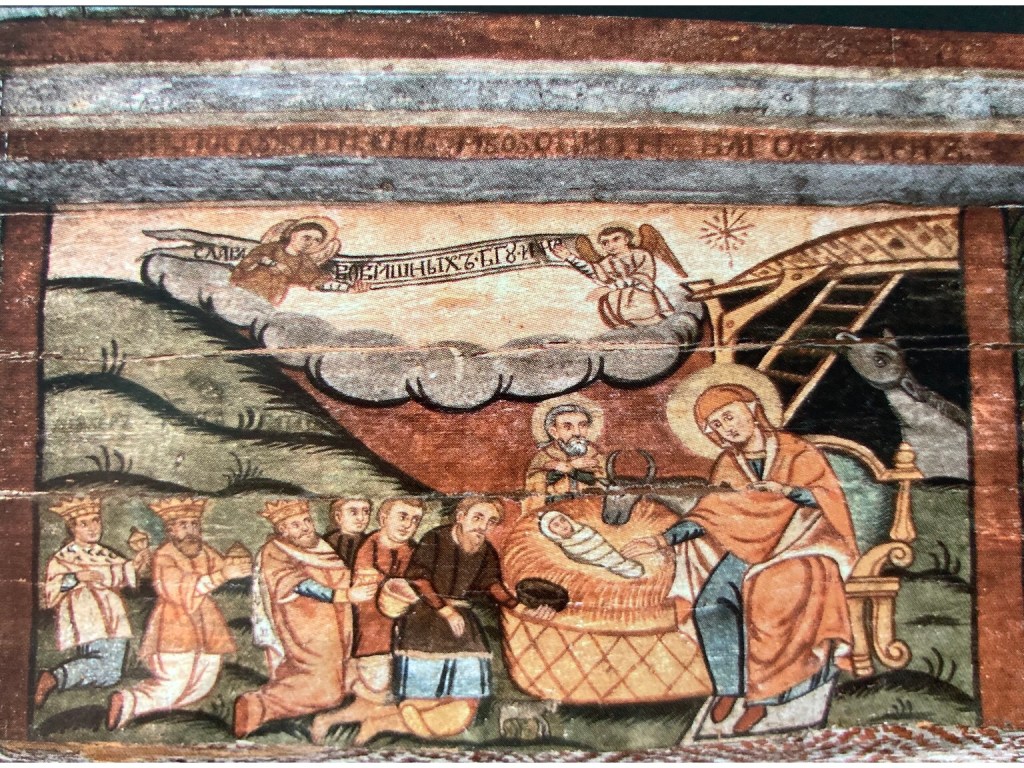
… The Nativity …
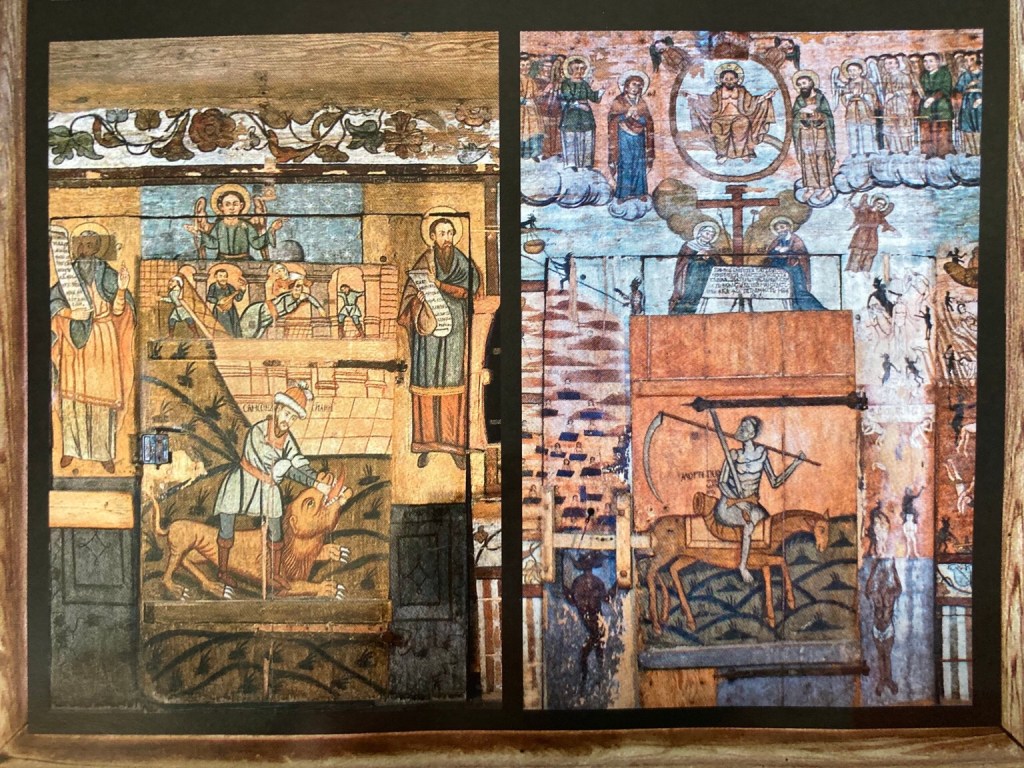
… and Samson with Delilah & the lion and Death on a Horse with a Scythe
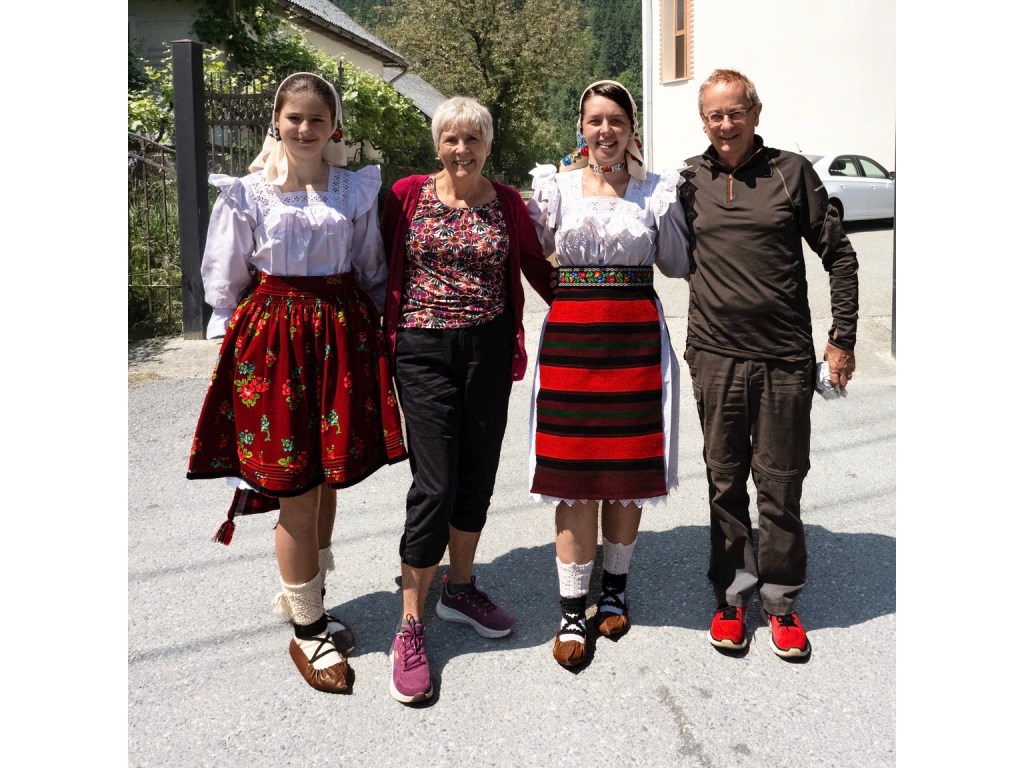
As we drove on we saw more people in traditional dress and when we slowed the car beside one group, the lady in the striped skirt spoke good English and explained she was a bride to be married in a month, so she was in a special wedding outfit. Her grandmother had embroidered her belt, and everything is handmade, including the stockings and leather shoes called opinci. She asked if we would like a photo and here it is!
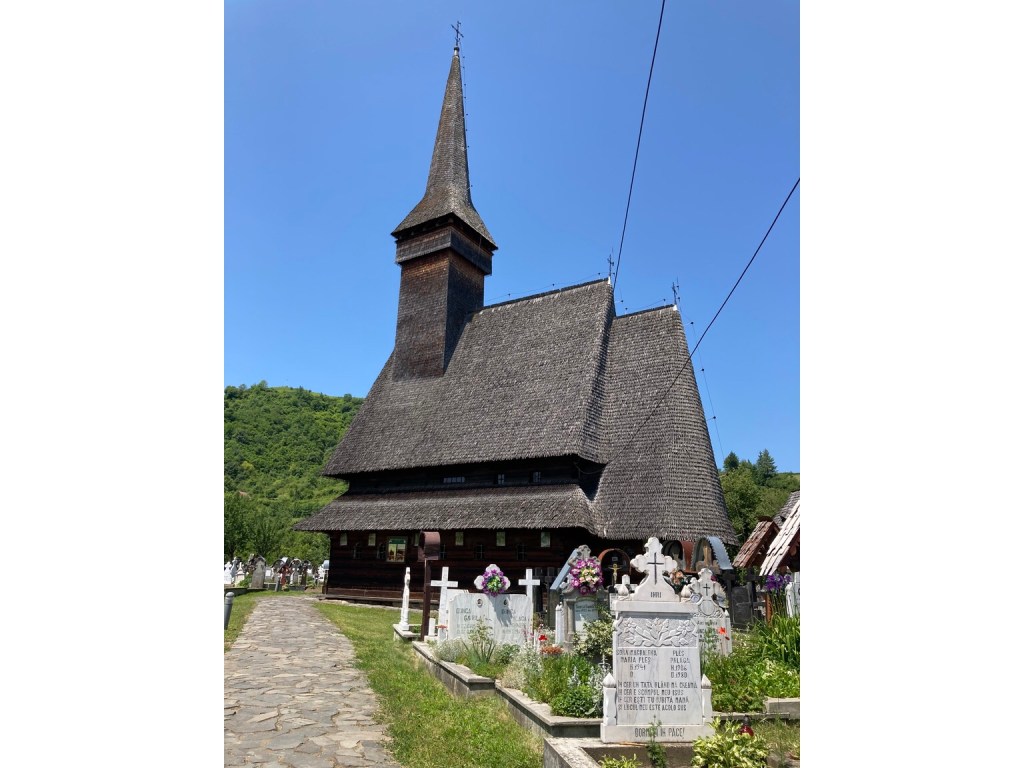
Next up was the Uniate church in Ieud, also built in 1718. As we approached, a lady went to get the key to let us in.
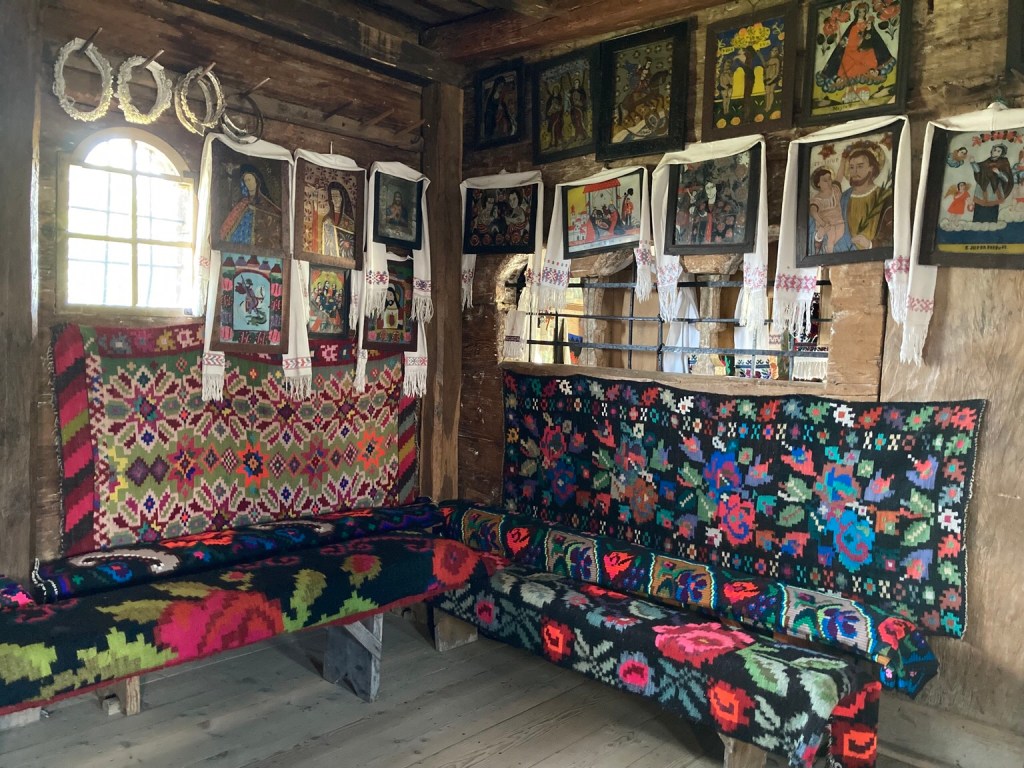
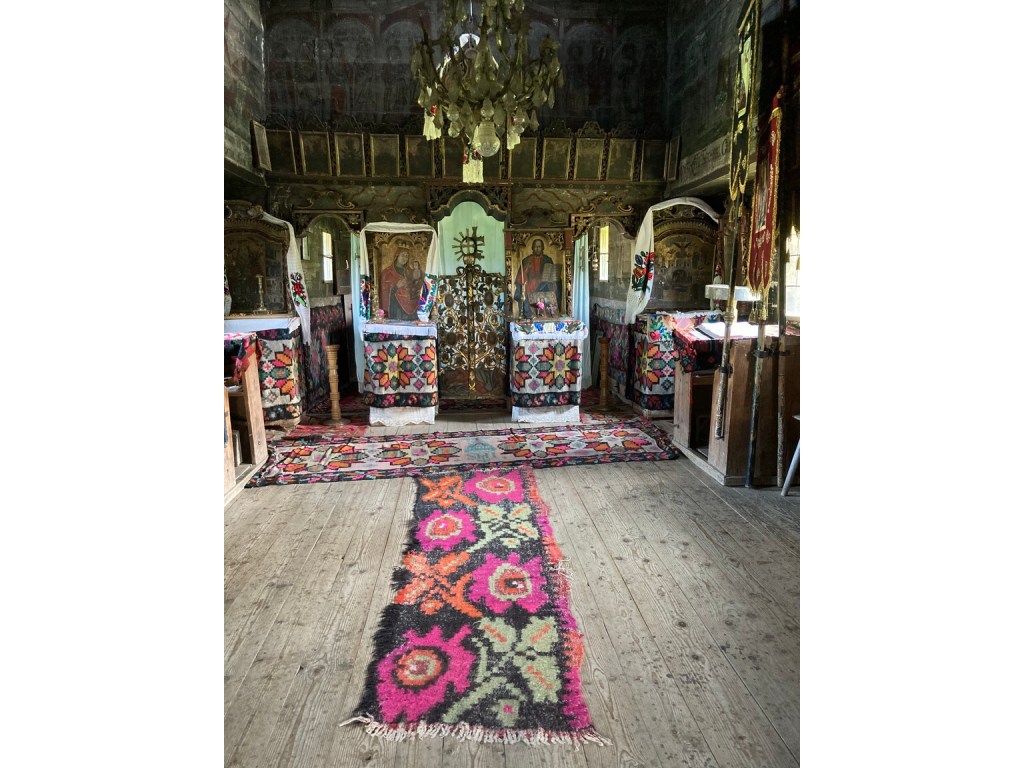
This church was charming and seemed to still be used. We were allowed to take photos, so here is the outer room lined with rug covered benches and decorated with adorned icons …
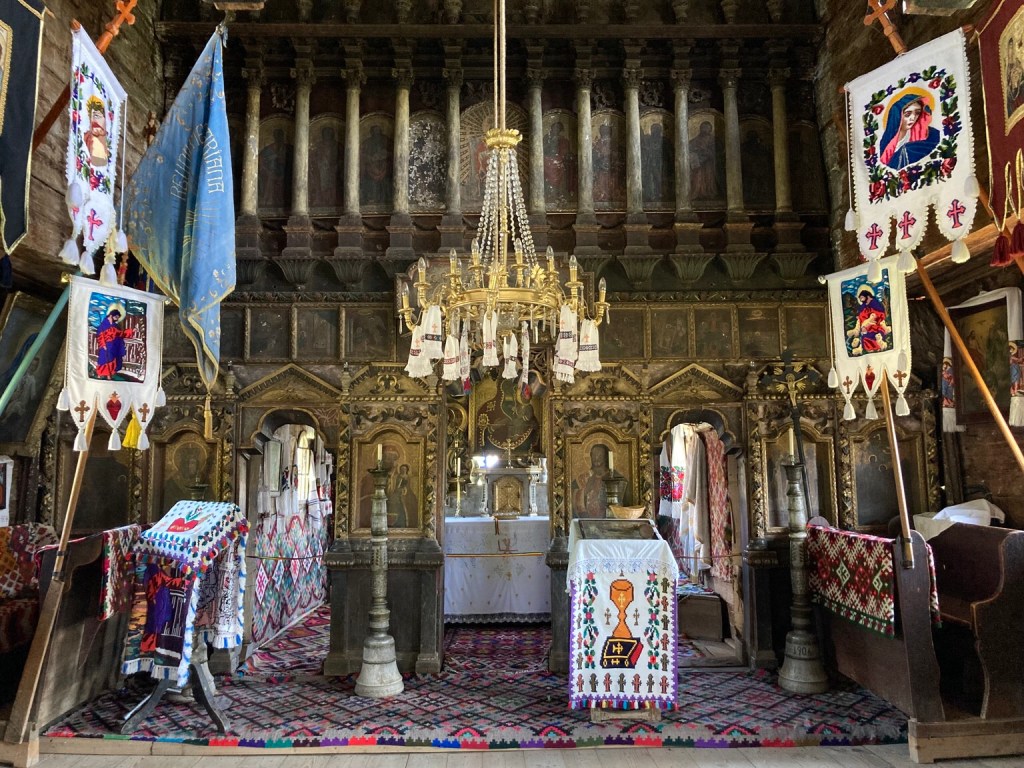
… and the inner room with the altar and brightly embroidered banners.
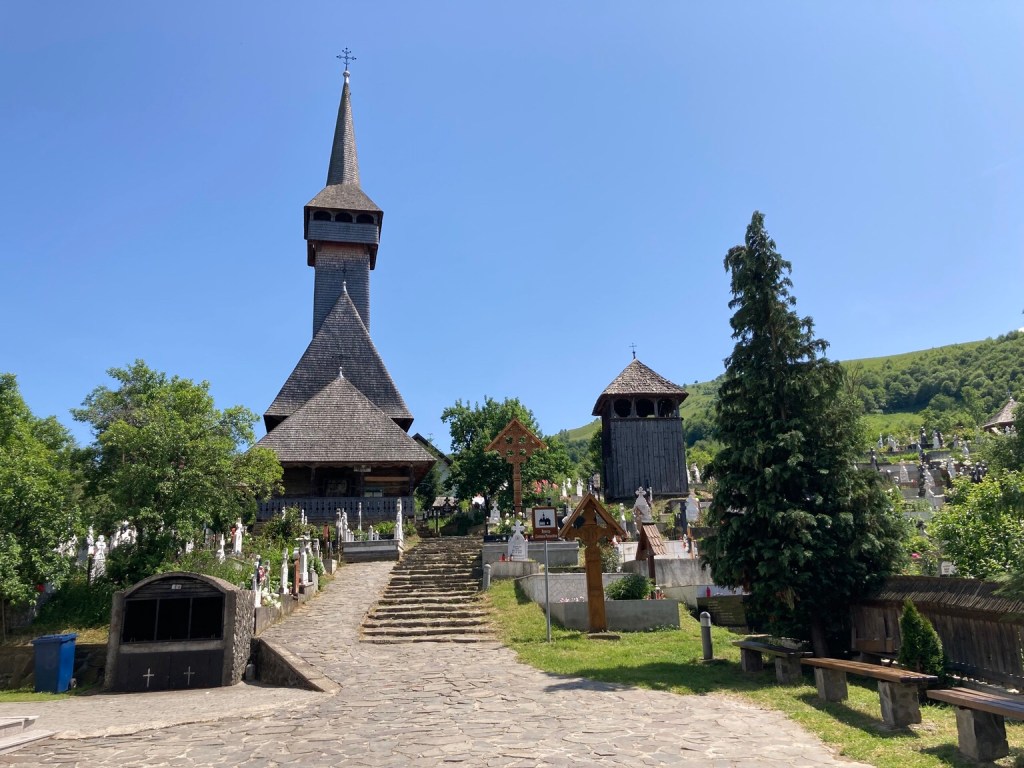
Botiza church was closed …
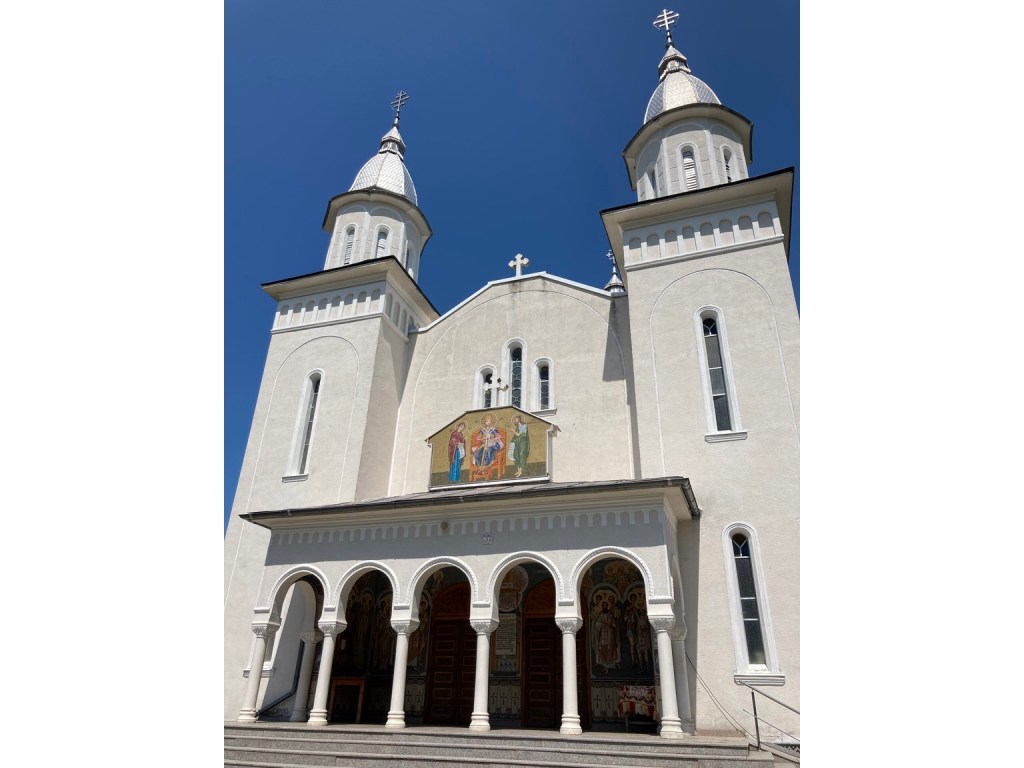
… again with a modern successor next door …
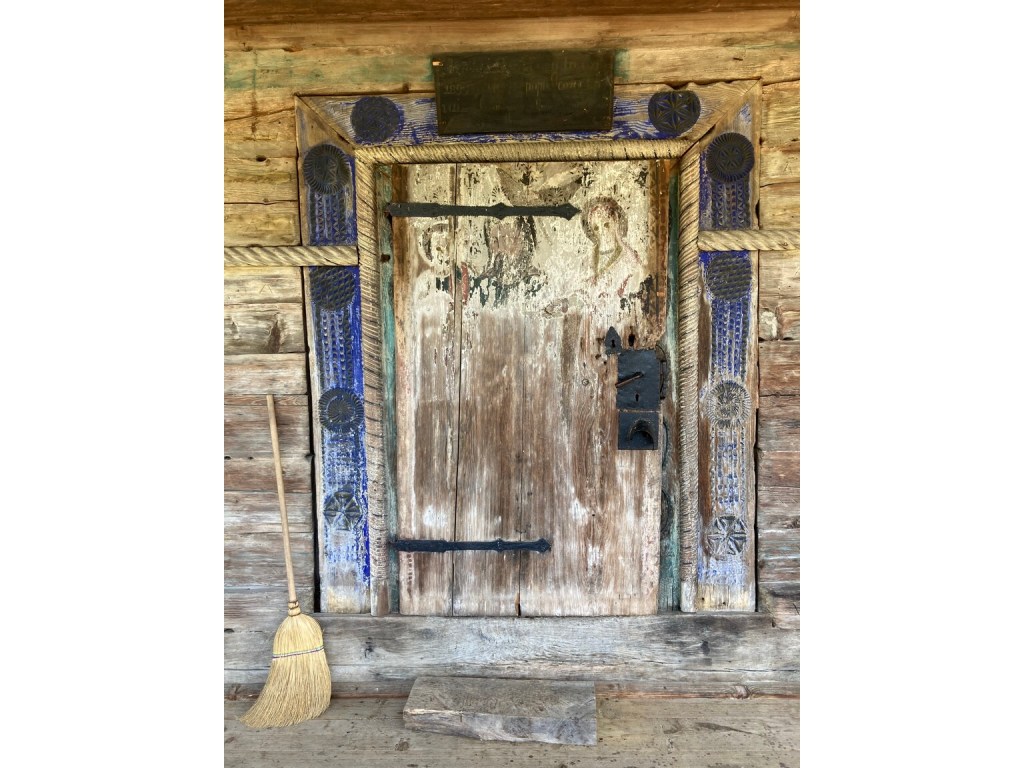
… but we walked around and the door looked interesting!
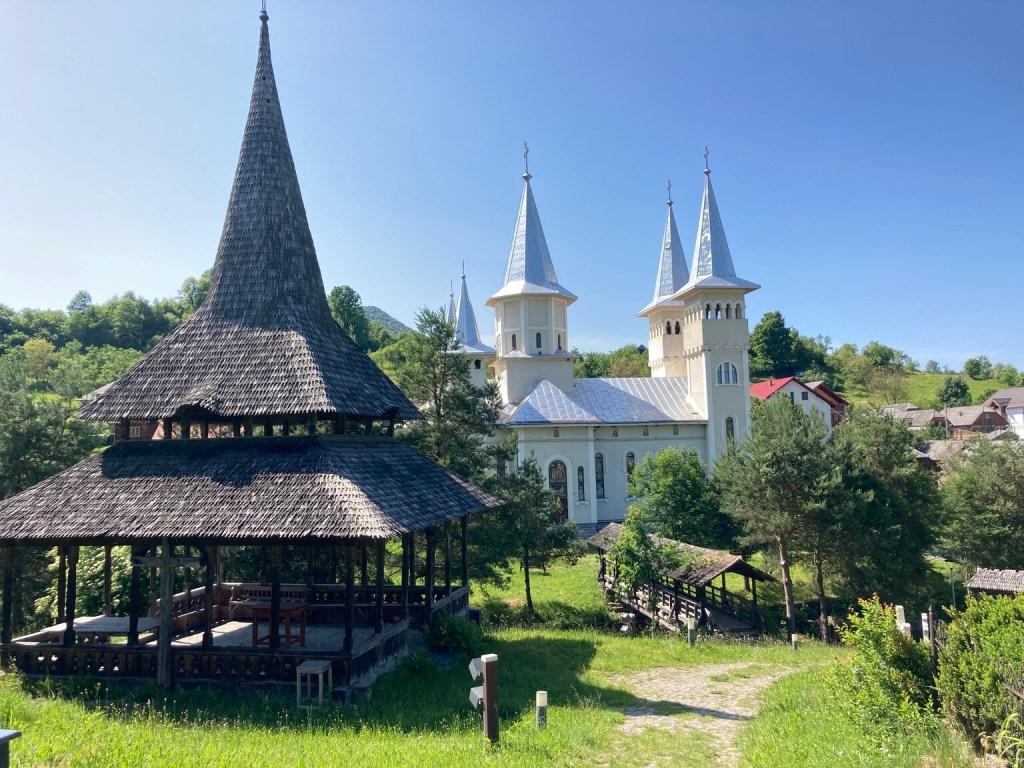
We saw a sign for Botiza Transfiguration Monastery which was built in 1991 in the traditional style. It had a pretty garden …
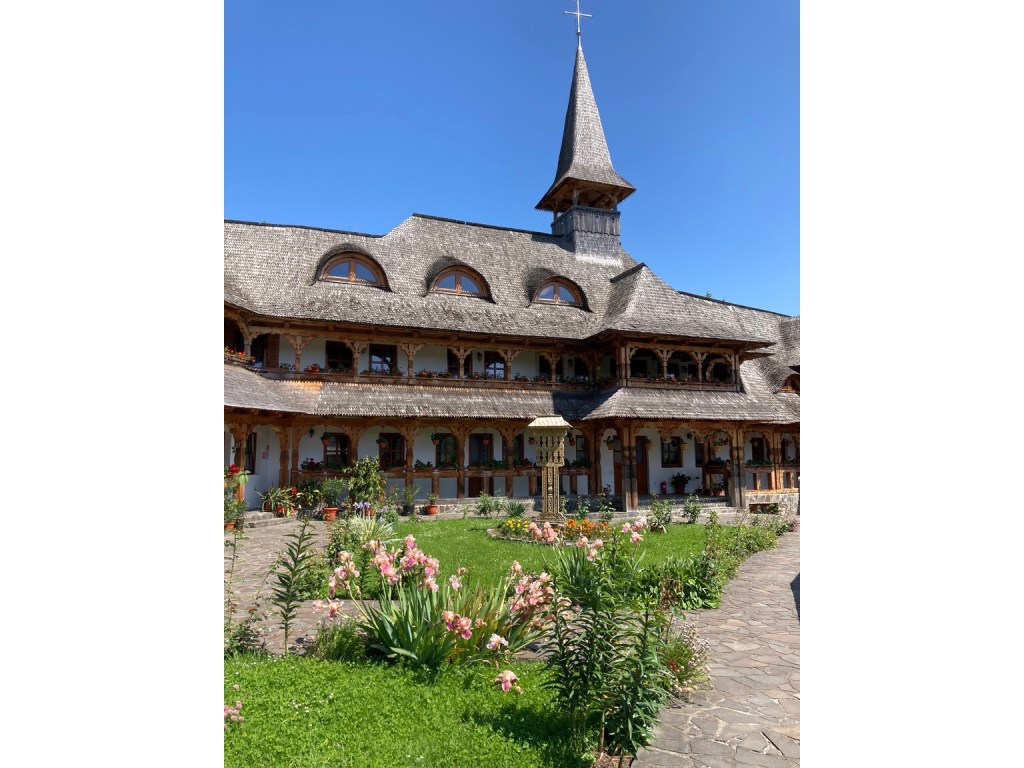
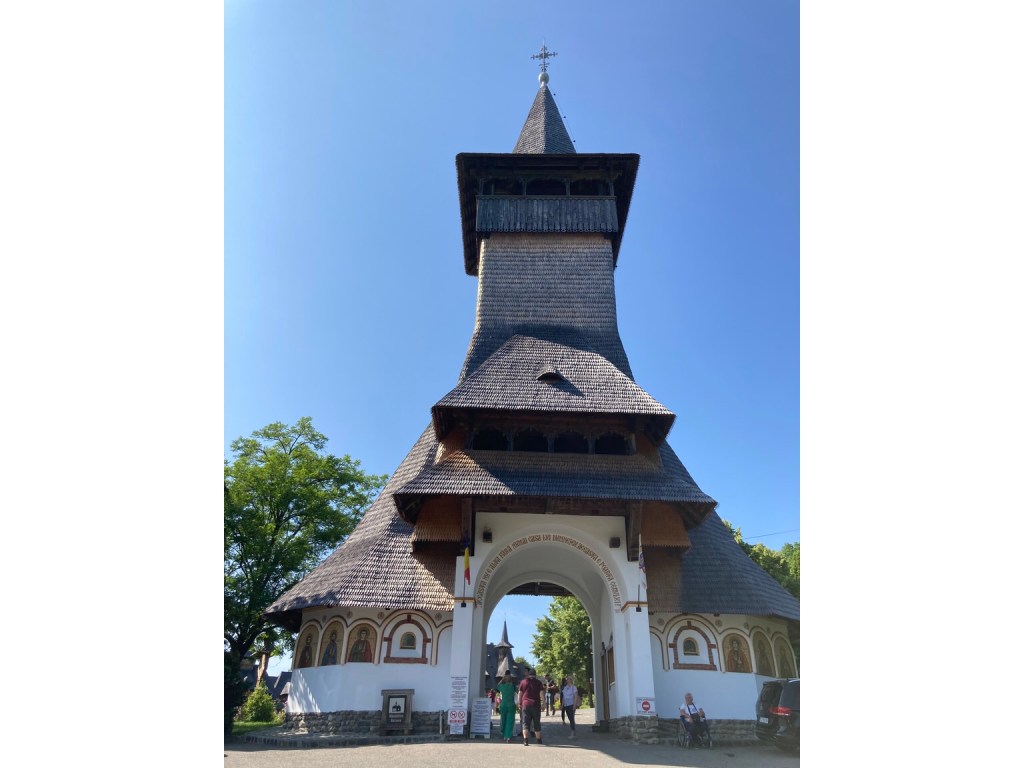
… church and entrance gate.
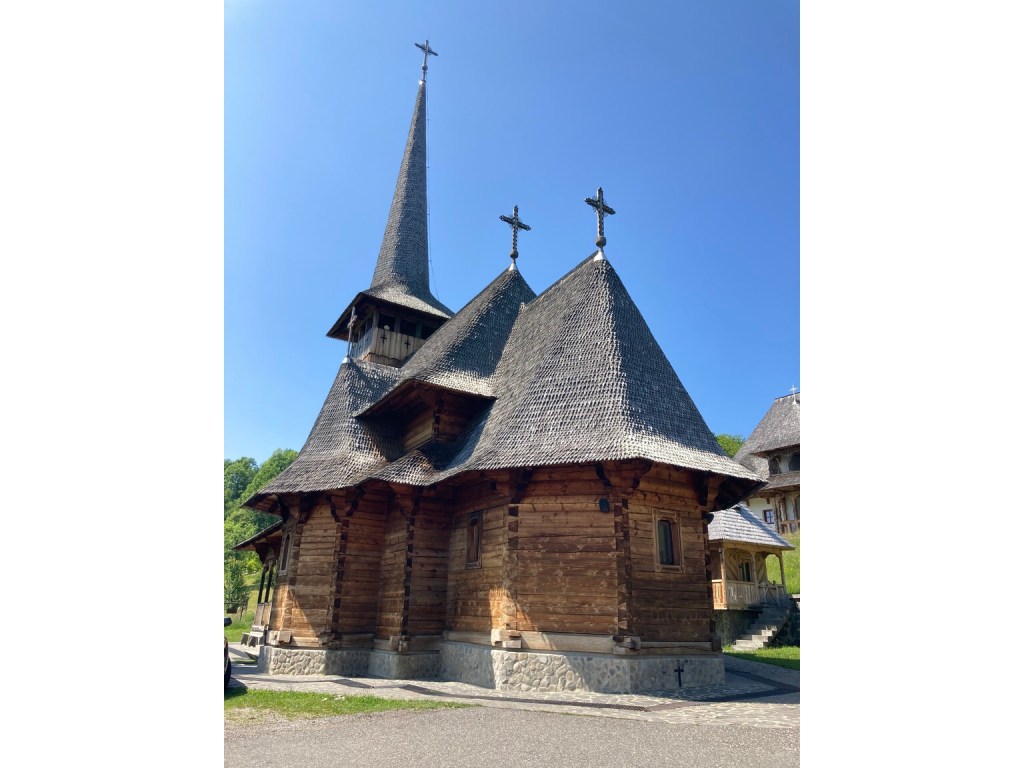
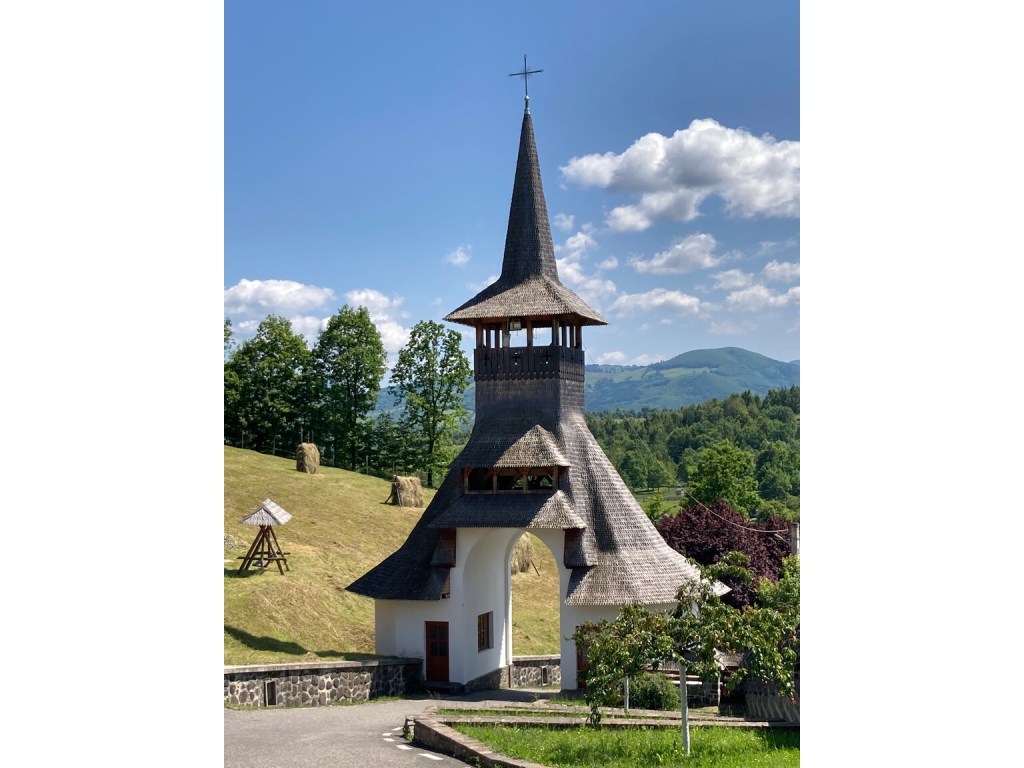
The nun inside was happy to turn a blind eye to a couple of photos!
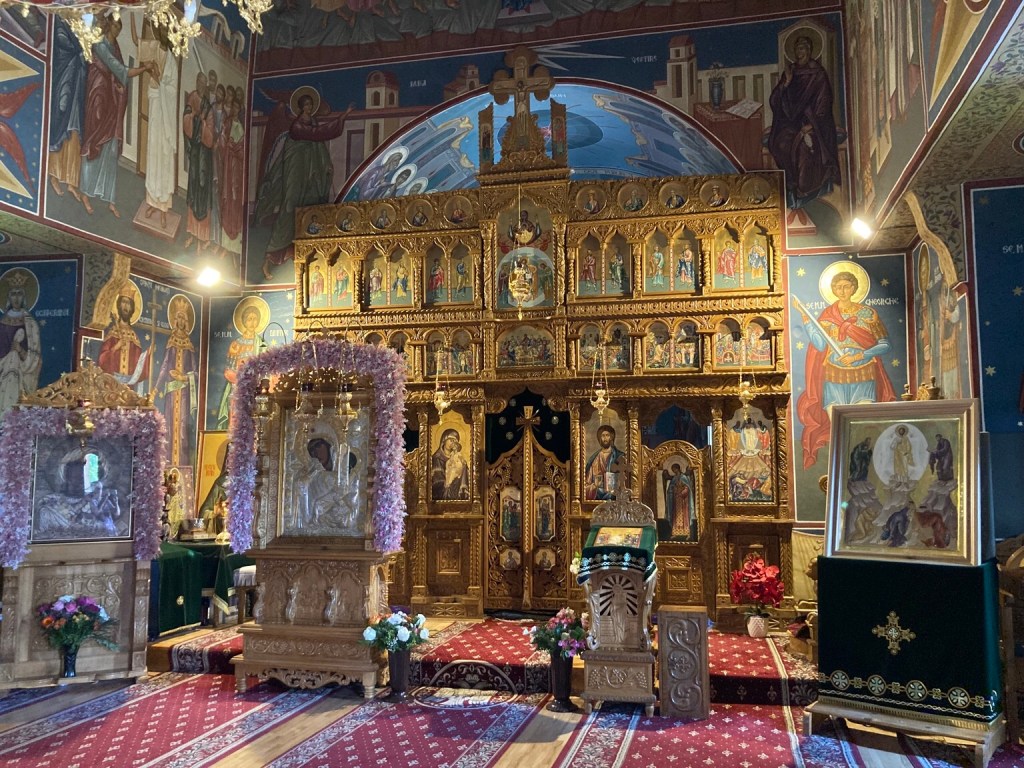
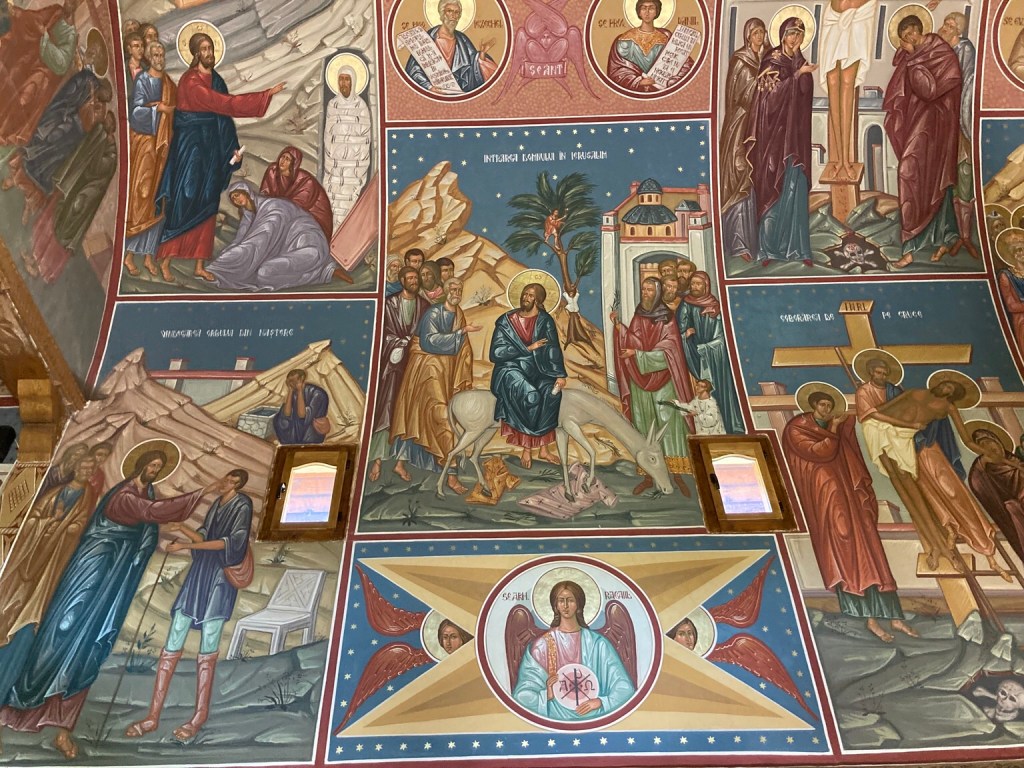
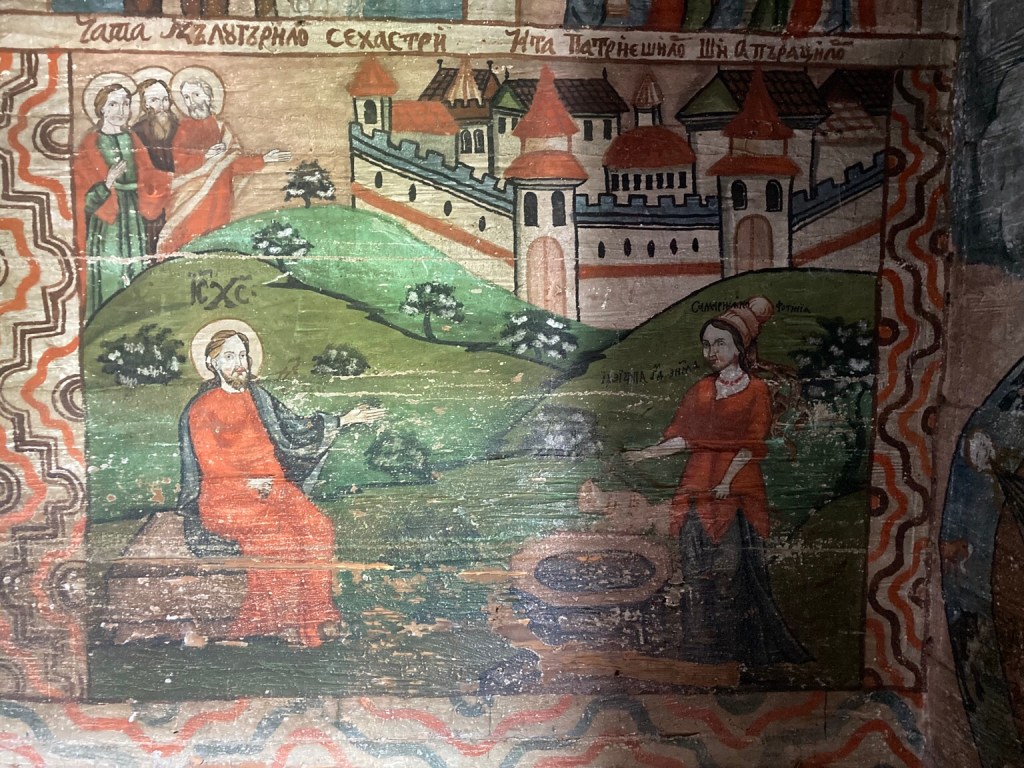
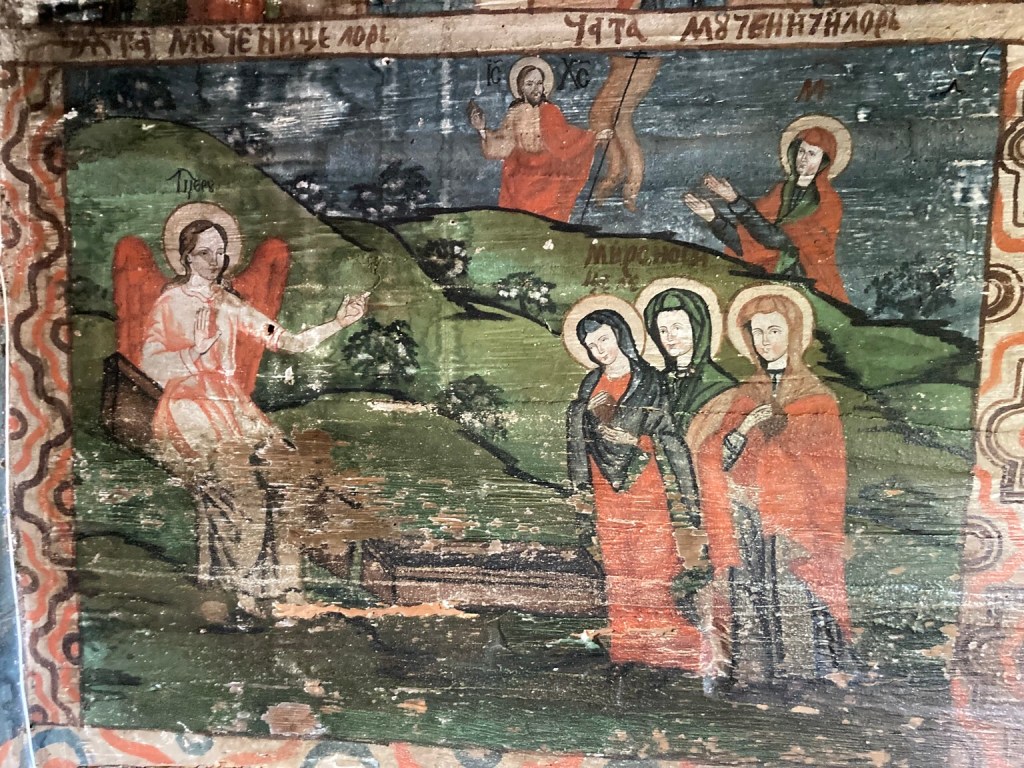
At Poienile Izei, the church was open and having bought tickets from the lady there we could take pictures.
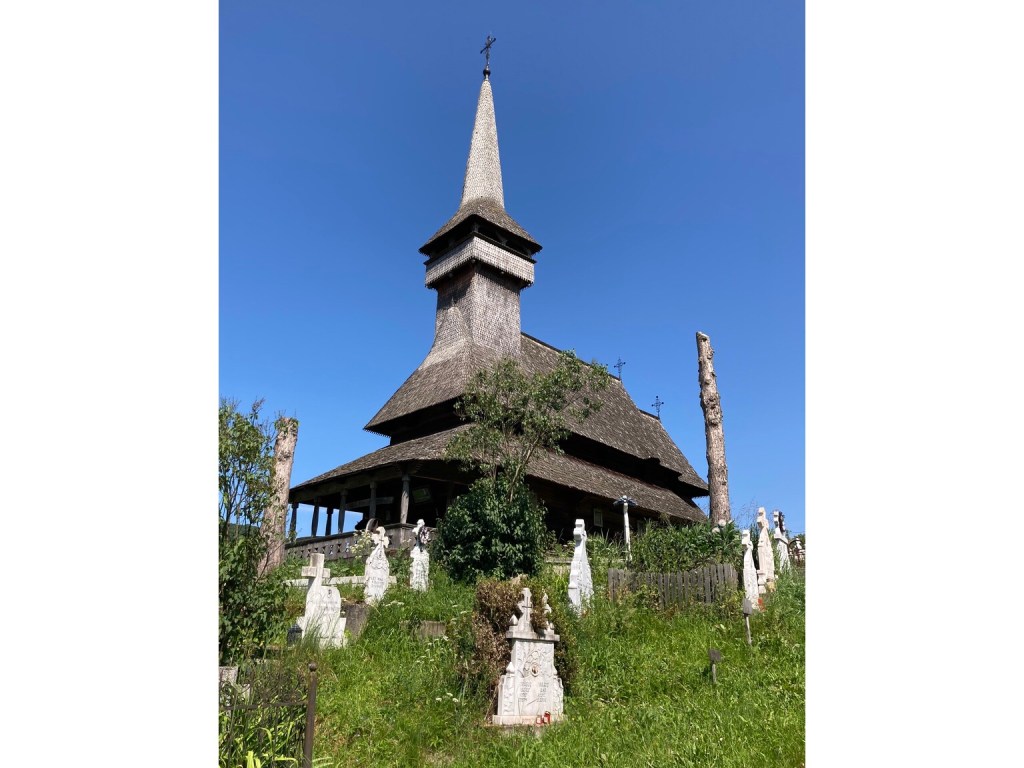
Although many of the murals were soot damaged and very dark …
… the textiles were bright and lovingly made.
Finally there was Barsana, where the original monastery had been closed in 1791 and this complex was begun in 1993. It includes the traditional Maramures gate, bell tower, church, summer altar, nuns’ cells and chapel all set in gardens …
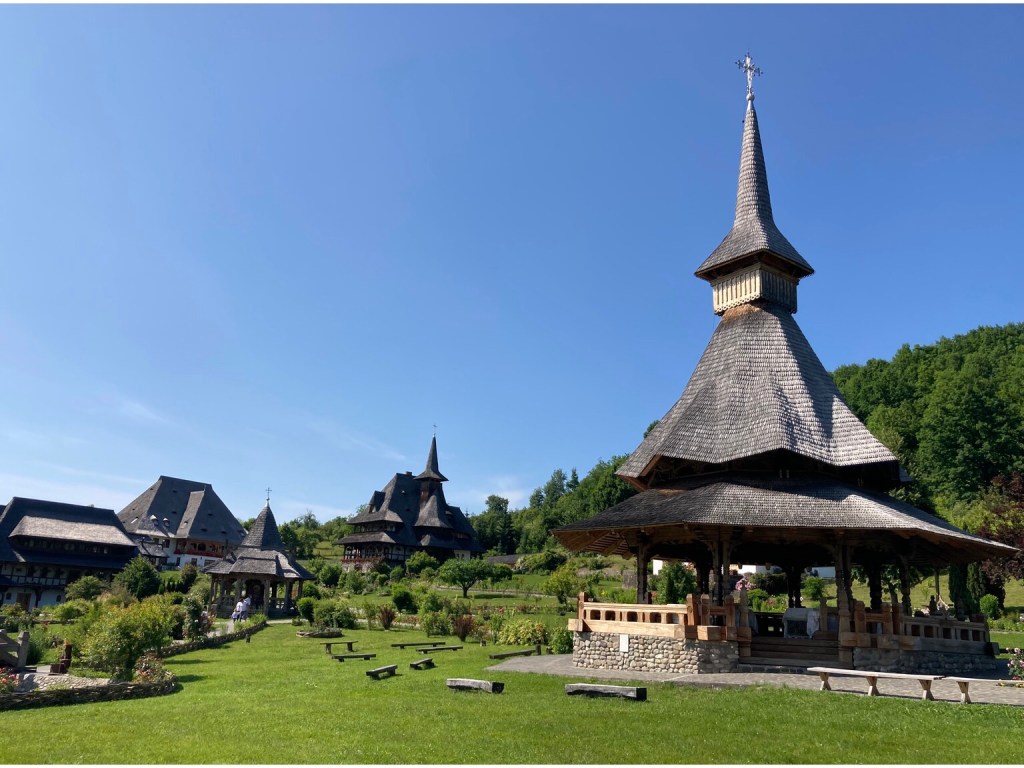
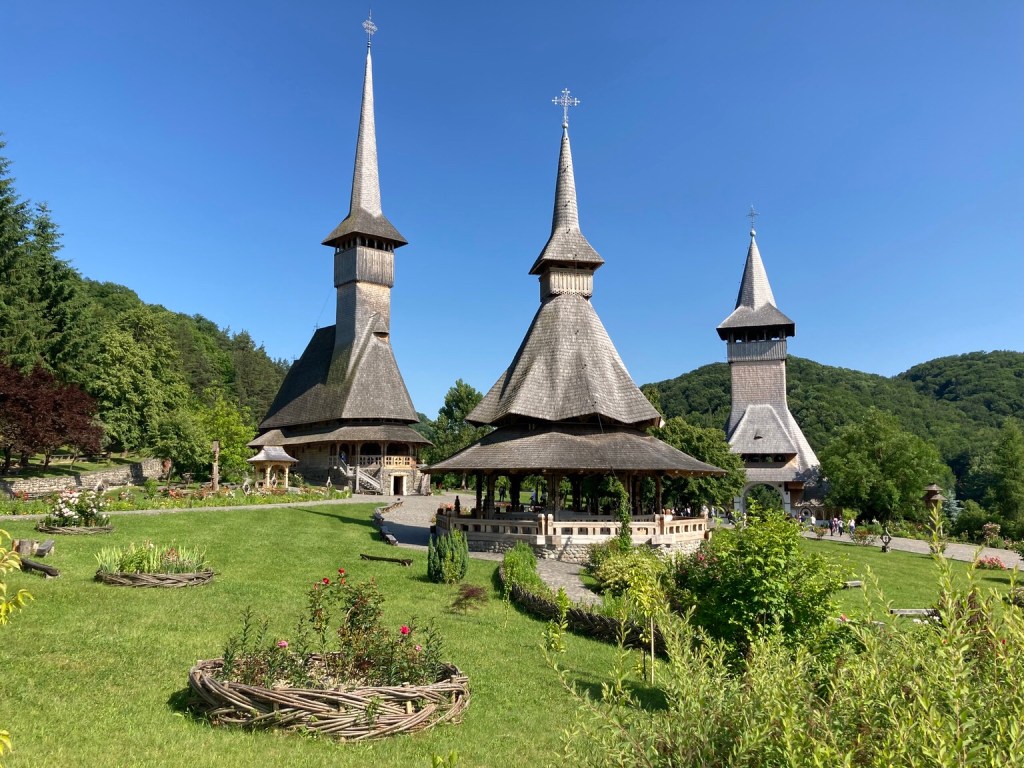
… and a museum.
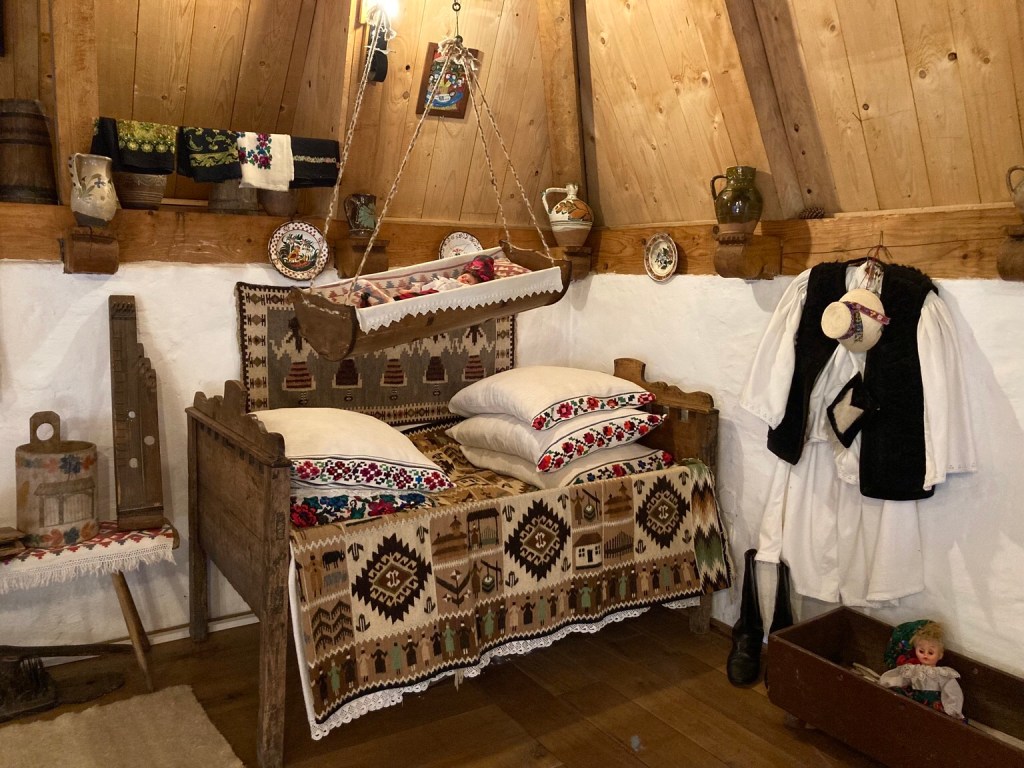
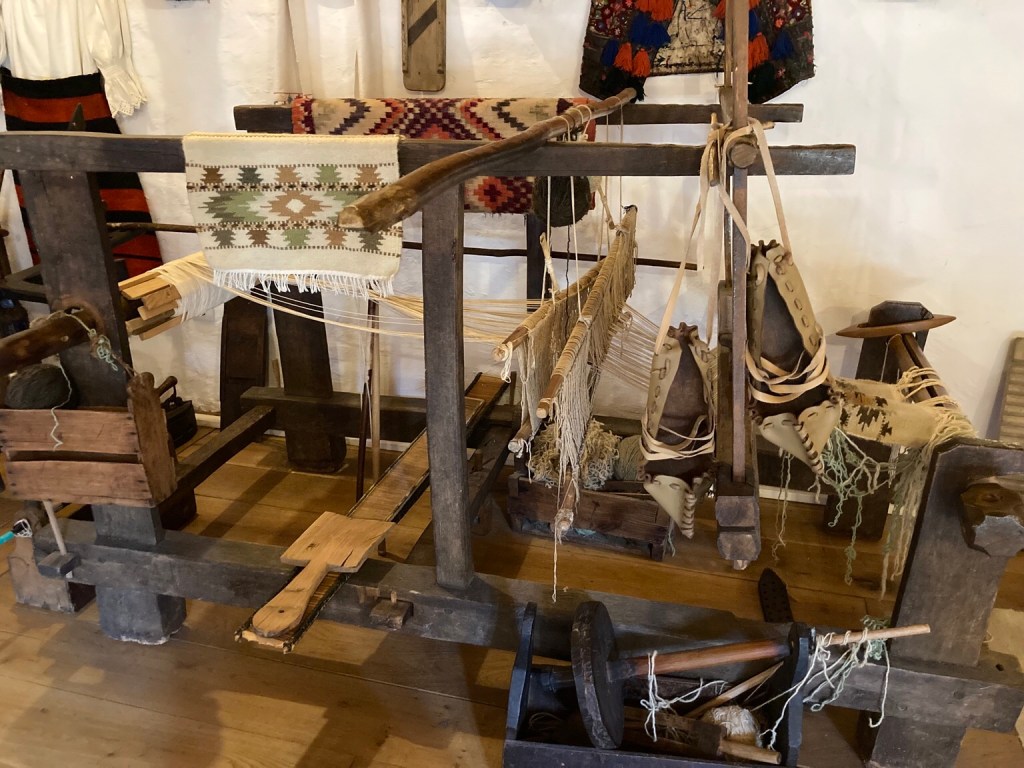

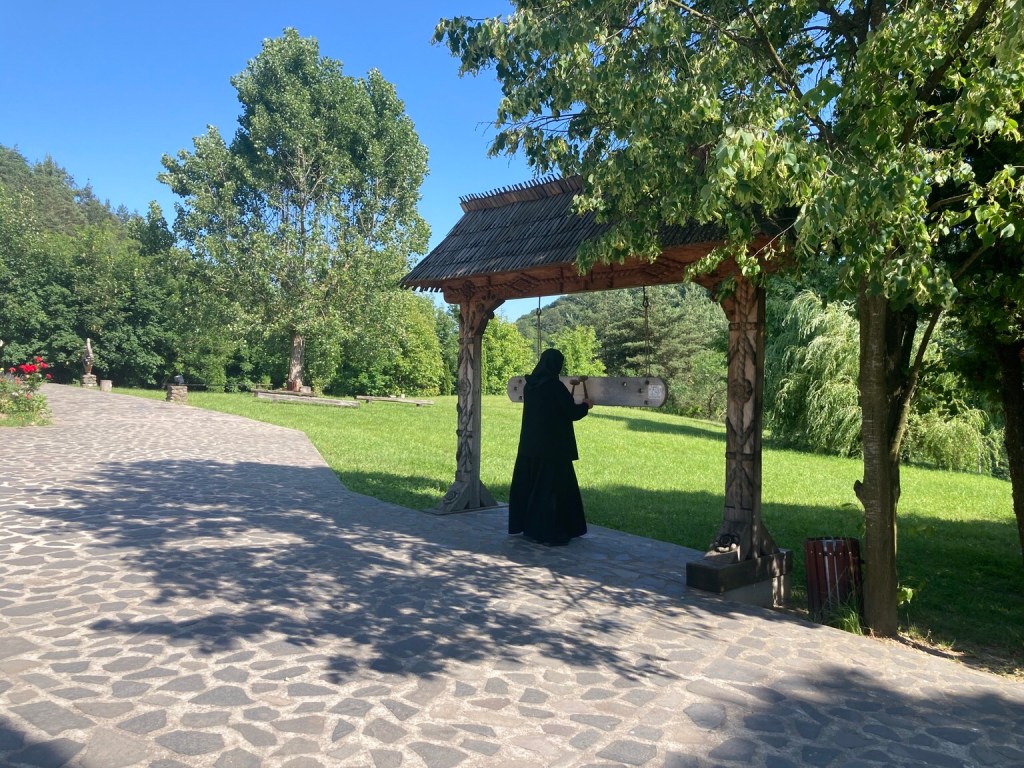
It might be intended to be calm and reflective, but it’s a popular family day out on a Sunday and the piped music made it a little surreal … a little like a theme park! Just before we left, we saw a nun striking a traditional paddle called a semantron to call the nuns to prayer.
We had booked a couple of nights in the village of Breb …
… staying at Pensiunea Lucia in the vila small farm with two houses, a courtyard, barn, orchard and vegetable garden.
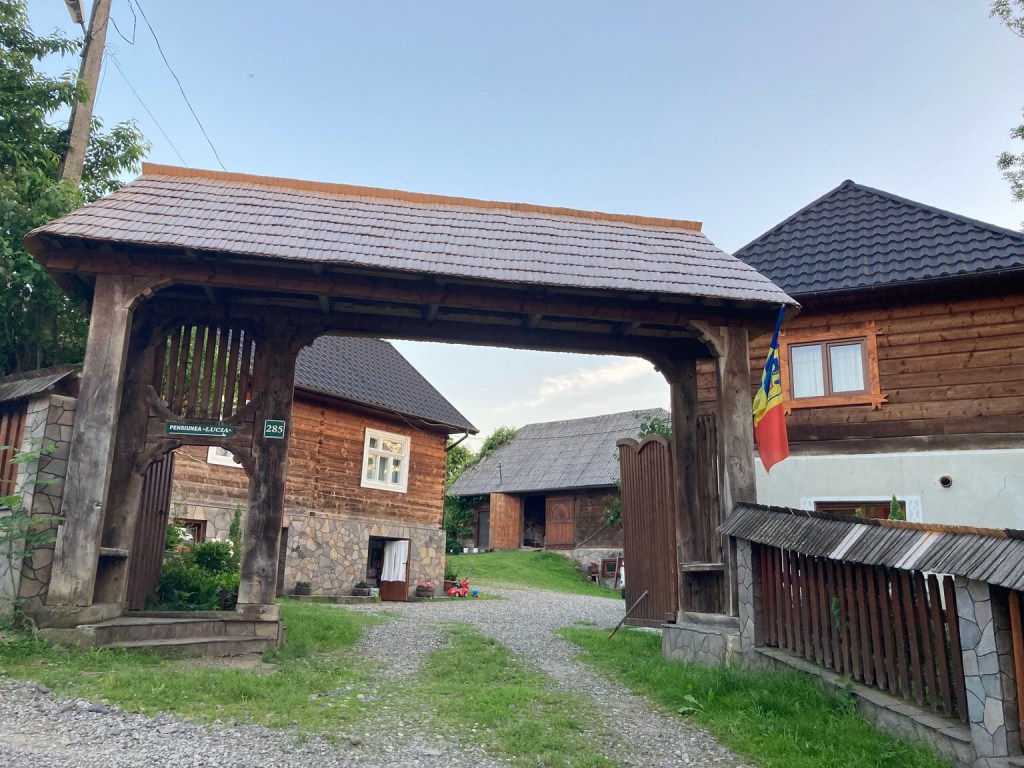
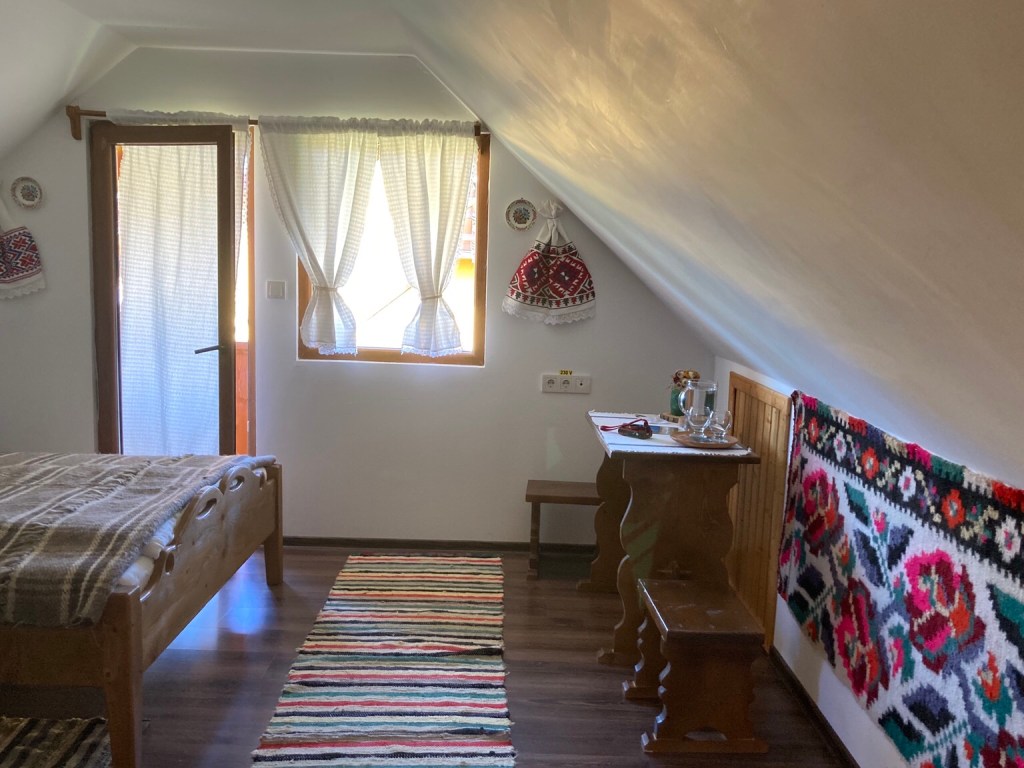
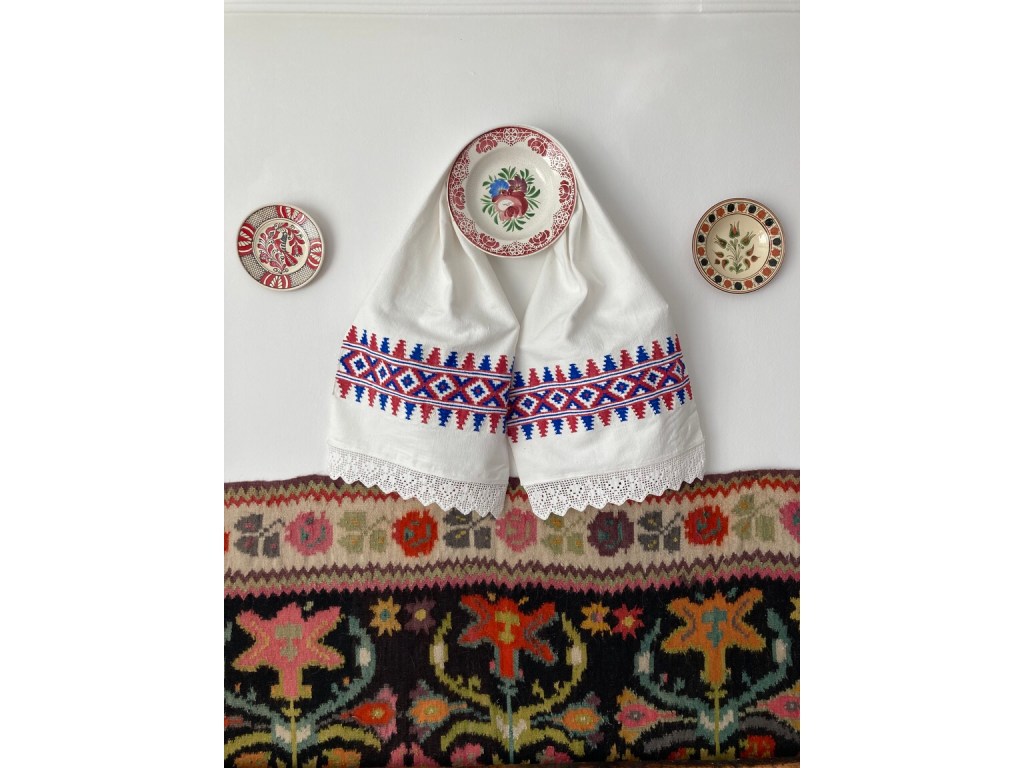
Iona and Lucia gave us the opportunity to enjoy traditional Maramureș hospitality and delicious home cooked food prepared from their own produce. We had dinner both nights starting with vegetable soups, then had new potatoes cooked with boiled eggs and sour cream with a tomato salad one night and polenta with mushroom stew the other. Homemade cake completed the meals, and certainly a drop of pakinka!
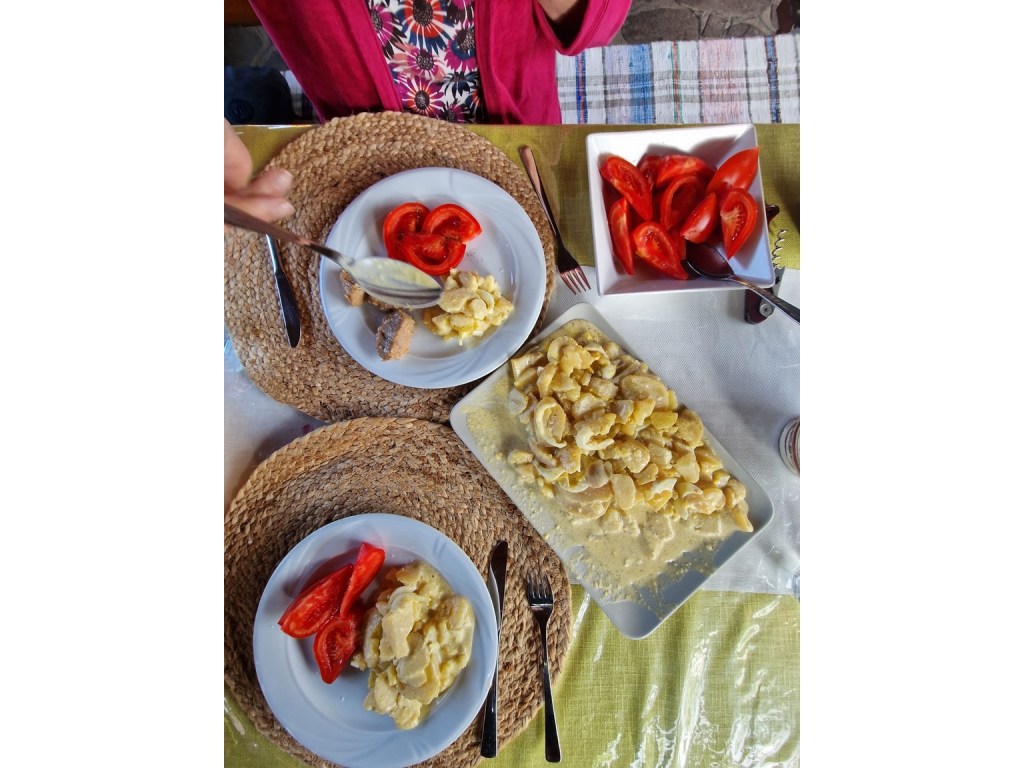
Next day, after a typical farmhouse breakfast …
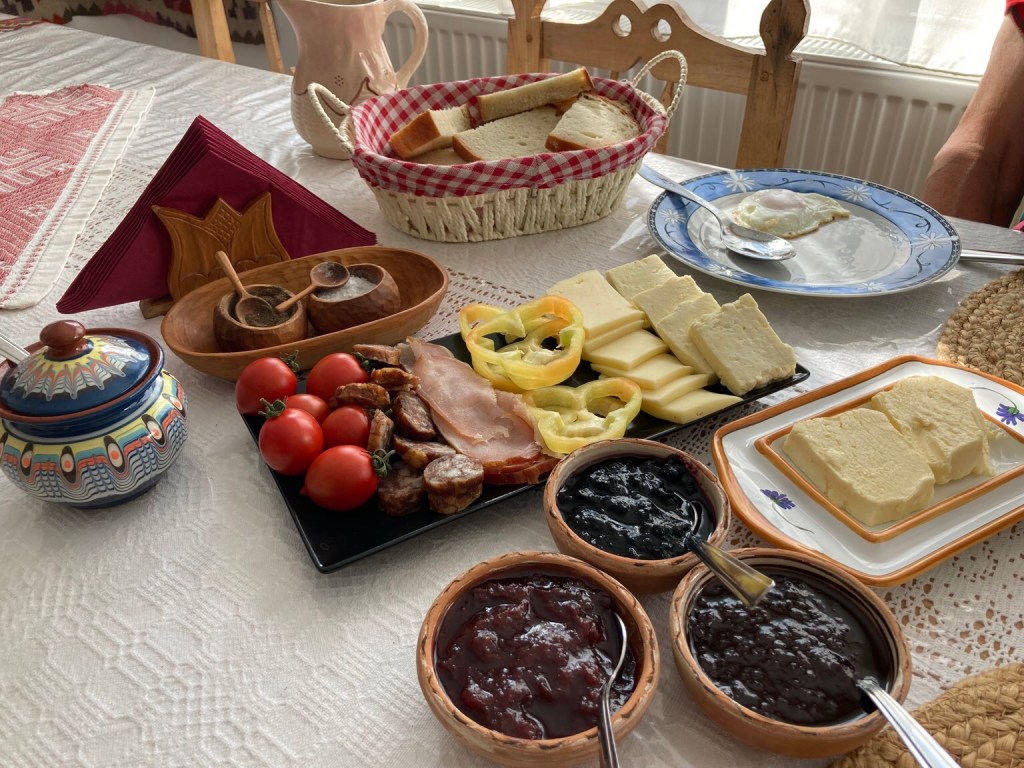
… we set off to Sapanta to visit the Merry Cemetery, famed for the work of the woodcarver Stan Ion Patras who spent his life making painted wooden grave markers, with pictures of the deceased or a scene from their life and a short rhyme.
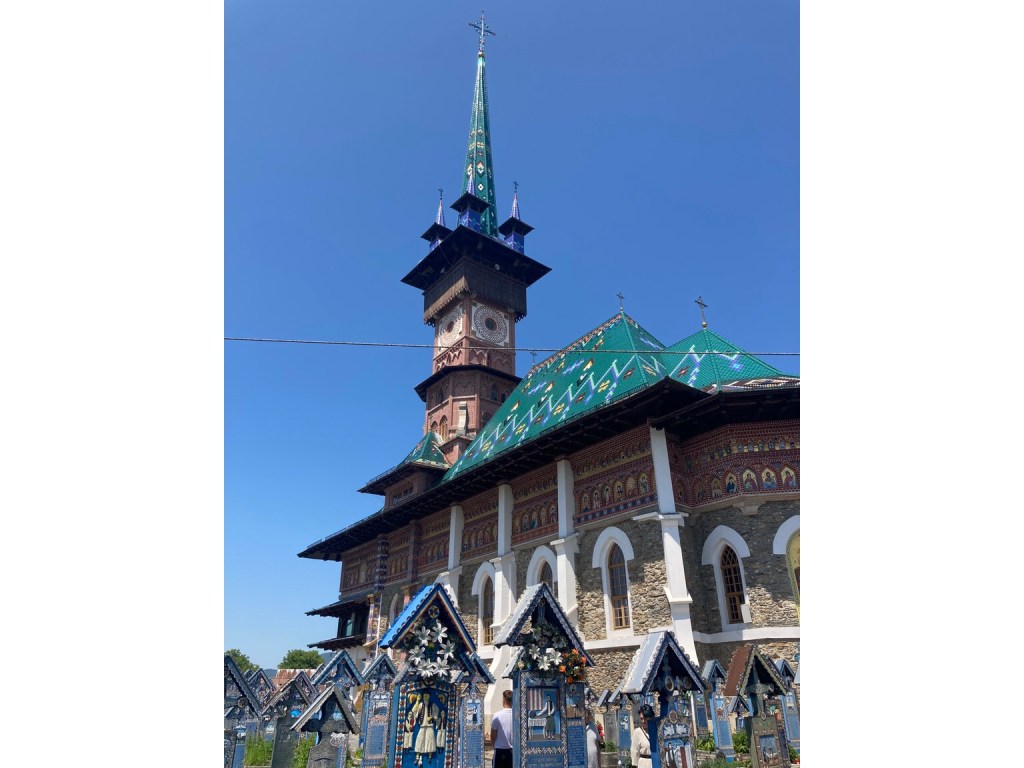
We had seen a book the evening before which sympathetically translated some of the verses into English, but google translate wasn’t up to the task, a shame as understanding the rhymes would have made it more relevant.
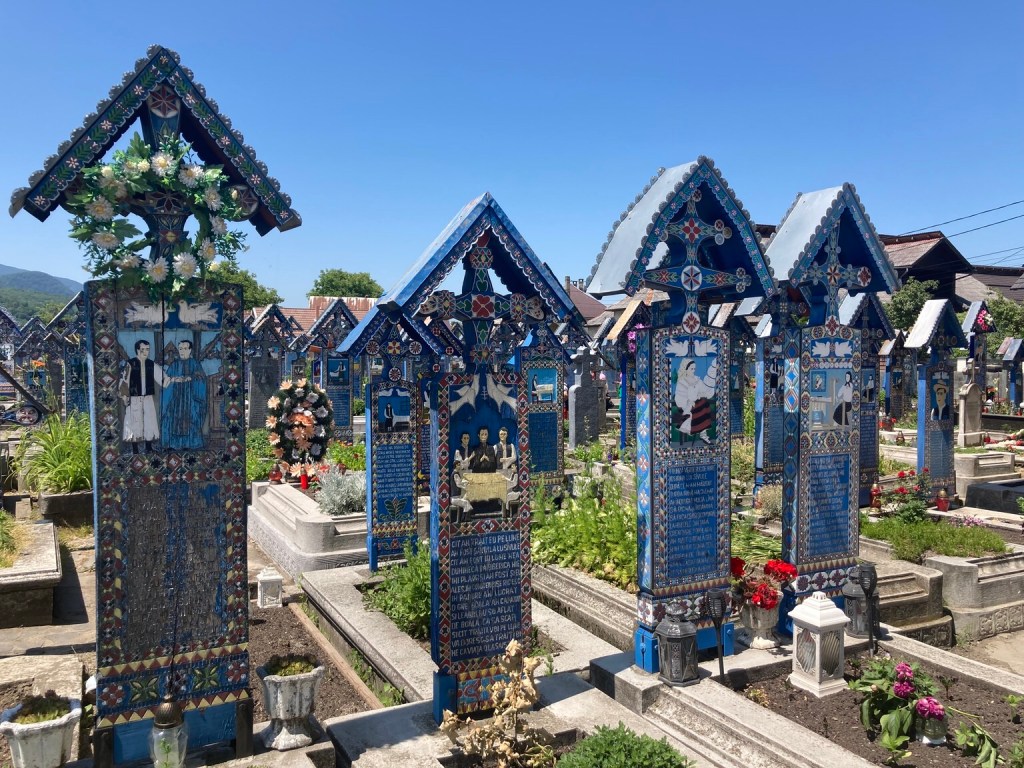
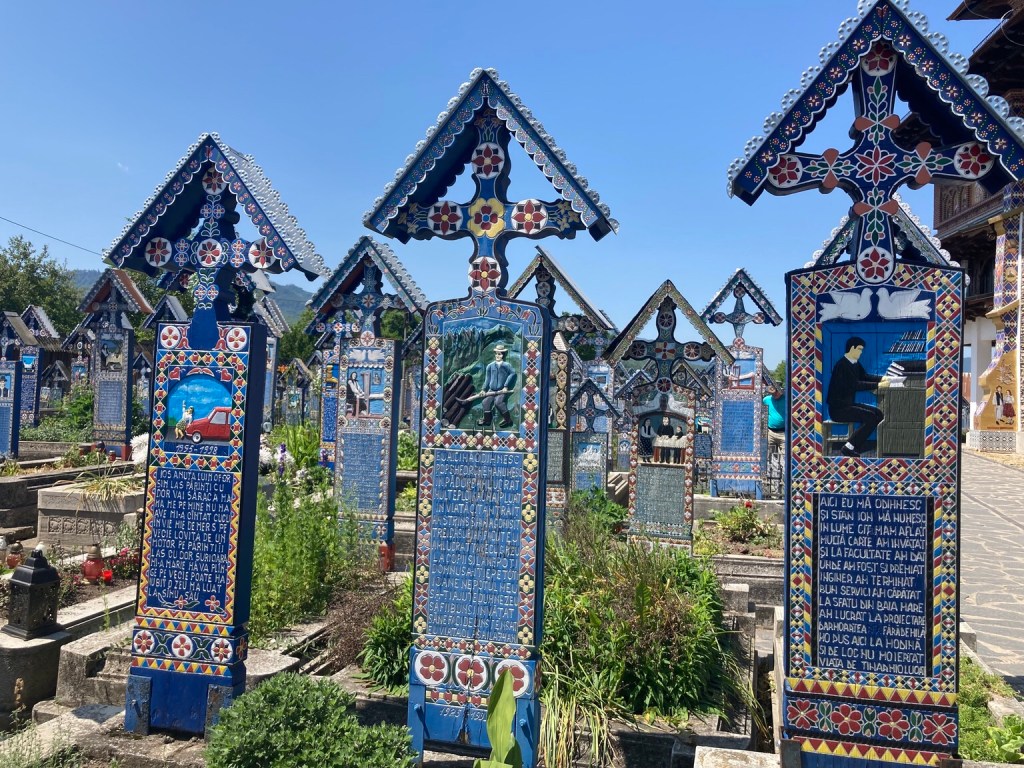
Here are a couple of photos with their translations from the book …
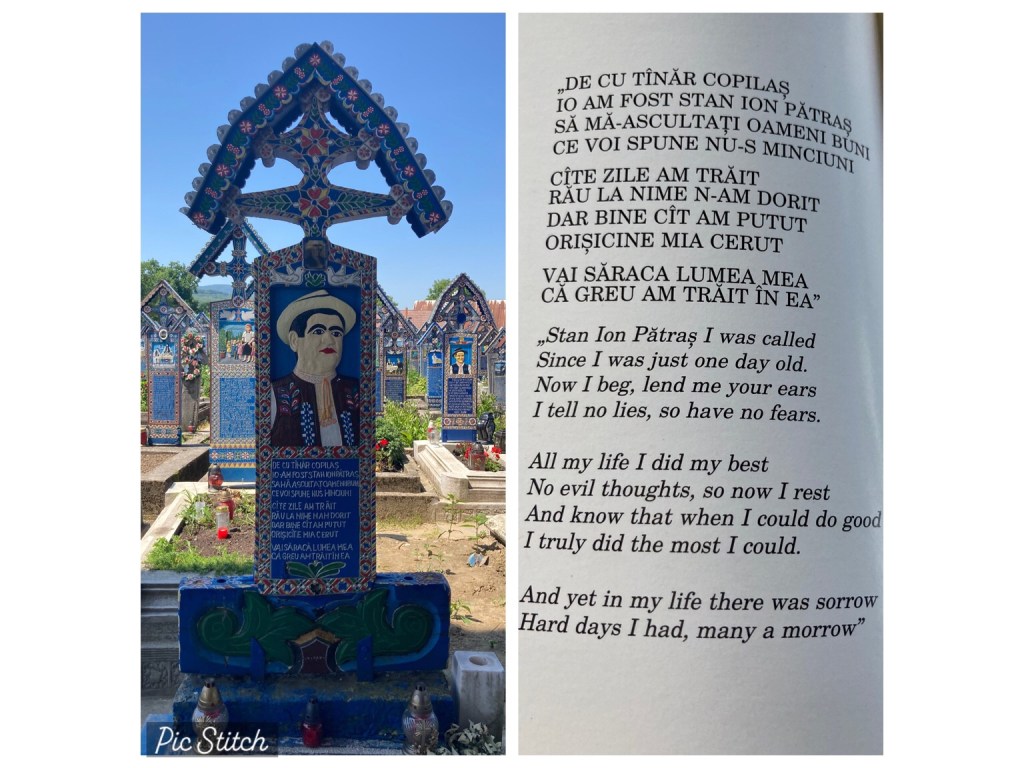
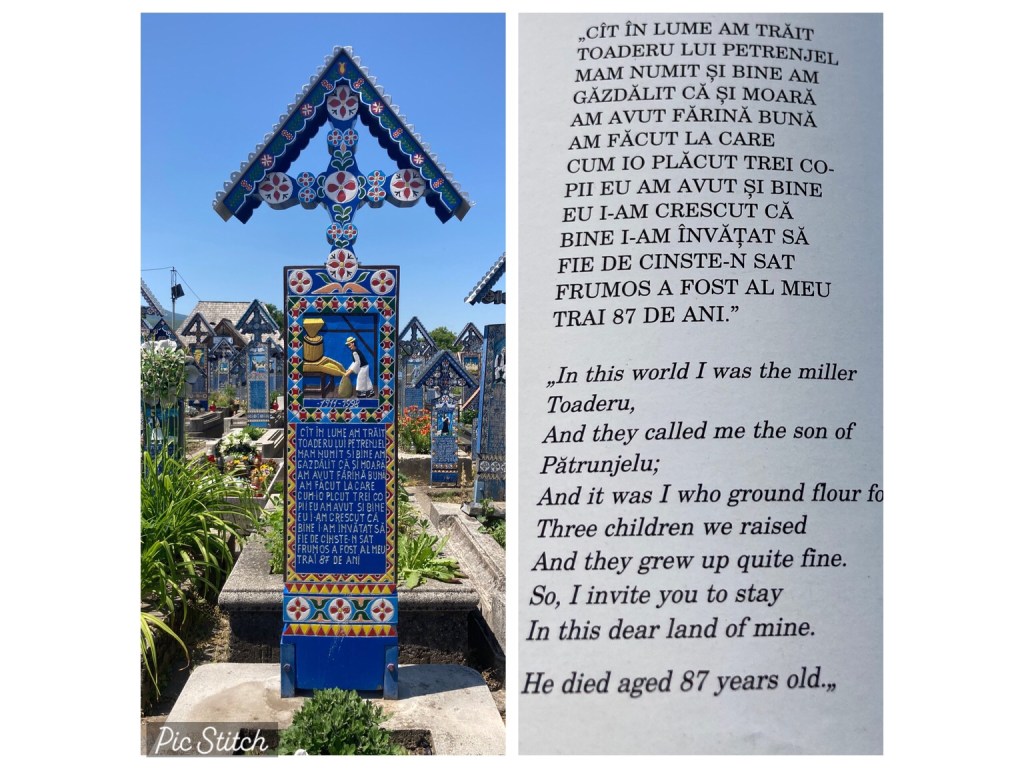
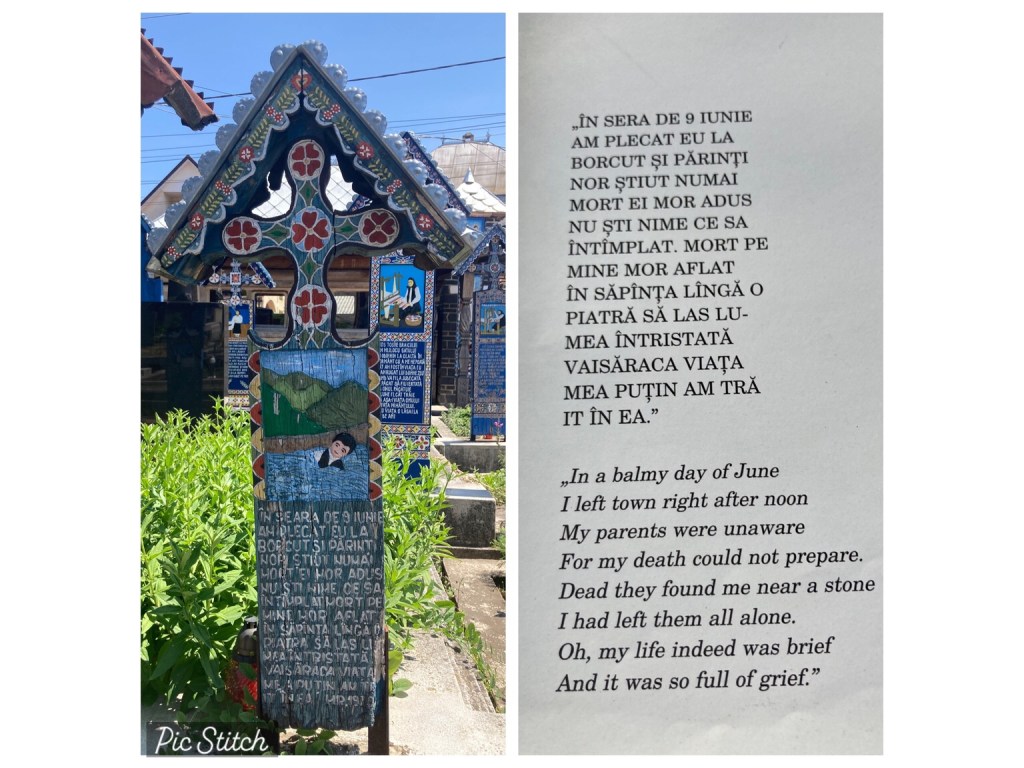
While we did stop at a couple more wooden churches, none were open, so we realised it was lucky we had seen so many the day before.
There are several things we have particularly noticed in the last few days, and the first is wells. It seems that most households have a well, and the water is still preferred for drinking and watering the garden and animals. They come in all shapes and sizes, often with a roof and side panels, so here are a few!
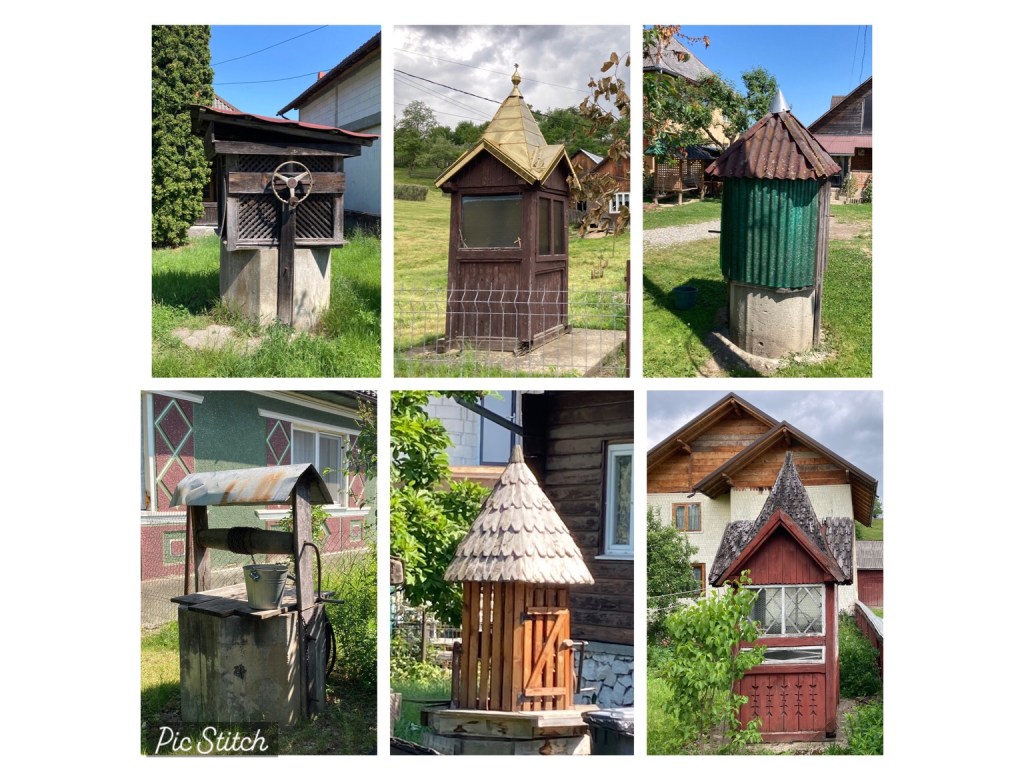
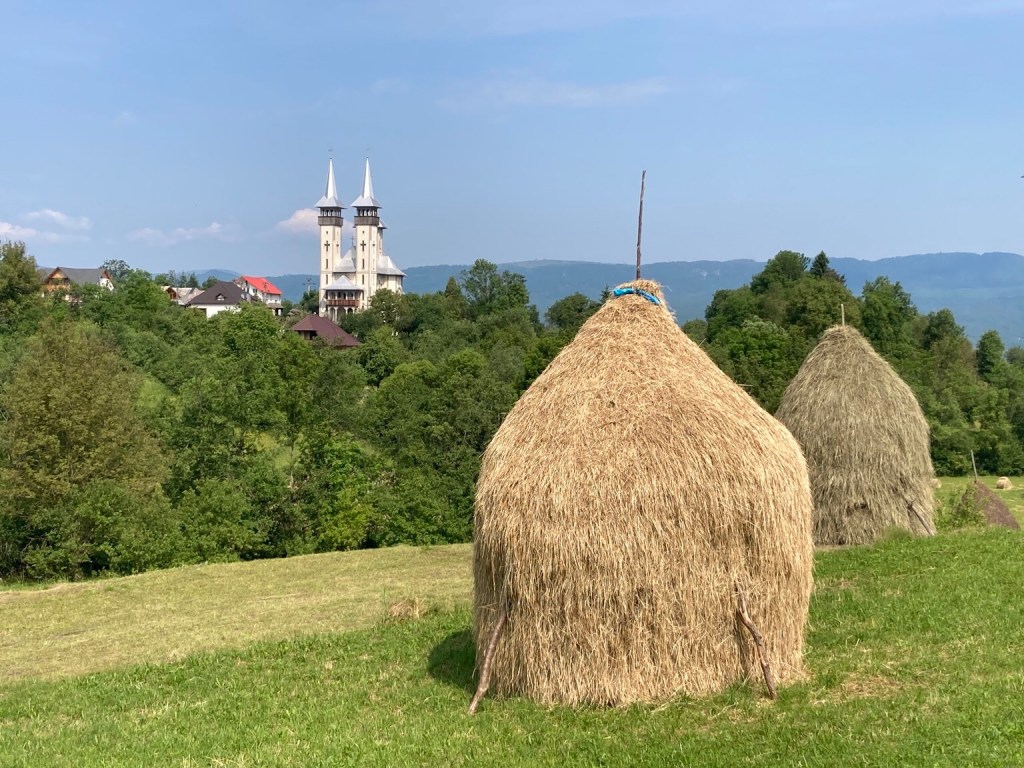
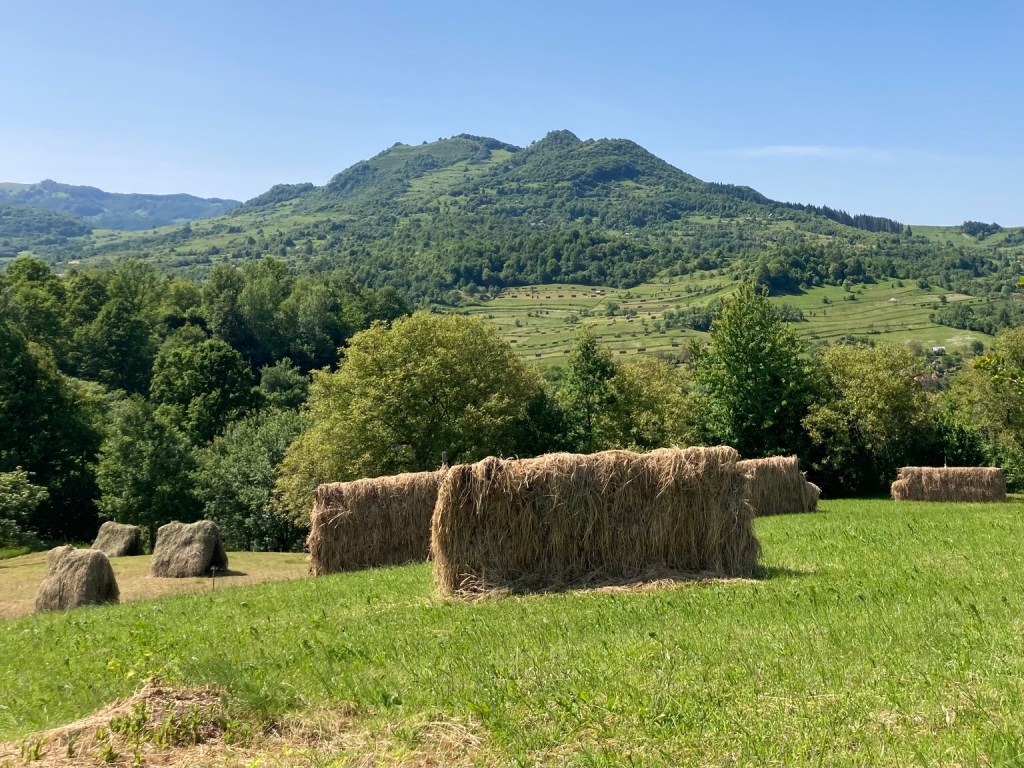
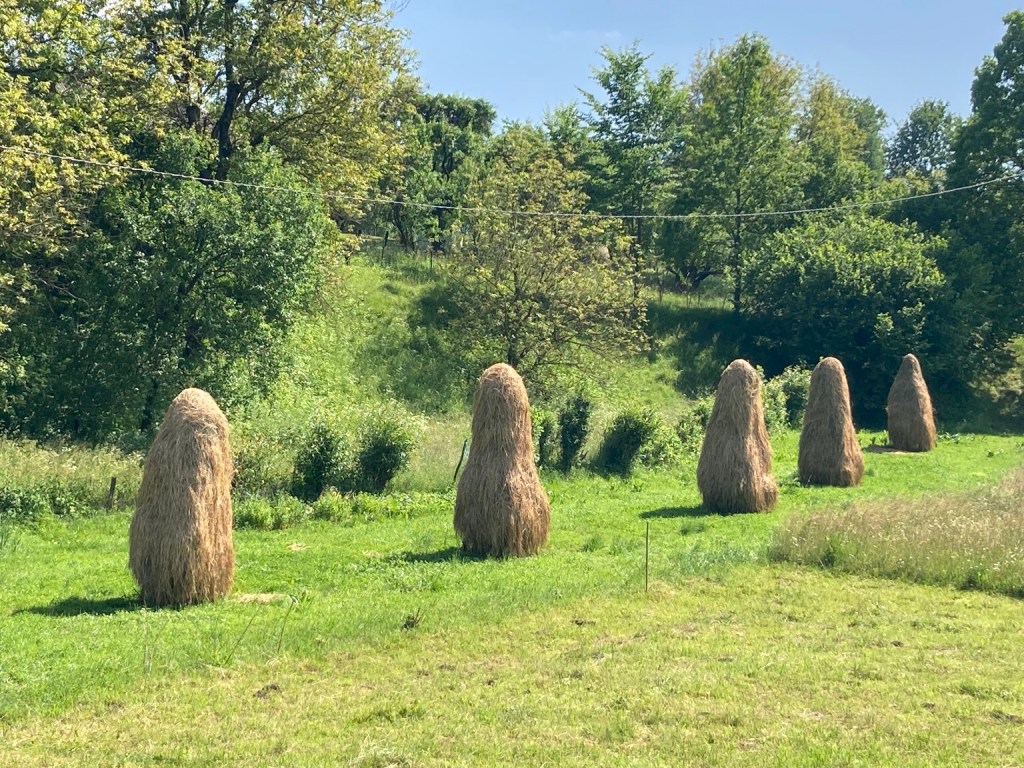
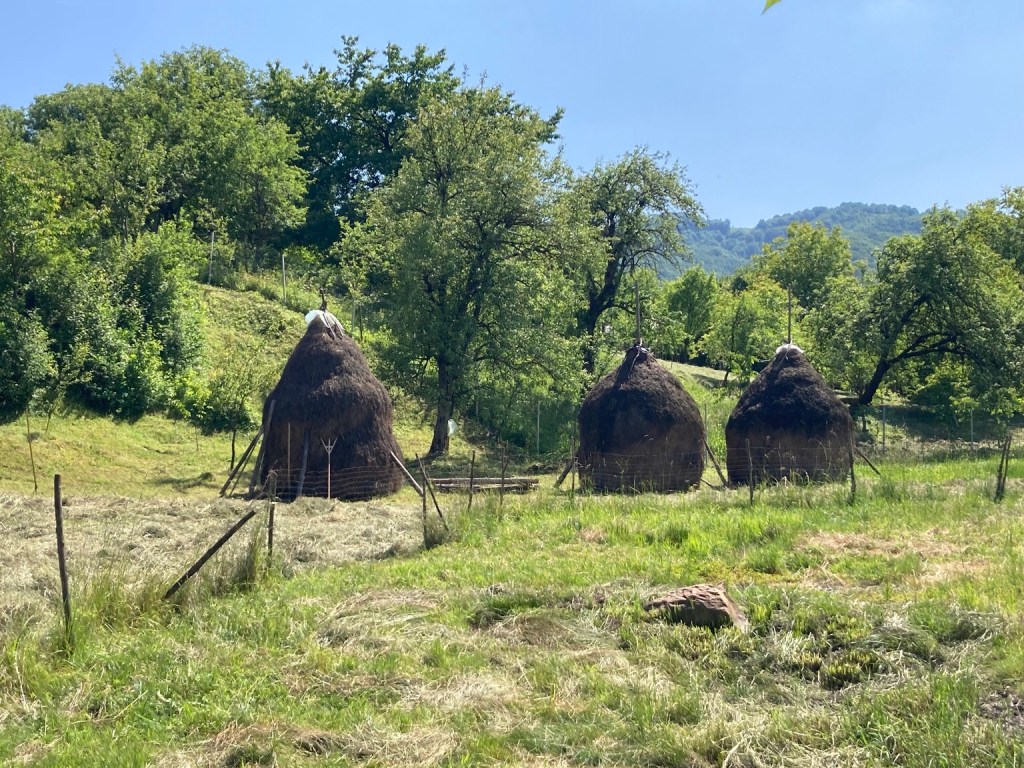
Secondly, it is hay making season here in Maramureș, with much of the work still be done by hand.
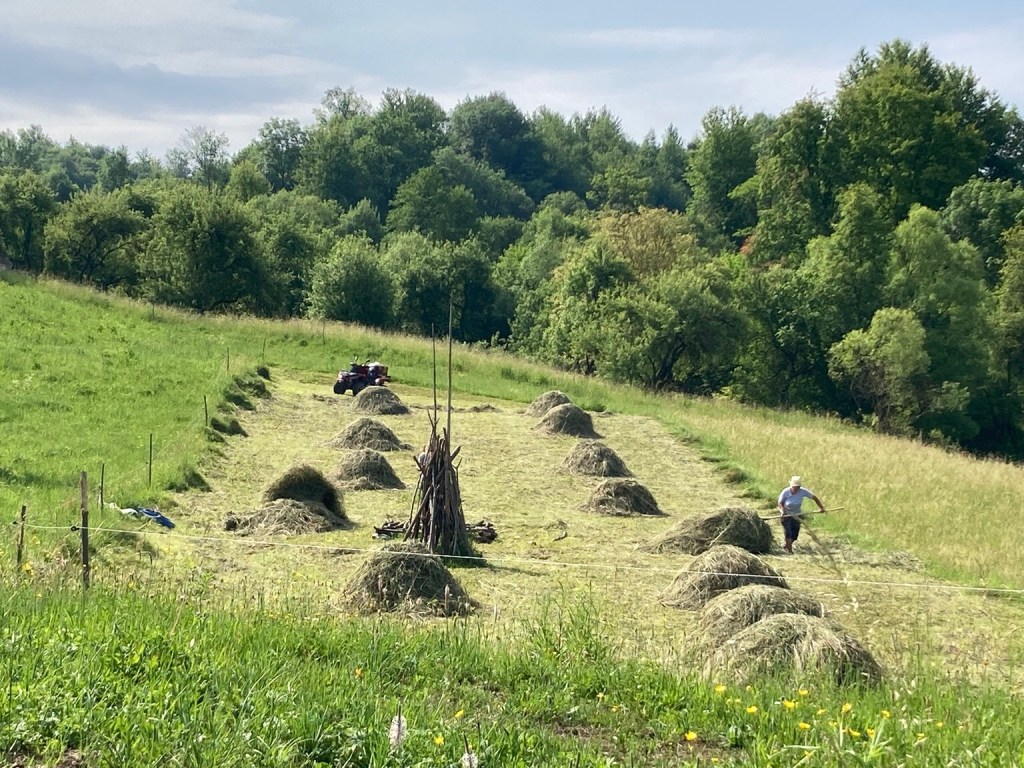
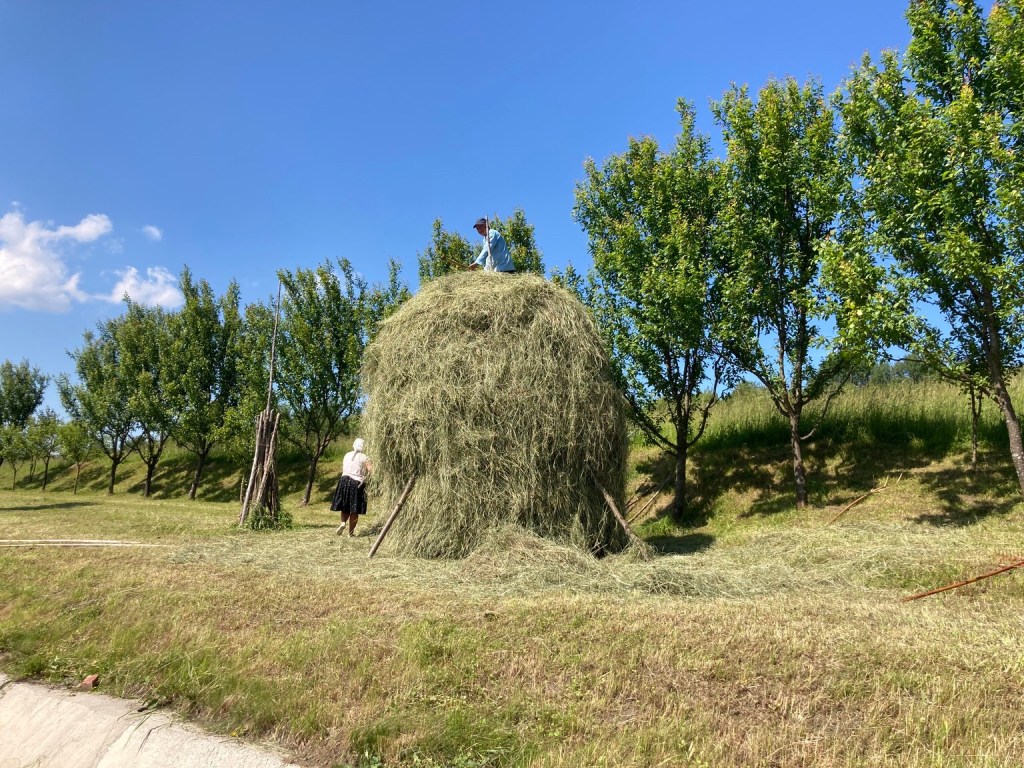
Most people have a small area of meadow and the hay is needed for winter feed for animals, or to be sold to those who do. Once the grass has been cut, it dries, is turned and then collected onto racks or piled in stacks.
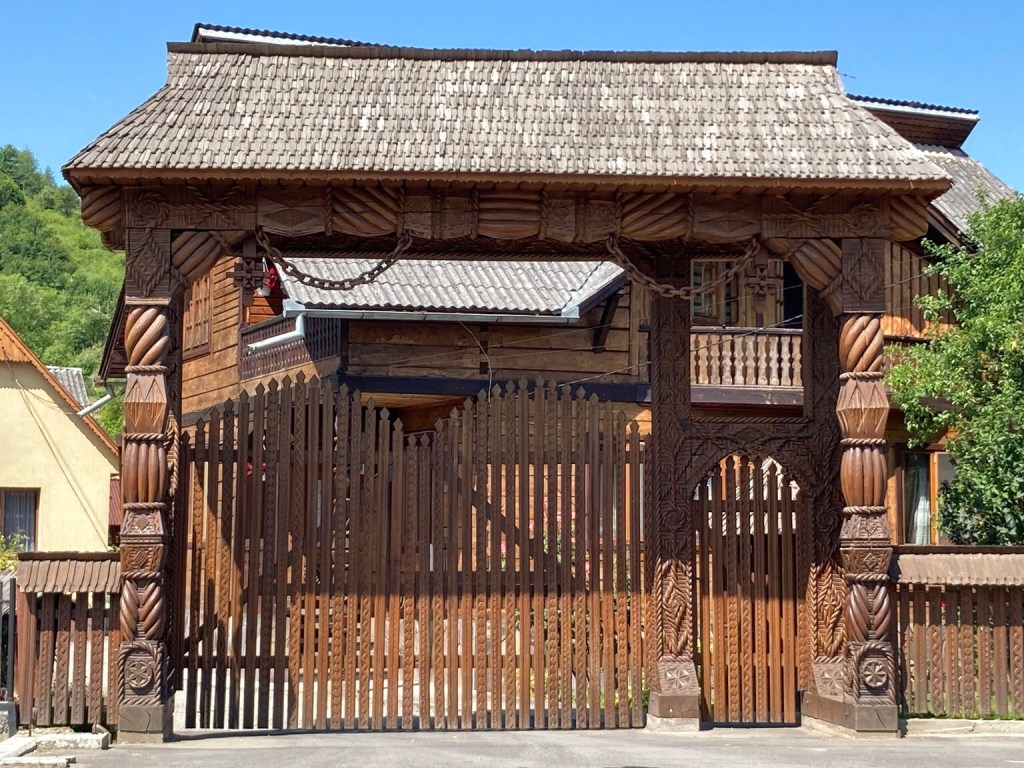
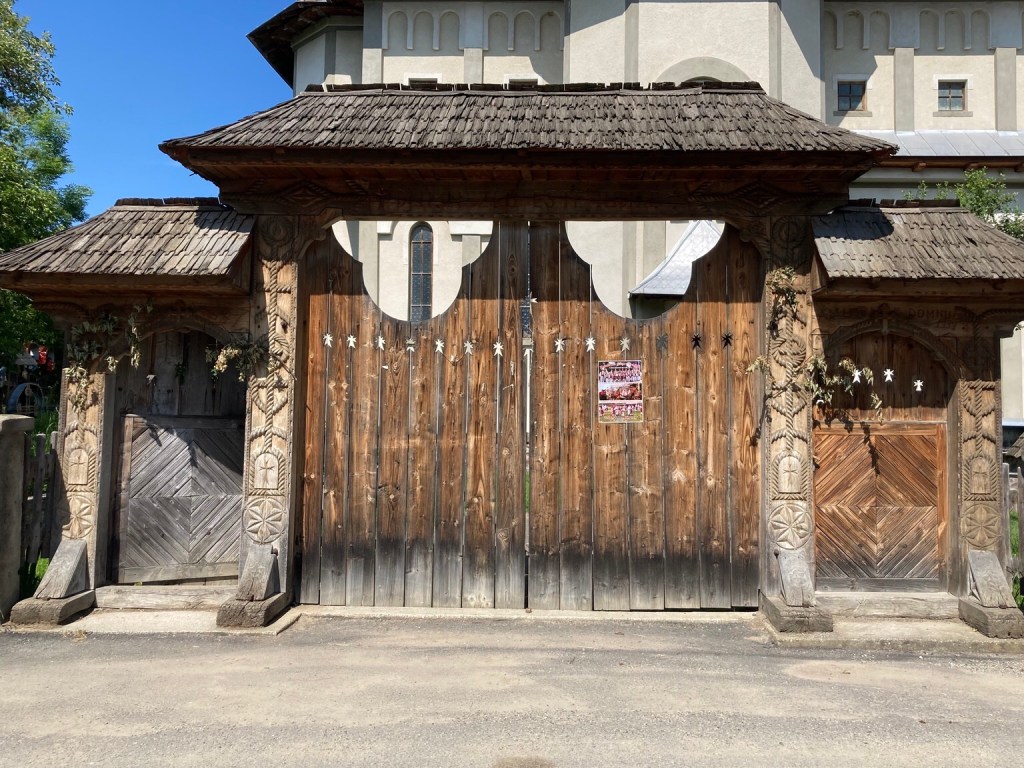
We’ve also noticed how intricate the carving is on many of the traditional gates at the entrance to both churches and family homes. There seems to be a deep cultural significance to the design which includes symbols like the tree of life, sun, rope and snake which protect the household from the world outside.
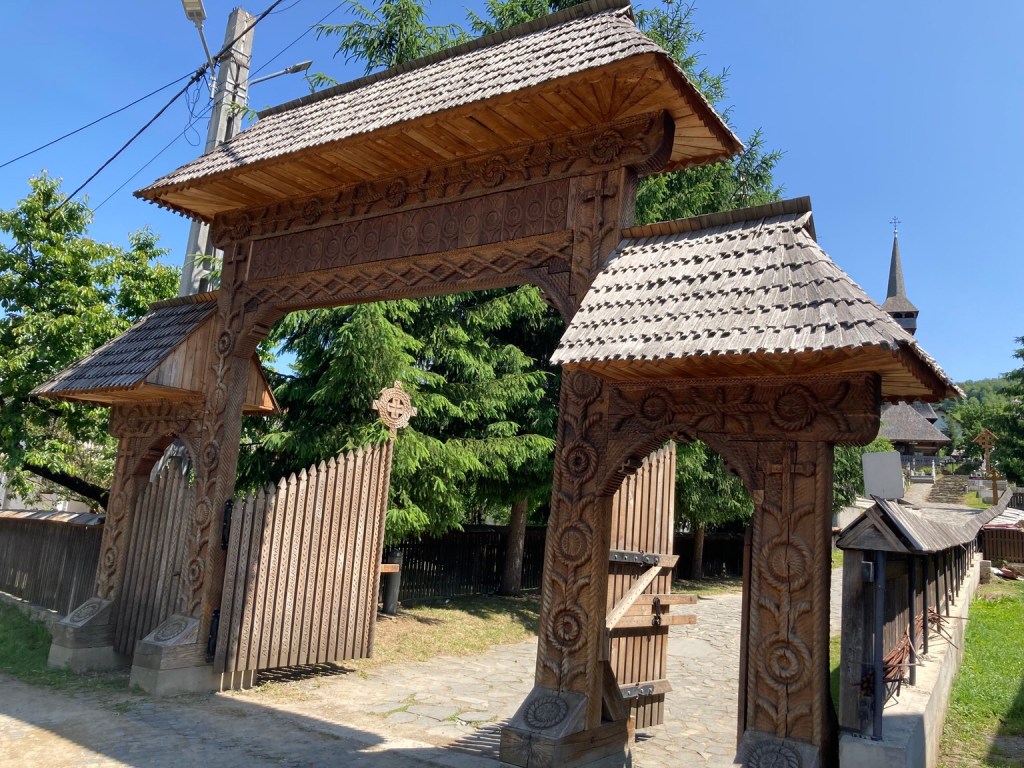
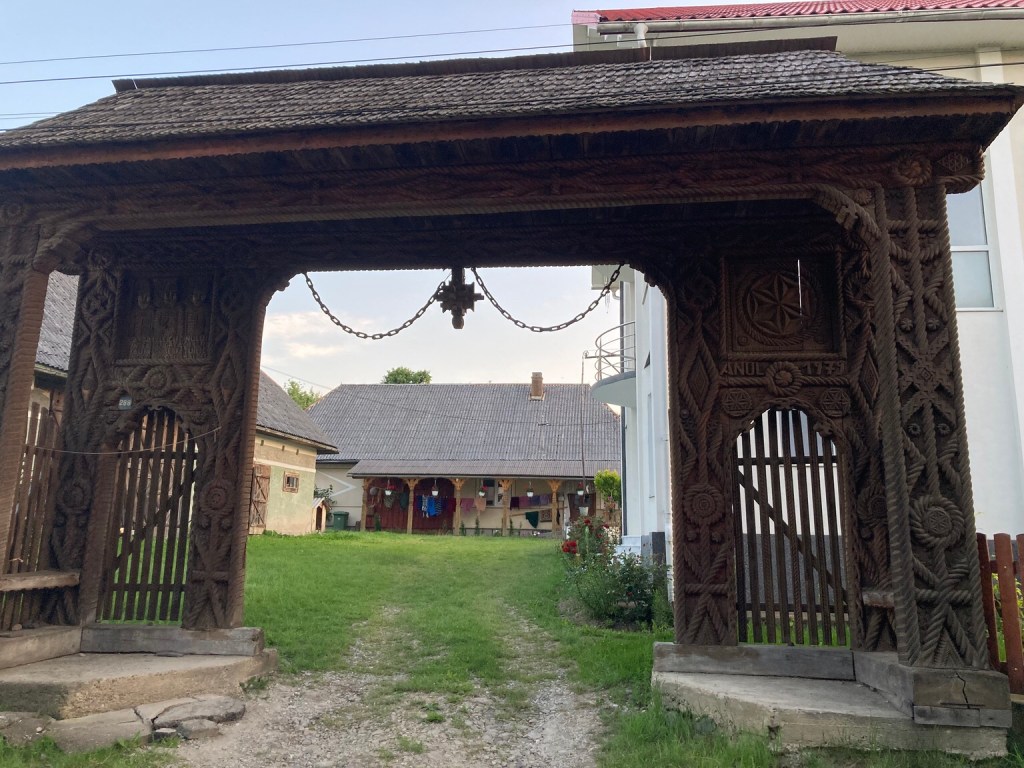
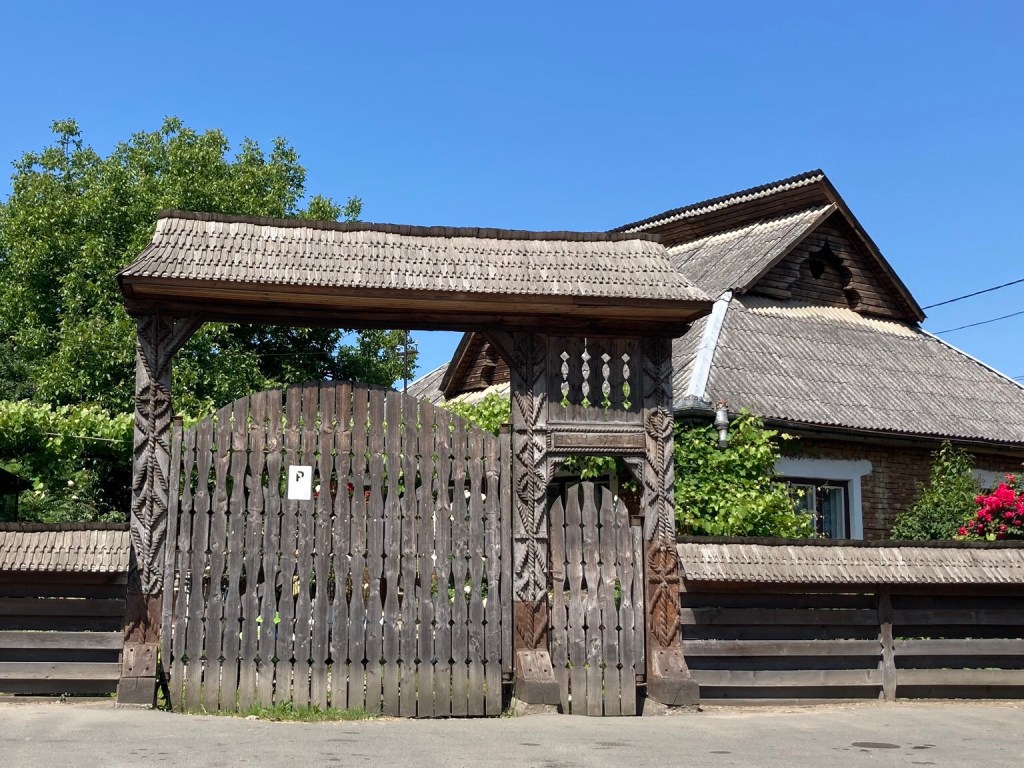
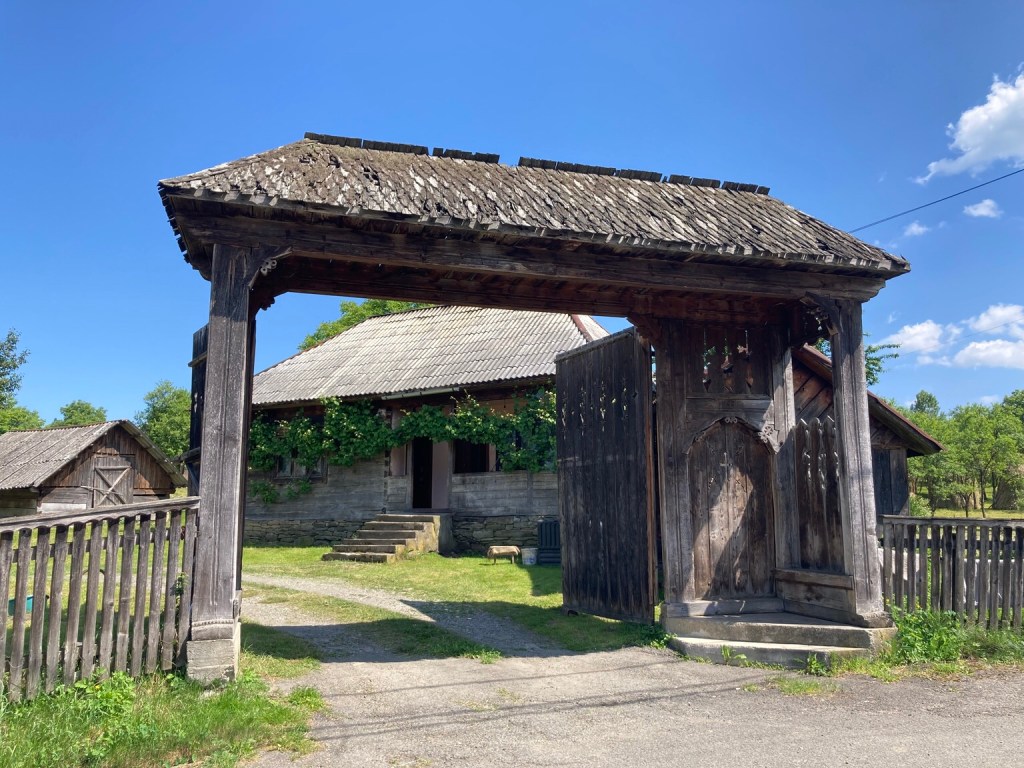
They are not confined to old properties either – many newer homes have gates too …
… and some have dried twigs of foliage attached, which would have been put there at Pentecost to ward off the charmed spirits of the dead.
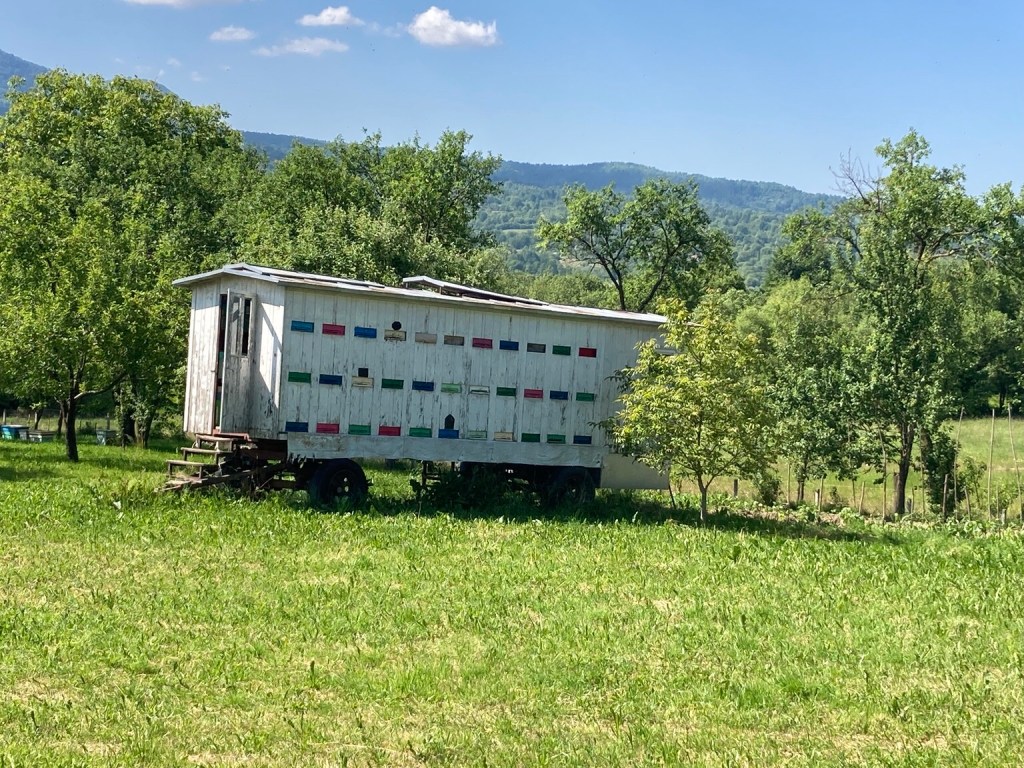
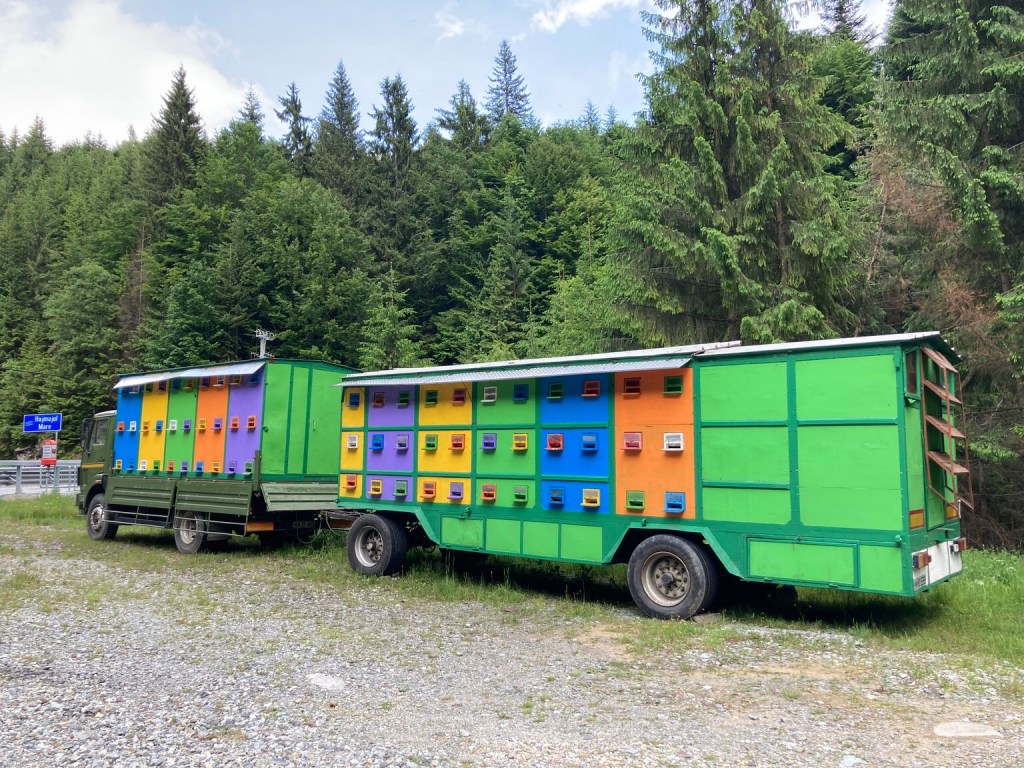
Finally beehives, not just individual ones sitting in a field, but caravans and lorries containing rows of beehives, easily portable to go where the flowers are!
We are now halfway through our trip, and it’s time to drive south …
 Off Travelling Together