Today’s drive took us further into Moldova, Along a river valley …
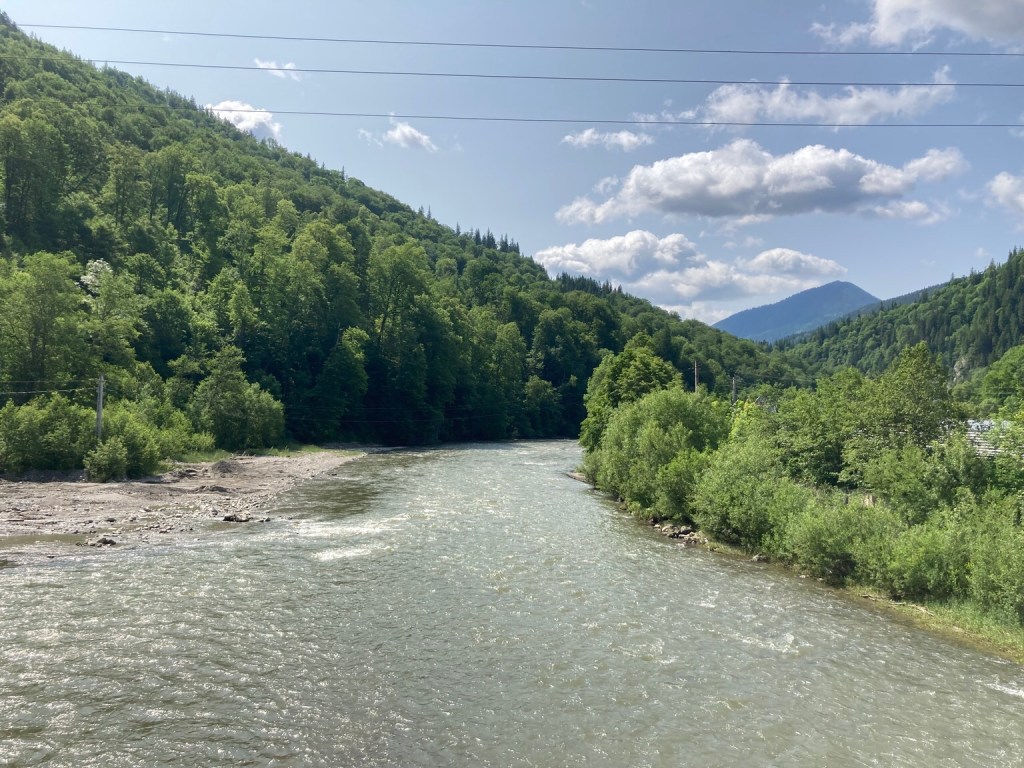
… then upwards …

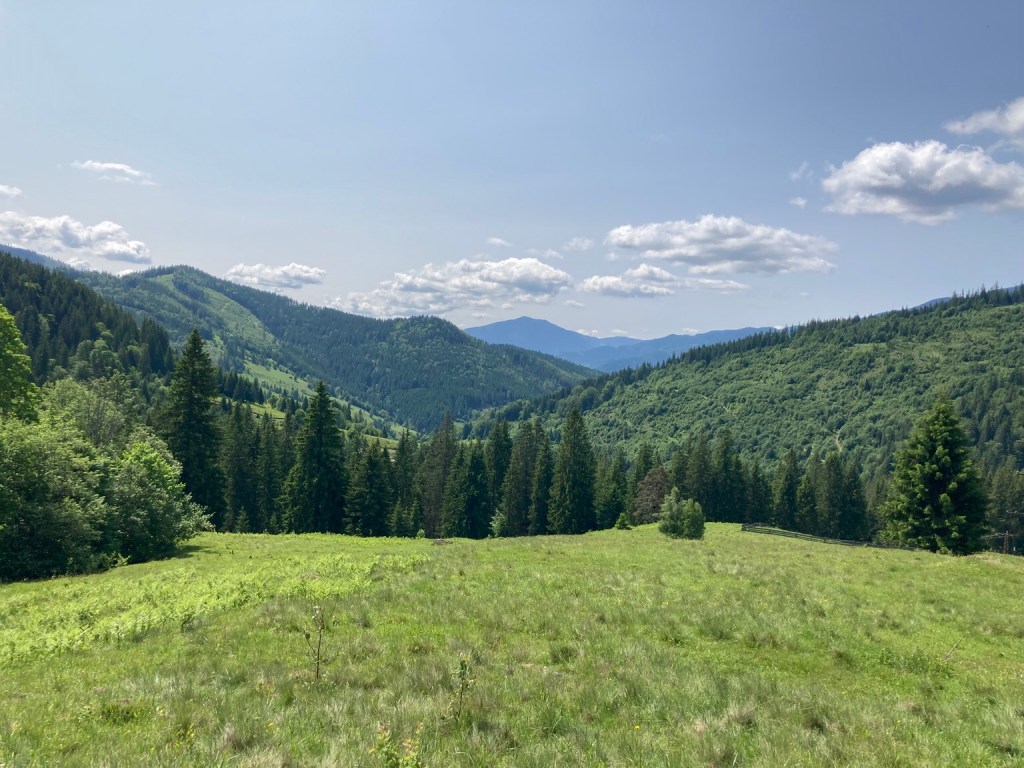
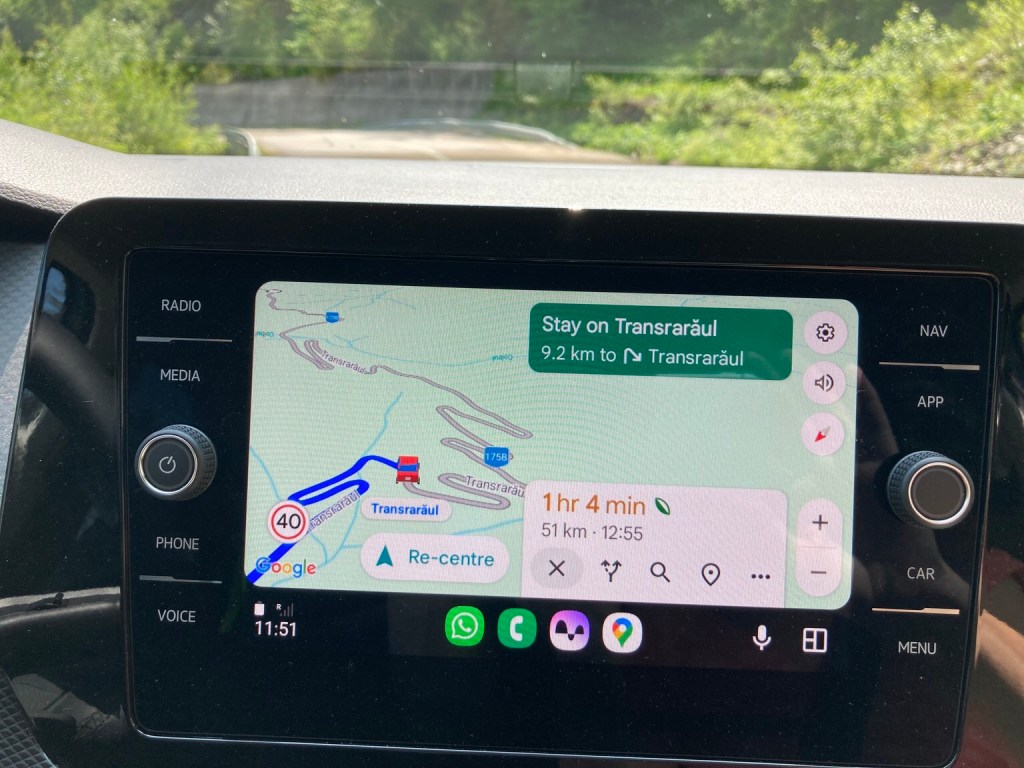
… to cross the Rarau mountains on the Transrarau road, also named the Road of Treasures. Billed as the third most beautiful alpine drive in Romania, the highest stretch reaches 1,400m and has a camera enforced 30 kmh limit which just ensured we had time enough to enjoy the drive! The view at the top was fab …

… and this is how the descent looked on the sat nav!
During the Middle Ages, all Romanian principalities were constantly threatened by the expansion of the Ottoman Empire so local rulers were kept on high alert and marked victories by having a monastery built on an important site. Their exterior and interior walls are decorated with elaborate C15th and C16th frescoes featuring portraits of saints and prophets, scenes from the life of Jesus, images of angels and demons, and heaven and hell. Deemed masterpieces of Byzantine art, they are infused with local folk art and mythology and also taught the stories of the bible. The monasteries are surrounded by fortified walls which could protect the community from attack.
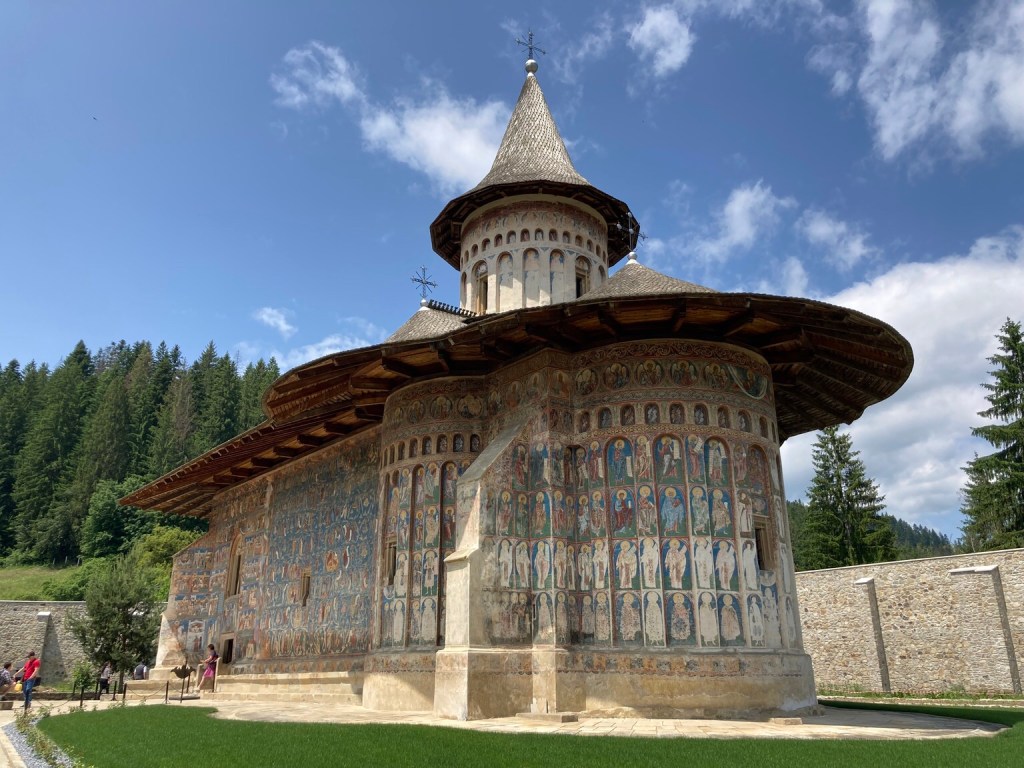
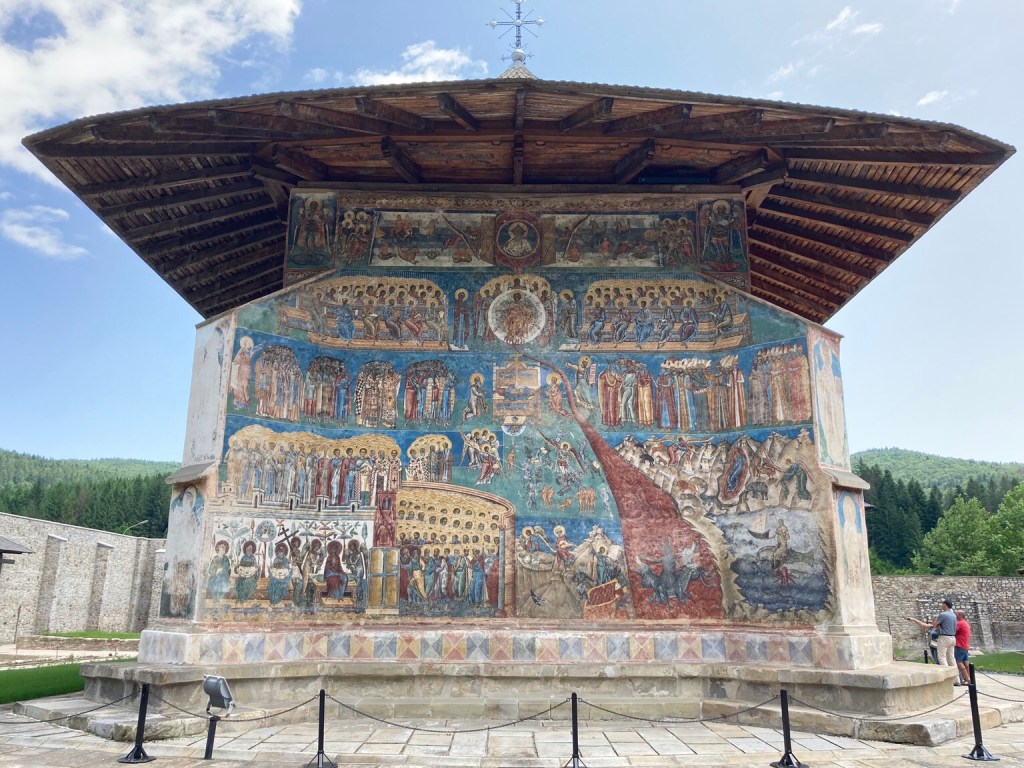
Voronet was built in 1488 for Stephen III of Moldavia to celebrate chasing the Turks from Wallachia and is considered the jewel of Romania’s painted church crown. We entered beside the north wall, where the frescoes have largely been worn away by weather …

… but as we walked round the the south side we could see the frescoes, still vivid after 450 years.
Most of the south wall is covered by a Tree of Jesse which shows the genealogy of Christ and the intense shade of blue of the background contains lapis lazuli and is commonly known as Voronet Blue.

The area round the door shows a comic strip of the lives of St Nicholas and St John …

… but the Last Judgment on the west end is possibly the finest single composition among the painted monasteries showing zodiac signs at the top, then Christ seated with the faithful on the left to go to heaven and the penitent on the right (including Tatars and Turks!) to go to hell. Below devils push sinners into the flaming river to hell, and to the left, there is a crush of righteous at the gates of heaven!
Photography within the church was forbidden so I can’t share, but there was a calendar of saints in the entrance showing martyrdoms and miracles, a tomb chamber next and then the main church with icons. Every inch was covered in images even more vibrant than those outside.
Moving on, having bought a ticket to the monastery at Humor, we found was covered in scaffolding …

… but once inside we were able to take a couple of photos, and noticed how much more lifelike the images were, especially the prancing horses.


Sucevita Monastery was built in 1585 by the Moldavian princely grandsons of Petru Rares, Simion and Ieremia Movila and was a princely residence as well as a fortified monastery. The Ladder to Paradise can just be seen under the scaffolding, with red-winged angels in rows and the righteous on a slanting ladder to the heavens, while sinners fall through the rungs and are driven by grinning devils to hell.
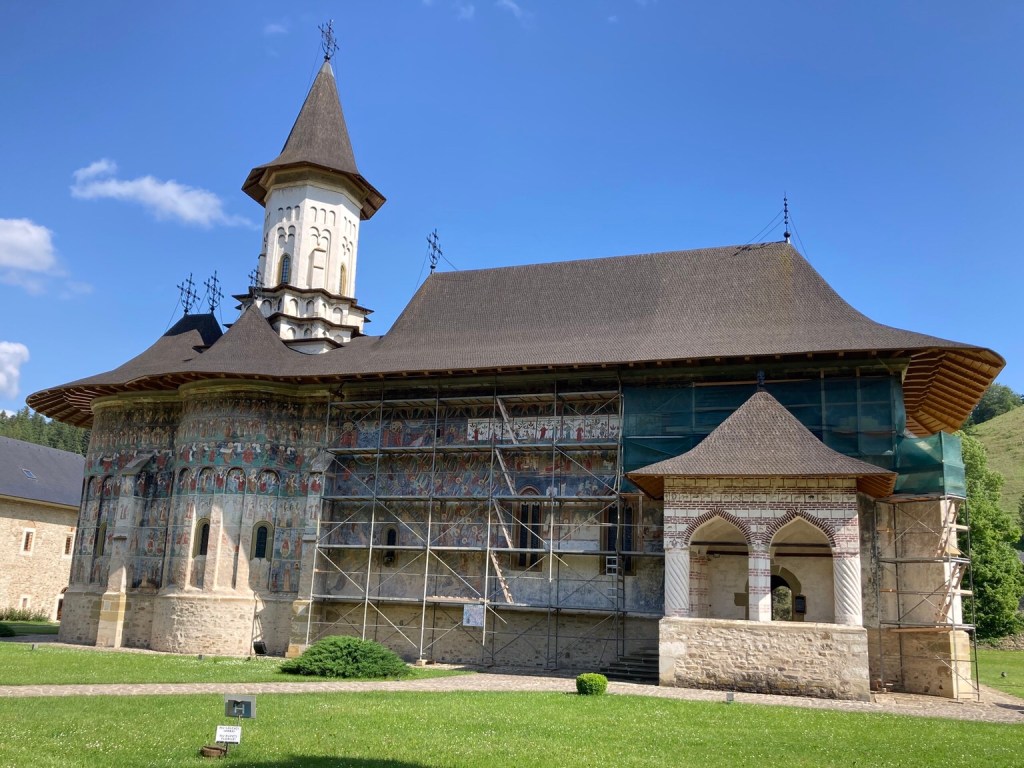
More remains on the south wall …

… with another Tree of Jesse …

… and a procession of angels, preachers and apostles on the curved east end.

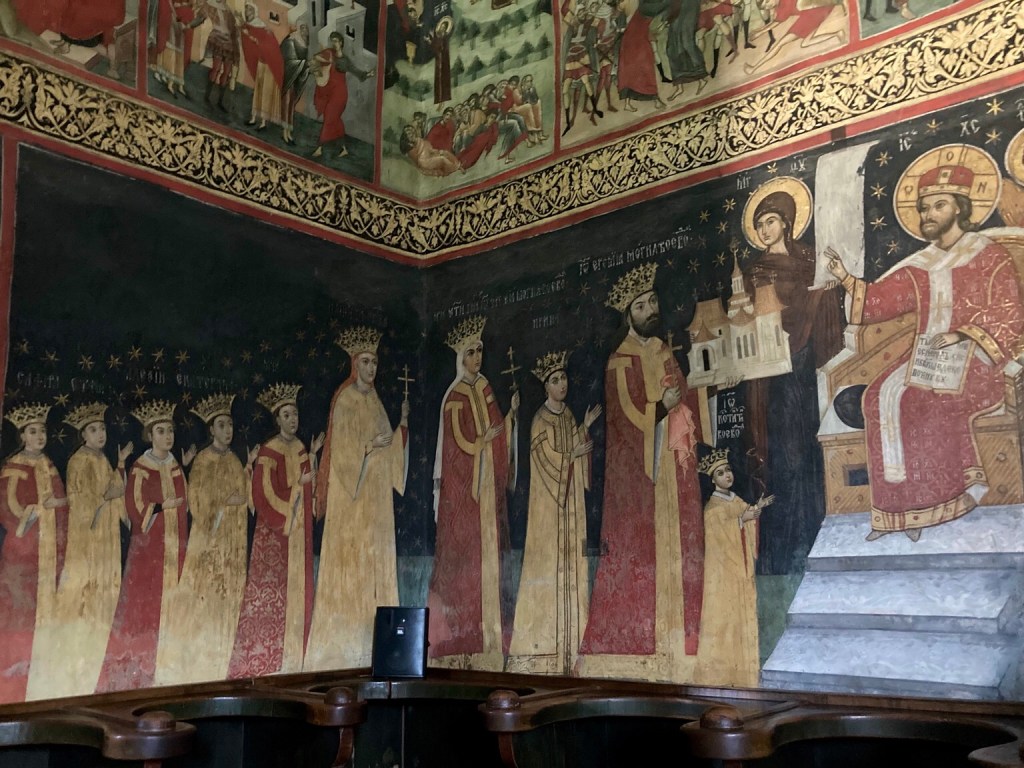
We managed a couple of snaps inside. This is the votive picture of the two brothers and the family presenting the monastery to Christ …
… and a rather dashing Saint George.

We spent the night at Cabana Piatra Runcului, a homestay in Moldovita.

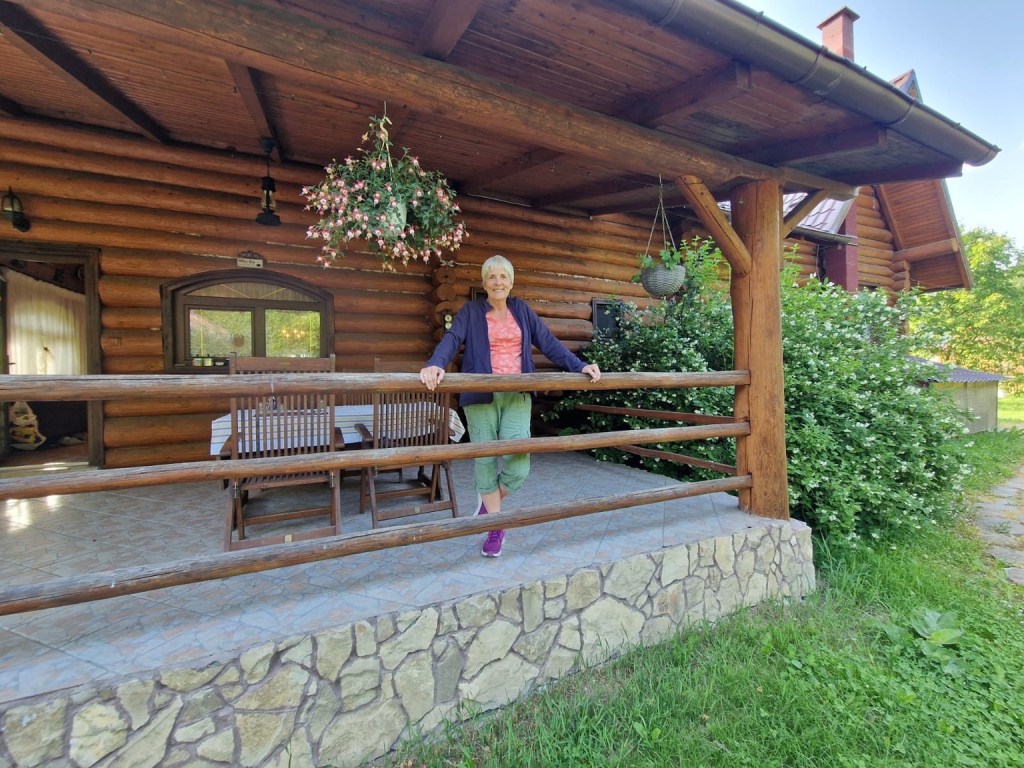
We were made very welcome but for the first time, language was an issue as despite letting our host know Chris was vegetarian, his dinner came with pork stew. Rather than fuss, he took as much from his plate and mine as possible onto a clean plate and called it a win, helped by several glasses of homemade fruit liqueur!
After a breakfast of eggs, we took a ride on the Mocănița Huțulca, a restored narrow gauge steam train that once transported timber but now chugs to the hamlet of Argel and back.

Everyone was jolly in our carriage, enjoying their day out and we were offered something to eat which looked a bit like a crepe, and people were tearing a piece off. It was sorici or salted pork skin, and I tried a small piece, not surprisingly a bit like shoe leather!
The idea of a a ride in a wood fired steam train doesn’t take into account how filthy the smoke is and full of smuts, but fortunately there was enough space to choose a seat that avoided the worst of it.
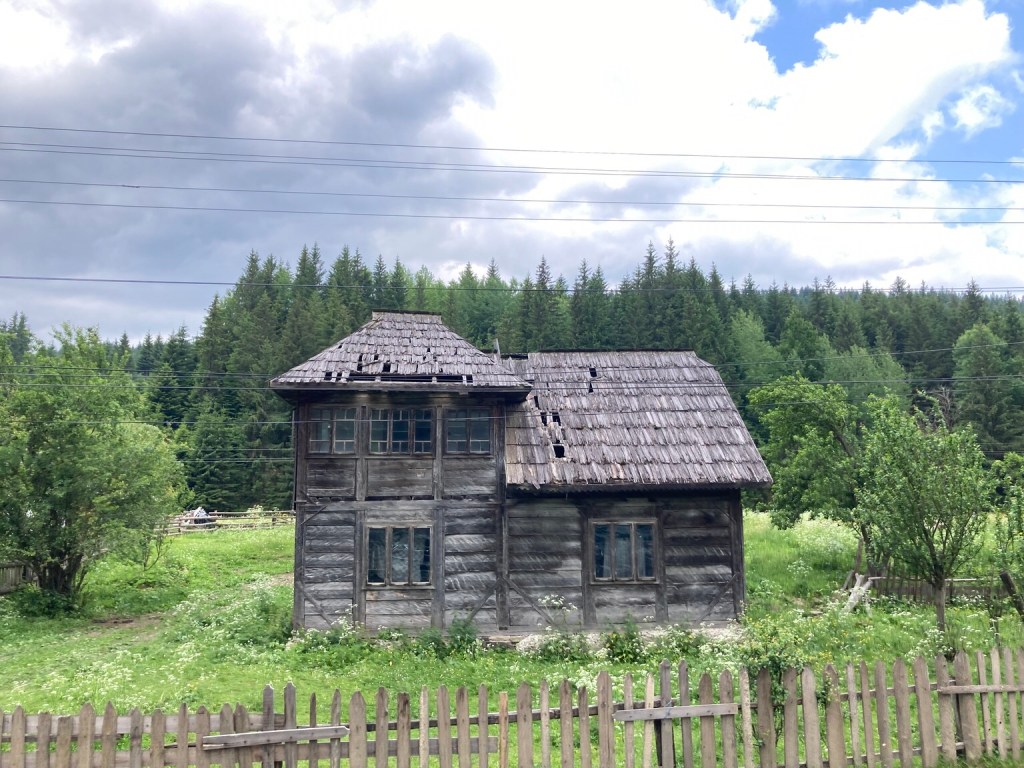
There was some gorgeous mountain scenery along the way …


… then we arrived at Argel, where they had been cooking up a storm – shame we’d had breakfast!


Before long we were back aboard and making the trip back.


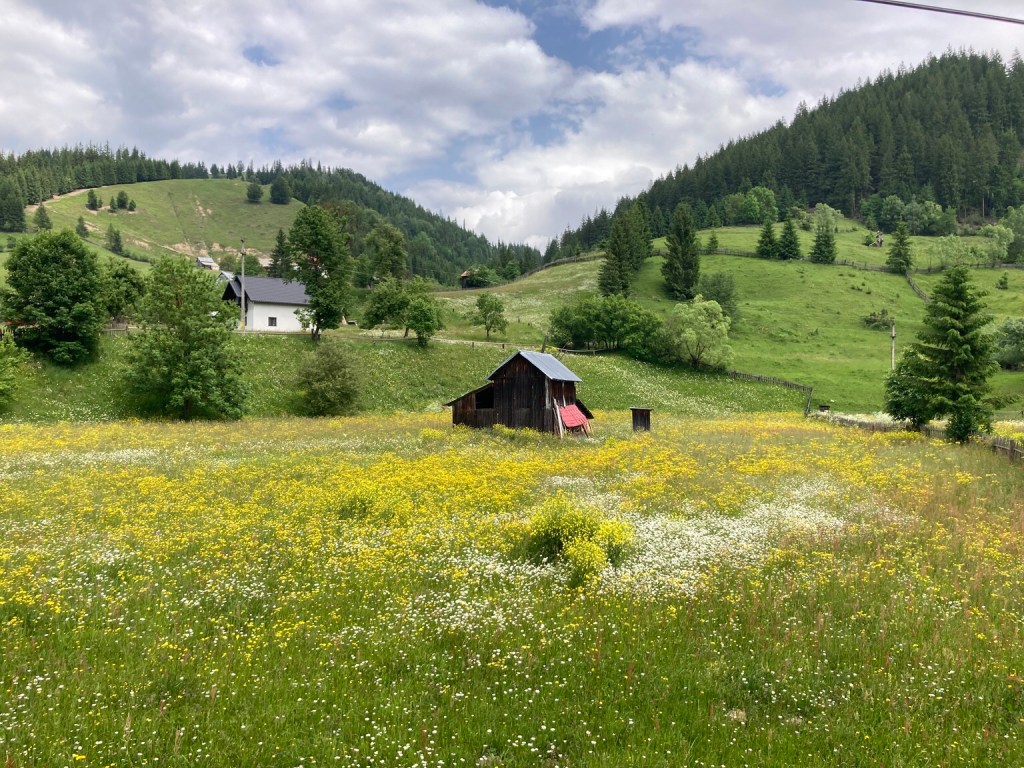
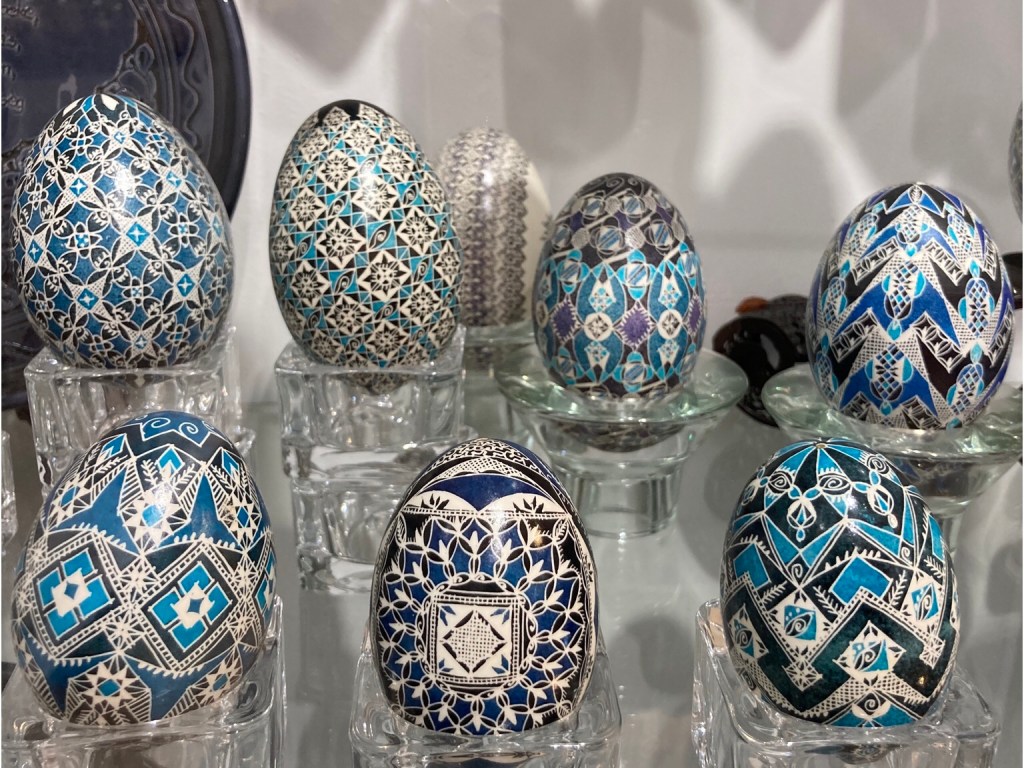
Across the road was a painted egg museum containing some 5,000 eggs painted by Lucia Condrea who spent her life practising this popular Romanian folk custom. Using wax resist techniques, she took her patterns from local tradition but was also inspired by nature, carpets, lace and imagination!


Moldovita also has a monastery, completed in 1537 at the bequest of military leader Petru Rares, the illegitimate son of Stephen the Great.
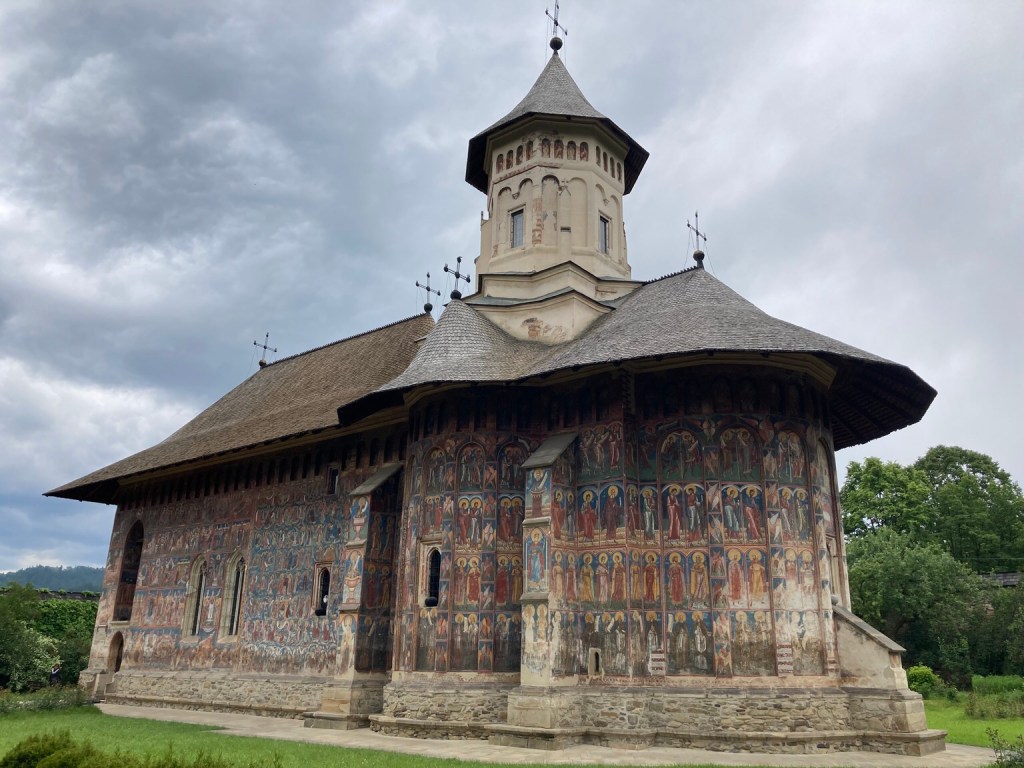
He still hoped to defeat the Turks, despite their continued advance after the fall of Constantinople and to raise morale, included this revised version of the Siege of Constantinople which shows Christians routing the infidel!

There is also a Tree of Jesse and Last Judgement, but here we could take photos inside, so here is the votive painting of the presentation of the monastery to Christ …

… an expressive Virgin and Child …

… an Annunciation …

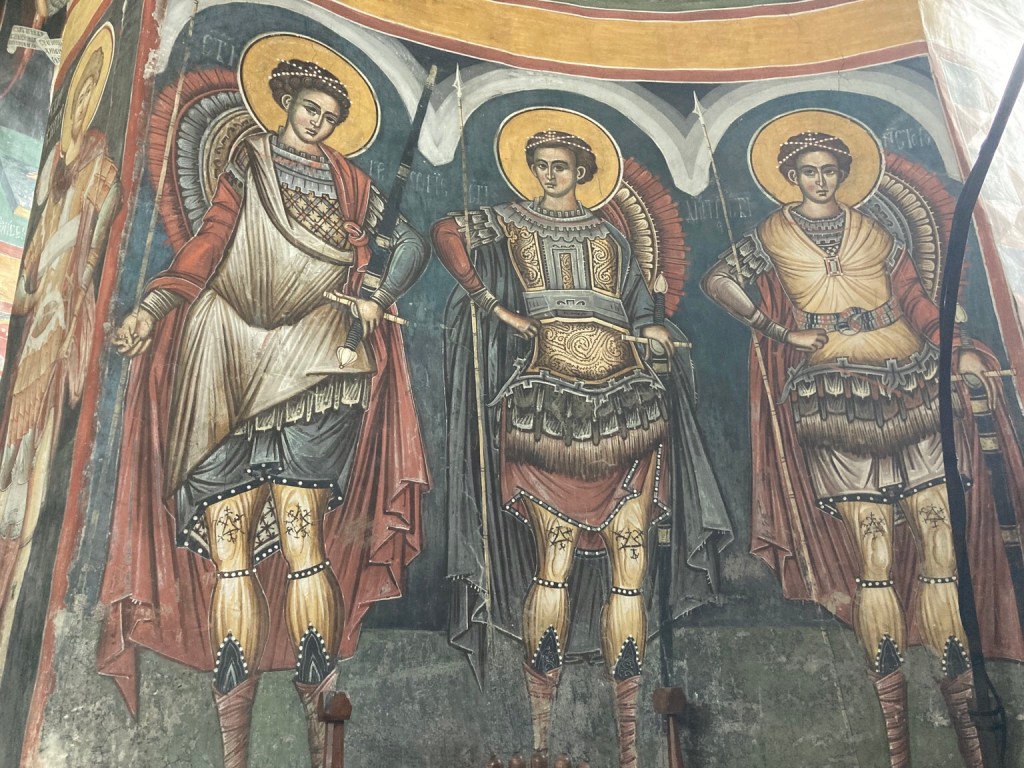
… and a bunch of nonchalant warrior saints!
There seemed to be no holds barred taking photos here …

…or maybe the nun was just busy counting the takings!

Another ascent and we followed the road up 1400m to Prislop Pass which connects the historical regions of Bucovina and Maramureș over the Rodna Mountains and of course there is a monastery …
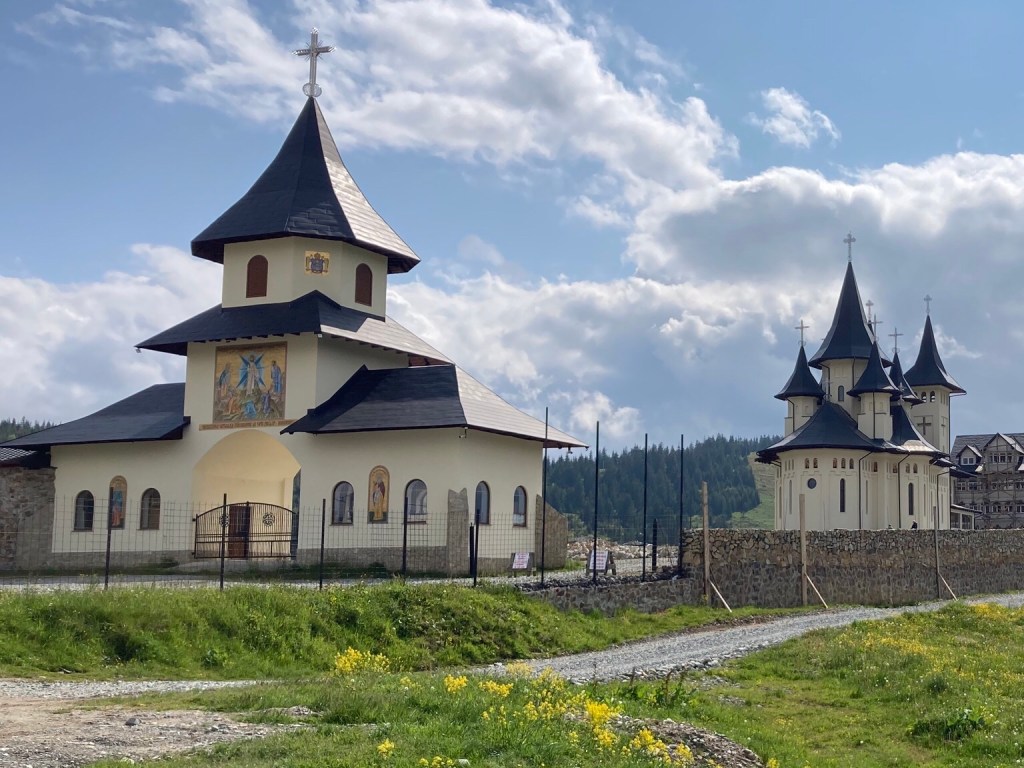
… and a view, but we didn’t linger as it was only 8.5°!

Hairpin bends to took us down to Borsa where we spent the night at Galileo, a pension and pizzeria … perfect!
 Off Travelling Together