
Transylvania means beyond the forest, and having been first occupied by the Magyars from Hungary from 997, by the C13th, the Hungarian monarchy invited Saxons to settle and guard the mountain passes. Brasov became one of Transylvania’s seven walled citadels and its location at the intersection of trade routes linking the Ottoman Empire and Western Europe helped it develop rapidly.
Facing attacks from Turkey in the C15th, stronger fortifications were built with each defending bastion assigned to a particular guild, and we stayed in the medieval heart at the Old Town Suites.
A rather unassuming entrance …

… led to an amazing apartment, with windows that opened onto a quiet pedestrian street.

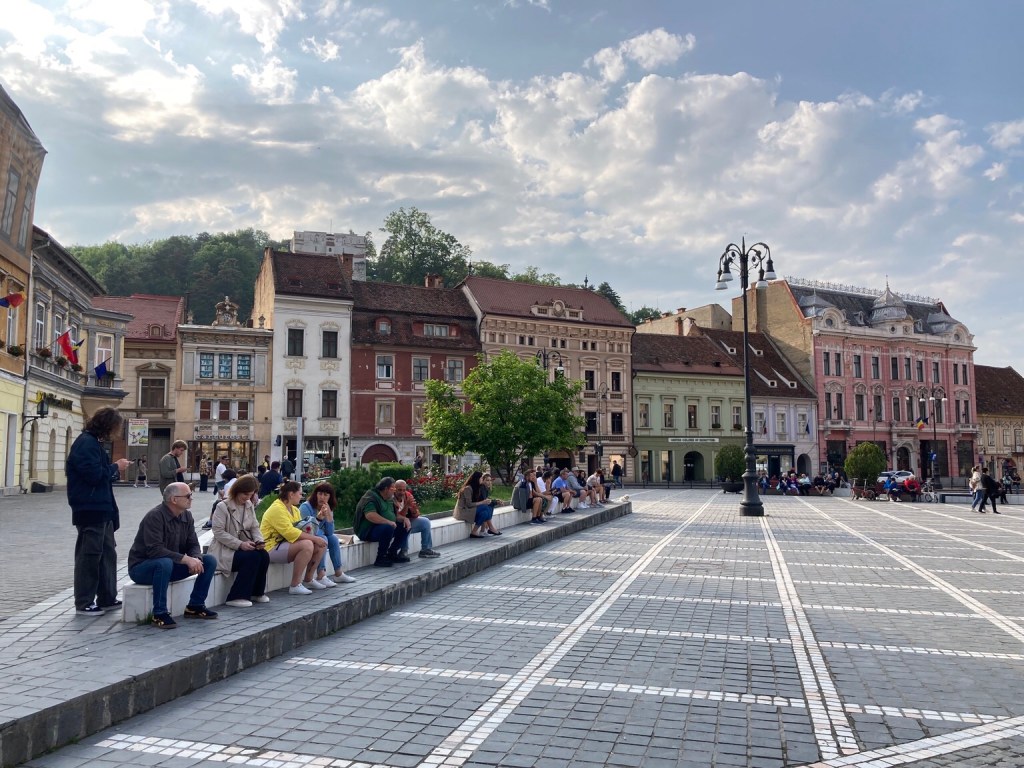
It was still a little grey as we headed to the main square, with the Brasov sign high on Mount Tampa behind.

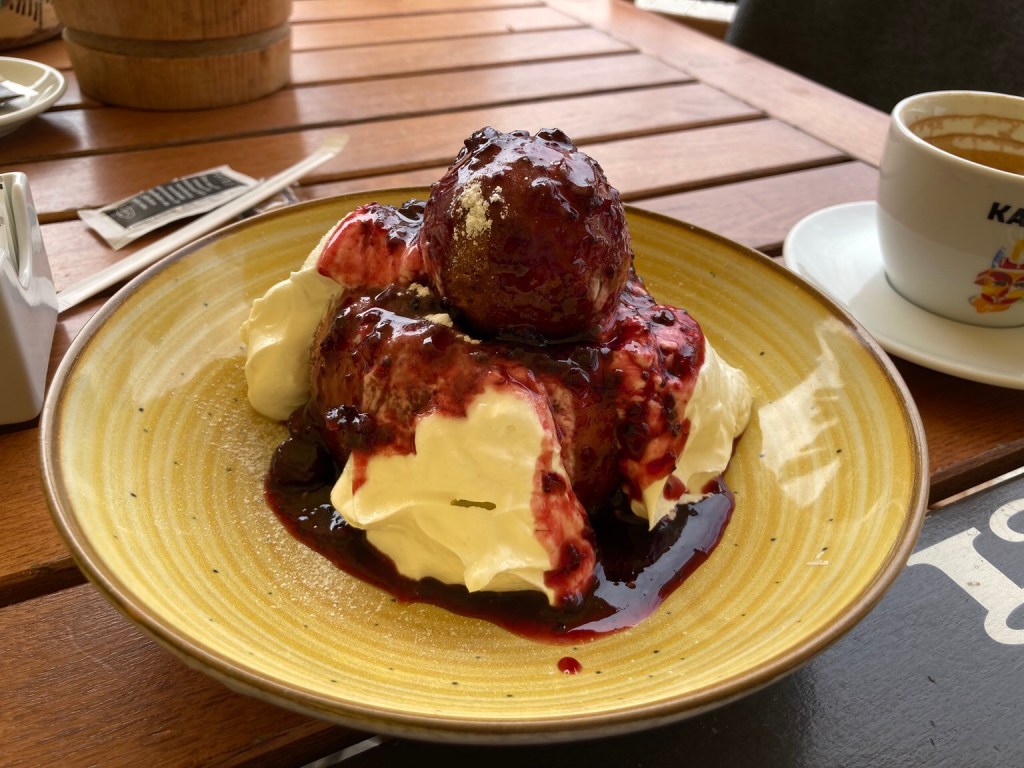
Our first priority was a snack and we went in search of a cafe serving coffee and cake but to no avail. Instead we sat in a restaurant in the main square and ordered papanași, one of Romania’s most iconic desserts, sweet cheese dumplings served with berry jam and cream … we should have had one to share … but they were delicious!
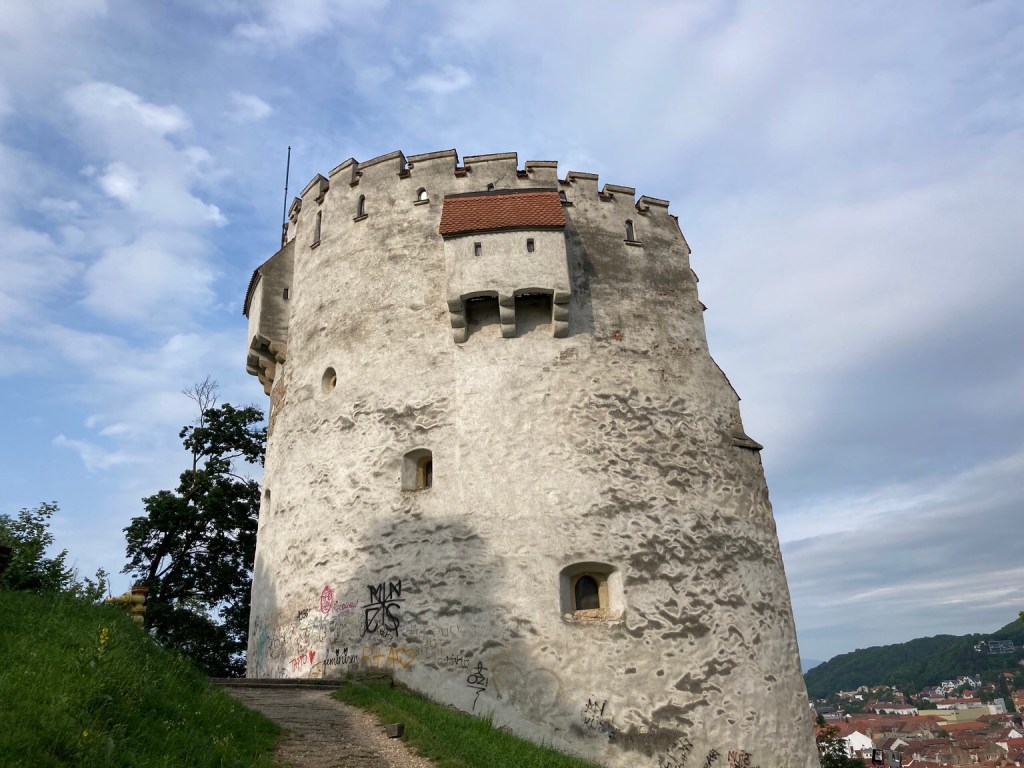
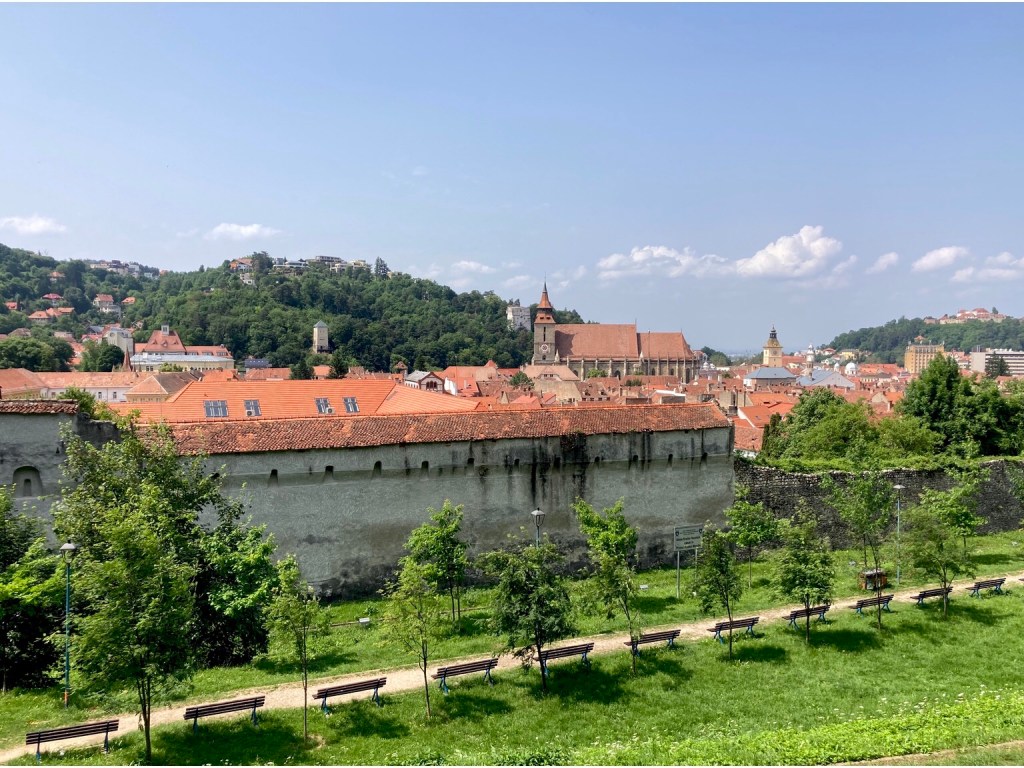
Revitalised by a sit down and some sugar, we set off to get a view of the town from above. There are a couple of towers, The White Tower which looked most impressive …
… and here is the view …
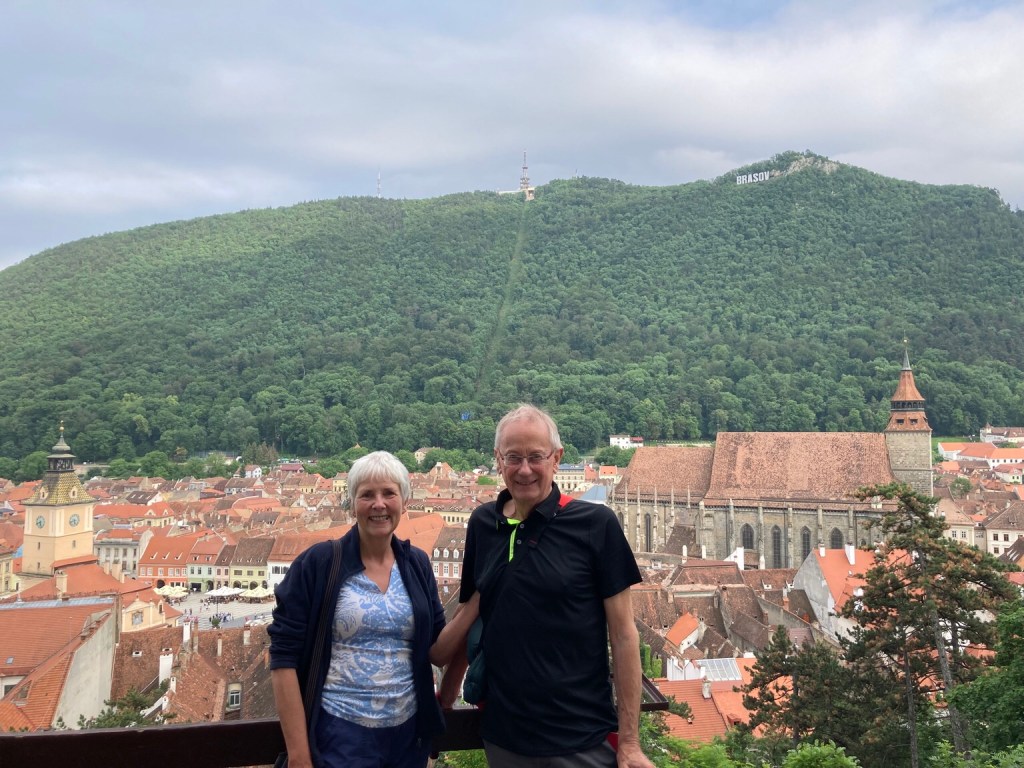
… and the Black Tower …

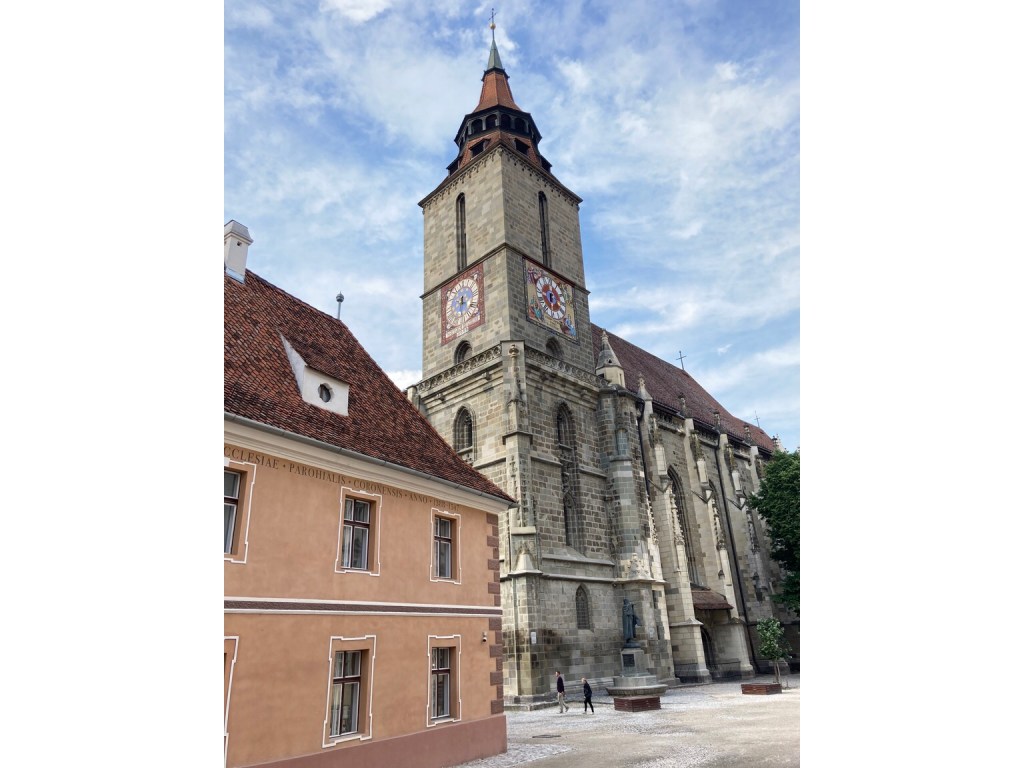
… which gave a view including the front of the Black Church, the most famous medieval monument in Brasov.
Over 600 years old, this is the largest hall-church east of Vienna and one of the most impressive Gothic-style buildings in this corner of Europe.
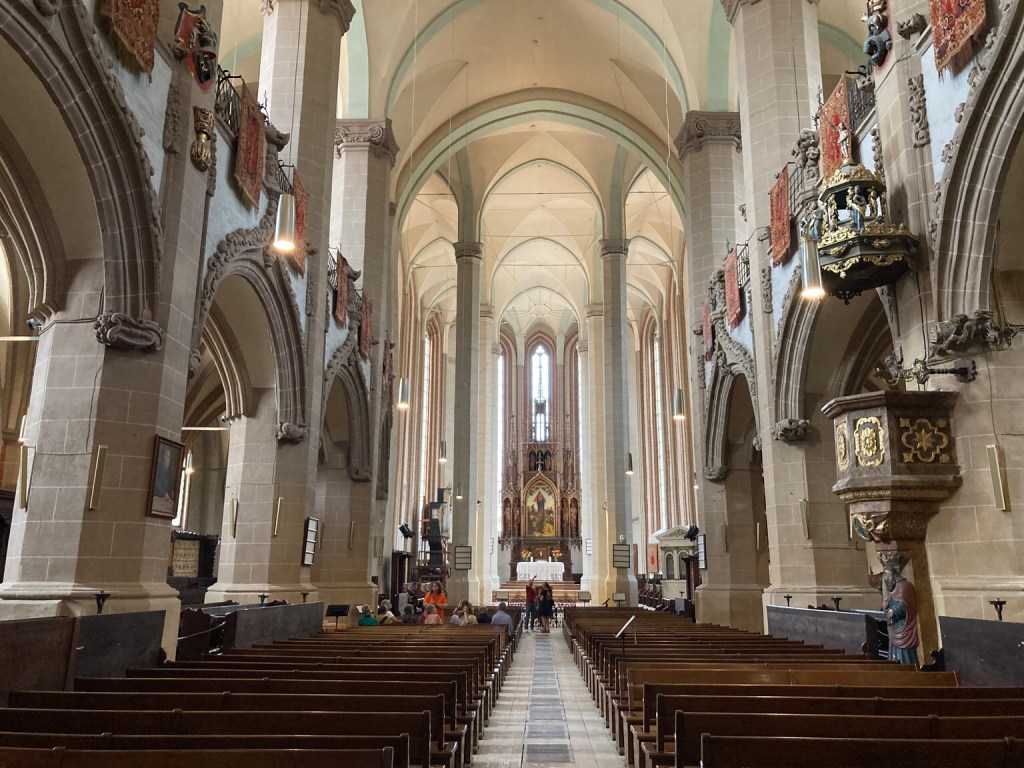
The interior is quite austere, apart from a collection of Turkish prayer mats, brought back from the east by merchants …

… and the impressive pulpit and organ.
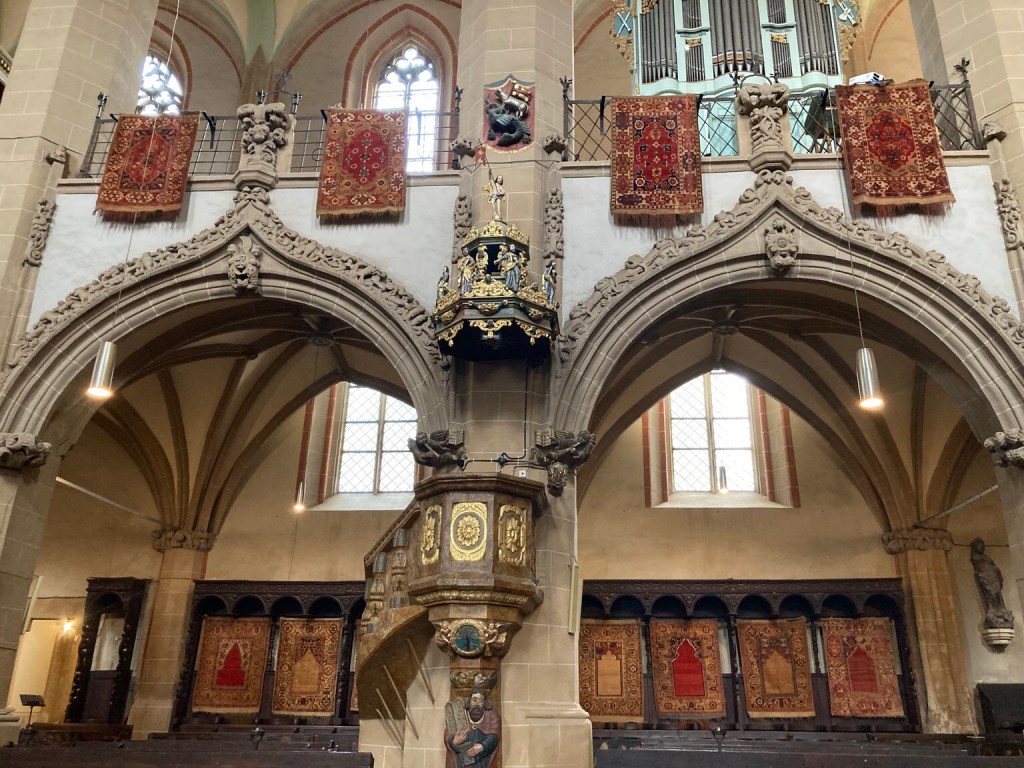
Catholic services were replaced with Lutheran ones during the Protestant Reformation, and recent research shows the name Black Church only followed discolouration by pollution in the C19th.
There was a burst of late afternoon sunshine which was most welcome.


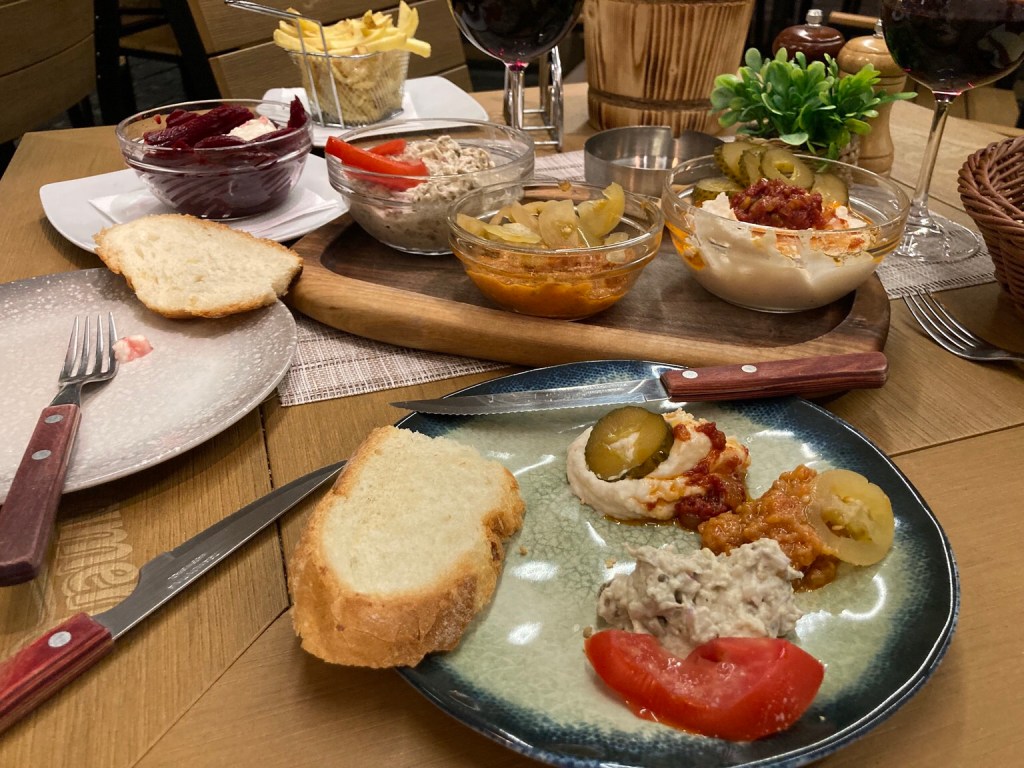
Not really hungry later, we had a glass of wine in the square then shared a Romanian salata plate of which the zacusca was best made of aubergine and red pepper.

A second day in Brasov, and we visited the Muzeul de Arta which has a selection of works by Romanian artists but also a very engaging display of works produced in a community project to celebrate 25 years of the museum.
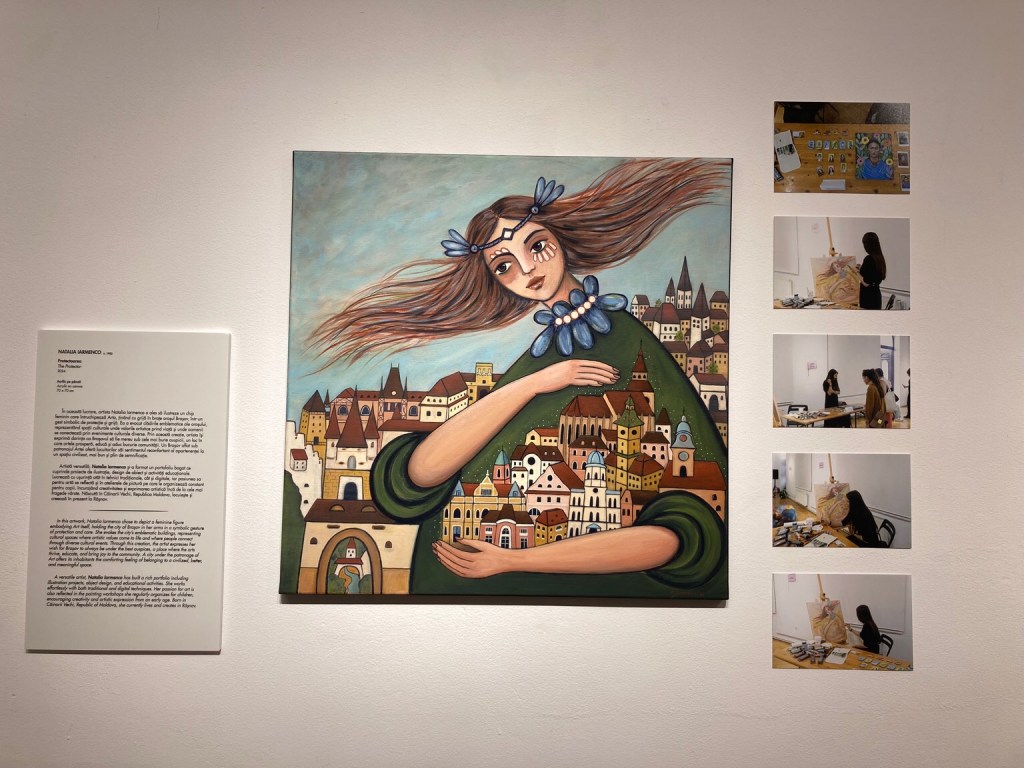

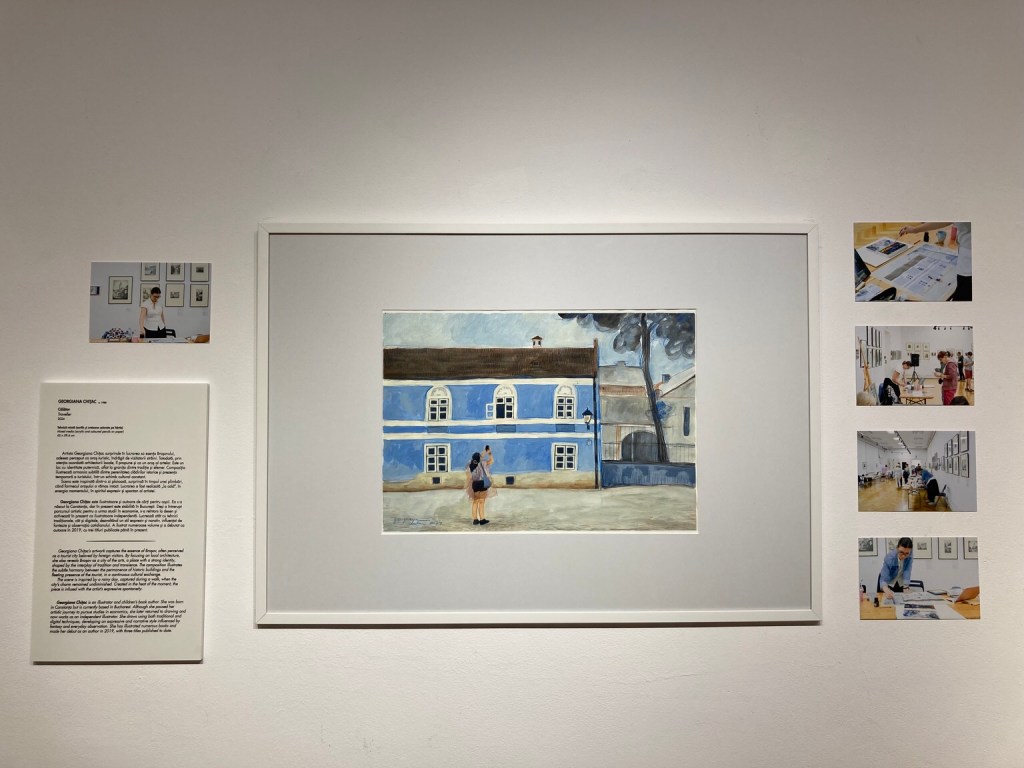
We also popped into the Muzeul de Etnografie which focused on costume, and woven and knitted textiles.


The technique to make filet lace for these caps was so time consuming and would have taken ages to master.

Lunch in the square was a chance to try something new – this time the homemade carp roe salad, very similar to taramasalata and very delicious, while Chris had beans with onions and pickles. To drink we had homemade soft drinks, one with elderflower and the other sea buckthorn, which I haven’t seen on the menu since we were in Russia.

Time for a little exercise, so we walked up to another part of the fortifications, The Weaver’s Bastion.

The three levels of combat galleries were fitted with a variety of shooting holes for different calibre weapons.
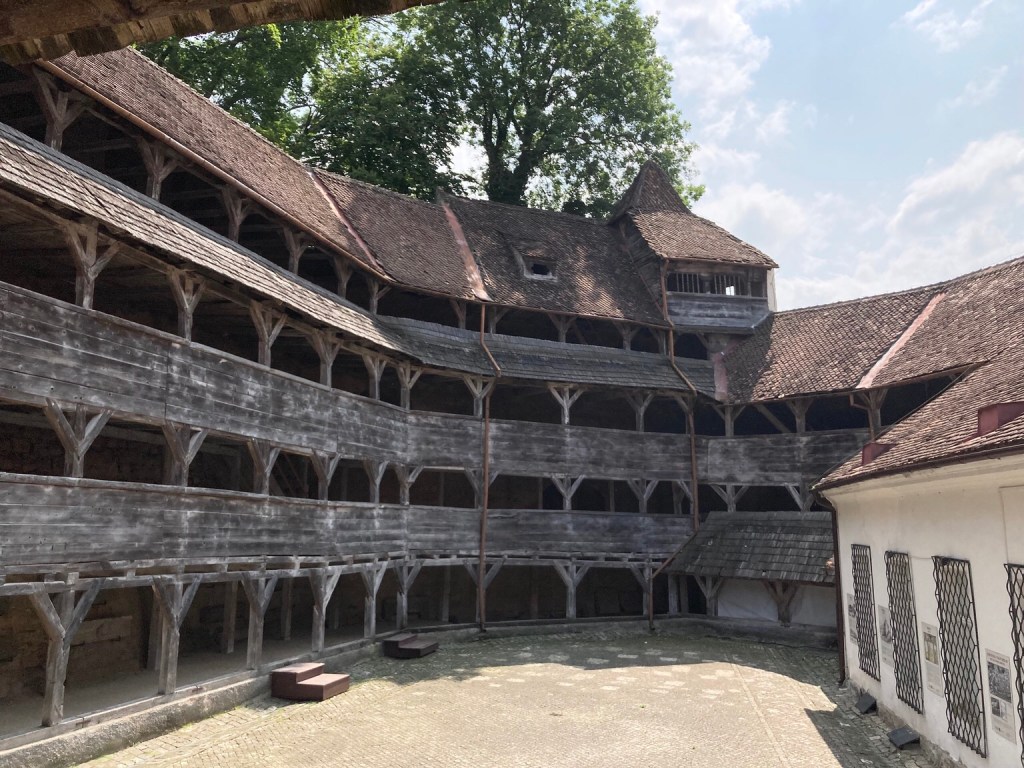
In addition there was storage to stock provisions and two guard towers …

… and from the roof, we got a different view of the city.
Funny though, as soon as we walked in, we were both reminded of The Globe Theatre!
Once at the bottom of the hill there were two gates, firstly the very splendid Catherine’s Gate which was built in 1559 as an entrance to Brasov’s City Walls and bears the city’s coat of arms: a crown on a tree trunk.
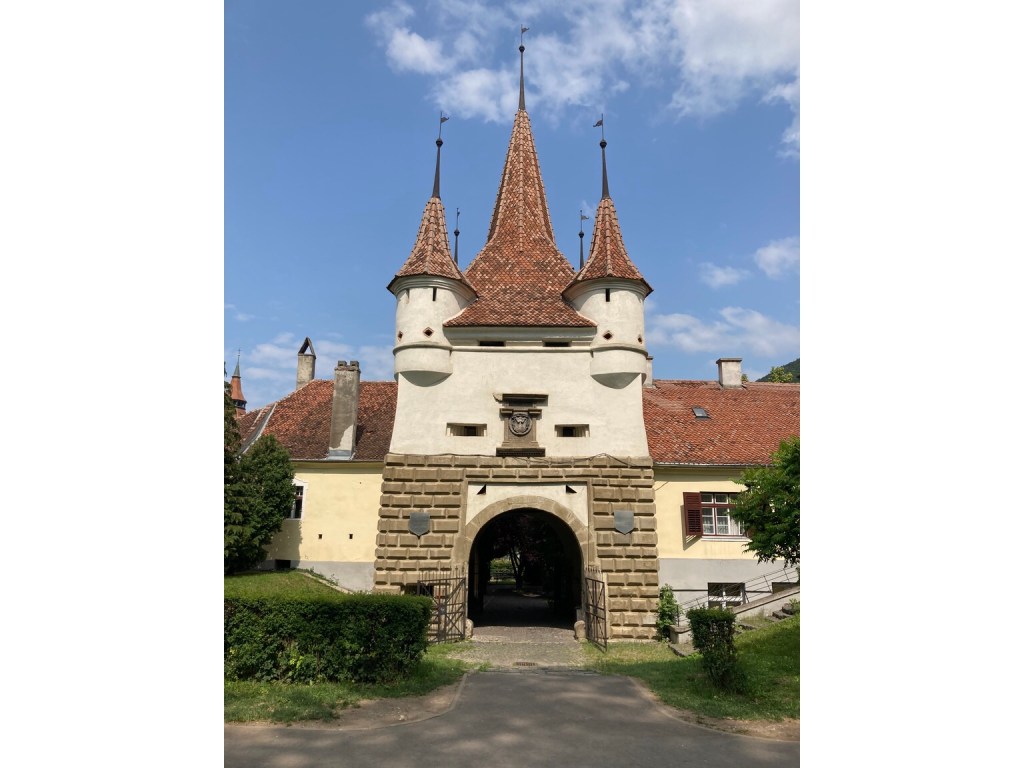
In Saxon times, the Romanian speaking population were compelled to live outside the city walls and could only enter if they paid the toll.
Close by is the more modern Schei Gate built in 1825 …
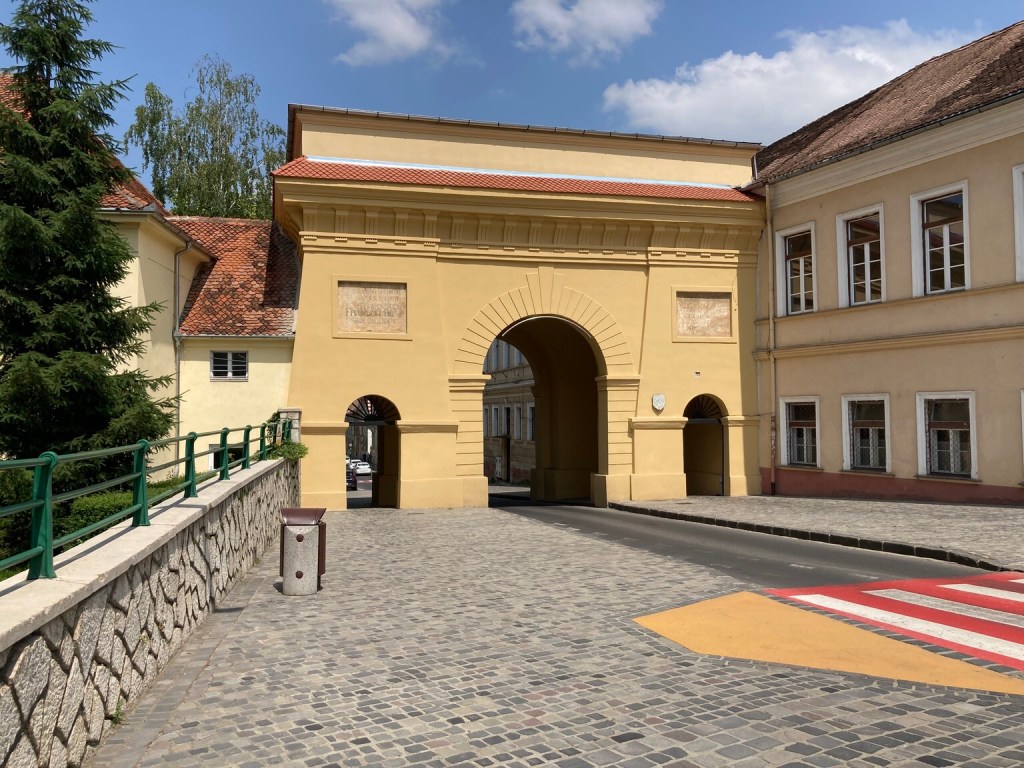
… which has brought our tour of Brasov to a close.
Tonight we shared a cheese and tomato pie for supper and salad …

… and tomorrow we are off on day trip.
 Off Travelling Together