Visiting Petra is definitely the reason we are here in Jordan. The area was settled by a nomadic Arab people called the Nabataeans more than 2,000 years ago and Petra later became the capital of their kingdom as it grew rich through trade in frankincense, myrrh, and spices on the nearby Silk Road. They were used to living in barren deserts and skilled in stone carving, leaving a legacy of tombs, temples and an ingenious system of dams and water channels.
Petra was later annexed to the Roman Empire and thrived until an earthquake destroyed much of the city in the C4th. Combined with changes in trade routes, this led to the city’s downfall, and it was ultimately abandoned. Petra appears to have been largely deserted by C7th and was then lost to all except local Bedouin until rediscovered by a Swiss explorer named Johannes Burckhardt in 1812. It is now one of Jordan’s national treasures, a UNESCO World Heritage Site made iconic by its visit from Indiana Jones and voted one of the new Seven Wonders of the World.
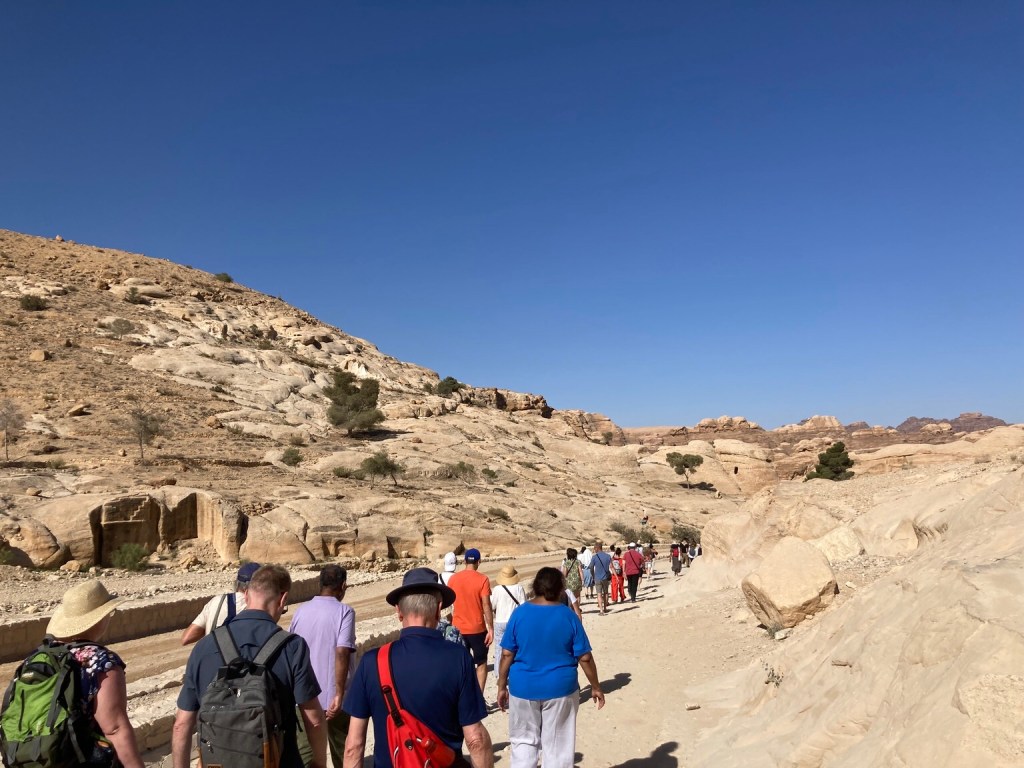
The site is huge, and in fact as much as 90% has yet to be discovered. Michael led us down the main trail, telling us of the history.
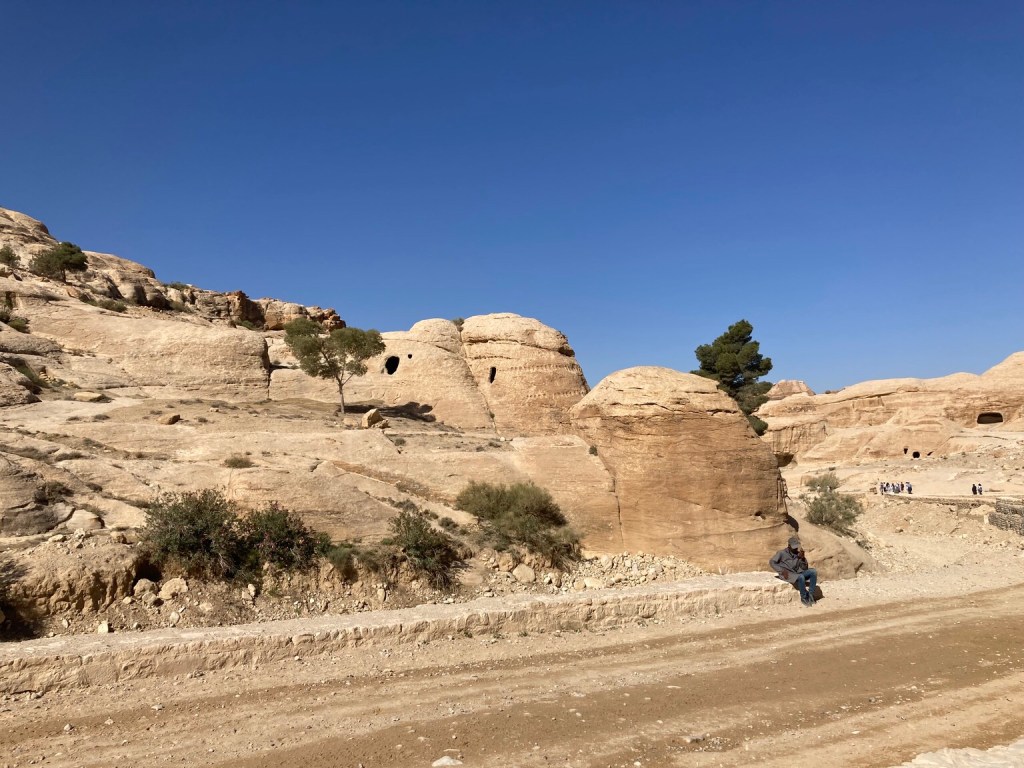
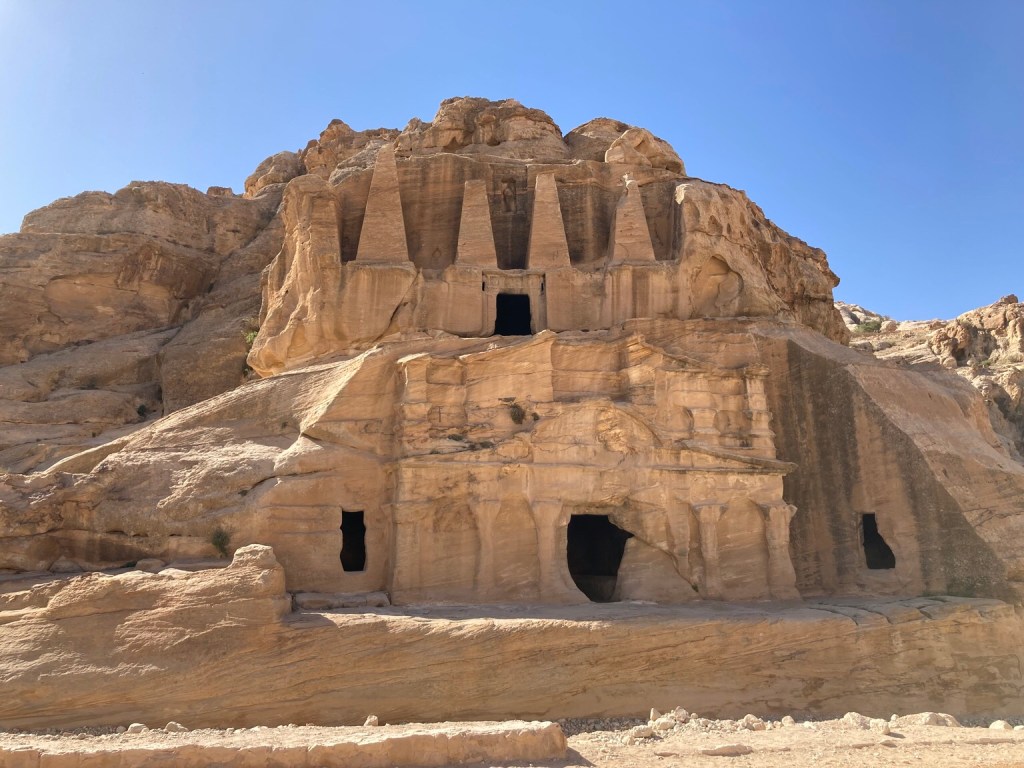
Here is the first tomb we saw with obelisks carved above.
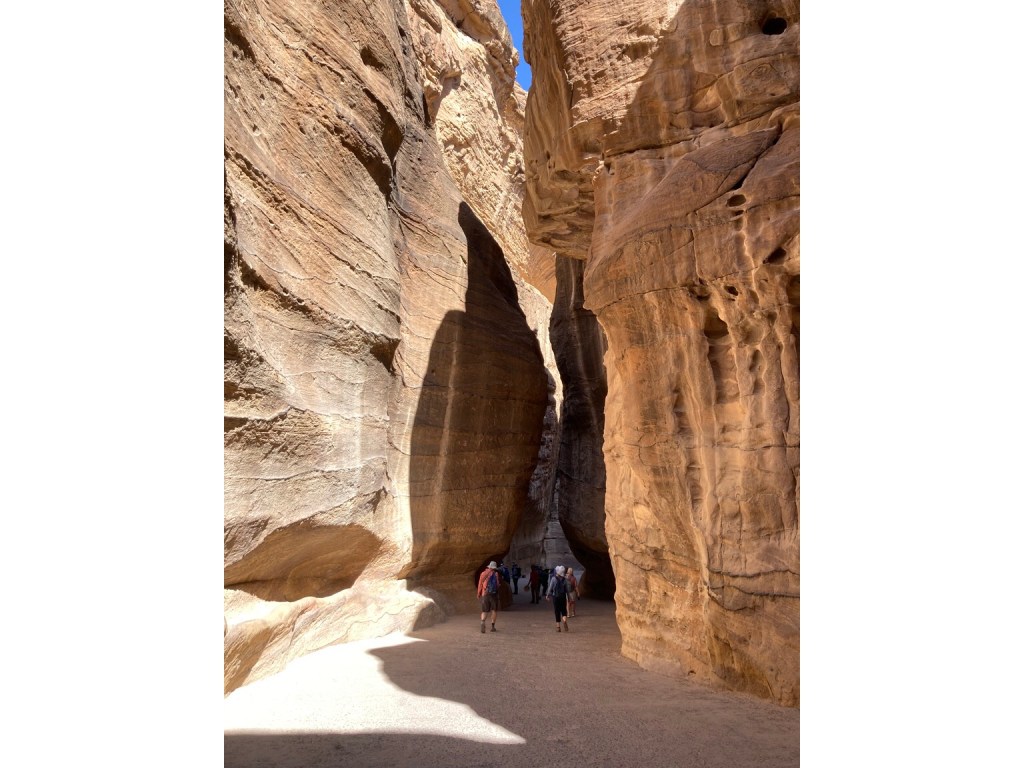
We continued to the beginning of the Siq or gorge which was the main entrance to the city, but almost hidden from view.
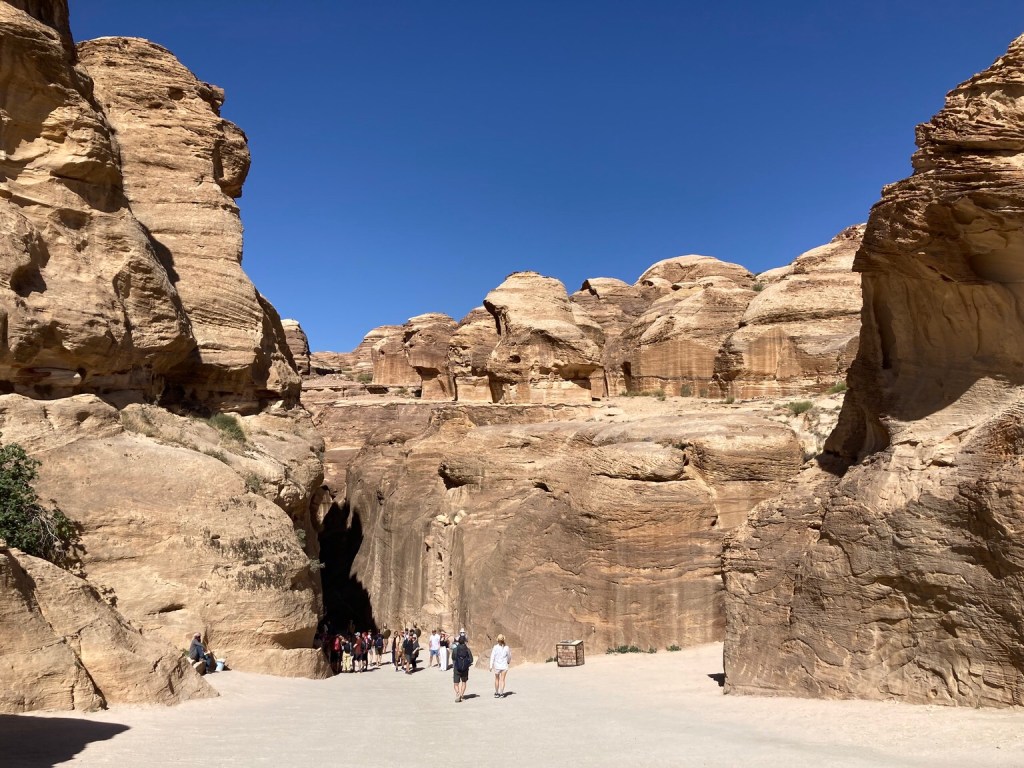
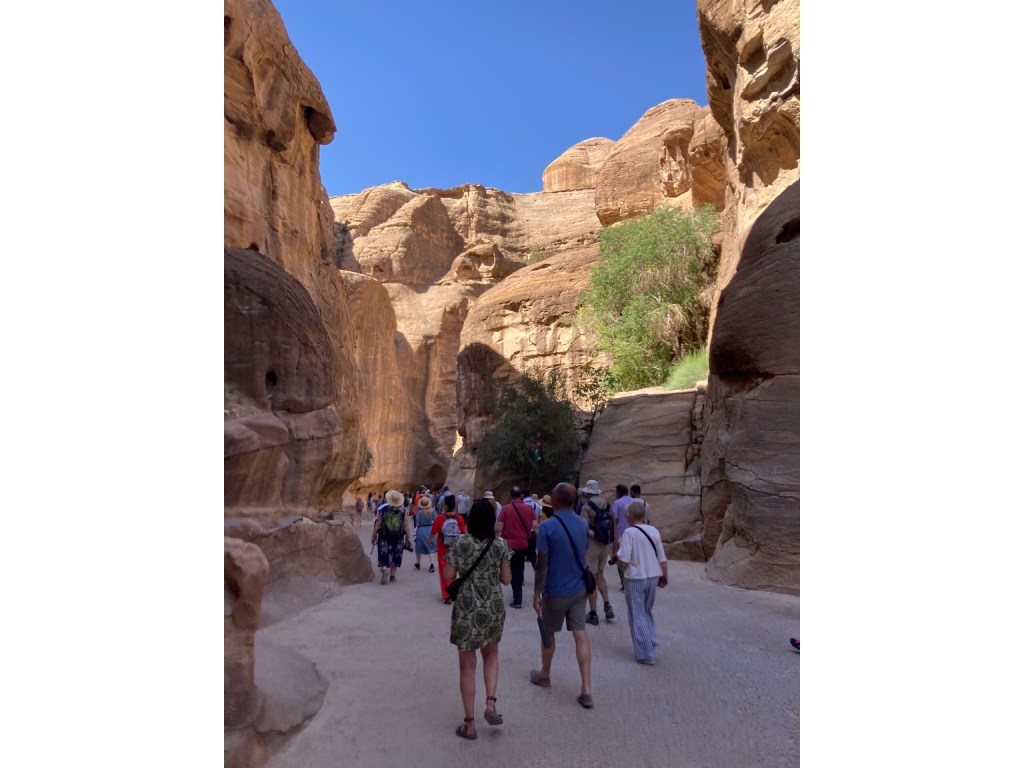
We noticed the inventive water technology – the channel lined with ceramic which runs the length of the Siq …
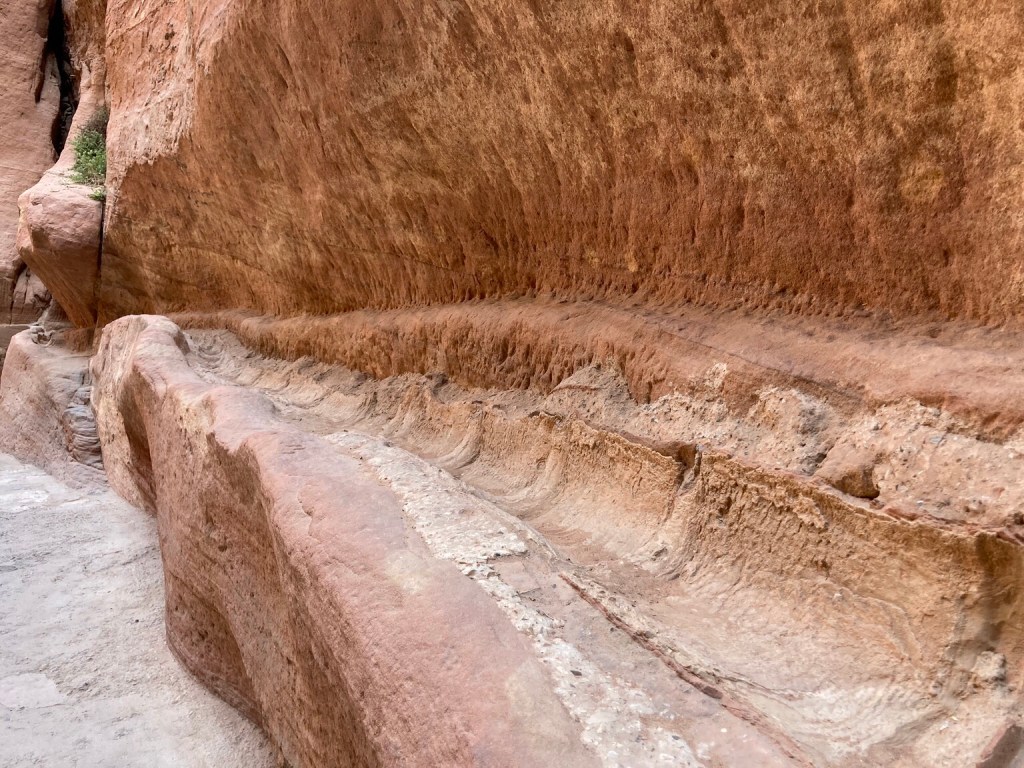
… and one of the three dams within the gorge which help keep it safe from flooding.
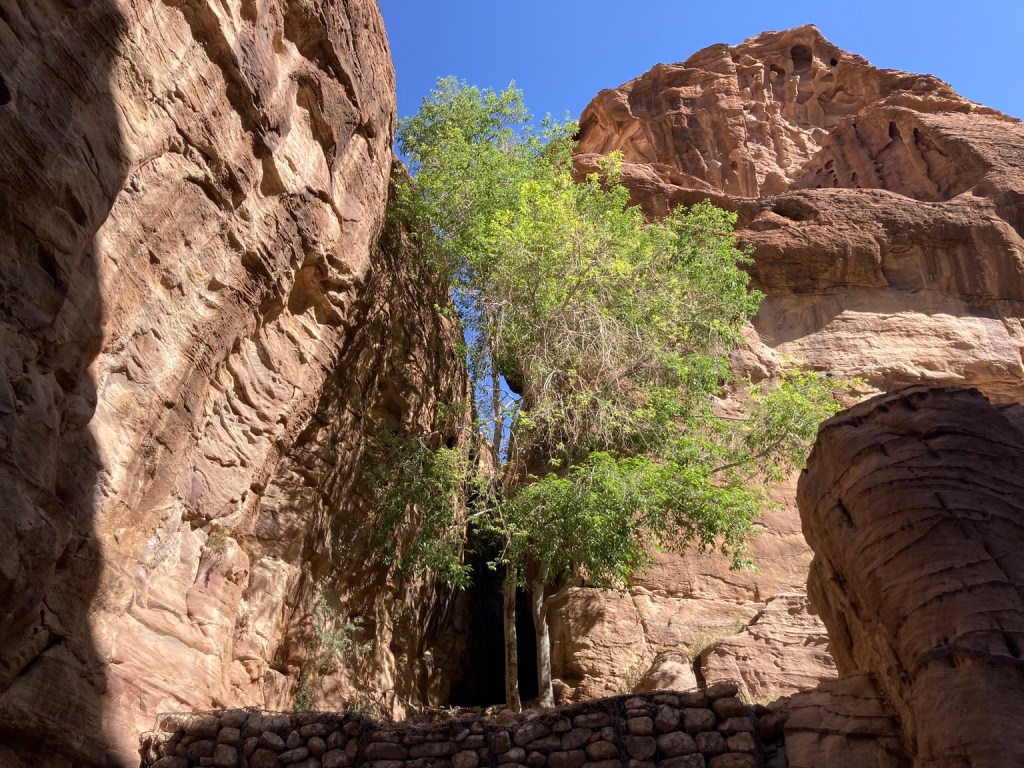
Michael mentioned that with a sudden downpour, flash floods can easily occur making the gorge dangerous, especially as the outer dams have fallen into disrepair.
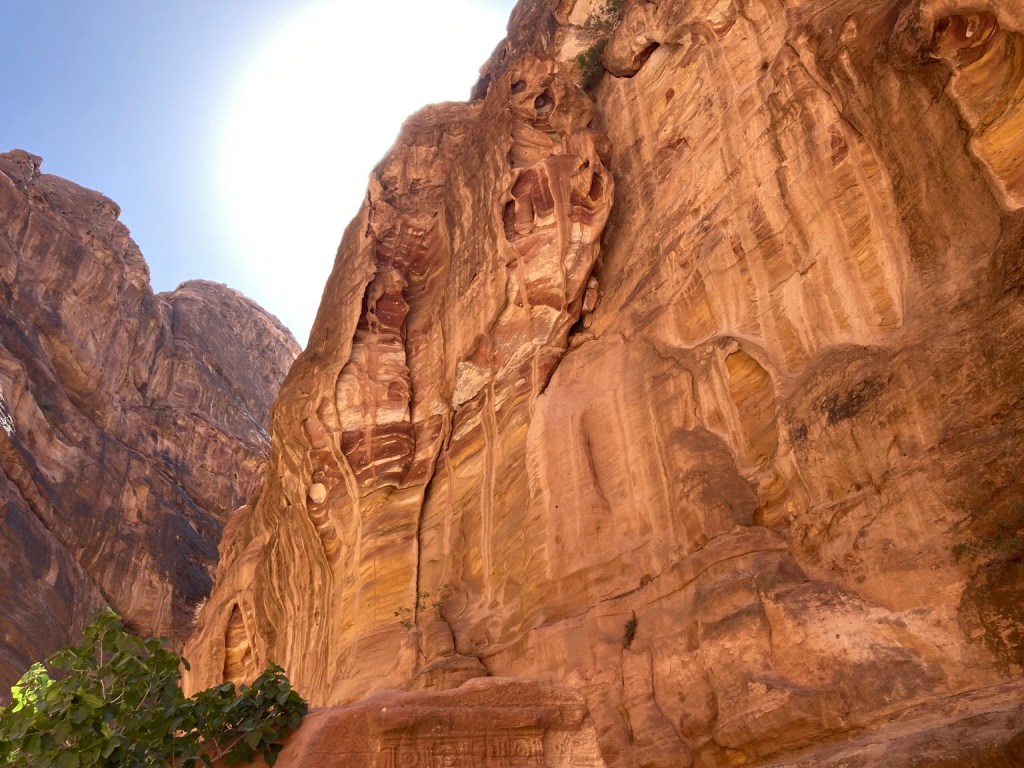
We also marvelled at the natural beauty of the coloured rock which had once lain under the sea until moved by tectonic activity and then eroded smooth by wind and water …
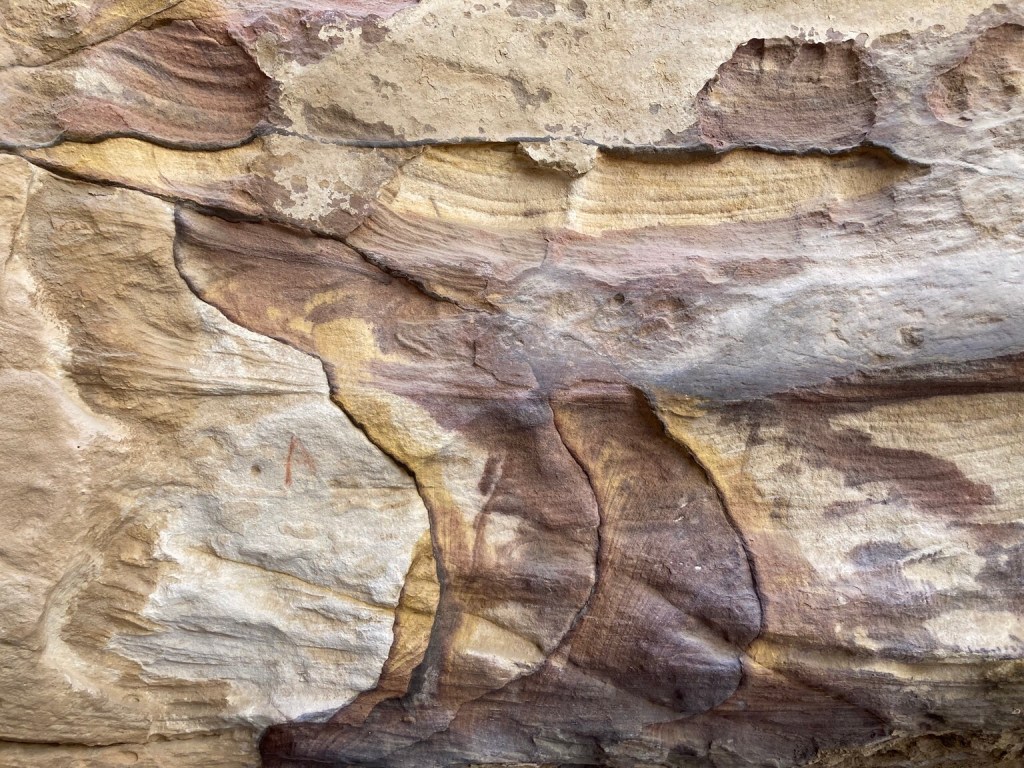
… and even came across the remains of a man leading a camel!
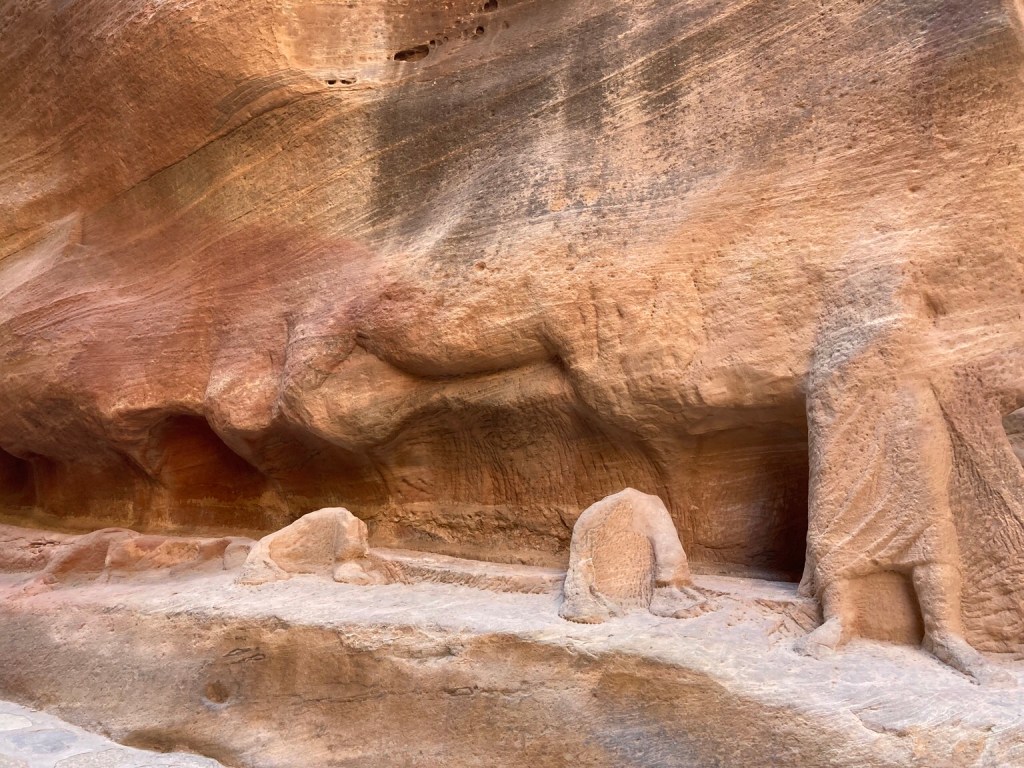
The Nabataeans worshipped a variety of gods and goddesses and their practice included sacrifices, rituals, and a belief in an afterlife. They also honoured Dushara, the god of the sun.
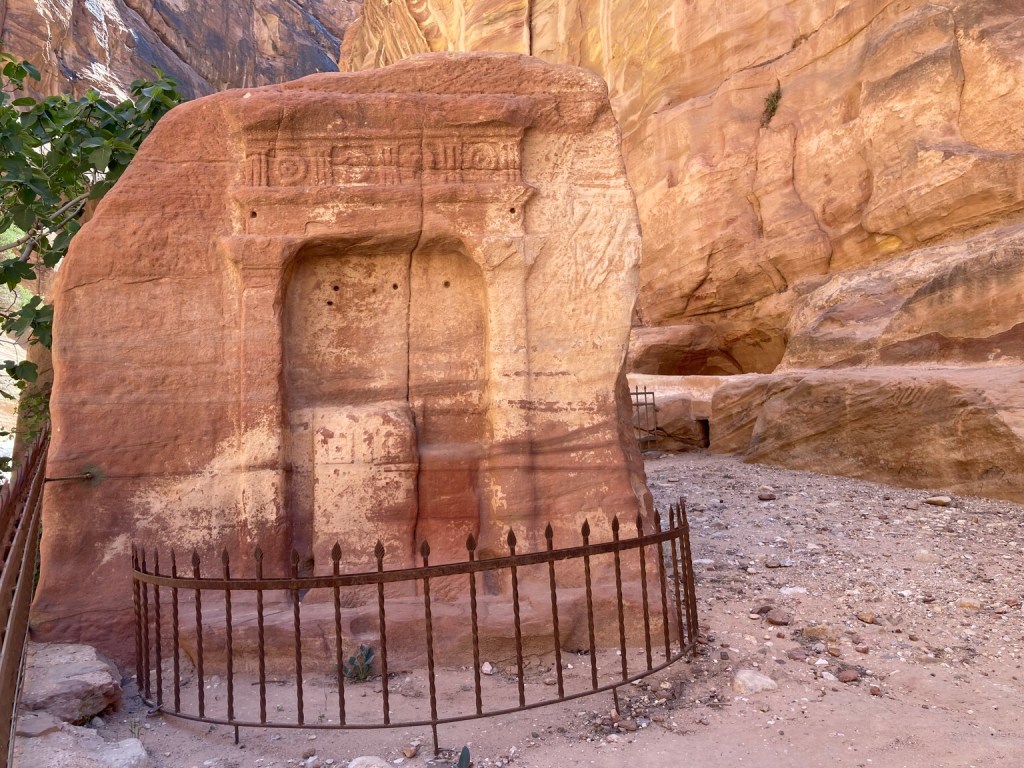
This small votive niche resembles full size tombs and contains two baetyls or standing stones each representing a god. The left one has two carved squares to show its eyes, and was the largest of many such niches.
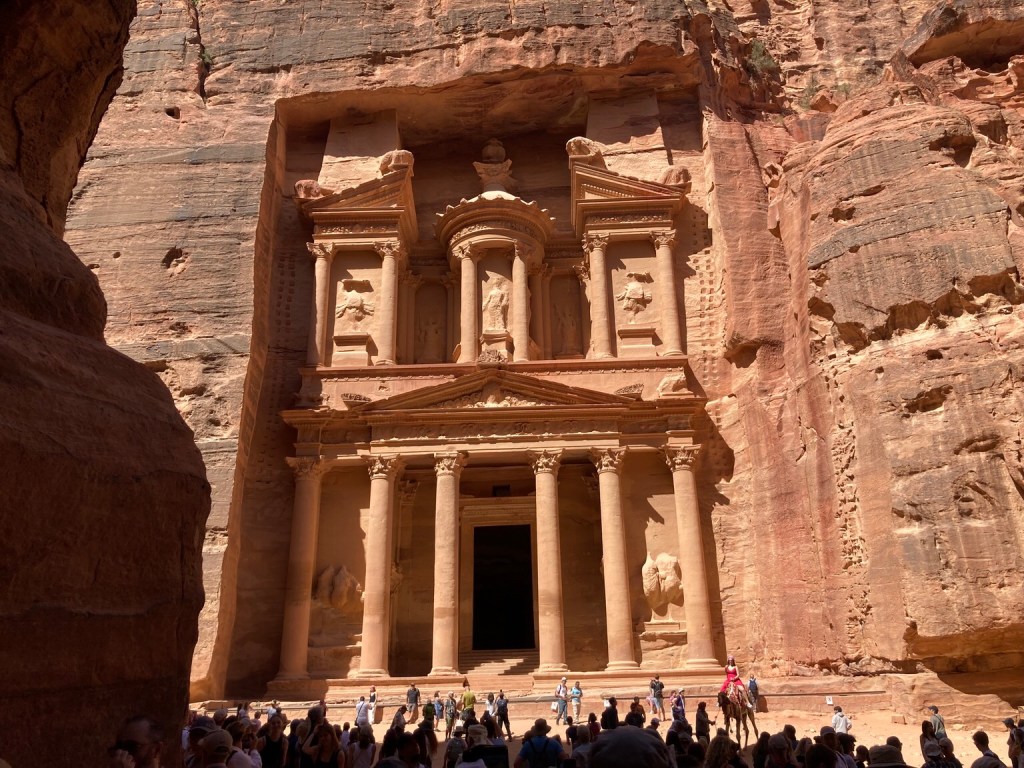
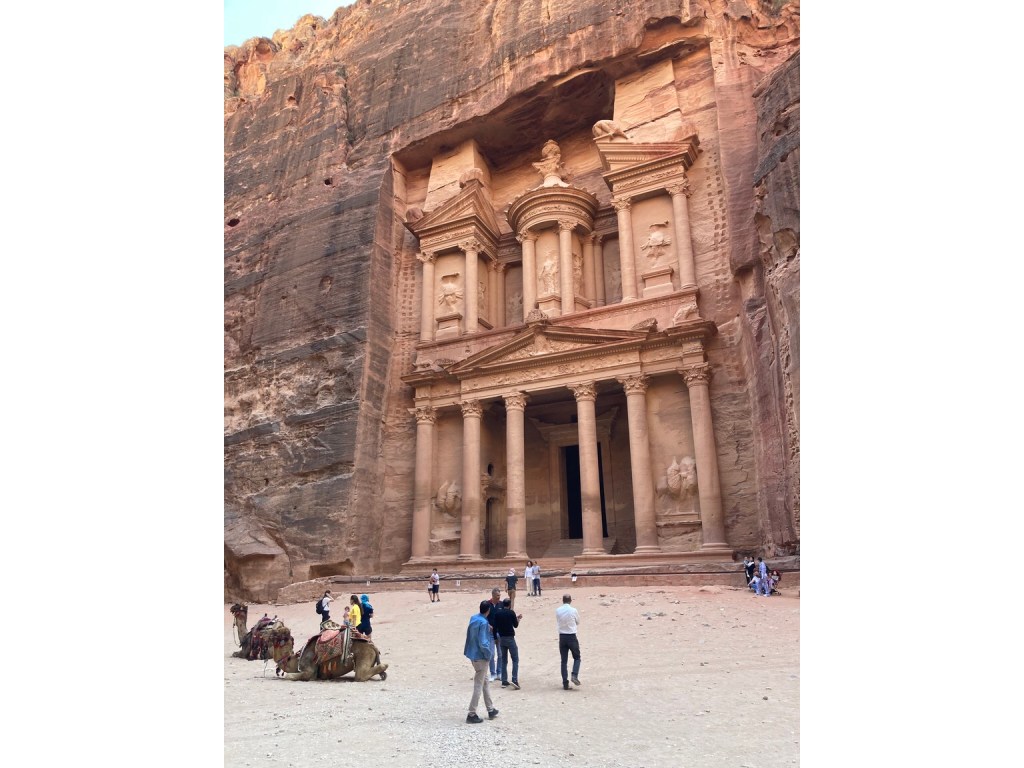
Finally we emerged from the narrow gorge into a large space with The Treasury before us, lit by the morning sun.
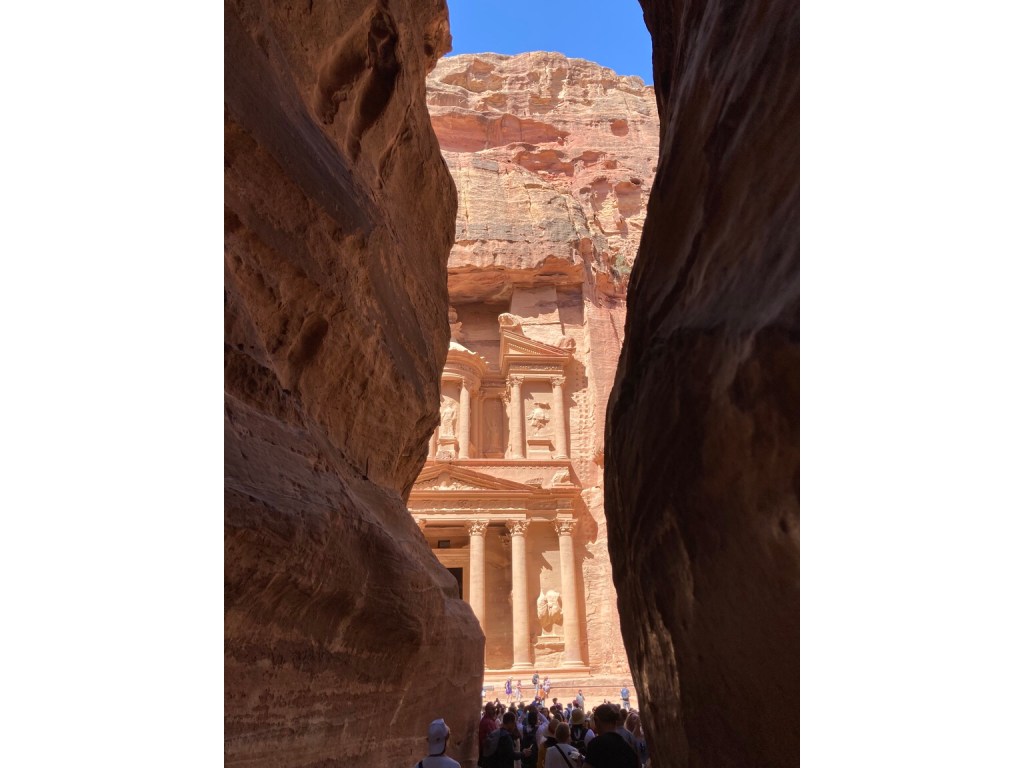
It was carved out of the rock face, beginning at the top, and hand holds can be seen either side. It is believed to have been built as a mausoleum and crypt with four eagles at the top to carry away the souls. The figures on the upper level are dancing Amazons with axes and Castor and Pollux flank the entrance.Having taken in the magnitude of the building and taken several pictures, we moved on as tourists are no longer allowed inside.
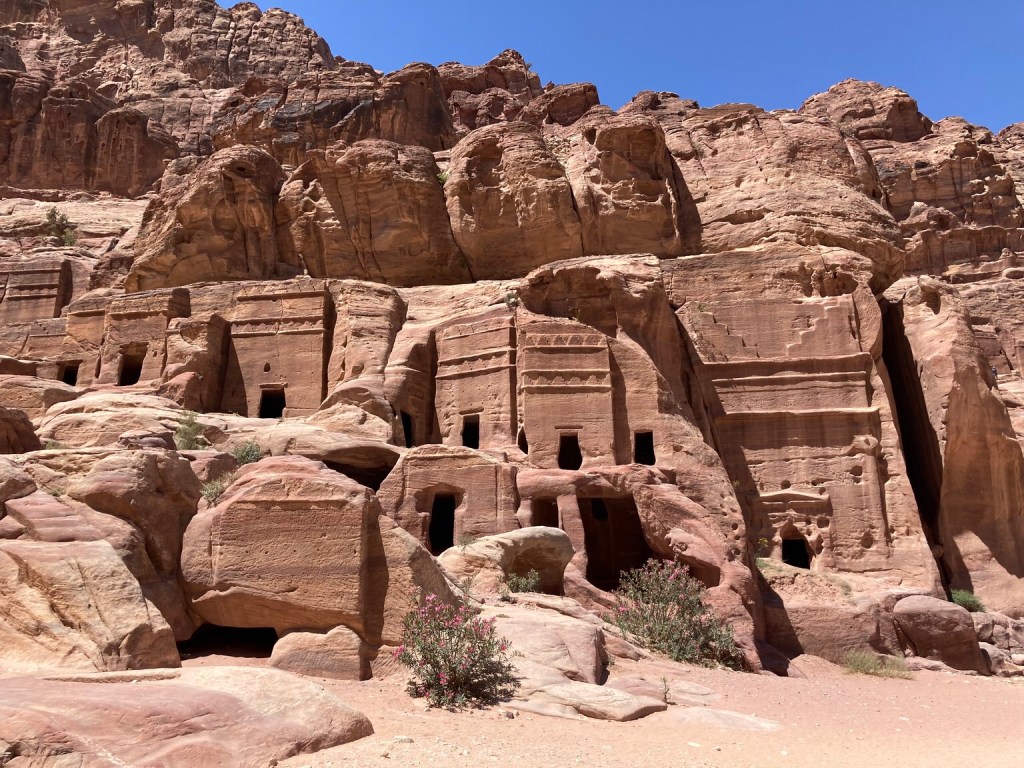
There was a lot more to see – in The Street of Facades, many of the tombs show a stepped decoration which possibly eludes to ascending to the afterlife …
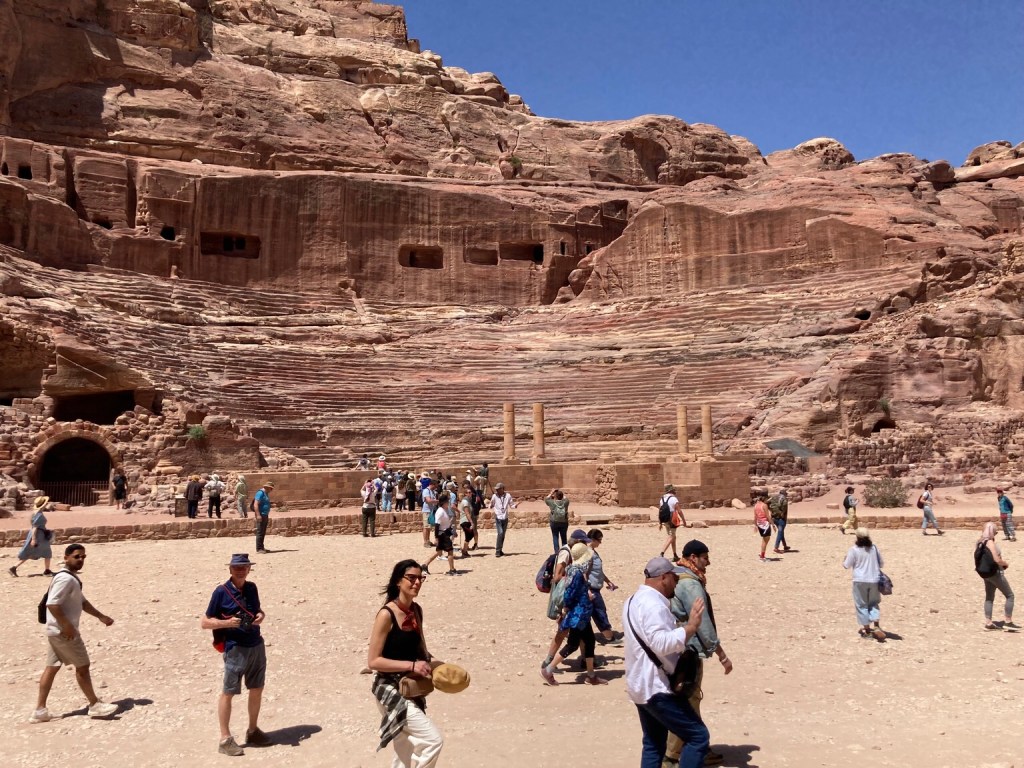
… the Theatre is in the heart of the city, built first by the Nabataeans but then enlarged by the Romans much later …
… the Royal Tombs which deserved a closer look, but we were moved swiftly on …
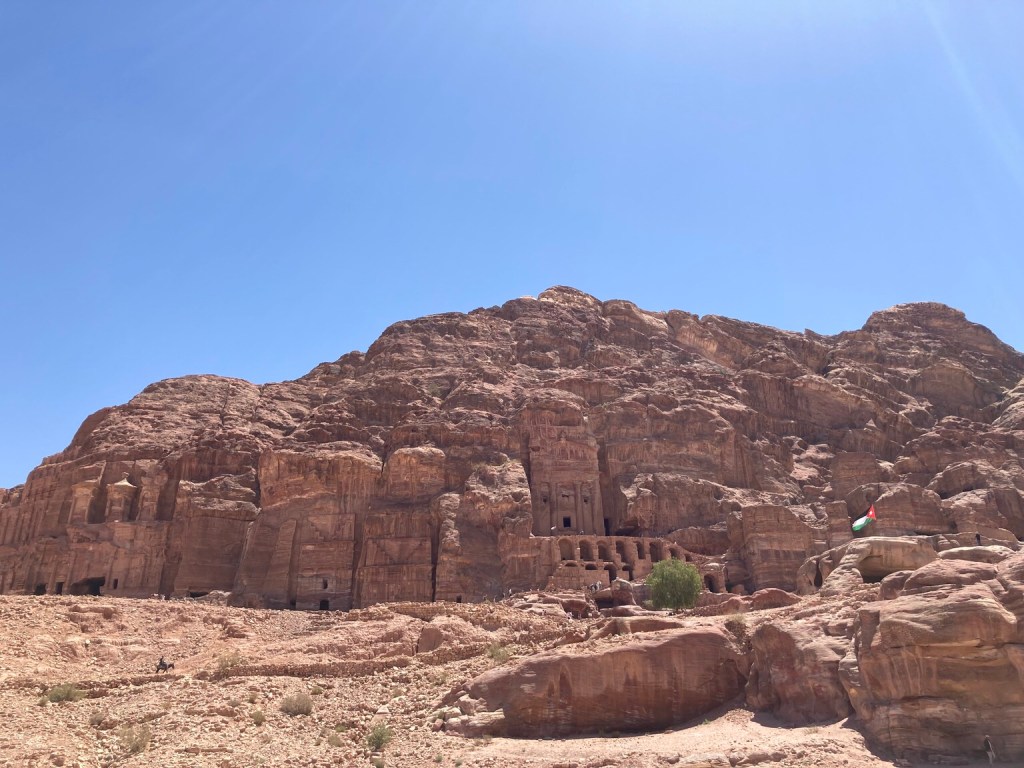
… down the colonnaded street …
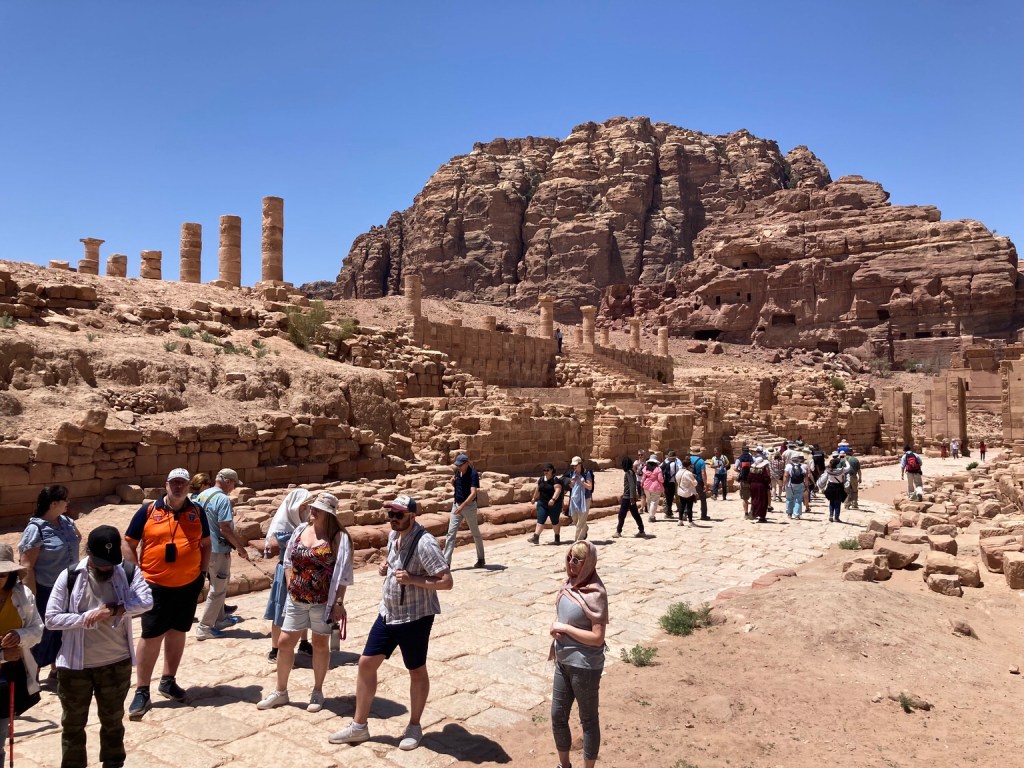
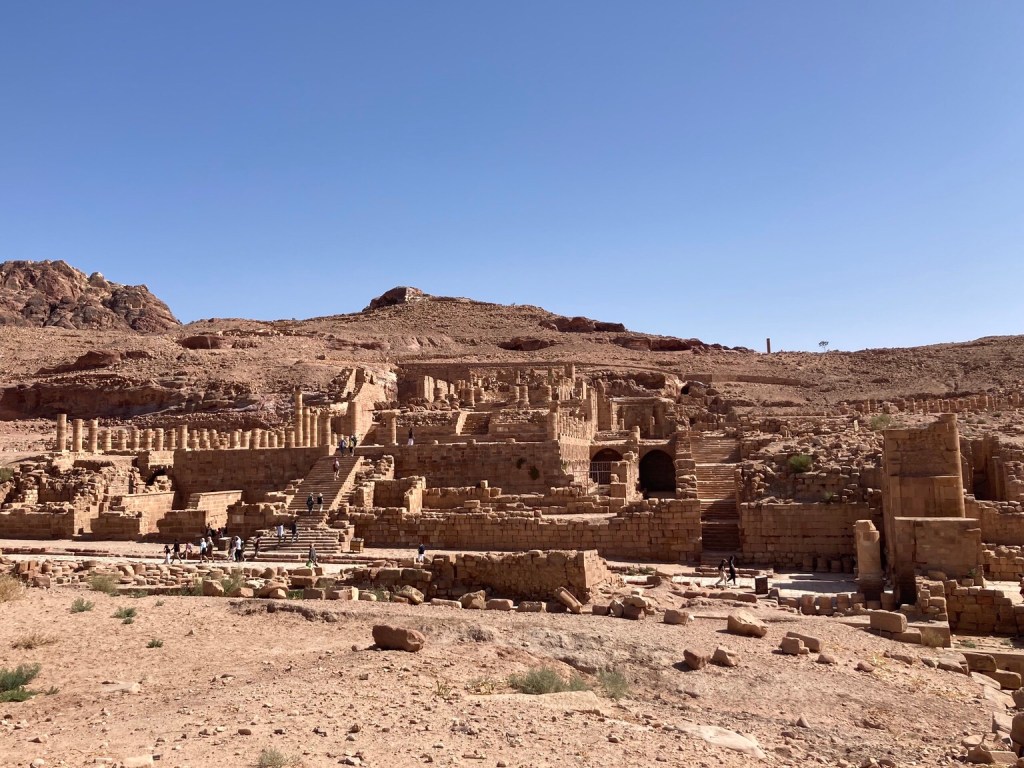
… with the Great Temple behind …
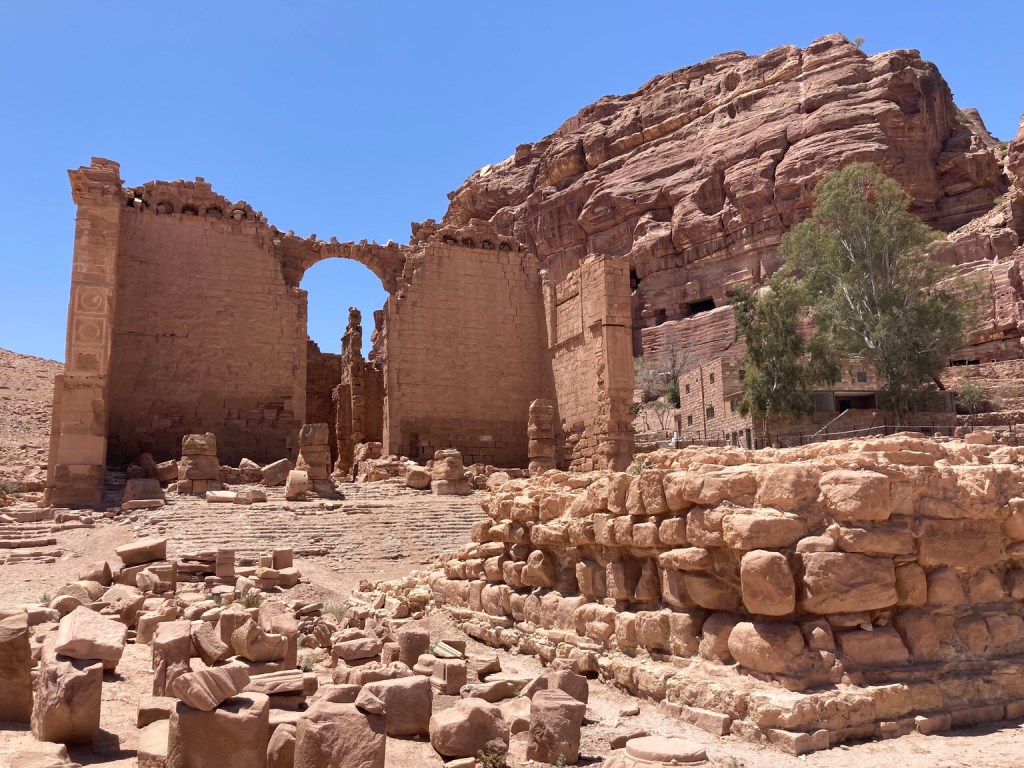
… and to Qasr Al-Bint, the most important temple dedicated to Dushara.
At this point we stopped for lunch having already walked 5 miles! In the afternoon, we could choose what to see. Several of our group were making the climb up 800 steps to Ad Deir, or the Monastery, the largest monument in Petra and thought to be used for religious meetings and Chris encouraged me to go if I wanted to.
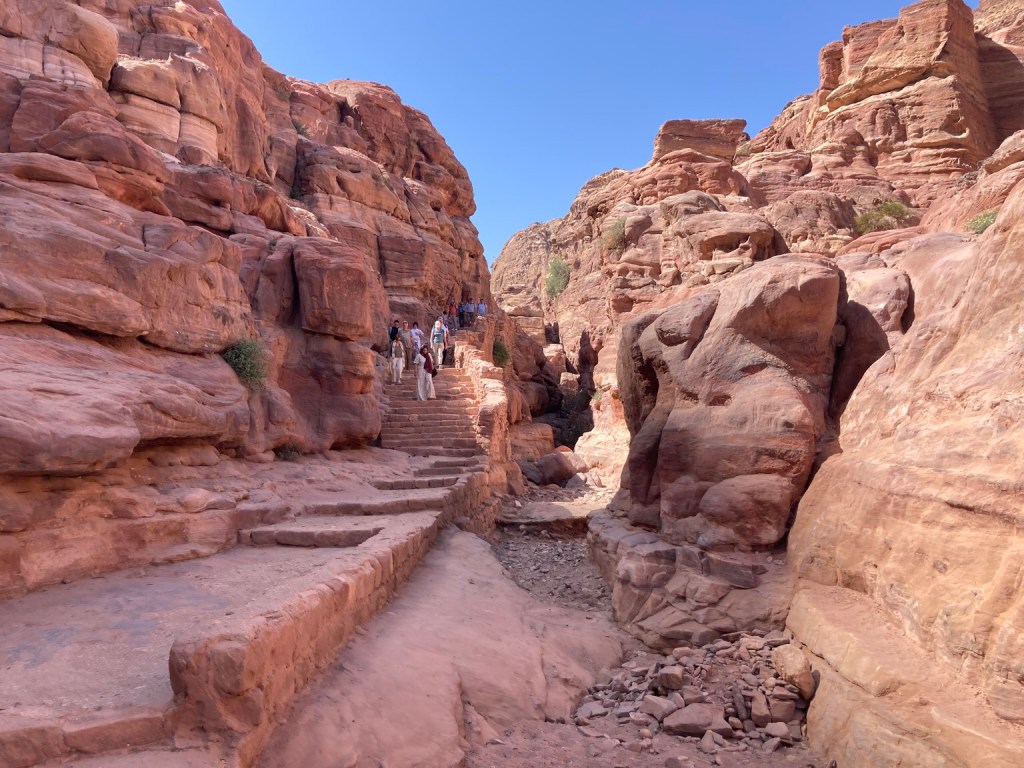
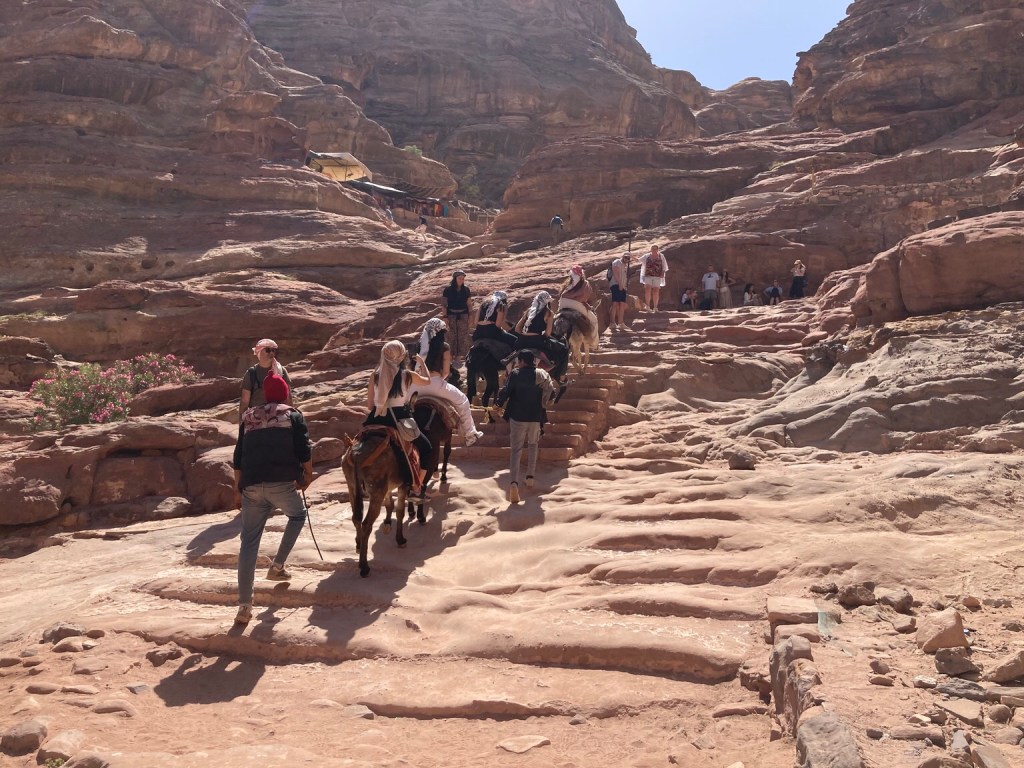
It was certainly a challenge, but I was delighted to reach the top!
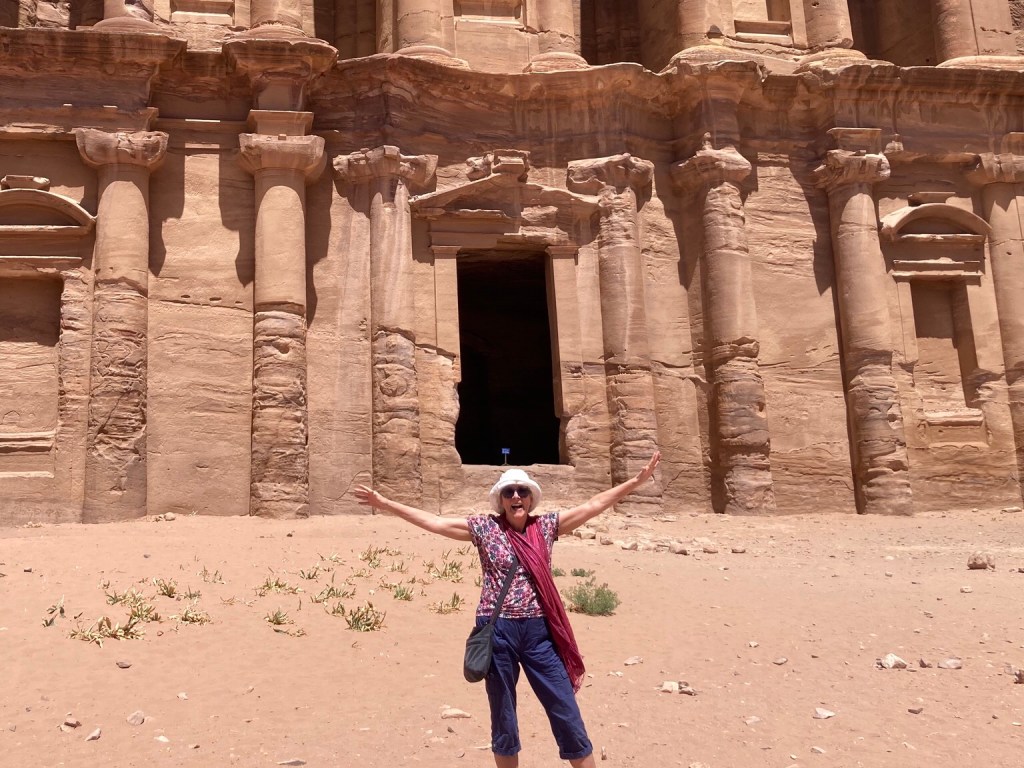
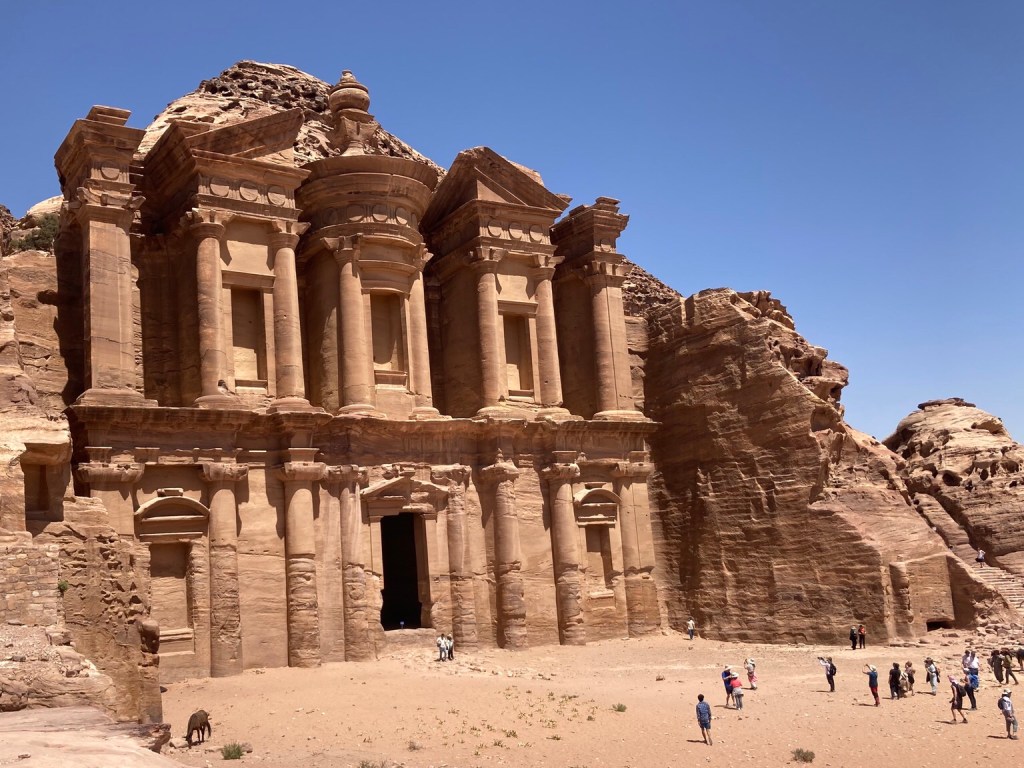
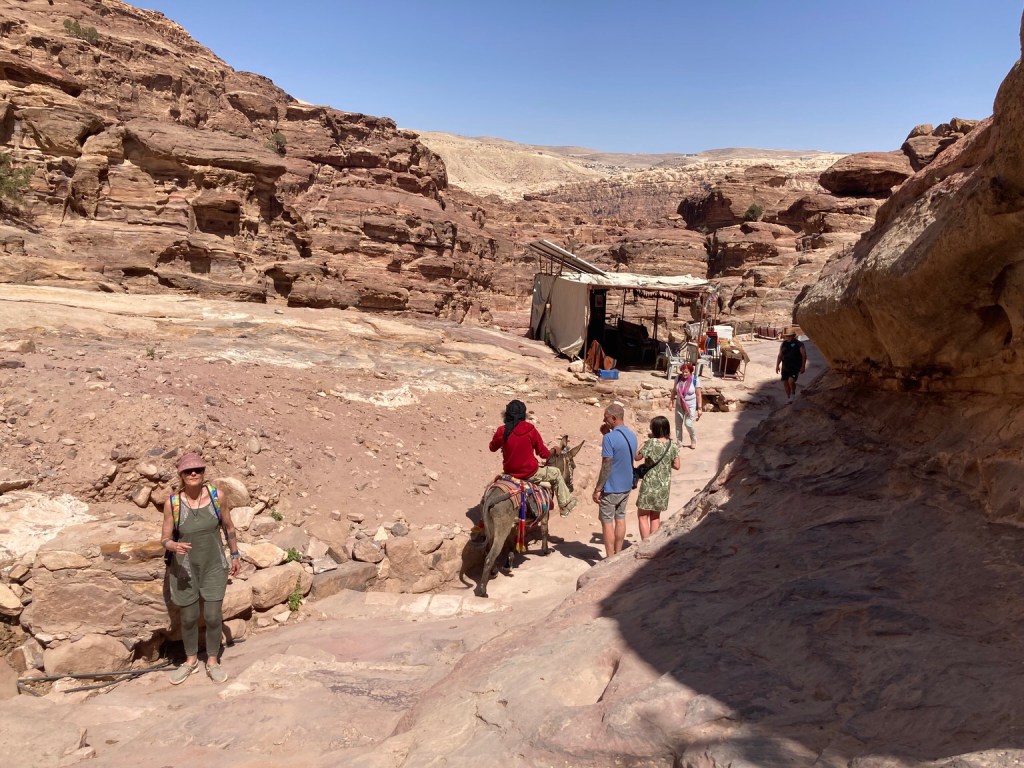
The walk down was almost as difficult, dodging donkeys and donkey poo and being careful on slippery stretches of stone.
It was time to start making our way back, past the Treasury, looking a little more subdued in shadow, and back to the start.
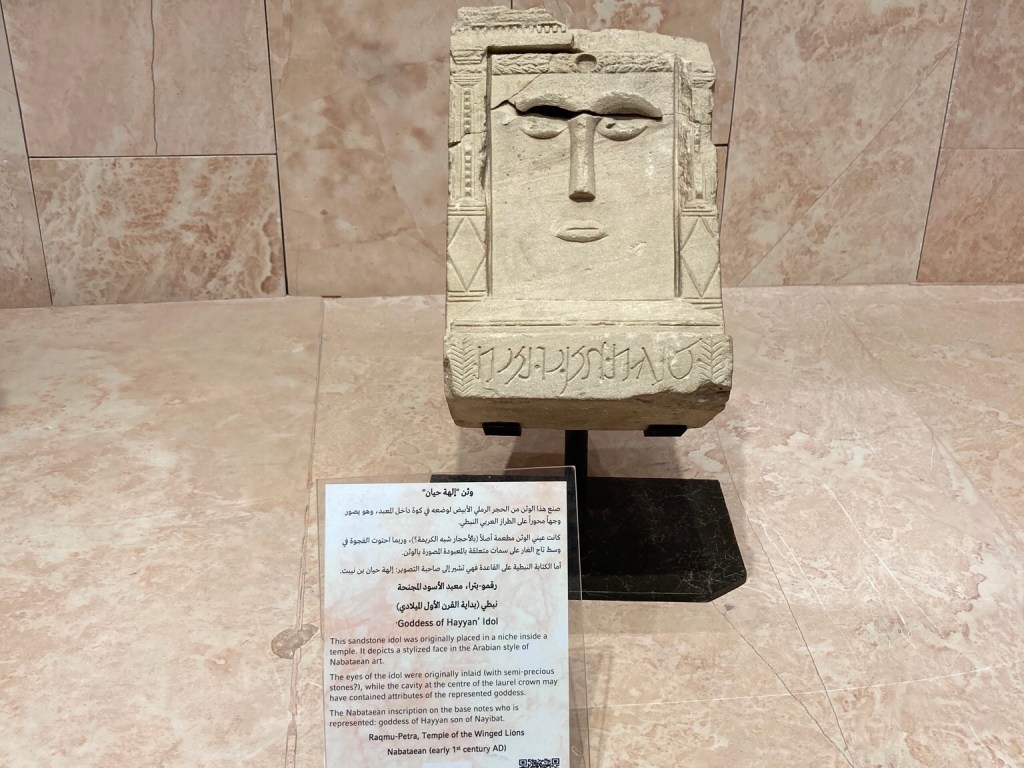
I met Chris in the Museum, but to be honest, after 10 miles I was exhausted and not really taking anything in, but here is an example of one of the temple idols in far better condition and with much finer decoration.
Later, Chris told me about his afternoon exploring, how he came across remains of the C5th Blue Chapel, with splendid granite columns …
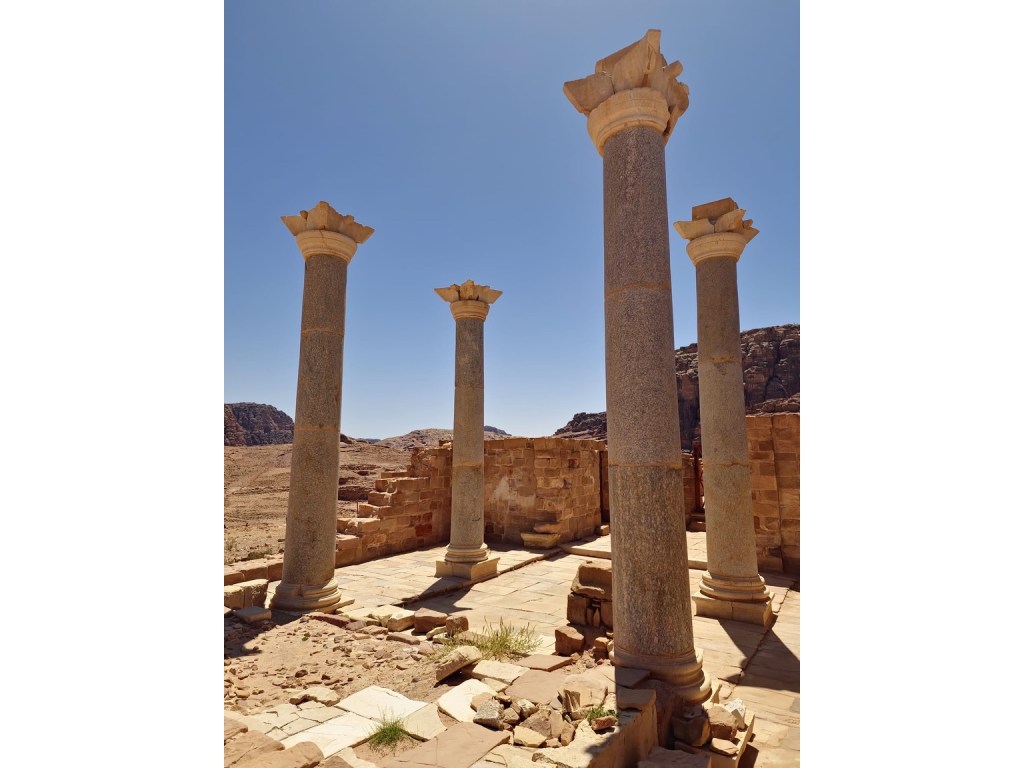
… and then wandered further, continually tempted by the the next rise, and finding himself all alone.
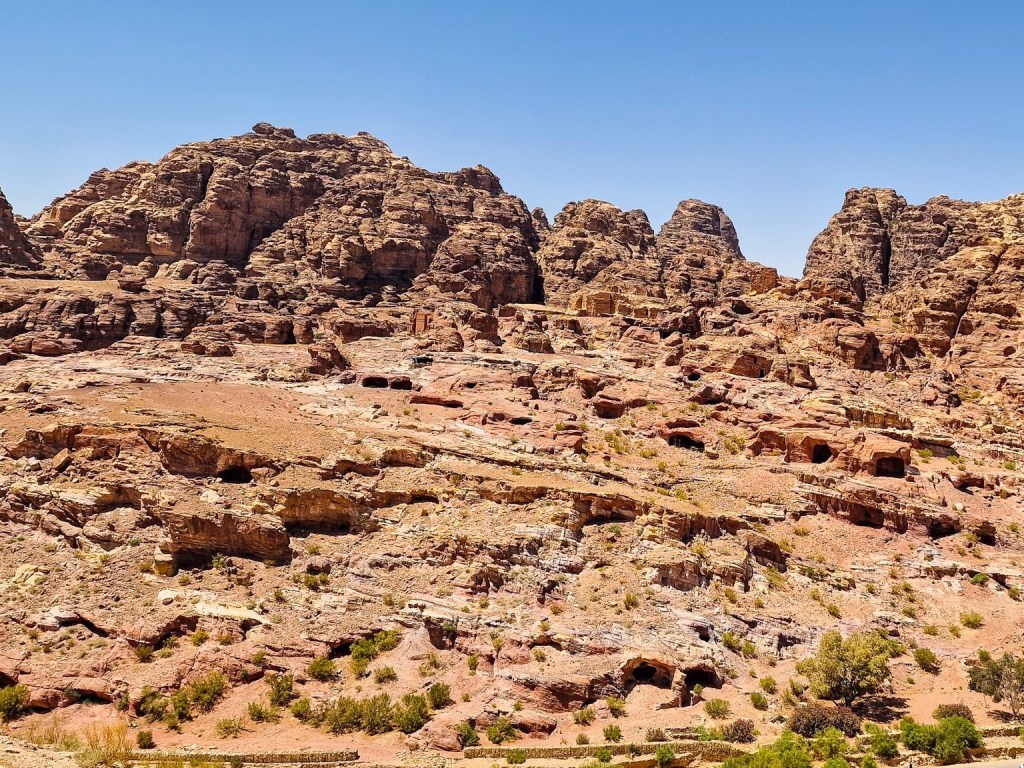
He took a photo of this stone arch …
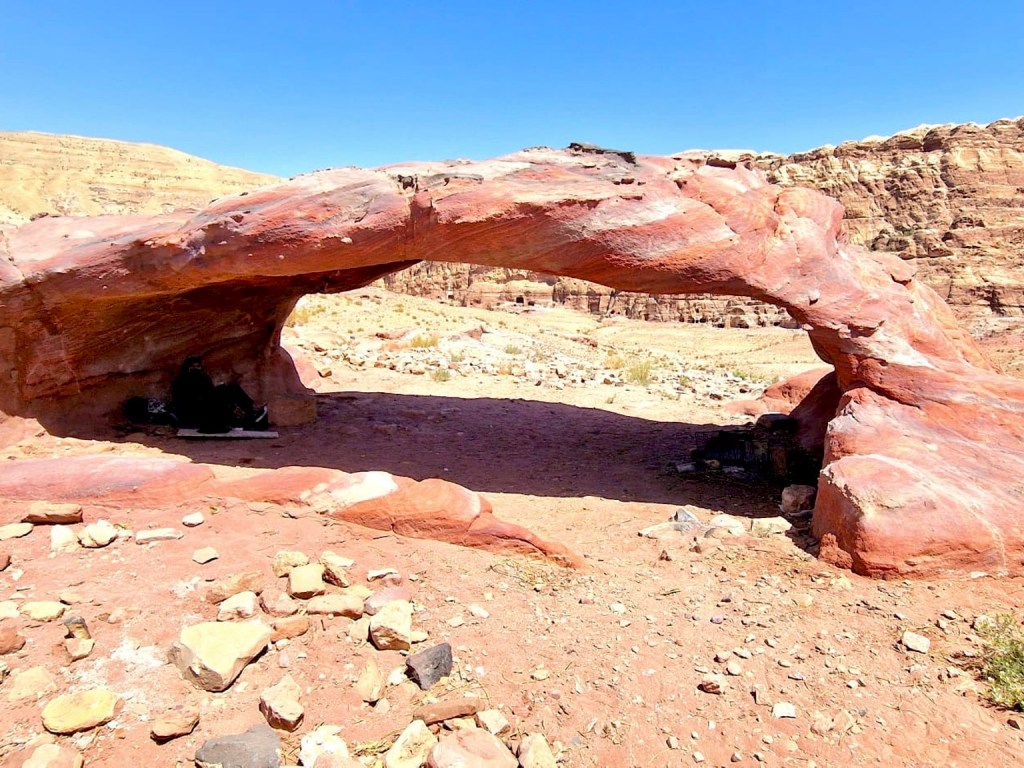
… and was surprised to hear a voice say ‘hello, welcome’ and he realised there was someone inside. The woman beckoned him in and to sit down on a stone and used kindling from her backpack to get the fire going and make them some tea.
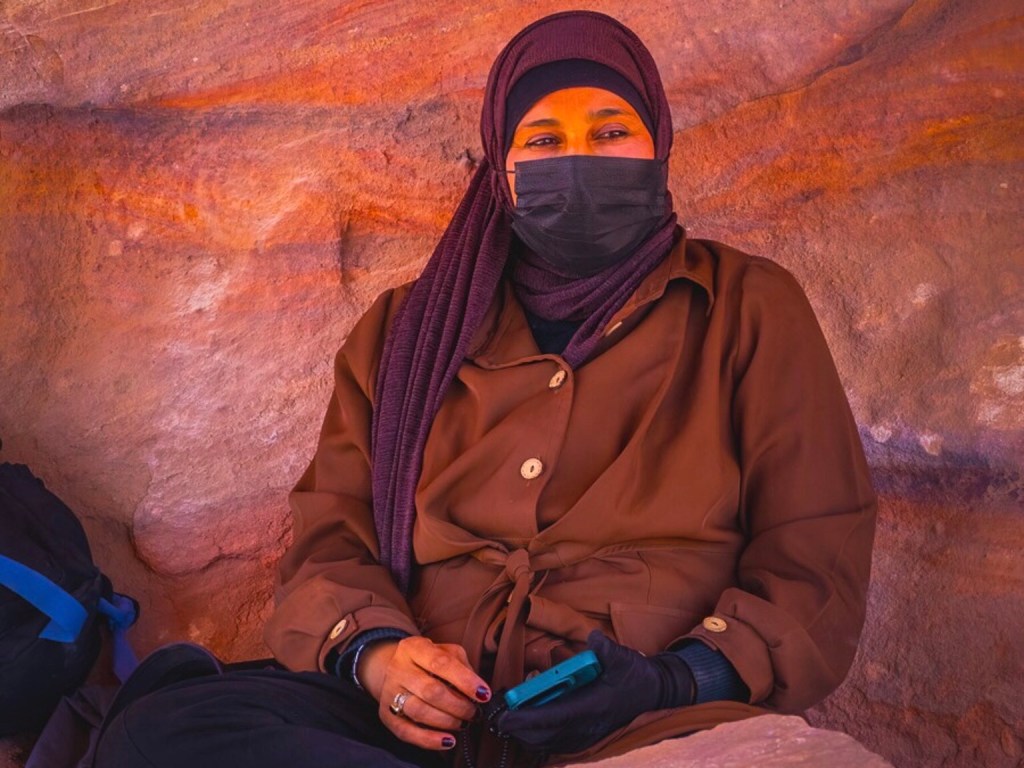
Her English was far better than his Arabic, and she asked where he came from and about his time in Jordan. After a while, a young lad appeared with a donkey asking if he wanted a ride to the Monastery, but he declined. Finishing his tea, he thanked her and set off once more. Such a lovely experience which easy beats my hike to the monastery!
Returning via the Royal Tombs, here is the Palace Tomb, with its impressive 5 storey facade …
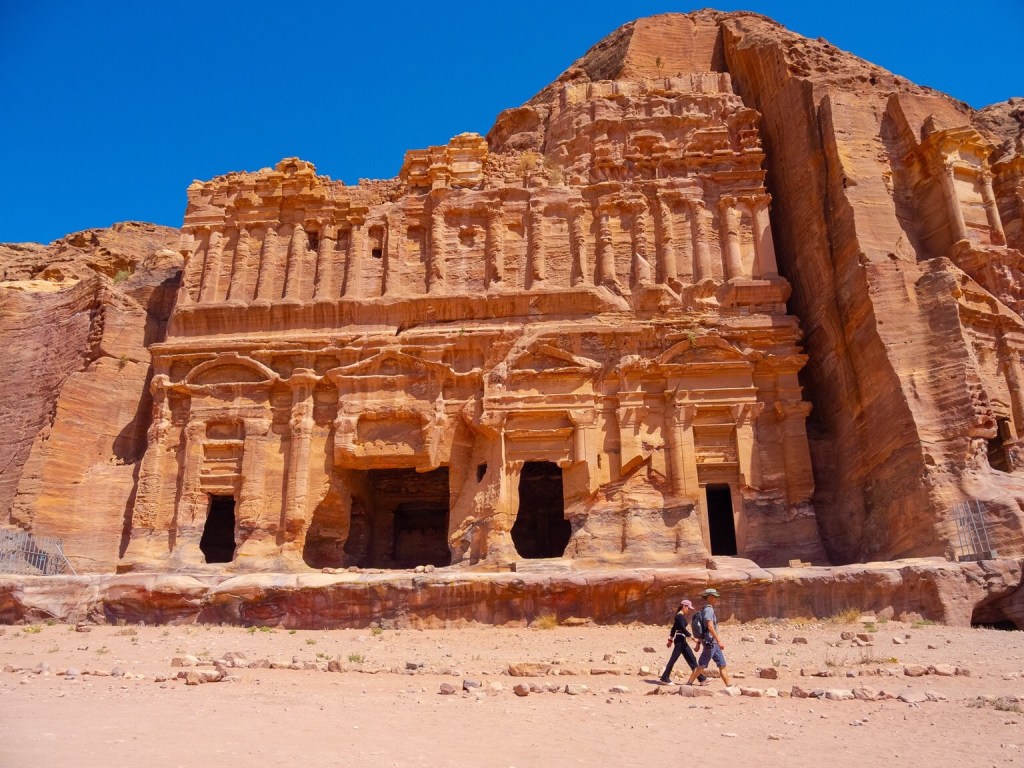
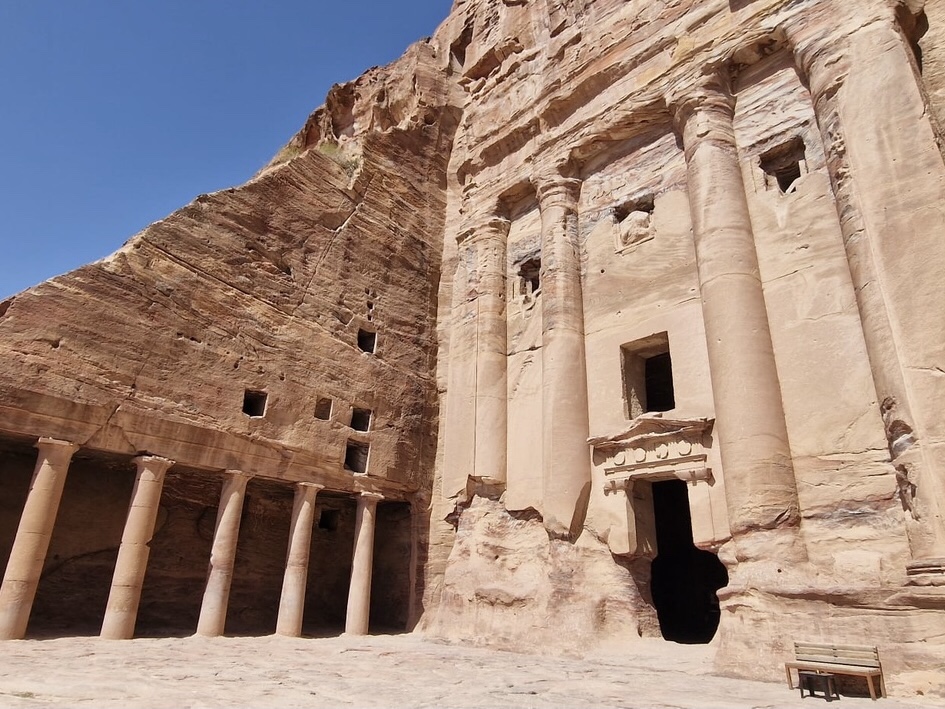
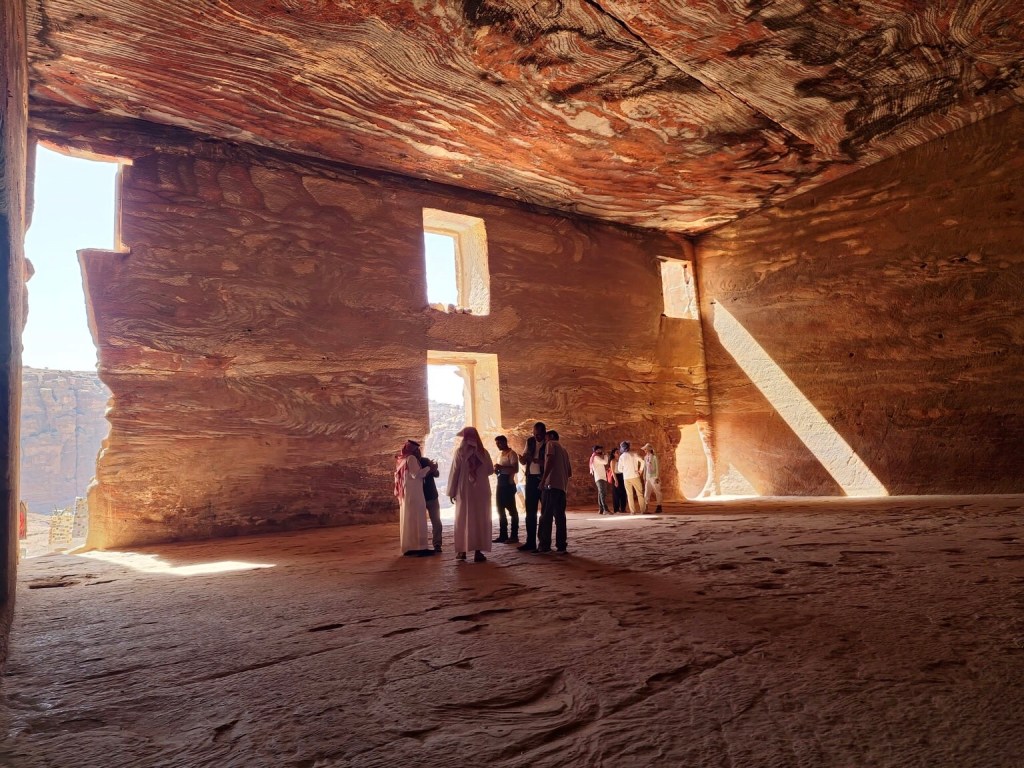
… and The Urn Tomb with its colonnade …
… and its multi coloured ceiling.
Petra certainly exceeded all expectations for both of us, if anything, it’s a shame we weren’t there for longer!
PS – 5 days after we were there, Jordanian authorities evacuated nearly 1,800 tourists from the ancient city after the area was hit by flash flooding and sadly a woman and her son died …
 Off Travelling Together