
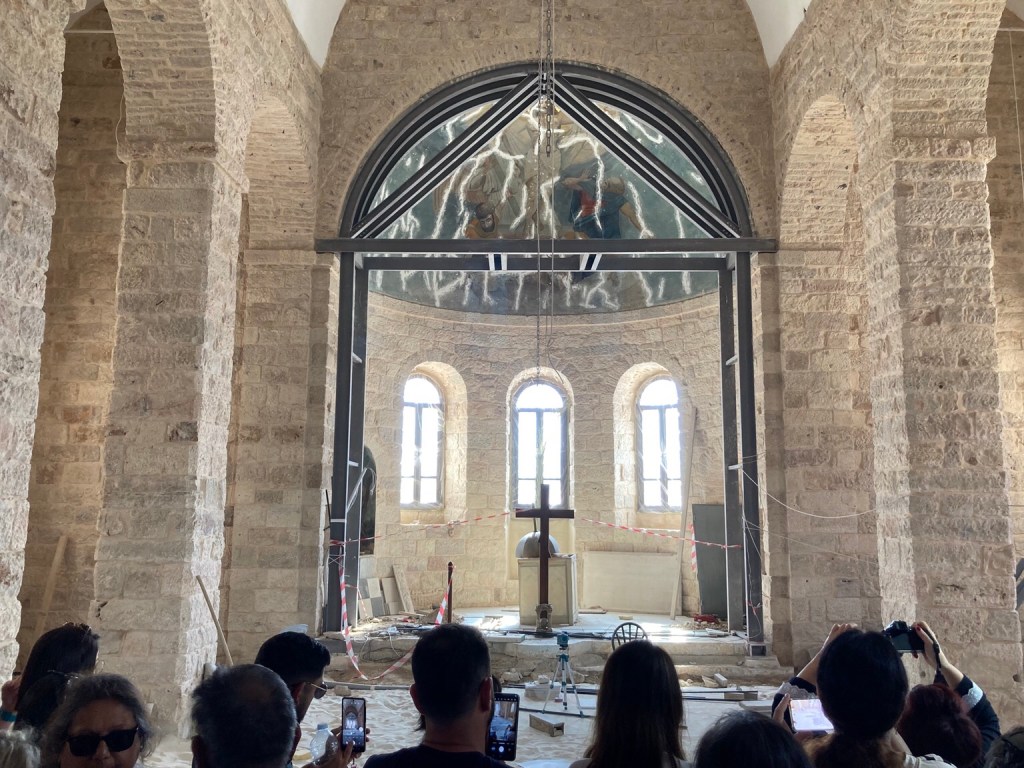
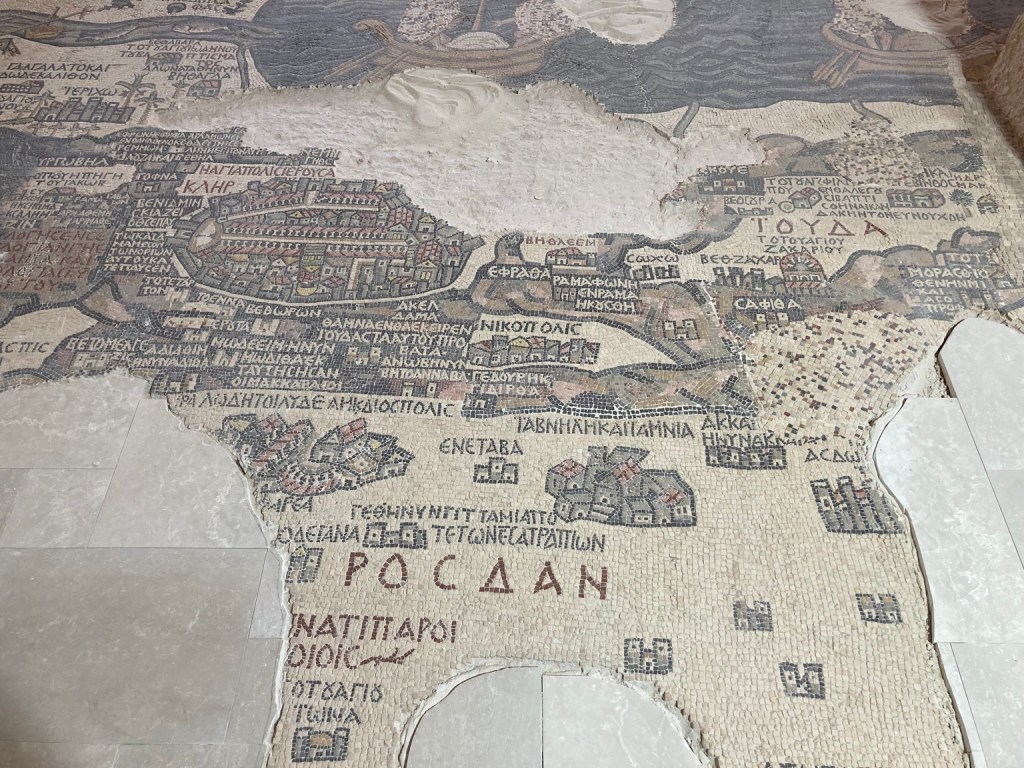
This morning we packed our bags and set off for Madaba to see the oldest mosaic map in the world. In Byzantine times, there was a large Christian community in Madaba and St George’s Church was built with an impressive mosaic floor. This building was long gone when a new church was to be built in the C19th and the mosaic map was discovered, unfortunately damaged.

Nonetheless, Jerusalem is easy to spot with its oval city walls and Cardo Maximus running through the centre. Above you also just make out the Dead Sea and the Jordan river to the left, with fish swimming away from the salty water!
On the way back to the bus, we had a chance to try the local coffee, boiled up like Turkish coffee, but flavoured with cardamom, and usually drunk sweetened, but I found it a little bitter without sugar.
Having got our bearings, we continued to Mount Nebo, overlooking the Jordan Valley and the Dead Sea, believed to be the place where Moses was granted a view of the Promised Land and later buried.

It was quite profound to look at the same view as Moses, across the Holy Land and the Dead Sea, towards Jericho, the Jordan River, Bethlehem and Jerusalem on a clear day.
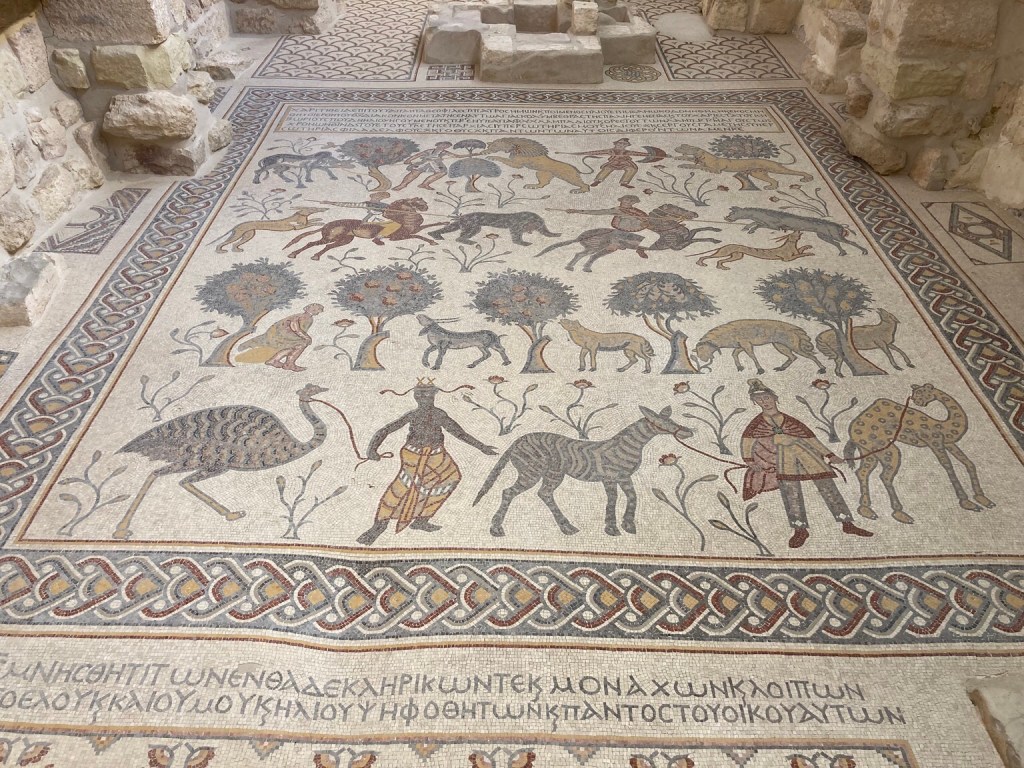
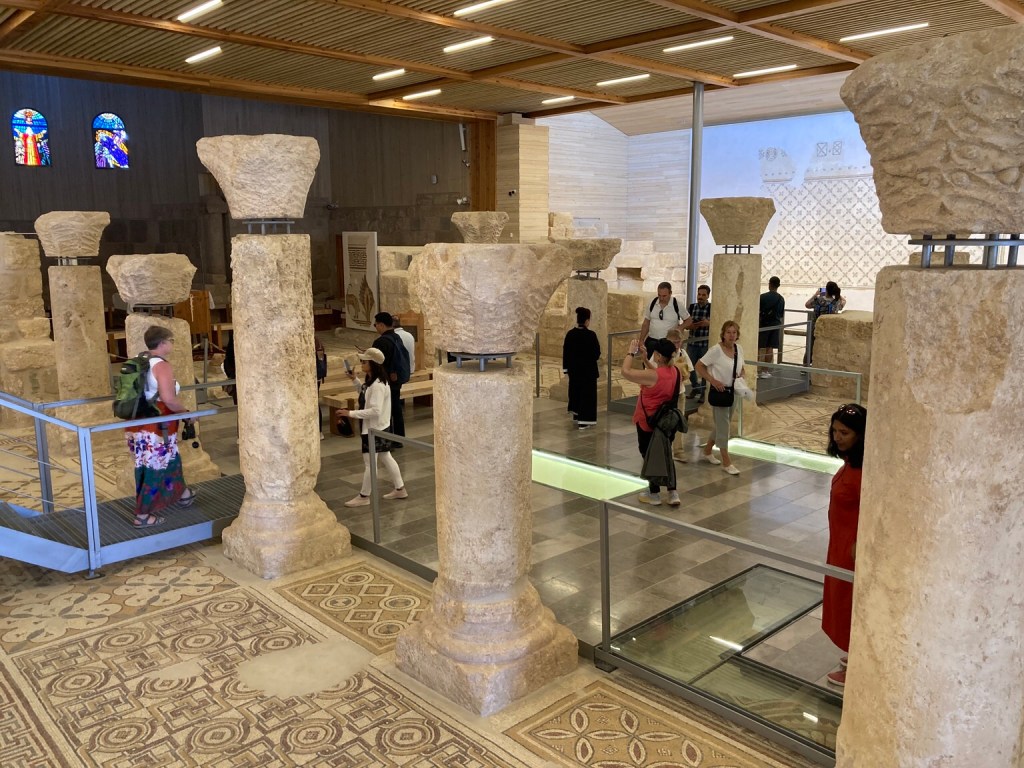
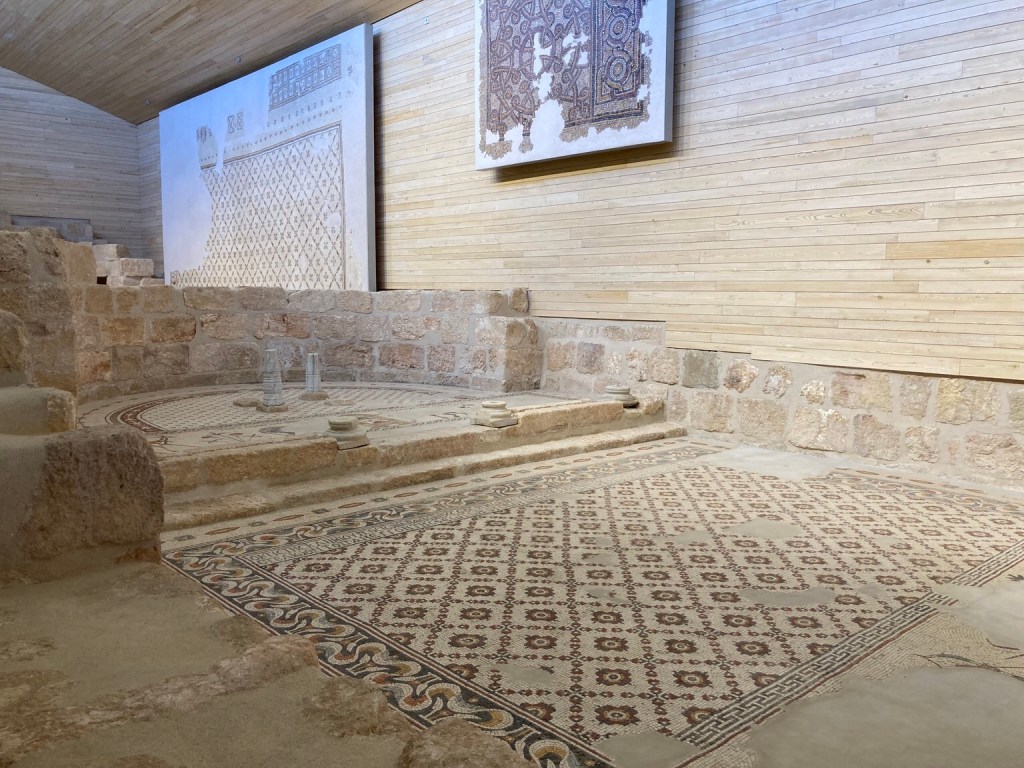
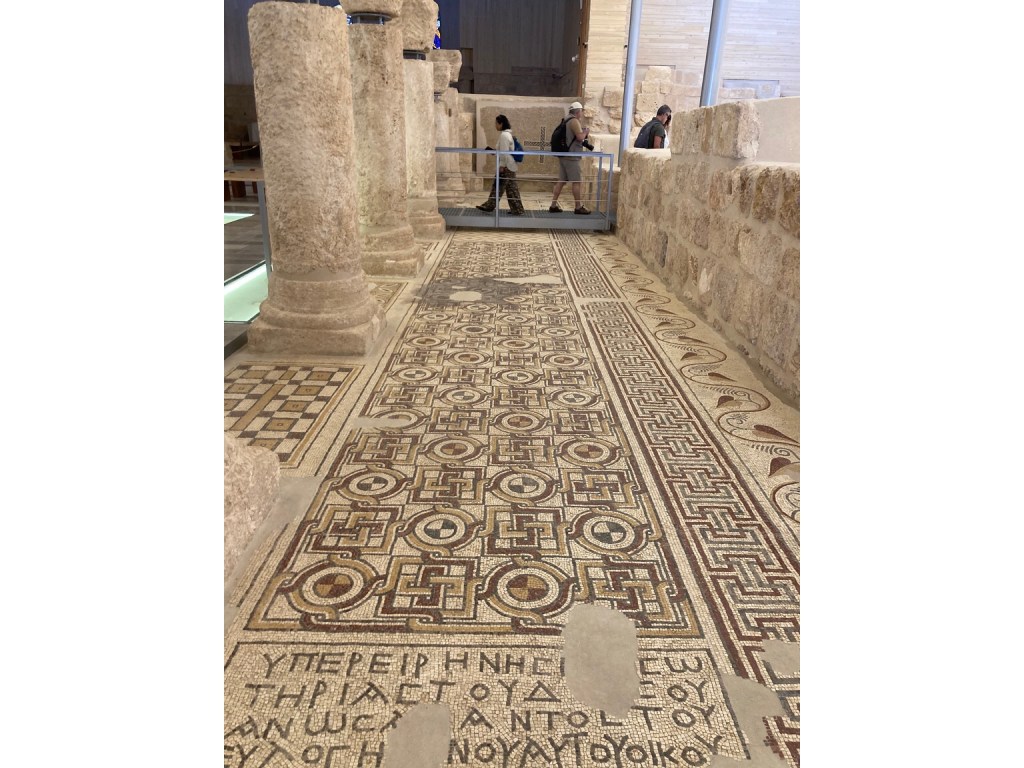
A place of pilgrimage for early Christians from Jerusalem, a small church was built here in the C4th, which was then expanded but much later abandoned and hidden until the Franciscans excavated the site and built a modern church to protect the site and the mosaics found inside.

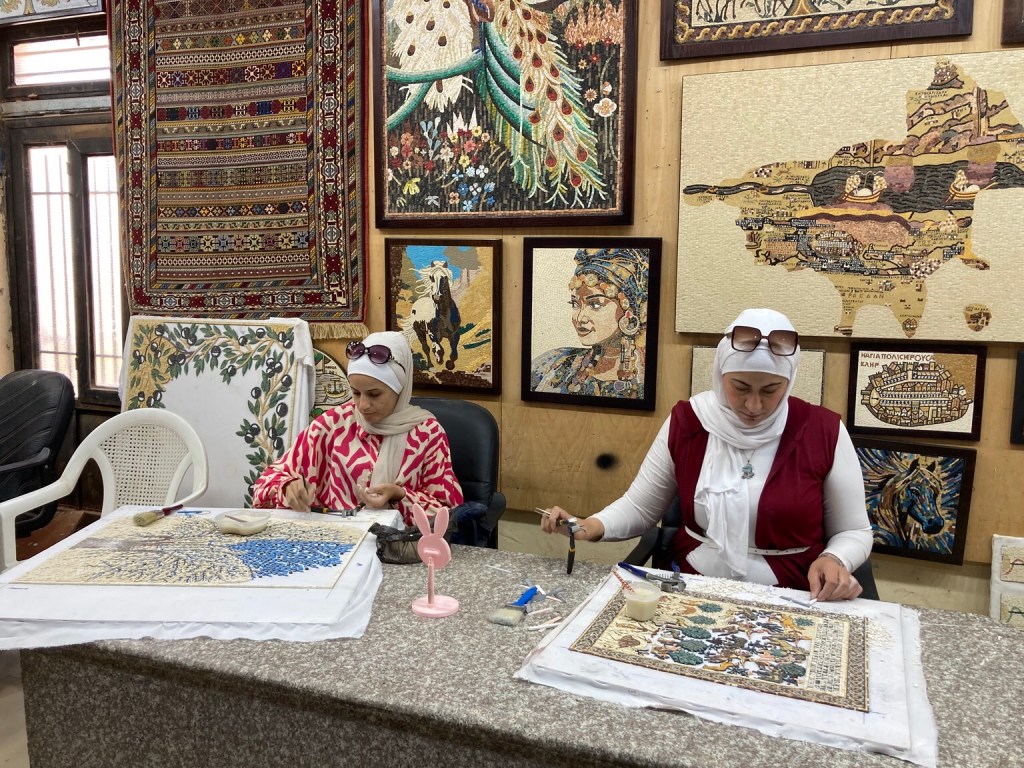
Queen Noor, one of the wives of the late king, began a school that teaches mosaic art and provides jobs particularly for women, and we stopped off at a workshop … but resisted a purchase!

About 20% of Jordanians are Bedouin, which means desert dweller. They once lived a nomad lifestyle, in tents, grazing their herds through the desert, but in 1965 they were given incentives to settle so children could be educated. Today most have settled in villages and cultivate crops and only 1% retain the nomadic lifestyle, but we saw several tents during our drives.


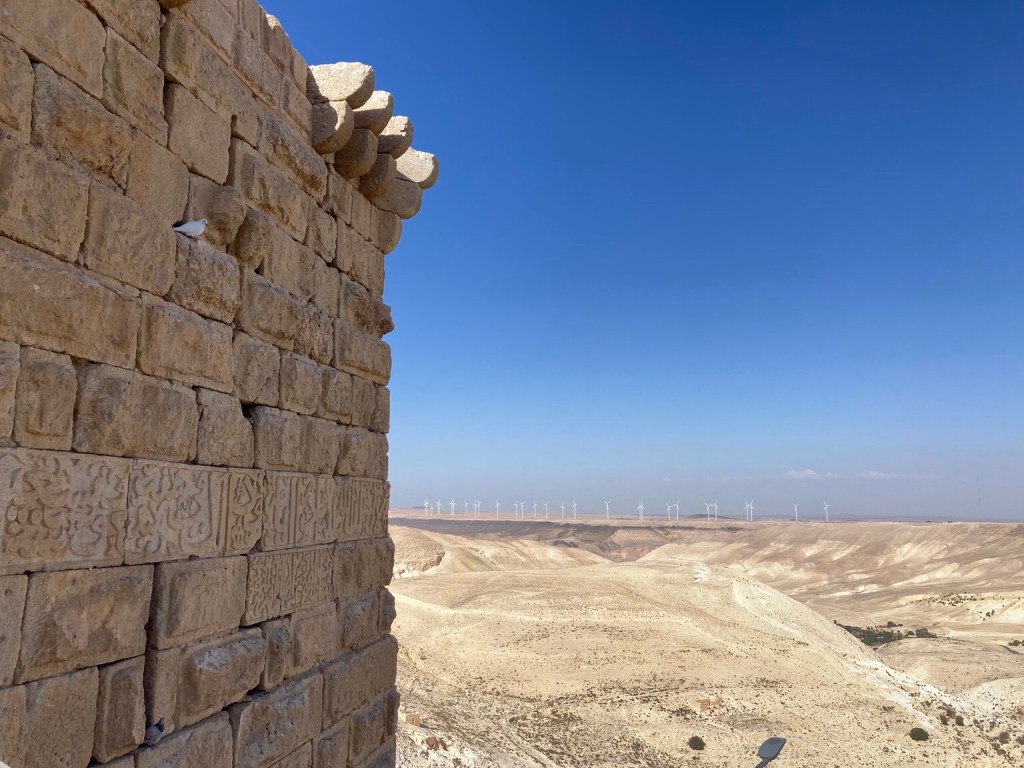
Our last stop was at Shobak Castle which was built by the Crusader king Baldwin I in 1115 and withstood numerous attacks from the armies of Saladin before succumbing in 1189, after an 18-month siege.
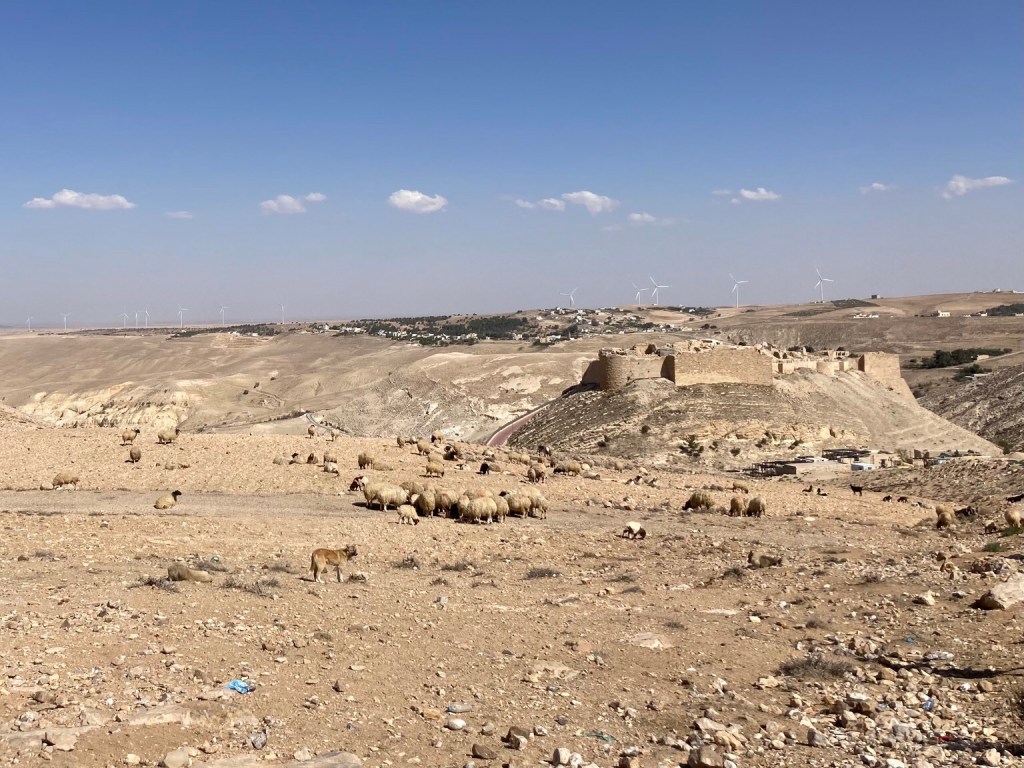
It was later occupied in the C14th by the Mamluks and is now being restored. Views were good but not much to see.


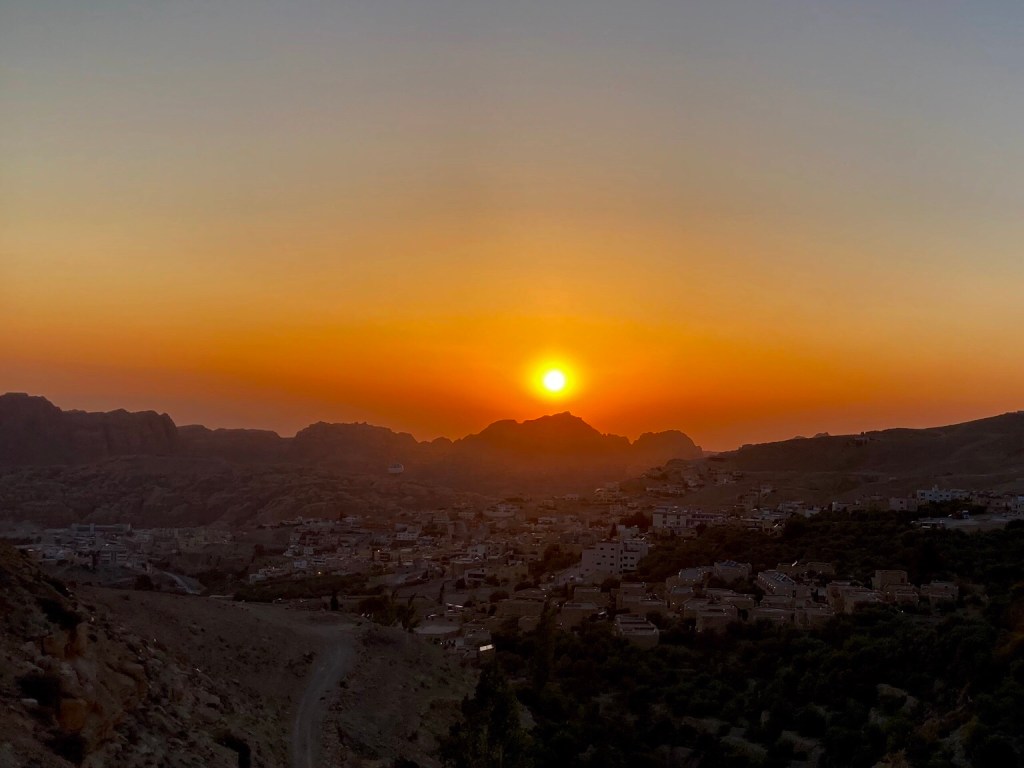
Another drive brought us to Petra where we stayed in a hotel on the outskirts of town. Some of the group went to see Petra by candlelight, but we chose to give it a miss as there would be plenty of walking next day. Instead we caught the sun as it set behind the ridge above Wadi Musa.
 Off Travelling Together