
Our last three nights in Tirana were in Hotel Arber …
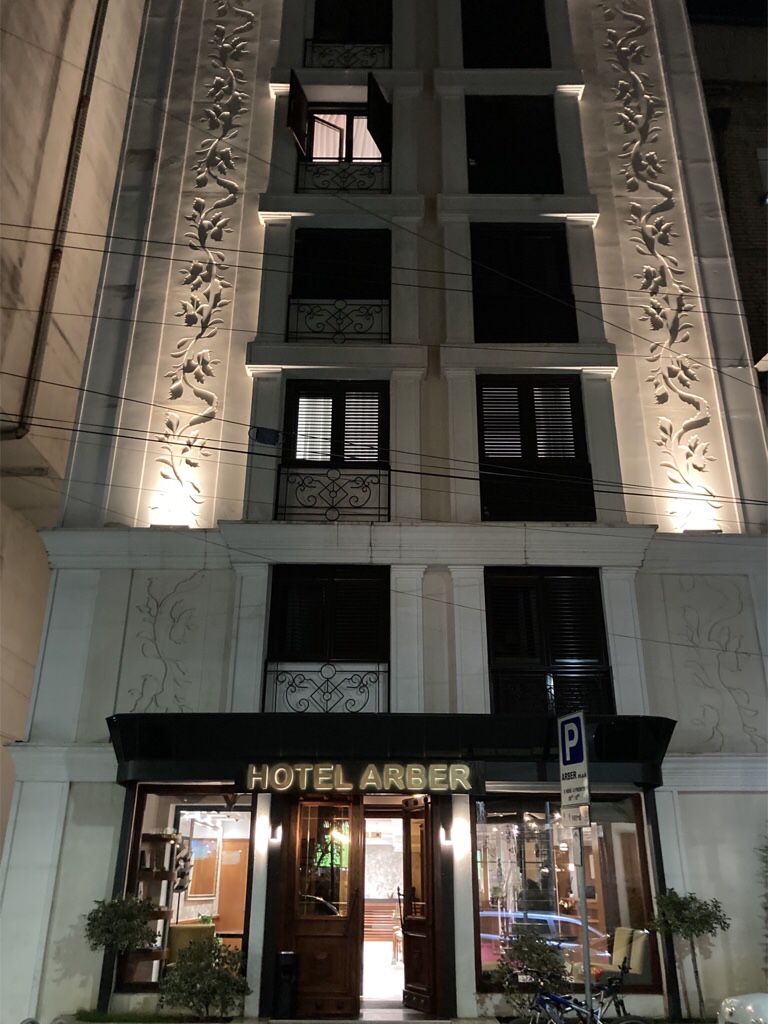
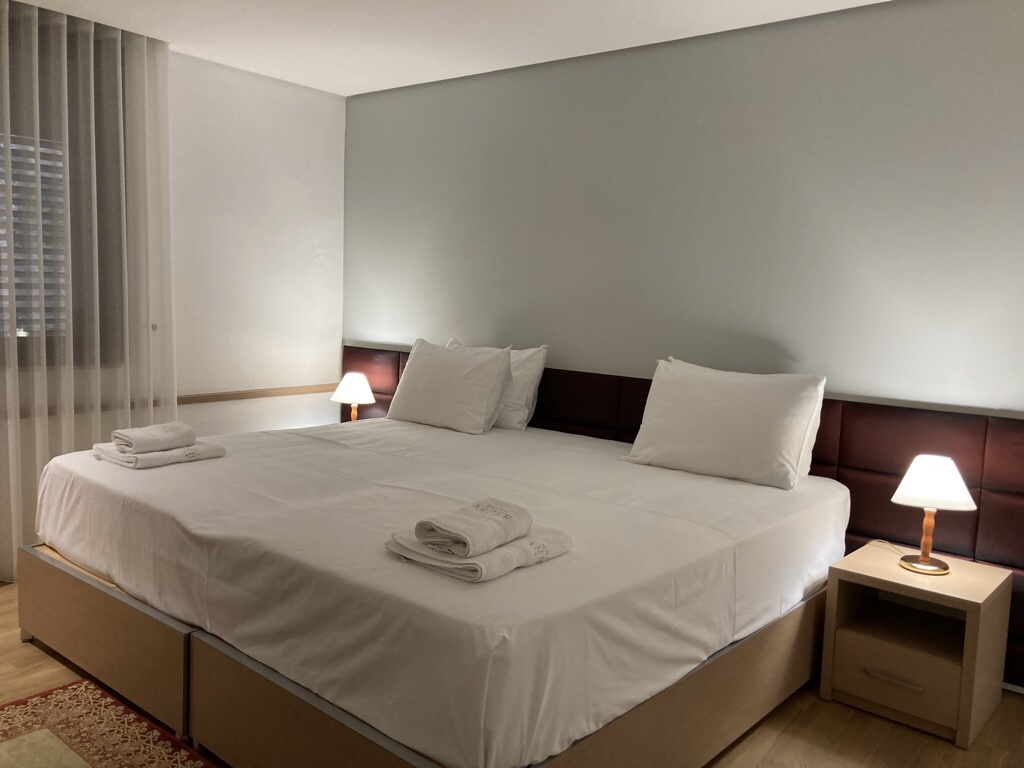
…which was a good opportunity to be in a different part of the city. Having transferred we were eager to explore as we hadn’t seen any of the city in daylight until then.
Skanderbeg Square is a massive public space in the centre of the city …
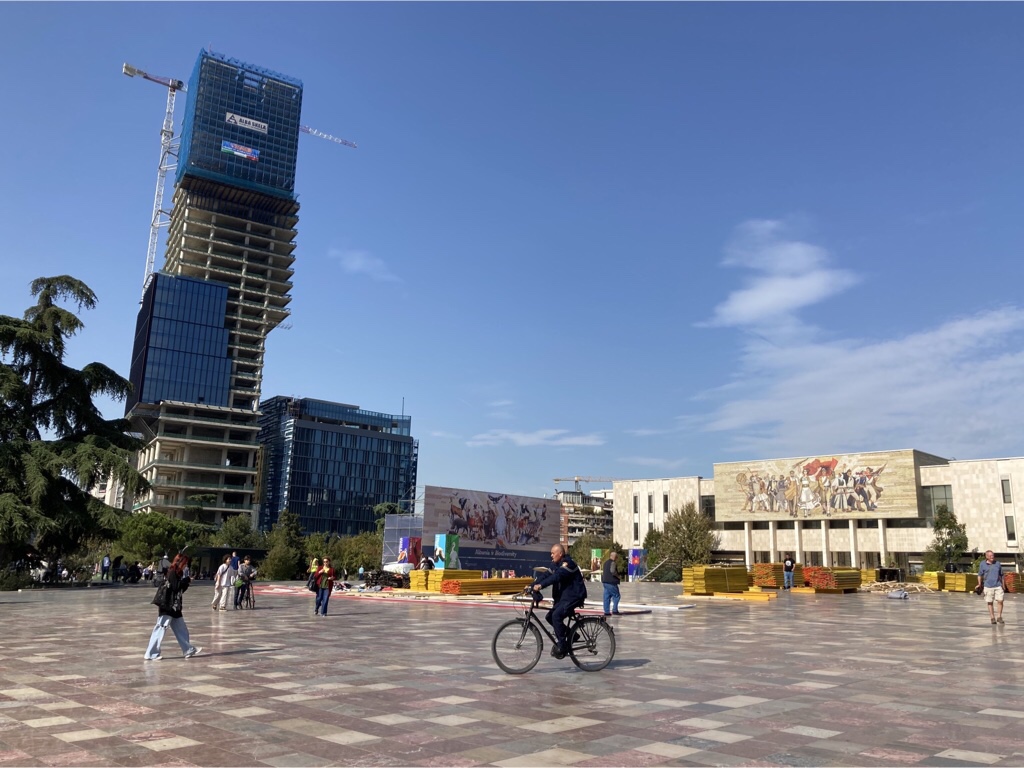
… with a statue of the man himself on his horse, which replaced an earlier statue of Stalin when the square was modernised and enlarged.
Surrounded by buildings …
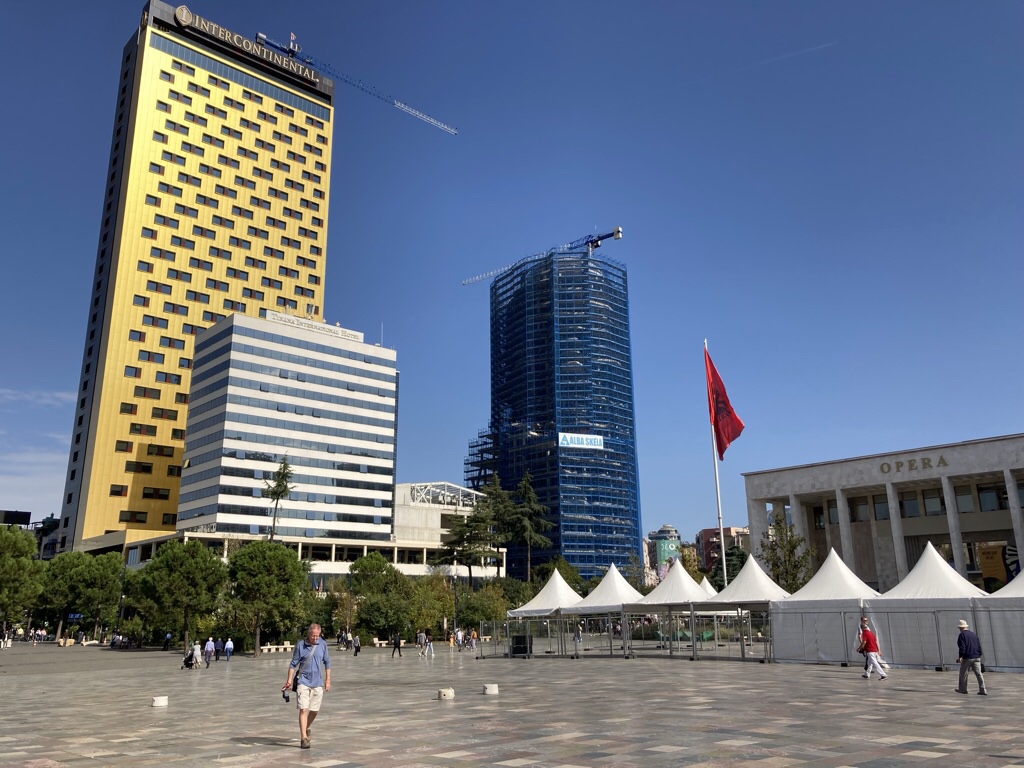

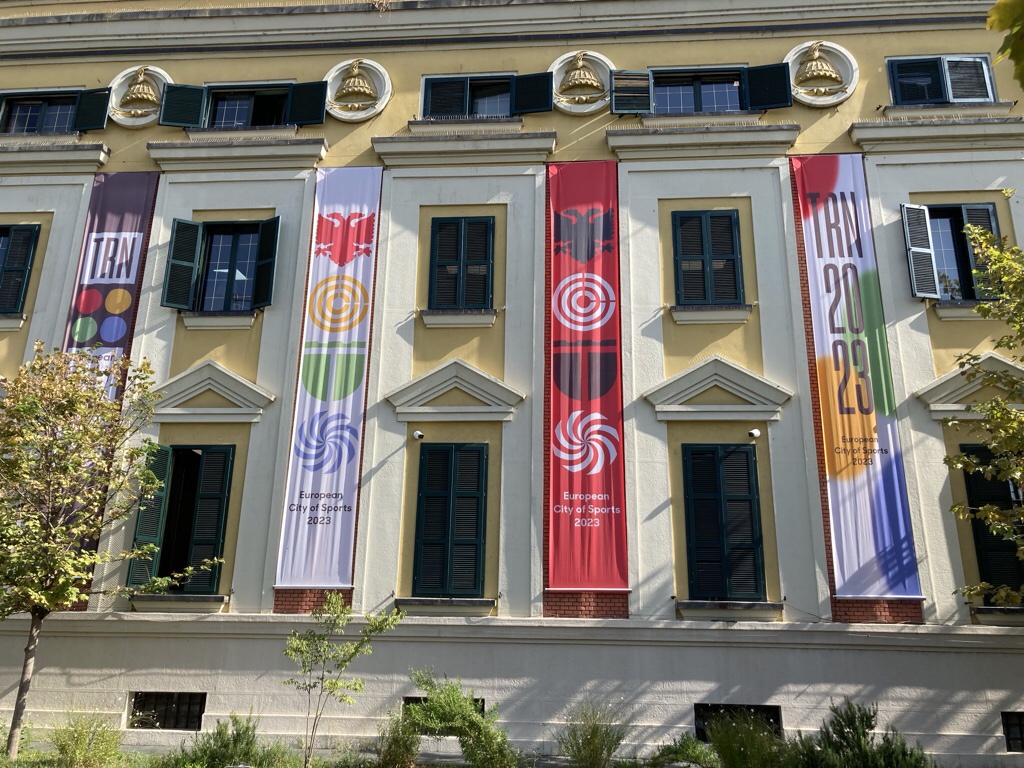
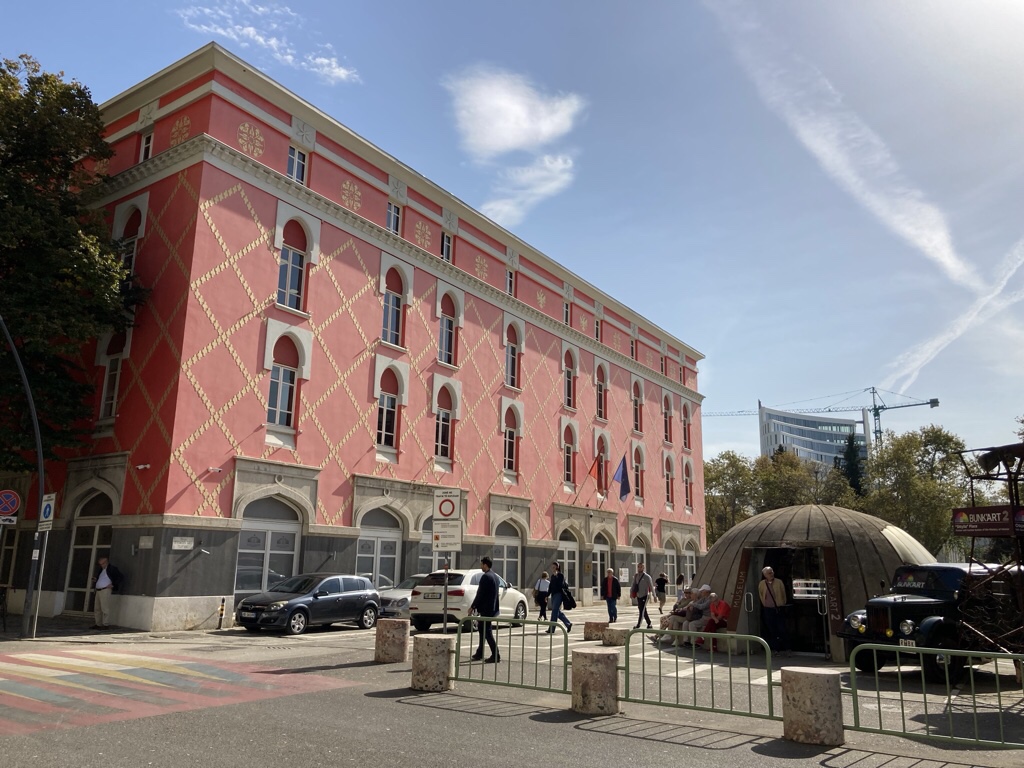
… the most striking being the National Museum, built in 1981 with a large mural mosaic showing figures from Albania’s history …
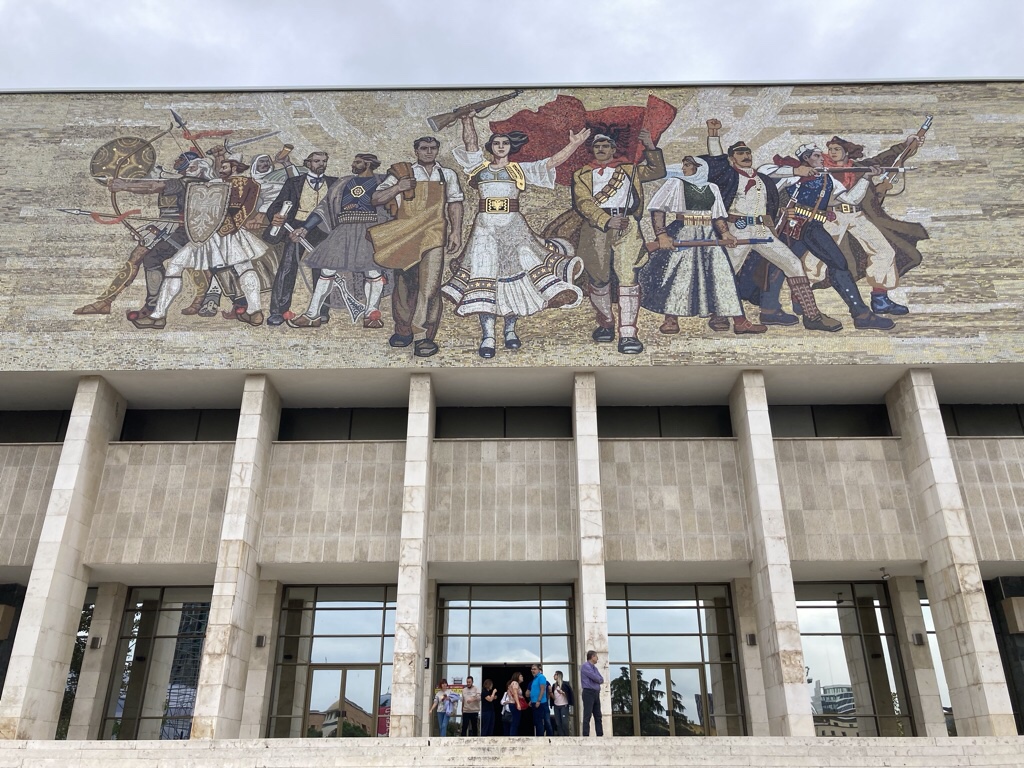
… and our visit helped us to link all we have learnt together. No wonder it’s been hard to get a handle on it all with Illyrians, Greeks, Romans, Albanian princes, Skanderbeg, The Ottomans, the 1912 Independence led by Ismail Qemali , WW1, Ahmet Zogu as president then king, Italian invasion followed by WWII, the Communist regime led by Enva Hoxha and then finally the end of Communism in 1991! Of course even that was over 30 years ago now, and Albania has certainly moved on, not least when you notice all the new construction in the city.
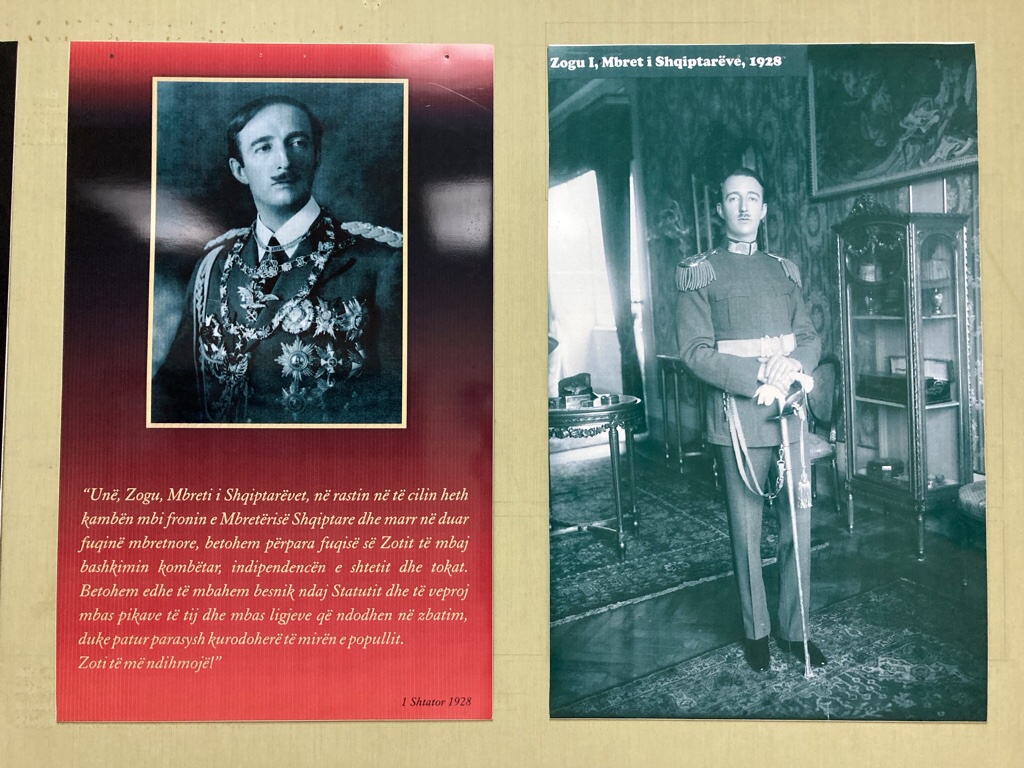
Just a couple of pics, firstly Ahmet Zogu, who hasn’t had a mention yet, who made himself king when his term of office ended then fled the country when Italy invaded …
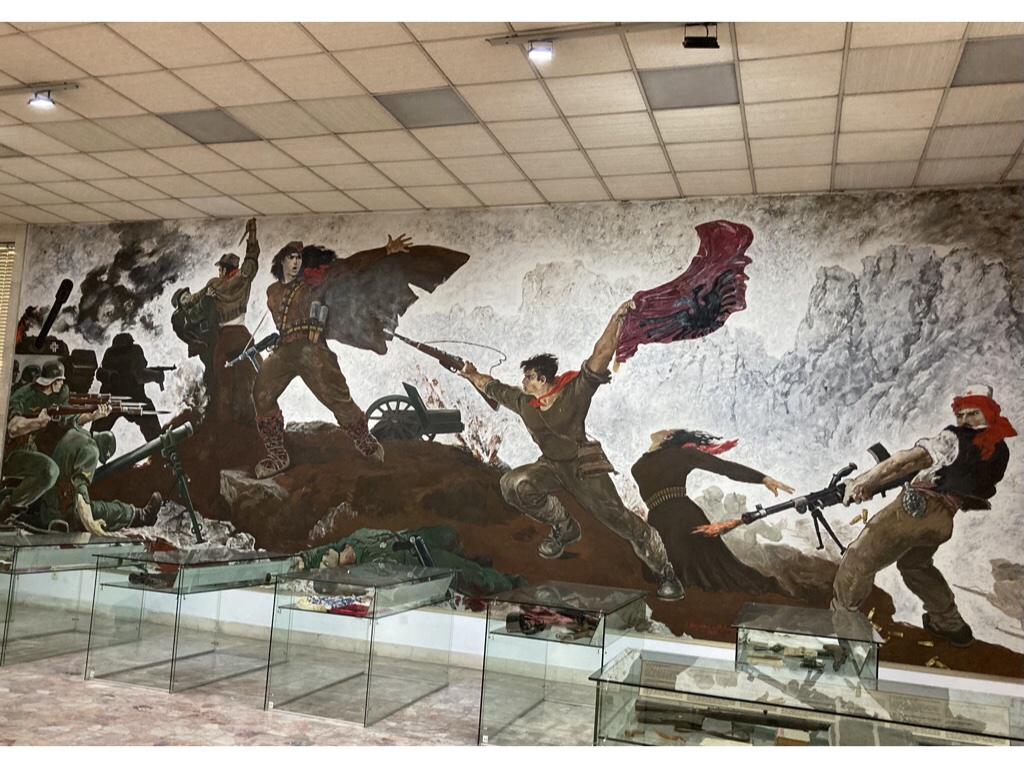
… a striking image of the partisan struggle …
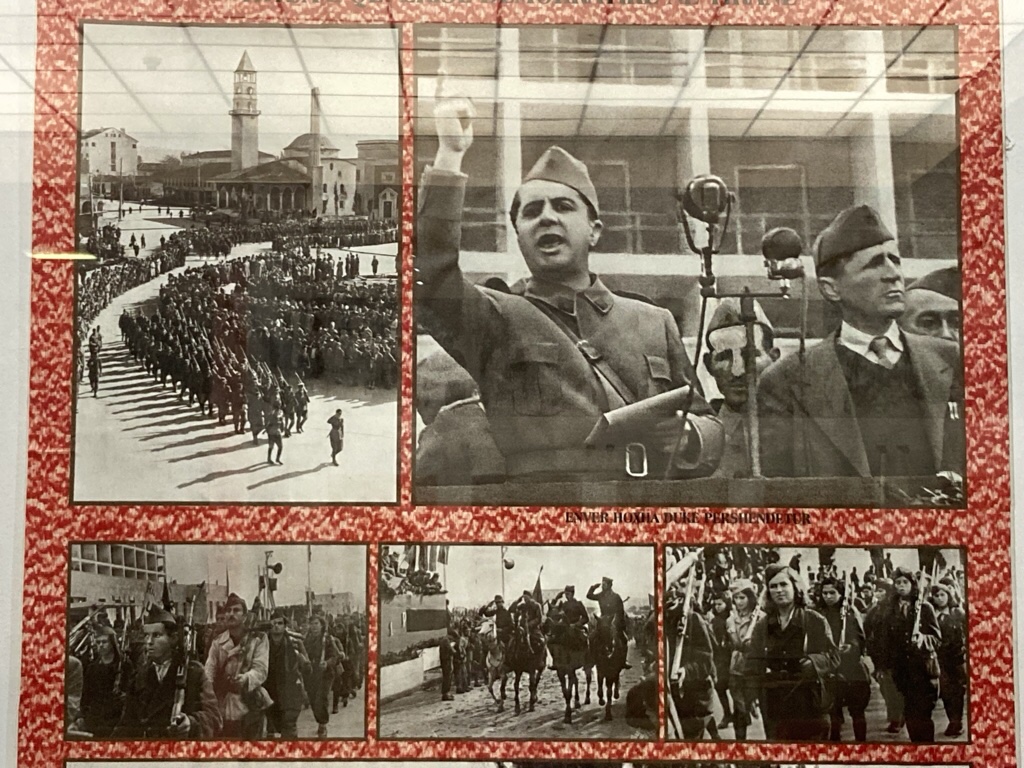
… and Enva Hoxha whose brand of Communism held the country in fear.
As always, the best bits end up in a national museum, so I’ve also made my own iconostasis with some of the icons that started off in churches we’ve visited – clockwise: St George, Ardenica Monastery, Baptism of Christ, St Nicholas Church, Gjirokaster, John the Baptist, St Nicholas Church, Berat, Holy Mother & Christ, St Nicholas Church, Gjirokaster, St Nicholas, St Nicholas Church, Berat. Love the details, especially the chap in the water below Christ shrugging his shoulders, maybe Neptune?

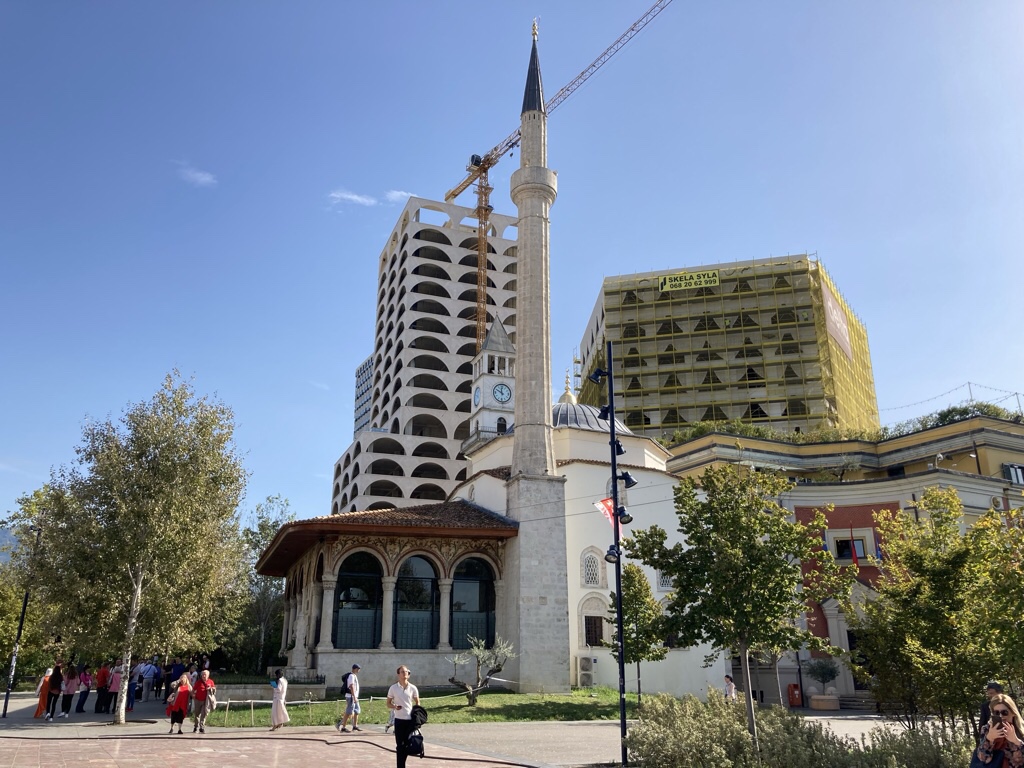
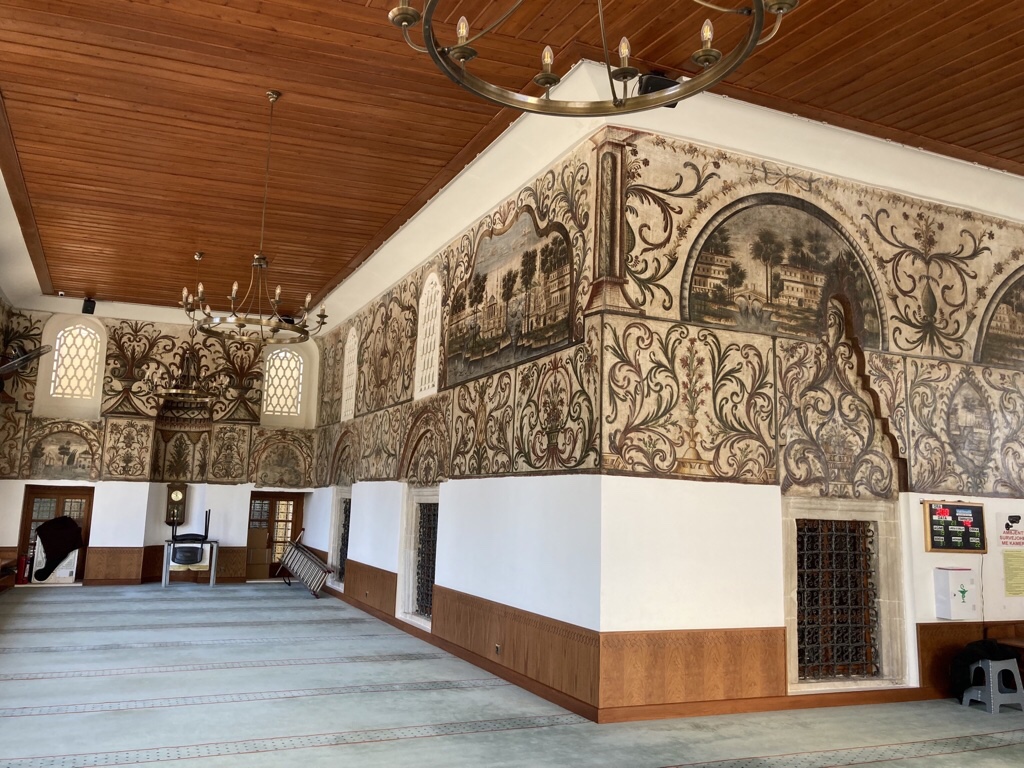
The C18th Et’hem Bej Mosque was probably the most impressive on this trip with the most beautiful murals decorating every wall, with imaginary landscapes with flowers, trees and waterfalls …

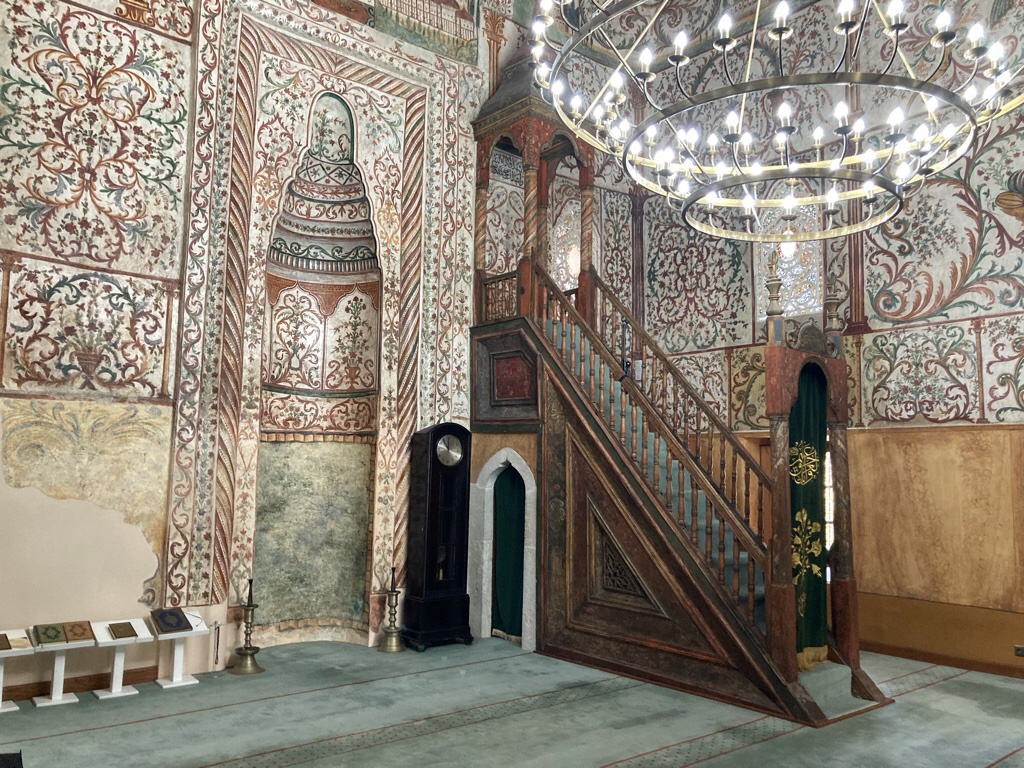

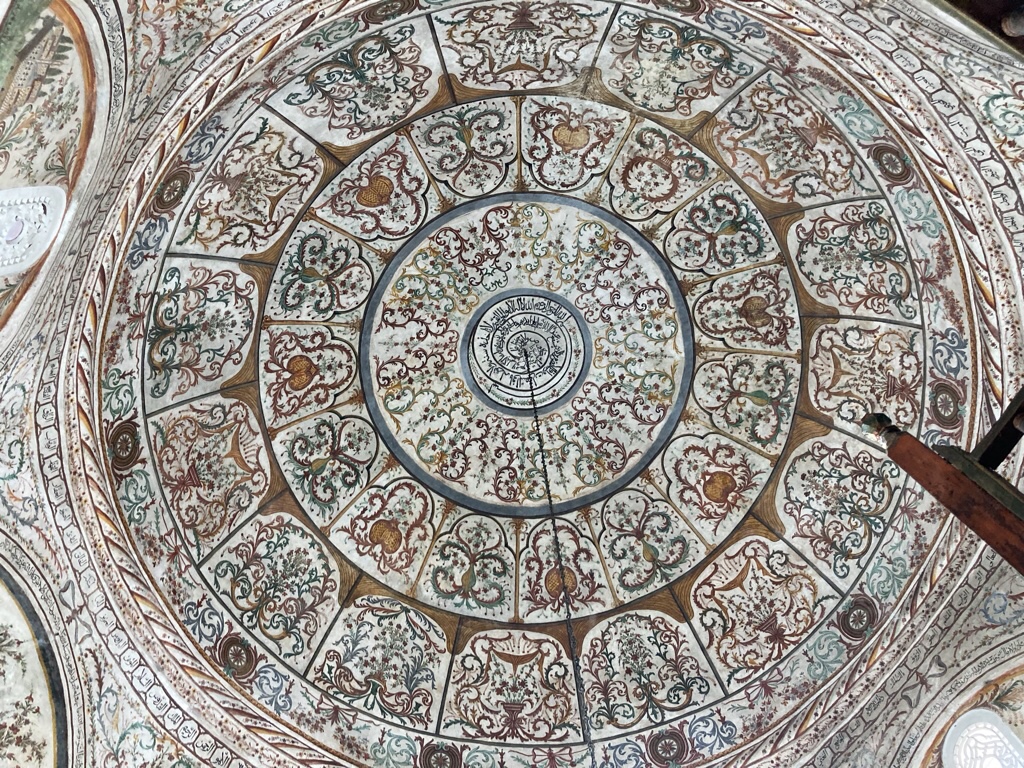
… and the Resurrection Cathedral was opened in 2012, to celebrate the 20th anniversary of the revival of the Albanian Orthodox Church and was designed by New York architects.

It is strikingly modern …
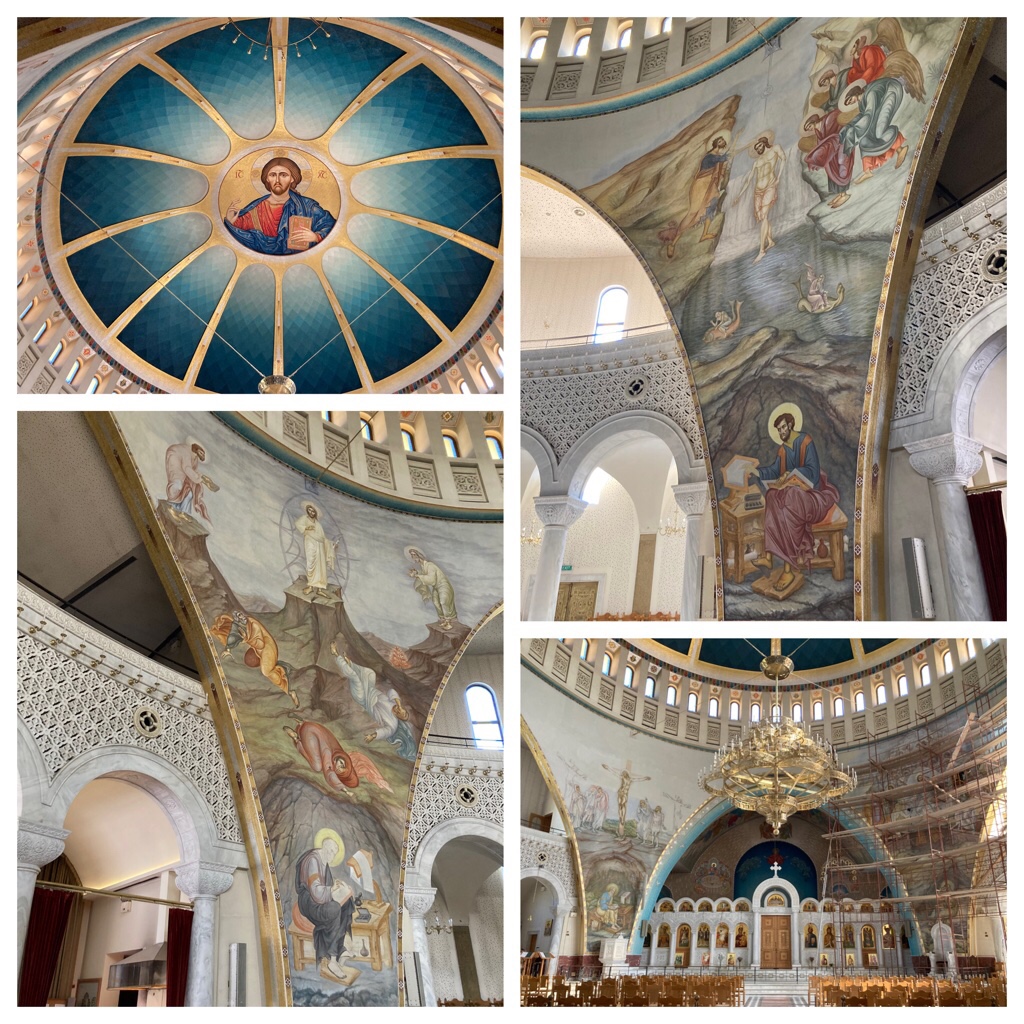
… with a bell tower decorated with paschal candles representing the four evangelists which lit up red at night.

We found ourselves beside The House of Leaves, a museum dedicated to the innocent people who were spied upon, arrested, imprisoned or executed during the military regime.

Built as a maternity hospital in 1931, it was first used as an investigation centre, then later dealt with all forms of surveillance amongst both Albanians and foreigners …

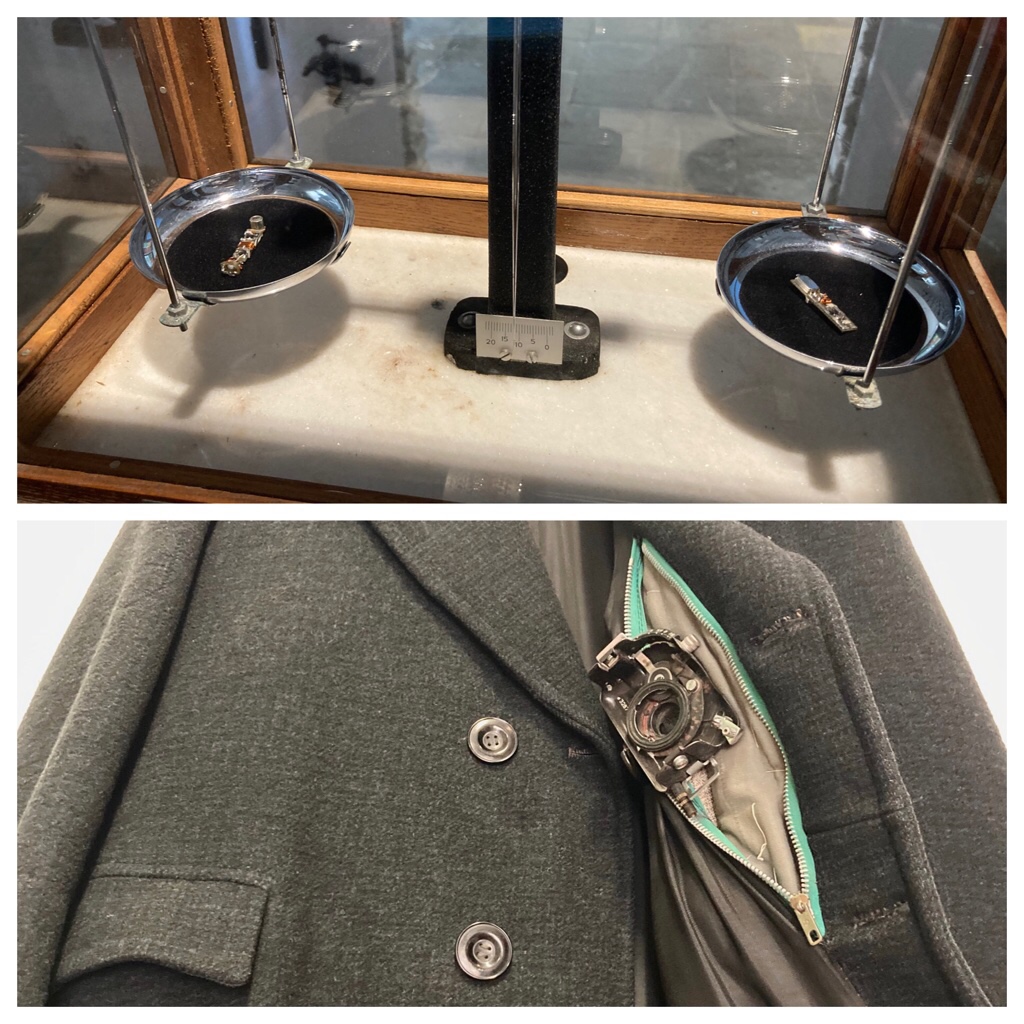
… which led to a some 18,000 people being imprisoned for political reasons and over 5500 people being executed during the dictatorship.
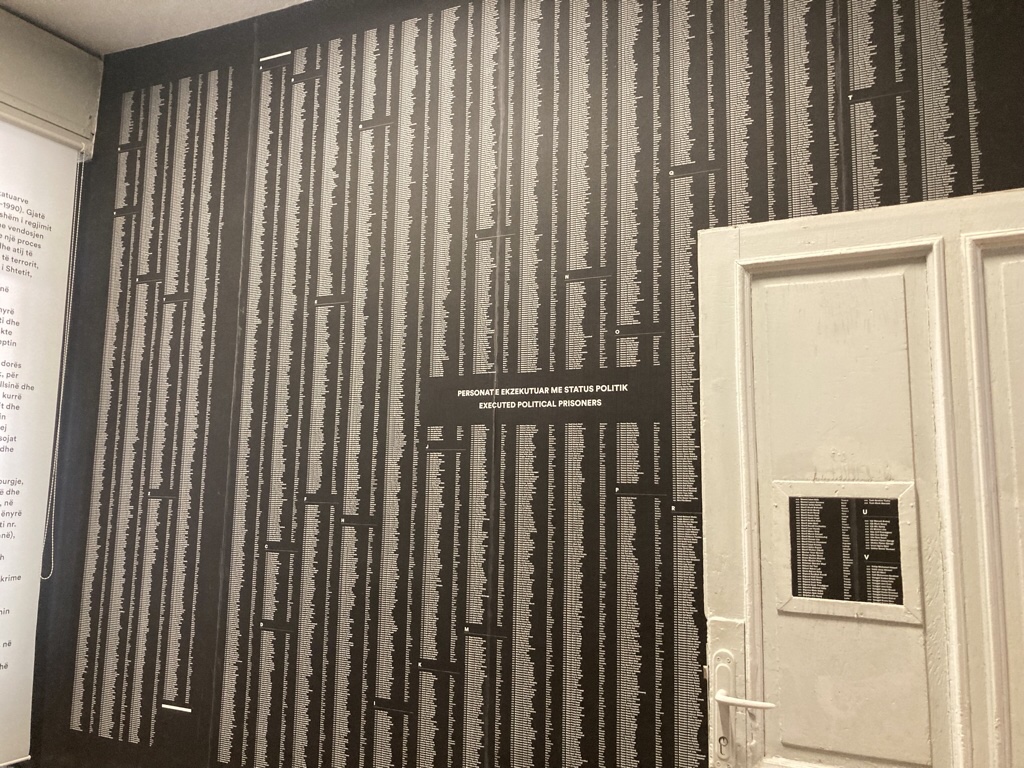
Despite having seen bugs and things in spy films, seeing the equipment like this was something else. The museum was well put together and very thought provoking.
Back outside in the sunshine we passed Tirana Castle where just a short section of remaining Byzantine wall has been incorporated into an area of cafes and restaurants …


… the Ottoman Tanners Bridge, squeezed in to a gap beside the main road …
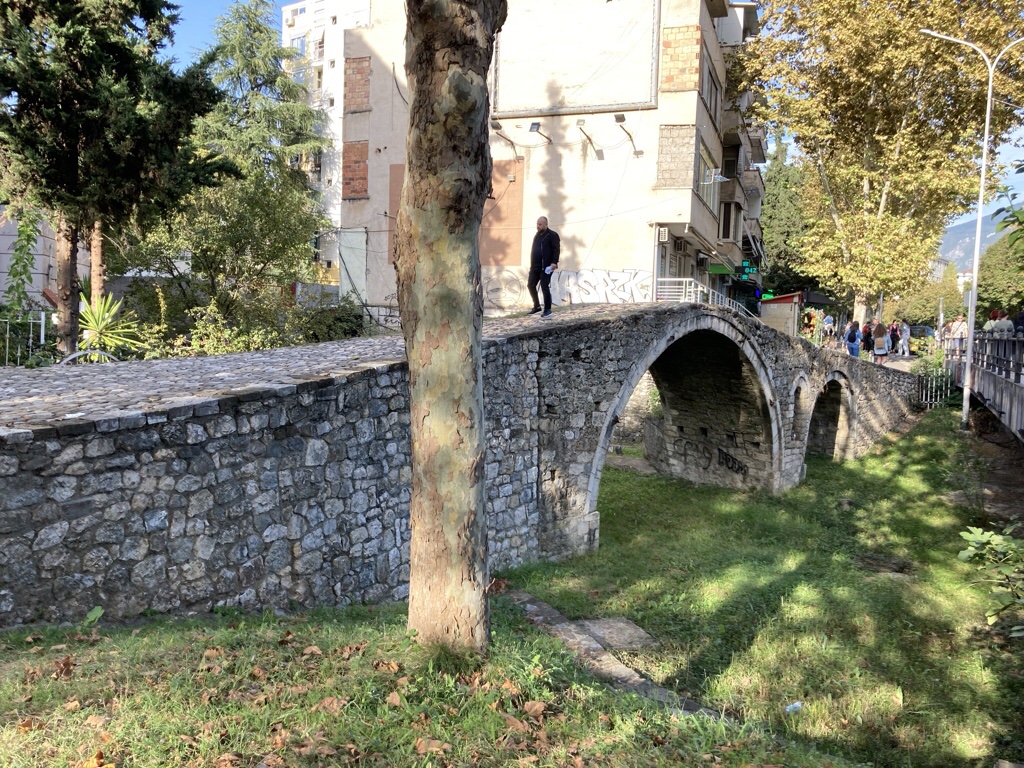
… and the New Market offering everything from raspberries to rugs.


… continued …!
 Off Travelling Together