
We awoke surrounded by fog!


Arriving in Portsmouth last night ridiculously early, before our check-in lane even existed, meant a lot of hanging about, but we finally we drove onboard, found our cabin and went straight to sleep. After a croissant and a cuppa, we watched as the ferry backed into the port of Le Havre, guided by the pilot boat and thought the fog had lifted a bit.


We were surprised how empty the ferry was, only 30 or so cars with room for 100, so it only took moments to get our passports stamped and we were off.
The fog was patchy, hanging low over the fields as we drove to Étratat. Once an oyster fishing village, the railway then brought holidaying Parisians to La Côte d’Albâtre or Alabaster Coast, attracted by the steep, chalk cliffs carved into arches by erosion.
Today, the fog made the scene somewhat more ethereal, with Falaise D’Aval to the left of the beach …

… and Falaise D’Amont to the right.
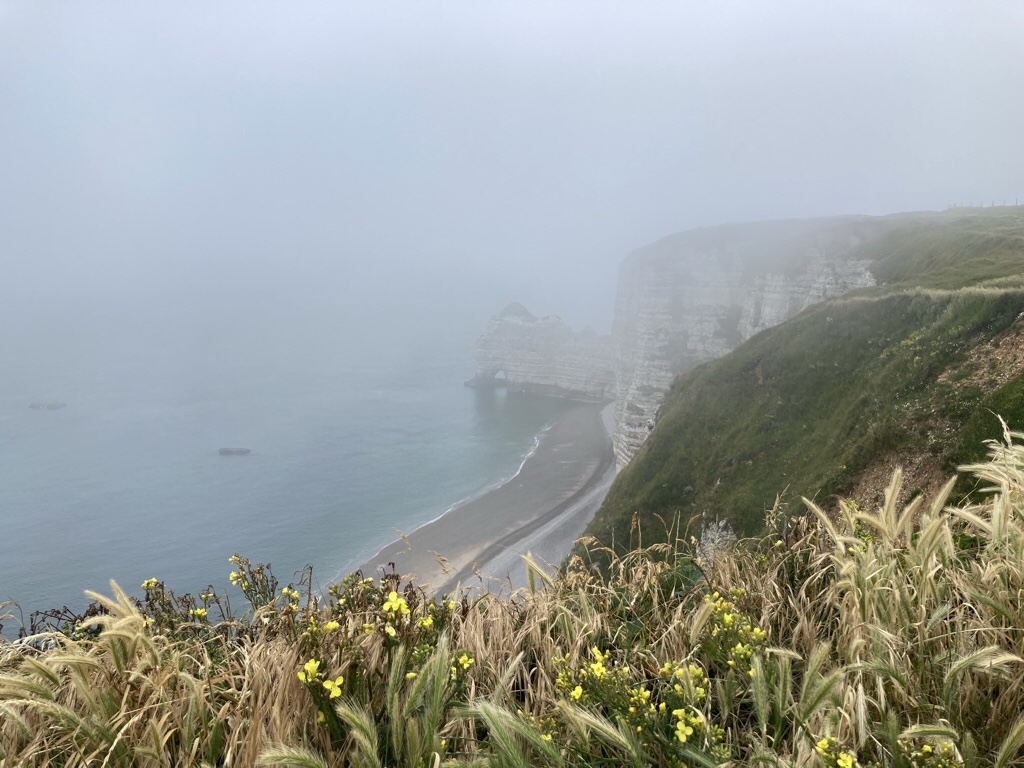
The tide was too high to walk along the beach and through the arches so we climbed the cliff instead and visited Les Jardins d’Étretat. The original garden here was created in 1903 by a renowned French actress called Madame Thébault, who was inspired by Monet and had a love for orchids. In 2015 it was redesigned by Alexandre Grivko who has combined a selection of mainly evergreen shrubs which have been meticulously pruned to echo the Normandy coast, resembling the ebb and tide of the sea, landscapes of the undersea world and the rock formations and arches of the coastline.


The greenery was very lush, and slopes of gently mounded greenery reminded us of tea plantations. It also provided the perfect background for a selection of sculpture such as a tree with a key which winds to play a tune …

… Until the Word is Gone which look like turned wooden spindles but are terracotta sculptures shaped like the sound waves of the word “art” spoken in different languages created by Sergey Katran …

… and these sculpted faces by Samuel Salcedo which depict the entire range of emotions symbolising the many moods of the ocean.

There were also surprising splashes of colour from blowsy white blooms …

… and striking orchids …

and banks of budding agapanthus promise swathes of blue very soon.
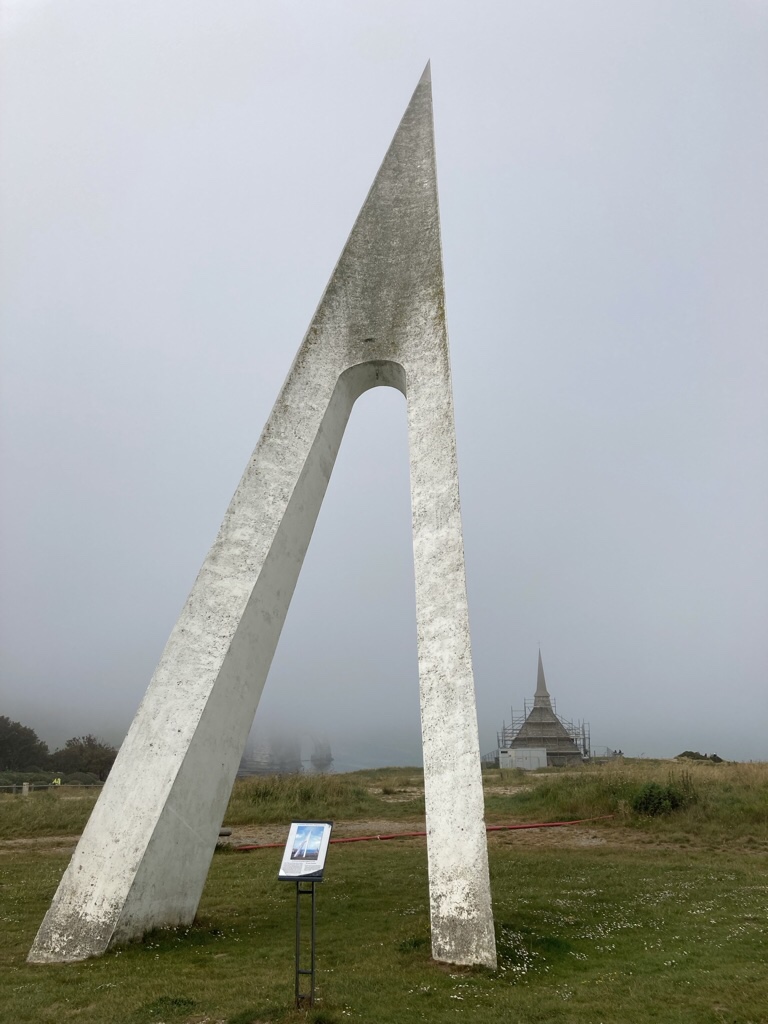
Leaving the garden, we saw the arrow-like monument dedicated to Nungesser and Coli, two French pilots who attempted the first non-stop flight from Paris to New York in 1927 and the tiny Chapelle Norte Dame de La Garde on the summit.
Returning to the beach, a couple of signs reminded us this was a popular haunt of the Impressionists including Monet, kindly pointing out images of his painted views.


Further along, Chris recognised the car park and cliff from the Netflix series Lupin which we had watched last year. The main character was inspired by the detective stories by Maurice Leblanc featuring a gentleman thief called Arsène Lupin who had his lair inside the rock stack known as the L’Aiguille Creuse or Hollow Needle, just at the end of the headland. We could have visited LeBlanc’s house, but it was closed on Mondays!

We left the beach behind and went in search of lunch. Fortunately, not only did the Hotel La Residence offer moules frites with a choice of sauces, there was also oven baked Camembert with salad which suited Chris fine.

My moules Normandy were delicious!

Next stop, Honfleur!
 Off Travelling Together
Wonderful photos, specially the beautiful and beautiful gardens!
LikeLike