
I heard another thunderstorm in the night with the rumbles echoing round the mountains while the rain came down hard, and when I looked out, the morning was misty and cooler with cloud hanging in the valley and the promise of a mixed day so we settled on exploring.

Breakfast was a spread of beautifully presented cold cuts and cheese, eggs cooked to order and bread with homemade jam.
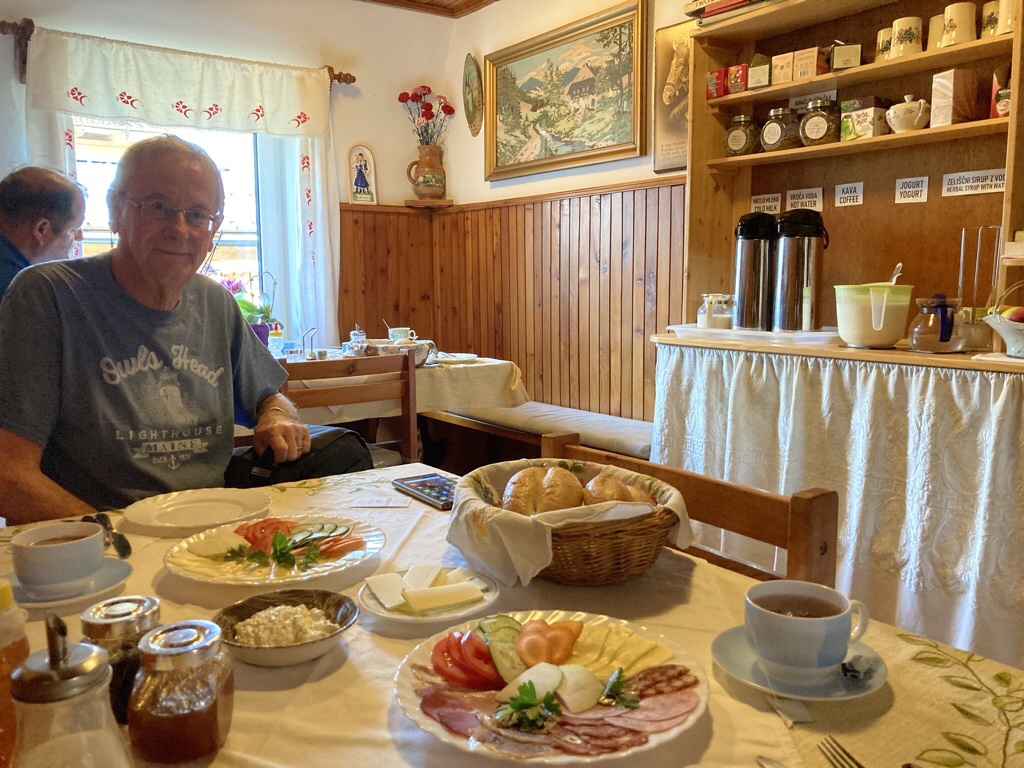
I walked down through the village to the lake …


… and met Chris who had driven. The church by the bridge is dedicated to St John the Baptist with a scary wooden decapitated head on a plate just inside the entrance dating to the C14th, which used to be worshipped by those with head or neck complaints.

Outside there is a medieval porch with a square painted coffers on the ceiling and paved with round river stones dating to 1639.

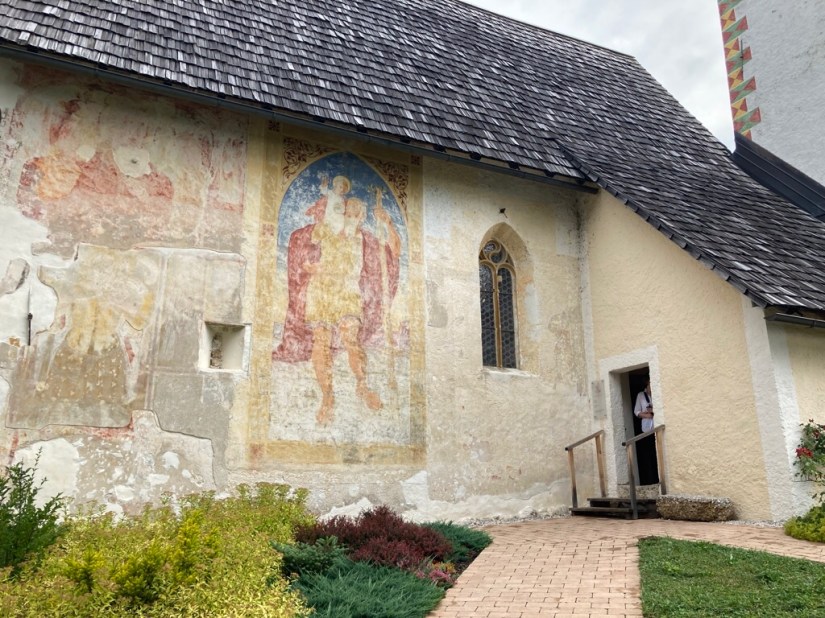
The St Christopher on the outer wall was common in the Middle Ages as people believed they would not die a sudden death during the day if they had looked trustingly at an image of St Christopher in the morning.
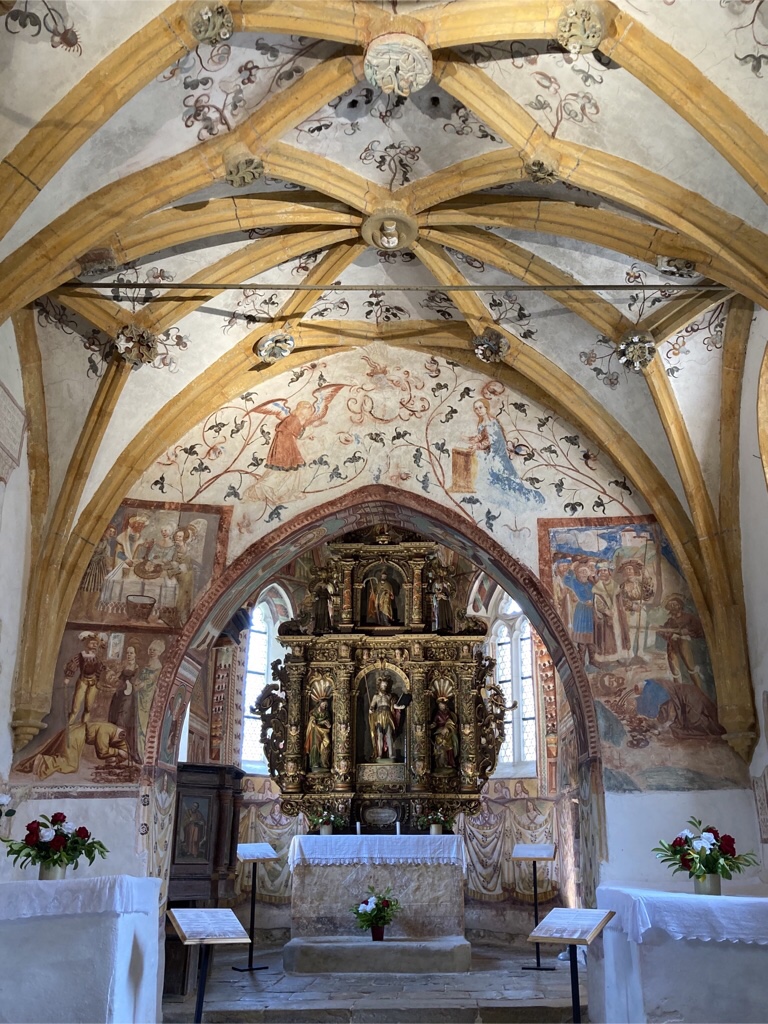
Inside was richly decorated with frescos …
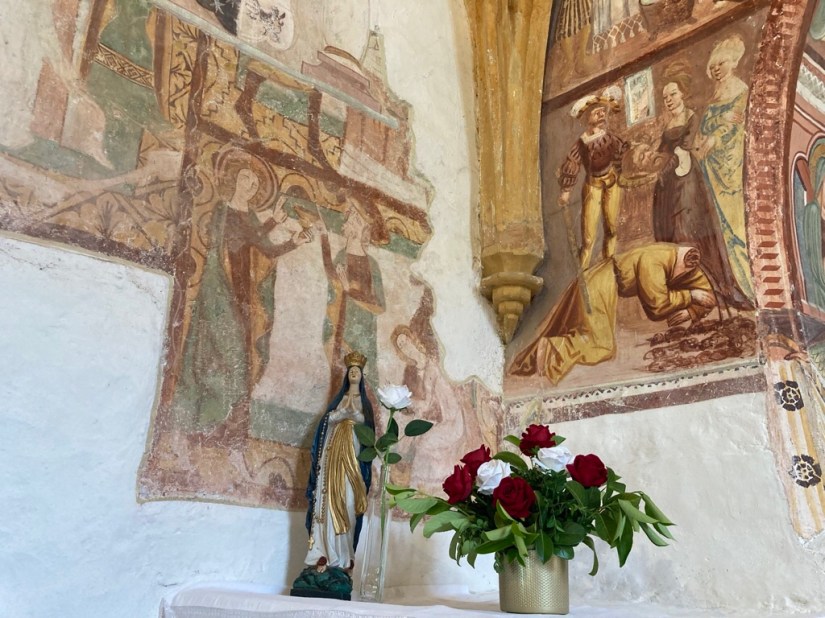
…. the earliest from the C13th being this one of St John the Evangelist.
The richest in the presbytery dated to the C15th such as George and the dragon …
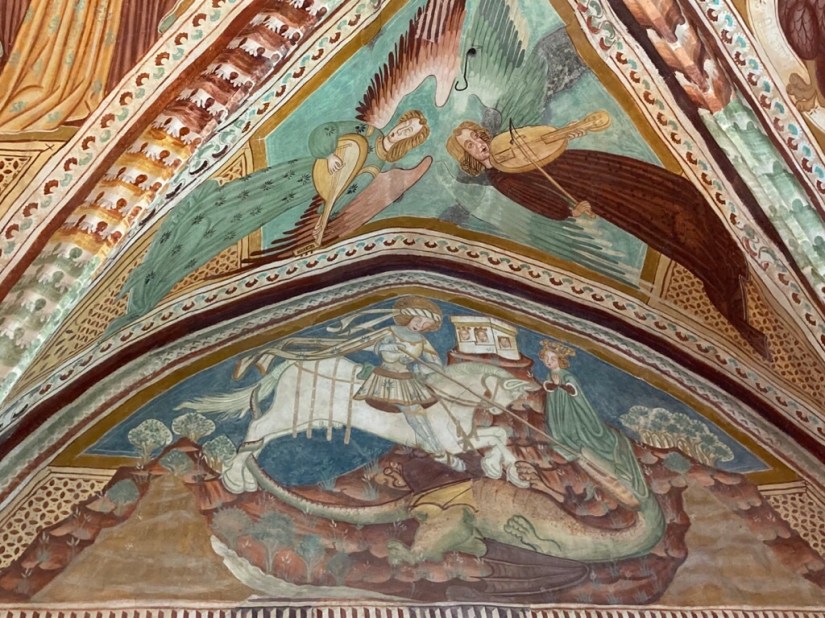
… Mary and Christ with apostles below …

… the baptism of Christ …

… the ceiling with a boss of Christ with angels and evangelists …

… and angels holding a curtain all around the lower wall.

The bell tower was there to be climbed and naturally gave a view of the lake.

We were surprised how quickly the temperature had risen, but after all that rain, it was humid too. We continued to Studor where we looked round one of the three museums included with our tourist card, Oplen House, a traditional local house built in the early C19th.

The story of the family who lived there for the last century before it was abandoned in 1974 brought it to life, together with the household effects and furniture still there.

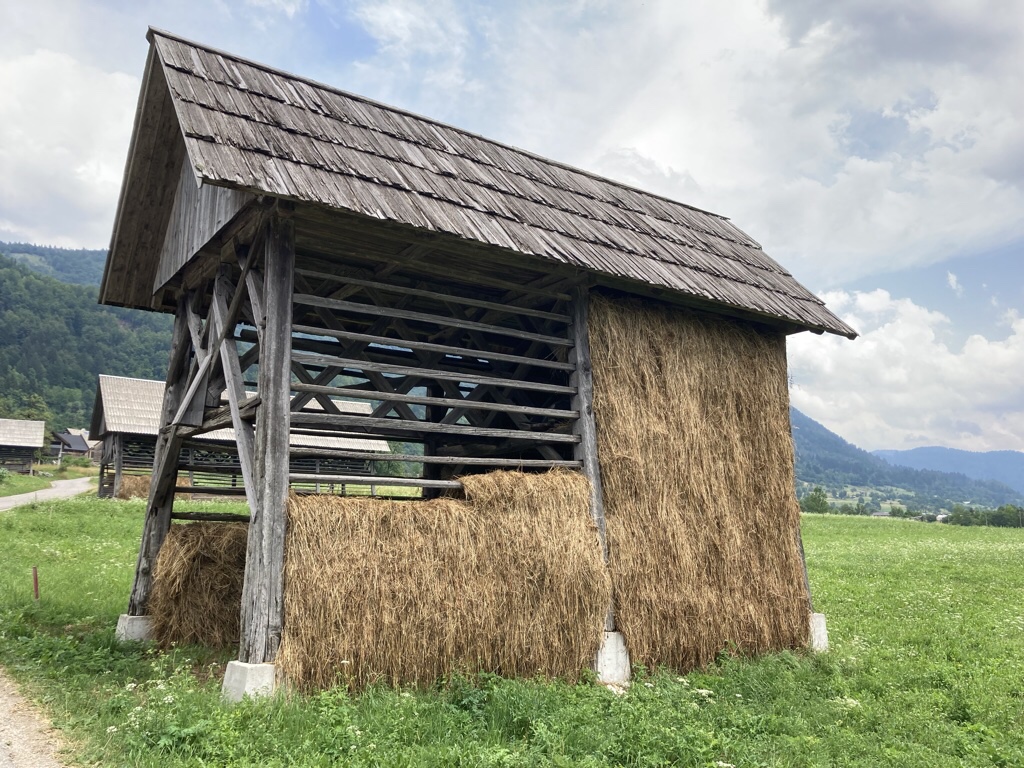
So now I have to talk hayracks, which we have been spotting since our first day in Slovenia. Often there isn’t a safe place to stop and take photos, so we saw loads before we had pics. To begin with we thought they were for drying crops …

but then we saw them used to stack and keep firewood dry.

Later we saw more complex racks combined to make a kind of barn …
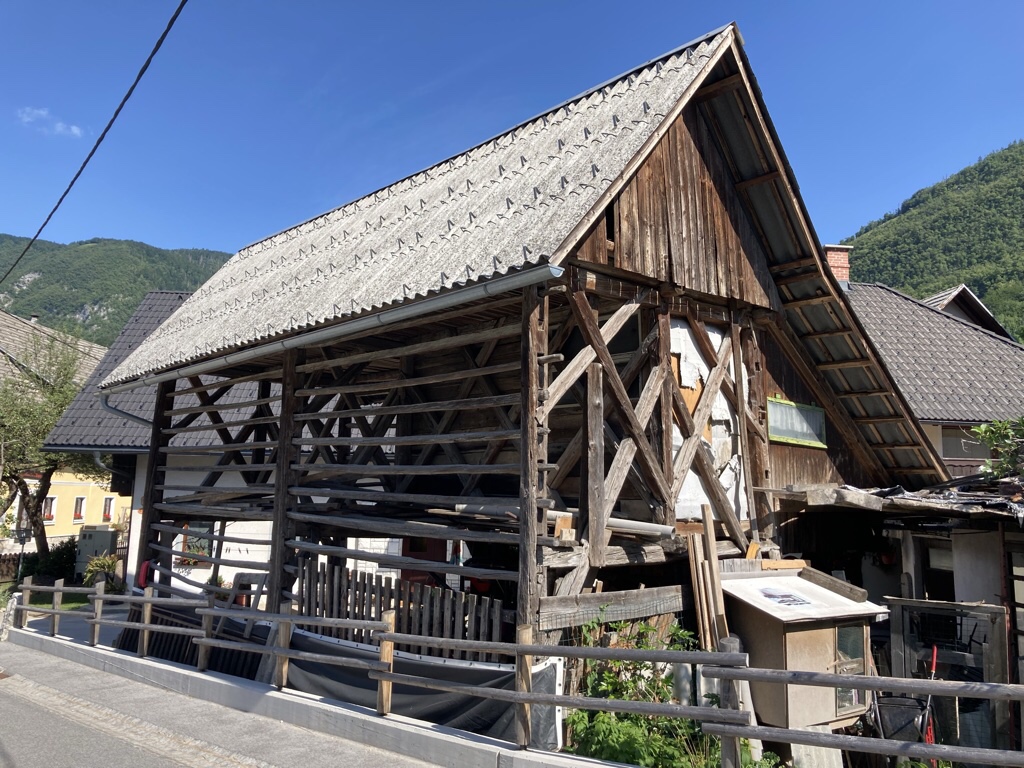
… and then today we finally saw them used for drying hay!
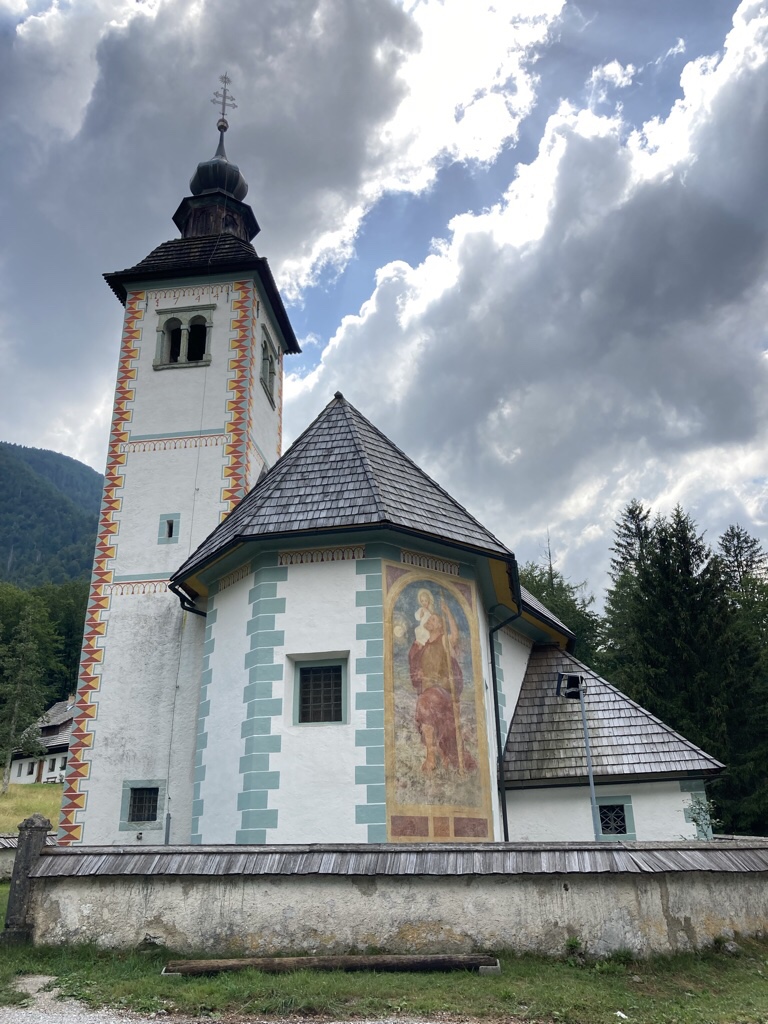
The next museum on the list was shut for lunch so we had a coffee and watched as the sky darkened and a few drops of rain fell. The museum hadn’t reopened, so we headed back to the lake, along very wet roads, which just shows how localised the showers are, and continued along the side of the lake to the second church on the lake. There are a couple of stories about the building of The Church of the Holy Spirit in 1743, one that it was part of three vows made by farmers on the advice of a monk after three years of poor harvest because of a worm and the other that it was advised by the Pope to end the drought, hence a roof like a camel’s back!

And it has a St Christopher on the outside wall too!
There was a small wooden dock by the lake …

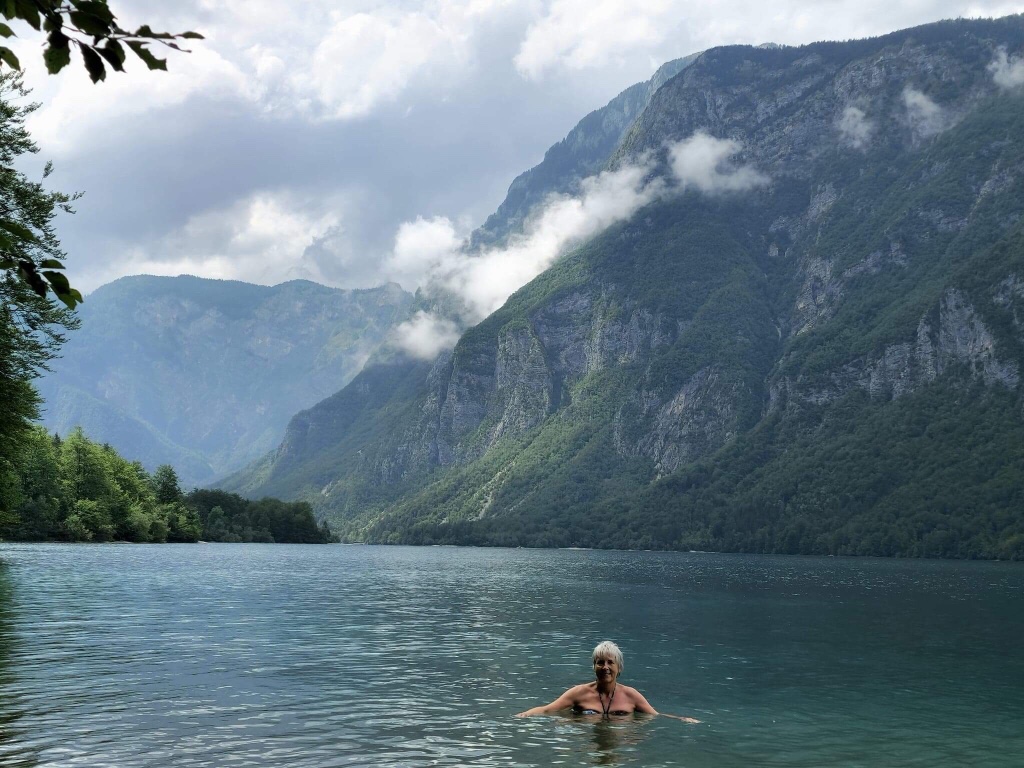
… and a perfect spot to go for a swim before catching the panoramic boat for our daily trip.
By the time I’d walked back to the guesthouse, I felt I’d got my steps in, good job with the huge plates of dinner they serve here like my Kranjska klobasa, served in the traditional way with potatoes, sauerkraut and mustard.

 Off Travelling Together