
I knew nothing of César Manrique, Spanish painter, sculptor and landscape artist until I started reading about Lanzarote, and now we are here, he is everywhere. He was born in Arrecife in 1919, went Madrid to study art, then lived in Madrid and New York, and exhibited all around the world. He returned to Lanzarote in 1966 and became passionate about trying to ensure that tourism grew in a way that didn’t spoil the beauty of the island. He undertook a series of projects which aimed to turn the landscape and the island’s natural beauty into quality tourist attractions and also influenced planning regulations to prevent high rise hotels and to maintain the traditional visual unity among buildings on the island.
The first we saw of his work was the copy of ‘El Viento’ on our wall in Yaiza, which shows the wind blowing through the vineyards of the island.
This is just one of several murals on Lanzarote life which he painted for the original tourist office in Arrecife. We also found out that when Manrique decided to install an artistic centre on the island, he considered the building we were staying in, but instead helped to transform it into a restaurant specialising in Canarian food which was named for the old threshing floor, La Era.
At the exact centre of the island is the Monumento al Campesino, a cubist fertility monument to the Lanzarote peasant designed by Manrique and built by Jesus Soto made out of old boats and water tanks, depicting a farmer with his donkey and camel!

There is also a museum based on a traditional farmhouse, and we could see the threshing floor or ‘la era’, as well as other farming bits and pieces.

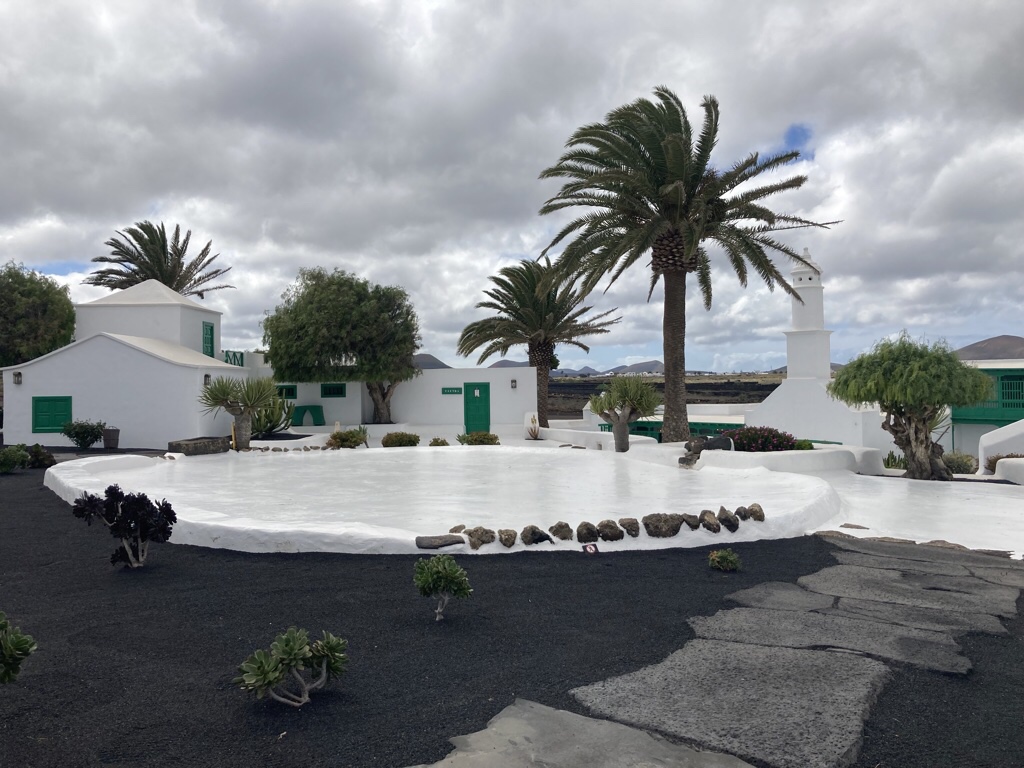
The cafe serves gofio, ground and toasted wheat or maize, once the island’s staple food. Chris had it blanched and served with onions and said it was ok, but I preferred mine served as a cold sweet paste with spice and dried fruit a bit like fudge, served as a side for my stew of the day.
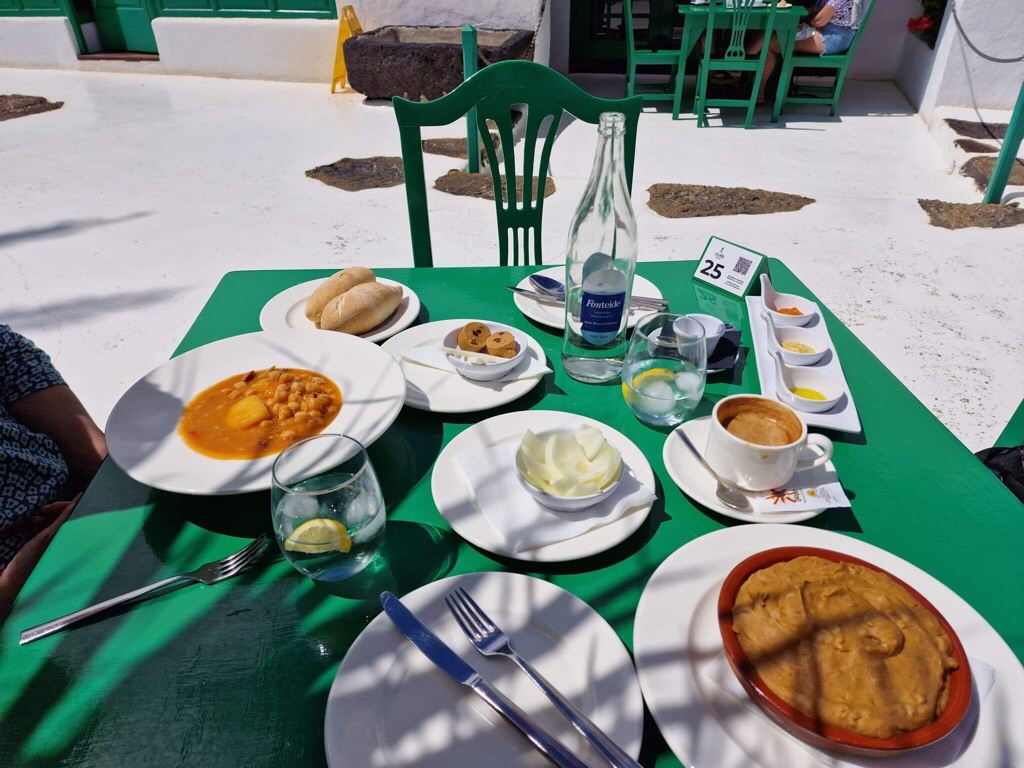
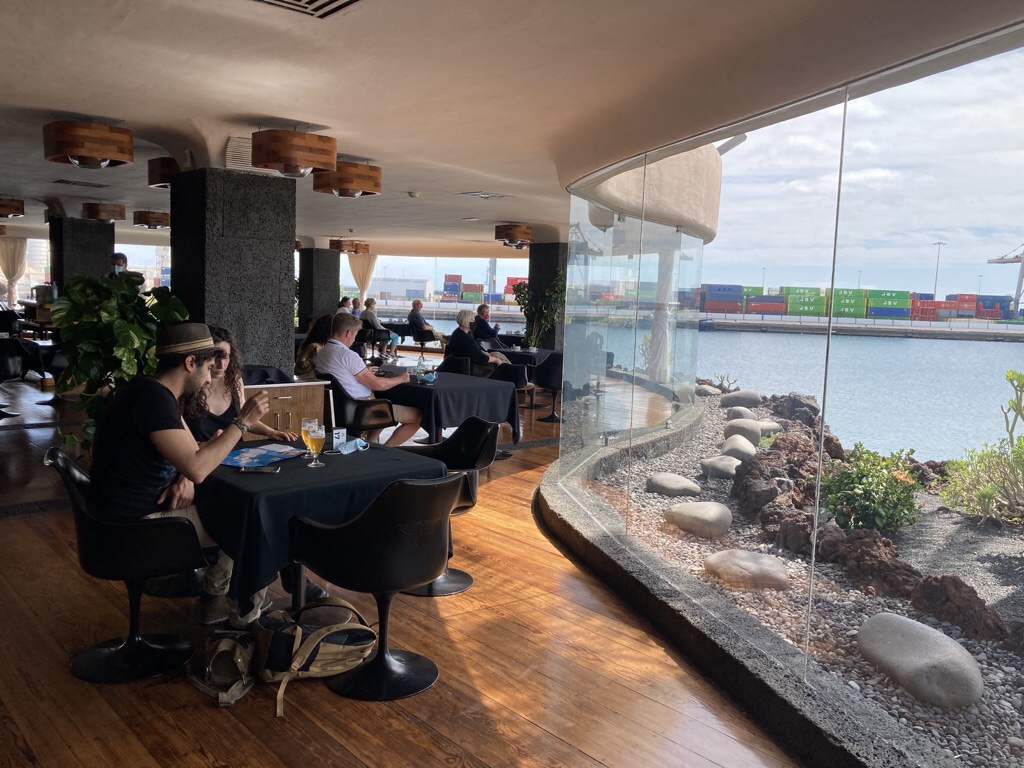
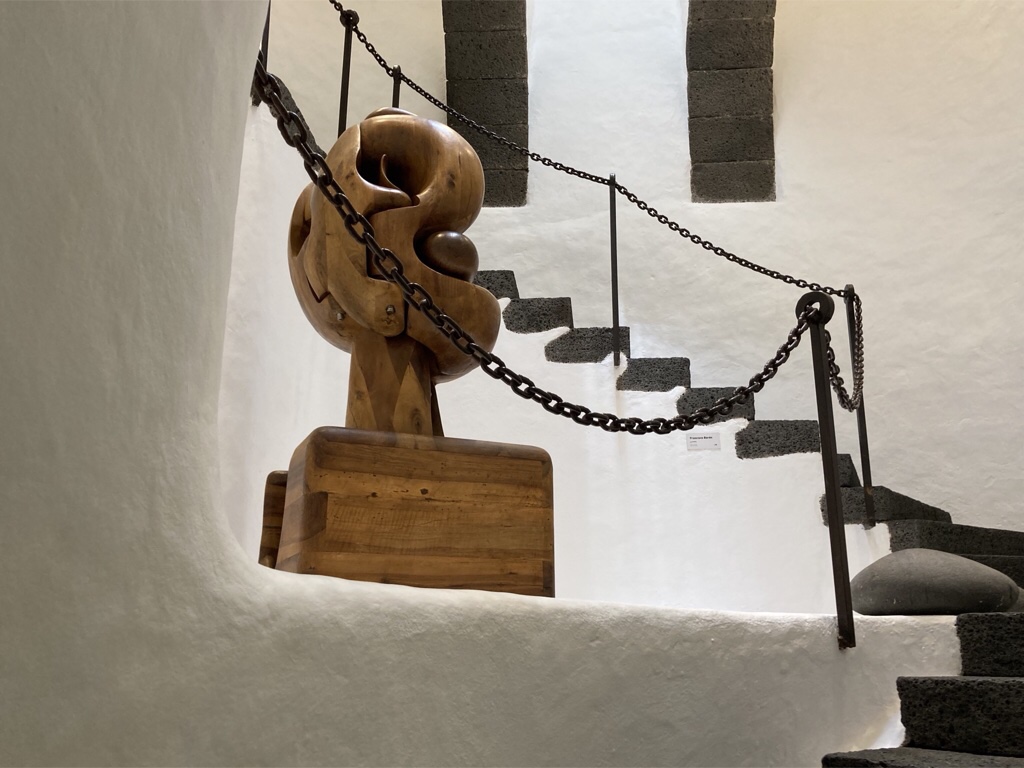
A trip into the capital of Arrecife brought our next Manrique encounter as we looked round the Castillo San Jose which he adapted into a museum of contemporary art.
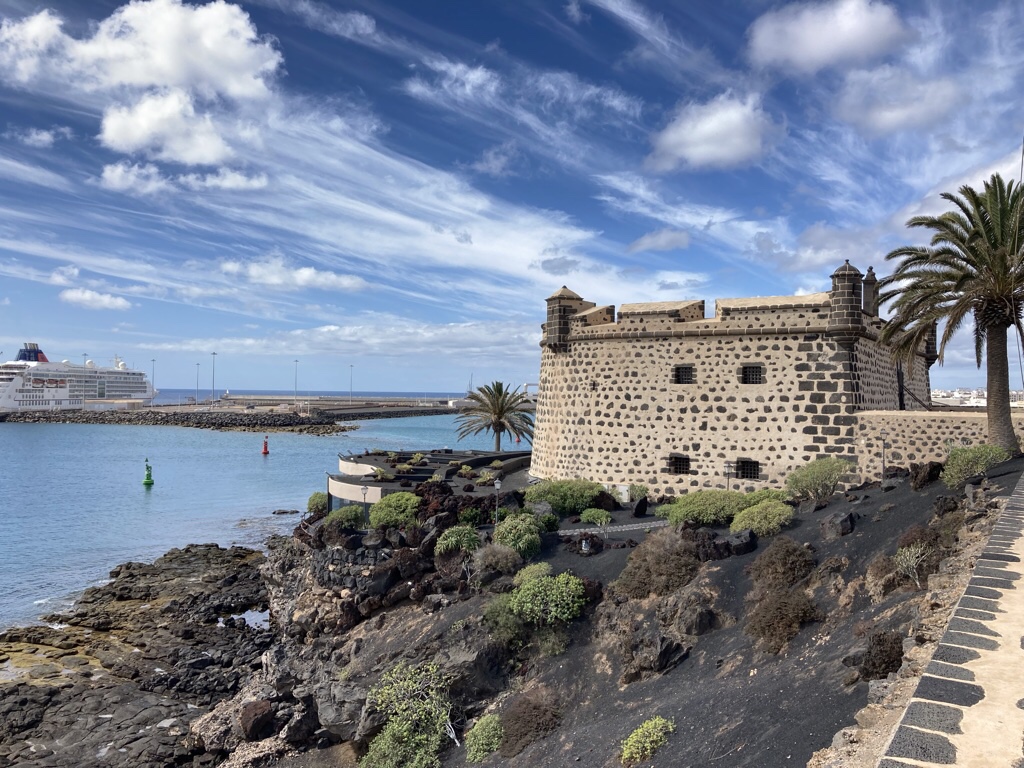
Although there was an early piece by Manrique …

… I have to admit to being more impressed with the sympathetic incorporation of a cafe with great views across the harbour …
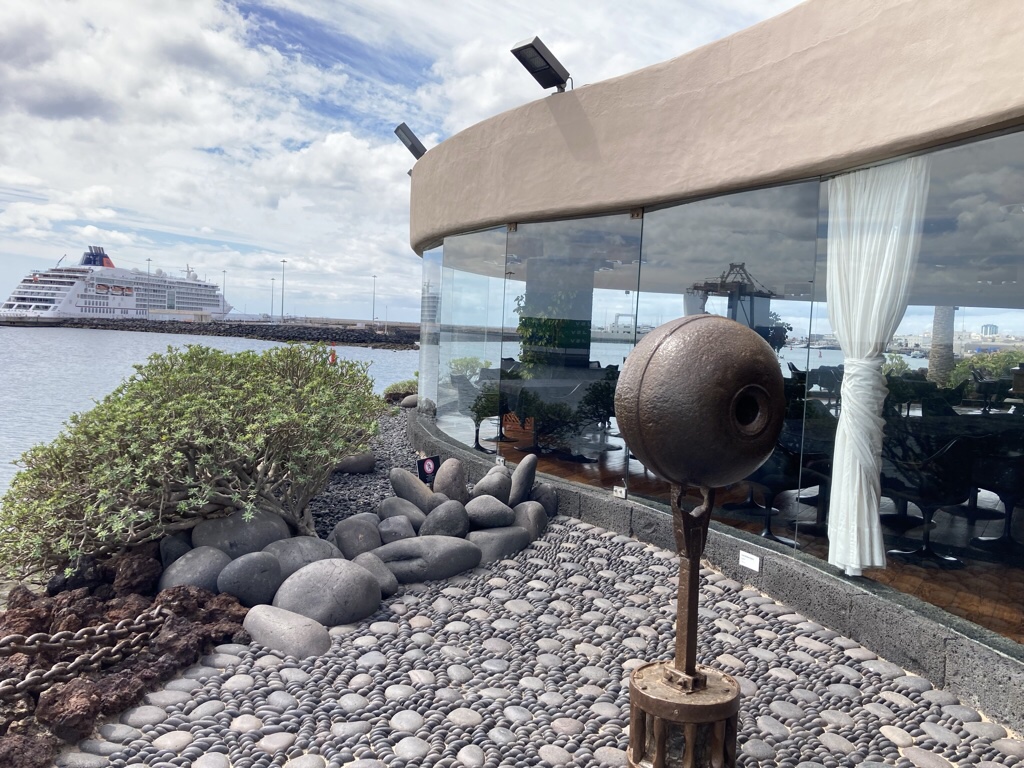

… and even a loo with a view …!

While there, we walked round the Charco de San Gines where we had a little lunch …


… walked along the front …

… and up to the Castillo San Gabriel, now a small museum of Lanzarote history …
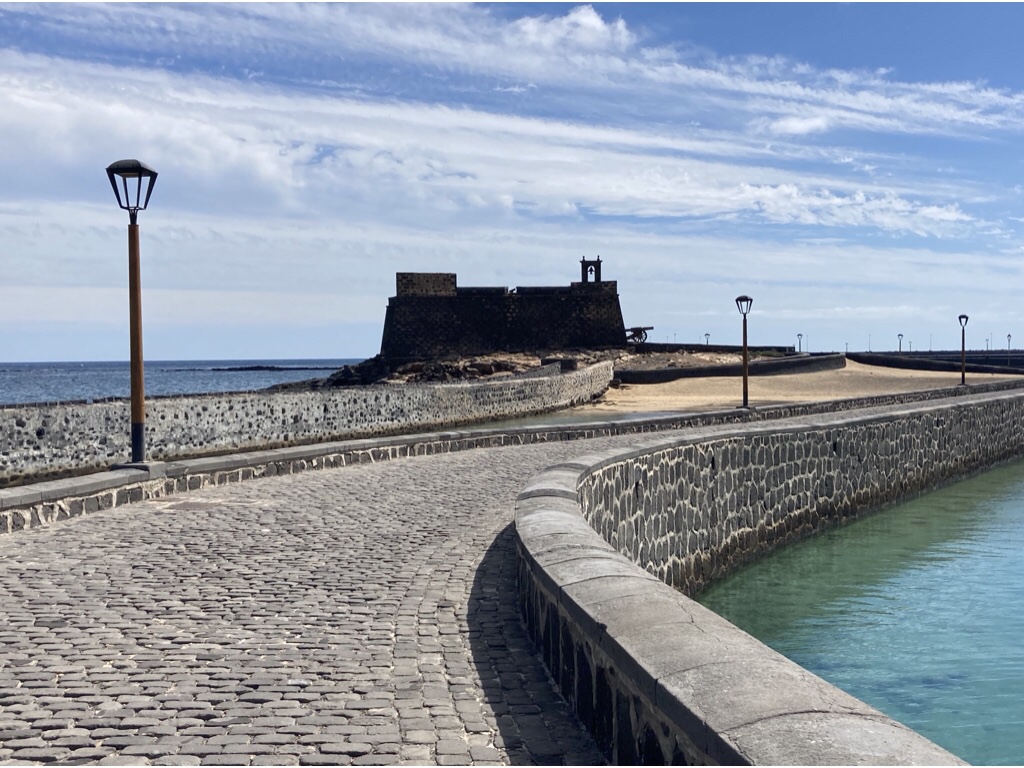
… to the one high rise building on the island, the Gran Hotel, built to Manrique’s horror while he was away!

For the second part of our trip, we have relocated to Costa Teguise, a purpose built tourist resort just the other side of Arrecife, which we chose for being in easy reach of the rest of the island, with more restaurants and hopefully a wider veggie choice for Chris.


Interestingly, only the black sand at the back of the beach is local … the rest comes from the Sahara!
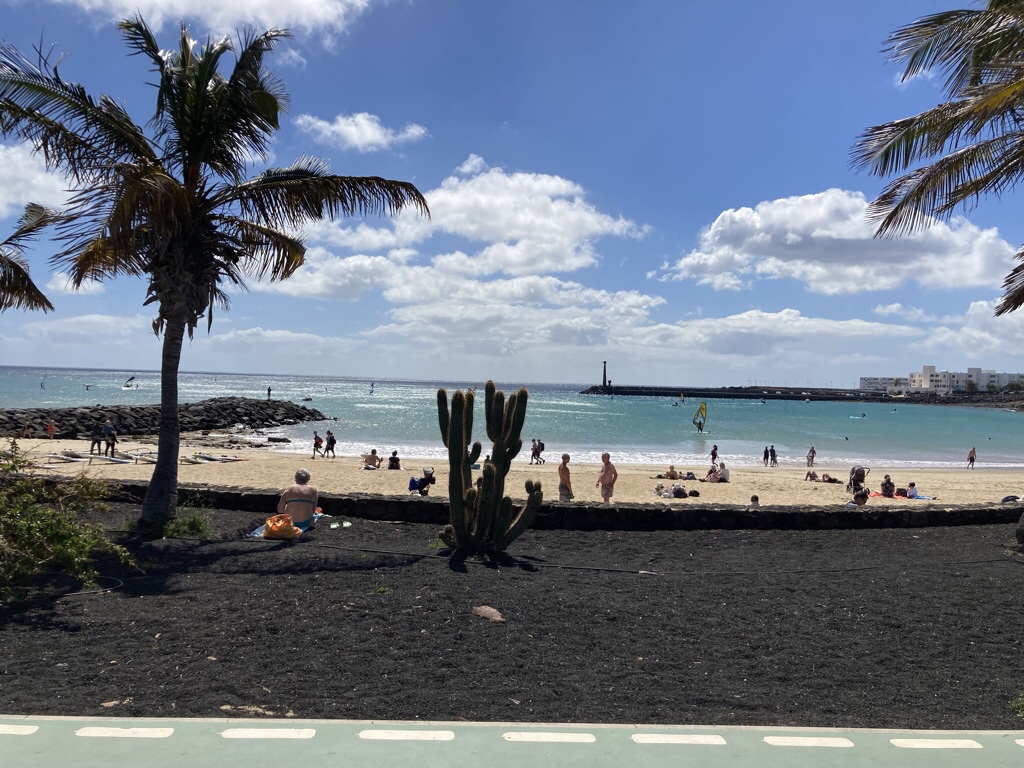
And guess what, Manrique had a hand in the planning here too, collaborating with the initial designer to make the central Pueblo Marinero, a collection of restaurants and shops built to resemble the vernacular architecture of the island. This seems commonplace today, but back in 1979, this was cutting edge stuff. Unfortunately, grand designs don’t always go to plan, and the original developers went bust! It could be said that later development deviated a bit from the initial ideal, but it’s still a low rise resort, albeit a bit sterile.


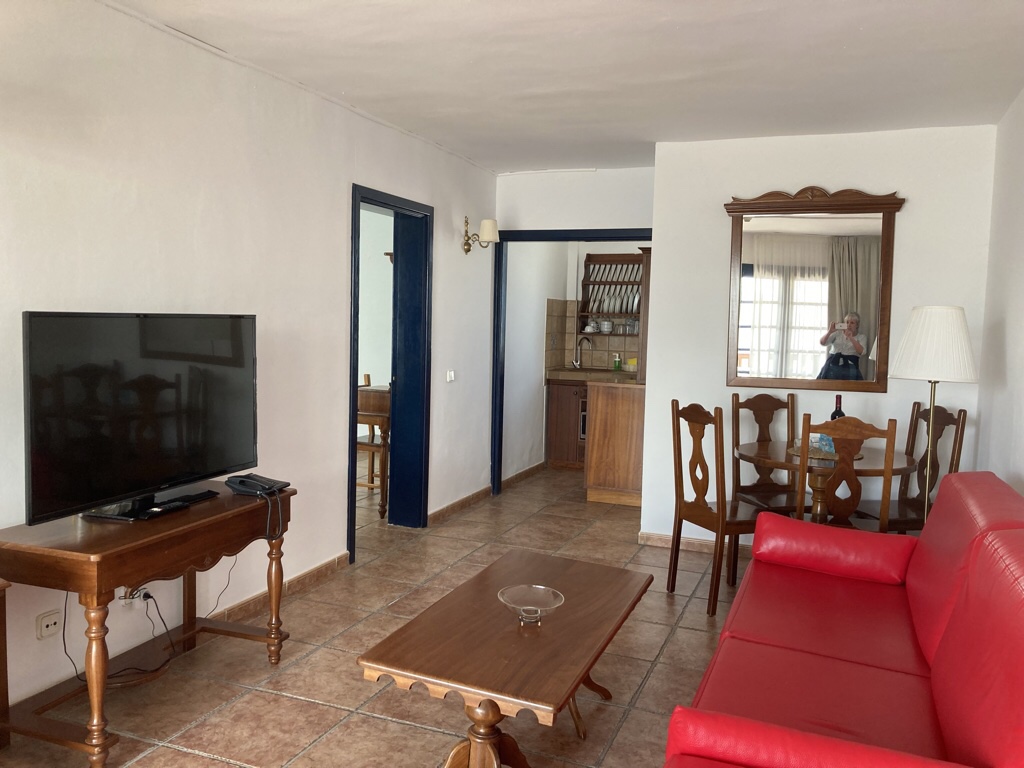
We stayed at Nazaret Mansions, an apartment complex round a pool and we had two rooms and a basic kitchenette where we managed to whip up breakfast each day and a couple of salads for lunch. The biggest bonus was the buildings shielded the pool from the wind, and it was easy to find a sheltered spot to sit and sunbathe, even if walking around required more clothes!



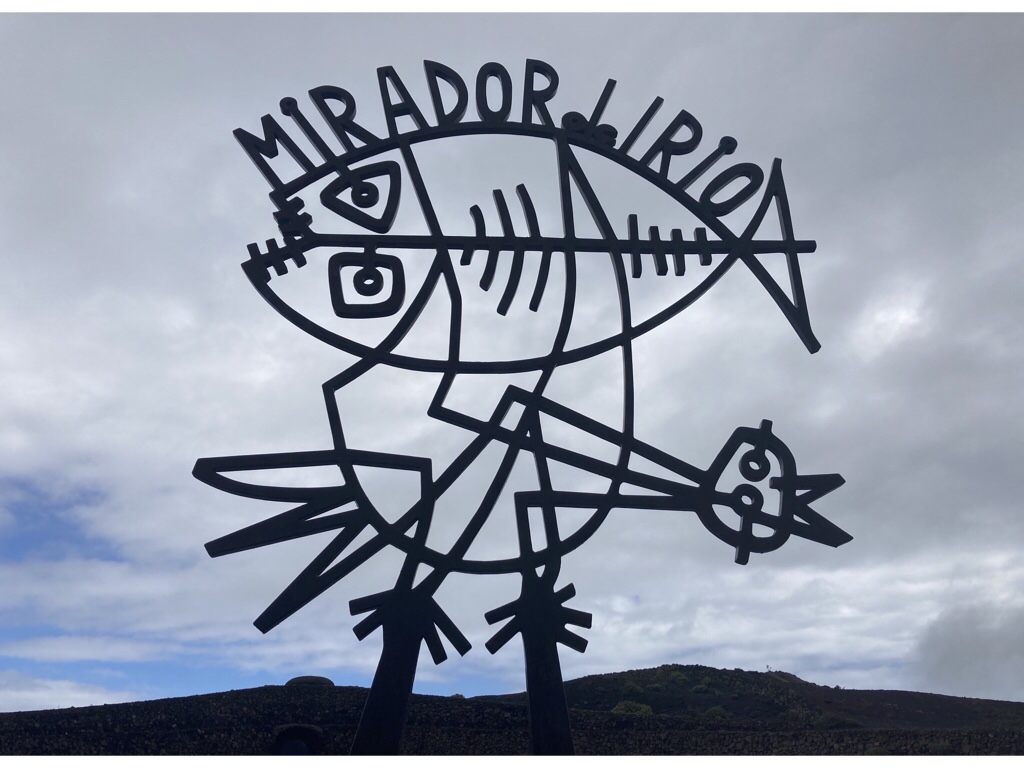
Not that we spent that much time soaking up the rays as there was so much to see. The Mirador del Rio is right at the north of the island, where Manrique collaborated with architect Eduardo Cáceres and artist Jesús Soto in a display of technical planning to convert an old gun emplacement on a cliff about 500m above the sea into a viewpoint and restaurant. We were greeted by a sculpture of a bird and a fish and an entrance that gave nothing away.

A curved corridor led us inside and then the panorama was revealed, though immense glass windows.


From the outer walkway, we could see the eighth island of the Canary Islands, La Graciosa in the centre …
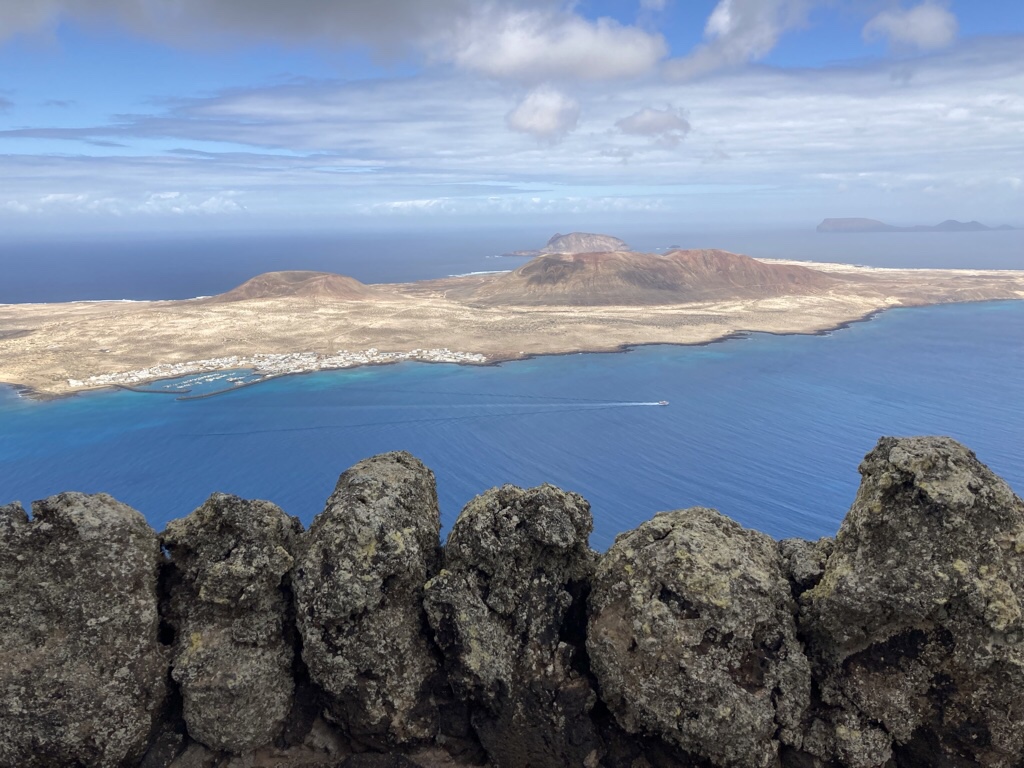
… with the reddish colors of the Salinas del Río at the foot of the cliff …

… the rest of the Chinijo Archipelago to the right, but it was far too big to get in one shot!

There is a higher balcony and the restaurant is so well concealed, only the skylights are visible from above.

Just as before, the inside space was as impressive as the view, with lovely curving lines, natural materials, and special features such as the plants, each with a volcanic basin below to catch any water and sculptures including the ceiling lights.


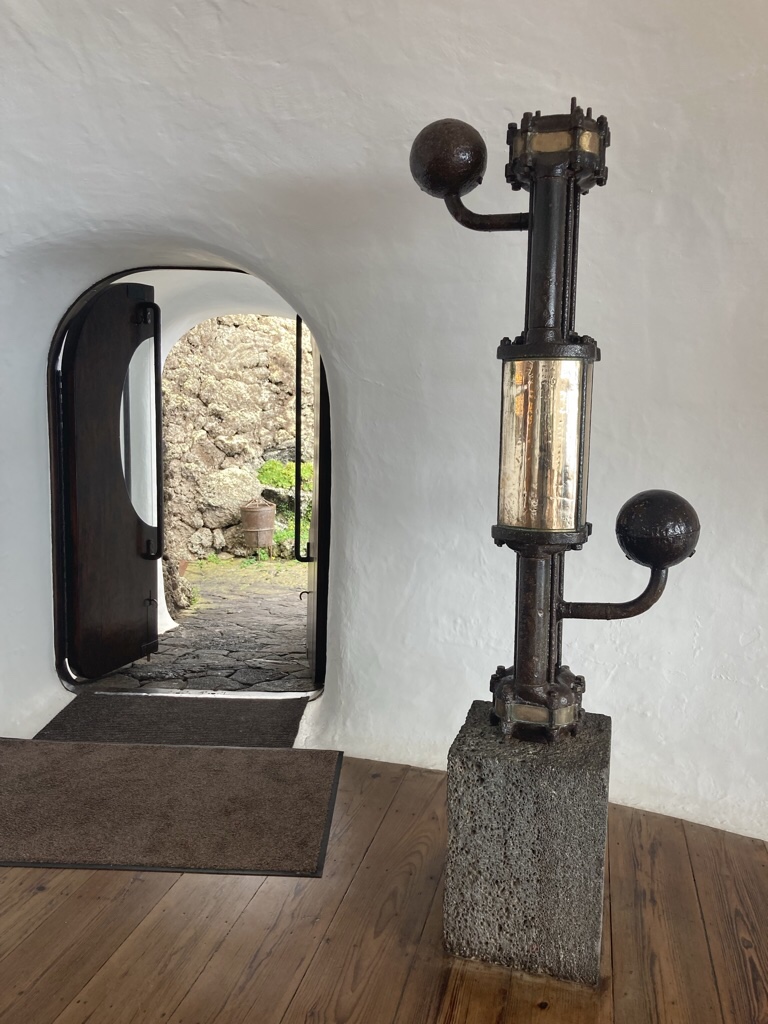
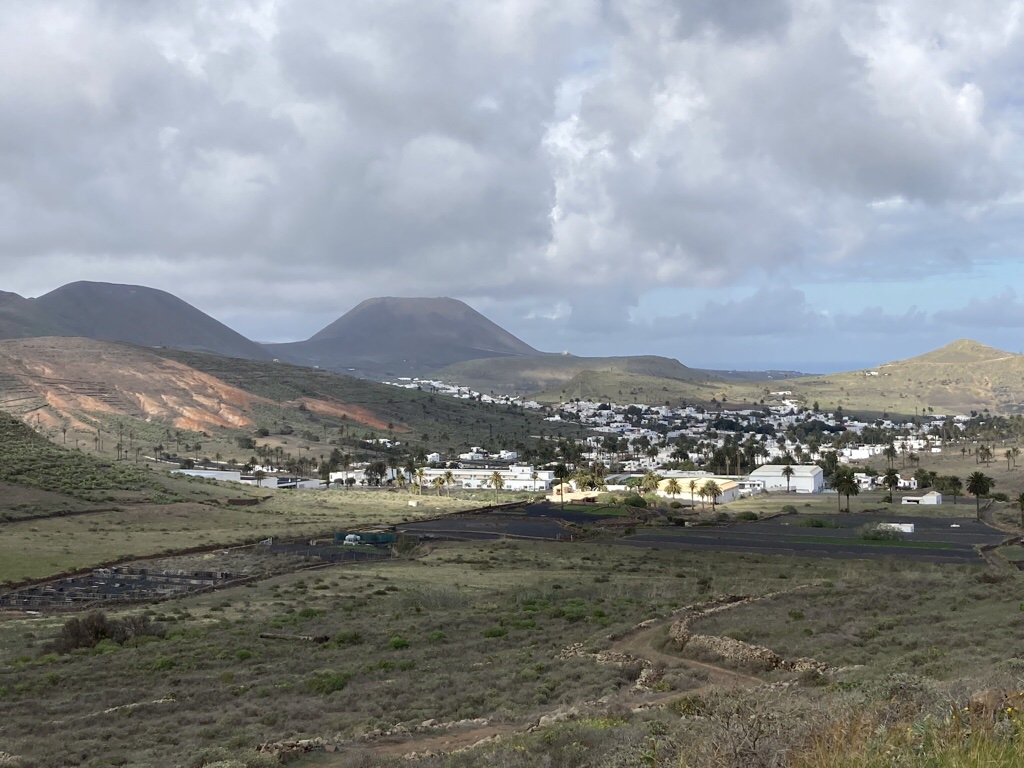
On our way back, we stopped in Haria a sleepy town set in a palm filled valley …
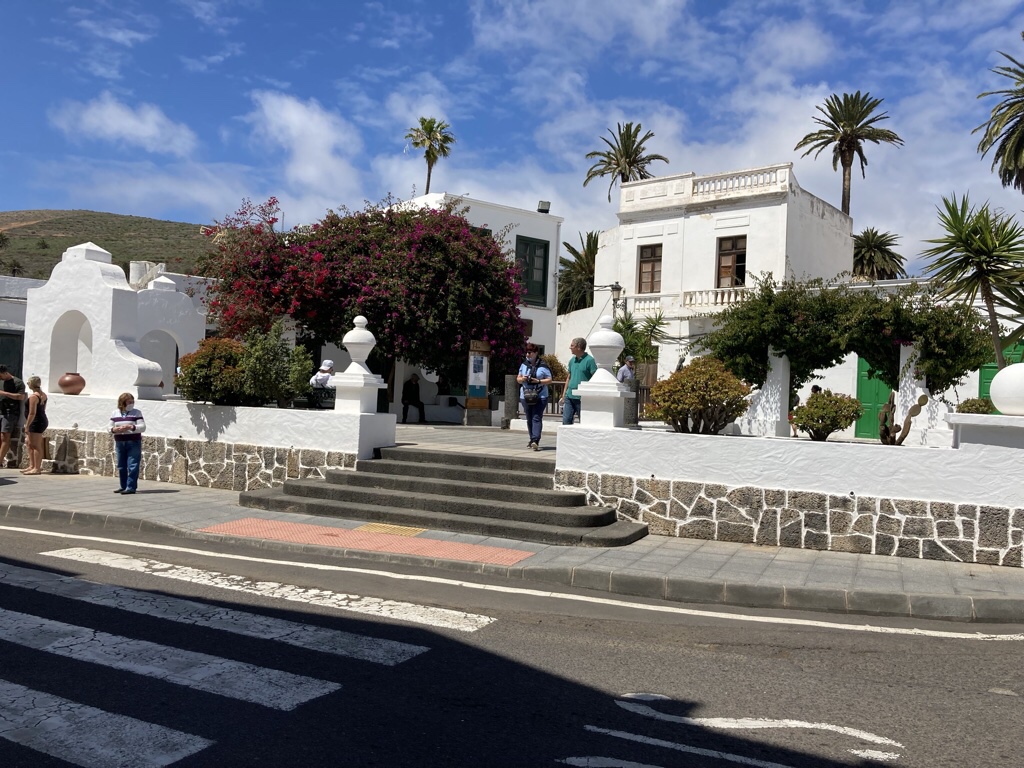
… with a central plaza, a number of craft shops …


… and a cafe serving delicious bocadillos for lunch (my Manrique contained zucchini, smoked cheese, crispy ham and palm honey!)

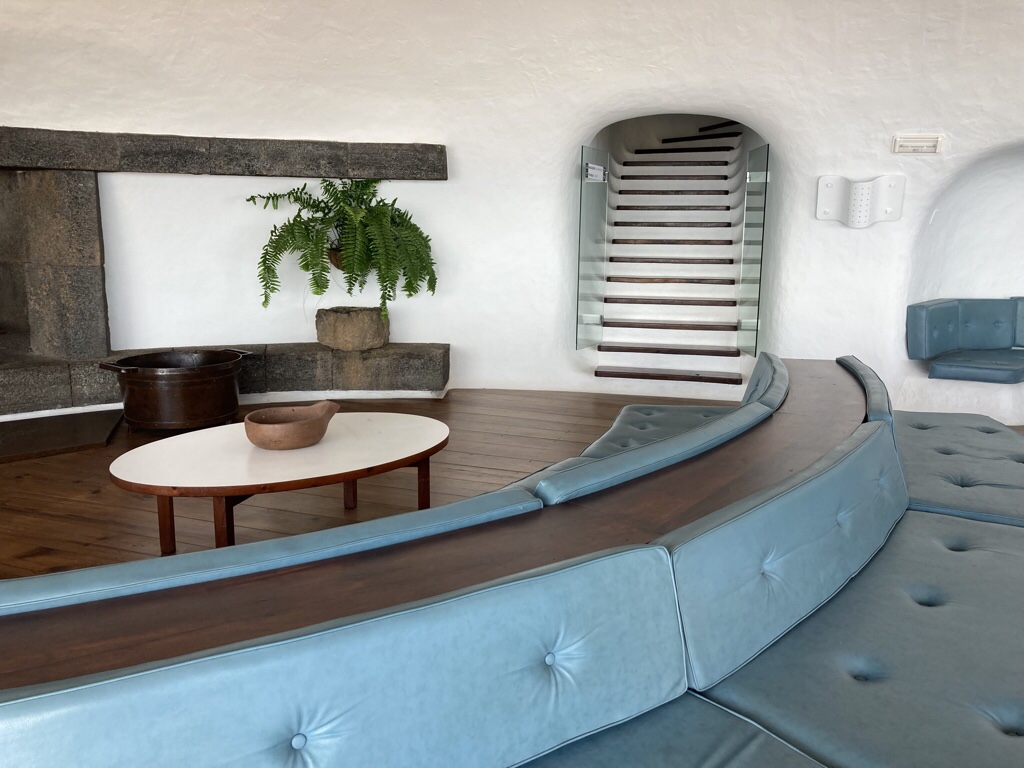
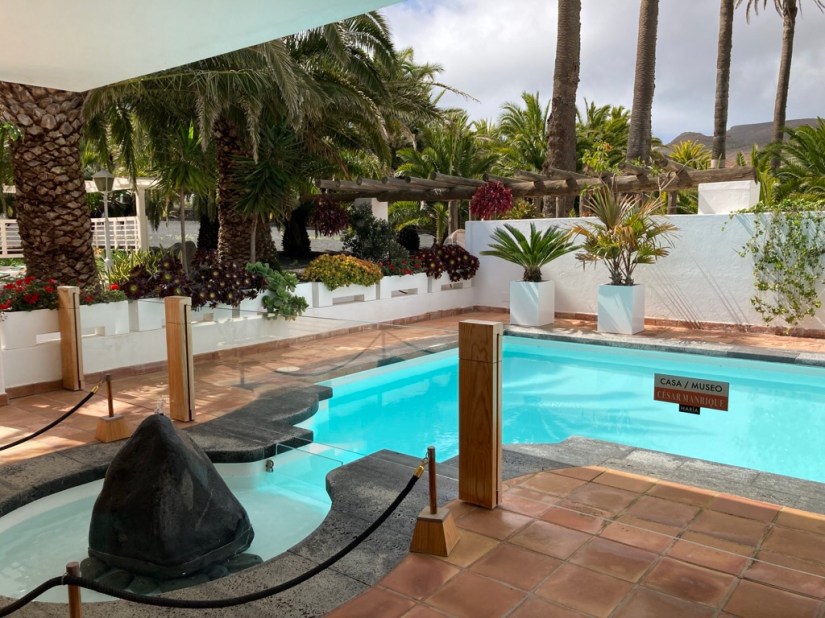
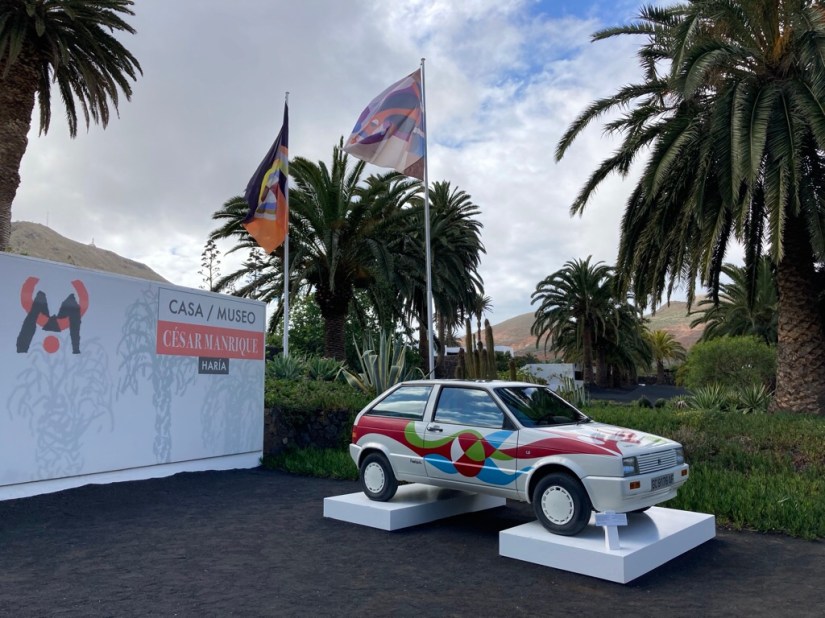
No surprise that in 1986 Manrique chose to retire to Haria and started renovating a former farmhouse, making Palm Grove House his home until his death in 1992. The publicity material says it all … the home is a prime example of intervention in a dwelling representative of rural island architecture, reinterpreted by César Manrique from a contemporary perspective! The house is full of natural materials such as a timber ceiling in the bedroom and a huge basalt fireplace in the lounge, and is filled with his personal belongings. The dining room was part of a later remodel, containing a huge table, surrounded by glass and softened by huge green ferns. Unfortunately, we could only take pictures of the outside areas …


… and this 1987 SEAT España which Manrique was commissioned to paint. Interestingly one of the car hire companies on the island has just used the same design on 96 cars in its new fleet and I wonder if we’ll see any.
The final stop on the way back was at the Mirador de Ermita de las Nieves, built on the highest spot to the patron saint of the island and where locals come to pray for rain. We got a glimpse of Famara below as the clouds came up over the top of the cliff and buffeted the palm trees surrounding the church.


More César Manrique to follow …
 Off Travelling Together