
It’s taken a few days of relaxing in this lovely spot before I felt ready to start writing! We were never really sure if the trip would actually happen, it was postponed from last year and then we realised my passport had expired so we were on tenterhooks until the last week. Even the travel was strange, particularly sitting on a plane in a mask for 4 hours followed by a small glitch with my travel pass, but finally we are here, on our first trip abroad since Covid.
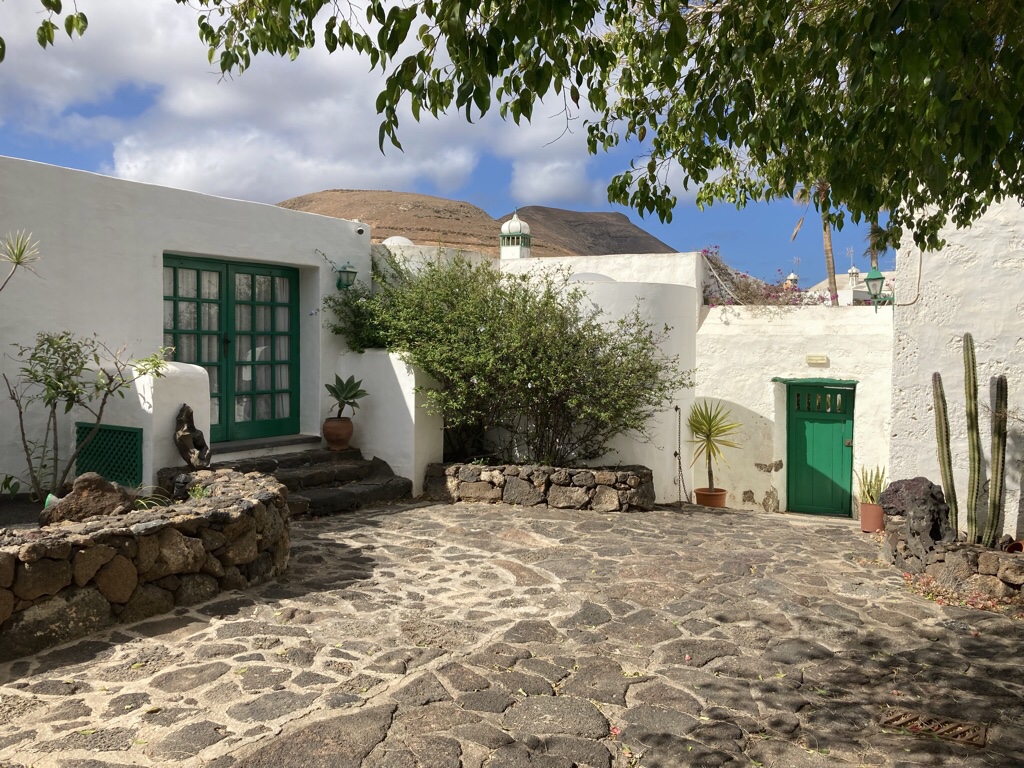
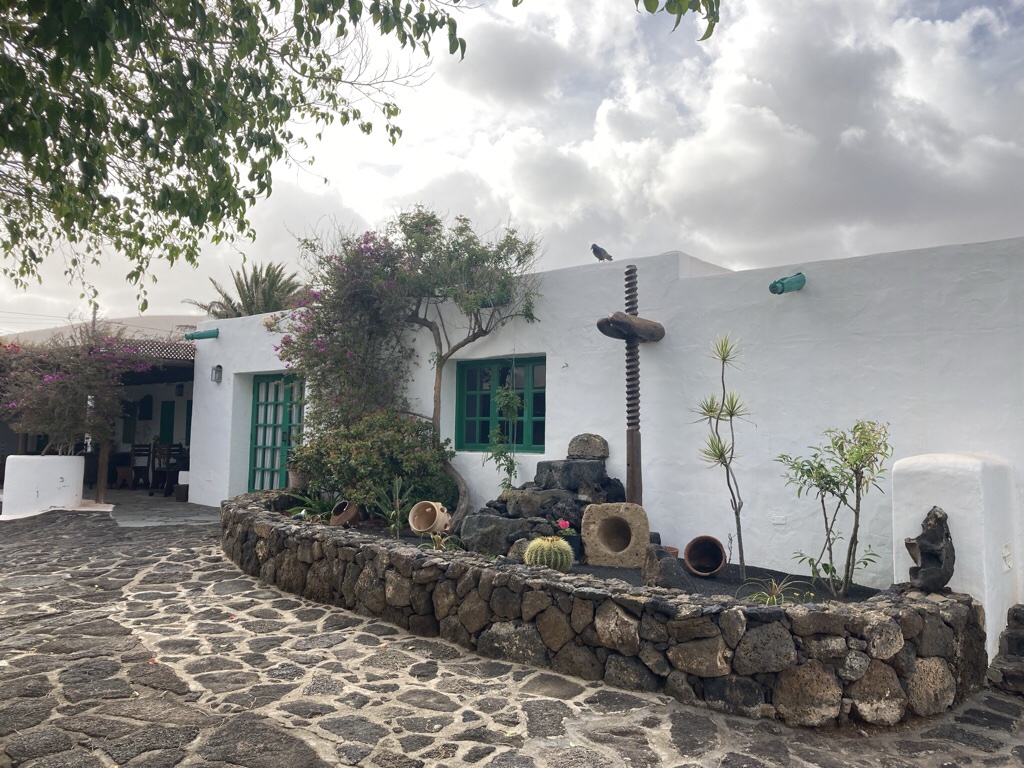
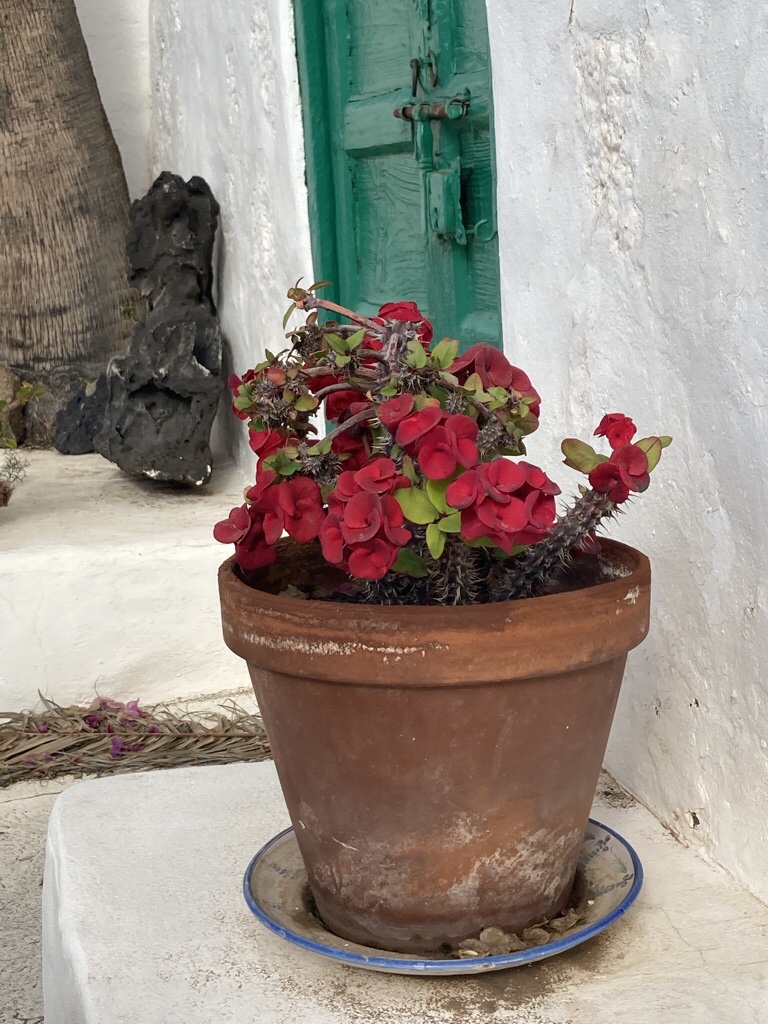
We arrived at Hotelito La Era in Yaiza just after sunset, seven rooms set round a patio with whitewashed walls and green paintwork like most properties on the island and filled with bougainvillea and cacti.

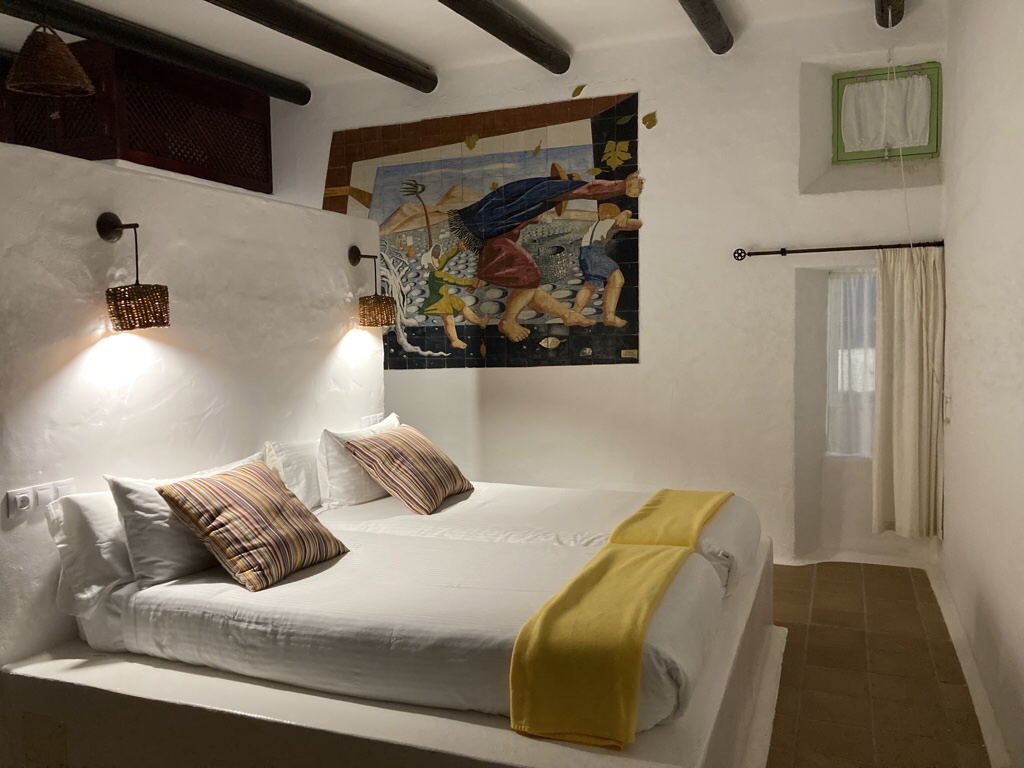
Our room certainly is simple but striking with the bed on a central stone plinth with the shower behind in a circular well. The beautiful tiled plaque of ‘El Viento’ from a painting by a local artist called Cesar Manique is a feature of the room and bright cushions finish it perfectly.

It’s lovely to be able to sit outside on the patio for breakfast in the sunshine, although it’s a little chilly and fleeces are required. As well as fruit, juice, toast, cake there is something savoury on a slice of bread that varies each day, usually including one of the local sauces called mojos and some cheese. The same mojo sauces reappear at dinner on small potatoes grown on the islands and cooked with their skins as tapas.
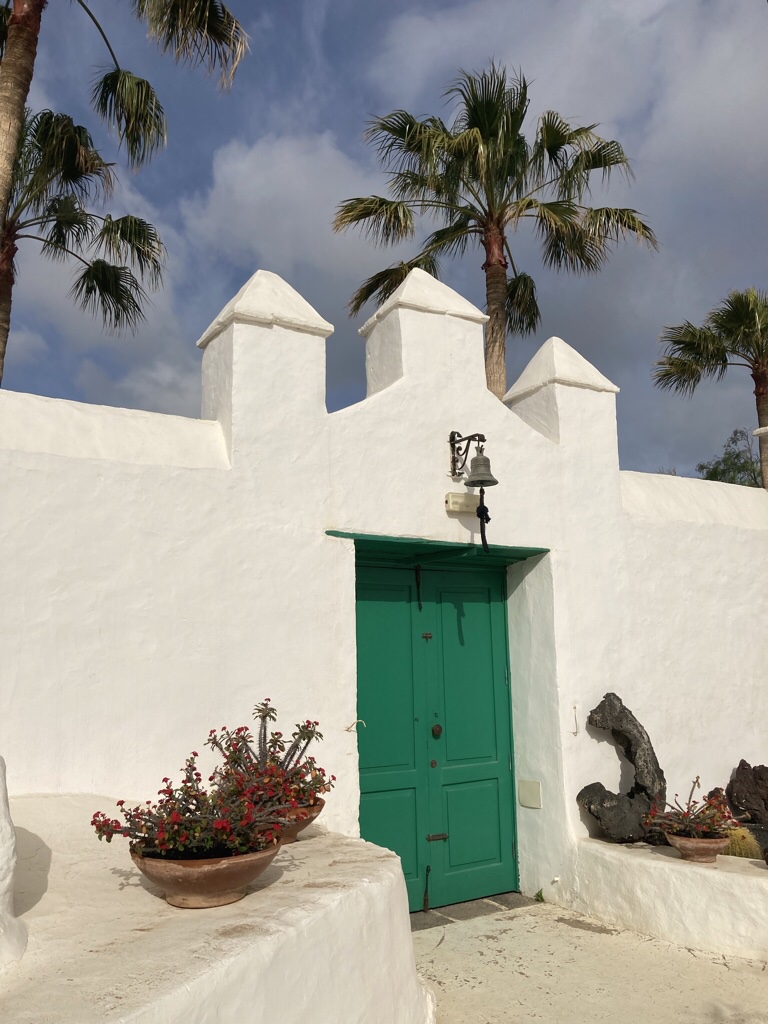

We’ve also enjoyed sitting out at the end of the afternoon, relaxing with a cold drink to read, write about the day, or even stitch! We ate in the restaurant a couple of times, and while there isn’t much vegetarian choice, with notice they cooked Chris a great dish of roasted vegetables with rice and quinoa, and I had a local chickpea and meat stew and also rabbit which was a real treat.

Yaiza is one of the prettiest villages on the island. There are only a couple of places to stay, not many more places to eat, although we found one other place, La Casona, which was very good. There is a small artisan craft centre selling jewelry made from lava, leather and ceramic goods and pansies preserved in resin! Lured into a boutique by coloured scarves, I actually chose a pink cotton jumper which has proved perfect in the cool evenings here.
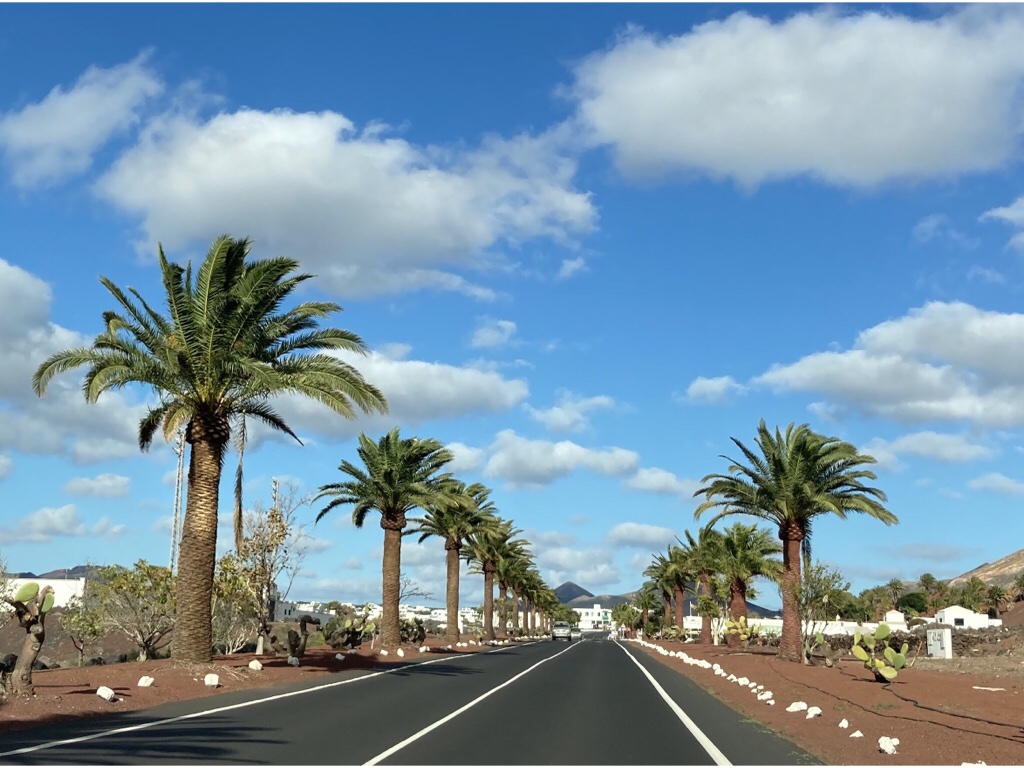

Lanzarote rose from the sea on a massive volcanic eruption some 15 million years ago, has been inhabited since prehistoric times but was claimed by the Spanish in 1402. Yaiza is just a few kilometres from Timanfaya National Park where some 100 volcanoes erupted between 1730 and 1736, with a smaller episode in 1824. The scale of the eruptions was enormous, with an unimaginable amount of lava spewing out and covering a quarter of the island, and making new land as it spread into the sea. Although no deaths were recorded, almost half the population emigrated as much of the most arable land was buried under a thick crust of basalt.
We visited the Montañas del Fuego Centre early to avoid the queues and were welcomed by the image of El Diablo as we arrived.

They are called the Fire Mountains as they can look red as the sun rises and sets.


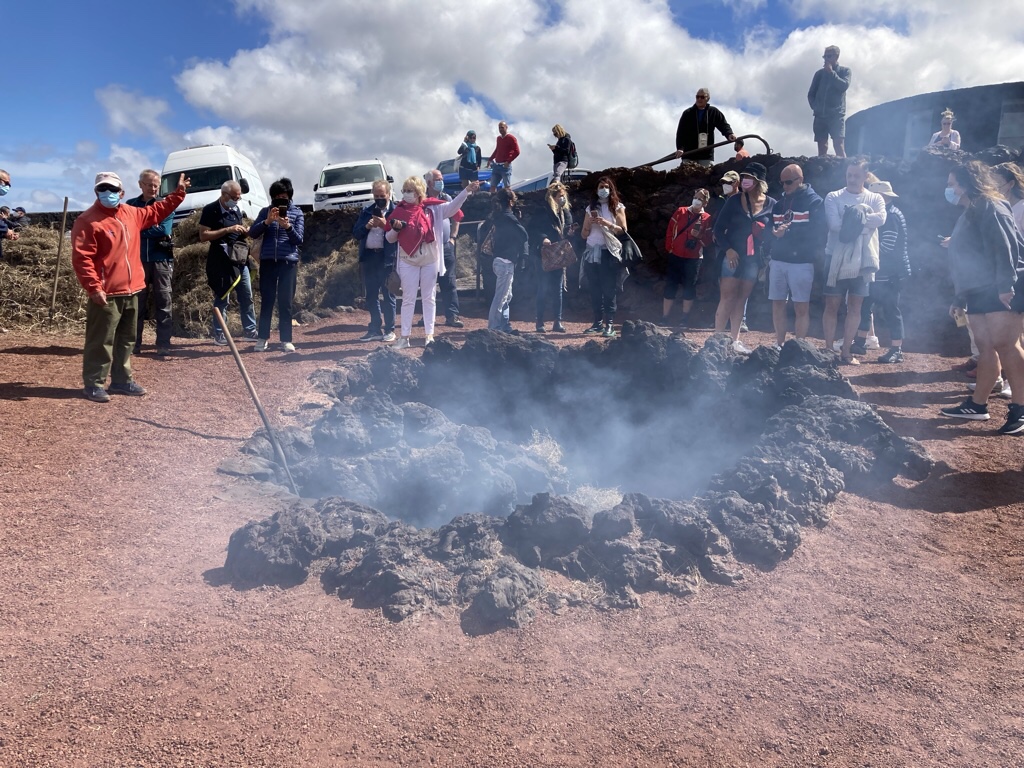
Although volcanically dormant, it is still hot underground and we saw water poured into the ground which then produced a geyser of steam and straw that ignited just by being left on the ground.

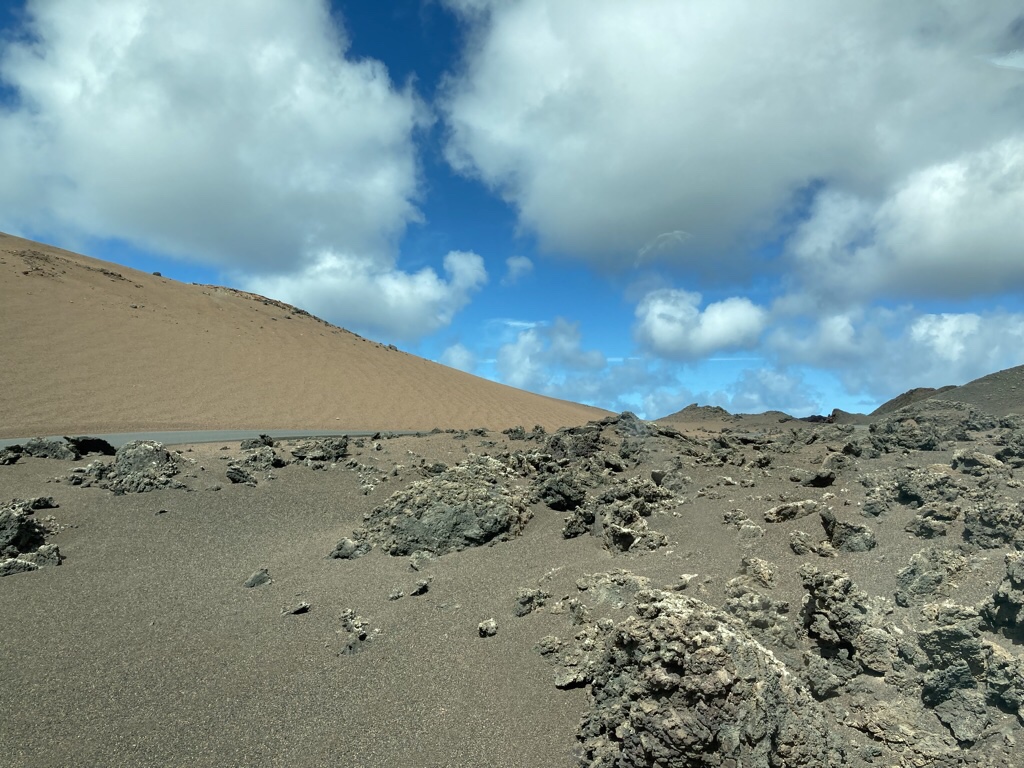
The volcanic surface may look barren, but a surprising number of lichens and small plants survive there and access is limited so we took the bus tour which was excellent, even if photos taken through the window weren’t great. The extent and variety of the landscape was striking, with huge ash covered areas interspersed with lava of all colours and textures creating moonlike vistas.

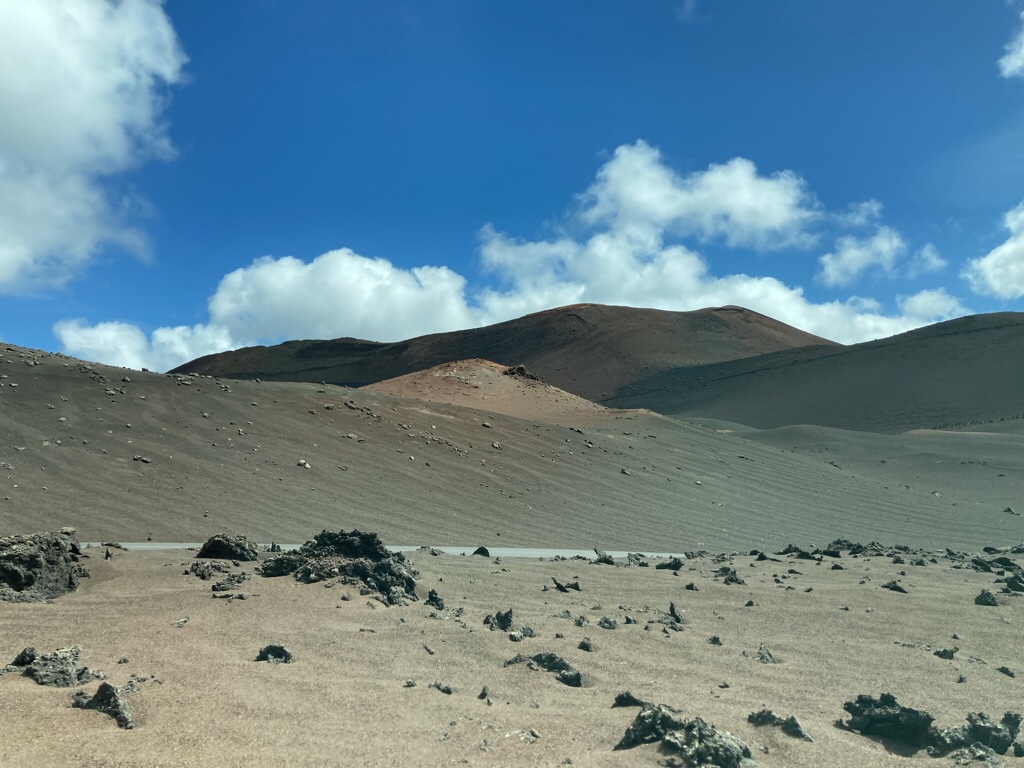

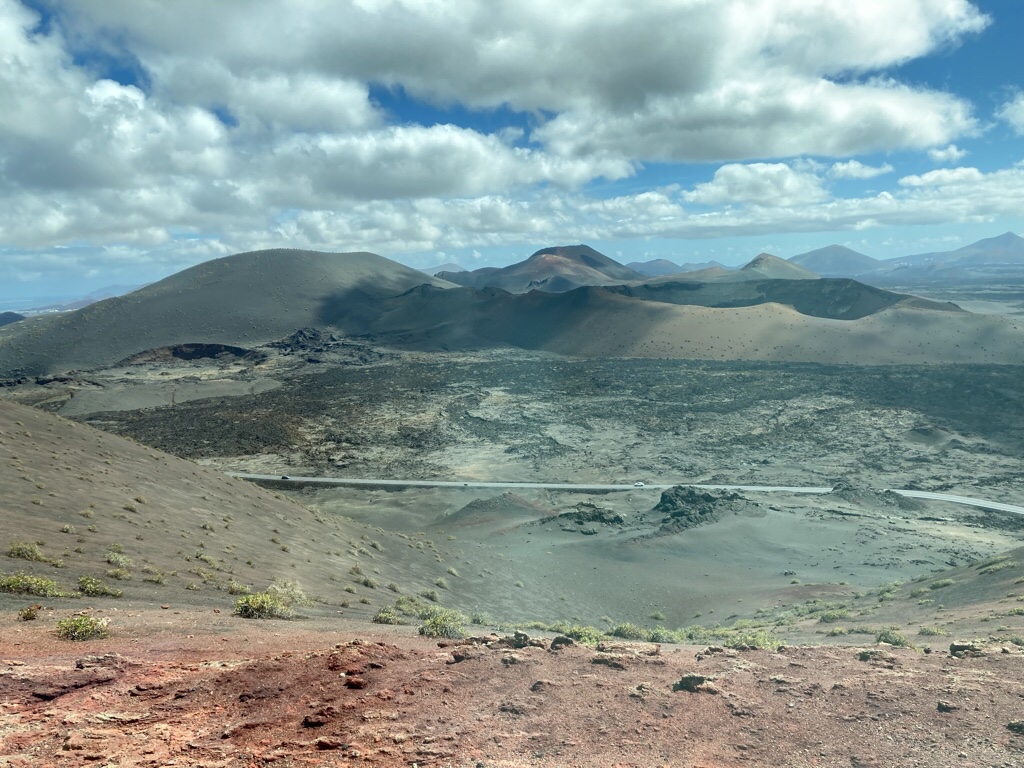


The other way to visit is by camel, and we watched groups returning on their beasts. I thought the camels were just for the tourists, and today they are, but they were brought to the island in the C16th and were used for all types of agricultural and transport work until well into the C20th.

Few of the roads have places to stop so photo opportunities are scarce but we read about the palmera inclinada and wondered if we’d be able to park nearby. We were in luck and walked down a well worn track to this quirky palm, star of many Instagram snaps! We had to join in and took a couple of our own!


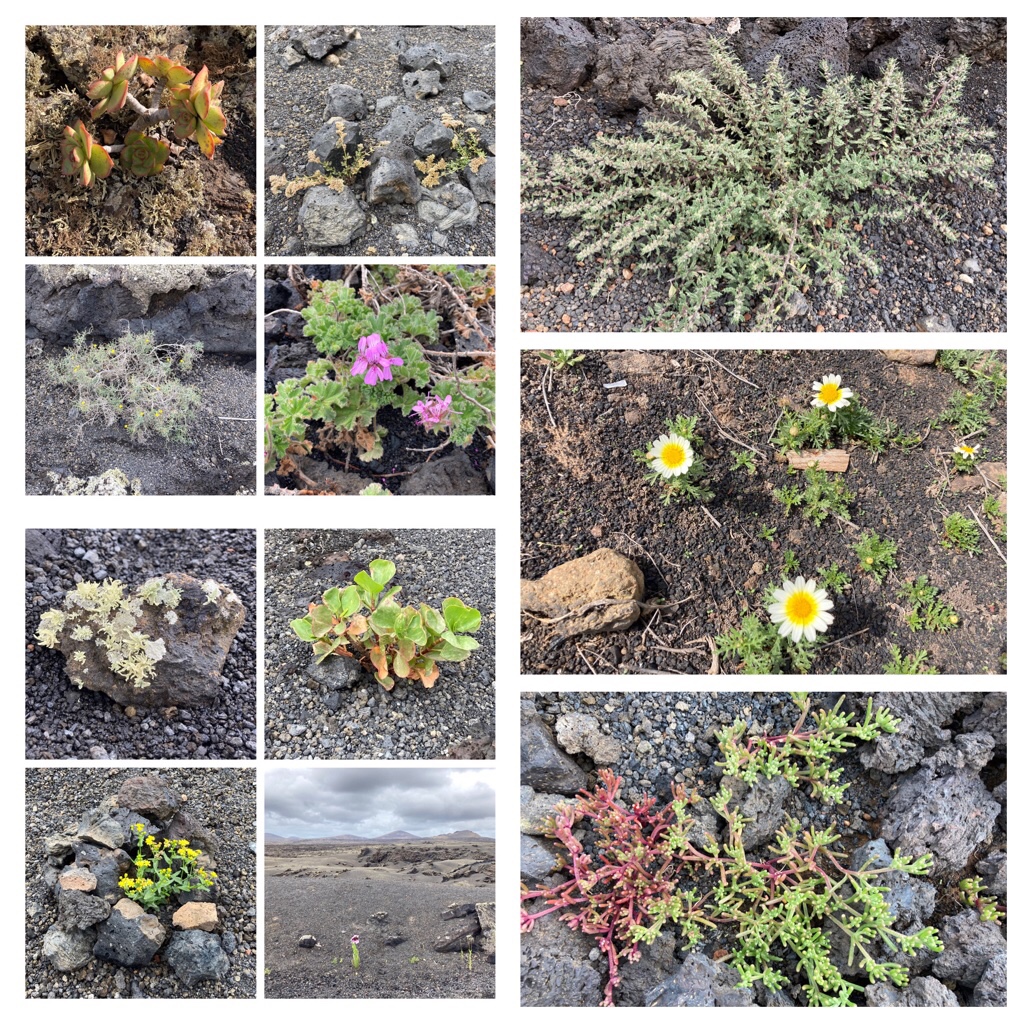
As always, I snap the flowers and plants along the way, but this afternoon, I lost my balance when photographing a plant and fell on my bum, which was ok, but I grazed my hand on the volcanic rock and spent the rest of the day feeling a little sorry for myself for being so stupid and because it stung. I’d only taken off the skin, but it took several days to start healing properly, and just brought home how lethally sharp the volcanic rock is.
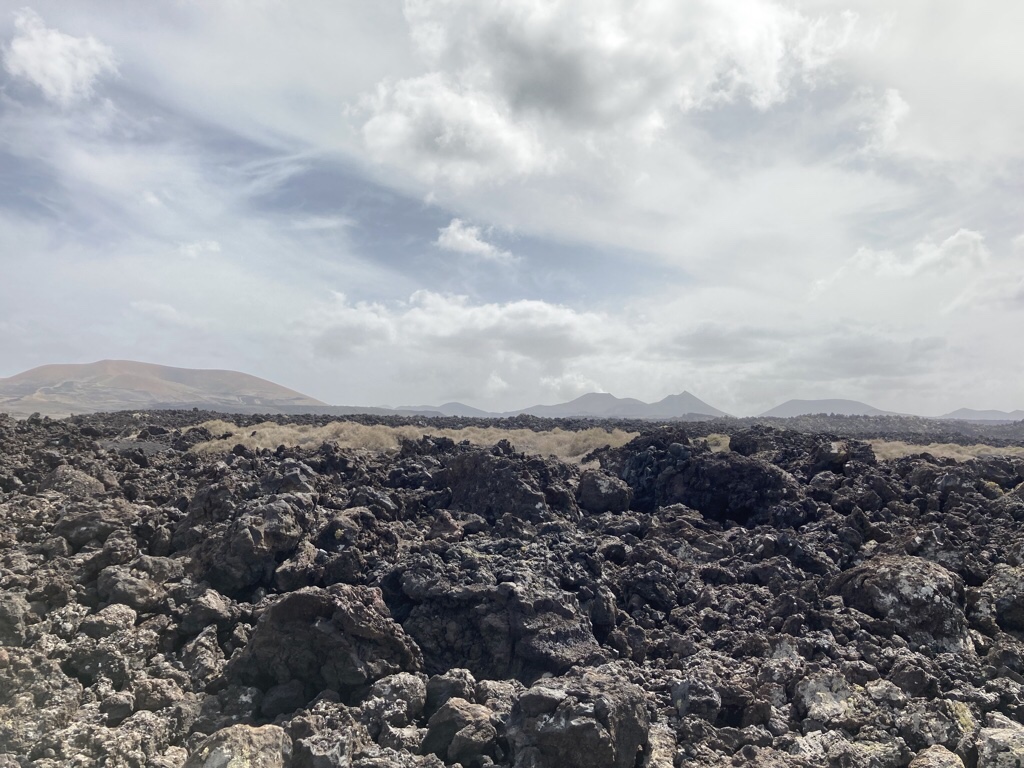
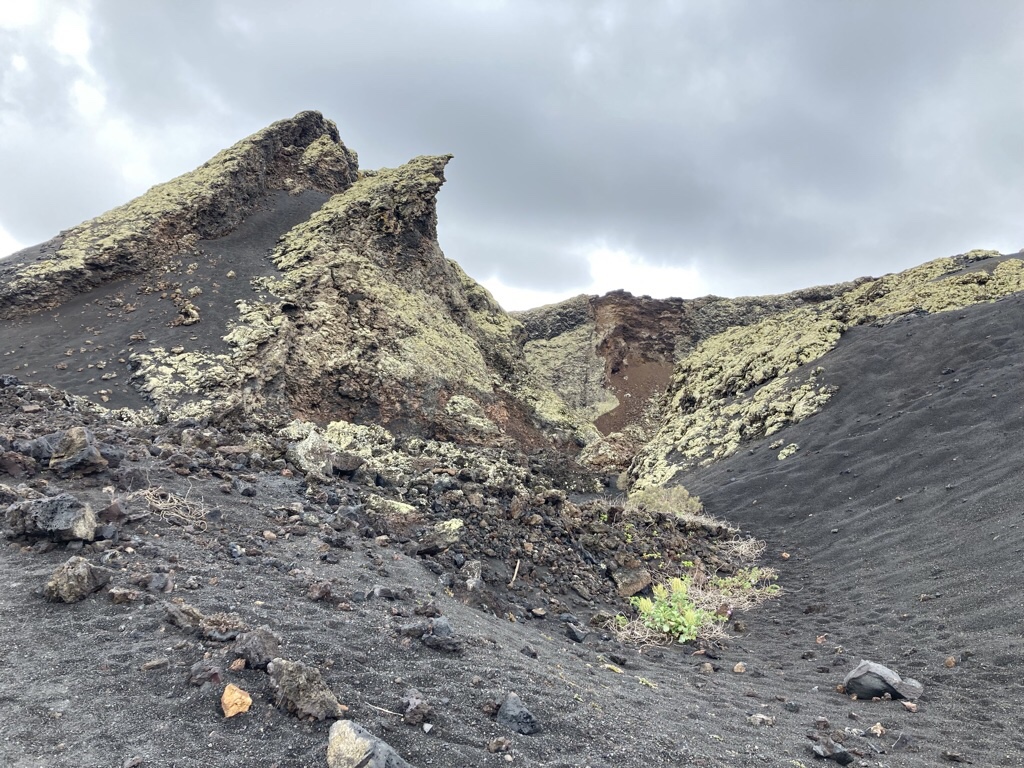
As for hiking, we decided to keep it to a minimum this trip as Chris has a dodgy knee, but nonetheless, the lure of a volcano we could actually get inside which would be on the flat, and only a round trip of about 3 miles from the car park won our vote. La Caldera de Los Cuervos was the first volcano to emerge from the eruption of Timanfaya. A path has been set up which offers great views of the lava flow, the crater and the surrounding area and enables a safe and sustainable visit. As we got closer we could see the splatter of lava at the top and the thick layer of small particles called pyroclasts down the sides. In a windy place like Lanzarote, these build up more on the leeward side which affects the shape of the volcano.
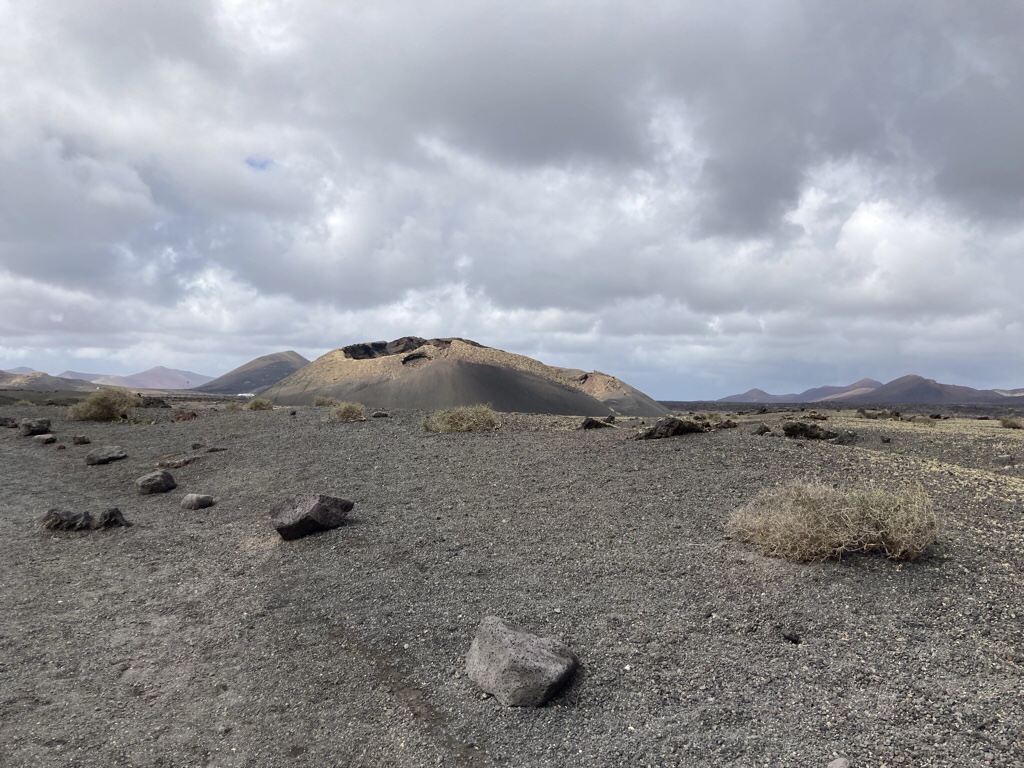
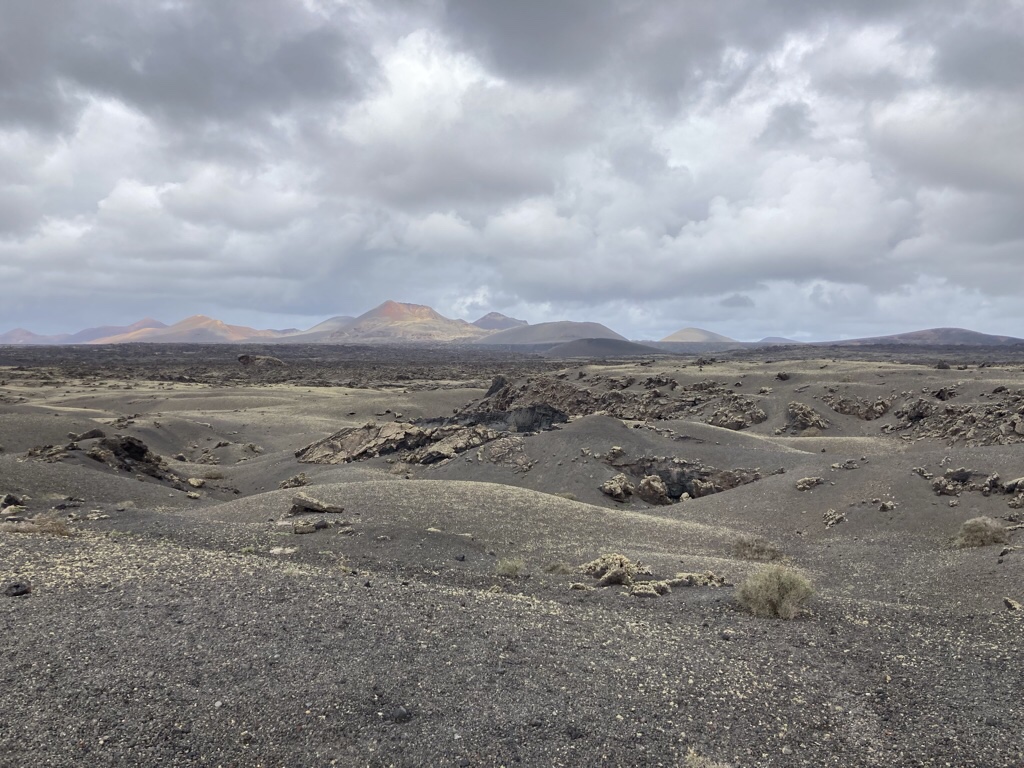


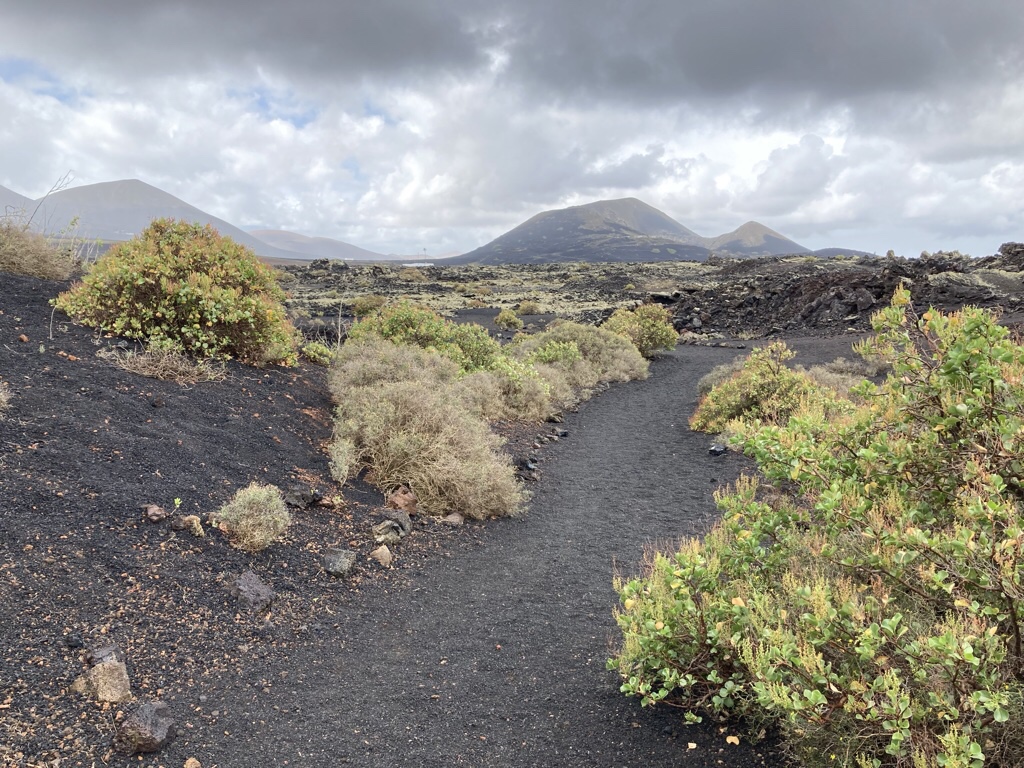
The number of plants getting a foothold was surprising, with even a lone poppy managing to survive in the wind.
Once inside the crater, it is huge … can you spot me?
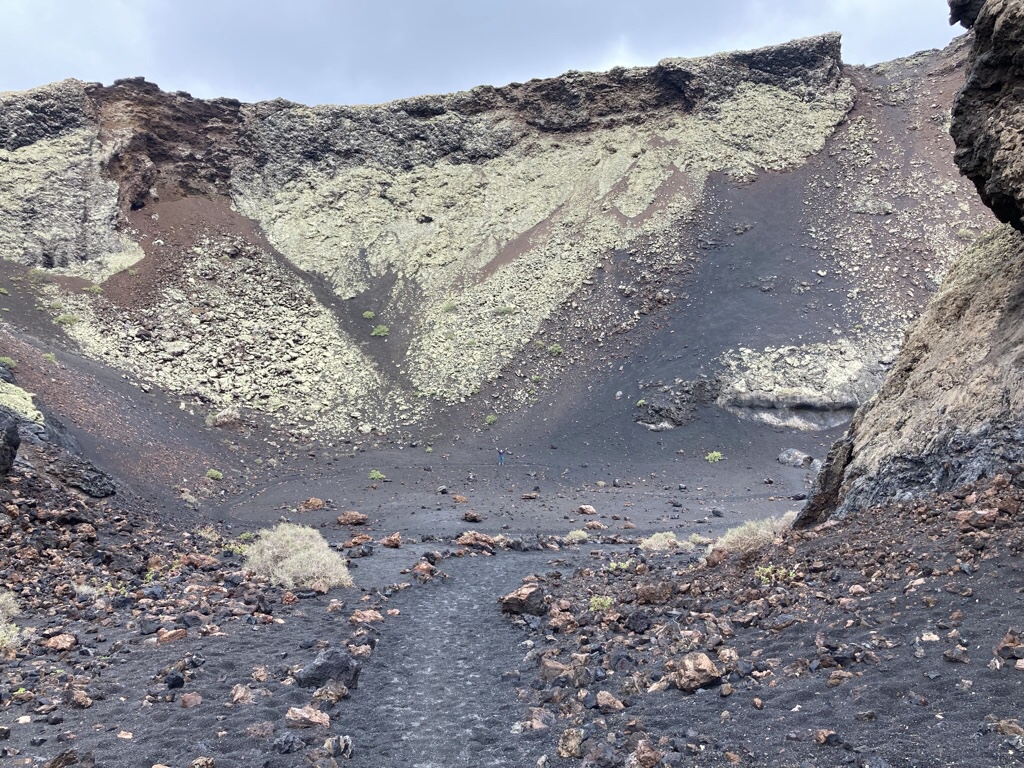
We took several pictures inside …


… and were amazed at the variety in the colour and texture of various bits of lava …
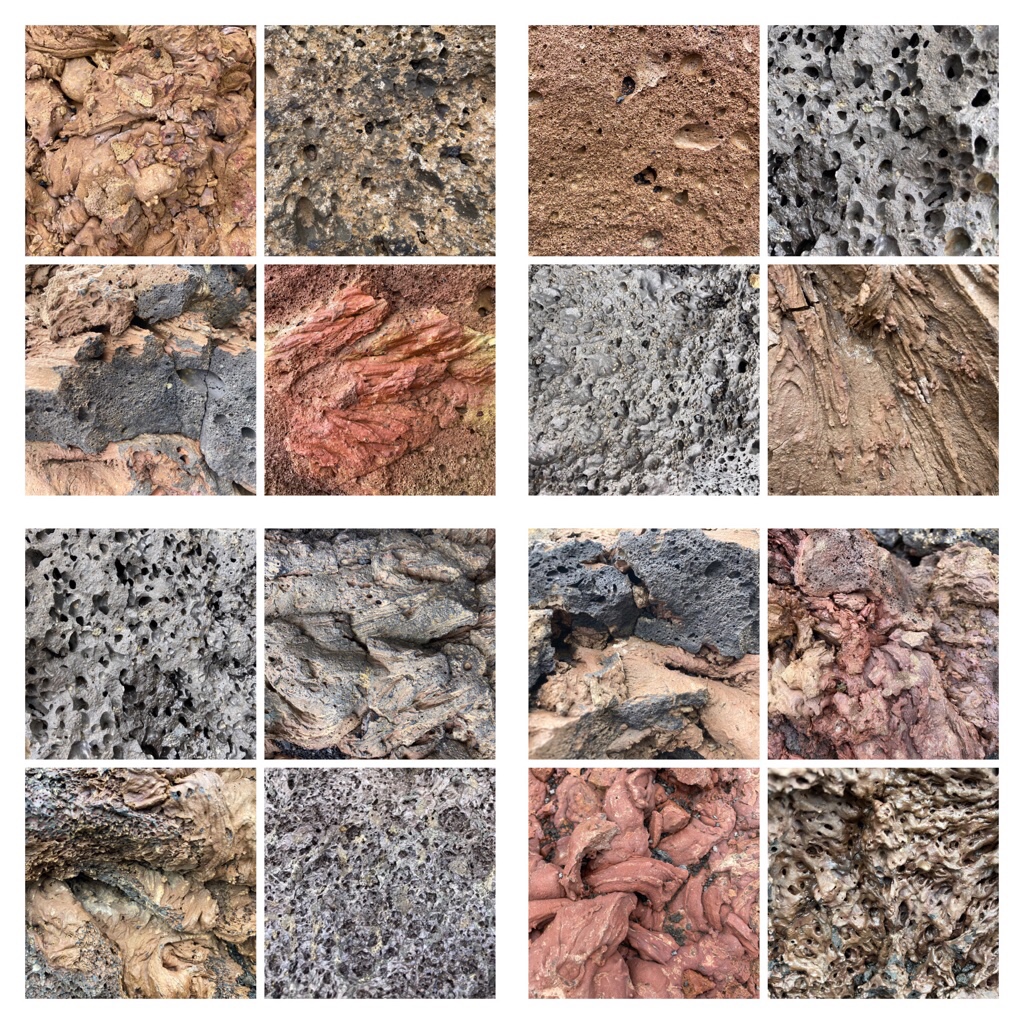
We were so pleased we did the walk, even if it means a little R&R tomorrow.
From Yaiza we also explored the closest stretch of coast, starting with the Salinas de Janubio. The lava had formed a natural lagoon and salt flats were created which once produced 10,000 tons of salt a year, used mainly for conserving fish but production decreased considerably after refrigeration was introduced.
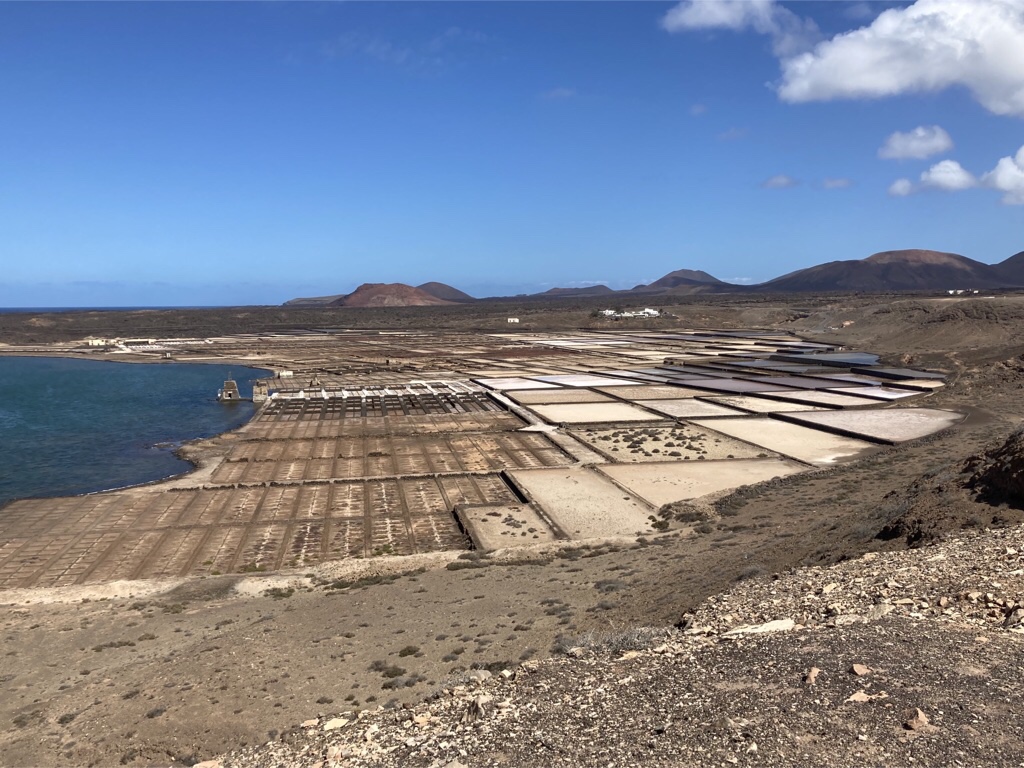

The logo for Canarian Salinas was designed by Cesar Manrique, inspired by the Artemia Salina, a small crustacean which can survive in the salt pans.
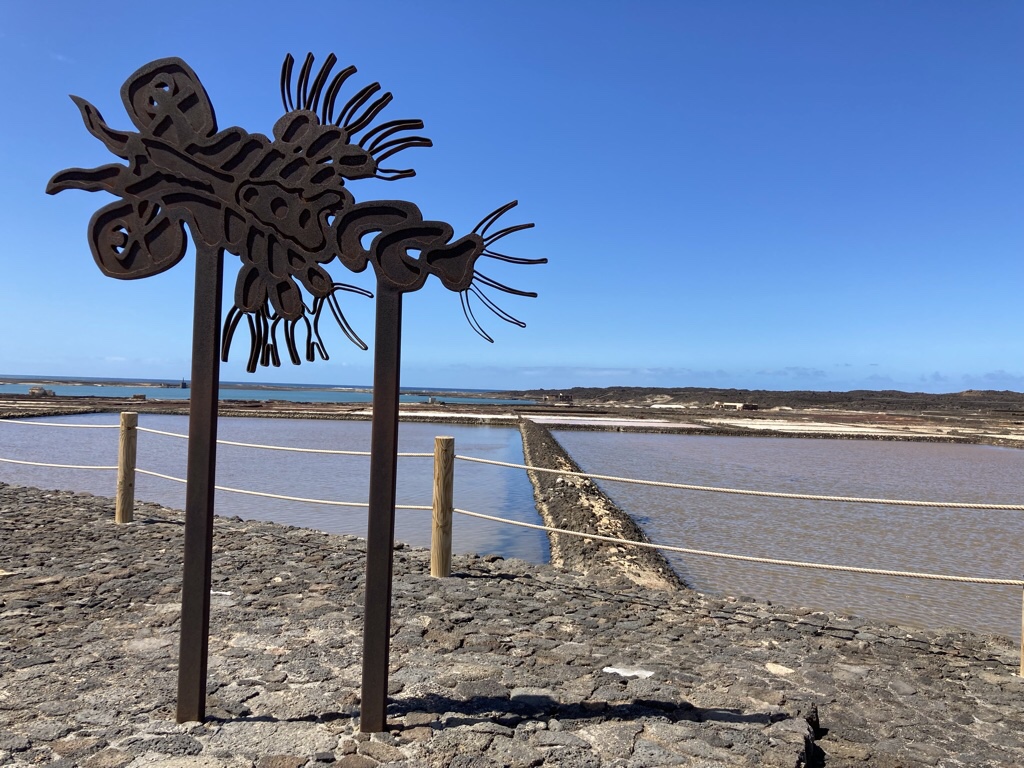
We even came back here one evening for dinner, took some photos in the afternoon light …
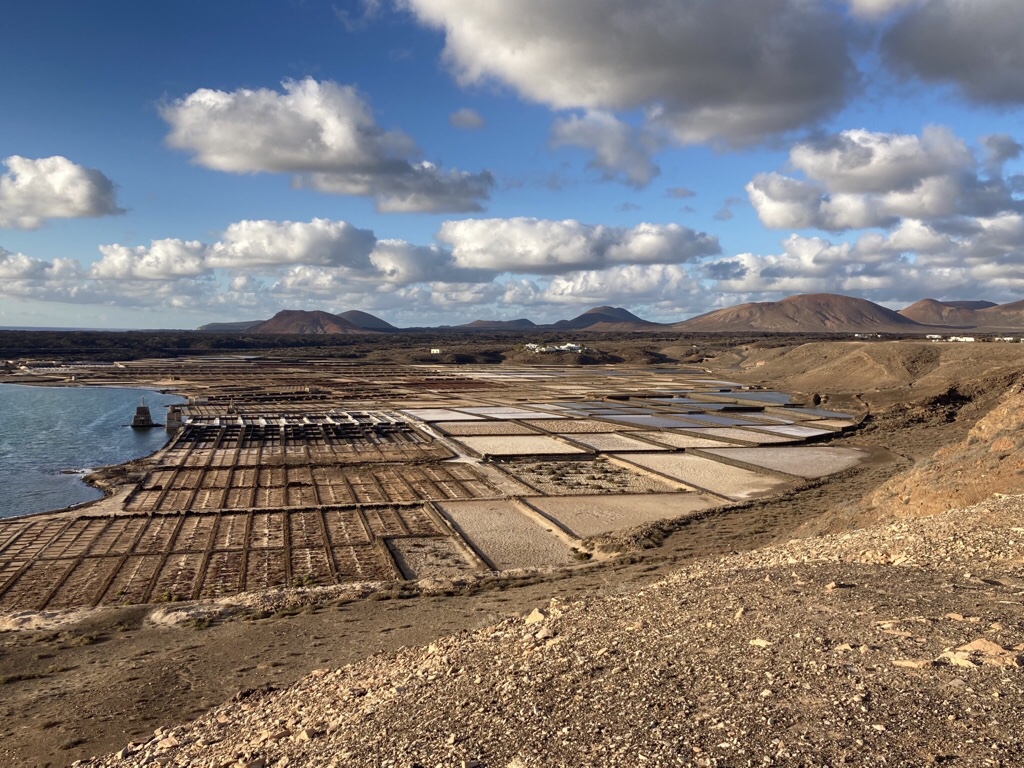
… and watched the sunset as we tucked into vegetable paella.


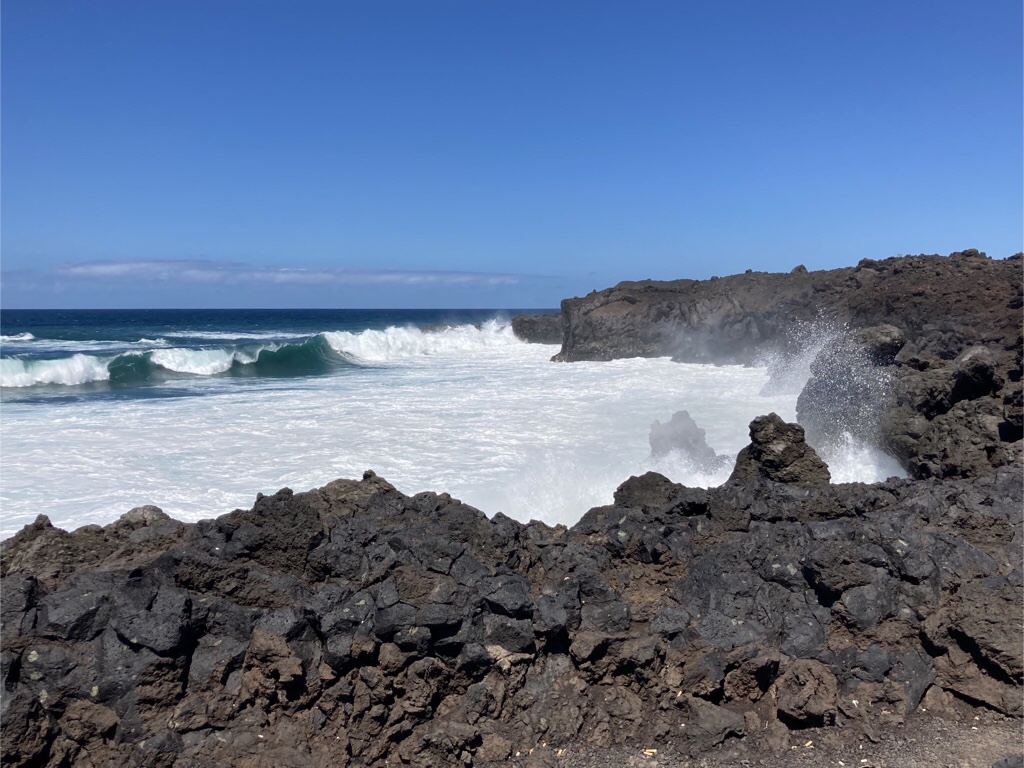
Further round the coast is Los Hervideros which means ‘Boiling pots’ because of the how the waves crash and swirl in the caves which have been formed in the lava by erosion.


A path goes quite close to the edge, but walkers beware as many received an unexpected dousing from a rogue wave. The colours were striking with the deep blue water and the red Montana Bermeja in the background.
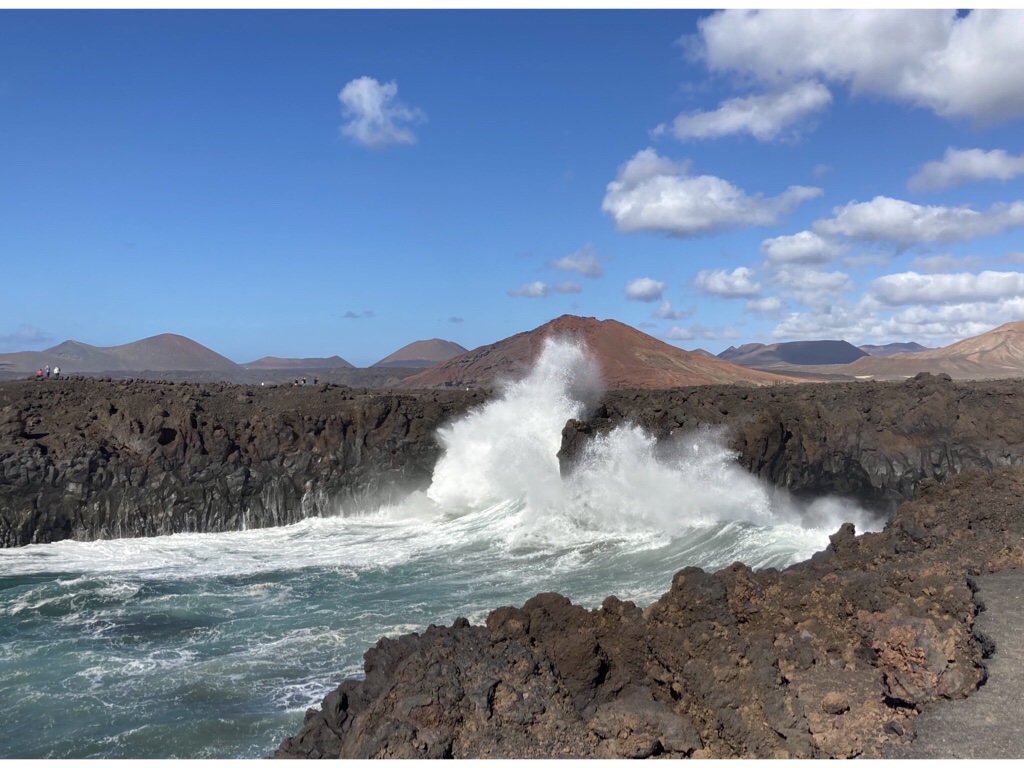
The small seaside village of El Golfo proved a perfect place to stop for lunch, in one of the seafront tavernas offering garlic prawns for me and an omelette for Chris. We lunched to the constant sound of the huge waves crashing onto the rocks.

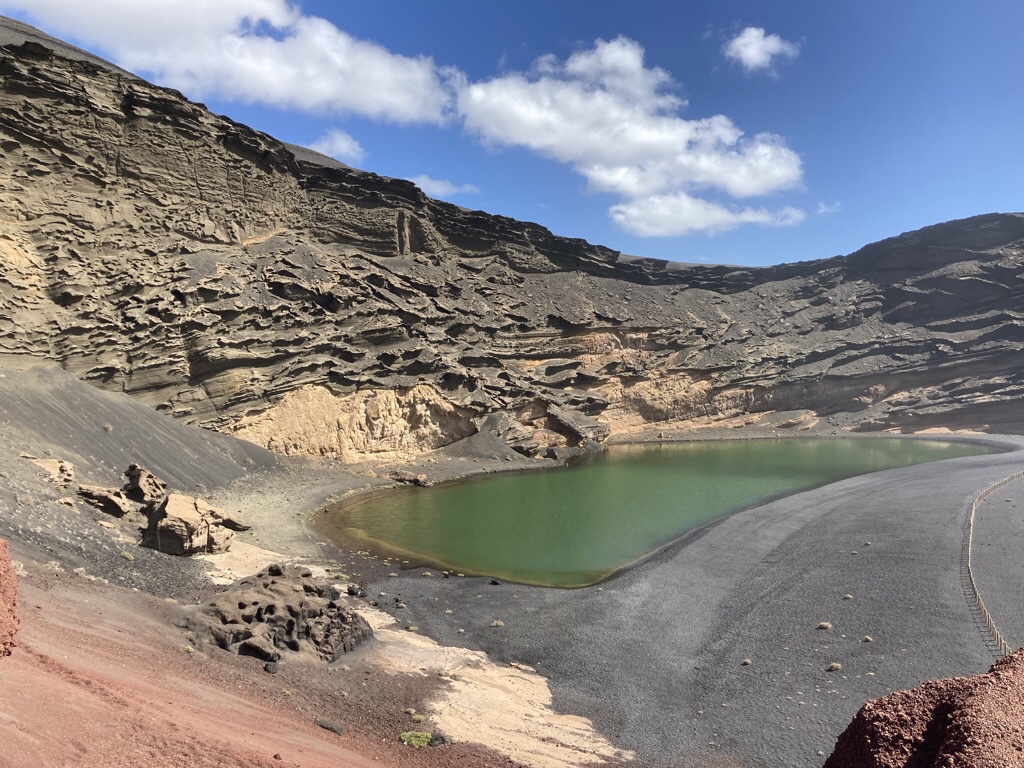
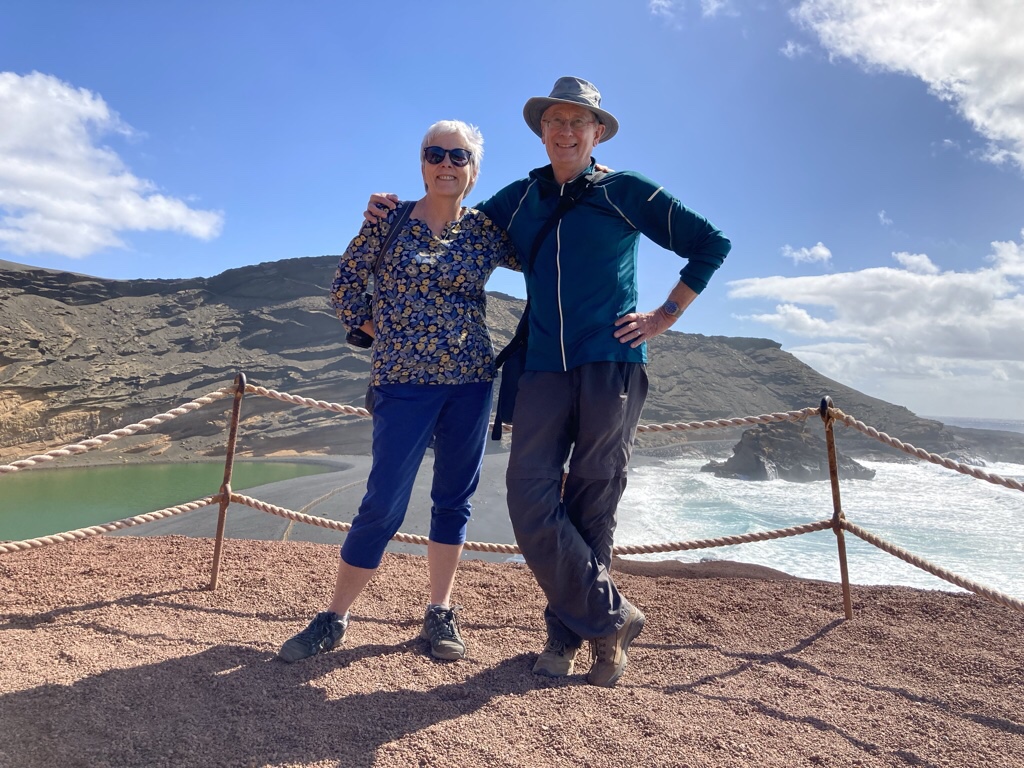
Afterwards, a short walk took us to Charco de los Clicos which is the eroded crater of a volcano which has been left open to the sea.

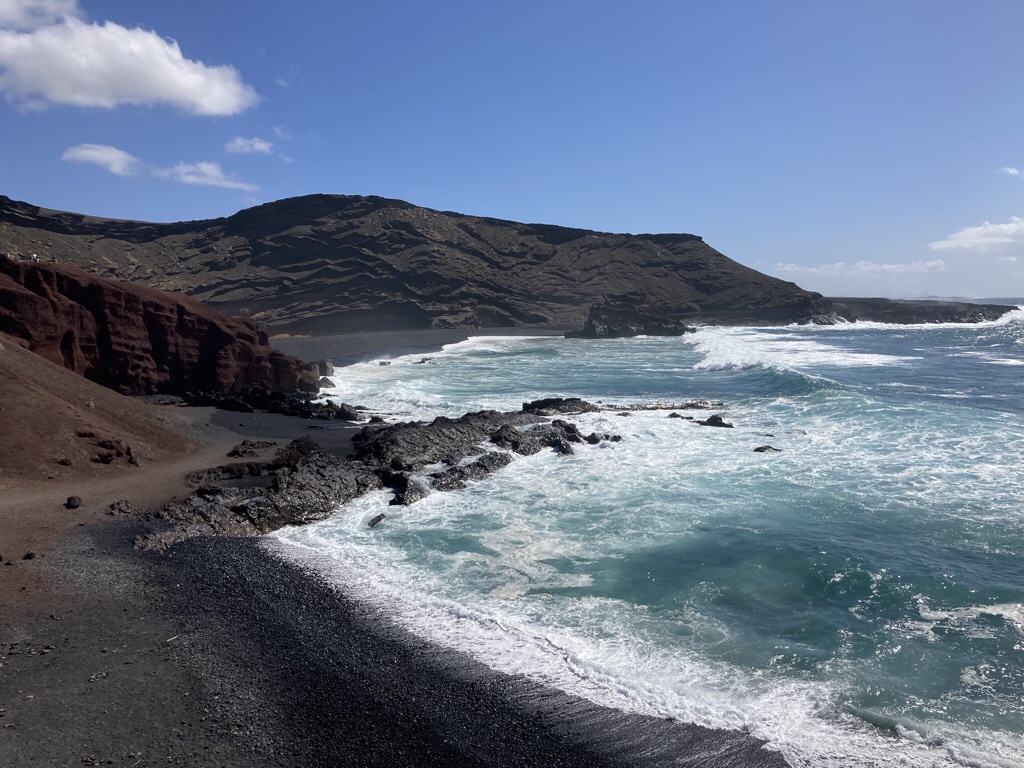
It has a permanent lagoon which keeps its water level through underground cracks and is green due to sulphur and algae and is separated from the sea by a black sand beach … all in all quite a photo opportunity although it’s almost impossible to get it all in!
It isn’t just the sea that fights back against the lava. Local farmers fought back too and managed to use their ingenuity to get vineyards established here. Deep hollows are dug through the ash layer into the soil below and the vines planted. They are protected from the strong north easterly trade winds by curved dry stone walls called zocos. The black volcanic ash is a vital element, capturing and storing what little moisture is available, and regulating the temperature of the soil. It is striking to see rows of these abstract forms lining the hillsides and the contrast of the green vines growing in the black soil.
We visited El Grifo first, the oldest winery still operating on the island.

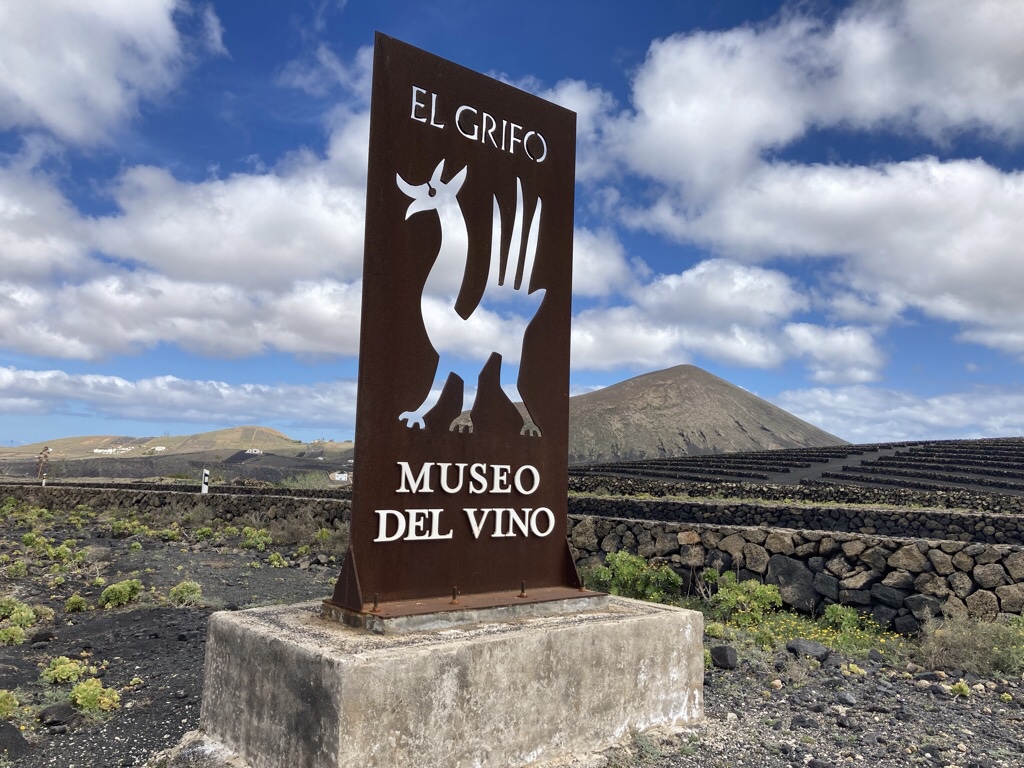
Here we saw some very old vines planted in pits …
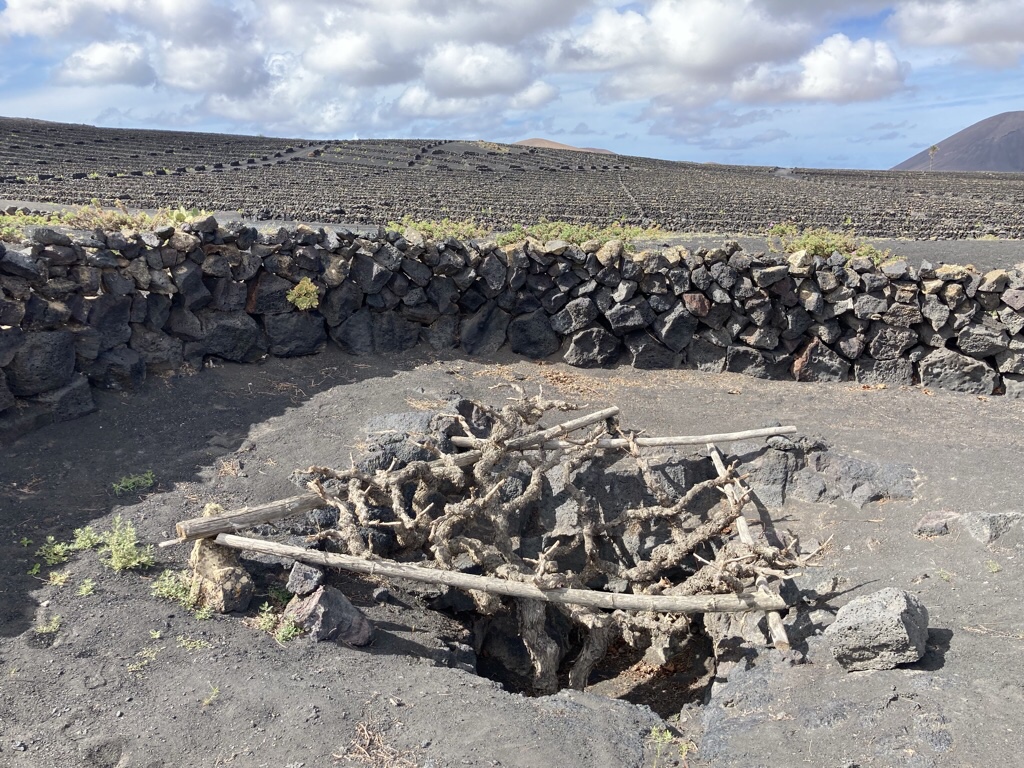
… and others in rows …
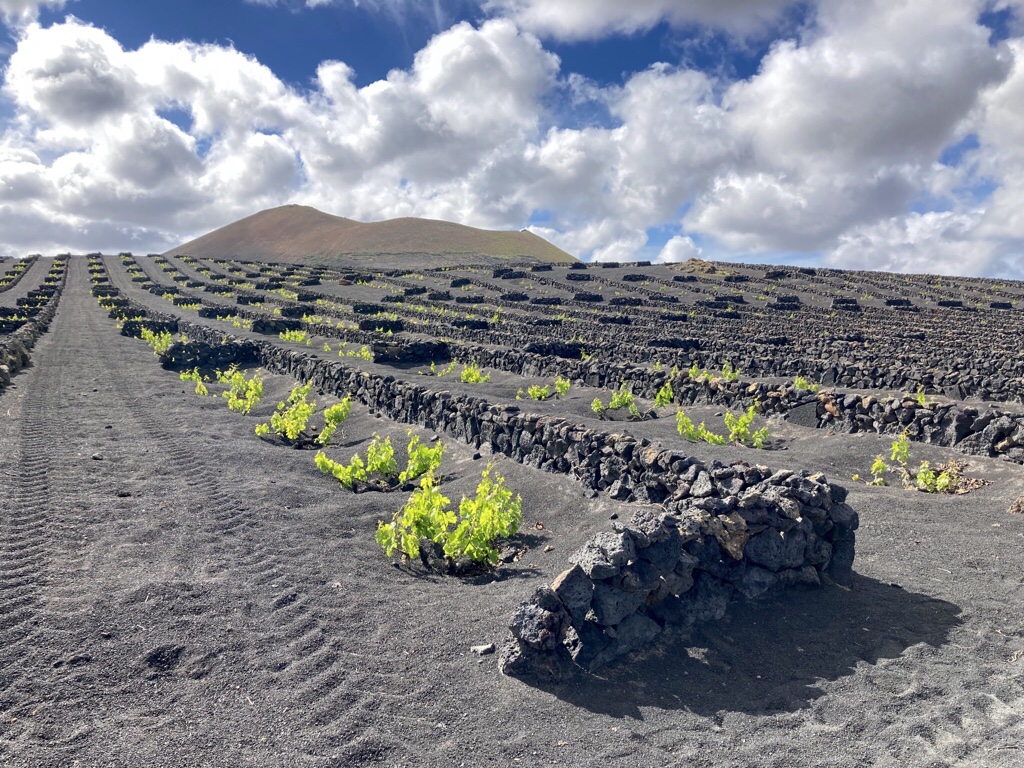
then at La Geria, protected by the iconic curved walls.
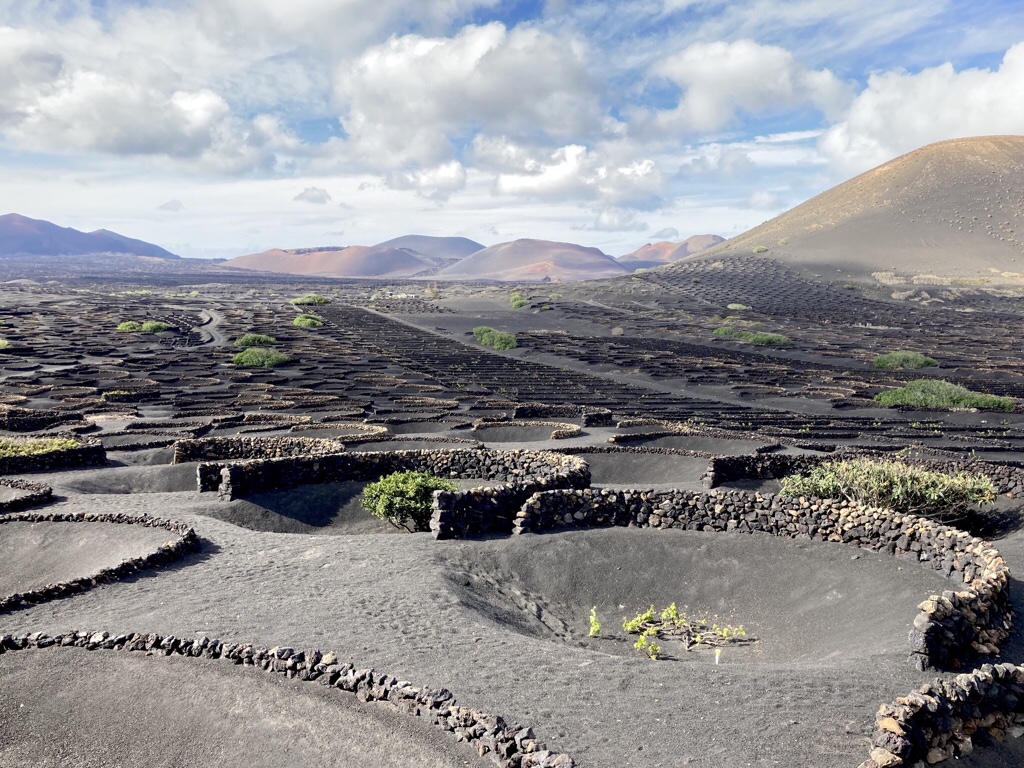
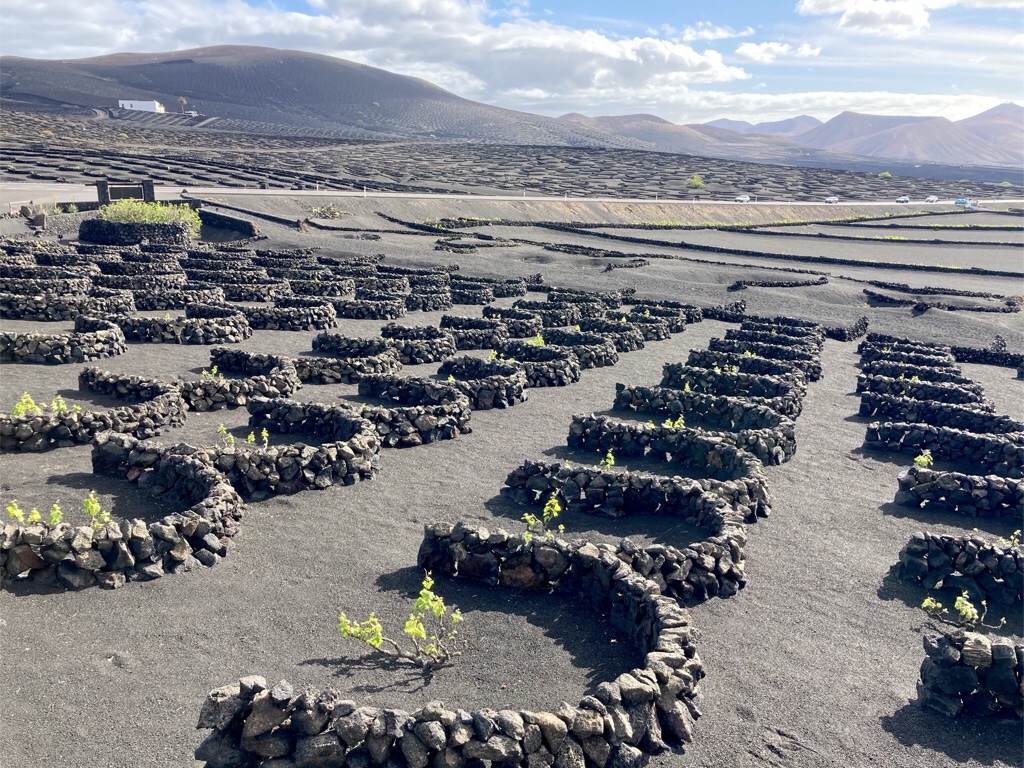
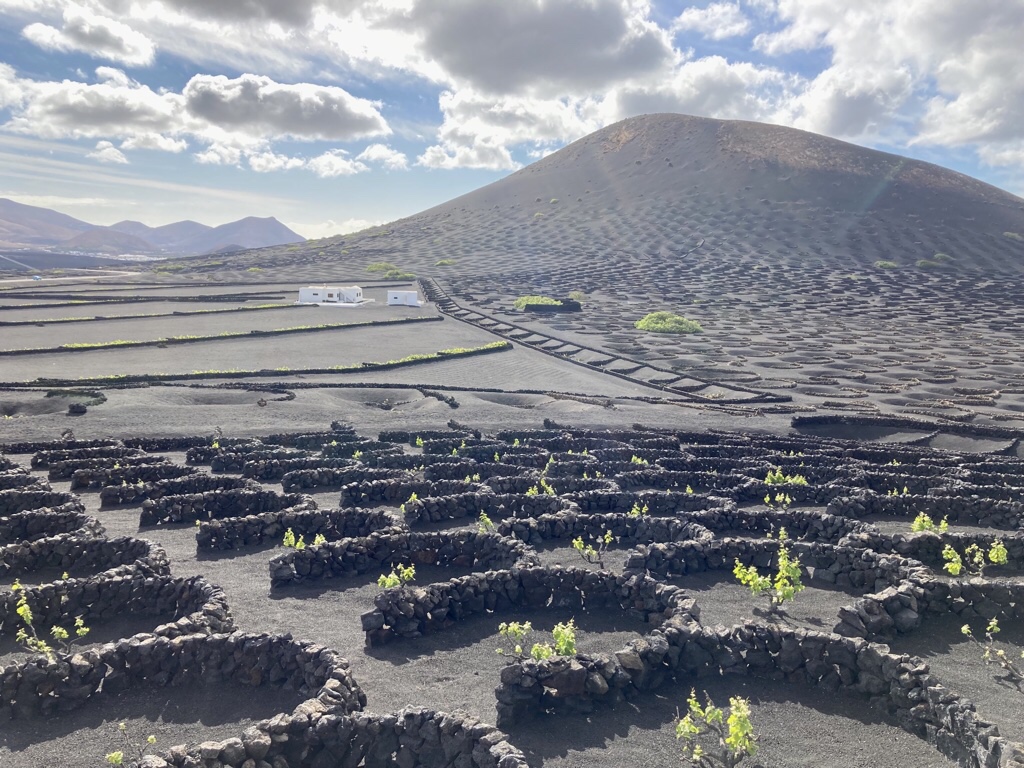
We’ve had a couple of bottles of El Grifo wine and can report both the red and the white are excellent.
On our last day in Yaiza, we woke to rain which was a bit of a surprise. It didn’t last long but it did mean we had our last breakfast indoors.
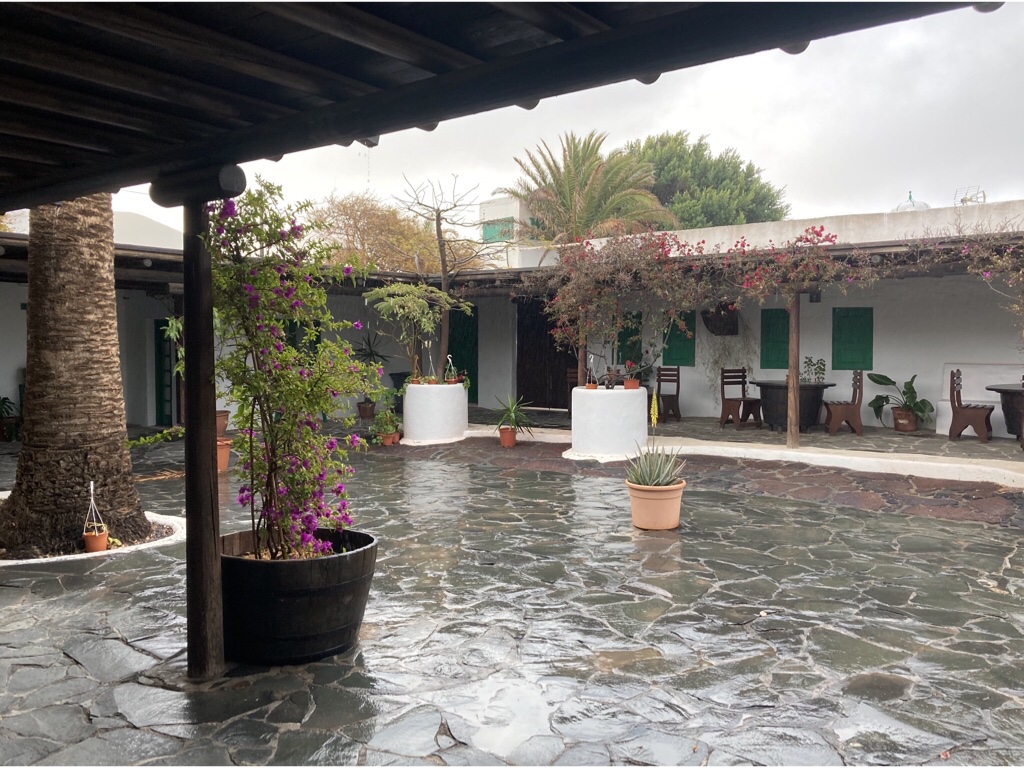

This brings the first part of our trip to an end as we leave Yaiza and drive to Costa Teguise, halfway down the island on the south coast for the rest of our stay.
 Off Travelling Together
Impressive photos. Looks like a moon landscape. I did spot you but only after looking for a while! All is well at home!
LikeLike
Thanks Yoka, almost at the end of our trip, but have had a lovely time, and home soon x
LikeLike