
After a breakfast of eggs and toast, we headed up the drive and along the road to the first passing place. By this point our phone signals have kicked in so we’ve been stopping to check in with the world! That done, we set off for the day’s exercise, a short walk from Greenhead to Thirlwall Castle, across fields to Wallsend and back. The castle was built in the C13th as a family stronghold, made from recycled Roman stone, but once abandoned 400 years later it slowly became a ruin. Early tourists admired its picturesque melancholy but today it’s almost too ruined to even be called picturesque. Legend says that during a border raid, a servant hid the family’s most prized possession, a gold table, down the well where he and the table remain to this day, protected by a magic spell! Chris has been making friends again and here he is with Anya and Noah who had come for a walk to the castle with their Mum.


We stopped in the tearoom on the way back … delicious lemon and lime cheesecake … then onwards to Vindolanda. This Roman Fort is actually about 8 forts on top of one another as there were around 5 wooden forts, before they started building in stone, each with a slightly different footprint and recycling the previous materials where possible. It has been owned by a trust and they have been continually excavating for 50 years, and their huge haul of finds is displayed in the museum.

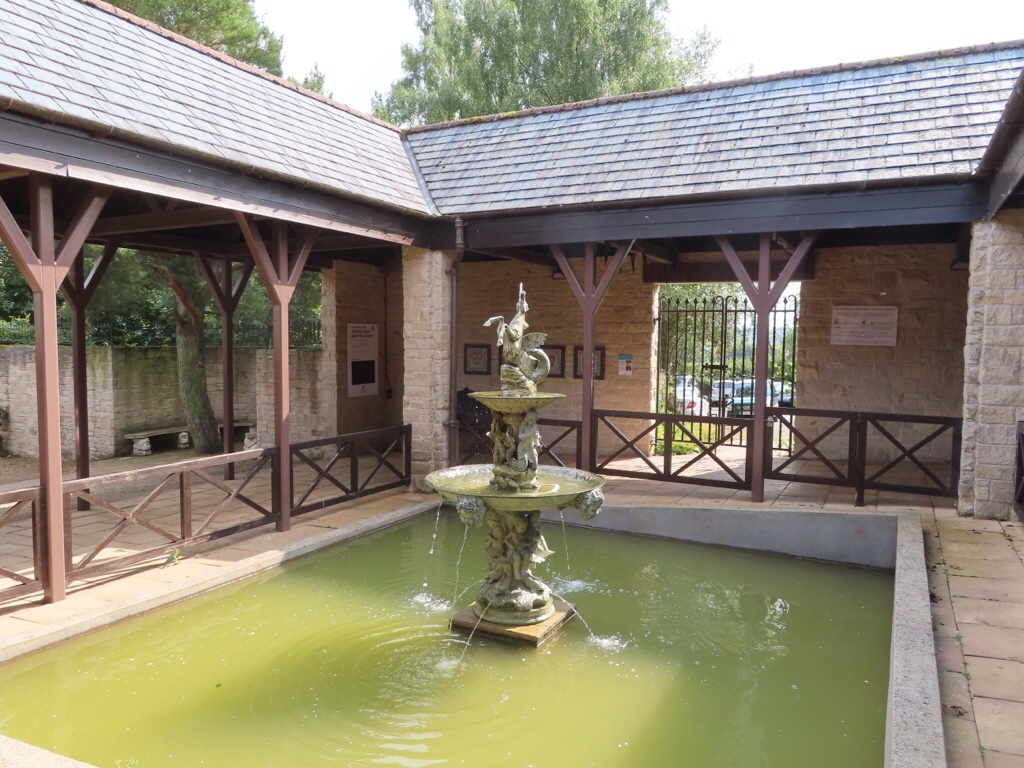
It felt like we had arrived in an Italian courtyard as we waited for the guided tour, which was given by a very enthusiastic volunteer called Paul who really helped to make the place come to life.
Just like Housesteads, there is the vica or town outside the walls with barracks, granaries, admin centre, bath house and the commander’s house within the fort.

This shop was identified as a butchers, with suitable drainage on the floor and the bakers with the bread oven is behind.

Here are granaries, where sufficient food had to be kept to feed the fort for six months, so adequate ventilation under the floor was essential.

The commander’s house would have been luxurious, with its own bath house, and a dining room with underfloor heating.


This just shows drainage between the buildings, which would have required rainfall to wash it clean.
The ground here is anaerobic so has preserved many artefacts made of natural materials like wood and leather. There is a huge collection of shoes including thongs, clogs and sandals of all sizes with and without hob nails!
The highlight of museum are the Vindolanda tablets, postcard sized strips of wood with handwritten messages in ink. Most are in the British Museum, but they have a few examples on show, and in fact it is the information on them which is so valuable as it gives further insight to life here. I particularly like this example, perhaps the oldest surviving document written in Latin by a woman … and in fact a party invitation!

The variety of household items were most interesting and we could have spent far longer looking … apparently there is a small wooden salt cellar, but we missed that … but it was almost closing time and the site is quite large.
That evening we drove to Corbridge to meet Heather and Stuart for a curry. Heather and I met at school and although we keep in touch every Christmas, we haven’t seen each other for 20 years! It was lovely to meet face to face and catch up a bit.
 Off Travelling Together
Aww, Anya and Noah and myself enjoyed meeting and chatting with you both – some gorgeous photos
LikeLike
Than you, such a lovely area to visit, we had a great time.
LikeLike