
Over breakfast we chatted about where to walk as it was another lovely day and decided we loved being out walking in wide open spaces so returned to Steel Rigg and rather than walking along the wall, we crossed farmland to the left of it which have us great views of Crag Louth and Sycamore Gap from a different direction.


We walked along the line of the wall for a while …
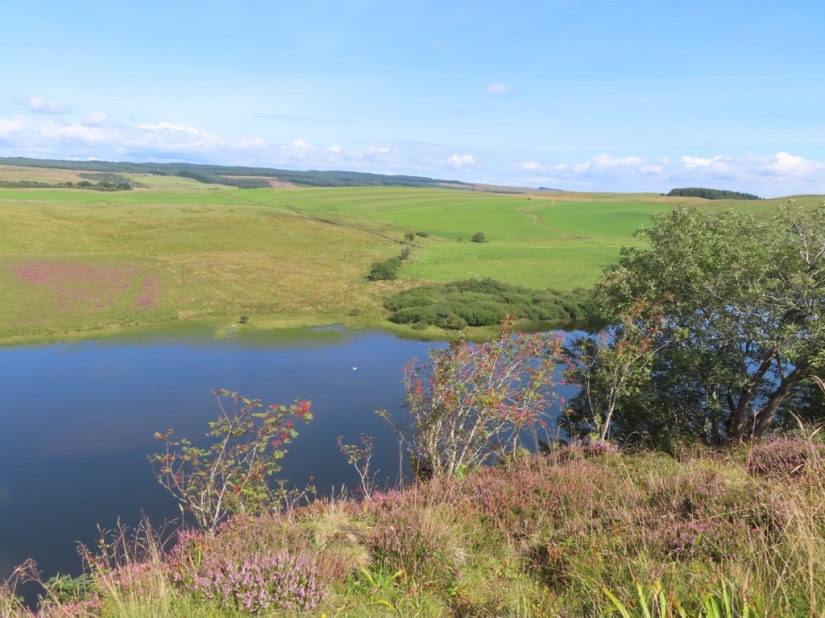
… then took the easier path for the rest.

We drove into Haltwhistle for lunch and I was delighted to find Jethro’s serving salad boxes and sandwiches to go so we made our choices and sat in the market square munching.

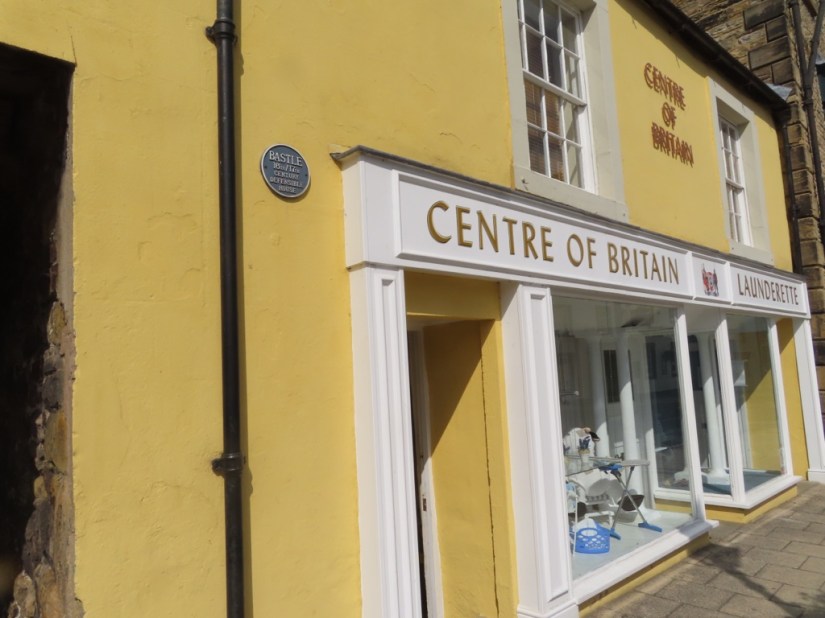
So I can tell you Haltwhistle was a settlement before Roman times and certainly before the coming of trains so its name has nothing to do with a railway stop! From the Middle Ages there were various early forms of the name, but all derived from hilltop, twice and wella signifying the high hill by two rivers. It’s history includes more than just the Romans. There were also the Reivers and 300 years of border skirmishes for which there is evidence in the town. Pele Towers were built and also defendable houses, known as Bastles. These structures were inhabited on the first floor with access to the main entrance by wooden ladders or stone steps and some signs can be spotted such as irregular windows … as well as the blue plaques!

The oldest part of the Centre of Britain Hotel is in fact a Pele Tower, the castellated part on the right, dating to about 1417.

Which brings me to its most recent claim to fame, being rebranded the Centre of Britain a few years ago, which it could be, depending on how you calculate it and the hotel and several other businesses trade on it!


Some of the family names in town go back too like Armstrong, once the owners of the farm at Housesteads and now purveyors of carpets and fashion!

There is also a history trail round the town which tells of its fortunes from a bustling market town with the local stream powering wool and corn mills to a prosperous mining town once the railway came to the area. Not surprising that a Victorian refurbishment of the church included lovely Pre-Raphelite stained-glass designed by Edward Burne-Jones, Philip Webb & Ford Maddox Brown.

Time for a cuppa and a sit down so having picked up bread and milk in Sainsburys, we’re back to Hope Sike. Each day when we return, we guess how many sheep we will see on the road and so far Chris is best at guessing – not right, but closest! At least they run off quite quickly, but today we came across cows on the road, and one refused to budge – we tried the horn then getting out and waving but it was reversing and then a fake charge with the car that actually worked … and she nonchalantly wandered off!
Supper was reheated Tebay pies, and the entertainment provided by the tractor which rocked up right outside the window, backing into the field to pump out the septic tank – one wrong move and he’d have been in the cottage!

 Off Travelling Together