
When I opened the curtains, the cloud was right down and we were surrounded in white! Fortunately it soon lifted and by the time we were up and breakfasted it was looking brighter, if cloudy, so we packed some sandwiches and set out for a walk. On the way we stopped to take a photo of the view …

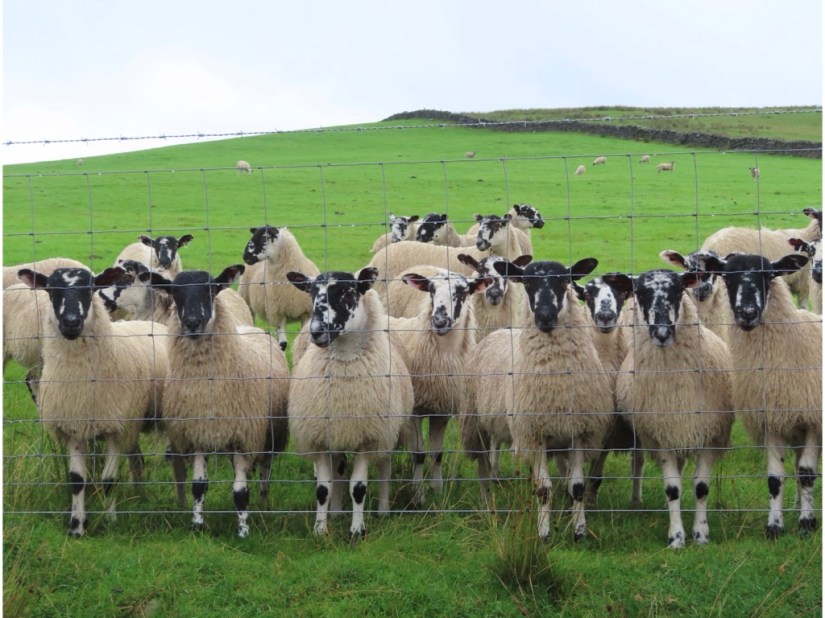
… and to our amusement and surprise the sheep came up to the fence, one by one and lined up to have a look at us and say hello.
We had picked the circular Cawfields loop, taking in a short stretch of Hadrian’s Wall and returning on a path following the course of the old Roman Military Way which ran parallel to the wall and provided access. We parked at Cawfields Quarry, today an attractive picnic spot by a lake. Having read the information board though, we realised that the pretty lake was formed after the quarry destroyed this section of Hadrian’s Wall by removing the scarp face for the dolerite, particularly valued for surfacing roads. Quarrying continued until 1952 when pressure forced its closure.

Having said that, the next bit of the wall is quite well preserved and almost as soon as we joined the footpath, it brought us alongside Cawfields – Milecastle 42. The Roman’s built these small forts every mile with gateways through the wall and soldiers barracked here to control the border.
We then set off along the wall which follows the natural defensive line of the escarpment with several ups and downs along the way. Parts of the wall were well preserved, still showing the neat outer rows of stones, back filled with smaller stones, although I’m sure most of this is ‘restored’ rather than original!


In between, the wall has been replaced with stretches of drystone wall, complete with sheep shutes!
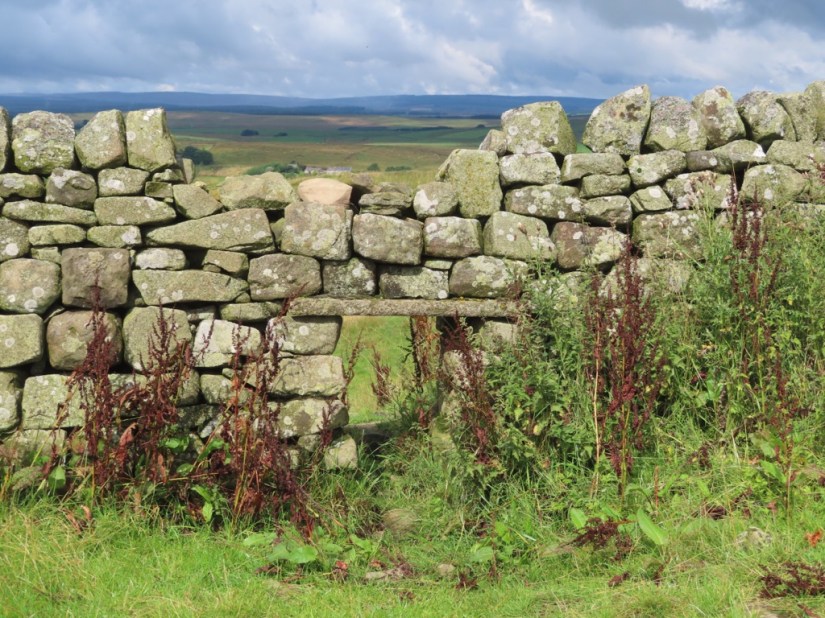
There are also remains of the turrets, two built between each pair of milecastles, usually two or three stories high and big enough to garrison a handful soldiers.

We were going to turn at Caw Gap, but we kept on going a bit further and found a great spot to sit and eat our lunch …

… before returning. Looking across, we could see the raised earthworks which formed the vallum ditch which ran the length of the wall behind the Roman military road.

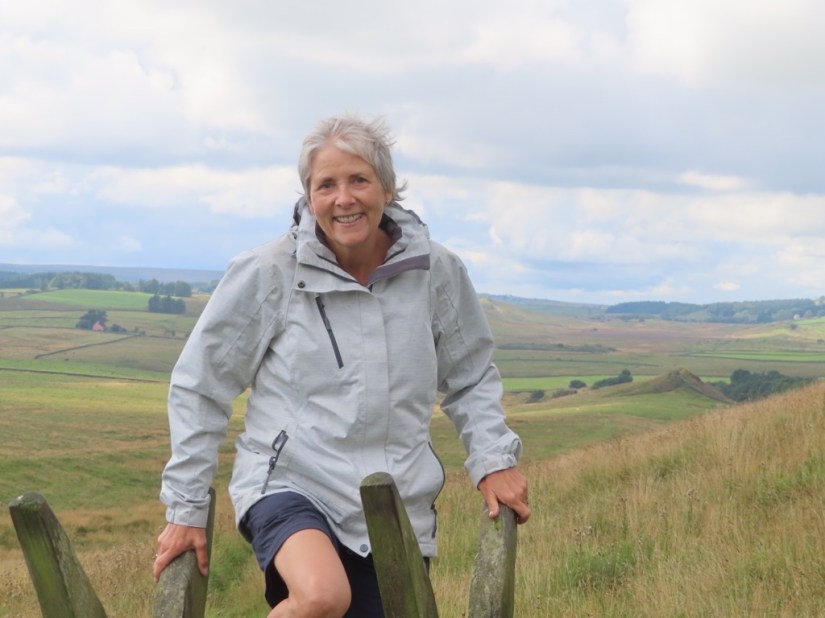

With a little time to spare, we stopped at Birdoswald Roman Fort on the way back, and in retrospect wished we hadn’t bothered. There was a ruined perimeter wall, an excavated granary and not much else. The museum display would have been engaging for children but offered little for adults, we paid English Heritage £23 for entry and parking and we were in and out in an hour! You win some and lose some!
In the evening, we returned to Twice Brewed for supper and star gazing. Thanks to its pristine dark skies and a commitment to conserve them, the whole of Northumberland National Park and most of Kielder Water & Forest Park became England’s first International Dark Sky Park in 2013. Will Cheung, the resident astronomer, gave a great talk about all things celestial, and when it was dark enough, we went outside and there was a telescope for each couple. Will repeatedly came round and set up each telescope, telling us how to fine tune the focus and what we would see, trying to make the most of the clear skies which weren’t going to last. The most impressive things were Jupiter and Saturn, which might be visible with the naked eye if you know where to look, but with the telescope, Saturn’s rings were visible. We also saw the Hercules Globular Cluster which contains several hundred thousand of the oldest visible stars.
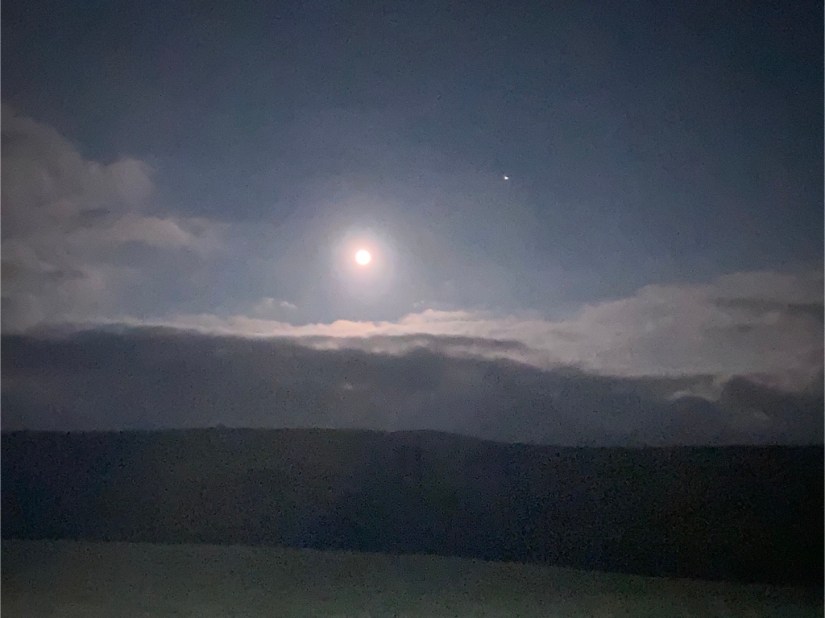
The moon was especially beautiful. August’s full moon is called the Sturgeon Moon because the giant sturgeon of the Great Lakes in the USA were most readily caught then. This year, it is also a seasonal Blue Moon because while a season usually has three full moons, if the dates fall right, a season can have four and if that happens, the third full moon of the season is called a seasonal Blue Moon. Will even managed to take a photo on our phone with the telescope which was cool.

Shortly after, the cloud came over, but we had seen more than I thought we would, I just thought the images would be bigger through the telescope. The sky cleared on the way back, and I took this with my phone with Jupiter beside the moon. By the time we got back it was gone 11.00, well past our bedtime!
 Off Travelling Together