
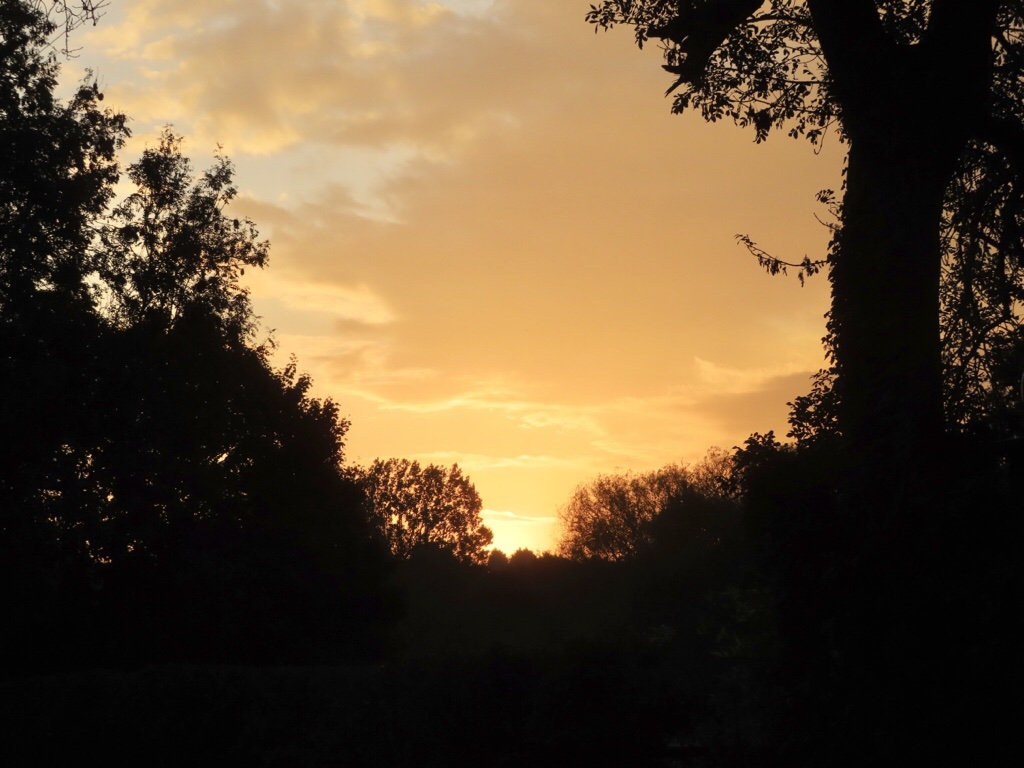
We slept pretty well, despite the snug bed, but both of us woke in the night and were kept awake for a while by unfamiliar nocturnal noises. The sky started turning pink during our first cuppa, so we dressed quickly and walked down the tow path to the bridge and took a few pics …



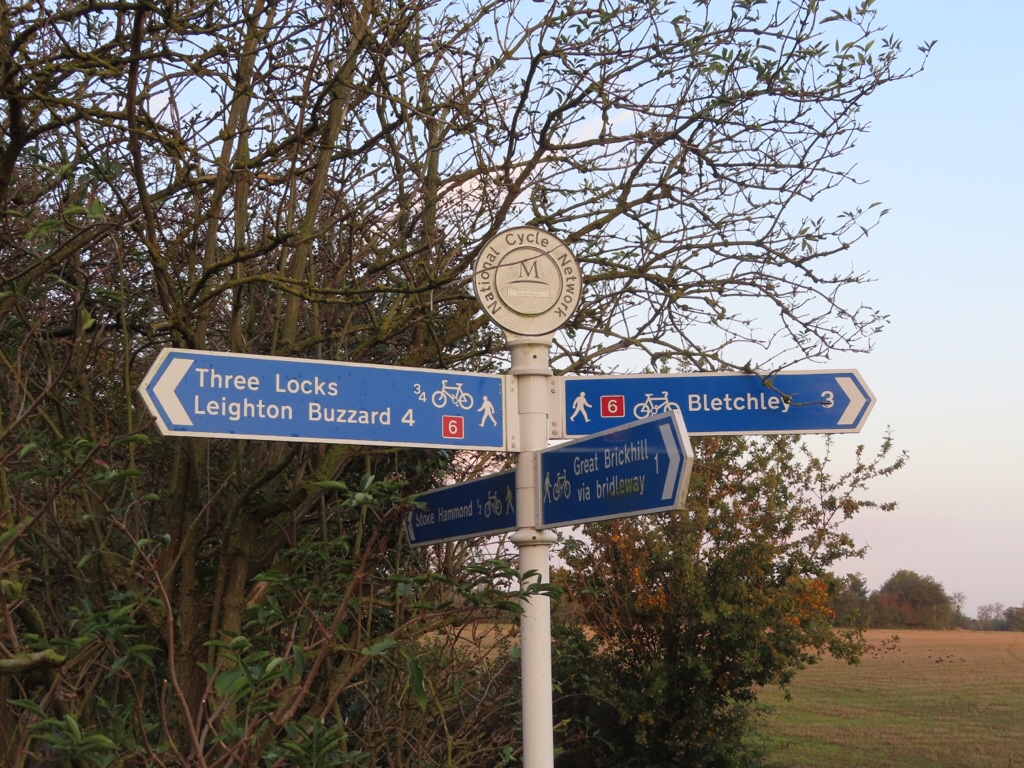


Over breakfast we were feeling quite pleased with ourselves that we were already further along than we had expected, in fact 3 locks and 1 mile further … but we shouldn’t have been congratulating ourselves so soon …
I found a really interesting website with details about this stretch of the Grand Union Canal and read about Soulbury as I drank my tea. Stating the pretty obvious, when you think about it, when a boat passes down a lock it takes a whole lock of water too, so unless this is replaced, the canal would eventually dry out. When the canal opened in 1800, reservoirs were built to collect water and keep the levels high enough for boats to stay afloat. However this might not be enough with heavy traffic or a drought, so a series of nine pumphouses called the ‘Northern Engines’ were built, including the ones at Soulbury and Stoke Hammond. Each housed a steam powered pump that drew water up from below the lock and pumped it through a tunnel and back above the lock. The buildings had chimneys, few of which survive, and were often decorated with fan lights and ornamental glazing bars which can be seen at Soulbury and Stoke Hammond. At Soulbury, water is still recycled using a pump to keep the canal open and the pumphouse is currently undergoing restoration, which explains all the metal fencing and here’s a closer picture …

Every lock on the canal, like every bridge, has its own number, starting with No1 at Braunston where the Grand Union Canal joins the Oxford Canal. The flight of three locks at Soulbury, No 24, 25 and 26, take the canal 6m further uphill from its lowest stretch across the Ouse Valley in Milton Keynes up to Tring summit at 121m above sea level.
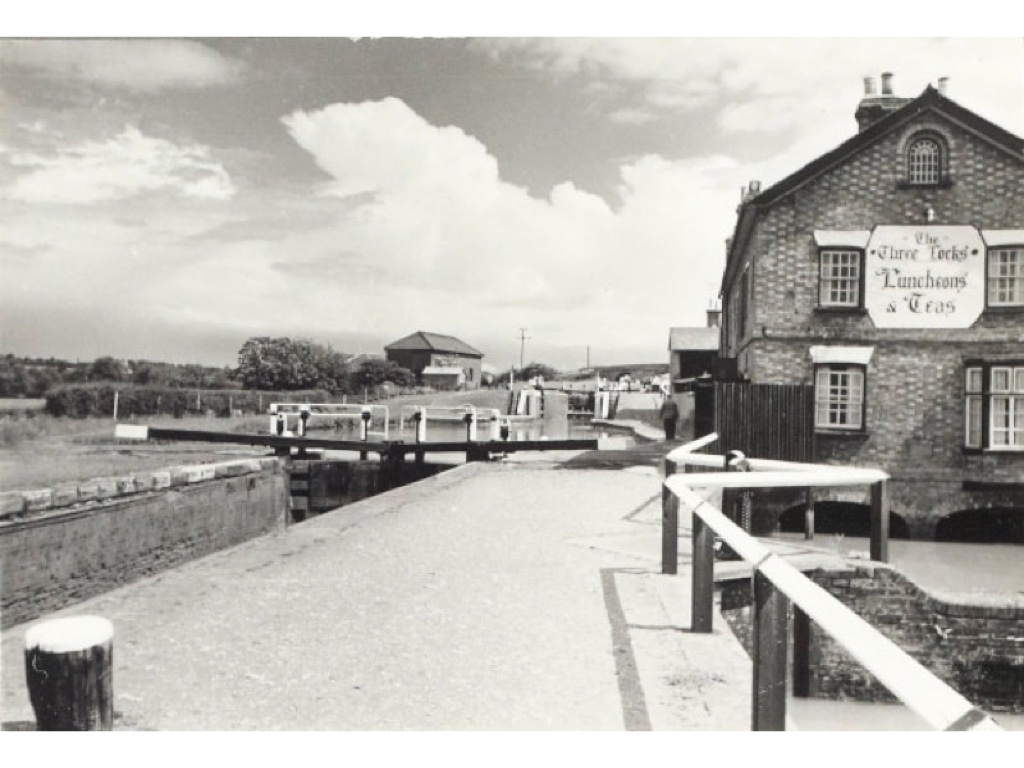
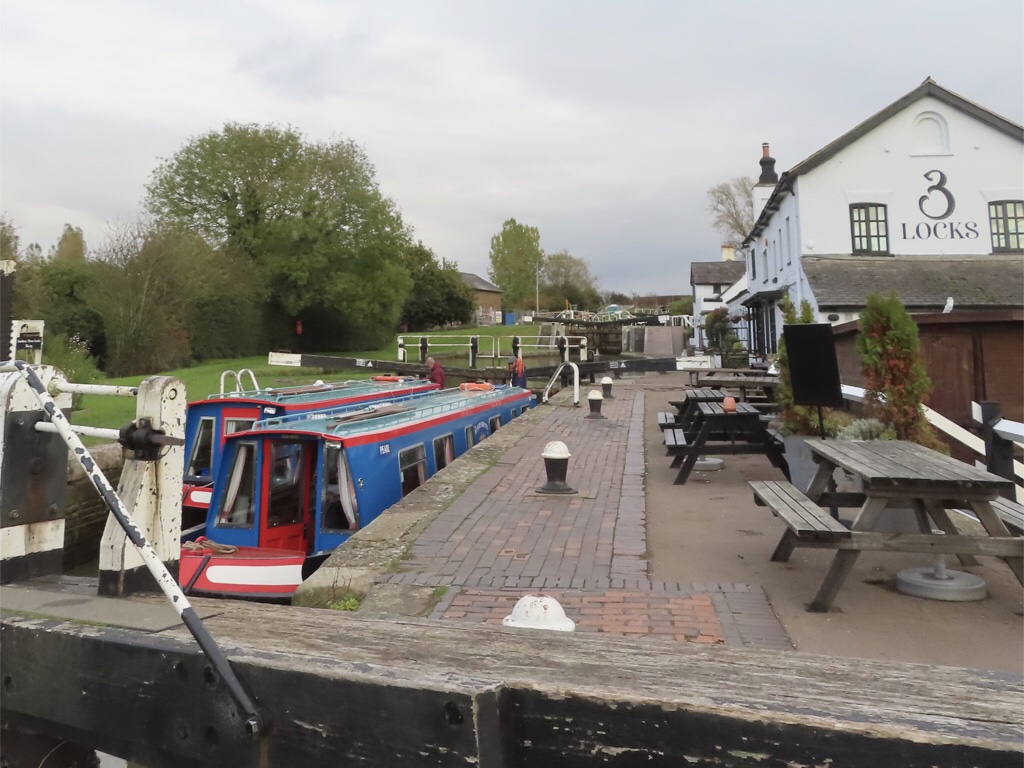
The Three Locks was purpose built as a canalside pub to provide services to travellers on the canal and was originally known as The New Inn. Census records from 1881 list the innkeeper as Mary Faulkner who ran the pub with her two servants, Charles Barron and Mary Curtis. On the night of the census the inn had one guest, Joseph Staige, a retired optician from Birmingham who was perhaps stopping off overnight on his way home from London on a flyboat. Here’s an archive photo from maybe the 1950’s … not much has changed except the colour and the boats in the lock.
Anyway, time to shake a leg and get on with the day!
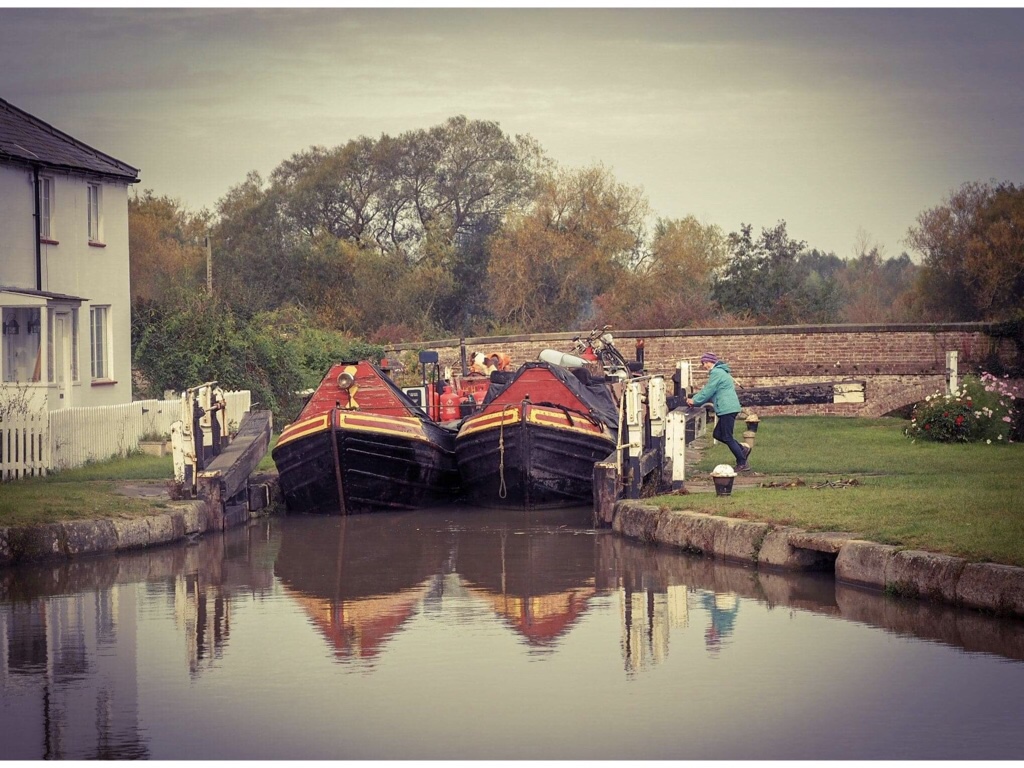
We set off after breakfast at 10.00 and we soon came to Stoke Hammond Lock. A real Waterman was bringing a pair of boats through the lock towards us which meant the lock was ready for us to take the other way …

… and here’s the pumphouse with its fanlight.

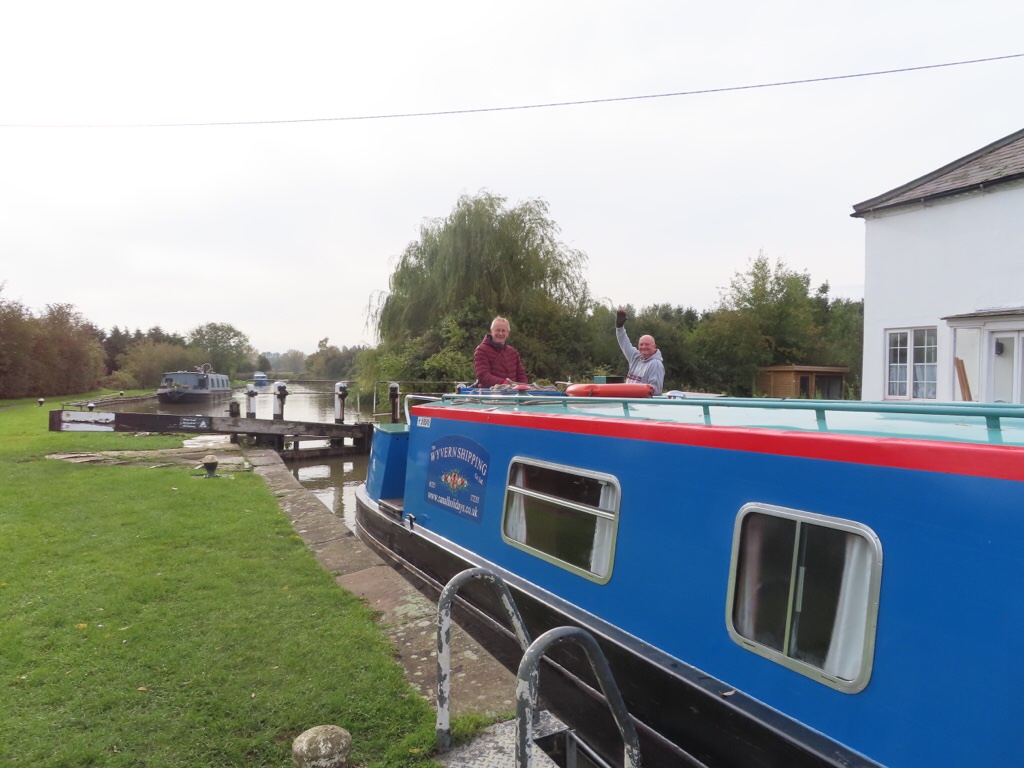
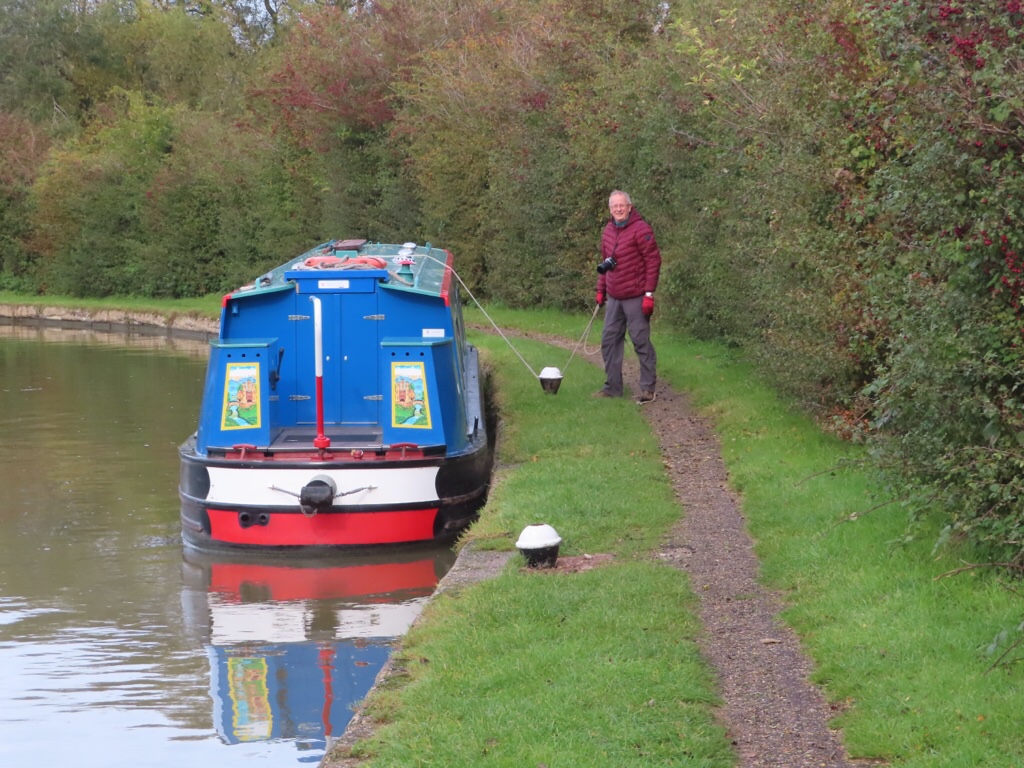
Only one boat had passed us this morning, so we were surprised to see another come up behind us to share the lock. She and I got chatting as we worked the lock … they had renovated their boat and had it for 8 years. I think he shared some tips with Chris, who managed to moor and pick me up perfectly!

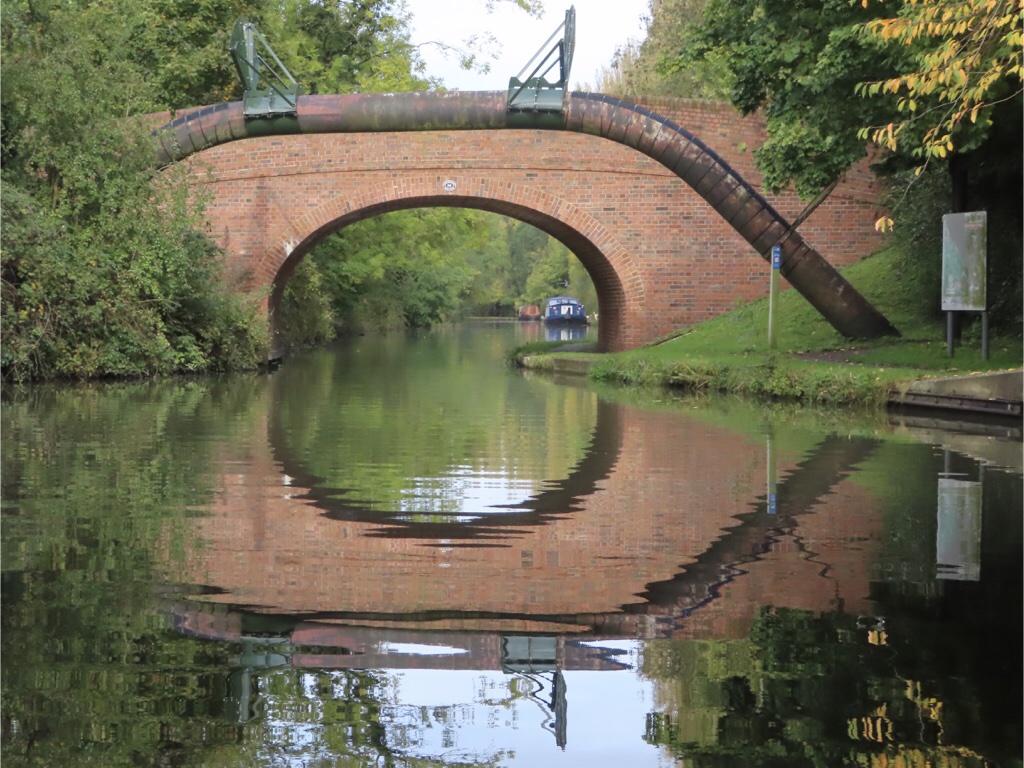
Incidently, if you wondered what a pipe bridge is … as we did … here is a prime example, taking a pipe over the canal!
Some time later we passed a marina …
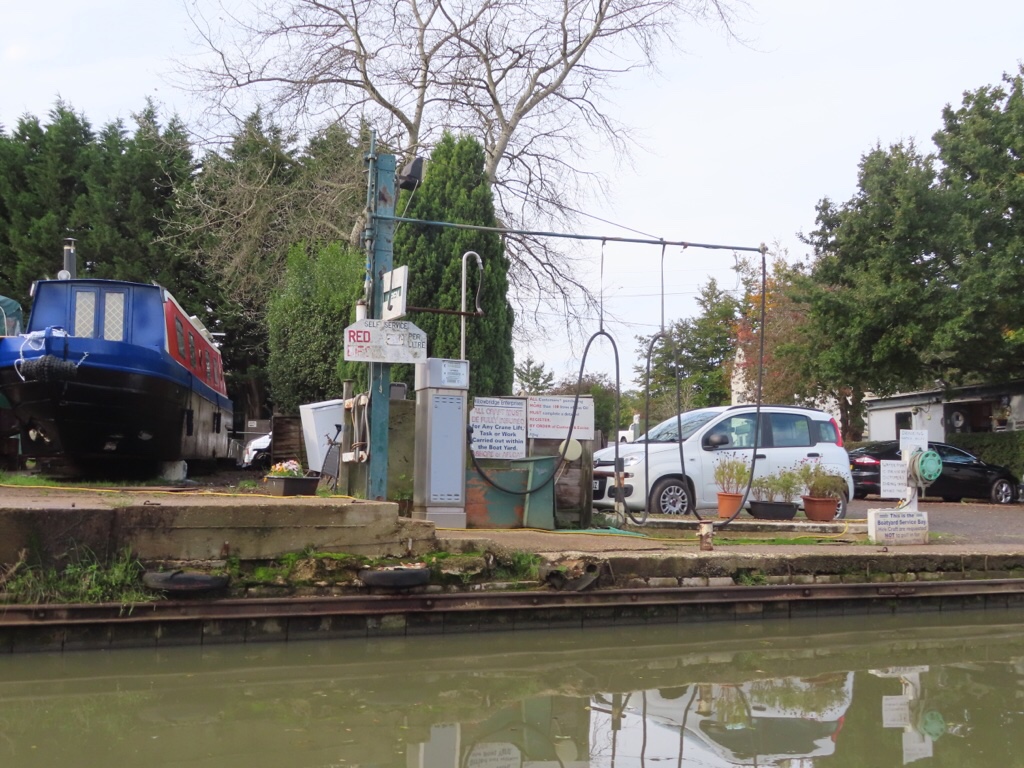

… then decided to stop for a coffee. Easier said than done though as mooring proved quite tricky … we managed to get the bow in … but the stern stuck out … so we tried again … twice … before we had success! I think the lesson learnt is not to leave it too long to stop for a break, as concentration is already waning when it’s most needed. We started with coffee … then I went for a short walk round Waterhall Park, where I saw the River Ouse …
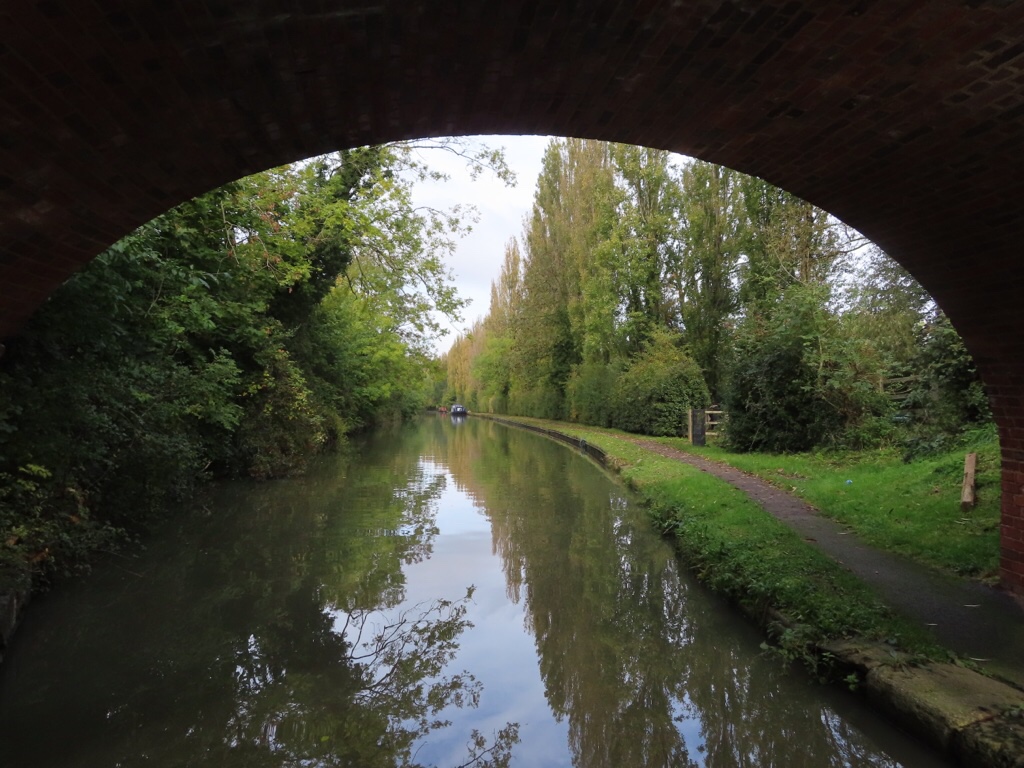


… then we had lunch!

Setting off again was easier said than done as we seemed to have got stuck in the mud. Chris got the pole and despatched me to the other end of the boat in the hope we could push free!

Finally we were free and a mile or so further on we reached Fenny Stratford where Bridge 96 takes the canal beneath the old Roman road of Watling Street and the oldest known gold coin in Britain dating from 200BC-100BC was found here in 1849.
Here are a couple more then and now images of the bridge …


… and houses on the site of a brick kiln and a wharf which was used to load goods from barges.
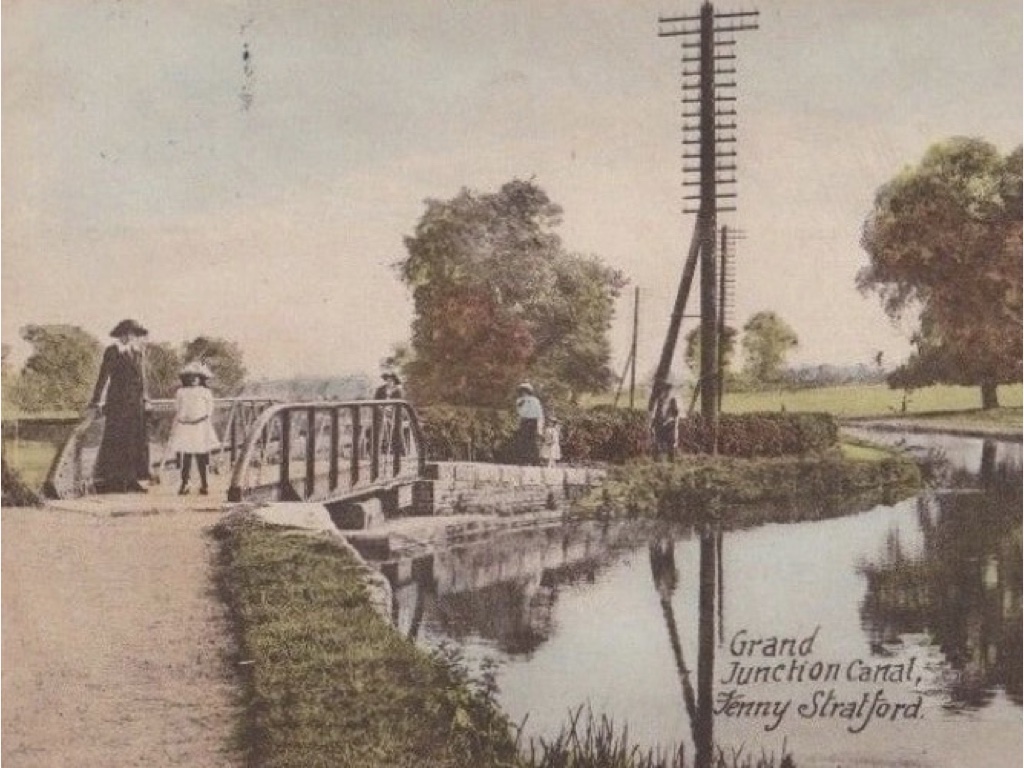
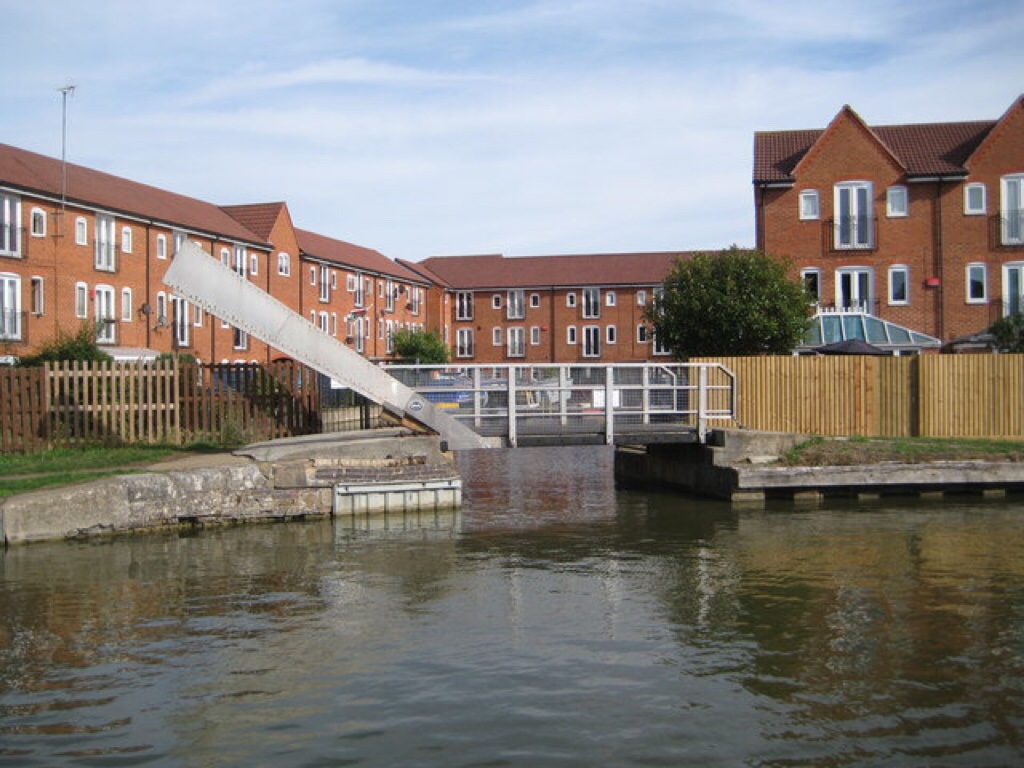
The towpath was carried over the entrance to the wharf by a swingbridge, since replaced by a liftbridge. There would have been wharves like this all along the canal, providing a transport network. The canal was also useful for other communication and large telegraph poles lined the route. A GPO repeater station amplified signals so they could travel north, or during WWII to the code-breakers at nearby Bletchley Park.
Just past the town is Fenny Stratford Lock, the first lock that raises the level of the canal after it has crossed the long flat plain of the Ouse Valley. We managed to moor up quite easily this time and went to check it out.


The lock had been left full, so we just needed to open the gates, but as I was taking a few pictures, I noticed an added complication, a swing bridge in the middle of the lock!
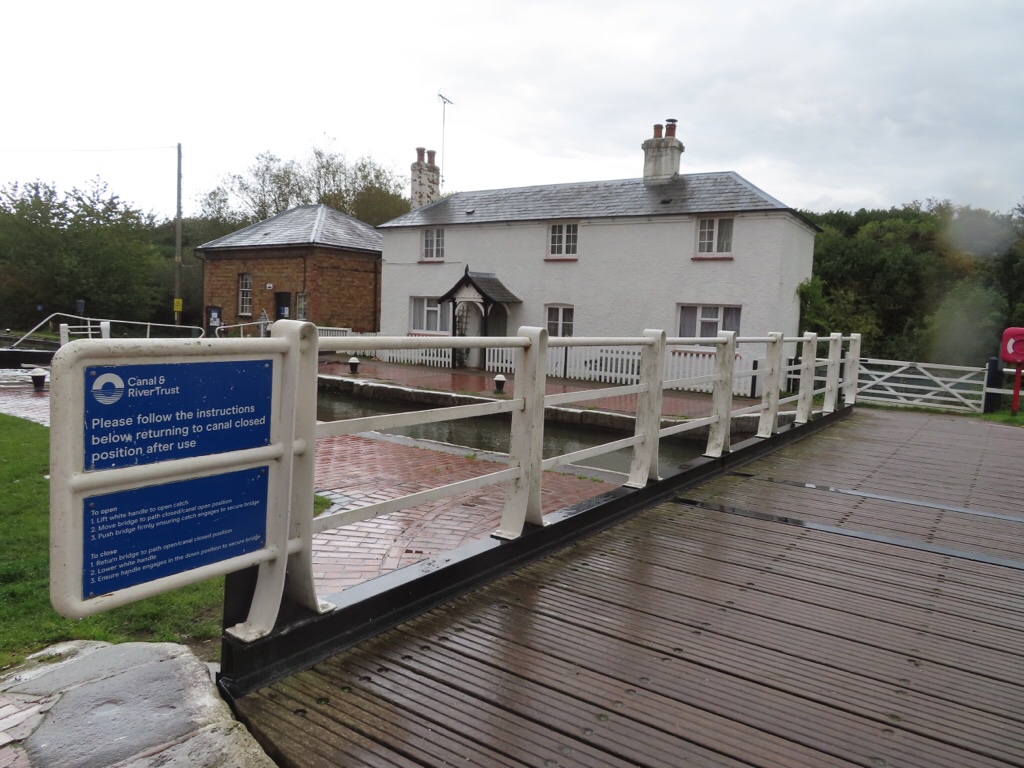
The sky darkened and the rain started, so we decided to wait and see if it would blow over.
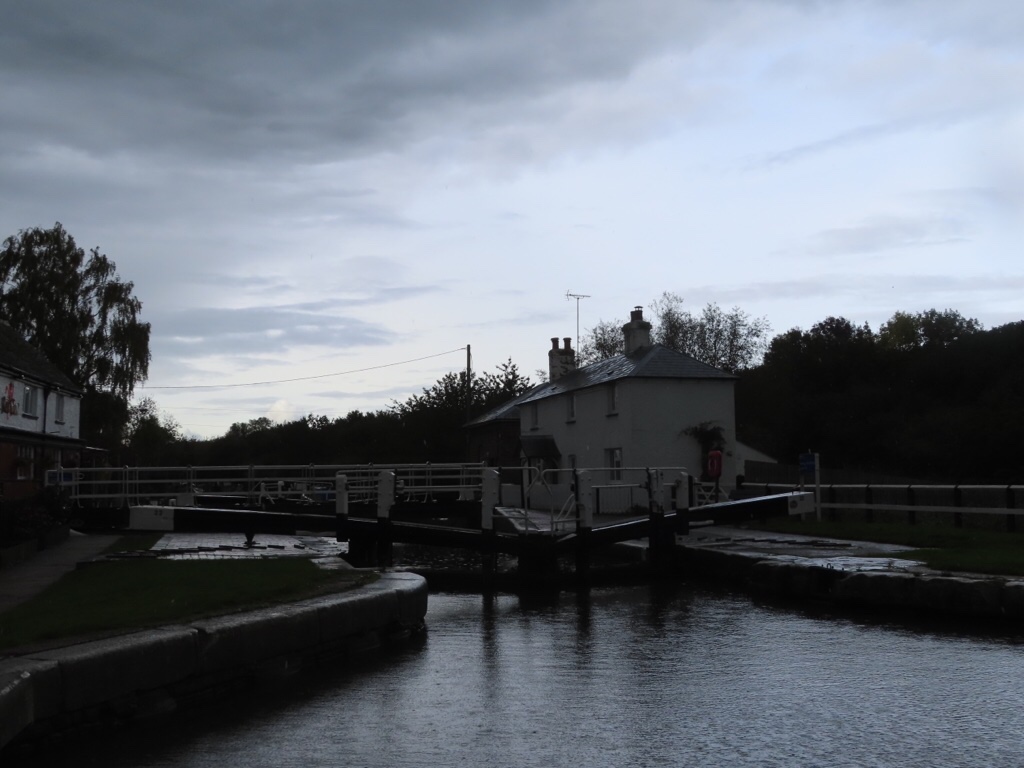
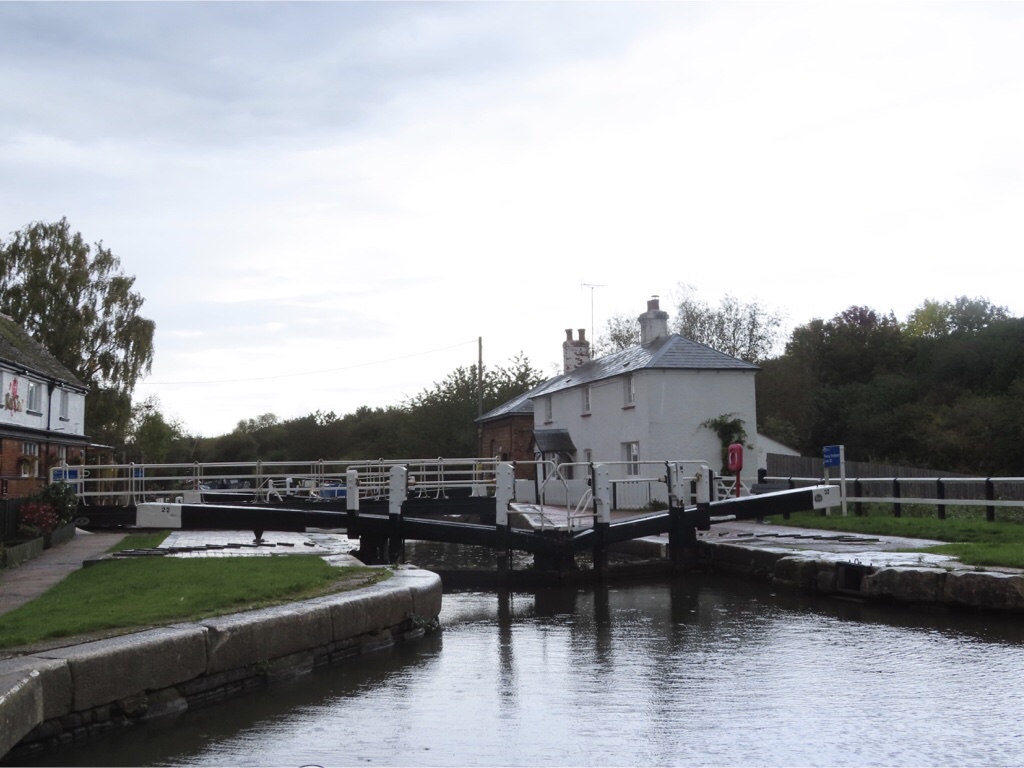
We didn’t have to wait long, just a passing shower. No other boats had come, so we started to work the lock ourselves. I tried to move the swing bridge, but struggled and Chris came to help … finally he had a chance at some manual labour!


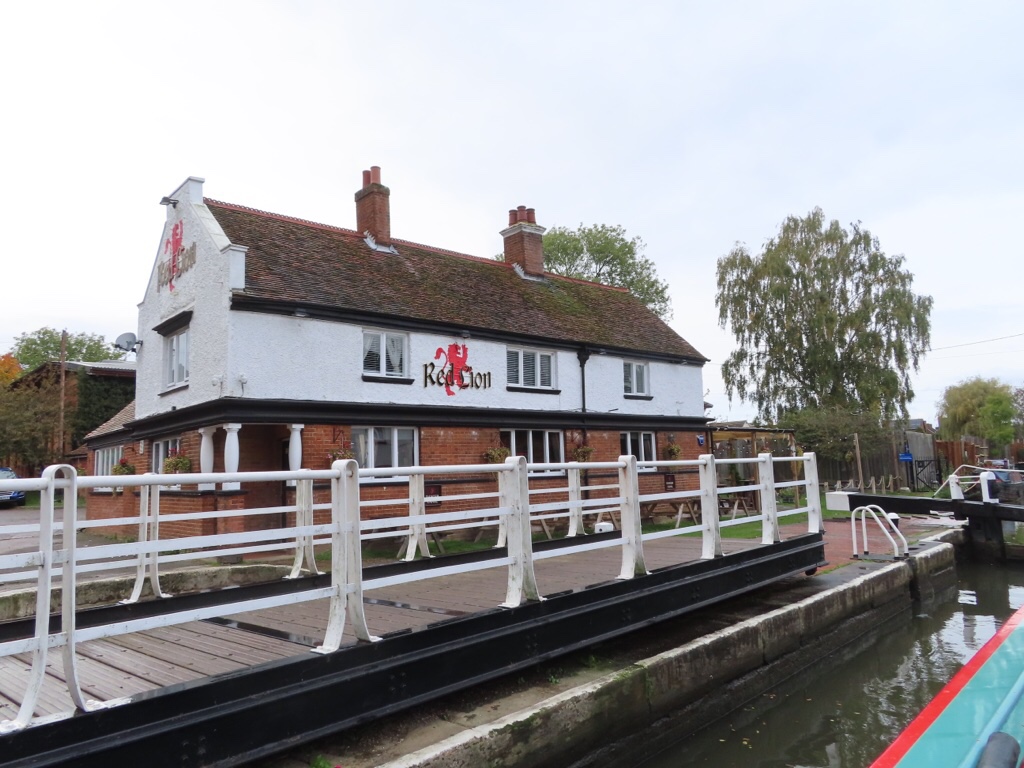

I opened the lock gates, Chris moved the boat into the lock. I closed the gates, opened the paddle on the other gates so the water equalised, then opened the gates. Chris took the boat out and moored while I closed the gates, but he had to help again with the swing bridge. I remembered that so far I had taken a few pics of Chris, but there were none of me, so I handed over the camera to even the score.


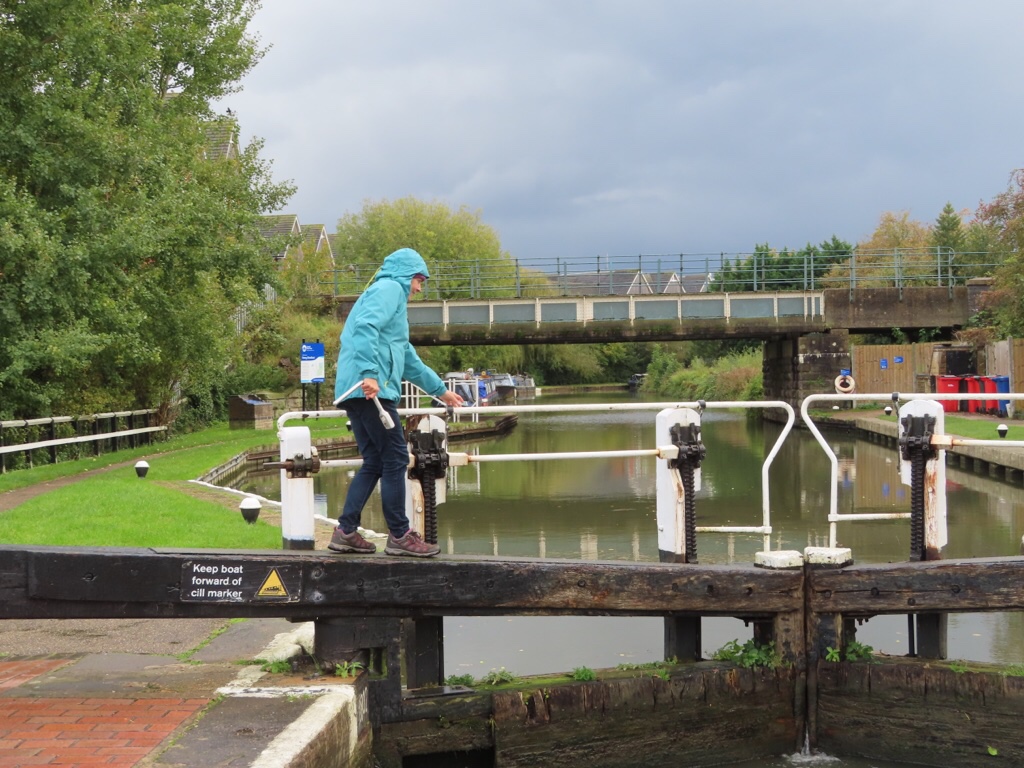


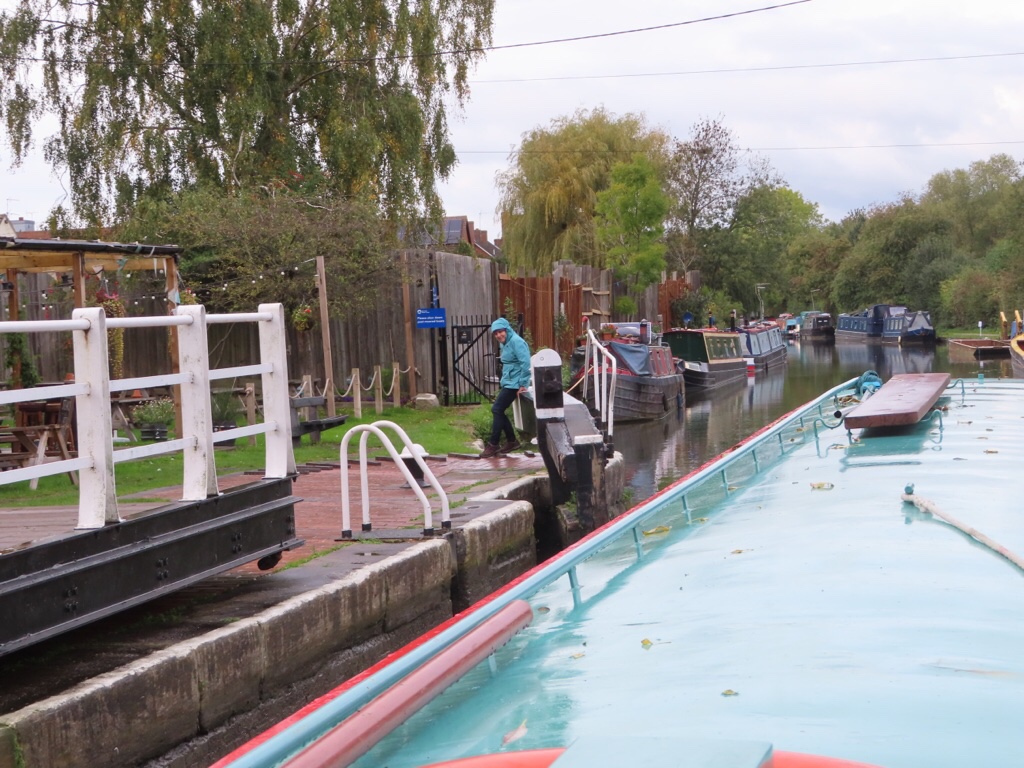

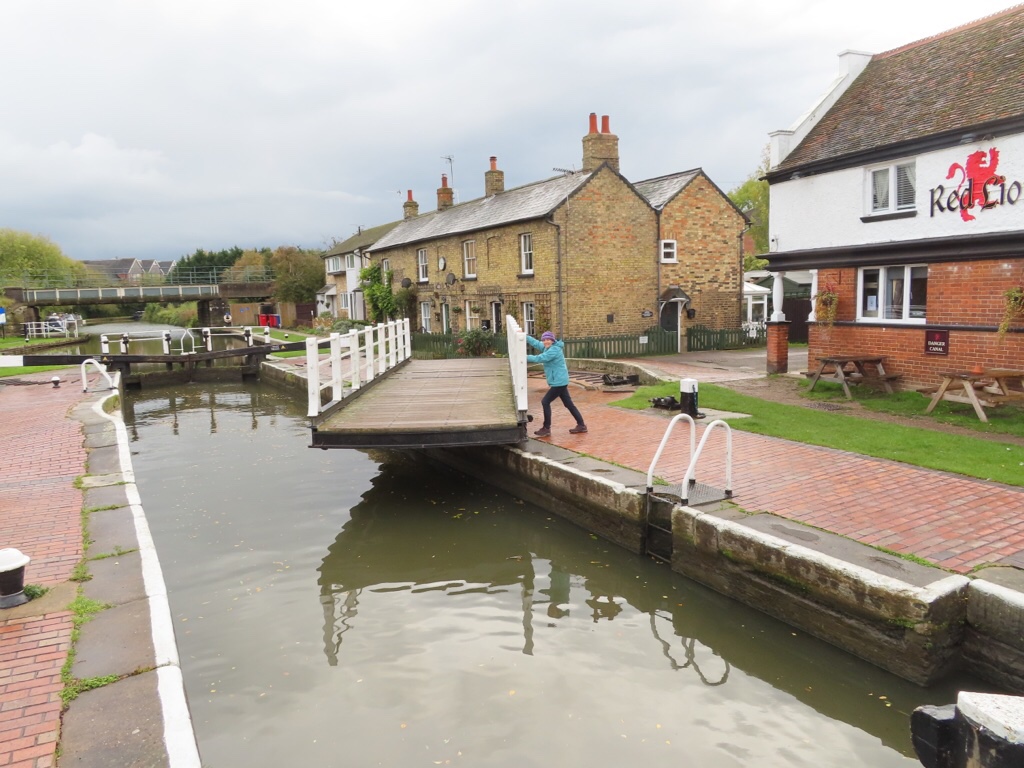


We checked we had left the lock as we should, then set off again. I really enjoyed working this lock as we remembered how to do it and managed all on our own … a real sense of achievement!
The sky was getting grey again and if it rains, the skipper gets wet, so we started to keep an eye out for a place to moor up … it’s not as easy as it sounds as you have to be a reasonable distance from hazards like bridges and bends not too close another boat and preferably not right by a noisy road. Coming into Milton Keynes, our options were reduced and we chose to stop just before Tinkers Bridge 90B, which we managed without event.
Sitting over a cuppa, we both felt the day had been quite hard work – the concentration needed to steer, as just a brief lapse has the boat heading for the bank – as well as the physical effort at the locks. We are resigned that as beginners, this is definitely slow travel as we have only travelled 5 miles, 3⁄4 furlongs today, and our idea of getting to Cosgrove is no longer realistic. Instead we will enjoy our tea and cake and take some time out. Chris is busy editing photos of swans …

… while I’m happy to put my feet up and read some more of my carefully chosen getaway reading … Canal Pushers by Andy Griffee, a murder mystery set on a narrowboat called Jumping Jack Flash on the Grand Union Canal no less!
Another tasty supper … this time sausages with roasted sprouts and potatoes with pomegranate molasses and a nice drop of Merlot!

Maps

 Off Travelling Together