 Having said our goodbyes to Tim and Ann, we walked out of their gate and the Ceres Bus was there … largely luck as the timetable is just a concept … and while there are several buses an hour, this one was going exactly where we wanted! The only downside was that it was possibly the oldest, most cranky bus still in service! Nonetheless, having followed the coast road, we arrived at Bato Port a couple of hours later.
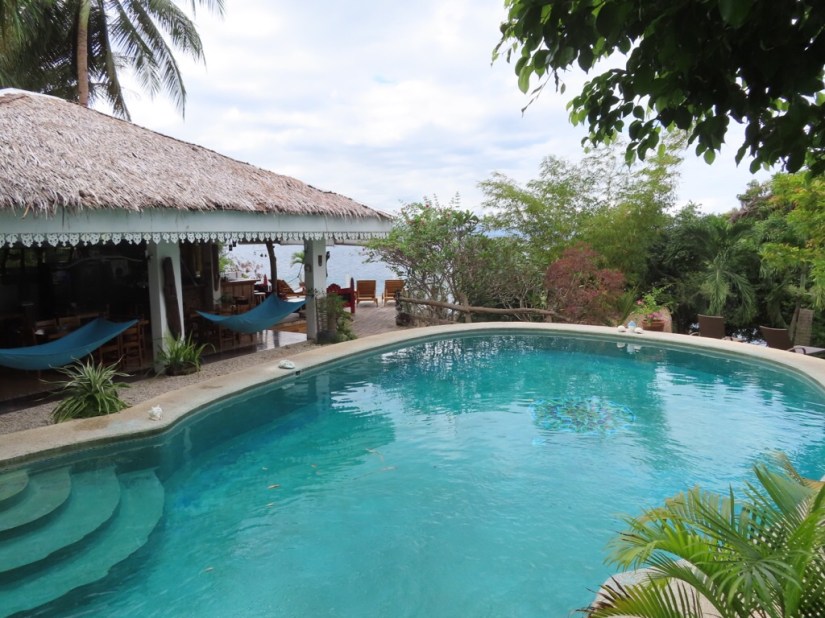
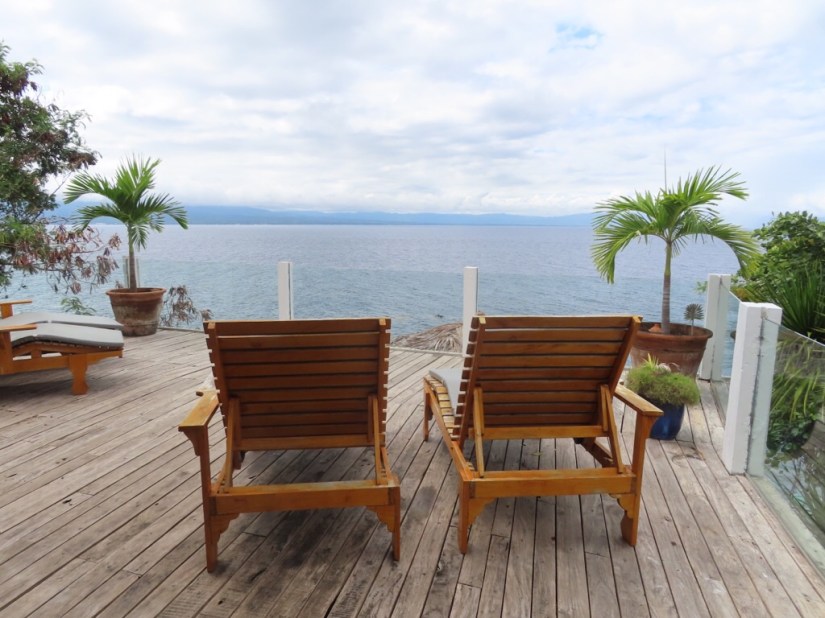
A final 4km by tricycle brought us to Fantasy Lodge, a small guesthouse which had caught my eye when I first started researching our trip, and I knew I wanted to include it if possible. We weren’t disappointed – the lodge is quite bijou, built round a small swimming pool with decking and gardens that give views across the Tanon Strait.

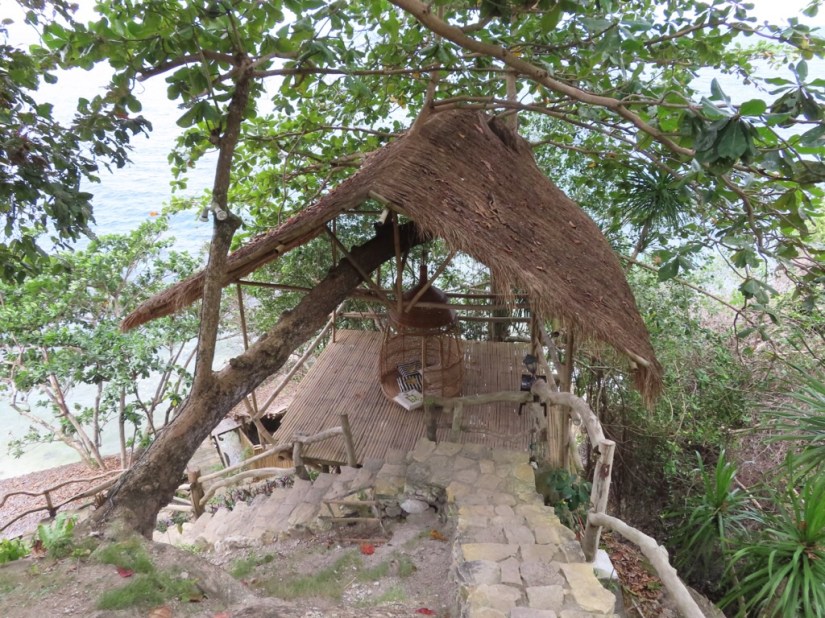
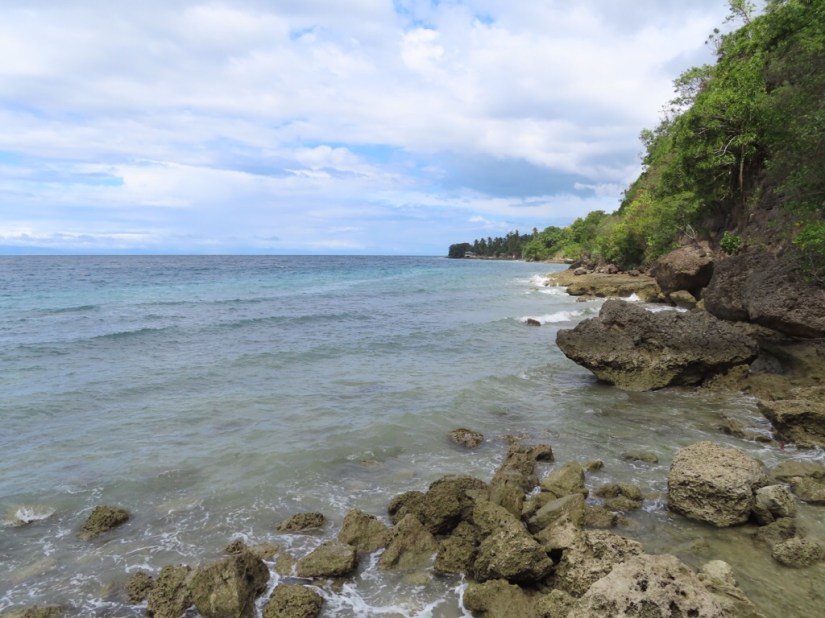
Steps lead down to more seating areas with a small rocky beach.

The first day we just settled in, sat, swam, had massages to the sound of the sea below, and drank cocktails before dinner. The menu has a good choice including several veggie choices for Chris, which is handy as we are a little way from anywhere else!
Next morning we decided to explore Samboan, the small town just up the road. We waited outside for a tricycle and we joined other passengers. By the time we reached the town, there were six of us and the fare was 30p each!
Philippines towns are divided into barangays which started as relatively small communities of around 50 to 100 families, although in some areas they are now larger. Samboan has 15 barangays, with Poblacion being the main town centre, although the others often have their own neighbourhood centre, church, shop and fiestas!
So far, we have travelled on the bus through lots of small towns just like Samboan and we have already noticed several characteristics they all share.
Firstly, there is often bunting of some sort decorating the approach, after all there is bound to be another festa soon …

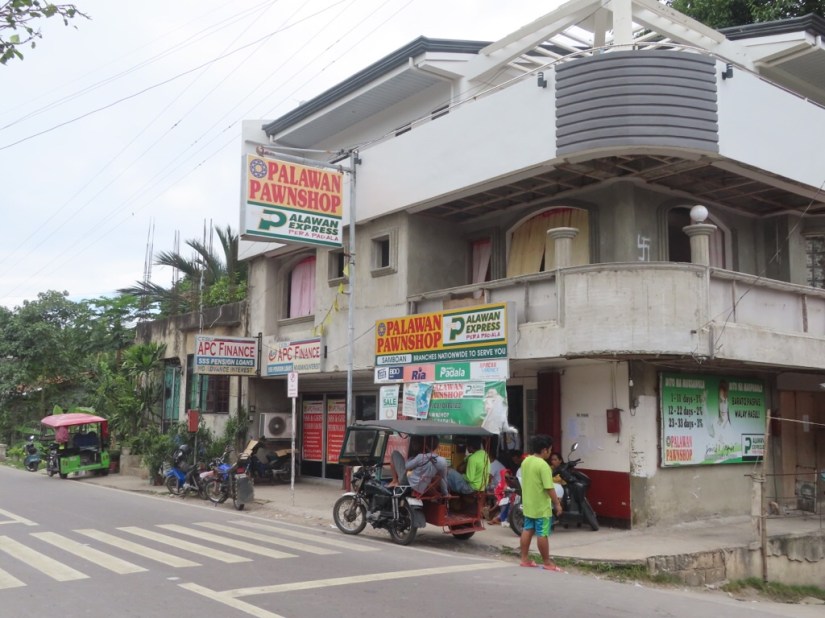
Every main street has at least a couple of pawnbrokers, which still make loans on goods like jewellery and luxury items, but have expanded into money remittance and short term loans …
Several bake shops, each selling a huge variety of rolls, many sweet covered in sugar and only 4 pesos (6p) each, because we bought some …


…and a pool table, set up somewhere in the shade, and always busy!

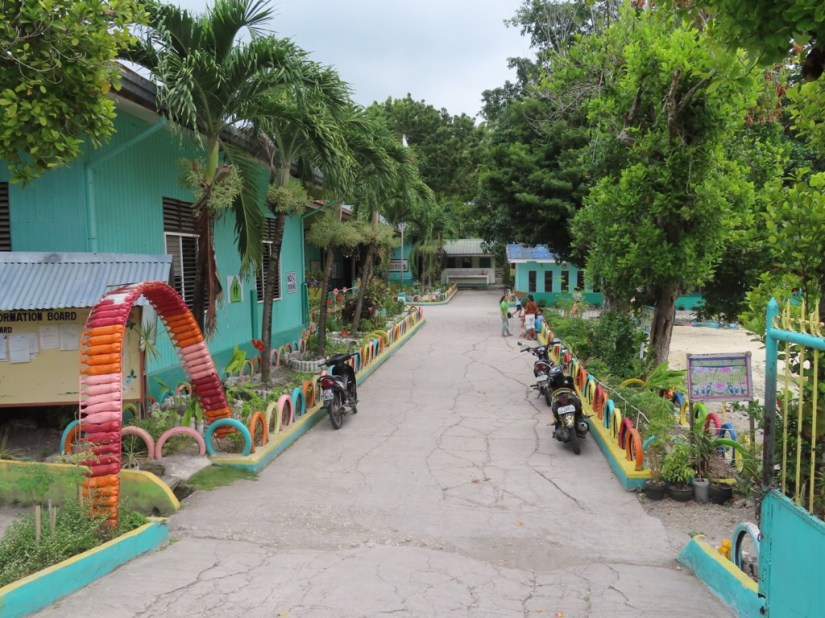
There also seems to be lots of civic pride and the most colourful building is the town school, often decorated with brightly painted recycled items.



Here there is also the Boluntaryo Monument, a central shady kiosk dedicated to the volunteer guards during World War II.


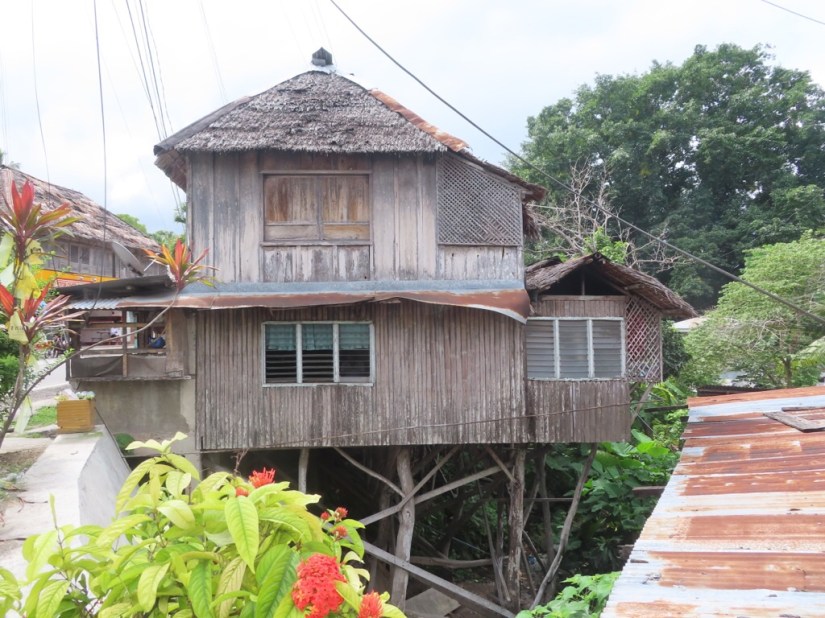
Buildings range from the original country houses, built on stilts of wood and bamboo, adapted to the climate and easy to rebuild if damaged in a storm or earthquake …
… to a design adapted by the Spanish using a stone or brick base with overhanging, wooden upper stories with balustrades, small window openings called ventanillas, sliding panels fitted with capiz shell and a nipa thatched or Chinese tiled roof. Inside there was open ventilation and elevated apartments used as living space with the ground floor used for storerooms, cellars, and other business purposes.
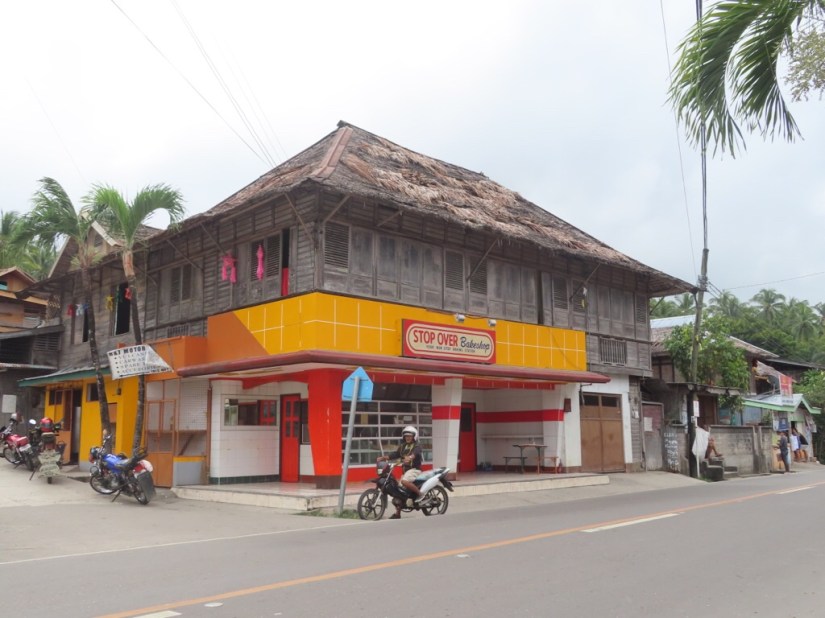

Today many buildings have a galvanised roof, are often completely concrete, often painted in a range of colours, but still have some of the original design features.
We head towards the church, St. Michael Archangel Church which was built by Augustinians and is one of the oldest Spanish-built churches in Cebu, made of coral stones.

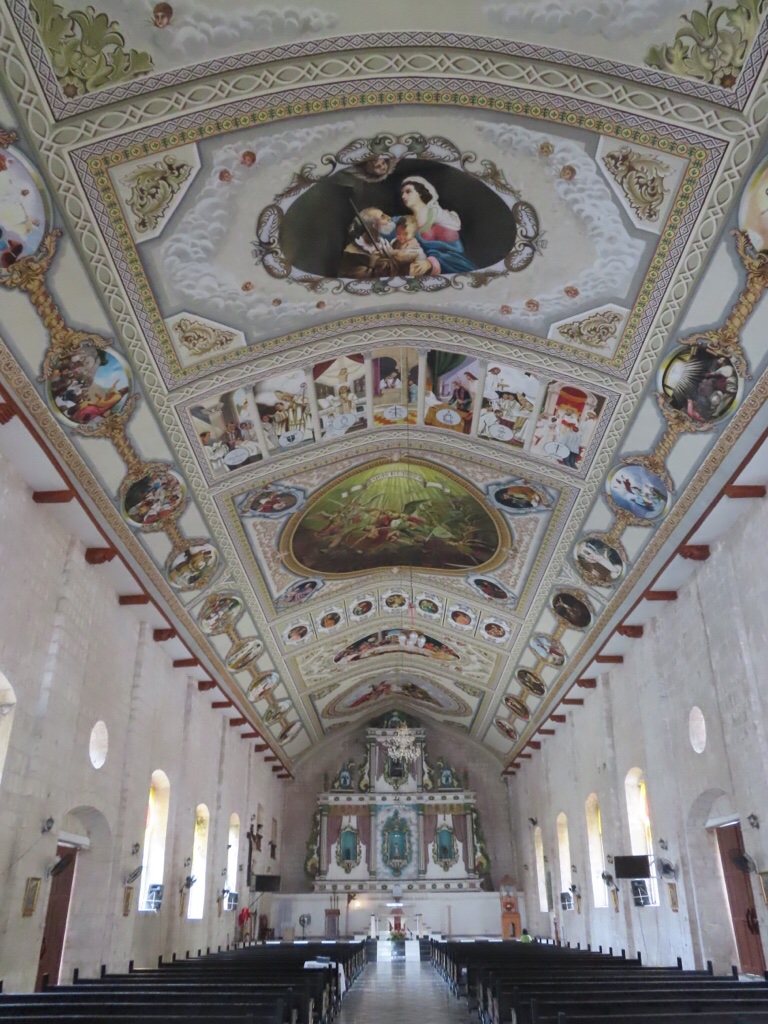
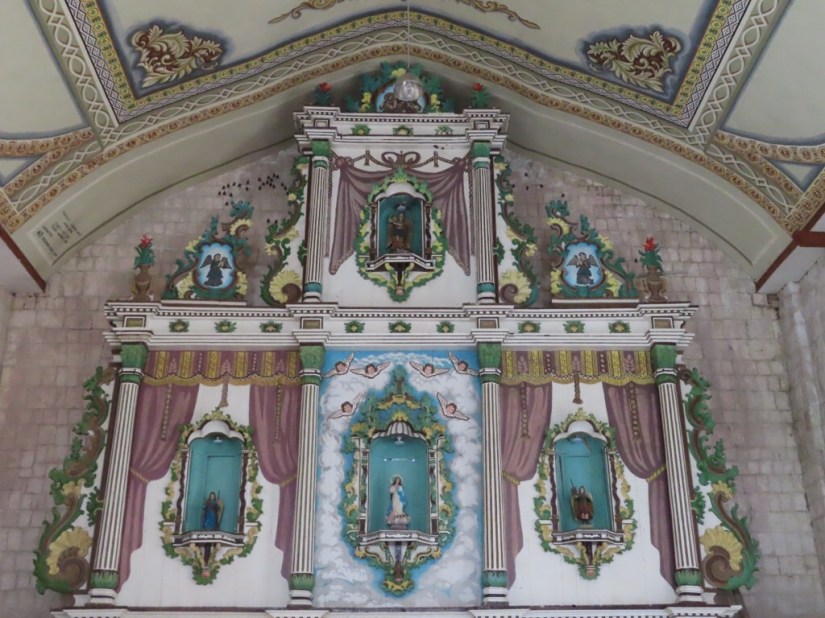
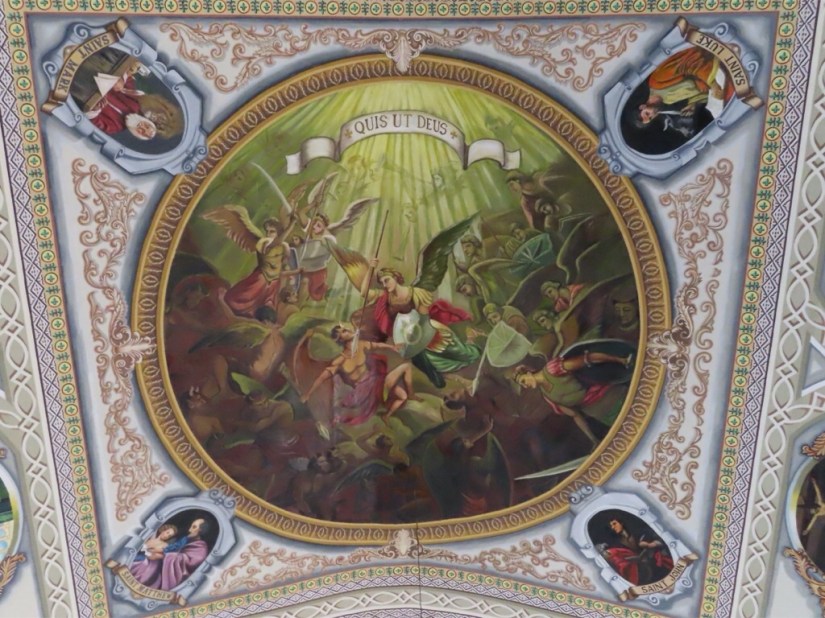
It is set in a huge plaza which would be large enough for the whole town to gather and has a raised area one end …
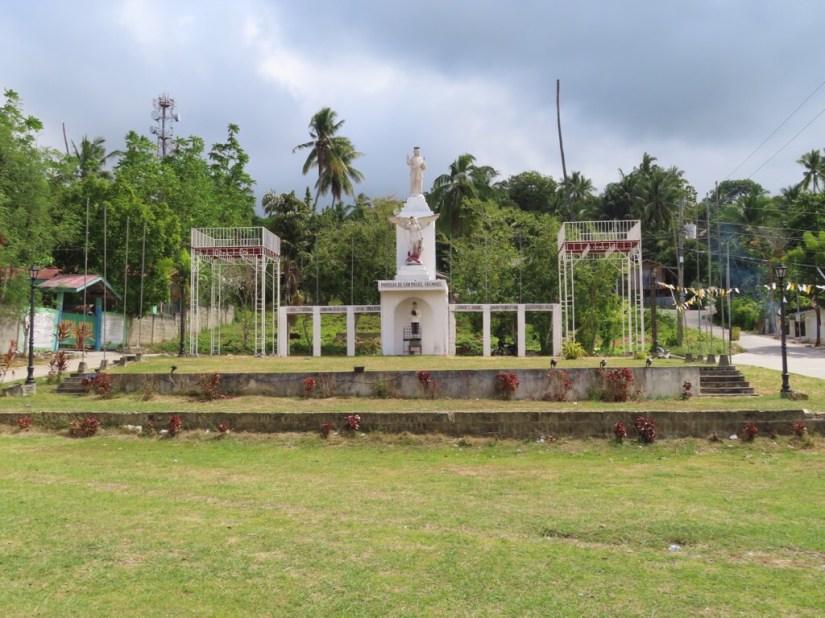
… and at the other the tallest and best preserved watch tower in Cebu, built of coral stone by the Spanish as a lookout for Moro pirates.

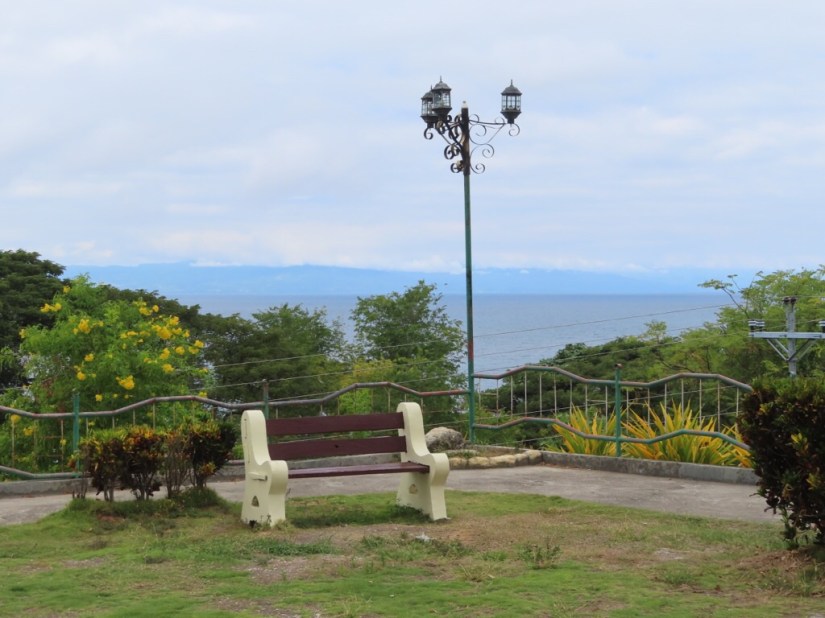
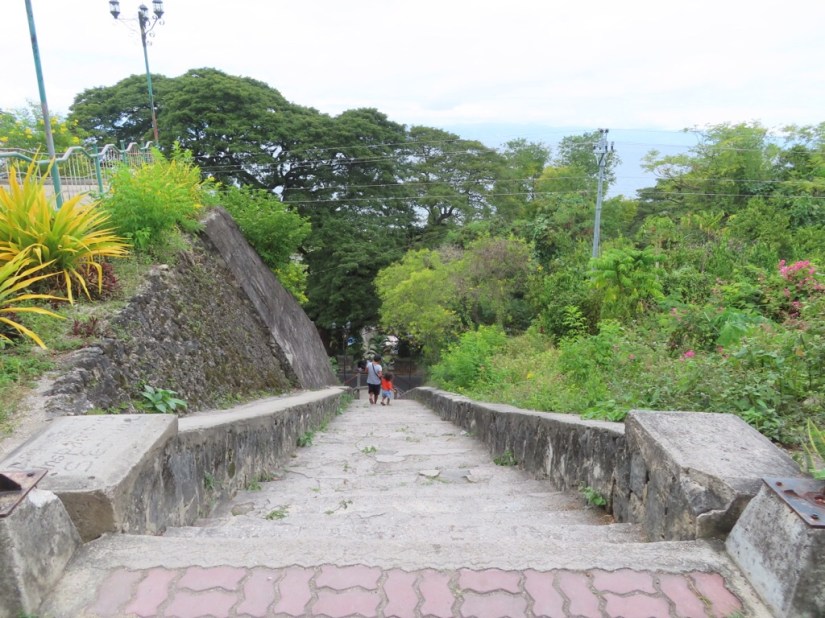
From there a flight of 147 stone steps called St Jacob’s Ladder, leads downwards, originally to the beach. It was instigated by the parish priest in 1878 to make it easier for parishioners to attend mass.
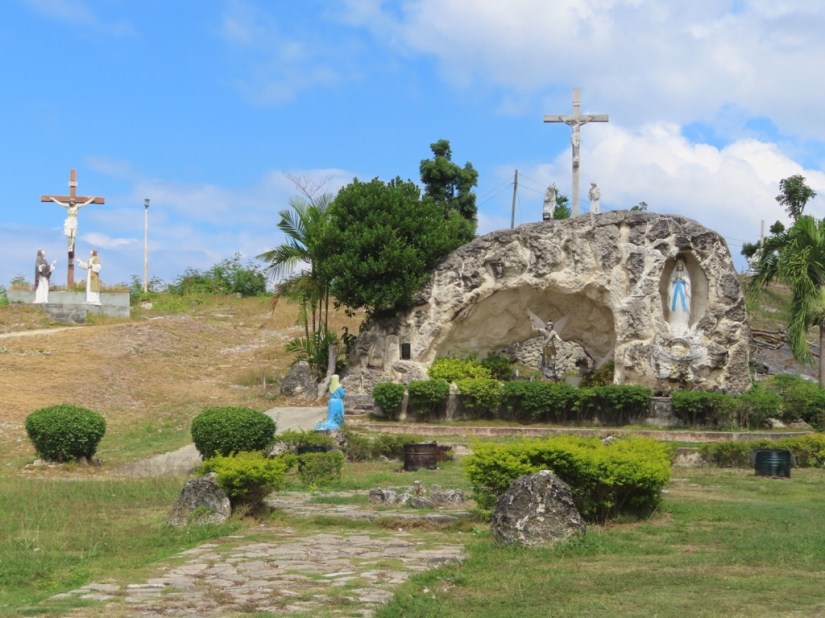
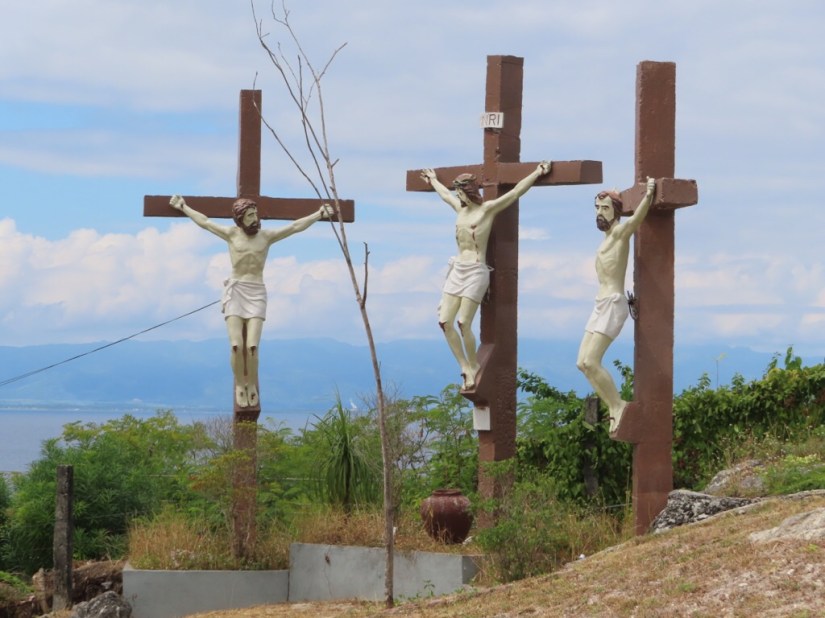
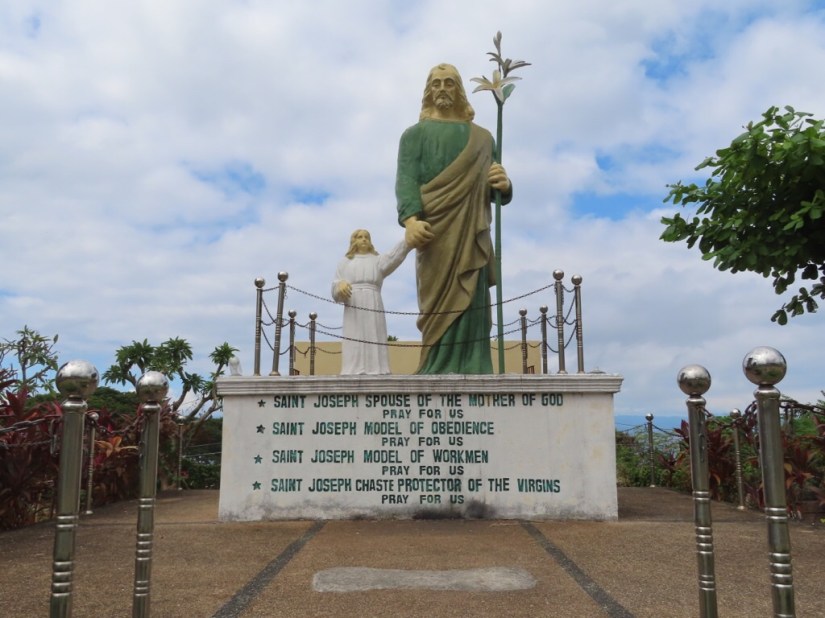
There is also a park containing a Grotto and sculptures of the Stations of the showing the Passion of Christ where churchgoers flock during Holy Week for penance.

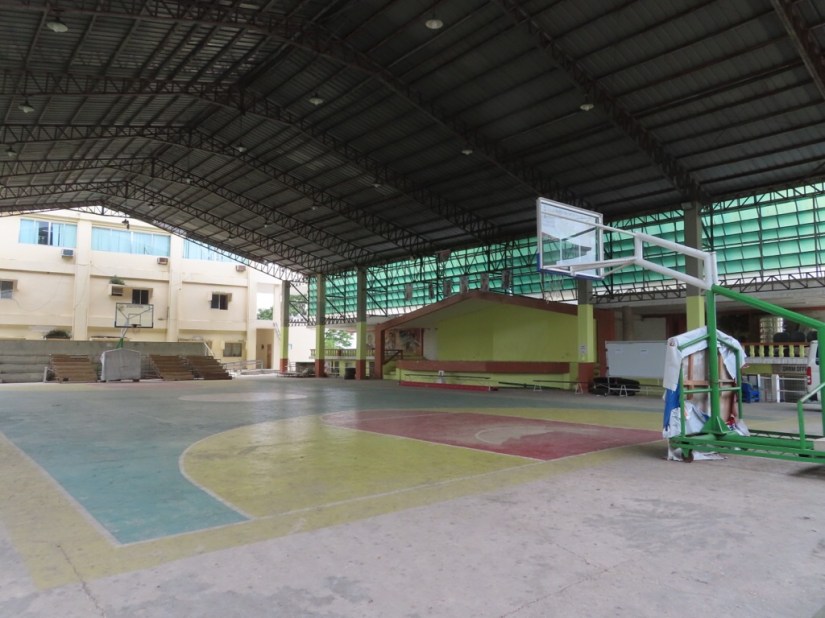
Heading back, we passed the Municipal Mueseum and also the basketball court, another essential in a country that has adopted this as their national sport, despite having few people over 5ft tall, and of course the market.

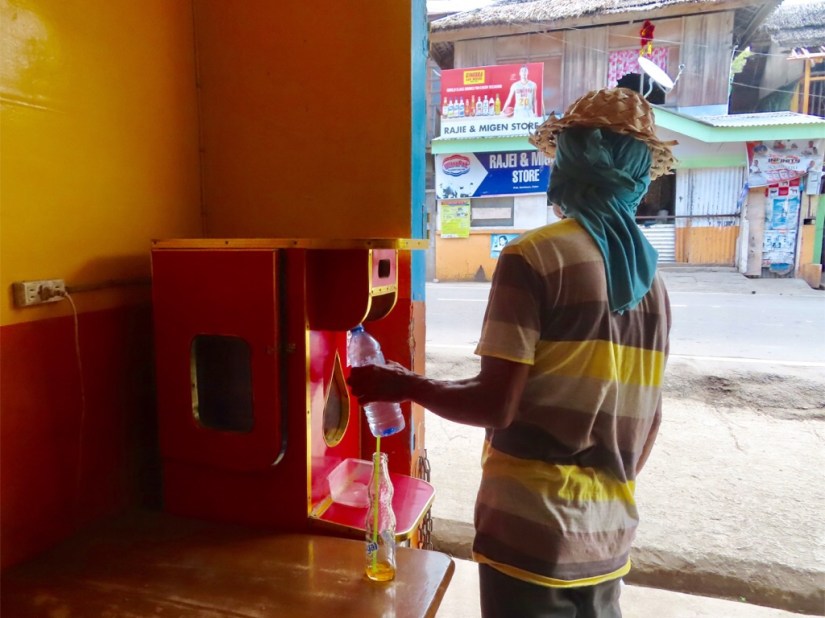
 I mentioned recycling, and we are so pleased to see these huge refillable containers for water.
 There is one in the hotel we can use to refill our bottles. But we have never seen a water vending machine before … costing just a few pesos to fill a litre bottle.
And another of those inventive Christmas Trees we have seen all over, using recycled items.

There are a number of waterfalls to visit, all within a few kms, but having already had such a great experience at Cambais Falls, we weren’t in a rush to try another. So instead, next day we took snorkelling stuff just down the road to the Samboan Marine Sanctuary, which was a far more casual affair than we were expecting as we couldn’t see anyone to pay the small fee to, so we just walked down the beach and into the water. We were able to wade out on sand till waist deep, then just lay on the surface to watch the coral and fish. The water wasn’t very deep and there was plenty of coral, some of it swishing backwards and forwards in the water. In between were a variety of fish including huge brightly coloured parrot fish, tiny bright blue ones and even a couple of Nemos. The experience was cut short when I felt my arm stinging, but I hadn’t been aware of touching anything and I’d not seen anything. I got out, and my arm came up in a raised red splodge … the consensus was jellyfish, and I soon recovered with an anti-histamine tablet and some white vinegar, but we didn’t feel like chancing it again.
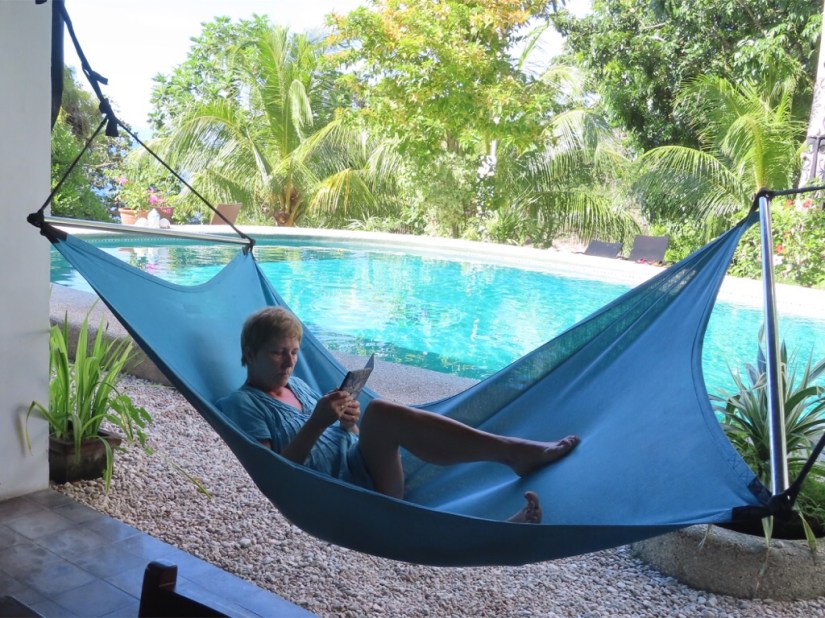
There was nothing else for it … some time in a hammock, blogging and reading, a swim, sunset … you know the drill!
 Tomorrow we move on and get to clock up 2 more islands …
 Off Travelling Together