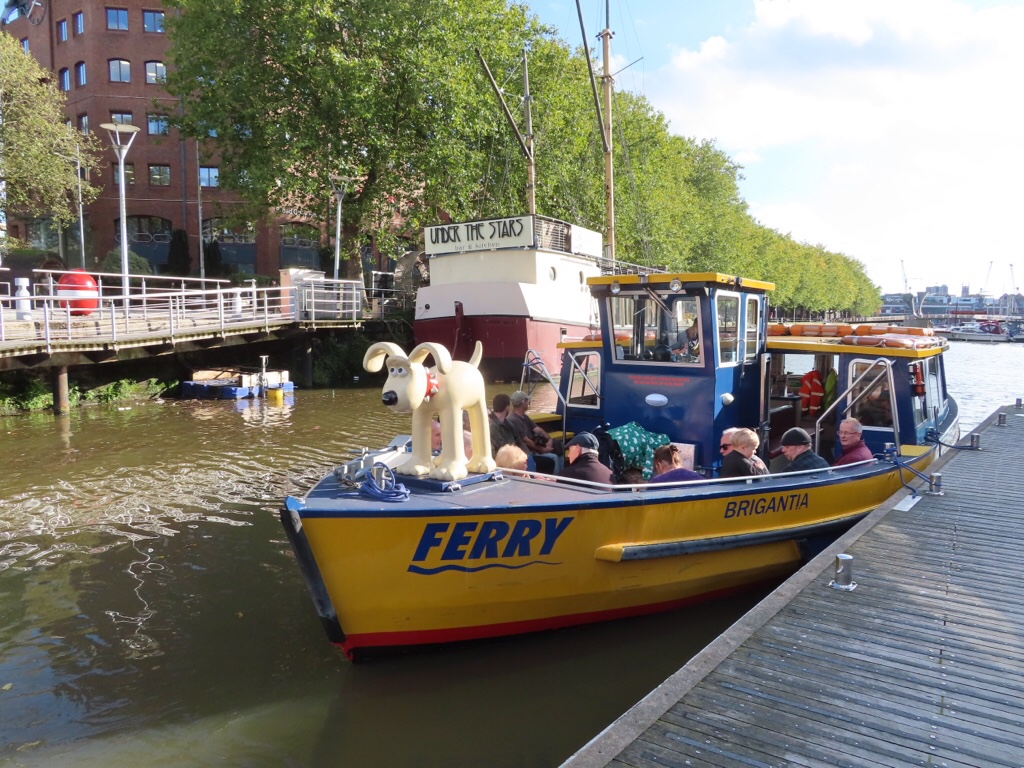
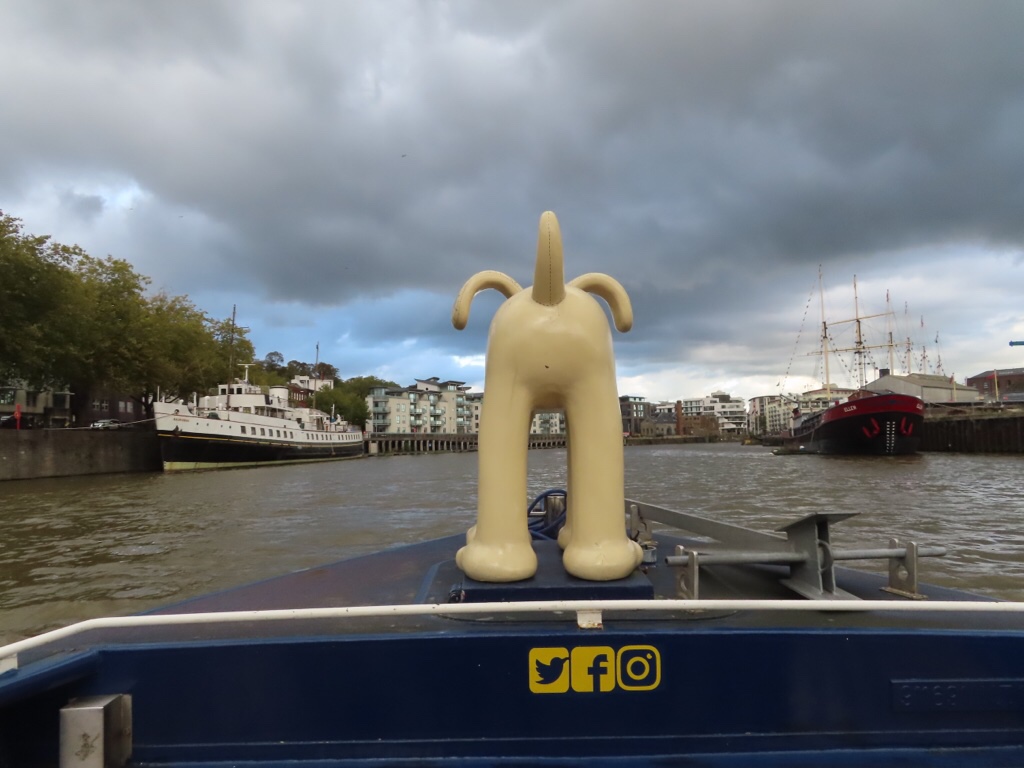
 Today is our wedding anniversary, and we picked Bristol so we could celebrate with a boat trip. There are a pair of ferries who have a figure of eight route round the harbour and we really fancied having Grommit at the helm but he was going the wrong way … maybe later!

 We passed wharf buildings converted into apartments …


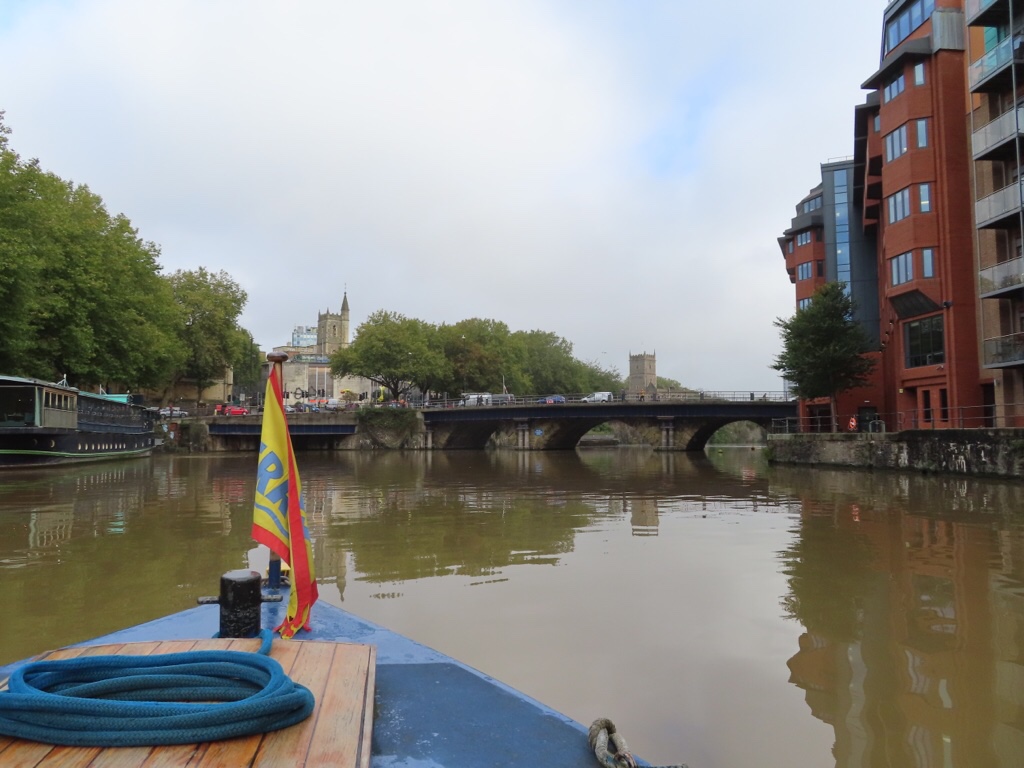
… under Bristol Bridge …
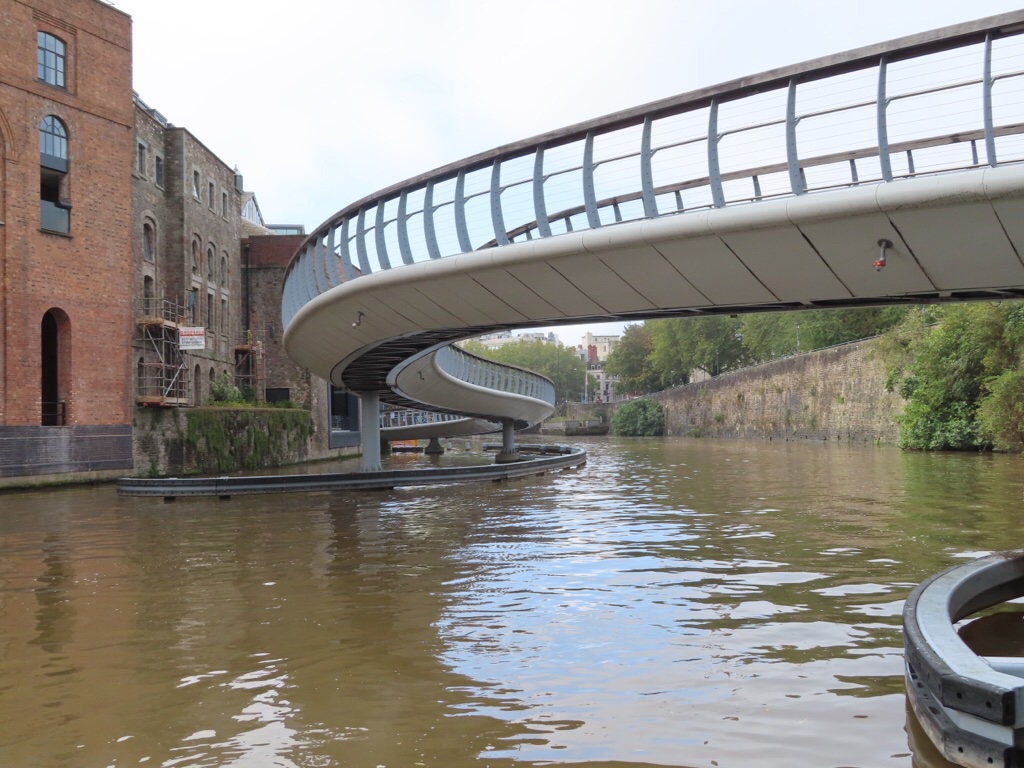
… and an interesting new pedestrian bridge …
… until we could see Cheese Lane Shot Tower. William Watts invented the tower process for making lead shot whereby molten lead was dropped into cold water below. The original tower was built in 1782 and used until demolished for road widening in 1968. It was rebuilt the following year in this modern design and continued to be used to make lead shot till 1980. It can now be hired as a penthouse boardroom!

We got off at Castle Park which contains St Peter’s church, bombed in the Blitz and left as a monument …


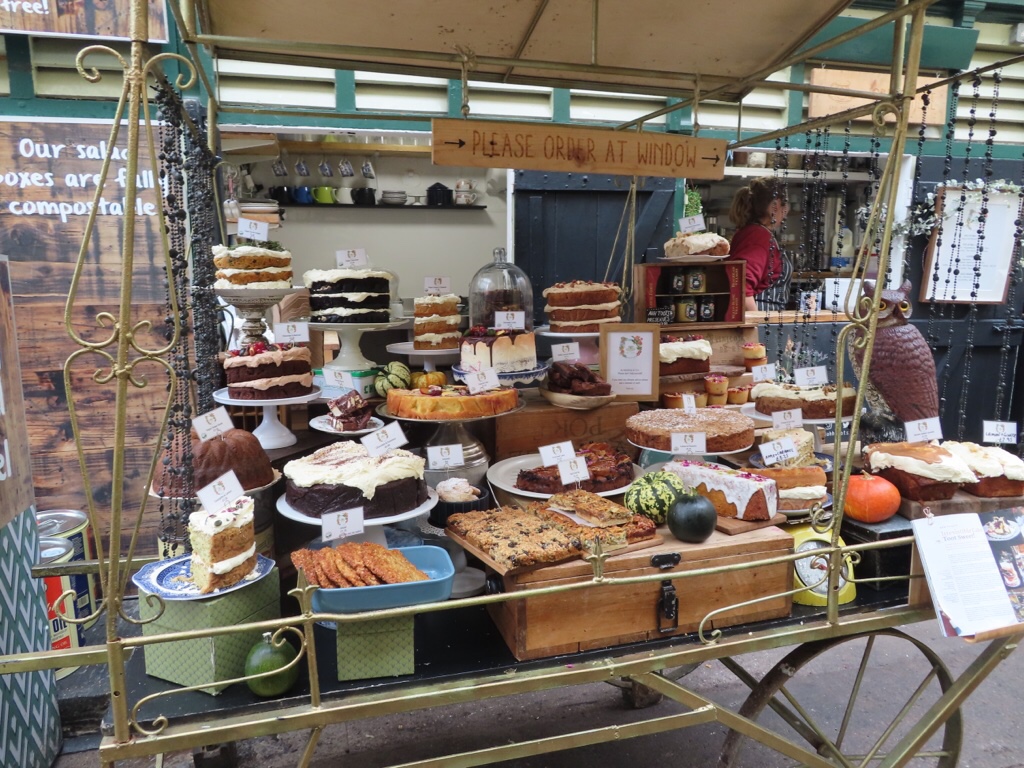
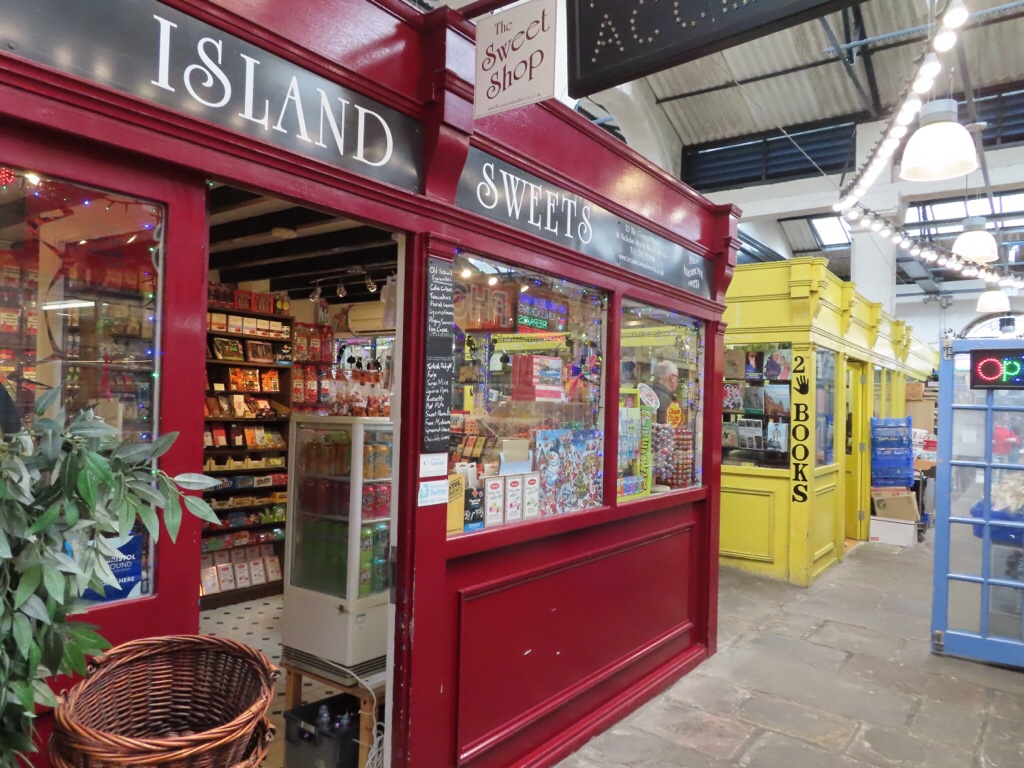
… then followed a route through the city, picking off the main attractions starting with St Nicolas Market …



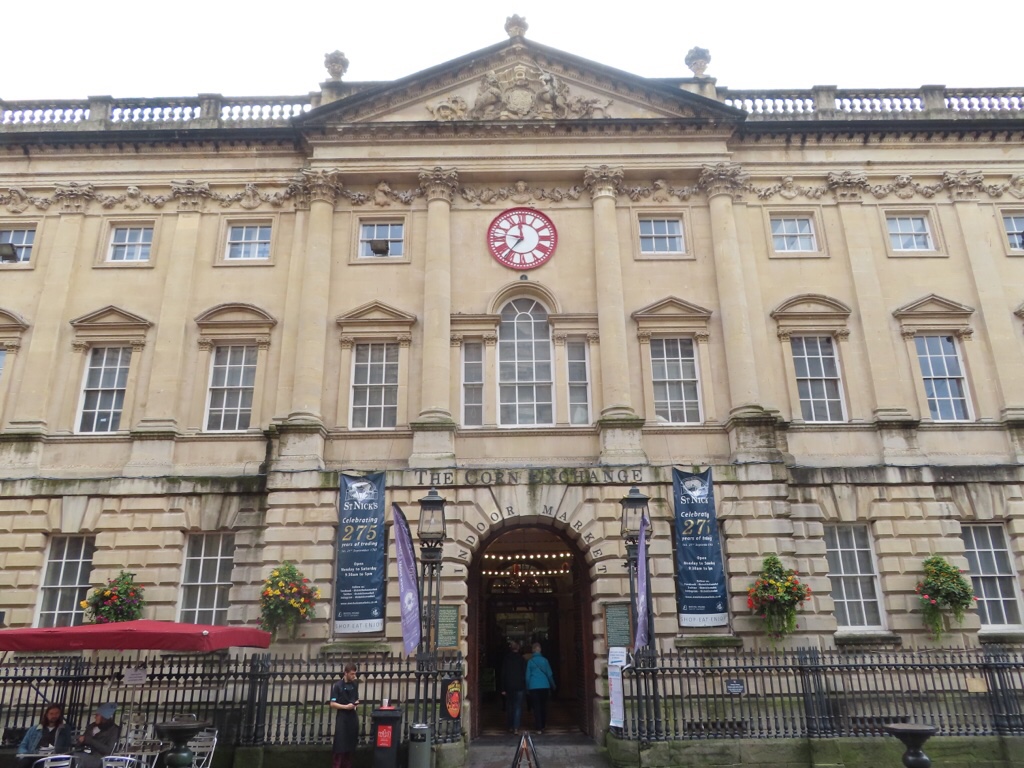
We exited the market in Corn Street where the C18th Corn Exchange was built to house the merchants who were blocking the streets. They settled their debts on the four flat-topped brass pillars called Nails – hence the expression to ‘pay on the nail’.

The clock above the entrance has two minute hands, the red hand shows Bristol Time and just over ten minutes ahead is the black hand showing Railway Time (or GMT) used before time was standardised across the UK to accomodate railway schedules in 1852.
Everards Printing Works has a colourful Art Noveau facade with Carrara-ware tiles and murals of Johannesburg Gutenberg and William Morris, the fathers of modern printing, separated by the Spirit of Literature and presided over by a woman holding a lamp and mirror representing light and truth … it just needs a little tlc so I hope somebody restores it.

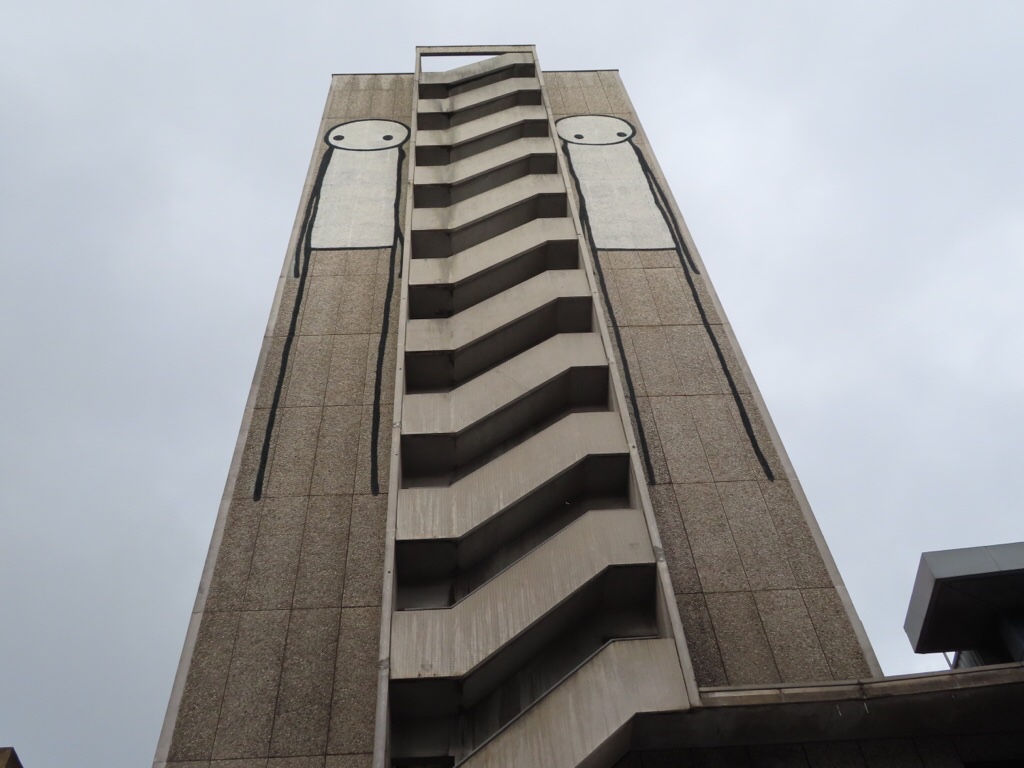
We then headed down Nelson Street to see remaining street art from the See No Evil festival in 2011-12. There is a huge amount of information online about who painted what, but here are just some images.

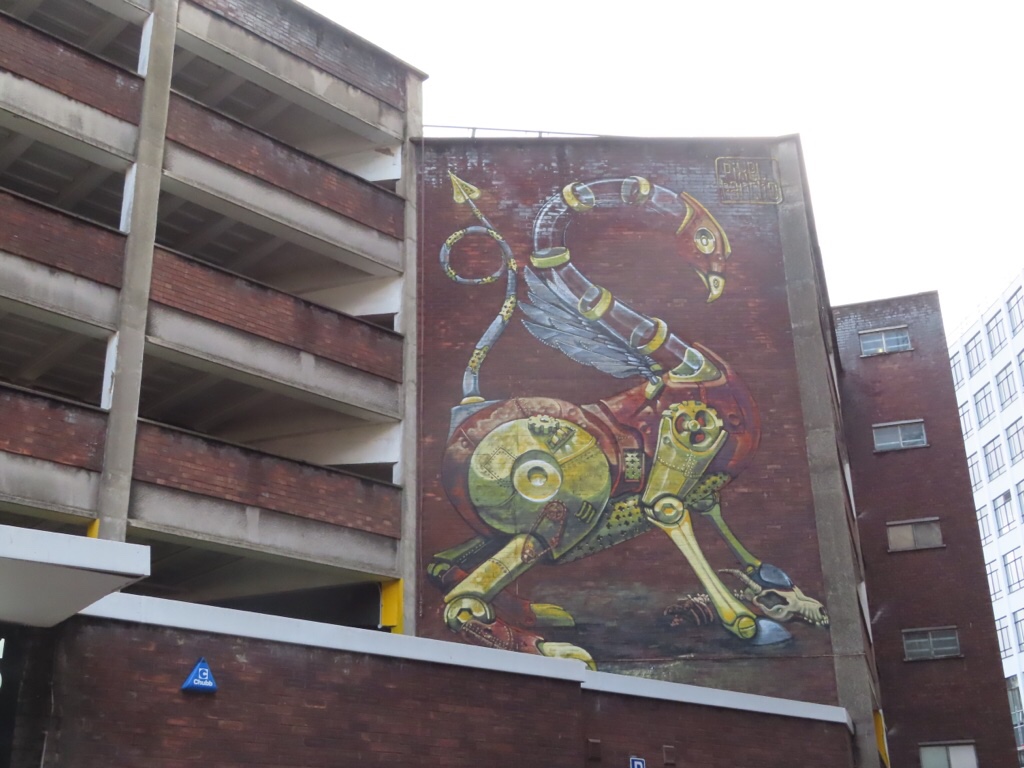

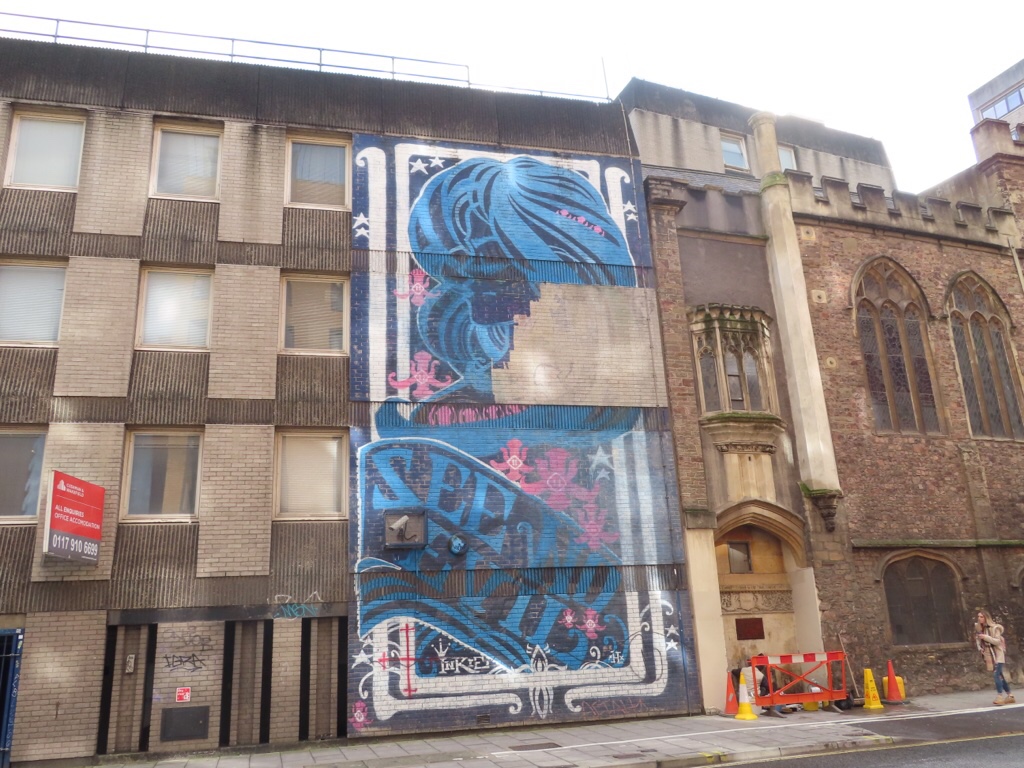


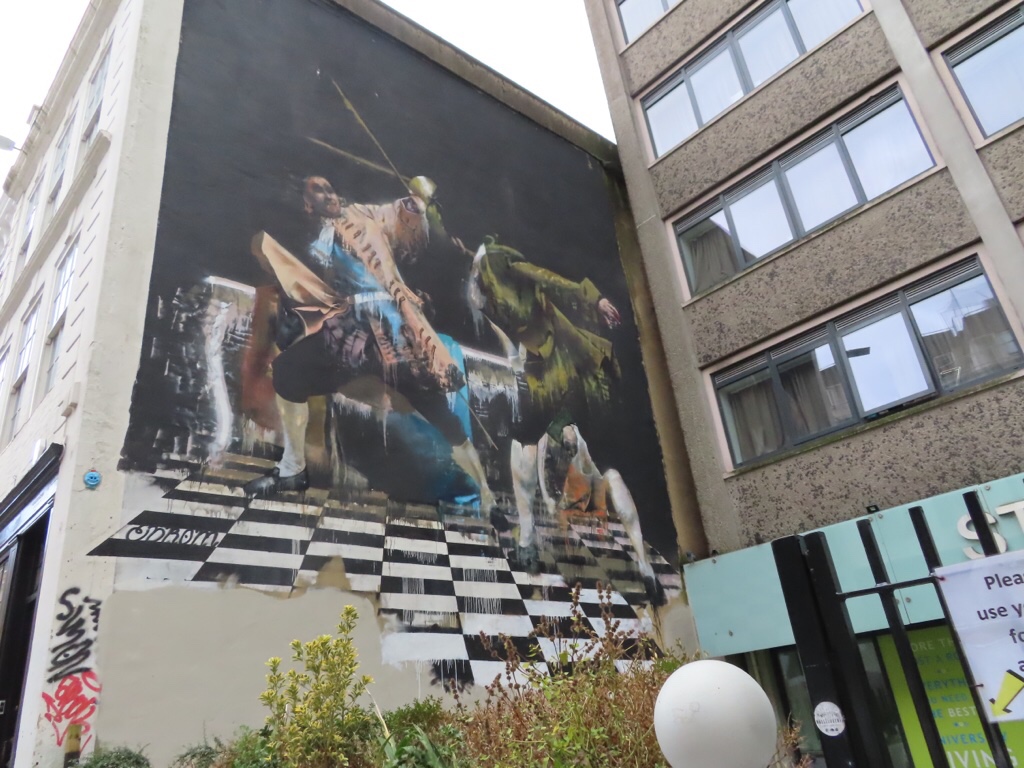
New Room was built by John Wesley in 1743, initially as meeting room but also used as a soup kitchen, a school, a dispensary and the first Methodist chapel.

Next stop is the neighbourhood of Stokes Croft, where the People’s Republic of Stokes Croft promote art in the community.


It seems quite a rundown area and the aroma of pot and drying spray paint was definitely in the air as we checked out some of the of street art …
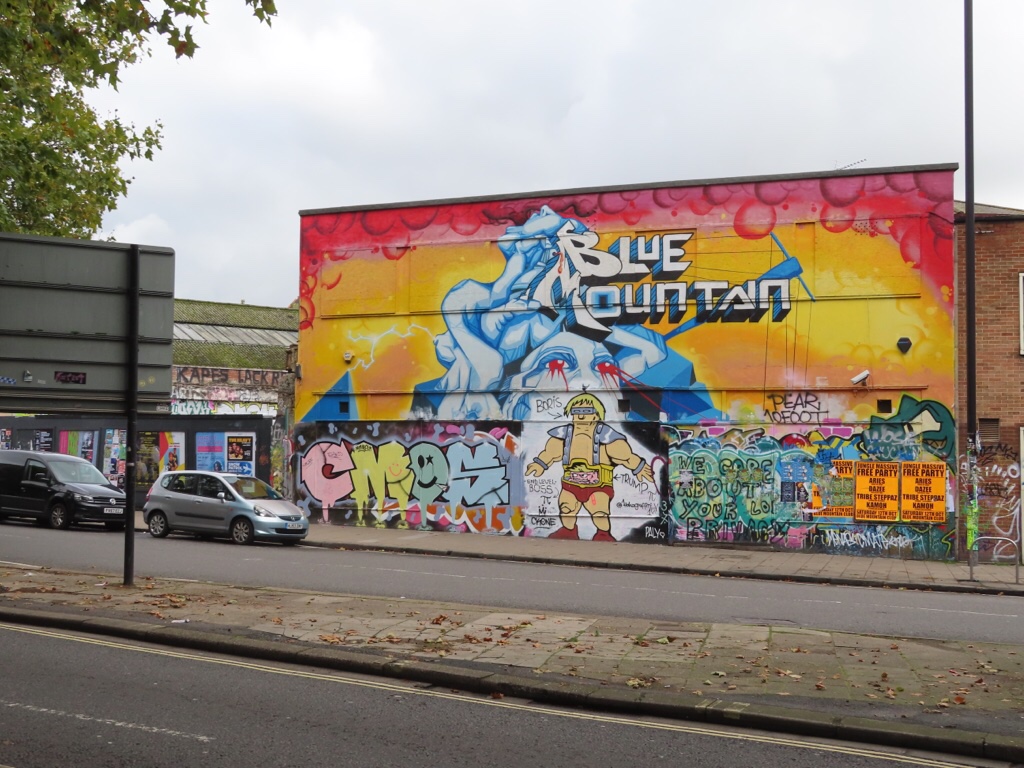


… including a couple of Banksy’s – The Mild Mild West and The Rose Trap …


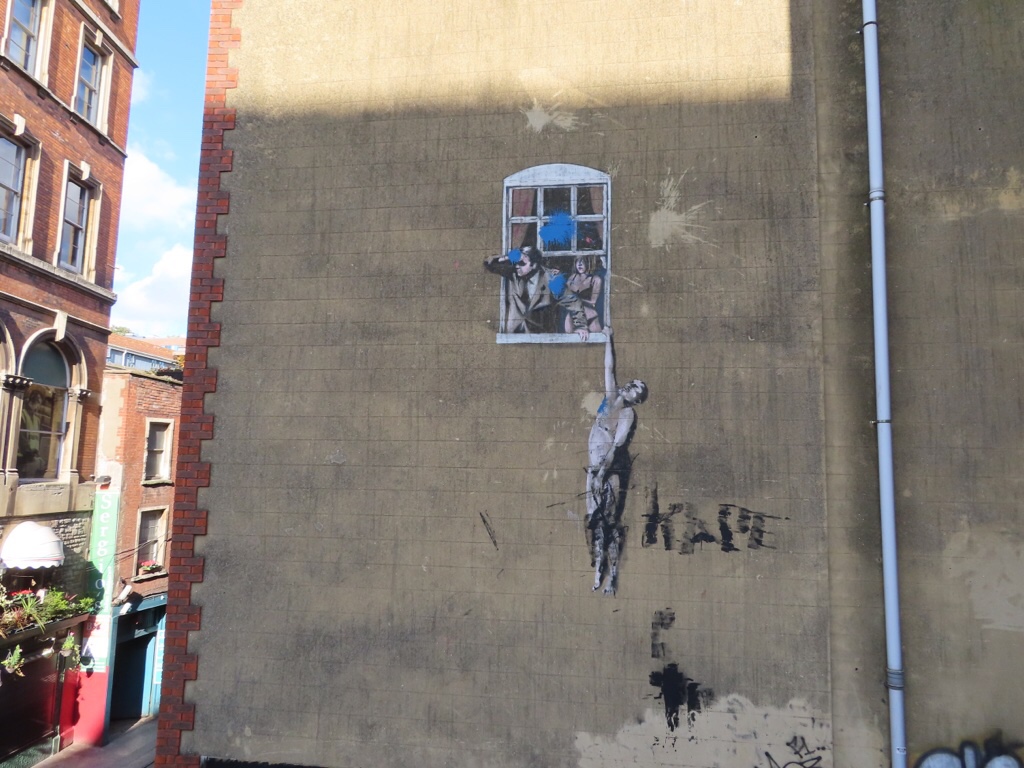
… and Well Hung Lover nearer the city centre.
The city have several free museums including Red Lodge which was once a C16th merchants house and later England’s first girls reform school with a splendid Tudor Oak Room …

… and The Georgian House, former home of local sugar merchant John Pitney with faithfully restored rooms and the story of the family’s dealings in the West Indies. Their slave Pero was commemorated by the Pero bridge in 1999.

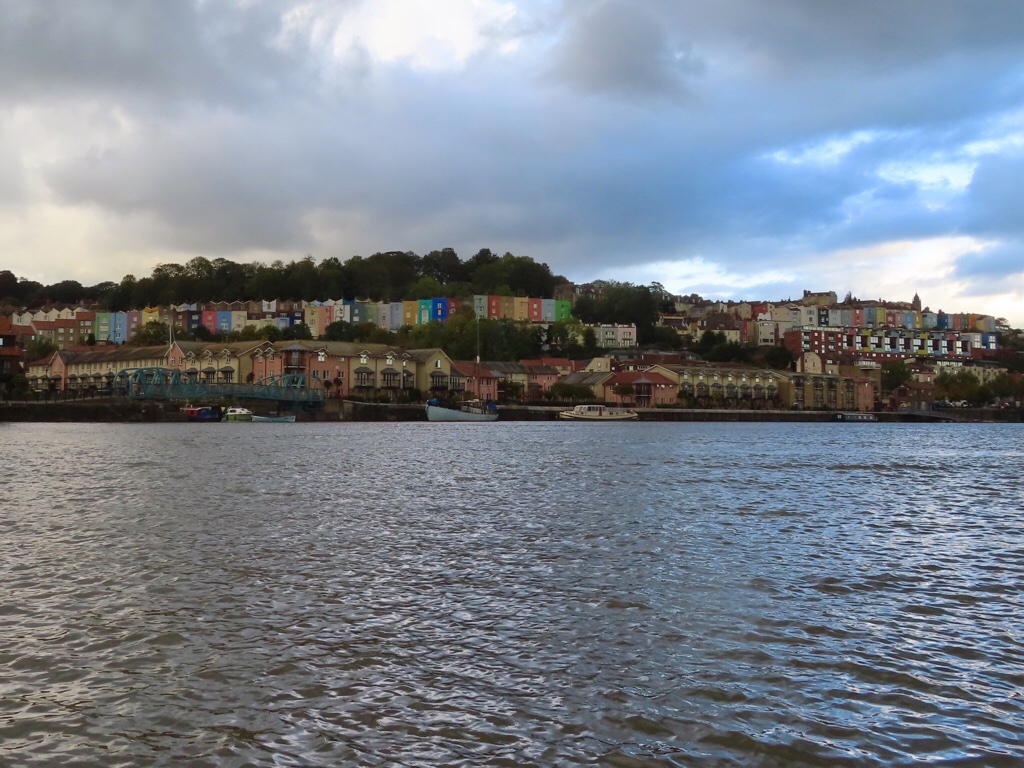
Back at the harbour, Grommit was ready to take us round the other side of the harbour.

 We passed the reconstruction of the Matthew, the ship in which the Italian navigator Giovanni Caboto or John Cabot, sailed west from Bristol in 1497 in search of Asia. Instead he found North America, landing on the banks of what he named Newfoundland, which he claimed for England.

We continued to Nova Scotia Point …
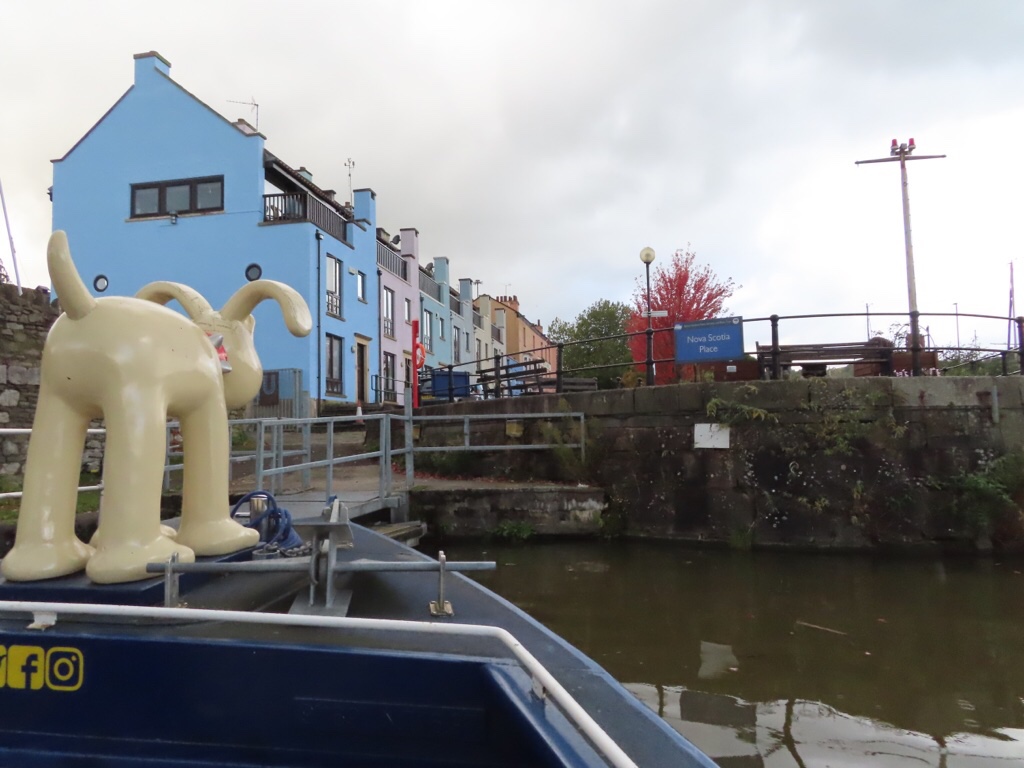
… before returning to the SS Great Britain and got off.

We went in search of Banksy’s take on Vermeer. It’s a good job Google Maps has a note of these or we would never have found it tucked between a couple of dock buildings … Girl with the Pierced Eardrum …

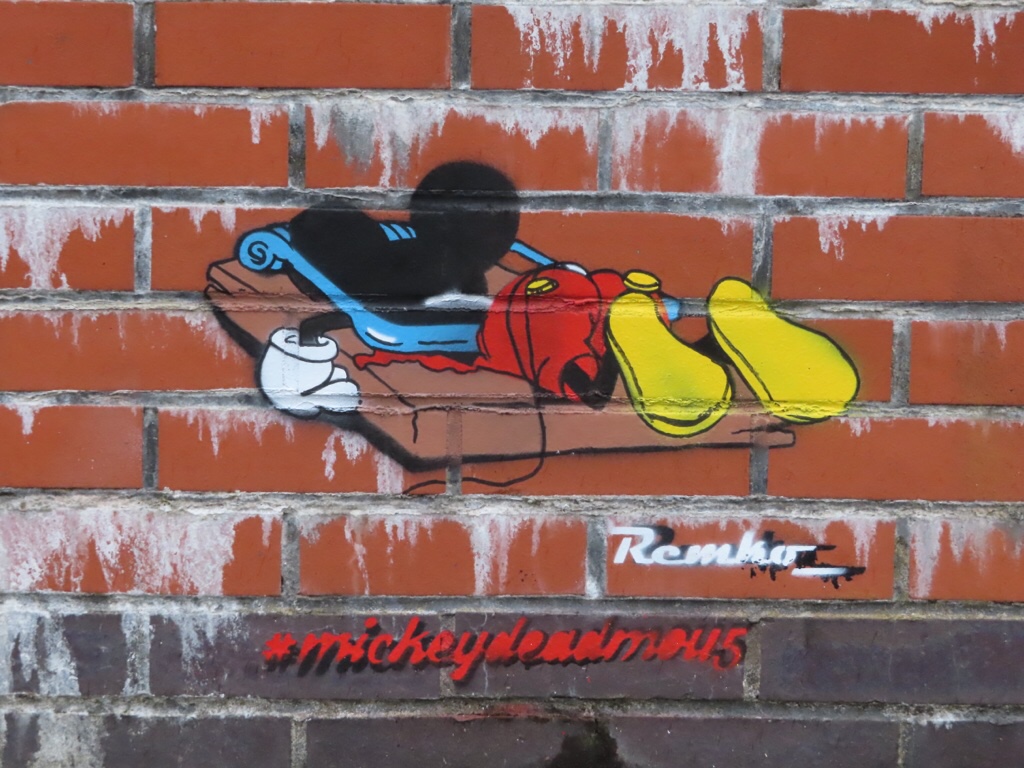
… and finally, a rather squashed Mickey reminding us of Rose Trap earlier
With such a multi-cultural heritage in Bristol, we’ve managed to revisit all our favourite cuisines in one short break, and tonight was no different with Souk Kitchen decorated with bold colours and flickering candles and offering a fusion of Middle Eastern flavours. Yum!
 Off Travelling Together