 We had a short journey on the smart and fast Afrosiyob train to Samarkand and arrived late afternoon.

We are staying in the family run Jahongir Hotel, with comfortable rooms decorated with suzanis and arranged round a central shady garden.


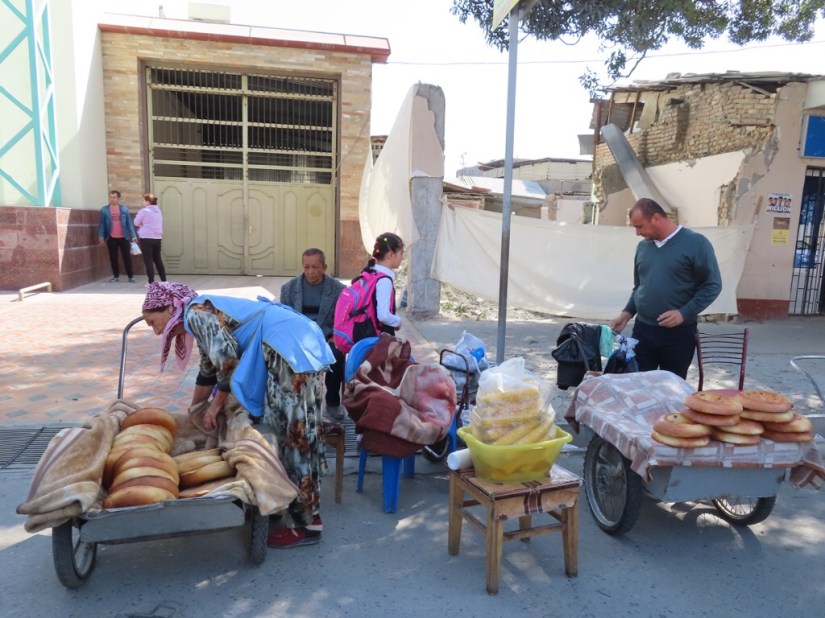
It’s great to be in a local neighbourhood … complete with a collection of ladies selling bread from trolleys at the end of the road!
Samarkand is one of Central Asia’s oldest settlements founded in the C8th BC and was the capital of the Sogdian empire when it was taken by Alexander the Great in 329 BC. A key Silk Road city, it grew from the C6th to C13th and was ruled by a succession of Iranian and Turkic rulers until being obliterated by the Mongols under Genghis Khan in 1220.
But it was Timor, also called Tamerlane, who made Samarkand the capital of the Timurid Empire in 1370. For the the next 35 years, he rebuilt most of the city and populated it with the great artisans and craftsmen from across the empire. His grandson Ulugbek ruled until 1449 and made it an intellectual centre too.
When the Uzbek Shaybanids came in the C16th, they moved their capital to Bukhara and Samarkand went into decline. It had a short revival under the emirs of Bukhara in the C19th, before Russian rule in 1868 when the modern Russian section of the city was built. After the revolution, it was briefly the capital of the Uzbek SSR, and is today second largest city in Uzbekistan with 530,000 people.
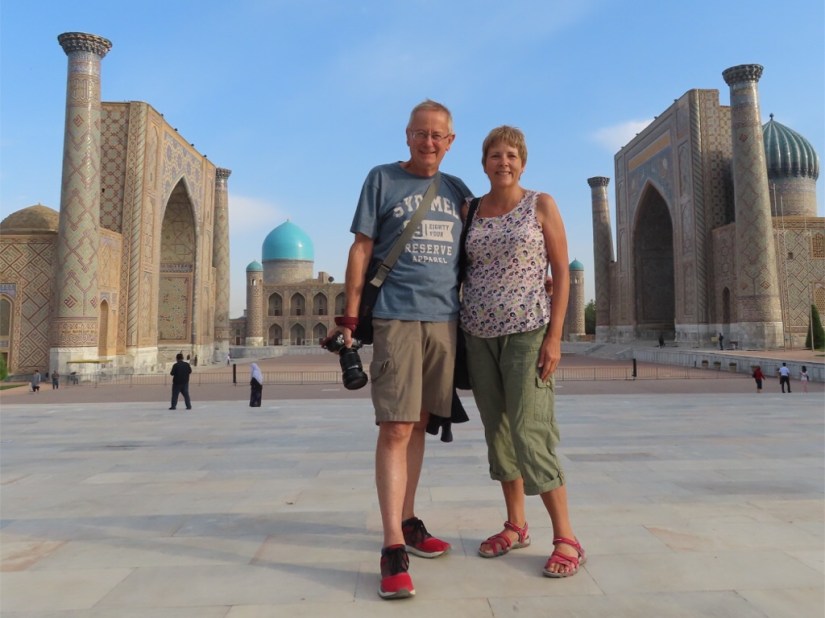
The Registan has always been the centre of life in the city, once a place to hear proclamations and later a huge bazaar on the crossroads of the city, but it wasn’t until 1420 that is started its journey to the majestic spectacle it is today. Just a five minute walk from our hotel, we stopped by several times to take photos, but were there when it opened at 8.00 one morning to have a chance to visit while it was quiet.
The first madrasa was built by Ulughbek, Timor’s grandson, and also a mathematician and astronomer who had the portal adorned with patterns of ten-pointed stars symbolizing the sky, and astronomy.


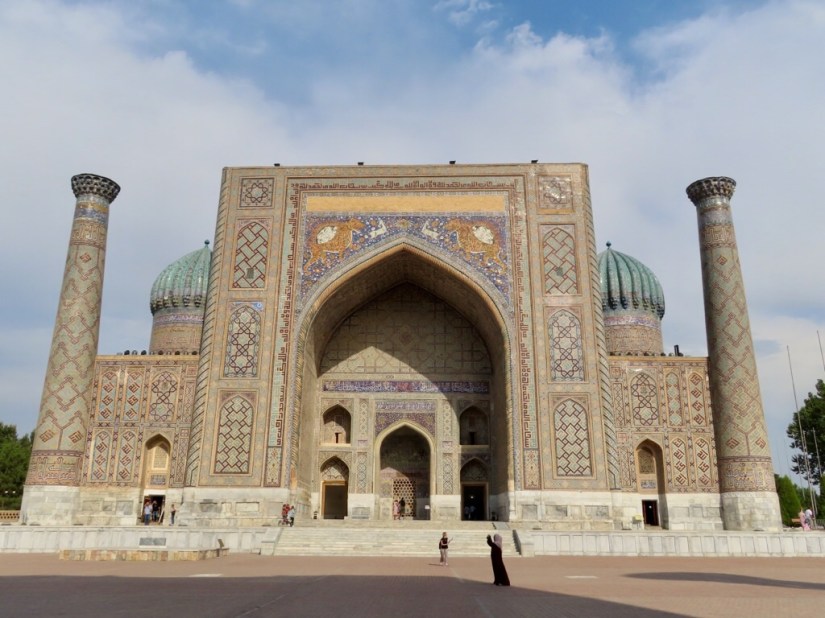
Two centuries later Yalangtush Bahadur was appointed the emir of Samarkand and decided to construct a second madrasa to mirror the first which was named Sher- Dor meaning ‘Adorned with Lions’ … although the roaring felines carrying a sun on their backs chasing deer look rather more like tigers!


Ten years later, Yalangtush Bahadur decided build a third madrassa which was called Tilla Kori which means gilded, named for the kundal style painting in the Mosque which is decorated throughout with gilded relief.


 By the C20th, all these buildings were in a sorry state with much of the cladding and painting being lost through earthquakes, weather and general decline and here are some old photos …
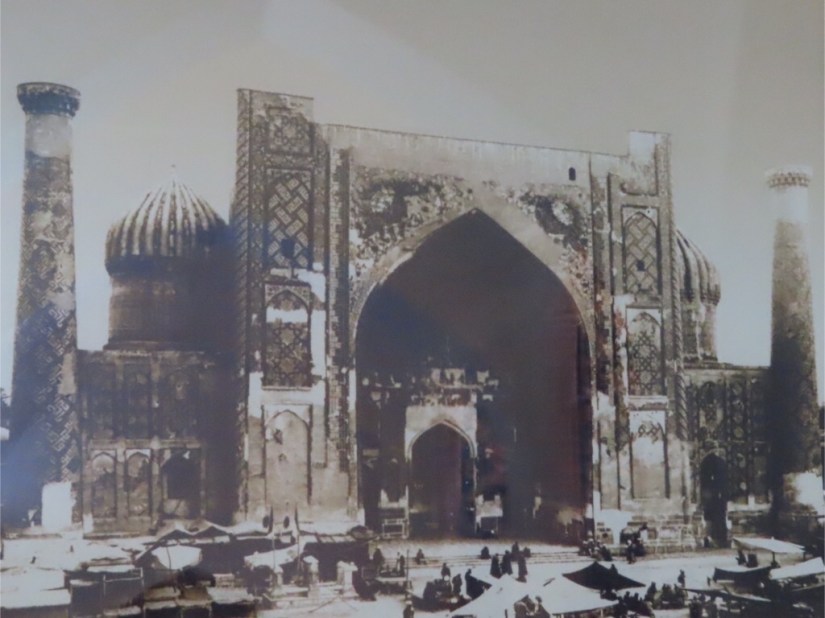

Many historic buildings of Central Asia were saved by a new ideological concept in Moscow in the 1960s called Heritage Status, whereby entire old towns throughout the USSR were now deemed worthy of preservation with a view to improving tourism in these cities. The hope was that by concentrating the historic buildings in a small area, even a single street, the tourist would have the opportunity to experience ancient Bukhara or Samarkand without actually having to visit the real areas in these cities where most people lived.
Soviet funded restoration began in 1967 and lasted twenty years. This was based on extensive studies and excavations, with much rebuilding using salvaged brickwork and tiles gathered from mounds of rubble inside the madrassahs and there is no doubt that if the Soviets had decided not to restore the buildings of the Registan, this magnificent sight would have been lost.
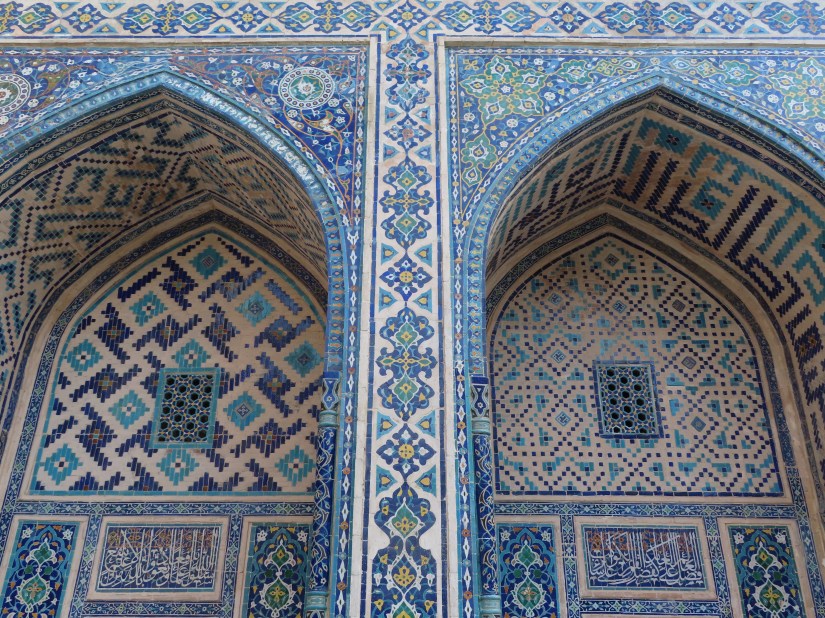
The tiling is amazing, especially as these three madrasas seem to be covered on every surface and have been restored to far greater completeness than other buildings, Each have their own character inside with Ulughbek being the grandest and Tilla Kori having not only the amazing mosque, but also a more intimate feel. Taken as a whole, the impression is very impressive and even made us feel reflective in the calm of the morning. Closer examination of the decoration shows that some areas have been restored better than others and the colour matching is a little varied, but with such a huge job, I guess this is understandable.
The Registan is fronted by tree shaded gardens …
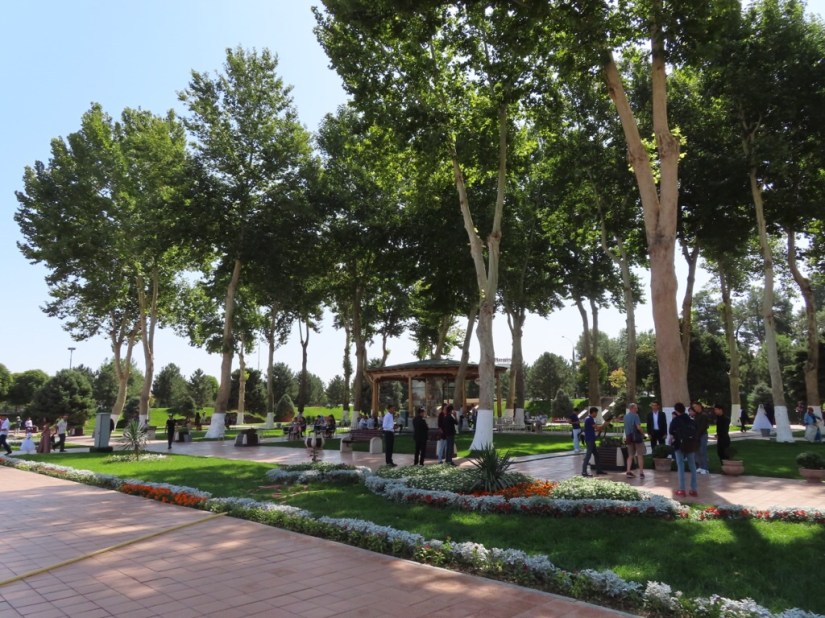 … and a pedestrian walkway leads past a huge statue of Karimov …

…then up Toshkent Street which is fronted by large shiny souvenir emporia …

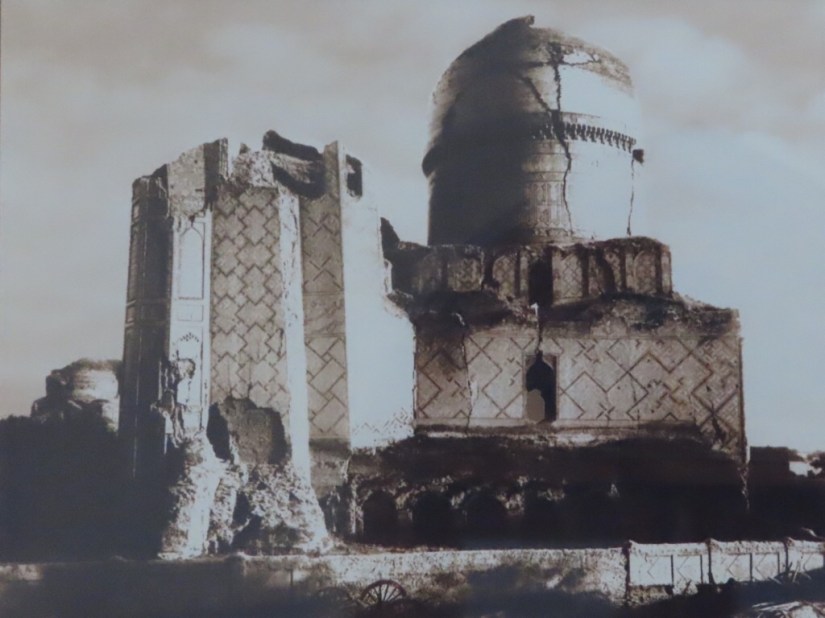
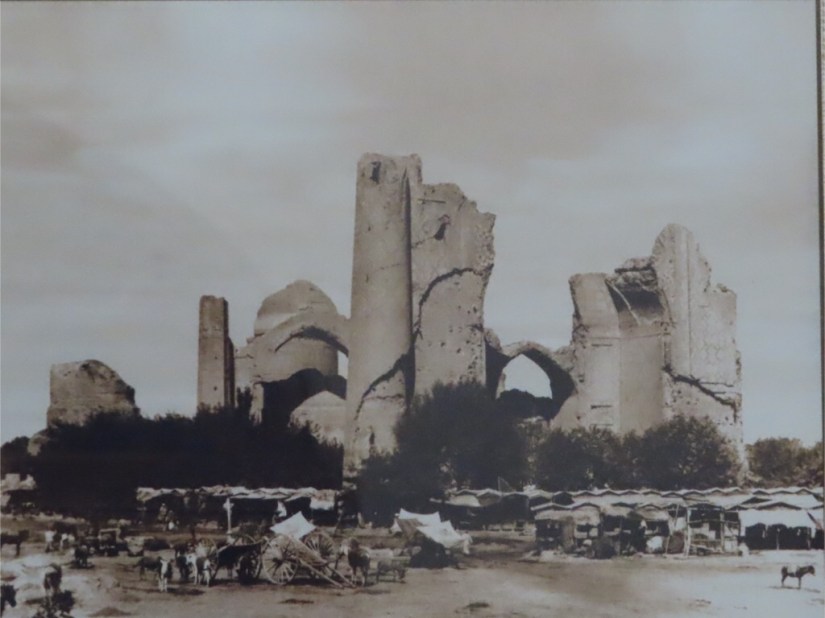
… and leads to Bibi-Khanum Mosque, which was funded by the spoils of Timur’s invasion of India and was so large it pushed contemporary construction techniques to the limit, so much so that the dome started crumbling before it was finished.

Today it is a shell, standing in a pretty courtyard with a large Quran stand in the centre …

 … but before restoration, looked worse.
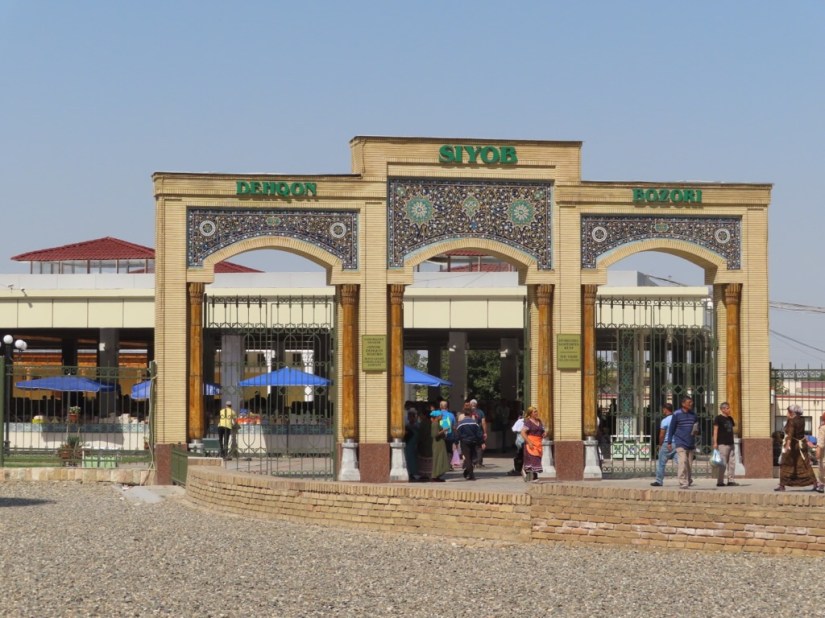
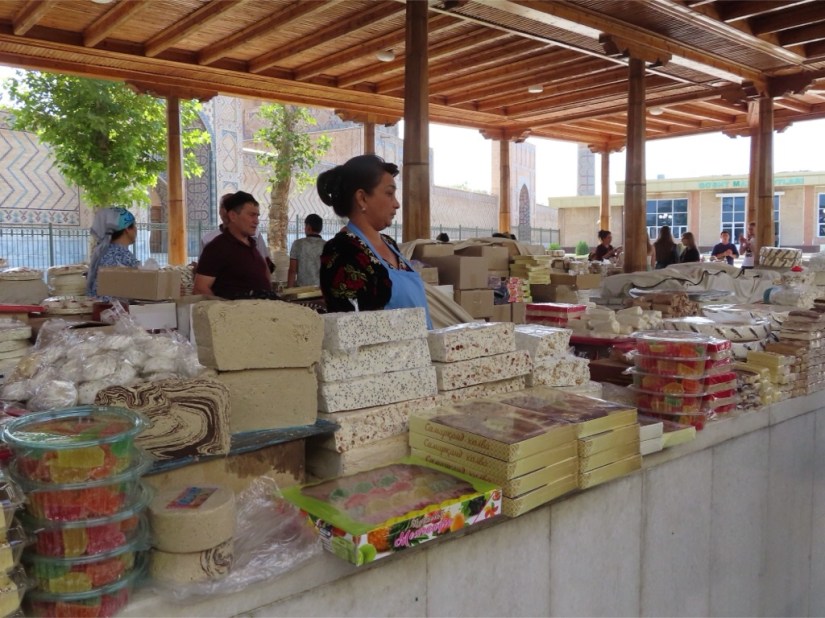
Siyob Bazaar was well worth a visit with row upon row of sweet treats, the inevitable bread trollies …

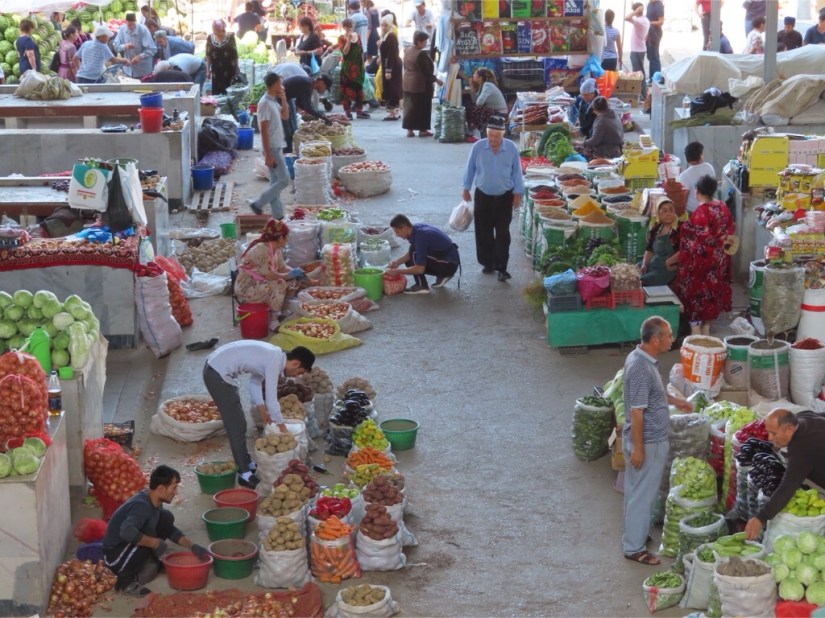
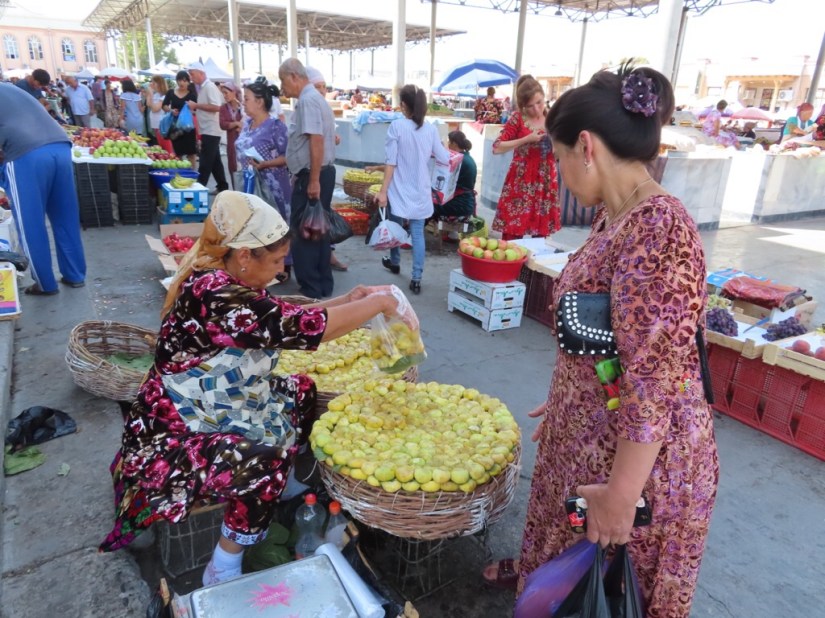
… as well as fresh produce and these rather delicious prepared figs.
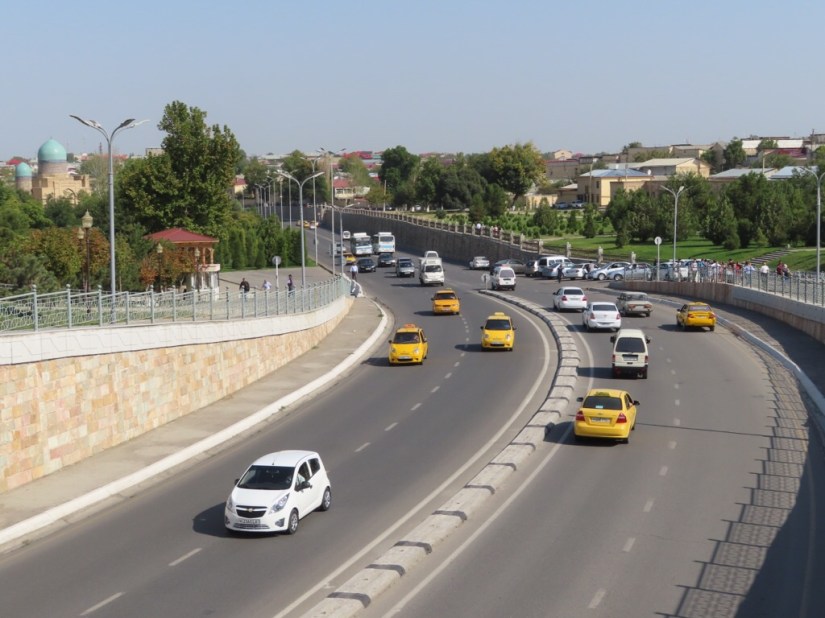
The walkway continues over a main road, busy with taxis, towards Hazrat-Hizr Mosque, rebuilt in the C19th and recently restored to within an inch of its life and also the resting place of Islam Karimov.


Following independence in 1991, Islam Karimov was elected President and his grip on power ensured he was regularly re-elected with no opposition until his death in 2016. While officially a democratic republic, Uzbekistan was classified as a hard authoritarian state with limited civil rights. Insurgency by Islamist militants in 1999 led to a crackdown on all forms of religious expression not expressly sanctioned by the state as well as tightened controls over political and economic life.
After 9/11 Uzbekistan became a close strategic partner of the US, providing military facilities and transit routes to support US and Nato operations in Afghanistan and this made it difficult for the US and EU to speak out about human rights abuses in Uzbekistan. In 2005 troops opened fire on anti-government protests in the eastern city of Andijan, killing hundreds of demonstrators and ties were cut with the west, but sanctions were later lifted.
The second and present president, Shavkat Mirziyoyev is considered by most to be pursuing a less autocratic path, with plans to repair relations with neighbouring states, to open up the economy, relax some of his predecessor’s more repressive policies and improve human rights. It is certainly easier to travel here and tourists are made very welcome.
We continued on the walkway to Shah-I-Zinda, containing an avenue of mausoleums …
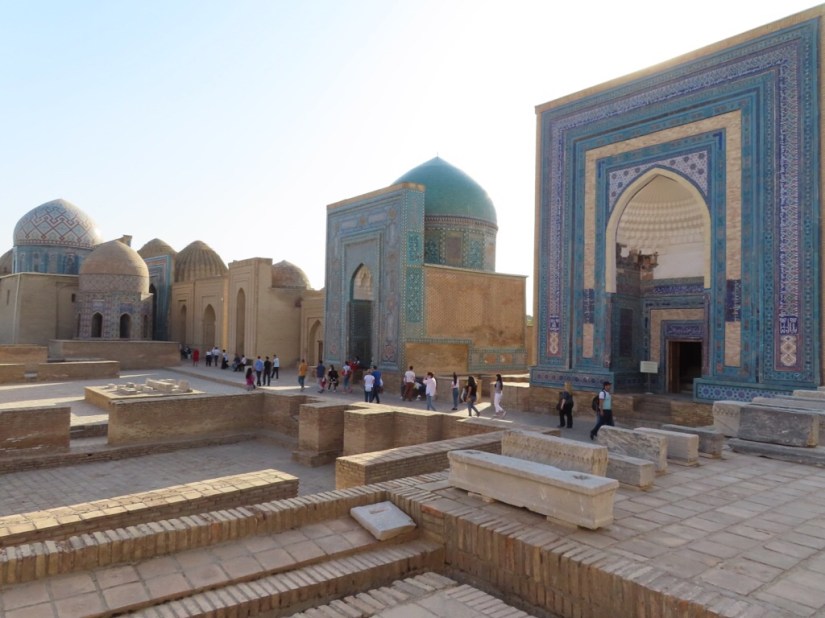

… covered in beautiful tilework.


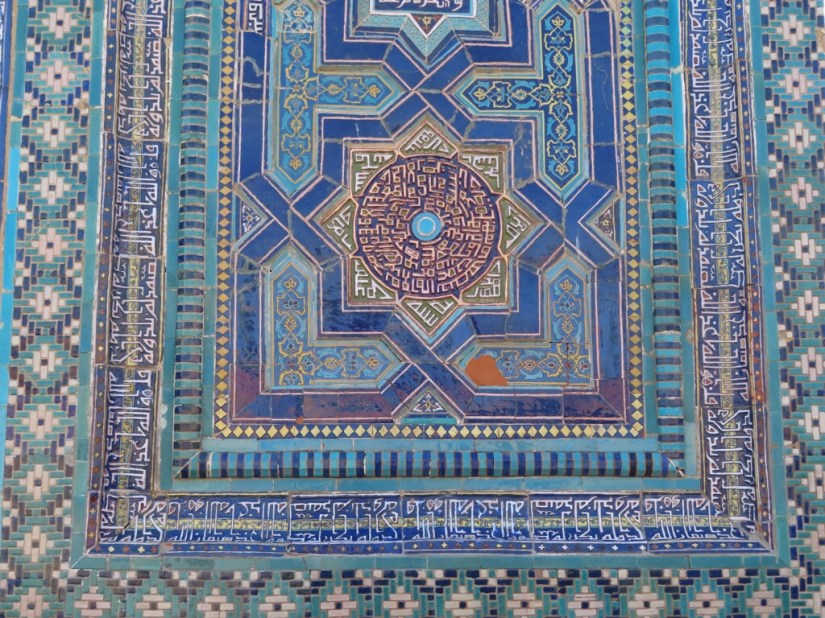

Much restoration has occurred here too as can be seen from this old photo.

One of the most beautiful tombs is the Shodi Mulk Oto Mausoleum, that of Timor’s sister and her daughter …


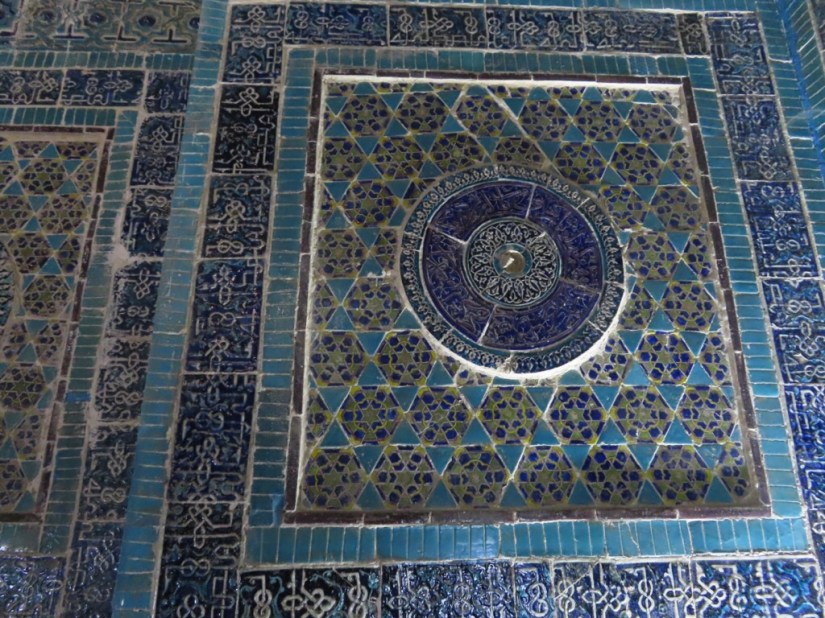
… and one with a lovely interior …


Needless to say, it is a very popular spot …


… but still with room for reflection.

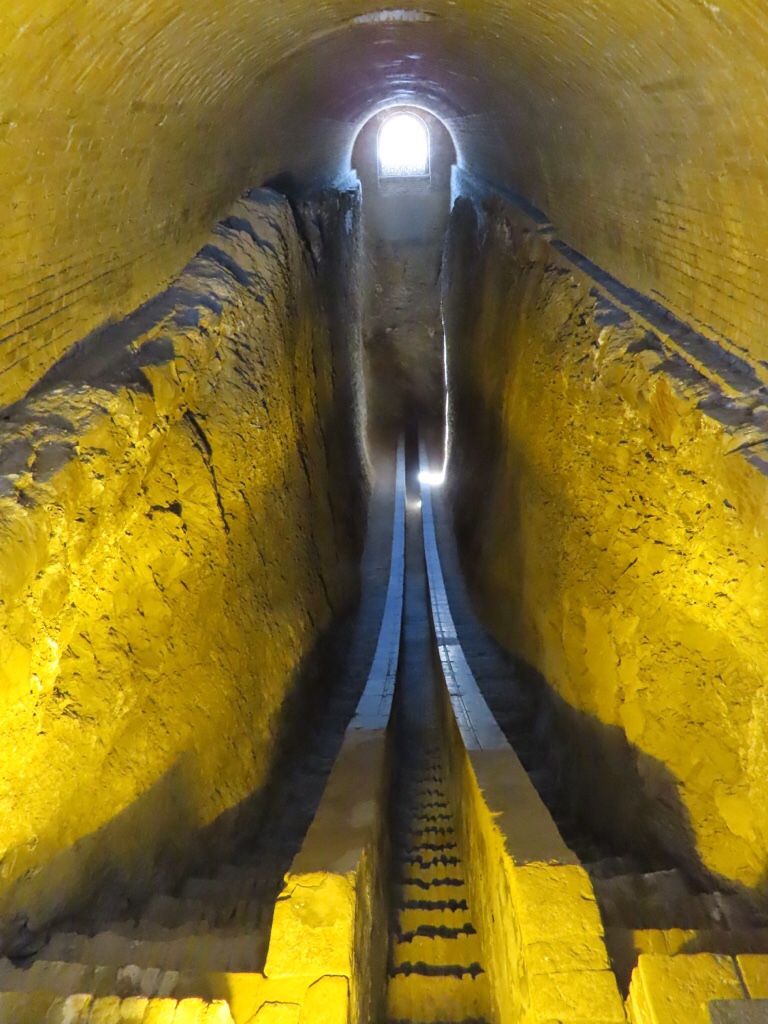
We also saw the site of Ulugbek’s C15th century observatory, excavated in 1908, although only the buried track of the 30m quadrant remains.

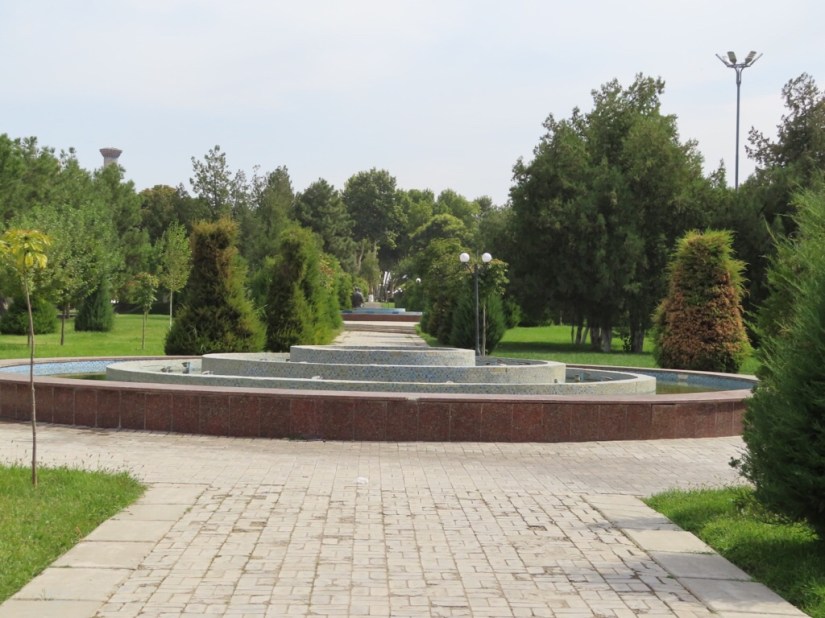
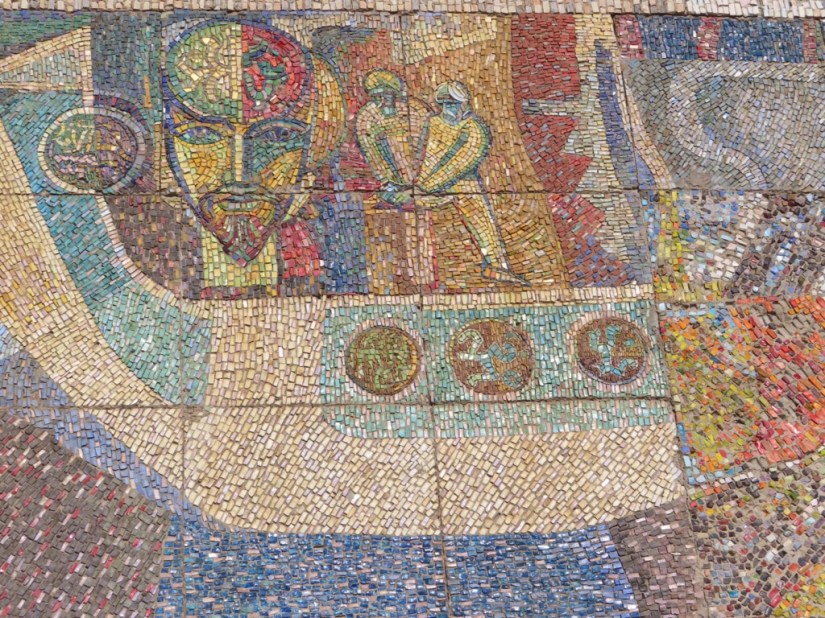
Taking the route from the Registan in the opposite direction takes you through parks and past mosaics …


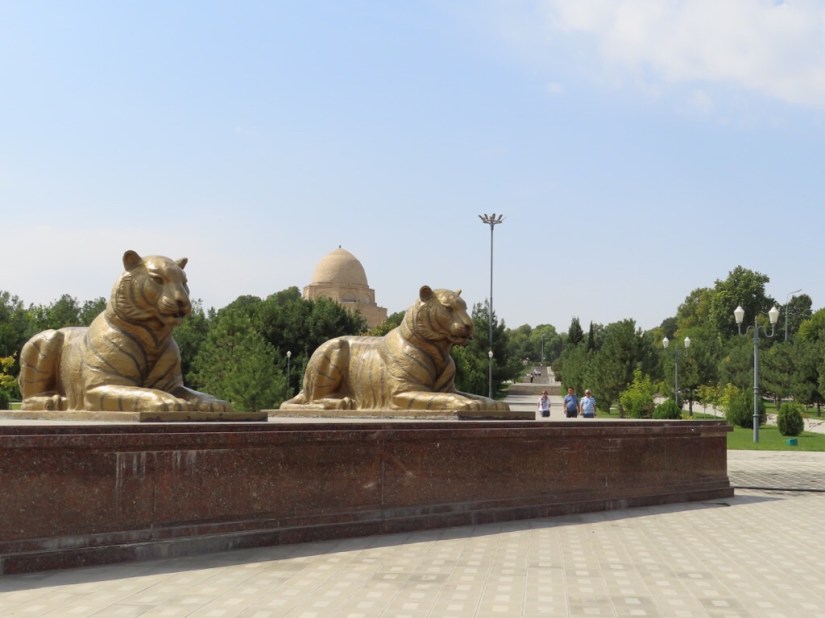
… to the Gur-e-Amir Mausoleum which was built by Timor on the death of his favoured grandson.
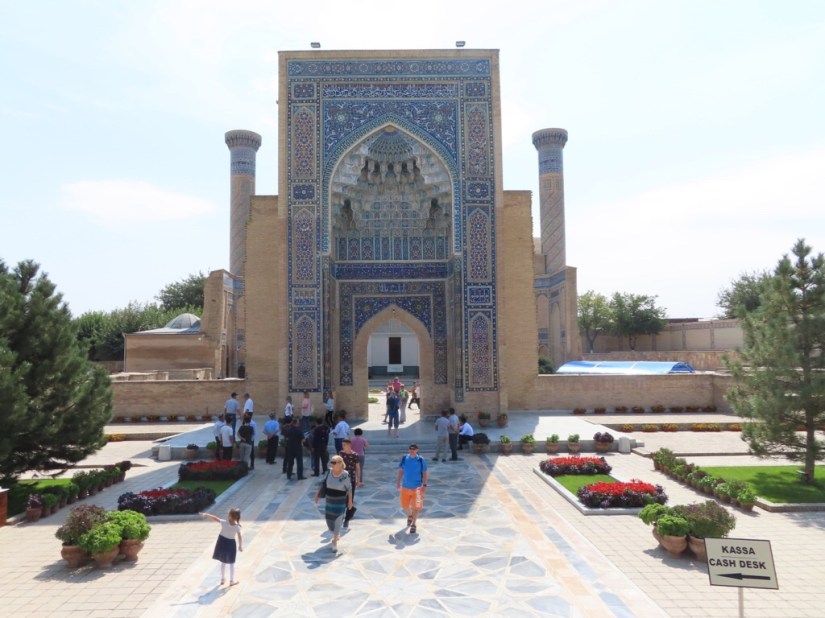


When Timor died unexpectedly from pneumonia, he was interred here too. Ulugbek’s scientific expertise was not matched by his skills in governance and after a short reign he was overthrown and assassinated by his son and later interred here with his grandfather.
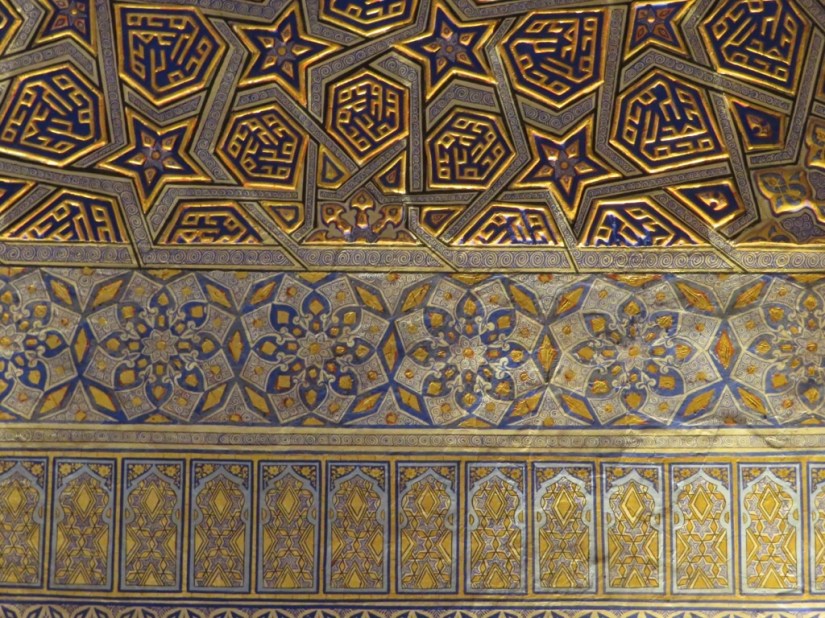
The inside is particularly beautifully, like a gold lined casket.



We walked down to see Timur on a busy interjection nearby, on the boundary between the old and new Russian town, which we didn’t explore except to go by taxi for dinner as most of the restaurants were there, our favourites being Platan and Old City.

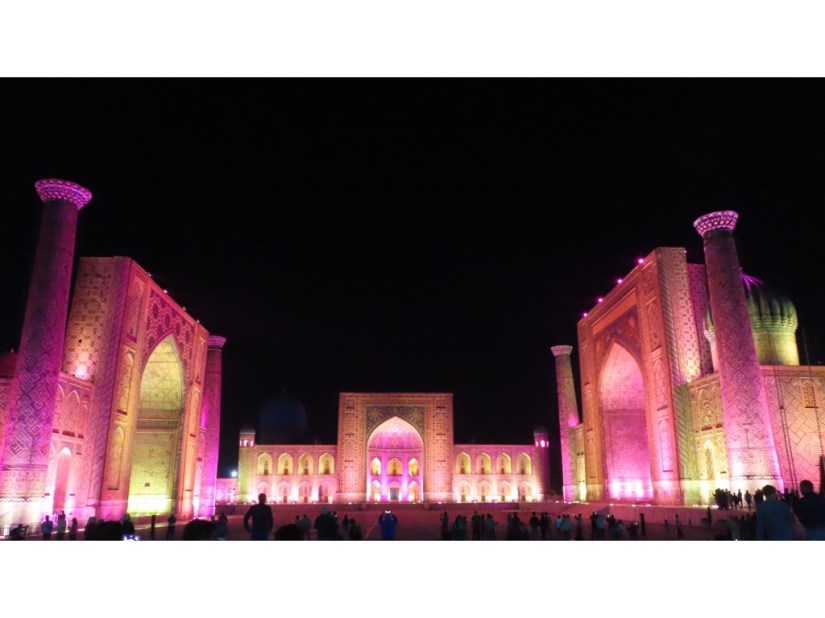
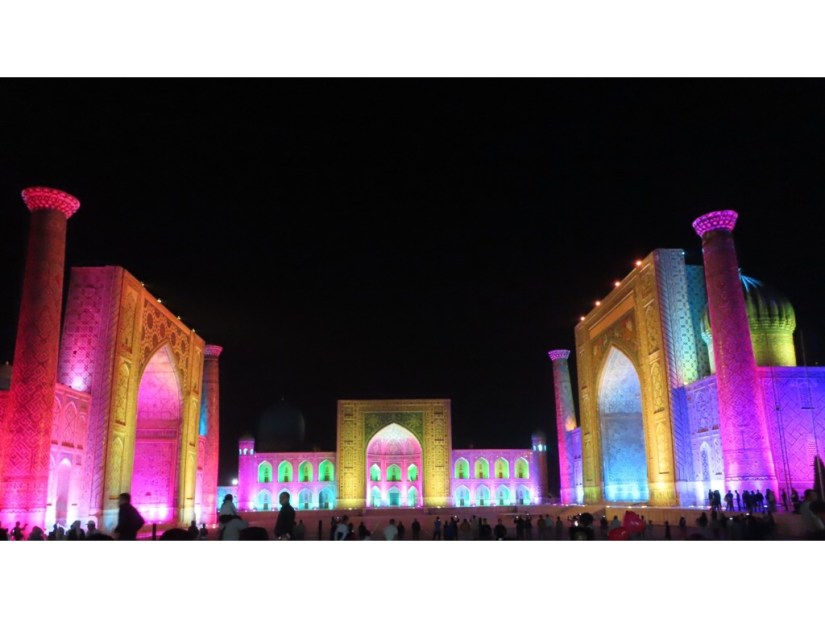
The Registan is always lit at night …
 … but there are also light shows and we caught one on our way back after dinner …

 Our last day was spent chilling and shopping … a coffee by the Registan …
 … the purchase of some cream and pink adras fabric to recover a cushion at home … another T-shirt for Chris … some local snacks at the market including dried melon and walnut stuffed apricots … and finally a teapot and cups to remind us of our trip. We then retired to a tempting tapchan in Bibikhanum Teahouse for a late lunch.


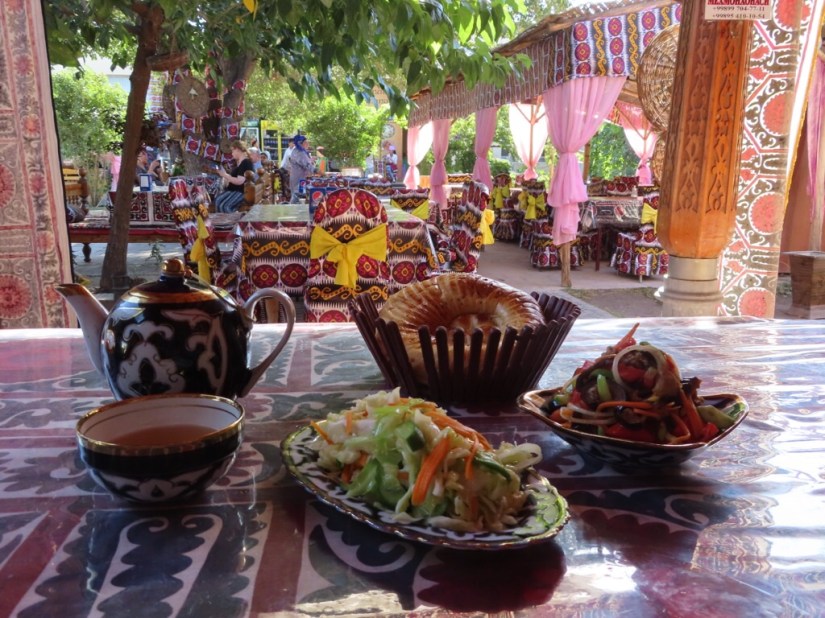 We’ve really loved relaxing on these raised platforms that we first came across in Turkey, they just seem so exotic!
We collected our luggage and took the late train back to Tashkent, arriving around 10.00pm.
 Off Travelling Together