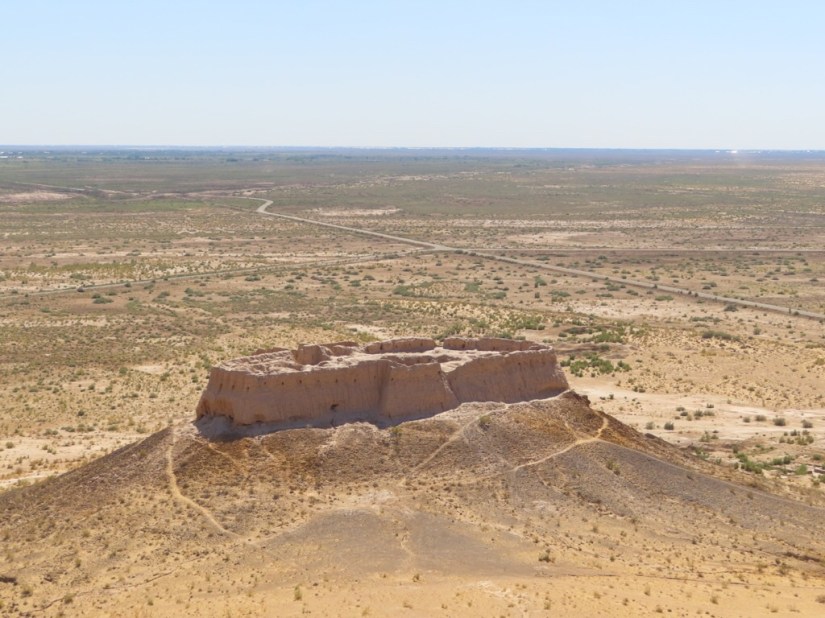
 Having spent three days pottering round Khiva, it was time for a change so we arranged a day out through the guesthouse with Ali to drive us. Our main aim was to visit a few of the desert fortresses of ancient Khorezm, but we ended up seeing quite a lot more.
First we had to head north to Karakalpakstan, an autonomous republic within Uzbekistan with the border along the Amu Darya river.
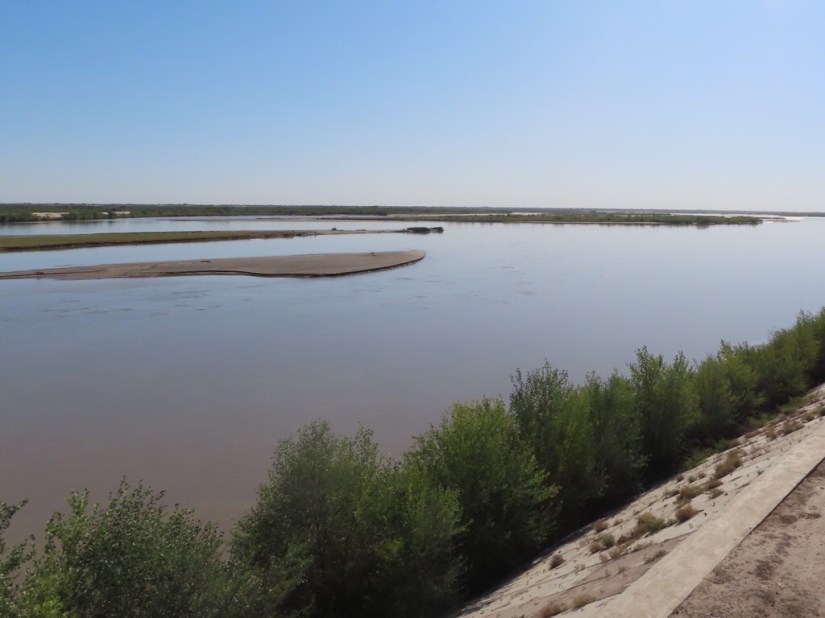

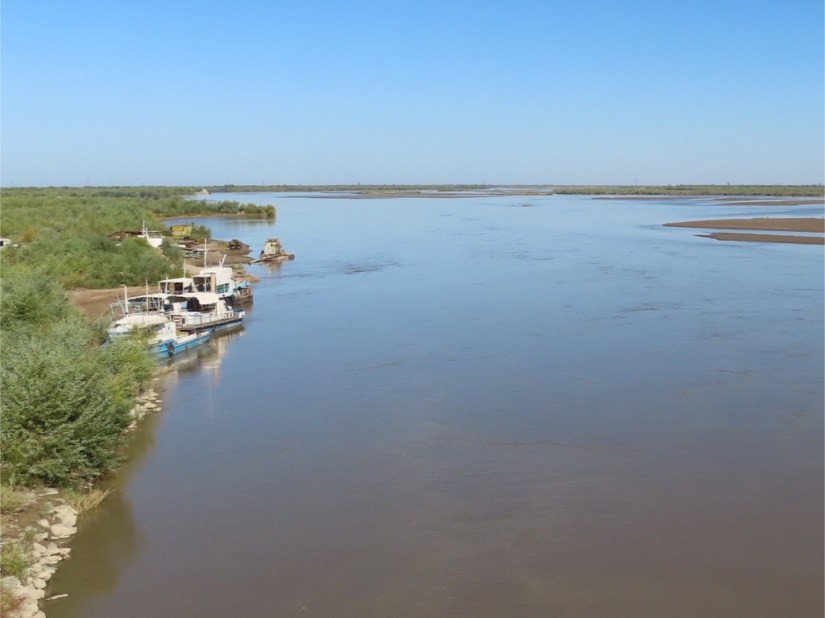
As the Amu Darya forced its way into the Aral Sea, the region slowly drained and dried. Irrigation canals became fragile desert lifelines controlled by feudal lords, vulnerable to nomadic incursions and tribal war and stranded cities became ruins in the desert.
Once over the river we headed through farmland, growing cotton, fruit and vegetables …

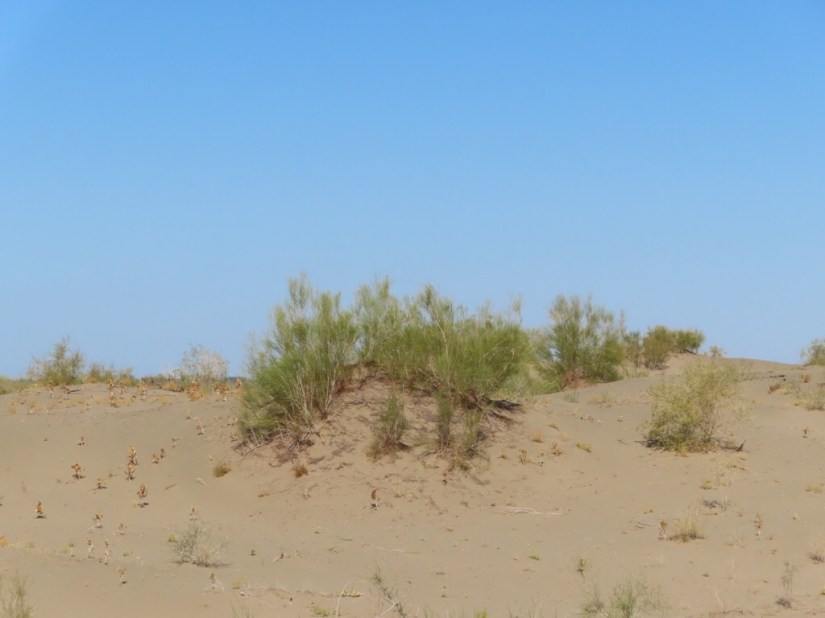
… then as we continued through the gateway to Elliq Kala, the land became drier.

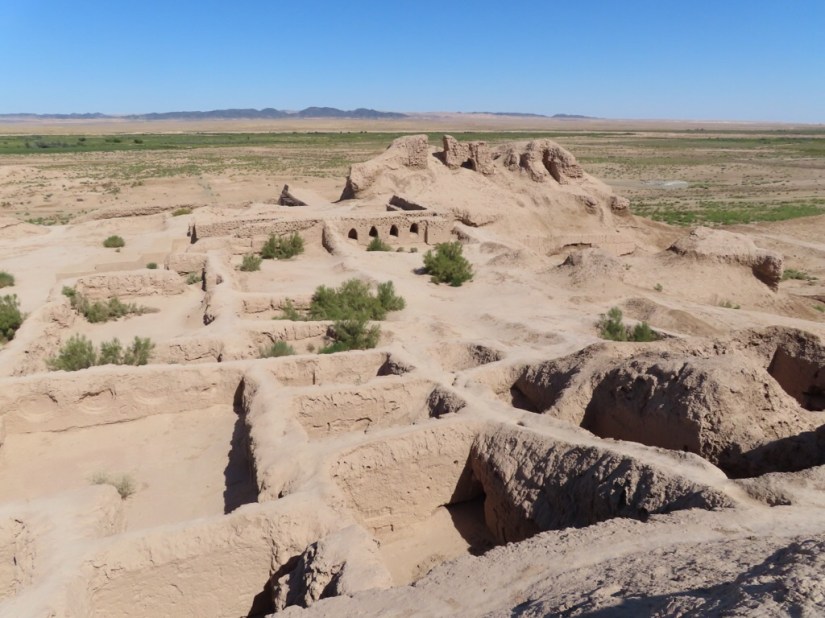
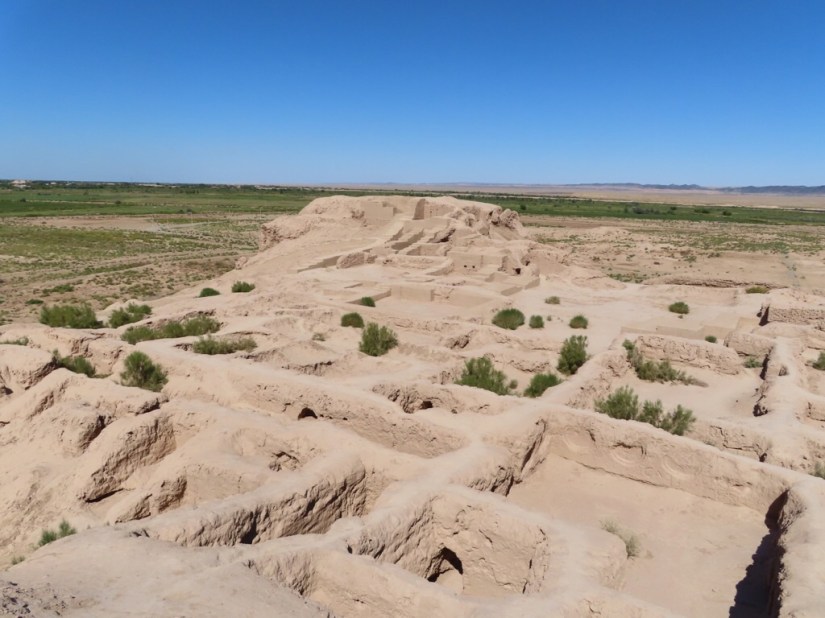
Our first Fortress was Toprak Kala which was first settled in the C1st BC but the ruins today are of a large fortified palace and temple complex built by the Khorezm kings in the C3-4th. They were rediscovered and excavated by the archeologist Sergei P. Tolstov in 1938 and all portable artefacts are in The Hermitage in St Petersburg.

It stands with the Sultan Vais Dag Mountains in the distance.
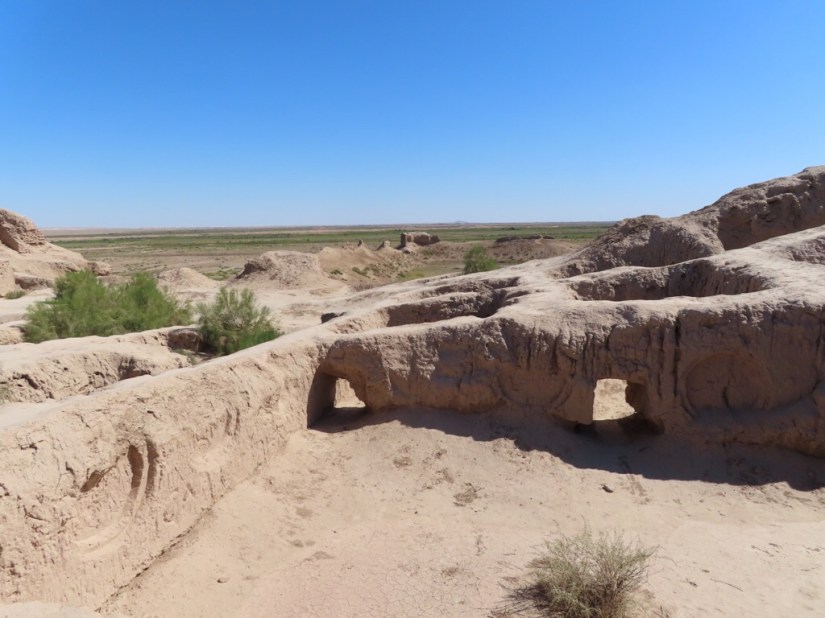
There are towers at each end, with a network of streets, courtyards and rooms between, as well as three main halls. Some rooms still have niches in the walls and fireplaces. Areas of restoration are quite distinct, but it is amazing how much remains bearing in mind it’s all just sun baked mud. Even more amazing is that this was just a small corner of an overall complex 350m x 500m surrounded by a high brick wall with 45 guard towers and a covered corridor for archers!


Kyzyl Kala or Red Fort was next …
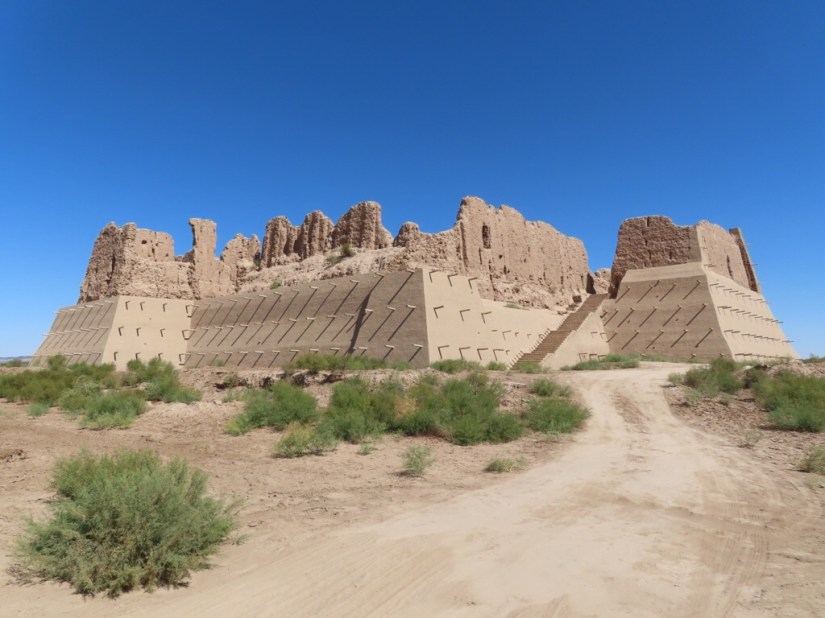

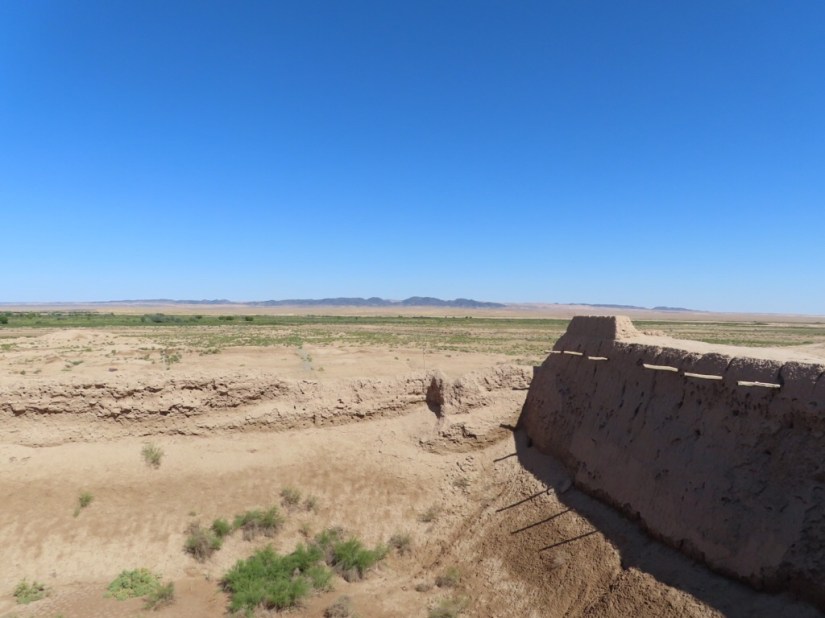
… probably of a similar age but subsequently rebuilt in the C12-13th, and was probably a garrison, with numerous arrow slits and observation points around its walls.
It was also the centre of the agricultural area and crossroads of caravan routes which passed through through the ridge Sultanuizdag. The modern retaining wall was added to prevent erosion, but does give a good idea how it originally looked.
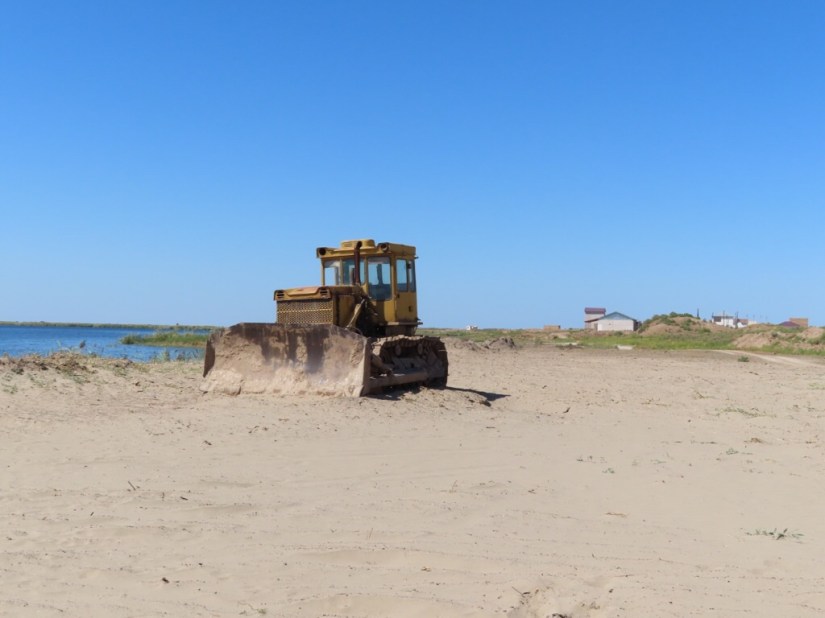
We stopped briefly at Akhchakol Lake, complete with a yurt resort and possibly boatrips …


… but with a digger out front I think they need to work on their image!
Time for lunch, and Ali took us to Boston bazaar, and to a small local restaurant where they were cooking kebabs …

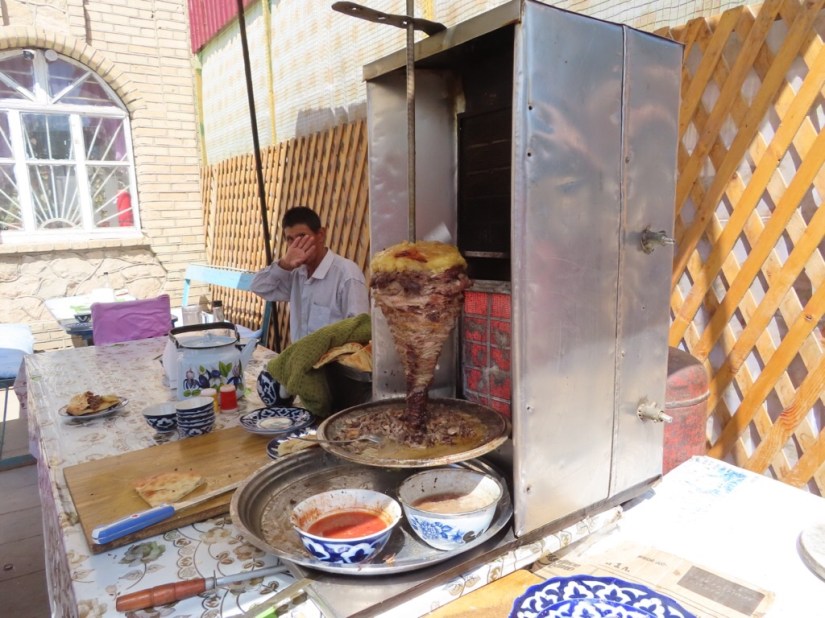
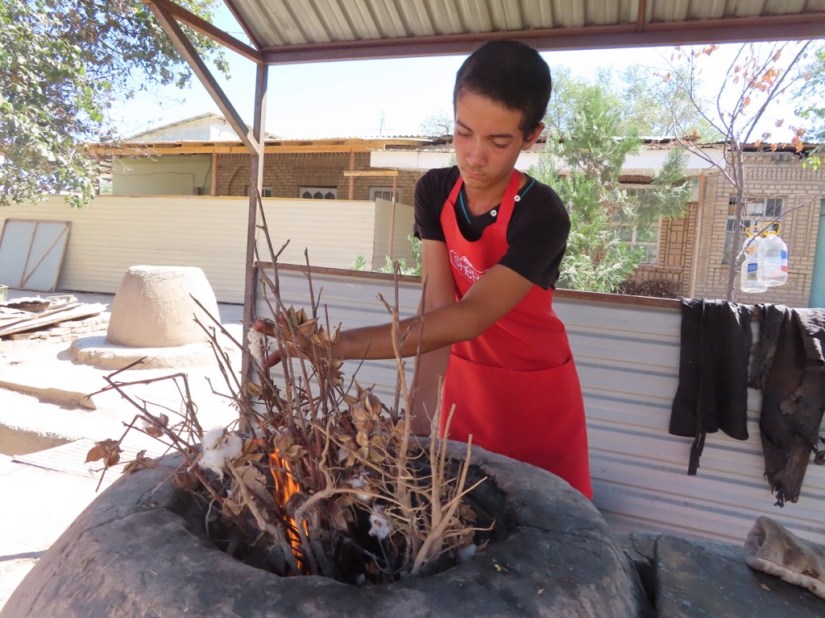
… and samsas on the inside of a tandir.

Despite being offered vegetable soup, meat was detected, so Chris drank tea and ate some bread while I eat my very tasty lavash with meat carved off the skewer.
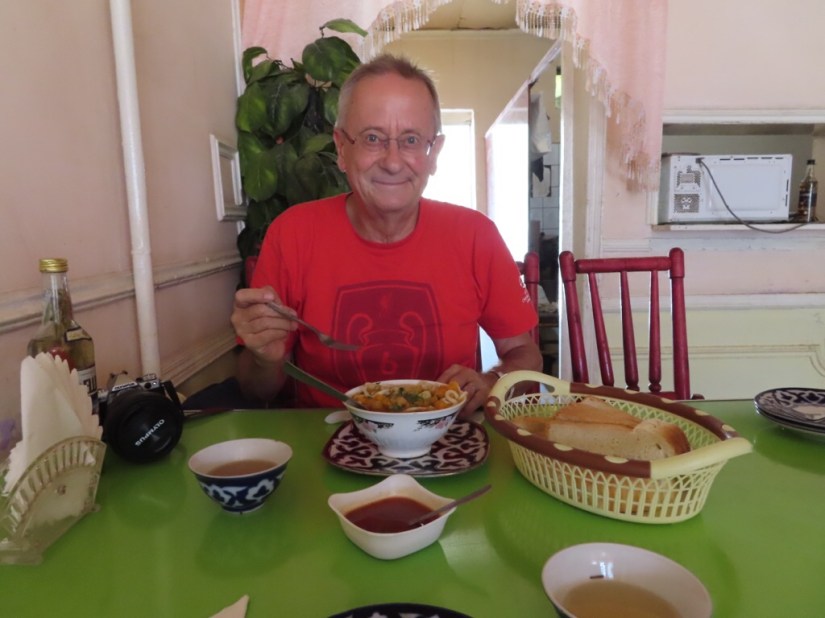
We took a turn round the bazaar, where Chris could have made up for his lack of lunch with a wide choice of fruit, but choose a wedge of very sticky cake instead!
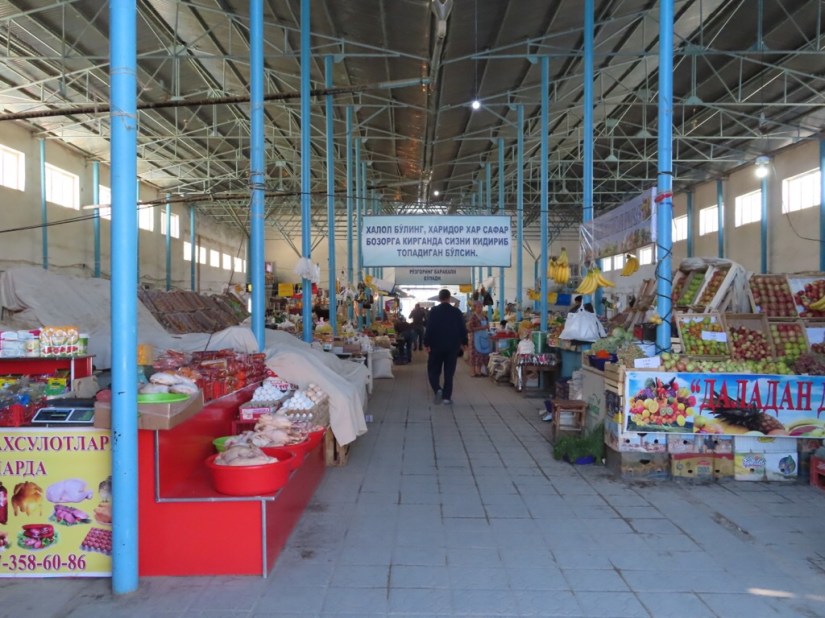

We also saw huge packs of cotton, and realised that this is why the bedding seems rather firm, no foam here … just cotton wadding!
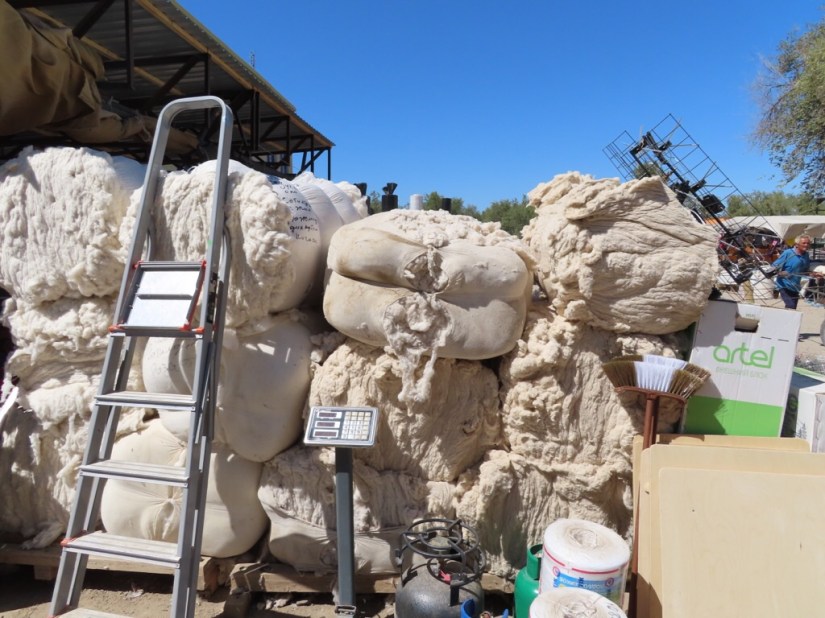
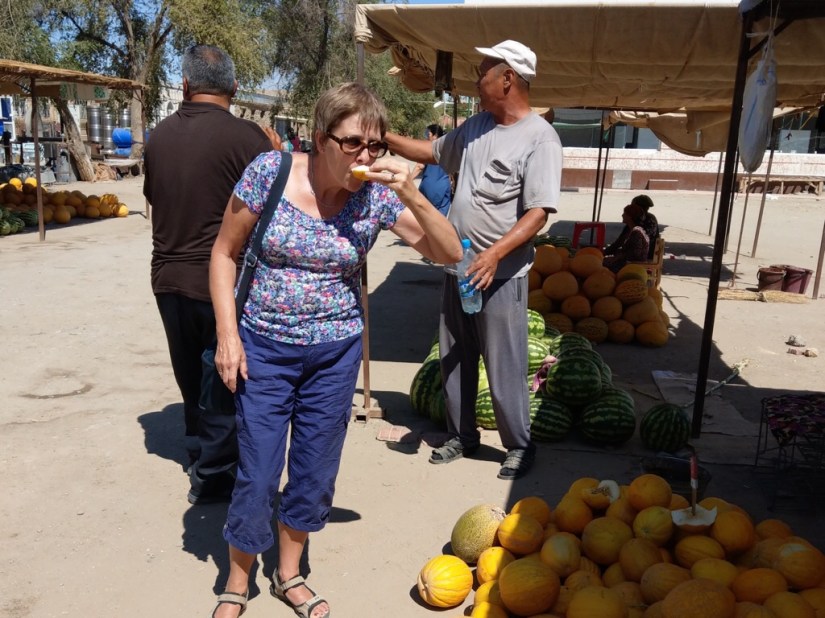
The area is renowned for its melons, and they are in season now. We have seen huge piles for sale everywhere and it is always part of the breakfast spread. There is watermelon, but the tastiest are the yellow melons. Ali gave us a piece to try in the market and it was the best melon so far, so sweet and tasty … even Chris was persuaded not only to try it, but said he liked it, which is an absolute first since I have known him! Having given it the thumbs up, Ali bought one for later!
We continued to Ayaz Kala which is actually a collection of three forts which have survived since at least the C4th BC. This really is in the desert, with another yurt camp nearby and a bit of a walk up the hill!


The giant fortress is around 180m by 150m … here is Chris in the middle …

… and there are parts of tunnels and arrow slits in remaining parts of the walls. It would once have been a very wealthy place with sophisticated inhabitants. At least ten major structures have been identified within the complex, and archaeologists have unearthed everything from early wine presses to golden statues.

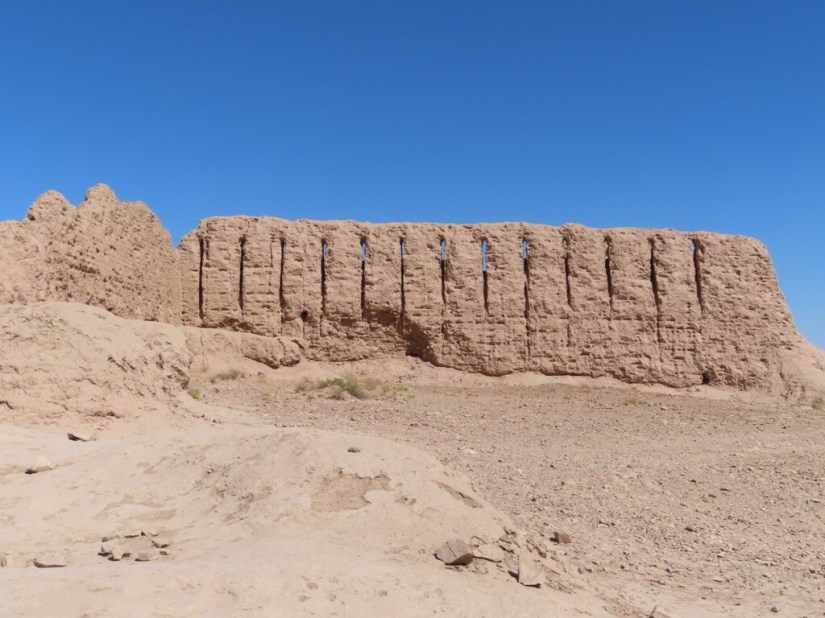

Looking down, we could see the lower fortress, but didn’t go and explore.

Despite looking dry and inhospitable, we spotted wildlife – a rodent like critter, species uncertain …

… and a bird …

… and tiny flowers …

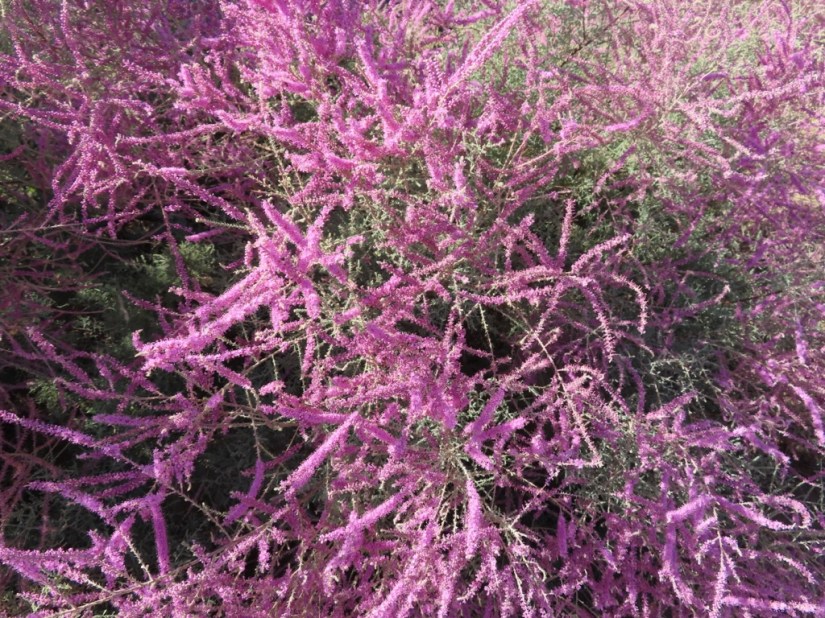
… as well as this purple bush that was growing everywhere along the road.

It was quite a walk to the fortress and back and we were pleased to join Ali in the shade where he shared the melon with us and a couple of other drivers … delicious!
We had to make a stop for fuel and strangely, only the driver can enter the service station … passengers have to wait in the waiting area, conveniently shady with seats 100m away! When I mentioned this, it was suggested that since we were running on propane it was for safety in case of an explosion – rather pleased we hadn’t opted for self drive!

The last fort on our trip was Guldursun Kala Bolshaya which was most impressive for its size.


It was impossible to get it all in a photo!
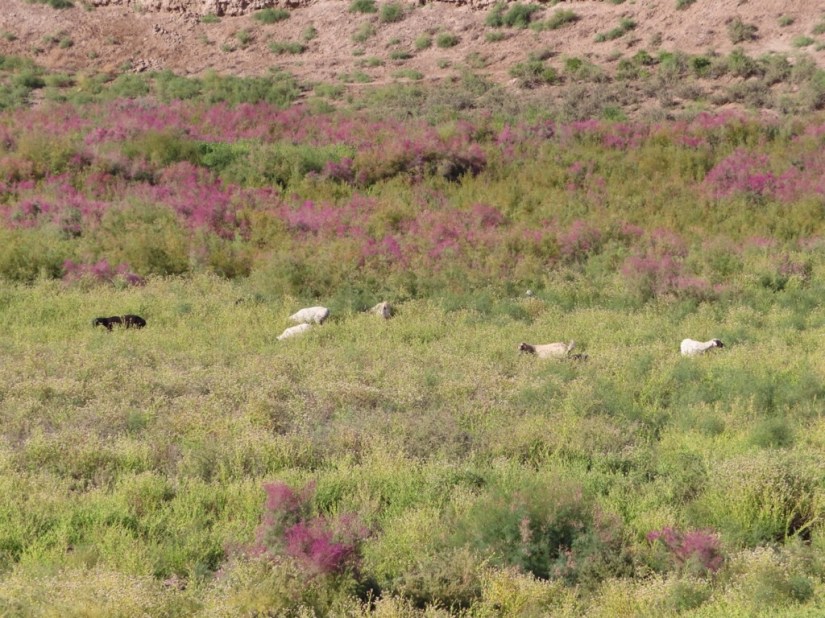
With perimeter walls of about 1km long, there was plenty of space for the locals to graze their animals inside!
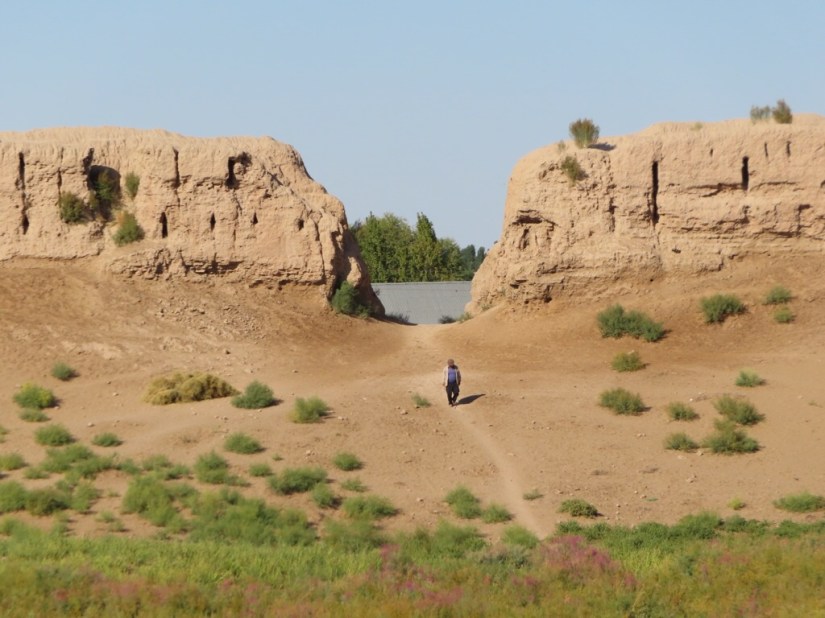
The present structure dates from the C12th so is much later than the others too. It also has a legend -Princess Guldursun fell in love with a Kalmyk warrior and opened the gates of her father’s fortress to him. Once inside he cast her aside and his troops killed everyone they could find and reduced the buildings to ruins.
In the late afternoon, we saw women picking cotton in a field and they gave us a cheery wave, but it must be back breaking work, and hard on the hands as the cotton plants are rough. Not all cotton workers choose this type of work. Many are conscripted by the government to assist the harvest and consequently Tesco & M&S and others banned the use of Uzbeki cotton in 2007. Despite reforms taken by the present government, citizens are still being forced to work in the annual harvest.


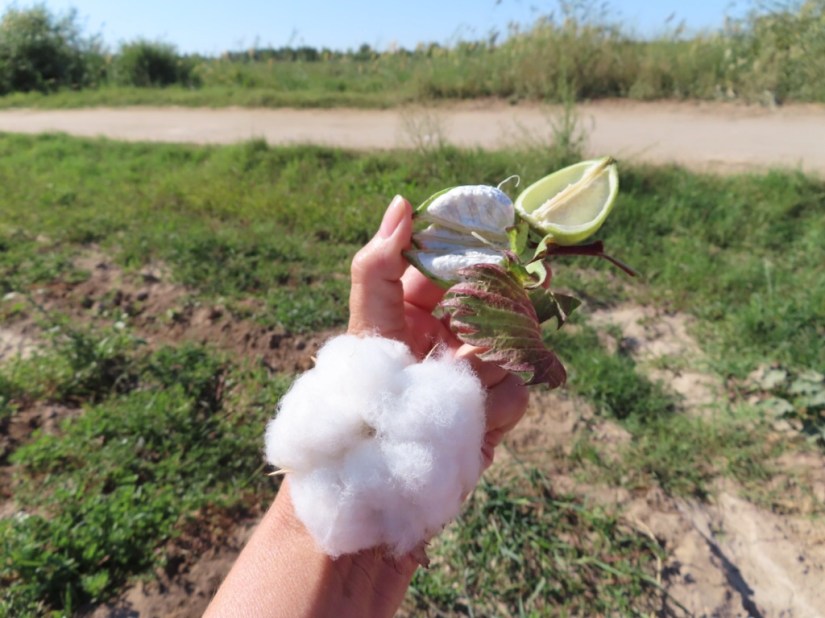
Earlier in the day we had stopped a picked both a bud which hadn’t opened, which was compact and slightly oily inside, and an opened pod, full of fluffy cotton. When the cotton is ready to harvest, the irrigation is stopped and this encourages the pods to open.
And cotton takes a lot of irrigation. When the Russian empire replaced much of the traditional agriculture with cotton in the C19th, it became the principle cash crop so dams and irrigation were built which led to the two longest rivers in Central Asia, the Amu Darya and Syr Darya to change course. The Aral Sea, formerly the fourth largest lake in the world with an area of 68,000 sqkm, has shrunk to 10% of its original size, splitting into four lakes. Here’s a picture of the Aral Sea in 1989 on the left and 2014 on the right …
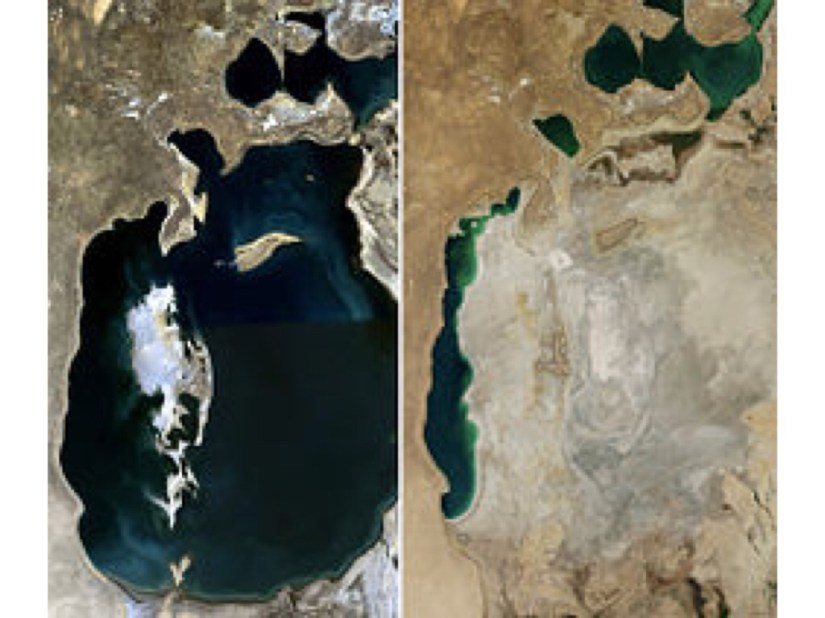
Since then, storms of salt and dust from the dry seabed continue to affect agriculture, the ecosystem and health in the region.
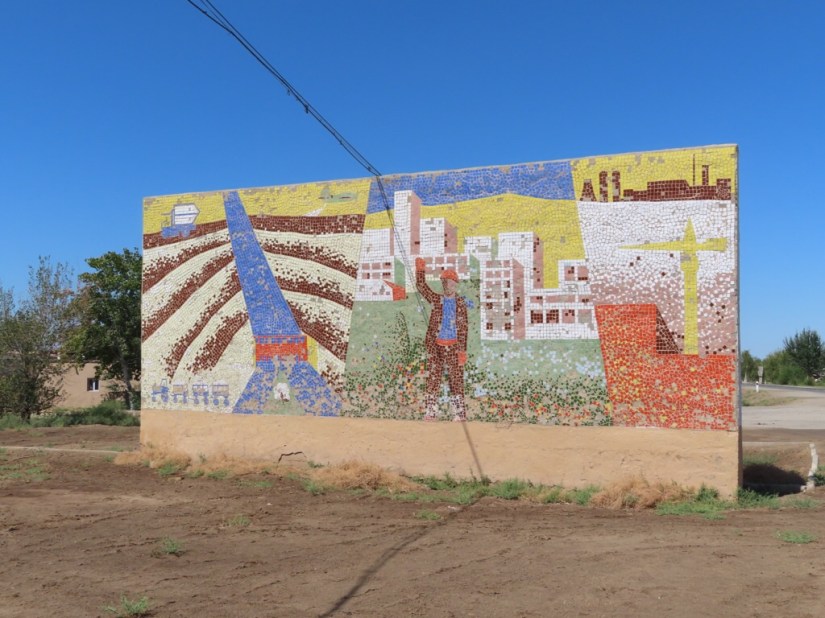
On the way back we passed this pair of mosaics by the road, celebrating the cotton crop, fertilised by plane and irrigated then fabricated in factories by happy workers and their families enjoying the good life in Uzbekistan.

 Off Travelling Together