
It has taken a couple of days to adjust to being away this time so I’m writing this sitting in Tashkent airport as we are about to move on!
While in Tashkent, we had hoped to visit a couple of museums to get a grounding in things Uzbeki and a look at the old parts of the city, maybe looking closer at the Soviet architecture when we return at the end of our trip. But of course nothing is that simple, everything is mixed up together. There is an excellent metro system, but there is quite a distance between stops so once we started walking, we found everything was further than we’d expected and we clocked up 11 miles on our second day! By day three we had embraced 21st century technology and the wonders of Y-taxi, the local taxi app with fares under £2 for a short hop and instantly everything became easier.
So Tashkent is the capital of Uzbekistan and is a metropolis of over 2.5 million people but it is also an old city which began as a settlement beside a fertile oasis. When the Arabs conquered the area in the C8th, it was already a major caravan crossroads on the Great Silk Road linking China with the Middle East and Europe and by the C11th it was called Tashkent, meaning City of Stone in Turkic. The city was destroyed by Genghis Khan in the C13th, recovered under the Mongols and Timur then prospered under the Shaybanids, the founding dynasty of modern Uzbekistan who ruled from the C15-17th.
They built the Kukeldash Madrasa or Islamic School, which had fallen into disrepair, but is now restored and back in use as a college for the study of Islam. The exterior has large Iranian-style iwan gates flanked by two levels of miniature iwan with pointed arches and small minaret-like towers called guldasta. Stylistically, apparently all madrasas in Uzbekistan are similar, whatever their age, although they can be decorated differently, and here there are lots of colourful majolica tiles.

Inside is a central courtyard with garden and fountain, surrounded with cells used as classrooms and dormitories for the students.

It was very peaceful walking round, yet so close to the bustle of the city just outside.

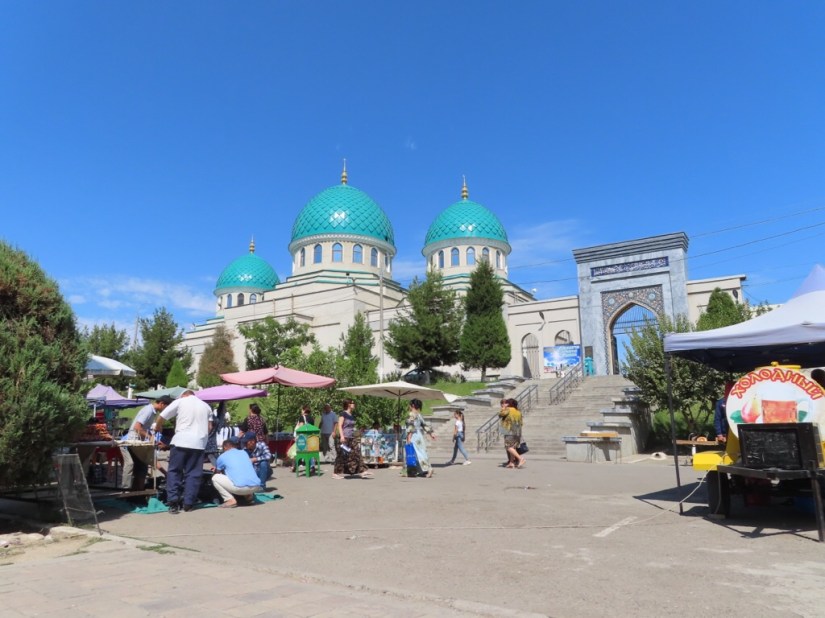
In the C9th roads led from all city gates to the Chorsu Bazaar, bringing traffic and trade to the center of the city. The surrounds would have been a warren of mud-walled houses and workshops, crowded bazaars, mosques, madrassahs and mausoleums. This is Chorsu Bazaar today …
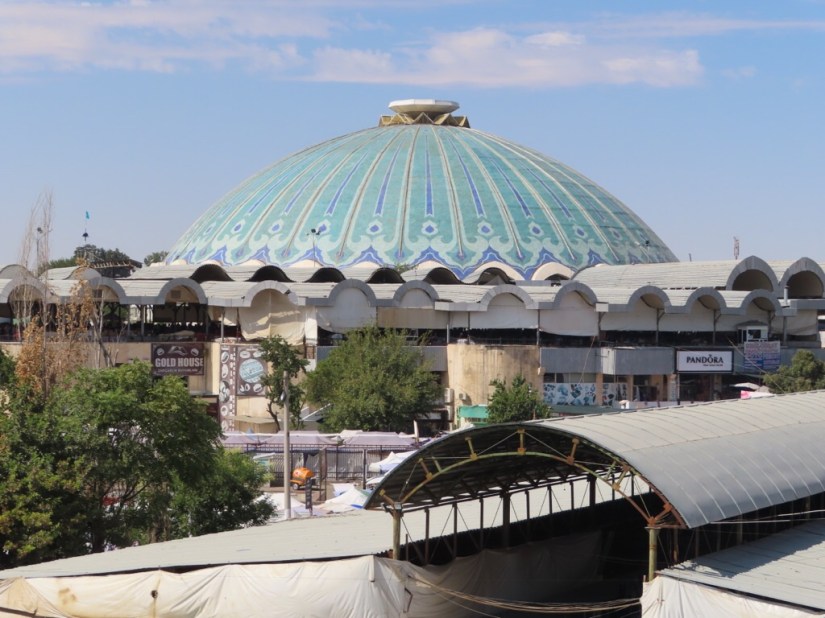
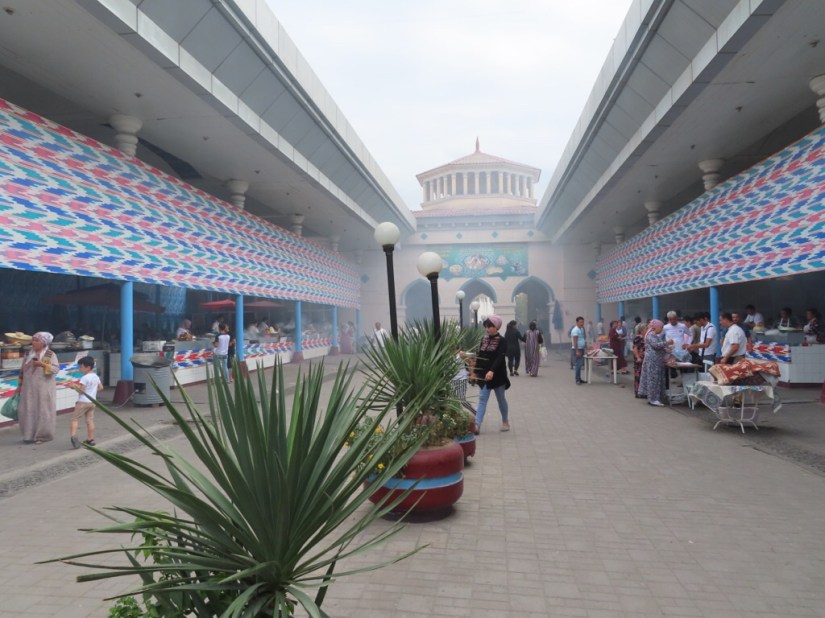
… still a market and still hectic and filled with smoke from grilling kebabs!

Nearby is the Khast Imam Square with the beautiful C16th Barak Khan Madrassah at one end, now containing souvenir shops in the original student rooms.


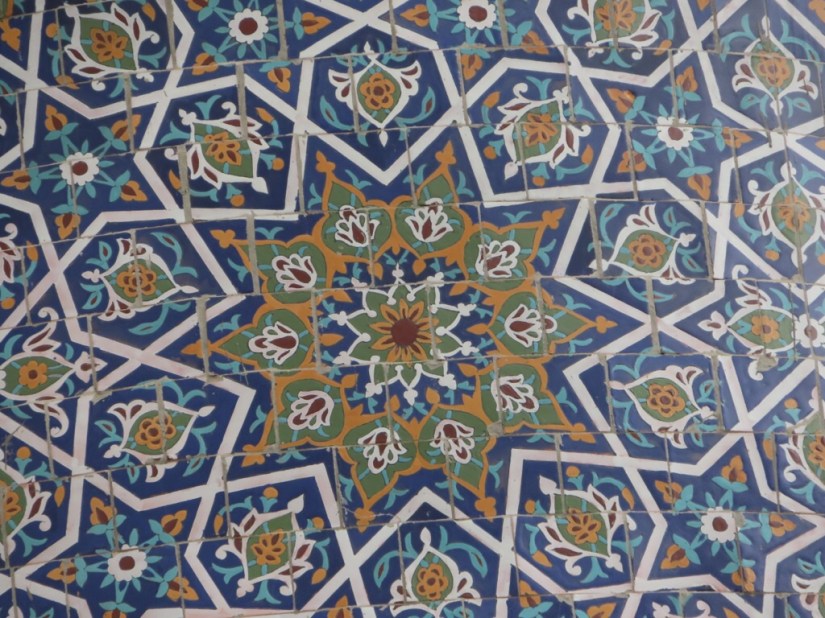
There is also a variety of patterned tiles … all in shades of blue!


The other end of the square, flanked by a pair of 50m-high minarets, is the Hazrat Imam mosque.

This is the largest place of worship in Tashkent and was built in 2007 in a record-breaking 4 months using sandalwood columns from India, green marble from Turkey and blue tiles from Iran.

The C18th Muyi Mubarak Madrasa is in the centre of the square holding what once was thought to be the oldest Quran in the world and also ‘the sacred hair’ believed to have belonged to the Prophet Muhammad. Unfortunately, it was closed when we visited so we missed these treasures.
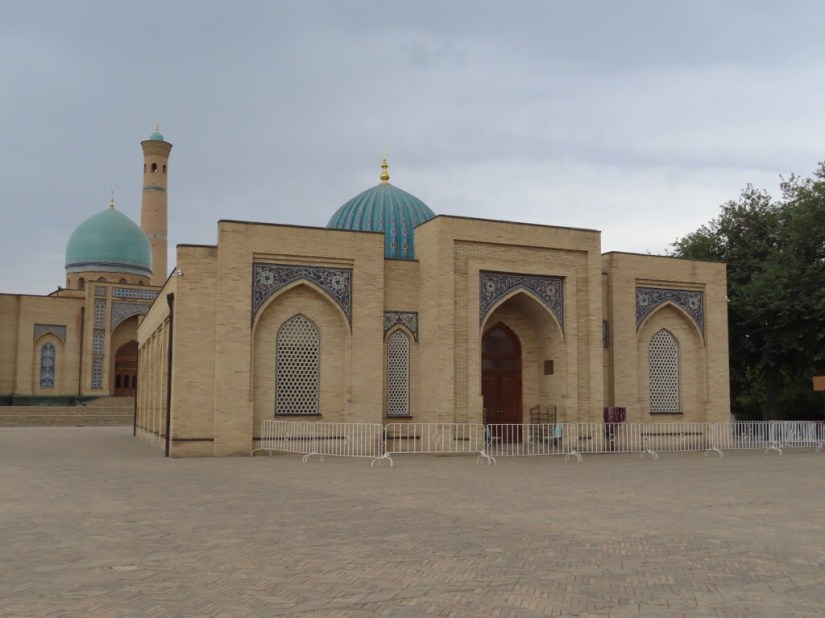
As we left we saw the mausoleum of the scoholar and poet Abu Bakr Kaffal Shashi …
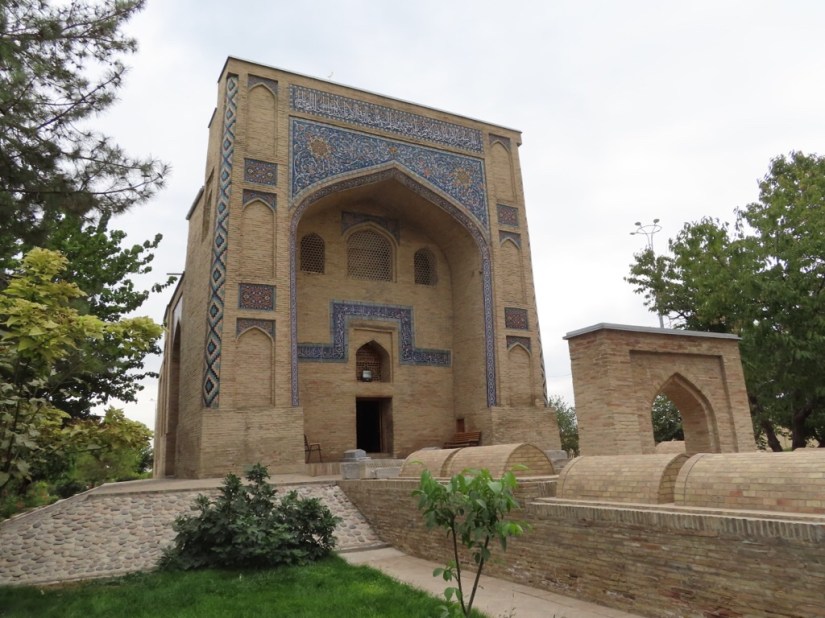
… and a brand new mosque, coming soon!


The other real treasure we found in Tashkent was the Museum of Applied Art, situated in the former home of Imperial Russian diplomat Alexander Polovtsev. This grand mansion was built in 1930 and decorated in traditional Uzbek style, using master craftsmen and contains a superb collection of applied arts, many collected by Polovtsev.

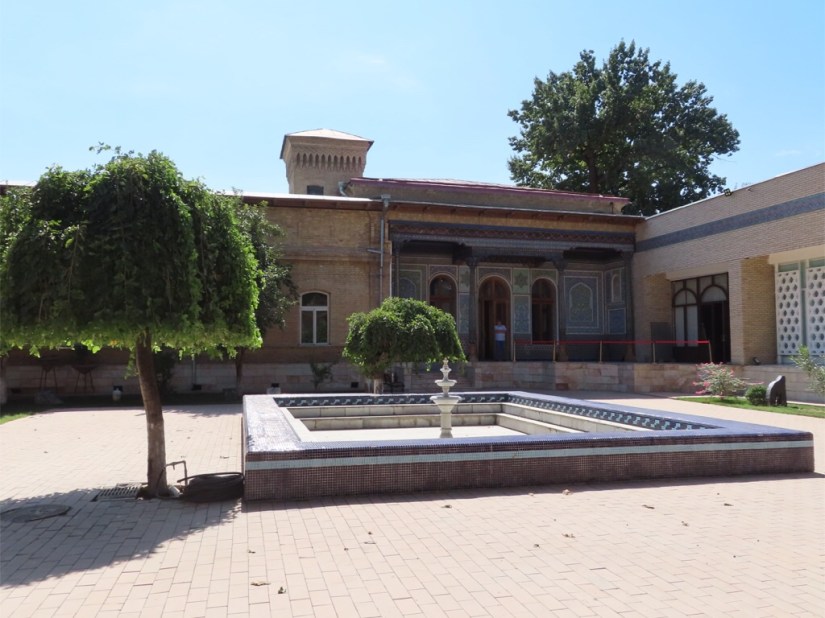
The decoration comprises panels of carved and painted plasterwork called ghanch and ceramic tiles on the walls and typical Tajik style wooden ceilings, also carved and painted. These started in the porch …

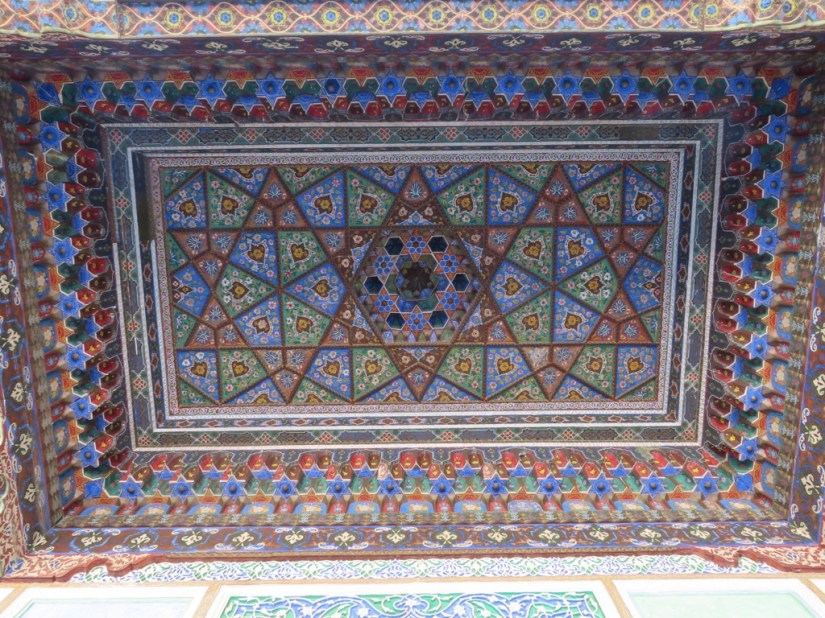
and continued into the central hall …


… and here are some details …

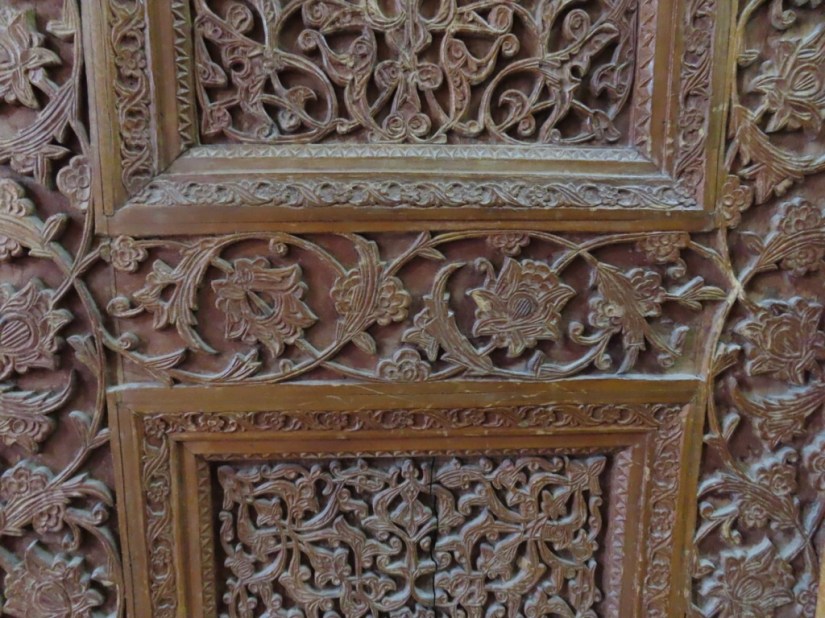
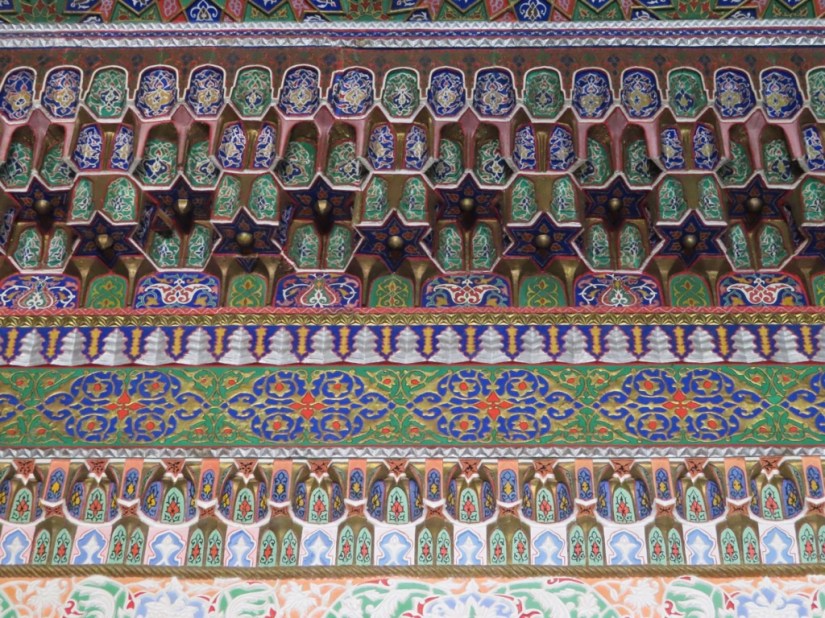
The collection included ceramics, metalwork, painted wood, jewellery and textiles including clothing, beadwork as well as printed and embroidered fabric.
Suzanis are large, hand-embroidered textile panels with the word coming from the Persian word suzan, which means needle.


Some were luxurious with gold thread on velvet …

… and here is a wooden block and printed fabric …
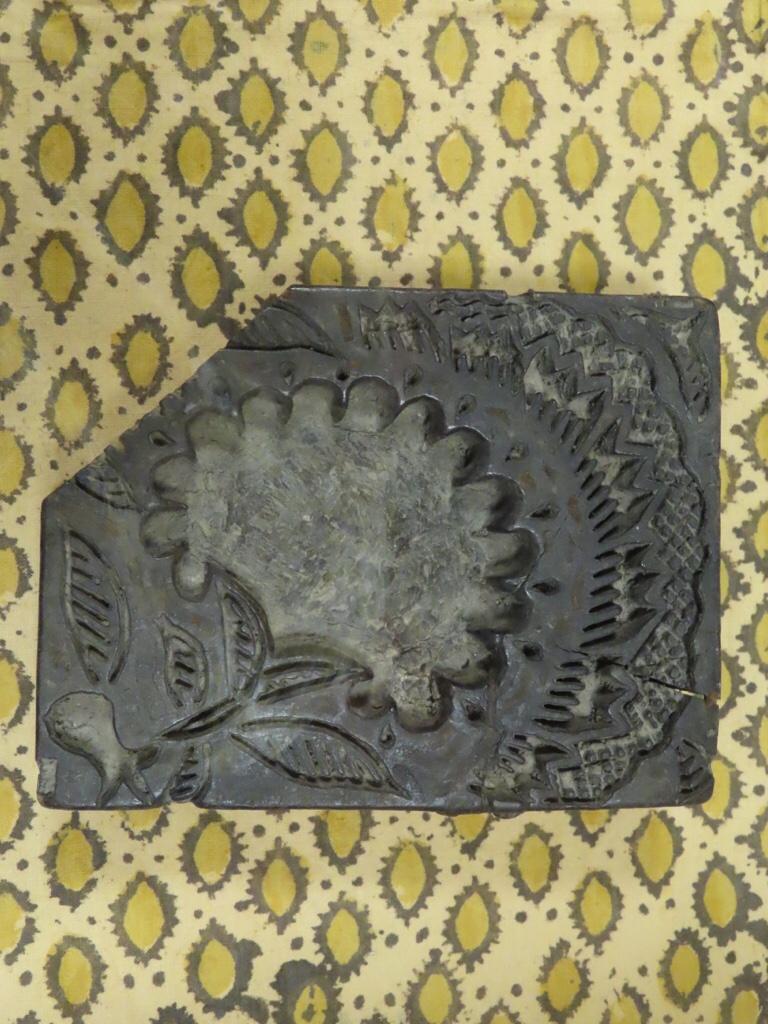
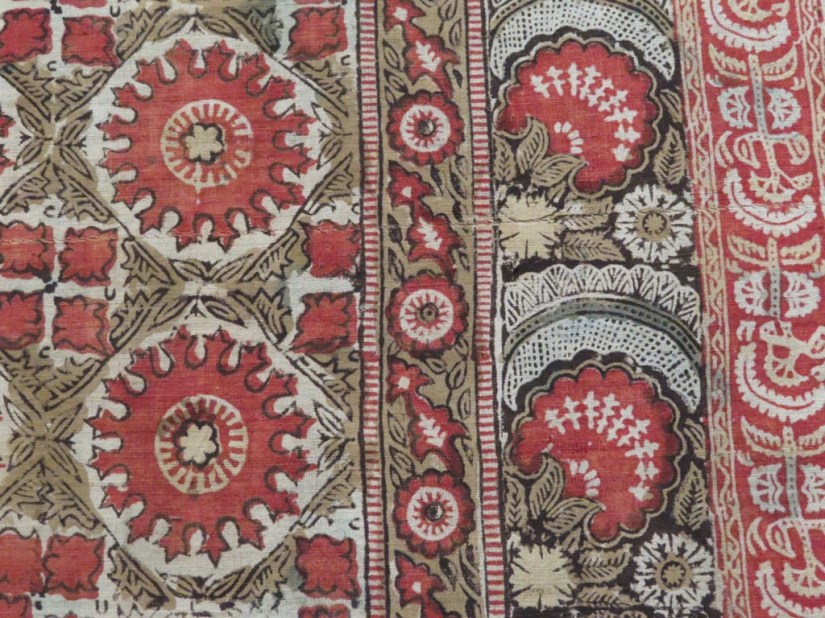
The State History Museum links the old with the new as it is housed in a building dedicated to Lenin and completed in 1970 to mark the centennial of his birth. It took history from prehistoric times to the present day on one floor while the top floor detailed the virtues of the independent Uzbekistan, in every aspect, but it wasn’t very engaging and we didn’t stay long. The best part was the facade which is decorated in oriental modernist style with patterned window grilles called pandzhara, a motif that became increasingly familiar during our sightseeing here.

So the Russian army arrived in 1865 and made Tashkent the capital of its Turkestan Province, incorporating vast areas of Central Asia. Amir Timur Square was built to form the center of a new Tashkent and once contained statues of the first Russian governor of Tashkent, followed later by statues of Lenin, Stalin, and Karl Marx but it’s now Amir Timur and his horse who occupy the centre of the capital.

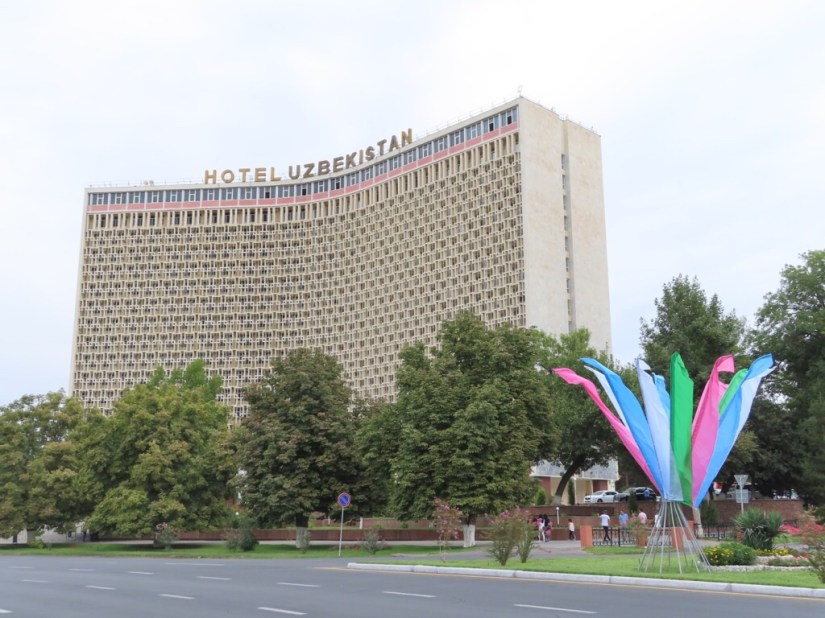
It also has a couple of the city’s iconic buildings – the Uzbekistan Hotel, generally looking a little tired but with a great facade …
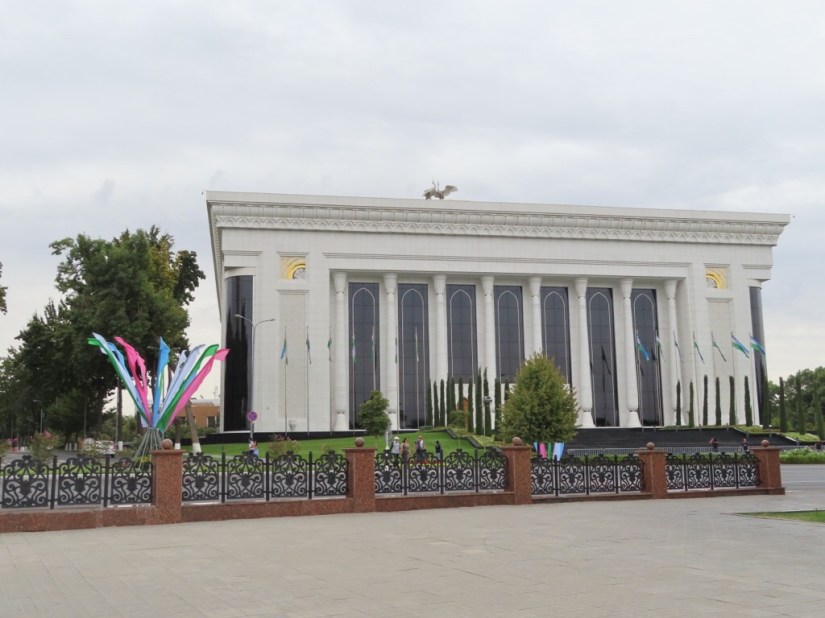
… and the more modern Forums Palace, built in autumn 2009 to hold important state and international events.
There is also the Tashkent Chime a symbol of the city since its construction in 1947, mirrored by a second chime since 2009.

Following the Russian Revolution in 1917, Tashkent emerged as capital of the Uzbek Soviet Socialist Republic and began to industrialize in the 1930s with scientific and engineering facilities being established in the postwar years.
The largest park in the capital was built on the site of an old quarry by Komosol Youth in the 1930s and is named after Alisher Navoi, the great Turkic poet and thinker.

It also contains The Istiqlol Palace, an events hall, once called the People’s Friendship Palace …


… complete with decorative facade …

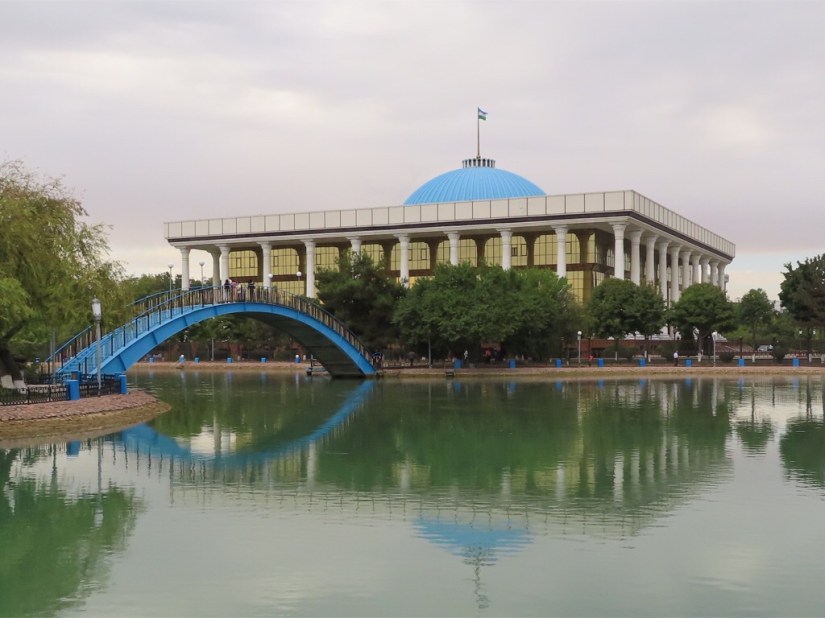
… and also a boating lake with Oliy Majlis, the Uzbek Parliament building behind.
Other parts of the park look a bit run down and less loved …

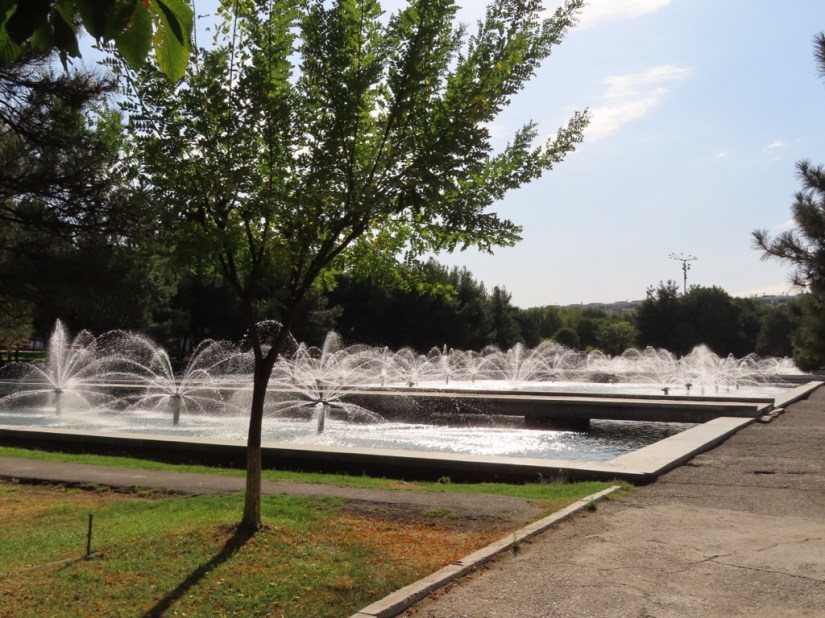
… but there were more fountains …

… and the Navruz Wedding Palace which is usually crowded with brides, grooms, camera men, drones, Hummer limos … in fact all the essentials of an Uzbek wedding, but quiet on Independence Day.

Independence Day brought various local celebrations in public places and fireworks later.
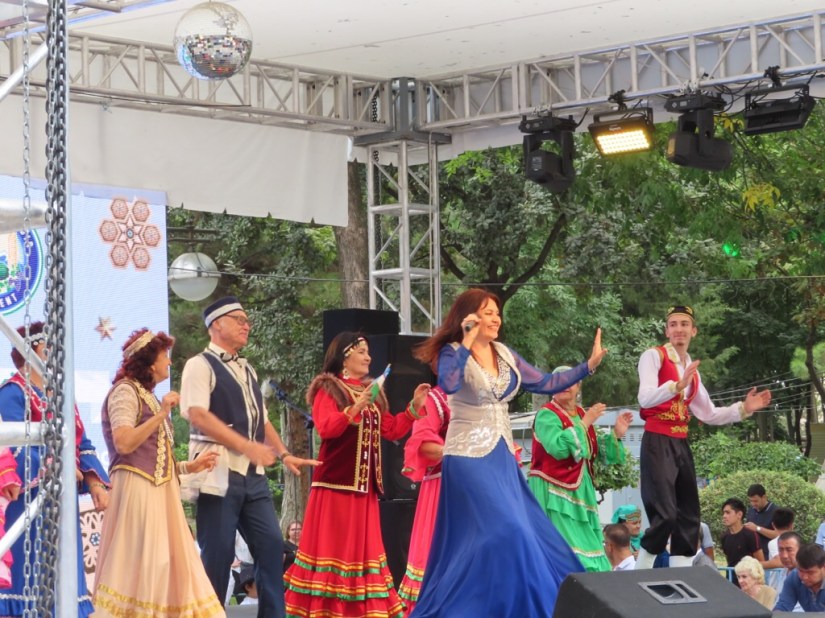
In 1966 Tashkent was hit by a massive earthquake which levelled much of the city which was rebuilt as a model Soviet city with wide streets planted with shade trees, parks, immense plazas for parades, fountains, monuments, acres of apartment blocks and served by the Tashkent metro system. At the collapse of the Soviet Union in 1991, Tashkent was the fourth-largest city in the USSR and a center of learning in the fields of science and engineering. Following independence in 1991, President Islam Karimov remained in power for 25 years until his death in 2016 when he was replaced by his long serving prime minister Shavkat Mirziyoyev.
So here’s a selection of other buildings, first the Central Exhibition Hall of the Academy of Arts …
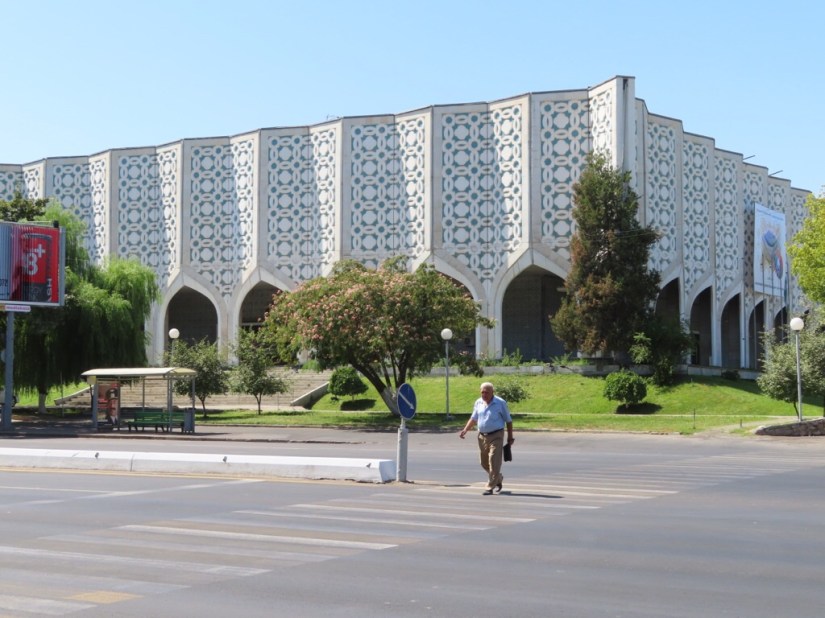
… and also a mixture of apartment blocks, office buildings, boulevards and plazas.

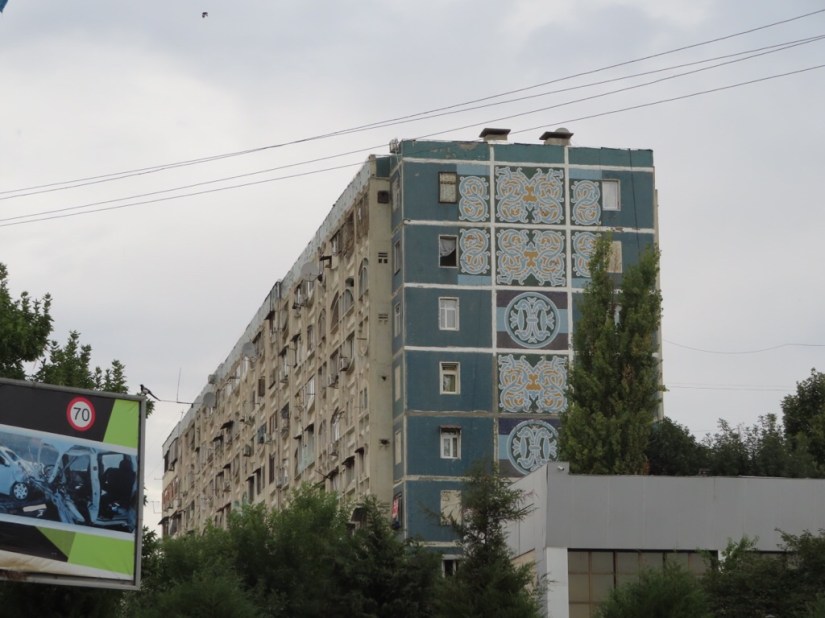
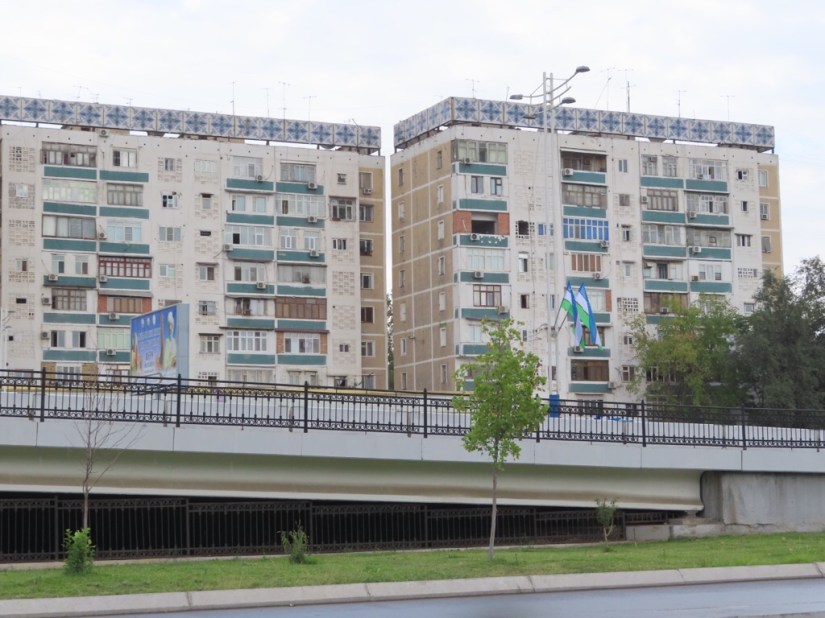


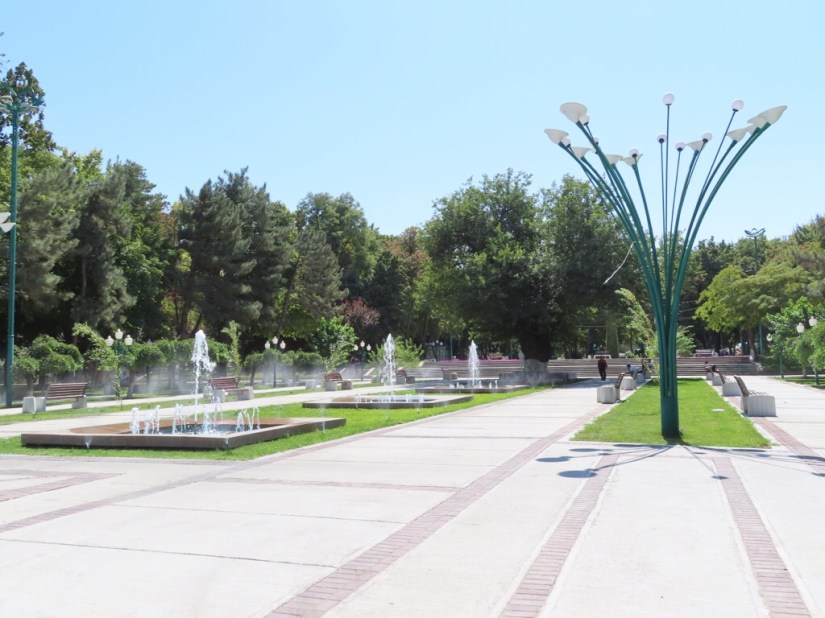

You can see how we got a bit overwhelmed!
Anyway, it’s been lovely and sunny, 25-30° with a breeze and low humidity … although there was a brief shower one day. We’ve been staying at Trip.le guesthouse, in a quiet residential area, but close to the metro and restaurants. It is set round a courtyard with private rooms, dorms, a kitchen with buffet breakfast and friendly staff.


We’ve tried three restaurants – Jumani, Caravan for Uzbek food and Gruzinskiy Dvorak with a Georgian menu – and eaten well in all of them. We’ve begun our meals with various mezze and salads then Chris has dined on tofu, vegetable stew, cheese filled pastries and vegetable kebab. I’ve had a traditional Georgian dish of lamb stew with tomatoes and aubergines, spicy chicken with mushrooms and walnuts and also Beshbarmak, a national dish of nomadic Turkic peoples in Central Asia, with sheets of pasta, stewed horsemeat and a broth with sliced onions which was surprisingly delicious.


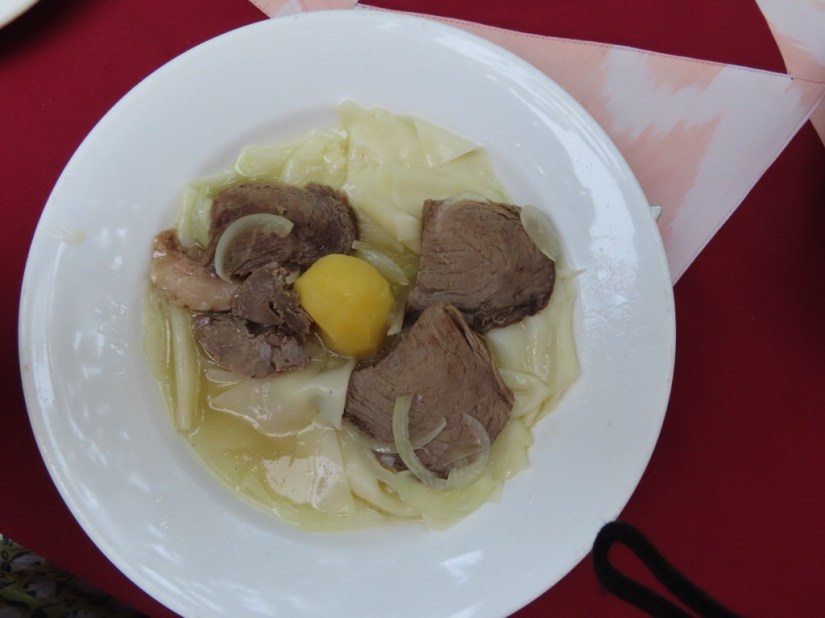
So that was Tashkent … we will be returning for a couple of days at the end of our trip, but meanwhile, it’s time to board the early morning plane and take a trip back in time to Khiva …
 Off Travelling Together
Lovely pictures. Reminded me of my time in Tashkent. 🙂
LikeLike