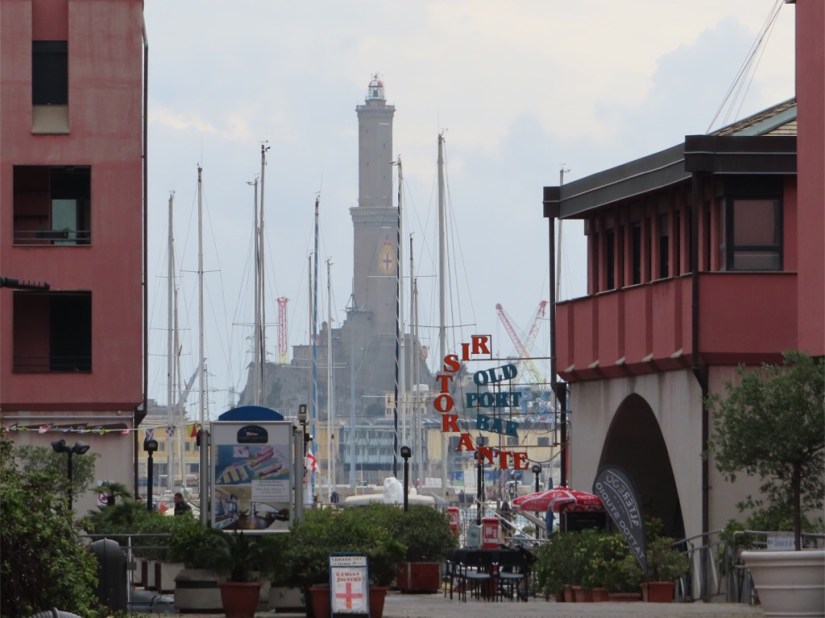
 Having had a couple of sunny days, today was grey, chilly and damp so we took the train to Genova.
Genova was one of the world’s greatest trading powers in medieval times and controlled most of the Riviera de Levante from the mid C13th. This brought about Genova’s Golden Age, with its aristocratic dynasties trading all over the world and building grand palazzi in the city.
Walking out of the station the huge victory arch dedicated to the Genoese who died in WWI was ahead of us.

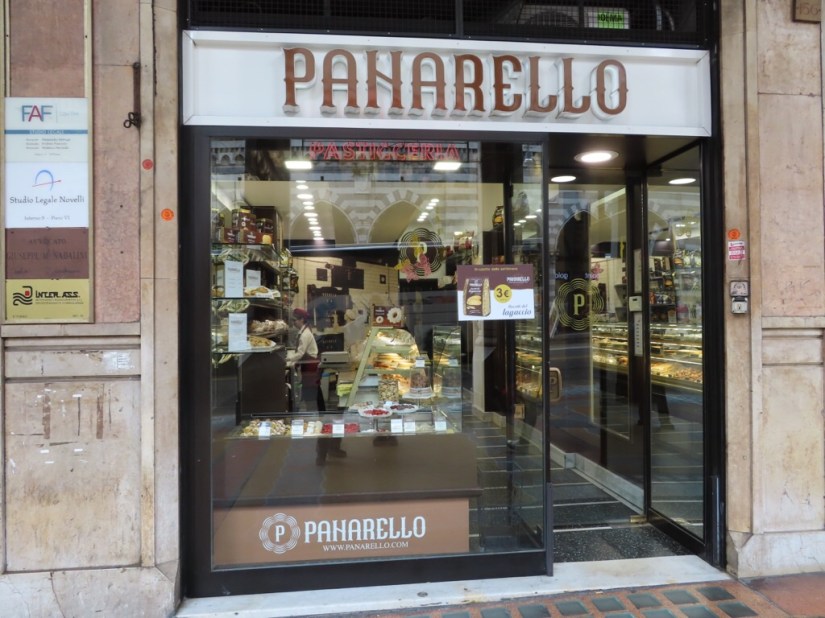
We turned down the main shopping street of the city lined with smart shops with beautiful facades and convenient arcades to keep dry.


We bought a couple of panedolcino, little rolls flavoured with pine nuts and dried fruit (which we ate for breakfast next day and were delicious!).

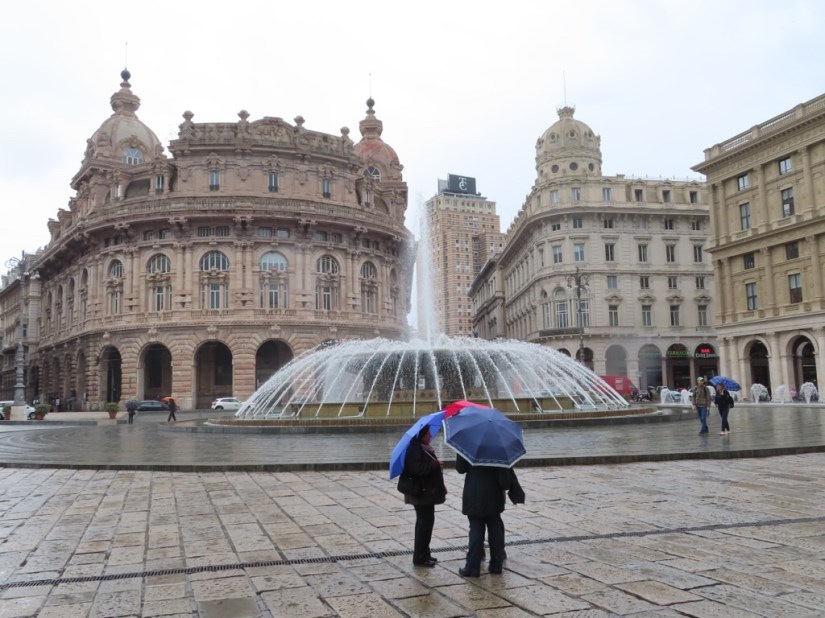
Reaching Piazza de Ferrari …
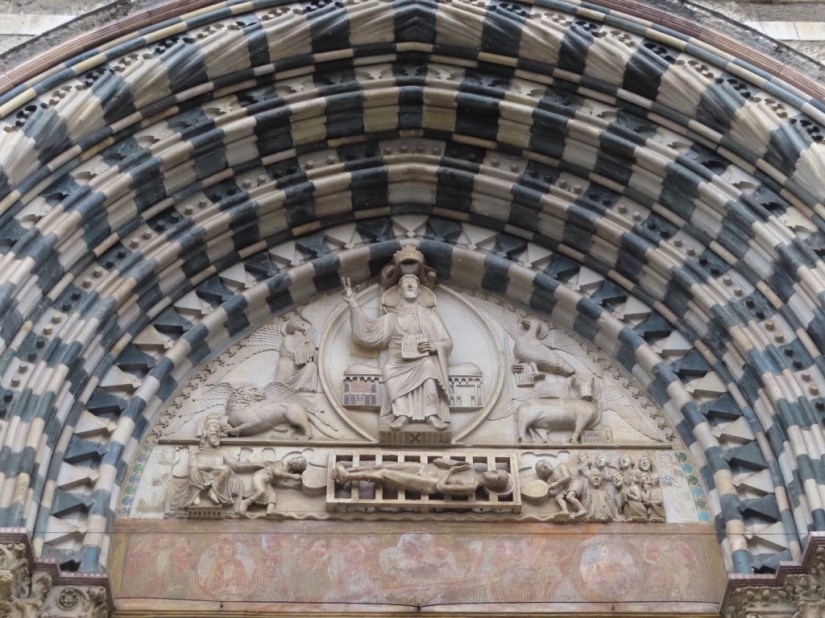
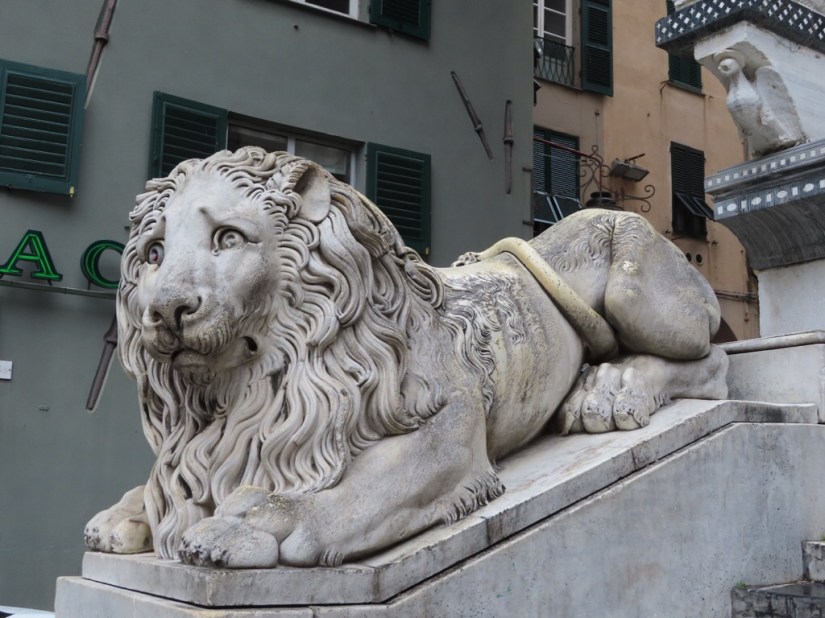
… we then turned into the maze of streets making up the old town, stumbling on Cattedrale San Lorenzo almost by mistake, but we went in for a quick look before it closed for lunch …



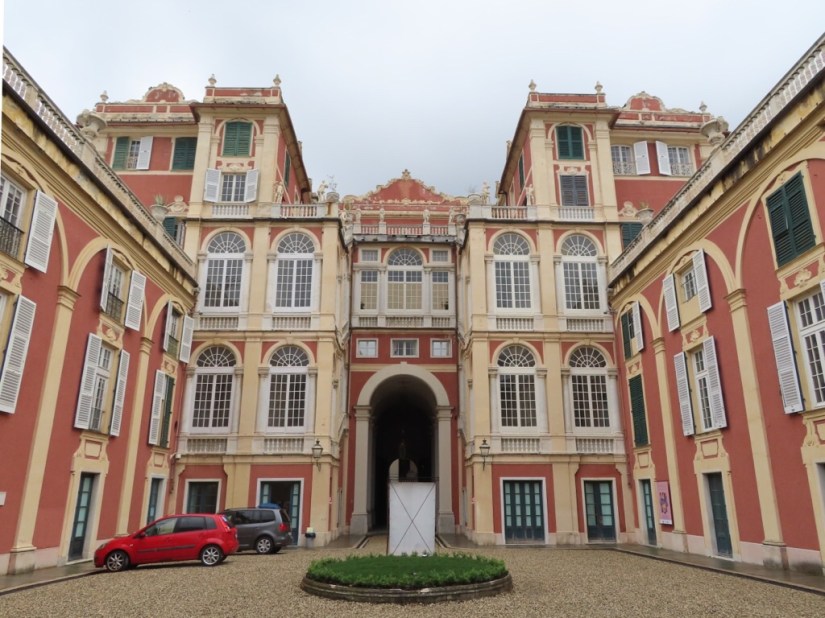
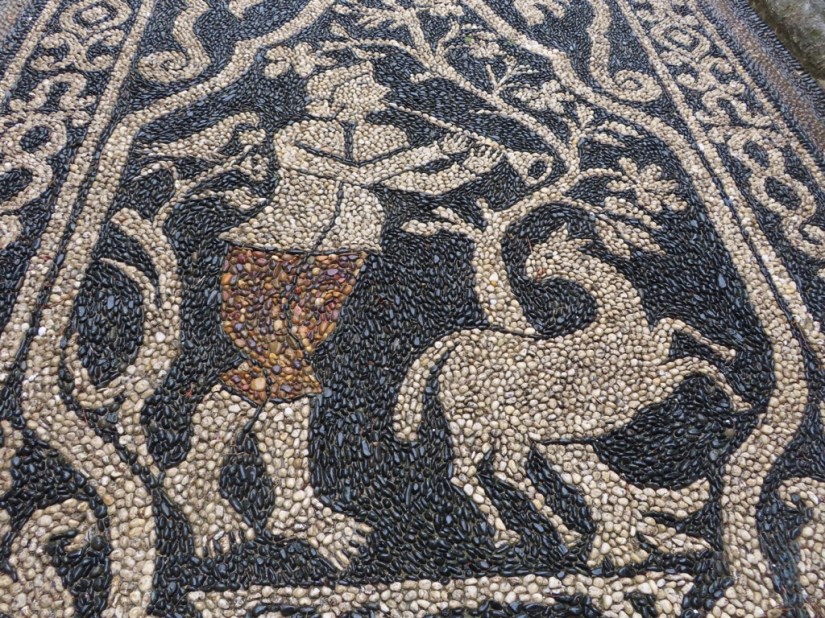
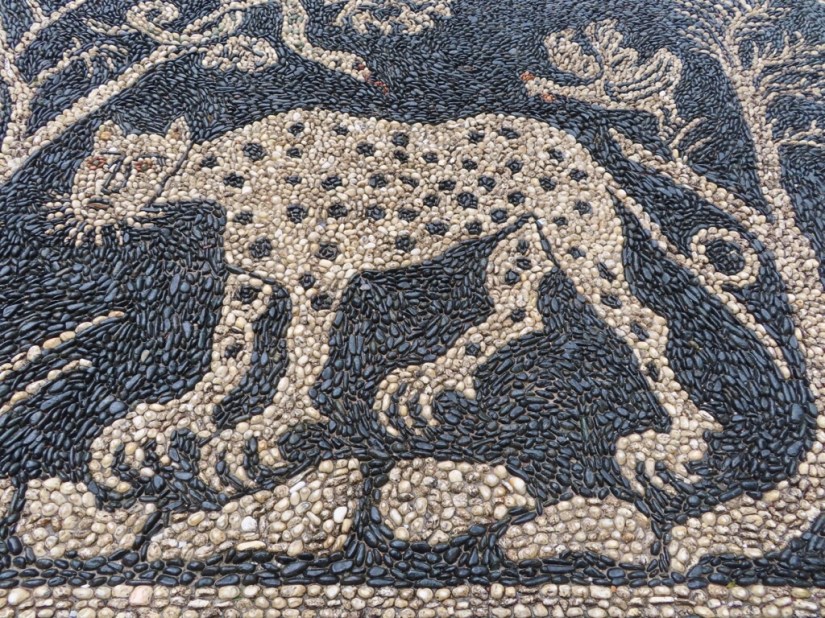
Next was Palazzo Reale, rebuilt in the Baroque style for the Durazzo family in C18th and used as a royal palace by the House of Savoy who ruled Italy between Unification in 1861 and the Republic in 1946. It is sumptuous, filled with gilding, rich fabrics, furniture and art. The hall of mirrors and the throne room say it all! Outside is a courtyard containing a fountain, set in a lovely a Ligurian pavement … the elephant and cheetah being the stars!



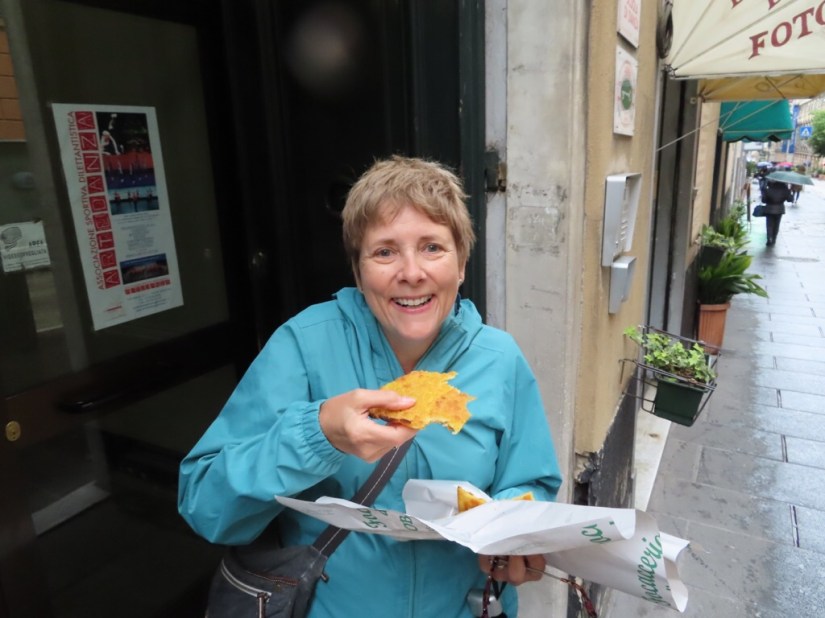
Lunch was takeaway farinata, a local chickpea pancake made in a large pan and served hot … tasty!
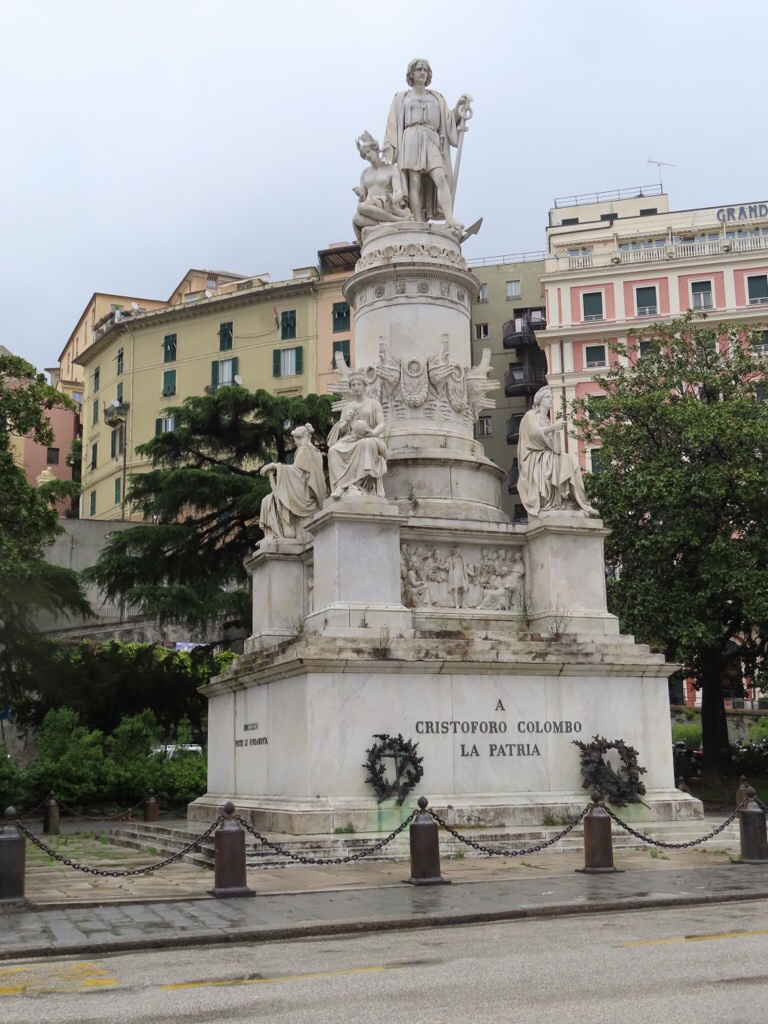
Christopher Columbus is Genova’s famous son, and he stands tall outside the main railway station.
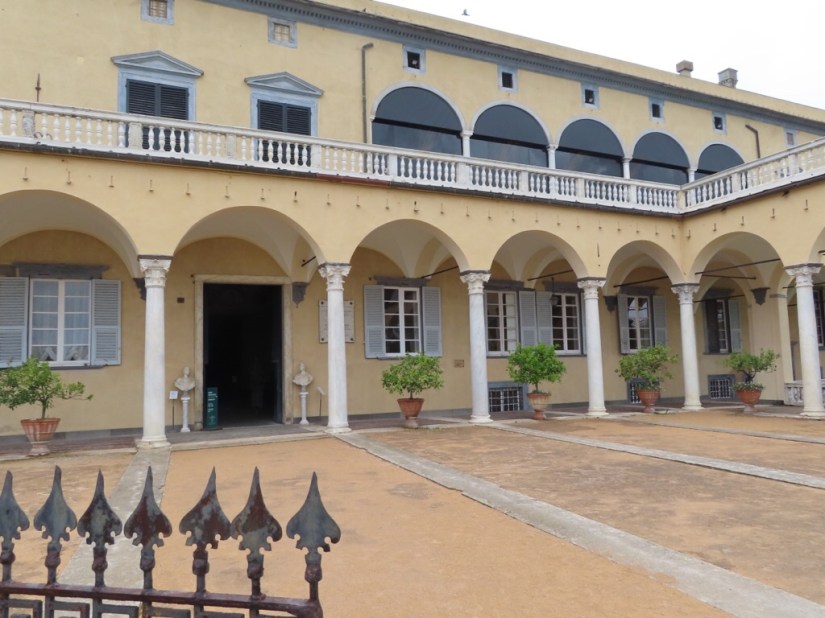
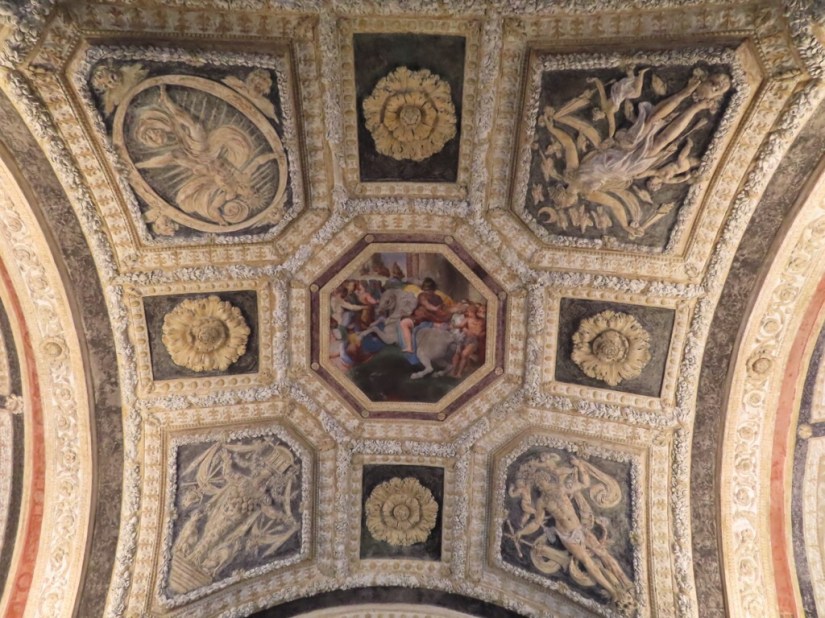
The Palazzo Principe was built for Andrea Doria, the most famous Genoese admiral and virtual dictator of the city for much of the C16th. He planned his naval battles here and tested models of galleons in the garden pond. There are tapestries of the Battle of Lepanto, his most famous victory which stopped the advance of the Ottoman Empire, in a room with a very nice ceiling.

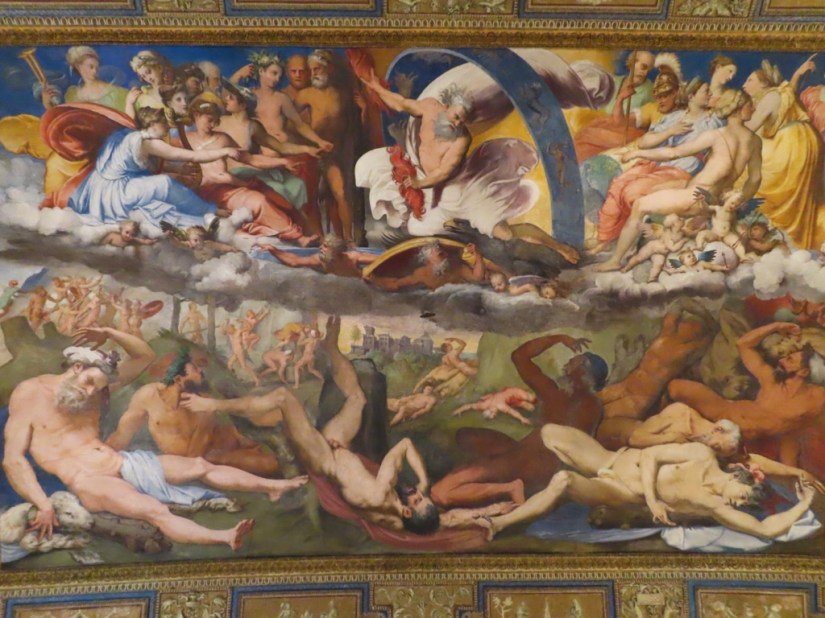
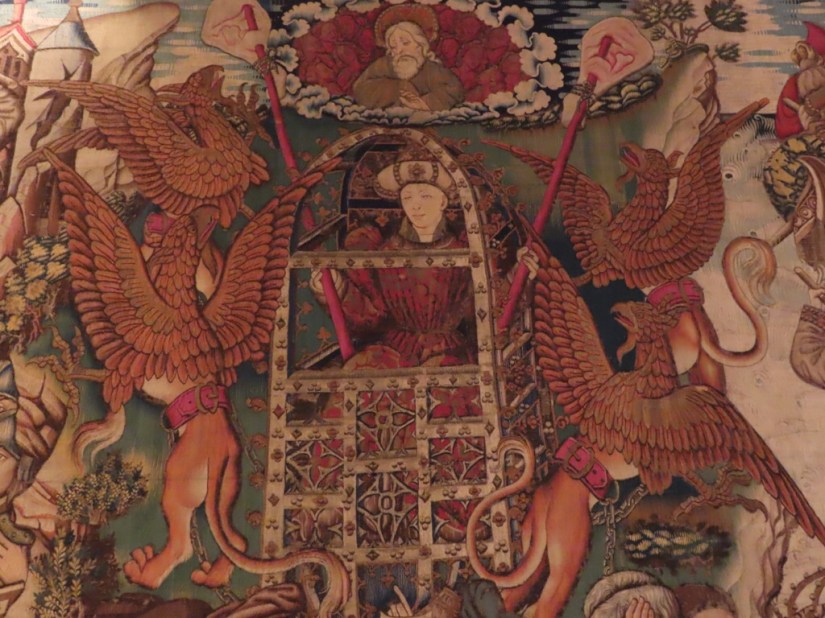
 The Hall of Giants, named for the ceiling fresco also contained tapestries showing stories from the life of Alexander the Great including his horse Bucephalus and being carried aloft by griffins.
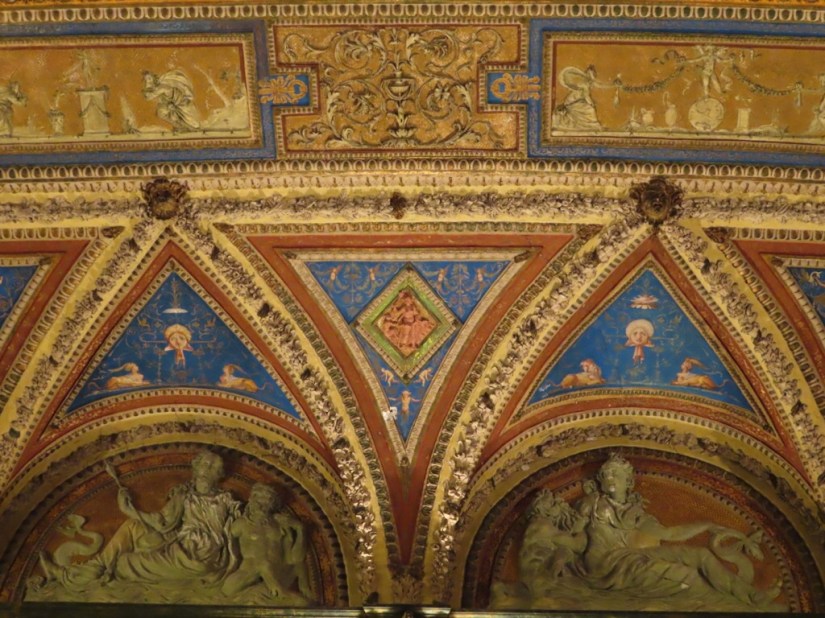

The Loggia has a fresco of several members of the Doria family depicted as Roman soldiers …
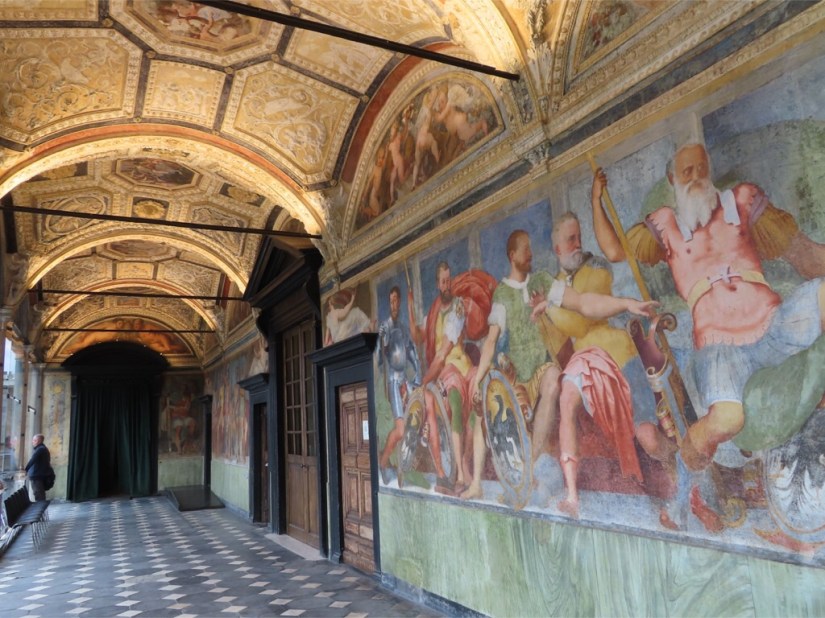
It looks out onto the garden, with a view of the docks and the Stazione Marittima built in the 1930 for transatlantic liners, a reminder that it was the sea that provided these great families with their wealth and power. You can also see the eyesore which is the flyover carrying the SS1 straight through the city!
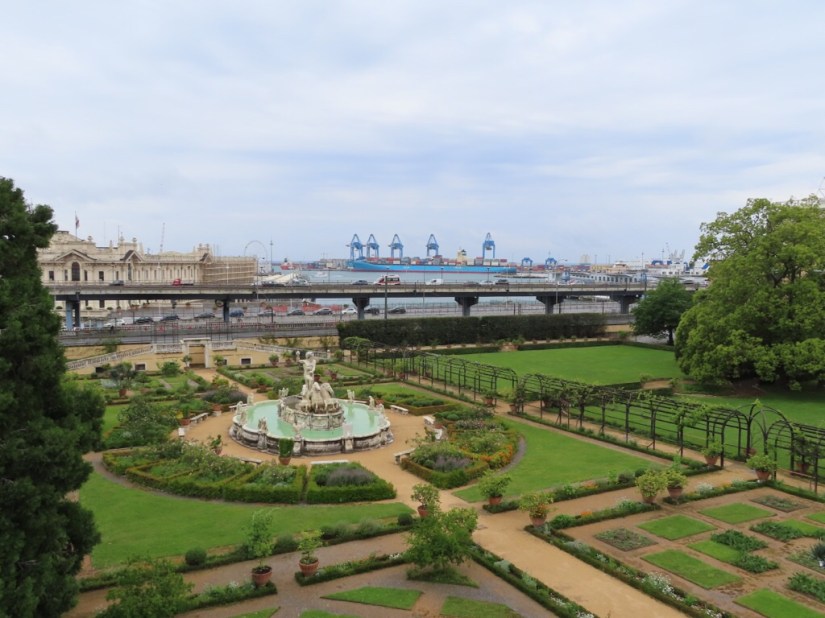
We walked under the flyover which separates the main part of the city from the port …
 … saw La Lanterna, the lighthouse dating from 1543 and 77m high …
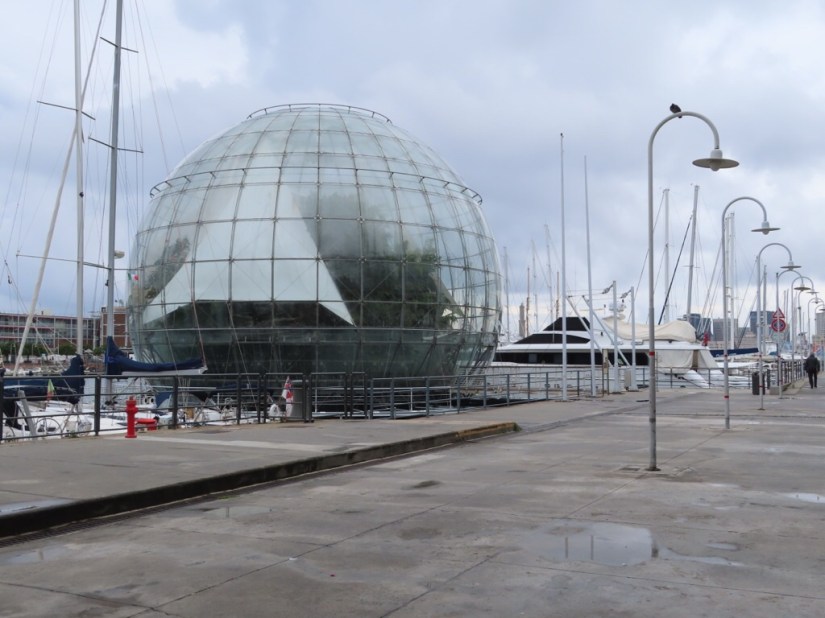
… and continued round the port renovated by local architect Renzo Piano including Il Bigo, a panoramic lift inspired by old cranes and the Biosphere, containing tropical plants. there was also a maritime museum and aquarium, but as it was still grey, chilly and damp we walked past pretty quickly.

As we left the port, we passed the Palazzo San Giorgio, originally home to one of Europe’s first banks which financed royalty and issued the first cheque. It was also where Marco Polo recounted his traveller’s tales while held prisoner. It is now home to the port headquarters.

Piazza Banchi gave its name to banking as it once contained money-changer’s tables, or banchi that once stood here until they were moved to the Loggia dei Mercanti which is now an exhibition hall.

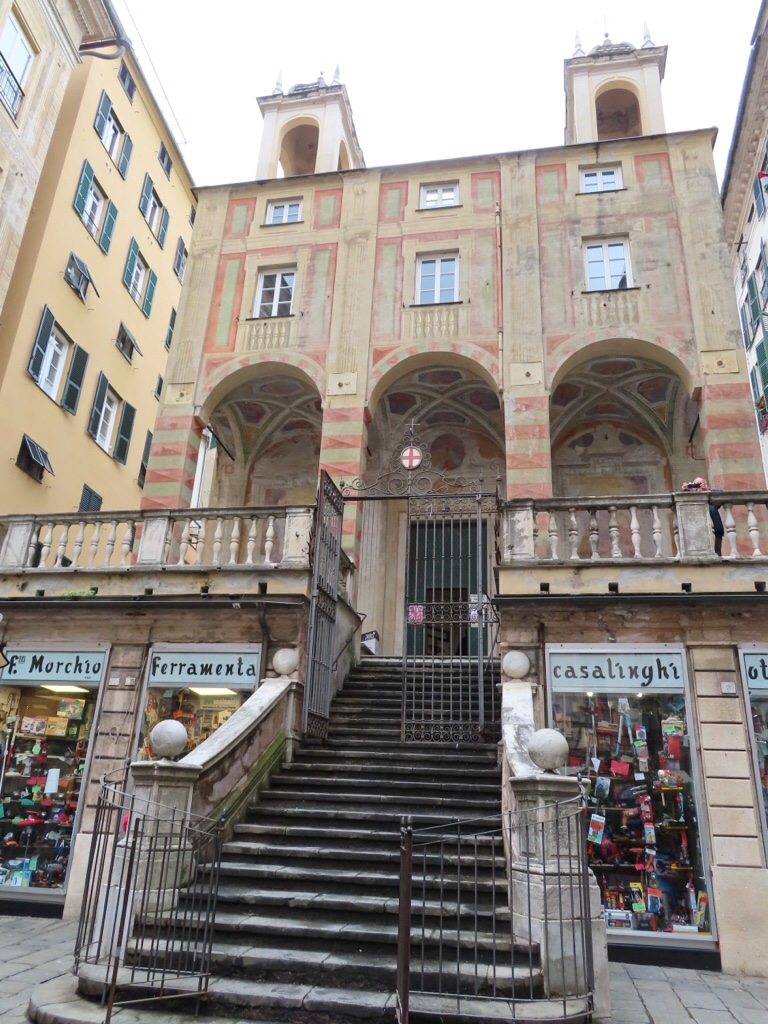
The church, San Pietro in Banchi, had stood here since the C9th, but was damaged and then rebuilt in the C16th, but to fund its rebuilding, concessions were sold as shops so it stands on a terrace above.
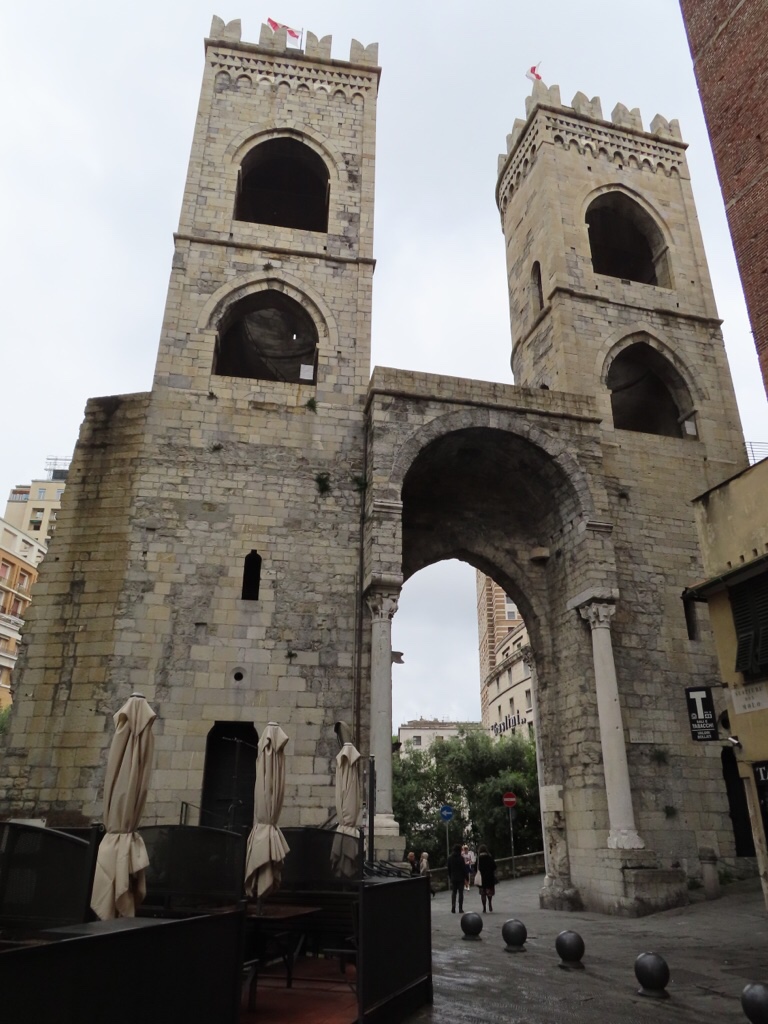
Our last stop before the station was the Porta Soprana, standing on the spot where the city walls were opened to connect Genoa with the Riviera di Levante.
We’ve only really had a taste of the city – there were plenty more palaces, churches and museums to see, but we think we saw the best bits …
It was still grey, chilly and damp when we got back, Camogli seemed deserted. Many of the restaurants don’t seem to be open for the season yet, especially with the bad weather, although we did find one!
 Off Travelling Together