 Having spent a week in New York, we took the train through Connecticut and Rhode Island to Massachusetts, near to the coast in places but the day was grey, the train quite fast and the windows grubby so no pics! This is just a whistle stop tour of Boston, with just two days to see as much as we can. We are staying in the Back Bay area, once marshland, it was then filled in to make one of the most sought after neighbourhoods. Oasis Guesthouse is made from a pair of 1880 brownstones which have been converted into around 15 snug but perfectly adequate rooms. There is also a great continental breakfast served downstairs each morning.


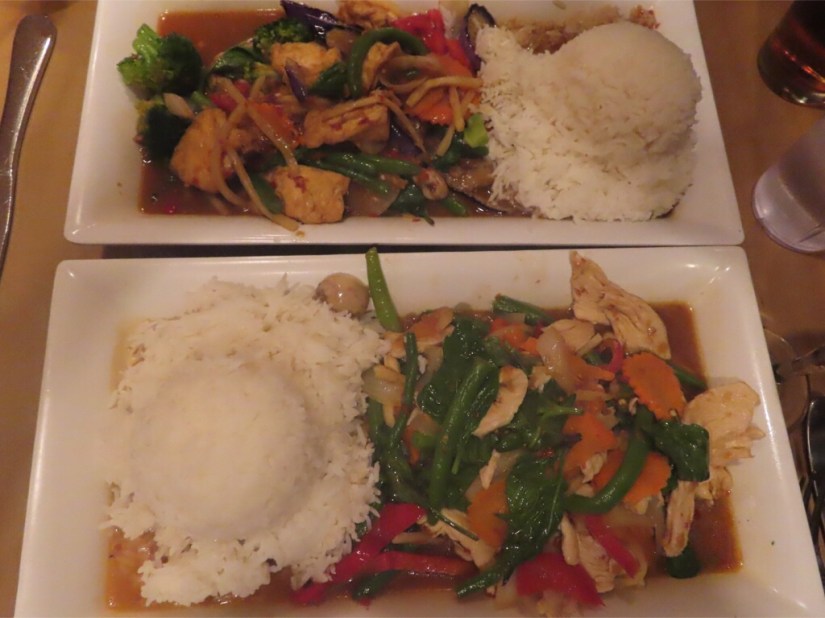
We arrived early evening and went out to eat just round the corner at a Vietnamese Thai restaurant called Pho Basil and had delicious plates of tasty vegetables with rice which was a welcome change.
The weather forecast was predicting one good day and one wet day so we tried to pack in as much exploring as possible in the sunshine. We took the subway, or the T as it’s called here, to Boston Common …
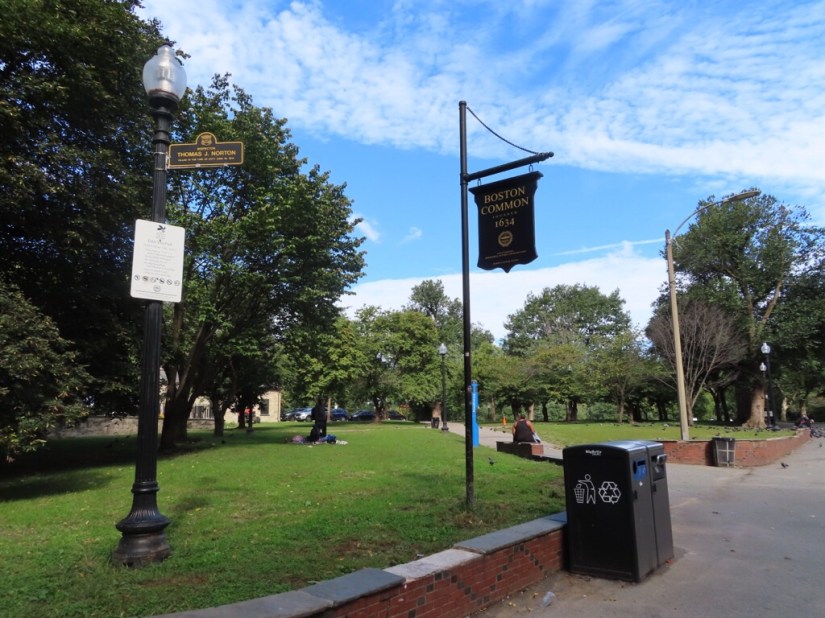


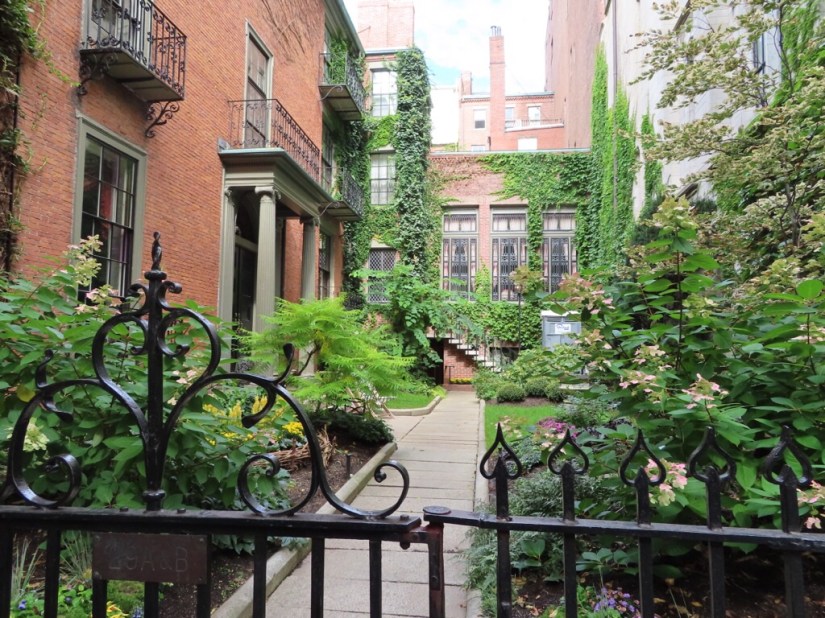
… and walked across to the exclusive area of Beacon Hill with its smart federal style houses dating from the early C19th, complete with vintage gas lights, ornate metalwork and intricate facades, all part of a historical preservation effort which prohibits alterations that tamper with the neighbourhood’s genteel character.


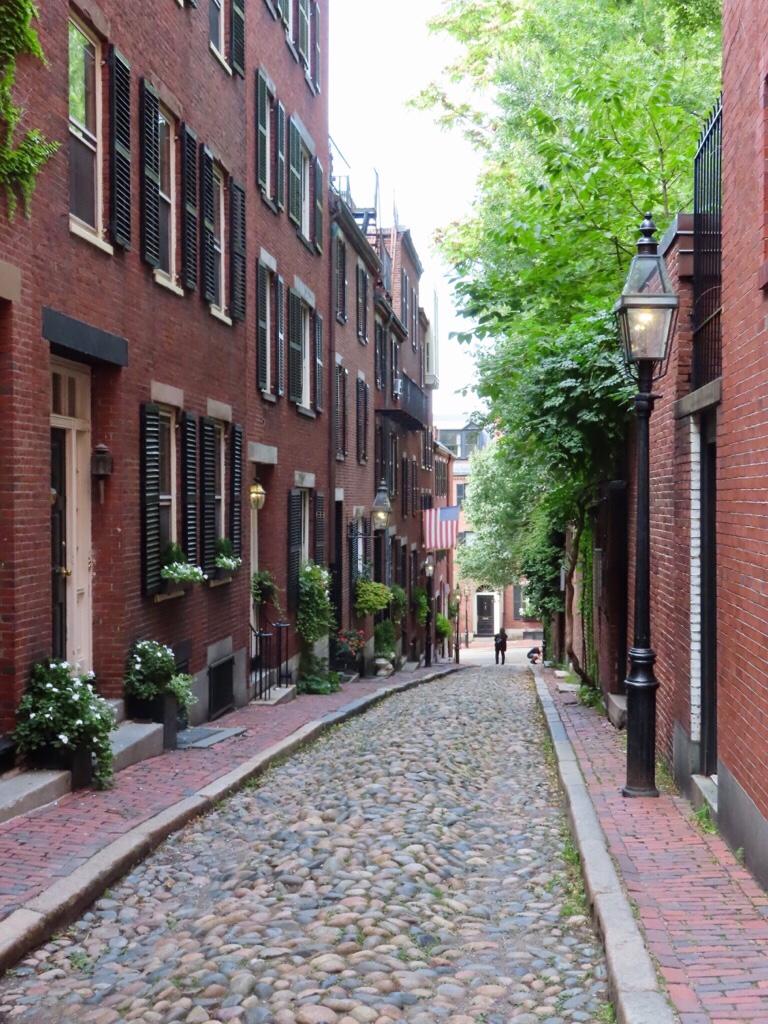
Acorn Street has its original cobbles and was originally built as a byway lined with servants residences but today is maybe the quaintest street remaining.

 Charles Bullfinch was Boston’s foremost architect at the time, responsible for many houses such as these …
 … and the Nichols House …
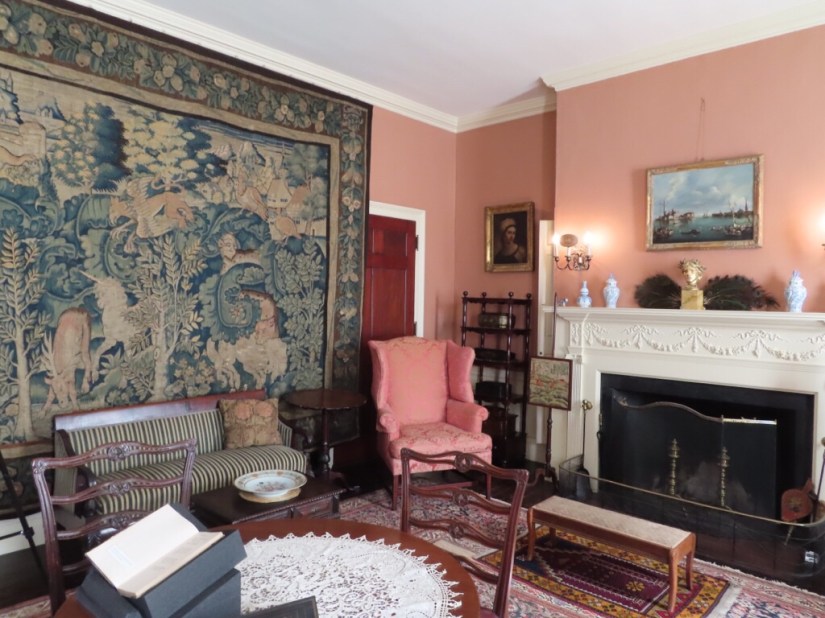
 … which is open for tours so we went inside and heard about Rose Nichols who moved here with her family when she was 13 and lived here till she died in 1960. Her father was a doctor and practised from the house and they had a summer house in Cornish New Hampshire, renowned as an artists colony of the time. Her mother ran two homes which she filled with beautiful antiques collected from their frequent travels to Europe and worked with local charities. Rose grew up, chose not to marry and became a garden designer and writer, a suffragist and peace activist, and also made time for a wood carving in her spare time!

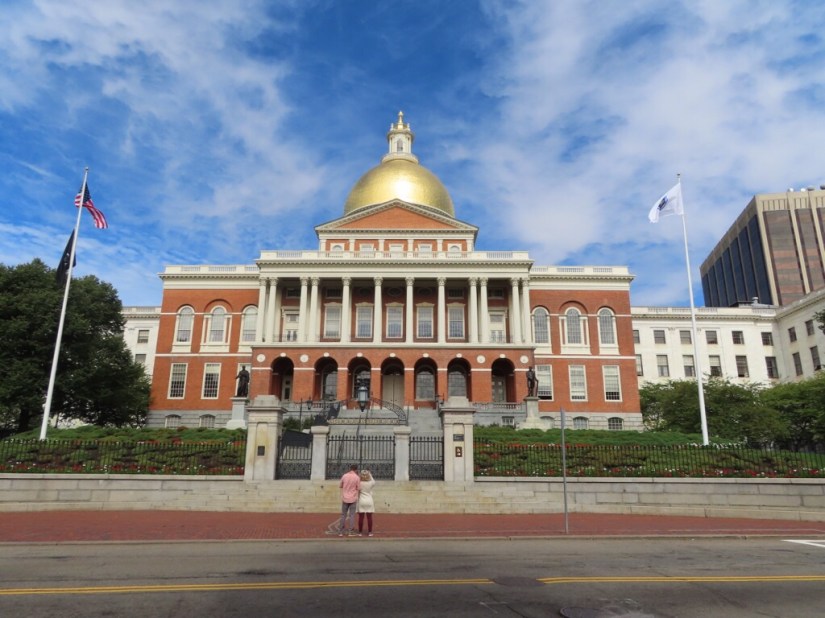
 Moving on, we passed the Massachusetts State House, another Bullfinch building which looked stunning in the sunshine with its golden roof …
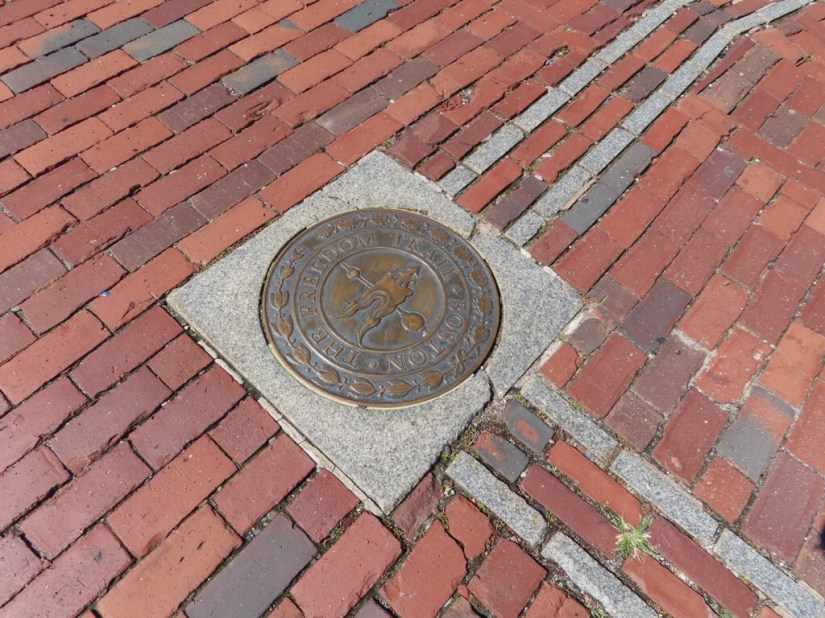
 … and picked up the Freedom Trail, marked on the ground with bricks set into the pavement, which connects a variety of historically significant locations through the city.
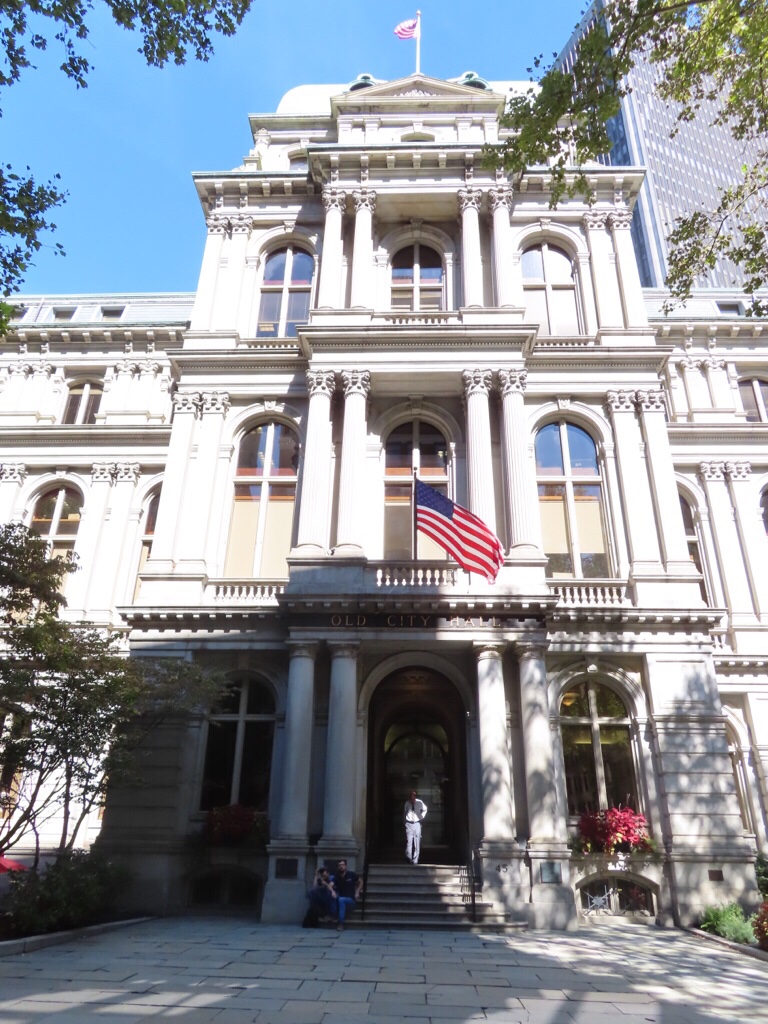
 We passed the grave of Samuel Adams and The Old City Hall …
… Omni Parker House – the longest continuously operated hotel in the US …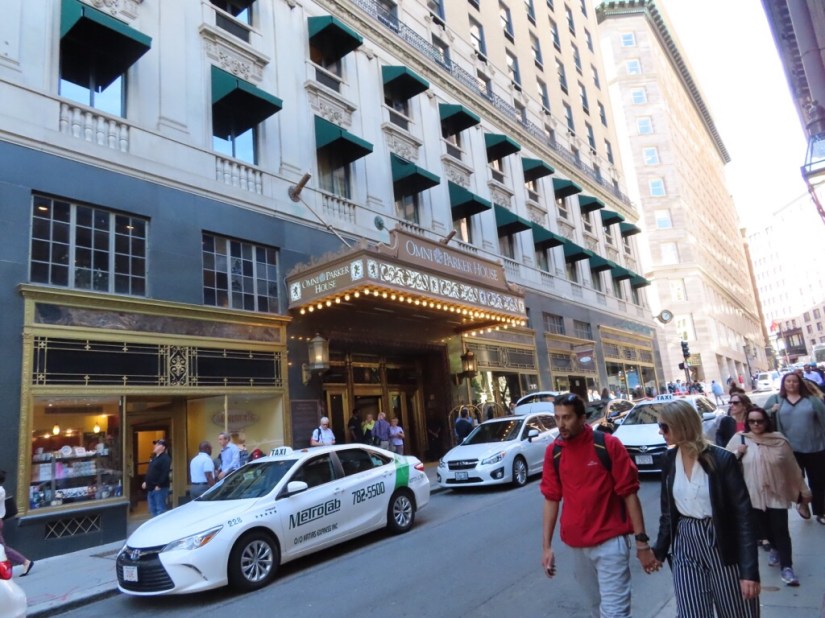
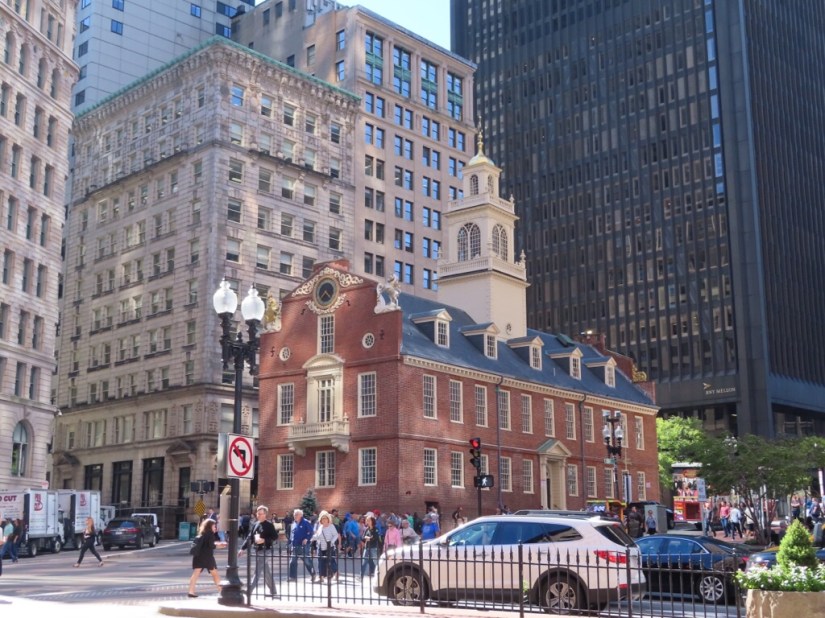
… the Old South Meeting House … the Old State House and the site of the Boston Massacre marked by a circle of cobblestones …

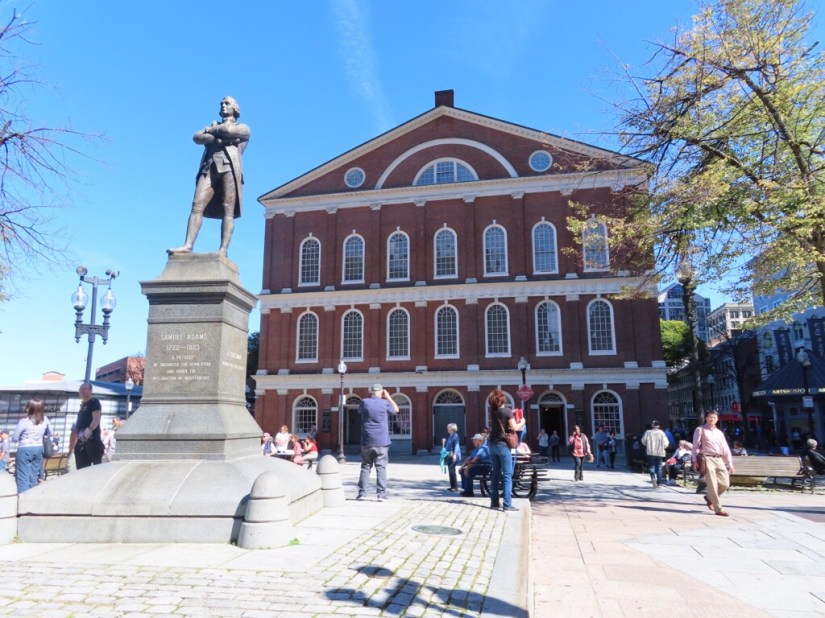
… and finally Faneuil Hall with Samuel Adams standing outside.
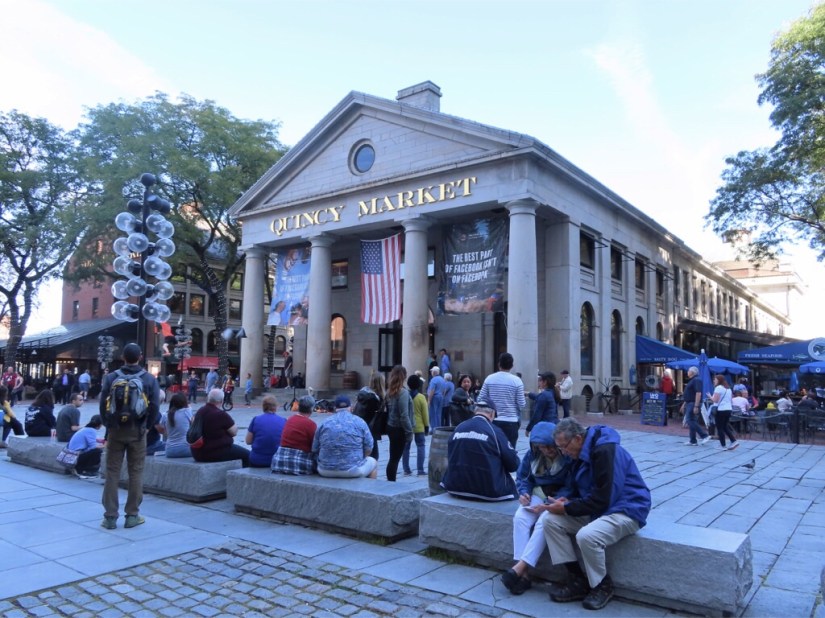
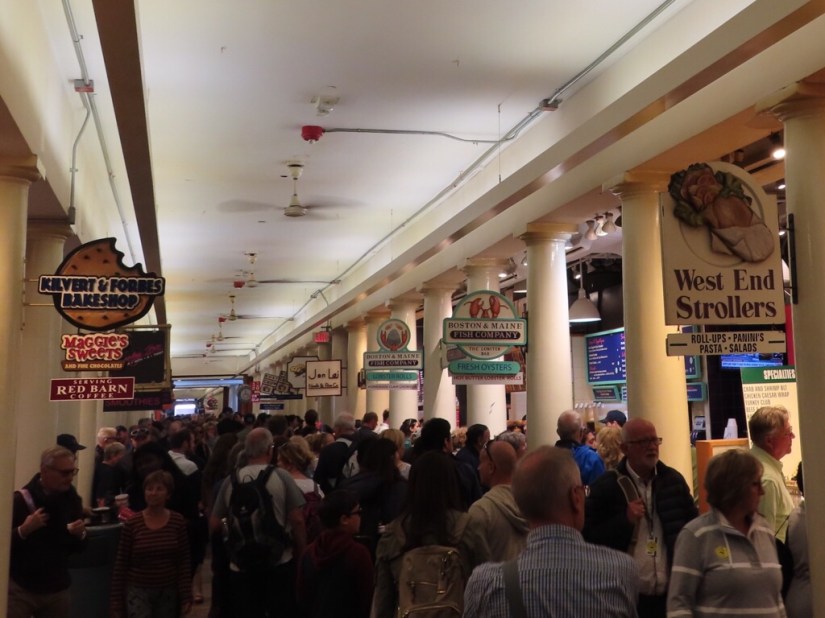
 Just behind is Quincey market, no doubt a bit of a tourist trap, but perfectly placed for lunch so I went for the local special, a lobster salad roll with a small cup of chowder and Chris chose a Greek falafel wrap … yummy!
 We chose not to continue on the trail, past Paul Revere’s house and instead took a round trip on the public ferry from Long Wharf to Charlestown so we could see the city from the water. It had the added bonus of giving us a glimpse of the memorial obelisk which commemorates the Battle of Bunker Hill.
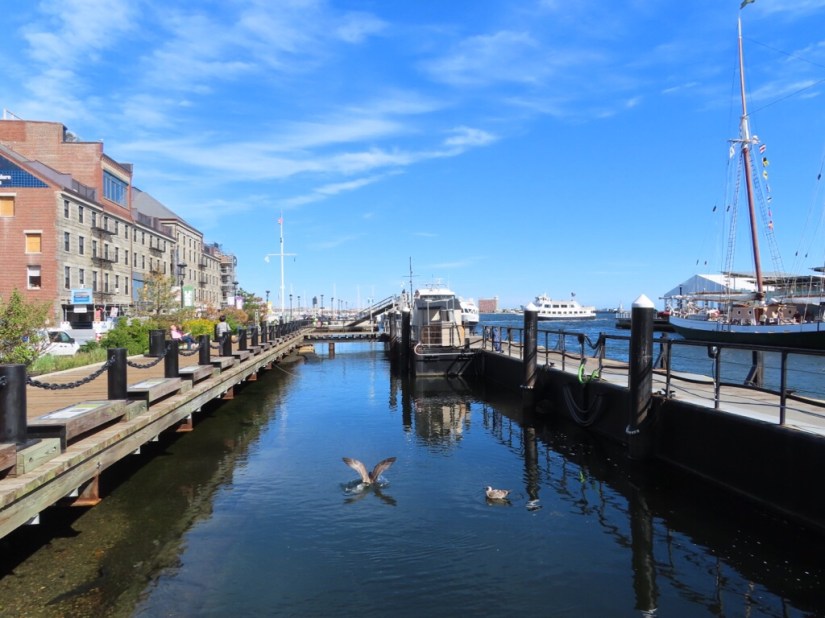


 Returning we followed the harborwalk to 470 Atlantic Avenue, where an observation point on the roof gives a good view of the site of the famous Boston Tea Party, complete with a couple of reproduction ships containing a museum.

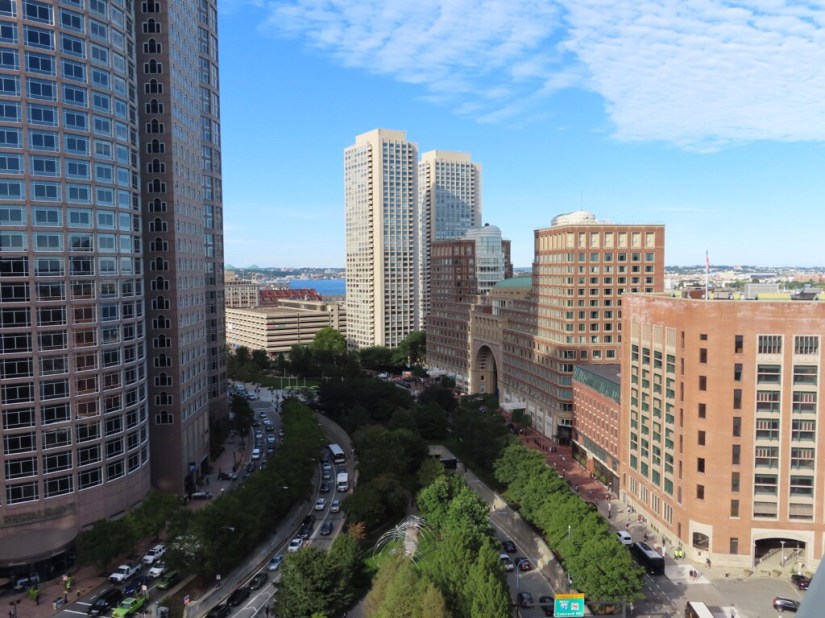
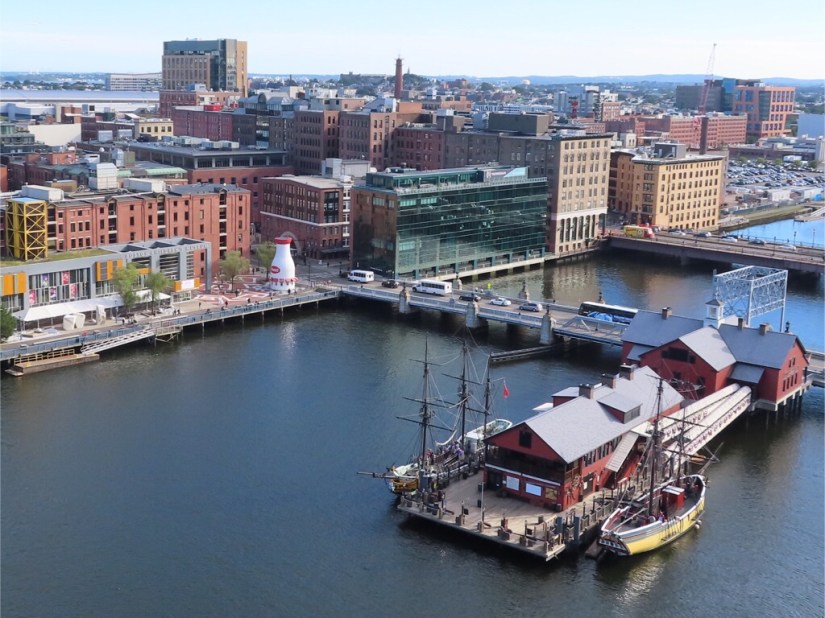 So the short version is that it’s all about a bunch of angry colonists dressed as Native Americans throwing chests of tea into the water but the story is far more complicated … check out the link here if you want the complicated version … otherwise we’ll move on!
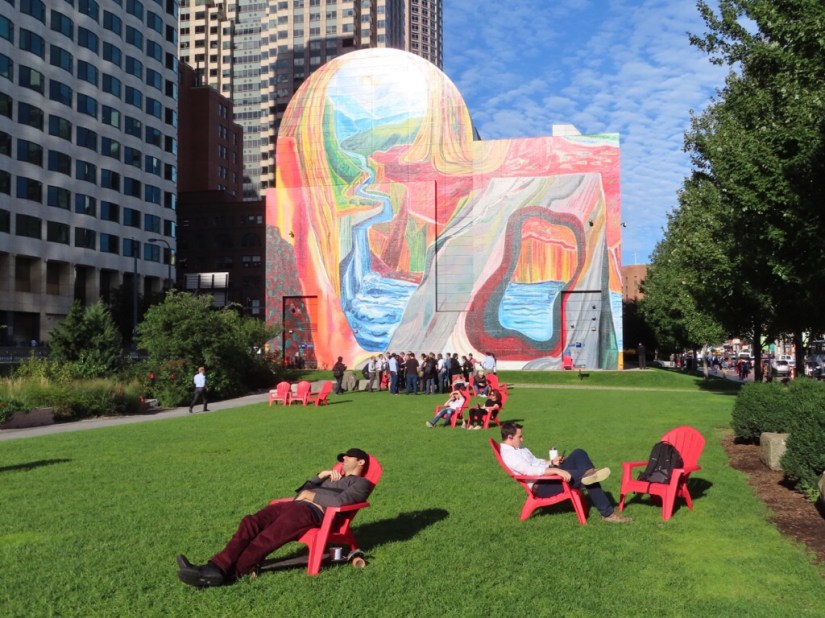
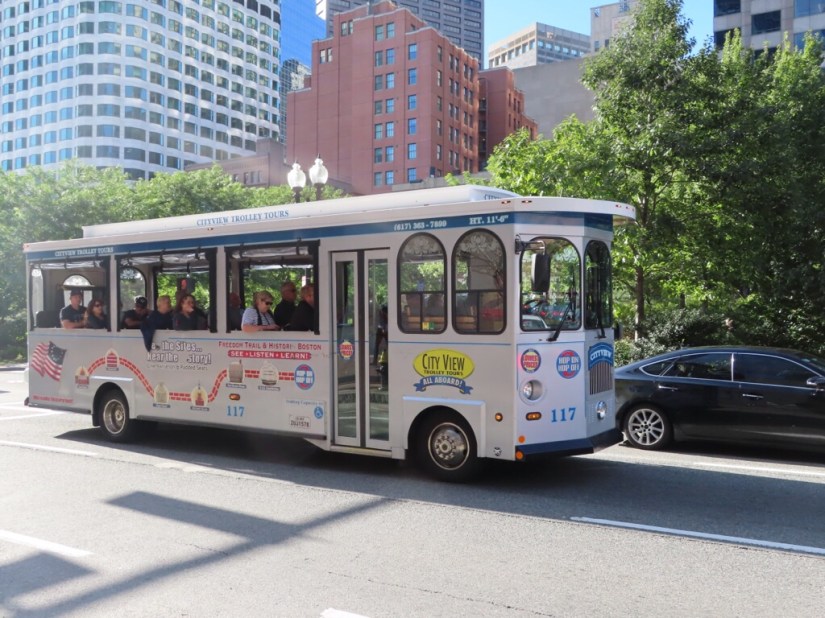
We returned to Back Bay passing people enjoying the sun and several hop on hop off buses …


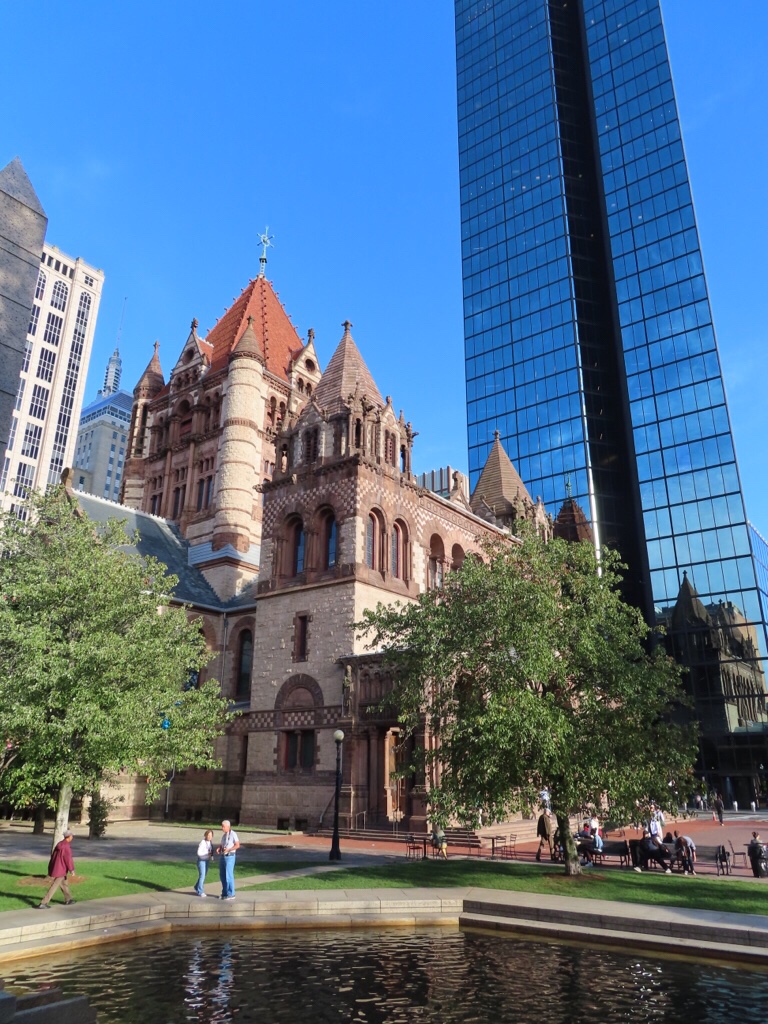
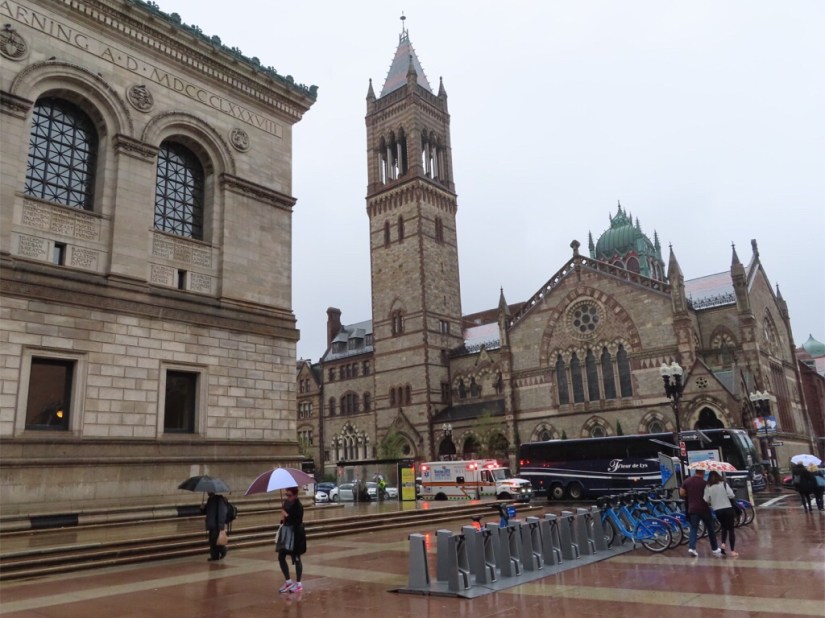
 … and stopped at Copley Square so we could take pictures in the sunshine of Trinity Church with the huge 62 storey John Hancock Tower and Boston Public Library.
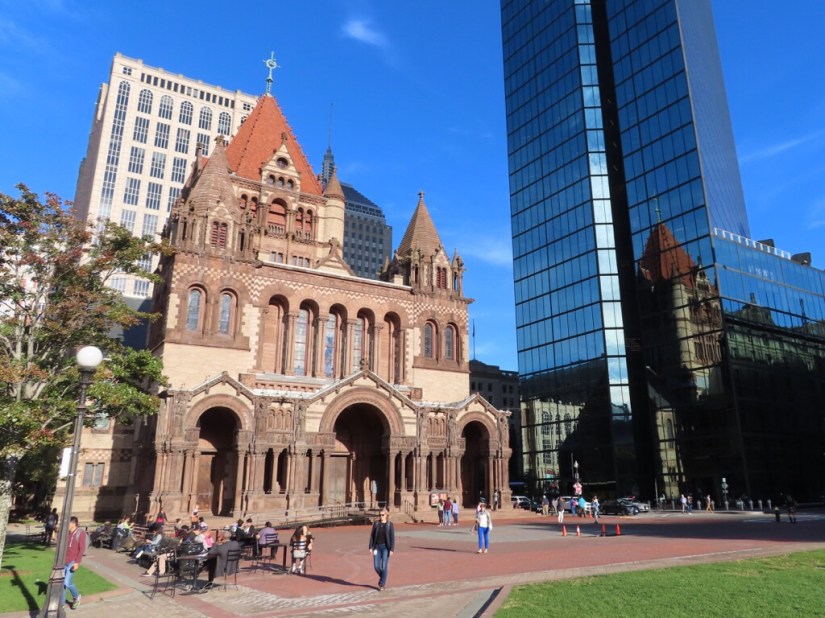
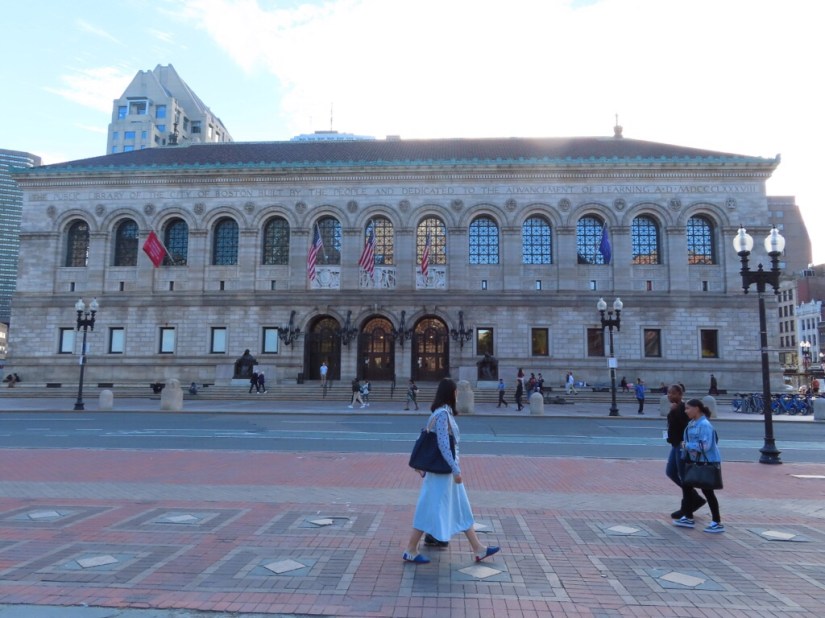 It was interesting seeing how all these old brick buildings are dwarfed and surrounded by modern Boston.
Having ended the day with delicious pasta at Piattini, we woke to rain next day. We headed back to Copley Square to look round Trinity Church, only to find there was a free organ recital with a tour afterwards.


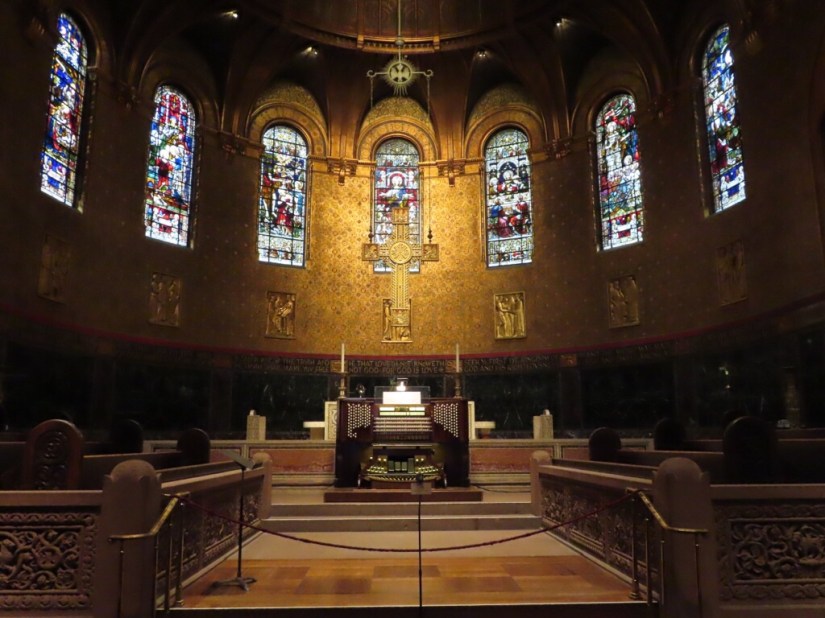 The rector, Philips Brooks was a charismatic preacher who drew crowds and needed a good auditorium for his sermons. Incidentally he also wrote the words to O Little Town of Bethlehem.
 He engaged Henry Hobson Richardson, a prominent American architect who took the influences from Romanesque architecture in Europe and adapted them into a revival style that became known as Richardson Romanesque characterised by a clay roof, polychromy, rough stone, heavy arches, and a massive tower. This style was soon adopted for a number of public buildings across the United States. A richly coloured interior was chosen to complete the aesthetic of the church and murals designed by John LaFarge cover the walls. Finally, the stained glass is stunning as is in a variety of styles, mainly from Europe. Four windows are by Edward Byrne-Jones and made by William Morris & Co – three Christmas windows and David’s Charge to Solomon …
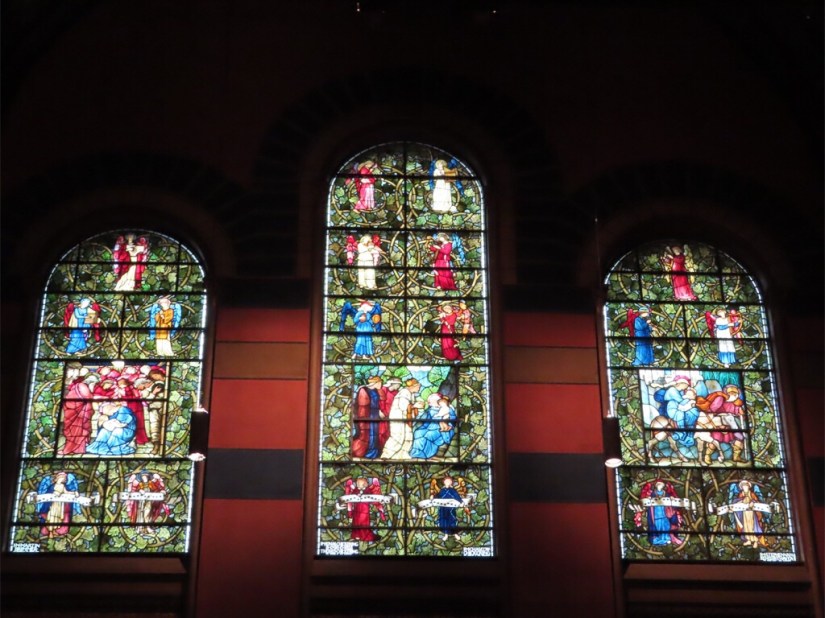
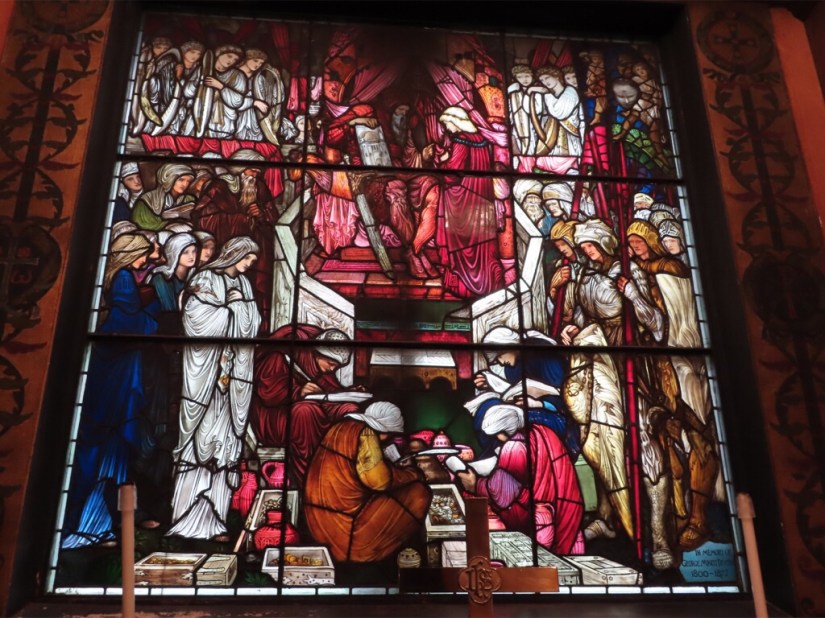 … but my favourites were the panels made by LaFarge himself, also a stained glass artist. He used flat sheet opalescent glass in the creation of stained-glass and created an original method of layering and welding. He shared his ideas with Louis Tiffany but this led them to fall out over patents.

 Brooks wanted a window to inspire his sermons, and Christ in Majesty certainly does that, with a background set with round nuggets of glass in a brilliant blue which shimmer whatever the weather.
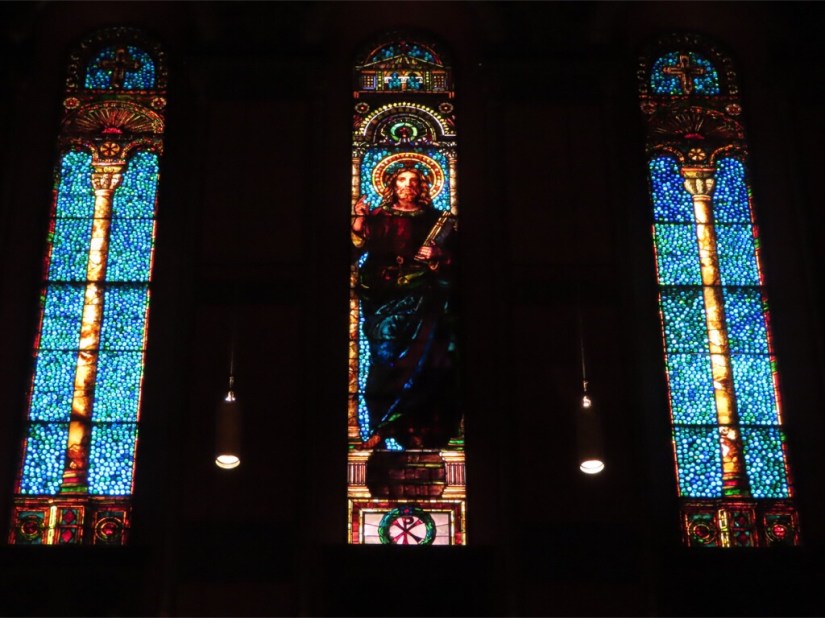 I think we might be looking out for more Richardson and LaFarge in future travels!
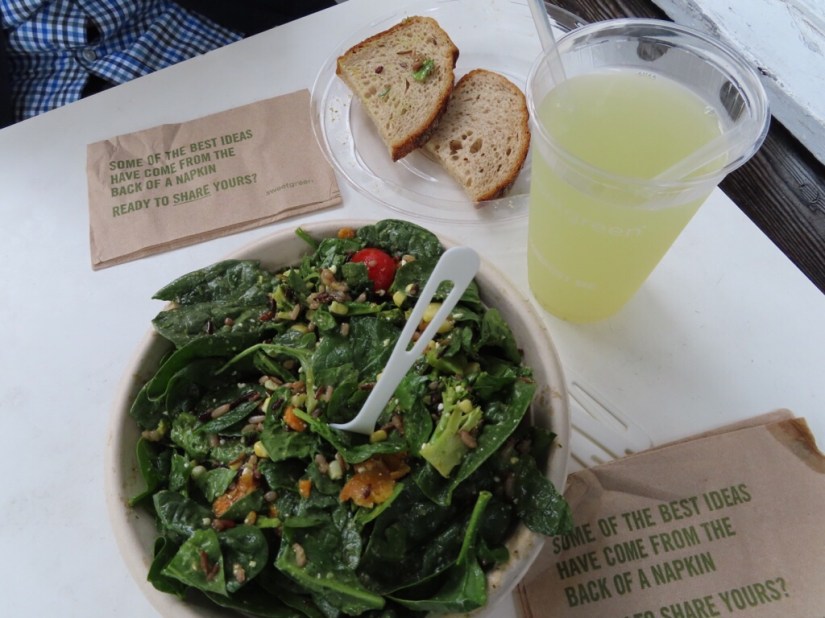
After a shared bowl of salad for lunch, we had a quick look round the New Old South Church which had a similar style to Trinity Church, but was not so impressive …
… and also noticed a plaque to Kahil Gibran, who spent his formative years in Boston, having arrived as a child from Lebanon. His series of prose poems called The Prophet published in 1923 sold more than 100 million copies, and one is mine!
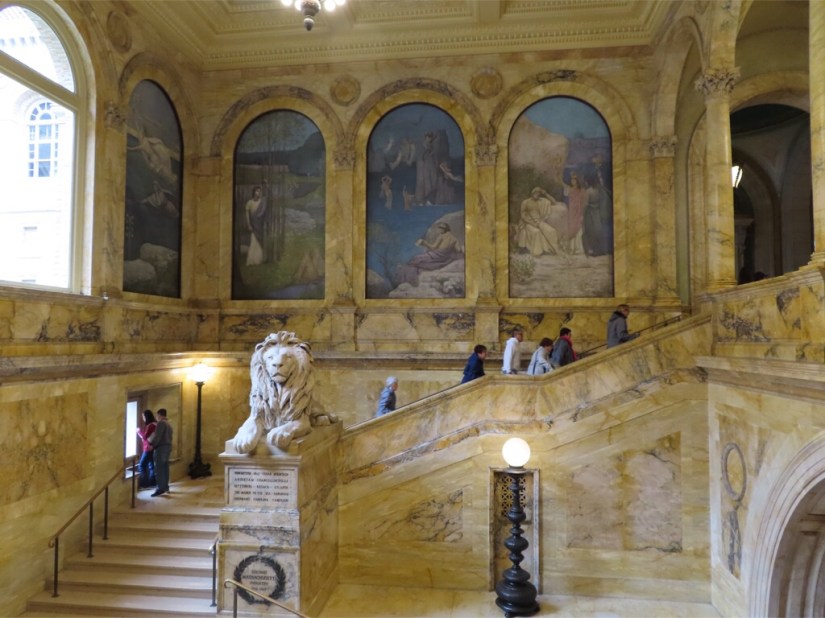
 The Boston Public Library is the other impressive building on the square and is home to three major mural cycles. The beautiful marbles staircase together with The Muses of Inspiration by Pierre Puvis de Chavannes provides an impressive entrance.

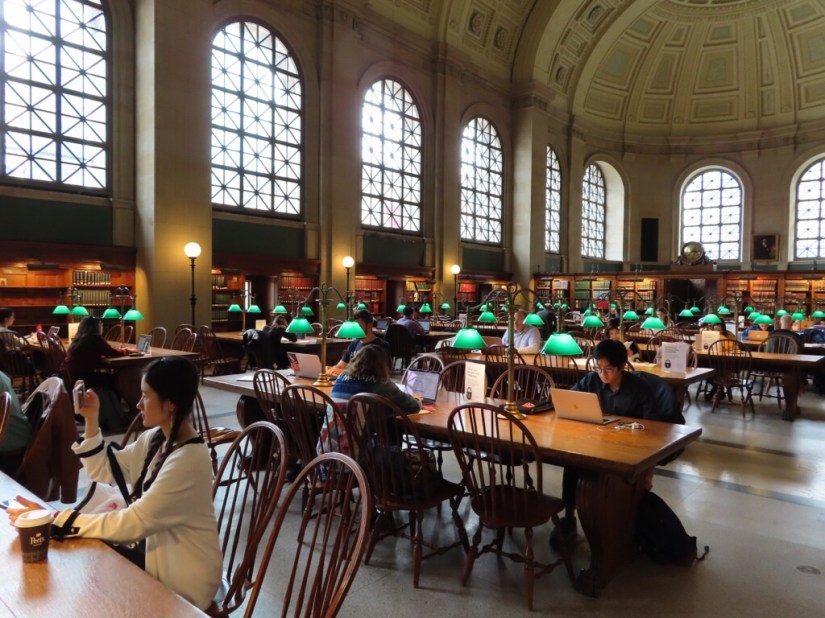
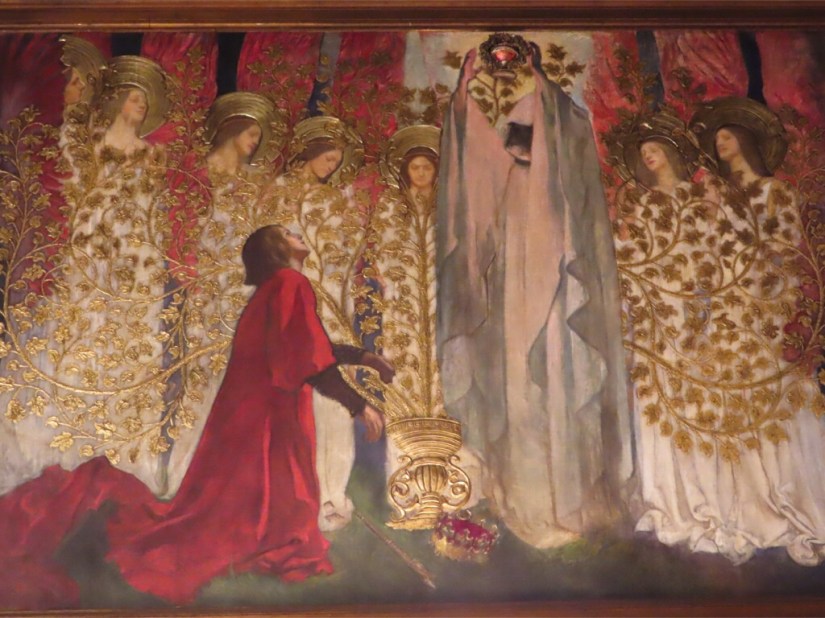
 Everyone was hard at work in the Reading Room as we continued to Edwin Austin Abbey’s depiction of Sir Galahad’s Quest for the Holy Grail and especially liked The Golden Tree.
 John Singer Sargent was maybe the leading portrait painter of his generation so we were surprised to find the top floor containing his Triumph of Religion which he worked on for 30 years and was intended to show progress from pagan superstition up through the ascension of Christianity.

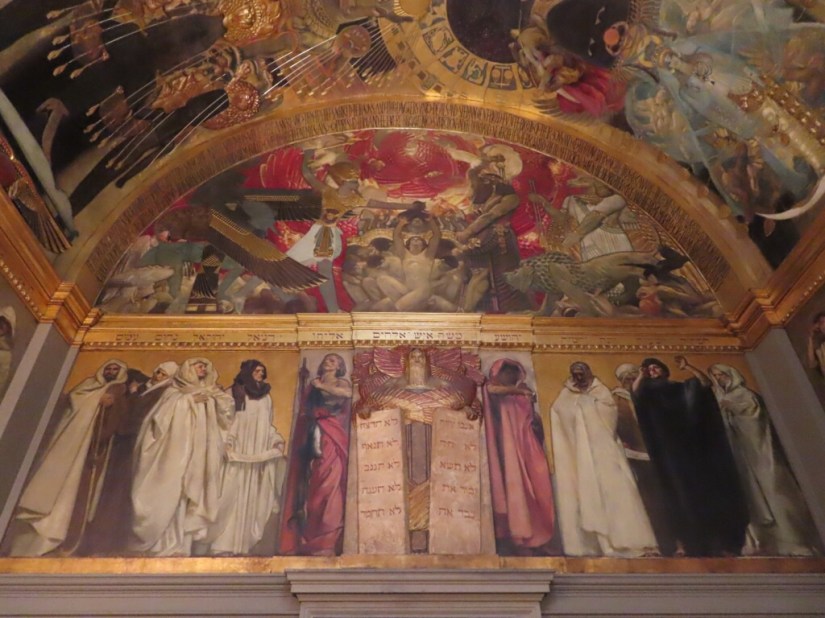
 The pagan images are especially striking.


Massachusetts was the first state to declare slavery illegal, and became home to a large black community. Here is Park Street Church where the famed abolitionist William Lloyd Garrison gave his first public address calling for the nationwide abolition of slavery.
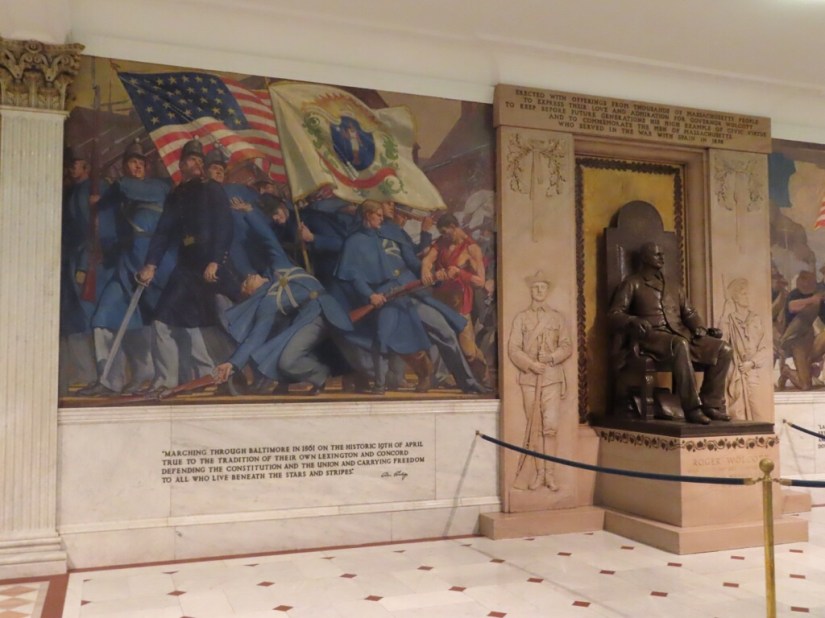
 Lastly we returned to the State House and we able to just wander round …


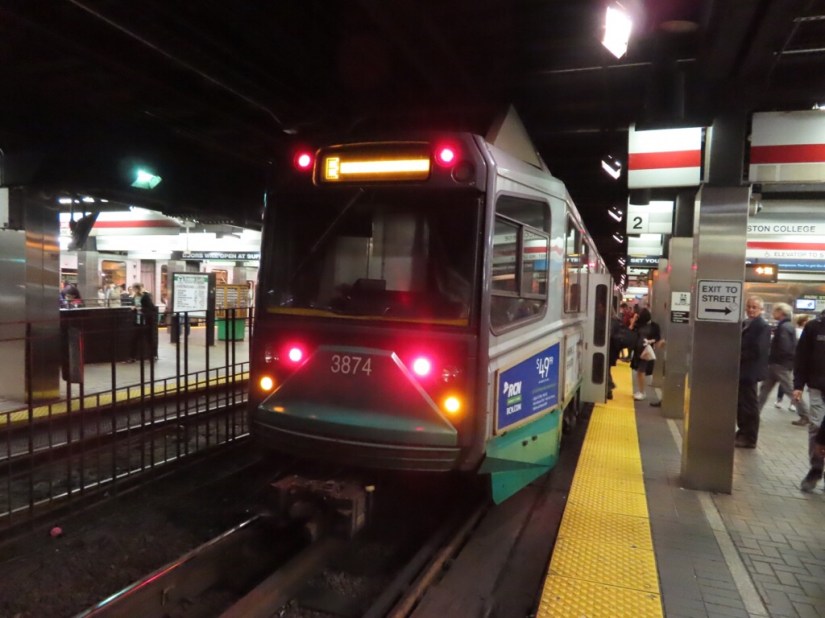
 We took the T from Park Street Station and travelled on the same half mile stretch of subway line which was the first in the US which extended just over half a mile when the open-bench four- wheeled trolley car made its inaugural journey in 1897.
Our visit ended with another delicious dinner in Pho Basil for our last dinner as tomorrow we head to the airport to pick up our hire car and continue our trip.
 Off Travelling Together
Wonderful pictures and brought back happy memories for us. x
LikeLike