 Here we are in Cappadocia, which means “Land of Beautiful Horses” in Persian and where the landscape is often described as moonlike, with dramatic expanses of soft volcanic rock, shaped by erosion into towers, cones, valleys, and caves. In addition, people have shaped the soft stone further, leaving cave dwellings, rock-cut churches and even underground cities.
A short flight has brought us to the small town of Göreme, which means “Invisible City” for the way it nestles in the valley, blending with the landscape. It is also home to some 250 boutique hotels catering to the huge numbers of visitors each year. We chose the Taskonak Hotel, with a great view over the town from the rooftop courtyard and a very cute room.


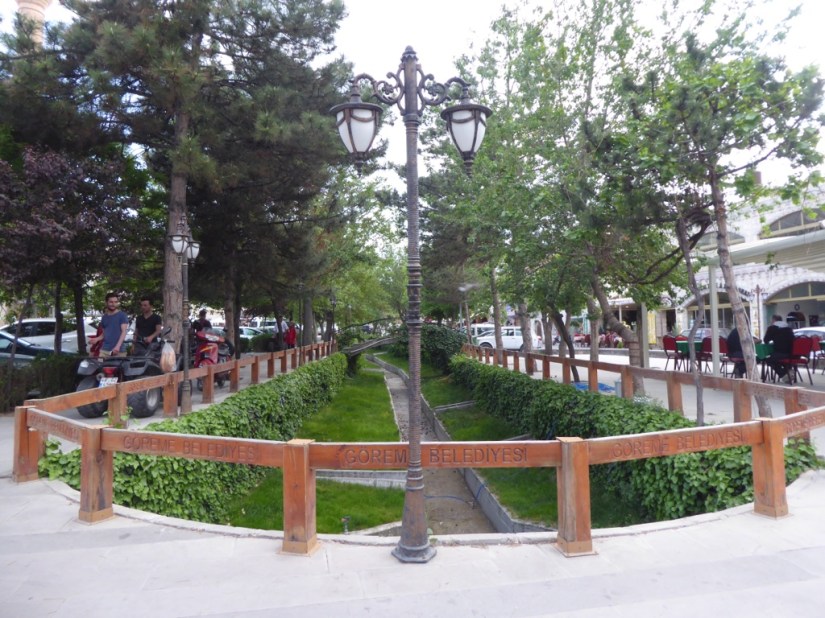
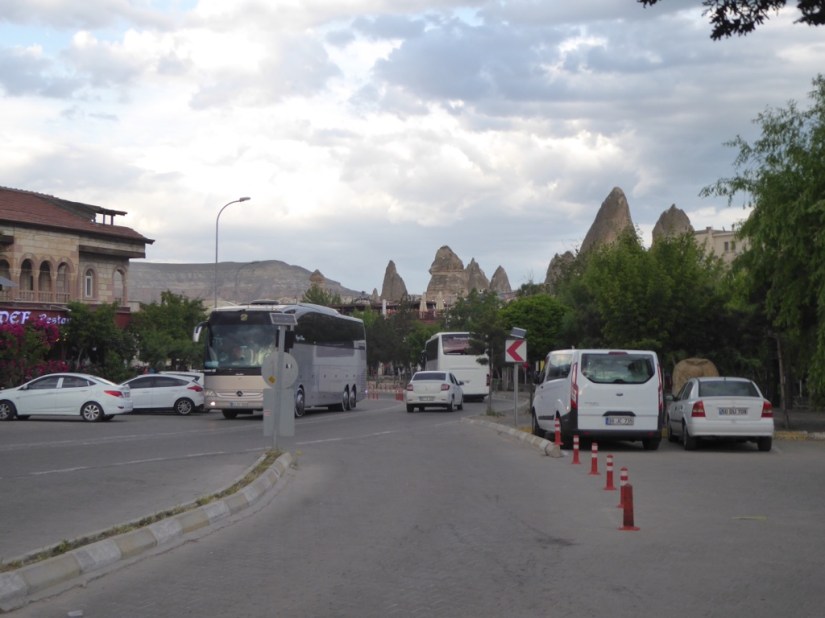
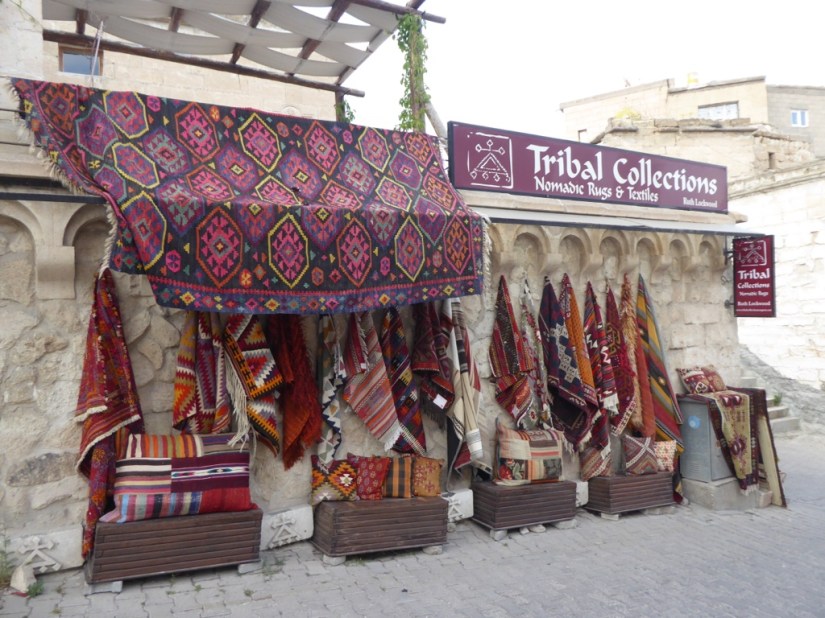
We just had time for a little wander round town to get our bearing before having pide and salad for dinner.
One of the main attractions here is to take a hot-air balloon flight over the valleys, but we have both been in a hot-air balloon and were more interested in photographing other people in balloons! Flights had been cancelled for the next day as the forecast was too windy, so for our first morning there would be a lie-in.
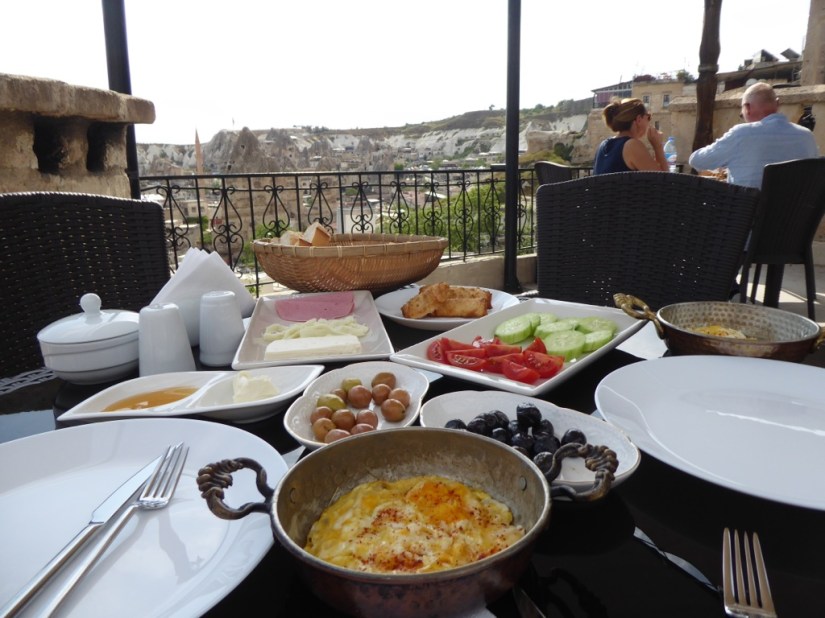
Breakfast on the rooftop was a delight, and fortified, we set off by foot to the Open Air Museum in Göreme.
During early Christianity, many of the first followers settled in Cappadocia to hide from the soldiers of Roman Empire. By the C4th, Cappadocia was known as the Land of the Three Church Fathers for St Basil the Great, St Gregory of Nazianzus and St Gregory of Nyssa who helped establish religious communities like Göreme.
Göreme is the best preserved, with more than 30 churches dating from C9-11th, containing amazing frescos. Equipped with an audio-guide, we worked our way round the site, dodging the tour groups.


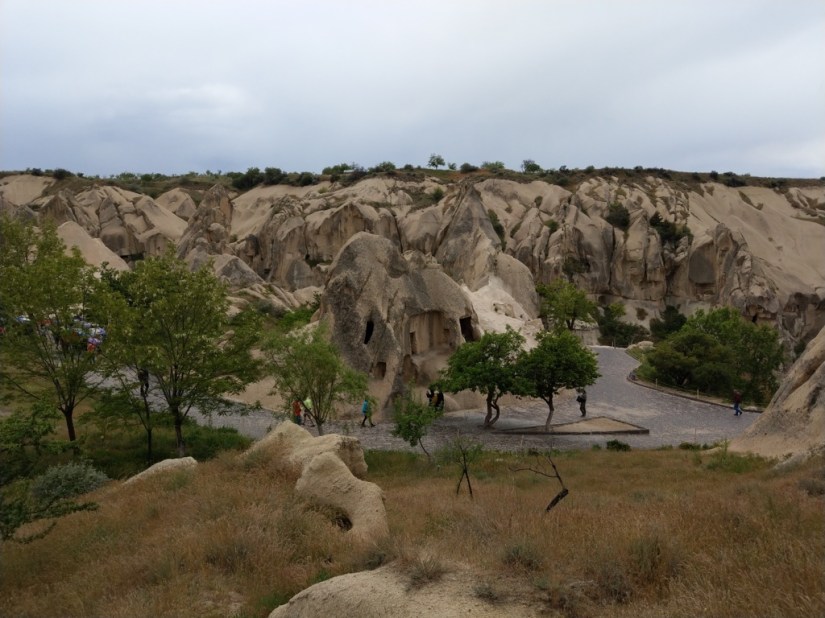
All the buildings are small and no photos are allowed inside, probably as it would be totally unmanageable with the number of visitors, but we did manage a couple of the less important rooms like this refectory with stone table and benches …

… and this unnamed chapel.
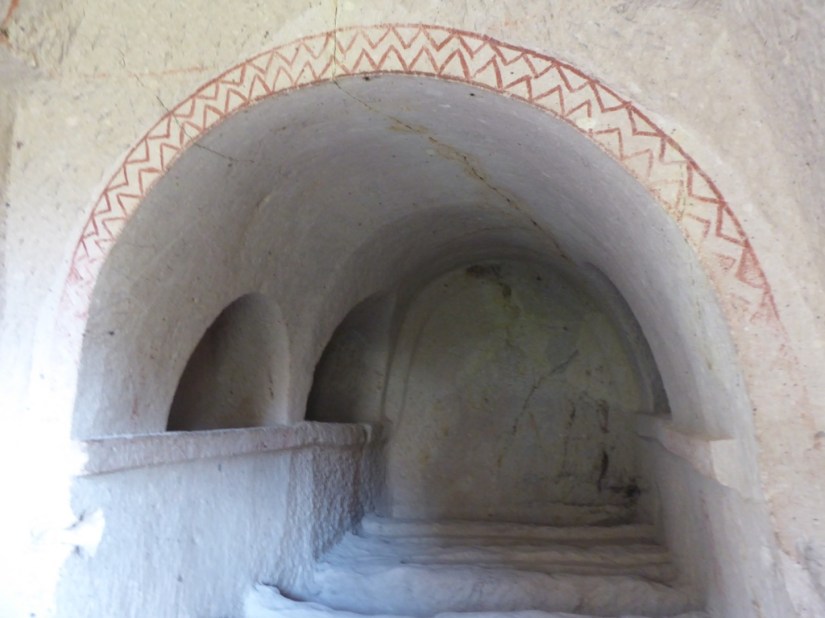


The frescos vary in design according to date and some are better preserved than others. The best by far were in the Dark Church …

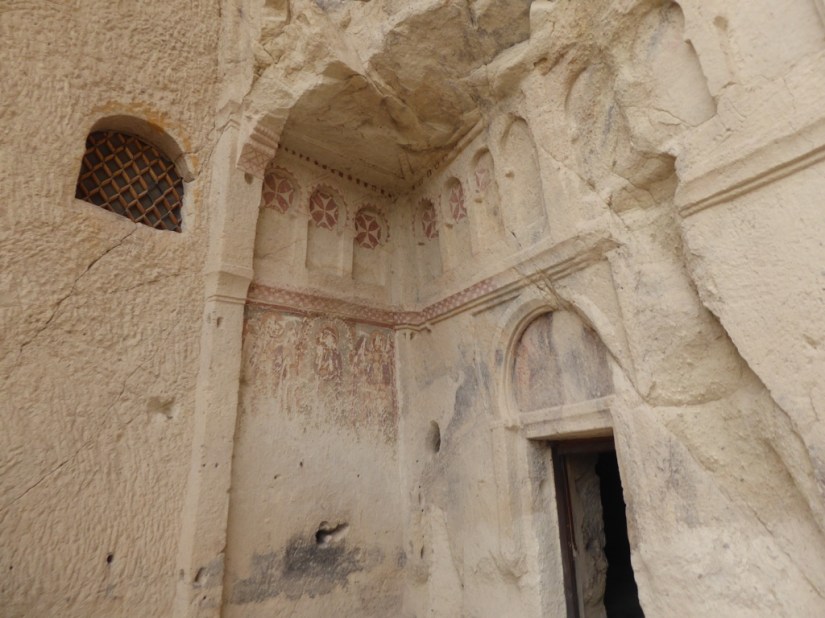
… and here are a couple of images from the internet.


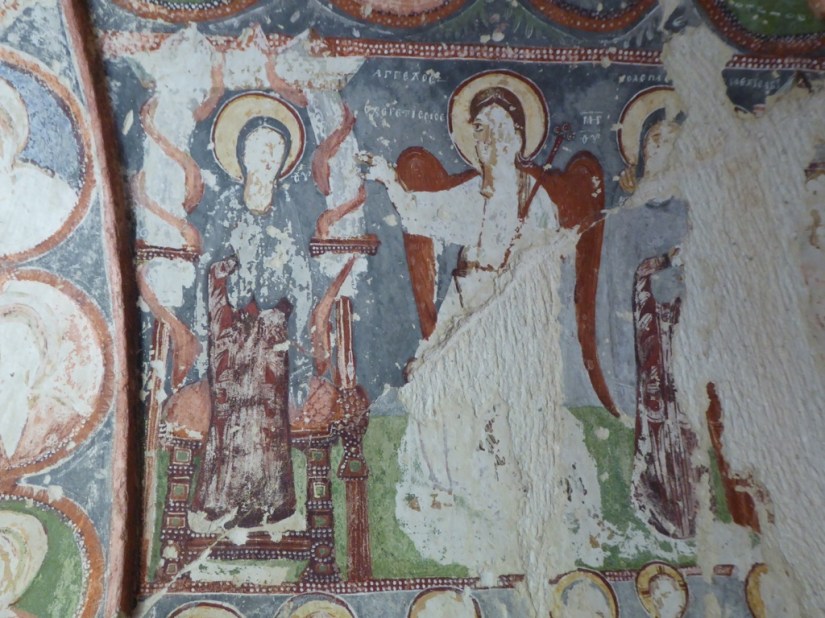
Having spent a good couple of hours here, we walked back towards town, stopping at the Zemi Valley for a detour. We walked along the path, passing various allotments growing fruit trees and vines often used to make grape molasses before we realised we were maybe not on the right path! We retraced our steps and took a side turn towards Al Nazar Church, where we paid 5 Turkish Lira each (£1) and were given a guided tour. The frescos may be a bit damaged, but we were allowed to take pictures.
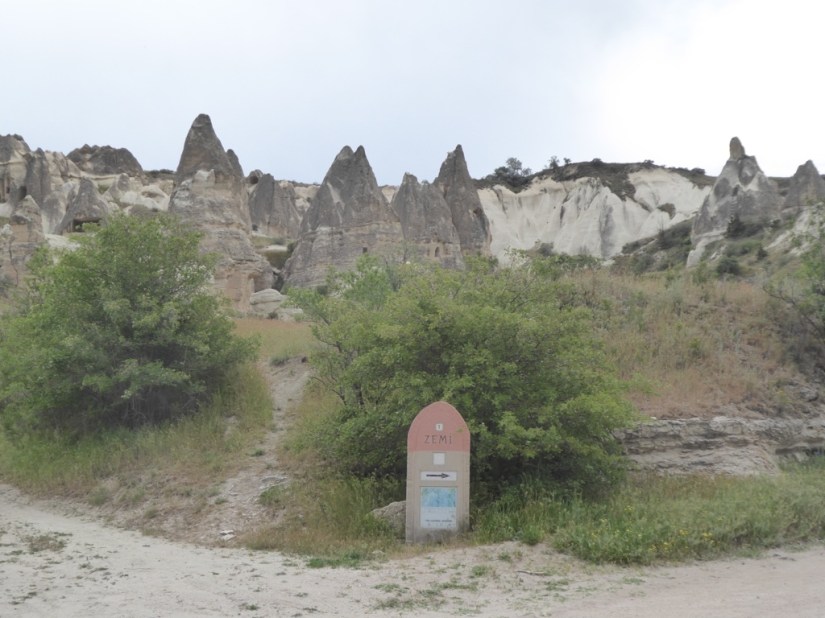
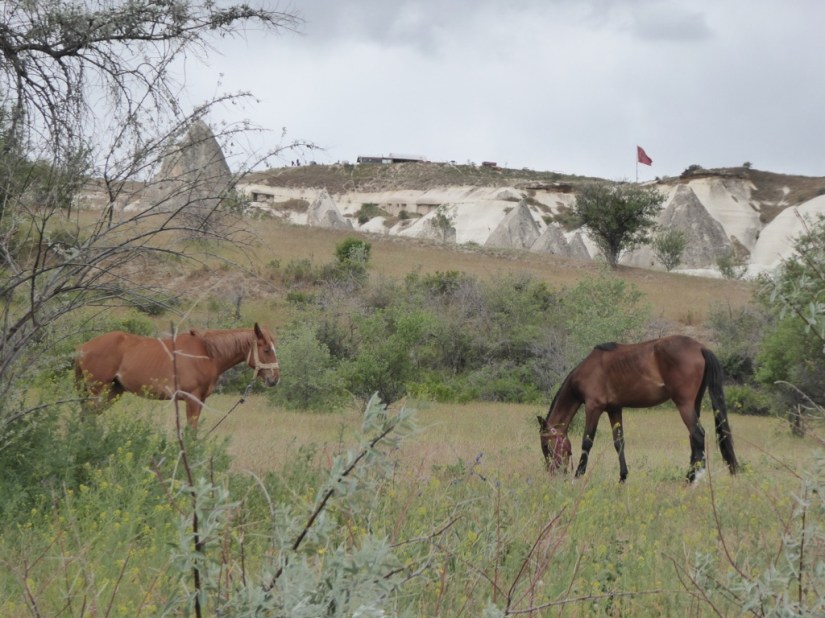

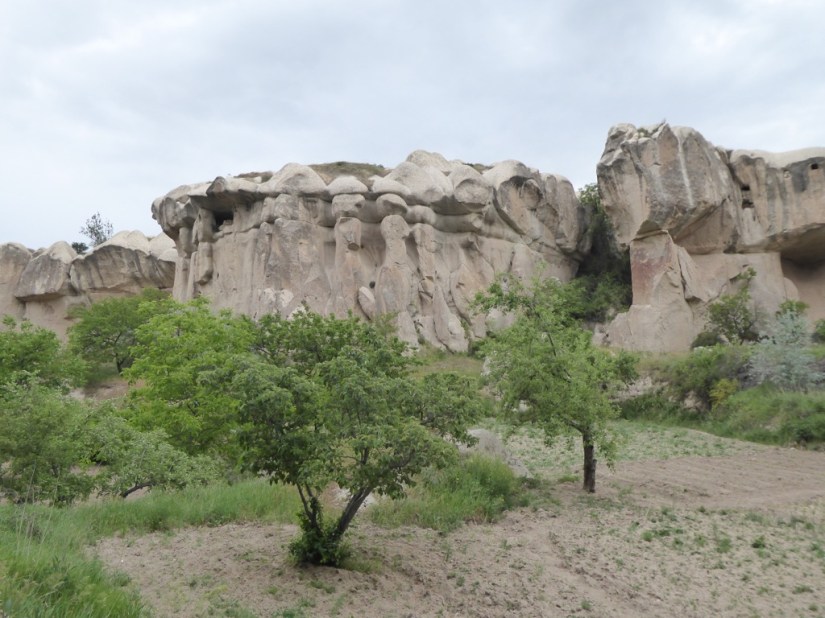

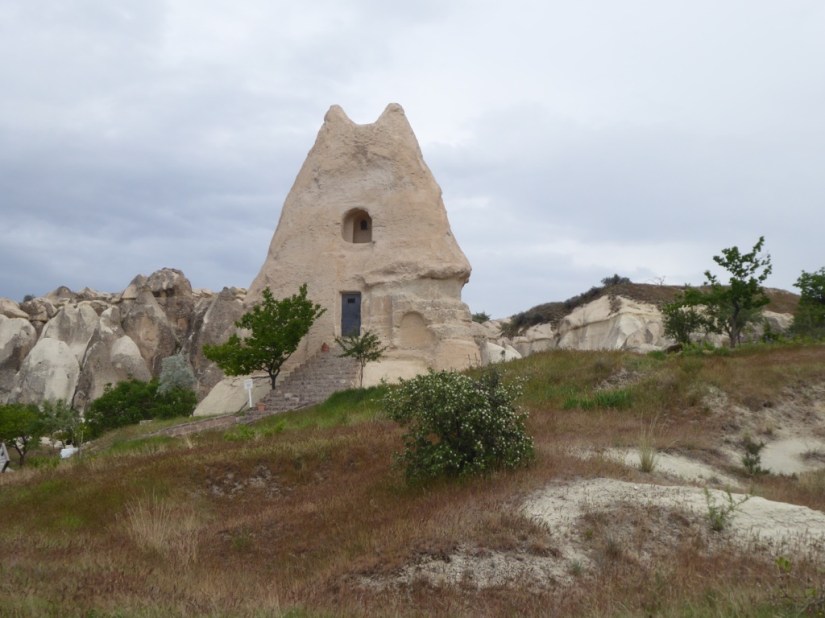


From there we walked on through the valley which we had all to ourselves, just us and a collection of fairy chimneys …


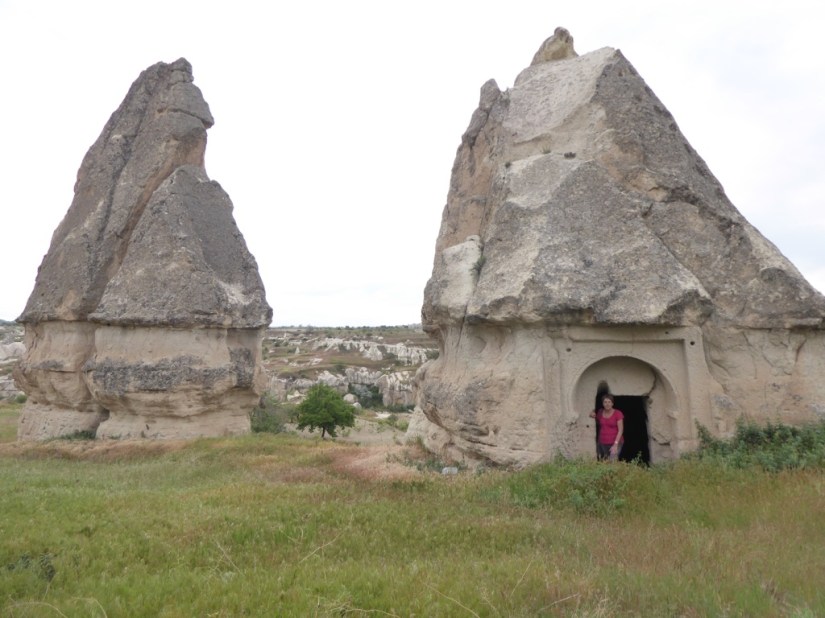
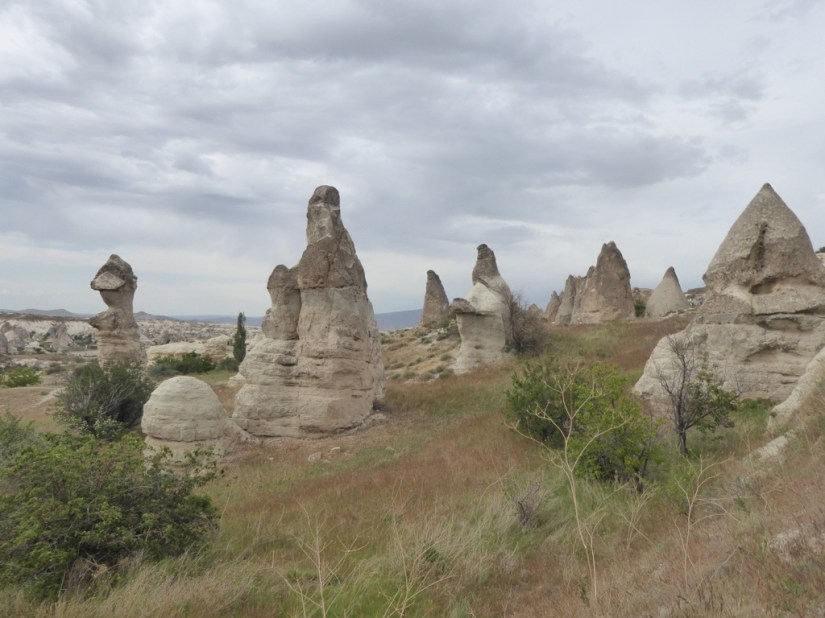
… and Uçhisar Castle in the distance, which we will be visiting soon.

We made our way back and had an early dinner so Chris could catch the match, Liverpool winning 4:2 against Roma to reach the final of the Champion’s League.
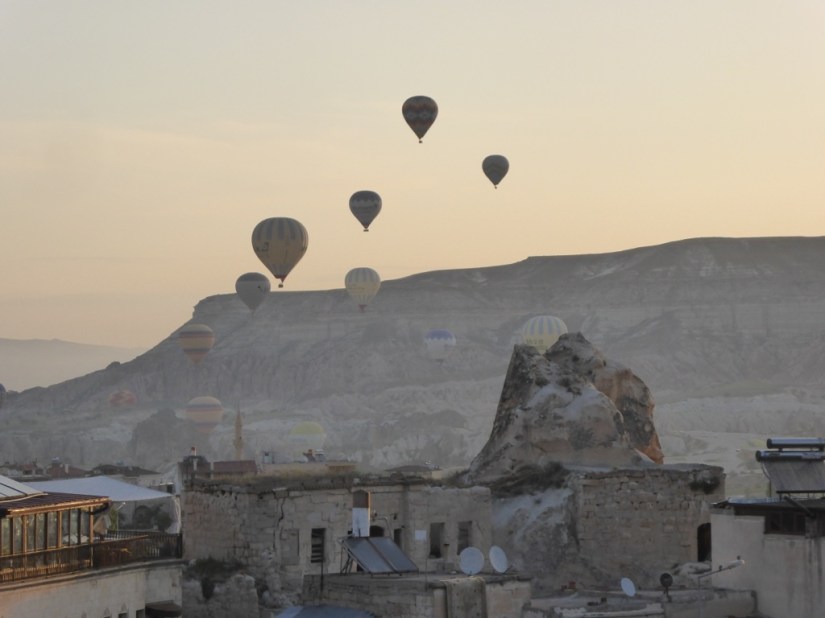
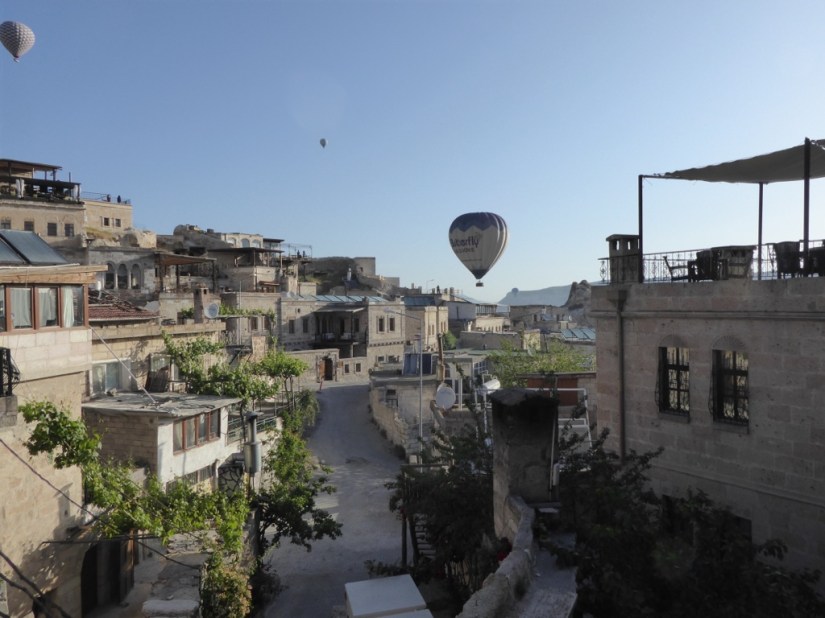
Next day I woke early, just before 6am, moved the curtain and saw the sky filled with balloons!
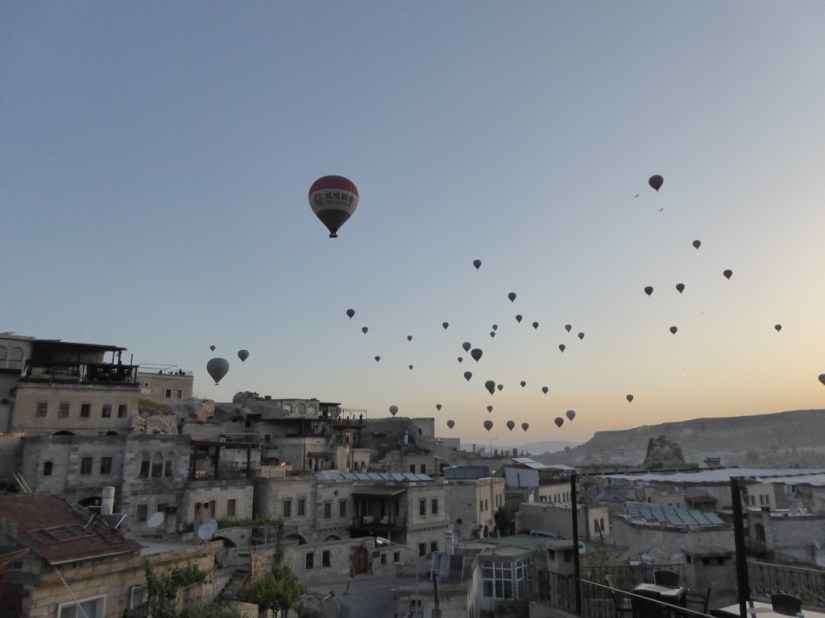
We both got up and went to take a closer look. Those wanting a ride need to be up early with one flight going up in time for sunrise at 5.45 and the other a little later. Apparently there are around 150 balloons each taking either 16 or 24 people per basket at around €160 per person for an hour … big business!


After breakfast we were collected for a day out. There were a couple of places we wanted to visit, difficult to achieve by local bus, but conveniently packaged into the Green Tour, which we had booked in advance. We shared a 16 seater minibus with a friendly bunch from Madrid, Frankfurt, Lebanon, Ukraine and Indonesia.
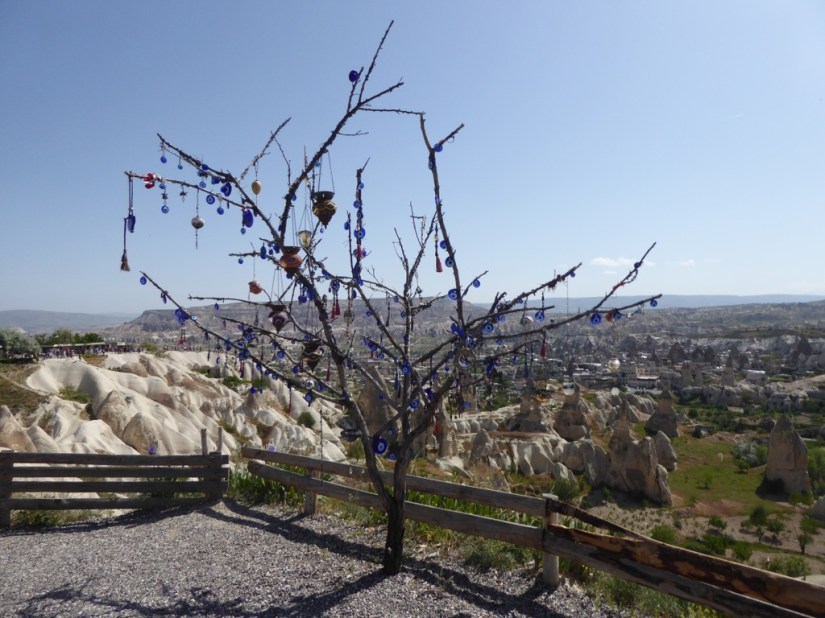
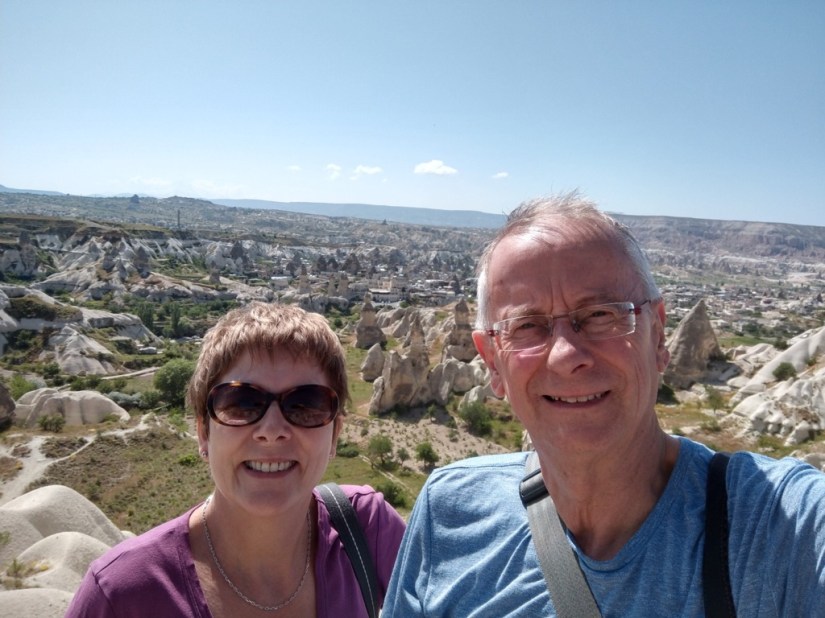
Our first stop was the panorama of the town, looking down Pigeon Valley. The whole of Cappadocia raised pigeons in great numbers for eating and sending messages and their poop was used for fertiliser and even gunpowder and pigeon roosts can be seen everywhere. In the background is the ghostly presence of snow-capped Mount Erciyes, the tallest volcanic peak in Cappadocia at 3916m.



Next we visited Derinkuyu, the largest of many underground settlements in the area, occupying 1500 square metres. These troglodyte cave-cities were excavated as early as Hittite times, and expanded over the centuries as various marauding armies traversed Central Anatolia in search of captives and plunder. There are many tunnels to the surface hidden in the courtyards of houses and the city is some 55m deep, containing stables, cellars, storage rooms, refectories, churches and wineries. There is a well, ventilation ducts and communication network, a place to store dead bodies, however no bathrooms. Waste was put into jars and sealed with mud and straw until it could be disposed of.
These cities were probably not intended for permanent dwelling, or even long stays but were clearly built to withstand attack and could support large numbers of people and their domestic animals, for extended periods of time. The access tunnels were narrow and near the entrance they had a low ceiling to put attackers at a disadvantage. There were also carefully balanced moving stone doors, resembling mill stones, to quickly block the corridors in the event of an attack.
We found all this fascinating as we entered and descended to the lowest level, where there was a church and a pillared hall where punishments were given. It was hard to appreciate the huge endeavour it must have taken to excavate such a huge network underground.


In modern times, these cities are still used for storage by local people as the constant temperature of 16-18° in a region that can vary from -5° to over 40° is perfect, and only part of Derinkuyu is open to the public.
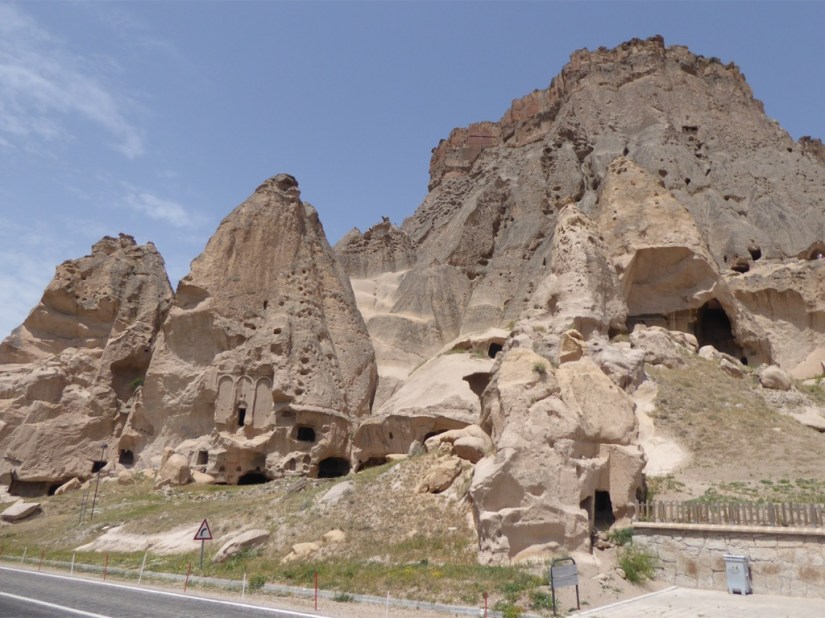
Selime was our next stop, a huge rock-cut edifice that was not only a monastery where clergy were trained but also a military base and strategic watchtower which patrolled one of the branches of the Silk Road which passed by. It was also used as a caravanserai for traders, and we entered through a tunnel used by camels to bring goods inside to keep them safe for the night.


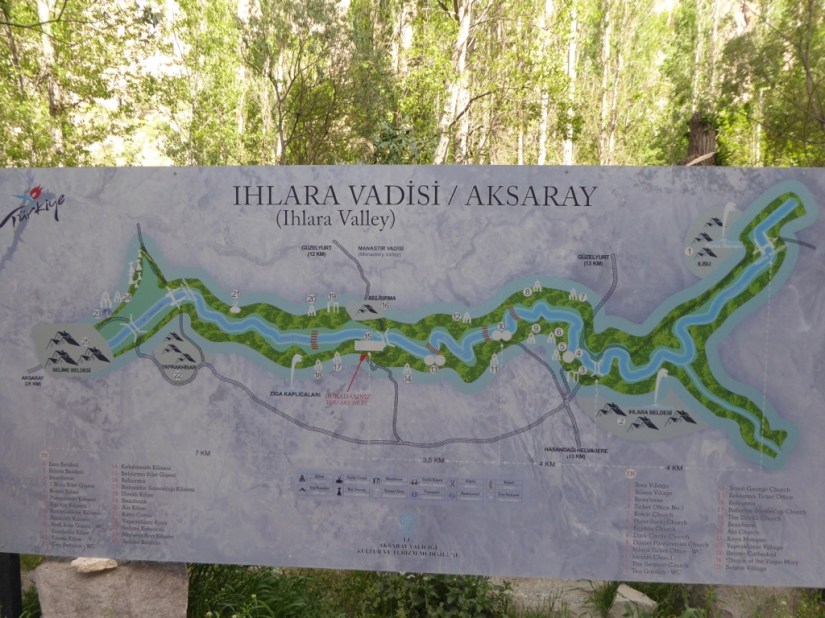
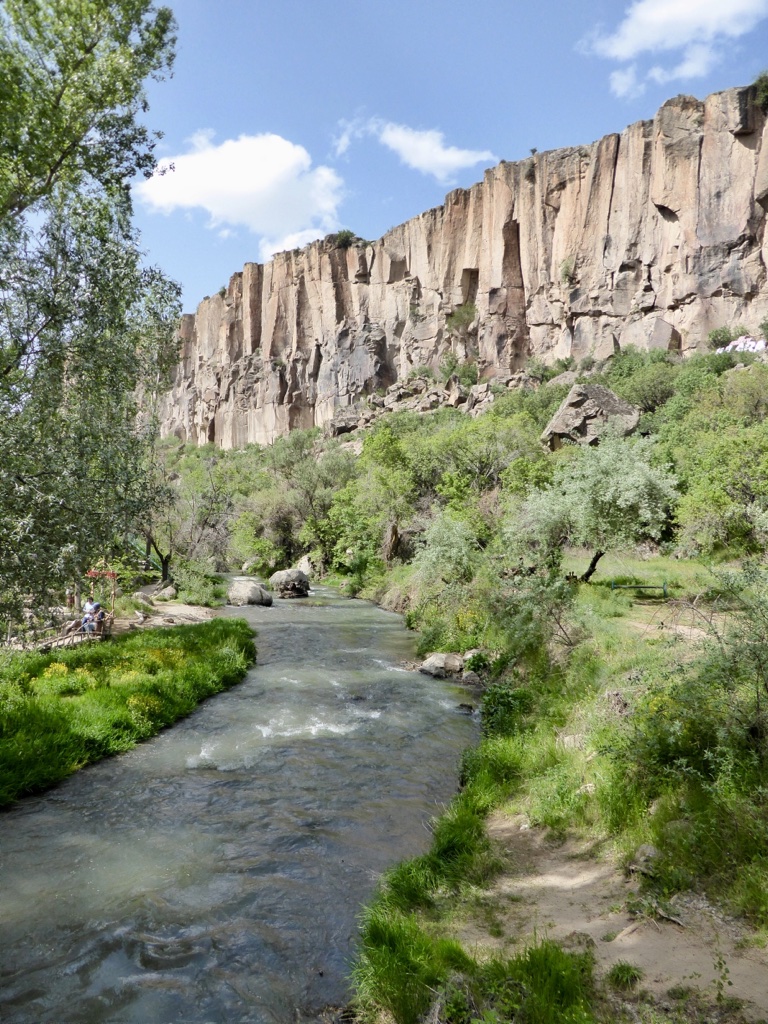
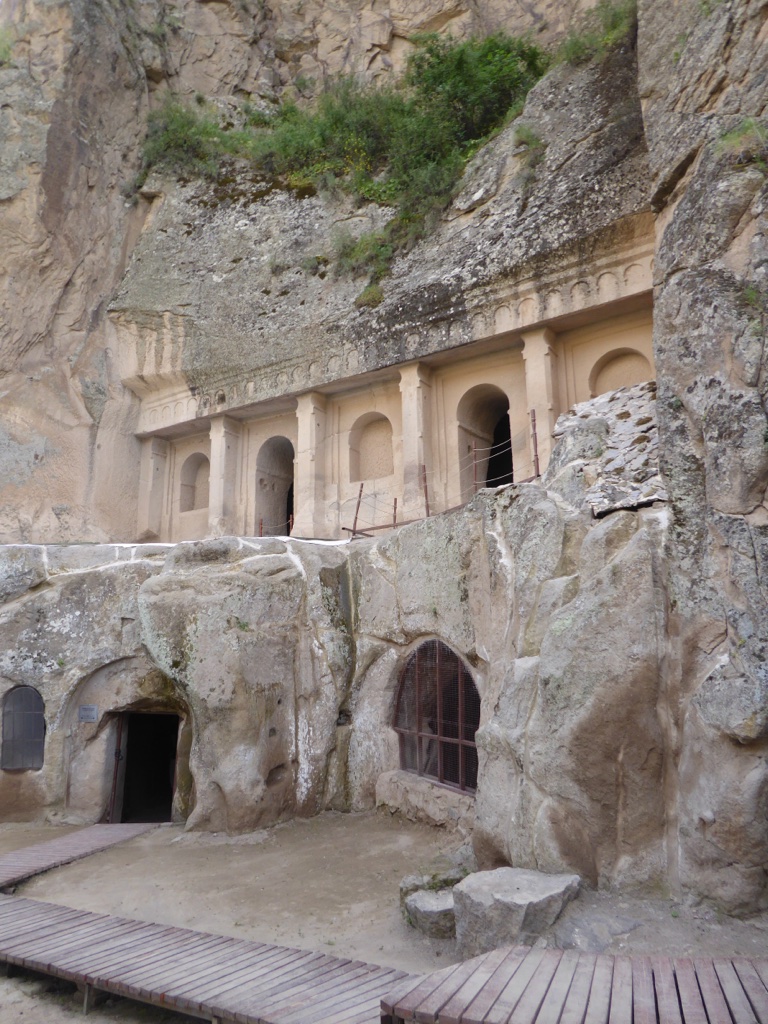
After our lunch stop, we visited the Ihlara Valley, a canyon cut into the rock by the Melendiz river, extending 15kms. It is thought the valley once had over 4000 dwellings, 100 churches and a population of 80,000. That was hard to imagine as we wandered 3kms along the peaceful river, stopping at Jacinth Church on the way.




 Our final stop was a quick look at Nar Gölü, a crater lake that was formed when a volcano blew its top some time in the not too distant geological past. Hot sulfurous water still bubbles up and is meant to be good for curing skin problems but we didn’t get close enough to find out!

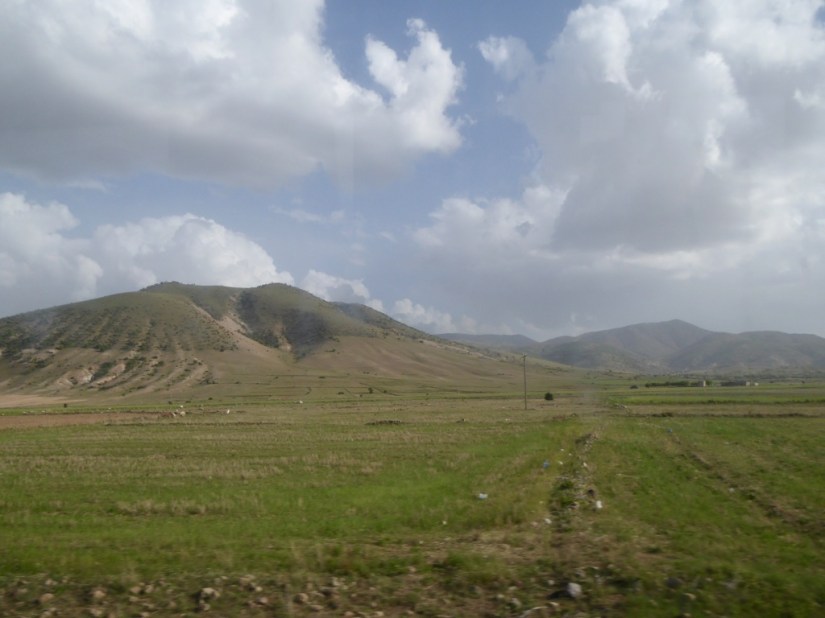
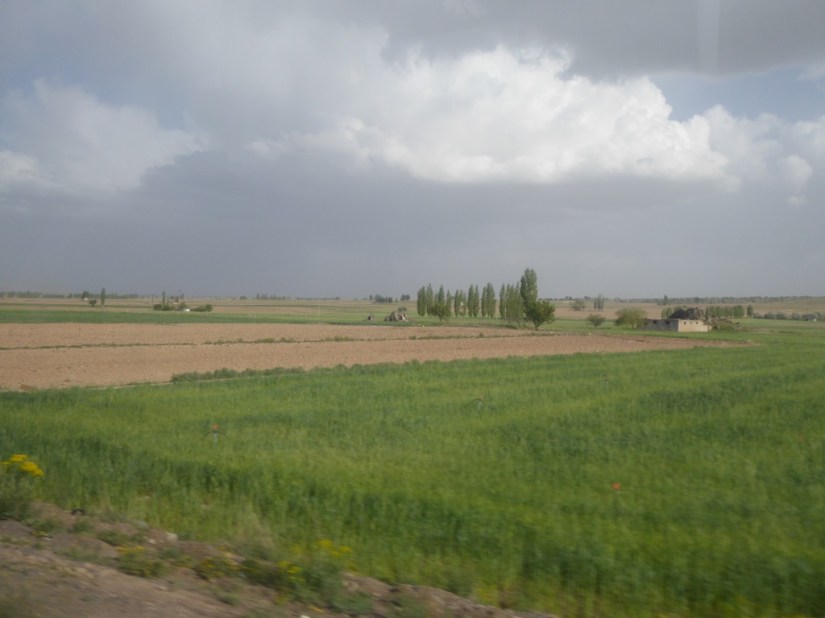
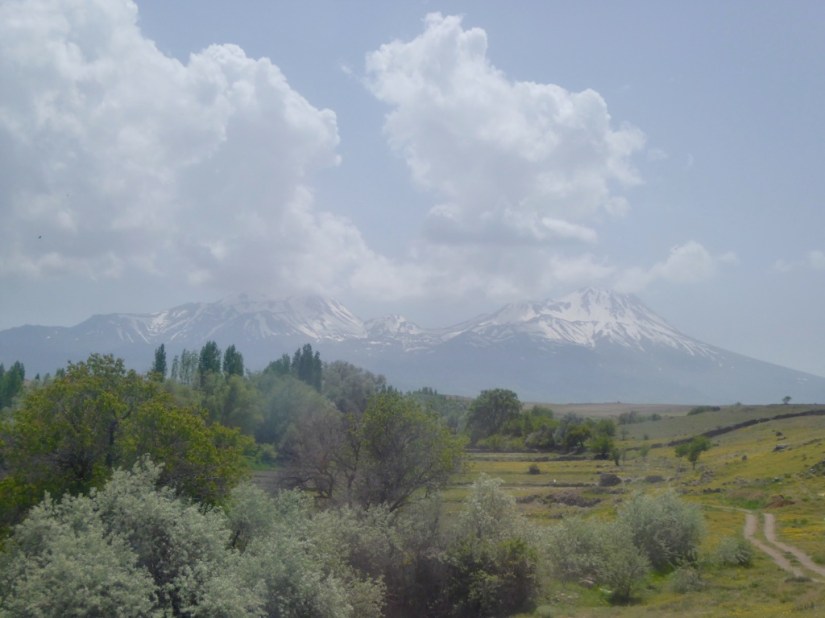
The tour at an end, it had been a long day but it was good to have been out seeing some of the generally flat Anatolian countryside, together with Mount Hasan, a distinctive snow-capped, twin-peaked inactive stratovolcano!

 Off Travelling Together