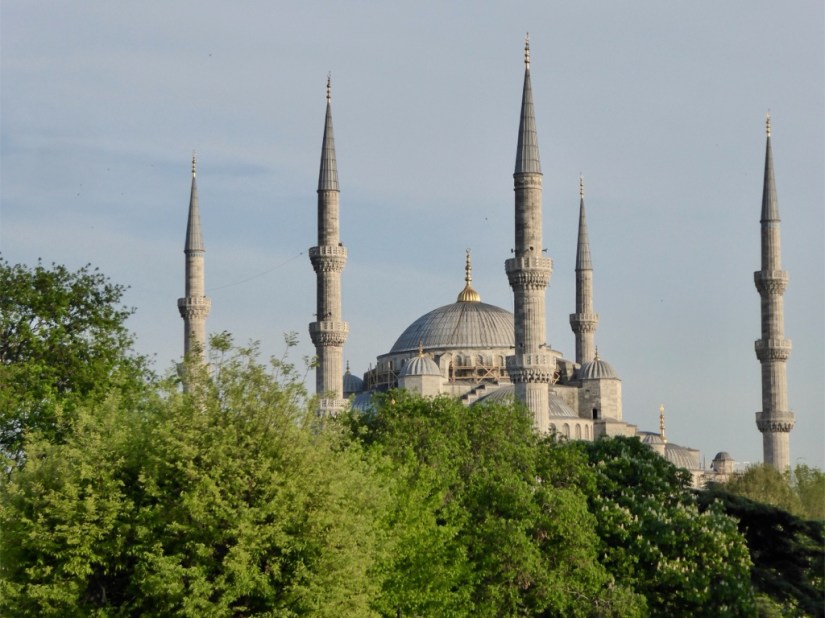
 Istanbul sits on the Bosphorus, with Europe on one side and Asia on the other. It has been the capital of both Christian and Islamic empires and while no longer the capital, it is the economic and cultural heart of a modern secular Turkey.
Last time we were here we took a boat trip and also visited the Asian side, but this time we are concentrating on the old city within the original Byzantine walls.
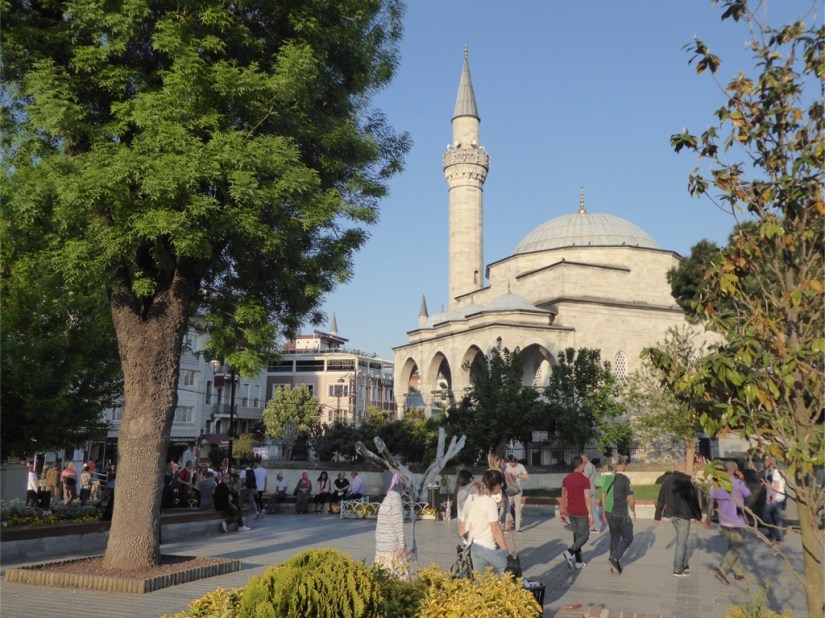
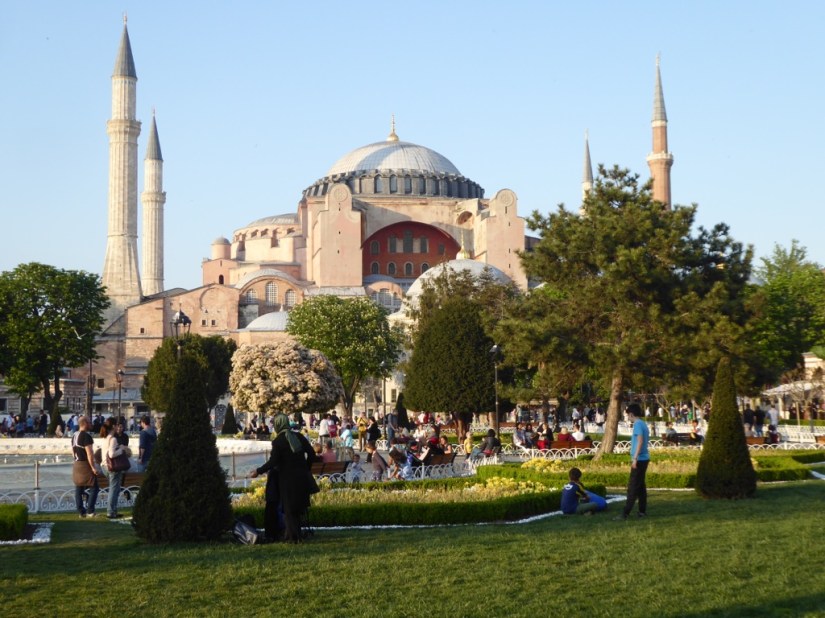
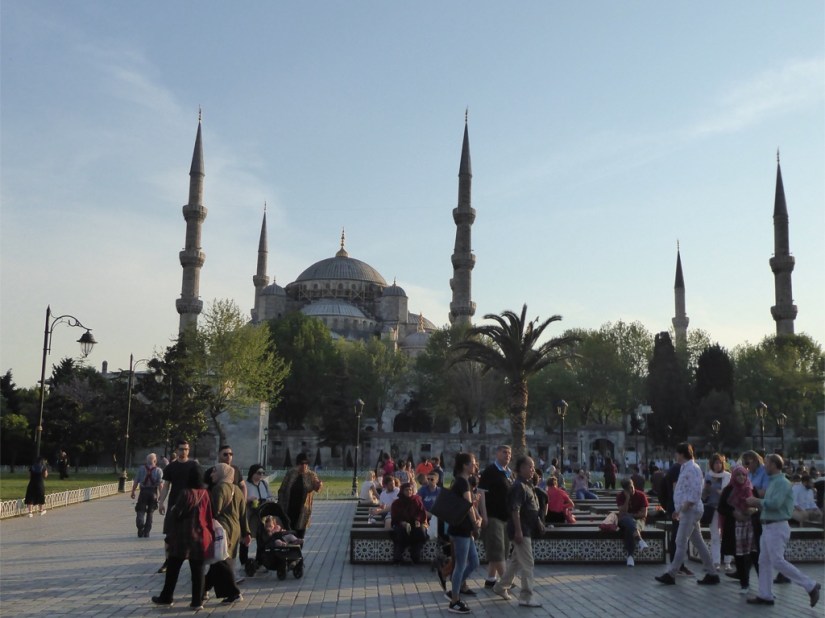
Having taken the metro and a tram, we arrived in Sultanahmet, the heart of the old city, and took a few snaps as we passed.
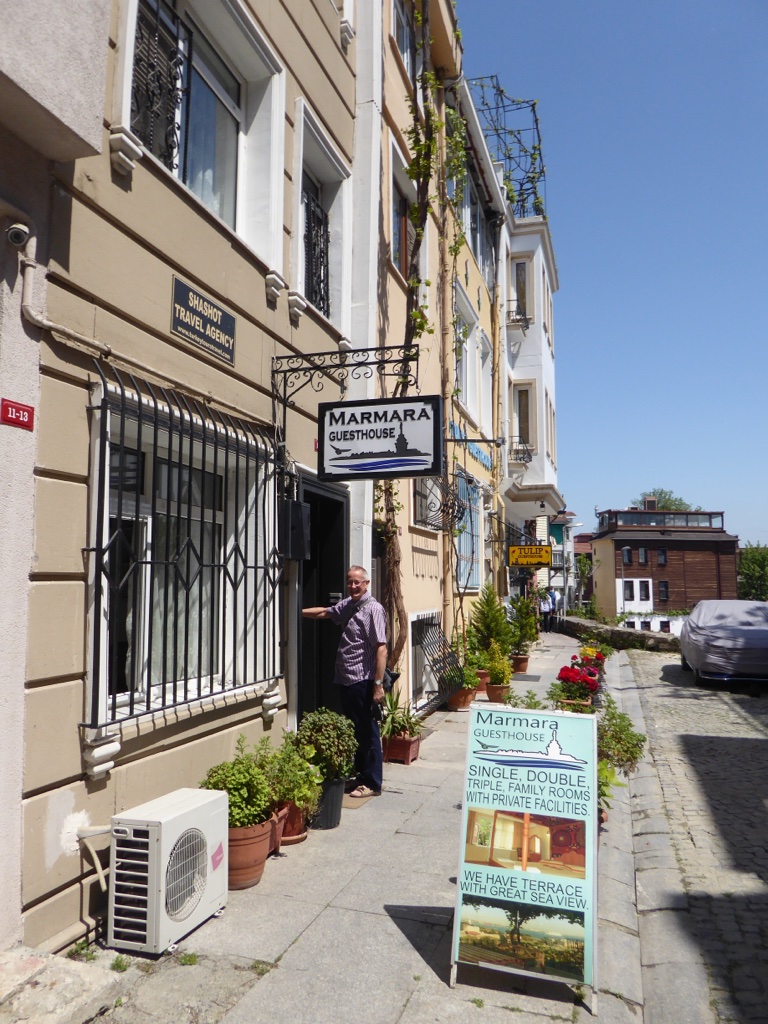
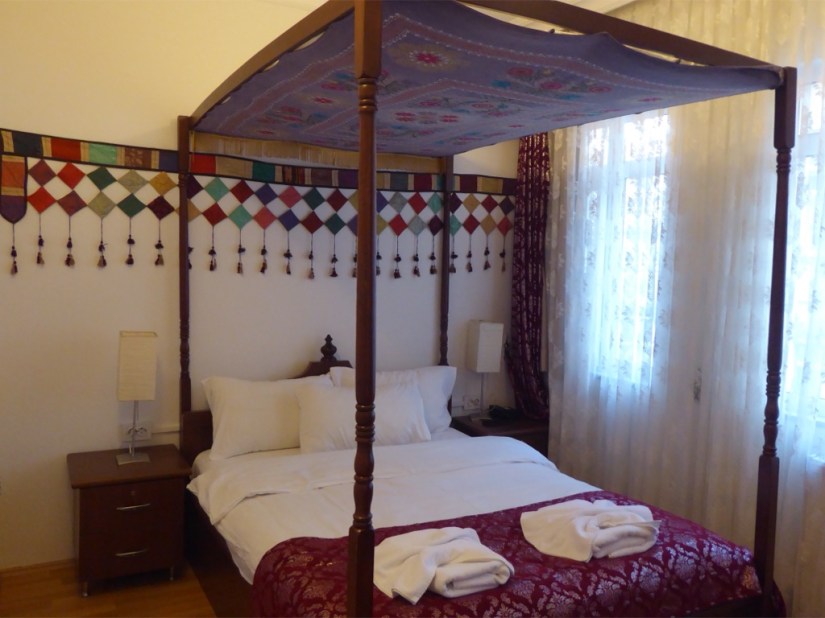
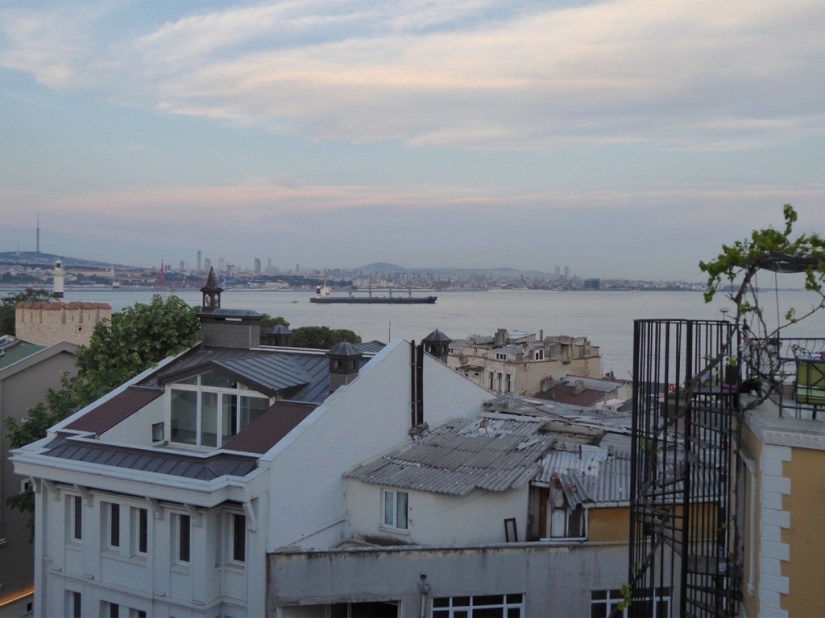
We are staying at the Marmara Guesthouse, located in a quiet part of the old town. There are views over the Bosphorus from the rooftop terrace and it is within walking distance of the main sights and a choice of restaurants.
We picked The Turquoise Cafe & Restaurant for our first Turkish meal, at a cosy table with cushions and a red rose, overlooking the street. The mezze and casseroles were very tasty and we were ready to turn in after our long day.
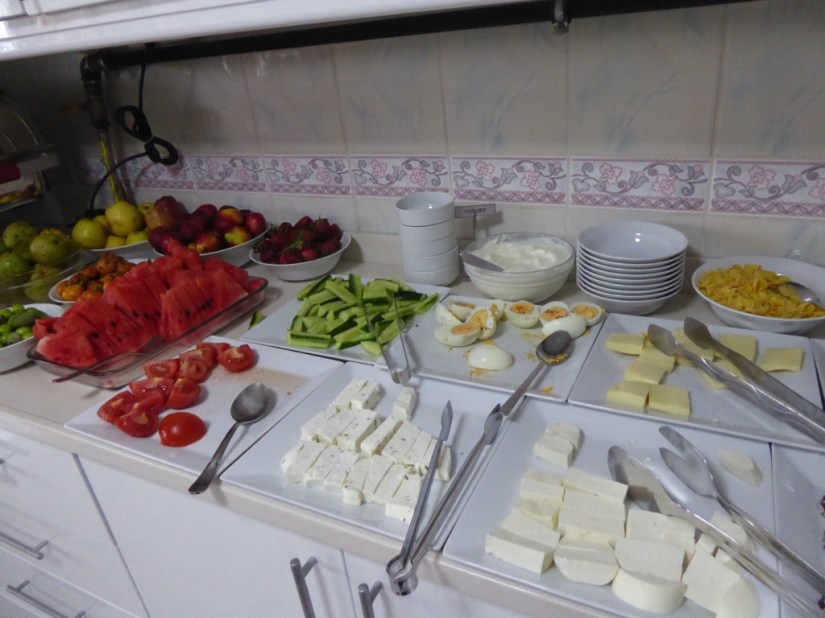
Next morning, there was a wonderful spread for breakfast – eggs, cheese, cucumber, tomatoes, olives and peppers then bread and pancakes with a huge array of jams finishing with a selection of cakes and biscuits. We ate on the sunny terrace watching the ships busy on the water and the rose jam was amazing!


Our first stop was Sultanahmet Camii, often called the Blue Mosque, after the blue Iznik tiles which decorate the interior.
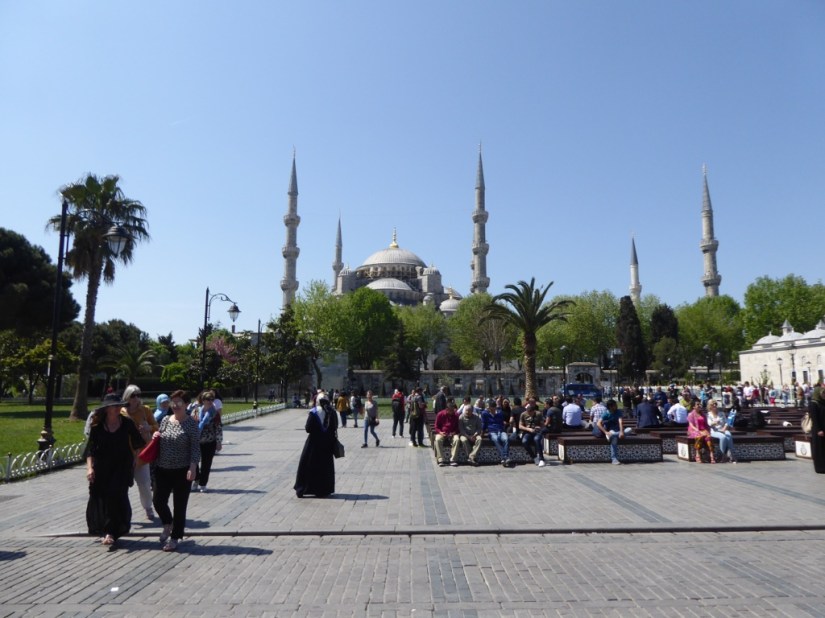
It was built for Ahmed I and finished in 1616 and boasts six minarets, visible on the skyline from various spots round the city. Until then only the mosque in Mecca had as many minarets, and then they built an extra one so it still had most!

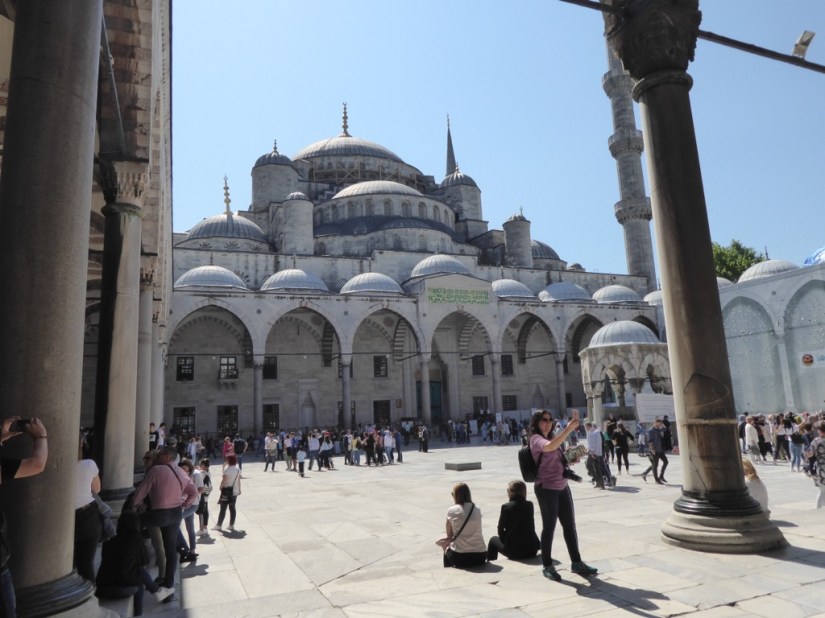
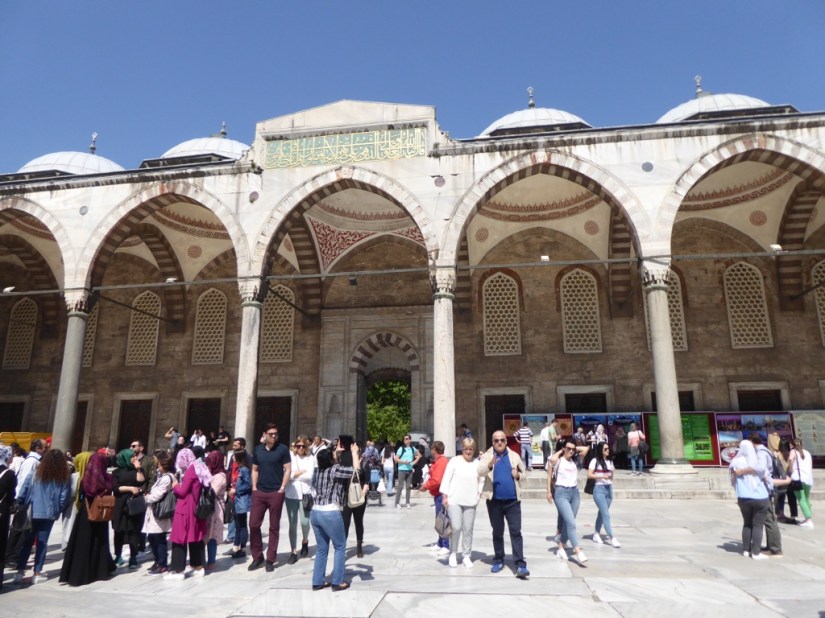
We got as far as the courtyard before we saw the restoration notice and realised we could only see the outside, but fortunately we did go inside last trip.

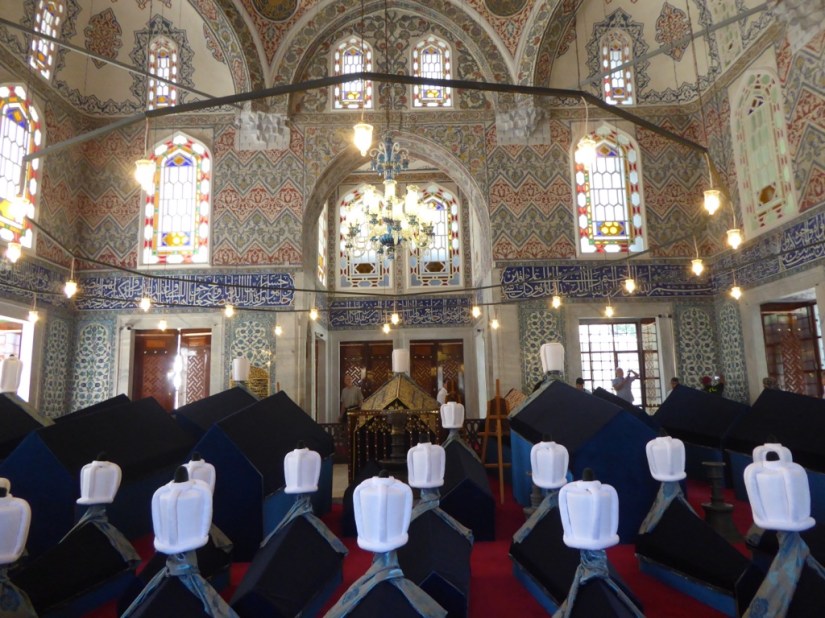
We did manage to visit his tomb though, which is decorated in similar tiles to the mosque.
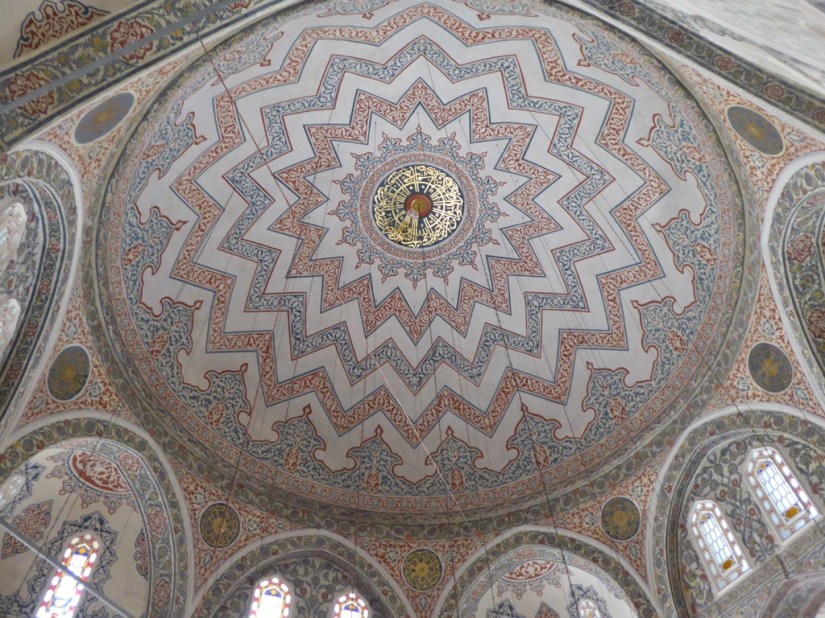

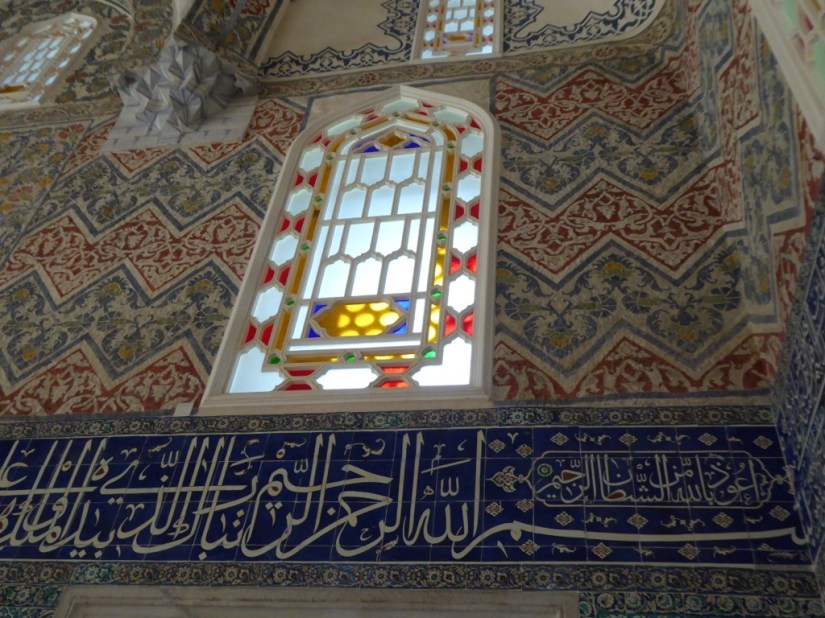
We had planned to visit Hagia Sophia next, but when we saw the queue, decided to get there early next day. Instead, we walked down the Hippodrome, now a paved park, but once the chariot racing track in Byzantine times.
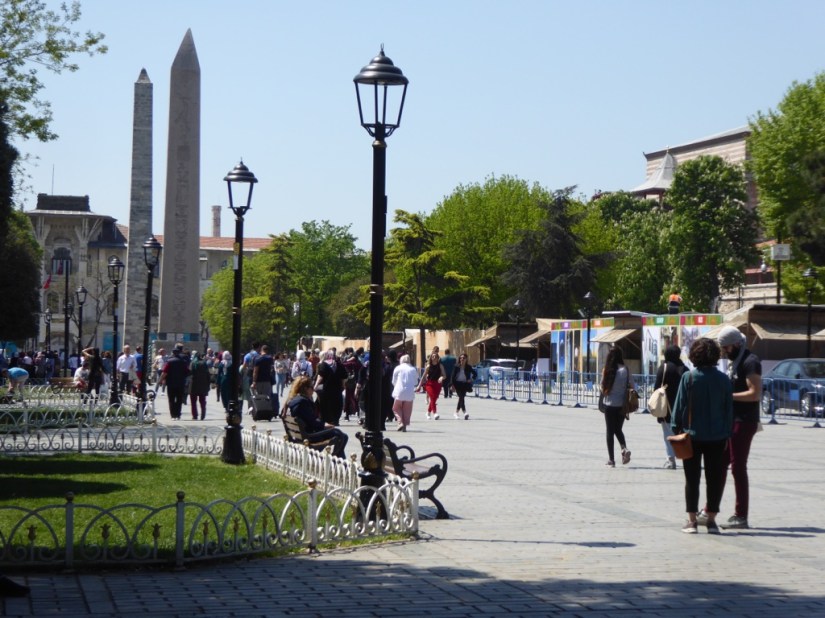
There is an Egyptian obelisk that was brought here in the C4th, remains of a Greek bronze column made up of three entwined serpents which have lost their heads from the Temple of Apollo in Delphi, and a tall but unimpressive column to Constantine.


We took a turn round the Museum of Turkish and Islamic Art but apart from a hall of carpets and snippings from The Prophet’s beard, the most remarkable thing was the view of the Blue Mosque.

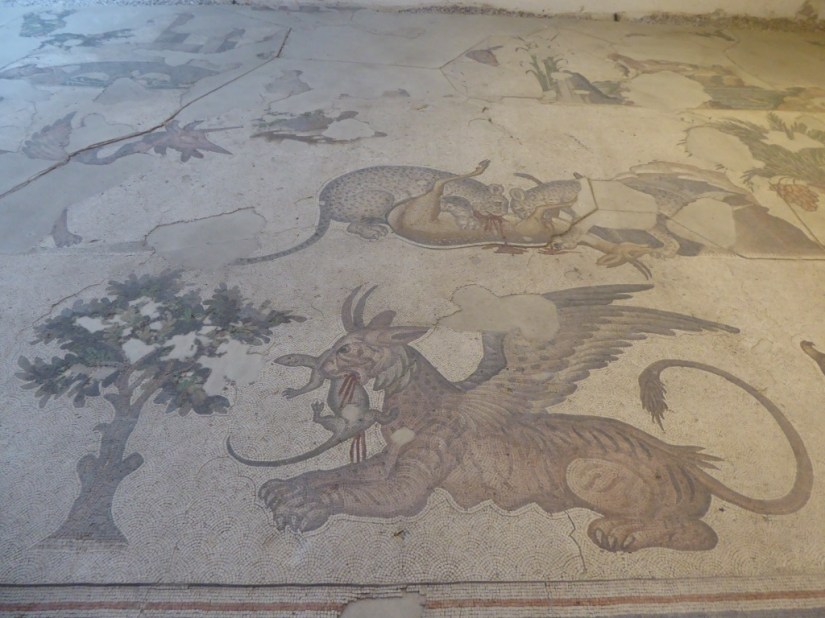
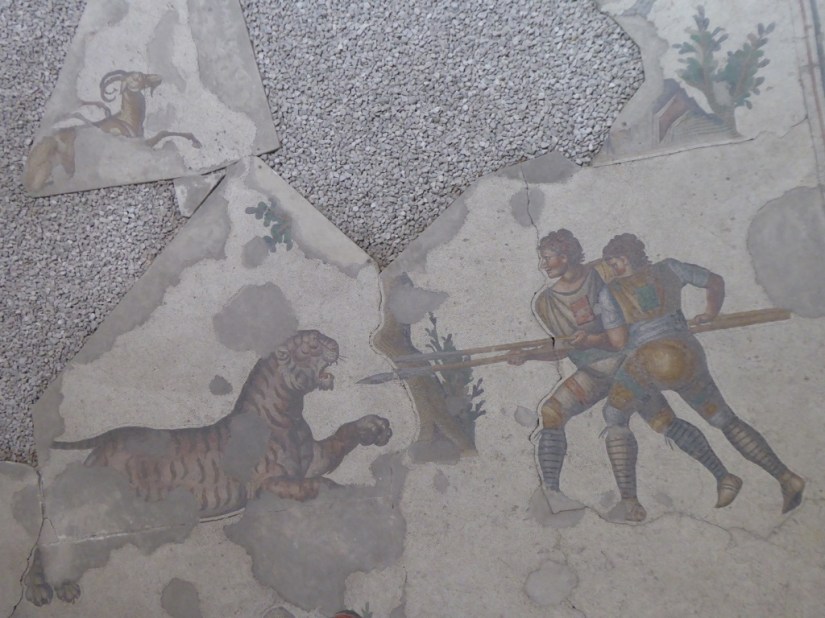
The Mosaic Museum displayed quite a lot of the huge floor from the Byzantine Great Palace including quite ferocious animals.

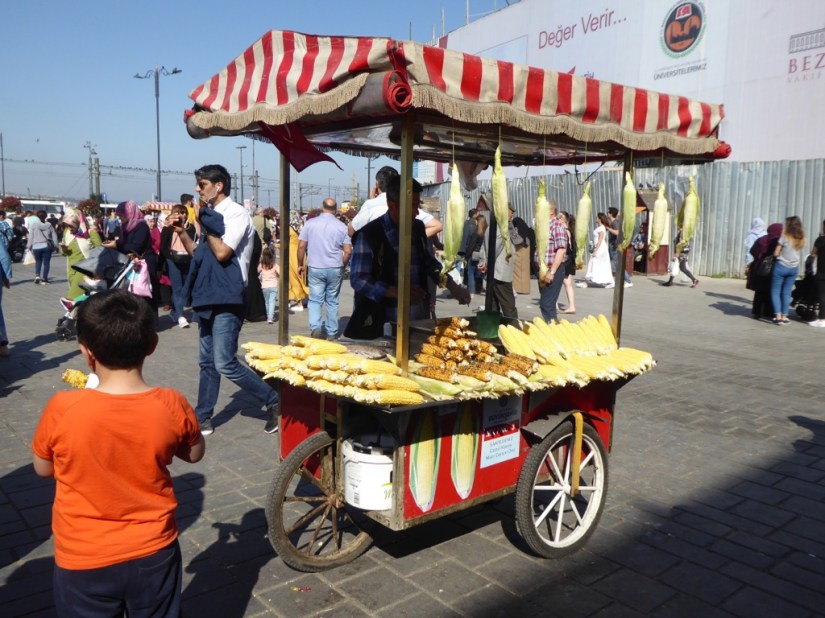
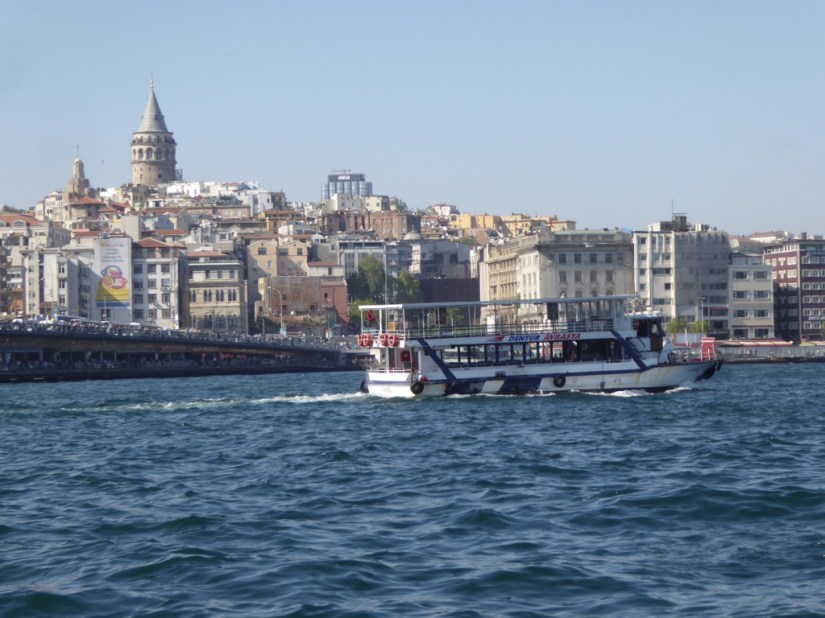
After a late lunch of pide and salad, we took the tram to Eminonu Square which was busy with food stalls and beside the Galata Bridge.


A short walk brought us to the Spice Market, or Egyptian Bazaar, where there is a huge selection of spices and Turkish delight for sale in quite smart shops.
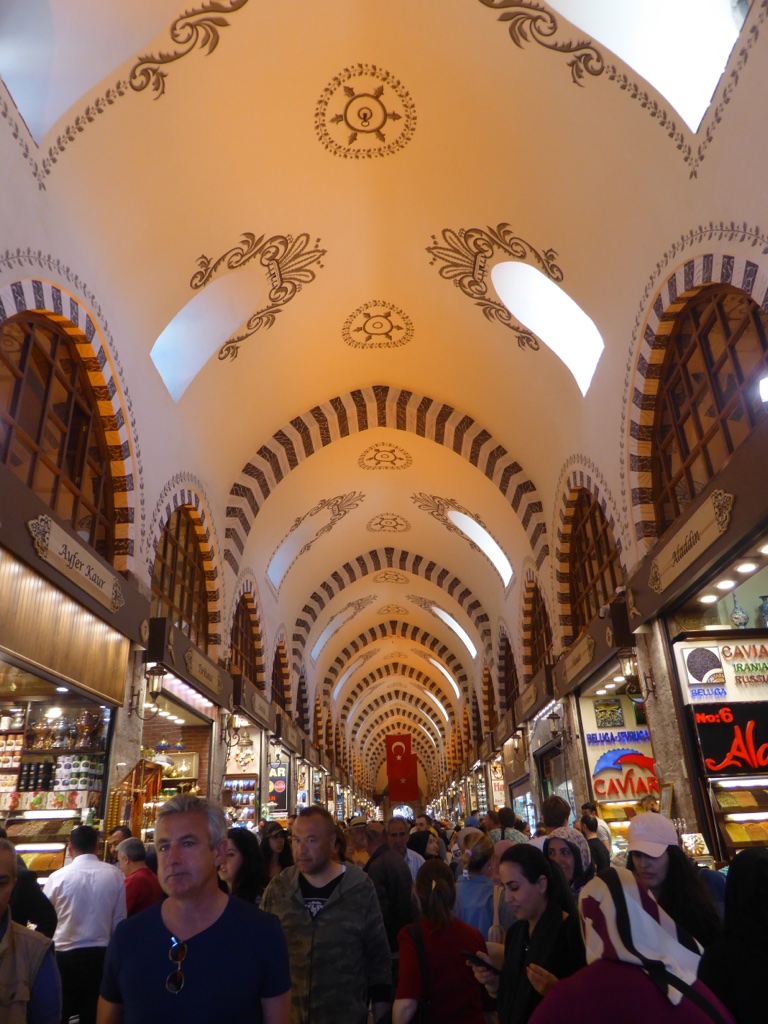
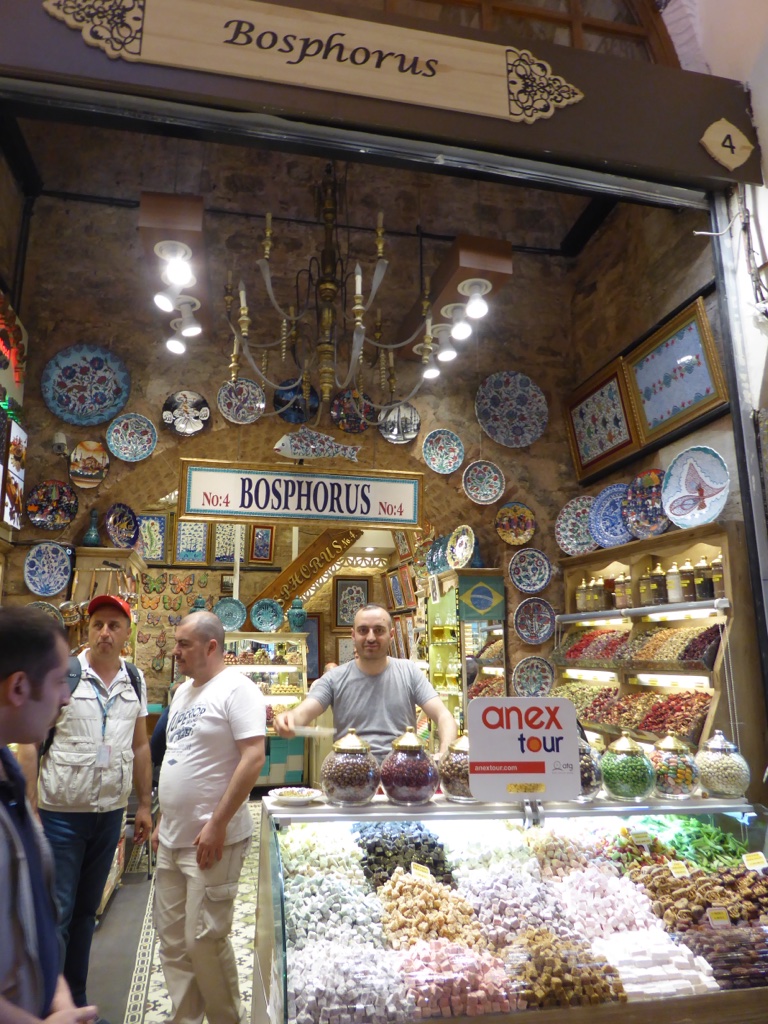


From there, we followed the throngs of shoppers through streets lined with stores selling anything and everything until we reached the Grand Bazaar.


With 66 alleys and more than four thousand shops, we were never going to identify the carpet shop we were standing outside when we started chatting 10 years ago.
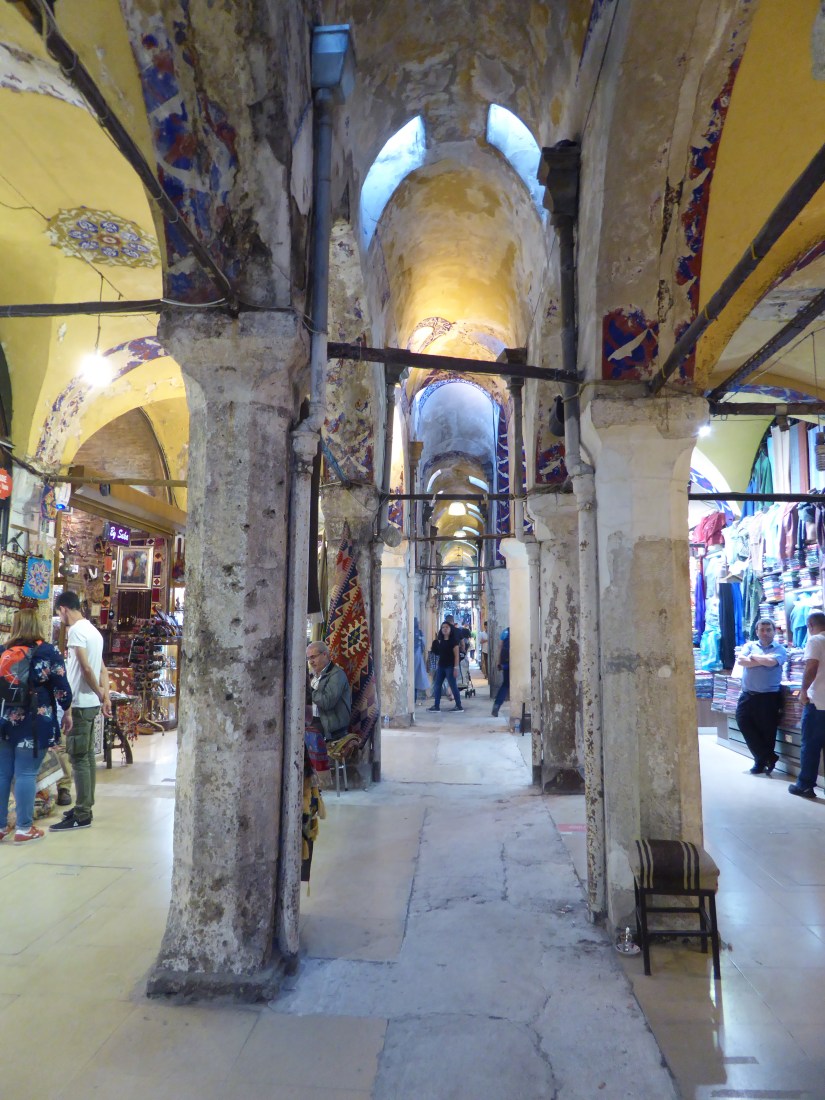
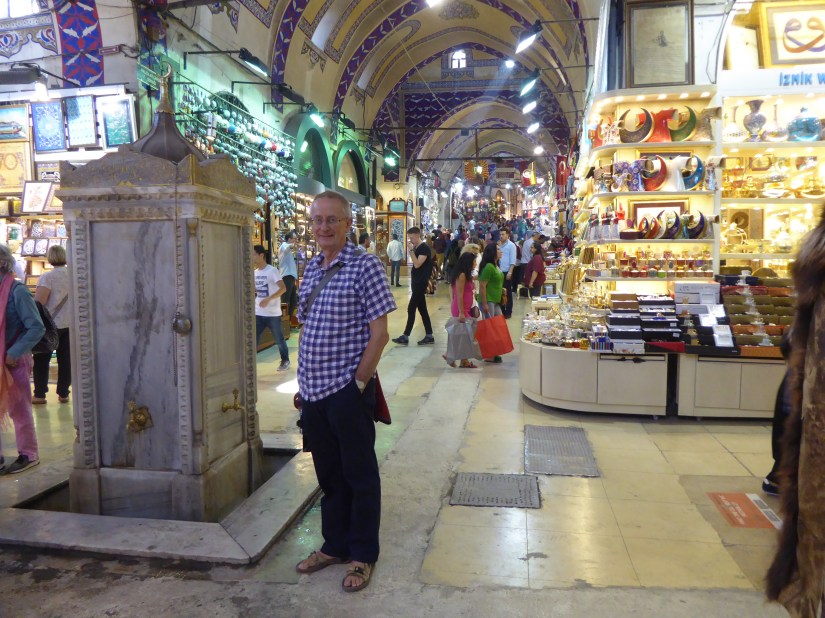

Nonetheless, it all looked very familiar as we wandered round and bought a couple of souvenirs, before calling it a day and returning to our guesthouse.
We found out about Cooking Alaturka too late to schedule a class, so instead went for dinner in the restaurant and were treated to some delicious specialities, the best being the hot yogurt soup which sounds a little strange but which was amazing, the mushroom filled vine leaves and the walnut stuffed figs.
 Off Travelling Together