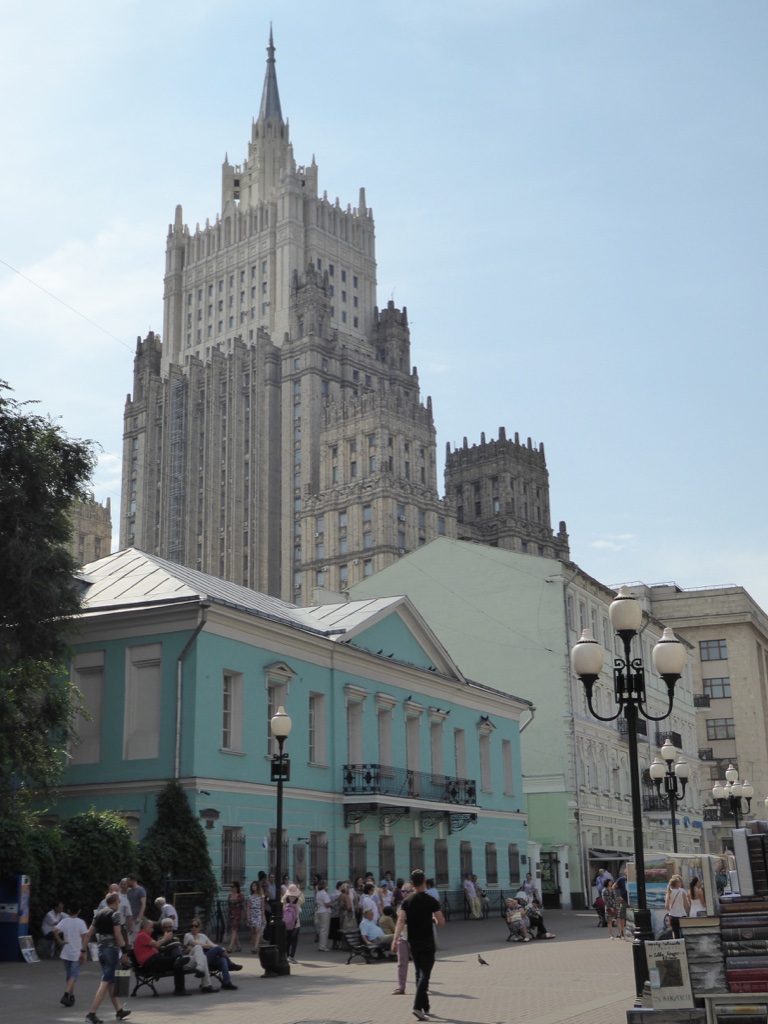
 One of the oldest sections of Moscow, Stary or Old Arbat dates from the 16th century. Originally the street formed part of an important trade-route and was home to a large number of craftsmen, but by the 19th century it became a favorite district of the aristocracy, and a century later it became a shopping street. Today it is full of expensive cafes and tacky souvenir shops with artists wanting to draw your portrait or a cartoon … but there is often a mural you aren’t expecting!

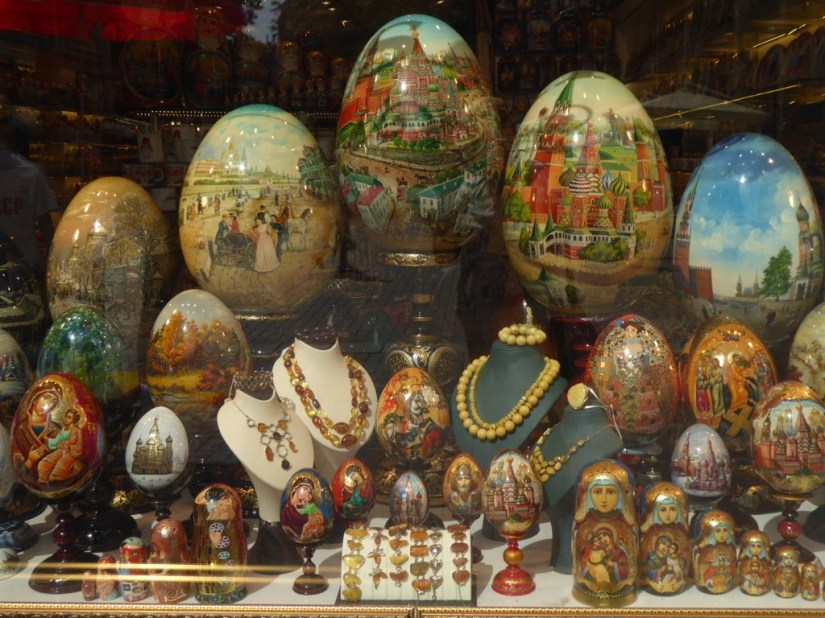

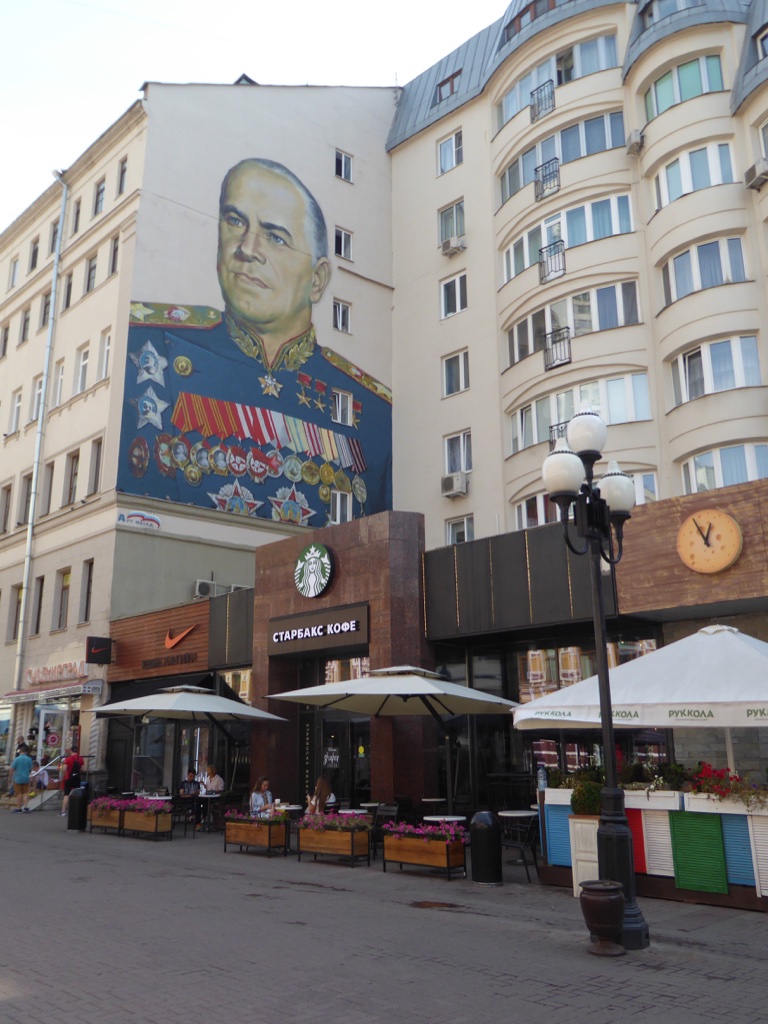
The architecture in Moscow seems to be a really mixed bag. The city had to be rebuilt after a fire in 1812 and many of the new buildings were in the grandiose Russian Empire style. The end of the C19th brought the revival of early Russian styles which produced GUM and the State History Museum, followed by Style Moderne typified by the Hotel Metropol. Soviet constructivism brought buildings whose appearance was dependent on their function and materials – a new architecture for a new society and Melnikov’s own house in Moscow is a fine example. Stalin preferred neoclassical architecture echoing ancient Athens but also anything on a gigantic scale represented by the Seven Sisters, the gothic-style skyscrapers built just after WWII. Khrushchev condemned the excesses of Stalin and after this artitects favoured a bland international modern style … with no style.
Just off Arbat we found the Melnikov House, created his home from two interlocking cylinders which required no load bearing wall. This gave an opportunity for experimental open plan living, but unfortunately the house was closed.


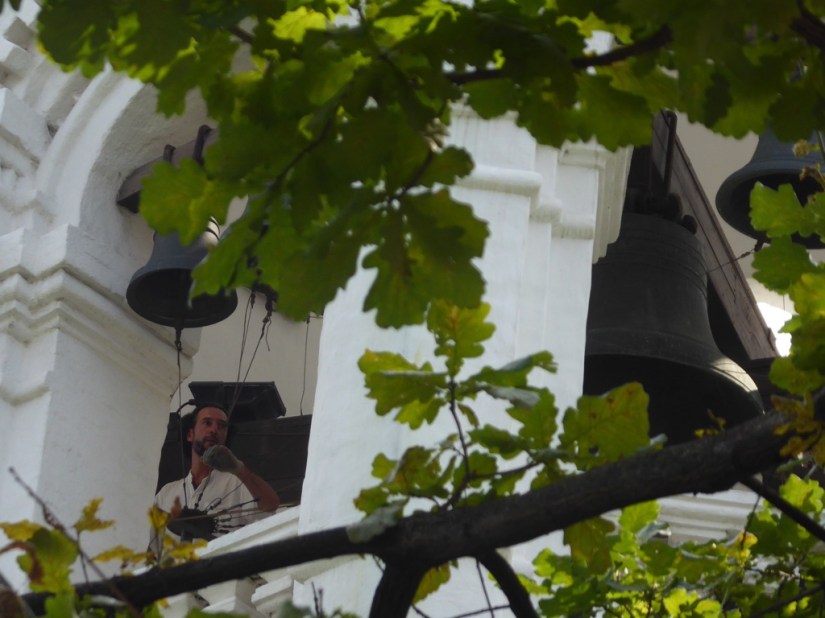
Further on, we came across the Church of the Saviour in Peski where a service was in progress. Pictures were not allowed, and I put on my headscarf to enter. The congregation, with all the women in skirts and scarves, generally stood, although there was a bench at the back for the elderly. There was also coming and going, with new people arriving, doing the rounds of the icons displayed on the pillars and bowing and kissing, then standing to listen to the priest, with more bowing and crossing themselves. The Church was covered in brightly coloured painting of saints and bible stories with an iconostasis at the front as with other churches we had entered. The service ended just after we left, and the bells were rung, with a similar pealing sound to those we had heard at Kizhi and I caught a snap of the bell ringer, wearing gloves and pressing down on the strings connecting the bells to make the sound.

Another walk along Arbat brought us to the beautiful empire-Style mansion that Alexander Pushkin lived in with his wife Natalya Goncharova after they wed – and more about them tomorrow. Behind is the Ministry of Foreign Affairs, another of Stalin’s Seven Sisters.
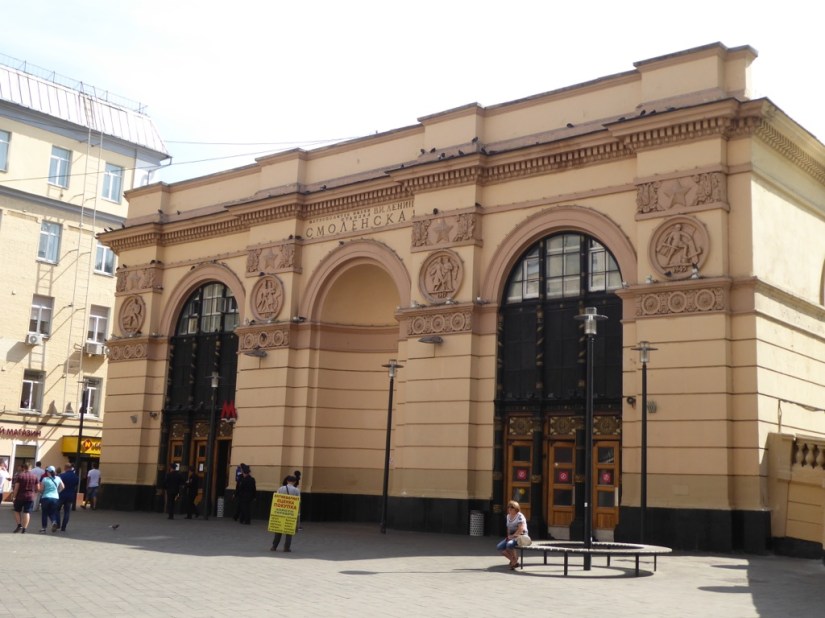
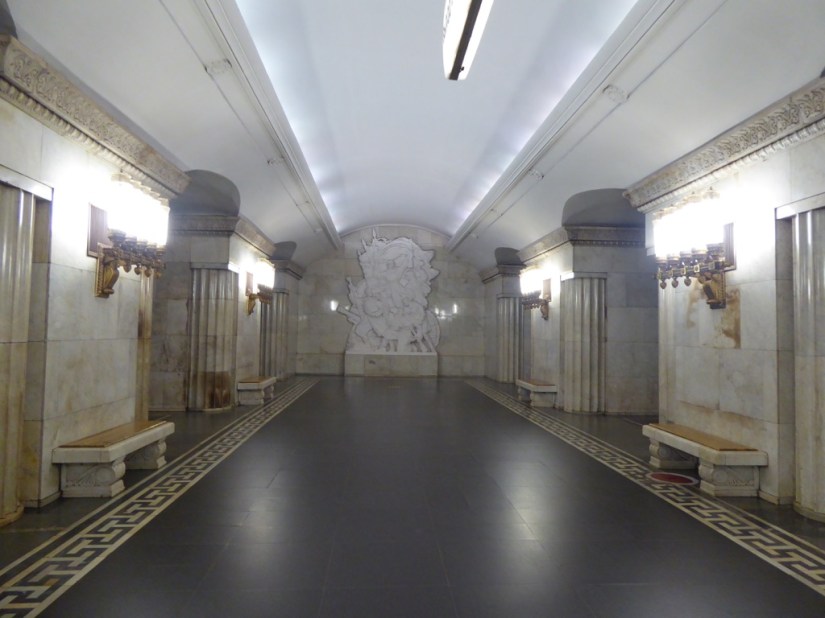
Having walked to Smolenskaya, we took our first trip on the Moscow metro. Here we saw mosaics in the entrance, some rather pretty columns and a relief at the end of the platform depicting soldiers of the Red Army in battle …


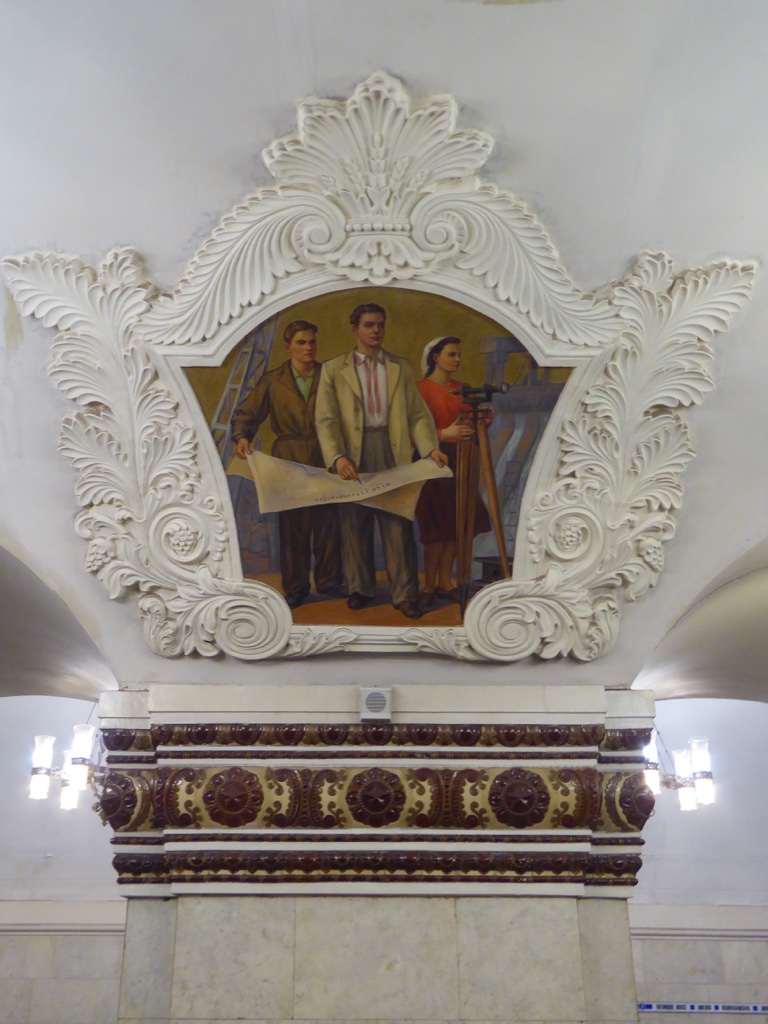
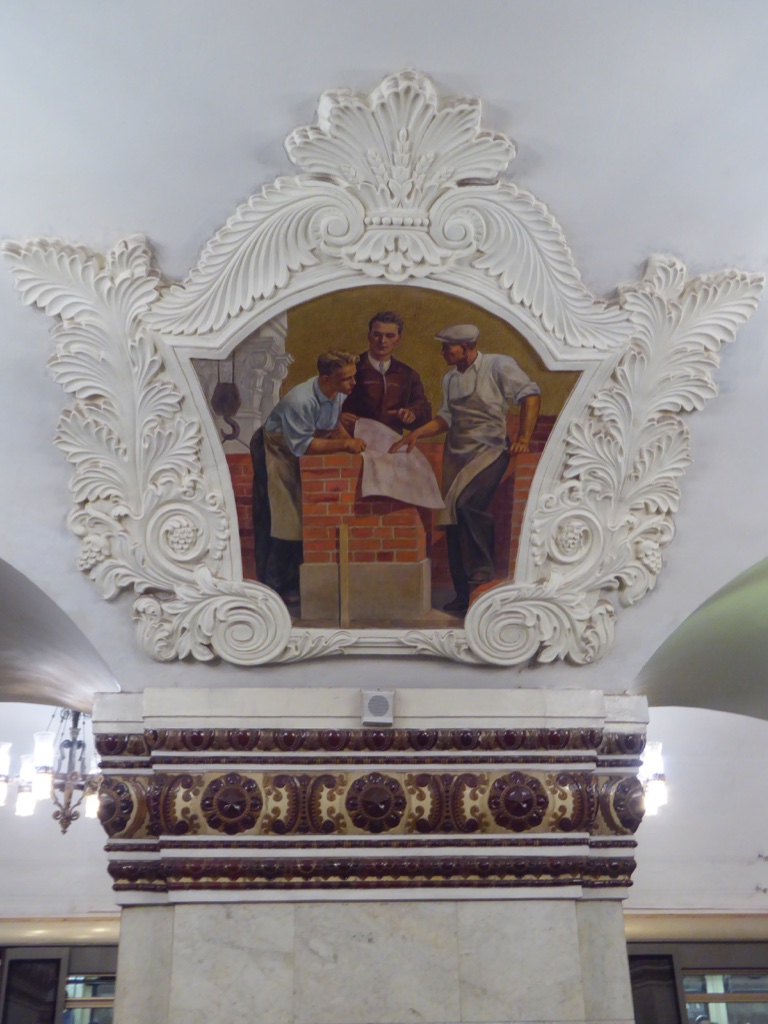
… Kievskaya was next, a white marbled hall with panels showing idyllic Ukrainian rural life and a fresco at the end celebrating 300 years of Russian-Ukrainian cooperation …
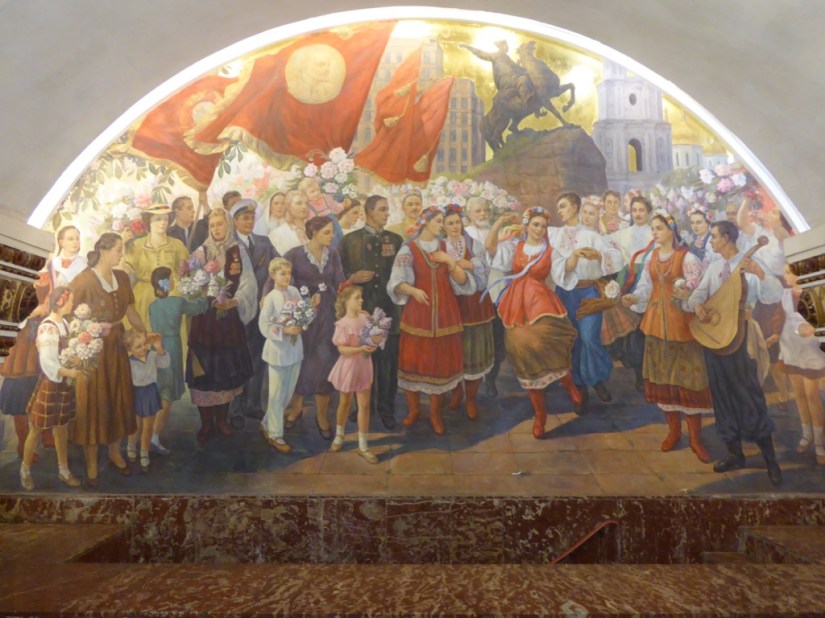
… on to Slavyanskiy with Paris-Style Metro Art Noveau decorations on the platform …


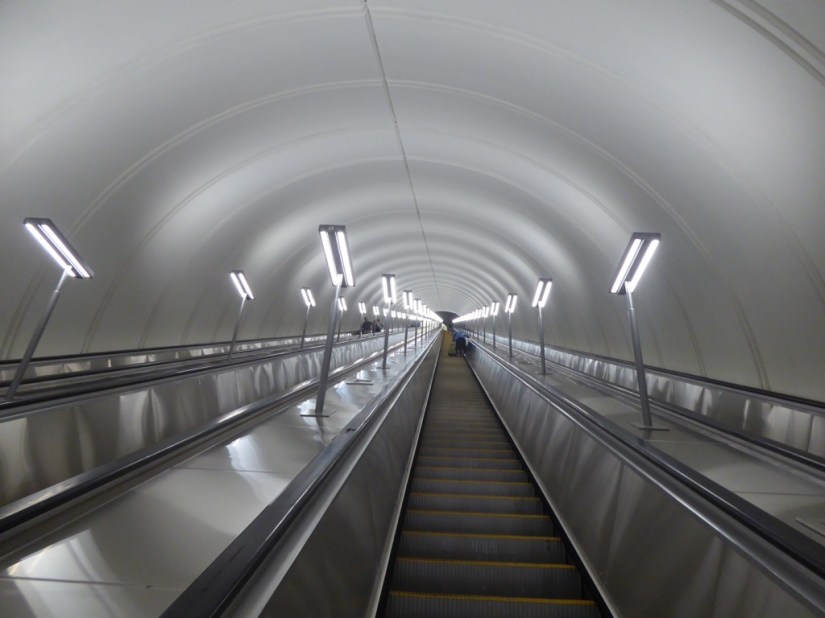
… then back to Park Poebedy, with a mosaic of the 1812 victory over Napoleon at the end, and the deepest station in Moscow – 3 minutes on the escalator!


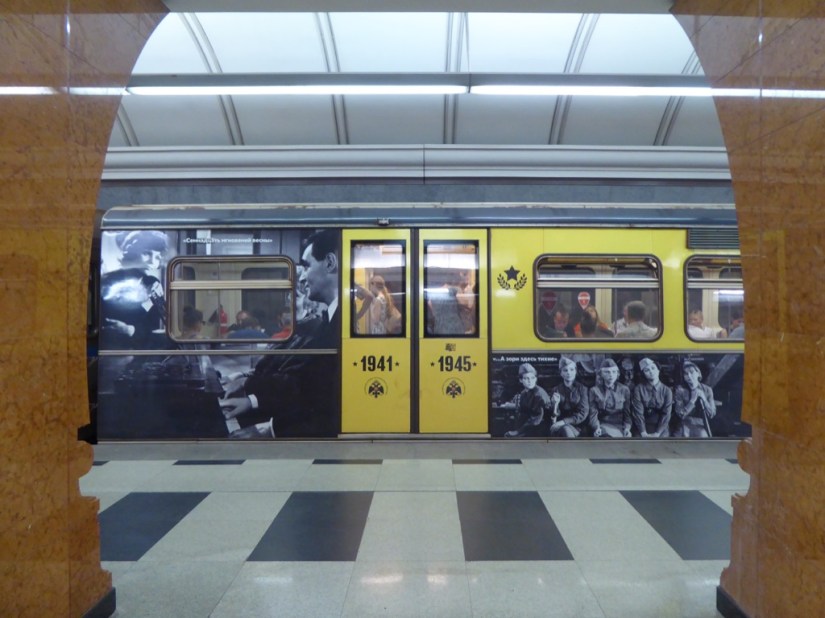

Park Poebedy is huge and commemorates the 50th anniversary of the Great Patriotic War as the Russians call WWII, filled with memorials, museums and fountains. The obelisk topped with St George killing the dragon, although it’s hard to make out, is 141.8m tall with every 10cm representing one day of the war.
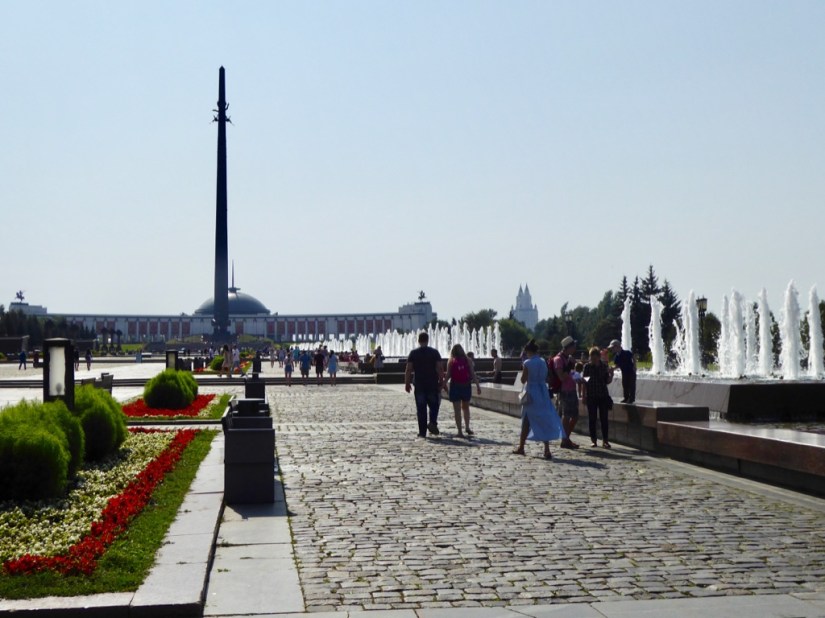
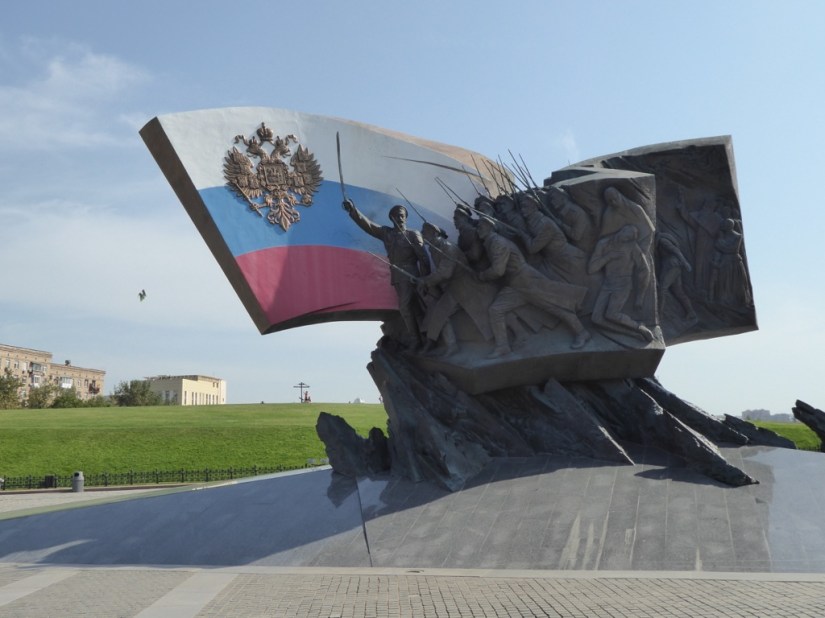

On the 60th Victory Day celebrations, Putin unveiled 15 bronze canon symbolic of the war’s 15 fronts.

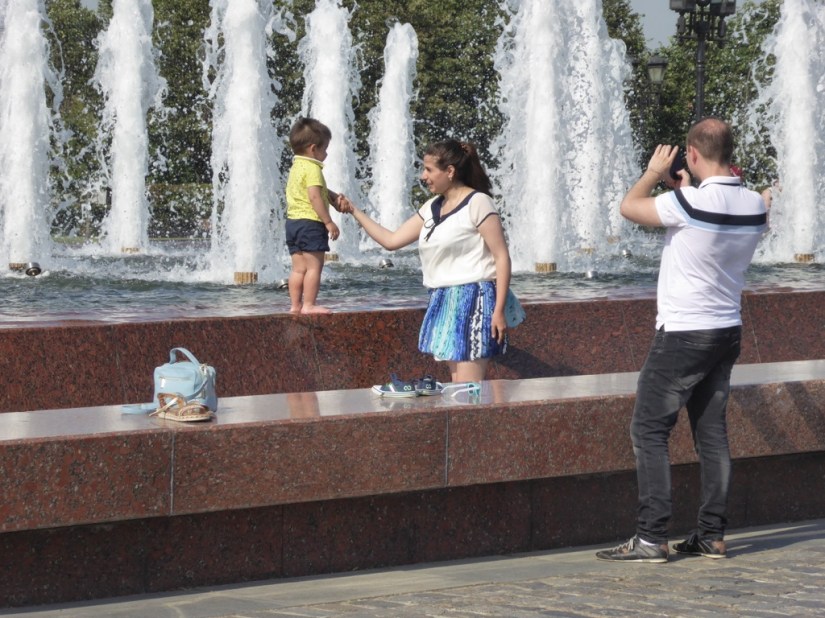
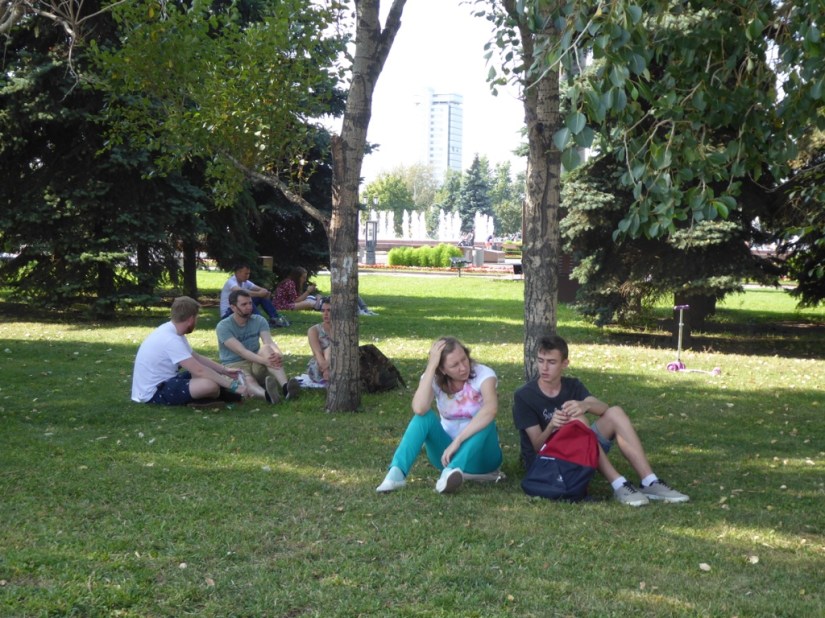
Beyond that, it was Saturday afternoon, nudging 30 degrees and everyone was out enjoying the park, the water, the sunshine and the shade!



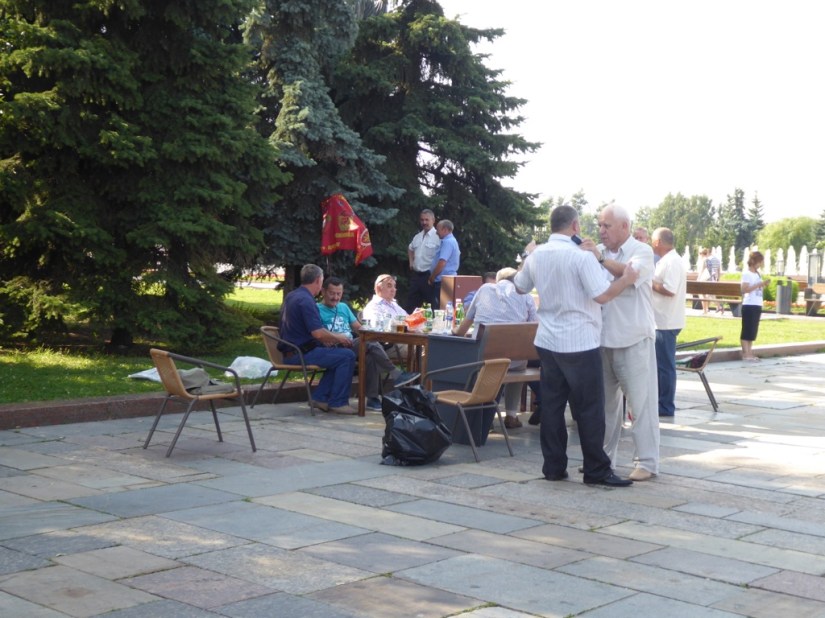
Chris got hauled into a group of Moldavian ex-soldiers having a reunion in Moscow. This involved military salutes, hugs, vodka at 2pm in the afternoon, photos and new best friends with not a word in common!
Walking back we could see how Stalin’s high-rise plan had progressed as well as a triumphal Arch to Napoleon’s defeat in 1812.

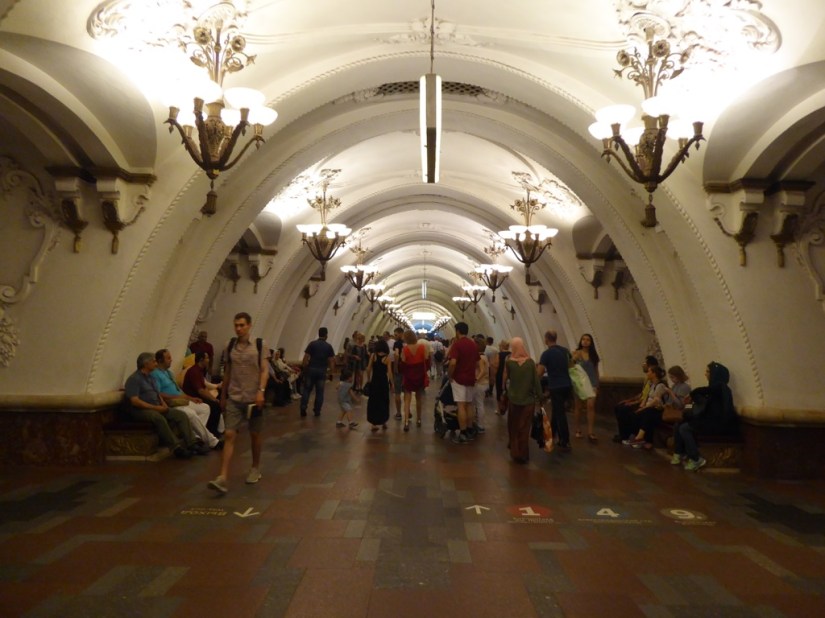
One more metro station on the way back, the one closest to where we are staying – Arbatskaya, with a baroque feel, and at 250m, the second longest platform as it had been built as a bomb shelter.


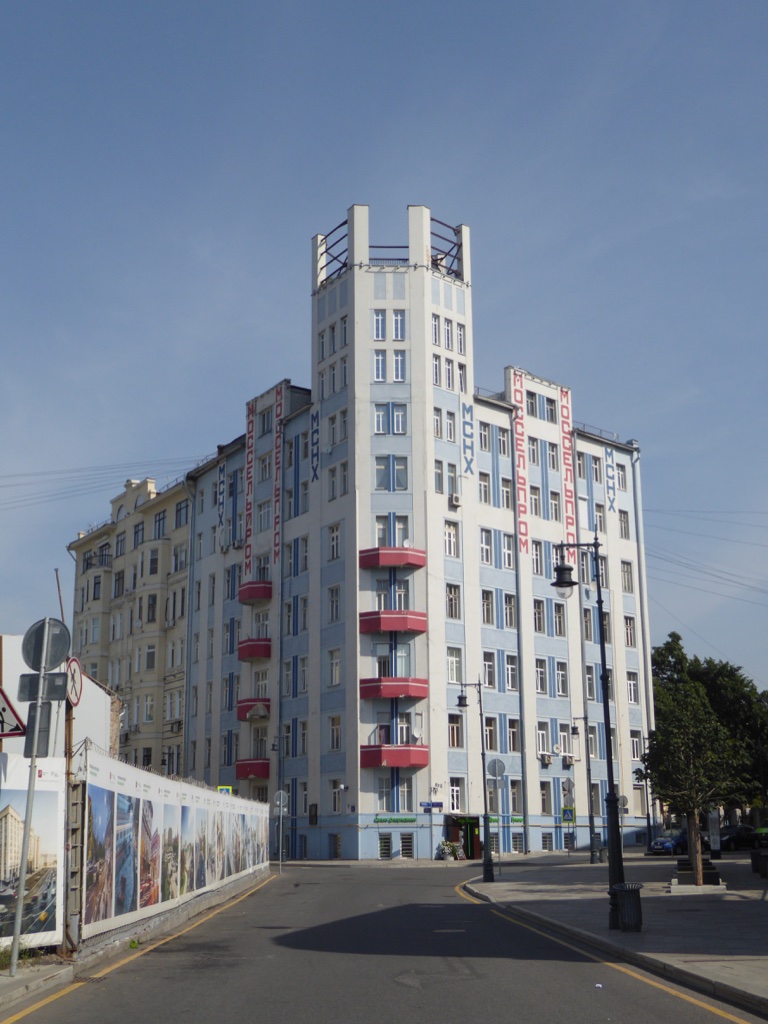
Outside we passed a couple more buildings, a Moorish Castle built in 1899 for an eccentric merchant and this Soviet Style apartment block.

We returned here …
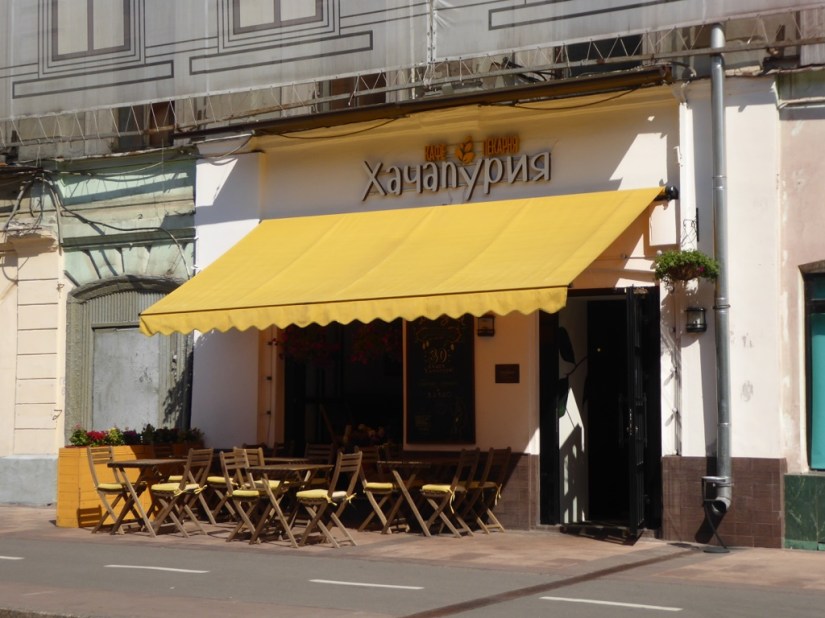
… which now we’ve got the hang of Cyrillic/Russian translation we now know is called Khachapurija, fitting really since we had an early dinner of khachapuri before heading to the Kostoma Folk Show …
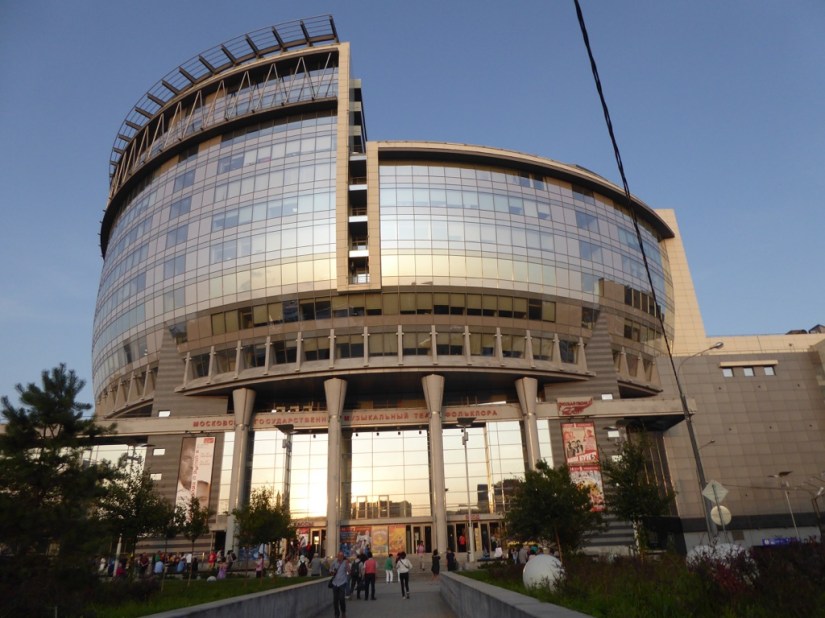

This was undoubtedly a tourist show but rather too stagecrafted making it hard to believe anything was authentic. Nonetheless, the costumes were stunning, the choreography slick and the male dancers athletic and it depicted Russian history and then costumes and folk dances of different regions. Maybe if you visit Moscow, you might want to give this a miss – if not you might want to dress up!
We metro hopped on the way home and can share with you that Dostoyevsky is decorated with black-and-white panels featuring the main characters from his novels The Idiot, Demons, Crime and Punishment and The Brothers Karamaz …


… Maryina Roshcha station has a collection of mosaic pictures showing pastoral mosaic landscapes.


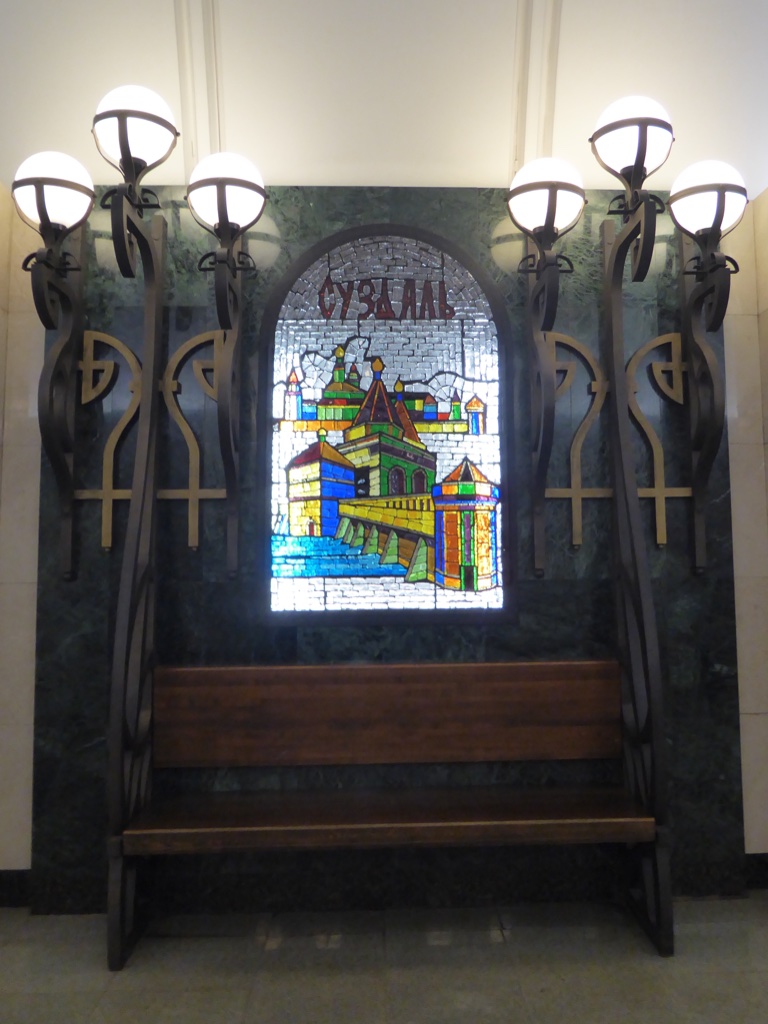
… and Trubnaya gives the impression of a traditional Moscow boulevard with illuminated stained glass mosaics of various historic Russian cities.



 Off Travelling Together