 Disappointed that we didn’t see the Russian Museum yesterday, we decided to make it our first stop today, stopping en route to get a picture of the Church of the Saviour on the Spilled Blood with blue sky for the top of the post! Focusing solely on Russian art, the collection begins with icons from C10th and here are a couple we liked best like including the Life of St George. Icons were first painted as a spiritual exercise for monks and to aid the veneration of the holy subjects they depict. Some believe they can bring luck or grant wishes. The latter icons have been influenced by European art and gain a naturalistic look and perspective like The Trinity.


There are 94 rooms in the museum arranged chronologically, so we had to prioritise, focusing on works that either showed Russian life or a distinct Russian style.


Moving forward in time, we noticed Malevich had more in his repertoire than just a Black Square … he could run to a circle and cross as well, and some colour!


Another jump forward and these caught our eye …


… and having said we’d seen little sign of Soviet times, here is some china from the Soviet era.


With an afternoon ahead of us we then took the 30 minute hydrofoil to Peterhof. Originally, Peter the Great built a cabin here to oversee the construction of the naval base, but he liked the place so much he built a villa called Monplaisir, then a whole series of palaces. Today, much is a reconstruction following damage in WWII, partly by the Germans, but also Soviet raids by Stalin to prevent Hitler hosting a New Years party here.
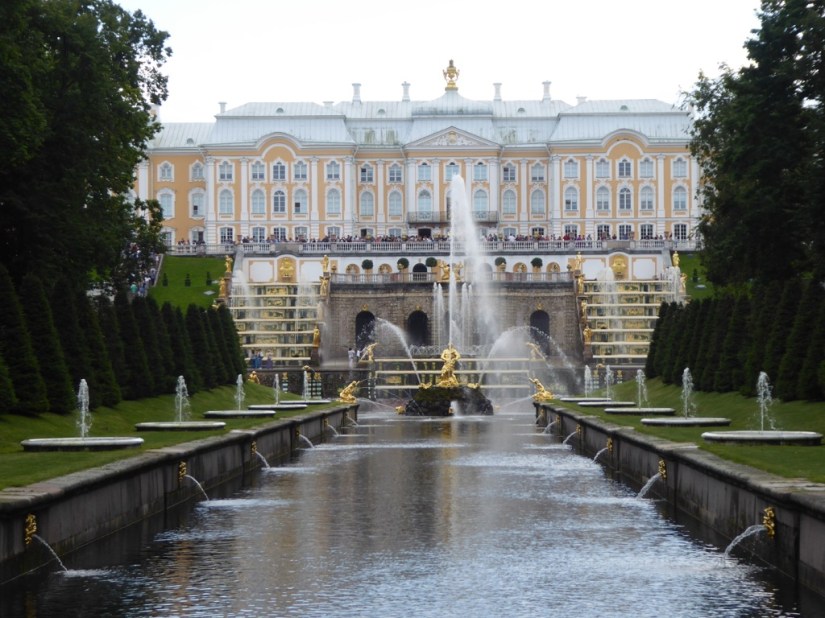
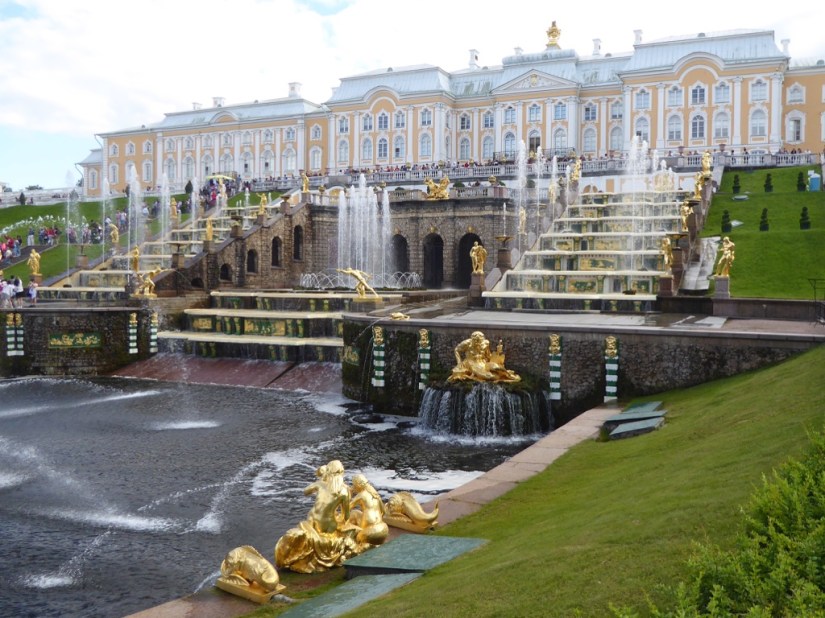
We entered through the Lower Gardens and followed the Water Avenue to the magnificent Grand Cascade, partly engineered by Peter himself. The statue of Samson tearing open a lions jaws celebrates Peter’s victory over the Swedes at Poltava and the central fountain shoots water up 62m. The Grand Palace stands as a backdrop to the jets of water and we would have liked to look round but individuals cannot prebook tickets, the queue was long and we have already seen several palaces.


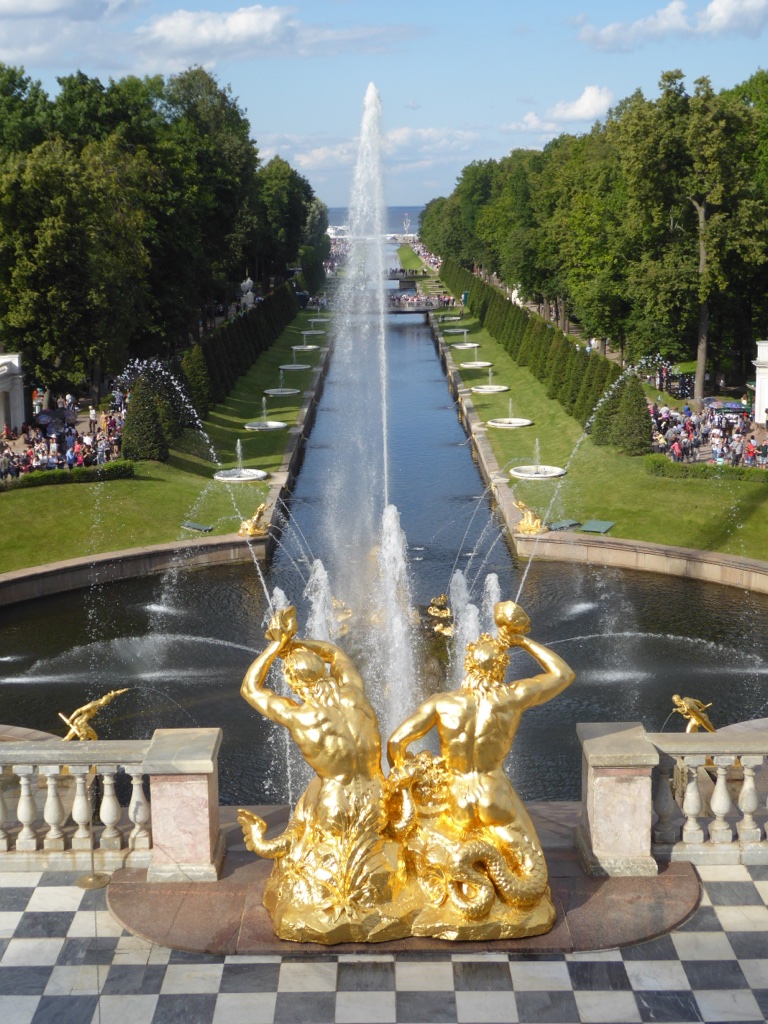

Instead we wandered happily in the sunshine, seeking out a number of smaller fountains in the grounds. We considered icecreams but thought capitalism was doing rather too well to be charging £4 each.


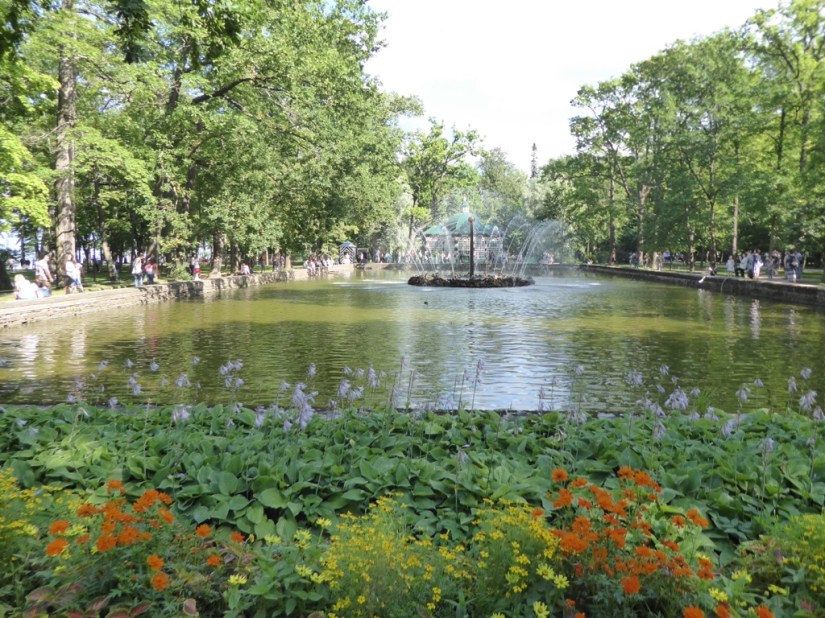
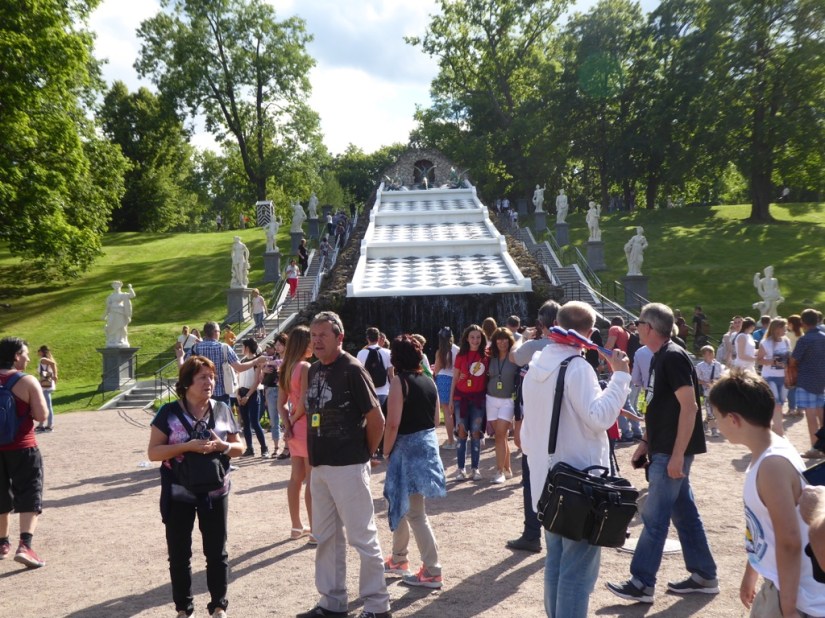


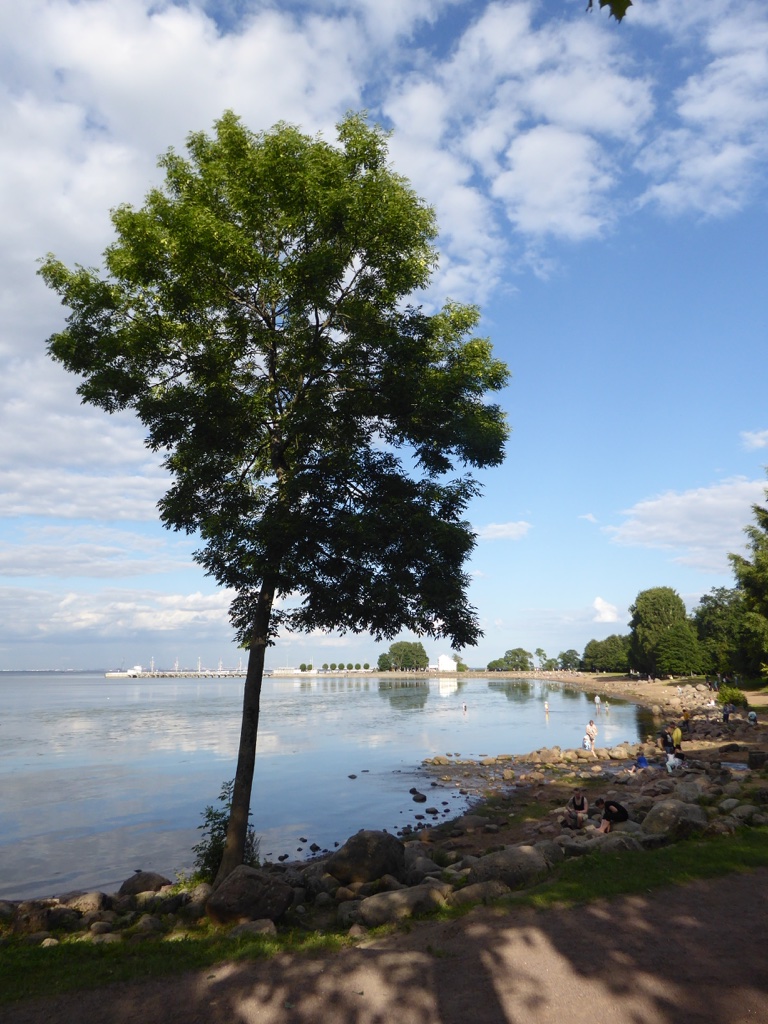
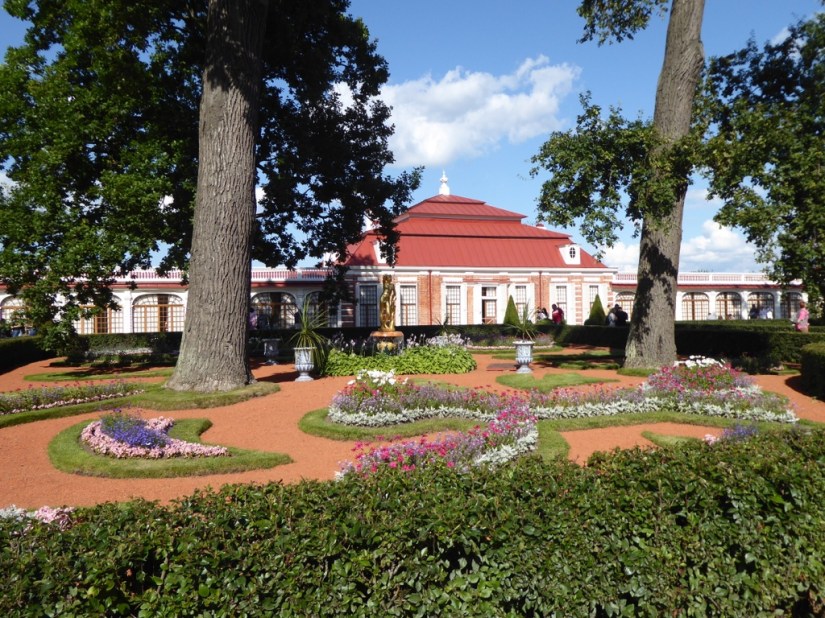
We came across Monplaisir, Peter’s favourite retreat and took a look inside. It was far more modest – snug and wood-panelled and we had a look round before heading back to the city.

We went to the Cat Cafe for dinner run by a husband and wife team and only with about 30 covers so it’s lucky we booked. Georgian restaurants became popular, influenced in part by Stalin’s Georgian ethnicity and the food has a Middle Eastern influence with as many vegetable dishes as meat dishes. We began with a selection of phkali – made with various chopped vegetables combined with ground walnuts and dressing into a patty, lobiani or red bean pie, chakapuly or lamb with tarragon and aubergine with cheese. Chris tried a couple of Georgian beers and I had a very good Georgian dry red wine.


One last thing to see in St Petersburg, but before that, breakfast. There has been porridge every day, which I tried and found a little sweet, as were the blini filled with sweet cheese. There have also been fried eggs and today we had fat buttermilk pancakes called oladyi which were great – not to mention the huge spread of juice, cereal, fruit, cheese, salad, toast … One other thing to mention was the wonderful carrot and pepper pickle to eat with cheese … I’ve taken a picture of the label and will hope to bring some home!

And last, but certainly not least, the Faberge Museum where the highlight was the imperial Easter eggs.


This tradition began when Alexander III commissioned Faberge to make an Easter egg with a surprise inside for his wife after seeing something in an international exhibition while travelling. Here is the first quite modest egg with a white enamel egg, gold yolk and golden chicken …
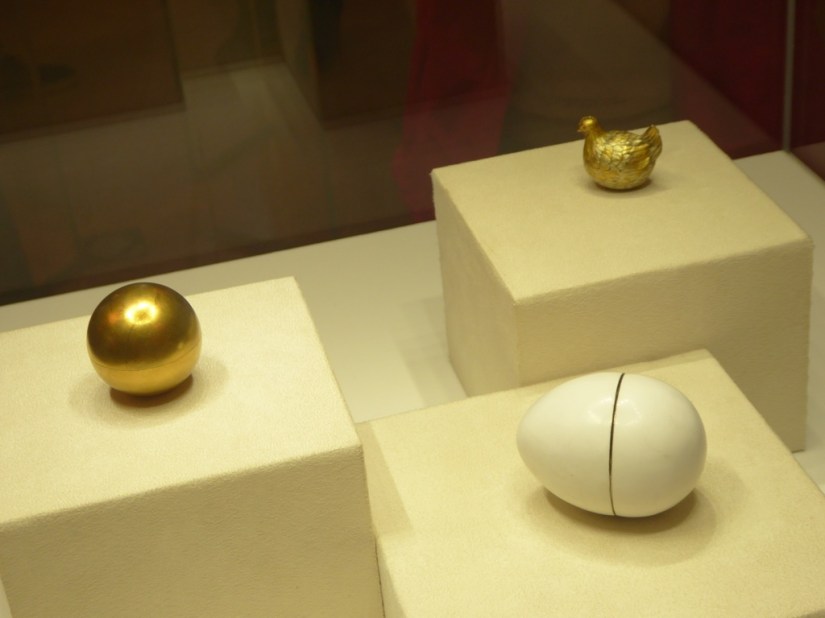
From then on, they got more elaborate but were also closely researched with meaning behind every detail of decoration. The Renaissance Egg takes inspiration from an Italian Renaissance casket …

… the Coronation Egg, containing a perfect replica of their coach …
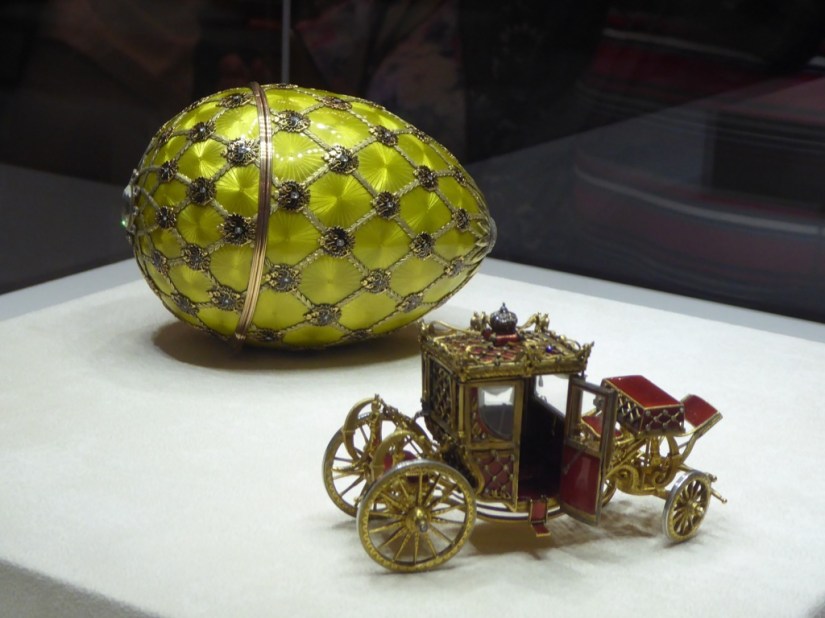
… and the celebratory Fifteenth Anniversary egg.

My favourites though were the Lilies of The Valley Egg with family miniatures popping out of the egg …

… and the Baytree Egg with a singing bird.

Finally, after these eggs caught on, some were made for other clients like these Egg Clocks – one with a mechanism raising a singing cockerel from the centre …

… and this gorgeous one for the Duchess of Marlborough with a snake’s head marking the time, which was Chris’s favourite.
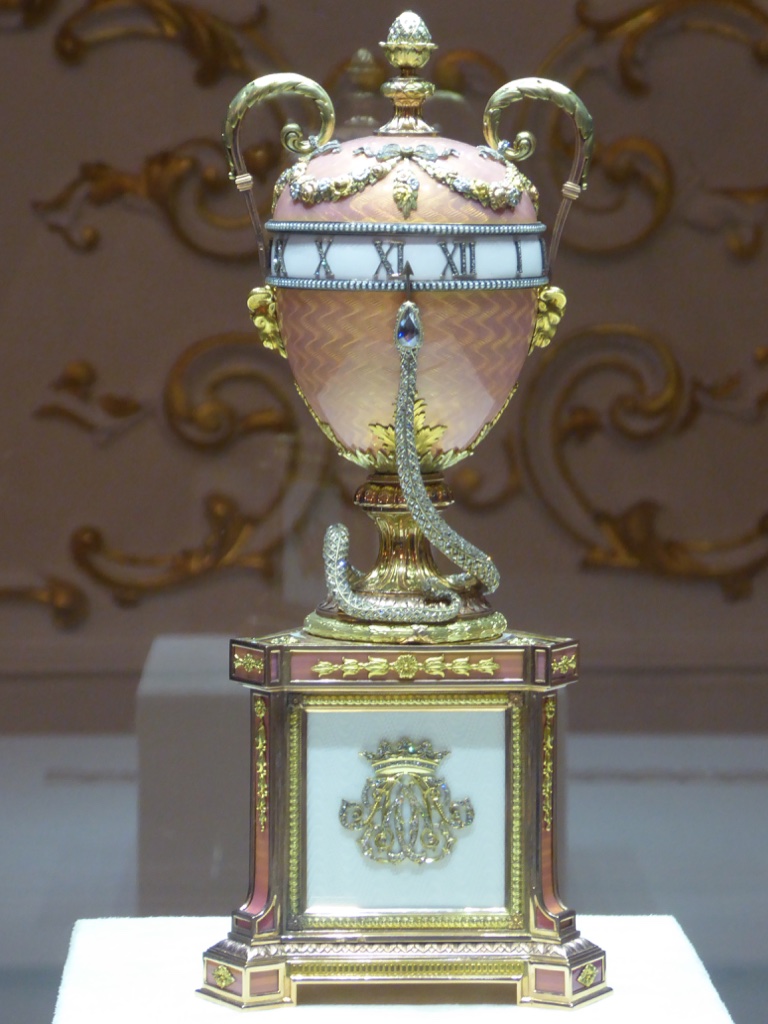
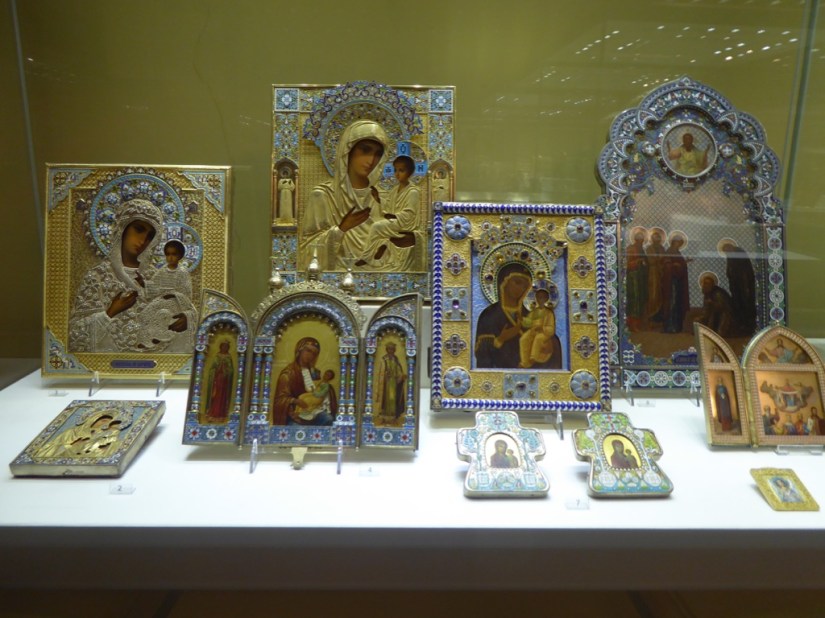
Then there were cases of gold and silver object, enamelled and painted trinkets and icons set into fabulous frames all displayed in yet another palace with fabulous interiors … all in all a real jewel!


After all that excitement, it’s time to leave St Petersburg for the next stage of our trip.
 Off Travelling Together
More lovely pictures of imposing palaces, fountains and elaborate parks. I loved the Faberge collection and my favourite of the ones you have shown is also the Lily of the Valley one. Gorgeous designs.
LikeLike