
Today we started by exploring Travestere which was the artisan area of the city in classical times. Located across the Tiber and outside the city walls, Travestere means ‘across the Tiber’.
 Trastevere maintains its character thanks to its narrow cobbled streets lined by ancient houses and feels more like a small town in the countryside than a suburb of Rome.


We began with two churches first, each with a story. Santa Cecilia in Travestere is uninspiring from the outside, but stands on the site of the home of St Cecelia, whose husband Valerian was executed for refusing to worship Roman gods. She was locked in the calderium or hot room of her own baths for several days but refused to die and sang through the ordeal, making her the patron saint of music. Her head was finally hacked off with an axe although it took several blows before she expired. But guess what, there are mosaics here too, from the C9th showing Paschal I who founded the church being presented to Christ by St Cecelia.


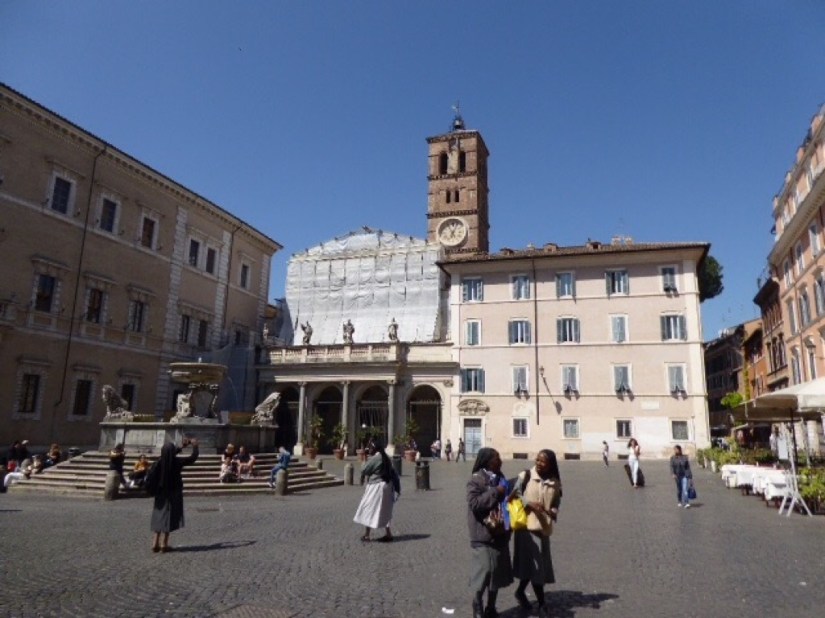
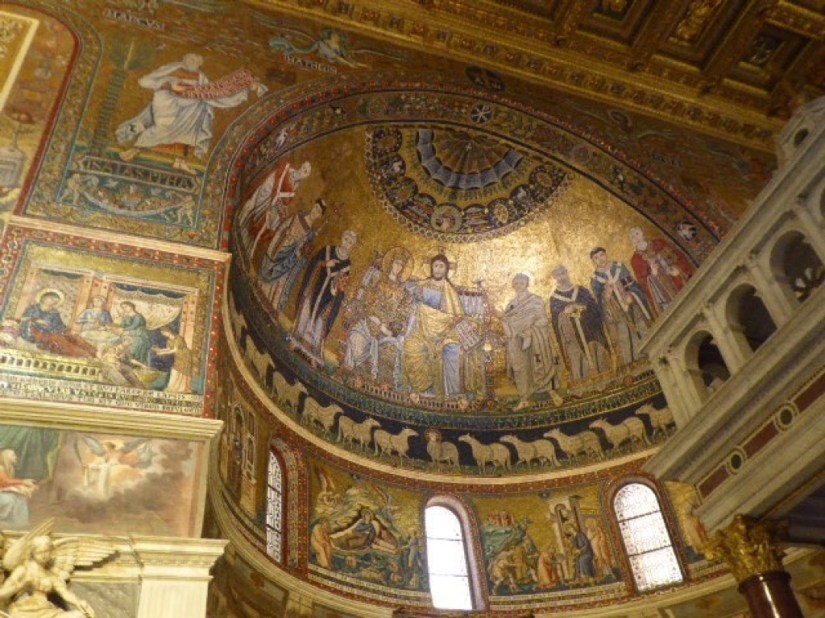
Santa Maria in Travestere is built on the site where a fountain of oil is said to have sprung on the day of Christ’s birth and is held to be the first place of Christian worship in Rome, but we are here for the apse mosaics, similarly in style to the others we have seen, but well lit and we were able to get quite close. Unfortunately the mosaic outside was being restored.
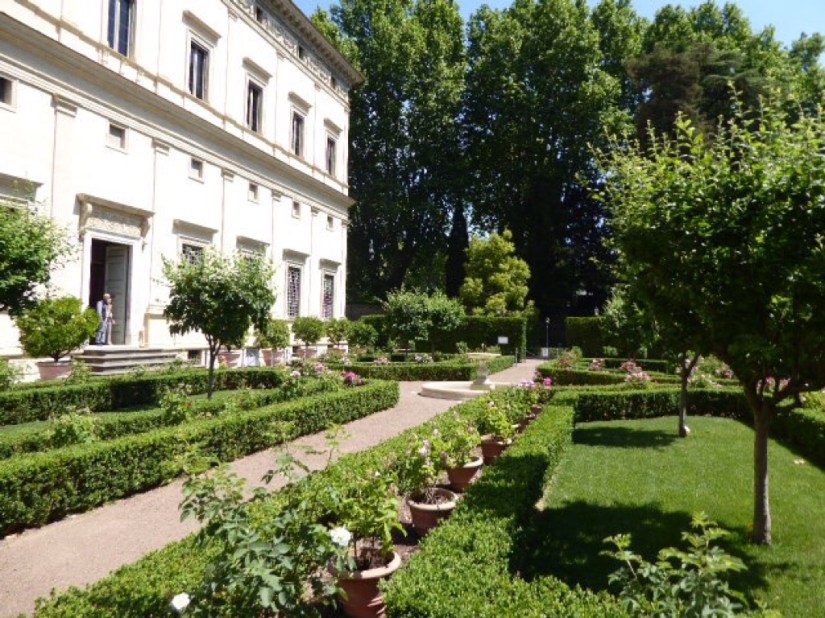
 Nearby is the C16 Villa Farnesina, a summer villa built for Agostini Chigi, the richest man in Rome, as a retreat from the city where he lived with his lover and entertained lavishly. He encouraged guests to throw the silver dishes into the river at parties but his servants secretly collected them with nets draped under the windows!
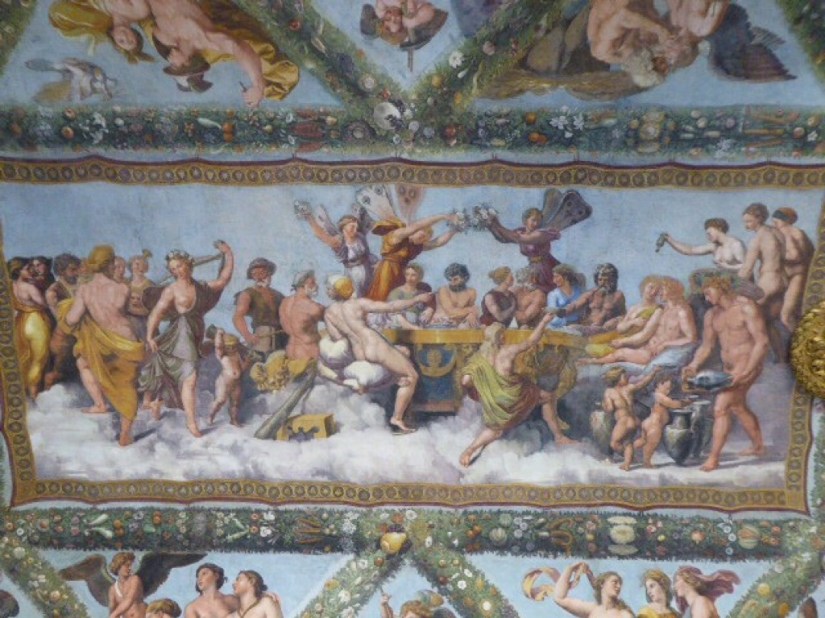
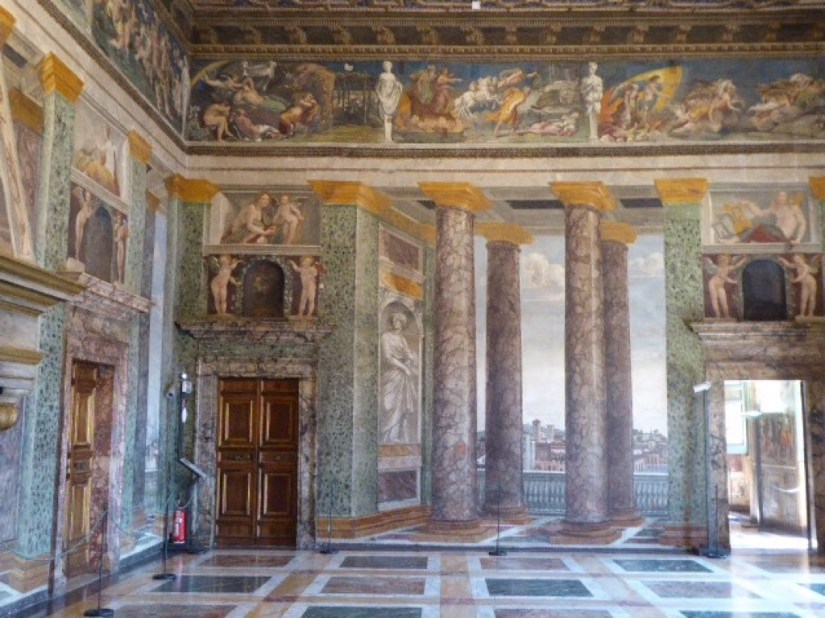
 He commissioned fabulous frescos in many of the rooms including the Galatea fresco painted by Raphael depicting a sea nymph on her dolphin-drawn scallop shell chariot, and Cupid and Psyche surrounded by fabulous garlands with fruit and vegetables and the Sala Delle Prospettive where trompe-l’oeil balconies appear to give views over Rome.

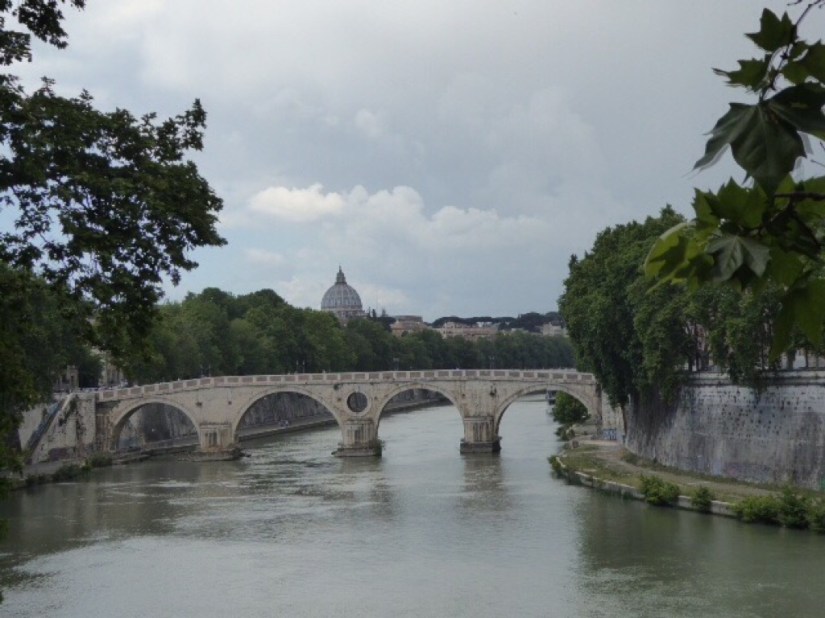
 Here’s a view of the pretty Ponte Sisto with St Peter’s in the distance.
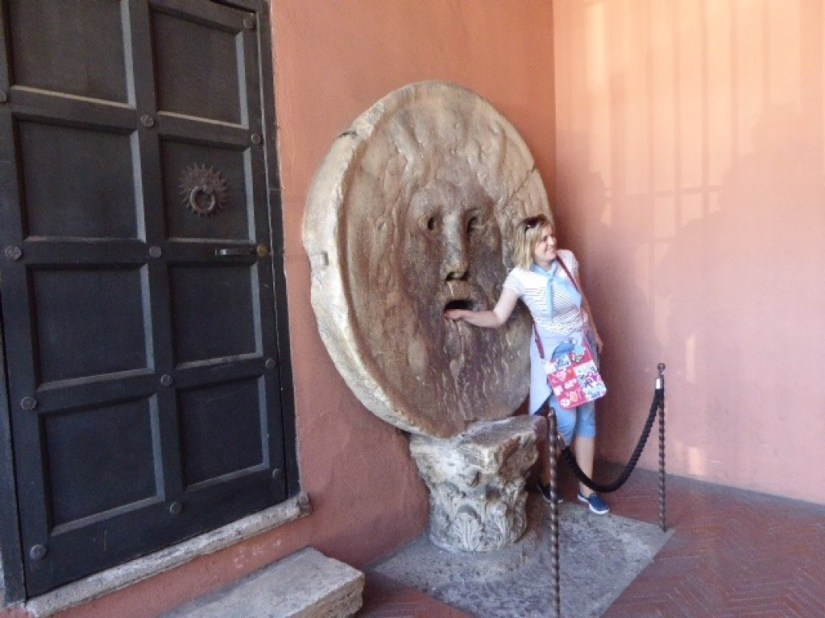
 Following in the footsteps of Audrey Hepburn and Gregory Peck in Roman Holiday, stopped at the Bocca della Verita or Mouth of Truth, an enormous Roman drain cover which was said to swallow the hand of anyone who did not tell the truth. There was a huge queue of people waiting to test their honesty, so I snapped someone else’s moment of truth!
 We climbed up to the Capitoline Hill, which in the days of imperial Rome, was the spiritual and political centre and the name comes from Capit mundi, or head of the world, and passed between the statues of Castor and Pollux.
 The Piazza dei Campidoglio was redesigned by Michelangelo for Pope Paul III who wanted a symbol of the new Rome to impress Charles V. The site was difficult as the buildings did not face each other squarely, and the whole site sloped. Michelangelo remodelled the palazzi, and designed an egg-shaped design on the pavement which draws the eye to the central statue of Marcus Aurelius, transforming the piazza into a harmonious space despite being trapezoid. The thing that surprised me most was that in Rome where everything is bigger than you expect, this was actually smaller!
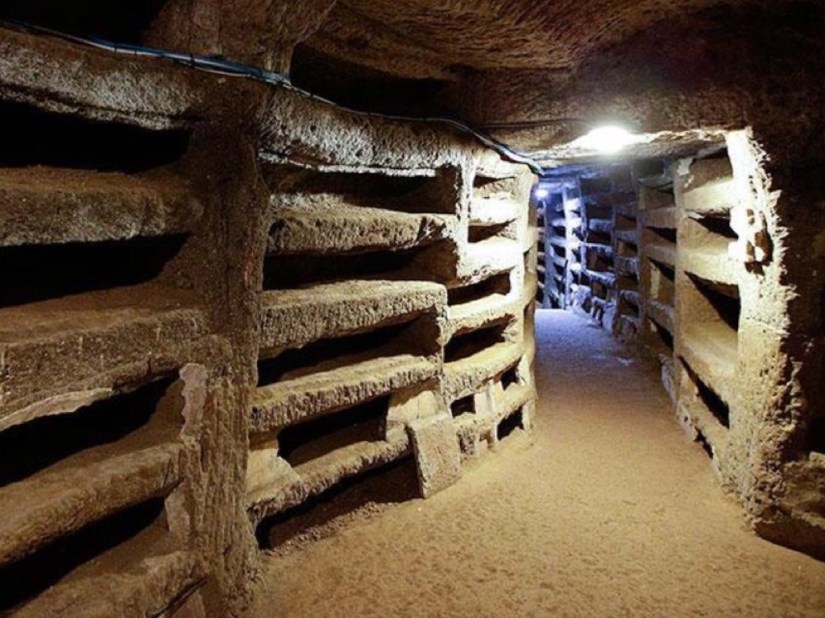
 We ended the afternoon at the Catacombes de Priscilla, far less busy than those along the Appian Way and more interestingly open! There are some 13km of tunnels on three levels, dug into the soft tufa rock between the 5th and 9th centuries. After that they were forgotten till they were rediscovered in the C16. Many tombs had been looted and there are no bones remaining in the section we visited, but rows of body sized cavities one above the other in the soft brown rock on each side of the tunnels.
 High humidity has destroyed most of the fresco but scraps remain, including Mary and Jesus, the Magi and the Good Shepherd.


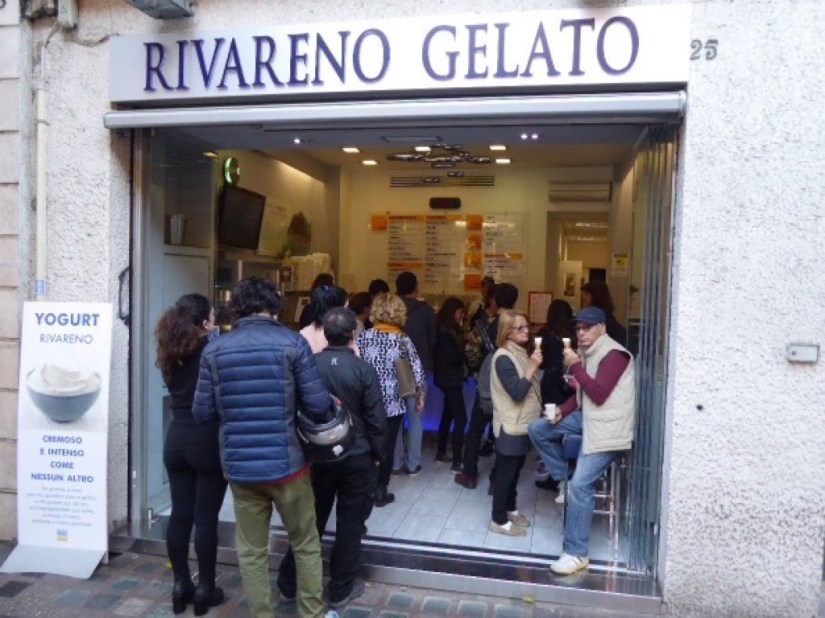
We made a gelato stop at Rivareno on the way home (excellent mango) and later returned to Trattoria Re di Roma for another lovely dinner.
 Off Travelling Together