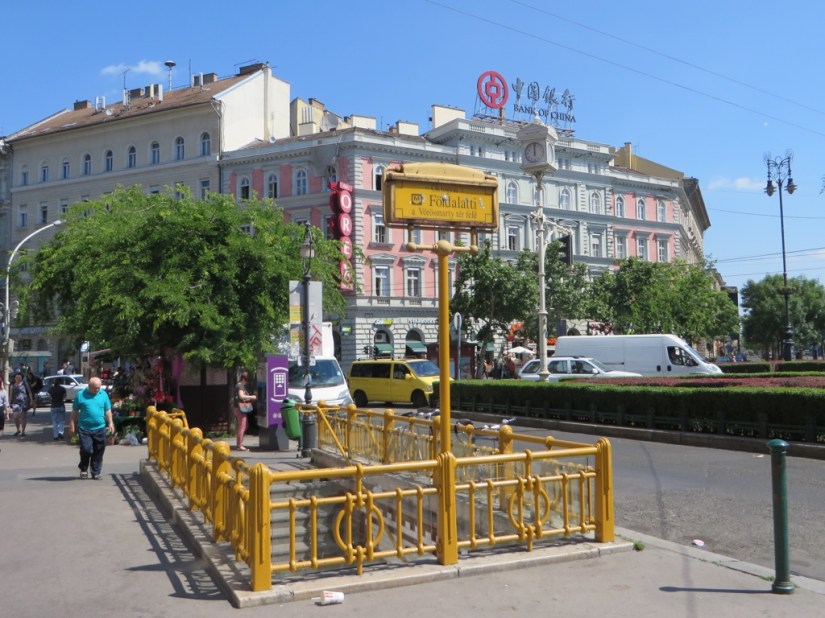
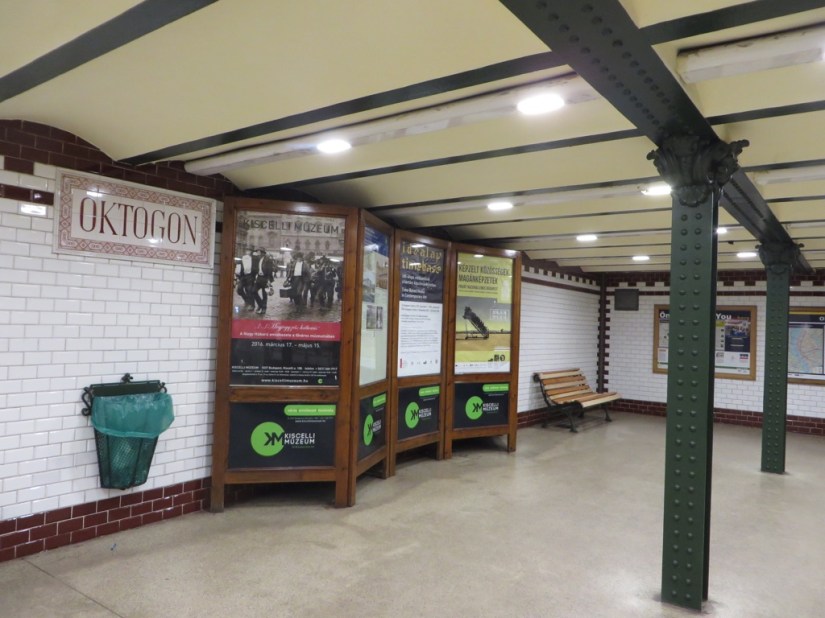
 Our first destination was Hosok ter or Heroes’ Square, which together with the Varosliget or City Park were created in 1896 for the nationwide celebrations of the Magyar conquest of Hungary. We arrived from the centre of the city on The Millennium Underground which has been beautifully restored with its heritage tiling and fittings, but is the oldest metro line in continental Europe.


Hosok ter is dominated by the Millenniary Monument, Budapest’s version of Nelson’s Column, with the Archangel Gabriel who according to legend appeared to Stephen in a dream and offered him the crown of Hungary.


Around the base are Prince Arpad and his chieftains who led the seven Magyar tribes into the Carpathian Basin. Behind are an array of Kings of Hungary.

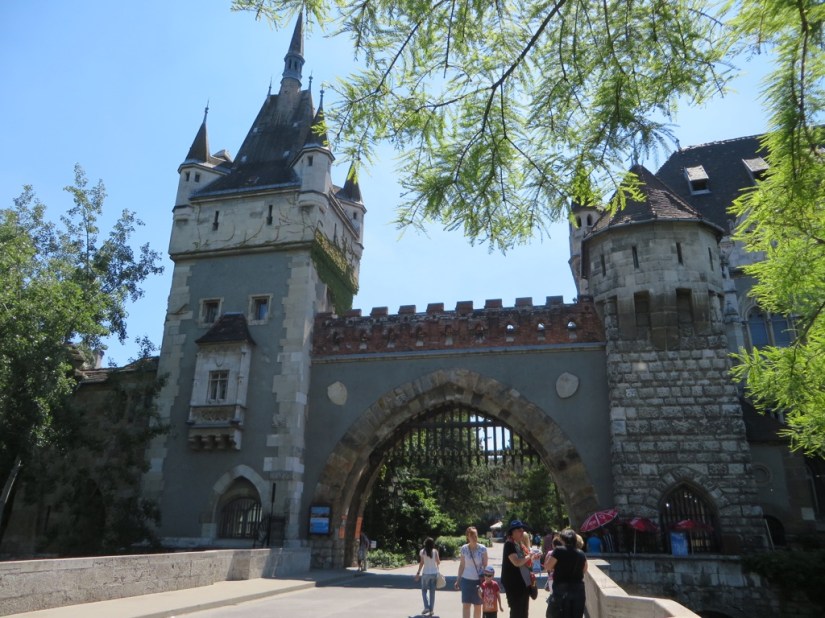
Vajdahunyad Castle in City Park was only intended to be temporary, but became such a favourite that it was replaced with a permanent building and is made up of architectural styles and features from several buildings in Hungary.


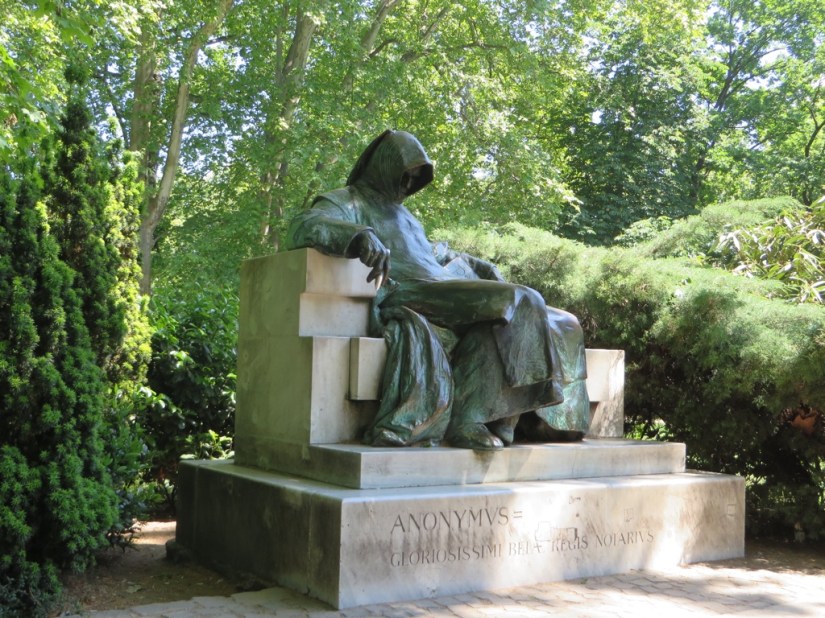
There is also a statue of Anonymous, the nameless chronicler of medieval Hungary.
Passing the Széchenyis Baths …

… and the wonderful Art Nouveau entrance to the Zoo we retraced our steps to the Metro.

Now from one extreme to another, our journey took us to Fovam ter metro station, one of the newest and with some stunning modern architecture.
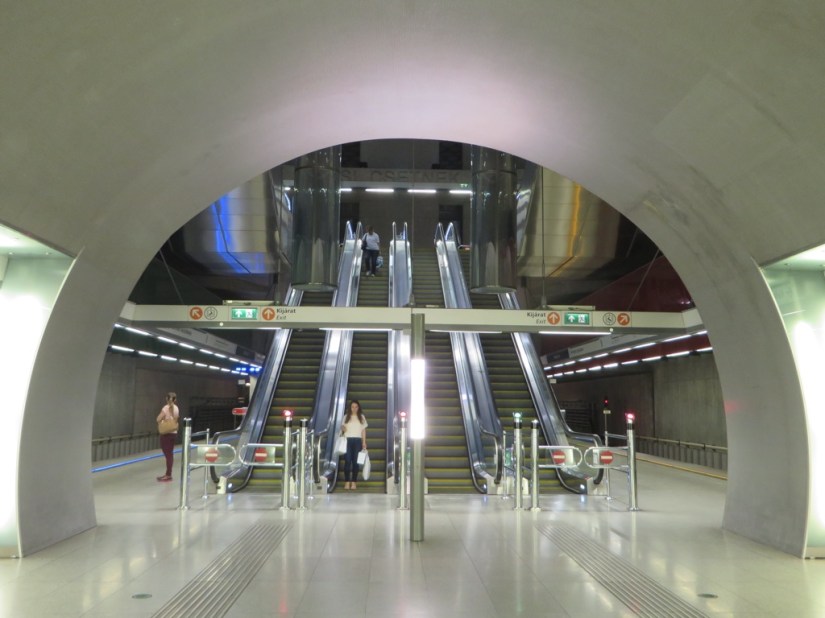


Incidentally, most of the metro is somewhere in between, either running older trains that have seen better days, or with stations built with soviet help, and look like it. The trains and the trams are incredibly frequent and also cheap.


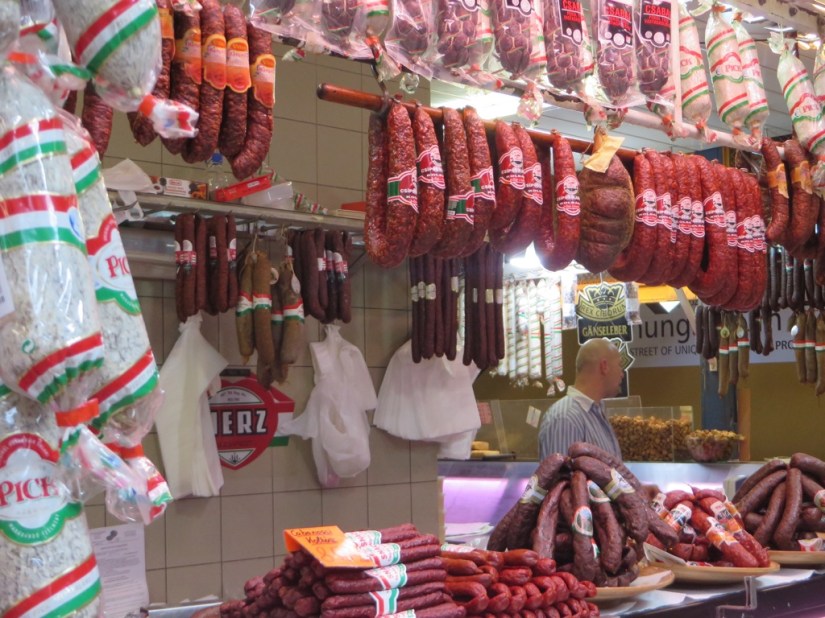
We exited by the Great Market Hall, a huge wrought iron edifice filled with goodies, where we browsed briefly through tourist souvenirs, and at more length through the produce where we picked up sweet and hot paprika to take home.


Apparently, 10,000 tonnes of paprika are produced annually with over half being exported but Hungarians manage to eat 500g/year, richer in vitamin c than citrus fruits.


We also had lunch here, queuing for langos, another local speciality. A disc of dough is deep fried till fluffy and crispy then topped with a variety of flavourings, although the most traditional is just sour cream and cheese. Had to be tried, but maybe not again … fortunately we opted to share!

Exiting the market, we walked over Szabagsad or Liberty Bridge to Buda and then had a conundrum … it was 3pm and best part of 30 degrees … do we climb the side of the hill and visit the Cave Church and Citadella … or just go and chill in the baths …. !!


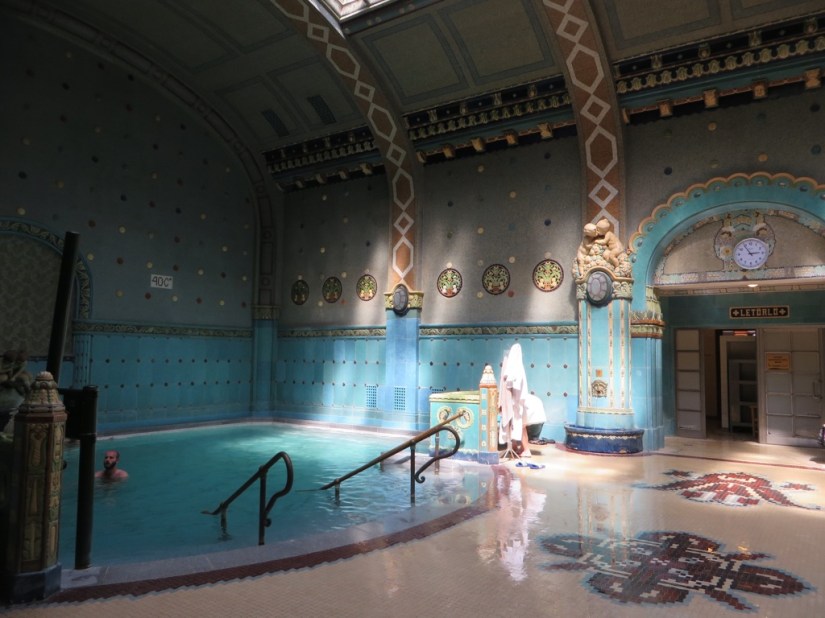
The Gellert Baths are attached to the hotel and were absolutely stunning, especially the Zsolnay tiling and stained glass.
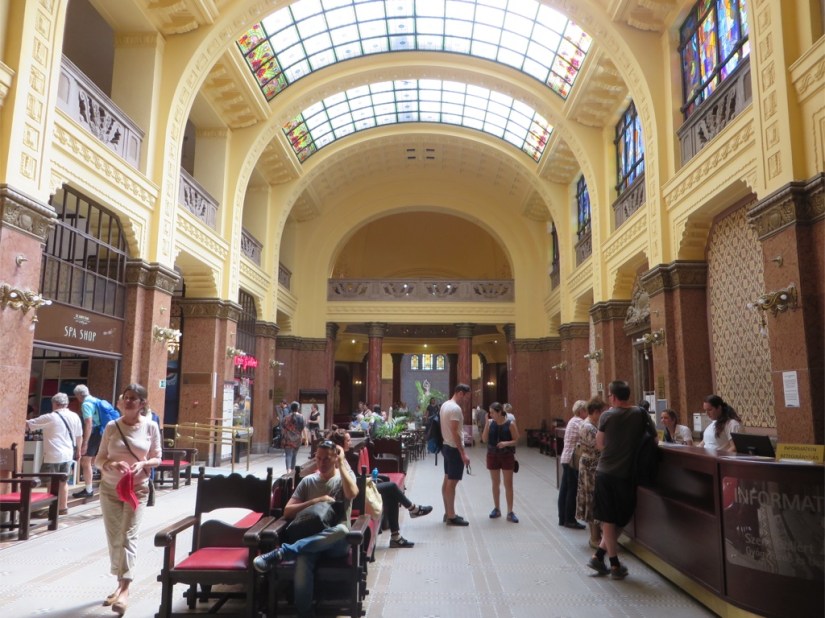

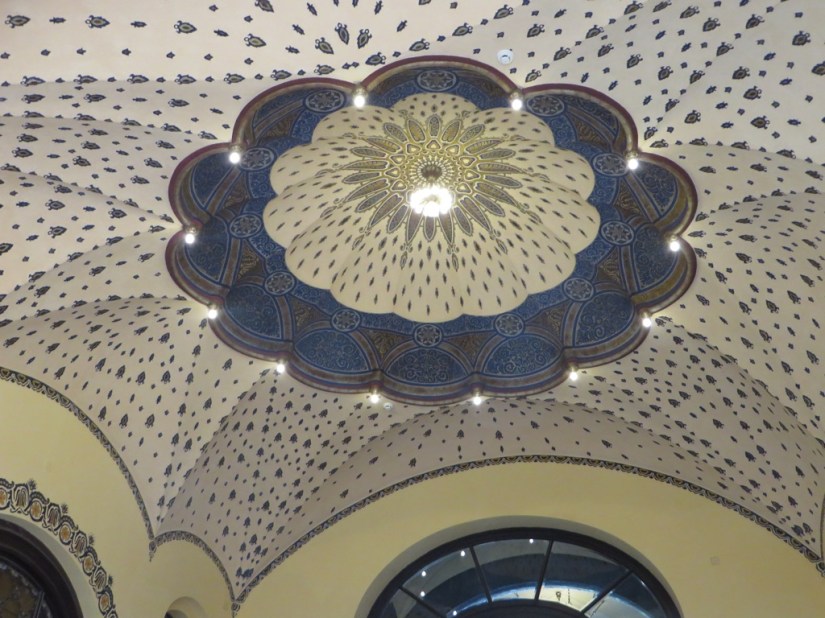
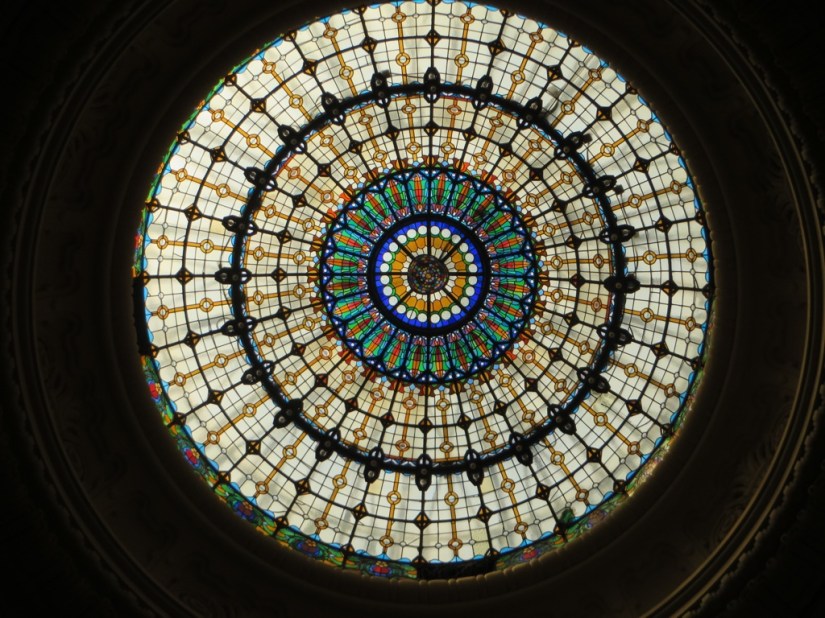

We paid for our ticket and then were challenged by the labyrinth of corridors round the various pools and connecting them with male and female changing areas. We got changed and went on a bit of a photoshoot round the outside areas …


… then the thermal pools …


… then put the camera away and concentrated on relaxing in the pools of different temperature, interspersed with steam room and cold plunge which Chris refused to try!
Lastly the outdoor pool has a wave machine that suddenly starts up from time to time and almost washes you off your feet! Such a contrast with Kiraly baths, and we are really pleased to have visited both, but we certainly made a sensible choice to have our massage at Kiraly – at half the price it would have been at the swankier Gellert!
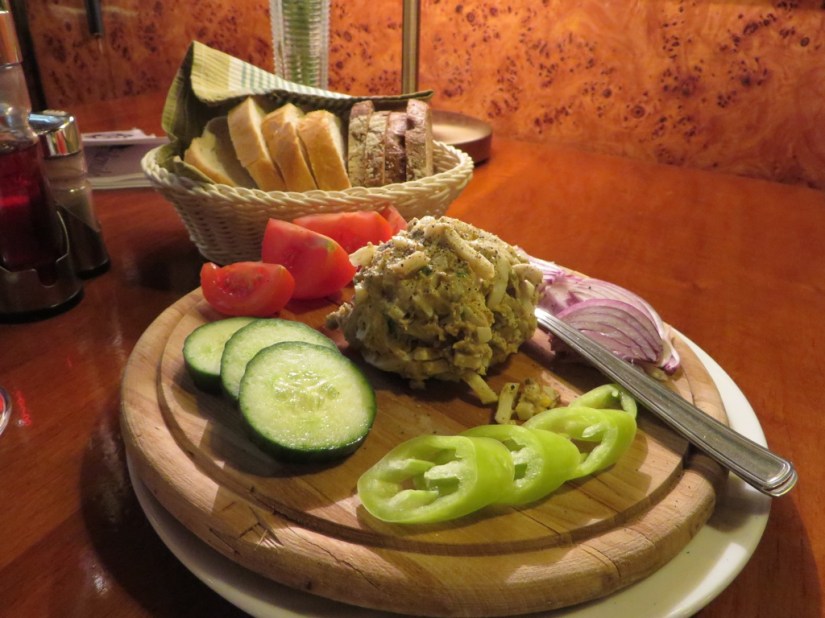
There was just time for an Aperol moment at Central on the way back. We had a fabulous dinner at Fulemule, just round the corner from our B&B, where we experienced a menu from a Jewish kitchen. I had a goose liver and egg starter followed by cholent with home smoked meats. Cholent is a bean stew prepared in advance, kept on a low heat and traditionally served for lunch on the Sabbath without any labour. Chris had humus followed by fried cheese with rice and salad and we both enjoyed our meals, together with a very tasty bottle of local red wine.


 Off Travelling Together