 We arrived at Leith Campsite on the outskirts of Dunedin.

This area was planned as a Scottish settlement and although later the Scots were outnumbered by English and Irish, it still has a Scottish flavour. It started as a commercial centre for gold rush towns, then farming and shipping took over. It also has the oldest university in New Zealand, with 25,000 students, and regular visits from cruise ships that dock nearby.
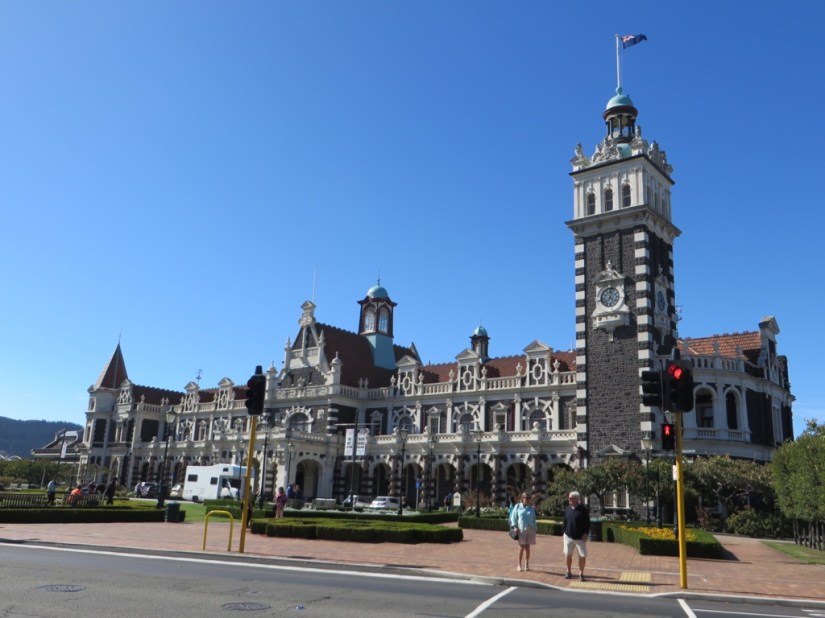
Atholl our city guide showed us how the city had developed and its main buildings, some using the local bluestone and creamy limestone to great effect like the Railway Station …

… the former Wesleyian Chapel …

… and the Law Courts.

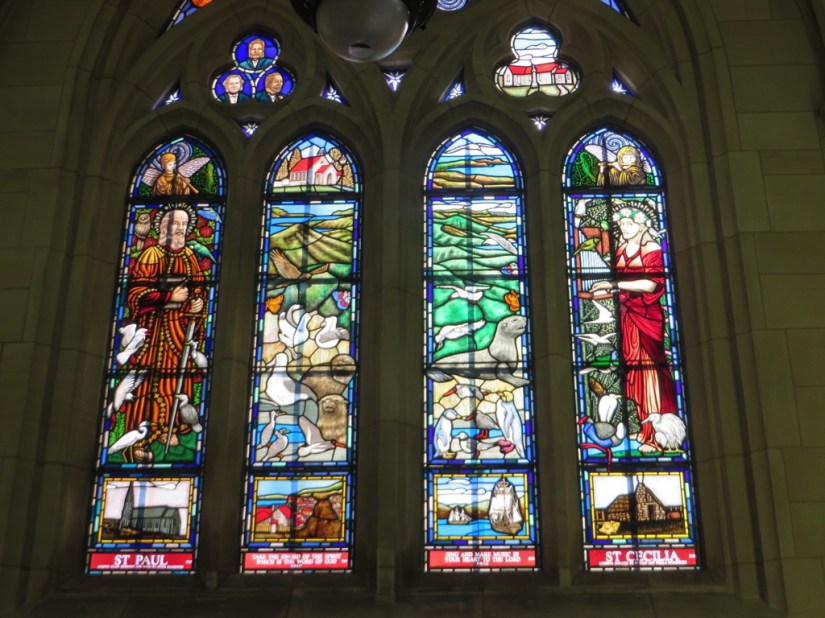
He also pointed out things we might have missed like the lovely stained glass window in St Paul’s showing local wildlife …

… and a limestone plaque with kiwi, cabbage trees and thistles.

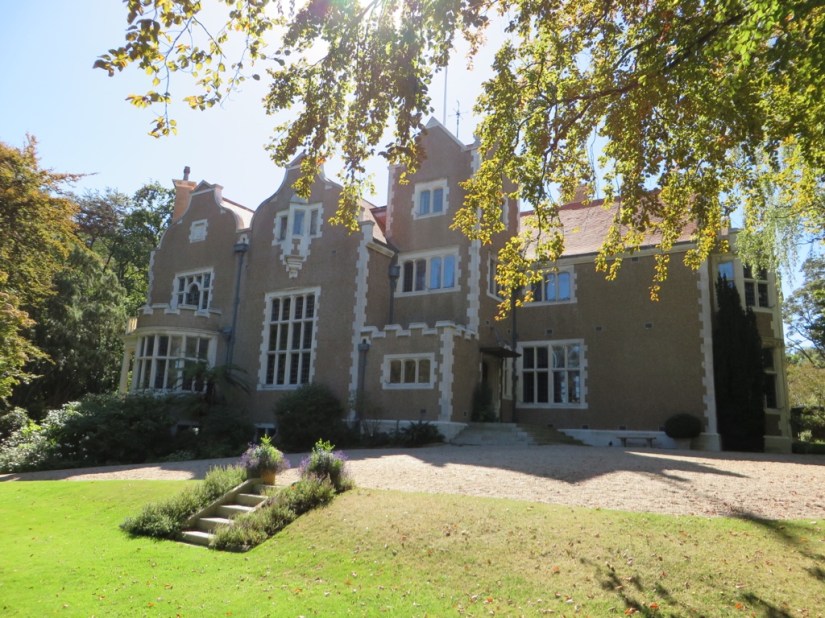
Olveston is Dunedin’s showpiece historic house, built for a wealthy Jewish family in 1906 and bequeathed to the city when their daughter Dorothy died in 1966, just as it was with all its contents, including all their art and antiques collected from travels. They were obviously very stylish and cultured as every room is beautiful, many with original wall coverings and fabrics but with many modern touches like electric light and central heating and appliances imported from America like the ice cream maker and refrigerator.
The road to Taiaroa Head at the end of the Otago Peninsula, was long and twisty with the water splashing onto the road in places as it was so close to the sea.
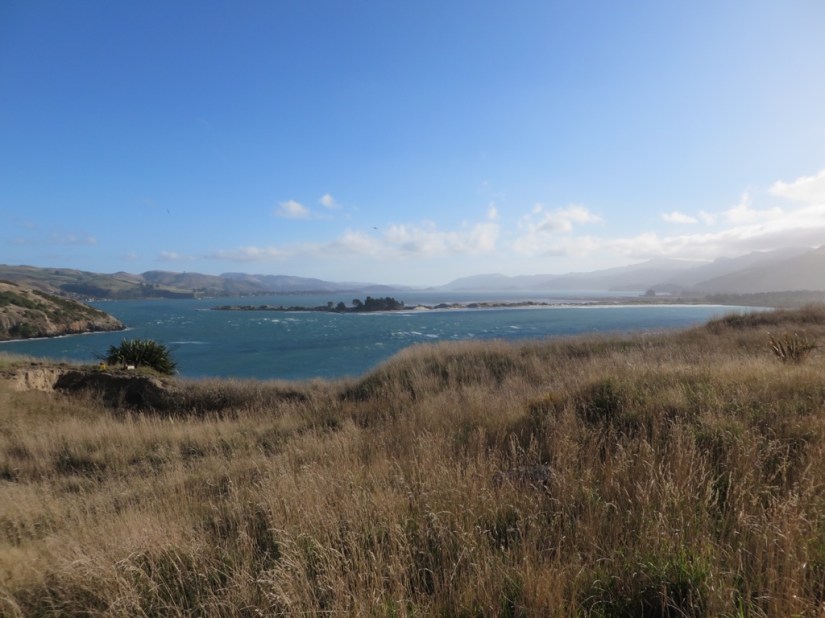
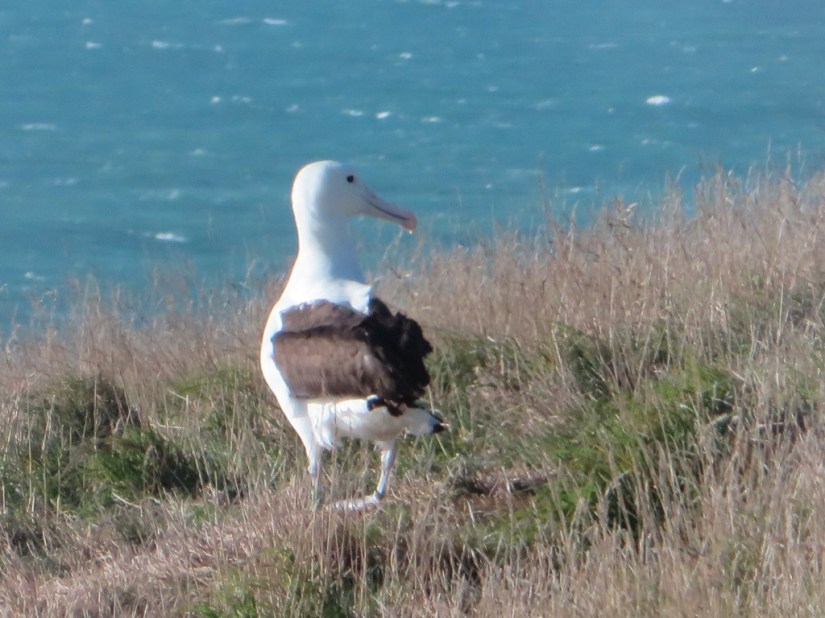
We visited the Royal Albatross Centre, where these huge birds have been nesting since the 1930s. Once the birds are adult they breed alternate years as it takes a whole year to raise a chick, spending the other year cruising round Antarctica on the air currents. From the observatory, we saw 5 fluffy white chicks on their nests. Several birds circled above, and one parent came and fed its chick. We were a little too far away to really appreciate their size which was a shame, as the adults weigh 8kg with a wing span of almost 3m.


When dusk fell, it was chilly as we walked down to Pilots Beach to see the little Blue Penguins return home after a busy day swimming and catching fish.
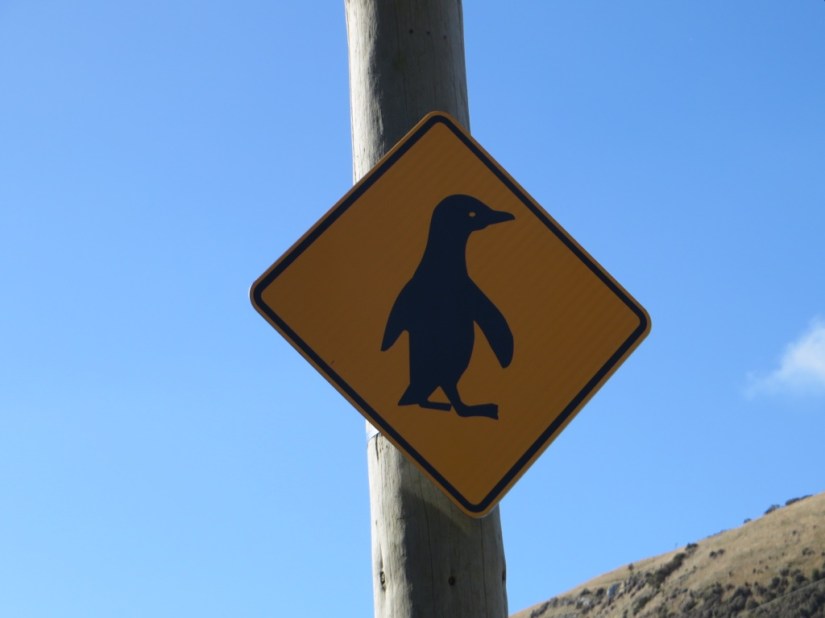
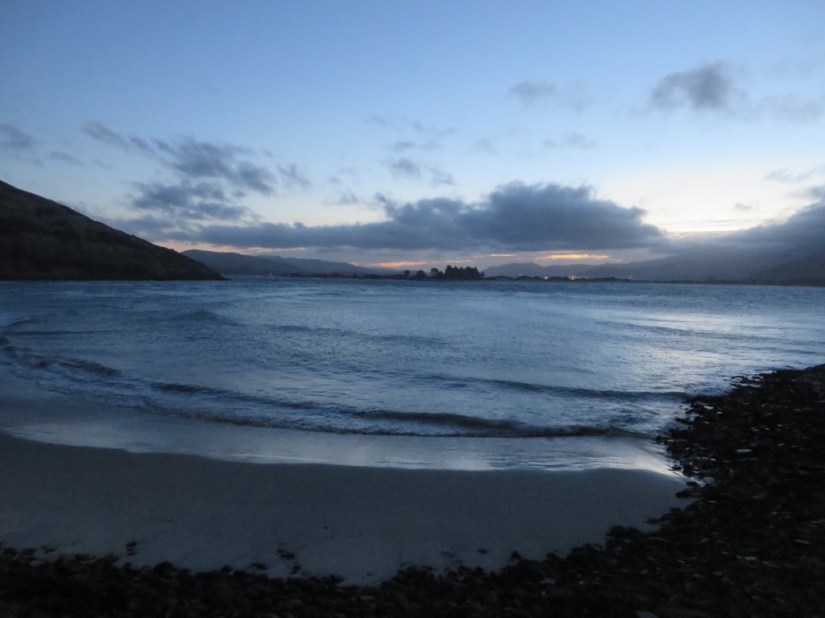 The world’s smallest penguins, they are just 30cm tall and weigh a kilo each, and the first little group got washed onto the beach and started scurrying up the sand. They clambered over some rocks and up a sandy path to their burrows … all very fast! We were standing on a viewing platform and they came very close, but the lights were dim so not to frighten them and we obviously couldn’t use a flash, so the photos are vague. We saw around 40 in all return home and they were very cute!


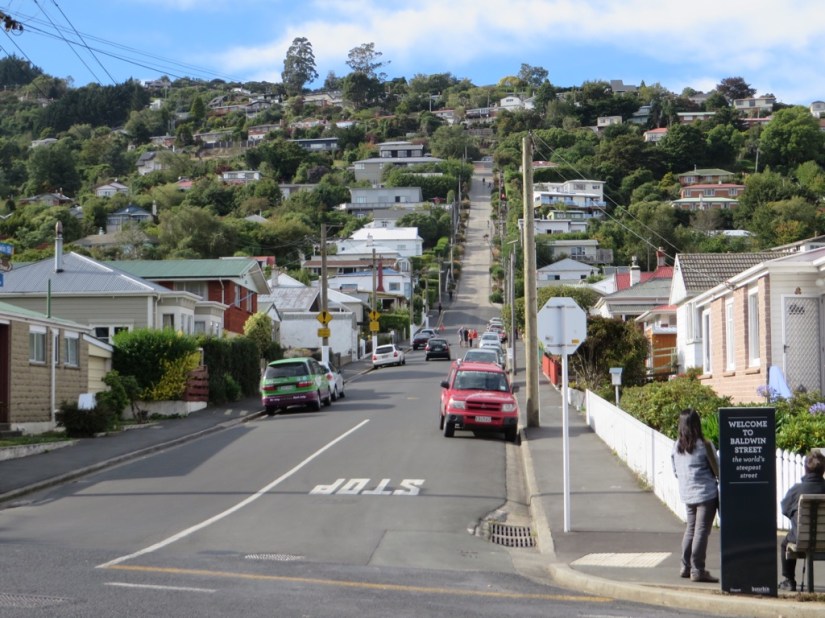
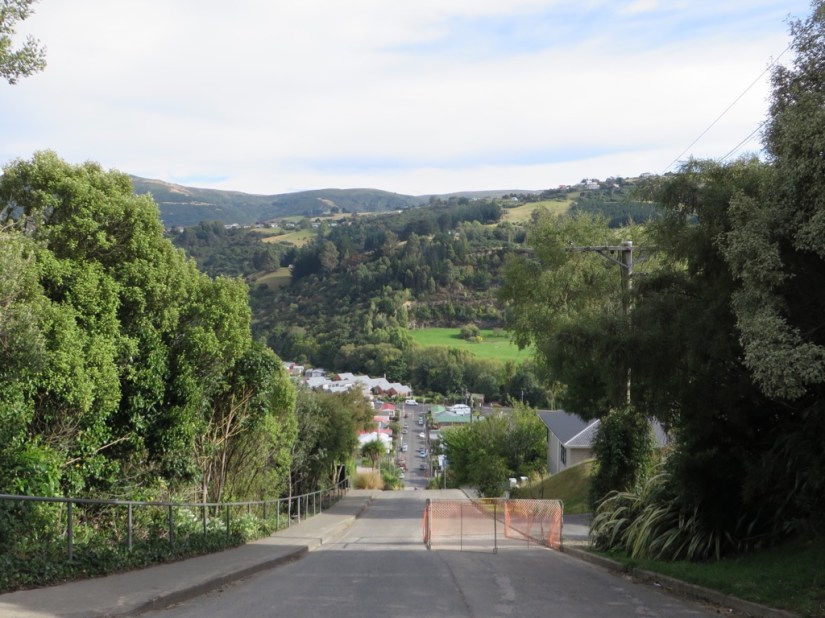
Last stop as we left town was Baldwin Street, in the Guinness Book of Records for being the world’s steepest street with a maximum gradient of 1 in 2.66, a slope of about 19 degrees … and boy was it tough getting to to the top … not that it was a Race, but Chris won!
Next stop Moeriki …
 Off Travelling Together