 We dropped Joanna off at Auckland airport, a little sad, but all of us with more adventures ahead. We returned to Wilderness to swap our larger 4-berth campervan for a smaller 2-berth model and had to squeeze all our stuff into smaller storage areas, but everything fitted fine, then we set off through Auckland, over the harbour bridge and North.

We drove to the end of the Whangaparoa Peninsula to Shakespear Regional Park, named after the family who used to farm here, which is now a pest free park surrounded by a fence to help birdlife. The public can visit during the day but have to leave at dusk unless camping, so it was very peaceful in the evening with just a handful of campers. We climbed up to the lookout for the views and after dinner caught the sunset a bit late.


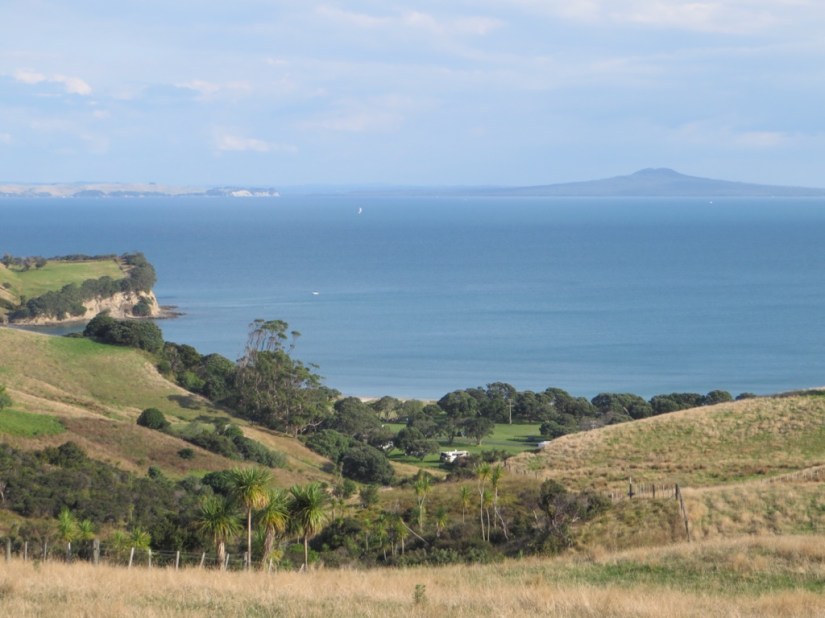

Next morning, we drove to the local wharf to catch the ferry to Tiritiri Matangi Island, but it was delayed by technical problems so we retired to the camper and made coffee! Finally we were able to leave for the short 20 minute crossing and were met by the ranger who allocated us Helen to guide us, tell us the history of the island and hopefully identify the birds for us.
The island is far enough from the mainland to have been made pest free, and a sanctuary for rare examples of New Zealand’s birdlife who cannot survive with the rats and possums on the mainland. We saw several examples including the saddleback, fantail and stitch bird as well as others who stopped for a snap, the tui …
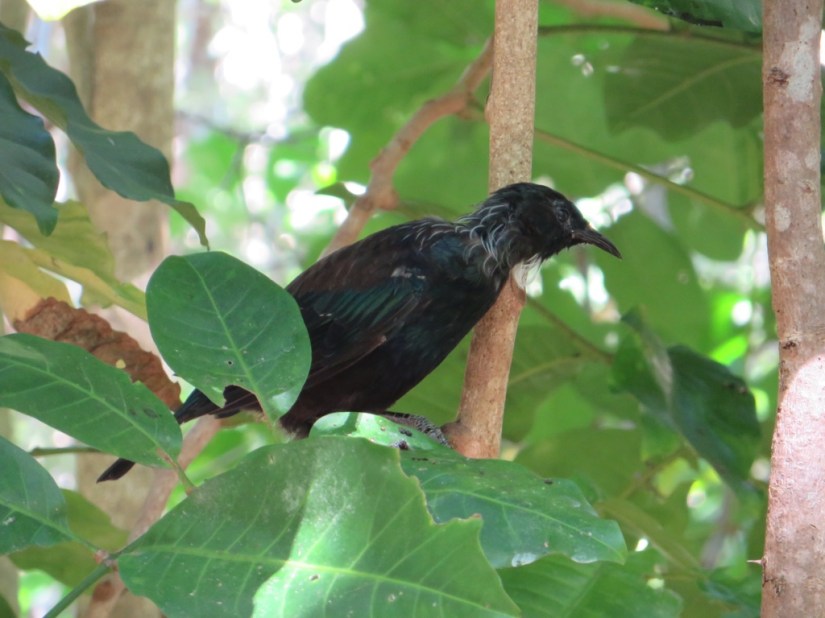
… and the NZ pigeon …

… as well as the very rare, almost prehistoric looking taheke.

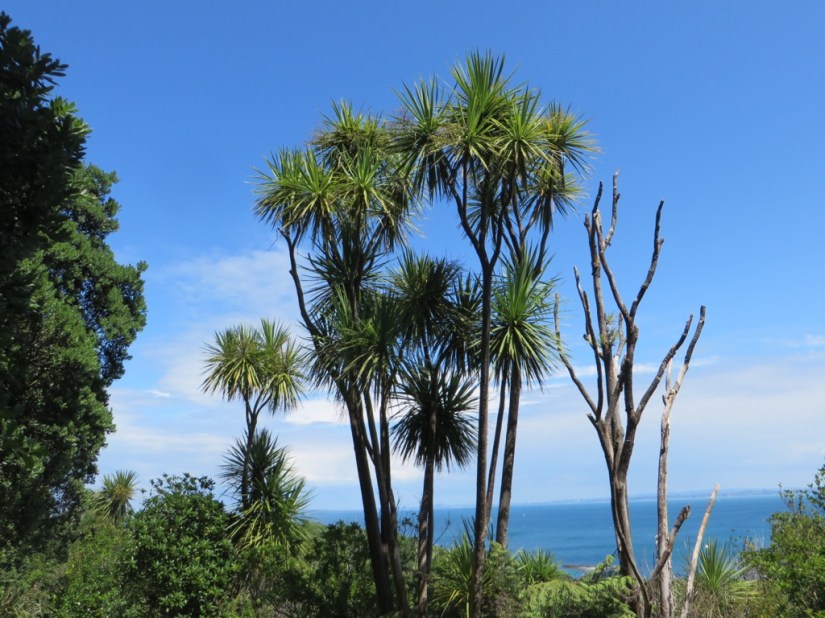
We also learnt about a couple of the common plants, the NZ flax, used by the Maori for all their fibre requirements from clothing and baskets to construction and later by Europeans for rope.

The cabbage tree, which looks about as unlike a cabbage as is possible, but was apparently cooked up by early settlers who claimed it tasted like cabbage.
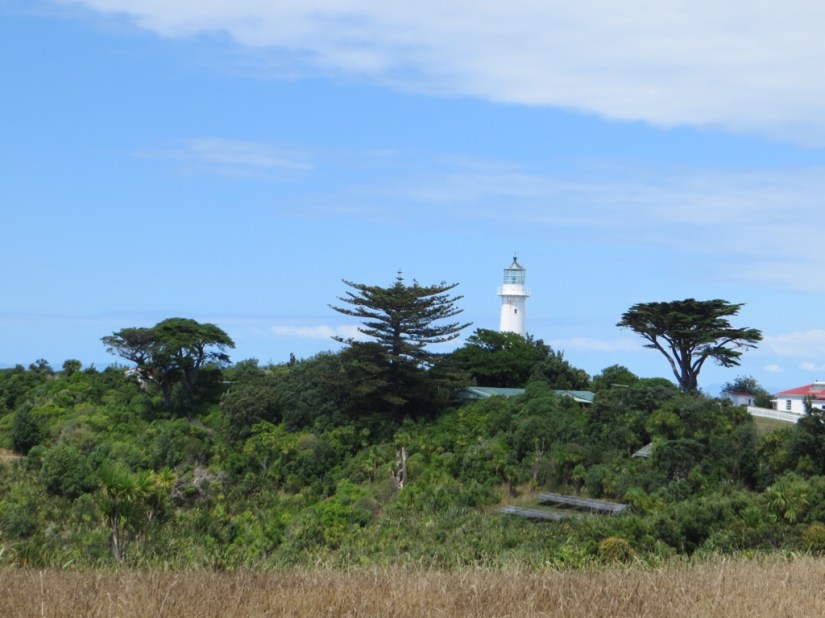
We sat by the lighthouse for our picnic then returned to the mainland.
That evening we were a little more prepared for the sunset, and saw Auckland in the distance lighting up.


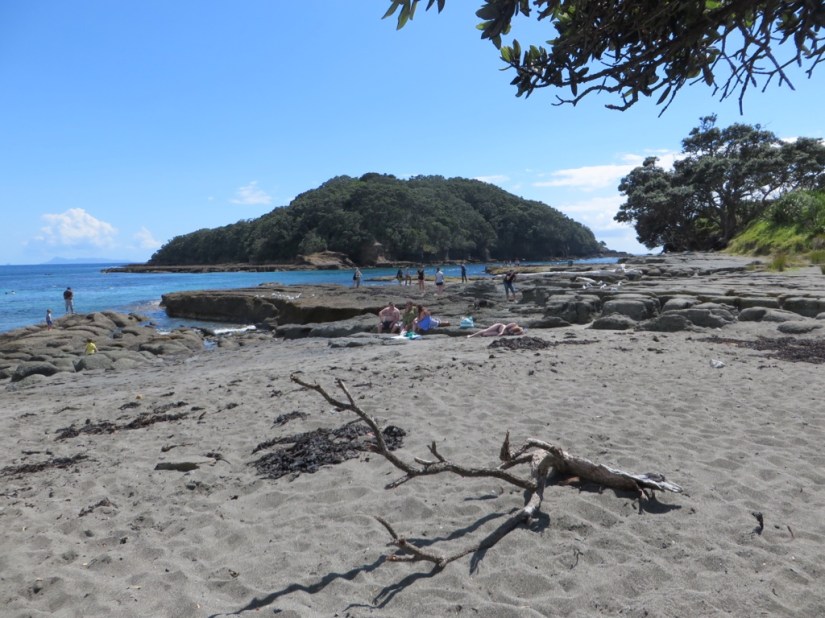
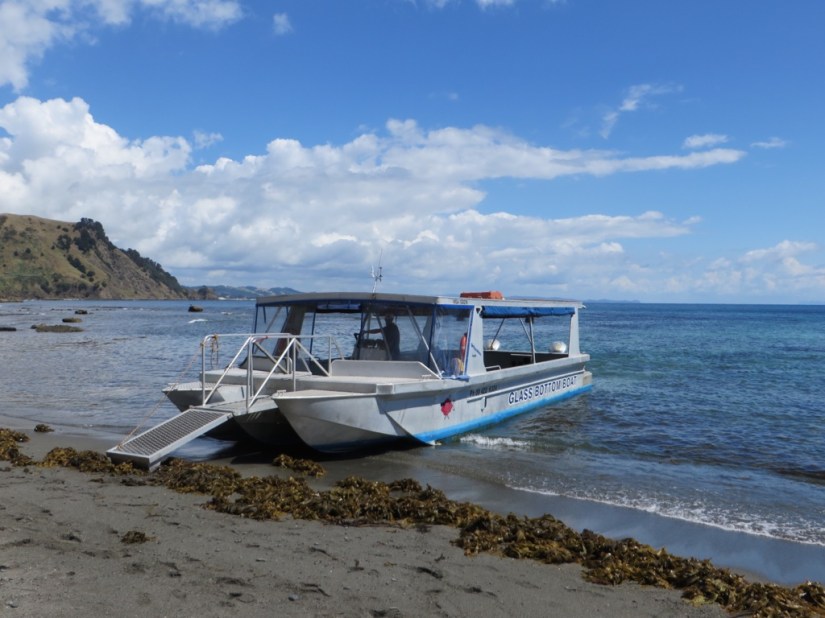
Next morning we drove up the coast to Goat Island, New Zealand’s first marine reserve for a trip in a glass bottom boat. Since 1975 the reserve has changed from an overfished bay overrun with sea urchins, to healthy waters with an underwater kelp forest filled with fish. We saw snapper with iridescent blue spots, striped moki, goat fish, and large eagle rays on the sandy bottom.
Next stop … further north!
 Off Travelling Together