 We visited several places involved in the Coromandel gold rush at the end of the 19C
Thames, originally called Grahamstown, had the largest population in New Zealand, with gold production topping £1m at its peak. It also had 20,000 people and over 120 pubs and we visited the Goldmine Experience to find out more.

The gold here is not found in chunky nuggets, but as the finest particles mixed with the rock in quartz reefs in the rock. The rock must be dug out, ground to a powder by water/steam driven hammers called stampers, then mixed with mercury and washed over gold collecting blankets. The gold was then removed from the mercury either by heating or using cyanide. In its heyday, Thames had stamper batteries running 24hrs 6 days a week, and the noise and vibration was just a part of life. There are still a few small mining operations left here, but the largest locally is an opencast mine in Waihi which is very controversial.
The Martha Mine in Waihi began in 1878, but really took off in 1894 when the use of cyanide made the process more viable. There were 7 vertical shafts with 175kms of tunnels on 15 levels, and stamper batteries here too to process the ore. When underground mining stopped in1952 as the gold price had dropped and the mine was no viable, 5.6m ounces of gold and 38m ounces of silver had been mined. Extraction began again in 1987 using an open pit approach due to close around 2020 and be converted to a recreational lake. Proposals to start tunnel mining again under the town are already opposed by residents.


The Cornish Pumphouse, similar in design to those used in Cornish tin mines, once used to pump water from the mine, stands above the town as a symbol of its mining history.

Karangahake Gorge produced 60% of New Zealand’s gold during its heyday, some 4m ounces of gold being extracted from 1m tons of ore, however reserves were limited and most of the mines closed by the 1930s. The Gorge was ravaged by mining, with polluted waters, and bare hillsides, but today is very different, with leafy walkways and information boards explaining the history, however recently a mining company has been granted permits, and there is much local objection to mining the mountain for gold once more.
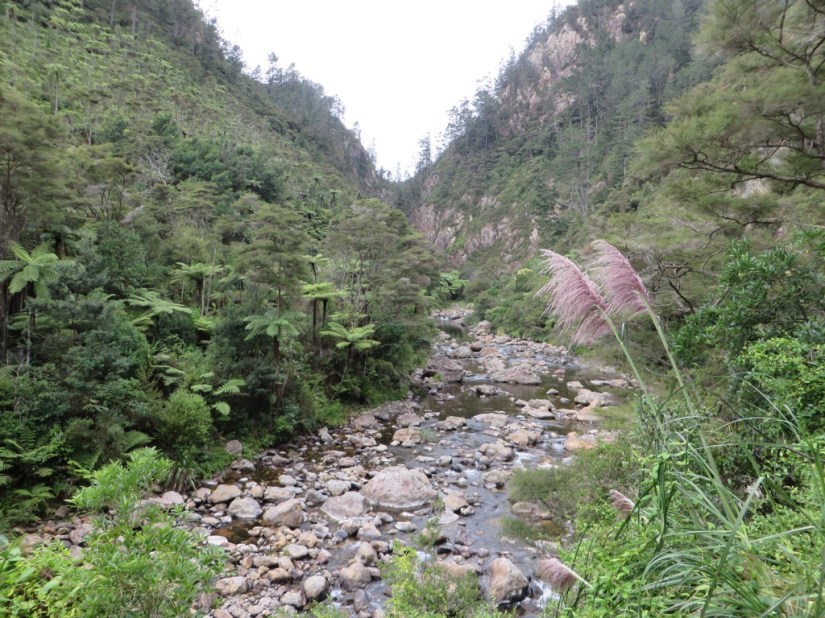


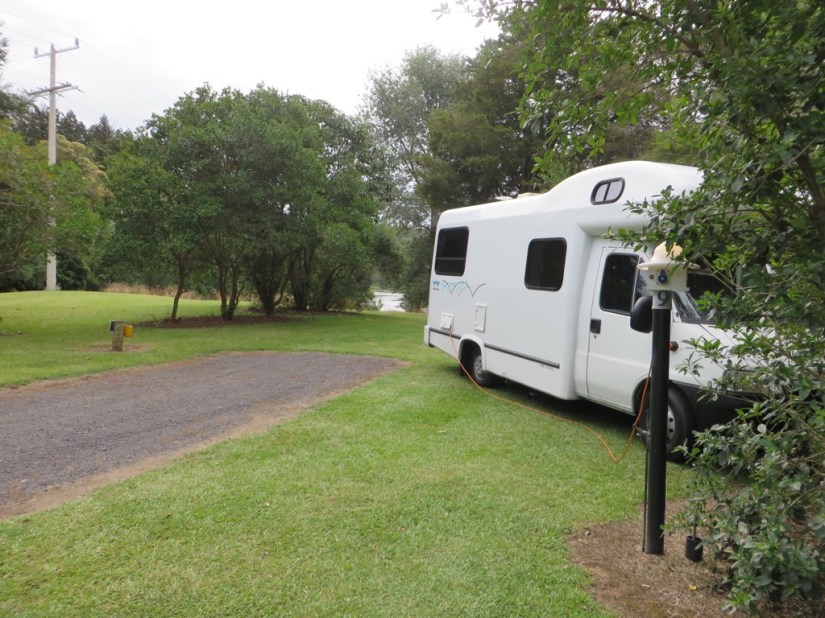
We spent the night just down the river and are off to see Hobbiton tomorrow!

 Off Travelling Together