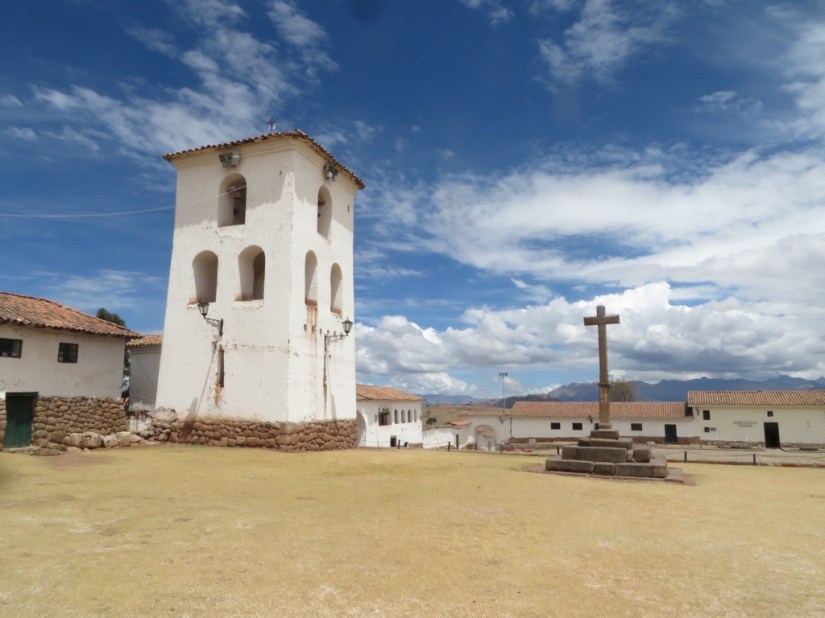
 We came by taxi stopping at the church at Chinchero, which had a beautifully painted wooden ceiling and murals. It has a lively market on a Sunday and even had a few stalls when we visited as well as what we thought might be our last view of snowy peaks.


Time for a quick Peruvian history lesson … do skip this bit if you want!
The Inca Dynasty began in 1200 founded by Manco Capac in the valleys round Cusco, but little is known until 1438 when Pachacuti became emperor and a period of expansion began, continuing under his son Tupac, so that the Empire then stretched from Ecuador to Chile. The next emperor Huayna Capac, spent his reign focused in the north and died of smallpox, which had travelled south, brought to Mexico by Europeans. Civil war then broke out over the succession between his two sons and finally Huascar is defeated by Atahualpa whose reign is to last only months. So the Inca Empire is in a weakened state after a smallpox epidemic that killed a third of the population and a civil war that killed even more.
Enter the Spanish conquistadors, just 168 of them, led by Francisco Pizarro who landed in 1532 and made their way to Cajamarca and massacred thousands of Incas and captured Atahualpa, aided by surprise, steel, cannons and cavalry. Atahualpa was promised freedom if the Incas filled a room with gold, which they did, but the Spanish killed him anyway. Pizzaro then made his way to Cusco where he crowned Manco Inca a puppet emperor.
In 1536, Manco fled to the Sacred Valley to gather troops for the great rebellion. Days later over 100,000 Inca rebels lay siege to Cusco. Manco managed to reclaim the city for a few days, but Spanish troops attacked and took Sacsayhuaman, and while the siege continued for ten months, ultimately Manco retreated to Ollantaytambo and then to mountains northwest of Cusco. Here he conducted regular raids on the Spanish, dying at the hands of a Spanish outlaw in 1544. The rebel Inca state continued successively under three of Manco’s sons, the last being Tupac Amaru who after fierce fighting was captured and beheaded in Cusco in 1572.
End of history lesson!
Cusco is at 3400m, surrounded by mountains and was occupied by the Killke before becoming the centre of the Inca empire under Pachacutec. Several remaining Inca ruins can be seen by getting a taxi high up the mountain above Cusco, and walking 8km back to the city, so we set off for a day out. The first was Tambo Machay, a site for ritual bathing or water worship where carefully cut stones channel a fresh water spring.

Next we came to Puca Pucara, possibly a hunting lodge connected to a military checkpoint.
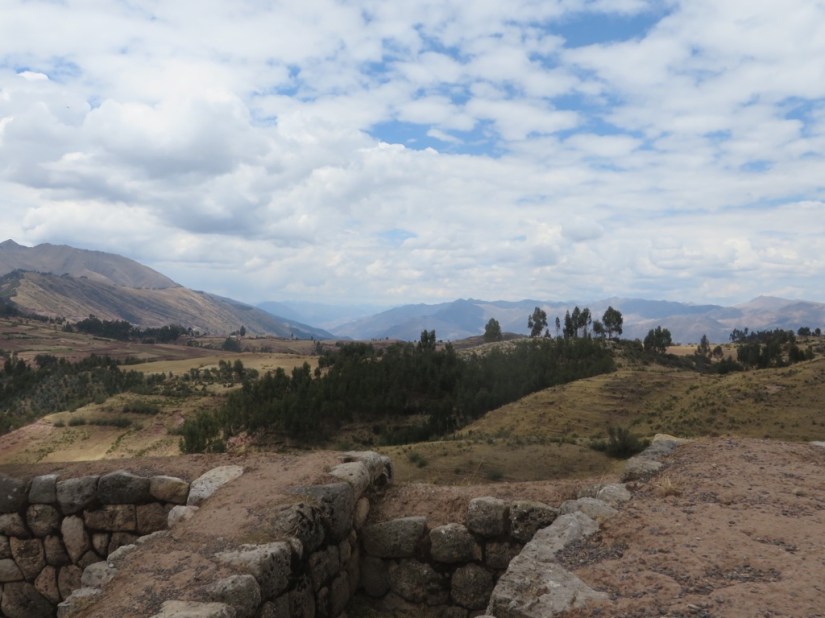
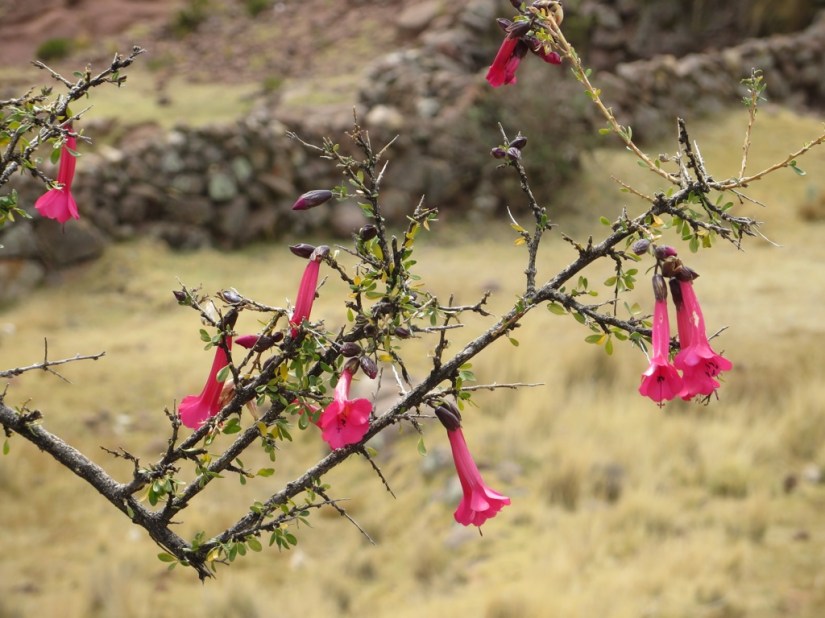
We then walked through the countryside, downhill, passing grazing animals and flowers until we reached Salapunco, a Huaca or sacred giant limestone outcrop, also called the Temple of the Moon.


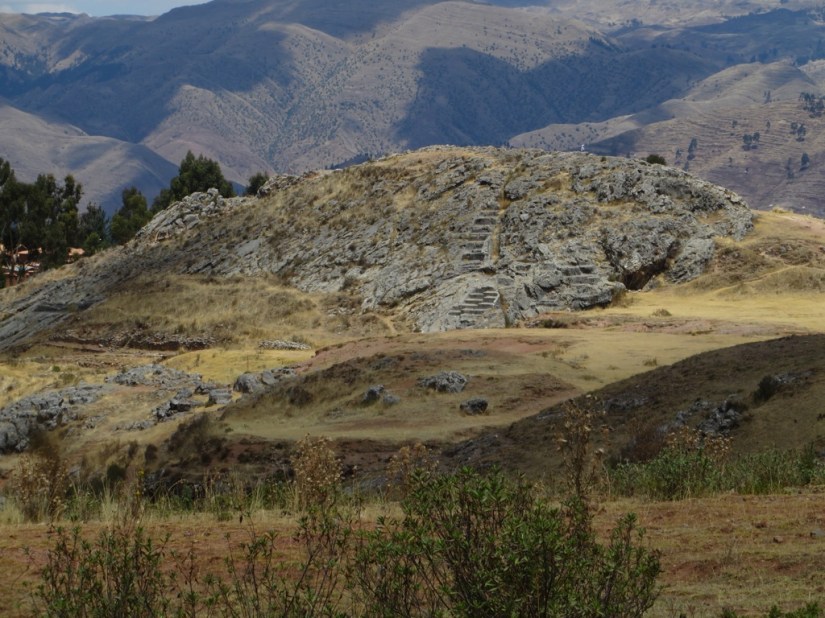
Here we met Gabriella, who showed us around, pointing out rock carvings such as the llama …

… and the seat the Inca would have sat upon …

… and then into the cave below.
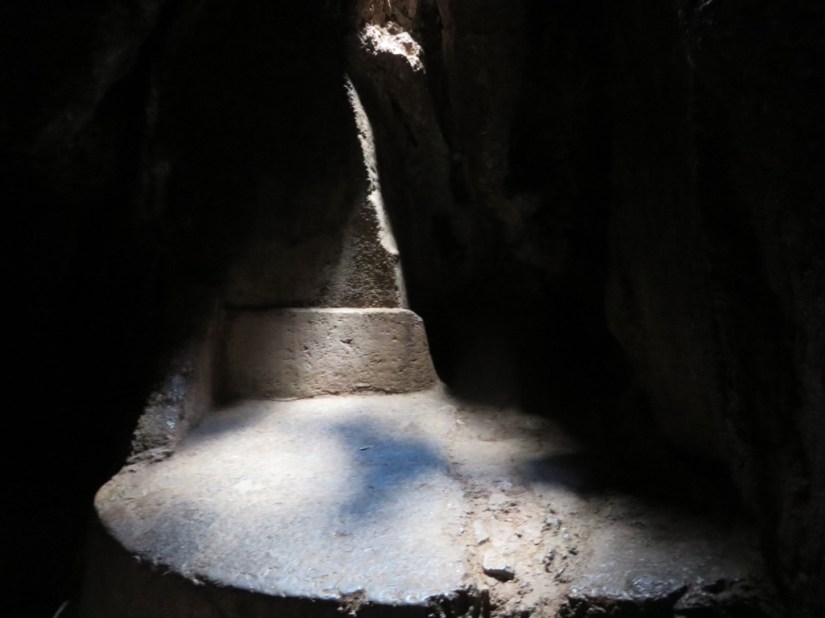
She said it was here that the Chosen Women were divided into Women of the Moon if they were illuminated by the moon as it entered the cave from a hole in the roof enabling them to be wives of the Inca, or Women of the Sun if they were only partly illuminated, in which case they would be eligible for sacrifice like Juanita. Local people still go the the temple and touch the ceremonial stone and let their breathe exhale, together with any badness within so they can leave ritually cleansed and also leave offerings of coca leaves to Pachamama, or Mother Earth. On the way out was a ceremonial platform showing part of the Inca Cross, the centre representing Pachamama and the three steps for the three realms.

We certainly would not have understood so much about Salapunco if we had not met Gabriella.
We continued our walk to Quenko, another Inca Huaca, where a llama would be sacrificed annually to determine how good the harvest would be. It is likely that other rituals would also have taken place here.
A little further on, we came to Sacsayhuaman, which is admired for its 600m long zigzagged defensive walls made of the most monolithic stones in Peru. They resemble cats teeth and cleverly expose the flanks of an attacking force, not that this helped Manco when the Spanish attacked. Originally there were three towers, demolished by the Spanish and also a Temple of the Sun. We then walked down into Cusco, very pleased with our achievement.


The Qorikancha or “golden place”, was the most important sanctuary dedicated to the Sun God Inti at the time of the Inca Empire. According to Spanish chronicles, it was said to have featured a large solid golden disc that was studded with precious stones and represented the Inca Sun God, and the Sacred Garden in front of the temple had golden plants with leaves of beaten gold, stems of silver, solid gold corn-cobs and 20 life-size llamas and their herders all in solid gold. The temple was destroyed by the Spanish invaders and only a curved outer wall remains at the site with a convent built on top and a memorial.


The Spanish destroyed many Inca buildings, temples and palaces. They used the remaining walls as bases for the construction of a new city, buildings with a mixture of Spanish influence and with Inca indigenous architecture, replacing temples with Catholic churches, and palaces with mansions for the invaders.

Hathun Rumiyoq, one of the main streets has superb stonework, including one huge boulder with twelve angles.

The Catholic Church were keen to convert the native population, and art was considered a good way to pass on the message. The School of Cusco was a 17C movement which blended European and indigenous motifs to create a New World art form. Paintings were of a religious nature with archangels in sumptuous Spanish fashion, sombre backgrounds, lots of red and blue and some grisly death scenes as well as a fixation for gold leaf appliqué especially for saints clothing. The Marcos Zapata painting of the last supper in the Cathedral has them dining roast guinea pig!


The Plaza de Armas is dominated by the cathedral and two other churches, all built in a red stone and is surrounded by stone arcades, many of which are embellished with balconies of Colonial era woodwork, typical to Cusco. The churches are all richly decorated inside with a lot of gold and silver work on the altars.


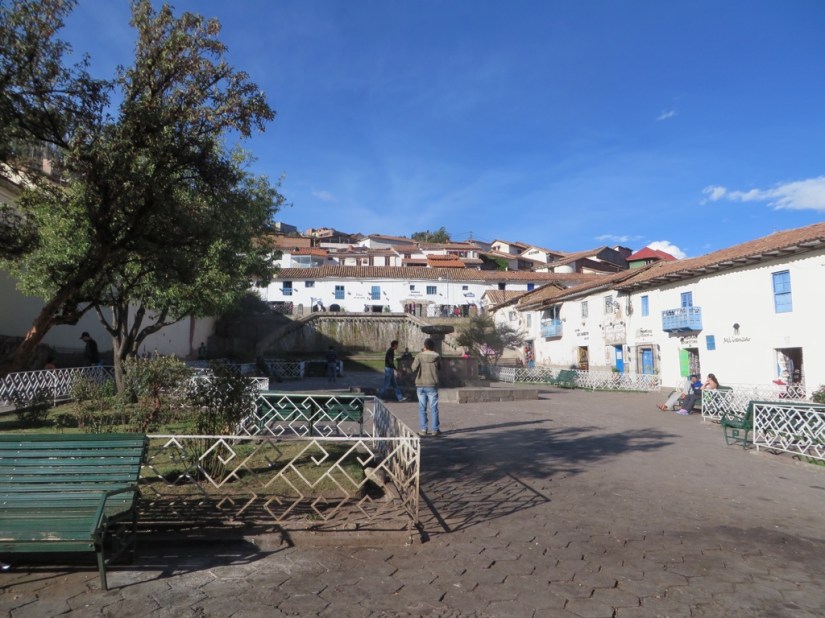
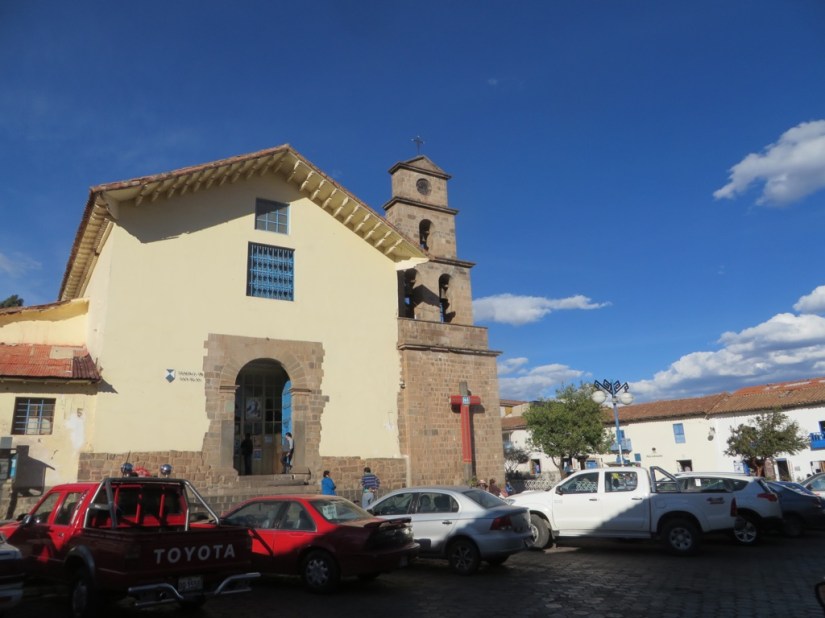
We wandered round the Barrio de San Blas, a picturesque neighborhood housing artisans, workshops and craft shops. Its streets are steep and narrow with old houses and it has an attractive square and the oldest parish church in Cusco.

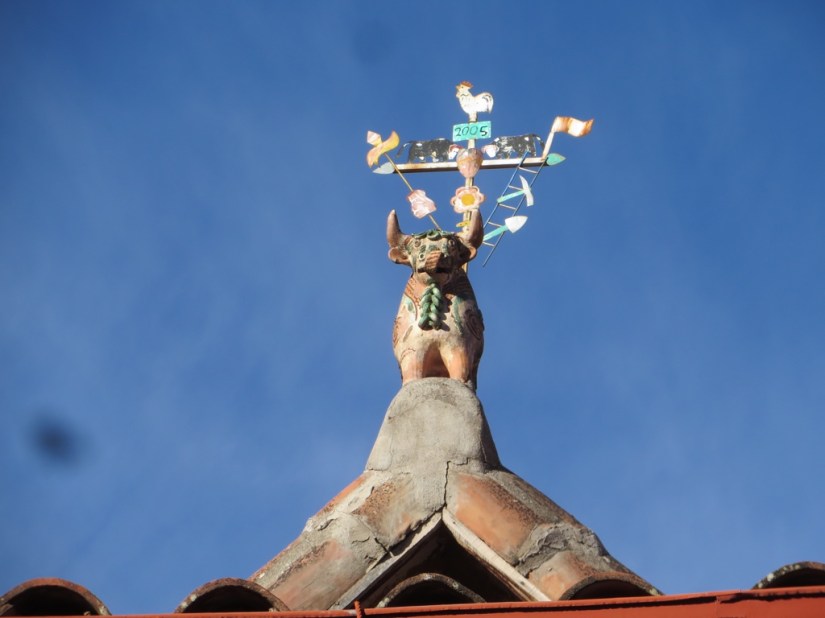
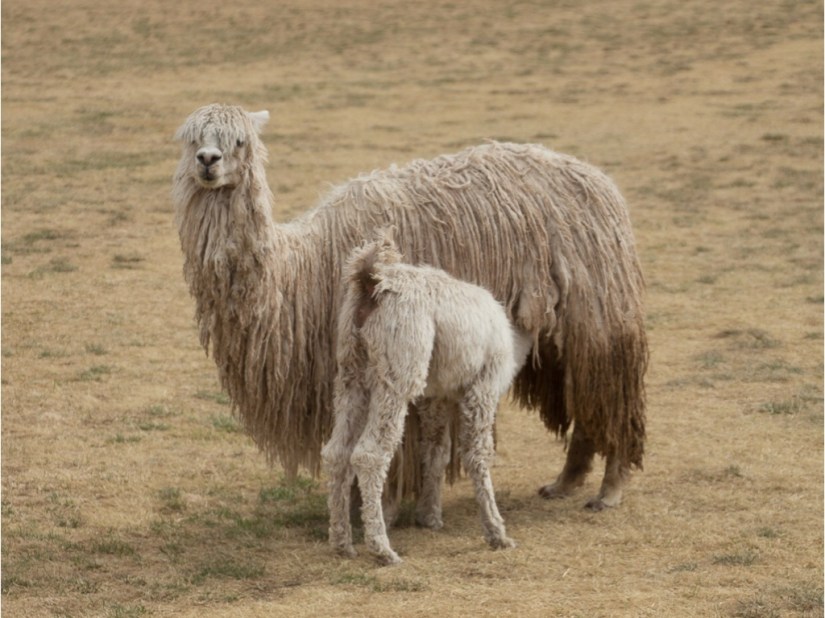
We have seen many houses around, and in Cusco, with bulls on the roof. These are to bring good fortune on the house and happiness to those within. In Inca times, a pottery llama was used to bring good luck to the llama herd, but this converted to a bull with the arrival of the Spanish.
We returned to Ninos a Hotel exhausted!
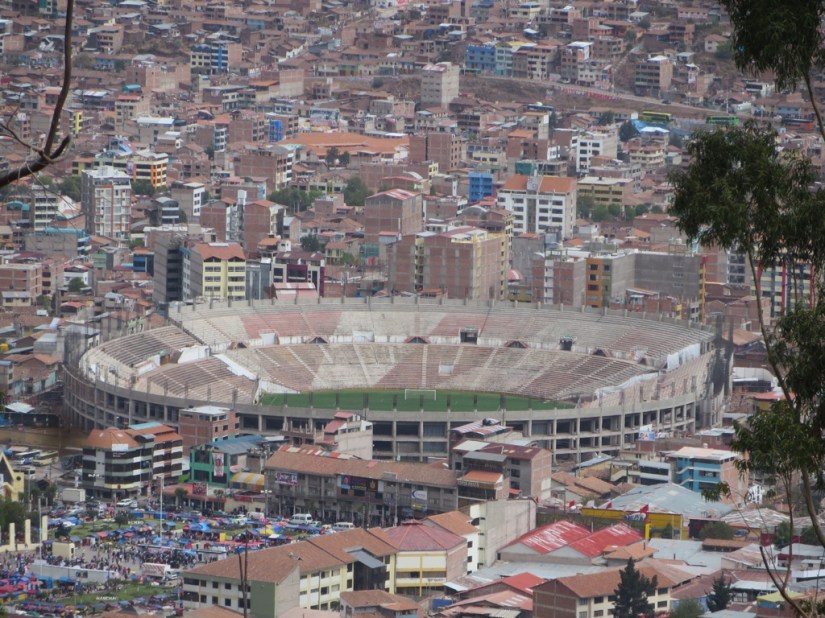
Cusco’s main stadium Estadio Garcilaso de la Vega is home to the local team Cienciano, and we paid £4 each to see them play.
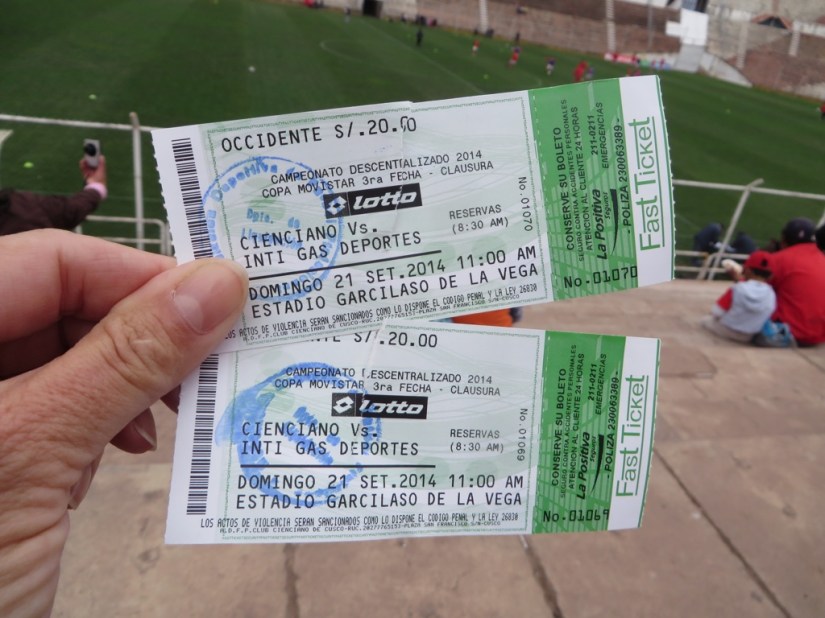


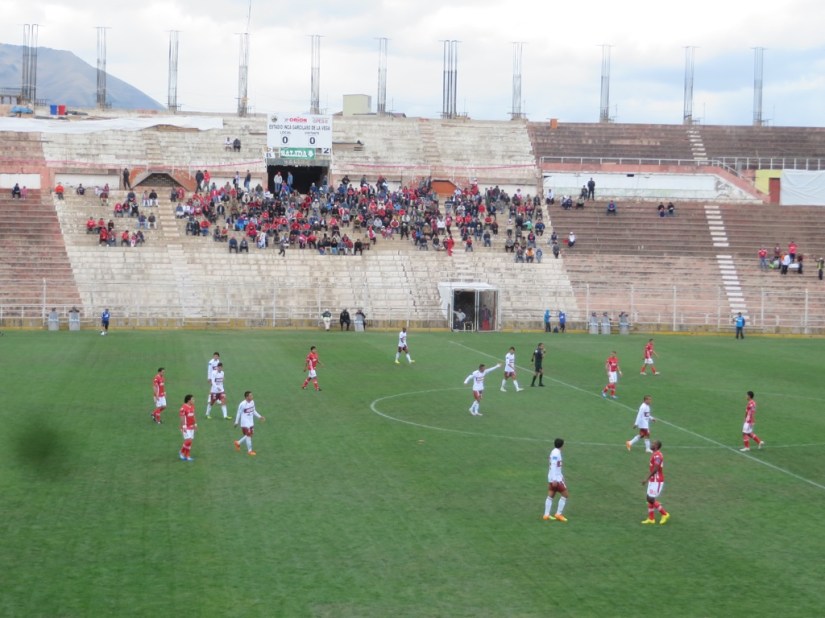
Chris was in his element, not only was he at a football match in a foreign country but the home team were in a red strip and he saw a local Liverpool supporter! Although Cienciano had possession for most of the game, they couldn’t consolidate their attacks into a goal, and the match ended in an entertaining nil nil draw.
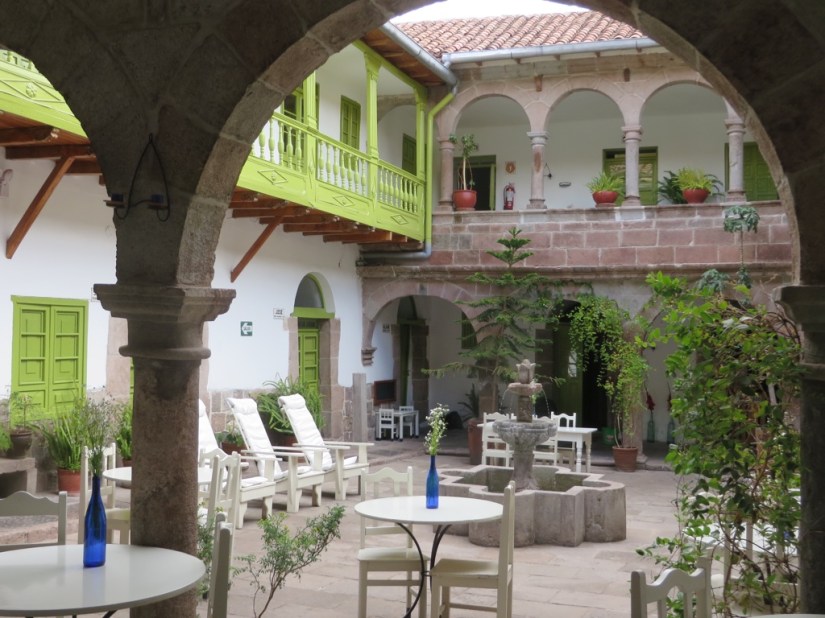
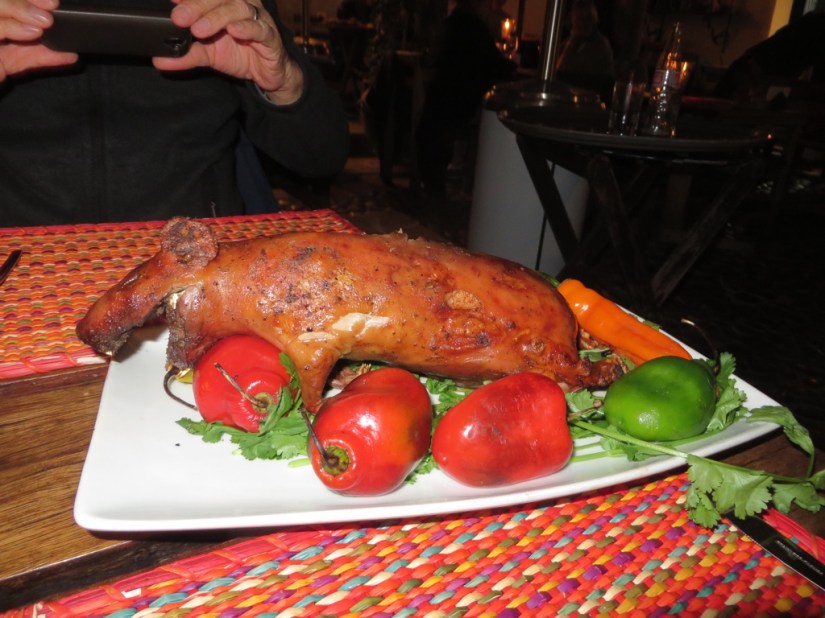
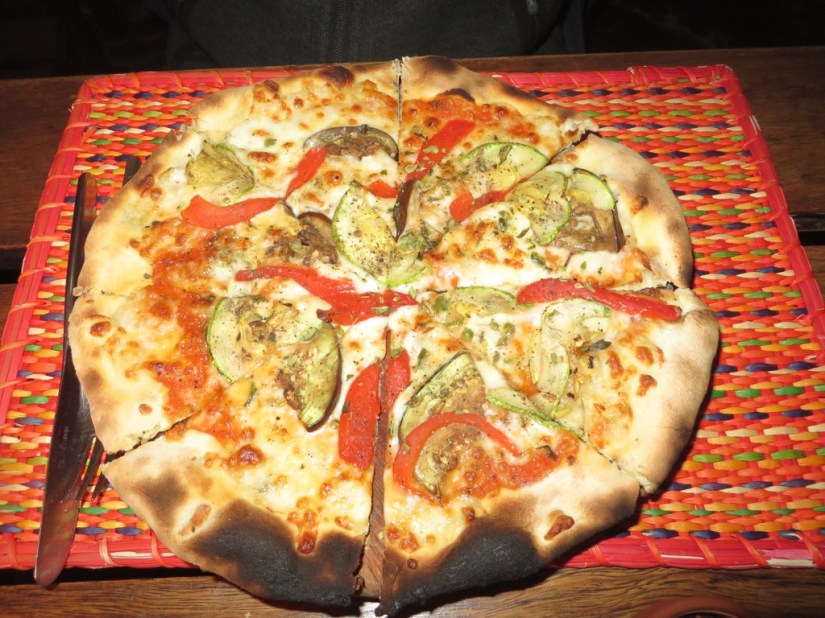
Finally it has arrived, our last night in Cusco and my last chance to try guinea pig or cuy … pronounced cooee … as they call it here. Last night we saw Megan and Nicola sharing one and they tucked in with vigour and said it was a bit like chicken. So here goes, Pachapapa’s best cuy roasted in a wood-fired oven, handy as Chris can have pizza! We sat in the candlelit courtyard, watching the chefs busily pushing things into the ovens, checking them, pulling them out … and then our dinner arrived!
We were both pleased with our choices, the pizza was crisp and tasty and the cuy tender and a bit like chicken.
Tomorrow we fly to Puerto Maldonado …
 Off Travelling Together