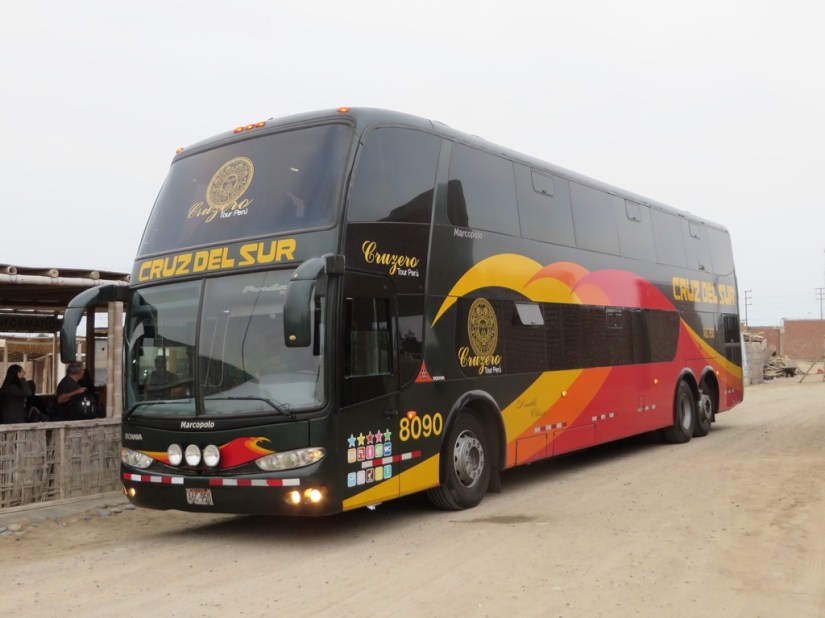
 We picked up our coach at the Cruz del Sur coach station, a very organised procedure of ticket collection, luggage check and security before boarding the coach. We had paid for premium seats downstairs, all of £13 each for just under 4 hours on the road, in a comfy seat, with a lunch service … highly recommended.

The coach took the Panamerican Highway, which runs parallel with the coast. When I say ‘we could see the sea for much of the time’, rather than ‘there were sea views’, it is because the nature of the view was so grey, misty and bleak. The other side was no better with scrubby, rocky, untidy looking desert on the other studded with collections of small huts, presumably shanty dwellings, and large walled off areas, but we couldn’t see what work would be done there or what there was to protect.


Paracas means “rain of sand” in Quechua, named after the sandstorms found in this coastal part of Peru, but as we arrived we were lucky as the sun broke through the cloud.

We felt immediately more cheered and watched the sun set later across the sea.

Paracas is definitely work in progress … everywhere with a a row of small restaurants and shops facing the harbour and a few hotels and hostels behind.


Pizza and seafood rice for dinner and our first pisco sour, made from the local grape brandy called pisco, and named after the town just down the road, together with lime juice, egg white and sugar … it gets a big thumbs up and I liked it better than a margarita!

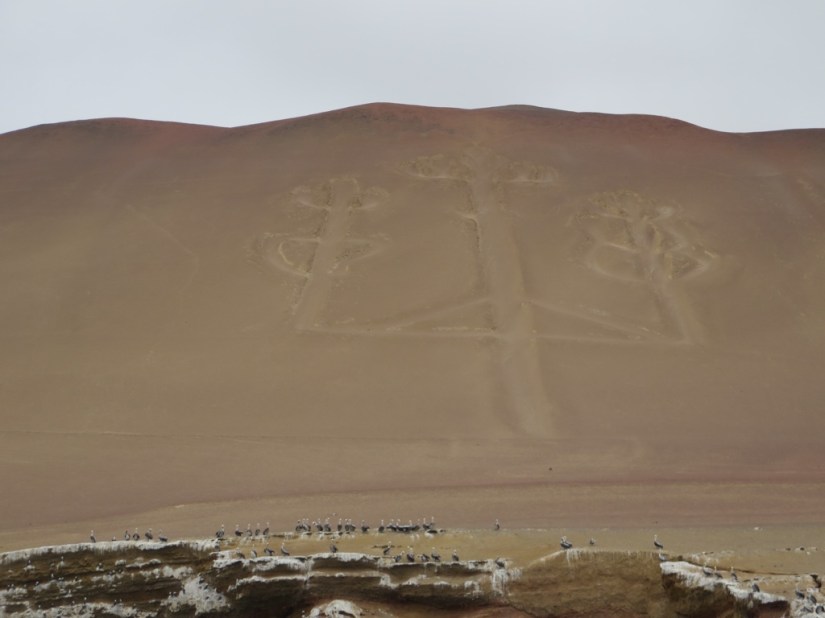
The cold Humboldt current has resulted in the sea here being extraordinarily rich in marine life, as it provides perfect conditions for the growth of algae and plankton. It therefore attracts a huge variety of seabirds and we went on a boat trip to explore. On the way we saw a huge trident carved out of the sea cliffs almost 130m tall. This geoglyph called the Paracas Candelabro is believed to date to the Paracas culture about 200 BC.
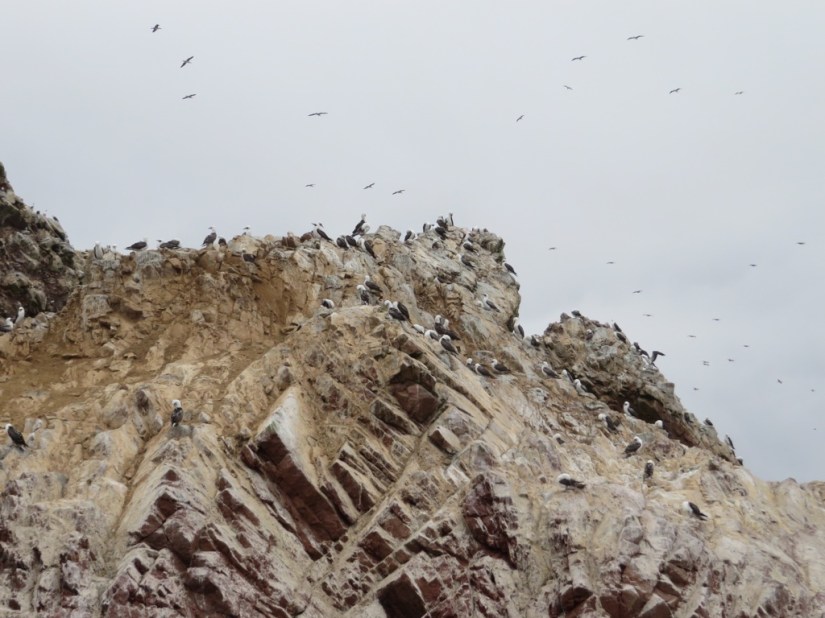
We reached the Ballestas Islands, a protected area where we saw thousands of the 4 million migratory birds that visit each year.

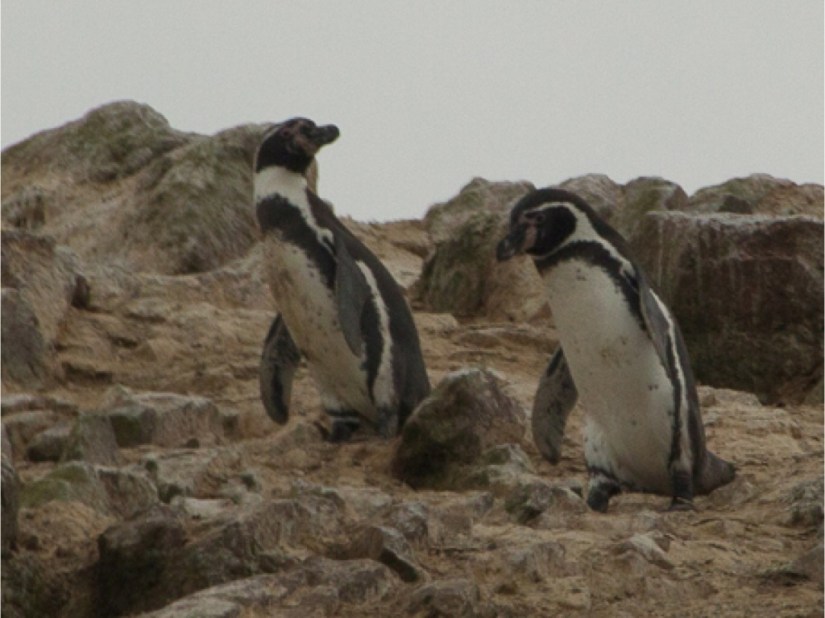
Not being experts, the highlights for us, apart from the sheer numbers of birds, were the little Humboldt penguins. There were only a few, a small group scrambling up the cliff face in typical comic style and a couple of others, so we were pleased to have seen them at all.
The sea lions also deserve a mention, several groups languishing on rocks.

Needless to say, where there are a lot of seabirds, consuming vast quantities of fish every day, the rocks get covered with a lot of guano or bird poop, and its acrid aroma hangs in the sir, despite the wind. This is an excellent fertiliser, so during the Guano Era of the 19C Peru saw a period of great prosperity as they sold some 200m tons of guano to Europe with profits of $2 billion. Nowadays, just 20,000 tons a year is harvested for local agricultural use.
Later we went to The Paracas National Reserve, a place of harsh beauty and surreal scenery, and the only nature reserve on the Peruvian coast.
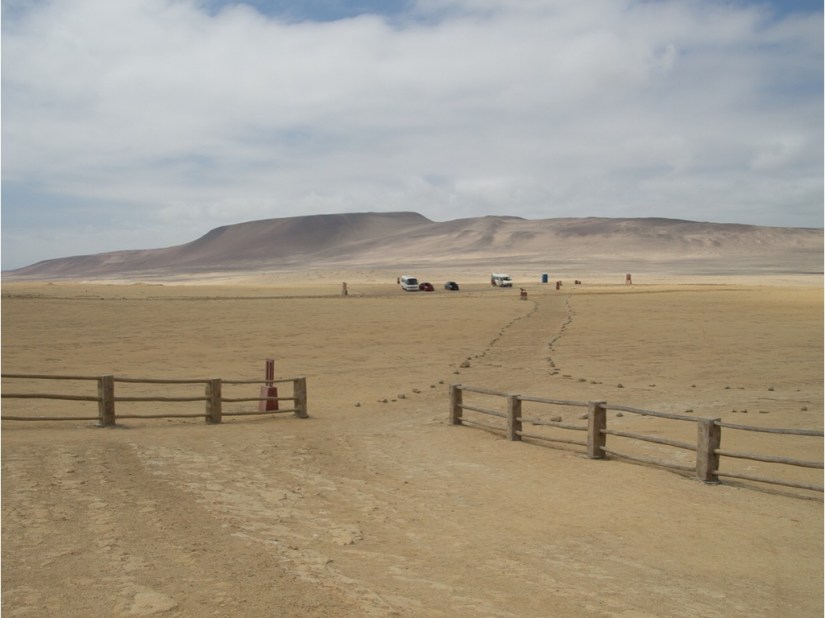
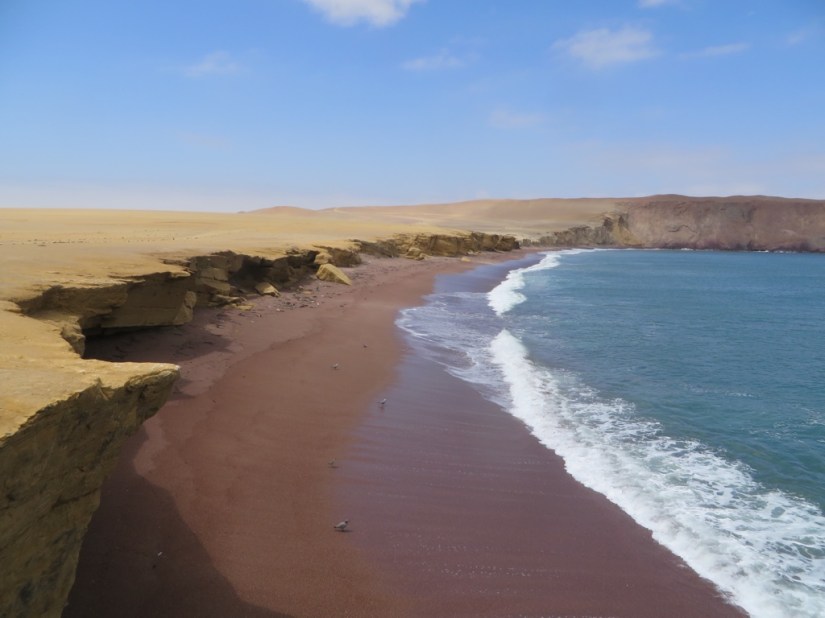
We learned of the landing of the liberator General José de San Martín in Paracas Bay in 1820. He was an Argentine general and the prime leader of the southern part of South America’s successful struggle for independence from the Spanish Empire, helping Argentina, Chile then Peru to independence. We looked round an excellent visitor centre explaining about the reserve, then drove to the stunning Red Beach and Supay Beach.

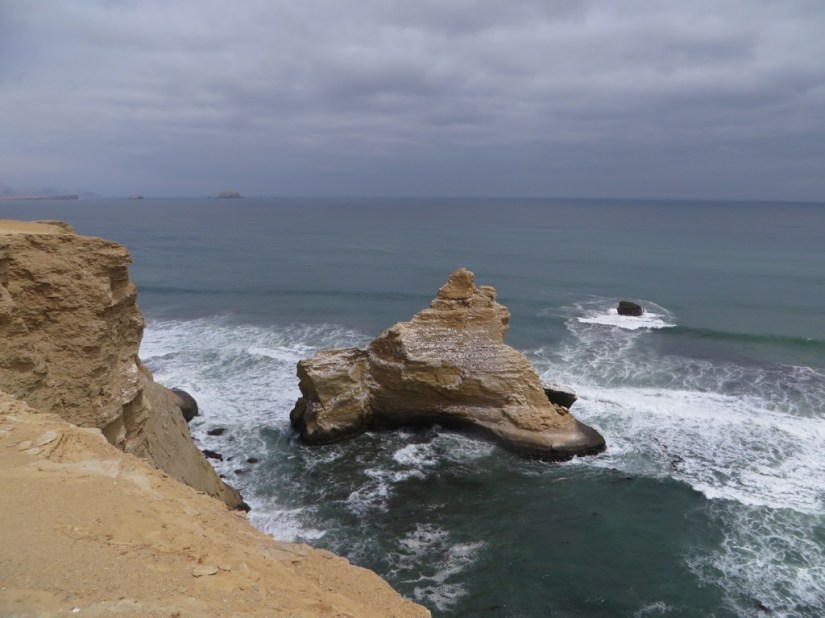
The Cathedral, had been an arch until it collapsed in the earthquake of 2007, which had its epicentre near Pisco and destroyed 80% of the town as well as damaging surrounding areas.
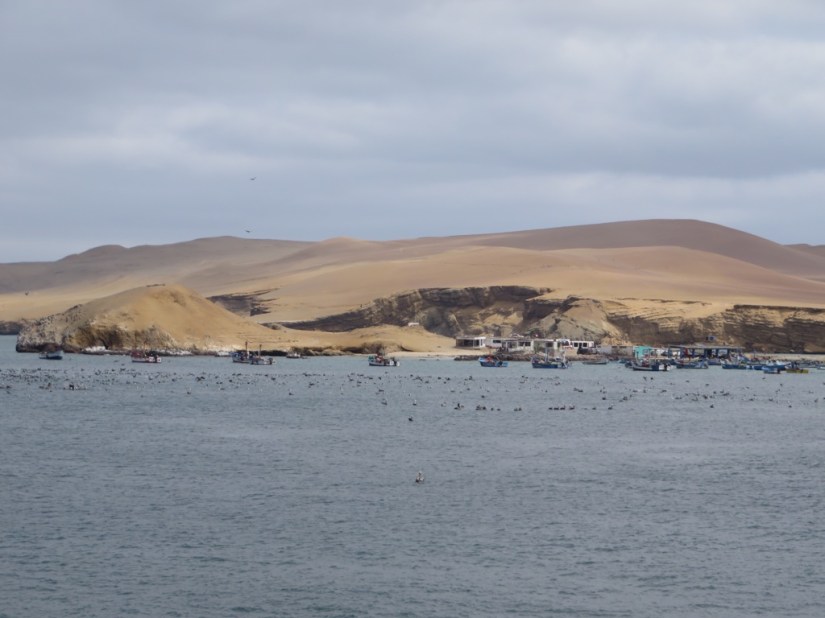
We lunched in Lagunillas and watched the pelicans, but we missed the Chilean flamingos, they will be back later in the year!

We are now back on the Cruz del Sur coach for a short hop, just 90 minutes to Ica.
 Off Travelling Together